
Categories
Widget Image
Trending
Recent Posts
Monday, Oct 19th, 2026
HomeStandard Blog Whole Post (Page 709)

To witness Emma Stone’s latest leading role in a TV series, a gripping portrait of self-delusion on par with any of her Oscar-honored star turns, viewers will have to pay a hefty toll: They’ll have to sit through a predictably agonizing odyssey from two auteurs who’ve already mastered the art of making audiences squirm. Here, the creators combine their talents to reach new depths of discomfort.

Showtime series “The Curse” is a collaboration between Nathan Fielder and Benny Safdie that draws from incidents in both men’s biographies. Safdie had developed an obsession with home renovation shows, while Fielder was inspired by an encounter with a stranger who claimed to have put a curse on him when he couldn’t give her any cash. (After a visit to a nearby ATM, the hex was withdrawn.) These fixations became the setting and inciting incident of “The Curse,” which stars Fielder and Stone as Asher and Whitney Siegel, a New Mexico couple attempting to turn their real estate business into a reality show. Safdie plays their scheming producer Dougie.

“The Curse” is also a coming together of two shared sensibilities. Alongside his brother Josh, Safdie has directed a series of films (“Good Time,” “Uncut Gems”) centered on unsavory protagonists who drive their own undoing, often featuring first-time actors. For his part, Fielder has made a career of blurring the lines between reality and fiction through shows like “The Rehearsal” and “Nathan for You,” unraveling onion-like layers of alienation through his own, intentionally off-putting persona. “The Curse” opens new frontiers for each artist, bringing Fielder into scripted storytelling and Safdie into television, as well as away from New York, his hometown and preferred filming location. Its creators’ themes and M.O. are nonetheless familiar — a promise to fans, and a warning to the cringe-averse.

Originally announced as a half-hour comedy, “The Curse” instead unfolds like an hourlong drama over its 10-episode season. (Fielder directs seven of these installments, with brothers David and Nathan Zellner co-helming the remaining three.) Fielder’s previous work is compact and episodic, countering the excruciating spectacle of his stunts with consistent structure, small doses and a guiding voiceover. “The Curse” forces us to sit in the awkward silence as Asher and Whitney try to sell both the working-class community of Española (an actual small city outside Santa Fe) and the viewing public on their ultra-modern, eco-friendly homes.

An architect who builds mirrored, self-sufficient houses with a suspicious resemblance to the work of artist Doug Aitken, Whitney has constructed her entire identity in opposition to her parents (Constance Shulman and Corbin Bernsen), shameless capitalists who shrug off the label of “slumlord.” Whitney is convinced she can make money, win design awards, benefit the environment and help the local community, an untenable vision she’s recruited Asher to make work on the business side. But cracks quickly start to show in this telegenic facade. While filming the pilot, Asher and Dougie attempt to stage a heartwarming moment for the cameras by having Asher offer money to a child (Hikmah Warsame). When Asher retracts his gift once Dougie has the shot, his angry ex-beneficiary declares: “I curse you.”

For a professional comedian, Fielder is disturbingly good at creating congenitally unfunny characters. (At one point, Asher enrolls in a corporate comedy class as an unsuccessful bid to improve his on-camera appeal.) In “The Curse,” there’s no distancing mechanism that assures us Fielder, the performer, is simply doing a bit for our entertainment. We’re completely immersed in this fictional reality, one where Asher’s crippling social ineptitude is only magnified by his wife’s charisma. Movie stars have a mixed track record in their influx to TV, but Stone’s inherent charm makes for a pointed contrast with Fielder’s deliberate lack thereof. Whitney is a narcissistic monster in her own right, though she’s better at creating the illusion of empathy for the camera.

Completing this unholy trinity, Safdie sports a Tommy Wiseau-like wig as Dougie works to destabilize what’s already an unhealthy dynamic. (A sex scene in the premiere, preceded by a full-frontal shot of Fielder sporting a micropenis, illuminates the insecurity and lack of open communication dragging down a marriage that’s just a year old.) A former bully of Asher’s from Jewish summer camp, Dougie acts as a kind of Faustian figure, playing Asher and Whitney against each other in a bid to create the most compelling product possible. Whitney and Asher have bet their whole, over-leveraged house of cards — shockingly, the economics of chic designer homes in an under-resourced area don’t quite pencil out — on their show’s success, but Dougie, too, needs a win. Before the events of “The Curse,” a drunken car accident destroyed the producer’s personal and professional lives, a reckoning for which he still refuses to take responsibility.

Such intimate mind games among awful people play out against a backdrop of much broader social issues, from gentrification to Indigenous rights, brought up by Asher and Whitney’s work. In a sense, “The Curse” bridges the capitalist commentary of “Nathan for You,” which was to “Bar Rescue” what “The Curse” is to HGTV’s “Flip or Flop,” and the eavesdropping-on-therapy feel of “The Rehearsal.” Over time, and understandably, “The Curse” gravitates toward the personal; Fielder and Safdie have the opportunity to design their own showcase and draw on Stone’s talents in bringing their core trio to life. The question is whether you can stand to wait and see how the arrangement plays out. “The Curse” is undeniably effective at creating a mood, which means every compliment to the show also sounds like a criticism. The show is a study of exploitation at all levels that’s often painful to watch. Whether that’s a cue to tune in or stay far away is up to you.

The first episode of “The Curse” will premiere on Paramount+ on Nov. 10 and Showtime on Nov. 12, with subsequent episodes streaming weekly on Fridays and airing on Sundays.

Source link

To witness Emma Stone’s latest leading role

Denzel Washington in ‘The Equalizer 3.’ Photo: Stefano Montesi.

‘The Equalizer‘ started out as a 1980s TV series by Michael Sload and Richard Lindhelm. Later, director Antoine Fuqua would adapt the series into a movie, with Denzel Washington starring as Robert McCall.

The last time we saw Robert McCall was in ‘The Equalizer 2,’ facing off against former DIA colleagues Dave York (Pedro Pascal), Kovak, Ari, and Resnik in the midst of a hurricane. McCall realized that he could have walked down the same path of crime but instead chose forgiveness. In the most recent film, Robert McCall has moved to Southern Italy in an attempt to leave his past behind.

Where Can I Watch ‘The Equalizer 3’?

Denzel Washington in 'The Equalizer 3.'

Denzel Washington in ‘The Equalizer 3.’ Photo: Stefano Montesi.

‘The Equalizer 3’ was released domestically on September 1, 2023, and is available in standard formats as well as in IMAX. Currently, the movie is still playing in theaters if you want a chance to experience it on the big screen. ‘The Equalizer 3’ has a total runtime of 1 hour and 49 minutes

Buy Tickets: ‘The Equalizer 3’ Movie Showtimes

Watch the official trailer for ‘The Equalizer 3’ below:

The movie was released on digital on October 6 and is available for purchase for $24.99 or rent for $19.99 on platforms such as Prime Video, Apple TV, Vudu, YouTube, and Google Play. No date has been released as to when the movie will arrive on streaming.

Where to Watch: ‘The Equalizer 3’ Online

Fans can also look forward to 4K UHD, Blu-Ray, and DVD release for the film. While no dates have been announced for the Blu-Ray/DVD release, retailers such as Best Buy and Amazon have the movie listed for pre-order. There will be a steelbook edition as a Best Buy exclusive. Bonus features for the physical release include:

  • Blood Brothers – The collaboration of Denzel Washington and Antoine Fuqua.
  • Call To Action
  • Robert McCall: A Man of the People
  • Denzel and Dakota: A Reunion
  • Postcards From The Amalfi Coast
  • Jacob Banks “Monster” Lyric Video

Buy ‘The Equalizer 3’ On Amazon

Watch The First 10 Minutes Of The Film

Denzel Washington stars as Robert McCall in Columbia Pictures 'The Equalizer 3.'

Denzel Washington stars as Robert McCall in Columbia Pictures ‘The Equalizer 3.’ Photo by: Stefano Montesi.

Although the movie was just released on September 1st, it is already available on digital. Timed with the digital release, the first ten minutes of the film is available for free on IGN’s website. Opening on a Sicilian vineyard, where McCall has already left a path of dead henchmen along the path of the driveway and inside the building. As Lorenzo Vitale ventures inside, he finds Robert sitting calmly on a chair at gunpoint.

“You took something that didn’t belong to you, I’m here to take it back,” McCall says before he hops into action, effortlessly taking down everyone in the room. Critics and audiences reacted positively to the film, garnering it a 75% critics score and a 94% audience score.

Related Article: Denzel Washington Triumphantly Returns as Robert McCall in ‘The Equalizer 3’

‘The Equalizer 3’ official synopsis:

Denzel Washington in 'The Equalizer 3.'

Denzel Washington in ‘The Equalizer 3.’ Photo: Stefano Montesi.

“Since giving up his life as a government assassin, Robert McCall (Denzel Washington) has struggled to reconcile the horrific things he’s done in the past and finds a strange solace in serving justice on behalf of the oppressed. Finding himself surprisingly at home in Southern Italy, he discovers his new friends are under the control of local crime bosses. As events turn deadly, McCall knows what he has to do: become his friends’ protector by taking on the mafia.”

Who Is In The Cast of ‘The Equalizer 3’?

Emma (Dakota Fanning) reports to Frank what is happening in Italy in Columbia Pictures 'The Equalizer 3.'

Emma (Dakota Fanning) reports to Frank what is happening in Italy in Columbia Pictures ‘The Equalizer 3.’ Photo: Stefano Montesi.

Denzel Washington and director Antoine Fuqua and on the set of 'The Equalizer 3.'

(L to R) Denzel Washington and director Antoine Fuqua and on the set of ‘The Equalizer 3.’ Photo: Stefano Cristiiano Montesi.

Other Movies Similar to ‘The Equalizer 3:’

To watch our exclusive interview with Antoine Fuqua, as well as interviews with Denzel Washington and Dakota Fanning about ‘The Equalizer 3,’ please click on the video player below.

Source link

Denzel Washington in 'The Equalizer 3.' Photo:

If you purchase an independently reviewed product or service through a link on our website, Variety may receive an affiliate commission.

“Blue Beetle” will crawl its way to streaming this month. Warner Bros’ latest DC superhero adventure will arrive on Max on Nov. 17.

Directed by Ángel Manuel Soto, the film centers on college graduate Jaime Reyes ( Xolo Maridueña) who gets chosen to become a symbiotic host to an ancient alien biotech relic that turns him into the superhero known as Blue Beetle. As one of the most preeminent Latino superheroes in comic book history, the “Blue Beetle” cast is predominantly Latino, including Bruna Marquezine, George Lopez, Raoul Max Trujillo, Adriana Barraza, Elpidia Carrillo, Damián Alcázar and Belissa Escobedo, along with Susan Sarandon.

Meanwhile, despite Blue Beetle’s disappointing box office intake of $122.9 million worldwide, the superhero movie scored big with general audiences and film critics, alike. “‘Blue Beetle‘ is like a dark ’80s fantasia with a shaggy-haired boy-band hero in the middle of it,” penned Variety film critic Owen Gleiberman in his review. And hopefully, the movie can explain the new DC Universe, which will soon expand with the upcoming “Aquaman and the Lost Kingdom” representing the final installment before the comic book universe’s continuity reboots with Gunn’s “Superman: Legacy” in 2025.

“Blue Beetle” will begin streaming on Max starting Nov. 17. You can also access the film for free by subscribing to Prime Video which offers a 7-day free trial to Max:

Source link

If you purchase an independently reviewed product

The 49th edition of Huelva Ibero-American Film Festival, Spain’s largest confab for films from Latin America, Spain and Portugal, will honor Mexican star Cecilia Suárez with its City of Huelva Award.

With leading roles in Netflix’s “The House of Flowers” and HBO Latin America’s “Capadocia,” Suárez has also be seen in ABC’s drama “The Promised Land” and has worked on films by as Tommy Lee Jones (“The Three Burials of Melquiades Estrada”), James L. Brooks (“Spanglish”), Ernesto Contreras (“Párpados azules”), Antonio Serrano (“Sexo, pudor y lágrimas”) and Fernando Colomo (“Cuidado con lo que deseas”).

The new edition of Huelva runs Nov. 10-18. 

Andalusia’s oldest film festival, Huelva will also grant a Light Award to Spanish actress Natalia de Molina, a two-time Goya winner, delivering acclaimed performance in films such as David Trueba’s “Living Is Easy with Eyes Closed” and Juan Miguel del Castillo’s “Food and Shelter.”

Another Light Award will go this year to producer José Alba, founder of Malaga-based company Pecado Films, a symbol of the growth of Andalusia’s film industry behind two of Spain’s highest-profile titles of recent times: “Close Your Eyes,” the latest from Spanish master Victor Erice, and Patricia Ortega’s Sundance hit “Mamacruz.”  

For its current edition, suggesting a growing interest by Ibero-American creators in attending Huelva, the festival’s organizers received nearly 1,400 submissions, 10% up on 2022. 110 titles made the cut, with 12 of them being selected to play in the festival’s Official Section, vying for Huelva’s top Colon de Oro.

A representative portrait of Ibero-America’s current film scene, main competition titles have played Cannes, Berlin, Venice, SXSW, Tribeca, Biarritz, Havana, London, Los Angeles and Toronto.

Featuring auteurs and with seven titles directed the main competition was designed as a “melting pot of all kinds of titles, ranging from the most popular genre films to riskier proposals,” says director Manuel H. Martin.

Among them are Brazilian first-timer Lillah Halla’s abortion drama “Power Alley (Levante),” an M-Appeal pick-up which snagged a Cannes’ Fipresci prize and  “Adolfo,” Mexican Sofía Auza’s feature debut, produced by L.A., Mexico and Spain-based outfit The Immigrant, winner of a Berlin Generation 14plus Crystal Bear.

Venice Horizons contender “A Cielo Abierto” (“Upon Open Sky”), with Huelva honoree Cecilia Suárez in its cast, marks the feature debut of siblings Mariana and Santiago Arriaga, children of “Babel’s” Guillermo Arriaga.    

Huelva’s top competition sidebar will also host coming-of-age drama “Boca Chica,” by debutant director Gabriella A. Moses, a Sterlyn Ramírez production from Dominican Republic-based Selene Films, which won the Norah Ephron Award at Tribeca, the first win at the festival for a Dominican movie.

Further standouts take in Argentine Daniela Goggi’s “The Rescue,” a Paramount+ original film acclaimed in Venice and produced by Paramount Television International Studios, Rei Cine and Infinity Hill, and Felipe Carmona’s Chilean historical drama “Penal Cordillera,” a BFI London and San Sebastian player sold by Luxbox.  

The Rescue

Making the Official Selection cut are “Valentina o la serenidad,” Mexican Ángeles Cruz’s sophomore feature, screened at Toronto and Morelia; Juan Sebastián Torales’ fantasy drama “Almamula,” an Argentina-France-Italy co-production which premiered at Berlinale’s Generation 14plus, picked up by Bendita Films Sales; and veteran Mexican director Luis Mandoki’s “Presencias,” toplining Goya award winner Alberto Ammann, Oscar-nominated Yalitza Aparicio and Angélica Peláez, a two-Ariel laureate.

Also in competition are Renée Nader Messora and João Salaviza’s Portuguese-Brazilian hybrid doc “The Buriti Flower,” winner of Un Certain Regard Ensemble Prize; Argentine Tomás Gómez Bustillo’s “Chronicles of a Wandering Saint,” an Adam Yauch Hörnblower prize winner at SXSW, and comedy “La Suprema,” Colombian Felipe Holguín feature debut, who was selected at Toronto and Havana, where it won the Post-Production Coral Prize.

“Ibero-American cinema is constantly evolving. Now, it is very easy to find great films, if not in budgetary terms, then in artistic ambitions, as our programming proves,” Martín says.

Born during the pandemic, with the objective of offering film lovers with fest favourites offering new storytelling and a cutting-edge visuals 

Huelva’s Seismos Section maintains its virtual stage – Spain’s top indie film platform Filmin. It also presents eight titles in Huelva theaters.

This year, Sismos selection takes in Christopher Murray’s Sundance contender “Brujería,” Andrew Sala’s “La barbarie,” seen at a Cannes’ Marché du Film showcase, Sanfic Industria and awarded at Toulouse: and Kattia González’s “Las hijas,” a best Ibero-American film at Málaga, sold by Pluto Films.

Also in the Sismos mix: “Los océanos son los verdaderos continentes,” a film by Tommaso Santambrogio, launched by Italy’s Fandango Sales at Venice; Tana Gilbert’s Chile-Germany co-production “Malqueridas,” a best film at Venice’s Intl. Critics Week; the Berlin and Sitges-selected “Propiedade,” by Brazilian Daniel Bandeira; Carolina Markowicz’s “Toll,” screened in Toronto, San Sebastián, Stockholm and Rio; and Mauricio Calderón Rico’s Mexican coming-of-age “Todos los incendios,” a Locarno and Morelia player.

Observing solid tradition, Huelva has made a strong bet on short film programming, with titles previously selected at Berlin, Bafici and Seattle. 19 short films screen in the National and International Ibero-American Official Sections.

Aimed to nurture Andalusian filmmakers, a Talento Andaluz sidebar screen four Spanish premieres: Paco Ortíz’s “Anibal, el arquitecto de Sevilla”, Bernabé Bulnes’ “Fueron los días,” Ceres Machado’s “Reflejos en una habitación” and Silvia Moreno and Dani Llamas’ “Steven quiere conocerte.” 

Playing out of competition at Talento Andaluz are two Movistar Plus+ documentaries: Arturo Menor’s “Iberia, naturaleza infinita,” also backed by regional broadcaster Canal Sur and Acajú; and Alexis Morante’s “Bisbal,” produced alongside Dadá Films and Universal Music Spain.

Talento Andaluz adds this year a short film competition.Pantalla Huelva section offers eight shorts directed by Huelva filmmakers.

Martín took over the Huelva Festival in 2016. Over the years, he’s sought to establish a sustainable model that rests on three pillars: Meticulous programming, industry events and educational activities.

In terms of industry, the festival will highlight a rapidly emerging Dominican Republic film industry. As part of a two-year deal inked at Cannes, Huelva and the Dominican Republic film entity DGCine is organizing a pitching event featuring four Dominican projects in development which are looking for Spanish co-production partners.

A traditional launchpad for Latin American filmmakers in Spain and Europe, Huelva programs this year a special focus on Dominican cinema, with 12 standout titles available via Filmin over Nov. 3-19. 

“There are other festivals in Spain organizing co-production forums, which require higher budgets. So we decided to create something more focused, more careful, taking advantage of our sustainable design, which allows a tremendous proximity between all the attendees,” Martin says.

“We try to make everyone feel at home and that this facilitates the birth of new projects and industry deals,” he adds.

Huelva is also reinforcing its educational program, with the first edition of Primera Pantalla, aimed at school children, as it consolidates Ventana Cinéfila – offering titles on Filmin – and the Jóvenes Comunicadores Cinéfilos program, for young moviegoers.  

Encuentros, a TV format for the promotion of film and TV industry, will broadcast worldwide via social networks, interviewing honorees, film participants and further industry representatives.

Huelva’s opening gala will screen out of competition the doc feature “Sembrando Sueños,” about celebrated Andalusian playwright brothers Serafín and Joaquín Álvarez Quintero, helmed by Sevillian actor-director Alfonso Sánchez (“El mundo es nuestro”).

Source link

The 49th edition of Huelva Ibero-American Film


Travis Kelce and Patrick Mahomes
Steve Granitz/FilmMagic

Travis Kelce didn’t make it to the very first night of Taylor Swift‘s South American tour — for a good cause.

Kelce, 34, stayed in Kansas City on Thursday, November 9, as Swift, 33, kicked off the second leg of her Eras Tour in Argentina. While some fans were hoping to see Kelce shaking it off in Swift’s VIP tent, he instead supported teammate Patrick Mahomes at the third annual 15 and the Mahomies Foundation Gala.

“@killatrav in the building!” read an Instagram Story from the charity’s official account on Thursday alongside a video of Kelce at the event. “Huge thanks for all your support ?.”

Mahomes, 28, established his organization in 2019 with the hopes of “improving the lives of children” through “initiatives that focus on health, wellness, communities in need of resources and other charitable causes,” per the foundation’s website. By the end of Thursday’s gala, more than $600,000 was awarded in grants to the charity’s partners.

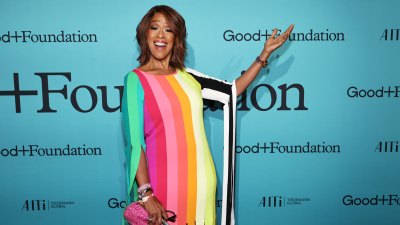
2023 Good+Foundation

Related: Stars React to Taylor Swift and Travis Kelce’s Relationship

It seems as if (almost) all of Hollywood and the NFL are in need of Taylor Swift and Travis Kelce friendship bracelets. Ever since Kelce tried to meet Swift at one of her Eras Tour performances in July 2023 — he wanted to give her a friendship bracelet with his number on it, but she had […]

“Thank y’all for being here,” Mahomes said in a speech with his wife, Brittany Mahomes, standing behind him on stage. “Let’s keep it going, let’s make it bigger and bigger and see where we can go.”

Travis Kelce Attends Patrick Mahomes Charity Gala in Kansas City as Taylor Swift Kicks Off Tour 4

Travis Kelce
Courtesy of 15andmahomies/Instagram

Kelce’s appearance came shortly after he hinted at possibly traveling “somewhere sunny” and “closer to the equator” while the Kansas City Chiefs are on their bye week. “I might just say ‘f–k it’ and just go somewhere nice, I don’t know,” he told his brother and cohost, Jason Kelce, on the Wednesday, November 8, episode of their “New Heights” podcast.

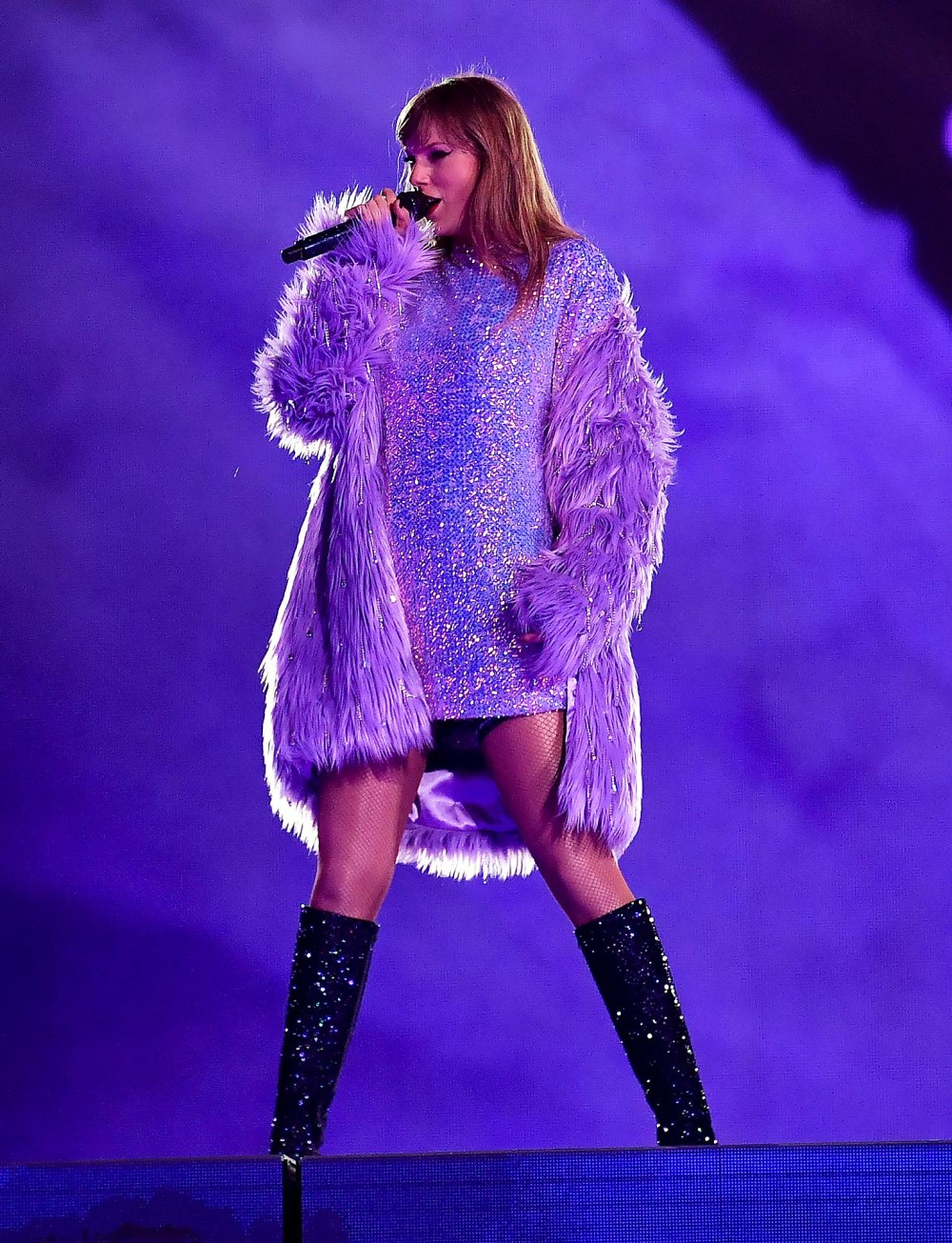
Swift restarted her Eras Tour on Thursday after wrapping up the U.S. leg of shows in August. She performed to a sold-out crowd in Buenos Aires, debuting a new pink bodysuit for the Lover section of her three-hour set. Fans were treated to songs Swift has never before played live — “The Very First Night (Taylor’s Version) (From the Vault)” and “Labyrinth” — during the acoustic portion of the show.

While he missed Thursday’s concert, Travis previously saw The Eras Tour in Kansas City in July. He later revealed on “New Heights” that he tried to meet Swift backstage and give her a friendship bracelet with his phone number on it, but the twosome didn’t connect that night.

Travis Kelce Attends Patrick Mahomes Charity Gala in Kansas City as Taylor Swift Kicks Off Tour 2

Taylor Swift
Marcelo Endelli/TAS23/Getty Images for TAS Rights Management

Two months later, however, Swift accepted an invitation from Travis to see him play in a Chiefs game. She was first spotted in a suite at Arrowhead Stadium on September 24 and has since attended four more NFL games as her romance with Travis heats up.

Celebrities Who Had the Time of Their Lives at Taylor Swift s Eras Tour Selena Gomez Emma Stone HAIM and More 260 Sabrina Carpenter and Danielle Fishel.

Related: Every Celeb Who’s Attended Taylor Swift’s ‘Eras Tour’

Several of Taylor Swift’s famous friends and fans have shown up to shake it off at the singer’s much-anticipated The Eras Tour. The stars of Swift’s “Bejeweled” music video — Este Haim, Danielle Haim, Alana Haim and Laura Dern — were among thousands of fans in attendance at the tour’s opening night in Glendale, Arizona’s […]

Despite their busy schedules, a source exclusively told Us Weekly this month that Swift and Travis “have developed a very real connection” and came up with “detailed plans” for how to navigate the distance while Swift is on tour.

A second insider revealed last month, “He’s going to see her when she’s back on tour. That’s already planned. And when she gets a break, she’ll see him,” adding, “Taylor is really happy and excited about Travis.”

Swift has two more shows in Buenos Aires this weekend before she heads to Brazil for concerts in Rio de Janeiro and São Paolo. Travis, meanwhile, plays his next NFL game on November 20 against Jason, 36, and the Philadelphia Eagles.

Source link

Travis Kelce and Patrick Mahomes Steve

First, they are programmed for specific tasks. (Examples that OpenAI created include “Creative Writing Coach” and “Mocktail Mixologist,” a bot that suggests nonalcoholic drink recipes.) Second, the bots can pull from private data, such as a company’s internal H.R. documents or a database of real estate listings, and incorporate that data into their responses. Third, if you let them, the bots can plug into other parts of your online life — your calendar, your to-do list, your Slack account — and take actions using your credentials.

Sound scary? It is, if you ask some A.I. safety researchers, who fear that giving bots more autonomy could lead to disaster. The Center for AI Safety, a nonprofit research organization, listed autonomous agents as one of its “catastrophic A.I. risks” this year, saying that “malicious actors could intentionally create rogue A.I.s with dangerous goals.”

But there is money to be made in A.I. assistants that can do useful tasks for people, and corporate customers have been itching to train chatbots on their own data. There is also an argument that A.I. won’t truly be useful until it really understands its users — their communication styles, their likes and dislikes, what they look at and shop for online.

So here we are, speeding into the age of the autonomous A.I. agent — doomers be damned.

To be fair, OpenAI’s bots aren’t particularly dangerous. I got a demo of several GPTs during the company’s developer conference in San Francisco on Monday, and they mostly automated harmless tasks like creating coloring pages for children, or explaining the rules of card games.

Custom GPTs also can’t really do much yet, beyond searching through documents and plugging into common apps. One demo I saw on Monday involved an OpenAI employee asking a GPT to look up conflicting meetings on her Google calendar and send a Slack message to her boss. Another happened onstage when Sam Altman, OpenAI’s chief executive, built a “start-up mentor” chatbot to give advice to aspiring founders, based on an uploaded file of a speech he had given years earlier.

Source link

First, they are programmed for specific tasks.

When director Andrew Haigh read the 1987 novel “Strangers” by Taichi Yamada, he knew the premise of a man’s new romance mystically reconnecting him to his long-dead parents was a story with the potential to be “entirely universal,” as he puts it in the exclusive featurette above.

“Just being able to have a conversation with them as equals at a certain time, that was so fascinating to me. And I couldn’t help but think that everybody would want to have that conversation with their parents if they could,” the British filmmaker told IndieWire in advance of “All of Us Strangers” screening at AFI Fest on Saturday, October 28.

Since its world premiere at the Telluride Film Festival, Haigh said the Searchlight Pictures release has proven to speak “to children, to parents, to gay people, to straight people,” said Haigh. “And speak to all of them in a way that it works for all of those people without it being bland.”

One major change from the novel is making its central romance queer, with pensive screenwriter Adam (Andrew Scott) falling for his arresting neighbor Harry (Paul Mescal). “It is about a gay relationship and I’m not embarrassed about that or making any qualms about that,” Haigh said. “It was important that that felt really authentic at the same time, but still tell something wider.”

“All of Us Strangers” Chris Harris / © Searchlight Pictures / Courtesy Everett Collection

Claire Foy and Jamie Bell round out the tiny cast as Adam’s parents, but “it was a strangely long [casting] process for what is only four people in the whole film,” said Haigh. “Just speaking to them, you realized that they were prepared to throw everything they had into it. And that’s just a dream as a director because it doesn’t always happen. It really doesn’t. So the fact they wanted to made me really confident going in.”

The hardest role to cast was Harry. “We went around the world, we spoke to people in Brazil and we spoke to people in France,” he said. “We really tried to be quite open about who [Harry] would be. And then Paul came along and it was like, ‘Well, okay, there you go.’ He’s a great actor and he’s wonderful and why wouldn’t we cast him. It would be insane. You only have to meet him to know that he’s essentially a movie star. You can feel it in his bones.” 

Best Actor nominee Mescal (“Aftersun”) was happy to take the supporting role to Scott’s lead. “He was so excited about working with Andrew and also knowing that he was the supporting character to Andrew,” said the filmmaker. “There’s lots of actors all obsessed by their own ego, about who is the most important. And everyone understood what this film was and who it was circling around.”

For Haigh, Scott felt like the only choice for Adam. The director is 50 and the actor is 47, which gave the two men a certain shorthand. “He’s a man of a certain generation like me. And we both grew up gay and there was a lot of stuff that was coming out about that for both of us,” he said . “We bonded as you do often with people when you’ve had the same experience or a similar experience.” 

The specificity to which Haigh alludes is being a queer Gen Xer who must come to terms with their sexuality during the AIDS crisis. “Obviously, things have got so much better,” he said. “But all of that pain that a generation of people felt growing up, that hasn’t all vanished, that pain is still there, it’s still lurking. The world might’ve forgotten how we were treated, but we haven’t forgotten how we were treated and how we felt. We’re so good at pretending we’re ok now, and not rocking the boat, and not saying to people, ‘Do you remember how you used to make me feel back then?’ Because nobody wants to be made to feel guilty, let’s face it.” 

Haigh said the buzz around “All of Us Strangers, a film so personal to the filmmaker that part of it was shot in his childhood home, has exceeded his expectations. “The reaction has been good to most of the work I’ve done. But I feel like some films don’t break out into much more of a conversation. I made ‘Lean on Pete,’ it got good reviews, but no one ended up talking about it, and it just disappeared and vanished,” said Haigh. “This film has broken through whatever that little bubble is to people to start to talk about it. So I’m just really grateful because it doesn’t happen all the time. Even if the film is good, it doesn’t happen all the time. So I’m just pleased that people are wanting to talk about it.”

Source link

When director Andrew Haigh read the 1987

Oops, Britney Spears has done it again. More than 20 years after dominating the music scene with her hit song “Baby One More Time,” the pop star has re-emerged with her own tell-all called The Woman in Me. While the book continues to climb the charts, those craving more Britney can look back on Framing Britney Spears, which was released in 2021 as an episode of the The New York Times Presents series. The short documentary, which was created before the star’s conservatorship was terminated, documents everything from her rise to fame to the #FreeBritney movement. This version of the story may not be in Spears’ own words like her book, but it certainly offers a closer look at how the toxic and sexist media culture impacted her as a rising star.

Source link

By Samantha Nungesser Oops, Britney Spears has done it

“Albert Brooks: Defending My Life,” a documentary about the venerable comedian, filmmaker, actor and writer, directed by his lifelong friend Rob Reiner, has the easy, amiable air of a career retrospective — wistful and hagiographic, it’s the kind of thing that usually accompanies a lifetime achievement award.

Now 76, Brooks certainly deserves the recognition: the first four of the films he wrote and directed between 1979 and 2005, “Real Life,” “Modern Romance,” “Lost in America” and “Defending Your Life,” are among the finest American comedies ever made, and his trailblazing work on the late-night talk show circuit during the 1960s and 1970s had a seismic impact on the landscape of contemporary comedy. (To say nothing of his Academy Award-nominated turn in “Broadcast News,” a near-peerless masterpiece.)

But there’s a reason we have comedy roasts, not toasts, as the rhapsodic tone of this film makes clear — breathless flattery just isn’t that interesting, no matter how funny the person receiving it. While Brooks deserves acclaim, he deserves it in a format as compelling and dynamic as he is. “Defending My Life” is simply too flat.

Brooks and Reiner, lounging in a booth at Matteo’s Restaurant in Los Angeles, reminisce chummily about Brooks’s life and work, while an ensemble of comedy A-listers including Chris Rock, Ben Stiller, Jonah Hill and Larry David gush over his influence in a series of standard-issue talking head interviews. There are also clips from Brooks’s films and standup routines, which render much of the praise from the interviewees redundant. We don’t need to be told that Brooks is a genius. Even a brief glimpse of his work makes the case.

Albert Brooks: Defending My Life
Not rated. Running time: 1 hour 28 minutes. Watch on Max.

Source link

“Albert Brooks: Defending My Life,” a documentary

The second episode of “Fellow Travelers,” Ron Nyswaner’s steamy melodrama of queer life in midcentury America, concludes with Langston Hughes’ “Kids Who Die,” a poem to sting the back of your throat. Marcus Gaines (Jelani Alladin), Senate correspondent for the Pittsburgh Courier, has already made a connection with Frankie Hines (Noah J. Ricketts), bartender at D.C.’s hottest underground haunt, but it’s this recitation that makes their communion complete — as surely as a kiss might, or a sly wink, or a secret handshake.

Still, it’s another of the poem’s stanzas, unspoken here, that points most forcefully to “Fellow Travelers’” project. The American screen’s finest, frankest ever treatment of the Lavender Scare, the anti-communist purge of LGBTQ+ people from U.S. government in the 1950s, the series bravely acknowledges that McCarthyism, past and present, demands collaboration — that its arsenal is comprised not only of denunciations, fiery speeches and show trials but also of silence, complicity and self-protection. “All kinds of kids will die,” as Hughes had it,

Who don’t believe in lies, and bribes, and contentment
And a lousy peace.

For “Fellow Travelers” protagonists, Hawkins “Hawk” Fuller (Matt Bomer), a suave State Department functionary, and Tim Laughlin (Jonathan Bailey), a bright-eyed Irish Catholic idealist, the lousy peace of the Cold War becomes a personal and professional battleground. With Sen. Joseph McCarthy (Chris Bauer) on a crusade against the capital’s “communists and queers,” the pair’s furious affair demands not only layer upon layer of secrecy but also careful plotting in the halls of power to defuse the attacks. And, as is its wont, survival swiftly turns ruthless: Hawk plants Tim in McCarthy’s office as a reluctant double agent, and hands over the name of a one-night stand to protect a colleague under threat.

Storme (Chelsea Russell), left, with Frankie (Noah J. Ricketts), who performs in drag in Episode 2 of “Fellow Travelers.”

(Ben Mark Holzberg / Showtime)

If the series, based on Thomas Mallon’s 2007 novel, has a singular strength, it’s this willingness to frame the Lavender Scare, and other defining moments in queer history, as a form of internecine conflict. When Marcus, who is Black, comes face to face with Frankie in drag, he decides he can’t simultaneously defend his sexual orientation and campaign for racial justice. When Mary Johnson (Erin Neufer), Hawk’s friend and Tim’s beard, finds herself in the vise grip of the anti-communists, she betrays her own partner rather than sacrifice her career. The dots connect all the way up to McCarthy: Long before rough trade in Rehoboth Beach accuses the senator of sodomy, we see Joe — unmarried, close to his mother, notoriously handsy — treat his right-hand man, venomous homosexual Roy Cohn (Will Brill), as if they’re “newlyweds”; look past Cohn’s affection for consultant David Schine (Matt Visser); and leer at Tim as Don Draper or Roger Sterling might their nubile new secretary. As “Fellow Travelers” depicts, and the numerous villains of queer history demonstrate, the call of repression regularly comes from inside the house.

Against the committee-room grandstanding of popular memory, the series thus fashions the entire Eisenhower era from the raw materials of the closet, from subtext, secrets, sidelong glances and confidential tones. Tellingly, it’s not the sex between Bomer and Bailey, exactly, that shivers with erotic force: It’s a prurient reference to kneeling in prayer; the arch of a foot pressed against a man’s chest; Hawk telling an enthralled Tim to “fold them” after he slips off his pants. That their attraction is inextricable from this performance of dominance and submission only underscores the point, for as we learn in flashes forward to the 1980s, it isn’t only a fantasy. Hawk’s power — to pass, to prosper, to marry the right woman (Allison Williams) and hold out for the right post — is brutally, catastrophically real.

Hawk lays on top of Tim, embracing him in bed.

Tim (Jonathan Bailey), left, and Hawk (Matt Bomer) keep their relationship secret in the midst of the Lavender Scare.

(Showtime)

Then again, silence, that sharpest of double-edged swords, is not a weapon easily trifled with: What ensures survival in one regime equals death in another. It’s Tim, in the process of discovering his own voice, who soon recognizes in Hawk the unfeeling operator, the self-described “Switzerland,” the “coward,” and so poses the greatest threat to his position. By the time the beautiful naïf delivers a defiant, brassy tribute to Doris Day in Friday’s episode, “Hit Me,” he succeeds, one might say courageously, in ruffling Hawk’s feathers, and by extension our own. As played by Bailey in a career-changing performance, Tim’s yearning — sexual, emotional, spiritual, political — is so palpable, so persuasive, that Hawk’s white-knuckle grip on what is, rather than what could be, reveals itself as a form of weakness. Mere survival is no way to live.

Seventy years later, McCarthyism persists, even as its figureheads and foot soldiers have changed over time. It still defines as American a constellation of ideological positions against which all others must be labeled abnormal, and cast out of the body politic as if a contagious disease. It still demands collusion, censures dissent, confuses the exertion of power with the protest against it. What differs — and not by much — are simply the noms de guerre, communism ceding to socialism, subversive to woke. For the target, as “Fellow Travelers” intuits, isn’t queerness, or racial equality, or anti-capitalism per se, but nonconformity of any sort, which power seeks to stamp out for its own preservation. And there will always be people — like McCarthy, Cohn or the fictional Hawkins Fuller — so eager for a slice of power they become agents of destruction, even if the ruin should some day be their own.

In this, “Fellow Travelers” crystallizes the irony at the heart of its title. The term with which McCarthy and his cronies smeared countless Americans who were not and never had been “card-carrying members of the Communist Party” originates with another tongue, and has the opposite connotation. For the failing implied by the Russian poputchik, applied to political sympathizers who refuse to state their support publicly, isn’t guilt by association. It’s lacking the courage to refuse lies, and bribes, and contentment, to reject the lousy peace — whether the issue is the harassment of drag queens and trans people or prejudicial firings in the State Department; the killing of thousands of children in Gaza or the overthrow of democratically elected governments in Guatemala and Iran; Black Lives Matter or the Montgomery bus boycott.

Then and now, McCarthyism thrives where fellow travelers proliferate — not because they defy the status quo, but because they remain silent about it. So speak up.

Source link

The second episode of “Fellow Travelers,”


Echo

With the release of the first trailer for the upcoming Marvel Studios series Echo, Marvel not only introduced audiences to its latest Disney+ effort but also unveiled the new “Marvel Spotlight” banner.

Marvel SpotlightMarvel Spotlight

Photo: The Direct

According to Brad Winderbaum, the head of Marvel streaming, Marvel Spotlight will allow the studio to “bring more grounded, character-driven stories to the screen, and in the case of ‘Echo,’ focusing on street-level stakes over larger MCU continuity. Just like comics fans didn’t need to read ‘Avengers’ or ‘Fantastic Four’ to enjoy a ‘Ghost Rider’ Spotlight comic, our audience doesn’t need to have seen other Marvel series to understand what’s happening in Maya’s story.”

A Reprieve For Fans Who Can’t Keep Up

The new banner will bring some relief to Marvel fans who have had trouble keeping up with the studio’s output. In order to enjoy shows like Echo, you will not have to have seen all of the preceding Marvel content.

Echo MarvelEcho Marvel

Photo: Marvel

Projects released under the Marvel Spotlight banner will begin with a new logo and a musical theme composed by Werewolf by Night director Michael Giachhino.

EchoEcho

Photo: Marvel

According to Marvel.com, the Marvel Spotlight is “rooted in Marvel Comics’ 85-year publishing history: Spotlight was an anthology comic book series first introduced in 1971 and was the origin of beloved Marvel characters like Ghost Rider and Spider-Woman.”

A Throwback to Netflix?

Interestingly, Marvel has chosen to launch the Marvel Spotlight banner with Echo, a show that prominently features former Netflix Marvel characters such as Daredevil and Kingpin.

The Netflix Marvel shows gained critical acclaim and a cult following of fans for their “street-level” stories and grittier tone.

DaredevilDaredevil

Based on the first trailer for Echo, it looks like the new series will follow in the Netflix Marvel series’ footsteps. The series will also be the first Marvel Studios production to receive a TV-MA rating.

Kingpin MarvelKingpin Marvel

We will get our first glimpse at Marvel Spotlight when Echo arrives in January 2024.

Thanks for visiting MickeyBlog.com! Want to go to Disney? For a FREE quote on your next Disney vacation, please fill out the form below and one of the agents from MickeyTravels, a Diamond-Level Authorized Disney Vacation Planner, will be in touch soon! Also, thanks for reading!

Source link

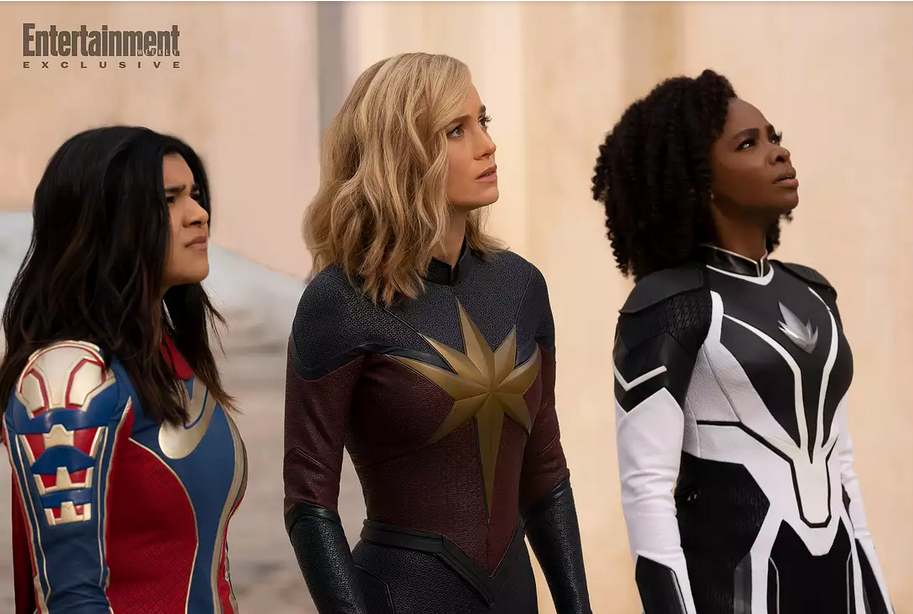
Monica Rambeau, Carol Danvers, and Kamala Khan all glowing with powers in a poster for The Marvels
Marvel Studios/Dolby Cinema

The Marvels ended with one of the group’s three members lost in a parallel universe. The jump point Dar-Benn created over Earth grew even more unstable after she tried to use both Quantum Bands at the same time. The resulting explosion caused a cosmic power overload that not only killed Dar-Benn, it caused a rip in space itself. It opened a door to a different reality which then began bleeding into the MCU’s Earth-616. Monica Rambeau alone stopped a potential universe-destroying Incursion by absorbing the combined energy of Kamala Khan and Carol Danvers. That gave her the power she needed to close the tear using her electromagnetic spectrum manipulation abilities. But Monica knew her heroism would come with a cost. She was only able to close the hole from the other side. When it safely shut she was stuck in a completely unknown branch of the multiverse.

Monica Rambeau closes a tear in space with multiple beams of light in The Marvels
Marvel Studios

At least it was completely unknown until the film’s only post-movie sequence. A mid-credits scene revealed Monica ended up in a reality with major implications for the MCU’s future. Monica woke up in a hospital bed after someone rescued her from space. Sitting by her side was a Variant of her mother, Maria Rambeau. That Maria doesn’t have a daughter, though. She’s not a mom; she’s a superhero known as Binary, a persona that belonged to Carol Danvers in Marvel Comics.

More importantly, Binary’s associate and Monica’s doctor, turned out to be someone who reports to “Charles.” The scene featured Kelsey Grammer’s Dr. Hank McCoy, a.k.a. Beast, from Fox’s X-Men franchise. His surprise appearance is the most consequential moment yet for mutants in the MCU. It means the X-Men have finally joined the series for good.

A purple tear in space reveals another reality in The Marvels
Marvel Studios

Ms. Marvel‘s season one finale revealed Kamala Khan to be the MCU’s first confirmed mutant. Since then others like her have officially joined the franchise. A Variant of Patrick Stewart’s Professor Charles Xavier appeared in Doctor Strange in the Multiverse of Madness. (That film also featured the first Maria Rambeau Variant. She was that dimension’s Captain Marvel.) Namor was the main antagonist of Black Panther: Wakanda Forever. And Mr. Immortal made a brief cameo on She-Hulk. There might also be more hiding in plain sight unaware of their genetic mutations.

However, none of those characters have direct ties to Fox’s X-Men films, which are poised to play a major role in the MCU soon. The version of Charles Xavier from Multiverse of Madness wasn’t just a Variant, it’s not clear any other X-Men or mutants exist in his reality. It’s also not yet known what connections, if any, the version of Hugh Jackman’s Wolverine who appears in Deadpool 3 will have with his original Fox universe character. Despite mutants’ presence, the X-Men didn’t exist in the MCU until The Marvels post-credits scene. Now they do, because in that universe Beast reports to “Charles.”

Kelsey Grammer's blue skinned and blue-haired Dr. Hank McCoy, aka Beast, from the X-Men movies
20th Century Studios

We don’t yet know if the reality Monica ended up in is the exact same universe as the Fox X-Men movies, but The Marvels strongly hinted at it. In addition to Grammer’s Beast, the scene featured music (listed in the credits) from both X2 and Days of Future Past. That’s a big difference from the musical cue we got for Kamala Khan on Ms. Marvel. A motif from the X-Men animated series accompanied her genetic mutation reveal. If Marvel wanted us to treat Beast, Binary, and the unseen Charles Xavier as just other mutant Variants, why use Fox-era music?

Monica Rambeau in a hospital bed looks surprised as someone walks by her in The Marvels
Marvel Studios

The presence of Maria Rambeau’s Binary and the difference in Beast’s physical appearance means we can’t definitively say Monica ended up in the Fox X-Men universe. But no matter which exact reality she’s now trapped in isn’t as important as what that parallel world means for the MCU. The X-Men are now, finally, an official part of the franchise. They’ve also met a hero of Earth-616 and now know, impossible as it seemed to Hank McCoy before, they are not alone in the universe.

It’s only a matter of time before they meet more of a different Earth’s Avengers.

Mikey Walsh is a staff writer at Nerdist. You can follow him on  Twitter and Bluesky at @burgermike. And also anywhere someone is ranking the Targaryen kings.

Source link

Marvel Studios/Dolby Cinema The Marvels ended with

Nintendo has announced that it will develop a live-action film of The Legend of Zelda.

The film will be produced by Shigeru Miyamoto, representative director and fellow of Nintendo, and veteran Hollywood producer Avi Arad, the former chief creative officer of Marvel Entertainment.

The film will be produced by Nintendo and Arad Productions, and directed by Wes Ball, the director behind the Maze Runner trilogy and next year’s Kingdom of the Planet of the Apes.

The film will be co-financed by Nintendo and Sony Pictures Entertainment, with more than 50% financed by Nintendo.

“By producing visual contents of Nintendo IP by itself, Nintendo is creating new opportunities to have people from around the world to access the world of entertainment which Nintendo has built, through different means apart from its dedicated game consoles,” the company said.

“By getting deeply involved in the movie production with the aim to put smiles on everyone’s faces through entertainment, Nintendo will continue its efforts to produce unique entertainment and deliver it to as many people as possible.”

Shigeru Miyamoto said in a statement: “I have been working on the live-action film of The Legend of Zelda for many years now with Avi Arad-san, who has produced many mega hit films.

“I have asked Avi-san to produce this film with me, and we have now officially started the development of the film with Nintendo itself heavily involved in the production. It will take time until its completion, but I hope you look forward to seeing it.”

Nintendo’s first modern Hollywood production, The Super Mario Bros. Movie, was a co-production between Illumination (Minions, Despicable Me) and Nintendo. So far it has generated over $1.3 billion at the global box office since its early April release.

The Zelda franchise has sold over 130 million units since launching in 1986, according to Nintendo.

Alongside Hogwarts Legacy, Nintendo Switch sequel The Legend of Zelda: Tears of the Kingdom has been one this year’s biggest blockbuster games.

Nintendo is officially making a live-action Zelda movie

It was released in May and sold 10 million copies worldwide in its first three days, according to Nintendo, making it the fastest-selling game in the history of the series and the fastest-selling Nintendo game for any system in Europe and the Americas. As of September, it’s sold 19.5 million copies.

Speaking during the company’s quarterly earnings call earlier this year, Nintendo president Shuntaro Furukawa said the company planned “to pour our efforts into a variety of visual content”, as it did last year with the consolidation of Nintendo Pictures Co., Ltd. as a subsidiary.

“We are very happy that [the Mario] movie is a hit, but will remain focused on carefully developing and further expanding each IP while respecting its unique characteristics, just as we have done in the past,” he said.

“Through our strategy of expanding the number of people who have access to Nintendo IP, we want to bring people in contact with our characters and the worlds depicted in our games, with the goal of continually invigorating our core dedicated video game platform business.”