
Categories
Widget Image
Trending
Recent Posts
Monday, Oct 19th, 2026
HomeStandard Blog Whole Post (Page 282)

[This story contains spoilers from the fifth and final season finale of The Boys.]

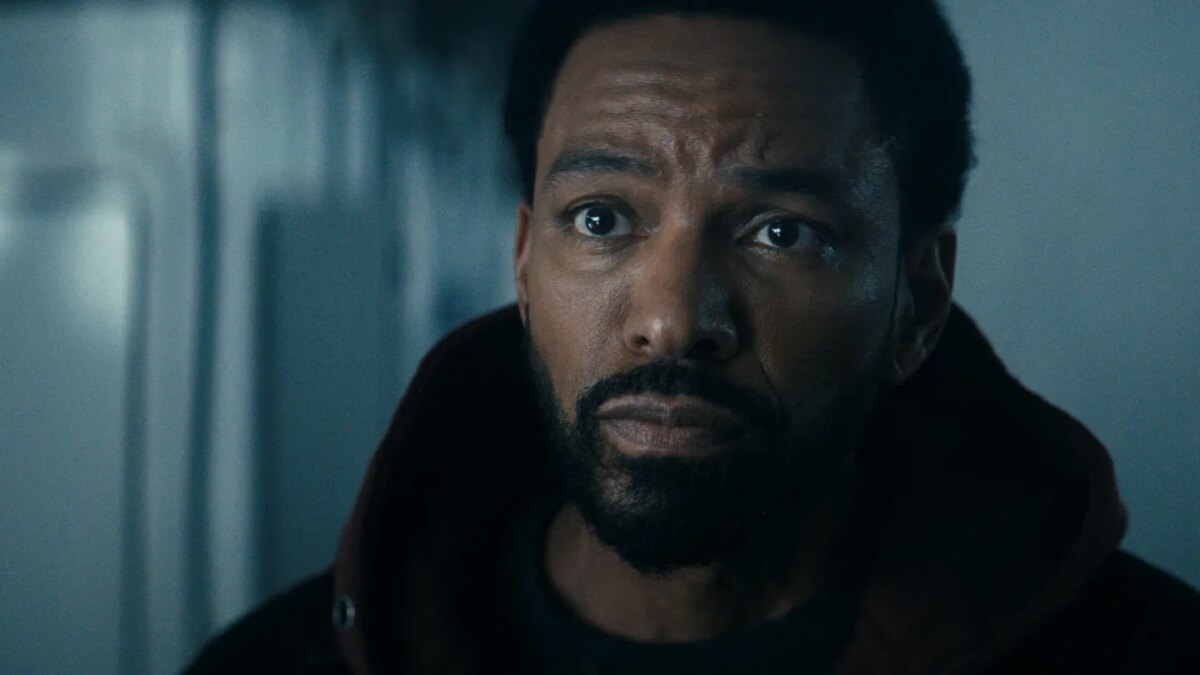
Laz Alonso’s character Mother’s Milk was one of the few characters that got out of The Boys unscathed (if unscathed meant not dying by the series finale).

After saying goodbye to the rest of his fellow supe fighters after Billy Butcher’s funeral, Mother’s Milk returns home to life with his wife and daughter. But he doesn’t leave the group alone, as it’s revealed that Ryan, the son to supervillain Homelander and Billy Butcher’s late wife Becca, has gone with him.

Alonso tells The Hollywood Reporter the decision for Mother’s Milk to take Ryan under his wing “was a symbol of breaking generational curses.” 

“If we understand who Ryan is to MM, he’s very close to MM’s story, because he’s the grandson of Soldier Boy, the man that killed MM’s grandfather and sent him down this completely different life of spiraling out of control,” he says. “When [series creator Eric] Kripke explained to me the whole arc of the character, it just blew me away, how much thought he’s put into these characters and their stories.” 

Below, Alonso elaborates on Mother’s Milk’s ending in The Boys, the story he thinks should be explored in a potential spinoff, how his character’s backstory may lend itself to the new prequel Vought Rising and what the show has meant to him. 

***

By the very end of The Boys, we learn that Mother’s Milk has returned home to his family, but he also took Ryan with him. Why do you think Ryan ended up going with him?

It was always Eric Kripke’s intention to make Mother’s Milk story an arc about breaking generational cycles and curses. If you remember in season three, that was the season we actually got to learn what was haunting Mother’s Milk, his backstory. Why does he have OCD? Why is he so passionate about hunting down these supes? [Viewers learned] where his war against Vought came from, and it came from Soldier Boy killing his grandfather in Harlem. That’s what completely changed his life. The irony here is that Mother’s Milk’s biggest fear has never been supes. His biggest fear was passing down his generational trauma that he got from his dad and his dad got from his dad. They were all fighting against this whole Vought and supe situation. The more MM tried to fight passing down that trauma, the more he actually made it worse. And in season five, we finally see a side of where he lets go of that fight, where he’s almost become a cynic and given up. He’s no longer the beacon of hope, the glue, the guy that’s trying to look at the bright side of things and keep the team together. He’s relinquished that need to control the situation. But the weirdest thing happens when you no longer try to hold on to something so tight that it slips between your fingers. When you let go, you’re free, and he found freedom in that. 

Being able to adopt Ryan and take him under his wing was a symbol of breaking generational curses, because if we understand who Ryan is to MM, he’s very, very close to MM’s story, because he’s the grandson of Soldier Boy, the man that killed MM’s grandfather and sent him down this completely different life of spiraling out of control. So when Kripke explained to me the whole arc of the character, and MM has to live and what his responsibility is moving forward by taking Ryan under his wing, it just blew me away, how much thought he’s put into these characters and their stories and arcs. I’ve read comments online and they’re like, “We feel like [MM’s] story was not finished, because he didn’t kill Soldier Boy.” But killing Soldier Boy wasn’t necessarily MM’s full story. His full story was regaining his life, making it home to his family and not passing on the trauma that he’s carried on for so many years.

Laz Alonso (Mother’s Milk) at the end of The Boys season five.

Jasper Savage/Prime

When you first read the finale script, was there anything specific that stood out to you that shocked you? Were you shocked that MM was going to live? Did you think there was a possibility he would die?

No, I knew since season three that MM wasn’t gonna die. Kripke and I had very, very deep conversations about MM’s series arc. Especially in season three, when he started to really become more of a prominent character within the group. But I didn’t think that Butcher was gonna die. I did have hope that something was gonna change and Butcher wouldn’t have to die, especially at the hands of Hughie. That really broke my heart to read. [Karl Urban and Jack Quaid] played it beautifully. These guys, the life that they gave to what was on the page — you can only write so many details. When the actor takes hold of it, they give it a whole new, different breath, and I just felt like Jack and Karl, their relationship and friendship made that scene so beautiful. It did not play the same way it read [in the script]. It read a little bit more violent. And they played it with so much humanity and tenderness. It was a tearjerker.

MM is one of the characters who did not die by the end of The Boys, and he kind of got what he wanted out of all this craziness of the Boys’ journey, which was going home to his family. Do you think that he’s now ready to leave behind his supe-finding past and move forward?

I think so, to be honest. You know, I think that the fact that he made a promise to Stan Edgar, MM is a man of his word, and Stan Edgar told him that he was gonna be running far again. MM told Stan Edgar, “When that day comes, I have a job to do, too, and that’s to put a bullet between your eyes.” So, I do think that in the Vought universe, as long as Stan Edgar exists and he continues to proliferate this business of supes running amok, it’s only so long before he is gonna feel like he has a job to finish. And now he’s got Ryan by his side, so there’s a lineage there. You think about when Butcher recruited Hughie [in season one] and he taught him the ropes. I almost feel like there’s something there with MM and Ryan that would be really interesting to develop.

You mean like a future potential Boys spinoff starring MM and Ryan?

Hey, listen, I’m always pitching. So, Amazon, if you’re listening; Kripke, if you’re listening. No, I’m kidding. As an actor, you’re always thinking in stories, in storylines. Obviously, this is not a conversation that was had with me or this is not something that was told that there’s a potential thing. But in my mind, that’s what’s happening. MM made a promise, and if I know him — and I think I know him pretty well — he meant what he said.

Tomer Capone (Frenchie), Laz Alonso (Mother’s Milk), Karl Urban (Billy Butcher), Jack Quaid (Hughie Campbell) and Karen Fukuhara (Kimiko) in The Boys season five.

Jasper Savage/Amazon Prime Video

Vought Rising is going to be coming out next year, and this is going to tackle the Soldier Boy era of the Seven. It’s a prequel series set in the ’50s. We’ve talked about MM’s family’s past with Soldier Boy, and although that piece of the story doesn’t necessarily occur specifically in the ’50s, do you think that Vought Rising will at all explore that connection to MM’s family?

I think they should. I anticipate that Vought Rising is gonna have a very, very successful launch and many successful seasons. And at some point, as time progresses — I don’t know what kind of timeframes or time blocks they’ll be building each season — but at some point, I think it would be interesting to see Soldier Boy in Harlem. The connection between Vought Rising and The Boys really is, if you think about it, a direct storyline connecting to a member of The Boys to Soldier Boy. So, it would be interesting to see MM’s mom working in a compound V factory, MM’s dad suing Vought for unsafe work conditions, MM being born with a V addiction, if they decide to show any of that. There was a lot that connected The Boys‘ world to Vought, and that connection was through Soldier Boy and MM. 

I have seen the behind-the-scenes photos that you’ve been sharing from set on Facebook. Are there any other behind-the-scenes moments from the final episode that stand out to you?

I have so much in my camera roll. I’ve got seven years worth of pictures, and it can get a little overwhelming because you don’t want to flood your timeline with just pictures of The Boys, but there’s so many funny moments and most of them were off-camera. Our funniest, craziest moments were in between takes. Everybody’s last day [on set], I was privileged enough to get everybody’s last day wrap speeches. Erin [Moriarty]’s, Karen [Fukuhara]’s, Karl [Urban]’s, Jack [Quaid]’s. I did not get Tomer [Capone’s wrap speech], because I wasn’t there the day that he shot his last day. But they’re such beautiful speeches; they’re heartfelt, everyone is basically in tears. At some point, I would love to do an homage to my castmates’ final speeches once they wrapped. It just really shows the connection that we shared for seven years with our crew. We really did share a special connection with a family that we never knew was waiting for us in Toronto. That’s something that we’ll cherish forever.

What has being a part of The Boys meant to you?

It means so much to me that it’s hard to summarize, but I’m gonna say joy. Because, from a career perspective, I feel like I’ve gotten better on this show. I’m a better actor now than I was seven years ago. From a friendship perspective, from meeting genuinely good people who want nothing from you except to make sure that you’re okay, I’m literally speechless. I’ve never had this experience in any work environment, especially in my film and television career, where we’ve been surrounded by good people. I can’t compliment any higher than that.

***

All eight episodes of The Boys season five are now streaming on Prime Video. Read all of THR’s coverage of The Boys season five here.

Source link

[This story contains spoilers from the fifth
Covers are a wonderful part of the music ecosystem. AI-generated ones, significantly less so. And, to no one’s surprise, it is—as always—Spotify at the scene of the crime.

Earlier today, Spotify and Universal Music Group announced a licensing agreement allowing Spotify Premium subscribers to “cover” and remix copyrighted music with the help of AI. Oh, joy. It’s a pretty self-evident bid for AI monetization: subscribers pay extra to use the service, while copyrighted songs find new life (and new cash) in the joint hands of users and generative AI. They’re not hiding the financial incentive, either; the official announcement makes it clear that the tool will “open up additional revenue streams and new ways to drive discovery” and introduce “a creation model where artists and songwriters can directly share in the value generated through AI-driven licensed covers.” UMG Chairman-CEO Lucian Grainge insists that “this pioneering AI-enabled superfan initiative” was “designed to support human artistry” and “deepen fan relationships,” because nothing says “support the connection between arts and listeners” like using an AI middleman.

As if that wasn’t enough, Spotify (public enemy #1) has now partnered with Live Nation (public enemy #2) to, yes, make concert ticketing even more hellish. Remember the Ticketmaster and Live Nation monopolization case last month? Spotify doesn’t—or, more likely, they want in on the concert moguls’ deal. It’s called “Spotify Reserved” and will allegedly be used to “identify an artist’s most dedicated fans and hold two tour tickets for them,” both of which will be reserved for a day before being released to the public. The system seems remarkably easy to game, considering it’s largely streams- and shares-based—two incredibly easy metrics to bot and manipulate. It will also likely end up being rather arbitrary, something Spotify itself acknowledged in its announcement: “There will be significantly more superfans than there are seats available on a tour, so not every fan will receive an offer.” I look forward to seeing how terribly this will inevitably go come Taylor Swift’s next tour.

Source link

Covers are a wonderful part of the

Everyone who has ever experienced serious grief knows the strange, unsettling things it can do to time: stretching it or compressing it by turns, consigning some passages of it to a black hole of memory, or sometimes just suspending it entirely. Pretty much all these possible stages and cruel temporal tricks of the mind are felt in Sandra Wollner‘s shattered, piercing family study “Everytime,” until the present loops back on the past entirely, and which (or whose) reality we’re in becomes a matter very much up for debate. Elevating low-key domestic portraiture with extraordinary technical finesse, toward a big-swing finale of radical conceptual daring, the Austrian filmmaker’s third feature felt like the most refined and inventive formal statement in this year’s Un Certain Regard program at Cannes, and duly won the top prize there.

That win will ensure healthy arthouse distribution for this outwardly challenging but emotionally involving work which will certainly see more theatrical play than Wollner’s name-making previous film, the startling 2020 sci-fi drama “The Trouble With Being Born.” That film’s prospects were curtailed by the pandemic, certainly, but also by its confronting, controversial premise, involving a childlike AI android sexually abused by its creator. “Everytime” isn’t nearly as blatant a provocation, though it confirms Wollner’s aptitude for needling, subtly uncanny narratives that linger to increasingly disconcerting effect in the mind, and her visually and sonically commanding way of realizing them — this time in collaboration with ace “Aftersun” cinematographer Gregory Oke, clearly the man to call if you need an all-inclusive coastal resort suffused with soul-bleaching light and creeping dread.

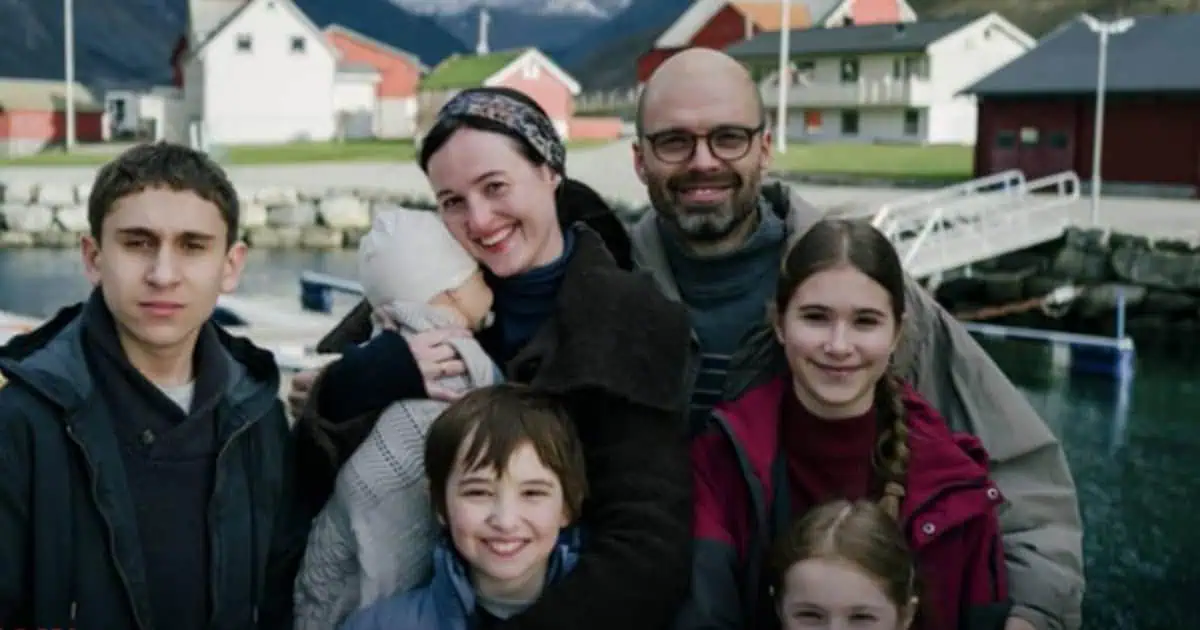
It’s on the eve of a family vacation to one such place in Tenerife that Berlin teenager Jessie (Carla Hüttermann) steals away for a blissed-out evening with her boyfriend Lux (Tristan Lopez) — a leisurely few hours of aimless ambling and circular conversation that plays out in a manner reminiscent of German auteur Angela Schanelec’s semi-surreal walking-and-talking features, further fuzzed by the addition of whatever drugs Lux has at his disposal.

To watch the sunrise, the inebriated couple climb to the rooftop of a high-rise tower block, where Lux falls asleep and Jessie stands too close to the edge. The ensuing tragedy — shot by Oke with the camera in wide, sweeping flight, following Jessie’s gaze on a loosely soaring bird before slowly traveling back to find her body in silent freefall — is the first of Wollner’s gasp-inducing cinematic coups, executed with such nonchalant candor that you briefly don’t trust your eyes.

A year or so later, Jessie’s single mother Ella (Birgit Minichmayr, “Everyone Else”) and younger sister Melli (Lotte Shirin Keiling) are doing their best to carry on as a family of two, incorporating regular maintenance of Jessie’s grave into their routine of mundane chores and outings. But it’s hard to shake the air of hollow, broken-spirited pretense in the household as mother and daughter play-act at normality, ostensibly looking after each other but retreating into themselves at every opportunity. For Melli, technology is an outlet for her mourning: She still regularly texts her sister’s phone, and spends hours playing a “Minecraft”-style 8-bit video game that rearranges the irregular world around her into comfortingly exact geometric shapes. That’s a realm the film itself dives into for extended, immersive and blearily entrancing interludes — a gateway into its eventual, more drastic breakdown of rational reality, controlled by one player’s will.

Lux, meanwhile, is left adrift, travelling hither and thither as he works through his own grief and guilt, but eventually returning to Berlin to assume an unspoken, undefined place in Ella and Melli’s gaping family unit. In a beautifully contained performance that shows both glimmers of tender, redirected parental instinct toward the boy and festering resentment, Minichmayr centers the film during its aptly meandering, shellshocked middle section. But it’s in the final third — as the three take the vacation that was canceled by Jessie’s death — that “Everytime” enters new, searching emotional and philosophical territory, with a series of stunning atmospheric shifts and returned imagery that permits, perhaps, the possibility of a new beginning.

It’s a dazzling, fairly unnerving finale that Wollner arguably over-complicates with one too many new, dimension-tilting story elements, including a sudden introduction of voiceover that the film would lose no power by shedding. But an excess of substantial ideas and interpretive possibilities is a luxurious flaw to have in a film, and what sticks in “Everytime” are the starkest, least explicable intrusions of dreamlike incident into the world we think we know, which Wollner and her collaborators have thus far outlined with such rigor and precision. It’s the film’s most audacious logical and stylistic swerves that will continue to turn heads on the festival circuit, clearly confirming its helmer as a major in the making, but not in a way that feels like empty auteur showoff-ery: Even through its more inscrutable story turns, “Everytime” remains deeply, legibly and sometimes overwhelmingly felt.

Source link

Everyone who has ever experienced serious grief

Russia used the powerful hypersonic Oreshnik ballistic missile during a mass drone and missile attack on Kyiv on Sunday that killed at least two people, Ukrainian President Volodymyr Zelenskyy said Sunday, marking the third time the weapon has been used in the four-year war.

The intense aerial assault damaged buildings across the Ukrainian capital, including near government offices, residential buildings, schools and a market, Ukrainian authorities said. At least 83 people were wounded in the attack.

Air raid sirens blared through the night as smoke billowed across the city from strikes. Associated Press reporters heard powerful explosions near the city center and close to government buildings.

The attack included 600 strike drones and 90 air, sea and ground-launched missiles, according to Ukraine’s Air Force. Ukrainian air defenses destroyed and jammed 549 drones and 55 missiles. Around 19 missiles failed to reach targets, the Air Force said.

Story continues below advertisement

Ferit Hoxha, Albania’s foreign minister, reported that the residence of the Albanian ambassador to Ukraine was hit during the attack, denouncing it as “unacceptable” and a “grave escalation”.

The Oreshnik, which is capable of carrying nuclear or conventional warheads, struck the city of Bila Tserkva in the Kyiv region, Zelenskyy said on Telegram.

Russia had vowed to strike back for an attack Friday

Russia’s Defense Ministry on Sunday confirmed the weapon’s use, as well as other missile types, to strike Ukrainian “military command and control facilities,” air bases and military industrial enterprises. The ministry added the attack was retaliation for Ukrainian attacks on “civilian facilities on Russian territory,” without giving detail.

Russian President Vladimir Putin on Friday denounced a drone strike on a college dormitory in Russian-occupied eastern Ukraine, which Moscow blamed on Kyiv. He said there were no military or law enforcement facilities near the college. Putin said he ordered the Russian military to retaliate.

The death toll from that strike had risen to 21, Russian authorities said late Saturday. They said 42 other people had been wounded in the attack the previous night. The Kremlin-installed authorities of the Luhansk region announced two days of mourning for the victims.

Get daily Canada news delivered to your inbox so you'll never miss the day's top stories.

Get daily National news

Get daily Canada news delivered to your inbox so you’ll never miss the day’s top stories.

At a U.N. Security Council emergency meeting on the strike, held at the request of Russia, Ukrainian Ambassador Andrii Melnyk denied his Russian counterpart’s accusations of war crimes, calling them a “pure propaganda show” and asserting that the May 22 operations “exclusively targeted the Russian war machine.”

Story continues below advertisement

Kyiv’s European allies, including France’s Emmanuel Macron and Germany’s Friedrich Merz, condemned the Russian strikes and use of the Oreshnik in statements published on Sunday. Kaja Kallas, the European Union’s foreign policy chief, said top diplomats from EU states will meet within days to “discuss how to dial up the international pressure on Russia.”


Click to play video: 'Russia launches major nuclear drills with Belarus amid NATO tensions'


Russia launches major nuclear drills with Belarus amid NATO tensions


Ukraine struggles to down all ballistic missiles

Zelenskyy said not all the ballistic missiles were intercepted and that most of the strikes hit Kyiv, the primary target of the attack.

The apparent interception failures underscored Ukraine’s chronic shortage of air defense missiles capable of downing ballistic missiles. Kyiv relies heavily on U.S. Patriot air defense systems to intercept such weapons, but interceptors remain in short supply and are among Ukraine’s most urgent requests to its Western partners.

Story continues below advertisement

Developing a domestically produced alternative has become a top priority for Ukraine’s Defense Ministry, though doing so will require time and funding.

Fires rage into the morning in Kyiv after attack


Damage was recorded in 50 locations across several districts of the capital, including residential buildings, shopping centers and schools, Ukraine’s emergency service said in a Telegram post. Police department buildings were also damaged, it said.

Fires continued to rage into the morning, complicating rescue efforts as buildings collapsed from the blasts.

“It was a terrible night, and there had never been anything like it in the entire war,” said Kyiv resident Svitlana Onofryichuk, 55, who had worked in the market that was damaged for 22 years.

“I am very sorry that I have to say goodbye to Kyiv now, I am not staying there anymore, there is no possibility,” she added. “My job is gone, everything is gone, everything has burned down.”

Yevhen Zosin, 74, a Kyiv resident who witnessed the attack, said the moment he heard the explosion he rushed to grab his dog.

“Then there was another explosion and she and I were thrown back like a pin by the shock wave. We both survived, she and I. My apartment was blown to pieces,” he said.

Story continues below advertisement


Click to play video: 'Russia launches largest sustained attack of the war on Ukraine'


Russia launches largest sustained attack of the war on Ukraine


In Kyiv’s Shevchenko district, a five-story residential building was hit, which caused a fire, and one person was killed, Ukraine’s state emergency service reported.

A school building was damaged by an attack while people sheltered inside, Mayor Vitali Klitschko said. Local authorities reported supermarkets and warehouses across the city also were damaged.

Multiple communities recorded damage throughout the Kyiv region, according to Mykola Kalashnyk, who heads the regional administration.

Elsewhere, a Ukrainian drone killed a civilian in the Russian town of Grayvoron, in the Belgorod region bordering Ukraine, local authorities reported on Sunday morning.

Russia’s Defense Ministry said its forces shot down or jammed 33 Ukrainian drones overnight into Sunday, including over the Moscow region, western and southwestern Russia, and Russian-occupied Crimea.

Story continues below advertisement

—Associated Press writer John Leicester in Paris contributed to this report.

Source link

Russia used the powerful hypersonic Oreshnik ballistic

The third — and likely final — season of “Euphoria” is a case study in excess. It is the Artemis II of TV shows, going so far over the top it passes the Moon before crashing back down to Earth. What was once an eye-catching clique of wayward teens bathed in purple hues has metamorphosed into a barren hellscape rife with drug-smuggling cartels, pistol-packin’ pimps, sugar daddies with mummification kinks and online streamers. These kids certainly ain’t in high school anymore and feel untethered to what once was.

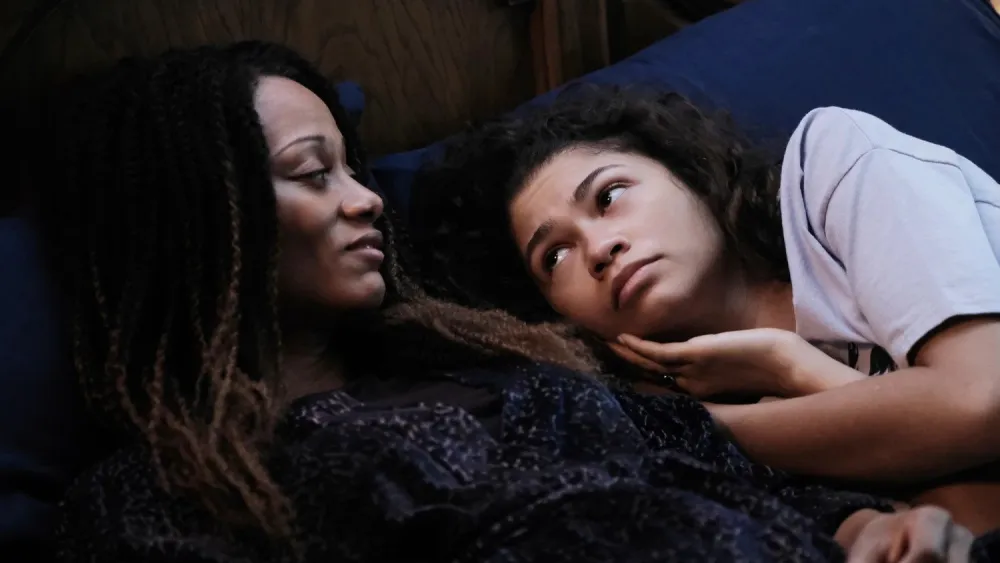
Part of the reason for this evolution is that the two forces that were keeping Sam Levinson’s embattled protagonist, Rue (Zendaya), grounded in reality have been either entirely (her younger sister Gia, played by Storm Reid) or largely (her mother Leslie, brought to life by Nika King) written off the show. Leslie’s absence has been the more jarring for viewers, since Rue has mentioned over and over how adrift at sea she feels being estranged from her mother, and the phone calls she keeps placing for her. In Sunday’s sixth episode of the season, titled “Stand Still and See,” we finally caught an oh-so-brief glimpse of Leslie on the other line.

Rue had just received a lifeline in the form an incriminating exchange she’d recorded on her phone between Alamo (Adewale Akinnuoye-Agbaje) and Laurie (Martha Kelly) about smuggling fentanyl in ambulances from Mexico to the U.S. — enough intel to get her off the hook with the DEA. She was also slapped into another dimension by Jules (Hunter Schafer) after lobbing several insults at her about Jules’ whole sugar baby situation. And so, Rue finds herself in a church pew, praying for forgiveness. She calls her mom. “I love you so much, and I’m sorry if I made it harder. I didn’t really realize how tough it is to be out here by yourself,” Rue tells Leslie. “I know I’m not alone. I know that. But yeah, I’ll — I’m coming home soon.”

And then, for the first time all season, we see Leslie on the other line. “I love you Rue,” Leslie replies, before solemnly looking out the window.

Nika King as Leslie in Season 3 of “Euphoria.”

HBO

It’s a blink-and-you’ll miss it scene, and its brevity caught not only King, who plays Leslie, by surprise, but her mother too. On Sunday evening, just after the episode aired, King posted a hilarious clip to her Instagram of her mother, Sharon, “clowning” her over how short the scene was, asking, “What happened?” and joking that the internet waited “three years” just to see her utter a single line.

“My mom is my best friend. She’s seen me go through the ups and downs of the industry, and she’s always trying to make me laugh and make me see that it’s not the end of the world,” King tells Variety. “I had told her what I did, and I was looking forward to seeing it, and when we saw it together, she was looking at me like, ‘What happened?’ I thought that was a funny moment to share with my followers, and to see the dynamic between my mom and I.”

That dynamic between King and her mom, who she calls “the real comedian of the family,” helped her so vividly capture the plight of Leslie, a mother desperately trying to get through to her daughter as she falls deeper and deeper into drug addiction.

“My mom was an addict when I grew up, so I’m always holding on to this memory of helplessness. It’s easy for me to channel that,” King says. “The dynamic between Rue and Leslie is very similar to my mom and I.”

Things finally changed for the better when King’s mother was given a choice: get clean or your kids are going into foster care. It served as a harsh reality check for Sharon, who’d grown up in foster care herself after her mother was murdered when she was just a child.

“She went through the world without having a biological mom,” says King. “She was fostered by a pastor and his wife, but it wasn’t the best situation. My mom went to rehab after she was told that if she didn’t get clean, she was going to lose her kids. That was the turning point for her. It’s been a long process for us to get to this place.”


King grew up in Miami, and didn’t know she wanted to become an actor until she went to college. Though she’d enrolled with an eye on physical therapy, she took an acting class and immediately thought, “This is what I want to do for the rest of my life.” She subsequently moved to Los Angeles and dove head-first into the comedy world, from sketch comedy and stand-up to studying improv at The Groundlings. King appeared in “Hannah Montana” and “2 Broke Girls,” as well as “Wanda Sykes Presents Herlarious”; hosted a monthly comedy show at the Improv called “Nika King and Friends!”; and was a member of Elite Delta Force 3 (EDF3), a sketch comedy group of all Black women alongside Robin Thede and Nefetari Spencer.

But it was the role of Leslie in “Euphoria” that really changed the game for her.

“That was the breakout role, because it was so different than I was used to as a dramatic role,” King says. “It put me on a different path. People seeing me in that role definitely surprised them, and it kind of surprised me, too. I didn’t realize I could do such deep work, but being across from Storm, Z, and Colman [Domingo], you really need to up your game.”

King auditioned for the role of Leslie in May 2018, and was only given a brief description of her character as a strong, loving mother dealing with a daughter battling drug addiction. She didn’t really think she had a chance at it given the competition at the audition.  

“I saw every actress that I grew up watching in the waiting room, so I thought, yeah, I’m never going to get this,” says King. “I saw Garcelle Beauvais in there, and Jill Marie Jones.”

To King’s surprise, she soon got a call from her agent telling her that she was on hold for the project, and that she would be playing Zendaya’s mom. Then, she was rushed right into a chemistry read with Zendaya, whom she describes as “real cool and laid-back.” And the rest, as they say, is history.

The second season of “Euphoria” premiered in January 2022, and its third season bowed in April 2026. During the lengthy hiatus between Seasons 2 and 3, King went home to Florida and helped her mom — a former postal worker — run her restaurant, Blue Tree Cafe Vegan Soul Food, which has been up and cooking in Fort Lauderdale since 2007. She also kept performing sets at comedy clubs. During those sets, King addressed how fans would keep coming up to her and asking when “Euphoria” Season 3 would come out, joking that she “didn’t fuckin’ know” and needs it to come back because she “hadn’t paid my rent in six months!” The clip went viral:

“As long as we had been on hiatus, I was doing that joke. And it just happened to go viral!” King says. “It wasn’t even a finished joke; it was still in the lab being worked out. But everything happens the way it’s supposed to. It brought attention to the real journey of an actor. I’m not a celebrity or superstar: I’m a working actor.”

King does feel bad about how the joke was “misconstrued” and taken literally by the media, versus something she’d clearly said in jest.

“I’m in a comedy club telling a joke. It was a realization for me that I was on a different level in terms of visibility, and how a joke can get twisted and become misaligned with my creativity,” she says.

After the clip went viral, King was told that she would not be returning for the third season of “Euphoria.”

“My third-year contract option was terminated; they told me they were going to go in a different direction,” she says. “And then, after they started filming Season 3 last year, I got a call saying, ‘Hey, we want to bring you in to do a few episodes.’”

Some phone calls and emails were exchanged, and a few days later King was on a plane to Los Angeles. She says she filmed for one day and shot material for two episodes, meaning she may pop up in another episode this season — though she’s not exactly sure how much of her you’ll see.

“Sam is always rewriting and shaping episodes, and he’s always kept the scripts pretty secret, so you only know what you’re filming the day-of. So, I don’t know,” King says. “But I love Leslie. I will ride or die for her. Everyone has a mom and is familiar with that dynamic. Leslie is praying for Rue to get her stuff together. And even though the storyline had jumped to where they’re no longer in high school, I think the mom and the sister are pivotal characters relative to Rue’s sobriety and mental health.”

These days, King is helping her mother run her vegan restaurant in Fort Lauderdale — they’re currently gearing up for a summer program where they feed around 400 kids from underserved communities — and teaching acting classes at Kim Houston Acting Studios in nearby Hollywood, Florida. She’s also prepping her second comedy special, and is keen to tackle more dramatic parts like Leslie.

“It’s such a great role, and great starting point to a dramatic career, so I want to do roles that are on that same playing field or level of storytelling,” King says. “Like stories involving people overcoming great obstacles.”

Source link

The third — and likely final —

Japanese genre maven Kiyoshi Kurosawa is mostly known outside his homeland for eerie, visually inventive films like Cure, Pulse and Loft that brought the J-horror trend into the arthouse. But he’s also made psychological thrillers (Creepy), serial killer flicks (Serpent’s Path), science-fiction movies (Before We Vanish), a darkly comic anti-capitalist actioner (last year’s Cloud) and at least one great drama (Tokyo Sonata).

The auteur can now cross another genre off his bucket list with The Samurai and the Prisoner (Kokurojo), a stately and rather stagy historical mystery set during the 16th century, at a time when warring clans fought and outmaneuvered each other for control of the land.

Kiyoshi Kurosawa

The Bottom Line

Katanas Out.

Venue: Cannes Film Festival (Cannes Première)
Cast: Masahiro Motoki, Masaki Suda, Yuriko Yoshitaka, Munetaka Aoki, Bando Shingo
Director, screenwriter: Kiyoshi Kurosawa, based on the book by Honobu Yonezawa

2 hours 27 minutes

Based on the prizewinning 2021 novel by Honobu Yonezawa, the film tells a story that will probably be familiar to anyone who grew up in Japan. It then takes that classic narrative and adds a few new twists, as well as a decidedly anti-war message that seems to be speaking to our time as well.

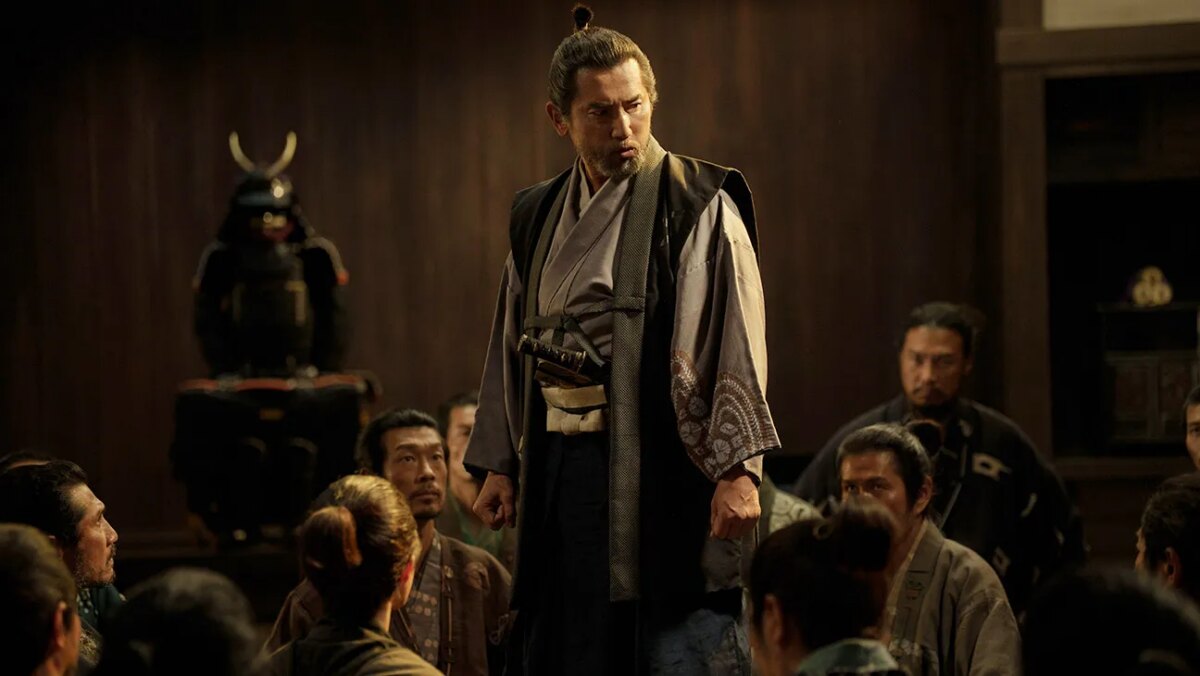
The tale of Lord Murashige Araki (Masahiro Motoki), who betrayed the infamous samurai leader and “great unifier” of Japan, Nobunaga Oda (Bando Shingo), is usually depicted as one of treachery and cowardice: an ambitious underling breaks ties with his powerful boss, holes up in his own castle surrounded by a small but faithful army, then eventually decides to abandon ship.

Kurosawa, who adapted the screenplay himself, transforms Murashige’s long last stand into four interconnected mysteries each spanning a single season. Not unlike an Agatha Christie whodunit, but featuring katanas instead of poison and revolvers, the stories all depict a seemingly impossible crime Murashige has to somehow solve. Unable to do that on his own, he enlists the help of Kanbei Kuroda (Masaki Suda), a faithful Nobunaga lieutenant who’s been taken prisoner in the castle and offers to serve as a Watson to Murashige’s Sherlock, even if the detainee is not to be trusted.

This sounds like the perfect set-up for a suspenseful feudal thriller — think Knives Out meets Throne of Blood — in which Kurosawa (no relation to Akira) could showcase his talent for capturing violence and madness, this time within the elegant medieval sets designed by Harada Tetsuo (The Last Ronin). But the director more or less opts to eschew violence altogether, delivering a loquacious and theatrical drama that’s more traditionally made than probably anything he’s directed up until now. Even when there is a bit of action thrown in, it’s rather short and bloodless — more suggestive than visceral.

In some ways this makes sense: The whole reason Murashige thwarts Nobunaga in the first place is because he rejects his leader’s brutal ways, as evidenced during a flashback in which he’s obliged to decapitate a bunch of innocent women. (Okay, so there are some beheadings here, but even those look rather clean.) Unlike most samurais of his time, Murashige is thoughtful, erudite and believes violence is never the answer — a philosophy that comes back to haunt him, especially in the final act.

The director’s sober if mastered approach to such material doesn’t necessarily tantalize the viewer, although Japanese audiences familiar with the characters and stakes may be sucked in more easily. One problem is that Kurosawa winds up repeating the same scenario each time, even if the crimes, victims and culprits are all different: After investigating for a while on his own, Murashige confides in his wife, Chiyoho (Yuriko Yoshitaka), who turns out to be less innocent than she initially appeared. Then he heads down to the dungeon for a long chat with Kanbei, who sifts through piles of calligraphy scrolls like a detective mulling over evidence files, offering up an hypothesis as to what really happened.

Not that there’s a lack of intrigue here, but anyone expecting that a film called The Samurai and the Prisoner would be filled with chopsocky action scenes will be disappointed. Kurosawa has instead chosen to direct a refined murder mystery dressed up in sumptuous feudal garb, offering his own take on one of the oldest Japanese genres. More than that, he’s made a work that questions the kind of violence that has characterized most of his cinema, celebrating a legendary character who decided to walk away from war rather than waging it. Classic and contained (the action rarely ventures outside the castle), this is a samurai flick that ends up denouncing the sacred code all samurais used to live by.

Source link

Japanese genre maven Kiyoshi Kurosawa is mostly

Practical prosthetics, pickles and a Pennywise origin story – oh my! These are just some of the new twisted scares you’ll see in HBO’s IT: Welcome to Derry. 

This horror series created by siblings Andy and Barbara Muschietti, adapted from Stephen King’s iconic horror novel It, is set two decades before the events of 2017’s It and the sequel It Chapter Two. The prequel expands the lore of the shapeshifting murderous entity known as Pennywise (Bill Skarsgård) that feeds on children before returning to hibernation every 27 years. As he stalks the town of Derry, a group of children must find a way to put an end to his killing spree or at least quell his thirst until his next sleep. 

Throughout the series Pennywise takes on the form of deep traumas to create new scares for the children of Derry. As a result of this, Ronnie (Amanda Christine) has to witness the gruesome body of her mother (Tenika Davis), who died giving birth to her, trying to murder her through an open gash with teeth in her abdomen.

During their interview with Deadline on The Process, the Muschiettis and VFX supervisor Daryl Sawchuk reveal the gnarly scene was mostly done practically. 

“Amanda did an amazing job. There was a lot of endurance, a lot of energy [needed] at all times. But she endured a lot. You can see she’s covered in his terrible goop, and [between] that and the resetting of this was always tremendous because it’s all wet and very, very taxing,” Andy Muschietti says.  

Barbara Muschietti adds: “When we started working with Tenika, Andy discovered what an amazing actor she was. Especially when it comes to the mother and how scary she was. [The scene] was extended because Tanika was so good and so incredible at making that character grow and [being] terrifying.”

Sawchuk, who worked with Rodeo FX Montreal behind the scenes, recalls the concept team’s painstaking dedication to making everything look authentic. “[They] did amazing paint-overs on top of the real photography to define what the look should be for the mummification of [that character]. And it’s always a good starting point for us to have great artwork to work off of and Andy holds us to a very high bar,” he says with a laugh. “There’s always one more note, one more thought.” 

“But thanks to [the VFX team] she turns into that corpse, mummified version of her and it was a very successful moment. We were so heavily grounded in real practical effects, that old-school horror filmmaking.” Andy Muschietti says. 

Another terror that went viral online was the pickle jar horrors. During a grocery shopping run, Lilly Bainbridge (Clara Stack) is plagued by Pennywise in the form of her father who was fatally sliced into pieces at a pickle canning company. As the individually jarred pieces of her father’s body jump off the shelves and crash onto the floor they form a pickle-based tentacle monster. 

“The concept of the monster was basically the idea of a man that’s been sliced,” Andy Muschietti says. “I remember discussing this where it was like, ‘OK? How are we going to see it? Will it be a Rubik’s cube type thing made up of slices of a face?’ It was executed very well by the guys at Rodeo. Also, I wanted the entrails to be part of this creature. That’s when we said, ‘OK, let’s make it look like an octopus. And the intestines will be the tentacles of this creature and the means of propulsion.’ It’s disgusting.” 

And what about the calamity of the crashing pickle jars? “We did use real pickles,” Barbara Muschietti says. “And real pickle juice. The stages smelt like pickles for about a week.” 

Sawchuk adds: “[We were] big believers in trying to get as much real on camera as possible. Andy, thankfully, was like, ‘OK let’s do it,’ so the special effects team filled up hundreds of jars. I mean, it makes for a much more believable performance.” 

To find out more about how the IT: Welcome to Derry crew grounded the horror series in reality, along with visually depicting Pennywise’s celestial origins, watch the video above. 

Credits: Produced by HBO and Warner Bros. Television, developed for television by Andy Muschietti, Barbara Muschietti, and Jason Fuchs, IT: WELCOME TO DERRY is based on the novel “It” by Stephen King. Andy Muschietti and Barbara Muschietti (through their Double Dream production company), Jason Fuchs, Brad Caleb Kane, David Coatsworth, Bill Skarsgård, Shelley Meals, Roy Lee, and Dan Lin are executive producers. Fuchs, who wrote the teleplay for the first episode, and Kane serve as co-showrunners on the project.

Source link

Practical prosthetics, pickles and a Pennywise origin

Caleb Shomo, the frontman of the rock band Beartooth, came out as gay in a candid, heartfelt post on Saturday.

The rock musician, 33, took to Instagram and opened up about his sexuality amid ‘a lot of speculation surrounding [his] personal life.’

Shortly thereafter, his wife of 13 years, actress Fleur Shomo (née Terry) who appeared in medical drama The Pitt, shared a statement on her social media page and expressed support for Caleb while also discussing their ‘disorientating and hurtful’ split.

Caleb penned a lengthy message to his 213,000 Instagram followers and began by addressing ‘something I’ve been unpacking and reckoning with in my life for quite some time now.’ 

‘I feel compelled to set the record straight before it affects those I love any further,’ he wrote. ‘I am a proudly gay man.’ 

He then admitted it has been ‘difficult’ for him ‘to navigate the feelings surrounding the subject and figure out what to do with this fact.’  

Beartooth frontman Caleb Shomo came out as a 'proudly gay man' in a statement shared via Instagram on Saturday; Seen performing in 2025 in New Orleans

Beartooth frontman Caleb Shomo came out as a ‘proudly gay man’ in a statement shared via Instagram on Saturday; Seen performing in 2025 in New Orleans

Shortly thereafter, his wife of 13 years, Fleur Shomo, penned a message of support while also opening up about their 'disorientating and hurtful' split

Shortly thereafter, his wife of 13 years, Fleur Shomo, penned a message of support while also opening up about their ‘disorientating and hurtful’ split

The couple tied the knot in 2012, and had been together for approximately two years before they got married, and have no children together. 

In his statement, Caleb explained that he ‘always’ put ‘the deepest part of my soul’ in his art and music. 

Then, he reflected on four ‘very self-deprecating [Beartooth] albums’ that he created before coming out. 

Caleb noted his past music explored ‘his religious upbringing, depression, self hatred, self loathing, and hopelessness.’ 

He said he ‘will express [himself] whole heartedly and fully’ in the music from his upcoming album.

‘I am grateful for all these albums, yet feel embarrassed at times that I wouldn’t allow myself to really dig up the roots for so long.’ 

‘I spent a decade burying feelings with alcohol, and honestly when I decided to put it down and focus on exploring why I felt this way for so long, it’s been a direct path to me reconciling with my sexuality in hopes that it will eventually lead to me experiencing self-love,’ he added.

Caleb said he has been ‘trying to finally be proud of who I am and I think this is a massive part of that journey.’

In his statement, Caleb noted his past music explored 'his religious upbringing, depression, self hatred, self loathing, and hopelessness'

In his statement, Caleb noted his past music explored ‘his religious upbringing, depression, self hatred, self loathing, and hopelessness’

He also admitted he 'spent a decade burying feelings with alcohol' prior to 'reconciling with my sexuality'

He also admitted he ‘spent a decade burying feelings with alcohol’ prior to ‘reconciling with my sexuality’

He concluded his statement by sharing his gratitude for his supporters and extended a message of encouragement to people who are 'struggling with who they are,' asking them to 'give [themselves] grace'

He concluded his statement by sharing his gratitude for his supporters and extended a message of encouragement to people who are ‘struggling with who they are,’ asking them to ‘give [themselves] grace’

While Caleb did not address their marriage in his statement, Fleur highlighted the 'fun, adventure and love' they experienced together for over a decade

While Caleb did not address their marriage in his statement, Fleur highlighted the ‘fun, adventure and love’ they experienced together for over a decade

The couple tied the knot in 2012, and had been together for approximately two years before they got married, and have no children together

The couple tied the knot in 2012, and had been together for approximately two years before they got married, and have no children together 

Caleb also reflected on four 'very self-deprecating [Beartooth] albums' that he created before coming out

Caleb also reflected on four ‘very self-deprecating [Beartooth] albums’ that he created before coming out 

‘To those who have shown me love, empowerment through living life freely and openly in my presence, supporting the queer community, or simply telling me you love me whoever I am, I am forever in your debt and I hope you know what you mean to me.’

He also shared an encouraging message to other people and asked that they ‘be honest’ and  ‘do the hard work instead of burying it down as deep as you physically can thinking it will change like I did.’

‘Holding these things in only hurt you and those around you,’ Caleb added. ‘Love you all, and hopefully this is a step in the right direction to loving myself one day.’

Just hours after Caleb shared his candid statement, his wife Fleur penned a message of support while also opening up about their ‘disorientating and hurtful’ split.  

‘Not really sure how to start this cause does anything even need to be said? But I guess I’ll just dive right in,’ Fleur began. 

She acknowledged that ‘the past few months have been a very disorientating and hurtful time to navigate. For both of us.’ 

Then, she emphasized that she ‘will always want to love, protect and support Caleb. I have cared more about his well being over the years than anything else in the world.’ 

She opened up about watching her husband experience ‘the confusion and pain he went through’ before he came out and ‘wanting to help but not knowing how.’

Five hours after Caleb posted, his wife Fleur broke her silence with her own statement

Five hours after Caleb posted, his wife Fleur broke her silence with her own statement

The first slide was a video of her and Caleb dancing together

The first slide was a video of her and Caleb dancing together

She shared her support for Caleb coming out and opened up about her feelings about the 'duality of this situation'

She shared her support for Caleb coming out and opened up about her feelings about the ‘duality of this situation’ 

She acknowledged his 'confusion and pain' during the 'hardest time in [his] life' and said she felt similarly while trying to support him as she was 'losing everything' simultaneously

She acknowledged his ‘confusion and pain’ during the ‘hardest time in [his] life’ and said she felt similarly while trying to support him as she was ‘losing everything’ simultaneously

She candidly opened up about the 'isolation' she experienced and said her 'mental health suffered' when she was 'not ... able to talk to people about this'

She candidly opened up about the ‘isolation’ she experienced and said her ‘mental health suffered’ when she was ‘not … able to talk to people about this’

At the end of her statement, she honored their 'wonderful' love story and said their marriage is 'done'

At the end of her statement, she honored their ‘wonderful’ love story and said their marriage is ‘done’

She shared a positive message about what she will be 'focusing on' going forward

She shared a positive message about what she will be ‘focusing on’ going forward

She said she will continue to 'love, protect and support' Caleb and, like him, also extended an encouraging message to 'anyone [else] in the world going through this'

She said she will continue to ‘love, protect and support’ Caleb and, like him, also extended an encouraging message to ‘anyone [else] in the world going through this’ 

She admitted she would ‘ask [herself] constantly if [she was] a bad person for wondering wtf this means for your world & the anger you also feel.’

‘I am the only person that is having to deal with the duality of this situation,’ she wrote. ‘To support him whilst losing everything has been incredibly hard to figure out.’

Fleur then added: You can love and support your person through the hardest time in their life, whilst also be completely demolished & lose yourself at the same time.’

She said she would not ‘question [their] history’ while honoring their love story and also grieving the end of it. 

‘I have always wanted nothing more than for Caleb to be happy,’ she wrote. ‘Trying to help him go through this without having any idea what to do, has been a learning curve we never expected to experience together. 

Caleb is the lead vocalist of Beartooth, which he founded in 2012; pictured in July 2014 from left to right: bassist Oshie Bichar, drummer Brandon Mullins, guitarist Taylor Lumley, Caleb, guitarist Kamron Bradbury

Caleb is the lead vocalist of Beartooth, which he founded in 2012; pictured in July 2014 from left to right: bassist Oshie Bichar, drummer Brandon Mullins, guitarist Taylor Lumley, Caleb, guitarist Kamron Bradbury

Caleb explained that he 'always' put 'the deepest part of my soul' in his art and music before opening up about his coming out story

Caleb explained that he ‘always’ put ‘the deepest part of my soul’ in his art and music before opening up about his coming out story

She also admitted she had been experiencing ‘isolation’ and said her ‘mental health has suffered’ because she had been navigating her feelings privately ‘as it has not been my story to share.’

‘Our nearly 14yrs of marriage was wonderful and full of so much fun, adventure & love. Nobody will know anything about our marriage like we do,’ she added.

‘And no one can ever truly know what depths of love exist between two people unless they are those people.’

‘I hope anyone in the world going through this finds hope & courage & I hope the fans can continue to support Caleb,’ she wrote before concluding her statement.

Going forward, she said she will continue ‘focusing on what I can control & continue living my life trying to achieve what I want to achieve. And if I keep saying hi to as many dogs as possible along the way, then I’m sure things will slowly get better, day by day, piece by small piece, bird by bird.’ 

Source link

Caleb Shomo, the frontman of the rock

“Alamo Drafthouse is in a class of its own with a moviegoing experience that guests can’t find anywhere else,” the chain’s chief executive, Michael Kustermann, said in a statement, pointing to handmade food and cocktails. He added, “We’re continuing to invest in the future of Alamo, including our ordering process and digital experience to make sure Alamo remains a one-of-a-kind cinema experience well into the future.”

Tyler Neal, a computer programmer in the Los Angeles area, is the moderator of a popular Alamo Drafthouse subreddit, runs an Alamo Drafthouse Discord and created the website Drafthouse Notifications, which sends alerts when tickets go on sale. He has had a front-row seat to the response from other fans. “Obviously there’s some anger out there, but the vast majority of people are just disappointed,” he said.

According to Neal, the subreddit was receiving about 300,000 monthly visitors last year; since mobile ordering went into effect in February, it’s averaging closer to 700,000 monthly visits. “For at least a couple months after they announced it, that was like 95 percent of the activity on the subreddit,” Neal says. “It was literally kind of overwhelming.”

Neal said that the strong response stemmed in part from the desire for “that sort of digital detox, even if it’s only for a couple hours” that a phone-free setting provided. “The biggest complaint that I’ve seen is just that it’s taken away that third space for a lot of people.”

Twich Collins, a screenwriter in Denver, estimated that he had patronized his local Alamo Drafthouse 140 times last year and described the no-cellphone policy as a golden rule. Mobile ordering meant “you are now allowing — not even allowing, you’re forcing people to use their cellphone,” he said, and added, “They try to say that you’re only supposed to use it for ordering food, but because of the culture as we are, as soon as you pick up your phone to do something, you’ve got to check that notification if it’s on your screen.”

Collins has written an open letter to Alamo Drafthouse and said that every week he has been emailing its chief executive, Kustermann. He hasn’t received a response, and is now trying to organize a boycott calling on customers to attend the theater but refrain from ordering food to communicate their displeasure.

“I love the Alamo. It’s the greatest movie experience that I’ve ever had,” Collins said. “And if you love something like that, you want to try and save it.”

Source link

“Alamo Drafthouse is in a class of

Newly released dashcam footage has shed more light on the night pop star Britney Spears was arrested on suspicion of driving under the influence in California.

The video, obtained by American media outlets, shows officers from the California Highway Patrol pulling Spears over after receiving reports of an erratic driver on the US-101 freeway in Ventura County.

In the footage, an officer repeatedly asks Spears to step out of her vehicle after claiming to smell alcohol coming from inside the car. 

“I’m going to be honest with you, I do smell alcohol coming from your car, okay?” the officer tells Spears in the footage.

“That’s why I want you to step out and that way I can ask you some questions and conduct a DUI investigation. If I feel like you’re okay, then I’ll get you out of here, okay?”

According to reports, later in the interaction, when officers suggest moving somewhere more private, the footage shows Spears responding.

“You can come to my house. I’ll make you food and lasagna, or whatever you want. I have a pool. My babies are coming to my house tonight supposedly.”

While being transported for a blood test, Spears continues to maintain that she was not impaired.

“I wasn’t even drinking. I had a mimosa this morning. You guys are lying,” she says in the video.

The newly released footage comes months after the singer was arrested in March, following reports that a black BMW was being driven erratically at high speed on the freeway.

According to police records released alongside the video, officers reported smelling alcohol inside the vehicle when they approached Spears.

The report also noted that her eyes appeared red and watery, her speech was slurred and her balance appeared unsteady.

Spears later avoided jail time after pleading guilty to a reduced charge of reckless driving involving alcohol, commonly known in California as a “wet reckless” offence.

Following the incident, a representative for the singer described the arrest as “an unfortunate incident” and said Spears intended to cooperate with authorities moving forward.

As part of her sentence, she was ordered to complete a three-month alcohol education programme, including regular sessions with mental health professionals.

She later checked into rehab following the arrest.

Source link

Newly released dashcam footage has shed more

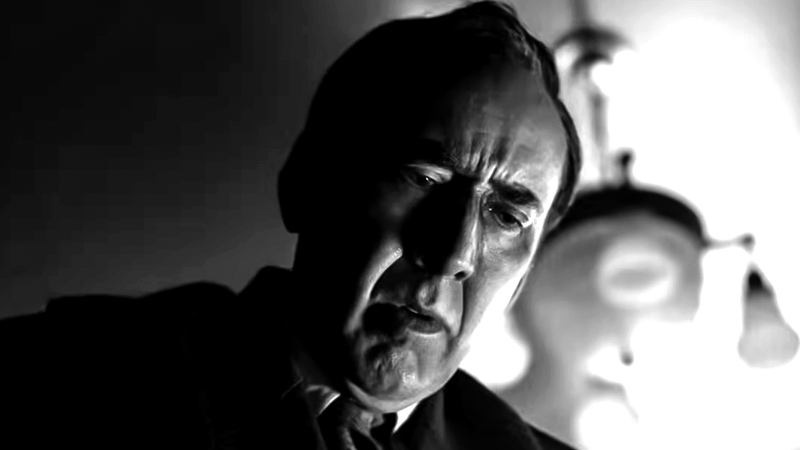
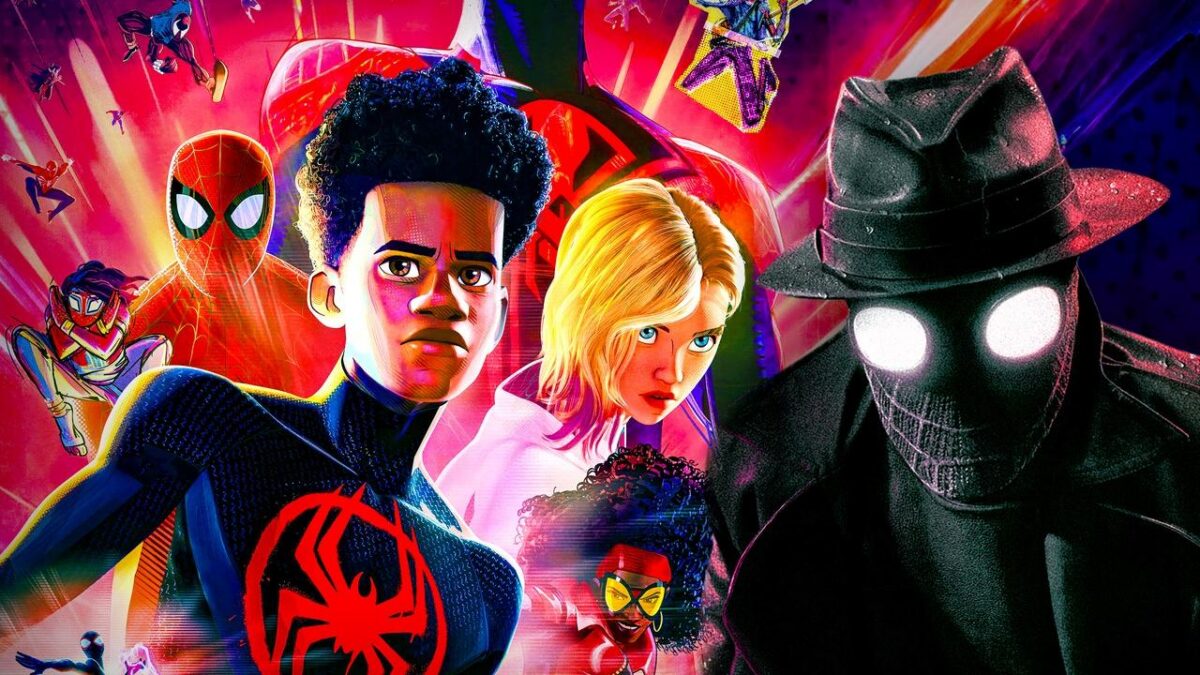
Sony’s Spider-Verse is adding a plethora of new villains to its universe this year via its new spin-off series, Spider-Noir. The upcoming Amazon MGM series stars Nicolas Cage as Ben Reilly/Spider-Noir, the animated character he originally voiced in the Spider-Verse films. Ahead of Beyond the Spider-Verse’s release next year, Sony is expanding the universe with this new live-action series, and it brings a striking new take on classic Marvel heroes and villains.

Set in an alternate Earth in the 1930s Prohibition-era New York City, Spider-Noir follows Ben Reilly, a retired superhero and current private investigator, as he battles mob bosses, gangsters, and other comic book villains come to life. The villain trailer for Spider-Noir has already revealed several of the enemies The Spider will be up against, and they’re not simply a rehash of the same villains from Sony’s previous Spider-Verse films.

Amazon MGM Studios

The main man in New York’s criminal underworld in Spider-Noir is Brendan Gleeson’s Silvermane, filling a similar role to Spider-Verse’s Kingpin. Silvermane is an Irish mob boss who is Reilly’s nemesis in the series and has been in charge of organized crime in NYC for 30 years. Not everyone is happy with Silvermane’s reign, as one of the main mysteries in the series is who burned down his mansion, one of the many assassination attempts he’s suffered. 

Silvermane has been tackled before in animated form in shows like The Spectacular Spider-Man and Spider-Man: The Animated Series, but his role in Spider-Noir will be the first time the character has been adapted into live-action. 

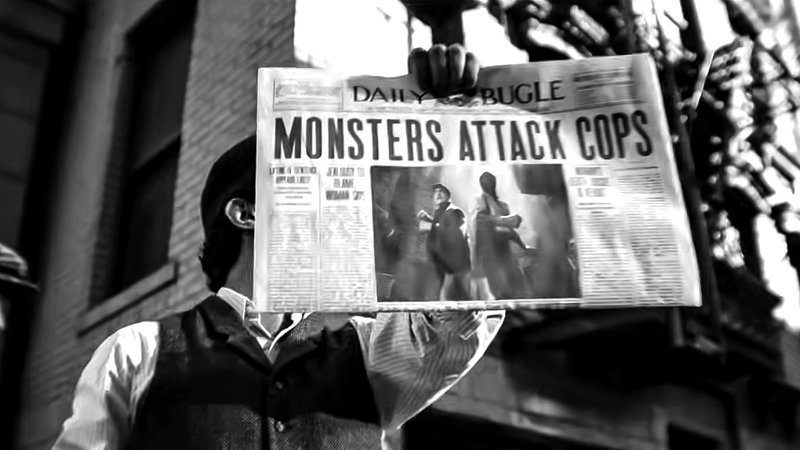
Daily Bugle in Spider-Noir.
Amazon MGM Studios

Another villain who Spider-Man fans may be familiar with from the live-action films, but has yet to debut in the Spider-Verse, is Flint Marko (Jack Huston), aka Sandman. Sandman’s powers allow him to shift his body into sand, but it’s also “what’s killing him,” according to Huston. In Spider-Noir, Sandman will seemingly be working for Silvermane, and the first look at his powers in action shows the treacherous effects they have on his body. 

An electric-powered character is also making their Spider-Verse debut in Spider-Noir, but it’s not Electro as many thought; instead, the villain is Megawatt (Andrew Lewis Caldwell). After a brief appearance in the comics, this will be Megawatt’s first appearance on the screen, and he has the ability to absorb and expel electricity in both small and devastating ways. 

Megawatt, Sandman and Tomstone in Spider-Noir.
Amazon MGM Studios

Another brand new villain in Spider-Noir, the Spider-Verse, and the Marvel universe in general is Jack Mikesell as James “Jimmy” Addison. Addison has pyrokinetic powers and appears to be a completely original creation for the new Spider-Man show, unless his true identity is being saved for a reveal later on. Addison is seen in the footage able to light his body on fire, but it’s unclear right now whose side he’s really on. 

Spider-Noir is scheduled for release on May 27, 2026, on Prime Video, or slightly earlier on MGM+. The series, created by Oren Uziel, is overseen by Spider-Verse producers Phil Lord and Chris Miller, and Sony’s Amy Pascal. 

Spider-Noir Adds to the Spider-Verse’s Roster of Villains

Nicolas Cage as Ben Reilly in Spider-Noir.
Amazon MGM Studios

Spider-Man: Into the Spider-Verse and Spider-Man: Across the Spider-Verse have already established a lineup of pivotal villains, but Spider-Noir won’t share most of them. Plus, the new Amazon series will put a distinct noir lens on these classic heroes and villains, adding shades of gray that repurpose what might be expected in a typical Spider-Man tale. 

Kingpin was one of the major antagonists in the first Spider-Verse film, with Fisk letting off the supercollider that causes the multiverse to open. Meanwhile, the crime boss in Spider-Noir’s world is Silvermane rather than Kingpin, and his henchmen include other notable characters like Tombstone, Megawatt, and Sandman. 

Tombstone has already been featured in the Spider-Verse animated films, as one of Kingpin’s loyal followers, but he’ll be quite different in the 1930s, with Abraham Popoola playing Lonnie Lincoln, who says the character will link his comic book depiction with a “way more grounded story.” 

Spider-Noir and the Spider-Verse do share a penchant for drawing on lesser-known villains. Across the Spider-Verse introduced The Spot as the major villain of the piece, who was only a minor antagonist in Marvel Comics, but was reimagined as Miles Morales’ nemesis in the Spider-Verse. Similarly, characters like Silvermane or Megawatt aren’t as popular in Marvel Comics, but will have upgraded roles in Spider-Noir.

Another added layer to Spider-Noir’s villains is the noir genre in which the series plays. This adds an extra element of moral complexity and groundedness to the whole show, which, in the case of the villains, depicts them more as feared monsters, outcasts, and criminals than as over-the-top comic-book characters like the animated Spider-Verse.

Source link

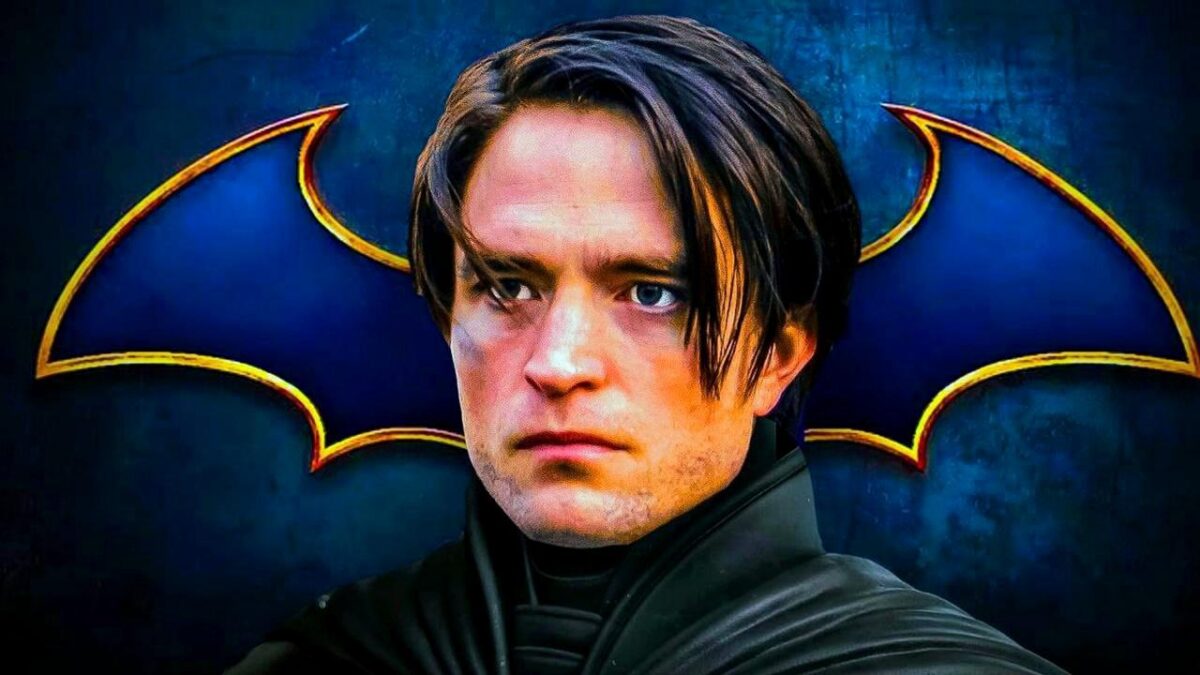
Matt Reeves’ The Batman 2 is set to change course in one direction from the first movie, replacing the main villain. This franchise first hit the big screen in 2022, giving Robert Pattinson’s hero a few notable antagonists to face as he dove into his second year fighting crime in Gotham City. While plot details remain unclear for the upcoming sequel, anticipation is building to see who will give the Caped Crusader trouble this time around.

The Batman 2 director Matt Reeves discussed his plan for the sequel’s villain. Speaking with Josh Horowitz at the Emmy Awards in September 2025, he noted that he is picking a villain that “digs…into his past and his life,” while noting it was somebody who has “never really been done in a movie before:”

“Picking the right villain that digs… into his past and his life, that was what sort of drove that discussion, and I won’t tell you where we ended up but I’m super excited about it. I will say it’s never really been done in a movie before.”

After the first film featured villains like Paul Dano’s Riddler and Colin Farrell’s Penguin, the sequel is expected to take a new look into Batman lore that has not been seen in the character’s past movies. Ahead are a few of the villains confirmed or rumored to be part of the new story when the movie is released on October 1, 2027.

All 6 Potential Villains in The Batman 2

Harvey Dent

DC Comics

Having already appeared in multiple Batman movies, Harvey Dent is confirmed to be part of Matt Reeves’ The Batman 2. The role will reportedly be played by Sebastian Stan, who will make his DC debut after spending the last 15 years playing Bucky Barnes/The Winter Soldier in the MCU for Marvel Studios.

Considering this will be Harvey Dent’s first time appearing or being mentioned in this franchise, it is unclear if or when he will become his villainous alter-ego, Two-Face. Usually depicted as one of Bruce Wayne’s close friends and allies, this relationship changes after the accident that burns off half of Dent’s face, forcing him to become a villain.

Dent is unlikely to be this movie’s main antagonist, as this arc was done previously through Aaron Eckhart’s portrayal in 2008’s The Dark Knight. Even so, he is still sure to be an important piece of the plot as Stan and Pattinson’s characters build an early bond.

Gilda Dent

Gilda Dent in 'Batman: The Long Halloween - Part One.'
Warner Bros. Animation

The Batman 2 will bring a second Dent into play, introducing the first live-action depiction of Harvey’s longtime partner, Gilda Dent. Some reports indicate that this character is the one MCU veteran Scarlett Johansson will play after spending over a decade playing Marvel’s Black Widow.

In the comics, Gilda is no slouch as a villain, often characterized by the tragic love she feels for her husband. She is also revealed to be the original “Holiday” serial killer in Batman: The Long Halloween, committing murders on Halloween, Thanksgiving, and Christmas to help her husband.

Gilda has never appeared in a live-action Batman movie, making her a logical choice for a villain who aligns with what Reeves has said. She would also be one of the only female villains Batman has faced on camera, a list that includes Marion Cotillard’s Talia Al Ghul (The Dark Knight Rises) and Uma Thurman’s Poison Ivy (Batman & Robin).

The Joker

Barry Keoghan as the Joker in deleted scene from 'The Batman.'
Warner Bros.

A short scene at the end of The Batman introduced this universe’s take on the Joker, who showed up in a cell at Arkham Asylum next to Paul Dano’s Riddler. The iconic Batman villain is played by Barry Keoghan, making him the fifth actor to play the Clown Prince of Crime in the last 40 years.
Apart from a deleted scene that centered on Pattinson’s Batman visiting the Joker in prison, the character has about a minute of screentime in this story, during which his face is mostly in shadow. Surprisingly, he has now been confirmed to play a role in The Batman 2, but it is still unclear how significant that role will be.

Considering how often the Joker has been used in movies, as he is known as Batman’s most notable antagonist, he is unlikely to be this movie’s main villain. However, Reeves may decide to go a different route and give him new storylines that have not been explored.

The Penguin

Colin Farrell as the Penguin from 'The Batman.'
Warner Bros.

Reeves included Oz Cobblepott in The Batman as Carmine Falcone’s chief lieutenant, making him one of the movie’s supporting villains. The role was brought to life by Colin Farrell, who made the role a career-defining one in HBO Max’s The Penguin in 2024.

According to reports, Oz will be back for The Batman 2, giving Farrell a chance to add a new chapter to his story as an adversary for Pattinson’s Batman. This movie will give him life after Falcone was killed at the end of the original film, and he is sure to be even more dangerous moving forward.

While the Penguin should not be expected to star as the main antagonist of the next movie, his return is sure to shake things up in Gotham as he gains more power.

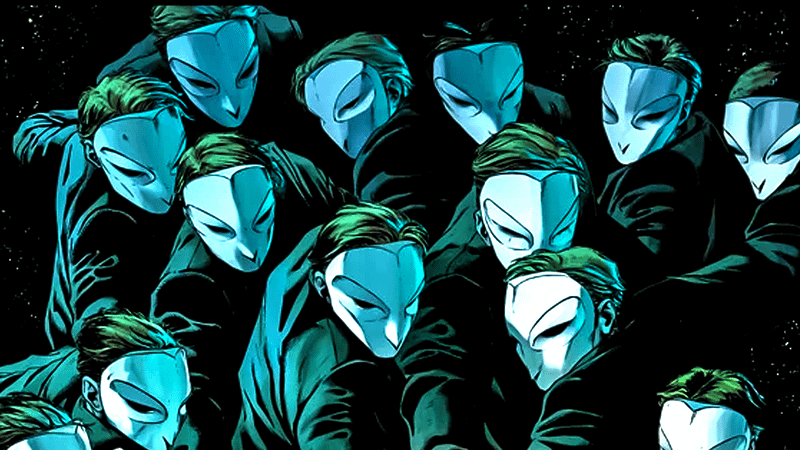
The Court of Owls

The Court of Owls from DC Comics.
DC Comics

While not officially confirmed to appear, rumors indicate that Matt Reeves may bring the Court of Owls into action for his next DC movie. This would be the group’s first time ever appearing in a live-action Batman film.

The Court of Owls is a secret society composed of Gotham City’s oldest, wealthiest families, who have controlled the city for centuries through political influence and murder. The group uses undead and highly trained assassins called Talons to kill their enemies, causing massive chaos in Gotham.

The Court was first theorized to appear in the movie after its working title, “Semper Vigilans” (“Always Watchful”), was revealed. It would also fit Reeves’ claim that this movie’s villain is something new, while adding to the corruption in this version of Gotham that was a focus in the first film.

Hush

Hush from DC Comics.
DC Comics

Amid rumors about The Batman 2, chatter teased a potential appearance by one of Batman’s more underutilized villains, Hush. Also known as Thomas Elliot, the villain is known in the comics for manipulating other Batman villains into a personal vendetta against Bruce Wayne and for using identity theft to ruin Bruce’s life.

While the character is not yet cast or confirmed, he would bring a twist to the story unseen in a Batman movie.

Source link

Owlcat Games—the studio behind upcoming RPG The Expanse: Osiris Reborn—has announced plans to recast the actor voicing its male protagonist, after players complained about a perceived lack of emotion in his voice during the game’s beta test last month.

“While the voice actor for the male protagonist and J put in a lot of good work, they felt less expressive than we wanted,” Owlcat Games shared in a blog post on Osiris Reborn’s Steam page. “Because of this, we are changing the voices of the male protagonist and J.”

In The Expanse: Osiris Reborn, players can create their own player character (simply named “You” in the beta) and customize their gender, appearance, and background (Belter, Earther, or Martian). The player-character also has a twin sibling, J, who is voiced by the same actor who voices the protagonist. Based on Owlcat’s statements, it seems that only the male protagonist (and thus the male version of J) are being recast, while the actor voicing the female protagonist (and the female version of J) is sticking around.

Interestingly, player feedback in the game’s subreddit seems to focus more on the game’s need for a dialogue overhaul, some story adjustments, and changes to the player-character’s tone rather than complaints about a specific actor’s performance.

“Belter Patois is undoubtedly a challenge for the devs but the almost complete lack of Belter slang, the lack of Belter cynicism, [and] the overly cheery delivery of the voice actors’ tone are, in my opinion, awful,” one player wrote on reddit after checking out the beta test.

Owlcat didn’t share the name of the actor being replaced, nor did they share who will be replacing them (it’s possible a replacement hasn’t been chosen yet). The studio did say that some of J’s voice lines are being reworked regardless of what gender players choose.

“We know J’s battle cries got a bit repetitive,” the dev team shared. “The ‘ask’ system was still very much a work in progress during the beta, and a full rework has been on our roadmap all along. Still, thank you for pointing it out and sharing your thoughts.”
The Expanse: Osiris Reborn is currently scheduled to arrive on PC, PlayStation 5, and Xbox Series X sometime in the Spring of 2027.

Source link

Owlcat Games—the studio behind upcoming RPG The

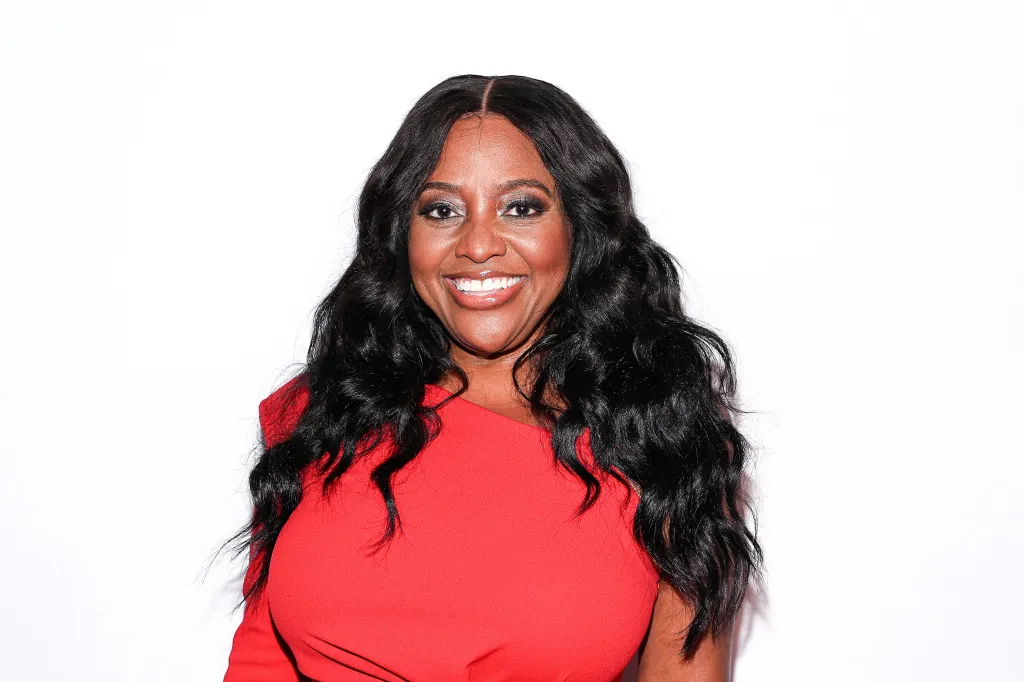
Sherri Shepherd is bidding a “bittersweet” goodbye to her namesake syndicated talk show, which concluded its four-season run on Thursday.

“Family!!!! Thank you so much for all of the love and support over these last 4 years. It was a bittersweet end to a life I got to know so well. But here is to new beginnings…if you thought you were sick of me before just you wait. 🩷,” she wrote on Instagram alongside a video that interspliced clips from her broadcast with her final exit from the empty set.

The video tribute concluded with the note: “Thank you. XO Sherri.”

It was announced in February that Sherri was canceled by Lionsgate Television’s Debmar-Mercury, though the producer-distributor indicated it is planning to explore continuing the show on a digital platform.

The show, which taped in New York City’s Chelsea Studios, was fronted by Shepherd, actor-comedian and former The View co-host, debuting on Fox stations in September 2022 as a replacement for The Wendy Williams Show, after its eponym exited her show amid health concerns.

Shepherd previously addressed the cancellation on air, saying she was “overwhelmed by the outpouring of love” she received after the news broke.

After giving her resounding thanks to her viewers, she added, “The intention of this show was always my prayer for you to leave happier than when you came. It has been my dream to have a talk show and I am so grateful I got the chance to do it for four seasons. I want to be clear, I’m not ready to throw in the towel on this show just yet. We’re going to be airing episodes all through the fall and we’re going to continue to fight to keep the show alive in some way, shape or form.”

Source link

Sherri Shepherd is bidding a “bittersweet” goodbye

Netflix’s tools to entice big-name directors to work with it mostly boil down to “tossing increasingly large checks at the problem until it goes away,” but they do have one big gun they tend to keep in reserve for especially feisty fish: The lure of a theatrical release. In spite of its recently foiled ambitions to own a movie studio, the streamer has made it repeatedly clear over the years that it’s genuinely not interested in the business of putting butts in theater seats, which involves lots of negotiations with the theater chains, including arguments about how long movies have to stay in cinemas before they can be fed into the company’s subscription machine. As such, Netflix only offers theatrical releases to filmmakers when it really needs to (or is courting some Oscar love), as it did with Guillermo Del Toro’s Frankenstein last year, and Greta Gerwig’s Narnia movie next February.

We can now add David Fincher back to that list, as Puck‘s Matt Belloni reported earlier today that the streamer has just offered Fincher “the Greta deal” for his new film starring Quentin Tarantino creation Cliff Booth. Which is to say, the film—which will star Brad Pitt, reprising his role from Tarantino’s Once Upon A Time… In Hollywood—is now set to get a two-week stint in IMAX theaters this November, one month ahead of a Netflix release. Somewhat surprisingly, that includes active participation from theater chain AMC, which has previously balked at indulging Netflix with theatrical runs as short as this one—but which began relenting last year, after KPop Demon Hunters made big stacks of money from a tiny theatrical appearance several weeks after its streaming release.

Fincher, meanwhile, is a Netflix stalwart at this point, having run his last two films (2020’s Mank and 2023’s The Killer, both of which got short theatrical runs) through the streamer. There’s a whiff of convenience to the whole arrangement—Netflix vacated these Thanksgiving IMAX slots when it moved Gerwig’s The Magician’s Nephew to 2027 back in May—but the upshot is that The Adventures Of Cliff Booth will soon not only be on movie screens, but IMAX ones, allowing you to really take in the sheer weirdness of Fincher playing in his old pal Quentin’s sandbox. The film will open in theaters on November 25th for its two-week run, before reappearing on Netflix on December 23.


Source link

Vulkan Vegas Casino Review 2024 - Claim Your $1000 Bonus Now

Für alle, die die deutsche Online-Casinowelt kennt, dem springt spielerbewertungen casino vulkan spiele direkt ins Auge. Der Grund sind die üppigen Boni. In einem stark regulierten Markt schafft es dieser Anbieter, ein reizvolles und gleichzeitig verantwortungsbewusstes Spielangebot zu schaffen. Der erste Blick in die virtuelle Lobby verriet mir, was hier zählt: Prämien. Dieses Versprechen durchzieht das komplette Spielerlebnis. Bereits ab der ersten Einzahlung begleitet dich ein durchdachtes Bonusprogramm, das Neueinsteiger und erfahrene Spieler gleichermaßen begeistert. Dass diese Boni in ein umfangreiches Spielesortiment von bekannten Anbietern eingegliedert sind, macht Vulkan Spiele zu einer reizvollen Adresse für alle, die Abwechslung und mehr Spielkapital wünschen.

Der Überblick von Vulkan Spiele Casino auf einen Blick

Vulkan Spiele Casino ist eine etablierte Größe im deutschsprachigen Raum. Die Plattform agiert seit Jahren am Markt und richtet sich gezielt an Spieler aus Deutschland. Sie agiert unter einer Curaçao-Lizenz, was den internationalen Betrieb ermöglicht, und richtet ihr Angebot trotzdem konsequent an deutsche Bedürfnisse an. Das erkennt man an der komplett deutschsprachigen Oberfläche, dem Support auf Deutsch und den vertrauten Zahlungsarten wie Sofortüberweisung, Giropay oder Paysafecard. Das Design der Seite ist zeitgemäß, aber nicht überfrachtet, und bringt dich intuitiv zu den wichtigsten Bereichen: den Spielen, den aktuellen Aktionen und den Informationen zu Ein- und Auszahlungen. Positiv bemerkt ist mir die Transparenz bei den Geschäftsbedingungen, ein wichtiger Punkt für deutsche Spieler, die genau prüfen.

Begrüßungsbonus und Anfänge für neue Spieler

Neukunden werden bei Vulkan Spiele Casino mit einem gestaffelten Willkommensbonus empfangen. Konkret ist es meist um ein Bonusguthaben auf die ersten Einzahlungen. Das beträgt einem Prozentsatz deines Einsatzes, bis zu einem vorgegebenen Höchstbetrag. Bei meiner Recherche fand sich zum Beispiel einen 100% Bonus bis zu 500 €. Solche Angebote variieren, deshalb solltest du immer die aktuellen Promotionen auf der Website ansehen. Für deutsche Spieler ist es wichtig, die entsprechenden Umsatzbedingungen (WR – Wettanforderungen) zu begreifen. Sie bestimmen, wie oft du den Bonus einsetzen musst, bevor eine Auszahlung realisierbar wird. Vulkan Spiele operiert hier im marktüblichen Rahmen und teilt mit die Bedingungen transparent. Die Anmeldung selbst ist einfach und in wenigen Minuten erledigt.

Das Herzstück: Die Spielpalette bei Vulkan Spiele

Der attraktivste Bonus ist wenig wert, wenn die Spielauswahl nicht überzeugt. Das ist bei Vulkan Spiele Casino zum Glück anders. Die Plattform begeistert mit einer umfangreichen und großen Auswahl an Spielen von renommierten Softwareherstellern. Bei den Spielautomaten triffst du auf Hunderte Titel, von traditionellen 3-Walzern bis zu aktuellen Video-Slots mit detailreichen Bonusrunden und hoher Volatilität. Namen wie NetEnt, Play’n GO, Pragmatic Play und Quickspin sind hier repräsentiert. Für Fans des herkömmlichen Casinos gibt es einen ausgedehnten Live-Dealer-Bereich. Hier spielst du per Stream mit authentischen Croupiers Roulette, Blackjack, Baccarat oder Unterhaltungsformate wie „Dream Catcher“. Auch Tischspiele in ihrer RTP-Variante und eine stabile Video Poker Auswahl runden das Portfolio ab. Viele Spiele lassen sich im Demo-Modus ausprobieren. Das bietet eine gute Gelegenheit, die Software ohne Risiko kennenzulernen.

Aktuelle Aktionen und Treueprogramm

Das Bekenntnis von Vulkan Spiele Casino ist vorbei nicht mit dem Willkommensbonus. Die Plattform bietet eine Vielzahl laufender Aktionen bereit, die ständig aktualisiert werden. Dazu gehören Einzahlungsboni an bestimmten Wochentagen, Freispiele für ausgesuchte Slots oder Turniere mit attraktiven Preisgeldern. Besonders erwähnenswert ist das VIP-Programm, das meistens als mehrstufiger VIP-Club aufgebaut ist. Durch beständiges Spielen erhältst du Punkte, die dich in bessere Statuslevel versetzen. Mit jeglichem Level steigen die Vorzüge: Ein eigener Account-Manager, schnellere Auszahlungen, höhere Einzahlungslimits und exklusive Bonusangebote sind übliche Belohnungen. Dieses Modell belohnt dauerhafte Kundenbindung und liefert dir einen guten Grund, die Plattform als dein Stammcasino zu auszuwählen.

Schutz, Lizenzierung und Fairness

Für deutsche Spieler sind Schutz und Fairness nicht nebensächlich. Vulkan Spiele Casino operiert unter einer Lizenz der Regierung von Curaçao, einer der renommiertesten Aufsichtsbehörden im Online-Glücksspiel. Diese Lizenzierung legt Maßstäbe fest für Spielerabsicherung, faire Geschäftspraktiken und finanzielle Beständigkeit voraus. Die Website setzt ein eine moderne SSL-Verschlüsselung, um alle Datentransfers zu sichern. Zusätzlich werden die Spiele regelmäßig von unabhängigen Prüflaboren geprüft. Diese garantieren die Unvorhersagbarkeit der Ergebnisse (RNG – Random Number Generator). Diese Angaben kannst du finden im Footer der Website oder in den Geschäftsbedingungen. Ein verantwortungsbewusster Umgang sollte immer im Mittelpunkt stehen. Vulkan Spiele stellt bereit dafür entsprechende Werkzeuge wie Depositlimits, Spielunterbrechungen oder die Option zum Ausschluss von sich selbst.

Transaktionen: Schnell und problemlos

Ein reibungsloser Zahlungsverkehr ist essenziell für glückliche Spieler. Vulkan Spiele Casino hat sein Zahlungsangebot gezielt auf Deutschland abgestimmt. Neben gängigen Kreditkarten (Visa, Mastercard) bietet die Plattform populäre E-Wallets wie Skrill und Neteller sowie sofortige Banktransaktionsdienste wie Sofortüberweisung und Giropay. Die in Deutschland sehr gefragte Prepaid-Option Paysafecard ist ebenfalls verfügbar. Die Dauer bis zur Auszahlung variiert von der gewählten Methode. Sie befindet sich im üblichen Rahmen von ein paar Stunden (bei E-Wallets) bis zu etlichen Bankarbeitstagen. Beachte, dass eine Auszahlung erst nach Erfüllung aller Bonusbedingungen und nach einer bestandenen Account-Verifizierung (KYC – Know Your Customer) erfolgt. Das genügt den gesetzlichen Vorgaben.

Mobile Gaming

Mittlerweile darf ein Casino auf dem Handy laufen. Das ist keine Zusatzleistung mehr, sondern eine grundlegende Anforderung. Vulkan Spiele Casino deckt diese Erwartung mit einer vollständig responsiven Website. Du brauchst keine separate App herunterladen. Vielmehr rufst du einfach den Browser auf deinem Smartphone oder Tablet auf und gehst auf die Seite. Das Layout stellt sich automatisch der Bildschirmgröße an. Alle Bereiche, inklusive des Kassenbereichs und des Live-Chat-Supports, stehen zur Verfügung. Mithilfe HTML5-Technologie laufen die Spiele direkt im Browser geschmeidig und ohne Qualitätseinbußen. Ich habe die mobile Erfahrung ausgiebig ausprobiert. In Sachen Tempo, Navigation und Spieleangebot ist sie der Desktop-Version in nichts nach. So kannst du du deine bevorzugten Slots oder eine Runde Live-Roulette auch von mobil aus spielen.

Service und Unterstützung

Ein guter Kundenservice verwandelt ein gutes Casino in ein ausgezeichneten. Vulkan Spiele Casino bietet seinen deutschen Kunden mehrsprachigen Support an, wobei Deutsch eine primäre Sprache ist. Der zentrale Kommunikationsweg ist ein Live-Chat, der jederzeit auf der Website erreichbar ist. Meine Testanfragen wurden dort schnell und kompetent erwidert. Für weniger dringende Angelegenheiten existiert eine E-Mail-Adresse zur Verfügung. Ein großer FAQ-Bereich erklärt viele häufige Fragen zu Konten, Boni, Zahlungen und technischen Problemen. Oft entdeckst du dort sofort eine Lösung, ohne dass du auf das Support-Team warten. Dieser mehrgleisige Ansatz stellt sicher, dass du bei Problemen effizient Hilfe erhältst.

Welche Spieler ist Vulkan Spiele Casino die passende Wahl?

Nach meiner Einschätzung passt Vulkan Spiele Casino hervorragend zu zwei Arten von Spielern. Einerseits zu denen, die großen Wert auf großzügige und abwechslungsreiche Boni legen – von der ersten Einzahlung bis zu den beständigen Treueboni. Andererseits zu Spielern, die eine breite Auswahl an Spielen bevorzugen, vor allem Slots und Live-Casino-Titel, und dabei eine an Deutschland angepasste Plattform mit gewohnten Zahlungsmethoden suchen. Die Verbindung aus attraktiven Promotionen, einem vielfältigen Spieleportfolio und einem auf Deutschland zugeschnittenen Service ist die bedeutendste Stärke dieses Anbieters. Jeder Spieler sollte unbedingt die Allgemeinen Geschäftsbedingungen, speziell die Bonusbedingungen, gründlich prüfen und die verfügbaren Hilfsmittel für verantwortungsbewusstes Spielen nutzen.

Vulkan Spiele Casino bietet deutschen Spielern einen vielversprechenden Einstieg in die Welt der Casino-Boni. Die ausgeprägte Ausrichtung auf Promotionen, ein breites und faires Spielesortiment und ein serviceorientierter Ansatz auf Deutsch machen die Plattform zu einer ernstzunehmenden Wahl im konkurrenzintensiven deutschen Markt. Jeder, der ein Casino sucht, das von Anfang an mit extra Spielwert punktet und dabei Schutz und eine reibungslose Bedienung bietet, sollte Vulkan Spiele auf seine Liste setzen.

Für alle, die die deutsche Online-Casinowelt kennt,

If you purchase an independently reviewed product or service through a link on our website, The Hollywood Reporter may receive an affiliate commission.

The Formula 1 returns with round five in the 2026 season. And this time, F1 travels to Canada for the Lenovo Canadian Grand Prix. The motorsports event takes place at Circuit Gilles-Villeneuve in Montreal, Quebec with race day on Sunday, May 24.

Want to watch race day live online? The F1 Canadian Grand Prix livestreams on Apple TV.

At a Glance: How to Watch 2026 F1 Canadian Grand Prix Race Day Online

  • When: Sunday, May 24, 1 p.m. PT/4 p.m. ET
  • Stream online: Apple TV

Meanwhile, since F1 is considered a luxury sport, there has been a number of celebrity sightings during racing events, especially the Canadian Grand Prix, such as Al Pacino, Michael Douglas, Winnie Harlow, French Montana, Halsey and others. Livestream on race day to see which celebrities are at the Paddock Club this year.

Where to Watch F1 Canadian 2026 Live : Air Date and Time, Apple TV Free Trial

The F1 Canadian Grand Prix Race Day airs live on Sunday, May 24, at 1 p.m. PT/4 p.m. ET, available to livestream on Apple TV. After a seven-day free trial, new subscribers can sign up for Apple TV at $12.99 per month.

Apple TV is home to every practice, sprint and qualifying rounds, both live, as well as on-demand after the race. Plus, the latest season of Formula 1: Drive to Survive is now streaming on Apple TV, included in the seven-day trial period. You’ll also get access to a library of F1 programming, including rule changes, new cars, team updates and season highlights, is available to stream on Apple TV’s Formula 1 hub.

Aside from F1, Apple TV features other live sports including MLB Friday Night Baseball and every Major League Soccer match in the 2026 season. The streaming service also has hit originals, such as The Studio, Your Friends & Neighbors, Severance, Pluribus, For All Mankind, Ted Lasso, Slow Horses, Long Way Home and others. Learn more about Apple TV and everything it has to offer, below:

In addition, the race is available to watch on Netflix.

Source link

If you purchase an independently reviewed product

Starring vehicles for Denzel Washington, Harrison Ford, Robin Williams and Liam Neeson are among the titles leaving Netflix in the United States in June, along with three binge-worthy recent series that may have slipped under your radar. (Dates reflect the first day titles are unavailable and are subject to change.)

Stream it here.

When Robin Williams and the director Chris Columbus joined forces to make a family comedy , they ended up, unsurprisingly, with a giant hit. Williams stars as Daniel, an out-of-work actor whose eternally childlike behavior causes an irreparable rift between him and his wife, Miranda (Sally Field). Faced with losing access to their kids, he hits on an ingenious solution: He disguises himself as the title character, a proper and caring British nanny, and finds that becoming someone else helps him to be a better parent. The character is custom-built for Williams’s gifts of comic improvisation and offhand sweetness, and Field proves an ace foil and scene partner.

Stream it here.

Denzel Washington won his first Academy Award for his ferocious, unforgettable turn as a formerly enslaved man serving in the 54th Massachusetts Regiment, one of the first Black fighting units of the Civil War. Morgan Freeman and Andre Braugher are similarly affecting as his fellow soldiers, their three characters symbolizing parallel segments of the 19th century Black experience in America. (Matthew Broderick does his best with the somewhat thankless role of their commanding officer.) The director Edward Zwick, then best known for talky comedy-dramas like “About Last Night” and TV’s “Thirtysomething,” mounts the bone-crunching battle scenes with impressive scope and grandeur.

Stream it here.

Those who know Hank Azaria only from his versatile voice work on “The Simpsons” would be wise to check out his starring turn in this sharp-edged, sharp-tongued character study. He plays Jim Brockmire, a one-time superstar sportscaster who all but ended his career with a memorable on-air meltdown. Years later, this messy man attempts a comeback of sorts as the in-stadium announcer for a barely-there minor league Pennsylvania team owned by Jules (Amanda Peet); she, and the job she offers, just might offer some kind of salvation. Azaria is astonishing, wringing laughs and sympathy from the character (even when he is at his worst), and Peet is an engaging comic counterpoint.

Stream it here.

Tina Fey’s beloved high school comedy, “Mean Girls,” was only 20 years old, and still awfully relevant, when it got the remake treatment in 2024 — albeit as a movie musical, based on the successful Broadway production. This newer take won’t make anyone forget about the original. But it offers up pleasures of its own: Angourie Rice’s convincing metamorphosis from doe-eyed innocent to vindictive queen bee; Reneé Rapp’s star-is-born turn as the uber-mean girl Regina George; the up-and-comer Avantika putting her own wily, screwball spin on the uproariously dim Karen; and Fey and Tim Meadows delightfully reprising (and updating) their original roles.

Stream it here.

If you’re surprised to learn about a limited series created by and starring Jason Segel, and co-starring Sally Field, André Benjamin and Eve Lindley, don’t feel too bad: it debuted in March of 2020, when there were a few other things happening in the world. But it’s well worth catching up with. Segel was inspired by the Games of Nonchalance, a combination of art exhibition, scavenger hunt and social experiment that fascinated thousands of Bay Area residents from 2008 to 2011. He tells the story of four participants, and how their own existential crises lead them to participate, with the appropriate genre-hopping, tone-shifting, anything-goes spirit.

Stream it here.

The great submarine thrillers — “The Hunt for Red October,” “Das Boot,” “Crimson Tide” — are so great that it’s a little surprising there aren’t more of them. But this taut 2002 entry is also due for a bit more recognition. An underpraised entry in the muscular filmography of the director Kathryn Bigelow, it hints at the power of her later military tradecraft bruisers “The Hurt Locker” and “Zero Dark Thirty.” Beyond that, it is (to date, at least) the only onscreen pairing of two of our most reliable carriers of action gravitas: Harrison Ford, who stars as the captain of the titular Russian sub, and Liam Neeson, who provides fine friction as his first officer.

Stream it here.

Between his celebrated collaborations with Mel Brooks, his uproarious onscreen pairings with Richard Pryor and his iconic performance as Willy Wonka, Gene Wilder was one of the most beloved movie stars of the 1970s and 1980s. But he was also something of an enigma, fiercely protective of his private life (and private pain), which the director Ron Frank attempts to bring into focus with this 2023 biographical documentary. With insights and archival materials provided by the actor-director’s widow Karen Wilder, and delightful interviews with such friends and collaborators as Alan Alda, Mel Brooks, Dick Cavett and Carol Kane, “Remembering Gene Wilder” helps the viewer better understand and appreciate the unique sensibility of this gifted artist.

Stream it here.

In this 2015-2016 series, David Duchovny again went looking for the truth, this time in the counterculture of late-1960s Los Angeles. He stars as the police detective Sam Hodiak, whose search for a missing teenager takes him deep into the city’s hippie underground — leading him eventually to Charles Manson (Gethin Anthony) and his “Family.” This NBC drama straddled the line between network procedural and prestige cable series, with some success; viewers fascinated by the Manson subplots of “Once Upon a Time in Hollywood” and “Mindhunter” will find much to chew on here.

Stream it here.

This fast-paced, sophisticated comedy-drama — developed by Darren Star from Candace Bushnell’s column and book of the same title — was an early scripted series hit for HBO, still known at the time of its 1998 debut primarily for running theatrical movies and original specials. It was a perfect fit for the pay cable network, showcasing the kind of adult subject matter that couldn’t be explored on network television. But it wasn’t a hit only because of its candid approach to love and sex; its four protagonists were brought to such vivid life by Sarah Jessica Parker, Kim Cattrall, Kristin Davis and Cynthia Nixon that they become avatars for the 21st century woman, both embodying feminine types and transcending them with wit and nuance.

“Burlesque,” “Casino,” “Cold Pursuit,” “Fifty Shades of Grey,” “Fifty Shades Darker,” “Fifty Shades Freed,” “Independence Day,” “Jurassic World,” “Jurassic World: Fallen Kingdom,” “The Lego Movie,” “Letters to Juliet,” “Mike and Dave Need Wedding Dates,” “Money Monster,” “Night at the Museum,” “Night at the Museum: Battle of the Smithsonian,” “Night at the Museum: Secret of the Tomb,” “Ray,” “Same Time, Next Year,” “Trolls,” (June 1); “99 Homes,” “Chick Fight,” “Kim’s Convenience,” “Kneecap,” “The Perfect Mother,” “The Sunlit Night” (June 2); “Honest Thief,” “The Host” (June 3); “Babylon,”“Shiva Baby” (June 7); “It Ends With Us” (June 9); “TURN: Washington’s Spies” (Seasons 1-4) (June 10); ‘; “Two for the Money” (June 15); “The Iron Claw” (June 19).

Source link

Starring vehicles for Denzel Washington, Harrison Ford,

Gates of Olympus Slot Review | Demo & Free Play | RTP Check

Der Werdegang zum VIP-Status in einem Online-Casino ist für viele deutsche Spieler ein begehrenswertes Ziel, das weit mehr darstellt als ein glänzendes Abzeichen. Im casino voodoo sicher, das sich mit einer ausgeklügelten Plattform und einem klaren Fokus auf Spielerbindung im deutschen Markt positioniert, wird dieser Fortschritt zu einem strukturierten Erlebnis mit handfesten Vorteilen. Dieser Artikel beleuchtet die praktischen Schritte, die erforderlich sind, um vom Gelegenheitsspieler zum geschätzten VIP-Mitglied aufzusteigen. Dabei werden die internen Logiken des Treueprogramms, optimale Spielstrategien und die spezifischen Vorteile für den deutschen Markt detailliert dargestellt. Besonderes Interesse gilt der geschickten Nutzung von Bonusaktionen und der Auswahl der Spiele mit dem besten Beitragsverhältnis. Wer diszipliniert agiert und die angebotenen Werkzeuge klug verwendet, kann das Spielerlebnis verbessern und von schnelleren Auszahlungen, persönlicher Betreuung und exklusiven Events profitieren.

Zahlungsmethoden und Sicherheit für hiesige Spieler

Die Existenz vertrauter Zahlungsmethoden ist für hiesige Spieler von großer Bedeutung, und das VooDoo Casino bietet eine breite Palette von Kreditkarten über E-Wallets bis zur Sofortüberweisung. Besonders die Integration von PayPal hebt hervor den erhöhten Sicherheitsstandard, da diese Methode in Deutschland vollstes Vertrauen genießt. VIP-Mitglieder genießen zudem von schnelleren Auszahlungen, die Bearbeitungszeiten erheblich verkürzen. Technisch setzt die Plattform auf SSL-Verschlüsselung auf Bankenniveau und betreibt ihre Server in strikt regulierten Jurisdiktionen. Transparente Lizenzen und regelmäßige externe Audits sorgen für ein ausgewogenes und sicheres Spielumfeld. So können sich Spieler ganz auf den strategischen Aufbau ihres VIP-Status konzentrieren, ohne sich um die Sicherheit ihrer Daten oder Gelder gedanken machen zu müssen.

Strategische Spielweisen für den beschleunigten VIP-Aufstieg

Der wirksamste Weg zum VIP-Status liegt nicht im planlosen Maximieren der Einsätze, sondern in der gezielten Auswahl der Spiele mit dem optimalen Beitragsverhältnis zum Treueprogramm. Viele Spielautomaten und Tischspiele sind verschieden bewertet, sodass ein gesetzter Euro an einem volatilen Slot eine geringere Punktzahl liefern kann als derselbe Betrag an Blackjack. Erfahrene Spieler studieren folglich die internen Beitragstabellen des Casinos und fokussieren sich auf Titel mit hoher Auszahlungsquote und vorteilhafter Comp-Punkte-Rate. Ein zusätzlicher Hebel ist das Management der Spielzeit: Regelmäßige, moderate Sitzungen signalisieren dem System ein dauerhaftes Engagement und werden von den Algorithmen besser eingestuft als gelegentliche Hochrisiko-Spiele. Darüber hinaus lassen sich viele befristete Aktionen so planen, dass sie den Punktefortschritt vervielfachen.

Die Rolle von Bonusaktionen für den Statusaufbau

Bonusaktionen sind im VooDoo Casino ein wichtiges Werkzeug für den VIP-Aufstieg. Wöchentliche Einzahlungsboni, Cashback und spezielle Turniere bieten die Möglichkeit, das Guthaben zu strecken und mehr Einsätze zu erzeugen, ohne das Risiko proportional zu erhöhen. Wesentlich ist das sorgfältige Studium der Umsatzbedingungen: Ein Bonus mit geringen Umsatzauflagen kann den Fortschritt merklich fördern, während ein nachteilig gestalteter Bonus ausbremst. Experten nutzen gezielt Angebote, die auf ihre liebsten Spiele angepasst sind, und vermeiden die Aufteilung in zu vielen verschiedenen Aktionen. Für den deutschen Markt gibt es regelmäßig Sonderaktionen, die auf hiesige Feiertage ausgerichtet sind und eine herausragende Wertigkeit besitzen.

Exklusive Vorteile für Premium-Mitglieder im Detail

  • Bevorzugte Auszahlungen – Verarbeitung in Stunden statt Tagen
  • Höhere Einzahlungs- und Auszahlungslimits für variable Kontobewegungen
  • Eigener Account-Manager als persönlicher Ansprechpartner
  • Limitierte Einladungen zu Turnieren und Events mit realen Preisen
  • Individuelle Bonusangebote auf Grundlage der Spielhistorie
  • Geschenke zum Geburtstag und personalisierte Vergünstigungen

Ergänzend zu diesen handfesten Vorteilen genießen VIP-Mitglieder von einer rundum personalisierten Betreuung, die das Spielerlebnis bequemer macht. Der persönliche Betreuer weiß der Spielhistorie und unterbreitet proaktiv Lösungen, ob bei technischen Fragen oder der Optimierung der Spielstrategie. Der deutschsprachige Kundensupport ist bewandert in die spezifischen rechtlichen und kulturellen Nuancen des Marktes und liefert eine Servicequalität, die weit über das Standardniveau hinausragt. Diese Mischung aus schnellen Prozessen, individueller Beratung und kultureller Anpassung gestaltet den VIP-Status zu einem Instrument, das das Casino zu einem langfristigen Partner für anspruchsvolle Spieler werden lässt.

Die ideale Spielauswahl im deutschen Markt

Der Spielkatalog des VooDoo Casinos umfasst über tausend Titel, allerdings für den VIP-Aufstieg sind geeignet Spiele mit attraktiven RTP-Werten und günstigen Beitragsquoten besonders. Für hiesige Spieler sind Titel von NetEnt, Play’n GO und Pragmatic Play empfehlenswert, da sie nicht nur faire Auszahlungsquoten vorweisen, sondern auch Funktionen, die das Sammeln von Comp-Punkten unterstützen. Slots mit durchschnittlicher Volatilität bieten ausgedehnte Spielrunden ohne extreme Schwankungen und sind geeignet daher ideal für den kontinuierlichen Fortschritt dar. Tischspiele wie Blackjack und europäisches Roulette genießen eine Sonderstellung ein, weil sie in vielen Treueprogrammen mit einer höheren Gewichtung bewertet werden. Live-Dealer-Spiele bieten zudem das authentische Casino-Feeling und erlauben eine genaue Kontrolle der Einsätze. Wer diese Titel mit geschickt eingesetzten Boni kombiniert, verkürzt den Weg zum VIP-Status deutlich.

Die Architektur des VIP-Programms im VooDoo Casino entschlüsseln

Das Treueprogramm des VooDoo Casinos beruht auf einem mehrstufigen Punktesystem, bei dem jeder gespielte Euro unabhängig vom Spielergebnis zur Progression beiträgt. Diese Comp-Punkte werden ohne Zutun akkumuliert und beeinflussen den Wechsel in höhere VIP-Stufen. Für deutsche Spieler stellt sich dar als die Transparenz des Systems einen wesentlichen Vorteil: Der Fortschritt bleibt jederzeit im Kontobereich abrufbar, und es werden keine manuellen Anträge erforderlich. Die ersten Stufen wurden barrierefrei gestaltet, um selbst Gelegenheitsspielern schnelle Erfolgserlebnisse zu verschaffen. Mit steigender Aktivität werden die Anforderungen spezifischer, was den Übergang vom Freizeit- zum strategischen Spielen markiert. Regelmäßigkeit und die Selektion der richtigen Spiele werden dabei zu den wesentlichen Hebeln, um die folgende Stufe zu erreichen. Das Casino prämiert nachhaltiges Engagement stärker als kurzfristige Höchsteinsätze, was den dauerhaften Aufbau eines VIP-Status unterstützt.

Mobile Optimierung als Voraussetzung zum anspruchsvollen Spiel

Die mobile Plattform des VooDoo Casinos ist für den deutschen Markt umfassend optimiert und bietet den Zugriff auf das volle Spielangebot sowie das VIP-Dashboard von unterwegs aus. Die browserbasierte Lösung bietet eine Leistung auf App-Niveau mit geringen Ladezeiten und einer an Touchscreens abgestimmten Navigation. Push-Benachrichtigungen informieren über exklusive VIP-Aktionen, damit Spieler keine lukrativen Boni verpassen. Die Implementierung mobiler Zahlungsmethoden wie PayPal und Sofortüberweisung optimiert Ein- und Auszahlungen und verwandelt das mobile Spielen zu einer ebenbürtigen Alternative. Durch die anpassungsfähige Erweiterung der Spielzeit ohne Kompromisse bei der Qualität wird der Fortschritt im VIP-Programm deutlich beschleunigt, weil Spieler ihre Sitzungen reibungslos in den täglichen Ablauf einbauen können.

Kundenbetreuung und persönlich zugeschnittene Betreuung auf allerhöchstem Niveau

Der Kundenservice des VooDoo Casino ist ein grundlegender Pfeiler des VIP-Erlebnisses und stellt bereit für den deutschen Markt eine rund um die Uhr erreichbare, muttersprachliche Betreuung. VIP-Mitglieder erhalten einen priorisierten Zugang, der Wartezeiten ausschaltet und einen persönlichen Draht zu einem persönlichen Betreuer bereitstellt. Dieser https://community.fandom.com/wiki/User_blog:Casinobonusesfinder/My_recipe_of_a_Red_Velvet_Cake Betreuer kennt die individuelle Spielhistorie, berät zu optimalen Spielstrategien und erstellt maßgeschneiderte Bonusangebote. Über den passiven Support hinaus wird eine aktive Betreuung angeboten, die das Spielerlebnis individueller und effizienter gestaltet. Die Kombination aus fachlicher Kompetenz, sprachlicher Gewandtheit und kulturellem Verständnis lässt den Service zu einem strategischen Partner auf dem Weg zum und im Erhalt des VIP-Status.

Der Weg zum VIP-Status im VooDoo Casino erfordert eine durchdachte Strategie, die Spielauswahl, Bonusnutzung und ein gründliches Verständnis der Plattformmechaniken kombiniert. Die https://www.ibisworld.com/australia/industry/hotels-and-resorts/1811/ transparente Architektur des Treueprogramms, die mobile Optimierung und die persönliche Betreuung erschaffen ein Ökosystem, in dem Engagement strukturiert belohnt wird. Wer seine Spielgewohnheiten verbessert und die angebotenen Werkzeuge zielgerichtet einsetzt, kann nicht nur finanzielle Vorteile und schnellere Prozesse erhalten, sondern auch ein exklusiveres Spielerlebnis. Der Schlüssel steckt in der Kombination aus Wissen, Planung und der dauerhaften Nutzung der gezielt für den deutschen Markt optimierten Ressourcen. Mit diesem systematischen Ansatz wird aus dem Spieler ein Profi, der die Regeln des Hauses zu seinem eigenen Vorteil beherrscht.

Der Werdegang zum VIP-Status in einem Online-Casino

When IMG’s Barney Francis and John Hollywood join Deadline for a virtual interview, they’ve just left a monthly ‘Premier League Huddle’ – a get-together with their teams to celebrate good work and talk about upcoming plans.

Only this one had added significance, being the final meet before IMG-owned Premier League Productions‘ (PLP) 22-year run producing coverage of the English Premier League for broadcast licensees around the world comes to an end later today. “We had a kind of farewell as we part company,” says Francis, IMG’s Chief Business Officer.

Francis said a few words to staff, as did current PLP CEO Nick Morgan. Graham Pratt, IMG’s former Managing Director of Worldwide Sports Production, returned for a Q&A about how the partnership had started and evolved.

“It was interesting to hear Graham talk about it and get an insight into how much has moved on, from training cameras on three live games a week and a couple of magazine shows,” says Hollywood. Today, Premier League games broadcast almost every day of the week and volume of shoulder content is incommensurate to the environment in 2004.

Pratt set foot back in the PLP building just a day after Arsenal, the hated north London rivals of his beloved Tottenham Hotspur, were confirmed as Premier League champions with just today’s final round of games to go.

“It did dawn on me that it was 22 years since Arsenal won last won the Premier League, and it was 22 years since Premier League Productions started, so perhaps Graham created it in the hope of preventing Arsenal from finding a way to stop them winning the league,” quips Hollywood.

‘The inevitable question’

Both Francis and Hollywood cut jovial figures this week despite the financial hit of losing the EPL production contract. They could simply be putting on brave faces, but if that’s the case the mask doesn’t split at all during our interview. Surely the end of an era-defining production partnership is a disappointing moment?

“The inevitable question,” says Francis, as he begins explaining how the split came about. “We went through a lot of conversations about what a future might look like. We’re ambitious. We never sit still, so had big plans for how we were going to change our methodologies, our operating model, etcetera.

“It just so happened that the Premier League had a similar mindset, which is about improving and driving efficiency at the same time. We had a very fertile conversation, but it was inevitable that at some point they were going to want to own it.”

From the 2026/27 Premier League season, the Premier League will begin producing coverage itself, taking advantage of the ever-growing popularity of a league boasting players such as Erling Haaland, Bakayo Saka and Bruno Fernandes, and globally-followed clubs such as Arsenal, Liverpool, Manchester City and Manchester United.

IMG, which is part of Ari Emanuel’s TKO Group Holdings following a $3.25B deal that closed last year, and the Premier League will retain a working relationship on distribution and archive, but it will be the league itself creating the pictures for the likes of Sky, Prime Video, TNT Sports, Canal+, DAZN and JioHotstar.

Newcastle stars Alan Shearer in a 2005 Premier League match

Laurence Griffiths/Getty Images

Francis, a former Sky Sports exec who has been at the center of the Premier League’s financial growth and popularity boom for many years, understands the Premier League’s decision, which brings the league even closer to the licensees, just as international revenues edged ahead of domestic. Recent estimates suggest each Premier League season delivers around £2B ($2.7B) overseas, versus about £1.7B in the UK.

For the league, launching Premier League Studios comes with risk such as big capex costs, Francis notes, but he back the size of the operation to succeed. “Only an organization like the Premier League, NFL or NBA could comprehend taking on that risk,” he adds.

The move was ratified after a vote involving the 20 Premier League clubs voted back in October. Premier League CEO Richard Masters said at the time it would allow the competition to have better control of the content and more “optionality” should it decide to launch a long-touted direct-to-consumer service in the future, as trade publication Sportcal reported at the time.

Manchester City’s Sergio Aguero scores a late winning goal against Queens Park Rangers in 2012, winning the title in arguably the most dramatic fashion in Premier League history

AFP PHOTO/PAUL ELLIS AFP PHOTO/PAUL ELLIS

Evolution of sports broadcasting

During PLP’s run, the Premier League’s explosion in popularity has been mirrored by technological advances. Having begun in a physical studio servicing a traditional linear channel, it morphed into a state-of-the-art virtual set in Stockley Park making everything from digital and social content, and more magazine pieces. Editing and craft suites have been replaced by the cloud, while all games are now shot in 4K and as many of 215 are produced each year.

Hollywood says the Covid-19 pandemic was a revelatory moment for IMG, highlighting how its product had gone beyond being simply football matches.

“It was fascinating that the content service kept going throughout that period,” he says. “You got a real insight into the importance of it to the nation and the rest of the globe. The fact that the extent that the police were prepared to wave people through into Stockley Park so they could deliver on the content service was a certificate of the importance of what we do.”

At several points in the interview, Francis refers to a featurette involving the relationship of England star Jack Grealish and Finlay Fisher, an 11-year-old boy. Fisher had written Grealish, a loveable rogue character who’s own sister, like Fisher, has cerebral palsy. They became close friends and the world took notice when Grealish performed his now-famous ‘worm dance’ goal celebration after Fisher asked him to do it.

“The piece PLP created has been seen 50 million times around the world,” says Francis. “It was a wonderful piece of non-live content, and you can see how if you’re a Premier League licensee that it enhances your live games.”

Jack Grealish performing his ‘worm’ celebration during an England game

Harry Langer/DeFodi Images via Getty Images

Premier League Studios will have a tough task to replicate the innovation PLP has been responsible for, especially in terms of international licensees. Both Hollywood and Francis point to Turnstile, a content memory bank that provides immediate access to “everything you could ever need” – for example, the iconic footage of Sergio Aguero’s title-winning goal for Manchester City against Queens Park Rangers in 2012. This allows local broadcasters and streamers to build their own packages around national stars plying their trade in the Premier League, and for PLP to ensure new content was available at the start of every new season.

Hollywood says the Premier League product evolved as a “symbiotic relationship” between the two partners, with both sides providing ideas content and production innovation. “It was about how we could keep adding value,” says Francis. Hollywood adds he believes his team pitched more ideas to the Premier League than any other IMG client.

This all builds up a picture of a hard hit to the IMG production business, but Francis and Hollywood insist it was always expected and that the company has been future-proofing for years.

“Barney always wanted this to be the best, most amicable divorce ever and I think it is at that point,” says Hollywood. “It is a chance to reimagine our business, pivot, look at our tech stack and our plan for staff. We’ve got the right technical solutions, and this has coincided with more clients phoning us, sensing IMG might have more bandwidth to go and support other initiatives. Frankly, we’re in rude health.”

Indeed, IMG still has the production contracts for the English Football League, the Saudi Pro League and MLS. The latter presents a gift and a curse: Studies and report show unprecedented levels of fan growth and investment, but the U.S. still values its homegrown sports above all else. For IMG, that presents a business challenge.

“We need to get to the college students who want to work in media, for whom soccer is their number one sport, and then train them to be the next football broadcast operators, because you want people that live and breathe it. We’re lucky in the UK that we have that.”

Liverpool celebrating their 2024/25 Premier League title victory

Liverpool FC/Liverpool FC via Getty Images

Hollywood says there are “a couple of very big projects in different sports” that IMG plans to announce shortly, and notes that there is new “technical muscle available” than in the Premier League-dominated past.

Francis reels off an impressive list of work taking place this weekend, including the Belgian Open golf, the EuroLeague Final Four basketball and, of course, the final ten Premier League matches. “We certainly feel like we’re at the forefront in our industry of the changes that are coming around,” he adds.

It would be a tough task for any company to replenish the revenues inevitably dropped from losing such a large contract, but for IMG the immediate focus is the final round of Premier League productions and remembering what was. “They go with our blessing and we part with their blessing,” says Hollywood.

“There’s a lot of work to do to uncouple the two organizations, and there will be there will be tension throughout, but John’s done an unbelievable job of managing that uncoupling,” adds Francis. “What we must make sure is that on the last match-day round that we all hug each other and say goodbye with smiles on our faces, because we should reflect on 22 great years.”

Source link

When IMG’s Barney Francis and John Hollywood

Tamer Nafar is in Amsterdam, having already performed in seven European cities — Birkenhead, London, Berlin, Hamburg, Paris, Brussels — by the time we speak. Touring his first solo album, In the Name of the Father, the Imam and John Lennon, the rapper and founding member of influential Palestinian collective DAM is adamant on discovering, or rather, refining his set-list to find the best sequence to convey his message.

Language and the arts that engage it are a dominant and recurring theme in Nafar’s life. Across music, acting, screenwriting, and activism, and being fluent in Arabic, Hebrew, and English, it’s the positioning of the words and the sequence of narrative that he instead focuses on as we dive headfirst into our conversation.

“Last night, I think we got it right. I think we got it good, like I think we nailed it,” he says, looking at his touring bandmates in the room. “That sequencing of the story, which song to go after which, it’s so important. We like to get it right, to experiment, to tell that story.”

Through this album, Nafar’s decades-long journey through hip-hop, identity, and activism converges. In the Name of the Father, the Imam & John Lennon is a record that’s been years in the making and born out of urgency both personal and political.

Nafar grew up in Lydda, a mixed Palestinian-Jewish city near Tel Aviv. Rife with neglect, poverty, and violence, he was attuned to observation as much as he was to writing. Teenagers in his neighborhood navigated one of the largest drug markets in the country, where police presence was often as threatening as it was absent. Amidst the chaos, he discovered an outlet in hip-hop. Tupac’s handcuffed youth and anti-authority ideas felt strangely familiar, and Nafar, armed with a dictionary and determination to dream beyond the misery in front of him, began translating lyrics, eventually finding words that would best convey his own story.

“This was in ‘98. I tried to find producers, but it was all wedding producers. Beats weren’t easily accessible like they are today. There just wasn’t the foundation to make hip-hop music, so it was very, very, very hard” Nafar shared in a previous interview.

By the late 1990s, Nafar had become a pioneering Palestinian rapper designing a sound that was still relatively non-happening in the Middle East. Together with his brother, Suhel Nafar, and friend, Mahmood Jreri, he formed DAM — a crew that would go on to become synonymous with Arabic hip-hop.

Their breakout single, “Min Irhabi” — ‘Who’s the Terrorist?’ — after a mention in Rolling Stone France, went viral with over a million downloads. It was hailed by Le Monde as the sound of a generation. Five years of trial, error, and invention culminated in Ihda (Dedication), an album that fused these stories — daily epics which Palestinians living inside the 48 territories could relate to instantly. Inspirations came through the news, the poetry of Palestinian children, through speeches by Gamal Abdel Nasser, even through dialogue from Egyptian comedy classics — all of which were sampled on the album.

Now, decades later, Nafar’s vision has expanded; crossing linguistic and geographic boundaries. In “The Beat Never Goes Off,” the album’s opener, Nafar brings into focus what the impenetrable border wall is designed to hide. Turning the wall’s starkness into revelation, the face of twelve-year-old MC Abdul, a rising rapper from Gaza, now 17-years-old, appears behind him.

Projected across the wall’s grey surface, it’s his voice that we hear in defiance despite the borders and bureaucracy that keep them apart. The visual briefly closes the distance between them, one that was never about kilometres to start with, but enforced by systems designed to turn neighbors into strangers. But for Nafar of Lydda, Abdul of Gaza, and Noel Kharman of Haifa — whose powerful vocals also deepen the poignancy of the track — they are standing clear in the message: we are anything but strangers.

“I did a song with Sammy Shiblaq who is so far from Palestine, he’s in the U.S. I’ve met all of these people, people who are so far. MC Abdul, he is right there, and I’ve never met him. Can you believe that? There’s a wall between me and MC Abdul.” 

As Nafar launches his first European tour (he heads back to the U.K. in July), he insists on visibility: if the world is to enjoy and consume his art, it must also reckon with the realities that produced it. The album showcases an artist’s ability to blend personal reflection with sociopolitical critique, a skill honed over years of navigating censorship, targeted cancellations, and the pressures of life as a Palestinian citizen of Israel, where Arab residents — in the land of their indigeneity — contend with second-class status despite their citizenship.

In tracks like “Go There,” he confronts rising Arab crime and structural neglect, while “NaNa” flexes lyrical dexterity across Arabic and English, sampling the traditional Palestinian song “nana ya nana,” and featuring Palestinian-American rapper Sammy Shiblaq. There’s a lot of talk of melanging the global with the local, but Nafar’s success comes more from not caring, reacting only to the irrepressible urge to publish his truth.

I wanted to know how this process compared to his other musical projects. “It’s my first solo album. The process is entirely different because it’s so scattered. With DAM, we set a time frame. There’s a regimen and a schedule. There’s this structure we follow, we’re already thinking about each song and its stem structure. But this album was between projects, between COVID, between genocide” he says. (Editor’s note: The characterization of Gaza as a genocide remains legally contested.)

In the Name of the Father, the Imam and John Lennon is a solo record built from interruptions, pieces gathered and re-gathered — a far cry from the tight, collective rhythm that propelled DAM’s rise. “I was missing songs, I was recreating songs,” says Nafar. “At points I didn’t have clearances of the sample. I was taking pieces, I was trying to bring them together.” 

Lines, Surveillance, and Poetry

“Write My Life With a Pencil” reads like a verbal insurgency which fights back against the lines imposed on him by racism, surveillance, classism and cultural caricature. Throughout the track, he weaponizes “lines” in every register: the throwaway pop-culture bar (“keep it hotline bling like Drake’s line”), the aesthetic lines he writes and rewrites into existence, and the bureaucratic lines that police his movement and identity.

He writes from experience, having had his fair share of the humiliating, racialized scrutiny that comes with international travel. In deconstructing these experiences into lines — comic, poetic, and serious — he exposes how they accumulate into a system designed to contain him, and then redraws them on his own terms: “Erase the airlines, bunch of fucking racist…all I have is rhymes up in my bag, you looking for bombs you better check your planes before they fly to Syria or Iraq.”

“I wrote this song seven years ago,” he tells me, a reminder of how enduring the cycles of violence have been under Israel. The tragic reality is that many of the headlines we read today could have been lifted directly from the moment this track was first written; so little has changed between its creation and its release.

One thing that stayed with me after our conversation is how Nafar refuses to linger in abstract critique. In life, as in music, he cuts cleanly through the tepid reverence for the West’s movies, culture — hollow iconography, in his view. Even as his work engages decolonial politics, his impulse is toward celebrating and amplifying the talents and wisdoms of his people. When I ask him about “The Way I Love Me,” his collaboration with San Francisco rapper and entrepreneur Stunnaman02 — a defiant self-love anthem that challenges judgement, betrayal and Hollywood stereotypes under oppression — he redirects the conversation to fullness rather than reaction.

“I stopped paying attention to that. So I was born in a society that was obsessed with showing us as terrorists. And they dehumanise us and all that. But so what? We do our music to humanise the Palestinians. I don’t give a fuck what they show in movies. Why should I give a fuck? How they present me is not my business. They should make art to humanise themselves.” Adding: “I’m a human being and my people have been massacred. I show love and care to everyone. I know my humanity. I know my standards. I am a human. My people are human.” 

He has more urgent priorities. When I ask whether it frustrates him that so many people speak as if the crisis began on 7 October, he doesn’t dwell on the politics of late awakenings. For him, fragmentation within the struggle feels irrelevant when the scale of loss is so vast. What he sees, above all, is crisis.  His first solo project moves like a single body navigating storms, piecing itself together every time the world, his own and the one outside, fell apart.

“I just wanna hug my people. I wanna give them warmth. I am mourning. I have more than 70,000 people that I love dead. People that I love. Dead.”

Innumerable ceasefire violations later, we are not used to the scene. The violence mutates into obscured, often worse forms that extend the nightmare that began two years ago in Gaza. Now with homes reduced to ruin and a decimated medical infrastructure, it’s an enduring crisis that sees displaced families surviving in tents through the unbearable, long winter months.

Fathers, Faith, and the Conversations Left Unsaid

The album’s title nods to personal history. His car rides through Palestine with his late father were accompanied by both Qur’an recitations and Beatles records. Those car rides embellished Nafar’s worldview and led to a pen game that harvested ideas and inspiration from all corners of life. Yet the record is not merely an homage; it is Nafar’s declaration of presence, survival, and artistic freedom in the face of systemic oppression and international indifference.

“[In this track] I’m talking about my dad, a very conservative person. He went to Mecca. He would pray on Fridays then take us to a hip-hop club to perform right after. What used to bother me is us driving to the show. We had a communication gap. So with this album, I had an amazing opportunity to talk to him. All he had was two CDs, the Quran and the Beatles. I used this as an outlet to invent the conversation.” He says, describing that he’d have a friendly debate with his father about which artists are better than the Beatles, whose lyrics are better crafted — Lennon’s, or McCartney’s — introducing his dad to the hip-hop artists that were dominating his headphones.

He starts to list the possible array of artists he’d select over his late fathers hypothetical choices, “Wait, I can’t say them, right? They’re in the Epstein files.”

“Everybody is,” I say, half joking, half serious. 

“This song is not about the Beatles. I don’t have to imagine. I don’t need John Lennon telling me to imagine ‘there’s no country.’ The British gave away the country! I just wanna have a five-minute conversation with my dad.” Nafar’s wit darts in and out of contemplative talk so smoothly, I find myself laughing at the Beatles joke overlapped with sorrow — the grief of a son still aching to talk to his father, no matter how much time has elapsed since their final goodbye.

“I just wanna have a five-minute conversation with my dad.” he repeats, “I need that conversation.”

A Performing Body

When it comes to his own aspirations, it’s love songs that Nafar sees to be his true calling. For all the lyrical stamina and defiant hip-hop sensibilities that anchors his presence, there is a vulnerability underneath waiting to surface. Ask Nafar what he truly wants to create once the dust of politics and survival settles, and he talks about music that confronts our relationships — the romantic, those between parent and child, those between friends. Not the glossy, saccharine love songs for commercial radioplay, but an accurate portrayal of love that exposes who we are when no one is performing, of love’s cracks and fissures and eventually, repair. 

“My main idea, my main passion is to do love songs. Not those crappy songs talking about ya omri ya ruhi bhbek (Oh, my life, my soul, I love you) and all that. Relationships to me are about the demons that each individual brings to the dynamic. A successful relationship involves discovering where it triggers you, why it triggers you, navigating it, motivating from certain traumas and the complicity. And it’s about facing those demons. I really would love to do an album about that.” He pauses, trying to pin down why this project keeps eluding him, then continues: “Everytime I write it, or go in that direction, something happens. Israel start genociding Gaza again, or causing trouble. So I just put it aside. It’s not the right time. But yes, this is really what I want to do.”

Theater gave him a new body to perform with. He started composing performances the way others write scenes: mood first, presence first. Theatre, with its emphasis on body, voice, movement, staging, crowd work, and light, allowed Nafar to see his shows as a paradigm of symbiotic forces and pressures where gesture, breath, spatial rhythm and audience feedback operate as an integrated system rather than discrete performance components.

“The director would stop me at every line, they were like: ‘go up go down go left go right, know where the lights are going, know about motion, know about the character, know about the build up.’ That kind of thing helps you build a setlist. So you sequence the songs in this way, and find out what works. Theatre helped me with this.”

His performance-aware mindset extends to his music in more ways than one. “I’m a big fan of rappers and rap music but I watch the shows and I fucking hate it” he laughs, “I hate the DJ and the posturing speeches. I’m not here for a podcast. I believe that for me, for myself, I’m not necessarily built to listen to 16 bars of rap. That’s too intense, for me, one great line can get me stuck on it, something really good. And then I’d just miss everything else.”

He continues, describing how this approach shaped his new album “That’s why I wanted to do it differently with instruments, every city has a different instrumentalist. I had Bassel Hariri who played the electronic violin with us. In Berlin, I had Milad [Khawam] playing trumpet. In every city, we have something different.”

In a time of mass silencing of Palestinians in Occupied and Historic Palestine, as well as allies abroad experiencing suppression through networked media, what might it mean to share a microphone?

Recalling a recent Haifa show, Nafar accounts the beautiful contact that emerged when he descended the stage and brought himself into unfettered connection with the crowd. “These Palestinians living in Haifa, they have been silenced for two years, so I gave them the mic.”

Trending Stories

“Some told me about their dreams. Some spoke about wanting to travel. Some of them cried. They spoke about their realities and what they face day to day. I just wanted to hear my people speak. I did that show with 600 people, I felt honored to be able to say what I really feel. I felt that privilege to have my say, and the people need that too.”

This article first appeared on Rolling Stone MENA.

Source link

Tamer Nafar is in Amsterdam, having already

1. Discover how atmospheric crime narratives redefine indie filmmaking with raw emotion and visual storytelling in 2026.

Independent cinema thrives on raw emotion and gritty realism. Atmospheric crime dramas offer filmmakers a canvas to explore moral ambiguity without studio constraints. For fans seeking a fresh perspective on tension and reward, the online casino Charmius delivers an equally immersive experience. Its curated game library mirrors the suspense of a slow-burn thriller, where every choice carries weight. Many indie directors now cite such platforms as modern storytelling tools, blending chance with narrative depth.

Key Facts in Indie Crime Drama Evolution

The shift toward atmospheric storytelling in indie crime dramas relies on concrete data. These statistics reveal how the genre reshapes both cinema and audience expectations:

1. In 2025, indie crime dramas accounted for 34% of all submissions to the Sundance Film Festival, a record high since 2018.

2. Streaming platforms increased funding for low-budget crime projects by 47% between 2020 and 2026, according to a Statista report.

3. Films with single-location settings, like “The Outfit” (2022), reduced production costs by 60% while boosting critical reception.

4. A 2024 study by the University of Southern California found that 72% of indie crime directors cite noir aesthetics as their primary visual influence.

5. Audience demand for non-linear narratives in crime dramas rose 28% from 2021 to 2026, per industry analytics from Nielsen.

6, Female-led indie crime films earned 41% higher audience ratings on Rotten Tomatoes compared to male-led counterparts in 2025.

7. The average budget for an award-winning indie crime drama dropped to $1.8 million in 2026, down from $3.2 million in 2019.

Why Indie Directors Embrace Noir Aesthetics

Modern filmmakers reject polished Hollywood gloss. They choose shadowy frames, rain-soaked streets, and unreliable narrators. This approach creates intimacy. Directors like the Safdie Brothers prove that tight budgets force creative risks. Their film “Good Time” (2017) used handheld cameras and natural light to amplify panic. The result feels more real than any big-budget set piece. Indie crime dramas now dominate festival circuits because they trust the audience to fill in the gaps. They leave scenes half-lit, conversations unfinished, and motives ambiguous. This technique builds suspense better than loud explosions ever could.

Bridging Suspense with Interactive Rewards

The connection between crime dramas and casino gaming runs deeper than surface-level tension. Both rely on calculated risks and unpredictable outcomes. In films like “Nightcrawler” (2014), the protagonist gambles his morality for success. Players at digital tables face similar dilemmas. They chase bonuses and jackpots while managing their bankrolls. The best indie stories mirror this push-and-pull. They show characters making high-stakes choices with no safety net. A well-placed slot machine scene in a movie can reveal a character’s desperation or greed. Directors use these moments to advance plot without dialogue. The visual of spinning reels or a dealer’s smirk says everything.

The Role of Sound and Silence in Building Atmosphere

Sound design separates amateur crime dramas from professional ones. Indie filmmakers use ambient noise, like distant sirens or buzzing neon signs, to build unease. Silence becomes a weapon. In the 2023 film “The Killer,” director David Fincher lets long pauses create dread. This technique requires confidence. Many indie directors now collaborate with game designers to study how sound cues trigger emotional responses. Casino games, for example, use specific audio feedback for wins and losses. Filmmakers borrow this logic. They time a character’s heavy breathing or a phone’s ring to maximize impact. The result hooks viewers the same way a spinning roulette wheel does.

Character Depth Over Plot Twists

Atmospheric crime dramas prioritize character over plot. They show flawed people making bad decisions for understandable reasons. This humanizes the criminal. In “A Prophet” (2009), the protagonist evolves from a naive inmate to a calculated mobster. The film never judges him. It simply observes. This mirrors the experience of playing a long-term strategy game. Players learn patterns, take risks, and adapt. The best indie writers study how gamblers think. They understand that addiction, hope, and fear drive both criminals and casino patrons. By focusing on these emotions, filmmakers create stories that linger long after the credits roll.

Indie crime dramas will continue evolving as technology and audience tastes shift. Directors who embrace atmospheric storytelling find loyal audiences. They prove that a single room, a broken character, and a quiet threat can rival any blockbuster. The key lies in trusting the viewer to lean in, not lean back. Whether through a slow-burn film or a carefully chosen game, the thrill comes from the unknown.

Source link

1. Discover how atmospheric crime narratives redefine

SUNDAY 12:49 AM: Star Wars: The Mandalorian and Grogu after an estimated $25.5M Saturday is heading to a $97M-$98M 4-day. That Saturday is a tad higher than Solo: A Star Wars Story‘s $24.6M. Know that $100M 4-day is still in play. Many rivals see it there, but Disney always has a better sense of their numbers, not to mention if they don’t see it, they won’t call it. We’re hearing from sources that international is around $69M, however that figure is unverified by Disney. That would bring the Jon Favreau directed movie to north of its $160M WW forecast, around $167M WW on the high-end.

Floating higher are Focus Features’ Obsession with an estimated $8.35M Saturday on its way to a, wow, $27M 4-day. 3-day is $21.5M, +26%. Lionsgate’s Michael is also coming in higher with a 4-day of $26M+, after an estimated $7.75M Saturday. A Memorial Day weekend that’s well north of $209M? That’s nothing to complain about.

SATURDAY AM: Those who’ve watched Lucasfilm/Disney’s Star Wars: The Mandalorian and Grogu are giving it an A- CinemaScore, the same grade as Solo: A Star Wars Story, with definite recommend on PostTrak that’s staying steady at 71%. All of this pegs out to $33M in previews and first Friday yesterday for what’s shaping up to be a $91M-$96M 4-day. Rivals are calling the Jon Favreau-directed movie at $100M over the 4-day holiday, but it ain’t there, until its there. In the old days (meaning pre-Covid), Disney would softball weekend forecasts, but the studio is pretty much on the mark post-Covid, not underestimating for bloated headlines sake. The three-day is between $81M-$82M.

Diversity demos for Mandalorian and Grogu are 52% Caucasian, 24% Latino and Hispanic, 10% Black, 8% Asian American and 6% Native American/other. Of those ticket buyers going to watch the Baby Yoda movie, 68% of them are Disney+ subscribers, more than other any other streaming subscriber in the theater (Netflix subs are attending at 62%).

Imax and PLFs are repping 48% of ticket sales so far with Imax accounting for 16% alone and 3D pulling in an 8% share. Mandalorian and Grogu is playing in West, Mountain, Midwest, and Western Canada where 47.4% of their gross is coming compared to a norm of 45.3% for all other titles in the marketplace. AMC Disney Springs in Orlando is the pic’s leading location with close to $133K. Kids under 12 gave it a 95% positive and a 54% must-see right away; good enough for the nag factor to parents, I’m told.

By the way, while Star Wars fans might not be all in their glory about Mandalorian and Grogu with numbers here on par with Solo: A Star Wars Story, rival studios aren’t crapping on it. Who the hell doesn’t want a 4-day $90M-plus opening at the Memorial Day box office in the post-Covid era? Furiosa, these bounty hunters are not.

As one talent rep told us heading into the weekend, “Sometimes, these movies make more in merchandise than the actual movie.” Star Wars is one of the top five toy sellers annually with over $1 billion in retail sales. Grogu toys, since the launch of the Disney+ series, count 13 million toys sold during their first two years of release.

The 4-day holiday weekend for all movies is coming at $209M which is -37% off last year’s record of $330.1M.

Inde Navarrette and Michael Johnston in ‘Obsession’ (2026) (Focus Features/Courtesy Everett Collection)

Meanwhile, Focus Features and Blumhouse-Atomic Monster’s Obsession is looking to push the King of Pop out of second place with an amazing +16% hike in its 3-day for a near $20M second weekend and 4-day of $24.8M and 11-day cume of $55.1M. If those numbers stick, Obsession will be +18% ahead of Longlegs at the same point in time (ended its run at $74.3M stateside) but -17% behind Focus Features’ highest grossing horror pic of all-time, Nosferatu (which was juiced by a Christmas launch, finaling at $95.6M domestic). Definite recommend has increased to 74% from 70% last weekend. More women are showing up now at 51% versus 41% in the pic’s opening weekend, however guys like this battle of the sexes movie a little more, with a slightly higher definite recommend, 75% to 73% (still overall, awesome). Very strong across the board quads, which is a studio’s dream, with men over 25 at 27%, women under 25 at 26%, women over 25 at 25% and guys under 25 at 22%. The 18-34 bunch is massive at 75%. The 18-24 set has now outpaced the 25-34 set, 40% to 35%. Best grades are women under 25 at 91% followed by men over 25 at 90%. Is there an Obsession 2? Curry Barker mentioned on the press tour he’d be open to a TV series with a new wish every episode.

Michael still has moves around the globe, where he’s nearing $800M ($788.8M by EOD Monday) with fifth frame take of $18.5M over 3-days (excellent -29% hold), and $23.6M over four days. The running domestic take by end the end of the holiday will stand at $317.8M.

Weekend estimates:

  1. Mandalorian and Grogu (Dis) 4,300 theaters, Fri $33M 3-day $81M-$82M 4-day $91M-$94M/Wk 1
  2. Obsession (Foc) 2,655 (+40) theaters, Fri $6M 3-day $19.9M (+16%) 4-day $24.8M, Total $55.1M/Wk 2
  3. Michael (LG) 3,306 (-254) theaters, Fri $5M (-29%) 3-day $18.5M (-29%) 4-day $23.6M, Total $317.8M/Wk 5
  4. Devil Wears Prada 2 (20th) 3,300 (-530) theaters, Fri $3.2M 3-day $11.3M (-37%) 4-day $14.6M, Total $198.1M/Wk 4
  5. Sheep Detectives (AMZ) 3,207 (-347) theaters, Fri $2.1M (-14%) 3-day $8M (-16%) 4 day $11M Total $45.5M/Wk 3
  6. Passenger (Par) 2,534 theaters, Fri $3.5M 3-day $8.5M 4-day $10.2M/Wk 1
    The $15M Walter Hamada produced horror pic has a B- CinemaScore, and alright 64% definite recommend from the PostTrak audience. By comparison, the previous 18Mhz production of Hamada’s, January’s Primate opened to $11.1M and finaled at $25.6M off a $21M production cost (pic all in globally earned $39M). Male leaning at 54% with 41% female. Biggest demo is 18-24 at 36% with the 18-34 demo showing up at 69%. Latino and Hispanic moviegoers are tied in attendance with Caucasians at 31% apiece followed by 22% Black and 10% Asian American. No PLFs here. Pic’s best areas are West, South Central, South, and East where close to 80% of the gross is coming from vs a norm of 75.4% for all other titles in the marketplace. AMC Burbank in California is the pic’s top grossing theater with $12K through Friday. The opening is where tracking pretty much spotted it, and heck, this horror pic can be grateful for that in an Obsession obsessed holiday frame.
  7. Mortal Kombat II (NL) 2,726 (-808) theaters Fri $1.45M (-69%) 3-day $5.5M (-59%) 4-day $7.1M Total $73.6M/Wk 3
  8. I Love Boosters (Neon) 1,750 theaters, Fri $1.5M 3-day $3.9M 4-day $4.6M /Wk 1
    CinemaScore audiences give the Boots Riley movie a B. The 4-day here is similar to the wide break of Riely’s Sorry to Bother You in its second frame of $4.2M. That summer 2018 arthouse pic topped out at $17.4M stateside. Mostly female here at 56% with Caucasians at 36%, Black moviegoers at 34%, Latino and Hispanic at 17%, and Asian American at 8%. Boosters is playing best on the coasts where 56% of the gross is coming from versus 43% of the other titles. The Grand Lake cinema in Oakland, CA is the pic’s top grossing locale with close to $30K.
  9. Super Mario Galaxy Movie (Uni) 2,005 (-788) theaters Fri $700K (-34%), 3-day $2.6M (-42%) 4-day $3.3M Total $423.8M/Wk 8
  10. Project Hail Mary (Amz) 1,321 (-856) theaters Fri $617K (-44%) 3-day $2.4M (-41%) 4-day $3M, Total $339.9M/Wk 10

'I Love Boosters' review

‘I Love Boosters’

Neon/Everett Collection

FRIDAY AFTERNOON: Lucasfilm/Disney’s Star Wars: The Mandalorian and Grogu is on a journey similar to the 2018 Memorial Day pic Solo: A Star Wars Story.

Friday and previews is looking like $34M for the Jon Favreau-directed feature (Solo did $35.3M), which will translate to about $80M 3-day and $90M over four days at 4,300 theaters. Some rivals believe the Pedro Pascal movie has a shot at $100M, but don’t count your Jawas yet. Solo, as we told you, opened to $84.4M 3-day, $103M 4-day. The audience score on Rotten Tomatoes remains fixed at 88%.

Again, the difference between this Memorial Day and last year’s is that we don’t have two tentpole openers like a year ago WITH Lilo & Stitch (record holiday start of $182.6M) and Mission: Impossible – The Final Reckoning ($79M). Lilo & Stitch was the anomaly, and without it, well Mandalorian and Grogu is like an above-average opening for a major studio release over the holiday; not unlike Final Reckoning.

RELATED: The 60 Movies That Have Made More Than $1 Billion At The Global Box Office

The saving grace for this net $165M production is international but also merchandise. Disney hopes that the Force is with it for a global debut of $160M.

Demos on Thursday night for Mandalorian and Grogu were 48% over 35, and 52% under 35. Dudes leading at 67%. The faithful who showed up Thursday night gave the movie a 71% definite recommend, which is very good for word of mouth. Men over 25 showed up at 48% (85% positive grade), women over 25 at 27% gave the Favreau film its best grade at 96%, followed by men under 25 at 19% (81% positive) with women under 25 the smallest demo at 6% (and a low 76% grade).

Second still belongs to the guy who is a lover, not a fighter, that being Lionsgate’s Michael at 3,306 theaters with about $5M today, a $17M–$20M fifth weekend, easing by 23%-35%, and estimated four-day of $21M-$25M and running cume of $317.2M by EOD Monday. Ya know what, the Antoine Fuqua-directed Michael Jackson biopic has to twirl past Oppenheimer at some point (final domestic $330M).
RELATED: 25 Music Biopics About Whitney, Elvis, Tina, Elton, Queen & More, Plus Where To Stream Them

Third is Focus Features’ Obsession with an amazing 3-day hold of -1% or $17M and 4-day of $21M. The Curry Barker-directed horror movie is officially a summer sleeper with a running 11-day cume by Monday of $51.3M. We’ll take it. Smart, brilliant dating by Focus Features Distribution Head Lisa Bunnell.

Fourth goes to the fourth weekend of 20th Century Studios/Disney’s The Devil Wears Prada 2 at 3,300 sites with a $3M Friday, $10M-$11M 3-day, -37% to -43%, and $13M-$14M 4-day. This will put the running cume on the high-end on Monday at $197.5M.

Fifth is looking like Amazon MGM Studios’ third weekend of Hugh Jackman comedy The Sheep Detectives with $2M today at 3,207 theaters, $7.5M-$9M for the 3-day, -8% to -20%, with anywhere from $10M-$11M for the 4-day and a running cume by Monday of $45.3M.
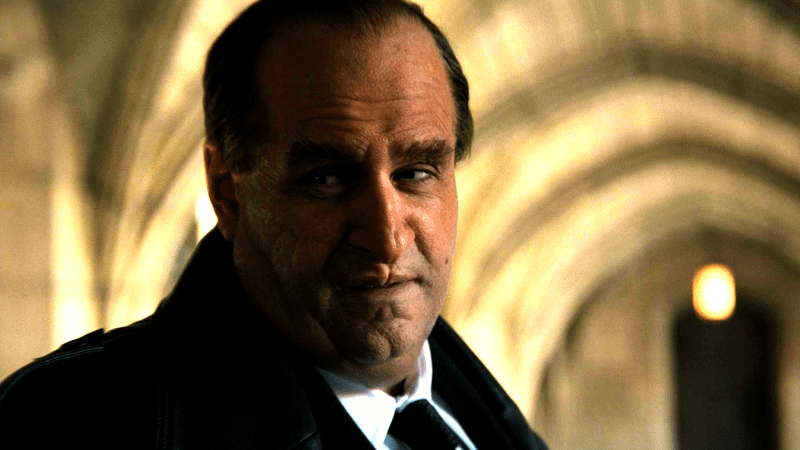
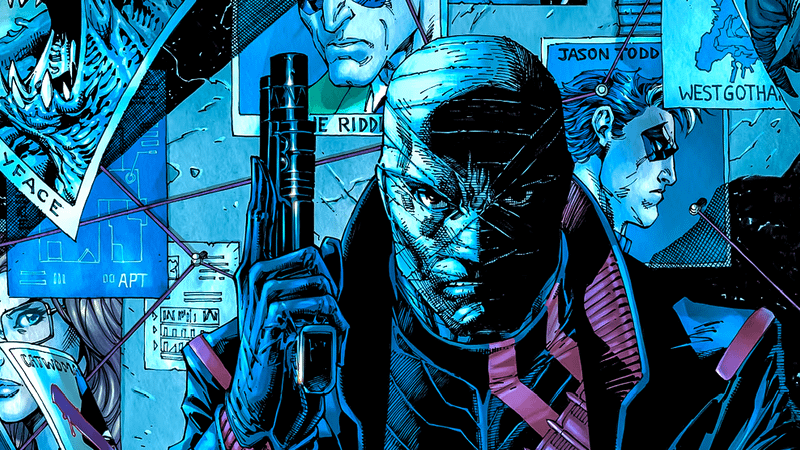
RELATED: 45 Of The Most Anticipated Movies Of 2026

Sixth is Paramount’s André Øvredal and 18Mhz horror pic Passenger with a $3M Friday/previews, $7.3M 3-day and $8.8M 4-day at 2,534 locations.

Neon’s I Love Boosters is at $1.5M today/previews, $4M 3-day, $5M for the Friday-Monday span at 1,750 sites.

UPDATED, AFTER EXCLUSIVE: Lucasfilm’s Star Wars: The Mandalorian and Grogu came in at $12M on the nose in Thursday previews.

In addition to 2018’s Solo: A Star Wars Story, the pic is comping to such 4-day openers and their previews as Marvel Studios’ Captain America: Brave New World ($12M previews, $100M opening last year) and 2023’s Ant-Man and the Wasp: Quantumania ($17.5M previews, $120.4M 4-day).

RELATED: ‘Star Wars: The Mandalorian And Grogu’: What The Critics Are Saying About Lucasfilm Tentpole

André Øvredal’s Paramount horror pic Passenger starring Melissa Leo grossed $1.1M from Thursday paid previews across roughly 2,125 locations. The pic is expected to do $9M-$10M over 4 days. Critics are low on it at 46%, and audiences aren’t wowed at 50%. The R-rated movie’s blurb: A young couple witness a horrific accident that leaves the driver dead. They soon encounter a demonic stalker who’s impossible to outrun and follows them wherever they go.

Naomi Ackie, Keke Palmer and Poppy Liu, Taylour Paige in 'I Love Boosters' (2026)

Naomi Ackie, Keke Palmer and Poppy Liu, Taylour Paige in ‘I Love Boosters’ (2026)

Neon

Neon’s Boots Riley movie, I Love Boosters, did $430K in total previews, $360K of that number from yesterday at 1,310 theaters. The pic is expected to do in the high single digits over 4-days. No RT audience score, but critics love the Keke Palmer, Taylour Paige, Poppy Liu, Eiza Gonzalez, Naomi Ackie satirical comedy at 92% fresh.

The week’s top 5:

1) Michael (LG) 3,560 theaters, Wk $37.5M (-29%), Total $294.1M/Wk 4

2) Obsession (Focus) 2,615 theaters, Wk $30.3M/Wk 1
The Curry Barker-directed horror romance was No. 1 for a fourth straight day with $3.3M, ahead of Michael‘s $2.4M.

3) The Devil Wears Prada 2 (20th) 3,830 theaters, Wk $25.6M (-54%), Total $183.5M/Wk 3

4) Mortal Kombat II (NL) 3,534 theaters, Wk $17.7M (-64%), Total $66.6M/Wk 2

5) The Sheep Detectives (AMZ) 3,554 theaters, Wk $14.1M (-31%), Total $34.5M/Wk 2

EXCLUSIVE: Lucasfilm/Disney’s Star Wars: The Mandalorian and Grogu is pulling in around $12 million in North American Thursday night previews. It could be slightly lighter when the sun comes up in L.A. Shows began Thursday at 2 p.m.

That preview figure is slightly less than the Thursday cash made by 2018’s origin story Solo: A Star Wars Story, which was $14.1M. That turned into an $84.4M three-day and $103M four-day Memorial Day opening, not considered a starry start at all for the George Lucas-born, Disney-owned franchise.

Since its acquisition of Lucasfilm, Disney has hit it out of the park with 2015’s Star Wars, Episode VII: The Force Awakens, which at point charted the highest opening at the domestic box office ever with $247.9M before Avengers: Infinity War and Avengers: Endgame came along in 2018 and 2019, respectively. In addition, Disney did spectacular with the 2016 Episode 4 prequel Rogue One: A Star Wars Story, which opened to $155M stateside. Mandalorian and Grogu in pre-weekend tracking is hoping to clear $80M-$100M over the four days.

The Jon Favreau-directed movie is playing at 4,300 theaters, including 425 Imax, with the full suite of PLF, 4DX, 3D and ScreenX. Presales were at $25M on Tuesday, ahead of Project Hail Mary (which opened to an $80.5M 3-day).

The wait-and-see of it all with the PG-13 Mandalorian and Grogu is whether the movie expands to families on Saturday and Sunday. At every step of the way in the marketing campaign, Disney has been targeting them, emphasizing the cute-cute of Grogu, i.e., that saccharine Super Bowl commercial where Pedro Pascal’s tough dude and Baby Yoda are in a sleigh, dashing through the snow. At the same time, they’ve tried to speak to the faithful with images of Empire Strikes Back‘s snowy AT-AT scenes and wrestler Rotta the Hutt.

On the positive side, the Rotten Tomatoes audience score for Mandalorian and Grogu is higher than Solo: A Star Wars Story, 88%-63% (realize Thursday night fans are far more gentle in reactions than non-core Star Wars audiences will be). On the downside, critics are a bit more sour on Mandalorian and Grogu than Solo, 61% fresh to 69%.

Last year, Disney led the Memorial Day box office to an all-time record with $326.7M for all movies, and the best opening the holiday has ever seen, with the live-action take of Lilo & Stitch with its $182.6M 4-day in the U.S. and Canada.

Shoutout to Focus Features’ Obsession, which has been ruling the box office in its weekdays, beating Michael on Monday, Tuesday and Wednesday. The Curry Barker-directed romance horror pic inched out Michael on Tuesday with $3.6M.

Through Wednesday, Obsession was up to $27M at the domestic B.O. Look for a great hold on the Blumhouse co-branded pic heading into the holiday.

Source link

SUNDAY 12:49 AM: Star Wars: The Mandalorian

Google asked a federal appeals court on Friday to reverse a landmark ruling that branded the company a monopolist in online search.

The Department of Justice sued Google in 2020, arguing that the tech giant had abused its monopoly to maintain its dominance over online search. In 2024, a U.S. District Court judge agreed with the government, ruling that Google had broken the law when it paid companies, including Apple and Mozilla, to have its search engine appear as the first option on smartphones and in web browsers.

In a filing with the U.S. Court of Appeals for the District of Columbia Circuit, Google said the District Court judge, Amit P. Mehta, had improperly applied antitrust law in finding that those deals were over the line. Judge Mehta also overstepped when he issued a ruling to fix the monopoly concerns by forcing Google to share some data with its competitors, the company argued.

The appeal is the next turn in a yearslong battle between Google and the Department of Justice, which has resulted in the first major antitrust rulings against a tech giant in the modern internet era. The Justice Department also sued the company in 2023, claiming it had a monopoly in advertising technology. The government won that case, and the judge is expected to issue her decision on how to fix that monopoly this year.

In the search case, Judge Mehta’s ruling in 2024 on measures to address the monopoly, known as remedies, fell short of the breakup of Google that the government had sought. He said Google had to share some of the data that powered its search engine with competitors, which could include other search engines like Microsoft’s Bing and chatbots like ChatGPT.

In its appeal, Google took issue with both Judge Mehta’s original ruling and his decision on remedies. The judge’s ruling that the company violated federal antitrust law was “as basic an error of antitrust law as a court can make,” Google said in its filing.

“The court’s own findings establish that Google’s conduct was lawful,” the company said in the filing. “It developed a superior search engine through hard work, bold innovation and shrewd business decisions.”

Source link

Google asked a federal appeals court on

French director Arthur Harari presented one of the most mind-boggling films in Cannes Competition this year with body swap tale The Unknown starring Léa Seydoux and Niels Schneider,

Adapted from a graphic novel Harari co-wrote with brother Lucas Harari, the film revolves around reclusive photographer David (Schneider), who wakes up in the body of the woman (Seydoux) with whom he had a sexual encounter at a party the previous night.

It is the third feature from Harari, who shared the Best Original Screenplay Oscar with partner Justine Triet for Anatomy of a Fall in 2024, after Dark Diamond and Onoda: 10,000 Nights in the Jungle, which played to acclaim in Un Certain Regard in 2021.

“I seem to have the need to find stories in which the characters are at war with reality or have a profound problem with reality,” Harari told the Deadline Studio.

The director added that his aim as director is to create some sort of genuine experience for spectators when they watch his films.

“It’s become kind of difficult… because we’ve seen so many stories, read so many books, there are so many series,” said Harari.

He is an unapologetic about the unresolved nature of the mysteries at the heart of the film.

“The audience has to admit that they will never know, so it deals also with frustration, with the fact that there’s something hidden, there’s something secret, and you have to let go, you have to accept,” he said.

Léa Seydoux said she was drawn to the project for the mixture of the sci-fi story and aesthetic realism.

“Arthur wanted to make a movie that with no special effects and the challenge was to make something believable without like any tricks, and I thought that that was really, really interesting for me,” she said.

This realism extended to portrayal of the bodies of the characters with Seydoux quite laying herself bare to the camera just weeks after giving birth to her second child.

“What’s great about this part is that Arthur gave me the possibility to really use my body as a tool of expression. Women, even now, are seen through the male gaze. They are objectified, sexualized and it’s the first time that I had the possibility to play with my body, to show a body that doesn’t exist in cinema. Most of the time, you see actresses, they’re super skinny, they’re so much in control of themselves… my challenge was to abandon myself,” she said.

Schneider added: “It was so unique to have the fantastic in reality. The subject of body swaps is usually in comedies like Freaky Friday or the Blake Edward movie [Switch]. The vision of the movie was to put the impossible into reality. we had to be really believable.”

To see the full conversation, click on the video above.

The Deadline Studio at Cannes is sponsored by SCAD.


Source link

French director Arthur Harari presented one of

Emma Stone is taking a far more casual approach to blonde hair this time around.

On May 21, the 37-year-old actor returned to her natural blonde roots at the Louis Vuitton 2027 Cruise Collection Show, debuting a “caramel blonde” refresh with a surprising amount of dimension for such a lived-in appearance. Although she stepped out in New York City in a chic black summer set by the luxury French fashion house, it was her dark blonde lob with subtle “ribbons of brightness” that truly made Stone’s look feel expensive.

Tracey Cunningham, Stone’s longtime hair colorist and the U.S. creative director of color & technique at Schwarzkopf Professional, says she utilized the “foiled cashmere technique” to lift the dark auburn red shades she’s been rocking for nearly an entire year.

“We wanted to softly transition her into something lighter but still dimensional and wearable,” Cunningham tells Glamour, exclusively. “The goal was a dark blonde that felt expensive and natural—not flat or over-bleached. We landed on ‘caramel blonde’ because it captures that balance of warmth and depth, with soft ribbons of brightness and lighter pieces around the face that give it a super effortless glow.”

NEW YORK, NEW YORK – MAY 20: Emma Stone attends Louis Vuitton Cruise 2027 at the Frick Collection on May 20, 2026 in New York City. (Photo by TheStewartofNY/WireImage)TheStewartofNY

Stone’s new look is right on track with summer 2026 beauty trends, which are moving in a far more natural, minimalist direction across the board. “I think people are moving away from overly high-maintenance blonde and leaning into softer, more lived-in color,” Cunningham says. “It’s all about dimension, tone-on-tone brightness, and healthy-looking shine. This look fits right into that shift – it’s bright but grounded, with a more natural, sunlit effect.”

Cunningham says she started with Schwarzkopf Professional’s BlondMe Premium Lightener 9+ and Igora Vibrance to “create that seamless, multi-dimensional result,” before using BlondMe Glow Toner to “blend and soften everything.”

Source link

Emma Stone is taking a far more

In a squeaker race for Cannes’ top prize, Romanian director Cristian Mungiu prevailed on Saturday, taking the Palme d’Or for his tense community drama “Fjord.”

The movie, a widely admired conversation-starter at the festival, stars Sebastian Stan and Renate Reinsve as religious parents who come into conflict with the child protection services of their tiny Norwegian town where they have relocated with their family.

Mungiu, a previous winner of the Palme for his controversial 2007 abortion drama “4 Months, 3 Weeks and 2 Days,” now joins an exclusive group of 10 filmmakers who have won the Palme twice — an achievement shared by Francis Ford Coppola (1974’s “The Conversation” and 1979’s “Apocalypse Now”) and Ruben Östlund (2017’s “The Square” and 2022’s “Triangle of Sadness”), among others. No one has ever won a third Palme d’Or.

Another record, maybe even more impressive, was set by distributor Neon, which, with “Fjord,” extends its streak of Palme wins to an unprecedented seven in a row. Those previous six Neon winners, many of which eventually claimed Oscars, are “Parasite,” “Titane,” “Triangle of Sadness,” “Anatomy of a Fall,” “Anora” and last year’s “It Was Just an Accident.”

Neon will release “Fjord” in the fall, with an extensive awards campaign to follow.

This year’s nine-member main competition jury, led by Korean director Park Chan-wook and studded with notables including “The Substance” star Demi Moore, Stellan Skarsgård and “Hamnet” director Chloé Zhao, seemed intent on spreading the wealth among as many winners as possible. There were three ties at Saturday’s awards ceremony.

The award for actress was shared by Virginie Efira and Tao Okamoto, co-stars of Ryusuke Hamaguchi’s “All of a Sudden,” a movie pegged by many to potentially go all the way. Similarly, the prize for actor was bestowed on both Emmanuel Macchia and Valentin Campagne, co-stars of Lukas Dhont’s World War I romantic drama “Coward.”

The prize for directing went to three people — and two movies — with a joint win for Javier Calvo and Javier Ambrossi (better known as Los Javis) for their century-spanning queer historical drama “The Black Ball,” as well as to director Paweł Pawlikowski for his exquisite post-World War II psychodrama “Fatherland.” (Pawlikowski half-joked at the podium, “This was a disastrous piece of mise-en-scène” after the awkward award presentation had him waiting in the wings.)

Claiming this year’s Grand Prize (essentially second place) was “Minotaur,” the rapturously received comeback film of Andrey Zvyagintsev, a Russian director who had been sidelined with a near-fatal bout of long COVID that put him in a coma. His new movie, about a wealthy Moscow family, is both an erotic thriller and an indictment of amoral oligarchy detached from the war with Ukraine.

The festival’s third-place Jury Prize went to the borderland German drama “The Dreamed Adventure,” directed by Valeska Grisebach.

Source link

In a squeaker race for Cannes’

Another follow-up to WandaVision stripped away a key element that made the original series shine. VisionQuest, the third installment in the WandaVision trilogy on Disney+, is set to begin streaming on October 14, marking Marvel’s third live-action TV season of the year (fourth if Sony and Amazon’s Spider-Noir series is counted). 

However, a newly revealed casting detail might undermine what made WandaVision so uniquely special when it first drew in audiences five years ago. What made WandaVision irreplaceable was not just its inventive sitcom structure or superhero battle conclusion, but the fact that it was, at its core, a show built around women. The series starred Elizabeth Olsen and Paul Bettany as Wanda and (an imaginary) Vision, but the emotional engine of WandaVision was unmistakably feminine.

Marvel Television

Olsen led the charge alongside a predominantly female main cast: Kathryn Hahn as Agatha Harkness (later receiving her own series, Agatha All Along), Teyonah Parris as Monica Rambeau, and Kat Dennings as Darcy Lewis.

With four women to two men in its central cast, WandaVision is arguably the best female-forward story of the MCU, even among projects like Captain Marvel, The Marvels, and even Agatha All Along.

Wanda in WandaVision.
Marvel Television

At its heart, WandaVision was a story about grief, motherhood, and the mounting weight of both. Wanda’s arc wasn’t driven by a villain to defeat or a world to save but by the deeply human experience of losing the person you built your future around and the children you created out of love and desperation. Her fight for her children continued in Doctor Strange in the Multiverse of Madness.

WandaVision explored what it means to be a mother to children who were never supposed to exist and the pain of letting them go. It explored the way grief, when left unprocessed and compounded by years of trauma, can consume a person.

The twist: in an MCU setting where the main grieving character is a witch, this leads to the conjuring of a completely fictionalized community, trapping real-life residents in their own bodies.

These are themes that rarely, if ever, find their way into superhero storytelling, and Episode 8 of WandaVision, “Previously On,” raised the bar for personal storytelling in the MCU.

Other female characters also added to the impact. Monica’s line, that she would have done the exact same thing as Wanda if she had those powers, just to have her mother back, was emotionally resonant. It showed the shared grief of two women struggling to cope with their own losses. 

In many ways, this was the beauty of Disney+ MCU storytelling: getting a closer look at characters whose lives were deeply affected by supervillains like Thanos.

VisionQuest, by contrast, arrives with a cast that tilts sharply in the opposite direction. Paul Bettany returns as Vision, James Spader joins as Ultron, and the confirmed main cast includes Henry Lewis, Jonathan Sayer, James D’Arcy, and Ruaridh Mollica, six men to just two women in Orla Brady and Emily Hampshire. 

It is a lineup that signals, almost immediately, a fundamentally different kind of story. Whether intentional or not, the gender shift in VisionQuest‘s cast suggests its themes will be different from those of the show it spun off from.

How VisionQuest Will Differ From WandaVision

Wanda and Vision in WandaVision.
Marvel Television

VisionQuest picks up with White Vision following the events of WandaVision, where the original Vision’s memories were transferred into him, memories he now possesses but has never actually lived. 

He knows who Vision was. White Vision just doesn’t know who he is or what he is. That distinction is the engine of the entire show, as Bettany’s new iteration of Vision navigates a post-Wanda world with a face full of history and a soul that’s essentially starting from zero.

The world got its first look at VisionQuest on May 12, when Disney held its 2026 Upfronts presentation in New York City. Bettany took the stage alongside Robert Downey Jr. and Tom Hiddleston to present a brief trailer kept private from the general public, with just one still released to the world: Vision approaching a stunning white mansion surrounded by vibrant greenery. 

In the footage, Bettany’s Vision watches his own MCU history as though it were a film, an outsider looking in at a life that technically belongs to him.

James Spader’s Ultron looms large throughout, appearing in human form and described as being there to help Vision and taunt him, which, knowing Ultron, probably means a whole lot more of the latter. 

Rather than focusing on grief or loss, VisionQuest will seemingly put its attention on discovery and what it means to be human (or not human).

Source link

Horror is in the middle of a full-blown revolution. Long gone are the days of formulaic slashers, obvious jump scares, and rehashed possession movies, as audiences across all demographics have all but demanded originality and ingenuity when it comes to crafting terror. A new crop of fresh perspectives and new voices in the horror space, which very much includes the emerging studios willing to give them a platform, have set new expectations for what horror can be. As a long-time horror enthusiast, I’ve seen virtually every major horror release of the last 20 years, along with dozens of the most acclaimed foreign and independent releases.

After watching the new golden age of horror evolve in real time, I’ve established a pretty definitive benchmark for when the standards for horror were elevated: Ari Aster’s universally acclaimed 2018 supernatural horror Hereditary. Its ultra-scary narrative and direction, supplemented by Toni Collette’s Oscar-caliber performance, kicked off the trend of elite horror movies releasing with regularity. With May 2026 producing one of the best months for horror ever, I took a look back at the scariest movies to release since Hereditary, and ranked them based on how haunting, depraved, and memorable they are.

Warning: Minor spoilers for 2026’s ‘Obsession’ and ‘Hokum’ ahead


10

‘Talk to Me’ (2022)

Sophie Wilde as Mia in Talk to Me A24

Talk to Me represented the feature directorial debuts of Australian filmmakers Danny and Michael Philippou, two brothers who began their careers on YouTube. Inspired by classic possession tropes, Talk to Me refreshed the concept with a cursed porcelain hand that allows someone to trigger a brief and temporary possession. Naturally, its teenage hero Mia, seeking to connect with her recently deceased mother, holds on for too long and finds herself plagued by a variety of spirits, both benevolent and malignant.

As Mia, Sophia Wilde delivers an all-time horror performance that’s as haunting as it is heartbreaking. Meanwhile, the Philippou brothers established themselves as masters of jump scares, dread, and near-surgical use of violence. Capped by an all-time bleak ending, Talk to Me is equal parts terrifying and upsetting in its exploration of grief.

9

‘Obsession’ (2026)

Inde Navarrette as Nikki in Obsession Focus Features

Director Curry Barker, who also got his start on YouTube with sketch comedy, burst onto the horror scene with Obsession in May 2026. The box office record-breaking supernatural horror features what many are already calling an all-time performance from Inde Navarrette as Nikki, a young woman who falls victim to her smitten best friend Bear’s wish for her love. It’s soon revealed that Nikki has in fact been replaced by a cursed version of herself, and is trapped in her own body while the twisted version of herself grows more and more depraved in her affection for Bear.

Navarrette’s downright disturbing performance will almost certainly be campaigned for come Oscar season, but what makes Obsession truly terrifying is the dark tragedy of Nikki’s agony while being trapped in her own body. Using just $750K to produce the entire movie, Barker weaponizes shadows, practical effects, tactical use of gore, and Navarrette’s ground-breaking performance to craft something singular and deeply disturbing,

8

‘Barbarian’ (2022)

Georgina Campbell in Barbarian 20th Century Studios

Zach Cregger became a household name thanks to 2025’s Oscar-winning horror-mystery Weapons, but many horror fans consider his previous movie, Barbarian, to be the scarier of the two. Starring modern scream queen Georgina Campbell, horror staple Justin Long, and Bill Skarsgård (who is excellent even when not transforming into Pennywise or Nosferatu), Barbarian‘s first act builds an incomparable level of dread and tension.

By the time Cregger unleashes his deformed monster known as The Mother, Campbell’s Tess has endured the terror of a stranger with unknown intentions and a white-knuckle exploration of a basement and secret tunnel hiding horrifying evidence of past unthinkable crimes. What starts as a brilliant slow burn never lets up once it hits the gas while pivoting to a revolting creature feature halfway through.

7

‘Infested’ (2023)

Large killer spiders crawl through the window of a van in Infested Shudder

For those capable of even stomaching what is, for my money, the most stomach-churning use of spiders in horror history, Sébastien Vaniček’s French horror movie Infested is a classic example of the “once is enough” horror movie experience. Vaniček places a rapidly evolving and reproducing deadly spider in a French banlieue (a low-income suburban housing project), and assaults the audience with well-executed jump scares and practical effects along with pretty decent spider CGI. A poignant commentary on xenophobia is prevalent but at no point diminishes the gut-churning creature feature.

6

‘Smile’ (2022)

Laura about to cut her face in Smile
Paramount Pictures

Depending on who you ask, the sequel to Parker Finn’s deeply haunting Smile is considered by some to be a superior overall movie, but when it comes to sheer scariness, the original is elite. Driven by a tremendous performance from Sosie Bacon and complemented by scream king Kyle Gallner, Smile combines some of the creepiest imagery in recent memory with wicked gore and excellent jump scares for a brutally effective holistic horror experience. It’s a distressing examination of trauma throughout, but the coup de grâce is the jaw-dropping reveal of the entity that drives the Smile curse in the fiery finale.

5

‘Oddity’ (2024)

The golem in Damian McCarthy's Oddity Shudder

Irish filmmaker Damien McCarthy‘s feature debut Caveat had a nice cult following for those who appreciated the low-budget yet undeniably creepy single-location haunted house story, but he truly announced his presence with the supernatural horror Oddity. While it released to limited fanfare, Oddity grew in notoriety when it was declared one of the scariest movies of the 2020s based on the science of tracking heart rate and stress levels. McCarthy is a true master of the jump scare, and the slow burn of Oddity is punctuated with heart-stopping scares with surgical precision.

4

‘Hokum’ (2026)

A still from the horror movie 'Hokum'
A still from the horror movie ‘Hokum’
NEON

If Oddity introduced Damian McCarthy to the main horror stage, 2026’s Hokum was how he announced he was here to stay. Starring Adam Scott as a deeply troubled and cynical author, Hokum is an elite example of folk horror done right. Set mostly in a remote Irish hotel, McCarthy manages to create a smothering atmosphere of terror that assaults the audience with perfectly-timed scares that stick with you long after. The main villain might be a terrifying Irish witch, but the deeply disturbing children’s TV show host Jack the Jackass (pictured above) is the image that shows up in nightmares long after the credits roll.

3

‘The Dark and the Wicked’ (2020)

louise looks terrified while showering in the film the dark and the wicked
RLJE Films

Director Bryan Bertino is most well-known as the man behind 2008’s horror classic The Strangers, which is an all-timer despite the string of ghastly sequels that have followed. However, his 2020 supernatural horror movie The Dark and the Wicked is superior in just about every way when it comes to scares. The criminally-underseen movie features a pair of siblings who are tortured by a demonic entity upon returning to their family farm to care for their dying father. The entity blurs the lines between nightmares and reality, invading the minds of its victims to make them see haunting images that aren’t actually there.

The movie asphyxiates the audience with its haunting atmosphere and a heavy fog of dread hanging over the entire movie, making each extremely well-executed shock hit that much harder. It’s unspeakably bleak, and never relents in that regard as it careens toward a tragic and memorable ending. If there was any justice in the world, The Dark and the Wicked would be widely recognized as one of the best overall horror movies of the decade, as those who have seen it can attest.

2

‘Host’ (2020)

Five friends gather for a seance in Host
Shudder

Plenty of movies have attempted a tech-heavy “screenlife” approach to scares, with the terror originating from phones or computer screens. Nothing has ever come close to accomplishing what Rob Savage’s ultra-lean supernatural horror does in just 56 minutes of runtime. Host follows a group of friends attempting a seance with a medium while in lockdown during the COVID-19 pandemic, although it isn’t taken seriously by everyone on the call. One of the attendees manufactures a tale about a deceased classmate while the door to the spirit world is open, resulting in a demonic entity taking on the persona of the made-up character.

What follows is a nerve-wracking, edge-of-your-seat escalation of paranormal events that goes from chairs moving on their own to an invisible entity snapping necks as horrified friends watch. Savage manages to pack in a potent mix of background spooks, memorable imagery, and unbelievable jump scares to create one of the most singularly, unflinchingly terrifying horror experiences of the last few years. It’s the definitive example of the impact that can be made in a short time frame, as Host wraps the entire narrative in under an hour.

1

‘When Evil Lurks’ (2023)

'When Evil Lurks' (2023)
Ezequiel Rodríguez in ‘When Evil Lurks’ (2023)
Shudder

A co-production between Argentina and the United States from director Demián Rugna, When Evil Lurks is a vicious, visceral, unsettling supernatural horror film loaded with elements that stick in the brain. It provides a fresh perspective to possession horror, treating the demonic entity at its center as an infection that can jump from person to person, ultimately yielding a chain reaction of nauseating gore and violence. It dabbles in body horror as well, particularly surrounding the infected “Rotten”, the initial host of the demon that serves as a vessel for the birth of evil in its purest form.

When Evil Lurks pulls zero punches in its progression, ratcheting up the intense infection scenes as the demon spreads across the rural town in Argentina. It’s legitimately hard to watch some of the scenes in which children fall victim to the relentless violence, and is sure to induce nightmares for parents and non-parents alike. While it’s not loaded with many of the jump scares that drive other entries on this list, When Evil Lurks is the most likely to traumatize its viewers.

Source link

Horror is in the middle of a

Infinity Ward studio heads Mark Grigsby and Jack O’Hara have posted a message to social media ahead of the reveal of the next Modern Warfare game.

“We are Infinity Ward. We build visceral, immersive combat experiences that hit different,” opens the letter posted to social media and the Infinity Ward website. 

Grigsby and O’Hara are veterans of the Call of Duty franchise, with Grigsby working on the series as far back as Call of Duty 2, which was released in 2005.

“As a new chapter begins for this studio, we’re focused on what defines us: passion, precision, obsession, and an unrelenting drive to make the best entertainment in the industry. Our next game is the result of that mindset.”

That new game is expected to be Call of Duty: Modern Warfare 4. In a separate social media post, the studio claimed that it was making the “definitive Modern Warfare” game.

“Our next game is the result of that mindset. Determined. Bold. Relentless. Built by a team pushing every detail, every system, every moment to its limit.

“On behalf of everyone at IW, we’re proud of what we’ve been building and excited to finally start sharing it with you.”

The game may make its full debut during Game One of the NBA Finals, which is due to take place on June 4. The NBA Finals have been the venue for multiple Call of Duty reveals over the years.

Earlier this year, the Call of Duty X account shot down rumours that the game would come to the previous generation of consoles. 

In April, it was announced that new Call of Duty games would no longer be available on day one in Xbox Game Pass.