Will history judge Walt Disney Co.’s $71.3-billion purchase of 21st Century Fox a success?
Or will the 2019 acquisition turn out to be Disney Chief Executive Bob Iger’s biggest blunder?
Activist investor Nelson Peltz’s excoriation of Iger’s decision to load up on content for the streaming wars by buying Rupert Murdoch’s TV and movie studios and other entertainment assets has touched off a spirited debate.
But the hangover from the Fox deal has come into sharp focus this month in light of Iger’s dramatic plan to cut costs by $5.5 billion, including eliminating 7,000 jobs. It is among the largest reductions in the history of the storied entertainment company, which cut thousands of jobs following the Fox deal.
Buying Murdoch’s studios undoubtedly allowed Disney to scoop up valuable franchises, including television’s longest-running show, “The Simpsons,” as well as film juggernaut “Avatar,” giving Disney a slice of the $2.2 billion in global box office receipts from “Avatar: The Way of Water.” Disney also picked up the original “Star Wars” film as well as “X-Men,” “Fantastic Four” and “Deadpool,” allowing those characters to join Disney’s Marvel Cinematic Universe.
The National Geographic and FX cable channels also came with the deal, along with proven TV industry leaders.
All have been instrumental in beefing up Disney’s content pipeline.
The Walt Disney Studios in Burbank.
(Raul Roa)
But some critics on Wall Street argue the acquisition, and integrating the Fox staff and operations into Disney, distracted the Burbank entertainment giant from its core mission of creating high-quality family entertainment.
Cowen & Co. media analyst Doug Creutz was never sold on the Fox deal and now partially blames it for Disney’s current troubles, which include managing an even larger portfolio of declining linear cable TV channels and absorbing billion-dollar losses as the company builds not one but four streaming services to compete with Netflix, Amazon Prime Video and others.
In addition to Disney+, Disney operates ESPN+ and Hulu as well as the Disney+ Hotstar streaming service in India.
“Even without Fox, Disney would still be struggling with linear channels and figuring out how to make streaming profitable,” Creutz said. “But they’d be in a much better position, financially, without all of this debt sitting on their balance sheet. And they would not have needed as big of a reorganization.”
At the time, Wall Street was high on the future of streaming companies. Iger and Murdoch had initially agreed on a $52.4-billion all-stock deal for Fox, which several observers said would have been a coup for Disney.
But Iger found himself dragged into a bidding war by Comcast Chief Executive Brian Roberts, who offered Murdoch considerably more money. To clinch the deal, Disney ultimately agreed to pay $71.3 billion. (In addition, Disney assumed nearly $14 billion in Fox debt, according to company documents.)
Comcast building in Philadelphia.
(Matt Rourke / Associated Press)
Comcast eventually wrangled one of Murdoch’s assets, the European satellite TV service Sky. Comcast then paid Disney $15 billion for Fox’s ownership stake in Sky.
Antitrust regulators also forced Disney to sell another asset — Fox’s regional sports networks that carry local games of professional hockey, basketball and baseball teams. The government refused to allow Disney to own both ESPN and more than 20 regional sports channels, so Disney auctioned off the channels, including the YES Network that carries the New York Yankees, for more than $10 billion.
Subtracting proceeds from those asset sales, Disney places the Fox deal at $57 billion.
“Even that was too much — way too much,” Creutz said.
The lingering problem is the debt. In 2018 regulatory filings, Disney said it planned to take on as much as $36 billion in debt to cover the cash portion of the cash-and-stock deal to Murdoch and his shareholders (Regulatory filings show the company actually took on about $26 billion).
Then, a year after the Fox deal closed, Disney was ravaged by the global pandemic — theme parks, movie theaters and sports attractions were shuttered — and it was forced to take on even more debt. As of last quarter, Disney’s debt stood at $45 billion.
When the Fox deal was finalized in March 2019, Iger said in a statement, “Disney’s and Fox’s unparalleled collection of businesses and franchises will allow us to create more appealing high-quality content, expand our direct-to-consumer offerings and international presence, and deliver more personalized and compelling entertainment experiences to meet growing consumer demand around the world.”
Disney also offered Fox library titles to Disney+ international customers.
Disney+ has more than 160 million subscribers globally.
People close to the company said the Fox deal accelerated Disney’s leap into streaming, giving it a head start over rivals such as Warner Bros., NBCUniversal and Paramount.
Yale School of Management senior associate dean Jeffrey Sonnenfeld called the Fox deal “brilliant.”
“Was it a high cost? Yes, but you don’t judge an investment as a business expense but rather against the return on the investment,” he said.
Sonnenfeld said the Fox assets could reap unexpected rewards for Disney down the line, and cited an obscure historical reference: the 1867 purchase of Alaska from Russia for $7.2 million.
“Of course, gold was later discovered there, sparking a gold rush,” Sonnenfeld said. “Can you imagine if [Russian President Vladimir] Putin controlled that real estate now?”
Disney’s purchase of Fox kept the assets, including the popular streaming service Hulu, out of the hands of Comcast or another media foe.
On the most recent earnings call, Iger told analysts the company would devote less resources to making general entertainment content. But one of the primary rationales for buying Fox was to increase Disney’s arsenal of general entertainment content.
“That raises the question: So why did you buy Fox?” Creutz asked.
Iger also appears to be questioning the value of Hulu. Disney currently owns two-thirds of the pioneering general entertainment streaming service built by Fox, NBCUniversal and Disney; Comcast owns the other third.
Earlier this month, Iger told CNBC that “everything is on the table” as he looks to make cuts, fueling speculation in Hollywood over the future of Hulu.
Disney already committed to pay Comcast $9 billion for its 33% stake in Hulu by January. If Comcast wants to exercise its option to sell, that would give Disney 100% control, but it might look to sell the platform.
“The question for Disney is: Do they want to be a scaled, broad entertainment company or the mother of all niche entertainment companies with family-friendly entertainment,” said Jason Kilar, the former WarnerMedia chief executive who built Hulu. “Either approach can be successful and both entail differentiated content, but that’s the big question that hasn’t been definitively answered.”
Kilar predicted that by the end of the decade, there will be a small handful of entertainment companies with an ability to generate more than $10 billion in cash flow per year from their streaming operations.
“If 21st Century Fox ends up being the difference-maker to help Disney cement its status in the winner’s circle, then it will have been worth it,” Kilar said.
One of the hottest packages at the EFM has been taken off the table for international.
Sources tell Variety that Prime Video has snapped up all international rights, excluding the U.S., to Justin Kurzel’s “The Order,” which stars Jude Law and Nicholas Hoult in a story about the titular white supremacist organization that operated in the 1980s.
The project is penned by Oscar- and BAFTA-nominated writer Zach Baylin (“King Richard”), who based the screenplay on Kevin Flynn and Gary Gerhardt’s book “The Silent Brotherhood.” Published in 1989, the book details the activities of the radical-right hate group The Order, which was one of the most sinister organizations to emerge in America since the Ku Klux Klan.
In the film, Law plays a lone FBI agent stationed in Idaho who starts piecing together a pattern in a series of violent bank robberies, counterfeiting operations and armored car heists terrorizing communities across the Pacific Northwest. Rather than the work of a traditional organized crime unit, he believes a radical group, helmed by a charismatic leader (Hoult), is behind the devastation.
Director Kurzel is known for crime-centric pics, with his most recent film, “Nitram,” detailing the events leading up to the 1996 Port Arthur massacre in Tasmania. His other credits include “True History of the Kelly Gang,” “Assassin’s Creed,” “Macbeth” and “Snowtown.”
Variety understands that “The Order” is one of many packages and films being pursued on the ground by Prime Video, which is out in full force at the European Film Market despite some uncertainty about how much of a showing the streamers would have in Berlin. Earlier in the week, the streamer also bought Zoe Saldaña and AGBO’s action-survival movie “The Bluff” for international, as revealed by Deadline.
Dealmaking on the ground has so far been quiet, but buyers and sellers entered this year’s EFM — the first in-person market in Berlin since 2020 — with enthusiasm, encouraged by a healthy roster of scripts and packages hitting the market. There have been questions, however, about the extent of dealmaking from the streamers, which only dished out on a few titles at last month’s Sundance.
AGC Studios, which is financing and producing “The Order,” sold international, while CAA Media Finance and UTA Independent Film Group are co-representing North America. Production will begin in May in Alberta, Canada.
The Berlinale kicked off on Feb. 16 and runs through to Feb. 26.
New editions of classic 20th century children’s books by British author Roald Dahl — such as “Charlie and the Chocolate Factory,” “James and the Giant Peach,” “Matilda,” “The Witches” and “Fantastic Mr. Fox” — have been edited and rewritten to remove language seen as offensive or potentially insensitive to modern-day sensibilities.
After comparing new editions published by Puffin to previous versions of Dahl’s classics, the British newspaper The Telegraph found that the new versions removed or rewrote passages describing characters as “fat,” “crazy,” “ugly,” and “black.”
Some references to ethnicities have been removed or adjusted — “Eskimos” are now described as Inuit — and gender-neutral terms like “children” and “parents” have replaced some references to “boys and girls” and “mothers and fathers.”
The Telegraph cited before-and-after examples, including from “Charlie and the Chocolate Factory.” An older edition of the book described one character like this: “The man behind the counter looked fat and well-fed. He had big lips and fat cheeks and a very fat neck.” In the newest edition, these sentences were removed entirely.
Other sentences referencing fatness were also removed, such as “The fat around his neck bulged out all around the top of his collar like a rubber ring”; “Who’s the big fat boy?”; and “Enormous, isn’t he?”
Many edits are more subtle: “The fat shopkeeper shouted” became “the shopkeeper shouted,” and “the fat shopkeeper said” became “the shopkeeper said.”
Some Twitter users attacked the latest updates to Dahl’s books as “woke” and pointless. “The thing that annoys me about the Roald Dahl changes is how stupid they are,” tweeted Daily Telegraph arts and entertainment editor Anita Singh. “A ban on the word ‘fat’ yet keeping in the rest of the description in which Augustus Gloop is clearly fat.”
Dahl, one of the most popular children’s authors of the 20th century, died in 1990 at the age of 74, and in 2021, the streaming service Netflix acquired the Roald Dahl Story Co., which manages the rights to the author’s characters and stories, and which had already begun reviewing Dahl’s work alongside Puffin before the Netflix sale. Dahl’s books have sold more than 300 million copies worldwide, with translations in 63 languages.
“We want to ensure that Roald Dahl’s wonderful stories and characters continue to be enjoyed by all children today,” the Roald Dahl Story Co. said in a statement. “When publishing new print runs of books written years ago, it’s not unusual to review the language used alongside updating other details including a book’s cover and page layout. Our guiding principle throughout has been to maintain the storylines, characters, and the irreverence and sharp-edged spirit of the original text. Any changes made have been small and carefully considered.”
Roald Dahl Story Co. spokesman Rick Behari added in an email that “the overall changes are small both in terms of actual edits which have been made and also in terms of the overall percentage of texts which has been changed.”
Dahl’s work, like his life, has its unsettling moments and has long been subject to update, revision and apology by other creatives laboring to bring his art to mass audiences.
In the first edition of “Charlie and the Chocolate Factory,” published in 1964, the Oompa-Loompas helping Willy Wonka were originally described as African Pygmy people whom Wonka had “smuggled” out of Africa in crates to live and work in his factory. Facing pressure from Black actors and groups such as the NAACP after America’s Civil Rights era, the 1971 film made the Oompa-Loompas orange-skinned with green hair. In a 1973 revision of the book, Dahl recast the Oompa-Loompas as white and fantastical instead of Black and African.
In 2020, the actor Anne Hathaway apologized for her depiction of Grand High Witch in Robert Zemeckis’ adaptation of “The Witches” in which the character had three fingers, angering disability advocates over a negative portrayal of limb differences. The same year, Dahl’s family apologized for his history of making antisemitic remarks.
Cast: Sushmita Sen, Chandrachur Singh, Sikander Kher, Namit Das,
Created by: Ram Madhvani
“Aarya” starts off with a couple of advantages. It marks the return of Sushmita Sen, a fact that has helped the show pump up hype over the past weeks. Secondly, there proven core content at hand. The show is based on the Dutch series “Penoza”, which saw a whopping run of five seasons, and which has already inspired an American rehash, “Red Widow”.
Both the advantages, however, come with a catch. There was always the challenge of moulding the uber-glamour of Sushmita Sen — still India’s first Miss Universe in the minds of most — into a protagonist that fits the scope of a web series (it is a challenge that her Bollywood directors mostly never tried tackling, which often saw her essay the ‘other heroine’ in two-heroine projects).
On the second aspect, what worked in Dutch may not necessarily work for a ‘desi’ revisit.
It’s obvious right from the start that writer-creator Ram Madhvani’s primary labour over nine episodes lay in setting up a saleable, author-backed showcase to highlight the Sushmita factor, with his Indianised imported plot.
Sushmita is Aarya Sareen, alpha mother of three, and she is hanging upside down defying gravity, executing a complex inversion workout, when we first meet her. The scene is perhaps symbolic, meant to tell us how ‘in control’ she can be, when her world turns upside down. Which doesn’t take long to happen actually. Beneath the veneer of a happy family, where Aarya wants to give her kids a normal childhood, we soon learn the Sareens are not ‘normal’ people. The regal lifestyle owes itself to dealings more than meet the eye.
Aarya’s husband Tej (Chandrachur Singh) and his partners are drug mafia, running their trade under the garb of a pharmaceutical business.
The tele-play aims at building its storyline gradually over the episodes — only too gradually you would think, after the opening episode gives the show a dramatic plot-pusher, not to be revealed for the sake of shielding spoilers. That momentum, however, gets squandered as Madhvani’s narrative tries accommodating too many sub-plots for too many characters. The average runtime of each of the nine episodes ranges from around 45 to 55 minutes. You wish Madhvani and his co-directors (Sandeep Modi and Vinod Rawat) had stuck to the point, restricting the show to, may be, five episodes of 30 minutes each with sharper editing.
Pace is not the only problem. Despite basing its narrative on something as promising as a thriller about drug running and the deceptions that come in its wake, “Aarya” cannot boast of many authentic moments that thrill.
The most disappointing aspect is what the entire series ultimately decides to settle upon, for a ‘storyline’. Without giving away the plot, for all its intriguing premise, this is a hackneyed story about cops and mafia gunning for a USB stick that contains — ahem — secrets that could bring down the drug empire. It reminds you of those B-flicks of yore. Back then, they would all be chasing a little black diary of ‘kachha-chittha’. Nowadays it seems bad guys keep their black deeds documented in black pen drives.
From trailer and previews, you would have the broad idea that circumstances will force the homemmaker Aarya to take over her husband’s trade. Yet, when that momentous event does happen, there is absolutely no spark — save the bit of shimmy swag that Sushmita exudes as she makes her way to her husband’s chair, backgrounded by retro Bollywood score.
In fact, that nutshells the whole show. It is a lazy drama propped by Sushmita’s screen presence in particular, as well as rest of the cast. Fans of Sushmita won’t be disappointed, though. After a decade of absence from the Bollywood screen (five years if you consider she did a brilliant Bengali arthouse film called “Nirbaak” in between), the actress returns to prove that she has lost none of her edge. Be it as the doting mom or the cold avenger, Sushmita’s Aarya Sareen is a balanced and believable act.
Two other actors who particularly stand out are Jayant Kripalani and Maya Sarao. Kripalani, who also returns on screen after a hiatus, is Aarya’s father Zorawar, with a deceptively pleasant disposition that he pulls off effortlessly. Maya Sarao is Maya, Aarya’s close friend and the wife of one of Tej’s partners, Jawahar (Namit Das). Although Maya is really a secondary character, she gets her moments, letting Sarao score.
Most of the others in the cast are adequate.
“Aarya” leaves open the scope for an obvious season two going by its final scene. For a few thrills more, we will hope Madhvani and company serve it headier the next time.
Rating: 2.5/5
(This story has not been edited by News18 staff and is published from a syndicated news agency feed)
Netflix is in for more “Outer Banks.” The streamer has renewed the adventure series for a fourth season, five days ahead of the debut of Season 3 on Feb. 23.
The news was announced Saturday evening at Poguelandia, the “Outer Banks” fan event in Huntington Beach, Calif. Cast members Chase Stokes, Madelyn Cline, Madison Bailey, Jonathan Daviss, Carlacia Grant, Rudy Pankow, Austin North and Drew Starkey surprised the crowd with the renewal announcement. Attendees were also indulged with a nine-minute preview of Season 3.
“Seeing Poguelandia come to life was nothing short of spectacular,” series co-creators, executive producers and showrunners Jonas Pate, Josh Pate and Shannon Burke said in a joint statement. “The Pogues are enjoying an adventure of a lifetime and we now get to map out more twists and turns as the joyride continues into Season 4 of ‘Outer Banks.’ Thank you to Netflix, our cast and the amazing fans who helped to make this happen.”
Other highlights from Poguelandia included musical performances from Khalid, Lil Baby, Elley Duhé, Surf Mesa and The Nude Party, as well as a surf shop sponsored by American Eagle.
Speaking with Variety, series star Cline previewed Season 3 and discussed how her character, Sarah Cameron, has evolved over the years.
“We’ve seen her truly grow up a lot. She’s gone from a teenager who doesn’t have much of a care in the world or responsibilities to having the weight of so many things on her shoulders,” Cline said. “This season, we continue to piggyback on that with a few wrenches thrown into the mix. She found this voice and she’s learning how to make decisions for herself.
“Outer Banks” Season 1 first premiered in April 2020, quickly catching on with a dedicated audience. The second season debuted in July 2021.
YouTube CEO Susan Wojcicki is stepping down from her role after nine years leading the Google-owned company, the executive said on Thursday.
In a message to staff, Wojcicki said she was leaving to “start a new chapter focused on my family, health, and personal projects I’m passionate about.” She will be succeeded by Neal Mohan, most recently YouTube’s chief product officer and Wojcicki’s close lieutenant, who will take on the title of svp and head of YouTube.
Wojcicki was the 16th employee at Google, joining the company co-founded by Larry Page and Sergey Brin in 1999 to build out its ad business and analytics products. Google went on to acquire YouTube in 2006 and Wojcicki took on the CEO position at the video platform in 2014.
During her tenure, YouTube has grown to be a major business for Google and one of the leading platforms for digital creators to monetize their work through the company’s robust ad revenue–sharing program, the YouTube Partner Program. And faced with major competition from TikTok, YouTube has built out its own short-form video offering, Shorts, which averages 50 billion views a day and has its own revenue-sharing program for creators that launched this month.
As a platform, YouTube has regularly brought in quarterly ad revenue above $7 billion in the past year, though the company has seen a slowdown from its massive pandemic growth in recent quarters amid a declining ad market. The platform’s subscription business across YouTube Music Premium and YouTube TV — the latter of which recently won distribution rights to the NFL Sunday Ticket — has also been seen as building “great momentum,” as Alphabet CEO Sundar Pichai highlighted in a Feb. 2 earnings call.
In a separate note to creators shared publicly on Thursday, Wojcicki offered her praise to Mohan and assured creators that the executive “understand this community and what you need today, tomorrow, and in the future better than anyone.”
She also acknowledged “tough and candid” feedback she received from the creator community, especially around the platform’s handling of content moderation for videos containing misinformation, extremist propaganda and inappropriate content, among other issues.
“Your stories of perseverance, creativity, and inspiration were a daily source of motivation and inspired me to be an advocate and steward for this community you all created. It was a constant highlight of my job to sit down with you, hear how you were using the platform, and listen to feedback. Sometimes what you said was tough and candid, but it was important for me and the wider YouTube team to listen and do better,” she said.
In looking toward YouTube’s future, Wojcicki highlighted Shorts, podcasting, streaming and subscriptions as major areas of growth. “I remain just as convinced today as when I started nine years ago, that YouTube’s best days are ahead of it,” she wrote. “And with Neal and our incredible team of employees, you will all be in good hands.”
Wojcicki said she will assume an advisory role at YouTube and parent company Google to help with the transition. Her exit follows the departure of another longtime executive, YouTube’s former chief business officer, Robert Kyncl, who left in October to become the CEO of Warner Music Group.
Read Wojcicki’s note to staff below.
Hi YouTubers,
Twenty-five years ago I made the decision to join a couple of Stanford graduate students who were building a new search engine. Their names were Larry and Sergey. I saw the potential of what they were building, which was incredibly exciting, and although the company had only a few users and no revenue, I decided to join the team.
It would be one of the best decisions of my life.
Over the years, I’ve worn many hats and done so many things: managed marketing, co-created Google Image Search, led Google’s first Video and Book search, as well as early parts of AdSense’s creation, worked on the YouTube and DoubleClick acquisitions, served as SVP of Ads, and for the last nine years, the CEO of YouTube. I took on each challenge that came my way because it had a mission that benefited so many people’s lives around the world: finding information, telling stories and supporting creators, artists, and small businesses. I’m so proud of everything we’ve achieved. It’s been exhilarating, meaningful, and all-consuming.
Today, after nearly 25 years here, I’ve decided to step back from my role as the head of YouTube and start a new chapter focused on my family, health, and personal projects I’m passionate about.
The time is right for me, and I feel able to do this because we have an incredible leadership team in place at YouTube. When I joined YouTube nine years ago, one of my first priorities was bringing in an incredible leadership team. Neal Mohan was one of those leaders, and he’ll be the SVP and new head of YouTube. I’ve spent nearly 15 years of my career working with Neal, first when he came over to Google with the DoubleClick acquisition in 2007 and as his role grew to become SVP of Display and Video Ads. He became YouTube’s Chief Product Officer in 2015. Since then, he has set up a top-notch product and UX team, played pivotal roles in the launch of some of our biggest products, including YouTube TV, YouTube Music and Premium and Shorts, and has led our Trust and Safety team, ensuring that YouTube lives up to its responsibility as a global platform. He has a wonderful sense for our product, our business, our creator and user communities, and our employees. Neal will be a terrific leader for YouTube.
With all we’re doing across Shorts, streaming, and subscriptions, together with the promises of AI, YouTube’s most exciting opportunities are ahead, and Neal is the right person to lead us.
For all the YouTubers I’ve had the privilege to work with, you have done so much to make this platform better over the years. You created the largest creative economy the world has ever seen, enabled entirely new forms of art and storytelling, and supported millions of creators and artists to reach new audiences—all while investing in responsible growth so that this brilliant community of creators, artists, viewers, and advertisers could not only co-exist but thrive together. Thank you!
As for me, in the short term, I plan to support Neal and help with the transition, which will include continuing to work with some YouTube teams, coaching team members, and meeting with creators. In the longer term, I’ve agreed with Sundar to take on an advisory role across Google and Alphabet. This will allow me to call on my different experiences over the years to offer counsel and guidance across Google and the portfolio of Alphabet companies. It’s an incredibly important time for Google—it reminds me of the early days—incredible product and technology innovation, huge opportunities, and a healthy disregard for the impossible.
And beyond that, I’ll still be around, so I’ll have a chance to thank the thousands of people from all across the company and the world who I’ve worked with and learned from. But for now, I want to thank Sundar for his leadership, support and vision over the years. I also want to thank Larry and Sergey for inviting me on what has truly been the adventure of a lifetime. I always dreamed of working for a company with a mission that could change the world for the better. Thanks to you and your vision, I got the chance to live that dream. It has been an absolute privilege to be a part of it, and I’m excited for what’s next.
The 73-year-old actor reportedly had a bad cough leading up to their trip to Mexico. Gere’s cough got worse while in Mexico, and he checked into the hospital and learned he had pneumonia.
A recent Instagram story post, shows the family walking with their son and Gere is seen wearing a mask.
Making eat-the-rich comedy Triangle of Sadness, with a gross-out scene that rivals Farrelly Brothers movies, was simple for Swedish director Ruben Östlund.
“I wanted to create a roller-coaster ride for adults,” he said during a panel for the Neon movie during a panel at Deadline’s Contenders Film: The Nominees. The film follows an influencer fashion couple (played by Harris Dickinson and the late Charlbi Dean) who board the wrong the yacht of rich people. The ship’s fate is worse than that of those from Gilligan’s Island, with a drunk Marxist captain losing sway of the boat which crashes onto a deserted island. There on that isolation off at sea, the lesser of the crew becomes more senior in status in a swap between the rich and poor.
The movie in its world premiere at Cannes last May left the Palais in rare stitches for its mid-scene, which has Woody Harrelson’s captain spouting Marxist philosophy with a Russian oligarch over a loudspeaker and the entire inhabitants of the yacht defecates and vomits. Triangle of Sadness went on to a Palme d’Or win and now has three Oscar nominations: for Best Picture, Best Director and Original Screenplay.
Harris Dickinson and Charlbi Dean in ‘Triangle of Sadness’
Neon / Courtesy Everett Collection
Östlund’s window into such calamity began with his fashion photographer wife, who opened his eyes to the inner politics and hijinks of that sphere. But key for him in what many perceive as a takedown of the one percent is that he didn’t want to play into stereotypes.
“I didn’t want to portray rich people as mean or egoistic,” he said. “When I was portraying the arms deal, I was thinking, let’s make them the most nicest characters I’ve ever done.” Context was key.
Östlund will be doing another class satire with the movie The Entertainment System Is Down, about an overseas flight that sees its passenger video system go on the fritz. The filmmaker has spoken about his desire to have Harrelson return for that movie, for which Östlund is now casting and writing the screenplay. Essentially, it’s about what happens to human beings when their distractions are taken away.
Also during the virtual panel, Östlund spoke about the late Dean, who died suddenly in August at age 32 just before the pic’s North American premiere at the Toronto Film Festival.
“The way I look at the movie — it reminds me of something that’s sad in many ways, but makes me happy that I was able to collaborate with her,” he says.
“It was a great thing to know Chalbi,” he said. “She was a precise actress.”
Taraka Ratna had also acted in a few Telugu movies as well including his debut ‘Okato Number Kurraadu’ (in 2002) before venturing into politics. (Photo: Twitter/@KChiruTweets)
Taraka Ratna, the grandson of legendary film actor and former Andhra Pradesh Chief Minister late N T Rama Rao and son of Nandamuri Mohan Krishna, had collapsed while participating in the launch of the state-wide ‘padayatra’ of TDP General Secretary Nara Lokesh on January 27 at Kuppam
Actor and Telugu Desam Party (TDP) leader Nandamuri Taraka Ratna passed away on Saturday. The 39-year-old was undergoing treatment at Narayana Hrudayalaya, Bengaluru.
He was admitted to the hospital after he suffered a massive heart attack during a political rally in Chittoor in neighbouring Andhra Pradesh.
Taraka Ratna, the grandson of legendary film actor and former Andhra Pradesh Chief Minister late N T Rama Rao and son of Nandamuri Mohan Krishna, had collapsed while participating in the launch of the state-wide ‘padayatra’ of TDP General Secretary Nara Lokesh on January 27 at Kuppam. He was flown to Bengaluru after preliminary treatment in a nearby hospital.
Sources said he was in an extremely critical condition ever since he was admitted to the hospital and he breathed his last on Saturday. The actor is survived by his wife Alekhya and a daughter, family sources said.
Taraka Ratna had also acted in a few Telugu movies as well including his debut ‘Okato Number Kurraadu’ (in 2002) before venturing into politics. However, he could not make it big on the silver screen like some of his cousins like Junior NTR of ‘RRR’ fame.
Andhra Pradesh Chief Minister Y S Jagan Mohan Reddy, TDP Chief N Chandrababu Naidu, superstar Chiranjeevi, Union Tourism Minister G Kishan Reddy and others condoled the demise of Taraka Ratna.
Deeply saddened to learn of thetragic premature demise of #NandamuriTarakaRatnaSuch bright, talented, affectionate young man .. gone too soon! ? ?Heartfelt condolences to all the family members and fans! May his Soul Rest in Peace! శివైక్యం ?? pic.twitter.com/noNbOLKzfX— Chiranjeevi Konidela (@KChiruTweets) February 18, 2023
Expressing anguish over the death of Taraka Ratna, Naidu said the efforts to save Taraka Ratna’s life, the prayers of family members and fans and the treatment of expert doctors did not yield results. Naidu also said the family is left with grief as Taraka Ratna has been lost though the young actor had fought for his life for 23 days.
Chiranjeevi tweeted, “Deeply saddened to learn of the tragic premature demise of #NandamuriTarakaRatna. Such bright, talented, affectionate young man…gone too soon! Heartfelt condolences to all the family members and fans! May his Soul Rest in Peace!”
The News Desk is a team of passionate editors and writers who break and analyse the most important events unfolding in India and abroad. From live upd…Read More
Sean Penn slammed the Academy for declining to invite Volodymyr Zelenskyy to the 2022 Oscars, saying the decision inspired him to gift one of his own Oscars to the president of Ukraine.
“The Oscar is there in his office, and ready to be melted any time he wants to melt it,” the actor said during a press conference at Berlin International Film Festival. Gifting him the award was “a symbolic gesture between two friends… inspired by my continuing shame towards the leadership of the Motion Picture Academy in choosing to present Will Smith smacking Chris Rock rather than the greatest symbol of cinema and humanity living today,” he added. “Their loss.”
Last March, about a month into Russia’s invasion of Ukraine, the actor vowed to boycott the ceremony and “smelt [my Oscar] in public” if the producers did not include Zelenskyy in the telecast. In November, he gifted him the statuette during a visit to Kyiv.
“It’s just a symbolic silly thing, but if I know this is here then I’ll feel better and strong enough for the fights,” Penn told Zelenskyy at the time. “When you win, bring it back to Malibu, because I’ll feel much better knowing there’s a piece of me here.”
The two-time Oscar winner was in Berlin to present “Superpower,” his new documentary about Zelenskyy’s leadership throughout the Ukraine war. Production on “Superpower” began in late 2021, with his first meeting with the president taking place on the eve of the invasion.
At the panel, Penn also spoke at length about the need to deliver more long-range precision missiles to the besieged country. On the subject of impartiality, he said, “This is not an unbiased film because this is not an unambiguous war.”
“The word propaganda can be used as a disparagement. As part of showing the truth of Ukraine’s absolute unity in pursuing all those things without which life is not worth living, then I’m very happy to be considered a propagandist,” the director continued. “We made an unapologetically biased film, because that was the true story we found.”
The following article contains mention of suicide and violence.
After walking through the online terrors and riddles faced by a group of teenagers, Netflix’s Red Rose resolves many overarching mysteries in its ending moments while setting the stage for season 2. What begins as a seemingly supernatural portrayal of modern technophobia in Red Rose later morphs into a terrifying conspiracy that alludes to many real-world issues surrounding online privacy. With each episode, Red Rose‘s action and drama further dissolve the lines between the real and virtual world, leading to a satisfying conclusion.
Although the Netflix horror drama leaves many crucial details to a viewer’s imagination and intentionally paves the way for a follow-up, it presents some important details about its central app’s origins and evil forces working behind it. At the same time, Red Rose also sheds its supernatural underpinnings towards the end and focuses more on the psychological ramifications of the murderous Red Rose app. With so much going on in its eight-episode runtime, Red Rose leaves viewers with a lot to unpack in its final moments. Here’s a detailed explanation of Red Rose‘s ending.
The Origins And Inner Workings Of The Red Rose App Explained
Netflix’s Red Rose introduces the titular app as a highly invasive software that accesses everything on Rochelle’s device. Although it initially seems harmless, the app gradually takes control of Rochelle’s life by manipulating her text messages, incoming calls, phone camera, and even her actions in the real world. What begins as a seemingly casual prank soon becomes a digital nightmare for Rochelle. To her dismay, no one even believes her when she blames the app for her actions until she dies after presumably committing suicide.
Toward the sci-fi horror show’s season 1 ending, the murky inner workings of the application become clearer when the show harkens back to its origins. It turns out that the app was developed by a Manchester-based high school kid named Jacob, who wanted it to use to know more about his crush, Alyssa. While at it, Jacob also took advice and approval from a group of remote online friends. Over time, as Jacob gathered more information about Alyssa’s personal life by asking her questions through the application, the app grew to a degree where it gained master access to every piece of technology surrounding Alyssa.
Despite using the app’s data to please Alyssa, Jacob (portrayed by Charlie Hiscock, known for playing Will the Kit Man in Ted Lasso season 2) got rejected when he asked her out. While most members of his remote friends’ group made fun of him after the rejection, one mysterious member aliased “The Gardener” gave him moral support and, in return, asked for access to the app. Little did Jacob realize that The Gardener did not have his best interests in mind and was about to misuse the app for their benefit.
Why Was Red Rose On The Dark Web
Soon after, Jacob learns that The Gardener is using the app to torture Alyssa. He tries saving her but fails to reach her before The Gardener. When Jacob threatens to report The Gardener’s crimes, he meets the same fate as Alyssa. Following Jacob’s tragic ending, the app and its new developers continue growing from strength to strength before targeting Rochelle (played by Isis Hainsworth of Metal Lords fame). Roch, too, gets murdered before she can uncover the truth behind the application and warn her friends about it. Her death encourages Wren and her group of friends to investigate the app, which leads them to its dark web website.
When Jaya breaks into Red Rose’s password-protected website, she realizes that its developers are using the depths of the internet to spread its roots and wreak havoc on the lives of its users for mere entertainment. This affirms that after Jacob’s death, The Gardener turned his technology into something far more sinister by abusing innocent people through the app and streaming it all on the dark web to entertain an audience that pays for it. The dark web proves to be the perfect place for the illegal only activities of the horror drama’s overarching villain because it maintains its anonymity until Jaya finds a way to hack into its system.
The Gardener’s Identity And Purpose In Red Rose Explained
In Red Rose‘s finale, Wren’s father gets kidnaped by a man who she presumes to be The Gardener. As Wren and her friends race against time to find her father and stop Red Rose before it is too late, Noah encounters a mysterious woman who tries to kill him but abruptly changes her mind. Wren reaches her father’s abductor before her friends and, during a showdown, overpowers and kills him in the heat of the moment. Meanwhile, to avoid escalation, Noah asks Jaya to delete Red Rose despite knowing that it will destroy all evidence surrounding the hideous crimes of the developers and viewers.
Towards the climax of the Netflix sci-fi TV show, all seems to have ended well until Jaya meets the mysterious woman who spared Noah. When Jaya taunts her by saying that The Gardener is dead, the woman responds, “Is she?,” hinting that she is The Gardner. The woman then reveals that she only spared Noah and intentionally led them to Wren’s father’s abductor to spice things up. She knew that, like Wren’s father, Rick, Wren was also capable of having violent tendencies. By disclosing how she was controlling Wren and her friends’ narrative all along, the woman proves that she lost the battle but won the war.
Considering how the woman never explicitly confesses that she is The Gardener and only refers to her in the third person, there is a slight possibility that she, too, is a mere pawn in The Gardener’s game. Owing to this, the Netflix show’s season 2 can easily retcon someone else as The Gardener. Even her motives seem shrouded in mystery, but she comes off as a typical twisted villain who only wishes to watch the world burn.
Unfortunately, since Jaya deletes all evidence that proves Red Rose’s existence, Rick faces the repercussions of Wren’s actions. He takes the blame for the murder of the man who was previously presumed to be The Gardener, and in turn, saves his daughter from getting charged with manslaughter. In the end, Rick’s arrest again affirms that The Gardener’s plan went precisely as she had expected.
Did Jaya Actually Delete Red Rose
Jaya (played by Ashna Rabheru from the cast of Netflix’s Sex Education) likely deleted every trace of Red Rose. However, given her coding forte and ability to think ahead of the curve, she might have saved some evidence to protect herself and her friends from The Gardner in the future. Even if Jaya has wiped Red Rose out of existence, The Gardener seems to have no intentions of stopping as she proudly tells Jaya that she “can’t delete an idea.“
What To Expect From Red Rose Season 2
The Gardener’s final warning to Jaya rings true when an unsuspecting young man in Tokyo receives a mysterious link on his phone. The link takes him to Red Rose’s download page, where the show’s credits start rolling before he hits download. This closing scene from the show’s season 1 confirms that Red Rose lives and is setting out to target a new group of young people. If Netflix renews the horror series for season 2, the show will likely pick up where season 2 leaves and unravel the experiences of a new roster of young characters experiencing the horrors of technology.
Using this setup, Red Rose season 2 can also cue season 1’s characters as digital vigilantes who set out to help the victims of the app escape Red Rose’s online web of lies and slander. While at it, the follow-up could also reveal more about the details surrounding The Gardener’s identity, her origin story, and her true motives. By digging deeper into season 1’s references to the American J-horror remake, The Ring, Red Rose season 2 can also bring a supernatural twist to its depiction of contemporary technophobia.
The Virtuoso Awards gathering at Santa Barbara’s historic Arlington Theatre was moderated, as always, by TCM’s Dave Karger, who spoke on stage with each honoree individually before convening the entire group for a conversation.
Strong, an Emmy winner for Succession, said of being asked to play director James Gray’s father in Armageddon Time, “The responsibility felt massive,” noting that the character was “A Jewish Stanley Kowalski with a PhD.”
Quan, always full of energy, reflected on his journey back to acting decades after leaving his child stardom behind, having spent many of the intervening years in behind-the-scenes capacities on film sets. “That acting bug that I buried for so long slowly crawled its way back to the surface,” he said, and when he was asked to play Waymond in Everything Everywhere All at Once, “All of those experiences that I’d had, I brought all of them into that character.”
Just four days after completing a Broadway run as Jean-Michel Basquiat in The Collaboration, Pope acknowledged that he was exhausted, but dismissed that as “champagne problems” and gamely spoke about portraying his The Inspection director Elegance Bratton, a gay man who served in the military during the “Don’t Ask, Don’t Tell” era, in a film shot in just 19 days in 117-degree Jackson, Mississippi. Pope, who is himself openly gay, said of the part, “It started to bring up some ugly truths in myself, things that I hadn’t dealt with, and it was very healing.”
Quan’s costar Hsu spoke about the emotional climax of her performance and the film, when her character confronts her mother, and said, “I’ll never forget that scene.”
Hoss discussed working closely with Cate Blanchett on Tár.
Deadwyler, asked what it was like to be the subject of “Oscar snub outrage” and if she had “felt the love,” responded without hesitation, “Oh, every day! Award season has given us the opportunity to share the themes, the goals, the intentions of our film.” She said of Mamie Till Mobley, the woman she portrays in the film, “Mamie wanted this film made,” so, she continued, “Nothing but a win in every sense of the word.”
Irishwoman Condon provided a funny discourse on the difference between “feckin” (a word often used in her film) and “fuckin’” (a word not), before more seriously analyzing her character (“There’s a lot she’s not saying”) and her experience on a male-dominated set (“It was a bit lonely”).
Then Butler, for whom the vast majority of attendees had shown up, based on my reading of the room, spoke about the challenges of playing Elvis Presley without just doing another “impersonation.” He also spoke about the gift of getting to know and befriend the Presley family, including Presley’s recently deceased daughter Lisa Marie Presley, after the film was completed.
The seven other honorees then returned to the stage and fielded a wide variety of questions from Karger. Pope said he’d like to work with Deadwyler, who comes from the world of dance — and they did a little dance together on stage. Condon asked Butler about the pressure of playing a famous singer, to which he acknowledged his trepidation and said, “If it doesn’t go well, you’ll never work again.” Hsu confessed that she’d like “to do a silent biopic where I play Charlie Chaplin,” while Strong expressed interest in playing Leonard Cohen. And asked if anyone wanted to sing a line from a song that described how they’re feeling, Butler begged off and Quan cracked, “Listen to the sound of my voice, you don’t want to hear me sing!” Pope, a two-time Tony nominee, was the only one who consented, singing, “What About Love” by Heart, which brought down the house.
The festivities closed with Santa Barbara local and Emmy winner Jane Lynch complimenting the honorees for providing a “master class” and then presenting them with their awards.
Filming is an exciting time for anyone ready to bring a project to life. When you go abroad, you may be struck by how different things are from home — and you might also want to build some time off into your schedule.
Before you board that plane, you must ensure you have everything you need for your project and yourself.
What to Bring
Your packing list for another country may seem endless. Here are a few of the major things you should consider that will upgrade your experience while filming abroad.
1. Paperwork
Before embarking on your journey, you must ensure you bring all your necessary paperwork with you. Your filming permit should be in the country’s language and your own if they are different. Release forms containing the consent of those being filmed should also be in the native language and translated if necessary.
Insurance policies and a contact list of your crew’s emergency numbers can also keep your mind at ease when filming. You need to know about potential risks so you can avoid them. Make sure to read any insurance policies thoroughly before agreeing to them.
Depending on the film, you may also need a release to prove you have permission to use music created by another individual. If you want to decrease the number of legal authorizations you need to obtain, try to compose your own music for your film, as you’ll automatically be permitted to use it.
Consider a carnet, which will allow you to transport your filming equipment more easily across borders if you plan on filming abroad a lot.
2. A Fixer
Your fixer will likely live in your destination country, but don’t set out until you have one hired. Hiring a fixer will solve many problems you might encounter filming abroad. They’ll be aware of any cultural differences you need to consider and can communicate with anyone you need to talk to. A fixer might be the greatest asset on your team, especially if you can’t speak fluently in your destination country’s official language.
3. Private Air Travel
Private air travel has value. It might be pricey, but the upgraded form of travel can add an air of professionalism to your project. You may have to choose your passengers carefully, as private jets typically carry between four and 20 people. However, it might fit the entire crew if you have a smaller team.
Chartering a private jet can motivate your crew and help you feel like your experience is much more real.
How to Act
Foreign cultures may have different customs from what you’re used to. You must know how to act properly to set an example for the rest of your team. You should research your destination before you set out, but here are some things you should prepare for no matter where you go.
1. Respect the Environment
No matter where you are, you should respect the land and its people. You should set an example for your crew by always respecting the local population and following the rules and laws of the country you film in. Make sure you are eco-friendly by picking up your trash and disposing of it properly.
Avoid making rude comments about anyone or anything. You never know when something holds value to someone else, so treat everything with respect — no matter who is watching.
2. Know the Language
Traveling is easier when you understand the language, and you might feel more confident and enjoy your time in the country more. You may not need to be fluent if you have a fixer, but you should still learn a few common phrases and conversational sentences to help you navigate things.
3. Remember Who You Are
You are a filmmaker and you are on this trip to create something magical — not to be a tourist. If you find yourself ahead of schedule or have a free day, allow yourself to enjoy the country you’re in. You need a break, but if you’re doing more relaxing than working, you’re not setting a good example for your team. Remember that you drive this project forward and people will follow your lead.
Mistakes to Avoid
It’s vital to pinpoint any mistakes that are easy to avoid. You’ll make fewer errors when you feel prepared for the experience, which will help you stick to the schedule better.
1. Not Looking Into Accommodations
Things sometimes work out differently than you plan, and you may need more time to complete your filming. If possible, try to extend the filming dates by a few more days to allow yourself the time you need to shoot. Talk to your hotel’s staff if you need to add more days to your stay. You might be able to book extra days during your initial reservation and receive a partial refund if you don’t use them.
Even if you cannot extend your stay for several reasons, try to work with what you have. Filming in multiple locations may require several hotels or villas. Look into lodging at every destination, as you shouldn’t just assume your crew can make it back to the host accommodation. Keeping everyone happy is one of the easiest ways to work on a tight deadline and will benefit your whole project.
2. Working Too Hard
You’ll have limited time in a foreign country to film, so you should work more than relax and see the sights. However, if you push yourself and your crew to your limits, nobody will look forward to completing the project. Make sure you allow plenty of time off for your team to immerse themselves in the country.
Finding a good work-travel balance can come from mapping everything in advance. Think of how long you’ll need to film in one location, then plan for however many days you need there. You should also plan for travel time. Once you have all your days planned out, make sure you add some time for relaxation. You could start filming later one day if you don’t need as much sunlight. Allow your crew to have memorable experiences so they look back on the project fondly.
3. Not Planning Ahead
You need a packing list to help you prepare for your journey, whether you’re venturing into the wilderness or filming exclusively in buildings. Start forming the list months in advance and write something down whenever you think of it.
It’s best to have this list on hand, so storing it digitally on your phone may be the best option. You may think of the big things, like clothes and equipment, but you shouldn’t forget the little things, like a portable steamer or headache medicine for long days.
Above All, Enjoy Your Time Abroad
Don’t wait until the last minute to start packing and planning for your trip abroad. Filming can take longer than you think, so prepare and have a streamlined agenda that leaves you plenty of working and relaxing time. This way, you and your crew will have a wonderful filmmaking experience.
Oscar Collins is the editor-in-chief atModded. He’s passionate about films, filming techniques and the finer details of filmmaking. Follow him on Twitter@TModded for frequent updates on his work!
The top diplomats from the United States and China met on Saturday in the first high-level contact between their countries since the U.S. shot down an alleged Chinese spy balloon two weeks ago, with Secretary of State Antony Blinken sending the message that Beijing’s surveillance program had been “exposed to the world.”
Blinken and Wang Yi, the Chinese Communist Party’s most senior foreign policy official, held the hourlong talks in Munich, where they were attending an international security conference, according to the U.S. State Department.
“I condemned the incursion of the PRC surveillance balloon and stressed it must never happen again,” Blinken said in a tweet, referring to the People’s Republic of China.
Just met with the PRC’s top diplomat, Wang Yi. I condemned the incursion of the PRC surveillance balloon and stressed it must never happen again. I warned China against providing materiel support to Russia. I also emphasized the importance of keeping open lines of communication.
His spokesman, Ned Price, said in a statement that Blinken “made clear the United States will not stand for any violation of our sovereignty, and that the PRC’s high-altitude surveillance balloon program _ which has intruded into the airspace of over 40 countries across five continents _ has been exposed to the world,” Price said.
Blinken had canceled a trip to Beijing earlier this month due to the balloon incident, which has become a major issue of contention between the two countries. A meeting at the conference in Germany had been widely anticipated.
Blinken also told Wang that the U.S. does not seek conflict with China, repeating a standard talking point that the Biden administration has provided since it has come into office.
“The United States will compete and will unapologetically stand up for our values and interests, but that we do not want conflict with the PRC and are not looking for a new Cold War,” Price said. Blinken “underscored the importance of maintaining diplomatic dialogue and open lines of communication at all times.”
Nothing to suggest UFOs shot down in US were related to China spy balloon, Biden says
In addition to the balloon incident, Price said Blinken had reiterated a warning to China on providing assistance to Russia to help with its war against Ukraine, including assisting Moscow with evading sanctions the West has imposed on Russia.
Story continues below advertisement
“I warned China against providing materiel support to Russia,” Blinken said in his tweet. “I also emphasized the importance of keeping open lines of communication.”
Earlier Saturday, Wang had renewed Beijing’s criticism of the United States for shooting down the balloon, arguing that the move did not point to U.S. strength.
Beijing insists the white orb shot down off the Carolina coast on Feb. 4 was just an errant civilian airship used mainly for meteorological research that went off course due to winds and had only limited “self-steering” capabilities.
Wang, the director of the Office of the Central Commission for Foreign Affairs, repeated that insistence in a speech at the conference and accused the U.S. of violating international legal norms in destroying the object with a missile fired from an U.S. fighter jet.
“The actions don’t show that the U.S. is big and strong, but describe the exact opposite,” Wang said.
Wang also accused the U.S. of denying China’s economic advances and seeking to impede its further development.
“What we hope for from the U.S. is a pragmatic and positive approach to China that allows us to work together,” Wang said.
Story continues below advertisement
His comments came shortly before an address to the conference by Vice President Kamala Harris, who didn’t mention the balloon controversy or respond to Wang’s comments. She stressed the importance of upholding the “international rules-based order.”
She said Washington is “troubled that Beijing has deepened its relationship with Moscow since the war began” in Ukraine and that “looking ahead, any steps by China to provide lethal support to Russia would only reward aggression, continue the killing and further undermine a rules-based order.”
Former President Jimmy Carter has decided to receive home hospice care, deciding to spend his remaining time with his family “instead of additional medical intervention,” the Carter Center announced on Saturday.
“He has the full support of his family and his medical team,” the Carter Center said. “The Carter family asks for privacy during this time and is grateful for the concern shown by his many admirers.”
The center said that Carter made the decision to enter hospice after series of short hospital stays.
Carter, 98, has lived longer than any other U.S. president. In office from 1977 to 1981, he also has had the longest post-presidency, a period in which he received the Nobel Peace Prize, in 2002, “for undertaking peace negotiations, campaigning for human rights, and working for social welfare.” He has spent his post-presidency on humanitarian causes and as an observer of the international integrity of elections.
Carter and his wife Rosalynn live in their hometown of Plains, GA.
President Joe Biden and First Lady Jill Biden visited the Carters at their home in 2021. Biden was an early congressional supporter of Carter’s 1976 presidential campaign, when he won the Democratic nomination against a field of much better known contenders.
Carter’s last visit to Washington, D.C. was in 2018, when he attended the state funeral of former President George H.W. Bush. That visit also was a rare gathering of five current and former presidents.
Changes are afoot at Twitter, again: the social network owned by Elon Musk has announced that securing accounts via SMS-based two-factor authentication (2FA) is going to be an option exclusive to paying Twitter Blue users from this point on.
As per the blog post (opens in new tab) explaining the change, you won’t be able to set up 2FA with SMS after March 30 unless you pay for Twitter Blue. If you currently use this method to protect access to your account, you’ve got 30 days to either subscribe to Twitter Blue or switch to a different 2FA method, such as an authenticator app or a security key.
“We encourage non-Twitter Blue subscribers to consider using an authentication app or security key method instead,” says Twitter in its statement. “These methods require you to have physical possession of the authentication method and are a great way to ensure your account is secure.”
Effective March 20, 2023, only Twitter Blue subscribers will be able to use text messages as their two-factor authentication method. Other accounts can use an authentication app or security key for 2FA. Learn more here:https://t.co/wnT9Vuwh5nFebruary 18, 2023
See more
Pay up or switch
In its blog post, Twitter mentions abuse of the SMS 2FA system by “bad actors” as one of the reasons behind the switch. From an Elon Musk tweet (opens in new tab), it also seems that Twitter was losing a substantial amount of money from bot accounts abusing the SMS 2FA method.
Now if you want to stick with SMS to set up Twitter on new devices, you’ll need to pay for the privilege. Twitter Blue costs $8 a month, or $11 a month if you sign up through Android or iOS, and it’s also available for a whole year for $84. Amongst other perks, you can edit tweets and undo the posting of tweets.
While it’s perhaps not the worst change that Twitter has seen under Musk’s stewardship, the move has kicked up a fair amount of anger – on Twitter, of course – from those who see it as putting one of the most crucial security measures behind a paywall.
Analysis: set up two-factor authentication, install an app
Two-factor authentication is absolutely something you should set up on Twitter, and everywhere else (here’s how (opens in new tab)): it adds an extra level of protection that means something else is required to log into your account on unknown devices, besides a username and password (details which can be tricked out of you or indeed leaked out online).
That “something else” can be a text message sent to your phone, but at this stage SMS is the weakest option for 2FA. Text messages can be intercepted and redirected, and it’s a much better idea to install a free app on your phone to generate an authentication code instead – among the ones available are Authenticator (opens in new tab) from Google and Authy (opens in new tab).
The weakness of SMS 2FA begs the question of why Twitter didn’t just ditch it altogether – but it would seem that there are still users who genuinely need this functionality. It’s not clear how big this group is, but anyone still in it is now going to have to pay for the privilege of getting their 2FA codes sent over SMS.
One of the risks here is that SMS 2FA users who don’t want to pay will simply switch off 2FA completely – something we definitely wouldn’t recommend. To keep your account as secure as possible, get 2FA set up and use a mobile app as the authentication method, whether or not you’re subscribed to Twitter Blue.
The Film That Lit My Fuse is a Deadline video series that aims to provide an antidote to headlines about industry uncertainty by swinging the conversation back to the creative ambitions, formative influences and inspirations of some of today’s great screen artists.
Today’s subject is Jane Lynch. In a career that encompasses TV, film and the stage and five Primetime Emmys, Lynch has shown she can do most anything. That ranges from her turn as Sue Sylvester in Glee, to turns in Two and a Half Men and The L Word, to the Chris Guest-directed mockumentaries Best in Show and A Mighty Wind, and comedies like Talladega Nights and The 40-Year Old Virgin. She has hosted Hollywood Game Night, the Primetime Emmys and Saturday Night Live.
Now, she is returning to one of her first heralded roles in Party Down, the Starz sitcom that ran two seasons starting in 2009. While it was canceled after two seasons, the show was not forgotten. It followed the young employees who worked for a catering company as they waited for their own careers to take off. Cut to now, and Lynch and castmates Adam Scott, Megan Mullally, Ken Marino, Lizzy Caplan and Ryan Hansen have all seen their careers soar. All but an otherwise engaged Caplan returned to a show that featured early turns from the likes of White Lotus star Jennifer Coolidge to even Stormy Daniels, most famous for an alleged sexual encounter with ex-president Donald Trump.
Here, Lynch discusses her formative influences that led her to become one of the most versatile performers in town.
Variety Awards Circuit section is the home for all awards news and related content throughout the year, featuring the following: the official predictions for the upcoming Oscars, Emmys, Grammys and Tony awards ceremonies, curated by Variety senior awards editor Clayton Davis. The prediction pages are Davis’ assessment of the current standings of the race and do not reflect personal preferences for any film or performance. Like any organization or body that votes, each category is fluid and subject to change. Predictions are updated every Thursday.
LAST UPDATED: Feb 17, 2023
COMMENTARY: The Emmy season is upon us.
Television continues to have an embarrassment of riches, with new rules set (see: capping number for member voting, variety series replacements and documentary) by the TV Academy that will create a wide-open race with varying probabilities.
Freshman series are plentiful on the drama side with “Andor,” “House of the Dragon,” “The Last of Us” and “Lord of the Rings: The Rings of Power,” which are also representing a strong showing for genre programs, which will also include returning shows like “The Boys” and “Yellowjackets.”
With “The White Lotus” moving from limited to drama, it will now compete with other former Emmy drama winners like “The Crown” and “Succession.”
In comedy, two-time champ “Ted Lasso” will play the final season card alongside “The Marvelous Mrs. Maisel.” However, returning shows like “Abbott Elementary,” “Barry” and “What We Do in the Shadows” are hoping for their first big TV Academy moment.
The newcomers like “The Bear,” “Beef,” “Poker Face” and “Wednesday” will also be factors in the discussion.
The limited/anthology races will be as competitive as in previous years. With “White Lotus” out, HBO still has another contender with the upcoming “White House Plumbers.” But it won’t be easy with “Black Bird,” “Extrapolations,” “Fleishman is in Trouble,” “Dahmer – Monster: The Jeffrey Dahmer Story” and “Welcome to Chippendales” all vying for love.
The individual category charts will begin launching in March. The list below is alphabetical, and not all contenders for studios are known. All release dates and eligibility are subject to change.
Sometimes we need a bit of action to go alongside a love story, and tbh, there are a fair share of more action-filled movies that have touching romances.
So, here are 17 action romances that stand up to any rom-com:
1.
Deadpool and Deadpool 2
3.
Spider-Man: Far From Home
8.
Scott Pilgrim vs. The World
What’s an action-packed film with a strong romance that you love? Let us know in the comments below!
Adult film megastar Derrick Pierce reflects in this captivating interview on his fitness training clients, leasing house properties and realizing how to find the light at the end of the tunnel (especially that one time period where he lose everything and had to rebuild himself from scratch)!
The hit Paramount+ series pairs well with Showtime’s “Murder in Big Horn,” about how colonization contributes to crimes against Indigenous communities today.
“1923” is one of the most progressive shows on TV right now.
That may come as a shock to the many people who think Taylor Sheridan’s “Yellowstone” universe is inherently for Red Staters. Sheridan’s burgeoning constellation of Western TV series draws the kind of viewership numbers usually reserved for “NCIS” and other, older-skewing broadcast shows that the critical class usually ignores. “Yellowstone” and its first prequel “1883” are series that largely focus on grizzled white people in 10-gallon hats carrying guns, after all.
Each of the “Yellowstone” series features Native American characters. But “1923” has been startling for the time and the emphasis it’s given to the storyline of Teonna (Aminah Nieves), and what that storyline implies about how historic structural inequities continue to govern outcomes for Indigenous Americans today. It’s “critical race theory,” the term wildly mischaracterized by political opportunists that refers to the idea that racism is embedded in and enforced by laws and institutions, even apparently “colorblind” ones, to ensure inequality is perpetuated. It’s in the DNA of “1923,” and if its primary audience really is conservative, it’s a remarkable Trojan horse packaging of ideas to which that audience desperately needs to be exposed.
Related
Related
Teonna is an Indigenous girl of Crow descent (or at least a Crow speaker) who’s in her late teens. For the first four episodes of “1923,” we see her in an American Indian boarding school, part of the network of such brutal institutions set up by the Bureau of Indian Affairs but often managed by religious institutions. Teonna’s school is run by the Catholic Church and overseen by a vicious French or French-Canadian priest. (He’s likely French-Canadian, as a nod to how Canada’s version of these schools is so notorious that Pope Francis literally went on an apology tour there in 2022 in an effort to make amends.) The agenda of these schools was to forcibly assimilate Native Americans into white Euro-American culture by eradicating Indigenous languages and traditions and stamping out any connections to their past through shocking abuse.
Like almost all who were in these schools, Teonna is there against her will, forcibly separated from her father and grandmother. Her daily routine involves the nuns mandating prayer, drilling classroom lessons into them (“What are the nine ingredients of soap?” Jennifer Ehle’s terrifying Sister Mary asks), then smacking her hands with a ruler when she doesn’t get the answers right. Then there’s the horrifying bathtime, in which each of the girls (the school is segregated by gender) must strip down and follow the nuns’ precise commands for washing themselves. Teonna is ultimately raped by one of the nuns.
All of this is extremely hard to watch and comes as a bit of a tonal shock in a show that also devotes an entire subplot to the adventurous, romantic exploits of a white big-game hunter in Africa. But what it does genuinely manage is experiential horror: You feel those slaps of the ruler across Teonna’s hands, the terror that she feels when she’s called into the curate’s office for a brutal beating. This is a real achievement of empathetic identification: You’re rooting for Teonna so damn hard.
Every bit as heartbreaking is the story of her grandmother, Issaxche (Amelia Rico), who’s made to wait hours at the Bureau of Indian Affairs office when she tries to file to recover custody of her granddaughter. An Indigenous man next to her has been waiting days just to speak to the lead agent there, and when she finally does it’s just to be denied via a mountain of red tape. Institutions are not here to help the colonized, only the colonizer.
When Teonna finally gets revenge by murdering Sister Mary and the nun who raped her, then escapes into the wilderness, Sheridan is very much encouraging the audience to cheer. Maybe that’s a bit of wish-fulfillment, but whatever exultation there is in her righteous killing is tempered when government agents, looking for Teonna, storm into Issaxche’s home, knock her about, and she dies.
If “1923” is a Red State show, it’s one of the least churchy imaginable: Teonna, who later meets up with Michael Greyeyes’ Hank, beats Sister Mary to death with Bibles stuffed in a pillowcase.
Christopher Saunders/Paramount+
Though Sheridan has sensitively engaged with Native American issues before (especially in his directorial debut “Wind River”), this is something new: It draws an inherent line from the horrors of colonization in the past to the continued injustices Native Americans face today, how a legacy of genocide continues to structure their contemporary struggles. The government’s neglect, its allowance of predatory forces to exploit Native lives, can be as dangerous as anything. Witness the lack of a real law enforcement response in the U.S. over decades to the epidemic of missing and murdered Indigenous women, a group that a study from the National Congress of American Indians found is 2.5 times as likely to be victims of violent crime than any other demographic.
This month, Showtime has been airing a worthwhile documentary series that addresses that very issue: “Murder in Big Horn,” which premiered at Sundance, focuses on recent incidents of young Indigenous women who disappeared, while showing how nonexistent the police investigation was in nearly every case. The directors, Razelle Benally and Matthew Galkin, situate the recent disappearances in the context of the whole history of colonization: how outright genocide, followed by the establishment of a reservation system that furthered an agenda of cultural genocide, has led to continued poverty and crimes against Native Americans today.
“1923” viscerally brings to life the context for today’s injustices that “Murder in Big Horn” describes. In drawing such a connection between past and present, Sheridan’s show has smuggled in a much-needed dose of critical race theory, the term demonized so doggedly by the American right in recent vintage. It even makes you think of how the Duggan family’s success at the heart of “Yellowstone” and “1923” is owed to the Indigenous land, taken away from Indigenous people, that they call their property.
There’s an uneasiness to watching the torment Teonna suffers, the sadness of thinking how frequently Native stories center on trauma and misery. (And how gratifying it is that there’s a creator like Sterlin Harjo telling different kinds of stories with “Reservation Dogs.”) But the lack of media attention for Indigenous issues today, and the shockingly under-reported and under-covered murders and disappearances of Indigenous women, suggest these historical horrors still need to be brought to light. “It’s important to tell our stories as truthfully as we can,” Nieves said of her role. “It opens a space to have people take accountability for what has been done.”
Especially if we’re to believe that the audience for the “Yellowstone” series veers to the right, “1923” is a critical reminder for them that what America has today was taken from others in the past. That’s something that can’t be said enough.
David Harbour discusses Red Guardian’s future in the MCU and hopes for his character’s next appearance.
Marvel Studios
David Harbour‘s Red Guardian was a standout character in the 2021 Marvel film Black Widow. Now, he’s set to return in the upcoming movie Thunderbolts, a highly anticipated movie in the Marvel Cinematic Universe featuring a group of antiheroes and ex-villains who work together to achieve their goals. The movie’s cast includes some big names, such as Florence Pugh, Sebastian Stan, and Wyatt Russell, among others, and it’s been suggested that the movie will introduce significant changes to the Marvel franchise. Harbour hinted at this in a recent interview with The Playlist, stating that Thunderbolts will “drop a bomb” on the universe.
MOVIEWEB VIDEO OF THE DAY
Harbour also discussed his character’s future in the upcoming Thunderbolts film. He expressed his desire to see Red Guardian become more of a “badass” in his next MCU appearance. Harbour believes that his character’s fighting skills, which we saw a glimpse of in the fight against Taskmaster, can be explored further. He is excited about the opportunities ahead and the chance to explore his character in greater depth.
“I’d like to see him be a little bit more of a badass as well. I’d like to see those fighting skills, which we see a little bit with Taskmaster, but, as messed up as he is, he does have the super serum, and he knows this Russian Sambo technique, and I think we could see a lot more color in that department in terms of his range as a fighter. And I’d like to see where he can go now that he’s out of prison and he’s got more hope for his life, like who he might become. There’s a lot of potential and a lot of opportunity.”
David Harbour is Excited to Explore Red Guardian’s Future in the MCU
Marvel Studios
David Harbour shared his excitement about working with Florence Pugh, who played the character of Yelena Belova in Black Widow. In the interview, Harbour expressed his interest in exploring where Red Guardian’s story goes after the events of Black Widow and what he does after being released from prison. He is also looking forward to working with Pugh again, and their on-screen chemistry will undoubtedly be something to watch out for in the upcoming Marvel movie. Harbour also believes that his character’s inherent traits, such as his egomania and fighting spirit, can be used to create interesting and complex storylines.
“It’s so interesting to think about where [Red Guardian] ends up at the end of ‘Black Widow’ after his story is complete and what happens to him after he’s out of prison. Where does he go? To reconnect with Florence [Pugh] is going to be great as well. And also, I would like to see, because he is an idiot and he is an egomaniac – all that stuff, but he does have this fire in him, and I think he could rise to certain occasions if given the chance.”
Harrison Ford, the legendary actor best known for his roles in Indiana Jones and Star Wars, is joining the Marvel Cinematic Universe in a major way. Ford will play General Thaddeus E. “Thunderbolt” Ross in the upcoming Marvel film, Thunderbolts. In a recent interview with THR, Ford revealed that he was drawn to the role because he wanted to try something new and have some fun with his acting. Thunderbolts will bring together an all-star cast of characters, including Bucky Barnes, Ghost, U.S. Agent, Valentina Allegra de Fontaine, Yelena Belova, Red Guardian, and Taskmaster. Thaddeus Ross will be tasked with leading this diverse team of heroes and villains, which is sure to be a challenging feat.
Thunderbolts is set to begin filming this year before being released on July 26, 2024.
Writer-director Sarah Polley and producer Dede Gardner joined Deadline’s Contenders Film: The Nominees to discuss Women Talking, their film that is nominated for a pair of Oscars, for Best Picture and Polley’s adapted screenplay.
The all-star cast includes Frances McDormand, Rooney Mara, Claire Foy, Jessie Buckley and Ben Whishaw. Plan B Entertainment, MGM’s Orion Pictures and hear/say produced the pic, which was released by United Artists Releasing.
Women Talking follows the women of an isolated religious colony who reveal a shocking secret about the colony’s men: for years, the men have occasionally drugged the women and raped them. The truth comes out and the women talk about finding a solution to their situation.
The film is based on Miriam Towes’ novel that was inspired by real events within Bolivia’s Manitoba Colony.
When asked about the process of casting, Polley commented, “Dede, Frances, casting directors John Buchan, Jason Knight, and I spent a ton of time thinking about and talking about so many actors, and we met with so many people. It was a real puzzle because we had to cast everyone together. We really couldn’t make any moves until we made all the moves, so figuring out how to cast this organism of a community took a really long, complex process that involved getting to know people and having a sense of how they would help build that dynamic.”
(L-R) Rooney Mara, Claire Foy, Judith Ivey, Sheila McCarthy, Michelle McLeod and Jessie Buckley in ‘Women Talking’
Gardner also talks about how she first learned of the book and why she got involved in the project. “Frances McDormand brought me the book and said ‘read this and let’s talk.’ We decided to give it a shot and try to make it a movie because I saw its cinematic potential as soon as I read it — visually and also structurally. And Sarah was our very first choice.”
In the discussion, Gardner and Polley also talked about the protective environment on set.
It may be 2023, but Tiger Woods’ sense of humor is stuck in 2005.
Look, I don’t know much about golf, but I know what misogyny looks like, and Woods hit a hole-in-one there during the Genesis Invitational at California’s Riviera Country Club. On February 16, Golfweek reported that Woods slipped a tampon into fellow player Justin Thomas’ hand after outdriving him on the ninth hole. No, no, this was not a deleted scene from the Amanda Bynes classic She’s The Man, this was a 47-year-old grown man who couldn’t even spring for the Tampax Pearl applicator. I get it, tampons are expensive.
Presumably, Woods was looking for a visual way to tell his opponent that he plays like a girl. While many people on social media—including plenty of women—declared how unoffended they were by the gag, others were quick to point out the joke’s inherent misogyny. As one Twitter user wrote, “If Tiger spent three months a year bleeding and coping with period pain, they’d make a whole-ass documentary about how champions overcome insurmountable obstacles.”
Cliff Hawkins/Getty Images
Others had questions. “Did Tiger Woods go to the store…and buy a box of Tampons?” reporter Alison Hall asked on Twitter. “Or did he swipe it off his teenage daughter? So many questions. So little laughter.”
Personally, I wonder if Tiger Woods knows we’re dealing with a national tampon shortage. Has he ever heard the term period poverty? According to a 2019 study by Always, one in five girls in the U.S. has missed school due to a lack of period products. Maybe Woods has some extra?
Twitter content
This content can also be viewed on the site it originates from.
When life throws its worst at you, your life changes drastically…in all the wrong ways, but you are not alone, and there is hope. This is the overarching message behind Eric Christiansen’s motivational documentary, UnMASKing HOPE.
UnMASKing HOPE tells the story of seven PTSD survivors. Sandra Lee is an actress who was sexually assaulted during her military tour in Iraq. Heidi Bender is a survivor of the tragic Route 91 Harvest Festival mass shooting in Las Vegas. Molly Maurer was also at the Route 91 Festival, and if that wasn’t enough, a year later survived a second mass shooting at the Borderline Bar and Grill.
Becky Lazinger, Ken Fairben, and Jack Delaney are all survivors of the 9/11 attacks on the World Trade Center. Becky arrived to celebrate her work anniversary and escaped when the planes hit the towers. Ken was a volunteer firefighter along with his son Keith. Keith died in Tower 2, and in his last call to his father, Keith said he “had to go and help people.” Jack Delany was an EMT called to duty at the World Trade Center. He lost two of his team members and sustained severe injuries, including inhaling toxic material due to the debris. Lastly, Lyman Montgomery is a survivor of child sexual abuse committed by a trusted teacher. Today he is a motivational speaker helping other men who experienced sexual abuse.
As you would expect, UnMASKing HOPE walks us through the tragic stories of these seven individuals, but other than their trauma, what these seven have in common is they were able to rise up from their tragedy and find new life. As the seven stories are told, the recovery process is explained by PTSD expert Dr. Arieh Shalez, clinical advisor Amit Etkin, grief expert M. Katherine Shear, M.D., and author Laurie Margot Ross, Ph.D.
“…other than their trauma, what these seven have in common is they were able to rise up from their tragedy and find new life.”
The structure of the film is pretty straightforward. The participants’ stories are interwoven, allowing UnMASKing HOPE to walk us through the process. It starts with what happened and the aftermath of the tragedy. Left alone, all seven suppressed their tragedy and refused to talk about it. They put on metaphorical masks to show their friends, loved ones, and co-workers that they are as normal as they can be. Unfortunately, they not only kept quiet but bore a great deal of guilt, wondering why they survived while others perished or guilt from being helpless to stop the tragedy.
No one can bare this much guilt without collapsing eventually, and for each, they came to a point where they needed help. That help came in meeting other survivors, often in support group settings. In these meetings, people who have experienced the same tragedy can “echo their feelings” as if saying, “I know a little about what you are feeling.” From there comes the long healing process by confronting the event and ultimately finding the safety to return to life again.
Look, there’s just no way to be critical about UnMASKing HOPE. The film exists to do good. It took a lot of courage for the film’s participants to share their stories and be open and vulnerable to the millions of survivors who feel lost today. It’s also the perfect resource for friends and family who know people who have PTSD too. Director Christiansen took great care in being respectful to the stories and ended up with a film that not only had the right intentions but will ultimately help many people in the end. I should also point out that the film has some beautiful and thoughtful animation by Ed Bell and complements the story with Christiansen’s B-roll footage.
If you or anyone you know has suffered tragedy or PTSD, I don’t know the right timing, but UnMASKing HOPE is an excellent film and resource to bring to their attention. Eric Christiansen’s film can act as step one in the process of saying that you don’t have to be silent anymore. You can take off your mask and know that others know what you’re going through and that there is light at the end of the tunnel.
In November, Iran’s Intelligence Minister, Esmail Khatib, said Iran International had been identified by Tehran as a “terrorist” organisation, that all co-operation and links with it would be considered a threat against national security, and that its “agents” would be pursued, state news agency Irna reported.
Amy Robachsported a black bikini top and a pair of daisy dukes with T.J. Holmes in Mexico. The former GMA3: What You Need To Know anchors wrapped their arms around each other as they went for a casual stroll in tourist-heavy Puerto Vallarta, Mexico on Friday, Feb. 17 in photos obtained by TMZ. They had smiles on their faces as they stopped to talk to people — presumably folks who recognized them — before stocking up on some goodies at a store per the bags in their hands.
Amy, 50, finished her look with a crossbody leather bag and black flip flips, also sporting a pair of sunglasses. Meanwhile, T.J., 45, stayed breezy in a beige sandal, along with a white t-shirt and jeans. The Puerto Vallarta temperatures appear to be in the low 80s range at the moment, which is much warmer than the mid 40s – 50s hitting home in New York City where they both reside.
John Nacion/NurPhoto/Shutterstock
The trip marks the second for the couple since being released from their ABC contracts following their romance, which began while they were both married — her to Andrew Shue and him to lawyer Marilee Fiebig. Following an investigation that alleged other extramarital relationships on T.J.’s part, ABC confirmed that both hosts would not return to the network on Jan. 27. A day later on Jan. 28, they were spotted packing on the PDA in Los Angeles. In December, while they remained off the air as the investigation progressed, they also took a quick getaway to Miami, FL for some sun and relaxation.
ABC confirmed that they had reached the decision for Amy and T.J. to depart the company after “productive conversations” with both hosts. “After several productive conversations with Amy Robach and T.J. Holmes, about different options, we all agreed it’s best for everyone that they move on from ABC News,” the news division said to HollywoodLife in an emailed statement. “We recognize their talent and commitment over the years and are thankful for their contributions,” the Disney-owned network added.
Superhero movies are ubiquitous at this point, and the biggest name in the game is Marvel. Not just any Marvel, mind you, but Marvel Studios. Starting with 2008’s “Iron Man,” Marvel Studios and its now-president Kevin Feige started experimenting with the idea of telling one long, interconnected story over multiple movies with different lead characters, crossing over from time to time – just like in the comics. That experiment proved successful with 2012’s “The Avengers,” and it’s been hit after hit ever since.
The Marvel Cinematic Universe continues to grow, even in the wake of the conclusive nature of 2019’s “Avengers: Endgame,” and it can be hard to keep track of what’s coming down the pike. Below, we’ve assembled a list of every confirmed MCU movie currently in the works, when it’s coming out, who’s in it, and what we know about each project so far.
This list is specific to only Marvel Cinematic Universe Marvel movies, so you won’t find Sony’s “Venom 3” on this list.
Check out a full list of upcoming Marvel movie release dates below.
Guardians of the Galaxy Vol. 3
Marvel Studios
Release Date: May 5, 2023
Cast: Chris Pratt, Zoe Saldana, Karen Gillan, Dave Bautista, Pom Klementieff, Will Poulter, Chukwudi Iwuju, Elizabeth Debicki, Sylvester Stallone, Maria Bakalova, Vin Diesel and Bradley Cooper
While originally scheduled to go into production in 2019, “Guardians of the Galaxy 3” hit a snag when writer/director James Gunn was briefly fired off the film. He made “The Suicide Squad” first, but “Vol. 3” is now set to begin filming in November 2021 with Gunn back in the director’s chair. The filmmaker has described the film as a concluding chapter for this iteration of the Guardians, specifically as it pertains to their story arc. Will Poulter will be playing fan-favorite Marvel character Adam Warlock in the film, while “Peacemaker” actor Chukwudi Iwuju plays the High Evolutionary. Maria Bakalova provides the voice of Cosmo the Spacedog. Production began in Nov. 2021 and the first trailer was released in December 2022.
The Marvels
Marvel Studios
Release Date: Nov. 10, 2023
Cast: Brie Larson, Iman Vellani, Teyonah Parris, Zawe Ashton, Saagar Shakih, Zenobia Shroff, Mohan Kapur and Park Seo-joon
Followingf her new take on “Candyman,” Nia DaCosta directs the “Captain Marvel” sequel “The Marvels” from a screenplay by Meghan McDonnell. As the title suggests, the film brings together Brie Larson’s superhero with other heroes in the MCU – namely Teyonah Parris’ Monica Rambeau from “WandaVision” and Iman Vellani’s Kamala Khan/Ms. Marvel from the Disney+ series “Ms. Marvel.” The story concerns the three characters swapping places with one another every time they use their powers, so they must unite to find out why. The film was originally scheduled to be released in July, but was pushed back to November.
Captain America: New World Order
Marvel Studios/Disney
Release Date: May 3, 2024
Cast: Anthony Mackie, Tim Blake Nelson, Carl Lumbly, Danny Ramirez, Shiri Haas and Harrison Ford
“Captain America 4” is officially subtitled “New World Order,” and will finds Anthony Mackie’s Sam Wilson picking up the mantle of Captain America after the events of “The Falcon and the Winter Soldier.” Julius Onah (“Luce”, “The Cloverfield Paradox”) is set to direct from a screenplay by Malcolm Spellman (“The Falcon and the Winter Soldier” head writer) and Dalan Musson, and Tim Blake Nelson will be reprising his “The Incredible Hulk” role as villain The Leader. Carl Lumbly and Danny Ramirez return from “The Falcon and the Winter Soldier.” Harrison Ford also takes over the role of Thaddeus Ross from the late William Hurt.
Thunderbolts
Concept art for Marvel’s Thunderbolts movie (Marvel Studios)
Release Date: July 26, 2024
Cast: Florence Pugh, David Harbour, Sebastian Stan, Wyatt Russell, Olga Kurylenko, Hannah John-Kamen, Julia Louis-Dreyfus and Harrison Ford
In the comics, the Thunderbolts are a team of Marvel villains tasked with forming a team by the government, and Marvel announced at D23 in September that this film’s lineup will include Yelena (Florence Pugh), Alexi (David Harbour), Bucky Barnes (Sebastian Stan), Taskmaster (Olga Kurylenko), U.S. Agent (Wyatt Russell), Ghost (Hannah John-Kamen) and their leader Valentina (Julia Louis-Dreyfus). Jake Schrier (“Paper Towns”) is directing from a screenplay by Eric Pearson (“Black Widow”). Filming is due to begin in July 2023.
Blade
Marvel / Credit: Alberto E. Rodriguez/Getty
Release Date: Sept. 6, 2024
Cast: Mahershala Ali and Delroy Lindo
A release date has not yet been set for the MCU’s “Blade” reboot, but the film does have a star and a director. Oscar-winner Mahershala Ali will play the daywalking vampire. Bassam Tariq was set to direct from a screenplay by Stacy Osei-Kuffour, but Tariq exited the film in September 2022 ahead of a November production start. Marvel subsequently tapped Yann Demange (“White Boy Rick”) to direct.
Deadpool 3
20th Century Studios
Release Date: Nov. 8, 2024
Cast: Ryan Reynolds, Hugh Jackman and Emma Corrin
Since Disney’s acquisition of Fox, the “Deadpool” franchise is now poised to formally join the Marvel Cinematic Universe — in all its R-rated glory. Ryan Reynolds has tapped his “The Adam Project” and “Free Guy” director Shawn Levy to take the helm, and while sisters Wendy Molyneux and Lizzie Molyneux-Logelin were the film’s original screenwriters, original “Deadpool” scribes Rhett Reese and Paul Wernick are now working on the screenplay. Reynolds announced in September 2022 that Hugh Jackman will be co-starring in the film as Wolverine, while noting the sequel won’t undo his character’s death in 2017’s “Logan.” How, exactly? It’s the multiverse, baby!
Another Marvel movie that’s been confirmed but doesn’t have a release date is a reboot of “Fantastic Four.” Marvel Studios gained control of these characters for the first time when Disney acquired 20th Century Fox, which had previously licensed the characters for use in two prior franchise attempts. Jon Watts, who directed all three “Spider-Man” movies for the MCU, was attached to direct, but he dropped out of the project in April 2022. In August 2022, Matt Shakman — who directed all of “WandaVision” — signed on to direct, dropping out of spearheading the next “Star Trek” movie in the process. The cast has not yet been announced, but Jeff Kaplan and Ian Springer are writing the screenplay.
The first of two “Avengers” films that will cap off Phase 6 of the MCU — and “The Multiverse Saga” as it’s now known — is called “The Kang Dynasty.” That sets up Jonathan Majors’ Kang as the Big Bad of the next few years of Marvel movies, first appearing in “Ant-Man and the Wasp: Quantumania” after we met his variant in “Loki.” If the title of this film has anything to do with the comics with the same name, it’ll find Kang taking over Earth. “Shang-Chi and the Legend of the Ten Rings” filmmaker Destin Daniel Cretton is onboard to direct while Jeff Loveness (“Ant-Man and the Wasp: Quantumania,” “Rick and Morty”) is writing the screenplay.
Avengers: Secret Wars
Marvel Studios
Release Date: May 1, 2026
Cast: TBA
Fans have long waited for Marvel to adapt the “Secret Wars” comics run, and it appears they’ll get their wish. In the comics, “Secret Wars” found a being of immense power teleporting a bevy of Marvel heroes and villains to a planet called “the battleworld” where they were forced to fight to the death. Michael Waldron, the head writer of “Loki” Season 1 and screenwriter of “Doctor Strange in the Multiverse of Madness,” is writing the screenplay.
O N MARCH 4, 2020, guitarist Chad Taylor stood on a beach outside of the Hard Rock Hotel in the Dominican Republic. He fired up a Cuban cigar and stared out at the vast ocean. After years of bitter infighting and nasty legal battles, his band Live — best remembered for their Nineties hits “Lightning Crashes” and “I Alone” — was finally reunited and back on the road. Live had just wrapped up a successful co-headlining tour with Bush, there was talk of cutting a new album, and they were in the Caribbean to play a lucrative private gig.
“Life doesn’t really get any better than this,” Taylor recalls thinking to himself. “I worked so hard to get this. Let’s enjoy this. Tonight we’re going to jump onstage, play for about 15 minutes, and we’re going to get paid an obscene amount of money. This is perfect.”
When he looks back on it now, that moment on the beach was the last time he was truly happy. In the months that followed, nearly every single aspect of his life fell hopelessly apart. First, the pandemic shut down the global concert industry later that month, robbing Taylor of his only solid source of revenue. Then, a series of interpersonal calamities and alleged betrayals led to the breakdown of the band. As far as what exactly happened — the details change depending on who you talk to.
What we do know is this: In late 2019, a man named Bill Hynes, who’d been Taylor’s partner in numerous business ventures throughout the prior decade, was arrested and charged with robbing, stalking, and brutally beating a young woman employed at their company. And in June 2022 — for reasons he’s never publicly articulated but that are likely related at least in part to the turmoil that Hynes brought into the band’s world — Live frontman Ed Kowalczyk fired Taylor via a terse Instagram post. “As of last evening, I own 55% of Live,” the singer wrote. “Chad Taylor is fired. He will never stop the music again.” Kowalczyk fired Live drummer Chad Gracey and bassist Patrick Dahlheimer, too — albeit in a less public fashion. Taylor remains on good terms with Dahlheimer, but the rest of the band now communicates mostly through lawyers. (Kowalczyk declined to comment for this article.)
Editor’s picks
This is hardly the first time in music history that a band has melted down due to personality conflicts, clashes over money, and legal battles. Wildly successful groups from the Beatles to the Police to Fugees have faced some combination of those issues, and most of them eventually got past it and repaired the damaged bonds. That’s hard to imagine in this case. The onetime best friends in Live are now so bitterly divided on every imaginable topic — even the most basic facts of what transpired over the past few years — that speaking with them feels like asking Marjorie Taylor Greene and Alexandria Ocasio-Cortez to sit down for a friendly chat about the root causes of Jan. 6. (In fact, one of the former bandmates is a Trump supporter, while another calls himself a “bleeding-heart liberal.”)
Let’s start with Taylor. If you ask him, it was Hynes who destroyed the band. Taylor now describes Hynes as a gifted con artist, one who he claims stole more than $10 million from him and his bandmates, leaving him practically broke.
“I was a sucker,” Taylor says. “I have people that depend on me, and I trusted a person that hurt us. I failed as a husband. I failed as a father. I failed the families of my bandmates. I have yet to forgive myself.”
If you ask Gracey? “Everything that’s happened is because of Chad Taylor,” he tells me from Las Vegas, where he’s in town to attend the AVN Adult Entertainment Awards. “He’s a raving, pathological narcissist that’s made Bill the boogeyman for everything that’s happened in his life. I don’t want to deal with him anymore at any level.”
And Hynes? He agrees with Gracey. “Chad Taylor is a crazy drunk,” Hynes tells me. “I regret ever meeting him.”
Related
Since cutting a deal with prosecutors in September 2022, in which he pleaded no contest to felony criminal trespass, felony theft by deception, two counts of felony forgery, misdemeanor stalking, and misdemeanor simple assault, Hynes has been held under house arrest at Live’s former corporate headquarters in York, Pennsylvania. We’re speaking over Zoom, with his lawyer looking on. “[Taylor] is a selfish individual,” Hynes continues. “He only looks out for Chad Taylor … and I’m probably one of the nicest, kindest people you’ll ever meet.”
Through all of this, Live has lived on — thanks to Kowalczyk, who has done his best to stay above the ugly squabbling that has consumed his former bandmates, and has focused, instead, on rebooting Live with three other musicians. The new iteration of the band hit the road in late October, although, so far, their gigs have largely been limited to casinos in tertiary markets like Mount Pleasant, Michigan, and Bensalem, Pennsylvania.
As Kowalczyk and his new bandmates gear up for a show at Florida’s Busch Gardens Tampa Bay and a couple of summer festivals in the Netherlands, Taylor sits on the second floor of his guitar shop, Tone Tailors, in Lititz, Pennsylvania, where $4,000 Fenders line the walls and a road case with a fading Live sticker sits in a corner. A sign on the wall says “No Stairway to Heaven,” referencing a classic moment in Wayne’s World. Songs by the Eagles and Fleetwood Mac play in the background as Taylor’s employees prepare to open up the shop for the day.
“I was a sucker,” guitarist Chad Taylor says. “I have people that depend on me, and I trusted a person that hurt us. I failed as a husband. I failed as a father. I have yet to forgive myself.”
“It has been very weird to see Ed go out and play shows with the new guys in the band,” says Taylor, 52. “I had a panic attack recently: ‘Am I late? Am I supposed to be in Buffalo, or wherever? Did I screw up?’ Patrick and I joked that we were going to show up at the first show and stand outside with signs that said, ‘Looking for work.’ ”
Taylor has been up since 4:30 a.m., poring over legal documents. There are dark bags under his eyes and specks of gray in his long beard and thinning brown hair. He speaks at a rapid clip as he goes through the saga of what happened to Live — a story he’s still trying to wrap his head around.
“I’m just sitting here,” Taylor says. “Trying to figure out how my band broke up over all this.”
WHEN IT COMES to Nineties alt-rock bands, Live falls somewhere between Matchbox 20 and Creed on the cool meter. Even at the peak of their popularity, when they were packing arenas, critics had virtually no use for them. “Song after song depended on the same groove — soft verse, LOUD CHORUS,” read a typical concert review in a May 1995 issue of Rolling Stone. “But unlike, say, the Pixies’ blare, Live’s volume twiddling felt as predictable as a gag in a Jim Carrey movie.”
Live were a major presence on MTV in the era between grunge and teen pop, but most young viewers of the time couldn’t spit out the name “Ed Kowalczyk,” let alone those of his three bandmates. They largely just knew the super-intense bald guy who delivered lines like “And to Christ a cross/And to me a chair” and “Her placenta falls to the floor” without a hint of irony.
That anonymity didn’t stop Live from playing both Woodstock ’94 and Woodstock ’99, filming an episode of MTV Unplugged, appearing on the cover of Rolling Stone, selling millions of albums, and landing an incredible 17 hits on the Billboard Alternative Airplay chart over a period of 12 years. By the turn of the millennium, everyone in the band was a millionaire several times over.
“Every friend and family member under the sun was suddenly starting a business or asking for a loan,” says Taylor. “I’ve furnished several houses that weren’t my own. I’ve bought several cars that weren’t my own.”
That lavish lifestyle, and the problems that come with it, would have been beyond imagination to the four members of Live back when they were teenagers growing up together in the small working-class town of York in the mid-Eighties. Taylor and Gracey bonded early over their shared love of alternative bands like the Cure, Joy Division, and Depeche Mode — especially since most of their classmates were into hair-metal groups like Quiet Riot and Ratt. “I spent every single weekend I possibly could at Chad’s parents’ house,” Taylor says. “I’d sleep next to his bed in a trundle bed. We’d watch John Hughes movies like Weird Science. We were inseparable.”
On this, if nothing else, Gracey is in agreement with his former bandmate. “We were best friends,” the drummer says. “Sometimes today I’ll hear an old U2 song and think, ‘Oh, I used to listen to that with Chad.’ ”
In the eighth grade, they recruited their buddy Patrick Dahlheimer to play bass and booked themselves at a school talent show where they performed an instrumental medley of U2’s “Like a Song” and Newcleus’ “Jam on It.” In the audience was a kid named Ed who used to chase Taylor around the playground and try to beat him up. “I asked for a hall pass to go to the bathroom, and I was walking down the hall, and I saw Ed,” says Taylor. “I was like, ‘Oh, my God, we’re going to fight again.’ My stomach turned inside out since I was so scared. And he walked up and he was like, ‘Hey, man, I would love to play with your band.’ ”
Kowalczyk, Dahlheimer, Gracey, and Taylor (from left) in the small town in Pennsylvania where it all started, 1988.
COURTESY OF ACTION FRONT UNLIMITED INC.
The classic lineup of Live was complete before they entered high school. They called themselves Public Affection — the name Live wouldn’t come until 1991 — and the next few years were marked by slow progress. In time they were opening for national bands like the Pixies, and original songs slowly began replacing covers in their set lists. They self-released their debut LP, The Death of a Dictionary, as teens in 1989, but they didn’t really find their sound until two years later, in 1991, when they teamed up with Talking Heads guitarist Jerry Harrison to cut an album called Mental Jewelry for a subsidiary of MCA.
Leadoff single “Operation Spirit (The Tyranny of Tradition),” written by Kowalczyk and Taylor, wound up in MTV’s Buzz Bin, suddenly exposing Live’s music to fans all across America. When it first aired, the band was staying at the Phoenix Hotel in San Francisco — the same hotel as Nirvana, who had a show in town that night. “Nobody knew who Nirvana was at that point,” Taylor says. “But they stood shoulder to shoulder with us after their gig, drinking beers, waiting for the video to come on. At midnight, they played ‘Smells Like Teen Spirit’ and ‘Operation Spirit’ back to back. It was the craziest thing.”
Live’s single eventually reached Number Nine on the Alternative Airplay chart, and they spent so much time touring behind it that their next album, Throwing Copper, didn’t come out until weeks after Cobain’s death in 1994. Leadoff singles “Selling the Drama” and “I Alone” exploded on rock radio, but they hit another gear with “Lightning Crashes.” Written largely by Kowalczyk, the achingly sincere song is about a grim moment in a hospital where one woman dies at the moment another woman gives birth down the hall, completing the cycle of life and death.
“I remember entering the room and hearing him sing the word ‘placenta,’ ” Taylor says. “I was like, ‘What the hell is he singing about?’ But back in middle school, when everyone else was at home trying to find their dad’s Playboy, he was reading Eastern philosophy books. He was singing about mysticism and our spiritual journey.”
Throwing Copper ultimately sold more than 8 million copies, becoming a mainstay of the post-grunge scene. But the critics still had little use for them. “We were never press darlings,” Gracey says. “We had small-town, inexperienced management, and we deferred to them.”
When it came time to craft a follow-up, the band dumped Harrison and leaned further into Kowalczyk’s mysticism. They called their next album Secret Samadhi and released a turgid ballad called “Lakini’s Juice” as the leadoff single — both references to philosophical concepts that were unfamiliar to many rock fans at the time. “All these people were like, ‘You can’t call the song ‘Lakini.’ You can’t name the record Samadhi,’ ” Taylor recalls. “Then the worst thing that could possibly have happened to our egos happened: It came out and debuted at Number One. In my mind, as a pretty young guy, I was like, ‘Well, the world can just fuck off, because you’re wrong.’ ”
Live’s Jan. 25, 1996, Rolling Stone cover.
Behind the scenes, however, the band was falling apart. Taylor says Kowalczyk insisted on taking the lion’s share of the publishing money since he was writing most of the songs, causing tension between him and Taylor that never truly went away. On Live’s next album, in 1999, Taylor says, the singer went further, telling the band he would write the songs entirely by himself, using them as mere support musicians. “That ended my creativity in the band,” says Taylor, still pained by the memory. “I felt like a married couple where someone says, ‘I’m no longer going to have sex with you. But we’ll stay married.’ It was one of the saddest moments of my life.”
Gracey feels that Kowalczyk was right to demand sole credit. “Ed has written every lyric and every melody for Live ever, and Chad would try to take credit,” he says. “Chad might come up with a guitar idea that would become a song, but he didn’t write the song.”
He agrees, though, that the move caused major waves in the band. “Chad told me he hung himself outside a balcony and nearly jumped when we were on tour in New Zealand,” Gracey says. “He’s always been very dramatic about stuff, so I don’t know if it even happened.”
Taylor doesn’t expressly deny the incident and concedes that he had a serious drinking problem in the early 2000s; he says he now has “a healthier relationship with alcohol” and a more stable outlook after undergoing treatment. And he’s adamant that his mental-health challenges in that era were about more than songwriting disputes.
“I’ve been relatively open about my own struggles with self-medication and overcoming the challenges of being a creative person,” Taylor says. “Like many of my peers, I feared I would commit suicide if I did not establish healthier practices for myself.… To characterize these complex issues as related to songwriting, or even my relationship with Ed, tells you how little Gracey understood about me and our creative process.”
TONE TAILORS IS a small part of the 96-acre Rock Lititz campus, right on the edge of Amish Country. The overall campus is one of the nerve centers of the touring industry: Beyoncé, U2, Taylor Swift, Lady Gaga, Usher, and countless others have used its arena-size rehearsal halls to prep major tours. There’s an actual school in the complex devoted solely to pyrotechnics, a studio the size of two IMAX theaters, and a luxury hotel so visiting acts never need to leave the campus. Taylor walks me down the enormous halls and points out museum-ready rock artifacts like the cannon that gets wheeled out when AC/DC plays “For Those About to Rock (We Salute You),” and the giant model airplane that Roger Waters flew over the stadium crowds on his 2010 Wall tour.
The campus is a beehive of activity with credentialed employees scurrying about in every direction, but Taylor no longer has a need for any of the services offered here: His main priority is dealing with the lawsuits he now faces in the aftermath of Live’s implosion, trying to figure out how he’ll pay his mounting pile of bills, and worrying about what might happen once Hynes is freed from house arrest later this year.
We hop into his Jeep Cherokee and head into town. On the way, we talk about the first time Live collapsed. Taylor goes on about the rise of teen pop, the collapse of the industry due to Napster, and MTV’s decision to abandon virtually every Nineties band once the ball dropped on the new millennium. On top of all that, they had the miserable luck of scheduling their sixth LP for release just seven days after 9/11. “What a horrible time period,” he says. The group limped forward with new albums released in 2003 and 2006, but sales were anemic; Live were just as unpopular in the age of Fall Out Boy and Panic! At the Disco as they were in the days of Backstreet Boys and Korn. It came as no surprise when they called it quits in 2009. “We broke up over email,” Taylor says. “Ed sent out a letter and was like, ‘I think we ought to put this band on hiatus.’ We all responded in about 30 seconds and went, ‘Great idea.’ There wasn’t one of us that fought to keep it together.”
Shortly after Live split up, with some of the former bandmates looking to get into the TV/movie business, their mutual attorney introduced them to Hynes, who was looking to get into TV, too.
The story from this point varies wildly depending on who is speaking. What’s clear is that the accusations against Hynes are voluminous to the point that combing through all the police reports, criminal complaints, and courtroom filings — plus the articles published in the York Daily Record, which has been tirelessly pursuing this story for years — would take several hours. But a July 29, 2019, Protection From Abuse document on file in York County’s Court of Common Pleas stands out as particularly harrowing.
The document tells the story of a woman who worked for Hynes at United Fiber and Data, a fiber-optics company he founded with Taylor, Gracey, and Dahlheimer. She was in her early twenties when she met Hynes, who was two decades older, and she had no experience with telecom, but he hired her as an office assistant in 2014. “One night he invited me over,” she told the court. “He attacked me, we had sex. It was not consensual … the next thing I knew, I was in a relationship with my boss. Any fights we had personally, he would take it out on me through work … basically, my employment was dictated by my personal relationship with Bill.”
There was much that this woman — who has asked us not to reveal her name or other details about her life, citing ongoing fears for her own safety — still didn’t know about Hynes at this point. She didn’t know that he had a felony conviction for check forgery and at least one bankruptcy in his past, nor did she know about what she now describes as his titanic temper. “When I look at the level of his duplicitous actions,” says Taylor, “it’s nearly inconceivable for me to even imagine being that evil.”
According to the victim, Hynes would go into a violent rage at the tiniest provocations. “If I ever tried to defend myself or speak up, he would fire me or threaten to fire me,” she told the court. “He would shove me around in public. Once, in the lobby of the Encore in Las Vegas, he shoved me so hard I fell over. Later in the hotel room, he shoved me again. I fell back and hit my head on the hard marble floor. He then got on top of me and put his hand over my mouth and nose so I was not able to breathe.”
Hynes’ 2019 mug shot.
YORK COUNTY SHERIFF’S DEPARTMENT
During a 2018 work trip to Fiji, she alleges, he attacked her. “He lunged at me full force,” she wrote. “He was on top of me, and his hands were around my neck. He is squeezing my neck and he said, ‘Guess who’s going to die tonight?’ ” She told the court that she eventually managed to break free and find shelter in another guest’s room, where she called local authorities. They issued a warrant for his arrest, she says, but fearing he’d make bail and come and kill her, she declined to press charges. When she returned to America, she says, he continued to threaten her.
In 2019, after she went to police, Hynes was arrested on charges that included stalking her, putting tracking devices on her car, placing listening devices in her home, and even forging her signature on mortgage documents tied to her own house, causing her financial ruin.
Earlier this year, after significant delays in the legal system due to Covid, Hynes cut a deal with prosecutors. When I bring the matter up over Zoom, Hynes tenses up. “We’re not going to talk about my ex-girlfriend,” he says. “That was a complex and difficult relationship. I think both parties just want to move on with their lives, and be happy. That’s what I wish for all of us.”
That’s about all he’ll say about the crimes he was accused of. “I pled no contest to five charges,” Hynes continues. “It was the quickest way forward, and not to drag anyone through a long and expensive lawsuit. I did not admit any guilt.” His lawyer cuts me off when I press him on the specific charges leveled against him in court.
“My goal has always been to be free from my abuser and live a normal, healthy life,” the victim tells Rolling Stone in a statement. “In the end, I felt the only way for me to achieve that was by getting a [Protection From Abuse Order]. I stand by everything that was in my petition.” She adds: “I was also prepared to testify about my experience again, at the criminal trial. There was apparently over 600 pages of evidence that the police compiled. Unfortunately, after nearly three years of delays, a plea deal was agreed to without my consent.”
THE NAME “BILL HYNES” causes Chad Taylor to shudder today. But when they first met back in 2010, Taylor saw Hynes as a potential savior. Hynes not only offered them the chance to generate money away from Live, but he was also willing to fund Taylor’s new band, the Gracious Few — an alt-rock supergroup of sorts featuring Dahlheimer, Candlebox singer Kevin Martin, and Candlebox guitarist Sean Hennesy. Passing himself off as a wealthy real estate investor (even though, according to public records, he’d just declared bankruptcy), Hynes promised to fund a recording session in Sausalito, California, with Live’s former producer Jerry Harrison, housing for the bandmates’ families, and a tour.
It was only when they arrived in Sausalito along with their gear, Taylor claims, that they learned every check Hynes wrote for the project had bounced. “We were stuck,” Taylor says. “Talk about making an awkward call to your wife. I had to say to her, ‘I need $10,000 right now to pay for the studio deposit. Oh, and I need another $15,000 for the housing.’ And she’s like, ‘You mean out of our personal checking?’ ” (Hynes disputes nearly every aspect of this story. “No checks bounced,” he says. “And they were responsible for paying all those people. I gave them $43,000, and they paid me back.”)
Taylor says he pledged to never speak with Hynes again when it became clear the funds were never coming. Had he stuck with that pledge, the past decade of his life would have gone very differently. But a year or so later, he says, he got a call from Chad Gracey with Hynes on the line — begging for forgiveness, citing the stress of a recent divorce, and offering to make it right with Live. “He was pretty compelling,” Taylor says. Soon, Taylor had agreed to “a few projects,” including real estate opportunities and the fiber-optic company.
Today, Taylor alleges that Hynes was a talented grifter who was mainly interested in using Live as a means to bilk investors, hang out with celebrities, and bring young women into his orbit. Hynes counters, calmly and without hesitation, that he was always the man he claimed to be. “I’m a real estate investor,” Hynes says. “I have such great credit that I could walk into Mercedes right now and walk out with a $300,000 car if I wanted to.”
Hynes gives Gracey, Dahlheimer, and Taylor (from left) a tour of the Reading Outlet Center, which they bought for $1 million in 2011 with plans to renovate it as an apartment and retail complex. The building later collapsed.
Ryan McFadden/MediaNews Group/”Reading Eagle”/Getty Images
But some of Hynes’ claims are very difficult to square with the historical record, including his assertion that he’s only declared bankruptcy a single time. Public records show five bankruptcies for a William T. Hynes of Nazareth, Pennsylvania, between 2004 and 2012. When confronted with this, Hynes says he was the victim of multiple identity thefts, which he blames for the other bankruptcies in the system. “One of the people doing the identity thefts was another William T. Hynes,” he says. “Somebody said it may or may not be a half brother, but I don’t know if that’s true or not because I didn’t grow up with my father.”
He also says he’s never had a lien, a judgment, or a collection against him at any point in his life. Public records, however, show 11 liens that add up to $91,000 or more between 2002 and 2017 for William T. Hynes of Nazareth, Pennsylvania. “I don’t have one lien on me whatsoever,” he says indignantly. “I’ve never had a lien on me.”
Hynes reentered Taylor’s life at a desperate time. The Gracious Few dissolved after one album, and Taylor reformed Live in 2012 with Gracey and Dahlheimer — and Chris Shinn, son of billionaire Charlotte Hornets owner George Shinn, as their singer. An Ed Kowalczyk-free Live, however, was a difficult sell to most fans. They quickly found themselves on the Nineties nostalgia circuit with B-list acts like Everclear and Filter (and fighting Kowalczyk in court over the use of the band name).
“When we started, the original concept was ‘Let’s take the bones of this band that has a built-in audience, and let’s slowly merge it into something unique,’ ” Shinn told Rolling Stone late last year. “But I came to find out it was all about making money for them.”
Taylor, naturally, begs to differ. “That’s so disingenuous,” he says. “Respectfully, a guy that has a trust fund and has never worked a job in his life can’t understand that we make our living as musicians. We have to tour.”
Soon, though, the band members had to figure out other ways to supplement their income. Taylor tried producing movies, like the 2010 Ernest Borgnine-Cybill Shepherd film Another Harvest Moon; later, in 2011, he and the other members of Live (minus Kowalczyk) sold their publishing stakes in the band’s catalog for $1.9 million. “I could have gotten twice as much in this market today,” Taylor says. “But I went to the boys and said, ‘We’re going to all go broke. We aren’t making enough money to live.’ ”
Right around when Taylor, Gracey, and Dahlheimer sold their publishing stakes, Hynes was back with a new set of schemes. “I think that’s why he wanted back,” Taylor says. “He wanted a shot at this fuckin’ money.” One of the more outrageous ideas that he says Hynes talked the three former bandmates into was investing $1 million with him into a building in nearby Reading, Pennsylvania. “I’m not shitting you,” Taylor says. “The building fuckin’ imploded and fell down.”
“I have deep regrets that I wasn’t more attuned to their relationship,” Taylor says of Hynes’ alleged violent abuse of their employee. “Those images will never leave my mind.”
Undeterred from that disaster, they took some of the remaining money — plus a ton from deep-pocketed outside investors — and formed United Fiber and Data. The idea came from Hynes. “At first I was like, ‘fiber optics?’ ” says Taylor. “ ‘We barely know anything about real estate, let alone fiber.’ ” But Hynes had an idea to lay down a fiber-optic cable that ran directly from New York to Ashburn, Virginia, bypassing the big cities along the I-95 corridor where Verizon and others ran their cables. “I know this sounds weird, but I was like, ‘OK, that sounds like a great idea,’ ” Taylor says. “Somebody said we went from throwing copper to laying cable.”
Hynes served as the CEO, and Gracey, Taylor, and Dahlheimer all took positions at the company as well. But Taylor admits they didn’t fully understand just how much capital they’d have to raise to get the operation off the ground or the challenges they were going to face, since laying down fiber-optic lines, or hanging them from poles, requires government approval in whatever jurisdiction they’re going through. “I think there were 192 meetings in the state of New Jersey alone,” he says. “This is not for the faint of heart.”
Hynes stepped down as the CEO of United Fiber and Data in 2019 after he was charged with a litany of crimes related to his ex-girlfriend. The next year, he was sued by the company’s new heads and accused of a “pattern of unlawful conduct” that included stealing millions from the company to “fund a lifestyle that he otherwise could not afford.” Taylor was also named in the suit, accused of “breaching his fiduciary duties” and “self-dealing.” (The lawsuit was settled out of court in 2022.) In 2021, the Pennsylvania State Police announced that they were investigating a reported theft of more than $3.82 million from United Fiber and Data. That matter is still pending, and Hynes has denied any financial misconduct at UFD.
Shinn was still fronting Live while they were working on these projects, though he had no direct involvement beyond an investment of $250,000 that he ultimately got back. “They opened a countless amount of businesses, but it was literally a Ponzi scheme,” the singer alleges. “They’d take money from one to pay for the other … and they were able to get meetings because they were the guys from Live. That’s what got them in the door. They used that all the time.”
From Shinn’s vantage point, Hynes and Taylor were both complicit in the alleged financial misdeeds. “There was never anything Taylor didn’t know about when it came to Live,” he says. “He was the guy in the band that seemed to be in charge, and had all the numbers. I can’t imagine in a million years he didn’t know what was going on. That said, I don’t think that Bill Hynes is innocent either. And I do think that Bill is the dirtier of the two. He belongs in jail.”
Taylor, who says he is cooperating with a joint state police/FBI task force that is investigating United Fiber and Data, swears that he was unaware of any financial misdeeds at the time. “Anyone that might doubt my position should know that there were very sophisticated fiduciaries that he fooled as well,” he says. “I’m talking about outside accountants, outside auditors, inside CFOs, inside legal counsel, inside CPAs. We were all manipulated. I’m a guitar player. Call me unsophisticated.” (The FBI would neither confirm nor deny the existence of an investigation.)
Looking back now, Taylor wishes he’d paid more attention to the signals that things didn’t seem right with Hynes — in particular, the relationship with his accuser, who Taylor knew from her time working in the office. “I have deep regrets that I wasn’t more attuned to their relationship,” he says. “I was touring in a rock band, and it wasn’t like I was in the office every day.” Later, he was shown visual evidence from the alleged attack in Fiji that shocked him: “I saw photographs of the victim’s bruised face, her bloodied collarbone. Those images will never leave my mind. You can see thumb marks on her neck where she was choked. That’s not the kind of human being that I’m going to forgive.”
But like any good con artist, Taylor says, Hynes was very likable when he wanted to be. “If Bill wants you to like him, he’s extremely bubbly, gregarious, and generous,” says Taylor. “There’s some element in him that feels trustworthy. The very worst feeling that I’ve had this entire time is where I have dreams where I’m still with Bill and I’m having fun.”
TAYLOR AND I arrive at Bulls Head Public House to grab lunch. We don’t make it two steps into the place before Taylor bumps into an old friend from childhood at the bar. They embrace, and the friend tells the bartender to put our entire order on his tab. Taylor isn’t broke to the point where he can’t afford his own bison burger, but he’s grateful for the love. It’s one reason he’s stayed in Lancaster his whole life when most rock stars would have split for L.A. or New York after getting their first royalty check.
“I didn’t want to raise my kid in Los Angeles,” he says. “I wanted to raise my kid in an environment similar to where I grew up and that I understand. I’m as blue-collar as it gets. These are my people.”
Taylor and Kowalczyk onstage in 2019.
ANDY MARTIN JR./ZUMA WIRE/ALAMY
When we sit down to eat, he explains how Live managed to reassemble their broken pieces in 2016 and get back on the road with Kowalczyk for a lucrative series of reunion shows. The band used to split the tour revenue four ways evenly, but Kowalczyk was enticed to rejoin them by an offer to up his share to 40 percent; Taylor, meanwhile, increased his own share to 30 percent, with just 15 percent each going to Dahlheimer and Gracey. “I don’t really know how to answer this,” he says when I ask why he took twice as much as his two bandmates. “I think it just reflects the historical truth of the band.”
That’s not how Gracey saw it. “Without Patrick and I knowing, Chad Taylor unilaterally negotiated with Ed,” the drummer complains when we speak. “Patrick and I were left with crumbs. That pissed me off from day one. It soiled the reunion.”
This is just one of the sometimes-outlandish accusations Gracey makes against his former best friend. “There was an inappropriate relationship between my now ex-wife and Chad Taylor,” the drummer claims. “He denies it, but I’ve confirmed it a few different ways.” Bill Hynes, too, claims Gracey’s ex-wife told him about this alleged affair. “That’s just despicable,” he says. “That’s the bro code.” (Taylor maintains that it is “categorically false” that he had sex with Gracey’s ex-wife — and she says the same, writing in an email, “I did not sleep with Chad Taylor and I have never spoken to Bill Hynes about any of this.”)
Or take the incident at the 2013 Grand Prix in Baltimore, in which Gracey and Hynes claim that Taylor punched Dahlheimer’s wife, Jacqueline, in the face. “He laid her out,” says Hynes. “He’s an abusive person.”
“That is absolutely, categorically untrue,” replies Taylor. “It’s just nonsense.”
Jacqueline Dahlheimer backs him up. “Bill Hynes is flat-out lying. This man is a predator and a master manipulator. I was never ‘knocked out’ by anyone in a bar. I was jabbed in the arm almost 10 years ago during an argument with Chad Taylor. None of the people commenting were present. My husband and I took this incident seriously and held Chad accountable. This private conflict which has since been resolved is being sensationalized to manipulate.”
(Patrick Dahlheimer declined to be interviewed for this article, but he did email us this statement: “We regret allowing Bill Hynes into our professional and private lives. Our family is working diligently to remove him and move on.”)
In spite of the hurt feelings over the money split, and the drama surrounding the business ventures with Hynes, the reunited Live stayed on the road between 2017 and early 2020, when they were sidelined by the pandemic. When live music came back in late 2021, Kowalczyk disengaged himself from the three others. He started posting cryptic comments to fans online, suggesting Live were only a band “in name” and adding: “Interpret ‘the reunion’ however you’d like … but I’m not in anyone’s ‘band.’ ”
“I hate social media,” Taylor says. “But Patrick wrote to me: ‘Ed is saying some weird stuff online.’ ”
And then in June 2022, in response to a fan question on Instagram, Kowalczyk took it a step further. “The three other original members are not speaking to each other — and I am stuck in the middle,” he wrote, “and if I try to go solo, there is a good chance they will sue me again — so I have to do what’s best for me and my family and try to stay out of litigation by not performing in public at all.”
When I ask Taylor about Kowalczyk’s sudden change in attitude, Taylor says at first he has no idea what prompted it. But then he thinks more about it. He does have a suspicion. “My theory is that Chad Gracey and Bill Hynes influenced him,” he says. “I think they picked the scabs off the old wounds, specifically the [band name] lawsuit.”
Gracey, again, has his own take. “I talked to Ed,” he says. “He said, ‘If you guys are going to be adversarial, I don’t want you onstage, and I just don’t want to deal with the drama.’ And Ed, to his credit, doesn’t have anything to do with this. He just wants to go play with Live, which he should be able to.”
Even though Taylor claims Kowalczyk has no legal means to fire him from Live, the guitarist also can’t force Kowalczyk to play shows with him. That’s why they worked out the legal arrangement that put Live back on the road with replacement musicians, and a portion of the proceeds going to Kowalczyk’s former bandmates. “Ed had management and our entertainment lawyer reach out,” Taylor says. “And by this point I just figured, ‘Well, clearly, at least at this moment, these are not my people, so we got to figure out a way to make it work.’ So that’s what we did. We worked out a deal.”
TAYLOR AND I head out of the restaurant and toward downtown Lancaster. This is where Live moved in the early days of the band, and there are memories on nearly every corner. Taylor points out the former location of a club where they opened up for the Pixies in 1990, and the building where they lived a few years later when they wrote Throwing Copper. “I feel like I used to know every person in Lancaster,” he sighs. “The town has grown so much.”
We park and walk into Redeux Vintage, an upscale vintage clothing store where a Billy Joel T-shirt from the Storm Front tour will set you back $75. In the early Nineties, this was Live’s rehearsal space. He points to a corner. “Ed wrote ‘Lightning Crashes’ right here,” he says. “And I wrote ‘Dam at Otter Creek’ right over there. It all happened right in this space.”
But this was a lifetime ago, back when the four working-class kids from York had the same dream and assumed they’d always be best friends. As the sun starts to set over the town, there’s so much that’s still unsettled. Hynes has yet to be charged for any of the alleged financial misdeeds related to UFD that the task force is apparently investigating, but Taylor and his legal team hope that’s coming any day. Taylor hopes this happens before Hynes is released from house arrest, because he’s terrified of what might happen if his former associate is back on the street.
Taylor’s last communication with Kowalczyk came in June 2022, when he emailed the singer and his team to refute an allegation that Taylor was planning to bring a new lawsuit against him.
“I want to be brutally clear because I do believe something is being manipulated or misinterpreted,” Taylor wrote. “Neither Patrick or I have ever threatened a lawsuit against Ed. Hand to God, strike me dead … Who is saying this? And why? Who would benefit if Live breaks apart? I want nothing more than to get on stage with our band. Period.”
He went on to tell the singer about his concerns regarding UFD’s finances. “Chad Gracey appears to continue to work with Bill Hynes, despite being warned that he could be placing himself in criminal jeopardy,” Taylor wrote. “Ed, more importantly, someone is playing heavily with your past emotions. That is not me, and it is not Patrick.”
The response from Kowalczyk chilled him: “Bill Hynes is innocent until proven guilty.… Direct any communications for me to [my lawyer] from this point forward.”
Taylor says that Gracey — who’s planning to start a new business venture with Hynes whose details he won’t reveal — has fallen down a rabbit hole of far-right politics and conspiracy theories, including QAnon. Gracey doesn’t entirely deny this. “I voted for Donald Trump in 2020,” Gracey says. “And I had my conspiracy theories about Covid and vaccines and stuff like that, sure. I would look at the [Q] stuff, and I never took it seriously. But I look at all kinds of stuff. It’s kind of funny that he’s bringing this up.”
At the moment, Hynes is suing Taylor for nearly $500,000 that he claims to be owed via a promissory note. (Taylor says it wasn’t a “valid promissory note.”) It’s one of three lawsuits Taylor is currently facing; he claims all of them are being “coordinated” by Hynes. “The legal fees are extraordinary,” Taylor says. “They’re trying to inflict maximum damage.”
As for Hynes’ victim, she wants to put this ugly chapter of her life behind her forever, though she hopes that other women going through similar experiences can learn from her story. “My hope is that anyone in the same position that reads this remembers one thing: There is still hope, do not give up,” she says. “There is light and freedom and happiness at the end of this dark and terrifying tunnel. There are so many women who don’t survive, and you only hear their story after it’s too late. I know I am very lucky to be alive, but I should have spoken out and involved law enforcement sooner. I feared the retaliation that would come from telling the truth. Deciding to leave will always be an extremely difficult path to take, and it’s unimaginably scary to think about standing up to your abuser, but that decision is the single most important decision that you will ever make in your life.”
Taylor hopes to return to music soon. He’s beginning to imagine a solo album and tour, possibly with Dahlheimer, where he can play old and new songs, and tell some of the stories he’s built up over a life in rock. He hasn’t played a single concert since that private gig in the Dominican Republic back in early 2020, and he misses performing desperately.
Gracey holds out hope that Kowalczyk will invite him back into Live sometime later this year. In his mind, a reunion of the four original members is impossible. “I don’t ever want to play with Chad Taylor again,” he says. “The best way to deal with a narcissist is to not deal with him, so I don’t want to. Every time he opens his mouth, he’s either manipulating you, trying to control you, or bully you.”
Taylor, despite everything, hopes the band someday finds a way to come together. “My family will kill me for saying this,” he says. “But I’d do a show with all the boys tomorrow. I love them — even Gracey and all his screwed-up shit. I love them, and I love the music we made.”
Right from the start, ‘Penguin’ helmer Eashvar Karthic appears to have had just one single-minded motive – to turn his heroine, Keerthy Suresh, into a superwoman.
Tamil cinema is now bent on turning its lead actresses into super heroes. We saw this, to an extent, in the Jyotika-starrer Ponmagal Vandhal in which the protagonist carries her daring battle into a courtroom at Ooty. In yet another Amazon premiere (thanks to the coronavirus pandemic that has kept theatres shut), Penguin transforms a seven-month-pregnant Rhythm (played by Keerthy Suresh) into a fearless mother out to find her missing son, Ajay (Master Advaith). The Penguin (in Tamil ) setting is also a hill resort, this time Kodaikanal – where the mist and fog help to create a sense of eeriness, albeit with a few lovely visuals.
After a marriage gone awry post Ajay’s disappearance, Rhythm settles into another relationship with Goutham (Madhampatty Rangaraja) and is set for the arrival of her second child. But she continues to be haunted by Ajay’s memory, and of a possible kidnapper with a Charlie Chaplin mask (the guy must be turning and tossing in his grave).
Rhythm grew up in an orphanage, but now lives in a splendorous mansion in the middle of nowhere with Goutham. There are no servants in the house (sorry, this is the time of pandemic, so no maids allowed), but has her faithful dog, Cyrus, which appears to have far greater intelligence than all the human forces put together. Constantly troubled by thoughts of little Ajay (she has nightmares as well), Rhythm decides that the policemen are not going to be of much help, and she takes on the role of Miss Marple, Agatha Christie’s literary detective.
If I say anything more, it may well become spoilers. But with Rhythm (who to me resembled Frances McDormand in Joen and Ethan Coen’s Fargo) scouting the Kodaikanal forests for the missing boy, the baby in her womb hardly an obstacle that does not stop her from climbing steep hills and trudging along hostile terrain, the town’s police force seems so redundant! Even when facing some of the most dangerous situations that will send a chill down anybody’s spine, Lady Marple fearlessly goes about her sleuthing. And all alone! Sorry, I do not think the Christie detective would have done any of these things which Rhythm does.
Right from the start, helmer Karthic (who also wrote the script) appears to have had just one single-minded motive – to turn his heroine, Suresh, into a superwoman, her pregnancy adding to the halo around her. But this just pushes the movie into a deep gorge, and it hurtles along a path which has nothing real about it. And Suresh’s performance has little to rave about especially after having watched her as actress Savithri in the biopic Mahanati. The other characters are poorly written. A thriller that loses its way not long after it begins to roll.
Rating: 1.5/5
(Gautaman Bhaskaran is author commentator and movie critic)
Y’all, The Exorcist III is a masterpiece. It is a complete standalone and has no business being as good as it actually is. Especially considering that it is in the same franchise as the first Exorcist film which is a mountain of a film all on its own. Director, William Peter Blatty moved from writer to director and managed to create a seriously disturbing piece of work that also contains one of the world’s greatest jump scares of all time. We cannot believe how fantastic the film is as a whole. And over time it keeps getting better and better. Scream Factory is putting out a 4K UHD collectors edition of The Exorcist III and it comes with both the theatrical and director cut versions of the film.
I will never understand when someone says they do not like The Exorcist III. It is an extremely great film, that tangles your nerves in a wirey mess before striking with its strongly acted finale thanks to George C. Scott and Brad Dourif. Also, there is a scene that features an old lady crawling on he ceiling that still sends chills down my spine. Oh, and who can forget Fabio as an angel in heaven??
The synopsis for The Exorcist III goes like this:
For more than fifteen years, Police Lieutenant Kinderman (George C. Scott) has been haunted by the death of his friend Father Damien Karras. Now, on the 15th anniversary of the exorcism that claimed the priest’s life, Kinderman’s world is once again shattered when a boy is found decapitated and savagely crucified. It’s just the beginning of a nightmare series of bizarre religious murders.
When a psychopath claiming to be the infamous Gemini Killer admits responsibility for all the murders, Kinderman is confronted with a horrifying truth that he cannot begin to explain … the man does know intimate details that only the true killer could possibly know. There’s only one problem … the Gemini Killer died in the electric chair fifteen years ago!
The special features for The Exorcist III collector’s edition break down like so:
DISC 1: 4K UHD (Theatrical Cut)
DTS-HD Master Audio 2.0, 5.1
DISC 2: Blu-Ray (Theatrical Cut)
NEW 2022 4K scan of the original camera negative
NEW 2023 restoration of the stereo and 5.1 track
Deleted Scene/Alternate Takes/Bloopers
Deleted Prologue
Vintage interviews (featuring behind-the-scenes footage) with writer/director William Peter Blatty, George C. Scott, Jason Miller, Ed Flanders and more…
Vintage Featurette
Theatrical Trailers
TV Spots
Radio Spots
Photo Galleries
DTS-HD Master Audio 2.0, 5.1
DISC 3: Blu-Ray (Director’s Cut)
William Peter Blatty’s director’s cut – LEGION, assembled from the interpositive and select scenes from the VHS dallies, approved by William Peter Blatty
Audio interview with director/writer William Peter Blatty
Death, Be Not Proud: The Making of THE EXORCIST III – feature-length, five-chapter documentary on the making of the film featuring interviews with actor Brad Dourif, production designer Lesley Dilley, composer Barry De Vorzon, producer Carter DeHaven and more…
In an interview with Harper’s Bazaar published on February 16, Paris Hilton opened up about her experience as America’s hottest heiress. Hilton’s fame was magnified by her 2003 reality show The Simple Life, which she starred in alongside Nicole Richie, and made the duo household names. Though she seemed like the picture of confidence, Hilton admitted that beneath the surface of her “that’s hot” act, she was deeply insecure.
Back in the early 2000s, Hilton seemed to be pictured in the tabloids with a different beau each week—but her connection to sexuality was complicated, she says. Though she was keen on kissing, experiencing sexual attraction was foreign, and she wondered in her early twenties if she was asexual. “I was known as a sex symbol, but anything sexual terrified me,” the 42-year-old admitted. “I called myself the ‘kissing bandit’ because I only liked to make out. A lot of my relationships didn’t work out because of that.”
It wasn’t until she met her husband, Carter Reum, that she finally felt comfortable and understood exactly what she needed from her partner. “I enjoy hooking up with my husband,” Hilton shared.
Jeff Kravitz
At this point in her life, she’s content exactly where she is. “I feel so proud of the woman that I’ve become, because for so long I kept all of that with me,” she told Bazaar. “All the negative, horrible words that they would say to me every single day, that sticks with you. I just was not secure. Now I feel that people finally respect me and get me in ways that they never did.” With a fulfilling marriage to the man that made her feel comfortable in her own skin, a sweet newborn baby boy, and a memoir (Paris) coming out on March 14, Paris Hilton is finally finding peace.
The awards choices of industry voters and cinephiles from across the pond will be revealed at the 76th BAFTA Awards, which will take place this Sunday, Feb. 19 at London’s Southbank Centre. A major bellwether to the Oscars, the BAFTAs have proven to be a strong indicator of what the Academy could choose as their favorite films and performances of the year.
Netflix’s “All Quiet on the Western Front” leads the tally with 14 nominations, tying “Crouching Tiger, Hidden Dragon” (2000) for most nods for a non-English language film, and second overall with “Gandhi” (1982) and “Atonement” (2007), which nabbed 16 noms each. Searchlight’s “The Banshees of Inisherin” and A24’s “Everything Everywhere All at Once” are also well-represented at the British ceremony, each landing 10 noms.
So what can we expect?
“Banshees” is projected to have a big night by many pundits, which could be the case. However, with “Everything Everywhere” picking up massive momentum, it could cement its place as the year’s best movie if it can secure the British Academy’s most coveted prize.
The real test will come in the best director category, where Steven Spielberg is not nominated for “The Fabelmans.” Many are expecting Spielberg to take home the DGA Award on Saturday evening. A prize to anyone but the Daniels would be a blemish to their campaign, given their main directing competition is not present. This could lead the Oscars to a best picture-director split, which is becoming more common in recent years.
I’m doubling down on Todd Field winning best director for “Tár,” and I also wouldn’t discount the film’s chances in original screenplay. However, Cate Blanchett, a three-time BAFTA winner, is not predicted is expected to come up short in leading actress, as Michelle Yeoh is projected to win for “Everything Everywhere.” In addition to Yeoh, the A24 sci-fi comedy is projected to have a good night with four wins, including best film, supporting actor for Ke Huy Quan and original screenplay.
It may seem risky to predict Angela Bassett’s turn as Queen Ramonda to win supporting actress for “Black Panther: Wakanda Forever” given she’s the sole representation for the movie. However, Viola Davis from “Fences” (2016), who was also the only nominee for her film, managed to triumph at the BAFTAs and eventually the Academy Awards. Nonetheless, Bassett faces stiff competition from Kerry Condon and Jamie Lee Curtis.
“Banshees” shouldn’t have too bad of an evening; it’s expected to win leading actor for Colin Farrell and outstanding British film. Martin McDonagh’s black comedy is also viable in supporting actress, original screenplay and original score.
There are interesting statistics for movies like “Banshees,” which are up for both the best film and outstanding British film categories. Since the British category was reinstated in 1992, there have only been three films to win both BAFTA races — “The King’s Speech” (2010), “Three Billboards Outside Ebbing, Missouri” (2017) and “1917” (2019).
Interestingly, “Speech” is the only film ever to win British film and go on to win the Oscar for best picture. Past British selections — “Gosford Park” (2001), “Gravity” ‘(2013), “The Favourite” (2018), “Promising Young Woman” (2020) and “Belfast” (2021) — were all presumed top-three contenders during their respective years. So is this bad news for “Banshees”?
Regarding “All Quiet on the Western Front,” we should expect a healthy showing in a tech race or two, along with best film not in the English language. Adapted screenplay is a race to keep an eye on. With “Women Talking” omitted, you can pretty much flip a coin for either “All Quiet” or “Living,” penned by Nobel Prize winner and “Remains of the Day” author Kazuo Ishiguro. I’d give a slight edge to the latter.
The BAFTA winners can have a rippling effect on the final SAG Awards voting. The window has been open since Jan. 18, with voting closing on Friday, Feb. 24, five days after the Brits weigh in and two days after PGA Awards reveal its winners (PGA voting closes Feb. 17). The SAG Awards are scheduled for Sunday, Feb. 26.
Make Up & Hair: “Elvis” (Jason Baird, Mark Coulier, Louise Coulston, Shane Thomas) Alternate: “All Quiet on the Western Front”
Sound: “Top Gun: Maverick” (Chris Burdon, James H. Mather, Al Nelson, Mark Taylor, Mark Weingarten) Alternate: “All Quiet on the Western Front”
Special Visual Effects: “Avatar: The Way of Water” (Richard Baneham, Daniel Barrett, Joe Letteri, Eric Saindon) Alternate: “Top Gun: Maverick”
Original Score: “All Quiet on the Western Front” (Volker Bertelmann) Alternate: “Babylon”
Documentary: “All the Beauty and the Bloodshed” (Laura Poitras, Howard Gertler, Nan Goldin, Yoni Golijov, John Lyons) Alternate: “Navalny”
Film Not in the English Language: “All Quiet on the Western Front” (Edward Berger, Malte Grunert) Alternate: “Argentina, 1985”
Outstanding Debut by a British Writer, Director or Producer: “Aftersun” (Charlotte Wells) Alternate: “Blue Jean”
Casting: “Triangle of Sadness” (Pauline Hansson) Alternate: “Aftersun”
EE Rising Star Award: Emma Mackey Alternate: Daryl Mccormack
British Short Animation: “The Boy, The Mole, The Fox And The Horse” (Peter Baynton, Charlie Mackesy, Cara Speller, Hannah Minghella) Alternate: “Middle Watch”
British Short Film: “An Irish Goodbye” (Tom Berkeley, Ross White) Alternate: “Bazigaga”
Temple of Angels singer Bre Morell and Weekend producer Shaun Durkan struck up a long-distance friendship during the pandemic after sharing each others’ music on their respective late-night radio shows, bonding over a shared love of adult contemporary hits like “Torn” as well as ’90s alternative icons ranging from Sneaker Pimps to the Sundays. Together, as Crushed, they make lush, detailed dream pop with an electronic beat tape sensibility. Morell’s vocals have a heft that at times recalls Alanis Morissette and a crystalline coolness that brings to mind Ivy singer Dominique Durand. On “Respawn,” the penultimate track on Crushed’s debut EP Extra Life, she alternates between the trepidation of diving into a new relationship and the compulsion of a magnetic attraction: “Moonlight dancing all around your face/Bathed in silver rays, I’m begging just to feel your grace,” she sings over a woozy, trip-hop-inspired beat. As the track slowly burns into shoegaze in the final stretch, Morell still doesn’t think she deserves this second chance at love. But she barrels through that uncertainty with a promise: “I’ll do what it takes/I’ll stay for one more day/So that I can stand beside you.”
Beginning in 2016, Film Independent has presented Global Media Makers (GMM), a cultural exchange program that fosters relationships between mid-career filmmakers and industry professionals in the U.S. and abroad. Each year the marquee section of this program has been its Los Angeles Residency: a five-week intensive wherein GMM Fellows further develop current projects with a team of US-based Mentors. In 2022, the Residency was held in October.
As part of their Los Angeles adventures, GMM Fellows once again took part in the iPhone Collaborative Workshop. Through this workshop, filmmakers from India, Lebanon, Nepal, Tunisia and Turkey were introduced to local LA-based Film Independent Fellows living in the Hollywood, Highland Park, Inglewood and DTLA neighborhoods of the city. After an introductory session where the filmmakers got to know each other both personally and professionally, teams were paired up and given a prompt: Create a film encompassing their impression of the City of Los Angeles.
Over the course of this challenge, the Fellows took Uber rides through South Los Angeles, got soaked on Santa Monica Beach, and left their mark all over the city with the letter “K”. They had tacos in Angelino Heights and pizza at LACMA while serenaded by a live jazz combo and captured the spirit and intelligence of an unhoused man residing in Mid-Wilshire. The results are five short films we’re excited to share with you today:
ANGELENOS
Directed by: Aren Perdeci & Ela Alyamac (Turkey)
Logline:Angelenos’ joys, sorrows, desolations, hopes, and fears…all in one minute.
DEAR JOHN
Directed by: Mehdi Hmili (Tunisia)
Logline: A visual love letter to John Cassavetes by remembering his films shot in Los Angeles.
IN THE REARVIEW
Directed by: Shyam Bora (India)
Logline:An exploration of the LA city through my Uber rides.
PRINCE K: LOS ANGELES
Directed by: Wadih Safieddine (Lebanon)
Logline:Searching for the letter K across the city of Los Angeles is like searching for the Unity of all things to me – I have been searching for at least 30 years…
SANAR
Directed by: Ram Krishna Pokharel (Nepal)
Logline:Follow Jorge as he navigates life unhoused in the Mid-Wilshire neighborhood of Los Angeles.
Each film was shot on the new iPhone 14 Pro Max with color grading provided by Picture Shop. To celebrate the release of their films, we reached out to the filmmakers to share more about their experience with the workshop.
Participants of Global Media Makers Fall 2022 iPhone Collaborative Workshop
Describe your initial reaction to this Collaborative Workshop. How did the process eventually lead to your film proposal?
Wadih Safieddine (2022 Global Media Makers Fellow): I was super excited when this was first mentioned to us producers. With my crazy work and family schedule back home, I haven’t been able to find any time for any purely creative activity for 10 years, maybe (writing, composing music, shooting video essays…). A few ideas came to my mind as soon as I was told about the workshop, but the actual proposal first came from an amazing meditation session led by our creative advisor, Shari Page who helped me connect with my deeper, inner self; and then confront my revised ideas with my producer, Katherine Fairfax Wright. She instantly identified the most personal idea I had.
Mehdi Hmili (2022 Global Media Makers Fellow): I was afraid not to have enough time to make a perfect film. But with the sessions and the help of my Fellows, it was much easier to understand the concept.
Stephanie Osuna-Hernandez (2021 Project Involve Fellow): I was ecstatic to meet and work with a filmmaker who was from another country and show them the LA I know and love. It was cool to think that I would be connecting with someone from another country all because of our love for filmmaking.
What preconceptions did you have before coming to Los Angeles?
Shyam Bora (2022 Global Media Makers Fellow): This was my first time in LA, in fact, the US. My preconceptions of the city were a mix of popular culture (Hollywood, Venice Beach, diversity, popular culture) and my limited knowledge of the independent filmmaking scene of the city. Thanks to this wonderful opportunity, I got to meet this bunch of amazing new friends (from LA and other parts of the country and the world) and I now would love to maintain and build on the connections with the people and the city.
How did your collaborators contribute to the film in terms of ideas?
Safieddine: Initially, in this “Prince K” idea, I wanted to establish a bit more of the contrast between the dream that LA is for most foreigners including myself, and the reality of homeless people who may have had the same dream, but lost themselves on the sidewalks of Hollywood Boulevard, with their dreams shattered. My producer, Katherine, helped me realize how I probably wouldn’t have enough time to approach the homeless people in a decent enough way to shoot them and include them in my video and I naturally ended giving up on this aspect of the idea. Then, my editor, Romulo, had a great understanding of the initial idea and added to it with the mirroring effect he created, the restructuring of the edit I had in mind and the VO, as well as the last VO line, that was actually suggested by him.
Katherine Fairfax-Wright (Producer, 2011 Documentary Lab Fellow, 2012 Producing Lab Fellow, 2022 Episodic Directing Lab Intensive Fellow): What stood out to me most about Wadih’s proposal was how unique to him it was. I was intrigued by how he harkened back to his past, how he intended to connect with present-day Los Angeles vis-a-vis a former incarnation of himself from his young adulthood.
Erick Castrillión (2015 Project Involve Fellow): I thought that it was an interesting idea, but I highly encouraged Mehdi to make it all about himself, rather than other filmmakers from LA that inspired him. Even if it was in the context of a love letter, it should be about himself.
Shyam Bora having a discussion with his editor, Layton Hebert over tacos.
Bora: As a Producer, my goal is always to help my team push the creativity and the vision. I feel very lucky and blessed to have worked with collaborators who felt the same as me. The final film is a product of this shared vision and each of the collaborators contributed immensely to the journey. It is truly OUR film.
Osuna-Hernandez: I realized Shyam and I were both very aligned from the very start. I really loved how Shyam was focused on the humans in LA and their versions of LA. He wanted to initially focus on the faces of LA residents but I was fully on board when he shifted from that idea to the rearview mirror POV and conversations with Uber drivers. I loved how excited he was when he got the epiphany to switch his creative and then we worked together to make his vision come to life. He wanted me to take him to the LA I knew, which was far from the LA you see in media. He was very open to exploring new places and it made the whole process so fun and easy. Some notes I had for him were to remember his focus of “de-glamorizing LA” when shooting and he did a great job at sticking to that.
What surprised you about your GMM collaborator’s view of Los Angeles? What did you want to show them most about the city?
Castrillión: I was surprised at the level of shock Mehdi had at the social and wealth divide when he rode LA’s public transportation. The way he described it as a form of violence, and how he was not alone in this. The homelessness and the wealth gap are really apparent in the buses and the metro. On the other hand, I also liked how Mehdi wanted to see in real life the locations of some of his favorite films.
Fairfax-Wright: I’ve been intrigued by how many common touchpoints there are among the cohort’s various proposals. It’s an indicator of the power that media has to form narratives, in the sense that these individuals from all across the globe have such a shared concept of what Los Angeles is, much of that having been formed by the films they’ve watched. It’s fun to work with them as they connect on that shared concept, and then also break away from it as they live out their respective stories here.
What was your favorite moment during the shoot?
Aren Perdeci & Ela Alyamac (2022 Global Media Makers Fellows): Every moment of our shooting process was very magical. In order to capture real and intimate moments of Angelenos we waited for long periods of time on locations and we tried to receive those moments from the universe. To be able to receive these kinds of moments, we needed to feel everything, love everything and understand what was coming. Our favorite moments were at Santa Monica Pier. We were about to shoot a beautiful and intimate moment of a father and daughter in the magic hour. They were on the beach and they were looking at the sunset. We came closer with the camera and we forgot that we are on the beach. We concentrated on the moment and suddenly a big wave came and we got wet and we needed to buy new socks and shoes just after the shooting but we captured this moment and we were so happy, getting wet was totally worth it.
Safieddine: The video took me back 30 years in my life when I had to look 1) for the stationery and the black spray needed to create the “K” stencil I used, and 2) for the walls in the city where spraying was allowed. I loved doing things myself, as producers usually tend to delegate all these tasks.
Hmili: The most beautiful moment was when I visited John Cassavetes’s grave. That was very emotional.
What did you gain from this experience? What do you hope people learn about both you and the city after watching the short?
Safieddine: I hope I managed to share the overall spiritual and artistic quest that has been mine for over 30 years and I hope the viewer will feel how LA fueled my desire to keep this quest ongoing.
Fairfax-Wright: I’ve found that the iPhone Collaborative workshop offers a fruitful exercise in setting distinct parameters under which creativity can then flourish, which is a useful dynamic for all storytellers to be reminded of. It’s been a real pleasure to partake in the workshop!
Castrillión: I made a new friend, and I absolutely LOVED the intro session, the meditation, the intros to the previous short films…that revitalized me. I also was able to gain a new perspective on the city I live in.
Osuna-Hernandez: I learned so much about Shyam and more about India. He lived in Mumbai for a while so we were constantly comparing it to LA. Sometimes we forget that there are people who live across the globe and are also trying to make their filmmaking dreams come true just like us. He gave me some information about international grants/programs which I never would have thought of because sometimes it’s hard to think larger than the US. I hope that people can see that no matter how different we seem to be, we have so many similarities. I loved hearing about his filmmaking experience and all the great work he has made in India.
How did you feel when you finally screened your film for the rest of the GMM Fellows and peers?
Osuna-Hernandez: I really loved seeing how the audience reacted to Shyam’s film and how they appreciated Shyam’s approach to the project. He sparked a lot of conversations and folks wanted to see more. They wanted him to do this Uber POV series in other cities and I’m all for it. I loved to see the progress from his drafts to the final we saw on screen. I am very proud to say I was able to help Shyam with his film.
Safieddine: I was feeling anxious (Will my video match the other works in terms of quality?), excited to share, and proud of myself for having achieved it, with the very packed schedule we otherwise had at the GMM program.
Perdeci & Alyamac: We were very excited and we felt like our feature film was being screened. Even though the film is one minute in length, it carries a part of our soul and we gave it all the love we give to everything we do. To share the film we made with the rest of the GMM Fellows and peers was a very precious experience for us since we have become a big family during our residency.
Perdeci (L) and Alyamac (R) fielding questions after screening their film, “Angelenos” at Film Independent at the end of last year
To learn more about Global Media Makers, click here. Global Media Makers is supported through a partnership between Film Independent and the U.S. Department of State’s Bureau of Educational and Cultural Affairs.
Celebrating 30 years, Film Independent Artist Development promotes unique independent voices by helping filmmakers create and advance new work. Become a Memberof Film Independent today. Support us with a donation here.
Bruce Ball, vice-president of tax for CPA Canada, tells Global News that it wasn’t a blockbuster year for changes to tax legislation.
“There are some new things to keep in mind, but there weren’t maybe large changes like there have been in other years,” he says.
For Canadians with medical expenses, those who received COVID-19 benefits and some homeowners, there are some expanded benefits and other filing changes this year that might tip you towards a tax return at the end of the process.
Story continues below advertisement
Here’s what experts like Ball are flagging to their clients about filing taxes in 2023.
When is the tax filing deadline in 2023?
In a normal year, the deadline for most Canadians to file their taxes is April 30 — but this year, that date falls on a Sunday.
As a result, you’ll have until May 1, 2023, to file your 2022 tax return.
Investing in RRSPs
There’s a later deadline of June 15, 2023, for those with self-employment income to report.
Story continues below advertisement
But Jamie Golombek, managing director of tax and estate planning at CIBC Private Wealth, notes there’s a caveat for anyone in that category. If you owe money on your taxes, the deadline to pay that is still the earlier May 1 date.
One final note on dates: If you’re planning to contribute to a Registered Retirement Savings Plan (RRSP) to reduce your taxable income for 2022, your deadline is March 1, 2023.
Ball says there’s a new form to fill out for anyone who received and had to repay COVID-19 support, such as the Canada Emergency Response Benefit (CERB) or Canada Recovery Benefit (CRB).
If you repaid these benefits in 2022, form T1B would let you amend previous returns to file the repayment in a year that you actually received the initial support, be that for 2020 or 2021.
Story continues below advertisement
“Essentially, the CRA will go back and adjust the prior year if you choose to claim it in the year you received that rather than the year you repaid it,” Ball explains.
This will apply the associated deduction to a previous year’s return automatically, potentially affecting an earlier year’s tax return.
Tax changes for homeowners
Two major benefits for homeowners have been doubled for the 2022 tax year.
The first-time homebuyer’s tax credit is now worth $10,000 for those who purchased a home after 2021, up from the previous $5,000.
The annual expense limit for the home accessibility tax credit, which allows seniors and homeowners with a disability to offset costs put towards making their residences more accessible, is also now doubled to $20,000.
Story continues below advertisement
More Canadians living with multiple generations in fastest-growing housing arrangement
One major change to the tax code is a new anti-flipping tax targeting homeowners who sell their homes without living in them for more than a year.
Golombek notes that while this new legislation went into effect on Jan. 1, 2023, it will not apply to homes sold in 2022. Those who bought a home last year, whether they intended to flip the home quickly or not, will need to keep the new rules in mind if they need to sell in 2023.
He says that the new rules on flipping mean that anyone looking to sell their home after less than a year of living in it will see their net profits fully taxed as though it were professional income. The primary residence exemption, which allows for a stay on taxes when you sell your own home, will not apply, he says.
Story continues below advertisement
“In other words, you’re going to be taxed on it as 100 per cent business income, not even a capital gain, which is 50 per cent taxable.”
Ball notes that there is some “good news” for Canadians who find themselves having a sudden change in housing situation for an explainable reason, such as a sudden death in the family or career move that takes you out of your city.
The government will take these explanations into consideration and could still allow the primary residence exemption to apply if you prove your extenuating circumstances, he says.
Certain medical expenses now eligible for claims
Some Canadians paying for certain medical expenses out-of-pocket will be able to claim these on their taxes thanks to a few new changes, according to the CRA website.
As it relates to fertility, some expenses related to surrogacy or obtaining donor sperm or eggs can now be claimed.
Story continues below advertisement
Type-1 diabetics are also now eligible to have their condition recognized for compensation under the disability tax credit. This change applies retroactively to the 2021 tax year and later.
Have an eye on next year’s taxes, experts say
Canadians flipping through their expenses for the past year as they prepare their tax returns might feel a second wave of pain from the decades-high levels of inflation hitting their pocketbooks in 2022.
But Golombek says there will be a silver lining to those inflationary woes — eventually. Since tax brackets are indexed to inflation, next year’s marginal tax rates will have grown at a much higher rate than in some previous years.
Is Canada headed toward recession? Experts have ‘no consensus’ on future of inflation
As a result, even if your income is steady from 2022 to 2023, you’ll end up paying less tax on your highest earnings amounts next year as the brackets move higher.
Story continues below advertisement
“So you won’t notice much on the 2022 return. But certainly in 2023, your tax should be less, even if your income is flat,” he says.
Golombek and Ball both say that aside from RRSP contributions and some possible income splitting with your spouse, there’s little you can do at this point in the year to affect your 2022 tax return.
Rather, both suggest getting an early start on 2023 tax planning.
Ball says it’s wise to find a place to store and track deductible expenses like charitable donations and medical costs as they come up so they’re not forgotten when it comes time to claim them the following year.
“The big thing is to start early and start accumulating,” he says.
This will allow prospective homebuyers to put away $8,000 annually — tax deducted, like an RRSP or other registered account — and have that money invested and grow tax-free for 15 years to a maximum of $40,000 per person. At any point, these savings can be withdrawn tax-free for a downpayment on a first home.
Story continues below advertisement
The forthcoming account is a “wonderful opportunity” for those looking to plan their taxation and savings strategies while looking to break into the housing market in the years to come, Golombek says.
A perfect love. Kellie Picklerand husband Kyle Jacobs were together for over a decade before his tragic death — and shared a life full of laughter and music.
While Pickler has been a blonde bombshell of country music since her time onAmerican Idol, Jacobs made his own mark in the entertainment industry behind the scenes. As an award-winning songwriter, he and the North Carolina native often worked together on bringing her songs to life.
“[Our relationship] is really special in the fact that we get to write together and Kyle produces me and whatnot,” Pickler said during a 2017 episode of BUILD while discussing her song “My Angel,” which was created to honor her late grandmother. “It was beautiful to see the song come to life.”
Jacobs, for his part, said the track “turned out to be really special” thanks to the pair getting to collaborate with their respective mutual talents.
The couple first met in the early 2000s through a mutual friend — and the Minnesota native didn’t hesitate to boast about his talents when trying to win the Mistletoe Secret star over.
During an interview with Us Weekly in December 2015, the duo recalled Jacobs’ first pickup line: “Hi, I’m Kyle. I’m a songwriter.”
At the time, Pickler joked about her reaction, telling Us, “I was like, ‘Great,’” with an eyeroll. “No, we started writing the next day,” she added.
The lovebirds got engaged in July 2010. After initially planning a large Nashville wedding, however, they decided last minute to jet off to Antigua for a low-key ceremony on New Year’s Day in 2011.
“It was perfect, because we didn’t plan anything,” Pickler told Us the following month. “I packed the wedding dress and he packed an outfit. We flew there and we didn’t know what kind of cake we were going to get. We didn’t know what food we were going to have … it was the most incredible day of my life.”
In November 2015, they starred together in a self-described I Love Lucy reality series on CMT aptly titled I Love Kelly Pickler. Jacobs told Us at the time that the show highlighted the best aspects of their happy union.
“We love our marriage is number one, it always will be No. 1. But one of our favorite things that we can do is laugh. And we want to show that to people,” he gushed.
I Love Kellie Pickler ran for three seasons before ending in October 2017, but the couple continued to document their love for one another until Jacobs’ tragic death in February 2023.
Sign up for Us Weekly’s free, daily newsletter and never miss breaking news or exclusive stories about your favorite celebrities, TV shows and more!
Keep scrolling to see everything Pickler and Jacobs have said about each other:
During the pandemic, podcasts boomed with popularity, with alternative platforms like Clubhouse, Anchor and YouTube adding to the discussion. Around the globe, more than 400 million podcasts listeners have tuned into over 2 million independent podcasts for all sorts of content.
Yup, you read it right – over 2 million podcasts! Why are they are popular? Podcasts have always offered something everyone for while reflecting diverse perspectives, ideas, and voices. Voices without censorship that are allowed a deep dive, expressing themselves fully, tackling any subject with a no-holds barred honesty most subjects deserve – especially when it comes to people of color.
Black Lives Matter brought issues to the fore that have been subjects of concern for the last 400 years. With podcasting, Black creators from all lanes of life have turned Black into not just a blip on the radar of time – but a movement in podcasting where we can be heard, understood, and debated without criticism or prejudice, offering a complement to what’s seen on the television airwaves.
So, in honor of Black History Month, here are a few “must listen” shows ranging from music, TV, film or general arts and culture that can be heard every month of the year — not just in February.
Courtesy Still Processing
Started in 2016, this culture podcast is hosted by New York Times writer Jenna Wortham and critic-at-large Wesley Morris, who work it out weekly — tackling anything from television, film, books, music, to the culture of work, dating, the internet and how they all fight together. With such popular episodes as TV Theme Songs and The Undoing of Kanye West, these two leave no stone unturned while incorporating humor and candor to spice up our listening journey. The dynamic duo also now does mini seasons that drop on Tuesdays.
The term refers to our culture having to assimilate in environments outside of the African American community regarding the way we communicate to be understood. Leave it to National Public Radio to take this term and flip it into a wildly successful podcast hosted by award-winning journalist Lori Lizarraga, co-host Gene Demby, B.A. Parker and senior correspondent Karen Grigsby Bates. The trio explores how race affects every part of society from politics and pop culture to history and food and everything in between. This podcast finds a way to make its listeners part of the conversation — because we are all part of the story.
If you couldn’t tear yourself away from Pulitzer Prize winning journalist Nikole Hannah-Jones’ “The 1619 Project” in the New York Times or the recent Hulu docuseries, now you have a chance to check it out in podcast form. The groundbreaking audio series takes a compelling look at the history and legacy of slavery in the United States from every vantage point you could possibly imagine.
Springing off of Hannah-Jones’ upbringing and personal reflections, her analysis of the ways U.S. history has been twisted is groundbreaking.
“Even as a teenager, I understood that the absence of 1619 from mainstream history was intentional. People had made the choice not to teach us the significance of the year…what else hadn’t we been taught? I was starting to figure out that the histories we learn in school or, more casually, through popular culture, monuments, and political speeches rarely teach us the facts but only certain facts,” said Hannah-Jones about the project.
“Questlove Supreme” is NOT your typical interview show. It’s a fun, irreverent and educational weekly podcast about legends and legends in the making, bringing their legacy to life in their own words. Each episode digs deep into the stories in a way that only Academy Award winner Questlove and Team Supreme can deliver, with conversations ranging from individual guest’s origins (along with a few never-before-revealed secrets to their success) to their life passions and current projects. Guests have included Usher, Michelle Obama, Chris Rock, Steve Miller, Maya Rudolph, Weird Al, Chaka Khan, Babyface and many more.
Keke Palmer has questions for days, about everything under the sun. From the existential to the inconsequential. From pop culture to pop science. From the meaning of life to the meaning of W.A.P. From life in outer space to “Where the eff is Tom from MySpace?“ And everything in between. Because Baby, this is Keke Palmer, and she is here for All. Of. It.
Each week, the multi-talented diva takes listeners on a journey down the rabbit hole on topics that she’s obsessed with while getting deep with special guests, trying to answer the questions that keep us up at night. We are getting INTO IT.
It brought me so much joy to watch this magnanimous presence preside over a plethora of post Q&A discussions for Film Independent. For more than 20 years, critic-host Elvis Mitchell, director of Netflix’s “Is That Black Enough For You,” has conducted weekly in-depth interviews with the most innovative and influential people working in entertainment, art, and pop culture for KCRW’s “The Treatment.” The NAACP Image Award winner (for creating and producing “The Black List” documentaries for HBO,) has created some vital conversations not only in the world of entertainment, but from tastemakers in fashion and sports.
Between elections, pandemics and just trying to live our lives, everybody needs a little balance for that daily yin and yang. Hosted by Les, a personal trainer and fitness instructor, the weekly podcast is dedicated to approachable health, self-care, personal development, and well-being advice from Black women wellness experts. With over 3 million downloads and counting, “Balanced Black Girl” is a top podcast in Apple Podcast’s Health & Fitness categories, and was named a top Mindfulness pick by Apple Podcasts in 2022.
Martin McDonagh, a three-time Oscar nominee this year for writing, directing and producing The Banshees of Inisherin, is also heading to the BAFTA awards this weekend as well as being up for the DGA Award. It is a busy time for the filmmaker behind In Bruges, Three Billboards Outside Ebbing, Missouri, and 7 Psychopaths. He is also an Oscar winner for a short film he made, and of course he is also a much acclaimed playwright.
He joins me for this week’s edition of my Deadline video series Behind the Lens where he reveals he has always preferred making movies to writing for the stage — though he certainly has had huge success in both. We talk also about why he loves working with the same people over and over, creating his own rep company, plus the challenges of making art come to life on the screen and where he is headed next.
To watch our conversation and go “behind the lens” with Martin McDonagh, click on the video above.
Join me every Friday during Oscar season for another edition of Behind the Lens.
Kellie Pickler’s husband, songwriter Kyle Jacobs, was found dead in an apparent suicide at the singer’s home in Nashville, Tenn. on Friday. He was 49.
According to the Metropolitan Nashville Police Department, a 911 call was received at 1:21 p.m. on Friday from a home on Sneed Road. Upon arrival, the fire department “located resident Kyle Jacobs, 49, deceased from an apparent self-inflicted gunshot wound in an upstairs bedroom/office. His death is being investigated as an apparent suicide,” a statement from the MNPD reads. “Mr. Jacobs’ wife, Kellie Pickler, reported that she awoke a short time earlier, did not see her husband, and began looking for him. After she and her personal assistant were unable to open the door to the upstairs bedroom/office, the assistant telephoned 911.”
Jacobs and Pickler eloped in 2011 after two and a half years of dating.
Pickler finished in sixth place on “American Idol” in 2010, and went on to release four albums. During his career as a songwriter, Jacobs co-wrote Garth Brooks’ No. 1 song “More Than a Memory” as well as Tim McGraw’s “Still.” He also produced four No. 1 country airplay singles for Lee Brice — “Hard to Love,” “I Drive Your Truck,” “Drinking Class” and “Rumor” — in addition to collaborating with Pickler, Kelly Clarkson, Scotty McCreery and Darius Rucker. In 2015, they starred in a CMT reality show about their relationship, titled “I Love Kellie Pickler.”
If you or anyone you know is having thoughts of suicide, please call the National Suicide Prevention Lifeline at 1-800-273-8255 or go to SpeakingOfSuicide.com/resources.
Bade Miyan Chote Miyan brings together two of Bollywood’s most famous action heroes Akshay Kumar and Tiger Shroff.
Bade Miyan Chote Miyan’s make-up artist, Shravan Vishwakarma was attacked by a leopard, while he was on his way to the shooting location in Mumbai’s Film City.
Bollywood actors Akshay Kumar and Tiger Shroff are currently busy shooting for their upcoming film Bade Miyan Chote Miyan. Ever since the Abbas Zafar directorial started rolling this January, fans are curious to learn about the film’s latest updates. However, recently, the fans were left horrified after a chilling incident in connection with the film came to light.
A makeup artist of the film, Shravan Vishwakarma, was attacked by a leopard while he was on his way to the shooting location in Mumbai’s Film City. The 27-year-old artist was returning to the sets on his motorbike after dropping his friend from the shoot when he collided with the animal. Reportedly, the leopard was chasing a pig. The makeup artist was rushed to the hospital for treatment. His medical expenses are being covered by Akshay Kumar’s production company, according to reports.
“I had come to drop my friend from the bike. It was a little far from the shoot location and a pig crossed the road. I thought of getting out of there quickly. As soon as I increased the speed of the bike, I saw that a leopard was running after the pig,” Shravan told India Today.
“My bike collided with the leopard. After that, all I remember is that I fell from the bike and the leopard was roaming around me, then I don’t remember anything. I had been unconscious. Later people probably came and took me to the doctor,” he added.
Post the incident, the President of All India Cine Workers Association (AICWA), Suresh Shyamlal Gupta asked the government to take necessary action regarding the safety of those shooting in Film City.
As reported by India Today, pointing out the lack of streetlights in the area, the AICWA President, “I want the government to pay attention to this matter. Film City has been built on three hundred acres. If you visit here at night, there is no facility of even street lights. There is a lack of lights and because of this accidents are happening continuously. The matter is near the helipad area, where the shooting of Akshay’s film was going on.”
Bade Miyan Chote Miyan brings together two of Bollywood’s most famous action heroes Akshay Kumar and Tiger Shroff. This will be the first time the Ram Setu actor and Baaghi fame actor will be sharing screen space together, packing some powerful punches. Malayalam actor Prithviraj Sukumaran and Alaya F have also been roped in for crucial roles. The film is slated to hit the theatres in December 2023.
Entertainment Bureau brings you all updates from the world of entertainment — breaking news, Twitter trends, features, movie reviews, exclusive inter…Read More
The lottery has been around for many centuries, and it continues to be a popular pastime. Thousands of people across the world flock to buy lotto tickets for their chance to win big jackpots. But as technology evolves, so does the lottery. With the introduction of online lotteries, players can now access their favorite lottery games without ever leaving home! In this article, we will discuss all the benefits that come with playing Togel Today(Togel Hari Ini).
Online lotteries provide players with convenience, security, and accessibility. Players are able to pick their own numbers, buy tickets for multiple draws, and even set up subscription services so that they never miss a draw. With the availability of online lottery games, it’s easier than ever to become an instant millionaire! So if you’re looking for a way to win big, the online lottery might be right for you!
Online lotteries also offer an additional benefit: customer support. Unlike traditional lotteries, which require players to wait in line and wait out long waits, online lotteries provide quick and easy customer service with efficient customer agents. In addition, most online lottery websites provide their players with helpful tips and tricks on how to increase their chances of winning as well as advice on which numbers to pick. With all this at your disposal, it’s no wonder that online lotteries have become a popular choice for lotto enthusiasts!
For starters, online lottery offers players much more convenience. Players can buy tickets when they have time and don’t need to worry about taking a special trip just to purchase tickets. In addition, online lottery sites offer a variety of options for purchasing tickets. Some even allow players to set up recurring purchases or subscriptions so that their tickets are automatically renewed.
Another great benefit to playing online lottery is that players can enjoy additional features such as syndicates, result tracking and even jackpot alerts. These features make the game more exciting and allow players to track their progress more easily. Furthermore, with the help of these additional features, players can increase their chances of winning!
With an online lottery, players can choose from a wide variety of games and purchase tickets for as little as a few cents. They can also join syndicates to boost their chances of winning, or take part in lottery promotion events and special contests. All of these features make online lotteries even more attractive than traditional ones.
What’s even better is that players can conveniently play online lotteries from the comfort of their own homes or on the go with mobile devices. They don’t need to worry about running out to buy tickets or waiting in long queues at lottery booths. They also don’t need to wait for draws – results are usually available instantly, making it easy for players to check their tickets quickly and easily.
Overall, online lotteries provide a safe, secure and convenient way to enjoy lottery gaming without the time or hassle of traditional lotteries. With attractive prizes, a wide selection of games and promotions, plus great convenience, it’s no wonder why so many people are flocking to online lotteries. It’s the perfect way to have fun, win big, and try your luck!
Online lotteries provide more convenience, security and choice than ever before. With the click of a button, players can purchase tickets and check the results from anywhere in the world. So why not give online lotteries a try today? Who knows – you could be one lucky ticket away from your dream jackpot!
Convenience
One of the biggest advantages to playing online is convenience. You don’t have to leave your house or wait in line at a store anymore. All you need is an internet connection and you can buy your tickets from anywhere in the world. You also no longer need to worry about losing your ticket or forgetting when a draw is taking place as everything is done automatically online. Additionally, there are no geographical boundaries when playing online which means you can play any lottery game that interests you – even if it’s not in your own country!
Bonuses and Promotions
Another benefit to playing online is that there are often bonuses and promotions available on different platforms. Many sites offer welcome bonuses and free tickets when you first sign up, while others may offer loyalty rewards such as discounts or cash back on future purchases. Some sites also have regular promotions where they give away extra prizes or money-off vouchers for certain draws – so it pays to keep an eye out for those!
Easy Payment Options
Purchasing tickets for an online game is easy because most sites accept a variety of payment methods including credit cards, debit cards and e-wallets like PayPal and Skrill. This makes it easier than ever before to make purchases and means that you won’t have to worry about carrying cash around with you all the time – especially if you’re buying multiple tickets at once! Plus, most sites are very secure so your funds will always be safe when making payments online.
When it comes to selecting the right tickets, you should consider a few factors. Make sure that you read all the rules and regulations of the game before buying so that you understand any restrictions or limitations on your purchase. You should also check to see if there are any bonuses or discounts available when purchasing multiple tickets as this could save you money in the long run. Finally, be aware of any fees that may apply to your purchase, such as delivery and handling costs or transaction fees. By doing your research ahead of time, you can ensure that you’re getting the best deal for your money.
Playing online lotteries offers many advantages over traditional lottery games – from convenience and bonuses right through to easy payment options – making them a great way for anyone who wants to try their luck at winning big jackpots without having to leave home. So why not take advantage of these benefits today? Who knows – maybe one day soon you could be celebrating a big win thanks to an online lottery game!
Netflix dominates the top of the charts once again, with Ginny & Georgia leading the way as the most streamed program for the week of January 2, according to Nielsen streaming Top 10 list.
The dramedy earned 2.5 billion minutes viewed with an audience that was 77% female and 34% aged 18-34. In second place was fellow Netflix series Kaleidoscope with 1.6 billion minutes viewed that drew viewers that were evenly split across ages 18-64, as a 50% male and female split. 21% came from African-American homes and 16% were Hispanic.
Wednesday added another billion-minute-week to its streak (now 7) as it notched 1 billion viewing minutes, No. 3 overall. As of publication date, the Netflix Original has totaled 21.3 billion viewing minutes since its November 23 release (47 days of Nielsen streaming data availability).
AMC’s hit The Walking Dead recently added its 11th and final season to Netflix, and placed No. 7 on the Nielsen streaming charts for the opening week of 2023. The series earned 905 million viewing minutes, 36% of its audience was in the 18-34 age group, and about 25% of viewers were Hispanic.
Glass Onion: A Knives Out Mystery was the most streamed movie of the week with 935 million minutes viewed.
The Kardashians try to put family first as they manage their growing fame, expanding empires, high-profile relationships and more in this reality series.
Certificate:Suitable for ages 15 and up
Year: 2015
Duration: 1 Season
Available Seasons: Season 9 (21 Ep), Season 10 (17 Ep), Season 11 (13 Ep)
Audio: English [Original]
Subtitles: Arabic, English, French, Polish, Simplified Chinese, Traditional Chinese
Status: Ended”Keeping Up with the Kardashians” is a TV show produced by Bunim-Murray Productions (BMP), Ryan Seacrest Productions and NBCUniversal International Studios. The show was originally broadcast on E! (United States) and premiered on October 14th 2007. “Keeping Up with the Kardashians” ended after 20 seasons and a total of 282 episodes. The final episode aired on June 20th 2021.
Watch the trailer for “Keeping Up with the Kardashians”
The TV Academy did not extend its ruling that HBO hit “The White Lotus” remain in Outstanding Limited or Anthology Series contention.
UPDATED: This article has been updated to include a statement on the decision from the Television Academy. The update is below.
HBO hit “The White Lotus” is saying arrivederci to the Emmys’ Limited Series categories one year after it won every major award it was up for.
Variety was first to report the news that the show helmed by Mike White, which won the Emmy for Outstanding Limited or Anthology Series last year, is now being moved to the Drama categories for its Sicily-set second season.
The issue of how to classify “The White Lotus” — which has been part comedy, part drama, part murder mystery, now established to take place at a different location each season — is one that actually came up last year. Since 2019, the TV Academy has made rulings that prevented shows with continuing story threads, characters, and actors reprising those same characters from previous seasons from competing in the Limited or Anthology Series categories, pushing away former contenders like “American Horror Story” and “The Sinner.” When “The White Lotus” Season 2 was announced with star Jennifer Coolidge returning as eccentric heiress Tanya McQuoid, the TV Academy made the decision that, in that specific case, “the reappearance in a subsequent ‘season’ of one character from a large ensemble does not prohibit eligibility based on the Academy’s main criteria for limited series.”
Related
Related
“The White Lotus” Season 2 has also been a puzzle for guild awards nominations, with the Directors Guild of America nominating the show in its Comedy category, and the Screen Actors Guild nominating it for Outstanding Performance by an Ensemble in a Drama Series this year.
A spokesperson for the Television Academy released a statement on “The White Lotus” decision to IndieWire that said, “Due to an ongoing storyline, The Television Academy has determined ‘The White Lotus’ Season 2 is eligible in the Outstanding Comedy or Drama Series category.” IndieWire has reached out to representatives for the series to confirm that the hour-long show will opt for the latter.
“The White Lotus” has made no announcements about bringing back any characters with Season 3, putting it more in line with what qualifies as a Limited Series under the organization’s rules. It could very well compete again in Limited Series for that season.
Should “The White Lotus” move to the Drama categories, it would mean HBO likely has four major contenders for the Outstanding Drama Series Emmys. Current reigning winner “Succession” will premiere its fourth season on March 26, putting it right before the Emmy deadline. The network also has “House of the Dragon,” a prequel to the four-time Outstanding Drama Series winner “Game of Thrones,” and the currently airing apocalypse drama “The Last of Us,” from Outstanding Limited or Anthology Series winner Craig Mazin (“Chernobyl”).



















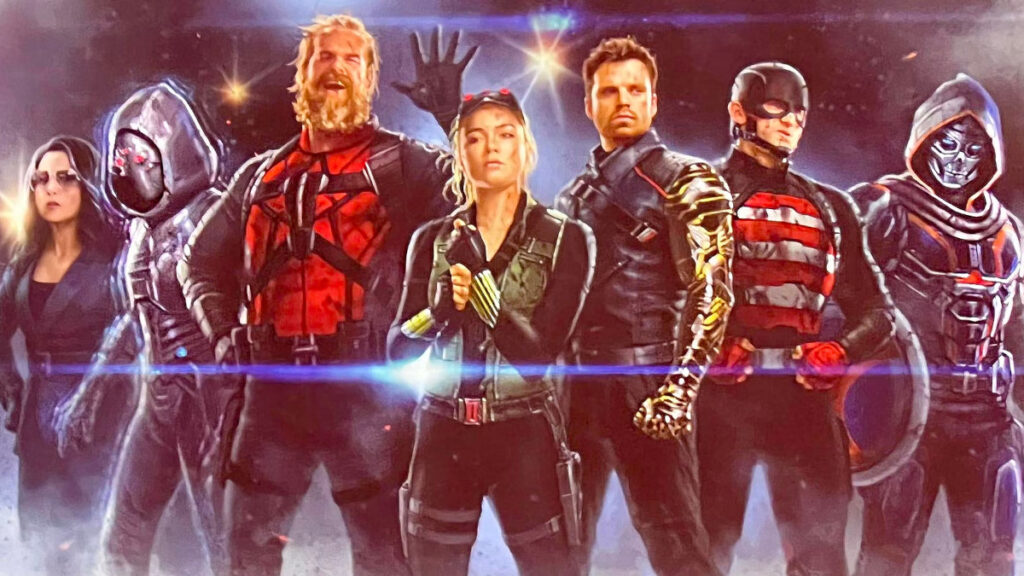
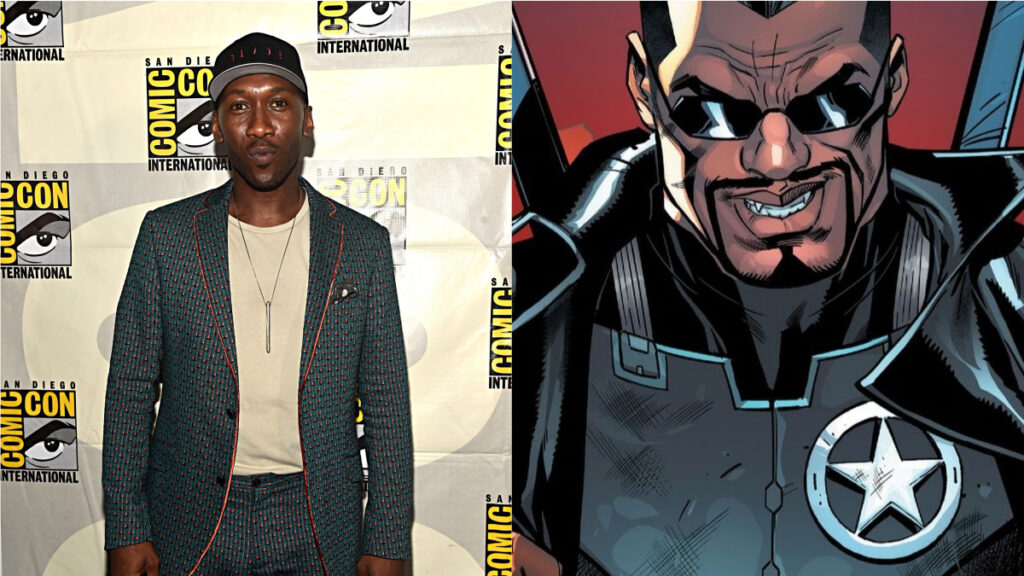
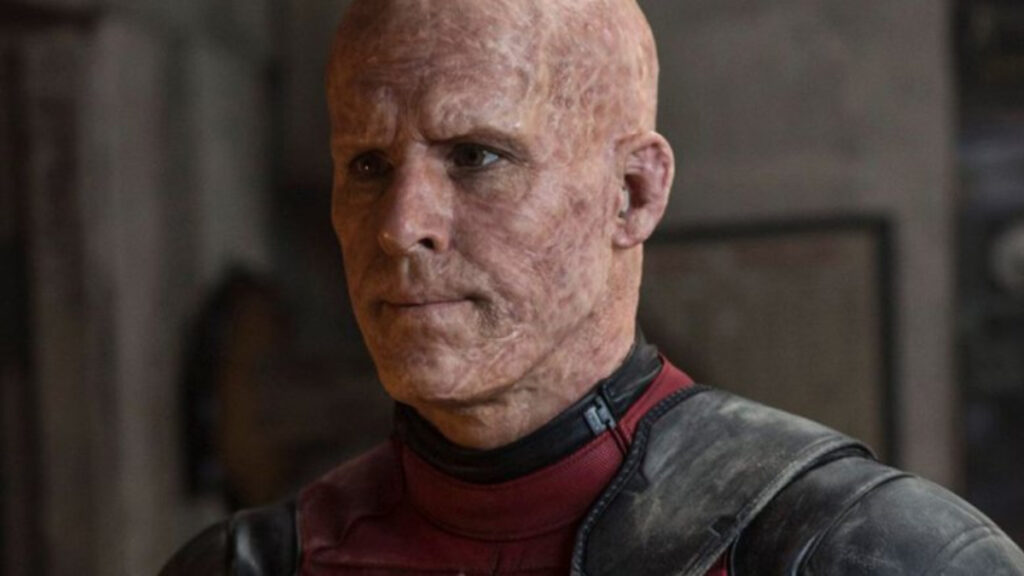






 Not yet rated

 Facebook
 Twitter
 Mastodon
 Login or register for updates…








 Facebook
 Twitter
 Mastodon
 Login or register to get email updates…
