For a sneak preview, MINT, Montana International Film Festival, closed its 2022 festival with the feature documentary film Who Are the Marcuses?the latest work by filmmaker Matthew Mishory. It is a story about previously unknown philanthropists Lottie and Howard Marcus, whose $500 million gift to Israel’s Ben-Gurion University ensures a future with water and offers hope and prosperity as a beacon for all. Who Are the Marcuses?features Warren Buffett, Israeli President Isaac Herzog, historian Daniel Gordis, best-selling philosopher Micah Goodman, E. Randol Schoenberg, and several others–all who support how a gift of this proportion can change the course of history.
Based in Los Angeles, Matthew Mishory has been a working filmmaker for over a decade, starting in narrative feature films, which led to a successful career in directing commercials and, most recently, a collection of documentary films where he is carving out his genre in historical narratives. His film resume includes an experimental feature film debut, Joshua Tree, 1951: A Portrait of James Dean, shot on 35mm. His short film Delphinium, about artist Derek Jarman, was included in the British Film Institute’s National Film Archive. The documentary Absentwas filmed in the remotest reaches of rural Moldova in the former Soviet Union. Artur Schnabel: No Place of Exile is about the modernist composer and pianist Artur Schnabel.
“I have had a strange sort of bifurcated directing career,” says Matthew. “After making an experimental first feature, I embarked on an unexpected commercial career.” Two notable campaigns with NBA star Giannis Antetokounmpo took him from a niche arthouse audience to Super Bowl Sunday. Commercial work, he explains, in turn, led to documentary opportunities. “And I have been creating my documentary visual language ever since.”
A U.S.-Israeli dual citizen, Matthew is discovering and uncovering subject matter close to his heritage and heart, allowing him to carve out a film genre that looks at those forgotten, under-the-radar figures whose contributions have changed the course of history.
“Never before have there been so many ways to access documentaries, and for filmmakers, that spells opportunity.”
Who Are the Marcuses? is well-positioned to do this, he says. “Climate change is widely discussed, but the water crisis component, until recently, is not. Israel is, for various reasons, fair and otherwise, a widely discussed country. Yet it’s an unbelievable environmental success story in the field of water technology is not. It will be now. California is the world’s fifth largest economy, but California has not implemented the technological solutions that are readily available and that have worked in Israel to address its water crisis.”
Besides, the growing global water crisis assumes both ends of the spectrum: flooding and scarcity. Governments need help, and it’s time for philanthropists to step up. The era of big philanthropy has arrived, and it has the power to change lives.
“The film positions philanthropy as a concept and a lifestyle where everyone can participate at their own level,” says Matthew. “It’s not the only component but an essential component of addressing global problems.”
Along with the film’s producers, Mishory felt a solutions-oriented approach was needed. “There are plenty of alarming films about the climate, and they play their part. But we wanted to focus on technology-based solutions that exist now.”
For Matthew, Who Are the Marcuses?began with an image of Lottie and Howard Marcus. He found it mesmerizing and full of meaning as the photo was taken on their only trip to Israel in the mid-2000s.
The thundering sound of hoofbeats charging toward the end of the track was met with a chorus of cheers from thousands of revellers in cowboy hats and jeans, dazzled by the colorful lights of the midway in the distance.
The Calgary Stampede attracted 500,000 visitors in 2021 after a year of pandemic isolation and uncertainty, epitomizing Alberta Premier Jason Kenney’s “best summer ever.”
Kenney beamed from behind a podium that spring as he declared that Alberta had “crushed” the spike of COVID-19 infections and heralded the return of backyard barbecues, dream weddings, concerts, parties and, of course, the stampede.
“Today we are truly near the end of this thing. We’re leaving the darkest days of the pandemic behind and walking into the warm light of summer,” Kenney declared.
Story continues below advertisement
Months after what came to be known as Kenney’s “mission accomplished” moment, Alberta was pummeled by the Delta wave. The province’s intensive care units were devastated.
The moment left a lasting impression on the country’s political psyche.
Such a jubilant, if premature, declaration is not likely to be seen again in Canada’s COVID-19 response, even as other world leaders appear ready to leave the pandemic behind.
“The pandemic is over,” U.S. President Joe Biden said last week, striding down the blue carpet of the Detroit Auto Show in Michigan during an interview with “60 Minutes.”
The president said there is still work to be done, but suggested the disaster had passed.
“No one’s wearing masks, everyone seems to be in pretty good shape and so I think it’s changing.”
Health Matters: COVID-19 patients developing autoimmune diseases
Health Matters: COVID-19 patients developing autoimmune diseases
Canada‘s cautious political message about the virus has never ceded to such optimism.
Story continues below advertisement
“What we have seen consistently is that people are still struggling in hospitals across our country with the impacts of COVID,” Prime Minister Justin Trudeau said Thursday at a press conference at the UN General Assembly in New York.
He encouraged people to get up to date on their vaccine booster doses, assuring the public “we will make sure this pandemic gets behind us as quickly as we possibly can.”
Two senior government sources, speaking on the condition they not be named because they were not authorized to speak publicly, told The Canadian Press that Trudeau has agreed in principle to let Canada’s vaccine mandates expire on Sept. 30.
When the order expires, the ArriveCan app will no longer be mandatory for international travellers, either.
The decision to put an end to some of the last vestiges of federal COVID-19 restrictions is expected to be announced officially on Monday.
Trudeau has yet to speak publicly about the change, but the tenor of that announcement could be telling as to how the federal government plans to navigate this new transitional phase of the pandemic.
The last time the Liberals loosened restrictions in June, removing vaccine mandates for domestic travellers, the tone was decidedly circumspect.
Story continues below advertisement
Rather than proclaim the mandates were no longer needed, federal officials said they were merely “suspended,” and warned they would “bring back” necessary policies if there’s a resurgence of the virus in the fall.
“I think part of the restraint that provincial and territorial governments and the federal government have, as far as walking past COVID, is because we have our memory of how that didn’t actually work out well,” said Dr. Alika Lafontaine, president of The Canadian Medical Association.
What the lifting of COVID rules will mean for the winter travel season
What the lifting of COVID rules will mean for the winter travel season
Of course, Alberta’s cautionary tale isn’t the only reason for the federal government’s political COVID-19 message.
“In Canada, our focus has been, every step of the way, on listening to science, to responding to the facts on the ground,” Trudeau said Thursday, repeating a similar message when questioned by reporters in Ottawa Friday.
Story continues below advertisement
The Conservatives, meanwhile, allege the Liberals are more focused on “political science.”
“There’s a lot of questions that Canadians have, why the government appears to be making decisions not based on medical science, but based on political calculations,” Conservative health critic Michael Barrett said last week.
The official opposition has accused the Liberals of using the pandemic and federal restrictions as a political wedge since the last election, when Trudeau first floated the idea of vaccine mandates.
“There’s no question of whether politics plays a role in the decision-making,” said Julianne Piper, a research fellow with the international Pandemics and Borders project at Simon Fraser University.
“I think there are different political, geographic, public health factors that play into those decisions.”
That alchemy of politics and public health has the potential to set the tone for the rest of the country, she said.
“I think it signals the general feelings around the pandemic and potentially signals what different actors who would be impacted are going to expect,” she said.
Lafontaine said it will be important for politicians to keep that in mind during this next phase of the pandemic.
“I think it’s really important for politicians to realize that the things they say have an enormous impact,” he said.
Story continues below advertisement
“We need, more than ever, for people to be clear about the problems that we’re facing, to declare crises when there are crises and to talk about plans for after crises when it’s time to walk through those problems, into what comes next.”
Quite the journey. Chrishell Stause wasn’t introduced to the world as an actress until 2005, two years after receiving her B.A. in theater, but had already been through quite a journey.
The actress, born in Missouri, had a very tough upbringing, something she’s detailed over her years on reality TV. Her mother was at a Shell gas station when she went into labor, and the attendant who helped her was named Chris, which explains her name.
After her family struggled with money and, at times, homelessness, Stause got her big break on All My Children. She’s since taken on many different careers — and admitted it’s not always easy to start fresh.
“You get to a point in your life when you feel like you’re successful and it feels great. [When you start new,] it reminds you how we get back into that,” she told Us Weekly exclusively in September 2020 competing on Dancing With the Stars season 29. “What makes you a success is that you push through those moments and [this] just reminds me of that. In those tough moments where you just kind of want to sit in your tulle and be like ‘This sucks.’ That’s not how I got to be where I’m at! I got here because I felt that, and I pushed through it.”
She continued: “The biggest thing I’ve learned is that I haven’t lost that. It’s something that you go through very early on in the beginning of your career and go through it again and again. At this point, it’s the third time in my life of a career moment where you’re like, ‘Oh, I know nothing. I’m starting over.’ I did it with acting, I did it with real estate and now, I’m doing it with dancing. So, it’s like, ‘OK. I know nothing. I feel like a failure but let me push through and try and succeed.’”
Stause’s more recent success does not go unnoticed by her fans, who have watched her on Selling Sunset since 2019. While the former soap star’s love life has often made headlines — after divorcing Justin Hartley in November 2019, she went on to date and subsequently split from her Oppenheim Group boss, Jason Oppenheim — the Netflix personality has been in a relationship with musician G Flip since May 2022.
The packaging for Intel’s Core i9-13900K processor has been leaked, and while the spilled photo shows that it follows the same theme as the existing 12900K – including that wafer – there are some slight, but nonetheless interesting, changes.
The box for the Core i9-13900K was posted on Twitter by well-known leaker HXL, who got it from a closed WeChat group, as VideoCardz (opens in new tab) points out (and naturally, stay skeptical around whether this is genuine or not, as ever).
As you can see, there are some notable changes here, and while Intel has still put the processor in a fancy mock silicon wafer case, this time around, rather than gold, it’s colored silver.
Furthermore, the box itself is a lot thinner than the one which carries the current-gen Alder Lake flagship, although otherwise, the design remains pretty similar.
Analysis: Raptor Lake leaks are gathering momentum, for sure
What’s most interesting here, of course, is the fact that getting a glimpse of the box of the Raptor Lake flagship indicates that maybe Intel’s next-gen chips are not too far away from release now. Particularly as we just saw the Core i9-13900K in leaked PassMark benchmarks, so the spillage around these 13th-gen processors appears to be picking up momentum.
Rumor has it that Raptor Lake CPUs will be launched next week, likely on September 27, but the silicon won’t go on sale until October. These leaks starting to pop up more and more right now is a hopeful indication that we might just see these processors sooner in October, rather than later.
As far as the packaging itself goes, changing from a gold wafer to silver seems an odd choice for Intel, suggesting something of a downgrade, at least subliminally. You get a silver medal for second place, after all, and gold for the top spot. It’s good to see a slimmer box in terms of keeping things a bit more environmentally-friendly, as well; although that said, the additional wafer packaging is rather unnecessary, and not so ecologically sound in that respect.
We’ve a feeling that the wafer gimmick is getting its last outing here, and it would make sense for Intel to do a complete box redesign for the next generation of processors in 2023, which will be Meteor Lake (as this will be a big change with the drop to 7nm, finally).
Fletcher forged an iconic career playing the villainous Nurse Ratched in Milos Forman’s 1975 drama.
Louise Fletcher, the Oscar-winning actress who became iconic for her turn as the villainous Nurse Ratched in “One Flew Over the Cuckoo’s Nest,” has died at age 88. Deadline first reported the news of her death, which was shared with the outlet by her family. She died peacefully in her sleep at her farmhouse home in Montdurausse, France, surrounded by those she loved.
Fletcher became one of the great icons of cinematic villainy as Ratched, who menaced the patients at an institution for the mentally ill in the 1975 film. After a career in TV, Fletcher’s performance as the wicked nurse, who battles with Jack Nicholson’s R.P. McMurphy, was just her fourth in a film. “Cuckoo’s Nest,” directed by Milos Forman from the Ken Kesey novel, ended up winning the five “major” Academy Awards: Best Picture, Director, Actor (Nicholson), Actress (Fletcher), and Screenplay. With her cold stare and at first sweetly condescending demeanor, she tangled with McMurphy until ultimately ordering for him a tragic fate. She never raises her voice. She is the eye of the hurricane, the calm in the center of the storm — deceptively, its most dangerous part.
She ended up winning the Oscar that year over fellow nominees Isabelle Adjani, Ann-Margret, Glenda Jackson, and Carol Kane. The child of deaf parents, she signed part of her acceptance speech in American Sign Language.
Before “Cuckoo’s Nest,” the actress, who was born in 1934 in Birmingham, Alabama, had acted primarily in TV, in shows like “Bat Masterson,” “Lawman,” “Maverick,” “77 Sunset Strip,” “The Untouchables,” and “Perry Mason.” She told The New York Times in 1975, “I was five-feet 10-inches (1.78 m; 178 cm) tall, and no television producer thought a tall woman could be sexually attractive to anybody. I was able to get jobs on westerns because the actors were even taller than I was.”
Her films before her Oscar-winning-triumph were not particularly notable, and, frankly, neither were her films after. It’s almost certain that she was typecast, because of the unforgettable Nurse Ratched, as villains, which often meant smaller parts. One standout, though, was as the abusive grandmother in 1987’s “Flowers in the Attic,” based on the V.C. Andrews novel. And she also memorably played herself, like so many, in Robert Altman’s “The Player.”
Fletcher was a character actress: here she is in “Brainstorm,” there she is in “Cruel Intentions.” She was the female version of a Gene Barry, or a Robert Loggia, or a Henry Silva (who also just died September 14), someone who did consistently high-quality, memorable work, but is ultimately just defined by one character. Two if they’re lucky.
And Fletcher did have a second great character: a return to TV offered her her greatest role ever. Yes, even greater than her Oscar-winning Nurse Ratched. Starting in 1993 she played Kai Winn on “Star Trek: Deep Space Nine.” The Kai was the spiritual leader of the planet Bajor, one of the show’s major settings. She was like the Pope, but with some actual political power. And she became, over seven seasons, one of the great antagonists of the show, alongside Marc Alaimo’s Gul Dukat.
Like with Ratched, she brought a placid exterior to the part of the Kai. And a volcanic menace inside. She particularly resented that Avery Brooks’ Capt. Sisko had been deemed by Bajor’s gods, the Prophets, to have a spiritual role himself: as the Emissary. She clashed with Sisko for years, until she finally teamed with Dukat and became his lover. (Among the many great achievements of this role and of this show is that it allowed the then 60-something Fletcher to be sexual without layering it with the horny, geriatric comedy shenanigans that often occur with depictions of AARP-age women in Hollywood film and TV.)
The remarkable thing is that Kai Winn, devised for this “Trek” spinoff on UPN, becomes a richer, more complex character even than Ratched. Her “Cuckoo’s Nest” role could be dismissed as a sexist caricature in some ways. Not the Kai.
To be mourned by serious cinephiles and Trekkies? Certainly there’s some Venn diagram overlap there, but those are two large groups. And she will be remembered.
Louise Fletcher, who won the best actress Oscar for her indelible performance as Nurse Ratched in Milos Forman’s “One Flew Over the Cuckoo’s Nest,” died Friday at her home in France, according to a rep. She was 88.
The classic film, based on Ken Kesey’s novel and exploring the repressive tendency of authority through the story of the patients and staff of a psych ward, won five Oscars in 1976, including best picture and best actor for Jack Nicholson.
“One Flew Over the Cuckoo’s Nest” was the first film in more than four decades to sweep the major categories of best picture, director, actor, actress and screenplay. It was nominated for an additional four Oscars and was also a substantial box office hit.
In the American Film Institute TV special “AFI’s 100 Years… 100 Heroes & Villains,” Fletcher’s Nurse Ratched was named the fifth-greatest villain in film history — and second-greatest villainess, behind only the Wicked Witch of the West.
Ironically, the Ratched character had been softened in the script compared to Kesey’s original, and Fletcher gave a rather subtle performance, often conveying the character’s emotions simply through facial expressions, which is why she deserved her Oscar in the first place. Indeed, the actress even enables us to feel sorry for Ratched at more than one key moment in the film.
In a 2003 reappraisal of “Cuckoo’s Nest,” Roger Ebert declared that despite the Oscar, Fletcher’s performance “is not enough appreciated. This may be because her Nurse Ratched is so thoroughly contemptible, and because she embodies so completely the qualities we all (men and women) have been taught to fear in a certain kind of female authority figure — a woman who has subsumed sexuality and humanity into duty and righteousness.”
It could be argued, however, that the role of Nurse Ratched and the Oscar the actress earned for that performance ultimately did Fletcher more harm than good: In a review excoriating the horror film “Flowers in the Attic,” in which the actress starred in 1987, a frustrated and unsympathetic Washington Post writer opined, “Fletcher should talk to her agent about these stereotyped ‘evil’ roles, in which she has become increasingly tedious.”
But Fletcher may well have beseeched her agent for a greater variety of roles to no avail.
She had most recently appeared in the 2013 feature “A Perfect Man,” starring Liev Schreiber and Jeanne Tripplehorn.
On TV Fletcher had played family matriarch Peggy “Grammy” Gallagher, a cunning ex-con who nevertheless wanted a relationship with her grandchildren, on Showtime’s “Shameless.” The actress recurred on “Star Trek: Deep Space Nine” as the scheming, duplicitous spiritual leader Winn Adami from 1993-99, on cult sci-fier “VR.5” from 1995-97 and on “ER” in 2005.
She was Emmy nominated for guest roles on “Picket Fences” in 1996 and on “Joan of Arcadia” in 2004.
Fletcher had returned to acting in 1974 after more than a decade away raising a family and gave a supporting performance in Robert Altman’s “Thieves Like Us” that Pauline Kael called “impressively strong,” but the actress did not have a high profile in Hollywood when she was cast as Ratched.
Angela Lansbury, Anne Bancroft, Ellen Burstyn, Colleen Dewhurst and Geraldine Page had all turned down the Ratched role, each afraid of the possible effect on her career.
Director Milos Forman chanced to see Fletcher in “Thieves Like Us.”
“She was all wrong for the [Ratched] role, but there was something about her,” Forman later wrote in his memoir. “I asked her to read with me and suddenly, beneath the velvety exterior, I discovered a toughness and willpower that seemed tailored for the role.”
Fortunately, there were some opportunities to escape the typecasting.
She acquitted herself well in the 1978 noir spoof “The Cheap Detective,” starring Peter Falk.
In the 1979 drama “Natural Enemies,” she starred with Hal Holbrook, playing a husband who murders his family. Critic Richard Winters wrote that Fletcher is “quite good playing the polar opposite of her Nurse Ratched character. Here she is vulnerable and fragile instead of rigid and authoritative and even has a scene inside a mental hospital as a patient. The fact that she can play such different characters so solidly proves what a brilliant actress she is.”
In 1999’s “Cruel Intentions,” she played a genial, warm-hearted Long Island aristocrat.
Other film credits include “Exorcist II: The Heretic,” starring with Richard Burton and Linda Blair; sci-fier “Brainstorm,” with Christopher Walken and Natalie Wood; “Firestarter,” starring a young Drew Barrymore; and “2 Days in the Valley.”
Estelle Louise Fletcher was born in Birmingham, Alabama. Her parents were Deaf; she was introduced to acting by the aunt who taught her, at age 8, to speak. Fletcher attended the University of North Carolina; after taking a cross-country trip, she became stranded in Los Angeles and soon stumbled into acting.
The young actress made her screen debut in 1958 with appearances on “Playhouse 90,” among other television shows. The next year she guested on “Maverick,” “77 Sunset Strip” and “The Untouchables.” She appeared on “Perry Mason” twice in 1960, but by 1963 she had abandoned her career, at least for the time being, after making her feature debut in “A Gathering of Eagles.”
In 1973, after raising her children, she resumed her profession with a guest appearance on “Medical Center.” After doing a TV movie, she was cast in a supporting role in “Thieves Like Us” — a movie her husband, Jerry Bick, was producing.
Fletcher’s life story helped serve as the inspiration for one of the main characters in Robert Altman’s classic 1975 film “Nashville” and was set to play the character when Bick and Altman had a falling out.
Fletcher was married to Bick, a Hollywood literary agent who was also later a producer, from 1959-78. He died in 2004. She is survived by her sons John Dashiell Bick and Andrew Wilson Bick.
It is raining K-dramas at Netflix’s Tudum festival. Four big projects were announced at the fan fest taking place on Saturday, two of which are sequel announcements while Netflix will double up as a platform for two interesting series.
The sequels include Hellbound 2, starring Yoo Ah-in, Kim Hyun-joo and Jeong Min-park, Money Heist Korea season 2 and the popular reality show Single’s Inferno. The new shows include The Fabulous starring SHINee’s Minho and Physical: 100. If that wasn’t enough, Tudum also treated fans to a never-before-seen video from the first season of Squid Game.
Check out the first looks, teasers, and trailers dropped at Netflix’s Tudum on the Korean front below.
Money Heist: Korea – Joint Economic Area season 2:
As a fresh take on the fan-favorite Spanish series, the first part of Money Heist: Korea – Joint Economic Area captured the magic of the original while giving audiences a flavor of a heist that is uniquely Korean – from the backdrop of the series set in a world where the two Koreas are close to reunification, to the Hahoe masks that date back to the 12th century. While little is known about the second season yet, the first look reveals that there will be a few deaths involved.
Watch the Money Heist Korea season 2 first look here:
Physical: 100
Netflix Korea has yet another survival show up its sleeve. While it might not be as gory as Squid Game, Physical: 100 seems to be interesting nonetheless. As per the synopsis, the series features 100 male and female contestants battling it out in this new extreme competition series to claim the honor of the best body. Who will be the last one standing? You’ll have to watch to find out.
Watch the Physical: 100 teaser here:
The Fabulous:
Starring Minho from SHINee and actress Chae Soo-bin (I Am Not A Robot, Sweet & Sour), The Fabulous follows four best friends as they chase their dreams alongside fashion’s elite while juggling demanding jobs, romantic dilemmas and wild nights on the town. Minho plays Ji Woo-min, a freelance photo editor established in his profession and known for his attractive appearance. However, he struggles with finding passion for his work. Things change when he encounters Pyo Ji-eun (played by Chae Soo-bin), a PR manager for luxury brands, and the two find themselves in a blossoming romance. Fans have been waiting for the series to drop for a while now.
Hellbound Season 2:
Topping Netflix’s global series list following its release last November, fans of dark fantasy drama and the original webtoon series will be pleased to know that Hellbound will soon return for a second season! In the meantime, here’s a sneak peek of Season 2 to make the wait more bearable.
Squid Game:
It has been a year since Squid Game became a global smash hit, and the series is still making history with record-breaking wins at the Emmy Awards. While fans wait for season 2 to drop, here’s a look at an unreleased clip from Season 1, confirming the mysterious identity of the Front Man.
Which of these series are you excited for? Let us know by tweeting to us at @News18Showsha.
Modi Ji Ki Beti, Trailer launch: What’s in a surname?
Modi is not a common a surname as Shah, Patel and Mehta in India and Smith in England. But, in India, it happens to be the surname of Narendra Modi, the Prime Minister of India. That should work in favour of persons with such a surname, only Narendra Modi has no children.
Film, TV and theatre actress Avani Modi, who comes from a small town in Gujarat, and has worked mainly in Tamil and Gujarati films, faced a queer situation when it came to her surname. She was sitting in a restaurant with a man who releases both Indian and Pakistani films in the UK. Being out of work at that time, she sounded the man on possibilities of acting assignments. He replied, “You could work in Pakistani films.” She thought for a second and agreed to the proposal of working in films made across the border. After all, Pakistani actors have worked in Indian films, so why can’t an Indian actress work in Pakistani films. “But there is a major problem with the idea,” continued the man, almost in the same breath, “your surname! How will Pakistanis accept an actress with the same surname as the Prime Minister of India! You know how hostile some Pakistanis are to the ideals that Narendra Modi stands for.” That was that.
However, the matter did not end there. Avani saw in this conversation the germ of an idea, and germinate it did. For the first time in her life, she picked up the pen (digitally speaking) and wrote out a story. A story about two bumbling Kashmiri terrorists who kidnap a woman called Avani Modi, believing her to be the PM’s daughter. Pakistani authorities are nonplussed, and tell them off, saying that it is persons like them who give Pakistan a bad name. But what to do with the ‘kidnapee’?
Watching the trailer, one could not help recalling the spoofs made by the late crazy genius, producer, writer, director and actor, I.S. Johar, setting his stories in Goa, Kashmir and Bangladesh. He had also announced one called Johar and Johar in China, but, for unknown reasons, did not make it. Far from being political, the film is a comedy, which, by its satirical overtones, highlights the issue of Kashmir, over which India and Pakistan have fought three wars. A straight-from-the-heart observation was made by actor Tarun Khanna, who opined, “There must be just a few hundred Pakistani’s who nurse animosity towards India. The vast majority of them want peace and friendship. My character represents their voice.”
As director, Avani has Eddy Singh (also one of the producers), who has made hundreds of ad and documentary films, and this is his debut feature. He calls It “…a light-hearted family entertainer.” In the cast are Avani, playing a “fictional version” (as she told me) of herself, Orissa-born Pitobash (one of the ‘terrorists’, who is also a producer on this film), Vikram Kochchar, whose face lends itself to comedy quite naturally, Tarun Khanna, with a toned body, who plays the Pakistani officer given the task to return Avani to India, and Kavita Ghai (role undefined). Urdu dialogue is the handiwork of Tripurari Sharma. Shades of patriotism and woman power dot the storyline. One telling line in the film comes from a Pakistani/Kashmiri, who berates the kidnapper duo, when they say that they have got hold of Modi’s daughter, “And what do you hope to achieve by this silly act of yours?” or something to that effect.
Modi Ji Ki Beti has a title that loosely translates as ‘The Daughter of Mr. Modi’, which, in reality, Avani Modi is, Modi being the surname she inherited from her father. “We Modis, all over India, hold our heads high with pride that one member of our community is the PM of the country.”
Promoted by Brandex, which has been behind some 400 films and which is also an Associate Producer, though it came on board only after the film was completed. The trailer launch was their kick-off event, and they are working on ideas to give the film a push. All the above-mentioned persons were present at the PVR Icon Multiplex, Andheri, except Kavita Ghai, and were presented on the stage. They included producer Arpit Garg. Brandex was represented by Arshad Siddiqui. They also spoke to the press. Modi Ji Ki Beti is a small-budget indie movie that was partly shot in difficult conditions in Kashmir, and will rely heavily on word of mouth publicity, once it opens in cinema-halls on 14 October.
Netflix has shown off its upcoming Indian content in the past hour at the Tudum event, with Bollywood director Vasan Bala’s Monica, O My Darlingon show alongside the likes of Scoop and Guns & Gulaabs.
India is a huge priority for Netflix and the Tudum event is being used as a jumping off point.
Bala’s Monica, O My Darling is a dark crime caper comedy with an ensemble cast following a young man desperately trying to make it big with a bunch of unlikely allies, and an exclusive clip was shown at Tudum.
Meanwhile, Scoop is the directorial Netflix debut for Hansal Mehta, which is inspired by journalist Jigna Vora’s biography Behind The Bars In Byculla: My Days in Prison, chronicling her experiences after being accused of murdering a reporter.
And in Guns & Gulaabs, writer-director duo Raj Nidimoru & Krishna D.K. team up for a crime thriller that depicts love and innocence against the backdrop of crime.
Also on show at Tudum were Class, an adaptation of Spanish show Elite, and comedy Kathal.
On stage, Rana Dagubbati and his uncle Venkatesh Daggubati discussed what it was like to explore father and son relationships on-screen in Rana Naidu and writer-director Vishal Bhardwaj introduced spy-thriller film Khufiya.
The event is taking place across the world, showcasing upcoming Netflix shows.
The Lily Collins-led comedy drama will make its return this December. The Emily in Paris Season 3 release date is December 21, 2022, meaning all episodes will be available before Christmas.
Check out the Emily in Paris Season 3 release date announcement below:
“Emily in Paris focuses on Emily (Collins), an ambitious twenty-something marketing executive from Chicago, who unexpectedly lands her dream job in Paris when her company acquires a French luxury marketing company — and she is tasked with revamping their social media strategy,” says the description. “Emily’s new life in Paris is filled with intoxicating adventures and surprising challenges as she juggles winning over her work colleagues, making friends, and navigating new romances.”
Joining Collins are Ashley Park (Tales of the City), Philippine Leroy Beaulieu (Call My Agent), Lucas Bravo (Smart Ass), Samuel Arnold (Antony & Cleopatra), Camille Razat (The 15:17 to Paris), and Bruno Gouery (Doc Martin). The recurring cast roster includes Kate Walsh, William Abadie, and Arnaud Viard.
Emily in Paris is created and executive produced by Darren Star, the creator behind popular classic shows such as Beverly Hills 90210, Melrose Place, and Sex and the City. Producers are Collins and Andrew Fleming, along with Tony Hernandez and Lilly Burns of Jax Media.
With the news of Michelle Williams campaigning for lead actress, instead of supporting actress, for her performance in Steven Spielberg’s “The Fabelmans,” many are wondering if this big move will pay off. With bona fide contenders such as Cate Blanchett from “Tár” and Michelle Yeoh from “Everything Everywhere All at Once” already staking their claims as frontrunners, the category decision caused quite the stir on social media and punditry circles. Not only because many felt Williams had the supporting category locked up for herself to win, but there is also a feeling that she is, in fact, a supporting player as free-spirited mother Mitzy Fabelman. The film centers around Gabrielle LaBelle’s role as Sammy, a teenager who falls in love with cinema.
Variety is taking a look back at some of the most notable modern-day “supporting performances” (after 1990), that were campaigned for lead actor or actress attention. Most of these entries worked out in the actors’ favor.
Category fraud is always a hot topic every awards season, with clearly leading performances entered in supporting categories for an easier pathway to a nom or a win. It’s not too often we see it the other way around, with a questionable supporting turn angling for leading attention.
When considering the instances that didn’t work out in the actors’ favor, there are a few that come to mind. Most prominently was Richard Gere, who won the Globe and was nominated for SAG for his tap-dancing lawyer Billy Flynn in “Chicago” (2002), but he missed out on the Oscar nom in the end. Other examples include Delroy Lindo’s PTSD veteran in Spike Lee’s “Da 5 Bloods” (2020) and Steve Carell’s hedge fund leader in Adam McKay’s ensemble dramedy “The Big Short” (2015).
In the early days of the Academy, you can find a ton of short-timed performances. Time-wise, David Niven holds the current record for the shortest performance ever awarded in the best actor category, at 23 minutes and 39 seconds, for playing Major Angus Pollock in Delbert Mann’s “Separate Tables” (1958). For best actress, that record belongs to Patricia Neal, whose turn as housekeeper Alma in Martin Ritt’s “Hud” (1963) only lasts 21 minutes and 51 seconds.
To be clear, because an actor is listed, does not mean I personally see their role as supporting. Only that enough of the industry and enthusiasts of the time, saw them as such.
Read Variety’s list of the 13 best examples of supporting actors who campaigned for lead Oscar categories below.
Honorable mentions: Amy Adams, “American Hustle” (2013); Samantha Morton, “In America” (2003); Kristin Scott Thomas, “The English Patient” (1996)
Nordstrom isn’t just the place you hit up for seasonal sales or holiday gifts—over the last few years, the mega-retailer has established itself as an incubator for new talent and bringing a diverse roster of designers to mass audiences. And we’re not just talking about names in the beauty and fashion spaces—the same approach extends to the home and lifestyle category, where Nordstrom’s VP of creative projects, Olivia Kim, collaborates with creatives from all over the country to bring them into the Nordstrom fold.
This where is Tappan Collective comes in, an art agency founded in 2012 by Chelsea Neman Nassib that’s dedicated to nurturing the careers of emerging contemporary artists. It’s also the latest brand to “pop” in at Nordstrom, with a selection of its artists showcasing their work online and in ten Nordstroms throughout the U.S. and Canada—New York, Chicago, Austin, San Jose, South Coast Plaza, Bellevue, Seattle, Toronto, and Vancouver.
The partnership between Tappan Collective and Nordstrom is one pure of synergy: Both are in the business of finding new ways to connect designers and creatives with new audiences. Chelsea Nassib tells Glamour how amazing it is to get to partner with Nordstrom because it’s “another way to get art in front of new people and showcase the incredible work by working artists.” There’s nothing quite like seeing the brushstrokes of a painting or the molds and curves of a sculpture up close—especially if you’ve only seen it via a tiny pixelated square before. (The same can be said for a jacket or bag you’ve been eyeing forever and then finally getting to see it in person—it’s a game changer.)
The art featured in the collection varies from a $380 Marleigh Culver print to a $10,000 neon sculpture by Ali Beletic—a range that’ll appeal to both art enthusiasts and seasoned collectors, since Nassib believes “you can find incredible art at any price point.”
The Nordstrom website carries the full collection, but each pop-up is given its own vibe based on its location, complete with QR codes next to each artwork that makes the process of getting to know artists and their work invitingly easy. “New York is fun and edgy,” Nassib says. “Los Angeles and Dallas are more airy and warm.”
In addition to the art, there’s also merch and an objectively photogenic curation of home decor to shop. The pop-up wraps on October 2, so check out a few of our favorite pieces below—then head over to Nordstrom to shop the full collection.
The occasional Squid Games aside, it appears increasingly that the content type most likely to animate water cooler conversation on a mass scale are serialized, nonfiction narratives. Whether true crime investigations, forensic snapshots of major world events, deconstructions of institutions and systems, athlete and artist biographies or even—yes—reality shows, our perplexing IRL existence continues to provide compelling characters and captivating drama.
Why, then, does there seem to be a lack of great networking and development resources for emerging docuseries creators?
Enter Film Independent’s third annual Docuseries Intensive—a three-day remote workshop starting today, aiming to give filmmakers the tools and access need to develop and present their nonfiction series to potential collaborators, broadcasters and distributors.
Supported by Founding Sponsor CNN Original Series (Anthony Bourdain: Parts Unknown, Stanley Tucci: Searching for Italy), the Intensive helps Fellows walk away with a deeper understanding of the industry through executive and peer mentorships, creative workshopping and industry networking.
The 2022 CNN + Film Independent Docuseries Intensive
“We’re thrilled to be partnering again with CNN Original Series to provide opportunities to filmmakers telling compelling true stories,” says Daniel Cardone, Manager of Nonfiction Programs for Film Independent. “This year’s Fellows are creating episodic documentary content that encompasses a huge range of topics and styles, exploring physical, emotional and political landscapes.”
2022 Docuseries Intensive Creative Advisors and Guest Speakers include: Andie Beckerman (House of NonFiction), Nick Cammilleri and Zackary Drucker (The Lady and the Dale), Nancy Glass (Glass Entertainment Group), Jodi Gomes (Malfunction: The Dressing Down of Janet Jackson), Sarah Hoberman (Trilogy Films), Domini Hofmann (Watergate: Blueprint for a Scandal), John Marks (Fiasco), Liz Massie (Discovery), Tyler Measom (Murder Among the Mormons), Eric Neuhaus (Glass Entertainment), Ted Passon (Philly DA), Maureen Ryan (Columbia University), Courtney Whitaker (SpringHill Company), Steve Yaccino (Left/Right) and Fay Yu (Part2 Pictures).
The 2022 Docuseries Intensive projects are:
Title: EJ Lee: All American
Director: Jason Rhea
Producers: Razi Jafri, Cindy Martin
Logline: Before Jeremy Lin and Yao Ming, there was Eun Jung Lee. EJ Lee: All-American is a documentary that follows the “Korean Magic Johnson” and her quest to become a great collegiate head coach.
Title: Fruitbowl: An Oral History of Queer Sex
Director: Dave Quantic
Editors: Bayley Boecker, Danny Tayara
Logline: Fruitbow is an interview-driven docuseries that explores the many ways queer people discover their sexual preferences and identities.
Title: The Long Rescue
Writer: Jennifer Huang
Producer: Jethro Patalinghug
Logline: The Long Rescue follows Filipina teen sex trafficking survivors for six years in an intimate journey of recovery. Can they overcome a callous society—and their embodied trauma—to thrive?
Title: Lust on Earth: The Global Cultures of Infidelity
Director: Michael LaPointe
Producer: Dara Diaz
Logline: In this stunningly candid exploration of infidelity, adulterers and victims of unfaithfulness in 40 countries break their silence to compare norms, laws and taboos while also revealing their own personal escapades.
Title: Never Too Late
Director: Nancye Ferguson
Logline: Never Too Late is a compelling, heartwarming and humorous five-part docuseries that follows single seniors as they explore and navigate the unpredictable world of love, dating and relationships at this late time of their lives.
Title: No Handicap
Director: Derek Dabkoski
Producers: Ian McClellan, Paige Draney
Logline: Disabled players and their allies are finding ways using advocacy and technology to fight stigmas and enact change to make electronic gaming accessible to a community neglected by game developers.
Title: Proxy: The Cold War We Weren’t Taught in School
Creator/Executive Producer: Melinda Pinecone
Executive Producer: Marc Smolowitz
Logline: Proxy chronicles eight of America’s covert regime change operations of the Cold War. Animated recreations, archival footage and narration from world-class writers bring stories of covert warfare to life.
Title: Uvalde
Writer/Director/Producer: Marissa Díaz
Logline: Uvalde becomes the site of nationwide interest when a teenage gunman opens fire inside Robb Elementary School, killing 19 students and two teachers while 376 law enforcement officers wait outside.
Title: Goliath
Director/Co-Creator: Nate Birnbaum
Producers: Marielle Olentine, Pulkit Datta
Logline: A retired schoolteacher, a former oil refinery worker, a veteran and a group of Indigenous students make up a diverse coalition of activists from across the country fighting to protect their homelands from further destruction by the fossil fuel industry. Together, rooted in their faith, deep commitment and service to their communities, they stand firm in the shadow of Goliath, refusing to back down.
Title: You Don’t Know My Name
Director: Tommy Franklin
Logline: After being separated from his incarcerated mother at birth, the filmmaker searches for her while coming to grips with his own identity as a parent and Black man in America.
“CNN Original Series is proud to partner with Film Independent on this enduring initiative to showcase and support emerging voices in the nonfiction community,” said Amy Entelis, Executive Vice President, Talent & Content Development, CNN Worldwide. “We’re impressed by the projects helmed by these diverse voices and look forward to helping them bring their creative visions to life.” This year’s Episodic Lab Fellows are:
Jason Rhee (director, EJ Lee: All American)
Jason Rhee is a Korean-American filmmaker with a passion for telling stories centered around his childhood and the AAPI community. Jason was selected as a Conan script intern and writers’ PA as well as The Onion‘s intern, contributor and writer’s assistant. With a background in screenwriting and comedy, he helped create three one-woman shows with comedian Kellye Howard, including sold-out run at the Steppenwolf Theater. Jason is currently workshopping a documentary about the female “Korean Magic Johnson” through the Kartemquin DVID fellowship. He is a proud member of the Asian American Documentary Network and the Writers Guild of America.
Razi Jafri (producer, EJ Lee: All American)
Razi Jafri, producer of EJ Lee: All American, is a Detroit-based documentary filmmaker. His work focuses on race, religion, immigration, democracy and the changing cultural landscape in America. Razi’s documentary films include Hamtramck, USA, which made its world premiere at the SXSW Film Festival (2020), Ashura in Detroit which premiered at the Freep Film Festival (2021) and The Moon on My Uniform, a 2022 ITVS grantee and currently in post-production anticipating a PBS broadcast in the Fall of 2023. Razi holds a Bachelor’s degree in engineering and an MFA, both from the University of Michigan.
Cindy Martin (producer, EJ Lee: All American)
Cindy Martin is an award-winning Filipina-American documentary filmmaker from Chicago committed to enhancing voices from underrepresented communities, with a focus on BIPOC and women’s stories. In 2022, she was named a Diverse Voices in Docs Fellow at Kartemquin. Cindy received a Bachelor’s in Broadcast Journalism from the University of Illinois. Before docs, she lived and worked in London and LA as a Producer/Reporter/Cameraperson for over 20 years for video news outlets: Reuters, AP, Getty, ABC and Sky. She is a member of the Sundance Institute, A-Doc, AAJA, IFA, Mezcla and Doc Chicago.
Dave Quantic (director, Fruitbowl: An Oral History of Queer Sex)
Fruitbowl creator Dave Quantic is a graduate of UCLA’s MFA Film Directing program and is a veteran queer filmmaker, having produced over 20 queer shorts in the last two decades. Dave’s films have been shown at every major queer film festival in the US including NewFest, Frameline and 11 different Outfests as well as Palm Springs International, Provincetown International, Ann Arbor and HUMP. He is currently the senior video editor for the Crosscut news website and KCTS 9, Seattle’s PBS affiliate. You can view his portfolio at davidquantic.com.
Bayley Boecker (editor, Fruitbowl: An Oral History of Queer Sex)
Bayley is a young, queer, nonbinary video editor based in Brooklyn, NY. They are passionate about storytelling and uplifting queer voices. In their free time, they enjoy watching movies, reading and hanging out with their partner and cat.
Danny Tayara (editor, Fruitbowl: An Oral History of Queer Sex)
Danny is a queer designer, filmmaker and animator in Seattle. Their films have screened in 15 countries, earning notable awards including “Judge’s Pick” at UW Climate Change Film Festival, “Most Controversial Film” at Queersicht Film Festival and Best Documentary at the Roving Eye International Film Festival. After working as Festival Director for the Seattle Queer Film Festival, they received their B.A. in Film Studies from Seattle University, focusing heavily on scientific film, data visualization and XR. They also illustrated the book Clitaurus Chronicles. Danny is currently Production & UX Research Director at VR Ulysses. Learn more about their work at dannytayara.com.
Jennifer Huang (director, The Long Rescue)
In 17 years of production, Jennifer has been detained in Papua New Guinea, leapt from a crashing snowmobile in Colorado and been saved from a sinking boat by Filipino fisherpeople. She is currently directing The Long Rescue, following trafficking survivors in the Philippines, and distributing her first short documentary, This Adventure Called California. Previously, she co-produced From Baghdad to the Bay and Standing on Sacred Ground. At Lucasfilm, wrote and produced Harlem’s Hellfighters: Black Soldiers of World War I. Other projects include the American Masters documentary, Jacques Pepin: The Art of Craft and Free for All: Inside the Public Library.
Jethro Patalinghug (producer, The Long Rescue)
Jethro’s first feature documentary film, 50 Years of Fabulous, premiered as the opening film at QDocs Film Festival. He was a fellow for the National Media Maker 2016 Program at Bay Area Video Coalition for his film #MyNameIs. His documentary My Revolutionary Mother was cited as the best documentary film in the Philippines for 2015 9 by pinoyrebyu.com. Jethro has also produced content for CSAA Insurance Group, Bluewolf, an IBM company, NextGen Climate, Google Street View and MTV Philippines, among others. Jethro is also known as the drag persona “Virginia Please” on TikTok and teaches queer and trans representation.
Michael LaPointe (director, Lust on Earth: The Global Cultures of Infidelity)
Michael LaPointe is an Emmy Nominated Video Editor and Producer/Director. He has provided content for Sony, Fox, WB Records, Syfy, Showtime and many others. The least expensive project Michael has been involved with: The Blair Witch Project. The most expensive: Ghostbusters (2016). The mean (average): The Americans. Michael has filmed quadruple amputees, snipers, the occasional movie star and sunsets. He has made trailers and sizzly things for clients ranging from Steve Harvey to Harry Potter.
Dara Diaz (producer, Lust on Earth: The Global Cultures of Infidelity)
Dara Diaz was born and raised in Nicaragua. She’s currently working as an Associate Producer in Los Angeles, California. Nicole has directed multiple award-winning short narratives and a short documentary, which have premiered at international film festivals in Latin America and Los Angeles. She conducts a documentary summer camp for rural children in her home country and creates nonprofit organization social media films. She has five years of experience in grant writing, fundraising and community outreach. She is ambidextrous and enjoys solving Rubik’s cubes.
Nancye Ferguson (director, Never Too Late)
Through her company Atomika, Nancye created, developed, produced and directed both television and feature film projects for Disney, Nickelodeon, Noggin, Fox, Fox Family, MTV, Lionsgate, Klasky Csupo, Film Roman, Columbia Pictures Television and others. Nancye produced, wrote and co-directed her first award winning and critically acclaimed documentary feature Robert Williams Mr. Bitchin with Rhino Films,now streaming on Amazon. Recently, Nancye directed and produced an award-winning documentary short, SUE about how her now 103-year-old mother found love at 97 through online dating.
Derek Dabkoski (director, No Handicap)
A native of San Francisco, Derek Dabkoski is an award-winning filmmaker whose projects have screened at festivals around the world, including the San Francisco and Vancouver International Film Festivals, the SF Doc Fest, Imagine Science Film Festival, Portland Film Festival and Oaxaca FilmFest. He completed his undergraduate degree from NYU despite a physical attack that left him permanently paralyzed on his right side. He achieved his MFA from USC’s School of Cinematic Arts in film and television production, where he pursued his dream of telling stories about the underserved disabled community of which he is a part.
Ian McClellan (producer, No Handicap)
Ian McClellan started as a company electrician on the 2012 Sundance Grand Jury Prize-winning film Beasts of the Southern Wild. He went on to associate produce for Academy Award-winning filmmakers Rob Epstein and Jeffrey Friedman on their documentary The Battle of AmfAR (premiered Sundance 2013). He earned his MFA at USC in film and television production in December 2016. The last thesis he produced, Lalo’s House, won a Student Academy Award in 2018. He now runs commercials and narrative content from his production company Island Time Pictures. His feature film Derek Changes His Mind is currently in the festival circuit.
Paige Draney (producer, No Handicap)
Paige Draney earned her B.F.A. in costume design from the California Institute of the Arts and went on to design The Tin Can Brother’s Wayward Guide, Neutrogena and the Ghetto Film Schools short film En Avant and Open Screenplay’s award-winning short film Kin. She began producing after the pandemic, making the short films Cricket and It’s Just True and line producing numerous music videos and commercials. Paige is currently associate producing the feature film First Gens, shooting this fall. She looks for stories that capture the whimsy and sincerity of the human heart.
Melinda Pinecone (creator/executive producer, Proxy: The Cold War We Weren’t Taught in School)
Melinda Pinecone is a producer/editor and activist from Brooklyn, NY. With a career in documentary filmmaking and advertising, Melinda aims to create media that captivates a wide audience and sparks political change. Melinda’s documentary credits include: co-producer/editor of Ezinma (Tribeca, 2021), additional editor of The Big Payback (Tribeca, 2022) and Arming Sisters (Big Sky, 2020), associate producer/editor of Jackson Pollock: Blue Poles (DOC-NYC, 2019), associate editor of Netflix’s Who Killed Malcolm X? and assistant editor of HBO’s King in the Wilderness (Sundance, 2018). Melinda’s commercial credits include spots for Intel, Neutrogena, Aveeno, Kroger, Pure Leaf and Merck.
Marc Smolowitz (executive producer, Proxy: The Cold War We Weren’t Taught in School)
Marc Smolowitz is a multi-award-winning director, producer and executive producer. He has been significantly involved in 50+ successful independent films. The combined footprint of his works has touched 250+ film festivals and markets on five continents, yielding substantial worldwide sales to theatrical, television and VOD outlets, notable box office receipts and numerous awards and nominations. His films have screened at top-tier festivals including Sundance, Berlin, Venice, Tribeca and Locarno, among others. In 2016, he received the prestigious Gotham Fellowship to attend the Cannes Film Festival’s Producers Network, marking him as one of the USA’s most influential film producers.
Marissa Díaz (writer/director/producer, Uvalde)
Marissa Díaz is a Tejana writer, director and producer working in scripted and unscripted film and television. Currently, Marissa is writing and producing a feature documentary for Netflix. She worked on Girls (HBO), produced queer teen series Generation (HBOMax) and wrote Welcome to the Blumhouse Live (Blumhouse, Amazon Studios). Previously, she worked at Lena Dunham’s Good Thing Going, Fox Searchlight, MGM Studios, Bravo TV, Martin Scorsese’s Sikelia Productions and The Weinstein Company. Marissa is a Film Independent Episodic Lab Fellow, a Film Independent + CNN Original Series Docuseries Intensive Fellow, and a Producers Guild of America Create Fellow.
Nate Birnbaum (director/co-creator, VS. Goliath)
Nate Birnbaum is an award-winning documentary filmmaker and writer. He has dedicated his career to environmental and climate-storytelling, starting at the D.C. Environmental Film Festival, then as producer and co-founder of the award winning nonprofit film production company The American Resilience Project. He is now a director and producer at Tikkun Olam Productions. Since 2018, Nate has been developing and producing Tikkun Olam’s forthcoming feature documentaries Generation Green New Deal and Israelism. Nate is currently focused on directing and producing VS. Goliath, a documentary series he co-created at Tikkun Olam Productions in partnership with Fossil Free Media.
Marielle Olentine (producer, VS. Goliath)
Marielle Olentine is a filmmaker championing regenerative approaches to documentary storytelling. Her work has appeared on VICE, Al Jazeera, Huffington Post, and HBO and at TIFF and SXSW. She began her career assisting director Erin Lee Carr on doc projects including Thought Crimes and Mommy Dead & Dearest. Her upcoming Palestinian-directed film Three Promises has won Doc-in-Progress awards at Cannes Marché du Film, AIFF, and MAFF. As Co-ED of Tikkun Olam Productions she’s developing feature docs Generation Green New Deal & Israelism. Vs Goliath is her first docuseries. Marielle’s an alum of SFFILM’s Catapult Documentary Fellowship & Gotham’s Documentary Lab.
Pulkit Datta (producer, VS. Goliath)
Pulkit Datta is a filmmaker with experience on a wide range of international projects, including narrative films of various genres, documentaries, commercials and music videos. His films have screened at festivals such as Toronto, Tribeca, Atlanta, Cleveland, Cinequest, LAAPFF and InsideOut. He produced the award-winning short documentary Do We Belong? (The Atlantic, NBC Digital), feature doc Invisible, award-winning sci-fi shorts Doppelbänger and Coming Out with the Help of a Time Machine and magic realism short Beast (executive produced by Indeed and Lena Waithe’s Hillman Grad Productions). Pulkit was also a Fellow at Center for Asian American Media and Impact Partners.
Tommy Franklin (director, You Don’t Know My Name)
Tommy Franklin is a filmmaker, writer, producer and the creator of the Weapon of Choice podcast and Special Menu Productions. He’s a 2020 Sundance Short Documentary Film Fund Grantee, 2020 Kartemquin Diverse Voices in Docs Fellow, 2020 SPNN New Angle Docu Fellow, Metropolitan Regional Arts Council 2020 Next Step Awardee, a 2021 Jerome Foundation Film Production Grantee and was a finalist for 2021’s Sundance Episodic Lab. He is currently a mentee in the 2022 Sundance BIPOC Mentorship Program. A survivor of incarceration (born in prison and having served time in adulthood), Franklin radically reimagines power structures, focusing on abolition and Black liberation.
Film Independent promotes unique independent voices, providing a wide variety of resources to help filmmakers create and advance new work. Become a Member of Film Independent here.
Film Independent promotes unique independent voices by helping filmmakers create and advance new work. To become a Member of Film Independent, just click here. To support us with a donation, click here. Your donation–and impact–will be doubled through our Board Members and Friends Matching Challenge, available through September 29.
Former Fox News and Fox Business Network commentator Melissa Francis learned she had been fired in October 2020 after reading “you’ve been canceled” on her Teleprompter moments before her show, she told Megyn Kelly on Friday.
Francis, who was working from a studio the network had set up at her house during the COVID lockdown, was preparing to do an upcoming newscast when she read on the Teleprompter that she wasn’t needed anymore, she said on the SiriusXM radio program, “The Megyn Kelly Show.”
At the time, she was a co-host of one of Fox’s biggest daytime shows, “Outsourced,” and had been negotiating for a raise to match the salaries of her male counterparts.
Fox claimed that her sudden disappearance from the airwaves was due to “program changes” related to the election, but her camp reportedly thought otherwise. She and her lawyer, Kevin Mintzer, wouldn’t confirm at the time that she had filed a gender-based pay discrimination claim against the network, as the LA Times reported in 2020.
Francis confessed that she and Fox hadn’t wrapped things up “amicably,” explaining to Kelly the sordid details: While preparing to do her 4 p.m. show on what ended up being her final day, Francis was notified by Mintzer that the network was letting her go.
“He got a call and he said that my services were no longer needed on the air and I said, ‘Well, they can’t mean the show in 10 minutes because we all know you can’t get an anchor in the chair that quickly.’ You know, I’m gonna just go over and sit in my living room for my second show. And then if they want me not on tomorrow, whatever it is, that’s fine,” she told Kelly.
Her at-home studio, she explained, was controlled remotely by Fox, so she was startled when the Teleprompter delivered the message, “You’ve been canceled,” instead of her script.
“And all of a sudden, everything went dead in my living room, just lights out, everything dead. And I was like, ‘Wow, OK. This is, this is how we’re doing this. Huh? Wow,’” she recalled. “I talked to the show staff afterward and they were like, ‘We weren’t told anything. We have no idea what happened.’ And they were left scrambling. I mean, all of a sudden this poor show team had no idea and they just yanked the electricity on their anchor,” Francis said.
Her lawyer stated that the abrupt cancellation was “100%” due to her pay dispute. “Those claims in my view, 100% led to her being taken off the air… without question,” he told Kelly.
Francis took the issue to the New York Department of Labor, who announced in December of 2021 that they would pursue an investigation “over [her] gender discrimination and retaliation complaints.” While Francis did not confirm the settlement herself, the Washington Post reported in June that she and Fox had reached a $15 million settlement.
A spokesperson for Fox News issued the following statement on the issue at the time. “We parted ways with Melissa Francis over a year and a half ago and her allegations were entirely without merit. We have also fully cooperated with the New York State Department of Labor’s investigation and look forward to the completion of this matter.”
videogamedunkey, a popular YouTube video game reviewer with over 7 million subscribers, has decided to start his own indie game publishing company. No, none of these words are in the Bible, but it’s true — Dunkey’s now in the business of publishing games.
In the video, Dunkey said that over 11 years of honest and forthright reviewing has taught him what he needs to know to separate the video game wheat from the weak sauce chaff to bring to the public the very best in indie games. He asserted that through his channel, he put “millions of eyes” on indie darlings like Enter The Gungeon, Celeste, Hollow Knight, and Undertale — games that, without his endorsement, probably would have been just fine, but hey, every little bit helps right?
According to Dunkey, his new company Bigmode, represented by an adorable froggy mascot, will lend his not-to-be-taken-lightly seal of approval on the industry’s next indie hit. In his pitch to potential developers, he said, “I am not looking for creative control, but I do want to be involved. I’m sick of sitting on the sidelines waiting for great games to appear. I want to get in there and help make it happen.”
Dunkey encouraged interested developers at whatever stage in the development process to apply. However, according to the not-at-all-small print, games that implement NFTs or blockchain technology are not allowed. He’s also putting out a call to programmers, artists, and other video game professionals to share their portfolios as a part of a networking initiative to hook developers up with the people they need to succeed.
The video did seem to indicate that Dunkey will continue work on his channel, so don’t expect to see any less of his acerbic reviews any time soon. It’ll be a while before the first Bigmode game is released, but whatever it is, hopefully, it’ll be good.
Constance Wu says she faced sexual harassment and intimidation from an unnamed producer during her time working on the ABC comedy Fresh Off the Boat.
“I kept my mouth shut for a really long time about a lot of sexual harassment and intimidation that I received the first two seasons of the show,” Wu said Friday during an appearance on stage at the Atlantic Festival in Washington, D.C. “Because, after the first two seasons, once it was a success, once I was no longer scared of losing my job, that’s when I was able to start saying ‘no’ to the harassment, ‘no’ to the intimidation, from this particular producer. And, so I thought: ‘You know what? I handled it. Nobody has to know. I don’t have to stain this Asian American producer’s reputation. I don’t have to stain the reputation of the show.’”
Wu called the experience “traumatic.” The actress, who most recently starred opposite Chris Pratt in Amazon’s The Terminal List, sat down for the interview on the eve of the release of her memoir, Making a Scene, out Oct. 4 from Simon & Schuster. She said the publisher encouraged her to detail her experiences on the sitcom, though she was resistant because of how it may have been received.
“I eventually realized it was important to talk about,” Wu continued. “That show was historic for Asian Americans. It was the only show on network television in over 20 years to star Asian Americans and I did not want to sully the reputation of the one show we had representing us.”
Also during her appearance, Wu opened up about the controversy surrounding tweets she fired off lamenting the show’s renewal. “I wanted to have a fresh slate where I didn’t have to start a show with all these memories of abuse. A few people knew [the harrasment] was happening, and to go to work every day and see those people who knew that he was sexually harassing me being ‘buddy-buddy’ with him felt like a betrayal every time,” she continued. “I loved everybody on that crew, and I loved working on that show, but it had that history of abuse, that it started with, and even though I handled it after two years, I was looking forward to a clean slate.”
The Hollywood Reporter has reached out to an ABC rep for comment on Wu’s allegations.
I had a pretty traumatic experience my first couple of years on ‘Fresh Off the Boat,’ @ConstanceWu says at #TAF22. “That show was historic for Asian Americans … and I did not want to sully the reputation of the one show we had representing us. So I kept my mouth shut.” pic.twitter.com/fR4KJyYoKm
Starring Florence Pugh, Harry Styles, Olivia Wilde, Chris Pine, Gemma Chan, KiKi Layne, Nick Kroll, Kate Berlant, Timothy Simons, Sydney Chandler, Douglas Smith, Asif Ali and Ari’el Stachel. Written by Katie Silberman from a story by Carey and Shane Van Dyke. Directed by Olivia Wilde. Opens Friday at theatres everywhere. 123 minutes. 14A
The most interesting thing about Olivia Wilde’s derivative dystopian thriller “Don’t Worry Darling” isn’t superstar Harry Styles or the film’s lead star, Florence Pugh.
It’s the Kaufmann Desert House, the modernist marvel designed by Richard Neutra and made famous by the 1970 Slim Aarons photo “Poolside Gossip.” The former abode of Barry Manilow, the Palm Springs landmark serves as both inspiration and setting for “Don’t Worry Darling,” where it makes its movie debut. How amusing to think of the current gossip the well-coiffed loungers in the Aarons pic could be dishing.
There’s the reported feud between actor/director Wilde and Pugh, provoked by co-star Shia LaBeouf’s sudden exit from the film. He was replaced by singer Styles, who also replaced Wilde’s husband, Jason Sudeikis, as the object of Wilde’s affections. Oh, and did you hear that Styles spit on co-star Chris Pine at the Venice Film Festival? (Spoiler alert: that last bit has been proven false.)
So much commotion for such a sedate film, which looks fabulous — the 1950s never shone so brightly — but doesn’t have an original thought to ponder, a logical path to pursue or thrills beyond the swirl of a swizzle stick. All we are expected to do, really, is to gawk at the beautiful people, homes and cars on display.
Even to name examples of similar and better dystopian tales could constitute a genuine spoiler for the far-too-obvious revelations of the screenplay by Katie Silberman, who wrote Wilde’s first feature, the teen comedy “Booksmart.”
An even bigger giveaway, impossible to ignore, is Chris Pine’s smirk.
As Frank, CEO of the film’s shady Victory Project, employer of the docile husbands of obedient wives in the patriarchal 1950s company town of Victory, Pine exudes the telltale confidence of megalomaniacs everywhere. The world he’s so eager to change will be his to rule.
Frank’s company deals in the “development of progressive materials,” which obviously has nothing to do with progressive ideals regarding the roles of men and women. I like to think the lads are creating the future toy phenomenon known as Hot Wheels, judging by the candy-coloured autos they drive in unison each day to the mountainside HQ of the Victory Project.
All Frank asks of his employees and their wives is unstinting loyalty (read: obedience) and absolute discretion.
Frank’s wife, Shelley (Gemma Chan) leads a ballet class themed on “beauty in control” that the wives attend, when they’re not swanning around the swimming pools of their designer homes, getting pleasantly sozzled by noon.
Into this artificial paradise come Alice and Jack Chambers (Pugh and Styles), a young couple so crazy in love they engage in carnal pleasure on the dining room table as a roast beef and trimmings tumble to the floor.
Alice is at first content to play the role of the happy housewife, barefoot as she vacuums, dusts and cooks, or just hanging out and drinking with her best friend Bunny (Wilde) while optimistic pop songs fill their ears. (If there’s one tune in the film’s ’50s soundtrack that especially fits the mood, it’s “Sh-Boom (Life Could Be a Dream),” by the Crew-Cuts, a Toronto vocal quartet.)
The film slowly shifts to thriller mode after Alice begins to notice imperfections within the apparent perfection of Victory life. Eggshells crack empty; roads lead nowhere; and conversations about the Victory Project are abruptly hushed.
Vague warnings voiced by an unhappy Victory resident, Margaret (KiKi Layne), whom the town doctor dismisses as depressed and delusional, further pique Alice’s curiosity. She intends to find out what’s really going on.
Pugh’s emphatic acting helps paper over the cracks and chasms of the story; she’s an expressive performer even in the most absurd of circumstances. Styles, in his first major movie role, is less of a fascination but then, so is his character, Jack. As for Pine, he gives good smirk as the sinister Frank.
The real draw of “Don’t Worry Darling” is the look of the film. If there are any awards possibilities, they’re for the sun-drenched and lens-flared cinematography of Matthew Libatique (“A Star Is Born”), the production design of Katie Byron (“Booksmart”), the costumes of Arianne Phillips (“Once Upon a Time … In Hollywood”), and the hair and makeup of Heba Thorisdottir and Jaime Leigh McIntosh, who have also teamed for “Babylon,” Damien Chazelle’s upcoming Hollywood epic.
Will pretty pictures get the job done at the box office for a film empty of ideas? Don’t worry, darlings, we’ll know soon enough.
SHARE:
JOIN THE CONVERSATION
Anyone can read Conversations, but to contribute, you should be registered Torstar account holder. If you do not yet have a Torstar account, you can create one now (it is free)
Sign In
Register
Conversations are opinions of our readers and are subject to the Code of Conduct. The Star does not endorse these opinions.
Don’t Worry Darling has become the subject of controversy, memes, and not-so-stellar reviews, but until today, it has not been available for the general public to see. And now that it is…it’s left many, me included, wondering what all the fuss was about.
Much of the controversy has been about an alleged feud between star Florence Pugh and director Olivia Wilde. While nothing has been confirmed — and, in fact, Wilde has referred to the talk as “baseless rumors” — it’s been reported that Florence was unhappy with Olivia due to both A) Olivia’s focus on Styles and their relationship (which I can’t really comment on, not knowing what went down) and B) much of the press of the film focusing on its sex scenes.
This press has been largely contributed to by Wilde herself, who has spoken about the sex scenes in multiple interviews. “Female pleasure, the best versions of it that you see nowadays, are in queer films. Why are we more comfortable with female pleasure when it’s two women on film? In hetero sex scenes in film, the focus on men as the recipients of pleasure is almost ubiquitous,” she began, saying of her film, “Men don’t come in this film — only women here!”
“It’s all about immediacy and extreme passion for one another,” Wildecontinued. “The impractical nature of their sex speaks to their ferocious desire for one another. I think it’s integral to the story itself and how the audience is meant to connect to them. My early conversations with the cast were all about how the audience has to buy into the fantasy.”
She also said these scenes were meant to make the audience “realize how rarely they see female hunger, and specifically this type of female pleasure.” The director was so proud of the sex scenes, in fact, that she was upset the MPAA forced her to cut some sex-related shots from the trailer, saying, “We want to be provocative. The idea is not to make you feel safe.”
But after seeing the film…Wilde’s comments are a bit of a head-scratcher. First of all, there are only two sex scenes, and frankly they aren’t that radical besides the fact that they feature female pleasure, which is commendable. Overall, though, the scenes do little other than to establish that Alice is happy, at first, to live in this fantasy world. This is clearly their intent, as evidenced by Wilde’s quote about wanting the audience to “buy into the fantasy.”
But without establishing much else in Alice and Jack’s relationship, the sex scenes end up making Alice’s motivations seem reductive, almost as if the film is suggesting that Alice isn’t questioning things because, quite simply, the sex is good.
Frankly, there is little else to Jack and Alice’s relationship beyond the sex. We believe that Alice loves Jack, thanks to a strong performance from Pugh, but we’re left wondering why. Casting global superstar Harry Styles actually could have worked here — but for all his charm on stage, Styles seems to possess none of it on camera.
Ultimately, the sex is almost inconsequential to the plot, which is why it seems an odd choice that it was even included in the trailer. Frankly, it felt like a marketing ploy, much as attractive women and sex scenes are often added to trailers to thrill. There’s nothing radical about that. And Wilde’s comments about the scenes, bringing renewed attention to them, almost serve to fetishize women’s pleasure rather than normalize it, only further causing people to want to see the film not for Florence’s frankly stellar performance, but for her sex scenes.
Florence herself spoke about her frustration with the focus on one of the sex scenes, saying, “When it’s reduced to your sex scenes, or to watch the most famous man in the world go down on someone, it’s not why we do it. It’s not why I’m in this industry.” Many took this as a direct response to Wilde’s continued comments about the scenes, though it could also just be a reference to the media response to the scenes.
Don’t Worry Darling is clearly Florence’s show — press and trailers should have focused almost exclusively on her performance, as the film does. It’s clear the camera wants to be on her, often panning to her even during Styles’ most emotional moments.
Even the fact of the “feud” itself has distracted from this. It’s unfortunate that what could’ve been a celebrated performance from Pugh is not only sabotaged by a not-fully-realized script, but a marketing plan that didn’t seem to recognize this, as well as a media that prefers to focus on the drama (of which I, myself, am a part) and the sex.
But especially disappointing is the fact that it seems, at least to me, that Wilde only added fuel to this media frenzy. In the end, I believe we all owe Pugh an apology — and praise for single-handedly carrying what could’ve been a very strong movie on her back.
Florence, I’m sorry — and here’s to the next one being better.
BuzzFeed Daily
Keep up with the latest daily buzz with the BuzzFeed Daily newsletter!
“The Simpsons” returns for its 34th season on Sunday with an episode loosely inspired by the Netflix docuseries “Don’t F**k with Cats.” Variety has a first look at the episode; scroll down to watch!
That series, which won an Emmy in 2020 for outstanding writing for a nonfiction program, centered on a group of amateur internet sleuths who launch a manhunt to find a suspect accused of animal cruelty — and worse. In “The Simpsons” premiere, “Habeus Tortoise,” Homer visits the zoo and discovers that its 150-year-old tortoise has gone missing. He then becomes part of an internet group determined to find the truth behind the animal’s disappearance.
“It’s about how about internet sleuths and how people find community in internet causes and mysteries,” said “The Simpsons” executive producer Matt Selman. “Homer is feeling kind of stupid and dumb after humiliating himself. He goes to the zoo to cheer himself up, but his beloved turtle is missing. And so he joins this internet group of ‘Don’t F— With Xats’ style cyber sleuths to try to track down the turtle. This well-intentioned group of internet cyber sleuths go down a conspiracy rabbit hole to the point where the group is now more about wanting there to be a mystery than actually solving the mystery.”
Also, Selman added, “It certainly has a lot of references and easter eggs to current conspiracy theories. And there’s a lot of paella in it… the community building power of paella is amazing.” Broti Gupta is the credited writer for the episode, while Matthew Faughnan is director.
Among episodes coming up: Marge has a crush on her Peloton instructor, causing Homer to get jealous. In the episode “Step Brother from the Same Planet,” Melissa McCarthy voices Homer’s stepbrother, who quickly becomes his rival. And in another episode, Marge becomes a segment producer on a daytime talk show hosted by Krusty the Clown.
“She realizes the costs are to put out a nice show every day,” Selman said. “Behind the scenes of a Krusty version of the ‘Ellen’ show, it’s unbelievably toxic. The pressure to churn out that much nice is a heavy toll on Marge’s soul.”
Drew Barrymore guest stars in that episode. “We’ll hopefully have Marge make an appearance on ‘The Drew Barrymore Show’ to promote it somehow,” he said.
In the episode “When Nelson Met Lisa,” inspired by “When Harry Met Sally,” guest star Simu Liu will make an appearance. Another episode satirizes the world of Roblox (“Game Done Changed”). Homer teaches Duff Man on how to be a better father in another episode (“From Beer to Paternity”), and there’s a hockey-themed episode with Moe and Nelson at the center.
“Then there’s the one where we reveal the secret of ‘The Simpsons’ predictions of course, which we’ve just done a very silly way,” Selman added.
But the centerpiece of the fall will be a double dose of “Treehouse of Horror” episodes, marking the first time in the show’s history there have been two spooky episodes in a single Halloween.
One of this fall’s two Halloween episodes will be a full-length parody of “It,” with Krusty playing evil clown Pennywise. The traditional installment, “Treehouse of Horror XXXIII,” features a segment that Selman described as “a super love letter to classic ‘Simpsons.’”
James L. Brooks, Matt Groening, Al Jean and Matt Selman are EPs of “The Simpsons.” The season premiere airs Sunday, Sept. 25, at 8 p.n. ET on Fox; watch a first look below:
Warning: SPOILERS for Black Clover chapter 338Yami’s sister Ichika was just revealed in Black Clover, but what’s wonderfully ironic about her character is that she has adopted the same hurtful rhetoric as those who ridiculed her brother Yami when he first arrived in the Clover Kingdom long ago.
Even before Asta learned about Yami’s past, Yami was already incredibly important to him. Outside of Asta’s home village of Hage, Yami was the first mage, let alone the first Magic Knights captain, who accepted him for possessing no magic. But then Asta’s connection to Yami grew immensely once he discovered that the two of them shared a similar history. Growing up, Asta’s inability to wield magic made him the butt of almost every joke in Hage. Even his foster family poked fun at his expense. Of course, things only got worse when Asta decided to take the test to become a Magic Knight and even more so once the Black Bulls enlisted him. But then Yami created a new Black Clover mystery when he revealed that he was from a distant land and, upon washing ashore of the Clover Kingdom, was ridiculed by its subjects for being an outsider.
Now in chapter 338 of Black Clover by mangaka Yūki Tabata, Ichika is subjecting Asta to the same torments that her brother once endured before becoming a captain. When Asta first arrived in Yami’s home country of Hino in chapter 336 of Black Clover, Ichika treated him coolly. But when Asta discovers that she’s Yami’s sister and speaks to her, Ichika grabs him by the face and condemns the magicless boy for speaking to her since he’s nothing but an outsider. She also later tells Asta that she can’t stand men like him, whatever that means.
Yami’s Sister Exposes Black Clover’s Themes About Bigotry and Xenophobia
Although it’s unlikely that she’s aware that her brother was subjected to similar torments, it’s still ironic that Ichika is perpetuating the same xenophobic behaviors from another country. It just further underscores how horribly flawed and hateful Black Clover’s characters can be. In the series’ world it doesn’t matter where someone lives. People will always fear and despise those who are different from them. If Tabata decides for Ichika to mistreat Asta for having no magic powers, then Ichika will embody all the bigoted views that many of his characters espouse. Imagine if Yami has kept in touch with Ichika, and she’s aware that he was ostracized for the same thing she’s now condemning him for! Regardless, this experience will undoubtedly drive Asta closer to Yami. Before, they had both been outsiders but for different reasons. Now Asta is experiencing the same things Yami did, allowing him to better understand Yami’s experience. And, of course, Asta will never forget the kindness that Yami first showed him when he was accepted into the Black Bulls. From that moment on, Asta steadily gained acceptance and, more importantly, respect from his magical peers including the all-powerful Wizard King.
What’s clear, however, is that since Ichika doesn’t like Asta one bit, training under her will be quite unpleasant. Luckily, this presents the opportunity for the two to have a touching moment. It’s possible that after enduring her xenophobic tendencies for long enough, Asta could break by laying into her about how much her brother suffered in the Clover Kingdom for being an outsider, too. It would be incredible if the two eventually form a strong bond, possibly even becoming contender for the best duo in Black Clover, with Ichika following Asta back home to the Clover Kingdom. Only one way to find out.
The latest chapter of Black Clover is available now on Viz Media’s Shonen Jump app!
Ahead of Tudum 2022, IndieWire spoke with Netflix CMO Marian Lee about her film marketing strategy, “Squid Game,” and being where the fans are.
Netflix fans are about to have a busy weekend, and so is Netflix chief marketing officer Marian Lee. On Saturday, the streaming giant’s Tudum fan event will quintuple in size and go global.
Tudum began in January 2020 as an in-person event in one market, São Paulo, Brazil. The Covid pandemic disrupted that whole in-person thing, but on September 24 the event is back — and it’s supersized.
Named for the streaming service’s start-up sound, Tudum is now made up of five events from around the world, offering “more content, more shows and movies, more talent,” and yes, “more news to break,” as Lee said in a telephone interview with IndieWire.
Tudum is Netflix’s D23 and its Disney+ Day rolled into one. It’s not quite San Diego Comic-Con, but Tudum serves as a strong — and controlled — complement to existing fan conventions. “I wouldn’t say we don’t look at those events, but we’re really trying to put our own mark on something,” Lee said. “What do we have that’s really unique here? We, just in the last 10 years, have really developed this huge library of I.P. and franchises.”
Those include the mega-hits “Stranger Things,” “Bridgerton,” “Squid Game,” and “The Witcher,” all of which will be represented at Tudum 2022. “We’re really just trying to bring all those fandoms together, celebrate them, give them a way to connect directly to talent,” she said. “We might be debuting things they haven’t seen before, any kind of exclusives.”
Assembling all of that can cause internal “chaos” for her team, Lee acknowledged: “It’s kind of like ‘A Beautiful Mind’ mapping it out on a wall.”
“Squid Game” Season 1.
Netflix
“Squid Game” remains Netflix’s largest-ever global hit, which helps explain why this year’s Tudum kicks off in Korea, where the series originated. A show like that will sell itself for the upcoming Season 2, but launching a new series is where Lee’s marketing team can truly shine. Even viral sensations can use a helping hand; Lee’s toolbox includes a B.A. in Psychology from Barnard College at Columbia University and eight years as a top Spotify marketing executive.
The South Korean smash, which amassed a mind-numbing 1.65 billion hours viewed in its first 28 days, “definitely had marketing,” Lee said. In other words, the “Squid Game” success didn’t just come by word of mouth. “It had marketing all around the world. Now, was [the viewership level] unexpected in certain markets? Like, did we think it was going to resonate as much as it did in the U.S.?” she said. “Certainly not at the start.”
But Netflix’s Korean marketing team laid the “really impressive groundwork,” Lee told us, including full-set buildouts in the largest local department stores. There was “bespoke marketing all over Asia,” she continued, and when the show really started to take off, Lee’s UCAN (United States and Canada, which is what she ran at the time) team ramped up its efforts to “take the heat on this one.”
And it was smoking hot. “That’s when you saw moments being created, and activations, and the costumes everywhere,” she said.
In conversation, you can tell how much Lee digs a good activation. One of her recent favorites was tied to “The Gray Man,” the big-budget (especially for Netflix) spy-vs.-spy flick starring Ryan Gosling and Chris Evans that had a one-week theatrical run before premiering on the SVOD service (which will soon add an AVOD tier).
At this summer’s Comic-Con, Netflix created an experience that gave fans the experience of being Six (Gosling) and Lloyd Hansen (Evans). In San Diego, fans boarded a fake tram that fake crashed into a fake building, just like a “Grey Man” scene that took place in the Prague city center. They completed challenges to move from one car to the next before escaping to the top of the tram, with subwoofers, rumblers, and jump scares to enhancing the episode.
“The Gray Man,” which is Netflix’s fourth most-popular movie on record, is a franchise that will expand with a sequel and spinoff series. For the film(s), Lee is happy enough with the brief big-screen option, but it’s not her preference.
“Netflix is the place that we want fans to watch films that they love, or sit down with their family to watch a new movie,” she said. And so far, so good on the Netflix way of marketing movies — which is, to say, not doing much marketing at all.
“From a marketing perspective, what we’re doing is different than major studios” who are “trying to sell a ticket,” Lee said. “But, again, we’re trying to drum up anticipation and excitement for our [movies] so that people can ultimately watch them on Netflix. [We’re] not focused on getting them into the theaters for the short run… for the (awards show) qualifiers. To me, our fans are on Netflix and that’s what they prefer.”
A zoomed out view of Netflix’s “Gray Man” activation at SDCC.
Hitchhiker Pictures for Netflix
Tudum Korea kicks off Saturday at 11 a.m. KST, which is 10 p.m. ET Friday (or 7 p.m. PT). The “Global Fan Event” portion begins with Part 1 at 1 p.m. ET/10 a.m. PT on Saturday. Part 2 starts 90 minutes later.
Editors’ Note: This year marks a leadership change at DOC NYC, the largest documentary festival in the United States. Jaie Laplante, the former director of the Miami Film Festival, takes the reins as DOC NYC’s artistic director from Thom Powers, who held the position for 12 years. In this interview, he describes the transition and talks to Laplante.
The origin story of DOC NYC goes something like this. In the late aughts, Raphaela Neihausen and I were newly married and running a weekly documentary series called Stranger Than Fiction at New York’s IFC Center. The theater’s general manager, John Vanco, was impressed by its loyal audiences and hired us to launch DOC NYC in 2010. In the early years, it felt like a family business, with Neihausen as executive director and me as artistic director, juggling multiple duties. Everyone at IFC Center pitched in, with Vanco and his marketing head, Harris Dew, bringing their deep experience in film exhibition. We had a talented seasonal crew that kept growing.
Twelve years later, DOC NYC has evolved from a fall event into a year-round enterprise, reaching international audiences with online industry panels and weekly newsletters, in addition to the annual November tentpole event. The festival has spawned other initiatives including Short Lists, 40 Under 40, Documentary New Leaders, and Spring Showcase.
I don’t know the line between multitasker and workaholic, but I knew I’d crossed it. I could no longer keep dividing my time as DOC NYC’s artistic director while simultaneously holding programming jobs at other festivals, producing a podcast, and teaching.
So this year DOC NYC undertook a reorganization. I shifted to focus on the festival’s Visionaries Tribute awards ceremony, and we opened a search for a new artistic director. DOC NYC’s hiring committee reviewed more than 80 applicants and interviewed several excellent candidates.
Jaie Laplante was a clear stand-out, with over 20 years of festival experience and a demonstrated passion for documentary. His film roots extend to his teenage years growing up in Alberta, Canada, where he corresponded with the local newspaper editor and was invited to write film reviews. After the editor had published several of those reviews, he finally met Laplante and was shocked to discover the new critic was only 14.
Laplante went on to study film in college, did a stint in Los Angeles, and relocated to Miami, where he programmed for festivals dedicated to shorts and LGBTQ+ films. He widened his experience by working as the associate director of the South Beach Wine & Food Festival; then helped launch the New York City Wine & Food Festival, working on it for four years and gaining a deep understanding of the varying tastes of New York.
The same year DOC NYC began, Laplante was hired as the director of the Miami Film Festival, with a mandate to revitalize an institution that had gone through multiple leadership changes. One of his top goals was to deepen the festival’s commitment to documentaries. He recruited me to join the programming team and for 12 years we worked together on engaging audiences in a city where you’re competing for attention with the beachgoers.
Laplante was undaunted by that challenge. He was a passionate advocate for Miami’s homegrown documentary productions such as Billy Corben’s Screwball; Dudley Alexis’s When Liberty Burns; and Kareem Tabsch and Cristina Costantini’s Mucho, Mucho Amor: The Legend of Walter Mercado. He stayed in close contact with the city’s Latin American communities, showcasing works such as Patricio Guzman’s late-career oeuvre; Carlos Hagerman’s Vuelve a la Vida; José Padhila’s Secrets of the Tribe; and Maite Alberdi’s Tea Time, which won the festival’s audience award. Despite the crowded calendar in March, with Miami overlapping with True/False and SXSW, Laplante turned the festival into a destination where audiences could encounter such esteemed filmmakers as Stanley Nelson, Liz Garbus, Lucy Walker, Dawn Porter and Steve James.
This summer, Laplante and I sat down at the School of Visual Arts, where I teach at the MFA program for Social Documentary, to talk about passing the baton.
THOM POWERS: What does coming to DOC NYC mean for you?
JAIE LAPLANTE: I’m thrilled to be joining DOC NYC. At the Miami Film Festival, we had some very specific areas of interest—obviously, Latin American cinema and developing our local film artists and community, but also building a new appreciation of documentaries in south Florida. Now at DOC NYC, I have the opportunity to focus, to a much greater degree, on my love for documentary. I still have the opportunity to nurture some of my other strong interests, such as Latinx films and developing local filmmakers with local stories.
TP: Maybe we should describe what that connection was like for us the past 12 years. Before you got hired as the executive director at Miami, they had cycled through…what’s the number?
JP: There had been three directors in the previous four years.
TP: During those years, I had been spending more time in Miami because Raphaela’s parents live nearby. So I was looking for ways to get more rooted in the community. During the time that two of those directors preceded you, I knocked on their door and asked, “Is there something I can do?” We had pleasant conversations that went nowhere. I had given up on it until you and I met in 2010. It’s wild for me to think about that date because it was two months before DOC NYC had its first edition. We didn’t know each other, but you asked to meet with me that year at TIFF. Can you describe what you were looking for?
JP: I had been living in Miami since 1998 and had been working on other festivals there, and been attending the Miami Film Festival, as the city’s biggest, most international annual film event. Some years were great—especially those led by Nicole Guillaumet, the former co-director at Sundance—but some of the later years, I felt, were just off the mark, missing opportunities to really connect with local audiences.
TIFF is the first film festival I ever attended—I don’t even want to say how many years ago it was! I had been following your work after you came on board at TIFF—by 2010 you had been there for five years—and found it exciting how your programming connected so powerfully with the TIFF audience. Then, when I found out that you were spending a lot of time in South Florida and getting to know our world, I leaped at the opportunity to talk to you about working to program the kinds of documentary films that would connect with our Miami audience.
TP: You were a key player in launching another important festival in New York City. Can you talk about your work at the Wine & Food Festival?
JP: Before the Miami Film Festival, I worked with the South Beach Wine & Food Festival, which was founded by Lee Schrager, and sponsored by Food Network. Food Network, headquartered in New York, also wanted to create a sister version of that festival in their own backyard, which at that time was the Meatpacking District. So Schrager brought me in to help consult on the creation of the New York City Wine & Food Festival, and I worked on it for the first four years, spending quite a lot of time in the city. That festival is still going strong 15 years later. I’m really proud to have been a part of it in its early years and to see how much it has contributed to fighting hunger and illness in NYC and nationally. NYCWFF has raised over $14 million to support New Yorkers in need and is currently benefiting God’s Love We Deliver, whose mission is to nourish New Yorkers.
TP: So there are a few hundred documentary filmmakers who have gotten to know you over the years, from coming to the Miami Film Festival. But for a lot of people in the documentary community, you’ll be a new face at DOC NYC. Can you describe more about your documentary tastes?
JP: Documentaries started making sizable impressions on me in those early years of being a teenage film critic in the 1980s. Starting with Rob Epstein’s The Times of Harvey Milk—it shook me up, as a closeted gay teenager in very conservative 1980s Alberta. Documentaries like that could address subjects that narrative films were still a couple of decades away from being able to address head-on, and I seized upon the way that documentary could connect me to people and stories that had relevance far beyond anything else that was on regular commercial movie screens. During those years, I remember being fascinated by Michael Apted’s 28-Up and Errol Morris’ The Thin Blue Line, for very different reasons, but the honesty and pursuit of truth in both films were astonishingly revelatory for me.
The year that I arrived at film school at York University in Toronto, Michael Moore’s Roger & Me won the People’s Choice Award at TIFF. After I saw it, I knew I wanted to explore documentary for my graduating film project, where I co-directed a short documentary about body image, in which I explored my nascent fascination with gender and sexuality issues.
TP: Going back to 2010, when you were passionate about bringing more documentaries to Miami, what were films that were exciting to you?
JP: I continued championing documentaries in my festival jobs of the aughts, including Miami Gay & Lesbian Film Festival and Miami Short Film Festival. By the time I was named director of Miami Film Festival, I was primed to bring documentaries to our audience that had an urgent connection to our interests and issues in Miami—films that could have the kind of impact that The Times of Harvey Milk had on me as a young person. Films such as the ones you were programming at TIFF at the time, for example. And the next 12 years in Miami fulfilled that goal—I have so many great memories of documentaries that rocked Miami to its core. One truly unforgettable night was in 2013 when we showed Morgan Neville’s 20 Feet from Stardom—its first screening after premiering in Sundance.
TP: It was the opening night of the Miami Film Festival. I don’t know if there had been many documentaries opening the Miami Film Festival before.
JP: Not many. It was especially memorable because we had Darlene Love there, and she did the red carpet before the movie. Many people didn’t know her before this film. After the movie, she came out and sang “Lean on Me” a cappella. Everyone had just seen her in the movie and fallen in love with her, and she brought down the house. We brought her to the opening night party afterwards. She was mobbed. That just moved me so much, seeing how an audience could connect so deeply to a person’s story in a documentary and be so affected by it afterwards.
TP: I’d love to ask you about films this year that you’ve really responded to.
JP: Some of my personal highlights from the Miami Film Festival last March include Rebeca Huntt’s Beba, which had its US premiere. Then the fresh-from-Sundance screenings of Ramin Bahrani’s 2nd Chance and Isabel Castro’s Mija. There are many more films that we didn’t have the opportunity to screen in Miami, and I look forward to sharing a lot of them at DOC NYC.
One of the films that I am most struck by this year is The Territory. Not only is it a powerful and sobering film, but the recent news in June about a British journalist and a Brazilian indigenous activist who was found murdered while trying to investigate a similar situation in the Amazon reminds us that the story depicted in The Territory is microcosmic of a larger and very troubling situation.
I appreciate how The Territory shows the complexity of there being two sides to this story. Obviously, we’re very sympathetic to the Indigenous people, who are in a very bad situation. But the filmmaker, Alex Pritz, allows us to get to know one of the farmers and one of the settlers and their mindsets and where they’re coming from. Most of all, what I appreciate about The Territory is how Pritz collaborates with the Uru-eu-wau-wau to tell the story. He brought on members in roles as producer and cinematographer.
What about you? What films have you most responded to this year?
TP: A film that consistently brings a smile to my face is one you mentioned: Beba by Rebeca Huntt telling her own coming-of-age tale as an Afro-Latina in New York. The film had its world premiere at TIFF last year. It was picked up by Neon and comes to Hulu in the fall. Rebeca is wise beyond her years in the way she approaches thinking about family, race, history, dysfunction, and repairing yourself. It’s also a film of great artistry. When we showed the film in Miami, she had relatives from both the Venezuelan and Dominican sides of her family. That was one of my year’s highlights.
JP: So you and Raphaela created DOC NYC 12 years ago. It’s been incredible to watch. Although you’re continuing to stay involved with DOC NYC as Director of Special Projects, how does it feel to take a bit of a step back into more of a “godfather” role?
TP: One of the greatest rewards of DOC NYC has been collaborating and learning from others. I had the pleasure to work for many years with programmers Basil Tsiokos and Opal H. Bennett. Then more recently with senior feature programmers Ruth Somalo, Karen McMullen, and Brandon Harrison; our lead shorts programmer, Samah Ali; and our industry and education leaders, Malikkah Rollins and Caitlin Boyle. At the beginning of the festival, Raphaela and I were doing so much of it ourselves. But I see how much the festival has been enriched from having a wider set of perspectives.
I started thinking about this transition after the 10th year of the festival, and then COVID happened. At that point, I wanted to bring all my experience to make sure the festival got through that daunting period. There was huge uncertainty about the future of festivals in the spring of 2020. We were lucky that IFC Center maintained a commitment to not shrink the festival. In 2021, we were showing more films than Sundance or TIFF. We not only kept our same size, but we saw opportunities to reach audiences far behind New York with digital platforms.
Before COVID, we used to idly dream that it would be wonderful to put our PRO talks online and bring our curation to audiences outside the city. But in 2019 we thought to do that would take a tremendous investment of infrastructure, planning, and marketing. We figured, at best, we’ll do that in five years. Then in March 2020, our thinking changed to, How do we do an online panel in two weeks?
I was so proud of our team getting through that first COVID year online, and then bringing the festival back as a live event in 2021. After that, it seemed like the right time to make a change.
JP: Well, it’s an honor to be picking up from you, Thom, and the future is mighty bright.
DOC NYC just announced its Visionaries Tribute, whose honorees include Lifetime Achievement honorees include Geralyhn White-Dreyfous and Werner Herzog (Lifetime Achievement); Sonya Childress (Leading Light Award); and Ondi Timoner (Robert and Anne Drew Award). The Visionaries Tribute takes place November 9 at Gotham Hall. The festival runs November 9-27.
Thom Powers is DOCNYC’s Director of Special Projects. He is also the documentary programmer for the Toronto International Film Festival (TIFF) and the Miami Film Festival and hosts the podcast Pure Nonfiction.
Armed police are going door-to-door while gun-toting mercenaries are guarding polling stations as Russian stages sham referendums in occupied Ukraine.
‘Voting’ is now underway in Luhansk, Donetsk, Kherson and Zaporizhzhia regions on whether or not to become provinces of Russia – with the results fixed by Moscow.
But, just to make extra sure, Kremlin officials, military police and hired guns are keeping a careful eye over the process – with Ukrainian politicians reporting that they are kicking front doors in to force people to cast their ballots.
Serhiy Haidai, governor of occupied Luhansk, said some towns under Russian occupation have been entirely sealed off to ensure people vote – with any crosses in the ‘no’ column recorded in a ‘notebook’.
Meanwhile state media has reported an unfeasibly high 97 per cent of people in two of those regions – Donetsk and Luhansk – are in favour of joining Russia.
Ballot boxes have also been opened across Russia itself, ostensibly to allow displaced Ukrainians to vote, but in reality offer more opportunities for vote rigging.
Russian military police, armed with rifles, accompany election officials into an apartment block in occupied Ukraine as referendum ‘voting’ gets underway
Election officials carrying a clear ballot box (left) are let into an apartment block in occupied Ukraine accompanied by armed Russian cops (right)
A Russian mercenary wearing the symbol of the notorious Wagner military group stands guard outside a polling station in occupied Ukraine
Russian state media has issued implausible polling which suggests 97 per cent of people in Donetsk and Luhansk are in favour of joining Russia
Melinda Simmons, the British Ambassador to Ukraine, said that the outcome of the elections had ‘already been decided’ and described the ‘sham’ referenda as a ‘media exercise designed to pursue further an illegal invasion by Russia’
Western leaders have declared the referenda to be a sham, saying they have no legitimacy while urging other governments not to recognise the results.
Melinda Simmons, the British Ambassador to Ukraine, said that the outcome of the votes had ‘already been decided’ and described the ‘sham’ referenda as a ‘media exercise designed to pursue further an illegal invasion by Russia’.
However, the votes do still mark a significant moment in the war because it will allow Putin to spin the narrative to his own people that any Ukrainian attack to try and reclaim those territories is an assault on Russia itself.
That expands the suite of options he can use in response.
Perhaps most worryingly, it opens the path to using nuclear weapons since Russia’s doctrine allows their use if the existence of the state is threatened.
It would also allow Putin to upgrade his ‘special military operation’ to a full-blown war, expanding his powers to conscript men and punish those who try to quit.
A copy of the ballot papers being handed to people, asking whether or not they agree to become part of Russia
This week, he has declared a ‘partial mobilisation’ of Russia’s population and appears intent on forcing hundreds of thousands of men into the military.
New laws have extended soldiers’ contracts indefinitely, meaning they cannot simply quit if they don’t want to keep fighting.
As the votes was getting underway in the occupied regions, Russian social media sites were full of dramatic scenes of tearful families bidding farewell to men departing from military mobilization centers.
In cities across the vast country, men hugged their weeping family members before departing as part of the draft.
Russian anti-war activists, in the meantime, planned more protests against the mobilization.
Denis Pushilin, separatist leader of Moscow-backed authorities in the Donetsk region, called the referendum on Friday ‘a historical milestone.’
Vyacheslav Volodin, speaker of Russia’s lower house of parliament, the State Duma, addressed the occupied regions Friday in an online statement, saying: ‘If you decide to become part of the Russian Federation – we will support you.’
Valentina Matviyenko, chair of Russia’s upper parliament house, said that residents of the occupied regions were voting for ‘life or death’ at the referendums.
Volodymyr Zelensky today called on Russians to ‘protest’ the partial mobilisation announced by Vladimir Putin, and told Kremlin troops in Ukraine to ‘fight back, run away or surrender’.
Votes are being held in four areas currently under Russian control – Donetsk and Luhansk, which together make up the Donbas, as well as Kherson and Zaporizhzhia
This week, Putin has declared a ‘partial mobilisation’ of Russia’s population and appears intent on forcing hundreds of thousands of men into the military. Pictured: Putin chairs a Security Council meeting via videoconference in Moscow on Friday
Putin has begun staging sham referendums in occupied areas of Ukraine that will almost certainly end with the regions being annexed to Russia
Makeshift voting stations have been set up in residential areas but police and occupation officials will also go door-to-door to ensure the outcome
Locals attend a temporary polling station amidst sham referendums in Luhansk
Locals attend a referendum at a mobile polling station in Luhansk, Ukraine
In his daily address, Zelensky said: ‘55,000 Russian soldiers died in these six months of war. Do you want more? No? Then protest. Fight back, run away, or surrender’ to our army.’
Zelensky also told the Russian people today that are ‘complicit’ in Putin’s brutal invasion which has seen alleged torture and the murder of civilians as he then said conscripts had a choice to ‘live, die or become a cripple’ if they cannot stop being shoved off to the front lines.
All flights out of Russia to neighbouring areas that allow visa-free entry were nearly entirely booked today while prices also skyrocketed as the partial mobilisation, which so far applies to 300,000 military reservists, begins.
The Russian President’s call for thousands more troops yesterday was also accompanied by fresh threats of nuclear war towards Ukraine and its Western allies.
The voting takes place against the backdrop of incessant fighting in Ukraine, with Russian and Ukrainian forces exchanging fire as both sides refuse to concede ground.
On Friday morning, pro-Russia officials in the Zaporizhzhia region reported a loud blast in the center of Melitopol, a city that Moscow captured early on in the war.
Official Vladimir Rogov didn’t offer any details as to what caused the explosion and whether there was damage and casualties.
Moscow-backed authorities in the Donetsk region also accused Ukrainian forces of shelling the city of Donetsk, the region’s capital, and the nearby city of Yasynuvata.
Ukrainian officials, in turn, reported new rounds of Russian shelling in various parts of the country.
Vladimir Putin is expected to use the sham votes to claim that Ukraine is attacking Russian soil, potentially opening the door to a nuclear escalation
Locals cast ballots in sham votes in occupied Donetsk, amid reports that Russian soldiers are taking note of those voting ‘no’
Voters cast their ballots under the watchful eye of the Russian military (left)
Vitaliy Kim, governor of the Mykolaiv region in southern Ukraine that borders the Kherson region, said explosions rang out in the city of Mykolaiv in the early hours of Friday.
Valentyn Reznichenko, governor of the Dnipropetrovsk region, said the Russians unleashed a barrage of shelling on Nikopol, a city across from the Dnieper River from the Zaporizhzhia nuclear power plant, on Friday morning.
Russia is now almost seven months into what Putin anticipated would be a days-long war to depose the Ukrainian government and install a puppet regime.
But instead he has found himself locked into a grinding war of attrition against a determined enemy backed by Western weapons and money.
China and India – both of whom had good relations with Putin before the war — have distanced themselves from his regime, while even North Korea has said it won’t supply arms to Russia because it will ‘tarnish’ its image.
More protests have been organised by anti-war groups, as opposition to the invasion grows.
There were also reports of a mass exodus following the announcement. On Thursday the Kremlin dismissed as ‘fake’ reports that Russians eligible for mobilisation were rushing for the exit.
Speaking in the House of Commons this afternoon, Armed Forces minister James Heappey described how ‘rattled’ Mr Putin’s action was an acknowledgement of Russia’s ‘failure’.
Mr Heappey, who noted how 25,000 Russians have already died during the Ukraine conflict, told MPs that Moscow was now condemning hundreds of thousands more troops to a miserable winter.
‘Russian conscripts are going to suffer horribly for the Kremlin’s hubris,’ the minister added.
Ex-prime minister Boris Johnson, speaking in the same Commons debate, branded ‘weak’ Mr Putin as a ‘problem gambler’ taking greater risks because he is ‘terrified of losing.
The former premier highlighted how the price of one-way plane tickets from Moscow to South Africa rocketed yesterday because potential Russian conscripts ‘have no desire to be sacrificed on the altar of his (Mr Putin’s) ego’.
Soldiers from the so-called Luhansk People’s Republic in eastern Ukraine queue up to vote in the referendum on becoming part of Russia
A bust of Bolshevik revolutionary Vladimir Lenin watches over soldiers in the so-called Luhansk People’s Republic as they vote on becoming part of Russia
Soldiers of the so-called Luhansk People’s Republic, a Russian-backed pseudo-state, vote in the referendum which will take place until next week
Charlie Collier, after more than two decades in broadcasting and cable TV, has jumped ship from the traditional television biz — betting that TV’s future is all about streaming.
As first reported by Variety, Collier is leaving his post as CEO of Fox Entertainment, departing from the Murdochs’ fiefdom to head up Roku Media, where he’ll oversee content and ad sales for the Roku Channel starting next month.
For Roku, recruiting the high-profile TV exec who brought such hits as “Mad Men,” “Breaking Bad” and “The Walking Dead” to the small screen can be viewed as a shift toward more strategic — rather than tactical — spending on original content. Not incidentally, Collier also is familiar with the content economics of the free-streaming space: Fox Corp. spent $440 million to buy Tubi in 2020, which has served as a monetization outlet for Fox TV programming.
The move signals that Roku plans to spend more on original content. Investors, who have soured on streaming stocks in 2022, don’t see that as a rallying point: Roku shares were down 1%-2% in early trading Friday following news of Collier’s hire, to new three-year lows, although that came amid a continuing decline in the broader market. (Year to date, Roku’s stock is off 74%.)
Collier’s mandate, essentially, is to drive up viewing hours of free, ad-supported content on the Roku Channel (and, by extension, boost associated advertising revenue). In Q2, Roku gained 1.8 million active streaming accounts, but overall streaming hours declined slightly from 20.9 billion in Q1 to 20.7 billion.
Partly, the flattening of the streaming curve is because it’s coming off COVID-era peaks. But the best way to ratchet up viewing time is with great, must-see original or exclusive programming, which is ostensibly right in Collier’s wheelhouse.
Roku execs have previously pointed to its relatively frugal content spending as a plus, pointing out that it doesn’t have a horse in the multibillion-dollar subscription VOD derby. But CEO Anthony Wood wouldn’t have hired Collier if he didn’t expect the company to take bigger swings to compete against the likes of Tubi, Paramount’s Pluto TV and Amazon’s Freevee.
Note that advertising and content partnerships drive the bulk of Roku’s revenue — and, effectively, all of its operating profit. In Q2, Roku’s Platform segment, which encompasses ad and content revenue-sharing deals, increased 26% to $673 million. Despite the double-digit increase, that was lower than the company expected; Roku attributed that to marketers “abruptly” canceling or pausing ad spending in the back half of the period.
Ultimately, Roku’s recruitment of Collier underscores a narrative the company has communicated to Wall Street over the last several years: “We are focused on and continue to invest in a future where all TV and all TV ads are streamed,” as the streaming player said in reporting Q2 earnings. What that looks like under Collier’s stewardship remains to be seen — and it hinges on how much Roku is willing to spend to become a free-streaming category leader.
“Wednesday,” the Netflix series about a teenage Wednesday Addams, finally has a premiere date. The series will drop Nov. 23, Netflix announced Friday.
“Wednesday” is executive produced and directed by Tim Burton, with showrunners, EPs and writers Alfred Gough and Miles Millar. It stars Jenny Ortega as the teenage member of the famed Adams family.
Here’s the logline for the series: “From the imagination of Tim Burton, ‘Wednesday’ is a sleuthing, supernaturally infused mystery charting Wednesday Addams’ years as a student at Nevermore Academy, where she attempts to master her emerging psychic ability, thwart a monstrous killing spree that has terrorized the local town, and solve the murder mystery that embroiled her parents 25 years ago — all while navigating her new and very tangled relationships at Nevermore.”
Ortega, in a statement, said her version of Wednesday is a teenager, and starting to grow up.
“Wednesday is currently a teenager, and we’ve never seen her as a teenager before. Her snarky, snide remarks might not necessarily sound as charming when they’re coming from somebody who should probably know better than a 10-year-old girl,” Ortega’s statement read. “That was a balancing act. We didn’t want to make her sound like every other teenage girl, but we also didn’t want to make her too ignorant. And we’ve never seen her on screen this much. Any other time you’ve seen Wednesday, she’s been the one-liner, the end of a joke, she always hits it, and I think that’s what people really love about her. But in this show, every scene is Wednesday. There’s an opportunity to give her a bit more dimension, and she becomes a bit more of a real person, which I don’t think we’ve ever seen before.”
Joining Gough, Millar and Burton as EPs on the show are Steve Stark, Andrew Mittman (1.21 Entertainment), Kevin Miserocchi (Tee and Charles Addams Foundation), Kayla Alpert, Jonathan Glickman (Glickmania), Gail Berman, Tommy Harper and Kevin Lafferty.
The cast includes Gwendoline Christie (Principal Larissa Weems), Jamie McShane (Sheriff Galpin), Percy Hynes White (Xavier Thorpe), Hunter Doohan (Tyler Galpin), Emma Myers (Enid Sinclair), Joy Sunday (Bianca Barclay), Naomi J Ogawa (Yoko Tanaka), Moosa Mostafa (Eugene Ottinger), Georgie Farmer (Ajax Petropolus), Riki Lindhome (Dr. Valerie Kinbott) abd Christina Ricci (Marilyn Thornhill).
Guest stars set for the season are Catherine Zeta-Jones (Morticia Addams) and Luis Guzmán (Gomez Addams), Isaac Ordonez (Pugsley Addams), Iman Marson (Lucas Walker) and Lucius Hoyos (Young Gomez).
Victor Teodor Dorobantu (Thing), Calum Ross (Rowan Laslow) and Luyanda Unati Lewis-Nyawo (Deputy Rita Santiago) are also a part of the cast.
When Chris Wallace’s talk show returns today on HBO Max, there won’t be many changes from its previous incarnation: Sitting on a spartan set with a black backdrop, he interviews celebrities, politicians, authors and other boldfaced names. He even sings, a bit, with Shania Twain.
The biggest change is that it is not on CNN+. Back in March, Who’s Talking to Chris Wallace? was one of the ill-fated subscription streaming service’s signature shows, only to disappear when the venture was shut down by CNN’s new corporate parent Warner Bros. Discovery.
Each Friday, three interviews will drop on HBO Max, with the best highlights featured on CNN on Sundays at 7 p.m. ET — an unusual arrangement in the world of streaming.
In a Deadline interview along with his executive producer, Javier De Diego, Wallace acknowledged that, “it was a bumpy road to get from here to there, but we feel very lucky.” He said that HBO Max, with its 75 million subscribers, actually is proving to be beneficial in booking guests, as opposed to CNN+, which “you kind of at that point early on had to explain to people what it was.”
In addition to Twain, the initial lineup of guests include Alex Rodriguez, Henry Winkler, James Patterson, Tyler Perry and — in his first interview since retirement — former Supreme Court Justice Stephen Breyer.
Wallace said that the show hasn’t veered from its intent — longer, free-flowing interviews that are about 30 minutes in length. Once a fixture on TV with the likes of Larry King and Charlie Rose, such an interview format has all but disappeared from TV, with podcasts filling the void.
On his Fox News Sunday show, a 10- or 12- minute interview would be considered long by TV standards, Wallace said, and “you spend as much time thinking about what you are not going to get to as what you are. So you really can’t fool around. You got to … make news and, basically to use a sports analogy, throw fastballs, one after another. And this isn’t that. This is a conversation, and an extended conversation, for around 30 minutes — some a little longer, some a little short.”
Wallace’s departure last December after a long tenure at Fox News came as a surprise and, in the buildup to the launch of CNN+, was viewed as one of then-CNN president Jeff Zucker‘s biggest coups in landing established personalities for the new streaming service. Wallace said that when he talked to Zucker in November of last year, “he said, ‘What do you want do over here?’ And my pitch was Charlie Rose meets Larry King, and one of the reasons I said it is, first of all, I thought it would be fun to do. Secondly, I also was aware of the fact that there was a huge vacuum and something that did exist no longer does. I must say Jeff jumped at it right away.”
The first incarnation of Who’s Talking to Chris Wallace? featured interviews with figures such as William McRaven, Jen Psaki and Billy Crystal, with some of the sit-downs, like that of Bob Iger, making news.
But all that came to halt with the announcement on April 21 that CNN+’s days were numbered. Wallace said incoming CNN CEO Chris Licht took him to breakfast two days before and informed him of the plans.
“I was shocked and obviously disturbed because we had spent three months putting this together, putting a great team together, building I think a really interesting show … building a bank, and suddenly the rug was pulled out from under us,” Wallace said.
He said that he already knew Licht, from when he was executive producer of The Late Show with Stephen Colbert, and the new CNN boss assured him “very quickly” that “he liked my work and that he wanted to continue to do business.”
“We were able to get the team back together,” De Diego said, with the same bookers and producers returning. Others at CNN+ went on to other jobs, Wallace noted, but “we did not lose a single person. In fact, we added several as we are in this new incarnation.”
De Diego, who has been with CNN for 15 years, said that “the exciting part of this is the fact that we are the two different platforms and are kind of being able to be groundbreakers, if you will, of this new experiment.” He said that they were able to tape interviews with about 15 guests during the months of July and August, banking them for the new schedule, while they already have a few names on the calendar for the second season.
Wallace said that Licht and HBO’s Casey Bloys have been “tremendously supportive.” He also said that he was gratified that Who’s Talking to Chris Wallace? would get the “hero” position at the top of the HBO Max homepage, right where House of the Dragon was.
He said that he didn’t necessarily see the show as in a competition for guests like broadcast network morning shows and, while Who’s Talking to Chris Wallace? will be featuring celebrities as they promote their latest projects, the show’s format will allow for more in-depth conversations.
Twain, for instance, talked about her experience with Lyme disease and losing her voice, as well as her marital difficulties. Rodriguez talks about his suspension from baseball for the use of performance-enhancing drugs.
It’s also a bit of a departure from what viewers have been accustomed to from Wallace, who has moderated presidential debates and, as anchor of Fox News Sunday, was known for his no-nonsense line of questioning and follow-ups of lawmakers of both parties. This time, he’s in different territory, as was evident in the interview with A-Rod.
Wallace at one point asked him to address a more tabloid-y topic: Jennifer Lopez. “Honestly, does it bother you that within a few days after you broke up that she was back to seeing Ben Affleck and that she ended up getting married to him, not you?”
“First of all, I am glad I am not going to ever be a presidential candidate, because you would hammer me,” Rodriguez replied, before simply wishing Lopez and her children “the very best.”
Wallace insisted that the celebrity interview isn’t all that different from a political figure. He interviewed entertainment figures like Morgan Freeman and Kim Basinger when he was at ABC News and appeared on the newsmagazine Primetime, in addition to co-hosting NBC’s Today in the 1980s.
“Asking a tough question is always a little bit difficult, but we don’t have subpoena powers — they have agreed to come on,” Wallace said. “…While I want it to be a good conversation, on the other hand, if there is something that is out there, like A-Rod and Jennifer Lopez, which I know the audience kind of wants to hear what his answer is, even if it turns out to be something of a non-answer, I am going to ask him.”
He added, “The point of the show is to have a conversation and for people to feel that it’s a safe place, but a safe place doesn’t mean that we are going to ignore something that is in the news.”
Still, even though celebrities might have their own sets of handlers and advisers, “I have found there is a level of candor, there is a level of getting real, that I didn’t generally experience covering interviewers and politicians.”
The one person who Wallace brought over from Fox News was his researcher, Lori Crim, with the demands of preparing for interview perhaps even greater because of the extended time.
“Because I have the luxury of time, it can go for 30 or 40 minutes, I don’t have to stick to a very disciplined blueprint,” he said. “If we’re having a conversation and they say something interesting, I can follow up on it.”
De Diego said that they have a producer designated to handle the CNN show, as they will “come together and figure out” the order of guests for the Sunday show, as well as what the best parts of the interview to highlight.
Wallace continues to appear on CNN, offering analysis during events such as the January 6th Committee hearings and the upcoming midterms Election Night coverage.
Licht is making a number of changes throughout the CNN schedule, but Wallace pushes back against the suggestion that he’d do another Sunday morning show again.
“Oh God, no,” he said, adding that he already has spent 18 years doing a Sunday show and on the political beat. “And at this point in my career, I wanted to try something different. And I always had this idea in mind, even before I got hired by CNN to do it, was to do this kind of extended interview — conversation, less formal, without the constraints, across the whole spectrum of my interests.”
He added: “I’m on HBO Max, I’m on CNN in primetime. All of my appetite for television is satisfied.”
Editor’s Note: BuzzFeed does not support discriminatory or hateful speech in any form. We stand by the LGBTQ+ community and all fans who found a home in the Harry Potter series and will work to provide a safe space for fans. If you, like us, feel impassioned about trans rights, learn more or donate here.
If you’re a horror fan with a subscription to the Criterion Channel, you’ve got a hell of a month to look forward to. The streaming service will kick off the Halloween season with a collection of thirty of the best ’80s horror movies out there. With movies from Dario Argento, John Carpenter, David Cronenberg, Tobe Hooper, and more, there’s something for everyone, from Amy Holden Jones’ sleazy slasher The Slumber Party Massacre to Kathryn Bigelow’s cult classic vampire thriller Near Dark.
?? Mark your calendars: ’80s HORROR—our 30-film collection featuring films by Dario Argento, Kathryn Bigelow, John Carpenter, Larry Cohen, David Cronenberg, Tobe Hooper, Michael Mann, Ken Russell, Paul Schrader, and more—is coming to the @criterionchannl on October 1! ?? pic.twitter.com/QIIyFaEO20
This collection of ’80s horror was curated by Clyde Folley and will take you on a “ghastly tour through the decade of greed features ambitious art-pulp hybrids, old-fashioned creature features, a vampiric Nicolas Cage, and absolutely unclassifiable cult oddities, bringing together some of the eighties’ most stylish, haunting, and outrageous visions.” Here’s the full list of horror movies which will be available on the Criterion Channel on October 1st, but note that Tony Scott’s The Hunger won’t arrive until November 1st.
Inferno, Dario Argento, 1980
The Strange Case of Dr. Jekyll and Miss Osbourne, Walerian Borowczyk, 1981
Dead & Buried, Gary Sherman, 1981
The House by the Cemetery, Lucio Fulci, 1981
The Funhouse, Tobe Hooper, 1981
Strange Behavior, Michael Laughlin, 1981
Wolfen, Michael Wadleigh, 1981
Scanners, David Cronenberg, 1981
Road Games, Richard Franklin, 1981
The Fan, Ed Bianchi, 1981
Basket Case, Frank Henenlotter, 1982
Next of Kin, Tony Williams, 1982
Cat People, Paul Schrader, 1982
Q: The Winged Serpent, Larry Cohen, 1982
The Slumber Party Massacre, Amy Holden Jones, 1982
The Keep, Michael Mann, 1983
The Hunger, Tony Scott, 1983 (not coming until November 1)
Henry: Portrait of a Serial Killer, John McNaughton, 1986
The Hidden, Jack Sholder, 1987
Prince of Darkness, John Carpenter, 1987
White of the Eye, Donald Cammell, 1987
Near Dark, Kathryn Bigelow, 1987
The Vanishing, George Sluizer, 1988
Brain Damage, Frank Henenlotter, 1988
Dream Demon, Harley Cokeliss, 1988
The Blob, Chuck Russell, 1988
Lair of the White Worm, Ken Russell, 1988
Vampire’s Kiss, Robert Bierman, 1988
Society, Brian Yuzna, 1989
Tetsuo: The Iron Man, Shinya Tsukamoto, 1989
Which of these classic ’80s horror movies will you be checking out on the Criterion Channel?
When we first landed on the shores of The Lord Of The Rings: The Rings Of Power, the kingdoms of Middle-earth were in a state of isolation. The Elves watched over Middle-earth, particularly the Southlanders, while Númenor thrived on the sea. But inside those kingdoms, resentment stirred. In the South, men detested their watchful eyes. Some would prefer the unblinking one of Sauron. And the Dwarves, for Durin’s part, felt abandoned by the Elves, who allowed their friendship to wither.
“Partings” complicates matters by challenging the allegiances of the characters, who will make unpopular choices in their communities. Most of those decisions, driven by gut instinct, cause tensions between outsiders and locals. Few reflect this better than Nori and The Stranger. The Harfoots actively avoid all other tribes because of the danger they pose. Not Nori, though. Her heart is open in ways others don’t understand, but does that come at a cost? “Am I a peril?” The Stranger asks Nori. “No, you’re here to help,” she answers. How does she know that? The Stranger’s purpose is so unclear that even he doesn’t know if he’s a danger to those around them. He’s certainly a danger to fireflies.
Are we born bad, or do we break bad? These are questions that “Partings” raises almost immediately, and it doesn’t have an easy answer. Each storyline refracts from one another, with characters dealing with the costs of being a stranger in a strange land, creating unforeseen dangers for those they care about. But, as is often repeated, “All that is gold does not glitter, not all those who wander are lost.” That’s easy for Gandalf or Poppy to say, but being Elf on the edge of extinction could create some lapses of judgment.
Assuming the Stranger is gold that doesn’t glitter, the Brandyfoots choose compassion over prejudice and welcome him into their caravan as they did for Poppy. Director Wayne Che Yip tracks their migration from the Old Forest to the Grove, following the food where it grows most abundant. Poppy’s mom’s beautiful walking song provides the soundtrack for Yip’s shots of the two wheelbarrows trekking across the marshes. We see the warmth inside the Brandyfoot family that heats those around them and those watching.
Cloud Gaming System This is a cloud-only device that will integrate with services such as Xbox Cloud Gaming. It will have a 7″ Full HD screen with a refresh rate of 60Hz and sustain 12+ hours of battery life.
But as we catch up with the other Harfoots, we see some of the distrust we’ll see elsewhere in this episode. Malva (Thusitha Jayasundera) encourages her husband Sadoc to banish The Stranger and the Brandyfoots, dooming the family unless The Stranger can prove he’s not a peril. Despite concerns, The Stranger shows his quality by saving Nori, Poppy, and Malva from a pack of wolves, injuring his arm. The Harfoots are willing to welcome him into the fold, but now Nori is having second thoughts. He creates magic but can’t totally control it, which frightens Nori. Maybe he is a peril.
Many on Númenor can relate. Galadriel and Halbrand haven’t exactly been welcomed with open arms by the Númenóreans. The sea may always be right, but an Elf in Númenor puts people on edge. Nevertheless, the Queen Regent is offering her navy to protect the Southlands. Sending her citizens to war is not a popular position, and Kemen (Leon Wadham) hopes to convince his father, Pharazón (Trystan Gravelle), to act. Of course, Kemen’s father would never take orders from an Elf, but Kemen doesn’t see the whole picture. If Númenor goes to Middle-earth, they can unite with the south and take control of trade routes and commerce. Pharazón sees the prospect of war as an opportunity, which should tell us everything we need to know about the guy.
Sara Zwangobani (Marigold Brandyfoot), Markella Kavenagh (Elanor ‘Nori’ Brandyfoot), Beau Cassidy, Dylan Smith (Largo Brandyfoot), Megan Richards (Poppy Proudfellow)Photo: Ben Rothstein (Prime Video)
Like Pharazón, the High King Gil-galad (Benjamin Walker) has ulterior motives. Hoping to smooth things over, the tactful Gil-galad invites Durin to dinner so he can give him the third degree about what’s happening in Khazad-dum. That’s all well and good, but Durin wants to know where he got this fine stone table, which the Dwarves would typically reserve for special purposes. Elrond eases the tension by reminding everyone that they’re here in good faith. Well, sort of. Later, Gil-galad and Celebrimbor come clean about their intentions: They know about the mithril, and it’s necessary for the survival of the Elves. Mithril contains the light of the Valar that keeps the Elves’ eternal souls healthy. Remember all that talk about trees last week? The one in Lindon is rotting. If the Elves don’t get mithril soon, they must return to the Undying Lands or die on Middle-earth.
These scenes exemplify the most frustrating aspect of the show. We know that the Elves know about the mithril and that Elrond was sent to confirm its existence, and it feels like we’ve forever for Elrond to catch up. Still, it does pose an interesting question for the future. There’s a Balrog somewhere in Khazad-dûm that we were introduced to this week—in a stylish flashback that felt like the show owning its visual language. In Fellowship Of The Ring, Saruman blames the unleashing of the Balrog on Dwarves delving “too greedily.” Is it possible that this is the Elves’ fault?
The speedy eight-episode season can cause some herky-jerky plotting. Some things feel rushed, like Bronwyn’s call to the men of the south to stand and fight, and others are stalled, like Galadriel in Númenor. It’s hard to be too mad about it, though. By the end of this first season, Rings Of Power will still be shorter than Peter Jackson’s trilogy, but spending some time in these locations has offered a chance to dive into characterization on levels other than plot. Most importantly, waiting for Galadriel to convince Míriel has allowed us to get to know Isildur.
Isildur has considerable Luke Skywalker energy. He’s rearing to go on an adventure and do something meaningful—just as his father did. But his ambition has led him astray. Isildur risked his friends’ well-being, cost them their jobs, and betrayed their trust (this sounds a lot like Elrond). The two-punch apology was funny, but it won’t get him on the ship for Middle-earth. With no other option, Isildur stows away on one, hiding near a ships oil supply. Unfortunately, Kemen is also led astray by ambition and attempts to blow up the ships, leaving Isildur to rescue him. It all works out for the latter, who gets a spot on a boat headed for Middle-earth, working as a stable sweep. He’s going to have to earn his spot.
Benjamin Walker (High King Gil-galad), Robert Aramayo (Elrond)Photo: Amazon Studios
Númenor better hurry up. On the watchtower Ostirith, the Southlanders are as split as the Númenóreans. Half want to stay and fight in a Helm’s Deep scenario; the other will kneel to Adar, who, like Arondir, Galadriel, and The Stranger, is an outsider too. Adar displays his power before the Orcs, forcing them to hold their skin to the sunlight. He wishes they could experience the sun as he does, complicating his character with a layer of sorrow. He almost seems to regret his decision to become a Dark Lord, but his motivations and allegiances are shifty. He’s an Elf living among Orcs, but when he’s mistaken for Sauron by the barkeeper, he is almost mad about it.
After forcing the barkeeper to kill Rowan, in a harrowing example of Adar’s brutality, we return to the top of the Ostirith watchtower, where Arondir trains Theo on the bow. Arondir explains his connection to the people he was supposedly policing all these years, so Theo reveals the hilt, which is actually a key. It’s easy to forget that Sauron’s forces built Ostirith, so when Arondir shows the sword statue, it feels a little convenient (sort of like that letter from a spy that outlined all of Sauron’s plan a few episodes back. Arondir has probably been looking at that statue for decades. Like the lighting that struck the tree and created mithril, it almost seems a little too convenient, like it was fated to be this way.
Where there was once isolation, we now see collaboration. Rings Of Power asks its characters to choose between their heritage and friends. Should Elrond betray Durin for the sake of the Elves? Should Míriel listen to King Palantir and cancel the trip to Middle-earth? Lord Of The Rings remains skeptical of political maneuvering, emphasizing the importance of genuine community connection and friendships to guide these characters to the light.
Appropriately, “Partings” ends with us setting sail for Middle-earth, the Orcs marching to Ostirith, and Elrond and Durin heading back to the mines. Elrond chose friendship over heritage, appealing to the goodwill of another for the benefit of all. Still, Gil-galad’s hard stare reminds us the conspiracy isn’t entirely unmasked. The last few episodes set up a series of showdowns, and if we had to guess. the Harfoots are heading directly toward the middle of it all. Nori says that The Stranger is here to help. Let’s hope she’s right.
Stray observations
That closeup of Durin, where Owain Arthur leans into the frame and reassures Elrond, was lovely. Profile closeups of Durin were a winner last week, too. So I guess what I’m asking for is more.
Speaking of things that make me happy, “This Wandering Day” is a banger. We want more songs on this show, please.
Galadriel’s sword-fighting exhibition was a gas—excellent choreography, music, and performances. It was such a different kind of experience from, say, The Witcher’s opening duel. This show can calibrate action and violence remarkably well, making the sword-fighting light and exciting while not losing the horror of Adar’s blood tribute.
The CG wolves looked a little jankier in this episode, but I appreciated the consistency of their skull shape and the skulls worn by the Orcs. The long snoot on the Orc masks gives them such unsettling quality.
Nearly 30 years after the release ofMrs. Doubtfire, actor Pierce Brosnan is reflecting on what it was like to work on the classic comedy and its lead star, late comedy legend Robin Williams. In the film, Williams plays a divorced man who pretends to be an elderly nanny in order to secretly spend more time with his children. Sally Field co-stars as Williams’ wife while Brosnan plays her new boyfriend, following the divorce. Mrs. Doubtfire tosses fruit at Brosnan in one memorable scene and winds up literally saving his life in another.
Sadly, Williams died in 2014 during pre-production on a planned Mrs. Doubtfire sequel. Williams’ death prevented Brosnan from reuniting with him for the follow-up film, but in a new interview with GQ, Brosnan looks back on what it was like meeting the late actor for the first time. This shouldn’t be of any surprise, but the first meeting was very memorable, as Williams was in his Mrs. Doubtfire makeup from the neck up. And when he saw Brosnan, Williams didn’t hesitate to jump into character to entertain his new co-star. As explained by Brosnan, via ScreenRant:
MOVIEWEB VIDEO OF THE DAY
“I was so thrilled to be working with him, and Sally Field. I remember going up to San Francisco the first day. I went into the makeup trailer, and Robin was there. He had a Hawaiian shirt on, big hairy arms and cargo pants, hairy legs. But he had the head of Mrs. Doubtfire. [Chuckles, imitates Williams] ‘Oh, hello Pierce. Ooh, you’re very handsome, ooh, give us a kiss! Oooh!’ [Deepens voice] ‘Hey there, buddy. Nice to see you, glad you came up.’ [As himself] ‘Hello Robin, how are you man?’ [As Williams] ‘Oh, I’m good, man. Been here for hours.'”
Brosnan then clarified that Williams was practically in character throughout production so it wasn’t until shooting had wrapped that he really got to meet the real Robin.
“I would go to work, and I worked every day on that movie, and I was always working with, you know, Mrs. Doubtfire. It wasn’t ’til the end of the movie that I met Robin.”
Back in March, some of the cast members of Mrs. Doubtfire also reflected on the movie for an appearance on Good Morning America. Lisa Jakub, who plays Williams’ teenage daughter in the movie, recalled how Williams was always kind on set and would help the child actors with remembering their lines. Jakub also remembers how Williams was open about his mental health problems.
“He was very open about his issues with mental wellness,” she said. “He taught me it was OK to be vulnerable. What was most meaningful to me was to see that human beneath the comedic act.”
Mara Wilson, who was just six years old when she played Williams’ youngest daughter in Mrs. Doubtfire, added: “I have so many moments of him being kind and looking me in the eye and talking to me very gently. He was a very gentle and quiet, introverted person underneath. He was also often silly, like making his carpet bag bark like a dog and making little hand puppets that would talk to you and make little jokes.”
The National Football League announced on Thursday that Apple Music is the new Super Bowl Halftime Show sponsor in a deal that comes 4 months after longtime sponsor Pepsi backed away from the annual show.
“We are proud to welcome Apple Music to the NFL family as our new partner for the iconic Super Bowl Halftime Show. We couldn’t think of a more appropriate partner for the world’s most-watched musical performance than Apple Music, a service that entertains, inspires, and motivates millions of people around the world through the intersection of music and technology,” Nana-Yaw Asamoah, the NFL’s senior vice president of partner strategy, said in a statement Wednesday night.
The official Apple Music Twitter account also confirmed the deal in a tweet that simply said “See you in February.”
The first Super Bowl Halftime Show sponsored by Apple Music will be Super Bowl LVII (57 for those of you who didn’t travel here from ancient Rome), scheduled Feb. 12, 2023 at State Farm Stadium in Glendale, Arizona.
In May, Pepsi confirmed it was pulling away from sponsoring the show following the successful 2022 event featuring Dr. Dre, Mary J. Blige, Snoop Dogg, Kendrick Lamar, Eminem, 50 Cent and Anderson .Paak.
“The brand’s decision to leave the Halftime Show is the first move in its much larger strategic shift to bring unprecedented music and entertainment experiences to fans – where they are now, and where they will be in the future,” Pepsi said in a statement to TheWrap in May. “As entertainment evolves, and the way people consume music changes, Pepsi is intent on showing up and showing out, to guarantee the level of access and engaging experiences fans have come to expect from the brand.”
Harry Styles and Florence Pugh co-star in the new Olivia Wilde-directed film Don’t Worry Darling, and today (September 23), the pair have released a collaborative song from the movie. “With You All the Time” is credited to Styles and Pugh’s characters Alice and Jack, with the former One Direction member contributing piano lines, but notably not singing.
In an interview last month, Wilde told Variety that Styles had called her while working on the film to ask about the song, getting back to her shortly after with the piano line that became “With You All the Time.” “Five minutes later, he sent me a demo from his piano, and it was what ended up in the film,” she said. “He called me and said, ‘What about this?’ And I was like, ‘Yeah, that’s it. That’s it. And that’s really insane that you did that in five minutes.’”
Since releasing his third full-length Harry’s House in May, Styles has closed out a residency at Madison Square Garden and announced more tour dates for a European tour next year. Don’t Worry Darling has been swamped in gossip surrounding its release: Tensions have reportedly run high between Pugh and her director and co-star Olivia Wilde (who’s also reportedly been in a relationship with Styles). Styles is doubling up on his big screen duties with the new romantic drama My Policeman, where he plays a gay officer reckoning with his identity in 1950s England.
Content
This content can also be viewed on the site it originates from.
About: Abigail Disney, using her family’s story to explore how systemic injustice took hold of America’s economy, asks why the American Dream has worked for the wealthy, yet is a nightmare for people born with less.
Montreal police say a 16-year-old teenager was stabbed outside a school in Saint-Michel Thursday afternoon after an altercation broke out between three teen boys.
Authorities say the incident happened just after 3 p.m. in front of Collège Reine-Marie, a private high school located on Saint-Michael Boulevard near the Champdoré Street intersection.
The victim was stabbed in his back and face, according to police, but health officials say his life is not in danger and he is stable in hospital.
An investigation is underway but no arrests have been made. A perimeter was set around the scene for investigators to locate the weapon used in the incident.
Trending Stories
Police say they will be reviewing security footage from local businesses as well.
Story continues below advertisement
The victim is allegedly not cooperating with the investigation.
This is the second teen stabbed outside of a school within a week. Last Friday a 14-year-old was attacked outside of a high school in Anjou.
Teen in critical condition after stabbing in Montreal-North
“Heartstopper,” Netflix’s hit teenage romantic drama, has started production on Season 2 in the U.K., with four new cast members joining the series based on Alice Oseman’s best selling graphic novels about the budding love story between the bashful Charlie Spring (Joe Locke) and the earnest Nick Nelson (Kit Connor).
Jack Barton (Netflix’s “The Letter for the King”) has been cast as Nick’s older brother, David — a university student who is less than enthusiastic about Nick and Charlie’s relationship.
British stage actor Nima Taleghani (“Cyrano de Bergerac”) will play Mr. Farouk, one of the teachers at Truham Grammar School, where Nick and Charlie attend with their friends Tao (William Gao) and Isaac (Tobie Donovan).
After a nationwide casting call, newcomer Leila Khan will play Sahar Zahid, a student from the Higgs Girls school, where Nick and Charlie’s friends Elle (Yasmin Finney), Tara (Corinna Brown) and Darcy (Kizzy Edgell) attend.
And Bradley Riches, who appeared as an unnamed student in Season 1 of “Heartstopper,” has been upped to a named character, James McEwan — a new character for the show.
Courtesy of Netflix
The first season of “Heartstopper” premiered Apr. 22 and quickly became a sensation, topping Variety‘s Trending TV chart for multiple consecutive weeks and winning wide acclaim for its engrossing and compassionate story of openly LGBTQ young love. The entire lead cast is returning for Season 2, including Connor, Locke, Finney, Gao, Brown, Edgell, Sebastian Croft as Ben, Tobie Donovan as Isaac, Rhea Norwood as Imogen, Jenny Walser as Tori and Cormac Hyde-Corrin as Harry.
Oseman created the show and wrote every episode of Season 1. She returns to do the same for Season 2.
See-Saw Films produces the show.
The Season 2 production announcement was accompanied by a video.
Imax is looking to benefit from streaming era competition by acquiring SSIMWAVE, a Canadian tech start-up focused on optimizing video quality and viewer experience on multiple platforms.
The giant screen pioneer is paying $18.5 million in cash and $2.5 million in stock for the streaming technology company, with $4 million in additional earnout payments to be made if operating goals are met.
Imax CEO Richard Gelfond told The Hollywood Reporter the acquisition will allow his company to deliver the highest quality video images on any screen and device with different bandwidths beyond a traditional giant screen theatrical market. “It’s a streaming technology that takes images and maximizes the quality of them for any particular platform. If you’re on an iPhone, it will have the best possible image on the iPhone,” Gelfond explained.
The same can be done on a 100-inch TV as the SIMMWAVE AI software recognizes which device or platform a consumer is on and maximizes the viewing experience accordingly. Gelfond added the AI software behind the firm’s image enhancement technology is based on real data from real people on what excellent viewing quality should be.
And the streaming technology can be applied to a range of content and platforms, as optimum screen resolution is possible on emerging 4K, 8K and other interactive experiences across gaming, virtual reality, augmented reality and the metaverse, among other platforms.
Imax will continue to offer SIMMWAVE’s image optimization technology to existing streaming giant clients Disney+, HBO Max, Paramount Plus and Comcast/NBCU for live broadcasting, and scale the company up to serve additional customers in the streaming space. The benefit to Imax is it now has an additional revenue stream.
And online players can reduce the risk that big investments in original movies and TV series may be compromised by a bad viewership experience on digital devices. “When they stream content to their different platforms, SIMMWAVE technology tells them how to stream it in the most cost effective way that creates the highest quality experience,” Gelfond added.
The Imax chief added SIMMWAVE is expected to be profitable by 2023. The Waterloo, Ontario-based startup is led by CEO Dr. Abdul Rehman and has around 30 engineers set to collaborate with Imax’s own engineers at the company’s research headquarters in nearby Toronto.
“We’re excited to join Imax and tap into its global scale and expertise as more streamers turn to SSIMWAVE to ensure the best viewing experiences while reducing bandwidth costs,” Dr. Rehman said in a statement.
For Imax, which has made much about allowing Hollywood directors to make movies using its proprietary cameras, Gelfond says the SIMMWAVE technology will allow filmmakers to see the best viewing experience for their films, TV series or other content on platforms beyond the movie theater.
“Filmmakers will be really happy about this acquisition because we’re going to help make sure that when their content is released on alternative platforms, it’s going to be in the best way possible,” he said.
EXCLUSIVE: This is your first look at the official trailer for All That Breathes, the surefire Oscar contender that has been called “a stone-cold masterpiece.”
The documentary directed by Shaunak Sen won the Grand Jury Prize for World Cinema Documentary at Sundance and followed that up with the Golden Eye (l’Oeil d’or) prize as the best documentary at Cannes. With exceptional cinematography, the film immerses viewers in the story of Nadeem and Saud, brothers in Delhi, India who care for injured black kites, a bird of prey living in and soaring above one of the world’s most populous and smog-choked cities.
HBO Documentary Films/Sideshow/Submarine Deluxe
“Amid environmental toxicity and social unrest, the ‘kite brothers’ spend day and night caring for the creatures in their makeshift avian basement hospital,” according to a synopsis of the film. “…Sen (Cities of Sleep) explores the connection between the kites and the Muslim brothers who help them return to the skies, offering a mesmerizing chronicle of inter-species coexistence.”
The film, from Sideshow and Submarine Deluxe in association with HBO Documentary Films, opens theatrically in the U.K. on October 14, in New York on October 21, and in L.A. on October 28. Beforehand, All That Breathes will continue its festival run, screening at the London Film Festival on October 7 and 8, and at the New York Film Festival on October 11 and 12, with director Sen on hand for Q&As both nights. This past Sunday, All That Breathes played at the Camden International Film Festival in Maine.
Sen’s film has also screened at DocAviv in Tel Aviv, the Krakow Film Festival in Poland, Dokufest in Kosovo, and the Hong Kong International Film Festival, where it won the Golden Firebird Award. Jurors there hailed it as “a film with exquisite and poetic cinematography. It prompts its audience to give more profound thoughts about the living conditions of different races and animals.”
“When we got our first kite, I’d stay up at night staring at it,” one of the brothers says in the film. “It looked like a furious reptile from another planet.”
Birds including the kite are renowned for their keen eyesight. But one kite above Delhi apparently needed corrective lenses. Watch the trailer to see what we mean.
Apple Music will take over as the sponsor of the NFL’s Super Bowl halftime show, replacing Pepsi as the key backer of the annual spectacle that typically draws one of the biggest single TV audiences of the year.
“Music and sports hold a special place in our hearts, so we’re very excited Apple Music will be part of music and football’s biggest stage,” said Oliver Schusser, Apple’s vice president of Apple Music and Beats, in a prepared statement. “We’re looking forward to even more epic performances next year and beyond with the Apple Music Super Bowl Halftime Show.”
Apple has in recent months shown a greater interest in sports. Its streaming platform has struck deals with Major League Baseball and Major League Soccer to show games to subscribers. Sports rights have long been the province of traditional media companies like Fox, Disney, Paramount Global and NBCUniversal, but technology companies like Apple and Amazon have made a bigger play for those rights as they seek to lure consumers to their new broadband subscription-video services. Amazon, for its part, is now a major NFL partner thanks to its control of rights to “Thursday Night Football.”
The first Super Bowl with Apple as the halftime sponsor will take place on Sunday, February 12, 2023 in Glendale, Arizona. Apple Music expects in coming months to offer sneak peeks of its ideas via its social handle, @AppleMusic, on TikTok, Instagram and Twitter.
“We couldn’t think of a more appropriate partner for the world’s most-watched musical performance than Apple Music, a service that entertains, inspires, and motivates millions of people around the world through the intersection of music and technology,” said Nana-Yaw Asamoah, senior vice president of partner strategy for the NFL, in a statement.
The league said more than 120 million viewers watched the halftime show that accompanied Super Bowl LVI. The extravaganza featured Dr. Dre, Snoop Dogg, Eminem, Mary J. Blige and Kendrick Lamar, marking the first time these five artists performed together on stage. Under Pepsi, other halftime performances have included The Weeknd, Jennifer Lopez, Shakira, Beyoncé, Justin Timberlake, Lady Gaga, Katy Perry, and Bruno Mars.
But Pepsi said in May that it would not return as the halftime show’s sponsor in 2022, choosing to walk away from a decade-long association that moved the event away from a roster of primarily rock musicians like Bruce Springsteen and Tom Petty and the Heartbreakers in favor of a new group of artists who are favored by the younger generations that advertisers and the NFL seek to court. The NFL was said to be seeking significantly higher annual payments for the sponsorship rights.
For years, each halftime show was treated largely one-off event, with a new sponsor coming in each year. Coca-Cola and Oscar Mayer were among the program’s earliest backers. In 2000, online broker E-Trade kicked off a three-year stint as the sponsor of the event. Tire manufacturer Bridgestone in 2008 aligned itself with the halftime program for five years, supporting The Who, The Black-Eyed Peas and Madonna, among others. Pepsi, which initially sponsored the halftime show for Super Bowl XLI in 2007, which featured Prince, launched its ten-year sponsorship of the mid-game performance in 2013.
Netflix’s latest is a set of four short stories bunched together as Ajeeb Daastaans. These are a mix of tales that weave into them a sense of freshness and triumph. Admittedly, one of them, Raj Mehta’s Khilauna, ends as a sheer shocker. Another segment, Ankahi by Kayoze Irani, climaxes into a huge disappointment for the charecters, while Geeli Pucchi helmed by Neeraj Ghaywan leads us to what seems like a clever ploy to wrest an office position. Shashank Khaitan’s Majnu leaves us with a feel-good mood.
All the four in the anthology engage us, each imaginatively written and tightly scripted to tell us a tale in just about 30 minutes. Great, when we are made to sit through a plodding 160 minutes or so of often needless narration. Also, Ajeeb Daastaans has been mounted tastefully and performed by most actors to near perfection. There is a sense of authenticity, and the plots run with easy finesse.
Admittedly, Khilauna may be hard to digest, and I was left with this feeling, oh but can this happen! Barring this, the others are entirely believable. Majnu may appear passe; we have seen this in other films and web series, but the subtle performances help eclipse the lack of novelty here. And, the manner in which Geeli Pucchi underlines how a woman employee treated unfairly because of her Dalit background gets back at her boss is amazing. She does not abuse him. She does not beat him up, but like in a game of chess, she checkmates him. The best part is, he does not even realise it. This is what I call great writing.
Now for some plot details. The first, Majnu (Romeo) , is the story of unhappy marriage between the rich and royal Babloo (Jaideep Ahlawat) and the pretty Lipakshi (Fatima Sana Shaikh). But on the night of the wedding, he tells her not to expect him to consummate the relationship. Then what do I do, she quips. Please maintain the decorum of the family, he answers in an unfeeling tone. Young Lipakshi has her sexual urge, and naturally. So, she begins to stray. And when the handsome and dashing Raj Kumar (Arrman Ralhani) arrives armed with an ambition to study in England – and mind you he is the family driver’s son – Babloo starts feeling queasy. It is easy to guess how the narrative will flow, but the end is quite unexpected.
Khilauna (Toy) is a power-packed take on the social and economic disparities which are still rampant in what is arguably a modern India. Sushil (Abhishek Banerjee) is a street-side vendor who removes the creases of rich people’s clothes. But struggles to iron out the ripples in his own life. Nor can his lover, Meenal (Nushratt Bharruccha, too attractive to play a maid). Binny (Inayat Verma, and what a lovely performance), her seven-year-old daughter, is perky, and keeps asking all the wrong questions. What do you and Sushil do at night, she wants to know, and child’s mind is a sponge absorbing just about everything. But this cannot be a good thing.
Although, Geeli Pucchi (Wet Kisses) directed by Neeraj Ghaywan may appear to harp on lesbianism, the underlying message is all about the covert cruelty of caste prejudice, of how a Dalit woman, Bharti Mandal (portrayed by Konkana Sensharma), despite her good education and credentials, is barred from an office position that eventually goes to one from a higher caste. She is Priya Sharma (Aditi Rao Hydari), who finds that in an all-male set-up, the only other woman is Bharti. The two strike a friendship over shared lunch in the office canteen, and it soon turns out that their relationship is not what it looks like. Both are lesbians, and Priya is even married! In a very clever ploy, Bharti changes the rules of the game. Both Hydari and Sensharma are fantastic actors, and they infuse radiance into thel short. This gives a certain freshness to Geeli Pucchi.
Finally, Kayoze Irani’s Ankahi (Unsaid) also has a luminous cast in Shefali Shah, who as Natasha plays mother to a deaf-mute daughter, and Manav Kaul’s Kabir, a deaf-mute artist. Struggling within the confines of a marriage where the man is indifferent to her needs and uncaring towards the girl, Natasha falls into the arms of Kabir, pretending to be deaf-mute as well. The end reminded me of the George Clooney starrer, Up in the Air, where he is rattled find his lover in a totally different avatar.
The romance of two teens, one wealthy and one middle-class, triggers tragedy when a risky financial investment and a hit-and-run ravage their families.
Certificate:TV-MA For Mature Audiences. May not be suitable for ages 17 and under.
“Human Capital” was produced by Bert Marcus Productions, Maven Screen Media, Sight Unseen Pictures and Farcaster Films and was originally released on July 17th 2020.
A final decision has been made that Colin Farrell and Brendan Gleeson will be promoted for awards recognition in different acting categories — Farrell for lead actor and Gleeson for supporting actor — for their work in Martin McDonagh’s Searchlight film The Banshees of Inisherin, The Hollywood Reporter has exclusively learned.
The film, which elicited rave reviews and Oscar buzz following its world premiere at the Venice Film Festival (where it received a 12-minute standing ovation) and North American premiere at the Toronto Film Festival, centers on two best friends whose relationship is suddenly terminated by one (Gleeson), prompting considerable distress for the other (Farrell).
Some felt both Farrell and Gleeson should be campaigned as lead actors, but all parties weighed in and a conclusion was reached that Farrell is the film’s lead and Gleeson, with less screen time, supports him. (This approach also decreases the likelihood of the two canceling each other out in voting, a concern for other films with multiple performers potentially competing in the same category or categories, including The Woman King, The Fabelmans and Women Talking.)
Neither Farrell, 46, nor Gleeson, 67, has ever been Oscar-nominated before. The two previously co-starred in another McDonagh film, 2008’s In Bruges, for which both received lead actor Golden Globe nominations.
It was announced on Wednesday that Gleeson will host Saturday Night Live for the first time on Oct. 8, ahead of Inisherin’s limited theatrical release on Oct. 21.
Beach House will replace Iggy Pop as the final night headliner at the upcoming Desert Daze festival near Lake Perris, Calif., after Pop’s French-based band was unable to enter the United States due to visa complications. The performance was to be Pop’s only one in North America this year.
“I am disappointed to announce the cancellation of my appearance at the Desert Daze Festival,” says Pop. “Due to a confluence of world events, we have had unprecedented visa issues for my French band way beyond our control, and the band can’t enter the United States in time for the date. I am frustrated to let my U.S. fans down. I’ve left no stone unturned to be there with you on October 2nd, but now I can only plan to play this wonderful festival again in the future.”
Pop’s next album was produced by Andrew Watt and features appearances by Pearl Jam touring multi-instrumentalist Josh Klinghoffer and Red Hot Chili Peppers drummer Chad Smith. No details about its release have yet been made available.
As previously reported, Desert Daze will be held Sept. 30-Oct. 2 and is headlined by King Gizzard And The Lizard Wizard and Tame Impala, the latter performing its landmark sophomore album Lonerism in its entirety.
The bill will be rounded out by Men I Trust, BADBADNOTGOOD, Cymande, Kikagaku Moyo, Reggie Watts, Pond, Fuzz, Perfume Genius and Chicano Batman, among many others.
Manhattan’s Downtown Community Television Center celebrated the opening of the media arts center’s long-anticipated nonprofit, 67-seat movie theater, Firehouse: DCTV’s Cinema for Documentary Film, on Tuesday.
The only movie theater in New York City dedicated to screening documentaries, Firehouse is an official Academy Award-qualifying theater that will screen first-run films and curated programs.
On Sept. 23, Abigail Disney and Kathleen Hughes’ self-distributed “The American Dream and Other Fairy Tales” about the growing inequalities in America and better pay for Disneyland cast members, will be the inaugural docu to play at Firehouse cinema. The week-long screening will serve as the film’s qualifying run in New York. Disney is set to appear in person for opening weekend Q&As.
Abigail Disney, Jon Alpert and Kathleen Hughes attend Firehouse DCTV’s Cinema for Documentary Film ribbon-cutting ceremony. (Photo by Santiago Felipe/Getty Images)
Getty Images
At a ribbon-cutting ceremony on Tuesday, Disney said, “It takes courage to poke big Mouse in the eye, and you (Firehouse) are doing it right out of the gate.”
Located in a landmarked firehouse building in Manhattan’s Chinatown, Firehouse cinema was funded by New York state and city. The project was conceived over two decades ago and took approximately two years to complete.
Co-founded in 1972 by Academy Award-nominated docu filmmaker Jon Alpert (“Life of Crime 1984-2020”) and his wife, doc producer Keiko Tsuno, DCTV has supported documentary filmmakers for the last 50 years. The center dedicated to docs helps produce nonfiction projects and hosts community screenings, discussions, youth media, and continuing education programs.
“This is the temple for documentary filmmaking,” Alpert said at Tuesday’s ceremony. “Documentary films for years did not get the respect that they deserved. This is a moment when documentary films are flourishing, and this a place to meet with members of the documentary community to really honor all of the documentary filmmakers that we have.”
Alpert and Tsuno serve as the organization’s co-executive directors. Dara Messinger, DCTV’s long-time director of programming, will oversee the theater’s first-run and curated programming.
“I’m excited to champion all different types of filmmakers making new and exciting work,” said Messinger. “I want to diversify the amount of makers and different perspectives that we can be showing in the documentary. I love having a space where people can see things that they can’t see elsewhere. And even if they can see films we screen elsewhere, they can come here and be part of a community and share this space together.”
After screening “The American Dream and Other Fairy Tales,” Firehouse will host exclusive runs of first-run docs, including two Sundance 2022 nonfiction films: Reid Davenport’s “I Didn’t See You There,” about everyday life from the disabled filmmaker’s point of view, and Nina Menkes’ “Brainwashed: Sex-Camera-Power,” an examination of the male gaze through cinema history.
In addition to first-run films, Firehouse will also be curating specialty programming year-round. This fall will feature special events with documentary filmmakers, including Laura Poitras, Barbara Kopple, Stanley Nelson, and Jessica Kingdon. Also, this fall, a Firehouse-based series titled “Better Together” will showcase documentary short films from Vimeo and New York-based production houses including Field of Vision, and Brooklyn Filmmakers Collective.
Firehouse will be the official New York City host for the Intl. Documentary Association’s DocuClub, the organization’s work-in-progress screening series, as well as the IDA’s biennial Getting Real documentary conference.
Later in the year, in tribute to DCTV’s 50-year history, a “DCTV @ 50” repertory series will showcase DCTV’s productions, including early work from founders Alpert and Tsuno.
“The documentary form continues to evolve in new and exciting ways,” Messinger said. “The work we screen at Firehouse will showcase a plethora of perspectives that challenge power and ways of seeing and understanding.”
The Jackson, Mississippi, water crisis this summer is a troubling reminder that some American communities are still failing to provide safe water to their residents. After Jackson’s primary water treatment plant failed, around 180,000 people were left with little or no sanitary water. It was reminiscent of the crisis in Flint, Michigan, which rose to broad public awareness in 2015, when residents learned that they’d been poisoned for months by drinking water containing bacteria, disinfectant byproducts, and lead.
The crisis is far from a distant memory in Flint. According to a new survey of nearly 2,000 adult community members published in JAMA Network Open on Sept. 20, residents were still struggling from the enduring mental health impact of the crisis, five years later. After conducting a survey from 2019 to 2020, the researchers estimated that in the year before the survey, about one in five Flint residents presumptively experienced major depression, while a quarter had PTSD, and one in 10 had both illnesses. Those who believed that they or their families were hurt by the contaminated water were significantly more likely to be affected. The authors note that lead itself can impact mental health, including mood.
Flint residents, who are largely low-income and people of color, were already vulnerable to mental-health issues, including because of systemic racism, a shortage of quality affordable housing, and widespread poverty. However, the researchers found evidence that the water crisis itself had a lasting mental health impact. For instance, 41% of respondents said they’d felt mental or emotional problems related to their concerns about water contamination. Flint residents were more than twice as likely to have had major depression compared to the general population rate in Michigan, U.S., or the world, and were twice as likely to have PTSD compared to veterans after deployment, according to the study.
The way the water crisis unfolded made Flint residents particularly vulnerable to long-term mental-health effects, the researchers say. One major problem is that public officials’ decisions caused the water crisis in 2014, when they switched the city to untreated water from the Flint River. Even after health care workers raised alarms about high levels of lead in children’s blood, officials misled the public by insisting that the water was safe. “Feelings that the community is not being looked after, or it’s in fact being abandoned, add an additional layer of stress,” says Aaron Reuben, a co-author of the new study and postdoctoral scholar at Duke University and the Medical University of South Carolina.
A lack of resources can also compound anxiety. Lottie Ferguson, the chief resilience officer for the City of Flint, noted that food insecurity made it harder for residents to eat a healthy diet rich with foods that mitigate the effects of lead toxicity. Ferguson, who worked in Flint during the crisis and whose children were exposed to lead, says that she felt for parents who didn’t have the same resources as her family. “I was more upset and more hurt for parents who didn’t have access to resources to ensure the futures of their children,” she says, adding that she understands why mistrust of officials is still common in Flint.
Also complicating the situation: the water crisis dragged on for a long period of time. Although the water supply was switched back to its original source in October 2015, lead levels didn’t drop below the federal limit until January 2017. That’s left Flint residents with a lasting sense of uncertainty about their health and safety. “It wasn’t like a hurricane that came and went, and then you rebuild,” says Lauren Tompkins, the former vice president of clinical operations at Genesee Health System, a nonprofit health care organization in Flint. She coordinated the emergency mental health resources available to residents in response to the crisis. “The pipes took quite some number of years to fix. So you’re just constantly in this state, for a long period of time, of worrying.”
In many ways, the water crisis has yet to end. For instance, researchers have described a rise in hyperactivity and learning delays among children. Residents still don’t know for sure how deeply they and their families were affected by the polluted water, and whether it triggered health problems they’re experiencing now. They also don’t know if new health issues will suddenly appear in the future.
That’s similar to what happened after the partial meltdown at Three Mile Island nuclear plant in Pennsylvania in 1979, says study co-author Dean G. Kilpatrick, a professor of psychiatry at the Medical University of South Carolina, who researches PTSD and traumatic events. Although locals weren’t exposed to dangerous levels of radiation, the fear that they would be led to lasting mental health harm. “If something’s invisible, tasteless, you can’t really tell if you’ve got it or not,” says Kilpatrick. “Even the perception that you might have been exposed to something, in and of itself, is sufficient to drive a lot of long-term mental-health effects.”
With the help of outside funding and assistance, Flint community members expanded mental-health offerings in Flint, both during the initial crisis and the years that followed. However, only 34.8% of respondents said they were offered mental-health services for symptoms related to the crisis, although 79.3% of those who were offered services took advantage of them. The study’s authors argue that their findings indicate Flint still needs a greater mental health response from the local, state, and federal government. There are also important lessons for other cities enduring water crises, including Jackson—such as how important it is to provide the public with clear, accurate information.
Overall, says Reuben, it’s essential to recognize that crises like what happened in Flint can have an enduring impact on mental health. In Jackson, “We want the community to know we’re thinking about them, and we’re going to think about their mental health,” he says. “Not just once the taps run clear, but potentially for years after.”
EXCLUSIVE: The biggest TV project to hit the marketplace in quite a while has landed with the biggest series commitment in quite a while. Apple TV+ has nabbed the new show from Breaking Bad creator and Better Call Saul co-creator Vince Gilligan, which will has Better Call Saul star Rhea Seehorn attached to play the lead. The untitled project, described as a blended, grounded genre drama, has received a two-season straight-to-series order from the streamer.
Hailing from Gilligan’s longtime studio home, Sony Pictures Television, the new series marks Gilligan’s followup to the back-to-back critical and ratings hits Breaking Bad and prequel Better Call Saul. It also marks Gilligan’s second collaboration with Better Call Saul star Seehorn, who landed a 2022 Emmy nomination for her acclaimed performance on the show.
Gilligan will serve as showrunner and executive produce through his High Bridge Productions. Former Sony Pictures TV President Jeff Frost, who oversaw the project prior to recently stepping down from his executive post, will also executive produce, along with Diane Mercer. Jenn Carroll is producing for High Bridge Productions.
As Deadline reported exclusively last month, there was a lot of anticipation for Gilligan’s pitch, with at least 8-9 networks and platforms lined up to hear it and read his script. There were multiple rounds of bidding for the project, which I hear was seeking a series order and a budget in the vicinity $13.5M-$15M an episode — on the high end for a premium drama with significant genre elements but not in the jaw-dropping $20M+ an episode range for shows like LOTR: The Rings Of Power, House of the Dragon or the now-shelved Demimonde.
(L-R) Actor Bryan Cranston, Sony TV’s Zach Van Amburg, creator Vince Gilligan, and Sony TV’sJamie Erlicht attend the Season 3 premiere of ‘Breaking Bad’ Getty Images
Apple TV+, which showed great enthusiasm for the project and pursued it aggressively, had been considered a strong contender from the start because of toppers Zack Van Amburg and Jamie Erlicht’s longstanding relationship with Gilligan. As Sony Pictures Television Presidents, Van Amburg and Erlicht spearheaded and sold both Breaking Bad and Better Call Saul. At Apple TV+, Gilligan also will reunite with former former SPT Studios co-President Chris Parnell, now a senior TV programming executive at the streamer. (Other outlets that I hear were in contention for the series included Amazon and Breaking Bad/Better Call Saul network AMC.)
“After fifteen years, I figured it was time to take a break from writing antiheroes… and who’s more heroic than the brilliant Rhea Seehorn? It’s long past time she had her own show, and I feel lucky to get to work on it with her,” said Gilligan. “And what nice symmetry to be reunited with Zack Van Amburg, Jamie Erlicht and Chris Parnell! Jamie and Zack were the first two people to say yes to Breaking Bad all those years ago. They’ve built a great team at Apple, and my wonderful, long-time partners at Sony Pictures Television and I are excited to be in business with them.”
Per usual, Gilligan would not divulge details about the premise of his show.
As Deadline previously reported, the show is believed to be a departure from the world of drugs and crime he explored in Breaking Bad and Better Call Saul, whose series finale aired last month.
Compared to The Twilight Zone, the new series is said to be set in our world while putting a tweak on it, bending reality and focusing on people and exploring the human condition in an unexpected, surprising way. Thought-provoking but not a morality tale, the series also is expected to carry the signature Gilligan tone that infuses drama with humor.
One of the most celebrated TV creators of his generation, Gilligan created and executive produced AMC’s acclaimed Breaking Bad, which won two Emmys for Outstanding Drama Series. He is co-creator/executive producer, alongside Peter Gould, of the Breaking Bad prequel Better Call Saul, which also has been an awards juggernaut, amassing 46 Emmy nominations to date, seven of them this year, including Outstanding Drama Series. Gilligan also earned multiple Emmy nominations for his work on The X-Files. He is repped by CAA and Del Shaw Moonves Tanaka.
In addition to Better Call Saul, Seehorn’s credits include Veep, Things Heard and Seen, and the soon-to-be-released films Linoleum and Wyrm. Seehorn was also Emmy nominated for actress in a short form digital series for Cooper’s Bar, on which she directs and exec produced. She is repped by Untitled Entertainment, UTA and Viewpoint.
Someone has leaked the latest version of LockBit’s encryptor to the internet, and while at first it might seem like a data breach and theft, the ransomware operator’s public representative claims it’s actually the work of a disgruntled developer.
A brand new Twitter account named Ali Qushji claimed their team hacked the servers of LockBit and found a builder for the LockBit 3.0 ransomware encryptor. Following the tweet, malware source code library VX-Underground chimed in, saying they were contacted by a user named “protonleaks” on September 10, with the same content.
The same source also said that LockBitSupp, the public representative of the LockBit operation, confirmed that this was not the work of a hacking group, but rather a disgruntled developer, unsatisfied with the ransomware operator’s leadership.
Upset with leadership
“We reached out to Lockbit ransomware group regarding this and discovered this leaker was a programmer employed by Lockbit ransomware group,” VX-Underground tweeted (and subsequently deleted the tweet). “They were upset with Lockbit leadership and leaked the builder.”
BleepingComputer has since confirmed the authenticity of the leak, stating it’s the LockBit 3.0 encryptor’s builder, codenamed LockBit Black, that was leaked. The version, that’s been in the testing phase for two months leading up to June, came with a number of new features, including anti-analysis, a ransomware bug bounty program, and new methods of extortion.
Leaking the builder doesn’t mean whoever gets infected with LockBit can now easily decrypt the hijacked data. Instead, it means that other threat actors can compile their own versions with ease, tweaking various configuration options, the ransom note, and other details. While that might hurt LockBit’s operations to some extent, it also means that organizations could soon be facing an even bigger number of ransomware strains.
This is not the first time an encryptor’s source code leaked online. At the start of Russia’s invasion on Ukraine, a hacker leaked Conti’s source code, a ransomware group that publicly supported the invasion at the time.












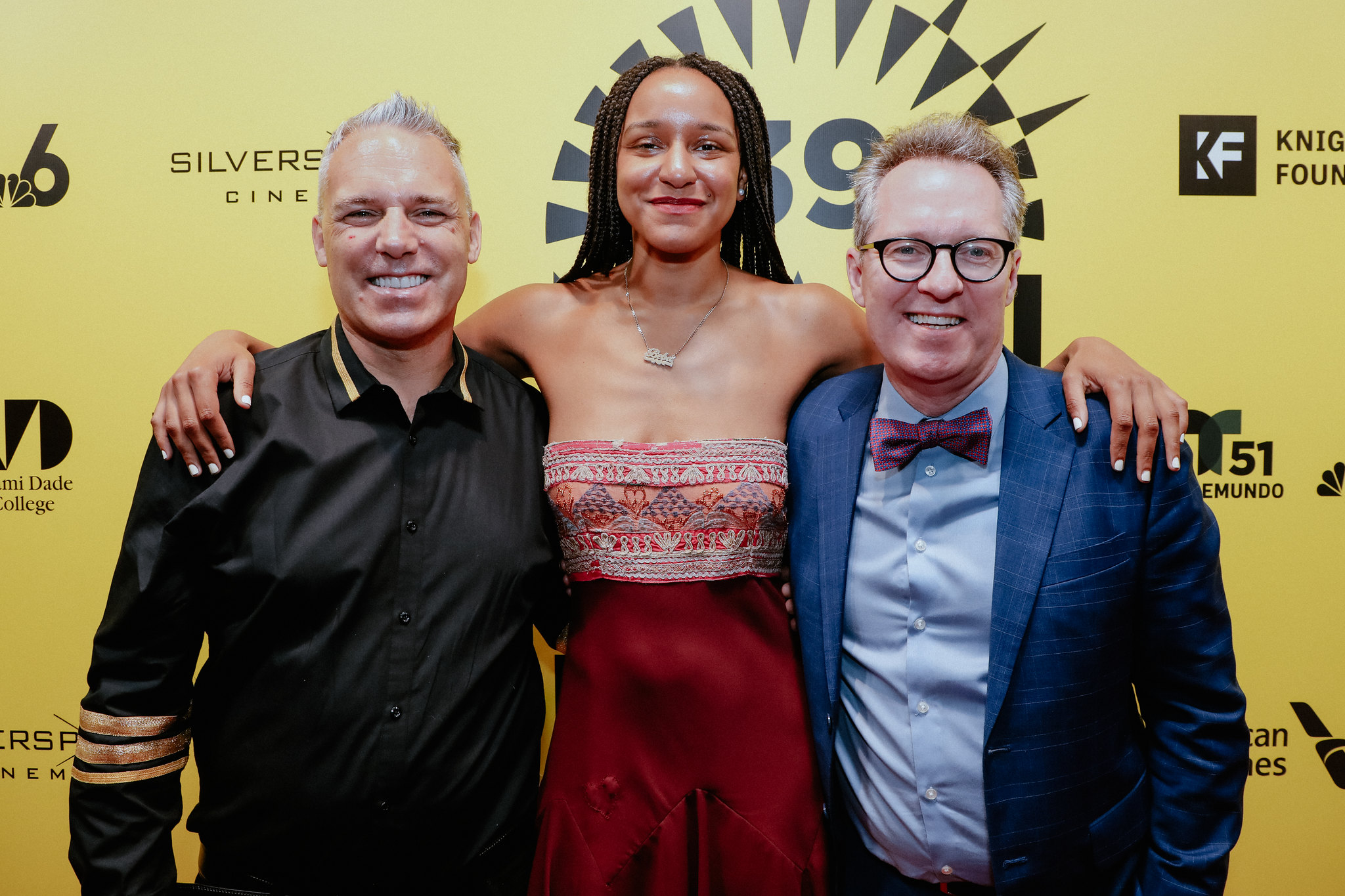









 Facebook
 Twitter
 Login or register for updates…


