You’ll find many mysteries in Mark Mylod’s gourmet horror comedy “The Menu,” not the least of which is the impenetrable enigma of whether or not Mylod even likes gourmet food. The film is full of mouth-watering images of tasty morsels, but the cast is almost exclusively populated by foodies who, according to the screenplay, don’t deserve to live, let alone eat fancy things.
So what’s the point of showing all these yummy comestibles if the movie is going to judge us harshly for wanting them? The biggest joke seems to be on us, the audience for any art. We are consumers, we are fans, and we are arguably unworthy of the enormous talents and unfathomable sacrifices made by the people who serve us. “The Menu” may serve up dark humor and memorable violence, but the daily special is you and me; we’re already in a boiling pot, oblivious to how thoroughly we’re being cooked.
“The Menu” stars Anya Taylor-Joy as Margot, a no-nonsense woman on a fancy dinner date with the insufferable Tyler (Nicholas Hoult, who is giving off serious Peter Lorre vibes at this point in his career). They’re traveling to a remote island where the legendary Chef Slowik (Ralph Fiennes) serves only the fanciest meals to the fanciest people, like a snobby food critic (Janet McTeer), her pathetic toady (Paul Adelstein, “The Greatest Beer Run Ever”), and a dwindling movie star (John Leguizamo).
Throw in some a-hole tech bros and a wealthy couple who can barely stand to look at each other, and you’ve got, with the exception of Margot, a clientele that’s practically banging their silverware on their tables, demanding for their uppance to come, preferably on a silver platter.
Chef Slowik and his staff, led by fiercely loyal manager Elsa (Hong Chau), have a series of dishes planned for their guests, each more sinister than the last. And while some audiences may be surprised that certain, rather obvious, culinary horrors aren’t on the chopping block today, Mylod’s film (written by Seth Reiss and Will Tracy) isn’t about mere ghoulishness. The terrors are all whimsical intellectual exercises, not unlike the high-concept dishes you’d find at an egregiously expensive restaurant run by an eccentric auteur with final cut on every plate.
It doesn’t appear we are supposed to be abjectly terrified by any one part of “The Menu.” The film’s knowing dialogue and many self-criticisms, mostly courtesy of Margot, prevent the film from being truly frightening. Unless of course you’re wealthy, in which case the movie argues “good riddance.” The rest of us are invited not to dine but to watch Chef Slowik deliver divine judgment on behalf of all service workers everywhere, somewhat oblivious to his own hypocrisy, since he’s leading his own employees inexorably to a horrible fate too.
Mylod’s film is incredibly particular, as it should be, since it’s about very particular people. The island where Slowik’s restaurant resides is distinctly uninviting, as though the shooting location for Ray Kellogg’s “Killer Shrews” has been pulled out of mothballs after 63 years, looking just as lifeless as ever. But nestled away is a restaurant that’s sharp, elegant and clearly impeccable, and the dishes Slowik creates range from genuine culinary fascinations to garishly high-concept. (If anyone survives the night, the Yelp reviews are going to be murder.) Production designer Ethan Tobman (“Free Guy”) and art director Lindsey Moran (“The Old Man” do a lot with relatively little, and their work is spot on.
Ralph Fiennes knows exactly what movie he’s in: a bleak comedy where he’s simultaneously the audience’s arbiter of vengeance against the worst of the 1% and also the clear-cut villain. He doesn’t just chew the scenery: He savors it, delivering each new course with a weird monologue delivered with sincerity, sadness and wit. You may find yourself, as Chef Slowik does, announcing your family’s next meals with a melodramatic clap of your hands. Your family may get tired of this quickly and give you withering glares until you stop it. This critic may or may not know this from experience. You have been warned.
There is a moment in “The Menu” where Slowik, so impassioned about his own art, takes a moment to acknowledge that other art exists, and that it exists to nourish our souls when we’re feeling depleted. It is at that moment that “The Menu” itself becomes a harsh critic, but there’s no hypocrisy in that. We look to art for existential sustenance, to feel less lonely, to feel inspired, to feel, feel, feel, in a world that wears us down to numbness.
And while Mylod’s film may be a wee bit harsh on foodies and fandoms, ever so slightly, it’s a point well taken. We’re paying these hard-working artisans, of all varieties, to deliver us evidence that life is worth living, and it’s very reasonable to ask them to take it seriously. Which makes it all the more important that we treat them, in turn, with the absolute respect they deserve.
“The Menu” is designed to satisfy people in the service industry, to make everyone else remember to be polite to the staff wherever they go and — somewhat ironically — to be a little harsher to films when they stink. Fortunately there’s no need to be harsh to “The Menu.” It’s a diabolically odd horror comedy that keeps the giggles at a steady simmer until, eventually, they’re just right.
“The Menu” opens in US theaters Nov. 18 via Searchlight Pictures.
Once Thanksgiving hits, the holidays seem to signal that more is more—but that’s not always true, especially when it comes to festive nail ideas. Christmas nails may bring to mind sculpted Santas, over-the-top glitter, and red and green everything, but there are actually plenty of subtle options available to show your spirit in style.
For 2022, the coolest riffs on holiday nails feature twists on the minimalist nail art ideas we’ve been obsessed with all year—think French manicures, negative space, and subtle sparkle—so nothing looks too out of place when January rolls around. So make some hot cocoa, queue up Falling for Christmas, and get ready to screenshot our favorite Christmas nail designs.
All products featured on Glamour are independently selected by our editors. However, when you buy something through our retail links, we may earn an affiliate commission.
Cameos: An going series that explores when American Masters subjects make surprise appearances in the most unlikely of places.
In this odd pairing, legendary singer, dancer and bandleader Cab Calloway starred in these surreal Betty Boop cartoons to promote his music, “Minnie the Moocher” and “The Old Man of the Mountain.”
Before the popularization of television, cartoons in the 1920s and 30s were theatrically presented before full length features for all audiences. To contend with Walt Disney’s stronghold on animated shorts, Paramount Pictures became the distributor for Fleischer Studios in 1929. Run by brothers Max, Dave and Lou Fleischer, the animation studio had been making a name for itself as a pioneer of synchronized sound technology. Despite popular belief, Disney was not the first studio to release a sync sound cartoon. Fleischer Studios had released the first cartoon attempting synchronized sound in 1926—two years before Disney’s “Steamboat Willy.” Quickly, the Fleischers’ technological innovations, eclectic characters and music established the brand as one of Disney’s main rivals, making Popeye and Betty Boop household names.
As coordinated sound technology progressed, animators discovered that scenes of singing and dancing alleviated the difficulty of synchronization. At the time, Fleischer Studios was physically located near premier music venues in New York City, particularly the Harlem clubs featuring many prominent Black jazz musicians. The Fleischer brothers sought to further distinguish their product from Disney by using jazz as the backdrop for Betty Boop cartoons, allowing Paramount to use the medium as a promotional showcase. Under Paramount’s wing, Fleischer Studios had access to live footage of popular musical talent, including established names like Maurice Chevalier, Rudy Vallee, Ethel Merman, Louis Armstrong and Cab Calloway. In exchange for appearing in cartoons, musicians were granted performances in Paramount’s theater chain. As a result, the cartoons of this era represented a unique version of animation — one steeped in dark comedy, sexuality and the rising popularity of jazz.
Cab Calloway’s first cartoon collaboration
Having replaced Duke Ellington as the leader of the Cotton Club Orchestra, Cab Calloway’s star was rising in the early 1930s. Lou Fleischer recalled going to Harlem’s Cotton Club to select Calloway’s best songs to be transposed to animation and Calloway’s first collaboration with Fleischer Studios was in the 1932 cartoon, “Minnie the Moocher,” named after his hit song. Once a song was chosen, the writers used it as the basis for the cartoon’s general story. “Minnie the Moocher” begins with live action footage of Calloway dancing alongside the orchestra, spotlighting his distinctive physicality that is later personified in the cartoon characters modeled after him. The music dissipates and the short then transitions into its animated setting.
The cartoon begins with a tearful Boop reprimanded by her commanding parents. Boop is representative of a typical flapper—the provocative and oppositional feminine figure of her era at odds with the older generation. The established domestic setting of Betty Boop’s world starkly contrasts the fields and sunny landscapes of Disney’s “Merrie Melodies.” Boop is a human character (though she did not originate as one), the child of immigrants and trapped within a world which begins with realism and transforms alongside the music.
Hi-De-Ho meets Boop-Oop-a-Doop
For the most part, Hollywood used a distilled and primarily Caucasian-centric depiction of jazz during this era. Although Hollywood portrayals often depicted jazz as a symbol of liberation and youth, the jazz world in Fleischer cartoons is confrontational. Like Al Jolson’s character in “The Jazz Singer,” Boop decides to escape the pressures of home. But, unlike Jolson who runs toward the cheerful jazz culture of “Toot, Toot, Toosie,” Boop is drawn to danger. Jazz songs often explored material that may have been deemed taboo by many Americans at the time. “Minnie the Moocher” the song details Minnie’s involvement with drugs as Calloway sings that she had learned “to kick the gong around,” a phrase indicating opium use. However, the dark subject matter of the song did not prevent its success and it was the first number one hit single by a Black artist. Subsequently, “Minnie the Moocher” served as a trademark for the rest of Calloway’s musical career. (Younger audiences might recall Calloway’s performance of the song in “The Blues Brothers” [1980] at the age of 73).
Cab Calloway (1947), Library of Congress
Fleischer Studios cartoons heavily utilized metamorphosis and the visuals in the short do not directly correlate with Calloway’s lyrics. Instead, the various sexual and drug related content of the song’s narrative serve as a catalyst for surrealistic sequences. Although the cartoon does not show Boop taking any drugs, she finds herself lost in a world enhanced by the accompaniment of the song. Some of the surreal images she encounters include a ghastly walrus which transforms into a cat whose kittens suck it dry, a prison guard escorting skeletons to the electric chair and other creepy transfigurations. The incarnations of Cab Calloway personify his movements and unique physicality using Rotoscope (invented by Fleischer Studios) and Calloway’s signature “Hi-De-Ho” theme, which he used in various other songs. This consistent theme in Calloway’s performances earned him the nickname, “The Hi-De-Ho Man.” This call-and-response motif is similar to Betty Boop’s own scat-like catchphrase, “Boop-Oop-a-Doop.” Both characters’ distinctive vocal qualities and phrases immortalized them as American icons.
The dark world of “The Old Man of the Mountain”
Cab Calloway would go on to star in two more Betty Boop cartoons. The 1933 short “The Old Man of the Mountain” also begins with live footage of Calloway and the Cotton Club Orchestra. While “Minnie the Moocher” utilized periods of silence and dialogue to tell its narrative, “The Old Man of the Mountain” continuously incorporates the music. The pre-Hays Code hypersexuality of the era is clear. Rather than the moping character seen in the opening of “Minnie the Moocher,” Boop seems far more sexually aware of herself. The role of sex in relationship to the movements of the dancing is a central element of how Fleischer cartoons present the world, compared to the innocent relationship characterized by Disney between Mickey and Minnie Mouse.
As an owl voiced by Calloway explains the origins of the Old Man, a peripheral character ogles an unsuspecting and jiggling Boop. Clearly a threat, the Old Man provocatively taunts Betty with his encroaching steps and tongue flicks. The two characters participate in a call-and-response scat battle (which were common in jazz performances). As the song progresses, the Old Man showcases Calloway’s dancing before chasing Boop down the mountain, guzzling an alcoholic beverage and ripping her clothes off until the town animals come to her rescue.
The original lyrics of “The Old Man of the Mountain” do not imply the Old Man is a villain, but when he finally appears (voiced by Calloway), he is depicted as a Caucasian character. This was likely a directorial choice made by the Fleischers to avoid alienating potential audiences. By keeping the live action Black musician interludes separate from the actual narrative, Hollywood avoided exclusion from offended theaters that could willingly delete the portions which revealed Black artists. Lou Fleischer would eventually receive threats from the Ku Klux Klan for inviting Calloway to his home.
Cab Calloway and his orchestra – chorus girls in b. g. – 1930, NYPL
Animation relies on caricature at its core and American-produced animation was notoriously filled with offensive portrayals of Black culture and characters. Boop’s sidekick Bimbo, Felix the Cat, Bugs Bunny, Mickey Mouse and many other characters all have history in depicting and appropriating Black stereotypes. [Editor’s note: Fleischer Studios recently published a statement and essay on the complicated history of Betty Boop’s creation and influences].
In both cartoons, Betty Boop is lured in by the world personified by jazz and then threatened. Throughout the 1920s and 30s, Fleischer cartoons were set to Blackface minstrel songs and these continually exploited vaudeville acts. Although these shorts provided Black jazz performers a new kind of exposure, the formulas of the cartoons perpetuated negative myths about predatory Black men and jazz culture as alluring, absorbing and dangerous. Louis Armstrong was criticized by other jazz musicians for portraying stereotypical representations of Black men and it was notably a Betty Boop cartoon which marked the beginning of his film career. Although consistently portrayed as antagonistic characters, it is said Calloway felt being a part of the cartoons was a successful method for drawing crowds to his performances and he was pleased with his various incarnations.
The legacy of early Betty Boop cartoons
Despite Betty Boop’s popularity, her cartoons never truly matched Mickey Mouse’s international success. By the mid-1930s, The Hays Office began enforcing censorship, inhibiting many of the Fleischers’ artistic and stylistic liberties. The unrestricted atmosphere of the 1920s began to disintegrate. Boop could no longer date Bimbo, her dresses lengthened and she was presented in a series of more domestic and traditional roles. Rather than a mischievous and flirtatious flapper, she was depicted as an unmarried teacher with a pet dog. Similarly, the surreal spaces and tones were made more generic, and by 1935, jazz was no longer an element of the Betty Boop flair. The surreal and dangerous world was changed and jazz themes were replaced with pop tunes. By the 1950s, the United Productions of America, Metro-Goldwyn-Mayer and many other studios stopped cartoon music and a musicians strike further inhibited music specifically designated and created for animated shorts. Instead, studios began the practice of recycling music from past cartoons. As censorship tightened and Fleischer Studios faced other obstacles, the quality, style and methodology of their cartoons changed. Because Paramount’s front office wanted to reflect more family-friendly material to compete with MGM, they pushed for uniform structure and simplified content.
S26 Ep2
The Blues Brothers Band Remembers Cab Calloway
Like Calloway, whose career received renewed attention after “The Blues Brothers,” Betty Boop cartoons were re-popularized in the 1970s with appreciative audiences, particularly in Europe and Asia where the original cartoons were syndicated. While Disney used the Rotoscope to create a human grace in Snow White’s dancing, the Fleischers used it for shuffling walruses, clowns and villains. As opposed to its competitors, Fleischer cartoons were distinct for their experimental and sexual creations in landscapes influenced in part by New York’s jazz scene. Jazz songs were not just background music, but also used as a springboard for the themes, narrative and movement of the animation. These cartoons explored surrealism, dark comedy, sexuality, disturbing racial renderings and other adult concepts set in crumbling landscapes, and the issues addressed remain tied to real forces and personalities within the world. Fleischer Studios’ distinctive animation style, relationship with renderings of the human form and exploration of darker subject matter make “Minnie the Moocher” and “The Old Man of the Mountain” powerful historical and social statements about the era from which they emerged. More than further popularize jazz in America, these shorts created a voice for race, ethnicity, youth culture and nationality that incorporated elements of both fantasy and reality.
Works Cited
Barrier, J. Michael. Hollywood Cartoons: American Animation in Its Golden Age. New York: Oxford UP, 1999. Print.
Berg, Charles Merrell. “Cinema Sings the Blues.” Cinema Journal 17.2 (1978): 1-12. JSTOR. Web. 15 May 2014. .
Goldmark, Daniel, and Yuval Taylor. The Cartoon Music Book. Chicago, IL: Cappella, 2002. Print.
Gottlieb, W. P. (1947) Portrait of Cab Calloway, Columbia studio, New York, N.Y., ca. Mar. United States, 1947. , Monographic. [Photograph] Retrieved from the Library of Congress, https://www.loc.gov/item/gottlieb.00961/.
Harker, Brian. “Louis Armstrong, Eccentric Dance, and the Evolution of Jazz on the Eve of Swing.” Journal of the American Musicological Society 61.1 (2008): 67-121. JSTOR. Web. 15 May 2014. .
(McClymer et al.)
Ebert, Roger. “Cab Calloway: The Hi-De-Ho Man | Demanders | Roger Ebert.” All Content. N.p., n.d. Web. 15 May 2014.
Fleischer, Richard. Out of the Inkwell: Max Fleischer and the Animation Revolution. Lexington: U of Kentucky, 2005. Print.
Longmore, Zenga. “The Social Affairs Unit – Web Review: Zenga Longmore on Betty Boop’s Jazz Legacy.” The Social Affairs Unit – Web Review: Zenga Longmore on Betty Boop’s Jazz Legacy. The Social Affairs Unit, n.d. Web. 15 May 2014.
Lehman, Christopher P. The Colored Cartoon: Black Representation in American Animated Short Films, 1907-1954. Amherst: U of Massachusetts, 2007. Print.
Schomburg Center for Research in Black Culture, Photographs and Prints Division, The New York Public Library. (1930). Cab Calloway and his Orchestra, chorus girls in the background Retrieved from https://digitalcollections.nypl.org/items/fcfafba0-1346-0136-de9c-396c77d77bb6
Shaw, Arnold. “The Vocabulary of Tin-Pan Alley Explained.” Notes 7.1 (1949): 33-53. JSTOR. Web. 15 May 2014. .
Harker, Brian. “Louis Armstrong, Eccentric Dance, and the Evolution of Jazz on the Eve of Swing.” Journal of the American Musicological Society 61.1 (2008): 67-121. JSTOR. Web. 15 May 2014. .
“Reading Journal: Betty Boop and The Jazz Era.” Reading Journal: Betty Boop and The Jazz Era. N.p., n.d. Web. 15 May 2014.
Shaw, Arnold. “The Vocabulary of Tin-Pan Alley Explained.” Notes 7.1 (1949): 33-53. JSTOR. Web. 15 May 2014. .
AN obese child who was once dubbed the “world’s fattest girl” is now unrecognisable.
At one stage, Jessica Gaude tipped the scales at 420lbs and was so overweight her legs couldn’t support her and she had to roll around on the floor to get about.
3
Jessica Gaude would consume around 10,000 calories a day
3
Jessica looked completely different after losing so much weightCredit: Inside Edition/YouTube
Mum Carolyn, from Knoxville, Tennessee, stocked piled the food for her daughter who wanted to eat every two hours and would throw a tantrum if she didn’t get the food she wanted.
Meanwhile, Jessica would gorge on around 10,000 calories a day, often eating 15 hamburgers a day, along with chips, white bread and lots of chocolate.
Her intake in a single day was the equivalent of a year’s worth of junk food.
Doctors believed her bones were significantly deformed as a result of excess body weight and warned that the extreme “diet” was putting her life in danger.
Her mum, meanwhile, claimed that “she never realised she was big” and would have happily “eaten herself to death.”
Eventually, Jessica developed trouble breathing and was rushed to the East Tennessee Children’s Hospital in a critical condition.
“All parents make mistakes, there’s no perfect parents,” Carolyn said. “But I made mistakes that could have cost my child’s life – and I have major guilt.”
Child Protective Services then got involved and Jessica was transferred to an obesity clinic in Virginia where she was put on a strict diet and exercise programme.
Thanks to the help she lost an impressive 320lbs without surgery.
“I’m very proud of her,” Carolyn added.
However, Jessica still had 20lbs of loose skin and was constantly fighting the urge to indulge in snacks.
Jessica later admitted to being “addicted to food” although Carolyn has quickly banned her from eating between meals – stipulating that she was not allowed to have snacks without permission.
To help with Jessica’s weight loss, Carolyn was ordered to attend parenting classes and now she monitors her daughter’s diet carefully.
Trips to the local supermarket involve buying low-calorie foods, while Jessica also attended physical therapy sessions five times a week.
Despite the weight loss, she still continued to have difficulty walking because her excessive weight bowed her legs.
3
Jessica attended an obesity clinic and lost 320lbs without surgery
Regarding Nvidia’s RTX 4060, we’ve not heard much on the grapevine about this GPU, but now a detailed rumor has come through for the graphics card – though we’d treat some of this with more skepticism than normal.
As flagged up by @harukaze5719, a regular contributor to hardware leaks on Twitter, this purportedly comes from Lenovo’s Gaming Desktop Product Planning Manager in China, a certain ‘Wolstame’ who shares info on the performance and release date of the RTX 4060 via Weibo (opens in new tab). (Hat tip to VideoCardz (opens in new tab) for spotting this, by the way).
And if you were thinking this more affordable Lovelace GPU was close to hand, then think again – although the lack of speculation thus far around the graphics card kind of tells its own story in that regard.
According to Wolstame, the RTX 4060 will arrive on ‘618’ which refers to June 18, 2023, the date of a major shopping festival over in China.
As to the rumored performance, Wolstame makes it quite clear that they are just guessing, but that we should expect something in the ballpark of the RTX 3070. At the same time, they mention the 4060 being 20% faster than the RTX 3060, which doesn’t equate to a 3070, falling a fair bit short – so this part of the rumor is rather a head-scratcher (apply a ton of extra seasoning, in other words).
Power consumption will supposedly be lower than the RTX 3060 at perhaps as low as 150W.
Price-wise, the RTX 4060 will be around the same asking price as the RTX 3060 Ti, the leaker asserts – at least that’s how we read it (some of the phrasing and translation leaves room for doubt).
If we’re going by recommended pricing, the RTX 3060 Ti is pitched at $399 over in the US for its MSRP (£369 in the UK).
Analysis: Nothing affordable on the horizon for Lovelace, then?
The most interesting part of this rumor is that release date, and presumably June 2023 would be the launch target not just for the Chinese market, but elsewhere globally.
That’s still seven months away, so will be a disappointing blow to those folks who might have been hoping for an RTX 4060 sooner rather than later. For now – if this rumor is right – it looks like we’re going to be stuck with the top-end RTX 4080 and 4090, and then perhaps an RTX 4070 Ti (which is said to be the previously ‘unlaunched’ RTX 4080 12GB, of course).
Price-wise, we’re not banking on the RTX 4070 Ti being all that reasonably priced, particularly not when you look at the price tags pinned on the RTX 4080 models. So affordable Lovelace GPUs do not appear to be remotely on the horizon, in short – the only hope is that we do get a vanilla RTX 4070 before too long, and this is pitched in a more reasonable vein price-wise. For the moment, though, Nvidia appears to be firmly pursuing a ‘layered’ strategy we heard talk of a while back, where folks looking for a cheaper graphics card are simply being pushed to buy an RTX 3000 model (as there’s still an excess of stock with these).
Indeed, this is what Wolstame suggests – the leaker seems pretty down on the prospects for the RTX 4060, so rather than wait a long time for the GPU to turn up, Wolstame advises buying an Ampere model (RTX 3080, in fact – though the RTX 3070 is supposedly the performance equivalent of the RTX 4060).
Speaking of that purported performance, it is couched in terms of an absolute guess – and confusingly put across, as Wolstame appears to be making two different guesses, in fact, – so overall, we think it’s likely way too early doors to be drawing even any vague conclusions about the power of the RTX 4060.
That said, it is worth noting that the RTX 4060 is going to get the benefit of DLSS 3, so for some games, that will really up its performance levels compared to RTX 3000 models. (Possibly Wolstame is talking rasterized performance, too, although that isn’t made clear – so ray tracing gains could be more substantial for the RTX 4060 as well).
For now, then, let’s treat this rumor dump with the caution it really deserves, but we can’t say we’re surprised to hear that the RTX 4060 could still be a long way off – although admittedly, we weren’t thinking quite as far away as next June. Time will tell.
On the evening of February 20, 2018, bride-to-be Martina Kušnírová was looking online at wedding dresses while at the home she shared with her fiancé, journalist Ján Kuciak. They would not survive the night.
The documentary, directed by Matt Sarnecki, investigates the shocking murder of the young couple in the Galanta District of Slovakia, and finds evidence that powerful forces in the country wanted Kuciak dead and were prepared to pay to get the job done. The riveting and disturbing film played Tuesday night as part of Deadline’s virtual event series For the Love of Docs.
“The day after the bodies were found, Jan and Martina’s friends and some journalists, local journalists, asked me to come down to the crime scene because they wanted my help,” Sarnecki explained during a panel discussion after the screening. “The reason they wanted my help is one of my previous films looked into the murder of journalist Pavel Sheremet in Kyiv, Ukraine, in 2016. And that documentary used a forensic analysis of CCTV to identify suspects and problems with the investigation. So, they wanted me basically to try to do the same thing in Slovakia. And if someone asks for your help, you can’t say no.”
The deaths of the couple triggered massive public protests in Slovakia which toppled major political and law enforcement figures in the country one after another, including, eventually, Prime Minister Robert Fico and his cabinet. But the question of motive and who was responsible for the murders remained shrouded in mystery until the leaking of a computer drive that contained 70 terabytes of information pertaining to the case.
“It was at that point I realized a remarkable film can be made not just about the murder of a journalist,” Sarnecki said, “but how it led to, basically, a blueprint to show how a corrupt and captured state would work.”
The documentary contains shocking pieces of evidence and other investigative materials, like video of the hitman who confessed to the crime taking authorities step by step through the crime scene to show how he had killed Kuciak and then his fiancée. Recordings of cell phone conversations and other evidence suggested a powerful businessman — Marian Kočner — had contracted the killing after becoming upset by the journalist’s reporting on his shady activities. Kočner allegedly used an associate, Alena Zsuzsová, to arrange the murder (Kuciak’s fiancée apparently wasn’t an intended target, but collateral damage).
“They thought they were invincible,” Sarnecki said of Kočner and Zsuzsová. “I think there had been so many years of impunity where they thought they could do anything… Kočner… didn’t seem to be concerned. And the same with [Zsuzsová]… She didn’t seem to be concerned because I think the idea was, ‘We can get away with these things.’ And I think this is the culture. There was a culture of impunity in the country.”
He added, “I would say they were arrogant. But things changed. And in the end now they’re both sitting behind bars, not for the murders, but for other crimes.”
Sarnecki, an American-born investigative journalist and filmmaker, has lived in Eastern Europe for a decade. For The Killing of a Journalist, he worked with four-time Oscar-nominated producer Signe Byrge Sørensen.
“For us, it was really important to tell the story about what happens in a larger society, what happens to democracy when you have a system where an oligarchy is able to sort of take control over parts of the police and parts of the judiciary system and part of the political system,” Sørensen noted. “It’s also revealed how [Kočner] is in charge of some of these politicians as well and how they all were using each other. And that’s a larger society [issue] and more than a true crime [documentary], but really important, because if we don’t know that these things happen and if we don’t know the importance of journalists’ work to expose these kind of crimes, then we are not maybe not taking care enough of our media and our press. And we really need those to keep our democracies healthy.”
Watch the conversation in the video above. Our virtual event series For the Love of Docs is presented by National Geographic.
The actor, a Longhorns alum, delivered a new music video celebrating the university’s basketball team
Matthew McConaughey, an alum of the University of Texas at Austin, delivered a new music video celebrating the men’s basketball team. The video was revealed in partnership with the Moody Center before a game between the Longhorns and the Gonzaga Bulldogs from Washington’s Gonzaga University.
In the video produced by Charlie Sexton, McConaughey steps up to the studio mic like a preacher at the podium, donning a white suit and gold aviator glasses. While cutting to shots of Longhorn players running across the court and aerial views of the massive stadium, McConaughey calls upon those listening to “Reveal, revive and testify.”
The video features the Spiritualettes, a gospel group from Texas, singer Melat Kassa, Raul Vallejo on trumpet, Carlos Sosa on saxophone, Anthony Ferrell on keyboard, JJ Johnson on drums, Elijah Ford on bass, and Sexton on lead guitar.
Trending
In a statement to Rolling stone, McConaughey, said, “As a longhorn alum and partner in the moody center I wanted to write a fun new anthem to kick off a new day for Texas basketball in the moody center. It’s time to bless the mood.”
The new center is the home of Texas men’s and women’s basketball programs and opened its doors to the city of Austin in April. The $375 million dollar multi-purpose arena is located on the UT campus in Austin, Texas, and holds up to 15,000 people, replacing the historic, 45-year-old Frank Erwin Center.
Cast: George Clooney, Felicity Jones, David Oyelowo, Tiffany Boone, Demián Bichir, Kyle Chandler, Caoilinn Springall, Sophie Rundle, Ethan Peck
One can be an amazing actor, but a dumb director. We have seen many. But we had hoped that George Clooney could be an exception – a great actor and equally adept at direction. . He was, in the beginning. His 2005 Good Night, and Good Luck was gripping with its black-and-white images dramatising the tussle between television newsman Edward R. Murrow and US Senator Joseph McCarthy. It was a lovely piece of work that took us into the world of news broadcast of that era. Clooney’s The Ides of March in 2011 was as gripping with a story about the selfish political culture that cared little for the masses. But when he made The Monuments Men three years later about how Nazis stole art and how an attempt was made later to retrieve it, Clooney fell off the cliff!
His latest outing, The Midnight Sky, now on Netflix, is as disastrous. It is doomsday for Earth in 2049 that has been ravished by poisonous radiation. Nearly all the inhabitants are dead. But scientist Augustine Lofthouse (played by Clooney) stays at his Arctic post. In any case, he has not many days left. He is suffering from a terminal illness. Staying on, he is hoping to make contact with any space mission that may be returning to Earth to try and warn it about the cataclysmic event. There is just one up there, Aether, which is coming back after finding a new planet, K-23, which looks like being habitable.
The rest of The Midnight Sky, adapted from Lily Brooks-Dalton’s 2016 sci-fi novel “Good Morning, Midnight,” is all about how Lofthouse tries to contact Aether. We have on board a few like Sully (Felicity Jones) and Commander Tom Adewole (David Oyelowo). They are a couple and expecting their first child, and the other crew members keep thinking of a name for the baby girl.
In the meantime, Lofthouse finds that there is a stowaway in his post – Iris, just seven played with a touch of beautiful innocence by Caoilinn Springall. After initial irritation, the two bond. She is not mute, but refuses to talk. And Clooney is of little help, with his greyish beard looking like a glum Santa Claus, depressed and dejected. So very unlike his own real character and the kind of dashing films he made or acted in.
The Midnight Sky has some gorgeous visuals, but in times like these when the world is passing through a crisis, do we need a plot like this – dreary and infusing a sense of hopelessness in us?
The film may be science fiction, some kind of fantasy fairytale, but beyond this, I can merely wonder why the heck did a man like Clooney, who is so full of life, so spirited, make a movie that is disastrously depressing and may push the little joy we now have — with Christmas and New Year on us — out of our lives.
Maybe Clooney was trying to tell us, folks watch out, respect the planet (global warming, etc), otherwise it will kick you. But he could have done it with some fun, some hope, not this kind of dark despair.
(Gautaman Bhaskaran is a movie critic and author of a biography of Adoor Gopalakrishnan)
Linda Cardellini and Christina Applegate in Dead To Me season 3Photo: Saeed Adyani/Netflix
[Editor’s note: This review contains spoilers for Dead To Me seasons one and two.]
Dead To Meruns in circles. Netflix’s tragicomedy hinges on the strength of an unlikely companionship that is constantly tested. Let’s revisit these hurdles: Judy (Linda Cardellini) hits and kills a man while driving. The guilt makes her befriend his widow, Jen (Christina Applegate). In a fit of rage several episodes later, Jen bludgeons Judy’s smarmy ex-fiancé to death. They often lie to each other and then come clean during these events, all while hiding their crimes from the police. Dead To Me has spun a similar mysterious yarn during both seasons. The repetition succeeds because it forges an unshakable bond between two women who couldn’t be more different from each other. It’s their unexpected synergy, not their secrets, that make the show compelling.
So it’s no wonder season three’s victory lies in how it spotlights Jen and Judy’s devotion to one another. Dead To Me maximizes Applegate and Cardellini’s sublime talent and chemistry to deliver a potent goodbye that’s jarringly overdramatic. (At times, the show edges towards we’re-going-to-cry This Is Us territory.) Yet the eps still hit hard because of how committed both actors are to these roles. In less capable hands, Dead To Me’s impact would’ve crashed, but their performances somehow make a predictable script and suspense soar. (For additional waterworks, check out Cardellini’s speech during Applegate’s Walk of Fame induction earlier this month.)
The overarching structure is rehashed in season three as Jen and Judy still keep major life updates from each other. There’s no time to deal with health issues amid multiple external problems: Steve’s (James Marsden) body is discovered in the woods where they buried him. His twin brother Ben (Marsden pulling remarkable double duty) rammed into them while driving drunk in the previous finale. And then there’s Jen’s teenage son, who has potentially discovered Judy killed his dad.
Sounds good These headphones have stunning sound range and quality, up to 15 hours of playtime, can switch between two Bluetooth devices at a time, and look great.
Initial episodes promise but fail to deliver a meaty payoff on the investigations into Steve’s death and Ben’s hit-and-run. Garrett Dillahunt’s cameo as an FBI agent is sadly pointless, and Steve’s association with the Greek mafia remains a convenient way out for the ladies. Police officer Nick (Brandon Scott) is the only one doggedly probing these cases. And even he’s derailed by his partner Detective Perez (Diana-Maria Riva), who helps Jen out for reasons we’re supposed to chalk up to empathy.
Jen garners Perez’s affinity because of her awful circumstances, but she did still murder a man—as terrible as he was—without any consequences. At least Judy and Steve could claim running Ted over was an accident (although they chose to flee the scene). But Jen’s actions aren’t as incidental. Much to its detriment, Dead To Me doesn’t examine the massive privilege that lets Jen and Judy—two wealthy, good-looking white women living in suburbia—get away with literal murder. Perez and Nick forgo their duties to help them, and it’s never properly dissected why beyond “Steve equals bad” and “Jen and Judy equal good,” even when that’s clearly not the case.
Dead to Me: Season 3 | Official Trailer | Netflix
The show fares better in meditating over grief, loss, and wrongdoing through the internal struggles of its complex heroines. Jen is an acerbic pessimist mourning her dead husband and their failed relationship, while Judy’s sunny disposition is directly in contrast to that. Their coping mechanisms are wildly different, with Jen bashing a car in frustration, and Judy preparing baked goods. (Jen is the type who will curse non-stop, whereas Judy will dole out hugs.) But all of these traits are facades that hide their respective breakdowns.
In season three, the duo tries to move beyond their crimes and prioritize their own lives, with Jen addressing her lingering feelings for Ben and Judy embracing everything life has to offer. But how can they start fresh with all the damaging dangling threads between them?
In hindsight, it’s not surprising that a show about remorse and heartbreak wraps up in a tear-jerker series finale. It’s more overly sentimental and predictable than expected, sure, but Jen and Judy’s undying love was always the driving force. Applegate and Cardellini sell the hell out of it, balancing the comedic and emotional beats perfectly. And for what it’s worth, Marsden has no right to be as charming as he is, at one point singing along to Patsy Cline, which is simply glorious. (Where’s the official petition to cast him in more rom-coms?) The mystery of the show remains cyclical, but Dead To Me is still binge-worthy and engrossingly funny to the bittersweet end.
Dead To Me season 3 premieres November 17 on Netflix.
Pakistan has reversed course and lifted a ban on its Oscars entry Joyland, but the film will receive some cuts by local censors, an aide to the country’s prime minister has revealed on Twitter.
Joyland is Pakistan’s official submission to the Oscars in the best international feature category and it won a top honor at the Cannes Film Festival earlier this year. The movie was previously approved for wide release in Pakistan, but just a week ahead of its scheduled opening on Friday, Pakistan’s Ministry of Information and Broadcasting changed its decision and instituted a ban.
Written and directed by Saim Sadiq, the film features a love story between a married man and a transgender woman, which sparked controversy among some conservatives in the Muslim majority country. The ban was issued after a concerted social media campaign that targeted the movie, claiming it contravened Pakistani and Islamic social values.
Salman Sufi, an aide to Prime Minister Shahbaz Sharif who was vocal in his opposition to the earlier ban, took to Twitter Wednesday to celebrate the reversal:”The film #Joyland has been cleared for release by the Censor board review committee formed at the direction of [Prime Minister Sharif],” he wrote. “Freedom of speech is fundamental right & should be nourished within ambits of the law.”
Sufi described the cuts that would be made to Joyland as “minor” in a follow-up interview with the Associated Press, but declined to detail which scenes would be altered. He says the film could be released as soon as Friday, its originally scheduled opening day.
Transgender people continue to face persecution and extreme social stigma in Pakistan, although some progress was recently achieved with the introduction of a new law that protects their rights and a Supreme Court ruling designating them as a “third gender.”
“Transgender people are as much citizens of Pakistan as anyone else,” Sufi told the AP. “We have launched a hotline for their issues as well from the prime minister’s office and the prime minister is fully committed to safeguarding their rights.”
The ban briefly threatened Joyland’s Oscar chances, as all international feature contenders must have a minimum seven-day theatrical run in their country of origin or a similar run outside their home nation, to qualify for the Academy Awards. In response to the ban, French distributor Condor Films stepped in to say that it would give the film a one-week qualifying release in French cinemas starting Nov. 18, ahead of its scheduled, longer release in France in December.
In her Cannes review, The Hollywood Reporter‘s critic Lovia Gyarke praised the film as “an aching consideration of gender and sexuality.”
Joyland premiered in Cannes, where it won the Jury Prize in Un Certain Regard. Film Constellation is handling international sales for the movie, with North American rights with WME Independent.
Jane Remover’s “Contingency Song” has the liminal atmosphere of an airport terminal, full of beeping and whirring, people who never stop moving around you but won’t look directly at your face. Since their 2021 breakout album frailty, the 19-year-old artist has ventured further into shoegaze and drone music to explore dread and stagnation; the gloomy, six-plus-minute “Contingency Song,” the longest of any of their tracks, continues this trend. Incorporated into its grinding hum is what sounds like slowed-down sirens and whistling wind. As its gloomy climate grows in harshness, Jane shuts down over a destructive relationship: “I pour the boiling water on my hand/I still feel enough to touch myself,” they croon, the image of self-harm echoing lines from an old Laura Les song (“I just held a candle to my fingers/Smell it on my clothes ’cause flesh lingers”). The pulverizing noise soon eclipses them, squealing and churning until a sense of resignation begins to close in.
Content
This content can also be viewed on the site it originates from.
Media attention is short-lived and fickle, with incessant news waves and tweets washing over us every day, perpetually snatching away our focus from the most pressing issue of our time—climate change. The year 2019 was a hopeful one for climate activism, and it was a big one for environmental reporting on massive protests around the world. But the critical focus on the climate crisis would soon be overshadowed by the COVID-19 global health emergency. Yet, as many scientists and activists have concurred, the climate crisis is not going away; it’s taking on a new urgency, especially in light of a rapidly closing window to turn the tide.
Having come to know Germany’s DOK Leipzig as a socially and politically aware film festival, I appreciated the focus of this year’s thematic program on climate activism as well as global and local protest movements that have been instrumental in bringing this critical issue to the forefront of public debate. Moreover, as DOK Leipzig veteran curator Luc-Carolin Ziemann notes, the current crises—be they the COVID-19 pandemic or the war in Ukraine—are all inextricably linked with the present-day climate change exigencies. Russia’s unprovoked, criminal invasion of Ukraine—now nearing nine months—has sowed death and destruction in the country, but it has also aggravated the existing climate issues around the world. The war has also highlighted what some climate activists have said for years—this way of sustaining our energy makes us dependent on autocratic regimes, and Russia’s weaponization of fossil fuels to maintain energy dominance in Europe bears witness to the dire need of decarbonization of our societies.
In putting together the thematic film program, “Time To Act! Our House Is on Fire”(which perhaps alludes to Greta Thunberg’s 2019 eponymous address to the World Economic Forum in Davos, Switzerland), DOK Leipzig has also sought to map the social and emotional landscape of the unfolding environmental disaster—from navigating climate anxiety to turning to direct action. To reflect the global urgency of this crisis, as well as the complexity of the activism spectrum that encompasses sprawling environmental groups and approaches, has been “a tightrope dance,” Ziemann confides. What the festival took as a guiding principle, however, was to align itself with climate action—not only on screen but also with respect to how discussions were organized once the films’ credits rolled. The new realities, courtesy of the pandemic, have forged manifold avenues for connection and exchange. Hence, the DOK Leipzig team made the difficult decision not to fly in some of the filmmakers participating in the “Time To Act!” program. Instead, they were able to address local audiences in pre-recorded video messages and participate in Q&A sessions via Zoom. The resulting discussions did not suffer, and with the engagement of local environmental activists, the festival not only saved some CO2 emissions but was also able to link the film discussions to a wider political discourse about the local activist groups, the contrasting strategies they adopt and their capacity to make a lasting impact.
The “Time To Act!” program threaded several titles that traversed a range of assorted direct action and civil disobedience tactics to compel government action on climate change: from activists climbing up tree houses to protest the construction of a highway cutting through part of the forest in the German state of Hesse in Barricade (2021, dir. David Klammer), to Filipino para-enforcers confiscating chainsaws in an attempt to prevent illegal logging in a Palawan rainforest in Delikado (2022, dir. Karl Malakunas), to the youths of the grassroots environmental group Extinction Rebellion (XR) supergluing themselves to busy intersections in central London and dabbling in various disruption tactics in Rebellion (2021, dirs. Maia Kenworthy, Elena Sánchez Bellot).
Other titles in the program spotlighted further intriguing aspects of the climate emergency. In the short personal essay Everything Is Wrong and Nowhere To Go (2022), filmmaker Sindha Agha turns the camera on herself as she wrestles with debilitating and all-consuming climate anxiety that sprung up amid annual recurrences of ravaging wildfires in Southern California. “Can you go to therapy for climate change?” she wonders. “Or is that ridiculous?” Another short documentary in the program, Gisela Carbajal Rodríguez’s Oro Blanco (2018), unveils the dark side of e-mobility and its devastating impacts on Indigenous populations in Argentina whose livelihoods are jeopardized by the US-Canadian corporation’s mining of lithium for rechargeable batteries. Finally, DOK Leipzig’s Re-Visions section (“Sow the Wind and Reap the Storm”) rounded up the thematic program with two reflections on ecological cataclysms and activism. New Eldorado (2004, dir. Tibor Kocsis) looks back at a rare case of a successful local resistance, formed by villagers to protest a mining project in Romania’s Roșia Montană that sits on one of Europe’s largest gold deposits. The other film in the section, Kamar Ahmad’s Are You Listening! (2012), has not lost its relevance and topicality in the decade that has passed since its release: devastating floods and cyclones are still a tragic fact of life, and they disproportionately affect those who are least responsible for the problem.
When other forms of struggle have failed, how far can you take civil disobedience to effect change? Klammer’s Barricade ponders the notion of civil disobedience, following scores of activists as they launch into a defense effort of the forest in central Germany. In 2019, the Dannenröder forest, known affectionately as Danni, became a site of resistance for many local environmentalists, who for over a year lived in makeshift tree houses reaching up to 30 meters to obstruct the state’s long-running plans to build the highway through part of the woods. Klammer joined the activists with his camera in the final weeks of the occupation before the last tree houses were felled in December 2020. When tree houses turn into living barricades, civil disobedience is not an offense, a forest occupier says resolutely in the film. A professed refusal to comply with certain rules for such a cause then becomes not only a test to freedom of expression but also a “huge achievement for democracy,” the young man explains, because citizens should also partake in the nation’s political processes in between the elections, in small and grand daily acts of resistance. As the forest occupation advances, the film draws the viewer deeper into an apocalyptic scenario: a sole tree stands in the sea of downed trunks; the Red Rebels donning crimson garments form a circle on a desolate stretch of land; and a lone man scales a wooden defense structure, erected on the path of the future highway. Resistance never seems to wane in Barricade, nor does the music that pierces through the woodland. Interspersed with haunting images, music ceases, albeit only fleetingly, when police start removing men and women of the direct action group Lebenslaute, known for conflating classical music concerts and civil disobedience.
The topic of civil disobedience also underpins Kenworthy and Bellot’s Rebellion. The XR environmental group burst onto the UK activism scene in 2018, and it was their disruptive tactics that made it “a number one influencer” in the world. When XR activists descended on London in April 2019, blocking key traffic points and bringing the city center to a standstill, their strategy was anchored on the idea that economic disruption can be harnessed to force government action on climate change. In fact, XR leader Roger Hallam encouraged activists to break the law and cause disruption to sound the alarm about the climate emergency, which would then hopefully gain traction and transform the conversation around the crisis.
In 2019, XR was able to galvanize attention, propelling climate change back on the political agenda. The UK became the first country to declare a climate emergency, which seemingly catalyzed a number of others to follow suit. “Rebellion works,” exclaims international environmental lawyer and policy expert Farhana Yamin in the film, seemingly surprised at the government’s concession.
Above and beyond all the media noise that XR has generated, how far-reaching are the effects of the group? The documentary creates a candid portrait of the environmental group and its power dynamics, which, as an XR member notes at a meeting, was unconsciously recreating “the hallmark of power and privilege.” Being part of the solution entails seeing through the power and privilege that perpetuate a wildly unequal picture of climate impacts around the world. Activist Alejandra shrewdly zeroes in on the group’s early fiasco to factor justice into the climate equation, commenting—as part of a wider conversation about white Western environmentalism—on how it errs in recognizing the same exploitative and extractivist practices that often mar the race to go green. “All of that is still heavily reliant on extractivism. We are displacing whole communities,” she observes. “These kids in mines as young as five are getting cobalt so that we can have that solar panel. That’s the world that we live in right now… That’s where justice is key.”
The discourse about climate change must include more than just scientific data on atmospheric CO2 concentrations, rising sea levels, droughts or flooding events. The solutions to the climate emergency need to be moored in social and political contexts of power, justice, and access to resources. For the Tagbanua people on the island of Palawan in the Philippines, preservation of the forest is an existential question, not only because they derive their livelihoods from these vital ecosystems but because the very fabric of their community and their identities are deeply interwoven with the land of their ancestors, from which many are now being displaced. The forest is the “lifeblood of the Indigenous people,” an elder explains. But amid the influx of tourists and a frenzy of developers and investors looking to bring their commercial enterprise into the province, Palawan is now on the verge of being the lost frontier, where everything is up for grabs. In a powerful account of the locals’ struggle to safeguard one of the world’s most diverse ecosystems, Delikado (which aptly translates as “danger” in Tagalog) follows para-enforcers of the Palawan NGO Network Inc. (PNNI) as they carry out “meta legal” activities that involve citizens’ arrests and confiscation of the loggers’ tools, be they chainsaws or boats.
In the atmosphere of corruption and exploitative business projects, the burden of environmental protection in Palawan falls upon the likes of Bobby Chan (a lawyer and PNNI director) and his comrades. The land defenders are forced to take on what should be the government’s job of going after illegal fishers, miners and loggers. And this job is marred by death threats, now more so that the illegal loggers are armed and bolder. The documentary concludes with a harrowing question: “If we cannot protect people defending the planet, how are we going to protect the planet?”
Sevara Pan is an Amsterdam-based journalist and film critic.
About: Vanessa Guillen was 20 years old when she was found murdered at a US Army base. Rather than submit to silence, her family fought for justice and change.
Toe-curling footage has emerged of Chinese President Xi Jinping humiliating Justin Trudeau with a dressing down on the sidelines of the G20 conference.
The two leaders were caught on camera having a heated discussion at the global summit in Bali today, with Xi tearing into the Canadian Prime Minister.
Xi appeared visibly frustrated as he confronted Trudeau about how details of an earlier meeting between them, which was held yesterday, had been leaked to the press by Canadian government sources.
To add to the tensions, a planned meeting between Rishi Sunak and Xi was called off today, hours after the new prime minister was urged not to ‘go soft’ on the Chinese premier.
Number 10 expected a ‘frank’ meeting with the ‘authoritarian leadership intent on reshaping the international order’ but there does not appear to be any thawing in relations between China and the West.
Canadian sources had reported that Trudeau raised ‘serious concerns’ with Xi over suspected domestic interference by China during their first talks together in more than three years.
But Xi, trying to mask his anger with a pointed smile, was filmed by Canadian journalists telling an increasingly awkward-looking Trudeau: ‘Everything that we discussed yesterday has been leaked to the papers and that’s not appropriate.’
A stunned Trudeau, almost at a loss for words, just nodded as Xi continued his rant through a translator. The Chinese President looked pointedly at Trudeau and added: ‘And that’s not the way the conversation was conducted.’
Trudeau, knowing that details of his meeting with Xi had been leaked by his Canadian government sources, did not address the Chinese President’s concerns and instead gave a hapless response.
The two leaders were caught on camera having a heated discussion on the sidelines of the global summit in Bali today, with Xi tearing into the Canadian Prime Minister (pictured during the conversation today)
Trudeau just nodded while standing awkwardly as Xi continued his rant
Xi appeared visibly frustrated as he confronted Trudeau about how details of their meeting, which was held yesterday, had been leaked to the press by Canadian government sources
Xi, trying to mask his anger with a pointed smile, was filmed by Canadian journalists telling a seemingly embarrassed Trudeau: ‘Everything that we discussed yesterday has been leaked to the papers and that’s not appropriate.’
‘Well in Canada, we believe in free and open and frank dialogue, which we will continue to have,’ he eventually managed to say.
‘We will continue to look to work constructively together but there will be things that we will disagree on.’
While Trudeau spoke, Xi looked frustrated and refrained from making eye contact with the Canadian Prime Minister.
Xi then smiled broadly and reached out and shook Trudeau’s hand to end the excruciating exchange.
Seemingly stunned by the onslaught, Trudeau wandered off alone while Xi smiled at the camera.
It comes after a Canadian government source said Trudeau raised ‘serious concerns’ over suspected domestic interference by China in his first talks with Xi on Tuesday in more than three years.
Ottawa has in recent weeks accused the Chinese government of interfering with its democratic institutions and judicial system, after years of strained relations between the two countries.
While Trudeau is speaking, Xi looks frustrated as he refrains from making eye contact with the Canadian Prime Minister. Xi then smiles broadly and reaches out and shakes Trudeau’s hand in a tense and awkward exchange
It comes after a Canadian government source said Trudeau raised ‘serious concerns’ over suspected domestic interference by China in his first talks with Xi on Tuesday (pictured) in more than three years
Today, Trudeau said he had discussed the issue of Chinese interference in Canadian affairs again today on the sidelines of the summit. This conversation was the one filmed by Canadian journalists.
‘I have raised the issue of interference with our citizens,’ Trudeau told a news conference on the Indonesian resort island on Wednesday.
Trudeau met Xi on Tuesday, the first face-to-face dialogue between the two leaders since 2019.
He said he told the Chinese leader, who last month secured an historic third term, ‘it is important to be able to have a dialogue about this’.
Canadian federal police said on Thursday they were investigating so-called police stations set up illegally by China in the North American country.
Trudeau also said last week China was playing ‘aggressive games’ after Canadian broadcaster Global News reported on a ‘clandestine network’ of federal election candidates funded by Beijing.
‘It’s extremely important we continue to stand up for the things that are important for Canadians,’ Trudeau told reporters.
He said he also highlighted ‘areas of mutual concern and geopolitical challenges’ in his talk with Xi, including the war in Ukraine and tensions on the Korean peninsula.
Trudeau shared less painful talks with British Prime Minister Rishi Sunak today having been left red-faced after his exchange with Xi
Chinese President Xi Jinping attends a session at the G20 Leaders’ Summit in Nusa Dua, Bali, on Wednesday
A smiling Joe Biden relaxes during as global leaders arrived for a ceremonial mangrove-planting event in Bali today
Global leaders, including Joe Biden and Narendra Modi, brandish hoes as they take part in a mangrove planting event in Bali today
Macron, hands on hips, accompanies Joe Biden and International Monetary Fund Managing Director Kristalina Georgieva at a mangrove planting event at the G20 today
China’s foreign ministry declined on Wednesday to confirm any details of the conversation between the two leaders. Ministry spokeswoman Mao Ning said she had no information when asked about the meeting.
Diplomatic tensions between Canada and China have been running high since the detention of Huawei Technologies executive Meng Wanzhou in 2018 and Beijing’s subsequent arrest of two Canadians on spying charges.
While the standoff ended when all three people were released last year, relations have remained sour. Citing national security concerns, Ottawa banned the use of 5G gear from Huawei in May and earlier this month ordered three Chinese companies to divest from critical minerals in Canada.
Trudeau and Xi last met in June of 2019 on the sidelines of another G20 in Osaka, Japan. The met three other times previously, once in 2015 on the sidelines of the G20 in Turkey, and twice during official visits to Beijing in 2016 and 2017.
The Canadian government is poised to launch a so-called Indo-Pacific Strategy that Foreign Minister Melanie Joly says will challenge China on human rights, while seeking cooperation with the world’s second-biggest economy on climate change and other shared goals.
Meanwhile, a planned G20 meeting between British Prime Minister Rishi Sunak and Xi has been cancelled due to ‘scheduling issues’, a Downing Street spokesperson said today.
The schedule at the summit on the Indonesian island of Bali has been disrupted by an emergency meeting called after a missile killed two people in Poland.
President Xi’s wife Peng Liyuan donned a purple lotus flower and a purple shawl to match her husband’s bright shirt at the summit last night
Meanwhile, a planned G20 meeting between British Prime Minister Rishi Sunak and Xi has been cancelled due to ‘scheduling issues’, a Downing Street spokesperson said today
Sunak and Xi had been due to hold the first meeting between British and Chinese leaders for almost five years, with Sunak’s office saying beforehand that the prime minister would seek to establish a ‘frank and constructive relationship’.
Relations between London and Beijing have deteriorated in the last decade as Britain expressed alarm that an open door to Chinese investment could pose national security risks. London had also criticised Beijing’s trade practices and human rights record in Hong Kong and Xinjiang.
In a statement released before the planned meeting, Downing Street said the challenges posed by China were ‘systemic’ and ‘long-term’.
‘China is a country with fundamentally different values to ours, with an authoritarian leadership intent on reshaping the international order,’ it said.
However Sunak was expected to take a more nuanced approach to Beijing than his predecessor Liz Truss, who had said that China must play by the rules.
‘None of the issues the Prime Minister is discussing at the G20 – the global economy, the impacts of the war in Ukraine on food and energy security, climate change and global health – can be addressed without coordinated action by all the world’s major economies. That includes China,’ his office had said.
Chinese foreign ministry spokesperson Mao Ning said she had no information to offer on the cancellation of the meeting between Xi and Sunak.
“After thoughtful consideration and discussion with Lizzy, we have reached the mutual conclusion that Lizzy will not be a cast member on RHONY,” the statement read.
It was issued after a story in Page Six Wednesday reported that Savetsky was quitting the show because of antisemitic attacks directed toward her after her casting was announced.
Savetsky herself also posted on Instagram that she was leaving. She confirmed that after the announcement, she “was on the receiving end of a torrent of antisemitic attacks. As this continued, I realized that this path was no longer right for me and my family.”
The rebooted “Real Housewives of New York City” had just begun filming and Savetsky had filmed only a few times. She won’t appear on the show at all.
In the original Oct. 16 announcement of the new cast, Savetsky’s bio called her “a digital influencer, activist, mom of three and wife to plastic surgeon Dr. Ira Savetsky. Originally from Fort Worth, Texas, Savetsky moved to New York for college and, after a brief stint back in her home state, returned to the Big Apple. Lizzy uses her platform to express her style, educate others on her deep-rooted beliefs and hosts Instagram show “Bashert,” where she is setting out to help Jewish singles find love.”
Audiences tuned in to see which singers made it through to next week
“The Voice’s” first live show results scaled a Tuesday primetime ratings win for NBC, according to Nielsen’s live plus same-day figures.
As audiences tuned in to see which of Monday night’s top 16 singers made it through to next week, “The Voice” earned a 0.67 ratings score in the key demographic, driving NBC to win the night’s ratings by scoring an average 0.46 and drawing in 5.9 million viewers on average.
Here’s how primetime broke down across the major broadcast networks:
NBC was first in ratings with an average 0.46 rating in the key demo and second in total viewers with an average of 3.8 million, according to Nielsen data. After “The Voice’s” 8 p.m. airing, “La Brea” maintained a steady audience with a rating of 0.43 and 3.3 million viewers on average at 9 p.m. “New Amsterdam” closed out the night with a 0.27 rating and drew in 2.3 million viewers.
CBS was second in ratings with an average 0.41 in the demo and first in total viewers with a viewership of 5.9 million on average. “FBI” started off the night strong at 8 p.m. by earning a 0.50 rating and drawing in an average of 7.3 million viewers — the highest total viewership of the night. “FBI” spinoffs continued the high viewership trend, with “FBI: International” receiving a 0.38 rating and bringing in 5.5 average million viewers at 9 p.m. and “FBI: Most Wanted” earning a rating of 0.35 and a viewership of 4.7 million on average.
ABC came third in ratings with an average 0.40 in the demo and in total viewers with an average of 2.1 million viewers. “Bachelor in Paradise,” which ran from 8 p.m. to 10 p.m., received a 0.50 rating in the demo and brought in a viewership of 2.4 million on average a week ahead of the series finale. “The Rookie: Feds” closed out the night at 10 p.m. by locking down a 0.21 rating and drawing in 1.5 million average viewers.
Fox was fourth in ratings with an average 0.25 in the demo as well as total viewers with an average of 2.0 million viewers. “The Resident” earned a rating of 0.30 and drew in 2.6 million viewers on average at 8 p.m. while “Monarch,” which aired at 9 p.m., saw a rating of 0.20 and an average viewership of 1.4 million.
The CW was fifth in ratings with an average 0.08 in the demo and in total viewers with an average of 366,000 viewers. At 8 p.m. “The Winchesters” received a 0.10 rating and drew in 459,000 viewers on average while “Professionals” garnered a rating of 0.05 and received 274,000 average viewers in the 9 p.m. hour.
Neither The CW nor Fox air primetime programming at 10 p.m.
In terms of Spanish-language networks, Univision came in first with a 0.4 rating in the demo and 1.3 million total average viewers in primetime. “Vencer La Ausencia” started off the night at 8 p.m. with a rating score of 0.4 and a total viewership of 1.4 million on average. “Mi camino es amarte” which aired from 9 p.m through 10 p.m., earned a 0.4 ratings score and brought in 1.5 average million viewers. “La Madrastra” closed out the night at 10 p.m. with a ratings score of 0.3 and an average viewership of 1.0 million.
Telemundo came in second place both in terms of rating in the demo and total viewership, earning an average 0.2 ratings score and bringing 905,000 average total viewers. “Exatlón Estados Unidos,” which ran from 7 p.m. to 9 p.m., earned a ratings score of 0.2 and drew in an average viewership of 941,000. “La Reina del Sur” came next at 9 p.m., hitting a 0.3 rating and receiving 937,000 total viewers on average. “El Fuego del Destino” closed out the night at 10 p.m. with a ratings score of 0.2 and a total viewership of 802,000 on average.
You are reading a WrapPRO exclusive article that has been made available (for free) today. If you would like to have access to all of our member-only stories and virtual events, please CLICK HERE to receive 7 free days of WrapPRO –> The Essential Source for Entertainment Insiders.
There’s a snowstorm coming to The Real Housewives of Salt Lake City Season 3 as the midseason trailer drops, which you can watch in the video posted above.
Whitney Rose, Meredith Marks, Lisa Barlow, Jen Shah and Heather Gay have a lot more drama coming their way and the preview of what’s still to come on the Bravo reality series is intense.
The animosity between real-life cousins Rose and Gay continues as they star in a new screaming match. One of the mysteries of the season will finally be solved as viewers will get to see how Gay got a black eye. An infrared camera set up in Gay’s room seemingly captures the moment where it’s revealed what happened to her eye.
Setting out for a trip to San Diego, California, the housewives bring on the drama when Marks reveals she got a private message on social media about Barlow’s company. The Vida tequila founder is not happy that Marks is talking about her business and says that “it’s no one’s business” to dig into her company.
Friend-of-the-housewives Danna Bui-Negrete drops a bombshell regarding Shah’s federal indictment. Bui-Negrete tells Rose that someone that had been working with Shah was “an informant” that ultimately led to the indictment of the Bravo star. On the show, Shah maintains her innocence as it was filmed prior to the reality star pleading guilty to the charges.
Angie Katsanevas, another friend-of-the-housewives, also steps up to Gay for the “whole lotta BS coming out of your mouth.” Barlow also yells at Gay for coming at her and Shah cries because she doesn’t feel Gay has her back.
RHOSLC airs Wednesday nights at 9 p.m. ET on Bravo.
Amazon’s Audible is releasing original audio drama “Crush Hour,” a Christmas musical podcast series headlined by Ellie Goulding and Douglas Booth.
The podcast, available starting Nov. 17 exclusively on Audible worldwide, follows the stories of unknowingly connected strangers in London as they navigate love during rush hour. Various chance encounters on “tubes, taxis, trains and bikes result in hilarious outcomes in this festive musical drama,” according to Audible. “Crush Hour” is a collaboration with Mercury Studios, a division of Universal Music Group, with the full soundtrack to the podcast being released by Decca Records.
In “Crush Hour,” Grammy-nominated and two-time Brit award-winning singer Goulding plays Ash, who every day sees her dream man, played by Booth (“Pride and Prejudice and Zombies”), on the train. After she reads an anonymous reference to “the girl with the green coat” in the newspaper’s Crush Hour feature, she is determined to see if he’s written it about her.
Also starring in the series is West End star Samantha Barks (“Les Misérables”) as Lola who, having just left her leaving party after being made redundant from work, finds herself on the night Tube desperately trying to place the man in front of her, played by Aneurin Barnard (“Dunkirk”). But this is London, and she knows the cardinal rule of not speaking to people on the Tube. Elsewhere, a hapless Jay (played by Layton Williams, “Bad Education Movie”) is lost somewhere between Kings Cross and Bloomsbury, and finds himself taking an Uber with a tipsy Jonny (Omari Douglas, “It’s a Sin”) who does little to calm his nerves.
The musical’s finale sees the impromptu retaking of vows by Martin and Debbie, played by Rory Kinnear (“Skyfall,” “The Imitation Game”) and Julia Davies (“Gavin and Stacey”) respectively, who try to gather an audience to watch their ceremony on Christmas Eve in Kings Cross station. Soon, it becomes clear that the characters are all entwined in one way or another, just in time for Christmas Day.
The “Crush Hour” original soundtrack with the full cast ensemble also includes Nick Collier, aka Ella Vaday (“RuPaul’s Drag Race UK”), Paul Kaye (“Game of Thrones”), Keil Smith-Bynoe (“Ghosts”) and Ben Bailey-Smith (“The Split”).
“Crush Hour” was created and written by Freya Slipper, directed by Chris Foggin (“Fisherman’s Friends,” “Traces”), composed by Chris Read with an original score performed by the London Symphony Orchestra. The series features episodes written by Doug Crossley, Spring Day and Leila Navabi. “Crush Hour” was produced by Marc Robinson, Mark Hopkins and Claire Rhodes, and developed in association with Twenty Thirteen Films.
“The Territory” director Alex Pritz spent three years immersed in the Uru-Eu-Wau-Wau territory of the Amazon rainforest. And while this shoot was particularly difficult, he had to win the trust surviving members of the tribe, shoot around Covid and much more he faced a particular “emotional dilemma” filming the actual destruction of one of the Earth’s greatest resources, the rainforest.
In an episode of Variety’s Doc Dreams, presented by National Geographic, Pritz spoke with Variety Deputy Editor Meredith Woerner about interacting with the Uru-Eu-Wau-Wau people and the settlers that were ready to burn down their land to set up their own homestead. “The Territory” follows the conflict between the Indigenous community as they defend their protected land from a network of Brazilian farmers.
One particularly harrowing moment caught on film was the illegal cutting down of a massive tree, an act that was openly being lied about by the past government. “When they were there lighting fire to the rainforest, [former President Jair] Bolsonaro was in the media that same month saying that it was Indigenous people and NGOs lighting fire to the rainforest to undermine Brazil’s national sovereignty and drum up support for their nefarious causes,” Priz explained. “Getting those images did feel really important to be able to say, no, this is proof, this is happening, this is real and we need to talk about it.”
To find a way into this protected community, the director initially contacted environmental activist Neidinha Bandeira, whose work involves defending the rainforest and Indigenous rights.
“The relationship with Neidinha started out really cautiously,” Pritz said. “I think she, like a lot of people, felt like there had been these white American outside journalists who were coming in, taking stories from this community, and she wasn’t seeing much really change for them on the ground.”
To gain Bandeira and the Indigenous community’s trust, Pritz spoke with them about the process of filmmaking.
“I brought some cameras with me and said, ‘Okay, you film me, I’ll film you. Ask me about my life in New York, ask me about why I’m making this film.’”
“All of that built, I think, a common understanding of what a film is, what it entails, what it’s possible of in its most aspirational senses when it reaches millions of people and helps them understand a conflict that isn’t their own, but also what it costs and what you’re giving up by being part of it,” Pritz said. “And I think once we had that common understanding, it felt like we could move forward together.”
Pritz explains the importance of capturing the settlers’ perspective as well, adding that their “ideology is really at the core of this conflict.”
“I was interested in making a project that did listen to them and try to not strictly demonize them or turn them into storybook villains, but to try to understand the motivations that they had for engaging in these, obviously destructive practices.”
For ethical and “straight up security reasons,” Pritz and his team informed both the Uru-Eu-Wau-Wau people and the Brazilian farmers that they were filming “multiple sides of this story.”
“The worst thing for myself and the other people that were filming with the invaders would be for them to feel deceived by us and to think that we were spying on them or that we weren’t who we said we were,” Pritz said.
He adds, “We specifically tried to find access to two sides of the conflict that we hoped wouldn’t ever actually come into physical conflict with each other.”
Nickelback singer-guitarist Chad Kroeger celebrated his 48th birthday with 2,000 adoring strangers at Toronto’s History last night, the year-old marquee venue Drake opened in partnership with Live Nation.
Kroeger was chatty between almost every song, unscripted, funny, with off the cuff remarks and tales, some imagined, about everything from taunting U.S. border guards with “marijuana’s legal” in Canada to how you’d defy your parents in the 1980s by testing what would happen if you put metal in the microwave.
Of course, there were lots of Jägerbombs brought out to the frontman for his birthday, lots of audience singalongs to hits like “Rockstar” and “How You Remind Me” — plus “Happy Birthday” — and lots of mentions of wanting to go party for his birthday. But the night was actually in celebration of something else.
The rare club show was to mark the release this Friday of mega-selling Canadian rock band’s first album in five years, Get Rollin’, Nickelback’s tenth studio record. It was also their first “real show” since 2019’s pre-pandemic Rock in Rio.
And while Kroeger; his brother, bassist Mike Kroeger; guitarist Ryan Peake and drummer Daniel Adair didn’t mention it onstage, earlier in the week came the announcement that Nickelback will be inducted into the Canadian Music Hall of Fame next March at the Juno Awards in their home province of Alberta. The honor — decided on by the music industry association CARAS — shows how the band formed in the tiny town of Hanna has become a respected rock ‘n’ roll force, with sales over 50 million worldwide, 23 hits singles and streams over 10 billion.
But the History show wasn’t about history — it was about getting back out there, after COVID derailed touring. “We get to knock the dust off and remember what it’s like to play in front of all these beautiful fuckin’ people” — that’s how Kroeger put it to the pumped-up crowd who had snapped up the tickets in under 10 minutes when they went on sale last month.
They kicked off the 90-minute, 14-song set with their first-ever live performance of Get Rollin’s first single, the aggressive rocker “San Quentin.” The only other new song they played was the latest and lighter single “Those Days,” the 80s-item-filled nostalgia lyric that led to the singer’s comment about metal and “the magical box,” the microwave.
Instead, it was all about past hits: “Savin’ Me,” “Photograph,” “Animals,” “Leader of Men” (“We wanted to do something for you guys that we’re not going to do south of the border. We thought we would go waaaaay the fuck back,” he said of Nickelback’s first single in Canada), “Someday,” “Far Away,” “Figured You Out,” “Rockstar,” “When We Stand Together,” “Gotta Be Somebody,” “How You Remind Me.”
“There’s two-thousand people in here. This sounds fuckin’ better than most arenas on a Tuesday night. It feels good. Feels so good,” he said. “Let’s do one last tune here. I wanna get a bottle of champagne in my hand and something fuckin’ burnin’ in the other one.
And with that they went out with the incendiary “Burn It To The Ground.”
He will likely still be on the road for his 50th, wrapping up the cycle for Get Rollin’. A global tour will be announced in January.
In March, to coincide with Nickelback’s induction March 14, Calgary, Alberta’s National Music Centre — Canada’s version of The Rock and Roll Hall of Fame — situated inside Studio Bell, will open a new exhibition on the history of Nickelback, on display into early 2024.
Meanwhile, two other “underplay” shows take place in the U.S.: Nov. 18 at Starland Ballroom in New York, and Nov. 20 at Premier Theater at Foxwoods Resort Casino in Mashantucket, Conn.
The band is expected to headline their usual-sized venues starting in June — arenas, amphitheaters with a few festival dates mixed in over the summer, starting June 17 at Tailgate N’ Tallboys in Bloomington, Ill.
Telugu superstar Krishna, who was also Mahesh Babu’s father, has been cremated with full state honours on Wednesday (November 16). The funeral took place in Mahaprasthanam crematorium in Hyderabad. The last rites were performed by Mahesh Babu and his family, wife Namrata Shirodkar, and their children — Sitara and Gautam — offered their support to him.
Bengali actress Aindrila Sharma is currently in critical condition, as per the latest health update. The actress is currently on ventilator support. She suffered from multiple heart attacks on Tuesday. The actress was given Cardiopulmonary resuscitation (CPR) as per the authority of the Kolkata hospital where she is currently admitted, as per a report. She is currently on ventilator support and her condition is quite fragile.
Filmmaker Karan Johar in his recent interview reacted to being called Sima Taparia of Bollywood. He also talked about why matchmaking in the industry feels like an agenda to him. He also recalled introducing filmmaker Siddharth Roy Kapoor to Vidya Balan. He also shared that once his father, Yash Johar, played cupid in Waheeda Rehman’s wedding to Kamaljeet.
In a viral video posted by popular Bollywood paparazzi, Viral Bhayani, Shilpa Shetty Kundra is seen stepping out of a place, post which the camera persons stationed before her car ask her to stop and pose. Shilpa Shetty quickly responded saying, “Muh main ghus ke photo loge kya?” (Will you zoom in my face and take the photo?” After saying this, she quickly stepped into her car and got away.
On Wednesday midnight, Aishwarya Rai Bachchan took to her Instagram account to share a cute photo of herself with Aaradhya Bachchan to wish her baby girl on her 11th birthday. In the photo, Aishwarya is adorably kissing Aaradhya on her lips. But the picture didn’t go down well with a section of the internet. Some users thought that it was “inappropriate” of Aishwarya to kiss her daughter on the lips.
Stop, drop, and roll! This movie is coming in hot. Hollywood stalwarts (and Billy Baldwin) battle with an anthropomorphic fire. But wait, there’s more! There’s a crazed arsonist on the loose. Shoulder your ax and tune in for a somewhat hacky movie that also shows the horrors of being burned to death.
Stay tuned for our next prestige episode on Glass Onion: A Knives Out Mystery next week!
Hey there! Check out https://support.baldmove.com/ to find out how you can gain access to ALL of our premium content, as well as ad-free versions of the podcasts, for just $5 a month!
This just in, looks like our favorite upper east siders are coming back. Packing it in with all their dirty drama and messiness all around. HBO Max has given us a first look at this new season which is going to be featuring plenty of surprises with old and new faces returning.
Below you will find the Season 2 trailer courtesy of HBO Max:
What will this season be about?
It’s the second semester of Junior year and Gossip Girl is leaving no stone unturned in her effort to control the scandalous lives of Manhattan’s elite. It looks like she has learned a thing or two from her first go-round. Namely what her audience wants, they shall get. It’s time for her to turn the heat up on what’s been simmering. Old enemies, new allies and constantly shifting sands this semester. There can only be one queen. By the end of the school year, everyone will know where the bodies are buried and just who was holding the shovel.
Who will be returning?
The main players will all be returning as follows: Jordan Alexander playing as Julien Calloway. Eli Brown playing as Otto “Obie” Bergmann IV. Thomas Doherty playing as Max Wolfe. Tavi Gevinson playing as Kate Keller aka GG. Emily Alyn Lind playing as Audrey Hope. Evan Mock playing as Zion Moreno, Whitney Peak and Savannah Lee Smith playing as Monet de Haan. They will all be all returning with the addition of a new series regular Grace Duah.
Surprise Guests?
Courtesy of HBO Max
As we can see in the trailer it looks like some of our the older cast from the original Gossip Girl will be returning. No word on who yet, but be sure for plenty of surprises in this coming season. Georgina Sparks looks to be returning who is played by Michelle Trachtenberg. We all love to love her and hate her at the same time. It was teased in the last season that she will be coming in with her son attending Constance Billiard and St. Jude . It has been since a decade since we have last scene this iconic badass and we can be sure she will causing plenty of drama, she can’t help it.
The new Gossip girl, Kate who is played by Tavi Gevinson, comes face to face with the OG baddie Georgina after she sneaks into her apartment for a moment of reckoning. As Amy Winehouse’s “You Know I’m No Good” plays in the background, it’s clear Season 2 will be a battle between old GG and new GG. A battle to the social death we would say and we can’t wait to see who comes out the winner.
Stay tuned for plenty of more drama. “Gossip Girl” Season 2 premieres with two back-to-back episodes December 1 on HBO Max, followed by weekly installments through January 26. You know you love us, xoxo.
Warning: MAJOR SPOILERS for Black Panther: Wakanda Forever are ahead!
If you’re in any way a fan of the Marvel movies, then at this point you should be well trained in sticking around for the credits for one, if not multiple end-credits scenes. In the case of Black Panther: Wakanda Forever, there was just the one mid-credits scene, and rather than go the traditional Marvel Cinematic Universe of teasing an upcoming movie or Disney+ series, the sequel went in a different direction that honored to the legacy of Chadwick Boseman’s T’Challa. Producer Nate Moore spoke with CinemaBlend about his this scene came together, as well as why the Black Panther sequel didn’t include any extra tags.
The one extra scene following the conclusion of Black Panther: Wakanda Forever’s main story saw Shuri meeting Toussaint, the son of T’Challa and Nakia who was raised in Haiti so he wouldn’t have to deal with the pressure of the Wakandan throne. Touissant also revealed to his aunt that he shares the same Wakandan name as his father, i.e. making him T’Challa II. When CinemaBlend’s own Eric Eisenberg asked Nate Moore how this scene came together, the producer responded:
It’s a great question. You know, I think in original iterations before Chad’s passing, Ryan had the idea that he had had a son, that he would become a father for the first time. If the first movie was about a son dealing with his father’s legacy, the second would like like a father having to deal with a son. And we didn’t want to lose that. And we felt like there was a ray of hope in there that was important. And certainly the intent of that is not in three years, this kid’s going to put on a Panther suit.’ The intent was the legacy of the man, not the hero, could be carried on, which we liked.
So even before Chadwick Boseman passed away and the plot for Black Panther 2 needed to be retooled, director/co-writer Ryan Coogler intended for T’Challa to have a son. Nate Moore’s wording also makes it sound like T’Challa would have suddenly discovered Touissant’s existence rather than be part of his life from the beginning, though that makes sense considering that T’Challa was one of the victims of Thanos’ Snap, He was gone for five years, so by the time he was reformed, the boy would be around four or five years old. As for how Black Panther: Wakanda Forever’s finalized mid-credits scene turned out, Moore made it clear that this wasn’t meant to set up Touissant/T’Challa II to become Black Panther in the future, but rather to carry on in his late father’s footsteps.
As for why Black Panther: Wakanda Forever only featured the one end-credits scene, Nate Moore explained that from an emotional perspective, he and the other creative minds at Marvel Studios behind the sequel didn’t feel like it was necessary to include extra material to tease what’s on the MCU horizon. In his words:
As far as not having an end crawl tag, we felt like the story was complete and we felt emotionally like the audience didn’t want it. You know what I mean? I think people might say, ‘We did want it!’ We certainly didn’t watch the movie and thought, ‘Man, it’d be great to introduce Speedball at the end.’ That didn’t seem to make any sense, you know what I mean? It seemed to be like you wanted people to feel like they had this satisfying experience and not be thinking ahead to something completely new and different. And I love our tags and I love being like, ‘Wait, Eros?’ I love that stuff. This is one of the cases where that didn’t feel appropriate.
It should be noted that while Black Panther: Wakanda Forever didn’t roll a scene after the credits were finished, it was teased that “Black Panther will return.” This has also become commonplace in the MCU, with audiences knowing that they’ll see more from certain characters in the future. So those of you who like Shuri as Black Panther can take comfort knowing she’ll be back in action eventually, be it in Black Panther 3, one or both of the upcoming Avengers movies in Phase 6, or some other project. Speaking of Touissant, it’s hard to say if we’ll see him again in the MCU, because again, it’s not like he’ll take over as Black Panther. It couldn’t hurt to check in on him during Black Panther 3 if that does indeed move forward, but at the very least, we know that he’s being well cared for by his mother and aunt.
The Film Awards will take place in-person (after a multi year absence due to the pandemic) on January 5, 2023 at the Palm Springs Convention Center, with the festival, which specializes in showing a large number of movies contending for the International Film Oscar, running through January 16, 2023.
“Colin Farrell reunites with Brendan Gleeson and director Martin McDonagh in the masterful comedy The Banshees of Inisherin. Farrell gives a memorable performance as Pádraic a sweet-souled Irish farmer trying to save his lifelong friendship,” said Festival Chairman Harold Matzner. “For this career best performance, we are honored to present the Desert Palm Achievement Award, Actor to Colin Farrell.”
Colin Farrell, left, and Brendan Gleeson in ‘The Banshees of Inisherin’ (Everett Collection)
Jonathan Hession/Searchlight Pictures/Everett Collection
Past actor recipients of the Desert Palm Achievement Award include Riz Ahmed, Jeff Bridges, Bradley Cooper, Daniel Day-Lewis, Adam Driver, Colin Firth, Andrew Garfield, Matthew McConaughey, Gary Oldman, Sean Penn, Brad Pitt and Eddie Redmayne. The festival notes in their release that many recipients of the PSIFF Gala awards have gone on to Oscar wins. PSIFF’s Gala has been a popular stop pre-Oscar nominations in order to shine attention on potential nominees. The awards are generally negotiated between PR consultants, studios and distributors and the festival with a guarantee that the recipient will turn up at the always splashy ceremony right at the beginning of the year. In fact the Desert gala is one of the more elaborate events on the circuit and generally a good place to be seen. Timing is everything as it leads off an important month in the season with awards events nearly nightly somewhere on the planet.
Farrell has had a long career of nearly 20-plus years in film and television. In 2009, he won a Golden Globe for his role in Martin McDonagh’s In Bruges. Farrell was also nominated for Best Performance by an Actor in a Motion Picture, Musical or Comedy at the Golden Globe Awards, Best Actor at the British Independent Film Awards, and Best European Actor at the European Film Awards for his role in the film The Lobster.
Christmas can be a bittersweet time, and the world can feel hopeless and lonely fairly often, but there’s some kind of magic around Christmas that brings hope and togetherness, or at least that possibility, which I guess is hope. Though this story is framed within a relationship, the larger themes and longings are more universal. We all need hope, and we need each other. The song started with my husband. He had the melody and arrangement and even the chorus. Together we worked on the verses. We’re a pretty great writing team, which just naturally came together over time, and has been really enjoyable. We finish eachother’s… sandwiches. This song’s a beauty, and it was great having Sufjan hop in and make it even richer of course—our little Christmas miracle himself.
When it comes to accessibility for the disabled IDFA, by its own admission, is falling short.
During a panel discussion running as part of IDFA’s Industry program on Monday, the festival’s senior editor Julia Yudelman explained that the festival had an accessibility audit done in 2019. That led to a list of recommendations on how to make IDFA and its market organizations more accessible. The fest also worked with a consultant who helped formulate a five-year plan to make the festival more inclusive both physically and virtually. But despite the efforts, Yudelman said, “We are still really behind at IDFA when it comes to accessibility.”
Industry markets like IDFA are a prime meeting ground for filmmakers when it comes to networking, knowledge-sharing and building a community. But accessibility issues faced by disabled attendees, not only at IDFA but at film festivals around the world, make it difficult, sometimes impossible, for them to attend or participate.
Amanda Upson, the interim director of the documentary disability rights organization FWD-Doc, said one problem is how people perceive people with a disability.
“When people think of disabled people in the world, they think that it’s not many when in reality the disability market is larger than China,” said Upson. “There are 1.4 billion disabled people in the world holding 13 trillion dollars in disposable income.”
Upson added that although efforts are being made, “rampant inaccessibility is preventing disabled attendees from participating fully — a detriment to career advancement, the entertainment industry and cultural representation.”
Launched in 2020, FWD-Doc is a collective of documentarians founded by filmmakers including “Crip Camp” director Jim LeBrecht and “Art & Krimes by Krimes” helmer Alysa Nahmias. The organization’s goal is to increase infrastructure and build a community that fully supports filmmakers with disabilities.
“We have over 600 members,” said Upson. “The majority are filmmakers with disabilities. I’ve seen their work. There’s not a lack of talent. Their projects should be here. If we had more easily accessible events and festivals, we would see more projects from disabled people.”
One man in the audience, who was in a wheelchair, described the accessibility at IDFA as “hyper passive aggressive.” He referenced a sign outside an elevator within the Felix Meritis building where the IDFA Forum was held. The sign read: “We advise you to take the stairs (free workout!) due to the use of the elevator by our staff. But feel free to use the elevator if you want to.”
Other areas of concern brought up by panelists that included Upson, Yudelman, Kristýna Genttnerová (One World International Human Rights Documentary Film Festival), and Adi Hollander (Haptic Room Studies) were website accessibility; in-person venue accessibility; in-person film, panel, and Q&A accessibility; virtual event accessibility; and overall event interaction.
Yudelman said that she hopes IDFA will eventually hire an accessibility coordinator.
“That’s something we are working towards as a group,” she said. “I hope that by saying that out loud and saying all the reasons why we need one out loud, that it is heard by my colleagues at the festival.”
In recent years several film festivals, including Cannes and Sundance, have been criticized for their lack of accessibility.
FWD-Doc released a statement during Cannes 2022 that said although new efforts are being made, “rampant inaccessibility is preventing disabled attendees from participating fully — a detriment to career advancement, the entertainment industry, and cultural representation.”
Cannes attendees with disabilities reported a number of barriers on the ground, including: an in-person registration window that was 5′ off the ground, requiring one to stand.
FWD-Doc brought an “Accessibility Scorecard” to IDFA to help U.S. and international film festivals assess and improve their accessibility measures by gathering data from festival participants (such as speakers and filmmakers) and attendees that will be fed back to organizers in order to increase their awareness of how accessible their events are.
“How do we recognize our own ableism?” Yudelman said. “How do you start by saying what are the questions that we are not asking ourselves that we need to address in order to start looking at these things that need fixing? I think it comes down to the bigger questions, institutional questions.”
Even the most prominent celebrities have been caught off guard by Elon Musk’s multibillion-dollar takeover of Twitter, which continues to undergo significant changes.
As of Thursday, the Twitter handle @realAmberHeard could not be located, indicating that Amber Heard’s account had been deleted just a few short days after her ex-boyfriend’s $44 billion acquisition of the platform.
Some people who monitor social media speculate that she might have desired a vacation from the never-ending reaction that followed her famous courtroom battle with her ex-husband Johnny Depp. In contrast, others question whether or not it had anything to do with Musk.
The two started dating in 2016, kept their relationship a secret for an additional year before making it public, and broke up the following year (2018).
The first time that Heard and Musk crossed paths was in 2013 on the set of Machete Kills, in which Heard starred, and Musk had a cameo role. Musk and Heard were married to other people at the time: Musk to his then-wife Talulah Riley, and Heard to her then-husband, Johnny Depp.
It was in 2016 that Musk began to pursue Heard romantically, but the newly discovered love wasn’t without its share of drama. In 2017, they went through their first breakup, which Musk said was amicable, reconnected, and went through their second breakup for good.
However, despite their breakup, Musk continued to be a part of Heard’s life and her talks. During the explosive defamation trial between Heard and Depp, the Pirates of the Caribbean star claimed that his ex-wife had cheated on him with Elon Musk before their divorce.
Although Elon Musk, CEO of Tesla, rejected the allegations, he weighed in on trial by noting that both sides may be unique when performing at their peak.
But now that Heard’s Twitter account has inexplicably vanished, some speculate that the seemingly amicable relationship may have turned sour, even though it is unknown what caused the connection to deteriorate. The Aquaman actress and Musk’s representatives have yet to respond to The Post’s inquiries for information.
In the days following his $44 billion acquisition of Twitter on Oct. 28, Elon Musk has repeatedly tweeted about the vibrancy of the platform.
“Twitter feels increasing alive,” he boasted on Nov. 13 to his 115.6 million followers. On Nov. 10, he posted, “Usage of Twitter continues to rise. One thing is for sure: it isn’t boring!” Another one: “Hit all-time high of active users today.”
While Musk didn’t back up the breathless posts with hard data, headlines tell a different, far less enthusiastic story. According to a tweet from Twitter head of Safety & Integrity Yoel Roth (who has since departed), 50 percent of Twitter’s 7,500 employees were laid off and other high-profile leaders resigned, departures that stoked concern about privacy and security. Advertisers pulled back and celebrities tweeted final goodbyes to devoted followers.
But not everyone has followed through with deactivation.
Though a number of stars and high-profile figures signaled plans to leave in the wake of Musk’s tenure, the majority have simply left their accounts dormant rather than delete completely. “Not hanging around for whatever Elon has planned,” tweeted TV mogul Shonda Rhimes on Oct. 29, though her account is live as of Monday. Same for Sara Bareilles, who bid adieu by writing, “See you on other platforms, peeps. Sorry, this one’s just not for me.”
While Gigi Hadid, Whoopi Goldberg, Stephen Fry, Amber Heard and Alex Winter wiped their accounts (along with Balenciaga who deleted on Monday), others like Ariana DeBose, Brian Koppelman, Toni Braxton, Ken Olin, Sully Sullenberger and even Playbill still have theirs though they quit tweeting — for now. Keeping that option open is key, says Wynter Mitchell Rohrbaugh, a digital strategist and podcaster.
“I don’t recommend deleting an account,” explained Mitchell Rohrbaugh. “The knee jerk reaction is to delete and I’ve had clients who made that decision and followed through, either on their own or with my help. I always respect my clients’ wishes to not interact with a platform or contribute to what’s happening there. You can say that you’re going to sunset the platform in its current state or not post anymore past a specific date but I don’t recommend deleting entirely because you’re never going to get that audience back. I’m telling everyone to sit tight — for now.”
Others are encouraging users to maintain accounts so that bad actors aren’t able to secure their former handles and impersonate them, with or without an $8 blue check subscription, one of Musk’s highest-profile and most controversial changes during his first two weeks at the helm. Mitchell Rohrbaugh said that while the situation at Twitter may seem extreme, every social media platform is going through some level of upheaval at the moment as layoffs and cutbacks sweep through the tech amid a possible recession and belt-tightening by advertisers.
“Everyone that is a person of influence should think about taking your audience to other spaces in case things change and continue to get worse,” she said, noting that she has clients who are experimenting with email news marketing, Discord, Telegram and other platforms. “This happened really fast and you want to be prepared should something like this happen again where you find yourself not in agreement with a CEO’s practices, policies or viewpoints. You want to ensure that you’re going to have a way to reach and interact with your audience.”
Speaking of sitting tight, several high-profile users THR spoke with are carefully considering their options. Trent Reznor told THR at the L.A. premiere of his new film Bones and All that he’s prepared to bail but hasn’t yet pulled the trigger. “Embarrassment,” offered Reznor when asked for his take on the platform in the wake of Musk’s takeover. The Nine Inch Nails front man and Oscar-winning composer (with longtime partner Atticus Ross) doesn’t tweet all that much but has a sizable 1.6 million following even if he’s ready to say goodbye for good.
“I’m about to depart. We don’t need the arrogance of the billionaire class to feel like they can just come in and solve everything. Even without him involved, I just find that it has become such a toxic environment. For my mental health, I need to tune out. I don’t feel good in being there anymore.”
Oscar winning filmmaker Matthew A. Cherry is keeping it business as usual with 312,500 followers. “I’m just waiting to see how it plays out,” he told THR on the red carpet at Big Brothers Big Sisters L.A. gala on Thursday. “Every hour of every day there’s new information coming out with employees speaking out about all the craziness that’s going on but it’s such a great platform and I hate to let it go. I’m just going to see how it plays out, day by day, and think about what the next move might be.”
Cherry is more than a prolific Twitter user, he once inspired the platform’s #TweetitintoExistence campaign. “Twitter is unique,” he says. “You can get instant gratification. You ask a question and somebody answers within a few seconds. It’s a hard decision to make when it’s a platform that also does so much good. But if you pull back the hood on a lot of major companies, you aren’t going to like what you find so you have to use it for the people you support and who support you and continue by taking it day by day.”
Literally unreal. Manifest your dreams! It costs you nothing and you never know, one day it might come true.
For Mitchell Rohrbaugh, Twitter is beyond just a business platform that her clients use, it’s personal. “I’ve been on the platform from the beginning,” she said, adding that she joined with her first account in 2008, two years after it launched. She uses it to engage with her community while also promoting her writing, podcast and strategic and consultation business.
“Twitter is my favorite platform,” she said. “I don’t think the Twitter of today will be the same in a year from now. Right now, it feels like the Wild West. It doesn’t help that everyone we used to deal with on the talent partnerships team is now gone. I had good relationships with everyone there and partnered with them on multiple great opportunities for clients. It’s really unfortunate and no one has reached out to say, ‘Don’t worry.’”
She continued: “I’m a freedom fighter. I’m going to stay on as long as its tenable. We have all contributed to the success of the company, in one tweet, shape or form, and we’ve made it great. That is thanks to creators, educators, experts, people of color, Black Twitter, film Twitter, everyone. It’s been a lifeline during COVID and the most valuable source of information. I refuse to believe this is how Twitter’s story ends.”
The “Freaky Friday” alums are currently “talking” with Disney about a sequel to the beloved 2003 mother-daughter body swap comedy.
“I’m 64 in a week and Lindsay is 36. [A sequel] lends itself so beautifully,” Curtis told Variety. “We’re both committed to it, and it’s not ours to make. It’s Disney’s to make and I think they’re interested and we’re talking.”
Curtis added, “There is no scheduled date, but we’re talking. People are talking. The right people are talking…Let’s just try to get another one made. We’re a ways away.”
“Freaky Friday,” based on the 1972 novel of the same name by Mary Rodgers, grossed more than $160 million worldwide on a $26 million budget and landed Curtis a Golden Globe nomination.
The “Everything Everywhere All at Once” star previously revealed that she “wrote to Disney” in October 2022 to pitch her idea for a follow-up film. “Let me be the grandma! Let me be the old grandma who switches places. So then Lindsay gets to be the sexy grandma, who is still happy with Mark Harmon in all the ways you would be happy with Mark Harmon,” Curtis said on The View. “And simply, I would like to see Lindsay be the hot grandma, and I would like to see me try to deal with toddlers today. I want to be a helicopter parent in today’s world, as an old lady.”
Lohan confirmed that she was in touch with Curtis about the proposed “Freaky Friday” part two.
“We did speak about it, yeah,” Lohan told Jimmy Fallon on “The Tonight Show.” “Let’s just take the fact that I was on set filming at the time, and Jamie Lee Curtis writes, and you just get excited and distracted immediately, so I had to bring myself down to Earth and be like, ‘I’m on set, I have to focus.’ Then she said ‘Freaky Friday 2,’ and I got more excited.”
Brian Eno has been involved in so many varied and significant musical adventures that to call him a Zelig-like figure — which is often done — is to risk understating his reach and importance. The English musician and ideas man helped birth glam and art rock as a member of Roxy Music. He had a strong hand in iconic works by David Bowie, Talking Heads, U2 and Coldplay. Across a series of his own influential albums he pretty much invented ambient music. Eno’s clutch of nonambient solo albums are by turns nervy, catchy, enigmatic and moving. And so he has gone, fruitfully hither and yon, up to his latest, this fall’s “FOREVERANDEVERNOMORE.” (Listening to the album, with its musical evocations of technological decay and natural resilience, while my commuter train rumbles through swampy New Jersey industrial blight has often turned my usual emotionally inert trip to the office into a roller coaster of despair and acceptance.) Oh, and Eno, who is 74, has also led a parallel career as a roving music theorist-slash-public intellectual, one with a newly urgent focus. “I’m thinking about what most other people are thinking about now,” Eno says, “which is climate change and the threat of the collapse of civilization, which seems to get a year closer every two months.”
I know that over the years you’ve asked yourself, in a self-critical way, whether your work is really worth doing. But now, at your age, the bulk of the work is done. Your time has mostly been spent. Knowing that, do you feel like your answer to that question — which is the question of how you’ve lived your life — has been satisfactory? I think I’m still answering it. I’m still working on it. I’ve wanted to write a book for a long time: Why does art exist? Why do we have aesthetic preferences? There are all sorts of ways of explaining this. Some of them are biological: We like things that are red because it’s the same color as blood and sex organs and that sort of thing. But there are much more interesting ways of saying what the role of art is in the maintenance of a society. I don’t want to die before I get that done. [Laughs.] What I want to say is that culture — art, if you like — has an important set of functions in preparing us for the future. If you read a book like “1984,” you’re surrendering to a world with certain values and attributes and seeing what it feels like. Then, when you see something a bit like that starting to exist, you have a way of understanding it and how that might feel.
I get how what you’re saying makes sense for a novel like “1984,” but how does it make sense for art forms like nonnarrative music, which you make, or abstract paintings? That’s the most interesting question you could have asked. I’m absolutely fascinated by this question, because I think I have an answer, and I don’t think it has ever been well answered. What happens when you go look at a painting you’ve never seen before? What I think happens is that when you look at that picture, you’re seeing it in the context of all the other pictures you’ve ever seen. When you go and look at something new, what you’re saying is, “What’s different about this experience?” In many instances, there won’t be anything different, in which case you’re not that interested. But if you can look at it and say, “That’s more angular. That’s fuzzier. That’s much more this, much more that” — we’re very good at understanding differences in feeling within our own long narrative of looking at pieces of work. But what does it mean, for example, when a picture is scratchier than another? You read that as, This is urgent. The artist didn’t have time to make it pretty. We read messages that don’t have a text quality to them, and we still pick up on the ideas that make them different. Or take Bauhaus. When Bauhaus comes along, it’s saying, “We no longer think of the world as divided into beautiful things and functional things.” That’s a philosophical position about the world. Art, even when it’s nonnarrative, makes those kinds of points all the time.
Brian Eno, right, with fellow members of Roxy Music, 1972. Gijsbert Hanekroot/Redferns, via Getty Images
You have ideas about how art does what it does. Do you also have ideas about what makes artists what they are? I’m thinking about something like charisma. What is it that makes some of the people you’ve worked with — Bryan Ferry or David Bowie or Bono or David Byrne — into stars? What accounts for that quality? That’s an interesting question. I think charisma comes out of the sense you have that not only is somebody different but they’re also confident about it, committed to it, obsessed by it even. We don’t find uncertainty charismatic. Uncertainty doesn’t work for anybody very well, because in general the media don’t appreciate people like that. I would like to cultivate a charisma of uncertainty, a charisma of admitting that you’re making it up as you go along. I remember this funny thing. One day when we were working on the Passengers album with U2 in Dublin, Pavarotti came into the studio because he was singing on one of those tracks. We’re in the main room saying, Should we put the chorus here, no, let’s double that section, da da da. Pavarotti’s standing in the control room watching what we’re doing. Then he says, “You are making it up!” I think it was the first time he realized that, at some point, music is made up!
As opposed to not just springing out fully formed? Exactly. It doesn’t come as a whole package and then you learn to sing it. I thought, If he was surprised by that, how much more would other people be surprised by this notion that things are born messily? They don’t come out with any charisma at all. They start out, they’ve got blood on them, you’ve got to clean them up, surround them with love and attention until they can stand on their own. Yeah, a charisma of uncertainty would be my thing. In a way, David Byrne has that. One of the attractions of his persona is that he’s not afraid to weave in confusion: “How did I get here?” I think he’s on a path to a kind of feasible future human. You can be amazing, but you could admit too that you’re bewildered.
Since we’re talking about how things work: How do you want your new album to work for people? I suppose I’m trying to make a space where people can rest their attention in one place for a while. One of the epidemics of now is the inability to focus or concentrate. I was watching someone at lunchtime today. She had a book and was on her earphones and on the phone. There could be a postmodern argument for saying that this is a new way of absorbing and collaging material together. I personally find that quite hard to do. I’m addicted to the idea that you put yourself in a place and surrender to it. It’s about making space for a kind of attention that you’re not normally offered by entertainment media. The other thing is that if you’re writing things, and they have words, and therefore suggest the possibility that they are about something, then what are they about? Although this isn’t an album about climate change, it’s an album made by someone aware of living in the era of climate change.
David Byrne, left, with Eno in the recording studio, circa 1978. Roberta Bayley/Redferns, via Getty Images
Along those lines, there’s beauty in your new album, but it’s also deeply sad. Is that an accurate reflection of how you’re feeling about the world? For me, some of the music is very blissful. The last track is an idea of a kind of future that I would like. Also the track called “We Let It In” is not pessimistic. There is a threat built into it — that low barking sound — but that’s because I can’t conceive of a future where there isn’t a threat. I think we’re in for a hard ride for maybe half a century. Then it will either be the end of civilization or a reborn humanity with a different set of ideas about who we are and where we belong and how we must relate to things in order to survive. So I see a pessimistic short-term future. Not short-term for the person who’s living it but short-term in the history of civilization. Then I see this point at which we either really fail or we start to succeed. I think the succeed side has a very good chance because of the amount of human intelligence at work. There has never been more intelligence on the planet than there is now. Not only because there’s more brains than ever but there are also more augmentations of brains. There are more connections among all these brains. We’re in a sort of intelligence explosion. I hope.
It doesn’t always seem like it. No, it certainly doesn’t. [Laughs.]
An idea that has gained traction lately is that we’re in a particularly boring period of popular culture. People have suggested certain structural reasons for that, having to do with, for example, an increased disinclination toward ambiguity. But what about you? Do you think we’re in a dull cultural moment? I don’t, actually. Right now I see quite strong movement in some rather unexpected areas. A.S.M.R., this whispering thing, that’s incredibly promising. It’s quite counterintuitive. You get the idea that the trajectory of media is greater acceleration, louder, more surprises, and here you have millions of people sitting listening to somebody brushing their hair and whispering for 40 minutes. You have to take that on board as being one of the things that’s happening in culture and quite different from the story that we’re generally hearing. LARPing, too. I don’t think many people take that as seriously as I do. It’s an extraordinary new art form. Quite alarmingly it seems to be developing into a political form as well. Live-action role playing is what we now call politics. So it has a downside as well.
Eno at Air Studios in London in 1973. Gijsbert Hanekroot/Redferns, via Getty Images
Have you LARPed? I’ve done limited, party-game versions of it. I love those but I’ve never done it on a sort of proper scale.
Do you have a LARPing fantasy? Yes! Did you read Kim Stanley Robinson’s most recent book?
“The Ministry for the Future”?Yeah. That would be a great thing to do some LARPs from. I’d love to be the black-ops specialist in that book. I’m always interested in these nonconforming areas where a new story is being told.
You once wrote — this was almost 30 years ago — that you were frustrated by the available pornography. Is that still the case? No, no! Because it’s been democratized. You now have sites where people put up their own stuff, and it blows that Los Angeles pink stuff out of the water. The dominant colors of L.A. porn are pink and honey. It’s glossy, shallow, no shadows. You know the form called outsider art? It thrills me. That same attention of naïve artists has been turned to porn. There’s some incredible stuff coming out. It gives you faith in humanity. Jesus, there’s a lot of clever, passionate people out there.
Really? No security guard saw you? No. In fact there was a security guard standing within two meters of me when I did it but he had his back to me. The way I did it was rather complicated. I noticed that this vitrine that the urinal was in had two pieces of glass about five millimeters apart — there was a tiny gap. So I went to a plumber’s near the Museum of Modern Art and I found some fine plastic tube that I knew I could get through it. I used that and a pipette. I went to the toilet and peed in the sink — God, they’d hate to know this. I pipetted it up, covered the end so it held the golden liquid in there, and then stood by the vitrine and was feeding the pipe through. I mean, it was symbolic in a way because it was a tiny amount of pee.
You weren’t worried about damaging the priceless art? No. I didn’t think my urine was that acidic.
Maybe this is semi-related: Smell anything good recently? Two things. One is a neroli, a bitter orange blossom. Somebody made a version that’s got limonene, citronella and something called hydroxycitronellal. It’s the best-smelling neroli I’ve ever smelled. The other one is a smell I’ve known about for a while but I’m getting back into. It’s called karanal. It makes you think of ozone. You know when you click a stone and a piece of metal together and there’s that smell? I send away for these things and they come back and I sit and smell them. I’m filling out in my head the map of smells. Triplal is another beautiful one. I love it.
David Bowie, Bono and Eno backstage at Royal Festival Hall in London in 2002. KMazur/WireImage, via Getty Images
I wanted to ask you this: Almost all recorded music now is ambient music, in that it’s used as background while we do other stuff. But it doesn’t quite feel like musicians are responding to that reality in any especially interesting ways, at least as far as I know. Is there more that musicians could be doing there? There’s certainly more to be done. The whole point of ambient music was to say, look, it’s notas if people were going to sit down in front of their speakers and focus. Even in 1978 that wasn’t what people were doing. People wanted more consistent, longer-lasting moods. They didn’t want what albums were offering, which was a dance song, a ballad, another loud song and then a quiet song — that idea that you’d get bored with something that didn’t have a lot of changes. But every way of listening produces a new music. What I’ve become interested in is listening clubs, where people get together and listen to a record. This strikes me as a very interesting development. There are strong signs that people are resisting the atomization of everything. It’s suited capitalism to have us all as separate as possible because then we have to all buy things individually. People are getting fed up with that and wanting to do things together. One of the things they’re wanting to do is to start tackling climate change. I think this is the biggest movement in human history, but it’s hardly noticed by the media. There are millions of people involved in some way working on climate change. This huge movement is starting to coalesce.
You’re obviously interested in how the world might change or be made to change. I’m curious about what you think of the idea of “disruption,” which is a word that the tech world has basically ruined. It depends how it’s used. For people like Steve Bannon, destruction is their main tool. That famous statement he said: “Flood the zone with [expletive].” This is more and more what populists do. They think, OK, if we can create chaos, we know how to benefit. Because in chaos people retreat to those who look like they’re certain. The thing that populists project is: We all know what’s going on, don’t we? Too many immigrants or Jews or liberals. This is why I talk about the climate movement, because that’s anti-chaos. That’s a knitting-together of people. It’s just starting to show a few green shoots, but underneath the ground there’s this constant thickening. I went to a conference the other day in Barcelona, and there were, I don’t know, 500 people. There are 20 whom I’ll probably have further conversations with. I thought, How many conferences of that scale were going on that weekend? Probably worldwide it would have been maybe 150. If everybody in those conferences was making roughly the same number of connections — I get this picture of this movement becoming powerful. You start to think, We’re all doing it. It’s not the David and Goliath situation we’d thought it was because, actually, we’re Goliath. We’re not David.
Eno protesting the war in Afghanistan in 2012. Mark Davidson/Alamy
Insofar as you have a public image, it’s as an extremely cerebral figure. But even just in this conversation it’s clear that emotions and feelings drive a lot of what you do. So what’s an emotion or feeling driving you right now? I can give you a clear example. I recently found this gospel song on YouTube. Donald Vails is playing piano on it. Billy Preston is playing organ. They’re in a room with a mixed bunch of people with quite a range of ages. They sing this song, “You Can’t Beat God Giving.” It’s a great song, but what’s fantastic is seeing these people singing to one another. It’s intensely moving. Billy Preston is sort of sitting in as a star, but the rest of the people, I would assume, have normal jobs and normal lives, and they’re elevated by this community they’ve formed around this event. That, more and more, is the feeling that I’m fascinated by: What happens to humans when they multiply their feelings together? We’ve been so atomized over the last 50, 100 years and told that we have to have our own completely independent lives and that the real human is the one who can stand alone. The real human, to me, seems like the one who can support his neighbors and work with them. That’s a feeling that I pursue. Whenever I see it, I want to encourage it.
Source photograph for the illustration above by Kalpesh Lathigra for The New York Times.
This interview has been edited and condensed for clarity from two conversations.
A movie by one of Hollywood’s most successful directors that’s based on his early life begins, appropriately enough, at a movie theater and ends in a movie back lot.
“The Fabelmans” is clearly a very personal film for Steven Spielberg and it’s as much a coming-of-age journey as a form of expensive therapy with John Williams offering lovely mood music.
The script — Spielberg reteams with playwright Tony Kushner — charts both fledgling director Sammy Fabelman’s first 20 years as well as the cracks appearing in his parents’ agonizing marriage. The focus sometimes gets a bit blurry, to be honest and the whole thing often doesn’t add up to much.
For a film by a director about a director, the main character is surprisingly callow. We first meet a frightened little Sammy Fabelman outside a New Jersey movie theater that is playing Cecil B. DeMille’s 1952 classic “The Greatest Show on Earth.” He’s suddenly too scared to see his first motion picture.
“Movies are dreams you never forget,” says his mother, a frustrated concert pianist played by Michelle Williams, trying to coax him in. “Dreams are scary,” he replies.
Movies are dreams that you never forget ? #TheFabelmans directed by Steven Spielberg. Starring Michelle Williams, Paul Dano and Seth Rogen. In theaters everywhere this U.S. Thanksgiving. https://www.thefabelmans.movie/
That film — with a horrific train crash which traumatizes the boy — changes Fabelman forever. Over the next decades, filmmaking is his passion, despite his engineer father’s pooh-poohing it as a mere hobby. Why Sammy must direct, we are told, may have something to do with his wanting to be in control. But that’s as far as we get with him on the couch.
We then jump in time to a teenage Sammy, who moves with his family to Arizona and casts all his Boy Scout pals in a makeshift Western inspired by John Ford’s “The Man Who Shot Liberty Valance.” This Sam is played with real honesty by Gabriel LaBelle and he’s turned it into a sweet, star-making vehicle.
Meanwhile, an overacting Williams has come into focus — a mom who is a little batty, sometimes goofy and sometimes downright dangerous, as when she drives all four of her kids into a tornado. You may leave the theater knowing as much of what’s going on with her as when you arrived. “You really see me,” she says to her son at one point, but the rest of us really don’t.
We learn not all is honky-dory at home and there’s maybe something going on between mom, dad (a superbly stiff Paul Dano) and dad’s best friend (really good Seth Rogen). Audiences will not be surprised when this is revealed. And the way our hero figures it out is pure cinematic — he sees clues in his own home movies. And he confronts the offending party as only an auteur would — instead of talking, he shows an edited film.
“The Fabelmans” gets a needed jolt of energy when Judd Hirsch arrives as an estranged uncle who once was in the circus. He immediately sees in his nephew a fellow artistic spirit who will have to pick between family and his art, just as his mother has done. “It will tear out your heart and leave you lonely. Art is no game. Art is as dangerous as a lion’s mouth,” his uncle tells him. “We’re junkies and art is our drug.”
A big wet valentine to filmmaking, “The Fabelmans” fits into the latest wave of directors looking backward, including Alejandro Iñárritu’s “Bardo,” Charlotte Wells’ “Aftersun,” Kenneth Branagh’s “Belfast” and James Gray’s “Armageddon Time.” And Cameron Crowe’s semi-autobiographical, coming-of-age “Almost Famous” just landed on Broadway in musical form.
Many of these projects seem to passionately argue for the healing and communal power of art by preaching to the converted. And they often do it with such fondness and reverence that it gets way too heady. They’re getting high on their own supply.
In the third act of “The Fabelmans,” the Spielberg family — sorry Fabelman family — moves again, this time to California and the movie angles in another direction, with an unlikely romance amid the reality of antisemitism, culminating in a lesson about the power of film to create an image. But it shares the rest of the film’s heightened mannerisms, the artificiality of its supposed madcap humor and its tendency to create little arias of theatrical speech.
The movie ends with a warning to the young filmmaker from no less than the great director John Ford (a hysterical cameo from David Lynch). “This business will rip you apart,” he snarls. And yet Fabelman is overjoyed to connect with his hero and doesn’t listen. He’s a junkie, after all. But those of us not successful Hollywood directors might like it when he turns his camera at things other than himself.
“The Fabelmans,” a Universal Pictures release that opens in limited release on Friday and wide Nov. 23, is rated PG-13 for some strong language, thematic elements, brief violence and drug use. Running time: 151 minutes. Two stars out of four.
___
MPAA Definition of PG-13: Parents strongly cautioned. Some material may be inappropriate for children under 13.
Anyone can read Conversations, but to contribute, you should be a registered Torstar account holder. If you do not yet have a Torstar account, you can create one now (it is free)
Sign In
Register
Conversations are opinions of our readers and are subject to the Code of Conduct. The Star does not endorse these opinions.
It’s about a sudden underwater tremor which sets free scores of the prehistoric man-eating fish, forcing an unlikely group of strangers to band together to stop themselves from becoming fish food for the area’s new razor-toothed residents.
And yes, you counted correctly. There are at least three adult movie stars listed here but let us not get sidetracked. Let’s review Piranha 3D!
During my teenage years (good old 90’s) my parents bought a VCR and there was this awesome store where you could find almost anything. From top blockbusters to total trash tier films. The guy who worked there really loved recommending “B-Horror” (more like C or D level) to us youngsters and that is probably the same time I fell in love with the campy horror style still present in modern horror.
Once I saw Piranha 3D I immediately got hit by nostalgia. It’s one of those horrors that feels like watching the film from the 90’s but with a bigger budget and all the charms that go with modern, but for some odd reason, low cost looking CGI. So, yes… from start to finish It’s a BLAST!
A lot of reviews I read regarding horror movies focus on the negatives and why the film doesn’t work. From CGI, acting, multiple plot holes, lack or overuse of jump scares and twists, but what I realized over the years is that all you need for a good movie is great chemistry between the crew. The movie can be about anything but if this main ingredient is missing the movie will never work the way it was intended. Did Zombeavers just pop into your mind? Yes, same for me! That, and of course, you also have to be prepared for what the movie actually advertises. So if it’s a campy, gory, action packed sci-fi horror with CGI piranhas and “some” nudity, then that is what you need to be ready for.
Some of the cons I noticed from a lot of people regarding this film are the bad soundtrack, lack of acting talents, horrible CGI… but trust me, you won’t even notice the soundtrack. Acting is not excellent but it works nicely and the action scenes are numerous with a lot of good kills. The story is believable (use some imagination LOL), and the twist is fun. Plus, there is also a romantic side with our main protagonist… boy likes girl, girl likes boy, some type of drama, boy saves girl = profit (might sound weird, but I’m a big fan of these).
So, all in all, there are a lot more positive things and if you love the campy fun style in horror movies with prehistoric killer piranhas this one is a must watch. Without wanting to venture into spoiler territory, just be ready for some really bloody scenes once our hungry aquatic friends reach the spring breakers and turn their college party into an all you can eat buffet.
For horror fans that love to pick their favorite characters, one liners and notable scenes, Piranha 3D has plenty to offer. Mine was definitely with Derrick Jones (played by Jerry O’Connell, star of the sci-fi series Sliders – the Rick and Morty of the 90’s). Derrick is a sleazy pornographer who uses Spring Break to find his next girl and films his shots of “Wild Wild Girls” aboard “The Barracuda”. With an introduction like this you know his scenes will be crazy fun.
Worth Watching?
No doubt, an awesome creature feature with plenty of fun gory scenes for you to enjoy. Excellent for a movie night with friends. Throw in a pizza and some drinks and you’re all set!
Tuesday’s episode of “Bachelor in Paradise” saw Andrew’s shocking exit from the beach alongside Jessenia and Ency, after Andrew admitted his heart was still with Teddi. Despite her disappointment, Jessenia admits that she should have seen the signs of their impending break up.
“I partially blame myself,” Jessenia told TheWrap, adding that she was so sold on their relationship after seeing their potential as friends that could smoothly transition into a relationship. “I should have seen the signs because this man is guarded [and] he’s simply not ready.”
Even as their relationship progressed, Jessenia says she could sense the pair was not quite on the same page, especially when she didn’t receive much validation outside of rose ceremonies.
“It always felt like I was carrying him for about two weeks through paradise,” Jessenia said. “Only when it came down to rose ceremonies would he ever kind of do anything to kind of prove that he was invested in what we had.”
Their relationship took an abrupt turn when Ency arrived in paradise on Monday’s episode, leading Andrew to break things off with Jessenia and accept a date with Ency. The love triangle culminated in a dramatic confrontation on Tuesday night’s Sadie Hawkins dance, when an intense conversation between Jessenia and Andrew was interrupted by Ency.
Ultimately, Andrew decided to leave the beach despite several attempts from Ency to get him to stay.
Though Andrew admitted that he didn’t realize he still had feelings for Teddi at the beginning of their relationship, Jessenia found it “interesting” that these feelings fueled the conclusion of his story. “It kind of makes me think, ‘Well how long have you known this?’”
Paradise definitely isn’t the end of Jessenia’s journey, though, as the Bachelor Nation staple is taking a brief hiatus from the dating scene to reflect on her time on the beach before pursuing future relationships.
“I think, as most of us know, it’s such a whirlwind of change when you go from filming and [being] away from your family, friends, your whole life,” she said. “So to come back, it all kind of comes crashing into you and it’s overwhelming … I went to paradise for a reason, to find love, so very soon I’ll be very open to dating.”
“Bachelor in Paradise” airs Mondays and Tuesdays at 8 p.m. ET/PT on ABC.
On this day 20 years ago, Harry Potter and the Chamber of Secrets hit theaters in the United States. After the incredible success of The Sorcerer’s Stone, fans couldn’t wait to see the next adventures of the unfortunate 12-year-old titular wizard and his best friends, Ron Weasley and Hermione Granger. Chris Columbus’ second (and last) foray into the Wizarding World wasn’t as good as the first one, but it introduced many recurring themes that would be later expanded in the subsequent movies. In front of them all, the issues that led to Lord Voldemort’s return.
First and foremost, The Chamber of Secrets showed the wizarding world had a huge racism problem. Many wizards seemed to hate people from non-magical families and other magical creatures considered inferior. Hermione spent most of the story being bullied by Draco Malfoy for her origins. “Mudblood” was the derogatory expression used to refer to the Muggle-born Hermione. However, Draco was just the latest one in a long history of racism passed from parent to child since the days of Salazar Slytherin, one of Hogwarts’ founders. Slytherin’s solution to purify the school of unworthy people was feeding them to his basilisk, a giant snake that could kill her prey with her gaze (in case you wondered, Slytherin’s basilisk was female). That racism was at the base of Voldemort’s first ascent and subsequent return to power.
Muggle-born wizards weren’t the only victims of racism, which also affected magical creatures like Dobby. In fact, it turned out that the whole wizarding world was sustained thanks to unpaid workers who were treated pretty much like slaves (perhaps a metaphor for British colonialism?). Fans got to know Dobby, the Malfoys’ domestic elf, as he attempted to save Harry’s life by preventing him from returning to Hogwarts. The tragedy was that Dobby had to punish himself every time he disobeyed a direct order from his masters. Fans, rightfully, dislike the Malfoys for most of the story due to their behavior. Still, it must be noticed that Sirius Black had the same unhealthy relationship with his domestic elf, Kreacher.
The story also showed how manipulative and seductive Tom Riddle could be once he targeted a victim. Poor Ginny Weasley felt what being possessed by Voldemort felt like on her skin. The Chamber of Secrets also introduced Riddle’s diary, one of the seven magical objects (a.k.a. Horcruxes) You-Know-Who poured his soul into his quest for immortality. Ultimately, Harry killed Slytherin’s basilisk before saving Ginny and, later, the wizarding world by defeating Voldemort himself. However, one can wonder how changed was the magical community on the atavic issues of racism.
Even though Harry Potter and the Chamber of Secrets had a more mature tone, fans didn’t like the movie as much as the others. In terms of box office performance, the sophomore installment is the second to last of the Harry Potter movies, ahead only of The Prisoner of Azkaban. The story also felt too long, 161 minutes — the longest movie in the series. However, its narrative contributions and setting up Voldemort’s return make it an important chapter worth revisiting from time to time.
It starts with elephant feces and ends with a random clip from “Avatar.”
That narrative leap, one lubricated with scatology and film history, sums up the bulky 188-minute “Babylon” after its first initial, somewhat puzzling screening at the Samuel Goldwyn Theater in Beverly Hills on Monday evening.
Chazelle’s film is the one of the last awards hopefuls to drop this season. It’s the latest project from an Oscar-winning auteur who has seemed to receive carte blanche on his projects, a practice which is likely coming to an end (as it should). As the significant fall festivals like Telluride, Toronto, New York and AFI passed by, speculation arose regarding the quality of “Babylon,” since Chazelle’s previous films – “Whiplash” (2014), “La La Land” (2016) and “First Man” (2018) — had all made stops at multiple fests before opening. So can we assume that Paramount was nervous about it?
Before a crowd comprised of Oscar voters, SAG members and entertainment journalists, the Hollywood epic screened ahead of its Christmas Day debut, followed by a post-screening Q&A that included writer and director Damien Chazelle, along with stars Brad Pitt, Margot Robbie, Diego Calva, Jean Smart, Jovan Adepo, Li Jun Li and Tobey Maguire. It was moderated by Stephen Galloway, dean of Chapman University’s college of film and media arts.
Robbie, who plays Nellie LaRoy, entirely unloads in the role of an aspiring actress from New Jersey who parties way, way too much. “I love her so much, but she’s so exhausting,” she says during the conversation. “She took everything from me. She demanded everything from me.”
The character of Nellie was inspired by Clara Bow, silent era star who helped popularize the image of the flapper.
Can Robbie dance her way into the best actress race? After all, it is already filled to the brim with acclaimed performances from acclaimed films such as Cate Blanchett (“Tár”), Viola Davis (“The Woman King”), Danielle Deadwyler (“Till”), Michelle Williams (“The Fabelmans”) and Michelle Yeoh (“Everything Everywhere All at Once”). That might be the difference between Robbie finding a seat at the table and her sitting the bulk of the season out. Already a two-time nominee for “I, Tonya” (2017) and “Bombshell” (2019), she’s liked within the Actors Branch, but the film’s dissenters could keep her from hearing her name called.
With a line wrapped around the block and dozens of attendees trying to find a convenient place to park, it’s unclear how many audience members were aware of the bloated running time they were about to endure.
Looking at the best picture field full of populist titles like “Top Gun: Maverick” and critically acclaimed films such as “The Banshees of Inisherin,” it’s hard to see the sprawling epic having enough widespread appeal to land in the Academy’s top race. While it covers key moments in the movie business, a favorite topic of the Oscars given by their embrace of such Tinseltown tales as “Argo” (2012) and “Mank” (2020), they’ve never seen the old dream factory portrayed quite like this. With dildos and orgies, followed by farting and projectile vomiting, many consumers and industry folks might miss the kind of glitz and glamour that are usually on display in movies about the people who make movies.
This marked one of Pitt’s first public appearances since his ex-wife, Angelina Jolie, filed a countersuit against him, citing alleged physical abuse against the couple’s children on a plane in September 2016. The suit was filed in a legal skirmish over the ownership of the Château Miraval, a French winery the former couple bought more than a decade ago.
Will that have any effect on his Oscar chances for supporting actor? Based on the warm reception in the room and his involvement with three other awards hopefuls — “Blonde,” “She Said” and “Women Talking” — it doesn’t seem to be at top of their mind. However, he’ll face an uphill battle with veterans like Brendan Gleeson (“The Banshees of Inisherin”) and Judd Hirsch (“The Fabelmans”) vying for attention.
Chazelle, a best director for “La La Land,” has a distinct vision. However, the script that he wrote for the film may be too out there and erratic to get much support. Specifically, some of the underwritten characters played by POC were problematic to me. It would have been nice if the script filled in more of their backstories and motivations. There’s also a scene with Blackface that merits a larger discussion.
Jovan Adepo plays Sidney Palmer in “Babylon.”
Scott Garfield
Campaigning for lead actor, newcomer Diego Calva hits many of the marks the script calls upon him to do as Manny Torres, a man with a dream of being on movie sets. However, the most he can hope for is recognition from the Golden Globes in the comedy/musical category. Manny isn’t given much to do beyond being relegated to “guy staring from the corner” for most of the three-hour epic. In fact, I feel we know almost nothing about Manny other than he’s Mexican and loves Nellie for “reasons.”
When it comes to breakthrough actress Li Jun Li as Lady Fay Zhu, and “Fences” (2016) star Jovan Adepo as trumpet player Sidney Palmer, their roles are given very little narrative agency and are not likely to inspire awards discussions in the supporting categories — especially since bigger stars such as Pitt, Tobey Maguire and Jean Smart are also competing in their respective categories.
So where can the film find awards traction if not with the actors?
Lukas Haas plays George Munn and Diego Calva plays Manny Torres in “Babylon.”
Scott Garfield
Oscar-winning composer Justin Hurwitz bounces back after his “First Man” snub to bring a foot-tapping score that will be a favorite of many, matching the film’s high-octane energy.
The period backdrop boasts gorgeous sets by production designer Florencia Martin and set decorator Anthony Carlino. At the same time, three-time costume design Oscar nominee Mary Zophres (“True Grit,” “La La Land” and “The Ballad of Buster Scruggs”) brings the threads of the era to life, and the best awards chances could come in costumes.
The makeup team has some heavy lifting to do, showing how drug addiction and alcohol take their toll on the body, while aging actors through the decades are put on display. I wouldn’t be surprised to see it make the shortlist in December.
Chazelle’s frequent collaborators, Tom Cross and Linus Sandgren, who are both previous Oscar winners, are on deck with editing and cinematography. But, of course, all will rely on the Academy’s mood and which demographic shows up to vote. For those members who love to reminisce about the good ol’ days when Hollywood had stars and drugs being injected, it could be a tempting choice. Older voters, at least those who aren’t squeamish about sex and bodily fluids, could be its biggest boosters.
The film is produced by Olivia Hamilton, Marc Platt and Matt Plouffe. Paramount Pictures has a much safer bet in the awards race with “Top Gun: Maverick,” looking more likely to go the distance in this still-early part of awards season.
“Babylon” is scheduled to open in theaters on Dec. 25.
To see the ranked predictions for each individual category, visit Variety’s Oscars Hub.
“Becoming Cousteau” is a complex portrait of the explorer who helped the world fall in love with oceans. Oscar-nominated director Liz Garbus (“What Happened, Miss Simone?”) traces Cousteau’s journey from adventurer to environmentalist.
Image Credit: Elizabeth Goodenough/Everett Collection
Maya Rudolph is an award-winning actress and comedian known for her work on Saturday Night Live, Loot, Disenchanted, and more.
One of her most memorable roles includes playing the role of Lillian in the 2011 comedy Bridesmaids.
In 2022, Maya joined Disney’s Disenchanted alongside Amy Adams in the sequel to the 2007 hit movie Enchanted.
Maya Rudolph, 50, is a beloved actress and comedian who is known for her hilarious roles from Lillian in Bridesmaids to Molly in the Apple TV series Loot. However, Maya is not the only talented one in her family, as both of her parents worked in the music industry for many years. Below is everything to know about her mom and dad, Minnie Riperton and Richard Rudolph.
Maya Rudolph is the daughter of Minnie Riperton & Richard Rudolph. (Elizabeth Goodenough/Everett Collection)
Minnie Riperton
Minnie Riperton is Maya’s mother, who was born on Nov. 8, 1947, in the city of Chicago. The singer sadly died on Jul.12, 1979, in the city of Los Angeles, California when Maya was just seven years old. Minnie was not only a mother to Maya and her brother, Marc Rudolph, 54, but she was also a gifted singer and songwriter. Some of her most notable songs include the 1975 single “Lovin’ You” and “Inside My Love.”
She was also known for her four octave D₃ to F♯₇ coloratura soprano range, as well as being able to hit a “whistle tone”. In fact, many media outlets often refer to the late singer as the “Queen of the Whistle Register” and rank her as one of the most talented whistle register singers to date. Aside from her work as a recording artist, Minnie was also known as a representative of the American Cancer Society, per her obituary in The New York Times. Her cause of death was due to breast cancer, according to the outlet, and she died at the age of 31. As a result of her efforts to educate people on the illness, former President Carter honored with an award for her “courage and public service.” She also was the first Black woman to be selected as the national educational chairman of the American Cancer Society.
Richard Rudolph
Maya has openly talked about her childhood, including her mother’s passing. (Nancy Rivera / SplashNews)
Maya’s father, Richard Rudolph, 76, also has worked in music for many years. Richard, who was born in Pittsburgh in 1946, wore many hats in the music business including songwriter, musician, music publisher, and producer. He notably worked with Minnie on many of her hit songs including “Lovin’ You”, “Inside My Love”, and “Love Hurts.”
Richard was married to Minnie from 1970 until her tragic death in 1979. Eleven years after Minnie’s passing, he remarried another singer by the name of Kimiko Kasai, 76, in 1990. Kimiko is a retired Japanese jazz singer who is known for her songs “Tell Me A Bedtime Story” and “Sunlight.” Richard is also the father to Maya’s brother, Marc, who was born in 1968, about two years before Minnie’s marriage to Richard.
What Has Maya Said About Her Parents?
The SNL alum opened up about the death of her mom during a 2018 interview with The New York Times Magazine. “For many, many years, I couldn’t even touch this conversation. Like my mom was always—it was such a painful—” Maya began. “I don’t remember if I ever did proper grieving. I know I did, but it came out in ways—like when I was a kid, I went to a new school and I kicked people.” She also revealed that only in recent years has it gotten easier to talk about her mom. “Up until very recently, it was still, like, a sting to talk about her,” Maya added.
In the same interview, the actress opened up about her relationship with her dad when her mom passed away, calling him a “pretty adorable Jew.” She also added that her pops struggled to comb his daughter’s hair and it was something she still remembers to this day. “So much of my childhood was dealing with my hair and being super embarrassed by it, mainly because I grew up being the only mixed kid,” she said.
Qualcomm’s annual Snapdragon Summit is the chip maker’s opportunity to showcase its latest silicon and the advancements its technologies are bringing to the next wave of devices and experiences across mobile, automative, audio, mixed reality and more.
As part of the proceedings, it’s also the place where the company’s next flagship mobile chip usually makes its debut too (the one likely to likely to power the next wave of the best Android phones coming up) and, sure enough, on November 15, the highlight of day one of the Summit was the unveiling of the Snapdragon 8 Gen 2.
Editor’s note
Flights and accommodation for this launch event were funded by Qualcomm, but the views reflect the writer’s own independent opinion.
Those following Qualcomm’s current mobile chipset naming convention might have already guessed that – after the departure from a triple-digit system the year prior – the successor to 2021’s Snapdragon 8 Gen 1 was going to be the 8 Gen 2, and now that’s been galvanized.
For those familiar, the underlying CPU architecture (a ‘prime’ core, supported by four performance cores and three efficiency cores) may not seem like a notable departure from its predecessor, but Qualcomm has made a myriad of tweaks across its latest and greatest mobile SoC (system on chip) that bring significant improvements to key aspects of the mobile computing experience; like AI processing, gaming fidelity, image processing, connectivity and power efficiency.
Cut to the chase
What is it? Qualcomm’s new flagship mobile chipset
When does the Snapdragon 8 Gen 2 launch? Consumers will likely get their hands on smartphones powered by the 8 Gen 2 as early as December 2022, but the majority of devices that use the chip will arrive in the first half of 2023.
How much does the Snapdragon 8 Gen 2 cost? Qualcomm is selling the 8 Gen 2 direct to OEMs (original equipment manufacturers) – like Motorola, OnePlus and Xiaomi – so end-consumers only pay for the silicon as part of the total cost of the smartphones using it. As the top of the latest generation of the company’s Snapdragon line, it’ll power devices that, at least at first, demand flagship prices; probably in the region of $800 / £700 / AU$1,200 and up.
So, what are the most noteworthy improvements that the Snapdragon 8 Gen 2 brings to the table, and why should you care enough to actually want to upgrade to a phone using it?
Cameras that understand what they’re looking at
One of the most exciting improvements set to offer some of the most tangible benefits to users is the 8 Gen 2’s ‘Cognitive ISP’.
What Qualcomm is calling a ‘world-first’, this generation’s Spectra ISP (image signal processor) takes the existing image segmentation of its predecessor but brings in the added benefit of real-time processing. This means your device’s camera will be able to distinguish the sky from the ground, your cat from the freshly-made bed its decided to get comfy on or the flower amid the background foliage and, at a pixel-level, apply color, tone, sharpness and noise reduction algorithms to get the best final shot.
The real kicker is that it can apply this level of real-time processing to both stills and video, and even show a more accurate end-result image on the viewfinder during capture with minimal lag. So you know that what you see and what you’ll get after you press the shutter or record, will more directly reflect one another.
A feature that’ll undoubtedly help the next wave of the best camera phones stand out from the non-8 Gen 2-powered competition.
(Image credit: Qualcomm)
Better gaming visuals, including ray tracing
In 2021, one key area where Samsung’s own Exynos 2200 chip stood apart from its like-minded rival – the 8 Gen 1 – was the inclusion of support for hardware-accelerated ray tracing (expect better visuals in gaming, punctuated by accurate reflections, soft shadows and ambient occlusion).
Naturally, Qualcomm was keen to address that with its next follow-up and sure enough, the 8 Gen 2, commits to delivering hardware-accelerated ray tracing on mobile; with confirmed partners, like maker of some of the best gaming phones around – Red Magic, and supported titles such as War Thunder.
The Adreno GPU at work on the 8 Gen 2 promises 25% faster performance, while also delivering up to 45% greater power efficiency, along with newfound support for Vulkan 1.3, the Chinese ‘HDR Vivid’ standard and a feature called OLED ageing compensation too.
Qualcomm’s Ziad Asghar showcasing the 8 Gen 2’s sustained graphical performance at the Snapdragon Summit 2022 (Image credit: Future / Alex Walker-Todd)
More simultaneous AI tasks, while using less power
AI (yes, artificial intelligence) has been the rising star in mobile computing over the last few years and that trend continues upwards with the 8 Gen 2.
Although every major element of the SoC already leverages AI to some degree, this generation’s dedicated Hexagon Processor offers a revised toolset (including a Tensor accelerator that’s doubled in size) set to deliver some significant gains.
Qualcomm promises a 4.35x speed increase when performing AI-based tasks, thanks – in part – to the fact that the 8 Gen 2 is the first of its kind to leverage something called INT4 (integer 4) precision; allowing for 60% more AI-based tasks to be performed concurrently per watt.
Through what can only be arcane wizardry, Qualcomm is able to scale 32-bit processes down to 4-bit without compromising the quality of the data sets being processed, which the company’s Ziad Asghar – VP of Product Management at Qualcomm – told TechRadar, amounts to a 64x power reduction.
Upgraded always-on Sensing Hub
Modern phones can already help us transpose the analogue world into digital; with features like semantic text recognition and object recognition, but the Sensing Hub inside the 8 Gen 2 has been purpose-built to help with such tasks; boasting two AI processing cores for up to double the AI performance compared to 8 Gen 1, along with 50% more memory than previously.
The Sensing Hub supports an ‘always-sensing camera’ (a rewording from last-generation’s ‘always-on camera’), that’s great for everything from QR code scanning to face proximity detection, facial recognition and even eye-tracking – all without having to actively open your device’s camera app.
Asghar confirmed to TechRadar that multiple OEM partners have been particularly interested in this aspect of the Sensing Hub, suggesting the next wave of phones powered by the 8 Gen 2 may well have the ability to scan and action QR codes and the like without even needing to be woken up or for particular apps to be opened to interact with them.
Despite its always-on nature, Qualcomm also states that the data processed by the Sensing Hub doesn’t leave your device.
Even faster and more flexible 5G and WiFi
Packing the Snapdragon X70 5G modem, the 8 Gen 2 not only supports up to 10Gbps down and 3.5Gbps up over 5G, but it’s the first on the scene to boast DSDA (Dual SIM Dual Active) for two 5G SIMs, simultaneously and also boasts its own AI processor to optimize cellular performance and power.
As before, mmWave and sub-6GHz 5G, along with standalone (SA) and non-standalone (NSA) modes ate all supported.
What’s more – even though WiFi 6E feels like it’s barely out the door – the FastConnect 7800 inside the 8 Gen 2 renders it one of the first pieces of consumer silicon to support WiFi 7 bandwidth and speeds; only losing out to MediaTek’s new Dimensity 9200 chipset, which was announced just days earlier.
With the increasing popularity of video streaming at higher and higher fidelities and bit rates, along with growing interest in cloud gaming and competitive mobile gaming, these upgrades are essential to allow those experiences to continue evolving.
Everything else you need to know about the 8 Gen 2
Touched on at the top of this article, the TSMC-made 4nm 8 Gen 2 features a now-familiar Kryo CPU octa-core architecture; split across a prime Cortex-X3 core (clocked at up to 3.2GHz), four performance cores (clocked at up to 2.8GHz) and three efficiency cores (at up to 2.0GHz) – marking a shift that sees that fourth efficiency core now instead manifest as a fourth performance core.
Asghar mentioned that those big cores are closer in power consumption to smaller cores than ever before, reflected in the 8 Gen 2 Kryo CPU’s promise of a 35% speed improvement, but at the same time promising a 40% power saving.
Another great upgrade for media lovers is the chipset’s newfound dynamic spatial audio functionality; allowing the sound in spatialized content to shift relative to the listeners head position, which promises to deliver more immersive media consumption.
(Image credit: Qualcomm)
Which phones will use the Snapdragon 8 Gen 2?
Although Oppo is the first company to confirm that its next Find X-branded flagship Android phone (assumed to the Oppo Find X6 series) will run on the Snapdragon 8 Gen 2, (despite no launch date having yet been confirmed). Qualcomm detailed a number of other partners at the chip’s unveiling.
Asus, Honor, Motorola OnePlus, Oppo, Sony, Vivo, Xiaomi, ZTE and more have all committed to delivering 8 Gen 2-powered devices in the near future, however, who’ll be first remains to be seen.
Xiaomi and Motorola vied for the claim of offering the first phone in the world running on the Snapdragon 8 Gen 1, with the Motorola Edge X30 pipping the Xiaomi 12 to the post in December 2021. As such, there’s every chance we can expect that same two-horse race before we ring in 2023.
The long-form video giant is testing shopping features with US-based creators and audiences in the US, India, Brazil, Canada, and Australia, allowing influencers to tag their own products in Shorts that viewers can then purchase, according to the report. An affiliate marketing program, open to select US influencers, adds yet another way for creators to monetize their Shorts, with YouTube, the creator, and the merchant all taking a cut of sales, according to the Financial Times.
YouTube didn’t immediately respond to The Verge’s request for comment.
Shopping is a potentially lucrative area for platforms that run on advertising dollars, and Shorts competitors are eyeing expanding even more into e-commerce.
The addition of Shorts shopping features comes just days after TikTok announced similar features. Last week, TikTok began testing its long-anticipated Shop program, which lets users purchase products directly in the app. TikTok has made clear its plan to integrate shopping into its app: before testing in the US, the feature was available in the UK and parts of Southeast Asia. The company also appears to be gearing up to build fulfillment centers in the US as part of its Shop program, with the company handling customer service, warehousing, and returns.
Affiliate programs and other shopping features could make YouTube more appealing for content creators as the company tries to compete with TikTok — and it has signaled it’s not afraid to pour money into the effort. In September, YouTube announced it would give 45 percent of ad revenue to Shorts creators, with YouTube keeping the remainder.
I’ll admit, I was skeptical when I first heard that Jonah Hill had directed and starred in a documentary in which he interviewed his therapist. Surely that could be nothing but self-indulgent and uncomfortable, right? And whileStutz, now streaming on Netflix, may be both indulgent and uncomfortable, it’s also raw, honest, and deeply moving….
1. What were your initial thoughts on the collection?:
“I was surprised by how many different pieces there were — especially the various lipstick shades. I was pleasantly surprised when I opened the individual packages and there were a lot of matte lipsticks to choose from. I also loved the darker and bold colors included in this collection.”
2. What were your thoughts on each product you used?:
“For eyeliner, I used the purple Wakanda Proud liquid liner, and it was very easy to use. I’m usually someone who doesn’t use liquid eyeliner, but this applied easier than I thought it would. I did have to go over it a few times to get the purple to really pop up against the smoky eye look I created using the Feline Eye Kohl pencil.”
“For lips, I used the Story of Home creme lipstick and absolutely loved it. For my everyday makeup look, I usually use a matte lipstick, but I chose this one because it’s very close to my go-to, everyday color. I ended up loving this creme lipstick because it was very hydrating and smooth when applied. I applied two layers for the lipstick to really stand out.”
“I used the Royal Challenge highlighter, which was the lighter of the two highlighters in this collection. The highlighter took a few layers before it showed up on my skin tone. The texture was nice and I definitely would consider using it again! I’ve never really used a highlighter before, so this was a great first one to use.”
3.Final thoughts:
“Overall, I really liked the colors in this Black Panther collection. I’ve used purple eyeliners and mascara before, so I was excited to incorporate purple into the elevated everyday look I created with this collection. My favorite product was the Story of Home lipstick because I loved the color and how hydrating it was on my lips.
In terms of using items again, I would definitely use the lipstick and the highlighter again, especially in my everyday makeup look. I think those two products I would get the most use out of.
As a Marvel and Black Panther fan, I really liked seeing how the movies and stories inspired this collection and I think if you’re a makeup AND Marvel fan, it’s something worth checking out. I don’t think I’d personally buy the whole set, but there are certain pieces I loved that I think would be worth the money.”
If you are studying cinematography, you will have to write a movie analysis essay at some point. If you have never written such a paper before, it may seem rather challenging for you.
However, if you do some research and use the proper structure, you will be able to write an excellent movie analysis essay quickly and easily. Before writing your film analysis essay, it is important to watch the movie several times. That should help you get a better understanding of the plot, characters, and atmosphere of the film.
After that, it all comes down to a few simple steps. Let’s check them out!
1. Take notes
The first step is to take notes while watching the movie. It will help you remember important details that you can use in your essay. For example, you can write down the names of the main characters, the setting of the story, and the most important events.
It may seem frivolous, but you won’t make a good impression if you forget the name of the protagonist in your movie analysis essay. We asked the best dissertation writing service crew about this tip, and they told us it’s always better to be safe than sorry. Therefore, your job is to take some notes while watching the film.
In addition, it is also a good idea to jot down your initial thoughts and impressions about the movie. It will come in handy when you start writing your essay later on.
2. Create an outline
The next step is to create an outline for your essay. This will help you organize your ideas and thoughts and structure your paper correctly. Your outline is supposed to include an introduction, body paragraphs, and a conclusion.
The introduction should briefly explain what the movie is about. It is also a good idea to include a thesis statement in your introduction. Your body paragraphs should focus on a different aspect of the movie, such as camera angles, acting, or plot. Finally, the conclusion will summarize your thoughts and impressions about the film.
3. Do your research
After you have watched the movie and created an outline, it is time to focus on the essence of your essay. However, before you start writing, it is important to do some research on the film. This will help you write a more informed and well-rounded movie analysis essay. Look for information about the director, screenwriter, and cast.
It will surely give you a better understanding of the movie. You can also read reviews of the film to get other people’s opinions. But don’t forget that your essay should be based on your own opinion! In addition, it is also a good idea to watch interviews with the people who made the film. This will give you some insight into their creative process.
4. Start writing your essay
After you have done your research, it is finally time to start writing your new paper. You can be conservative and begin with something generic, but content writers at the cheap essay writing agency suggest being creative from the start. That means kicking off with something that will grab the attention of your reader.
You can write an interesting fact about the movie, a quote from one of the characters, or a rhetorical question. Once you have written your introduction, it is time to move on to the body paragraphs. Remember to include evidence from the film in each paragraph to support your claims. For example, if you are writing about the cinematography, you can mention specific shots or scenes that you found particularly interesting.
5. Analyze all aspects of the movie
When writing your movie essay, it is important to analyze all aspects of a given cinema work. This includes the plot, cinematography, acting, and so on. However, you can put an emphasis on the elements that you found most interesting. And if you don’t know how to do it, you can get help with writing an assignment on the Internet in just a few clicks.
But don’t forget that your analysis should be more than just a description of the film. You need to critically examine each element and discuss how it contributes to the overall effect of the movie. One option is to discuss how the colors in a particular scene create a certain mood – but that’s just one of many possibilities.
6. No spoilers
Finally, don’t forget that your essay should not contain any spoilers. That means you need to be careful about how much information you reveal about the plot. You don’t want to ruin the ending for your reader! You can avoid spoilers by being vague about certain details or by simply not mentioning them at all. Just make sure that your reader will still be able to follow your analysis.
The Bottom Line
Writing a movie analysis essay is great because you get to watch cool movies and write about them. In this post, we shared some tips that will help you write a great movie analysis essay. Just remember to do your research, start with an interesting introduction, and analyze all aspects of the film – not just the plot!
“The point was to show that women could be pieces of shit too,” Kravitz said of the short-lived Hulu series.
Zoë Kravitz is still speaking out on what led to Hulu pulling the plug on “High Fidelity.”
The 2020 series starring Kravitz as gender-swapped record store owner Rob, who revisits her top five past heartbreaks while reeling over one particular ex (Kingsley Ben-Adir). “High Fidelity” is based on Nick Hornby novel, which was previously adapted for a 2000 film starring John Cusack. The critically acclaimed Hulu series was canceled after a single season.
“What was interesting is I had to really fight the producers in a lot of ways to let me be as toxic as she was,” Kravitz revealed GQ. “They really wanted to dull things down. Even at the end of Episode Two, when I screamed, ‘What fucking Lily girl?’ they were like, ‘Can you be less angry?’ Or when I fantasized about beating the shit out of Lily, they were like, ‘It’s so violent.’”
Kravitz continued, “They wanted it to be this cute, likable version of this piece-of-shit character. The point was to show that women could be pieces of shit too.”
Related
Related
The “Batman” star added that the series cancellation made her feel “out of control.” Kravitz executive produced “High Fidelity” and also wrote an episode.
“If you make something and no one liked it and it’s not good, then it makes sense,” the “Big Little Lies” alum added. “But when people connect to it, it’s sad. I felt really out of control.”
Kravitz previously told Elle that Hulu “didn’t realize what that show was and what it could do” and called the series cancelation “a big mistake.”
Now, Kravitz is set to make her directorial debut with “Pussy Island,” a psychological thriller set in the wake of the #MeToo movement starring Channing Tatum and Naomi Ackie. Kravitz co-wrote the script with “High Fidelity” writer E.T. Feigenbaum. The film, co-produced by Tatum, was “born out of a lot of anger and frustration around the lack of conversation about the treatment of women, specifically in industries that have a lot of money in them, like Hollywood, the tech world, all of that,” Kravitz said earlier this year.
You can still stream “High Fidelity” in all its short-lived glory on Hulu.
The Amazon Prime historical drama Hunters, starring Logan Lerman and Al Pacino, receives a release date for its second and final season.
The upcoming second season of Amazon’s Hunterswill be its last. Hunters features Logan Lerman and Al Pacino as Nazi hunters operating in 1970s New York. The show debuted to moderate success on Amazon in 2020 and left fans curious about what is to come after a drama-filled finale.
According to creator David Weil, who spoke to Entertainment Weekly about what’s to come in season two, fans of the series can now look forward to some answers. Weil addressed many of the cliffhangers and plotlines established in Hunters season 1 and hinted how they might be tied up when season two hits streaming on January 13th on Amazon Prime. The Hunters creator also revealed that this season would be the last, promising more shocks and intensity.
SCREENRANT VIDEO OF THE DAY
“This show is a massive risk. We always knew that. So I think you will see that same Hunters spirit, that same ferocity, that same risk taking, that same noisy, mischievous storytelling in season 2.”
How Hunters Season 2 Will Wrap Up The Show’s Storylines
The show gave viewers a taste of the major narrative risks it’s willing to take at the end of season one, with the revelation that Al Pacino’s character, a Holocaust survivor named Meyer Offerman, is an infamous Nazi known as “The Wol.”. After Jonah (the protagonist, played by Lerman) murders Meyer in an act of poetic justice, he is left to take over Meyer’s operation and lead the Nazi hunters as they continue their exploits and travails in Europe. Pacino is set to return in season two, but his appearances will be relegated to flashbacks, given that his character is now deceased.
Another major plot line that is sure to figure prominently in season two involves the most famous Nazi of all time: Adolf Hitler himself. After it was revealed in the season one finale that Hitler is still alive and living on a luxurious compound in Latin America, viewers will expect Lerman’s band of Nazi killers to take their hunt abroad. And it isn’t only Hitler: Eva Braun, his infamous wife, was also revealed to be still alive in season one, posing as the foreboding and powerful “Colonel.” How much Hitler and his wife will appear onscreen is yet to be determined, but audiences can expect that they will be dealt with by Lerman’s gang in one way or another come to the end of the show.
A New Location For The Hunters
Despite season one’s New York City basis, the meat of the second season is likely to take place in Europe. After all, it was in the season one finale that Kate Mulvaney’s character, sister Harriet, revealed the eight new Nazi targets waiting to be terminated by the hunters in Europe. It wouldn’t be hard to imagine these eight Nazis-in-hiding making up the bulk of the second season. But there’s another twist to be ironed out: Harriet was also revealed to be some kind of double agent in the finale, doing the bidding of a shady puppet-master character whose identity will likely be pinpointed in the forthcoming episodes.
Is Harriet leading the hunters into a trap in Europe? And how exactly will they discover that Hitler is still alive? The answers to these questions will likely be revealed when Hunters hits streaming in January. Until then, fanswill be left to their theories.









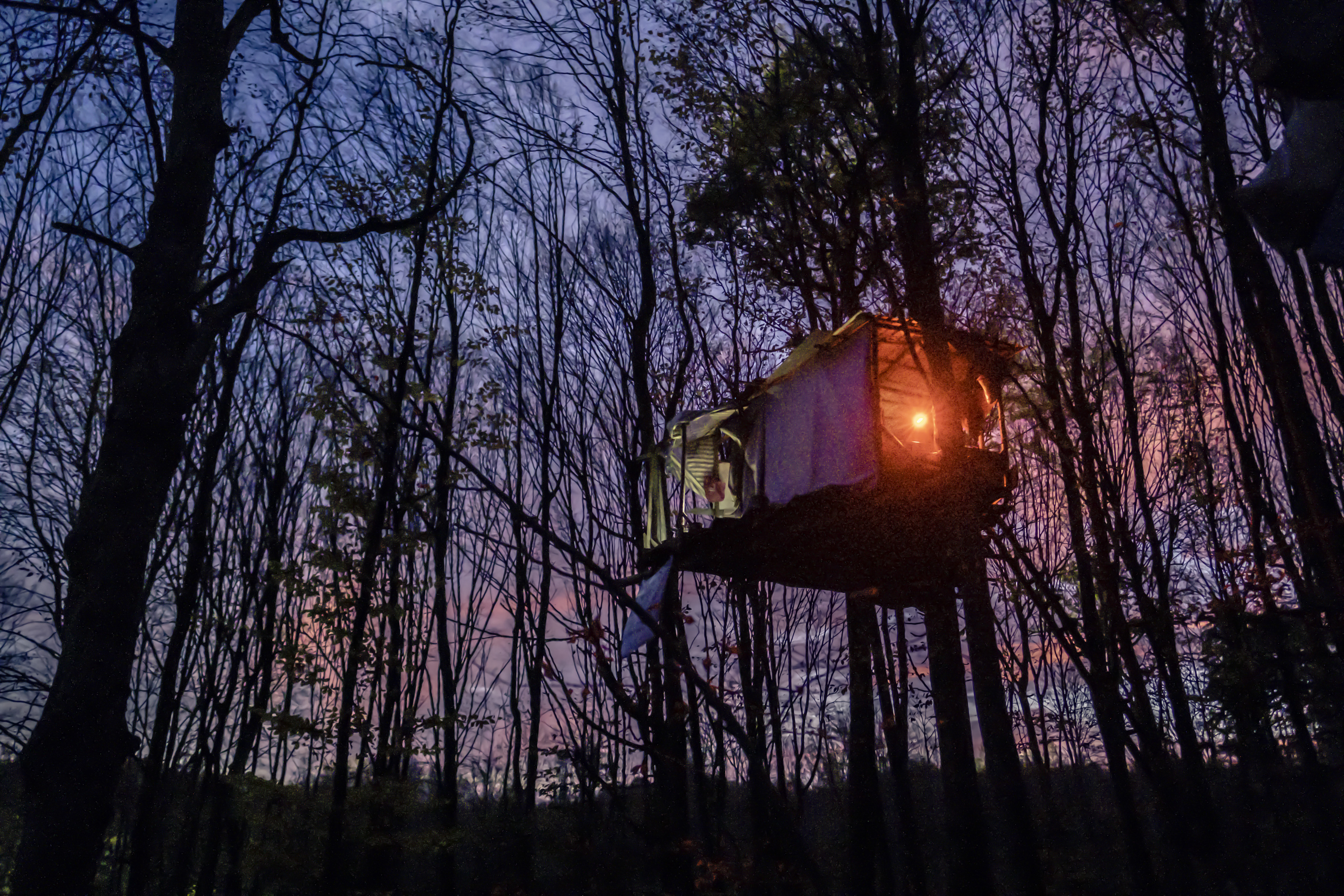 The “Time To Act!” program threaded several titles that traversed a range of assorted direct action and civil disobedience tactics to compel government action on climate change: from activists climbing up tree houses to protest the construction of a highway cutting through part of the forest in the German state of Hesse in Barricade (2021, dir. David Klammer), to Filipino para-enforcers confiscating chainsaws in an attempt to prevent illegal logging in a Palawan rainforest in Delikado (2022, dir. Karl Malakunas), to the youths of the grassroots environmental group Extinction Rebellion (XR) supergluing themselves to busy intersections in central London and dabbling in various disruption tactics in Rebellion (2021, dirs. Maia Kenworthy, Elena Sánchez Bellot).
 In 2019, XR was able to galvanize attention, propelling climate change back on the political agenda. The UK became the first country to declare a climate emergency, which seemingly catalyzed a number of others to follow suit. “Rebellion works,” exclaims international environmental lawyer and policy expert Farhana Yamin in the film, seemingly surprised at the government’s concession.