Categories
Widget Image
Trending
Recent Posts
Monday, Oct 19th, 2026
HomeStandard Blog Whole Post (Page 325)

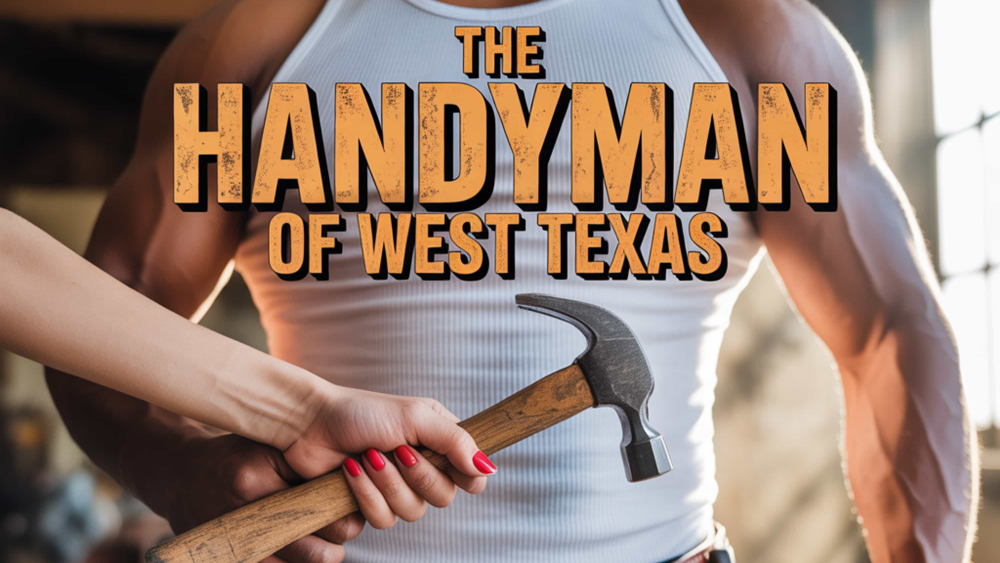
Johnathan Walton Media has struck a deal with The Hideaway Entertainment to develop his latest true-crime podcast, “The Handyman of West Texas,” for the screen.

Walton is a popular true-crime podcast host who began building his own media firm after he produced a successful podcast series about his own devastating encounter with a scam artist. “The Handyman of West Texas” tells the steamy story of a male sex worker in Midland, Texas who serves an upper-crust female clientele in the oil boom town. The six-episode podcast series bowed in January.

“Mickey,” as the sex worker is described in the series, makes house calls posing as a handyman hired to do odd jobs at the homes of successful oil executives. The series also explores the impact of Mickey’s day job, which is doing the muscle work of natural gas extraction, or fracking. On his days off, Mickey claims to have been hired by “hundreds” of women for sexual encounters in Midland and environs in recent years.

“The podcast speaks for itself — the global audience it has built isn’t passive. They’re hooked and craving more. They’re drawn to Mickey and the contradictions of this world, and we see an opportunity to expand his story into something unique, ambitious and tastefully experiential for viewers to enjoy,” Hideaway’s Ryan Cassells said.

Walton is working on the adaptation with Hideaway’s Cassells, Jonathan Gray and Jean-Luc De Fanti. Cassells brought the project in to company. Walton and his producing partner Evan Goldstein will executive producer for Johnathan Walton Media. The collaborators have yet to determine whether the adaptation will aim for a feature film or a multi-episode series.

Walton is a local TV journalist (who worked in Houston and San Antonio) turned reality TV producer turned podcaster. He’s eager to expand his wings as a storyteller.

Walton’s professional life took an unexpected turn following the release of 2021’s “Queen of the Con” podcast. Since then Walton has been a prolific producer of high-profile audio series, including “The Quarterback and the Con Artist,” “The Athlete Whisperer,” “The California Girls,” “The Unreal Housewife” and more. Last year, Walton published the memoir “Anatomy of a Con Artist,” which also serves as how-to guide for spotting con artists and avoiding manipulation.

“I’ve always had an unintentional knack for uncovering and befriending fascinating characters, be they con artists, cocaine kingpins or oil-fracking sex workers,” Walton said. “I have learned that things are seldom ever what they first appear to be. And that the most compelling and original stories are always hiding in between the lines. And I always seem to find them by being stubbornly curious and asking tons of uncomfortable questions.”

Hideaway has “the past and pedigree to turn ‘The Handyman of West Texas’ podcast into a rich and meaningful cultural touchstone on screen. I can’t wait for the world to watch what we create together,” Walton added.

The Hideaway is currently in post-production on feature “Alone at Dawn,” directed by Ron Howard, and starring Anne Hathaway and Adam Driver, for Amazon MGM Studios and Imagine Entertainment. Hideaway was represented by Eisner’s Christian Simonds in the deal with Johnathan Walton Media.

Source link

Johnathan Walton Media has struck a deal

“The Late Show” host Stephen Colbert took a flamethrower Monday night to President Trump‘s ongoing, often contradictory handling of the Iran War, joking that the real Strait of Hormuz may have just been the friends we made along the way — if we had made any.

“These days, hitting a bong may be the only way to understand Trump’s strategy with Iran,” Colbert told his “Late Show” audience Monday night, partly in honor of the day’s 4/20 holiday. He went on to address Iran’s equally swift reopening and re-closing of the Strait of Hormuz over the past few days, the latter action being the result of the United States’ maintaining of its military blockade.

“I believe the real Strait of Hormuz was the friends we made along the way. And I’m being told we made no friends,” Colbert joked, noting that Trump originally stated that Iran promised to never close the Strait again. “And they never did … until the next day when Iran closed the Strait of Hormuz again. Oh, so close.”

You can watch the full “Late Show” segment yourself below.

The “Late Show” host went on to call out Trump for celebrating and bragging about the state of the war before anything has been officially resolved.

“Don’t jinx it!” Colbert advised. “You can’t talk like that until the situation is fully resolved. He sounds like a cop in an ’80s movie, one day from retirement, pointing at a picture on a desk saying, ‘Yep, that’s my daughter, Denise. In the summer, I’m gonna walk my little girl down the aisle.’”

Colbert was not done mocking Trump, who posted a series of what the “Late Show” host called “deranged videos praising himself” over the weekend on his Truth Social account. One of the videos featured an AI narrator telling Trump’s supporters to “let him cook.”

“Always reassuring when you hear a world leader use Gen Z slang,” Colbert remarked. “I’m reminded of the immortal words of Mahatma Gandhi: ‘You must be the change you wish to see in the world. Wow, fam, I ate with that.’”

Source link

“The Late Show” host Stephen Colbert took

I never thought I’d know how to wear cowboy boots, let alone even own a pair, as an adult. To me, they always felt like a costume and inauthentic to my personal style. That changed after I visited Nashville, where I laid eyes upon the metallic patchwork embroidered leather, brushed silver studs, and star-shaped cutouts on a pair of cowboy boots from Old Gringo. I was so enchanted by every stitch that I sacrificed a sizable chunk of my paycheck at the time to have them—and it was one of the best decisions I ever made for my closet.

Our favorite cowboy boots, at a glance

Free People New Frontier Western Boots

Buy now

Luxmuwa Snakeskin Ankle Boots

Buy now

Not only were they 100% worth the purchase for how often I wear them, they’re also the most complimented article of clothing I own. My pair are certainly not everyone’s taste, but the best part about cowboy boots is that among all of the different iterations, there’s undoubtedly a design for everyone. Whether you prefer leather or suede, a taller shaft or an ankle bootie, a classic color or something fun and flashy, there are endless permutations of the tried-and-true footwear, and they’re a great outlet to infuse some personality into any outfit without losing any functionality.

It can seem daunting to figure out how to wear cowboy boots, but they’re a surprisingly versatile item that can amplify your wardrobe beyond the typical “skinny jeans and a cowboy hat” styling. The Western shoe layers well with everything from jeans to miniskirts. Maybe it’s wrong-shoe theory, but cowboy boots are one of the few pieces that fit comfortably into nearly any genre of fashion.

For a simple and well-made pair, boot brands like Tecovas and Frye have dozens of classic styles, while Dingo 1969 and Brother Vellies have beautiful embroidery and unique designs that are sure to stand out in any setting. Ahead, read on for some of the coolest outfit ideas using cowgirl boots, styled with pieces straight from your closet.

How to wear cowboy boots with jeans

COPENHAGEN DENMARK  JANUARY 29 A guest wears jeans red cowboy boots white shirt brown jacket and green bag outside the...

Raimonda Kulikauskiene/Getty Images

Source link

I never thought I’d know how to

Where in the “Michael” world is Janet Jackson?

The music superstar is nowhere to be seen as a character in the new Antoine Fuqua-directed biopic about her late brother.

“I wish everybody was in the movie,” Jackson sibling LaToya Jackson told me Monday night at the film’s premiere at the Dolby Theatre in Hollywood. “She was asked and she kindly declined so you have to respect her wishes.”

Michael is portrayed by their nephew Jaafar Jackson with Joe Jackson played by Colman Domingo and Nia Long playing Katherine Jackson. LaToya is portrayed by Jessica Sula. Juliano Valdi takes on the role of younger Michael.

Fuqua said it was “very important” for him to have the Jackson family involved with the movie.

“You’re telling somebody’s life, you want to make sure that they’re happy,” he said.

Not only does Michael’s estate have a financial investment in the project, but his son, Prince Jackson, serves as an executive producer. His other children Bigi and Paris are not involved. Paris has publicly criticized the film for having “a lot of inaccuracies” and “a lot of full blown lies.”

She said in a video posted to social media, “The film panders to a very specific section of my dad’s fandom that still lives in the fantasy. And they’re going to be happy with it.” 

As for Janet, Fuqua said, “I have so much respect and love for Janet, but you know it’s OK. She’s supportive of Jaafar and that’s what matters.”

LaToya gushed over Jaafar’s performance.

“Oh my gosh, I have to tell you that Jaafar was absolutely fabulous,” LaToya said. “I’m sure you’ve seen the movie and you know how wonderful he is, how we all forget and think that we’re watching Mike. It’s like, ‘Oh, I forgot this is Jaafar.’”

As Variety’s Brent Lang and Rebecca Rubin first reported in early April, the Jackson estate had to pay up to $15 million for reshoots. They had to cut scenes showing Michael being accused of child molestation by Jordan Chandler because Chandler’s settlement with the singer barred the depiction or mention of him in any movie.

“Michael” is in theaters on April 24.

Source link

Where in the “Michael” world is Janet

A person was critically injured Tuesday morning following a daytime shooting inside Fairview Mall in North York.

Toronto police said its officers were called to the mall, which is located at 1800 Sheppard Ave. E. near Don Mills Road, at 10:05 a.m. for reports of a shooting.

Get breaking Canada news delivered to your inbox as it happens so you won't miss a trending story.

Get breaking National news

Get breaking Canada news delivered to your inbox as it happens so you won’t miss a trending story.

Toronto paramedics told Global News a person was taken to a trauma centre with critical injuries.

The male suspect reportedly fled the scene in a white van.


No further description was provided.

An investigation is underway.

Anyone with information is asked to contact police.

Source link

A person was critically injured Tuesday morning


View gallery


Image Credit: Getty Images

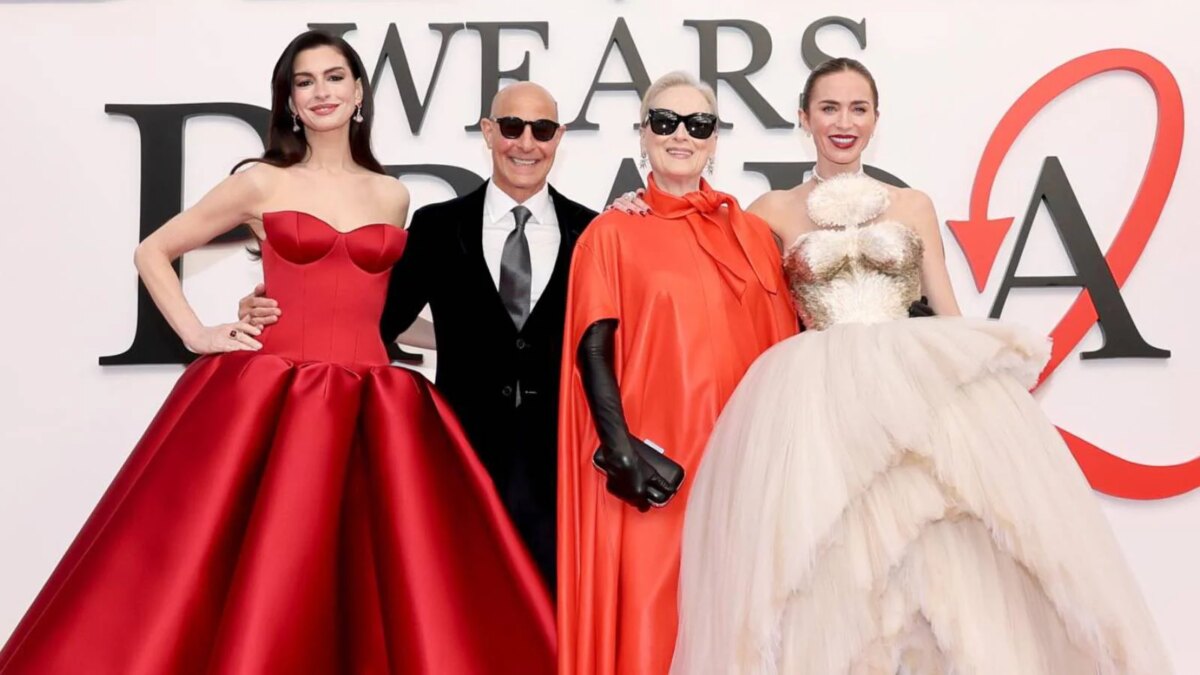
The Devil Wears Prada 2 is truly one of cinema’s most groundbreaking events this year. With the original main cast members returning to the big screen, buzz quickly skyrocketed last summer when glamorous New York City set shots circulated online,  and one report surfaced about Sydney Sweeney making a potential cameo in the sequel.

Now that the select few audiences were able to watch the new film, did Sydney make the final cut, or was her cameo removed? Here’s what we know about it.

Did Sydney Sweeney Have a Devil Wears Prada 2 Cameo?

Yes. According ot multiple outlets, Sydney was heading to the set over the summer of 2025 for a brief cameo in the movie.

Entertainment Weekly reported on April 21, 2026, that the Housemaid star was supposed to appear at the beginning of The Devil Wears Prada 2 in a brief scene as one of Emily’s (Emily Blunt) celebrity clients that she’s dressing at the Dior offices. Sydney played herself in the three-minute scene, per EW.

Was Sydney Sweeney’s Devil Wears Prada 2 Cameo Cut?

Yes, according to EW, Sydney’s cameo did not make the final cut because her brief scene didn’t work “structurally with the rest of the sequence,” a source told the publication. The creative team behind the film, however, was “grateful” for Sydney’s participation, and the decision to remove her was “difficult” for them, the outlet reported.

At the time that Sydney was reportedly seen heading to the movie set, the Euphoria actress faced backlash over her American Eagle “Great Jeans” campaign. The controversy garnered political division, and Sydney eventually spoke out about the criticism.

“I was honestly surprised by the reaction,” Sydney told People in December 2025. “I did it because I love the jeans and love the brand. I don’t support the views some people chose to connect to the campaign. Many have assigned motives and labels to me that just aren’t true.”

She continued, “Anyone who knows me knows that I’m always trying to bring people together. I’m against hate and divisiveness,” she says. “In the past, my stance has been to never respond to negative or positive press, but recently, I have come to realize that my silence regarding this issue has only widened the divide, not closed it.”

Which Celebrities Appear in The Devil Wears Prada 2?

In addition to main stars Anne Hathaway, Meryl Streep, Stanley Tucci and Blunt, other actors who joined The Devil Wears Prada 2 were Justin Theroux, Lucy Liu, B.J. Novak, Simone Ashley, Caleb Hearon, Patrick Brammall, Rachel Bloom and Kenneth Branagh.

Source link

View gallery Image Credit: Getty Images The Devil Wears

I was the first interview of the day: Thirty minutes on camera for the Filmmaker Toolkit podcast (you can watch the full conversation above), and I was trying to end the interview. Time was up. The army of publicists and crew had a full day planned, and Francis Ford Coppola was still talking.

I’m not going to flatter myself that Coppola was so engaged talking to me that he didn’t want the conversation to end, but he seemed bothered by the vibe. The sense we were on the clock. That talking about art was a job for everyone else in the room, including me.

Standing, as I waited for the lav mic to be detached, Coppola asked, “What was the question you wanted to ask me, but didn’t?” Knowing the professionals running the press day wanted me out ASAP, I flipped the question on him and asked what it was he had wanted to talk about that hadn’t been asked.

Coppola lit up as he started talking about the future of cinema, how video games and his dreams of live cinema could merge into something new. The sound was no longer recording, so I’m not going to attempt to paraphrase — like “Megalopolis,” the man can weave together seemingly disparate threads in a way that makes complete sense — but here was a man at 85 years old, who had made some of the greatest films ever, and what got him excited was the conviction cinema had only just scraped its true potential.

That spirit is at the heart of “Megalopolis,” a film that connects the fall of Rome to what it sees as the inevitable fall of the U.S., but that simultaneously still believes in the dreamers and the power of human ingenuity to build a better future. The film’s ending is a plea for a great conversation about what we want our world to be in the future, as Coppola hopes “Megalopolis” becomes a New Year’s Eve movie, one we all watch when setting our resolutions.

When his trusted publicist came over with a cup of coffee, he asked, gesturing to the two dozen people standing on the periphery, “Are all these people here to play?” At first I assumed this was a director wanting to make sure anyone without an immediate task be cleared from set, but his intention was the opposite: He went into a monologue about how virtually every great human achievement came from play, not work.

It was a message directed at me as much as everyone else. I’d just gotten 30 minutes with someone who shaped my understanding of cinema: Had I just blown that opportunity with a work-like approach, with dutiful, well-researched questions about the making of the film, when his mind was on grander ideas? When IndieWire’s executive video producer asked politely for a photo to promote the podcast, he turned toward her and in a grandfatherly tone scolded, “You aren’t here to play.”

Coppola spent $120 million of his own money to make “Megalopolis” in order to play. While on the podcast he talked about how an idea he first conceived of in the 1980s constantly evolved, in part by creating a space and process built around theater games.

“Actors never knew what I was going to ask them to do, which is part of the fun of it,” said Coppola. “The fun of working with actors is that in the space where you are, which is say here, you can’t get in trouble, right? You can’t be bad, right? In other words, we’re gonna play together and we’re gonna have fun together.”

While Coppola is a visionary director, he insists he’s unable to visualize and imagine his film beforehand. Using examples from previous works, “Apocalypse Now” and “Bram Stoker’s Dracula,” he talked about how films reveal themselves as they are being made; his job was to listen and follow. By the time he shot the ending of “Apocalypse Now,” the film had drifted so toward the surreal that the scripted military battle finale no longer made sense. It’s with pride Coppola recalled Marlon Brando calling him on it.

“[Brando] came aboard, and the first thing he said to me, ‘Oh, you painted yourself into a corner, haven’t you?’” said Coppola. “So that’s exactly what happened in another category with ‘Megalopolis’ is that I was doing unusual things with the actors.”

“Megalopolis,” in many ways, took this principle to the max. If there was one underlying motivation that drove the film over the decades, it was a project for Coppola to discover his own style after a career working in various genres and from scripts by other great writers. After going off the Hollywood grid to rediscover his craft, working on low-budget films, Coppola was ready with “Megalopolis” to learn who he really was as an artist.

“I was making a movie that [was] something I’d never seen before, and I didn’t know how to make it,” said Coppola. “And little by little, the movie started to become something in this weird group improvisation.”

He created and paid for an enormous canvas to play on with a team of collaborators. Why? Because it’s the only way he believed to tap into the immense human capabilities inside each of us. And even at something as cooly orchestrated as a routine hotel presser, he was going to make sure everyone in his orbit knew there was only one way to properly work.

To watch the full Toolkit conversation with Francis Ford Coppola, see the video at the top of the page. You can also subscribe to the Toolkit podcast on Apple, Spotify, or your favorite podcast platform.

“Megalopolis” opens in theaters nationwide on September 27.

Source link

I was the first interview of the

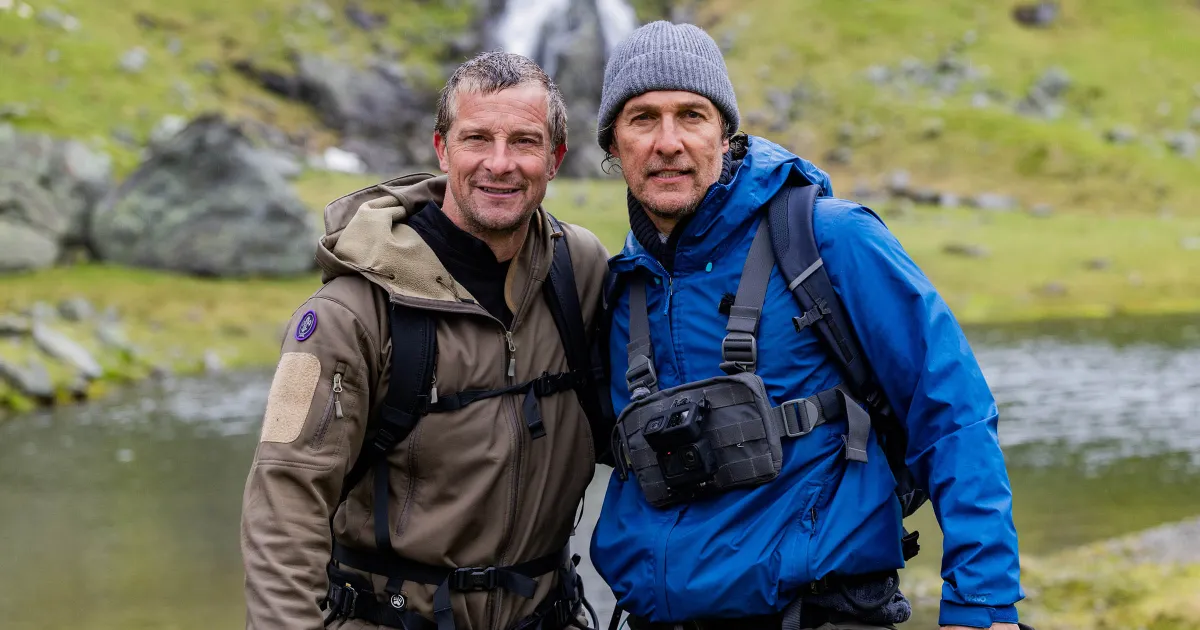
Matthew McConaughey enjoys living on the edge and taking risks — including trying to eat reindeer testicles.

In Us Weekly‘s exclusive clip from the Tuesday, April 21, episode of Fox’s Bear Grylls Is Running Wild, McConaughey, 56, agrees to join Grylls for a surprising meal. Grylls, 51, tells McConaughey that the reindeer testicles “improved with cooking” before the actor tried a piece of the meat.

“Can I have another piece, please? That is a hell of a lot better than I thought it would be,” McConaughey says before making a joke about Rudolph the Red-Nosed Reindeer.

McConaughey later stood by his opinion that the food item is “really not bad.”


Related: Weird Food Combinations That Celebrities Love: Mussels and Watermelon, More

Peanut butter, jelly and … Cheetos? Believe it or not, those are the three ingredients that comprise Channing Tatum’s “perfect sandwich,” and that’s just the tip of the bizarre food combo iceberg. While the 21 Jump Street star likes his sandwiches with a cheesy crunch, Adrienne Bailon prefers hers with a fruity flavor. More specifically, […]

“Texture was six out of 10 and taste was six out of 10,” he tells the cameras. “If you just got out of your head about what the heck it was and you throw the right kind of spice on it — some of my famous rub — and char the edges a little bit, you might have an eight out of 10. Could be something you put on the menu.”

Bear Grylls Is Running Wild follows the legendary adventurer as he takes celebrities into the wild for a 48-hour journey of a lifetime.

“With thrilling action and revealing conversations, Bear takes his guests on unforgettable adventures in breath-taking wilderness and reveals a side of some of your favorite people like you’ve never seen before,” the official season 9 synopsis reads. “On the season premiere Bear Grylls takes Matthew McConaughey on an adventure 20 years in the making as the two traverse the secluded glacial alpine wilderness of Norway.”

In addition to McConaughey, the upcoming episodes are set to feature Uma Thurman, Colman Domingo, Elizabeth Banks, Rhys Darby, Tiffany Haddish, Machine Gun Kelly and Michelle Monaghan.

McConaughey has already taken a step outside of the Hollywood bubble. After earning critical acclaim for roles in True Detective and The Dallas Buyers Club, McConaughey reflected on making the move to Texas — and taking a break from starring in rom-com movies.

“When I was rolling in the rom-coms, and I was the rom-com dude … that was my lane and I liked that lane, that lane paid well, and it was working,” he said on the “Good Trouble With Nick Kyrgios” podcast in November 2024. “I was so strong in that lane that anything outside of that lane, dramas and stuff that I wanted to do, [they] were like, no, no, no, no, no. Hollywood said, ‘No, no, no, no, you should stay there, stay there.’”

Following his roles in How to Lose a Guy in 10 Days, The Wedding Planner and Failure to Launch, McConaughey found himself on “autopilot” in his career.

“Since I couldn’t do what I wanted to do, I stopped doing what I was doing and moved down to the ranch in Texas. I made a pact with my wife and said, ‘I’m not going back to work unless I get offered roles I want to do,’” he added about wife Camila Alves. “I think that was seen as the most rebellious move in Hollywood by me because it sent a signal that he ain’t f***ing bluffing. And when you got someone who’s not bluffing, there’s something attractive about that. I think that’s what made Hollywood go, ‘You know what, he’s now a new novel idea. He’s a new bright idea.’”

McConaughey revealed he turned down a multimillion-dollar movie for more serious work.

“It was a good action comedy. It came with an $8 million offer. I said, ‘No, thank you,’” he said. “They came back with a $10 million offer. I said, ‘No, thank you.’ They came back with a $12 million offer. I said, ‘No, thank you.’ They came back with a $14.5 million offer. I said, ‘Let me read that again.’”

Bear Grylls Is Running Wild premieres on Fox Tuesday, April 21, at 9 p.m. ET.

Source link

Matthew McConaughey enjoys living on the edge

The Reel Deal #2 – April 27, 2026

Source link

The Reel Deal #2 - April 27,

One very rarely gets the chance to be in a room with almost two hundred filmmakers from one single country, gathered not to pitch against one another for scarce grants, but to discuss ways of collaborating and understand where their national cinema is headed. This is precisely the offer on the table with the Projeto Paradiso National Talent gathering, which just wrapped a successful third edition, held in the burgeoning film capital of Recife. 

The biannual gathering celebrates the work of the renowned philanthropic initiative, led by the Olga Rabinovich Institute and supporting the Brazilian film sector through talent development, bursary programs, seminars and mentorship. This year’s meeting took place over April 16-18 and saw curated networking sessions, roundtables, and in-conversation events with Kleber Mendonça Filho, producer Emilie Lesclaux and British-Nigerian filmmaker Akinola Davies Jr. Attendees included Anita Rocha da Silveira (“Medusa”), Nara Normande (“Heartless”), Grace Passô (“Our Secret”), Vitrine Filmes’s Letícia Friedriech and Amazon Studios’ Jaqueline Souza, plus lauded Projeto Paradiso council members Marcelo Gomes (“Dolores”) and Gullane director Debora Ivanov. 

Variety was present at the event and spoke with several attendees to take the temperature of the national industry following two banner years of international success with the country’s first-ever Oscar for Walter Salles’s “I’m Still Here” and four Oscar nominations for Recife’s very own Mendonça Filho’s “The Secret Agent.” From a strong Northeast momentum to a meagre Cannes presence in 2026, read our five takeaways below: 

“The Secret Agent,” courtesy of Neon

Courtesy of Neon

The Northeast is the moment 

Despite the Northeast of Brazil having a strong cinema tradition, with exponents from Glauber Rocha to Marcelo Gomes and Guel Arraes, for decades, much of the money-churning industry was concentrated in the Southeast — specifically Rio de Janeiro and São Paulo. Filmmakers from other corners of the country have long voiced frustrations with a lack of access to resources and a certain feeling of segregation regarding available networking initiatives and opportunities. 

The last three years, however, have further solidified the Northeast as a prime talent exporter and a rich creative hub. While renowned regional filmmakers such as Gabriel Mascaro (“The Blue Trail”), Kleber Mendonça Filho (“The Secret Agent”), and Karim Aïnouz (“Motel Destino”) continued their well-established trajectories with successful titles at major festivals, a burgeoning new generation of filmmakers signalled a much-needed sense of continuation and renewal in the region. Names like Allan Deberton, Rafhael Barbosa, Tiago Melo and Nara Normande have launched festival darlings and have exciting new projects in the pipeline. 

During the Projeto Paradiso National Talent Meeting, many young filmmakers have voiced their desires to bring untold stories to the big screen and continue to expand a plural idea of Brazilianness through cinema internationally. With more and more film commissions popping up in the Northeast and renewed regional incentives as well as savvy producers with a wealth of co-producing experience, we are about to see many more interesting films coming out of the region. 

Cannes disappointment = new European opportunities 

Last year, Kleber Mendonça Filho brought the frevo from Recife to the Cannes Film Festival red carpet for the world premiere of his competition title “The Secret Agent.” Brazil was also the country of honor at the Marché du Film and brought a record-breaking number of industry attendees to the Croisette. With no Brazilian films announced at the festival this year, the feeling of surprise and disappointment was palpable at the gathering whenever the French fete popped up in conversation. So far, Brazil is only present through co-productions (“Elephants in the Fog” in Un Certain Regard, “Six Months in the Pink Building” in Critics’ Week and “La Perra” in Directors’ Fortnight) with no Brazilian directors scheduled to appear at the event in the official selection or sidebars. 

While the lack of Brazilian titles at Cannes bringing a bitter taste to the start of summer festival season, many producers and directors have emphasized a desire to look beyond the big European triad of Berlin, Cannes and Venice as launching pads. Rotterdam, which has a historic connection to Brazilian cinema, is a long-time darling and favorite, but more and more local talent is shifting their attention to festivals like San Sebastián, Karlovy Vary and Locarno as top choices to launch their films. 

Courtesy of Juana Carvalho

Looking beyond Europe 

Europe still remains the goal for many Brazilian filmmakers when it comes to first sharing their films with audiences, but, more and more, producers are looking outside of Europe and the U.S. when setting up co-productions. Several producers attending the Projeto Paradiso gathering have shown a keen interest in better understanding financing systems in neighboring South American countries, with Chile in particular seen as a strong partner. 

British-Nigerian Akinola Davies Jr., who attended the gathering for a lengthy in-conversation event and a screening of “My Father’s Shadow” at the imposing Cinema São Luiz, opened a local appetite for collaborations with African countries. Black Brazilian filmmakers spoke at length about the opportunities that lie in working within the diaspora, and how African countries offer not only similar cultures but also a felt kinship when it comes to understanding the post-colonial wounds permeating Brazilian society. Currently, there are very few co-productions set up between Brazil and the African continent, so there are still some logistical and bureaucratic hurdles on the way to making it a more common collaboration, but the desire is very much there in the South American country. 

Collaboration over competition 

Towards the end of the weekend, many attendees could be heard saying, “I wish we worked like this in São Paulo/Rio de Janeiro.” This sentiment often punctuated conversations with filmmakers from the Northeast, who have built a thriving industry based on collaboration over competition. While, of course, there is still high competition in the region, makers had to band together in the mid-2000s to figure out how to sustain an industry before incentives, and then again a few years later, once public funds became available and people needed to help one another to understand how to best access what was on the table.  

Projeto Paradiso has also adopted a similar ethos, structuring their talent network meeting around collaboration and knowledge sharing instead of creating a more traditional market event structured around competitive sections. “We want everyone to feel good,” Projeto Paradiso program director Rachel do Valle told Variety. “What other markets would call a pitching session, we call a connection session. It’s a space for talking, but also for listening. We want it to be enjoyable and fun.”

Courtesy of Juana Carvalho

Consistent public funds: key to the future  

You can’t attend an industry event in Brazil without clusters gathering to talk about the country’s public policies and incentives. While filmmakers acknowledge the historic momentum of their national cinema on the international stage, many have voiced concern that the sense of victory might obscure the very real issues still permeating the industry. Key issues include the long-awaited regulation of streaming services, the need for a centralized national film commission, and, perhaps most pressingly, better-structured funding calendars. 

“10 years ago, the Ministry of Culture had specific open calls for debut filmmakers with a regional focus; we no longer have that,” said veteran producer João Vieira Jr. of Carnaval Filmes. “We need to have differentiated open calls: for first or second-time directors, established production companies, rural production companies… It is not a privilege, it is an intelligent way of managing public policies that ensures sustainability.” 

Producer Thais Vidal echoed that thought: “We have a consolidated state fund in Pernambuco, qualified crews and the structure to produce and post-produce in Recife, but we face the same issue that plagues the rest of the country, which is the lack of a fixed national financing calendar. This is needed so we can effectively plan ahead.” 

Source link

One very rarely gets the chance to

Introduction: Transitioning from ad-hoc research to a systematic InsightOS

In Part 1, we established why organizations need an InsightOS—a systematic approach to intelligence for modern business environments. Now we will explore how to build one, outlining an architecture that transforms theoretical need into practical capability.

This architecture isn’t just another framework. It’s the operating system that enables systematic intelligence work across all time horizons. Just as your computer’s OS coordinates basic input and output to complex applications, the InsightOS architecture manages all aspects of strategic intelligence, from daily monitoring to long-range foresight.

Many organizations still treat research as isolated projects, which leads to fragmented insights and missed opportunities. The InsightOS architecture solves this by creating a unified system that is:

  • Always on: Continuously processing information
  • Modular: Easily adjusted as needs change
  • Scalable: Expanding alongside your organization
  • Integrated: Connecting insights across different time horizons

The InsightOS architecture reflects the Strategic Intelligence Cycle:

  • Analysis phase: Data Feeds – Systematic signal collection and processing
  • Synthesis phase: Intelligence Tools – Identifying patterns and understanding data
  • Genesis phase: Delivery Systems – Creating value and enabling action

Each time horizon requires different configurations of feeds, tools, and delivery systems, yet all operate on the same fundamental architecture. Think of it as running different applications on the same operating system, optimized for specific tasks while sharing core capabilities.

This three-phase architecture enables the specific capabilities we’ll explore in Parts 3-5 of the blog series.

The operating system approach

The InsightOS architecture functions on three basic levels, crucial for turning intelligence capabilities into strategic advantage:

1. Core System Layer

  • Manages basic input and output operations
  • Manages data storage and retrieval
  • Controls access and permissions

2. Intelligence Processing Layer

  • Orchestrates analysis, synthesis, and creation
  • Manages workflows and data quality
  • Enables pattern recognition and sense-making

3. Application Layer

  • Hosts specialized intelligence applications
  • Supports different time horizons (NOW/NEW/NEXT)
  • Enables customization for specific needs

Like your computer’s operating system, these foundational layers handle complex operations invisibly. You don’t need to understand how they work; they just need to work, allowing you to focus on using the applications that matter to you instead of worrying about how they communicate with each other.

Think of it like your smartphone: you don’t care how the operating system works—you just want to download apps and use them. Similarly, InsightOS provides a dependable foundation where you can install and run the intelligence tools you need, when you need them.

The InsightOS isn’t about prescribing specific tools or methods. It’s about creating an architecture that allows you to install, integrate, and orchestrate the right intelligence mix for your specific needs, all while adapting to inevitable change.

The Intelligence AppStore: Your intelligence ecosystem

The Intelligence AppStore transforms InsightOS’s foundational architecture into a specialized marketplace where system capabilities are packaged into practical applications for your intelligence needs.

As a carefully selected ecosystem built on the core architecture, every application works together. InsightOS applications exchange insights, combine analyses, and build on each other’s outputs.

The Intelligence AppStore organizes intelligence applications along two key dimensions that map to your strategic needs:

Time Horizon

NOW (Monitor): Applications for tracking known variables

NEW (Radar): Tools for detecting emerging patterns

NEXT (Scanner): Systems for exploring possible futures

Intelligence Phase

Analysis (Feeds): Applications that gather and process data

Synthesis (Tools): Applications that recognize patterns and generate insights

Genesis (Delivery): Applications that create value and enable action

Each time horizon integrates with the complete intelligence cycle. These applications collaborate to transform raw data into strategic value.

While the Intelligence AppStore offers flexibility in tool selection, three core components form the essential foundation of any InsightOS implementation:

  1. The Indicator Stack: Your systematic framework for data collection and analysis
  2. The Triangulation Matrix: Your engine for pattern recognition and validation
  3. The Sensegiving Spectrum: Your system for transforming insights into action

This modular approach enables scalability: You can begin with key applications and expand as needed. New features are incorporated without interrupting current workflows. With unified architecture, insights transfer smoothly between applications and time horizons.

In the following sections, we’ll explore the core applications that form the foundation of any InsightOS implementation: the Indicator Stack for Analysis, the Triangulation Matrix for Synthesis, and the Sensegiving Spectrum for Genesis.

The Indicator Stack: A framework for structured analysis

The Indicator Stack is the foundational framework for data collection and analysis in your InsightOS. It provides an architectural approach to building a comprehensive intelligence foundation across all time horizons instead of prescribing specific data sources.

As a dynamic system, it evolves with new data sources and capabilities, adapting to changing strategic priorities while scaling with organizational maturity and emerging research needs.

The framework’s comprehensive coverage across signal types prevents over-reliance on familiar sources, reducing confirmation bias through cross-validation of insights to create a balanced and objective intelligence foundation that remains effective as your organization and the competitive landscape change.

Core Framework Principles:

Temporal Intelligence Balance The stack is fundamentally organized around two types of indicators that bridge different time horizons: NOW (Primarily lagging indicators), NEW (Mix of lagging and leading indicators) and NEXT (Primarily leading indicators)

Lagging Indicators (NOW-focused)

  • Measure what has happened
  • Confirm established patterns
  • Track current performance
  • Validate known dynamics

Examples: Revenue figures, market share data, customer satisfaction scores

Leading Indicators (NEXT-oriented)

  • Signal what might happen
  • Predict emerging patterns
  • Anticipate future developments
  • Identify potential shifts

Examples: R&D investments, patent applications, scientific publications

Signal Architecture

The stack organizes signals into four fundamental layers:

Implementation Considerations

The Indicator Stack isn’t a fixed template—it’s a living framework that each organization must configure based on their:

  • Intelligence maturity level
  • Budget constraints
  • Innovation risk profile
  • Strategic research needs

Organizations must balance several factors when building their stack:

  • Commercial vs. custom data sources
  • Premium vs. basic data access
  • Build vs. buy decisions
  • Coverage vs. depth tradeoffs

This framework serves as the Analysis foundation of your InsightOS, enabling the systematic data collection that powers both pattern recognition (explored in the Triangulation Matrix) and strategic delivery (covered in Sensegiving Spectrum).

In Parts 3-5, we’ll explore specific implementations of the Indicator Stack across different time horizons NOW, NEW, NEXT.

The Triangulation Matrix: A framework for pattern recognition

The Triangulation Matrix acts as your InsightOS’s engine for Synthesis and sense-making. The Indicator Stack offers structured data collection, while the Triangulation Matrix converts raw intelligence into meaningful patterns and actionable insights. It serves as the main tool for implementing momentum-based innovation by systematically measuring and tracking the forces that give certain patterns more momentum.

Triangulation uses multiple data points, methods, and perspectives to validate patterns, like ancient navigators used multiple reference points to determine their location.

Validation occurs through two primary methods: source triangulation (combining quantitative metrics, qualitative insights, and expert perspectives) and methodological triangulation (cross-referencing multiple analytical frameworks). Triangulation increases confidence in pattern recognition while minimizing bias and false positives by combining these methods across different evidence types.

Synthesis Dimensions

The Triangulation Matrix is built on three fundamental dimensions that allow for thorough pattern recognition and validation:

Pattern validation requirements vary across time horizons:

Implementation Considerations

The Triangulation Matrix provides a strong synthesis framework, but its effective implementation requires careful configuration based on your organization’s context and capabilities. Consider these key factors:

  • Strategic Context: The matrix must align with your organization’s pattern recognition priorities, time horizon focus, and risk tolerance. The speed of decision-making and your team’s analytical capabilities will greatly affect the matrix’s configuration and utilization.
  • Technical Configuration: The matrix implementation requires careful consideration of pattern recognition methods, validation thresholds for pattern significance, integration approaches between data sources, and visualization techniques to make complex patterns understandable to stakeholders.
  • Organizational Integration: Successful implementation depends on team capabilities and training, smooth workflow integration with existing processes, active stakeholder engagement, and established review and refinement processes to improve pattern recognition capabilities.

This framework serves as the Synthesis engine of your InsightOS. It transforms structured data from your Indicator Stack into strategic insights that drive action through your Delivery Systems.

In Parts 3-5, we’ll explore detailed implementations of the Triangulation Matrix across different time horizons.

Sensegiving Spectrum: From insights to impact

With patterns validated through triangulation, the next critical challenge is turning these insights into action. Even the most rigorous analysis creates no value until it influences decisions and behavior. This is where the Sensegiving Spectrum comes in—the final component that transforms validated intelligence into organizational impact.

Three Core Delivery Modes

Push Intelligence

Proactively delivers intelligence to users through automated alerts, scheduled reports, and system-triggered notifications, ensuring critical insights reach stakeholders without manual intervention.

  • System-initiated delivery
  • Scheduled updates and alerts
  • Triggered by pattern detection
  • Proactive distribution

Pull Intelligence

Enables users to actively seek and retrieve intelligence on demand through searchable repositories and interactive platforms, supporting deep-dive analysis and exploratory research.

  • User-initiated access
  • On-demand queries
  • Self-service platforms
  • Interactive exploration

Embedded Intelligence

Seamlessly integrates intelligence directly into existing workflows and tools, making insights immediately accessible within the context where decisions are made.

  • Integrated into workflows
  • Connected to existing tools
  • Context-aware delivery
  • Decision support systems

Key Design Principles

Format Flexibility

  • Static to interactive
  • Template to synthetic
  • Complete context to focused updates

Contextual Awareness

  • User role and knowledge
  • Decision timing
  • Strategic relevance

Implementation Across Time Horizons

Modern delivery systems match the right intelligence to the right person at the right time in the right format, creating an intelligence ecosystem that adapts to how organizations work and make decisions.

The AI Layer: Augmenting the InsightOS architecture

The InsightOS architecture integrates AI capabilities across all three phases (Analysis, Synthesis, Genesis).This isn’t just about adding AI features; it’s about augmenting research operations.

Traditional apps handle specific tasks within each phase (feeds for Analysis, tools for Synthesis, systems for Genesis). In contrast, AI agents work across boundaries, creating connections and automating workflows. This hybrid approach combines the modularity of apps with the flexible capabilities of AI:

Core Functions of AI in the InsightOS

AI improves each stage of the Strategic Intelligence Cycle while generating new capabilities:

The home screen: Your intelligence hub

Think of your phone’s home screen. It’s not just a grid of apps – it’s a reflection of how you’ve rejected the factory defaults to create something uniquely yours. Your InsightOS home screen takes this personalization to a new level, freeing your intelligence workflow from the constraints of bloated enterprise suites.

Just as you’ve carefully chosen which apps deserve precious home screen real estate, your intelligence hub should reflect intentional choices, not vendor assumptions. While enterprise platforms force you to wade through features you’ll never use, your custom hub contains only what drives value:

Every tool placement is a strategic decision. Like removing pre-installed bloatware from your phone, you’re free to strip away unnecessary features and build exactly what your team needs. This isn’t just about convenience – it’s about crafting a methodology that fits your organization’s unique intelligence requirements.

Smart Placement Drives Adoption:

  • Position critical monitoring tools front and center – just as you put your most-used apps on your phone’s main screen, not buried in folders
  • Create quick-access zones for trend tracking tools, similar to keeping social media within thumb’s reach – but designed for your team’s actual workflow, not a vendor’s assumption of it
  • Group deep analysis tools logically, like organizing utility apps in folders – but with the freedom to structure them around your methodology, not predetermined categories

Just as you’ve rejected your phone’s default layout, break free from prescribed intelligence workflows. Create spaces that reflect how your team actually works – whether that’s rapid competitor monitoring, deep market analysis, or custom combinations of both. Your layout becomes a statement of independence from one-size-fits-all solutions.

Like a carefully curated home screen, your intelligence hub reveals your true priorities. But unlike rigid enterprise platforms, it adapts as your needs evolve, supporting your methodology instead of forcing you to adopt someone else’s.

Smart Management, Like Your Phone:

  • Tool Evaluation: Regular cleanup of unnecessary tools, just like removing unused apps from your phone
  • Resource Focus: Invest only in data you actually use, avoiding bundled subscriptions that bloat your budget
  • Seamless Sharing: Create direct workflows between tools, as intuitive as sharing between your favorite apps
  • Layout Evolution: Adjust your workspace as priorities change, not when vendors push updates
  • Efficient Performance: Maintain a lean, focused system that serves your needs, not vendor feature lists

Operating principles of InsightOS

A great InsightOS isn’t just a collection of tools; it’s a strategic operating system. Its effectiveness depends on what’s installed, how it’s designed, maintained, and experienced.

These principles combine the technical integrity of an OS with the flexibility required for real-world strategy work.

1. Designed for Decision-Making

The primary purpose of the system is to enable better decisions:

  • Prioritizes actionable insights over basic data collection.
  • Designed to answer “So what?” and “What now?”
  • Integrates intelligence directly into strategic workflows.
  • Focuses on the speed and quality.

2. Modular, Scalable and Adaptive

Flexibility is key for modern operating systems:

  • It follows a plug-and-play logic: tools, feeds, and delivery systems can be swapped or upgraded.
  • Avoids vendor lock-in with a flexible architecture.
  • Scales with the level of organizational maturity and available resources
  • Adapts to changing strategic needs without completely overhauling the system

3. Systematic and Structured

Consistency fosters dependability:

  • Intelligence work follows a consistent framework, not random processes.
  • Ensures continuity among teams and roles
  • Reduces reliance on individual memory or isolated knowledge
  • Maintains clear records and procedures

4. Integrated and Multi-Source

No single source tells the complete story:

  • Combines qualitative and quantitative inputs.
  • Supports triangulation across domains, timeframes, and formats.
  • Avoids depending too much on any single signal or tool.
  • Creates a combination of different viewpoints

5. Actively Maintained and Audited

Like any operating system, regular updates are critical:

  • Subject to regular audits of tools, processes, and signal quality.
  • Encourages trying out new sources and delivery formats.
  • Responds to feedback from users and decision-makers.
  • Evolves based on performance measurements.

6. Created for Adoption and Impact

Value comes from real use:

  • Stresses internal communication, onboarding, and ownership.
  • Surfaces intelligence in specific contexts, not just through dashboards.
  • Regularly reviews home screen placements.
  • Measures and improves user engagement.

Building your InsightOS: A practical roadmap

1. Assess Your Current Intelligence Ecosystem (2-4 Weeks)

Start by mapping out your current intelligence capabilities across the three horizons (Monitor, Radar, Scanner). Where are you strong? Where are there gaps? How well do these systems communicate with each other?

Action Items:

  • Interview key stakeholders across departments about their intelligence needs and current sources.
  • Document existing tools, subscriptions, and processes
  • Create a visual map of your current intelligence flows.
  • Identify which time horizons (Now, New, Next) are well-covered and which are neglected.

2. Define Your Intelligence Priorities (1-2 Weeks)

Not all organizations need the same intelligence mix. Based on your industry, competitive position, and strategic goals, what intelligence capabilities would create the most value?

Action Items:

  • Conduct a strategic mapping session with leadership
  • Prioritize intelligence needs based on your current strategic challenges.
  • Determine which time horizons need immediate attention.
  • Identify key stakeholders for each intelligence area

3. Start Small and Focused (4-6 Weeks)

Rather than trying to build a comprehensive system all at once, begin with a focused use case that delivers clear value.

Action Items:

  • Select one high-impact intelligence need to address first.
  • Design a pilot implementation with clear success metrics.
  • Implement a small-scale version of your InsightOS focused on this need.
  • Collect feedback and document lessons learned.

4. Scale Deliberately (Ongoing)

Based on your priorities and the results of your pilot, gradually expand your InsightOS.

Action Items:

  • Select the next component to add to your architecture.
  • Integrate new tools and data sources
  • Train additional users and stakeholders
  • Document processes and best practices
  • Celebrate and communicate early wins

In the next three articles, we’ll dive deeper into the specific components of the NOW, NEW, and NEXT horizons, exploring how each can be implemented in detail. Whether you’re just starting your InsightOS journey or looking to enhance your existing capabilities, these frameworks will provide practical guidance for building a comprehensive strategic intelligence system.
See the previous blog Part 1- Strategic Intelligence at Speed of Change

Source link

Introduction: Transitioning from ad-hoc research to a

While we await the arrival of several high-profile projects starring former Superman Henry Cavill, including the long-awaited Highlander reboot and Amazon’s live-action Voltron movie, the actor has found some seriously surprising streaming success thanks to a largely forgotten (and savagely panned) action thriller. Well, it was forgotten, but based on its newfound popularity, it seems many at home have remembered.

Led by Cavill as a typically no-nonsense, rule-breaking detective on the hunt for a serial killer, the action thriller gives the actor ample opportunity to throw his weight around as he defies authority to get the job done. Abandoning his clean-cut Man of Steel look for something far more disheveled, the movie gives Cavill the chance to lead the kind of late-night thriller that doesn’t get made too often anymore…but clearly there’s a big appetite for.

The Panned Action Thriller Has Had a Massive Streaming Resurgence


The action thriller in question is Night Hunter, which centers on Cavill’s detective, a police profiler, played by Alexandra Daddario, and a mysterious vigilante, played by Academy Award winner Ben Kingsley, who become entangled in a dangerous scheme involving a troubled man linked to years of abductions and disappearances of women.

Written and directed by David Raymond, Night Hunter (also known as Nomis) was ruthlessly torn apart by critics at the time for its “contrived and cliched” approach to the crime thriller, resulting in a score of just 14% on Rotten Tomatoes and thus marking it forever with a dreaded green splat. The movie also bombed spectacularly at the box office after grossing just $1 million and was met with a divisive 50% from audiences on the Popcornmeter.

But clearly things have changed, with Night Hunter now climbing the charts on STARZ in the United States, on which it is now ranked #2 just behind Sydney Sweeney’s recent erotic thriller hit, The Housemaid. This comes following the continued global success that Night Hunter has found on Paramount+ globally, all of which suggests that audiences are either eager for more lean, mean 90-plus minute crime thrillers, or that they’re keen to watch Henry Cavill chase criminals in an action thriller. Perhaps both.

Henry Cavill Has Several Major Projects in the Pipeline at Last

Henry Cavill in Highlander Amazon MGM Studios

For those who are keen for more Cavill, we have good news, as the actor is due to play major roles in several tentpole projects over the next few years. After walking away from The Witcher and hanging up his cape in the wake of James Gunn’s DCU reboot, Cavill is finally set to lead the long-awaited reimagining of Highlander from John Wick director Chad Stahelski. After years of waiting, the reimagining is now in production, courtesy of Amazon MGM Studios, with the first footage revealing a “John Wick with swords” action epic that sees Cavill going up against MCU veteran Dave Bautista as the villainous Kurgan.

Cavill will also reunite with The Ministry of Ungentlemanly Warfare director Guy Ritchie, star Eiza González, and join forces with Jake Gyllenhaal for the upcoming action thriller In the Grey; star in Amazon’s live-action adaptation of the 1980s animated series Voltron; return as Sherlock Holmes alongside Millie Bobby Brown in the Netflix sequel, Enola Holmes 3; take the lead in Amazon’s Warhammer 40k series; and is rumored to reunite with Mission: Impossible co-star and Hollywood icon Tom Cruise for the war epic Broadsword.


01277887_poster_w780.jpg


Release Date

August 29, 2019

Runtime

95 minutes

Writers

David Raymond

Producers

Kevin Scott Frakes, Nadine de Barros, Larry Harding, Nasrat Muzayyin, Zorin Finkelsen, Francesca Dutton, James Lancaster, Mitesh Parikh, Niraj Parikh, Gaurav Talwar, Pulak Parikh, Rob Wood, Mark Catton, Rick Dugdale, Sundip K. Bhundia, Steven Ashley, Peter Aitken, James Milligan, Chris Pettit, Alastair Burlingham, Buddy Patrick, Robert Ogden Barnum, Dave Hansen, Tony Parker


Source link

While we await the arrival of several

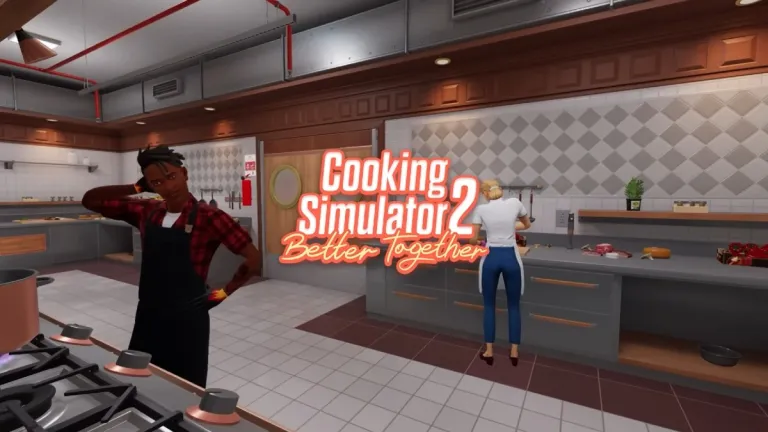
Big Cheese Studio is turning up the heat once more. The highly anticipated follow-up to one of the most beloved simulation franchises is gearing up for a full launch on March 31, 2026, on Steam, bringing both solo players and friends a chance to stir up chaos.

With the release date inching closer and closer, Big Cheese Studio revealed a gameplay trailer for Cooking Simulator 2: Better Together.

Cooking Simulator 2: Better Together Gameplay Trailer

In Cooking Simulator 2: Better Together, the apron you’ve been itching to don isn’t just cosmetic — it’s an invitation to a deeper, more expressive culinary playground. You start small: a humble restaurant where every dish is a chance to refine your craft, discover ingredients, and figure out what makes your customers smile (or storm out like Gordon Ramsey from Kitchen Nightmares).

From chopping to plating, mastering kitchen tools and heat management is just as important as creativity in the recipe book.

But what sets this sequel apart isn’t only its refined cooking simulation — it’s the sense of shared mischief. Better Together lets you pull friends into your kitchen, not just to help juggle orders, but to completely upend the service with teamwork, collaboration, or glorious food fights.

Whether you’re experimenting with personalized dishes or simply goofing off in sandbox mode, this game taps into why we fell in love with simulation games in the first place: the chaos is half the fun.

There’s depth here, too. As you serve, stock, prep, and level up your chef, you unlock new skills, perks, and ways to tackle the increasingly demanding world of gastronomy. And yes, you’ll even get to customize your chef’s look, unwind in a personal apartment, and embrace all the joyous messiness that comes with running your own kitchen.

Source link

One year after his hit Channel 4 series Big Boys finished its three-season run, creator and writer Jack Rooke reflected on the show, his approach to writing comedy and what’s next. 

Speaking at Dublin’s Storyhouse screenwriting festival, Rooke said that while the series, which was based on his own Edinburgh Fringe shows, drew on his personal experiences, he found a liberty in exploring the fictional elements when writing the story for television. 

“While it was an inquiry into the past, half of the show exists as a separate formation of characters and it is a sitcom,” he said. “It’s still a 23-minute Channel 4 comedy and so I was able to separate from the two. My line of work really informed all of the narrative device, but the fun bit for me and the skills that I learned were about writing classic copy and not just being completely confined by own personal experience.” 

Big Boys follows semi-fictional Jack, played by Derry Girls’ Dylan Llewellyn, a closeted shy student who is grieving his father’s death as he heads to university. There, he lives with mature student Danny (Jon Pointing), a lad about town figure who is, in fact, trying to disguise his own mental health issues.

“I watched James McAvoy’s recent movie California Schemin’ and I was listening to him talk about it after and he was sort of saying that he wanted it to feel like a movie and not a film,” continued Rooke. “He wanted it to feel like there was an adventure and exhilaration, and it’s quite heightened at times, and silly, like a kind of American youthful movie. I think at times, with Big Boys, that is how I wanted it to feel. I wanted the narrative to be like an indie film but then I wanted them to go off and drink poppers in a gay bar and I want them to go and do mad, silly, caper things. I think the two can exist.” 

When pressed about next steps, Rooke said he was “writing a couple of pilots” and had also recently taken some writing jobs on other projects. “I’ve never really written on anybody else’s show before so last year, when Big Boys was over, I was like, ‘I can’t just drum up some idea for me to write a new series.’ I needed some time, so I took some writing jobs, which I’ve never done, and I wrote for the show the BBC are currently filming, which is an adaptation of The Secret Diary of Adrian Mole.”

He continued: “I’m working on an HBO project with Sharon Morgan and that’s been fun and now I’ve started writing some pilots of my own ideas, which have been exciting.” 

Speaking to a room of writers at the Light House Cinema, Rooke said he had two, slightly contradictory rules: “Never write for the sake of it but also write as much as you can.” 

Source link

One year after his hit Channel 4

The Karlovy Vary International Film Festival will celebrate its 80th anniversary and its 60th festival this July with an array of special programs and screenings, KVIFF organizers announced on Tuesday morning.

The festival, which takes place in a spa town 80 miles west of Prague in the Czech Republic, will rework outdoor spaces, exhibit historic photographs and screen key films from the entire history of the festival, which launched in August 1946 and is second only to the Venice Film Festival in longevity.

(KVIFF has taken place only 60 times in 80 years because of a stretch beginning in 1959 in which it was held every other year, with the Moscow International Film Festival taking place in alternate years.)

The twin anniversaries will be commemorated in a number of different ways, including an exhibition of outdoor panels showing photographs from the festival’s history; a special preview screening in the city of Mariánské Lázně, where the first festival also held screenings; an exhibition commemorating Czech president, playwright and author Václav Havel’s many visits to the festival; and redesigned event spaces.

The Out of the Past section of the KVIFF lineup, which is always devoted to classic films, will this year showcase 20 important films from the entire history of the festival.  

Those include “A Matter of Life and Death” (1946) by Michael Powell and Emeric Pressburger, “Rio Escondido” (1948) by Emilio Fernandez, “Captain Thunderbolt” (1953) by Cecil Holmes, “Lissy” (1957) by Konrad Wolf, “Defendant” (1965) by Jan Kadar and Elmar Klos, “Kes” (1969) by Ken Loach and “Birds, Orphans and Fools” (1969) by Juraj Jakubisko, with the rest of the titles scheduled to be announced in early June.

The festival will also present the premiere of a digitally restored copy of Věra Chytilová’s 1988 film “Tainted Horseplay,” part of its extensive restoration program for Czech cinema.

In addition, the President’s Award will go to actress Magda Vášáryová, a Slovak actress best known for the 1967 drama “Marketa Lazarová.”

In a statement, festival executive director Kryštof Mucha described KVIFF this way: “The Karlovy Vary festival is an event at which long-term tradition and the format of a modern film festival come together in a unique way. Few domestic cultural events can boast such a rich and varied history. This is thanks in part to the distinctive personalities who have shaped its identity at various points in its history.

“There is much that has formed its character over the course of its 80-year history, but it is up to historians to assess the extent to which the state’s cultural policy, the international situation and various other factors have influenced the festival’s organizational and artistic qualities. We should nevertheless remember that the foundations laid by the festival’s first editions in the postwar years have given rise to an event that has managed to survive despite all internal tensions and external influences, that has withstood attempts at ideological control and efforts to abolish it, and that has succeeded in transforming itself into an internationally recognized showcase and a venue where filmmakers and audiences can meet in a unique atmosphere of harmony.

“It has become a festival that honors its legacy and that manages to reflect the present while confidently shaping the future of cinema.”

The 60th Karlovy Vary International Film Festival will begin on July 3 and run through July 12.

Source link

The Karlovy Vary International Film Festival will

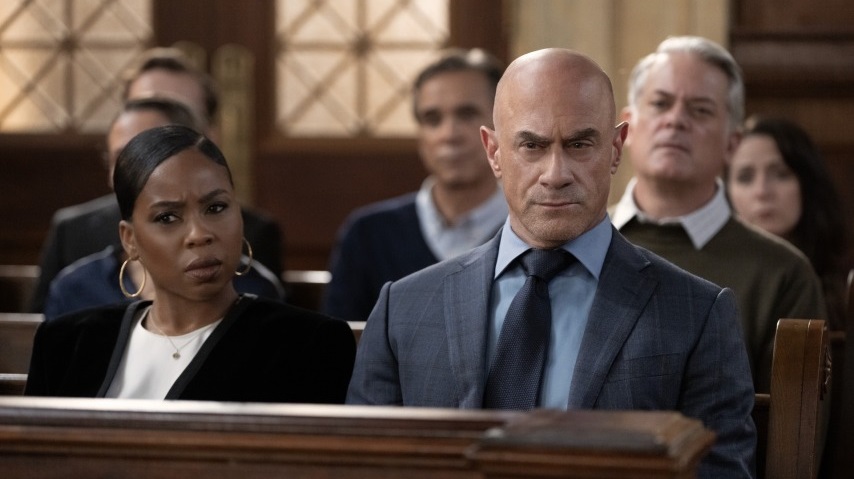
Christopher Meloni’s Law & Order: Organized Crime has always been a bit of an oddball in the world of Dick Wolf Productions, what with its more serialized, season-based approach to criminal storytelling. Now it’s taking that iconoclastic spirit even further, by doing something that Wolf shows almost never do: Getting themselves canceled by NBC.

This is per Deadline, which notes that the series has finally finished its five-season dance between NBC and Peacock, which saw it bounce between streaming and traditional TV in an ongoing effort to juice more ratings from this particular tortured, justice-seeking stone. (It formally ended its run on Peacock—unless you count the bit where NBC then decided to second-run those episodes in its old timeslot in the fall of 2025, essentially double-dipping on the series in the hopes of catching a bit more ratings love.)

The series centered on Meloni’s New York detective Elliot Stabler, a character he’s been playing off and on since 1999, but now with more “My wife got blown up by the mob” angst. (Contract negotiations saw the actor depart Law & Order Special Victims Unit after 12 seasons in the mid-2010s, but Stabler returned to the fold with this new series in 2020.) Although never especially shy about being “The Stabler Show,” Organized Crime co-starred Danielle Moné Truitt as Stabler’s boss, and a rotating crew of actors as the other cops, family members, and potential villains surrounding them, including turns from Dylan McDermott, Rick Gonzalez, and, in the most recent seasons, Dean Norris as Stabler’s older brother.

Meanwhile, the series had, if anything, an even more colorful history behind the scenes: As far as we know, Organized Crime was the only TV series in modern network TV history to have more showrunners on the books than seasons. That started with controversy surrounding Craig Gore, one of the guys who claimed to have helped develop it, and who was fired from the series before production even began, after making inflammatory comments about the George Floyd protests in 2020. The disruptions continued through changes that saw the series swap out its executive producers on what felt like a near-monthly basis. (Almost all of these staffing changes being attributed, without much further comment, to “creative differences.”)

In any case, the roulette wheel has finally stopped spinning; despite Deadline noting that there had been “soft outreach” for a new showrunner with presumably extremely poor pattern recognition skills, the series’ fifth season will be its last. For what it’s worth, TV audiences won’t have to go Meloni-less for long: He’s starring in Hulu’s upcoming Dan Fogelman NFL drama The Land.

Source link

Christopher Meloni’s Law & Order: Organized Crime has always

Netflix subscription is required to watch on Netflix


Great news! “Bebefinn” is available to watch on Netflix USA!


Date Added: 15th December 2022

Want to keep forever? Try looking for ‘Bebefinn’ on Amazon (paid link)


History:

   12/15/2022: 3 Episodes (2022)

   10/19/2023: 2 Seasons (2023)

   10/14/2025: 3 Seasons (2025)

   04/20/2026: 4 Seasons (2026)


Watch in English

Synopsis:

Join baby Finn and his family on fun-filled adventures while learning something new every time. Get ready to sing and dance!


Certificate: TV-Y
Designed to be appropriate for all children


Year: 2026

Duration: 4 Seasons

Available Seasons: Season 1 (3 Ep), Season 2 (3 Ep), Season 3 (3 Ep), Season 4 (2 Ep)

Audio: English [Original], Korean

Subtitles: English, Korean


Cast and Crew

Cast: Bommie Catherine Han, Bang Marshall Jeanwon, Scarlett Vivian Unger, Sarah Bock, Finn Phoenix, Edward Zhu, Allen Bailey, Cassady Watts


Production & Season Details:

Status: Returning Series”Bebefinn” was originally broadcast on iQiyi (China) and premiered on February 1st 2023. So far there have been 3 seasons (comprising of 149 episodes) of “Bebefinn”. The most recent episode aired on January 1st 2025 and more seasons are expected in the future.

TMDb logo


RATINGS:

IMDB Not yet rated

The Movie Database Not yet rated

Average Rating Not yet rated

LISTS:

Trakt.tv serializd


DISCUSS ON…:
FacebookFacebook MastodonMastodon


Login or register for updates…


Available on Netflix USA!

Netflix subscription is required to watch on Netflix

Where else can you watch ‘Bebefinn’ on Netflix?


Want to keep forever? Why not rent or buy ‘Bebefinn’ from one of the online services below?


Powered by
JustWatch

Source link

The Karlovy Vary International Film Festival (KVIFF) will celebrate two key milestones during its 2026 edition, organizers said on Tuesday. It will mark the fest’s 60th edition, as well as 80 years since the first festival. Classic films from the likes of Michael Powell and Emeric Pressburger, as well as Ken Loach, will be among the ways the fest will fete the dual anniversaries, along with an exhibition, a photo exhibition honoring later former president Václav Havel.

Plus, audiences can expect a redesign of an iconic fest space. “For this and future editions, the Karlovy Vary festival is redesigning the area around the entrance to the Hotel Thermal’s Grand Hall with a new architectural design that will allow audiences to more intensely experience and share in the festival atmosphere during the festival’s opening and closing ceremonies, as well as at festival screenings,” organizers explained. “Guest arrivals with live commentary will bring the festival action closer to visitors and add interesting behind-the-scenes observations.”

KVIFF also unveiled a gala screening of a digitally restored copy of Věra Chytilová’s 1989 tragicomedy Tainted Horseplay, which became the Czechoslovak entry for what was then called the best foreign- language film at the Oscars. Plus, actress Magda Vášáryová will receive the President’s Award at KVIFF 2026, which runs July 3-11. “The festival aims not just to express its respect for the performances of one of the greatest Slovak actresses of all time, but also to remember the unique artistic connection between the Czech and Slovak filmmakers who shaped our two countries’ shared cinematic history,” the fest said.

More programming for the dual anniversary year will be unveiled in the near future. “The Karlovy Vary festival is an event at which long-term tradition and the format of a modern film festival come together in a unique way,” said KVIFF executive director Kryštof Mucha on Tuesday. “Few domestic cultural events can boast such a rich and varied history. This is thanks in part to the distinctive personalities who have shaped its identity at various points in its history. There is much that has formed its character over the course of its 80-year history, but it is up to historians to assess the extent to which the state’s cultural policy, the international situation, and various other factors have influenced the festival’s organizational and artistic qualities.”

That said, he emphasized that “the foundations laid by the festival’s first editions in the post=war years have given rise to an event that has managed to survive despite all internal tensions and external influences, that has withstood attempts at ideological control and efforts to abolish it, and that has succeeded in transforming itself into an internationally recognized showcase and a venue where filmmakers and audiences can meet in a unique atmosphere of harmony. It has become a festival that honors its legacy and that manages to reflect the present while confidently shaping the future of cinema.”

One of the oldest film festivals in the world, Karlovy Vary was part of the so-called “first wave” of post-war European film festivals. Its first edition was held in 1946 as a non-competition event with 13 features, including international participation, organized by the spa towns of Mariánské Lázně and Karlovy Vary during the first half of August. Organizers noted that it took place “before the inaugural editions of the festivals in both Cannes and Locarno and even predates the first post-war edition of the world’s oldest film festival, the Venice Film Festival (founded 1932, renewed 1946),” making KVIFF the second-oldest fest.

Ken Loach’s ‘Kes,’ courtesy of Park Circus, Amazon MGM

After presenting awards for the first time in 1948, in 1950, the fest moved permanently to Karlovy Vary. “The earliest editions had to contend with political realities that significantly intervened in its programming decisions,” organizers highlighted. “One key figure who determined the festival’s character for several decades was the journalist, educator, and internationally respected expert Antonín Martin Brousil (1907–1986). Besides contributing to the festival’s founding, he chaired its main juries for many years and essentially served as its unofficial programming director. “

Recalled KVIFF artistic director Karel Och: “Before my predecessor, the artistic director Eva Zaoralová, there was her predecessor, one of the founders of KVIFF and Antonín Martin Brousil. It is also thanks to him and the Karlovy Vary festival that films from Africa, Asia, and Latin America are today admired at leading film festivals around the world. As early as 1962, Brousil created a platform for film pioneers from these very continents within the legendary section ‘Symposium of Young and New Cinemas‘.”

But wait, why is KVIFF celebrating its 60th edition this year, 80 years after its launch? Yes, there was no edition due to COVID in 2020. But beyond that, “the disproportion between the two anniversaries, 60 and 8, is the result of several different factors,” organizers explained. “After not being held in 1953 and 1955 by political edict, the festival subsequently took place only every other year. Starting in 1959, the festival, which two years earlier had been recognized as a category ‘A’ festival by the FIAPF (International Federation of Film Producers Associations), a category that also includes Cannes and Venice, had to share this prestigious label and alternate years with the newly founded Moscow International Film Festival.” 

But “turbulent changes” remained part of the fest’s history, organizers noted on Tuesday. “After spending the 1950s in search of a meaningful identity, the festival truly spread its wings in the following decade, when it hosted numerous representatives of international cinema, only to suffer two decades of ‘normalization’ – a period full of restrictions that influenced both the selection of films and the awarding of prizes. Only with the easing of outside pressures in the second half of the 1980s did more substantial foreign films and interesting guests gradually return to the festival.”

KVIFF’s first post-Velvet Revolution edition in 1990 welcomed a number of exiled or banned filmmakers and the screening of titles that had previously been censored. However, uncertainty and deliberations about the fest’s purpose followed, leaving KVIFF on the verge of being canceled. “Thanks to the initiative of the forward-thinking filmmaker, artist, and Ministry of Culture official Igor Ševčík, the Karlovy Vary International Film Festival Foundation was established in order to take the festival’s organization out of the hands of the state, and the festival’s organizing team came to be headed by Jiří Bartoška as president” and Zaoralová as artistic director, organizers explained. “It is no exaggeration to say that these changes began an extraordinary period during which the festival was transformed into an event meeting modern and international standards. Among other things, the illogical alternating of festival years with Moscow came to an end, and since 1994, the festival has been held annually in Karlovy Vary. The festival also successfully fought off attempts to move it to Prague, and after two years of stiff competition from the Prague Golem festival, it reasserted its status as the country’s most important cinematic event.”

‘Tainted Horseplay’ film still, courtesy of KVIFF

Here is a look at other KVIFF celebrations set for this year.

Exhibition: KVIFF 60/80 (1946–2026) 
The festival looks back on its history with an exhibition of photographs focusing in particular on its lesser-known early years, the atmosphere of its pre-1989 editions, and key moments and guests. For that purpose, 30 outdoor panels, located along the path between two of the iconic KVIFF venues, the Grandhotel Pupp and the Hotel Thermal, will take visitors on “a symbolic journey” through the festival’s 80-year history.

Out of the Past – KVIFF 60/80 (1946 – 2026) 
The popular “Out of the Past” section, which puts a spotlight on classic movies, will focus on important titles from the festival’s history. “One of the festival’s most popular permanent programs, which regularly looks back at the history of cinema, will take on a celebratory form this year,” said Och. “It will consist of twenty carefully selected films from previous editions of the festival, which are firmly linked to its history as milestones key to the KVIFF’s identity and reputation.”  

Among the films unveiled on Tuesday are Michael Powell and Emeric Pressburger’s A Matter of Life and Death, which festival visitors could first see in August 1947, Ken Loach’s classic Kes, which screened at KVIFF in 1970 and won the festival’s top prize for best film, Mexican director Emilio Fernández’s Río Escondido, which traveled to the fest in 1948, and the drama Lissy by Konrad Wolf, “a legend of East German cinema,” which won one of the main prizes in 1957. But there is more: “For a long time, the print of one of the fundamental films in Australian cinematic history, the adventure drama Captain Thunderbolt, was considered lost – until 2024, when an original, uncut 35mm print was found in the Czech National Film Archive,” fest organizers said. “This year’s celebratory program will commemorate the premiere of New Zealand director Cecil Holmes’s film in the competition of the 7th KVIFF in 1952.”  

Special festival sneak preview in Mariánské Lázně 
The twin-city format of the festival’s first edition will return this year with a special preview screening of a selected film from this year’s program on July 1 at the historic Municipal Theatre in Mariánské Lázně. 

President Václav Havel and the Karlovy Vary festival 
“Over the past 30 years, the Karlovy Vary International Film Festival has enjoyed the support of numerous important figures, including director Miloš Forman, U.S. Secretary of State Madeleine Albright, and President Václav Havel,” organizers highlighted. “As a gesture of thanks for president, playwright, and author Havel’s long-term support and goodwill, the festival is marking what would have been his 90th birthday with a photographic exhibition at the Hotel Thermal commemorating his visits to the festival and his meetings with various representatives of world cinema.”

Source link

The Karlovy Vary International Film Festival (KVIFF)

On “High Rollers,” first-wave electroclash icon Tiga adopts the on-mic persona of an ’80s rap MC—he cites Ice-T as inspiration—to talk about how greed is, once again, good. Over a skronking acid house beat, his retro-swagging high rollers strut “eel-skin boots” to Curtis Mayfield’s “Pusherman” and check their beepers for “big-time deals.” He’s rapping so fast you might not even hear who he’s really talking about: “These high-ranked officials of our city streets/Make millions all triggered by electric beeps.” (Nancy Pelosi, that you?)

There are several songs I like on Tiga’s new album, HOTLIFE, like “Silk Scarf” with Fcukers, sort of an arch take on Charli XCX’s “Guess” for menswear, or the freaks-only rave-up “Sexless Pornographic Losers,” with fellow Montreal DJ Maara. But I haven’t worn out a song like this since Two Shell did that demented sped-up MUNA remix, which should tell you exactly what kind of sick and twisted humor I’m looking for in a bassline. Ultimately, this track reminds me of a 1992 Los Angeles riots era poster by feminist art collective Guerrilla Girls that reads, “THESE WHITE MEN HAVE BEEN VIDEOTAPED LOOTING YOUR NEIGHBORHOOD: George Bush… Jerry Falwell… Clarence Thomas… Ronald Reagan.” Hate the players, hate the game—but I do love this song.

Source link

On “High Rollers,” first-wave electroclash icon Tiga

Manga creators understand this instinctively. They don’t just tell stories. They build engines. Systems that generate momentum, conflict, escalation, and return.

If your film struggles to hold attention, it’s not because your idea is weak. It’s because your story cannot sustain itself. Manga shows us how to fix that.

1. Your story must loop, not just end

Most films are designed as one-off experiences. Beginning, middle, end. That’s not an engine. That’s a straight line.

Manga thrives on repeatable loops. Look at Naruto. Training leads to confrontation. Confrontation leads to failure. Failure forces growth. Growth leads to rematch. Then the cycle repeats at a higher level.

Or Dragon Ball. Fight. Lose. Train. Return stronger. Face a bigger threat.

These loops create momentum. They ensure the story can continue without collapsing. If your narrative cannot generate its own next beat, it cannot sustain attention.

2. Escalation must deepen, not just expand

Filmmakers often confuse escalation with scale. Bigger set pieces. Louder moments.

Manga escalates by shifting meaning.

In Attack on Titan, what begins as survival horror evolves into political and existential conflict. Each revelation reframes everything that came before.

That’s real escalation. Not just more, but different.

If your second act simply increases intensity without changing perspective, the audience feels repetition, not progression.

3. Characters should drive the system

Weak films rely on plot to move characters. Strong story engines rely on characters to move the plot.

Look at Death Note. The tension comes from the intellectual duel between Light and L. Every decision creates a counter-decision.

Or One Piece. Luffy’s goal is so clear it pulls the narrative forward.

Characters are not passengers. They are generators of conflict. If your story stops when your plot pauses, your characters are not doing enough work.

4. Constraints create tension

Many filmmakers resist rules, believing they limit creativity.

Manga proves the opposite.

In Hunter x Hunter, the Nen system defines strict limitations. Because of this, every conflict becomes strategic and meaningful.

Constraints create stakes. They define what can and cannot happen.

Without rules, there is no tension. And without tension, there is no engine.

5. Reward the audience continuously

A common mistake in film is saving everything for the final act.

Manga operates differently. It delivers constant micro-payoffs.

In My Hero Academia, each chapter offers progress. A shift in power. A reveal. A small victory or defeat.

This keeps audiences engaged over long periods.

If your story asks the audience to wait too long for payoff, you risk losing them. Momentum depends on consistent reward.

6. Build worlds that can expand

Film worlds are often closed systems designed for a single narrative.

Manga worlds are modular.

One Piece is a masterclass in expansion. Each new location introduces fresh conflicts and rules while remaining connected to a larger structure.

This allows the story to grow without breaking.

If your world cannot support additional stories, it limits the lifespan of your work.

7. Mystery sustains attention

Resolution is satisfying. But mystery is what keeps audiences engaged.

Manga balances both.

In Attack on Titan, the true nature of the Titans drives long-term engagement.

In One Piece, the central question remains unanswered for years.

These unanswered questions are not gaps. They are fuel.

If your audience knows everything too early, there is no reason to continue watching.

Final thought

Manga creators think differently about storytelling. They are not just telling a story. They are designing a system that can sustain itself over time.

For filmmakers, this is the shift.
A single film can succeed or fail. A story engine creates ongoing opportunity.

If your project cannot generate new conflict, deepen stakes, reward attention, and expand its world, it will struggle to hold an audience.

The question is no longer “Is your script good?”

The question is: Does it run?

Want to build stories that don’t just work once, but keep working?

Explore Raindance courses, join the community, and discover how to design films with audience, momentum, and longevity in mind.

Source link

Manga creators understand this instinctively. They don’t

Source link

Hollywood mourned the deaths of some of

South Korea‘s film, television and streaming sector contributed KRW24.08 trillion ($16.4 billion at current exchange rates) to the country’s GDP and underpinned 291,100 jobs in 2025, according to an independent economic study commissioned by the Motion Picture Association.

The report – “Economic Contribution of the Audiovisual Industry in South Korea,” produced by Oxford Economics – was presented at the National Assembly in Seoul before legislators and industry leaders. It assesses the sector’s full economic footprint across direct production activity, supply-chain spending and induced consumer expenditure.

For every KRW1 billion ($680,000) generated directly by the industry, the study calculates a further KRW2.1 billion ($1.4 million) was created across the broader economy, implying a GDP multiplier of 3.1. The employment multiplier stood at 3.4, meaning each 100 direct jobs supported an additional 240 elsewhere. Close to four in five of the sector’s total jobs – 78% – were in micro, small and medium-sized enterprises, with micro businesses alone accounting for 36% of the employment footprint. Of the 291,100 total supported jobs, the information and communication sector accounted for the largest share at 116,500, reflecting the digitally intensive nature of the industry’s supply chain.

Television was the dominant segment, contributing roughly KRW15,620 billion ($10.6 billion) – about 65% of the industry’s combined GDP output – and supporting 181,200 jobs. Film added KRW4,960 billion ($3.4 billion) and 77,800 jobs, while video-on-demand contributed KRW3,500 billion ($2.4 billion) and 32,100 jobs. The industry generated an estimated KRW7,170 billion ($4.9 billion) in total tax revenues.

VOD workers were by far the most productive in the sector, averaging KRW437 million ($297,000) in direct GDP contribution per head – roughly five times the national average of KRW92 million ($62,600). Television followed at KRW107 million ($72,800) per worker.

Looking ahead, the report projects VOD as the sector’s fastest-growing segment, with direct GDP and tax contributions forecast to expand at approximately 7.4% and 7.2% annually through 2028, respectively. Film and television are projected to see modest contractions in line with broader shifts in audience consumption toward streaming and digital platforms. The proposed merger of local platforms Tving and Wavve, if completed, would create a combined entity with around 9.3 million monthly active users – potentially Korea’s largest local streamer – and could strengthen the ability of local platforms to compete against global players.

The study also tracks a sharp rise in international reach. Exports of Korean film and TV content reached KRW1.8 trillion ($1.2 billion) in 2024, nearly double the KRW899 billion ($612 million) recorded in 2019 – a compound annual growth rate of 14.5%. To put that figure in context, the report notes it exceeded Korea’s exports of beverages and spirits (KRW1.71 trillion/$1.16 billion) and railway locomotives (KRW1.39 trillion/$946 million). Broadcasting accounted for the bulk at roughly KRW1.5 trillion ($1 billion), with animation and film comprising the remainder.

While Asia still anchors Korean film exports at roughly two-thirds of the total, North America and Europe have each grown to about 14% of the mix, reflecting deeper platform partnerships, improved localisation and rising international familiarity with Korean storytelling.

The cultural spillover into tourism is also quantified in the report. Some 38.3% of inbound tourists said they were motivated to visit Korea after engaging with Korean Wave content, up from 32.1% a year earlier – the most frequently cited reason for visiting the country. A case study on the 2025 Netflix K-drama “When Life Gives You Tangerines,” set in Jeju’s fishing villages, illustrates the mechanism directly: after the series topped global non-English rankings, Jeju posted year-on-year foreign visitor growth every month from April, with January–September arrivals reaching 1.74 million, up 17.5%. The Jeju Haenyeo Museum, featured prominently in the series, saw foreign visits climb 58.9% to nearly 50,000 by November.

“South Korea’s audiovisual industry has become one of the most influential in the world,” MPA chair and CEO Charles Rivkin said. “This report shows an industry that delivers substantial economic value at home while exporting creativity, culture and innovation to global audiences. MPA member studios are proud to partner with Korean creators to bring these stories to screens worldwide.”

“Wherever we travel, policymakers ask how Korea did it,” added Mila Venugopalan, president and managing director of MPA Asia-Pacific. “This report shows that Korea’s success is grounded in strong creative talent, evidence-based policy and international collaboration. It is a model many markets now seek to emulate.”

“Korea’s screen industry combines domestic strength with global reach,” said Bo Son, managing director of MPA Korea. “Its impact extends across employment, exports and long-term economic growth.”

“Korea’s video content industry has evolved beyond the global spread of Hallyu to become a key driver of the national economy,” said Rep. Lim O-Kyeong, a National Assembly member focused on culture, content and sports policy. She added that data-driven analysis of the sector’s impact would play “a critical role as reference material for future policy formulation and regulatory improvement.”

On the talent development front, the Korea Creative Content Agency and the Ministry of Culture, Sports and Tourism have committed KRW43 billion ($29.3 million) under a 2026 roadmap to train around 3,400 professionals across AI, creative and export-oriented roles. The programme includes 1,000 VOD specialists being retrained in planning and post-production in partnership with Netflix, and a flagship mentoring initiative targeting 300 aspiring creatives aged 19 to 34.

MPA member studios – Netflix, Paramount Pictures, Sony Pictures, Universal Studios, The Walt Disney Studios, Prime Video & Amazon MGM Studios, and Warner Bros. Discovery – all maintain active ties with Korean producers, broadcasters and distributors.

Despite its headline figures, the report identifies several pressures bearing on the sector’s outlook: theatrical attendance has not rebounded to pre-pandemic levels, the mid-budget segment that once defined Korean cinema is contracting under the weight of higher production costs and tighter margins, and an uncertain regulatory environment has dampened investor confidence. The study was commissioned as an evidence base for future policy design and to support the long-term competitiveness of the sector.

Source link

South Korea‘s film, television and streaming sector

Today on Decoder, we’re talking about the landmark social media addiction trials that just resulted in two major verdicts against Big Tech. There’s one case in New Mexico against Meta, and another in California against both companies, which have said they plan to appeal.

These are complicated cases with some huge repercussions for both how these platforms work and the very nature of speech in America, so to help us work through it all, I’ve brought on two heavy hitters: my friend Casey Newton, who is founder and editor of the excellent newsletter Platformer and co-host of the Hard Fork podcast, as well as Verge senior policy reporter Lauren Feiner. Lauren was actually in that Los Angeles courtroom where executives like Mark Zuckerberg took the stand in the case of a 20-year-old woman named Kaley, who successfully argued Meta and Google negligently designed their platforms in ways that contributed to her mental health issues.

These cases, the first in a wave of injury lawsuits targeting tech companies, are about the design decisions of platforms like Instagram and YouTube. They argue that the platforms have fundamental flaws that harm users, especially teenagers, and that these companies knew about these problems and were negligent in shipping these features anyway. These cases are part of much larger set of moves that aim to fundamentally change the legal mechanisms that exist that might regulate social media platforms.

Verge subscribers, don’t forget you get exclusive access to ad-free Decoder wherever you get your podcasts. Head here. Not a subscriber? You can sign up here.

When we say harm, we’re not just talking about addictive design that brings users back compulsively. It’s also about features like algorithmic recommendations and camera filters that make issues like anxiety, depression, and body dysmorphia worse. This emphasis on how the platforms work, as opposed to focusing solely on the content, is part of a movement that’s been building for years. It focuses on the argument that social media is not and cannot be healthy — that it might in fact be defective, the same way that cigarettes, when used as designed, cause cancer.

There are a lot of complex ideas, and Casey, Lauren, and I really spent some time working through them. The first of these ideas is whether there is a distinction between product features — like recommendation, auto-play video, infinite scroll — and the types of harmful yet legal speech served to young people on these platforms using these tools, like eating disorder videos or posts designed to convince young men to hate women.

But it’s very difficult, if not unconstitutional, to force these companies to moderate this kind of content in specific ways. The First Amendment obviously prohibits the government from regulating what speech these companies promote and moderate, and private action is usually blocked by Section 230 of the Communications Decency Act, which protects tech platforms from being held responsible for the content their users post.

It’s really hard to pull all these ideas apart. An algorithmic feed with no content in it simply isn’t a compelling product, let alone a negligently defective one that causes harm. A lot of smart people who we’ve had on this show and on The Verge these past few years have said these rulings are just an end run around 230 — just a way to make platforms liable for what, ultimately, is just speech, in a way that will cause more speech to be restricted. You’ll hear us talk a lot about that idea, and whether the growing calls to repeal Section 230 entirely have any logical connection to these cases, or whether they’re just politically opportunistic.

But there are many more ideas at play here and even more layers of compilation. You will hear Casey and I even crash out a few times in this episode, because we have both been covering tech regulation for so long it feels silly to act like everything is working well for regular people, who have negative experiences with social media all of the time. Section 230 is three decades old now, and it’s unclear whether the world it was designed to help create ever came into existence.

You’ll hear Lauren talk about how the authors of Section 230 are open to changes, particularly around AI and speech online. At the same time, any changes to that law run headlong into the First Amendment and potentially open the door to government speech regulations at scale. Like I said, it’s complicated, and I‘m very curious to hear what you all think about this, because it’s clear a lot of this is about to be up for grabs.

Okay: Platformer’s Casey Newton and Verge senior policy reporter Lauren Feiner on the major social media lawsuits. Here we go.

This interview has been lightly edited for length and clarity.

Lauren Feiner, you’re senior policy reporter here at The Verge. Casey Newton, you’re founder and editor of Platformer, and I would say forever Silicon Valley editor here at The Verge.

Casey Newton: I do continue to identify as the Silicon Valley editor of The Verge, so I’m glad you feel the same way.

You can check out, but you can never leave, buddy. Welcome, both of you, to Decoder. I want to talk about these trials that a bunch of social media companies faced in California and New Mexico. Lauren, at a high level, you were in the room for at least the trial in California. I think Snap and TikTok settled that one. They were out. YouTube and Meta just lost a jury verdict. Describe what happened in those trials and what you saw in the courtroom while you were there.

Lauren Feiner: At their core, these trials were about the design decisions that social media companies make, how users are going to interact with what comes across their feeds. It was trying to get around a problem that has been going on with tech for a long time: can you separate design from content on these platforms? That’s what these trials were trying to get at. And what came out at trial in the courtrooms were a lot of internal documents from these companies. In the LA case, it was Meta and YouTube. And in New Mexico, it was just Meta.

We saw lots of internal documents, lots of former Meta employees turned whistleblowers take the stand to discuss the decisions they made and the things they saw. In LA, we even saw the head of Instagram, Adam Mosseri, and the CEO of Meta, Mark Zuckerberg, take the stand.

Casey, we call these bellwether trials on The Verge. The whole industry has decided that this is a word we’re going to use. Can you just quickly explain what that means? You’ve been covering attempts to regulate these companies forever. And the idea that these trials are a bellwether seems particularly meaningful here.

CN: Yes. As you know, Nilay, for the past 20 years, companies have been able to use Section 230 as a shield. Whenever there is any remotely content-related challenge to any of these platforms in court, they just get dismissed out of hand. The reason that these cases are bellwethers is that if they were successful, it would open up this new front for litigation and these companies could no longer just automatically use Section 230 as a shield. And that now indeed has happened and we’re expecting there will now be dozens more lawsuits proceeding along exactly these same lines.

I’m hoping by this point Decoder listeners know Section 230, but it’s the law that says the platforms are not liable for what their users post. If I put up a post on Instagram or TikTok that says, “Casey Newton is horrible, Hard Fork is my sworn enemy. It should be made illegal,” Casey can sue me, but you can’t sue Instagram.

That has always been really important because it means that whenever anyone says they’re harmed by the platforms, the platforms can say, “It wasn’t us, it was actually the speech that you’re mad about. And our role in distributing or promoting that speech is actually the same as the speech itself.”

It seems like this trial did a better job of making that argument than attempts in the past. I’m thinking of cases like Herrick v. Grindr. There was the famous case against Snapchat with the speedometer filter where a teenager drove too fast trying to get a screenshot or photo of himself running his car as fast as he could in Snapchat. Those cases were not bellwethers in the same way. What set these apart and why was that argument more successful this time?

CN: The Lemmon v. Snap case was a really important precedent. Snapchat used to offer this filter where you could turn it on and take a video of yourself in your car and it would show how fast you were going. Plaintiffs successfully argued that this had created an incentive within the app for people to go really, really fast and do dangerous things. And indeed in this particular case, there was a dangerous crash.

The reason that that was important was that all of a sudden the 230 shield wasn’t absolute. There had already been a couple minor exceptions like, “The platforms have to remove terrorism and CSAM.” But now we’re saying, “You can’t offer a filter like this because it might incentivize terrible behavior.” This is what opens up the rest of the landscape for the plaintiff’s attorneys.

They’re able to say, “What other design features are there of these platforms and what incentives are they creating? We’re not going to talk about the actual messages that are being traded back and forth on Snapchat or the actual content of the post on the Instagram feed, but we are going to ask about things like infinite scroll and autoplay video and push notifications that arrive continuously throughout the night and might disrupt your sleep.” And all of a sudden they were able to find purchase because they had that initial precedent.

The thing that really drives me at that is that Snapchat had made that filter. That was Snapchat’s speech. They were saying, “Well, if you drive fast, we’ll generate a speedometer reading for you.” And in this case, it’s still not the platform speech. You can make an infinite scroll, you can make autoplay videos, and those are just ways that they are managing the speech of others.

Did the plaintiffs have to overcome that? Because that seems like where you would hit the 230 rocks over and over again and they would say, “We’re just managing the speech of others. It’s still the First Amendment.”

CN: The plaintiffs were able to successfully argue infinite scroll is not the speech of others. There’s no liability of another person that gets involved here; someone built a product and the product is defective. They were able to successfully liken these things to cars without seatbelts and it really resonated with jurors.

It’s worth taking a minute to talk about why that might be, because this is something that the people that I talk to at the social media companies never seem to understand. Everybody knows someone who has a huge problem with Instagram. This person is probably in your immediate family. They have deleted it a hundred times off their phone and they always reinstall it. They’ve set the screen time limits, but they keep coming back over and over again and they hate themselves for it. This is a near universal experience in America now. When you sit a jury down and you say, “There’s something wrong with Instagram,” it’s pretty easy to find a lot of people who say, “That sounds right to me.”

One of my feelings was that if any of these cases ever got to a jury, the thing Casey is describing would kick in. Everybody has these negative experiences with these social media platforms and the companies themselves always tell us that statistically these problems are small, but their user numbers are so vast that even a small percentage is many, many millions of people. I think the platforms never got their heads around that either.

Did you feel the same way there, that once you put Mark Zuckerberg in front of a jury, there was just no way that the social media platforms would win a case?

LF: It was really hard to know. First of all, why were these jurors selected? Were they selected because they’re the sort of people who don’t use social media a lot or know about a lot of good experiences with social media? That was the wild card in watching them: how are they really taking in this evidence? At the same time, it can be hard to hear some of this evidence. Anyone who knows someone who’s been through a mental health issue or has struggled with just using their phone too much or being on social media too much, a lot of us know people like that if we’re not those people ourselves. That’s definitely going to affect them in some way on a human level.

When I was watching Mark Zuckerberg on the stand, he was talking about a certain beauty filter that they had and how one of his own employees pushed back on including it and talked about, I believe, having daughters and thinking about how something like this would affect them. It’s maybe that these people don’t have as much experience with social media or don’t have the exact same experiences that this plaintiff had, but they certainly know other people in their lives who’ve probably experienced something similar.

CN: It also seems relevant to say that TikTok and Snap settled before the trial. That was the moment when I said, “Okay, they must be really, really scared.” I was actually waiting for Meta and YouTube to settle as well. Once that happened, I think it was clear they were in a lot of trouble.

The comparison here that everyone has been making is to big tobacco, to junk food, to sugar, right? We all know these things are bad for us. “Nicotine is awesome, so we can’t stop ourselves.” There should be some regulatory framework or we should make these companies at least communicate the risks. Does that framework hold for you?

LF: One thing that’s a big difference between this moment and that for big tobacco is that saying that there’s no safe cigarette. There are a lot of studies that show that’s not really the same case for social media, that some level of social media use actually has a positive or at least neutral effect on people. It’s really that overuse, that compulsive use that is the main problem here and really the problem that people talk about. Social media does connect people with their friends, it lets you stay in touch with people, lets you have social connection or connection outside of your immediate community, but obviously it also has really harmful sides to it and using it too much can cut you off from real social connection.

That’s a big difference here. When people compare this to that moment, I do think that’s really something we need to think about, that these aren’t really one-to-one scenarios. That said, I think the comparison is made to pull out how these companies are finally having a lot of their documents come to light in front of juries, just like what happened in the big tobacco trials. That is really the point to take away from that comparison.

Casey, you and I have talked about this a lot. We owe our careers to social media in very real ways. The idea that the internet lets us bypass gatekeepers and go reach our audiences, it’s very important to us. The flip side of that is, boy, a lot of bad people got to do a lot of bad things. How would you draw these lines?

CN: It is very tricky and you have to articulate it with some degree of nuance. To me, I separate the internet problems from the platform problems. Really, Nilay, the internet is what gave us our careers. The internet is what knocked down the gatekeepers and let us, in my case, hang out a shingle on the internet and say, “Hey, I’ll email you for money.” That is something that did not exist in the pre-internet times.

The platform problems are different. They have a lot to do with algorithmic amplification, yes. But also with these design features. This feeling that we’ve been talking about: “I don’t want to look at TikTok as much as I’m looking at it. I don’t know how to stop. I have tried to stop.” Or “I bought some device that bricks my phone when I walk in the door.” These are the problems of creating a platform whose only incentives will ever be to get you to look at it as much as humanly possible. That’s why the scrutiny is finally drifting over to those things.

We don’t want to get rid of the internet. We don’t want to get rid of your right to be able to post your opinion online. We want to get rid of this machine that increasingly seems like it’s taking more and more of your time and attention in ways that make you feel bad.

That is the story of the case. They went up, they lost. We’ll see what happens next. The real turn here is what do they all do now? They’ve been held liable for these product features. There’s some conversation that we should have in the industry, that the United States of America is going to have, about the difference between free speech and product features. We’ll come back to that.

But in the meantime, they’ve got to do something. They’ve got to change something about how their products work to avoid ongoing liability from anyone else who might look at these cases and say, “We’re going to sue you too.” Casey, this feels like a trust and safety problem, right? This is your audience, these are the people you talk to the most. What is their reaction to this?

CN: Their reaction is really negative. In particular, talking to people who still work there, and what they’ll say is even if you buy the plaintiff’s arguments here, fixing this is really tricky. Because again, even if you believe that this individual teenager had a horrible time looking at these platforms for too long and it made all of her problems worse, which design feature of this platform are you going to remove and how is that going to fix her problem? If Instagram and YouTube did not have autoplay video, if it didn’t have infinite scroll, if it didn’t have push notifications, would that have improved her mental health to a point where she no longer would have sued the company saying this is a defective product? I don’t know.

I think that the problem that we just have as a society right now is we don’t know what safe social media is. We don’t know what features are really the most dangerous. We have instincts. There are experiments that we should run, but it’s not as simple as, well, just turn off the autoplay video and all the teenagers will go play outside again.

Is it as simple as none of the teenagers in Australia should use social media?

CN: Here’s the thing. As somebody who writes more about social media than anything else, I have been shocked at the degree to which I am just throwing in my lot with Jonathan Haidt. Because I also don’t know. I do not know which are the features that we should get rid of that are going to make all the teenagers safe. What I can tell you is nobody who works at the platforms cares enough about any of your teenagers for me to trust your teenagers with them. So I would rather say, “Don’t look at it until you turn 16,” because I know that’s going to be better for you than looking at it.

We can hear Casey who talks to the people who work at the platform companies fully crashing out about that experience. Lauren, you talk to policymakers all day long. Nominally, you are our policy reporter in DC, you cover Capitol Hill. We don’t send you to courtrooms all day and all night, although that’s what you’ve been doing. On that side of the house, what are the policymakers doing in reaction to these verdicts?

LF: So far we’ve seen a big push from the lawmakers who are behind some of the biggest social media reform laws like Kids Online Safety Act saying, “This just shows that we need these new laws or we need to repeal old laws like Section 230 in order to make kids safe.” That is the big push right now. It’s still really early days though.

I am going to be really interested to see if that is where the momentum moves or is there even a counterbalance to that that says, “Let’s slow down, because actually the sort of cases we thought wouldn’t be able to go through the courthouse are actually moving forward and they’re doing so even with Section 230 in place, even without KOSA.” I’m going to be really interested to see which way that argument goes and if that speeds up or slows momentum in either direction.

All right. I warned you both that I was also having a crash out about all of this. And Lauren, you’ve just arrived at it. The notion that those laws have anything to do with these trials, and that these trials should let the government pass what amounts to very strict speech regulations is just making me feel personally crazy.

“The platforms had some design features that made them addictive, so we should pass KOSA, which will restrict the speech of marginalized groups,” does not have any throughline to me. Josh Hawley is saying we should get rid of Section 230 and these trials prove it. I can’t tell you why that is. I cannot make the link in my brain between “the platforms were optimized for virality and engagement and negative sentiment,” and “making them responsible for the speech in a way that will force them to take down more speech is the way to solve that problem.” I cannot link those ideas together. Can either of you?

CN: No. No. Truly, I have read so many of the interviews with the Republican policymakers when they get asked about this stuff, and none of them seem to understand that if they do in fact get rid of 230, platforms will over-moderate content because they will be in terror that a wide variety of things that can now be linked back to them could potentially result in legal liability. And they’re going to hate it. These are the guys that hate all content moderation. And if you delete Section 230, you’re going to get more of it. So no, it doesn’t make any sense.

Lauren, you’ve covered bipartisan attempts to reform 230, bipartisan attempts to do age verification and laws like KOSA. What’s the view on the Democrat side?

LF: There are a lot of Democrats who support KOSA and are fully on board with those kinds of changes to the law. They definitely have acknowledged some of the critiques around that this might harm marginalized communities or make it harder to access certain kinds of content that might get politicized on the internet, but they generally just think that those have been pretty much dealt with in the language of the statute. That it’s not really going to come to pass and they’ve just accepted that they feel like this is the best way forward. Certainly it’s not all Democrats. Obviously Ron Wyden, who co-authored Section 230, has not supported KOSA.

There really is broad bipartisan support for these kinds of issues. That’s going to be the challenge for some of the hardliners on Section 230 and against KOSA right now, to ask whether there’s never going to be anything that changes on these issues. Or is there going to be some kind of change and we have to figure out what we can live with?

Here’s where it gets really complicated for me, and you two are just going to help me process these feelings together as a family. I look at, okay, there’s a big trial that got lost. These companies are liable for more of what happens on our platforms in a narrow way. And now there’s a group of people that want to say, “You’re actually responsible for everything. We’re going to tear down 230 and you’re responsible for the content that you’re distributing and that will lead to even more liability and maybe you’re going to take even more steps.”

And then I think, “Well, that’s bad. Taking down 230 is bad.” I’ve felt that way for 20 odd years. There’s an infinite amount of coverage on The Verge about why tearing down 230 is bad. And then I sit there for one more turn and I think, “Well, why?”

We’ve all talked to Sen. Ron Wyden. Ron Wyden has been on the show. Lauren, I think you just recently spoke to him as well. Ron Wyden’s a nice guy. Chris Cox, who wrote 230 with Wyden, is a nice guy. The world that they were trying to create with Section 230 never happened. It literally does not exist. This law is 30 years old. It was written in a time when AOL and Usenet existed and were the dominant ways of communicating online.

Their goal was to create a competitive marketplace of moderation: if you wanted your computer to be safe for your kids, you would literally download software and run it locally on your computer and it would sit in front of CompuServe and filter the internet for you. That just never happened. It never existed. Now I’m in this place where I’m required to boldly defend a 30-year-old law whose policy goals were never achieved. And I don’t know why. Casey, I know you’ve been wrestling with this too. How should I feel about this?

CN: Yeah. I have complicated feelings too. I want Section 230 to exist so that platforms can host political speech, all sorts of speech. It creates the possibility for platforms that are very rich and vibrant and fun. At the same time, there is this 230 case that I paid a lot of attention to as a gay guy, about Grindr, you guys I’m sure are familiar with this case. But basically there was this horrible ex that was like, “I’m going to get back at my ex by posting his photos on Grindr and I’m going to send everyone his physical address and say, ‘Go to this guy’s house and he’s going to indulge your craziest fantasies and give you drugs.’” And this gets tossed out because of Section 230, right? They sue Grindr saying like, “This is awful. You got to do something.” And Grindr is like, “230.” And the case goes away.

That seemed really awful for the victim of that case. If I were in that situation, I’d be really mad at Grindr too. At the same time, why should 230 be the thing that gets that person justice? Why don’t we just take online harassment and violence more seriously in this country? So this is how I square the circle, by saying Section 230 in general does still support the internet that I want. And for a lot of the harms—mostly not the ones we’re talking about today—but for a lot of the harms that do absolutely get enabled and protected by 230, I think we can probably find other ways of addressing the harm.

But here’s another thought experiment. What if the brain trust over at Meta got together and said, “What would Instagram look like if it were great for teenagers?” Do you think it would look a lot like the Instagram that we have today? Or do you think it would look a lot different? I bet it’d be the latter. I bet it would look really, really different. We don’t live in this world, but I think that there’s another world where the executives at Instagram did do that and said, “You know what? We’re actually going to put out that version of Instagram for teens. And look, it’s mostly educational content. It’s actually not personalized to your teen at all. We’ve disabled all the communication features. You can only use it during daylight hours.”

You can imagine a million things that would probably just make this a safe product. So on some level, yes, it’s tricky to figure out what the right version of Instagram would be that would not get Meta into trouble. On the other hand, you actually could kind of sketch it out. So my curiosity is to what extent are they going to try to go down that road, because I’m sure they’re going to be desperate not to be sued by every teenager in America. To what extent are they just going to, I don’t know, try something shady and underhanded that I haven’t thought of yet?

I mean, they’ve announced Instagram for younger people, right, these tools for younger people and they get just dumped on for being cynical and trying to target kids. Do they have the social capital to say this product is safe anymore?

CN: No. My nihilistic view on this is ultimately what solves the Meta problem is that they just get outcompeted by another company that maybe is better in certain dimensions. But I don’t think the change is going to come from within with these guys because all they care about is just winning. And for them, winning looks like maximum time engaged.

To be fair, Mark Zuckerberg is currently busy hiring and firing hundreds of AI researchers every week. Again, there is some goal that is yet to be defined. The idea that he’s going to stop and put all of his attention on an Instagram that’s safe for kids—maybe only existential amounts of litigation will make him do that. But I honestly wonder if Mark Zuckerberg is the right face of teen safety in America. I think the answer is flatly no.

CN: Yeah. I don’t think the track record really would lead you to putting him in charge of that particular project. Again, and I think it’s important to underline this for folks: for Meta, addiction looks like success. They have huge teams inside the company, cognitive scientists who work to understand the human brain so that they can get you to pick up your phone and look at it as many times as possible. And this is why I feel so bad for the people who are mad at themselves for all the time they spend looking at Instagram. You were not in a fair fight. You lost a rigged game. The reason that Meta is doing that is not because they’re literally evil, it’s that they feel like the incentives of their business require them to do this. So unless those incentives change, no, Nilay, Meta is not going to be the place to go to look for moral leadership on teen safety.

The last piece of the puzzle, which I haven’t really touched on here, but is definitely a throughline, is the First Amendment, freedom of speech. We are talking about platforms that regulate and control vast amounts of speech from almost everybody in the country all the time. When you talk about changing the limits on these platforms and what they are liable for and how their products work, you are very directly talking about how speech is amplified and distributed in this country.

There are a lot of people who have built entire businesses based on understanding how Meta will make their stuff go viral. You can have a lot of feelings about what those businesses are and what they look like and what they’re doing to the brains of teenagers, but there are a lot of people who have built really big businesses on the backs of these platforms.

Are we just going to run headfirst in the First Amendment here? Is it impossible? Mike Masnick, who runs Techdirt — he was just on the show, good friend — thinks it’s a disaster for the First Amendment. Taylor Lorenz, a friend, thinks this is a disaster for the First Amendment. Their argument is you cannot separate the product from the speech. The product itself means nothing. It is the speech that the product is distributing that is the problem.

So, you are just trying to backdoor your way into speech regulation by making the product liable for whatever harm. There’s a part of me that buys this, but Casey, I know you think you can pull the two apart.

CN: I agree that this is tricky and we should be careful and lawsuits are often not the best way to work through this stuff, because in general, I would rather have lawmakers and policymakers writing really careful versions of this. At the same time, why is infinite scroll speech? Why are streaks speech? Why is autoplay video speech? At a certain point, you can get yourself all the way to like, “Why do we make Ford put seatbelts on their cars? You’re compelling speed.” No, you’re compelling a seatbelt. You should be able to compel product safety features once it becomes clear that you actually have a product safety issue.

Now I should say, there are things that I would actually love to compel these platforms to do that are just obviously unconstitutional. I would love to compel them to show educational content to children in the same way that Congress once passed a law saying that broadcasters needed to provide at least three hours of educational programming a week.

I think that was really good for society. Turned out, at least when you applied to social media, that’s just obviously unconstitutional. So I do think that you have to be really careful here, but if you’re going to tell me that every single product feature of every social media app is speech, you truly are caping for these platforms in a way that makes me uncomfortable.

Lauren, one thing that I’ve been thinking about a lot is what happens to 230 in a world where the platforms are generating more and more of the content directly with AI. Google’s AI overviews, that is probably Google’s speech, even though it’s synthesized from the speech of millions of other people on websites. Do any of these regulatory regimes or attempts to change any of these laws contemplate that problem?

LF: That’s the new Wild West that we’re going to be running into here with probably new lawsuits. But even Ron Wyden, who we’ve discussed many times today, has said that AI outputs aren’t necessarily protected by Section 230. Those will likely be treated differently. We won’t really know till we see a court case come out on it, but that’s going to be a big question. And the thing to remember with Section 230 is that it’s really a procedural tool that stops lawsuits in their tracks, and how cases get decided in the end is based on the First Amendment. Unless you’re going to get rid of the First Amendment, getting rid of Section 230 doesn’t really completely get rid of the problems that some people think they would.

CN: I want to ask you guys what you think about something, because I’m still working through this in my own mind. We were talking earlier about what is the specific feature that leads to the mental health problems suffered by Kaley and some of the other folks in these bellwether cases? I suspect that autoplay video, infinite scroll, endless push notifications all have something to do with it. I suspect the strongest factor is algorithmic personalization. It’s “I searched for one video about how to get skinny and now all of a sudden I’m in a nightmare wasteland of eating disorder content. And that actually does increase my depression and intensify my eating disorder.”

As a society, I think we want to stop that. We don’t want you to get dragged down that rabbit hole. We don’t want you to develop that eating disorder. Can we regulate that? This is actually the trickiest issue to me. Because on one hand, I could see Congress passing a law saying, “Hey, if you’re 16 and younger, we just want to disable algorithmic personalization, at least at the level of the individual. Maybe we’ll group you into a bucket and we’ll say, ‘16-year-olds in America seem to like this kind of content and we’re okay with that. But you personally know we’re going to block that for you because we don’t want you to get dragged down a rabbit hole.’” But is that constitutional under the First Amendment? I don’t know. I’m just curious what you guys make of that.

I’ve been thinking about this a lot and I keep thinking back to Barack Obama on Decoder and we talked about regulating AI a lot and he was talking about regulating AI with me because he felt he had failed to regulate social media and you could see the connection in his brain. It was clear as day. He was like, “We failed social media. We have to get AI right.” I kept asking about the First Amendment over and over again. “How are you going to get past the First Amendment?”

At the end he said, “Look, you just need a hook. You just need to find a hook the way that we found a hook to regulate broadcast television.” In the case of broadcast television, the hook is very obvious, right. There’s only so much spectrum, it’s a scarce public resource, so we can make some regulations to make sure we make good use of that resource.

You can immediately see the danger in that, which is that Brendan Carr has power over broadcast television, and now we have an unrestrained speech regulator in this country. That’s not good. At the same time, the idea that Barack Obama’s like, “You just need a hook,” is a reflection of the standard in the law, which is called strict scrutiny, and you can do a speech regulation under the First Amendment if it’s narrowly tailored to achieve a compelling government purpose.

These are the words and the precedent: “strict scrutiny,” “narrowly tailored,” “compelling government interest.” I don’t want a bunch of 16-year-old girls to get eating disorders. It feels like a very compelling government interest. You can attach a very narrowly tailored rule to accomplish. And I’m very curious if that is the future where we’re going to say, “This stuff causes harm. Here’s one rule to stop this content. With the power of AI, Mark Zuckerberg, you can now detect all those GPUs, detect the eating disorder content, and get rid of those communities.”

I think that’s just as bad. That’s just as bad as Brendan Carr as an unrestrained speech regulator. That’s just a bunch of government speech regulations. But if 230 prevents mass litigation against the platforms, because as Lauren’s saying, it’s a procedural mechanism that says “You can’t sue us at all.” If you have to dance through these hoops of “it’s product design features,” but no one can identify the specific product design features, I think a bunch of state regulators are going to say, “Look, there’s some stuff we know is bad, and we’re going to pass those laws and we’re going to take those to this Supreme Court and say, ‘These are narrowly tailored to meet a compelling government interest.’”

I don’t know if that’s how that will play out. I suspect it’s going to start and I certainly don’t know if that’s good, but you can see that that is the next escape hatch here, because that is the standard for a law that regulates speech in this country.

LF: Casey, that’s exactly the right question about algorithms, because it’s much easier to make the argument that it’s infinite scroll or autoplay, it’s not really about content. It’s not really even much of a decision by the platforms, but what an algorithm or what a company chooses to program their algorithm to recommend or not recommend, those are their deliberate choices. We’ve already had a Supreme Court decision saying that content moderation is basically editorial discretion. That’s where it gets really tricky. You’re right, that is exactly the sort of thing that people who are advocating for these changes want to see changed, but it’s probably the trickiest one to do.

[The Verge’s] Adi Robertson wrote this for us a while back. It was just a piece on how America turned against the First Amendment. This notion that we all care about free speech, and everyone says it and then you push on it and everyone wants a little bit more speech regulation than before. And that has only been growing over time.

Even the people that are like, “I love Elon,” we’re watching the Elon Musk-Sam Altman trial text from Mark Zuckerberg to Elon Musk, where Zuckerberg says, “I’m deleting all content that identifies the people in DOGE.” And Elon’s like, “Great. Do you want to buy OpenAI with me?” Mr. Free Speech Warrior is like, “Yeah, delete that stuff.” And Zuckerberg is saying, “I will never ever cave to the government again.” And he’s emailing the government employees saying, “I’m deleting the names of government employees.” This is crazy to me.

It seems like we are entering a period where there’s more pressure from the government on speech than ever before. Everyone is a little more okay with it than ever before. And we are all still pretending we all care about free speech the most. Casey, that feels like a nightmare in the trust and safety context. You wrote at the beginning of Trump 2 on how trust and safety was out of favor and no one was pushing back anymore. That was a while ago. What does it feel like now?

CN: I wrote this piece and the headline was, “Is Anyone Left to Stand Up for Trust and Safety?” Trust and safety used to be a really vocal part of the tech industry, and they advocated for a lot of good pro-social civic values. They talked a lot about human rights. They tried to bake human rights principles into the policies that these platforms observed when they were moderating content. I had a natural affinity for them. In my view, these were the good guys.

Then Trump gets swept back into power. A bunch of layoffs happen. Every platform decides almost without exception that their best move is to try to curry favor with the Trump administration. And all of these folks just get pushed aside. The ones who were the most vocal about human rights principles disappear and all of a sudden, you have people like Joel Kaplan at Meta running the policy operation. His main job is essentially to get Donald Trump to like Mark Zuckerberg and try to ensure that they get whatever they want.

It’s been hugely effective for them, by the way. Mark Zuckerberg has gotten an insane number of things from Donald Trump, and I’m sure he’ll get more as the years go on. I got a lot of pushback from the trust and safety community when I wrote this piece because I was essentially calling them out just being like, “Hey, where are you guys? Are you actually going to get on a microphone anywhere and say, ‘Hey, it’s really bad what is happening to our industry’?” And what they told me very justifiably was, “We do not have the power that you think we have. When we do speak up and when people do know our names, we get death threats, and we get hounded to the ends of the earth and it’s really scary. You’re asking us to sacrifice maybe even our lives to speak out in favor of these principles. It’s a big ask.” All of that is fair.

And yet, fast-forward to almost a year later now, and I think the question still stands. What happened when these people stopped speaking out was they just gave free rein to the oligarchs to run these platforms as they see fit. That’s a really scary thing to me, that trust and safety is no longer meaningful at any of these platforms except as a compliance function to keep them in line with various regulations. The result is now you just have a bunch of oligarchs trading favors over Signal.

Lauren, I want to end with you. Obviously the regulatory side of this is just in full throttle right now, right? They have something that at least shows that Meta is bad, that YouTube is bad, and you can make some moves. What do you think happens next on that side of things?

LF: We’re going to see a lot of discussion in Congress about whether to pass these new laws to repeal Section 230. But where we’ve seen most of the action has been in the states. We’ll probably continue to see that move forward. In the courts, we’ll see these cases be appealed. And at the same time, we’re going to see new cases brought. There’s still, in the LA case, over 1,500 cases behind that. There are several more bellwether trials just in that set of cases that are already scheduled. The next one is going to be in a few months. There’s a totally different set of bellwether trials in a federal version of these cases with the first one kicking off in June.

There are school districts, state AGs, individual plaintiffs. This is not going to slow down at all. If nothing else, what these trials have done is bring to light a lot of this information about how these companies work. You just brought more awareness among the general public about what to be thinking about and aware of when their kids are using social media.

It does feel like a perfect description of the experience of being in America right now. They’re going to set a mishmash of policies across the country until everyone pays enough money to the lobbyists to get a law passed that solves the problem. That feels at once the most nihilistic, cynical thing I can say, and also just how everything works all the time. Do either of you see an off-ramp from that?

CN: Recent history would suggest that, no, there’s not really an off-ramp, because again, all the incentives are for these companies to get you to look at their app for as long as they can get you to do that. Until the pain of those incentives is worse than the benefits of the revenue that brings in and what it does to their stock price, I don’t see a big change coming.

Lauren, do policymakers sense that they’re trapped in this doom loop?

LF: Yeah. The policymakers who’ve decided that KOSA is the way, repealing Section 230 is the way, that is their focus. I don’t think there’s this new discussion about how exactly we should do this. We have seen some newer approaches with things like app store age verification and there are different variations on how that could potentially work, whether it’s real verification or assurance.

Policymakers have chosen what they think the solution is, and that’s how this conversation is going forward. If people want to change what the mechanisms of that conversation are, they’re really going to have to inject new solutions or think differently about the incentives here.

Here are my three ideas just to end with. I’m curious about your thoughts. One, I think a federal privacy law is long overdue. That doesn’t feel like it insults the First Amendment. Two, Casey, to your point about algorithmic personalization, I think just requiring algorithmic transparency would go a long, long way. Show us why you are showing us the things you’re showing us. Make your algorithm transparent.

And then third, require them to do the research. Publish it so there’s not this incredible negative incentive to avoid knowing anything ever. I look at all that and I’m like, “Oh, that’s the European approach.” I’m just describing Europe. Have any of those things worked in Europe yet or is it just too early to tell?

CN: It’s too early to tell. Some of the transparency requirements that they’ve implemented have been good. There’s now some kind of database that you can go to where they have to essentially file a lot of the moderation decisions that they’ve made that’s accessible to the public. I think these are good things. What we haven’t seen yet is consensus on the specific problem we’re trying to solve and the exact right mechanisms for solving it. Again, it’s because it gets so mixed up in these speech issues.

We need to continue to try to narrow in on what the exact problem we’re trying to solve is. And then from there, try to build some consensus around what we can really say in an empirical way is going to protect the teens from having horrible outcomes. We have to keep driving at those things or otherwise we’re just going to continue to spin our wheels.

Casey writes Platformer. He podcasts with Kevin Roose at Hard Fork, which is wonderful. Although they’re my sworn enemies, and I think they should be illegal. Lauren’s work is all over The Verge. Lauren, you’ve been on Decoder so much recently. Thank you for coming on yet again.

Let us know what you think. I’m dying for feedback on this episode because unlike so many Decoder episodes, I think you can feel none of us quite know what’s going to happen next, or maybe more troubling, what should happen.

Questions or comments about this episode? Hit us up at decoder@theverge.com. We really do read every email!

Decoder with Nilay Patel

A podcast from The Verge about big ideas and other problems.

SUBSCRIBE NOW!

Follow topics and authors from this story to see more like this in your personalized homepage feed and to receive email updates.


Source link

Today on Decoder, we’re talking about the

It’s finally time to dive into Sullivan’s Crossing season 4 on The CW, and there’s so much to unpack going into the new episodes. When we last left the Crossing in the season 3 finale, Maggie and Cal were actually in a good place in their relationship… that is until Maggie’s husband Liam showed up unannounced. Not to mention, Sully left for a trip to Ireland, and he’s never coming back.

When Sullivan’s Crossing season 4 episode 1 begins, Maggie wakes up in bed with Liam in a state of undress, which surely makes us believe that the pair rekindled their romance. He asks for another chance and they kiss, even though she said she’s with Cal now. Wait, is this actually happening? Thankfully for Maggie and Cal shippers, it was only a dream. Phew!

Cal knows that Maggie was having a dream, but she doesn’t share what it was about. Maggie briefly mentions Sully’s absence, which makes her overwhelmed with responsibilities. When pressed by Cal, Maggie claims that she had her marriage to Liam annulled right away and isn’t sure why he has returned. Only time will tell exactly what Liam wants from Maggie.

Sullivan’s Crossing — “Curveballs” — Pictured: Morgan Kohan as Maggie | Photo: Jessie Redmond/Fremantle — © 2026 Fremantle. All Rights Reserved

Maggie finds out why Liam came back to the Crossing

Edna and Frank talk about Sully and Helen leaving the Crossing, and Frank seems to be concerned about Sully. Edna gives him some tasks to complete, including checking up on Maggie at the outpost, but he’s also worried about leaving her alone given her health scare last season. She hands him a cell phone, which he accepts begrudgingly, and he’s off into town.

Maggie drops by to talk to Liam, and he reveals he’s planning to move to Europe. According to Liam, their annulment didn’t go through and they are legally still married, at least to Europe. He needs the annulment papers from Maggie in order to get his visa. Apparently, that’s what brings him to town, but can we really trust that he’s not out to win Maggie back after all these years?

Sydney and Rafe briefly talk as Rafe gets ready for work. She thought that they would have a longer conversation about the big marriage issue that’s hanging over their heads. Sydney wants to find a compromise, but Rafe isn’t sure that’s possible. Maggie informs Cal about the reason Liam’s in town, but Maggie’s worried that she doesn’t have a copy of the annulment papers.

A customer comes into the outpost looking for Sully. He’s disgruntled about a group that kept him all night, and Cal tries to win him over by buying him breakfast. It’s already a new era for the outpost without Sully. Once Cal arrives at the restaurant, he walks in on Liam holding court with stories from his travels. He’s winning the town over and he next tries to win over Cal. For now, they keep it cordial.

Maggie catches up with Lola, who’s not able to take her youth group on a field trip, so Maggie invites her to bring the group to the outpost. Sydney confides in Rob about her troubles with Rafe and he gives her a meal to cheer her up. As Maggie searches for the papers, she finds a letter she wrote to Liam in a book, which triggers a memory to when they were happily together.

Sullivan’s Crossing -- “Curveballs” -- Pictured: Liam (MARCUS ROSNER) and Cal (CHAD MICHAEL MURRAY)

Sullivan’s Crossing — “Curveballs” — Pictured: Lola introduces Liam (MARCUS ROSNER) and Cal (CHAD MICHAEL MURRAY) to the teens | Photo: Jessie Redmond/Fremantle — © 2026 Fremantle. All Rights Reserved

Cal and Liam’s jealousy takes a competitive edge

The memory shows the moment that Liam impulsively asked Maggie to marry him before he went off on one of his adventures and she even more impulsively agreed. While Sydney shows Rob the new website for Shandon’s, he gives her the title of general manager. Back at the outpost, Maggie reveals that her lawyers will have to take some time to find the papers that Liam needs.

Maggie assures Cal that she meant what she said about staying in town and opening a general practice. While they kiss, Liam walks in on them and ruins the moment. He’s planning on going hiking and Maggie suggests taking a buddy since people have gotten hurt. Cal asks him for help chopping firewood in order to keep him occupied and out of Maggie’s hair.

While chopping wood, Liam expresses his surprise that Maggie isn’t a neurosurgeon anymore. The duo meets Lola’s youth group, and Liam suggests keeping the kids busy with a wood chopping competition. Meanwhile, Maggie gets into the shed to find supplies for the kids. She catches up with Sydney and they overhear the contest that has gotten heated.

Both Cal and Liam are now in tank tops and are putting on quite the show, especially for Maggie. She’s not pleased with the obvious display of jealousy and competition. She leaves before seeing who wins. Rafe asks Coop for advise, but he tells him that Rafe is the only one who can make this decision. When a softball breaks a window, Cal and Liam take Lola and the kids hiking.

Edna checks up on Frank while he’s out, but he hasn’t checked up on Maggie yet. Back at Shandon’s, Rob’s disappointed that Sydney took so long to come back. He’s extra stressed that Finn got a scholarship at a new school, but he can’t just up and move while trying to establish the restaurant. On the trail, Cal and Liam get to know each other as Frank finally pays Maggie a visit.

Sullivan’s Crossing -- “Curveballs” -- Pictured: Maggie (MORGAN KOHAN) and Cal (CHAD MICHAEL MURRAY)

Sullivan’s Crossing — “Curveballs” — Pictured: Maggie (MORGAN KOHAN) and Cal (CHAD MICHAEL MURRAY) | Photo: Jessie Redmond/Fremantle — © 2026 Fremantle. All Rights Reserved

Do Sydney and Rafe break up or stay together?

During the hike, some of the kids get into a fight, forcing Cal and Liam and break it up. Cal gets one of the teens to open up about what’s causing him stress beyond people picking on his sister and offers him a job at the outpost when he reveals his family’s money problems. While taking some of the kids off on a trail, Liam gets his leg caught and injured in an animal trap.

Cal rushes to action to help save Liam as the group rushes off to find Maggie. Back at the firehouse, Rafe as Coop a favor to make a call for his transfer. Apparently, Rafe has made a decision. Cal and Liam work together to free Liam’s leg from the trap and Cal takes care of him while they wait for Maggie to arrive. Once again, they find some common ground to bond over.

Cal and Lola leave Maggie alone to tend to Liam’s wounds. As she wraps his leg, they stare into each other’s eyes and almost have a moment. Cal interrupts before Liam can say what he wanted to say and helps him limp off into the woods. Sydney returns home and finds Rafe packing up and leaving for his transfer. He has decided to break up with Sydney and leave despite her begging him to stay.

They hug and then Rafe is off to seemingly start over. When she returns to the outpost, Maggie receives a message from her divorce lawyer, who found her paperwork. Unfortunately, the paperwork wasn’t filed correctly and she and Cal are actually still legally married. Well, that means Liam will be sticking around longer than expected, and that’s not great news for Cal and Maggie!

Sullivan’s Crossing airs Mondays at 8/7c on The CW.

Add us as a preferred source on Google

Source link

It's finally time to dive into Sullivan's

Last Updated:

Vadh 2 review: Sanjay Mishra and Neena Gupta return in a sincere but uneven sequel that struggles with pacing and emotional depth despite strong performances.

font
Vadh 2 returns to the grim moral universe of its predecessor but trades emotional intensity for a slower, uneven prison thriller. Strong performances keep it afloat, even as the narrative falters.

Vadh 2 returns to the grim moral universe of its predecessor but trades emotional intensity for a slower, uneven prison thriller. Strong performances keep it afloat, even as the narrative falters.

Vadh 2U/A

3/5

6 February 2026|Hindi2 hrs 11 mins | Crime Drama

Starring: Sanjay Mishra, Neena Gupta, Kumud Mishra, Amitt K. Singh, Yogita Bihani, Akshay Dogra, Shilpa ShuklaDirector: Jaspal Singh SandhuMusic: Advait Nemlekar, Rochak Kohli

Watch Trailer

Vadh Movie Review: Back in 2022, Vadh, led by Sanjay Mishra and Neena Gupta, arrived quietly and left a thunderous impression. Its power lay not in spectacle but in the slow tightening of its moral noose, a simple, unassuming narrative that gripped you precisely because it felt lived-in and intimate. Fast forward to 2026, and we have Vadh 2. The cast largely returns, now joined by Kumud Mishra, Akshay Dogra, and Amitt K. Singh. The question, inevitably, is whether the sequel manages to summon the same haunting magic. The answer is conflicted. Vadh 2 retains the thematic skeleton of its predecessor and is sincere in its intent, but while it engages sporadically, the film as a whole settles into a strangely muted, almost listless experience.

The film opens on a note of brutal finality. A young woman, Manju Singh, is convicted of killing two of her relatives by smashing their heads with a steel tiffin, and is sentenced to 28 years in prison. From this stark beginning, the narrative leaps forward in time to the prison complex in Shivpuri. A new jail superintendent, Jai Prakash Singh (Kumud Mishra), takes charge. In an early exchange with his driver, he casually asks for his surname to identify caste, a seemingly throwaway moment that quietly establishes his worldview and moral temperament.

Within the women’s section of the prison, we are introduced to Manju Singh (Neena Gupta), who has clearly spent many years behind bars. She has adapted, survived, and even carved out a small economy for herself. Manju supplies fellow inmates with daily essentials, sourced through Shambhunath Mishra (Sanjay Mishra), a prison constable with whom she has developed an unspoken arrangement. He brings her goods; she provides him with fresh vegetables grown inside the prison complex. Shambhunath sells these outside to repay a loan he took to send his son abroad, a son who no longer returns his calls, a quiet, painful echo of the emotional wounds from the first film.

The same prison also houses Keshav, better known as Bhuri Bhaiya, the notorious and morally bankrupt brother of an MLA. His cruelty and hunger for dominance are chillingly established in a disturbing scene where he places two puppy dogs under the tyres of a prison van, crushing them without remorse. It is a moment that defines him in a single, horrifying stroke.

The narrative takes a turn when a new batch of inmates arrives, including Naina Kumari (Yogita Bihani), an innocent woman falsely implicated by a colleague for bank fraud. During a court transfer, Bhuri Bhaiya’s predatory gaze fixes itself on Naina. Inside the court premises, he even goes so far as to instruct her lawyer not to secure her bail, even though she could have walked free that very day.

Back inside the prison, Bhuri’s tyranny escalates. He brutally assaults an elderly inmate for the trivial act of washing clothes in his vicinity. Jai Prakash Singh witnesses the assault and orders Bhuri into solitary confinement. But power, as always, bends rules. Under pressure from his seniors, Jai Prakash is forced to release Bhuri. Humiliated and seething, Bhuri mocks and threatens the superintendent over a phone call. Jai Prakash, himself driven by ego and wounded authority, storms into the prison in the dead of night and thrashes Bhuri mercilessly before leaving.

The next morning, Bhuri is missing. With no sign of an escape or a body, Inspector Ateet Singh (Amitt K. Singh) is dispatched to Shivpuri to conduct an official inquiry. The film then settles into its investigative rhythm, following Ateet Singh as he questions those who were present on the night Bhuri vanished, attempting to piece together what truly happened. Whether the truth will surface, and at what cost, becomes the central mystery.

At a runtime of two hours and eleven minutes, Vadh 2 begins with promise but gradually succumbs to a sluggish screenplay and uneven pacing. What made Vadh linger was the deeply felt bond between Sanjay Mishra and Neena Gupta, an emotional tether that anchored the narrative. That connective tissue is sorely missing here.

There is a genuinely tender moment early on where Manju and Shambhunath speak across opposite sides of the prison complex. Shambhunath opens up about the ache of raising a son who has now abandoned him, and the quiet devastation of being forgotten. It is a beautifully written and performed exchange. Unfortunately, after this scene, the two characters barely interact for the rest of the film, severing the emotional lifeline that the story itself so carefully establishes.

The investigative track, too, struggles to generate urgency. Ateet Singh’s methods and interrogations feel familiar, especially in an era saturated with crime thrillers across films and web series. The predictability of the narrative further weakens the impact, as the audience can connect the dots well before the film does. Post-interval, the pacing tests patience, and despite not being excessively long, the film feels stretched. There are few moments that genuinely place you on edge. The climax, however, offers some redemption. The final twist injects a brief spark of intrigue and leaves you with a lingering sense of what the film could have been.

The antagonist, too, pales in comparison to the first film’s villain. Where the earlier antagonist felt terrifying in his ordinariness, this one slips too easily into familiar Hindi film tropes, diluting the threat.

Yet, for all its shortcomings, it is impossible to dismiss the honesty with which Vadh 2 has been made. The makers clearly strive to stay true to the moral and thematic universe of the original. Performances across the board are solid. Sanjay Mishra brings his trademark wounded humanity, Neena Gupta radiates quiet resilience, and Kumud Mishra inhabits his role with conviction. Amitt K. Singh, Shilpa Shukla as Rajini Shukla, Akshay Dogra as Keshav, and Yogita Bihani as Naina Kumari all deliver earnest performances that elevate the material where the writing falters.

Ultimately, Vadh 2 feels like a film that had the potential to surpass its predecessor but loses its way along the journey. For viewers who enjoy crime thrillers, it may still offer a passable watch, provided it is approached on its own terms and not measured relentlessly against the shadow of Vadh.

Click here to add News18 as your preferred news source on Google.

Get the latest entertainment news related to bollywood, hollywood movies, telugu, tamil, other south films and tv shows. Updates on upcoming movies, ott releases, movie reviews, celebrity news, and box office, korean drama and music. Join the fun, play games on News18. Download the News18 App.
News movies reviews Vadh 2 Review: Sanjay Mishra And Neena Gupta Bring Gravitas To A Sequel That Never Tightens The Noose
Disclaimer: Comments reflect users’ views, not News18’s. Please keep discussions respectful and constructive. Abusive, defamatory, or illegal comments will be removed. News18 may disable any comment at its discretion. By posting, you agree to our Terms of Use and Privacy Policy.

Source link

Last Updated:February 06, 2026, 12:11 ISTVadh 2

The Avengers: Doomsday trailer shown at CinemaCon is chock-full of jaw-dropping moments. The X-Men are featured prominently, with Gambit even getting to throw down with the MCU’s best hand-to-hand fighter, Shang-Chi. However, as great as it will be to see the franchise’s new faces get a chance to shine on the biggest stage, it’s still the old heads that are grabbing the headlines.

Thor takes center stage in the new look at Doomsday, explaining to his fellow heroes that they will have to dig deep if they want any chance of defeating their newest enemy, Doctor Doom. The God of Thunder speaks from experience, as the trailer showed him facing off against Robert Downey Jr.’s villain alone.

Typically, Thor makes quick work of his opponents. After all, he did claim the title of “strongest Avenger” following his rigged battle with Hulk in Thor: Ragnarok. But Doom puts brains and brawn together to create a particularly interesting matchup for the Asgardian.

Based on all of the descriptions for the Doomsday trailer that came out of CinemaCon, Thor charges at Doom with his trusty axe, Stormbreaker, only for the villain to stop the attack with one hand. Of course, Stormbreaker has wiped out armies without much effort, so seeing it go down without a fight is something to note.

Marvel Studios

In the comics, Doom’s bag of tricks usually features its fair share of magic, a power system that Thor is familiar with. The multiverse creates endless possibilities, though, meaning the MCU’s latest big bad could be invincible. Fortunately, Thor will have another veteran hero in his corner when fists start flying.

Doomsday features the return of Steve Rogers, who also receives plenty of love in the movie’s first official trailer. The hero formerly known as Captain America reunites with Thor and calls Mjolnir to his hand, picking up right where he left off in Avengers: Endgame. And his return to the fray couldn’t come at a better time because the odds are stacked against the God of Thunder as he enters the twilight of his superhero career.

MCU Characters Who Have Rendered Thor’s Weapons Obsolete

Odin

Odin holding Mjolnir in Thor.
Marvel Studios

Long before he had any children, Odin, the ruler of Asgard, had the Dwarves of Nidavellir forge Mjolnir, an incredibly powerful hammer. Thor eventually got his hands on the weapon and used it recklessly. That didn’t sit right with the Allfather, so he made the only decision he could.

In Thor, Odin took Mjolnir from his son and enchanted it, making it so that only someone worthy of wielding it could pick it up. A trip to New Mexico without any of his powers put the God of Thunder in the right headspace and allowed him to reclaim his favorite accessory. 

Malekith

Malekith in the Aether in Thor: The Dark World.
Marvel Studios

The Asgardians beat the Dark Elves so badly that the villains had to take a 5,000-year siesta. They returned in Thor: The Dark World and sought the power of the Aether, which was later revealed to be the Reality Stone. When the Dark Elves’ leader, Malekith, completed his goal, he was feeling pretty good, even when Thor showed up.

The power of an Infinity Stone made it so that Mjolnir had a great deal of trouble dealing damage to its target. It was only after Jane Foster and her crew threw the Convergence out of whack that Thor was able to find an opening and use his hammer to finish off the threat for good.

Hela

Hela holding Mjolnir in Thor: Ragnarok.
Marvel Studios

For most of their lives, Loki and Thor were under the impression that they were Odin’s only children. And after Loki’s true lineage came to light, Thor stood alone as the heir to Asgard’s throne. However, Thor: Ragnarok changed everything when it introduced Hela, Odin’s firstborn, whom he sealed away for being too ruthless.

Hela was freed after Odin’s death in Ragnarok‘s opening moments. And instead of breaking bread with her brothers, she grabbed Mjolnir, a weapon she once wielded, and shattered it into pieces. Thor spent the rest of the movie unearthing the power within him.

Thanos

Thanos holding Stormbreaker in Avengers: Endgame.
Marvel Studios

Without his hammer, Thor stood no chance against Thanos in Avengers: Infinity War. Venturing to Nidavellir and forging Stormbreaker helped even the playing field. When the God of Thunder went after the Mad Titan for the second time, he had him beat. The only problem was that he took his eye off the prize and allowed Thanos to snap his fingers.

But the events of Infinity War didn’t earn Thanos a spot on this list. In Avengers: Endgame, the villain’s 2014 variant took on a rusty Thor during the Battle of Earth. He grabbed Stormbreaker and nearly took out the Asgardian for good. Fortunately, Steve intervened by using Mjolnir for the first time.

Gorr

Gorr pointing in Thor: Love and Thunder.
Marvel Studios

The gods did Gorr no favors in Thor: Love and Thunder. After losing his daughter, he decided to seek vengeance against those he prayed to, which put him on a collision course with Thor. Gorr stole Asgard’s children in an attempt to lure Thor out, and the plan went off without a hitch.

But Gorr wasn’t after Thor’s head (at least not yet); he wanted to get his hands on Stormbreaker. While calling the Bifrost, Thor lost his axe and had to visit Zeus to get a boost. Gorr didn’t keep Stormbreaker for good, but he certainly made the most of his time with it.

Source link

Tim Cook, who has served as Apple CEO since 2011, shortly before the passing of his predecessor Steve Jobs, will step down from the job this summer. Cook, a beloved figure for people who care about who is or isn’t a CEO, will continue to serve as the tech giant’s executive chairman on September 1. But who will be the new Chief Executive Officer? On Monday, Apple announced that John Ternus will take on the job. Ternus, a senior vice president of hardware engineering, will also join Apple’s board of director’s when he becomes the chief.

Apple

The news—which we saw via CNBC—came via a press release. In it, the company said “Cook will continue in his role as CEO through the summer as he works closely with Ternus on a smooth transition. As executive chairman, Cook will assist with certain aspects of the company, including engaging with policymakers around the world.”

“It has been the greatest privilege of my life to be the CEO of Apple and to have been trusted to lead such an extraordinary company. I love Apple with all of my being, and I am so grateful to have had the opportunity to work with a team of such ingenious, innovative, creative, and deeply caring people who have been unwavering in their dedication to enriching the lives of our customers and creating the best products and services in the world,” said Cook.

“John Ternus has the mind of an engineer, the soul of an innovator, and the heart to lead with integrity and with honor. He is a visionary whose contributions to Apple over 25 years are already too numerous to count, and he is without question the right person to lead Apple into the future. I could not be more confident in his abilities and his character, and I look forward to working closely with him on this transition and in my new role as executive chairman.”

Cook joined Apple in 1998. During his time as CEO from 2011 to now, his regime saw the debut of Apple Watch, AirPods, iCloud, Apple TV, Apple Pay, and more. Perhaps most impressive (or sickening depending on your point of view), the Cook tenure took Apple from a market capitalization of approximately $350 billion to $4 trillion. Yearly revenue nearly quadrupled also, from $108 billion to $416 billion. That is a lot of money. How much of that comes from you specifically?

Kyle Anderson is the Senior Editor for Nerdist. He hosts the weekly pop culture deep-dive podcast Laser Focus. You can find his film and TV reviews here. Follow him on Letterboxd.

Source link

Tim Cook, who has served as Apple

On Monday night’s episode of “The Daily Show,” Jon Stewart poked fun at President Donald Trump for some unusual behavior during a bill signing.

Stewart opened the show by explaining that Trump “did a solid” by signing a bill that fast-tracks the “FDA process for novel psychedelic drug treatments for veterans suffering from all forms of PTSD and other psychiatric conditions, including addiction.”

The show then cut to Trump in the Oval Office talking about a study on the psychoactive drug ibogaine, which showed that, in the president’s words, users “experienced an 80% to 90% reduction in symptoms of depression and anxiety within one month.” Trump then joked, “Can I have some, please? I’ll take it. I’ll take it, whatever it takes.”

“Oh wow. He’s depressed, too,” Stewart quipped. “Hey, don’t be depressed, sir. Trump won’t be president forever. But I have to say, there are little moments in these Oval Office gatherings that are somewhat revelatory of the president’s psyche, and really a good starting place for any accredited mental health professional.”

Back at the Oval Office, Trump said to a room full of aides, “I don’t have time to be depressed. If you stay busy enough, maybe that works too. That’s what I do.”

“I don’t think Donald Trump should treat that with hallucinogens, but if he did, would we even notice?” Stewart said. “If he took them, he’d be like, ‘They’re eating the cats and dogs! Right near my beautiful ballroom. By the way, did you know I’m Jesus?’”

He added, “You know what, though? Maybe he’s already taken them, given how intensely he focused on the signing of this bill. I mean, he signed the shit out of this bill.”

Stewart then cut back to Trump, who took his time signing the psychedelics bill before saying, “That’s a good one. See that, Joe? You think Biden can do that?”

“’Have you ever really looked at your signature, on weed?’” Stewart joked. “And look, I think this is a good thing that he did, and this is not political, but that was weird as shit the way he signed that.”

Watch the entire monologue below.

Source link

On Monday night’s episode of “The Daily

When we spoke with Bob Odenkirk ahead of last year’s Toronto International Film Festival, the star of “Normal” was clear about his ambitions to continue making more action movies with “John Wick” writer Derek Kolstad. Even though there’s still an audience for a generic beat-em-up movie, he said, he’s interested in doing something deeper.

“There’s a cookie cutter action type story you can tell and it will satisfy an audience, I understand that. I grasp that there’s an audience out there, and I don’t want to name names, but I don’t need to because you can conjure them up without effort,” Odenkirk previously told IndieWire. “There is a kind of movie that if you make it and it looks reliably satisfying, it will get its audience. But I’m always trying to find something more, find something more to the form, smuggle in something more than just the accepted values of that genre.”

Trying to go beyond the genre norms may have proved a challenge for his new film “Normal,” which Magnolia opened this weekend to a modest $2.65 million domestic, seventh place for the weekend.

Magnolia took “Normal” wider than any film it has released in its existence, opening on just over 2,000 screens. Odenkirk and company had even been talking sequel. It’s being positioned like a more traditional commercial action movie with that big of a push, and with an estimated per-screen-average of just $1,286, it’s possible audiences didn’t quite see it that way.

The number of screens it committed to emphasizes the strength Magnolia saw in “Normal.” In many cases, booking as many screens as you can is merely a function of them being available. Even with tentpoles like “The Super Mario Galaxy Movie” and “Project Hail Mary” still going strong, there’s not necessarily enough product to go around (the other major new opening was “Lee Cronin’s The Mummy”), so theaters will gladly book something like “Normal.”

But without a platform build-up for a movie like this to establish some word of mouth, shooting your shot by going as wide as possible in Weekend 1 doesn’t necessarily bode well for it to sustain long term.

IndieWire, though, understands that Magnolia is happy with the outcome, and the distributor never saw “Normal” as a specialized film. Odenkirk proved he could open an action film with two “Nobody” movies, the latter of which in 2025 made $43.2 million worldwide, so it would be short changing “Normal” to open on significantly fewer screens than that franchise. In fact, the distributor had been aligned with Odenkirk and Kolstad since TIFF about how wide they wanted “Normal” to open, and the good news is even with “Michael” opening next weekend, “Normal” figures to maintain nearly all of its screen count for Weekend 2.

It’s not too far from where we see most wider-release indies falling of late, and Magnolia’s own “Thelma” from 2024 is exactly the template Magnolia is looking at with “Normal.” Considering that film was a sleeper hit and Magnolia’s biggest narrative film ever, it would be a solid outcome. “Thelma” opened slightly below “Normal,” to about $2.3 million, but it also did so on over 700 fewer screens and managed a per-screen-average of $1,785. It then ultimately made $9 million domestic and $13 million worldwide, and it did so with above-average holds week-over-week, even as it lost theaters.

“Thelma” was an original, fun, indie summer crowdpleaser, and though Odenkirk is a few decades June Squibb’s junior, both films fit into the offbeat action mold that surely informed how Magnolia wished to roll out “Normal.” All of it is part of a reinvention of itself to more commercial fare that could play in the theater.

The difference is that “Normal” received a major marketing push that exceeded “Thelma,” as did the acquisition cost, and in fact among the biggest P&A spend for the distributor ever, IndieWire understands. Odenkirk toured the film as part of a roadshow to SXSW, his hometown of Chicago, and even the real-life Normal, IL. The distributor also did a marketing campaign featuring QR codes that let you vote for “Bob for Sheriff,” and there’s even an upcoming USO show with the film later this week.

And unlike “Thelma,” “Normal” is also an R-rated, very violent property that premiered in Midnight Madness at TIFF and perhaps doesn’t have the same wide appeal. Audiences for “Normal” were largely male and over 35, but the film didn’t overperform or underperform in any particular market nationwide that suggests it wasn’t well-positioned. Though “Nobody” is a viable comp, “Normal” is a darker, more serious film than that franchise and may not have had the exact same wide reach.

Still to come, Magnolia has three other festival favorites in John Early’s “Maddie’s Secret,” Gregg Araki’s “I Want Your Sex,” and John Wilson’s “The History of Concrete.” All three are more genre-bending titles that, like “Normal,” Magnolia hopes to turn into commercial hits. For “I Want Your Sex,” the expectation is that it will open on potentially half as many screens as “Normal,” and it will do so opposite “Spider-Man: Brand New Day.”

Still, recreating the success of something like “Thelma”? Easier said than done.

Source link

When we spoke with Bob Odenkirk ahead


Great news! “KillTonyMania” is available to watch on Netflix UK!


Date Added: 20th April 2026

Known expiry dates are shown above as well as on the Last Chance page.

Want to keep forever? Try looking for ‘KillTonyMania’ on Amazon (paid link)


Synopsis:

Kill Tony tag teams with WrestleMania 42, as Tony Hinchcliffe, WWE icons and comedy heavyweights put upstart stand-ups to the test in Las Vegas.


Age Ratings

Certificate: Suitable for ages 15 and up


Release Details

Year: 2026

Duration: 1hr 33m

Audio: English [Original]

Subtitles: English

Episode Length: 1hr 33min


Cast and Crew

Director: Anthony Giordano


Cast: Tony Hinchcliffe, Brian Redban, Jeff Ross, Undertaker, Dedrick Flynn, William Montgomery, Tony Scar, Casey Rocket, Timmy No Brakes, Uncle Lazer, Carrot Top, Pauly Shore, Jey Uso, Stephanie McMahon, Kane, Nia Jax, Triple H, Danhausen


Production & Box Office Details:

“KillTonyMania” was originally released in 2026.

TMDb logo


The Movie Database Not yet rated

Average Rating Not yet rated

LISTS:

Trakt.tv Letterboxd


DISCUSS ON…:


MastodonMastodonBlueSky SocialBlueSky


Login or register to get email updates…


This title is available on Netflix UK

Where else can you watch ‘KillTonyMania’ on Netflix?


Want to keep forever? Why not rent or buy ‘KillTonyMania’ from one of the online services below?


Powered by
JustWatch

Source link

Before diving into the ongoing maelstrom of Iran peace talks, Jon Stewart spent several minutes of his opening Daily Show monologue to address President Donald Trump‘s fast-tracking of access to psychedelic drug treatments.

Ahead of the weekend, the POTUS signed an executive order loosening restrictions for substances like ibogaine, which veterans groups have indicated helps treat symptoms of PTSD. While doing so, Trump joked if he could also have access to the treatment.

“He’s depressed, too! Hey, don’t be depressed, sir,” Stewart quipped. “Trump won’t be president forever.”

He continued, “But I have to say, there are little moments in these Oval Office gatherings that are somewhat revelatory of the president’s psyche and, really, a good starting place for any accredited mental health professional.”

Stewart then played a clip of Trump’s further comments, during which he stated he doesn’t have time to be depressed.

“You can’t get depressed if you stay busy! It’s a little thing called outrunning the darkness. You can’t be depressed if the sadness can’t catch you,” the late-night host said. “And to be frank, I don’t think Donald Trump should treat that with hallucinogenics anyway. But if he did, would we even notice? If he took hallucinogenics, he’d be like: ‘They’re eating the cats and dogs right near my beautiful ballroom. By the way, did you know I’m Jesus?’”

Eventually, Stewart pivoted to addressing Iran, including one social media post following failed negotiations in which Trump promised that there would be “no more Mr. Nice Guy.” Stewart, doing an impression of Spanish ventriloquist Señor Wences, mocked: “Say hello to Señor War Crimes,” before fashioning his hand into the puppet Pedro and saying his catchphrase — “S’awright.”

“How did the certainty of total resolution morph into the uncertainty of total annihilation that Trump announced in less time than it took Karol G to own Coachella?” he continued, before turning to face the camera as the sound team cued a guitar riff and a graphic “COOL DAD” flashed on screen. “Hey, who wants an edible?” he said, noting the 4/20 celebration. As audiences laughed, he clarified: “Multivitamin, an edible multivitamin.”

The majority of Stewart’s monologue involved a prop — a checkerboard with chess on one side and checker on the other — as he derided Trump’s circuitous deal-making efforts.

“Step 4, The Art of the Deal: Just say [the Strait of Hormuz is] open,” Stewart noted. “Who’s gonna check? Honestly, who’s going to actually check if it’s open? Even if you have a boat, what are you going to do? You’re gonna drive all the way there?”

Commenting on the subsequent U.S. blockade, Stewart entered the step called “do the thing to yourself you don’t want them to do to you.” He continued, “Ooh-hoo-hoo, hit them with the old razzle dazzle: ‘You can’t break up with me, I’m breaking up with you!’ Now, at this point, haters might assume you’ve been winging it the whole time, and they might be getting hungry, or much poorer, or cold.”

He summarized, “So that’s where we’ve arrived at with The Art of the Deal — basically, it’s a cycle. It’s a cycle of demands and threats and premature declarations of victory that allows the negotiator enough wiggle room to, at almost any point, claim that they’ve achieved exactly what they’ve set out to do, ultimately achieving a nuclear deal that will probably be worse than the nuclear deal Trump pulled our country out of with Iran to start a devastating war that has killed thousands of innocent Iranians, 13 American soldiers, eroded our credibility as the leader of the free world, sabotaged the world economy and will cost the American taxpayers, who knows, maybe trillions.”

Stewart concluded, “And as that realizations sinks in to a population weary of your malignant narcissism and impulsivity, Trump hits ’em with Step 10,” cuing up a video in which the GOP leader promised “Cuba’s gonna be next.”

“Keep moving to outrun the darkness,” Stewart said, as the segment finished.

Source link

Before diving into the ongoing maelstrom of

We’re not even a full 24 hours out from when weekend two of the 2026 Coachella Valley Music and Arts Festival wrapped up, so you know what that means: the 2027 dates have been announced. The first weekend of next year’s Coachella is set for Friday, April 9, through Sunday, April 11. The second weekend will take place from Friday, April 16, through, Sunday, April 18. For the honors, the music festival will once again descend on the Empire Polo Club in Indio, California. Tickets go on sale on May 1 via Coachella’s website.

Sabrina Carpenter, Justin Bieber, and Karol G headlined Coachella 2026, while other acts like David Byrne, the xx, Turnstile, FKA twigs, Addison Rae, Geese, and Oklou rounded out the bill. Read Pitchfork’s official recap of the event.

Source link

We’re not even a full 24 hours

Bad voiceover kills good films. Learn how to treat your room, place your mic, and record clean VO at home — no studio budget required.

The Indie Filmmaker’s Guide to Recording Clean Voiceover Without a Professional Studio

You bought a decent microphone. You followed a YouTube tutorial. You hit record in your apartment and listened back — and it sounded like someone talking inside a cardboard box. Frustrating doesn’t cover it. Bad voiceover can kill an otherwise solid film, and the cruel irony is that most indie filmmakers spend money on the wrong things first.

Here’s what the pros figured out decades ago: the room matters more than the gear. Before any serious audio engineer touches an equipment list, they think about acoustic treatment. That is precisely why studio soundproofing panels exist as a separate product category — after all, controlling how sound behaves within a room is the foundation upon which everything else is built. Skip that step and no microphone in the world will save you.

This guide is for filmmakers working without a dedicated recording space or a budget for one. Everything here is practical and low-cost. By the end, you’ll know how to build a recording setup that produces a clean, professional-sounding voiceover from wherever you’re shooting or living.

Why Your Room Is the Real Enemy

Sound travels fast and bounces off everything. Hard surfaces — walls, windows, hardwood floors, ceilings — reflect sound waves back toward your microphone milliseconds after they leave your mouth. Your ears fuse those reflections with the direct signal and perceive a room. Your microphone records them separately and produces an ugly smear of reverb and echo.

Parallel walls are especially brutal. When two flat, hard surfaces face each other directly, sound bounces between them in a loop. It builds up into a flutter echo that sits right on top of your voice and refuses to go away in post. Standard apartments are basically flutter-echo machines.

Windows add another layer of misery. They vibrate. They let in traffic noise, air conditioning hum, and neighborhood dogs. Glass is dense enough to partially block sound, but it’s also highly reflective on the inside. One window in your recording space changes everything. Two windows on opposite walls and you’ve got a serious problem.

The bottom line: before you fix your microphone position, your gain staging, or your EQ chain, you need to fix the room. Everything else comes after.

Choosing the Right Space in Your Home

Walk around your place and clap sharply once in each room. Listen. You’re listening for the tail — how long the reverb lasts after the clap. A short, dead tail means the room has natural absorption. A long, ringy tail means hard surfaces are bouncing sound everywhere.

Small and Dead Beats Large and Live

Smaller rooms with soft furnishings almost always record better than larger, emptier ones. A walk-in closet packed with clothes is genuinely one of the best recording spaces in any home. The fabric absorbs reflections from every direction. The small volume means less air to move and less decay. It sounds counterintuitive, but a cramped closet regularly outperforms a beautiful living room with vaulted ceilings.

Bedrooms with carpet, a bed, curtains, and full bookshelves are next in line. The mass and irregular surfaces break up the flutter echo and shorten the reverb time naturally.

What to Avoid When Scouting Your Recording Spot

Avoid kitchens and bathrooms completely. Hard tile, glass, and appliance hum make them nightmares acoustically. Avoid rooms next to HVAC vents — that low rumble bleeds through walls and into condenser mics with ease. Avoid any room with a large uncovered window facing a street.

Also, think about the time of day. HVAC systems cycle. Neighbors make noise on the schedule. Traffic peaks and dips. The same room can sound completely different at 6 AM versus noon. Find your window and use it.

DIY Acoustic Treatment That Actually Works

You don’t need to buy anything expensive to treat a room. You need mass and irregular surfaces. That’s it.

Panels, Blankets and Bass Traps — What Does What

Acoustic panels absorb mid and high frequencies. Moving blankets do roughly the same thing at a fraction of the cost. Hang them on walls, drape them over furniture, stack them in corners. They won’t win awards for interior design, but they work.

Bass traps target low frequencies, which standard panels can’t touch. Low-end buildup causes that boomy, muddy quality in voiceover that makes dialogue feel underwater. You need dense, thick material in the corners of the room — corners are where bass energy concentrates. Rigid fiberglass or mineral wool boards, at least four inches thick, are the standard solution. Stacked moving blankets in corners do almost nothing for bass. Don’t confuse soft and thick.

Diffusers scatter sound rather than absorb it. Bookshelves filled with books of different sizes work brilliantly as improvised diffusers. Irregular objects break up the reflections without deadening the room completely. A room that’s too dead sounds unnatural and fatiguing to listen to.

Where to Place Treatment for Maximum Effect

Start with the first reflection points. Sit at your microphone position, have someone hold a mirror flat against the wall and slide it around until you can see your mic in it. That spot is a first reflection point. Cover it.

Do the same for the ceiling directly above your position. Then treat the corners with whatever thick material you have. That sequence — first reflections, then corners — gives you the biggest return on whatever materials you’re working with. Everything beyond that is refinement.

Microphone Technique Without a Studio

Technique compensates for a lot. A microphone placed correctly in a mediocre room can beat a microphone placed carelessly in a decent one.

Distance, Angle and Proximity Effect

Stay six to ten inches from the mic. Closer than that and you’re in proximity effect territory — the low frequencies boost unnaturally and your voice gets thick and boomy. Further back and you’re picking up more room sound with every inch. Six inches is a reliable starting point for most cardioid condensers and dynamics.

Angle the mic slightly off-axis. Pointing it directly at your mouth means every plosive — every P and B — hits the capsule dead-on. Tilt it down toward your chin or up toward your forehead by about 15 degrees. The sound stays full. The plosives lose their punch against the capsule.

Using Furniture and Your Body as Acoustic Tools

Face away from hard walls when you record. Put the wall behind you, not in front of you. Sound that passes through you and the microphone travels toward the treated wall behind you. Sound that reflects off the wall behind you still has to pass through your body before hitting the capsule — and your body absorbs some of it.

Pull the mic and yourself away from the walls by at least three feet. Wall proximity creates comb filtering. No treatment in the world fully compensates for recording two feet from a flat drywall surface.

The Minimum Viable Recording Chain

You need three things: an audio interface, a microphone, and a cable. That’s the chain. Every other piece of hardware is optional.

A basic interface like the Focusrite Scarlett Solo or the SSL 2 gives you clean preamps, phantom power for condensers, and a direct monitor output. Nothing fancy required. What matters is that the preamp is quiet at high gain settings. Cheap interfaces fail here — they introduce hiss the moment you push the gain up.

Gain Staging Matters More Than Mic Price

This is where most beginners throw money at the wrong problem. A $400 microphone recorded too hot or too quiet sounds worse than a $100 microphone staged correctly. Set your gain so the loudest moments of your voice peak around -12 to -6 dBFS in your DAW. Leave headroom. Recording at -3 dBFS to avoid sounding “quiet” is a trap — you get clipping, distortion, and no room to work in post.

A dynamic mic like the Shure SM7B or the Electro-Voice RE20 is more forgiving of bad rooms than most condensers. It rejects off-axis noise and requires you to get close, which naturally reduces room pickup. For voiceover in untreated spaces, dynamics are often smarter than condensers, regardless of budget.

Fixing the Rest in Post

Post-processing is not a substitute for a good recording. Get the cleanest source you can, then fix what’s left.

Noise reduction tools like iZotope RX work well when used conservatively. Dial in just enough to reduce the noise floor without touching the voice itself. Over-processing introduces artifacts — a strange, watery quality that audiences notice even if they can’t name it. If you can hear the noise reduction working, you’ve gone too far.

When the room sounds too bad to fix, rerecord. Seriously. Thirty minutes back at the mic beats three hours in RX trying to rescue a recording that was doomed from the first take. Trust your ears.

Where to Get the Right Materials

If you’re ready to move beyond improvised treatment and want actual acoustic panels, bass traps, or sound isolation materials for a dedicated recording space, Sound Pro Solutions carries a full range of professional-grade acoustic products for studios, home offices, and commercial spaces. They’ve been in the acoustic treatment business long enough to know what actually works — and they provide guidance on placement and product selection, not just a catalog.


Source link

Bad voiceover kills good films. Learn how

A retired interior designer in Airdrie, Alta., is concerned that her personal information is at risk after she applied to a job online that turned out to be a scam.

Last month, Patti Holmes says she received an email for what she calls a legitimate-looking job posting seeking an interior designer, and that it came from a reputable job search website.

“This company said they found me (on a job search website) and they feel I would be a good candidate for this position they’re posting,” she said.

Holmes says nothing seemed out of place during the application process.

It wasn’t until the alleged company was setting up the interview that she began to get a little suspicious, especially when they told her that they’d call her within a three-hour window.

Story continues below advertisement

“I thought if this was HR, they pretty much would pick a time and say are you available at this time. But it was a three-hour period, so I got all my notes ready, got all my information and waited. Three hours go by, no phone call.”

Get daily Canada news delivered to your inbox so you'll never miss the day's top stories.

Get daily National news

Get daily Canada news delivered to your inbox so you’ll never miss the day’s top stories.

She says when no one called for the second scheduled interview, that’s when she called the company directly and got the bad news.

“She says, ‘I’m really sorry, but there is no such person that works here and we are not posting for a job,’” says Holmes.

Experts call these job or employment scams.

According to the Canadian Anti-Fraud Centre, more than $700 million was lost to fraud just last year.

“Job and employment scams actually came in at the fourth place with I believe over $15 million dollars in reported losses,” says Fraud Prevention Educator Julie Matthews. “But only five to 10 per cent of scams are reported, so the true loss job scams are much higher.”


Matthews says these criminals aren’t just after your money, but your identity, too.

She recommends that job searchers do their homework before clicking send on any job application. This includes contacting the employer and asking questions such as whether the posting is legit and if they can confirm some of the information on the posting.

Story continues below advertisement

“With many scams, including job scams, the fraudsters will use legitimate companies, legitimate identities to try and be more convincing and with employment scams it’s no different, so they will tend to impersonate well-known website platforms … to make themselves look more legitimate,” says Matthews.

Crime Prevention Sgt. Nick Wilshire with the Calgary Police Service say scam investigations including job scams are often complex and can be lengthy.

“A lot of these scams are international because it’s dealing with organized crime, that kind of big stings we need other police services across the world.”

Holmes still plans to continue her job search and return to her career in interior design.

“I would like to do it again, but it’s going to be tough to go out looking now wondering if this is legit,” she says.

&copy 2026 Global News, a division of Corus Entertainment Inc.

Source link

A retired interior designer in Airdrie, Alta.,

The 24-hour clock never stops, and Olivia Ostrow wouldn’t have it any other way. The Miami, Florida–based chef is gearing up for the Season 3 premiere of 24 in 24: Last Chef Standing, but her prep for the high-stakes competition was surprisingly minimal.

“I watched one episode. That felt like the correct amount of research,” she tells ET. “After that I was like, ‘Okay, people are exhausted and making questionable decisions. Perfect. I’m ready.’ … I’m French. We look and then we do our own thing anyway.”

Olivia Ostrow

Her approach in the kitchen is just as instinctive. “I’m very in the moment. Cooking for me is almost like music,” she says. “Sometimes I feel like jazz and very improvisational, sometimes it’s classical and precise, and other times it’s a full boy band moment.”

Rather than letting the cameras intimidate her, Ostrow leaned into the structure of the television show, which pits 24 chefs against one another over a nonstop 24-hour stretch with eight shifts, 24 challenges, and a $100,000 prize.

“I love the chaos, the pace, and that slightly unhinged energy where things can go very right or very wrong,” she notes.

Olivia Ostrow

She also drew on her experience managing Maison Ostrow, where she redefines kosher dining through French-Mediterranean flavors.

“Running a restaurant in Miami is already a reality show,” she explains. “You’re juggling everything, people are dramatic, and timing is everything. … Being under pressure actually helps me.”

Still, even Ostrow had her limits.

Maison Ostrow

“I learned that I can function on no sleep, pure adrenaline, and stubbornness,” she jokes.

As for viewers tuning in to the series, hosted by Michael Symon and Esther Choi, Ostrow suggests, “Have something you can eat with one hand, because you’ll be yelling at the screen like you’re a judge.”

24 in 24: Last Chef Standing will premiere on Sunday, April 26 at 8 p.m. on Food Network. 

RELATED CONTENT:

Source link

The 24-hour clock never stops, and Olivia

Disney+ is making moves to boost its output of live-action originals from Japan, a longstanding ambition for the company’s Asia-Pacific content team that has been given greater urgency as the House of Mouse works to grow its streaming business worldwide.

The company unveiled a multi-year development deal on Tuesday with Tokyo-based production company The Seven, one of Netflix’s most frequent partners on Japanese-language films and series. Disney described the deal as a “long-term, ongoing content development collaboration.” The duration of the pact was not disclosed, nor were financial details.

“Since the launch of Disney+ in Japan, general entertainment and local originals have become an increasingly important part of our content offering, making this collaboration a natural evolution in accelerating our content investment,” said Carol Choi, Disney’s executive vp of original content strategy in APAC. “It builds on the strong relationships we’ve developed over time and represents a meaningful step forward in deepening our storytelling roots in Japan,” she added.

Under the framework, Disney’s content team will be embedded at the earliest stages of project development, working alongside The Seven’s producers to shape Japanese-language series exclusively for Disney+. The deal represents a notable shift for the platform in Japan, where it has typically acquired or co-produced titles on a project-by-project basis rather than locking in dedicated development partners.

The Seven was established in late 2021 as a subsidiary of TBS Holdings (Tokyo Broadcasting System Holdings), one of Japan’s major commercial broadcasters, with an initial investment of ¥30 billion (then approximately $205 million). Led by president and CEO Katsuaki Setoguchi and vice president and chief content officer Akira Morii, the company has become one of the country’s most prolific producers of live-action originals for the global streaming market. Its highest-profile credits have come through a five-year strategic partnership with Netflix, signed in 2022. Morii and his team produced the hit dystopian survival series Alice in Borderland and manga adaptation Yu Yu Hakusho, among other titles. The Seven also produced the upcoming jidaigeki series, Song of the Samurai, which was recently scooped up by HBO for release in May, and it has a co-development deal with Hollywood producer David Permut (Hacksaw Ridge, Face/Off) for film projects straddling the U.S.-Japan market.

The Disney deal positions The Seven as the rare Japanese production house with partnerships at two of the world’s dominant streamers — a reflection of how scarce experienced live-action producers with global ambition remain in Japan’s once stagnant but now fast-changing production landscape.

The agreement also comes at a moment of accelerating competition for Japanese content. Japan’s premium streaming sector grew 15 percent in 2025 to hit revenues of $7.2 billion, according to a recent report from Media Partners Asia (MPA). The country is estimated to be the world’s third-biggest premium streaming market by revenue, behind the U.S. and China (the latter of which does not permit foreign platform operators). According to MPA’s estimates in February, Netflix leads the Japanese market with a 22 percent share of premium VOD revenue, while Amazon Prime Video holds the largest subscriber base at 19.3 million (although the company’s flagship e-commerce offering is a major draw in Japan). Disney+ currently trails both significantly, commanding just 3 percent of total viewing hours, though it recently expanded its footprint through a joint bundle with Hulu Japan.

Simultaneously, global appetite for Japanese-themed content has surged in recent years. Anime has long been a youth-culture juggernaut, but live-action Japanese storytelling has also begun to break through in a major way — as witnessed with Disney’s own Shōgun, the samurai epic that swept the 2024 Emmys with a record-setting 18 wins, including best drama series. Netflix co-CEO Greg Peters said last year that Japanese titles on the platform have been viewed for a cumulative 25 billion hours, making them the second-most-watched form of non-English content globally, behind only Korean.

“I am confident that by unleashing the refined creativity of The Seven through Disney’s extensive network and expertise, we can evolve Japanese stories into the ‘next craze’ that people truly fall in love with,” said Katsuaki Setoguchi, CEO of The Seven.

Added Gaku Narita, Disney’s executive director of content production in Japan: “For our local production team, the focus is on developing stories that audiences will want to come back to again and again. This deal allows us to work closely with creators in Japan from the earliest stages of development, shaping projects that reflect local creativity while meeting the high bar of storytelling that Disney+ is committed to telling.”

Source link

Disney+ is making moves to boost its

Source link

Video | PitchforkSkip to main contentSubscribe to

About The Author

Barry Walsh is editor-in-chief and content director for Realscreen, and has served as editor of the publication since 2009. With a career in entertainment media that spans two decades, prior to Realscreen, he held the associate editor post for now defunct sister publication Boards, which focused on the advertising and commercial production industries. Before Boards, he served as editor of Canadian Music Network, a weekly music industry trade, and as music editor for HMV.com. As content director, he also oversees the development of content for the brand’s market-leading events, the Realscreen Summit and Realscreen West, as well as new content initiatives.

Source link

Source link

The Devil Wears Prada 2 had

Eddie Murphy is celebrating not just his lifetime achievement award, but also the arrival of his third granddaughter, perhaps the funniest baby alive.

Murphy’s son Eric and Martin Lawrence’s daughter Jasmin have welcomed their first child together, baby Ari Skye.

On Saturday, Murphy was honored with the 51st AFI Life Achievement Award at a gala in Hollywood and told reporters that he had recently celebrated back-to-back milestones.

“I just had my first grandson two months ago, and I had my third granddaughter two weeks ago. And I turned 65 a month ago,” he told “Entertainment Tonight” ahead of the gala. “It’s raining blessings on me.”

The ceremony celebrated his storied career across comedy and film, and featured tributes from fellow funnyman Dave Chappelle and “Shrek” co-star Mike Myers. The special will premiere May 31 on Netflix.

The “Dr. Dolittle” star also gushed about his new grandbaby to E! News, and told the outlet that being honored for his work was “a wonderful thing” but that his legacy wasn’t his work.

“My legacy to me is my children,” he said.

Asked whether he or Lawrence offered their kids any parenting advice as they prepared to welcome Ari Skye, Murphy said he’s more of a lead-by-example kind of dad.

“You don’t give advice like that,” he told the outlet. “Your kids don’t go by your advice. Your kids go by the example you set. They watch you. Stuff you be saying, they don’t even pay that no mind. They watch and see what you do.”

In March, Jasmin and Eric posted photos from their lavish baby shower on social media. The shindig included a three-tiered pink cake, pink cocktails garnished with meringue that looked like clouds and balloons galore. “The most beautiful and special celebration for our baby girl,” the couple captioned the post. “Thank you to our parents and everyone that made this day so magical! Ari Skye Murphy, you are SO loved already!!”

Excitement around Ari Skye’s arrival had been brewing in the media long before the couple even announced they were expecting. Murphy joked about a potential grandbaby when Jasmin and Eric were dating back in 2024, during an interview with Gayle King.

“They’re both beautiful,” he said. “They look amazing together. And it’s funny — everybody’s like, ‘That baby gonna be funny!’ Like our gene pool is just going to make this funny baby.”

Murphy agreed, saying: “If they ever get married and have a child, I’m expecting the child to be funny.”

Source link

Eddie Murphy is celebrating not just

15-Second summary

Monitoring all emerging startups in your industry is vital, but current methodologies have flaws. Organic discovery is time-consuming and incomplete, while paid databases provide outdated metrics and rigid search options, restricting your ability to target specific focus areas.

That is why we created the Startup Innovation Radar, so you can:

  • Discover startups in any specific industry, product category or niche with natural language search.
  • Collect comprehensive real-time information on all startups on a specific market, including those who haven’t raised funds yet.
  • Compare and prioritize disruptive startups with leading indicators, such as strategic moves, recent awards, acceleration program participation and technological breakthroughs.
  • Build a dynamic database of players and their activity with metadata tailored to your needs, updated in real time.
  • Share critical updates about tech innovations startups with your organization as PDFs, CSV Files or with Feedly’s automated newsletters.

Stay ahead in your industry with the Startup Innovation Radar, providing near real-time discovery and analysis of startups, even pre-funding. Effortlessly track key metrics, compare strategic moves, and share innovation insights with your team—all in one dynamic, customizable platform.

Discover startups across industry, product category or niche with natural language search

Other tools are limited by rigid, predefined industries, which don’t successfully capture the complex ecosystems our customers search for signal. With the Startup Innovation Radar, you can search the way you think easily searching across industries and sectors.

Simply ask in natural language for “Data Center Cooling” or “Agentic AI in Ecommerce” and get immediate, relevant results. This intuitive approach allows you to drill down into any specific product category or emerging niche, ensuring you find the precise relevant early signals.

Collect comprehensive real-time information on all startups within a market

Paid databases often only track companies after a major funding round, leaving you blind to the newest, most agile players. The Startup Innovation Radar provides comprehensive, real-time information on all startups in a specific market, including those who haven’t raised any funds.

By tracking signals from across the web, you can discover bootstrapped innovators and pre-seed ventures the moment they emerge, giving you a complete and timely view of the entire competitive landscape.

Compare and prioritize disruptive startups with leading indicators

Funding is just part of the story. To truly understand a startup’s potential, you need to look at forward-looking signals. The Startup Innovation Radar helps you move beyond outdated metrics and prioritize the most disruptive companies using true leading indicators. You can effortlessly compare startups based on what really matters:

  • Strategic moves like new partnerships
  • Recent industry awards
  • Participation in top tier acceleration programs
  • Significant technological breakthroughs

Along with these indicators indicators, compare similar startups to get a more complete view of the market and the potential disruptors.

Build a dynamic database of startups and their activity

The Startup Innovation Radar allows you to save your custom searches and build a comprehensive list of startups tailored to your niche. You can return to your saved lists to track their activity in real-time, and create a single source of truth that is automatically updated as news breaks. With our export to CSV feature, you can easily feed all of the information into your pre-existing database.

Share critical updates about tech innovations startups with your organization

The Startup Innovation Radar is built for collaboration between teams, making it simple to share critical updates about tech innovations and emerging startups with your entire organization. Export your findings and custom reports as clean CSV files for deep analysis. Even better, leverage Feedly’s automated newsletters to push critical alerts and summaries directly to your team’s inbox, keeping everyone informed and aligned with minimal effort.

In short…

With the Startup Innovation Radar, you can stay ahead of your industry with near real-time discovery and analysis of startups. Effortlessly track key metrics, compare strategic moves, and share innovation insights with your team—all in one dynamic, customizable platform.

Discover your next disruptor

Track and compare startups in any industry with Feedly Market Intelligence’s new Startup Innovation Radar.

Start Free Trial

FAQs

I didn’t get good results with the search query I made. How can I get better results?

The Startup Radar search page allows you to find startups in your industries and topics of interest. Your Startup Radar search query should:

• Be a single keyword or series of keywords. They should NOT be long sentences or questions.This ensures you get the best results possible.

• Should not mention location. You’ll be able to filter your search results to specific countries with the table filters.

See examples and learn more here: https://docs.feedly.com/article/817-startup-innovation-radar-how-to-search-for-startups.

I wasn’t able to find a specific startup, how come?

To make sure you only see relevant startups and private companies, the Startup Innovation Radar automatically excludes certain types of organizations.

Here’s what gets filtered out:

• Non-startup organizations: companies whose name or description includes terms like university, agency, association, consultancy, fund, incubator, foundation, or ministry are excluded. These are typically schools, government programs, or service providers, not startups.

• Non–for-profit entities: organizations that are not marked as For Profit (or have another business type) are excluded.

• Public or large established companies:

Companies with a ticker symbol or marked as a public company on Wikidata

Companies that have had an IPO or raised Post-IPO or Private Equity funding rounds

Companies founded more than 15 years ago or whose last funding was over 10 years ago

• Closed companies: Any organization marked as Closed is automatically removed.

In short: The Startup Innovation Radar focuses on active, for-profit, private startups ; filtering out universities, funds, consultancies, government programs, and public or inactive companies.

If you still think the startup you’re looking for should be in there, please ping your Customer Success Manager.

Are you planning on adding financial metrics such as the funding amount etc?

There are no plans to add financial metrics for now as there are easy ways to find them on Crunchbase and similar tools.

How many Startup Innovation Radar searches can we save?

Your whole team can save a total of 10 Startup Radar searches. Contact your Customer Success Manager if you wish to learn more about the add-ons.

Is there a way to favorite startups of interest?

For now, there’s no direct way to “favorite” startups of interest. As workarounds, the best options are:

• to save a Startup Radar search

• to create an AI Feed with the startup names

What’s the best way to share updates about startups of interest in our Feedly Automated Newsletters?

We recommend the following workflow:

1. Create a Startup Radar search

2. Create an AI Feed with selected startups

Create an Automated Newsletters template that is synced with this AI Feed.

How do you find startups that match my queries?

Feedly AI will return a list of startups that match both the text you have entered in the Startup Radar search box as well as the filters you have activated. To look for organizations that match your text query, we look at the keywords that are mentioned on their websites (homepage and other pages or PDFs shared on their website).

You can learn more here: https://docs.feedly.com/article/817-startup-innovation-radar-how-to-search-for-startups.

How do you find “similar startups” in the Similar Startups tab?

Similar Startups are found based on the context and keywords that are used in the websites of startups.

What are source types used to generate the Startup Profile Pages?

Feedly AI generates Startup Profile Pages thanks to four source types:

• LinkedIn posts published by the startup

• Website pages and related PDF files of the startup

• Articles found on the open web

• Patents published by the startup on USPTO (United Sates Patent and Trademark Office).

Are there plans to include patents from other countries or organizations than USPTO?

For now, we want to focus on patents coming from USPTO because our research shows that the wide majority of startup patents are published in USPTO.

How do you find the patents of the startup?

We return all patents where at least one of the key people of the startup is listed as an applicant or inventor of the patent.

How often does the Startup Innovation Radar database get updated?

There are three types of Startup Innovation Radar database updates:

• The content on the Activity tab of the Startup Profile Pages is updated in real time every 7 minutes

• The content on the Overview tab of the Startup Profile Pages is updated yearly

• We add more startups to the database as we get requests from customers for adding missing companies. In addition to that, we’re planning on an annual database update.

Are there ways to feed my organization’s database of startups thanks to the Startup Innovation Radar?

You can use the CSV export function of the Startup Innovation Radar in order to update your database of players with the latest startups found on Feedly.

Source link

15-Second summaryMonitoring all emerging startups in your

One of the best Batman movies ever made was so dark that it had to be censored, but the uncut version was released a few years later. Batman movies are some of the most common comic book adaptations out there. Movies like The Batman and The Dark Knight are often cited as some of the best superhero movies ever made, and Batman himself has become a household name because of how common and popular his movies are.

Even for a character like Batman, however, achieving a perfect score on Rotten Tomatoes is exceedingly rare. Even The Dark Knight only has 94% approval on the review aggregator, and it’s widely considered the best Batman movie ever made. There is one film, however, that performed better among critics: Batman Beyond: Return of the Joker. The animated film that tied into the far-future story of Batman Beyond boasts 100% on Rotten Tomatoes.

Batman Beyond: Return of the Joker follows Terry McGinnis, the heir to the Batman moniker and cowl in the year 2019, as he investigates the return of the Joker, who had seemingly died years prior, when Bruce Wayne was still operating as Batman. Through flashbacks, Return of the Joker depicts the story of Tim Drake being abducted, tortured, and brainwashed by the Joker.

Though it is universally loved by critics, Batman Beyond: Return of the Joker wasn’t perfect. In fact, the original cut of the movie was so dark that it had to be censored before it was released (via CBR). A big reason Warner Brothers decided to censor the animated film was due to the Columbine High School mass shooting in 1999. That tragedy sparked debate about the influence of violence in media, especially media aimed at younger demographics, and Warner Brothers decided to cut out the more graphic parts of Return of the Joker as a result.

The Censored Version Of Batman Beyond: Return Of The Joker Changed Joker’s Death Scene

Joker stands over a bleeding Batman in Batman Beyond_ Return of the Joker
Joker stands over a bleeding Batman in Batman Beyond Return of the Joker

The biggest change Warner Brothers made while censoring Batman Beyond: Return of the Joker came during the flashback sequence when Joker originally died. In the censored version, Tim Drake had been turned into a mini-Joker, complete with maniacal laugh, face paint, and a purple suit. Joker hands him a harpoon gun and orders him to kill Batman, but Tim throws the gun away and instead pushed Joker into a bunch of wires, electrocuting him as the movie cuts away.

In the original version of the film, Tim doesn’t throw the harpoon gun away. Instead, he turns the gun and shoots Joker in the chest with a novelty flag that reads “BANG!” The Joker then leans back with blood running from the corner of his mouth and says “That’s not funny,” before falling over dead with a gasp on-screen. The change was presumably made because of the original scene’s depiction of gun violence, especially with a child as the shooter, which was under scrutiny in the wake of Columbine.

Interestingly enough, the censored version of Joker’s death is arguably more graphic and disturbing than the original. In the censored version, Tim’s fight with the Joker is more drawn-out, and there’s more emphasis on the Joker being doused with water before flipping the switch and electrocuting himself. There’s also an additional blood-curdling scream from Mark Hamill added into the film, so while the censored version didn’t show Joker dying, viewers are able to conjure up a particularly dark death in their imaginations.

It’s also worth noting that the changes in the censored version don’t just affect the violence of the Joker’s death, they change quite a bit of the psychological and philosophical implications of the scene. In the original version, Joker says “That’s not funny,” tying into his twisted world view, and Tim is directly responsible for his death. In the censored version, Joker’s death is basically an accident, there’s no rebuke of the Joker’s philosophy, and Tim is much less responsible.

Batman Beyond: Return Of The Joker Is Still One Of The Darkest Batman Stories Ever

Joker's death in Batman Beyond: Return of the Joker
Joker’s death in Batman Beyond: Return of the Joker

Even the censored version of Batman Beyond: Return of the Joker is still one of the darkest Batman stories ever told. As previously mentioned, the Joker’s death is still bone-chilling in the censored version, and there’s still plenty of moral and philosophical darkness in the rest of the film. The entire flashback sequence, for example, is filled with dark moments that make the movie extremely mature.

Bruce tries on several occasions to kill the Joker, violating his no killing rule. At one point in the original version, he throws a knife directly at the Joker’s head but misses. The entire film also revolves around the Joker torturing and brainwashing Tim Drake when he was a child. In 2019, Bruce is also presented as much darker, serious, and more violent. At one point, he seemingly takes joy in the idea of decapitating a statue of Two-Face.

Batman Beyond: Return of the Joker is currently only available to rent or buy.

Batman Beyond: Return of the Joker also has a surprisingly layered and nuanced take on the enduring nature of trauma through its big reveal towards the end of the film. In 2019, Terry discovers that the Joker has returned by forcefully taking over Tim Drake’s body through a chip in Tim’s head that he planted before dying. Through that plot device, the Joker literally lived on in Tim’s head for decades, and Tim was never able to fully move past his torture.

The darkness of Batman Beyond: Return of the Joker is just one aspect that makes the movie so great. It really has everything, from beautiful animation, great vocal performances from Mark Hamill and Kevin Conroy, an engaging mystery filled with twists, and surprisingly deep themes and moral and philosophical questions. If you like Batman at all, you’ll definitely like Batman Beyond: Return of the Joker.


Batman Beyond_ Return of the Joker - Poster


Release Date

December 12, 2000

Runtime

76 minutes

Director

Curt Geda


Source link

One of the best Batman movies ever

Ubisoft will reveal its remake of Assassin’s Creed: Black Flag later this week.

Assassin’s Creed: Black Flag Resynced will be revealed via a live stream on Thursday, April 23, at 6 PM CEST / 9 AM PDT.

After months of speculation, Ubisoft finally confirmed the existence of the remake via a reveal image last month.

“Speculation around Assassin’s Creed is not new, but it’s worth repeating: ‘Nothing is true. Everything is permitted’,” wrote franchise boss Jean Guesdon. “Well, except in this case, some whispers have a little more wind in their sails. Keep your spyglass on the horizon.”

Black Flag was released in 2013 and takes place in the West Indies during the Golden Age of Piracy from 1715 to 1722. The game follows Welsh pirate Edward Kenway, grandfather of Assassin’s Creed III protagonist Connor, as he searches for fortune.

Earlier this year, Ubisoft announced the future leadership team for the Assassin’s Creed series, which will be comprised of bosses behind the original Black Flag game.

Martin Schelling, Jean Guesdon, and François de Billy will lead the Assassin’s Creed series at Vantage Studios, the newly-launched subsidiary that’s partly funded by Tencent.

Guesdon was the creative director of both Assassin’s Creed Origins and Assassin’s Creed IV: Black Flag, while Schelling and De Billy both worked as producers on the pirate game.