Without any major new releases on Friday, “Michael” moonwalked right to the top of the box office charts.
Lionsgate’s “Michael” earned $7 million domestic on Friday and is expected to add an impressive $25 million to $28 million by Sunday. That represents about a 27% drop from last weekend’s earnings. The biopic about the life and times of the King of Pop has exhibited excellent staying power since its record-setting $97 million debut. By the end of its fourth weekend, it’s expected to collect around $283 million in North America.
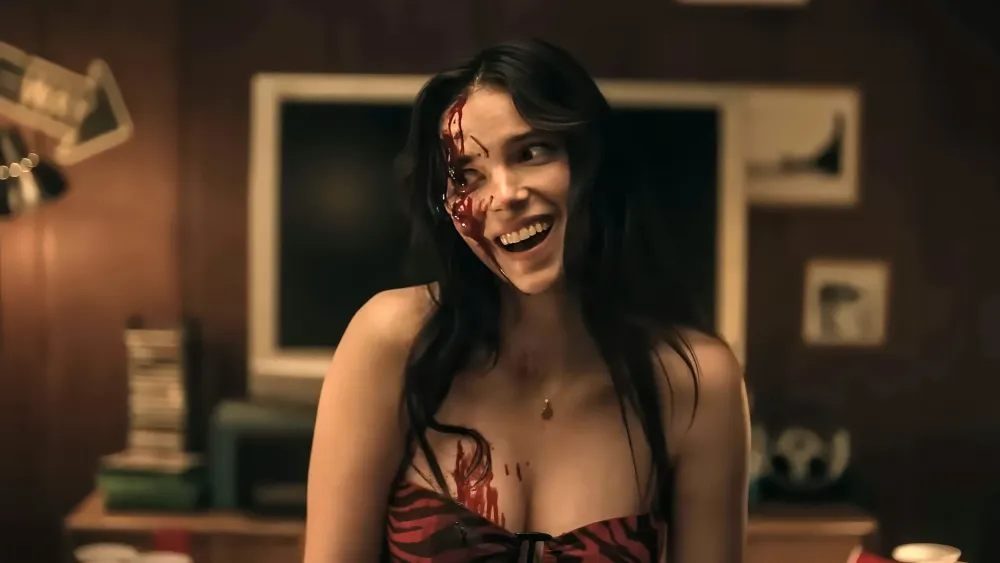
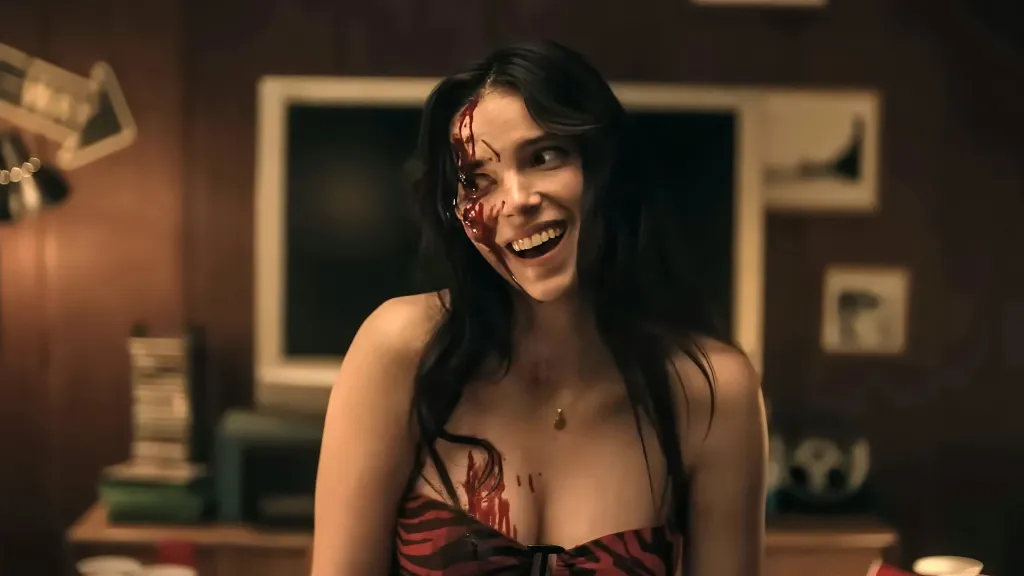
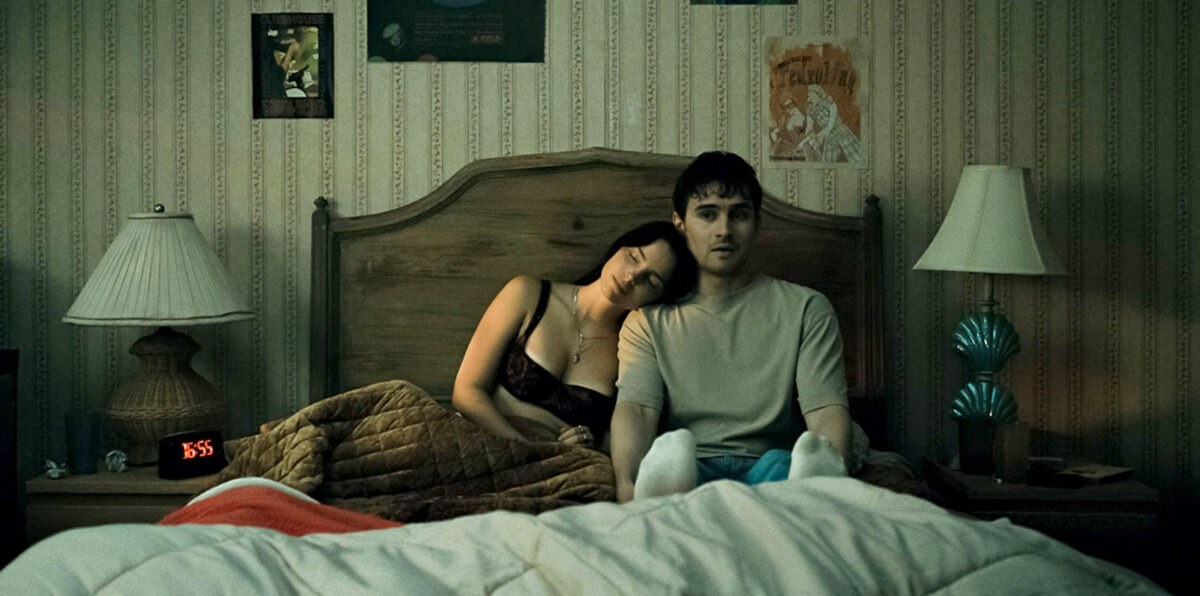
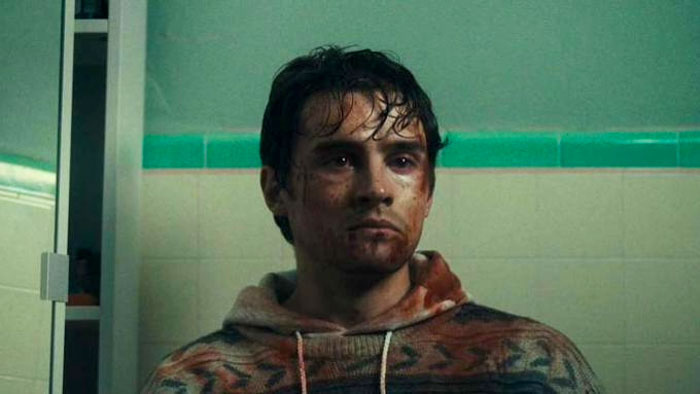
Focus Features’ horror newcomer “Obsession” took second with $6.89 million domestic on its opening day from 2,615 theaters. Through the weekend, it’s expected to earn a solid $14.5 million. From writer-director Curry Barker, “Obsession” follows a desperate young man who uses a “One Wish Willow” to make his crush fall madly in love with him. He gets exactly what he wants, but his deepest desires come with a deadly price. Cast members include Michael Johnston, Inde Navarrette, Cooper Tomlinson, Megan Lawless, Andy Richter and Haley Fitzgerald.
20th Century Studios’ “The Devil Wears Prada 2” landed at No. 3 with $5.3 million on its third Friday in North American theaters. By Sunday, the high-fashion sequel starring Anne Hathaway, Meryl Streep, Stanley Tucci and Emily Blunt should gross around $20 million, pushing the film’s total domestic earnings to $177 million through three weekends of release. Factoring in international grosses, “Prada 2” officially crossed the $500 million mark at the worldwide box office on Friday.
Warner Bros. and New Line’s “Mortal Kombat II” fell to fourth in its sophomore Friday with $3.7 million domestic. That represents a hefty 79% drop from its opening day. Through the weekend, the bloody, beat-’em-up actioner should pull in about $12.7 million, which would bring its North American tally to around $61 million.
Fifth place went to Amazon MGM’s “The Sheep Detectives,” which added $2.45 million domestic on Friday. Through its second Sunday in theaters, the family-friendly whodunnit should collect $10 million, pushing its North American tally to $30 million.
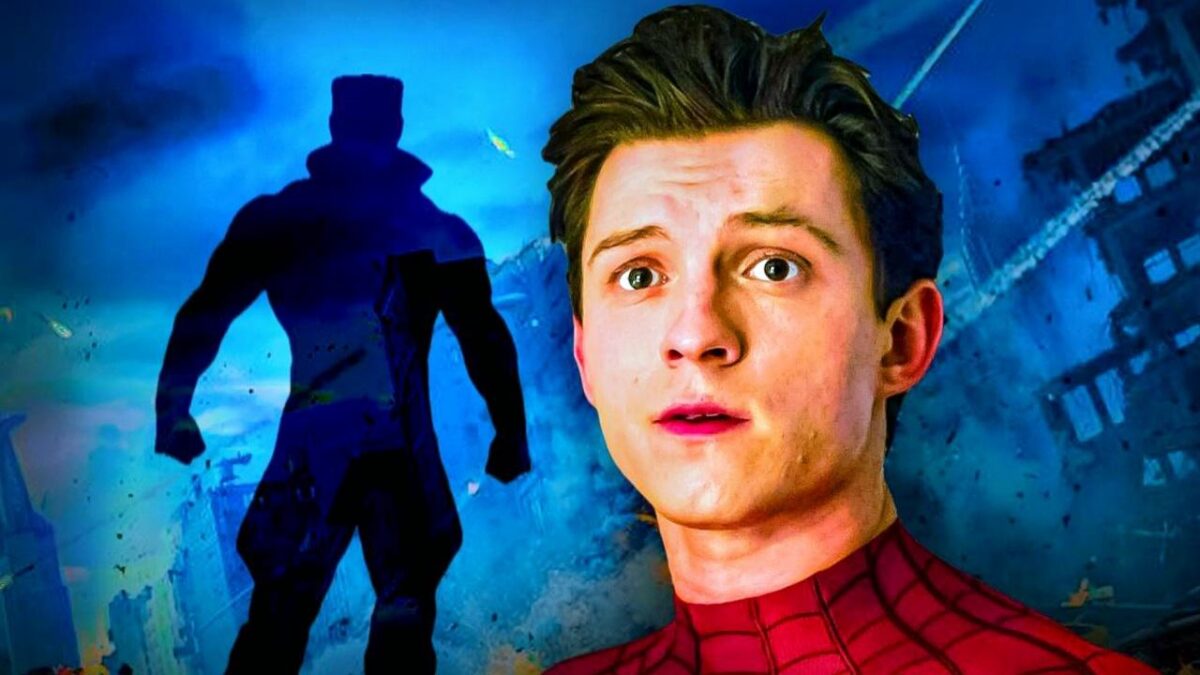
A new report may have finally ended the debate over Spider-Man: Brand New Day‘s second (and surprising) main villain. Marvel Studios has made it no secret that Tom Holland’s Spider-Man will go head-to-head with many villains in his July blockbuster sequel, with rumors pointing to at least a dozen appearing. The epic is headlined by the return of Michael Mando’s Scorpion after he was teased in Spider-Man: Homecoming‘s post-credits scene, nine years ago.
During The Cosmic Circus’ April Q&A, scooper Alez Perez was asked which of Spider-Man: Brand New Day‘s villains stands beside Scorpion as being “very crucial to the narrative as a whole.” Strangely, the villain in question hasn’t yet appeared in Brand New Day‘s marketing or been fully revealed.
Brand New Day‘s marketing has more recently suggested that the Hand, the ancient ninja organization from Netflix’s Daredevil, may secretly be the movie’s secondary villains. Not only was Spider-Man fighting the Hand in two trailer shots, but they also featured prominently on one of two teaser posters.
Marvel Studios
There’s also the matter of Trammell Tillman’s supposed antagonist and Damage Control boss, William Metzger, who is in hot pursuit of Sadie Sink’s mind-bending character. His connection to Sink’s crucial character (rumored to be Jean Grey) indicated he could be a central antagonist, but perhaps his role will be more akin to Arian Moayed’s Agent Cleary from Spider-Man: No Way Home.
Marvel Studios
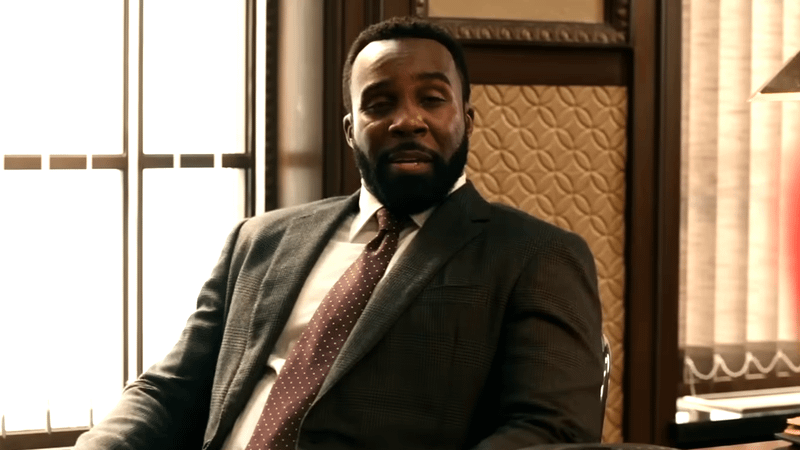
Still, much to the surprise of many, Perez had no doubt that “definitely Tombstone” received that honor, confirming his major role in Brand New Day. Black Lightning actor Marvin Jones III (Krondon) will bring Tombstone to live-action in the MCU, having once voiced the role in Spider-Man: Into the Spider-Verse.
Marvel
It’s safe to say that expectations were low among many for Tombstone’s role in Spider-Man 4 after he was omitted from the trailer and posters, while other villains, such as Tarantula, Scorpion, and Boomerang, have been revealed. In fact, fans had to wait for LEGO to spoil the first look at the MCU’s Tombstone design.
More recently, reports have indicated that Brand New Day is setting Tombstone up to be a “Thanos-level big bad” in Spider-Man‘s next trilogy. That in itself was enough for many to predict that Tombstone wouldn’t have much more than a cameo in Brand New Day, instead simply introducing him for later.
How Can Spider-Man: Brand New Day Juggle All of These Villains?
Of course, Marvel Studios hasn’t confirmed how Spider-Man: Brand New Day will split its focus between an ever-growing roster of villains. In fact, even just two months out from its theatrical release, there is still uncertainty about who the main antagonist actually is, be that Scorpion, Tombstone, or someone else entirely.
After a strange scientific voice was heard in the trailer, many were quick to peg it as The Thing actor Keith David, speculating that he may be playing Miles Warren, aka Jackal. Still, unless Marvel Studios has done a particuarly good job at hiding his secret major role, it would be surprising if he had much more than a cameo.
There has been talk about Brand New Day opening with a montage akin to The Fantastic Four: First Steps, showcasing just some of Peter Parker’s triumphs in the last four years. Foes like Boomerang, Tarantula, Ramrod, and 8 Ball seem likely to be skimmed over in this way through one or two brief, high-octane set pieces.
Supposedly, Brand New Day will include four members of the Enforcers, a group of lesser-known villains who usually act as muscle for hire. It’s easy to imagine them having a minor presence working under Tombstone, taking on some of his dirty work and thus coming to blows with Spider-Man.
As more rumored villains have continued to surface, fears have only grown that Brand New Day is becoming a cluttered mess with too much ground to cover. That said, be it a fast-fire montage or a visit to New York’s villain hangout, the Bar With No Name, there is undoubtebly a simple explanation for the confusion.
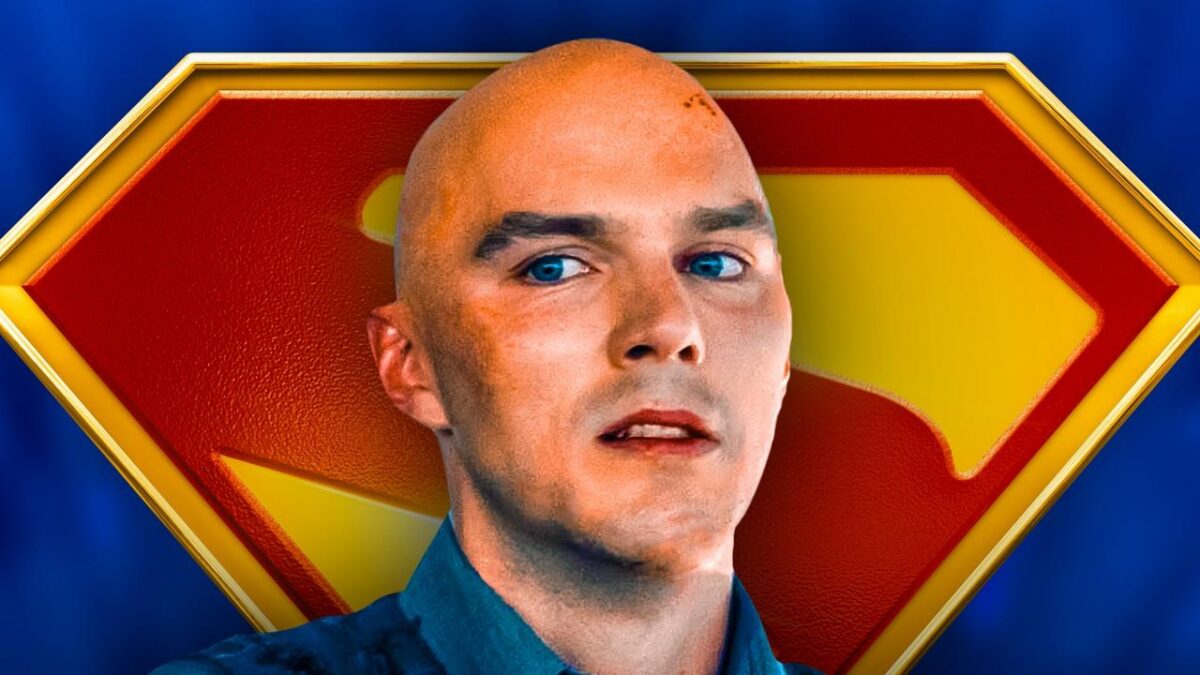
Superman is going to have his hands full in 2027’s Man of Tomorrow, because actor Lars Eidinger just revealed that his character will be much more muscular and physically imposing than Lex Luthor was in Superman. Just two years after the release of Superman, fans will be receiving a sequel titled Man of Tomorrow. David Corenswet will return as Clark Kent (aka Superman) and Nicholas Hoult will reprise his role as Lex Luthor, but the upcoming film will add a new character named Brainiac, who will be played by German actor and rapper Lars Eidinger.
In a recent interview with German magazine Tip Berlin, Brainiac actor Lars Eidinger talked about his role in the upcoming film and what some of the requirements were for him to bring the character to life. Eidinger also talked about how he and Man of Tomorrow writer and director James Gunn (who is also the co-CEO of DC Studios and the creative mastermind behind the DCU) worked together to create the character.
For reference, Eidinger’s quotes have been roughly translated from German to English.
Specifically, the actor and rapper mentioned that he feels a bit of “pressure” since the DCU is such a big franchise. However, he also revealed that James Gunn reached out to him and said that he would be “happy to design the role together with [Eidinger],” which made the actor “happy.”
Eidinger stated that it made him more excited for the role since he would “not only be a vicarious agent,” but would also be able to directly “contribute” to the creation of the character and his role:
“I already feel the pressure to pass there, of course. James Gunn wrote to me that he is happy to design the role together with me. I was happy about this formulation, because it means that I should not only be a vicarious agent, but can contribute.”
Eidinger then revealed that his version of Brainiac will be way more muscular than other DCU villains such as Lex Luthor, saying that he “[trains] four times a week with a personal trainer to be fit, more lean and muscular.”
Brainiac having a jacked physical appearance is not something the actor came up with himself, but rather a requirement from “the studio.” It seems as though Gunn wants Brainiac to be more physically imposing than Lex Luthor was in Superman, so Eidinger is having to work extremely hard to build muscle for the role:
“The other day I flew to America again for a three-hour conversation and an equally long mask test to exchange ideas. In addition, I train four times a week with a personal trainer to be fit, more lean and muscular, as the studio requires.”
It seems as though Brainiac will take a more hands-on approach when it comes to opposing Superman, and fans could see the two characters in a one-on-one fight at least once in the upcoming movie.
Interestingly, Brainiac has never been a mindless villain who only uses his fists to get what he wants. Historically, he has been regarded as one of the most intelligent beings in the world of DC, with an unquenchable thirst for more knowledge.
Brainiac is somewhat similar to Lex Luthor in that regard, as both characters tend to use their intelligence and their minds to solve problems (or create them, depending on your point of view), so it is a bit surprising that Gunn wants Eidinger to build a lot of muscle for the role and look bigger.
It is possible that Gunn simply wants Brainiac to seem like more of a threat than Lex was in Superman, and that would be achieved if Brainiac’s intelligence were coupled with physical strength.
Video game adaptations can be a tricky beast. They can either go the prestige route like The Last of Us with its Emmy-nominated television series, or be a dreadful reference marathon such as The Minecraft Movie. While 2021’s Mortal Kombat film had a myriad of issues, such as the lack of the tournament that serves as the game series’ centerpiece, and a focus on an original character created for the film rather than one of the franchise’s existing cast, it had its heart in the right place by trying to honor the original game series. With the expansion of a sequel, the series had the opportunity to course-correct to deliver not only an engaging film, but also one that fans of the series deserve.
I’m pleased to report that despite some near-fatal flaws in the storytelling department, Mortal Kombat II is mostly a success.
Mortal Kombat II opens with a flashback depicting Outworld ruler Shao Kahn usurping control of the realm of Edenia, and right off the bat, establishes itself as more in tune with the lore of the Mortal Kombat series than the previous movie. The 2021 film struggled in this regard because the film followed Cole Young (Lewis Tan), an original character who served as an audience self-insert. While that route might have worked to bring in audiences who had no prior experience with the games, the decision felt like it went against what Mortal Kombat is: a battle between the six realms for complete control.
“Double Freedom,” the latest by the Argentine auteur Lisandro Alonso, marks a return to the simplicity of his earliest works following the more complex likes of “Eureka,” his 2023 tripartite epic starring Viggo Mortensen. A direct sequel to his 2001 debut “Freedom,” an intriguingly noneventful observational drama about a man living in seclusion in the Pampas, “Double Freedom” seems to pick up where its predecessor left off: Its protagonist, Misael Saavedra (played by the nonprofessional actor of the same name, an Alonso regular), is still contentedly chopping wood, smoking cigs, and hanging out in his makeshift shack. He’s aged, but otherwise his life looks pretty much the same as it did 20-plus years ago. Alonso takes this opportunity to shake things up — albeit in a rigorously subtle fashion that will excite his experimentally-minded followers and likely alienate those interested in more traditional narratives.
As might be expected from one of Latin America’s most idiosyncratic innovators, the film’s title announces more than its obvious relationship to its predecessor. It’s also a bit of a mission statement: There are differences in repetition if you pay close enough attention to the details. Slightly tweaked callbacks to the 2001 film are sprinkled throughout “Double Freedom,” as in scenes where Misael takes a whizz or chomps on grilled meat placed roughly along the same timeline as the original. Long, patient takes devoid of nondiegetic elements immerse us in Misael’s rudimentary existence, with birdsong and cracking branches working together with DP Cobi Migliori’s handsome long-shot compositions to create a trancelike atmosphere.
Migliori shot “Freedom” as well as Alonso’s “Los Muertos” (2004), and with “Double Freedom,” he gives the film’s images a fuzzy DIY quality that harkens back to these earlier penny-pinched works — a notable strip-down given the scale and ambition of more recent entries in Alonso’s filmography, including 2014’s wonderfully peculiar 19th century western “Jauja,” his most widely acclaimed and accessible film to date. Given the director’s arthouse pedigree, this shift back to basics shouldn’t have much of an effect on “Double Freedom” finding a home with boutique distributors.
Whatever pity we might feel for Misael’s barebones abode, the stretches of empty time he inhabits, is countered by his relaxed manner; the tranquility he exudes. Is Misael’s life boring? Perhaps, but Alonso’s attentive gaze reworks the meaning of excitement such that a banal exchange with the nearby farmhand, and a drive into the nearby village, provide minor thrills — that is, if you’re properly settled onto Alonso’s serenely sluggish wavelength.
Arriving two years after Argentina’s far-right government took control of the country, enacting cutthroat austerity measures that have suspended public subsidies and put an end to investments in infrastructure, healthcare, and education — to say nothing of the ongoing threats to INCAA, the state’s TV and film body — “Double Freedom” also stands as a mournful comment on the state of the country. Halfway through the 100-minute film, a visit to a gloomy, near-vacant facility for the mentally impaired reunites Misael with his adult sister Catalina, played by professional Chilean actress Catalina Saavedra (“The Maid,” “Rotting in the Sun”), who is no relation to Misael in real life.
Catalina suffers from an unspecified mental disability, which Saavedra, who is not handicapped, performs in an arguably inappropriate register of fidgety hands and shifty-eyed glances. The asylum is closing down, Misael learns, forcing him to move his sister into his minuscule pad in the woods. The film covers the span of about two-and-a-half days in Misael’s life, so the whiplash of his sister’s arrival is felt instantly. Misael makes do by himself. But tending to two people reveals the fine line between freedom and precarity.
Nevertheless, an underrated aspect of Alonso’s work is his dry sense of humor, which plays out here in the affectless performances and the blank time filled by awkward glances and pleasing animal appearances. (One particularly large dog delights). A degree of levity is achieved by this featherlight absurdity, which adds, if not hopefulness, at least humanity to the bleakness of the socioeconomic conditions so naturalistically built out. When “Freedom” premiered in the Un Certain Regard sidebar at Cannes in 2001, rumor has it that Alonso’s hand was forced to accept a cut of the film absent a crucial shot of Misael chuckling straight at the camera. Debuting his work for the first time in the festival’s independent Directors’ Fortnight section, Alonso — a Cannes regular who has yet to nab a Competition slot — calls back to that supposed snub if you stay through the credits. Now, Misael does indeed get his last laugh.
This is TVNewser’s basic cable network ranker and cable news report for the week of May 4, 2026.
CNN stood out from its peers as it was the only cable news network to record week-to-week growth in total viewers and the Adults 25-54 demo during primetime.
Meanwhile, Fox News remained the most-watched news network in both measured categories. It finished ahead of ESPN in total viewers during primetime for the third straight week, despite the sports network having NBA and NHL playoff action.
NETWORKS:
According to Nielsen big data + panel for the week of May 4, Fox News averaged 2.469 million total viewers and 222,000 A25-54 viewers during primetime. The network was down -5% in total viewers and -7% in the demo compared to the week prior (the week beginning April 27).
During total day viewing, Fox News averaged 1.57 million total viewers and 147,000 A25-54 viewers. Based on its average from the previous week’s measurements, the network saw declines of -4% in total viewers and -3% in the demo.
Fox News continued to rank first in total primetime viewership and third in demo viewership among all basic cable networks. During total day, it also finished first in total viewers and was No. 2 in the total day demo.
MS NOW finished below the 1 million total viewer mark, averaging 972,000 total viewers and 91,000 viewers in the A25-54 demo for the week that just concluded. The network was down -6% in total viewers and -13% in the demo compared to its primetime average the week prior.
During total day, MS NOW averaged 606,000 total viewers and 62,000 demo viewers. It was down -6% in total viewers and -9% in the demo compared to the network’s average the week prior.
Among all basic cable networks, MS NOW was third in total primetime viewers and dropped to 17th from 14th in the demo. It finished third in total viewers and slipped one spot to ninth in the total day demo.
CNN averaged 683,00 total primetime viewers and 126,000 A25-54 viewers during primetime for the week of May 5. The network grew by +8% in total viewers and +25% in the demo compared to the previous week.
During total day, the network had 484,000 total viewers and 80,000 viewers in the demo. CNN declined by -1% in total viewers but saw gains of +11% in the demo during this daypart.
Among all cable networks, CNN moved from sixth to fifth in total viewers and jumped from 15th to seventh in the demo during primetime. It remained at No. 4 in total day among total viewers and sixth in the demo.
Minor spoilers for the first two episodes of Dutton Ranch are ahead! You can stream them with a Paramount+ subscription and catch new episodes every Friday.
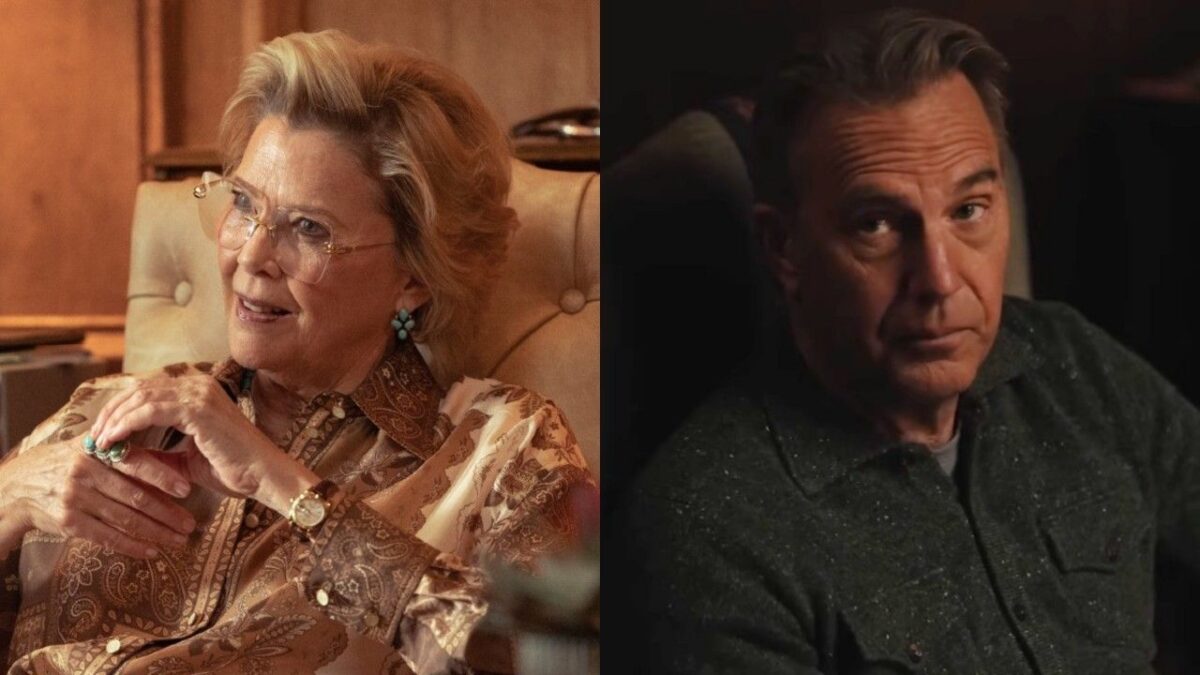
Once Beth and Rip met the Jackson family in Dutton Ranch, I quickly realized that they were very easy to compare to the Dutton family. Led by Annette Bening’s Beulah Jackson, this powerful family of ranchers seems to be the antagonists of this series. However, I also couldn’t help but see the parallels between the Jackson matriarch and the patriarch of Yellowstone, John Dutton. Although after chatting with Annette Bening and Natalie Alyn Lind about this new family, I realized there’s another character we need to compare Beulah to.
As I watched the first few episodes of Dutton Ranch, I couldn’t help but draw connections between Beulah and John Dutton. Like Kevin Costner’s character, Beulah is managing a massive ranch that her kids are major power players in. Like John Dutton, she’s trying really hard to keep her family’s legacy alive. And like John Dutton, she’s an absolute boss. So, before the show premiered on the 2026 TV schedule, I asked Annette Bening if that was a fair comparison to make. In response, she said:
Yeah, I think it is a fair comparison. Although for Beulah, of course, from her point of view, she’s just trying to keep everything from falling apart. Her ranch is really on borrowed time. Her son’s very ill, and she’s trying to keep it all together and trying to maintain this legacy that her father passed on to her. And she has a lot of complicated, you know, kind of feelings about that, and still is trying to please her father.
Now, it becomes clear across Yellowstone’s five seasons (which you can stream with a Peacock subscription) that John Dutton is doing the same thing. He was trying to keep his father’s dream alive and his family’s land intact. So, he led the Yellowstone in an oftentimes ruthless way that did just that.
However, another character who faced similar challenges in Yellowstone was Beth. After John died, she was working very hard to keep her dad’s dream alive, and she was really the one leading the fight. So, we need to compare Beulah to Beth as well. That’s something Bening implied too, as she told me:
And so when you can kind of tap into those kinds of deep things, like Beth has done, and Kelly was able to do in her amazing acting, that’s kind of where my inspiration is really in things falling apart. And that’s a great character.
(Image credit: Emerson Miller/Paramount+)
Beth really did have to pick up the pieces as they fell apart, especially in the last episodes of Yellowstone. She also leads with confidence and directness that Beulah seems to have, too. They are two powerful women, and when I spoke to Natalie Alyn Lind, who plays Oreana, about the show, she made that point too, saying this after I asked her about Beulah:
She knows her worth, she knows her power. She is the boss around there, and people respect her. And I think that it’s one of those things with female bosses, specifically where the male perspective and the female perspective, the moment where you are a female, then all of a sudden you’re seen as harsh, but when you’re a male, you’re powerful. And I think it’s really interesting to see her in this position, and Kelly [as] Beth has done such a great job of that balance between being powerful but not harsh. And that’s what Annette does so well.
So, yeah, while we can easily compare Beulah to John, the parallels between her and Beth are clear too, and that makes this show so incredibly interesting.
Your Daily Blend of Entertainment News
That’s because the Jacksons are so similar to the Duttons, but they’re framed as the antagonists as Rip and Beth enter this new world. However, when you boil it down, Beulah is fighting for the same things John and Beth battled for on Yellowstone. So, in every sense of the word, Beth has met her match. And that, my friends, sets up quite the conflict as we dive into the world of Dutton Ranch.
EXCLUSIVE: It’s been a few years since we heard about writer-director Michael Winterbottom’s A Farewell to Arms adaptation, but it now has fresh impetus with producer-financier Tribune Pictures and UK sales firm Embankment Films, which is bringing it to the Cannes market.
Fremantle is among the original partners who are no longer aboard the film, which will see Hunger Games and Billy The Kid star Tom Blyth follow in the footsteps of Gary Cooper, Rock Hudson and George Hamilton in the lead role.
First published in 1929, A Farewell to Arms is widely regarded as one of the defining war novels of the twentieth century. Drawing on Ernest Hemingway’s own experiences as a volunteer ambulance driver with the Italian Army on the Isonzo Front during the First World War, the novel became an international sensation and cemented Hemingway’s status as one of America’s most influential literary voices.
The story follows Frederic Henry, a young American ambulance driver serving in Italy who is wounded during the war and falls in love with the British nurse Catherine Barkley. The team is aiming for a January 2027 start.
The film will be produced by Tribune Pictures’ Robert Maclean and Michael Paletta alongside Revolution Films’ Melissa Parmenter, with the support of the Hemingway Estate.
Robert Maclean and Tribune Pictures’ recent films include the Hemingway adaptation Across the River and into the Trees, The Wizard of the Kremlin (Olivier Assayas), Dead Man’s Wire (Gus van Sant), and In the Hand of Dante (Julian Schnabel).
Welcome To Sarajevo and The Trip director Winterbottom, who won a Berlin Golden Bear for In This World, said today: “Hemingway believed in paring a story down to the bare bones. He argued that a novel could be like an iceberg: the reader only sees the tip above the water but feels the bulk and weight of what lies below the surface. I want our film to be true to Hemingway’s approach — immediate, raw and natural — and I think in Tom Blyth we have found the perfect person to be Frederic Henry.”
Tom Blyth, for whom the project has long been a passion, commented: “As a lover of Hemingway and a big admirer of Michael Winterbottom’s filmmaking, it’s an honour to be trusted with this adaptation. Michael has adapted the script in a way that totally pays homage to Hemingway’s style, while lifting the story from book to screen in a fresh and exhilarating way. With the world once again facing conflicts not seen in generations, this story couldn’t be more pertinent and necessary. And yet at it’s heart, despite its tragedy, it’s a story of hope and love surviving against all odds. I can’t wait to bring one of my favourite books and characters to life on the big screen”
All products and services featured are independently chosen by editors. However, Billboard may receive a commission on orders placed through its retail links, and the retailer may receive certain auditable data for accounting purposes.
Only one singer gets awarded the highly-coveted glass microphone trophy this year. Organized by the European Broadcasting Union, the 70th annual Eurovision Song Contest Grand Final features the best and brightest up-and-coming singers and pop groups in 25 countries (down from 35 countries in the semifinals) competing to win. These nations include France, Germany, Sweden, Belgium, Italy, United Kingdom, Romania, Serbia, Austria, Poland and many others.
The streaming platform doesn’t offer a free trial, but does come with a couple of affordable plans starting at $10.99 per month. In addition, you can get 30 days of access to Peacock for as low as $1 with Walmart+, as one of the service’s benefits and perks. Learn more about Walmart+ and Peacock here.
There are two different plans offered on Peacock: The Premium Plan for $10.99 per month or the Premium Plus Plan for $16.99 per month. If you’re looking to save, you can save 17% off when you do the annual plan for $109.99 per year or $169.99 per year. With the Premium Plan, it’s ad-supported and you’ll receive access to a wide range of movies, TV shows, originals, live sports from NBC Sports and live news from NBC News.
Peacock’s Premium Plus plan comes with everything in the Premium plan, no ads, your local NBC channel live and the ability to download and stream offline.
Alongside Eurovision Song Contest, you’ll have access to the entire Peacock library, including Wicked: For Good, Yellowstone, Five Nights At Freddy’s, Vanderpump Rules, The Real Housewives of Beverly Hills, Poker Face, Saturday Night Live and others.
First Semifinal: Tuesday, May 12 — 3 p.m. ET/12 p.m. PT
Second Semifinal: Thursday, May 14 — 3 p.m. ET/12 p.m. PT
Grand Final: Saturday, May 16 — 3 p.m. ET/12 p.m. PT
The streaming service also offers a number of music documentaries and specials, such as Toby Keith: An American Icon, Bowie: The Man Who Changed The World, Bob Dylan: The Folk Years, Stevie Nicks: Through The Looking Glass, Katy Perry: Main Square, Welcome To The A: 50 Years of Hip-Hop in Atlanta and more.
Meanwhile, those who want to watch internationally can access the streaming service with a VPN, such as ExpressVPN with prices starting at $2.79 per month for 28 months. The music competition broadcasts live on Das Erste in Germany, BBC One in United Kingdom, Rai 2 in Italy, France 2 in France, SVT 1 in Sweden and other networks.
There’s a case to be made that the heist film is the last mainstream genre where structure itself is the spectacle. Not explosions, not star power — structure. The planning sequence, the ticking clock, the carefully engineered moment where everything goes sideways. Few other genres weaponize their own architecture this deliberately or this consistently.
What makes heist films distinct isn’t just what happens on screen. It’s the relationship between what the audience knows, what the crew knows, and what everyone else is scrambling to figure out. That information asymmetry is the engine. Strip it away, and you don’t have a heist film anymore — you just have a crime movie.
Why Heist Films Weaponize the Setup
The planning sequence is where heist films earn their tension before a single dollar is stolen. Blueprints spread across tables, rehearsal montages, split-second timelines laid out like surgery — these scenes do something unusual: they make the audience complicit in the crime. You’re rooting for the plan to work, which means you’re terrified of the moment it won’t.
This is deliberate genre architecture. Unlike action films that deliver thrills reactively, heist films front-load dread. You know something will go wrong. The genre practically promises it. That anticipation — sustained across an entire second act — is the closest cinema gets to pure, formal tension.
Misdirection as the Genre’s Core Tool
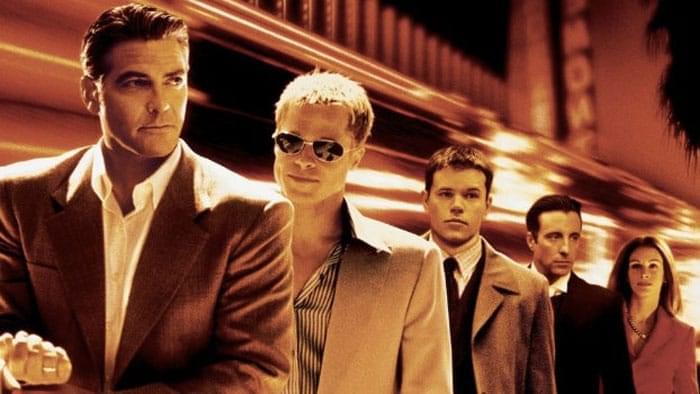
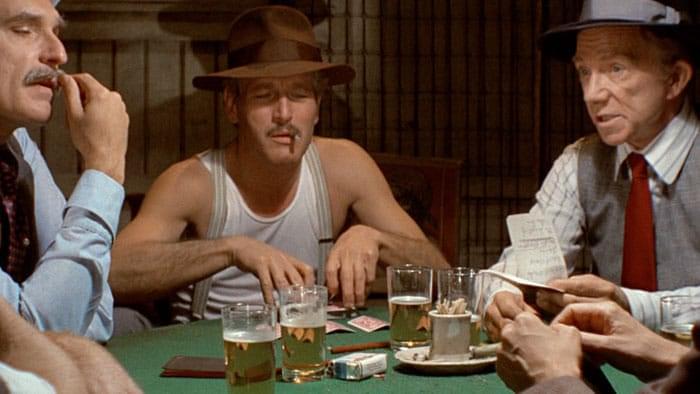
Audience misdirection is where heist films separate themselves from almost every other thriller format. The genre actively deceives its viewers, then rewards them for being deceived. The best entries — The Sting, Heat, Ocean’s Eleven — don’t just surprise you. They make you feel like you should have seen it coming.
For audiences drawn to layered, high-stakes storytelling, this kind of narrative architecture has obvious appeal across entertainment formats. Viewers who gravitate toward GamblingInsider’s crypto casinos listed understand something similar: the best experiences are built on transparent rules and hidden information interacting at speed. Heist cinema delivers that exact dynamic — just with a crew and a vault instead of a deck of cards.
Where Digital-Age Stories Expand the Stakes
Streaming has turbocharged the heist genre’s reach without diluting its core appeal. Jewel Thief – The Heist Begins, a 2025 Hindi thriller, accumulated 16.1 million views in two weeks on Netflix — a figure that puts it among the platform’s biggest non-English films of the year. That kind of number isn’t driven by franchise IP or sequel recognition. It’s driven by premise.
Netflix’s own viewing data reinforces the point. According to Netflix’s first-half 2025 report, heist-linked titles consistently rank among the most replayed content on the platform — precisely because their layered plotting rewards a second watch. Streamers have noticed, commissioning heist-adjacent franchises specifically because the format binge-compresses naturally.
What Survives When the Twist Lands
The real measure of a great heist film isn’t the twist itself — it’s whether the tension survives contact with it. Weak entries collapse the moment the reveal lands; you stop caring because the film has already played its hand. The genre’s best work does the opposite. The revelation recontextualizes everything that came before, extending the experience rather than ending it.
That’s why critics still reach for heist films when discussing what genre cinema can do at its most disciplined. Often, the films that endure are the ones judged first on sustained dread — not on spectacle or charm. Quips can decorate a heist film. They can’t carry one. When the structural tension holds from opening blueprint to final escape, the genre delivers something genuinely rare: a film where the architecture is the art.
Guillaume Canet and Marion Cotillard happily reflected on what they described as the close and collaborative experience they underwent to develop their Cannes Competition title Karma this afternoon during a press conference.
Canet directed the film from a screenplay he also wrote. But the veteran filmmaker told the press room that he began the project as part of a theoretical task of developing a story that he could write specifically for Cotillard to star in.
“I know Marion very well. We’ve worked together often, and I’d had this frustration as a director that I hadn’t really written a character commensurate with her talent,” Canet said. “She’s always extraordinary, but I wanted to be on a set with her for a long time to really make the most of her absolutely amazing talent. She’s exceptional and incredibly generous. She never does the same takes. It was a wonderful pleasure to have this experience as a director.”
Discussing the experience, Cotillard said Canet approached her with several ideas for a feature film before providing her with a full script.
“They were all actually good. I reacted to everything,” she said of Canet’s ideas. “But it was this particular idea that took shape and seemed very vibrant to me. We naturally realized it was the right topic. I followed the creative process from the very beginning. There were times of doubt and questioning, but when I read the first script, which wasn’t the final script, I had a strong emotional reaction, and he knows when I have that reaction, I know we’re going in the right direction.”
Karma follows Cotillard as a woman with a troubled past whose new life is upended by a child’s disappearance. The film marks Cotillard and Canet’s sixth collaboration after Little White Lies, Blood Ties, Rock’n Roll, Little White Lies 2, and Asterix & Obelix: The Middle Kingdom.
The film is produced by Paris-based Iconoclast in co-production with Canet’s Caneo France. Pathé Films is handling French distribution and international sales.
With its stream-of-consciousness style and fragmented perspectives, Virginia Woolf’s Mrs. Dalloway is a beguiling novel with understandably few adaptations. Marleen Gorris tried with her shaky 1997 film starring Vanessa Redgrave as the titular protagonist and Rupert Graves as the tragic Septimus. A film inspired by a book inspired by Woolf (Michael Cunningham’s The Hours) followed, and a handful of stage adaptations came and went. Now, Arie and Chuko Esiri, the twin brothers behind the critically acclaimed drama Eyimofe, attempt their own translation — and how lucky we are for that.
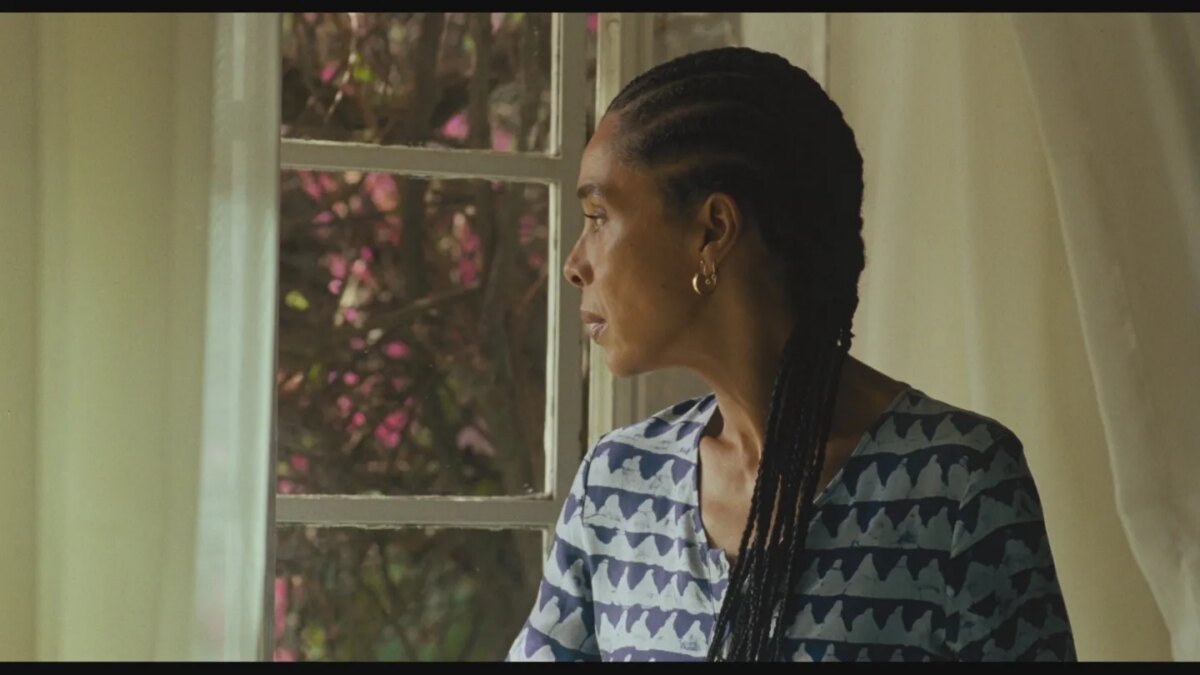
Premiering in the Directors’ Fortnight sidebar, Clarissa is a compelling interpretation of Mrs. Dalloway that transposes the action of Woolf’s novel from 1920s London to present-day Lagos. Clarissa, played with terrific restraint by Sophie Okonedo, is now a Nigerian society woman preoccupied by the infamously jammed Lagosian traffic, interactions with her housekeepers, and memories of youthful summers spent debating the meaning of democracy in Nigeria and the intellectual and political priorities of a developing nation-state.
Clarissa
The Bottom Line
A quiet revelation.
Venue: Cannes Film Festival (Directors’ Fortnight) Cast: Sophie Okonedo, Ayo Edebiri, David Oyelowo, India Amarteifio, Toheeb Jimoh, Fortune Nwafor Directors: Arie Esiri, Chuko Esiri Screenwriter: Chuko Esiri
2 hours 7 minutes
Septimus (Fortune Nwafor, a revelation) is an off-duty military officer who has just returned from fighting the insurgent group Boko Haram in the northern region of the state. He struggles to fend off thoughts of conflict (ongoing since 2009) and anchor himself to his present-day reality, one in which he’s happily married to Aisha, a well-regarded Muslim seamstress (Modesinuola Ogundiwin).
The Esiri twins combine this new framework with a poetic register that has become increasingly popular since their feature debut premiered in Berlin six years ago. Clarissa embraces the cinematic grammar employed by filmmakers like Raven Jackson (All Dirt Roads Taste of Salt), Savannah Leaf (Earth Mama), RaMell Ross (Nickel Boys) and most recently Akinola Davies Jr. (My Father’s Shadow). Similar to the films by these directors, Clarissa revels in the splintered language of memory. Jonathan Bloom’s gorgeous cinematography (the film was shot on 35mm) and Blair McClendon’s disciplined editing display an intuitive understanding of the source text, finding rhymes and echoes in close-ups of a lip touching a knee or a kingfisher bird crying from a branch. Kelsey Lu’s spectral score threads these images together, adding to the dreamy quality of the film.
Clarissa begins on a slightly different note than Woolf’s novel. The Esiris (the film was directed by both but the screenplay was written by Chuko) eventually get to the flowers, but first they offer the image of a young Clarissa (India Amarteifio of Netflix’s Queen Charlotte) sneaking out of the room of young Peter (Industry’s Toheeb Jimoh). It is 1994 and the pair, along with other friends, are in Abraka, a verdant town in southern Nigeria’s Delta state. Their days are spent swimming in the lake, picnicking by the beach and debating poetry and literature. At the sound of morning prayers, an older Clarissa awakens from this dream and shuffles out to her lawn, where the leafy bush has been replaced with the industrial skyline of Lagos. So begins her day. The flowers must be procured, the tents put up in the garden, and the finishing touches added around the home before her guests arrive.
As Clarissa meanders through Lagos, a portrait of the bustling West African city emerges. Just as in their debut, the Esiris luxuriate in scenes of people at work and observations of an increasingly cosmopolitan locale, subtly revealing trenchant class differences. Nowhere is that more apparent than with Septimus, whose story comes to us in potent fits and starts. When looking at his Lagos, the camera often closes in, reflecting the kind of claustrophobia poverty tends to engender. Septimus lives in a small apartment with his wife, travels by danfo (communal minibuses) and struggles to acclimate to civilian life after a traumatic tour in the North. Just as Mrs. Dalloway sought to reveal how Britain abandoned veterans, Clarissa gestures at the power and collateral damage of Nigeria’s military. Nwafor, who starred in Eyimofe, is astounding; in his hands, Septimus becomes a heartbreaking symbol of a nation’s broken promises. His performance lives in his eyes, which manage to convey a sincere naïveté and a sullenness all at once.
While Clarissa’s life seems more expansive — wider shots accompany her thread — it is also chillier. Okonedo captures that steeliness well, communicating the oppressive nature of the character’s life within the context of Nigerian society. Clarissa married Richard, a respectable and doting man in politics played by Jude Akuwudike, but she still thinks of her former lover Peter (played in the present by a fine David Oyelowo) and the intensity of her relationship with Sally (played by Ayo Edebiri as a youth and Nikki Amuka-Bird as an older woman). The only person she seems to still be in touch with is Ugo (Danny Sapani), whom they all used to lightly tease and who now operates as a kind of town crier, offering news and gossip alike.
In flashbacks, an attraction blooms between a young Clarissa and Sally. Amarteifio and Edebiri have an understated chemistry that makes the covert passion between these two women believable. To Clarissa, Sally represents an effortless cool — a composite of countercultural standards that she secretly wishes to embody. While there’s an understandable obliqueness to their relationship, one does wish that the filmmakers had afforded more space to their intellectual sparring. There’s something alluring about Sally, who’s never far from a cigarette or a book, and how her beliefs counter Clarissa’s traditional ones. Some of the best scenes in Clarissa are when the young friends gather around the table to debate the state of postcolonial literature and the irony of a newly democratic nation under military rule.
There’s a radical bent to the Esiris’ interpretations of and deviations from Mrs. Dalloway. Woolf wrote the novel to reveal the madness of a post-war society and the disjointed nature of a nation undergoing significant change. And for all the ways she sharply articulated the oppressed condition of women, she also relied on a colonial framework and deployed racist tropes. A sly achievement of Clarissa is in how it not only acknowledges this history, but upends it too.
YouTube is expanding its AI likeness detection program to all users over the age of 18 — meaning just about anyone can have the platform hunt for potential deepfakes of themselves.
The likeness detection feature uses a selfie-style scan of a person’s face to monitor YouTube for lookalikes. If there is a match, YouTube alerts the user; the person then has the option to request that YouTube remove the content. YouTube has said in the past that it has found the number of removal requests to be “very small.”
YouTube began testing the feature with content creators, and then expanded it to government officials, politicians, journalists, and finally the entertainment industry. The expansion to any user 18 years or older is a significant shift — it essentially gives the average person the ability to constantly monitor content on YouTube that could use their likeness. Takedown requests are evaluated using YouTube’s privacy policy, and the company says it considers removals based on criteria like whether the content is realistic, is labeled as AI-generated, and if a person can be uniquely identified. There are carveouts for things like parody or satire, and the tool only covers facial likeness, not other identifying features like a person’s voice. Users can withdraw from the program and have YouTube delete their data.
The news was announced on YouTube’s creator forum, but spokesperson Jack Malon says there are no requirements on what constitutes a “creator” who is eligible.
“With this expansion, we’re making clear that whether creators have been uploading to YouTube for a decade or are just starting, they’ll have access to the same level of protection,” Malon said in an email.
Man City enters its fourth consecutive FA Cup final appearance as the favorites, while Chelsea hopes for an upset to secure its ninth trophy
If you purchase an independently reviewed product or service through a link on our website, Rolling Stone may receive an affiliate commission.
Chelsea and Manchester City will face off for the FA Cup Final at Wembley Stadium, with the Blues looking for their ninth trophy and Man City seeking their eighth. Man City currently sit at No. 2 in the Premier League, while Chelsea have sunk to ninth.
A win would lift the struggling London team, which has not won a Premier League game since March. Man City, meanwhile, haven’t lost a Premier League game since January, and beat Chelsea 3-0 when they last met in April.
At a Glance: How to Watch Chelsea vs. Man City FA Cup Final
While Chelsea is unsurprisingly the underdog for the FA Cup Final, the tournament is famous for producing some truly shocking upsets. The knockout competition, the oldest soccer tournament in the world, pits teams from across the English football system, giving small clubs the chance to face off against top teams.
Man City have been in every FA Cup Final since 2023, but lost the last two, including last year’s upset by Crystal Palace. Head coach Pep Guardiola criticized the match officiating, saying, “We lost the two finals of the FA Cup because the referees didn’t do their jobs they should do, even the VAR” and added that he considers video assistant referee reviews to be “a flip of a coin.”
The tournament kicks off at 3 p.m. UK time, 10 a.m. ET. If you’re looking to stream the game in the U.S., it airs on ESPN2, with pregame coverage starting an hour before kickoff.
How to Watch the FA Cup Final: Chelsea vs. Man City
Here’s what to know about streaming the soccer game live, including options with free trials.
DirecTV
DirecTV has numerous packages with ESPN, including the MySports pack, which starts at $45/mo for the first two months. The Entertainment plan, meanwhile starts at $85/mo. You also get a five-day free trial with DirecTV.
Fubo
Sports-focused streaming service Fubo includes a free trial, and the Sports + News plan includes ESPN Unlimited. That said, Fubo does not have NBCUniversal channels.
Sling
While Sling does not have a free trial, it does have affordable short-term passes. The Sling Orange plan includes ESPN2, which is carrying the game live.
ESPN Unlimited
ESPN offers its own streaming service, which gets subscribers access to all of its networks for $30/mo. It’s also available as a bundle with Disney+ and Hulu.
FA Cup Final Date, Start Time
The Chelsea vs. Man City match kicks off on Saturday, May 16, at 10 a.m. ET. at Wembley Stadium in London.
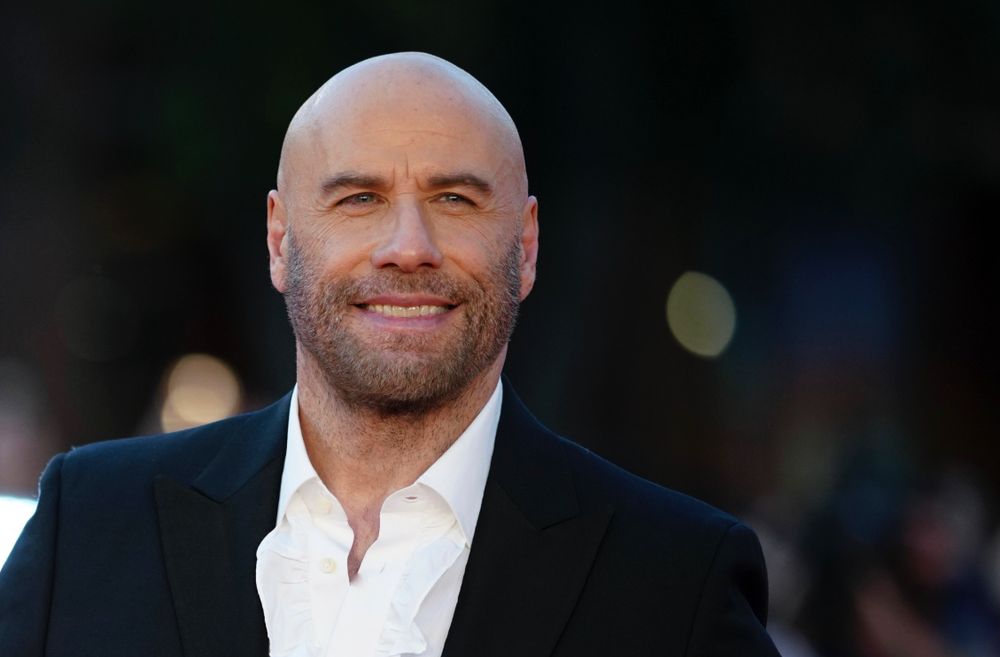
Hollywood star John Travolta was given a surprise lifetime achievement award at the Cannes Film Festival Friday as he premiered the first movie he has ever directed.
The man who became an icon overnight with “Saturday Night Fever” was visibly moved as he accepted the honorary Palme d’Or before the screening of “Propeller One-Way Night Coach”, which is based on a children’s book he wrote.
“I just can’t believe it. This is beyond the Oscar, really,” he said as he accepted the honorary Palme d’Or.
“My favourite movies in the history of my life have always been the winners of the Palme d’Or.”
Travolta — who has never won an Oscar — revived his flagging career with his iconic turn as hitman Vincent Vega in Quentin Tarantino’s “Pulp Fiction”, which won the festival’s Palme d’Or top prize in 1994.
Many critics hailed it as his greatest performance, one that has since gone down in cinema history.
Cannes had kept the award under wraps until Travolta walked on stage for the premiere.
Beyond the award, Travolta, 72, said he was hugely surprised to have his directorial debut, which stars his daughter, Ella Bleu Travolta, accepted at the world’s most prestigious film festival.
He said when its director Thierry Fremaux told him in November that “it would be the first film ever accepted that early I cried like a baby.
“I had no expectation my film would be accepted,” he added.
A lifelong aeroplane nut, “Propeller One-Way Night Coach” is an autobiographical tale that unfolds in the golden age of aviation.
It tells of a young airplane fan making a one-way trip to Hollywood with his mother.
“This is the blueprint of my life,” said the actor, sporting a beard and a beige beret.
“Everyone that was in the movie is sitting in the audience right there, my family.
“And this is why this film exists and why I exist as an artist because of those people right there,” he added, motioning to his family and crew.
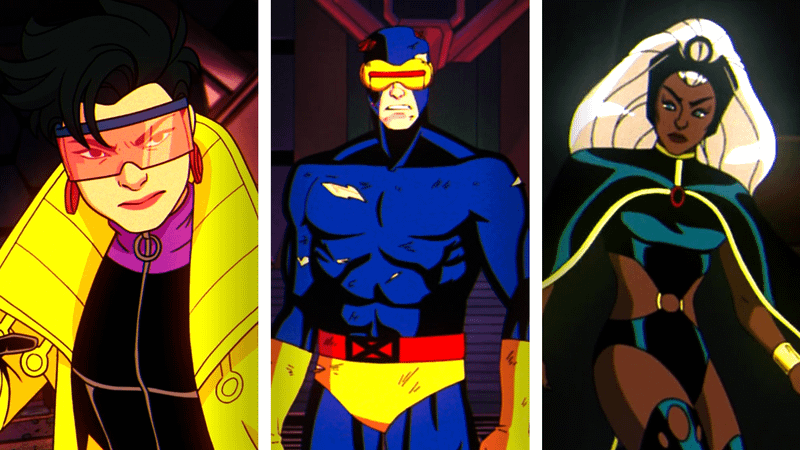
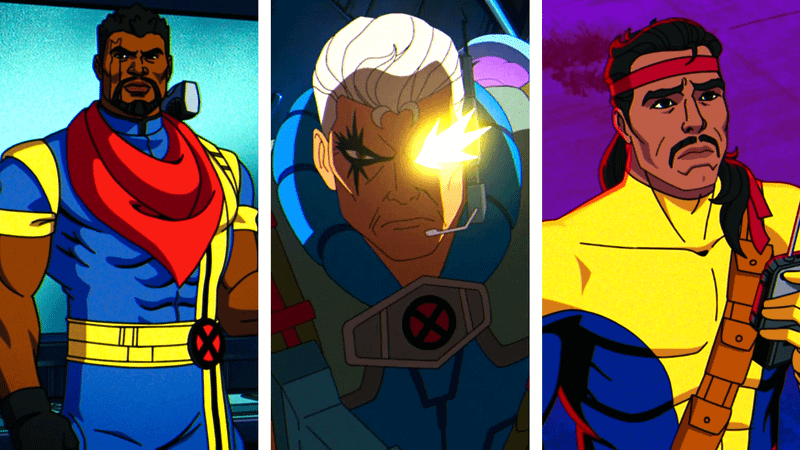
X-Men ’97 Season 2 will showcase a diverse group of heroic mutants with different types of powers and abilities. The sophomore run of the continuation of the X-Men: Animated Series on Disney+ will split the core team of mutants across time following Asteroid M’s destruction in the Season 1 finale. Outside of the familiar X-Men mainstays like Cyclops, Wolverine, and Storm, X-Men ’97 Season 2 is set to expand its roster of mutants by adding new teams to the lineup, such as the X-Force and X-Factor.
The confirmed roster of mutants in X-Men ’97 Season 2 fits into four core archetypes based on their primary combat styles and abilities. This perfect mix ensures fans will get to see massive, high-stakes action sequences that feel explosive and strategic, leading to unpredictable chaos as they try to defeat different versions of Apocalypse across time.
4 Power-Based Categories of Superheroes in X-Men ’97 Season 2
Brawler
Marvel Animation
The mutants under the Brawlers umbrella excel at getting up close and personal with their targets.
By relying on their raw physical power, they can dominate and outmaneuver their opponents, turning every skirmish into an all-out, no-holds-barred brawl. The frontline mutants included in this group include Wolverine, Beast, Rogue, Nightcrawler, Wolfsbane, and Psylocke.
Whether they are slashing enemies with adamantium claws, absorbing enemy powers, or simply punching through a wave of foes, these mutants can serve as any team’s unbreakable tanks and scrappers, perfect for charging into Apocalypse and his horsemen when necessary.
Ranged Attacker
Marvel Animation
X-Men ’97 Season 2’s roster of mutants also has a dedicated group capable of keeping enemies at arm’s length under the “Ranged Attacker” division. These heroes can unleash devastating energy and psychic assaults from afar, allowing them to kill many enemies at once in the battlefield.
The most dangerous core trio in the lineup, Jean Grey, Storm, and Cyclops, elevate the grup due to their deep familiarity and seamless synergy. Cyclops can rain down his signature optic blasts at enemies while Storm can summon lightning storms and powerful winds to overwhelm opponents.
Jean Grey delivers the final blow with her telekinesis and telepathy, pushing for a destructive mental attack that can render the villain in a violent state of flux. Other heroes include Polaris, Jubilee, Sunspot, and Havok, and they all can unleash explosive attacks at any given opportunity.
Tech-Enhanced
Marvel Animation
As part of the tech-enhanced group, these mutants blend raw physical power with their cutting-edge technology, cybernetics, and modern inventions to propel them with versatile firepower.
Aside from having an arsenal of future-tech and powerful inventions, the fact that they can create and fix their technology on the fly makes them a formidable ally for any squad.
Miscellaneous
Marvel Animation
It is a given that not every mutant fits a category, but it’s understandable due to the massive wave of heroes and villains existing in the X-Men ’97 universe.
Some of these characters include Morph, Multiple Man, Archangel, and Professor X, and they offer a variety of abilities that can add unpredictable falir and support to any team.
Morph’s shapeshifting is useful in infiltration and reconnaissance missions while Multiple Man’s ability to create copies of himself can expand the roster of characters in an instant in the battlefield. Archangel’s flight and razor-sharp wings are useful in both quick and calculated attacks while Professor X’s telepathy and leadership keep the whole operation coordinated from a distance.
Tom Cruise has had an interesting career path over the last decade, transforming himself into an action icon with the Mission: Impossible franchise, while also becoming something of a spokesperson for the theatrical experience. The revitalization of his career through practical stunts and blockbuster spectacle has been entertaining, yet one can’t help but remember the more dramatic roles that Cruise had taken on early in his career. In between blockbusters, he worked with directors like Paul Thomas Anderson, Stanley Kubrick, and more. Thankfully, the Top Gun actor is working on an ambitious new film with Alejandro Iñárritu, and buzz for the movie is starting to increase, especially thanks to one cast member of the movie hyping it up.
During an exclusive conversation with The Hollywood Reporter, Sandra Hüller talked about her success this year with projects such as Rose and starring opposite Ryan Gosling in Project Hail Mary. Speaking about the actor’s range as a performer and the critical acclaim she’s earned in independent foreign movies and major blockbusters, the conversation soon switched to her next role in Digger. The film, which is written and directed by Iñárritu (known for The Revenant and Birdman, or The Unexpected Virtue of Ignorance), is set for release in October, with plenty of marketing being done for its premium format release in IMAX.
Speculation surrounding the scope and ambition of the film has only increased by the footage released at Cinema-Con, and now Hüller has provided a small tease for the upcoming movie. While she couldn’t say much, she expressed her excitement, saying:
“I am nearly bursting with wanting to talk about this movie. I can’t. I legally can’t. I can say that I saw a version [of it] that’s maybe not the final version, and that it impresses me beyond anything I’ve ever seen. And that’s all I can say. I think it’s going to be a remarkable film.”
Digger seems to be a marriage of Tom Cruise’s past work and his current roles as an actor, bringing both the large-scale storytelling that the Mission: Impossible films have been known for and the creative sensibilities of a critically acclaimed filmmaker like Iñárritu. The director’s work has often been unconventional and visually stunning, exploring stories that have something profound or troubling to say about the human condition. His film before Digger, titled Bardo, False Chronicle of a Handful of Truths, featured a non-linear story and dream-like visuals, telling a deeply personal story.
The footage of Digger shown at Cinema-Con promised a different and eccentric performance from Tom Cruise, as the movie centers around “the most powerful man in the world” as he “races to prove [that he is] humanity’s savior before the disaster he unleashed destroys everything.” With an all-star cast that also includes John Goodman, Jesse Plemons, Riz Ahmed, and Michael Stuhlbarg, Digger‘s October release date can’t come soon enough.
Release Date
October 2, 2026
Director
Alejandro González Iñárritu
Writers
Alejandro González Iñárritu, Nicolás Giacobone, Sabina Berman, Alexander Dinelaris
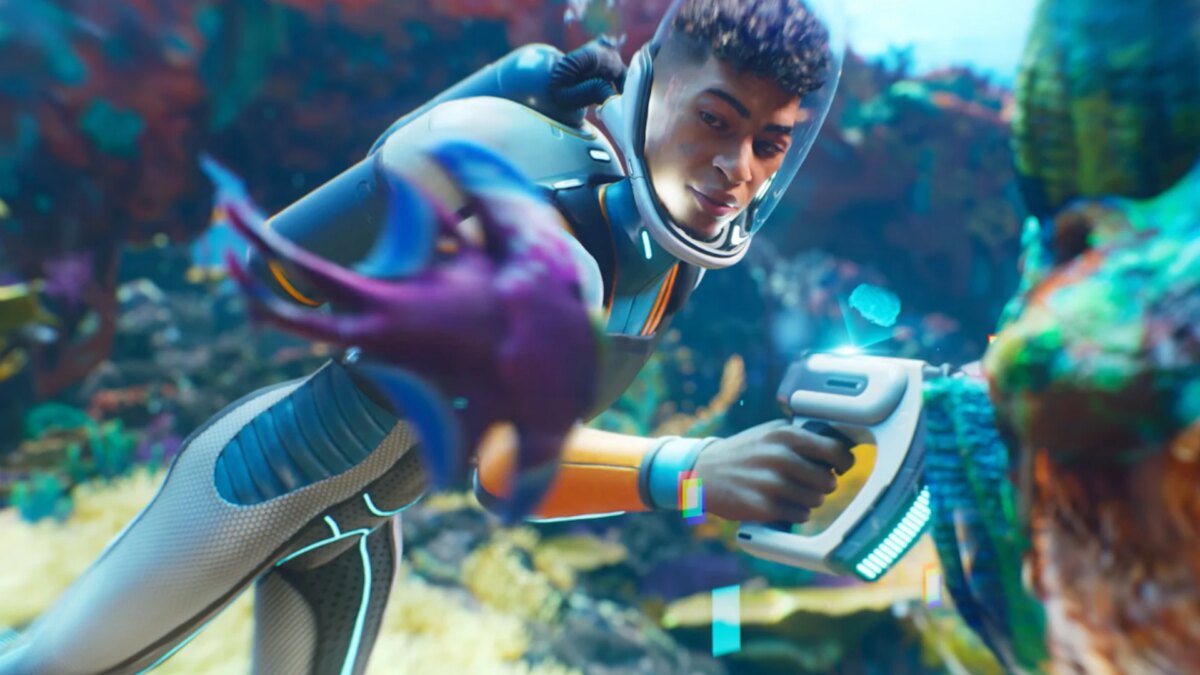
Subnautica has sold over 2 million copies on its first day of early access, with over 600K concurrent players in its opening hours.
The sequel to the massively popular survival game entered early access on Thursday. Just over one hour after the game’s release, the Subnautica X account posted an announcement that the game had sold over 1 million copies.
Just hours later, developer Unknown Worlds announced that the game had sold over 2 million copies in just twelve hours as the game topped charts around the world.
According to SteamDB, the game managed a peak Steam concurrent player count of 467,582 players. This makes Subnautica 2 the game with the 29th highest concurrent player count in Steam history.
This number doesn’t include players who are playing Subnautica 2 via Xbox Game Preview or via the Epic Game Store. According to a press release from Unknown Worlds, the peak concurrent player count across all platforms has topped 651,000.
Before the game’s release, Subnautica 2’s development cycle was mired in a legal saga that saw the leadership team of developer Unknown Worlds fired.
Earlier this year, publisher Kraftonwas accused of ignoring a court order by announcing to staff that the game was releasing in May, despite such a decision seemingly being the responsibility of the newly reinstated CEO Ted Gill.
Gill, co-founder and creative director Charlie Cleveland, and co-founder and technical director Max McGuire were fired by Krafton last year, with the publisher accusing the trio of an “absence of core leadership” and claiming it felt “a profound sense of betrayal by their failure to honor the trust placed in them by our fans”.
In this episode of the No Film School Podcast, tech editor Jourdan Aldredge speaks with Blackmagic Design’s Simon Westland at NAB 2026 about the company’s latest camera, live production, mobile filmmaking, DaVinci Resolve, Blackmagic Cloud, and AI workflow updates.
They discuss how Blackmagic’s new products serve both high-end live production and independent filmmakers, why hands-on trade show demos matter, and how filmmakers can think about camera choices as they grow their craft.
In this episode, we discuss:
Blackmagic Design’s NAB 2026 product announcements and why the company released news before the show
The value of hands-on product demos, workshops, and planning ahead for NAB
Blackmagic’s URSA Cine 12K live production workflow, including 100G connectivity, 2110, 440fps, and 16 stops of dynamic range
Why cinematic images are becoming more important in live production, sports, YouTube content, and live events
How the Blackmagic Camera app is becoming an entry point for iPhone and Android filmmakers
Using mobile phones in professional workflows with HDMI or SDI output, genlock, zoom demands, and focus demands
Apple Watch control for Blackmagic Camera on iOS
How Blackmagic’s products connect across cameras, ATEM switchers, DaVinci Resolve, and Blackmagic Cloud
Why beginner filmmakers should focus on learning craft, exposure, lighting, and storytelling instead of searching for the “perfect” camera
DaVinci Resolve’s new photo editing tools and how shared looks can help match stills and video
How brands, agencies, and social media teams can use Resolve for color consistency across moving and still images
Blackmagic’s view on AI tools, including transcription, media search, object search, and workflow acceleration
The difference between workflow AI and generative AI replacement tools
The future of Blackmagic Pocket Cinema Cameras and why the company still sees them as important for independent filmmakers
France’s Urban Factory and Mexico’s Fidelio Films have boarded Colombian filmmaker Mauricio Leiva-Cock’s psychological thriller “Los Eastman,” selected for the Fantastic Round Robin at Cannes’ Fantastic Pavilion.
According to Urban Factory’s Frédéric Corvez, they discovered the project during Colombia’s BAM Producers Meeting, where partner Florencia Gil served as a mentor. “This project stood out from the rest for its ambition and approach. It is rare and exciting to read a true page-turner. Mauricio masterfully uses elements of horror to portray and expose toxic class struggle — which, in my view, lies at the very heart of the genre.”
Set during a devastating pandemic, the drama follows a housekeeper trapped in servitude by her wealthy employers who unleashes a violent revenge. As the bloodshed escalates, she must choose between freedom and the corrupting privilege that once imprisoned her.
Leiva-Cock explained that the story was inspired by a real newspaper article he and co-writer Diego González Cruz discovered during the COVID pandemic. The article described a wealthy Bogotá family kidnapping their housekeeper under the pretext of protecting her through strict safety protocols. “The film begins as a social drama before spiraling into psychological thriller, horror and ultimately what we call Social Gore.”
The project highlights growing international interest in elevated Latin American genre cinema blending political commentary, suspense, violence and social critique.
For Leiva-Cock and his partners Sebastían Hernández, Juan Manuel Betancourt and Daniela Echeverri in their new production company Cuatro Ojos, it’s significant that their relationship with Urban Factory began at the BAM Producers Meeting organized by Colombia’s Ministry of Culture.
“This is a real example of how programs led by [promo entity] Proimágenes and the Ministry of Culture can have a tangible impact on the development and internationalization of Colombian projects,” he said, adding: “It also feels very meaningful to have closed the deal during the Fantastic Pavilion at Cannes. Mórbido and [Fantastic Pavilion executive director] Pablo Guisa Koestinger have been important supporters of ‘Los Eastman’ and we’re very thankful for their continued support.”
“We’re also especially excited that France is becoming such an important partner in bringing the film to life and that we’ll be in Cannes with Urban Factory at this stage of the process.”
Having David Figueroa Garcia and Mauro Mueller of Fidelio Films in Mexico also boarding the drama makes sense, he added, given his extensive work in Mexico, including as head writer on the International Emmy-winning “Falco” and “The Head of Joaquín Murrieta” for Prime Video.
Hernández is an editor of “One Hundred Years of Solitude,” Season 2, and Laura Mora’s San Sebastian Golden Shell winner “The Kings of the World.” Betancourt is a VFX supervisor on “Memory” by Apichatpong Weerasethakul and “Horizonte”(TIFF).
Echeverri, who served as an EP on “Anhell 69 “(Venice Critics’ Week) and produced the Berlinale-winning short “Uli” and “Pelotón Trueno,” selected for the short film competition at this year’s Cannes, will be the lead producer on the film.
“Los Eastman” has participated in such programs as Sitges FanPitch and the Sanfic Mórbido Lab where it received two awards. Last year, it took home 13 awards at the BAM Production Meetings. It will also be present at BAM 2026 in July as one of the selected fiction projects.
The 79th Cannes Film Festival kicked off on May 12 and wraps on May 23rd.
In unwavering commitment to his role in László Nemes’ harrowing competition title Moulin, up-and-comer Félix Lefebvre slept in the grizzly, mattress-less cell he and co-star Gilles Lellouche were shooting in — for a good few nights.
“There was bats. I didn’t have any idea what time it was. And I felt like those guys during the Second World War, [who] actually went through it and were having such a hard time,” the young French star tells The Hollywood Reporter. “I just wanted to be the best version of me, as an actor.”
To provide some much-needed context, the Hungarian filmmaker returns to the Croisette — where he picked up the Grand Prix in 2015 for Son of Saul, the film that would go on to claim him an Oscar — with the real-life story of French resistance hero Jean Moulin (played by Lellouche). It follows Moulin’s arrest in June 1943 as he attempted to reunify the forces of the Secret Army, and wound up tortured by the sinister Klaus Barbie, head of the Gestapo (Lars Eidinger).
To those unfamiliar with French World War II history, the figure might not even ring any bells. This was not the case for Lefebvre, who grew up studying Moulin. “It’s in our history class program. We hear everything about him — he’s this heroic figure, a leader of the resistance in France during the Second World War. It’s one of the things that you learn at school that you actually remember,” the 26-year-old continues, “because you hear that this guy went through the worst torture and didn’t say a word. So as a kid, you hear that, and you start thinking, ‘Well, if I went through a lot of pain, would I be brave?’ I have a very vivid memory of [learning about] this man.”
When Lefebvre — whose biggest credit to date, Summer of 85, landed him a César Award nomination for most promising actor — caught wind of Nemes’ project, he went all in. “He was watching the audition through a screen,” Lefebvre remembers. “It was this distance between him and I, and it was kind of intimidating. But then I did the first take and went really emotional … He just stood up and went closer to me and said, ‘OK, that was good. But that was too much. I think it can be great if you go more interior.’”
‘Moulin’
Cannes Film Festival
The more they riffed, the more impressed Nemes was. Lefebvre secured the part of Martin, Moulin’s cellmate once captured by the Nazis. “[What is] very interesting about my character is that Jean Moulin, through all the movie, is paranoid with everybody that he meets. He feels like he cannot trust anybody,” the actor explains. “Everybody around him could betray him and put the French’s future in danger. So when he meets me, we are doing these scenes in the prison that kind of feels like a game of poker — where one is trying to understand if the other one is bluffing, working for the enemy, or if he’s on your side.”
As aforementioned, Lefebvre took this game of mental poker between Martin and Jean extremely seriously. He camped out on the Budapest set — re-created to exactly match the cell the pair would have faced off in — to lose himself in Martin’s headspace, and relished being treated by acclaimed star Lellouche as a peer, not a pupil. “I always love when the great and big actors just start seeing you as a colleague,” he says. “We were really, really trying to create something together, and trying to find some truth in it together.”
It’s actually the star’s third Cannes-bound movie, though one of them, Summer of 85, was released during the pandemic, so he never made it to the Palais. In 2021, Lefebvre came with the out-of-competition Supreme, and just three years ago, premiered Delphine Deloget’s Nothing to Lose in Un Certain Regard. But Moulin, his first competition title, is particularly special: “It’s my first time [doing] the whole red carpet experience for the movie, a few thousand people watching the movie, and I’m going to discover the movie there, too.” (He has not yet seen the finished film.) “It’s going to be, I think, a very emotional moment.”
It is just one highlight from an extremely busy 2026 for Lefebvre, who has Léopold Kraus’ Microstar premiering in June and, later in the year, another movie called The Last Patient. He considers some of his dream collaborators and Paul Thomas Anderson’s name swiftly comes up, but so does Aftersun‘s Charlotte Wells and How toHave Sex director Molly Manning Walker. “Those two,” he says with a laugh about Wells and Walker, “would be the dream directors [that] I feel like I could say, ‘Hey, nice to meet you,’ at Cannes — and they would answer me!”
Before he gets to mingling with European cinema’s hottest auteurs, he must first receive his roses for Moulin. It’s no less than he deserves after that particularly method cell stay: “After a few nights, I slept so bad that I was like, ‘OK, I also now need to sleep to be able to do my job correctly.’ ”
Fans are eager to know whether Outlander has been canceled or renewed for Season 9 by Starz. The historical drama is based on Diana Gabaldon’s popular book series. It has remained a fan favorite for years with its mix of romance, time travel, and political intrigue. However, with Season 8 confirmed as the show’s final chapter, many viewers are wondering if there’s still a chance for another installment.
Here’s everything we know so far about Outlander’s future and whether Season 9 could still happen.
Has Starz canceled Outlander or renewed it for Season 9?
No, Starz has not confirmed the renewal of Outlander for Season 9. The network has officially announced that Season 8 will be the series’ concluding season. There are currently no plans for an additional installment.
Outlander has not been renewed for Season 9. Starz had previously confirmed that Season 8 will be the final chapter of this beloved historical fantasy drama. Based on Diana Gabaldon’s bestselling novels, the series has been one of the network’s standout titles since its 2014 debut. Over the years, it has cultivated a dedicated fanbase thanks to its blend of romance, time travel, war, and heartfelt storytelling centered around Jamie and Claire Fraser.
The eighth and final season premiered in March 2026 and ran through May 2026, culminating in the narrative’s long-anticipated conclusion. The concluding episodes focused on resolving significant character arcs and providing an emotional send-off for viewers who have been with the series for nearly a decade.
Starz previously announced that Season 8 would mark the end of the main series, which is why there has been no announcement of a Season 9 renewal. While the flagship series is coming to a close, the franchise itself is not finished.
However, Starz is expanding the universe with the prequel series Outlander: Blood of My Blood. It delves into the love stories of Jamie and Claire’s parents. The prequel has already sparked considerable interest, allowing fans to stay connected to the world of Outlander even after the original series wraps up.
Pijama, the TVOD platform just launched by Pablo and Juan de Dios Larraín, director and producer of “Jackie,” “Spencer” and “Maria,” has cut its first major commercial deals with MK2, Alpha Violet, Visit Films, Les Films du Losange, Electric Shadow and Utopia Films.
Pijama’s idea is to offer producers of any film which doesn’t sell worldwide – and how many do? – a worldwide distribution platform.
Launching Jan. 25 as a website, with 25 titles from the back library of the Larrains’ own production house Fabula, Pijama added distribution on IOS and Android in April and Roku, FireTV, LG and Samsung this month.
Pijama will sign next week with two broadcasters, said Juan de Dios Larraín.
Now, via first-phase deals with sales agents Pijama is gaining critical mass, tying down non-exclusive – and very often geo-blocked rights – to iconic titles such as, from MK2, Mike Leigh’s Cannes Palme d’Or winner “Secrets and Lies,” made available in early May, plus Sally Potter’s “Orlando,” Krzysztof Kieslowski’s “The Double Life of Veronique” and Michael Haneke’s “The Piano Teacher,” which audiences simply can’t watch now in parts of the world.
Alpha Violet Pijama features take in fest hits “Drowning Dry” from Laurynas Bareisa and “The Tribe” from Slaboshpytskiy Myroslav.
Pijama also boasts 24 titles from Fabula, the Larrains’ own production company, including “Neruda,” one of Pablo Larrain’s greatest films, and Oscar winner “A Fantastic Woman.”
20 films were added to Pijama in one day alone last week.
Now gaining critical weight, Pijama offers at least one solution for the times, ones of ever contracting sales. Its rationale, to form the basis of a marketing campaign, rings all too true. 80% of the films made never find distribution. Even streaming giants can only buy a fraction of productions.
If your film isn’t acquired by a conventional streaming service, it may struggle to find an audience simply because there’s nowhere for people to watch it. This scenario deprives producers, sales agents, and distributors of global monetization opportunities across all types of films, while frustrating audiences who discover these titles but can’t watch them.
Enter Pijama which can open up audience access and returns to rights-holders.
Also rights lapse fast. Another MK2 title on Pijama, extraordinary as it may seem, is Justine Triet’s 2023 Cannes Palme d’Or and original screenplay Oscar winner “Anatomy of a Fall,” which now can’t be seen in parts of Africa and Australasia.
Pijama was born from a sense of frustration. Sebastian Lelio ’s Cannes Premiere title “The Wave,” never closed a distribution deal in the U.K.
“We couldn’t believe it. So we looked for some system which would allow access to the film – TVOD, VOD, whatever – and we just couldn’t find one,” Juan de Dios Larraín recalled. “We couldn’t believe that in the year 2025 there wasn’t any system which allowed a producer to upload his film directly, select a territory, fix a rental price, and make the film available.
Our reaction was, well, ‘Let’s make one ourselves.’ We had to bring something to the conversation when most films just aren’t seen.”
“Just because a film doesn’t have distribution doesn’t mean it doesn’t have an audience, however little it may be. The idea is to offer it to every producer, sales agent, distributor and studio around the world,” Larraín added.
From May 10, Pijama offered just over 100 films. It aims for a curated lineup of some 100-200 films at a time, recommended by Pijama to users, tapped from around 10 sales agents and select producers and distributors.
“Sales agents have the same problem. They want to be able to say to their clients that their films can be seen worldwide,” Larraín said.
But outside the recommendations, other producers are free to upload their films, select territories available, and tap 80% of revenues.
Many producers at this year’s Cannes, where 10-15 films may sell worldwide, might well consider that option.
Pijama executive Yira Vilaro is at Cannes. Juan de Dios Larraín will attend Karlovy Vary, Locarno, Toronto, San Sebastián and Cairo. “The films we’re looking for are for the curated list,” says Larraín. “But we’re inviting any producer to use Pijama.”
The company will very shortly launch two marketing campaigns, one for producers and another, in late May and June, for users. After making a major play for audiences, the Larraíns will evaluate early results, and the next steps forward.
“It could take time for us to a large critical mass of films and users, but I have no doubt we’re going to get there,” Larraín concluded.
The coming of widespread AI usage by the masses has allowed humanity to fulfill many of its long-held creative dreams, most notably “What if all human artwork looked like the aftermath of a Vaseline explosion at the bullshit factory?” But it’s also paved the way for even more exciting and specific fantasies, like “What if The Rolling Stones could look like they did in the 1970s, but still sound like they’re all in their 80s, and also somehow the South Park guys were involved?”
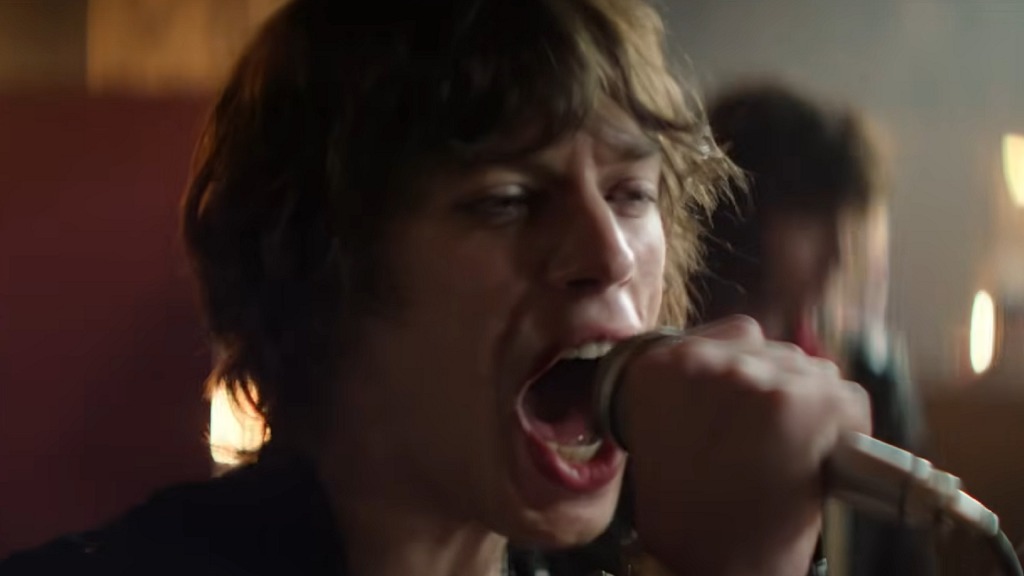
This dream has now come to soft-focus fruition with the band’s new music video, “In The Stars,” which has, as both the beginning and end of its premise, a fulfillment of every long-time Rolling Stones fan’s desire for it to just please be fuckin’ 1978 again. Per THR, the video employs body doubles for Mick Jagger, Keith Richards, and Ronnie Woods—in a rare upset victory for the forces of good taste, late drummer Charlie Watts is spared—who have then been altered by deepfake technology from tech firm Deep Voodoo to create the illusion of youth and vitality. (For those who’ve forgotten, Deep Voodoo was founded by Trey Parker and Matt Stone, and then spun off of their Park City production company, and was used in part for some of the show’s recent Trump deepfakes.)
The comments for the video—which also features Actual Young Person Odessa A’zion dancing with, and occasionally licking, the Digital Stones—are a chorus of people resolutely refusing to memento mori, crowing factually untrue statements like “Stones will live forever!” Despite the boisterous energy—and a song that is, y’know, listenable on a scale of late-era Stones songs—it’s all pretty relentlessly grim, as an aging generation pours vast resources into producing an illusion of youth that is no longer even skin deep. And also the South Park guys were there!
Indonesia is officially targeting Country of Honor status at Cannes in 2028.
Culture Minister Fadli Zon, speaking to Variety at Cannes, laid out a sweeping strategy to move Indonesia from the margins of the international screen industry toward what he describes as a central and influential role within it.
“That is not only about prestige, but about creating a larger international platform for Indonesian cinema, culture, and creative talent,” Zon says of the 2028 ambition.
The push comes at a moment when Indonesia’s film industry is generating outstanding local box office but hasn’t yet converted that momentum into consistent international breakthrough. Zon frames the ministry’s response around expanding global distribution and export capacity, broadening festival access for regional filmmakers, and building more competitive incentive structures — areas he identifies as active policy priorities.
On tax incentives and production rebates, an area where competitors including South Korea and Thailand have moved aggressively, Zon acknowledges Indonesia is still developing its architecture. “Yes, we recognize that incentives and rebates are increasingly important in the global film industry, particularly as countries compete to attract international productions, investment, and creative partnerships,” he says, adding that the ministry is studying international models while ensuring any scheme delivers measurable impact for local talent development and economic value creation. In the interim, the government has established matching fund schemes and collaborative financing models designed to strengthen partnerships between Indonesian filmmakers and global industry players. In parallel, the ministry draws on Dana IndonesiaRaya, the country’s cultural endowment fund, which supports talent development, production assistance, international mobility, and festival participation.
Indonesia’s 2026 Cannes presence is anchored by Next Step Studio Indonesia, a talent incubation and co-production initiative for young filmmakers backed by the Ministry of Culture, the Jakarta Provincial Government, the Embassy of France in Indonesia, and Institut Français Indonesia. The program reflects bilateral cultural commitments outlined in the Borobudur Declaration between Indonesia and France. Indonesia’s broader Cannes push is also building on momentum from a meeting between President Prabowo Subianto and President Emmanuel Macron last year, at which both leaders reaffirmed their commitment to expanded cultural collaboration. Alongside Next Step Studio Indonesia, an Indonesia-France Film Lab and institutional partnerships with La Fémis and the CNC form the core of the country’s European co-production strategy, with the Netherlands also identified as a key partner in talent exchange and film education.
Indonesian filmmakers and producers are participating across multiple Cannes industry platforms this year – Cannes Docs, the Producer’s Network, SFC Rendezvous Industry, and the SamaSama Lab matchmaking program – as well as expanding engagement with Critics’ Week and the Annecy Animation Film Festival. Indonesian Cinema Night, held on May 14, was designed to connect producers, directors, and institutions directly with international investors, festival programmers, and industry partners.
The ministry’s local strategy is equally broad. The National Talent Management Program for Film, known as MTN, is designed to create structured career pathways for filmmakers from regional areas – an explicit effort to ensure that Indonesia’s screen industry does not consolidate around Jakarta. Zon is emphatic that geographic inclusivity is not just a cultural principle but a competitive one. Indonesia is a country of 1,340 ethnic groups, more than 17,000 islands, and 718 local languages – representing roughly 10% of the world’s linguistic heritage – and Zon argues that the richness of that regional storytelling is precisely what differentiates Indonesian cinema internationally.
“The more authentic a story is, the more universal its emotional resonance can become,” he says. On the question of whether local cultural specificity conflicts with global marketability, he dismisses the framing entirely. The two goals, he argues, reinforce one another.
Zon sees the current generation of Indonesian filmmakers as evidence of that. He points to a cohort increasingly willing to engage with social, political, environmental, and historical material – identity, inequality, urbanization, gender – with honesty and nuance. “What we are seeing now is the emergence of a generation of filmmakers who are technically skilled, globally connected, and culturally grounded at the same time,” he says. “That combination gives Indonesian cinema a stronger voice both domestically and internationally.”
On streaming, Zon rejects the framing of platforms as a threat to theatrical culture, instead describing them as complementary. Streaming has expanded access to Indonesian stories and connected local content with younger and international audiences, he says, while cinema halls remain culturally distinct – collective spaces that preserve the communal dimension of film as an art form. The ministry’s priority, he adds, is building a balanced ecosystem where both can grow in parallel.
The rapid rise of microdramas, short-form storytelling, and creator economies is on Zon’s radar, particularly given Indonesia’s position as one of Asia’s most dynamic digital markets. He sees the format as a genuine entry point for emerging talent. On artificial intelligence, his position is careful. “AI is both an opportunity and a challenge, and our responsibility is to ensure that technology strengthens – rather than weakens – the creative ecosystem,” he says. Efficiency gains in editing, subtitling, visual development, and production logistics are welcome, he argues, but technology must support rather than displace the human creative labor that defines cinema’s cultural value. The ministry, he says, is developing policy frameworks to protect creative workers and intellectual property alongside innovation.
Looking five years out, Zon’s benchmark for success is specific: Indonesian films and series appearing consistently at major international festivals, wider global distribution, and Indonesia functioning as an attractive production hub for international collaborations – not only because of its landscapes and market scale, but because of the strength of its creative talent and cultural depth. He is equally insistent that growth must remain inclusive, reaching regional creators and independent voices alongside larger commercial productions.
“If we can build that ecosystem consistently,” he says, “Indonesia will not simply participate in the global screen industry; it will become an important and influential contributor to it.”
A West Kelowna, B.C., business owner is speaking out about a frightening confrontation inside his pizza shop, which appears to have been part of a social media prank.
Dalwinder Dub, owner of Evergreen Pizzeria, says the incident, which happened last week on a Wednesday evening, went too far.
Dalwinder Dub, owner of Evergreen Pizzeria, says the incident happened Wednesday evening when a teenager ran into the restaurant pleading for help.
“Please help me, help me, someone is chasing me,” Dub recalled the teen shouting.
Security footage shows the teen peering out the front window moments before a second teenager rushes inside, yelling at the first teen.
“He was screaming that, ‘Hey, I’m gonna kill you, I’m gonna do this and that,’” Dub said.
Story continues below advertisement
Concerned, Dub said he immediately stepped in to try to calm the situation, placing himself between the two teens.
Security video also shows that at one point, the second teen jumped onto the counter before Dub was eventually able to force him out of the restaurant.
But Dub said what upset him most was what happened afterward.
Get breaking National news
Get breaking Canada news delivered to your inbox as it happens so you won’t miss a trending story.
According to Dub, the two teens left together in the same vehicle.
“Heartbroken when I realized that they are together,” Dub said. “At that time, I was happy to help other guy, right?…I was just concerned about his safety.”
Dub said said a cellphone and some petty cash were stolen during the incident, one he now believes was part of a social media prank.
“The investigation remains ongoing and police are following up on the information available.” said Const. Ash Puri, West Kelowna RCMP media relations officer.
“The suspects were described as wearing similar clothing and may have been recording their actions.”
A video of the incident was later posted to TikTok and appears to have been recorded using sunglasses with filming capabilities.
TikTok allowed to keep operating in Canada after security review
Dub expressed disappointment, saying it’s a potentially dangerous trend.
Story continues below advertisement
“I’m always happy to help but next time, if someone comes and asks for help, I think I will think twice — should I help them or no?,” Dub said. “They might genuinely need help but I will hesitate.”
While Puri said social media pranks have not been reported to the West Kelowna Detachment in recent months, police treat the reports seriously.
“West Kelowna RCMP takes all complaints seriously including ‘pranks’ and investigate each one thoroughly to determine their validity,” Puri said.
Dub is calling on the teens involved to return the stolen items and apologize.
“They should come back and then tell me that, hey, this is your stuff and this was a prank,” Dub said. “We are sorry.”
Social media issues should be fixed before considering ban for youth: Canada’s privacy commissioner
Michael Jackson’s estate dropped something for the culture today. A three-hour “The Best of Michael Jackson” playlist is now live on Spotify, and they came correct with the framing.
The caption pulled a quote straight from Pitchfork: “Consider the possibilities that Michael Jackson unlocked in every song, the infinite magic that he could create out of an empty room.” That’s not marketing copy. That’s real critical writing, and whoever chose that line to anchor the drop knew exactly what they were doing.
The Spotify link went out through Instagram Stories, giving followers a direct path to the collection. The caption post drew nearly 99,000 likes – a strong number for what is essentially a streaming redirect with no big promo machine behind it.
Now let’s actually talk about what three hours means for a catalog this deep. You’re not just getting the obvious radio hits. You’re getting the full range. The funk grooves of “Off the Wall.” The global pop takeover of “Thriller.” The New Jack edge of “Dangerous” and the cinematic scope of “HIStory.” Michael Jackson didn’t make one kind of music. He kept evolving the sound, upgrading the whole project with every album cycle. Three hours starts to do justice to that.
That Pitchfork framing gets at something real about what made Jackson special. MJ wasn’t a product of any particular trend. He wasn’t leaning on a hot producer to carry him across the finish line. He built something new from scratch, every single time. That’s what separates the greats from the legends.
Jackson passed away in June 2009 at age 50. Since then, the estate has stayed active – keeping the catalog in front of listeners through streaming releases, licensing deals, and careful catalog work. Dropping a three-hour best-of in 2026 is a deliberate move. They’re not letting this legacy coast on name recognition alone.
That’s the smart play for this streaming era. A deep three-hour listen can convert casual recognizers into real fans. Picture someone who only knows “Billie Jean” from a commercial. They tap this playlist and come out knowing “Wanna Be Startin’ Somethin’” or “She’s Out of My Life.” That’s how a legacy grows legs.
The Pitchfork co-sign adds another layer. It frames Jackson not just as a nostalgia act but as an artist worth serious listening. Younger audiences grew up in a post-MJ world. For them, that kind of critical framing opens a door that nostalgia alone doesn’t.
Nearly 99,000 likes on a simple caption post – no big rollout, no celebrity co-signs needed – shows the fanbase stays locked in. The name alone drives the engagement. The catalog does the rest.
Three hours of Michael Jackson’s greatest work is on Spotify right now. That’s the assignment for today. Go run it.
Two years ago, technologists at OpenAI published a blog post detailing how the company had developed the ability to replicate human voices using powerful artificial intelligence technology. The new software was so advanced, the researchers said, that OpenAI decided not to release it to the public out of an abundance of caution.
While the company’s position has not changed, it has not stopped OpenAI from continuing to work on the technology. This year, OpenAI quietly purchased a small start-up, Weights.gg, that offered A.I. tools to create clones of people’s voices, two people familiar with the deal said on the condition of anonymity because they were not authorized to speak publicly.
Terms of the deal, which has not been publicly reported, could not be learned. People familiar with the acquisition said OpenAI had bought both the company’s small team of employees and its intellectual property. Weights.gg announced it was shutting down its services in March.
Weights.gg worked as a kind of social network for creating and sharing A.I. algorithms that could do things like clone voices using the company’s free consumer app, which is called Replay.
One YouTube user showed how he had used Weights.gg’s technology to clone the voice of the actor Samuel L. Jackson. Some of the top voice models in the company’s repository included clones of Taylor Swift, Kanye West and members of the popular K-pop band Blackpink.
Weights.gg’s tools were also used to clone other copyrighted voices, including Bugs Bunny and Daffy Duck. Weights.gg’s library also contained the voices of prominent political figures, including President Trump and former President Joseph R. Biden Jr.
Some high-profile figures, including Mr. Jackson, have opposed the cloning of their voices using the technology. Last month, Ms. Swift filed a series of applications with the U.S. Patent and Trademark Office in order to trademark her voice and likeness.
Weights.gg employed a half-dozen people and has raised roughly $4 million in venture capital, according to data compiled by PitchBook, a research firm.
OpenAI has run afoul of copyright issues in the past. Last year, the company released Sora, a smartphone app that allowed people to instantly generate videos of copyrighted characters without their permission. The company quickly ran into resistance from Hollywood before striking deals to use them.
(The New York Times has sued OpenAI and Microsoft, claiming copyright infringement of news content related to A.I. systems. The two companies have denied the suit’s claims.)
It is unclear what OpenAI plans to do with the Weights.gg team and technology. But Weights.gg employees have disbanded to work on teams across different parts of the company, the two people said. It is unlikely to release a similar product to Weights.gg, they said.
In recent months, OpenAI has scaled back some of its ambitions in order to focus on revenue-generating products, as it looks to begin trading as a public company by the end of this year. OpenAI shuttered the Sora video app this year. It has also sought to repair its ties to Hollywood by poaching Instagram’s “celebrity whisperer,” Charles Porch, to smooth over frayed relationships.
Instead, it has focused on incorporating its voice technology into other parts of the company. This month, OpenAI released information on how third-party developers can use the company’s application programming interface, or A.P.I., to incorporate OpenAI’s voice technology into outside apps and services. Those uses, which developers would pay to use, could include providing real-time voice translation services or interacting with “agents” using voice commands.
OpenAI has also released its ChatGPT in Apple’s Car Play app, which allows people to give the chatbot voice commands while driving. That functionality has improved over time through OpenAI’s investments in voice technology.
OpenAI appears to have no immediate plans to release its voice cloning technology outside of a limited set of partners, according to the company’s 2024 blog post. And in other blog posts, OpenAI has said it encourages increased safety practices around voice-cloning technologies like the kind it has created.
Taylor Frankie Paul revealed she’s become closer with many of her “Bachelorette” contestants, despite her personal drama derailing the planned Season 22.
The embattled reality star, who is known for starring on Hulu’s “The Secret Lives of Mormon Wives” and was set to be the titular lead on the ABC dating competition series, issued the update on her Instagram Friday evening.
Alongside a video of herself dancing with Shane Parton, who was one of her on-camera suitors for Season 22, Paul addressed the misconception that “the men are pissed” over the situation.
“Oddly we became closer,” Paul wrote atop the footage. She added in the caption, “Handful of them have shown consistent kindness this entire time. [Shane Parton] tell your parents they can come visit now that I got extra space.”
Watch the video below.
As we previously reported, in March, ABC pulled Paul’s season of “The Bachelorette” mere days before it was slated to premiere. The decision to shelve Paul’s season of “The Bachelorette” came after video surfaced online of a domestic violence incident between Paul and her ex, Dakota Mortensen, for which she was arrested in 2023.
Specifically, Paul and Mortensen were involved in a domestic violence incident in Season 1 of “The Secret Lives of Mormon Wives,” which documented the aftermath of the legal situation. Footage of this Season 1 incident, which occurred in 2023 and resulted in Paul’s arrest, was shared by TMZ — amid production’s recent pause over new domestic violence allegations — and showed Paul throwing several metal barstools at her then-boyfriend, as well as inadvertently hitting her daughter. The ex-couple have exchanged accusations of abuse at one another in the aftermath.
However, in April, the Salt Lake County district attorney declined to file charges against the reality star, noting at the time, “Several incidents that were submitted do not rise to the level of criminal offenses. The remaining incidents lack sufficient evidence to support filing criminal charges where the State must be able to prove such allegations beyond a reasonable doubt. Such incidents lack specificity as to when and what actually occurred or corroboration.”
A week later, Paul’s Hulu show, the aforementioned “The Secret Lives of Mormon Wives,” resumed filming Season 5.
There’s currently no word on what’s to become of “The Bachelorette” Season 22 and it was notably absent from ABC’s summer slate — despite rumors suggesting otherwise.
Though, ABC did renew “The Bachelor,” “Bachelor in Paradise” and “Dancing with the Stars” for new seasons during the 2026-27 TV season.
Adrià Monés’ Fasten Films, producer of Cannes-selected “The End of It,” “Strawberries” and “Rehearsals of a Revolution,” has announced a new slate of films led by Catalan talent Mar Coll, Maria M. Bayona, Adrià Garcia and Nely Reguera.
Fasten is also developing debut features from Víctor Alonso-Berbel, Jordi Boquet, Carlos Lechuga and Oriol Pérez, positioning the Barcelona, Madrid and Canary Island-based production house as a driving force in a new-phase and already vibrant Catalan Cinema.
Mar Coll: ‘Dasha’
Col (“Salve María”) is set to direct “Dasha,” “a dream project for us as producers, a mafia thriller and black comedy set in the wild, excessive Lloret de Mar of the 2000s, where entertainment and political tension collide,” said Monés.
“Dasha” also marks “a bold new step for Mar Coll, one of the filmmakers who helped shape a new Catalan cinema, working here with Valentina Viso, one of the key screenwriters in Spanish cinema, and Nataliya Kolesova, an emerging Ukrainian-Russian-Catalan voice with a singular perspective,” Monés added.
Following on her English-language debut, Cannes Premiere title “The End of It” starring Rebecca Hall, Noomi Rapace and Gael García Bernal, Bayona will shoot in Catalan, her native tongue, “The First Witch,” set to be shot in the Pyrenees.
“A rare voice in Spanish cinema, Maria combines emotional precision, genre ambition and a fearless sense of scale, and this new project feels both culturally rooted and unapologetically ambitious,” Monés enthused.
Adrià Garcia: ‘Sira and the Hidden Arcadia’
Fasten’s first family animated feature mixing 2D, 3D and stop motion, Garcia’s “Sira and the Hidden Arcadia” will be made in collaboration with Guillermo del Toro’s Guadalajara-based Taller del Chucho and written with Mixtec filmmaker and screenwriter Ángeles Cruz and Ulises Porra.
Nely Reguera: ‘Teresa Up in Arms’
“A dramatic comedy full of emotion, slapstick and tenderness, in which Nely Reguera completely subverts the traditional figure of the stepmother,” said Monés, Reguera’s new project, “Teresa Up in Arms” “moves as far away as possible from the Walt Disney archetype: it laughs at menopause, mindfulness and contemporary self-help culture, while fighting for a more generous, complex idea of family,” Monés added.
Reguera will write with Eduard Sola, a 2025 original screenplay Goya Award winner for “A House in Flames,” and Viso, Mar Coll’s regular co-scribe and a Catalan Academy Gaudi Award orginal screenplay winner for 2024’s “Salve Maria.”
Fasten’s Next Step Forward
Rolling off a rich new talent ecosystem of film schools, led by Pompeu Fabra U and the Escac, Catalonia’s film industry benefits hugely from robust support this decade from the Catalan Government’s ICEC film-TV agency, which launched a Minority Co-Production Feature Film Fund in 2020 and followed up with €1.5 million ($1.7 million) grants for higher-end Catalan-language TV series.
Carla Simon’s “Summer 1993,” a 2017 Berlin Best First Feature Film, brought down the flag on the closest Spain has had to a film movement in decades: Auteurist fiction films grounded in a large sense upon a specific place, but which talk about big picture social and gender issues. Simon’s “Alcarràs” won a Berlinale Golden Bear, “20,000 Species of Bees,” a Catalan co-production a year later.
Bulwarked by Catalonia’s Minority Co-Production Fund, Monés has already carved out a reputation for remarkably cosmopolitan co-production. He partnered, for instance, on Cannes’ 2023 Camera d’Or winner “Inside the Cocoon Shell.” Fasten Films’ new slate, however, now aims to broaden the Catalan cinema’s gamut, go pedal to metal on ambition and add a broader audience edge.
Fasten’s new slate represents “the kind of cinema we believe in: ambitious, original and unafraid,” Monés told Variety. “They grow out of the intimate drama that has defined much of recent Catalan auteur cinema, a tradition we deeply admire and feel indebted to, but they also try to take a step further, embracing genre, spectacle, emotion and political engagement, while reclaiming cinema as a collective celebration.”
That new ambition cuts various ways. One can be scale. “The End of It” weighs in with a budget of nearly €8 million ($9.3 million), said Monés. “First features with this budget are very difficult to finance,” he recognized. He managed to mesh, however, financed international co-production – BBC Films, Norway’s Eye Eye Pictures, behind “Sentimental Value,” as well as Canary Island tax incentives, a Spanish ICAA film agency subsidy, a Filmin streaming service pre-buy and U.S. investors. The Mediapro Studio took an equity position and made a Latin America pre-buy.
Another step forward for Monés is certainly genre, natural for a producer who cut his teeth making “[REC]” in the Canary Islands. Monés calls “The End of It” a near future drama with genre elements. Bayona’s follow-up, “The First Witch,” is set against the earliest witch hunts in the fifteenth century. “The film reminds me a bit of Chicho Ibañez Serrador’s ‘Who Can Kill a Child?’ It’s genre edge, of about talking about society, violence suffered by children, and how it repeats in time.”
The ambition is also artistic, however. “Sira and the Hidden Arcadia” “brings together Mixtec culture and Catalan modernism in an adventurous, emotional and visually singular world. It speaks about identity in all its forms, gender, origin and belonging, at a time when the world seems to be turning inwards,” Monés explained.
Behind such expansive moves, however, is one of the only production strategies which has worked down the decades: Talent.
“For me that always comes first,” Monés told Variety. I remember how, six or seven years ago, a mutual friend sent me María’s shorts and they drove me wild with enthusiasm. I told María: ‘Whatever you want, let’s do it.’ So we began to develop a screenplay and then María said she had another idea but was a very expensive sci-fi film. I said we could never make it just in Spain. María said she wanted to make it. So I said we’d have to make it a different way.”
Tangier Island is disappearing. Its shoreline has been eroding for decades, but rising sea levels now threaten to submerge the Chesapeake Bay site completely. Some scientists have predicted it will be uninhabitable in a matter of decades. Its population has dwindled to a few hundred and continues to decline.
Yet this tight-knit Virginia community is distinctive, in part, for its high percentage of residents who do not believe that climate change is caused by humans, or perhaps that it is real at all. (In the 2024 national elections, the island showed strong support for former President Trump — 88 percent of votes cast.) That complicated dynamic is the focus of David Usui’s new documentary, “Been Here Stay Here” (in theaters), a lyrical, empathetic, elegiac portrait of the island and its inhabitants, who are watching their homes slip away and calling out to God to save them.
The film unfolds slowly as a series of vignettes. We pull up to the island with a tour boat as a guide explains various facts to the passengers. Tangier has two churches (one Methodist, one nondenominational) and one school. It’s only a few feet above sea level, and a couple of miles wide and long. The men of the island are mostly “watermen” — they fish and crab and work on boats. As the filmmakers spend time there, a picture develops of a devout community of mostly lifelong residents whose families have been there for many generations, and who are watching their land disappear before their eyes. “Man is not causing the climate to change,” one old-timer tells a visitor. “We can’t do anything about it.”
“Been Here Stay Here” is less about the mechanics of climate change or the politics around it than the quiet mental and emotional forces that shape a group of people. We watch children talking about having to “build a big wall” as they play on the beach or describing the weather in intimate terms as they bike around the island. We follow a young boy learning his family’s fishing trade on the water and wonder if he’ll be able to pursue the same livelihood. Old men question whether the island will exist for their grandchildren, and old women in church describe their blessings and express their faith that God will save their homes. One islander, now at college, tries to explain his upbringing to new friends around a bonfire at school.
Scientists appear on the island and in a classroom to talk about the realities of what’s happening to Tangier Island, and some of the reasons that measures like building an extensive sea wall haven’t been taken. But this is not a didactic film. It is almost hypnotic. Periodically, Usui weaves together shots of the waves with meditative words from residents in their hard-to-describe dialect. Most say they’re waiting for God to save them or share parables from the Bible. “All of us are expecting something to happen immediately,” a man’s voice says. “But yet, the Lord works in His own time.”
Time is slipping away for Tangier Island, just like its shoreline. “Been Here Stay Here” beautifully captures what it is right now, then asks us to consider what will probably be lost soon.
Brian Lindstrom, a filmmaker whose documentaries shined a light on society’s underdogs and inspired social change, has died. He was 65.
Lindstrom’s wife, author Cheryl Strayed, confirmed the news on Instagram Friday.
“Brian Lindstrom died this morning the way he lived — with gentleness and courage, grace and gratitude for his beautiful life,” she wrote. “Our children, Carver and Bobbi, and I held him as he took his last breath and we will hold him forever in our hearts. The only thing more immense than our sorrow that Progressive Supranuclear Palsy took our beloved Brian from us is the endless love we have for him.”
According to the National Institute of Neurological Disorders and Stroke, PSP is caused by damage to nerve cells in areas of the brain that control thinking and body movements. The rare neurological disease progresses rapidly.
Strayed, who penned the bestselling memoir “Wild,” which was later adapted for the big screen and starred Reese Witherspoon, announced just weeks ago that Lindstrom had been diagnosed “with a serious, fatal illness.”
Lindstrom was born Feb. 12, 1961. The son of a bartender and a liquor salesman, he was raised in Portland, Ore. — which he and his family still called home.
He was the first member of his family to attend college, which he paid for by taking out student loans, landing work-study jobs and working summers in a salmon cannery in Cordova, Alaska. During a 2013 TEDx Talk, Lindstrom said that after he’d exhausted all the video production classes at Portland’s Lewis & Clark College, his professor Stuart Kaplan gave him a gift certificate to a class at the Northwest Film Center. There, Lindstrom made a short film about his grandpa that landed him a spot in the MFA program at Columbia University.
It was a train trip with his grandpa that inspired Lindstrom to tackle challenging topics with a lens that restored dignity to his subjects. His grandpa was a binge-drinker, and on day three of the trip, he woke up with a hangover and was missing his dentures. Lindstrom, only 5 at the time, noticed the way other passengers treated him and his grandpa differently.
“I think what my films are about is that search for my grandfather’s dentures, the humanizing narrative that bridges the gap between us and them and arrives at we,” he said.
Lindstrom said he returned to Portland after film school and “did several projects with the Northwest Film Center that had me putting a camera in the hands of kids on probation, homeless teens, newly recovering addicts, hard-hit people who had hard-hitting stories to share.”
“Those projects taught me so much about the transformative power of art, and they gave me permission I felt in my personal films to ask people if I might follow them, so that an audience could better understand what they were going through, and by extension, better understand themselves,” he said.
Lindstrom’s 2007 award-winning cinéma-vérité-style film, “Finding Normal,” followed long-term drug addicts as they left prison or detox and tried to rebuild their lives with the help of a recovery mentor.
“What I’m most proud about is that ‘Finding Normal’ is the only film to ever be shown to inmates in solitary confinement at Oregon State Penitentiary, and not, I might add, as a punishment,” Lindstrom said.
In 2013, he released “Alien Boy: The Life and Death of James Chasse,” a documentary that illuminated the life of a man who grappled with schizophrenia and examined his death, which happened in police custody. Discussing the film with LA Progressive in 2018, Lindstrom said that he doesn’t make films for audiences.
“I make them for the people in the film. It is my small way of honoring them,” he told the outlet. “That doesn’t mean I don’t delve into dark areas or that I ignore that person’s struggles. I’m much more concerned with trying to achieve an honest depiction of that person’s life than I am with any potential audience reaction.”
Lindstrom’s work aimed to inspire empathy and humanize those suffering in the margins of society, but it also catalyzed policy change. His acclaimed 2015 documentary, “Mothering Inside,” followed participants in the Family Preservation Project (FPP), an initiative helping incarnated moms establish and maintain bonds with their children.
Midway through filming the documentary, the Oregon Department of Corrections announced it planned to nix funding for the FPP. Lindstrom hosted early screenings of the film, which inspired grassroots advocacy that reached then-Gov. Kate Brown, who subsequently signed legislation that restored funding. The film’s release also helped make Oregon the first state in the U.S. to pass a bill of rights for children of incarcerated parents.
Partnering with Strayed, Lindstrom made the documentary short, “I Am Not Untouchable. I Just Have My Period,” for the New York Times in 2019. The film highlighted the experience of teen girls in Surkhet, Nepal, and the menstrual stigma they faced. Most recently, the filmmaker released, “Lost Angel: The Genius of Judee Sill,” which examined the folk-rock singer’s life from her traumatic childhood and drug-addled adolescence through her rise in the Laurel Canyon music scene and untimely death.
Lindstrom, discussing “Judee Sill” and his style as a filmmaker, told Oregon ArtsWatch, “It’s the chance to kind of focus on the question: What does it mean to be human? The person that the film is about, what can they teach us, what can we learn from them? What can they learn from themselves?”
In 2017, Lindstrom received the Civil Liberties Award from the American Civil Liberties Union of Oregon for his work advancing civil rights and liberties. That same year, he received the Distinguished Alumni Award from Lewis & Clark College.
In Strayed’s post announcing Lindstrom’s death, she described their more than 30-year partnership as a stroke of “tremendous luck.”
“We loved each other and our kids with deep devotion and true delight. He was a stellar husband. He was the most magnificent dad. He was a man whose every word and deed was driven by kindness, compassion, and generosity,” she wrote. “He saw the goodness in everyone. He believed that we are all sacred and redeemable.
“His work as a documentary filmmaker was dedicated to telling stories of people who, as he put it, ‘society puts an X through.’ He erased that X with his camera and his astonishing heart.”
Strayed’s memoir — which followed her as she hiked 1,100 miles along the Pacific Crest Trail in the wake of her mother’s death, a battle with drug addiction and divorce from her first husband — concludes with a happy ending. She finished the months-long hike and sat on a white bench near the Bridge of the Gods, a stone’s throw from the spot where, she writes, she’d marry Lindstrom four years later.
“His greatest legacy is Carver and Bobbi, who embody everything good and true about their father. Their extraordinary grace, courage, and fortitude during this harrowing time was unfaltering and grounded in the undying love Brian poured into them every day of their lives,” she wrote. “We do not know how we will live without him. We’re utterly bereft. We can only walk this dark path and search for the beauty Brian knew was there. It will be his eternal light that guides us.”
Despite years of speculation surrounding Wanda Maximoff’s fate in the MCU, a new report suggests Marvel Studios could move forward with the Scarlet Witch’s next major appearance without bringing back Elizabeth Olsen. The character has remained presumed dead since the ending of Doctor Strange in the Multiverse of Madness, even as projects like Agatha All Along continued her legacy. While many fans have expected Wanda to eventually resurface in upcoming event films like Avengers: Doomsday or Secret Wars, the latest rumor claims Marvel may be considering a unique approach for the Scarlet Witch’s return.
According to insider Alex Perez of The Cosmic Circus, there is evidence pointing to the Scarlet Witch appearing in Avengers: Doomsday, though not necessarily with Elizabeth Olsen physically involved on set.
Perez claimed Marvel Studios allegedly used stunt doubles wearing masked costumes resembling those seen in the 2005 film Kingdom of Heaven in order to conceal unannounced characters tied to Doctor Doom’s followers.
He specifically noted that “even if you see [Scarlet Witch] in [Avengers: Doomsday], chances are it isn’t [Elizabeth] Olsen:”
There is evidence that points to the Scarlet Witch being in Doomsday, but I cannot reveal too much because of my source. The important thing to keep in mind here is that even if you see her in the film, chances are it isn’t Lizzie Olsen, because most of the time they filmed with stunt doubles who don’t speak and are masked with masks that look like the ones from the movie Kingdom of Heaven.”
Marvel Studios
He described this tactic as “a very cheeky way” to get a variety of characters in Doomsday that haven’t been confirmed yet:
“Which was a very cheeky way to get to film a lot of characters who ‘aren’t confirmed’ yet but are in the movie, mainly as part of Doom’s followers.”
Perez’s comments became more speculative from there, as he tied Robert Downey Jr.’s Doctor Doom to Wanda Maximoff through an unexplained power or ability.
Perez also pointed fans toward the previously leaked Doomsday concept art as supporting evidence, teasing that “crowns come in all shapes, sizes, and colors” before listing blue, red, purple, and green crowns:
“Aside from that, there is something plotwise that Doom does in the movie that has only ever been done in the MCU by two other people up until now, and it points to Wanda being the one who grants him this ability. Lastly, if you really want to find some evidence that Wanda is in this movie, look no further than leaked concept art. Remember to look closely. Crowns come in all shapes, sizes, and colors. Blue, Red, Purple, and Green.”
That said, the theory becomes harder to understand when comparing it to the actual leaked artwork from 2025. Wanda herself does not visibly appear in the images, which mainly depict Doom seated on a throne alongside several apparent allies or followers, including what fans believe could be variants of Doctor Strange, Yelena Belova, Sue Storm, and Franklin Richards.
Perez’s “crowns” clue may reference Billy Maximoff, specifically the blue crown, while the broader theory connects the different crown colors to Wanda’s family lineage, including Magneto and Polaris. Ian McKellen will, in fact, be back as Magneto in Doomsday, giving the theory some credibility.
Still, much of that interpretation remains speculative at this stage, especially since Wanda is still dead in modern MCU canon, and the way she returns is still a mystery.
How Will Scarlet Witch Return to the MCU?
Wanda’s return in Avengers: Doomsday would firstly involve her surviving the collapse of Mount Wundagore in Multiverse of Madness, followed by her eventually falling under the influence of RDJ’s Victor von Doom.
Given Wanda’s emotional instability and lingering guilt over her actions, Doom could easily position himself as a figure attempting tosave the Multiverse, convincing her that helping stop Incursions is a path toward redemption.
To avoid repeating her arc from WandaVisionor even Multiverse of Madness, Marvel Studios may need to shift the focus away from self-sacrifice alone and instead center her redemption around genuine accountability.
Rather than ending with Wanda simply realizing she was wrong again, the studio could force her to actively confront the consequences of her actions across multiple universes. There’s also no reason to think that fans should expect Wanda in Doomsday to be from Earth-616; there’s always a chance Variants will be at play.
After a sad-but-brief departure, The Muppets are ready to move back into Walt Disney World’s Hollywood Studios. They’re taking over the park’s Rock ‘n’ Roller Coaster. The Electric Mayhem will let guests groove out while twisting and turning around the track, but before visitors get to ride in a high-speed Lengthy Immediate Motion Object (L.I.M.O.), they’ll see some other famous Muppets. We’ve known that will include a pre-show with an animatronic of Scooter. He’ll try to keep the band focused on getting to its big show. Now, as the ride prepares to reopen, we know the incredible way Disney brought Scooter to life. They motion-captured the actual Scooter muppet.
Disney
Few photos in life have ever brought me as much joy as that one. Seeing an actual Muppet performing— sincerely and not as a bit–in a motion-capture suit is truly magical. It will also help make the new Rock ‘n’ Roller Coaster experience even better. The Mouse House said, “By recording and tracking Scooter’s performance, Walt Disney Imagineering was able to build and program a figure that looks, moves, and emotes exactly like Scooter should, right down to the small details.”
Scooter is not the only animatronic fans will see in the recording studio. Penguins will also serve as engineers. And previous concept art shows two of the most famous Muppets of them all will also be on scene to keep the band in line.
Click To View Gallery
Disney
This incredible motion-capture Scooter is just one of the many new features fans will find both inside and outside of the re-themed attraction when The Electric Mayhem realize they have a gig. Disney also shared new merchandise, food, artwork, and photo pass opportunities that will be available to guests when it Rock ’n’ Roller Coaster Starring The Muppets officially opens on May 26, 2006.
Earlier this week, Xbox CEO Asha Sharma put the following question to fans on social media: “Xbox” or “XBOX”? Out of the 19,176 votes cast, all caps XBOX was the clear winner with 64.8% of the total. Now, Microsoft has seemingly taken that to heart by rebranding the Xbox account on X with all-caps XBOX.
The Verge was one of the first outlets to notice the change, and it notes that Xbox’s Bluesky and Threads accounts have yet to reflect the slight renaming. When reached for comment by The Verge, Microsoft directed readers back to Sharma’s poll on X.
When the original Xbox console was released in 2001, its name was in all caps. The subsequent logos for its successors were also in caps, but the brand was spelled normally by Microsoft. Earlier this year, Sharma reverted Microsoft Gaming’s name back to Xbox, so it’s entirely possible that the XBOX spelling is back as well. This may be an exercise in branding and nostalgia for a time when Xbox was at its peak before the significant declines that the company has recently suffered in hardware and game sales.
Everyone’s favorite blue hedgehog is zooming back to theaters as production wraps on Sonic the Hedgehog 4.
Director Jeff Fowler, who has helmed all four movies in the franchise, announced on Friday that filming had concluded on the fourth installment of the Paramount/Sega franchise, sharing a set photo of himself with the hedgehog’s robotic doppelganger Metal Sonic.
“And that’s a wrap on #SonicMovie4!!!” wrote Fowler on X. “On behalf of this amazing cast/crew, we have filmed the BEST Sonic Movie yet and can’t wait to share.”
Producers are Neal H. Moritz and Toby Ascher, and Toru Nakahara. Together, the Sonic franchise has surpassed $1 billion, with the latest installment becoming the highest-grossing film in the series, earning over $490 million.
Sonic the Hedgehog 3 opened to No. 1 domestically, for two consecutive weeks, and debuted at No. 1 in over 30 markets including the U.K., Mexico, Italy, and Australia. The threequel has driven over $180M in global consumer spending from home entertainment rentals and purchases.
We’ve noted it before, but any time you see Peter Jackson doing press—as he was this week during a Cannes masterclass given shortly after receiving an Honorary Palme d’Or at the French film festival—he’s doing so during valuable time that could be spent thinking about the extinct New Zealand giant moa, and his efforts to use his collection of 400 giant moa bones to bring the very large bird back to life. Can you blame the man, then, if he doesn’t necessarily want to direct The Hunt For Gollum, or is taking a little more time than we were all expecting to make another Tintin film?
This is per Variety, reporting on a wide-ranging talk that was reportedly pretty heavy on AI conversation, and lighter than many of Jackson’s usual human interactions on “How do we bring this giant, terrifying bird back to life?” Jackson states, for instance, that while he thinks AI is going to “destroy the world,” he doesn’t mind it in terms of filmmaking technique, comparing it to any other special effect. (We’d argue that those special effects are designed by human beings instead of being crapped out from datasets scraped from god knows where, but we don’t want to face the wrath of a 2-meter tall, 600-years-dead bird. ) Jackson did express some sadness that Hollywood’s general uneasiness with Tilly Norwood types means his old pal Andy Serkis might be even further from winning an Oscar for his motion-capture performances than he was before, calling it “a bit unfair” that Serkis (who’s directing The Hunt For Gollum, with Jackson’s blessing) is unlikely to ever win an Oscar for his work.
Jackson—who hasn’t directed a non-documentary film since 2014’s The Hobbit: The Battle Of The Five Armies—also expressed his belief that Serkis has got Hunt covered, saying, “Andy knows this guy better than anybody.” But he apparently is still poking at Tintin, saying that he and his partner Fran Walsh are currently in the midst of writing a follow-up to Steven Spielberg’s 2011 adaptation of Belgium’s most beloved non-blue comics export. “The deal was Steven directs one, and I direct another,” Jackson said at Cannes, clearly hopeful that his dreams will take flight, in exactly the way that a six-foot-tall extinct murder bird probably wouldn’t.
The horror genre has a talented new storyteller with Curry Barker in his sophomore feature Obsession, as well as scream queen in the making with star Inde Navarrette.
In the film from writer and director Barker, Bear (Michael Johnston) makes a wish on a cheap novelty toy, a One Wish Willow, that his longtime friend Nikki (Navarrette) will love him more than anything else in the world. The wish is granted immediately, with sinister and gory consequences ensuing.
It’s ultimately a movie about consent and the importance of communication in dating and relationships. This whole bloody affair could have been avoided if Bear could have worked up the nerve to tell his friend how he feels.
Navarrette does her job like a pro, delivering a chilling performance as a possessed lovesick young woman, with the real Nikki being tortured and trying to break free. It’s terrifying and exhilarating trying to guess what she’ll do next and how far she’ll take this romantic fixation, delivering demonic mood swings and creepy mannerisms that will keep audiences clutching their seats.
Focus Features and Universal have built hype around the film and Nikki, creating a text line for fans to talk to the character, who is known to appropriately light up people’s phones in the middle of the night. Meanwhile, street advertisements featuring distressing graffiti in Nikki’s handwriting, expressing her love for Bear.
Barker, who made his debut with 2024’s Milk & Serial, sets an unsettling cinematic atmosphere in his horror breakout, creating a familiar sleepy experience of disenchanted youth, only for the rug to be snatched out under the audience as the terrifying reality sets in.
My only gripe is that there are only two kill scenes, and they are wildly disproportionate. One character is given enough blood and gore to nearly warrant an NC-17 rating, while the other character’s death felt like a lazy afterthought played for laughs.
OK, I have two gripes — Andy Richter is in the movie for all of two minutes as the characters’ boss, and he has maybe one line. Seems like a waste of a comedic legend.
Overall, Barker nails his sophomore feature in a growing new cohort of YouTube creators-turned-horror filmmakers, delivering a chilling moviegoing experience and establishing his style ahead of a busy slate that includes Blumhouse’s Anything But Ghosts and A24’s Texas Chainsaw Massacre.
Producers are James Harris, Haley Nicole Johnson, Christian Mercuri and Roman Viaris.
Title: Obsession Distributor: Focus Features/Universal Pictures Release date: May 15, 2026 Director-screenwriter: Curry Barker Cast: Michael Johnston, Inde Navarrette, Cooper Tomlinson, Megan Lawless, Andy Richter Rating: R Running time: 1 hr 49 mins
[Editor’s note: The following interview contains spoilers for the series finale of “Outlander.”]
Caitríona Balfe and Sam Heughan have played Claire and Jamie Fraser for over a decade of their lives. The two got emotional as they sat down with IndieWire to break down the series’ finale and bid their show a final farewell.
Balfe (whose interview you can see in the video above) also talks about the three episodes that changed her as an actress in the show. And she confesses that Heughan (whose interview you can see below) helped get her through the biggest scene in the finale, when Jamie dies in Claire’s arms.
This season marked Balfe’s debut as a director, making her a triple threat. What people might not know is that part of the finale was also directed by Balfe. The easter egg, a post-credits scene with author Diana Gabaldon was directed by Balfe herself.
‘Outlander’Robert Wilson
She lit up when asked about it. “Everyone in that scene has been on ‘Outlander’ since day one. They are part of the fabric of our show. They are the reason that it is what it is,” she said. “They imbue it with their heart and soul every day.”
Balfe realized something when she re-watched the scene. “My new theory is that Diana (Gabaldon) is Claire, her husband Doug is Jamie, and she is living in plain sight as a time-traveler, because she doesn’t age! Diana Gabaldon has lived all of Claire’s life and somehow, she figured out how to get Doug from the 18th century,” she added, alluding to the fact that unlike Claire, Jamie cannot time-travel.
Heughan and Balfe both just watched the finale for the very first time in their hotel rooms on their computers. So, what did Jamie and Claire’s counterparts think about the ending?
Balfe said, “I mean… they’re together, and that to me is the perfect thing, whatever it is, whatever they do, they’re supposed to be together.” It’s like if Jack and Rose fit on that doomed door. Balfe added, “Romeo and Juliet, Jack and Rose, Claire and Jamie.” Let’s be honest, Jamie would have given Claire the biggest door and been right next to her. Those two would never let a little piece of wood separate them. In fact, in the Season 3 finale, they had a little Jack and Rose moment that found them washed up on a beach in America.
“Outlander” ends its eight-season run before the book series will end. Heughan and executive producer Maril Davis are the only two that know Gabaldon’s ending.
So, is the television show ending and the book ending the same? Heughan said, “I can’t give anything away, but all I can say is, there is a similarity, we’re in the same world, but I don’t know how she’s going to get there. There’s a lot more to come still in her books, so we don’t know.” Balfe and Heughan also confessed they cannot wait to read Diana Gabaldon’s final and tenth “Outlander” book. They too want to know what happens to Jamie and Claire in the future.
The biggest most heart-wrenching scene is when Jamie dies in Claire’s arms. Balfe gives a performance that should undoubtedly earn her the recognition she’s so rightly deserved all throughout the series. “I had a really tough day on set, and Sam was the one who — you put all of this pressure on things and you want it to be so good, and it’s our last season, and you do all this stuff to yourself, and then you’re all wound up, and I remember Sam coming to me and like just letting me have a big ball,” she said. “He just was very reassuring, and we went back, and we finished the scene, and it was perfect, or well, you know, not perfect, but it worked.”
‘Outlander’David Bloomer
According to Heughan. It more than worked.
Surprisingly, Balfe’s toughest scene was quite the opposite for Heughan. “I mean, I had an easy time of it, once Jamie’s dead, I was quite happy to be dead on the mountain, my journey was over, the character was dead,” he said with a laugh. Ouch.
Heughan really is going for the gut punch. “She has this very challenging scene, a moment where she’s screaming by his body, of course Caitríona nailed it, and she’s so powerful, heart-wrenching. But I remember it was difficult for her,” he said. “Not only is it super emotional, physical, but it’s also the end and we were trying to get it right.”
Heughan revealed it was difficult to physically get on the mountain and the cast was taken up there in caterpillar-like vehicles. “I remember sitting with her and talking her, and she needed some support and comfort, but I think she absolutely nailed it,” he said. He added that he knows his co-star so well, but that the support between the two is deeply reciprocal and that she’s been able to be there when he’s gone through tough times. “It’s been so great to have her as a co-star, but also as a great friend.”
The ending of “Outlander” finds Claire and Jamie seemingly not alive, but then, in the last moment, their eyes open and they both take a breath, indicating that, once again, Claire has brought Jamie back to life. She did something similar in Season 5 in a very “handy” way.
‘Outlander’
The show has always hinted that Claire possesses some power that materializes in very white hair and a blue light. After all, she is a time-traveler, so that tracks. But did Heughan see the blue light that emanates out of Claire for a second before it looks like she too may have died in the final scene? “I didn’t see any blue light, I was dead,” Heughan said with a laugh. We get it! Jamie Fraser was dead.
Heughan said they shot the scenes where he has to lay dead in her arms for two days: “I got to lie down a lot, which was great.”
Jamie’s ghost is the ending that Heughan fought for. The very first episode of “Outlander” found a ghost looking up at Claire’s window watching her, but we don’t see who it is. Heughan really wanted that to be tied up, because “playing young Jamie was fun.” He then revealed that he played ghost Jamie in the pilot too.
‘Outlander’
At that point, he had no idea why. “That was me, and I think that may have been the first thing I ever shot. I didn’t really know what this moment was,” he said. That ghost scene bookended his filming on “Outlander,” with it being his very first filmed and then the very last. Heughan added that he loved it for Jamie and Claire: “I think he’s always going to be watching over her.” Ghost, time-travel, and a little thing like death, nothing can keep those two apart.
After they yelled, “Cut” on Heughan for the very last time, he headed right to Balfe and Sophie Skelton, who were watching his last scene. “We had this big group hug, there were a lot of tears, a lot of champagne and I walked off with Jamie’s outfit and I pulled his wig off for the last time, and stuffed it in my bag and went home with it,” he said.
For both Balfe and Heughan, the love that is at the center of their show is also what they will remember most behind the scenes. Balfe said, when she’s 80 years old, she will remember her “Outlander” family. “We have so much fun, we have so much love for each other. And it’s not just the cast, it’s our crew, I’ll just think of the people,” she said.
Heughan quickly agreed: “Caitríona’s right, it’s the cast, it’s the love. And Caitríona herself, you know sharing all these amazing moments with her is so special. I’m really lucky.”
To mark the end of the show, Balfe and Heughan will watch the finale with an audience today; they both are looking forward to it, but there will be tears. “I didn’t think I’d get emotional. I’m going to be bawling again, I didn’t think I’d get emotional during this time, and I’ve been super emotional all day, it’s been very odd,” Balfe confessed.
All episodes of all seasons of “Outlander” are now streaming on Starz.
The rapper dropped Iceman on Friday alongside two other surprise LPs
Drake shattered Spotify records on Friday, less than 24-hours following his simultaneous release of Iceman, Habibti, and Maid of Honour at midnight.
According to Spotify, the rapper became the most-streamed artist in a single day of 2026, thanks to his three-album drop. Iceman also secured the most streams for an album in a single day this year, while “Make Them Cry” is most-streamed song in a single day in 2026 so far.
Elsewhere, the trio of albums collectively delivered the biggest first 24-hour streaming debut globally for any artist on Amazon Music in 2026.
The 43 songs across all three albums mark Drake’s first solo full-lengths since 2023’s For All the Dogs, and a follow-up to his 2025 PartyNextDoor collaboration, $ome $exy $ongs 4 U.Iceman spans 18 tracks and, on Apple Music, is listed at one hour and eight minutes, while Maid of Honour contains 14 songs and runs 45 minutes and Habibti adds another 11 tracks, making them Drake’s ninth, 10th, and 11th studio albums.
Trending Stories
The guest features throughout the LPs highlight a mix of frequent collaborators and up-and-comers including Future, 21 Savage, Molly Santana, Stunna Sandy, Sexyy Red, Central Cee, Popcaan, Iconic Savvy, Loe Shimmy, Qendresa, and PartyNextDoor.
Drake’s album trilogy are his first solo records since his highly publicized feud with Kendrick Lamar in 2025 and in the aftermath of Lamar’s defining diss track, “Not Like Us.” On Iceman, Drake takes aim at everyone from Lamar and A$AP Rocky to Universal Music Group CEO Lucian Grainge.
NOW IN THEATERS! Many people experience an awkward loneliness in their twenties. It’s the sort where you convince yourself that one text message can change your life, every passing interaction gets overanalysed into oblivion, and someone brushing your arm while laughing at a joke can sustain you emotionally for about two weeks. Obsession understands that humiliating emotional frequency almost too well. What starts as a cringingly recognisable portrait of unspoken desire slowly mutates into something nastier, sadder, and far more deranged than its deceptively simple premise initially suggests.
Curry Barker’s film takes the old “be careful what you wish for”, monkey’s paw formula and drags it into the age of emotional dependency, doomscrolling, and catastrophically poor boundaries. Bear, played by Michael Johnston with a permanently apologetic posture, works in a music shop alongside Nikki, his longtime friend and object of absolutely paralysing infatuation. He can’t tell her how he feels. Not won’t. Can’t. And the film gets surprising mileage out of that distinction. Johnston wisely resists the urge to make Bear charming in a conventional rom-com sense. He’s twitchy, needy, passive-aggressive, and irritating in tiny ways. Which is important, because the film only really works if you understand how badly he wants this fantasy while also recognising he probably shouldn’t have it.
Then comes the One Wish Willow, purchased in a tacky little occult gift shop for less than the price of lunch, which somehow makes the idea darkly amusing. Many a classic horror story has hinged on a foolish bargain: a cursed videotape, haunted locket, or ancient book bound in skin. Here, the gateway to a personal hell costs $6.99 and looks like something you’d find beside scented candles and novelty mugs.
“Here the gateway to a personal hell costs $6.99 and looks like something you’d find beside scented candles and novelty mugs.”
What Barker does particularly well is avoid over-explaining any of it. The willow works because it works. End of discussion. No ancient prophecy. No lore. No journey of discovery, and most chillingly – no undoing what is done. The film trusts the audience to run with the idea at a surprising pace, which turns out to be exactly the correct choice because the real horror isn’t supernatural anyway. It’s emotional.
And then there’s Inde Navarrette, who frankly runs away with the entire film. Her performance as Nikki becomes progressively unhinged in ways that are horrifying but also deeply sad. One minute she’s intensely funny, behaving with the exaggerated devotion of someone trying too hard to be the “perfect” girlfriend, and the next she’s standing motionless in a dark hallway staring at Bear while he sleeps like some grief-stricken phantom. Barker pushes these moments just far enough that they become genuinely unsettling without falling completely into caricature.
One or two ideas lean a little heavily on familiar horror shorthand, but still have impact. Some supporting performances are rough around the edges, although oddly, that slightly scrappy energy ends up helping the film more than hurting it.
The film has a disarmingly analog tone, from the almost 4:3 aspect ratio and deeply textured visual style, to the often dizzying retro-inspired synthy score. Obsession feels handmade in the best sense.
The final act is surprisingly vicious, both emotionally and physically. There are moments of violence that arrive with almost no warning, nasty little jolts that leave the audience gasping and then laughing nervously afterward. It’s impressive how confidently Barker uses sound, lighting and impeccable timing to keep tightening the screws.
It makes for an unrelenting 108 minutes of tension and turmoil. And at just 26, Barker already seems to possess the confidence of a filmmaker who knows exactly how to wrongfoot an audience.
Obsession is a near-perfect, twisted crowd-pleaser dripping with dread, desire, and chaos. Seriously powerful and seriously impressive.
American Idol has spent more than two decades turning everyday singers into household names. From Kelly Clarkson and Carrie Underwood to Fantasia Barrino and Adam Lambert, the long-running singing competition has launched some of the music industry’s biggest stars. On May 11, 2026, the show crowned Hannah Harper as its latest champion during the season 24 finale, continuing the series’ legacy of discovering new talent.
Now airing on ABC with judges Underwood, Luke Bryan, and Lionel Richie alongside longtime host Ryan Seacrest, American Idol remains one of television’s biggest reality competition shows. While some past winners went on to massive success in music and entertainment, others stepped away from the spotlight or pursued very different careers after their victories.
Take a look back at all the previous American Idol winners and see where they are today.
Kelly Clarkson
Kelly Clarkson’s transformation from her ‘American Idol’ days to now. (Everett/AP)
American Idol became an instant phenomenon when it premiered in 2002, and Kelly Clarkson quickly emerged as the show’s first breakout superstar after winning the inaugural season. She went on to build one of the most successful careers of any Idol contestant, releasing chart-topping hits like “Since U Been Gone,” “Because of You,” and “Stronger (What Doesn’t Kill You).”
Over the years, Kelly has released multiple successful albums, won three Grammy Awards, and earned numerous Emmy wins for The Kelly Clarkson Show, which has become one of daytime television’s biggest talk shows. She also previously served as a coach on The Voice, where she mentored several winning contestants.
In recent years, Kelly has continued balancing music, television, and touring while remaining closely associated with the legacy of American Idol, often reflecting on how the show changed her life and career forever.
Carrie Underwood
Carrie Underwood on her ‘American Idol’ days compared to now. (Everett/AP)
If Kelly Clarkson is one of the defining success stories of American Idol, Carrie Underwood is undoubtedly another. Since winning season 4 in 2005, Carrie has become one of the biggest stars in country music, building a massively successful career with hit songs like “Before He Cheats,” “Jesus, Take the Wheel,” and “Cowboy Casanova.”
Over the years, Carrie has released multiple chart-topping albums, won eight Grammy Awards, and earned countless honors from the CMA Awards and ACM Awards. She was inducted into the Grand Ole Opry in 2008 and continues to be regarded as one of country music’s most influential modern artists.
In 2025, Carrie came full circle with American Idol when she officially joined the series as a judge alongside Lionel Richie and Luke Bryan, replacing longtime panelist Katy Perry. Her return to the franchise became one of the biggest headlines surrounding the show’s recent seasons, especially as she helped crown season 24 winner Hannah Harper in May 2026.
We’re just a few weeks away from the Toy Story franchise returning to the big screen with Toy Story 5, but in the lead-up, Disney has been quietly upgrading one of its most iconic attractions themed after one of the main characters at Walt Disney World.
Buzz Lightyear’s Space Ranger Spin is a Magic Kingdom staple in Orlando, Florida — a classic interactive dark ride where guests board a rotating vehicle, pick up a blaster, and try to rack up points by hitting targets while helping Buzz Lightyear and Star Command defeat Zurg.
“We tried to keep the soul and old charm of the original attraction, but level it up and plus it up where we could.”
Latest Videos From
That’s how Evan Klein, a Software Developer Lead at Walt Disney Imagineering, describes the approach behind the major refurbishment that has now fully reopened. It’s a useful lens for what has changed here: not a reinvention of the ride, but a deep modernization of how it works under the hood in pursuit of a more fun, compelling ride.
(Image credit: Disney Experiences)
Spoiler: there’s a lot of tech being used here. New haptics inside entirely redesigned blasters, upgraded tracking systems, and onboard computers.
At its core, the biggest shift in Buzz Lightyear’s Space Ranger Spin isn’t visual — it’s interactive. The attraction has always been a competitive shooter-style ride, but the new version is built to be far more responsive and dynamic in how it reacts to guests in real time.
That starts with the new blasters, which are no longer fixed to the ride vehicle but can be lifted and aimed freely. They vibrate with haptics and play audio feedback to confirm when you’ve made contact with a target — changes that make the moment-to-moment gameplay feel far more immediate.
Sign up for breaking news, reviews, opinion, top tech deals, and more.
The more significant shift is in what you’re actually shooting at. Targets are no longer static props. They light up, change color, and carry dynamic point values that shift throughout the ride — effectively turning the attraction into something closer to a real-time game than a traditional dark ride.
(Image credit: Disney Experiences)
Klein says that was the fundamental design goal. “The dynamic nature of the targets is the biggest leap,” he explains. “Before, this was a very static attraction. None of the targets necessarily reacted. It was difficult to see where you’re aiming and what you were actually hitting.”
Now, targets encourage guests to scan the full environment rather than fixate on a single high-value spot. “With these targets that light up with different colors and have different dynamic scoring, it really encourages the guest to look around,” noted Klein.
He’s quick to note that the underlying technology philosophy was “innovation versus invention” — taking tried-and-true technology and deploying it thoughtfully. “A lot of what was done here is taking the best of all the different Buzz Lightyear attractions around the world, and some other attractions too, and trying to blend them into something that kept the soul of the original, but leveled it up where we could.”
The most technically surprising aspect of the refurbishment isn’t something guests will see — it’s what’s running beneath the surface, powered by Epic Games’ Unreal Engine.
(Image credit: Disney Experiences)
“Each ride vehicle actually hosts Unreal Engine for the score content that you see,” Klein explains. The dynamic score screens showing your rank and progression to the next tier aren’t pulling from a static asset library. Each vehicle runs two independent Unreal deployments — one per player, as each car seats two — generating that content locally in real time.
It’s a notably different application of game engine technology than what Disney typically uses in major attractions. “This is a really interesting way to use the technology in an embedded context,” Klein says, separating it from larger projection-based systems like what’s used on Millennium Falcon, which itself will be upgraded on May 22 with new elements themed to The Mandalorian and Grogu.
Beyond the vehicles, every target and all the scoring systems across the attraction are networked together. Klein notes that over 200 machines are managed daily to keep everything synchronized and consistent. The result is a ride that behaves less like a single attraction and more like a distributed computing system.
The same engine also played a central role in the creative process — particularly in collaborating with Pixar on the ride’s projected media, most notably in a hyperspace tunnel scene, which is likely my favorite addition.
“We were able to work with Pixar to develop the full attraction in a pre-visualization virtual environment,” Klein explains. For the Hyperspace scene in particular, Pixar’s media drafts were loaded directly into the simulation, allowing Imagineering’s Creative Director to walk through the space in virtual reality and evaluate how the media read from different angles inside the physical room.
(Image credit: Disney Experiences)
That mattered because the projection space is unusually shaped. “The room is oddly shaped, and so there was a unique challenge in making sure the media actually read well from all different angles and perspectives from the ride vehicle,” Klein says.
The same environment was used to test motion profiles for new figures, including a new animatronic named Buddy, and to evaluate how scenes would read from a moving vehicle at real ride speed.
It’s a genuinely impressive use of the technology — not just as a tool for remote collaboration across coasts, but as a shared reference point that lets different teams weigh in at every stage of the process. Especially useful for a ride like this that had teams from Walt Disney Imagineering and Pixar Animation Studios working together.
What emerges is a version of Buzz Lightyear’s Space Ranger Spin that still feels familiar on the surface but operates fundamentally differently. The layout, the story, the vehicles — all preserved.
Klein’s own personal best on the attraction sits at 20.1 million points — a score he’ll tell you required more than 100 rides and a few fortunate slowdowns to achieve.
For Disney Imagineering, the refurbishment is another step toward treating physical attractions less like static environments and more like evolving, software-driven systems that push immersion for guests to infinity and beyond.
Or as Klein puts it: taking something beloved and “leveling it up and just plussing it up where we could.”
If Noah Wyle wanted to switch professions and become a doctor, I doubt he would have any problem, and I am sure he wouldn’t even have to go to medical school to do it.
After all, with 254 episodes as Dr. John Carter on ER between 1994 and 2005, and now two seasons as Dr. Michael ‘Robby’ Rabinowitz on the smash HBO Max hit The Pitt, he has more than enough experience to qualify. Fortunately for us he just wants to play one on TV rather than clock in at Cedars Sinai.
For his work on ER he received five Emmy nominations for Best Supporting Actor in a Drama Series, and was actually the last series regular to depart that show, at least full time, after 11 seasons. But now, with The Pitt, he has turned all his newfound praise and acclaim into actual gold having swept through awards season with wins at the Golden Globes, Critics Choice, Actor Awards and more plus two Emmys for Lead Actor in a Drama Series and for the show itself, on which he is also a producer. Now there buzz that more awards will be coming his way for the show’s acclaimed second season, for which he has also written and directed select episodes.
Wyle joins me for this edition of my Deadline video series The Actor’s Side to talk about putting his scrubs on again, but for a very different kind of doctor, a very complicated man and demanding medical practitioner in Robby. It is a show and role where he relishes the risks and the challenges.
We talk about it all and much more including his versatile career outside of trauma centers. This includes playing Steve Jobs in Pirates of Silicon Valley, series like The Librarian, Falling Skies and others, plus movies like A Few Good Men, Swing Kids, Donnie Darko, The Myth of Fingerprints and an enormous amount of acting on stage and as director for 20 years of the Blank Theatre Co. in Los Angeles.
To watch our conversation and to get the “actor’s side” of things from Noah Wyle, watch the video above.
Jack Douglas, whose career as a producer of blockbuster albums by Aerosmith and John Lennon began with a cargo-ship journey to Liverpool, England, in the mid-1960s, a quixotic quest to follow the Beatles’ path to glory, died on May 11 in Paramus, N.J. He was 80.
His death, at a hospital, was from complications of lymphoma, his daughter Sarah Douglas said.
The Bronx-born Mr. Douglas was best known for helping shepherd Aerosmith to fame, producing the band’s snarling breakthrough albums “Toys in the Attic” (1975) — featuring the enduring anthems “Walk This Way” and “Sweet Emotion” — and “Rocks” (1976), with “Back in the Saddle.”
Mr. Douglas also produced the debut albums of the Patti Smith Group (“Radio Ethiopia,” 1976) and Cheap Trick (1977), whom he discovered at a bowling alley in Wisconsin.
In 1971, he served as an engineer during sessions for the Who’s wildly ambitious concept album “Lifehouse,” which ultimately collapsed under the weight of its own ambitions, but nevertheless yielded most of the material for the band’s tour de force “Who’s Next” the same year.
Working with such a wide range of styles, Mr. Douglas resisted the temptation to settle into any one sonic groove. With every project, he wanted “something completely different from the album I just finished,” he said in a 2012 interview with the site MusicRadar. “A band has to have something about them that makes me go, ‘Wow, that’s new.’”
Along with Aerosmith, he was best known for his work with Mr. Lennon. Their collaboration began in 1971, when he served as an engineer on Mr. Lennon’s masterpiece album “Imagine” and culminated with “Double Fantasy,” the much-anticipated comeback record that the former Beatle released with his wife, Yoko Ono, just weeks before he was murdered in 1980.
Mr. Douglas’s relationship with Mr. Lennon had a byzantine back story, to say the least. The tale began in 1965 on a tramp steamer to Liverpool, the Beatles’ hometown, when Mr. Douglas, who was around 19, and an aspiring musician friend, Edward Leonetti, set out to sea from New York with their guitars and amplifiers, dreaming of following in the Fab Four’s footsteps.
Traveling by the cheapest means available, they were the only passengers on the cargo ship, which was manned by a “crew of pirates that were drunk most of the time,” Mr. Douglas recalled in a 2017 interview with The East Hampton Star. After a grueling three-week journey, they finally made it ashore in England.
Well, almost. Arriving without work papers, the starry-eyed Americans were detained on the ship by immigration officials, with no release in sight.
Eventually, Mr. Douglas disguised himself and sneaked off to get help, which he found through a sympathetic editor at The Liverpool Echo. The tabloid was soon trumpeting the story of the “crazy Yanks” whose long-shot bid for stardom had run aground on the banks of Liverpool’s harbor.
Under the glare of bad publicity, authorities briefly granted Mr. Douglas and Mr. Leonetti student visas, allowing them to strut around the thriving Merseybeat music scene as minor celebrities before they were sent back to America.
The story came in handy six years later, when Mr. Douglas recounted it to Mr. Lennon during the “Imagine” sessions.
“He looked at me and said: ‘Crazy Yanks! It’s you, isn’t it?’” Mr. Douglas told The Star.
“Soon,” Mr. Douglas added, “I was getting a ride home every day, talking with him, hanging out.”
John Anthony Douglas was born on Nov. 6, 1945, in the Bronx. He was adopted at birth by Helen (Maushardt) Douglas, who worked at a factory that made plastic fruit, and John Douglas, a World War II veteran employed at a railroad freight yard.
His father kept the family well supplied with items pilfered from boxcars, Mr. Douglas recalled in a 2017 video interview with the National Association of Music Merchants. One day, the haul included a tape recorder, and soon after, an acoustic guitar “seemed to have fallen off a freight car.”
Thus armed for a career in music, the teenage Mr. Douglas began performing on New York’s thriving folk scene. In 1964, the year he graduated from Tappan Zee High School in Rockland County, N.Y., he got an early taste of success writing jingles for Robert F. Kennedy’s Senate campaign.
But his music career didn’t begin in earnest until he returned from Liverpool, when he and Mr. Leonetti gained exposure playing in a band called Privilege. Then Mr. Douglas found his first real job in the industry — as a janitor at the Record Plant, the famed Midtown recording studio.
Quickly rising to become an engineer, he was thrilled to be mingling with rock royalty. “Jimi Hendrix offered me a joint in the studio,” he told MusicRadar. “I thought, ‘This is unbelievable.’”
While he was working on the first New York Dolls record, produced by Todd Rundgren, the band’s management suggested that Mr. Douglas try to work some recording magic with another of their groups, Aerosmith.
“They’ve already done one record,” he later recalled the managers telling him. “It’s not really going anywhere. They’re in Boston, why don’t you go up and take a look?”
Often working in a celebrated partnership with the engineer Jay Messina, he produced seven Aerosmith albums over the years, concluding in 2012 with “Music From Another Dimension!,” the band’s final studio album and a throwback to their hard-rocking 1970s sound.
Mr. Douglas’s first marriage, to Dolores Douglas, ended in divorce in 1982. In addition to his daughter Sarah, the editor in chief of ARTnews and Art in America, he is survived by his wife, Christine Douglas; another daughter, Jill Cox; his sons John Colin, a Grammy-nominated jazz percussionist, and Blake; and five grandchildren.
By the time Mr. Douglas was drafted to produce “Double Fantasy” with Mr. Lennon and Ms. Ono, Mr. Lennon was finally overcoming years of anguish and self-analysis following his turbulent exit from the Beatles and a half-decade of self-imposed exile from the music business.
As epitomized by the album’s sunny first single, “(Just Like) Starting Over,” the Grammy-winning “Double Fantasy” was a strikingly upbeat endeavor, a reflection of Mr. Lennon’s recent, serene years spent hanging out in his apartment at the Dakota on the Upper West Side, baking bread and tending to his young son, Sean.
“He was feeling terrific, constantly talking and joking,” Mr. Douglas recalled in a 1981 interview with Rolling Stone.
On Dec. 8, 1980, Mr. Douglas stayed late at the studio with Mr. Lennon and Ms. Ono, mixing her upcoming single, “Walking on Thin Ice.”
They finally called it quits around 10:30 p.m. Within a half-hour, Mr. Lennon would be shot on the sidewalk in front of the Dakota.
“Normally I rode home with them, but I had another project to do,” Mr. Douglas told Rolling Stone. “I just said ‘so long’ at the elevator. The last thing John said to me was, ‘See you tomorrow morning, bright and early.’”
COVID-19 is a contagious disease caused by the coronavirus SARS-CoV-2. In January 2020, the disease spread worldwide, resulting in the COVID-19 pandemic.
The symptoms of COVID‑19 can vary but often include fever,[7] fatigue, cough, breathing difficulties, loss of smell, and loss of taste.[8][9][10] Symptoms may begin one to fourteen days after exposure to the virus. At least a third of people who are infected do not develop noticeable symptoms.[11][12] Of those who develop symptoms noticeable enough to be classified as patients, most (81%) develop mild to moderate symptoms (up to mild pneumonia), while 14% develop severe symptoms (dyspnea, hypoxia, or more than 50% lung involvement on imaging), and 5% develop critical symptoms (respiratory failure, shock, or multiorgan dysfunction).[13] Older people have a higher risk of developing severe symptoms. Some complications result in death. Some people continue to experience a range of effects (long COVID) for months or years after infection, and damage to organs has been observed.[14] Multi-year studies on the long-term effects are ongoing.[15]
COVID‑19 transmission occurs when infectious particles are breathed in or come into contact with the eyes, nose, or mouth. The risk is highest when people are in close proximity, but small airborne particles containing the virus can remain suspended in the air and travel over longer distances, particularly indoors. Transmission can also occur when people touch their eyes, nose, or mouth after touching surfaces or objects that have been contaminated by the virus. People remain contagious for up to 20 days and can spread the virus even if they do not develop symptoms.[16]
Testing methods for COVID-19 to detect the virus’s nucleic acid include real-time reverse transcription polymerase chain reaction (RT‑PCR),[17][18] transcription-mediated amplification,[17][18][19] and reverse transcription loop-mediated isothermal amplification (RT‑LAMP)[17][18] from a nasopharyngeal swab.[20]
Several COVID-19 vaccines have been approved and distributed in various countries, many of which have initiated mass vaccination campaigns. Other preventive measures include physical or social distancing, quarantining, ventilation of indoor spaces, use of face masks or coverings in public, covering coughs and sneezes, hand washing, and keeping unwashed hands away from the face. While drugs have been developed to inhibit the virus, the primary treatment is still symptomatic, managing the disease through supportive care, isolation, and experimental measures.
All that to say, I’ve officially made this a team effort and would love your input. Comment the emoji that correlates to your vote below for what genre of book I should include in my monthly reading slate, and I’ll report back next month! (Honestly, I’m reading a fantasy book regardless.) And if you want to be extra involved, include a book rec from the genre you voted for!
What book genre should I read in the remainder of May? • 👻 Horror • 💖 Rom-Com • 🛸 Sci-Fi • ⚔️ MORE fantasy • 📚 Historical Fiction • 🦁 Girl, go read Prince Caspian
It is ironic, in a film of precious little irony, that Marie Kreutzer‘s intelligently made but unremittingly bleak “Gentle Monster” — the Austrian director’s Cannes competition-selected follow-up to her Un Certain Regard prizewinner “Corsage” — should not only begin and end with a trampoline, but should to some degree pivot on the uncomplicatedly happy image of a little boy somersaulting and bouncing on it. Plotting a linear, sinking trajectory, Kreutzer’s discomfiting film describes no such buoyant highs and lows. Here, what goes up must come down and down and still further down.
The little boy is Johnny (Malo Blanchet), the son of young parents Lucy (Léa Seydoux) and Philip (Laurence Rupp). Lucy is French, and an avant-garde musician who performs deconstructed covers of pop songs, exclusively by male artists, played on an array of unusual, seemingly self-designed instruments. Philip is Austrian, and a filmmaker who has been working in TV to pay the bills, the pressures of which have apparently led to burnout. A prologue shows Lucy practising at the piano (a prophetic reinterpretation of Charles & Eddie’s “Would I Lie to You?,” which, like all the music, is arranged by composer Camille) in their city apartment, when Philip staggers in, in the throes of a massive panic attack.
And so the threesome up and move to a house in the calmer environs of the German countryside, where they believe they can make a new start. The couple makes love on the mattress in their bedroom (production designer Myrna Wolf does a fine job evoking the feel of a new, not-yet-settled-into life, through the details of the untended garden and rooms with too little furniture in them). They talk about getting rid of their cellphones and installing a landline. They buy and assemble a trampoline for Johnny, and Philip waves down from an upstairs window and films him, bouncing and somersaulting.
They are, in essence, an ordinary family, albeit of the creative class, who communicate in a polyglot private mishmash of German, French and, between the adults, often English. And everything within DP Judith Kaufmann’s muted, naturalist frames, from the casual familiarity of the performances — featuring some lovely observed details like how Philip can only get Johnny to brush his teeth by timing the strokes to the child’s reedy rendition of Coldplay’s “Yellow” — cues us to invest in their normalcy. Despite Philip’s breakdown, there is hope for stability in their new setup. Which makes it all the more shocking when the Munich child sex crimes unit, led by young officer Else Kühn, shows up on their doorstep to seize computers and phones and to arrest a grey-faced Philip, whose expression suggests he is not ignorant of why they’re there.
From here on, we’re with Lucy in her bewilderment, her dawning dread and rising panic at the suspicion, which she cannot definitively prove, that her beloved husband may not just be a purveyor of online child pornography, but may have abused their child. At the same time, to the not-so-subtle disdain of officer Kühn, her mind races to find a way to ameliorate the horrors of which Philip is accused — and Seydoux is particularly strong in conveying Lucy’s wilful, occasionally self-deluding desire to, as she says, “make this all not have happened.” She reacts with a horrified kind of relief when Philip first tells her he circulated the pedophiliac material “for the money.” But that, like his initial claim that it was all research for a documentary, also turns out to be untrue. “What money?” says one jaded, seen-it-all police investigator to Kühn, barely suppressing an eyeroll.
The only relief from this close-quarters focus on Lucy comes from a subplot about Officer Kühn’s aging father and his repeated unwanted groping of his live-in carer, Natalia (Patrycja Ziółkowska). And it provides little actual relief, when Kühn herself is guilty of the same kind of minimization she is otherwise so scornful of in her harrowing day job, writing off her father’s sexually inappropriate behavior as a symptom of his encroaching senility and offering Natalia more money to put up with it. And so this storyline simply echoes the other, as if the film’s fundamental point of view were that men will always abuse, and the women who love them, however much they should know better, will always try to excuse them for it.
But then, despite Kreutzer’s evident deep research and Seydoux’s undeniably compelling commitment to her character’s horror and heartbreak, it’s hard to discern the real motivating intention behind “Gentle Monster,” unless it is to put us all on high alert that the benign faces of the men nearest and dearest to us may be concealing some unspeakable depravity. But wouldn’t unwarrantedly suspecting a partner, or a father, of such heinous crimes in fact be its own kind of monstrousness? “Gentle Monster” is a meticulously plausible depiction of the dissolution of a family under the most trust-annihilating of circumstances, but that is all it is, and save for the moments when Lucy loses herself in the performance of a song she has wrested away from the man who wrote it and remade in her own voice, it offers us no way out of the darkness of this devastated woman’s darkest days.