Much lofty ink has rightly been spilled about Radiohead’s evolution on 2000’s Kid A, the album where they (temporarily, at least) pivoted away from the guitar-rock theatrics and instant-grat choruses that made them stars. For many fans, the soundscapes within felt jarring: the stark and relentlessly looped drums of “Morning Bell,” the textural synthesizers of “Everything in Its Right Place,” the eerily processed vocals on the title track. And they were also disorienting for guitarist Ed O’Brien, who found himself with the unexpected pressure to shape-shift.
Urged by Thom Yorke’s quest to unlearn their habits, O’Brien found fascinating new ways to yield his trusted instrument. At this point, he’d already become Radiohead’s de-facto texture man, elevating songs like “Karma Police” and “Lucky” with subtle but irreplaceable effects and counter-melodies. But on Kid A, he went deeper: slapping a sustainer pickup to his Fender Strat, tinkering with new pedals, often treating his guitar to sound like anything but one. Expressed in the parlance of It’s Always Sunny in Philadelphia, O’Brien has always been Radiohead’s “wild card” member—it’s hard to imagine this band without him, even when you have to dust for his fingerprints on the final product.
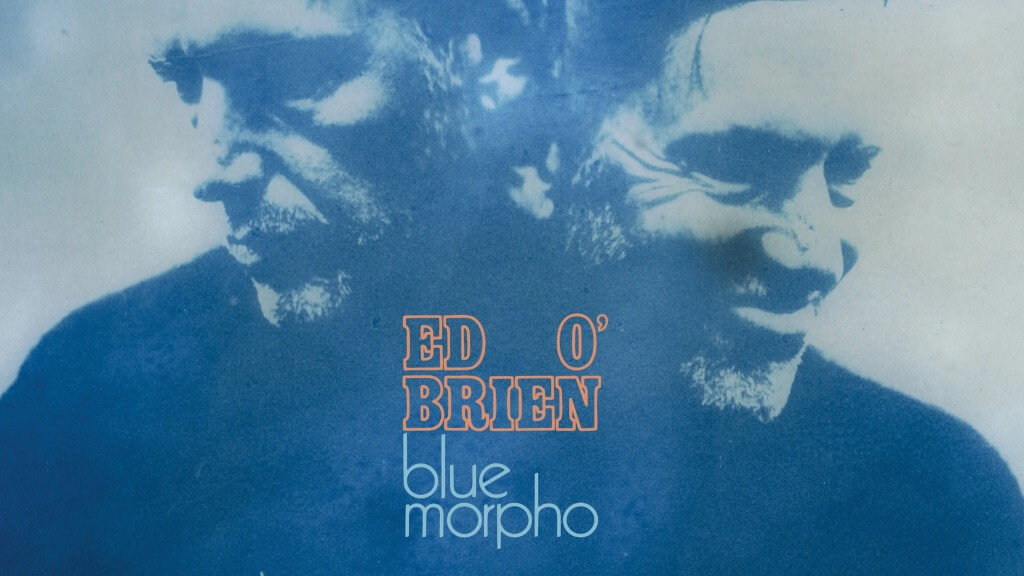
For that reason, not to mention the earnestness of his interviews and thesweetness of his stage presence, it was impossible not to root for his 2020 solo debut, Earth—a sonically rich album that still stumbles to spread its wings naturally. In its aftermath, during pandemic lockdown, with his first-ever tour derailed, he found himself in a“dark night of the soul.” But he eventually emerged from this depression: connecting with nature, embracing new habits (like the cold-exposure methods of Wim Hof), and immersing himself in music. He wound up with Blue Morpho, a gorgeous and imaginative work that feels like a do-over—ditching everything that didn’t work about Earth (like the occasional, dated nods to Nineties U2) and gently refining everything that did.
A critical part of this creative leap was expanding his cast of collaborators—including, pivotally, producer/co-writer Paul Epworth (Adele, Rihanna), whose path he crossed through chance, as their respective kids attended the same school. Together, they recruited backing vocalists (ESKA, Awsa Bergstrom), string players (The Tallinn Chamber Orchestra, with arranger Tõnu Kõrvits), musicians both familiar (Radiohead drummer Phil Selway, returning guitarist-bassist Dave Okumu) and new (woodwind player Shabaka Hutchings). That scope—expanding the world for the benefit of the song—feels somewhat ironic, given that he’s now recording under his own name rather than his earlier moniker, EOB. But it’s also a testament to the album’s confidence. On Blue Morpho, O’Brien almost feels more like a band member than a bandleader: relying less on lyrics, leaning more into psychedelic atmospheres, quilting together the kind of percolating arrangements that define many of the best Radiohead songs.
Many of these thirty-eight minutes build on the quieter, gentler feel of Earth’s deep cuts—but here, the results feel more like full-fledged worlds than promising teases. The first three songs all open with twinkly acoustic fingerpicking, but they rarely end in that same place. On “Incantations,” where O’Brien sings about outrunning “ghosts of long ago,” the piece slow-builds with ESKA’s soaring vocal harmonies and the tasteful percussion of Crispin “Spry” Robinson. You think it’s all going to drift away peacefully, but then O’Brien introduces his first U-turn: A firecracker snare ushers in a trance-like kraut-rock/post-rock groove, and a convulsing electric guitar electrifies the black-sky vibe with lightning. Equally cinematic is the title track, which drifts by on the autumnal breeze of Kõrvits’ strings—it could have slotted perfectly on A Moon Shaped Pool, with zero dip in quality.
But the record never settles rigidly into this magic-hour ambiance. “Teachers” feels like a funkier, proggier extension of Earth centerpiece “Brasil,” pulling from trip-hop and alt-dance as our maestro exercises some more demons (“Midway through life, I just lost my way”). In that signature O’Brien way, it’s hard to even describe what’s happening sonically in the back half, as some kind of instrumental solo (A talk box smothered in phaser? Bergstrom’s vocals run through effects pedals?) launch the groove into deep orbit. “Obridgado,” meanwhile, ends the record in a nearly 10-minute odyssey of cosmic prayer—a tumbling, genuinely affecting head trip laced with jazzy keyboards and climaxing with a brain-scrambling backward guitar solo that conjures Hendrix tackling “The Great Gig in the Sky.” Blue Morpho is the exact album Radiohead fans hoped O’Brien had in him: as adventurous, curious, and open-armed as the man himself. [Transgressive]
Ryan Reed is a writer and editor from Knoxville, Tennessee. In addition to Paste, his work has appeared over the years in Rolling Stone, Revolver, The New York Times, Pitchfork, and many other publications.
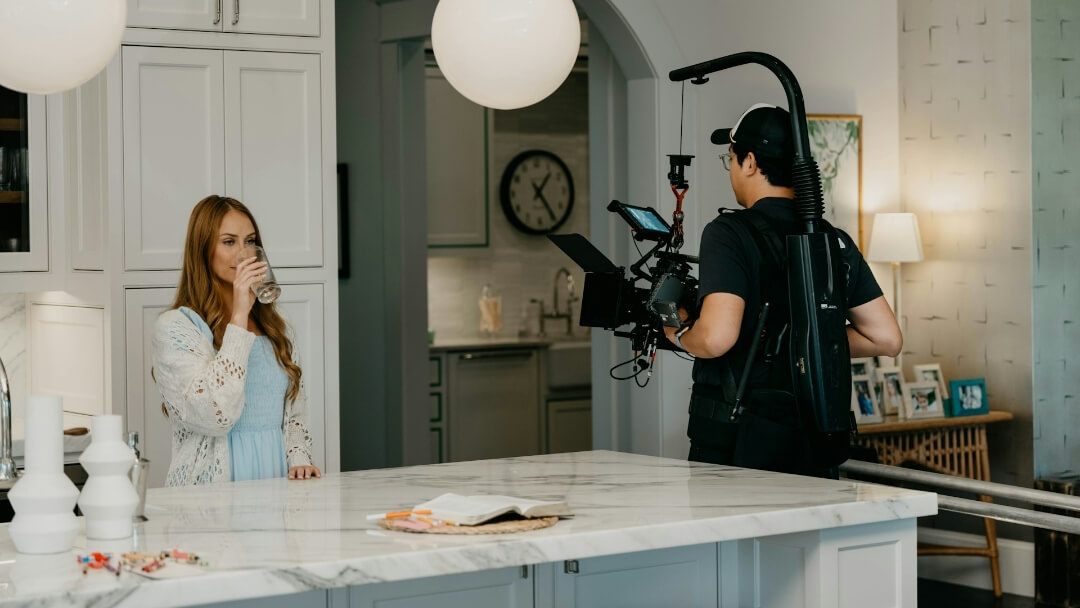
Set design can be such an intricate process, with each production having its own specific goals. Historical pieces typically aim for period-accurate and authentic buildings, while fantasy films create surreal backgrounds.
While these projects are challenging in their own way, simpler sets also require the same level of thought and planning. Learning how to make it a little more lived-in can help make the work look and feel more natural in the long run.
Why Go for a Lived-In Look?
Going for a homey space is different from choosing an interior design or adding furniture to a room. Here’s the power of creating a set that looks like people have settled in.
1. To Display Character Depth
The space where a character resides can tell you a lot about them. You can insinuate that the handmade pottery in their pantry suggests they’re more sentimental than they let on. A shelf full of fiction books suggests that a character is idealistic rather than just pragmatic. With a lived-in set, you can introduce many of these concepts to help describe what home is like to them.
2. To Set the Scene for Viewers
Showing a character’s home serves as a significant reveal at times. As a filmmaker, the goal is to make it as believable and authentic as possible. Ensure that the details are on point. Do you want this home to be a safe haven? Is it a more unsafe environment? What elements do you need to showcase that?
3. To Ensure Continuity
Continuity ensures realism. An infamous continuity error in Spider-Man occurs when a blue lamp remains intact throughout the movie, even though Peter Parker himself broke it in an earlier scene — this small continuity mishap can break the immersion for even the most loyal viewers. You can also commit a continuity error by making a set seem uninhabited, since it strays from the premise of your story.
How to Create a More Natural Lived-In Set
While people build and decorate homes in different ways, there are some common telltale signs that they’ve been residing there for a while. Here are the basic additions that can make a set feel more lived-in.
1. Use Already Old Materials
If you want to make a location feel well-loved, fill it with older items. You can collect discarded items from locals or go thrifting to find these belongings. Aside from giving them additional use, you’re collecting deals and possible keepsakes in the long run.
Remember to choose items at your own discretion, especially while on a limited budget. Just because a furniture piece looks like it’s got some wear and tear doesn’t mean that it’ll be instantly great for the set. Think about the scene and compare your options.
2. Showcase Photos Naturally
The most homey spaces usually have photos on display. And in filmmaking, it’s one of the easiest ways you can provide a visual story about a character’s background. Remember to frame and place the photos throughout the spaces.
Try to consider how the character would showcase the photos as well. For instance, you can hang frameless prints with clothespins on strings to bring life to the room for people who exhibit whimsy. Bonus points if you use string lights, since these offer additional, ambient lighting.
3. Antique the Mirrors
If you have any newer items that look way too new, consider aging them up with the power of antiquing. For instance, mirrors are more known for their ability to create the illusion of a larger space, but you can also tweak their appearance to achieve a more vintage look.
To do this, add paint stripper on the back to scrape off the coating. From there, spray on bleach and water on the back, preferably focusing more on the edges. This will create dark spots in the actual mirror that would mimic aging.
4. Check the Labels for Consistency
Make sure you check the products and their dates, especially if your film heavily focuses on the month, day and year it’s released. For example, if you want to feature old newspapers, make sure they’re all from the days before the stated date in the scene.
Food can be a great way to help make a set feel lived-in. That way, if everything is still new, it can take away some of the immersion. Don’t be afraid to incorporate some ripe fruits and vegetables or near-expiration snacks.
5. Consider the Color Palette
A lived-in space wouldn’t necessarily hold the same vibrancy as it did when it was freshly painted. Consider muting or adding layers of gray to the color palette to make the space look a little more worn.
Using a more muted version of your color palette can also buy into the perception that things become less vibrant as time goes on. It can come down to the science that older people’s brains feel less sensitive to vivid colors because their eyes no longer view them with the same intensity.
6. Clutter the Belongings
Homeowners, on average, have 25 things currently disorganized in their homes. Most people struggle to keep things in place within their homes. Use that fact to your advantage and add a bit of mess to make the home feel more realistic.
Keep in mind that the level of clutter should still depend on the characters in your story. If you’re trying to sell the idea that someone’s a neat freak, you shouldn’t make the space too disorganized, unless you’re trying to draw a comparison between them and other people in the home.
7. Make the Most Used Areas Feel Used
Add wear and tear details to the parts of the home that feel the most used. A 2023 survey found that 50% of people spend their awake time in the living room, but try to think back to your character and what spots they would use the most.
If you have a character who loves to cook, a spotless kitchen doesn’t sell the vision that they spend plenty of time in that space. Consider adding scratches or coffee rings around the counter. Appliances should look a little worn out.
Create a Set That Convinces People
Making a set feel lived-in can help build into the world you’re envisioning and trying to showcase. Try to look at the little details and tweak them to make it more convincing. By combining all these changes, you can become a master set designer and storyteller.
Oscar Collins is the editor-in-chief atModded. He’s passionate about films, filming techniques and the finer details of filmmaking. Follow him on Twitter@TModded for frequent updates on his work!
Olivia Rodrigo is hitting the road again with a brand-new world tour! In honor of her upcoming album, you seem pretty sad for a girl so in love, the “drop dead” artist announced her 2026 Unraveled Tour in April, and Livies are preparing to sign up for the tickets presale. So, how much are they going to cost the fans?
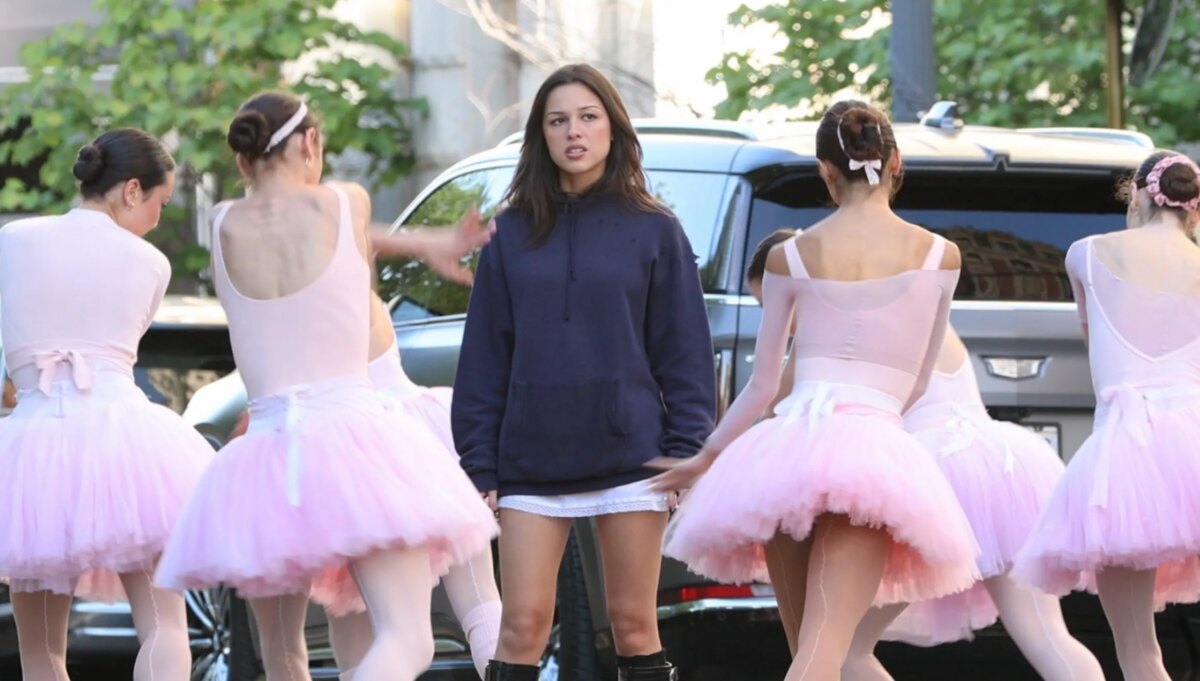
So far, Olivia has graced us all with a music video and song for her second single, “The Cure.” Just days after unveiling the song from her new album, she was spotted filming a new music video in Manhattan, New York.
Below, get all the details on the Unraveled Tour!
(Photo by Jose Perez/Bauer-Griffin/GC Images)
When Does Olivia Rodrigo’s 2026 Tour Begin?
Olivia will embark on her Unraveled Tour in September 2026, starting in Connecticut.
How Much Will Olivia Rodrigo’s 2026 Tour Tickets Cost?
The lowest price for Olivia’s tour at the Barclays Center in New York City was listed at $283 on SeatGeek. Ticket prices around the country range from about $200 to $600.
When Did the Ticket Presale Start?
The presale for Olivia’s Unraveled Tour began on May 5 at 12:00 p.m. and lasted through May 6 at 10:00 p.m.
When Do All Tickets Go on Sale?
Olivia confirmed that the general ticket sales would be on May 7 at 12:00 p.m. local time.
Olivia Rodrigo’s 2026 Tour Cities & Dates
Fri, Sep 25 — Hartford, CT — PeoplesBank Arena
Sat, Sep 26 — Hartford, CT — PeoplesBank Arena
Tue, Sep 29 — Pittsburgh, PA — PPG Paints Arena
Wed, Sep 30 — Pittsburgh, PA — PPG Paints Arena
Sat, Oct 3 — Washington, DC — Capital One Arena
Sun, Oct 4 — Washington, DC — Capital One Arena
Wed, Oct 7 — Charlotte, NC — Spectrum Center
Thu, Oct 8 — Charlotte, NC — Spectrum Center
Sun, Oct 11 — Chicago, IL — United Center
Mon, Oct 12 — Chicago, IL — United Center
Thu, Oct 15 — Boston, MA — TD Garden
Sat, Oct 17 — Boston, MA — TD Garden
Wed, Oct 21 — Montreal, QC — Bell Centre
Thu, Oct 22 — Montreal, QC — Bell Centre
Mon, Oct 26 — Toronto, ON — Scotiabank Arena
Tue, Oct 27 — Toronto, ON — Scotiabank Arena
Thu, Oct 29 — Columbus, OH — Schottenstein Center
Fri, Oct 30 — Columbus, OH — Schottenstein Center
Sat, Nov 7 — Philadelphia, PA — Xfinity Mobile Arena
Sun, Nov 8 — Philadelphia, PA — Xfinity Mobile Arena
Le monde des casinos en ligne en France est vaste et éclectique. Parmi toutes les options, Stake Casino suscite l’intérêt des joueurs francophones par son énergie et sa gamme étendue. Stake n’est pas simplement un site de jeux supplémentaire. C’est un lieu qui mise sur l’innovation et la transparence, avec une offre de loisirs exceptionnelle. Son atout ? Une approche totalement axée sur l’utilisateur. Que vous préfériez le frisson des machines à sous, la stratégie du blackjack ou l’excitation des paris sportifs, l’expérience demeure simple et protégée. Son design contemporain et ses options adaptées à les joueurs français assurent du divertissement, mais aussi un cadre de jeu juste. Examinons ce qui fait de Stake la sélection d’une communauté de passionnés de plus en plus vaste.
Solutions de Paiement Actuelles et Efficaces
Stake Casino a pleinement intégré que la organisation de l’argent doit rester simple et prompte pour ne pas altérer le plaisir de jouer. La plateforme offre donc une vaste variété de méthodes de paiement contemporaines, adaptées aux usages des joueurs français. Des options classiques comme les cartes Visa et Mastercard accompagnent les portefeuilles électroniques (Skrill, Neteller) et les virements bancaires. La principale spécificité de Stake est son adoption prématurée des cryptomonnaies. Bitcoin, Ethereum, Litecoin et d’autres y sont reçus, autorisant des versements et des retraits d’argent pratiquement instantanés, généralement sans frais additionnels. Cette promptitude, cette adaptabilité et des seuils de transaction communément importants donnent un contrôle et une indépendance considérables sur son budget de jeu.
Sécurité, Agrément et Équité des Jeux
Dans le jeu en ligne, la confiance est essentielle. Stake Casino Cashback y œuvrer avec détermination. La plateforme agit sous le contrôle d’une licence internationale accréditée, ce qui offre un cadre contrôlé et protégé pour toutes les opérations. Un cryptage SSL de dernière génération protège les données privées et financières des utilisateurs, offrant la confidentialité de chaque échange. Stake va plus loin en mettant un accent spécial sur l’équité des jeux. Les résultats sont produits par des algorithmes à nombres aléatoires (RNG) validés par des auditeurs tiers. Les taux de retour (RTP) des jeux sont accessibles, offrant à chacun de choisir en connaissance de cause. Cette transparence absolue est la base de la lien que Stake développe avec ses membres.
Un Univers de Jeux Vaste et Diversifié
Le véritable atout de Stake Casino, c’est sa bibliothèque de jeux. Elle est gigantesque, et chaque titre a été sélectionné pour satisfaire un besoin. Des milliers de machines à sous, des classiques intemporels aux créations les plus récentes, se trouvent à côté d’un casino live très complet. Dans cet espace, des croupiers professionnels présentent des tables de roulette, de blackjack, de baccara et de poker. L’atmosphère est immersive, proche de celle d’un établissement physique. Stake propose aussi une série de jeux de casino originaux et de jeux de hasard à rythme rapide, excellents pour une diversion sans attente. Cette diversité procure que chaque session est différente. Débutants ou joueurs aguerris, tous y trouvent une aventure adaptée à leur envie du moment.
Les Slots et les Cagnottes Progressives
Les amateurs de bandits manchots seront servis. Stake, en collaboration avec les meilleurs fournisseurs du marché, rassemble une collection de slots aux graphismes soignés et aux mécaniques inventives. Vous pouvez voyager à travers des thèmes variés, de la mythologie à la science-fiction, avec leurs tours gratuits, leurs multiplicateurs et leurs symboles spéciaux. La poursuite du gros lot atteint son paroxysme avec les jackpots progressifs. La somme du prix à gagner augmente à chaque mise placée sur le réseau, et peut atteindre des sommes capables de changer une vie. Cette section est régulièrement renouvelée avec de nouvelles versions, pour maintenir la nouveauté.
Le Casino Live et les Jeux de Table Classiques
Si vous souhaitez l’authenticité et un lien social, le casino live de Stake est fait pour vous. Les parties sont retransmises en haute définition depuis des studios dédiés, et vous jouez en temps réel avec de vrais croupiers. Le choix est large : plusieurs variantes de roulette (européenne, américaine, française), différentes tables https://www.crunchbase.com/organization/voxbet/org_similarity_overview de blackjack selon les mises, et des jeux uniques comme Dream Catcher ou Monopoly Live. L’ambiance est renforcée par un chat en direct qui permet d’échanger avec le croupier et les autres joueurs. En parallèle, les versions classiques des jeux de table, fonctionnant sur un générateur de nombres aléatoires, offrent une alternative rapide pour tester ses stratégies.
Assistance Clientèle et Aide en Français
Un service d’assistance réactif et qualifié montre qu’une plateforme considère ses utilisateurs. Stake Casino excelle sur ce point en proposant un support joignable toute la journée, tous les jours, et par plusieurs canaux. Les utilisateurs francophones peuvent ainsi recevoir de l’assistance dans leur langue, que ce soit via le chat en direct pour une question urgente ou par email pour un sujet plus complexe. La base de connaissances et la FAQ du site, fréquemment actualisées, fournissent des réponses immédiates aux questions fréquentes sur les comptes, les paiements, les bonus ou les règles des jeux. Cette disponibilité et cette performance influent directement au sentiment de sérénité et à la satisfaction des membres de Stake.
Offres et Offres Généreux
Stake Casino sait comment attirer ses nouveaux inscrits et garder les autres engagés. Son programme de bonus et promotions est conséquent, mais surtout lisible. Les nouveaux inscrits profitent souvent d’une offre de bienvenue attractive, qui plante le décor. L’aventure se prolonge bien après le premier dépôt. La plateforme maintient l’intérêt avec des promotions chaque semaine ou du mois, des tours gratuits sur des machines à sous populaires, des remises en cashback et des défis à réaliser pour remporter plus. À la différence de certaines méthodes constatées ailleurs, les exigences de mise associées à ces bonus chez Stake sont souvent raisonnables et clairement précisées. Les participants peuvent ainsi en jouir sans redouter de déceptions.
Offres d’accueil pour bien commencer.
Promotions récurrentes, de la semaine et du mois (recharges, cashback).
Tours gratuits sur les nouvelles machines à sous.
Missions et tournois avec des récompenses en argent réel ou des avantages.
Un programme de filleul qui rétribue ceux qui invitent des connaissances.
Une Interface et une Navigation Inoubliables
La découverte initiale à Stake Casino est révélatrice. Le design est épuré, intuitif, et tout réagit vite. Le parcours a été conçue pour être data-api.marketindex.com.au simple. En quelques clics, vous parvenez à tous les jeux, aux promotions et aux paramètres de votre compte. L’interface se module avec aisance que vous jouiez sur ordinateur, tablette ou téléphone. Cet effort pour faciliter la vie du joueur est au cœur de la philosophie de Stake. L’objectif est de éliminer les barrières pour que vous ne réfléchissiez qu’à votre plaisir. Les transactions, dépôts comme retraits, se fondent harmonieusement au parcours. Le service client est facile à joindre. Tout concourt à un sentiment de confort et de maîtrise. Ce alliage d’esthétique moderne et de fonctionnalité efficace construit une expérience utilisateur globale qui captive et comble.
Comment Stake Casino Attire la Communauté Française
La ferveur des joueurs français pour Stake Casino n’est pas un accident. Il s’explique par une adéquation forte entre les exigences d’un marché exigeant et ce que propose la plateforme. Les francophones valorisent l’interface disponible dans leur langue, le support client qui parle français, et une offre de jeux qui inclut des titres populaires localement. L’accent mis sur les cryptomonnaies répond aussi à un intérêt croissant pour ces actifs, fournissant une alternative discrète et rapide aux moyens de paiement classiques. Enfin, la culture communautaire active que Stake a développée, à travers ses streams en direct et ses interactions sociales, parle aux joueurs qui cherchent plus qu’un simple jeu : une expérience partagée et dynamique. Stake Casino a su assembler une technologie performante, une offre de jeu profonde et un vrai service, s’imposant comme une base solide.
One of the first film roles Andrew Scott ever played, nearly 30 years ago, was “Soldier on the Beach” in Saving Private Ryan. He appeared in the Steven Spielberg drama’s legendary opening sequence, set during the Normandy Invasion at Omaha Beach on D-Day. “I had one line or something, and Tom Hanks rolled over me, and I was very happy to be there,” Scott recalls with a laugh. “It was an extraordinary thing — it was my first time being on a set of that enormity, and I feel very proud that I got to be a tiny part of that. It’s a sequence that’s gone down in movie history.”
Scott has built an impressive career since, between his Olivier-winning stage work and acclaimed performances across film and TV. But it’s something of a full-circle moment to see him back in a D-Day-set film, only this time as the main attraction: In Pressure (in theaters Friday), Scott portrays James Stagg, a meteorologist in the Royal Air Force called in to assess weather patterns for the planned Allied invasion of Europe — and the man ultimately responsible for convincing General Dwight D. Eisenhower (Brendan Fraser) to move the date by a day, amid significant pushback. For all the World War II dramatizations out there, it’s a true, fresh, surprisingly untold story.
Scott’s prickly, tightly controlled performance comes amid an impressive run for the Irish native, who took home the supporting-actor award out of the Berlin Film Festival last year for Richard Linklater’s Blue Moon and earned Golden Globe and Emmy nominations the year prior for his searing turn in Netflix’s Ripley. This is a very different character from those roles, with Stagg committed to his duty and his expertise — uninterested in emitting any kind of sugarcoating or warmth.
“I felt like I understood him — he had the professionalism to push the personal to one side. A lot of great men with great humility, that’s what they’re able to do,” Scott says. “Stagg doesn’t immediately make you feel comfortable, and that was important to me. I found that actually very, very, very challenging. It made me feel for him more rather than less.”
Pressure is directed by Hotel Mumbai’s Anthony Maras, and as adapted with David Haig from the latter’s stage play, it’s structured as a sharp ticking-clock thriller while surprisingly light on its feet with witty dialogue. Stagg and his counterpart, the American meteorologist Irving P. Krick (Chris Messina), present conflicting readings to Eisenhower and his team, with the difference between being right and wrong of enormous consequence — even as they’re ultimately, simply discussing weather patterns and rain forecasts.
“The weather is one of the most powerful influences over our lives — what we wear, where we go on holiday, how we work, how we instigate massive war efforts, huge political sports, events, concerts, just right down to what you’re going to do for your birthday barbecue. We look out constantly,” Scott says. “It’s almost arrogant to assume that the weather is something that we can disregard…. Nature is the biggest ruler of the world.”
Brendan Fraser and Andrew Scott in Pressure.
Alex Bailey/Focus Features/ STUDIOCANAL
Indeed, talking to Scott on an early May afternoon, more than a year since he shot Pressure, it’s clear how strongly the topic remains top of mind. In the film, he describes incredibly complex meteorological readings in a way that is both accurate to the historical scenario and digestible for an audience. He carries the weight of his forecast playing a part in the future of the world order. Most fascinatingly, he embodies Pressure’s punny title by tracing Stagg’s slow-burn emotional arc as if its own volatile weather system. His most wrenching scene, when Stagg receives a devastating personal call but cannot react amid the intense geopolitical stakes, captured this tension.
“I wanted it to correspond to barometric pressure — where with the pressure that he’s feeling and all the other characters are feeling, the more you expel the bigger it gets,” Scott says. “It’s an actor’s thing, isn’t it, to be able to try and convey that feeling, but without trying to express too much emotion? That’s what the name of the game was: What do I do here under this enormously pressurized situation?”
He adds, “In order to enjoy the film, you have to know exactly what psychological stage Stagg is at because he’s the person that we trust. He’s kind of like the James Cagney character — he’s us, in some ways.”
**
Scott says he’s in London “between gigs” as we chat, planning to come to the U.S. for Pressure press with a few more projects on the horizon, including the new film from Oscar winner Justine Triet (Anatomy of a Fall). “I’m a busy boy at the moment, for sure,” he says. “I feel it’s definitely time to regroup and have the sand between my toes for a little while and just make sure that the work life balance is working and all that kind of stuff…. I definitely need a little break this summer. You want to do your best job and you don’t want to make yourself sick. That’s my problem.”
You wouldn’t know the work was wearing on him. This past spring, Scott was a slithery wonder in the new season of The Comeback as the tech-boosting network head who commissions a new sitcom for Valerie Cherish (Lisa Kudrow) to star in, written entirely by AI. With the slightest vocal and physical modulations, he transformed into a chilling corporate weirdo, just slightly off in all the right ways. Scott actually pitched himself for the new iteration of the HBO cult hit. He’s a massive fan of the first two seasons that aired in 2005 and 2014, respectively; Kudrow and co-creator Michael Patrick King came back to him with the juicy supporting role.
“I was just thrilled to be there to watch Lisa do what she does — I genuinely think she’s a comedic genius, and I think that character is completely mesmerizing to watch,” he says.
And how does he feel about being the new face of AI in Hollywood? “Exactly which I’ve always wanted to be,” he cracks. “Dream come true!”
Andrew Scott in the series finale of The Comeback.
Photograph by Erin Simkin/HBO
Pressure isn’t the only big movie that Scott has in the can, either. He recently shot the devilish Christmas release A Place in Hell, opposite Michelle Williams and Daisy Edgar-Jones, and John Crowley’s new movie co-starring Emily Blunt. Then there’s arguably Scott’s most significant cinematic undertaking to date: Simon Stone’s Elsinore, the first film Scott has ever produced. He portrays the iconic Scottish actor Ian Charleson in his final days, as he prepares for his last stage performances as Hamlet while dying of AIDS.
Scott has played one of the more celebrated modern Hamlets on the London stage. He counts Charleson among his great inspirations. As his profile has grown over the last few years, this feels like the role he’s been working toward for his whole career.
“It’s the biggest acting challenge that I’ve ever had, there’s no doubt about it, because there’s the playing of this man who was going through this extraordinary time in his life, and also the Hamlet of it all,” he says. “Theater is a big passion in my life. It was an enormous physical challenge, and a big mental one.” He shares that he recently just watched an early cut of Elsinore: “To be transparent, I’m very excited about it…. I feel very, very, very passionate about it.”
Scott is driven these days by not repeating himself — and everything on that list certainly feels like uncharted territory for him. Take Pressure: Scott has appeared in several war movies between Saving Private Ryan and this one, including the Oscar-winning 1917. Tonally and in subject matter, though, he felt Pressure stood apart: “That sort of specificity was incredibly important to me.”
It helped having an actor like Brendan Fraser as a most unexpected sparring partner. “We come from very different cultures, are very different in stature, and we’ve got very different styles — it’s an unusual juxtaposition of actors in some ways,” Scott says. “And I absolutely loved it.” If there’s one thing Scott has got down, it’s keeping us off balance. This year, in that regard, he’s just getting started.
Taylor Sheridan has paved the way for yet another hit, with “Dutton Ranch” lassoing in Paramount+’s best original series launch to date.
“Dutton Ranch,” which extends the story for “Yellowstone’s” Beth and Rip, has amassed 12.9 million views globally in the seven days since its premiere, soaring past previous original series premieres, per internal Paramount+ figures, which define views as total minutes divided by runtime.
The seven-day viewership builds on the premiere night debut, which saw 2.9 million total viewers tune in to its two-episode debut on Paramount Network on May 15. The “Dutton Ranch” debut ranks as the biggest series premiere on cable since 2023, with the first episode scoring 1.9 million viewers. “Dutton Ranch” also ranked as the No. 1 cable entertainment telecast on premiere day among both adults 18-49 and total viewers.
Additionally, the Paramount Television Studios and 101 Studios-produced series will rank as the No. 1 streaming series for the week of May 11, per preliminarily data for Nielsen’s streaming charts.
On social media, “Dutton Ranch” scored 99 million video views and over 2 million engagements in its first three days, ranking as the No. 1 Paramount+ premiere across owned social channels.
It’s been hit after hit for Sheridan, with “The Madison” scoring the biggest first season launch debut for Sheridan with 8 million viewers in its first 10 days and “Landman” Season 2 carving its spot as one of the biggest series of 2025 with 13 consecutive weeks on Nielsen’s top 10 original series.
“Dutton Ranch,” which was created by EP and showrunner Chad Feehan, sees “Yellowstone’s” Beth Dutton and Rip Wheeler fight to build a future together – far from the ghosts of Yellowstone. “They collide with brutal new realities and a ruthless rival ranch that will stop at nothing to protect its empire,” the official logline reads. “In South Texas, blood runs deeper, forgiveness is fleeting, and the cost of survival might just be your soul.”
Following its May 15 launch, “Dutton Ranch” debuts new episodes Friday son Paramount+ and Paramount Network.
Daniel Harding, a British-born conductor with a long career leading Europe’s top orchestras, has been named music director of the Los Angeles Philharmonic, succeeding Gustavo Dudamel as the maestro of one of the most influential orchestras in the United States.
With the appointment of Harding, the Philharmonic has returned to a more traditional model of a U.S. orchestra leader. Dudamel, from Venezuela, was 26 and conducting the Simón Bolívar Symphony Orchestra when he was selected for the job in 2007. Spanish is his first language, a major reason his tenure resonated in a city whose population is nearly 50 percent Hispanic or Latino.
Harding, 50, was born in Oxford, England, and serves as the music director of the prestigious Accademia Nazionale di Santa Cecilia in Rome. He has worked over the decades with orchestras in Sweden, Paris, Berlin and London. He speaks French, German, Italian and English — but not Spanish. He is also a licensed airline pilot, whose 30,000-foot assignments for Air France have been almost as notable as his time at the podium.
Dudamel will take over as music and artistic director of the New York Philharmonic in September. In the past 17 years, he has established himself as a cultural and civic power in Los Angeles: It is difficult to drive along a major street in Los Angeles these days without passing “Gracias Gustavo” banners marking his departure.
In an interview, Harding said the Los Angeles Philharmonic had “never been as big a deal” as it is today. He credited that to Dudamel who, he said, “makes a job at that institution more attractive than ever — and the challenge greater than ever.”
Harding will not, at least initially, have the same broad authority that Dudamel enjoyed. He will be the music director, while Dudamel filled the roles of both music director and artistic director. And this fall, Esa-Pekka Salonen, who held the top conducting post at the Philharmonic for 17 years before Dudamel took over, will return to the orchestra as its creative director.
Harding will start in the 2027-28 season, leading eight weeks of concerts; eventually, that will increase to 12. He will form one part of what the orchestra has described as a “reimagined leadership team” that also includes Salonen; Dudamel, as the newly appointed artistic and cultural laureate; and Anna Handler, as conductor in residence. The Philharmonic will also appoint a creative chair for Latino music.
Kim Noltemy, the orchestra’s president and chief executive, said Dudamel and Salonen had already begun laying out plans for future programming and guest engagements. (Dudamel will continue to lead up to four weeks of concerts per season; Salonen, about six.) She said the new management structure would not constrain Harding; he will, for example, program the weeks that he conducts in Los Angeles.
“Music directors play a key role in the development of the orchestra, the arc of the orchestra’s artistic vision,” Noltemy said. “When you have two incredibly strong and brilliant people like Esa-Pekka and Gustavo, Daniel will be in the know but won’t be involved with the planning of their programs and projects.”
There is, she said, “a huge amount of space for everyone.”
In a statement, Salonen welcomed Harding’s appointment, saying: “The orchestra has put a key piece of its artistic leadership in place. My hope is that the beauty, optimism and openness of Los Angeles proves as transformative for Daniel as it has been for me. I look forward to collaborating with him well into the future.”
Harding said he had known and worked with Dudamel and Salonen for decades. “I am the music director,” he said, “and what we have with us is this amazing team.”
The selection of Harding signals a new direction for an orchestra that has long been known for innovation. Simon Rattle, a mentor of Harding’s, said of the Philharmonic, “What I find really fascinating is that they will have someone who is a real central European conductor, and who will give them a whole new range of colors after this wonderful long period with Gustavo.”
Rattle hired Harding as his assistant conductor at the City of Birmingham Symphony Orchestra in England when Harding was just a teenager. “This was an absolutely natural conductor — and you don’t see them very often,” Rattle said. “He is wonderfully concentrated and charismatic and simply full of music and energy.”
Harding was one of 35 candidates for the job in Los Angeles, and he was selected by a nine-member committee that drew from the orchestra, its staff and its management. He will keep his post with Santa Cecilia, as well as with Youth Music Culture the Greater Bay Area in Guangzhou, China. And he will continue as a part-time pilot for Air France, which he said had made him a better conductor.
“The discipline and the calm that’s required being an airline pilot and the teamwork has been a very satisfying and important learning experience for me,” he said.
Harding said that he planned to find a second home in Los Angeles but that he would keep his main residence in Paris.
He began studying trumpet at 8, and then reached the world’s attention when Rattle hailed him as a conducting prodigy. He went on to become an assistant to Claudio Abbado at the Berlin Philharmonic.
Harding later served as principal conductor and artistic director of the Swedish Radio Symphony Orchestra, in Stockholm, and music director of the Orchestre de Paris. He helped found the renowned Mahler Chamber Orchestra.
For all his achievements in Europe, Harding has by his account struggled to find a perch in the United States, where his success has been mixed. In 2019, he told The New York Times that in those early years he was too accustomed to the cultures of European orchestras to understand what he described as the very different world of American classical music. “I just wasn’t ready for how some of the big U.S. orchestras worked,” he said, “and how they would relate to me.”
On Sunday, Harding said he was ready for this moment. “I think I am a lot more of a mature guy than I was,” he said. “I don’t think that should surprise anyone.”
Solana Bonus – Ihr praktischer Leitfaden für das Spielen in der Schweiz
Was ist ein Solana Bonus und warum ist er relevant?
Ein Solana Bonus ist ein spezielles Willkommens- oder Reload‑Angebot, das ausschließlich für Einzahlungen in der Solana‑Blockchain angeboten wird. Für Schweizer Spieler ist das besonders attraktiv, weil Transaktionen über Solana in der Regel günstiger und schneller sind als bei klassischen Bank‑ oder Kreditkarten.
Der Bonus kann in Form von Freispielen, einem Prozent‑Match‑Deposit oder sogar einem kleinen Sofortguthaben kommen. Wichtig ist, dass das Angebot an die jeweiligen Spielpräferenzen – Casino, Live‑Dealer oder Sportwetten – angepasst ist, sodass Sie gleich zu Beginn das passende Extra erhalten.
Wie Sie sich registrieren und den Bonus aktivieren
Die Registrierung ist in drei einfachen Schritten erledigt:
E‑Mail bestätigen und ein sicheres Passwort wählen.
Im Kassenbereich „Solana“ als Einzahlungsmethode auswählen und den Bonus‑Code eingeben.
Nachdem die ersten Solana‑Tokens eingezahlt sind, wird der Solana Bonus automatisch Ihrem Konto gutgeschrieben. Ohne zusätzlichen Code ist das bei den meisten Plattformen heute Standard.
Bonusbedingungen verstehen – Wagering und Ablauf
Der wichtigste Punkt ist das sogenannte Wagering, also die Umsatzbedingungen. Bei einem typischen Solana Bonus von 100 % bis zu 200 CHF kann ein 20‑faches Wagering verlangt werden. Das bedeutet, Sie müssen den Bonusbetrag plus Einzahlung 20 mal umsetzen, bevor eine Auszahlung möglich ist.
Einige Casinos bieten eine progressive Staffelung: Die ersten 10 % des Bonus müssen innerhalb von 7 Tagen umgesetzt werden, danach gibt es eine weitere Frist von 14 Tagen. Lesen Sie die AGB genau, um unangenehme Überraschungen zu vermeiden.
Zahlungs‑ und Auszahlungsmethoden für Solana
Einzahlungen über Solana sind praktisch sofortig. Die Transaktionsgebühren liegen meist unter einem Franken, weil das Netzwerk sehr skalierbar ist. Für Auszahlungen gibt es zwei gängige Varianten:
Direkter Transfer an Ihre Wallet: Der Betrag wird innerhalb von 5‑15 Minuten auf Ihre persönliche Solana‑Adresse gesendet.
Umwandlung in Fiat: Einige Plattformen konvertieren den Betrag in CHF und überweisen ihn per Banküberweisung, was 1‑2 Werktage dauern kann.
Beachten Sie, dass bei der Umwandlung zusätzliche Gebühren anfallen können, die im Voraus im Kassen‑Dashboard angezeigt werden.
Sicherheit, Lizenzierung und verantwortungsvolles Spielen
Alle empfohlenen Casinos besitzen eine Lizenz von der Malta Gaming Authority (MGA) oder der UK Gambling Commission (UKGC). Diese Lizenzen garantieren, dass das Spiel fair und transparent abläuft. Zusätzlich setzen die Betreiber modernste SSL‑Verschlüsselung ein, um Ihre Daten zu schützen.
Verantwortungsvolles Spielen wird großgeschrieben: Sie finden Tools für Einzahlungslimits, Session‑Timer und Selbstsperren direkt im Benutzer‑Dashboard. Nutzen Sie diese Funktionen, wenn Sie das Spielbudget im Griff behalten wollen.
Mobile Nutzung und App‑Erfahrung
Die meisten Plattformen bieten eine native iOS‑ und Android‑App, die vollständig mit Solana‑Transaktionen kompatibel ist. Die Apps unterstützen Push‑Benachrichtigungen für Bonus‑Updates und ermöglichen das Spielen von Live‑Casino‑Tischen unterwegs.
Falls Sie lieber den Browser nutzen, sorgt das responsive Design dafür, dass das gesamte Angebot – vom Slot‑Spiel bis zum Sportwetten‑Markt – auf Smartphones und Tablets genauso flüssig läuft wie am Desktop.
Vergleich der besten Solana‑Bonus‑Angebote
Nachfolgende Tabelle fasst die wichtigsten Kriterien der Top‑Anbieter zusammen. Sie hilft Ihnen, schnell zu erkennen, welcher Bonus am besten zu Ihrem Spielstil passt.
Casino
Willkommensbonus
Wagering
Max. Auszahlung
Auszahlungsgeschwindigkeit
SolarPlay
100 % bis 250 CHF + 30 Freispiele
20‑fach
unbegrenzt
5 Min – 1 Tag
NovaBet
150 % bis 300 CHF
25‑fach
2 000 CHF
Instant bis 24 Std.
StellarCasino
200 % bis 200 CHF + 20 Freispiele
15‑fach
1 500 CHF
10 Min – 2 Tage
Tipps für Anfänger – Fehler vermeiden
Ein häufiger Fehler ist, den Bonus sofort komplett auszahlen zu wollen, ohne das Wagering zu erfüllen. Planen Sie stattdessen ein paar Sessions ein, in denen Sie sowohl Slots als auch Tischspiele spielen – das erhöht die Chance, die Umsatzbedingungen schneller zu erreichen.
Ein zweiter Tipp: Nutzen Sie die Demo‑Versionen, bevor Sie echtes Geld einsetzen. So können Sie das Spielverhalten und die Volatilität kennenlernen, ohne Ihr Budget zu gefährden.
Wenn Sie bereit sind, das Beste aus Ihrem Solana Bonus herauszuholen, besuchen Sie die offizielle Seite und mit Solana spielen.
How to Play with Bitcoin at Online Casinos – A Practical Guide for Dutch Players
Bitcoin has become a mainstream payment option for Dutch gamblers who want fast, secure and low‑fee transactions. This guide walks you through every stage of the process – from signing up to cashing out – so you can start playing with Bitcoin confidently. Whether you’re after a high‑RTP slot, a live dealer table or a sports betting slip, the steps are similar and we’ll break them down in plain language. For a quick overview of the best Dutch‑friendly sites, click more information here.
Getting Started – Registration and Account Verification
The first hurdle is creating an account. Most Bitcoin‑friendly casinos ask for a username, email address and a strong password; some even let you register with just a wallet address, but a verified email is still recommended to recover a lost password. After you hit “sign‑up”, you’ll receive an email with a confirmation link – click it and you’re officially a member.
Verification (KYC) is the next step. Dutch regulations require casinos to confirm your identity to prevent money laundering, so you’ll usually upload a photo ID and a proof‑of‑address document. The process can take from a few minutes to a couple of days, depending on the platform. Keep a clear copy of your passport or driver’s licence handy; once approved, you’ll be free to deposit Bitcoin and start playing.
Choosing the Right Bitcoin Casino – Licenses, Security and Game Variety
Not every site that accepts Bitcoin is safe. Look for a licence from reputable authorities such as the Malta Gaming Authority (MGA) or the UK Gambling Commission (UKGC). These licences enforce strict standards on fairness, data protection and player funds segregation.
Security matters as much as the licence. A good casino will use SSL encryption, two‑factor authentication (2FA) and cold‑storage wallets for the bulk of their Bitcoin reserves. When you see “provably fair” technology on slot games, it’s a sign the operator cares about transparency. Finally, check the game library – a mix of slots, live casino tables and a sportsbook indicates a well‑rounded platform.
Bitcoin Deposits – Payment Methods and Instant Payouts
Depositing Bitcoin is usually a matter of scanning a QR code or copying a wallet address. Most Dutch players prefer wallets like Binance, Kraken or a hardware wallet for added safety. The transaction is confirmed on the blockchain within minutes, and many casinos credit your account instantly.
Below is a quick comparison of common Bitcoin deposit methods:
Method
Typical Fee
Confirmation Time
Notes
Direct wallet transfer
0.0001 BTC (≈ €0.50)
5‑10 minutes
Most common, requires manual address entry
Lightning Network
0.00001 BTC (≈ €0.05)
Seconds
Instant, low‑fee, but not supported everywhere
Third‑party processor (e.g., CoinGate)
0.0002 BTC (≈ €1)
Up to 30 minutes
Offers extra security layers, may require KYC
Understanding Bonuses – Welcome Offers, Wagering Requirements and RTP
Bonuses are the main lure for new players. A typical welcome package might include a 100 % match bonus up to €500 plus 50 free spins. However, every bonus comes with wagering requirements – the amount you must bet before you can withdraw any winnings.
Here’s a snapshot of common bonus terms you’ll encounter:
Wagering requirement: 30× the bonus amount
Maximum cash‑out from free spins: €100
Valid games: usually slots with RTP ≥ 95 %
Expiration: 7‑14 days after claim
Always calculate the “effective value” of a bonus. A 100 % match with 30× wagering on a 95 % RTP slot means you’ll need to stake €1,500 to unlock €500 – that’s a high bar for casual players. Look for lower wagering requirements (e.g., 20×) or “no‑deposit” bonuses if you prefer a lower commitment.
Playing the Games – Slots, Live Casino, Sports Betting and RTP
When you finally have Bitcoin in your casino balance, the game selection determines your enjoyment. Slots dominate most libraries, and they’re often categorized by volatility – low volatility offers frequent small wins, while high volatility promises big payouts but rarer hits. Check the RTP (Return to Player) figure; Dutch players typically favor games with RTP ≥ 96 %.
Live casino tables bring the feel of a real brick‑and‑mortar venue. Look for professional dealers, HD streams, and a chat function for social interaction. If you’re also interested in sports betting, many Bitcoin casinos integrate a sportsbook where you can wager on football, tennis or e‑sports, with instant payouts for winning bets.
Withdrawing Your Winnings – Speed, Limits and KYC
Cash‑out with Bitcoin is usually the fastest option available. After you submit a withdrawal request, the casino will process it in 10‑30 minutes, then broadcast the transaction to the blockchain. Withdrawal limits vary: some sites cap daily withdrawals at 1 BTC, while others have higher tiers for VIP players.
If you haven’t completed full verification, the casino may ask for additional documents before releasing larger sums. This is a standard anti‑money‑laundering measure, and once your KYC is approved, future withdrawals become near‑instant. Keep an eye on network fees – during high congestion you might see higher transaction costs, but many casinos absorb a small portion of the fee for you.
Mobile Experience – Apps and Browser Play
Most modern Bitcoin casinos offer a responsive website that works smoothly on Android and iOS browsers. Some operators also provide a dedicated mobile app, which can give you push notifications for bonus offers and faster loading times. Check whether the app supports in‑app Bitcoin deposits; a few platforms let you scan a QR code directly from your phone’s wallet.
When playing on a mobile device, make sure you have a stable internet connection, especially for live dealer tables that stream in real‑time. Battery consumption can be high with video streams, so a power bank is a handy accessory for long sessions.
Responsible Gambling – Tools and Support
Playing with Bitcoin can feel anonymous, but responsible gambling measures are still essential. Look for features such as deposit limits, session timers, self‑exclusion and reality checks. Good casinos place these tools prominently in the account settings, allowing you to set daily, weekly or monthly caps on your Bitcoin spending.
If you ever feel you need help, most licensed operators provide 24/7 customer support via live chat, email or phone. They can also guide you through the self‑exclusion process, which may involve blocking your account for a set period or indefinitely. Remember, gambling should stay fun – set limits before you start and stick to them.
Practical Guidance for ETH Play in the Netherlands
Welcome to the definitive starter pack for anyone who wants to try ETH play at an online casino. Whether you are a seasoned bettor or a complete beginner, the following sections walk you through everything from signing up to cashing out, always keeping Dutch regulations and preferences in mind.
1. Getting Started with ETH Play – Registration & Account Setup
The first hurdle is creating an account that can handle Ethereum transactions. Most platforms ask for a standard email address, a strong password and a country selection – make sure you pick “Netherlands” so the site shows you the correct licensing information.
After you confirm your email, you will be prompted to complete a basic KYC (Know Your Customer) check. This usually means uploading a photo ID and a proof of address, such as a utility bill. The process can feel a bit bureaucratic, but it protects you from fraud and guarantees that your winnings can be withdrawn later without trouble.
2. Depositing with Ethereum – Payment Methods & Instant Payouts
Ethereum is prized for its speed, and most Dutch‑friendly casinos let you fund your balance within minutes. You will need a wallet that supports ERC‑20 tokens – MetaMask, Trust Wallet or a Dutch exchange like Bitvavo work well.
When you choose “Deposit with ETH”, the casino will display a unique wallet address. Copy it exactly and send the amount you wish to play with. The transaction is usually confirmed in under 30 seconds, and the funds appear instantly in your casino balance, ready for you to place bets or spin the reels.
3. Understanding Bonuses and Wagering Requirements
Bonuses are a big part of the attraction, but Dutch players must read the fine print. A typical welcome bonus might be “100 % up to €200 + 50 free spins”. The catch is the wagering requirement – often expressed as “30x bonus”. That means you need to bet 30 times the bonus amount before you can withdraw any winnings.
Calculate the actual playthrough: €200 bonus × 30 = €6,000 required betting volume.
Check if the casino counts all games equally – slots usually contribute 100 % while table games may only count 10 %.
Look for “no max cashout” clauses – some offers cap the amount you can win from a bonus.
When you compare offers, favour those with lower multipliers and clear game contribution tables. It saves you from surprise when you try to cash out.
4. Withdrawal Process – Speed, Limits and Security
After you have cleared any wagering requirements, the next step is withdrawing your ETH. Most platforms support a direct transfer back to your personal wallet, and the processing time is usually between 5 and 30 minutes, depending on network congestion.
Be aware of minimum and maximum limits. A common rule is a €10 minimum and a €10,000 daily cap. If you plan a larger cashout, you may need to split it into several transactions or contact support for a manual review.
5. Mobile Experience – Apps, Browser Play, and Live Casino on the Go
Dutch players love flexibility, so a solid mobile experience is essential. Many ETH‑play casinos offer a responsive web version that works perfectly on iOS and Android browsers – no download required.
If you prefer a dedicated app, look for one that supports push notifications for bonus alerts and deposit confirmations. The live casino section is usually optimised for mobile, letting you watch real dealers in HD while placing bets with a few taps.
6. Safety, Licensing and Responsible Gambling
Legitimacy starts with a proper licence. For the Netherlands, the most reliable indicator is a licence from the Kansspelautoriteit (KSA). A licensed casino must adhere to strict anti‑money‑laundering (AML) rules and provide transparent RNG testing reports.
Responsible gambling tools are also mandatory. Look for features such as deposit limits, self‑exclusion, and reality checks that remind you how long you have been playing. These tools are not just nice to have – they are part of the legal framework that protects you.
7. Comparing Top ETH Play Platforms – Quick Reference Table
Casino
Welcome Bonus
Wagering Req.
Withdrawal Speed
Mobile App?
KSA Licence
CryptoSpin
100 % up to €200 + 30 FS
25x
~15 min
Yes (iOS/Android)
Yes
EtherBet
150 % up to €300
30x
~10 min
No (responsive)
Yes
BlockRoll
€50 free + 20 FS
20x
~5 min
Yes (Android only)
No – Malta
Use the table above as a starting point, then dive deeper into each operator’s terms. The best choice balances a generous bonus, low wagering, fast withdrawals and a solid KSA licence.
8. Frequently Asked Questions about ETH Play
Is ETH play legal in the Netherlands?
Yes, as long as the casino holds a KSA licence and complies with Dutch gambling regulations. Unlicensed sites may still accept Ethereum, but playing there carries higher risk.
Do I need a separate crypto wallet?
Yes, a wallet that supports ERC‑20 tokens is required for deposits and withdrawals. Many Dutch users choose wallets that also allow fiat conversion for easy cash‑out.
Can I claim a bonus without depositing?
Rarely. Most bonuses are tied to a first deposit, although some casinos offer a “no‑deposit” free spin package that still comes with wagering requirements.
What if my transaction gets stuck?
Check the Ethereum network gas price. If it’s low, the transaction may be delayed. Most casinos will wait for the blockchain confirmation before crediting your balance.
Where can I get help if something goes wrong?
Look for 24/7 live chat, a Dutch‑speaking support email, or a comprehensive FAQ section. Reliable casinos also provide a phone line for urgent issues.
Ready to start your ETH play journey? Visit the Ethereum casino and explore the offers that match your style, budget and risk tolerance.
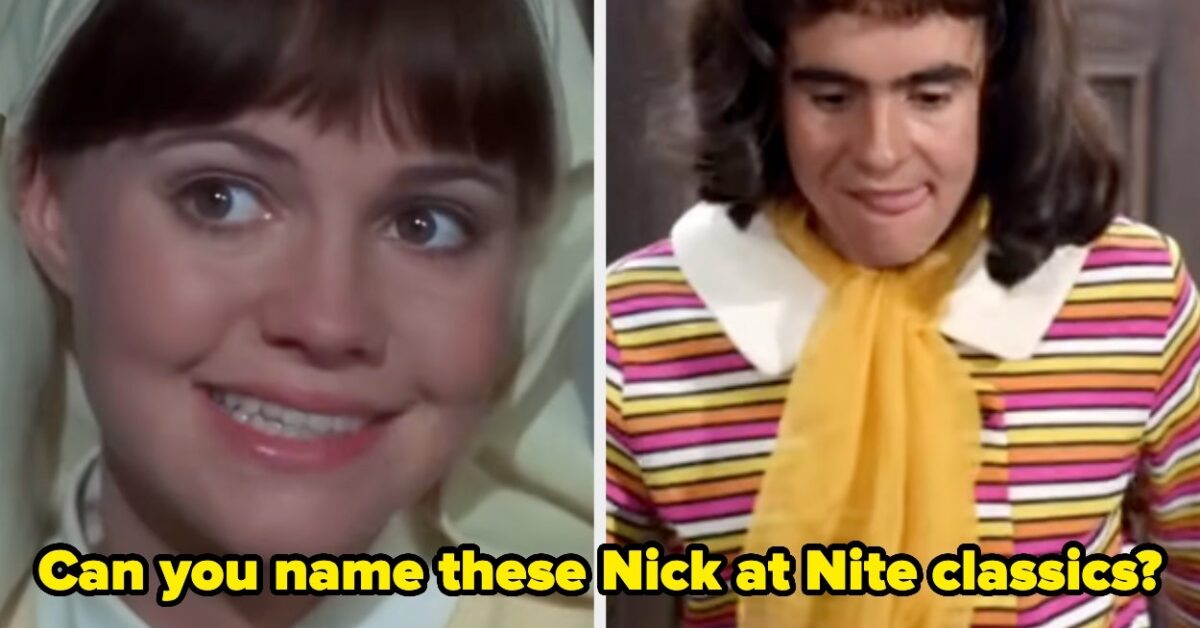
Nick at Nite was nostalgic programming before we even knew how to be nostalgic. They ran the best sitcoms from bygone eras and were a cornerstone of intergenerational cultural knowledge. How many of these iconic Nick at Nite shows can you name?
The Ghetto Kids, a Ugandan dance troupe made up of street children, spoke of their excitement at being invited by music superstar Shakira to perform at the World Cup.
The Colombian star last week announced on Instagram that the Ugandan kids were her first selection to join her for the half-time show of the World Cup final in the United States this summer.
Unsurprisingly, that has triggered massive excitement at Ghetto Kids, an NGO that started in the Ugandan capital Kampala, using dance and performing arts to help abandoned and orphaned children.
“We can’t wait to show the world what we are!” one of the young performers, eight-year-old Busingye Josephine Daniella, told AFP.
The troupe had responded to a call from Shakira for fans to send in dance clips for the new World Cup anthem, and their fun, energetic entries became viral hits.
The troupe had already built up an international following for their performances, which began as clips filmed on the streets of Kampala, and even earned themselves a spot on TV show America’s Got Talent.
But the World Cup, watched by more than a billion worldwide, is another level of fame.
“We feel so excited to perform with Shakira,” said Daniella.
“Getting outside the country… and performing on one of the biggest stages… it feels good and it brings a lot of opportunities,” added Ssegirinyi Madwanah, 16.
Kavuma Dauda, founder of the NGO and a former street kid himself, said he hoped the attention would help them raise funds for a rehabilitation and education centre.
“We have that big dream… It’s a very huge opportunity for the Ghetto Kids, for me, for the children,” he said.
A memorable nickname for the Hulk will finally be used in the MCU in Spider-Man: Brand New Day. Spider-Man 4 features a laundry list of massive names from the MCU, including the Hulk in his first appearance in a Spider-Man movie. While the enormous green rage monster has not been seen in live-action since 2021’s Shang-Chi and the Legend of the Ten Rings, he will be back with a vengeance when Brand New Day hits theaters on July 31.
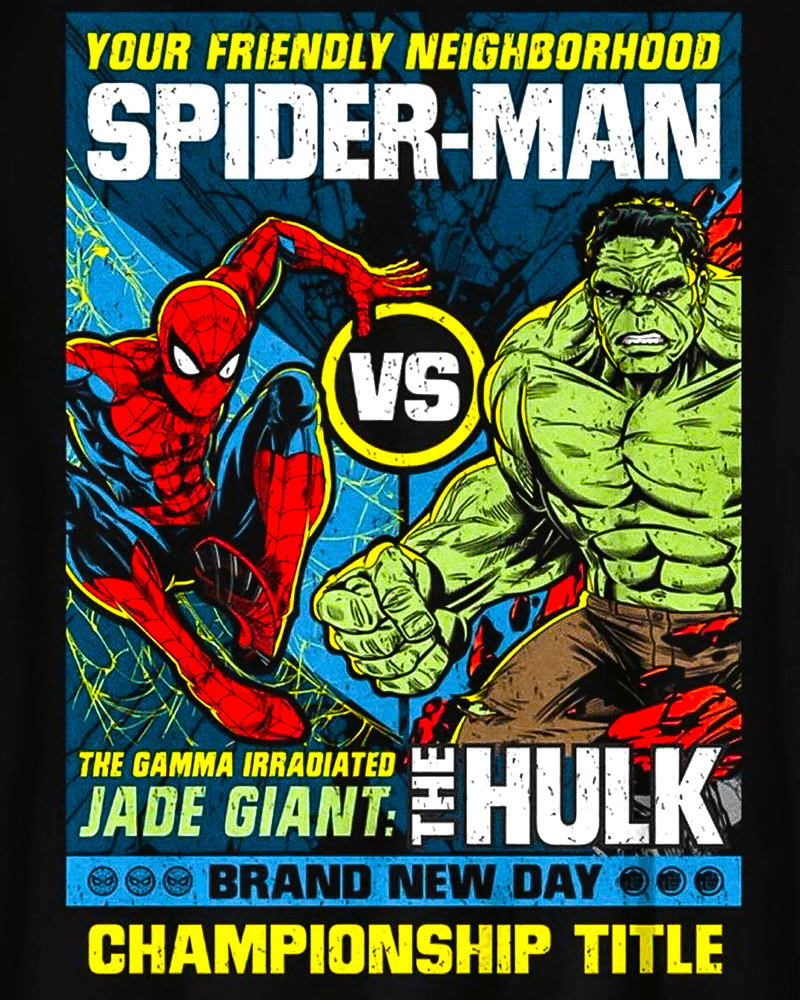
A new Spider-Man: Brand New Day t-shirt design featured a Hulk nickname that has never been used before in an MCU movie. Shared by @SpiderMan_newz on X, the black T-shirt uses an image of Tom Holland’s Spider-Man and Mark Ruffalo’s Hulk facing off as if they were competitors in a boxing-style match. Above the phrase “Championship Title,” the Hulk is described in the image as “The Gamma Irradiated Jade Giant.”
Sony Pictures
Created in 1962, the Hulk has often been called the “Jade Giant” throughout his long run in Marvel Comics, a nickname that references his bold skin tone. While it is still unclear whether this nickname will be used for Mark Ruffalo’s Hulk in the movie itself, this is the first time it has been used in the marketing for any Hulk-starring MCU movie.
Sony Pictures
Mark Ruffalo will have his biggest role in an MCU film in Brand New Day since 2019’s Avengers: Endgame. His character is also expected to return to his Savage Hulk form during Brand New Day.
Spider-Man: Brand New Day will be the MCU’s first theatrical release of 2026. Starring Tom Holland, Zendaya, Jacob Batalon, Mark Ruffalo, Jon Bernthal, and Michael Mando, this film will follow Peter Parker as he deals with the effects of Doctor Strange’s spell that makes the world forget his existence, all while facing a horde of new villains threatening New York.
Other Merchandise Designs for Spider-Man: Brand New Day
Along with the shirt using the Hulk’s classic comic nickname, Sony and Marvel have half a dozen other designs to celebrate Spider-Man 4‘s release in theaters.
One design returns to the Hulk, this time pitting him against the monstrous Godzilla. This is the cover image from Marvel Comics’ Godzilla vs. The Incredible Hulk, released in 2025, also using the Hulk’s “Jade Giant” nickname.
Marvel Comics
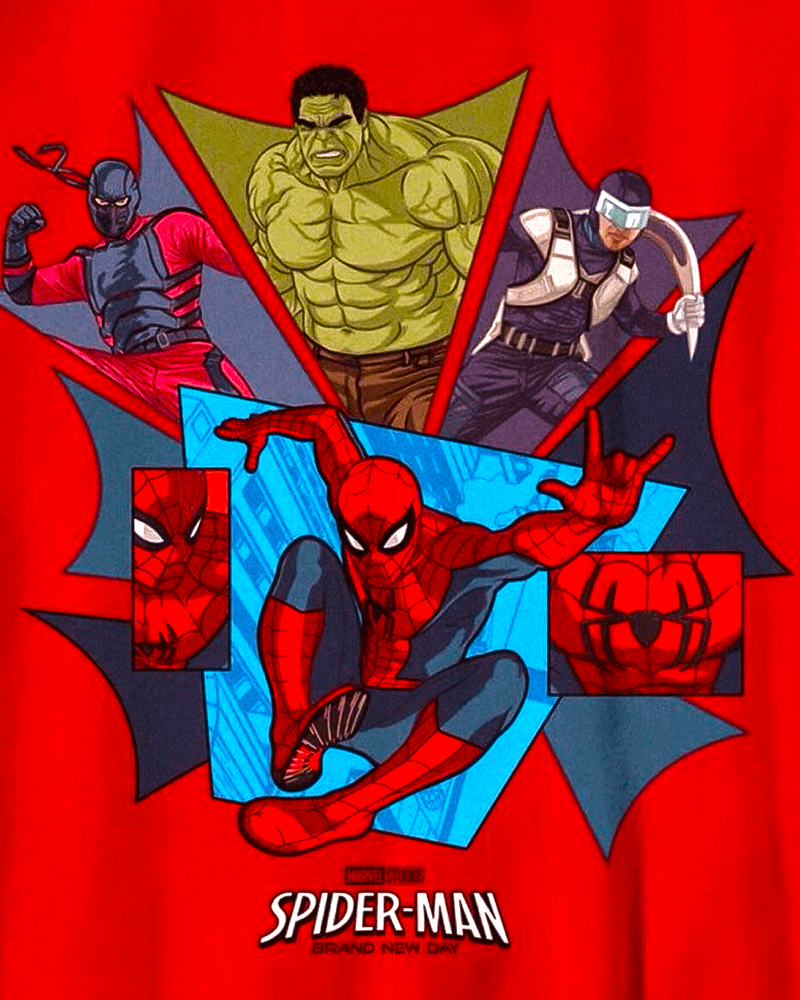
Another design shows off four of the Spider-Man sequel’s biggest characters, with Tom Holland’s Spider-Man jumping in the air. Along with Mark Ruffalo’s Hulk at the top, two of this movie’s various villains are next to him: Tarantula and Boomerang.
Sony Pictures
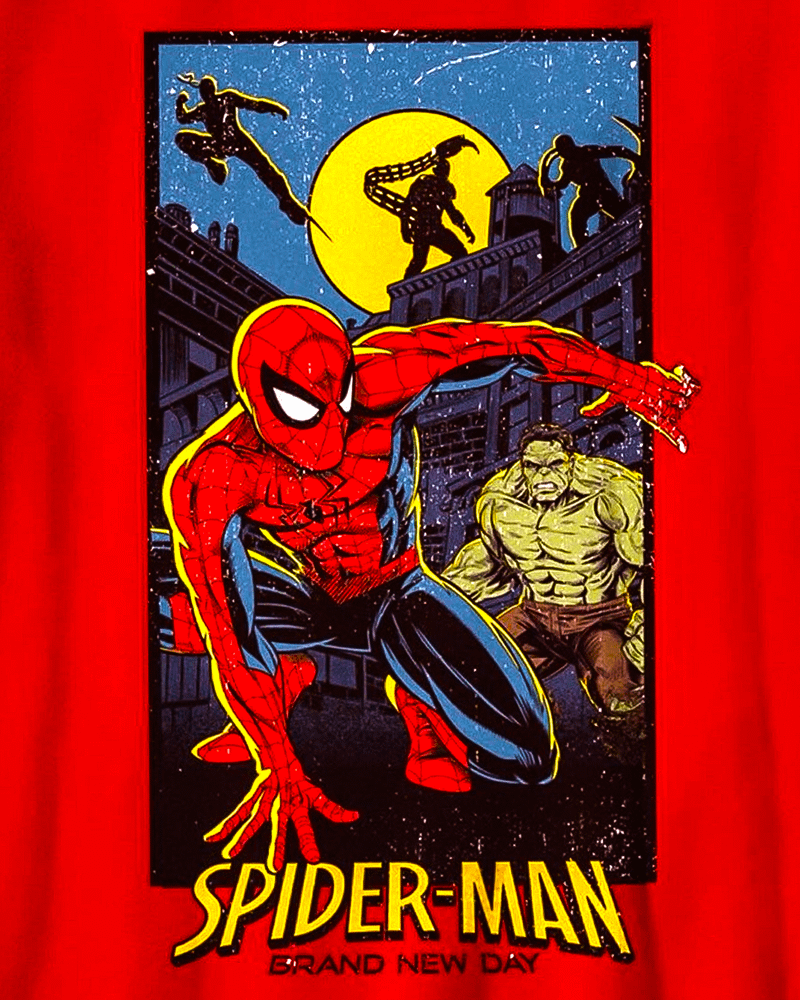
Spider-Man jumps back into action in another design, crouching down as the Hulk stands behind him with his fists clenched. In the background are outlines of Tarantula and Boomerang, along with one of this movie’s main villains, Michael Mando’s Scorpion.
Sony Pictures
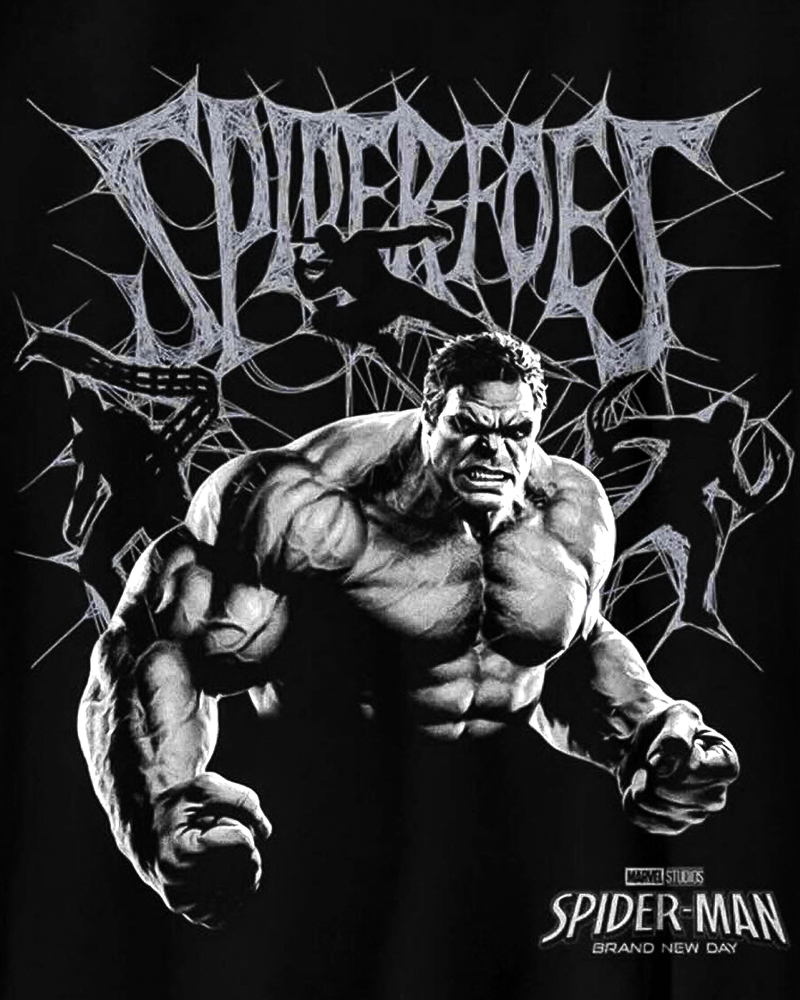
Using a grey tone, Ruffalo’s Savage Hulk returns to the spotlight in the next design. Using the phrase “Spider-Foes” at the top, multiple Brand New Day villains can also be seen behind the Hulk, including Scorpion, Tarantula, and Boomerang.
Sony Pictures
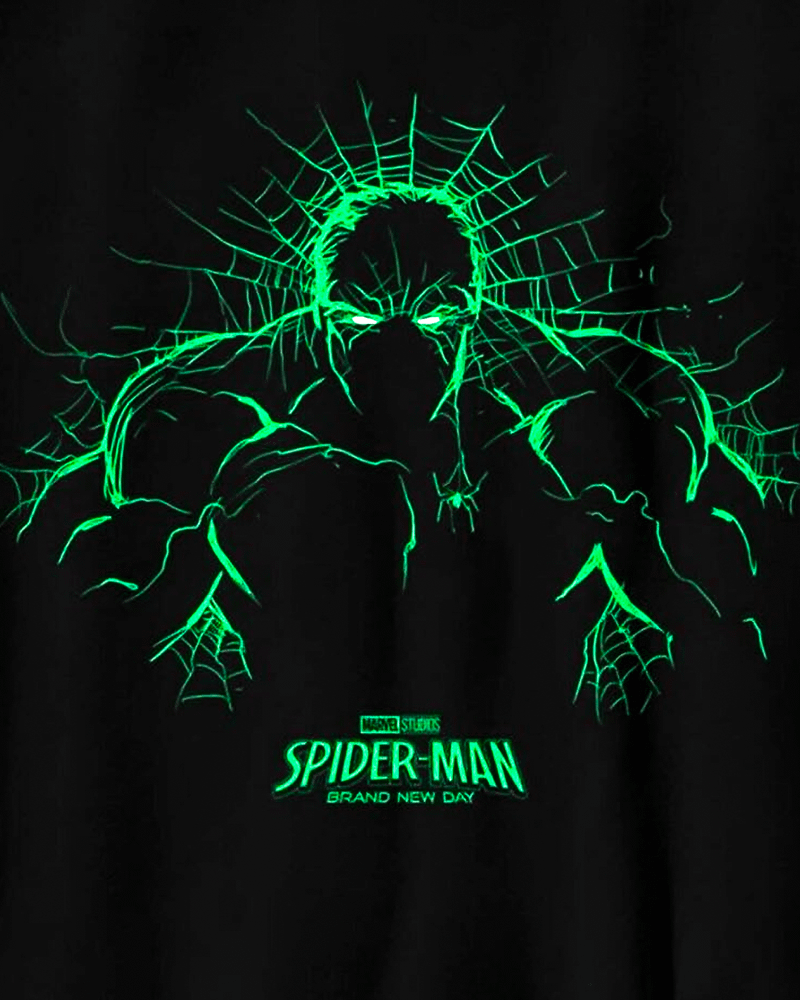
Sony and Marvel feature Ruffalo’s Hulk in another shirt design. This time, he is mostly blacked out with green outlining, teasing his evolution into his Savage Hulk form at some point in the story.
Sony Pictures
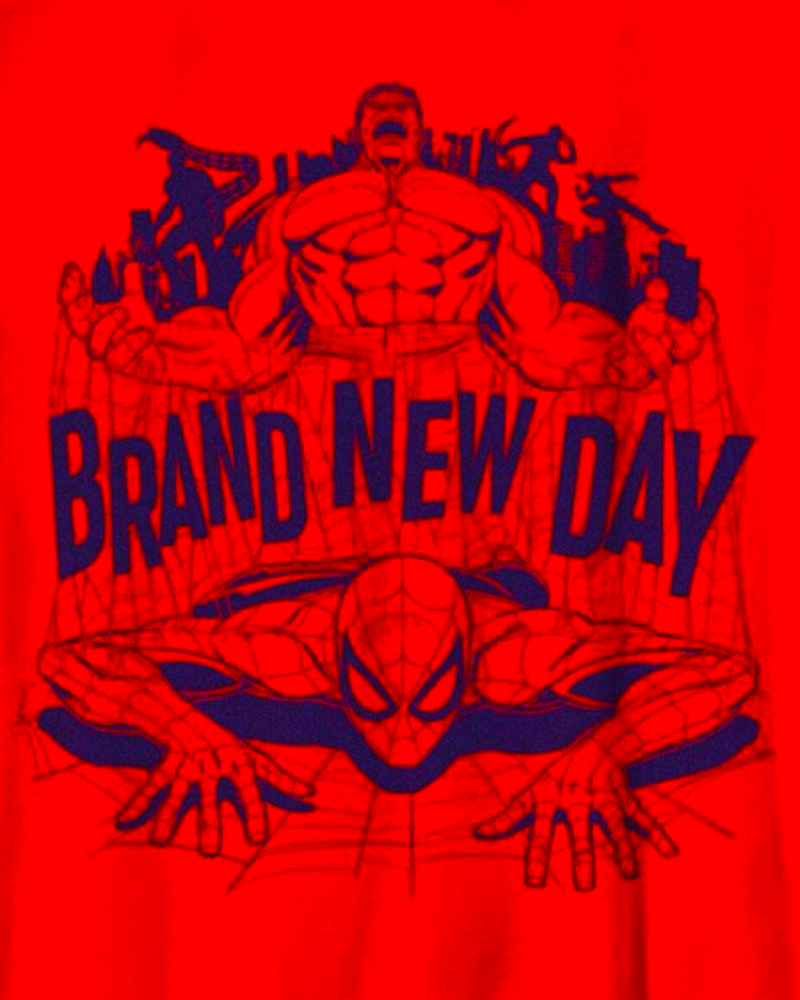
Finally, a red shirt puts the film’s two biggest heroes front and center above and below the title card. With multiple villains outlined in the background, the Hulk roars at the top, while Spider-Man crawls up a wall at the bottom.
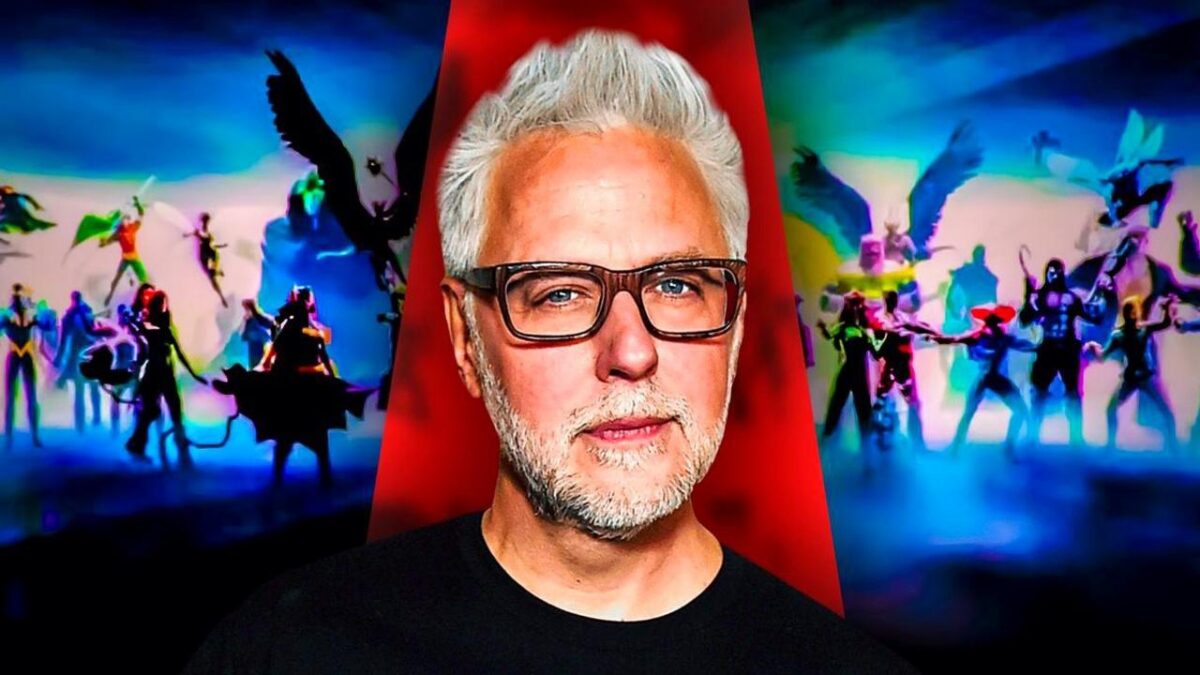
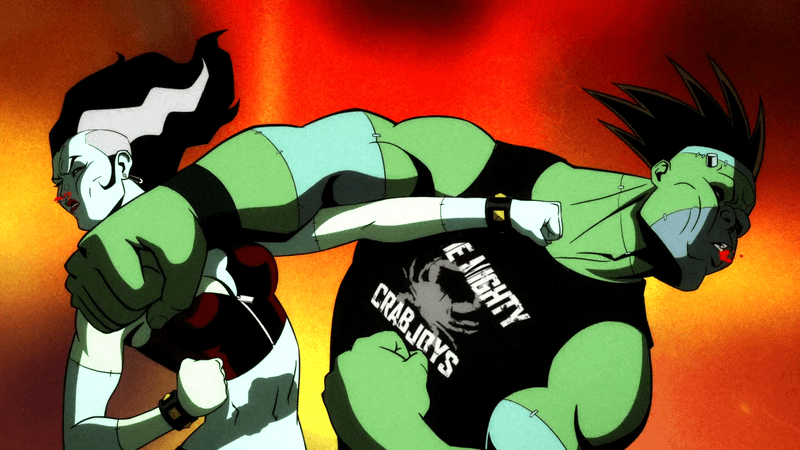
The DCU did not begin with Superman, but instead kicked off seven months prior with the animated series Creature Commandos. Centered on a government task force that uses monsters, the series dropped audiences into the James Gunn-led DCU, offering hints of characters like Batman, the Metal Men, and Sgt. Rock and Clayface. Ahead of the Season 1 finale in January 2025, Creature Commandos Season 2 was greenlit. Now, James Gunn has finally offered an update on when to expect their return.
Responding to a fan on Threads, James Gunn gave a release window for Creature Commandos Season 2. When asked when the series would be released in relation to Man of Tomorrow, Gunn said, “Well, Creature Commandos season 2 won’t be long after. And more stuff as well shortly thereafter.” Gunn did not give a specific release date, but with Man of Tomorrow set to open in theaters on Jul. 9, 2027, Creature Commandos Season 2 will have to be in the latter half of the year.
@jamesgunn
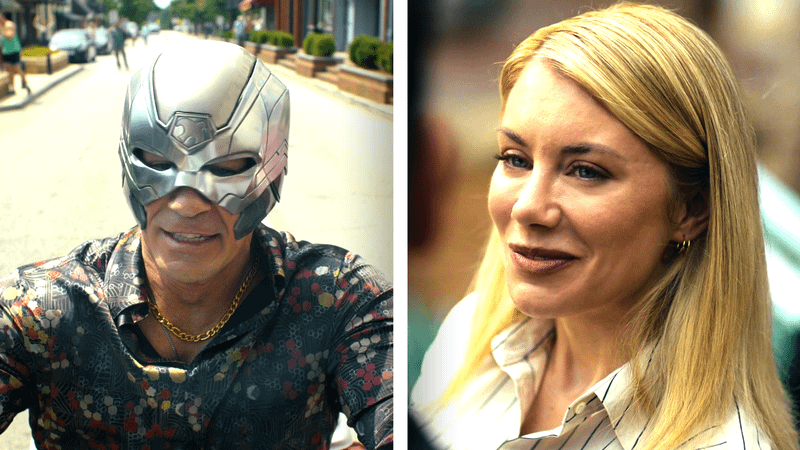
With no specific release date for Creature Commandos Season 2, there are two likely release windows. The first is August 2027, as both Peacemaker Season 2 debuted that month in 2025, and HBO will do the same with Lanterns this year. There is also December 2027, which would mark three years from when Creature Commandos debuted.
Specific details about Creature Commandos Season 2 remain under wraps, though the Season 1 finale teased a new expanded roster that included The Suicide Squad‘s King Shark, a rebuilt G.I. Robot, and newcomers Nosferata and Khalis. Alien: Earth‘s Sydney Chandler is rumored to be voicing Nosferata. The first episode of Season 2 is confirmed to be titled “Starry Nights.” Gunn has also confirmed that Creature Commandos Season 2 is set after Peacemaker Season 2.
The show’s return debuting in 2027 makes a great deal of sense, given the DCU’s 2026 schedule is already filled. Supergirl will open in theaters on June 26, 2026. It will then be followed by Lanterns, which debuts on August 16 and will run for eight weeks. Shortly after, Clayface will open in theaters on October 23.
So far, James Gunn’s DCU schedule for 2027 includes only Man of Tomorrow and Creature Commandos, though more titles are expected to be announced soon. Possibly a release date for the animated Mister Miracle series or an update on the Jimmy Olsen Daily Planet series? Or could Gunn be referring to the non-DCU-related The Batman — Part II, which opens in theaters on Oct. 1, 2027? Maybe more will be revealed closer to San Diego Comic-Con 2027.
Cult ’90s platformer Soccer Kid is getting a re-release in time for the 2026 FIFA World Cup.
The game was released in 1993 on a variety of formats, including Amiga, SNES, PC, 3DO, Jaguar and CD32, and was ported to Game Boy Advance and PlayStation in the early 2000s.
Now it’s returning as Soccer Kid Collection, which contains the SNES and PC versions and will be released on June 16 for PC PS5, Xbox Series X/S, Switch, PS4 and Xbox One, priced at $9.99.
Originally released to coincide with the 1994 FIFA World Cup – the last time the tournament was held in North America – Soccer Kid is a 2D platformer where its protagonist is armed with a football.
When an alien pirate called Scab tries to steal the World Cup trophy at the final of the 1994 tournament, his plan goes wrong when his ship crashed into an asteroid, breaking the trophy into five pieces which are scatted across Earth.
Watching this on TV, Soccer Kid – a young football-obsessed boy who lives in England – decides to head out and find the five pieces of the World Cup so the trophy can be put together again.
The game’s main gimmick is that most of Soccer Kid’s moves are performed with his trusty football. Soccer Kid himself isn’t very strong and dies if he touches an enemy, but he can kick his ball to kill bad guys and collect power-ups that are too hard to reach.
He can also balance on the ball and bounce off it to access higher areas, or pull off headers and bicycle kicks to hit different parts of the screen with the ball.
Soccer Kid was well received when it was originally released, with CVG giving the Amiga version a score of 89%, saying it was “one of the more original games of the last few years, and certainly makes a change from the haggard old platformers we’re used to”.
Albert Wolsky, a two-time Academy Award winning and Tony nominated costume designer whose many high-profile credits include his Oscar-taking work on All That Jazz (1979) and Bugsy (1991), died Saturday, May 23, at his home in Hollywood. He was 95.
His death was announced by friends and colleagues on social media and confirmed by Deadline.
Born in Paris, France, on November 24, 1930, Wolsky had moved to the United States and attended City College of New York when, at age 30, he switched careers from the travel industry to pursue costume design. An early entry level position for the legendary costumer Helene Pons came during the original Broadway production of Camelot.
During those early years Wolsky was credited as an assistant to such costumer designers as Ann Roth (A Case of Libel, 1963), Irene Sharaff (Jennie, 1963) and Patricia Zipprodt (Fiddler on the Roof, 1964). He reteamed with Roth again for 1965’s The Odd Couple, and the same year became costumer
Within six years, Wolsky was designing costumes under his own name for Broadway productions, including Generation (1965) and Pousse-Café (1966). Another significant solo credit came in 1972 when Wolsky designed the costumes for the original The Sunshine Boys by Neil Simon. Subsequent Broadway productions included, among others, The Country Girl, a 2008 production starring Frances McDormand, Morgan Freeman and Peter Gallagher, and, in 2012, The Heiress, his Tony-nominated final Broadway production that starred Jessica Chastain, Dan Stevens and David Strathairn.
Wolsky’s screen work began shortly after his Broadway debut, with credits including a 1968 TV-movie version of Of Mice and Men, and, that same year, the feature film The Heart Is a Lonely Hunter.
Over the subsequent decades, he would design the costumes for numerous major motion pictures, including, among many others, Up the Sandbox, Harry and Tonto, Lenny, The Turning Point, An Unmarried Woman, Grease, Woody Allen’s Manhattan, The Jazz Singer, Sophie’s Choice, Star 80, Moscow on the Hudson, The Falcon and the Snowman, Down and Out in Beverly Hills, Crimes of the Heart, Scenes from a Mall, Toys, Fatal Instinct, Striptease, You’ve Got Mail, Runaway Bride, Road To Perdition, Maid in Manhattan, Jarhead, Revolutionary Road, Birdman and Ad Astra.
Wolsky won Oscars for his work on All That Jazz in 1979 and Bugsy in 1991. He served four terms on the Academy of Motion Picture Arts and Science’s board of governors, and in 2015 received The Costume Designer’s Guild Award for Excellence in Contemporary Film.
Christopher Nolan is set to be featured in a complete retro by the Toronto International Film Festival’s summer marquee series that will start ahead of the July 17 North-American theatrical premiere of “The Odyssey.”
The series at TIFF Lightbox cinema, titled “Christopher Nolan: Grand Designs,” will run July 8–Aug. 20 and feature screenings of Nolan’s works exclusively on 35mm and 70mm film.
Nolan made his directorial debut with the low-budget black-and-white noir “Following” that launched from the Toronto fest’s Discovery section in 1998. He last returned to the festival in September 2017 with a special screening of “Dunkirk” in IMAX 70mm in celebration of IMAX’s 50th anniversary. Nolan is not expected to attend the upcoming TIFF summer series retro.
To launch the retro The Ringer and Spotify’s The Big Picture will host a live recording of their podcast at TIFF Lightbox with Sean Fennessey and Amanda Dobbins, according to a statement.
The retrospective celebrating the self-taught Oscar-winning director will feature all 12 of Nolan’s features, several of which projected in 70mm format. They comprise: “Memento” (2000), “Insomnia” (2002), “Batman Begins” (2005), “The Prestige” (2006), “The Dark Knight” (2008), “Inception” (2010), “The Dark Knight Rises” (2012), “Interstellar” (2014), “Dunkirk” (2017), “Tenet” (2020), and “Oppenheimer” (2023).
Additional programming of the Nolan retro at TIFF Lightbox includes a presentation of Philip Kaufman’s “The Right Stuff,” a film Nolan has “cited as one of his favourites,” according to the statement. A “quote along” screening of Greta Gerwig’s “Barbie” is also planned to screen directly before the “Oppenheimer” screening on July 18 “as a playful nod to the Summer of 2023’s “Barbenheimer” phenomenon.
Separately, TIFF has also announced a marquee screening series of Japanese anime cinema titled “Drawn Universes: Visions in Animation” curated by celebrated Japanese animation auteur Masaaki Yuasa that will run in November and December 2026. The event’s exact dates are still being decided.
“It is an honour to curate this series for TIFF, “ said Masaaki – who is known for celebrated works such as “Mind Game,” “Lu Over the Wall,” and the Golden Globe-nominated “Inu-Oh” – in the statement. “As I begin shaping the lineup, I am excited to look back at the works that sparked my own imagination from a young age, and to curate a series with a focus on the artists who have defined the genre and the incredible creators who continue to push the visual possibilities of anime today. I hope to bring a programme that truly surprises and delights everyone.”
“The marquee series at TIFF Lightbox was envisioned to present big artists and ideas that capture and shape popular imagination,” said Anita Lee, chief programming officer at TIFF.
“Christopher Nolan is one of the most influential voices in contemporary cinema today where each new film is a cultural event,” she added, “while anime continues to explode as an art force shaping global entertainment across mediums. These programmes offer audiences of all ages a compelling look at the scale, creativity, and innovation that define film today.”
This summer it’s all about color. The trends of 2026 seem to be largely governed by different shades more than fabric, volume, silhouettes, or prints. And the color purple, in particular, has a VIP invite to this party.
Both designer and affordable brands are betting big on the color purple—just as they are with intense reds and blues. And as with cerulean or crimson, we’re seeing the shade in its boldest forms. From accessories that add a surprise factor to any look to striking garments that blend unexpectedly well with other primary colors, it’ll be easy to make a statement this summer in everything from clothing to swimwear.
Want to know how to style the color purple for summer 2026? Here are a few tips.
Combine purple with other primary colors.
Edward Berthelot/Getty Images
One way to stand out this summer? Mix purple with other colors that are as striking, if not moreso, such as cherry red or turquoise blue. That could be in the form of a print, as in the street style example here, or by color-blocking a purple miniskirt with a red top. (Maybe add in a blue bag for good measure to really go big.) The combination is explosive, but it works.
The star of 1987’s Masters of the Universe shared details about his character in the upcoming new movie of the same name. Dolph Lundgren portrayed He-Man in the ’80s feature directed by Gary Goddard. In the new version, helmed by Travis Knight, Nicholas Galitzine plays Adam Glenn/He-Man. Both projects are part of the namesake multi-media franchise.
Dolph Lundgren’s character to give advice to He-Man in Masters of the Universe
The veteran He-Man actor spoke about his character in the upcoming movie during an interview at the premiere.
When asked by Entertainment Tonight how he was feeling about bringing He-Man back to the big screen after nearly 40 years, Dolph Lundgren responded, “Yeah, it feels great to be part of this legacy and to bring it to a new audience.” He then proceeded to spill details about his role in Masters of the Universe, noting that it’s “nice to feel like the elder warrior who’s helping the younger warrior, giving him some inspiration and advice.”
The Expendables star also clarified that he gave “advice” to Nicholas Galitzine’s character “on screen.” He added that he is playing an individual who gives He-Man some advice “at a crucial time in the picture.”
Later in the interview, Lundgren recalled his reaction to Galitzine’s transformation for the movie. “I thought he looked great on set,” the Swedish actor said. “He looked like He-Man, and I think he has the gentleness and compassion that’s the other side of strength.” Moreover, he elaborated by saying that it’s important to find “balance” between those things.
In a separate interview with PEOPLE, Dolph Lundgren also noted “passing the sword over” to Nicholas Galitzine was a “great feeling” for him.
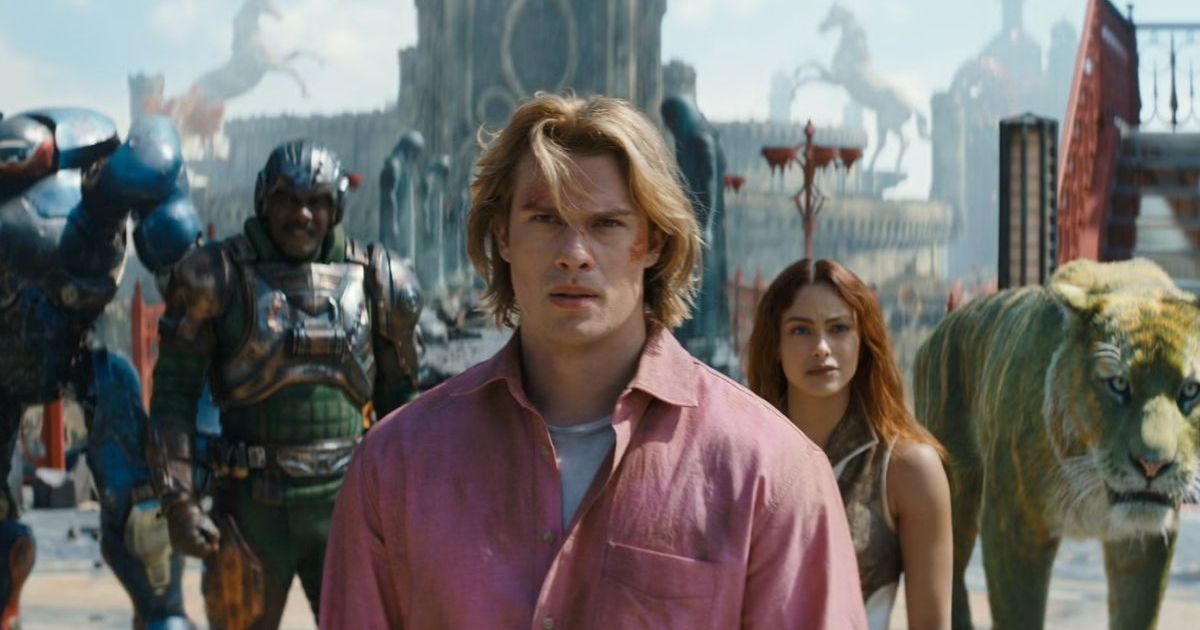
Aside from Lundgren and Galitzine, the new Masters of the Universe stars Camila Mendes as Teela, Jared Leto as Skeletor, Alison Brie as Evil-Lyn, Idris Elba as Duncan / Man-At-Arms, James Purefoy as King Randor, Charlotte Riley as Queen Marlena Glenn, and Morena Baccarin as the Sorceress. The movie premiered on May 18, 2026, at the TCL Chinese Theatre. It debuts in US theaters on June 5, 2026.
Originally reported by Tamal Kundu on SuperHeroHype.
As we examine the latest endorsement of High Ballonix in the UK gaming market, it’s clear that community ratings play a crucial role in its success. Players have emphasized its creative mechanics and stunning visuals, but some concerns remain regarding equilibrium and content development. This continuous conversation between creators and the community brings up questions about the game’s progression and upcoming updates, inviting us to contemplate how these elements will shape the gaming scene in the future.
Community Reactions and Input
As feedback rolls in from the video game community, we’re seeing a blend of enthusiasm and critique surrounding Ballonix. Many players are praising the game’s innovative gameplay, particularly its smooth combination of strategy and activity, which maintains the play fresh and engaging. Fans highlight the breathtaking visuals and the immersive environments that genuinely elevate the video game experience.
However, it’s crucial to note the issues raised by some players. A few have pointed out that while the game excels in innovation, certain features can feel incomplete or disproportionate.
This admission of differing opinions implies that while we’re enthusiastic about the direction Ballonix is heading, there’s room for improvement. The developers seem willing to listen, making it apparent that community feedback plays a vital role in the game’s evolution.
As we engage further with this dialogue, it’ll be intriguing to see how the developers integrate these insights to enhance our overall gaming experience.
Future of High Ballonix: What’s Next?
While many of us are excited about the future of Ballonix, the developers have set ambitious goals to further enhance the gaming experience.
We can expect a series of updates that not only enlarge the game world but also polish gameplay mechanics. The integration of AI-driven elements guarantees a more engaging and flexible environment, allowing players to have a customized journey.
Moreover, plans for user-generated content could transform how we engage with Ballonix, creating a dynamic community of creators who shape the game’s evolution.
We can also foresee improved collaborative online features, promoting teamwork and competition among players across the globe.
With each upcoming feature, the developers aim to break new ground, ensuring Ballonix remains at the vanguard of innovation in gaming.
As we ready for these developments, it’s crucial to stay engaged with the community, sharing our insights and ideas that might encourage future development.
Exciting times lie ahead!
Conclusion
In summary, we see that High Ballonix has truly captured the hearts of players and critics alike with its creative design and compelling mechanics. As we go on to observe its evolution, the positive feedback from the community will be essential in forming future updates. By encouraging this collaboration, we’re certain that High Ballonix will not only sustain its momentum in the UK gaming market but also establish new standards for player experience in the years to come.
Overview of High Ballonix and Its Characteristics
High Ballonix stands out in the video game landscape with its novel approach to engaging players. We’re excited to examine its distinctive attributes that differentiate it from traditional games.
One essential aspect is its dynamic play systems that change based on player behavior, creating a customized experience. We’ve observed how the fluid graphics and engaging sound design immerse us in the game world, making every session feel fresh and thrilling.
Furthermore, High Ballonix includes live challenges that promote teamwork and rivalry among players, fostering a vibrant video game environment.
The inclusion of advanced technology, like augmented reality elements, enhances our view of reality, blurring the boundaries between the virtual and real worlds.
Frequently Asked Questions
What Devices Are Compatible With High Ballonix?
High Ballonix is adaptable with multiple devices, including mobile phones, tablets, and specific gaming consoles. By making sure our tech fits seamlessly, we can improve our gaming experience while welcoming new interactions across multiple platforms.
Is There an Age Restriction for Playing High Ballonix?
Yes, there’s an age restriction for playing High Ballonix. Generally, it’s suitable for players aged 10 and older. We should always check specific ratings to make sure everyone enjoys a safe and fun gaming experience together.
How Can Players Report Issues or Bugs?
We can report concerns or bugs in High Ballonix through the game’s designated forums or support channels. Let’s ensure our feedback is understandable, so developers can fix problems and boost our gaming experience effectively.
Are There In-Game Purchases in High Ballonix?
Yes, there’re in-game purchases in High Ballonix https://ballonix.eu/en-gb/. We believe these options augment the experience, permitting us to gain new features and customize gameplay. It’s an exciting approach that promotes creativity and strategy among players.
Will There Be Expansions or Downloadable Content Soon?
We’re excited to share that expansions or downloadable content for High Ballonix are planned soon! This guarantees to improve our gameplay experience, bringing novel challenges and innovative features, holding us captivated and delighted.
The Toronto-based production house today outlined a new structure and made several appointments. Among the changes, company co-founders Jacob Tierney, who wrote Heated Rivalry, and Brendan Brady, the show’s producer, will switch from co-Presidents to new roles.
Tierney will become Chief Creative Officer and executive producer and Brady CEO and exec producer at Accent Aigu, which was founded in 2023 and last year achieved huge global success with Crave and HBO queer drama Heated Rivalry. The show exploded in the U.S., making stars of Hudson Williams and Connor Storrie.
Elsewhere, Jayme Alter Wilson has been named President, Craig Merritt becomes CFO, Lori Fischburg will be Head of Production, and Liane Cunje takes on the roles of Development Executive and producer.
Alter Wilson has been a company advisor since its inception and will now lead strategy an operations alongside Tierney and Brady. She was previously a partner in media, entertainment and sports at Dentons, and begins her new role in June.
Merritt will lead all production and corporation financial activities, having previously worked large public businesses and private operations, and Lischburg takes on her new post after line-producing Heated Rivalry. She’ll oversee Accent Aigu’s production slate. Cunje, an independent film producer who has managed the Toronto International Film Festival’s programming and served as its industry selection programmer, will oversee development across the slate.
Accent Aigu is currently in development of the much-anticipated Season 2 of Heated Rivalry, and is now seeking to expand the scripted slate further. It was around this time last year that Heated Rivalry was first announced as part of Bell Media streamer Crave’s 2025/26 slate.
“Accent Aigu has experienced incredible success over the past year, and we’re excited about where we are headed next,” said Tierney and Brady.
“As we continue to grow, it’s important for us to bring in people who not only have deep experience in their fields, but who also understand the kind of company we want to be. Jayme, Craig, Lori, and Liane each bring thoughtful leadership, creative insight, and a shared commitment to storytelling as we continue building a strong foundation for long-term success.”
I t is April 11, 2026. President Donald Trump is in Miami, sitting cageside at his favorite live show on Earth: the Ultimate Fighting Championship, the pinnacle of the bloody sport of mixed martial arts. At his side is perhaps his best friend in the entire world, UFC President Dana White. The fights that night are electric: knockouts, cuts, blood all over the mats. At that very moment, Vice President J.D. Vance is in the final stages of failing peace talks with an Iranian delegation in Pakistan, but for a few short hours, the president has a front-row seat to a much more entertaining war. There is only one thing missing: Trump’s favorite fighter.
White will get a chance to rectify that at this month’s extravagant Freedom 250 celebration, featuring the first-ever UFC event on the White House’s South Lawn. “He looks at me and says, ‘Why is Derrick Lewis not on the White House [fight] card?’” White remembers of that April fight. “He doesn’t like Derrick Lewis. He loves Derrick Lewis.”
Lewis, for those unfamiliar, is a veteran heavyweight nicknamed “the Black Beast,” infamous for ripping off his shorts at the end of fights. After one recent win, Lewis dropped trou, got on all fours, and hiked a leg in front of his defeated opponent’s corner, pretending to piss on it like a dog. He is, in other words, an American hero, and all it took was that one question to make White spring into action. By the end of the night, Lewis was slated to fight at the White House.
Watch the video interview below
The upcoming cage match in honor of the country’s 250th birthday was arranged at the behest of the president and will be put on by perhaps the single most important figure in American sports. At 56, White is no longer a small-time boxing coach from South Boston. He’s not even the fast-talking Vegas card shark and fight promoter who first captured the eye of a certain real estate titan from Queens. He is the gateway to America’s most intimate displays of violence, a multiplatform empire that he tells me will encompass “every way that you could possibly kick another person’s ass.” That business has intersected with some of the most powerful people in every corner of the world — after our interview, White casually told me he’d lost a key matchup for the Freedom 250 event because Vladimir Putin called one of the Russian participants and told him not to perform at a site that represents the heart of a rival superpower.
To best understand how White got to this place, you have to understand the allure of watching someone get punched in the face — or better yet, of doing it yourself. I’ve been fighting recreationally for years and can attest to the delirious sense of power that comes from your fist meeting an open chin. That’s what White is selling: the chance to live vicariously through his shredded roster of modern-day gladiators. And in recent years, business has been good: In 2025, White inked a new $7.7 billion deal with the Paramount Skydance Corp., giving a sport that was once deemed too violent for TV a prime-time slot.
In late April, White dropped by New York City for the Rolling Stone Interview. Two nights after we met, he was at the White House Correspondents’ Dinner when a gunman burst into the building. White was captured on camera shortly after, absolutely glowing, saying, “I didn’t get down. It was fucking awesome.”
Editor’s picks
That’s who White is, I think. He’s here for the crazy, for the surprising, and most of all for the violent. He wants to build, expand, and conquer. He wants to take it all in and ask, “What’s next?” The day that question doesn’t have an answer, White won’t be drawing breath.
The first time Rolling Stone profiled you was in 2008. We wrote: “The way things are going, Dana White, president of the Ultimate Fighting Championship, may soon be hailed as the greatest sports promoter ever, of all time, bigger even than boxing’s Don King, bigger even than pro wrestling’s Vince McMahon.” Vince might have words about that, but 18 years later, most of it has come true. Did you ever see yourself reaching this point? Well, thank you, first of all. If you separate me from the sport and the UFC, I always believed the sport could be where we are today. This thing wasn’t allowed on pay-per-view. We spent $10 million to buy our way onto TV. That was to produce The Ultimate Fighter and air it on Spike [in 2005]. Our first media-rights deal was $35 million. We go from Spike to Fox for $100 million. We go from Fox to ESPN for $3 billion, and then we go from ESPN to Paramount for $7.7 billion. I mean, we’re everywhere now. We’re going to Azerbaijan again this year. So, the long-winded answer to your question is, I believed that the sport could be where it is today, and I always knew that I was going to be the guy to do it.
Related Content
You started out as a boxing guy. What captivated you about MMA? The first time I had seen it was on pay-per-view in 1993, when the first [UFC event] happened. And then I sort of lost track of it. It wasn’t until me and the Fertitta brothers [Lorenzo and Frank, Las Vegas casino magnates and White’s childhood friends] started taking jujitsu, and we started to meet a lot of the fighters, and they were just so much different than boxers. Came from different places, had different backstories. And then we went to our first UFC event, and we started going, “Imagine if they did this” and “imagine if they changed that, this could be big.” That was really how it all started.
What drew you to fighting? When I was young, my uncles used to put the fights on ABC’s Wide World of Sports, and there was just always this energy and buzz in the house when the fights were on that I became addicted to. We had big football games because we were Patriots fans, but just nothing felt like it felt when it was a fight on. I fell in love with it.
There’s an energy to combat sports that you don’t get from a lot of other places. And it wasn’t just boxing matches either. It was, like, Bruce Lee movies, Chuck Norris movies, and all the different martial arts. I was into all different styles of fighting. You know, Instagram is the devil. I’ll lay in bed at night and watch street fights on Instagram till five in the morning. I just like fighting.
Getting this sport in front of America hasn’t been easy. Was there ever a moment in the early days when you thought, “Maybe this isn’t going to work out”? The fight business is the hardest business in the world to run, to organize. There’s been plenty of those moments in the early days. When we were trying to secure a TV deal, when we were trying to get back on pay-per-view, when we were going through all the commission stuff for sanctioning, and then the day that Lorenzo [Fertitta, then-CEO of the UFC] called me and said, “I can’t keep doing this. Me and my brother keep putting all this money in. I want you to get out there and see if you can sell this thing.” I started making calls that day. I called him back and said, “You probably get 6, 7, 8 million bucks for it.” And we were thirty-something million in the hole. And he said, “OK.” We hung up the phone, and the next morning he called me back and literally said, “Fuck it. Let’s keep going.” Lorenzo always talks about it. He’s like, “It’s amazing what a good night’s sleep can do to you.”
With this big roulette wheel that you’ve been spinning for so many years, when was the moment you felt like you hit? I remember it like it was yesterday. We financed the $10 million for The Ultimate Fighter to go on Spike TV. The ratings on The Ultimate Fighter go just like this [mimes a graph going up]. At that time, in the cable-television world, if you had a show that was that successful, it was everywhere — on buses in New York, billboards. Spike TV? Flatline, nothing [to promote the show]. Halfway through the season, the president of the network gets fired. Nobody’s returning my calls. It was an insane time. When it should have been, “Holy shit, we should be cutting a new deal for the next season of this thing” — none of that happened. It was the exact opposite.
So then that night at the Cox Pavilion at UNLV’s campus, the finale fight happens with Forrest Griffin and Stephen Bonnar, and it sounded like a train was going through that place. People were stomping their feet and chanting “one more round,” and we went in and gave them both a contract. And I literally remember that night going, “I don’t give a shit if Spike signs a new deal or doesn’t, this is going to end up somewhere.” And then that night, the guys from Spike took us out in the alley, and we drafted a television deal on a napkin — literally on a napkin — sort of the bullet points of what a deal might look like. And then that was it. We were on our way.
“There was this buzz in the house when fights were on that I became addicted to.”
You held some of your first events at Trump’s casinos. What did you think when he told you he was going into politics? When he first called me [in 2015], he said, “Listen, if you don’t want to do this, I completely understand, but I’d be honored if you’d speak for me at the Republican Convention.” Everybody told me not to do it. The two reasons were, number one, you don’t want to get anywhere near politics, and number two, he’s never going to win.
But you did it. You’ve described that moment to me as really being a turning point, both in your personal relationship with him, but also in his political movement. You’ve become pretty close personal friends since then, right? We’re really close.
I have this theory that you’re one of Trump’s only real friends left. I think as his power and position have grown, a lot of the relationships are transactional. People fall in and out of favor, because that’s the world that he’s in. But your relationship throughout has been steady. I don’t want anything from him. I’m not looking for anything from him. There’s nothing transactional in our relationship. We’re friends. And when we get together, it’s literally no different than any other person in this room when you get together with somebody you’re friends with. You talk about things that friends talk about. I think when he is dealing with shit that I can’t even dream of, when he wants to get away, he comes to a UFC fight. You can tell the difference from when he first gets there to when he leaves at the end of the night, he needed it.
As human beings, it’s almost necessary to be a fan of something, whether it’s a band, the Boston Celtics, the UFC, to get out one night and just be a fan of something and just not give a shit about anything else that’s going on other than sitting there and enjoying yourself.
At the end of the day, everybody has to remember Donald Trump is human. And as human beings, we all need that — everybody’s got a thing. Donald Trump’s thing is the UFC.
Has he ever asked you to take a greater hand in his actual political work — said, “Dana, I need you in D.C. now”? Never. Never.
That changed in the 2024 cycle, when you helped engineer a media blitz on podcasts and social media for him. It seemed like you were a little more comfortable utilizing the networks and the audience that you had built to— I know everybody leans on that one, but I mean, when we bought the company in 2001 and we did the fight at the Trump Taj Mahal [in Atlantic City, New Jersey], the Trump brand was up there [motions above his head], UFC brand down here [motions to his waist] — he showed up to the first fight of the night and stayed till the last fight. This guy is my really good friend. He has been for a very long time. He loved coming to the UFC before he ran for president. But why would I not make a big deal out of the sitting president of the United States coming to my event?
Sure. If it was Reagan, Obama, Bush — any of these guys that show up, it’s the president of the United States. You can make anything overly political if you want to, but that is not our relationship. And even when I’ve spoken at these conventions or rallies, you never hear me talk politically. You never hear me say anything left, right, this, that. I’m right down the middle, common sense, that’s me.
Have you ever felt like that relationship has alienated any of your fans? I travel all over the world to places that are heavily liberal. New York City, I’m here all the time. I was just in Seattle, Washington. Nobody ever has ever said anything to me negatively, screamed anything. I’ve never had any negative interaction with anybody anywhere I’ve ever gone in the world due to my relationship with the president. The exact opposite, to be honest with you.
“Donald Trump is human. Everyone’s got a thing, and Trump’s thing is the UFC.”
How did the event that’s happening next month at the White House come about? We’re at a fight, and he looks at me in the middle of the fight and says, “You know what? We should do a fight at the White House.” And I’m like, “Yes, you should do a fight at the White House.” I don’t know if you’ll ever meet anybody more proud of the White House than he is. He absolutely loves that place and he feels like it’s America’s house, and we should do things where more people can come to the White House and be able to experience it.
The media frenzy around this White House fight has gotten pretty hot. Trump’s overall popularity is at one of its lowest points. The war with Iran has been a low point, and he’s even gotten criticism from some once-reliable backers. Joe Rogan has wondered about the safety and security of going forward with the fight event, given the national context. Was that ever a concern for you? I [kept fights going] through Covid. Nothing like that ever concerns me. And listen, the world is a very rough place, man. There’s always bad things going on. I own a global business. I have Russians, I have Ukrainians, I have Israelis, I have Pakistanis — you name it, I have them all on my card. And guess what? For the rest of existence, that stuff’s going to be going on. And when you own a global business, you can’t just bend and break and roll over for every bad thing that happens in the world, because I guarantee you, a lot more shit is going to happen this year, and I’m not going to not run my business because of it. To have the opportunity to fight at the White House — we’re in.
[With everything going on,] he probably wishes he didn’t say that to me. But again, we’re in. It’s happening. Everything’s in motion. He’s never said anything to me like that, but this guy’s dealing with shit that people like you and I can’t even imagine and don’t want to. And we don’t get into that kind of stuff.
What do you talk about? We definitely don’t talk politics. We talk about everything but. How his family is, what’s been going on, how’s he feeling? I mean, this guy doesn’t sleep. I’m not a big sleeper either, but his level of sleep is inhuman. I don’t even know how he does it, especially at his age.
Has there ever been a moment where something that he said or something he did— Listen, I mean, at one point, did I wish he would stay off Twitter? Yeah. I’m the guy that’s always walking around [defending him], going, “You don’t understand.” I challenge everybody — you can be as far left as you could possibly be. If I take you to dinner with Donald Trump for an hour, it is impossible for you to leave that dinner and go, “I hate that guy.” It’s impossible.
In the future, can you imagine having a similar relationship with a Democratic president if they want to come to UFC events? Other politicians have said to me, “I would like to come to the event, and I’d like to walk out with you” — like, uh-uh. No. But I’m an American citizen. If the president of the United States calls me and says they need something, consider it done. Democrat, Republican, you bet your ass I’m going to figure out how to help.
Did you ever think you’d be a sort of power broker for one of the most powerful people in the world? No. You believe in your business, you believe in the sport or whatever it might be, but you never … I mean, I talk to the royal family in UAE. I’m super close to them. And the list goes on and on. I met with the prime minister of the U.K. last year. You don’t see those types of things coming.
“You never hear me say anything left, right. I’m right down the middle.”
What’s that feel like? You go from haggling with Atlantic City casino owners to now meeting with prime ministers. It really makes you aware of levels. There are levels in life, and it’s cool to go and see these things and to interact with these powerful, incredible people.
Have you ever been starstruck? I think the only guy that would make me even remotely starstruck is Michael Jordan. I’m a big Jordan guy.
Tell me about your personal health and fitness routine. What are you into now? I cold-plunged before I came here this morning. When I set my sights on something and I say, “I’m going to do this,” I’m all in. I got in the best shape of my life [in 2022]. I went hardcore for three years. I got off all pills, I got off blood-pressure medicine, cholesterol medicine, all the shit that I was on. I mean, I got ripped to shreds. I did the whole thing. Now, I’ve found this happy medium where I can actually live a little and have some fun, too.
What about combat sports? Do you ever hit the bag, get back in the ring, roll [jujitsu] with anyone? No, I haven’t done any of that in a while. At my age — I’m about to be 57 in July — I’m trying not to get fat, I’m trying not to get hurt. Those are my goals in life right now.
You met your wife when you were both 12 years old, and have been married since 1996. With the three kids now, how much time do you get with your family? My wife is one of those people that pulls everybody together. She’s the best at it. We do three big family trips a year. She’s all over that shit. It’s not like, “Oh, I go home [every night] for dinner …” When we go somewhere, we go for 10 days, which is a long fucking time for me. By day three, I’m like, “Oh, my God.” By day seven, I’m like, “If I have to put lotion on my skin one more time …”
You’re on planes constantly. What’s your cultural diet like? What are you listening to, what do you read? Nothing. I just sit there. It’s the weirdest fucking thing ever. I just sit there on the plane, nothing. I don’t listen to music. I don’t watch TV. I don’t do anything. Sit there. Yeah. I don’t like watching TV. Very few shows can pull me in. I’ll start watching a show, and five minutes in, I’m like, “This is bullshit. I can’t get into this. This is whatever.” If I watch the first episode and you got me, then I binge-watch the whole thing. I’m chomping at the bit for Landman and Mobland.
A common criticism of the UFC, and of your business as a whole, is how much the fighters get paid. The WNBA agreed to a new salary minimum of around $270,000 a year, which is reportedly more than a journeyman MMA fighter earns. Do you ever see a future where a UFC fighter can immediately make a living wage? Fighter pay has gone up every year, and it will continue to go up as long as we continue to be successful. But to compare it to the WNBA, that’s ridiculous. First of all, if you come into the UFC, let’s say you sign a three-fight deal, we’re going to find out if you even belong in the UFC. I should pay you $370,000 to see if you belong in the UFC?
For more than 20 years, you’ve been the face of not just the UFC, but of the sport of MMA as a whole. What happens to the sport of MMA after the Dana White era? I run this entire business. I make all the decisions, and I’m very involved, from production to matchmaking, to you name it. It will be very different when I’m not here anymore. Still exciting, still fun, but it’ll be different.
How much longer do you think you’re going to keep doing it? I don’t know. I still love what I do. Every way that you could possibly kick another person’s ass, I’m getting involved in. And in the next 10 years, I’m going to build the biggest combat-sports company ever. I mean, we’ve already done that, but I have more ideas and more plans. We’re just going to keep building. Nothing will ever exist like this again.
That’s the Dana White legacy, I guess. I don’t give a shit about legacy. I have these plans and these ideas and things that I want to do, but I don’t ever think about legacy or any of that kind of stuff.
So what’s the point then? It’s what I like to do.
You don’t care if it lasts? I could give a shit.
The way you’re talking about legacy reminds me of Trump — “I’m here to build as big as I can build in the time that I have here.” Dead on.
You know how many book offers I’ve had? I’ll never do a book. Legacy doesn’t mean shit to me. I’m right here, right now. What are we going to do? What are we going to build? How big are we going to make this? The day that I decide to walk away, that’ll be it.
Do you ever have a voice in your head saying, “All right, we’ve got the Paramount deal, now we’ve built something that’ll last.” Oh, hell no. That’s not how it works. I get up every day, and I want to do something. I want to win. I want to break a record. I want to go to the next level every time that I get out of bed. And I don’t know how I retire. I don’t know how I stop.
Alongside his brother Peter, Bobby Farrelly is partly responsible for some of the most iconic comedies of the 90s and early 2000s. Dumb and Dumber, There’s Something About Mary, and Me, Myself & Irene are just a few of the endlessly quotable hits that captivated moviegoers across the United States. His latest film, Driver’s Ed, pales in comparison. Absent are the big swings of his earlier efforts, opting instead for a formula that’s been repeated ad nauseam.
The familiar story follows Jeremy (Sam Nivola), a film-obsessed high school senior infatuated with his college girlfriend. From a drunken dorm party, she hints at ending the relationship. In a fit of movie-inspired romanticism, Jeremy hijacks his driver’s ed vehicle (with his fellow students in the backseat) to drive to her school and win her back. He delivers an impassioned plea to his captives, and they eventually decide to come along to help, each learning something about themselves along the way. Jeremy’s companions are traditional teen comedy archetypes. Evie (Sophie Telegadis) is the pragmatic girl next door—her cynicism of romance painted by her father’s infidelity. Aparna (Mohana Krishnan) is the uptight valedictorian learning how to let loose. And of course, there’s a rebellious stoner named Yoshi (Aidan Laprete), mostly there for comedic relief outside of some forced emotional revelations that never quite land.
“In a fit of movie-inspired romanticism, Jeremy hijacks his driver’s ed vehicle…”
Movie lovers should be able to relate to Jeremy, whose bedroom walls are lined with film posters, including one from Wes Anderson’s Bottle Rocket. An aspiring filmmaker himself, you can’t help but wonder if he’s as interested in keeping his girlfriend as he is in finding a muse—the Karina to his Godard or the Thurman to his Tarantino. He and his passenger, Evie, have a clear chemistry, which only gets stronger as the film progresses. But in true cinephile style, Jeremy is set on seeing his grand, Richard-Curtis-esque romantic gesture through to its third act.
Thomas Moffett’s screenplay hits all the usual beats, never quite managing to surprise or dazzle the audience. There are some moments of comedic genius, but those are driven more by strong acting choices than the text. Kumail Nanjiani’s physical gags as the broken-armed substitute driver’s ed teacher are a real highlight, and Molly Shannon never disappoints with her over-the-top line deliveries. On the other end of the spectrum are a smattering of random bit characters, used in attempts for cheap laughs. Those laughs never come, and those moments make the already-disjointed story feel even more confounding. Moffett’s contrived attempts at Gen Z lingo stick out like teenage acne, shaking the audience from any shred of realism the film manages to conjure. Farrelly’s bland direction does nothing to pull us back in, but the performances do. It’s the core four who embark on this road trip that give the film a semblance of a soul. These young actors are fun to watch work, if only the material platformed their talent rather than holding it back.
Driver’s Ed is a film about learning to let your own experiences shape you. Real life doesn’t always play out like the movies, and the only way to figure that out is by going on the journey yourself. But Farrelly and Moffett fail to heed their own message, as this feels more like a rehash of the films that came before than its own unique quest.
“Going out in public is kind of scary,” West, 31, admitted during the Monday, May 25, episode of his “Show Me Something” podcast. “There have been so many f***ing stupid f***ing posts on the internet. Once it got to AI ones and s***, I was like, ‘OK, let’s talk about these.’”
West addressed one rumor that Amanda, 34, is “wearing all my clothes.” He went item by item, shutting down the speculation that Amanda had on West’s striped shirt in one now-viral image.
“People do wear striped shirts,” he said. “People just post anything, and it works. A lot of people have been like, ‘She wears your clothes all the time.’ We actually do dress the same.”
West also denied internet speculation that Amanda has been wearing wigs during their public outings.
Amanda and West confirmed in late March that they are more than friends after weeks of rumors. Their budding romance came after Amanda’s separation from fellow Summer House star Kyle Cooke. Amanda was also best friends with Ciara Miller, who dated West in 2023.
Jason Mendez/Getty Images
During Monday’s podcast, West also denied a social media post claiming that he was discussing getting a Tom Sandoval redemption arc going forward.
“Knowing all my friends that I have a group chat with, they don’t know who the f*** Tom Sandoval is,” he said. “That is not what we talk about in our f***ing group text.”
West added, “It’s not that crazy, it’s just, like, someone made up that they are in a group chat with me.”
Summer House‘s Amanda Batula and West Wilson cozied up on a New York City outing amid the drama over their newfound relationship. Photos obtained exclusively by Us Weekly show Amanda, 34, and West, 31, side-by-side while taking her dog for a walk in New York City on Thursday, May 21. (Amanda and her estranged husband, […]
West also addressed the rumor that he hooked up with Real Housewives of New Jersey alum Jenn Fessler, which went viral earlier this month after Ciara shared the claims on social media.
Thank You!
You have successfully subscribed.
“Jenn was pissed. Jenn made a video being like, ‘West is so nice. He’s not trying to hurt anyone, blah blah blah blah blah,’” he said. “I don’t think [Ciara would] make it up, but I’m sure she believes it. That’s a crazy thing to just post.”
“In all seriousness, and while I can’t help but be a little flattered, it is not nice nor is it OK to post something categorically untrue and defamatory on social media,” she shared via Instagram on May 9. “Regardless of whatever rumors or apparent ‘evidence’ led you to that conclusion, that is the definition of libel.”
The face of the Australian director, the auteur of theatrical sensations like “The Picture of Dorian Gray” and “Dracula,” suddenly loomed large across the 13-foot-high mirrored cupboard fronts, flanked by the two actresses who had been using a phone to film themselves in its interior moments earlier.
They were rehearsing a vital, phantasmagorical sequence from Williams’s production of Jean Genet’s “The Maids,” and when Williams re-emerged from the wardrobe, the actress Lydia Wilson tried the scene again. “Eternity of me! Eternity of me! Eternity of me!” she cried out ecstatically, as a kaleidoscope of pink lights streamed behind her projected image on the wardrobe.
The passage comes toward the end of “The Maids,” which began performances on May 17 at St. Ann’s Warehouse after a run last year at London’s Donmar Warehouse. It encapsulates a central preoccupation in Williams’s version of Genet’s 1947 drama, which centers on two sisters, Claire (Wilson) and Solange (Phia Saban), who enact daily rituals of power and submission as they fantasize about killing their wealthy employer, Madame (Yerin Ha).
“The phone is taking us further and further away from ourselves, from who we are and the challenge of expressing that in the world,” Williams, 39, said in an interview before the rehearsal last week. “A world that gives you every opportunity not to be yourself.”
In this “Maids,” which Williams has rewritten in a contemporary idiom while hewing closely to Genet’s plot — and the spirit of its often-stylized language — the sisters serve a 20-something, vacuous billionaire influencer, whom they hate and adore. Claire and Solange want to kill Madame, but they also want to be Madame. As they enact changing roles of employer and servant, powerful and powerless, they film themselves trying on new faces and identities in Madame’s flower-filled, cream-carpeted, designer-clothes-packed bedroom. (“An idea of capitalist femininity,” Williams said of Rosanna Vize’s set design.)
The cupboard scene, Williams said, was “a Narnia reference, but I also thought about the terrifying boat ride in ‘Charlie and the Chocolate Factory’ and the offer of a child having every sweet they could want.” For these women, he added, the fantasy is “a world in which you can have everything you want.”
Williams added that the camera might have been regarded as a truth-telling device in the past. “Now it’s a way of changing our reality, providing a kind of mask, an extension of consciousness.”
Human beings, he added, “have always had to perform a public self, but what this technology that we have now is doing is enabling us to do that performance in a context that is predisposed to curation and a false version of who we are. And that creates a rupture in the collective creative soul.”
In those works, camera operators and crew members were visible; the artifice of filming the performance is declared. But in “The Maids,” Williams’s use of technology is a seamless merger of form and function. The screens here are the screens we know intimately; our phones, which the sisters and Madame use constantly in projections of image-making fantasy, distorted filters, augmented reality and lurid colors.
“I’m aware that people tend to lump my use of technology in the theater into one thing, but for me it is always very specific to the story,” Williams said. “This was a new way to use it. Every moment of video work is the character choosing to film themselves, and that generated a style that was super playful. A lot came out of rehearsal, finding moments for the characters to film themselves, always motivated by their psychology.”
The filming adds an extra layer of complexity to performance, Wilson said. “The characters are so loquacious, and the language is so dense that manipulating the phone while speaking and moving around was really a rub-your-head-and-pat-your-stomach thing at first.”
She offered an example of one moment in the play. “I have to double tap to change the direction of the camera; select flash on; then change the filter from ugly face to angel face; then hold and slide to the left, which takes it to filming mode, then turn it around to film me and Phia, all while talking.” It’s interesting, she added, “to see what actually flies off that, because you are so in the moment.”
Williams said that he had long been interested in the play, and on rereading it two years ago, he was struck by its prophetic nature. “The play has always spoken to performance and identity, but now our performances are heightened, and we are voyeurs to the lives of the rich and famous,” he said. “Instagram and TikTok have taken what magazines did with celebrity to a whole new level.”
“The Maids,” he added, was an opportunity to reflect a “contemporary conundrum: wanting to become the thing you also want to destroy. We see these widespread social and political movements wanting to overturn power and privilege, and then we are also completely obsessed with the Met Gala.”
The play, he said, “deploys technology very deliberately to demonstrate the dangers of being seduced into that particular paradigm.”
The sisters, Saban said, “are obsessed with seeing everything through the phone; their power is choosing how to see themselves or the other person.” And in performance, she added, “you are aware of the push and pull with the audience between screens and stage, intimacy and alienation.”
For the role of Madame, Ha looked at influencers and celebrity profiles online, and listened to podcasts featuring celebrities talking about their lives. But her recent high-profile turn in the most recent season of Bridgerton — and her 1.7 million followers on Instagram (a mere shadow of Madame’s 28.4 million) — had, she said, given her a deeper insight into her character.
“I understand her fear of abandonment more, why she feels she needs to perform, the curation of self,” Ha said. “I also understand the sisters more; the love-hate relationship between you and the people you idolize and are also jealous of. Every idea of Madame has sunk into my body more with the experiences I have had in real life.”
Williams’s last few productions have been rethinkings of classic works, all drawing him, he said, through “a shared tension between the desire to self-actualize, to manifest the desire within you, and the moral consequences of pursuing that actualization. That issue is now at the center of contemporary life because of the technology we are enmeshed in.”
He added that he was often criticized for his use of screens and technology onstage. “There is a generalized moral panic about this,” he said. “But we have to hold a mirror up to nature.”
In the mood for a riveting dose of wrestling nostalgia? A&E’s endlessly entertaining WWE Legends docuseries has got your back. Available to stream on the A&E website and Philo, the first four episodes of the new season center on the curse of the famed Von Erich family, the Four Horsemen, and the Legion of Doom. Mixing rare archival footage with in-depth interviews, Biography: WWE Legends is a fascinating look at the unpredictable world of professional wrestling.
If you want to revisit past episodes, the first three seasons of the series are available for free on Tubi.
I still recall the evening I understood real entertainment lies somewhere between the thrill of a big win and the quiet confidence of knowing exactly when to stop. At PlayJango Casino, that balance is not an afterthought—it’s integrated into every feature, every game, every player touchpoint. Over the years I’ve tried plenty of platforms, and few make responsible play feel as natural as going after a jackpot. What impressed me right away was how the interface fosters smart decisions without preaching. From transparent bonus conditions to intuitive deposit limits, everything shows that your wellbeing counts as much as your next spin. This is a place where remarkable wins come from clear-headed enjoyment, not reckless abandon.
Support Team That Listens First
I have a personal guideline when assessing any operation: if support cannot resolve a minor issue within minutes, I reevaluate the entire platform. PlayJango Casino exceeded my test with great success. The live chat feature linked me to a live representative almost right away, and that agent listened to my question without hurrying to provide a prewritten reply. Beyond live chat, a extensive email support option handles more complicated issues with thorough responses. I also explored the built-in help centre, which covers everything from promotion rules to technical support in a searchable layout. What is notable is the compassion embedded in the replies. When I inquired questions about responsible gambling features, the agent gave information and softly reminded me that these tools are available for my comfort. That forward-thinking assistance, given without feeling rehearsed, creates a relationship of genuine trust that enhances the whole site beyond a basic casino site.
Promotions That Reward Smart Play
Bonus packages are where many casinos compromise their integrity by burying impossible wagering requirements in dense fine print. I went into PlayJango Casino’s promotions page with doubt, but I left impressed by the straightforwardness and fairness of the terms. Every offer I claimed displayed its wagering multiplier, game contribution shares, and time limits prominently, not hidden behind a maze of hyperlinks. I could figure out exactly how long I had to meet the conditions and which games would help me move forward most productively. This transparency turns bonuses into genuine boosts rather than gimmicks. By crafting promotions that reward disciplined play instead of reckless high-rolling, the platform upholds the same values that support its entire responsible gaming structure. It appeared like a consistent system rather than a disjointed collection of marketing gimmicks.
Welcome Offers Structured Fairly
I have assessed many welcome packages, and the one at PlayJango Casino appeared to me as generous without being predatory. The match percentage and maximum bonus amount are attractive, but the real standout is the achievable rollover requirement that does not require you wager thousands to see a withdrawal. The bonus funds are released progressively as you play, which naturally paces your first sessions and deters the kind of frantic high-speed wagering that often causes early losses. I also noticed that the contribution of different game types is explained in plain language, so you are not taken aback when video poker or roulette diminishes the requirement slower than slots. This honesty creates a respectful tone right from the start, helping you feel valued as a long-term player rather than a quick conversion.
Ongoing Promotions for Returning Members
Beyond the initial welcome, the daily and weekly promotions kept my interest engaged without pushing me to overextend. Cashback deals, reload bonuses, and free spin bundles appear with terms that mirror the welcome policy: clear, concise, and fair. I discovered the loyalty programme exceptionally well-designed because it recognizes consistent, moderate play rather than extreme volume. Points accumulate based on real wagering activity, and the redemption tiers progress sensibly. I never felt that I had to chase the next level at the expense of my budget or time. Every reward appeared earned through patient enjoyment, which kept the whole experience more satisfying. This approach quietly reinforces the idea that remarkable wins come to those who treat gaming as a marathon, not a sprint, matching perfectly with the platform’s core responsible ethos.
The Concept Behind PlayJango Casino
When I first tried PlayJango Casino, I assumed the usual promises of nonstop excitement and transformative jackpots. What I encountered instead was a deeper commitment to player welfare that reshaped my whole understanding of online gaming. The platform doesn’t simply place a responsible gambling logo onto its footer and call it a day. Every design choice, every promotional message, every support resource embodies a philosophy that real entertainment can’t exist without control. I observed that the registration flow carefully presents budgeting tools from the outset, regarding them as a normal part of the setup rather than a unwelcome afterthought. This preliminary emphasis on self-awareness creates an environment where you can enjoy the fun because the safety net is already securely in place.
I have always thought that the best casinos are the ones that honor your time and intelligence. PlayJango Casino proves that point by making responsible play feel liberating instead of limiting. The whole ecosystem is structured to help you see gaming as a bought form of leisure, not a money-making scheme. That transformation in perspective is impactful. When I accepted that each bet was the price of a good time, I began enjoying every session more deeply and departing with a smile, win or lose. The philosophy here is remarkably honest, and it sets the stage for a remarkable experience that never asks you to compromise your common sense.
Safety Protocols You Can Actually Trust
The moment you provide personal and financial data, you require absolute trust. PlayJango Casino has gained that trust with a thorough security infrastructure that functions invisibly but effectively. The platform uses industry-standard encryption protocols that shield every transaction and piece of personal data from interception. I checked the licensing credentials; they are current and granted by a acknowledged regulatory body that enforces strict data protection and fair gaming audits. Random number generator certifications are publicly accessible, proving that the outcomes I encounter are genuinely random and not manipulated. Beyond the technical safeguards, the privacy policy is composed in plain language, bypassing the legalese that conceals uncomfortable clauses. This layered defence demonstrates a holistic commitment to player protection that reaches well beyond responsible gaming messaging, and it makes me to feel safe enough to fully savor the remarkable entertainment on offer.
Seamless Banking That Spares Your Time
Few things challenges a casino’s trustworthiness like the moment you submit a withdrawal. I have experienced platforms that delay, demand endless verification after the fact, or just render the cashout button hard to find. PlayJango Casino approaches banking as a priority service, not an afterthought. The cashier section is clean, loading quickly and listing all available methods with their corresponding processing times and fee structures. I never had to search for information. Deposits showed instantly, and every payment method I used was encrypted and handled with care. The clarity around pending periods and withdrawal limits meant I could arrange my cashouts without anxiety. When a casino respects the value of your time and money simultaneously, it underscores the reliable partnership that characterizes the entire experience.
Deposit Methods
I value choice when funding my account, and the spectrum of deposit choices at PlayJango Casino encompassed all I could practically need. Credit and debit cards stay the most direct route, providing instant processing and standard security. E-wallets gave additional privacy and speed, while bank transfers fit those who choose direct account-to-account movement. I was pleased to see prepaid voucher inclusion, which is an outstanding tool for maintaining strict budget discipline. Each method possesses its own minimum and maximum limits, clearly displayed before you proceed, so there is no ambiguity. The deposit interface even recommends lower amounts when you have recently raised your limits, a small nudge that I found surprisingly effective. These subtle design choices make budgeting appear like a natural part of the process rather than an administrative chore.
Visa and Mastercard debit and credit methods
Well-known e-wallets for fast payments
Prepaid cards and vouchers for strict budget management
Bank transfers with defined processing schedules
Rapid Withdrawal Processing
My initial withdrawal request at PlayJango Casino was completed more quickly than I expected, and the journey has continued steady ever since. The verification process, often a nightmare on other sites, was handled proactively and effectively, with the support team communicating only for details. E-wallet payouts were finalized within hours, while card transactions took a standard business day or two. I never faced hidden hold-ups or mysterious interruptions. The pending timeframe is limited enough that you do not waste days worrying about whether your money is protected. This operational effectiveness directly supports responsible play because it removes the worry that can trigger impulsive deposit reversals. When you know that winnings will get to you swiftly, you are much more likely to cash out wisely instead of churning your balance back into the system out of irritation or fear of bureaucratic hurdles.
Mobile Play Without Concession
I perform most of my gaming on a mobile phone, so I evaluated PlayJango Casino’s mobile experience critically and came away entirely pleased. The website does not force you to download a standalone app, working perfectly through a mobile-optimised browser that adjusts to any screen size. Load times stay snappy even on moderate links, and the touch-responsive buttons never failed during tense bonus rounds. I tested the full game library on mobile and found that the vast majority of titles perform identically to their desktop variants, with crisp graphics and lag-free audio. The layout of menus and settings is restructured intelligently for thumb control, so using responsible gaming options, cashier, or support takes one or two taps. This smooth mobile integration means you can keep your healthy practices wherever you gamble, without the interface becoming an obstacle.
Ethical Play as a Foundation
I’ve witnessed too many operators handle responsible gaming as a compliance checkbox, concealing tools in hidden sections and using wording that reads like a caution notice. casino playjango licensing takes the contrary approach by building its entire player journey around the idea of conscious selection. The responsible gaming hub is reachable from every page, and the language used is helpful rather than penalising. I felt guided rather than controlled. This section is more than a group of links; it is a knowledge hub that explains how diverse tools operate, why they count, and how to use them in sync with your own goals. By mainstreaming these options, the platform erases the negative perception that often prevents players from reaching out or defining boundaries before a session spirals out of control.
Setting Individual Limits
My first action after registering was to explore the deposit limit settings, and I was amazed at how detailed the controls were. You can set limits for a day, week, or month on how much you can add to your account, and any increase has a cooldown phase to protect against impulsive decisions. I also valued the session time reminders that pop up softly, not like an alarm but like a friend nudging your shoulder to check if you still feel sharp. Loss limits are another feature I activated immediately; they stop play once a predetermined amount is lost, preventing the risky chase that ruins bankrolls and moods alike. These tools are not buried behind verification loops, and they work instantly. That frictionless access is exactly what responsible infrastructure should look like, allowing you to pre-commit to boundaries while your mind is still calm and rational.
Spotting the Signs
No application can replace human intuition, but PlayJango Casino offers educational content that assisted me reflect on my own habits in a constructive way. I found a series of straightforward questionnaires that examined my relationship with gambling without judgment. The platform also highlights behavioural flags, such as increasing bet sizes after losses or playing longer than planned, and suggests self-check actions. What stood out to me was the tone: it never presumes you have a problem but instead frames monitoring as a normal part of any leisure activity. I initiated treating these check-ins like a post-workout stretch, something you do to maintain health rather than fix an injury. By clarifying the early warning signs, PlayJango Casino equips you with the self-awareness needed to catch potential issues before they influence your finances or wellbeing.
Personal Ban Tools
Sometimes when the most beneficial choice is to disengage entirely, and I value that PlayJango Casino offers self-exclusion options that are effective. You can opt for short cool-off periods of a few days or longer-term exclusion for months, and the system implements them across all account access points without loopholes. I liked that the process is laid out clearly, including what happens to your pending withdrawals and loyalty points, so there are no nasty surprises. This transparency builds trust because you know that if you ever need a hard break, the platform will uphold that decision completely. Having this safety net in place provides me with the confidence to play with genuine freedom, knowing that a powerful off-switch exists and will be honoured without question or delay.
A Gaming Collection That Invites Discovery
Entering the PlayJango Casino lobby is like stepping into a vast digital amusement park where every area offers a fresh find. I’ve invested time just navigating the genres, and I still stumble upon hidden gems that delight me. The collection is curated from some of the most creative game developers in the industry, blending classic favourites with modern releases that stretch aesthetic and functional frontiers. What I like best is the thoughtful organisation that divides high-risk games from casual low-stakes options, so you never accidentally bite off more than you intended. The search filters and recommendation engines actually work, preventing you from constant searching and enabling you to plunge right into the excitement that matches your mood.
Slots That Tell Stories
I’m instinctively drawn to slots that do more than spin reels; I want a plot, a soundtrack that draws me in, and bonus features that feel like unlocking a secret level. PlayJango Casino excels in that regard with a catalogue that resembles a short story anthology. From mythic quests to quirky fruit machine revivals, each title I tried featured its own personality. The cascading wins mechanic in several games maintained my heart rate up during dead spins, while the free spin rounds often occurred just when I needed a second wind. I never sensed that the games were designed to drain my balance quickly—pacing appeared deliberate, with enough small wins to keep the session engaging. That sense of story-driven progression makes responsible time limits easier to honor because the experience seems complete rather than interrupted.
Board Games with Real Atmosphere
Although I enjoy slots, I consistently go back to the table games section for a sense of ritual and strategy. PlayJango Casino features multiple variations of blackjack, roulette, baccarat, and poker that mirror the quiet tension of a physical casino floor. What caught my attention was the range of betting limits, which accommodate both cautious players starting out and experienced high rollers who understand the game thoroughly. The graphics and sound design are crisp enough to make each card flip feel significant. I found great pleasure in the European roulette variations with their single zero, which subtly improves your odds compared to American counterparts. Having that strategic edge, no matter how small, aligns perfectly with the platform’s emphasis on playing responsibly and making informed decisions rather than relying on blind luck.
Interactive Dealer Innovations
I admit that live dealer games initially intimidated me, but PlayJango Casino made the switch effortless and inviting. The streaming quality is reliable enough that I could converse with the dealer without annoying lag, and the camera angles positioned me right to the table’s edge. Different studios feature the games, each providing varied rule sets and side bets that bring layers of strategy. I discovered the slow-paced blackjack tables excellent for refining basic strategy without being rushed. The human element does something remarkable: it recalls you that real people are behind the experience, which naturally promotes more courteous and disciplined play. When a dealer wishes you good luck with a smile, winning feels more personal, and losing feels less isolating. That emotional grounding is a gentle but impactful responsible gaming tool.
Strategies to Win Remarkable Minimizing Compromising Control
I’ve learned through practice that exceptional wins are seldom accidental; they stem from a collection of smart habits that safeguard both your funds and your mindset. PlayJango Casino offers the tools, but how you utilize them influences your long-term pleasure. I’ve created a personal framework that transforms gaming from a unstructured hobby into a regulated leisure pastime, and it has rendered every session more enjoyable regardless of the economic outcome. The fundamental principle is straightforward: consider every deposit as the cost of access to a show you appreciate, not as an investment you hope to yield profit. Once that mental shift activates, the strain dissipates, and you commence making sharper selections about game selection, bet levels, and session duration. The subsequent strategies are the ones I depend on daily to keep my activity both exciting and secure.
Budget Control
My single most effective habit is splitting my bankroll into session-sized chunks before I even open a game. I determine a maximum loss figure I can comfortably handle, and I consider that number as a fixed entertainment expense. At PlayJango Casino, I utilize the deposit limit tools to apply that number externally, removing any urge to reload in the heat of the moment. I also set a win goal that triggers an automatic cashout, locking in profits while the session is still positive. This two-way boundary system removes the emotional whiplash that leads to chasing losses or riding winning streaks into the ground. When I stick to my numbers, I consistently leave with either my budget intact or a pocketful of profit, and I never once rue a session. Over the long term, bankroll management is what separates memorable fun from painful regret.
Picking the Right Games
Games vary significantly, and I have realized that picking games carefully dramatically boosts my sessions and my outcomes. I lean toward games with high return-to-player percentages, which PlayJango Casino often displays in the help files or can be confirmed through independent audits. I alternate my sessions between low-variance slots that deliver frequent small wins and the occasional high-volatility title for that adrenaline rush, always preserving overall balance. Table games become my refuge when I need a breather, because the slower pace and skill elements enable me reset my focus. I also refrain from playing too many different games in one session, as switching rapidly disperses my attention and often results in impulsive bet increases. By considering game choice as a deliberate part of my strategy, I transform passive spinning into an active, mindful activity that I direct rather than one that controls me.
Recognizing When to Quit
The toughest lesson I ever learned was that leaving at the proper moment is more precious than any jackpot. PlayJango Casino’s session timer and reality check features are indispensable for this, but I also train myself to recognise personal fatigue cues. When I begin making snap decisions or feel a knot of frustration growing after a losing streak, I employ the cooling-off period to lock myself out for a set time. I have also created a ritual of examining my session stats, accessible in the account history, to view objectively how much time and money I spent. That data often startles me and reinforces the need for boundaries. Walking away while you still have a stable mood and an whole budget is not weakness; it is the signature of a seasoned player who understands that tomorrow is another day. This discipline secures that every remarkable win remains remarkable and every loss becomes forgettable.
Define daily and session time limits before starting
Apply win and loss thresholds to activate automatic breaks
Examine account activity regularly for truthful self-assessment
Activate cooling-off periods when emotions grow high
Never chasing losses; accept them as part of the entertainment cost
Bay has cultivated one of the most undeniable signature aesthetics in filmmaking defined by that brand of dramatic slow motion as well as rapid-fire edits, practical explosions, adrenaline-fueled pacing, hyper-stylized visuals and camera movements that achieve the parallax effect. It’s a style so distinct, it’s been dubbed “Bayhem,” and is on full display in his movies “Bad Boys,” “The Rock,” “Pearl Harbor” and, of course, here.
The problem is that, before long, “Armageddon” settles into a formula that isn’t exactly storytelling but sequences of montages packed with these tricks before breaking briefly for tender lulls.
Roger Ebert described the movie as “the first 150-minute trailer,” calling it “an assault on the eyes, the ears, the brain, common sense and the human desire to be entertained.”
By the last 45 minutes, “Armageddon” is so visually and aurally jarring, those prone to motion sickness may want to steel themselves.
But that’s not all that’s hard to stomach: The film is a showcase of Aerosmith songs, and the movie’s theme song, “I Don’t Want to Miss a Thing,” was propelled to hit status. But hearing Steven Tyler (Liv Tyler’s father) soundtrack sensual moments involving his daughter and Affleck is pretty darn awkward.
When actors from TV’s top comedy series recently gathered for The Envelope’s Emmy Comedy Roundtable, any lessons they’d learned over the years about how not to break quickly went out the window — this year’s guests made each other laugh early and often.
Contributing to the hilarity were Danielle Deadwyler, whose English professor in HBO’s “Rooster” has her life disrupted by a bestselling writer; Donald Faison, who reprises the role of Christopher Turk, now chief of surgery, in the revival of ABC’s medical sitcom “Scrubs”; Sabrina Impacciatore, who embodies the vain managing editor of a failing regional newspaper on Peacock’s “The Paper”; Justine Lupe, who plays Morgan, a flighty but loyal sister and podcast co-host in Netflix’s rom-com “Nobody Wants This”; Lamorne Morris, who portrays New York City journalist Robbie Robertson in Prime Video’s Depression-set “Spider-Noir”; and Chris Perfetti, who features on “Abbott Elementary” as awkward but well-intentioned social studies teacher Jacob Hill.
In the course of our conversation, participants discussed surviving bad reviews, what fans misunderstand about comedy and, yes, how they keep a straight face during funny scenes (if not on The Envelope roundtable). Read excerpts from the conversation below.
What is the last thing that made you laugh out loud, whether it was meant to be funny or not?
Lupe: I have a one-and-a-half year-old. She’s just starting to talk. She doesn’t really say a lot of words at once, but she started doing this thing where, when she’s going poop, she just goes, “Oh, wow. Oh, wow.” And every time it’s just so cute.
Perfetti: I also do that when I poop, so please tell her it’s normal… I don’t know, guys. It’s scary times. I don’t find myself laughing out loud very much anymore. I guess to that end, I watch Jimmy Kimmel’s monologue every night and I think that it’s pretty drop-dead gorgeous. It’s so funny, and he’s using that platform in such a gorgeous way.
Faison: My daughter was playing a volleyball game against a very formidable opponent. I’m just going to put it out there: LeBron James’ daughter. She was serving and pushed everybody back with her serve. Boom! Everybody backs up. Now she’s got everybody out of bounds, then she taps it real soft and it falls in front of them. I laughed out loud. I was just so impressed, and my daughter looked at me like, “You mother—. Don’t you enjoy that!”
Impacciatore: A couple of days ago I was fighting with my boyfriend and it was a very bad fight and I really wanted him to understand my reasons. I was trying to put on my trousers and unfortunately I put two legs in one [side]. He started to laugh so loud and I was so upset. And then I started to laugh loud too. But it’s horrible when it happens, because I’m a very serious person when I fight.
Donald, the last season of “Scrubs” concluded in 2010. Now Dr. Turk is back working at the hospital with his buddy J.D. (Zach Braff) and a lot of the original cast. What was it like stepping back into that world?
Faison: When the pandemic happened, Zach and I did a rewatch podcast of “Scrubs,” and that’s where all of this started to formulate again. In doing the rewatch podcast, we researched what the fans liked, what we liked, and what we thought was funny. And we were very honest about it. If it sucked, we said it sucked. Then the T-Mobile [ad campaign with Faison and Braff] happened. So for the past five or six years, I’ve been playing Turk to Zach Braff’s J.D. When the revival came around, it was easy to slip back in because we had been doing this banter for so long. The only thing that’s different is that he’s older, but maturity has not set in with him yet. He’s a 50-year-old kid who’s really good at cutting people open and training younger people, but for the most part, he’s still silly.
Chris, “Abbott Elementary,” which follows several teachers at an underfunded public school in Philly, is heading into its sixth season. That means you’ve been playing Jacob for quite some time. Do you ever find the line between your personalities blurring?
Perfetti: The line between Chris and Jacob is definitely blurring. When we first started, I was shocked that Lorraine Ali Quinta [Brunson] saw me as this person. We weren’t alike at all, but I trusted that she saw something [in me] she wanted to exploit. Now, I would be so lucky to steal some of what he’s got going on. He’s unbelievably loyal and ambitious and really comfortable in his own skin. He leads from that place. And I need to shut the hell up and stop telling the writers things about my own life because now they’re showing up in the show. So truly the line between Chris and Jacob is getting weirder.
Danielle, “Rooster” takes place at a fictitious college. You actually have several degrees, including multiple master’s. Did you draw on your own experience in academia for “Rooster”?
Deadwyler: I was a student, and that’s a very different dynamic than being an administrator or a professor. But I dig education. I dig the intention of the environment, the debate, the ongoing pushing of the self and weaving that into your personal life. It’s all super connected. So I just brought that to the show.
You’re renowned for your work in intense films like “Till” and “The Piano Lesson.” Do you use a different muscle for comedy?
Deadwyler: I was always saying to the [“Rooster”] team, ‘Hey, guys, I feel good. I can breathe. I have energy to do things. Is that normal for people?’ So yes, it’s a completely different muscle. But [co-star] Steve [Carell] says this beautiful thing that characters don’t know whether they’re in a comedy or a drama. And that’s about as true as it gets. You bring full rigor and development and discipline to the making of a role, regardless of what genre.
Justine, how much do you relate to your character Morgan in the interfaith romantic comedy “Nobody Wants This”? Or is it more like you want to fix her?
Lupe: I don’t know if I want to fix her because that’s what’s compelling about her. I have so much fun playing the mess of Morgan. I relate to her. I started off where she was kind of a semiautobiographical story of [show creator] Erin Foster’s relationship with her sister, Sara. Then immediately the ship left the dock when I took the character. Justine has now taken over this idea of who this person is, and it’s a lot more sloppy and unbridled. The mess of her is actually me, because I’m a little bit sloppy as a person.
The show really captures the relationship between siblings, and sisters in particular.
Lupe: I identify with the idea of being someone who’s evolved past their original home life, and then going back into circumstances with your family, and regressing immediately. I wanted to play with that dynamic. Morgan might think that she’s evolved past certain things and then the minute she’s codependent with her sister, they devolve back into the bratty kid-like versions of themselves that are like picking on each other. I know the feeling, when you go back home and you’re like, “Wow, have I grown up at all?”
Lamorne, “Spider-Noir” is based on a Marvel comic and is set in an exaggerated version of 1930s New York. Audiences have the choice to watch the series in black and white or in color. How does the tone change between the two styles?
Morris: I watched both and they both have their own unique qualities. I would say the way folks should watch it is the way we traditionally watched TV as a people. You start in black-and-white and then when color was introduced, you would go back and watch those same films when they added color to it. While we’re filming it, [I was thinking] “How are they gonna make this visual effect look cool in black-and-white?” And then you watch it in black-and-white and you go, “What the f—?!” And I go back and watch it in color and go, “Holy — it looks great in color, too.” Everything down to the wardrobe [and] the set design, you watch it in black-and-white and it looks bold and as vivid as if it were in color. But then when you watch it in color and you go, “Holy crap, that house is blue, that suit is orange.” So just go watch it in both versions.
Sabrina, your character in “The Paper” wants to be the managing editor of the Toledo Truth Teller, but she’s really all about the clickbait. How much did you know about that conflict in modern journalism?
Impacciatore: I made sure not to know anything about it because Esmeralda doesn’t have a clue. Esmeralda is not a real journalist. Esmeralda is there for some mysterious reasons that I’m trying to figure out. She’s the queen of bull—, so I made sure not to know anything about journalists. And because I had played Valentina in “White Lotus,” I wanted to make sure that this character is going to be completely different from her. She must be out loud, she must be big. So I made some choices about her, for example, the nails. I still have these nails because I’m still shooting, but usually I don’t have long nails. But these nails started to make me think in a different way, to move my hands in a different way. Like these are guns, weapons to manipulate people. [Touches Morris with her nails.]
Morris: Consider myself manipulated.
Impacciatore: I’m the opposite. I have no filters in life. I am my own worst enemy. I’m too transparent. I don’t know how to hide feelings. So I thought, “What does she do?” Because it’s a documentary, she thinks one day she will be a star. So I have her have hair like Rita Hayworth the first day I arrived on set. They were looking at me like, “What is she doing?” They didn’t get it, so I had to explain that she wants to be a star. Once you start to play a manipulative person, you see manipulation everywhere. It’s like now I’m losing a bit of innocence, because I don’t trust anybody anymore. Now randomly I say, “Are you trying to manipulate me?”
“The Paper” and “Abbott Elementary” are mockumentaries. Does it make a difference in how you’re performing when it’s shot in that style?
Perfetti: On our best day, we’re trying to dupe people into believing that it’s real life. But similarly, I think Jacob thinks that he will be the star of this documentary whenever it comes out. He’ll be an executive producer on it. So there’s very much an element of having one foot in the audience’s experience. His outrage is heightened because he knows it’s being captured on film. I grew up doing plays and so it’s an easy dynamic to borrow from. When you’re on stage, even on your best days, you always have even a pinkie in the audience’s experience. You have to be able to be in conversation with them. The mockumentary format really allows for that and I think it informs the show in a really beautiful way.
Impacciatore: The first time that I watched “The Office,” I thought, “This project is incredible, but the light is so horrible. I will look so ugly.” I was trying not to be chosen for this project because I was so scared to be so ugly. So when I arrived on set as the character, I brought my own ring light and I said, “Guys, Esmeralda, because she knows she’s in a documentary, she needs her own lighting.” I got away with it. To me, comedy is a very serious thing.
What do audiences underestimate or misunderstand about what it takes to make a comedy?
Deadwyler: The assumption is that you’re being funny, and it’s not that at all. When you [Chris] just talked about doing plays, I was thinking theater is the thing that enabled me to really lean into the joy and transition into working on “Rooster.” There’s a rhythm and a quality of engagement that I learned completely in the theater world that applied to the gelling and the cohesion of “Rooster” in all of the scenes. So leaning into drama enables you to lean into the hilarity or the quirkiness or awkwardness of humor.
Morris: If the script is funny, it’s going to be funny if you’re an actor playing it real. And obviously you have throughout history those characters who know how to add to that, who can ham it up in such a way. Chris Farley and those guys. The Belushis, the Will Ferrells. They can take something really funny and just say, “I’m gonna add my stamp to it so when you see this type of humor, you know it was from me.” Then you have your Judd Apatows of this world who can create a funny environment and all the actors are basically playing it real and playing it straight.
Faison: People think you’re actually that funny or you’re that quick and you can come up with those jokes that fast. But really you’re saying somebody else’s words and you’re being somebody else. Somehow I got labeled as a stand-up comic. I’ve never done stand-up in my life, but I’ve been in so many comedies that people think, “He must be funny in real life.” I imagine Jack Black must hate going outside because everybody’s, “Do that skandosh, sliggidy, diggity thing that you do!”
Deadwyler: They want you to do that you do for drama, too.
Morris: “Make me cry”?
Deadwyler: They want you to give them the feeling that they know you for, because that’s all they’ve witnessed of you. They want me to ride a horse. They want me to cry. And it’s like, “I’m just trying to get these chicken wings and go home.”
And trying to break out of that, whatever that is, and move on to the next thing that you want to do.
Faison: For a long time it was very difficult as an actor to do anything else other than comedy, because you could get typecast. That’s something that happens right away. You could be the best friend for the rest of your life if you’re not careful.
Morris: I came up in traditional comedy. Second City, Chicago. When I was a kid, I didn’t care about anything else other than like making people laugh. So in plays and things, I was always cast as the comic relief, back in my ham-it-up days. Up until the beginning of my TV career with “New Girl.” I didn’t know who I wanted to be on that show. I didn’t know who I was and I’m thankful to the staff for just allowing me to grow into that character. But what I grew into was a f— clown. I just was like, “Oh man, I get to do this for seven years.” I loved every minute of it.
When you get recognized out in public or somebody knows they know you from something, who have you been misidentified as? Or do they simply call you by your character’s name?
Faison: I was at sushi once and it was actually another famous person that came up to me, I’m not gonna say their name. And he looks at me and goes, “Alfonso?” I said, “Nope.” And he hightailed it out so quick. I was like, “I gotta call Alfonso Ribeiro and tell him that somebody thought that I was him at a restaurant.” I’m glad to be recognized, but I am not Alfonso Ribeiro.
Morris: People think I’m everybody, but there’s one guy I get. Malcolm Barrett. This has been going on for 15 years. A good friend from theater school, we did every play together, he called me when I moved to L.A. and was like, “Dude, congratulations on your AT&T commercial!” I was like, “What AT&T commercial?” And he’s like, “The one where you’re playing Pop-a-Shot basketball.” And I’m like, “That’s not me.” Years later, everyone, people would come up to Malcolm all the time and say, “Congrats on ‘New Girl.’”
Perfetti: I cannot go to Philadelphia because I suddenly now have 5 million new family members. I don’t get mistaken for an actual person, but I do love the moment where you pass them on the sidewalk or on the subway and you see the wheels churning in their mind.
Lupe: I have a yoga teacher that still calls me Willa [her character from “Succession”]. I’ve been going to her for like a year and she’ll be like, “And Willa, you want to move into down dog.”
Justine, you’ve been referred to as a scene-stealer more than once for your work in “Succession” and “Nobody Wants This.” What do you make of that?
Lupe: That was the thing about “Succession.” I started when I was 26 and I felt like I got to be a fly on the wall in so many incredible scenes with all-star actors. To even be even seen among that kind of company, it makes me so happy. I feel the same way about “Nobody Wants This.” I look around and I’m like, “Wow, these are just incredible people that I’m working with.” So it’s nice to know that people are even registering my existence.
Perfetti: Willa is responsible for what I think may be one of the funniest TV moments ever. I can’t remember which season where you read your reviews and throw the iPad overboard, but it lives in my mind rent-free. The sound you make, the way that you just kind of stare off into the distance afterward, it’s one of the greatest things I’ve ever seen.
Do you read reviews of your work?
Morris: I did a movie called “Sandy Wexler” with Adam Sandler and he said to me, “Hey buddy, when a film comes out, don’t read the reviews.” He’s like, “Who cares? We got our own thing going.” … It allowed him to stay true to who he is for his fan base, which is larger than life. If you start caring so much about what people think about your art, it’s going to change what got you there in the first place. That’s what Jamie Foxx talked about after winning an award, you don’t want to switch it up all of a sudden because everybody looks at you like you’re this great actor, you won this thing, and you start doing things differently.
Impacciatore: On set, if someone gives me a feedback about something that he liked, I don’t want to hear that because it feels like a trap. And I don’t want to know what worked and what didn’t work because I want to be free. I want to explore things. Reading a review … it’s something rational that is describing something irrational. Like to me, acting is an irrational act. It’s wild when it happens. It’s going somewhere else and not even knowing what you did.
Faison: I tend to not look at reviews. This was the first time ever in my life … when “Scrubs” came out this time around. It’s because we made it for the fans. It was strictly for the fans. So when we put it out and the critics were very nice this time around, that was cool. And then you get to Reddit and Instagram and you’re waiting for them to be like, “You guys suck!” “How dare you?!” And that didn’t show up. It was like, well, I’m gonna read the reviews then.
Lupe: I once had a critic call me a “bargain-basement Gwyneth Paltrow.”
Morris: You’re like, “Gwyneth Paltrow, you say?”
Lupe: As long as the word Gwyneth is in there, I’m OK.
Morris: If someone calls me “a bootleg Eddie Murphy,” I’m retiring.
Faison: “He kind of reminds me of a poor man’s Richard Pryor.” Why, thank you.
Lupe: There was like a part of me where I was like, “Well, if I can make it through that, then whatever. Who cares? It’s just fun to hear people’s perceptions of what you’re putting out there. How people interpret it. Because sometimes you can’t see the forest through the trees. If you have enough perspective, it’s interesting to hear the dialogue about the things that you’re working on.
Deadwyler: If it’s productive, I find that critical analysis is useful. But if it’s critical stabbing, that’s useless to me.
Faison: I have a question for all of you guys. When it comes to acting on set, do you prefer to see what you just did or do you prefer to trust what the director says? When it comes to comedy, I wanna see what the f— we are doing just to make sure we’re in the rhythm.
Lupe: I don’t watch it in the moment. I’ve gotten easier on myself watching things after they’re released. When I first watched my work, I just wanted to like, in all honesty, tear my face off. It was really a tough experience.
Morris: If I trust the director, I never look at the monitor. No knock on, like first-time directors, because I work with a lot of first-time directors that I trust, but there are some from time to time that just go, “It’s great,” every take. And so sometimes I have to go, “Just give me a second, let me see.” … A couple of times [they’d tell me], “Everything you did was brilliant.” And I know for a fact it wasn’t. So now I don’t trust s— you say.
The Envelope’s 2026 Emmy Comedy Roundtable: Lamorne Morris, from left, Justine Lupe, Chris Perfetti, Danielle Deadwyler, Donald Faison and Sabrina Impacciatore.
Chris, the cast on “Abbott” are so good at bouncing lines off one another. How are you not breaking all the time, or are you?
Perfetti: It’s certainly gotten harder as we’ve gotten closer. We’re all trying to make each other break now. But we’re pretty good. The show is sort of made on the fly and we’re constantly throwing jokes away or trying to see how far we can push something. I think a lot of what we find funny on “Abbott” is people trying to avoid pain. Even when it’s ridiculous, it doesn’t feel too hard to keep our feet on the ground. We’re also so blessed with the mockumentary [format]. The story is very much told by the camera. So I’m always on, and something that comes up in that take might make it into the final cut because there’s three cameras going at all times. But Quinta probably breaks the most because … she genuinely forgets about some of the jokes that she writes. And so when she hears it again, it takes her by surprise.
Lupe: There is something to that energy of people enjoying being in that kind of space with each other, like on the verge of laughing. Riding the line of being just about to break, it’s so much fun. The chemistry between them is so palpable. When you see a break like that, you’re like, “Wow, they’re really enjoying each other.”
Morris: [It’s hard when] I’m literally loopy, it’s late and I know this actor I’m working with is a f— killer. I start laughing before we roll, and I’m like, “This is gonna be so difficult.”
Lupe: And then it’s like that thing when you’re like a little kid, where someone’s like, “Stop laughing” and it makes it worse because you are trying so hard not to laugh.
Impacciatore: If there is that moment where we can break, there is a real abandonment and there is a real freedom … It’s the most beautiful feeling about being an actor. It’s about feeling less lonely.
Faison: Danielle, you’re working with Steve. First of all, he’s gonna break everybody. I’m pretty clear that everybody on set’s gonna laugh because he’s just got that. But has anybody made him break yet? And who is that person? I know if I made Steve Carell break in the middle of a scene, I’m dancing for a while. I’m gonna be calling my mom like, “Yo, he f— laughed at my joke!”
Deadwyler: I know that they wilded out the day the bed broke [during a fight scene with co-star Phil Dunster]. But I have not seen him break in that way. He is so rigorous. He’s about building the character, building a dynamic, trying to tell a full story.
Lupe: He also must have so much practice from “The Office.”
Deadwyler: He’s strong.
Faison: I laugh harder at “Saturday Night Live” when they break than when they keep it together.
Marvel fans may have just gotten their clearest hint yet that Spider-Man: Brand New Day will feature a showdown between Spider-Man and Hulk. Newly released promotional merch for Marvel Studios’ upcoming Spider-Man sequel showcases artwork of Tom Holland’s wall-crawler battling Mark Ruffalo’s green rage monster. The merchandise is the latest piece of Brand New Day marketing to tease a possible Spider-Man vs. Hulk clash in the film, set to release July 31, 2026.
The flip flops feature Hulk roaring beneath a large “SMASH!!” comic-style graphic while Spider-Man swings across the opposite sandal. The imagery instantly recalls several iconic comic battles between the two Marvel heroes, particularly classic Amazing Spider-Man issues in which Peter Parker struggles against the Hulk’s overwhelming strength. Fans online quickly connected the artwork to those famous comic encounters, with discussion exploding on Reddit shortly after the merch surfaced.
Kidsville
Online fan reactions ranged from excitement over a possible Hulk appearance to theories about which Hulk could appear in the movie. Some fans wondered how the film would balance its many characters, including Peter Parker, MJ, Ned Leeds, Bruce Banner, Frank Castle, multiple villains, and Sadie Sink’s mystery character—and their respective storylines. Others wondered whether Marvel and Sony would adapt a comic-inspired misunderstanding fight between the two heroes.
Kidsville
The merchandising reveal comes after other recent Spider-Man: Brand New Day toy leaks teasing the same matchup. Earlier this year, fans got their first look at Marvel Legends figures that seem to imply a battle between the two Avengers. Such a battle would mark the first time since 2018’s Avengers: Infinity War that Hulk appears in his original form, rather than as the polarizing Smart Hulk. As such, the repeated use of Spider-Man vs. Hulk imagery in Brand New Day merchandise has become increasingly difficult for fans to ignore.
Spider-Man and Hulk Have Major Comic History
While Spider-Man and Hulk are both longtime Avengers in Marvel Comics, the pair’s relationship has often been defined by conflict rather than teamwork. Some of Marvel’s most memorable early Spider-Man stories revolved around Peter Parker facing enemies far stronger than himself, including Hulk. Their battles frequently emphasized Spider-Man’s speed and intelligence against Hulk’s raw power, creating some of the most visually dynamic fights in Marvel history.
Kidsville, Marvel Comics
The newly revealed flip flop artwork appears heavily inspired by those Silver Age comic designs. Hulk’s exaggerated musculature, Spider-Man’s classic red-and-blue suit, and even the bold “SMASH!!” lettering evoke vintage Marvel panels from the 1970s and 1980s.
That retro inspiration is especially notable given the title Brand New Day itself already references a famous Spider-Man comic era. Marvel Studios has not officially confirmed Hulk’s involvement in the film, but between the confirmation of Ruffalo’s return as Bruce Banner and the recent merch leaks, an appearance by Hulk seems likely.
Kidsville, Marvel Comics
Tom Holland’s Peter Parker is also entering a dramatically different phase of his MCU journey following Spider-Man: No Way Home. After Doctor Strange’s spell erased Peter from the world’s memory, the character now exists in a much more isolated and grounded position compared to his previous Avengers-heavy adventures. That setup could make Hulk an ideal larger-than-life obstacle for Peter’s next story.
Why a Spider-Man vs. Hulk Fight Makes Sense for the MCU
A Spider-Man and Hulk fight would immediately give Brand New Day a very different feel from the previous MCU Spider-Man trilogy. The Home trilogy largely revolved around Peter’s relationship with Tony Stark and Peter’s duty to take on technologically advanced threats and multiversal villains with the help of his friends.
Marvel Comics
By comparison, a more street-level survival story that puts Peter in Hulk’s crosshairs and leans into his isolation from the world could push Peter back into the underdog role that defines many of his best comic arcs.
It also would not be the first time Marvel Studios used hero-versus-hero conflict to launch a larger narrative. Captain America: Civil War famously introduced Tom Holland’s Spider-Man by pitting him against Team Cap, while Thor: Ragnarok turned Hulk into a surprise gladiator opponent for Thor on the planet Sakaar. Using Hulk in Brand New Day could similarly provide instant spectacle while still serving Peter Parker’s personal journey.
Marvel Comics
Marvel movie merchandise has a long history of spoiling major MCU moments before their respective films debut in theaters. While promotional art does not guarantee Hulk appears in the movie, the repeated focus on Spider-Man fighting Hulk across multiple products feels deliberate. If these teases are accurate, Spider-Man: Brand New Day may finally deliver an iconic battle that’s nearly a decade in the making.
James Gunn’s DC reboot now has its first-ever on-screen romance featuring a titular supervillain. Villains have been a major focus in the new DCU under DC Studios co-CEOs James Gunn and Peter Safran, with three new projects having been released in the Chapter 1: Gods and Monsters slate. These appearances have also included some romance for these notable antagonists.
DC Studios released the first official trailer for Clayface, which was initially unveiled during Warner Bros. Discovery’s panel at CinemaCon 2026. At the 0:45 mark of the trailer, Tom Rhys Harries’ Matt Hagen and Naomi Ackie’s Dr. Caitlin Bates are seen sitting on a couch together and interlocking their fingers.
DC Studios
While the details of their relationship are still being kept under wraps, they appear to be the newest couple to get together within the new DC Universe. This shot is Ackie’s only appearance in the short trailer, although more details about her character are sure to be revealed leading up to the film’s release. Clayface will debut in theaters on October 23.
The Villainous Couples of James Gunn’s DCU
Lex Luthor & Eve Teschmacher
DC Studios
Nicholas Hoult made his DCU debut in 2025’s Superman as Lex Luthor, Clark Kent’s most iconic antagonist from DC comics. This film also introduced Sara Sampaio as Eve Teschmacher, Lex’s most notable assistant from the comics and often depicted as his on-again/off-again girlfriend.
In this movie, while Eve started off as Lex’s loving and doting girlfriend, he became demonstrably evil and aggressive toward her as the story progressed. She then turned more to Skyler Gisondo’s Jimmy Olsen, helping Jimmy expose Lex’s nefarious deeds, both intentionally and accidentally.
Rick Flag & Ilana Rostovic
DC Studios
Before making his live-action debut as Rick Flag, Frank Grillo brought the villain into animation in Creature Commandos, leading the titular team into action. The main focus of his team’s mission was Pokolistan’s Princess Ilana Rostovic, who was later revealed to be the season’s main villain.
At the beginning of Creature Commandos, Flag and Rostovic’s relationship got hot and heavy quickly, as they were shown sleeping together once and implied to have continued that relationship over multiple episodes. While Rostovic was killed at the end of the series, this marked an interesting point in Rick Flag’s journey before working with Lex Luthor in the first Superman movie.
While Bordeaux monitors Peacemaker, she and Flag grow closer and more intimate, giving Flag his second major relationship in the DCU in its early stages. However, after Bordeaux starts off as a loyal confidante for Flag, she backs away when she sees his extreme need for revenge after his son’s death.
Doctor Phosphorus & Parvin Sartorius
DC Studios
Along with multiple other animated DC characters, Alan Tudyk returned to the DC Universe to play one of Creature Commandos‘ main characters, Doctor Phosphorus. In Episode 6, he was revealed to have been married to Parvin Sartorius, who was played by Parisa Fakhri.
Meeting Alex Sartorius in Gotham City, the two had a son together before Alex went after a cure for cancer through nuclear fusion. Getting mixed up with crime lord Rupert Thorne, she pleaded with him not to get involved with him, and Thorne eventually murdered her and their son as retribution for Alex’s perceived betrayal.
BONUS: Earth-2 Emilia Harcourt & Peacemaker(s)
DC Studios
Both seasons of Peacemaker included an intriguing relationship between John Cena’s Christopher Smith and Jennifer Holland’s Emilia Harcourt. This got even more interesting in Season 2, which took the story to another world called Earth-X and introduced a second version of Holland’s character.
While neither character is a true “villain,” both relationships grew and evolved in Seasons 1 and 2, with Season 2 showing Peacemaker getting vulnerable with both versions of Emilia before he was banished to the Salvation planet.
BONUS: Eric Frankenstein & The Bride
DC Studios
While David Harbour’s Eric Frankenstein and Indira Varma’s The Bride are not technically a couple, The Bride was created to be a mate for Frankenstein when she was brought to life.
After she was created, she fell in love with her creator, Doctor Victor Frankenstein, although Eric did not give up his pursuit of her over the centuries. Eric then killed Frankenstein in a fit of jealous rage after seeing him and the Bride getting intimate, setting them up for a rivalry during the rest of the show.
Warhammer 40,000: Boltgun is a fantastic, action-packed take on the sci-fi series, delivering a throwback boomer-shooter experience that feels like it was ripped out of the ’90s. If you’re looking to spend even more of your time destroying enemies of the Emperor, you’ll be happy to know that a mobile spin-off–Warhammer 40,000: Boltgun Boom–will be hitting mobile devices this year.
Announced during Warhammer Skulls 2026, Boltgun Boom is being developed by Nitro Games, and it’s described as a “premium retro FPS featuring different chapters of the Boltgun series.” The teaser video makes it look pretty much indistinguishable from its console and PC siblings, which shouldn’t come as a huge surprise given the ’90s-era aesthetic. You can pre-register on both iOS and Android as we approach the game’s release later in 2026.
But that’s not all Boltgun fans can get excited about. The demo for Warhammer 40,000: Boltgun 2 is available right now on Steam, with the full game also coming to PS5 and Xbox Series X|S. You can try out two levels in the demo, which features multiple playable characters this time: Malum Caedo, who plays similarly to the first game, and the more agile Nyra Veyrath.
Warhammer 40,000: Boltgun Boom and Boltgun 2 both arrive in 2026.
Paddington Bear has found a new pair of writers to come up with his next big screen adventure and looks to have secured a director as well.
Variety can exclusively confirm that Armando Iannucci, the Emmy-winning and Oscar-nominated Scotsman best known for creating hit satirical shows “Veep” and “The Thick of It,” is set to turn his pen to London’s most beloved four-pawed Peruvian expat and will write the upcoming fourth film in Studiocanal‘s hit “Paddington” franchise. Iannucci will be joined on screenplay duties by his long-standing and fellow Emmy-winning and Oscar-nominated co-writer Simon Blackwell, who served as a key writer on both “Veep” and “The Thick of It.”
Meanwhile, Variety hears that Dougal Wilson, the award-winning commercials and music videos director who made his feature debut with the third film, “Paddington in Peru,” is in talks to return.
“Paddington 4,” follows 2014’s “Paddington,” 2017’s “Paddington 2” and 2024’s “Paddington in Peru,” and a combined global box office in excess of $800 million. Paul King directed the first two instalments (he wrote the first and co-wrote the second with Simon Farnaby), with Wilson taking over directing duties on the third (which was written by Mark Burton, Jon Foster and James Lamont).
Rosie Alison (“Paddington,” “Paddington 2,” “Paddington in Peru”), who first came up with the idea to give Michael Bond’s red-hatted bear the live-action-meets-VFX big screen treatment some 20 years ago, continues as producer for Heyday Films.
The fourth Paddington movie was only officially announced earlier this year. At CinemaCon, Studiocanal CEO and Canal+ Chief Content Officer Anna Marsh revealed that the film was in development, but shared little else other than that “world-renowned comedy writers” had been hired.
Iannucci has earned his stripes many times over as a comedy writer, having also helped create the iconic TV character Alan Partridge, written for “The Day Today” and, more recently, created HBO’s “Avenue 5,” while on film he co-wrote and directed “In the Loop” (which was Oscar nominated for best adapted screenplay in 2010) and “The Death of Stalin.” Blackwell, meanwhile, is also known for creating the Brit TV dark comedy show “Breeders” and sitcom “Back,” helped co-write “In the Loop” and also co-wrote Iannucci’s last feature film, “The Personal History of David Copperfield” (which starred the voice of Paddington, Ben Whishaw).
But taking on Paddington Bear is several giant leaps from Charles Dickens adaptations, TV sitcoms or political satire, and will be no marmalade sandwich-laden picnic.
Perfectly balancing the duffel coat-wearing ursine’s impeccably well-mannered kindness with his endearingly clumsy tendency to land himself in trouble helped elevate the critically-adored “Paddington 2” to the status of cinematic masterpiece (it was for a period the highest-rated film on Rotten Tomatoes).
Speaking to Variety around the release of “Paddington in Peru,” producer Alison said director Wilson was chosen partly because he was “Paddingtonian” and embodied all the positive values of the bear. No doubt in Iannucci and Blackwell she’s found the same qualities. If not, hard stares all round.
Like Barbie before her, it’s Betty Boop’s turn to wonder: What was I made for? Variety reports that Quinta Brunson will develop and star in a Betty Boop movie. She’ll be working with Mark Fleischer, grandson of the original Boop creator Max Fleischer. The still-officially-untitled Boop movie will trace the origins of Betty through the eyes of Max, “examining the relationship between the artist and his creation as he navigates the creative and commercial pressures of building one of the world’s first animated icons, particularly as that icon begins to take on a life of its own,” according to a synopsis from Variety.
Though she’s been a pop culture icon for nearly a century, Boop is especially on the brain lately. There’s one of those public domain horror movies about her on the way. And last year brought Boop! The Musical to Broadway, the plot of which felt strikingly similar to Barbie. In that version, Betty is beloved but ill-defined in her native cartoon world before she’s transported to present day New York City and solves social issues (though here it’s political corruption instead of gender equality). That production was just fine save for a star-making performance from Jasmine Amy Rogers and some clever transitions between black-and-white and color cartoons. The synopsis of Brunson’s movie certainly sounds quite different from that plot, though the whole “icon begins to take on a life of its own” element feels slightly similar. We assume Brunson’s script will also have at least one “Boop-oop-a-doop” in it, too.
A $300 million investment from the private equity firm Blackstone in 2022 had turned into an albatross, and the company spent the period that followed shedding titles, laying off staff, and cycling through three chief executives in three years.
But since then, the company has retooled both its commercial and editorial strategy, a rebuild that has yielded a more disciplined, sustainable operation, according to CEO Andrew Perlman.
The home titles and PopSci served different demographics and advertisers compared to the company’s military and auto publications, according to Perlman. They were also more difficult to align with the company’s increasing focus on video and events.
What remains is a tighter, more thematically coherent portfolio, categorized largely into two verticals: auto and military.
The military brands include Task & Purpose, We Are the Mighty, The War Zone, and Military Spouse, plus the Military Influencer Conference. Its auto titles include Donut, Real Mechanic, and The Drive. Three others—Outdoor Life, Bob Vila, and Futurism—do not fit neatly into either group, but they attract a similarly male-skewing audience, per Perlman.
The refocused portfolio reflects an organizing principle at Recurrent, which prizes expertise over scale. In a media landscape upended by collapsing search traffic, focus is now the goal.
The company, which has roughly 100 staff, is profitable and generates an eight-figure revenue, according to Perlman. He declined to offer further specifics. Measured against the roughly $50 million in revenue and $15 million in EBITDA it took in at its 2021 peak, it is likely smaller but more durable.
The commercial strategy now rests on four pillars: video, experiential, licensing, and AI, a deliberate position against the broad programmatic scale that Perlman argues no longer works.
“If you are in media now, you can’t run the type of website business that you used to,” he said.
Tenor saxophonist Sonny Rollins, the “Saxophone Colossus” who was schooled by bebop’s legends as a prized sideman and became their peer as a formidable leader, improviser and composer, has died, according to a social media post from his family. No cause of death was cited; he was 95.
Sporting a burly tone, a tart sense of instrumental humor and keen melodic and harmonic ingenuity, Rollins was acknowledged as a jazz voice as groundbreaking as that of his friend and contemporary John Coltrane, with whom he unforgettably locked horns on “Tenor Madness” in 1956.
He penned such now-standard entries in the jazz book as “Airegin,” “Doxy,” “Oleo” and “St. Thomas,” the last of which was a calypso adaptation (one of several he recorded) that reflected his family’s Caribbean origins. He sported an all-encompassing knowledge of the standard repertoire, and could wring highly personalized statements from such unlikely vehicles as “Toot, Toot, Tootsie.” One of his most celebrated albums, 1957’s “Way Out West,” was built around his interpretations of cowboy songs.
Imposing, customarily taciturn and somewhat eccentric — he shaved his hair into a Mohawk style during the ’60s, long before punk fashion adopted it — the musician nicknamed “Newk” (after a resemblance to major league pitcher Don Newcombe) looked askance at the limelight, and took two protracted hiatuses from recording and performing at the height of his powers.
Over the course of a career that stretched back to the late 1940s, his stature was acknowledged with a Grammy Lifetime Achievement Award, the Kennedy Center Honors and a National Medal of Arts.
Calling him “an invincible presence” on the 50th anniversary of his professional debut, critic Gary Giddins said Rollins was “one of the most cunning, surprising and original of jazz visionaries.”
He was born Theodore Walter Rollins in New York’s Harlem neighborhood. He began playing piano and then alto saxophone, finally taking up the tenor horn in emulation of his boyhood idol Coleman Hawkins, who lived in his neighborhood. He learned his jazz craft at Benjamin Franklin High in East Harlem, and played alongside such future stars as altoist Jackie McLean, pianist Kenny Drew and drummer Art Taylor. Through a classmate, he met pianist-composer Thelonious Monk, whose angular, puckish compositions would have an impact on his own work.
He made his recording debut at 18 in 1949 for Prestige Records in a band led by trombonist J.J. Johnson. In quick succession, he cut dates with pianist Bud Powell, the Modern Jazz Quartet, Monk and trumpeter Miles Davis, who recorded three of Rollins’ compositions at a 1954 session.
In spite of the attention his early work attracted in such glittering hard bop company, Rollins recorded only intermittently in the early ’50s, for — like many other young jazzmen who fell under the spell of star bebop altoist and notorious drug addict Charlie Parker — he had acquired a debilitating heroin habit.
He was arrested and jailed on drug charges in 1950 and for parole violation in 1953. At a ’53 Miles Davis date that paired him with Parker, the bop elder himself urged the young musician to clean up. In late 1954, he checked into the federal drug facility in Lexington, Kentucky, where he kicked his habit.
Rollins’ career took off in earnest in 1955 when he joined the august quintet led by trumpeter Clifford Brown and drummer Max Roach (who later appeared on a Prestige date led by the saxophonist). The year 1956 saw his breakout as a leader: He fronted Miles Davis’ working band (minus the trumpeter) on the Prestige album “Tenor Madness,” which featured the titular battle with Coltrane, and recorded “Saxophone Colossus,” which contained the lengthy, brilliantly imagined blues improvisation “Blue 7,” hailed by such critics as Gunther Schuller and Martin Williams as a jazz high water mark.
He also recorded for Blue Note during this period, making a mark with two volumes of “A Night at the Village Vanguard,” drawn from a pair of forceful trio sets with cut with two different rhythm sections in November 1957 at the noted New York club.
As his star continued to rise, Rollins notably recorded for a pair of West Coast-based labels, Orrin Keepnews’ Riverside and Lester Koenig’s Contemporary. His work for the former company included sideman duty on Monk’s “Brilliant Corners” (1956) and a storming trio session, “Freedom Suite” (1958). His Contemporary sides included “Way Out West” and “Sonny Rollins Meets the Contemporary Leaders” (1958), a satisfying collaboration with such California players as Barney Kessel and Hampton Hawes.
The spotlight grew too hot, however, and after the latter date Rollins dropped out of sight for nearly three years. He exercised and woodshedded, and a story in Metronome magazine revealed that he could be seen and heard playing on New York’s Williamsburg Bridge.
A 1977 television commercial for Pioneer Electronics featured Rollins performing on the bridge and re-enacting that period, although it mistook the Williamsburg Bridge for the Brooklyn Bridge.
He later told the New Yorker’s Whitney Balliett, “I found it’s a superb place to practice. Night or day. You’re up over the whole world. You can look down on the whole scene. There is the skyline, the water, the harbor. It’s a beautiful scene, a panoramic scene…You can blow as loud as you want. It makes you think. The grandeur gives you perspective.”
Upon emerging from his sabbatical, Rollins was signed to the major RCA Records in a rare, and uncommonly lucrative, deal for a jazz performer. His first two albums for the label, “The Bridge” and “What’s New?” (both 1962), were energetic and uncommonly lyrical affairs that featured the hushed guitar work of Jim Hall. The LPs also commenced his empathetic association with bassist Bob Cranshaw, who appeared on Rollins’ albums for the next half-century.
In his time off, Rollins had clearly cocked an ear to the roaring “new thing” of such exploratory musicians as Coltrane and altoist Ornette Coleman, and in the summer of 1962 he recorded a live album, “Our Man in Jazz,” at New York’s Village Gate with trumpeter Don Cherry and drummer Billy Higgins of Coleman’s group.
While Rollins more than held his own in this rarefied company, his exploration of the “free jazz” terrain proved short-lived. His other, more conservative but still expressive sets for RCA comprised a joint project with Coleman Hawkins, a recital of familiar bop tunes and a collection of standards.
A three-album stint for Impulse! Records followed; it was highlighted by “Alfie” (1966), a U.S. studio re-creation of the score he had composed and recorded with British sidemen for the soundtrack of Lewis Gilbert’s drama starring Michael Caine.
Rollins dropped out of sight again for another six years, to practice meditation and Eastern spiritual disciplines. He emerged again in 1972, when he began an association with Milestone Records that ran for nearly 30 years. While not entirely unrewarding, his time with the label found him working not always comfortably in electric settings; numbers like 1979’s “Disco Monk” did little to burnish his reputation.
Nonetheless, in 1981 he made a surprisingly fulfilling guest shot on the Rolling Stones’ album “Tattoo You,” contributing a breathtaking solo on the band’s “Waiting for a Friend.”
In 1986, filmmaker Robert Mugge released a documentary profile of Rollins, aptly titled “Saxophone Colossus.”
In his latter-day eminence, Rollins received a pair of Grammy Awards: His 2000 collection “This Is What I Do” was named best jazz instrumental album, while his playing on “Why Was I Born?” — from “Without a Song,” a live date cut shortly after the 9/11 attacks — was honored as best jazz instrumental solo.
Rollins, who lived near the World Trade Center in New York at the time, achieved a different kind of fame in the days after the 9/11 attack when CNN broadcast footage of him, horn in hand, and his neighbors waiting to be evacuated; ironically, the newscasters didn’t recognize him but some viewers did.
“I heard a big pow — I didn’t know what it was, but of course I found out a few minutes later,” Rollins told Variety in 2021. “I was living on the top floor, I think it was the 39th, and I went downstairs and everyone was on the street watching it all, completely in shock. These things like snowflakes began raining down — it was some kind of toxic stuff coming from the buildings.
“When we were evacuated the next day, I had my horn with me,” he continues. “People were looking at me strangely, because with all the police and ambulances and trucks and the army, it was like a World War II movie — and here’s me, this guy in a beret with a saxophone.”
Ironically, he nearly skipped the concert — in Boston, four nights after 9/11 — that won him the Grammy. “I told my wife, ‘I’m too messed up to make it,’ because along with everything else, I’d had to walk down 39 flights of stairs when we were evacuated,” he recalled to Variety. “But she said, ‘No, no — you must!’ And I’m glad she persuaded me, because there were other musicians from New York there, and the audience was very happy we did it. I think we sort of brought back a little sanity in the middle of all that madness.”
In 2008, he founded his own imprint, Doxy Records, which documented several of his live performances, including one in tandem with Ornette Coleman.
Rollins may have received the greatest attention of his latter-day career in 2014, when the New Yorker’s “Shouts & Murmurs” column ran a brief mock “profile,” unidentified as fiction, of the tenor player that featured fabricated quotes condemning jazz as art and lifestyle.
The jazz community went up in arms about the piece, which was quickly and apologetically relabeled as humor in the magazine’s Web edition. In an online video interview conducted in his home, Rollins himself called the story “scurrilous,” and compared it to something one might find in Mad magazine — to which, he said, he subscribed.
Rollins continued to perform regularly into the 2010s, but he was diagnosed with pulmonary fibrosis and suffered respiratory issues that ultimately forced his retirement. His last public performance took place in 2012 at the Detroit Jazz Festival and officially stopped playing saxophone two years later. However, he made an appearance as himself on a 2013 episode of “The Simpsons” that also featured Tony Bennett.
In his later years, he received a National Medal of Arts from former president Barack Obama, a Kennedy Center Honor, and a honorary degree from the Julliard School in New York. His 1962 album “The Bridge” was inducted into the Grammy Hall of Fame in 2015. In 2023, he sold the rights to his publishing and recorded music to Reservoir Media for an undisclosed amount.
Rollins is survived by his nephew Clifton Anderson and his nieces Vallyn Anderson and Gabrielle DeGroat. His second wife Lucille, to whom he was married for nearly 40 years, died in 2004.
No public memorial is planned at this time, according to the announcement.
Rollins said in 2009, “I think when the creative person ends, he continues in the next existence. I’m a person who believes this life isn’t the be-all and end-all of everything. A spiritual person doesn’t feel like that.”
TGC made its industry debut at Indonesia’s JAFF Market 2025 with a stated focus on commercial film across Southeast Asia’s emerging markets. Chánh Phương Films’ slate includes local hits “Bẫy Rồng,” “Em Chưa 18” and “Để Mai Tính.” The horror-drama is the first of the two companies’ co-productions.
“The film markets in Vietnam and Southeast Asia have incredible room to grow with unique local stories that have not been fully explored yet, in which expanding the content ecosystem is one of the most important strategies. TGC decides to choose ‘The Scourge’ as our first investment in Vietnam to reinforce the power of original content IP and local filmmakers in Southeast Asia. This partnership with Chánh Phương Films shows TGC’s trust in the commercial value of the Vietnamese entertainment industry, combined with a clear business plan to bring Vietnamese films to global audiences,” said Leonard Lai, TGC’s chief executive.
“The companion of a regional investment partner with a global mindset like TGC gives us a strong launchpad, proving that Vietnamese stories and talents are strong enough to compete internationally and set a new standard for adapted horror films in Vietnam,” added Charlie Nguyễn, a producer at Chánh Phương Films.
The source game, which has now crossed 100,000 downloads with a 94% positive rating on Steam, centers on a haunted apartment building in Ho Chi Minh City, inspired by a real abandoned structure in the city. The film adaptation will expand beyond the game’s premise by folding in local urban legends, ghost stories, and old Vietnamese customs. Đoàn Sĩ Nguyên (“Điều Ước Cuối Cùng”) will direct from a screenplay by Trần Khánh Hoàng, whose credits include “Em Chưa 18.” Nguyễn and Jimmy Nghiêm Phạm are producing. Skyline Media handles international sales.
It’s game three that the trend truly develops in a series. After two games of feeling each other out, it is in the third game that coaches have made their adjustments and the series starts to settle in at a location that it likely finishes. Not always with the result, but, at least, the tenor of the play.
The third game was the first exciting and competitive game. In overtime, the Hurricanes won 3-2.
Wilde Horses
The Hurricanes are a very talented team, but they are a soft team. When the Panthers beat them in five games last playoff, they simply were not ready to take the hits that Florida threw at them. The way to beat Carolina is through them. The Buffalo Sabres would have been a match-up the Hurricanes would have detested.
The problem for the Canadiens is the officiating is soft as well. It’s completely unlike the Sabres and Lightning series. The bodies and fists were flying in those series, and most times, it took a murder for a penalty to be called.
Story continues below advertisement
Montreal is trying to be physical and get in the mud a bit, but they’re getting penalties called often for extracurricular activities that seemed to be encouraged in the first two rounds. Now a slight face wash is two minutes as the league sets a completely different standard.
Not sure the Canadiens bring enough muscle themselves in their present construction, but hitting is still recommended. It was a solid forecheck that produced the first goal. Alex Newhook won the blue line. Jake Evans followed up in the corner. Ivan Demidov took over from there. Demidov made a perfect feed to a charging Mike Matheson who wired it upstairs for his second of the playoffs.
The Canadiens tied it in the second period on a breathtaking goal by two young superstars. On the power play, it was Lane Hutson to Cole Caufield to Hutson to Caufield to Hutson and into an open net. The first pass was in their own zone. The last pass was two feet from Frederik Andersen.
Story continues below advertisement
Andersen left the net so far open it looked like he drew the second assist on the play. In truth, it was the other goalie who got the second assist Jakub Dobes.
In the battle of goaltenders, as it has been through this entire playoffs, it was advantage Dobes. He was called on to make a number of absolutely tremendous saves as he continued to bring his Goals Saved Above Expected in these playoffs well ahead of his nearest rival.
At the other end, Andersen looked afraid. The telltale sign of anxiety in a goalie is can they catch 50-footers. It’s the arms that are the least reliable when anxiety takes over. Andersen was whiffing at 50-footers with 50 miles-per-hour on the shot.
His save percentage is barely registering .800 in the series after posting a .950 in the first two rounds. Something was making Andersen anxious that he had not been feeling before playing Montreal. A number of around .800 isn’t usually good enough. His Goals Saved Above Expected is a miserable negative 3.5. His opposite Dobes is plus 1.9.
Story continues below advertisement
Wilde Goats
Get daily National news
Get daily Canada news delivered to your inbox so you’ll never miss the day’s top stories.
One of the ways that the Canadiens were supposed to be more effective than the Hurricanes was a battle of fourth lines. Carolina constructed what most teams do on their fourth lines — they chose muscle. William Carrier, Mark Jankowski, and Eric Robinson are all tall and strong.
Usually, an NHL fourth line isn’t expensive, nor known for being talented. The truth is, in a cap world, by the fourth line, General Managers have run out of money. In the first two rounds, the fourth line didn’t score for the Hurricanes.
Against the Canadiens, they are winning the battle of the fourth lines in a big way. Robinson has two goals, and on the opener in game three it was the work of Jankowski and Carrier that led the way for Shayne Gostisbehere to count. Kirby Dach and Zachary Bolduc are supposed to be winning this battle.
Story continues below advertisement
However, they are missing a centre. Oliver Kapanen couldn’t find his way at the higher intensity of the playoffs. Joe Veleno is in and out of the line-up trying to make a difference. Montreal is short a centre, and therefore, right now, they are short a line in a battle they should win.
The best line of the playoffs for the Hurricanes has been Logan Stankoven centering Taylor Hall and Jackson Blake. For two games, they were shutdown. The Phillip Danault line got the assignment in the first period to stop them, but they counted on a Hall rebound.
The Hurricanes were flooding zones, were first on pucks, winning puck battles, and generally swarming like they can. It’s not an especially talented team, but they play talented all through the line-up. Their first line has done nothing in the playoffs, yet they have only one loss.
Many more line-ups have far more talent than this one, and they’re all eliminated already from the playoffs. Large swaths of Hurricanes were rejected by other clubs for not being good enough.
Story continues below advertisement
Gostisbehere was put on waivers by the Flyers. The New York Rangers moved on from K’Andre Miller because he was so disappointing. Hall went 28 games without a point with the Blackhawks and Chicago decided to move on from him.
Stankoven was the consolation prize in a trade with Dallas when the Hurricanes management messed up the Mikko Rantanen deal so badly not realizing Rantanen wanted no part of North Caroina in a long term contract. Jalen Chatfield is such a journeyman that he didn’t even become an NHL regular until he was 27. Their starting goalie Frederik Andersen has been tossed around like a hacky sack.
What’s the common denominator of this group that shouldn’t be this good? They play for Rod Brind’Amour. They are definitely not even close to the most talented roster, but they may be the best.
Canadiens Head Coach Martin St. Louis has been outstanding in adjusting to mid-series changes against Jon Cooper and Lindy Ruff. He is now facing a force a bit more organized from every single player that Brind’Amour throws over the boards.
There’s no missing link on this roster that makes their opposition feel like they have too many men on the ice. The Expected Goals was 3.01 to 1.45 for Carolina after regulation time. The Canadiens seemed to change strategies in the third period from reversing the play defensively to high alley-oops on breakouts to catch a streaking forward for a quick strike turnaround.
Story continues below advertisement
Canadiens gear up for Game 3 against Carolina
It may not lead to much offence, but, at this point, Montreal’s head coach is just looking to not defend so much.
The Canadiens went to a seventh overtime these playoffs in their 17th game. The grind for the Canadiens has been the most difficult in these playoffs. No other team has played 17. No other team has gone to seven overtimes. It’s going to be a massive challenge to beat the power in the Atlantic Division for one, and then a rested Carolina team for another.
The Hurricanes won it with an Andrei Svechnikov shot that Sebastian Aho deflected and screened Dobes. That’s two overtime wins for Carolina and a 3-4 record for Montreal in overtime.
Wilde Cards
General Manager Kent Hughes has made 42 trades in his four years at the helm of the Montreal Canadiens. He probably has taken a loss in only one of those trades, and even that trade he salvaged in the end. One of his first moves was sending Artturi Lehkonen to the Colorado Avalanche for first round pick Justin Barron.
Story continues below advertisement
The reason that Hughes made that trade is he didn’t imagine that his rebuild would be so successful that he could actually use Lehkonen in a playoff push. He didn’t think Lehkonen would have any career left by the time that the Canadiens group he was developing was ready to contend.
However, with the second fastest ‘bottom to playoffs’ rebuild this century behind only the Toronto Maple Leafs, the Canadiens have already achieved final-four success. The Canadiens likely don’t lose too much sleep over the Lehkonen deal though, considering the eventual turning over of Barron for Alexandre Carrier.
One of the important skills of a GM is they have a sense of when a player has stopped levelling up. It’s at that moment that value is known, and if that value isn’t high enough, then they must deal the player away before the rest of the general managers in the league also see that the player has plateaued.
This is what Hughes did to perfection with his 34th trade on December 18th, 2024. He felt that Barron wasn’t going to reach the promise that he showed when he was drafted so high. Barron hasn’t improved his game since the trade. He averages 13 minutes and was a healthy scratch on a suspect Nashville blue line last season.
Meanwhile, it would be hard to imagine any of this playoff success without Carrier who shows that decision-making intelligence is more valuable than height. Carrier makes smart decisions all game long, and he plays with a massive amount of courage.
Story continues below advertisement
It seemed an odd trade when it happened for a rebuilding team to trade away a young player for someone six years his senior. However, if one player has limited future value, and the other can help the line-up for the next five years, it doesn’t really matter in what phase a rebuild is.
The key to success is evaluation. Hindsight is 20/20 they say, but it often feels like Hughes and his group have seen into the future. By acquiring a reliable defender on the right side, the Canadiens made a huge move toward their present success.
A year later they acquired Noah Dobson also for the right side. Imagine where they would be on the right without these two moves.
Take a look at my Philips 5000 Series Dual Basket Air Fryer XXL Steam review and you’ll know that I’ve taken a shine to having steam cooking in my air fryer. I still use this two-drawer steam fryer (I like calling it that), giving me the ability to steam only or steam and air fry (steamfry) at the same time. I’m miffed that steaming is restricted to one basket only, though.
As good as it is, the non-stick coating in the larger basket (which is used more often) is beginning to come off and, importantly, I really need a more compact option as I live in a small apartment with barely any countertop or cabinet storage.
Admittedly the single basket of the newer model might be a deal breaker for some, but its 7.2L capacity makes up for not having two baskets — I don’t use the smaller basket in my air fryer anyway, so I personally wouldn’t miss it much.
The compactness of the single-basket Philips 5000 Series air fryer with steam isn’t the only reason I’m considering the upgrade. As I’ve already mentioned, the disappearance of the non-stick coating of the baskets in my two-drawer version is worrying me. I’m not too concerned that it’s toxic — it’s not — but the ceramic coating used in the newer model would just give me a little more peace of mind that it’s safer and longer lasting.
Then there’s the design of the new Philips air fryer compared to the dual basket — it looks so much more premium with the metallic trim and the little cooking window. I will admit I’m not too keen on the water reservoir on the side as it detracts from the appliance’s symmetry, but that’s me nitpicking. I’d very much prefer it if Philips had figured out a spot on the top or on the rear, but the vents at the back of the machine would make the latter a difficult task.
Moreover, my biggest complaint of only one of the two baskets having steam in the older model is taken care of here — it is, after all, a single-basket air fryer.
From a functionality point of view, it all seems to match up between the two 5000 Series air fryers, so I wouldn’t miss much at all.
If the Philips 4000 Series Stacked air fryer had a steam functionality, I’d probably go for it over the single-basket 5000 Series, only so I still get the two 5L drawers. But I’ll take the ability to steam over the dual baskets any day as it adds versatility to the air fryer, making it better value.
In 2024, Amazon’s Prime Video series Jury Duty was nominated for four Emmys including Outstanding Comedy Series, Casting for a Comedy Series and Writing for a Comedy Series. Going into that season it might have been the least likely series to succeed like that because the show itself was really a hybrid of scripted comedy and unfiltered reality television.
The idea was simple: Create a series around a jury and courtroom trial that is completely fictional with the exception of one juror who isn’t in on the joke but actually thinks this is all real. None of it was, including everyone else on camera from the judge to court officials and jury members; they were all actors selected for these roles. Only Ronald was the real deal, and if somehow he found out this was all a scripted TV comedy series the whole thing would fall apart.
It is no wonder the Television Academy came to embrace this wildly successful show with such key nominations, particularly for its casting, which was crucial in bringing in actors who could pull it off and just the right “regular” person to unwittingly join them, and the writing recognition, with scripts setting up situations and dialogue for everyone but Ronald, the one unknown factor. If you had the wrong person in there it would spell disaster. If an actor somehow screwed up, more disaster. If you aren’t prepared for every possible situation happening, even more disaster. There is no other comedy series on TV even close to this kind of challenge. To pull it all off on the level they did was a miracle.
Equally miraculous was to be able to come back under the umbrella title Jury Duty Presents and pull it all off again, but not in a courtroom where it would have been doubly difficult to do it all over again and keep it fresh. Instead the new season is set a fake hot sauce business’ company retreat, and all set around the employees, a pending sale of the company, and a brand new employee — a temp hire for the retreat named Anthony who had no idea this wasn’t real life. Thus Jury Duty Presents: Company Retreat was born, and if you ask me it is even better than the first season.
Joining me for this episode of my Deadline video series Behind the Lens is the co-creator (with Gene Stupnitsky) and executive producer Lee Eisenberg, and executive producer Nicholas Hatton, to talk about the incredible logistics of pulling this all off again, and this time on an even bigger scale with 48 hidden cameras, a secret control room, a writers room coming up with every situation and all the pitfalls therein, not to mention getting the perfect “mark” in Anthony who deserves some kind of Emmy himself.
The series Jury Duty Presents has already been renewed for a third season and I can’t wait to see what they come up with. This is high-wire act television if ever there was a show like it.
To watch my conversation and go “behind the lens” with Lee Eisenberg and Nicholas Hatton to learn all about how they pulled it off and the massive effort that goes into making it, watch the video above.
Join me this season every Monday and Friday for a new edition of Behind the Lens and every Tuesday and Thursday for a new episode of The Actor’s Side.
Between streaming and cable, viewers have a seemingly endless variety of things to watch. Here is a selection of TV shows and specials that are airing or streaming this week, May 25-31. Details and times are subject to change.
A couple of second seasons
Is a situationship that involves dirty money hot and risqué or a total nightmare? That’s one of the questions that the second season of “Deli Boys” will explore. Asif Ali and Saagar Shaikh return to their roles as Mir and Raj, as they navigate swimming in tainted wealth and managing their consciences. Poorna Jagannathan is back in her role as Lucky, who develops a crush on the casino magnate Max Sugar, played by the newly cast Fred Armisen. Andrew Rannells and Kumail Nanjiani are also joining the cast as Andrew Chadwater, a district attorney who wants to become the mayor, and Danyal, a defense attorney. Begins streaming Thursday on Hulu.
The friends in “Four Seasons” are continuing their annual tradition of taking a vacation together, but this season they are also grieving the loss of one of their friends. After Nick’s (Steve Carell) untimely death last season, the group will come together to process their grief and celebrate new milestones while exploring Italy, upstate New York and the Jersey Shore. Tina Fey, Will Forte, Colman Domingo, Erika Henningsen, Marco Calvani and Kerri Kenney-Silver are returning cast members. All eight episodes of the season will be released at the same time. Begins streaming Thursday on Netflix.
A space race and an unknown identity
As the fifth season of “For All Mankind” wraps up this week, the new series “Star City” expands the same universe, focusing on the space race story line, this time from the Soviet Union’s perspective. Behind the secretive Iron Curtain, the show follows cosmonauts, engineers and K.G.B. officers as they work to launch into orbit. Rhys Ifans stars as the program’s chief designer, and the character Irina Morozova from “For All Mankind” crosses over, this time played by Agnes O’Casey. Two episodes will air together, with the subsequent ones coming weekly. Begins streaming Friday on Apple TV.
In 2004, a man was found naked and injured behind a Burger King in rural Georgia. When he received help, he said that he had no recollection of who he was, so he adopted the pseudonym Benjaman Kyle. His memory loss was initially explained as a strange and rare type of dementia, and in 2015, through DNA testing, he found his family. But as the filmmakers behind the documentary “The Many Lives of Benjaman Kyle” started interviewing him, they found troubling inconsistencies in his story. Monday at 9 p.m. on HBO.
Soccer and tennis
During the 1970 World Cup, Brazil had overwhelming success, on top of winning the championship. The men’s national team won all 12 of its matches, and in a FIFA first, one of the players, Jairzinho, scored a goal in every match. Ahead of this year’s World Cup, which begins across North American in early June, a new mini-series is commemorating the landmark win. The fictional retelling “Brazil ’70: The Third Star” focuses on the players Pelé (played by Lucas Agrícola), Jairzinho (Gui Ferraz) and Tostão (Ravel Andrade), delving into the story of their on-field success as well as the political pressures they faced from the country’s military dictatorship. Rodrigo Santoro plays João Saldanha, the communist coach who was fired before the tournament, and Bruno Mazzeo rounds out the cast as Mário Zagallo, the coach who took over. Begins streaming Friday on Netflix.
And speaking of admired athletes, the tennis player Rafael Nadal, now 39 years old, is one of the most accomplished, with 22 Grand Slam championships under his belt. The four-part documentary series “Rafa” tracks his success, from age 3 to his 2024 retirement from the sport, through archival footage and interviews. It also looks at the pressure he has faced and how his body has managed the wear and tear of playing professional tennis for over two decades. Begins streaming Friday on Netflix.
I live and breathe sitcoms! I don’t just watch sitcoms… I practically use them as emotional support background noise at allllll times. But today, we’re stepping outside the five comfort shows I keep on an endless loop and exploring the wider world of television. The common thread here isn’t sitcoms…it’s workplaces. More specifically, the bosses who reigned (for better or worse) over our favourite TV land workplaces.
Here’s how it works. I’ll show you a photo of a TV show boss, and you have to tell me which show they’re from. That’s it. It’s quite simple, honestly. So get ready to replay every workplace television show you’ve ever seen in your head. Ready? Let’s go…
How’d you do? Drop your score in the comments! And while you’re there, answer this very important question: Who is the WORST boss in television history? I’ll start… As much as The Office is one of my favourite shows, if we’re judging purelyyy on actual management skills and overall incompetence, Michael Scott absolutely takes the cake. (Although he’s one of my favourite characters of all time.)
And for more fun content like this, make sure you follow BuzzFeed Canada on TikTok and Instagram!
A hiatus was no damper on fan love for BTS: The group won Artist of the Year prize at the American Music Awards Monday night, scoring that fan-voted honor for a second time, and for the first time since going on a hiatus for military service. They previously picked it up in 2021.
Katseye draws some of that same level of fan hysteria, so it was little surprise to see that group winning New Artist of the Year, although the competition for that trophy was particularly fierce, with newly minted stars Sombr, Olivia Dean, Ella Langley, Leon Thomas and Alex Warren also in the mix.
Despite missing out in the new artist category, Sombr did not go home empty-handed, following his performance on the show with trips to the podium to pick up awards for Best Rock/Alternative Song, for “Back to Friends,” and Best Rock/Alternative Album, for “I Barely Know Her.” (He won a third award, for Breakthrough Rock/Alternative Artist, off-air.)
The fervor for “KPop Demon Hunters” did not go unrewarded, as “Golden” and its singers EJAE, Audrey Nuna and Rei Ami picked up Song of the Year.
The AMAs only gave out awards on the CBS/Paramount+ telecast to winners who were in the house to receive their trophies. Album of the Year, typically thought of as one of the top four categories, was not given out on-air; it went to Sabrina Carpenter for “Man’s Best Friend,” one of three awards in all that were revealed as going to Carpenter after the broadcast was over.
Numerically, several artists were tied with the most wins, three each, after all the honors were announced following the ceremony. Those who had a trio of ACMs at the end of the evening: BTS, Katseye, Sombr, Carpenter, Cardi B, Bruno Mars and the singing voices of Huntr/X. Winning two apiece were Bad Bunny, Ella Langley, Shakira, Tyla and Zara Larsson. (Karol G also won two, if her special International Artist Award of Excellence is considered alongside her competitive award for best Latin album.)
The music of “KPop Demon Hunters” might qualify as the biggest winner of the night, as four categories had wins going either to that soundtrack or its lead single, “Golden.”
Taylor Swift went into the awards as the leading contender, with eight nominations, but she was shut out. Still, no one is about to approach her record for the most AMAs ever, which stands at 40. Also shut out were Olivia Dean, who was tied for the second-most nominations, with seven, and Lady Gaga and Alex Warren, who came into the night with six nods each.
Following is the complete list of winners for the 52nd annual American Music Awards:
GENERAL CATEGORIES
Artist of the Year: BTS New Artist of the Year: Katseye Album of the Year: Sabrina Carpenter – “Man’s Best Friend” Song of the Year: The Singing Voices of HUNTR/X: EJAE, Audrey Nuna, Rei Ami – “Golden” Collaboration of the Year: PinkPantheress, Zara Larsson – “Stateside” Social Song of the Year: Tyla – “Chanel” Best Music Video: Katseye – “Gnarly” Best Soundtrack: “KPop Demon Hunters” Tour of the Year: Shakira – Las Mujeres Ya No Lloran World Tour Breakout Tour: Benson Boone – American Heart World Tour Breakthrough Album of the Year: Zara Larsson – Midnight Sun Best Throwback Song: Black Eyed Peas – “Rock That Body” Best Vocal Performance: The Singing Voices of HUNTR/X: EJAE, Audrey Nuna, Rei Ami – “Golden” Song of the Summer: BTS – “Swim”
POP CATEGORIES
Best Male Pop Artist: Justin Bieber Best Female Pop Artist: Sabrina Carpenter Breakthrough Pop Artist: Katseye Best Pop Song: The Singing Voices of HUNTR/X: EJAE, Audrey Nuna, Rei Ami – “Golden” Best Pop Album: Sabrina Carpenter – “Man’s Best Friend”
COUNTRY CATEGORIES
Best Male Country Artist: Morgan Wallen Best Female Country Artist: Ella Langley Best Country Duo or Group: Zac Brown Band Breakthrough Country Artist: Sam Barber Best Country Song: Ella Langley – “Choosin’ Texas” Best Country Album: Megan Moroney – “Cloud 9”
HIP-HOP CATEGORIES
Best Male Hip-Hop Artist: Kendrick Lamar Best Female Hip-Hop Artist: Cardi B Breakthrough Hip-Hop Artist: Monaleo Best Hip-Hop Song: Cardi B – “ErrTime” Best Hip-Hop Album: Cardi B – “Am I the Drama?”
R&B CATEGORIES
Best Male R&B Artist: Bruno Mars Best Female R&B Artist: SZA Breakthrough R&B Artist: Leon Thomas Best R&B Song: Bruno Mars – “I Just Might” Best R&B Album: Bruno Mars – “The Romantic”
LATIN CATEGORIES
Best Male Latin Artist: Bad Bunny Best Female Latin Artist: Shakira Best Latin Duo or Group: Fuerza Regida Breakthrough Latin Artist: Kapo Best Latin Song: Bad Bunny – “NUEVAYoL” Best Latin Album: Karol G – “Tropicoqueta”
ROCK CATEGORIES
Best Rock/Alternative Artist: Twenty One Pilots Breakthrough Rock/Alternative Artist: Sombr Best Rock/Alternative Song: Sombr– “Back to Friends” Best Rock/Alternative Album: Sombr – “I Barely Know Her”
DANCE/ELECTRONIC CATEGORIES
Best Dance/Electronic Artist: David Guetta
K-POP CATEGORIES
Best Male K-Pop Artist: BTS Best Female K-Pop Artist: Twice
AFROBEATS CATEGORIES
Best Afrobeats Artist: Tyla
AMERICANA/FOLK CATEGORIES
Best Americana/Folk Artist: Noah Kahan
WINNERS IN NUMERICAL ORDER:
Bruno Mars (3): Best Male R&B Artist, Best R&B Song, Best R&B Album BTS (3): Artist of the Year, Song of the Summer, Best Male K-Pop Artist Cardi B (3): Best Female Hip-Hop Artist, Best Hip-Hop Song, Best Hip-Hop Album Katseye (3): New Artist of the Year, Best Music Video, Breakthrough Pop Artist Sabrina Carpenter (3): Album of the Year, Best Female Pop Artist, Best Pop Album The Singing Voices of HUNTR/X: EJAE, Audrey Nuna, Rei Ami (3): Song of the Year, Best Vocal Performance, Best Pop Song Sombr (3): Breakthrough Rock/Alternative Artist, Best Rock/Alternative Song, Best Rock/Alternative Album Bad Bunny (2): Best Male Latin Artist, Best Latin Song Ella Langley (2): Best Female Country Artist, Best Country Song Karol G (2): International Artist Award of Excellence, Best Latin Album Shakira (2): Best Female Latin Artist, Tour of the Year Tyla (2): Best Afrobeats Artist, Social Song of the Year Zara Larsson (2): Collaboration of the Year, Breakthrough Album of the Year Benson Boone (1): Breakout Tour Billy Idol (1): Lifetime Achievement Award Black Eyed Peas (1): Best Throwback Song Darius Rucker (1): Veterans Voice Award David Guetta (1): Best Dance/Electronic Artist Fuerza Regida (1): Best Latin Duo or Group Justin Bieber (1): Best Male Pop Artist Kapo (1): Breakthrough Latin Artist Kendrick Lamar (1): Best Male Hip-Hop Artist KPop Demon Hunters (1): Best Soundtrack Leon Thomas (1): Breakthrough R&B Artist Megan Moroney (1): Best Country Album Monaleo (1): Breakthrough Hip-Hop Artist Morgan Wallen (1): Best Male Country Artist Noah Kahan (1): Best Americana/Folk Artist PinkPantheress (1): Collaboration of the Year Sam Barber (1): Breakthrough Country Artist SZA (1): Best Female R&B Artist Twenty One Pilots (1): Best Rock/Alternative Artist Twice (1): Best Female K-Pop Artist Zac Brown Band (1): Best Country Duo or Group
Sony Pictures shared a new clip from Spider-Man: Brand New Day at its CinemaCon 2026 presentation in April 2026, ahead of the film’s release on July 31. This clip reunited Tom Holland’s Peter Parker with Jacob Batalon’s Ned Leeds and Zendaya’s MJ in an extended version of the final moment from Brand New Day‘s first trailer.
After Peter sees Ned’s investigative board looking into Spider-Man’s true identity and talks about it with him, MJ comes up and comments on how crowded her apartment is, which she shares with Ned. As Ned and Peter discuss who Spider-Man could be, MJ says that out of the people in their apartment, “statistically speaking, at least two of them are sociopaths:”
Ned: “Oh, I see you stumbled across my board. I’m not one of those weirdos, I swear. He actually saved me and my friends’ lives a few times in high school.”
Peter: “Oh, cool.”
Ned: “Yeah, yeah. Ever since I’ve been trying to figure out who he is. Not to unmask him to the world or anything. Just to know, you know? And to hopefully thank him face-to-face. I actually created this app that logs his sightings.”
Peter: “Wait, you created Spidey-Tracker?”
Ned: “You’ve heard of it! Nice. Ooh, the shadow of him right there, haha. Now, we know he’s definitely from Queens. Not the biggest revelation, but I have been able to narrow him down to two prime suspects… (shows Peter the suspects) Yeah, if you knew who they were, we wouldn’t really blew your mind.”
Peter: “I’m sure…”
Ned: “Ned, by the way.”
Peter: “Oh, I’m…”
MJ: “God, there’s like 50 people in our apartment. Statistically speaking, at least two of them are sociopaths, which is kinda cool. Nice flowers.”
The rest of the clip expands on what was seen in Brand New Day‘s first trailer, as MJ describes the flowers Peter brings as a “housewarming gift” before calling him a “friendly neighbor,” inadvertently referencing the “Friendly Neighborhood Spider-Man” phrase often used for the character:
Peter: “Oh, they’re a housewarming gift.”
MJ: “Really?”
Peter: “Yeah.”
MJ: “Oh, okay… Haha, most people just brought beer and chips. Very nice. I’m MJ.”
Peter: “I’m uh… Maynard. Maynard…”
Ned: “Oh… You two don’t know each other?”
Peter: “I’m just a neighbor from across the hall.”
MJ: “Friendly neighbor.”
Peter: (coughs)
Ned: “So, how was the interview?”
MJ: “I’m gonna go get some water. It was nice to meet you, Maynard… Nerd. Maynard! Yeah!”
Sony Pictures
This clip is just one indication that MJ will continue to embrace the weirder personality she often showed off in the original Spider-Man trilogy. This started as early as 2017’s Spider-Man: Homecoming, in which her first line of the movie was telling Peter and Ned, “You guys are losers.”
She also jokes about wanting to “hoping to get in some light protesting in front of one of the embassies before dinner” before boarding the bus for the Academic Decathlon’s trip to Washington, DC. Later, when she crashes detention with Peter, she tells Coach Wilson that she just likes “coming here to sketch people in crisis,” then chuckles and shows off her art.
While she is slightly less sarcastic and jokey in 2019’s Spider-Man: Far From Home, one of MJ’s funnier moments comes when she notes that the Italian word “Boh” was “the most perfect word in the world” and that she “discovered it.” This trend continues into 2021’s Spider-Man: No Way Home, as MJ says she “[knows] a couple of magic words” to Doctor Strange, “starting with the word ‘Please'” when he tells her, Peter, and Ned to “Scooby-Doo this s***.”
This is different from how Mary-Jane Watson typically acts in Marvel Comics, which was more accurately represented by Kirsten Dunst’s portrayal in Sam Raimi’s Spider-Man trilogy. The character is known to be an empathetic and understanding person, handling emotional trauma from an abusive household by being extroverted with others, which was especially useful as she pursued a career in acting.
While Zendaya’s MJ gradually opens up more over her MCU trilogy and builds friendships with Ned and Peter, she is naturally more introverted and keeps to herself. Her relationship with Peter helped her become more open to people, a quality that seems to continue in Brand New Day.
What To Expect From Zendaya’s MJ in Spider-Man: Brand New Day
Sony Pictures
While reports have been inconsistent about the size of Zendaya’s role in Brand New Day, she will at least play an important part in Peter Parker’s continuing journey in New York City. The movie’s first trailer teased multiple moments between them, including one in which MJ watches Spider-Man receive the key to the city on TV and another in which they share an intimate moment around scaffolding on the side of a building at night.
It will be interesting to see if the film ends with Peter finally reading the note he wrote for MJ at the end of No Way Home, in which he tells her that he is Spider-Man. This was teased throughout the first part of the Brand New Day trailer, and it is expected to be one of the hero’s key subplots as he works to protect the city.
It seems as though Peter and MJ will find their way back into each other’s lives at some point, based on her interaction with him in their second introduction at her and Ned’s apartment. Whether this means they will get back together is still unknown, but the story may set up that development with the right circumstances as Spider-Man pushes forward into a potential new trilogy.
When a show is great, you’re glued to the screen through every moment, totally invested in everything that’s going on. For me, the mark of a fantastic show is when I refuse to multitask while I watch. That means my phone is down and my laptop is closed. Netflix has some of the best shows of the last decade or so. Some of them are so good, you’ll be tempted to watch them twice.
In fact, I have watched a few of these shows myself a second time, and that’s something I rarely do. It’s a surefire sign that the show is not just worth your time, but one you’ll want to savor all over again once you’re done. In some cases, you might pick up on nuances you missed the first time around, especially when there’s an element of mystery to the plot. In other cases, it may be that so much time has passed since you watched that you’ve forgotten how good the show was.
11
‘You’ (2018–2025)
Penn Badgley convincingly plays a charming serial killer in You who repeatedly spots a woman he’s intrigued by and fixates on her to the point of obsession until the romance, well, ends. Since he’s handsome, intelligent, and doting, the women initially fall for him. How could you not? However, by the time they realize there’s something off, it’s too late. Joe (Badgley) has already hurt them or someone they love.
Presented in the same style as Dexter, the obsession-worthy thriller delivers Joe’s thoughts through narration and includes some massive twists and turns, especially in the two-part fourth season. Once that twist is revealed, you’ll want to go back to the beginning. Through all five seasons, you see Joe’s psyche degrade little by little. Knowing how each relationship ends, it’s worth the time investment to revisit each season and gain a deeper perspective.
10
‘Bodyguard’ (2018)
BBC
With only six episodes, Bodyguard is an easy re-watch and a show you’ll want to watch again if you haven’t seen it since it first came out. The British political thriller follows police sergeant David Budd (Richard Madden), a war veteran suffering from PTSD, who stops a terrorist attack on a train. After this valiant act, he’s assigned to protect a politician, but soon gets caught up in a dangerous situation.
The political commentary is overshadowed by the main story. David’s views are very different from those of the home secretary he is charged with protecting. Much of the debate centers around her support of regulatory changes that would give the police and government greater power to monitor the public’s private information. After enjoying the high-stakes action the first time around, it’s interesting to re-watch the show and focus on the issues relating to government, privacy, and PTSD, that fade into the background.
9
‘Ozark’ (2017–2022)
Netflix
The Byrde family members experience drastic changes between Season 1 and Season 4 of Ozark. So, after watching the entire series, dive in again to see the descent happen slowly. The story begins when financial advisor Marty Byrde (Jason Bateman) thinks he can take a few under-the-table jobs for a crime boss to earn extra money. But when the criminal boss realizes just how good Marty is at washing money, there’s no way he’s going to let him go. Next thing Marty knows, he’s moving his entire family to the Ozarks to work for the Mexican drug cartel full-time, or else.
It’s like Breaking Bad, but the story focuses on a family, not one man. Many also compare Wendy Byrde (Laura Linney) to Walter White (Bryan Cranston), not Marty. Marty and Wendy have compelling character arcs through the show’s four seasons, and their kids change, too. Let’s not forget watching the trajectory of beloved character Ruth Langmore (Julia Garner), a petty criminal who proves she could be capable of so much more had she been dealt a better card in life.
8
‘Mindhunter’ (2017–2019)
Watch Mindhunter and marvel at the incredible acting and compelling backstory about the coining of the term serial killer. Once you know it’s based on a true story and real people, and that many of the conversations with serial killers on the show include content from transcripts of real-life interviews with them, you’ll see it in a new light. If you watch real footage of these killers, from Ed Kemper to Dennis Rader, David Berkowitz, and Charles Manson, you’ll be amazed at how well the actors capture not only their look but also their mannerisms, vocal inflections, and general demeanor.
Jonathan Groff and Holt McCallany are at the center, of course, and do a fine job playing two characters based on real FBI agents, John E. Douglas and Robert K. Ressler, who worked in the newly formed FBI Behavioral Science Unit (BSU). Together, they figured out that these “repeat killers” were committing crimes for reasons that were far more psychological than your garden-variety killers. It’s one of the most fascinating television shows, so it’s no surprise many have been begging for Mindhunter’s return.
7
‘The Queen’s Gambit’ (2020)
Netflix
We can credit this coming-of-age period drama, which came out in the middle of the COVID-19 pandemic, for bringing back mainstream interest in chess. The Queen’s Gambit, based on the 1983 novel by Walter Tevis, centers around Beth Harmon (Anya Taylor-Joy), a young orphan who discovers by chance that she happens to be a chess prodigy. As she fights personal demons, she sinks herself into the game, which helps her through tough times. However, it isn’t going to be easy to break into this tight-knit group of predominantly male players.
A story of strength, resilience, and finding solace in the least expected places, The Queen’s Gambit is a modern classic that takes you on a journey with Beth through seven episodes as she works her way through the chess circuit. The chess community praised the show for its accuracy, and it made chess cool again. Since it’s only seven episodes, it’s an easy show to watch again, especially with a fresh set of eyes and without the pressures of a lockdown keeping you in front of the TV.
6
‘Stranger Things’ (2016–2025)
Horror, sci-fi, comedy, intrigue, and a throwback ’80s feel? Stranger Things has it all, and it never gets old. In fact, you can watch it a second time and pick up on new details or discover how things that once seemed meaningless all make sense now. I noticed so much watching the show a second time around, once my son was old enough to watch. For example, I had a new perspective after comparing a Season 1 scene of Will (Noah Schnapp) in the Upside Down to Season 5’s recreation of moments from that time.
You also get to see the kids grow up again right before your very eyes, as they grow up while battling monstrous forces. It’s nice to be able to watch all the seasons back-to-back as well, since there were such long gaps between seasons when they originally streamed. It took almost a decade to get five seasons of the show, and now, you can watch all 42 episodes in a couple of weekends.
5
‘Squid Game’ (2021–2025)
Netflix
When you watch Squid Game for the first time, there’s an element of surprise in that you don’t know who is going to die, when, or how. Each game in each season is also a surprise. But when you watch the second time around, you can focus more on the story, the social commentary, and see details you’ll only notice on a rewatch, like how the background walls provide hints as to the next game.
The dystopian survival thriller is a violent show about vulnerable people playing deadly games for the chance to win a large sum of money while billionaires look on for sport. But it’s about a class-based society and a commentary on capitalism, and you can really dive into that by watching a second time. What’s more, some fans have reported a very different experience watching with subtitles versus dubbing. If you watched with one or the other the first time, it’s worth watching with the opposite, as the subtle nuances of moments and dialogue may change your perspective.
4
‘Sense8’ (2015–2018)
One of Netflix’s more complex, cerebral shows, Sense8 is a sci-fi drama with an ensemble cast of actors playing eight strangers who realize they are somehow connected, mentally and emotionally. But the show is about much more, exploring concepts of identity, sexuality, gender, and politics, diving into territory that might be considered risqué to some.
The Wachowskis’ show was beloved for its wonderful LGBTQ representation. Many still haven’t gotten over Netflix canceling the series when its second season ended on a cliffhanger. Thankfully, Netflix gave the series a 2.5-hour series finale. So, you can re-watch and get an entire story from start to finish and discuss with other passionate viewers.
3
‘Unbreakable Kimmy Schmidt’ (2015–2019)
Netflix
Ellie Kemper is infectious in Unbreakable Kimmy Schmidt as a woman who was abducted as a teenager and kept in an underground bunker with other women and her captor for 15 years. Now 30 and free, she travels to New York to explore everything the city has to offer. But the Big Apple isn’t necessarily the friendliest of places for the happy-go-lucky, childlike adult.
Unbreakable Kimmy Schmidt is a sweet fish-out-of-water story about Kimmy acclimating to this new world filled with technology she doesn’t understand and eclectic New Yorkers who are a contrast to her positive outlook on life. Since the show is so much fun, any feel-good series is worth watching twice when you need a pick-me-up.
2
‘Wednesday’ (2022–)
Netflix
With two fun, short eight-episode seasons so far, Wednesday is the perfect show to watch again. You get humor and horror in one, a perfect modern-day homage to The Addams Family. Jenna Ortega is brilliant as Wednesday Addams. The other characters are just as wonderful to watch, from her infectious Nevermore Academy roommate Enid (Emma Myers) to her creepily enamored parents, Gomez (Luis Guzmán) and Morticia (Catherine Zeta-Jones).
There was an almost three-year wait between Seasons 1 and 2, and it’s a good time to get a refresher before diving into the next season, especially since Season 3 isn’t coming until 2027. You have lots of time to catch up and watch Wednesday, and her friends fight demons and evil forces. Wednesday can see them coming thanks to her psychic abilities. It’s also a weird coming-of-age story, and a great show to watch with kids once they’re old enough to enjoy it.
Bungie has announced it’s ending updates for Destiny 2 to focus on developing new games.
In an update posted on its website, the studio confirmed that it will release “the final live-service content update” for Destiny 2 on June 9.
The final update will add a “collection of love letters to players” based on the most common player requests, Bungie said, including the return of the director and other modes, and “small character beats to leave the story and characters in interesting places”.
The news follows declining player numbers for the live service shooter, and a disappointing recent expansion.
Sony Interactive Entertainment recently reported a $765 million impairment loss related to Bungie assets, following the release of its extraction shooter Marathon. Sony has not said how the game has performed since its release earlier this year.
“For almost twelve years, we have had the joy and honor to explore the Destiny universe with you all,” Bungie said on Thursday. “Through all the ups and downs, surprises and triumphs, building Destiny alongside our players has been a monumental privilege. While our love for Destiny 2 has not changed, it has become clear that after The Final Shape, we have reached the time for our shared worlds, and Destiny, to live beyond Destiny 2.”
It continued: “As our focus turns towards a new beginning for Bungie, we will begin work incubating our next games. To that end, on June 9, 2026, we will release the final live-service content update for Destiny 2 to begin that new journey as a studio.
“Though active development may be concluding, we will ensure that Destiny 2 remains playable, just as the original Destiny is today. Many changes in this final update will aim to ensure that Destiny 2 is a welcoming place for players to return to.
“We’re proud of Destiny 2, the places it took us, and the legacy it has created. Because of you all, our universe is vast, built on years of shared stories, adventures, and victories. From the Cosmodrome to the Pale Heart to the Lawless Frontier, we have forged life-long memories and friendships with you all.
“We are incredibly grateful to everyone who made that journey with us. From the deepest part of our hearts, thank you, and we’ll see you in the stars.”
Martin Scorsese finally won his first Best Director Oscar in 2007, which was his eighth nomination, for The Departed, presented by Coppola, Lucas, and Spielberg.
His speech is famously chaotic and includes a torrent of thank-yous, a joke about double-checking the envelope, and a lot of names. But read it carefully, and it’s actually a map of everything it takes to make a great film.
Run through the speech and you’ve got a department-by-department roll call: producers Brad Grey, Graham King, and Mac Brown; screenwriter Bill Monahan; director of photography Michael Ballhaus; composer Howard Shore; editor Thelma Schoonmaker; casting director Ellen Lewis; and a cast that includes Jack Nicholson, Leonardo DiCaprio, Matt Damon, Mark Wahlberg, Alec Baldwin, Ray Winstone, Vera Farmiga, and Martin Sheen.
“So much of this belongs to the cast, I can’t tell you,” Scorsese says at one point.
I’ve got to thank Warner Bros.’ Alan Horn and Dan and Jeff, and I’ve got to thank our producers Brad Grey and Graham King and Mac Brown and my old friend Joe Reidy, we’re working for twenty years. And Rick Yorn and John Lesher and Chris Donnelly and Ari Emanuel. And that crazy script by Bill Monahan that got me in all this trouble in the first place. And Andrew Lau’s original film from Hong Kong, the wonderful Asian cinema. And Michael Ballhaus on camera and Howard Shore’s wonderful score and my old, good friend Thelma Schoonmaker. Ellen Lewis for her casting. And so much of this belongs to the cast, I can’t tell you. Jack Nicholson for his courage and his inspiration. Leo DiCaprio, six-and-a-half year’s work we’ve done together; I hope another twelve, another fifteen. Mark Wahlberg, Matt Damon, Alec Baldwin, Ray Winstone and Vera Farmiga and Marty Sheen.
For emerging filmmakers used to wearing every hat on a short film, let this list of collaborators inspire you. The list here is evidence that filmmaking is a collective art form, and that the director’s job is as much about assembling the right people as it is about calling action.
Every name Scorsese rattled off represents a craft that shaped the film you actually saw. The sooner you start thinking about building that system around you, the better. We’ve covered the value of creative partnerships. This piece on co-directing and this one on Sundance collaborators are good places to start.
Invest in Long-Term Creative Relationships
Scorsese thanks people, but he also clocks how long they’ve been in his corner. Joe Reidy, 20 years. Leonardo DiCaprio, six and a half at the time of the speech, with Scorsese already hoping for “another 12, another 15.”
And Thelma Schoonmaker (who also won Best Film Editing for The Departed that same night) had been his editor since Raging Bull in 1980. By 2007, they’d spent more than two decades building a shared creative language.
That kind of relationship doesn’t happen overnight, and it doesn’t happen by accident. When The Dissolve asked Schoonmaker why editors tend to stick with a single director for so long, she reflected on trust, humility, and shared passion.
It’s about a sense of trust. From the very first moment I worked with Marty, I think he realized I was someone who would do what was right for his films, and major egos would not be a problem. Egos are a challenge in all other parts of filmmaking. [Laughs.] He gradually over the years began to appreciate that and rely on that much more, and as I became more experienced, he was able to rely on my judgment much more. We share many of the same feelings, for example a passion for the films of my late husband [Michael Powell]. When we work together, it’s just the most amazing time.
That trust compounds over time. A collaborator who knows how you think, what you’re reaching for, and when to push back is worth more than starting fresh on every project.
Consider Rian Johnson and editor Bob Ducsay. What does a decade-long director/editor partnership actually look like in practice? If you’re interested in learning more about working with editors, we’ve covered how to build that relationship from the ground up.
Great Films Stand on Great Scripts (and Source Material)
Scorsese thanks the screenwriter, too, mentioning “that crazy script by Bill Monahan that got me in all this trouble in the first place.”
Then, in the same breath, he credits “Andrew Lau’s original film from Hong Kong, the wonderful Asian cinema.”
He’s talking about Infernal Affairs, the Hong Kong crime thriller co-directed by Andrew Lau and Alan Mak that The Departed was adapted from. Monahan also won Best Adapted Screenplay that night for The Departed, too.
Per Guinness World Records, The Departed is the first (and still only) film remake to win Best Picture.
The takeaway for filmmakers isn’t just “watch more movies,” though that’s part of it, and something very likely that Marty would tell us to do.
Infernal Affairs was a massive hit across Asia and had revitalized Hong Kong cinema before Scorsese ever touched it. He knew what he was working with and why it worked.
Knowing world cinema is cultural literacy, sure, but it can also be source material if you’re at a level to adapt it. Good filmmakers are voracious watchers, and sometimes the best story you can tell is one someone else already cracked in a different language for a different audience.
Scorsese waited through eight nominations before that envelope finally had his name in it. For filmmakers at the beginning of their careers, the big lesson is less about winning awards (which is great) and more about the work that precedes them. Find your people, watch everything, and find a great script. Start now.
Think your PBS Kids memory is still intact? I’m not just talking about knowing Arthur’s sister’s name — I mean shirt colors, theme songs, side characters, and villains obsessed with cheese. You know, deeply important information that is definitely super useful in adulthood… Take this quiz and make it all finally worth it. 🙂👍