Creating an entire campaign story arc for your Dungeons & Dragons players can be a monumental task. It requires a lot of thought and work to make it happen. But, it’s absolutely possible to do, no matter how daunting it seems. It all starts with an idea. Thankfully, you can find inspiration for those ideas everywhere, including the D&D 5th edition primary sourcebooks: Dungeon Master’s Guide, Player’s Handbook, and the Monster Manual. Following are six Dungeons & Dragons campaign ideas drawn directly from the Monster Manual. We included quotes and page numbers for reference, along with thoughts on various ways you can turn each idea into a campaign.
Search for the Seven Shards
The Wind Dukes of Aaqa come from a race of elemental beings called the vaati, which once ruled many worlds. A creature known as the Queen of Chaos arose and initiated an interplanar war against vaati rule. To combat the threat, seven vaati heroes combined their powers to create the mighty Rod of Law. In a battle against the queen’s greatest general, Miska the Wolf Spider, a vaati killed Miska by thrusting the rod into him like a spear. The rod shattered into seven shards that scattered across the multiverse. Aarakocra seek signs of the pieces’ locations in order to rebuild what is now known as the Rod of Seven Parts.
(Aarakocra pg. 12)
Drop hints and clues about a possible location of one piece of the Rod of Seven Parts. Or, let your players find a piece in some random creatures’ loot stash and see if they discover what it really is. Then develop scenarios based on their search. Research and throw in encounters with the vaati, aarakocra, and Miska and prepare the party for traveling across the multiverse. Tada, you have a campaign.
Wizards of the Coast
Roots of the Gulthias Tree
Legends tell of a vampire named Gulthias who worked terrible magic and raised up an abominable tower called Nightfang Spire. Gulthias was undone when a hero plunged a wooden stake through his heart, but as the vampire was destroyed, his blood infused the stake with a dreadful power. In time, tendrils of new growth sprouted from the wood, growing into a sapling infused with the vampire’s evil essence. It is said that a mad druid discovered the sapling, transplanting it to an underground grotto where it could grow. From this Gulthias tree came the seeds from which the first blights were sown.
(Blights pg. 31)
Blights in Dungeons & Dragons are “awakened plants gifted with the powers of intelligence and mobility.” During some random quest early in their career, your players discover some mention of Gulthias, or Nightfang Spire, or the journal of some mad druid whose babbling tells of finding a wooden stake he’s searched for his whole life. As your players slowly discover more clues about these blights, they begin encountering them in greater numbers, along with other nature beings trying to drive them from their quest, or perhaps aid them.
Unfinished Business
A ghost yearns to complete some unresolved task from its life. It might seek to avenge its own death, fulfill an oath, or relay a message to a loved one. A ghost might not realize that it has died and continue the everyday routine of its life.
(Ghost pg. 147)
“The surest way to rid an area of a ghost is to resolve its unfinished business.”
A single ghost wouldn’t be much of an adventure for a quality party. So, how about a village of ghosts? What about a town, or even an entire city? Ghosts hang around actively trying to complete some unfinished business, so have multiple ghosts available to provide quests that need finishing to your players. All those quests could lead to whatever great calamity caused them all to become ghosts.
Abyssal Origins
Ghouls trace their origins to the Abyss. Doresain, the first of their kind, was an elf worshiper of Orcus. Turning against his own people, he feasted on humanoid flesh to honor the Demon Prince of Undeath. As a reward for his service, Orcus transformed Doresain into the first ghoul. Doresain served Orcus faithfully in the Abyss, creating ghouls from the demon lord’s other servants until an incursion by Yeenoghu, the demonic Gnoll Lord, robbed Doresain of his abyssal domain. When Orcus would not intervene on his behalf, Doresain turned to the elf gods for salvation, and they took pity on him and helped him escape certain destruction. Since then, elves have been immune to the ghouls’ paralytic touch.
(Ghouls pg. 148)
Doresain was the first ghoul, and his tale would make for a grand campaign. Start with undead encounters, and some obvious (and red herring) indications of Orcus. But then, slowly over time, drop in elves and gnolls to deepen the mystery of what they could possibly have to do with the undead. Guide your party on what they think may be side quests that are actually the main quests, eventually leading to Doresain’s destruction, or redemption.
Original Name
Whether these tall, gaunt creatures were peaceful or savage, cultured or primitive before the mind flayers enslaved and changed them, none can say. Not even the original name of their race remains from that distant time.
(Gith pg. 158)
Or does it? For this campaign, your players come into possession of a single page torn from a book (perhaps a page from a Book of Keeping?) with a single word written on it: the long lost secret name of the gith. As they begin investigating it, word could get around, and suddenly creatures from every plane want to know what they have. Of course, at some time they discover what they possess, which leads them right into the middle of the war between the githyanki and githzerai. And it’s a sure bet the illithid would love to have that name, in order to bring the gith under their control once again.
King Obould Many-Arrows
King Obould of the Many-Arrows tribe is a legend among the orc war chiefs of the Forgotten Realms, and he is the most famous orc chief in the history of the D&D game.
(Orcs pg. 245)
King Obould Many-Arrows spent years plying his violent temper to incorporate thousands of orcs into his own tribe, using them to destroy and conquer what he wanted. Then, suddenly, King Obould made peace with all his enemies with a treaty that baffled the creatures under his leadership. Now, many years later, the peace treaty is in danger of coming undone. This threatens the lives of thousands of civilized and peaceful beings. But what brought about the peace treaty in the first place? Do your players work to take on King Obould’s army directly, or do they investigate the reason for the peace treaty?
We hope these ideas help you create your next epic campaign. For further help, be sure to read “Chapter 3: Creating Adventures” in the Dungeon Master’s Guide.
During the company’s fourth quarter earnings call on Tuesday, the company said the game has reached “millions” of players since it was released for PS5, Xbox Series X/S and PC on April 28.
“Within the first few weeks, millions of players have joined Cal Kestis and BD-1 in their rebellion against the Empire,” EA CEO Andrew Wilson said.
Later in the call, Wilson said: “On Jedi, we’re overjoyed. We made the bold decision to move the title six weeks to give the team the opportunity to really get to the quality of the game that they wanted”.
He added: “I think we’re building on where we were with Jedi: Fallen Order and it’s certainly been a very strong launch for us.
“It’s very early, I think we’re 11 days in at this point, we’re in a different kind of market dynamic, but I would tell you it’s pacing very strongly against our expectations and against Jedi: Fallen Order.”
Star Wars Jedi: Survivor has scores of 86 (PS5), 85 (Xbox Series X/S) and 79 (PC) on review aggregation site Metacritic.
Mantícora Distribución has acquired the vampire story “While the Masters Sleep” by Santiago Alvarado Ilarri for international sales.
The film – which will also mark the debut of Spain’s La Mala Compañia, the result of a partnership between Magno Entertainment and MSP –will be presented in Cannes as one of the Gala Screenings at the Fantastic Pavilion, a brand new hub for the genre community at the Marché du Film. Sula Entertainment and Morbido TV are also on board.
“We want ‘While the Masters Sleep’ to introduce this new label. [It will be] focusing on genre films with a big audience potential, but trying to achieve this goal without losing the ideas and virtues of independent films. All the while shaking up the codes of classic horror films,” producer Joaquim Vivas said of La Mala Compañía.
In the film, Samuel and Lourdes are a humble married couple, going out of their way to take care of their master’s properties: an ancient vampire that only feeds on the blood of bad people. Generation after generation, Samuel’s family has been protecting him but now, the couple has new problems. They can’t have a baby and a mysterious vampire relative, Zlatan, turns the whole place upside down.
“I have always loved vampire films, no matter what kind or genre. From all adaptations of ‘Dracula’ to ‘Interview with the Vampire,’ ‘The Lost Boys’ or ‘Fright Night’,” says the director.
“This fight between good and evil, the vampire’s magic, its house or its cave – all this stuff wouldn’t allow me to divert my attention from the screen. I kept waiting to see the next victim or thinking about how the Lord of the Night would eventually die. I was dying to tell a story like this.”
Looking for an original way in, he turned his mind to vampire’s helpers, such as hunchbacked servant to Count von Krolock in Roman Polański’s “The Fearless Vampire Killers.”
“I said: a guy like that must be the protagonist. And so, with Ramón Salas, we started to write.”
1984 Spanish film “The Holy Innocents” also served as a reference, showing servants dedicating themselves to their rich employers yet receiving little gratitude in return.
“To them, it’s irrelevant – they still keep serving their lords fervently. It was something I wanted to capture,” he points out. But some familiar elements remain intact.
“We have garlic, we have silver crosses, we have coffins. Master Víctor has vineyards, which is funny when you remember that famous Dracula’s quote: ‘I never drink…wine’.”
While the Masters Sleep
Courtesy of the Fantastic Pavilion
Although the film will see him reunite with actors Juanjo Pardo and Juli Fábregas, featured, respectively, in his “Fallen Cape” and “The Day of the Lord,” they are now taking on entirely different roles.
“In ‘Fallen Cape,’ Juanjo was a very outgoing character, a babbler. Here, he is this quiet and faithful server. With Juli, it was the same. He went from playing an introspective man to this bizarre vampire.”
Ivan Massagué, Llum Barrera, Diana García and ‘[] Manuela Velasco also star.
“From the production side, we planned it with a very clear goal: the main set had to shine in a spectacular way. The old mansion where Víctor lives alongside his servants is another character in the movie. We were lucky to find an old palace from the 16th century near Barcelona. Nobody has shot there before,” says Vivas, while the director calls his film a “drama with dark humor and some horror touches.”
“The most important thing was to show the realities of this marriage. Their problems, as well as their issues with the vampires. I believe we were able to achieve this mix of drama with all the crazy moments this film has [to offer].”
Mantícora Distribución’s José Luis Mejía Razo adds: “We are thrilled to introduce this powerful piece of horror to the market. One that captures the elegance of classic, timeless vampire tales while telling a human story about power dynamics, which is a universal theme the audiences can relate to. And what better place to do so than at the Fantastic Pavilion’s Galas, this amazing initiative that will power up the genre industry.”
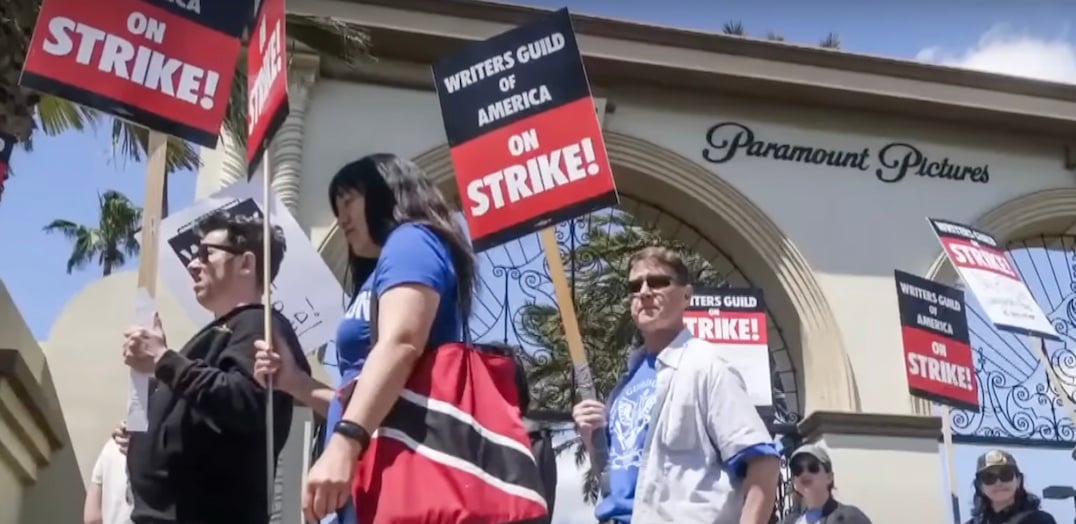
Writers strike rules are simple if you’re in the Writers Guild of America, the guild representing writers: Don’t write for any struck company, and don’t negotiate or discuss present or future writing projects. But what if you’re one of the countless non-WGA writers, often known as pre-WGA writers, who want to support the strike and avoid being a scab? What, exactly, does the WGA want you to do and not do?
We spoke with screenwriter Christopher Kyle, the secretary-treasurer of the WGA-East, about some of the questions we’re seeing from pre-WGA writers on social media, including: Can writers still post their scripts on services like The Black List? Can they enter screenwriting contests? Can they seek an agent or manager during the strike?
The questions are important not just because writers don’t want to hurt their fellow writers, but also because the WGA can withhold membership in the future to anyone who engages in scabby behavior during the strike. (A scab is a person who works in spite of a strike, often taking a job that a union worker is taking a principled stand against performing in order to get a better contract.)
We took many questions to the WGA, and the guild put us in touch with Kyle (whose credits include Alexander and K-19: The Widowmaker) because he is one of the striking WGA members authorized to speak with news media. But before we get to his very helpful answers, here are some useful links.
First, here is a link to look up a company, to see if it is a signatory to the WGA agreement. The guild is striking against all signatories, from major companies like Netflix and Warner Bros. to small ones you’ve likely never heard of. If you want to avoid crossing a picket line, you’ll want to avoid them all during the strike.
Second, here is a link to the WGA’s 2023 Strike Rules. You can also use this link to contact WGA attorneys, at no cost, if you have any questions about proper strike behavior that aren’t addressed below.
And now, our Q&A, in which we address not just contests, hosting platforms, and seeking managers, but also whether you can make no-budget or micro-budget movies that don’t involve signatories. Kyle also tells you exactly what to say if you’re an independent filmmaker and a company approaches you during the strike, trying to buy your film.
What Are the Writers Strike Rules for Pre-WGA Writers?
MovieMaker: We’ve been scanning Twitter and Reddit and lots of other places, and there are a lot of questions from pre-WGA writers about how to conduct themselves. They don’t want to accidentally scab or cross the picket line unintentionally. So I wanted to share some of the questions I’m seeing.
Christopher Kyle: The main and most important thing is to not work for, or have contact with, signatory companies — the companies we’re striking against. That means don’t take a job writing on a film or TV show that’s covered by our contract. Don’t have meetings with executives from companies. Don’t option a script that you wrote on spec to a company — anything like that. Those are the kinds of things that are strictly prohibited. And if someone did those things, then it would be unlikely they would ever become a member of our guild.
MovieMaker: You said “meetings” — that includes any meeting with a representative of a signatory in which you even talk hypothetically about a project?
Christopher Kyle: Even if it’s just a general meeting, like a “getting to know you,” not talking about a specific project. The spirit of the strike is that we’re trying to shut down the industry, and anything that can keep the wheels turning is something that is not helping us. So all our members, and anyone aspiring to be a member, should not be meeting with those companies right now.
Can You Shoot a Truly Independent Film During the Writers Strike?
MovieMaker: Some of our readers are individuals making small-scale films with friends, and people who perhaps aren’t even expecting to make their money back. Does the WGA have a position on whether these non-WGA filmmakers can go forward making independent films during the strike?
Christopher Kyle: This is not the sort of thing that’s probably going to lead to any discipline. We’re encouraging writers to show solidarity by not creating work that could end up in the companies’ pipeline. I know a lot of these smaller films, or student films or shorts or things, are never going to become commercial films. And those are not things anybody’s worried about. But if you write an independent film and take it to a festival and Netflix wants to buy it, then as soon as you sell it to Netflix, then now you are in violation of the strike rules.
MovieMaker: Got it. And what if you make the film now and then you sell it after the strike is over?
Christopher Kyle: That’s not going to be an issue, yeah. If you don’t market it until after the strike is over, that’s fine.
MovieMaker:So theoretically, if I wrote a script today and shot it with my friends, and took it to a film festival next year and sold it to Netflix next year — assuming the strike is over next year — I would be OK.
MovieMaker: I saw one writer-director online who said they were going to stop production of their short film now, in solidarity. I don’t know if they intended to sell it to anyone during the strike. But do you have a position on whether that’s the right thing to do?
Christopher Kyle: If they’re doing any kind of work for a covered company — even if the only work they would be doing is directing, because the script is finished — if they’re members, we’re encouraging them not to go forward with that. But that’s not something we can discipline. We can’t discipline someone for serving their director role, even on a script they wrote, if all they’re doing is directing and not doing any writing.
So that’s kind of a tricky area. It’s one where it’s not technically a violation. But we’ve been talking to showrunners on TV, and writer-directors, and encouraging them to postpone their projects, or put their projects on pause until after the strike.
We’re asking them to go beyond the rules themselves. We’re not going to discipline them for doing non-writing work. But we’re asking them in solidarity to not do it.
MovieMaker: Discipline for non WGA-writers would mean not being admitted into the guild. But isn’t scabby behavior also just frowned upon? Is it something that could bite you later, even if you don’t technically violate a rule?
Christopher Kyle: If it becomes known that people scabbed during the strike, you know, showrunners are writers, and showrunners are the people who hire people to write on television shows, and almost all the showrunners are members of the guild. So if your name gets out there as being someone who worked against us during the strike, it might be hard to find a showrunner who wants to put you on staff.
MovieMaker: Yes. And it’s hard enough to get those jobs as it is.
Christopher Kyle: And it’s hard enough to get those jobs anyway. I was an aspiring screenwriter one time too, and I can understand how tempting it is. And it seems like your big break. But you’ve got to think of your long-term career. And the things we’re striking for are going to be beneficial to people who aren’t even members of the guild yet, because it’s going to improve the system for the future.
MovieMaker: Can writers post screenplays on sites like The Black List or Coverfly? I’ve seen some writers who are not WGA saying they’re not even posting scripts that they wrote prior to the strike.
Christopher Kyle: We actually were in conversation with Franklin Leonard at The Black List, and I believe he sent an email to everybody who has an account telling them what the rules were. [Editor’s Note: He did.] The basic idea is that they don’t have to take their scripts down from those platforms. But they cannot sell a script or option a script, and they can’t take a meeting that comes because somebody read their script on the platform. But they don’t have to pull their scripts down.
Can You Get an Agent During the Writers Strike?
MovieMaker: Can a pre-WGA writer sign with an agent or a manager during the writers strike?
Christopher Kyle: Yes. They can sign with an agent or manager, but they have to make it very clear to that representative that they can’t do anything with their work: They can’t set up meetings, they can’t send out the scripts. So you can sign with an agent, but then an agent can’t really do anything for you until after the strike.
And you want to be really clear with that agent, so that they understand that they can’t start to market you with your work and set up meetings, because if they do, then they have put you across the strike rules.
MovieMaker: And that’s also detrimental to the agent, because they’re also going to lose money on you.
Christopher Kyle: Yes. The only thing I would say is, I would guess that agents have time on their hands right now. It may be a good time for an aspiring writer to send them a script to read. Because they may have more time to read it.
MovieMaker: Is that considered distasteful or tacky or anything?
Christopher Kyle: Tacky to sign with an agent? We’re not we’re not in conflict with agents. So if agents want to use this time to find clients that they’re then going to market in the future, I think that’s fine. But you know, they can’t start that marketing until after the strike.
MovieMaker: Got it. Okay. And there’s no conflict at all with using screenwriting platforms for coverage service?
Christopher Kyle: I don’t think so, unless their coverage service is somehow sponsored by one of the signatory companies, which I can’t imagine is the case.
MovieMaker: I get emails from contests that say, basically, “Here’s your chance to pitch your ideas to managers and agents” or to “pitch your ideas to producers.” It sounds like pitching to managers and agents is fine, but pitching to producers would clearly be out of bounds.
Christopher Kyle: Correct.
Can You Enter Film Festivals During the Writers Strike?
MovieMaker: Can independent filmmakers enter their films and film festivals during the writers strike?
Christopher Kyle: Yes, but as I said before, if they put their film in a festival and it leads to an offer of sale or option from a company that we’re striking against them, they wouldn’t be able to take advantage of that without running across the rules.
MovieMaker:So if Netflix or another signatory reached out to you and said, “We love your film, we want it,” what is the proper response? Is it no response? Or should you say, “Let’s talk when the strike is over”?
Christopher Kyle: That’s what you should say. “I really appreciate your interest in my work. I’m in solidarity with the striking writers. As soon as the strike is over, I hope to have this conversation with you then.”
MovieMaker: Can independent filmmakers seek investors or crowdfunding during the strike?
Christopher Kyle: As long as the investments aren’t coming from a signatory company.
Can Writers Talk to Press During the Writers Strike?
MovieMaker: Some writers or writer-directors have turned down interviews with us in recent days. And I don’t want to accidentally drag someone across a picket line. Is WGA asking writers not to talk to news media about their projects?
Christopher Kyle: Yes, we have asked writers not to participate in any kind of promotion or advertising for their films. So that includes press interviews about their films, FYC events, even going to premieres. We were in conversation with a writer this morning. And he agreed not to attend a premiere of his own film. So yes, that is part of our attempt to say, “This is not business as usual. And we’re not going to return to business as usual until we have the deal.”
MovieMaker: Because the idea is, ”Let’s cut off the pipeline, let’s just not put a product out in the market, or let’s do nothing to promote the product that’s on the market.” Right?
Christopher Kyle: Right. Every ticket sold is benefiting the companies right now. So we’re not going to participate in that until they make a good deal with us.
MovieMaker: Great. And I don’t mean to call it “product.” That sounds gross. [Laughs]
Christopher Kyle: They call it product, content. We like to call it movies and shows, but…
MovieMaker: And what about directors and actors and others? We’re seeing things like Drew Barrymore not taking part in the MTV Movie Awards.
Christopher Kyle: That’s been great, the support we’ve gotten from other guilds. IATSE, the Teamsters, SAG-AFTRA — it’s been tremendous. Obviously, we don’t have any control over what members of other guilds do. But we’re so grateful when they choose not to participate or don’t cross our picket lines.
Who Are the WGA Signatories Being Picketed?
MovieMaker: This may be a dumb question, but can you also explain who the signatories are? Is it just the major companies, or is it every producer?
Christopher Kyle: There are actually hundreds, maybe thousands of them. There’s a lookup on the WGA-East website. But it’s kind of a moving target. Because companies are constantly creating new LLCs and organizations, each of which then has to become a signatory in order to hire writers. So there’s way more than just the ones you know of, like Paramount and Sony and Disney.
Basically, if it’s a company that has ever made a commercial film or television series, then they’re going to be a signatory.
MovieMaker: So the only ones not covered would be somebody saying essentially, “I’m going to four-wall this movie.”
Christopher Kyle: Some super low-budget independent films that are not made for commercial distribution. Yeah, I’m sure those are made without being part of the signatory. But any kind of film that is made for commercial distribution, it’s going to be by a signatory.
CBS has ordered three shows, “Matlock,” “Elsbeth,” and “Poppa’s House” to series for the 2023-2024 broadcast season. The network made the announcement on Tuesday afternoon.
Kathy Bates will star and executive produce the “Matlock” reboot which follows a now successful Madeline Matlock (Bates) as she rejoins the work force at a prestigious law firm where she uses her unassuming demeanor and wily tactics to win cases and expose corruption from within.
The series also stars Skye P. Marshall as Olympia, Jason Ritter as Julian, David Del Rio as Billy, Leah Lewis as Sarah.
In addition to Bates, Joanna Klein serves as an executive producer for Sutton Street alongside Jennie Snyder Urman, who will also write. Eric Christian Olsen and John Will will executive produce on behalf of Cloud Nine. Kat Coiro directed the pilot and also serves as an executive producer. “Matlock” is produced by CBS Studios.
Also coming from CBS Studios is “Elsbeth,” which is based on the character featured in “The Good Wife” and “The Good Fight.”
“After her successful career in Chicago, Elsbeth Tascioni (Carrie Preston), an astute but unconventional attorney, utilizes her singular point of view to make unique observations and corner brilliant criminals alongside the NYPD,” reads the official logline. Carrie Preston stars as Elsbeth, Wendell Pierce as Captain CW Wagner, Carra Patterson as Officer Kaya.
Robert and Michelle King executive produce and write through their King Street Productions banner with Robert attached to direct. Liz Glotzer will executive produce alongside Jonathan Tolins, who will also serve as showrunner.
“Poppa’s House” is a multi-camera comedy hailing from Damon Wayans Sr. and his son, Damon Jr.
The series follows “legendary talk radio host and happily divorced ‘Poppa’ (Damon Wayans)” whose point of views are challenged at home where he still parents his adult son, Junior, (Damon Wayans Jr.) and at work when a new female co-host is hired. Junior is described as “a brilliant dreamer who is trying to pursue his passion while being a responsible father and husband.” Joining the father-son duo is Essence Atkins and Tetona Jackson as “Ivy” and “Nina.”
Damon Wayans Sr. co-wrote the pilot with Kevin Hench and executive produces with Damon Jr. Hench also executive produces. Andy Ackerman serves as an executive producer and directed the pilot. Kameron Tarlow is the producer at Two Shakes Entertainment overseeing the project. CBS Studios backs the production.
The Watergate scandal is one of the most infamous political events in American history, and it led to the resignation of a sitting U.S. President. But, after all this time, do we know the whole story? Will the White House Plumbers series on HBO do justice to the story in just five episodes? Stay tuned.
A satirical political drama series, the White House Plumbers TV show stars Woody Harrelson, Justin Theroux, Lena Headey, Judy Greer, Domhnall Gleeson, Toby Huss, Ike Barinholtz, Kathleen Turner, Kim Coates, Yul Vazquez, Alexis Valdés, Nelson Ascencio, Tony Plana, Zoe Levin, Liam James, Kiernan Shipka, Tre Ryder, David Krumholtz, F. Murray Abraham, Rich Sommer, and John Carroll Lynch. The story revolves around the Watergate scandal as President Nixon’s political saboteurs, E. Howard Hunt (Harrelson) and G. Gordon Liddy (Theroux), accidentally topple the presidency they were zealously trying to protect, as well as their own families. Chronicling actions on the ground, the tale begins in 1971 when the White House hires Hunt, a former officer in the CIA, and Liddy, a former FBI agent, to investigate the Pentagon Papers leak. After failing upward, the unlikely pair lands on the Committee to Re-Elect the President, plotting several unbelievable covert ops – including bugging the Democratic National Committee offices at the Watergate complex.
The ratings are typically the best indication of a show’s chances of staying on the air. The higher the ratings, the better the chances of survival. This chart will be updated as new ratings data becomes available.
Note: If you’re not seeing the updated chart, please try reloading the page or view it here.
Note: These are the final national ratings, including all live+same day viewing and DVR playback (through 3:00 AM). Early fast affiliate ratings (estimates) are indicated with an “*”. While these numbers don’t include further delayed or streaming viewing, they are a very good indicator of how a show is performing, especially when compared to others on the same channel. There can be other economic factors involved in a show’s fate, but typically the higher-rated series are renewed and the lower-rated ones are cancelled.
What do you think? Do you like the White House Plumbers TV series on HBO? Would you have liked to see a second season?
Check out our status sheets to track new TV series pickups, renewals, and cancellations. You can find lists of cancelled shows here.
“Shoutout to writers,” exclaimed Jason Sudeikis, on stage with much of the cast and creative team behind “Ted Lasso” for a fan event that would kick off the opening of the “Think Apple TV+ FYC” space. “What a day to be doing this.”
Mere hours later, at the stroke of midnight on May 2, the Writers Guild of America would decide to officially go on strike, calling for its members nationwide to enforce a work stoppage. However, it was not clear until that following afternoon what the guidance was for participating in For Your Consideration events meant to highlight the work they already accomplished this TV season.
The conclusion the union came to in terms of members attending film festivals or FYC events for a film or a show they wrote on, as published in the WGA Strike Rules FAQ, was “You should let the Company know you are prohibited from making these promotional appearances about your work until the strike concludes.”
While the writers remain a united front (after all, the strike was authorized by a record 97.9 percent of members), the decision to sit out of FYC events does seem a bit polarizing from the outside looking in. Sure, through one lens, it’s a no-brainer that sitting on a panel inside an event space paid for by Apple counts as entering the premises of a struck company, an act forbidden under strike rules. But through another lens, it does seem like a missed opportunity not to take advantage of the stage time to expound on how these series vying for Emmys would never have been able to come together without writers.
As soon as that Tuesday night, May 2, at the FYC event for the Prime Video limited series “Swarm,” taking place inside the Prime Experience space funded by Amazon, allusions to how the strike impacted Emmy campaigning had already begun. Moderator Angelique Jackson, Senior Entertainment Writer at Variety, preceded the planned one-on-one conversation with star Dominique Fishback by reading off a written statement from “Swarm” co-creator, executive producer, and showrunner Janine Nabers that said “I’m not present tonight because I am standing in solidarity with the WGA.”
The note got a rapturous applause from the audience of mostly Emmy voters, who are TV professionals themselves, as did Fishback’s response to the statement, saying “I support any artists who are standing up for what they deserve 100%.” The following night, during a fireside chat after receiving a BAFTA Special Award in New York, top-level television producer and “Queen Charlotte: A Bridgerton Story” showrunner Shonda Rhimes added her voice to the cause, emphatically saying “I am a writer on strike right now,” when asked for her take on the situation.
As picket lines sprouted up around Hollywood, the Television Academy decided to give its partners the option to either proceed with the pre-planned FYC event as is, adjust or cancel the panel portion of the event, or cancel the event altogether without a penalty fee. Only “The Problem with Jon Stewart” and “John Mulaney: Baby J” were immediate cancellations, which makes sense given both comedians’ intimate ties to the writing community. Slowly but surely though, other programs like Apple TV+’s “Mythic Quest” have chosen not to move forward with their FYC events.
But for the most part, For Your Consideration events have muddled through without the involvement of the writers that created and/or ran the show. Friday’s event for Netflix’s Outstanding Animated Program contender “Entergalactic,” which served as the kick-off for the streaming service’s FYSEE ’23 programming and event space, ended up canceling the panel it had planned with co-creator/star Scott “Kid Cudi” Mescudi and an assortment of the behind the scenes talent involved in making the project, but still screened the 90-minute TV event to a packed audience, with one person overheard saying they felt a good energy in the room.
Now, if a panel does happen, the lineup is usually whatever actors that are in town, and had no involvement in scripting the show, a non-writing producer (e.g. “The Lord of the Rings: The Rings of Power” EP J.A. Bayona, who directed the first two episodes of the Prime Video series), and a select group of craftspeople that worked on the series. During the conversation, they often praise the show’s writers, but it has started to seem like the word “strike” is taboo.
If there has been any cause for major alarm this past week, it has been the spate of summer awards shows announcing some form of restructuring or postponement. Drew Barrymore stepping down from hosting the MTV Movie & TV Awards in solidarity with the WGA, days before the live show was set to occur, led to a speedy Sunday telecast that cobbled together sketches the daytime talk show host had already taped with acceptance speeches the winners sent in from home. The following Monday, the American Film Institute announced that its June 10 gala honoring actress Nicole Kidman with a Life Achievement Award, an event often taped and edited into a TV special airing at a later date, has been postponed indefinitely.
While the 75th Primetime Emmys are not scheduled to occur until September 18, the hosted live telecast takes months to plan, and necessitates a writers room. When asked if there is a deadline for when a decision will be made to possibly restructure or cancel the upcoming Emmys telecast, the Television Academy said in a statement to IndieWire, “Like everyone, we hope these negotiations will be resolved swiftly, amicably, and equitably. We’ll address any questions around the Emmys as we get nearer to the ceremonies.” As For Your Consideration events move forward with business as usual, there is an ever-increasing chance that the awards they seek may be announced via press release.
MTV News is shuttering operations after 36 years following widespread layoffs, The Hollywood Reporter and Variety report. Twenty-five percent of employees across MTV Entertainment Studios, Paramount Media Networks, and Showtime were laid off Tuesday (May 9), roughly five years after MTV endured significant job cuts in 2017.
In a memo to staff shared with Pitchfork, Showtime/MTV Entertainment Studios and Paramount Media Networks president Chris McCarthy wrote that senior leaders “in coordination with HR” “made the very hard but necessary decision to reduce our domestic team by approximately 25%.”
McCarthy continued: “This is a tough yet important strategic realignment of our group. Through the elimination of some units and by streamlining others, we will be able to reduce costs and create a more effective approach to our business as we move forward. Today we will notify employees whose positions are being impacted with leaders communicating the news directly to those teams/or individuals. These meetings will be followed by individual 1:1s with our HR partners.”
MTV News emerged in 1987 with one show: The Week in Rock, hosted by Kurt Loder. Correspondents like Alison Stewart, Tabitha Soren, SuChin Pak, and later Meredith Graves reported for the outlet throughout the years, their coverage spanning music, politics, sex, pop culture, and more.
MTV News was especially influential in the 1990s and early 2000s—on April 8, 1994 Loder confirmed the death of Kurt Cobain, and MTV News transitioned into more frequent programming after breaking that landmark story.
In the ensuing years, reporters for MTV News went on to win Emmys and Peabody Awards for pieces on natural disasters and the Iraq War. In 2017, multiple MTV News writers were laid off as the company re-strategized to focus more on video and short-form content.
Pitchfork has reached out to MTV and Paramount representatives for further information and comment.
Amanda Kim, director of American Masters: Nam June Paik – Moon is the Oldest TV, shares her journey to discovering Nam June Paik as an artist and authentically telling his story in this conversation with writer Carlos Valladares.
Q: Describe your first encounter with Nam June Paik, as a name or as an artist.
Director Amanda Kim
Well, Nam June is a national treasure in Korea. He’s Korea’s most famous artist. And I remember hearing of his name at an extremely young age. My mom went to art school, and my dad would take me to museums where I saw his work. I’d always known about him; he’d always lingered in the subconscious. Then, about six years ago, when I started seriously researching him, I saw [his 1974 video sculpture] “TV Buddha.” To this day, it’s one of my favorite works of art. I remember thinking: “Wow, this is so ahead of its time. I’m curious what others thought of it…” I explicitly connected him to the history of Korea. I’ve always been superstitious and interested in alternative histories of spirituality, so that was the initial spark: his own relationship to Korean spirituality, this kind of ancient form of shamanism in Korea.
After a while, I’d compiled a lot of niche information on Paik, the stuff you wouldn’t find in museums or even old catalogs. Then I talked to my friend David Koh, who is a producer on this film and has produced many other documentaries, and I said to him: “Nam June is so interesting, why isn’t there a documentary about him? I’ve uncovered so much in just my own research.” And David said, “Oh, that’s my bucket-list project. We should make a treatment.”
Q: And I heard you mention that David Koh [one of the producers] also worked alongside Nam June Paik at one point?
Yes! So when I told him about my research, he said: “I was Nam June’s assistant when I was attending college in New York.” He knew him personally. And David said that Nam June just worked on a different plane. He let things happen. Chance operations. Nam June was so nice to everyone he met, and he thought that every encounter was a karmic relationship. So even if he just sat next to a few strangers on a train, or bumped into a lady while walking down Sixth Avenue, that meant something.
Q: How did you get into filmmaking, specifically documentary?
I started production work at VICE. I studied comparative literature and had no experience in filmmaking and production. But I joined VICE and started making short branded content. VICE was very early in the branded content space. They were incorporating brands into these short-form documentaries that VICE was doing anyway, and having the brand pay for it. Then I moved over to TV: Viceland. I was a producer there, developed pilots, managed teams. So that’s where I got my experience in production. But I hadn’t made any narrative work. This is my first feature. I produced a short that was at Sundance in 2020, which was fiction. So I had experience in documentary because of VICE.
Q: Who were some of your influences or inspirations for the making of the film?
Well, “F for Fake” is one of my favorite documentaries. And I love [Orson] Welles’s sense of humor, and the style of “F For Fake.” Maintaining a funny touch was crucial to me for my film. He doesn’t take himself too seriously, which isn’t always a guarantee in the art world.
RELATED POST
Q: Was there a specific political or aesthetic urgency — within the art world, or the global sphere — that invested your spirit as you made the film?
In the middle of editing the film, the Russia-Ukraine War broke out. And a lot of everything Nam June was experiencing was related to the Cold War, why he left his home, had fresher significance. But on the whole, for me, the great political aspects were not necessarily contained in current events, but in historic ones. I was interested in learning more about my Korean roots, the Korean War, the Japanese occupation and how that informed Nam June’s interest in why communication is so important and how we can transcend language. His thesis was that you don’t have to speak the same literal language as another in order to communicate and connect with them. Video is another way of communication. It’s not Korean, or Japanese, or German.
Q: You describe [Paik] also as something of a “Nostradamus of our present,” that he was prescient in a scarily accurate way.
I think people are prescient when they have a macro view of the world. Nam June was not just interested in making art, hermetically sealed. He constantly read the newspaper, he kept up on the latest in technology, the stock market, the business sections. The Fluxus ideology reflects this: Life is art, and art life. And the personal and the artistic, with Nam June, are realms that are so intertwined, so cohesive. Inseparable. Nam June was seeing patterns, and knew where we were heading, and I hope the film, like Nam June’s art, can instill a critical sense in the viewer, questioning the latest iPhone instead of blindly buying it.
Q: I love, too, how much he approaches the world through a very optimistic lens, which is unique and rare, not just then, but today.
I really love that interpretation. Because that’s actually why Nam June is inspirational to me, personally. He knew so much, and he could always see the dark side of things, and saw the gray areas. But he also saw possibility. That’s what I hope people take away from the film: no matter how glum things get, no matter how much we seem unable to break the cycles of history, we should always be thinking about greater possibilities and potentialities.
RELATED POST
Q: What parts of Paik’s life did you become interested with or enamored by?
I was so interested in his early life, when much of his psyche was developed. The first act, at one point, was nearly an hour long; there was so much interesting detail. But he doesn’t get to video until way later in his life. It’s not the medium that defines him — it’s cool that he’s the father of video art — but that wasn’t a concern of his to be just known as a video artist. He also did sculpture installations and music performance. And he continued to do all of those things around the video art. And as a result, he’s so hard to define.
Q: It’s fascinating to see how paths cross in the New York art world — for instance, the New York Times music critic who pans his ‘60s “Cageian” performances, but then later unexpectedly becomes Paik’s biggest patron and an intimate of his when he’s getting into video art.
It speaks to his openness. One can make enemies of these critics, but he befriended a lot of them. It’s his idea of him not trying to create division or boundaries between people. He’s not like Jesus or anything, but he made an effort to be conscious of any bias that we grew up with or socialized.
About the Master
Q: How did your knowledge expand with regards to Nam June Paik’s friends whom you interviewed?
They gave a more colorful, rounded experience of what it was like to be in Nam June’s presence. But it was tough going at first, just to even get to them, technologically speaking! We started filming at the height of COVID-19. We wanted to continue production, and thought it was very in the vein of Nam June to incorporate iPhone footage, more affordable cameras, Zooms. We thought it would be cool, also, to mix high-res and low-res formats, which is part of the style, but also a reflection of the archival material we had to work with. It’s not like [Todd Haynes’s] The Velvet Underground doc where everything is 16mm, 8mm, pristine film and looks gorgeous. Here, it’s splotchy, different aspect ratios, some parts were more pixelated than others.
Q: Yes. It feels apt to Paik’s sensibility.
Sometimes we leaned in to how bad the master looked, because to my eye it does look great, because it honestly reflects the era, the limitations and possibilities of the technologies of the time.
Q: And it democratizes what a “good image” is. So many filmmakers nowadays are disastrously taken up with this compulsion to use a digital image that’s clean, pristine, perfectly rendered. But there is unfathomable beauty in the image that looks like it’s still loading: look at what is accomplished in the latest films of Hong Sang-soo, for instance.
For sure. And I think that part of Nam June’s whole thing is humanizing technology. He understands that this technology will become more and more advanced, but the important thing to understand is how this technology can serve and benefit humanity, not take over and become this cold machinic thing that destroys humanity. That, in itself, in the image, is felt. When you see the glitch or see how broken-down the image is, you feel the human touch.
Q: I think that’s touched on in particular in the section where you cover “Good Morning, Mr. Orwell,” how everything is collapsing. Nothing is working technology-wise, but Nam June is calm about it all and says, “That’s exactly what we want!”
“I just let it happen!”
Q: I love that you have Steven Yeun narrating so much of Nam June’s own writings.
I thought it was kind of reminiscent of Nam June’s artworks, too. Nam June had this guy named Russell Connor who would narrate a lot of Nam June’s stuff, he was Nam June’s voice. That was one of the things that I thought was interesting and meta: Steven is doing what Nam June himself would have done in a “Good Morning, Mr. Orwell”-type situation. And I also liked that Steven felt this really strong connection to Nam June’s story, and so I felt that the emotion and the body of Nam June was evoked. You can feel Steven’s connection, and I liked that.
Nam June Paik with equipment, photo by Stan Vanderbeek.
Q: What was your biggest challenge when making the film?
With documentary, you never know what’s going to happen, like Nam June’s ethos! With fiction, too. My partner makes fiction, and I can see there’s a million things that can go wrong, so you have to be really open to the process. If you’re doing cinema verité, for instance, following a subject, you have no idea where that story might take you. It’s also the same with archival film. You have what exists, and you have to be so open to the process, and you’re finding a lot of the story in the edit. And so, being OK to the unknown—which is hard for people like myself, who like to have more control over things.
Q: He was working in a particular time I guess when the technologies that are so ubiquitous to us now weren’t ubiquitous. He’s very optimistic about technology, but from today’s vantage point, there’s so much to be cynical [about]. Social media, Elon Musk, what Silicon Valley has become. So how do you reconcile these two strands when you’re making the film: the cynicism towards technology and the optimism towards its possibility?
Whenever I saw Nam June’s work in a museum show, I always thought there was a kind of blind optimism towards technology. But making the film I realized that I think he’s hopeful, yes, but there’s an undeniable cynicism, too. Ultimately, he’s always questioning the latest thing. Creating that satellite show was not just, “This is new and amazing technology, let me use it, because it’s only going to do good.” He saw what was happening during the Cold War, and he said, “How can we use this for good?” It doesn’t have to just be a weapon, it can be a connector. That’s what interests me. And I hope that the viewer will become a bit more critical, to question where we are today about how we’re using our technologies. Is there a better way? And not to be simply excited about the latest gadget.
Pakistan’s former prime minister Imran Khan has been arrested and dragged from court as he appeared to face charges in multiple corruption cases, sparking violent demonstrations by his supporters in almost all of the country’s major cities.
At least one person was reported killed in clashes between protesters and the military in Quetta, the capital of Baluchistan province, with another five people wounded, while about 15 injuries were reported amid similar violence in Karachi, Peshawar, Rawalpindi and Lahore.
Police fired tear gas to disperse demonstrations.
Officials at Pakistan’s telecoms authority said regulators had blocked social media including Twitter, and internet service was suspended in Islamabad and other cities.
Classes at some private schools were cancelled for Wednesday.
Police officers detain a supporter of Pakistan’s former Prime Minister Imran Khan as they protest against his arrest, in Islamabad, Pakistan, on May 9, 2023
Flames rise from the Radio Pakistan premises after it was set on fire during clashes between police and supporters of Pakistan’s former Prime Minister Imran Khan protesting against his arrest, in Peshawar, Pakistan, on May 9, 2023
Khan was ousted in a no-confidence vote in April 2022 but remains the leading opposition figure.
He was removed from Islamabad High Court by security agents from the National Accountability Bureau, said Fawad Chaudhry, a senior official with his Pakistan Tehreek-e-Insaf party, and then shoved into an armoured car and driven away.
Mr Chaudhry denounced the arrest of the 71-year-old former cricket star as ‘an abduction’. Pakistan’s independent GEO TV broadcast video of Khan being hauled away.
A scuffle broke out between Khan supporters and police outside the court. Some of Khan’s lawyers and supporters were injured in the melee, as were several police, Mr Chaudhry said.
Khan’s party complained to the court, which requested a police report explaining the charges for the arrest.
Khan was taken to the garrison city of Rawalpindi, near Islamabad, for questioning at the offices of the National Accountability Bureau, according to police and government officials.
He had arrived at Islamabad High Court from nearby Lahore, where he lives, to face charges in the corruption cases.
He has denounced the cases against him, which include terrorism charges, as a politically motivated plot by his successor, Prime Minister Shahbaz Sharif, saying his removal was illegal and a western conspiracy. Khan has campaigned against Mr Sharif and demanded early elections.
A motorcyclist covers his daughter’s face as he rides past teargas fired by police to Pakistan Tehreek-e-Insaf (PTI) party activists and supporters of former Pakistan’s Prime Minister Imran protesting against the arrest of their leader, in Peshawar on May 9, 2023
Khan had posted a video (pictured) to his social media channels hours before his arrest today
Imran Khan’s lawyer received medical attention for his injuries amid the arrest of the former prime minister at a court in Islamabad today
Pakistani police use teargas shells against the supporters of Former Prime Minister Imran Khan and political party Pakistan Tehreek-e-Insaf (PTI) during a protest held against the arrest of their leader Imran Khan, in Lahore, Pakistan on May 9, 2023
Pakistani police use teargas shells and water cannon against the supporters of Former Prime Minister Imran Khan and political party Pakistan Tehreek-e-Insaf (PTI) during a protest held against the arrest of their leader Imran Khan, in Lahore, Pakistan on May 9, 2023
Pakistani police use teargas shells against the supporters of Former Prime Minister Imran Khan and political party Pakistan Tehreek-e-Insaf (PTI) during a protest held against the arrest of their leader Imran Khan, in Lahore, Pakistan on May 9, 2023
Imran Khan (seen in blue and white in the middle of a scrum of armoured police officers in Islamabad today) has been arrested and led away during a court hearing, dramatic footage shows, with his supporters claiming he is being tortured
Policeman fires tear gas shells during clashes with supporters of Pakistan’s former Prime Minister Imran Khan as they protest against his arrest, in Peshawar, Pakistan, on May 9, 2023
Tuesday’s arrest was based on a new warrant from the National Accountability Bureau obtained last week in a separate case for which Khan had not been granted bail, making him vulnerable to be seized, and his lawyers have challenged the legality of the arrest. He is scheduled to appear at an anti-corruption tribunal on Wednesday, officials said.
Pakistan’s former Prime Minister Imran Khan (pictured) was arrested on Tuesday as he appeared in a court in the country’s capital, Islamabad, to face charges in multiple graft cases
‘Imran Khan has been arrested because he was being sought in a graft case,’ interior minister Rana Sanaullah Khan told a news conference.
He alleged Pakistan’s treasury had lost millions of dollars while Khan was in office due to illegal purchases of lands from a business tycoon.
At a news conference, law minister Azam Tarar said Khan was arrested because he was not cooperating with the investigations. He also denounced the violence by Khan supporters, saying protests must remain peaceful.
‘It should have not happened,’ he said, shortly after TV video emerged of burning vehicles and damaged public property in parts of the country.
Authorities said they have banned rallies in the eastern province of Punjab.
As the news of the arrest spread, about 4,000 Khan supporters stormed the official residence of the top regional commander in Lahore, smashing windows and doors, damaging furniture and staging a sit-in as troops retreated to avoid violence. The protesters also burned police vehicles and blocked key roads.
Protesters also smashed the main gate of the army’s headquarters in the garrison city of Rawalpindi, where troops exercised restraint. Hundreds of demonstrators shouted pro-Khan slogans as they moved towards the sprawling building.
In Karachi, police swung batons and fired tear gas to disperse hundreds of Khan supporters who had gathered on a key road.
Raoof Hasan, another leader from Khan’s party, told Al Jazeera English television that the arrest was ‘blatant interference in the judicial affairs by the powers-that-be’. He added that Khan ‘was virtually abducted from the court of law’.
Pakistan Tehreek-e-Insaf (PTI) party activists and supporters of former Pakistan’s Prime Minister Imran clash with police amid teargas during a protest against the arrest of their leader, in Peshawar on May 9, 2023
Plainclothes police officers beat a supporter of Pakistan’s former Prime Minister Imran Khan as they detain him when he with others blocking a road as protest to condemn the arrest of their leader, in Peshawar, Pakistan, Tuesday, on May 9, 2023
Supporters of Pakistan’s former Prime Minister Imran Khan stand amid tear gas fired by policemen during clashes as they protest against Khan’s arrest, in Peshawar, Pakistan, on May 9, 2023
Supporters of Pakistan’s former Prime Minister Imran Khan shout slogans during a protest against his arrest, in Peshawar, Pakistan, on May 9, 2023
Policemen retreat after firing teargas shells towards Pakistan Tehreek-e-Insaf (PTI) party activists and supporters of former Pakistan’s Prime Minister Imran near burning car during a protest against the arrest of their leader in Karachi on May 9, 2023
Men on a bike ride past a burning police vehicle during a protest by Pakistan Tehreek-e-Insaf party activists and supporters of former Pakistan’s Prime Minister Imran against the arrest of their leader, in Quetta on May 9, 2023
Pakistani police use teargas shells against the supporters of Former Prime Minister Imran Khan and political party Pakistan Tehreek-e-Insaf (PTI) during a protest held against the arrest of their leader Imran Khan, in Peshawar, Pakistan on May 9, 2023
A boy rides past a paramilitary check post, that was set afire by the supporters of Pakistan’s former Prime Minister Imran Khan, during a protest against his arrest, in Karachi, Pakistan, on May 9, 2023
Supporters of Pakistan’s former Prime Minister Imran Khan clash with police as they protest against his arrest, in Peshawar, Pakistan, on May 9, 2023
A police vehicle is seen burning along a road during a protest by Pakistan Tehreek-e-Insaf party activists and supporters of former Pakistan’s Prime Minister Imran against the arrest of their leader, in Karachi, on May 9, 2023
A police officer detains a person during protest by supporters of Pakistan’s former Prime Minister Imran Khan against his arrest, in Karachi, Pakistan, on May 9, 2023
Supporters of Pakistan’s former Prime Minister Imran Khan protest against his arrest in Pakistan, outside of the High Commission for Pakistan in London on May 9, 2023
Khan’s arrest came hours after he issued a video message before heading to Islamabad, saying he was ‘mentally prepared’ for arrest.
Khan was wounded by a gunman at a rally in November in an attack that killed one of his supporters and wounded 13.
He has insisted, without offering any evidence, that there is a plot to assassinate him, alleging that Pakistan’s spy agency was behind the conspiracy.
The gunman was immediately arrested and police later released a video of him in custody, allegedly saying he had acted alone.
Pakistan Tehreek-e-Insaf (PTI) party activists and supporters of former Pakistan’s Prime Minister Imran throw stones to a police water cannon vehicle during a protest against the arrest of their leader, in Lahore on May 9, 2023
Policeman fires tear gas shells during clashes with supporters of Pakistan’s former Prime Minister Imran Khan as they protest against his arrest, in Peshawar, Pakistan, on May 9. 2023
Supporters of Pakistan’s former Prime Minister Imran Khan gather outside the paramilitary FC headquarters during a protest against his arrest, in Peshawar, Pakistan, on May 9, 2023
Supporters of Pakistan’s former Prime Minister Imran Khan block a road with burning objects during clashes with police as they protest against Khan’s arrest, in Peshawar, Pakistan, on May 9, 2023
Pakistan Tehreek-e-Insaf party activists and supporters of former Pakistan’s Prime Minister Imran shout slogans during a protest against the arrest of their leader, in Lahore on May 9, 2023
Security personnel escort Pakistan’s former Prime Minister Imran Khan (centre) sitting on a wheelchair at the high court in Islamabad on May 9
Private security personnel with bulletproof shields escort former Prime Minister Imran Khan as he arrives to appear in a court, in Islamabad, Pakistan, on May 9
Security personnel use bullet proof shields to protect Pakistan’s former Prime Minister Imran Khan as he arrives at the high court in Islamabad on May 9
Security personnel stand guard as Pakistan’s former Prime Minister Imran Khan arrives at the high court in Islamabad on May 9
Pictured: Security personnel escort a car carrying Pakistan’s former Prime Minister Imran Khan as he arrives at the high court in Islamabad on May 9
Pakistan Tehreek-e-Insaf party activists and supporters of former Pakistan’s Prime Minister Imran stand amid teargas fired by police during a protest against the arrest of their leader in Karachi on May 9
A Pakistan Tehreek-e-Insaf party activist and supporter of former Pakistan’s Prime Minister Imran holds a burning tyre and and party flag during a protest against the arrest of their leader in Multan on May 9
Pakistani security forces are seen outside the Islamabad High Court where former Prime Minister and Chairman of Pakistan Tehreeke-Insaf (PTI) Imran Khan was due to appear in a case, in Islamabad, Pakistan, on May 9, 2023
Khan (pictured last year) was ousted in a no-confidence vote in April last year. He has claimed his ouster was illegal and a Western conspiracy and has campaigned against the government of his successor, Prime Minister Shahbaz Sharif, demanding early elections
In a strongly worded statement on Monday, the military accused Khan of ‘fabricated and malicious allegations’ about its involvement in the November shooting, saying they are ‘extremely unfortunate, deplorable and unacceptable’.
The military has directly ruled Pakistan for more than half of the 75 years since the country gained independence from British colonial rule, and wields considerable power over civilian governments.
Mr Sharif, whose government faces spiralling economic woes, condemned Khan for criticising the military.
‘Let this be abundantly clear that you, as former prime minister, currently on trial for corruption, are claiming legitimacy to overturn the legal and political system,’ Mr Sharif tweeted after Khan’s arrest.
In Washington, US secretary of state Antony Blinken and UK Foreign Secretary James Cleverly told a news conference they were aware of reports about Khan’s arrest but declined any substantive comment.
‘We just want to make sure that whatever happens in Pakistan is consistent with the rule of law, with the constitution,’ Mr Blinken said.
Mr Cleverly said: ‘The UK has a longstanding and close relationship with Pakistan. We are Commonwealth partners. We want to see peaceful democracy in that country. We want to see the rule of law adhered to. I’m uncomfortable to speculate further without having a detailed briefing on that.’
Khan is the seventh former prime minister to be arrested in Pakistan. Zulfikar Ali Bhutto was arrested and hanged in 1979. The current prime minister’s brother, Nawaz Sharif, who also served as prime minister, was arrested several times on corruption allegations.
In March, police stormed Khan’s Lahore residence, seeking to arrest him based on a court order in a different case. Dozens of people, including police, were injured in ensuing clashes. Khan was not arrested at the time and later obtained bail in the case.
Khan came to power in 2018 after winning parliamentary elections and had initially good relations with the military which gradually soured.
From love to legal action. Tiger Woods’ split from girlfriend Erica Herman was revealed when the former restaurant owner sued the pro golfer.
Herman filed a lawsuit in October 2022 alleging that Woods — whom she began dating in 2017 — used “trickery” to kick her out of his home after their split in fall 2022. In court documents obtained by Us Weekly in March 2023, Herman claimed that Woods’ alleged actions violated their “oral tenancy agreement” which gave her “the right to live” in the athlete’s Hobe Sound, Florida, home for “a certain duration of time.”
Elsewhere in the suit, Herman alleged that Woods’ employees encouraged her to take “a short vacation” only to inform her at the airport that she’d been “locked out” of the PGA star’s residence and could not return.
The Florida native is suing the Woods’ trust — the titleholder on his home — for $30 million, claiming that the sum represents the “reasonable rental value” of her ex’s residence for the remaining five years of their alleged oral tenancy agreement.
“Because of the aggressive use of the Woods NDA against her by the Defendant and the trust under his control, the Plaintiff is unsure whether she may disclose, among other things, facts giving rise to various legal claims she believes she has,” read court documents obtained by Us.
The filing added that Herman felt “unsure what other information about her own life she may discuss or with whom.”
The University of Central Florida alum cited the Speak Out Act — which “prohibits the judicial enforceability of a nondisclosure clause or nondisparagement clause agreed to before a dispute arises involving sexual assault or sexual harassment in violation of federal, tribal, or state law,” per Congress — as grounds for nullifying the NDA. Herman and Woods have not publicly addressed their split or the lawsuit. Us has reached out to their reps for comment.
“Erica dropped everything to be with Tiger the moment she heard what happened,” a source exclusively told Us at the time of the incident. “She’s been by his bedside, holding his hand and telling him everything’s going to be OK. He’s a champ and he’s got this. She’s been so compassionate and supportive — all his friends and family have. He couldn’t have asked for more in that regard.”
Woods previously sparked controversy in 2009 when he was caught cheating on then-wife Elin Nordegrenwith several women. The exes — who share daughter Sam, born in 2007, and son Charlie, born in 2009 — finalized their divorce in 2010. The California native sought treatment for sex addiction amid the scandal.
Sign up for Us Weekly’s free, daily newsletter and never miss breaking news or exclusive stories about your favorite celebrities, TV shows and more!
Keep scrolling for everything to know about Woods and Herman’s messy split:
iPhone users trying to plan what to wear around the weather on Tuesday might have had some difficulty if they were relying solely on Apple’s weather app.
Apple Weather temporarily went down in the morning, displaying only a city’s name without any forecast — an apparent repeat of other outages over the past month.
The glitch was especially frustrating to iPhone users who previously used Dark Sky, a once-popular weather app that was shut down and folded into the Apple Weather app that comes with iPhones.
Apple did not immediately respond to a request for comment on Tuesday, but the app appeared to have resumed functioning by midmorning. The company’s support page said in its system status updates that some users “would have experienced issues” with the weather app from 7 a.m. to 11:49 a.m. and marked it as a “resolved issue.”
Needless to say, you have other options besides the phone in your hand or pocket.
Go local.
Rather than relying on an app that provides forecasts for all over the world, you can find one that centers on where you live. Many local news stations have their own weather apps or news apps with weather functions. The local meteorologists behind those apps are likely to know your area well and can provide accurate forecasts.
Check out the Weather Channel or AccuWeather.
If you’re looking for forecasts from all over the world, consider the Weather Channel or AccuWeather apps. Both go beyond detailed forecasts, providing a look at allergens in forecast areas.
For tracking storms, pay up.
If you live in a region that sees severe weather often, and you’re into tracking storms, RadarScope features detailed radars that reflect the intensity of an incoming storm as well as its path. Those detailed radars come with a one-time price of $9.99. Third-party apps such as Carrot Weather and Weather Underground, which bring their own flavor of meteorology to their subscribers, also offer paid options.
Beyond the basic weather figures, if you live in a city where air quality can be a concern, IQAir AirVisual | Air Quality, which is available on both iOS and Android, can keep you updated on measures of air pollution, with what its developers say are data points from more than 10,000 locations in over 100 countries. Want to see a 3-D world pollution map? You can.
Clime, an app found in iOS and Android, provides air quality updates and can bring weather radar images right to your phone, along with other mapped details on wildfires and a built-in hurricane tracker.
Add the National Weather Service to your phone.
Many TV station meteorologists regularly consult with the National Weather Service, so you might as well go straight to the source. The service’s forecasts are usually accurate and reliable.
The Weather Service doesn’t have an app, but its website is available on mobile phones. For have quick access, search for your local Weather Service office, and add its webpage to your phone.
On an iPhone, you can do that by clicking the send button at the bottom of the screen, selecting “Add to Home Screen” and clicking “Add.” It will create what looks like an app on your phone’s screen, but it will direct you to the Weather Service’s forecast page for the region you selected. On an Android, add a webpage by tapping the menu button, and clicking “Add to Home screen.”
Keep it simple.
If you’re looking for a weather app with just the basics and no frills, consider the Real Weather App for iPhones, iPads and MacBooks. The app features a minimalist design with font and images that look as if they were drawn by hand.
BuzzFeed, the deeply troubled digital media company that’s struggled to adapt to changes in the market, reported first-quarter revenue of $67.2 million and a net loss per share of $0.26 Tuesday. The company had previously warned Wall Street to expect a dreary report, and it delivered on that promise.
In the fourth quarter, BuzzFeed reported a net loss of $106.2 million against quarterly revenue of $134.6 million.
Wall Street has mostly given up on tracking BuzzFeed’s misadventures. A lone analyst surveyed by Zacks Investment Research had predicted a loss of 29 cents per share for the quarter and didn’t offer a revenue forecast.
The company’s struggles come as CEO Jonah Peretti has launched efforts at reinvention, including courting creators and experimenting with AI. He also shuttered BuzzFeed News, a product he had previously championed despite its lack of profits. Peretti has attributed some of BuzzFeed’s failings to his efforts to integrate Complex Networks, a media property BuzzFeed acquired in 2021 as it went public through a SPAC merger.
BuzzFeed anticipated that Q2 should show signs of improvement with revenues between $76 to $81 million and Adjusted EBITDA between $0 and $4 million, the latter of which would be an improvement over Q1’s Adjusted EBITDA loss of $20.2 million.
According to the company, “Facebook now contributes an immaterial amount of advertising revenue,” with Q1 audience engagement on the platform dropping to 22 million hours, a 50-million drop-off from the 72 million hours of Q1 2022.
BuzzFeed also reiterated its commitment to AI experimentation with a statement from the company’s founder and CEO, Jonah Peretti. “By leaning into Creators and AI, I believe we can unlock new opportunities across our portfolio of trusted brands — including Tasty, First we Feast, Complex, HuffPost, and BuzzFeed,” said Peretti.
Between the baby shower and small tokens to make pregnancy easier, new moms and their littles get inundated with presents—but what about the best gifts for new dads? Reporting for dad duty (especially for the first time) is a life-altering adjustment. Sure, there’s so much happiness they could just about burst, but the new-infant territory also comes with an entirely different schedule that includes many, many sleepless nights and the loss of some of the freedom he once had.
That’s why it’s always a nice gesture to remember the new dad and give him a little something that isn’t actually another baby gift but rather something special meant for him and only him. Whether you choose something sentimental—like a personalized storybook or custom photo frame complete with a note from mom—or something practical—like a smart calendar to help keep the family organized or comfy joggers for lounging with baby—there are plenty of great options out there.
To help make your search for the ultimate gift for new dads (or Father’s day gift!) easier, we scoured top retailers and spoke to dozens of real parents to find out what they received and loved in those early postpartum days.
Best Gifts for New Dads 2023:
All products featured on Glamour are independently selected by our editors. However, when you buy something through our retail links, we may earn an affiliate commission.
Gather around, young ones. Silence your iPhones and Samsungs. We’re here to learn about the Before Times, when the hottest tech device was nicknamed “CrackBerry.”
The gripping and hugely enjoyable “BlackBerry” is about the famous — and later infamous — Research in Motion gadget that helped trigger the global smartphone era as we know it, before sliding into obsolescence.
The BlackBerry may seem quaint now in the days of sleek water resistant 5G phones with face ID, but it was the first mobile device with a pager, cellphone and email capability all in one thing. No idea? Ask your parents.
“BlackBerry” tells the standard rise and fall of a tech startup that blows up, naturally leading to insider infighting — think “Silicon Valley” and “The Social Network” — but there’s a twist here: The main money guy, while very shouty, is not the sleazy, bad guy you might expect.
Director and co-writer Matt Johnson recounts a breathless decade or so starting in 1996, when Research in Motion was just an office filled with tech geeks in Canada. Johnson also stars as Doug Fregin, a headband-wearing, movie-quoting uber-geek, an amalgam of a few Research in Motion people.
Smart as the geeks were, they weren’t modern businessmen. Research in Motion — led by a nervous but good-intentioned engineer Mike Lazaridis (an excellent Jay Baruchel) — had the idea of a computer inside a phone using a free wireless signal but was in debt and out of its depth, with no prototype.
Enter Jim Balsillie (a superbly menacing Glenn Howerton) who snaps his Harvard-educated towel at the geeks, canceling movie nights and slamming their noses to the grindstones. He screams things like: “You need to sell a million BlackBerries before Q3!”
Balsillie manages BlackBerry through shark-infested waters — like an attempted takeover by PalmPilot and network collapses — but his plan to backdate stock options to hire top engineers dog the company, and you can feel Apple breathing down the company’s neck.
Audiences will get that terrible sinking feeling when they see Research in Motion employees watch one of Steve Jobs’ early presentations at Apple, offering the-then mind-blowing idea of a phone with no external keyboard while BlackBerry was armed… with a trackpad.
The film is adapted from Jacquie McNish and Sean Silcoff’s “Losing the Signal: The Untold Story Behind the Extraordinary Rise and Spectacular Fall of BlackBerry.” It is said to be “a fictionalization inspired by real people and real events.”
The second half of “BlackBerry” is heartbreaking — the loss of geek culture, the loss of principles and the loss of friendships. It’s the Icarus story, except instead of wings they had autocomplete while typing with your thumbs.
The funniest bits of the movie are when the geeks are king, like NASA engineers on Apollo 9 gathering around a table figuring out data puzzles or soldering together hardware and writing code. The filmmakers use clips of “Star Trek” and “Inspector Gadget” to show what they were doing was futuristic. (Your parents will agree.)
Johnson makes the film even more enjoyable as the soundtrack moves from Joy Division, the Strokes and Moby to MC Hammer and The White Stripes. There are also small but great acting turns by Saul Rubinek, Cary Elwes and Michael Ironside.
Johnson’s nicely plotted and sympathetic eye is in every frame, and he sets the tone early on in the first image from 1996: It’s a car driven by the BlackBerry co-creators and it is passing a horse.
“BlackBerry,” an IFC Films release that is in theaters Friday, is rated R for “language throughout.” Running time: 119 minutes. Three stars out of four. ___ MPAA definition of R: Restricted. Under 17 requires accompanying parent or adult guardian. ___ Online: https://www.blackberrymovie.com
Anyone can read Conversations, but to contribute, you should be a registered Torstar account holder. If you do not yet have a Torstar account, you can create one now (it is free)
Sign In
Register
Conversations are opinions of our readers and are subject to the Code of Conduct. The Star
does not endorse these opinions.
Guardians of the Galaxy Vol. 3 debuted in theaters this weekend, and audiences collectively held their breath.
Lately, the Marvel Cinematic Universe (MCU) has had more ups and downs than any elevator you’ve ever ridden.
For every Black Panther: Wakanda Forever, there’s an Eternals. The formerly bulletproof studio has definitely fallen into a rut.
Image: Marvel
Did director James Gunn right the ship with his final Marvel movie? I can honestly say yes!
Here are my takeaways from Guardians of the Galaxy Vol. 3 (GOTG3).
Everyone Loves the Movie
Image: Marvel
Let’s be brutally honest. Marvel couldn’t afford another disappointing movie so soon after Ant-Man and the Wasp: Quantumania.
Marvel and its own, The Walt Disney Company, have suffered substantial turmoil in early 2023.
After Quantumania bombed, Disney fired Victoria Alonso and then finally cut the cord on Isaac Perlmutter.
Image: Marvel
Meanwhile, critics and fans alike assailed Marvel for the atrocious special effects in Quantumania, as well as its lackluster story.
Thankfully, James Gunn has delivered the goods. As I said in my movie review, Guardians of the Galaxy Vol. 3 is unquestionably his best film to date.
In fact, all the metrics are in for the third film, and the results are splendid.
Image: Marvel
The climax of the Guardians of the Galaxy trilogy holds a Rotten Tomatoes score of 81 percent among critics.
Even better, its Audience Score is a stellar 96 percent, while opening day crowds gave the film an A Cinemascore.
That’s the best Cinemascore Disney’s Marvel Cinematic Universe has claimed in nearly two years. Clearly, a lot has gone right here.
Adam Warlock Feels Undercooked
Image: Marvel
As I’ve mentioned previously, I’m a hypercritical person, especially when it comes to movies.
If you’ve read my comments on Quantumania, you know I’ve got no patience for stupid. Sadly, that film is teeming with it.
I’m happy to report that my complaints about GOTG3 border on trivial.
Image: Marvel
In fact, I really only have a couple. One of them involves a needlessly gooey building that’s really only there to add something weird as a plot device.
I can easily picture the conversation of, “What could we do to make this office distinctive?” “We could dip everything in gelatin!”
That’s a fraternity prank, not an MCU subplot.
Image: Marvel
Remarkably, Gunn makes this scene engaging enough that I didn’t really care, though.Still, I do have one large-ish criticism, and it’s one I’ve noticed others making as well.
Adam Warlock doesn’t feel fully developed. Part of that is by design.
As foreshadowed in Guardians of the Galaxy Vol. 2, the character awakens before his complete gestation period. He’s like an undercooked cookie.
Image: Marvel
Still, Warlock mainly pops up occasionally to introduce a jolt of action. This happens three or four times during the movie.
I don’t have a problem with any specific instance, but he almost feels like a plot device.
Image: Marvel
How do we get from Point A to Point B? What if Adam Warlock smashed into something?
For the introduction of such an important Marvel character, it all seems underdeveloped.
Guardians V2.0 Seem Unlikely to Last
Image: Marvel
I must be vague here to avoid spoilers, but everyone knows this is Gunn’s last film with Marvel. He works for the competition now. In fact, he runs the place.
Similarly, actor Dave Bautista has indicated that he’ll never do another Marvel movie again.
Even if he changes his mind, I suspect Marvel will remember those comments and never offer him anything else anyway…at least not for MANY years.
Image: Marvel
Since GOTG3 works as the conclusion to a story arc that covers three Guardians films, a holiday special, a Thor sequel, and two Avengers movies, it’s the end of the line.
The MCU has already replaced several other characters. So, GOTG3 adds a bit of intrigue in that some Guardians really might die.
I won’t spoil anything for you, but I will say that the whole thing plays out like the Avengers. We know that a new group is in the offing.
Image: Marvel
Without adding specifics, my snap judgment about the new group is that it’s a bridge team that will get us to the true Guardians of the Galaxy.
I’ll call that team Guardians V2.1. Meanwhile, Guardians V2.0…is NOT the team you’d expect in any way, shape, or form.
I can’t shake the vibe that Gunn was quietly but firmly territorial here.
Image: Marvel
Lately, the MCU playbook has involved the use of superheroes in adjoining movies and television series.
With this strategy, Marvel can advance several plots at once. I’m genuinely curious to see the approach the studio takes with Guardians V2.0. It seems…combustible.
Image: Marvel
PS: You won’t recognize them unless you know what you’re looking for, but a Peter David character from the early 2000s debuts in GOTG3…and it’s an important one at that.
This character could organically appear in The Marvels and seem right at home. Will that happen? Hmm…
James Gunn Is a Good Friend
Image: Marvel
A few years ago, Disney famously fired James Gunn after Guardians of the Galaxy Vol. 2.
Some of his nastiest critics unearthed some tweets Gunn had made during the early days of social media.
These disingenuous people argued that Disney had fired Roseanne Barr for less. Spoiler: They hadn’t.
Image: Marvel
Still, Disney recognized the outside perception of a double standard. So, the company terminated Gunn, who would have waited a while to create GOTG3 anyway.
During the downtime, Gunn left to make a movie for DC Studios, The Suicide Squad.
While critics liked the film, it totally bombed at the box office. But that’s not the point here.
Image: Marvel
After Disney fired Gunn, one of the Guardians actresses, Zoe Saldana, came over and cooked for him.
Saldana and her husband didn’t want their friend to be alone after such a public humiliation.
Similarly, Pom Klementieff and Karen Gillan, two other MCU actresses, did their best to cheer up the director while he was feeling down.
Image: Marvel
People wouldn’t do that unless someone were a great person. I mean, when was the last time you cooked for a friend? Exactly.
That’s only half the story, though. A recognizable actor appears as something between a co-star and a cameo performance in this film.
When Gunn was just getting his start as a director, this person and Michael Rooker were two of the first talents who signed on to work with him.
Image: Marvel
Since then, Gunn has leveled up to where he could cast anyone in a film. He previously showed loyalty to Rooker, and now he’s done the same here.
When James Gunn makes friends, he keeps them. We should all want to hang out with people like that.
DC Studios Might Become Viable Competition
Image: Marvel
I feel roughly the same way about DC Studios movies as I do the music of any 1990s boy band. If you play that stuff around me, I’m gonna break your electronics.
Similarly, DC Studios is roughly two for 25 in making good non-Batman movies thus far. Almost all their films highlight excess while lacking soul.
I would argue the same of The Suicide Squad, Gunn’s first DC movie.
Image: Marvel
Admittedly most critics aren’t with me here, as the film holds a scintillating Rotten Tomatoes score of 90 percent.
The B+ Cinemascore, which is an average grade under that metric, more accurately describes that movie’s underlying quality. It’s just…there.
When word broke that Warner Bros. Discover had placed the entire DC Universe under Gunn, I boggled. It seemed like a terrible choice.
Image: Marvel
Gunn’s films have historically lacked self-control and are often nightmarishly edited.
Guardians of the Galaxy is Exhibit A in how great characters can save a poorly edited movie.
So, the idea of a studio with an already-atrocious track record hiring Gunn seemed like bad on bad.
Image: Marvel
Then, I watched GOTG3, and I have to say that I get it now. A measured, contemplative James Gunn can tell an exceptional, emotionally moving story.
If Gunn continues with this sort of focus on characters and relationships, he could do something that hasn’t happened since the Christopher Reeve era.
Image: Marvel
He could make a good Superman movie. And if the director does that, DC Studios could develop into viable competition for Marvel.
I doubt this turn of events happens, but the stellar quality of GOTG3 has opened my mind to the possibility.
Thanks for visiting MarvelBlog.com! Want to go to Disney? For a FREE quote on your next Disney vacation, please fill out the form below, and one of the agents from MickeyTravels, a Diamond-Level Authorized Disney Vacation Planner, will be in touch soon!
Henry Cavill will not return as Supermanin the new DC Universe, but the DCEU’s Clark Kent had some amazing moments that set the bar high for Superman: Legacy. Shortly after Cavill returned as Superman for Black Adam’s post-credits scene, a new DC Universe was announced. DC Studios is building a new shared universe, in which James Gunn’s Superman: Legacy will be the first theatrical entry.
So far, only Viola Davis is confirmed to reprise her DCEU role in the new franchise. James Gunn and Peter Safran’s DC Universe is expected to be a major reboot that will introduce new versions of characters like Superman and Batman. Henry Cavill’s run as Superman went from 2013’s Man of Steel to 2022’s Black Adam. Here are 10 Henry Cavill Superman scenes that set the bar high for both Superman: Legacy and the new DC Universe.
SCREENRANT VIDEO OF THE DAY
SCROLL TO CONTINUE WITH CONTENT
10 Superman: Legacy Must Capture Superman’s Magic Like “First Flight” Did
While the DCEU’s Superman was often criticized for being too dark, Man of Steel had one of the most inspiring Superman scenes ever put on screen. The “First Flight,” which refers to the moment Clark Kent put on his Kryptonian suit for the first time and learned how to fly, ranks high in the list of best Henry Cavill Superman scenes. Up until that point, Clark had wandered around the world trying to learn more about who he was. Clark Kent knew that he was not from Earth, yet he had no idea why he was sent there.
Shortly before his “first flight,” Clark learned of his Kryptonian name, Kal-El. The soon-to-be Superman also got to interact with Jor-El’s A.I. ghost and learned about what happened to Krypton. While Superman’s origin story had already been told both in Superman (1978) and Smallville, Man of Steel brought something unique to the character’s legacy. Richard Donner’s Superman made audiences believe that a character could fly, and Man of Steel captured similar magic with the “First Flight” sequence. Superman: Legacy will not be an origin story, but it can give Superman similarly memorable flying scenes.
9 Superman vs. Faora-Ul Is What A Perfect Superman Fight Looks Like
Live-action Superman has existed for decades, but not many iterations nailed what a Superman fighting scene should look like. Obviously, the Christopher Reeve-led Superman films could only do so much in terms of action pieces given the technology available at the time. Superman Returns, on the other hand, had a disappointing level of action compared to other early 2000s superhero films. It was only in Man of Steel that Superman felt as powerful as his comic book counterpart. Having Clark face Kryptonians helped, as Superman could use his real strength against such formidable enemies.
Man of Steel is the most action-packed live-action Superman film to this day. From the moment the Kryptonians arrive on Earth to General Zod’s death, Man of Steel delivered some great fighting sequences. More specifically, Superman vs. Faora-Ul and Nam-Ek felt light a combination of comic book fights and anime action sequences. Superman knew how to control his powers better than the Kryptonians, but Faora had trained to be a soldier for her whole life. Superman: Legacy’s villain remains to be revealed, but Man of Steel set the bar high when it comes to Superman’s antagonists.
8 Superman: Legacy Must Test The Character (Like Superman Killing Zod Did)
Superman: Legacy can be a new beginning for Superman on the big screen. However, the upcoming Superman reboot must keep testing the character, so that the new DC Universe can bring something different compared to Man of Steel. Superman: Legacy is expected to be a more classic take on Superman, especially compared to Man of Steel. However, it should still place Kal-El in difficult situations. Man of Steel had arguably the most controversial Superman movie moment, General Zod’s death. As divisive as Superman killing Zod was, that moment set the tone for the DCEU. Superman: Legacy and the new DC Universe must find different ways to explore Clark’s “Superman code.”
7 Clark Seeing Jonathan Kent In BvS In Is The Sweetness Superman: Legacy Needs
Batman v Superman: Dawn of Justice had a very dark take on Superman’s story. Following the events of Man of Steel, not everyone in the world was on Superman’s side. Batman v Superman saw how differently people reacted to Superman, something that was symbolized by both Lex Luthor and Batman. Despite grim moments like Clark’s “No one stays good in this world,” the film featured a very sweet Clark Kent scene. After being set up by Luthor, Clark flew away to a distant mountain and questioned his Superman mission. Jonathan Kent, who died in Man of Steel, appeared to Clark in a brief but meaningful scene.
Moments like Clark seeing a vision of his late father in Batman v Superman or talking to his mom about his Kryptonian heritage in Man of Steel were essential to define who Kal-El was. Superman: Legacy has a few different options to explore Clark Kent’s relationship with his family. For example, in the DC Animated Universe timeline, both Jonathan and Martha Kent were alive after Clark became Superman. However, in both Superman (1978) and Man of Steel, Jonathan Kent dies shortly before Clark becomes a Superhero.
6 Superman Suiting Up In The Snyder Cut Celebrated Clark’s Heritage
Superman: Legacy’s title suggests that the film will dive into the character’s pop culture legacy, at least on a meta-level. The title of the upcoming Superman reboot also works in terms of the story. Superman will already have a legacy in the film, as Clark will be an established superhero in this new universe. Henry Cavill’s Superman suiting up in Zack Snyder’s Justice League, the moment in which Superman’s black suit was introduced, achieved something similar. As Superman prepared himself to fly again, the voices of both Jonathan Kent and Jor-El could be heard. That moment celebrated Superman’s DCEU legacy, bringing Snyder’s DC trilogy full circle.
5 Legacy Must Showcase Superman’s True Power (Like The Steppenwolf Fight Did)
Man of Steel’s Kryptonian fight was not the only time the DCEU displayed Superman’s true power. In both versions of Justice League, Superman is the one who defeats Steppenwolf and saves the day. Not even the combined efforts of Wonder Woman, Cyborg, Aquaman, the Flash, and Batman was able to stop Steppenwolf and the parademons. However, it took only a few seconds for Superman to destroy Darkseid’s lieutenant. Superman vs. Steppenwolf showed why Superman is one of the strongest beings in the DC Universe. A Superman film needs more than just action sequences, but those moments are extremely important, especially for a new Superman iteration.
4 Jonathan Kent Needs To Guide Clark (Like In His Man Of Steel Speech)
Man of Steel‘s Jonathan Kent feared that Clark would be in danger if the world discovered the truth about him. This led to one of the most controversial DCEU moments, in which Jonathan Kent suggested that Clark should not have helped save his friends after the bus crash. Jonathan did not have all the answers that Clark needed, but he always tried to guide his son as best as he could. Superman’s father died so that Clark could keep his powers hidden, which made Kal-El’s choice to become Superman even more cathartic. Martha Kent and Jor-El also played a huge role in shaping the hero Superman would be.
Superman’s parents, both the ones from Earth and the ones from Krypton, are essential to any Superman story. It will be interesting to see how differently the Kents will be in Superman: Legacy compared to Man of Steel, especially regarding their stance on Clark’s powers. Whatever route the upcoming Superman reboot chooses, having a few scenes centered on Jonathan and Martha Kent can lead to a more relatable Clark Kent.
3 Superman: Legacy Needs To Show Clark Saving Normal People (Like On The Oil Rig)
One common criticism aimed at the DCEU’s Superman is the lack of moments in which Clark just saves people. In Man of Steel, before Clark became Superman, the character would travel around the world helping people away from the spotlight. Scenes like Man of Steel’s Oil Rig, in which Clark is not fighting a giant monster but rather saving people, are key to building Superman’s character. Henry Cavill’s Superman got to face Kryptonians, New Gods, and parademons, but Superman: Legacy could perhaps go for something smaller. Superman does not necessarily have to fight Darkseid or Brainiac for Superman: Legacy to feature heroic scenes.
2 Superman: Legacy Must Nail Lois & Clark’s Relationship (Like Man Of Steel Did)
Clark Kent and Lois Lane’s relationship is a central part of both of their characters. However, not every story nails the dynamic between Superman and Lois. Man of Steel went for something different, as Lois found out who Clark was before he even became Superman. Despite skipping the “Will Lois find out Clark is Superman” beat, the DCEU had one of the best versions of Lois and Clark’s relationship. Lois Lane is expected to appear in Superman: Legacy, which might see the beginning of her friendship with Clark Kent. Superman will be relatively young in Superman: Legacy, meaning that the DC Universe can slowly build Lois and Clark’s relationship.
1 Legacy Needs To Show Superman’s Impact On The World (Like BvS’s Montage)
The new DC Universe is expected to embrace the fantastical side of DC Comics. For example, Batman: The Brave and the Bold will feature Robin; Creature Commandos will bring obscure horror DC characters to the screen, and the Authority will get its own movie. However, that doesn’t mean those characters can’t feel part of the real world. Batman v Superman’s “Must there be a Superman montage” perfectly showed Superman’s impact on the world. Superman: Legacy is skipping Clark’s origin story, so it would be interesting to see how much the world has changed since Superman flew up into the sky for the first time.
Blood Meridian, considered Cormac McCarthy’s magnum opus and also known for being notoriously difficult to bring to screen, is getting another feature film attempt.
According to a report in Deadline today, New Regency is on board to produce the adaptation of McCarthy’s 1985 historical epic, with John Hillcoat set to direct. Reps for New Regency and Hillcoat, who directed another McCarthy adaptation in 2009’s The Road, did not respond to IGN’s request for comment.
Blood Meridian is loosely based on the events of westward American expansion of the 1850s and follows a protagonist known as “the kid” as he gets wrapped up in a gang rangers at the U.S.-Mexico border who kill and scalp Native Americans. Notoriously violent, it wasn’t initially well received critically, but has since gone on to be considered one of the great American novels.
Blood Meridian’s Rocky Road to the Big Screen
While other McCarthy novels have gotten film adaptations, including Oscar Best Picture winner No Country for Old Men, getting Blood Meridian to the big screen hasn’t gone as smoothly, with several attempts coming and going throughout the years.
In fact, it’s commonly been called “unfilmable” due to its violence and themes, but McCarthy’s pushed back on that assertion, telling the Wall Street Journal in 2009 it would be “very difficult to do and would require someone with a bountiful imagination and a lot of balls. But the payoff could be extraordinary.”
Tommy Lee Jones was the first to acquire the film rights in the late 1990s after Steve Tesich wrote an initial screenplay for it in 1995. The project didn’t move forward, however, with Jones citing Hollywood studios’ aversion to the violence as the main obstacle.
Ridley Scott would give it another go in the 2000s, but he too told Eclipse Magazine in 2008 that the violence was proving difficult to work with, leading to him leaving the project.
James Franco gave it an attempt a few years later, with Variety reporting in 2016 that Russell Crowe was in talks to star – and then, that very same day, reporting that the project fell apart due to issues with the book rights. In a 2014 essay for Vice, Franco addressed that Oliver Stone and Martin Scorsese were rumored to have tried and failed to adapt Blood Meridian as well.
But hey, maybe sixth time’s the charm?
Alex Stedman is a Senior News Editor with IGN, overseeing entertainment reporting. When she’s not writing or editing, you can find her reading fantasy novels or playing Dungeons & Dragons.
On May 2 Film Independent Presents welcomed a giddy Tuesday audience to the Wallis Annenberg Center for the Performing Arts in Beverly Hills, for an extended evening with beloved actor and comedienne Molly Shannon. As predicted, the SNL veteran, multiple Emmy Award nominee and 2017 Film Independent Spirit Award winner dazzled with stories about her life and career, as well as with her own personal vivacity.
In a conversation moderated by Vanessa Bayer—a fellow SNL alum and creator/star of Showtime’s excellent comedy I Love That for You, in which Shannon co-stars—the sometime Sally O’Malley and Mary Katherine Gallagher regaled the sold-out crowd with stories from her best-selling memoir 2022 memoir, Hello, Molly!
Vaness Bayer (L) and Molly Shannon on stage at the Wallis Annenberg Center for Performing Arts (photo: Getty Images, Amanda Edwards)
Shannon hustled hard and ran into plenty of disappointment in her early days as an actor. Growing up in Cleveland, Shannon performed with Heights Youth Theater starting in fifth or sixth grade. “We did a lot of productions. We did The Wizard of Oz, and I played Dorothy.” When she started getting recognized locally, the excitement moved her to consider acting as a career.
“I loved how affectionate the theater kids were,” Shannon enthused, citing the sudden and tragic loss of her mother at age four as a factor in her need for community. She enjoyed the sweetness of the theater group, not to mention the attention of other moms backstage.
Still, it was hard to admit she wanted to be an actor. Telling people felt like a big deal. Her college counselor was discouraging, recommending she set her sights on Ohio State. “It made me so mad. So I took the college book and I walked in the hallway of the high school and threw it down the hallway! I was like, I’m not gonna listen to him!”
Bidding the Buckeyes adieu, Shannon set her sights on NYU. The Tisch drama program held auditions in Chicago, where she performed a very dramatic monologue from Agnes of God. “[Broadway producer and dram professor Evangeline Morphos] told me what a good job I did, and was very positive.” Getting that big envelope from NYU was incredibly exciting. “My life is gonna change!”
It sure did, but maybe not right away. Life after NYU proved to be challenging, between waitressing to scrape money together for rent while embarking on the Hollywood hustle.
Shannon recalls one LA summer living in USC dorms for $15-a-night while working at the Old Spaghetti Factory, riding the bus to the Sunset Strip to knock on doors and hand out headshots. She and a friend came up with a scheme to call agencies on Friday afternoons—claiming they were with David Mamet’s office—to set up meetings for one-another. Between their bold associations with a name (who was unlikely to be in town) and the duo’s effusive compliments toward the agents they called, Shannon managed to meet everyone in Hollywood.
Shannon holds court at Film Independent Presents (photo: Getty Images, Amanda Edwards)
Did they ever get busted? Only once. Bayer wondered if she learned this risky behavior from her dad: “It seemed like growing up, your dad always encouraged you to take risks like that.”
Shannon agreed, wishing she could have a “momager” like Teri Shields, Brooke’s mom. Shannon’s father may have been less showbiz savvy, but he fully supported her acting dream. “He used to say when I was in Hollywood, ‘Listen, you march into those agents and managers and you just go in the door and say, Hey! Hold the phone, I got talent.”
These are stories fully described in her memoir, from the highs of discovering comedy at NYU (it was transformative to be seen as funny) to the lows of scraping together resources for her first Saturday Night Live video audition—only to hear that Lorne & company had passed.
Those discouraging lows and euphoric highs are likely recognizable to anyone who’s ever chased a dream; we all need to be reminded from time to time that we’re not the only ones going through it. When Bayer pointed out Shannon’s enthusiastic personality—staying present and taking joy in everything (“When I see you, I get giddy,” she enthused)—Shannon paradoxically attributed her natural disposition to early childhood trauma.
“It’s definitely given me a drive in showbiz.” Facing so much rejection, the resilience learned through surviving and thriving in her early life has given Shannon perspective on the ups and downs of Hollywood. “It’s hard, but it’s not as hard as when I was little. I think I can handle this.”
But even having come through those early challenges, there were deep lessons to be learned through success. As Shannon described her professional drive connected to the desire to find validation in making it. At the peak of her fame on SNL, she faced her deepest depression, realizing that success would never earn her mom’s pride.
“I thought that would bring her back. I truly did,” she said. Heartbreakingly.
With that realization came a healthy perspective of fame and a newfound freedom, even the freedom to disappoint people. “It was kind of great to realize that fame doesn’t fix anything … It was kind of like a relief. Now I can just enjoy being creative.”
May is for Members! This week only: 10% off General Membership. This month, we’re celebrating our Membership experience for filmmakers and film lovers all over the globe. All month-long you can enjoy an array of special discounts on Membership. This week, you can join and save 10% on all levels of General Membership. Join or renew today!
Film Independent promotes unique independent voices by helping filmmakers create and advance new work. To become a Member of Film Independent, just click here. To support us with a donation, click here.
The National Association of Theatre Owners has named Amanda Matin as their first Chief of Staff. Martin will report directly to President and CEO Michael O’Leary while working across all NATO organizations, including the Cinema Foundation and CinemaCon, in this newly-created position.
“Amanda brings operational expertise, good judgment and a collaborative spirit to NATO,” said O’Leary. “She will work with me and the entire team to enhance our collective work serving our members all across the nation.”
Martin joins NATO from the Entertainment Software Association (ESA), a trade association that represents the video game industry. During that tenure, which lasted for 35 months, she held a series of increasingly senior positions at the prior company, including most recently being Associate Director for Government Affairs. Martin had previously worked, from November 2017 to June 2020, in the district office of Congressman Eric Swalwell (CA-14).
O’Leary further stated that “Having worked with Amanda for three years, I know she will have an immediate and positive impact. We are excited to have her join the NATO family.”
Martin will be based in Washington, D.C. but will work regularly work in Los Angeles. She is a California native, and a graduate of California State University, Fullerton.
As the 2023 Writers Guild Of America kicked off, CBS seemed to think they could shuffle S.W.A.T. off the stage quietly. But star Shemar Moore had other ideas. He posted an impassioned defense of the series to his Instagram (per Deadline), saying, “Its [sic] all about money, y’all. They said we’re canceled, but guess what I don’t think we’re done.”
Turns out, he was right. Renewal talks picked up immediately after the cancelation was announced, and CBS acquiesced to giving the series a final season. “We have listened to our viewers and their outpouring of passion for S.W.A.T. and we have reached an agreement to renew it for a final season of 13 episodes to air during the 2023-2024 broadcast year,” Amy Reisenbach, President of CBS Entertainment and Katherine Pope, President of Sony Pictures Television Studios, said in a joint statement (via Deadline). “S.W.A.T. has aired for six seasons on CBS and garnered a devoted following. We are pleased that we found a way to bring it back and give closure to the show’s storylines and characters, which audiences deserve. Once again, we appreciate the talents and efforts of the cast, writers, producers and crew and everyone who has contributed to the success of S.W.A.T. We look forward to its return next season.”
Moore expressed his gratitude in another Instagram post, attributing the return to the fans’ support. “If we’re gonna go out, we’re gonna go out the right way,” Moore told the “HOMIES, FANS, n BABY GIRLS.” He added: “Trust me, we going out like motherfuckin’ champs.” [Mary Kate Carr]
As it turns out, USA Network really wants The Big D.
The cabler has picked up the dating competition series after it was scrapped at TBS last year, TVLine has learned.
The Big D is set to premiere on Wednesday, June 14, at 10/9c, following the return of Temptation Island. Hosted by Bachelorette alumni JoJo Fletcher and Jordan Rodgers, the series follows recent divorcees as they search for romance in paradise, with one catch: Their exes are along for the journey.
Over the course of a few weeks, 10 divorced couples will stay in a tropical villa in Costa Rica to re-learn how to date and search for love amongst a group of other single divorcees — and that includes their ex. The group will participate in revealing relationship “EX-ercises” designed to help the singles form connections, make peace with their former partners, and finally get over the issues holding them back from dating.
In each episode, one person “who isn’t relationship material” will be eliminated.
The Big D was previously shelved at TBS just weeks ahead of its proposed debut last July. “We’re assessing our schedule to ensure we have the right content mix to support our network strategies,” a TBS/TNT rep told our sister site Deadline at the time. “We are grateful to JoJo Fletcher, Jordan Rodgers, and the executive producers of Big D for their partnership through the process.”
Additionally, USA Network has ordered an as-yet-untitled unscripted project, which is billed as a “new immersive experiment that reflects modern social dynamics in a 2.0 house reality series.”
“The Real Housewives of Miami” are headed back to Bravo.
“RHOM” debuted back in 2011 on the cable network and ran for three seasons. It was revived for a fourth season in 2021 on NBC’s streaming service Peacock. It’s fifth season recently wrapped in March 2023.
There’s no word on when the sixth season of “Miami” will air, nor who will be on the cast.
The Season 5 cast consisted of Guerdy Abraira, Lisa Hochstein, Julia Lemigova, Nicole Martin, Alexia Nepola and Larsa Pippen, with Kiki Barth, Adriana de Moura and Marysol Patton in friend roles.
(From left to right) – “The Real Housewives of Miami” cast Guerdy Abraira, Adriana de Moura, Nicole Martin, Lisa Hochstein, Larsa Pippen, Kiki Barth, Alexia Nepola, Julia Lemigova and Marysol Patton
Season 6 of “The Real Housewives of Miami” will premiere on Bravo before streaming next day on Peacock. Previous seasons of “RHOM” can be found on Peacock.
Meanwhile, the rebooted “Real Housewives of New York City” featuring an all-new cast will premiere on July 16.
A spin-off featuring legacy cast members Luann de Lesseps and Sonja Morgan will premiere this July, but no date has been specified.
“Luann and Sonja: Welcome to Crappie Lake,” follows the two New York socialites as they head to Benton, Ill., in a hysterical fish-out-of-water experience.
“Housewives” fans may be happy to hear that “Botched” — the plastic surgery series starring Dr. Terry Dubrow (husband of “OC” housewife Heather Dubrow) and Paul Nassif (ex-husband of former “Beverly Hills” housewife Adrienne Maloof) — has been renewed at Bravo’s sister network E!
The announcements were made as part of NBC Universal’s upfront release.
If Netflix, HBO, Disney, The CW and others slash their budgets for TV and movie content, as they’ve been suggesting for more than a year, the music industry could take a hit in the steady song-placement business that generates hundreds of millions of dollars annually for rightsholders.
“We’ve been in a boom period. Cutting back on production would cut down on that revenue, for labels and publishers,” says Kier Lehman, a music supervisor who works on Abbott Elementary and Spider-Man: Across the Spider-Verse. “It’s a pretty direct effect.”
After the COVID-19 quarantine ended, the decrease in demand helped create some problems for the streaming business. That has created challenges for the video streaming business: Netflix’ spending on content declined in 2022, after company officials announced a “pulling back”; HBO Max removed dozens of streaming titles last summer to cut costs; and Disney announced $5 billion in cuts two months ago, including 7,000 jobs, although newly returned CEO Bob Iger has emphasized streaming growth. The CW, Showtime and others have also removed content or cut costs.
“We’re trying to be smart about it and prudent in terms of pulling back on some of that spend growth to reflect the realities of the revenue growth,” Spencer Neumann, Netflix’s CFO, said last year.
So far, executives at labels and publishers – which generally split revenue from synch licenses 50-50 – say they haven’t noticed a change in licensing volume or rates, but in a wobbly economy beset with entertainment layoffs, they’re bracing for a harder business. “The idea of less content is always going to be a concern for us,” says a source at a major label. “If there’s going to be a slowdown in content production, it’s going to be a slowdown in music usage — it’s definitely something we’d be keeping an eye on.”
While its impact won’t be felt for a while, the ongoing Writers Guild of America strike has already pushed the pause button on numerous productions, including Stranger Things, Saturday Night Live and Loot.
Synchs have been a remarkably consistent revenue stream for the record business over the last five years, as Netflix, Hulu, HBO and others competed for viewers and created a content boom. Synch revenues for recorded music hit $285.5 million in 2018 and, after a slight dip, rose to $318 million last year. (Publishing revenue has been even more robust in recent years, growing from $696 million in 2018 to more than $1.2 billion in 2021, according to the National Music Publishers Association; synch makes up nearly 26% of that total revenue.) Synch executives at labels and publishers say they’re preparing for more challenging times. “I don’t think anybody’s not going to be affected by cutbacks,” says Oscar Martinez, creative director for film, TV and Hispanic advertising with publisher peermusic. “We expect to feel a little bit of it.”
How will labels and publishers contend with content cuts once they kick in? “We have a plan in place,” Martinez says, predicting a pivot to placing music in games such as Fortnite and FIFA. “There’s still content being made and opportunities to be had.”
Amy Hartman, svp of creative services for film and TV music at Spirit Music Group, adds that the publisher is emphasizing “budget-friendly” moves — remixing classic hits such as Billy Squier’s “The Stroke” for the Air trailer, and encouraging songwriters to create originals that can be licensed more affordably than familiar hits. “That’s one way we can make up loss of synch revenue,” she says.
Sara Torres, sync and licensing supervisor for ASAP Clearances, which works with labels and publishers to clear songs, suggests the number of scripted shows may decline in favor of reality shows — which tend to use more tracks on tighter budgets. A scripted show might blow its budget on one big song, by, say, the Beatles, then try to round out its song lineup with more affordable music by indie artists or “library music.” The reality shows Torres works with have “most favored nations” clauses, so all synchs receive the same fees. “There’s always a whisper of cutbacks with any network, so you just have to be ready,” she says.
For now, label executives say they’re not worried about content cutbacks or more inflexible network demands for lower rates. “It’s business as usual. It’s not doomsday,” says Esther Friedman, Sony Music Publishing’s svp of creative marketing for film and TV, although she adds: “This could be a different conversation in six to nine months.”
Those who work every day with production companies say labels and publishers should prepare for cutbacks. “You might be looking at the same amount of TV shows, but they have less episodes,” says Justin Kamps, music supervisor for Grey’s Anatomy and Bridgerton. “That is rough for everyone involved.”
At least to some extent, any decrease in production would hurt the music business at least somewhat. “If there are fewer shows, there will be fewer places to place music,” says Lindsay Wolfington, a veteran music supervisor whose current shows include Netflix’ Virgin River and Starz’ The Venery of Samantha Bird: “That’s just a fact.”
Nearly 10 years after his death, Peter O’Toole is making a return to the screen in a BritBox documentary from Jim Sheridan.
The revered Irish director, known for narrative films including “My Left Foot” and “In the Name of the Father,” interviewed colleagues and family about the “Lawrence of Arabia” star for “Peter O’Toole: Along the Sky Road to Aqaba.” They range from Kenneth Branagh, Brian Cox, Anthony Hopkins, Derek Jacobi and Stephen Fry to ex-wife Siân Phillips and daughter Kate O’Toole. Each interview helps shed light on the actor’s complicated yet brilliant life and career.
O’Toole, who grew up in England with Irish heritage, was nominated for eight Oscars, winning an honorary Academy Award in 2003. The actor was also known for his stage work and fondness for alcohol.
Sheridan, who met and began a friendship with O’Toole over 50 years ago, agreed to make the docu after producer Brian O’Flaherty asked him to do it.
“The force of O’Toole’s personality and his power as an actor was just astonishing,” says Sheridan. “I thought that somebody like O’Toole, who was a big Irish star and groundbreaker, deserved some memory.”
Sheridan structured “Peter O’Toole: Along the Sky Road to Aqaba” into four acts, each introduced by a quote about the performer that encapsulates his life during a specific period.
“We just really wanted to have a good bit of his childhood and a little bit of where he came from,” Sheridan says. “Then there were a lot of interviews with people that loved and adored him and thought he was crazy. So, the film covers his early, big rise to stardom, and then the little lull that he had, and then he comes back again. That’s basically the structure.”
In addition to talking heads, Sheridan allows O’Toole to tell his own story by using the actor’s words collected from hundreds of hours of archival interviews.
While Sheridan’s docu focuses on O’Toole’s film successes like “Lawrence of Arabia” as well as his theatrical triumphs including “Jeffrey Barnard Is Unwell,” the film doesn’t shy away from failures such as his 1980 performance of “MacBeth” at the Old Vic in London, as well as his substance abuse issues (mainly booze) and his tumultuous marriage.
“It was hard to cover that part of his life,” says Sheridan. “But this film was like a labor of love. You couldn’t not love the man. He was crazy and hard to deal with sometimes. But as Siân describes, she wasn’t a victim of Peter. It was an equal fucking boxing match. She gave as good as she got. She was strong.”
Sheridan made his first docu, “Three Moons,” in 1995. But the director says he “didn’t really like the experience.” The docu is centered on fashion designer John Rocha, and he “was a good designer, but it was all about surface, visuals, and the clothes,” says Sheridan.
After that experience, he stayed away from documentaries, eventually giving nonfiction filmmaking another shot with the 2021 docuseries “Murder at the Cottage: The Search for Justice for Sophie.”
During that project he concentrated on “trying to get to the actual truth” rather than worry about visuals. “I’ve become fascinated with the whole documentary genre now,” Sheridan says. “In my next one I’m going to investigate what a documentary is and how far we’ve come from the truth.”
BritBox International acquired North American rights to “Peter O’Toole: Along the Sky Road to Aqaba” in November. It will debut on the service May 9.
In Manitoba, municipalities and the wildfire service are beginning to see some fires across the south and central regions, but at this point, they have been human-caused, the government said in an update last week.
More hot and dry conditions in the coming weeks could add fuel to the fire, with the Prairies at an “extreme risk,” said Ross Hull, Global News meteorologist.
“I think what we’re looking at is certainly a concerning pattern for … the remainder of this month it looks like for many of those areas impacted, especially Alberta, Saskatchewan, perhaps portions of Manitoba and north or northeastern B.C.,” he said.
Fire danger forecast for Monday, May 15 2023.
Photo courtesy: Natural Resources Canada
In Alberta, which is at the highest preparedness level (4), there has been some respite over the past couple of days with light scattered showers and winds, allowing firefighters a helping hand, said Christie Tucker, information unit manager for Alberta Wildfire.
Story continues below advertisement
But the province is “not out of the woods yet,” she said during a news conference Monday.
“We’re expecting to warm up towards the weekend, which could raise fire danger levels again, and we anticipate wind direction could shift, which will change how we tackle these fires.”
Besides the Prairie provinces and northeastern B.C., the Northwest Territories are also at “highest risk” of wildfire activity, according to Hull.
Temperature probability forecast for May-July 2023.
Photo courtesy: Environment and Climate Change Canada
Meanwhile, in the east, there is a likelihood of some wildfires developing in parts of Ontario and Quebec, but that risk is not as high as out west, said Hull.
Canada’s wildfire season typically starts in April, hits its peak in July and ends in October.
A burned section of forest in the area near Edson, Alta., is seen in a May 6, 2023, handout photo.
THE CANADIAN PRESS/HO-Government of Alberta Fire Service, *MANDATORY CREDIT*
What Alberta is experiencing is not unusual as May is typically a busy wildfire month for the province, said Chelene Hanes, a wildfire research scientist with the Canadian Forest Service.
Story continues below advertisement
She said much of what the rest of the season will look like depends on whether the drought conditions persist into the summer months.
The often wet period of “June monsoons” in B.C. and Alberta could help calm things down, Hanes said.
How is Canada responding to wildfire risks?
In Alberta, more than 700 firefighters, along with heavy equipment and air tankers have been responding to the wildfires, said Tucker.
Additional firefighting resources have also been requested and arrived from other provinces to help Alberta.
The federal government has committed it “will be there” to help. Alberta Premier Danielle Smith told reporters at a press conference Monday afternoon she had been assured by Prime Minster Justin Trudeau that the Canadian Armed Forces will be deployed to assist.
Story continues below advertisement
The B.C. Wildfire Service has deployed six incident management teams, comprising highly skilled personnel, to battle the early season wildfire in the province.
To help fire management agencies better prepare for the season, the Canadian Forest Service has been working to upgrade its decades-old models, taking into consideration the changes in weather and the influence of drought.
Satellite image of Alberta wildfires on May 5, 2023.
Photo credit: National Oceanic Atmospheric Administration
The Canadian Forest Fire Danger Rating System has been in development since 1968 but the Canadian Forest Service has begun using new technology, including weather stations, remote sensing and satellite.
“In the past, we looked at daily models,” said Hanes. “Now we’re able to move to more hourly systems and to incorporate … a number of different technological and computing advances that can help fire managers in their decision making.”
Canada is also developing a system that aims to monitor all active wildfires in the country from space on a daily basis.
Story continues below advertisement
The WildFireSat mission by the Canadian Space Agency, Natural Resources Canada and Environment and Climate Change Canada is slated for launch in 2029.
The government says this will help reduce wildfire losses through more precise wildfire monitoring, improving our ability to make informed decisions about defending communities and avoiding unnecessary evacuations.
The first trailer for Meg 2: The Trench is here, and it looks like it’ll be exactly the kind of OTT B-movie that the first Meg should have been (but fell slightly short of). The earlier film was just a tad too straight-faced for a movie where no one will believe Jason Statham that a giant shark is living below a special layer of ocean and will eat them soon.
But Meg 2 is not straight faced. Or, at least, not Meg 2‘s trailer, which starts with dinosaurs and ends with Jason Statham using a jetski to surf on top of a wave so he can attack the giant shark.
Meg 2 is released in theaters on August 4th, and will likely come to HBO Max after that, because it’s a Warner Bros. production. Will it rank among our best HBO Max movies? Well, here’s the trailer – make up your own mind.
One of the things that intrigues me about the movie is that it looks like it’s taking inspiration from assorted versions of King Kong, where a group of scientists/documentarians journey to a strange land full of terrifying creatures. Pretty much every version of the movie includes this, from the ’30s and ’70s versions to Peter Jackson’s 2000s version, all the way to Kong: Skull Island.
There’s usually some kind of Kong vs dinosaur battle, and Kong is somewhat ambiguous in these early stages – scary, but also a savior. And it looks like Meg 2 is going for a bit of this too, opening with a megalodon treating a T. Rex like a Kong… but as in the dog toy, not the ape.
Then we get shots of an expedition down to (presumably) the trench of the title. As people walk around in space – sorry, sea – suits with guns (that work under water, I guess), it looks like they’re about to get attacked by a giant octopus or squid hidden in the ocean bed. We don’t see much of what happens next, but who wants to bet a certain large-scale shark will turn out to be the thing that keeps them alive?
I’m not sure how long my King Kong analogy will hold up past this point, though. I don’t think the ’70s King Kong included mech suits or a scene of Charles Bronson riding on top of a bi-plane with a spear in hand, but more’s the pity.
I wouldn’t be surprised if I’m not reading too much into the trailer and it really is nodding in King Kong‘s direction – director Ben Wheatley is not averse to tackling a classic: his 2015 movie High Rise is an adaptation of JG Ballard’s novel, and he directed Netflix‘s version of Daphne du Maurier’s Rebecca. And actually, my issue with that Rebecca movie was that it wasn’t intense or weird enough, but Meg 2 looks plenty intense and weird, so I’m on board. So to speak.
Scarlett Johansson has accumulated a fair share of iconic titles over nearly 30 years of film acting, from her Oscar-nominated performance in Noah Baumbach’s “Marriage Story” to her series of Black Widow apperances across Marvel Cinematic Universe entries. But can she sort out which lines came from which movies she’s starred in?
While looking back on her career with Variety, Johansson recounts her breakthrough turn in Sofia Coppola’s “Lost in Translation.”
“My experience shooting it sort of mirrored my experience in the film, because I was so out of my element,” Johansson shares. “I was also 17 when we made it. The character, Charlotte, is kind of in that headspace too.”
Johansson is also put to the test by being prompted to recall her experience on her first feature, Rob Reiner’s 1994 drama “North,” and other early turns like “The Horse Whisperer.”
The actor admits she has not been to the Cannes Film Festival since the premiere of “Match Point” in 2005. She returns to the French gathering this month for Wes Anderson’s sprawling ensemble comedy “Asteroid City,” which will play in competition at the festival.
“I just didn’t have any reference for Cannes at all. It was just so out of my wheelhouse, like growing up and working. I had never been to something so involved and massive like that. Movies and movie stars everywhere,” Johansson recalls. “I’ve been to Venice. I’ve been to a couple of other festivals since then. But Cannes is something else.”
In this week’s Variety cover story, Johansson previews “Asteroid City” and unpacks her legal battle with Disney over the release of “Black Widow.”
When SBTRKT recently returned to the public eye after a six-year absence, it wasn’t with a bang so much as a groan. The groggy, distorted vocal of 2022’s “Bodmin Moor” suggested an artist waking from a coma, cotton-mouthed and baffled by the world around him. Eleven months later, a similarly uncommercial questing spirit hangs heavily over The Rat Road, SBTRKT’s sprawling and abstruse fourth album.
SBTRKT—real name Aaron Jerome—may have ditched his trademark mask sometime around the middle of the 2010s. But, as on his 2011 self-titled debut and 2014’s Wonder Where We Land, he remains content to sit in the shadows on The Rat Road, ceding the spotlight to a stream of featured vocalists, including serial collaborator Sampha. His production remains similarly varied, with the house/UK garage/electro/R&B/broken beat/hip-hop stew of his first two albums oozing ever outward to take in techno, drum’n’bass, classical, jazz and more.
“More” appears to be the album’s guiding principle: twenty-two songs (whittled down from 400), 10 special guests, numerous beat switches, and enough genres to give a Spotify playlister cause for a lie-down. The single “L.F.O.” alone features two vocalists and three distinct sections and bears the influence of everything from Detroit techno to samba. The only way in is to embrace the chaos: Maybe it doesn’t make sense that the frenetically unstable “You Broke My Heart but Imma Fix It” is followed by the refracted, beat-free wash of “Palm Reader,” or that the production on “Demons” constantly threatens to slip under a sea of reverb. But it does make for a lot of fun, albeit of the slightly exhausting, long-day-at-Disneyland type. Doing all this and starting a largely electronic album with “Remnant,” 90 seconds of bittersweet orchestral soundtrack, is pure mischievous flex.
This roguish spirit is matched by a long-standing gift for finding and nurturing new talent. In 2011 SBTRKT gave early appearances to Sampha and Jessie Ware; in 2023 London singer LEILAH, who has just one solo single to her name, lights up The Rat Road on songs like “Forward,” her voice drifting around gorgeously dejected melodies like the fluttering petals on a rainy spring day, while poet Kai-Isaiah Jamal’s Tricky-esque growl is chillingly eloquent on the nerve-busting “Coppa.” At times, the closest point of comparison for The Rat Road’s heavily-guested, pan-genre sprawl is Gorillaz, with the electro-pop soul of a song like “No Intention” a kissing cousin to the more reflective moments of Damon Albarn’s merry bunch (think “Empire Ants”). But unlike Gorillaz, who have Albarn’s peerless voice as a connecting thread, SBTRKT’s retiring presence works against him. You’d recognise a Gorillaz track on a blind listen, but what makes SBTRKT SBTRKT, particularly in a world where multiple guest vocalists and stylistic shifts are simply what pop does?
Twenty years ago, before the retro-chic sex comedy “Down With Love” was released in American theaters, the anticipation was high. The Tribeca Film Festival, then in its second year, made the film its flashy opening-night selection. Cheeky promotional images of its two stars were ubiquitous: Renée Zellweger was a bona fide It Girl following the success of “Bridget Jones’s Diary” (2001) and “Chicago” (2002); and Ewan McGregor was riding high after the one-two punch of “Moulin Rouge”(2001) and “Star Wars: Episode II — Attack of the Clones”(2002).
Then the film flopped.
Directed by Peyton Reed with a script by Eve Ahlert and Dennis Drake, “Down With Love” (available to rent on most major streaming platforms) is quite unlike the rom-coms of the time. It is a postmodern throwback to the midcentury sex farce: namely, “Pillow Talk” (1959) and “Lover Come Back” (1961), saucy battles of the sexes starring Rock Hudson and Doris Day. Roger Ebert approved of the new comedy, but mostcritics shrugged at what they considered a fluffy homage to a much better thing.
Audiences in the United States didn’t show up either, proving that the bedroom of yore meant little to the average 21st-century spectator. The film cost $35 million to make and ended its domestic run with about $20 million. By contrast “How to Lose a Guy in 10 Days,” another rom-com released that year, received $105 million; “Something’s Gotta Give,” $124 million.
In 2003, the golden age of the rom-com was in flux. The heavyweight titles of the previous decade, a chunk of them directed by Nora Ephron (“Sleepless in Seattle,” “You’ve Got Mail”) or led by Julia Roberts (“Pretty Woman,” “Notting Hill”), balanced realism and fantasy, injecting modern sensibilities and gloriously messy women into the cheesy happily-ever-after formula. With these, the studios hit pay dirt, and (per usual), they reacted by increasing their output through the aughts.
“We always knew it was going to be a bit of a marketing challenge,” Reed told me in a video interview about “Down With Love.” He added, “The whole point of it was that it wasn’t supposed to feel like every other contemporary romantic comedy. So we leaned into that difference with the distinctive sets and the built-in artificiality.”
Before “Down With Love,” Reed had directed the cheerleading competition comedy “Bring It On,” a sleeper hit that was playfully but thoughtfully constructed: the routines featured Busby Berkeley-style choreography, and one sequence involving a pill-guzzling dance instructor referenced Bob Fosse’s “All That Jazz.” No wonder that when Reed came across Ahlert and Drake’s script, he was immediately drawn to its throwback spirit and visual specificity. “Without making a musical, I loved the idea of this very stylized comedy, where the camera and the production design and the wardrobe shapes the humor,” he said.
“Down With Love” takes its beats from the Hudson-Day comedies, but it winks back at dozens of cinematic confections from that period. Like Natalie Wood in “Sex and the Single Girl” (1964), Zellweger’s Barbara Novak pens a global best seller urging women to treat sex cavalierly, as men do, and forget about the ring. McGregor’s Catcher Block — the “James Bond of men’s journalism” — enjoys a packed schedule of booty calls. He makes his dashing first appearance by chopper, descending upon the Know magazine headquarters straight from his latest champagne-fueled all-nighter. His breed of manly man is imperiled by Novak’s treatise, so, in the guise of a prudish astronaut from Texas, he courts the enemy to fuel a hit piece proving that her feminism is a front.
The film is a ’60s period piece bound up in a bawdier, more sexually explicit package than that of its predecessors, with Novak and her chainsmoking agent-cum-bestie, Vikki (Sarah Paulson) canoodling around town like the ladies of “Sex and the City.” And the clothes! Ah, the clothes are marvelous. It’s a glamorous parade of kitten heels and kooky hats, fringe dresses and fur-trimmed silk robes. The costumes change at the speedy clip of the film itself, which takes Barbara, Catcher, Vikki and Catcher’s lovesick editor, Peter (David Hyde Pierce), through a series of switcheroos and prankish plot reversals that give the ladies the edge. While the film’s sexual innuendo-laden banter and exuberant color schemes seem to recall Austin Powers movies, well, this has more grace and bubbly femininity than those crude parodies.
“Down With Love” followed another old Hollywood-meets-new production, “Far From Heaven” (2002), Todd Haynes’s ode to the Technicolor melodramas of Douglas Sirk. Before “Mad Men” landed on television in 2007, offering up a seductively slick skewering of the American dream, “Down With Love” and “Far From Heaven” both employed lush nostalgic aesthetics while questioning American culture’s sentimental relationship to the past. Haynes’s film was rightfully lauded; “Down With Love,” as we know, was not. Like another misunderstood and promptly derided rom-com from that year, Joel and Ethan Coen’s “Intolerable Cruelty” — a Hepburn-Tracy-like screwball revenge-romp — its style too radically broke with the mold of a genre beloved for its consistency.
Reed’s bubble-gum tribute is all snappy wordplay and tongue-in-cheek jabs, but there’s an extravagant phoniness to it all, too, that calls attention to its imaginary trappings. Cartoonish rear projections of the Manhattan skyline, split-screen phone calls that mirror sex acts, and routine breaks of the fourth wall give the film the feel of a pop product that understands its own game, and throws it into a state of hyperreality.
Mischievously self-aware, it points to the contrivances that uphold modern romance, the games of scheming and flirting that we find so pleasurable and easy to play along with, despite their phony and potentially regressive underpinnings. The film pokes fun at retrograde ideas about sex and sexuality. Peter, for instance, a softy who yearns to be, essentially, a stay-at-home dad, is repeatedly mocked for being a closeted gay man. He’s not, but the gag is that everyone around him can’t make sense of a man who doesn’t fit the role he’s supposed to play.
“This would be really hard to make now. Rom-coms are supposed to be cheap and this had a high production value — $35 million? Studios don’t make these films at that price point anymore,” Reed added.
Indeed, the screwball spirit is in short supply these days. The lifeless “Ticket to Paradise” failed to resurrect the punchy him-against-her dynamic of rom-coms past, and, for the first half-hour at least, the Lindsay Lohan vehicle “Falling for Christmas” takes on the flamboyantly fake style and deliciously ludicrous plotting of a fizzy farce from the ’30s before beelining into tedious moralizing.
No wonder “Down With Love” has become something of a cult item, its meta-referential charms perhaps more apparent to a younger, queerer generation that better understands the role-playing nature of gender and romantic courtship. I recall seeing the film projected without sound at a bar-turned-dance club in Washington, D.C. In February, at a packed Valentine’s Day-themed screening of the film in Brooklyn, the giddy audience was uninhibited with their oohs and aahs.
The film mocks, but it also transports with its eye-candy visuals and coy performances, reminding us that a suspension of reason is required to perform gender, to be sucked into a rom-com and, even, to fall in love.
In the early days of Southern California’s hardcore punk explosion, John Albert went to Arizona with his friends in the Orange County band the Adolescents. Being a roadie in those days meant riding in the back of the truck with the amps and the equipment. After they drove across the desert for eight hours, a brawl broke out at the gig. Albert locked himself in the dressing room, gathered up all the deli platters and booze, and climbed out the window. The show may have been a bust, but thanks to Albert’s quick thinking, they had sandwiches and beer for the long ride home.
As a teenager, Albert threw himself into the L.A. punk scene, where he made many of his lifelong friends. In an essay about seeing Black Flag for the first time, he wrote about the suffocation of suburban ennui. “I have cut my hair short and can’t stop smashing windows.”
Musician Ben Harper, who grew up next door to Albert and was four years his junior, witnessed the transformation: “I’ll never forget the first time I saw his Mohawk spiked to the moon. It was as if he had landed from outer space.”
A beloved participant in and observer of the L.A. underground, Albert died of a heart attack May 3. He was 58. His death was confirmed by his brother, Jesse.
Albert grew up in Claremont, the youngest of two children. His father, Robert S. Albert, was a professor of child psychology at Pitzer College and his mother, Julie Maehling Albert, was a social worker at Loma Linda University. From an early age, John Albert was drawn to a side of L.A. that others didn’t appreciate or could even see. Wherever he went, others followed.
As a musician, he played an important role in L.A.’s punk rock scene as a co-founder of the influential Goth-punk band Christian Death, which he formed with Roger Alan Painter, a.k.a. Rozz Williams, in late 1979. “Christian Death started in our garage,” said Jesse.
“Jay Albert and his squad introduced Southern California to punk rock,” Harper said, “especially in the 909 and the Inland Empire, where he and I grew up.”
Later, Albert signed on as the drummer for the San Fernando Valley punk rock band Bad Religion even though his friend, founding member Brett Gurewitz, wasn’t playing in the group at the time. Albert also jammed with other L.A. bands, including the New Romantics with Jack Grisham of T.S.O.L. and DFL with Adam Horovitz of the Beastie Boys. Albert’s stint in Bad Religion came to an end in the mid-’80s when he checked himself into rehab to get help for his hardcore heroin addiction.
After he emerged 18 months later, Albert reinvented himself as a writer. He wrote about the city he loved and displayed a knack for dissecting L.A. at the intersection of glitz and grime. He had a temperament perfectly suited for documenting the incongruities of the city at the turn of the century.
John Albert’s “Wrecking Crew” is a nonfiction account of a team of addicts, ex-cons and semi-reformed dirtbags whose members recapture a piece of their innocence on the baseball diamond.
(Winnie Kessler)
Albert wrote for alternative weeklies and magazines, including LA Weekly during its heyday, and the influential literary magazine Slake, founded by Laurie Ochoa (now general manager of Food at The Times) and Joe Donnelly. Albert was a keen observer and an intuitive critic. It didn’t matter if his subjects were on the rise or past their prime according to Hollywood’s ruthless calculus of cool — Albert was able to dismiss the hype and get at the essence.
In an LA Weekly cover story about the Red Hot Chili Peppers, Albert considered the band’s legacy — warts and all: “David Bowie stated that the American public really only remembers the three biggest things any artist has done. Sadly, for the Chili Peppers this would consist of nudity, drug addiction and funk rock.”
“He had a style and he had a way of understanding the essential parts of the story,” said Donnelly. “He was unencumbered by prejudice or snobbery when it came to seeing what the heart of the story was. If it was a story with soul and meaning, he didn’t care if it was cool or not.”
Perhaps his greatest and most unlikely literary achievement was his 2005 memoir about baseball and addiction, “Wrecking Crew: The Really Bad News Griffith Park Pirates.” The book is a nonfiction account of a team of addicts, ex-cons and semi-reformed dirtbags whose members recapture a piece of their innocence on the baseball diamond.
Playing baseball with broken people, Albert was able to reconnect with his youth. “When I look back on those two seasons of Little League,” he wrote in “Wrecking Crew,” “they seem like the relative calm before the storm, a lingering moment of true childhood before I was swept up in a wave of teenage nihilism, petty crime, and punk music.”
For Albert, the game filled a hole he didn’t know he had. “For someone like me,” he admitted in a profile in The Times, “an anti-social intellectual who had spent his life sneering at any kind of middle-class normalcy, joining a baseball team felt oddly subversive.”
“Wrecking Crew” began as a story that ran in LA Weekly and evolved into a book-length memoir of brutal honesty and gallows humor. Albert’s longtime friend Jerry Stahl calls it “one of the great unsung books about Los Angeles — in particular, the East Side.”
The book was twice optioned by Paramount. Then, Philip Seymour Hoffman acquired the option, which ended with the actor’s death by accidental overdose in 2014. Such cosmic irony would unravel some writers, but Albert took it in stride.
“He was incredibly unimpressed with fame,” Donnelly said. “He had famous friends, friends of great renown. He had notorious friends. He had friends with mythical and epic lives. None of that mattered. What mattered to John was having a soulful relationship with people.”
Albert wasn’t an actor but possessed the confidence of someone at home in his own skin. Although he recently completed a biography of nightclub impresario and conservationist Eric Goode and “Wrecking Crew” is being developed for television, his friends recalled that he seldom talked about what he was working on or what he was up to.
“John had a gift for being interested in other people,” Gurewitz said. “At a dinner party, you could seat him next to the most awkward person because John could talk to anybody.”
The riff that runs through all of Albert’s writing and relationships was his great sense of humor, which ranged from the scatological to the acerbic. “John was one of the funniest people I ever met,” said Stahl. “His humor was so dry you might not know to laugh right away, but the laugh always arrived.”
Albert never lost sight of what he went through to have the kind of normal life that many people take for granted, and he helped many Angelenos in their struggles with substance abuse. Harper recalled how Albert supported him in the early stages of his sobriety: “He helped pave the way for me to not drink. He was a touchstone when I was white-knuckling it.” Albert encouraged him to imagine what the day after would be like if he relapsed. “Right away, I’d be back in my body,” Harper said.
“He was a rock star of a human being,” Gurewitz said.
Albert is survived by his 9-year-old son, Ravi, and his brother, Jesse.
Pride Month is rapidly approaching and Marvel Comics is excited to reveal all of this year’s stunning PRIDE VARIANT COVERS! Yesterday, fans got to see LGBTQIA+ characters from the galaxy far, far away in all-new STAR WARS PRIDE VARIANT COVERS, and now it’s time to see some of Marvel’s most beloved LGBTQIA+ stars in six stunning PRIDE VARIANT COVERS by two superstar talents, Lucas Werneck and David Talaski!
Celebrating Pride all month long, these variant covers will grace comic stands each week of June with incredible depictions of LGBTQIA+ heroes from all corners of the Marvel Universe including longtime icons, rising stars, fan-favorites, and recent breakout characters.
While Werneck captures the joy of Pride Month with characters paying tribute to Ballroom culture and gay nightlife, Talaski showcases the power of Pride Month with character’s strength and resilience on full display in striking portraits.
All six characters featured are currently impacting the Marvel mythos in ongoing series, limited series, upcoming launches, and more! Here’s the lineup of heroes highlight and the comics where you can currently find their stories:
Black Cat, Marvel’s greatest thief and one of Spider-Man’s fiercest allies, fans can catch Felicia Hardy clawing her way through villains and committing legendary heists in her latest series, MARY JANE & BLACK CAT, and in the pages of AMAZING SPIDER-MAN!
Fang, aka Daken, son of Wolverine, former X-Men villain, and one of mutantkind’s deadliest warriors, has served Krakoa bravely in team books like X-FACTOR and MARAUDERS and this summer, he’ll be on the frontlines of FALL OF X in an all-new ALPHA FLIGHT series!
Escapade, the breakout mutant hero from last year’s MARVEL’S VOICES: PRIDE, is currently learning how to use her one-of-a-kind powers and proving herself amongst the brightest heroes of the X-Men’s next generation in the limited series NEW MUTANTS LETHAL LEGION!
Web-Weaver, the most fabulous hero in the Spider-Verse, slayed the runway and super villains alike in last year’s EDGE OF SPIDER-VERSE and after recent appearances in SPIDER-MAN, will headline his next solo adventure in next month’s MARVEL’S VOICES: SPIDER-VERSE!
“The category is PRIDE! It was so fun to make these three covers. My idea was to put the characters in a Ballroom setting, living the best moment of their lives to remind ourselves to do the same. We’re beautiful the way we are and we deserve to shine and be happy,” Werneck said. “I’m so thrilled to be part of Marvel’s Pride celebration for a second year, this means a lot to me! I really hope fans enjoy these covers as much as I enjoyed making them!”
“I love comics, and it’s always exciting when I get to draw these characters, but it becomes an honor when it’s for my community of Queer comic fans,” Talaski said. “What makes getting to draw Aaron, Rachel and Daken special is that they’re all LGBTQIA+ characters from across 40 years of comics so it feels like I get to make something, not just for longtime fans, but for new ones as well.”
1978’s Superman: The Movie, the first big-budget superhero movie, is considered by many to be one of the greatest superhero movies, if not the greatest, ever. And the general consensus is that Christopher Reeve was the finest live-action Superman. I whole-heartedly agree with that assessment, but will add that I feel that George Reeves, from the 1950s Adventures of Superman TV show did a better job of portraying his alter ego Clark Kent.
The 5-Film collection includes two versions of Superman II included, the original theatrical release and the Richard Donner Cut. For those not familiar with the story, Richard Donner was directing Superman and Superman II, with plans for back-to-back releases. However, producers Alexander and Ilya Salkind replaced Donner with Richard Lester as director of Superman II.
Eventually, Warner gave Donner the opportunity to reconstruct his original vision for the film. However, Donner was somewhat hampered by only being able to use surviving filmed elements. With the cast much older, unable to perform, or passed away, reshoots were impossible. This resulted in a somewhat strange patchwork of Donner’s scenes still in the theatrical release, alternate takes, and screen test footage.
However, it’s a fascinating look at a movie that could have been, and Donner’s brilliance still manages to shine through, overshadowing Lester’s version. And it also set an important precedent that paved the way for the release of Zack Snyder’s Justice League. Fortunately for Snyder, he had a lot more footage to work with for his restoration, as well as the ability for limited reshoots.
Positives Cont.
With Superman III, however, the franchise started to go downhill. While Richard Pryor was undoubtedly a talented comedian, the antics of his character were inappropriate for the tone set in the first two movies. With Superman III, a superhero adventure story devolved into a poorly managed farce.
Also, the plot involving computer crime has aged very poorly, and it wasn’t all that well carried out to begin with. But it’s near impossible to take seriously in terms of modern computer literacy.
However, the movie does have one saving grace. This occurs after Superman is turned evil by artificial Kryptonite. Superman’s metaphorical internal struggle becomes literal, as the evil Superman battles Clark Kent, who represents the goodness and humanity of the character. The scene plays out beautifully, and saves the film from mediocrity.
Superman: The Quest For Peace had noble intentions. Christopher Reeve contributed to the screenplay, wanting to tell a story with a message about nuclear disarmament. However, like Superman III, the writing quality fails to live up to the first two films. For example, there’s the revelation of Superman’s new power, Rebuild-the-Great-Wall-Of-China-vision.
Also, the movie was hampered by some drastic cuts in budget. The special effects are noticeably much cruder than the previous movies. For example, some scenes of Superman flying are achieved through animation, rather than the graceful live-action flight used in the earlier films.
While Gene Hackman returns as Luthor, his henchman, the incompetent, but likeable Otis has been replaced by Lex’s less congenial nephew Lenny Luthor. Interestingly enough, Lenny is played by Jon Cryer, who grew up to play Lex Luthor in the CW Supergirl series.
Positives Cont.
There are two respects in which the Superman 5-Film Collection really shines. First is the picture and sound quality. With these films on 4K UHD Blu-Ray, this is the best that these movies have ever looked outside of the movie theatre, and likely will remain so for quite awhile – at least until 8K definition becomes the norm for home video.
The secondis in the wealth of special features available in this set. Warner previously released a DVD set with a huge release of additional content as the Ultimate Superman Collector’s Edition set. This content was then carried over to HD Blu-Ray in the Superman Motion Picture Anthology.
The 4K UHD disks in this new set don’t contain any extras beyond commentaries. However, an HD Blu-Ray disc of the five films are included. Each of these is a reissue of the same disc from the Motion Picture Anthology. Thus, each of these discs brings a copious helping of bonus features.
These include the typical fare of behind-the-scenes featurettes, deleted scenes, documentaries, and many other notable items. There’s Superman and The Mole-Men, the pilot movie for the George Reeves TV series, WB Cartoons with Bugs Bunny, Daffy Duck, and Private Snafu parodying Superman. As well as the complete Fleischer Superman cartoons of the 1940s. These last are only in Standard Definition (i.e. DVD quality) . But if you want them in High Definition, you’re in luck. Warner is releasing them as a standalone Blu-Ray later this month.
Positives Cont.
It’s great to see that theatrical trailers of the films are also included. It’s irks me when a home video release doesn’t include the feature film’s trailers. This is the absolute bare minimum that should be included with any home video release. Thus, I am pleased to see that Warner remembered to include them here.
Negatives
While the special features from these five Blu-Ray discs are carried over from the Motion Picture Anthology, that was an eight disc set. This means that 3 discs and their special features are not included in the 5-Film Collection. The Blu-Ray set also included the Extended Version of Superman: The Movie, Superman Returns, and a dedicated Special Features disc.
Thus, some buyers will have to decide what you want out of this set. Is owning the complete set of special features your priority? Or is having the superior picture quality more important to you? If you don’t have a 4K capable TV and disc player, and don’t plan on upgrading anytime soon, or if 1080p HD is good enough for your tastes, than should be quite happy with the older Blu-Ray set, which includes the full set of features. However, if you want the best available picture, and special features are of not vital, then the 5-Film Collection is the best choice.
Negatives Cont.
The real dilemma is for those of us who want the best of both worlds. To get the movies in 4K and the full wealth of extras, there is no choice to double-dip. The 5-Film Collection is still worth getting. But carefully consider whether you want to sell or give away the Blu-Ray set if you already own it.
And it’s also a bit disappointing that the 4K set didn’t include the Extended Edition and Superman Returns from the Motion Picture Anthology. It would also be nice to have Richard Donner’s director’s cut from 2001 (a.k.a. the Special Ediion). However, their absence isn’t a huge detriment to this 4K collection.
Verdict
The movies included in the Superman 5-Film collection include a true classic, two versions of a flawed classic, and a great selection of extras. This more than makes up for the final two films which are mediocre at best. If you want the best viewing experience possible for viewing these movies in your home, then this set will be a worthy addition to your library. However, if you want the full selection of extra features, then you might want to consider purchasing the older Blu-Ray Superman Motion Picture Anthology instead of or along with this set.
Torchlight Infinite officially launches today on mobile devices and PC. The latest installment in the action-RPG series–and the first that’s free-to-play–has been in Early Access (or open beta) since October 2022.
Along with the global release, a new season is starting in Torchlight Infinite called Cube of Rapacity. This cube brings about monsters named Malice Incarnations that will drop Desire Crystals, which can then be used to redeem rewards after defeating a stage boss. Players can also pick up Desire Cores to summon the seasonal boss, The Law Bearer.
Size:
Want us to remember this setting for all your devices?
Now Playing: Torchlight: Infinite – Bing the Escapist Character Reveal Trailer
The new season will also introduce Escapist Bing to Torchlight Infinite. This hero is all about bombing enemies alongside his projectiles. Expect new legendary gear with the Cube of Rapacity as well.
Developer XD Inc. has added a feature to help Torchlight Infinite newcomers too. The action-RPG will offer recommendations for hero builds to assist with learning the ins and the outs of the game.
Torchlight Infinite will have stiff competition later this week with Diablo IV having a server slam starting Friday, May 12. It’s an open beta that will last the weekend until May 14. Diablo IV will launch June 6.
The products discussed here were independently chosen by our editors.
GameSpot may get a share of the revenue if you buy anything featured on our site.
More than ten years ago on October 14th, 2012, Felix Baumgartner, an Austrian daredevil, ascended to the edge of space in a small capsule, and jumped to Earth, becoming the first human to break the sound barrier in freefall.
This post was written by Meagan Keane and originally appeared on Adobe blog on Mar. 22, 2023.
To commemorate this world record, Red Bull TV aired a new documentary, Space Jump: How Red Bull Stratos Captured the World’s Attention, on the jump’s 10th anniversary. To compile hours of archival footage, interviews, and real-time footage, the filmmakers used Adobe Premiere Pro to showcase the legacy of the mission that continues to shape the future of aeronautics and livestreaming 10 years later.
Space Jump dives into the machinations behind the jump and the gravity of it — a human falling from space faster than a bullet — all while eight million people watched live on YouTube. Through the eyes of Felix, as well as eyewitnesses and other key members of the mission team, this film revisits the incredible Red Bull Stratos mission, casting new light on the intensely personal experience of the jump itself.
“The stream nearly broke the YouTube platform’s servers, reaching 16 times that of the Summer Olympics and is still the most watched live stream in the platform’s history,” said Max Haidbauer, head of Global Athlete Content at Red Bull. “People on every corner of the globe were transfixed by the endeavor as it played out live on 77 TV channels globally, in addition to millions of online streamers.” According to Tim Katz, head of Sports and News Partnerships at YouTube, within the first few weeks, Red Bull saw over 100 million playbacks of the event. Now, ten years later, they’ve seen almost a billion views of content from Red Bull Stratos.
To celebrate this moment in history, video editor Roisin Baxandall worked tirelessly, using Premiere Productions, to gather, organize, and edit all the footage, creating a seamless and moving documentary.
“We were on an incredibly tight time schedule and were shooting new footage up to three days before the final delivery date, whilst piecing together what we could with archive and dailies in the meantime,” said Roisin Baxandall. “The main shoot was split between Europe and the US, with the post house in Salzburg, and since this was interview driven, we needed to know what we were working with as soon as possible. We worked backwards, prioritizing the transfer of audio files almost immediately after the shoot had finished, getting transcripts and editing with the audio, then syncing the video later on once the files had transferred.”
Space Jump, which aired last fall and is available to watch on the Red Bull website, is as compelling behind the screen as it is on screen. Read on to see how Baxandall compiled this commemorative documentary.
How and where did you first learn to edit?
I was studying Media Studies in College when I was around 17, and we were making a short film as part of the module. I remember thinking that learning the basics of production never interested me, but as soon as we brought the raw footage back to the lab, I was immersed in a new world of crafting. It was like a spark lit up inside of me, and I knew then that I enjoyed editing. It wasn’t until I was 21, and helping a friend put together some behind the scenes footage of a modeling shoot, that I realized I wanted to make this my career. From then on, I’ve been all-in!
How do you begin a project/set up your workspace?
Organization is key. From the get-go, we have a template for projects, which allows us to already have structured bins in place for everything we need (sequences, footage, audio, etc.). This is so helpful and time-saving, and I never start a project without it. From there, I’ll prepare sequences for selects, depending on what I need, and I’ll try and make everything as efficient as possible for the upcoming project. For Space Jump, we had a lot of archived footage to select and re-organize based on the upcoming scenes we would be cutting in the new documentary, so I tried to make sure I had as much ready as possible to find easily for when I would need it.
Tell us about a favorite scene or moment from this project and why it stands out to you.
The flatspin that Felix experienced shortly after jumping out from 128,000 feet is definitely the most dramatic moment of the entire jump. However, in real-time, the spin only lasts 15 seconds. We had to stretch it across four minutes whilst Felix re-told the experience of it. With 8 Go-Pro cameras and a long-range infra-red broadcast camera, we managed to create a watchable scene that keeps its tension throughout (I think!).
As the editor, you see the footage over and over again, and you know the story inside out, so I was always worried that this scene would feel lengthy to a general audience. But feedback from people outside of the project reassured me that this achieved exactly what we wanted it to — people felt a physical reaction to the scene and the overall story. As the project was unscripted and relied on interviews from crew members to tell the story, there was a lot of fluctuation and uncertainty about the structure of the documentary. We built the spin scene first as it was the only moment we were completely sure would be pivotal to the entire documentary.
Credit: Red Bull
What were some specific post-production challenges you faced that were unique to your project? How did you go about solving them?
We were on an incredibly tight time schedule and were shooting new footage up to three days before the final delivery date, whilst piecing together what we could with archive and dailies in the meantime. The main shoot was split between Europe and the US, with the post house in Salzburg, and since this was interview driven, we needed to know what we were working with as soon as possible. We worked backwards, prioritizing the transfer of audio files almost immediately after the shoot had finished, getting transcripts and editing with the audio, then syncing the video later on once the files had transferred. Luckily, we had a good set-up with an FTP server so file transfers, ingests, and proxy creations ran smoothly.
We also had to deal with mixed frame-rates from archival footage, different aspect ratios and resolutions, and an international delivery of the final project. There were many discussions about the final delivery format, but we decided that for optimal longevity of the final product we should up-res the archive footage and deliver the final asset in 4K, which worked well!
What Adobe tools did you use on this project and why did you originally choose them? Why were they the best choice for this project?
Naturally, Premiere Pro is the weapon of choice for a project like this. We didn’t need to utilize After Effects or Dynamic Link, but it’s always reassuring to know we can move between software easily if necessary.
What do you like about Premiere Pro, and/or any of the other tools you used?
For me, compared to other editing tools, Premiere Pro is the most user friendly and seamless tool. It’s simple, easy to use, and generally has everything you need to craft a seamless product. When you’re crunched on time and weighed down by terabytes of footage, you need to be working in a software you can trust. It’s also really easy to work collaboratively on the same project, especially with the production workspace, which was critical for us on this project. I had an assistant helping to sync rushes and build structures, and we could quickly and easily share new timelines and versions which was incredibly helpful.
Credit: Red Bull
If you could share one tip about Premiere Pro, what would it be?
I love using Match Frame as it is my most used shortcut. Once you have footage in the timeline, and you’ve gone through selects, you generally know where things are and what you’re looking for. When you need to add a missing link from a scene, or find a better shot, it’s so quick and easy to match the frame back into the asset that you know, and skim through!
Who is your creative inspiration and why?
The other editors I work with at Red Bull. It’s so inspiring to watch what everyone is creating on a regular basis and see how different all our brains, creative styles and workflows are. Each editor has their own distinct “watermark”. Ideas and inspiration are shared on a daily basis, and the collaborative atmosphere helps to drive productivity and creativity. I love the team I work with!
What’s the toughest thing you’ve had to face in your career and how did you overcome it? What advice do you have for aspiring filmmakers or content creators?
I think the toughest thing I’ve had to face is the unpredictability of work. I wouldn’t say it’s a regular 9-5 job. Sometimes you have long periods of downtime, which can be demotivating if it goes on too long. On the flip side, all of a sudden you can have a huge, time-intensive project, which consumes every moment of your working day (and sometimes personal time) up until delivery date. Editing is my passion, so I find it difficult to initiate boundaries for myself when working on certain projects, and my work-life balance can take a toll because I just want to keep going. I’ve definitely learned to make sure I rest and recuperate after big projects like this in order to prevent burn-out both physically and creatively!
Credit: Red Bull
Share a photo of where you work. What’s your favorite thing about your workspace and why?
It’s quiet when I need it to be quiet, and sociable when I’ve been in an editing hole all day and need to get out and speak to some real people! The perfect balance.
At the close of a long weekend of Coronation celebrations, Buckingham Palace shared three official portraits of King Charles, Queen Camilla, and working members of the royal family, including Kate Middleton. King Charles III is wearing the full regalia from the Westminster Abbey ceremony, but the portrait gave the public its first glimpse of the ivory Alexander McQueen gown the Princess of Wales wore beneath her formal robes—as well as her chosen jewelry.
The Princess of Wales wearing the Festoon Necklace, which belonged to the late Queen Elizabeth II.
Hugo Burnand/Royal Household 2023
Left to right: The Duke of Kent, the Duchess of Gloucester, the Duke of Gloucester, Vice Admiral Sir Tim Laurence, the Princess Royal, King Charles III, Queen Camilla, the Prince of Wales, the Princess of Wales, the Duchess of Edinburgh, Princess Alexandra, the Hon. Lady Ogilvy and the Duke of Edinburgh.
Hugo Burnand/Royal Household 2023
Kate’s dress is adorned with embroidery featuring rose, thistle, daffodil and shamrock motifs, to represent the four nations of the United Kingdom (the same flowers appeared on her wedding dress in 2011). The image also shows how the princess honored the late Queen Elizabeth II on the day by wearing her George VI Festoon Necklace, which was commissioned in 1950 by King George VI for the then Princess Elizabeth. The king asked royal jewelers Garrard to turn 105 loose diamonds from the Royal Collection into a special necklace for his daughter, made up of three tiered strands of diamonds of different sizes.The gift from her father, who died when she was just 25, was one of the Queen’s favorite pieces of jewelry.
Castmembers from RuPaul’s Drag Race: All-Stars spoke out against legislation aimed at the LGBTQ community and responded to “threats against drag performers” in their acceptance speech for best competition series at the 2023 MTV Movie & TV Awards.
“At this time it’s so important to hear queer and trans stories from queer and trans people, to meet the artists behind the artistry and see the human beings there, so we can have empathy for one another and halt these blatantly bigoted anti-queer, anti-trans legislations,” season 7 winner Jinkx Monsoon said in a prerecorded acceptance speech.
Jinkx was joined by fellow All-Star Jaida Essence Hall, who highlighted the ACLU’s Drag Defense Fund, created by RuPaul’s Drag Race, production company World of Wonder and MTV “in response to these threats against drag performers all across the world and especially here…to help support the ACLU’s work preserve and defend LGBTQ rights across the land.”
On the fund’s page on the ACLU’s website, the organization declares it is “committed to the importance of drag as a First Amendment right and an important form of artistic expression.”
The fund supports the ACLU’s advocacy work, including courtroom battles and challenging classroom censorship.
The comments came as numerous states have introduced anti-LGBTQ and anti-trans legislation in recent months including bills seeking to restrict how and where drag performances can take place.
The timeless classic film Lawrence of Arabia, directed by David Lean and featuring Peter O’Toole’s defining performance, is a must-see for cinema enthusiasts worldwide. Set during World War I, the movie explores multiple themes, including Lawrence’s personal journey of self-discovery, politics, the culture of the region, and the difficult decisions we face in life. Despite its release in 1962, Lawrence of Arabia remains captivating and inspirational to audiences. This article will delve into not only O’Toole’s historical performance but also his personal life and antics.
Thomas Edward Lawrence, the Man behind the Legend
The epic historical drama, Lawrence of Arabia, directed by David Lean and starring Peter O’Toole, is a must-watch for cinema enthusiasts worldwide. The movie is based on the life of Thomas Edward Lawrence, an archaeologist, diplomat, and army officer who became famous for his involvement in the turbulent events in Arabia between 1915 and 1918. After his experience in the Middle East, Lawrence wrote an autobiography called Seven Pillars of Wisdom, which depicted his actions while serving as a military advisor to Bedouin forces during the Arab Revolt. David Lean and Sam Spiegel used this book as the basis for the movie, which went on to become a timeless classic.
A Stellar Cast For an Extraordinary Film
Lawrence of Arabia was the groundbreaking movie of its time. The movie boasts an exceptional cast, including Alec Guinness, Jack Hawkins, Omar Sharif, and Anthony Quinn, who all delivered remarkable performances. However, it was Peter O’Toole who stole the show with his portrayal of Thomas Edward Lawrence, the unconventional British army officer. Through Lawrence’s missions in Aqaba and Damascus, as well as his involvement with the Arab National Council, the film presents his emotional journey in the Ottoman provinces of Hejaz and Greater Syria during the First World War. Lawrence’s internal battle with the violence of war, his identity, and his loyalty between Britain and his newfound comrades in the Arabian desert is brilliantly brought to life in this timeless classic.
The film was shot on location in Jordan, Morocco, and Spain, providing stunning visuals that perfectly captured the beauty and harshness of the desert landscape. The vast, sweeping landscapes and vivid colors of the desert are a crucial element of Lawrence of Arabia’s aesthetic appeal, and the Middle East filming locations played a significant role in bringing this vision to life on the big screen. The intricate details of the sets, costumes, and props used in the film also contributed to the immersive experience that audiences have come to know and love.
The Issues Behind the Scenes
Lawrence of Arabia is widely considered to be one of the greatest films ever made, but few fans are aware of the struggles faced by the crew during filming. Behind the scenes, heavy drinking, a jailed screenwriter, and unpaid extras who took potshots at the cast were just some of the issues faced by the filmmakers. Lead actor Peter O’Toole, known for his portrayal of the unconventional British army officer, was notorious for his heavy drinking and occasional gambling. In today’s world, it’s possible he may have even indulged in Middle East online casino games while filming in the area. Interestingly, one scene in the film was shot at a place in Sevilla called Casino de la Exposicion, but it was actually an old theatre and exhibition space, not a casino. Despite these difficulties, Lawrence of Arabia remains a timeless classic and a testament to the skill and perseverance of the filmmakers who overcame these obstacles to create a masterpiece.
A Timeless Classic with Unmatched Critical Acclaim
Peter O’Toole’s remarkable portrayal of T. E. Lawrence and the exceptional cast of Lawrence of Arabia received critical acclaim and were nominated for ten Academy Awards, winning seven, including Best Picture and Best Director. The movie also won a Golden Globe for Best Motion Picture – Drama and BAFTA Awards for Best Film and Outstanding British Film. The film has an 8.3 rating on IMDB and a 94% Tomatometer rating, which highlights its popularity and admiration among both critics and audiences.
Lawrence of Arabia is often considered one of the greatest movies of all time by film experts, and in recognition of its cultural, historical, and aesthetic significance, the United States Library of Congress selected it for preservation in the National Film Registry in 1991. It was ranked fifth on the American Film Institute’s 100 Years…100 Movies list in 1998 and seventh on the updated list in 2007. Furthermore, the British Film Institute named it the third-greatest British film in 1999, while a poll of leading filmmakers voted it the best British film in 2004.
Final Thoughts
Lawrence of Arabia is a timeless classic that has captivated audiences since its release in 1962. It tells the story of T. E. Lawrence’s personal journey and his involvement in the Arabian Revolt during World War I, highlighting themes of self-discovery, politics, and cultural differences. The film’s exceptional cast, led by Peter O’Toole’s defining performance, has received unmatched critical acclaim and recognition, winning numerous awards and accolades. Despite the challenges faced by the crew during filming, Lawrence of Arabia remains a masterpiece and a testament to the filmmakers’ skill and perseverance. It is no wonder that it continues to be considered one of the greatest films of all time and is beloved by cinema enthusiasts worldwide.
BERLIN — A highway collision between a long-distance bus and a truck injured dozens of people in eastern Germany, German news agency dpa reported.
The crash happened Tuesday on the A 12 highway in the state of Brandenburg between the towns of Storkow and Fredersdorf.
Police said 35 people were hurt, including six with severe injuries, dpa said. Three helicopters, ambulances and police officers were on the scene, and the section of highway was closed.
Fox Corporation reported a net loss of $50 million on Tuesday, or a loss of 10 cents per share, for its fiscal third quarter of 2023, compared to net income of $290 million reported in the prior year quarter. Adjusted for one-time items, the company earned 94 cents per share.
“The variance was primarily due to charges associated with legal settlement costs at Fox News Media,” partially offset by investment gains, the company noted in its quarterly earnings release.
Total revenue came in at $4.08 billion, an 18% increase from the $3.46 billion reported in the prior-year quarter. Advertising revenues increased 43%, primarily reflecting the impact of Super Bowl LVII, a higher volume of NFL games and continued growth at Tubi. Affiliate fee revenues increased 3% with 9% growth at the Television segment. Revenues in the Other segment were essentially unchanged from the prior year quarter.
Analysts surveyed by Zacks Investment Research were expecting earnings of 88 cents per share on revenue of $4.04 billion.
The Denver-based voting technology firm had accused top Fox News hosts and some network guests of defaming the company after suggesting its machines had been hacked or compromised during the 2020 presidential election.
Fox, which had stridently denied any wrongdoing, informed investors of the settlement but offered few details on its broader financial implications for the company. The company may be able to write off a significant portion of the expense from its taxes.
“Our fiscal third quarter once again demonstrated the effectiveness of Fox’s strategy to leverage the power of compelling live events to deliver for our viewers, advertisers, and distributors at scale,” chief executive officer Lachlan Murdoch said. “Against a backdrop of macroeconomic uncertainty, our portfolio of leadership brands combined with our balance sheet strength position us well to allow us to focus on creating shareholder value for the long term.”
In the Cable Network programming segment, revenue came in at $1.57 billion, compared to $1.58 billion during the same period a year ago. Affiliate fee revenues were broadly consistent with the prior year quarter as the impact of net subscriber declines was nearly offset by contractual price increases. Advertising revenue was $316 million, compared to $339 million in the prior year quarter. Other revenues increased $14 million or 10%, primarily due to higher Fox Nation subscription revenues. The segment posted EBITDA of $792 million, compared to $864 million in the prior year quarter.
Meanwhile, the television segment reported revenue of $2.48 billion, an increase of $655 million or 36% from the prior year quarter. Advertising revenues increased $590 million or 61%, primarily due to the broadcast of Super Bowl LVII and a higher volume of NFL games at Fox Sports, as well as continued growth at Tubi. Affiliate fee revenues increased $64 million or 9% led by higher rates at both the Company’s owned and operated stations and third-party FOX affiliates. The segment posted EBITDA of $117 million, an increase of $82 million from the prior year quarter.
Fox’s Class A shares popped over 3% in pre-market trading on Tuesday. The company, which has authorized a $7 billion stock repurchase program, has repurchased approximately $3.4 billion of its Class A common stock and approximately $1 billion of its Class B common stock to date.
A familiar face. Miriam Shor looks different as a Recorder Vim in Guardians of the Galaxy Vol. 3, but prosthetics and a bald cap wouldn’t stop die-hard Younger fans from recognizing the woman behind Diana Trout.
“Look, I’m a woman in Hollywood, you think I haven’t sat in a chair for three hours just so someone could believe I was a woman walking through the world?” the actress, 51, exclusively told Us Weekly with a laugh. “I have. We’re used to discomfort, but more so, you know, if I’m gonna spend three hours in a makeup chair, I’d rather walk out as a creature from somewhere a billion light years away from here than just like a believable female.”
Shor plays the right hand of the film’s biggest villain, the High Evolutionary (Chukwudi Iwuji), who is trying to create the ultimate species for the perfect world. As Recorder Vim, Shor has no hair or eyebrows. She has contacts making her blue eyes nearly white. There’s blue skin on her scalp and some computer hardware embedded on the side of her head. It’s a far cry from Diana’s statement necklaces and power suits — and that was part of the appeal.
Marvel stars Chukwudi Iwuji, Karen Gillan, Chris Pratt, Miriam Shor and Bradley Cooper in New York City.Jason Crowley/BFA.com/Shutterstock
“I love acting because I love to really dive into a different world that is not mine. I’m not doing it to play myself over and over again. I’m just not that interesting,” she explained. “The alchemy that happens when you sit at a mirror and you look at yourself and a different person looks back at you is remarkable. It’s a thrill. It changes your mindset. It changes how you walk through the world.”
The three-hour process was also worth impressing her kids. At the height of the COVID-19 pandemic, Shor watched every single Marvel Cinematic Universe movie with daughters Ruby and Iris — who she shares with husband Justin Hagan — starting with 2008’s Iron Man all the way up to the most recent releases. (Guardians of the Galaxy Vol. 3 is the 32nd film in the MCU.)
“For the record, I’m a giant sci-fi nerd and have always been like through in all areas of the art world — literature, film — it’s my jam,” the Hedwig and the Angry Inch star said. “So, I already loved this world of science fiction, science fantasy. But my oldest daughter who’s 13, was like, listen, we are gonna watch the entire Marvel oeuvre start to finish all the movies in chronological order and that is what we’re doing.”
The experience was unforgettable not only because she was bonding with her girls but also because of the surprise call she got from Marvel shortly after finishing watching the franchise’s entire roster. “The conversations we had were shockingly profound around these movies. And fun. It was everything. We finished watching the final one, and two weeks later, I get a call [asking if I’m] interested in Guardians of the Galaxy,” Shor told Us.
Miriam Shor poses at the Los Angeles premiere of ‘Guardians of the Galaxy Vol. 3.’Alex J. Berliner/ABImages
Being part of something her daughters love is “pretty special,” and she genuinely enjoyed her coworkers. She and Nico Santos, who portrays a fellow henchman, had fun singing and dancing between takes and making director James Gunn laugh. She’s even set to reunite with one of her Guardians costars — Bradley Cooper. He plays Rocket Raccoon, who has a long history with the High Evolutionary and Recorder Vim in the new blockbuster. Shor will join him in Maestro, his Leonard Bernstein biopic.
“I only work with Bradley Cooper now. Either as a space raccoon or a musical genius, so who knows what he’ll do next, but clearly I’ll have to be there,” Shor joked. “I play Cynthia O’Neal, who was a person who was near and dear to the Bernsteins, particularly Felicia, who is Leonard Bernstein’s wife. … It’s not like anything I’ve experienced or seen. His thorough — and I say this with so much love — obsession with the story is gonna be something unlike anything. So, it’s very exciting to be a part of that. And he’s just a dreamboat of a human being.”
She’s also set to star in Cord Jefferson‘s directorial debate, a still untitled project with Jeffrey Wright. However, Shor would happily revisit Younger (which aired from 2016 to 2021) if the opportunity arises.
“There’s always more to say,” Shor said of a possible Younger reunion. “I certainly feel like there’s more to say about the publishing industry than we scratched the surface on, and this character really resonated with a lot of people. And with me, I learned a lot playing Diana Trout, so absolutely. You know, I miss those guys. You always have this connection and then your lives go off in different ways and you meet up again, and it ebbs and flows. I would always love to see to see everyone.”
Sign up for Us Weekly’s free, daily newsletter and never miss breaking news or exclusive stories about your favorite celebrities, TV shows and more!
Guardians of the Galaxy Vol. 3 is in theaters now.
Last week, the 11,500 members of the Writers Guild of America unanimously voted to strike after the Alliance of Motion Picture and Television Producers failed to reach an agreement with them. The strike is largely focused on fair compensation for writers who work on streaming shows and films, as well as shrinking writers rooms and the potential use of AI.
Nexstar reported its first-quarter 2023 earnings Tuesday, revealing its overall ad sales were down 6% year-over-year but its digital revenue increased by a record 16.5%, in part due to the inclusion of the CW Network in its offering.
The TV station group giant turned a profit of $88 million in Q1. Looking at the CW alone, the broadcaster posted a $83 million loss, while Nexstar, excluding the CW, had a net income of $171 million.
Wall Street forecast earnings per share (EPS) of $2.67 on $1.24 billion in revenue, according to analyst consensus data provided by Refinitiv. Nexstar reported diluted EPS of $2.97 on $1.26 billion in revenue.
“Nexstar’s first quarter financial results once again outperformed consensus expectations across all key financial metrics including net revenue, Adjusted EBITDA and attributable free cash flow,” Nexstar CEO Perry Sook said in a letter to shareholders accompanying the financial results. “All-time high quarterly distribution revenue and the benefit of The CW acquisition more than offset the cyclical year-over-year decline in political and Olympic advertising, resulting in record first quarter net revenues for the Company. We returned nearly 60% of first quarter attributable free cash flow to shareholders in the form of dividends and share repurchases.
“In addition to posting another strong quarter of financial results, we continue to execute our strategy focused on leveraging our linear, digital, mobile and streaming assets and capabilities in new ways to drive increased monetization and growth across the portfolio. We are also driving strong momentum across our organic growth initiatives. NewsNation remains the fastest growing cable news network with Q1 2023 marking its highest audience delivery to date. As we expand our programming on the network, it continues to be validated by industry watchdog groups as non-biased and a reliable source of news. We’re also making continued progress on our plan for The CW with key personnel appointments, further overhead cost reductions and new programming additions, including our exclusive multi-year partnership with LIV Golf.
“We are excited about the opportunities in front of us and remain confident in our near and long-term strategies, the quality of our assets, the strength of our financial position and our ability to create new value for shareholders. Nexstar’s portfolio of local and national media assets provide nationwide reach with local activation at a greater scale than any other broadcast network owner, creating a differentiated and highly attractive multi-media platform for advertisers and brands seeking direct consumer engagement in an increasingly fragmented marketplace. Looking forward, we expect 2023 will continue to benefit from recently renegotiated distribution contracts representing more than half of our subscribers at the end of last year, while 2024 will see strong upside from presidential election year political advertising and additional distribution contract renewals later this year.”
Nexstar stock closed Monday at $166.01 per share. The regular U.S. stock markets will reopen at 9:30 a.m. ET.
Sook and other Nexstar executives will host a conference call at 10 a.m. ET to discuss the quarter in greater detail.