Reporting Live movie review: A bridge collapse in Visrgaon that kills 16 children and a pregnant woman sets investigative journalist Sandhya (Parineeti Chopra) and video journalist Vinod (Deven Bhojani) on a dangerous trail. What initially seems to be a tragic accident soon leads them to the murky world of illegal sand mining, where sand is treated as ‘brown gold’ because of the enormous money involved in its trade. As Sandhya and Vinod dig deeper, they uncover a powerful and ruthless sand-mining syndicate determined to keep its operations and the crimes surrounding them hidden.
Their investigation takes them far deeper than they anticipate. With every new lead, Sandhya and Vinod find themselves closer to people who have enough power to make their lives extremely difficult. Their families are threatened, their own safety is constantly at risk and even the newsroom becomes an obstacle as powerful interests attempt to prevent the story from seeing the light of day. Yet, against all odds, the two continue chasing the truth.
And this is where Reporting Live has a promising premise. A story about journalists taking on an illegal sand-mining racket has the potential to be a gripping, grounded investigative thriller. The film clearly wanted to explore not just the criminal operation but also what happens when journalists attempt to expose people powerful enough to control the narrative. Unfortunately, the problem lies in the script.
Reporting Live is riddled with clichés, especially in the way it portrays its newsroom. The editor-in-chief caught between journalism and the channel owner’s interests, stories being stopped, journalists being reprimanded and a powerful owner using his influence to determine what gets reported — we have seen versions of this newsroom countless times before. Even though these situations may have a basis in reality, the film presents them in such familiar ways that very little feels fresh.
The first half, however, is considerably better. The portions that reveal how the illegal sand-mining operation works are interesting . As Sandhya and Vinod begin uncovering the racket and understanding just how much power and money are involved, the film manages to pull you in. There is a sense of discovery that works in its favour.
But the script gradually loses control of all the threads it introduces. The sand mafia, newsroom politics, the channel owner’s vested interests, threats to the journalists and their families — everything eventually becomes a bit of a hodgepodge. Instead of tying these elements together into a taut thriller, the film often resorts to a bit of melodrama. Too many developments seem to fall conveniently into place, leaving very little actual thrill.
The performances do provide some support. Deven Bhojani is predictably good as Vinod, bringing an understated quality to the role. Parineeti Chopra is mostly one-tone as Sandhya, but she is convincing as a journalist who refuses to stop until she gets the story. Unfortunately, the script does her no favours.
Adil Hussain, as editor-in-chief Vidur, is dependable as always. He brings credibility to a familiar character and remains one of the more convincing elements of the newsroom portions. Shekhar Suman, as channel owner Shyam, is quite menacing. He walks a difficult tightrope between seeming like a politically correct media proprietor and someone with his own vested interests, and manages to pull it off convincingly in parts.
But, all said and all, Reporting Live has a story worth telling but a script that doesn’t know how to make the most of it. For a film that promises a dangerous fight between journalists and a powerful criminal syndicate, there simply isn’t enough tension or thrill by the end. The film is more promising on paper than it is on screen.
Handpicked stories, in your inbox
A newsletter with the best of our journalism
Quick Answers
Powered by
Ask News18
The film follows investigative journalist Sandhya and video journalist Vinod as they uncover an illegal sand-mining syndicate after a bridge collapse in Visrgaon kills 16 children and a pregnant woman. As they dig deeper, they face immense threats from a powerful criminal syndicate and obstacles within their own newsroom.
Reporting Live features Parineeti Chopra as field reporter Sandhya and Deven Bhojani as video journalist Vinod. The cast also includes Adil Hussain as editor-in-chief Vidur, Shekhar Suman as channel owner Shyam, and Amol Palekar.
Reporting Live is set to stream on Netflix on October 9, 2026.
Shreyanka Mazumdar is Chief Sub Editor of the entertainment team at News18. With an unbridled passion for all things Bollywood, she loves deep-diving into the glitz and glamour of the entertainment wo…Read More
First Published:
October 09, 2026, 12:40 IST
Disclaimer: Comments reflect users’ views, not News18’s. Please keep discussions respectful and constructive. Abusive, defamatory, or illegal comments will be removed. News18 may disable any comment at its discretion. By posting, you agree to our Terms of Use and Privacy Policy.
For actors, portraying a real-life person is a huge challenge. But portraying a real-life singer-songwriter-actress-icon like Dolly Parton when she’s standing right in front of you is a whole other realm.
That was the experience and the challenge for the actors and co-creators of “Dolly: A True Original Musical,” which previewed in Nashville last year and comes to Broadway’s St. James Theatre in previews starting on December 7, 2026, and opens officially on her 81st birthday, January 19, 2027. But while it was certainly a daunting task, it was a deeply enriching one for the people who have brought the musical to life.
Parton was there for every step of the process, right up until her death from cancer this past August, and was every bit as positive, charming and encouraging as her iconic image would lead one to expect, according to two of the actresses who portray her — Carrie St. Louis (“Just in Time,” “Rock of Ages,” “Kinky Boots”) and Katie Rose Clarke (“Merrily We Roll Along,” “Light in the Piazza”) — and Tony-winning director Bartlett Sher and lead producer Adam Speers. All four sat down with Variety’s Jem Aswad for an interview at Variety’s “Business of Broadway” event earlier this week.
Jem Aswad, Katie Rose Clarke, Bartlett Sher, Carrie St. Louis and Adam Speers speak onstage during the “Dolly: A True Original Musical” panel at Variety Business of Broadway presented by CNB held at Mandarin Oriental on October 05, 2026 in New York, New York.
Kristina Bumphrey
In vivid detail, they recalled their extraordinary and unique experiences with Parton as she helped them to shape her story and their depictions of her — complete with some of the most intimate and accurate Dolly impersonations the world is likely to hear. An edited transcript of this remarkable conversation appears below.
The show, which examines Parton’s career in three eras, was written by Parton with Maria S. Schlatter, directed by Sher and executive-produced by Speers (who previously worked with Parton on the London incarnation of “9 to 5”) with Parton, her manager Danny Nozell, and Gavin Kalin Productions. It has been trimmed down from its three-hour-plus Nashville incarnation, but the version that is coming to Broadway was overseen and approved by Parton herself.
Katie, Carrie, what sort of advice did Dolly give you? And have you ever had the experience of speaking with the person you’re portraying?
St. Louis No, and certainly not at that level! I remember the first time I had to sing in front of her. Of course, it’s so nervewracking because you want to do her justice and honor her, but also it has to feel truthful and real and not like a caricature. The thing that was so beautiful about Dolly was, she made me feel so confident; she believed in me more than I believed in myself. I remember one day Katie and I mentioned that we still got nervous around her, and she said [in Dolly’s speaking voice], “Oh, don’t you start!,” you know? She would always kind of [gently slap] me and be like, “What are you talkin’ about? I’m just a normal girl!” And I said, “You’re right, my nana always says we all put our pants on one leg at a time.” And she looked right back at me and said, “Not me — I jump into mine with heels on!” (Laughter)
She was just extraordinary. She was the first person in the building in the morning and the last person to leave. And on every break, you’d think she might go out and, I don’t know, attend to the 100 million other things that she was doing, but no: She would walk around the room and speak to every actor that was there, one-on-one. If people were playing the guitar, she’d start jamming and singing with them. She was just so normal and allowed us the room to explore and try things. She never said, “That’s not how I’d say that” — she would just say, “You make me look better than I am!,” which was not true. But she was just so wonderful and so confident in us.
Clarke During one of my first rehearsals with her, we were on a break and Carrie and I had this really sweet moment where she shared some vulnerable things with us, and let her guard down. And when I was walking back into the rehearsal room with her, she grabbed my arm and put it through hers and was just kind of patting my hand. I said, “Dolly, I’m just never going to be over it. This is just wild to me.” And — same story — she goes, “Ooh, don’t you get it? I’m just a regular girl.” I felt like that was a clue to how to approach playing her, telling her story, and sharing her life on stage.
I don’t think I ever really stopped being nervous to sing in front of her. Oh my gosh, “Jolene” — I have this huge hangup about singing “Jolene.” I would mess up the lyrics every time in rehearsals — “Sorry, Dolly!” [Imitates Dolly’s voice] “That’s okay, you’re doin’ great!” She was always harmonizing with us, Carrie and I would be singing with her around the piano and she would just sing along with us and she’d give us different harmonies to try. It was an unbelievable experience. We all keep saying to each other, thank God we had that summer with her.
St. Louis What I think is really beautiful about our show is that you’re able to see the more private moments that the public maybe doesn’t know about. Because as bigger than life as she was, she was also pretty private, and she’s sharing a lot of these special, intimate details of her life — like her relationship with her husband, Carl, that were never seen in public. She would share these stories with Katie and me in the hallway, just talking about what he was like when they were dating and, how he courted her and things like that. She’s just a girl who was swept off her feet at the laundromat. It’s been really wonderful to be able to know that we’re telling her story honestly.
How is the Broadway show different from the Nashville version?
Speers We tried to put everything into the Nashville show: Dolly was 79 years old at the time, and she’d been in the spotlight for over 50 years, and I think one of the things we learned in our [Nashville iteration] was how much story there is. So [for Broadway], instead of telling the story of a global icon, what we really wanted to do was to tell a story of a human being. We expanded the areas that explained who she was as a human in order to dramatize that, rather than dramatizing the rags-to-riches [aspect]. It’s a story about how a human discovered who she wanted to be.
Sher And she wrote over 10,000 songs, so there were a few to pick from. Our early workshops had over 50 songs in the show and would take three-and-a-half hours, so it was a huge amount of material to find our way through and hone in on the story that we have now. She was a big part of helping us to figure that out.
Speers You still made her write another one!
Sher Well, there’s a song early in the show called “Puppy Love,” which we have her singing at her radio debut at WIVK [in Knoxville, TN in 1956 at age 10]. That’s what we have in our show, but the song she actually sang at WIVK was “Little but Loud,” which was written by Little Jimmy Dickens, the famous Grand Ole Opry star.
I said, “Dolly, why don’t we do ‘Little but Loud’? It’s such a great song and has so much information in it — ‘Little but loud, I’m poor but I’m proud,’” and all that sort of stuff. And we had a very intense, collaborative conversation about why she thought it should be a song that she had written. And then she went off and within two days wrote me a brand new song, which is now in the show, called “Mountain Girl” that is absolutely amazing. That’s what it was like working with her. She wrote a song every morning when she prayed.
Did she record those songs or just remember them?
Sher She had a whole system where she would take them to her team and they’d record them right there, or she’d call them up and say, “Meet me at the studio” and they’d go right in and record them.
Speers She told me she did that so that every night when she went to bed, the world was a slightly different place for her being in it.
Sher If you sat with her to watch the show, she always harmonized with [the actors] onstage — while you were sitting next to her, which I promise you is a pretty intense experience, to be sitting next to Dolly Parton while she’s singing along with herself. It was an incredible, incredible experience.
St. Louis She was very, very involved. She was there every day in Nashville. Her dressing room was next to mine and Katie’s, so she’d come in at intermission and be like, “You’re doing real good out there, Dolly!” and I’d say “Thanks, Dolly!”
Speers She’s all over this: She was my co-producer, she’s obviously responsible for the music and lyrics and she’s the co-author of the book. So she’s baked into this entire process, not just in what you see on stage, but also how we’re behaving off stage — we’re driven by how Dolly Parton wanted to treat everyone.
What do you think were her priorities in telling her story?
Speers I don’t want to speak for Dolly, but I can tell you what I think: It’s a story of hope, and I don’t think there is a more hopeful story out there than that of Dolly Parton, who came from absolutely nothing to become one of the most famous people in the entire world. So explaining how she did that, how she remained authentic, how she followed her heart to be a kind, generous, hardworking individual is the story we wanted to tell.
Sher We talked with her endlessly about what the show was about. I did one of those old-school director things and sat down with her and said, “Dolly, if you were to put in one sentence what you think this show is about, what would it be?” And she said, “I’m Jezebel and God loves me anyway!” (Uproarious laughter) And that’s very much her. She embodied so many contradictions, so many parts of who we are. And that was a pretty good answer.
Knowing how polite and diplomatic she was, how would she make her point if she didn’t agree?
Clarke In the rehearsal room, whenever there was something we were trying to figure out or stumbling over, all of a sudden, from behind the table, she’d pipe up and say, “Well, what if we just did this and this? I don’t know…” And everybody would say, oh yeah, that’s absolutely right.
And there were many times where we would start to do a scene and she would say, “Here’s what really happened,” and she’d tell us this whole story and we’d have “Storytime With Dolly” because she would be so willing to share every detail. I don’t know if some of these stories are public knowledge. So to be able to sort of sit at her feet and just listen to her life was an unbelievable gift.
We would be around the piano and she’d start singing a line and I wouldn’t quite get the phrasing, and then she’d sing it a totally different way, and I would copy that, she’d change it up every time. She was like a collaborator.
Katie and Carrie, what are the hardest songs to sing?
Clarke Oh gosh. Well again, I had such a block with “Jolene,” but I think the hardest one to get through was “I Will Always Love You.” That was a really emotional one.
On this one amazing day, we were just sitting around the piano, and she really met me where I was at and said, “You’re an actress. I want you to act it. Don’t be afraid to get it wrong.” And then she started singing it for me. And then, all of a sudden, before we know it, we’re all sitting there and she’s singing, “I Will Always Love You” with the piano, and the entire room was crying because it was just so beautiful. I have that recording on my phone — forever!
And the more I am saturated with her music and thinking about who she was and who she is, the more in awe of her I am. What she modeled as a human being on earth — what a lesson for all of us. She’s just such a hero. I do find it to be difficult to get through “I Will Always Love You” without getting too emotional.
St. Louis Wow. For me, it’s probably “Coat of Many Colors,” because in every interview she said it’s her favorite song she ever wrote. No pressure singing that for her! The message of that song is so simple but so beautiful and poignant because it’s about her own mother, and her relationship with her mother and feeling rich in love and not needing anything else.
I remember the first day of our rehearsal for the Nashville run, I had a one-hour music rehearsal on the schedule. I said, “Okay, I know the music, I’m feeling ready.” But then Bart said, “So what we thought we’d do today is have Dolly sing all of your songs in the show, and then you’re going to sing them right after her.” And I thought [sarcastically], “Amazing! Can’t wait! That sounds like exactly what I want to do today!” (Laughter)
So we went through the first couple of songs, and then we got to “Coat of Many Colors.” It was for me to learn her phrasing and kind of take in her version of it, but when she started, I stopped thinking about the phrasing and just realized that Dolly Parton, at 80 years old, is singing “Coat of Many Colors” to me by the piano. And I started sobbing, of course, because it was just so beautiful and she sounded perfect.
She finished and looked up and said [Dolly voice], “Are you cryin’? You can’t be cryin’!,” and I was like, I’m sorry, this is the most beautiful thing that’s ever happened to me. But then Bart said, “Carrie, now you go.” So I just sang the song and trusted the material. I was told by a voice coach once to just serve the song, and that’s all you can do. So I did that — and I looked up and Dolly Parton was crying, and she said she was very touched by it. Yeah, it was maybe the greatest day of my life. And I’m honored to get to sing it every night.
Speers I think Bart and I spent almost a week a month between [fall 2025] and June of this year, going down to Nashville and working with Dolly and her book co-writer Maria [Schlatter]. We’re really pleased that Dolly was a huge part of working out what we wanted the show to be post-Nashville [production] — what we learned from Nashville and how we were going to shape it for Broadway.
The last conversation that Bart and I had with her, which was about 10 days before she passed, she was very open with us both: “You’ve got to keep going! This is the show that I want to be on Broadway!”
Sher All of us have been so lucky to work on this with her in Nashville. But one crazy detail I always remember is that it’s the only time in my Broadway career where the person I’m working with is also on the license plates. (Laughter) Her picture is on the license plates for the state of Tennessee! It’s kind of a lot!
And at the same time, how amazing and extraordinary she was. I think it’s a big lesson for all of us in this crazy country, which is such a mess, to see how someone can bring everybody together. It’s a very special thing.
After the disaster that was Secret Invasion, Marvel decided to overhaul its television strategy.
Going forward, the plan is to focus on shows fans can enjoy without needing to catch up on the broader MCU story.
Photo: Marvel
Additionally, instead of creating shows that were essentially movies split up into numerous segments, Marvel vowed to tell stories that could be serialized and continue for multiple seasons.
Photo: Marvel
Now, Marvel has finally laid out its future plans.
Here Comes ‘Zodiac’
Marvel Television took the stage at New York Comic Con today and finally shed light on its future plans.
Photo: Marvel
The big news coming out of today’s event is that a new series titled Zodiac will hit Disney+ in 2028.
While no details were given about the project, the series logo seems to hint at a connection to S.H.I.E.L.D.
Three ‘Marvel Zombies’ Specials
Also unveiled at Comic-Con were Marvel’s plans for a trio of Marvel Zombies specials.
Photo: IMDB
The first, which is tied to Sebastian Stan’s Winter Soldier, will stream next Halloween.
2028, on the other hand, will see the release of the Moon Knight-inspired The Fist of Khonshu.
Photo: Marvel
Finally, in 2029, The Last Guardian will hit the small screen.
Other Projects
In addition to previewing upcoming content, Marvel also highlighted Your Friendly Neighborhood Spider-Man, which will debut on January 13, 2027, Daredevil: Born Again Season 3, and VisionQuest.
As always, be sure to check back with MickeyBlog. We will continue to update you on all the news coming out of The Walt Disney Company.
Photo: MickeyBlog
Want to go to Disney? For a FREE quote on your next Disney vacation, please fill out the form below. One of the agents from MickeyTravels, an EarMarked By Disney – Authorized Travel Agency – Diamond Level, will be in touch.
Warning! This post contains SPOILERS for Lanterns season 1
James Gunn’s Man of Tomorrow is shaping up to be a major chapter in the DC Universe, and not just because it’s set to bring back David Corenswet’s Superman alongside Nicholas Hoult’s Lex Luthor in what will reportedly be an uneasy alliance against Brainiac, one of the most powerful cosmic DC villains of all time. The sequel is confirmed to feature even more heroes, including Aaron Pierre’s next DCU appearance as John Stewart following his debut in HBO’s Lanterns.
Based on the finale episode of Lanterns season 1, we now have a pretty good idea about how and why John Stewart’s Green Lantern will appear in Man of Tomorrow. Not only that, but it follows that John’s efforts on the big-screen could very well set the stage for a very different second season of Lanterns in the DCU’s future.
A second season of Lanterns has yet to be officially confirmed, though a writers’ room has been formed to explore what future stories could look like. That being said, Lanterns season 1’s ending and John’s confirmed involvement in Man of Tomorrow have arguably laid a solid foundation already for what the show’s future will look like.
2
Man of Tomorrow Will Be John Stewart’s True Superhero Debut
Aaron Pierre as John Stewart in season 1 of Lanterns
At the end of Lanterns season 1, John Stewart lays out a new status quo for himself and Nathan Fillion’s Guy Gardner, the current Green Lantern of Sector 2814 chosen by the Guardians of Oa when John Stewart turned down the ring in 2016. Now having chosen to be a Lantern on his own terms wielding Hal Jordan’s old power ring, John says that while Guy can keep the rest of Sector 2814, he’s going to protect Earth as a more independent Green Lantern, implying to Guy that if the Guardians have a problem with it then he’ll expose their role creating the rogue genocidal Manhunters.
In light of this new deal, John Stewart finally looks ready to be the kind of Lantern he wants to be by the end of this first season, and the behind-the-scenes features for the Lanterns finale makes it crystal clear following new comments from writer Tom King:
“The other Green Lanterns are cops, but John Stewart is a superhero.”
Keeping that in mind, that feels like a key distinction that will be made in 2027’s Man of Tomorrow. In the upcoming DCU movie directed by DC Studios head James Gunn, John Stewart could very well take Guy’s place on the Justice Gang, the team of heroes who helped Kal-El in 2025’s Superman. Even if John doesn’t join the team and Guy is still around, Man of Tomorrow will more than likely be John’s time to shine, proving himself as a true hero in the DCU.
Overall, a Superman-centered movie featuring Brainiac feels like an epic opportunity for John to demonstrate what sets him apart as that “superhero” rather than another “space cop”. Likewise, a big-budget superhero movie will no doubt be a great vehicle, allowing Stewart to really let loose with his ring, creating all kinds of constructs made from the green light of willpower (which were certainly more limited on the more grounded HBO series).
Sector 2814 · Ring Active How Well Do You Know Lanterns? “In brightest day, in blackest night…”
💍The RingPowered by will
🔦The Corps3,600 sectors
🌌OaThe Guardians
👮Earth BeatSector 2814
⚠Yellow PerilThe fear entity
01
Lanterns is one of the tentpole TV series launching James Gunn and Peter Safran’s rebooted DC Universe. On which streaming platform does it air?
✓ Correct! HBO Max — Warner Bros. Discovery’s flagship streamer and the natural home for DCU prestige TV alongside Peacemaker and The Penguin. Lanterns is positioned as the DCU’s high-end serialised drama counterpart to Gunn’s theatrical Superman relaunch, sharing canon with the films. Disney+ runs Marvel; Netflix and Apple are rival streamers.
✗ Ring malfunction! The answer is HBO Max. Netflix has had various superhero shows but not DCU. Disney+ is Marvel’s home. Apple TV+ doesn’t house DC. HBO Max is Warner Bros. Discovery’s streamer and the TV home of the Gunn/Safran DCU — Lanterns joins Peacemaker and upcoming DCU series there.
02
Unlike most Green Lantern adaptations, Lanterns pairs two Earth-based ring-bearers in a buddy-cop framework — a weathered veteran and a newer recruit partnered together on Sector 2814 duty. Which two Lanterns lead the show?
✓ Correct! Hal Jordan and John Stewart — two of the most beloved Earth-assigned Lanterns — are paired as the show’s central duo. Hal is the hot-shot test-pilot veteran, John the disciplined ex-Marine architect with a sharper sense of justice. The pairing draws heavily from the Geoff Johns comics era and lets the show explore two very different philosophies of what a Green Lantern should be.
✗ Ring malfunction! The answer is Hal Jordan and John Stewart. Guy Gardner (played by Nathan Fillion) is a separate DCU character who appears in the 2025 Superman film. Kyle Rayner is a beloved Lantern but not part of this show. The Lanterns duo is the Hal/John pairing — a pointedly contrasting veteran and recruit on Sector 2814 duty together.
03
The role of Hal Jordan — the weathered, test-pilot-turned-space-cop original Earth Lantern — went to a veteran actor best known as Coach Eric Taylor on Friday Night Lights and for leading Bloodline. Who plays Hal?
✓ Correct! Kyle Chandler — Emmy winner for Friday Night Lights, star of Bloodline, and part of the Monsterverse (Godzilla: King of the Monsters) — plays an older, weathered Hal Jordan. James Gunn wanted a seasoned, grounded presence rather than a rookie. Ryan Reynolds played Hal in 2011’s widely-mocked Green Lantern film (a different continuity); Nathan Fillion plays Guy Gardner in the 2025 Superman film.
✗ Ring malfunction! The answer is Kyle Chandler. Ryan Reynolds’ Hal was the 2011 film (a separate, mostly-disowned continuity). Nathan Fillion plays Guy Gardner in the 2025 Superman film — not Hal. Chris Pine isn’t in the DCU. Chandler’s weathered, Friday-Night-Lights gravitas is exactly the mature Hal energy Gunn wanted for the show.
04
John Stewart — ex-Marine sniper, architect, and one of DC’s most iconic Black heroes — is played by a British actor who broke out in Barry Jenkins’ The Underground Railroad and Jeremy Saulnier’s Rebel Ridge. Who is he?
✓ Correct! Aaron Pierre — the British actor who earned raves as Caesar in The Underground Railroad (2021) and carried Netflix’s Rebel Ridge (2024) with a performance frequently compared to early Denzel Washington. Gunn called his casting “a no-brainer.” Winston Duke, Sterling K. Brown and John Boyega are all great actors but not in the role.
✗ Ring malfunction! The answer is Aaron Pierre. Winston Duke is M’Baku in the Marvel universe. Sterling K. Brown (This Is Us, American Fiction) is Marvel-adjacent too. John Boyega famously played Finn in Star Wars. Pierre’s Rebel Ridge performance — playing a disciplined ex-Marine — is essentially his audition for John Stewart, and Gunn’s team cast him off it.
05
James Gunn has repeatedly pitched Lanterns as a grounded, small-town murder-mystery thriller — where the space-cop rings are secondary to a detective case on Earth. Which acclaimed HBO series is his go-to tonal comparison?
✓ Correct! Gunn has explicitly called Lanterns his “True Detective in the DCU” — a slow-burn, atmospheric, character-driven case with superhero elements layered over a grounded murder mystery. Showrunner Chris Mundy actually did True Detective: Night Country duties, bringing that DNA directly. Watchmen (Damon Lindelof) was also cited, and Lindelof has consulting writer credits, but True Detective is the primary comp.
✗ Ring malfunction! The answer is True Detective. Gunn has named it as the explicit tonal blueprint — a slow-burn, character-driven murder mystery with superhero elements layered over it. Chris Mundy, the show’s runner, worked on True Detective: Night Country, bringing the DNA directly. Watchmen was a secondary comp (Damon Lindelof consults), but True Detective is the primary pitch.
06
When James Gunn and Peter Safran took over as DC Studios co-CEOs in 2022, they announced a rebooted slate of interconnected films and TV shows — with Lanterns among the launch titles. What is this first DCU phase officially called?
✓ Correct! Chapter 1: Gods and Monsters — announced in January 2023 as the Gunn/Safran DCU’s opening slate. It includes Superman (2025), The Authority, Supergirl, The Brave and the Bold, Paradise Lost, Waller, Creature Commandos, and of course Lanterns. Crisis on Infinite Earths is a comics event; Flashpoint and Dark Knights are other DC storylines, not the chapter branding.
✗ Ring malfunction! The answer is Chapter 1: Gods and Monsters. Crisis on Infinite Earths is a famous DC comics crossover event (and Arrowverse crossover) but not a DCU chapter label. Flashpoint was referenced in The Flash (2023) from the now-defunct DCEU. The Gunn/Safran era officially named its launch phase Gods and Monsters — Superman 2025, Lanterns, and related titles.
07
Green Lanterns serve the Guardians of the Universe, an ancient race who created the Corps’ 3,600-sector peacekeeping force and charge the Lantern rings from a central Power Battery on their home planet. What is the Guardians’ homeworld called?
✓ Correct! Oa — the small blue-skinned Guardians’ home at the centre of the universe. It houses the Central Power Battery from which all Green Lantern rings draw their energy, and serves as the Corps’ academy and operational base. Krypton is Superman’s destroyed homeworld; Themyscira is Wonder Woman’s hidden Amazon island; Apokolips is Darkseid’s hellscape.
✗ Ring malfunction! The answer is Oa. Krypton is Superman’s homeworld. Themyscira is Paradise Island where Wonder Woman was raised. Apokolips is Darkseid’s grim world in the Fourth World mythos. Oa is specifically the Guardians of the Universe’s planet — home to the Central Power Battery that fuels every Green Lantern ring in all 3,600 sectors.
08
Every Green Lantern recites the same oath when charging their ring — a four-line rhyming incantation that’s become one of the most famous pieces of verse in comic-book history. How does it famously begin?
✓ Correct! “In brightest day, in blackest night / No evil shall escape my sight / Let those who worship evil’s might / Beware my power — Green Lantern’s light!” The oath dates back to 1940’s All-American Comics #16, was refined through the Silver Age, and is considered one of DC’s most sacred bits of verse. Every canonical adaptation includes some version of it.
✗ Ring malfunction! The answer is “In brightest day, in blackest night…” The full oath: “No evil shall escape my sight / Let those who worship evil’s might / Beware my power — Green Lantern’s light!” It’s been canon since 1940 and remains one of comics’ most instantly recognisable pieces of verse — recited in every major Green Lantern adaptation.
Ring Depowered · Report to Oa Your Corps Rank
💍
/ 8
Honor Guard veteran — or still in Corps training?
Furthermore, if John Stewart does help defeat Brainiac or otherwise prove himself as a legitimate protector of Earth, one can imagine this might help solidify his relationship with the Guardians and his decision to be more independent. After all, his decision to break the chain of command and be a Lantern on his own terms will likely frustrate the Guardians, who see themselves as absolute authority in the universe. However, John potentially helping to take down a major cosmic threat like Brainiac in Man of Tomorrow could make it much harder to dismiss his value.
Seeing as how the Guardians wanted John to be a Green Lantern in the first place, ever since he was a child, perhaps they could learn to live with his more independent approach, especially when combined with John’s thinly veiled threat to expose the Manhunters’ true origins. Thanks to John’s role in Man of Tomorrow, the hoped-for Lanterns season 2 could have a fascinating starting point, ready to define his place as a Green Lantern while still operating outside the official confines of the Corps and its leadership.
1 After Man of Tomorrow, Lanterns Season 2 Will Be A Completely Different DCU Show
Regardless of what happens with John Stewart in Man of Tomorrow, Lanterns season 2 will certainly need to tell a very different kind of story compared to the first season. After all, the Rushville incident has pretty much been wrapped up, and the entire status quo has now changed as mentioned above.
The hope is that John and Guy Gardner’s new deal will give Stewart another connection to the wider Green Lantern mythology, potentially raising the cosmic stakes even higher, even if the show remains primarily Earth-bound. Likewise, despite Earth being his claimed jurisdiction, it would be pretty cool to see John visit other worlds like Oa, even if the time spent there is brief.
Ultimately, a larger scale conflict or mystery would make perfect sense for John Stewart, especially following his Man of Tomorrow appearance. Even if he remains independent of the Guardians, a growing reputation could bring him into contact with new allies, enemies, and conflicts much bigger than those seen in the first season. While a more grounded atmosphere and investigative elements could still be featured, the potential for much bigger events beyond a conflict confined to a small town in Nebraska feels very likely.
In short, Man of Tomorrow can be the connective tissue that allows Lanterns to evolve naturally from its first season to a much bigger second season (in more ways than one). The Superman sequel can help establish John as a legitimate superhero in the DCU, which Stewart will then be able to take into his next mission on HBO Max. Although a second season of Lanterns has yet to be confirmed and John’s full role in Man of Tomorrow remains a mystery, the pieces are definitely there for the two projects to complement each other incredibly well.
All episodes of Lanterns season 1 are now streaming on HBO Max from DC Studios.
European consumer protection authorities have announced a series of “coordinated actions” aimed at 10 video companies, accusing several of the biggest names in the industry–like Activision Blizzard and Ubisoft–of “dark patterns” that are designed to put minors and individuals at risk of gaming addiction.
If you’ve ever purchased in-game currency, then you’re probably aware of how one of these tactics works. For example, Destiny 2’s in-game currency, Silver, comes in bundles of 500, 1,000, and 1,500 units, but buying a fancy new skin for a set of armor ornaments costs between 600 and 1,500 Silver. That way, you’re forced to purchase extra Silver that you don’t need, and you can exchange any remaining Silver back for cash, creating what is essentially a one-way exchange rate conversion. Destiny 2 isn’t an outlier in this space, as multiple big games like Fortnite and Call of Duty all have their own currencies, available through exploitative bundle deals. The key takeaway is that the setup of these bundles ensures that you’ll always be short a few digital bucks on the one item you really want.
One of the few games that is changing its approach to in-game currency is Fortnite, as starting October 14, players can purchase the exact amount of V-Bucks they need. This change will also roll out to Rocket League and Fall Guys across Xbox, Nintendo, PC, Android, iPhone, and the Fortnite web Item Shop, but for now, it won’t be supported on PlayStation.
The European-wide enforcement says that it’s focused on practices that obscure real-world spending in video games, such as the use of premium in-game currencies, selling virtual currencies in set quantities that rarely align with item prices and thus force players to overspend, and insufficient parental control mechanisms. Under the coordination of the European Commission, the goal is to promote transparency and fairness, as well as protect the rights of consumers and minors when playing video games.
Minecraft Minecoins are just one of many premium in-game currencies out there.
So far, the following companies have been targeted by the Italian Competition Authority-led actions:
Activision Blizzard
Crytek
InnoGames GmbH
King
Mojang
Plarium Europe S.à.r.l.
PLR Worldwide Sales Limited
Riot Games
Supercell
Ubisoft
Activision Blizzard remains the primary point of focus, with games like Diablo Immortal and Call of Duty being singled out, expanding on previous investigations carried out on those titles. Manipulative user interface design tactics and poor customer support have also been cited as areas of concern. “These practices make it difficult for gamers, particularly vulnerable consumers, such as minors and individuals at risk of gaming addiction, to understand and keep track of how much money they are spending,” the EC press statement reads.
If successful, this action could set a new regulatory precedent with stricter oversight of monetization strategies in free-to-play and live-service games across all European markets. This follows a recent trend across the world, where consumer protection, UI design, and contract transparency has come under the spotlight. Several years ago, the Federal Trade Commission began an investigation into “roach motel” subscriptions in live-service games that only required a single click to sign up for season passes or recurring subscriptions, but canceling them required the digital equivalent of jumping through multiple hoops.
Meanwhile, Sony has claimed that it doesn’t mislead customers into purchasing digital licenses for games (instead of actual ownership of the product) as it moves closer towards its all-digital future, and it is also set to pay out nearly $8 million to PlayStation customers as part of a settlement regarding digital game prices.
Set in Genoa during the tragic days in July 2001 when the G8 summit led to deathly clashes between protesters and police, “Once Upon a Future” tells the story of Nicole, an 18-year-old girl who is eight months pregnant and takes three protesters into her home. Using a fable-like tone, the film provides a fresh perspective on the G8 violence that became a watershed moment in the anti-globalization movement.
“’Föa’ begins with a wound that history never quite managed to close,” Sorrentino said in a statement to Variety. “Margherita Ferrari turns the memory of Genoa into something intimate and dreamlike, where the past quietly returns to question the future.”
“Föa – Once Upon a Future,” which stars emerging talents Gaia Ravina, Clara Tramontano, Iker Urgoiti and Gabriele Falsetta, was co-produced by Sorrentino′s production company Numero 10, with The Apartment and PiperFilm. PiperPlay is handling international sales.
“At a time when imagination needs to be protected, supporting new authors and their singular visions feels more important than ever,” Sorrentino continued. “I am particularly proud that Numero 10 begins this journey with a film told through such a powerful female gaze — a story that reminds us that even after the future seems to have disappeared, it may still be waiting for us.”
The film started as Ferrari’s graduation short at Rome’s Centro Sperimentale film school, after which she had the opportunity to pitch the expanded project to Sorrentino. Below, Ferrari speaks to Variety about what sparked “Once Upon a Future” creatively and its fortuitous production journey.
How did the “Föa – Once Upon a Future” story germinate?
On July 20, 2001, I was only 4. I remember the windows and the typical green shutters of our living room in Genoa had to be closed because outside there was smoke and noise. So, even though it was summer and sweltering inside, we had to barricade ourselves in, staying in the dark. Shut away. That image came back to me during the pandemic. I had sought out that same feeling — of solitude, isolation and even powerlessness — while something much bigger than me and all of us, something powerfully collective, was happening outside. On a more personal level, I’ve always felt a certain disillusionment regarding the limits of my own power; how little impact I can actually have on the world or on contemporary reality. It’s a feeling that hits me every time I speak about this subject.
Tell me more.
I know I’m not just talking about me. I see this reflected in so many of my peers, and perhaps in people in general, who are experiencing the world as it is today. So there is that, combined with the lingering wound of those days and all the traces they left behind. Speaking as someone from Genoa, I felt a desire to tell a story that, even though it’s set in 2001, is really about the future and about today. How do you do that? Usually, fairy tales are set in the distant past. Yet they’re actually meant to speak to the present. So, that’s more or less how it all came about.
Starting with the title, “Föa – Once Upon a Future,” this film is a fable of sorts. Talk to me about this narrative choice, which is unusual in dealing with historical fact.
The Genoese term “Föa” actually means “story,” in the sense of a made-up story, a little tale or a fable. That aspect interested us [myself and my co-writers] partly because we wanted to blend history with a capital H, the kind you study in books, with a fictional tale about a character who doesn’t exist. It also suggests that to tell the truth about reality, you somehow need invention and metaphors, and therefore cinema and fables too. We also wanted to approach this historical event from a more emotional, dreamlike perspective, focusing on the almost unconscious traces that were left within us by those days. This applies even to those, like us, who experienced the aftermath of the Genoa G8 events. In a way, we always felt like we were inside Nicole’s womb, so to speak. The child Nicole is carrying in the film would be 25 or 26 years old today. In a sense, he has been carrying the same question we have, which is: “What will the future awaiting us actually be like?”
I’d like to add that I hope this film offers more than just the questions that are raised by those events. I hope it allows the audience to imagine that things might turn out a bit better. It’s like in fairy tales, I always envisioned a moment of relief at the end, a breath of fresh air that leaves room for that possibility.
What was it like to have Paolo Sorrentino as your producer?
Paolo was very involved during both the initial writing phase and the editing process. But not on set. He treaded lightly in that phase. He just stopped by once to say hello. I tried to get him involved, but he didn’t want to. Basically, he was very keen on not being intrusive and to respect the boundaries of the set. I view that gesture as an act of great tenderness on his part. Even though I’ve always loved getting his advice, it never scared me, I find Paolo to be very patient. I think he had often already thought out certain solutions before we did. But he waited for me, or for me and the editor, to get there on our own, to reach the direction in which the film needed to go. He helped me pursue and protect my vision all the way to the end, while supporting my work as a director through every single phase. It was a beautiful creative process from the start. It also helped me grow, helped me bring the film to the screen and become the person I am today. That’s more or less how it went.
Paranormal Activity, Levi Holloway’s hit, critically acclaimed stage chiller inspired by the famous Paramount film franchise, has been extended for eight additional weeks at Broadway‘s August Wilson Theatre. The play, directed by Felix Barrett will now play through February 28, 2027.
Since beginning previews on August 14 and opening August 25, Paranormal Activity, starring Cher Álvarez and Travis A. Knight as the spooked couple, has been playing to full or nearly full houses. Last week, the show was at 98% of capacity and grossed $910,556
The crowd-pleaser arrived on Broadway directly from a limited pre-Broadway engagement in Boston at the Emerson Colonial Theatre in July, and prior to Boston had played sold-out engagements at Chicago Shakespeare Theater in Chicago, Center Theatre Group at The Ahmanson Theatre in Los Angeles, Shakespeare Theatre Company in Washington D.C., and American Conservatory Theater in San Francisco.
A production in Toronto at the CAA Ed Mirvish Theatre began on June 9 and ran through July 5. The production premiered at the Leeds Playhouse in the UK before transferring to the Ambassadors Theatre in the West End, where it is currently selling tickets through Saturday, November 7.
The synopsis: “James and Lou move from Chicago to London to escape their past, but they soon discover that places aren’t haunted, people are… With an original story inspired by the film franchise, Paranormal Activity reimagines the modern ghost story with an intimacy that only live theatre can provide.”
Paranormal Activity is a Melting Pot production in association with Paramount Pictures.
On Oct. 9, 1971, 20th-Fox unveiled William Friedkin’s The French Connection in theaters. The Gene Hackman thriller went on to land 8 nominations at the 44th Academy Awards, claiming five wins including for best actor, director, writing, editing and picture. The Hollywood Reporter’s original review, headlined “Fox’s ‘French Connection is a first-rate thriller,” is below:
The French Connection has already been open for three weeks in New York, where it is reported to be doing land-office business. It’s easy to see why. The picture is a first-rate thriller about the investigation and crackdown of a heroin-smuggling operation, set mostly in New York, and scripted by Ernest Tidyman from the Robin Moore book. And the director, William Friedkin, knew what he was about. Almost from the beginning, you can feel your stomach muscles tightening because you’re afraid of missing something, and as the movie goes along, you can sense the audience sliding forward in their seats, straining to catch every detail.
It’s an astonishingly well-edited film, with a spectacular chase sequence in which Marcel Bozzuffi, the screen’s newest man-you-love-to-hate (he was the homosexual murderer in Z), is in an elevated train with his pistol at the conductor’s head while Gene Hackman, as a police detective, chases him by car from below, careening at top speed around pedestrians and track supports and other cars. (Philip D’Antoni, the producer, also produced Bullitt.) And it’s filled with sharp, funny bits of business in the action and dialogue: Bozzuffi tearing a piece of bread from a loaf clutched by a man he’s just shot in the face; Fernando Rey, the mastermind behind the connection, fishing in the bay behind his home in Marseilles; the inflection that Hackman gives to the word “cute.”
The film is most impressive, however, for the fact that Friedkin, after The Birthday Party and The Boys in the Band and the predominately backstage The Night They Raided Minsky‘s, has finally gotten outdoors not simply for surface dazzle, as in Minsky’s, but to give depth and texture to his story. In recent years, New York has become such a familiar location in American movies that I think it’s safe to say that, even for non-New Yorkers, the New York back grounds lately have hardly been notice able. But Friedkin and his cinematographer, Owen Roizman, have suc ceeded in integrating the action and the backgrounds, often wittily, as in a sequence when Bozzuffi and Rey dine in high style while outside the restaurant, staking them out, Hackman gnaws on a limp slab of pizza.
The score by Don Ellis is shrewdly and sparely used, and the movie is uniformly well-acted, by a cast that also includes Roy Scheider, Tony LoBianco, and Harold Gary. The character of Det. “Popeye” Doyle is less The French Connection‘s protagonist than its chief participant, and so Gene Hackman is still denied a true star role; but Hackman is rousingly good in it. Hackman, who was so fine as Clyde’s brother in Bonnie and Clyde and as the ski coach in Downhill Racer and as the son in I Never Sang for My Father, has quietly be come one of the most memorable actors in our movies. Now if they could only find a leading lady for him. — Craig Fisher, originally published on Oct. 29, 1971.
The Hollywood Reporter‘s original review of The French Connection.
The animated television property turned into a feature-length adventure movie also features Greg Cipes, Meredith Bull, and Jack McBrayer in its voice cast. Treasure Trekkers is directed by Kevin Munroe.
Munroe, who previously directed TMNT and Ratchet & Clank, co-wrote the screenplay with original series creators Balthazar and Thierry Marchand. The movie comes from Canadian animation studio Squeeze Productions and French sales company Goodfellas.
The film expands the world of the 2019 television series, which followed a group of heroic mice searching for valuable artifacts in hidden civilizations. Cumming voices King Clarence, a ruler who wants to remove emotion from his kingdom and impose strict control over its people. His character becomes the main threat facing the film’s young protagonist.
What is Treasure Trekkers with Alan Cumming about?
The story follows Mip, a 12-year-old monkey who grows up in a society divided between cats and rodents. Mip doesn’t know where he comes from and has trouble fitting into the community where he was raised.
His life changes after he gets his hands on an ancient map that activates a mysterious portal and transports Mip to Empathra. It’s an enchanted world facing serious problems under King Clarence. After arriving, Mip learns that the kingdom has become increasingly hostile under Clarence’s rule. He eventually joins two experienced scouts, Mo and Mac, and becomes a Treasure Trekker.
Together, they travel through dangerous landscapes and search for ancient relics before Clarence’s forces can reach them. Along the way, Mip discovers that his differences are actually an advantage. Mip naturally understands and influences the emotions of others. Instead of fighting every enemy he encounters, he uses empathy to calm hostile characters and stop conflicts without violence. As Mip and his allies continue their journey, they begin challenging the king’s control and inspire others to resist his rule.
EXCLUSIVE: 1-2 Special has acquired all North American rights to Jacqueline Lentzou’s A Day in the Life of Jo: Chapter Phaedra, which had its world premiere at the 2026 Venice Film Festival in Orizzonti, where it was awarded the Best Director Prize.
The film, which is among the first films to score a domestic deal out of Venice, recently had its North American premiere at the New York Film Festival, with upcoming appearances set for the BFI London Film Festival, the Chicago International Film Festival, and the Busan International Film Festival. 1-2 Special will release the film in theaters next year.
Inspired by true events from 2008, the well-received Greek drama “follows Jo (Evita Andriopoulou)—wild, melancholic, and only 15—whose ordinary life is about to be altered forever. Throughout the day, as she misses the school bus, attends class, and finds a new friend in classmate Phaedra, subtle signs and symbols from the dream world quietly surface around her, but she fails to recognize them before a shocking incident forces Jo to undergo an ethereal transformation.”
The deal was negotiated by Ola Byszuk of Lucky Number on behalf of the filmmakers with 1-2 Special.
The film is Jacqueline Lentzou’s second feature following Moon, 66 Questions, which played at the 2021 Berlinale and New Directors/New Films and which was awarded a Critic’s Pick by the New York Times.
Pic was produced by Avion Films (Annabelle Aronis), Atalante Productions (Ioanna Bolomyti), Kelek Film (Arda Çiltepe, Steffen Goldkamp), 4A4 Productions (Andrea Queralt), Haris & Co (Elli Papadiamanti), and Jacqueline Lentzou.
Before her death at 80 in August, Dolly Parton recorded a special tribute to music teachers, and on Thursday (Oct. 8) the Country Music Association shared a clip of the moment introduced by Zac Brown in which the late country icon heaped praise on the instructors whose passion has inspired the next generation to pick up instruments.
“Not long before we lost her, Dolly recorded a special message for the teachers in this room,” said Brown during Wednesday’s (Oct. 7) ceremony for the Country Music Association Foundation’s 10th annual Music Teachers of Excellence event, held at Parton’s recently opened Nashville SongTeller Hotel. “She took the time to speak directly to you and I can’t think of a better way to begin this night.”
Parton, whose legacy includes an unparalleled catalog of classic country hits, was a lifelong advocate for literacy and education and Brown said her commitment to creating opportunities for others was part of the magic of her life.
“Well, hey there, it’s Dolly! And I am so happy to welcome you to Nashville as the CMA Foundation celebrates 10 years of Music Teachers of Excellence,” Parton said brightly in the clip. “I’ve always believed that music brings people together. But none of that happens without dedicated teachers who encourage, inspire and believe in the next generation. And that’s why we’re celebrating tonight. And to every music teacher of excellence, I want to thank you for your passion, patience and care that you give your students each day. Congratulations on this incredible milestone and keep making beautiful music together.”
Parton died on Aug. 25 following what was described as short battle with cancer and the CMA teacher’s award event marks the second posthumous video appearance from the beloved country legend. Last month, Parton made a surprise appearance at the 2026 Americana Awards and Honors at Ryman Auditorium in Nashville in a message taped before her death accepting the organization’s Lifetime Achievement Award.
“I’m honored to be receiving a Lifetime Achievement Award from the Americana Music Association,” Parton said in the video. “Roots music, or what is now called Americana music, is what I grew up playing back in the Smoky Mountains. It’s that same music that drew me back to East Tennessee in 1997 to write and record my album, Hungry Again. And that project really opened the door to a series of bluegrass and acoustic albums that changed the course of my career in so many ways.”
Social and political upheaval erupts in The Social Reckoning when Facebook employee Frances Haugen (Mikey Madison) exposes the company practice of prioritizing clicks over user safety, and encouraging the formation of hate groups. She reaches out to Wall Street Journal investigative reporter Jeff Horwitz (Jeremy Allen White) as a whistleblower. She provides documentation to him, and ultimately testifies before congress in 2021.
Just after the 2020 presidential election Mark Zuckerberg (Jeremy Strong), dismantles the Facebook Civic Integrity Team, which was charged with oversight of election safety, misinformation, and public discussion. Zuckerberg claims he is a “free speech absolutist” and as such his sites are just the market, just a public place like the village green or a coffee shop bulletin board. This removes accountability for ensuring the assertions (particularly around politics) made on the site are true, and Facebook can also not be held responsible for hate speech. More profitable engagement is guaranteed with the guardrails gone.
The disastrous consequences of this avaricious decision peaked during the Jan 6, 2021 insurrection as congress was certifying the presidential election win for Joe Biden. Haugen and Horwitz documented the unscrupulous practices at Facebook, which the Wall Street Journal detailed in an investigative reporting series called The Facebook Files.
The rise of social media is explored in the 2010 drama The Social Network, written by Aaron Sorkin and directed by David Fincher. It is Zuckerberg’s (then played by Jesse Eisenberg) origin story of creating Facebook in his dorm at Harvard. The plucky nerd (and sociopath) soared to great heights, inspired by his girlfriend dumping him. 16 years later, Sorkin both wrote and directed The Social Reckoning and brother, do we miss Fincher. The film does click along smartly and will keep your attention, but there are fatal flaws. Sorkin has a self-important signature The West Wing style that simply doesn’t feel authentic here. This film might work better as a documentary, or with a different director.
“…the company is prioritizing clicks over user safety, and is encouraging hate groups…”
Women characters are treated dismissively. Horwitz makes a snarky comment to Haugen when she chides him for “mansplaining” that is incredibly tone deaf. Sorkin’s characters are flat, one-note archetypes. He makes Zuckerberg into an android. Haugen is brilliant, but cold. Horwitz is technically inept (a man who went to Columbia University can’t figure out the GPS in his rental car). The personal touches meant to make Horwitz and Haugen relatable are hokey and could be dispensed with.
This failure is not on the actors. Strong nails the dead-eyed look of Zuckerberg, but does so at the expense of the performance. He feels like furniture. Jeremy Allen White is a breath of fresh air, but even his considerable natural charm can’t save the weak dialogue. Comedian Bill Burr plays a fictional advisor to Zuckerberg named Charlie Garrigan (loosely based on investor Roger McNamee,) as the voice of reason challenging Zuckerberg. It’s a solid performance, but Burr has limited range as an actor and we just see him and not the character. Mikey Madison is miscast as Haugen. She’s a powerful actor, as she showed in Anora, and while she did what she could with the material here, the character doesn’t gel.
Historically speaking, there was no “reckoning.” Zuckerberg’s current estimated net worth is $257 billion. He’s so wealthy the numbers have lost their meaning. Moving up or down a few billion in the market is just an average Tuesday for him. This “scandal” wasn’t even a speed bump on his meteoric ascent to becoming the fifth richest person in the world.
Revisiting Jan 6, 2021 in the context of social media is depressing. It seemed bad then, but the situation has gotten so much worse. In 2026 If you expose social media shenanigans, they grin and send you more targeted marketing. Then 24 hrs later something orders of magnitude worse happens and everyone forgets. Instead of a news cycle, we have an outrage cycle that winds up burning out your ability to feel it. It’s a sad note that a turning-point of one man’s greed and profound inhumanity damaging the world feels like “the good old days” by comparison to the crisis we are in now.
OTTAWA – Carter Yakemchuk isn’t known for showing a lot of emotion but the Ottawa Senators defenceman had plenty to celebrate on Thursday night.
He fired a heavy one-timer through traffic for the power-play game-winner in the Senators’ 2-1 victory over the Philadelphia Flyers.
“I was just trying to get one through from the point,” Yakemchuk said. “(Claude Giroux) made a nice pass and I just whacked one and lucky it went in.”
Yakemchuk, 21, is looking to become a lineup regular and knows he needs to prove to head coach Travis Green that he’s ready.
Green was happy to see Yakemchuk get the goal but admitted he hadn’t been thrilled with his overall game.
“He fumbled the puck a few times on the power play,” Green said. “Probably wasn’t quite at his best but sometimes you’ve just got to stick with those guys a little bit and they’re going to have some nights where they’re going really good and they’re going to have some nights when they’re not great.”
Story continues below advertisement
Related Videos
Hockey NS to teach young players about consent, hazing
Despite the struggles, Ottawa’s coaching staff continued to put Yakemchuk out there and Green credited coach assistant coach Ben Sexton for sticking with him.
Get daily National news
Get daily Canada news delivered to your inbox so you’ll never miss the day’s top stories.
“Good players find ways to come up with key moments in a game, and he definitely did,” Green said.
The Senators are hopeful Yakemchuk will gain confidence with each game he plays. With Jake Sanderson and Artem Zub still dealing with injuries, Ottawa needs its depth players to step up.
Yakemchuk played four regular-season games and one playoff game last season.
“He looks a little more comfortable, he’s gotten a little better,” admitted Green. “He’s worked hard over the summer. He’s still young. He’s still going to have nights where he might not be at his best.
Story continues below advertisement
“That’s just a young guy trying to make the league.”
Yakemchuk wasn’t the only one wanting to make a good impression.
Hoyt Stanley made his NHL debut Thursday after getting the call-up from AHL Belleville.
“I felt good, obviously pretty nervous,” Stanley said. “Like the first two shifts, the coaches kind of came up to me and said, ‘Play your game, play hard, simple, don’t be too nervous.’ Easier said than done.”
The injury woes continued for the Senators. Already missing Sanderson, Zub and Andre Burakovsky, Ottawa could now be adding William Eklund to the list.
Eklund left the game early in the first period after taking a hit from Flyers defenceman Simon Benoit. Eklund needed assistance to leave the ice and was unable to put weight on his left leg.
Green did not have an update on Eklund’s status following the game.
The Senators have high expectations for the left-winger, who was acquired from the San Jose Sharks during the off-season. He started the game on the top line alongside Tim Stutzle and Drake Batherson.
Ottawa is back in action Saturday when it hosts the Nashville Predators.
This report by The Canadian Press was first published Oct. 9, 2026.
The last few years have seen a growing wave of vulnerability disclosures heading towards the cybersecurity industry, and the people working on fixing these flaws are often struggling to keep up. And while AI is a major contributor to this problem, but also an essential part of the solution.
Speaking at the recent Linux Foundation Open Source Summit, Jamie Thomas, IBM’s Chief Client Innovation Officer for Enterprise Security, warned there is “a bit of a tsunami in vulnerability disclosures,” with approximately 66,000 unique entries expected to emerge in 2026 alone.
At the keynote, titled The Future of Open Source Security in the Age of AI, Thomas stressed this represents a fourfold increase compared to seven years ago.
Latest Videos FromTechRadar
So, how can the cybersecurity industry possibly keep up with this pace, Thomas asked, especially when the expectations placed on developers and security professionals continues to grow?
The answer seems to be the same as with everything these days – AI.
Attackers are moving faster than ever
The volume of attacks is definitely an issue, but it’s not the only issue. Cybercriminals are also a lot faster at exploiting them, giving defenders an ever-shrinking window to identify and remediate different security issues.
Citing publicly available data, Thomas said the time required to exploit a vulnerability shrunk from days to as little as 29 minutes.
Sign up to the TechRadar Pro newsletter to get all the top news, opinion, features and guidance your business needs to succeed!
“And in fact, we’re seeing a rapid increase in cyberattacks, as well as malware attacks,” she said.
For businesses that rely heavily on open source, this is definitely cause for serious concern. A vulnerability in a widely used component can potentially affect hundreds, if not thousands, of downstream applications and businesses. To add insult to injury, cybercriminals don’t really wait for the cybersecurity community to publicly disclose a vulnerability before they can exploit it.
“We’re seeing the time to exploit is actually negative,” she said. “Many times we’re getting a disclosure and we don’t have a patch yet.”
That is the position the defenders are in, right now. They are expected to respond to a rapidly growing number of security issues in a shrinking timeframe, while attackers take advantage of automation to accelerate their operations.
AI is making life harder for open-source maintainers
And then, along comes AI for the sucker punch.
Sure, AI-powered tools are capable of identifying vulnerabilities and improving software security, but they are also more than effective when it comes to creating a pile of inaccurate, duplicated, and otherwise unactionable vulnerability reports.
Where does that leave open source maintainers, you might ask? Large companies typically have dedicated security teams, and even those struggle with an influx of low-quality reports, as you’ll see below. Many open source projects, on the other hand, are maintained by small groups of devs, sometimes even by a single individual.
Earlier this year, the developers of curl, the popular open-source command-line tool and software library, terminated their HackerOne bug bounty program, saying the financial incentives had people submitting poorly researched, and sometimes entirely fake, reports. The influx, which included AI-generated submissions, was simply unmanageable for the project’s security team.
Even the almighty Google bent the knee, recently being forced to temporarily suspend its Open Source Software Vulnerability Rewards Program following a significant increase in invalid and irrelevant reports (many of which were AI-generated, apparently). As of October 1, 2026, the company is no longer accepting new submissions and will reassess the program in early 2027.
Even Linux creator Linus Torvalds complained about the problem, recently saying AI-powered bug hunters have made the Linux security mailing list “almost entirely unmanageable.” He criticized the enormous duplication of reports, saying different researchers were using the same AI tools to identify vulnerabilities that were already fixed, or at least reported.
IBM wants AI to become part of the solution
So what’s the solution? According to Thomas, the security community should not abandon AI-powered vulnerability discovery but should instead use the same technology to help maintainers handle the growing workload.
This is where the Linux Foundation’s Open Source Security Foundation (OpenSSF) initiative, could step in. A collaboration between tech firms, developers, and the wider open-source community could allow OpenSSF to strengthen the supply chain security, and for IBM, the priority is now to reduce the burden on maintainers. That can be done by making vulnerability management more efficient and that, in turn, can be done with AI-powered tools filtering out duplicate and bogus reports, assessing the severity of different bugs, and identifying issues that need urgent attention.
AI can also help remediate issues, help developers understand vulnerable code, suggest fixes, and evaluate whether patches introduce additional problems. This is an important caveat, since some earlier reports found the majority of AI-generated remediation suggestions caused more problems than they solved.
I frequently see casino poker style games regarded as if they are entirely pure luck or full competitive poker, but the reality sits somewhere more interesting. These games combine the structure of poker hand rankings with a house-banked format, which means you are playing against the casino’s dealer or paytable rather than trying to out-bluff other players. At Coolcat Casino, that creates a much more approachable experience than a traditional poker room, while still giving you meaningful decisions such as which cards to hold, when to raise, and when to fold. My goal here is to help you read the lobby, understand the odds, and avoid the mistakes that quietly drain bankrolls. Before you claim any bonus or make a deposit, it helps to know exactly what kind of poker style game you are getting into. I will walk through the main categories, the mathematics, bonus conditions, banking expectations, and mobile security so you can make confident choices.
What Casino Poker Style Games Truly Are
Casino poker style games are casino-banked or machine-based variants of poker in which you are not required to beat other players. In a standard poker room, your winnings comes from other people’s errors, but in a casino poker game you are playing against the dealer, a fixed paytable, or a mix of both. Because of that, the decision tree is less complex and the pace is more rapid. Video poker is the purest machine form: you get five cards, decide which to keep, and receive payment according to the value of the final hand. Table poker types like Caribbean Stud or Casino Hold’em entail an initial ante, a choice to raise or fold after seeing cards, and dealer qualification rules. Comprehending this transition is essential because it changes what good play entails. You do not search for tells or bluffing opportunities; you are looking for numerically favourable hold, raise, and fold junctures. I think that this directness is exactly why many players at Coolcat Casino start with these games before moving into more volatile slots or live dealer tables.
The Main Poker Style Categories at Coolcat Casino
When I open the Coolcat Casino lobby, I usually divide the poker style offering into three practical groups. The first group is video poker, which typically offers titles such as Jacks or Better, Deuces Wild, Joker Poker, and sometimes multi-hand versions. These games have a common five-card draw mechanic but differ in wild cards and paytable rewards. The second group is table poker, where the casino’s dealer handles cards and you make raise or fold choices. Common examples include Caribbean Stud, Three Card Poker, Let It Ride, and Casino Hold’em. The third group is the crossover space of poker-themed slots or progressive jackpot games, which are not true poker but use poker imagery and hand-based bonus rounds. I always recommend checking the game information tab before playing because the rules can vary sharply even between two variants that have a name. At Coolcat Casino, the lobby filters typically let you jump directly to video poker or table games, which cuts down on time if you already know you are after a low-volatility video poker session or a faster table poker run.
Offers, Betting Terms and Poker Player Suitability
Bonuses at Coolcat Casino generally follow the same broad pattern I encounter across online casinos: a welcome match deposit, sometimes a no-deposit chip for new accounts, free spins or free chips on selected games, and reload or cashback offers. The crucial detail for poker style players is that video poker and table poker games often contribute a lower percentage toward wagering requirements than slots, and some may be excluded entirely. A 100% match bonus with 35x wagering means you must stake 35 times the bonus amount before withdrawing, but if video poker contributes only 10%, the effective requirement multiplies. I always review the promotion terms before I click claim, and I search specifically for game weighting, maximum bet limits, and any list of excluded titles. If the terms are not clear, I bypass the bonus or contact support rather than risk locking a withdrawal. That habit preserves your bankroll more than any video poker strategy, because a good bonus can become a bad deal when the contribution rules work against poker style games.
Financial Options, Withdrawal Times and Realistic Boundaries
Coolcat Casino typically provides a mix of card payments, e-wallets, and, in many regions, Bitcoin or other cryptocurrency, but the exact list changes depending on your location and the cashier. From experience at similar casinos, I anticipate Visa and Mastercard deposits to process instantly, while e-wallets like Skrill or Neteller also credit quickly. Withdrawals are where timing matters most: e-wallets are often the fastest, usually within 24 to 48 hours after approval, cards may take three to five business days, and bank transfers can take five to seven business days or longer. KYC verification is a standard step, so I always have proof of ID and address ready before requesting a first withdrawal. Minimum and maximum withdrawal limits vary, and UK players should check the official cashier page because those limits are not always shown until you are logged in. I also watch for fees on inactive accounts or multiple withdrawals, since those small details can influence how you manage your bankroll.
Card Rankings and Payout Charts You Need to Know
Poker hand rankings have the same basic ladder across casino games: high card, pair, two pair, three of a kind, straight, flush, full house, four of a kind, straight flush, and royal flush https://coolcatscasino.org/. What differs in casino poker style games is how those hands activate payouts. In video poker, the paytable awards only for the hands listed, often commencing at a pair of jacks or better, and the payout is a fixed multiple of your bet per coin. In table poker, beating the dealer with a pair might return even money, but a straight or better usually earns an ante bonus that can go from 1:1 to 5:1 or more relying on the game and the paytable. I always review the paytable twice before playing because a Three Card Poker paytable might pay 5:1 on a straight, while a Caribbean Stud table gives 4:1 for a flush and 5:1 for a full house. Learning the hand rankings is just the start; understanding which hands create the real value is what distinguishes a confused session from a controlled one at Coolcat Casino.
Video poker machines Payout Tables and How to Read Them
Video poker machines is where I spend the most time because the paytable provides almost everything you need to know before you risk a single pound. A paytable displays the coin payouts for each hand from a pair of jacks up to a royal flush. For Jacks or Better, a 9/6 version offers 9 coins for a full house and 6 for a flush, and that full-pay version usually returns around 99.5% with correct strategy. If you spot a game offering 8/5 or 7/5 instead, the house edge grows significantly, so examining those two numbers is the quickest way to find a good machine. Deuces Wild pays four deuces heavily and typically pays less for natural quads, so the strategy shifts completely. I always check the help screen for the exact paytable because titles can appear identical while hiding different payouts. At Coolcat Casino, the video poker lobby usually carries enough full-pay and near-full-pay options that a strategy-focused player can find a sensible game without wasting hours searching.
Poker Table Games and Their Strategic Differences
Table poker games look similar at first glance, but the raise and fold decisions differ enough that I view each one as its own skill set. Caribbean Stud demands you to fold or make a raise of twice your ante, and the dealer must qualify with at least an ace-king for your ante to pay. Three Card Poker separates into two bets: the ante-play pair and the optional pair plus side bet, with the dealer qualifying on queen high or better. Casino Hold’em applies Texas Hold’em rules but you play against the dealer’s hand, and the payout is based on the strength of your final hand. Let It Ride offers you three opportunities to withdraw one-third of your wager as community cards are revealed. These structural differences mean a good Caribbean Stud strategy is nearly useless for Three Card Poker. I always look at the dealer qualification rule first, then the raise multiples, and finally the side bet payouts before deciding where to sit. That simple routine removes most of the confusion that new players have when they jump between Casino Hold’em and Caribbean Stud.
Výplatní poměr, Volatility and House Edge: Analýza the Mathematics
The mathematics behind casino poker style games can be popsán with three pojmy: return to player, volatility, and house edge. RTP is the percentage of total wagers a game vrací to players over time, so a 99.5% full-pay Jacks or Better game drží only 0.5% as the house edge. Volatility describes how wildly your balance swings, and video poker má tendenci to be lower volatility than slots, while table poker games can swing more because of ante and raise decisions. I používám these numbers to zvolit the right game for my session. If I have a small bankroll and want a longer session, I upřednostňuji full-pay Jacks or Better or a low-volatility Deuces Wild variant. If I want a chance at a bigger hand-based bonus and can accept larger swings, I přecházím toward Caribbean Stud or Three Card Poker. At Coolcat Casino, exact RTP figures are often shown in the game’s help file or can be checked on the official page, but the most important habit is to porovnávat paytables rather than domnívat se every version of a game nabízí the same return.
Play on Mobile, Protection and What Sets Coolcat Casino Different
Most of my Coolcat Casino sessions occur on a mobile browser, as the games are made to run without needing a heavy download. The poker style games, especially video poker, translate well to a smaller screen as the buttons are large and the decisions are obvious. On the security side, I look for a valid licence badge in the footer, SSL encryption on the payment page, and a responsible gambling section with deposit limits, time reminders, and self-exclusion options. UK players should confirm if the casino holds a UK Gambling Commission licence or functions under another recognised regulator, since that impacts dispute resolution and player protection tools. What makes Coolcat Casino apart for me is not one feature in isolation but the combination of a focused poker style selection, clear game filters, and a cashier that compensates players who study the terms before they play. If you view poker style games as decisions rather than luck, the platform offers you plenty of room to take those decisions sensibly. simply explained
After turning Spain’s tax agency into the unlikely engine of a noir-tinged comedy, “Celeste” creator Diego San José and director Elena Trapé are taking aim at something far more sacred in Spain: soccer.
The six-part second season of the Movistar Plus original brings Carmen Machi (“La Mesías”) back as Sara Santano, the tax inspector who spent Season 1 trying to prove that a globe-trotting Latin music star owed €20 million ($22.4 million) in Spain. This time round, the series rewinds to an earlier point in Sara’s career and revisits Figueroa, the Argentine soccer star whose earlier tax case marked the only professional failure of Sara’s otherwise distinguished career.
The social equation flips with him. Sara embodies one of Spain’s least-loved public figures; Figueroa is a soccer idol whose failings can be forgiven as long as he delivers on the pitch.
Imagina Sales (The Mediapro Studio Distribution) is handling international sales on Season 2 and will bring the series to Mipcom ahead of its Oct. 26 world premiere at Barcelona’s Serielizados Fest.
Season 1 won Spain’s Ondas and Feroz awards for best comedy, while Series Mania’s International Panorama awarded it best series and best actress for Machi last year. It also launched on Arte in France and Flow in Argentina.
Produced by Movistar Plus and 100 Balas, and The Mediapro Studio company, the new season is again directed by Trapé, with San José writing alongside Oriol Puig and Fernando Delgado-Hierro.
San José and Trapé spoke to Variety ahead of Mipcom about the new season.
Why make Season 2 a prequel and return to the Figueroa case?
San José: It really has nothing to do with the person she is pursuing. The decision to go back in time had to do with Sara Santano herself. The Sara we leave at the end of the first season is a woman whose wounds have healed. For a writer, that’s not the most interesting version of her. We wanted a character with wounds and cracks.
So we went back to Figueroa as an excuse to go back to Sara. The case is really a pretext. The advantage of Figueroa isn’t Figueroa. It’s that her husband is alive. That allows us to tell a completely different personal story.
If the first season is about solitude, the second is about the end of love — what happens when two people sleep separately, still care for one another, but are no longer in love.
When you were making Season 1, had you already planted the Figueroa case with a second season in mind?
San José: No. Everything to do with making a second season came after the first was already finished. So at the writing stage we had to approach it almost as an exercise in architecture, or juggling. The first challenge was to make a good season even for somebody who hasn’t seen the first one, so the story works simply as a story.
Then we set ourselves another challenge: making sure everything fits and resonates. If somebody watches both seasons and takes out a magnifying glass looking for something that doesn’t fit, they shouldn’t find it. We also wanted Season 2 to help explain things from the first that were already there.
Sara is exemplary, but she also breaks her own rules. What interests you about pushing her across those lines?
San José: Stories become interesting when characters do things they don’t normally do. Sara is an exemplary inspector, but we put her in circumstances where she breaks her own rules.
She is as obsessive and methodical as an FBI agent looking for a serial killer in Manhattan. We’ve taken the classic codes of film noir and moved them somewhere gray and everyday like the tax office. It’s about giving a tax office the adrenaline and muscle of the Pentagon. That collision between the ordinary and something as explosive as Dirty Harry is part of the DNA of the series.
Even when the characters make questionable choices, the series seems more interested in understanding than judging them. Was that important to you?
San José: Above all, we’ve tried to understand them. I don’t think any of the characters in either season is bad.
Even the alleged tax evaders have understandable interests. The ways they defend them may be wrong, but we’ve tried not to make anyone stupid.
All the characters in “Celeste,” on both sides of the investigation, are emotionally broken. I don’t think you can hate somebody who isn’t happy when they go to bed. If things aren’t going well for you, I think an embrace comes more naturally than an elbow.
Elena, how do you convey that emotional vulnerability without tipping into melodrama?
Trapé: If by sentimental you mean melodramatic, the tone and the way the characters’ feelings emerge are so subtle, delicate and restrained that it’s very difficult for that to happen. That is already very clearly established in Diego’s writing.
It’s also fundamental that Diego is with me on set every day. Any doubt, any ambiguity, any moment when you ask, “Do we push this further or are we already there?” becomes part of our creative dialogue.
“Celeste” Season 2 Javier Perez Garcia
The series has a particular affinity for losers. What draws you to them?
San José: We all have a losing side, and not everybody has a winning side. What equalizes all of us is that we all know what it is to lose. Defeat is what makes us connect.
Both seasons have a special sympathy for losers. We made a heroine out of someone who is clearly looked down on in real life. Tax inspectors are badly regarded in our society.
The fact that a 62-year-old woman who is a tax inspector can at the same time be Dirty Harry is already a bet on turning the loser into somebody who gets a spotlight in fiction that she doesn’t get in real life. The series is made to weave a nice suit for losers who don’t usually get one.
The singer Celeste is no longer central to the story. Why keep the title?
San José: We never attached much importance to the title containing the name of the most important character. “Celeste” for us has become almost more of a color than a figure from music.
People even sometimes refer to Carmen Machi as Celeste: “Have you seen that series about the inspector, ‘Celeste’?”
The first season connected with more people than even we expected, so we wanted to keep the same brand.
Elena, after the response to Season 1, what did you want to achieve with the second season?
Trapé: There’s a solidity to this season that I really like. As the characters gain more volume and nuance, and the plot develops, you enter a universe that keeps expanding. It becomes something more mature.
One challenge of the first season was establishing its very particular tone. This time we, the crew and Carmen already knew it. That gave us much more room to play.
Watching it now, I feel we’ve grown. It feels like a very solid season.
You’ve now made “Celeste” and “Yakarta” together, with Javier Cámara earning an International Emmy nomination last month for the latter. Could there be a “Yakarta 2”?
San José: My plan, as a viewer, is for Elena to make something without me, because I’d like to see it. The downside of working with Elena for three or four years is that I don’t get to watch things by Elena.
We’ve made two series together, three seasons in total, and I’m extremely happy with them. But now it’s Elena’s turn to do her own thing.
If Elena wants to make “Yakarta 2,” it will happen. That depends on Elena.
Trapé: What I hope neither of us rules out is working together again. Whether it will be “Yakarta 2” or something else, I don’t know.
San José: I think if Javier Cámara wins the International Emmy, it’s going to be difficult to sit down to dinner without somebody saying, “Why don’t you make a ‘Yakarta 2’?” So let’s make Javier responsible for that.
Actor Allu Arjun celebrated eleven years of the Telugu period film Rudhramadevi, calling his role as Gona Ganna Reddy iconic.
News18
Pan Indian star Allu Arjun, who played a brief but pivotal role in director Gunasekhar’s Telugu period film ‘Rudhramadevi’, featuring actress Anushka Shetty in the lead, on Friday, called his role in the film ‘iconic’ on the occasion of the film completing 11 years.
Taking to his X timeline to post working stills from the film, Allu Arjun, who played the role of a prince called Gona Ganna Reddy in the film, wrote, “11 Years of #Rudhramadevi. #GonaGannaReddy. An Iconic character in my filmography. Thank you everyone for being a part of this journey. EYY … GAMMUNUNDAVOYY.”
The actor also posted a couple of working stills from the film on the occasion.
Earlier in the day, the production house that produced the film, Gunaa Teamworks, chose to celebrate the film’s completion of 11 years with a poster.
Taking to its X timeline, the production house wrote, “11 Years of Rudhramadevi — The Legacy of a Warrior Queen! A saga of courage, power, and valour that continues to live in our hearts. A @Gunasekhar1 film. #Rudhramadevi #11YearsOfRudhramadevi #Gunasekhar #AnushkaShetty #gunaateamworks #AlluArjun #RanaDaggubati.”
For the unaware, ‘Rudhramadevi’ was a period action film that was based on the life of Rudrama Devi, a woman ruler from the Kakatiya dynasty in the Deccan region of the country.
Written and directed by Gunasekhar, the film featured Anushka as Rudhramadevi. Apart from Anushka Shetty, the film also featured Allu Arjun, Rana Daggubati, Vikramjeet Virk, Krishnam Raju, Prakash Raj, Suman, Nithya Menen, Adithya, and Catherine Tresa in pivotal roles.
On the technical front, the film had music by Isaignani Ilaiyaraaja and cinematography by Ajayan Vincent. Editing for the film was by one of the best in business, Sreekar Prasad. Art direction was by Padma Shri awardee Thota Tharani and costumes in the film were designed by Neeta Lulla. Dialogues in the film were penned by the Paruchuri Brothers and action sequences were choreographed by Peter Hein and Vijay.
(This story has not been edited by News18 staff and is published from a syndicated news agency feed – IANS)
Handpicked stories, in your inbox
A newsletter with the best of our journalism
Quick Answers
Powered by
Ask News18
The Telugu period film Rudhramadevi celebrated its 11th anniversary, prompting lead and supporting cast members to mark the milestone.
Pan-Indian star Allu Arjun played the brief yet pivotal role of the prince and iconic character Gona Ganna Reddy in the film.
The historical period action film Rudhramadevi was written and directed by Gunasekhar, with Anushka Shetty starring in the lead role.
Powered by
Ask News18
First Published:
October 09, 2026, 15:50 IST
Disclaimer: Comments reflect users’ views, not News18’s. Please keep discussions respectful and constructive. Abusive, defamatory, or illegal comments will be removed. News18 may disable any comment at its discretion. By posting, you agree to our Terms of Use and Privacy Policy.
Will Smith and DJ Jazzy Jeff’s journey from aspiring young performers to a groundbreaking hip-hop act is set to be explored in a new television drama.
The Hollywood star and his longtime musical collaborator, who both featured in the 1990s sitcom The Fresh Prince of Bel-Air, will have their early story revisited in 215, a scripted series from Smith’s Westbrook Studios.
According to Deadline, the drama will focus on Smith’s early life and his rise to success alongside DJ Jazzy Jeff as an innovative crossover hip-hop act.
The series will follow a quick-witted teenage rapper, his DJ partner and the friends who support them as they pursue a record deal.
From Philadelphia to hip-hop success
Together, DJ Jazzy Jeff and the Fresh Prince scored major hits, including Parents Just Don’t Understand, released in 1989, and Summertime, released in 1991.
The upcoming drama will explore the pair’s beginnings against the backdrop of Philadelphia’s late-1980s and early-1990s hip-hop scene.
The project marks the latest scripted series connected to Smith’s rise to fame, following the original The Fresh Prince of Bel-Air and its reimagined reboot, Bel-Air.
Terence Carter, president of television at Westbrook Studios, said the project reflects the company’s focus on character-driven storytelling and distinctive settings.
“215 is especially meaningful to us because it draws from the rise of DJ Jazzy Jeff and the Fresh Prince and celebrates Philadelphia during such a defining era in the city’s late-’80s/early-’90s hip-hop scene,” Carter said.
He added that the partnership with The Malar Group would allow the companies to develop a slate of projects, beginning with a story rooted in friendship, ambition and the specific time and place that shaped the musical duo.
‘The untold origin story’
The Malar Group founder Sayan Navaratnam described 215 as the “untold origin story” of a show that audiences around the world have embraced for decades.
“We’re excited to partner with Westbrook Studios on a slate of film and television projects driven by distinctive creative vision and exceptional storytelling,” Navaratnam said.
He added that the project stood out because it explored the story of two people who believed in each other, overcame significant challenges and built something lasting.
“215 marks the start of a broader collaboration with Westbrook Studios, and we look forward to this project and the stories still to come,” he said.
Chris Evans’ Steve Rogers is getting a rebrand for his MCU comeback in Avengers: Doomsday. 7 years after Steve Rogers seemingly exited the MCU with Avengers: Endgame, the Star-Spangled Man is returning to the fray in Doomsday. This time, Anthony Mackie’s Sam Wilson will be the one suiting up as Captain America and leading his own Avengers team, even with Steve coming out of retirement. While Steve passed on his trusty shield to his longtime wingman, he fortunately still holds one of the MCU’s most powerful weapons as he remains worthy of Mjolnir, Thor’s hammer, which he held for the first time in Endgame.
Marvel Studios released a brand new logo for Chris Evans’ Steve Rogers in Avengers: Doomsday that officially abandons the Captain America mantle. The logo rewrites MCU history, as Steve is no longer represented by his patriotic shield (although the U.S. color scheme remains intact); instead, he is symbolized by Thor’s hammer, Mjolnir, after finally becoming worthy in Avengers: Endgame.
Marvel Studios
Interestingly, the Mjolnir featured on the new logo is the very same one that was pieced back together in Thor: Love & Thunder and wielded by Jane Foster. Many previously theorized that Steve Rogers would be carrying the one borrowed from Thor: The Dark World during Avengers: Endgame Heist, which the former Captain America was ultimately tasked with returning to Asgard.
Marvel Studios
For the first time ever, Mjolnir, not Captain America’s vibranium shield, is being used as Steve Rogers’ primary symbol in Doomsday. That is, of course, because Chris Evans’ Steve is just Steve in his return to the MCU, returning to the action without a superhero moniker, while Anthony Mackie’s Sam Wilson remains the one-and-only Captain America and the leader of the Avengers’ next generation.
Marvel Studios
The stars and stripes of the American flag have been Steve Rogers’ symbol even before Howard Stark forged the legendary vibranium shield. The design dates back to World War II and his days selling war bonds, with dancing and singing on USO promotional tours (during which Phase 4 confirmed that he had a major life event).
Marvel Studios
The logo declares that Steve is “Mjolnir Worthy” with a symbol in the background that appears Asgardian in nature, effectively making him a more magical, fantasy hero moving forward, not the patriotic one reflected by his former uniform.
Marvel Studios
Granted, a mantleless Steve Rogers is nothing new for the MCU, as, while he never formally received the name, he embodied the essence of Nomad in Avengers: Infinity War. Following the events of Captain America: Civil War, Steve was wearing a stripped-back version of his old uniform, but Doomsday is taking things a step further by kicking any stars or stripes altogether.
Marvel Studios
Doomsday seems to be featuring Steve at two different points in his life, as one trailer features Chris Evans beardless and holding his newborn son, while others have him with a full beard and longer hair, akin to his Infinity War aesthetic. Avengers: Endgame Encore indicated that Doomsday will return to moments after Steve’s dance with Peggy Carter, as they are interrupted by the TVA’s Loki.
Marvel Studios
It seems there will be a time-skip between Steve’s meeting with Loki and his return to the fight in Doomsday, and he is bearded with long hair when he reunites with Chris Hemsworth’s Thor and takes Mjolnir straight from his hands. That will seemingly extend to a long-term loan for the rest of Doomsday while the God of Thunder himself wields the new-and-improved model, Stormbreaker, although it seems that neither Asgardian weapon will be effective against Doctor Doom.
Marvel Studios
By all accounts, there is no sign that Steve will have any kind of suit or mantle in Doomsday, as there probably won’t be time for any superhero tailoring as Incursions wreak havoc across the Multiverse and the end of all life inches closer.
Marvel Studios
Steve’s new look has been widely memed in the MCU fandom as he is completely lacking any superhero suit, tossing aside any stars and stripes or tactical gear in favor of a muscle-fit T-shirt and olive-brown trousers. Fortunately, Steve is as worthy as ever to wield Mjolnir and its accompanying powers of Thor into battle.
Marvel Studios
What Is Steve Rogers’ Avengers: Doomsday Return Really All About?
Fans already know that Robert Downey Jr.’s Doctor Doom has a score to settle with Steve Rogers in Avengers: Doomsday, as he somehow caused the Incursion that led to his wife and son’s deaths. That may indicate that Steve found his 20th-century home with Hayley Atwell’s Peggy Carter on Earth-828, rather than the past of Earth-616, and that his presence there ultimately caused an Incursion.
During the Doomsday trailer, Doom tells our heroes that they have lived “stolen lives” and that it is time for them to “give them back.” That line is likely aimed at Steve Rogers, who cheated time in Endgame to get his happy ending with a wife and son, which may have stolen that very same thing from Doctor Doom.
Chris Evans has already confirmed he will return in Avengers: Secret Wars, meaning Steve Rogers will survive Doomsday and exist on Battleworld. However, as Doctor Doom reigns supreme on the patchwork world, one can only imagine the torment carved out for Steve that he will need to be freed from.
In the 2015 Secret Wars comic storyline, Doom takes Sue Storm as his wife and Franklin and Valeria Richards as his children, stealing the perfect happy family from his archrival, Reed Richards. Perhaps Marvel Studios will flip the script on that concept by having Doom marry Peggy Carter and adopt Steve’s unnamed son as his own, as yet another means of torturing the man he blames for his loss.
James Gunn and Peter Safran’s DCU has rapidly expanded with an ambitious slate of blockbusters assembled under Chapter One: Gods and Monsters. While foundational projects like Superman and Supergirl have already debuted on the big screen, DC Studios is quietly developing several other movies to flesh out its cinematic lore. Among these expansions are villain-centric horrors like James Watkins’ R-rated Clayface and Gotham City deep dives like Andy Muschietti’s inaugural standalone Batman featureThe Brave and the Bold. However, a mysterious spin-off is poised to inject a dangerous new energy into the superhero saga – with its newly unveiled title hinting at a brutal ride that may push the boundaries of the franchise even further.
Bane and Deathstroke from DC ComicsDC Comics
Deathstroke in DC ComicsDC Comics
Bane in DC ComicsDC Comics
DC Studios reportedly started developing a movie centered around Deathstroke and Bane in 2024, and the highly anticipated villain team-up has been steadily gaining momentum behind the scenes. Captain America: Brave New World scribe Matthew Orton is attached to pen the script, while Peacemaker director Greg Mottola is heavily rumored as the frontrunner to direct. While the project hasn’t issued any major updates for a while, a new report fromDeadline has confirmed that the movie has locked in a definitive title – one that perfectly encapsulates the uncompromising nature of the two iconic heavyweights at the center of the feature.
The forthcoming Batman spin-off is confirmed to be in early development alongside a wave of other DCU entries, including The Brave and the Bold, Teen Titans, Swamp Thing, and Wonder Woman. It is reportedly being forged under the official title Savage Hunters – a title that leans into Deathstroke and Bane’s shared backgrounds as apex predators of the DC universe. The Savage Hunters moniker underscores the duo’s formidable status, as Deathstroke, the world’s most relentless and chemically enhanced mercenary assassin, collides with Bane, a master tactician who hunts his prey with brute force and psychological warfare.
While Savage Hunters is officially locked in as a key installment of the DCU, the details surrounding the project remain incredibly thin on the ground, prompting speculation about its story and placement in the burgeoning timeline. Industry insiders have suggested that the movie’s events will pick up directly after the aftermath of Peacemaker Season 2, embedding Deathstroke and Bane into the fallout of Christopher Smith’s misadventures. However, it is not confirmed that the storylines will intertwine, as the continuity of the franchise is famously complex. What is certain, however, is that DC Studios is building a diverse slate of both standalone and interconnected blockbusters that promise to explore new corners of the universe.
Dave the Diver, an award-winning masterpiece from MINTROCKET, has just released physical copies and a collector’s edition, and they’re reasonably priced, too. This comes amidst continued backlash aimed at Sony for their decision to end Physical Media.
This version of Dave the Diver, dubbed The Complete Edition, includes the full game, including several high-profile crossovers.
There are physical copies available for PS5 and the Nintendo Switch 2, with the base copies priced at €49.99 and the collector’s edition at €79.99. The base game includes:
Base game
In the Jungle DLC
Dredge DLC
Godzilla DLC
GGST DLC (Guilty Gear Strive)
Digital Soundtrack
There are more cameos in the game, too, with Balatro (one of my favorites) also making an appearance.
The collector’s edition adds the following:
Bancho Sushi Restaurant Acrylic Standee
4 Metal Pins
Acrylic Keyring
Dolphin Pendant Necklace
2 Marinca Cards
Poster
4 Postcards
In case you’re unfamiliar with Dave the Diver, you play as Dave… a diver (but you probably could’ve guessed that much). You are tasked with exploring the mysterious Blue Hole during the day, catching enough fish on your trips down to supply the sushi restaurant, headed up by chef Bancho.
So, every day, you’ll catch fish, fight off sharks, and maybe even spot a few whales. You’ll also discover ever stranger creatures the deeper you go. Some of those fish are seriously the stuff of nightmares. Go ahead, do a web search for Goblin Shark. You’re welcome.
At night, you’ll help Bancho and Dave (the investor) run the sushi restaurant, serving customers, hiring staff, and improving the dishes on offer.
It’s great fun, and a long play, too, easily keeping players busy for upwards of 50 hours, though the main story itself should only run half of that.
Image via MINTROCKET
I thoroughly enjoyed Dave the Diver, and I highly recommend giving it a go if you haven’t yet. Just looking at the screenshots is enough to hit me with a wave of pleasant nostalgia. Might be time to start up another playthrough.
In 1991, director James Cameron built one of cinema’s most ambitious practical-effects sequences: a nuclear holocaust that annihilates Los Angeles in Terminator 2: Judgment Day.
The sequence was primarily constructed by hand using miniatures, air cannons, matte paintings, and prosthetic body doubles, with digital compositing used to complete specific shots. The result was a sequence that scientists have since cited as one of the most realistic depictions of a nuclear blast ever put on screen.
But how did he create one of the most realistic depictions of a nuclear blast? And in 1991?
Let’s stop scratching our heads about it and dig in.
James Cameron’s Vision of a Nuclear Blast
The scene takes place in Sarah Connor’s (Linda Hamilton) nightmare premonition, before the main plot starts unfolding.
This sequence sets the stakes at the beginning. To heighten the terror, Cameron wanted the scene to feel as real as possible. He wanted to see bodies literally incinerated on screen, along with real destruction and shock waves from the nuclear blast.
Cameron divided the work across four companies. ILM handled the CGI effects. Stan Winston Studio was responsible for prosthetics and animatronics. Fantasy II Film Effects developed miniatures and optical effects. 4-Ward Productions took on the nuclear explosion sequence specifically.
Together, the effects teams studied archival documentary footage of actual nuclear tests to understand the mechanics of the blast wave before building their plan around large-scale miniatures and high-powered air cannons.
One thing that the team noticed in the nuclear blast footage of actual tests was that after the blast, the concrete and the masonry blew up into millions of pieces. So, they had to build the miniature models in a way so that they could be easily disintegrated.
To achieve the effect, they experimented with various concrete materials and plaster to create buildings that could withstand their own weight yet be fragile enough to be blown into millions of pieces by air cannons.
The team experimented with all kinds of things—cardboard boxes were augmented with matzah crackers, which were not only cheap but also technically economical. They could easily glue them together and break them apart. They also used balsa wood chunks, metal chunks, plaster pieces, and various types of cereal. (Yes, cereals. This is for all the indie makers out there.)
To make the scene work, actors in the playground were set in the foreground of the shot, which was then combined with the miniature model of LA in the background.
The team at 4-Ward Productions created a miniature mushroom cloud that could be manually adjusted to achieve full control over its shape.
To capture the monumental destruction in wide shots of Los Angeles, they took a reference photo of the city, which the artists used to create a painting of the ruins after the explosion. Then, they used a digital wipe to transition from the actual photo to the painting, showing fire emerging from the blast radius and engulfing the whole city.
Production accounts describe the team using approximately eight to ten air cannons spread across the miniature set, loaded with debris and metal shrapnel to break apart the building facades.
Each air cannon delivered 200 pounds of pressure. They had to figure out a way to push a continuous, even wall of air against the models.
Since human bodies had to be vaporized on screen, Stan Winston Studio designed and built several charred, ash-covered puppets based on Linda Hamilton’s likeness. Because Hamilton couldn’t hold the required expression long enough for a traditional lifecast, the crew scanned her face using Cyberware digital scanning technology. It used that data to build the puppets.
The flaming Sarah puppet included articulated arms attached to cables and a movable jaw, operated by a puppeteer in a fireproof suit covered in fire gel. These models were then destroyed by fire and debris on camera.
There’s also haunting sound design by Gary Rydstrom, which, when coupled with the visuals, gave us the final sequence of utter destruction.
Summing It Up
Sarah Connor’s nightmare is the narrative engine that drives the film from the start. It had to be hard-hitting. The sequence holds up as a benchmark for hybrid effects work.
Bavaria Media Intl., the distribution arm of Bavaria Film Group, has unveiled a slate of scripted shows ahead of TV market Mipcom, including German TV hits “Mordach,” “Home-Made Christmas,” “Fanny’s Extraordinary World” and “Throughout the Years.”
The crime lineup features “Cold Case Diaries,” “Dark Motives,” “Mordach” and “The Wolf Hunt,” while the family-focused content includes “Fanny’s Extraordinary World,” “A Place Called Fatherhood,” “Hearts Along the Baltic Sea,” “Home-Made Christmas” and “Throughout the Years.”
Helge Köhne, head of content sales at Bavaria Media Intl., said, “From talent-led crime titles such as ‘Cold Case Diaries’ and ‘Mordach,’ to proven feel-good and Christmas entertainment ‘Home-Made Christmas,’ and the growing ‘Throughout the Years’ franchise, this new lineup demonstrates the breadth of genre-led content ready for this year’s market, and primed for global audiences. With recognizable talent, strong broadcast performance and stories rooted in universal themes, we are looking forward to introducing Bavaria Media Intl.’s new slate to partners at Mipcom.”
Crime Slate “Cold Case Diaries” The new season of “Cold Case Diaries” (2 x 90’), coproduced by Hessischer Rundfunk, Degeto and Sommerhaus Filmproduktion, stars Edin Hasanović (“All Quiet on the Western Front,” “Crap Happens”) as chief inspector Hamza Kulina, alongside Melika Foroutan. The German Film Television Award-nominated series reopens unsolved cases in Frankfurt as chief inspector Hamza Kulina (Edin Hasanović) and department head Maryam Azadi (Melika Foroutan) form a relentless duo, investigating fresh leads through old evidence and facing dangerous resistance to bring to light what was left in the dark.
“Mordach” Cross-genre crime thriller “Mordach” (2 x 90’), produced by UFA Fiction and coproduced by ARD Degeto Film and ARD, stars Mehmet Kurtuluş (“Zamanın Kapıları,” “O da Bir Şey mi?”) and Gesine Cukrowski (“Hotel Mondial”). When a BKA undercover agent becomes the prime suspect in a murder he cannot remember committing, he is forced to investigate his own case. Combining contemporary urban crime with an atmospheric Alpine mystery, “Mordach” reached 5.7 million viewers when it premiered on ARD, demonstrating strong audience traction for its distinctive genre proposition.
“Dark Motives” The latest season of “Dark Motives” (11 x 90’), produced by Filmpool Fiction GmbH for MDR, stars Claudia Michelsen (“The Tower,” “Police Call 110”) as its complex female lead. Set against the rough-edged backdrop of the River Elbe, the harbor and Magdeburg’s housing estates, the female-led crime series tackles family conflict, social divides, economic crime and clan structures through cases rooted in contemporary social issues.
“The Wolf Hunt” “The Wolf Hunt” (one x 90’) produced by U5 Filmproduktion for ARD Degeto, follows Sara Jahnke, a game warden, who is assigned to track a conspicuous she-wolf and, if necessary, to shoot her. The job drags her back to her home village in Brandenburg, a place she left years ago. What begins as wildlife control turns into a crime story when, deep in the forest, she finds a young woman’s body left for scavengers. Sara follows sign and clue, tests loyalties and refuses to look away until the dead are heard and justice is within reach.
Feel Good/Family Slate “Fanny’s Extraordinary World” “Fanny’s Extraordinary World” (90’), produced by Neue Schönhauser Filmproduktion for ARD Degeto is a warm, multi-generational family comedy led by acclaimed German actor German Dieter Hallervorden, who plays a charming fraudster Oskar. Fanny, his autistic eight-year-old granddaughter sees the world with bright precision and a sense of wonder. To win her trust, Oskar introduces himself as Professor Krypton instead of admitting he is her long absent grandfather. Combining comedy and emotional depth with neurodiversity representation at its core, the film, which reached over 4 million viewers on its release on ARD, is an uplifting story of family, second chances and connection.
“Home-Made Christmas” “Home-Made Christmas” (90’) produced by Mafilm for ARD Degeto, is a warm-hearted Christmas TV drama starring “Horst Krause,” best known for the popular “Police Chief Krause” films. Set in the cosy rural community of Schönhorst, the film follows innkeeper Horst as he finds a runaway girl and returns her to a neighboring children’s home, where a chance encounter sets a makeshift family on an unexpected journey towards belonging. Having reached 5 million viewers when the film premiered on ARD and a 17.7% market share, “Home-Made Christmas” is a feel-good Christmas story, primed for family viewing.
“Throughout the Years” “Throughout the Years” (90’), produced by UFA Fiction, is a star-studded Christmas romance featuring Charly Hübner (“The Lives of Others”), Maria Simon (“The Silent Revolution”), Klaus Steinbacher (“The Ibiza Affair”) and Sinje Irslinger (“We Children from Bahnhof Zoo”). The first instalment reached 3.92 million viewers and a 16.1% market share on German national television, including an 11.3% share among 14-49-year-olds, demonstrating particularly strong younger-audience appeal. Part 2 is planned for Christmas 2026, with Part 3 currently in development.
“A Place Called Fatherhood” “A Place Called Fatherhood” (90’), produced by Pyjama Pictures GmbH for ARD Degeto, stars David Rott (“Die Toten von Salzburg”) and breakout talent Sabrina Amali (“Dogs of Berlin,” “Skylines”) in a warm, contemporary family drama about co-parenting and the realities of blended families. The story follows high-flying Frankfurt sales professional Jonas, as he re-evaluates his priorities when his daughter Laila asks for more time and closeness. Moving to Hamburg, Jonas discovers A Bed for Dad, a welcoming home for separated parents and their children, where he begins to rediscover the everyday realities of fatherhood.
“Hearts Along the Baltic Sea” “Hearts Along the Baltic Sea” (90’), produced by sabotage films GmbH for ARD Degeto, is a feel-good romantic drama for multigenerational audiences, starring Jennifer Ulrich (“The Wave”) and marking the debut of writer-director Joana Vogdt. As a 90-minute format designed for all ages, the story follows Hamburg carpenter Eva Jensen as she heads to the Baltic coast to take over a small woodworking shop, only to find herself caught in a long-standing family conflict and a rivalry with kitesurfer Christian, who is competing for the same workshop.
EXCLUSIVE: Lucy Wynne can’t just watch TV. She’s usually scribbling, talking, or scrolling with half an eye on the big screen. On the day she heard her dead Dad’s voice reverberate around her living room, Wynne froze. It was November 2025, 11 years after her father had passed. She had been reminded of his anniversary just days earlier in a Facebook Memory, but the sound of his voice was a visceral jolt.
“F***ing hell, that was Dad. Did you hear that?” she turned to her husband. “No, don’t be stupid,” Darren replied. “It f***ing was,” Wynne exclaimed. She was certain because her father’s voice was his work. When he spoke, his words were heard, not just in Wynne’s childhood home, but in homes across the UK. Paul Vaughan was the voice of the BBC’s heavyweight science series Horizon, and Radio 4’s esteemed arts show Kaleidoscope. He narrated Threads, the atomic bomb drama burned into the brains of a generation of Brits. Vaughan was even the voice of Paddington audiobooks.
And now, on an unremarkable autumnal evening in Buckinghamshire, Wynne was convinced that Vaughan had returned to her in a Royal Mail Christmas ad on ITV. It was not a welcome apparition. Instead of fond memories of her father, Wynne was filled with dread. She thought it was unlikely Vaughan had ever worked for Royal Mail. He certainly hadn’t provided a voiceover from the afterlife. Wynne feared that Vaughan’s voice was somehow recreated without permission. “Bloody bollocks,” she told her husband. “Somebody’s done something.”
A still from Royal Mail’s Christmas ad
The Royal Mail’s 2025 festive campaign (scroll to the end of this story to hear the audio) celebrated how Christmas cards can bring loved ones together. The ads tell mini-stories of people posting heartfelt messages and end with the same slogan, spoken by a mellifluous male narrator: “Royal Mail, it’s so much more than just a card.” The campaign celebrates tangible human interaction, but in doing so, misled its audience.
Responding to questions from Deadline, Royal Mail, Britain’s 500-year-old postal service, admitted that it used artificial intelligence to deliver its festive message to the nation. Instead of paying an actor or voiceover artist to deliver the ad’s slogan, Royal Mail commissioned the ad’s producers to cut the human from the loop. A Royal Mail spokesperson said this is “increasingly common,” but not so common that the company was prepared to be transparent about its editorial choice at the time the ad aired. We only know about the use of AI because Wynne just so happened to recognize what she thought was her father’s voice. But was it Paul Vaughan?
The “so much more than just a card” campaign was overseen by an ad agency called Darwin & the Machines. The agency worked with independent producer Untold Studios to film the human stories at the heart of the campaign, using real actors in the UK. Darwin & the Machines subcontracted the voiceover to a company called Fameplay, an AI specialist based in Czechia. Fameplay is backed by Czech Media Invest, which is chaired by Daniel Křetínský, whose EP Group also happens to own the Royal Mail.
A UK source who worked on the advert told Deadline that Fameplay’s Juraj Felix, a close associate of Křetínský, was present during filming and was evangelical about using AI. “He was obsessed with AI voiceover,” the source said. “The production team told him that it was not a great idea to use AI in connection with such a venerable British brand, but they saw a business opportunity.”
Royal Mail was aware of the plan, but a spokesperson insisted that the voiceover was “not designed to replicate any specific individual.” But what if the Christmas card campaign unintentionally replicated a specific individual? Vaughan’s voice was warm, authoritative, and unmistakably English. “When God speaks, he uses Paul Vaughan’s voice,” observed a Daily Telegraph obituary. His broadcasting, advertising, and audiobook work means there is a wealth of professional material in the public domain featuring his words. In short, Vaughan is exactly the kind of voice that is ripe for training an AI model.
ElevenLabs Summit in London in 2026
Deadline asked Fameplay a series of questions about how it generated the Royal Mail voice, and the company insisted no reference to Vaughan was used in its generative prompts. We can reveal that Fameplay licensed its AI technology from ElevenLabs, the $22 billion AI audio giant that counts Matthew McConaughey among its investors and has a partnership with Michael Caine. Deadline posed similar questions to ElevenLabs, but the company would only confirm that the Royal Mail narration was not a direct voice clone of Vaughan. Asked whether its AI model might have been trained on material voiced by Vaughan, meaning that generic prompts could generate something that sounded like him, ElevenLabs declined to comment.
Royal Mail told Deadline that the advert’s producers “carried out checks and advised that these did not identify any resemblance concerns.” The trouble is that Wynne did identify resemblance concerns. As Vaughan’s daughter put it, there is an “inflection in his voice that no one else has.”
Wynne’s instinctive response is supported by academic study. Dr Nadine Lavan, a voice psychology expert at Queen Mary University of London, said her research shows that family members are very good at recognizing the voice of a loved one. “With Wynne recognizing the voice from the advert as being Paul, we can conclude the voice is very similar,” Lavan said.
Audio analysis supports this conclusion. Vincent Hughes, a professor of forensic speech science at the University of York, said there was “considerable phonetic similarity” between the voice in the Royal Mail ads and that of Vaughan. His analysis was limited by the brevity of the Royal Mail audio, but it was enough for him to conclude that there was material overlap in “segmental patterns,” meaning the pronunciation of consonants and vowels, and “overall voice quality,” sometimes referred to as the “timbre” of a person’s voice.
Deadline also compared the Royal Mail ad with other Vaughan audio using three different open-source AI analysis tools. All three said there were enough similarities to conclude that there was a good chance the AI-generated voice was the “same speaker” as Vaughan.
“It’s outrageous,” said Wynne. “He could have died two weeks ago, for all they knew. He could have been in the care home for the past 10 years, slowly losing his capacity for speech, and then all of a sudden, he’s on the bloody telly. They have not bothered to do their background searches to figure out who this voice is.”
Wynne added that Vaughan would have hated the idea of AI taking away work from voiceover artists. “Pay the money and get somebody in to do the job,” she argued. Wynne has not received an apology from the Royal Mail after complaining. The company told Deadline: “We understand the concerns raised and have taken them seriously.” ElevenLabs has added Vaughan to its No Go Voices, meaning his voice cannot be directly cloned on its platform in the future.
Paul Vaughan
Peter Caulfield, an actor who founded the Nicola Coughlan-backed Save Our Voices Now campaign, said Vaughan’s expertise and unique delivery would have made him a perfect pick for the Royal Mail ad, so it was little wonder the company was drawn to a very similar voice. “Using AI in this way, whether inadvertently or not, without thorough checks, can result in a company stealing a voice from the grave and causing great upset to the family involved,” Caulfield added.
Ultimately, for critics of the Royal Mail ad, it serves as a cautionary tale about artificial intelligence. It is a reminder of the murky ways in which AI models are trained and the lack of accountability when they spit out synthetic results with real-world consequences. Wynne’s story also shows that AI is now infiltrating our daily media diets, without us even realizing. It reveals that even when national institutions like the Royal Mail sell us idealistic visions of authentic human connection, they are prepared to turn to a machine to tell their story.
Below is a video comparing the Royal Mail ad’s AI voice with authentic audio of Paul Vaughan from the BBC and a Paddington audiobook.
Xu Fu went to the Middle East for the money. The Shenyang cook, played by Shen Teng in “Once Upon a Time in the Middle East,” takes the head-chef job at the Dragon Restaurant because the pay could help clear his family’s debts. When war breaks out, he is shaken from his sleep and runs for an air-raid shelter.
Director Wen Muye says he never stopped to think about how grand the film’s backdrop was.
“Although the backdrop may seem very large, for a specific little person – an ordinary person – this is a very concrete predicament that he has to face,” Wen tells Variety. “We try not to consider how grand it is; we only consider how great an impact it has on the character.”
Chinese audiences have followed that cook a long way. Since opening on Aug. 11, the film has grossed RMB2.29 billion ($342 million) in China, making it the third-highest-grossing Chinese film of 2026. It is Wen’s follow-up to “Dying to Survive” and “Nice View.”
The idea came from a news report and from the experiences of real Chinese cooks who run restaurants in the region.
“For me, Xu Fu is still an ordinary person, an ordinary chef,” Wen says. “What he goes through is in fact connected to the work he does as a chef, the food he makes, and his relationship with war. There is room there to express the relationship between war and peace.”
Shen is one of China’s biggest stars and is closely tied to comedy. Wen says that reputation was part of his thinking when he cast him in a war drama.
“But the fundamental premise was first and foremost that Shen Teng was very suitable for the role of Xu Fu. In my mind, Xu Fu is a middle-aged Northeastern chef with a sense of humor, and Shen Teng is comparatively very well suited to the role,” he says. “At the same time, he has the ability and talent for comedic performance, which naturally brings a certain sense of ease to some of the heavier themes.”
With restaurant manager Ma Junsheng (Jiang Qiming), Xu Fu turns the failing restaurant into a going concern. Once the fighting reaches the city, it becomes a shelter for people trapped by the war. Wen wanted to follow an ordinary cook through a conflict, and the restaurant came with the job.
“At first, it exists and prospers; later, it disappears from the protagonist’s view; and in the end, after the protagonist has grown old and returns to the Chinese restaurant, he sees that it is still standing there,” Wen says. “This is in fact a symbol of a certain kind of peace.”
For much of the story, Xu Fu looks out for himself and treats the war as someone else’s problem. That changes when Ma is killed rescuing children whom terrorists are forcing to become suicide bombers. Wen says he didn’t set out to ask what ordinary people owe one another.
“I think it is driven by human nature – whether Xu Fu or Ma Junsheng, these characters are driven by instinct,” he says.
To prepare, the team interviewed many people working in the region. They spoke to cooks, to workers from a wide range of trades and to locals who had lived through the war. Wen then tried to put himself in each character’s place at each moment.
“I never think about social issues in advance. What I actually want to tell is the story of specific people,” Wen says. “War and peace are certainly one theme of this film, but if you always write characters with that idea in mind, there will actually be problems.”
Omar Sherif plays Seif, a Kurdish Iraqi orphan who becomes Xu Fu’s apprentice. Aarif Lee makes a special appearance as Tony, a Chinese American private in the U.S. Army, and Sherif Sobhy plays Zaid, a civil servant and restaurant shareholder whom the war drives to seek revenge.
Wen wrote the screenplay with Lang Qunli and Zhong Wei, his co-writer on “Dying to Survive” and “Nice View.” Ning Hao is executive producer; Wen joined Ning’s Dirty Monkeys’ 72 Transformations Film Project in 2016. Wen studied under Tian Zhuangzhuang at the Beijing Film Academy, and “Dying to Survive” won him best new director at the 2018 Golden Horse Awards.
Well Go USA Entertainment releases the film in North America on Oct. 9.
For this week’s Staff Picks, film editor Jacob Oller suggests a mournful gaming trip to a dilapidated South and senior TV editor Erik Adams finds a sweet, romantic place in the archives of one legendary new-wave act.
Fall is here in Chicago, which means that it’s time to go full-bore into media that reminds me of cool weather, autumnal colors, and wistful feelings. There are plenty of movies and shows that scratch that itch, but a narrative-driven point-and-click game I recently played through—2022’s indie trip to dystopian Louisiana, Norco—heightens that seasonal spirit into something just as disturbing as it is comforting.
Painted in expressionist, allegorical scenes of suburban decay that mirror the aftermath of Hurricane Katrina and the ravages of oil companies with a sci-fi twist, Norco is full of beautiful pixelated art and uncanny storytelling. Conglomerates and the pain they inflict upon communities is turned into the stuff of Lovecraft as your protagonist, Kay, returns home after her mother dies of cancer. What her mother was up to in the months leading up to her death—and what odd rabbit holes, involving cultists and warped artificial intelligences and large-scale cover-ups, her investigations led her down—makes up the mystery of the game. But it’s the aesthetic and tone, the overall feel of Norco, that immerses you in its location-specific melancholy. All oranges and browns, with leafless trees and layered clothing, the game looks like a bitter fall memory, even if there’s no biting wind ripping through the parishes of New Orleans. Full of clever dialogue, sharp insight into this community, and inventive unnatural flourishes, Norco will easily suck you in for a thoughtful, affecting afternoon inside.
Erik Adams: Devo: Restorations And Revelations (Collected Film Works 1976-1984)
When Chicago’s Music Box Theatre announced a screening of Devo music videos and other assorted ephemera from the new wave act’s ’70s and ’80s heyday, I approached it as I would any other repertory screening of an old favorite. I wasn’t expecting to see anything new, per se, but I was eager to see and hear some meaningful and familiar sights and sounds played as big and loud as possible, and in a space that can hold more people than my living room. So I’m happy to report that 50-plus years into Devo’s existence (and 26 years since an on-a-whim Halloween costume pulled me sideways into an obsession with the group), the self-proclaimed spud boys still have a capacity for (to borrow an intentional misspelling fromone of the clips featured among the night’s Restorations And Revelations) surprize.
This is a labor of love and obsession all its own: As he told the crowd at the Music Box that night, musician-artist-archivist Peter Conheim was tired of Devo’s groundbreaking videos looking “like shit,” so he reached out to the group to perform the same sort of restoration and reconstruction work he’s applied to the visual back catalog of likeminded art-rockersThe Residents. The results were a slight shock to the system. Without having to peer through the muck left behind by generations of videotape dubbing, I noticed for the first time that the tasteless piece of clip art featured prominently in “Love Without Anger” comes from a button Mark Mothersbaugh wears during the “Jocko Homo” portion of the band’s thesis-statement short film,The Truth About De-Evolution. With its images sharpened, but all the artifacts of aging filmstock intact, there’s an extra twist-of-the-knife in the black-and-white irony of “Beautiful World”—which, with each passing year, looks more and more like Devo’s true masterpiece.
That alone is worth recommending one of Conheim’s ever-mutating presentations to any Devotee, post-punk enthusiast, or film-preservation nerd. But what really put Restorations And Revelations over the top for me was everything placed around the videos, taped-off-TV and not-for-broadcast rarities that not only underlined the band’s pop-cultural status pre- and post-“Whip It,” but also traced their mounting frustration with how their music and message were being misinterpreted by the masses. There’s no such garbling in Conheim’s work; there could be no better articulation of Devo’s warnings about de-evolution and dystopia than news-magazine coverage of the band reluctantly playing a 2,000-capacity Beverly Hills birthday party straight out of Bret Easton Ellis’ most decadent nightmares. As an amateur dabbler in found-footage mixtapes, I found the whole thing inspiring. As a critic, journalist, and Devo fan, it was an entertaining reminder that every time I feel like I’ve seen it all, there’s always someone around to prove me wrong.
Today we announced the honorees for the 42nd Annual IDA Documentary Awards, including a Career Achievement Award for the late Chilean filmmaker Patricio Guzmán. The Awards will take place December 4, 2026, at The Ebell of Los Angeles, hosted for the second year in a row by documentary field leader Tabitha Jackson.
Guzmán, who passed away in September 2026, made Chile’s history and memory his life’s work. IDA is deeply honored that he agreed to accept this award in the weeks before his passing, and his longtime producer and friend Alexandra Galvis will accept it on his behalf. The Career Achievement Award is presented annually to a filmmaker who, through a body of work, has made a major and lasting contribution to the documentary form.
Amy Goodman and Juan González of Democracy Now!, enduring voices in independent journalism and co-hosts of one of the leading U.S.-based independent daily news broadcasts in the world, will receive the Truth to Power Award for their steadfast support of documentary filmmakers and their daily work to shine a light on the stories that many powerful figures around the world would rather go untold.
Maia Lekow and Christopher King, who bring East African stories to the world stage, will receive the Emerging Filmmaker Award, given annually to filmmakers who, by virtue of their early work, show extraordinary promise in exploring the possibilities of the nonfiction art form.
Cannes Docs, the documentary program of the Marché du Film led by Pierre-Alexis Chevit, will receive the Amicus Award for its role connecting documentaries with festivals and distributors worldwide. The Amicus Award is presented to individuals or organizations in recognition of their work supporting the essential needs of the nonfiction media landscape.
Dominic Willsdon, IDA Executive Director, said: “We are honoring a documentary filmmaker whose work spanned more than fifty years alongside a filmmaking team whose feature work is now taking shape, and with them legendary journalists and pioneering festival programmers who share and support the goals of our field. We are especially grateful that Patricio Guzmán accepted this award in the weeks before his death. It means a great deal to celebrate him in the company of so many people carrying forward what international documentary filmmaking can be.”
The IDA Documentary Awards is an annual ceremony celebrating excellence in global nonfiction filmmaking. Presented by International Documentary Association (IDA) since 1984, it was the first awards program in the U.S. dedicated exclusively to documentaries and remains among the most prominent documentary-specific awards competitions worldwide.
About Patricio Guzmán (Career Achievement Award)
Patricio Guzmán was a symbol of inspiration for international filmmakers from all over the world, and all ages and generations. Beyond his amazing body of work, his filmmaking made a major contribution to the documentary form.
Guzmán dedicated his career to documentary cinema. His films screened in many festivals and received international recognition. Between 1972 and 1979, he directed “The Battle of Chile”, a five-hour trilogy about Salvador Allende’s period of government and its fall. This film is the foundation of his cinema. The North American magazine CINEASTE named it “one of the 10 best political films in the world.” After Pinochet’s “coup d’état”, Guzmán was arrested and imprisoned for two weeks in the National Stadium, where he was repeatedly threatened by simulated executions. In 1973, he left Chile and moved to Cuba, then to Spain and France, but remained very attached to his country and its history. He presided over the International Documentary Festival in Santiago de Chile (FIDOCS), which he created in 1997. “The Cordillera of Dreams”, presented in the official selection at the 2019 Cannes Film Festival, closed a trilogy which began with “Nostalgia for the Light” (Cannes 2010) and “The Pearl Button” (Berlin 2015). His last film, “My Imaginary Country”, was presented at the 2022 Cannes Film Festival.
IDA Board member Paula Ossandón said: “In Patricio Guzmán’s cinema, documentary breathes as a vessel for memory and reflection on our collective social histories. IDA sought to honor this legacy, which has profoundly shaped generations of filmmakers around the world. Patricio was able to express his joy at receiving this recognition. Though he left us unexpectedly before the awards ceremony, his work endures—as does the memory he so steadfastly championed throughout his life.”
About Amy Goodman and Juan González, Democracy Now! (Truth to Power Award)
Amy Goodman is an award-winning investigative journalist, author, and the host and executive producer of Democracy Now!, which airs on more than 1,500 public television and radio stations worldwide. Her honors include the George Polk Award, the Robert F. Kennedy Prize for International Reporting, and the Alfred I. duPont-Columbia Award. The Nieman Foundation for Journalism at Harvard awarded her the 2014 I.F. Stone Medal for Journalistic Independence Lifetime Achievement Award. She is the first journalist to receive the Right Livelihood Award, widely known as the “Alternative Nobel Prize.” She is the author of six New York Times bestsellers, most recently Democracy Now!: Twenty Years Covering the Movements Changing America (2016).
Juan González has co-hosted Democracy Now! since 1996. He was a staff columnist for New York’s Daily News from 1987 to 2016. His investigative reporting on urban policy, race relations, the labor movement, and Latin America earned two George Polk Awards for commentary. In 2015 he became the first Latino inducted into the Society of Professional Journalists New York Journalism Hall of Fame. He has written five books, including Harvest of Empire: A History of Latinos in America and News for All the People: The Epic Story of Race and the American Media, co-authored with Joseph Torres. He was one of the founders of the National Association of Hispanic Journalists and served as its president from 2002 to 2004. He is a Senior Fellow at the Great Cities Institute of the University of Illinois Chicago.
About Maia Lekow and Christopher King (Emerging Filmmaker Award)
Maia Lekow and Christopher King are a Kenyan-Australian husband-and-wife filmmaking team and the co-founders of Nairobi-based Circle & Square Productions. For over fifteen years they have made cinematic documentaries that pair intimate, character-driven storytelling with visually immersive filmmaking. Their work explores identity, history, culture, memory, and social change across East Africa.
Their debut feature, The Letter (2019), premiered at IDFA and was Kenya’s official submission to the 93rd Academy Awards.
Their second feature, How to Build a Library, premiered at the 2025 Sundance Film Festival, where it was nominated for the Grand Jury Prize. It went on to win the Golden Alexander (Dimitri Eipides) Award for Newcomers at the Thessaloniki International Documentary Festival, the Special Jury Award for Documentary Feature at the San Francisco International Film Festival, the Amnesty International Award at the Human Rights Film Festival Lugano, the Main Award in the Documentary Competition at Festival International Signes de Nuit, Best Documentary at Jackson Wild Doc Fest, and a Special Mention at the El Gouna Film Festival. It has also screened at IDFA, Sheffield DocFest, Sydney Film Festival, and True/False Film Festival, among many others.
Lekow and King are in post-production on their third feature documentary, set on the Kenyan coast and scheduled for release in 2027.
About Cannes Docs (Amicus Award)
As part of the unique Marché du Film – Festival de Cannes environment, Cannes Docs is a comprehensive industry program and networking platform for documentary filmmakers and film professionals working with creative, cinematic, author-driven feature docs — in particular specialized sales agents, top festival programmers, key experts from the global doc scene and powerfully committed non-fiction advocates.
The program offers multiple documentary-focused opportunities to actively engage and collaborate, through one-to-one consultations, speed meetings, panel conversations, masterclasses, docs-in-progress showcases, pitching sessions, social events… and more. Simultaneously, on a deeper level, Cannes Docs works at tirelessly reaffirming the fundamental esthetic and political role of the documentary genre, doing so at the very heart of the world’s most influential film festival and market.
Headed by Pierre-Alexis Chevit since 2015, Cannes Docs operates under the leadership of Marché du Film’s Executive Director Guillaume Esmiol, and is organized by the extraordinarily dedicated core team members Babette Dieu, Raphaëlle Cittanova, and Cassandra Bazin.
About Tabitha Jackson
Tabitha Jackson is the Director of Film Forum, New York City’s sole autonomous nonprofit cinema and, for more than fifty years, a defining institution of independent film culture in the United States. She arrived there after a thirty-year career across the independent media ecosystem. She worked in public broadcasting in the UK at the BBC and Channel 4, and executive produced documentary film at Film4. She led the Sundance Institute’s Documentary Film Program for seven years. She then became the first woman and person of color appointed Director of the Sundance Film Festival, where she stewarded two pandemic editions that required fundamentally reimagining what a festival could be and who it could be for. Those questions, of who cinema can be for and how its animating values of free human expression and exchange can be cultivated, defended, and amplified, now shape her work at Film Forum. Jackson is an Emmy-winning director-producer, a member of the Academy of Motion Picture Arts and Sciences, and was a research fellow at MIT’s Open Documentary Lab.
About IDA & the IDA Documentary Awards
International Documentary Association (IDA) supports the vital work of documentary storytellers and champions a thriving and inclusive documentary culture. Founded in 1982, IDA connects audiences with the best of the form, provides resources to filmmakers, builds community, and defends the rights and freedoms of documentary artists, activists and journalists around the globe.
This year’s 42nd Annual IDA Documentary Awards will be an evening of celebration and community held on December 4, 2026, at The Ebell of Los Angeles, hosted by documentary field leader Tabitha Jackson. At a time when filmmakers face critical distribution and funding challenges, IDA looks forward to gathering and uplifting this irrepressible global community and introducing their work to new audiences.
For the first time this year, IDA will present an award for Best Documentary Not in the English Language. Building on our commitment to financial accessibility for filmmakers in the US and globally, IDA has also introduced discounted submission pricing for certain regions of the world and for independent filmmakers.
In the four-plus decades IDA has presented the Documentary Awards, it has honored giants of the field like Sir David Attenborough, Ken Burns, Jacques Cousteau, Ava DuVernay, Werner Herzog, Asif Kapadia, Spike Lee, Michael Moore, Laura Poitras, Robert Redford, and Agnès Varda, as well as iconic films like Citizenfour, An Inconvenient Truth, I Am Not Your Negro, Minding the Gap, No Other Land, OJ: Made in America, Soundtrack to a Coup d’Etat, Summer of Soul, and Waltz with Bashir.
IDA Documentary Awards are sponsored by:
Open Society Foundations
John D. and Catherine T. MacArthur Foundation
Spaht Family Foundation
California Arts Council
Los Angeles County Department of Arts and Culture
ABC News VideoSource
For IDA Documentary Awards sponsorship opportunities, contact development@documentary.org
Learn more and purchase tickets for the 2026 IDA Documentary Awards at https://www.documentary.org/awards2026.
Smoke rising over the grasslands west of Osoyoos this week is part of a carefully planned burn aimed at doing more than reducing wildfire risk.
The multi-day burn in the Nighthawk Road area is also helping revive Indigenous cultural fire practices that were suppressed for generations.
The Lower Similkameen Indian Band is working with partners, including the B.C. Wildfire Service, on the approximately 160-hectare burn.
Julia Peterson, a councillor with the Lower Similkameen Indian Band, says the project is about bringing traditional knowledge back together with modern wildfire management.
“It was abolished, you know, by previous law, and so we’re really trying to bring those practices back, and combine these together with Western science,” Peterson said.
For Peterson, the work is also deeply connected to ceremony and the relationship between the land and the community.
Story continues below advertisement
“Ceremony connects us to land, it connects us to the animals, to the water,” she said. “This is bringing this ceremonial practice back into our community.”
The controlled fire is also intended to improve the health of the grasslands by clearing overgrowth, encouraging native grasses and improving habitat for wildlife.
Get daily National news
Get daily Canada news delivered to your inbox so you’ll never miss the day’s top stories.
Daryl Gibb, who owns the Nighthawk RV Park near the burn area, has seen how quickly wildfire can threaten the region.
“At the bottom of the hill there was a lot of sagebrush that choked out the grass,” Gibb said. “Getting rid of that sagebrush will definitely bring the grass back again.”
Summerland prescribed burns were in planning stage before Bald Range wildfire
Gibb also hopes the work will help reduce the risk to nearby communities and properties.
“About six or eight years ago, there was a big fire burning in the Cascades just across the river from us,” he said. “And then there’s been little local ones close.”
Story continues below advertisement
The project is also an example of First Nations and government agencies working together on wildfire preparedness.
Justin Smith, with Lower Similkameen Indian Band Emergency Management, says wildfire does not respect the boundaries between jurisdictions.
“Everybody’s in the same boat,” Smith said. “The fire doesn’t recognize the boundary. The fire doesn’t even recognize the border. It just goes where it wants to go.”
That makes cooperation particularly important as communities across the region work to reduce wildfire fuels and prepare for increasingly severe fire seasons.
Peterson says the Nighthawk Road burn is only part of a larger need for treatment across the region.
“We still have many other areas that need this kind of treatment to bring safety to the communities, both on and off reserve,” she said.
Lawnmower sparks wildfire in Osoyoos that spread to nearby home
The screening brings back a stand-alone festival closing, which SGIFF last staged in 2014.
The film bowed in the Midnight Madness section at the Toronto Film Festival and will have its Asian premiere at Singapore’s Capitol Theatre. Kotlyarenko, Sprouse and Mizuhara will attend.
“After more than a decade, we are excited to bring back the festival closing as a moment for audiences to come together for one final film on the big screen,” said SGIFF executive director Jeremy Chua. “‘Vintage Violence’ felt like the right film to close this edition – unruly, contemporary and deeply attuned to the ways technology has changed how we see, share and experience the world around us.”
In the film, a livestreamer named Carter is exploring an abandoned Colorado mine when he turns up a pair of 19th-century Levi’s. Izumi, a viewer of his channel based in Japan, tells him the jeans would fetch a fortune in Tokyo’s denim market. The plan unravels once Izumi’s indebted boyfriend draws in Edoga, a denim-obsessed underworld figure, and an exiled yakuza, whose cybernetic middle finger sprays a drug mist, arrives looking to settle scores with Edoga. The film leans on split screens to show text threads, streams and their live chats.
Born in Odessa, Kotlyarenko moved to New York and enrolled at Columbia University, taking film, philosophy and literature. He previously directed “Wobble Palace” (2018) and “Spree” (2020), which also centers on online culture.
The director and both leads will also appear at an “In Conversation With” session at the National Museum of Singapore on Oct. 31, covering Kotlyarenko’s interest in screen culture, how the film was made and how Sprouse and Mizuhara have approached screen acting over their careers.
Other sessions in the strand feature Aamir Khan, Peter Chan and Shim Eun-kyung on Oct. 22, Koreeda Hirokazu on Oct. 24 and Anthony Wong on Oct. 29.
SGIFF opens Oct. 21 with Hur Jin-ho’s “The Assassin(s),” which the festival has kept as its opening film after South Korea’s conservative People Power Party, writing on behalf of all 109 of its lawmakers, asked it to drop the title over claims that it distorts history.
The festival is supported by the Infocomm Media Development Authority (IMDA).
Als Nutzer, der regelmäßig Online-Casinos prüft, traf ich auf Betride Casino auf eine Plattform gestoßen, die sich in der deutschen Glücksspiellandschaft zunehmend einen Namen macht betridescasino.de. Was mir direkt ins Auge fiel, war die klare Struktur und der Fokus auf das Wesentliche: eine vielfältige Spielauswahl, durchdachte Bonusangebote und eine technische Infrastruktur, die sowohl Sicherheit als auch Komfort gewährleistet. In diesem Artikel schildere ich meine Eindrücke zu den Funktionen, die Betride Casino aus meiner Sicht von vielen Mitbewerbern distanzieren. Ich habe mir die Seite genau betrachtet, die Bedingungen studiert und die Navigation auf verschiedenen Geräten geprüft. Dabei ging es mir nicht um oberflächliche Werbeversprechen, sondern um die konkreten Merkmale, die für Spieler in Deutschland wirklich relevant sind. Von der ersten Einzahlung bis zur Auszahlung existieren einige Details, die man berücksichtigen sollte, bevor man sich einträgt. Genau diese Details beabsichtige ich im Folgenden erörtern.
Sicheres Spielen: Hilfsmittel für ein ausgeglichenes Spielverhalten
Einzahlungslimits und Selbstsperre
Betride Casino bietet eine Reihe von Werkzeugen bereit, die unterstützen, die Übersicht über das persönliche Spielverhalten zu behalten. Ich habe die Optionen im Konto überprüft und war positiv überrascht, wie granular die Limits gesetzt werden können. So lassen sich tägliche, wöchentliche oder monatliche Einzahlungsobergrenzen definieren, die nicht einfach überschritten werden können. Auch die Möglichkeit zum Selbstausschluss ist klar und unkompliziert realisiert: Auf Anfrage wird das Konto für einen definierten Zeitraum oder auf unbestimmte Zeit gesperrt. Ich betrachte solche Features für unverzichtbar, denn sie liefern Spielern ein wirksames Instrument an die Hand, bevor aus Freude ein Problem wird.
Spielzeitkontrollen und externe Unterstützung
Abgesehen von den Limits bietet die Plattform einen konfigurierbaren Realitätscheck, der in regelmäßigen Abständen einen Alert einblendet, wie viel Zeit man aktuell spielt. Das kann banal klingen, hilft aber meiner Erfahrung nach enorm, die Zeitwahrnehmung nicht zu verlieren. Darüber hinaus verweist Betride Casino auf externe Hilfsangebote und Beratungsstellen, welche bei problematischem Spielverhalten kompetente Unterstützung leisten. Diese Transparenz und die Integration in ein größeres Netzwerk des Spielerschutzes belegen, daß es dem Anbieter nicht allein um kurzfristige Gewinne sich dreht. Ich empfehle jedem, solche Tools von Anfang an zu nutzen und persönliche Grenzen zu setzen – das steigert nicht bloß die Sicherheit, sondern ebenfalls den langfristigen Spielgenuss.
Im Anschluss an meine alle relevanten Aspekte von Betride Casino geprüft habe, ergibt sich ein durchweg positives Bild. Die Plattform besticht durch eine durchdachte Mischung aus Spielevielfalt, transparenten Bonusstrukturen und einem ernst gemeinten Engagement für Schutz und Verantwortung. Was sie aus meiner Sicht im deutschen Markt ausmacht, ist die Fähigkeit, Neulinge ebenso wie erfahrene Spieler zu begeistern, ohne dabei die Struktur zu opfern. Die mobile Umsetzung ist aktuell, die Abrechnung effizient und der Kundenservice verlässlich. Wer auf der Suche nach einem renommierten Online-Casino ist, das nicht mit leeren Versprechungen lockt, sondern mit handfesten Funktionen punktet, möge Betride Casino einmal genauer unter die Lupe nehmen. Mein Rat: Erstellen Sie ein Konto, studieren Sie die derzeitigen Bonusangebote und beginnen Sie mit kleinen Einsätzen, um die Plattform in Ruhe kennenzulernen. So machen Sie den ersten Schritt zu einem vergnüglichen und verantwortungsvollen Spielerlebnis.
Zahlungsoptionen: Vielseitig und zuverlässig einzahlen und abheben
Einzahlungsmöglichkeiten im Überblick
Bei meiner Prüfung der Zahlungsoptionen zeigte sich Betride Casino von einer sehr kundenfreundlichen Seite. Die Plattform bietet eine große Auswahl an Einzahlungsmethoden, die speziell auf den deutschen Markt ausgerichtet sind. Dazu umfassen herkömmliche Wege wie Kreditkarten, moderne E-Wallets wie Skrill und Neteller, aber auch Direktüberweisungen über Online-Banking-Dienste und Prepaid-Lösungen. Ich habe beobachtet, dass die Einzahlungen in der Regel sofort gutgeschrieben werden und keine unsichtbaren Gebühren anfallen. Die Mindesteinzahlung befindet sich in einem Bereich, der auch für Casual-Spieler interessant ist, ohne dass man sich sofort zu hohen Beträgen gedrängt fühlt. Bevor man sich für eine Methode entscheidet, sollte man überprüfen, ob sie auch für Auszahlungen zur Verfügung steht, denn nicht jeder Einzahlungsmethode ist geeignet für den entgegengesetzten Weg.
Dauer der Auszahlungen und Beschränkungen
Ein kritischer Punkt, den ich immer genau unter die Lupe untersuche, ist die Schnelligkeit von Auszahlungen. Bei Betride Casino variiert die Dauer stark von der ausgewählten Zahlungsmethode ab. E-Wallets liefern in der Regel die kürzesten Bearbeitungszeiten, oft innerhalb von 24 Stunden nach der internen Prüfung. Banküberweisungen können hingegen mehrere Werktage in Anspruch nehmen. Ich habe festgestellt, dass die Plattform ein übliches Verifizierungsverfahren durchführt, bei dem Identitätsnachweise und Adressnachweise verlangt werden. Das dient der Sicherheit und ist branchenüblich. Sobald das Konto verifiziert ist, laufen weitere Auszahlungen meist glatter. Auch Auszahlungslimits pro Transaktion oder pro Monat sind vorhanden; die konkreten Beträge sind im Kassenbereich einsehbar. Ich lege nahe dazu, sich rechtzeitig zu verifizieren, um Verzögerungen bei der ersten Gewinnausschüttung zu vermeiden.
Der Willkommensbonus: Weit mehr als ein Startkapital
Der Bonus für frische Mitglieder ist meistens der erste Berührungspunkt mit einem Casino, und Betride Casino hinterlässt hier einen soliden Eindruck. Ich habe die derzeitigen Bedingungen analysiert und erkannt, dass das Willkommenspaket üblicherweise aus einer Zusammenstellung von Einzahlungsbonus und Freispielen besteht. Dabei wird die erste Einzahlung um einen festgelegten Anteil gesteigert, was das Startguthaben spürbar erhöht. Darüber hinaus gibt es oftmals eine festgelegte Anzahl an Freispielen für bestimmte Spielautomaten, die es gestatten, populäre Spiele risikofrei zu probieren. Wichtig ist, dass derartige Aktionen immer an Auflagen geknüpft sind, die man nicht ignorieren sollte. Auch für treue Mitglieder gibt es immer wieder neue Promotionen wie Reload-Boni, Cashback oder Turniere, die den Unterhaltungswert über die erste Einzahlung hinaus verlängern.
Umsatzbedingungen und ihre Fallstricke
Was zahlreiche Anfänger übersehen, sind die Umsatzanforderungen, die an Boni geknüpft sind. Ich habe mir die einschlägigen Bestimmungen genau angesehen und rate jedem, dies ebenfalls zu tun, bevor man einen Bonus aktiviert. Im Kern geht es darum, dass der Bonusbetrag und oft auch die Einzahlung vielfach erfüllt werden müssen, bevor eine Auszahlung stattfinden kann. Die exakten Multiplikatoren variieren und sind auf der Aktionsseite von Betride Casino transparent abrufbar. Aus meiner Perspektive ist es ausschlaggebend, zu verstehen, welche Spiele zu welchem Prozentsatz zur Befriedigung der Umsatzbedingungen beitragen. Slots werden gewertet meist zu 100 Prozent, während Tischspiele oder Live-Casino meistens nur teilweise oder überhaupt nicht gewertet werden. Wer diese Regeln missachtet, riskiert, dass Gewinne aus Bonusguthaben verfallen. Ich empfehle daher, sich die Zeit zu nehmen und die Bonusrichtlinien gründlich zu durchzugehen – das sichert vor Enttäuschungen und gestaltet den Spaß am Spiel kalkulierbarer.
Spiele unterwegs: Unbegrenzt und immer spielen
Die mobile Internetseite im Realitätstest
Ich habe Betride Casino auf unterschiedlichen mobilen Devices getestet und war von der Leistung der browserbasierten Version erfreulich überrascht. Die Seite passt sich automatisch an die Bildschirmgröße an und lädt auch bei mittelmäßiger Internetverbindung zügig. Die Navigation ist benutzerfreundlich gestaltet, die Spiele starten ohne Ruckeln, und alle Funktionen – von der Einzahlung bis zum Kundenservice – sind vollständig integriert. Speziell gefallen hat mir, dass die Spielauswahl in der mobilen Ansicht nicht beschränkt wirkt; die meisten Angebote sind auch unterwegs nutzbar. Das ist ein wesentlicher Vorteil für Gamer, die nicht auf einen Desktop-Rechner abhängig sein wollen.
Native App oder Browser – was ist geeigneter?
Ob Betride Casino eine dedizierte App anbietet, hängt vom aktuellen Status ab, den man auf der Website überprüfen sollte. In meinem Test habe ich mich auf die mobile Webseite beschränkt, die keine Installation erfordert und systemunabhängig funktioniert. Das spart Platz und umgeht mögliche Einschränkungen in App-Stores. Sollte eine native App vorhanden sein, bietet sie vielleicht zusätzliche Push-Benachrichtigungen und eine noch flüssigere Performance. Ich empfehle, beide Varianten zu vergleichen und die zu wählen, die den eigenen Vorlieben am besten gerecht wird. Für Gelegenheitsspieler ist die Browser-Version völlig ausreichend, während Power-User von einer App Nutzen ziehen könnten.
Kundenbetreuung: Fachkundig und rasch erreichbar
Ein zuverlässiger Support ist für mich ein entscheidendes Qualitätsmerkmal, und Betride Casino zeigt sich in dieser Hinsicht gut ab. Ich habe den Live-Chat getestet und erhielt innerhalb weniger Minuten eine fachkundige Antwort auf meine Frage zu Bonusbedingungen. Der Chat ist direkt über die Website zugänglich, ohne dass man sich durch verworrene Menüs kämpfen muss. Alternativ steht ein E-Mail-Support zur Verfügung, der sich für schwierigere Anliegen eignet und nach meiner Erfahrung innerhalb eines Werktages beantwortet wird. Eine telefonische Hotline habe ich nicht genutzt, sie ist aber laut Informationen auf der Seite in definierten Zeitfenstern erreichbar. Darüber hinaus gibt es einen gut organisierten FAQ-Bereich, der viele Standardfragen bereits abdeckt. Ich empfehle, vor einer Kontaktaufnahme zuerst dort zu prüfen – oft ergibt sich die Lösung schon dort.
Eine umfangreiche Spielauswahl, die fast keine Wünsche offenlässt
Der Bereich von Betride Casino stellt sich dar als ein strukturiertes Portfolio, das sowohl die Gelegenheitsspieler wie auch erfahrenen Highroller anzieht. Ich habe mir persönlich die verschiedenen Kategorien angeschaut und war erstaunt, wie übersichtlich die schiere Menge an Titeln dargestellt wird. Das Angebot kommt von namhaften Softwareentwicklern, die für ihre fairen Zufallsgeneratoren und hochwertige Grafiken geschätzt werden. Dazu zählen unter anderem Studios wie NetEnt, Play’n GO, Pragmatic Play und Evolution Gaming, deren Automaten ich in vielen anderen Casinos ebenfalls schätze. Die Zusammenarbeit mit mehreren Anbietern garantiert, dass nicht ausschließlich ein bestimmter Stil überwiegt, sondern eine wahre stilistische Bandbreite sich ergibt.
Spielautomaten (Slots) mit traditionellen Walzen und modernen Video-Slots
Tischspiele wie Blackjack, Roulette und Baccarat in unterschiedlichen Varianten
Echtzeit-Tische mit professionellen Dealern und direkter Übertragung
Jackpot-Automaten mit progressiven Gewinnsummen, die laufend ansteigen
Vor allem die Slot-Abteilung hat mich begeistert, da sie thematisch außergewöhnlich breit aufgestellt ist. Von antiken ägyptischen Abenteuern über skandinavische Mythologie bis hin zu den fruchtigen Klassikern existiert für jede Stimmung der ideale Titel. Wer eher strategisch spielt, findet bei den Tischspielen das Passende, wo unterschiedliche Einsatzlimits sowohl vorsichtiges Testen wie auch beherztes Setzen erlauben. Die Anbindung der Live-Tische vervollständigt das Bild und schafft ein beinahe authentisches Casino-Feeling, ohne dass man dafür das Haus verlassen zu müssen. Ich schlage vor, zunächst einmal durch die Demoversionen zu spielen, wenn möglich, um ein Gefühl für die Mechaniken zu entwickeln.
Live-Dealer-Casino: Reale Dealer, reales Feeling
Der Live-Casino-Bereich hat mich bei Betride Casino besonders überzeugt, weil er das Erlebnis schafft, an einem echten Spieltisch zu sitzen. Die Übertragung geschieht in HD-Qualität aus hochwertigen Studios, und die Dealer sind ausgebildet, eine angenehme Atmosphäre zu schaffen. Ich habe verschiedene Tische gespielt, darunter mehrere Blackjack- und Roulette-Varianten, aber auch Baccarat und Poker. Die Einsatzlimits sind breit gefächert, sodass sowohl Einsteiger als auch Highroller auf ihre Kosten kommen. Ein wesentlicher Pluspunkt ist die Stabilität des Streams; selbst zu Stoßzeiten habe ich keine Aussetzer bemerkt. Die Interaktion per Chat-Funktion mit dem Dealer und anderen Spielern verleiht dem Ganzen eine soziale Komponente, die bei herkömmlichen Software-Tischen fehlt. Wer das echte Casino-Erlebnis sucht, wird hier fündig.
Zulassung und Absicherung: Transparenz und Spielerschutz
Bei der Entscheidung eines Online-Casinos setze ich als Erstes auf die Regulierung, und Betride Casino macht hier keine miesen Kompromisse. Die Plattform agiert unter einer gültigen europäischen Glücksspiellizenz, die strenge Auflagen in Bezug auf Spielersicherheit, ehrliche Spielbedingungen und wirtschaftliche Transparenz stellt. Ich habe die zugehörigen Siegel und Zertifikate auf der Website entdeckt, die nachweisen, dass die Zufallsgeneratoren regelmäßig von unabhängigen Prüfstellen geprüft werden. Darüber hinaus vertraut die Seite auf eine moderne SSL-Verschlüsselung, um alle Datenübertragungen vor unbefugtem Zugriff zu schützen. Das erzeugt Vertrauen, denn persönliche und finanzielle Informationen sind damit gleich sicher wie bei einer Banktransaktion. Für mich ist diese technologische und rechtliche Grundlage die Basis, auf der ich ruhigem Gewissens spielen kann.
Treueprogramme und VIP-Vorteile
Für wiederkehrende Spieler bietet Betride Casino ein Treueprogramm zur Verfügung, das ich mir detaillierter angesehen habe. Es beruht auf einem Punktesystem, bei dem Einsätze in Treuepunkte konvertiert werden, die anschließend in Boni oder echtes Geld umgetauscht werden können. Entsprechend der Aktivität kommt man in bessere Stufen hinauf, was extra Vorteile wie zügigere Auszahlungen, eigene Account-Manager oder besondere Einladungen zu Events ermöglicht. Ich mag solche Programme, weil sie den Spielspaß vergüten, ohne dass man dafür extra bezahlen muss. Die konkreten Bedingungen und Umrechnungskurse sind im VIP-Bereich der Website einsehbar. Aus meiner Sicht lohnt sich die Teilnahme vor allem für Vielspieler, aber auch Gelegenheitsnutzer erhalten mit der Zeit Punkte, die sie nicht ablaufen lassen sollten.
‘You are a danger to yourself and others around you.’
That was the chilling message Ken Urker texted his then-fiancée Gypsy-Rose Blanchard after she took a kitchen knife to the headboard of their bed during a drunken, jealous rage while he was out of the house last year.
In a shocking call Blanchard made to Amelia Bird, a friend who remains behind bars, the former felon confessed in great detail how she became enraged after finding a card Urker allegedly wrote to his ex-girlfriend, per a recording the Daily Mail obtained.
The eye-opening glimpse into the former couple’s relationship comes to light just days after 34-year-old Urker was tragically found dead. Police are still investigating his cause of death and no one has been criminally charged.
Meanwhile, Blanchard – who was convicted in 2016 of second-degree murder for the death of her mother, Claudine ‘Dee Dee’ Blanchard and released in December 2023 – has been publicly speculating that Urker died of an apparent drug overdose due to cyberbullying.
But such claims have angered some members of the Urker family.
Ken Urker threatened to leave Gypsy-Rose Blanchard on multiple occassions before his tragic death at age 34, the Daily Mail has exclusively learned
The Daily Mail spoke exclusively to Urker’s sister Autumn, 31, (pictured) who shed light on her brother’s final weeks to bring ‘dignity’ to her brother’s name and debunk suicide rumors
‘The narrative being pushed is suicide, and that is a very hurtful narrative to the family and to anybody who loved him,’ Urker’s sister Autumn told the Daily Mail this week. ‘I’m trying to respect my brother and give him dignity. That’s why I’m being open, because that’s not fair to him.’
In an exclusive interview, a heartbroken Autumn, 31, said she wanted to expose what Blanchard, 35, is really like behind closed doors because she wants to protect her 1-year-old niece, Aurora, and bring awareness to the ‘targeted attacks’ her family has dealt with.
Her outspoken stance is at odds with that of some family members. They invited Blanchard to Urker’s viewing and upcoming funeral, but the sister claimed her relatives did so out of fear that any bad blood could impede their access to Aurora.
‘When I spoke with my mother, she was in tears telling me that we have to be nice to Gypsy or she won’t let her see Aurora,’ Autumn told us. ‘My mom is a very forgiving person and I’m just not at that stage right now.’
The Daily Mail has contacted Urker’s mother, Raina Williams, for comment.
Urker’s sister said she regrets not making it to the viewing on time – though she said her ‘goodbyes’ from the parking lot, but she will ‘absolutely’ be at her brother’s funeral and hopes that her anger subsides.
Still, Autumn said there is a lot of pain and heartache for her to overcome before she can make amends with Blanchard, whom she blames for the public scrutiny that her brother was forced to endure.
‘He had to sleep with a gun every night,’ she said.
The Daily Mail has reviewed texts that Autumn said were from her brother and showed the now-deceased father-of-one confessing that he carried a weapon due to ‘death threats’ and getting ‘doxxed.’
Autumn said her brother, who was 34 when he died, slept with a gun ‘every night’ because of all of the public backlash he received
Autumn clarified that her brother didn’t carry a gun because he thought Blanchard would harm him – but rather because of the relentless trolls who mercilessly spewed online vitriol.
Autumn detailed how the internet backlash increased in recent weeks due to newly leaked prison phone calls between Urker and Blanchard. ‘He was quite humiliated with some of the phone calls that had come out,’ she claimed.
The Daily Mail obtained logs for thousands of calls Blanchard made to Urker as well as other pen pals during her prison stint between 2016 and 2023. We also reviewed logs for calls she made once she was out of prison to Bird, who is currently still serving her own murder sentence.
In the aforementioned conversation which took place in September 2025, Blanchard confided in her incarcerated friend about an explosive fight between her and Urker.
‘I drank vodka, tequila, rum and whiskey,’ she said while explaining she had gone out to blow off steam after finding a romantic card that Urker allegedly wrote to his ex.
Once she returned to her and Urker’s house, Blanchard said on the call: ‘I go grab a knife in the kitchen, and I go to that headboard, and I stab the motherf**ing headboard and I carve “w***e” in the headboard.’
Urker was not home at the time so she said she left him a note that said ‘sleep with your “one and only,” G,’ adding: ‘I smashed a picture frame of us on the ground, glass went everywhere and all the prison letters that we wrote back and forth, I threw them up in the air like money.’
Continuing her path of destruction, Blanchard said she ‘took a pair of scissors’ and cut up a blanket, fired off angry texts and then ran off to her parents’ place while ‘drunk as f**k.’
His relationship with Blanchard, 35, was volatile, as evidenced in new video obtained by the Daily Mail. It shows an enraged Blanchard grabbing a pair of scissors and cutting up a carpet while recording herself in a video she sent Urker
The Daily Mail obtained video footage of Blanchard shouting expletives while shredding a blanket and recording herself. In the clip, she can be heard yelling through tears: ‘This is how I feel about you! Lies, lies, lies! …. F**k you!’
Blanchard told her incarcerated pal that once Urker arrived and saw what she had done, he told her: ‘I took pictures of you stabbing the headboard, and the broken glass… I’m filing for sole custody. You are not allowed around Aurora unsupervised.’
‘There are people close to me that are, like, “You scared the f**k out of him. You know what you were in prison for”… but because of my history, it freaks people out. Let’s just be real. It freaks people out,’ Blanchard admitted.
On the call, she expressed regret for her disturbing actions, jealous tendencies – as she had often accused Urker of cheating in the past – and said she was attempting to get professional help but did not know where she and Urker stood.
Autumn told the Daily Mail that Blanchard and her brother reconciled after that volatile fight and that she didn’t personally learn about the headboard incident until February.
‘I did get nervous and I went off and I was like, “What are we going to do about this? Why are we ignoring it?” And my mom’s just like, “Oh, the cops said that there was nothing they could do,”‘ Autumn claimed.
The Daily Mail contacted the Lafourche Parish Sheriff’s Office, who are investigating Urker’s death. A public information officer said that while they are aware of the headboard incident, they do not have record of anyone reporting it to them last year.
However, the officer also confirmed that if another jurisdiction had been contacted, charges would not be filed as no individuals were harmed, only personal property.
Autumn told the Daily Mail that she was ‘nervous’ for her brother and niece after she saw video footage of Blanchard acting violently
‘There are people close to me that are, like, “You scared the f**k out of him. You know what you were in prison for,”‘ Blanchard said in a September 2025 call to her inmate friend Amelia Bird, which the Daily Mail obtained a recording from the Missouri Department of Corrections (Blanchard and Urker pictured)
Autumn told the Daily Mail that when she approached her brother about Blanchard’s outburst, she warned him: ‘That’s dangerous, Kenan, and it’s going to escalate. That’s what her pattern is.’
‘And I was just worried about him,’ she added, claiming Urker brushed it off and said, ‘This is old’ – since nearly six months had gone by.
‘I just fell on deaf ears. I was the problem,’ she said.
Concerned over what may happen next, Autumn said she exposed Blanchard on social media, which only caused a bigger rift between her and her older brother.
However, when an anonymous blogger started to leak Blanchard’s prison calls online, Autumn said Urker finally started to pull away from the mother of his child.
She said they eventually split due to ‘a combination of things,’ including a disagreement over his dog Parker. She said Urker was just ‘fed up and overwhelmed.’
‘He said he was done, and then he started listening to [the prison] calls, and he was really done,’ Autumn claimed.
Though Urker decided to take some time apart from Blanchard amid all of their turmoil, he allegedly didn’t want to separate his ex from his daughter ‘in totality.’
Blanchard served prison time for the second-degree murder of her mother from 2016 to 2023
Urker, seen here with Blanchard, allegedly had concerns about their daughter’s safety, his sister claimed to the Daily Mail
‘He just wanted to keep custody so that he could keep her safe,’ Autumn claimed. ‘He just didn’t trust [Blanchard] to have [Aurora] by herself. He just didn’t trust her.’
Autumn claimed that her older brother confided in her and some friends about the stressful situation he was dealing with, but she does not believe that he reached a low enough point to ever consider ending his life.
She said when they spoke over the phone the night before his 34th birthday, hours before he died, he made plans to check in with loved ones the following day.
‘I told him that the kids were going to call him on FaceTime to wish him a happy birthday later and he’s like, “Alright, have them call me,”‘ Autumn said.
‘I don’t think he would ever do this to Aurora or my mother, and the family doesn’t think he did this on purpose, either.’
Autumn also denied that Urker struggled with substance abuse issues, though she recognized that he liked to drink alcohol on occasion and perhaps dabbled in drug use on a recreational basis.
‘Maybe he was in a down mood and he’s like, “I’m going to do this one time or this one day because it’s my birthday and to hell with it,” and maybe he either did something that … his body didn’t have this tolerance or he got ahold of something that was laced with fentanyl and obviously that would be an accident,’ she speculated.
A source, who was friends with both Urker and Blanchard, told the Daily Mail: ‘I do not believe he would ever take his own life. He loved Aurora too much.’
Blanchard confessed in a September 2025 prison call that Urker had requested sole custody
Police are investigating Urker’s death. An official cause of death has not yet been released
Urker’s body was found at his Louisiana home on October 1 with syringes, a spoon, a holstered handgun and a ‘brown powdery substance’ nearby, according to police. However, his official toxicology and autopsy report is still pending.
Autumn said that she and other family members are cooperating with the Lafourche Parish Sheriff’s Office’s active investigation into her brother’s death, which the Daily Mail confirmed via a public information officer is ongoing.
Autumn claimed she was told that police said that ‘because of who [Blanchard] is, they’re not leaving any stone unturned. They’re going to check everything.’
Despite their ongoing feud, Autumn said she supports Blanchard’s petition to create ‘Kenan’s Law,’ which the Life After Lockup alum started in her late ex’s honor in an effort to end cyberbullying.
‘I think it’s a beautiful idea,’ Autumn admitted before pointing out that she thinks ‘it’s a slap in the face for Gypsy to be the one doing it.’ She then bashed Blanchard’s decision to use Aurora’s pic in the petition, adding: ‘I’m just angry at her.’
In a tribute to Urker the day after he died, Blanchard wrote on Instagram: ‘You will always be my greatest love story. You will be remembered and loved forever.’
The Daily Mail has contacted representatives for Blanchard for comment.
If you or someone you know needs help, please call or text the confidential 24/7 Suicide & Crisis Lifeline in the US on 988. There is also an online chat available at 988lifeline.org
Anne Carson, the Canadian poet, essayist, professor of classics and translator, has won the 2026 Nobel Prize in literature.
The prize, announced at the Swedish Academy in Stockholm on Thursday, awarded Carson “for her bold and inventive oeuvre that, in playful dialogue with the classical tradition, has created new forms for contemporary literature.” Carson is the 19th woman to win.
Among Carson’s myriad acclaimed works are her novel in verse “Autobiography of Red” and its sequel, “Red Doc>”; her seminal book of literary criticism, “Eros the Bittersweet”; poetry collections such as “Glass, Irony, and God” — which contains “The Glass Essay” — and the T.S. Eliot Prize-winning collection of narrative poetry “The Beauty of the Husband: A Fictional Essay in 29 Tangos”; her haunting accordion-fold elegy, “Nox”; and her widely praised translation of Sappho’s surviving fragments, “If Not, Winter.”
“In 1981, she published her doctoral thesis in classics, and has throughout her entire career, combined poetry writing with translation work and teaching at various universities,” said Anders Olsson, who serves as the chair of the Nobel Committee for Literature at the Swedish Academy, and presented the laureate. “Almost all her literary production has centered upon the intersection between the philologist’s obsession with words and the poet’s desire for new meaning.
“Throughout her entire authorship, Carson, with a light touch, explores the possibilities of writing, a process by which the literary sketch has become of particular value for her. In her collaborations with visual artists and choreographers, and with opera and theater directors, she has crossed over into various artistic fields, which has lent her writing a strongly performative aspect,” Olsson continued. “This demonstrates the freedom with which she relates to literary expectations and rule systems, which in turn lies behind the outstanding importance her work since the 1990s has had for the international art and literature scene.”
Nobel committee member Steve Sem-Sandberg said Carson is “an author for our time,” unique in her skill at connecting contemporary ways of living through antiquity. Sem-Sandberg marveled at Carson’s use of the myths, characters, stories and fables from that time, and the way she puts them into a modern context. “The mixture between those two gives an enormous energy to her writing,” he said. “Nobody writes like her, and nobody would even, I think, dare to do this in this way.”
Carson was sipping tea and eating crackers at her seaside home in Iceland — she also resides in Ann Arbor, Mich., where she teaches — after she got the big news. She said she was thinking of ways to give the 12 million Swedish kronor ($1.2 million) award away. “We have a friend who needs a house, and we always give a lot to Doctors Without Borders,” she said. She also planned to celebrate by taking a walk through the woods and turning off the phone.
Carson’s initial reaction was surprise. “Who would expect it? For heaven’s sake!”
MARVEL.COM: MIDNIGHT SPIDER-MAN retains certain key characters and concepts from Spider-Man’s lore, but also introduces many terrifying deviations to the story fans know. How did you settle on what to change and what to keep familiar?
JOHNSON: The only absolute non-negotiable was Peter’s moral center as the “Power with Responsibility” kid. Close behind that was the element of guilt to Peter’s origin: a big moment of hubris and irresponsibility that results in the great tragedy of Peter’s life. After those two elements, everything else felt open for interpretation.
One big change I was nervous about losing was Peter’s quippy sense of humor, the fun way he banters and talks trash when he’s in the costume. But with all the horrifying things that happen in this book, the usual jokey tone felt super out of place, so that was one of the first things to go. Peter’s still as sharp as they come and there will still be times when his wit shines through, but it’s different.
Another big difference is how inherently scary the world is, and how truly terrifying his rogue’s gallery is as a result. Instead of villains, they are predators. Instead of threats, they are horrors.
MARVEL.COM: “Power makes monsters” is quite the reframing of great power and great responsibility. How will this reframing inform Peter’s approach to his newfound abilities given his monstrous transformation at the end of the issue?
JOHNSON: Peter’s ambitious. He desperately wants to be one of the greats, to do great things and prove to the world you can be powerful but also good, maybe even a hero. But when Peter gives in to his ambition and takes his shot at greatness, his newfound power visibly, physically changes him, and he finds himself turning into a monster like every other powerful thing does.
In his heart and mind he’s the “Power With Responsibility” kid, but like us, he lives in a “Power Makes Monsters” world. Throughout the series, the increasingly-powerful Spider-Man will have to fight his own nature as a monster and prove that “Power with Responsibility” is possible. Whether he’s right or wrong, we’ll find out together.
MIDNIGHT FANTASTIC FOUR
Maniacal and brilliant, Reed Richards will stop at nothing to open a gate to the mysterious Negative Zone. His reckless experimentation puts him on a collision course with Sue Storm, another scientist interested in this eldritch dimension. But what Lovecraftian horrors await them on the other side?
Creature Commandos Season 2 is set to add one major DCU hero with Justice League ties into the mix that could introduce a major shift into Task Force M’s dynamic. The ending of Creature Commandos Season 1 introduced a new version of Task Force M following the death of one core member, Nina Mazursky, who was killed by Princess Ilana Rostovic of Pokolistan. Amanda Waller promoted the Bride to become Task Force M’s leader, showing a roster that includes Doctor Phosphorus and Weasel, a rebuilt (and upgraded) G.I. Robot, Nosferata, Khalis, and former Suicide Squad member King Shark. Creature Commandos‘ debut season emphasized that this team is less interested in being good because of the amount of bad imbued in this roster, but a new report could change that.
The details about Captain Atom’s role in the upcoming DCU series are still being kept under wraps, but his inclusion is a significant boost to Creature Commandos as he can be a stabilizing force of good in a team full of morally complex misfits.
In DC Comics, Nathaniel Adam is the post-Crisis Captain Atom, an Air Force officer and Vietnam War veteran whose body was bonded to an alien metal skin during a military experiment. Captain Atom operates as a government-aligned hero — at one point in the comics, it’s the government’s request for the hero to join the Justice League — whose powers tap the Quantum Field, making him incredibly strong with the ability to fly, near-invulnerability, energy absorption and projection, and matter manipulation.
In the DCU, Captain Atom’s origin is tightly guarded, but given the circumstances surrounding Task Force M and his ties to military experiments, it’s possible that Atom is the target or the main mission for the team.
DC Comics
There is a chance that Atom is not part of the team; instead, he may be the one they need to save first before eventually incorporating him into their already messy dynamic. There are a myriad of theories on how Captain Atom fits in Creature Commandos‘ narrative, but one thing is for sure: his inclusion benefits the grand picture of what the DCU animated series is all about.
The inclusion of Captain Atom in Creature Commandos Season 2 will greatly benefit the show by giving Task Force M a moral opposite, whether he is the team’s actual target on a mission or a full-fledged member. DC Comics lore showed that Atom is trained to treat power as a chain of command, and placing him in a room full of misfits allows him to guide them in a way Rick Flag Sr. couldn’t, knowing full well that they have no match against him if they decide to be unruly.
The introduction of Captain Atom (even if it is within the animated space) in Creature Commandos Season 2 makes the show more important by further tying into DC canon and expanding the DCU. This is crucial, especially after Season 1 already linked Belle Reve, Amanda Waller, and Rick Flag Sr. to the DCU’s Suicide Squad infrastructure.
Atom’s origin could give the DCU a government metahuman program that may be morally corrupt, which Superman and the Justice Gang (the suspected soon-to-be Justice League) may have to deal with in the post-Brainiac landscape of James Gunn’s reboot after Man of Tomorrow.
A report from IGN says Forza Horizon 6 is set to reach PS5 on January 26, 2027, a date that would fall beyond Microsoft’s previously stated 2026 window; neither Microsoft nor Playground Games has confirmed the change.
What the report says about the PS5 launch
IGN attributes the date to billbil-kun, a leaker reporting for French outlet Dealabs. The report also says a physical PS5 edition will arrive alongside the digital release, giving PlayStation players a boxed option if that detail holds.
Forza Horizon 6 launched on Xbox Series X|S and PC in May 2026, with its PS5 version planned to follow. IGN’s report frames the January timing as a way to avoid a release clash with Grand Theft Auto 6, though the date and disc edition remain unconfirmed details from the report rather than an official announcement.
The distinction matters: the new date suggests a later PS5 arrival, but Microsoft has not publicly replaced its existing schedule. For now, PlayStation owners have a specific date to watch, not confirmation that the release has officially shifted.
Why the timing is in question
The January report conflicts with Microsoft’s earlier expectation that the PS5 version would arrive by the end of 2026. In August, The Verge’s Tom Warren reported that the game would not make that year’s window, while Playground subsequently insisted the PS5 release was still planned for 2026.
Those competing signals leave the key point unresolved. A January 26, 2027 launch would mean the port missed the stated window, but the report alone does not establish that Microsoft or Playground has formally changed its plans.
What to watch for next
Playground had not issued a fresh comment following the report, and there was no official confirmation of January 26 in IGN’s coverage. A statement from Microsoft or the developer is the clearest way to reconcile the reported date with the 2026 schedule.
Until then, both the PS5 launch date and the reported physical edition should be treated as unconfirmed. The Xbox Series X|S and PC versions are already available, but PlayStation players are still waiting for a firm release date from the companies behind the port.
After 23 years, Monica Keena is reliving her “final girl” moment in the ultimate horror crossover.
The Freddy vs. Jason actress recalled why it was “really cathartic” killing off Robert Englund‘s Freddy Krueger in the 2003 Ronny Yu-helmed slasher after his performance in A Nightmare On Elm Street (1984) did a number on her as a kid.
“The first horror movie that I ever saw as a kid was Nightmare on Elm Street, and it really did traumatize me,” she told Nerd Reactor. “I mean, it ruined my childhood. This was in second grade. It was horrible. I had to go to the pediatrician, my mom didn’t know what was wrong with me. I was losing all this weight. Teachers at school thought I was being abused at home.”
Keena continued, “Finally, she takes me to the pediatrician, and he’s like, ‘What’s going on?’ I said, ‘You’re not gonna understand. You’re not gonna believe me because he doesn’t show himself to grown-ups.’ Then he was really concerned. I said, ‘There’s this guy, and his name is Freddy Krueger.’ He explains stuff to me. My mom went to the Brooklyn Public Library, she got a clipping of Robert Englund from a newspaper article … and she showed me, ‘He’s a real guy in real life, he’s not Freddy Krueger. That’s just a character.’ And I had it taped up by my little childhood bed. I had it on my wall for years.”
In Freddy vs. Jason, Keena starred as Springwood teen Lori Campbell, who ultimately decapitates Freddy Krueger after learning he murdered her mother, sending him to a watery grave with Jason Voorhees at Camp Crystal Lake.
“And I always said, ‘When I grow up, I’m gonna become an actress and I’m never gonna make movies that scare little kids.’ And then, here I am,” quipped Keena. “But the whole point is, then it was really cathartic because I got to kill him. I finally got to kill him.”
In her latest horror outing Last Chance Motel, Keena stars alongside Heather Langenkamp, who played Krueger’s original “final girl” Nancy Thompson in the first Nightmare on Elm Street film and multiple sequels.
The random chaos of existence occasionally betrays a sense of order within the universe. Like the geometric lattices of snowflakes or the planetary order of galaxies, the confluence of random events that brought together Nathan Fielder, documentarian Lance Oppenheim, and convicted Theranos founder Elizabeth Holmes for the film YouCanSeeEverythingis but another dazzling example of Things That Were Meant To Be. The idea of Holmes’ perception of truth projected through Fielder’s cracked prism sounds like Orson Welles’ FForFake spawning a disaffected millennial baby—sure, we’ve been collectively invited to see it all in You Can See Everything, but will we understand, or even agree on, what we’ve seen? Did the makers of the film agree on what they’d shot? These were the questions raised during a New York Film Festival Q&A on Wednesday attended by TheA.V.Club’s Monica Castillo, where Fielder and Oppenheim discussed their three-hour documentary about the disgraced Theranos founder with NYFF head Dennis Lim.
For a film ultimately about the chaos of people (we presume), its origin story, relayed by Fielder and Oppenheim, is almost perfect: Oppenheim noticed that Fielder had watched part of SomeKindOfHeaven on the Indee screener app and reached out, which is adorable in an exclusively film-nerd sort of way. As their new friendship blossomed, they took in a fateful Magic Castle performance that reminded Oppenheim that Holmes had expressed interest in making a documentary with A24; eventually, Fielder was convinced they should meet with her despite initially feeling her story had been “very told.” Fielder’s curiosity about Holmes—spurred in part by having read John Carreyrou’s BadBlood:SecretsAndLiesInASiliconValleyStartup—pushed Fielder to hit the gas on a meeting. It helped that A24 agreed that Oppenheim and Fielder could “pull the plug” before committing to a project if they felt things were going sideways.
The surreality of meeting Holmes—”When I met her, I remember having this weird experience where she seems so genuine at times [then] being like, ‘Okay, I know she’s a liar,”” Fielder said—soon became too enticing for the filmmakers to ignore. “It wasn’t until we started shooting that moments would happen—some of them are in the film—and then after Lance and I would talk about what we thought happened there,” Fielder said. “And we’d be completely disagreed on what something meant to us and what we thought was happening. Then we were like, ‘Oh, this is really interesting—if we can’t agree on what’s happening, there’s something here.’ And our curiosity sort of just like drove us from there.” Oppenheim compared the experience to living out the cursed wish fulfillment depicted in Andrei Tarkovsky’s Stalker. “It felt we were in, like, the zone from Stalker every day when we were there,” Oppenheim said. “It was just, like, literally, the laws of reality, everything we thought was going on outside, just evaporated.”
“Every person that worked on this movie was going through a similar feeling of cognitive dissonance,” he continued. “We would unpack the day’s events, and no one could agree on the seemingly mundane moments that would transpire. Everyone had a different point of view. So Nathan and I started thinking if we can just try and get out of the way of this, capture this, and attempt to bring people as close to that experience of being there as possible, then maybe there’s an interesting project to be made out of this.” Holmes and her partner, Billy Evans, invited Fielder and Oppenheim to film in their home more than a month before Holmes reported to her 11-year federal prison sentence for fraud in April 2023. (Holmes was convicted of defrauding Theranos investors on January 3, 2022.) YouCanSeeEverything was filmed over three increasingly bizarre years, the results of which we’ll just have to see to believe—or not—when the film is released in theaters on October 16.
“Law & Order: Special Victims Unit” is renowned for its ripped-from-the-headlines episodes. Who can forget the Trayvon Martin-Paula Deen crossover featuring Cybill Shepherd as a racist celebrity chef or the Gamergate-riffing “Intimidation Game,” where Ice-T shoots Logan Paul’s misogynistic geek on a Manhattan rooftop?
Titled “Volition,” the episode concerns Emily (Lizzy DeClement), a young woman who’s discovered in a subway car dizzy and disheveled. She believes she was gang-raped by a group of three men — two of whom she knew, including a man named Josh — while she was passed out from consuming too much alcohol. At the hospital, she claims she “doesn’t remember” and initially blames herself, prompting Benson (Hargitay) to assure Emily, “Was it the best idea to drink that much? It wasn’t. Does that mean that anyone is allowed to touch you or do anything to you without your consent?” “I guess not,” Emily replies, adding, “Look: The nurse said to just say that I passed out. I could say that if it helps my case.” But Benson advises her to stick to the truth.
Back at the station, the male detectives of “SVU” seem to disagree over whether someone with Emily’s .17 blood alcohol content can give consent. “You can’t give consent when you’re that drunk,” offers Det. Griffin (Corey Cott). “Legally, drunk people can give consent… Think about any girl you had sex with in college — were they drunk? Did you get consent?” fires back Det. Bruno (Kevin Kane). Benson cuts through the noise, declaring, “The law says that a victim has to be physically helpless or given an intoxicating substance without consent,” leading Griffin to reply, “Then the law is garbage.” Benson concurs: “I couldn’t agree with you more. And legislature even tried to change it this summer, but the session ran out before there was a vote, so we’re stuck with this garbage.” (As Fazekas told Variety, this law is real, and she thinks “it’s part of why law enforcement declines to prosecute” cases like the alleged Cornell gang rape when the victim was drunk — “and I hope that’s something that is talked about more,” she added.)
Det. Griffin and Capt. Curry (Aimé Donna Kelly) question the three men. One of the suspects, Scott, works for a tech startup and claims the night was “weird” but consensual, and involved Josh, Daniel (his cousin), Emily and himself at Josh’s mom’s place. “Eventually we were in the bedroom, and I can safely say I’ve never done anything like that… Have sex with someone and then watch other people have sex with that person,” he says. When Det. Griffin presses him on whether she offered consent, he says, “She didn’t say ‘no’ and she was acting very into it.” Sgt. Tutuola (Ice-T) questions Daniel, a guy with a girlfriend sticking to the same story, and Sgt. Rollins (Kelli Giddish) and Det. Bruno take on Josh, a lab technician friendzoned by Emily, who hints at culpability by refusing to engage with the police and may be “the weak link.” Meanwhile, Josh’s mom won’t cooperate with Benson, though she thinks she can crack her.
And indeed, she does. The mother shows Benson incriminating footage captured by the home cameras of Scott and Daniel goading Josh into not “missing an opportunity” with Emily since she’s so “wasted” that he can “do whatever you want to her, she’s not going to remember in the morning.” The three men then cheer, and go back into the apartment.
The case goes to court, where ADA Carisi (Peter Scavino) is joined by ADA Aidan Hawkins (Jelani Alladin), a recent graduate of Harvard Law, in taking up Emily’s cause. There’s also Gwen Sharpe (J. Smith-Cameron), a veteran jury consultant who helps them bounce a couple of questionable jurors. “I’d be worried about any woman who you put on this jury,” she tells Benson. “They project themselves onto the victim: ‘I would never put myself in that position, this could never happen to me,’ therefore the victim is to blame.” She adds, rather ominously, “I don’t think this will go the way you want it to… You have faith in the system [and] I hope you’re right. I just wouldn’t have gone to trial with this.”
At trial, defense attorney Andrea Vargas (Lindsay Mendez) grills Emily on the stand: “You can’t honestly sit here right now and say whether or not you consented?” “Did you push them away and make them stop… or were you encouraging them?” “You never said ‘no,’ did you Emily? And then when you woke up, you changed your mind!” The callousness of her questioning brings Emily to tears.
Vargas subsequently offers Carisi a deal: The men will cop to misdemeanor “forcible touching” — it won’t get them any extra time in jail, but will land them on the sex offender registry. Carisi urges Benson to accept the deal otherwise “they’re gonna walk,” and Hawkins sides with Benson in fighting it out, sparking conflict between the ADA and the commanding officer. A hung jury makes the case go to a retrial.
Olivia Benson (Mariska Hargitay) and Gwen Sharpe (J. Smith-Cameron) strategize in “Law & Order: SVU.”
Virginia Sherwood/NBC
Following the ruling, Benson drowns her sorrows over cocktails with Sharpe, and, in a revealing, impeccably acted scene, airs out her grievances about her job. “We don’t stop anything. We don’t prevent a crime from happening. We just pick up the pieces afterwards,” she says. “Nothing has changed. We’re 30 years in, and a jury gets to decide that if a woman drinks too much, then she deserves to be raped. That is the problem.” Sharpe’s advice to Benson is to “fight differently,” so she does, arresting Josh’s mother on trumped-up charges of evidence tampering and conspiracy to commit rape (with Hawkins’ approval, who signs off on the warrant) to flip Josh. The sketchy gambit works, and Josh agrees to testify against his pals in exchange for a lesser charge and the release of his mom, but inflames tensions between Benson and Carisi, infuriated that she’d gone behind his back.
Josh testifies during the retrial that as she lay in bed with Emily that night, she kept requesting her phone to order an Uber home, but the men had hidden it from her. Then, Scott and Daniel entered the room as Emily was passed out and all three men took turns raping her as she went in and out of consciousness. “She had no idea what was going on for most of it,” he confessed. “I’ve been thinking about her so much and fantasizing, and I convinced myself that she wanted it. That if she was awake, she would have wanted it.”
Scott and Daniel are found guilty of rape in the first degree — as Benson exits the courtroom, however, she locks eyes with Carisi and a look of guilt washes over her face. She got the result she wanted, but at what cost?
According to Hargitay, “Volition” held special importance for her due to the current laws surrounding consent, stating that if survivors choose to consume drinks or drugs they “cannot legally claim that they were unable to consent to sex — unless they were physically unconscious or unable to speak.”
She continued: “This is a voluntary intoxication loophole. It exists in 19 states. Legislators had the opportunity to address it and failed. Now is the time to let them know: These outdated laws must change.”
“Screwballs” was produced by Millenium, Canadian Film Development Corporation and Famous Players with a budget of $0.8m. With it’s initial release on April 1st 1983 it made approximately $2.08m at the Box Office.
You will be redirected back to your article in seconds
Exclusive: The second edition of Piccolo America’s premier shorts festival Corto Condorello is seeking submissions through November 6. Nicolas Winding Refn will serve as jury president.
The HBO series will see the film’s original stars reprise their roles
Eight years after Crazy Rich Asians made history as the first film by a major Hollywood studio to feature an all-Asian cast, the movie’s stars are reprising their roles for a series heading to HBO.
The streaming giant announced the news on social media Thursday. “Not just rich — crazy rich,” read the post. “From Jon M. Chu and Adele Lim, #CrazyRichAsians will continue as an HBO Original Series starting production in 2027.” Constance Wu, Henry Golding, Ronny Chieng, and Oscar winner Michelle Yeoh will return as series regulars in the one-hour original series.
“It’s a ‘Crazy Rich’ family reunion! This series is the sequel we’ve been waiting for, but instead of just one movie, we get eight episodes to delve into the characters and worlds of Kevin Kwan’s brilliant books,” said Lim, who co-wrote the screenplay for the 2018 film and will helm the TV series as showrunner and executive producer, per Variety. “Getting to work with the original creative team with the support and vision of HBO and Warner Bros. Television has been a dream. Our writers room is humming and we can’t wait to share what we’ve come up with.”
Trending Stories
Based on the bestselling novel by Kevin Kwan, Crazy Rich Asians marked a watershed moment for Asian representation in Hollywood and a promising step forward in an industry filled with one-dimensional stereotypes.
When speaking to Rolling Stone in 2018, Wu — who plays Rachel Chu, an Asian-American economics professor who travels to Singapore and discovers her boyfriend Nick Young’s family is among the country’s wealthiest elite — discussed the fight to have more Asians represented in Hollywood. “We’ve stopped asking if Hollywood is ready,” said Chu. “I think when you look at younger people, Generation Z, they’re not asking for permission — they’re creating their own kind of Hollywood. It’s their lives and their stories. So when Gen Z comes up and there’s some kind of icon in that generation, and they create their own content without needing permission, that’s when I will be like, Yeah guys, fuck, we made it, this is awesome! And it’s starting already.”
Je me rappelle de la première occasion que je me suis rendu d’une table de baccarat https://chanzescasino.com/. Le ambiance feutrée, les gestes précis du croupier, cette impression que le jeu était destiné à une élite, tout ça m’intimidait. En réalité, le baccarat est probablement le jeu de cartes le plus facile qu’un casino en ligne comme Chanze Casino puisse proposer. Pas de choix complexe à prendre après avoir misé, pas besoin de mémoriser des stratégies complexes pour y apprécier le jeu. Le principe est évident : deux mains sont servies, celle du Joueur et celle du Banquier, et vous pariez sur celle qui se approchera le plus de neuf points. Mon objectif, ici, c’est de vous accompagner pas à pas, des règles de base jusqu’aux nuances qui rendent chaque partie spéciale, pour que vous vous sentiez à l’aise dès votre premier essai.
Appréhender la valeur des cartes et le décompte des points
La première chose à intégrer, c’est la façon de évaluer les cartes, parce qu’elle n’a rien à voir avec le blackjack ou le poker. Au baccarat, les As comptent un point, les cartes de 2 à 9 gardent leur valeur faciale, et les dizaines ainsi que les figures (Rois, Dames, Valets) comptent zéro. Au début, ça déroute, mais cette règle est le socle du jeu. Quand la somme des cartes excède neuf, on ôte la dizaine pour récupérer le total. Par exemple, une main avec un 7 et un 8 totalise 15, mais sa valeur réelle au baccarat est 5. Une main avec un Valet et un 4 compte donc 4 points, pas 14.
Cette opération automatique donne le jeu fluide. Vous n’avez jamais à réaliser de calculs de probabilités compliqués dans votre tête ; le croupier, ou le logiciel certifié de Chanze Casino, applique ces règles pour vous. Ce qu’il faut garder en tête, c’est qu’une main ne peut jamais dépasser 9, ce qui génère un équilibre naturel entre les deux camps. En ligne, l’affichage des totaux est rapide, ce qui élimine toute erreur humaine. Passez quelques minutes sur la version démo gratuite pour voir comment un 6 et un 3 donnent un 9 naturel, la main la plus forte possible, alors qu’un 5 et un 8 se changent en un modeste 3.
Cette manière de compter, si spécifique, montre pourquoi le baccarat est souvent considéré comme un jeu de pur hasard. Par opposition au blackjack où vous pouvez améliorer votre main, ici la valeur est fixée dès que les cartes sont révélées. La seule chose que vous contrôlez, c’est le choix de votre pari avant la distribution. C’est cette clarté qui attire autant les débutants que les joueurs expérimentés. Sur une plateforme comme Chanze Casino, l’interface place ces totaux en avant, souvent avec des animations discrètes qui donnent le décompte visuellement intuitif.
Le processus exact d’une main de baccarat en ligne
Au moment de lancer une partie sur Chanze Casino, tout est conçu pour être le plus clair possible. D’abord, la fenêtre de mise : vous avez un temps limité, en moyenne entre 15 et 30 secondes, pour placer vos jetons sur l’une des trois zones. Une fois la période de mise finie, le logiciel donne deux cartes face visible pour le Joueur et deux pour le Banquier. Si l’une des mains totalise 8 ou 9 points, on parle de « naturel » et la main est victorieuse tout de suite, sans carte supplémentaire. C’est le scénario le plus simple et le plus rapide, et il arrive souvent.
Si aucun naturel n’est réalisé, la main continue selon une règle de tirage d’une troisième carte. Beaucoup de débutants se confondent à cette étape, mais ne vous inquiétez pas : vous n’avez absolument rien à choisir. Le logiciel utilise automatiquement un tableau de tirage fixe. Par exemple, si le Joueur a un total de 5 ou moins, il prend obligatoirement une troisième carte. Le Banquier, lui, obéit à des règles plus nuancées qui dépendent la valeur de sa propre main et de la carte tirée par le Joueur. Vous n’avez pas besoin de apprendre ce tableau pour jouer, mais comprendre qu’il existe explique pourquoi le Banquier détient un avantage structurel.
Ce que j’estime particulièrement avec les versions en ligne, c’est la transparence du processus. Sur Chanze Casino, chaque étape du tirage est montrée clairement, et un historique des résultats précédents demeure affiché en permanence. Vous pouvez regarder les tendances (les fameuses « routes » comme la Big Road ou la Bead Plate) qui indiquent si le Banquier ou le Joueur mène la session. Ces tableaux sont purement informatifs, ils n’influencent pas les probabilités futures, mais ils donnent une dimension visuelle et stratégique qui fait l’expérience plus immersive. L’essentiel, c’est de se abandonner par le rythme sans essayer à prédire l’imprévisible.
Les variantes de baccarat disponibles et leurs spécificités
Quand je parle de baccarat, une majorité de joueurs imaginent la variante traditionnelle, mais la sélection virtuelle s’est largement diversifiée. La variante Punto Banco est la version la plus courante : c’est celle que je viens de décrire, où le casino assume le rôle de banquier et où les règles du jeu sont strictement automatisées. C’est le choix optimal pour débuter, parce qu’il élimine toute ambiguïté. Vous le trouverez dans le lobby de Chanze Casino sous plusieurs styles, de la table feutrée classique aux formats récents avec des croupiers filmés filmés depuis des studios professionnels.
Une version qui devient populaire est le Baccarat Rapide. Dans ce format, le rythme est considérablement plus élevé : les délais de mise sont raccourcis à environ douze secondes et les cartes sont retournées sans pause. Cette variante est parfaite si vous aimez l’adrénaline et souhaitez accumuler un maximum de mains en peu de temps. À contrario, si vous préférez une expérience plus sociale et détendue, les tables de baccarat avec croupier avec croupier réel vous conviendront parfaitement. Vous pouvez interagir par chat, observer la distribution manuelle des cartes et ressentir l’émotion avec d’autres joueurs connectés au même moment.
Il existe aussi des versions sans commission qui altèrent légèrement l’avantage du casino. Dans cette variante, le pari sur le Banquier paie 1 pour 1, sauf si le Banquier gagne avec un total de 6 ; dans cette situation, le gain est diminué à 0,5 pour 1. Cette disposition change finement les mathématiques du jeu et peut affecter votre choix de table. Je vous suggère d’explorer ces diverses versions en mode démo avant de vous engager avec de l’argent réel. Chaque type de table a son univers particulier, ses propres limites de mise et ses particularités de gain, et les explorer fait partie du plaisir de l’apprentissage.
Méthodes de mise simples pour administrer votre bankroll
Quoique le baccarat est un jeu de hasard, la façon dont vous gérez votre argent fait toute la différence entre une session plaisante et une expérience frustrante. La première règle que j’utilise, c’est de définir un budget de session avant même d’ouvrir une table. Si vous décidez de jouer avec 100 euros, ventilez cette somme en unités de mise adaptées. Miser 1 ou 2 euros par main vous procure une centaine de décisions, ce qui étend le plaisir et atténue les fluctuations naturelles du jeu. Chanze Casino présente des tables avec des limites variées, ce qui vous offre la possibilité d’adapter votre mise unitaire à votre capital sans pression.
Une stratégie que je juge intéressante pour les débutants, c’est de suivre le pari Banquier de façon quasi exclusive. Avec son avantage mathématique, c’est la stratégie la plus défensive. Vous pouvez aussi choisir un système de progression très doux, par exemple accroître votre mise d’une unité après une perte et reprendre à la mise de base après un gain. Vigilance : aucun système de mise ne renverse l’avantage de la maison. Les progressions risquées comme la Martingale peuvent vider un budget modeste en quelques mains perdantes. Je choisis vous voir utiliser une mise fixe, en mémorisant mentalement vos gains et pertes pour connaître exactement où vous en êtes.
Un autre conseil concret : utilisez les outils de jeu responsable incorporés à la plateforme. Vous pouvez y fixer des limites de dépôt, de perte ou de durée de session. Ces fonctionnalités ne sont pas là pour restreindre votre plaisir, mais pour le sauvegarder. Pour ma part, je me définis un objectif de gain modéré (par exemple, atteindre 30 % de profit sur mon budget initial) et je me retire dès que cet objectif est réalisé. La discipline est essentielle. Au baccarat, la constance et la lucidité portent leurs fruits, pas les coups d’éclat soudains sur une égalité à 8 contre 1.
Les 3 paris essentiels et leurs probabilités concrètes
Lorsque vous lancez une table de baccarat, trois zones de mise différentes vous attendent. Le pari sur le Joueur verse 1 pour 1 : si vous misez 10 euros, vous gagnez 10 euros de profit. Le pari sur le Banquier est un peu autre : il verse 1 pour 1, mais une commission de 5 % est prélevée sur les gains, ce qui ramène le paiement effectif à 0,95 pour 1. Enfin, le pari sur l’Égalité, qui anticipe que les deux mains auront le même total, rapporte généralement 8 pour 1 ou 9 pour 1 selon les versions, mais sa probabilité de se produire est bien plus basse. Mon rôle, c’est de vous assister à appréhender ce que ces chiffres représentent pour votre session de jeu.
D’un point de vue statistique, le pari Banquier est le plus intéressant pour vous. L’avantage de la maison n’est que de 1,06 %, ce qui en fait l’un des paris les plus avantageux de tout l’univers des jeux de casino en ligne. Le pari Joueur suit de près, avec un avantage maison de 1,24 %. La différence semble minime, mais sur une longue session, elle se fait remarquer. En revanche, le pari Égalité affiche un avantage maison qui dépasse souvent 14 %, ce qui le rend très dangereux. Je ne dis pas qu’il ne faut jamais le tenter, mais considérez-le comme un pari ludique occasionnel, pas comme le pilier de votre stratégie de mise.
Ce qui me séduit avec le baccarat, c’est que ces probabilités restent stables, main après main. Aucune décision du joueur ne vient altérer le déroulement une fois les cartes servies. Sur Chanze Casino, vous trouverez ces informations dans les règles de chaque table, et je vous incite à les lire avant de poser vos jetons. Appréhender que le Banquier gagne un peu plus souvent que le Joueur (environ 45,8 % des mains contre 44,6 %) vous permet d’appréhender le jeu avec une vision claire. Les 9,6 % autres, ce sont les égalités, ces moments de suspense où personne ne gagne, sauf si vous avez misé dessus.
L’expérience sur mobile et la fluidité du jeu en déplacement
Jouer au baccarat depuis un smartphone ou une tablette est aujourd’hui une expérience achevée, et je tiens à ce que vous compreniez à quoi vous attendre. L’interface de Chanze Casino s’adapte automatiquement à la taille de votre écran, sans que vous deviez besoin de télécharger une application encombrante. Les tables de baccarat se chargent rapidement, les jetons sont assez larges pour être déplacés du bout du doigt, et les historiques de jeu demeurent lisibles même sur un écran de 6 pouces. Vous pouvez basculer du mode portrait au mode paysage selon votre préférence, ce qui change la disposition des zones de mise.
La stabilité de la connexion est bien sûr cruciale, surtout si vous prenez part sur une table avec croupier en direct où le flux vidéo doit se maintenir constant. Je vous conseille de opter pour une connexion Wi-Fi sûre ou une 4G/5G stable pour prévenir toute interruption au moment important du tirage des cartes. Le bon point, c’est que même en cas de perte de connexion, votre mise est conservée sur les serveurs et la main se poursuit à son terme. Vous verrez votre solde mis à jour dès votre rétablissement. C’est un filet de sécurité qui m’a personnellement évité bien des sueurs froides lors de parties en déplacement.
Ce qui caractérise vraiment une bonne expérience mobile, c’est la vitesse des transactions. Ajouter des fonds en quelques secondes via une carte bancaire ou un portefeuille électronique, puis constater son solde crédité instantanément, ça transforme tout. De même, quand vous demandez un retrait, la simplicité du processus sur mobile est un critère de sécurité. Les menus sont dépouillés, les options de paiement nettement listées, et vous pouvez vérifier l’état de votre demande directement depuis votre espace personnel. Le baccarat mobile n’est plus une version au rabais : c’est une expérience intégrale, conçue pour s’intégrer dans vos moments disponibles.
Ce qui est essentiel à vérifier avant de miser en argent réel
Avant d’investir votre premier euro sur une table de baccarat en ligne, il y a quelques vérifications que je fais systématiquement et que je vous encourage à reproduire. La première est relative à la licence et la régulation. Un casino sérieux présente clairement le nom de son autorité de régulation et son numéro d’agrément. Cette information confirme que le générateur de nombres aléatoires est audité régulièrement par des organismes indépendants, et que les taux de redistribution annoncés sont conformes à la réalité. Chanze Casino opère dans ce cadre régulé, ce qui signifie que chaque main de baccarat est équitable et que vos données personnelles sont sécurisées.
La deuxième vérification se concentre sur les méthodes de paiement et leurs délais. Je regarde toujours quelles options s’offrent à moi pour les dépôts et les retraits. Une plateforme complète met à disposition généralement les cartes Visa et Mastercard, plusieurs portefeuilles électroniques comme Skrill ou Neteller, et parfois des virements bancaires ou des cryptomonnaies. Ce qui m’importe le plus, ce sont les délais de traitement. Un dépôt doit être instantané, et un retrait ne devrait pas dépasser 24 à 48 heures une fois le compte vérifié. Je vous suggère de compléter la procédure de vérification d’identité dès l’inscription pour fluidifier vos futurs retraits.
Pour terminer, je m’intéresse aux offres promotionnelles spécifiques aux jeux de table. Certains bonus de bienvenue sont adaptés pour les machines à sous et contribuent peu aux conditions de mise si vous jouez au baccarat. Examinez attentivement les termes pour connaître le pourcentage de contribution du baccarat au wager. Un bonus où le baccarat contribue à 10 % ou moins est difficile à convertir si vous ne jouez qu’à ce jeu. En revanche, une offre qui inclut les jeux de table à un taux raisonnable peut vous donner un matelas supplémentaire pour explorer les variantes dont je vous ai parlé. Examiner ces trois points (licence, paiements, bonus) fait de votre première session en une expérience paisible et maîtrisée.
Crystal Harris, who was married to Playboy founder Hugh Hefner until his death in 2017, is asking Jessica Biel to reconsider playing a fictional version of Hefner’s wife in the upcoming film “Playmates.”
After Biel’s casting was announced, Harris posted her message to Biel on Instagram, saying “Please reconsider playing Hugh Hefner’s wife if this film intends to romanticize him or the Playboy world. I was actually his wife, and I experienced sexual, emotional, financial and physical abuse in that relationship.”
Lorraine Nicholson, the daughter of Jack Nicholson, is writing and directing the Searchlight film that also stars Bill Pullman as Hefner as well as Lily-Rose Depp and “The HousemaidIndiana Elle.
“Many other woman have come forward with allegations of rape, coercion, drugging and exploitation as well,” Harris wrote, “There are also deeply troubling concerns involving minors. I hope everyone involved this film takes the time to listen the women who lived it before helping Hollywood turn it back into nostalgia.”
After Hefner’s death, Harris revealed her experiences at the “toxic” Playboy mansion in her 2024 memoir “Only Say Good Things: Surviving Playboy and Finding Myself.”
According to the synopsis, the “Playmates” movie revolves around “Elle (Elle), a 13-year-old know-it-all who considers the Playboy Mansion her second home, and meets Anna (Depp), one of seven hopefuls vying to be Playmate of the Month. The two form an unlikely friendship and try to help each other get what the other wants most, a magazine cover and a boy.” Nicholson has written for magazines about her childhood experiences at the Playboy Mansion.
The firing squad execution of Fort Hood shooter Nidal Malik Hasan will be livestreamed, the Pentagon said Thursday, a stunning revelation about plans for the first military execution in more than 65 years after Defense Secretary Pete Hegseth had described it as being “public.”
The Army announced this week that the execution would take place at Fort Hood on Dec. 3 after Hasan was convicted of killing 13 people and injuring 32 others in a shooting at the military base in 2009.
Hegseth, speaking to the conservative TV outlet Real America’s Voice News on Wednesday, said, “We’ll make sure that people are able to watch it, that it’s public.” Officials in the Pentagon clarified Thursday that the execution would be livestreamed and that more details would follow.
The revelation from Hegseth about the public nature of an execution — let alone one as violent as a firing squad — has raised further questions about how the death penalty is carried out in the United States, especially after the botched lethal injection of Christa Pike in Tennessee.
Story continues below advertisement
Experts offer mixed reactions on the plan
Hasan could choose to resist execution and file a habeas petition in civilian court, which is a legal request for a court to review the legality of someone’s detention, and could significantly delay the execution, experts on military law said.
“It frankly might outlast the current administration, and who knows if the next one will have the same penchant for executions,” said Eugene R. Fidell, a visiting lecturer at Yale Law School specializing in military law.
Deborah Denno, a death penalty expert and law professor at Fordham University, said livestreaming an execution could make the process “much more transparent” and inform the public about all that capital punishment entails. Those are benefits that she said would be useful at a time when Pike’s botched execution has raised fresh questions about the manner by which criminal defendants are put to death for their crimes.
“I think it could possibly be a good idea because it would be transparent and the public would be fully aware that it’s happening,” she said.
Denno acknowledged that there may need to be public policy discussions about the platform hosting the livestream and what age or other viewing restrictions might be necessary. But she said that on balance, “It’s not such a far-fetched idea.”
On the other hand, Elisabeth Semel, co-director of the Death Penalty Clinic at UC Berkeley Law, said Hegseth’s announcement raises a host of legal and public policy questions, including concerns for the dignity of the defendant, who will be eligible to view the execution and what the Trump administration has in mind in opting for an unusual spectacle.
Story continues below advertisement
Though there has been long-running discussion about the idea of televising an execution, “I don’t recall a situation in which it was instituted by the government. I think that also raises serious questions about what is the motivation of the government,” she said.
Get daily National news
Get daily Canada news delivered to your inbox so you’ll never miss the day’s top stories.
“This is a president who’s about spectacle and that’s, I think, precisely the message that he intends to deliver,” Semel said, adding that she was skeptical that the administration had given second thought to the legal and social questions being presented by the decision.
Trump has spoken out against public executions in Iran
Trump, who approved Hasan’s execution, has previously been critical of public executions in Iran, at times using the possibility of protesters being killed by the Iranian government as a possible rationale for military action. Those warnings preceded his ultimate choice to attack Iran at the end of February.
“We’ve been told that the killing in Iran is stopping,” Trump told reporters on Jan. 14. “It’s stopping, and there’s no plan for executions.”
He repeated that on Jan. 20 at a White House press briefing. Slightly more than a month later in his State of the Union address, Trump said, “We stopped them from hanging a lot of them with the threat of serious violence.”
The White House on Thursday referred questions about the plans for the livestreamed execution to the Pentagon.
Story continues below advertisement
Hegseth was asked Wednesday if Hasan had made any final requests or reached out to the Trump administration. The Pentagon chief simply replied: “Don’t care. We’ll see him on Dec. 3.”
It’s not clear if Hasan will try to appeal
Hasan, an Army psychiatrist who held the rank of major, walked into a medical building on Nov. 5, 2009, where soldiers were waiting in long lines to receive immunizations and medical clearance for deployment. He shouted “Allahu akbar” — Arabic for “God is great!” — and opened fire with a laser-sighted handgun. He also shot at the backs of soldiers fleeing toward the parking lot.
Hasan said it was an effort to stop them from going to Afghanistan and killing his fellow Muslims. A military judge barred him from presenting that as a defense during his 2013 trial. Hasan was left paralyzed from the waist down after being shot in the back by law enforcement, and he now uses a wheelchair.
Hasan could seek a lengthy delay of his execution, though given his behavior at trial, he may not want to.
After firing his lawyers and representing himself, Hasan began his portion of the trial by telling jurors he was the gunman. He said little else over the next three weeks, which convinced his court-appointed standby lawyers that Hasan’s only goal was to get a death sentence.
Story continues below advertisement
As the trial progressed, those suspicions grew. The military called nearly 90 witnesses, but Hasan rested his case without calling a single person to testify in his defense and made no closing argument. Yet he leaked documents during the trial to journalists that revealed him telling military mental health workers that he could “ still be a martyr ” if executed.
Attorney John Galligan, a former military judge who had represented Hasan in several civil matters following his criminal trial, spoke with Hasan Wednesday but is barred from offering much detail about that conversation. He is not representing Hasan in his criminal case but said he’s worried about his physical health under the plan laid out by officials, and that Hasan has not yet had access to legal counsel.
Galligan said that according to Hasan, the commandant of the facility brought a chaplain but no attorney from either the Trial Defense Service or from his civilian defense when he was notified that Trump had signed off on his execution. Galligan called that a breach of Army regulations.
A spokeswoman for the Army said Thursday that multiple attempts were made to contact Trial Defense Service attorneys, saying they made every reasonable effort and adhered to policy.
“The civilian counsel was not reasonably available to be physically present for the notification on the 5th,” the spokeswoman said, adding that counsel was located in Virginia, but did not provide a name.
Story continues below advertisement
The spokeswoman also said Hasan has not been kept from contacting and communicating with his counsel.
Hegseth said the military hasn’t executed a service member by firing squad since World War II. The last military execution took place on April 13, 1961, when Army Pvt. John Bennett was executed by hanging.
Amnesty International said in its report on executions in 2025 that it knew of at least 17 public executions — 11 in Iran and 6 in Afghanistan.
Christa Pike is conscious and speaking after failed execution, lawyers say
Zakłady internetowe w Polsce wzbudza sporo emocji. Od wyboru platformy wynika, czy spędzisz na dobrej zabawie, czy w nerwach. Jako eksperci, którzy przeanalizowali przez setki interfejsów, zdecydowaliśmy się solidnie sprawdzić Spinky Casino. Nie daliśmy się oszukać krzykliwym banerom – skupiliśmy się na konkretach: jasności regulaminu, szybkości wypłat, poziomie transmisji na żywo i prawdziwej wartości bonusów. Chcieliśmy zweryfikować, czy slogan „gdzie szczęście spotyka szansę” naprawdę działa w mechanikach, czy to tylko puste hasło marketingowe.
Pozycjonowanie platformy i profil targetowanego gracza
Spinky Casino znajduje się na rozdrożu między konwencjonalnym hazardem a nową technologią. Z naszych analiz okazuje się, że platforma świadomie odchodzi z ogólności – kładzie nacisk na gracza, który woli prędkie decyzje i natychmiastową satysfakcję. To nie elitarny klub dla specjalistów złożonych strategii pokerowych, ale też nie zwykła buda z lat 90. Lobby pęka od energicznych slotów wideo, gier crash i stołów na żywo. Widocznie, że celują w pokolenie, które szanuje elastyczność i szybkie sesje – w busie do pracy czy przy kawie.
Z analizującego punktu widzenia istotne jest to, jak oferta została podzielona. W trakcie testu rzuca się w oczy, że platforma rozdziela graczy na trzy kategorie: myśliwych adrenaliny w jackpotach progresywnych, entuzjastów szybkiego mnożenia w grach crash i tych, którzy pragną wejść w grę z krupierem. Każda grupa otrzymuje własną zakładkę w menu głównym – to ogranicza czas wyszukiwania ulubionej rozrywki. W wielu rywalizujących serwisach występuje chaos jak na targu w Marsylii; tutaj jest w miarę porządnie, a filtry po producentach i zmienności rzeczywiście pracują, nie są tylko graficznym dodatkiem.
System płatności: wpłaty momentalne i rzeczywisty czas wypłat
Kasjer to kluczowy punkt każdej recenzji, od którego zależy ostateczna ocena wiarygodności. W Spinky Casino pochwaliliśmy integrację metod popularnych na polskim rynku. Poza międzynarodowymi e-portfelami znaleźliśmy tam również opcję błyskawicznych przelewów online czy transakcji za pomocą kryptowalut, które w obecnych czasach są często po prostu szybsze i tańsze. Minimalne progi depozytu ustawiono rozsądnie – oscylują w okolicach pięćdziesięciu złotych, co nie zniechęca do pierwszego testu platformy. Środki na saldzie pojawiają się w ciągu kilku chwil od zatwierdzenia płatności w banku.
Najwięcej emocji zawsze budzi strona wypłat. W trakcie naszego testu postanowiliśmy sprawdzić, jak długo trwa rzeczywisty proces od zlecenia transferu do otrzymania pieniędzy. Opóźnienia w pierwszej wypłacie są normalne i wynikają z obowiązkowej procedury KYC (poznania klienta). Z naszej perspektywy to plus, a nie wada, bo świadczy o stosowaniu procedur przeciwdziałania praniu brudnych pieniędzy. Jeśli dokumenty tożsamości prześlemy od razu w czytelnej formie, czas weryfikacji mieści się zazwyczaj w jednym dniu roboczym. Kolejne wypłaty, zwłaszcza na e-portfele, realizowane są wręcz błyskawicznie, często w ciągu kilku godzin – to standard lepszy niż średnia rynkowa.
System zaufania: kodowanie, bezpieczna gra i bezpieczeństwo
Za kulisami kolorowych gier kryje się infrastruktura, która w Spinky Casino wydaje się stać na solidnych fundamentach. Choć ze względów prawnych platforma funkcjonuje na licencji międzynarodowej spoza zakresu Unii Europejskiej, wdrożenie zabezpieczeń technicznych nie wzbudza naszych obiekcji. Połączenie z serwerem chronione jest nowoczesnym protokołem TLS, co potwierdziliśmy, badając certyfikaty bezpieczeństwa przeglądarki. To oznacza, że dane finansowe i hasła dostępu są szyfrowane od czasu ich wpisania do momentu przybycia na serwer – w zasadzie uniemożliwia to ich wychwycenie przez osoby trzecie w niechronionych sieciach Wi-Fi.
Cenimy, że Spinky Casino nie traktuje do kwestii odpowiedzialnej gry lekceważąco. W sekcji użytkownika znaleźliśmy szczegółowo rozpisane opcje autoregulacji: od codziennych, tygodniowych i comiesięcznych limitów depozytów, przez sesje czasowe po opcję samowykluczenia na konkretny czas lub na stałe. Nie chodzi o nieaktywne guziki – ich aktywacja uruchamia natychmiastową blokadę konta. Dodatkowo na stronie można znaleźć test oceny własnej oraz odnośniki do organizacji wspomagających, co traktujemy jako wyraz dojrzałego podejścia do ryzyka uzależnień. W naszej ocenie, jako recenzentów, obecność takich opcji znacząco poprawia wiarygodność całego przedsięwzięcia.
Ogólna konkurencyjność i pozycjonowanie oferty
Zestawiając Spinky z najbliższą konkurencją na rynku polskim, dostrzegamy kilka ważnych wyróżników, które określają o profilu tej platformy. Nie jest to kasyno, które stara się konkurować największą na świecie biblioteką gier czy najbardziej ekstrawaganckimi reklamami telewizyjnymi. To bardziej projekt ukierunkowany na czystość doświadczenia użytkownika i szybkość operacji. Tam, gdzie inne serwisy toną w pop-upach z ofertami, w Spinky komunikaty marketingowe są zrównoważone, a główny nacisk skupiony jest na płynność animacji i funkcjonalność kasjera. To filozofia, która szczególnie przemawia do pragmatycznych graczy.
W obszarze gier wideo i losowych najmocniejszą przewagą wydaje się być udoskonalenie slotów pod kątem gry mobilnej oraz omówiona wcześniej organizacja jackpotów. W sekcji kasyna na żywo konkurencyjność budowana jest poprzez niskie progi wejścia, które umożliwiają dostęp do stołów z prawdziwymi krupierami. Nie jest to miejsce dla standardowych „wielorybów” obstawiających po kilkanaście tysięcy złotych za rozdanie, a bardziej arena dla graczy rekreacyjnych pragnących realistycznego dreszczyku emocji przy średnim ryzyku. To strategiczne pozycjonowanie działa świetnie w dłuższej perspektywie kształtowania lojalnej bazy użytkowników.
Początkowe spostrzeżenia: układ graficzny, nawigacja i spójność wizualna
Po wpisaniu adresu w przeglądarkę widzimy ciemną, szykowną stronę, który od razu kojarzy się aplikację bankową klasy premium. Tło w głębokich odcieniach granatu i grafitu sprawia, że żywe obrazki gier same rzucają się w oczy – nie ma mowy o zmęczeniu wzroku przy dłuższym graniu. Boczne menu jest składane i nie przeszkadza z obszarem roboczym, co po tygodniu użytkowania naprawdę zwiększa wygodę. Zweryfikowaliśmy szybkość wczytywania najważniejszych stron: na sieci światłowodowej to mniej niż trzy sekundy, co uznajemy za wynik w porządku.
Nawigacja nie wymaga zapoznania się z manualem. Sekcje z grami na żywo, automatami i bonusami oddzielono logicznymi zakładkami, a wyszukiwarka reaguje na wpisywane frazy bez irytujących lagów. Jedyny zarzut, jaką zmuszeni byliśmy zanotować, dotyczy braku zaawansowanego sortowania po RTP (teoretycznym zwrocie dla gracza). Dla doświadczonego użytkownika, który chce optymalizować sesje pod kątem wyników liczbowych, obowiązek samodzielnego przeglądania tabel w danych maszynach to drobne utrudnienie. Pomimo tego całokształt użyteczności jest godna pochwały – nawet na starszym tablecie z Androidem wszystko funkcjonowało bez zarzutu.
Obszar krupiera: imersja w kasynie live
Choć sloty górują, sekcja live warta jest na samodzielny rozdział. Przekazy realizowane są z profesjonalnych studiów, w których krupierzy znają językiem angielskim, a przy konkretnych stołach dostępny jest także język niemiecki czy język rosyjski. Z strony analityka kluczowa była poziom strumienia. Przetestowaliśmy stół do ruletki w godzinach szczytu wieczornego, gdy serwery są przeciążone – obraz nigdy nie spadł poniżej rozdzielczości HD, a dopasowanie głosu z ruchem kulki była doskonała. Znaczącą zaletą jest istnienie czatu bocznego, który daje możliwość na bezpośrednią interakcję z krupierem i innymi graczami, tworząc wrażenie wspólnoty.
W tej grupie skupiliśmy się na elastyczność stawek. Stanowiska do blackjacka rozpoczynają już od naprawdę niskich kwot, przez co gra na żywo kończy być przeznaczona dla graczy z dużym kapitałem. W przebiegu godzinnej gry spostrzegliśmy, że przejścia między poszczególnymi widokami kamer (zbliżenie na stół, widok ogólny, kadr na ręce krupiera) następują z małym opóźnieniem. To świadczy, że serwis przeznacza fundusze w zaawansowaną akcelerację sprzętową. Uważamy, że dla gracza szukającego namiastki autentycznego Las Vegas bez opuszczania z domu, jest to jedna z mocniejszych alternatyw na rynku.
Główny hol: gry slotowe i gonitwa za jackpotem
Dział automatów to sedno każdego nowoczesnego kasyna i tutaj Spinky nie zawodzi. Zaskoczyła nas przede wszystkim rozmaitość mechanik: od klasycznych jednorękich bandytów owocowych po złożone konstrukcje z serii Megaways, gdzie liczba ścieżek wypłat zmienia się dynamicznie przy każdym spinie. W trakcie recenzji wypróbowaliśmy tytuły takie jak „Gates of Olympus” i „Sweet Bonanza”, weryfikując stabilność łącza i szybkość animacji – nawet w trybie turbo kołowrotki obracały się bez najmniejszych zacięć, co ma znaczenie przy grze na czas.
Przystanęliśmy dłużej przy organizacji jackpotów. Platforma udostępnia przejrzysty podział na pule lokalne i progresywne. W przeciwieństwie do niektórych konkurentów, Spinky strona logowania, gdzie wysokość głównej wygranej wygląda jak liczbę z kosmosu, tutaj na bieżąco odświeża się ją w wizualnym widgecie nad bębnami. Doszliśmy do wniosku, że to zabieg psychologiczny wpływający na korzyść gracza – widok rosnącej kwoty motywuje do dalszej zabawy. Warto też nadmienić, że w zakładce „nowości” nie lądują śmieciowe produkcje nieznanych dostawców, a wyłącznie gry uznanych gigantów branży, które przeszły przez sito kontroli jakości.
Mobilność i sprawność na urządzeniach mobilnych
W dobie popularności smartfonów jakość wersji mobilnej jest podstawowym wyznacznikiem wyboru kasyna. Spinky Casino zabrało się do tego zagadnienia w sposób, który z analitycznego podejścia jest najskuteczniejszy: postawiło na adaptacyjną stronę (PWA) zamiast plików APK do pobrania. Oznacza to, że niezależnie od tego, czy korzystamy z iPhone’a, Samsunga czy Huaweia, interfejs dopasowuje się do ekranu doskonale. Podczas testu na łączu LTE nie zaobserwowaliśmy ani jednego awarii przeglądarki, nawet przy jednoczesnym aktywowaniu kilku gier w zakładkach w tle.
Ergonomia ekranu dotykowego w tym wypadku rzeczywiście działa lepiej niż myszka w wersji desktopowej. Przyciski spin w slotach są właściwie wielkie i zlokalizowane na dole ekranu, w dostępie kciuka – to ukłon zarówno w stronę osób praworęcznych, jak i leworęcznych. Jedyne, czego nam nie dostaliśmy, to dedykowanej aplikacji z funkcją aktywowania powiadomień push o nowych rozgrywkach. Mimo to, z strony zwykłej gry, przenośne przeżycie jest w zasadzie niezmienioną kopią wersji desktopowej. Transmitowanie gier na żywo na mniejszym wyświetlaczu dorównuje standardem dużemu monitorowi, a panel do zakładania zakładów nie przysłania transmisji.
System promocji i wierności: na co rzeczywiście uważać
Przeglądając ofertę bonusową, od razu pomijamy jaskrawe papiery marketingowe i skupiamy się na cyfrach zawartych w regulaminie. Oferta powitalna w Spinky Casino wydaje się atrakcyjny, ale jego prawdziwa wartość jest uzależniona od trzech czynników, które my, jako recenzenci, zawsze weryfikujemy: wagera, czasu na jego wykonanie oraz spisu gier wykluczonych z promocji. Zwykły wagering w tego typu kasynach waha się w zakresie 35–40 krotności kwoty premii, a kwota na darmowe spiny jest rozkładany w transzach na kilka dni – to powstrzymuje natychmiastowemu zużyciu kapitału i wymusza częste logowanie.
Zainteresowanie wyjątkowo zwróciły systemy regularnego nagradzania. Zamiast intensywnego ubiegania się o każdy depozyt, Spinky proponuje model biernego dochodu w postaci cashbacku. Kluczowe jest to, że w porównaniu do konkurencji, gdzie zwrot przyznawany jest od strat netto, tutaj naliczenie wydaje się bazować o obrót całkowity. To ogromna różnica – nawet jeśli w danym dniu wyjdziesz finansowo na zero, twoje konto lojalnościowe i tak odnotowuje postęp. Namawiamy jednak do sprawdzania komunikatów mailowych, bo sporadycznie pojawiają się kody z bardzo niskim warunkiem obrotu na przeznaczone sloty, które stanowią prawdziwą okazję.
Pytania i odpowiedzi
Czy Spinky Casino jest uznawane bezpieczne dla polskiego gracza od strony technicznej?
Pod kątem wyłącznie technicznej – tak. Wykonana przez nas analiza nie ujawniła luk w zabezpieczeniach. Serwis używa protokołu SSL, który szyfruje przekazywanie informacji finansowych. Dodatkowo, nie zarejestrowaliśmy prób instalacji szkodliwego kodu. Warto jednak zdawać sobie sprawę, iż strona działa poza granicami krajowym systemem prawnym. Implikuje to, że w przypadkach potencjalnego sprawy nie ma zastosowania właściwość sądów rodzimych sądów, tylko organ regulacyjny organu nadzoru udzielającego pozwolenie kasynu.
Jak dokładnie włączyć premię bez obaw popełnienia błędu?
Aktywacja promocji w niniejszym serwisie to zazwyczaj proces ręczno-automatyczny częściowo zautomatyzowany. Radzimy, żeby nie omijać ani jednego etapu: po dokonaniu zalogowania się wejdź do sekcji „Kasa”, kliknij depozyt, a potem w okienku na hasło promocyjny podaj aktualne hasło (jeśli jest ono obowiązkowe). W wybranych akcjach wymagane bywa także zaznaczenie pola odpowiedniego okienka akceptacji przed finalizacją wpłaty. Regularnie weryfikujemy ten zapis w warunkach, aby nie stracić premii z powodu pomyłkę natury formalnej.
Co zrobić, gdy w trakcie wypłaty środków poproszono dodatkowej weryfikacji identyfikacji?
Prośba o dokumenty przy pierwszej wypłacie to powszechny wymóg przeciwdziałania praniu pieniędzy. Aby przebrnąć przez niego bez problemu, wyślij zdjęcie lub kopię dowodu osobistego w rodzaju JPG lub PDF – zadbaj, że całe rogi są czytelne. Czasem potrzebny jest dokument potwierdzający adres zamieszkania (na przykład wyciąg bankowy). Obsługa takich wniosków trwa zwykle od paru godzin do 24 godzin roboczych, po czym maksymalna kwota wypłat zostaje bezterminowo zwiększony.
Czy są jakieś konkretne gry, na które warto zwrócić uwagę ze względu na wysoką stopę zwrotu?
Z naszych badań i ogólnodostępnych statystyk wynika, że warto się kierować grami z serii „Book of” oraz tradycyjnymi automatami od NetEnt, gdzie teoretyczny zwrot dla gracza (RTP) często przebija psychologiczny próg 96%. W Spinky Casino nie ma wbudowanego filtra RTP w lobby, ale polecamy w aplikacji mobilnej używać opcji „demo”, by ocenić niestabilność danego automatu. Wysoki zwrot dla gracza w połączeniu z niską wariancją daje najbezpieczniejszą sesję dla początkującego.
Jaka jest zasada dotycząca nieaktywnych kont?
Każde kasyno ochrania przed wydatkiem utrzymania zastojowych baz danych. W znacznej części platform po upływie 20 4 miesięcy bez logowania na konto naliczana jest comiesięczna opłata administracyjna. Aby jej ominąć, wystarczy raz na rok zalogować na swój profil i przeczytać wiadomość. Jeśli saldo spadnie do zera, konto po pewnym czasie zostaje zlikwidowane bez opcji odwołania – warto o tym pamiętać, przechowując niewykorzystane fundusze.
Czym jest kluczową zaletą wersji mobilnej na tle innych marek?
Główna przewaga Spinky Casino w segmencie mobilnym polega na braku inwazyjnych aplikacji do pobierania. To, co oni nazywają „odczuwaniem natywnym”, uzyskano w głównej mierze przez perfekcyjną optymalizację kodu JavaScript. Podczas gdy inne strony psują planszę, tutaj dotyk jest idealnie skalibrowany. Dochodzi do tego redukcja pamięci telefonu – zauważą to każdy, którzy nie chcą, by hazardowa apka pochłaniała cenne gigabajty w służbowym smartfonie.
Po tym przeglądzie formułujemy tezę: Spinky Casino zdobyło swoją niszę. To nie kolos, który niszczy konkurencję liczbą gier, tylko przemyślane narzędzie rozrywkowe dla ludzi, którzy doceniają swój czas. Naszym zdaniem marka podjęła wiele, by opór między graczem a wygraną było jak najmniejsze. Jeśli pragniesz miejsca, gdzie mechanika gier i wypłaty pracują bez zarzutu, a regulamin nie jest zasadzką na nieuważnych – załóż konto testowe i sprawdź, czy to właśnie tu twoje szczęście napotka prawdziwą szansę. Pamiętaj tylko: gra to opłacony z góry wydatek na wrażenia, nie plan finansowy.








 Ask News18





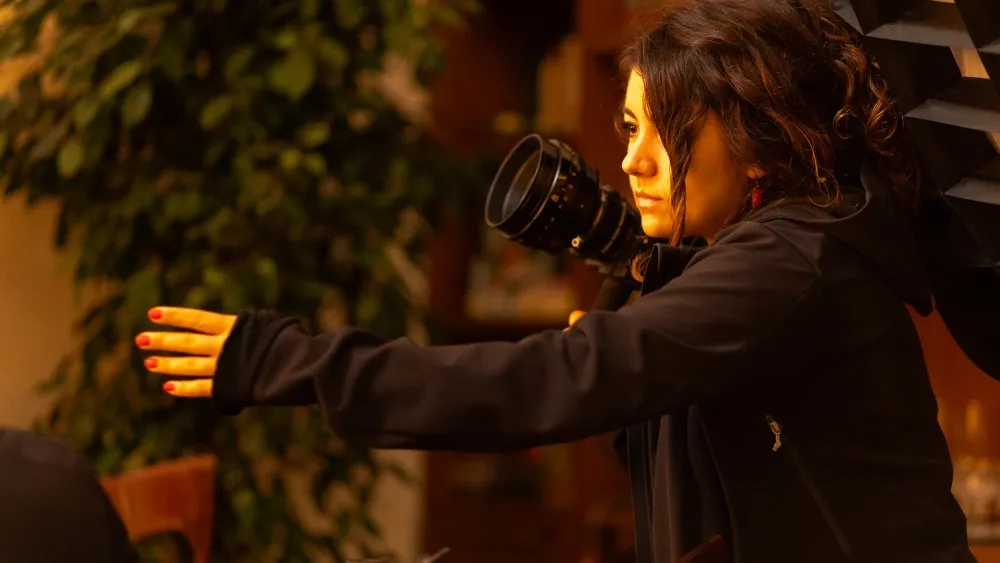
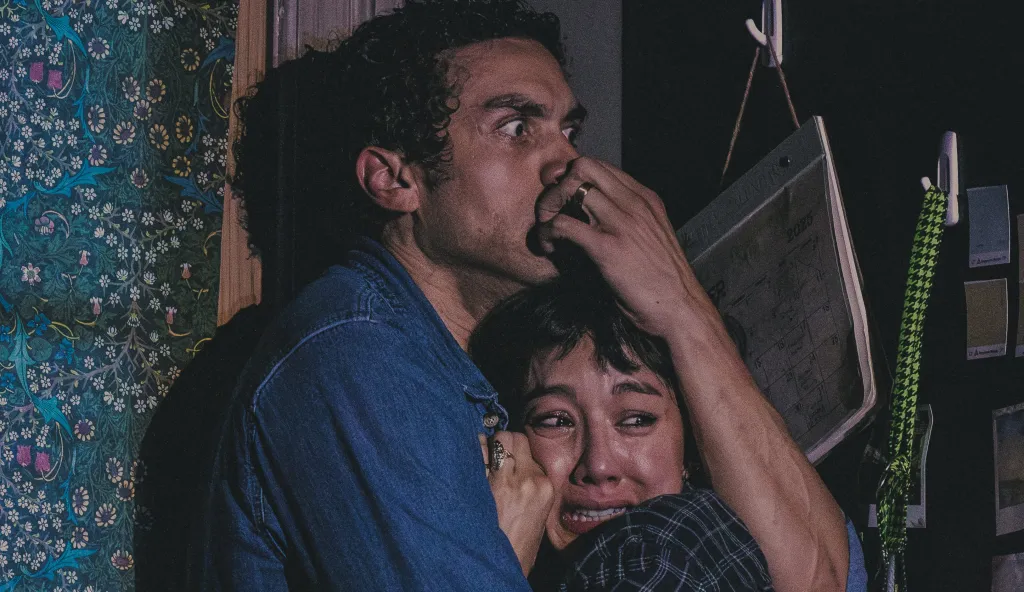
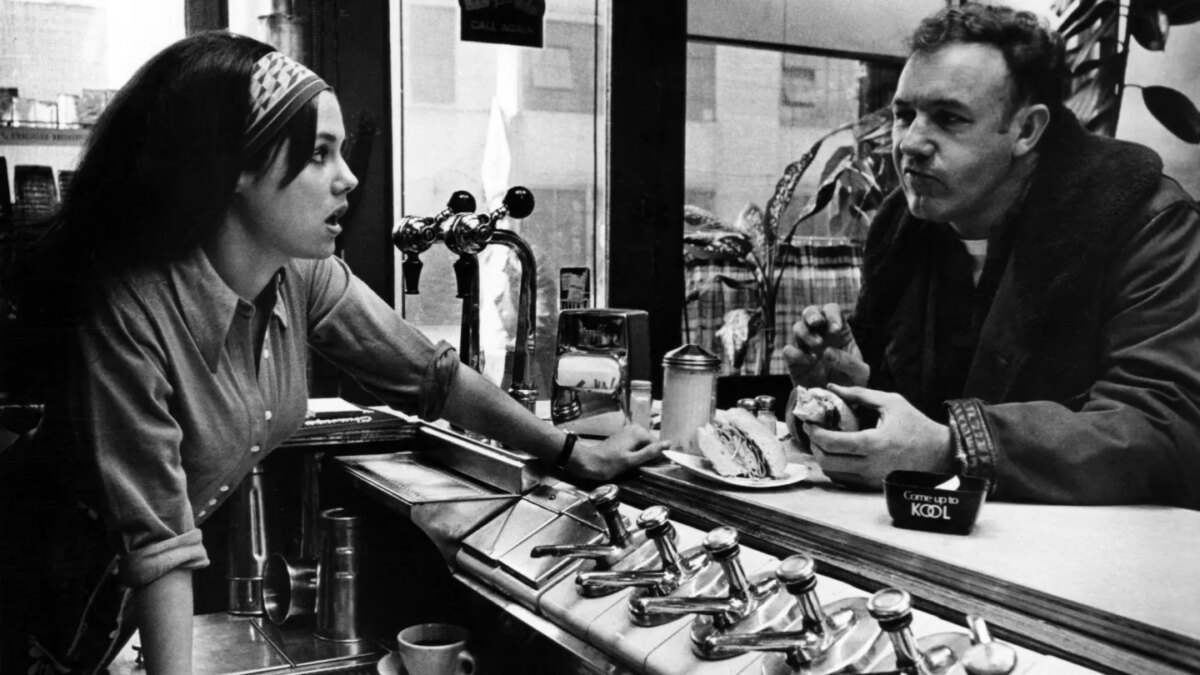

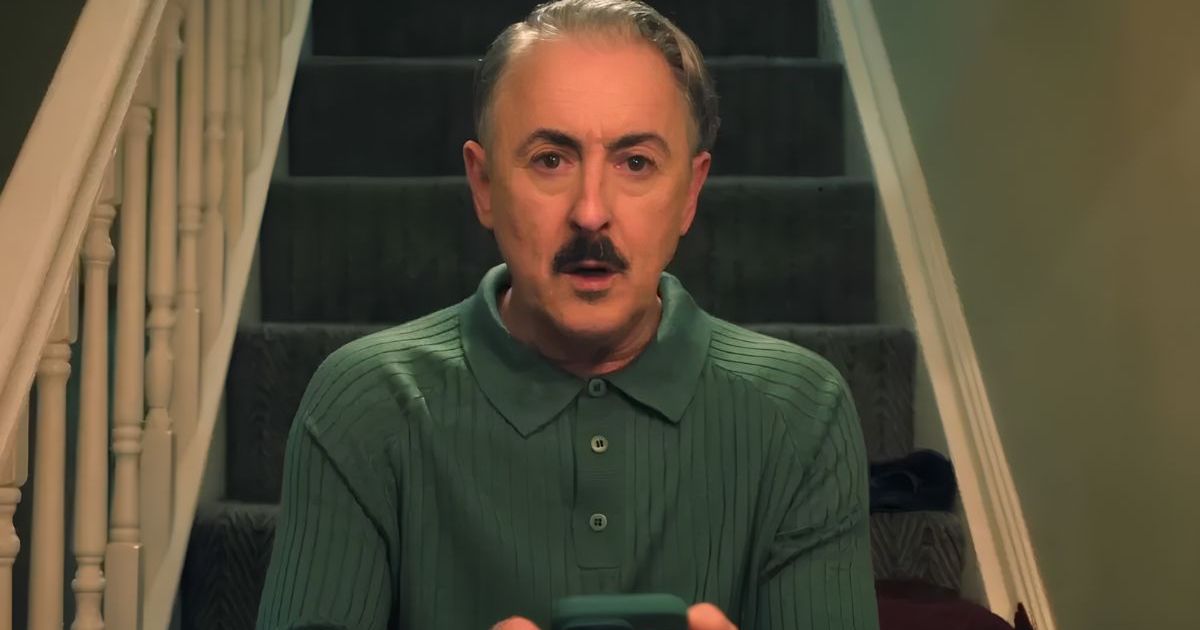



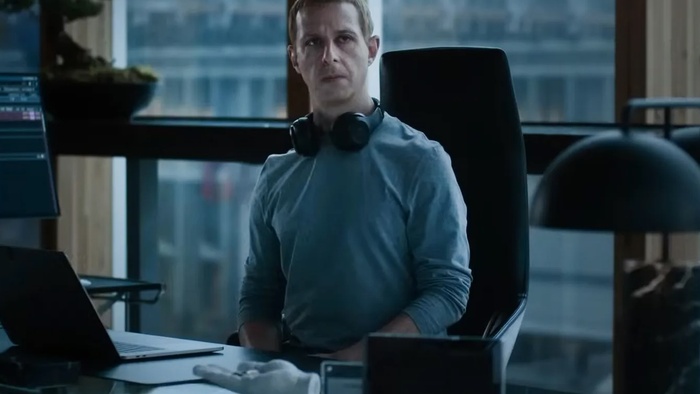







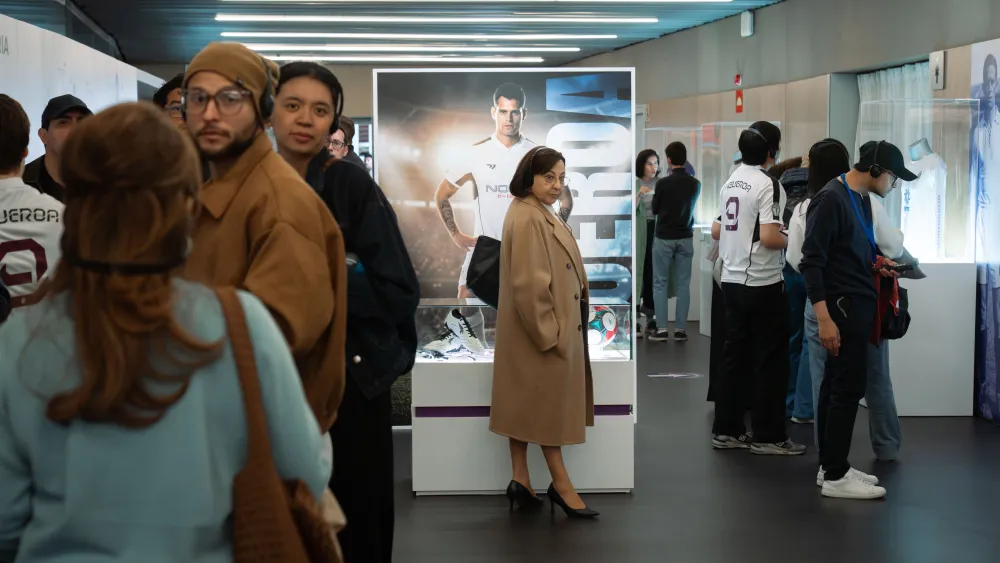










 ‘Terminator 2: Judgment Day’ (1991)Credit: Tri-Star Pictures
 ‘Terminator 2: Judgment Day’ (1991)Credit: Tri-Star Pictures
 ‘Terminator 2: Judgment Day’ (1991)Credit: Tri-Star Pictures














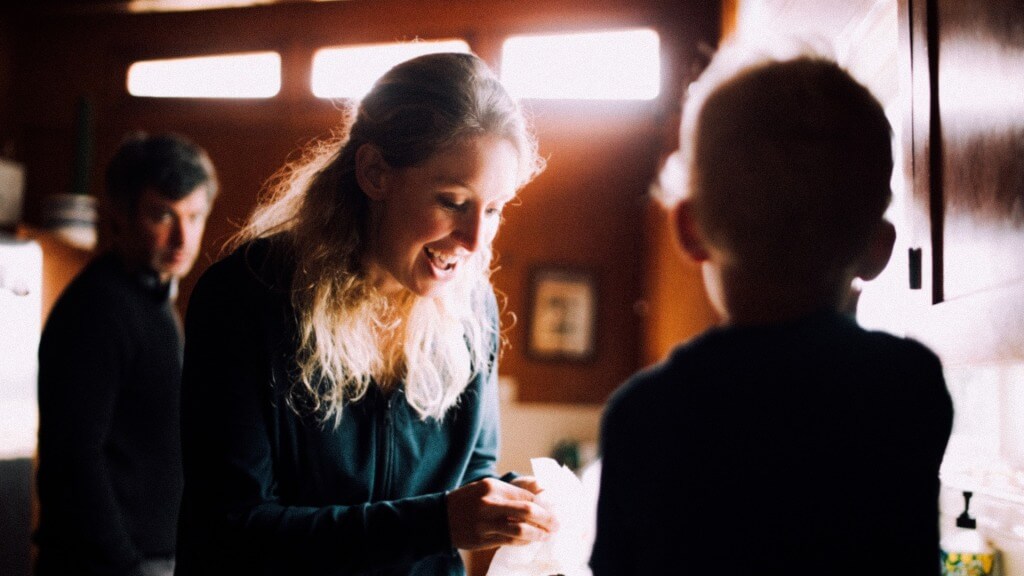
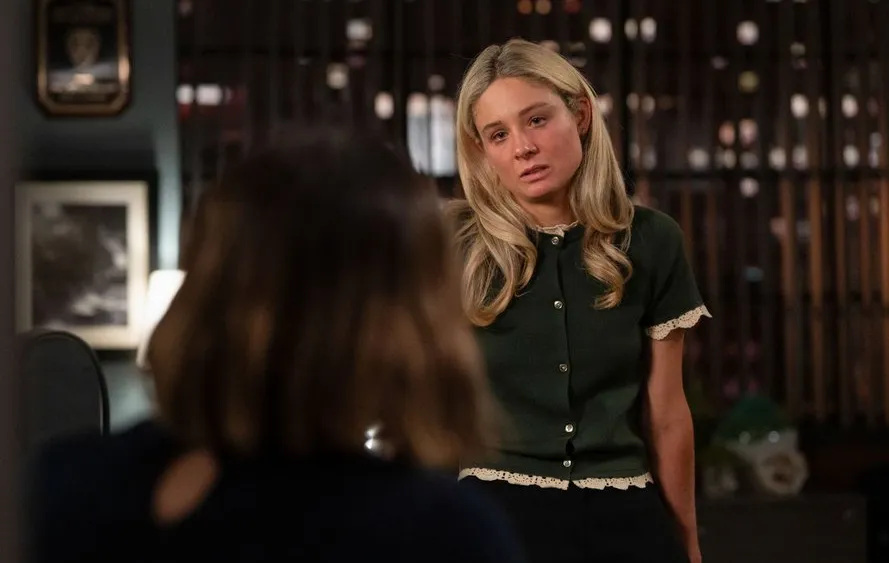



 Facebook
 Mastodon