It’s been a few years since Rhiannon Giddens did anything remotely in the ballpark of a “pop” album, and it’s not hard to come up with reasons for that: Besides her having a full dance card, you could almost argue she’s overqualified for the job. The recipient of both a MacArthur “genius grant” and a Pulitzer, the banjo-wielding balladeer has sustained herself for a while at the intersection of earthy and highbrow, most recently winning acclaim for her opera, “Omar,” and she looks at least at much at home fronting the LA Phil as she used to leading the old-fashioned string band the Carolina Chocolate Drops. Her recorded output in the last few years has focused on superb collaborations with her partner, Francesco Turrisi, emphasizing the sounds of Ireland and Italy. Naturally, she hosts a PBS series and dips her intellectual toe into educational books and webcasts. Who needs to swing, when you’re the embodiment of musical academia, or practically a Grammy Award in human form?
But swing Giddens does on “You’re the One,” her first solo album in six years, and it’s good to hear her loosen up in the realm of all-American music again, even if there hasn’t been anything remotely regrettable about her other far-reaching endeavors. Here she’s written or co-written all the material on a record for the first time, but it’s not exactly a turn toward a traditional singer-songwriter direction. Neither does the introduction of Jack Splash as her new producer bring any significant move toward contemporary R&B, even though his pedigree is mostly in the realm of Alicia Keys and Solange. Instead, it’s as if Giddens made a record of original material that she deliberately wanted to have mistaken for an album of standards covers — dipping into an array of 20th century styles with songs that sound like they might have been borrowed from someone else’s songbook, be it the Great American one or the catalogs of blues or bluegrass or soul. The common thread is that she sounds like she’s having fun, skipping through these eras and genres. It’s all still fit for a pledge drive, but Giddens is pledging her fealty to the spirit that made all these forms of music a kick in the pants in their heyday.
The title track begins with some of her signature banjo plucking, but quickly turns into a soft-rock love song, while “Too Little, Too Late, Too Bad” veers toward Rufus’ funky side of the ‘70s street. From there she’s mostly going further backward to move ahead: strings-laded torch songs, with “Wrong Kind of Right” and “Who Are You Dreaming Of,” the former touching on classic R&B and the latter landing more in Tin Pan Alley; New Orleans roadhouse flair with the frisky “You Put the Sugar in My Bowl”; a detour deeper into Cajun country with “You Louisiana Man.” The most modern production touches arrive on the brooding “Another Wasted Life,” a protest song about the unlawful incarceration of a Black man on Rikers Island. That song’s cheerful antithesis is “Yet to Be,” with the album’s lone featured guest, Jason Isbell, sounding all but unrecognizable singing his way through such playfully jolly musical climes. And there’s a bit of jazzy scat in the henhouse of the feminist anthem “Hen in the Foxhouse.”
The powerful purity of Giddens’ soprano is something that can’t be hidden under a bushel, or roughed up just to go gritty; you do sometimes feel like you’re listening to Leontyne Price sing the blues. Which is actually a pretty promising construct. Giddens fans have happily followed her down the paths of world music and even opera, and there won’t be many objections if, for our most accomplished musical journeywoman, her maps now bring her back closer to Bristol, Virginia, or to Bourbon or Beale Streets.
The Hulu Original series from Onyx Collective The Other Black Girl released its first official trailer and viewers are in for a wild ride when it premieres on September 13.
Based on Zakiya Dalila Harris’ best-selling novel of the same name, the 10-episode series follows Nella (Sinclair Daniel), an editorial assistant, who is tired of being the only Black girl at her company, Wagner Books. Everything is looking up when Hazel (Ashleigh Murray) is hired but as her star begins to rise, Nella spirals out and discovers something sinister is going on at the company. And also, is Hazel friend or foe?
The Other Black Girl also stars Brittany Adebumola as Malaika; Hunter Parrish as Nella’s boyfriend, Owen; Bellamy Young as Wagner Books editor, Vera Parini; Eric McCormack as Wagner Books founder, Richard Wagner; Garcelle Beauvais as renowned author, Diana Gordon.
Rashida Jones executive produces alongside Adam Fishbach, Zakiya Dalila Harris, Jordan Reddout, Gus Hickey, Tara Duncan, and Temple Hill’s Marty Bowen and Wyck Godfrey. Author Harris and Jones co-wrote the pilot. Jordan Reddout and Gus Hickey also serve as co-showrunners. The Other Black Girl is a Hulu original from Onyx Collective.
Jon Batiste has long been a household name, thanks in large part to his star-making turn as the affably hip bandleader on The Late Show With Stephen Colbert. But last year’s surprise Grammy win for his 2021 album We Are catapulted him to a new level of fame and cultural relevance. That record’s hopeful message of community and shared humanity—set to a joyous blend of soul, jazz, funk, R&B, and hip-hop—offered an antidote to the emotional burnout of grappling with America’s festering socio-political fissures. Drawing from the rich cultural lineage of Black music as well as personal history—not only does Batiste come from New Orleans musical royalty, his grandfather was a union organizer—We Are’s fist-pumping positivity sounded vital and essential, even at its corniest.
Now Batiste wants to take his brand of musical activism international. For his sprawling new album, World Music Radio, he enlists a globe-spanning crew of collaborators for an ambitious experiment in planetary genre-blending. Their mission? To create pop music that so effortlessly transcends national, cultural, and genre barriers that it is, as the press release puts it, “meant for everyone.” If that sounds like the sort of money-printing holy grail modern music executives dream of, well, that’s because it sort of is. But for Batiste, it’s more about tapping into music’s power to find common ground between disparate—often divided—communities. If we can get kids in, say, Dhaka to jam to Latin trap and Catalonian folk, he seems to think, then maybe it will remind us that we are all, in the end, human.
So Batiste puts his extensive compositional chops—and his thick Rolodex—to work, blending his amorphous jazz-soul with timbres and rhythms from all across the world. Soaring gospel choirs sit comfortably alongside Latin drums; improvisational jazz and French spoken word share space with Michael Jackson-esque pop-funk; K-pop idols and Colombian pop stars trade bars over reggaeton beats. Batiste ties this musical mish-mash together with a familiarconceptualconceit: packaging the album’s 12 tracks as an all-night radio show, hosted and curated by alter ego Billy Bob Bo Bob, an interstellar DJ with a penchant for hokey aphorisms (“Be who you are… because everyone else is taken”).
When it works, Batiste’s cultural cross-pollination can be electrifying—as when the crescendoing organ of “Worship” segues seamlessly into propulsive Latin-tinged electro-funk. But far too often, especially when he strays away from sounds that have already made inroads at U.S. Top 40 (Latin trap, Afropop), it comes across as window dressing, as if the unfamiliarity of these sounds and textures can make up for the inherent blandness of the songwriting. All the undeniable virtuosity of Batiste—and the pop polish delivered by a production team that has worked with stars like Drake and Doja Cat—cannot distract from the record’s fatal conceptual flaw: the contradiction between its celebration of cultural difference and its overarching goal of proving that, at least on a musical level, we are all the same.
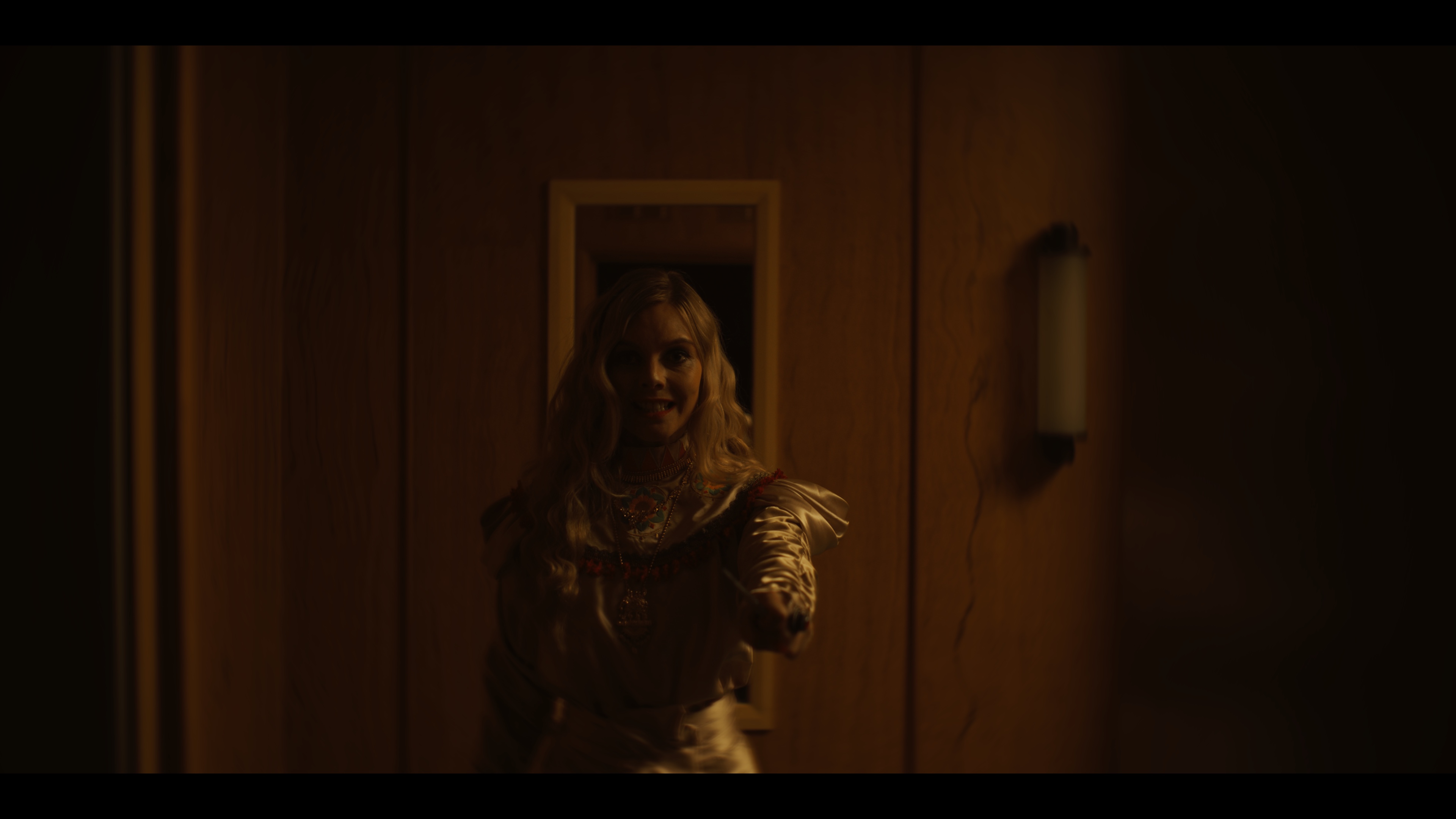
Ghosts as in spectral humans, like a little girl with disintegrating fingers, who spook the Red Roof-style motel that Ruthie (Gayle Rankin) inherits from her grandmother. Ghosts as in the emotional traumas that haunt Ruthie and the guests — her partner, Cal (Hari Nef), their friend Maddie (Rad Pereira) and Maddie’s guest, Fran (Annabelle Dexter-Jones) — who join Ruthie at the motel to determine its fate. Then there’s the phantom of “The Shining,” a film Thorndike aspires to summon, down to the creepy joggers who might as well be Kubrick’s menacing girls in grown-up athleisure wear.
Together, these spirits join forces in an unsettling and moving film about motherhood and bad memories, one that won’t so much grab you by the throat as squeeze your hand. Thorndike sustains an eerie mood throughout, but wanders off course as the stakes become fuzzy in the final stretch, when a hospitality expert (Molly Ringwald, wonderful) appears to Ruthie, and a chain saw roars to life.
The film gets big assists from Jason Falkner’s minimalist score and Grant Greenberg’s cinematography that washes the Ithaca, N.Y., hotel where the film was shot in despairing hues.
Mark Jenkin’s unnerving folk horror fable joins “Skinamarink” and “The Outwaters” in this year’s thrilling class of experimental horror films that give fear a form. Enigmatic and nightmarish, the film is about a woman known only as the Volunteer (Mary Woodvine), who spends her days alone on an isolated island off the British coast where she’s charged with tending a terrain that seems to be overtaking her emotionally and physically. Did I say alone? The strange figures who haunt the landscape suggest otherwise.
Jenkin shot on a gloriously textural 16 millimeter, and uses many of the hallmarks of experimentalist cinema, like repetitive cuts and a warped score, to unsettle a sense of place and time. Figuring out what it adds up to — a purging of personal traumas? a feminist response to misogynist evils? both? — is the fun of watching this singular and lush but demanding movie that may test some horror fans’ patience and desire for plot, so if it’s a clearer and cleaner scare you want, look elsewhere.
In this penetrating Japanese film about loss, grief and self-forgiveness, the director Keishi Kondo paints a tortured picture of Miyabi (Kaho Seto), a divorced woman who at night works as a call girl, even as she mourns her young daughter who one minute was tending to plants on the family’s apartment balcony and in a flash, disappears.
Miyabi has a new boyfriend (Ryuseigun Saionji), but their spark is flickering, which is why she’s drawn to the attention showered on her by one of her clients, Oka (Satoshi Oka), a mysterious photographer. Miyabi agrees to let Oka take photos of her, and their sessions become a therapeutic way for her to process grief. But as Miyabi’s grasp on reality loosens with each portrait, their macabre photo shoots take her on a darkly supernatural trajectory.
Kondo is both a precisionist and a full-throttle abstractionist; one minute he fills the screen with emotionally chilly drama and the next with expressionistic images of cocoons and bubbling landscapes. Moth motifs get heavy-handed as Miyabi’s sorrow transforms into psychosis, but all is forgiven when the film so seamlessly blends a sensory visual experience with a moving study of a mother’s anguish.
Akira (Eiji Akaso) hates his job, so the zombie apocalypse that hits Tokyo could not be better timed. “I don’t have to go to work anymore!” he exclaims on a rooftop as a band of the hungry undead grab for him from behind a gate. That charmingly irreverent set up is what fuels Yusuke Ishida’s zombie comedy, a live action adaptation of the eponymous manga.
The film’s subtitle refers to Akira’s list of “100 Things I Want to Do Before Becoming a Zombie,” which includes riding a motorcycle (check!) and putting things in a shopping cart “without caring about price,” a cinch considering his supermarket is empty save for the zombies that the eager-beaver Akira, who played American football in college, easily outmaneuvers.
The silliness that made the film so charming in the beginning becomes tiresome as the story moves away from Akira, a delightful protagonist, and instead relies on extended cat-and-mouse scenes that add little more than new characters. By the end of two, too-long hours, the walking monster shark (long story) and a heavy-handed message about individuality — which may delight teen fans — I was worn out.
If there’s a common denominator in horror, it’s the word don’t. Don’t go into the basement. Don’t enter the woods. And don’t mess with mothers, and that goes double for moms of monsters.
In Jacques Molitor’s werewolf drama, the monster is Martin (Victor Dieu), one angry little boy. After he bites another kid, Martin’s mother, Elaine (Louise Manteau), takes him to his dead father’s Luxembourg estate where the boy’s grandparents don’t know she or Martin exist. The grandparents waste no time folding Martin into what his grandpa calls “a very old hunting family,” one that makes Elaine feel like an outsider, especially when she’s shocked to watch her son transform into a wolf. From there, the film stumbles as Molitor tries to figure out where to go next, and I wish the answer hadn’t been to blow the whole thing up.
Werewolf movies have been queering horror since Lon Chaney Jr. got hairy in “The Wolf Man” in 1941, and this is a small effective addition. Any parent who has ever loved a child who’s different will appreciate the story of a mama-bear protector and her young boy’s monstrous coming-out.
Ahead of his voice acting role in “Scott Pilgrim Takes Off,” Netflix’s next installment in the “Scott Pilgrim” franchise, Michael Cera looked back on his fond memories leading the 2010 Edgar Wright movie “Scott Pilgrim vs. the World.”
“It was so much fun all the time because we just had the greatest vibe with everybody,” Cera said in a video interview with GQ conducted before the actors strike. “That basically trickled down from Edgar, and the energy he was creating. We all got to rehearse together and spend a lot of time together before we even started making the movie.”
While Cera had dozens of roles under his belt before headlining the graphic novel adaptation, he was still only 22 years old, and the experience perhaps set up false expectations for working in Hollywood.
“By the end of the movie, I felt like, ‘This is my world. This is my group of friends. It feels like it’s always going to be this way,’” Cera said. “Honestly, I was a little depressed when we were done because it all just goes away, and you’re like, ‘Where did everybody go?’ You get used to that as you get older and as you’re acting for a while, but I was sad to lose it. I could have kept making that forever, even though it was exhausting.”
As the title character, Cera was on the set of “Scott Pilgrim” for nearly a year, while “other people kind of came and went.” The action-romance film also starred Mary Elizabeth Winstead, Aubrey Plaza, Kieran Culkin, Brie Larson, Chris Evans and Jason Schwartzman. “I was there for I think nine months or something, which is an enormous amount of time to work on something,” Cera said.
In order to prepare for the movie’s many fight scenes, Cera said the cast did plenty of endurance training and fight choreography, which the actor said felt “unnatural.”
“There were a couple of times where I got hurt… trying to block [a kick] over and over and find the right point in space to put your hand,” Cera said. “One time I just went too low and received the full blow of this guy’s kick, one of the stuntmen. It’s an insane feeling you can’t believe is happening to your hand. You didn’t know you had these muscles in your hand and now they’re throbbing for like a week. Like a train hit me in the hand. It’s very weird.”
“Scott Pilgrim Takes Off” reunites the full cast of “Scott Pilgrim vs. the World” in voiceover roles. The series premieres on Netflix on Nov. 17.
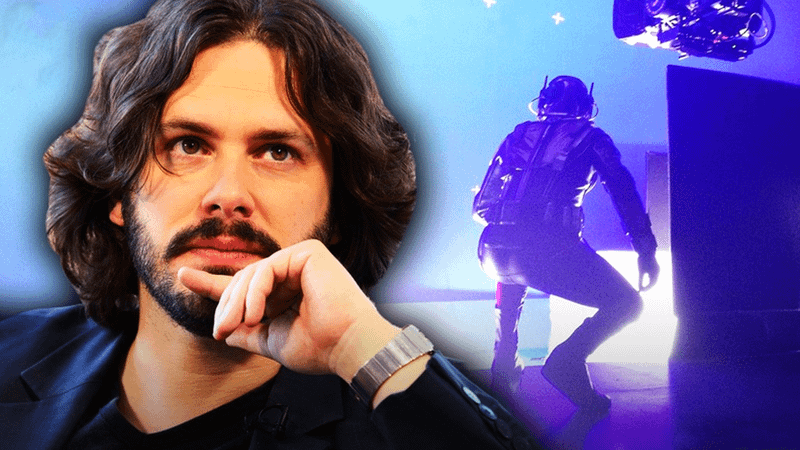
According to Ant-Man‘s editor, Colby Parker Jr., Edgar Wright’s abandoned version of the movie would not have included other Marvel characters besides those directly involved with the titular hero’s story.
One of the biggest creative changes in Marvel Studios’ history was when Wright was taken off Ant-Man’s original solo film in 2014. The filmmaker had been part of the project for years—he even promoted it at San Diego Comic-Con 2012.
According to Ant-Man writer Joe Cornish, the reason for Wright’s departure was because “Edgar Wright makes Edgar Wright movies,” and he didn’t have any desire to make the interconnected story that Marvel was hoping for.
Directorial duties were eventually handed to director Peyton Reed, who went on to helm three different Ant-Man films.
Edgar Wright Didn’t Want More Marvel Characters
Marvel Studios
In an exclusive interview with The Direct, Gran Turismo and Ant-Man editor Colby Parker Jr. revealed some new details about Edgar Wright’s abandoned version of Scott Lang’s Marvel Studios debut.
First, Parker noted that Wright’s version of the film had a whopping 15 or so people in the gang aiming to pull off the big heist instead of Lang’s tight trio of Luis, Dave, and Kurt who appeared in the final cut:
“His film, it was still heist film. But remember how we have three mains. I think there were, like, 15 people within the gang, the gang that was going to do the big heist. I remember I never got to see his script. But I remember hearing that once in discussions when all the big muckety mucks were in the room… [The heist] was going to be more of a collaborative effort and more of a 15-hander than a three-hander…”
Marvel Studios
When Peyton Reed’s Ant-Man was released in 2015, it not only told Scott Lang’s story but also included some interconnectivity with other MCU elements. The biggest example of this was Anthony Mackie’s scene at the Avengers Compound, where Falcon went up against Ant-Man in a brief brawl.
If Edgar Wright had his way, that would have never happened.
The editor revealed that Wright “didn’t want any other Marvel characters in the film,” assumingly besides from those immediately in Ant-Man’s lore:
“I don’t think there would have been any other Marvel characters set up. I think he was going to be a standalone. He didn’t want any other Marvel characters in the film… I don’t think the Falcon would have been in Ant-Man.”
Could Edgar Wright Return to the MCU?
Marvel Studios
Edgar Wright’s Ant-Man will always be one of the biggest what-ifs for the Marvel Cinematic Universe.
It’s also unsurprising to hear that Wright didn’t want any other Marvel characters in the picture. Honestly, though, at the end of the day, that stipulation wouldn’t have changed too much—the only big connection the 2015 film had to the wider MCU was the brief scene between Scott Lang and Falcon.
Could the filmmaker perhaps be interested in working with them after all this time? With the company’s string of lackluster projects, maybe a large dose of fresh creative energy is exactly what they need.
While Ant-Man could be played out for the time being, especially given Ant-Man and The Wasp: Quantumania‘srotten reception, a whole host of other characters still need the spotlight. Perhaps one of the many X-Men could be of interest to Wright?
Despite good reviews, DC’s Blue Beetle is off to a rocky box-office start, with only $3.3 million in preview screenings.
Anecdotal evidence on social media suggests that the movie is not drawing large crowds, with images of nearly-empty theater seats being shared.
The unique circumstances of Blue Beetle’s release as a streaming exclusive may lower expectations for its financial success, but positive word of mouth could still benefit the film.
DC’s Blue Beetleis finally out in theaters, and despite good reviews, the movie seems to be off to a rocky box-office start. The second-to-last movie created under to old DCUE banner (which will officially come to a close with December’s Aquaman and the Lost Kingdom), Blue Beetle marks the big-screen debut for Xolo Maridueña’s titular hero. The movie was originally set to be a Max streaming exclusive for DC, and Thursday box-office numbers are beginning to paint a picture of whether or not the move to a theatrical release was a smart one for WB and DC Studios.
Opening Thursday evening for preview screenings, Blue Beetle pulled in $3.3 million, which estimates posit may lead to a proper opening weekend of $28-$33 million (per Deadline). Blue Beetle follows the critically and financially disappointing The Flash, which earned $9.7 million from its Thursday previews, though the comparison to the much larger, more expensive, and heavily marketed projects is perhaps not quite apt. More appropriate is a look at Shazam! Fury of the Gods, which earned $30.1 million its opening weekend after a $3.4 million Thursday preview.
DC Fans Share Damning Images Of Blue Beetle Screenings
Blue Beetle was the beneficiary of a strong fan-led marketing campaign before release, but early photos seem to indicate that the masses are not rushing to see DC’s latest blockbuster. Anecdotal evidence certainly isn’t always representative of a wider truth, but viewers posting images of nearly-empty theater seat reservation screens probably isn’t the social media presence that WB envisioned for the film. That being said, there’s still ample time for the weekend and positive word of mouth to get fans into seats.
On Twitter, user @lizardhospitalposted an image that’s gained some traction showing the online reservation screen for Blue Beetle. Across four showings at what appears to be a large AMC theater, only 16 tickets had been sold. Of course, the post is slightly misleading as it shows images of reservations a day out from the actual show times. It’s possible (and likely) that several more seats were sold, but the images still show a far more empty theater than most Marvel and DC movies a day before their premiere.
Another Twitter user, @TrevorEMetcalfe, found humor in the one single seat sold for Blue Beetle at his theater, which happened to be in the center all the way up in the front row. @meteormajeure found a similar situation.
@WalterW89524632 followed suit, posting images from “the most sold out screening in my area [in the UK].” The pictures aren’t quite as shocking, but each screen still has under half of its seats spoken for.
However, not every post is quite so shocking. @joits shows a screen on its way to solid seating numbers, as does @SnwflkBlizzard.
The unique circumstances surrounding Blue Beetle make it difficult to judge the movie’s preview night box office take and potential opening weekend pull. Despite being on track to perform similarly to Shazam! Fury of the Gods, which was considered a financial disappointment, Blue Beetle‘s origins as a streaming exclusive may set the bar for financial success lower. Furthermore, Blue Beetle may prove to have better earnings legs than other recent DC projects if positive word of mouth follows the film’s generally positive reviews.
Kathryn Hahn excels at playing women without boundaries. From the moment in “Step Brothers” that she mounted John C. Reilly in the men’s room and then proceeded to urinate standing up, Hahn won our hearts playing characters who speak their unfiltered minds — and performed an impressive amount of gymnastic sex scenes in the process. She’s been brazen, promiscuous, violent and drunk — and audiences have loved every moment of it. She even got away with the worst thing a character can do — killing a dog — in “WandaVision.”
“You really hope those scenes are early on,” says Hahn about overcoming inhibitions. She points to a moment in Tamara Jenkins’ “Private Lives” in which her character is cleaning her home while naked from the waist down. She then gets in a heated argument with her husband, played by Paul Giamatti. “I was very glad that we got that over with before Paul and I got to know each other,” she notes. “It just made it much easier than if it had been much later in the shoot. Sometimes it’s easier to just rip the Band-Aid off and get to it.”
Hahn has never hesitated to bare herself, physically or emotionally, and this paid off with an Emmy nomination for her soulful lead actress performance in the Hulu limited series “Tiny Beautiful Things.” The morning of the nominations announcement was a joyous one for Hahn, though tinged with some anxiety — in a matter of hours, SAG-AFTRA would go on strike. Variety’s Award Circuit podcast spoke with Hahn that morning; listen below!
“Tiny Beautiful Things” has one of the most unusual origin stories of any property. The series is based on Cheryl Strayed’s 2012 book culled from her Rumpus advice column “Dear Sugar,” which was later resurrected into two separate podcasts. Nia Vardalos previously adapted the book into a successful play and portrayed Strayed onstage.
But the series, created by Liz Tigelaar (“Little Fires Everywhere”) creates a fictionalized version of Strayed’s story with Hahn playing a character named Clare Pierce. Clare’s past shares a lot in common with Strayed’s, including losing her mother at an early age, becoming a young parent herself and finding her life changed by becoming an anonymous advice columnist. The limited series focuses on a turning point in Clare’s life as the once-promising writer hits a low point, finding both her job and her marriage in jeopardy. Clare seems, at first, an odd choice to take over the advice column, considering her husband Danny (Quentin Plair) and daughter Rae (Tanzyn Crawford) are barely speaking to her. And yet it turns out her pattern of poor choices might just be the very thing that qualifies her to succeed at the job.
Hahn had not consumed the other “Tiny Beautiful Things” media when the project came her way. “As an actor, you just face the script you have in front of you,” she says. “And that was my bible. I didn’t really need to use the source material because all I needed was what Liz and the writers had fictionalized and come up with.”
After falling in love with the script, Hahn says she turned to the book and was floored once again. Strayed’s work has a reputation for making people cry. Hahn is no exception as she becomes teary discussing “Tiny Beautiful Things.”
“I thought it was essential human reading,” she says. “That’s the kind of book that … you just take something new every time you pick it up.” Hahn adds that it wasn’t necessarily what she expected from an advice column.
Merritt Wever and Kathryn Hahn
Courtesy of Hulu
“I’m a little bit adverse to cheese,” she notes. “There is such unflinching honesty in these responses and the way that she opens herself up and excavates herself to these letter writers.”
As someone who has played many complicated women, Hahn was also excited by how raw and flawed her character was allowed to be. “You just feel nourished when you read her work. You just feel less alone, and you feel OK to be in the kind of messy, gross middle. If you peel behind of the surface of anybody, there’s always a disaster,” Hahn says. “We’re always kind of in process. And she just lets that be exactly what it is and exactly OK.”
Because Strayed was an executive producer and writer on the series, Hahn not only had ample opportunity to discuss the character, but even seek out some guidance. “To have Dear Sugar in the room, of course you’re gonna turn to her for advice,” she admits with a laugh. But she says she was mostly just impressed with Strayed’s kindness and her willingness to speak so frankly about her experiences.
One event that greatly informed Strayed was her grief over the death of her mother, which is also explored in her memoir “Wild,” later adapted into a film starring Reese Witherspoon, an exec producer on “Tiny Beautiful Things.”
“We all have [something] that kind of calcified us in some way, whatever that was in our life,” she says. “And her sharing of that in such detail — her defenses around it and then her being able to see the light and the pathway through and her continued journey — it’s such a gift, her sharing of it.”
In fact, Hahn says one of her biggest challenges in making the series was not being there for the flashback scenes with Clare and her mother. Sarah Pidgeon portrays the younger Clare, while her mother Frankie is played by Merritt Wever, who also snagged an Emmy nomination for her work. “I wanted to work with Merritt, I wanted to work with Sarah,” she notes. “It became very painful that there were kind of two movies happening — there was the flashback track and then this present track. We were kind of these ships in the night.”
Hahn has nothing but praise for Pidgeon, who seems to share not just the role but the soul of Clare with Hahn. “I wish I had an iota of her grace,” Hahn raves. She notes that for the first couple of episodes, Pidgeon was able to watch her and likely absorbed some mannerisms via osmosis. “But we really didn’t try to get too specific with it just because it would ruin a magic that I think was already just … there.”
Hahn says she is “forever changed by this experience of making this” series based on Strayed’s writing. “Anyone that’s had the pleasure of reading her work, I think you are definitely changed and moved in ways that you don’t anticipate before. I was just as taken as all of her other fans.”
Also on this episode: We catch up with producer and 12-time Emmy winner Ben Winston, who’s still adjusting to life after producing ‘The Late Late Show with James Corden,’ while also enjoying his latest Emmy nominations, including for the Disney+ special “Elton John Live: Farewell from Dodger Stadium.”
Hahn’s interview was conducted before SAG-AFTRA went on strike July 14.
Variety’s “Awards Circuit” podcast, produced by Michael Schneider, is your one-stop listen for lively conversations about the best in film and television. Each week “Awards Circuit” features interviews with top film and TV talent and creatives; discussions and debates about awards races and industry headlines; and much more. Subscribe via Apple Podcasts, Stitcher, Spotify or anywhere you download podcasts. New episodes post weekly.
Two beloved comedy icons who ensured that the genre was not only evolving but staying tremendously alive get a lovely breakdown, praise and other trivia detailing from me and my guest Matt Littlefield (Wicked Awesome on Twitter)!
“Ahsoka” is coming to fans sooner than expected — and at a much easier hour. The new “Star Wars” series on Disney+ will now be streaming on Tuesdays at 6 p.m. PT.
Previously, the Rosario Dawson-led series was set for Wednesday releases, as is typical with most Disney+ series. But now, instead of premiering at midnight PT on Wednesday, Aug. 23, the show will kick off on Tuesday with its first two episodes available to stream at 6 p.m.
Thank you to all the fans who celebrated with us at our #Ahsoka fan events around the world last night!
We’re excited to announce that new episodes of #Ahsoka will now launch Tuesdays at 6PM PT, starting with our two-episode premiere on August 22, only on @DisneyPlus. pic.twitter.com/aANUtKRV7L
From there, the series will air one new episode each week, with the season finale on Oct. 3.
The shift in dates marks the second surprise for fans this week, after a new teaser on Tuesday revealed a voiceover from Hayden Christensen’s Anakin Skywalker, who first returned in “Obi-Wan Kenobi” earlier this year.
“In this war, you will face more than just droids,” Anakin warns in the teaser. “As your master, it is my responsibility to prepare you. I won’t always be there to look out for you. Don’t be afraid. Trust your instincts. I know you can do this Ahsoka.”
Of course, we know that this speech is from years past, prior to Anakin’s turn to the Dark Side. As fans know, Anakin and Ahsoka fought alongside each other for years during the Clone Wars, and their adventures became the basis of a six-season animated series.
That said, “Obi-Wan Kenobi” pulled off a flashback scene, so it’s not entirely unbelievable that “Ahsoka” could as well. We’ll just have to see.
Actor Robert Downey Jr. has had a long and super successful career. But his name will likely always be synonymous with Tony Stark/ Iron Man, as he was the first actor to start in the Marvel Cinematic Universe. Given his acclaimed performance as an Avenger, there are other superheroes that fans could see him as. So what if Robert Downey Jr. had been cast as Batman? Fan art plays with that possibility, and I am sold.
Batman is arguably DC’s most popular superhero, and has therefore been adapted for film a number of times throughout the years. While actors like Christian Bale and Robert Pattinson killed it as the Caped Crusader, I have to assume that RDJ would have brought the same charisma and heart to the role as he did with Iron Man. Now we can see what he’d look like as Batman thanks to fan art on Reddit, check it out:
I mean, come on now. Robert Downey Jr. looks absolutely badass suited up as Batman, and now I wish this fan casting would come true. While it seems unlikely since RDJ has finally retired from playing Iron Man, his schedule is technically more open than ever.
The above piece of epic fan art comes to us from Reddit, in a thread of images which puts MCU actors in DC roles. In addition to Robert Downey Jr.’s Iron Man we also see Chris Evans as Superman, Elizabeth Olsen as Poison Ivy, and more. If only the multiverse was real, and we could see this all play out on the big screen.
There are actually a ton of similarities between Iron Man and Batman, which may be partly why RDJ looks so good in this fan art. Tony Stark famously calls himself a “genius, billionaire, playboy, philanthropist” in the first Avengers movie, which could also be used to describe Bruce Wayne. Plus they both put their fortune into crime fighting gear, despite not actually having any superpowers to speak of. And smart money says Downey’s bone structure would look great in Batman’s signature cowl.
There are ton of different Batmen occupying the big screen currently, partly thanks to The Flash’s twist tending. That blockbuster features Ben Affleck, Michael Keaton, and even George Clooney’s Bruce Wayne. Add in Robert Pattinson in The Batman, and that’s a ton of Batmen. As such, it doesn’t seem impossible that RDJ could eventually take on the role.
DC’s Blue Beetle is in theaters now, and the next Marvel movie hitting theaters is The Marvels November 10th. In the meantime, check out the 2023 movie release dates to plan your next movie experience.
AMC’s “Dark Winds” has more than doubled its Season 1 viewership on streamer AMC+ over its first two episodes of Season 2.
According to data provided to Variety by AMC Networks, the Zahn McClarnon-led drama has seen a 146% rise in first week viewership for Season 2’s first two episodes on AMC+ compared with the first two episodes of Season 1, which aired in June 2022.
AMC Networks also says AMC+ subscriber acquisition for “Dark Winds” Season 2 is higher than during Season 1.
Specific numbers were not provided for “Dark Winds” Season 2 streaming viewership or subscriber acquisition. (AMC Networks most recently reported it totaled 11 million subscribers across its streaming offerings, with AMC+ being the largest service for the company, at the end of Q2, down from 11.5 million in Q1.)
Turning away from streaming and looking at only linear TV, the 9 p.m. Sunday show’s audience has been steadily climbing through Season 2’s halfway point: an average of 1.3 million total viewers for the July 30 premiere, 1.6 million for Episode 2 on Aug. 6 and 1.8 million for Episode 3 on Aug. 13, according to Live + 3 Day Nielsen data.
Across the first three episodes, “Dark Winds” Season 2 is averaging 1.5 million total linear viewers and ranks at No. 8 among the top 10 cable dramas of the 2022-2023 broadcast season to date, behind Paramount’s “Yellowstone,” HBO’s “House of the Dragon,” Hallmark’s “When Calls the Heart,” Paramount’s “1883: Yellowstone,” AMC’s “The Walking Dead,” and Hallmark series “The Way Home” and “Chesapeake Showers.”
“Dark Winds” Season 2 is ahead of the linear-TV-only viewership for fellow AMC series “Interview With the Vampire” (940,000 viewers) and “The Mayfair Witches” (1.1 million), as well as HBO’s “The Last of Us” (1.24 million) and “Succession” (976,000).
Looking at the adults 25-54 demographic, “Dark Winds” Season 2 has averaged 270,000 linear-TV-only viewers through Episode 3.
Based on the “Leaphorn & Chee” novel series by Tony Hillerman, “Dark Winds” boasts a 100% rating on Rotten Tomatoes for both its first and second seasons. With its currently airing season 2, the show has drawn more high-profile fans, including filmmaker Ron Howard. Howard tweeted Monday, one day after Episode 3 aired, “I just discovered #DarkWinds Powerful, suspenseful. So well made I’m hooked.”
“We’re so proud of this show and it’s gratifying to see across-the-board ratings growth over the first three episodes of this second season and viewership more than doubling from season one on AMC+, with strong gains in subscriber acquisition as well,” Dan McDermott, president of entertainment and AMC Studios for AMC Networks, said in a statement to Variety. “From Rotten Tomatoes to Ron Howard, it really feels like people are finding and loving ‘Dark Winds,’ which is a high bar in today’s environment and never something we take for granted.”
If you are on TikTok or Instagram this summer, chances are you have heard the viral summer hit Lil Boo Thing by Paul Russell. The soundbite has currently been used in over 340k Instagram reels and over 54k TikToks. That number only includes posts that utilize the original audio. There are many variations of the audio across several short-form video platforms.
Despite being unreleased, it did not slow down the popularity of the catchy tune, as general users, influencers, and celebrities alike all danced along or capitalized by showcasing a product or skill while the trending audio played over short-form videos.
Who is Paul Russell?
Russell is an American singer and songwriter, he has been posting music on Spotify since 2018, with the summer success of his unreleased song Lil Boo Thang, Russell now generates roughly two million monthly listeners on the platform and he has an impressive social media following, with of nearly 670k across Instagram, TikTok, and YouTube.
About the song Lil Boo Thang
This song blew up on social media and was a very unique situation because, despite the popularity, there was a lot of red tape to cross in order for the song to ultimately release. Because the track sampled a song from the late 70s called Best of My Love by The Emotions.
If you wanna be part of the single-release party tickets are still available here. The event will take place at Winston House in Los Angeles, California, on Thursday, August 17, at 7:00 PST.
Whether you will be at the party in LA, or having your own listening party at home with your own Lil Boo Thang, it is certain there has been great anticipation for this song to drop, and fans are past ready to have it blasting from smartphones, smart assistants, and radios everywhere.
Thought Leaders is a collection of documentaries spotlighting key figures in American politics, law and music.
Political discourse in the United States is shaped by audacious ideas of what a society should be. But who are the influencers and disruptors of American political thought that have paved the way for the systems that we currently have—and those still to come?
“’How did we get here?’ is a question we are all asking ourselves these days, and it is a complicated one,” said Michael Kantor, Executive Producer of American Masters. “By examining the origins and accomplishments of these thought leaders who share such different perspectives, American Masters aims to add crucial context and nuance to what we’re seeing in today’s political arena.”
YOU could bag $20,000 if you move to this Australian town – as long as you don’t mind pitching in with the building work.
The desert town of Quilpie in Queensland is crying out for residents to relocate there, despite the fact zero houses have been built.
4
Quilpie Shire Council are offering people $20,000 to move to the rural townCredit: Getty
4
But there are no builders willing to start construction on the promised homesCredit: Alamy
Quilpie Shire Council is desperately trying to drum up interest for its “free land” scheme, although there are some drastic flaws in the plan.
As part of the local authorities’ Home Owner Grant Scheme, people who buy land and move to the outback town can receive $20,000.
Officials want to boost the slim population in the town, where summer temperatures can hit 50C, from 595 residents to 1000.
Those brave enough to live in the dry and desolate area can purchase a plot, build a house, and be refunded for the cost of the land.
But they only get their cash back when they have lived in the property for six months.
However, there is a huge snag in Quilpie’s master plan – there are no tradesmen willing to take on the mammoth project.
Council chiefs have been struggling to find builders willing to work in the town, which is around 620 miles from the nearest city, Brisbane.
Mayor Stuart Mackenzie told 7News: “An absence of builders is the hardest part.”
The local authority had called on tradies to give them quotes for six properties to be built in Quilpie, but had hardly any takers.
Mr Mackenzie said the only estimate he did receive was from a builder who wanted an extortionate amount of cash.
The mayor explained: “They came back at $900,000 to build a four-bedroom home.
“We can do that for under $400,000 by buying a transportable (home) which is built away and then moved out.
“It was just the fact that we only got one quote, and it was a ridiculous price.
“There weren’t enough builders out there that wanted to do it.”
It means that despite 11 residential blocks being sold since the scheme was announced, the buyers have nowhere to move into.
The council has been forced to bring in four transportable homes over the last three months due to the builders’ drought.
Mr Mackenzie said banks are also hampering the success of the scheme as they are reluctant to lend potential buyers cash.
He said they have somewhat “blacklisted” developments in rural towns and regions of Australia as they deem it a high-risk investment.
The mayor added: “The demand is really strong, there’s no doubt about that.
“People want to build out here, and that should hold the price of houses up, or increase them, which should take away the risk.
“Some have been told they need a 50 per cent deposit, others have been told their jobs aren’t secure enough – even though they’re a teacher and a council employee.”
Despite the black cloud hanging over Quilpie, one family have extraordinarily decided to take the plunge and relocate there.
The Stennett’s have bought a block of land for $25,000 and plan to build their dream home from scratch.
They are set to be the first homeowners who qualify for the “refund” on their plot as part of the Home Owner Grant Scheme.
Mum Heather told ABC: “I don’t think anyone’s been crazy enough to attempt this, but I like a challenge.”
Despite the family of four not even visiting the town, they snapped up the land as they say the deal was just “too good to pass up on.”
She added: “The lifestyle and the opportunities out there to do something different is very attractive.
“If you don’t try, you’ll never know.”
Construction on their home is set to commence by the end of the year.
4
Quilpie is over 600 miles away from the nearest city of BrisbaneCredit: Getty
4
Aussies aren’t jumping at the chance to take a risk with the property schemeCredit: Getty
EXCLUSIVE: Film Independent, the nonprofit arts organization that produces the Spirit Awards, announced the 2023 Film Independent Forum, the preeminent conference for independent filmmakers and content creators.
This year’s edition of the annual event, beginning on Friday, September 29, 2023 at the Directors Guild of America Theatre in Los Angeles, will be held entirely in-person for the first time since 2019. The Forum will kick off with a screening of Billy Luther’s Frybread Face and Me, the new feature film from executive producer Taika Waititi, followed by a Q&A with writer/director and Film Independent Fellow Luther (Miss Navajo, Dark Winds) and a Filmmaker Keynote by writer/director and Film Independent Fellow Justin Simien (Haunted Mansion, Dear White People) the next day. The full program will take place over the course of two days, September 29–30, 2023, during which the inaugural Changemaker Award will be presented to three outstanding Film Independent Fellows: Smriti Mundhra (Documentary Lab 2016, Grant Recipient 2016), Pamela Ribon (Directing Lab 2017), and Kim Yutani (Project Involve 2004).
Designed to inspire and empower filmmakers with tools and connections they need to get their projects made and seen, the Forum offers a robust slate, including screenings, panels, workshops, one-on-one meetings, a welcome reception, and networking opportunities for filmmakers. Conversations and panels will delve into best practices for financing, production and distribution of both film and television, and explore new tools and formats that offer significant opportunities for experimentation and success.
“As the film industry adjusts, recalibrates and shifts, our community is essential to fostering creativity and sustainability for all those working in this most collaborative art form,” said Maria Raquel Bozzi, Senior Director of Education and International Initiatives, “the Forum is the perfect communal space to exchange ideas and celebrate the extraordinary talent and achievements of filmmakers like Justin Simien and Billy Luther, alumni of our Artist Development programs.”
The opening day of the 2023 Forum will feature a happy hour welcome reception, followed by the presentation of the Changemaker Award, which exemplifies Film Independent Artist Development’s mission to champion independent voices and create impactful, positive change by highlighting the extraordinary work of Film Independent program alumni, whose efforts have made wide-reaching impact on the industry and in their communities.
Film Independent launched its first Artist Development program in 1993 with Project Involve and, in the thirty years since, has been supporting talented creators who provide fresh voices and diverse perspectives to independent film and television by connecting them to the resources and networks they need to advance their projects and build sustainable careers.
“We are so thrilled to launch the Changemaker Awards to celebrate past Artist Development Fellows who have come full circle on their journey and now make tremendous impact on our culture both through their work and in their commitment to support future generations of storytellers. Smriti Mundhra, Pamela Ribon and Kim Yutani couldn’t more aptly embody the spirit of the Changemaker Award, and we are so excited to spotlight their impact at our inaugural celebration.” said Angela C. Lee, Director, Artist Development.
Forum passes are on sale now and free for Arts Circle Members. Filmmaker Pro and Arts Circle Members also receive priority registration for Industry Connect sessions. For more information about this year’s Film Independent Forum, to purchase a pass and/or become a Member, please visit filmindependent.org/forum.
The 2023 Film Independent Forum is supported by Premier partners Directors Guild of America and SAGindie. The event’s Principal partners are HieronyVision and film payroll platform Wrapbook.
“You are part private banker, part art curator, part psychiatrist,” explains Jeff Smith, Hollywood’s go-to wine cellar consigliere, of his job. “Sometimes you’re hosting private dinners for your clients; sometimes you go in through the back door.”
Smith, 63, grew up in Beverly Hills and now lives in Bel Air, a short stroll from the neighborhood’s storied Moraga Estate vineyard. (“I tasted it long before [owner] Rupert Murdoch bought it.”) He’s married to Amy Jo Smith, the longtime chair of Hollywood trade organization the Digital Entertainment Group.
Smith himself found his niche at 40. In 2001 — after bouncing around entertainment in A&R, marketing and programming positions — he took charge of organizing the cellar of his father, legendary music executive Joe Smith, who led Warner Bros. and Elektra/Asylum in the 1970s. From there he accrued initial customers who were also family friends, including über-manager Irving Azoff, film producer Freddy DeMann and Mel Brooks.
“He’s advised me throughout the years: to purchase, to auction [off],” Brooks tells THR. “But more than that, he’s been a wonderful friend to lift a glass of good wine with.”
A cellar owned by a producer in Beverly Hills includes a long table for tastings.
Courtesy of Jeff Smith
These days, Smith’s client list, by referral, is heavy on industry luminaries known by one name as well as those whose lucrative toil in the more anonymous sectors of show business has allowed the amassment of a 20,000-plus-bottle collection. Smith helps them accrue, downsize, transport and secure their spirits. “He’s the Willy Wonka of wine,” avers strategic communications consultant Steve Elzer, who was previously senior vp media relations at Sony Pictures. “Jeff knows who’s sitting on the unicorns that people want and who’s willing to part with them at the right price.”
Smith’s primary service, though, is organization, turning a jumbled hoarding into a legible gateway delineated by price, score, context and — most important — drink-by date. “If you don’t know what you’ve got, you can’t enjoy it,” he says.
Smith, who worked for two decades on his own, became the chief wine officer of storage firm Vino Vault a year ago. (The company was founded by Jeff Anthony, who had experience preserving master tapes and motion-picture film at records management company Iron Mountain, where he ran the entertainment division.)
Wine consultant Jeff Smith.
Courtesy of Subject
Smith learned early that his value proposition was at the intersection of information and time. He recalls suggesting that a top TV agent might subscribe to Wine Spectator magazine to become savvier: “He said, ‘How about you read Wine Spectator and tell me about wine.’ “
“This collection in Santa Monica includes some of the oldest and rarest bottles in the world, with about 3,000 bottles, many dating to pre-World War II,” he says. “This is just one small portion of the cellar.”
Courtesy of Jeff Smith
Smith, who’s published a book on storage, The Best Cellar, is often called in during a remodel, or after floods and fires, or to squire the goods to a new address, separately from the hired movers. “Wine is just the hardest thing to transport because of its fragility; I tell people, this is like a heist — but you’re in on it,” he says.
Sometimes damage is self-inflicted by improper care. He recalls visiting the home of late Variety columnist Army Archerd, who didn’t drink but had accrued bottles as gifts over the decades, including a prized 1961 Château Latour, which he’d kept on a crosshatch rack over his refrigerator. (That bottle, had it been properly stored, would be worth about $4,500 today.) “This was possibly the worst you can do: the heat, the light, the vibration,” Smith shares, sighing. “I picked it up, and the fill was too low. I told him that the bottle was worth the 10 cents for California redemption. You couldn’t drink it or cook with it or even give it away.”
As another long-standing client, Joel McHale, puts it, “He’s very up-front: ‘Drink this now or it’s going to suck.’ ” McHale adds that “Jeff’s knowledge is pretty nuts — nuts in the way of a professor who knows everything about his [area of expertise].” Smith declined to share fee scales for his work but says that he sometimes charges a day rate or an hourly, sometimes by the number of bottles in a collection.
For another client, Smith organized wines from the Bordeaux region by Left Bank or Right Bank appellations, meaning wine regions that sit on either side of France’s Gironde estuary. “This is the Right Bank,” says Smith of the wines pictured, from storied vineyards like Petrus.
Courtesy of Jeff Smith
There are, according to Smith, often commonalities among his clientele. Most live behind gates in houses where the staff outnumber the residents. A picture of the collector with a U.S. president can reliably be found on display. There’s no mobile phone reception in the cellar, which Smith became highly aware of when he found himself temporarily stuck inside James L. Brooks’ vault alongside the producer. (“The door had formed kind of a vacuum seal, and eventually it just gave way,” says Smith of how they finally got out.)
Oh, and his clients’ tastes follow a similar arc, transcending myriad domestic varietals and French appellations toward a narrow terminus. “The fully evolved collector only drinks red Burgundy and Champagne, that’s it,” Smith announces. That is, he explains, until they make it to such an advanced age that taste bud loss means that zinfandel and chardonnay become attractive again.
Smith’s Wine Recs
Champagnes
Asked for his picks for great bubbly, Smith replies that “Champagne is easy” because “the Grande Marques [or great brands] are indisputable.” He especially recommends 2008 vintages. “2008 was a banner year,” he says, calling out Cristal and Krug (both $500 a bottle, wallywine.com) and Dom Perignon ($285, vinfolio.com) as favorites. “I would argue that the 2008 Cristal is a relative bargain, and not just in terms of what it may sell for somewhere down the road. Consider that this is, arguably, one of the greatest Champagnes in the world, in a universally acclaimed vintage. Five hundred dollars is not cheap for a beverage, but even the king of England can’t do better than that.” For less spendy options, Smith suggests Grower Champagnes. “These are smaller producers, more defined by terroir than by a house style of the Grande Marques. I am reluctant to put into print my house Champagne because it is hard to find: a non-vintage Marc Hébrart Rosé, $50 to $60 a bottle, but tastes like a lot more. I tasted through dozens to find it. If you’re planning a party, I prefer non-vintage Henriot Brut Souverain or Nicolas Feuillatte Rosé, both $50 to $60 and widely available.”
Burgundies
“Burgundy is a slippery slope. It gets very pricey very fast. It often comes down to a Bee Gees song: ‘How Deep Is Your Love,’ ” quips Smith, who is a fan of Robert Chevillon’s 2019 Nuits Saint Georges 1er Cru Les St. Georges ($300 a bottle, wallywine.com). “Unfortunately, you’re going to have to wait a little while to enjoy this, maybe another 10 years or so,” he says. “Wine collecting shows The Rewards of Patience — the title of a book about Penfolds Grange, the iconic Australian wine that also takes years to evolve.” Smith adds, “If $300 is a little steep on this slippery slope, there are other NSGs [Nuits Saint Georges] from Chevillon that open at about $80 a bottle. Start there and work your way up.” He also advises that “it can be so important to focus your collecting, effort and money on great vintages — such as 2019 — as much as great producers.” Smith is also big on burgundies from Domaine Fourrier, including its Gevrey-Chambertin Vieilles Vignes (the 2010 vintage can be found via wine-searcher.com for about $235 to $250 a bottle). “The last stop on the crazy train is Grand Cru Burgundies,” says Smith. “Anything by Mugneret-Gibourg, Échezeaux, Clos de Vougeot or Ruchottes-Chambertin would be an excellent pick, but there is a comma in the price.”
This story first appeared in the Aug. 16 issue of The Hollywood Reporter magazine. Click here to subscribe.
Sarah Snook and the team behind “Succession” broke down the tense balcony fight between Shiv (Snook) and Tom (Matthew Macfadyden) as a part of Variety‘s “Making A Scene” presented by HBO. In addition to the Emmy-nominated Snook, the actress was joined by editor Ken Eluto, director of photography Patrick Capone, and co-directors Robert Pulcini and Shari Springer Berman who were keen to break down the ins and outs of recording the long-awaited confrontation between the married couple.
The fight takes place during episode seven,”Tailgate Party”; however, Pulcini revealed that the “big moment” was not originally in the script.
“When this scene finally arrived, Shari and I were just overjoyed,” Pulcini said. “The writing was so unique for ‘Succession’ because ‘Succession’ is so much about subtext, it’s not really about direct confrontation. These two people dance around so many things and to have something so confrontational with these two was just such a gift.”
Sarah Snook said of the scene, “This fight was a long time coming, for Shiv and Tom to finally have an explosive moment, to really say what they thought about each other and also to express their deepest, rawest, most vulnerable emotions.”
Springer Berman said that the harrowing fight evoked “Who’s Afraid of Virginia Woolf?” and likened Shiv and Tom to another fictional married couple, George and Martha, known for their volatile arguments.
“I think [‘Who’s Afraid of Virginia Woolf?’] was the thing that was going on in our head as we were thinking about how to shoot it, where to shoot it and how to proceed with it,” she said.
The team broke down what it was like behind-the-scenes of the night shoot. They filmed over the course of at least a week, Pulcini recalled, and they had to keep close track of where actors moved in every shot to maintain consistency — they even used diagrams.
“But the actual filming of that language back and forth that the actors achieved so brilliantly happened in one day, one night,” Pulcini said.
While Macfadyden had his lines memorized the day before they shot, Snook hadn’t yet memorized hers. She recalled practicing with him said it was “really fun” and reminded her of rehearsing for a play.
Set just outside the window of the political party, filled with influential people, director of photography Patrick Capone said, “We wanted it to be a fishbowl, when you see it from inside looking out you just see this argument going on and you don’t really know what’s going on. So that was a really purposeful choice by the directors.”
Capone also revealed how the lighting had to be set up for such a scene. “One of the things we are very proud of on ‘Succession’ is we give our actors as much freedom as we can. We don’t block it. We really protect the performances. And I always give them the ability to go wherever they want to go. So having said that, I needed to light the entire balcony and I also needed to light it in such a way that we can look into the apartment and not see light,” he said.
During this fight, Tom tells Shiv that she wouldn’t be a good mother, a harrowing blow for Shiv, who the audience knows is pregnant. However, that wasn’t always the case for her character’s storyline.
“At that point we knew that Sarah Snook was pregnant, but we didn’t know that the character, that Shiv Roy, was going to be pregnant in the show yet…[we thought] oh it would be cool if she was pregnant, but it hadn’t been written into the script yet,” Springer Bergman said. The scene took on a new meaning once they decided that Snook’s character would also be pregnant.
Pulcini noted that “Succession” features a myriad of actors with all different styles but that Snook and Macfadyen have more in common than anyone else.
“I would say of the whole group these two are the most in sync with how they approach a scene. They’re a dream when they’re together,” Pulcini said.
Parton, 77, convinced the last two remaining members of The Beatles to reunite for a new cover of their song “Let It Be,” which will appear on her upcoming album, Rockstar. The track features Parton on lead vocals with harmonies from McCartney, 81, and Starr, 83. Peter Frampton and Fleetwood Mac’s Mick Fleetwood also sing on the tune, which debuted on Friday, August 18.
Rockstar, due out November 17, is Parton’s response to her induction into the Rock and Roll Hall of Fame. After she was announced as honoree in March 2022, Parton declined the honor.
“Even though I am extremely flattered and grateful to be nominated for the Rock and Roll Hall of Fame, I don’t feel that I have earned that right,” she said in a statement at the time. “I really do not want votes to be split because of me, so I must respectfully bow out.”
Parton went on to say that she would be happy for the Hall of Fame to consider her again if she’s “ever worthy,” adding that the honor inspired her to record “a hopefully great rock ‘n’ roll album at some point in the future.”
As for the Hall of Fame, Parton got inducted anyway after voters chose her as a member of last year’s class. “I am honored and humbled by the fact that I have been inducted into the Rock and Roll Hall of Fame,” she tweeted in May 2022. “Of course I will accept it gracefully. Thanks to everyone that voted for me and to everyone at the @rockhall. I will continue to work hard and try to live up to the honor.”
Many of her Rockstar collaborators are also members of the Hall of Fame, which was established in 1983. McCartney has been inducted twice, as a member of The Beatles in 1988 and as a solo artist in 1999. Starr, for his part, was inducted as a solo artist in 2015.
The first trailer for Percy Jackson and the Olympians features a look at Percy, Annabeth, and Grover’s journey, and so many other great moments for fans of Rick Riordan’s beloved books.
When Season 1 of Loki introduced the concept of the TVA and “variants” it allowed the MCU to explore some of the stranger characters in the vast history of Marvel Comics.
Perhaps most memorably, was Loki’s meeting with various versions of himself in the “Void”. It was in this strange location at the end of time, that the MCU revealed other Loki variants inspired by the comics including Kid Loki, Classic Loki, Boastful Loki, and of course Alligator Loki.
Photo: Marvel
While in the Void, audiences were also introduced to a Thor variant, who was….a frog.
That’s right, Frog Thor, or Throg was briefly featured in Loki, trapped in a jar and trying to get to Mjolnir.
Photo: Marvel
A Storied History?
As strange as it may seem, Throg actually has a fairly extensive history in the comics. In fact, his jar in Loki was labeled “T365” a reference to Thor #365, which saw the character’s debut.
While I won’t bore you with the long history of Throg, needless to say, the idea of a frog version of Thor is a hilarious concept, and one that fans seem to like.
Photo: Marvel
Well, if you are a Throg fan (and who wouldn’t be?), I have great, and perhaps surprising, news.
Throg Shoulder Plush
Disney has released a Throg shoulder plush. This means you can now travel the world with a Thor powered frog by your side.
This Throg shoulder plush is everything you could want out of a Marvel plush (I think)? This basically means that it is a small frog dressed up a Thor.
Throg is wearing Thor’s traditional outfit in this plush, and even has his own little Mjolnir.
The magnetic base that Throg comes with allows you to attach the heroic frog to your shoulder and bring him wherever you go!
Where To Get It
So if you want to show the world that you are the #1 Throg fan, you better act quickly!
Photo: Disney
This Throg shoulder plush is available now at the Magic Kingdom’s Emporium.
Thanks for visiting MickeyBlog.com! Want to go to Disney? For a FREE quote on your next Disney vacation, please fill out the form below and one of the agents from MickeyTravels, a Diamond level Authorized Disney Vacation Planner, will be in touch soon!
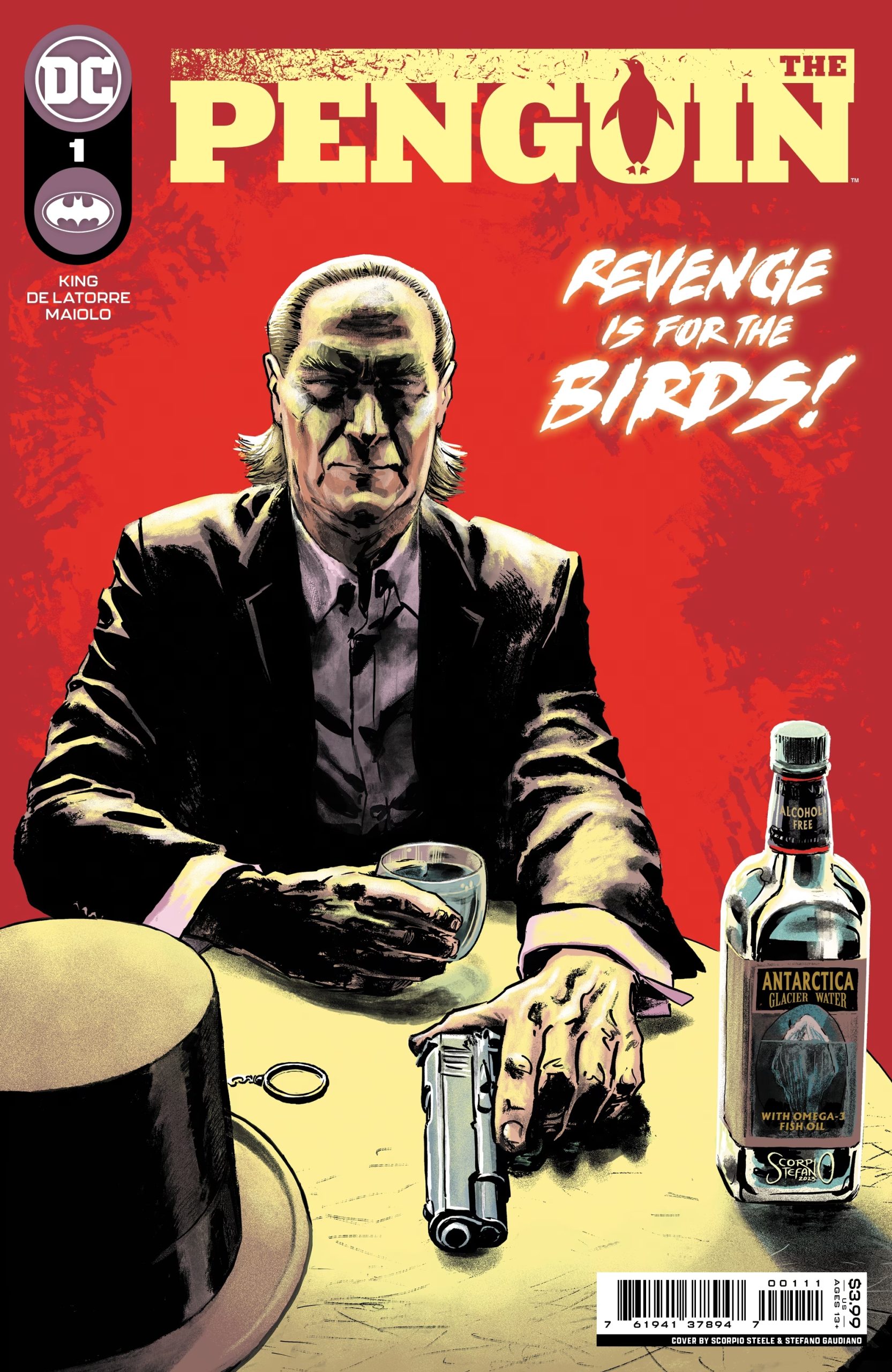
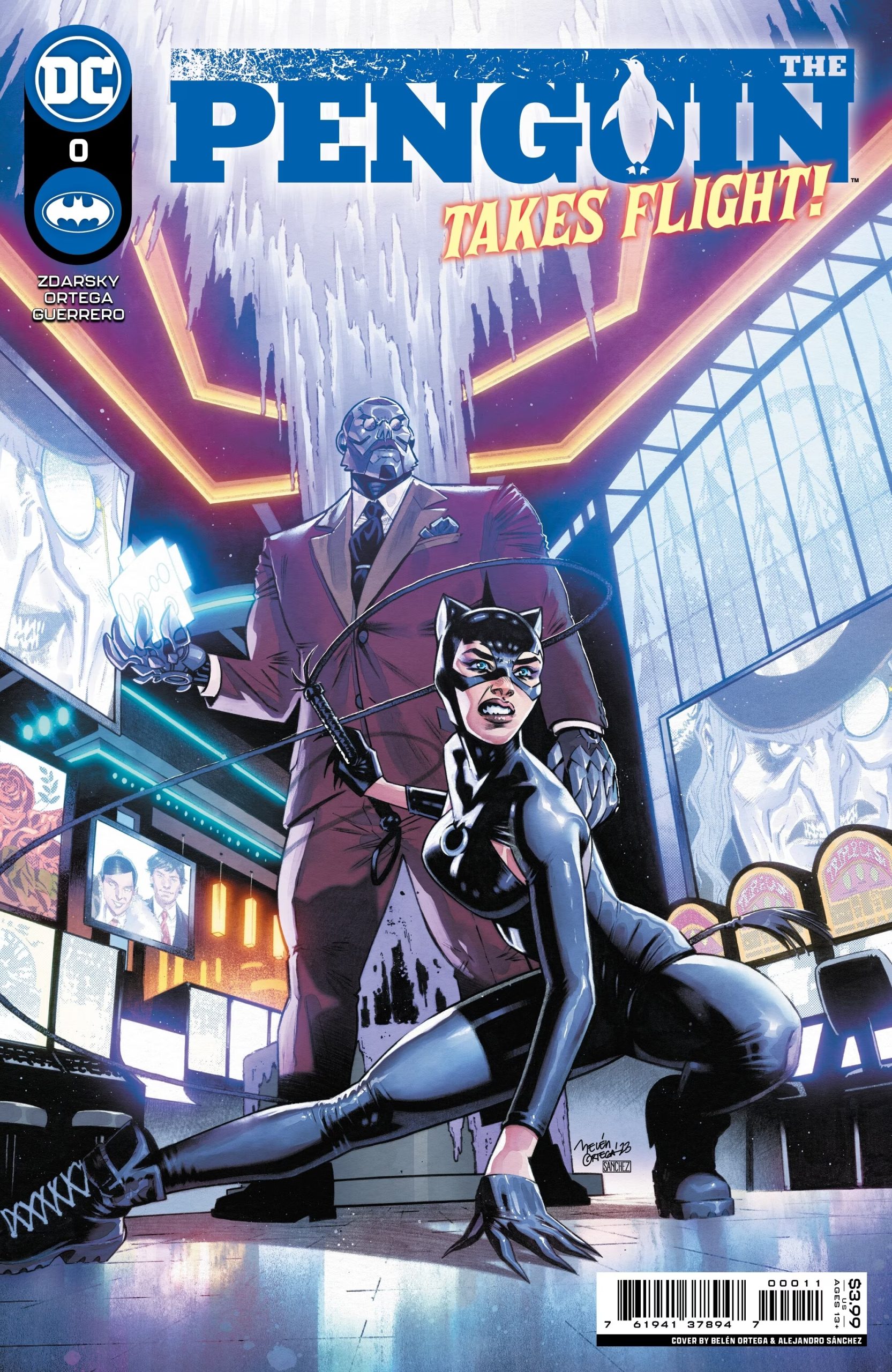
At the Gotham City panel we got the lowdown on what’s next for the Bat family and rogues including Batman: Outlaw and a new Outsiders series! The Panel was moderated by DC Executive Editor Ben Abernathy. First up Tom King talked about his Batman work starting off with his Brave And The Bold run. “The Winning Card” retells the first meeting of the Caped Crusader and The Joker. He also talked about his new Penguin series. Not giving anything away, but we do know Oswald Cobblepot will return to a life of crime after faking his death. Batman artist Belén Ortega joined King to talk about the backup stories she provided art for from Chip Zdarsky’s epic “Failsafe” story arc, which will be collected in The Penguin #0, a three-part collection of the backup stories from Batman #125 – #127.
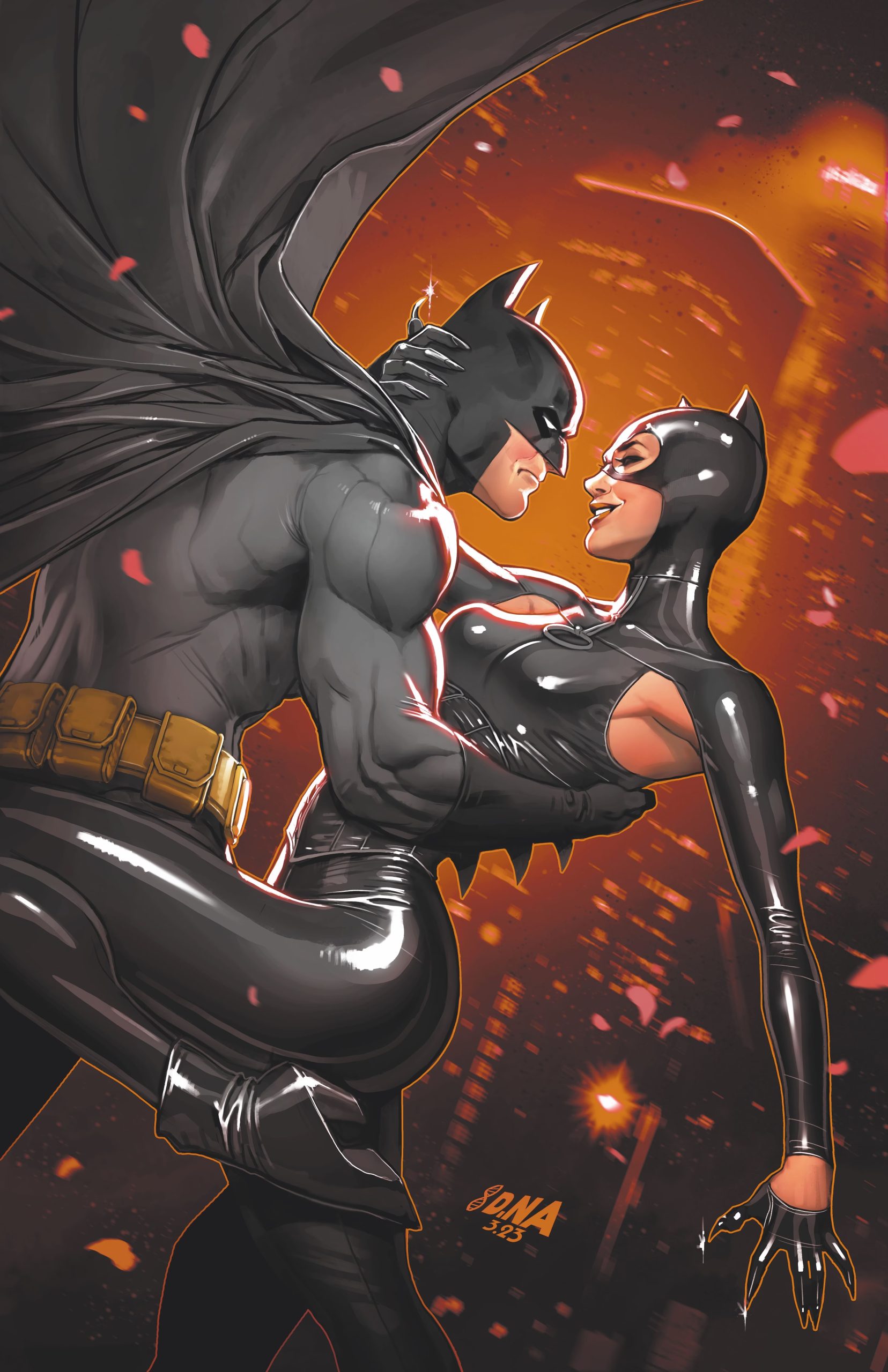
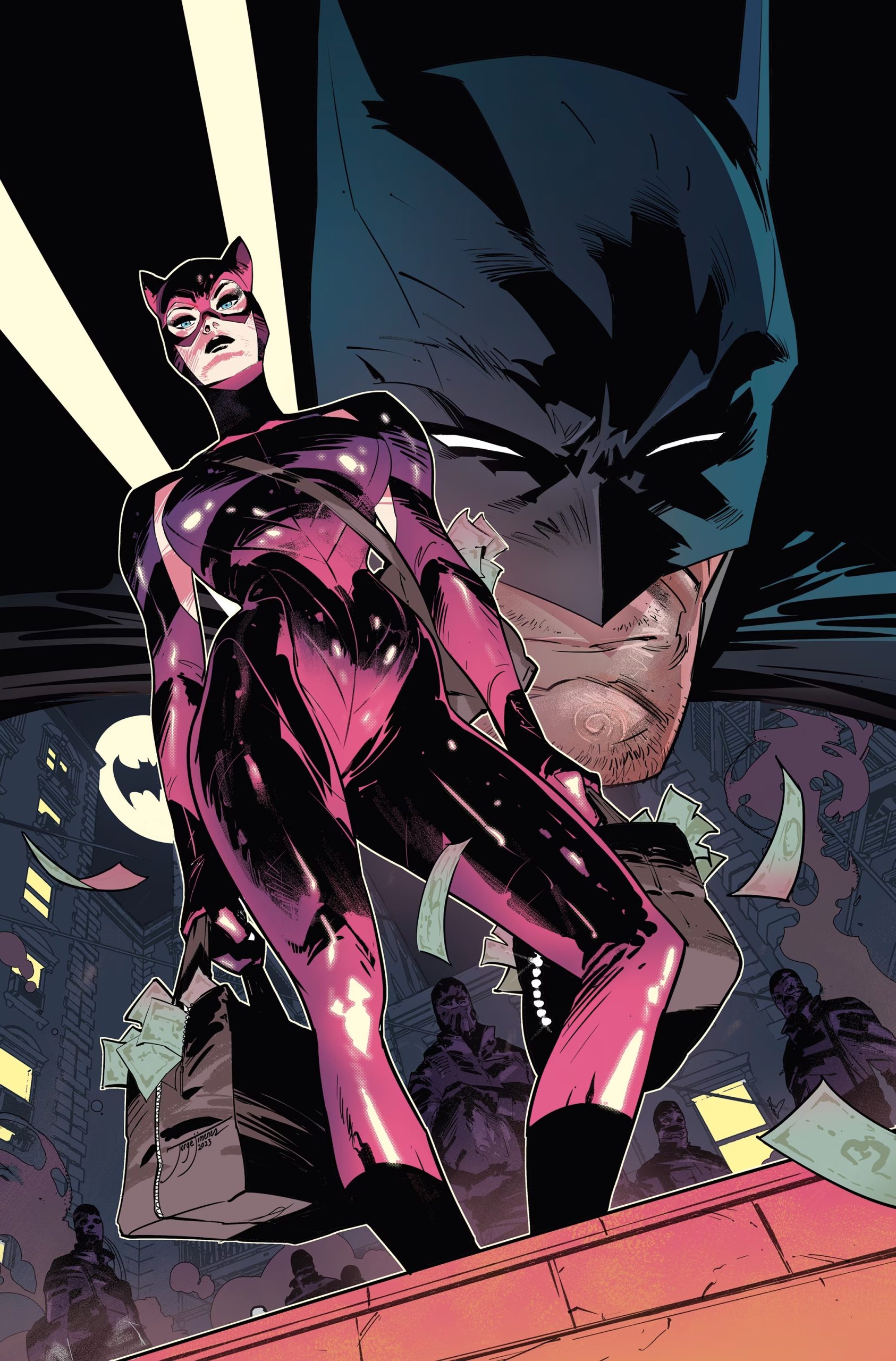
Next came a special video greeting from Chip Zdarsky, then Catwoman writer Tini Howard joined the panel to talk about Catwoman becoming a crime boss in Gotham City and how its going to lead to “Gotham War” and the effects it will have on the Batman family.
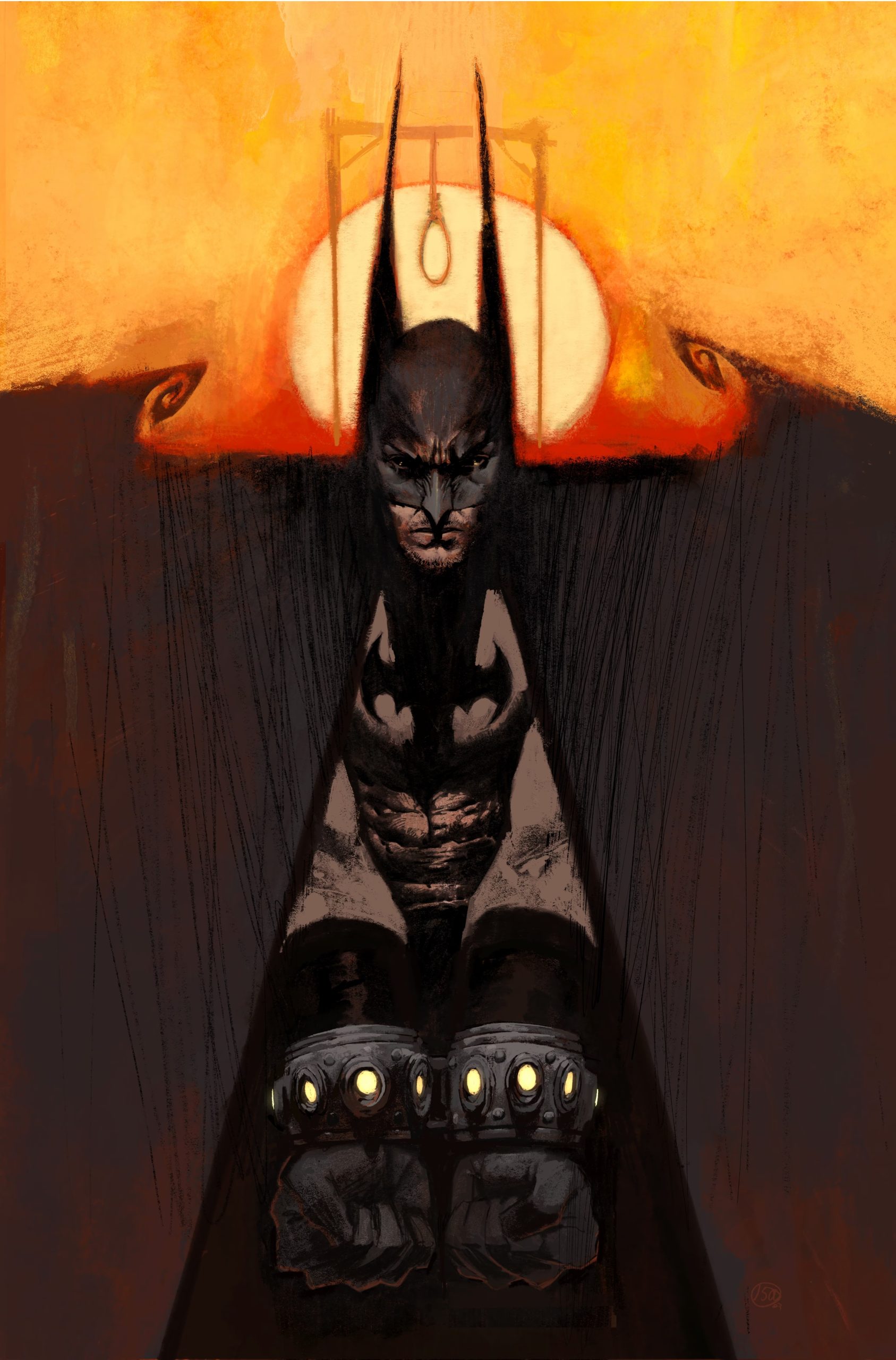
Award-winning storyteller Rafael Grampa joined the panel to talk about his DC Black Label series, Batman: Gargoyle of Gotham.
This is the first DC work from Grampa since his collaboration with Frank Miller on Dark Knight Returns: The Golden Child in 2019. Grampá showed a look at a variant cover for the debut issue of the series (Batman Day, September 16).
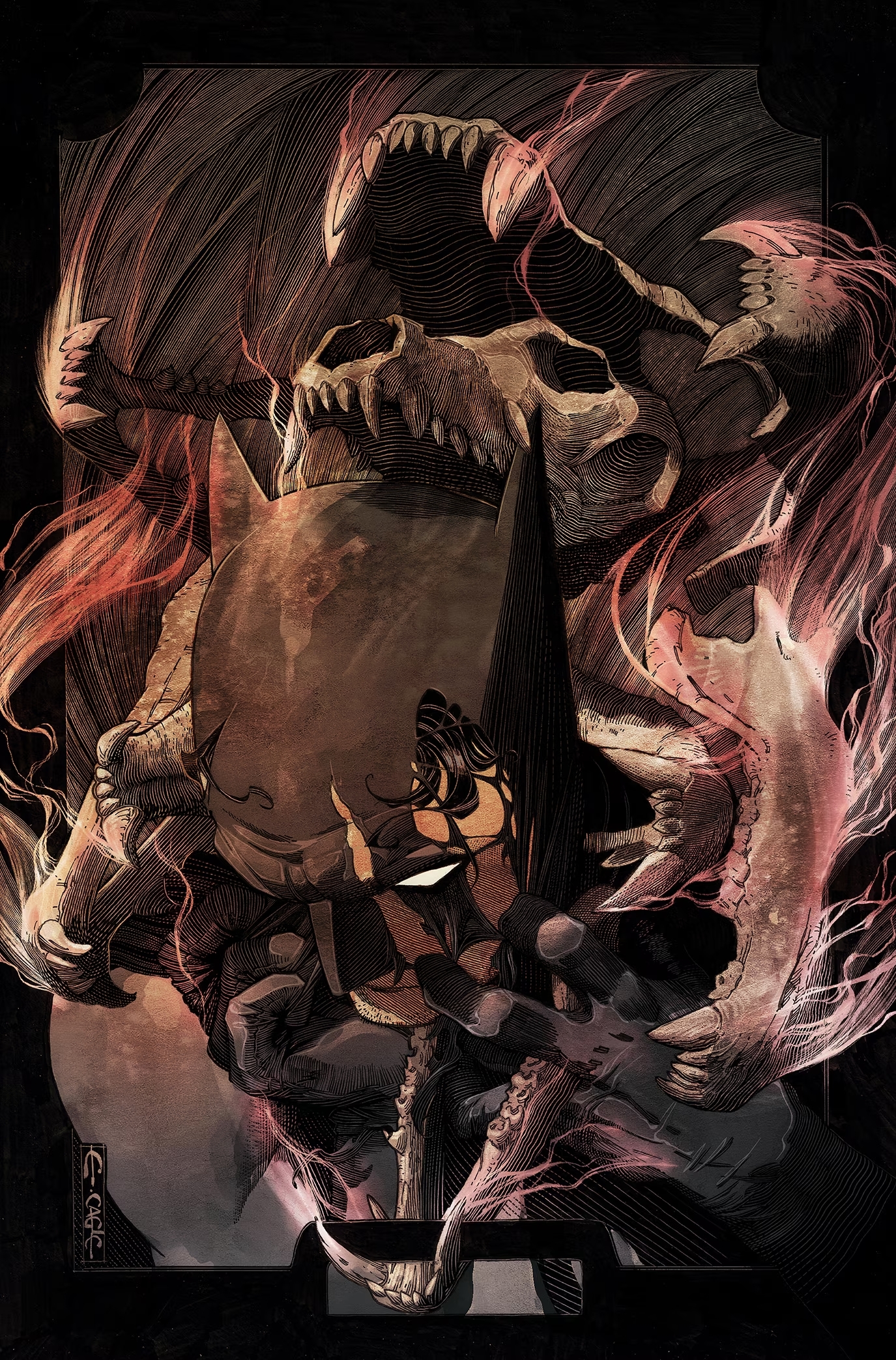
Writer Ram V was also part of the panel. He talked about his run on Detective Comics. Ram and Abernathy also had a special surprise for fans in attendance. In keeping with the operatic theme of “Gotham Nocturne,” the duo announced a brief “intermezzo” planned for October, revealing cover art for Detective Comics #1076, a four-issue arc called “Batman Outlaw.”
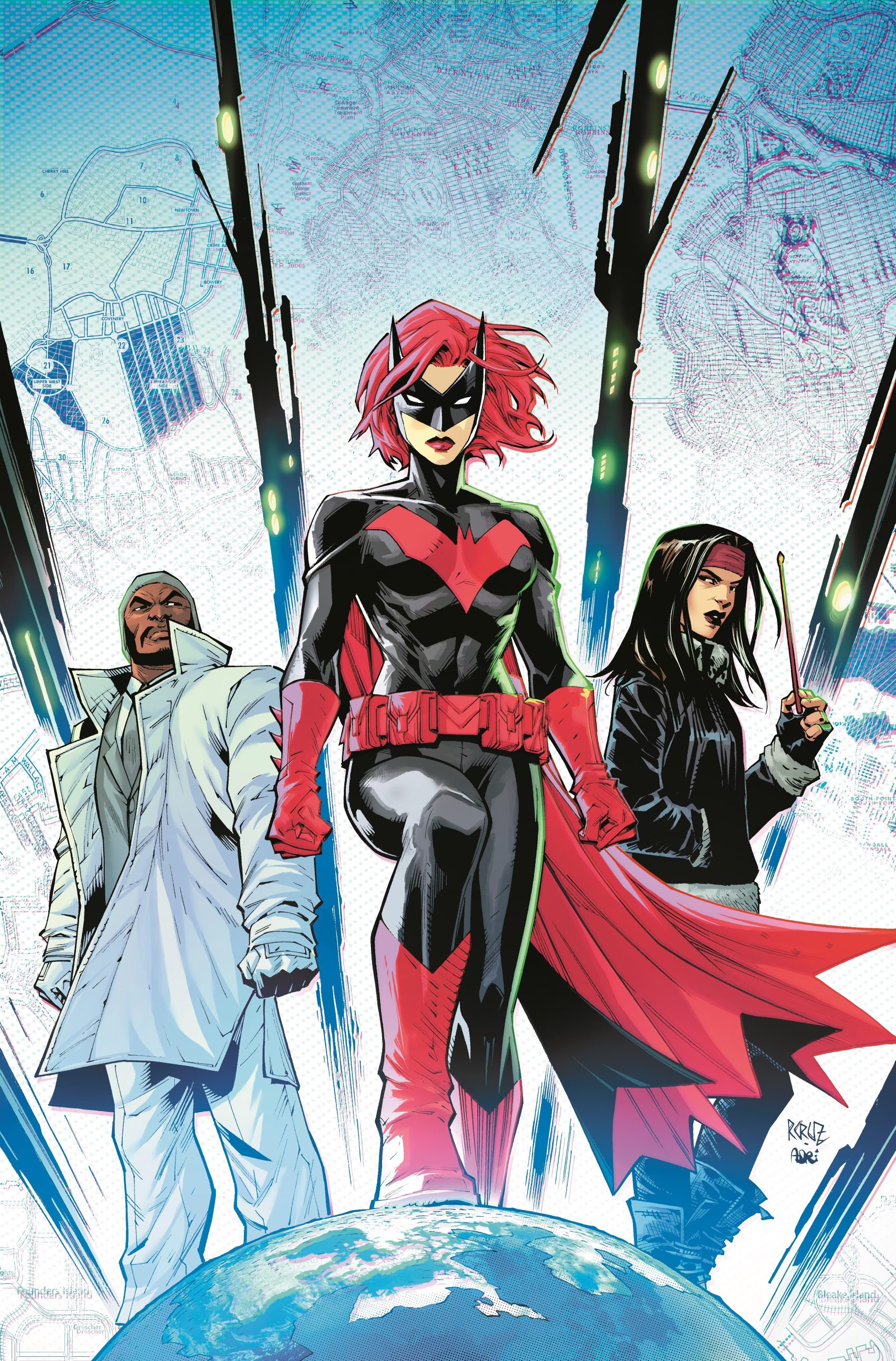
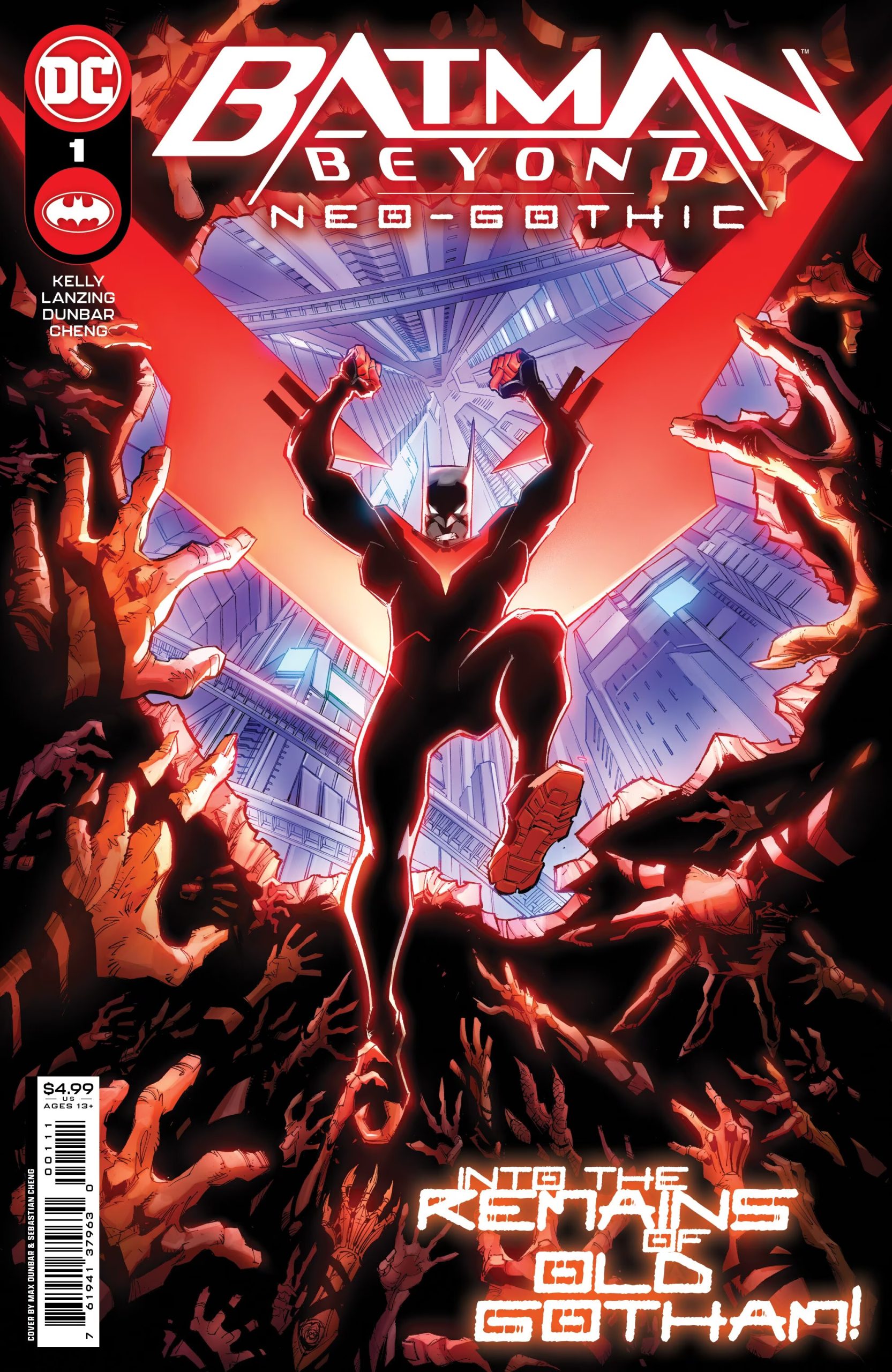
To finish up the panel, Batman Beyond storytellers Collin Kelly and Jackson Lanzing joined the panel to give fans a peak into their series, Batman Beyond: Neo-Gothic. In addition to their new series (on sale July 25), there was breaking news on their next DC project, Outsiders. This brings a new-look Batwoman together with Luke Fox/Batwing, and a new version of The Drummer.
Over-ear noise-canceling headphones typically offer the most comprehensive set of features we want for our listening pleasure. The best of these wireless options combine stellar sound quality with powerful active noise cancellation (ANC) and other handy tools to create as complete a package as possible. Of course, some companies do this better than others. For Engadget’s best wireless headphones guide, we tested out a number of different models with a variety of features, including noise cancellation, customization options and sound quality. Plus, our favorites span a range of prices so you can decide how much you’re comfortable spending and, ultimately, get the best buy for you.
Best headphones for 2023
What to look for
When it comes to shopping for headphones, the first thing you’ll need to decide on is wear style. Do you prefer on-ear or over-ear headphones? For the purposes of our buyer’s guide, we focus on the over-ear style as that’s what most noise-canceling headphones are nowadays. Sure, you can find on-ear models with ANC, but over-ear designs are much more effective at blocking sound. Speaking of noise cancellation, you’ll want to determine early on if you even want that. If you frequently listen to music in noisy environments, you’ll want to not only make sure it’s there, but also make sure it’s good. If you plan to use your new headphones in quieter spaces, skipping ANC can save you some money.
The next area to consider is features. We recommend trying to get the most bang for your buck, but as you’re shopping around you should determine which items are must-haves and what you can live without. And don’t take basic things like automatic pausing and Bluetooth multipoint connectivity for granted, as not all companies include them. We also suggest reading reviews to see how well a company’s more advanced features work. This will help you decide if those are something you’re willing to (likely) pay extra for. Pay close attention to battery life estimates and don’t be easily swayed by lofty promises about call quality.
Sound can be subjective, so we recommend trying before you buy if at all possible. We understand this isn’t easy at a time when we’re doing most of our shopping online. But trying on a set of headphones and listening to them for a few minutes can save you from an expensive case of buyer’s remorse. We also recommend paying attention to things like Spatial Audio, Dolby Atmos, 360 Reality Audio and other immersive formats. Not all headphones support them, so you’ll want to make sure a perspective pair does if that sort of thing excites you.
How we test wireless headphones
The primary way we test headphones is to wear them as much as possible. We prefer to do this over a one- to two-week period, but sometimes embargoes don’t allow it. During this time, we listen to a mix of music and podcasts, while also using the earbuds to take both voice and video calls. Since battery life for headphones can be 30 hours or more, we drain the battery with looping music and the volume set at a comfortable level (usually around 75 percent). Due to the longer battery estimates, we’ll typically power the headphones off several times and leave them during a review. This simulates real-world use and keeps us from having to constantly monitor the process for over 24 straight hours.
To judge audio quality, we listen to a range of genres, noting any differences in the sound profile across the styles. We also test at both low and high volumes to check for consistency in the tuning. To assess call quality, we’ll record audio samples with the headphones’ microphones as well as have third parties call us.
When it comes to features, we do a thorough review of companion apps, testing each feature as we work through the software. Any holdovers from previous models are double checked for improvements or regression. If the headphones we’re testing are an updated version of a previous model, we’ll spend time getting reacquainted with the older set. Ditto for the closest competition for each new set of headphones that we review.
Best headphones overall: Sony WH-1000XM5
Sony’s 1000X line has been our top pick for best wireless headphone for a long time now. Until another company can pack in as many high-quality features as Sony, and do so with a mix of excellent sound quality and effective ANC, the crown is safe. With the WH-1000XM5, Sony redesigned its flagship headphones, making them way more comfortable to wear for long periods of time. We also noticed in our tests that the company made noticeable improvements to the active noise cancellation, thanks to a separate V1 chip in addition to the QN1 that was inside the M4. There are now eight total ANC mics as well – the previous model only had four. This all combines to better block background noise and high frequencies, including human voices.
The 1000XM5 still has all of the features that typically make Sony’s top-of-the-line headphones showstoppers. That includes 30-hour battery life and crisp, clear sound with balanced tuning and punchy bass. A combo of touch controls and physical buttons give you on-board access to music, calls and noise modes without reaching for your phone. Speak-to-Chat automatically pauses audio when you begin talking, and like previous Sony headphones, the M5 can change noise modes based on your activity or location. Plus, this model offers better call quality than most of the competition. The only real downside is that they’re $50 more than the WH-1000XM4 at full price ($400).
I’ll admit I didn’t expect Bowers & Wilkins to make the year’s best headphones list, or even be in contention for a spot. However, the company’s revised Px7 headphones impressed me during my review. The Px7 S2 are pricey at $399, but Bowers & Wilkins pair impressive sound quality with solid ANC performance. In fact, the Px7 S2 are my favorite headphones right now in terms of sound. There’s also a more refined design that doesn’t look overly plasticky and the headphones fit comfortably even after hours of use. Call quality, ambient sound and automatic pausing aren’t the best here, but they get the job done. At the end of the day, the design, sound quality and excellent noise cancellation make the Px7 S2 a strong pick in the current true wireless headphone field.
Best headphones for those on a budget: Audio-Technica ATH-M20xBT
Audio-Technica has introduced affordable wireless headphones in the past, and while they didn’t offer active noise cancellation, they’re still worth considering. The company’s latest is the M20xBT, a Bluetooth version of the A-T’s popular M20x wired cans. For just $79, you can expect a comfy fit and up to 60 hours of battery life. Bluetooth multipoint connectivity allows you to connect to multiple devices at once and physical buttons provide reliable on-board control. The design isn’t as refined as the company’s pricer models like the M50xBT2, but you get the bulk of what makes Audio-Technica’s cheaper options so good.
Noise cancellation: No
Multipoint: Yes
Battery life: 60 hours
Weight: 1.42 pounds
Water resistance: None
Another solid option: Bose QuietComfort 45
The Bose 700 was one of our top wireless Bluetooth headphones last time around, but the company recently revived a workhorse with the QuietComfort 45. The design is mostly unchanged from the previous QC models, which could be a deal breaker for some. Once you get past that though, the QC45 combines Bose’s excellent active noise cancellation with clear and balanced audio. You can expect up to 24 hours of battery life on a single charge and a comfortable fit that doesn’t get tiresome during long listening sessions. We’ve already seen them on sale for $50 less than full price, which makes the QuietComfort 45 even more compelling.
Back at CES 2022, Panasonic announced the EAH-A800: a new set of active noise canceling headphones under the iconic Technics brand. While most of the features are what you see on any number of wireless headphones, one figure stood out. The company says you can expect up to 50 hours of battery life on the A800, and that’s with active noise cancellation enabled. These are currently in my stable of review units for detailed analysis, but I have already tested them on a long flight. The ANC is impressive and they’re comfortable enough to avoid becoming a burden after several hours. Sound quality is also quite good (there’s LDAC support, too) and there are enough features here to justify the premium price tag.
Noise cancellation: Yes
Multipoint: Yes
Battery life: 50 hours
Weight: 0.65 pounds
Water resistance: None
Another solid option: Master and Dynamic MW75
While Master & Dynamic is known for its design prowess, the company’s over-ear headphones were due for a refresh. With the MW75 that debuted in June, the company opted for a look that takes cues from its MG20 gaming headset and mixes them with a combo of aluminum, leather and tempered glass. The company’s trademark sound quality returns with multiple ANC modes and ambient sound options for a range of situations. At $599, the high-end looks don’t come cheap, but if you’re looking for something beyond the pure plastic fashion of most headphones, M&D has you covered.
Noise cancellation: Yes
Multipoint: Yes
Battery life: 28 hours
Weight: 0.75 pounds
Water resistance: None
Another solid option: Sennheiser Momentum 4
I’ll be honest, I had a hard time choosing between the Px7 S2 and the Momentum 4 wireless headphones for the runner-up spot this time around. However, Bowers & Wilkins gets the edge in terms of design even though the Px7 S2 and the Momentum 4 are very evenly matched on great sound quality. They’re the two best-sounding sets of Bluetooth headphones I’ve tested this year – and it’s not even close. Sennheiser does have an impressive 60-hour battery life in its favor and improved ANC performance. Those two items alone might be enough for you to overlook the very generic design.
I typically look at three factors: design, sound quality and features. In terms of design, I’m usually looking to see if the build quality of the headphones feels cheap and plasticky. Plenty of companies use plastic, but they can do so in a way that doesn’t look or feel like budget models. For sound quality, I want to hear a nice, even tuning where highs, mids and lows are all well represented. No overly boomy bass or scooped out mids. I also want good clarity where you can pick up fine details and an open, immersive soundstage. Features is typically a distant third, but if a company doesn’t cover basic functionality (automatic pausing, transparency mode, multipoint Bluetooth, etc.) it can be an indication of overall quality.
How do I choose the best quality headphones?
“Best” can be pretty subjective, but I always recommend going to a place where you can listen to the headphones you’re thinking about buying before you commit. Sometimes this isn’t possible, so you’ll want to check return policies. I also recommend doing some research to determine what your priorities are in a new set. Are you an audiophile who wants the best sound quality? Is powerful active noise cancellation (ANC) the most important? Would you rather have conveniences like automatic pausing?
Which brand has the best headphones?
Sony consistently tops our list with its 1000X line. This is mostly due to the combination of sound quality, ANC performance and the truckload of features these headphones pack in. I’ll be the first to tell you that there are better sounding options and other companies, like Bose, offer more effective noise cancellation. But when you add everything up, no one comes close to the full slate of tools Sony puts in its premium headphone line.
Do expensive headphones sound better?
Exorbitant price tags don’t mean better audio quality. Bowers & Wilkins’headphones are on the high end for wireless noise-canceling models and they sound amazing. However, Audio-Technica’s M50xBT2 is much more affordable and doesn’t have ANC, but these headphones have a warm, natural sound profile that I find very inviting. At the end of the day, it will come down to personal preference, but you don’t need to spend a lot to find great headphones.
For adults, the life of a modern teenager can seem profoundly unfathomable. Part of this is due to the rapidly accumulating cognitive fog that, for the grown-up brain, tends to obscure any true experiential memory of youth—a phenomenon constant throughout generations. But! An even bigger part of said profound unfathomability is, of course, the technology so closely interwoven with kids’ lives in the 21st century. Tech that can be used to a variety of ends good and bad, but most importantly to create.
Contained within each smartphone is a pre-production office, film crew, post house, advertising agency and multinational distributor. All this, in the hands of a generation that understands screens and the language visual digital expression as a rich and fully integrated part of daily life. Combine that intuition with a young person’s energy, imagination and earnest need for self-expression and you have the perfect alchemical formula for a natural-born filmmaker. Which, speaking of: we’re thrilled today to introduce our 2023 Film Independent Future Filmmakers.
Featuring 16 outstanding short films written, produced and directed by high school age filmmakers working in a variety of styles and mediums, this year’s Future Filmmaker Showcase will take place this Saturday, August 5 at Inner-City Arts in Los Angeles, at 10:00 am PT. A lunch reception and a keynote speech from filmmaker Angel Kristi Williams (Colin in Black & White, Really Love) will follow the screening.
Skip to the second half of this article if you just want to see what’ll be playing, as selected by a committee of working filmmakers and youth curators. But before that, we thought it might be fun to get to know our young moviemakers:
What inspired you to make films?
‘Evocation’
I’ve always been a filmmaker. If you were able to get your hands on a certain 2010s digital camera, you’d find hours of storytelling from six-year-old Owain and Owain’s cousins. Did it make sense? Absolutely not. But looking back at these works reaffirms that nothing has ever satisfied me more. I’m still not quite sure where the passion comes from. Probably just from being a strange creative kid and needing something to channel that towards. – Owain Collins
In 2020, during the quarantine when I was 10-years-old, me and my mom were in our house in Crimea, in the countryside. We had beautiful landscapes around—the sea, wild animals, insects and snails. So we got the idea to make our first short film. It was a thriller about giant snails. I was a writer, director and acted as the two main characters, who were twins. Later, I studied at London Film School and Kid’s Movie School in Kyiv. At Kid’s Movie School we were given the task of filming our day. So I made the wartime documentary short, My Day in Kyiv in Summer 2022. – Elina Myshanych
During the early pandemic and the very beginning of my transition, I had a lot of trouble exactly understanding the complex feelings I had about the world, identity, sexuality and self-image. With increasing free time, I started consuming more and more media but most importantly, coming of age films. I ended up watching Call Me by Your Name and something in my brain clicked. I felt understood, I felt seen and most importantly, I knew I had to work in the film industry. The soundtrack, mix of language, beautiful scenery, the feeling of boyhood, showcasing the fluidity of sexuality and the complex, unfortunate “romance” between Elio and Oliver—it changed my life. Since then, I’ve wanted nothing more but to make others feel how I felt: seen. I now plan to continue my journey as a filmmaker, giving queer and trans representation in my work. – Max Benner
I’ve been making videos ever since I was a little girl. I loved recording mini-movies on my iPad mini and doing my best to edit them with whatever iMovie could offer me. For example, every year since the sixth grade, me and my younger sister will write up a skit and perform it on video for our cousin’s birthday. I was exposed to a lot of the filmmaking process through these experiences, and therefore I was able to create a cohesive film using my iPhone XR and whatever free editing app was available to me. – Sara Kalkati
Watching films and loving them. – Julius Schoenholdt
What is your favorite film genre and why?
‘No Longer My Fire Escape’
I’m not sure if I have a favorite film genre, because in some ways I appreciate the way a film is made more than the category it would fit into. I think there’s something about intimate fiction narrative pieces such as Waves (2019) or Aftersun (2022) that is very compelling to me. But overall it’s less about the genre and more about the style. I appreciate various elements across various genres. – Lorca Peña Nissenblatt
Science Fiction! I specifically enjoy this genre because of how much thought is put into these films. The creative team behind a comprehensive science fiction film has to pour hours of research and speak to dozens of professionals for the sake of scientific accuracy. – Sara Kalkati
I do love everything about dramatic narratives and documentaries, but my favorite film genre would be horror. Horror films require such immense preparation, precision, and the most subtle attention to detail in all stages of the filmmaking process, and the fact that it is so difficult to effectively truly scare all audiences makes me respect the genre on many different levels. I think the horror genre in general brings out the strongest emotions in people, and it leads to greater participation and interaction between the audience and the film. – Patrick Jang
I love a good drama film but I find horror movies to be the most interesting and creative. – Joaquin Soto
I love horror, especially films that fall under the psychological and body horror category. I think it’s the strange masochism people have towards watching something meant to upset them. Most genres usually elicit positive emotions, but somehow people still want to experience those feelings of dread and discomfort in their own bodies. A lot of horror is even too much for me, but that’s just because jump-scares send me flying. Still, I’m captivated by the feeling of films like Rosemary’s Baby (1968, dir. Roman Polanski) and The Witch (2015, dir. Robert Eggers), that crawl up under your skin as you can’t help but watch. – Owain Collins
Animation is my favorite because I always watch cartoons. 1960s cartoons inspired me to make Wetsitales, from what I saw in the style of The Beatles cartoon. My first film was inspired by Super Mario and Sonic the Hedgehog. I just want to draw and do animation about books I read and music I like. – Jade Dandan Evangelista
What’s the best film you’ve seen so far, old or new?
‘Turning En Pointe’
The best film I’ve seen so far is Parasite. This film is what got me interested in the storytelling aspect of film because every time I watched it noticed more Easter eggs and small details that are crucial to the story. – Ramona Haywood
One of the first and perhaps the only true expressionist films, Robert Wiene’s The Cabinet Of Dr. Caligari, is one of the best films I’ve ever seen. When I began reading the German inter-titles followed by the English subtitles I felt somewhat peculiar—it was the first time I watched a German film with English subtitles. However, the thoughts and emotions I experienced behind the film were unlike anything I had felt before. – Kornél Nagy
I cannot pinpoint it down to a single film, but I think Ridley Scott’s Blade Runner (1982) is a movie that is so far ahead of its time not only in terms of its technical/visual mastery, but also in the themes that it tackles about what it means to be human. It’s incredibly thought-provoking. – Patrick Jang
Recently at the “Children Kinofest” film festival in Kyiv, I saw the film The Secret Garden by Agnieszka Holland. This is a classic film, adapted from the famous novel. I really liked the directing, camera work, music and acting, including children’s performances. – Elina Myshanych
Decision to Leave, by Park Chan-Wook. – Camilla Bonilla
The film that has impacted me the most as a filmmaker is Wong Kar-wai’s Chungking Express. It is an extraordinary two-part love story with astonishing cinematography that has shaped my love for visual storytelling. – Chloe Fong
What’s your favorite part of the filmmaking process?
‘Please Don’t Stand While I’m Falling’
I have to say my favorite part of the filmmaking process is working with the camera. I’ve truly found a passion in cinematography. To me, it’s a part of the filmmaking process that some people don’t realize can change the whole aesthetic of a piece. If the aesthetic doesn’t match the message, the film isn’t the same. I have come to really enjoy making my own films look different, with a heavy emphasis on cinematography and color. – Kyle Ward
I love filming/production. It’s also always the most stressful part and something always goes wrong, but that’s fun for me because I love the grind. I think it adds color to my life. Filmmaking would be boring if there weren’t any obstacles involved. With all these problems arising, you can be more proud of the product you’ve created, because you know how hard you worked and what it took to get there. There’s also the satisfaction of setting up a shot and it looking exactly how you imagined it in your mind, and finally getting a good take after six failed ones. Wrapping up at the end of the day and the joy of waking up and thinking “I have a shoot today!” is something I can’t live without. – Max Gundogdu
My favorite part of the filmmaking process has always been editing. While production is always exhilarating, the magic of the shots I have illustrated in my head and seeing them in picture never gets old. – Chloe Fong
Writing. I love the brainstorming section and entire writing process so much. It has literally no limitations. I’m left to whatever my mind throws at me along with piecing together what themes I connect with. I have a very inventive imagination and I feel like writing is the only thing that can properly contain it. – Max Benner
The most satisfying and fulfilling part of the filmmaking process is the moment you actually start filming. After spending so long planning, writing, and storyboarding, the day that the only priority is to bring the script to life is so exciting. – Joaquin Soto
Who is a director that inspires you?
‘I Built a Paper House’
I love Wong Kar-wai’s work. He has a feeling to his films that only he can encapsulate. There’s not much else to say. My films are far from looking like they’re inspired by him, but that’s only because even though I try, I’m aware of the huge talent and opportunity gap between us. Nevertheless, I hope to one day become like him. – Max Gundogdu
Wes Anderson, because he’s a self-taught director and uses such a unique visual approach in his movie, with no formal education in film. – Ramona Haywood
One director who inspires me is Cynthia Rowlson-Hall. Recently, I was recommended to look into her work by a mentor and was immediately intrigued. Her style of filmmaking, in terms of visuals and also how she lets her pieces breathe, is very interesting to me. She’s a dancer as well, which provides a certain depth to her work that I relate to. – Lorca Peña Nissenblatt
The Daniels. My favorite film is Swiss Army Man, and of course they also made the smash hit Everything Everywhere All at Once. I deeply love and appreciate the Daniels for being so brave and their embrace of being alive. After I watch their films or read Daniel Kwan’s childrens’ books, I’m always left with one teary-eyed feeling, happy to be alive. This feeling comes from the common theme among their work—that both everything and nothing matters. Their art inspires me and makes me happy to be on this earth. I can’t wait to see what they do next. – Max Benner
Peter Jackson always inspires me, because of his movies like The Hobbit (2012) and Beatles: Get Back (2021). – Jade Dandan Evangelista
The Daniels are definitely a directing duo that inspires me as a filmmaker. What they did with Everything Everywhere All At Once is so special. It truly shows the impact of perfecting your craft over time. You don’t have to be the best filmmaker at your age, you just have to be constantly working on your craft in some way. Ultimately it comes down to the life experiences you have gathered that will result in you being able to write a script that someday could win an Oscar. That could be at 25 or 75, there’s no one journey better than the other. The Daniels have shown—and will continue to show—that no matter what stage you are in your journey, you can always work to perfect your craft, and this is what personally inspires me as a filmmaker. – Kyle Ward
Which actors would you love to work with?
‘Silent Canvas’
I consider myself very fortunate as I recently had the opportunity to work with the Hungarian Emmy award-winning actress Marina Gerá and another outstanding actor, Benett Vilmányi. Both of them are incredible, and the chemistry between them and myself was truly exceptional. I couldn’t have asked for better collaborators. – Kornél Nagy
I don’t have a favorite actor, but I loved Taylor Russell in Bones and All. – Camila Bonilla
I’d be grateful to work with any actor, because now I usually have to cast peers for my films who aren’t interested in acting, and it gets difficult. But an actor I would love to work with is Rachel Sennott. I’d love to work with her because she’s quite young and starting her career, she could bring something relatable and fresh not only to a film but to the set. I feel she would be a joy to work with! – Ramona Haywood
I love the cast of Harry Potter — Daniel Radcliffe, Emma Watson, Rupert Grint, Tom Felton — but I understand that they’re already adults and superstars. I think it’s more interesting for a young director to discover new names. – Elina Myshanych
Victoria Abril. – Julius Schoenholt
I would love to work with Ryan Reynolds. His line improvisation is crazy. – Patrick Jang
I admire Taylor Russell very much. She has a manner of conveying emotion that’s so amazing to me. There’s something raw and natural about her acting that I’d love to work with. – Lorca Peña Nissenblatt
What is the primary idea you want to communicate to viewers in your short?
‘AGLOW’
Art transcends all and can communicate struggle. – Camila Bonilla
We are yet to understand the effect of what it truly means to be an audience. An audience of a film you love, or the audience of your own or someone else’s life. – Chloe Fong
I wanted to reflect on art in the existential sense. I found the term “from ashes you rise, and to ashes you return” really beautiful in the interpretation that we are the art we make, consume and enjoy. If it weren’t for stories, paintings, music or films, humans would just be empty. I wrote Evocation out of a growing sense of fear after seeing art in so many different forms being taken away from us. Seeing drag shows, books, films, etc. getting banned, I was worried that at some point we’d all reach that level of emptiness. That’s what led me to write about an artist with dementia. Even though even though her art may be “gone” in the literal sense, it’s always still with her. That reimagining helped me move past the existential dread. I wanted the philosophy to reflect in Evocation‘s message, even through an absurd story. – Owain Collins
I enjoy turning my family experiences and childhood memories into film, and I believe Silent Canvas accomplishes this effectively. – Kornél Nagy
It’s okay to be normal, boring, or uninteresting. It’s okay to be a background character; we all are at some point! In my generation, we’re convinced that we need to keep ourselves entertaining and fun to keep friends or to seem cool, but that’s really not the case. Everybody is a little bit boring at times, and that’s alright. – Sara Kalkati
Do you want to keep making films in the future? What is your dream project?
‘My Day in Kyiv in Summer 2022’
Yes, I want to continue. I want to make an underwater film and act as an actress in it. When Ukraine wins the war and Crimea is free, I will implement this plan. – Elina Myshanych
Yes, I want to. My dream project is to make a film I love. – Julius Schoenholt
I want to continue making films and I’m working on another project about my own characters — The Giggles and the Teehees — while still doing Wetsitales. – Jade Dandan Evangelista
It’s my dream to keep making films as long as I can. The ultimate dream is to write and direct a feature, but with all the ideas I have for films I couldn’t decide which one I’m the most passionate about at the moment. – Joaquin Soto
Of course I do! I can’t imagine ever stopping. Even if I don’t do it as a job it will always be a hobby of mine. A dream project would be to make a cult film. Not one about cults; one that has a very devoted following. It doesn’t matter if it’s popular as long as everyone who watches it loves it. I still have some way to go before I get to that degree of good, but it would be so amazing. I also want to make a film that’s set inside a moving train; those always seem very interesting. – Max Gundogdu
There’s something about being able to tell stories visually that’s so exciting. It’s hard to say what my dream project would be, because ultimately I haven’t really thought that far down the line. I’d want my dream project to be one that represents my own filmmaking style, one that breaks industry rules on how to make a film, one that focuses on superb acting to convey those deep emotions, one that uses cinematography in a way that would make people go, “this is different” — one that would ultimately inspire the younger generation to pursue their dreams. – Kyle Ward
2023 FUTURE FILMMAKERS SHOWCASE
‘Cine’
I Built a Paper House – directed by Max Benner Eli, a junior struggling with balancing school and his dream to be an artist, consistently abandons his schooling. This all comes to an end when Eli finds that his schoolwork has constructed a magical paper house.
AGLOW: The Prequel – directed by Sara Kalkati Happiness, the human emotion, has been physicalized into a spherical object known as “The Orb.” All orbs, when comprised of true joy, cannot be destroyed. An individual attempts to live with a fading orb, but descends into instability as the taunting of the object becomes a force far too powerful for her to bear.
Turning En Pointe — directed by Ramona Haywood A high school dancer struggles to find direction in her life when she becomes too focused on perfection.
Please Don’t Stand While I’m Falling — directed by Kyle Ward Almost five years after his life-changing injury, a teen reflects on his journey to piece together the brokenness left behind after falling into a constant repetition of life.
‘Wetsitales: The Tattooed Men’
Wetsitales: The Tattooed Men — directed by Jade Dandan Evangelista Two friends who are not content with themselves wish for something to change their lives… for the worse. A folk tale from the Igorots of the Cordillera Region in the Philippines.
Silent Canvas — directed by Kornél Nagy The relationship between a father and his son has been deteriorating since the passing of, respectively, their wife and mother. Without any words spoken, they begin to reconnect.
No Longer My Fire Escape — directed by Camila Bonilla, Ignacio Hale Brown, Daniel Halpern, Daniel Kelleher, Lorca Peña Nissenblatt, Julius Schoenholt, Mateo Taylor When teenager August goes to an art exhibit, he flips through a sketchbook that belongs to Devon, a teen artist who has just been evicted. Through the transformative power of art, the drawings take him through Devon’s memories of her home before and after her eviction. August leaves the gallery with a newfound empathy for the housing crisis and a passion for making things different.
My Day in Kyiv in Summer 2022 — directed by Elina Myshanych It’s the summer of 2022 in Kyiv, and there is war. You wake up to the sound of sirens, take walks around trenches and antitank hedgehogs. You’re twelve, and your whole life — hopefully — is ahead of you.
‘Antonia’
Antonia — directed by Patrick Jang, Michael Gutierrez, Francesco Di Mauro, Isaac Lee Greenblatt Suffering from episodes of sleep paralysis, Sam struggles to pull through a terrifying night.
Leafing Through Old Books — directed by Aharon Engel, Tahel Bar Shefi, Nitay Kinkulkin An experimental short made on the pages of old books found during quarantine. For the first time in their life, teenagers were locked at home for almost three months, trying to keep a connection with the outside world by dreaming of the past, present and future. While out on a short walk around their individual houses, they find discarded books and use them as the environment for animated diaries, used to metaphorically describe the experience.
Portfolio — directed by Joaquin Soto Through the lens of a mockumentary, Portfolio follows the life and career of crime scene photographer Caleb Mendez as he strives to create deeper art with his photos. But how far is he willing to take the “creative process”?
Ciné 影视 — directed by Chloe Summer Fong What does it mean to love cinema? What does it mean to be part of an audience? Film student Justin Abregana immerses himself in the works of the Chinese filmmaking mastermind Wong Kar Wai. He transports himself into a world of cigarettes, falling in love and the blurred lines of reality. Ciné is a love letter to the art of cinema and explores larger-than-life questions about who writes our stories.
‘This Is Not a Pencil’
Evocation — directed by Owain Atticus Collins A famous artist with dementia has a surreal encounter with death.
This Is Not a Pencil — directed by Elizabeth Zhiying Jin An exploration of grief and the interaction of objective reality and memory, viewed through the death of Jared Jacobsen.
Jesse Cracks — directed by Eli Hoffman Jesse Cracks bends his back to impress his crush.
The Last Shift — direcrted by Nathan Silva Two high school students have one final, crazy shift at the corner store where they work before leaving for college.
Here at Film Independent, we’re currently in the middle of a matching campaign to raise support for our next 30 years of furthering the careers of filmmakers. All donations made by September 15 will be doubled.
Film Independent promotes unique independent voices, providing a wide variety of resources to help filmmakers create and advance new work. Learn more online and become a Member of Film Independent today.
Vertical is releasing Haunting of the Queen Mary to select theaters and VOD on August 18. The film is produced in part by White Horse Pictures, directed by Gary Shore (Dracula Untold) and stars Alice Eve, Tim Downie and Joel Fry. This is the first film of a proposed trilogy.
The psychological thriller is based on the real ghost stories that have been told throughout the post-war history of famous haunted ship The RMS Queen Mary. The vessel’s annual Dark Harbor event in Long Beach, CA is a popular Halloween haunt thrilling visitors since 2009.
IMDb SYNOPSIS: Haunting of the Queen Mary is a psychological horror that explores the mysterious and violent events surrounding one family’s voyage on Halloween night in 1938, and their interwoven destiny with another family onboard the infamous ocean liner present day.
For director Anthony Stacchi (“The Box Trolls”), re-energizing the 16th-century Chinese novel “Journey to the West” for Netflix’s animated feature “The Monkey King” meant turning the titular character into something very modern: an antihero. This was supported by executive producer Stephen Chow (“Kung Fu Hustle”), who previously directed a live-action version of “Journey to the West.”
“Stephen Chow has made a career of making heroes out of really unlikeable jerks,” Stacchi told IndieWire. “And you stick with ’em on their journey ’cause you know why they are the way they are, and you’re hoping for them to redeem themselves. So we did that here. He is a selfish, arrogant jerk from the beginning, and that way through the end. But you understand why he’s fighting for acceptance, you know where his anti-authoritarian attitude comes from.”
They also emphasized a goofy tone throughout the journey, in which Monkey King (voiced by Jimmy O. Yang) is accompanied by a young village girl, Lin (Jolie Hoang-Rappaport), who challenges his selfishness as the narcissistic monkey attempts to slay 100 demons with a magical fighting stick to earn his place among the gods. “It’s reminiscent of the Warner Bros. cartoons,” Stacchi said. “A lot of that is there in the original folk tale too. You could see it in the early storyboards we pitched. Steven was on board and so was Netflix.”
“The Monkey King,” which was produced by Peilin Chou (“Over the Moon”) and animated at Reel FX in Montreal (“The Book of Life”), boasts a style inspired by the textures of Chinese brush paintings and ink on paper. This was conceived by production designer Kyle McQueen (“The Willoughbys,” “Sausage Party”).
“The Monkey King”Netflix
“It’s got that moving sort of water wash look,” added Stacchi. “We really like that style. Super atmospheric. Clouds and fog and misty stuff. So we wanted to integrate that but not be overly stylized where it’s distracting. The story’s already weird enough. It’s ancient China where the talking monkey in armor goes to three or four different worlds.”
For Earth, the jungle, graveyards, and villages are de-saturated and dry like a Sergio Leone Western. Jade Heaven is made out of clouds and looks like Apple or Google HQ with a marble quality. Hell resembles a bureaucratic DMV. It’s minimalist and appears to be made out of Chinese brush painting ink. And the palace of the flamboyant underwater Dragon King looks like a Vegas casino with stained-glass windows and Busby Berkeley-style musical extravaganzas.
While there have been numerous live-action and animated adaptations of “Journey to the West,” the one innovation that Stacchi is proudest of is transforming the magical fighting stick into a character. Stick, the most powerful ancient weapon in the universe, becomes Monkey King’s shape-shifting warring partner. But it also serves as an external conscience that stands up to Monkey King’s narcissism. It communicates through a uniquely rich series of audible sounds provided by the distinctive throat-singing of Nan Li.
“Early on, we wanted Monkey King to have his own little theme song,” said Stacchi. “And so when we approached Voodoo Kung Fu to do a heavy metal song, that’s how we met Nan Li, who does throat singing. We had been struggling for months with the different sound designers. They tried an iron pipe where he’s hollowed, they tried marbles running into it, they tried clanging noises. They tried to make up a stick language. But he always sounded like a robot or a droid.
“The Monkey King”Netflix
“We played Nan Li some of the stuff and he suggested throat singing, and we all started to laugh because the first sound he did was like a frustrated old man. That’s what it was having to deal with this monkey all the time. In some ways, he’s as bad as Monkey King. He loves to fight. He loves to get into it. I said, ‘Can you do that full range of stuff with your voice?’ And Nan Li said, ‘I think so.’
“So we got together and did a recording session. Nan Li has this half-hour process that he goes through, which warms up his throat and warms up his voice. But he can’t talk or speak. He can only make sounds. So we recorded that, which is this amazing range of sounds, laughing sounds, frustrated sounds, angry sounds, surprise sounds, and we’d have hours of it.”
If you’re looking for where to watch and stream Star Trek: Generationsonline, then we have you covered. Seventy-eight years after the presumed death of Kirk, Captain Jean-Luc Picard and his crew have to fight against Dr. Tolian Soran. Soran is dead-set on a mission to reach ‘Nexus’. However, in the process, Soran is destroying other stars and killing thousands and Captain Jean-Luc Picard must stop him.
Here’s where you can watch Star Trek: Generations online.
Where can you watch and stream Star Trek: Generations?
You canwatch and stream Star Trek: Generations on Paramount Plus.
The movie’s cast includes Patrick Stewart as Captain Jean-Luc Picard, Jonathan Frakes as Commander William Riker, LeVar Burton as Chief Engineer Lieutenant Commander Geordi La Forge, Brent Spiner as Lieutenant Commander Data, Gates McFadden as Chief Medical Officer Commander Beverly Crusher, Michael Dorn as Lieutenant Commander Worf, Marina Sirtis as Commander Deanna Troi, Patti Yasutake as Enterprise nurse Lieutenant Alyssa Ogawa, Whoopi Goldberg as Guinan, and Malcolm McDowell plays Tolian Soran.
How to watch Star Trek: Generations and stream online
Users need to sign up for a Paramount Plus subscription to watch and stream Star Trek: Generations online. When viewers sign up for Paramount Plus, they get access to many films and shows produced by Paramount, such as Babylon, Top Gun: Maverick, Devotion, Mayor of Kingstown, Fatal Attraction, Halo, Yellowstone, Reno 911, and Star Trek: Discovery.
The two-tier subscription plans offered by Paramount Plus include:
Paramount Plus Essential – This subscription plan costs $5.99 per month and $59.99 a year. This plan comes with ads.
Paramount Plus with SHOWTIME – This subscription plan costs $11.99 per month.
The official synopsis for Star Trek: Generations reads:
“Captain Jean-Luc Picard and the crew of the Enterprise-D find themselves at odds with the renegade scientist Soran who is destroying entire star systems. Only one man can help Picard stop Soran’s scheme…and he’s been dead for seventy-eight years.”
2009’s Avatar is heading to Max as part of the schedule for August 14-20. Starting Thursday, August 17, Max subscribers…
The Netflix schedule for August 14-20 features The Monkey King premiere and the return of The Upshaws, among other things.…
The Hulu schedule for August 14-20 features David O. Russell’s latest movie, among many other things. Starting Sunday, August 20,…
The Disney Plus schedule for August 14-20 features several exciting additions, including the LEGO Disney Princess: The Castle Quest premiere.…
Benicio Del Toro is bringing a slippery crime story to the big screen.
The Oscar winner stars in and executive produces “Reptile,” written and directed by Grant Singer and co-written by Benjamin Brewer. Del Toro plays a detective who has an existential crisis while trying to solve the murder of a real estate agent.
Per the official synopsis, following the brutal murder of a young real estate agent, a hardened detective attempts to uncover the truth in a case where nothing is as it seems, and by doing so dismantles the illusions in his own life.
Director Singer makes his feature debut with the mystery film after helming music videos for artists like Taylor Swift and The Weeknd. Singer told Entertainment Weekly that the film has a “multifaceted sense of deception” due to the mind-bending structure of the storytelling.
He added that Del Toro was instrumental in casting Silverstone, marking a reunion after 1997’s “Excess Baggage.”
“It was very clear that she would bring this character to life in such a unique, interesting, and authentic way,” Singer said of Silverstone. “Every time she’s on screen, there’s something so electric about her, but also with their dynamic, I think, because they have known each other for so long and have worked together. Reconnecting after so many years, of course that was something that we all talked about. It was a really heartwarming experience, I think.”
“Reptile” is produced by Molly Smith, Trent Luckinbill, and Thad Luckinbill. Lead star Del Toro, Rick Yorn, and Rachel Smith serve as executive producers. The film will make its world premiere at the Toronto International Film Festival this September before debuting on Netflix.
Del Toro previously told Variety that he harnesses Method acting techniques when preparing for roles, but joked at the time that there is a limit to what he would try to get into the head of a darker character.
“I will not kill you,” the “No Sudden Move” star said. “I promise.”
“Reptile” premieres October 6 on Netflix. Check out a few first-look photos below.
At the height of Led Zeppelin’s fame in 1975, Robert Plant called himself a “golden god,” a phrase he delivered with his tongue firmly in cheek. In the nearly 50 years since he uttered those words, Plant has refused to stand still. Even as he turns 75 on August 20, Plant continues to avoid resting on his laurels:…
Alfredo Castro, an absolute lead or co-star in seven Pablo Larraín films and one of the highest-regarded of actors in Latin America, is set to head the choral cast of “Three Dark Nights” (“Tres noches negras”), the third feature from Spanish-Chilean Theo Court.
“Three Dark Nights” follows up Court’s “White on White,” also starring Castro, an actor described by Variety as “reliably superb,” which won a best director and Fipresci Prize at 2019’s Venice Horizons. It went on to become Chile’s submission for the international feature Oscar, establishing Court as a talent to track.
In further news, Samuel M. Delgado, co-writer and co-director of “They Carry Death” and a writer with Court of “White on White,” has been brought on board as script consultant.
Like “White on White,” “Three Dark Nights” is produced by Spain’s El Viaje Films (“They Carry Death,” “Slaughterhouse”) and Chile’s Quijote Films (“The Settlers,” “Blanquita”).
“‘White on White’ considers a devastating chapter of South America’s colonialist history through the eyes of someone at once a perpetrator and an observer — tacitly asking, at a certain point, what the difference even is,” a Variety review observed.
Written by Court and Marina Alberti (“Aitana”), “Three Dark Nights” returns to social observance again nuanced and driven by genre.
“In ‘White on White,’ Theo referenced the Western as a genre, in order to construct the film’s cinematic universe, he now incorporates film noir into his newest film, crafting a detective mystery with overtones of a psychological thriller,” said Jamie Weiss at El Viaje Films.
The film’s three dark night take in a first, where the wedding of two Haitian day laborers ends with the groom’s death. On the second, suspicion falls on the hacienda owners and family grudges are unleashed. On the third, everything points to the devil….
“Three Dark Nights”is a campesino fable set in the 21st century in a small rural town in central Chile. It is a choral film, there is no main character, but rather a confluence of different actors and actresses. The film will combine internationally-known professional actors with non-professional actors from the region where the bulk of the film will be shot, highlighting the unique ways that these individuals inhabit a territory,” Court told Variety.
He added: “Alfredo Castro, an actor with whom I had the privilege of working in my previous film, ‘White on White,’ is one of these personalities that will portray the plurality of views that the film strives to establish. We are currently working on the international casting.”
“Campesino” refers to one of the distinct social classes portrayed in the film: landowners; campesinos – who work the land owned by the landowners; and the Haitian day labourers.
“Three Dark Nights” is produced by Alberti and José Alayón from El Viaje Films and Giancarlo Nasi and Alba Garivaghi from Quijote Films. Its development has been financed by the 2022 Ibermedia Fund for the co-development of feature films and by the Canary Islands Government.
Seen next in Pablo Larraín’s “El Conde,” a Venice competition contender, Castro, a prestigious theatre director, featured in Larrain’s debut, 2005 “Fuga,” and first caught overseas attention in Larraín’s own international breakout, 2008’s “Tony Manero.”
Castro went on to star in Larraín’s “Post Mortem” (2010), Cannes 2012 winner “No,” playing opposite Gael García Bernal and Berlin winner “The Club,” (2015), taking a featured role in 2016 “Neruda.”
Starring in Lorenzo Vigas’ “From Afar,” a 2015 Venice Golden Lion winner, Castro has scored six nominations in the 10 editions to date of Ibero-America’s Platino Awards, winning for 2018’s “Los Perros” and, in the supporting actor category, for 2021’s “The Prince” and 2022’s “Karnawal.”
Russia has charged a jailed U.S. citizen with espionage, state news agencies reported, upping the pressure on U.S. President Joe Biden’s administration which has been trying to find a way to bring several detained citizens back home from Russia.
Russia’s RIA and TASS news agencies said that Moscow’s Lefortovo court had remanded Gene Spector in pre-trial custody on suspicion of espionage, which is punishable with a jail term of 10 to 20 years.
“The court granted the request of the investigation to detain a U.S. citizen Spector on charges under Article 276 (espionage) of the Criminal Code of the Russian Federation,” TASS quoted an unidentified source at the court as saying.
The news agencies did not report any details of the new charges, but said the court session was held behind closed doors as the case materials were classified.
Story continues below advertisement
Spector is already serving a 3.5-year sentence after pleading guilty to his role in bribing an assistant of ex-Russian Deputy Prime Minister Arkady Dvorkovich, according to the news agencies.
Spector was born in what is now St. Petersburg and then moved to the United States. Before his 2021 arrest, he served as chairman of the board of Medpolymerprom Group, a company specializing in cancer-curing drugs, TASS said.
Speaking on CNN, White House spokesperson John Kirby said the administration was still collecting information about the case and had no comment yet. The State Department did not immediately respond to a request for comment.
U.S. Navy sailors accused of espionage and providing sensitive info to China
The United States has been talking to Russia about ways to bring back several U.S. citizens detained in Moscow, including Wall Street Journal reporter Evan Gershkovich and former U.S. Marine Paul Whelan.
Story continues below advertisement
The Kremlin has confirmed that it has held some discussions with Washington but has repeatedly said swaps can only be considered after trials and has cautioned that U.S. attempts to speak publicly about the talks will undermine efforts.
Russia’s ambassador to the United States, Anatoly Antonov, said on Wednesday that Moscow and Washington operate an effective channel to swap prisoners.
The Journal’s Gershkovich, a U.S. citizen, was arrested in March on espionage charges that he, the Journal and Washington deny. Russia says he was caught red handed.
Whelan, a former U.S. Marine, is serving a 16-year sentence in a Russian penal colony after being convicted of espionage charges that Washington also says are a sham. U.S. Secretary of State Antony Blinken spoke by phone to Whelan this month.
Putin says more prisoner swaps possible as Viktor Bout, Brittney Griner arrive home
Last December, U.S. basketball star Brittney Griner was released in a prisoner swap, having been sentenced to nine years in a penal colony for possessing vape cartridges containing cannabis oil – which is banned in Russia – after a judicial process labeled a sham by Washington.
Story continues below advertisement
Since the war in Ukraine began in February 2022, the United States has repeatedly told its citizens to leave Russia due to the risk of arbitrary arrest or harassment by Russian law enforcement agencies.
In June, Michael Travis Leake, a U.S. musician and former paratrooper, was shown in court, locked in a metal cage. He was arrested on drug dealing charges. Reuters was unable to reach him for comment.
Brazil this year refused a U.S. request to extradite Sergey Cherkasov, who Western intelligence agencies say is a Russian spy who tried to use a false identity to infiltrate the International Criminal Court (ICC).
(Reporting by Maxim Rodionov, Kanishka Singh and Lidia Kelly; Editing by Chris Reese, Daniel Wallis, Raju Gopalakrishnan and Nick Macfie)
Many may have questioned their support of Lizzo, 35, in light of the recent sexual harassment allegations against her, but her Big Grrrl dances are sticking by her side! The singer’s dance team released a lengthy statement via Instagram on Aug. 17 regarding their time on the “Truth Hurts” hitmaker’s Special tour. “We have had the time of our lives on The Special Tour,” the note began. “We have been so honored to share the stage with such amazing talent.”
The Big Grrls and Big Boiiis’ statement went on to discuss the “commitment to character” on the tour. “This tour experience has been beyond just #Special!” the group added. “The commitment to character and culture taking precedence over every movement and moment has been one of the Greatest lessons and Blessings that we could possibly ask for.” They also went on to express gratitude for Lizzo, who recently denied the allegations against her via Instagram on Aug. 3.
“THANK YOU to Lizzo for shattering limitations and kicking in the doorway for the Big Grrrl & Big Boiii Dancers to do what we love! You have created a platform where we have been able to parallel our Passion with a purpose! Not only for Us, but for Women and All people breaking Barriers,” the statement continued. “We’ve been traveling and exploring new horizons of the world. So many advantages to prevailing over hardships that society and the entertainment and beauty industry can bring…”
The note concluded with more gratitude for Lizzo’s team and the community they built within themselves. “So Grateful that the standards and existence of Beauty in THIS Team goes beyond the surface! Our collective gifts have authentically powered the type of energy, love and that support can physiologically help heal the world,” the Big Grrrls went on. “We are a unit of unicorns, undeniably resilient and SPECIAL AF.” Finally, it was signed off: “Love, the Big Grrrls & Big Boiiis.”
Lizzo took to her Instagram account just two weeks ahead of this note from her team to seemingly deny the allegations in the recent lawsuit against her. The songstress was accused of “sexual harassment and creating a hostile work environment,” per the lawsuit docs obtained by NBC News on Aug. 1. Although she is known for her support of body positivity, she was also accused of allegedly weight-shaming some of her dancers.
Lizzo (C) is a singer known for her hits ‘Truth Hurts’ & ‘About Damn Time.’ (Anthony Harvey/Shutterstock)
“These last few days have been gut wrenchingly difficult and overwhelming and disappointing,” she wrote on Instagram on Aug. 3. “My work ethic, morals and respectfulness have been questioned. My character has been criticized. Usually I choose not to respond to false allegations, but these are as unbelievable as they sound and too outrageous not to be addressed.” The remainder of her statement went on about the “sensationalized stories” coming to light as Lizzo seemingly deflected the allegations.
The 35-year-old concluded the lengthy statement (which can be seen in full, above) by expressing gratitude for her supporters. “I am not here to be looked at as a victim, but I also know that I am not the villain that people and the media have portrayed me to be these last few days,” she added, in part. “I want to thank everyone who has reached out in support to lift me up during this time.”
Information wants to be free. That observation, first made in 1984, anticipated the internet and the world to come. It cost nothing to digitally reproduce data and words, and so we have them in numbing abundance.
Information also wants to be expensive. The right information at the right time can save a life, make a fortune, topple a government. Good information takes time and effort and money to produce.
Before it turned brutally divisive, before it alarmed librarians, even before the lawyers were unleashed, the latest battle between free and expensive information started with a charitable gesture.
Brewster Kahle runs the Internet Archive, a venerable tech nonprofit. In that miserable, frightening first month of the Covid pandemic, he had the notion to try to help students, researchers and general readers. He unveiled the National Emergency Library, a vast trove of digital books mostly unavailable elsewhere, and made access to it a breeze.
This good deed backfired spectacularly. Four publishers claimed “willful mass copyright infringement” and sued. They won. On Friday, the publishers said through their trade association that they had negotiated a deal with the archive that would remove all their copyright books from the site.
“The proposed judgment is an appropriately serious bookend to the court’s decisive finding of liability,” said Maria Pallante, chief executive of the Association of American Publishers. “We feel very good about it.”
The archive had a muted response, saying that it expected there would be changes to its lending program but that their full scope was unknown. There is also an undisclosed financial payment if the archive loses on appeal.
The case has generated a great deal of bitterness, and the deal, which was immediately approved by the judge, is likely to generate more. Each side accuses the other of bad faith, and calls its opponents well-funded zealots who won’t listen to reason and want to destroy the culture.
In the middle of this mess are writers, whose job is to produce the books that contain much of the world’s best information. Despite that central role, they are largely powerless — a familiar position for most writers. Emotions are running high.
Six thousand writers signed a petition supporting the lawsuit, and a thousand names are on a petition denouncing it. The Romance Writers of America and the Western Writers of America joined a brief in favor of the publishers, while Authors Alliance, a group of 2,300 academics whose mission is to serve the public good by widely sharing their creations, submitted a brief for the archive.
It’s rarely this nasty, but free vs. expensive is a struggle that plays out continuously against all forms of media and entertainment. Neither side has the upper hand forever, even if it sometimes seems it might.
“The more information is free, the more opportunities for it to be collected, refined, packaged and made expensive,” said Stewart Brand, the technology visionary who first developed the formulation. “The more it is expensive, the more workarounds to make it free. It’s a paradox. Each side makes the other true.”
Universal access to all knowledge was a dream of the early internet. It’s an idea that Mr. Kahle (pronounced “kale”) has long championed. As the United States lurched to a halt in March 2020, he saw an opportunity. The Internet Archive would be a temporary bridge between beleaguered readers and the volumes shut away in libraries and schools.
It didn’t turn out that way, not a bit — the emergency library shut down in June 2020 — and three years later Mr. Kahle remained angry and frustrated. There was one bright spot. The Board of Supervisors of San Francisco, the capital of Silicon Valley, had just passed a resolution in support of digital libraries and the Internet Archive.
The resolution was largely symbolic, but the message was exactly the one that Mr. Kahle had been trying to get across without much success, particularly in court. It championed “the essential rights of all libraries to own, preserve and lend both digital and print books.”
“Libraries came before publishers,” the 62-year-old librarian said in a recent interview in the former Christian Science church in western San Francisco that houses the archive. “We came before copyright. But publishers now think of libraries as customer service departments for their database products.”
Librarians are custodians. Mr. Kahle has spent his career working in tech, but he wants the future to behave a little more like the past.
“If I pay you for an e-book, I should own that book,” he said. “Companies used to sell things. Media companies now rent them instead. It’s like they have tentacles. You pull the book off the shelf and say, ‘I think I’ll keep this,’ and then the tentacle yanks it back.”
Some necessary background: When a physical book is sold, the “first sale” provision of copyright law says the author and publisher have no control over that volume’s fate in the world. It can be resold, and they don’t get a cut. It can be lent out as many times as readers demand. The information in the text flows freely through society without leaving a trace. Religions and revolutions have been built on this.
Thanks to their digital nature, e-books are treated much differently. They can’t be resold or given away. A library that wants to lend e-books must buy a license from the copyright holder. These subscriptions can be limited to a number of reads, or by periods of a year or two. Everything is tracked. Libraries own nothing.
The Internet Archive’s lending program, developed long before the pandemic, involved scanning physical books and offering them to readers in its Open Library, a practice called controlled digital lending.
One reader at a time could borrow each scanned book. If the library or one of its partners had two copies, two readers at a time could borrow it. The archive defended making its own e-books by citing fair use, a broad legal concept that permits copyrighted material to be quoted and excerpted, and the first-sale doctrine: It could do what it wanted with its own books.
No dice, wrote Judge John G. Koeltl of U.S. District Court in Manhattan. His decision granting summary judgment for the publishers in March went far beyond the pandemic library. Any benefit for research and cultural participation, he said, was outweighed by harm to the publishers’ bottom line.
The Internet Archive lost its court battle at a moment of rising concern about whether tech, entertainment and media companies are up to the job of maintaining the public’s access to a wide-ranging culture. Warner Bros. Discovery, for example, wanted to scale back its Turner Classic Movies cable channel, a citadel of cinema history and art. It was stopped by an uproar.
New technology means culture is delivered on demand, but not all culture. When Netflix shipped DVDs to customers, there were about 100,000 to choose from. Streaming, which has a different economics, has reduced that to about 6,600 U.S. titles. Most are contemporary. Only a handful of movies on Netflix were made between 1940 and 1970.
Libraries have traditionally been sanctuaries for culture that could not afford to pay its own way, or that was lost or buried or didn’t fit current tastes. But that is at risk now.
“The permanence of library collections may become a thing of the past,” said Jason Schultz, director of New York University’s Technology Law & Policy Clinic. “If the platforms decide not to offer the e-books or publishers decide to pull them off the shelves, the reader loses out. This is similar to when songs you look for on Spotify are blanked out because the record company ended the license or when movies or television shows cycle off Netflix or Amazon.”
The triumphant publishers — HarperCollins, Penguin Random House, Hachette and John Wiley & Sons — declined to comment through the Association of American Publishers. In its “reflections” on the case, the publishers’ group said it was simply protecting the rights of writers.
“In the world of publishing, authors are our heroes,” it said.
The publishers association said the archive was unrepentant and impossible to negotiate with: It “refused to halt or engage in discussions, and after being sued, it chose to accelerate its activities.”
Mr. Kahle denied refusing to negotiate. “They never approached us — they just sued,” he said.
The Authors Guild, which submitted a brief on behalf of the publishers, said Mr. Kahle and his supporters needed to recognize that rights available to owners of physical books simply did not make sense in the digital era.
“Digital is different than print because it is infinitely copyable and unprotectable,” said Mary Rasenberger, the chief executive of the guild and a copyright lawyer. “If anyone could call themselves a library, set up a website and do the exact same thing the archive did, writers would have absolutely no control over their work anymore.”
Traditional libraries promote discovery, but publishers perennially worry that they cost sales.
“Most publishers are not purely profit-driven,” Ms. Rasenberger said. “If one were, you could imagine it might not allow libraries to have e-books at all.”
Writers Caught in the Middle
The Internet Archive is best known for the Wayback Machine, which allows access to web pages of the past. Mr. Kahle is a longtime fixture in digital information circles, an enthusiast whose zeal is palpable.
He was an entrepreneur of information in the 1990s, culminating in a search and web analysis engine called Alexa, after the Library of Alexandria. Amazon bought Alexa in 1999 for $250 million, years before it introduced a personal assistant with the same name. Mr. Kahle turned his full attention to the archive, which he founded in 1996 and which now employs about a hundred people. It is supported by donations, grants and the scanning it does for other libraries.
In 2021, when the archive celebrated its 25th anniversary, Mr. Kahle talked about the fate of the internet in an era of megacorporations: “Will this be our medium or will it be theirs? Will it be for a small controlling set of organizations or will it be a common good, a public resource?”
The archive had been lending book scans for years. Publishers did not like it but did not sue. What made the pandemic emergency library different was that the brakes were removed. If 10 people, or 100 people, wanted to read a particular book, they could all do so at once.
The emergency library “was as limited as a small city library’s circulation level,” Mr. Kahle insisted. “This was always under control.”
But it did not appear that way to the writers who took to Twitter to point out that the books in the library were written by human beings who were often poorly paid and not benefiting from this free information at all.
Margaret Owen, an author of popular books for young adults, wrote in a 23-post broadside on Twitter that offering up free books to an audience that could afford to pay for them was, “at this point in history, cutting into our money for hospital and/or funeral bills.”
The publishers sued over 127 titles, many by well-known writers, including J.D. Salinger, Sylvia Plath, James Patterson, John Grisham and Malcolm Gladwell. They asked damages of $150,000 a book.
Some writers had second thoughts. N.K. Jemisin and Colson Whitehead deleted their critical tweets. Ms. Owen, asked last month by The New York Times if she stood by her tweets, responded by making her account private. Chuck Wendig, a science fiction writer, tweeted in the heat of the moment that the emergency library was “piracy.” He was quoted in news reports and criticized by archive fans, and now has a post expressing regrets.
Mr. Wendig says he had no part in the lawsuit and does not support it. Three of the plaintiffs are his publishers, but they have “very little regard for me and do not listen to me at all,” he wrote in a blog post.
Some writers — ones who generally do not depend on their writing to make a living — were always against the suit.
“Authors of all types fight constantly against the risk of digital obscurity; for many readers, especially younger readers, if a book is not online, it effectively does not exist to them,” wrote Authors Alliance, which is based in Berkeley, Calif., in its brief in support of the archive. (Mr. Kahle is on the alliance’s 25-member advisory board but played no part in the brief.)
A third group of writers have continued and even deepened their opposition to the archive.
Douglas Preston, a best-selling thriller writer, pretty much single-handedly led a wing of the writing community in opposition to Amazon and its founder, Jeff Bezos, when the bookseller was embroiled in a dispute with Hachette several years ago. Mr. Preston, a former president of the Authors Guild, now sees Mr. Kahle and his philosophy as more of a threat than Mr. Bezos.
“Capitalists may be obnoxious and selfish and in firm need of restraint, but the truly dangerous people in this world are the true believers who want to impose their utopian vision on everyone else,” Mr. Preston said.
Writers, he added, “are subjected to disparagement and online abuse whenever we defend copyright or push back on the ‘information wants to be free’ movement. On tech websites we’re told we’re selfish, we’re Luddites, we’re elitists.”
Information Wants to Be Easy
Among the many points on which the two sides disagree is how many libraries across the country were lending scans of copyrighted material. Only a few, say the publishers, who paint the Internet Archive as an outlier; many, says the archive, which argues this is a broad trend.
Karl Stutzman is the director of library services at Anabaptist Mennonite Biblical Seminary in Elkhart, Ind. He recently had a request from a faculty member for excerpts from a 30-year-old theology text to use in a class in Ethiopia, where the seminary has students. No e-book was available, and a query to the publisher went nowhere.
In the past, the library would have cited fair use and provided scans to the students via secure software, but after the March court ruling, Mr. Stutzman said, it’s unclear what is allowed. One chapter? Two? How many students can see a scan? Fifty? Five?
“I’m caught between enforcing the current legal paradigms around copyright and allowing my colleagues to have academic freedom in what they assign students to read,” Mr. Stutzman said. He plans to tell teachers that they need to choose material that is easy to license, even if it is not necessarily the best, until there is more legal clarity.
That clarity would come from an appeal, which Mr. Kahle said he intended to mount. In the meantime, it’s business as usual at the archive. The National Emergency Library may be history, but the Open Library division still offers scans of many books under copyright. Loans are for one hour or for two weeks “if the book is fully borrowable,” a term that is not defined.
Some of that is likely to change soon.
The publishers said the agreement filed on Friday went far beyond dropping the 127 titles from the archive to also removing their “full book catalogs.” But the judge immediately ruled that this should be interpreted narrowly. If the publishers do not have an e-book edition of a book available, he said, the archive’s scanning is not relevant. This case is not over.
A separate deal between the publishers association and the archive will provide an incentive for the archive to take down works by any publisher that is a member of the trade group. The incentive: not getting sued again.
In the wake of the publishers’ success, other parts of the Internet Archive have become a tempting target. Universal, Sony, Arista and other music companies sued the archive in New York on Friday, saying it “unabashedly seeks to provide free and unlimited access to music for everyone, regardless of copyright.” The plaintiffs cite 2,749 violations, all recorded with an antiquated format used before 1959, for which they are asking $150,000 each.
“Now the Washington lawyers want to destroy a digital collection of scratchy 78 r.p.m. records, 70 to 120 years old, built by dedicated preservationists in 2006,” Mr. Kahle said. “Who benefits?”
In a 1996 book available through the Internet Archive, David Bunnell, an early chronicler of the personal computer revolution, said Mr. Kahle was “brilliant” but “very introspective and unsure of himself.”
“If he had Bill Gates’s confidence, he would change the world,” Mr. Bunnell said.
Mr. Kahle is more sure of himself now, and quite determined to change the world.
Asked if he had made any mistakes, he ignored the question and returned to the attack: “I wish the publishers had not sued, but it demonstrates how important it is that libraries stand firm on buying, preserving and lending the treasures that are books.”
There are any number of YouTubereactions of people sobbing their way through Bill (Nick Offerman) and Frank’s (Murray Bartlett) last day together in Episode 3 of “The Last of Us,” “Long, Long Time.” Craig Mazin’s writing knowingly weaves its way through the highs and lows of a marriage (however illegal it still was in 2003) while Offerman’s and Bartlett’s performances anchor Bill and Frank as feeling, loving individuals.
But not a small amount of the sequence’s emotional power comes from the ways in which director Peter Hoar sets up the camera as an invisible observer of their story until just the right moment; then the visuals nearly burst with the love these two men have for each other.
“I am not the director that wants to be noticed, because I feel like that’s a mistake,” Hoar told IndieWire on the Filmmaker Toolkit podcast. “If you can see that I’ve done something to grab your attention, I’ve failed.”
Hoar’s inclination led to some counterintuitive blocking and lighting choices, but the director was confident they’d bring an authentic, lived-in quality to an episode of “The Last of Us” that provided 20 years of living through the fallout from the Cordyceps fungus.
For the very first piano scene, where Frank realizes a lot about Bill all at once, Hoar shot Offerman and Bartlett with the cameras looking into the dining room and hallway. “If we wanted to make that look really pretty, we would’ve put the cameras on the other side of that line so that [the camera was] looking through the windows,” Hoar said. “We would’ve had a lovely sort of sunset-y feel, but it was completely the wrong place to be and I wanted to shoot that [scene] in a live sense. So I had three cameras running, covering the entire thing in one go except for the shot of the hands [playing piano].”
The decision to shoot first Frank’s and then Bill’s version of “Long, Long Time” like a multi-camera sitcom freed the actors to think through the whole musical performance rather than catching it in pieces of coverage. Hoar’s approach also allowed whatever natural imperfections arose to just be part of Frank and Bill’s lives in that moment. Which was always Hoar’s goal throughout the episode: to be a part of Frank and Bill’s lives.
Likewise, when it came to Frank’s conversation with Bill about ending his life after one last good day, Hoar staged the scene on a couch that, even surrounded by Frank’s artwork, created a darker, flatter image on camera. “It could’ve looked much prettier if I hadn’t done that, if I’d sat them somewhere else,” Hoar said. The crew even talked about sitting Bill and Frank by the piano and looking through the windows, which would’ve created more light and a more dynamic image. But Hoar said it wasn’t right.
“The Last of Us”Courtesy of HBO
“It doesn’t feel comfortable enough. It feels like I’ve done it on purpose and that’s not how their life would be. Their lives need to be more relaxed and more lived in. What way would you sit? You’d sit there on the couch,” Hoar said.
Hoar was strict about the need for character behavior to dictate the compositions of Bill and Frank’s everyday life so that he could heighten very specific emotional moments. Even if the viewer isn’t consciously aware, we notice visual patterns on film and feel the significance of when they’re broken. And we really feel when Hoar finally chooses that more beautiful-looking image by the piano for the moment that Bill and Frank marry each other. “With the sunlight behind them, it looked beautiful and glorious. There’s always the idea [of] ‘the golden hour,’ meaning that last stretch of your life before the sun goes down,” Hoar said.
“The Last of Us”Courtesy of HBO
The final piece was suggesting the right rhythm and tone to carry us through it. And for that, he had a specific piece of music in mind: Max Richter’s “On the Nature of Daylight.” “[The song allows] for a feeling of melancholy, but a feeling of positivity all at the same time. There’s a sort of lifting. It gives you comfort, but it makes you realize the pain. And I think that could not have been more perfect,” Hoar said.
Composer Gustavo Santaollala told IndieWire that it was a perfect example of the producers and director falling in love with a piece of music that fits securely where it’s placed. “Nothing will change their minds. It happens,” Santaollala said. “And I mean, I love Max Richter and I love that piece.”
“It’s all about the team working together as the team,” Hoar said. “You need to know you can’t throw a piece of music like that in without having worked hard for it and I think we were so in love with [Bill and Frank] at that point [in the editing process]. We so cared about them both. Even though it was 40 minutes, we felt like we’d been with them for those whole 20 years. Such wonderful, warm performances, such care and attention. And I think that all of those things together allowed for that to happen.”
From the moment Ahsoka Tano stepped out of the ship in theStar Wars: The Clone Wars animated film, she captured our attention — and our hearts. The young Padawan was a newcomer to the war as well as the story of Star Wars, but she proved to be a fast learner. Ahsoka quickly adapted to life with Anakin Skywalker and Obi-Wan Kenobi as well as all the chaos that comes with it.
But prior to The Clone Wars, no one had known that Anakin Skywalker taught an apprentice — no one, that is, except George Lucas. In creating the character of Ahsoka Tano, George Lucas offered a vital point of view for the audience, one that kids could directly relate to as they watched the galactic confrontation between the Jedi Knights and DarthSidious unfold. Ahsoka’s experiences could be their experiences. And as she grew up, so did they. Arriving first in the Clone Wars film, her journey unfolded in the animated series and beyond.
Now Ahsoka Tano has her own live-action series. But before she embarks on her next adventure, let’s look back at where her story began.
Behind the Scenes
When The Clone Wars began development in 2005, the character that would become Ahsoka was part of a ragtag crew and envisioned by Dave Filoni under a different name: Ashla. As George Lucas suggested shifting the focus of the show to Obi-Wan Kenobi and Anakin Skywalker to explore the toll of war for those on the front lines, Ashla became Ahsoka, Anakin’s young Padawan. The rest is history.
The Clone Wars
In-galaxy, Ahsoka’s story began when she was born to parents Pav-Ti and Nak-il Tano in a small village. Jedi Master PloKoon discovered the Force-sensitive Togruta when she was just a toddler after she instinctively used the Force to calm a wild beast. Plo Koon brought her to the Jedi Temple on Coruscant for training.
At the age of 14, Ahsoka was dispatched to the planet Christophsis in the midst of a tense standoff between Republicand Separatist soldiers. Master Yoda had devised a plan to help Anakin Skywalker overcome his attachment issues by assigning a Padawan to him. The idea was that as Anakin trained the young Padawan, he would see her become moreself-sufficient and able to take care of herself, and thus learn to let go of his over-protective nature.
Like Anakin, Ahsoka was headstrong. She had a tremendous spirit, was courageous, clever, and not easily intimidated. Ahsoka was not afraid to challenge authority, but she also knew when to listen and show respect to those around her. She took the valuable teachings of her mentors to heart.
The Clone Wars – Anakin and Ahsoka
As the years passed, Anakin and Ahsoka developed a close friendship, like a brother and sister. While they often challenged one another, each held the other in high regard. Through her courage and leadership Ahsoka gained therespect of the clones that served under her and Anakin, especially Captain Rex. The clones could see she had the makings of a true leader.
Anakin focused on training Ahsoka in defending againstblaster fire and arranged an exercise with Captain Rex and his squad. The clone troopers fired on the Padawan simultaneously, and she failed over and over to protect herself from their barrage. In time, and with persistence, Ahsoka learned to defend against the clone troopers’ attacks, which was key to her survival when they later turned against the Jedi.
Her Own Path
At the height of the war, Ahsoka found herself framed for a deadly explosion at the Jedi Temple. As the evidence mounted against her, she was expelled from the Order, but Anakin never gave up on his apprentice and helped to prove her innocence. Despite her eventual acquittal, Ahsoka believed the Council had lost their way. She decided her destiny was on a different path and, in a surprising move, she walked away from the Jedi Order.
Ahsoka’s long journey of self-discovery took her from thedepths of Coruscant, to one last reunion with Obi-Wan and Anakin on a ship in the Outer Rim, to Mandalore, and finally to remote planets far from the prying eyes of the Empire. After an Inquisitor, part of an elite group of Jedi hunters, destroyed a farming village to find her, Ahsoka knew she couldn’t avoid the fight any longer. She contacted Bail Organa and took her first steps into the larger world of the rebellion.
The Fulcrum of the Rebellion
The former Jedi worked behind the scenes as a formidable spy known as Fulcrum and came to know a determined group of rebels: the crew of the Ghost, led by Hera Syndulla. Ahsoka was intrigued by Kanan Jarrus and his apprentice Ezra Bridger, a duo still practicing the ways of the Jedi. She decided to help the two of them and their friends, believing that they could bea powerful symbol of hope during a very dark time.
By introducing these rebels to her old ally Captain Rex, thissmall group ultimately began to make an impact against the Empire, which garnered the attention of the Empire’s more sinister agents. And before long, Darth Vader was dispatched to deal with the rebel threat. Not knowing who this Dark Lord was or where he came from, Ahsoka sought to expose his identity, a mission that would eventually lead to the discovery of a haunting truth.
Out of Time
On the planet Malachor, Ahsoka joined Kanan and Ezra in their efforts to stop the Inquisitors. There they discoveredMaul, who led them to a Sith temple and attempted to sway Ezra to the dark side. It was atop that dark temple that Ahsoka came face to face with destiny when she finally confronted Darth Vader and realized the truth, that he was indeed her former Master and friend, Anakin Skywalker.
Their lightsabers clashed as the temple crumbled around them. And Ahsoka was thought lost.
But in an ancient Jedi Temple on the planet Lothal, Ezra Bridger entered a bizarre realm known only as the World Between Worlds, a plane of existence within the Cosmic Force where he managed to pull Ahsoka away from her battle with the Dark Lord of the Sith, saving her life.
Into the Unknown Regions
In the World Between Worlds, Ahsoka guided Ezra and helped him understand his Master’s sacrifice and the true path of selflessness. She then returned to her own time and promised to find Ezra again. After the young Padawan was lost in his final fight against the Empire, true to her word, Ahsoka returned to begin the search for her missing friend.
The New Republic
Years after the Emperor’s defeat, Ahsoka traveled to the city ofCalodan on Corvus to follow a lead on Grand Admiral Thrawn. There she met the Mandalorian Din Djarin and his Force-sensitive ward. Through the Force, she learned his name was Grogu. While Ahsoka declined to teach Grogu as a Padawan, she sent the unlikely duo to the planet Tython to seek answers through the Force and Jedi Master Luke Skywalker heard Grogu’s call.
Sometime later, Ahsoka visited the son of Anakin Skywalker on Ossus as he trained Grogu. As Luke voiced concerns about his student, she gently suggested that he trust his instincts. Ahsoka took her leave with a smile before resuming her search for Thrawn.
No matter where her path takes her next, Ahsoka Tano will face it with the wisdom, poise, and strength that she has learned from her teachers and the allies who have fought at her side.
Darsheel Safary and Arun Govil are all set to headline Hukus Bukus.
Darsheel Safary is all set to make his acting comeback with Hukus Hukus starring Ramayan fame Arun Govil.
Darsheel Safary, Arun Govil and Gautam Vig starrer feature film Hukus Bukus, helmed by director Vinay Bhardwaj and Saumitra Singh is touted to be a tale deeply rooted in the Kashmiri Pandit experience, which resonates with the ongoing debates surrounding religious sites and heritage preservation, notably the Gyanvapi Mosque and the Ayodhya Temple.
Wherein Darsheel Safary embodies the character of a young cricket enthusiast. Arun Govil, a revered figure in the world of cinema, delivers a performance that adds depth and authenticity to the film’s narrative, making it a truly memorable experience.
One of the Director Vinay Bhardwaj shreds light on the meaning of Hukus Bukus and states, “The film’s title itself carries profound significance, drawing from the poignant Kashmiri lullaby “Hukus Bukus,” which translates to “Why are you killing us when the maker of both of us is same god ?” The lullaby, much like the film’s narrative, is a reminder of a shared origin, questioning the violence and division that has marred the essence of unity.”
Director Saumitra Singh further added, “This film is not about God or Faith but about a belief of an ordinary man who wants to undo a wrong. It showcases that we as a community can strive together while cherishing our common things and appreciating the cultural differences.Somewhat based on a true story, Kashmir becomes an automatic setting for the story. Also, if it can happen there, then it can be done anywhere else in the world.”
Presented by Dr. Raju Chadha & Produced by Asees Chadha & Ravina Thakur & All India Distribution by PVR INOX Pictures.
Yatamanyu is a multi-disciplinary Journalist & Photographer who dabbles in Films, Poetry, Music, Politics, Pop-Culture and everything in between. …Read More
Three of the year’s top songs written for the small screen actually have a Broadway flair, each composed for a musical theater set piece. Two songs written for “Ted Lasso” are earnest ballads, and on the other end of the spectrum is the class clown of this year’s Emmy nominees — Weird Al Yankovic. But even his song, like many of the others, is personal.
Ben Bromfield and Lili Haydn, Emmy-nominated songwriters of “Marriage Is A Dungeon” from “Ginny & Georgia.”
The high school characters of “Ginny & Georgia” participated in another original musical in the latest season — this time a “Bridgerton”-inspired period piece called “Wellington.” Lili Haydn and Ben Bromfield, composers for the Netflix series, were tasked with writing something that mashed Jane Austen with classic Broadway.
They wrote five songs that embraced Bromfield’s love for Sondheim and Haydn’s for “West Side Story,” giving a theatrical showcase to the cast’s talented singers while also touching on character arcs happening in the show at large. Performed in the episode “Hark! Darkness Descends!,” the comical song, “Marriage Is a Dungeon,” touches on themes of “identity and authenticity and who are you without the approval of a man,” Haydn says.
The inspiration came from her grandmother’s “evil older sister.” In her last words to Haydn before she died, “she leaned in and said, ‘You think you know, but you don’t know — marriage is a dungeon.’ I realized that, for her generation and historically, marriage has actually been a dungeon for most women.”
Earlier in the episode, the character Max, played by Sara Waisglass, laments about not getting the lead role in the school production. Through ASL, her Deaf father tells her it takes unique talent to make people laugh — and her performance as a witch singing this song is the payoff.
“It was really fun to be able to bring these heavier themes in with a wickedly funny earworm,” says Haydn, “which was kind of like the triumph of art over pain.”
Heather McIntosh, Allyson Newman, Taura Stinson “All About Me” from “The L Word: Generation Q” (Showtime)
Broadway tunes are much more of an anomaly on “The L Word: Generation Q.” But showrunner Marja-Lewis Ryan is a huge musical theater fan, and she devised an episode — “Questions for the Universe” — where three of her characters have musical fantasies while on a hallucinogenic ayahuasca trip.
It was great fun for the show’s composers, Heather McIntosh and Allyson Newman, but “it was also a great place to really explore the interior motivation of these characters, and especially for Sophie,” played by Rosanny Zayas. “We really unlock some things with her with this song.” In her drug-dream sequence, which occurs on the set of a fictional 1950s sitcom, Sophie realizes that her needs have been routinely ignored and she belts out the “Wicked”-sized empowerment anthem “All About Me.”
Newman and McIntosh recruited Taura Stinson, who has co-written film songs for Mary J. Blige and Ariana Grande, to compose Sophie’s big number — complete with a rap — and they each put a bit of themselves into the song.
“We are the trifecta of what people bully and marginalize,” Stinson says. “I’m a Black woman. Ally’s a queer woman. Me and Heather are plus-size women. We’ve always been smooshed down, but it was time in this moment, in this song, to rise up and be our best selves.”
Songwriters Curtis Moore (left) and Thomas Mizer have been nominated thrice for their work on “The Marvelous Mrs. Maisel.” This time, it’s for the song “Your Personal Trash Man Can.”
The musical within “The Marvelous Mrs. Maisel” had a very different purpose. In an episode partly inspired by the 2018 documentary “Bathtubs Over Broadway,” which detailed the history of industrial musicals, “Maisel” composers Thomas Mizer and Curtis Moore came up with their own version of Broadway-worthy showtunes to market a landscaping company and a dream kitchen, culminating in the industrial musical “Private Waste Management: A Musical Journey in Three Acts.”
The only difference between a 1960s industrial musical and a Broadway show was the subject matter, Mizer explains. “So you can go listen to Sheldon Harnick’s industrial about transmissions. The quality and the actors and the stagecraft was Broadway quality.”
In the episode “Susan,” Midge Maisel (Rachel Brosnahan) is roped into narrating a ridiculously high-value play where four New York garbagemen show up in a little boy’s bedroom and, in four-part harmony, sing the virtues of “Your Personal Trash Man Can.” Set to an upbeat tune in the key of Kander and Ebb, the song climaxes in a dance routine with trash can lids for tap shoes.
“To have to rhyme ‘private waste management,’ or get that as a lyric,” says Moore, “you’re just like, wow.” “I just wanted to die when I heard that,” Mizer says, laughing.
But they had a blast getting such a lavish stage for their songwriting and humor, and now they’re itching to do a whole musical with “Maisel” creator Amy Sherman-Palladino. Or, if not that, a real industrial musical.
“So if Aetna’s out there …,” Mizer says — “We’re available!” Moore finishes.
The songwriters of “Fought and Lost” for “Ted Lasso”: (top) Sam Ryder; (bottom l-r): Tom Howe and Jamie Hartman
(Courtesy of Apple)
Tom Howe, Jamie Hartman, Sam Ryder “Fought & Lost” from “Ted Lasso” (Apple TV+)
Emmy darling “Ted Lasso” has two songs among the six nominees. In a series full of prominent needle drops, composer Tom Howe was jonesing to contribute an original song and saw his chance in the episode “Mom City” where it would accompany “what I would argue is the turning point/most important part in the entire show,” Howe says. “Ted’s decision to return home.”
Howe and songwriter Jamie Hartman had the germ of an idea for the song “Fought & Lost” when they reached out to singer-songwriter Sam Ryder, who blew up during the pandemic with his popular song covers on TikTok, and who sounds an awful lot like Freddie Mercury.
The line “Better to have fought and lost than never fought at all” is a familiar mantra, says Ryder, “but all of us will approach fighting and losing from a different place, like, what are the battles that you’ve fought, and what are the battles that you’ve lost? All of us have had to fail a considerable amount of time, and just to stay in the game and harness and foster some kind of semblance of belief that something would end up happening.”
The acoustic, Queen-like anthem — which actually features Brian May on guitar — fades in after Ted reconciles with his mother and heads into his coaching office. Howe took his experience scoring the entire series and working closely with star Jason Sudeikis, and poured it into the feeling and sentiment of the song — which also, “importantly, is a very natural performance,” Howe says. “Sam’s vocal is as good as they come and there is no clever editing or production tricks to improve the instruments or song overall. It’s authentic like the show and score.”
The writers of one of the two Emmy-nominated original songs from “Ted Lasso,” “A Beautiful Game”: Max Martin, Ed Sheerhan and Foy Vance.
(Axel Oberg; Annie Liebovitz; Sarah Barlow)
Ed Sheeran, Foy Vance, Max Martin “A Beautiful Game” from “Ted Lasso” (Apple TV+)
The final episode of “Ted Lasso” culminates with a song written by Ed Sheeran and his regular collaborator, Foy Vance. “A Beautiful Game” similarly sums up three seasons of emotions, but this one is heard by the football players inside the show — the soundtrack to a sentimental montage they watch right before the final match. That it makes them all weep as they take the pitch is played for laughs, but the song itself is no joke.
While Sheeran was a big fan, Vance had never seen the show — “but just about everyone I know that enjoys a good series was raving about it,” he says, “so I knew it must be good. It is hard not to be lulled by the hope and unabashed positivity of the Ted Lasso character.”
The duo was asked to write “a modern-day ‘Bohemian Rhapsody,’” which made them laugh — but “we knew what they meant,” says Vance, “so we disregarded trying to write one of the greatest songs of all time and just tried to write the best song for the show.”
“Weird Al” Yankovic at the Santa Clarita Performing Arts Center at College of the Canyons in 2022. He’s nominated for an Emmy for the closing credits song for his somewhat exaggerated biopic, “Weird.” The song is all about the credits themselves.
(Wesley Lapointe / Los Angeles Times)
Al Yankovic “Now You Know” from “Weird: The Al Yankovic Story” (Roku)
Some songs written for TV and film become popular outside of their original context — but “Weird Al” Yankovic’s “Now You Know” makes zero sense divorced from the Roku original movie “Weird: The Al Yankovic Story.”
“Yeah, the truth came out, we finally removed all doubt, if it’s in a movie it’s gotta be true,” he sings in the end credits song — referring to two hours of lies and exaggerations the audience has just been playfully fed.
Originally, Yankovic thought about ending the film (after his incredibly fictionalized self, played by Daniel Radcliffe, is violently killed by Pablo Escobar’s cartel and then rises from the grave) with a slow, emo version of his parody song “Smells Like Nirvana” sung by someone like Adele. But the cost to license it was prohibitive for this small-budget film, so he wrote an original song and recorded it with his longtime band — who provided a blues rock drive and wailing saxophone solo, joined by a sizzling horn section and backup singers.
“I wanted to finish the movie with a bang,” Yankovic says.
The song literally references things in the credit crawl, which is impressive considering Yankovic recorded it before the credits were made. Director Eric Appel insisted on keeping the song’s two fakeout endings.
“Now You Know” leans into the goofiness of the film — and of Yankovic’s oeuvre — insisting that everything in the plot really happened. “This movie is now canon,” Yankovic sings, “every word is true, I swear.”
He even prophesied this nomination — though off by one academy — singing, “This song is technically eligible for Oscar consideration.”
“I wrote that hoping that I’d be able to twist some arms at Roku so that they’d put it in a theater in L.A. for a week and actually make it Oscar eligible,” Yankovic says. “But that did not happen. So that is the one lie in the movie.”
Season 2 of Loki will break an annoying trend that has been going on in MCUDisney+ shows for years.
The next chapter in the story of Tom Hiddleston’sLoki will begin on October 6 when Season 2 premieres on Disney+. It will be the first project within the MCU to be released since Secret Invasion, which didn’t garner the praise from fans that many hoped it would.
When Season 2 of Lokiwas officially given a release date, it stopped an extremely annoying trend that began in the MCU when Loki Season 1 came out.
The release date for the first episode of Season 2 is on October 6, which is on a Friday, and the five subsequent installments will presumably also release on Fridays.
This is a major, but welcome, change from what has become the norm with MCU Disney+ shows, as the past seven have all released their respective episode on Wednesdays.
When Marvel Studios first started airing TV series on Disney+, they followed weekly Friday releases and felt more like events than just regular shows.
WandaVision in particular seemed just as big as any of the films in the MCU due to it coming out on the weekend and creating so much social media buzz on the first day each episode would air, and it would keep people talking about it throughout the weekend and the following week.
At the time it was coming out, many fans absolutely could not wait until Friday night because they knew they could get off of work or go home from school and watch the new episode of WandaVision without having to worry about doing something early the next morning.
It is also important to make an example of HBO’s release strategy with its biggest successes. Shows such as Game of Thrones, House of the Dragon, Succession, and The Last of Us helped make those titles big events for their viewers.
The Falcon and the Winter Soldier also had that “big fight feel” to it similar to WandaVision when its episodes would come out on Fridays, but when Season 1 of Loki came out and started the trend of debuting new episodes on Wednesdays, it took a lot of excitement out of those shows.
With the MCU going back to Friday releases for Loki Season 2, it also shows that Marvel Studios has confidence that the show can stand on its own and compete with theaters.
Films typically debut on either Thursday or Friday at the theater, so when episodes would come out on Wednesdays on Disney+ they were ultimately overshadowed by Marvel Studios’ theatrical releases.
Will Fridays Bring up the Viewership for Loki?
As previously mentioned, Secret Invasion did not perform well for the MCU on any level.
Ms. Marvel also ran into the same problem in terms of viewership when it came out, and fans have to wonder if the Wednesday releases are part of the problem.
WandaVision and The Falcon and the Winter Soldier boasted extremely impressive viewership numbers when they both initially came out, so the day of the week has to play some sort of role in a project’s overall numbers.
With Loki Season 2 going back to the Friday release days, Loki already feels like an upgrade from what has recently been put out on Disney+ by Marvel Studios.
If the quality of this upcoming season is even close to that of the first, many fans will definitely be pleased with it overall.
Loki will be released exclusively on Disney+ on October 6.
This year at San Diego Comic Con it was all about comics! The World of Metropolis panel gave us a look at what’s to come for The Man of Steel. Joshua Williamson revealed a few hints about Superman #6, revealing the following: The Chained is a new villain that has as much strength as Doomsday; Lex Luthor has him chained, As you can probably guess.. ,he gets out.
Philip Kennedy Johnson also mentioned a partnership between Superman other characters in this storyline. The threat The Chained posses is so potent that it may force Clark to question his moral compass.
A big surprise was the announcement of a new series, Kneel Before Zod, coming out in 2024, so keep an eye out. Created by Joe Casey and Dan McDaid , it will be set on Krypton right before its destruction. Zod will be at his lowest, and is out for revenge on the House of El.
Action Comics #1060 will set the stage for Kneel Before Zod, That issue won’t hit stands until December, so we have to wait a bit for more hints on what the story may be.
Superman #7, by Josh Williamson, Gleb Melnikov, and Dan Jurgens, will be Superman’s 850th issue. At the panel it was revealed that it will be an oversized issue.
Philip Kennedy Johnson mentioned that Superman will be part of “team-ups readers never would have expected.” We also got a tease that Perry White’s new occupation will be revealed
Sina Grace was also on the panel to talk about his upcoming YA graphic novel, Superman the Harvests of Youth. The story tells the tale of a young Clark Kent and the challenges of growing up. He’s very proud of the work and hopes all Superman fans will be too. One thing everyone on the panel could agree on was what an incredible character and legacy that Superman has. As Phillip Kennedy Johnson said, “Superman is my religion”. Metropolis is going to get very interesting in the upcoming months.
As spotted by VGC contributor Andrew Marmo, Minecraft was classified for Xbox Series consoles in Germany earlier this month.
Currently, the Xbox One version of the game is playable on Xbox Series X/S via backwards compatibility.
One feature that could potentially be supported in an optmised version of the game for Xbox Series consoles is ray tracing, which Microsoft has been teasing since before the platform’s launch in 2020.
“This early prototype code has been removed from Preview and doesn’t signal near future plans to bring raytracing support to consoles,” it said at the time.
Microsoft announced on Thursday that it will be closing the Xbox 360 Store next year. The ability to buy new games, DLC and other entertainment content from the Xbox 360 store will end on July 29, 2024.
More than 220 digital Xbox 360 games will no longer be available for purchase following the store’s closure, VGC analysis shows.
The crux of this new update centers around this new optimized workflow with ARRIRAW. Since adding ARRIRAW support just about a year ago, Adobe has been working behind the scenes to improve the workflow and experience for those looking to work with ARRI’s famous format.
This new version 23.6 should make the ARRIRAW workflow experience more easy-to-use and flexible than ever before as it improves format support and GPU acceleration. Also, ARRIRAW will now be able to playback in real-time and should look as incredible as you would expect, so that editors and cinematographers can get back to editing and grading.
To find the new color management settings for ARRIRAW, all you have to do is navigate to the Interpret Footage > Color pathway, and, in the Color Settings panel, you can now automatically detect Log C Media Color Space to override the color space or apply an Input LUT.
You can also read about the new workflow features here on Adobe’s site.
If you’re using ARRIRAW in Rec709 color space as a source, the media will now be fully color managed.
For those who might not have been paying too close of attention to the last few updates to Premiere Pro, Adobe has slowly been introducing more and more improvements to color in Premiere Pro by making it faster, easier and overall more consistent.
With Premiere Pro 23.3 for example, Adobe introduced Automatic Tone Mapping, making it easier to mix and match footage and work with HDR media like iPhone HLG and 10-bit log footage in the same SDR timelines. (Since this 23.3 version, Auto Tone Mapping has been on by default, but you can turn it on or off in your sequence settings if you’re looking to use a LUT-based workflow.)
Along with this tone mapping though, Adobe has moved the Auto Detect Log Video Color Space setting from Preferences to Project Settings which should further speed up workflows.
How to Download
Adobe Premiere Pro version 23.6 is currently available to download and can be accessed through the Creative Cloud desktop app.
2022’s Smile refueled the horror genre with its terrifying story. It follows Dr. Rose Cotter, who gets caught up in a curse after witnessing her patient’s suicide right before her. If you wish to stream this horrifying thriller, you could do it via a subscription.
Here’s where you can watch Smile online.
Where can you watch and stream Smile?
You can watch and stream Smile on Paramount Plus and Prime Video.
After witnessing her patient kill herself while maintaining a creepy smile on her face, Dr. Rose Cotter starts experiencing terrifying visions. She becomes the next target of an entity that possesses its victims and makes them take their own lives while smiling. So, Cotter tracks down the curse’s origin to beat it and save herself.
The horror film stars Sosie Bacon as Rose Cotter in the lead. Others in the cast involve Kyle Gallner as Joel, Caitlin Stasey as Laura Weaver, Jessie T. Usher as Trevor, Kal Penn as Jackson, and Gillian Zinser as Holly.
How to watch Smile and stream online?
You must sign up for Paramount Plus and Prime Video to stream Smile.
For Paramount Plus, you could pay $5.99 / month or $59.99 / year for a plan with ads. You could also subscribe by paying $11.99 / month or $119.99 / year to watch Smile and several other titles without ads.
If you haven’t subscribed to Prime Video, you could pick a plan for $14.99 a month or $139 a year.
The official synopsis of the film reads:
“After witnessing a bizarre, traumatic incident involving a patient, Dr. Rose Cotter (Sosie Bacon) starts experiencing frightening occurrences that she can’t explain. As an overwhelming terror begins taking over her life, Rose must confront her troubling past to survive and escape her horrifying new reality.”
Despite Lizzo’s message of positivity and inclusion, many former collaborators and employees of the singer have come forward recently to allege that she and her team created or allowed a toxic work environment. After the story broke because of a lawsuit, more have come forward with their own experiences about working with the 35-year-old, though no hard proof has been offered to corroborate any of it, and Lizzo has not yet commented publicly.
Here is a timeline of the still-evolving story:
August 1, 2023: NBC News exclusively reports on a bombshell lawsuit filed in Los Angeles on behalf of three former tour dancers that names Lizzo (whose legal name is Melissa Vivianne Jefferson), her company, and her dance captain, Shirlene Quigley, as defendants. The incidents in question seem to have mostly taken place during the first half of 2023. Specifically, the suit accuses Quigley of pressuring her dancers on religious matters and Lizzo of pressuring an uncomfortable dancer to touch a nude performer at an after-party. There are also allegations of weight-shaming, unfair firings, and racially biased attitudes.
August 2, 2023: Others who have worked with Lizzo come forward in support of the dancers. Director Sophia Nahli Allison, who was in 2019 briefly attached to a documentary about the singer, blasts her, calling her “arrogant, self-centered, and unkind.” (An HBOMax documentary, Love, Lizzo, directed by Doug Pray, was released in 2022.)
Dancer Courtney Hollinquest posts a link to an article about the suit to her Instagram Stories and writes, “For clarification, I’m not a part of the lawsuit—but this was very much my experience in my time there,” per JustJared. “Big shoutout to the dancers who had the courage to bring this to light.” Director Quinn Wilson, who worked on many creative projects with Lizzo, reposts Hollinquest’s story, adding, “I haven’t been apart of that world for around three years, for a reason. I very much applaude [sic] the dancers’ courage to bring this to light. And I grieve parts of my own experience. I’d appreciate space to understand my feelings.”
Artist Asha Efia seems to allude to the situation on her own Stories, writing, “I really don’t believe in being a POS boss,” and Wilson reposts that as well.
In Madden 24, various types of passes are available, including the Lob pass. From Lateral Passes to Touch Passes, each one has its uses, but being able to execute a Lob pass can make the difference during key moments. In Madden 24, passing dominates the running game, meaning having every tool at your disposal is vital when in possession with a Quarter-Back.
The most common pass in Madden 24 is the Bullet pass, which fires the ball directly at the receiver as quickly as possible. This is effective in many scenarios when you want the ball to get to its target as quickly as possible, but there are times when the Lob pass is the most effective. You can increase your accuracy with Lob passes when using one of the highest-rated QBs in Madden 24.
How To Throw a Lob Pass In Madden 24
While some moves in Madden 24 are hard to execute, the Lob pass is straightforward. When your Quarter-Back drops back to throw, all the available receivers will have icons above their heads. When you press one of these buttons, that receiver will be targeted with the ball.
In Madden 24, to throw a Lob pass, you need to tap the receiver button rather than holding it down.
By simply tapping the corresponding button for a certain player, the QB will throw a lob pass to that receiver. If the button is held, a Bullet Pass will be executed, but a quick press will attempt a Lob pass. The Lob pass can additionally be tweaked in Madden 24 by holding L1/LB to execute a high Lob pass or pushing the left stick down to perform a low Lob pass.
When To Throw a Lob Pass In Madden 24
Lob Passes can be dangerous as it gives the defense more time to react and get to the ball leading to more interceptions. However, Lob passes are effective when thrown into space. For any long downfield pass, the Lob pass is the most effective as it will float the ball behind any covering defenders.
Combining this with a lighting fast Wide Receiver can lead to many easy touchdowns with long plays regardless of what mode is played, from Ultimate Team to a Fantasy Draft in Madden 24. The Lob Pass is a vital weapon in your arsenal and can make a big difference on the field when looking to score points on the board.
For those left inconsolable after that “The Summer I Turned Pretty” Season 2 finale, you’ve come to the right place — especially if you have questions. Rest assured that, whether you are Team Conrad or Team Jeremiah, we know you’re devastated.
Questions to consider for the Prime Video adaptation of Jenny Han’s book series not only involve the infamous love triangle between Isabel “Belly” Conklin (Lola Tung) and the Fisher brothers — Conrad (Chris Briney) and Jeremiah (Gavin Casalegno), but also the soundtrack to Season 3, which has big shoes to fill even without Taylor Swift’s magical music. Other budding relationships like that of Steven (Sean Kaufman) and Taylor (Rain Spencer) as well as whether or not Cam Cameron (David Iacono) will come back in Season 3 are on our mind as well.
Mastermind Jenny Han (who also serves as showrunner) will answer all of these questions in time as the show has already been renewed for Season 3, but let’s address the biggest elephants in the room after that devastating ending.
When Will Season 3 Come Out?
Alas, we wish we knew. Season 3 has at least been officially renewed by Prime Video, so there’s no doubt that it is on the way. Since the renewal news didn’t arrive until the strikes had begun, production on the third season hasn’t even started yet, and it’s unclear whether Han and her writing staff had begun working on scripts for the new season or if, once the strikes resolve, they’ll be starting from scratch. If it’s the latter, we may not see “The Summer I Turned Pretty” Season 3 until 2025.
Did “The Summer I Turned Pretty” Season 2 Just Set Up the Story’s Endgame Couple?
For those who have read the books, the answer is no, but anything could happen with Jenny Han helming the adaptation of her beloved YA trilogy. She’s not afraid to make significant changes to her books.
Will Conrad Stay in Touch From Stanford?
Given where things leave off between Conrad and Belly, this one’s tough. Let’s just hope Connie does “find himself on the West Coast” like Susannah dreamed he would.
What About Steven and Taylor?
Steven and Taylor didn’t get together in the books, so their relationship already established uncharted territory, and it will continue to do so. Steven is off to Princeton University in the fall, while Taylor will finish up high school with Belly after convincing her to rejoin the volleyball team for their senior year.
Will Cam Cameron Live to See Another Season?
Cam Cameron only lasted one book in Han’s trilogy, so his appearance in Season 2 was not expected. Iacono told TheWrap how Han kept him appraised as to what was happening with his character in the writers’ room. Does he get on that whaling boat for the internship? We’ll have to wait and see.
What About Aunt Julia and Skye?
These characters also do not exist in the books, but seeing as they end things on a good note with Conrad and Jeremiah, maybe they’ll return for Season 3.
How Many Taylor Swift Songs Will Be in “The Summer I Turned Pretty” Season 3?
Jenny Han secured five Taylor Swift songs for the first season of the show — three from “Lover,” one from “Fearless (Taylor’s Version)” and one from “1989 (Taylor’s Version). Swift’s announcement of “1989 (Taylor’s Version)” coming out Oct. 27 bodes well for Season 3’s soundtrack. But Han got “This Love (Taylor’s Version) a year ahead of schedule, and Season 2 features “Delicate (Taylor’s Version)” even though there hasn’t been an announcement of when “Reputation (Taylor’s Version)” will launch, so really any of the singer’s discography is fair game for a series that has become intertwined with her music.
Season 2 featured nine Taylor Swift songs in addition to the two — “August” and “Back to December (Taylor’s Version)” that were used in promoting the season with teaser clips and trailers. “Last Kiss (Taylor’s Version)” also squeezed in from “Speak Now (Taylor’s Version)” with the album landing July 7 and the first three episodes of Season 2 following July 14. The rest of the songs in Season 2 range from “Fearless (Taylor’s Version)” through “folklore” all the way to “Midnights,” and of course the surprise one from “Reputation (Taylor’s Version).”
We anxiously await how many songs, and eras, Han will secure for Season 3.
All episodes of both seasons of “The Summer I Turned Pretty” are now streaming on Prime Video.
Charlie Puth has unveiled a sensual new single, “Lipstick.” The song arrived with an intimate music video that zooms in on Puth as he removes his shirt and blows smoke out of his mouth.
“Lipstick,” which sees Puth asking someone to put their lipstick on his neck and body, was produced by Happy Perez and Pop Wansel. It will serve as the lead single of Puth’s forthcoming fourth LP, which has yet to get a release date.
“In regards to the song I’m putting out tonight, it is the start of my new album,” Puth shared on social media. “It’s also one of my favorite mixes I’ve ever done. I think it’s damn near perfect…”
Puth’s last album, Charlie, was released in 2022. It featured singles “Light Switch,” “That’s Hilarious,” and “Left and Right,” a collaboration with Jungkook of BTS. The musician embarked on his Charlie Live Experience tour in May in support of the LP.
The singer has since released “Angel, Pt. 2,” recorded for Fast X. The sweet, sad song also features BTS’ Jimin, Muni Long, and Jvke and follows Jvke’s “Angel, Pt. 1,” which featured Kodak Black and NLE Choppa.
Last year, Puth told Rolling Stone he prefers to make music in full view of his fans. “I don’t think I’m ever gonna make an album where I’m hiding away from people,” he said, “and I’m in my little cocoon and then one day I’ll be ready to share it with everybody. It just doesn’t feel like me.”
“Youth v Gov” follows young people suing the United State government to address the climate crisis. The film shows the depth of a larger activist movement that won a victory this past week in Montana’s courts.