Spoiler alert! If you haven’t seen this week’s episode of Sister Wives, proceed with caution.
Things are getting dark in Flagstaff, Arizona. In this week’s episode of Sister Wives, Kody Brown admits to battling an angry side of himself amid his ongoing estrangement from his wife, Janelle Brown, and his ex, Christine Brown.
“I might not have been right, but I was angry as hell,” Kody says of the explosive fight he had with Janelle in last week’s episode. “I haven’t talked to her since. And I don’t know when I’m going to talk to her.”
A tearful Janelle says of the recent events between her and Kody, “I know what he said to me. I know what he yelled at me in the car the other day, ‘Choose your loyalties or you won’t have a husband.’ I feel like he’s just looking for ways to get rid of me. I don’t know if this is fixable.”
But Kody says that Janelle has “triggered” him, saying that he thinks she’s the “one that’s mean” in the scenario.
“He acts like I have done him wrong,” Janelle notes. “I think he’s played favorites for a long time and Robyn lives the way he wants to run his family, so I guess he’s going to write off all his other kids. I think he didn’t want to be a plural husband anymore.”
TLC
Janelle is in tears, acknowledging that the split between her and Kody has put her in a precarious position financially.
“I don’t know who this guy is. Maybe this is who he always was, but I don’t recognize this very mean person,” she says of Kody. “I’m stuck. Financially I have nothing. Christine had the house, I have nothing. My name is on property with everybody else, probably nobody will cooperate now and play ball. I can’t believe I’m 50 and can’t do my own thing ’cause I’m so tied up with them financially… I can’t believe I got myself into this position. How dumb is that? I know better.”
The family prepares for a separate Christmas holiday, which Christine is “so excited” about while everyone else seems to be more depressed.
Meri has been added on to Kody and Robyn’s family’s celebration, admitting that it feels like she is “the other woman.”
Meri knows that her relationship with Kody is nearly unfixable, admitting, “I think that he regrets marrying Christine. I don’t know where he is with Janelle, but I do believe 100 percent that he regrets marrying me.”
TLC
As for Janelle, the mother of six admits to feeling “overwhelming relief” at not seeing Kody, but admits to being sad that Kody hasn’t reached out to their youngest daughter, Savanah Brown, about the holidays.
“I kind of told the kids, ‘Your dad and I had a bad fight that we’re not coming back from,'” she admitted. “My kids were not surprised. They’ve observed our relationship for several years and thought maybe it was time for me to do something different, do something better.”
Janelle admits that her situation with Kody has made her think long and hard about plural marriage and she says she’s open to being in another plural family down the line.
And Meri says that the issue in the Brown family isn’t polygamy, but rather “personalities.”
And while Kody’s only remaining relationship is with Robyn Brown, things don’t seem to be in the best place with her either.
“We’ve never had as many problems as we’re having right now in our marriage,” Robyn says of their relationship. “He’s suspicious of anybody being disloyal to him. He’s directing that at me. It’s like I don’t recognize him. I don’t really recognize him right now and I’ve never seen him like this before.”
TLC
While Kody is having some bro time with his brother-in-law, he admits to having the urge to let his mean side out of the box.
“I want to grow horns right now so bad. I want to say mean things. I want to be a jackass,” Kody admits. “That urge to do it, to just be mean as hell… you get in this place where you think you’ve failed God, it’s like, well, I should just be the devil I think I am now.”
Admitting that he doesn’t want Robyn to see this side of him or “to know how dark I’ve gotten,” Kody goes on to admit that he’s even considered abandoning Robyn and starting life over fresh.
“There’s an urge to break it all and start again somewhere else,” Kody says. “I have this gut thing, I’d like to run away from my life, just escape, change my name, disappear, become somebody else. I hate my life right now.”
TLC
Robyn doesn’t seem to be too surprised by her husband’s confession, but does tearfully say that if Kody did leave behind polygamy, it might be a “deal breaker” for her.
“Feels a little bit like a deal breaker of our marriage. It would absolutely devastate me if he decided to leave me. I know he has these thoughts,” she says. “You can’t make anybody stick around or stay. I know he would regret it. It’s just from pain. It’s not because he’s a selfish or a bad person, he’s just in pain.”
New episodes of Sister Wives air Sundays at 10 p.m. ET on TLC.
For a limited time, Max subscribers can sample some of the best AMC+ shows out there, including the underrated supernatural romance A Discovery of Witches. Based on the novels by Deborah Harkness, A Discovery of Witches follows the adventures of Dr. Diana Bishop (Teresa Palmer), an American historian whose abilities as a witch connect her with a magical tome in Oxford’s Bodleian Library. Her discovery immediately puts her on the radar of the witches, vampires, and daemons secretly living amongst us. However, when she meets centuries-old vampire Matthew Clairmont (Matthew Goode), the two share more than just an interest in ancient manuscripts. This addictive love story plays like Twilight meets Outlander with time-traveling, globe-trotting, and more than a little bit of nerdiness thrown in.
Photo: Robert Viglasky/SundanceNow/Shudder/Bad Wolf
Searchlight will sail through award season with Venice winner “Poor Things” and Telluride hit “All of Us Strangers,” but the specialty distributor slotted Taika Waititi’s “Next Goal Wins” (November 17, 2023) for audience-friendly Toronto for a reason. The world premiere audience responded warmly to what one-time Toronto People’s Choice winner Waititi (“Jojo Rabbit”) calls “a true understory” sports tale. He was developing for some time Steve Jamison and Mike Brett’s 2014 documentary about the infamously losing American Samoan soccer team who recover under heavy-drinking Dutch coach Thomas Rongen (a miscast Michael Fassbender), and eventually found a window in his schedule to film in Hawaii.
Early Twitter TIFF response ranged from the oft-repeated “crowd-pleaser” and “sweet” to “imperfect but endearing.” Waititi has had a stellar run, from “What We Do in the Shadows” and “Thor: Ragnarok” through “Jojo Rabbit,” which won the Oscar for Adapted Screenplay. On “Next Goal Wins,” critics will be less effusive.
Waititi was in high spirits at the premiere, sparring with (and breaking) the microphone and bringing onstage an obviously moved Rongen, who recalled Waititi saying, “I wanted my fat bastard friend Russell Crowe to play you but he can’t run anymore so I got Michael Fassbender.” Also onstage was the trans athlete who inspired the film’s trans soccer player Jaiyah (scene-stealer Kaimana). Searchlight knows how to market mainstream commercial fare like this, but it’s not an awards picture.
TORONTO INTERNATIONAL FILM FESTIVAL 2023 REVIEW! Death of Whistleblower began thirty-seven years ago on a remote military base. A young woman, Emma (Inez Robertson), argues with her boyfriend, storming out of their apartment and fleeing the base. After a quick chase, Emma is captured by soldiers, but not before her eyes begin to bleed. Cut to the present day, Albert Loots (Irshaad Ally), a corporal in the South African military, discovers evidence of Emma’s disappearance and its connection to a massive cover-up. Risking his own life, Albert leaks the information on Emma to a journalist, Stanely Holloway (Robert van Vurren), hoping to expose the corruption embedded at the core of his government.
Co-writer and Director Ian Gabriel navigates themes of corruption, justice, and the power of journalism through Luyanda (Noxolo Dlamini). Luyanda, a political journalist, is distraught as her editor scraps her most recent exposé. Finding solace in a local bar, Luyanda runs into Stanley, who is fresh from discovering the disappearance of Emma and its ties to a larger national conspiracy. But just as Stanely gets closer to the truth, he is assassinated before Luyanda’s eyes. Luyanda is now thrust into a dangerous and duplicitous world of espionage as she seeks the deadly truth behind Stanley’s murder and a missing girl.
“Albert leaks the information on Emma to a journalist…hoping to expose the corruption embedded at the core of his government.”
After Stanley’s assassination, Death of a Whistleblower shifts from exposition-heavy drama to full political thriller. Moments of the film feel like the sub-plot of a Jason Bourne film but expanded into a feature format. That is to diminish the film, Gabriel paces the plot reveals, cleaver solutions, and Luyanda’s most prominent character moments with the precision of a Bourne film. Death of a Whistleblower may not be a total spy film, but Gabriel borrows more than a few things from Robert Ludlum and Tom Clancy, and the film is better for it. All the big reveals in the plot feel natural. And Luyanda’s arc feels earned and is magnified by Noxolo Dlamini’s superb performance.
Dlamini and Ally’s performances as Luyanda and Albert are clear highlights in the film. Each performer brings a gravitas to the role, elevating the film’s tension. Action sequences are used sparingly in the movie, but all serve the plot well, never feeling like action for the sake of violence. A few supporting characters and some strained dialogue detract from some of the plot’s more emotional beats. Still, Dlamini and Ally’s commitment to character shines through, making Death of a Whistleblower a gripping thriller.
The more Death of a Whistleblower feels like a Ludlum novel or even All the President’s Men, the stronger the story feels. Gabriel has created an excellent political thriller with dynamic themes, an engaging premise, and two fantastic performances. Yet, exposition overflow and some dragging scenes are noticeable throughout the film. Running at two hours and seven minutes (with credits), Death of a Whistleblower could lose a few minutes and still carry as much emotional weight with double the punch. Still, Gabriel and his crew have crafted a smart, well-rounded film. The attention to real-life whistleblowers drives home the story’s relevance even more. Gabriel’s connections to reality make Death of a Whistleblower more than an intriguing pseudo-spy film but a call for real-world change.
E-scooters are becoming more and more common on local streets and sidewalks.
However, these convenient conveyances may need to slow down on New Westminster roads if an upcoming motion at Monday’s council meeting is passed.
City Councillor Daniel Fontaine is proposing a bylaw that would set speed limits for motorized vehicles including E-scooters on sidewalks.
“Many of our streets are 30 kilometres an hour. We’re posting that, sending a message we want people to slow down on our main streets. Ironically if you’re riding an E-scooter on a sidewalk, there is no speed limit. You can go as fast as you want,” Fontaine shared ahead of Monday’s council meeting.
He sees a complete ban on motorized vehicles as unrealistic because the city doesn’t have a good enough network of bike lanes.
Story continues below advertisement
But Fontaine admits, it’s unclear what the speed limit and penalties would be, but adding a rule is a good first step.
“I’d like to see the enforcement plan that comes with the bylaw, because if they don’t come together, to me it will make people even more cynical about local government and the ability for us to actually enforce these things,” Fontaine explained.
Currently, E-scooters are illegal on roads and sidewalks in B.C. and only allowed on roads and highways in participating pilot communities — New Westminster is not one of them.
However, despite their illegal status, few tickets are handed out for people riding them around town and many people are worried for their safety.
“If you see them coming, you can get out of the way. But sometimes they come up behind you and it feels like an accident waiting to happen. Especially if you’re turning into a store. You’ll get hit for sure,” says New Westminster resident Wayne Kirton.
Advocates for urban walkability say the restrictions on E-scooters on sidewalks are needed because, right now, it’s like the wild west.
“There’s no rules, there’s no regulations, according to Joanne Folka with the New Westminster and Burnaby Walkers’ Caucus.
“They can drive on the street, on the sidewalk, they don’t have to stop at red lights, and they don’t have to let you know they’re coming. It’s very disconcerting.”
Story continues below advertisement
The motion will be presented to council on Monday.
In 2008, the writer-director Azazel Jacobs made a small but vivid splash with “Momma’s Man,” a Sundance comedy about a troubled dweeb hiding out in the cocoon of his parents’ downtown Manhattan apartment. The parents were played by Jacobs’ own (the avant-garde filmmaker Ken Jacobs and his wife Flo), and the movie turned their overstuffed bohemian pack-rat museum of a loft into a tiny city of its own. “Momma’s Man” showed extraordinary promise, and in the 15 years since I’ve been waiting for Azazel Jacobs to make good on it. But while he has given us a compelling movie or two (I enjoyed “The Lovers,” an offbeat marital portrait starring Debra Winger and Tracy Letts), they have all felt minor, and his last feature, “French Exit,” while it generated Oscar buzz for Michelle Pfeiffer, was equal parts charming and contrived.
Now, though, the angels have smiled. Jacobs has taken the leap I always wanted him to make and become a filmmaker of effortless and moving assurance. “His Three Daughters,” which premiered yesterday at the Toronto Film Festival, is another movie that takes place almost entirely in a New York City apartment (this one is in the Bronx), a set-up that seems, for some reason, to bring out the best in this director. The film is a finely observed, winningly unsentimental memory play about three adult sisters who have come together to take care of their father, who is dying of cancer and approaching his final days. It’s like “Cries and Whispers” recast as a fast-talking tale of sibling rivalry.
The father, Vinnie, is laying in his bedroom, hooked up to a heart monitor and a morphine drip, but we don’t see him, even as his presence looms. We just see the sisters (and a few peripheral characters, like a hospice worker who’s so solicitous he starts to annoy the heck out of them), as they sit around the ancient cozy nondescript apartment, which is located in a vast brick housing complex.
We expect the characters to veer into the past, diving into reminiscence and resentment and, of course, looking back at their dear (or maybe not so dear) old dad. We anticipate a movie from the well-made-play school of confined-setting filmmaking. But “His Three Daughters” is less predictable than that. A lot of the conversation spins around the practicalities the situation demands: finding a doctor to come over and sign a DNR (a do-not-resuscitate order), writing out the obituary on a legal pad, or taking shifts watching over their dad, so that they don’t miss the moment he passes on.
Katie (Carrie Coon), the oldest of the siblings, is a harried mother of three who lives in Brooklyn, and everything about her has a faintly hostile high-maintenance vibe. She’s a dyspeptic control freak who wants to get things done, and she registers a serious objection to the fact that Rachel (Natasha Lyonne), the next oldest, is smoking blunts in the apartment.
Rachel actually lives there. She’s a middle-aged stoner-slacker-loser with red-dyed hair and a husky smoker’s voice, and she’s got a bedroom in the rent-controlled flat. She’s been taking care of their father throughout his illness — but, in fact, she’s the only one who’s not his biological daughter. She was the child of his second wife, and the three grew up as stepsisters. Christina (Elizabeth Olsen), Katie’s biological sister, is the youngest and (comparatively) serene “perfect” one, who lives somewhere in the middle of the country with her husband and the daughter she’s devoted to.
The conversation is often brittle, but it’s snappy without feeling fake. Jacobs has thrillingly upped his game as a dialogue writer. And working with the cinematographer Sam Levy, he shoots the apartment from multiple layered angles, so that “His Three Daughters” always feels like a work of cinema. The exchanges hold and even rivet us, though the debates — should Rachel light up in the apartment or get high on the bench outside? (which she mostly does) — aren’t what “His Three Daughters” is really about. The movie keeps encouraging us to read between the lines.
Each of the women knows who she is and isn’t about to budge much. And there aren’t a lot of tears wasted over their dying dad. They love him, but what’s happening is what happens; in a way, they’ve already made their peace with it. So where’s the drama? It’s in what these three keep avoiding: that they may be leading separate lives, but they’re sisters who need each other in a primal way. Rachel, the stepsister, grew up feeling odd girl out, but her devotion to her father is unflagging. The prejudice that she’s a little “less” than his daughter is one that we, in the audience, may hold, but the movie quietly disarms it. The three performances work together like a piece of chamber music, but it’s Lyonne, as the wastrel who’s deceptively out-of-it, who does the most lyrical piece of acting.
In the end, Vinnie the dying dad, who has come to feel like a living ghost, makes an appearance after all. He’s played by Jay O. Sanders, and the sequence in question is mysterious and elemental. It touches things we’ve all felt about our parents, and that those who are leaving this world have all felt about the life that formed them. “His Three Daughters” is the work of a filmmaker who has finally come into his own. Azazel Jacobs was always gifted. Now he’s major.
Does it count as a white savior movie if the white character is the one who needs saving? In “Next Goal Wins,” the world’s top-grossing indigenous director, Taika Waititi, retells the story of how American Samoa went from having the world’s worst soccer team to, well, not the worst. While a white man was involved, the movie — which suggests how a film like “Cool Runnings” might be made with 30 years’ more cultural enlightenment — is mostly about how their coach (Michael Fassbender) needs an attitude adjustment. Come to think of it, that’s essentially the formula for most white savior movies.
In 2001, the American Samoa soccer team set a world record. They lost the World Cup Qualification game 31-0. Apparently, they only got worse from there. Enter Fassbender’s character, Thomas Rongen, a hothead with an alcohol problem and an emotional backstory which the movie keeps up its sleeve until halftime of the climactic game. His job is not to turn this team of losers into winners; his job is to help them score one goal. Will Thomas Rongen get his temper and drinking in check? Will Thomas Rongen refer to the personal tragedy that’s been making him so insufferable in the locker room before the second half of the final game?
You do not go to a movie called “Next Goal Wins” to be surprised. In fact, if you have ever seen a movie before, you have already seen “Next Goal Wins.” That movie doesn’t even have to be “Next Goal Wins,” the 2014 documentary on which Waititi and co-writer Iain Morris based their remake. Maybe you’ve seen “The Mighty Ducks.” Or “Major League.” Heck, even if the only film you’ve ever seen is “The Human Centipede,” you can figure out where “Next Goal Wins” is going. But that doesn’t mean you won’t enjoy getting on a bus doing 20 in a 35 zone, headed straight for a destination anyone can imagine a mile away.
The idea is to have a good time, and Waititi knows how to give audiences that. Fassbender is essentially playing the wet blanket: a cranky man of ambiguous ancestry (the real-life Rongen was Dutch-American, but Fassbender isn’t doing an accent) whose ex-wife Gail (Elizabeth Moss) is now seeing the head of the American Soccer Federation (played by Will Arnett). In a cute bit of exposition, Thomas passes through all five stages of grief while learning first that he’s fired and then that a job awaits in American Samoa. As Gail later tells him on the phone, “We didn’t send you there to help them.” Guess what she says next. (“We sent you there to help you.”)
The team does help Thomas, who’s too busy throwing tantrums (and folding chairs and ice coolers) to teach the players basic formations. He puts them through drills. He insults them. He quits more than once. But Tavita (Oscar Kightley), who runs the Football Federation of American Samoa (and also a restaurant), sees Thomas as his team’s last hope — which isn’t wrong. If they don’t win, American Samoa will be booted from the World Cup. The whole island, including a local priest (played by Waititi in a goofy fake mustache), suddenly seems invested in the fate of a team that’s never won.
Most of the players, including Tavita’s son Daru (Beulah Koale) and gender-fluid Jaiyah (Kaimana), just want to have fun. The Jaiyah character, a female-identifying Fa’afafine who went on to be the first trans woman to play in a World Cup qualifier, is basically reason for this movie to exist, and though she gets plenty of screentime, the film’s only surprises involve her — which means a less clichéd and far more original version of this story might have been shaped around her journey. Two other players who rejoin the team after Thomas starts coaching, goalie Nicky Salapu (Uli Latukefu) and power forward Rambo (Semu Filipo), demonstrated interesting personalities as well. The rest are basically just comic relief.
But this is a comedy, after all, so expect to see balls bouncing off of people’s faces and stunts that look like they belong in a “Ted Lasso” bloopers reel. Speaking of “Ted Lasso,” that show is probably the best thing that could have happened to this film’s chances, since the last great soccer movies were “Bend It Like Beckham” and “Shaolin Soccer” more than 20 years ago. But “Ted Lasso” showed either that people lowered their standards during the pandemic or that the audience for broad, group-hug soccer comedy is much bigger than Hollywood estimated. Either way, it’s a promising sign for “Next Goal Wins.”
What is it about hit men at this year’s fall film festivals? No sooner had Bill Hader’s “Barry” finished its final season and landed a batch of Emmy nominations than David Fincher’s “The Killer,” starring Michael Fassbender as a contract killer going about his daily (and deadly) work, premiered at the Venice Film Festival to largely favorable notices on its way to a Netflix release. A few days later it was followed by Richard Linklater’s “Hit Man,” with Glen Powell as the titular assassin, which picked up more raves as it premiered in Venice, then went to Telluride and the Toronto International Film Festival.
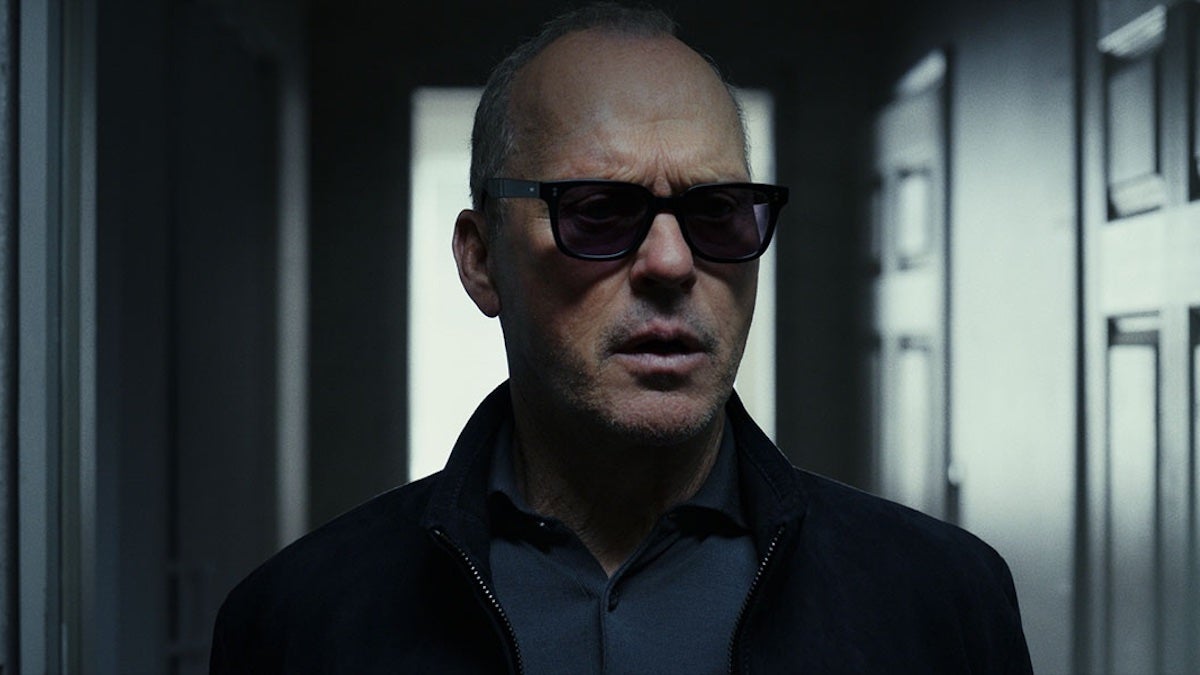
But before “Hit Man” will have its TIFF premiere on Monday, yet another hit man showed up on Sunday night in “Knox Goes Away,” which features Michael Keaton directing and starring as … well, you can figure out what the guy does for a living.
“Knox Goes Away,” though, isn’t just one of TIFF’s three hit-man flicks; it also belongs alongside “American Fiction” and the upcoming “Memory” as a film that deals with dementia. But the film is subtle, shuffling film-noir staples while remaining surprisingly low-key in a genre that often runs on blood and passion. There are plenty of both in the film, but Keaton is more interested in the brainpower that it takes to get past the blood and the passion, and that makes for an intriguing drama with a light touch or a comedy with some dark twists.
His character, John Knox, is a well-read and philosophically-minded hit man, which accounts for his nickname of Aristotle. (When we meet him, he’s reading Wilfrid Sellars’ “Empiricism and the Philosophy of Mind” and doling out a weekly book from his library to his steady Thursday afternoon sex worker, played by “Cold War” star Joanna Kulig.)
Knox, it seems, has done well for himself in his chosen career, though to be fair he has destroyed his family in the process. But he soon gets some career ending news from his doctor: He has a form of untreatable dementia that moves incredibly fast and gives him “weeks, not months” of lucidity in which he can make arrangements.
“I’m sorry,” says the doctor after delivering this grim diagnosis.
“That’s OK, doc,” says Knox. “Even if I hated you for telling me, I’d forget soon enough.”
As the exchange suggests, “Knox Goes Away” is not a serious drama about dementia or about murdering people for a living. But it’s not a straight comedy, either. It’s a character study and what you might liken to a whodunit, though in this case it’s a howwillhedoit. That’s because, in short order, Knox botches a hit, accidentally killing his partner in the process, and receives a visit from his estranged son, Miles (James Marsden), who has himself accidentally (or sort of accidentally) killed the 32-year-old white supremacist who seduced his 16-year-old daughter online and then impregnated her.
Knox has to evade the cops who are investigating the murder he did commit while saving his son from the crime of passion that he committed. It doesn’t help that the cops, led by Detective Rale (Suzy Nakamura), figure out pretty quickly that Knox had something to do with the first murder and are bound to connect him to the second one before long.
The good thing is, Knox has always been a whiz at figuring stuff out and staying one step ahead of everybody. The bad thing is, it’s hard to do that when your dementia is getting worse every week. So, Knox makes an extensive checklist, shares it with his shaggy pal Xavier Crane (Al Pacino, attacking the role with leonine relish because that’s what he does), and gets to work.
The audience doesn’t know what’s on the list or whether it’s going to work (Xavier says it’s “a stupid plan”), but the whole point of “Knox Goes Away” is following the execution. The movie is a knowing film-noir riff that rarely misses a chance to trot out a noir trope, either in the way it’s shot (shadows everywhere – even brightly-lit rooms have horizontal blinds casting beams of light) or the way it’s scored (solo pianos, lone trumpets).
But even with all the noir touches, the film moves quickly. It’s shadowy but also breezy, which makes sense coming from an actor whose gone from the manic nutcase at the center of “Beetlejuice” and “Mr. Mom” to a maestro of restraint. Keaton conveys a lot without raising his voice and you never see him sweat. When Xavier hears about his condition he says, “I can’t think of anything worse, except maybe your pecker stops working,” Knox shrugs and mutters, “I’m actually looking forward to forgetting some things.”
There are times in “Knox Goes Away” when the shadows almost make Knox’s face look like a death mask, but he keeps plodding away and checking things off in his little notebook. He’s casual and he may be forgetful, but he’s also forceful, even as the weeks tick off and his minds starts to fail him. Keaton, the director, indulges in occasional flourishes of distortion to capture the character’s state of mind, but for the most part he trusts Keaton the actor, which is a wise move.
“Knox Goes Away” is a character study of a disappearing character or maybe a thriller that stays away from actual thrills. However you label the film, it’s low key but satisfying. It it – who could have guessed? – another good festival movie about a hit man.
There’s no mistaking the time-tested Rolling Stones sound on “Angry,” the first single off “Hackney Diamonds,” the band’s first album of its own songs since 2005. The beat is blunt and brawny. The guitars riff and mesh, but also tangle and tease one another. And Mick Jagger unleashes full-throated indignation as he lets a lover — an angry one — know that they’re breaking up. He’s aggrieved, petulant, wounded and flippant, almost all at once. JON PARELES
Joni Mitchell, ‘Like Veils Said Lorraine’
This stunning, previously unreleased song from the forthcoming third installment of Joni Mitchell’s archive series (which will cover her early Asylum Records years, 1972 to 1975) begins with a quote about life from the titular character: “It’s veils you tear off one by one.” Another voice disagrees: “No, it’s walls we put up.” Accompanied by resonant, searching piano chords, Mitchell wrestles with these dueling perspectives and as ever, doesn’t settle on an easy compromise but finds the truth between extremes. Recorded as a demo sometime between Mitchell’s intimate 1971 masterpiece “Blue” and “For the Roses,” her labyrinthine 1972 meditation on the emptiness of fame, “Like Veils Said Lorraine” sounds like a bridge between those two eras of Mitchell’s rapidly developing artistry and serves as proof that her archives still contain untold riches. LINDSAY ZOLADZ
Allison Russell, ‘Eve Was Black’
On her remarkable 2021 album, “Outside Child,” Allison Russell recalled childhood abuse and celebrated her survival. Her new one, “The Returner,” is just as strong, and it examines larger forces as well — most directly in “Eve Was Black,” which directly confronts racism and considers the African ancestors of all humans. “Do I remind you of what you lost/Do you hate or do you lust?” Russell sings. “Do you despise or do you yearn/To return, to return, to return back to the motherland?” What starts as a bluesy, folky, foot-stomping tune drifts toward jazz, then grows molten with rage as Russell sings about lynching. The track includes an epilogue; Russell, who grew up in Montreal, sings in French, over a banjo and fiddle, about a family uprooted from Africa to America. PARELES
Ashley McBryde, ‘Women Ain’t Whiskey’
“You can’t just quit me/When you get lonely come pick me back up,” Ashley McBryde sings in “Women Ain’t Whiskey.” It’s a country-meets-U2 march that states the obvious; apparently it needs to be restated, loudly. At least it doesn’t have brand placements. PARELES
Guppy, ‘Texting and Driving’
J Lebow, of the Los Angeles band Guppy, talk-singsthrough the sinewy punk-pop of “Texting and Driving,” delivering lines like “Texting your dad a curated playlist/Texting God in my head — also known as praying” with sardonic glee. Produced by Sarah Tudzin (a.k.a. Illuminati Hotties), the track is laced with little sonic eruptions — bursts of dissonant guitar, out-of-nowhere backup vocals, outright screams — and there’s plenty of cowbell to kick it along. PARELES
Cardi B featuring Megan Thee Stallion, ‘Bongos’
The FCC’s least favorite duo, Cardi B and Megan Thee Stallion, reunite on the unrelenting “Bongos,” their first collaboration since the 2020 succès de scandale “WAP.” Atop a clipped, appropriately percussive beat — bong, bong, bong — the two rappers trade boisterously braggadocious verses and winking, heavily stressed double entendre. “Bongos” feels more like a retread than a reinvention, though Megan — for once, more of a comic than Cardi — gets off a few hilariously memorable lines like “purse so big had to treat it like a person.” ZOLADZ
Peso Pluma, Jasiel Nuñez and Junior H, ‘Bipolar’
Auto-Tune meets acoustic instruments in “Bipolar,” a very 21st-century regional Mexican collaboration by three of its stars: Peso Pluma, Jasiel Nuñez and Junior H. It’s an old-fashioned waltz about a newish situation: giving in to the temptation to check an ex’s social media, but then deciding “I’d rather make money than waste my time with mere stories.” PARELES
Residente and Wos, ‘Problema Cabrón’
The ever-provocative Puerto Rican rapper Residente harnesses an electric blues shuffle for “Problema Cabrón,” (“Problem Bastard”), a ferocious boast about being a perpetual troublemaker. “The day I die, you’re the ones who will be able to rest in peace,” he taunts in Spanish, over a track that keeps reconfiguring itself, from full band down to piano and finger snaps and back up. Like Residente’s other recent songs, the song arrives with a video; this one has him facing off with an authoritarian police force. The song itself is pure, apolitical insubordination. PARELES
Yussef Dayes featuring Shabaka Hutchings, ‘Raisins Under the Sun’
The London-based drummer Yussef Dayes, the owner of one of the most distinctive backbeats in contemporary music — a taut but shrugging, hi-hat-heavy funk groove, lightly inflected with Afrobeat flavor but rooted in today — has spent years hanging out at the junction of jazz, hip-hop, garage and funk, awaiting his moment. Maybe it has arrived. His debut album, “Black Classical Music,” is both a sprawling declaration of his musical ambitions and a reminder that patience is his biggest virtue. Across 75 minutes, the focus is on catalyzing a vibe. On “Raisins Under the Sun,” he reunites with Shabaka Hutchings — they’ve known each other since childhood, and have collaborated intermittently — on a wafting, two-chord vamp, with Hutchings’s bass clarinet adding a misty layer but never forcing its way to the front. GIOVANNI RUSSONELLO
Tirzah, ‘No Limit’
“What’s your limit? What’s my limit?” repeats throughout “No Limit,” an evocatively low-fi track by the English songwriter and electronic producer Tirzah. That question runs alongside drum and piano loops, never to be fully answered; it’s a gateway to intimacy that recognizes all its dangers. PARELES
Marika Hackman, ‘No Caffeine’
In the verses, the English songwriter Marika Hackman dispenses random self-help advice: “Take a day off work, call your mum/Have a glass of wine, stay away from fun.” At first, there’s little more than a few piano notes chiming behind her. But as instruments assemble around her — double-time bass and drums, doleful strings — it’s clear her desperation is mounting, and the chorus is a reveal: “You got me good/And I feel so stupid.” PARELES
Laufey, ‘California and Me’
Is this the Samara Joy effect? If Joy’s best new artist win at the Grammys seemed like it could open the gates to a flood of young jazz singers who sound like they’ve leaped out of a reel-to-reel, then Laufey is at the crest of that wave. She’s a 24-year-old Chinese-Icelandic vocalist and multi-instrumentalist with a sepia croon and label support that’s helped her grab streaming listeners by the millions. Laufey’s tunes roll around in a plush, tear-stained bed, channeling the cool-jazz vocalists of the ’50s (think Chris Connor, but without the dangerous passion that haunts her music) by way of indie singers like Angel Olsen and Mitski at their mostnostalgic. On “California and Me,” an original, she accepts heartbreak with an enthusiastic sigh, singing over London’s Philharmonia Orchestra: “Left me and the ocean for your old flame/Holding back my tears, I couldn’t make you stay.” RUSSONELLO
James Brandon Lewis, ‘Sparrow’
James Brandon Lewis has a way of holding his tenor saxophone poised at the tipping point between a melody and a holler. That’s how Mahalia Jackson sang, too, when shaken by divine inspiration: moving from robust cascades of song to gravelly shouts. Lewis’s new album devoted to the singer, “For Mahalia, With Love,” turns his all-star Red Lily Quintet loose on nine gospel hymns. On its opening track, he combines the oft-covered “His Eye Is on the Sparrow” with an original, “Even the Sparrow.” Playing in unison with the cornetist Kirk Knuffke, Lewis keeps the focus on melodic clarity; it’s a moment of peace and meditation, before the album takes wing. RUSSONELLO
Vince Clarke, ‘The Lamentations of Jeremiah’
Expect drones, not dance beats, from the new solo album by Vince Clarke, the synth-pop expert from Erasure and, before that, Depeche Mode and Yaz. In “Lamentations of Jeremiah,” an unswerving but subtly changing drone tone — with occasional distant-thunder eruptions — underlies the solo cello of the composer Reed Hays, which moves between moody, declarative melodic phrases and strenuous arpeggios, as if it’s wrestling with looming dread. PARELES
Shah Rukh Khan and Farah Khan share a close-knit bond. (Image: Instagram)
Farah Khan said that Shah Rukh Khan couldn’t stop laughing when Satish Shah would spit on him during the filming of Main Hoon Na.
Ace choreographer Farah Khan turned to directing films with Main Hoon Na in 2004, starring Shah Rukh Khan, Sushmita Sen, Zayed Khan and Amrita Rao among others. The film became a mega-hit at the box office and is one of the most talked about films directed by Farah. Recently, she shared some unknown anecdotes from the film, including how it took Shah Rukh multiple takes to film the spitting scene with Satish Shah.
Talking to Maniesh Paul on his podcast, Farah said that Shah Rukh couldn’t stop laughing while filming the scene with Satish and took five or six takes to shoot the sequence. She said, “The Shah Rukh Khan and Satish ji scene was very difficult to shoot. We used to make Satish Ji drink water and he would spit on Shah Rukh in that scene. We also kept a backlight to show it clearly. Shah Rukh couldn’t stop laughing in that take and he spent five-six takes laughing. Then I told him, ‘Karle na shot, he is spitting on you.’ This was also pre-covid so this was fine.”
Satish Shah had told Bollywood Bubble earlier that it took Shah Rukh about eight takes to film the same spitting scene. He said, “Then I got really angry and said after this I won’t do it. Now everyone is laughing on the set and we went in for the 8th take, he laughed again and that is when we had to put Zayed’s insert in the film. So it was very difficult to put a straight face and do such scenes.”
Satish added that sometimes he would enunciate so much while saying his dialogues that the water would come out of his mouth as a spray, leading to another laughter riot. The veteran actor also said that he had started calling himself the “spitting cobra” after doing that role.
Meanwhile, Shah Rukh is currently enjoying the success of his latest film, Jawan. The Atlee directorial was released in theatres on Thursday and crossed the Rs. 100 mark on its first day itself, becoming the highest opener in Bollywood.
The birth centenary of Indian cinema icon Dev Anand will be celebrated with restored versions of some of his classics receiving a theatrical release across the country.
Known as one of the triumvirate of superstars who ruled Hindi-language cinema in the 1950s and ’60s (along with the late Raj Kapoor and Dilip Kumar) Anand made such hits as “Guide,” “Hare Rama Hare Krishna” and “Prem Pujari.”
The birth centenary of Anand, who died in 2011, is on Sept. 26. On Sept. 24 and 25, the “Dev Anand@100 – Forever Young” festival will screen four of his classic films at 55 PVR Inox cinemas across 30 Indian cities including Mumbai, Pune, Goa, Ahmedabad, Hyderabad, Trivandrum, Chennai, Bangalore, Lucknow, Kolkata, Guwahati, Indore, Jaipur, Nagpur, Chandigarh, New Delhi, Gwalior, Rourkela, Raipur, Noida, Kochi, Aurangabad, Vadodara, Surat and Mohali.
The films are Raj Khosla’s “C. I. D.” (1956) and Vijay Anand’s “Guide” (1965), “Jewel Thief” (1967) and “Johny Mera Naam” (1970). They have been restored by India’s National Film Development Corporation (NFDC) and the National Film Archive of India (NFAI) and curated by filmmaker and archivist Shivendra Singh Dungarpur’s Film Heritage Foundation (FHF).
In 2022, FHF curated similar seasons of films starring Dilip Kumar and Amitabh Bachchan, which were box office successes. The organization’s restored versions of Govindan Aravindan’s 1978 masterpiece “Thamp̄” (“The Circus Tent”) and Aribam Syam Sharma’s 1991 Cannes selection “Ishanou” (“The Chosen One”), played at Cannes Classics in 2022 and 2023, respectively.
Dungarpur said: “After a successful run with ‘Bachchan Back to the Beginning’ and ‘Dilip Kumar – Hero of Heroes’ to commemorate Amitabh Bachchan’s 80th birthday and Dilip Kumar’s birth centenary respectively, we knew that there was no way that we could allow the birth centenary of Dev Anand to go uncelebrated. We wanted to honor his legacy by screening four of his milestone films. The Gregory Peck of India, as Dev Anand was often called, continues to be a beloved star, and we are thrilled that contemporary audiences will have the opportunity to watch some of the films that made him an enduring legend of Indian cinema.”
Prithul Kumar, joint secretary (films) and managing director, NFDC, added: “It is important for the public to witness Dev Anand on the big screen once again, and in a manner how he was viewed during his hey days decades ago. NFDC-NFAI is sparing no efforts to ensure these films are presented in the best way possible, as hundreds of restoration artists, technicians, graders, DoPs, sound engineers and archivists, spread across multiple cities, are hard at work to once again bring these films to life. Showcasing the restoration of Dev Anand’s films on the occasion of his centenary, as a joint endeavor between both film archives, NFDC-National Film Archive of India and Film Heritage Foundation, along with our esteemed partners, Inox and PVR, is a testament to our shared commitment to preserving India’s cinematic heritage. We aspire to sustain these collaborative efforts, to provide broader public access to the gems of Indian cinema, in the quality they are meant to be seen.”
Dev Anand’s son, Suneil Anand, said: “I personally like my dad’s work, as the leading man, in ‘Johny Mera Naam.’ I think this is because the character he played closely resembled his true personality. It was an ideal vehicle for him to showcase his histrionics, mannerisms and his suave dressing sense. ‘Jewel Thief’ was another such film – it had the trappings and the look of slick western and European cinema. Dad set fashion trends in many of his films – with his cap, high collars, scarves, jackets, and colorful attire. Even his hairstyles were being copied by his fans. Dad could have easily gone to Hollywood. In fact, an established Hollywood casting agency had even offered to represent him and had lined up several projects for him. But being a true Indian at heart, he decided to remain in his Motherland India. Time marches on, mindsets change, and trends evolve, however, with each new generation of movie goers and aficionados, Dev Anand continues to remain an inspiration to the youth of India and the rest of the qorld. He was unanimously given – and continues to hold – the title of an evergreen romantic superstar.”
“Not one to rest on his laurels, dad continued to make exciting movies under his Navketan banner. As we celebrate dad’s centennial, I’d like to say that dad’s movies were decades ahead of their time. I sometimes feel we still haven’t caught up with them. I am sure the festival will be a big success and that contemporary audiences will rediscover the youthful magic of my father – who will stay forever young on the silver screen. In the continuing legacy of Dev Anand and Navketan, I am currently making a Hollywood-based film, dedicated to my dad, called ‘Vagator Mixer,’ which will release shortly worldwide. The show goes on,” Anand added.
With Brie Larson’s absence from the promotional tour for The Marvels becoming a real possibility, the film’s director addressed the concern of taking on that challenge without her leading MCU star.
However, due to the ongoing actors’ strike taking hold in Hollywood starting on July 14, Larson hasn’t been allowed to engage in any kind of promotional material for her new MCU sequel since then. And with Larson being one of the franchise’s most successful actors, having her star power and voice promoting the film is no small factor when looking at this MCU sequel’s potential box office earnings.
Marvel
The Marvels director Nia DaCosta spoke with Abby News about the upcoming promotional tour for her MCU sequel, particularly touching on Brie Larson’s likely absence from the promotional tour.
With Larson almost certain to be missing from the promotional tour due to the ongoing SAG-AFTRA strike, DaCosta expressed hope that she’s not alone in promoting the sequel, teasing that people will ask “Where’s Brie Larson?:”
“I’m hoping I’m not promoting the movie by myself. No one’s there to see me, either. They’re going to be like, ‘Where’s Brie Larson?'”
DaCosta also touched on the status of the strikes as a whole, explaining that they “won’t be solved in one round of negotiations” but hoping that they end soon so that she and the rest of Hollywood can head back to work:
“I think we’re now in a new world. Everything that’s happening is an existential search that our industry is doing. It won’t be solved in one round of negotiations. But I’m hoping that the studios can end the strike soon and get us all back to work — to work for them.”
Considering that progress on the actors’ strike has been slow-moving, just like it’s been for the writers’ strike, the odds of Brie Larson getting to join the Captain Marvel 2 promotional tour are slim to none right now.
And considering the positivity she’s helped to spread for her co-stars and the franchise as a whole, DaCosta’s concerns about promoting the film on her own are certainly valid as Marvel looks to climb back to the top of the box office charts.
The Marvels is still set to release in theaters on November 10.
The artist mrleeee has created a visually stunning poster that brings together six live-action versions of Batman, including Robert Pattinson, Val Kilmer, and George Clooney.
The recent film The Flash missed an opportunity to create an epic crossover moment between Michael Keaton’s Batman and Ben Affleck’s Batman, much to the disappointment of fans.
With James Gunn at the helm of the future of the DC universe, there is hope that the multiverse concept will be explored further, allowing for narratives that bridge realms and create unique alliances.
In a time where the multiverse theory reigns supreme in the superhero genre, the image of the stoic, solitary vigilante Batman takes a fantastical spin, soaring to heights even a bat might find dizzying. The universe has indeed folded upon itself, offering a tantalizing glimpse into a realm where the doppelgangers of Bruce Wayne stand united, ready to uphold justice in the dark alleys of Gotham City, in a Spider-Verse styled narrative crafted with masterful strokes by the artist known as mrleeee.
In this gripping visual narrative, we witness a confluence of histories and personalities, as six live-action versions of the Caped Crusader are brought together in a convergence of epic proportions. As if drawn from the depths of every Batman enthusiast’s wildest dreams, the poster manifests the grandeur of Robert Pattinson, Val Kilmer, and George Clooney, all embodying their distinct versions of the legendary DC icon, standing alongside Michael Keaton and Ben Affleck’s rendition of the Dark Knight.
This dazzling symphony of art echoes a missed symphony in the DC cinematic universe. Despite the fever pitch surrounding multiverse narratives – a trend significantly propelled by the Marvel Cinematic Universe’s ongoing Multiverse Saga, it seems DC missed a golden ticket to capitalize on this trend in their summer ‘lack’-buster, The Flash. While the film explored alternative realities and brought back the iconic Michael Keaton’s Batman through Barry Allen’s time travels, it fell short of providing a potentially earth-shattering crossover moment for Batman fans.
This was particularly notable with the reintroduction of Keaton, marking his dramatic return since gracing Tim Burton’s Batman movies. The stage was perfectly set for a monumental interaction between Keaton and Affleck’s Batman, an event that could have etched itself into the annals of cinematic history, bridging two generations of DC audiences and offering them something profoundly unforgettable. Instead, the film navigated into somewhat murky waters with VFX cameos that didn’t quite resonate with the viewers, and a cameo by Clooney, a choice that seems to have baffled the Batman fandom given his less-favored portrayal in live-action adaptations.
James Gunn at the Helm: Charting a Bold New Future After Affleck’s Potential Final Bow as Batman
Max
Regrettably, as Affleck potentially dons the Batman cape for the final time, it feels as though a golden opportunity was squandered; a chance to craft a narrative where Batman meets himself, stepping beyond his solitary shadow to unite with other versions of himself, each reflecting different facets of his complex personality and history.
Nevertheless, as the bat-signal never dims, all eyes are now turned towards the horizon, where James Gunn is gearing up to helm the future of the DC universe. With the establishment of DC Studios, a sense of anticipation hangs thick in the air. Gunn harbors plans for the Batman character in the budding DC universe, fostering hopes that perhaps, just perhaps, the multiverse concept might find its way back onto the big screen, weaving narratives that transcend realms, bridging gaps, and fostering unparalleled alliances.
You didn’t actually believe all those founder’s myths about tech billionaires like Bezos, Jobs and Musk pulling themselves up by their bootstraps from some suburban American garage, did you? In reality, our corporate kings have been running the same playbook since the 18th century when Lancashire’s own Richard Arkwright wrote it. Arkwright is credited with developing a means of forming cotton fully into thread — technically he didn’t actually invent or design the machine, but developed the overarching system in which it could be run at scale — and spinning that success into financial fortune. Never mind the fact that his 24-hour production lines were operated by boys as young as seven pulling 13-hour shifts.
In Blood in the Machine: The Origins of the Rebellion Against Big Tech— one of the best books I’ve read this year — LA Times tech reporter Brian Merchant lays bare the inhumane cost of capitalism wrought by the industrial revolution and celebrates the workers who stood against those first tides of automation: the Luddites.
The first tech titans were not building global information networks or commercial space rockets. They were making yarn and cloth.
A lot of yarn, and a lot of cloth. Like our modern-day titans, they started out as entrepreneurs. But until the nineteenth century, entrepreneurship was not a cultural phenomenon. Businessmen took risks, of course, and undertook novel efforts to increase their profits. Yet there was not a popular conception of the heroic entrepreneur, of the adventuring businessman, until long after the birth of industrial capitalism. The term itself was popularized by Jean-Baptiste Say, in his 1803 work A Treatise on Political Economy. An admirer of Adam Smith’s, Say thought that The Wealth of Nations was missing an account of the individuals who bore the risk of starting new business; he called this figure the entrepreneur, translating it from the French as “adventurer” or “undertaker.”
For a worker, aspiring to entrepreneurship was different than merely seeking upward mobility. The standard path an ambitious, skilled weaver might pursue was to graduate from apprentice to journeyman weaver, who rented a loom or worked in a shop, to owning his own loom, to becoming a master weaver and running a small shop of his own that employed other journeymen. This was customary.
In the eighteenth and nineteenth centuries, as now in the twenty-first century, entrepreneurs saw the opportunity to use technology to disrupt longstanding customs in order to increase efficiencies, output, and personal profit. There were few opportunities for entrepreneurship without some form of automation; control of technologies of production grants its owner a chance to gain advantage or take pay or market share from others. In the past, like now, owners started small businesses at some personal financial risk, whether by taking out a loan to purchase used handlooms and rent a small factory space, or by using inherited capital to procure a steam engine and a host of power looms.
The most ambitious entrepreneurs tapped untested technologies and novel working arrangements, and the most successful irrevocably changed the structure and nature of our daily lives, setting standards that still exist today. The least successful would go bankrupt, then as now.
In the first century of the Industrial Revolution, one entrepreneur looms above the others, and has a strong claim on the mantle of the first of what we’d call a tech titan today. Richard Arkwright was born to a middle-class tailor’s family and originally apprenticed as a barber and wigmaker. He opened a shop in the Lancashire city of Bolton in the 1760s. There, he invented a waterproof dye for the wigs that were in fashion at the time, and traveled the country collecting hair to make them. In his travels across the Midlands, he met spinners and weavers, and became familiar with the machinery they used to make cotton garments. Bolton was right in the middle of the Industrial Revolution’s cotton hub hotspot.
Arkwright took the money he made from the wigs, plus the dowry from his second marriage, and invested it in upgraded spinning machinery. “The improvement of spinning was much in the air, and many men up and down Lancashire were working at it,” Arkwright’s biographer notes. James Hargreaves had invented the spinning jenny, a machine that automated the process of spinning cotton into a weft— halfway into yarn, basically— in 1767. Working with one of his employees, John Kay, Arkwright tweaked the designs to spin cotton entirely into yarn, using water or steam power. Without crediting Kay, Arkwright patented his water frame in 1769 and a carding engine in 1775, and attracted investment from wealthy hosiers in Nottingham to build out his operation. He built his famous water-powered factory in Cromford in 1771.
His real innovation was not the machinery itself; several similar machines had been patented, some before his. His true innovation was creating and successfully implementing the system of modern factory work.
“Arkwright was not the great inventor, nor the technical genius,” as the Oxford economic historian Peter Mathias explains, “but he was the first man to make the new technology of massive machinery and power source work as a system— technical, organizational, commercial— and, as a proof, created the first great personal fortune and received the accolade of a knighthood in the textile industry as an industrialist.” Richard Arkwright Jr., who inherited his business, became the richest commoner in England.
Arkwright père was the first start‑up founder to launch a unicorn company we might say, and the first tech entrepreneur to strike it wildly rich. He did so by marrying the emergent technologies that automated the making of yarn with a relentless new work regime. His legacy is alive today in companies like Amazon, which strive to automate as much of their operations as is financially viable, and to introduce highly surveilled worker-productivity programs.
Often called the grandfather of the factory, Arkwright did not invent the idea of organizing workers into strict shifts to produce goods with maximal efficiency. But he pursued the “manufactory” formation most ruthlessly, and most vividly demonstrated the practice could generate huge profits. Arkwright’s factory system, which was quickly and widely emulated, divided his hundreds of workers into two overlapping thirteen-hour shifts. A bell was rung twice a day, at 5 a.m. and 5 p.m. The gates would shut and work would start an hour later. If a worker was late, they sat the day out, forfeiting that day’s pay. (Employers of the era touted this practice as a positive for workers; it was a more flexible schedule, they said, since employees no longer needed to “give notice” if they couldn’t work. This reasoning is reminiscent of that offered by twenty-first-century on‑demand app companies.) For the first twenty-two years of its operation, the factory was worked around the clock, mostly by boys like Robert Blincoe, some as young as seven years old. At its peak, two-thirds of the 1,100-strong workforce were children. Richard Arkwright Jr. admitted in later testimony that they looked “extremely dissipated, and many of them had seldom more than a few hours of sleep,” though he maintained they were well paid.
The industrialist also built on‑site housing, luring whole families from around the country to come work his frames. He gave them one week’s worth of vacation a year, “but on condition that they could not leave the village.” Today, even our most cutting-edge consumer products are still manufactured in similar conditions, in imposing factories with on‑site dormitories and strictly regimented production processes, by workers who have left home for the job. Companies like Foxconn operate factories where the regimen can be so grueling it has led to suicide epidemics among the workforce.
The strict work schedule and a raft of rules instilled a sense of discipline among the laborers; long, miserable shifts inside the factory walls were the new standard. Previously, of course, similar work was done at home or in small shops, where shifts were not so rigid or enforced.
Arkwright’s “main difficulty,” according to the early business theorist Andrew Ure, did not “lie so much in the invention of a proper mechanism for drawing out and twisting cotton into a continuous thread, as in [. . .] training human beings to renounce their desultory habits of work and to identify themselves with the unvarying regularity of the complex automation.” This was his legacy. “To devise and administer a successful code of factory discipline, suited to the necessities of factory diligence, was the Herculean enterprise, the noble achievement of Arkwright,” Ure continued. “It required, in fact, a man of a Napoleon nerve and ambition to subdue the refractory tempers of workpeople.”
Ure was hardly exaggerating, as many workers did in fact view Arkwright as akin to an invading enemy. When he opened a factory in Chorley, Lancashire, in 1779, a crowd of stockingers and spinners broke in, smashed the machines, and burned the place to the ground. Arkwright did not try to open another mill in Lancashire.
Arkwright also vigorously defended his patents in the legal system. He collected royalties on his water frame and carding engine until 1785, when the court decided that he had not actually invented the machines but had instead copied their parts from other inventors, and threw the patents out. By then, he was astronomically wealthy. Before he died, he would be worth £500,000, or around $425 million in today’s dollars, and his son would expand and entrench his factory empire.
The success apparently went to his head— he was considered arrogant, even among his admirers. In fact, arrogance was a key ingredient in his success: he had what Ure described as “fortitude in the face of public opposition.” He was unyielding with critics when they pointed out, say, that he was employing hundreds of children in machine-filled rooms for thirteen hours straight. That for all his innovation, the secret sauce in his groundbreaking success was labor exploitation.
In Arkwright, we see the DNA of those who would attain tech titanhood in the ensuing decades and centuries. Arkwright’s brashness rhymes with that of bullheaded modern tech executives who see virtue in a willingness to ignore regulations and push their workforces to extremes, or who, like Elon Musk, would gleefully wage war with perceived foes on Twitter rather than engage any criticism of how he runs his businesses. Like Steve Jobs, who famously said, “We’ve always been shameless about stealing great ideas,” Arkwright surveyed the technologies of the day, recognized what worked and could be profitable, lifted the ideas, and then put them into action with an unmatched aggression. Like Jeff Bezos, Arkwright hypercharged a new mode of factory work by finding ways to impose discipline and rigidity on his workers, and adapting them to the rhythms of the machine and the dictates of capital— not the other way around.
We can look back at the Industrial Revolution and lament the working conditions, but popular culture still lionizes entrepreneurs cut in the mold of Arkwright, who made a choice to employ thousands of child laborers and to institute a dehumanizing system of factory work to increase revenue and lower costs. We have acclimated to the idea that such exploitation was somehow inevitable, even natural, while casting aspersions on movements like the Luddites as being technophobic for trying to stop it. We forget that working people vehemently opposed such exploitation from the beginning.
Arkwright’s imprint feels familiar to us, in our own era where entrepreneurs loom large. So might a litany of other first-wave tech titans. Take James Watt, the inventor of the steam engine that powered countless factories in industrial England. Once he was confident in his product, much like a latter-day Bill Gates, Watts sold subscriptions for its use. With his partner, Matthew Boulton, Watts installed the engine and then collected annual payments that were structured around how much the customer would save on fuel costs compared to the previous engine. Then, like Gates, Watts would sue anyone he thought had violated his patent, effectively winning himself a monopoly on the trade. The Mises Institute, a libertarian think tank, argues that this had the effect of constraining innovation on the steam engine for thirty years.
Or take William Horsfall or William Cartwright. These were men who were less innovative than relentless in their pursuit of disrupting a previous mode of work as they strove to monopolize a market. (The word innovation, it’s worth noting, carried negative connotations until the mid-twentieth century or so; Edmund Burke famously called the French Revolution “a revolt of innovation.”) They can perhaps be seen as precursors to the likes of Travis Kalanick, the founder of Uber, the pugnacious trampler of the taxi industry. Kalanick’s business idea— that it would be convenient to hail a taxi from your smartphone— was not remarkably inventive. But he had intense levels of self-determination and pugnacity, which helped him overrun the taxi cartels and dozens of cities’ regulatory codes. His attitude was reflected in Uber’s treatment of its drivers, who, the company insists, are not employees but independent contractors, and in the endemic culture of harassment and mistreatment of the women on staff.
These are extreme examples, perhaps. But to disrupt long-held norms for the promise of extreme rewards, entrepreneurs often pursue extreme actions. Like the mill bosses who shattered 19th-century standards by automating cloth-making, today’s start‑up founders aim to disrupt one job category after another with gig work platforms or artificial intelligence, and encourage others to follow their lead. There’s a reason Arkwright and his factories were both emulated and feared. Even two centuries later, many tech titans still are.
Taika Waititi’s new film “Next Goal Wins” is based on the true story of the American Samoa soccer team, infamous for their brutal 31-0 FIFA loss in 2001. Their story was immortalized in the 2014 documentary of the same name by Mike Brett and Steve Jamison, so Waititi admits he took some creative liberties in adapting the story for the screen.
“I had to twist the truth,” he told the audience before the world premiere at the Toronto Film Festival. “Otherwise, watch the documentary.”
“Next Goal Wins” picks up with the World Cup Qualifiers approaching, as the team hires down-on-his-luck coach Thomas Rongen (Michael Fassbender) in the hopes he will turn around their bleak track record.
Waititi, who was last at the festival with 2019’s Oscar-winner “Jojo Rabbit,” says the film is about finding your family. “Sometimes it doesn’t need to be related by blood,” he said, adding in a sing-songy voice: “Find your tribe.”
Will Arnett and Elisabeth Moss, Oscar Kightley, Kaimana, David Fane, Rachel House, Beulah Koale, Uli Latukefu, Semu Filipo and Lehi Falepapalangi round out the cast, but none of the stars were able to attend the festival because of the twin labor strikes that have left actors and screenwriters on the picket lines.
Instead, Waitit was joined by the real-life inspiration for Fassbender’s character as well as Jaiyah Saelua, who is portrayed by Kaimana and serves as the heart of the film. She’s a faʻafafine, a third gender in Polynesian society, and is the first openly non-binary and trans woman to compete in the FIFA World Cup. They were greeted at the Princess of Wales Theater with a heartfelt standing ovation.
“I’m really satisfied with Kaimana’s performance,” Saelua said. But, she admits, it was surreal to watch her story told in a movie. “It was hard for me to separate the documentary from Taika’s hybrid version. We understand he will do as he pleases.”
Waititi chimed in, “Never let the truth get in the way of a good story!”
The goblins and the ratfolk are at war and war… war creates opportunities.
*
In this adventure for the Shadowdark RPG system a war has erupted within the echoing chambers of Hammerfall Mountain, a cataclysmic conflict brews. Goblins and ratfolk are locked in a relentless war, their tumultuous clash echoing through the rocky caverns. The fate of the region teeters on a knife’s edge. Can the daring crawlers quell this conflict before it spills beyond the mountain’s confines? Or perhaps they can harness the chaos to reap substantial rewards? Unbeknownst to all, a shadowy conspiracy lurks in the shadows, manipulating the very heart of this war.
*
This adventure is set in the mountains, created for Shadowdark and other compatible OSR game systems, all you need is a mountain region to set it. (and maybe a local village to trade, etc.)
*
*
The adventure contains
additional statblocks for goblins,
new statblocks for ratfolk,
new monsters like the growlers
a quick view into their societies,
maps, and setpieces.
3 levels of dungeon (goblin caverns, ratfolk fort, ratfolk burrows)
“The Masked Singer” has officially made it to 10 seasons. On Sunday night, they celebrated in full force with a huge lead-in as the new football season kicks off. Following the start of the NFL’s 104th season, the show aired a special standalone episode with a huge unmasking.
Though this season’s competition hasn’t officially begun — we have to wait a couple more weeks for that — the episode featured performances from “Masked Singer” alums including Michelle Williams, Rumer Willis, Joey Fatone, Bow Wow and others. This time though, they didn’t have to perform in costume. Still, this is “The Masked Singer,” so there was one person under a mask on the night.
Known as Anonymouse, the singer took the stage to sing Heart’s “What About Love?” — a perfect song, considering the giant mouse’s outfit. With a studded leather jacket and combat boots, she rocked out exactly as hard as you’d expect her to because Anonymouse was revealed at the end of the night to be… Demi Lovato!
Granted, most fans picked out her voice immediately just from the preview released ahead of the episode, so it wasn’t a true shock. But the judges were stunned to see Lovato unmasked, as she marks one of the biggest performers to ever appear under one of the show’s trademark costumes.
That said, it’s worth pointing out that Lovato wasn’t technically a competitor for the season. The actual competitions and eliminations begin on Sept. 27. Lovato was simply a one-night only appearance, but she sure did completely commit to the bit. So this episode may be cool for the summer, but later this month “The Masked Singer” will be trying to convince audiences that it’s cool for the fall.
The full season of “The Masked Singer” kicks off on Sept. 27 at 8 p.m. ET/PT on FOX.
Every month, streaming services add movies and TV shows to its library. Here are our picks for some of September’s most promising new titles. (Note: Streaming services occasionally change schedules without giving notice. For more recommendations on what to stream, sign up for our Watching newsletter here.)
New to Amazon Prime Video
‘The Wheel of Time’ Season 2 Started streaming: Sept. 1
Season 1 of this handsome-looking fantasy series introduced some of the major characters and concepts from the first book of the novelist Robert Jordan’s hefty “The Wheel of Time” saga. Season 2 adapts parts of the second and third books — “The Great Hunt” and “The Dragon Reborn” — and continues moving the pieces into place for the grand apocalyptic battle prophesied at the start of the story. Rosamund Pike returns as the mystic Moiraine, who is helping a group of young people escape the shadowy forces pursuing them. Josha Stradowski plays Rand al’Thor, who may be his land’s last best hope to stand up against the Dark One and his minions — or may be the one to usher in a new age of chaos.
‘Neighbours: A New Chapter’ Season 1 Starts streaming: Sept. 18
The original run of the soap opera “Neighbours” began in 1985 and concluded in 2022 after 38 seasons and nearly 9,000 22-minute episodes. During that time, the show’s melodramatic tales of suburban Melbourne life were seen around the world and introduced viewers to future stars like Natalie Imbruglia, Kylie Minogue, Radha Mitchell, Guy Pearce and Margot Robbie. Now Amazon Studios and Fremantle Australia are bringing the series back, along with some of the old cast (including Pearce), who join an array of new characters. Plans are to run 200 episodes a year for the next two years on Amazon’s ad-supported, free-to-stream Freevee service, where viewers can also watch the older episodes, giving Americans a chance to immerse themselves in these Australians’ love affairs and personal crises.
‘Gen V’ Season 1 Starts streaming: Sept. 29
A spinoff of the adults-only superhero satire “The Boys,” this action-dramedy series is set at a special school for young crime fighters, where the students engage in the same kinds of cliques, rivalries and romances that happen in any normal school but with the constant threat that super powers make every conflict more dangerous. A few of the adult characters from “The Boys” will drop in on the new show (which has a creative team drawn from some of that show’s writers and producers); but the focus here is on the kids, who have a lot in common with classic comic book super teams like the X-Men and the Teen Titans. Expect plenty of irreverence and dark humor, along with some sly takedowns of familiar superhero mythology.
Like “The Walking Dead: Dead City” earlier this year, the latest entry in the long-running, ever-expanding “Walking Dead” franchise takes one of the most popular characters from the show’s original run and plops him in another part of the world. Norman Reedus reprises his role as Daryl Dixon, a talented marksman and tracker who had to overcome his loner tendencies to become a vital part of an embattled postapocalyptic community in the American southeast. In this new series, Daryl takes his talents to France, where he allies with a tough nun (Clémence Poésy) who shows him the unique ways that continental Europe handled the zombie outbreak and helps him to figure out who he can trust.
Also arriving:
Sept. 1 “Perpetrator”
Sept. 8 “Blood Flower”
Sept. 10 “Ride With Norman Reedus” Season 6
Sept. 15 “Elevator Game”
Sept. 20 “Thick Skin”
Sept. 22 “The Angry Black Girl and Her Mother”
Sept. 29 “Nightmare”
New to Apple TV+
‘The Changeling’ Starts streaming: Sept. 8
Like the Victor LaValle novel that inspired it, the supernatural horror series “The Changeling” combines everyday drama with terrifying nightmares, in a story that sprawls across multiple generations. LaKeith Stanfield plays Apollo, a shy book dealer who is haunted by memories of the father he barely knew. He is also attracted to a vibrant but eccentric woman named Emmy (Clark Backo), whom he eventually marries. The show’s creator and writer, Kelly Marcel, shifts the narrative focus freely among different characters and different eras, as a crisis with Emmy and their newborn child drives Apollo to confront his troubled family history. In doing so, he finds that his past is shrouded in the kind of wondrous darkness common to fairy tales, and he is challenged to untangle fantasy from fact in an enchanted version of New York City.
‘The Morning Show’ Season 3 Starts streaming: Sept. 13
One of Apple TV+’s flagship series returns for a third season of punchy boardroom drama, set in the modern TV news business. The show is still powered by its two charismatic leads: Jennifer Aniston as the veteran morning show anchor Alex Levy and Reese Witherspoon as Bradley Jackson, a feisty hard news reporter who has become Alex’s co-host. Billy Crudup and Mark Duplass play two of the behind-the-camera bosses who sometimes make morally questionable choices. This season they are joined by Jon Hamm as a cocky tech billionaire who might be able improve their network’s cash-flow. Although “The Morning Show” started as a ripped-from-the-headlines look at how the #MeToo era has upended the male-dominated media, the series has since opened to encompass other hot-button contemporary issues, which in Season 3 include cyberattacks and corporate blackmail.
Also arriving:
Sept. 20 “The Super Models”
Sept. 22 “Still Up”
Sept. 29 “Flora and Son”
New to Hulu
‘The Other Black Girl’ Season 1 Starts streaming: Sept. 13
Part wry social commentary and part intense mystery-thriller, “The Other Black Girl” examines the racial and gender dynamics of the New York publishing industry. Sinclair Daniel plays Nella, an aspiring assistant editor who befriends Hazel (Ashleigh Murray), her publishing house’s latest hire and the only other Black person in her department. When Hazel’s collegial advice starts derailing Nella’s career — around the same time that Nella starts experiencing some unnerving paranormal activity around the office — she begins looking into her new friend’s past and the history of their employers. Adapted from a best-selling Zakiya Dalila Harris novel, this show finds the humor and the anxiety inherent in the life of a woman who is struggling to stand out in a tough business without losing her identity.
Also arriving:
Sept. 6 “Never Let Him Go”
Sept. 13 “Welcome to Wrexham” Season 2
Sept. 14 “Dragons: The Nine Realms” Season 7
Sept. 20 “American Horror Story: Delicate” Part 1
Sept. 22 “No One Will Save You”
Sept. 27 “Love in Fairhope” Season 1
New to Max
‘Starstruck’ Season 3 Starts streaming: Sept. 28
This charming romantic comedy is one of the streaming era’s hidden gems, and it is ripe for discovery now that the fall TV schedule has been thinned out by the actors’ and writers’ strikes. Through its first two seasons, “Starstruck” followed the unlikely on-again/off-again love affair between Jessie (Rose Matafeo), a young New Zealander struggling to make ends meet in London, and Tom (Nikesh Patel), an A-list movie star who is smitten with her. Season 3 has the couple going their separate ways but still frequently and awkwardly crossing paths. The show’s short, breezy episodes capture how the “getting to know you” phase of romance can be equal parts exciting and difficult, especially when one of the people involved is rich and famous.
Also arriving:
Sept. 2 “The Venture Bros.: Radiant Is the Blood of the Baboon Heart”
Sept. 13 “Donyale Luna: Supermodel”
Sept. 21 “Young Love” Season 1
New to Paramount+ With Showtime
‘Star Trek: Lower Decks’ Season 4
Starts streaming: Sept. 7
“Star Trek” fans who are still buzzing from the excellent, recently completed second season of “Strange New Worlds” should roll those warm feelings over to the fourth season of the animated “Lower Decks,” which has established its place as one of the best of the modern “Star Trek” shows. Like “Strange New Worlds,” “Lower Decks” balances old-fashioned “interstellar adventure of the week” stories with involved subplots and rich character development. This cute-looking cartoon is fundamentally comic — following the goofy mishaps of a bunch of Starfleet’s least vital employees — but its writers and animators respect the franchise’s lore enough to deliver cleverly plotted, action-packed episodes, season after season.
Also arriving:
Sept. 8 “Dreaming Whilst Black”
Sept. 12 “Football Must Go On”
Sept. 17 “The Gold”
Sept. 18 “Superpower”
Sept. 22 “Deadlocked: How America Shaped the Supreme Court”
Sept. 26 “72 Seconds”
New to Peacock
‘The Continental: From the World of John Wick’ Starts streaming: Sept. 22
Fans of the first “John Wick” movie will always remember the moment when its weary hit man hero walked into a strange, assassin-friendly hotel called the Continental and was reminded of its arcane codes of behavior. Suddenly a movie that had previously seemed like a low-stakes underworld revenge thriller opened up into something more fantastical and globe spanning, with a dense mythology. The TV mini-series “The Continental: From the World of John Wick” is set in the 1970s and stars Mel Gibson as Cormac, the hotel’s New York manager at that time. Colin Woodell plays a young version of the franchise’s Winston Scott, who is tasked by Cormac to solve a family problem that may threaten the viability of this super secret criminal hideaway.
Drew Barrymore has made the surprising announcement that her talk show will return to the air, despite the ongoing SAG-AFTRA and WGA strikes. Barrymore explained on Instagram, “I am also making the choice to come back for the first time in this strike for our show, that may have my name on it, but this is bigger than just me.”
In response, WGA spokesperson Jason Gordon told Vanity Fair that the union is planning to picket outside Barrymore’s studio. He said, “‘The Drew Barrymore Show’ is a WGA-covered struck television show. It has stayed off the air since the strike began on May 2nd, but has now (unfortunately) decided to return without its writers.”
Gordon added, “The Guild has, and will continue to, picket any struck show that continues production during the duration of the strike.”
In her statement explaining the decision, Barrymore cited her own previous pro-strike stance. She began, “I made a choice to walk away from the MTV Film and Television Awards because I was the host and it had a direct conflict with what the strike was dealing with, which was studios, streamers, film, and television.”
“It was also in the first week of the strike and so I did what I thought was the appropriate thing at the time to stand in solidarity with the writers,” she continued. “And to be clear, our talk show actually wrapped on April 20th, so we never had to shut down the show.”
The actress and host continued, “However, I am also making the choice to come back for the first time in this strike for our show, that may have my name on it, but this is bigger than just me.”
Barrymore explained “I own this choice” and that her show intends to be in compliance with “not discussing or promoting film and television that is struck of any kind.”
The WGA strike rules have stated that most daytime talk shows can continue to air new episodes because they do not employ writers. The two exceptions have been “The Talk” and Barrymore’s show.
CBS previously announced Barrymore’s show would be back for Season 4 on Wednesday. President and CEO of CBS News and Stations and CBS Media Ventures Wendy McMahon stated in a press release, “From launching during the height of the COVID-19 pandemic to successfully pivoting to a groundbreaking half-hour format, this show has demonstrated spectacular resilience and creative agility on its journey to becoming the fastest-growing show in daytime.”
Richard Davis, an esteemed bassist who played not just with some of the biggest names in jazz but also with major figures in the classical, pop and rock worlds, died on Wednesday in Madison, Wis. He was 93.
His death was announced by Persia Davis, his daughter, who said he had been in hospice care for the last two years.
Mr. Davis, who was named a National Endowment for the Arts Jazz Master in 2014, appeared on more than 600 albums. A first-call player for some of the most important figures in jazz history, he had fruitful collaborations with the reed player Eric Dolphy (whose composition “Iron Man” was named for him) and the pianist Andrew Hill. He was a member of the Thad Jones-Mel Lewis Orchestra, which performed every Monday night at the Village Vanguard in New York, from the ensemble’s debut in 1966 until 1972.
His advanced technique, especially with the bow, led to work with classical orchestras under Igor Stravinsky and Leonard Bernstein. His adaptability resulted in sessions with Van Morrison, Bruce Springsteen, Paul Simon and Bonnie Raitt.
Mr. Davis made 30 albums as a leader or co-leader from 1967 to 2007. He was named best bassist in the DownBeat magazine readers pollfrom 1968 to 1972.
Reviewing a 1986 performance at Sweet Basil in Greenwich Village by a band led by Mr. Davis and featuring Freddie Waits on drums, the New York Times music critic Robert Palmer wrote: “The relaxed, slightly behind-the-beat swing typical of so many jazz rhythm sections is not for them. Their accents fall right up on top of the beat, and they vary their springy forward momentum with rhythmic whirlpools and rapids and an explosive sense of dynamics.”
Richard Davis was born on April 15, 1930, in Chicago. His mother died in childbirth, and he was adopted by Robert and Elmora Johnson. He was exposed to music through the records his mother had collected in her native New Orleans and the hymns Mr. Johnson would sing around the house.
He attended DuSable High School in Chicago, where he studied music under Walter Dyett, who mentored many future jazz stars, and he started playing the bass at 15. As he recalled in a 2013 interview published in the American Federation of Musicians magazine Allegro: “I was just enthralled by the sound. The bass was always in the background and I was a shy kid. So I thought maybe I’d like to be in the background.”
Mr. Davis credited Mr. Dyett with pushing him to play across styles, and during high school he also studied with Rudolf Fahsbender of the Chicago Symphony Orchestra. He would go on to receive a bachelor’s degree in music education from the VanderCook College of Music in Chicago in 1952.
As a young player in Chicago, he was mentored by local bassists like Wilbur Ware and Eddie Calhoun. While still in college, he performed with the pianist and bandleader Sun Ra, who at the time was still billed as Sonny Blount.
His first major gig was with the pianist Ahmad Jamal in 1952. He then went on the road with another pianist, Don Shirley (whose story was told in the movie “Green Book”); this led to his initial recordings and eventually to his move, in 1954, to New York, where he worked with the singer Sarah Vaughan from 1957 to 1962.
In a 2005 interview for The New York City Jazz Record, Mr. Davis spoke of how he used aspects of his classical study and his time with Ms. Vaughan to create his particular bowing technique:
“Some of the first bass players used the bow to play the walking bass line. And I heard all of that coming up as a kid. Therefore, when you start to study books of bass methods, you start out with the bow no matter what your intentions are, so there must be some intertwining of what I heard as a kid, what I heard working with Sarah Vaughan, wanting to imitate those vocal sounds.”
After his time with Ms. Vaughan, Mr. Davis’s reputation began to grow rapidly, as did his discography. The year 1964 was an especially significant one; he played on Mr. Dolphy’s last studio recording, “Out to Lunch!”; Mr. Hill’s seminal “Point of Departure”; the drummer Tony Williams’s first album, “Life Time”; and the saxophonist Booker Ervin’s “The Song Book.”
Three years later, Mr. Davis made his first album under his own name, “Heavy Sounds,” on which he and the drummer Elvin Jones were co-leaders, released on the Impulse! label. Over the next several years, his work outside the jazz world expanded: His credits included acting as musical director for Mr. Morrison’s album “Astral Weeks” and providing the haunting bow work at the end of “The Angel,” on Mr. Springsteen’s album “Greetings From Asbury Park, N.J.”
Mr. Davis continued to release albums regularly through the new millennium. In the late 1960s and ’70s he was also a member of the New York Bass Violin Choir, led by his fellow bassist Bill Lee, playing alongside other luminaries of the instrument like Ron Carter, Milt Hinton and Sam Jones. In the late 1980s he was a founding member of New York Unit, a trio with the pianist John Hicks and the drummer Tatsuya Nakamura, which recorded eight albums for Japanese labels through 1998.
In an email, Mr. Carter said Mr. Davis was “an incredible bassist, a great teacher and my dear friend.”
In 1977, Mr. Davis left New York to take a position as a professor of music and music history at the University of Wisconsin-Madison. “I got a call offering me a job at the university in Madison because they didn’t have a bass teacher on campus,” he told OnWisconsin, the university’s alumni magazine, in 2011. “I said, ‘Where’s Madison?’ I asked around if anyone had heard of the place because this school kept calling me. Martin Luther King Jr. talked about the importance of teaching others, and I had always wanted to teach young people. I thought maybe it was time.”
He retired from teaching in 2016. In 2018, Richard Davis Lane in eastern Madison was named in his honor.
Complete information on survivors was not immediately available.
In addition to his recorded work and his influence on generations of students, Mr. Davis leaves behind two legacies — one musical, the other societal.
The Richard Davis Foundation for Young Bassists, which he created in 1993, conducts an annual conference for young players to learn from professionals and perform with one another. And in 2000, Mr. Davis established the Madison chapter of the Center for the Healing of Racism, an outgrowth of his founding in 1998 of the Retention Action Project at the University of Wisconsin to improve graduation rates for students of color.
His activism was connected to his earliest experiences trying to be a classical player., he said in the 2005 interview:
“My environment with race issues started the day I was born. You’re born with dark skin, and that itself brings on attitudes of other people who are not dark-skinned to see you as someone to be oppressed and not to be given equal chances in society. So that is something that is permanent.
“I was 18 years old and I could play any and all of the European classical music,” he continued, “but you weren’t allowed to participate in the symphony orchestra because there were racial issues and prejudices. They didn’t want to see you.”
The bassist William Parker, who studied with Mr. Davis as a young man in New York, said: “Richard Davis was a beautiful musician and human being. He reminded me of an African king, regal and strong. I praise him not because he could play both classical and jazz. I applaud him because the brother had a big, poetic sound full of freedom.”
Mr. Davis, he added, “taught me some things about music, but his main message was ‘Be yourself.’”
TORONTO: “Humanist Vampire,” “Solo” Heat Up Market for Toronto’s Quebec Feature Slate
By Jennie Punter
Toronto has long been a go-to place for Quebec filmmakers to launch new work, connect directly to the U.S. marketplace and, by extension, propel their careers to the next level — Denis Villeneuve, Phillippe Falardeau and Jean-Marc Vallée, for example, premiered most of their early films here.
Many of this year’s bumper crop of mostly world-premiering Quebec titles explore less familiar corners of society — First Peoples and newcomer stories, the drag scene — and there are also fresh takes on romantic dramedy (Monia Chokri’s “The Nature of Love”), true-story-inspired WWII drama (Louise Archambault’s “Irena’s Vow”) and horror comedy (Ariane Louis-Seize’s “Humanist Vampire Seeking Consenting Suicidal Person,” which just nabbed Venice Days GdA Director’s Award).
Five of the festival’s eight Quebec features are directed by women. Sophie Dupuis, whose third film, the drag-scene character study “Solo,” told Variety that support from government funding agencies Telefilm and SODEC (Quebec) has improved for women filmmakers in recent years. “When it comes to bigger budgets, we’re getting there. I’m happy for Quebec to have all these films by women being celebrated around the world.”
Dupuis’ long interest in the creative versatility of drag artists and the political aspect of their performance inspired “Solo,” which stars former TIFF Rising Star Théodore Pellerin.
“To have a queer story on the TIFF Gala screen and to celebrate this together on the red carpet is huge,” Dupuis said. “The majority of the cast is queer, and we know this kind of film can change lives — even save lives. It can be a validation for some people who need that right now.” SND Films is handling world sales.
Henri Pardo’s debut fiction feature “Kanaval” — in which a young Haitian boy sneaks out to experience the annual carnival before fleeing to Quebec with his mother — allowed the actor-turned-director to “work towards my Haitian culture,” which felt far away after years living in Montreal, he told Variety.
“A lot of stuff about Haiti has been completely forgotten. It’s a beautiful culture, and now I’ve got the power now to latch on to that and to put it out there for all of us because it’s not just important — there are beautiful stories there.”
Pardo, whose new film was part of the inaugural Project Development Accelerator initiative from the Canadian Film Centre and Netflix, is a founding member of Montreal’s Black on Black Film collective and is developing new projects through his production company Black Wealth Media.
He explained, “Quebec was really late in progressing its diversity compared to the States and Toronto, so we had to create our own space. What are our stories, and how do Black people in Canada fit into this global story? We want to write the stories that were missing before.”
Montreal distributor and aggregator H264, which launched its world sales arm in June, lands in Toronto with the North American premiere of “Humanist Vampire” — a hot property, having picked up the director’s award at Venice Days. H264 founder and president Jean-Christophe J. Lamontagne told Variety he expects to confirm France and U.S. distribution for the film in Toronto.
After a rough few years, the cinema biz and audiences are bouncing back in Quebec. “There’s (former Les Films Séville president) Patrick Roy’s new company Immina Films, and we just had record breaking box office this year with many Quebec titles, so jumping into the future-film feels like the right timing,” said Lamontagne, whose company is also has world sales rights to Quebec auteur Denis Côté’s “Mademoiselle Kenopsia.”
“International though is a challenge, but our approach is to focus on films we are representing and our strong presence at festivals,” he continued. “And also our model is hybrid, we don’t do world sales in a traditional form because we’re also an aggregator — we are kind of a two-headed dragon. With everything now happening in the market, being a smaller company makes us more creative in our approach.
“There’s more space now for a new generation of storytellers,” he added. “And I think audiences are ready to discover them.”
Other Quebec features not mentioned above include Chloé Robichaud’s “Days of Happiness” and Charles-Olivier Michaud’s “Ru.”
Novak Djokovic defeated Daniil Medvedev to win the US Open and his 24th grand slam title.
In the match against Medvedev, it took Djokovic three hours and 17 minutes to defeat his opponent 6-3, 7-6, 6-3. The Serbian tennis star is now tied with Margaret Court which they have held since the 1970s.
As the tennis star made his way to the player box to celebrate, Djokovic pulled out a t-shirt to honor his friend Kobe Bryant. The graphic tee that said “Mamba Forever” had a photo of himself with the late basketball star.
Djokovic’s was not at the US Open last year due to the tennis player not being vaccinated and refusing to do so.
His win was even more special as it’s his wedding anniversary and said he wanted to take the title for his wife as he did back in 2021.
“I’m really living my childhood dream,” Djokovic said as he thanked his parents, his family and his team.
If you purchase an independently reviewed product or service through a link on our website, The Hollywood Reporter may receive an affiliate commission.
The French know a thing or two about skincare and there are a number of luxe French beauty brands that prove it. From the celebrity-approved Augustinus Bader to the classic Creme de La Mer, there is no shortage of French brands that deliver on their promise of soft, smooth and supple skin.
But luxury skincare isn’t always affordable, especially coming from the serene streets of Paris. That’s why we’re big fans of Laboratoires Embryolisse, a French pharmacy brand that’s been around since the 1950s. A cult favorite in Europe, the brand’s line of affordable face and body products is now available in the U.S. through Amazon, with products starting at just $11.
One of the most popular Embryolisse products is their Lait Creme Concentre Fluide, a multi-fuctional moisturizer for the face and body. Dubbed the “24 Hour Miracle Cream” by skincare junkies and reviewers, the lotion can be used as a daily moisturizer, cleanser, make-up remover, aftersun cream or after-shave. The best part: it’s available on Amazon right now for just $14.
Amazon
Embryolisse Lait Creme Fluid, 2.54 Fl Oz $14.00 on Amazon.com
The Lait-Crème Fluid is a lightweight lotion that goes on smooth and clear — no streaky white marks here. The light texture is easily absorbed, with no stickiness or greasy residue.
Made in France, the cream’s formula features a mix of shea butter, beeswax, aloe vera and soy proteins. Together, the ingredients work to help soften and soothe dry skin, and protect the skin barrier from external stressors. The result: a smoother, brighter, healthier-looking complexion.
We’ve been using the Lait-Crème Fluid for months now and it’s gentle enough even for our sensitive skin (the 75 ml bottle size is also perfect for traveling). Users say the lightweight cream is super moisturizing, and they praise the thin texture. Many also like the subtle floral fragrance, with one reviewer writing that “it reminds me of camellias.”
EXCLUSIVE: In 2021, Louis C.K. released a comedy concert film on his website entitled Sorry. What did Louis C.K. have to be sorry about? Well, there’s the sexual misconduct allegations against him that came to light in a New York Times article published in 2017 – allegations he admitted were true.
But was he really sorry? When the story broke, C.K. responded by saying he was “remorseful” and acknowledged he had “hurt” people. But he never used the word “sorry.”
The documentary Sorry/Not Sorry, making its world premiere tonight at the Toronto International Film Festival, explores the aftermath of the revelations of misconduct about C.K. At first, it looked like he’d been canceled, as had other men in the entertainment industry and media who had allegedly committed acts of sexual misconduct or worse (Harvey Weinstein, Les Moonves, Brett Ratner, Charlie Rose, Matt Lauer and more). But within a year, C.K. was back out on the comedy hustings, doing his thing. We have your first look at the film directed by Caroline Suh and Cara Mones in the clip above.
“Sorry/Not Sorry dwells strongly on the period from 2015 to 2017 when blogs and podcasts were increasingly dropping innuendo over C.K.’s toxic actions,” according to a description of the film written by TIFF documentary programmer Thom Powers. “Despite growing rumors, C.K. wrote and directed the 2017 film I Love You, Daddy about a middle-aged film director pursuing a teenage girl. The documentary raises questions over who knew what when, and how things might have gone differently.
“Sorry/Not Sorry includes extensive interviews with women who were prominent in raising accusations against C.K. and paid a hefty cost for doing so. Suh and Mones lean into complexities and ask pointed questions to all the surrounding players about their own complicity. Sorry/Not Sorry holds up a mirror to viewers and forces us to re-examine our own belief systems.”
In an interview, Suh said she was a fan of the comedian’s work before the scandal broke and initially asked herself what punishment would be proper in light of his behavior. Should his career be over? But when C.K. returned to the comedy stage in 2018, she said, “I began to wonder, how come we rarely hear the full stories of the women who came forward? From that point on I really wanted to make a film that explored these questions, and when The New York Times asked me if there was anything I might want to collaborate with them on, Louis’ story was top of mind.”
Mones came on board the project after Suh. “After talking to Caroline about her hopes for the film, I learned that there was so much missing from the public conversations around Louis C.K.,” she noted in an interview. “I had known very little about the women who had spoken up about Louis’ behavior, and I certainly knew nothing about their treatment in the wake of speaking out. I was disappointed with myself that I hadn’t even considered the impact of coming forward. Now six years after The New York Times story broke and Louis C.K. is selling out venues internationally, this story remains as relevant as ever.”
Sorry/Not Sorry is a production of the New York Times. CAA is handling sales.
In the clip above, a variety of commentators unpack Louis C.K.’s apology/not apology.
After more than a year-long hiatus, Virgin River has finally returned with it’s highly-anticipated fifth season. When we last left Virgin River’s residents at the end of Season 4, Mel and Jack were engaged and expecting a baby girl, Denny revealed he has Huntington’s Disease, Brie and Brady were back on track, several unwelcome visitors arrived in town, and Jack learned he wasn’t the father of Charmaine’s twins after all. *GASP* Season 5 of the romantic drama — based on Robyn Carr’s novels — features more jaw-dropping revelations, exciting new romances, and fresh storylines related to loss, fertility issues, medical diagnoses, a massive drug operation, wildfires, and more. Fans of the show’s signature small-town charm and big-time drama won’t want to miss the latest emotional, heartwarming chapter in Virgin River‘s story — especially since Season 5, Part 2 is headed to Netflix in November. Grab some snacks and tissues, and prepare for a solid weekend binge.
When Ynon Kreiz arrived at Mattel in April 2018, the newly installed chief executive had one mantra when it came to a feature film starring Barbie, a project he really wanted to get off the ground: He didn’t care if the movie sold a single additional doll.
But “Barbie” the film had to be good and a cultural event. It had to be different. It had to break molds.
And if that meant turning the chief executive of Mattel — i.e., himself — into the object of comic ridicule in the portrayal of the chief executive character in the film (“vain and foolish to the nth degree,” as The Guardian put it), then so be it.
That approach has paid off to a degree that even Mr. Kreiz could hardly have believed possible. “Barbie” is close to grossing $1.4 billion and passed one of the “Harry Potter” movies as the top-grossing Warner Bros. film of all time. It could end up near the $2 billion mark. (The record-holder is 2009’s “Avatar,” at $2.9 billion.)
How Mattel pulled off a feat that had eluded the company for years was the subject of recent interviews with Mr. Kreiz; Robbie Brenner, Mattel’s executive producer of films; spokespeople for Margot Robbie and Greta Gerwig, the film’s star and its writer-director; and others familiar with the doll’s sometimes tortuous path to the big screen.
Mattel and Warner have zealously guarded their financial arrangements. But people with knowledge of their agreement said Mattel earned 5 percent of the box office revenue, as well as a percentage of eventual profits as a producer of the movie and additional payments as owner of the Barbie intellectual property rights. At $2 billion in box office revenue, that amounts to $100 million. In addition, there are sales of merchandise connected to the movie as well as an expected boost in sales of dolls.
Representatives for Mattel and Warner declined to comment on the financial arrangements, though the company’s chief financial officer said at a conference on Thursday that the company would make about $125 million in total billings from the film.
Even though Barbie results weren’t reflected in Mattel’s latest earnings, released July 26, all anyone wanted to talk about at the earnings call was “Barbie.” Mr. Kreiz hailed the film as a “milestone moment” in the company’s strategy to “capture the value of its I.P.” and demonstrate its ability to attract and team up with top creative talent — a cornerstone of its ambitious slate of more toy-themed movies.
After the first “Barbie” trailer — showing a hyper-blond, Day-Glo-clad Ms. Robbie and Ryan Gosling skating along Venice Beach — went viral in December, anticipation started building. Mattel stock has been on a tear. It has gained 33 percent, from $16.24 on Dec. 19 to this week’s $21.55. The S&P 500 rose 16 percent over the same period.
Wall Street has been reluctant to give much credit to one hit, on the theory that such success is hard to replicate. (“Barbie” has had no discernible impact on Warner Bros. Discovery’s stock price.)
But for Mattel, the positive impact of “Barbie” goes far beyond just one film. The company’s yearslong strategy to become a major film producer, using its vast storehouse of toys as intellectual property, had been met in Hollywood with skepticism, if not outright mockery. A-list talent wasn’t lining up to direct a plush purple dinosaur like Barney. But now the perception that Mattel’s leadership is willing to trust and support an unorthodox creative team that delivered both a box office bonanza and a possible awards contender has radically altered that.
And Mattel’s surprising willingness to make fun of itself was one of the elements that mostly delighted critics and added to the buzz that roped in many more moviegoers than the “Barbie” fan base.
That Mr. Kreiz was willing to laugh at his own caricature came as something as a surprise to some acquaintances and former colleagues. An Israeli military veteran with dual Israeli and British citizenship, a former professional wind surfer, an avid kite surfer and a fitness buff, with more than a passing resemblance to a younger Arnold Schwarzenegger, the 58-year-old Mr. Kreiz comes across as more of a square-jawed G.I. Joe action hero than a Barbie fan with a sense of humor.
Mr. Kreiz’s entire career was in media and entertainment, not retail. His longtime mentor, the Power Rangers entrepreneur and billionaire Haim Saban, hired him fresh out of the University of California, Los Angeles, to launch Fox Kids Europe, a joint venture with Fox. He later ran Maker Studios, a YouTube aggregator, which Disney acquired in 2014. Mr. Kreiz left in 2016, and Maker was folded into the Disney Digital Network in 2017.
That “Barbie” even got made was no small feat. It had languished at Sony for years, with Mattel routinely renewing the option, as various writers struggled to adapt the doll for the big screen. Although one of the most popular toys ever, Barbie was the subject of intense controversy, seen both as a symbol of female empowerment and as an impossible standard of beauty and femininity. The only feasible approach seemed a parody. The comedian Amy Schumer was once slated for the part. But scripts came and went.
Weeks after becoming chief executive in 2018, Mr. Kreiz refused to renew the Sony option, according to multiple people interviewed for this article. He called Ms. Robbie’s agent and asked for a meeting. Ms. Robbie was among the most sought-after young actresses in Hollywood, fresh from acclaimed performances in diverse roles — as the ill-fated ice skater Tonya Harding in “I, Tonya”; in Martin Scorsese’s “The Wolf of Wall Street”; and as a fixture in Warner’s DC Comics universe as Harley Quinn, the Joker’s former girlfriend. And while no human could replicate Barbie’s exaggerated dimensions, Ms. Robbie came reasonably close, while also radiating wholesome beauty.
Ms. Robbie was simultaneously reaching out to Mattel and Mr. Kreiz after learning that the “Barbie” option hadn’t been renewed. She was looking for a potential franchise to take to Warner, where her production company, LuckyChap, had a first-look deal. But she wasn’t looking to star in the film herself.
Over breakfast at the Polo Lounge at the Beverly Hills Hotel, the plush entertainment and celebrity hangout not far from Mattel’s less glamorous El Segundo headquarters, Mr. Kreiz shared his vision: He didn’t want to make movies in order just to sell toys. He wanted something fresh, unconventional, bold.
“Our vision for Barbie was someone with a strong voice, a clear message, with cultural resonance that would make a societal impact,” he said, recalling his message.
Mr. Kreiz’s obvious enthusiasm and determination, and his pitch for creative integrity make him hard to resist, as Ms. Brenner, a producer, discovered when he recruited her to run the newly created Mattel film division during another meal at the Polo Lounge. Ms. Brenner, a respected producer and an Academy Award nominee for “Dallas Buyers Club,” was attracted to his idea for the movie. In Mr. Kreiz’s vision, Mattel would be as much a movie company as a toy company. The two bonded after he asked her who should play Barbie, and she, too, volunteered Ms. Robbie.
At their first meeting, Ms. Robbie suggested Ms. Gerwig for the director. The two were friends and had talked about working together. Mr. Kreiz loved the idea in part because it was so unexpected — Ms. Gerwig had directed and written acclaimed but offbeat independent films like “Frances Ha,” “Lady Bird” and a new take on the classic “Little Women,” but no big-budget fare.
“Lady Bird” was one of Ms. Brenner’s favorite movies. But would Ms. Gerwig consider such a mass-market, commercial proposal?
Ms. Gerwig, it turned out, had played with Barbie dolls and loved them. She even had old photos of herself playing with Barbie. Ms. Brenner met with Ms. Gerwig and her partner, Noah Baumbach, also an acclaimed screenwriter and director, at an editing facility in New York. They kicked around a few ideas, but nothing concrete emerged. Anything seemed possible.
A deal was struck, and Warner signed on as co-producer. Once Ms. Gerwig was on board, Ms. Robbie agreed to star.
At which point Ms. Gerwig and Mr. Baumbach retreated. “I know it’s not conventional and not what you’re used to, but we have to go into a room for a few months. That’s how we work and want to do it,” as Ms. Gerwig put it, Mr. Kreiz recalled.
When the script did land in Ms. Brenner’s email, it was 147 pages — the length of a Quentin Tarantino film, epic by Hollywood standards. She closed her office door and started reading. “It was like going on this crazy ride,” she recalled. It broke rules, including the so-called fourth wall, addressing the audience directly. It poked fun at Mattel.
New to the company, Ms. Brenner didn’t know if this would prove too much for Mattel executives. But she believed it was a great script.
Ms. Brenner’s first call was to Mr. Kreiz. “I’ve read a lot of scripts, and this is so different,” she told him. “It’s special. You don’t get this feeling many times in an entire career.”
Mr. Kreiz read the script twice, back to back. “It was deep, provoking, unconventional and imaginative,” he said. “It was everything I was hoping it would be.”
Ms. Brenner was pleasantly surprised. “Ynon is a very confident person,” she said. “He can laugh at himself.”
At one point Mr. Kreiz flew to London, where “Barbie” sets were being built at Warner’s studio outside the city. He and Ms. Gerwig spent a half-hour discussing the perfect shade of pink.
Mr. Kreiz and Ms. Brenner knew they had a potential hit. “It was our secret that we couldn’t talk about,” Ms. Brenner recalled.
The original budget target of $80 million jumped above $120 million once Ms. Gerwig was signed. But even that wouldn’t realize the director’s full vision for the film. For Warner executives it was a struggle to find what are known as “comps,” similar films that had grossed enough to justify such an outlay.
Would “Barbie” be another “Charlie’s Angels” from 2019 — which was budgeted at $55 million but grossed only $73 million and, after marketing costs, lost money? Or another “Wonder Woman” from 2017, budgeted at over $100 million, with a worldwide gross of $822 million?
Eventually the budget hit $141 million and, with some reshoots, ultimately topped $150 million.
On opening night, July 21, Mr. Kreiz took his 19-year-old daughter to the Regal cinema complex at Union Square in Manhattan. As they neared the theater, droves of moviegoers — and not just young girls — were heading to it in pink outfits. Five screenings were in progress. All were sold out.
Mr. Kreiz and his daughter dropped in and out to gauge audience reactions. People laughed, applauded and in a few cases shed tears.
Of course the success of “Barbie” has drastically raised the bar — and expectations — for Mattel’s movies in development, starting with “Masters of the Universe,” written and directed by the brothers Adam and Aaron Nee. Twelve more films are in various stages of development, including a “Hot Wheels” produced by J.J. Abrams, also at Warner. Some of these may need to be rethought.
And there will no doubt be “Barbie” sequels, perhaps even a James Bond-like franchise, which would be Mr. Kreiz’s ultimate fantasy (although he said it was too soon to discuss any such plans).
Mr. Kreiz acknowledged that in a notoriously fickle and unpredictable business, future success is hardly assured. But “Barbie” has given Mattel momentum — the beginning of what he calls “a multiyear franchise management strategy.”
Loki Season 2 arrives in early October, and the marketing for the series has shown an exciting romp through time and space as its titular character leaps uncontrollably through different eras and perhaps universes.
Description of Loki Season 2’s Opening Scene
Marvel
At Destination D23 this weekend, Loki Season 2 executive producer Kevin Wright was on hand to unveil the first 10 minutes of the show’s upcoming premiere.
Descriptions of this footage appeared online shortly afterward with attendees discussing several key plot points and events, including a chase scene through the TVA.
Laughing Place explained that the second season “begins at the exact same spot as the Season 1 cliffhanger,” with Tom Hiddleston’s Loki in the TVA library and a statue of time-traveling villain Kang looming in the background.
As devotees will recall, Loki’s newfound pal Mobius somehow has no idea who he is, which prompts the TVA agent to “chase him through the halls” with a squad of armed guards by his side. To escape, Loki jumps out of a nearby window and “lands in the bed of a yellow hover truck,” startling the driver and nearly making her careen into the Kang statue.
After the truck crashes into a building, “Loki tumbles out into an office where Casey also doesn’t recognize him.” It’s at this point that the brother of Thor takes notice of the office floor “which has the TVA shield and sword crest inlaid,” but it‘s been damaged. He has no chance to process this before he “glitches.”
The glitching is what’s known in the series as “timeslipping.” None of the characters know why it’s happening, but it’s causing Loki to jump through time without his consent.
When he rematerializes, Loki is “standing in the exact same room, with Casey staring at him quizzically.” But this time, Eugene Cordero’s character is fully aware of who he‘s speaking to, seemingly indicating that this is the version audiences met in Season 1.
But something puzzles the God of Mischief – the TVA crest on the floor is “still damaged,” which must mean that Loki was sent to the future of the moment he was just in. He “asks Casey to get Mobius, and then he glitches again.“
With the hotly anticipated MCU series less than a month away, what does Season 2 hold for Loki and company?
Apart from the aforementioned timeslipping, the season will also deal with the dangerous Kang Variant known as Victor Timely. Jonathan Majors, who plays Kang and his many Variants in the MCU, is currently facing trial for assault charges, but the actor will still appear in roughly half of Loki’s six-episode second season.
Beyond that, the show will check on Sophia Di Martino’s Sylvie after she plunged her sword into He Who Remains’ chest, killing him and fracturing the Sacred Timeline, as seen in the first season’s finale.
Audiences can obviously also expect Loki to further the arcs of its other lead characters, such as Mobius M. Mobius, Hunter B-15, and, of course, Loki himself.
Marvel Studios‘ Loki Season 2 will drop its premiere episode on Disney+ on Wednesday, October 6.
Fans got their first new look at the exciting upgraded super suit that will be seen from the villain of the next DC Universe movie, Aquaman and the Lost Kingdom.
The promotional tour has only just moved into the merchandising stages in the last few weeks, although many are wondering if the studio will have enough time to get fans truly excited for this next step in the Aquaman adventure.
Aquaman 2 Merch Shows Villain Costume
Amazon listed an officially-licensed costume from Warner Bros.’ Aquaman and the Lost Kingdom highlighting full looks (front, back, and side) at the new suit for Black Manta, played in the sequel by Yahya Abdul-Mateen II.
Amazon
The costume highlights the mostly black suit Black Manta dons in Aquaman 2 along with the red and silver mask and new blue elements that weren’t present on his original suit.
Amazon
The costume also includes a jetpack on the back that allows Black Manta to either fly through the air or blast through the water with ease.
As is the case with most superhero sequels, Black Manta will come with a brand-new suit as he returns to action to face off against Jason Momoa’sAquaman.
This will also pit them face-to-face with an unforeseen natural disaster that threatens the Earth and its people – a danger that Black Manta will only add to as he seeks revenge on Curry for killing his father in the original Aquaman.
The big question now is when exactly fans will get a new look at this powerful villain and the rest of the cast in the form of a trailer, which already broke a disappointing DCEU record for the shortest promo window before a given film’s debut.
And with Warner Bros. breaking other unfortunate records from a box office perspective thanks to the DCEU, the studio is certainly hoping for solid returns on this outing after the first film broke the billion-dollar marker in theaters.
Aquaman and the Lost Kingdom will debut in theaters on December 20.
The offices of Stalker 2: Heart of Chornobyl developer GSC Game World have suffered a fire.
As reported by Vortex and posted to Twitter by @HazzadorGamin, a floor of the developer’s office was damaged by a fire on Thursday. While no one was hurt, it’s been estimated that repairs could cost as much as $70,000.
According to the report, the fire took place near backup servers for the game, but it currently isn’t clear if any data was lost.
Notice: To display this embed please allow the use of Functional Cookies in Cookie Preferences.
One developer wrote on Discord: “It is true. Fortunately, none of the employees or office staff were injured in the accident.”
They went on to say: “No anomaly, not even a ‘Burner’ will make us stop in our pursuit of our final goal. We’ve dealt with worse than that before. This is fine.”
The game’s release date has seemingly been up in the air since Russia’s invasion of Ukraine last February. At the time, GSC Game World was based in Kiev, but it has since partially relocated to the Czech Republic.
Not all of its staff were able to leave Ukraine, however, with a number of developers continuing to work on the game from the war-torn country, where their lives had been turned upside down.
Other GSC Game World staff joined volunteering efforts in Ukraine or the country’s armed forces, including several employees featured in a development diary released last June, which showed how the war had impacted the team and its work.
DJI has revealed the Inspire 3, a significant upgrade in their middle-range Inspire lineup targeted directly at filmmakers.
You’ve also got the Mavic series which is targeted around $2-3k and focuses on both filmmakers and consumers, and the Matrice lineup that targets high-end production (like flying an Alexa Mini) or heavy industry.
DJI’s Inspire drones come in the $10-20K range and are the only products that feel specifically targeted at film & TV users with no compromises made for any other market. It’s about making the most dynamic imagery possible, and you see footage from the Inspire 2 show up in many surprising places.
Here are three main things filmmakers should know about the new DJI Inspire 3.
1. Unsurprisingly, the footage looks amazing
The footage the Inspire 3 outputs is just astounding. This shouldn’t surprise anyone since DJI has clearly cracked some things with imagery on its Xenmuse lineup. In the last few years, we’ve seen impressive footage from the DJI Ronin 4D line of cameras and, honestly, even the Inspire 2.
The launch video also shows off some amazing low-light imagery that is absolutely stunning:
In our field testing, it held up. The full-frame sensor can shoot 8K footage that stuns, even in low light. When you go in to pixel-peep that 8K footage, it shows an impressive amount of detail and a truly impressive dynamic range. That puts this platform in a position where it really feels like you can intercut it with anything.
Yes, some productions shooting Alexa LF will want to rig up and fly a Mini to match the A-Cam. Still, a surprising number of productions, large and small, will end up flying this and intercutting it with pretty much whatever you need.
As a launch partner for ProRes RAW, it’s unsurprising that DJI only supports ProRes RAW for now, but as more companies expand their record options, it would be nice to see BRAW added (as Fuji does) for a more comprehensive array of options. However, we understand that won’t happen overnight.
2. RTK Precision is a major game changer
DJI and other drones have supported a technology called RTK for a while now. Still, the Inspire 3 is the first time it’s getting pushed heavily for the camera drone space, and it should be on your radar as a significant game changer in the level of precision you can create with your shots.
RTK is short for Real-Time Kinetic positioning, and it’s a technology that was designed to make up for the shortfalls in GPS and other global positioning systems. Those systems were designed only to give you a position suitable to roughly a meter or so (at least in non-military applications). This is fine for navigating a car around a city but isn’t as useful for a lot of technology applications like inspections and mapping, where you want centimeter accuracy.
With RTK, you set up a base station (DJI makes one). Then the combination of that base station and its satellite data and the drone and its satellite data work together to give much more precise data on where the drone is in the world. This is one of those great times when tech from another industry comes to help filmmakers.
This base station need to be clear from obstructions.
Highly precise shots let filmmakers do two very cool things. One is repeatability for transitions or other VFX jobs. With a very precise repeatable shot, you can shoot a building in the daytime, come back at dusk or night (or both), and shoot the exact same shot. Then, in post, fade between them and create an amazing establishing timelapse transition that was never possible before.
Skydio has a similar tech that uses machine learning to build a 3D picture of the world in order to repeat shots, but it depends on visual data, which is great for something like a building. But this isn’t going to work if you want to come back a year later and reshoot a forest. The trees will have grown, and that will ruin the technique. Using RTK gives you tremendously more power.
Skydio’s keyframe feature also changed how filmmakers use drones
Skydio
Pairing the Inspire 3 with an RTK base station from DJI is easy (there is even a tutorial built into the remote). After turning it on, the precision available to creatives is astounding. One thing to know is that when DJI says, “Set up the base station in an open area” they mean it. We had it next to a light post and it didn’t work. We had it about 30 feet from a building, and it also didn’t work. But we set it up in a parking lot, about 15 feet from a light post and it worked fine.
The other thing you get is what DJI is calling 3D Dolly. Basically, you build a track, and then you can “lock” the drone onto that track. Now, when doing your shot, you can move the drone back and forth along the track, and it won’t drift. This lets you get super close to foreground elements, giving you that dynamic feeling of movement, without having to worry about bumping the drone into them.
This is the feature that filmmakers, especially those doing action scenes, are going to love the most. The ability to pre-build an incredibly complex track for a shot and then control precisely the speed at which you move along that track will make complicated compositions easier and faster to execute.
Yes, of course, you will meet drone operators who say they would rather just free-fly it and interact dynamically with the performers. However, the reality is that the 3D Dolly lets you plan that shot out perfectly, and then still operate it, just within parameters. In a lot of cases, this is going to get you the shot you are looking for with fewer takes.
Of everything in the new rollout, the 3D Dolly is absolutely the most exciting.
3. You can’t fly your weird lenses with it yet
One of the wonderful perks of the 4D lineup is that you can fly more than just the DJI lenses on the Xenmuse. The DJI lenses are nice, but they are very modern and clean. For filmmakers who love to get weird, old, vintage, and creamy with their lenses, the Ronin 4D is happy to oblige. You can swap out the mount for E or L mount and throw up vintage Canon FD lenses, Sigma contemporary, or a few other options to give yourself other looks.
But for the Inspire 3, you can’t do that. The camera platform is similar, but not identical, to the 4D, so you can’t fly the 4D camera and put your fun lenses on it. You’ve got to use the X9 Air, which is lighter and has no lens swap function with other mounts. It’s DL mount only, which for now means only DJI glass.
Credit: DJI
This is frankly an excellent opportunity for someone, either DJI or a third-party vendor, to come in and offer more “fun” lenses designed for this platform. Something that is natively built on the D mount with internal focus and iris (or zoom) controls. What we would desperately love is for someone to take old Canon FD lenses (which are still plentiful and also were the basis for the beloved Canon K35s), and rehouse them for D mount.
The DJI lenses are themselves quite good, yet very very clean and sharp with no artifacts. That isn’t nearly as much fun as a vintage lens with personality, and that is something filmmakers are desperate to see these days. If you are shooting K35 for your A-Cam, it’ll take a lot of work to match modern lenses to that look in post. Hopefully, someone will tackle that soon.
Special Bonus Thing: Timecode sync
Yes, the Inspire 3 now lets you jam timecode. This doesn’t seem like a major deal at first for narrative shooters, but there is one place this is going to be massive: live events and concerts. If you have ever edited a large multi-camera concert or event, you know how vital timecode is for keeping everything in sync.
Post teams have long been used to the main cameras being synced, but “weird” cameras like GoPro and Drone still need manual sync to bring it all together. This usually means the drone needs to be hand-cut in, which takes extra time. You might have a fantastic drone shot of the singer doing their big vocal, but without audio running into the drone or timecode, it takes a long time to line it up just right. And the juice might not be worth the squeeze.
If you are editing a stadium concert with dozens of cameras and a drone or three, that drone will now be able to run timecode. This is a small detail, but it’s one of those things that really puts the Inspire 3 over the top.
The Inspire 3 is absolutely astounding. There are some opportunities here for either DJI or a third-party vendor to launch some lens options, but other than that, it’s very hard to find anything to fault with the platform.
Astounding images, incredible precision, impressive low light response, and useable flight times all rolled into a unified package.
Improving upon many aspects of the Inspire 2, the DJI Inspire 3 delivers on the needs of film and television producers, allowing filmmakers to capture creative and stunning results with the X9-8K, an 8K, full-frame, 3-axis, gimbal camera custom-built for the Inspire 3.
We’re reporting this week from one of the major film events of the fall: the Toronto International Film Festival, which runs from September 7 to 17. Throughout this year’s festival, we’ll be on the ground, covering all the highlights (and lowlights) from the lineup with a rotating crew of critics and special guests.
For our first podcast dispatch from Toronto, Film Comment Co-Deputy Editor Devika Girish is joined by Film at Lincoln Center programmer Madeline Whittle and critic Mark Asch to talk about Inside the Yellow Cocoon Shell, The Human Surge 3, Laberint Sequences, God Is a Woman, and The Mother of All Lies.
Watch this space for more podcasts from TIFF 2023!
Three years after polarizing the Venice Film Festival with his controversial class warfare drama “New Order,” Mexican director Michel Franco returned to the Lido this week to debut his latest movie, “Memory.” The film, which stars Jessica Chastain as an adult caretaker who forms a romantic connection with a dementia patient, was hailed by critics as another strong entry in Franco’s filmography.
While in Venice to promote the film, Franco found time to share his thoughts on the current state of the international film industry in an interview with French outlet AFP (via Barron’s). While he conceded that he’s most comfortable making films in his native Mexico, he said that he believes the best actors can be found in America.
“What is very interesting about the United States are the actors,” Franco said. “In Mexico there are good actors, but the big leagues are in New York, in Los Angeles.”
That said, Franco made it clear that he would never relinquish his creative freedom to work with a Hollywood studio, even if it meant attracting bigger actors to his projects.
“I would never work in Hollywood,” he said. “I would never work for a studio where I don’t have the final cut of my film.”
Franco’s comments echo similar remarks he made in a 2022 interview with IndieWire, where he discussed turning down projects that didn’t meet his artistic standards.
“I’ve been offered stuff. Many people wanted to turn ‘New Order’ into a limited series. I’ve been offered scripts. I’ve been offered to direct some of these TV shows that actually portray Mexico in a silly way — violent, drug-related — which people embrace and I find stupid,” Franco said. “The answer is no. The pleasure comes from challenging the audience as far as I can. Again, with my actors, that’s where the pleasure comes from. I’m happy with where my filmmaking is at.”
While Franco won’t be heading to Hollywood any time soon, the filmmaker’s current approach to choosing projects is working well for him. “Memory” earned him rave reviews for expanding his narrative horizons while still showcasing his unique talents.
“’Memory’ bucks the tradition of the cold films previously made by the director of the apocalyptic 99-percent-uprising thriller ‘New Order’ and high-school bullying drama ‘After Lucia’” IndieWire’s Ryan Lattanzio wrote in his Venice review of the film. “They’re films that seem calm at the outset, but you wait for the other blood-dipped shoe to drop. That shoe never quite hits the ground in the peculiar and sensitive ‘Memory,’ which stars Jessica Chastain as a 13-years-sober alcoholic who reconnects with a former school classmate, Saul (played by Peter Sarsgaard), at a reunion she doesn’t want to be at anyway.”
Tom Cruise in ‘Mission: Impossible Dead Reckoning Part One’ from Paramount Pictures and Skydance.
Ethan Hunt and his IMF team are back for another dangerous mission – to track down and prevent a new weapon known as “The Entity” from destroying humanity if it were to fall into the wrong hands. While hunting down the new weapon, Ethan’s dark past catches up with him and threatens the lives of those close to him.
This is the seventh installment in the ‘Mission: Impossible’ franchise, with the first film premiering in 1996. With each ‘Mission: Impossible’ film, stunts are wilder, and the missions more precarious. Tom Cruise continues to elevate each movie by performing the incredible stunts himself, from executing the Halo jump in ‘Mission: Impossible – Fallout’ in 2018, to the deathy-defying motorcycle jump off the cliff in the latest film – a scene that render the audience speechless.
As a part of an extremely successful franchise, ‘Mission: Impossible – Dead Reckoning Part One’ was a highly anticipated film, garnering a 96% scores from critics on Rotten Tomatoes, and 94% score from the audience.
The official synopsis for ‘Mission: Impossible – Dead Reckoning Part One’ is below:
“In Mission: Impossible – Dead Reckoning Part One, Ethan Hunt (Tom Cruise) and his IMF team embark on their most dangerous mission yet: To track down a terrifying new weapon that threatens all of humanity before it falls into the wrong hands. With control of the future and the fate of the world at stake, and dark forces from Ethan’s past closing in, a deadly race around the globe begins. Confronted by a mysterious, all-powerful enemy, Ethan is forced to consider that nothing can matter more than his mission — not even the lives of those he cares about most.”
Who Is In The Cast of ‘Mission: Impossible – Dead Reckoning Part One’?
(L to R) Hayley Atwell and Esai Morales in ‘Mission: Impossible Dead Reckoning Part One’ from Paramount Pictures and Skydance.
Tom Cruise in ‘Mission: Impossible Dead Reckoning Part One’ from Paramount Pictures and Skydance.
It’s clear that ‘Mission: Impossible – Dead Reckoning Part One’ was a must-watch for fans of the franchise. Having played Ethan Hunt for 25 years, audience can always expect Tom Cruise to deliver – from acting to action. The film has a production cost of $300 million, due to its large cast and extravagant stunt sequences. Despite the anticipation, the film opened to $54.6 million domestically, which falls short of its predecessors. 2018’s ‘Mission: Impossible – Fallout’ opened to $61.2 million domistically and has grossed $220.1million, and 2015’s ‘Mission: Impossible – Rogue Nation’ opened to $55.5 million.
Box office powerhouse films ‘Barbie’ and ‘Oppenheimer’ may have affected the box office earning for ‘Dead Reckoning Part One’ as both films were released on July 21, 2023, setting the “Barbieheimer” trend amongst moviegoers as they plan a double feature.
When Will ‘Mission – Impossible: Dead Reckoning Part One’ Come To Streaming?
Tom Cruise plays Ethan Hunt in ‘Mission: Impossible Dead Reckoning – Part One’ from Paramount Pictures and Skydance.
The spy thriller premiered in Rome on June 19, 2023, and was released in theaters domestically on July 12, 2023. It was released in formats such as Dolby Cinema, IMAX, ScreenX, and 4DX. The film is still playing in theaters, and due to its extraordinary stunt sequences, best experienced on the big screen.
‘Mission: Impossible – Dead Reckoning’ has a total runtime of 2 hour and 43 minutes.
Watch the official trailers for ‘Mission: Impossible – Dead Reckoning Part One’ below:
The movie is released by Paramount Pictures, which means it’s likely to end up on its streaming service Paramount+ when it is ready to go to streaming. For VOD release, no date has confirmed though pre-order is available for platforms such as Prime Video, Google Play, Apple TV, YouTube, and Vudu.
(L to R) Tom Cruise, Simon Pegg, Ving Rhames and Rebecca Ferguson in ‘Mission: Impossible Dead Reckoning – Part One’ from Paramount Pictures and Skydance.
Other Movies Similar to ‘Mission: Impossible – Dead Reckoning Part One:’
To watch our exclusive interviews with director Christopher McQuarrie and the cast of ‘Mission: Impossible Dead Reckoning – Part One, please click on the video player below.
In Lee, Kate Winslet transforms into Lee Miller, a model turned photographer whose World War II images forced those outside of the conflict to confront the brutality of fascism. The actress injects award-winning cinematographer Ellen Kuras’ glossy and conventional biopic with an energy that ushers an enigmatic figure to the foreground.
The real life Miller has had a quiet resurgence in the last few decades. In 2005, Australian writer Carolyn Burke penned a biography that meticulously chronicled Miller’s path to becoming a war photographer. Exhibitions in the U.S. and Britain in 2015 displayed her striking photographs of the Blitz and the aftermath of D-Day. Miller approached her war images with a kind of radical subjectivity, choosing to capture moments of deep empathy and pain. Considering the discomfort her photos inspired, one can only imagine how a firsthand experience of combat textured Miller’s interior life.
Lee
The Bottom Line
A tidy portrait of a complicated subject.
Winslet has this question on her mind, too. Her portrayal of Lee is marked by the subtlety of change, highlighting how trauma can subdue or contort people until they are unrecognizable to themselves. The moving portrayal, at times, scuffs against the glossiness of Lee. Kuras’ film is competent, polished and awards-ready. And while that all makes for a fine viewing experience, the movie also feels at odds with its subject — a restless woman whose passion and hurt drove her to action.
Kuras structures the film as a series of flashbacks initiated by a conversation between an older Lee (also played by Winslet) and a young journalist (Josh O’Connor). It’s 1977 in an English village, where Lee lived in her final years. She’s suspicious of the man sitting across from her who wants to know about her work. “They’re just pictures,” she says.
Lee’s style is plain and matter-of-fact, and the film’s spare and often muted visual language (cinematography is by Pawel Edelman) matches that mood. Taking a sip of her drink, the photographer starts her story in France, 1938, where she spent days lounging in the sun and having lunch with friends. The threat of war loomed in the air with Hitler’s Third Reich gaining more influence, but Lee and her friends didn’t think their lives would change so soon. Back then, Solange (Marion Cotillard), Nusch (Noémie Merlant) and Roland (Alexander Skarsgard) reserved their care for each other.
That sentiment changes when the war comes closer to home. Lee moves back to London with Roland, whom she has taken as a lover in France. Their relationship is fueled, in equal parts, by lust and tenderness. As the war revs up, Lee itches to fight. Liz Hannah (The Post), John Collee (Master and Commander) and Marion Hume’s screenplay moves efficiently through the beats of Lee’s life during these years. The sun-kissed moments in France slip nicely into the bleakness of her days in England.
The film really gets going when Lee starts taking photographs for Vogue. Her editor Audrey (an ace Andrea Riseborough) commissions her to capture the war on the homefront, but Lee yearns to be in the field. She eventually gets to the battleground, using independent methods to become an accredited U.S. journalist. She heads off to Europe alone, but once embedded with the troops she meets David Scherman (Andy Samberg), a LIFE photographer who becomes a friend.
Their relationship helps us understand the extent to which witnessing war changes Lee. Samberg holds his own against Winslet, whose character comes to rely heavily on her friend for comfort and advice. They also help each other take photographs. As much as Lee is a portrait of one chapter in its subject’s life, it is also a process film about capturing images. Edelman trains the camera on moments that would go on to become indelible images, helping audiences understand the surrealist bent of Lee’s vision. She takes photographs of hosiery drying on a line in a woman’s barrack as well as a striking picture of a young girl tortured by Nazis. It’s when Lee looks at that last image that a torrent of memories come back to her. Winslet wears the weight of that emotion in her face, which quivers as her character processes unseen and unknown (to us) traumas.
It’s also both in that moment and in a major revelation tucked into the last act that Lee’s structure, although effective, seems incongruous with its subject. Miller spent her life searching. It was a disordered quest that also lent her photographs a profound clarity. In Lee’s attempt to make Miller’s life more legible, it irons out the contradictions and tidies up a mess that would have made for a spikier, more interesting film.
Full credits
Venue: Toronto International Film Festival (Gala Presentations) Production companies: Brouhaha Entertainment, Juggle Films Cast: Kate Winslet, Alexander Skarsgård, Andrea Riseborough, Marion Cotillard, Josh O’Connor, Andy Samberg Director: Ellen Kuras Screenwriters: Liz Hannah, John Collee, Marion Hume Producers: Kate Solomon, Kate Winslet, Troy Lum, Andrew Mason, Marie Savare, Lauren Hantz Executive producers: Finola Dwyer, P.J. Van Sandwijk, Thorsten Schumacher, Claire Taylor, Julia Stuart, Laura Grange, Lem Dobbs, Liz Hannah, John Collee, Jason Duan, Crystine Zhang, John Hantz, Billy Mulligan, Clare Hardwick Cinematographer: Pawel Edelman Production designer: Gemma Jackson Costume designer: Michael O’Connor Editor: Mikkel Nielsen Composer: Alexandre Desplat Casting directors: Katalin Baranyi, Lucy Bevan, Olivia Grant Sales: CAA In English, French
1 hour 56 minutes
THR Newsletters
Sign up for THR news straight to your inbox every day
Coco Gauff just won her first Grand Slam, defeating Aryna Sabalenka of Belarus in the US Open women’s final on September 9.
At just 19 years old, Gauff is officially the youngest player to even reach the US Open Final since Serena Williams won her first Grand Slam at 17 years old in 1999. “[Serena and Venus Williams] are the reason why I have this trophy,” Gauff said during a press conference after the match. “They allowed me to believe in this dream.”
Instagram content
This content can also be viewed on the site it originates from.
Immediately following her victory, Gauff collapsed on the court in happy tears to roaring applause from the crowd. Obviously, when an American wins at the US Open, the crowd is going to go wild, but perhaps no spectators were as enthused as Gauff’s own mother, Candi Gauff, and…Amanda Seyfried?
In one TikTok video shared by the official US Open account, Seyfried—along with Cara Delevigne, Rachel Brosnahan, and Mindy Kaling—can be seen watching the match with rapt attention and shouting praise at Gauff. “You got it,” Seyfried seems to say with her hands in the air before adding, “Oh shit!”
TikTok content
This content can also be viewed on the site it originates from.
Now that is how you watch tennis. Of course, the rest of the onlookers in the video were impressed as well, and Delevigne could be seen battling tears. “Stars watching stars,” read the post’s caption. The photos kind of say it all…
TORONTO INTERNATIONAL FILM FESTIVAL 2023 REVIEW! What do you do when your friends are unfairly jailed on an island surrounded by shark-infested waters? You break them out, of course! At least, that’s the plan for Keisha (Shamilla Miller) and company in John Barker’s The Umbrella Men: Escape from Robben Island, the sequel to the underseen South African heist film Umbrella Men from last year. Like the previous movie, it’s an energetic and lighthearted film containing vibrant visuals and personality in spades. Barker brings the energy of Cape Town culture to bear — this time with a jailbreak instead of a heist.
For those who haven’t seen the first one (not entirely necessary to enjoy the latter), The Umbrella Men tracks a motley crew of South African musicians as they rob a bank during a popular music festival to save their favorite club from bankruptcy. It’s honestly extremely difficult to add anything novel to the heist genre. Still, the film was notable for representing the Bo Kaap, a Cape Town neighborhood known for its lively culture and diverse population. The narratives of both films are bolstered by infectious regional music, and the films collectively break from stale locales like New York and London.
“…your friends are unfairly jailed on an island surrounded by shark-infested waters…”
The same cast of characters returns, including Tariek, Uncle Percy, The General, and Mortimer. There are too many to list (a sign Barker is juggling too much). Still, characters like the pot-smoking Aunty Valerie are hard to forget as they plot a scuba rescue of the prisoners mentioned earlier on Robben Island, the same prison Nelson Mandela was locked away in for almost twenty years. Concurrently, there’s a hunt for an explanation behind the delivery of counterfeit banknotes used to pay off a previous debt. The film’s success hinges upon the chemistry between the core group of characters, and thankfully, in this regard, the film delivers.
It would have been a more efficient film had the scope of the picture and some of the characters been pared down a bit. It’s a bit too much to juggle. As fun as the central jailbreak setup manages to be, the twenty or minutes after its completion feels tacked on as Barker introduces a narrative subthread involving local government and foreign Chinese investors. There’s a lot to mine from subjects like that, but it’s out of place in an otherwise entertaining jailbreak film. Still, though, Robber Island manages to stay light throughout.
The best part of films like this is the inspiration they provide to learn more about the world. I doubt many in the US are familiar with the Bo Kaap locale, and its location amidst the Table Mountain makes it a more than compelling setting for such a film. Combine that with a vivid cast of characters, and The Umbrella Men: Escape from Robben Island makes for an exciting genre picture — the kind there’s always an appetite for.
TORONTO – Kevin Kiermaier’s seventh-inning home run lifted the Blue Jays over the Kansas City Royals 5-2 on Sunday as Toronto kept pace in the American League’s wild-card chase.
Santiago Espinal and Cavan Biggio added RBI singles in the eighth as Toronto (80-63) completed a three-game sweep of the Royals.
José Berríos (10-10) struck out seven and allowed just two runs over seven innings. He gave up five hits before Yimi Garcia, Genesis Cabrera and Jordan Romano of Markham, Ont., took the mound.
Romano earned his 34th save of the year despite loading the bases.
The Blue Jays entered the game with a 1 1/2 game lead over the Texas Rangers for the third and final wild-card berth in the American League. Texas hosted the Oakland Athletics on Sunday afternoon.
Story continues below advertisement
Bobby Witt Jr. had an RBI double as Kansas City (44-100) dropped its fourth straight. Salvador Perez hit into a fielder’s choice to score another run.
Cole Ragans was solid, pitching one-hit ball with six strikeouts for 5 2/3 innings. But he gave up six walks, including three in the sixth inning, as he imploded to give up two runs.
Related Videos
Toronto Blue Jays pitcher in hot water over anti-LGBTQ2 Instagram post
Taylor Clarke (2-5), Collin Snider and Jackson Kowar came out of the visitors’ bullpen.
Royals centre-fielder Kyle Isbel led off the sixth inning with a triple to deep right field for his second triple of 2023.
Remarkably, Toronto and Kansas City combined for three triples in their three-game series, which is a difficult feat with the relatively shallow outfield at Rogers Centre.
Story continues below advertisement
Witt capitalized on Isbel’s extra-base hit, doubling down the third-base line for a 1-0 lead.
Witt didn’t stop there, either. He stole third during the next at bat, getting into position to score when Perez hit into a fielder’s choice for a 2-0 Royals lead.
But Ragans fell to pieces in the bottom of the inning.
With two outs, Ragans issued back-to-back walks to Vladimir Guerrero Jr., and Davis Schneider. He then threw three consecutive wild pitches to Alejandro Kirk, with Guerrero scoring on the second and Schneider plating on the third to tie the game 2-2.
Ragans’s fourth pitch to Kirk wasn’t wild, but it was well above the strike zone, allowing the Toronto catcher to reach base. Ragans was then pulled in favour of Clarke.
Clarke quickly got Whit Merrifield to pop out to end the inning but the damage was done. The game was tied and the 35,275 fans at Rogers Centre were energized.
Kiermaier rode that momentum into the seventh. He sent an 84.3 m.p.h. Clarke sweeper 361 feet for his eighth home run of the season. It also gave Toronto its first lead of the game and ended Clarke’s relief appearance.
Toronto extended its lead in the eighth.
Story continues below advertisement
Espinal laid down a bunt for a base hit, allowing pinch-runner Daulton Varsho to score. Cavan Biggio followed that up with a single to left field to score Merrifield for the 5-2 lead.
BICHETTE DHing — All-star shortstop Bo Bichette was the Blue Jays’ designated hitter Sunday as he is eased back into playing every day again. He came off Toronto’s injured list Friday after missing time with a strained right quadriceps. Ernie Clement started at shortstop instead of Bichette.
ON DECK — Chris Bassitt (14-7) will take the mound as Toronto hosts the Texas Rangers in the first game of a four-game series that could decide the playoff scenarios for both teams.
The Rangers’ starter has not yet been named for the evening matchup at Rogers Centre.
This report by The Canadian Press was first published Sept. 10, 2023.
Jim Bob Duggar, 58, and Michelle Duggar, 56, have responded to their daughter Jill Duggar Dillard, 32, accusing her father of treating her “worse” than her “pedophile brother” Josh Duggar, in a new book, Counting the Cast. The parents, whose big family has been featured on the reality show, 19 Kids and Counting, released a statement to PEOPLEthat explained they “love” all of their kids but don’t believe “conflicts” should be handled in “a public forum.”
“We love all of our children very much. As with any family, few things are more painful than conflicts or problems among those you love. … .” they wrote in the statement. “We do not believe the best way to resolve conflicts, facilitate forgiveness and reconciliation, or to communicate through difficulties is through the media or in a public forum so we will not comment.”
Jim Bob and Michelle during a previous outing. (Figure 8/Tlc/Kobal/Shutterstock)
The statement comes after Jill, who married Derick Dillard in 2014, accused Jim Bob of financial improprieties in how he shared (or failed to share) money from 19 Kids and Counting with his fellow family members, even though their lives were all documented on screen. Her new memoir also mentions Josh, who molested her and several of her siblings when they were younger, and is now serving more than 12 years in prison on charges of downloading and possessing images of child sex abuse. One shocking excerpt talks about a heated meeting she and Derick had with both of her parents, which included a mediator, and she recalled some of the things she told her dad at the time.
“You think I’m some kind of horrible person just because I wear pants and have a nose ring … I’m evolving and changing … ,” she told Jim Bob during the meeting. “You treat me like I’m a prodigal who’s turned her back on you. You treat me worse than you treat my pedophile brother.”
Jim Bob and Michelle with Jill and Derick during a previous outing. (Figure 8/Tlc/Kobal/Shutterstock)
Before things got even worse, Jill went on to tell her parents that she wanted “to restore family relationships very soon” and “have a good discussion” about “hurtful things” that happened between them. Jim Bob, however was apparently very angry at her. “He was sitting very still, lips tight, eyes locked in a scowl that had been sculpted out of rock,” Jill further wrote about her father’s expression when he brought up a letter she and Derick sent, which Michelle called “the most disrespectful thing I’ve ever read.”
“I knew she was right, that she was speaking the truth. I didn’t know exactly how I’d messed up, but I knew that I had,” Jill added. “I’d hurt her and Pops, and that was never my intention.”
Jill’s memoir, Counting the Cast, is set to be released on Sept. 12.
One afternoon in early 2017, at Facebook’s headquarters in Menlo Park, Calif., an engineer named Tommer Leyvand sat in a conference room with a smartphone standing on the brim of his baseball cap. Rubber bands helped anchor it in place with the camera facing out. The absurd hat-phone, a particularly uncool version of the future, contained a secret tool known only to a small group of employees. What it could do was remarkable.
The handful of men in the room were laughing and speaking over one another in excitement, as captured in a video taken that day, until one of them asked for quiet. The room went silent; the demo was underway.
Mr. Leyvand turned toward a man across the table from him. The smartphone’s camera lens — round, black, unblinking — hovered above Mr. Leyvand’s forehead like a Cyclops eye as it took in the face before it. Two seconds later, a robotic female voice declared, “Zach Howard.”
“That’s me,” confirmed Mr. Howard, a mechanical engineer.
An employee who saw the tech demonstration thought it was supposed to be a joke. But when the phone started correctly calling out names, he found it creepy, like something out of a dystopian movie.
The person-identifying hat-phone would be a godsend for someone with vision problems or face blindness, but it was risky. Facebook’s previous deployment of facial recognition technology, to help people tag friends in photos, had caused an outcry from privacy advocates and led to a class-action lawsuit in Illinois in 2015 that ultimately cost the company $650 million.
With technology like that on Mr. Leyvand’s head, Facebook could prevent users from ever forgetting a colleague’s name, give a reminder at a cocktail party that an acquaintance had kids to ask about or help find someone at a crowded conference. However, six years later, the company now known as Meta has not released a version of that product and Mr. Leyvand has departed for Apple to work on its Vision Pro augmented reality glasses.
In recent years, the start-ups Clearview AI and PimEyes have pushed the boundaries of what the public thought was possible by releasing face search engines paired with millions of photos from the public web (PimEyes) or even billions (Clearview). With these tools, available to the police in the case of Clearview AI and the public at large in the case of PimEyes, a snapshot of someone can be used to find other online photos where that face appears, potentially revealing a name, social media profiles or information a person would never want to be linked to publicly, such as risqué photos.
What these start-ups had done wasn’t a technological breakthrough; it was an ethical one. Tech giants had developed the ability to recognize unknown people’s faces years earlier, but had chosen to hold the technology back, deciding that the most extreme version — putting a name to a stranger’s face — was too dangerous to make widely available.
Now that the taboo has been broken, facial recognition technology could become ubiquitous. Currently used by the police to solve crimes, authoritarian governments to monitor their citizens and businesses to keep out their enemies, it may soon be a tool in all our hands, an app on our phone — or in augmented reality glasses — that would usher in a world with no strangers.
‘We decided to stop’
As early as 2011, a Google engineer revealed he had been working on a tool to Google someone’s face and bring up other online photos of them. Months later, Google’s chairman, Eric Schmidt, said in an onstage interview that Google “built that technology, and we withheld it.”
“As far as I know, it’s the only technology that Google built and, after looking at it, we decided to stop,” Mr. Schmidt said.
Advertently or not, the tech giants also helped hold the technology back from general circulation by snapping up the most advanced start-ups that offered it. In 2010, Apple bought a promising Swedish facial recognition company called Polar Rose. In 2011, Google acquired a U.S. face recognition company popular with federal agencies called PittPatt. And in 2012, Facebook purchased the Israeli company Face.com. In each case, the new owners shut down the acquired companies’ services to outsiders. The Silicon Valley heavyweights were the de facto gatekeepers for how and whether the tech would be used.
Facebook, Google and Apple deployed facial recognition technology in what they considered to be relatively benign ways: as a security tool to unlock a smartphone, a more efficient way to tag known friends in photos and an organizational tool to categorize smartphone photos by the faces of the people in them.
In the last few years, though, the gates have been trampled by smaller, more aggressive companies, such as Clearview AI and PimEyes. What allowed the shift was the open-source nature of neural network technology, which now underpins most artificial intelligence software.
Understanding the path of facial recognition technology will help us navigate what is to come with other advancements in A.I., such as image- and text-generation tools. The power to decide what they can and can’t do will increasingly be determined by anyone with a bit of tech savvy, who may not pay heed to what the general public considers acceptable.
‘Standing on the shoulders of giants’
How did we get to this point where someone can spot a “hot dad” on a Manhattan sidewalk and then use PimEyes to try to find out who he is and where he works? The short answer is a combination of free code shared online, a vast array of public photos, academic papers explaining how to put it all together and a cavalier attitude toward laws governing privacy.
The Clearview AI co-founder Hoan Ton-That, who led his company’s technological development, had no special background in biometrics. Before Clearview AI, he made Facebook quizzes, iPhone games and silly apps, such as “Trump Hair” to make a person in a photo appear to be coifed like the former president.
In his quest to create a groundbreaking and more lucrative app, Mr. Ton-That turned to free online resources, such as OpenFace — a “face recognition library” created by a group at Carnegie Mellon University. The code library was available on GitHub, with a warning: “Please use responsibly!”
“We do not support the use of this project in applications that violate privacy and security,” read the statement. “We are using this to help cognitively impaired users sense and understand the world around them.”
It was a noble request but completely unenforceable.
Mr. Ton-That got the OpenFace code up and running, but it wasn’t perfect, so he kept searching, wandering through the academic literature and code repositories, trying out this and that to see what worked. He was like a person walking through an orchard, sampling the fruit of decades of research, ripe for the picking and gloriously free.
“I couldn’t have done it if I had to build it from scratch,” he said, name-dropping some of the researchers who had advanced computer vision and artificial intelligence, including Geoffrey Hinton, “the godfather of A.I.” “I was standing on the shoulders of giants.”
Mr. Ton-That is still building. Clearview has developed a version of its app that works with augmented reality glasses, a more fully formed realization of the face-calling hat that the Facebook engineering team had rigged up years earlier.
The end of anonymity
The $999 pair of augmented reality glasses, made by a company called Vuzix, connects the wearer to Clearview’s database of 30 billion faces. Clearview’s A.R. app, which can identity someone up to 10 feet away, is not yet publicly available, but the Air Force has provided funding for its possible use at military bases.
On a fall afternoon, Mr. Ton-That demonstrated the glasses for me at his spokeswoman’s apartment on the Upper West Side of Manhattan, putting them on and looking toward me.
“Ooooh, 176 photos,” he said. “Aspen Ideas Festival. Kashmir Hill,” he read from the image caption on one of the photos that came up.
Then he handed the glasses to me. I put them on. Though they looked clunky, they were lightweight and fit naturally. Mr. Ton-That said he had tried out other augmented reality glasses, but these had performed best. “They’ve got a new version coming,” he said. “And they’ll look cooler, more hipster.”
When I looked at Mr. Ton-That through the glasses, a green circle appeared around his face. I tapped a touch pad at my right temple. A message came up on a square display that only I could see on the right lens of the glasses: “Searching …”
And then the square filled with photos of him, a caption beneath each one. I scrolled through them using the touch pad. I tapped to select one that read “Clearview CEO, Hoan Ton-That;” it included a link that showed me that it had come from Clearview’s website.
I looked at his spokeswoman, searched her face, and 49 photos came up, including one with a client that she asked me not to mention. This casually revealed just how intrusive a search of someone’s face can be, even for a person whose job is to get the world to embrace this technology.
I wanted to take the glasses outside to see how they worked on people I didn’t actually know, but Mr. Ton-That said we couldn’t, both because the glasses required a Wi-Fi connection and because someone might recognize him and realize immediately what the glasses were and what they could do.
It didn’t frighten me, though I knew it should. It was clear that people who own a tool like this will inevitably have power over those who don’t. But there was a certain thrill in seeing it work, like a magic trick successfully performed.
A lost opportunity?
Meta has been working for years on its own augmented reality glasses. In an internal meeting in early 2021, the company’s chief technology officer, Andrew Bosworth, said he would love to equip them with facial recognition capabilities.
In a recording of the internal meeting, Mr. Bosworth said that leaving facial recognition out of augmented reality glasses was a lost opportunity for enhancing human memory. He talked about the universal experience of going to a dinner party and seeing someone you know but failing to recall their name.
“We could put a little name tag on them,” he said in the recording, with a short chuckle. “We could. We have that ability.”
But he expressed concern about the legality of offering such a tool. Buzzfeed reported on his remarks at the time. In response, Mr. Bosworth said that face recognition was “hugely controversial” and that granting broad access to it was “a debate we need to have with the public.”
While Meta’s augmented reality glasses are still in development, the company shut down the facial recognition system deployed on Facebook to tag friends in photos and deleted the more than one billion face prints it had created of its users.
It would be easy enough to turn such a system back on. When I asked a Meta spokesman about Mr. Bosworth’s comments and whether the company might put facial recognition into its augmented reality glasses one day, he would not rule out the possibility.
“Haunted Mansion,” Disney’s second attempt at adapting its beloved theme park attraction as a live-action feature (the first was “The Haunted Mansion,” starring Eddie Murphy, released 20 years ago), will soon find a home on Disney+. The new movie — released theatrically this past July and starring LaKeith Stanfield, Owen Wilson, Rosario Dawson and Tiffany Haddish — will debut on Disney’s streaming platform on Oct. 4, just in time for Halloween spooky season.
In this “Haunted Mansion,” Dawson plays a young single mother who moves into the titular abode, which is stuffed (of course) with 999 happy haunts. She calls on a variety of paranormal experts, including Stanfield (who does New Orleans ghost tours), Wilson (a priest) and Haddish (a psychic), along with Danny DeVito as a local history professor with a keen knowledge of the house and its tangled history.
Also, Jamie Lee Curtis shows up as Madame Leota, the iconic Haunted Mansion character (she’s the iconic medium-in-the-crystal ball from the attraction). As you might expect, they soon uncover a much darker mystery — one involving the Hatbox Ghost (played by Jared Leto), a sinister character that was initially part of the Haunted Mansion in Disneyland but was removed quickly after the ride opened in 1969… only to return in 2015 for the park’s 60th-anniversary celebration. (He’ll be installed in the Walt Disney World version of the attraction later this fall.)
“Haunted Mansion” was directed by Justin Simien, the “Dear White People” creator and a former Disneyland cast member, and written by Katie Dippold (2016’s “Ghostbusters” redo). It is packed with a truly insane number of Easter eggs and references to the original ride, including to things that didn’t make it into the initial version of the attraction or were floated for the Museum of the Weird concept that predated the Haunted Mansion. It really is an extravaganza for Disney fans.
When the movie was released earlier this summer, it had the misfortune of immediately following the “Barbie”/”Oppenheimer” phenomenon and opened just as the SAG strike barred its starry cast from appearing on talk shows or talking to the press. It’s a shame, too, because the movie is a charming, visually stunning romp for the whole family. And it will undoubtedly find a whole new audience on Disney+ and home video — getting some big “Hocus Pocus” vibes here, as they were both Disney scary movies released in the summer and reclaimed as cult favorites.
“Haunted Mansion” will be made available across digital retail platforms the same day as its Disney+ release, Oct. 4, and will be available on DVD, Blu-ray and 4K Ultra HD on Oct. 17.
This British anthology series is a magical grab bag, perfect for anyone with decision fatigue who still wants a parade of delights. Episodes vary wildly in terms of tone and format: Some installments are thrillers, others are silly style parodies, and most have a tricky twist. The only true through line is that each episode features the number nine and takes place in a single location. Season 8, which arrived on BritBox last month, includes a spooky Christmas tale, a bright spin on necromancy, a game show that doesn’t go according to plan (hosted by Lee Mack) and an off-kilter love story.
… a half-hour, and I’m tired of the grind.
‘Dreaming Whilst Black’ When to watch: Sunday at 10 p.m., on Showtime.
Adjani Salmon cocreated and stars in this six-episode British dramedy about Kwabena, an aspiring filmmaker trapped in a tedious job where he is subjected to nonstop microaggressions and overall cringey vibes. The show’s frequent dream sequences are sometimes Kwabena’s esprit de l’escalier, sometimes enchanting asides, sometimes just a reprieve from his demoralizing gig work. “Dreaming” started out as a web series, and the TV adaptation retains the individuality that defines that format, a real sense of originality and voice. The series begins streaming on Friday, and two episodes premiere each week.
The Polish series “Infamy” (in Polish, Romani and English, with subtitles or dubbed) is a traditional enough coming-of-age drama plot-wise, but thanks to its distinctive setting and vibrant performances, it feels fresh and intense, beautiful and special. The show centers on Gita (Zofia Jastrzebska), a 17-year-old Romani girl whose immediate family returns to Poland after living in exile in Wales for many years. It’s a tough adjustment: Her community is subject to violence and discrimination, and she also bristles at being told to wear a skirt instead of pants and worries about being forced into an arranged marriage. She nurtures a secret dream of being a rapper and insists she be able to go to school, even as she struggles to fit in.
If you miss “Unorthodox,” or if you want a show about teenagers that is far more substantive than the typical wan fare, watch this.
And finally, the MCU references several movies including The Big Lebowski, Hot Tub Time Machine, and Stars Wars, which all implicate actors Jeff Bridges, Sebastian Stan, Samuel L. Jackson, and Natalie Portman as fellow Marvel characters!
It appears “The Nun” is making a habit of dominating the box office.
Warner Bros.’ “The Nun II” opened in first place at the domestic box office this weekend, scaring up $32.6 million, according to estimates from measurement firm Comscore.
The latest installment in the “Conjuring” franchise claimed the box-office crown five years after its predecessor, “The Nun,” snagged the biggest opening of the saga ($53.5 million). The second “Nun” movie matched projections, which anticipated a $30-plus million launch for the horror flick in the United States and Canada.
Internationally, the spooky sequel amassed $52.7 million for a worldwide total of $85.3 million.
Rounding out the top five at the domestic box office this weekend were Sony Pictures’ “The Equalizer 3,” which grossed $12.1 million in its sophomore outing for a North American haul of $61.9 million; Focus Features’ “My Big Fat Greek Wedding 3,” which debuted at $10 million; Yash Raj Films’ “Jawan,” which opened to $6.2 million; and Warner Bros.’ “Barbie,” which added $5.9 million in its eighth frame for a North American cumulative of $620.5 million.
Directed by Michael Chaves, “The Nun II” sees Taissa Farmiga reprise her role as Sister Irene, doomed to be haunted once again by a demonic nun named Valak (Bonnie Aarons). The cast also features Jonas Bloquet, Storm Reid and Anna Popplewell.
The movie received a lackluster 45% rotten score on review aggregation site Rotten Tomatoes and a C-plus grade from audiences polled by CinemaScore.
“Almost every scene in the movie unfolds in the same way: Some quivering poppet (altar boy, delivery girl, student) goes wandering into a dusty old space (rectory, cellar, chapel) and has the bejesus scared out of them by some crashing thing (wine jug, window, statue) and the spooky face of the creepy nun demon (Bonnie Aarons, we salute you),” writes film critic Katie Walsh for Tribune News Service.
“Lather, rinse, repeat. It’s actually shocking how many times this same scenic formula plays out in ‘The Nun II,’ and never with any spectacular payoff.”
Despite less-than-glowing reviews for both, the “Nun” movies have done relatively well at the domestic box office. Warner Bros. and New Line Cinema have also made extra money from “Nun”-themed merchandise, such as dolls and costumes. And Aarons recently sued the entertainment companies, alleging that they have profited from said merchandise without giving the face of “The Nun” her fair share.
“The importance of Ms. Aarons’ contributions to the success of the films is undeniable,” the lawsuit reads.
“Unlike most horror movie monsters who hide behind a mask or are CGI creations, Valak is based on Ms. Aarons’ physical features … A significant portion of all merchandise for the Conjuring Cinematic Universe uses Ms. Aarons’ likeness because Valak is its most popular character and there are no logos associated with franchise to use on merchandise.”
New Line declined to comment on the lawsuit when it was filed, while Warner Bros. did not respond to The Times’ request for comment at the time.
Also new to theaters this weekend was “My Big Fat Greek Wedding 3.” The third installment in the comedy franchise has arrived more than 20 years after the original “Big Fat Greek Wedding” became the highest-grossing independently produced rom-com ever made.
Starring, written and directed by Nia Vardalos, “My Big Fat Greek Wedding 3” sees the wacky Portokalos family travel to — where else? — Greece for a family reunion. The cast also includes John Corbett, Lainie Kazan and Andrea Martin.
The destination sequel garnered a dismal 28% rotten rating on Rotten Tomatoes, as well as a B grade from audiences polled by CinemaScore.
“Who can blame [Vardalos] for wanting to finally ship the overworked ethnic-family jokes, tired cultural references and forced zaniness from the Chicago suburbs to the picturesque homeland of the title?” writes film critic Robert Abele for The Times.
“Especially after the ‘Mamma Mia!’ movies have already taken advantage of that Mediterranean beauty — and those characters aren’t even Greek! And ABBA is Swedish! … Still, those ‘Mamma Mia!’ bicker-and-swoon musicals are carefully crafted confections next to the soggy baklava that is ‘Greek Wedding 3,’ in which the honey from the original film’s mixture has fermented, and the dough no longer adheres to any recognizable shape.”
Meanwhile, “Jawan” scored the biggest global opening ever for a Hindi-language picture, earning $9.4 million in India and $15.6 million worldwide, according to Variety. The action thriller starring Shah Rukh Khan easily cleared the previous record holder — another recent Khan vehicle titled “Pathaan.”
Domestically, “Jawan” debuted in fourth place playing in only 813 cinemas across the United States and Canada — raking in an impressive average of $7,616 per theater, according to Comscore. (For comparison, “The Nun II” opened in 3,728 cinemas across the United States and Canada).
Helmed by Atlee Kumar, “Jawan” stars Khan as a man on a mission to keep his promise of making the world a better place while battling a sinister outlaw who has caused severe harm to others. The ensemble also includes Nayanthara, Deepika Padukone, Vijay Sethupathi, Sunil Grover and Sanya Malhotra.
The suspenseful film notched an outstanding critic score of 93% and an audience score of 90% on Rotten Tomatoes. It has not been graded by audiences polled by CinemaScore.
“Here’s further confirmation of Shah Rukh Khan’s status as reigning, benevolent King of Bollywood,” writes film critic Mike McCahill for the Guardian.
“Where his earlier film expounded on established formula, Khan’s latest stretches its arms wider and demonstrates flickers of idiosyncratic vision. … A star vehicle that functions like a runaway train, Jawan covers a lot of ground in surprising fashion at full throttle — but that’s also a polite way of admitting it’s utterly all over the place.”
Opening in wide release next week are 20th Century Studios’ “A Haunting in Venice,” Blue Fox Entertainment’s “The Inventor” and Variance Films’ “Amerikatsi.”
If you’ve been following along with MickeyBlog you’ll know that this weekend is the big Destination D23 event at Walt Disney World and we’ve been sharing a whole host of awesome information about what’s in the pipeline at the Disney theme parks. This afternoon we shift our attention to the West Coast where something very exciting is happy at Disney California Adventure. The popular Marvel Avengers Campus is going to be getting its THIRD ATTRACTION!
Disneyland Resort released an artist’s concept drawing for the upcoming new addition. Let’s take a closer look!
What we know so far is that our favorite superheroes have created a new vehicle that is capable of jumping between worlds, realities, planet Earth, and beyond! The new machine combines concepts from Tony Stark’s time suits with Xandarian jump points AND Wakandan technology. We’re told the end product will be an incredible bit of tech combining portal technology and flight capabilities to move through the skies. The end product will transport heroes to remote worlds in moments!
So far, from what we know, this ride is giving us major Star Tours vibes but let’s wait for Disney to reveal more exciting details in the days and weeks ahead. Disney has yet to announce an opening date for the new Avengers Campus Attraction.
The third Avengers Campus attraction will join WEB Slingers, a Spider-Man-themed ride that has superheroes in training slinging their very own spider webs to stop menacing bots from taking over the theme park. There is also Guardians of the Galaxy – Mission: BREAKOUT where you join Rocket on a crazy ride aboard a gantry life to rescue Gamora, Star-Lord, and the rest of the gang from The Collector!
We are so excited to see Disney further developing its Avengers Campus concept and can’t wait to tell you more about this awesome adventure! Readers are encouraged to keep following along with MickeyBlog for further Disneyland news and updates!
Have you heard the news? MickeyTravels just earned the incredible distinction of being a Diamond Earmarked Agency!
Whether its a visit to the theme parks, a Disney cruise, a stay at Aulani in Hawaii or the trip of a lifetime with Adventures by Disney, I can’t wait help you plan your vacation utilizing all of our incredible concierge-level services. This includes discount monitoring, itinerary planning, flexible booking and so much more. Best of all my services are 100% FREE!
The Adam Driver-led dinosaur film 65 presents the perfect balance of action, sci-fi, and drama at a tight hour and thirty-minute runtime, making it a great popcorn flick on Netflix streaming. However, those looking to follow up 65 with more great and unique dinosaur cinema may be hard-pressed to find much more beyond the already ‘so popular everyone already knows’ Jurassic Park and Jurassic World films.
Well, don’t fret; we’ve got you covered with 10 dinosaur movies to watch if you loved Adam Driver’s 65, including action-packed features, comedies, and insightful documentaries that will all expand on the wonderfully crafted dino epic from creators Scott Beck and Bryan Woods.
10 Q: The Winged Serpent
United Film Distribution Company
While ‘Q’ is technically an ancient deity, specifically Quetzalcoatl, a winged serpent from Aztec mythology, the monster created for Q: The Winged Serpent definitely has some dino vibes going for it. What makes this ’80s movie work is seeing a giant creature terrorize New York and nabbing up unsuspecting residents.
The Larry Cohen-directed film oozes the era’s charm, including starring camp movie icons such as David Carradine and Richard Roundtree. There is also a degree of action in the movie, with a grand showdown that may not be as ‘polished’ as Adam Drivers’ 65 but should still appeal to those wanting that big conclusion to top off their monster/dino movie.
9 Dinosaurs: The Final Day with David Attenborough
BBC
Given that 65 touches on extinction, why not learn more about the event that led to the end of the age of dinosaurs with one of the best? Dinosaurs: The Final Day with David Attenborough is pretty self-explanatory as to what it covers, but this is a wonderfully insightful TV-movie documentary that highlights how the BBC working with David Attenborough is the perfect mix of engaging, informative, and visually sharp.
The doc also impresses with its special effects, placing Attenborough among the dinosaurs and explaining the events that occurred. However, if you want to get the best David Attenborough covering dinosaurs content, check out the series Prehistoric Planet.
8 The Dinosaur Project
Uncork’d Entertainment
Where the film The Dinosaur Project lacks in effects mastery and a limited budget, it makes up for its inventiveness and utilizing found-footage techniques to help encounters with ancient lizards have that extra horror sting.
The movie follows a group of cryptozoologists, who, after their plane is downed by a flock of pterosaurs, find themselves in a jungle crawling with prehistoric creatures. A bit rough around the edges, The Dinosaur Project will still impress specific audiences, specifically those fascinated by the idea of possible dinosaurs still existing in the modern age. Much of director Sid Bennett’s work revolves around TV and film focusing on cryptids and his passion for the subject certainly comes across in the movie.
7 Claw
ITN Distribution
There are many modern micro-budgeted dinosaur movies, and browsing free platforms like Tubi will get you everything from The Velocipastor to Dinocroc vs. Supergator. Yet, there are a few gems in the rough if you are looking for something beyond finding that next ‘so-bad-its-good‘ movie. Claw is an excellent example of low-budget dinosaur action done right.
Two travelers find themselves stranded out in the desert and forced to spend the night on a stranger’s lot in the desert. The two have little idea what is in store for them when night begins to fall, and they find themselves fighting for their life against a velociraptor. Despite the limited budget and modest effects, Claw creates a pretty engaging story of pre-historic terror in the modern age.
6 Tammy and the T-Rex
Imperial Entertainment
If you are looking for a healthy dose of absurdity lacking from 65, Tammy and the T-Rexis pure ’90s cliché comedy in the best sense. Starring Denise Richards as the titular Tammy, the film follows her relationship with her boyfriend, whose brain has been implanted into a T-Rex. What ensues is a peculiar love story full of dino mayhem and violence.
On release, the movie obtained a PG-13 rating, but this was accomplished by removing most of the gore, and those who love over-the-top violence will want to seek out the more recent ‘gore cut.’ This one may be a stretch, but with the limited amount of good dinosaur movies, this one is a lovely piece of gross-out ’90s comedy that could work as a companion piece to popping on a more serious Dinosaur film like 65.
5 Turok: Son of Stone
Dreamworks Classics
Many kids of a particular era grew up playing the Turok series of games on the N64 and being obsessed with the mix of modern tech (like the OP cerebral bore) and killer dinosaurs. However, not everyone knows the series was based on a long-running comic of the same name.
Turok: Son of Stone certainly lands closer to the comics than the over-the-top video game series, but it still melds tech, indigenous culture, and ferocious dinosaurs in a highly entertaining way. While this entry is a cartoon movie, it is aimed at a more mature audience and is chocked full of sensational and violent action, which fans of 65 may appreciate.
4 Ray Harryhausen: Special Effects Titan
Warner Bros.
Looking at the practical effects of Ray Harryhausen is a great way to pay homage to the killer dinosaur effects in 65. While not all casual film fans may be unaware of Harryhausen, you would be hard-pressed to find someone who has not seen some of his work, as he constructed various creatures in such films as Jason and the Argonauts, One Million Years B.C. (1966), Clash of the Titans and the Sinbad movies.
Ray Harryhausen: Special Effects Titan offers excellent insight into the man and his mastery of practical effects that made him in demand. His work is, and will always be, iconic. Those who love digging into how practical and special effects are made will undoubtedly appreciate this documentary’s insight into how movie magic used to be made.
3 Carnosaur
New Horizon Pictures
Carnosaur does skirt the line of ‘so-bad-its-good’ and guilty pleasure cinema, thanks to some rather absurd sequences throughout the film, including a showoff with the titular dinosaur and a forklift. Still, this film found enough of a cult following to warrant four sequels (which include Raptor (2001) and The Eden Formula).
The first film in the series focuses on geneticist Dr. Jane Tiptree (Diane Ladd), who aims to eliminate humans through a virus and replace them with dinosaurs — real mad scientist-level scheming. Of course, humanity has a problem with that plan, and it is up to ‘Doc’ Smith (Raphael Sbarge) and Ann ‘Thrush’ (Jennifer Runyon) to stop the plans and destroy the prototype for the dinosaur master race.
2 Godzilla (2014)
Warner Bros.
Ah, Godzilla, king of the dinosaurs… We aren’t going to pull that one over on you, but the ‘king of the monsters’ is pretty dang close to its prehistoric counterparts. Moreover, Godzilla compliments the ‘giant monster causing chaos’ that happens throughout 65 with all the Hollywood flair you would want in a giant monster movie.
There are other series in the Godzilla franchise, and you can go back to the original Gojira, or move forward to Godzilla Vs. Kong to get your fill. These films are highly entertaining and polished, like 65, making them great additions to a dino-watching party. No one will complain that Godzilla is not technically a dinosaur.
1 Alpha (2018)
Sony Pictures Releasing
Dealing with the prehistoric period when humans walked alongside mammoths on the Bering Land Bridge to migrate into North America, Alphacould be the best film to check out if you enjoyed 65. The movies draw the best comparison in building an emotional story between two survivors. However, in the case of Alpha the focus is on the relationship between Keda (Kodi Smit-McPhee) and Chuck a Czechoslovakian Wolfdog who plays Alpha in the movie.
The film’s plot follows Keda’s journey to return home after being separated from his tribe during a buffalo hunt. Here, he finds an injured wolf and starts a unique friendship that would change the relationship between humankind and canines. The movie is an extraordinary coming-of-age tale that manages moments of sentimentality and action to craft a rather unforgettable experience and is the perfect follow-up for those who enjoyed the dramatic elements of 65.
Though her own adventures continue on Disney+, Ahsoka Tano is preparing to join another corner of the Star Wars universe. As announced at Destination D23 in Florida, the character will soon be joining the ranks of the Star Tours ride at Disney parks around the world in spring 2024.
It remains to be seen how much Ahsoka will be included, or even how it will be done. Details weren’t revealed during the panel, so it remains to be seen if Rosario Dawson, who plays Ahsoka on the Disney+ series, will reprise the role.
This comes as both Ahsoka and General Hera Syndulla have been added to Star Wars: Galaxy’s Edge at Disneyland in California. The series, which is a followup to the animated shows Clone Wars and Rebels centers on Jedi master Ahsoka Tano, a former student of Anakin Skywalker.
Warning: Spoilers follow for the first four episodes of Ahsoka. If you aren’t caught up, you might want to skip the rest of this story.
On the Ahsoka show, Tano is on a mission to locate the villainous Grand Admiral Thrawn, as well as her ally Ezra Bridger. At the end of Rebels, the two seemingly traveled to another galaxy and haven’t been seen since. However, there is a way to travel between galaxies that sets up a race between Ahsoka and those loyal to Thrawn.
Perhaps an Ahsoka addition to Star Tours would include her time in the “world between worlds” and potentially take guests to another galaxy in search of Thrawn.
We have reached out to Disney for further clarification and details regarding Ahsoka joining Star Tours. This story will be updated, should a response be provided.
The products discussed here were independently chosen by our editors.
GameSpot may get a share of the revenue if you buy anything featured on our site.
Director, screenplay: Luc Besson. Cinematography: Colin Wandersman. Editor: Julien Rey. Music: Eric Serra.
Production: (France) An LBP, Europacorp, TF1 Films production. (World sales: Kinology, Paris.) Producers: Virginie Besson-Silla, Steve Rabineau.
With: Caleb Landry Jones, Jojo T. Gibbs, Christopher Denham, Clemens Schick, John Charles Aguilar, Grace Palma, Iris Bry, Marisa Berenson, Lincoln Powell, Alexander Settineri.
Luc Besson is back… and he was really moved when his latest movie, Dogman received a 6-minute ovation in the historical Sala Grande and a second standing ovation at the press conference in Venice. It’s like in the old days when Leon and Nikita were a real surprise, in the same way Dogman could represent a new beginning, after the really disappointing Valerian and the City of a Thousand Planets.
Dogman, is a thriller, an action movie, a horror with kindness… Doug, played by a stunning Caleb Laundry Jones (he should definitely win a prize) is a severely traumatized young man who spent his childhood tortured and locked in a cage by his abusive father and brother with several dogs waiting to be trained for dog combats. He could have become another Joker but the loving bond between young Doug and the dogs saved his life… they behaved like real friends who were always there for him… Hundreds of dogs -“they are all my babies”, cries out grown up Doug, the dogman, in his wheel chair when he gets arrested for several crimes- they are also his reason for living, together with his amazing performances as a cross dressed singer in a queer club with a repertoire ranging from Edith Piaf to Marilyn Monroe. A kind psychiatrist (Jessica T. Gibbs) will listen to him sharing his infinite pain.
In the last five years Besson has been absent because he had to deal with the French justice, being accused of raping actress Sand Van Roy (Valerian) but was cleared of all charges in June by the Court of Cassation, the highest judicial court in France. Nevertheless many American and English film critics in Venice took notice but are probably still under the influence, so they hated Dogman… On the other hand Alberto Barbera, quoting the painter Caravaggio, has his own free opinion that he keeps repeating like a mantra: “Judge the art, not the artist”.
Fortunately, at the Berlin European Film Market Dogman was already sold to more than a dozen countries.
Netflix’s movie selection will make this a September to remember. From an abundance of romantic comedies and dramedies arriving on the streamer this month to fun-loving animation that tells heartfelt stories, there is no shortage of stream-worthy content as the colder months approach. While fall technically does not start until Sept. 21, this list may or may not supply some watch suggestions for pumpkin spice season.
In “Love Again,” Céline Dion talks some sense into Rob (Sam Heughan) when he struggles to make a connection with beautiful Mira Troy (Priyanka Chopra) after she instigates their meet cute by texting Rob’s phone — the same number that used belong to dead lover.
Those looking for more of a young adult love story can check out “Love at First Sight,” based on the book by Jennifer E. Smith and directed by Vanessa Caswill. In the film, shortened from Smith’s original title, “The Statistical Probability of Love at First Sight,” Hadley Sullivan (Haley Lu Richardson) and Oliver Jones (Ben Hardy) meet because Hadley misses her flight to London, for her dad’s wedding, by four minutes.
Lastly, “Choose Love” starring Laura Marano and Avan Jogia promises an interactive adventure.
Here are the 7 best new movies to watch on Netflix in September 2023:
“Love Again”
Sam Heughan and Céline Dion star in Screen Gems LOVE AGAIN.
Watch this one for the Celine Dion soundtrack. The “My Heart Will Go On” singer also stars as the driving factor that helps children’s book illustrator Miray Ray (Priyanka Chopra Jonas) and music journalist Rob Burns (Sam Heughan) get together. Mira lost the love of her life in a car accident a few years ago, but his phone gets repurposed as a work phone. Rob becomes the owner of this phone, so when Mira texts her love’s old number for catharsis, Rob picks up on the hints she drops to learn who she is. Rob also gets an earful from Celine Dion about love when he asks her why she writes so much about it in her songs. Dion challenges him in many ways once she finds out about Mira. “Love Again” arrives on Netflix on September 2.
Based on “The Statistical Probability of Love at First Sight” by Jennifer E. Smith, the Netflix romance “Love at First Sight” stars Haley Lu Richardson as Hadley Sullivan and Ben Hardy as Oliver Jones. Hadley’s habit of running late usually complicates her life, but when she misses her flight by four minutes, it might be the one time that fate dealt her a good hand. Of course, she happens to align with Oliver Jones at the airport, a boy who never gets taken by surprise and is prepared for every situation. Directed by Vanessa Caswill with an adapted script by Katie Lovejoy (“To All the Boys: Always and Forever”), the film tackles not only the possibility of love at first sight but timing, fate and many more concepts of the human condition. Jameela Jamil serves as narrator of the romantic comedy, which arrives September 15 on the streamer.
Kung Fu Panda 2
DreamWorks Animation
A solid follow-up installment to Po the Panda’s (Jack Black) adventures becoming the Dragon Warrior, “Kung Fu Panda 2” brings the unlikely hero who defeated Tai Lung (Ian McShane) with the Wuxi finger hold and some everyday items like noodle bowls and pot lids, to face his family history. While Po has a great adoptive father Mr. Ping (James Hong), he starts having flashbacks to his biological parents, two pandas who had to leave him behind because someone was chasing them. Meanwhile, Master Shifu (Dustin Hoffman) sends Po and the Furious Five — Tigress (Angelina Jolie), Mantis (Seth Rogen), Monkey (Jackie Chan) and Viper (Lucy Liu) to figure out what Lord Shen (Gary Oldman) is up to with his newfangled fireworks. The final battle is epic, and the connections Po makes between this new villain and his parents are enough to make anyone feel some powerful emotions.
“Choose Love”
Laura Marano as Cami in Choose Love. (Nicola Dove/Netflix)
Romance is in the air this month with the September selections landing on Netflix. Those in the mood for a more “engaging” rom-com can watch the interactive “Choose Love” starring Laura Marano, Avan Jocia, Jordi Webber and Scott Michael Foster, which landed on the streamer August 31. Cami Conway (Marano) has a perfect life until she visits a psychic that breaks down the walls she puts around her heart and emotions. She then runs into two of her old flames, who rekindle something that her current boyfriend lacks. She faces a tough choice of which man she wants to end up with, and viewers can make the little choices that determine her path.
“Don’t Worry Darling”
Warner Bros. Pictures/New Line
How fitting that “Don’t Worry Darling” arrives on Netflix just in time for the anniversary of its much-publicized 2022 Venice Film Festival premiere. The drama surrounding the press tour for Olivia Wilde’s sophomore directorial project, which originally streamed on Max after its theatrical release in September 2022, brought the production of the film into question. Whether it was rumors of on-set blowups and speculation about whether or not Harry Styles spit on Chris Pine, online discourse about the press tour snowballed into the craziest conspiracy theories, which actually sort of align with the plot of the film.
Pugh stars as Alice, the wife of Styles’ Jack, who gets selected to work for the mysterious project, headed by Chris Pine’s Frank at a secret facility outside of the town of Victory. Alice begins to question what is really going on at the “Victory Project” when she notices strange things take place around her, but the other 1950s housewives — Bunny (Wilde), Shelley (Gemma Chan) and Peg (Kate Berlant), don’t exactly share her concerns, even when something goes horribly wrong for Margaret (KiKi Layne). Met with mixed reviews, the film is still a must-watch for its influence on pop culture alone.
Miss Congeniality
Warner Bros.
Sandra Bullock is a hoot in this 2000s comedy. She stars as a rigid F.B.I. agent, Gracie Hart, who has to go undercover in the Miss United States beauty pageant to intercept a bomb threat to the event. From writers Marc Lawrence, Katie Ford and Caryn Lucas as well as director Donald Petrie, the comedy and action film also stars Michael Caine as Victor Melling, Benjamin Bratt as Eric Matthews and Candice Bergen as Kathy Morningside. Bullock is truly at her best combining stunts with crisp comedic timing, and “Miss Congeniality” is top shelf in her catalog.
Wallace & Gromit: The Curse of the Were-Rabbit
DreamWorks Animation
Is there a more perfect way to get in the Halloween mood with some fun animation? We think not. From the creators of “Chicken Run” (2000), the duo that started it all — Wallace (voiced by Peter Sallis) and Gromit — have some rabid rabbit business to take care of in “The Curse of the Were-Rabbit.” The frightening, furry film also features voice actors Ralph Fiennes as Victor Quartermaine and Helena Bonham Carter as Lady Campanula Tottington. Inventor Wallace and his clever dog Gromit, who doesn’t say much, chase after a creature of the night after discovering a terrible rabbit infestation at Lady Campanula’s house. The cotton-tailed culprit might not be who you think it is.
It’s clear that Gisele Bündchen doesn’t play it safe with fashion. We’ve already witnessed her in some of the lowest-rise pants in history and nailing the “revenge dress” after her divorce from Tom Brady. And now, it’s our turn to see her sport an XXL denim jacket and very little else, save for some platform clogs that have already made it onto our wish list. Pants? What are they for? The model attended a Frame dinner as part of New York Fashion Week and didn’t need a single other item.
This is how she reinvented the jacket as a dress:
Gisele Bundchen is seen arriving at the Frame Gidele dinner event at Jean’s restaurant on September 09, 2023.
Rachpoot/Bauer-Griffin
The garment has a playful quality, due to its asymmetrical configuration and unstructured fit. While we must admit this look is one that only a few would dare to wear, when you’re Gisele Bündchen, there’s no need for reservations or doubts.
On the other hand, her choice of footwear leaves us with much more to think about. Will platform clogs be the next must-have accessory this fall? Everything points to yes. In fact, we can already envision how good they will look with jeans and boho dresses. We may not be ready to walk around NYC in just a jacket but the shoes are still a resounding yes.