Ahead of the theatrical debut for Guardians of the Galaxy Vol. 3, Disney revealed which movies and TV shows fans should watch to get all caught up with the MCU.
And with this being the second project of Phase 5 and a potential game-changer in the MCU’s cosmic story, there is plenty of catching up to do before diving into Marvel Studios’ 32nd movie.
What to Watch Before Guardians of the Galaxy Vol. 3
Helping prep fans for Guardians of the Galaxy Vol. 3‘s theatrical debut, D23’s official website shared a list of projects (two movies and three TV shows) to watch before James Gunn’s final MCU movie debuts on May 5.
1.) Guardians of the Galaxy
Marvel Studios
The MCU goes fully cosmic for the first time with 2014’s Guardians of the Galaxy, in which Peter Quill/Star-Lord is imprisoned along with his new teammates before escaping and going on a mission to sell a mysterious orb.
With that orb being revealed as a container for the Power Stone, which the Mad Titan Thanos is in pursuit of, the Guardians band together against his lackey Ronan the Accuser in order to save Xandar and the universe from imminent peril.
2.) Guardians of the Galaxy Vol. 2
Marvel Studios
Only four months after the original movie in the MCU timeline, Guardians of the Galaxy Vol. 2 sets the team on their next adventure dealing with both the Sovereign and Ego the Living Planet, the latter of whom was Peter Quill’s Father.
Giving Quill a new sense of family while forcing the group to band together more closely as a team. As they lose a key member in Yondu Udanta, Guardians 2 serves as yet another emotional chapter in the intergalactic misfits’ journey.
3.) The Guardians of the Galaxy Holiday Special – Disney+
Marvel Studios
The Guardians of the Galaxy Holiday Special became only Marvel Studios’ second Special Presentation on Disney+, putting the Guardians in a low-stakes stakes story where they try to cheer up Peter Quill for the holiday season.
While it isn’t canon with the MCU, Disney XD’s Guardians of the Galaxy series highlights the same characters that Marvel Studios used in the movies behind the voice talents of Will Fridele (Star-Lord), Kevin Michael Richardson (Rocket), and other big voiceover names.
Bringing in a number of big Marvel heroes like Captain Marvel, Spider-Man, and Ant-Man, these Guardians go on a bevy of wild missions in a TV show much more geared for a younger generation of Marvel fans.
5.) I Am Groot – Disney+
Marvel Studios
In five entries that total about 20 minutes in runtime, I Am Groot shows a handful of wild short adventures for Baby Groot shortly after the events of Guardians of the Galaxy Vol. 2.
From engaging in a dance-off with a water version of himself to stripping down the Guardians’ ship and sending Rocket Raccoon into a wild spiral, these shorts are pure and unadulterated fun for any MCU fan who wants to revisit the lovable baby tree.
From Thor’s entrance in Wakanda alongside Groot and Rocket to Gamora’s deep and emotional moments with her “adoptive” father Thanos, the Guardians face their most difficult challenges up to that point in the battle for the universe’s safety.
Rocket teams up with Thor to find the Reality Stone while Nebula and War Machine go back to Xandar to retrieve the Power Stone, eventually bringing their family back to life and helping defeat Thanos in their first visit to Earth as a team.
BONUS: Thor: Love and Thunder
Marvel Studios
After Thor joined the Guardians in their adventures at the end of Avengers: Endgame, Thor: Love and Thunder opened with the group fighting new battles together across the galaxy.
And considering that the future of the DCU is still being worked out under James Gunn, Miller’s own future is very much up in the air, especially with The Flash likely setting the franchise on a new path narratively.
James Gunn on Ezra Miller’s Future: “We’ll See”
DC
Speaking with AP Entertainment at the world premiere event for Marvel Studios’ Guardians of the Galaxy Vol. 3, DC Studios co-CEO James Gunn addressed where Ezra Miller stands with the studio following the release of their solo movie, The Flash.
When asked what his plan is for Miller’s future following a number of controversial headlines surrounding the actor, Gunn only noted that he and the team will “wait and see” what happens following The Flash‘s upcoming theatrical release:
AP: “Plans for Ezra in the future in the DCU?”
James Gunn: “We’re just gonna have to wait and see, you know? I mean, we’ll see how things go, so, you know…”
This echoed comments that Gunn offered to Gizmodo in late January when he revealed his new slate for the DCU, as he and his partner Peter Safran noted that Miller was “fully committed to the recovery right now” as they move towards the right path:
Gizmodo: “Will Ezra Miller be back as the Flash after that?”
Gunn: “Let’s see what happens.”
Safran: “Ezra is fully committed to the recovery right now. And, you know, we talk to them. We’re in constant contact [and] when the time is right, we’ll have the conversation with them and decide what’s best for them personally.”
Will Ezra Miller Return to the DCU After The Flash?
Looking at how The Flash is rumored to serve as a palate cleanser for the DCU, with rumors even noting that Warner Bros. cut some references to the SnyderVerse, Ezra Miller’s future with DC could be on thin ice.
In early January, however, reports indicated that Warner Bros. wasn’t opposed to bringing Miller back for more movies, although they would have to ensure that no further issues arise after everything that’s happened already.
But considering how negatively fans have reacted to some of the support that Miller’s seen, Gunn and his team will have some big decisions to make regarding Miller’s place as the Flash, if they haven’t been made already.
Grand Theft Auto IV is celebrating its 15-year anniversary today, April 29, 2023. Below, a New Yorker recalls how Rockstar’s imaginary version of Manhattan helped him connect with his home.
Ask anyone I’ve ever shown around New York and they’d tell you that I refer to myself as “the worst New Yorker.” That’s because, for the longest time in my life, I just didn’t know it. I knew the city as a skyline I could see from my window and maps I could reference online, but I rarely went out and explored my own home. I couldn’t tell you up from down on the Manhattan grid and I certainly couldn’t point you to any specific locale. Early in life, this flaw was easy to chalk up to having a busy immigrant family that couldn’t afford to take me out as a kid. Later in life, though, when opportunities arose as a teenager, it was social anxieties and unfortunately learned behavior that kept me indoors and playing games instead. And so for the longest time in my life, I had no intimate knowledge of or connection to the only place I’ve ever called home. That was, at least, until Grand Theft Auto IV came into my life.
Size:
Want us to remember this setting for all your devices?
15 years ago, GTA IV upended my relationship with New York City by providing me with one. Before I knew the sights and sounds of my own home, I knew Liberty City like the back of my hand. Around the time of GTA IV’s launch, Rockstar went all in on increasingly detailed and realistic simulations of people and places. To its credit, GTA IV felt like enough of a simulacrum of New York (for the time) that I treated it as a substitute for the real thing. So, yes, reader, I first mapped out my home of New York City via Liberty City. In turn, I learned to love a place I had never given a proper shot.
As a kid, the city scared me. Some of my earliest memories of it include walls of pedestrians slamming into each other at crosswalks just because of the sheer density of people present. Others consist of me looking up at the impossibly tall skyscrapers and despairing at how small I was by comparison–or imagining the terrifying sight of the city below me from its highest points. Speeding cars were and remain a threat, and in a city of infinitely tall buildings and long streets, my biggest worry as a kid was getting lost. One of my earliest solo expeditions into the city saw that exact nightmare manifest. By comparison, I could afford to be fearless and thorough in my explorations of Liberty City from the safety of my cousins’ bedroom, which I frequented enough to play GTA IV often.
Obvious issues arise when you start to think of my mapping out New York, though, since Liberty City is not as one-to-one as future Rockstar settings would turn out. Bohan, GTA IV’s analog for The Bronx, is criminally small for starters and Flatbush, known in-game as Beechwood City, is in the entirely wrong part of the game’s rendition of Brooklyn. Whole neighborhoods are truncated down to a few blocks or put in rough approximation to where they’d be, and yet so much of New York is still there in some way that I made do. BOABO, Liberty City’s equivalent of DUMBO, is just due north of Downtown, a stand-in for the industrious Downtown Brooklyn, which tracks in reality. I learned where to place neighborhoods like Red Hook, which you begin the game in, and became familiar with parts of town I wouldn’t explore till college and adulthood. Prior to my later high-school years, I rarely stepped foot in Manhattan, but I was a regular in Algonquin storefronts and restaurants in GTA IV. And unlike other parts of the map, it’s largely laid out almost exactly like its inspiration, though Middle Park is a little too far uptown to be a true replacement for Central Park.
Most importantly to me, I saw project buildings throughout GTA IV’s city just months after me and my family moved into one ourselves. It’s one of the first times I can remember ever seeing project buildings in a game. While no singular representation of New York will ever be truer than another, most media had led me to understand my home as the glamor of the big city, rather than the grime of the reality in most other places or the juxtaposition of the two. Prior to GTA IV and the wave of gentrification that’d soon change the city, much of New York outside of Manhattan was an afterthought to folks looking from the outside in. But in GTA IV’s eyes, we were equally worthy of being a part of the bigger picture. It was a depiction that felt honest, and that meant something to me–and it still does. And along the way, my efforts worked and GTA IV demystified the city for me, or at least made enough sense of it for me to confidently explore it and uncover its other secrets and delights.
What’s most interesting to me in my reflection of GTA IV isn’t how much of the city I know and confidently explore these days thanks to it, but how much it’s now a snapshot of a place that doesn’t entirely exist anymore. As much as the game informed me of the New York City of the mid-to-late aughts, it’s unrecognizable in spots now. DUMBO, then a relative piece of crap due to its various abandoned industrial buildings, has been heavily developed since, first housing a burgeoning art scene before transitioning to tech startups and high-end residentials that are completely at odds with the rundown feeling of GTA IV’s equivalent. That’s because so many abandoned buildings and warehouses of the time got retrofitted into high-end living around the turn of the decade to meet the demands of gentrifiers in the 2010s. Similarly, East Island City doesn’t reflect how astronomically upscale Long Island City has become in the last decade, to the point that Amazon was banking on building a headquarters there some years ago that would’ve driven out whatever low-income households were left in the area. As a result, GTA IV is this odd glimpse at a pre-recession and gentrification New York City, a place I’ve got a faint memory of these days.
The Evolution of Grand Theft Auto
Size:
Want us to remember this setting for all your devices?
What’s even funnier to me about how dated GTA IV’s city feels is what doesn’t make the cut in its version of Liberty City and how clearly it points to the era in which this game was made. Williamsburg, the neighborhood I grew up in most of my life, is nowhere in the game, an oversight that could only be made before the 2010s and the explosion of change that’d transform the neighborhood into a parody of itself and the hub of Brooklyn. GTA has never been shy about who and what it satirizes, with GTA V taking particular aim at hipsters and techies on the other coast back in 2013. At the same time, though, both of those groups were also encroaching on Williamsburg and parts of Bushwick, the latter of which at least exists in parts of Schottler in-game. One imagines a modern Liberty City making them the biggest respective section of Broker, filling the streets with oddly dressed hipsters saying the most pretentious stuff you’ve ever heard on the way to the closest cafe as a kind of toothless jab at the populace, but as it stands, it’s nowhere in sight. That isn’t to condemn Rockstar for not being prescient enough to write them in, but a funny observation considering the meteoric rise of either neighborhood in the ensuing years. So much of what I’ve grown to know about New York in the years since GTA IV filled in the blanks isn’t accounted for, making it an odd tribute to a place I only fleetingly knew just before it slipped away from me.
Nonetheless, the most rewarding thing about this trip down memory lane though has been coming back to the game all these years later and picking it apart in a way not motivated by spite but out of love. Like how I can’t visit Grand Army Plaza in the game without lamenting that the Central Library is on the completely wrong side of the arch, or the lack of the Eastern Parkway, where I’ve enjoyed many refreshing walks and seen joggers and their cute dogs over the years. While I don’t owe all my knowledge of the city to GTA IV, it’s hard to deny its role as a foundational aspect for why I know it as well as I do now. And though there’s a bitterness to how much of this game’s setting has slipped away from me, I’m glad it at least exists as a time capsule of it. So as I forge ahead in life, and as the world around me continues to change, I intend to keep holding onto GTA IV as a keepsake of the first place I ever loved.
The products discussed here were independently chosen by our editors.
GameSpot may get a share of the revenue if you buy anything featured on our site.
Never give up, because good things may be just around the corner. Case in point: Chris Pratt.
The star of the Guardians of the Galaxy trilogy told Jimmy Kimmel on Thursday that he failed to get a Marvel role so often that he vowed never to audition again.
“I auditioned for Thor, but not even to be Thor – but to be one of the sidekick guys, and I didn’t get a callback,” Pratt said on Jimmy Kimmel Live!. “Usually they give you a little bit of feedback, and I remember the casting director goes, ‘Wow. You really made a big choice there.’ Which is code for like, ‘Hey, dial back the acting there, guy.’”
“It got to the point where I was never gonna audition for Marvel again,” he added. “I was like, ‘This is stupid, I’m never gonna be in a Marvel movie.’”
Pratt claims he auditioned for just about every Marvel film.
“I mean, all of them. Anything that came out that needed a guy that even remotely looked like me, I auditioned for in some way or another. And I would either submit a tape and they would say ‘No, we don’t need to see him,’ or I would get there and see them, they’d go, ‘No, that’s the last time we need to see you.”
While looking for the 2014 original film’s cast, director James Gunn was urged to see Pratt. The initial audition did not go well, but Gunn worked with him to smooth out the rough edges. Finally, Pratt landed the role of Star-Lord.
That has since led to starring in all three films, plus cameos in other Marvel movies.
Guardians of the Galaxy Vol. 3 opens in theaters May 5.
Logline: After one of their own is shot, the team suffers a series of close calls and realizes their division may be a target for a group of masked assailants.
The Traitors has been a breakout hit in the unscripted world, with one exec saying that it did for the global formats genre what Top Gun: Maverick did for the summer blockbuster.
For Deadline’s Contenders Television: Documentary + Unscripted event, host Alan Cumming, contestants Cirie Fields and Kate Chastain and exec producer Toni Ireland talked up the James Bond- and Cruella de Vil-style outfits, Fields’ winning strategy and how the show will change for its second season on Peacock.
Cumming never had hosted a reality series before and said he played it up like a “James Bond villain.” “I loved how fun and inventive I could be with this. I’m basically playing a character … so it’s subverting the form in a way,” he said.
His outfits were notable, particularly the plaid kilts and capes. “Capes are the new black,” he joked.
Below Deck star Chastain also got into costume. “Twelve years of Catholic school uniforms, six years of Below Deck uniform, I was ready to bring my Cruella de Vil out,” she added.
Fields, who has appeared on Survivor a number of times, won in spectacular fashion as a traitor, having persuaded Quentin Jiles and Andie Vanacore that she was a faithful.
“I don’t feel like I did anything that dreadful,” she said. “And I won. I definitely wouldn’t change that.”
Chastain wasn’t surprised that Fields won. “Nobody really brought up Cirie at the roundtables, but I think we all knew in the back of our head, but she’s just so darn likable,” she said. “It’s like if you’re dating someone and you have a feeling they’re cheating on you, but you don’t want to know, you just kind of turn a blind eye.”
She admitted that despite some run-ins with fellow cast members, she did want to win. “I just really wanted to make it as far as possible, despite what it seemed like because I had a lot of cute outfits I wanted to show off. Let’s face it, it’s kind of a popularity contest, and nobody wants to get sent home. I was happy to make it as far as I did. But my strategy was the opposite of Cirie’s. Hers was like to be likable. And mine was not so much that.”
The show has become a big hit in the UK on the BBC as well as getting buzz on Peacock. It is produced by Studio Lambert, which produced the U.S. version and UK version at the same Scottish castle.
Studio Lambert’s Ireland said “[Season 2] will be instantly different because the players will have seen the show. The big thing about Season 1 was that the players hadn’t seen the season before … now people are thinking they know how to play it. It’s our job to make sure that certain things will be different so that they never truly know exactly what’s going to happen.”
Cinema has a way of connecting with an audience and bringing the world. Japanese writer-director Naomi Kawase’s Radiance (Hikari) tells the story of a young woman and a visually impaired photographer. Misako (Ayame Misaki) writes audio descriptions of films for the visually impaired. Misako is working on an art film about a man, Juzo, who is coming to grips with the impending loss of his wife. Unfortunately, this highly emotional film is proving to be problematic for Misako. She runs a focus group to offer critiques of her work.
Over and over again, she’s told that she either misses the emotions or offers her interpretations while not allowing the disabled audience to come up with their conclusions. One of the participants in the focus group is the famous photographer Nakamori (Masatoshi Nagase). Outside the group, Nakamori has his own problems as he is gradually losing his vision and can no longer pursue his passion and vocation as a photographer.
I’ll admit that I can sometimes struggle with Japanese stories as they are less straightforward narratives but more an exploration of themes. Radiance falls directly into that category. Kawase presents two very contrasting characters with varying motivations. For example, it’s Misako’s job to take an image on the screen and communicate what she sees in words. Not so much that she’s overwhelming the audience, but just enough to convey the director’s subtext and emotion of that scene. Nakamori spent his life telling stories with photographs through composition, balance, color, and light. These still images hold so many emotions for him that, in the great irony of life, these memories will fade as quickly as his sight.
“…Misako and Nakamori find a way to see the world and life differently.”
These two contrasting characters form an odd symbiotic relationship, where Misako and Nakamori find a way to see the world and life differently. I found this story quite profound. The idea is that cinema has a way of bringing people together through a shared experience. What was once thought impossible for the blind, the filmmaker finds a way to explore the joys of cinematic storytelling when you take away its primary medium, the image.
I still like my movies to have a plot-driven storyline. So, I take films, like Radiance, in small doses. What the style here does so well is force you to think through its themes long after it’s done. It’s hard not to place your feet in Misako and Nakamori’s shoes. Performed beautifully by Ayame Misaki, Misako makes me strive to look deeper into what a person says or does and find succinct ways of saying it. Like Nakamori, I wonder how my love of films would change if I could no longer see while simultaneously making me think of how good movies are when you just play the soundtrack.
Naomi Kawase’s Radianceis a drama in every sense of the word. The filmmaker takes two disparate characters, winds them up, and sets them on their way. The drama comes from their conflict and ability to work together on screen. If you’ve been burnt out on action flicks and superhero films, now is the chance to slow things down and take on this thinker.
British and Scottish officials on Saturday will attend the arrival of the Stone of Scone at Westminster Abbey ahead of King Charles III‘s coronation on May 6 — the latest chapter in a centuries-long history shared by the two countries.
Charles will become the latest in a long line of monarchs who have been crowned atop the stone, also known as the Stone of Destiny. Once a spoil of war, it is now seen as an ancient symbol not just of Scotland’s own monarchy, but also the oft-uneasy unity at the core of the United Kingdom that Charles now rules over.
“It’s a really iconic object,” Rachel Pickering, a historian and advisor for Historic Environment Scotland, told Global News.
Historians believe the 150-kilogram block of red sandstone dates back to the late ninth century, but Pickering notes its exact origins are “shrouded in mystery.”
Story continues below advertisement
Some legends date the stone back to biblical times, while others believe it came from the ancient Antonine Wall built by the Romans across Central Scotland in the second century.
Yet Pickering says it’s widely accepted that “the stone is from Scotland, and more specifically that it comes from the locality of Scone.”
A sword embedded in stone in front of a 19th-century Presbyterian mortuary chapel on Moot Hill at Scone Palace in Perth, Scotland, United Kingdom, Monday, Feb. 10, 2020. Scone Palace is a Category A listed historic house and 5 star tourism attraction near the village of Scone and the city of Perth, Scotland. Built of red sandstone with a castellated roof, it is one of the finest examples of late Georgian Gothic style in the United Kingdom. THE CANADIAN PRESS IMAGES/Jeff McIntosh.
Whatever its origins, the stone was used for centuries in the coronations of Scottish kings at Scone Palace on Moot Hill in Perthshire — hence the name Stone of Scone.
That was until 1296, when King Edward I of England seized the stone from Scotland during the First Scottish War of Independence, along with the royal regalia of John Balliol, King of Scots.
“They were essentially stripped from the Scottish king and taken to England as sort of war booty,” Pickering said.
Story continues below advertisement
Upon returning to England, Edward commissioned what is now known as the Coronation Chair, a wooden throne that housed the Stone of Scone directly under the seat. From then on, every subsequent English monarch was coronated on that chair in Westminster Abbey.
There is some doubt over whether the stone Edward brought back from England is the true Stone of Scone. Some legends say the monks of Scone Palace hid the real stone during the war and replaced it with a decoy taken from the grounds of the castle.
File photo dated 1910 of the Royal Throne in Westminster Abbey, with the Stone of Scone, also known as the Scottish Stone of Destiny. Issue date: Sunday September 11, 2022.
Despite two close calls — a bombing led by suffragettes in 1914, and its brief removal from Westminster Abbey amid German air raids during the Second World War — the Stone of Scone and the Coronation Chair remained undamaged for nearly 700 years.
Story continues below advertisement
But in 1950, four Scottish students aligned with the nationalist movement broke into the Abbey on Christmas Day and stole the stone.
“I have no idea how they managed it,” Pickering said. “It was such a great big heavy object!
“They apparently dragged it on a coat along the tiles through Westminster Abbey and hid it in the back of a Ford Anglia and then transported it back to Scotland.”
The statement signed by “The Guardians” which was sent with a photograph of a large stone, and which claims that the Stone of Scone – the Scottish Stone of Destiny – that was removed from Westminster Abbey on Christmas Day, 1950, was still in the hands of the “Scottish Guardians of the Stone.” It also purported that the stone recovered in 1951 was not the original, true stone.
During the robbery, the stone broke in two pieces, which some believe was actually caused by the earlier suffragette bombing. A stonemason repaired the stone once it was back in Scotland, and the now-intact stone was housed at Arbroath Abbey — where Scottish barons in 1320 asked the pope to formally recognize their independence amid English attempts at conquest.
Despite a massive British search, the stone was not recovered until April 1951. It was returned to Westminster Abbey and its place within the Coronation Chair, which was subsequently used during Queen Elizabeth II’s coronation two years later.
Story continues below advertisement
A stone – said to be the Scottish Stone of Destiny (Stone of Scone) but awaiting positive identification – was removed from Arbroath Abbey, Forfarshire, by police, who believed it to be the Stone of Scone stolen from Westminster Abbey.
In 1996, Elizabeth and the U.K. government agreed the stone should be returned to Scotland. A massive handover ceremony was held to watch the stone’s procession to Edinburgh Castle on St. Andrew’s Day — named for Scotland’s patron saint and a major national holiday.
“It was a really momentous occasion,” Pickering said. “It was a huge decision on the part of the U.K. government and a really symbolic political gesture for it to be returned home to Scotland.
“The event itself was a really big celebratory affair. There were over 10,000 people that lined the Royal Mile (in Edinburgh).”
** FILE ** Britain’s Prince Andrew, right, prepares to hand over the Royal Warrant to Scottish secretary Michael Forsyth, left, for the safe keeping of the Stone of Scone, during a ceremony in in the Great Hall of Edinburgh Castle, in this Saturday Nov. 30, 1996 file photo. The stone slab, weighing 458 pounds (208 kgs), was the coronation seat of Scottish kings until it was carried away to England as war booty by King Edward I in 1296, and placed in the coronation chair in London’s Westminster Abbey, where it has been involved in all coronations since. (AP Photo/Chris Bacon).
Since then, the stone has been housed in a high-security room along with the crown jewels of Scotland in Edinburgh Castle, with the understanding that it be brought back to London for future coronations.
Story continues below advertisement
On Saturday, Charles will become the first British monarch coronated in the (temporary) presence of a Stone of Scone that officially resides in Scotland.
Amid continued debates over that country’s independence from the U.K. and the future of the Commonwealth at large, Pickering says the coronation is a chance to teach people about Scottish history and a piece of Scottish lore that historians are still learning about.
She says new scientific analyses, including X-ray fluorescence imaging, have uncovered what could be Roman numerals etched into the stone, as well as traces of other metals and materials that could answer questions about its origins.
“We don’t really have all the answers yet,” she said.
The Stone of Destiny, which is also known as the Stone of Scone, lies in Edinburgh Castle before its onward transportation to be placed beneath the Coronation Chair at Westminster Abbey for the coronation of King Charles III. The stone is returning to England for the first time since 1996 to play a key part in the coronation ceremony. Picture date: Thursday April 27, 2023.
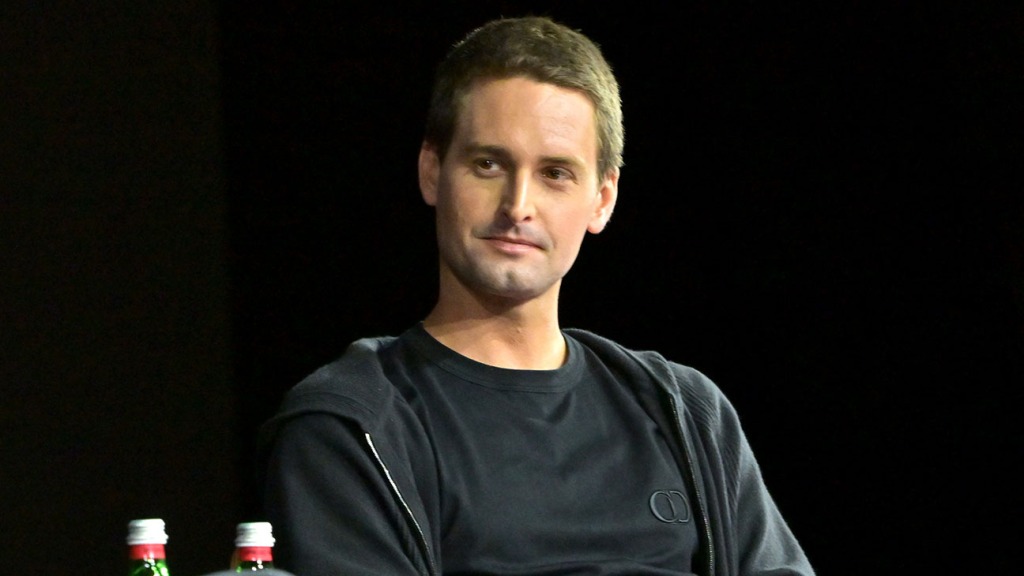
Snapchat parent company Snap Inc. saw its total revenue drop by 7 percent to $989.6 million, falling within the company’s expectations but missing Wall Street’s consensus, as net losses shrunk by 9 percent to $328.7 million during the first quarter.
The tech and social platform last reported $1.3 billion in revenue and $288 million in net losses during the fourth quarter, with Snap CEO Evan Spiegel warning in January of “significant headwinds” that would continue to impact the company’s business. At the time, Snap forecasted it would see its Q1 revenue decline between 2 to 10 percent.
Snap’s first-quarter adjusted EBITDA also dropped down by 99 percent to $813,000, down from $64.5 million in 2022. And as a sign for what may come ahead, the company is declining to provide revenue or adjusted EBITDA guidance for the current quarter but said its “internal forecast” was for revenue to drop 6 percent to $1.04 billion during Q2, according to Snap’s investor letter.
On the platform side, daily active users for Snapchat grew by 15 percent year over year to reach 383 million, though growth in the North American region has remained flat for the past three quarters at 100 million. Spotlight, Snapchat’s short-form TikTok competitor, had an average of 350 million monthly active users during the first quarter, while total watch time grew by 170 percent year over year.
“We are working to accelerate our revenue growth and we are using this opportunity to make significant improvements to our advertising platform to help drive increased return on investment for our advertising partners,” Spiegel said in announcing the Q1 results.
Though Snap is primarily an advertising-dependent business, the company has been expanding into subscriptions and B2B deals to provide additional streams of revenue. At Snap’s Partner Summit earlier this month, company executives said that Snapchat+, the subscription offering that costs $3.99 a month, now has more than 3 million subscribers. The company has also launched its AR Enterprise Services, a software as a service venture that provides merchants with augmented reality and artificial intelligence technology to help personalize their user experience and, in theory, drive more sales.
To encourage more creators to use Snapchat, the company also recently expanded the eligibility for its revenue sharing program that gives creators a cut of the revenue from ads placed between their public Stories. The company has not disclosed what the revenue split is, but Jim Shepherd, Snap’s director of global talent partnerships, told The Hollywood Reporter earlier this month that the program is “competitive” with others from platforms like YouTube.
And as part of Snap’s focus on AI, the company rolled out its ChatGPT-powered chatbot, My AI, to all users last week.
In a call with analysts, Snap CFO Derek Andersen said Snap’s investments into My AI and creator Stories monetization are “collectively expected to put downward pressure” on profitability in the “near term” but that they will generate revenue for the company down the road.
Over the last few decades, Disney has increasingly dipped into its own well of nostalgic favorites. Specifically, they’ve been taking their beloved animated classics, remaking them in live-action (or mostly live-action), and producing one blockbuster smash after another. Let’s take a look at all of the live-action remakes of Disney’s animated classics, going all the way back to the 1990s, to explore which films improved on the original and which ones came up short.
21. “The Jungle Book” (1994)
The first live-action Disney remake of an animated Disney classic is, somehow, still the worst. Stephen Sommers (“The Mummy”) directs this frustratingly inert take on Rudyard Kipling’s stories, which strips the animals of their characterizations and highlights instead the bland experiences of British colonizers, who condescend to Mowgli (Jason Scott Lee) at every turn. Some of the supporting performances, especially by Cary Elwes and Lena Headey, are noteworthy, but the rest of the movie is a sloppy throwback to a mercifully bygone era of adventure filmmaking, full of backwards mentalities and underwhelming action.
Disney
20. “Christopher Robin” (2018)
The beloved stories of A.A. Milne have been previously adapted by Disney into several beautifully animated and heartwarming motion pictures. So it’s especially cloying that Marc Forster’s “Christopher Robin” just plops these timeless characters into a tepid and cookie-cutter family flick about a dad who — gasp! — spends too much time at work, and rediscovers his inner child thanks to the return of his old, magical friends. Ewan McGregor shines as the adult version of Christopher Robin, but the melancholy cinematography, underdeveloped screenplay and creepy VFX renditions of Pooh and his friends make “Christopher Robin” a rough slog.
Disney
19. “Pinocchio” (2022)
Robert Zemeckis takes the original animated classic about a little wooden boy who dreams of being real and throws the whole thing in the furnace. Tom Hanks gives a career-worst performance as the toymaker Gepetto, the visual effects — usually the highlight of any Zemeckis enterprise — are roundly unconvincing, and the changes to the story undermine the movie’s messaging at nearly every turn. Only supporting turns by Cynthia Erivo, Keegan-Michael Key and Luke Evans briefly enliven a fantasy film which is anything but fantastic.
Disney
18. “Alice Through the Looking Glass” (2016)
James Bobin’s sequel to “Alice in Wonderland” certainly looks like an improvement on the original, with vibrant production design and weird visual effects, and a tone that’s mercifully less grim. But the time-travel storyline, which sends Alice back to the early days of Wonderland (sorry, “Underland”) to become the cause of all its miseries (including a genocide), retroactively injures the original film, which had a boatload of problems in the first place.
Disney
17. “Beauty and the Beast” (2017)
Despite the excellent source material and a decent cast, Bill Condon’s remake of “Beauty and the Beast” has the unfortunate distinction of being the only live-action Disney remake that has absolutely no new interpretation of its material. It’s just the exact same story but longer, and only because of unnecessary additions that arbitrarily pad the running time, confuse the characters’ motivations, and shoot holes in the already thin plot. Add in some ugly character designs and an utterly forgettable new song, and you’ve got a film which made Disney a lot of money, but artistically has no particular reason to exist.
Disney
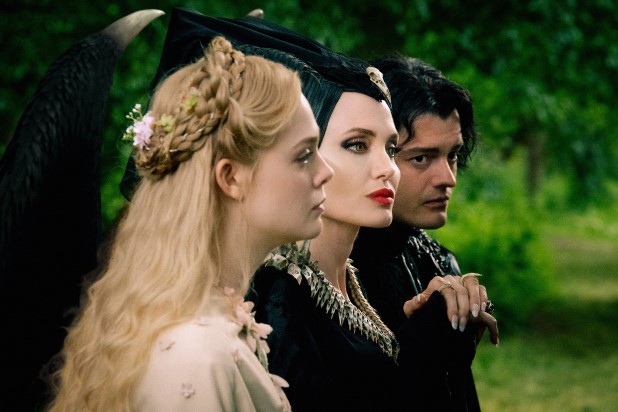
16. “Maleficent: Mistress of Evil” (2019)
Maleficent is back, and this time she’s meeting Aurora’s future mother-in-law, Queen Ingrith (Michelle Pfeiffer), who frames the sorceress for an assassination attempt and tries to commit genocide against Maleficent’s fairy kind. Jolie is as sharp as ever but the movie gives her precious little to do or say. The plot is a leaden bore that’s just an excuse to end in a big climactic battle (which gets hastily brushed off) and at the center of it all is the dumbest pipe-organ solo in cinema history. “Mistress of Evil” alsocompletely contradicts the story and message of the original, making both films worse as a result.
Disney
15. “Alice in Wonderland” (2010)
Tim Burton’s blockbuster retelling of “Alice in Wonderland” is unnecessarily murky and violent, and — worst of all — devoid of Lewis Carroll’s signature wit. Mia Wasikowska stars as Alice, who has forgotten all about Wonderland (sorry, “Underland”) and returns years later, only to find it taken over by darkness, a problem that can be solved only by more war. The film comes across like a cynical attempt to make a classic story edgy and marketable, but at least there’s an interesting attempt to transform Alice into a modern and active heroine, and the film’s ensemble cast boasts some real highlights, including Helena Bonham Carter as the Red Queen, Anne Hathaway as the White Queen, and Stephen Fry as the Cheshire Cat.
Disney
14. “The Lion King” (2019)
Unlike “The Jungle Book” — which has at least one human character — the new “Lion King” couldn’t even be considered “live-action” in the most generous use of the term, but for the sake of conversation we’ll include it anyway. This is an ambitious visual spectacle, re-creating the African savanna of the original 2D-animated movie in photorealistic CG detail as it tells the story of a lion cub who avenges his father’s murder and brings order back to the ecosystem. When Jon Favreau’s film works, it’s a visual marvel. But when it fails, which is most of the time, it’s because the film’s literalist animation style is directly at odds with the arch, fantastical story and characters. Style may be the selling point, but too often, it gets in the way of the substance.
Disney
13. “Mulan” (2020)
Niki Caro’s adaptation of “Mulan” sands down the queer edges of the original Disney classic, transforming a tale with a distinct and relatable point of view into a generic action spectacle. The wit is absent, the commentary is rote, the protagonist’s plight is more easily digestible than ever, and although the film boasts detailed art direction and costume design, the epic action is undone by humdrum editing which rarely gives the action the space it needs to impress. A frustratingly Americanized, mediocre presentation of a classic tale.
Disney
12. “Cruella” (2021)
This revisionist prequel to the “101 Dalmatians” movies reimagines attempted puppy mass-murderer Cruella de Vil into an eccentric and precocious young woman, whose journey from obscurity to fashion celebrity borrows liberally from “The Devil Wears Prada,” “The Count of Monte Cristo,” and “Mannequin.” It should be fun — Emma Stone and Emma Thompson sure seem to be having a lot of it — but the film’s hypocritical appropriation of 1970s punk aesthetics only calls attention to how conformist the story is. “Cruella” gives Disney characters credit for an artistic movement which couldn’t be more anti-Disney if it tried, superficially evoking images of rebellion while never being anything more than mass-marketable.
Disney
11. “Peter Pan & Wendy” (2023)
David Lowery directed one of the best live-action Disney remakes, but “Peter Pan & Wendy” isn’t it. Beautifully photographed, the movie follows the original J.M. Barrie tale closely until a brand new subplot starts creeping in, slowly working its way to the center stage, until it finally pushes all the allegorical power out of the story and ruins its central metaphor. Lowery’s insistence on taking Barrie’s tale literally and adding new wrinkles to Peter Pan and Hook’s origins doesn’t just miss the point, it actively contradicts it: Peter Pan is Wendy. That’s why Peter is usually played by a woman, and Hook is usually played by the same actor as her father. Without that, and without anything equally powerful to replace it, we’re left with a superficial — though, again, handsomely realized — fantasy.
Disney
10. “102 Dalmatians” (2000)
Kevin Lima’s sequel to the hit “101 Dalmatians” remake is strange and cartoony but, in its defense, completely unapologetic. Glenn Close returns as the despicable Cruella de Vil, now rehabilitated via brainwashing and eager to rescue puppies instead of murdering them. When her programming wears off, she resumes her wicked ways. There’s not much more to it than that, but the film’s astounding costume design and Close’s pitch-perfect performance make “102 Dalmatians” an amiable, if shallow, piece of children’s entertainment.
Disney
9. “Maleficent” (2014)
Disney’s “Maleficent” isn’t so much an adaptation of “Sleeping Beauty” as it is quasi-family-friendly riff on Abel Ferrara’s “Ms .45.” Angelina Jolie stars as a fairy who gets betrayed and violated by her human lover and left physically and emotionally scarred, so she plots her revenge against him by cursing his daughter, played by Elle Fanning. The cinematography is hard to make out a lot of the time — and once you do get a good look at some of the CGI creatures, you’ll wish it stayed that way — but the bold new interpretation of the source material and Jolie’s exceptional performance elevate “Maleficent” above its shoddy VFX and extremely sloppy storytelling.
8. “Aladdin” (2019)
Guy Ritchie’s remake of “Aladdin” sucks out all the personality the filmmaker could have possibly brought to the project, instead simply rehashing the original in a mediocre but mildly enjoyable way. Mena Massoud and Naomi Scott are wonderful as Aladdin and Jasmine, and Will Smith plays the Genie like he’s the ultimate fantasy wingman. It’s like watching the original “Aladdin” acted out in the middle of a parade: Cheerful, well-intentioned and fleeting.
7. “Lady and the Tramp” (2019)
Take away all the animated magic of “Lady and the Tramp,” and all you’ve got left is two dogs making goo-goo eyes at each other. And it turns out, in Charlie Bean’s modest remake, that’s just fine. Tessa Thompson and Justin Theroux are amiable mismatched lead voices, the story of love crossing class divides is just as simple and effective as ever and Bean’s new film makes the whole story more inclusive (and wisely jettisons one of Disney’s most problematic songs). The CG animation on the dog’s faces, to make them talk more like humans, is distractingly subpar, but everything else is sweet. Unambitious, but sweet.
Disney
6. “The Sorcerer’s Apprentice” (2010)
Except for an obligatory scene with some dancing mops, Jon Turteltaub’s “The Sorcerer’s Apprentice” has very little in common with the classic Mickey Mouse segment from “Fantasia.” Jay Baruchel stars as a young science nerd who is destined to become a sorcerer, and Nicolas Cage has to train him before evil sorcerers can raise an army and take over the world. It’s a perfectly watchable fantasy adventure, but nothing about “The Sorcerer’s Apprentice” makes a lasting impact. It’s practically the textbook definition of “average.”
Disney
5. “101 Dalmatians” (1996)
Stephen Herek directed a trio of live-action Disney hits in the 1990s — “The Mighty Ducks,” “The Three Musketeers,” and “101 Dalmatians” — and they’re all satisfying family-friendly romps. Jeff Daniels and Joely Richardson play humans whose dogs fall in love and have oodles of puppies, and Glenn Close portrays Cruella de Vil like a pitch-perfect 1960s “Batman” villain. The film devolves into brainless, non-stop “Home Alone” slapstick in the second half, but it’s never less than fun, and Close gives such a gloriously unhinged performance that she’s practically Oscar-worthy.
Disney
4. “Dumbo” (2019)
Tim Burton’s second live-action remake of a Disney animated classic is more clever, more emotional and significantly more subversive than his “Alice in Wonderland.” It’s still the story of a baby circus elephant with giant ears that help him fly, but this time his circus is purchased by a theme-park entrepreneur played by Michael Keaton, who proceeds to lay off most of the workers after the merger and to exploit his newly acquired IP beyond reason. Disney has often turned heartless capitalists into their villains, but in “Dumbo,” the studio seems to be pointing the finger at itself, giving Burton’s richly realized fantasy an unexpected and impressive sting.
Disney
3. “The Jungle Book” (2016)
Jon Favreau’s “The Jungle Book” uses so much CGI that calling it “live-action” is probably a misnomer; there’s only one character who isn’t motion-captured, and even the realistic environments were digitally rendered. But either way it’s an excellent film. Favreau eschews the laidback, episodic structure of the original in favor of a more focused adventure, with Mowgli (Neel Sethi) gradually taking responsibility for rescuing the jungle from the deadly Shere Khan (Idris Elba). An all-star cast of mo-cap animal characters keeps the film lively, although Christopher Walken is a distractingly strange choice for King Louie.
Disney
2. “Pete’s Dragon” (2016)
Another nebulously defined “live-action remake,” since the original “Pete’s Dragon” was a mostly live-action musical fantasy with one animated title character. David Lowery’s remake does away with all the classic songs (which ranged from adorable to weirdly violent) and also throws out the wackier storylines. Instead he highlights the emotionally sincere story of a lost boy whose only friend is a giant dragon. When Pete is discovered and brought back to the human world, his dragon, Elliot, comes looking for him. Lowery makes room for comic shenanigans, but he’s mostly interested in exploring our contemporary capacity for wonder. He transforms a formerly eccentric tale into something beautiful and, possibly, timeless.
Disney
1. “Cinderella” (2015)
Disney’s original “Cinderella” is a masterpiece of animation, but it’s also a narratively thin piece of wish-fulfillment. Kenneth Branagh’s live-action remake keeps the original, classic storyline in place but amplifies the characters, giving the wicked stepmother (Cate Blanchett) a meaningful motivation for her treatment of Cinderella (Lily James), giving Cinderella a set of clearly-defined principles that justifies her every decision, and giving the prince (John Madden) enough time with Cinderella that they can actually fall believably in love. Romantic, beautiful and — from a story perspective, at least — an undeniable improvement on the original, “Cinderella” is the crown jewel of Disney’s live-action remakes. For now.
Australian filmmaker Sari Braithwaite’s documentary feature film “Because We Have Each Other,” which has its North American premiere at Hot Docs on Sunday, has been picked up for international sales by Alief.
An intimate documentary five years in the making, “Because We Have Each Other” chronicles the life of Janet and Buddha and their five adult children.
They’re a neurodiverse family on the working-class fringe. With too many pets and a whole lot of bills to pay, they’re dreaming of bigger futures in a society that refuses to see them.
Life has been hard, and blended families can be messy. But amidst the chaos, their love is as real as it is unconventional.
Braithwaite said: “Buddha and Janet have such a wealth of lived experience. They have a way of being in the world which is deeply philosophical and spiritual. I learnt so much about what it is to be alive from them.”
She said the film is a story about love and family rather than a social-issues film. “My hope is conversations about disability, class, mental health and trauma are given space to continue outside this film.”
Chloé Brugalé, who produces alongside Braithwaite for Arenamedia, said: “This documentary finds poetry in the everyday moments that make up our lives.”
Members of the family will attend the screening at Hot Docs.
Brett Walker, president of Alief, said: “‘Because We Have Each Other’ is a beautiful story that reflects the magnificence of our evolving human experience, one that can lead us all to a better understanding of what happily ever after is.”
Rani Mukerji and Vaibhavi Merchant might join forces for a film.
After Mrs Chatterjee Vs Norway, Rani Mukerji might have locked her next film already as per a recent report.
Rani Mukerji is known for essaying powerful characters in Mardani, No One Killer Jessica or the most recent film Mrs Chatterjee Vs Norway. The legal drama film was loved by everyone and Rani Mukerji heaped praises for her performances. While the actress continues to revel in the success of Mrs Chatterjee Vs Norway, a fresh report suggests that Rani Mukerji might already be gearing for another film and this time it’ll be helmed by her close friend.
According to a source close to the entertainment portal Bollywood Hungama, Rani Mukerji wants to keep the momentum going with the next project. The source revealed, “Yes, Rani Mukerji has decided on her next venture. It will be a small budget film produced by Yash Raj Films itself. Interestingly, the venture will be directed by Rani’s good friend Vaibhavi Merchant. Right now it is still too early to say anything, besides the entire team is keeping details under tight wraps.”
Meanwhile, another source has claimed that Rani Mukerji has a host of films to choose from but they are yet to be finalized by the actress. The source shared, “There are projects but nothing has been greenlit as such, and nothing has been locked as her next venture.”
Rani Mukerji was seen in the 2021 film Bunty Aur Babli 2. She trended big time after the makers of Mrs Chatterjee Vs Norway, which was based on a real incident, shared the trailer of the film. Rani played the role of a Bengali mother, who gets into a legal fight with the Norway government after authorities take her kids away from her, terming her as an “unfit” mother.
The News18 review of Mrs Chatterjee Vs Norway read, “The film successfully grabs your attention right since its first frame. But soon, the emotional scenes become too contrived. The intense and profound emotionality doesn’t quite transform on celluloid and you might be left waiting for more. As sadistic as that may sound, the core essence of the narrative is harrowing to say the least but the loud howl and the chest beating don’t strike a chord in the way you would have expected them to. The execution is dry and it seems like the sentimental scenes are coerced on you only so that you can shed buckets of tears.”
Yatamanyu is a multi-disciplinary Journalist & Photographer who dabbles in Films, Poetry, Music, Politics, Pop-Culture and everything in between. …Read More
As Guardians of the Galaxy Vol. 3 gets set for its arrival in theaters, one of its biggest stars teased the cameos that could come from other parts of the MCU.
In the final press release for Marvel Studios’ Guardians of the Galaxy Vol. 3, Drax star Dave Bautista teased that fans should expect to see some MCU cameos in the threequel.
Looking ahead to the moments when he sees fans cheering, Bautista specifically noted that there will be “a lot of cameos” for the final movie in the Guardians of the Galaxy trilogy:
“You’re going to see a lot of cameos. Those are the moments where people are going to cheer when they see certain people who have come back for this last movie.”
Additionally, executive producer Simon Hart discussed the pride that the entire team feels in completing this trilogy, teasing “new emotional heights” and “new depths in these characters” that the actors were able to dive into for the story:
“We’re proud of the work. Everyone’s very proud of the work that they’ve done over the past ten years and the journey they’ve taken their characters on. In ‘Vol. 3,’ you’re going to see new emotional heights, and new depths in these characters that the actors are finding, as well as story layers that haven’t been seen before in a movie like this. James is really pushing the envelope.”
Who Could Cameo in Marvel Studios’ Guardians 3?
The Guardians of the Galaxy franchise has been known for its cameo appearances over the past decade. The first movie featured both Josh Brolin’sThanos and Seth Green’s Howard the Duck while the sequel delivered the first teases for Adam Warlock and included the Watchers.
The big question now though is what exactly Dave Bautista means when he says to expect some big MCU cameos.
One that’s most likely off the table is Chris Hemsworth’sThor, with director James Gunn confirming that he had no plans to include the God of Thunder in this emotional story.
But, on the other hand, Gunn also teased the idea of cameos in Guardians 3 as far back as a year ago, making it clear that there are some big moments in store for the team’s massive Phase 5 send-off movie.
Now, the only question left is who exactly those cameos will be.
Guardians of the Galaxy Vol. 3 will arrive in theaters on Friday, May 5.
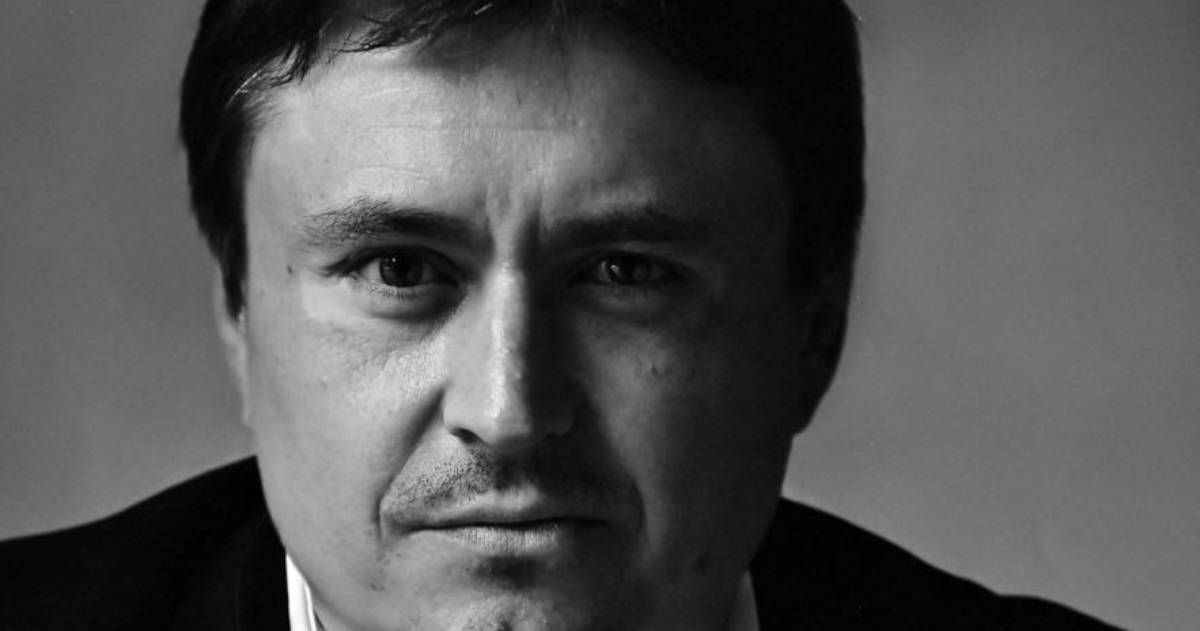
The great Romanian filmmaker Cristian Mungiu has been a hit a Cannes Film Festivals for years at this point. In 2007, his second feature, 4 Months, 3 Weeks and 2 Days, was awarded the Palme d’Or and later received several ‘best film of the year’ awards from various international associations of film critics.
Mungiu returned to Cannes again and again, where he won two more awards (for director and screenplay) for hit projects like Graduation and Beyond the Hills. And now, his new film R.M.N.(the abbreviation cleverly referring to the scanning of the human brain while abbreviating Romania), is playing in U.S. theaters following last year’s debut Cannes — a festival that is highly anticipated this year.
MOVIEWEB VIDEO OF THE DAYSCROLL TO CONTINUE WITH CONTENT
R.M.N. takes place a few days before Christmas back in 2019 and centers on a morally ambiguous man named Matthias (Marin Grigoire). Having quit his job in Germany, Matthias returns to his multi-ethnic Transylvanian village and wishes to involve himself more in the education of his son, Rudi (Mark Blenyesi). Matthias believes Rudi was left for too long in the care of his mother, Ana (Macrina Bârlădeanu), and hopes to rid the boy of the unresolved fears that have taken hold of him. When a few new workers are hired at a small factory, the peace of their community is disturbed in more ways than one.
We recently caught up with writer-director Cristian Mungiu, who opened up about the unique creative process behind his latest feature. He also spoke about the film’s countless long takes and how they somewhat reflect cinema’s ability to imitate reality. Read our exclusive interview below.
Shooting R.M.N. Based Around Xenophobia
MW: What inspired you to come up with such an interesting storyline for R.M.N.?
Cristian Mungiu: The film is based on an incident that happened, I think, in 2020 in Romania. And the starting incident was covered a lot by the press; it became kind of a scandal. So it wasn’t difficult for that incident to reach me. What was more difficult is for me to figure out what I could take out of it, besides the fact that it was quite spectacular.
Mungiu: I thought that it was speaking so much about the world today, with all its limitations, that I could make a film as a portrait of who we are today, to report a snapshot [of] a world which is moving very, very fast, faster than people can internalize somehow, and this is creating a lot of anxiety and a lot of fears, because people don’t really feel where all this globalization is going. It became so easy to travel, and you have to share your space, your living space, with so many people with different opinions who seem to be so different from you. And we’re not really accustomed to this rhythm.
Mungiu: For thousands of years, our DNA was that you knew your village, and if somebody else from a different village would come, that was already a foreigner. And now, there are millions of people coming with different religions. I thought that this speaks about the state of the world today, and I thought that it speaks about some traits, which are not the nicest in our personality. Like, this idea that we’re very tribal.
Mungiu: I think when more people see it in the United States, I think they’re really going to relate. It takes place in Transylvania, but I think a lot of people […] prefer to imagine that this is happening somewhere far away from them in this small little country, which is xenophobic. But actually, it’s not right to consider that this is just their problem or our problem. It is a problem that we can see, unfortunately, every day, in a lot of countries. Not only us, but you can see it in France, Italy, Africa, and China. And you see that part of it’s from the context, which is local, but part of it is from people being very easily manipulated by this populism and turning them against ‘the others,’ because they are encouraged to focus more on the differences between them, among them, and not on what makes us all humans.
Mungiu: For me, it’s an encouragement for the viewers to consider their position between these two sides of your life, on one side as this darker side of yours, populated by these instincts and creatures and violent ideas […] from where all these murky impulses pop up. And on the other side, of course, through education and culture, you have a little bit of empathy, and have oneness, and that’s your human side. But I’m not sure that they are balanced. I think that in different moments of your life, one or the other prevail. And I’m sorry to say that in the moments which are surprising you, it’s more the violent side which is prevailing.
Mungiu: The film for me speaks a lot about this internal conflict between the human inside of yourself and the animal. And I couldn’t think of a better ending, then of ending up with a character who became aware that the source of evil in the world might not just be external, but it can be inside himself, and he needs to make some choices.
It’s difficult to find the visual equivalent of some values, which are very abstract. How do you talk about fear and anxiety and truth? And how do you talk about manipulation and how to talk about subconscious? How do you talk about this duality of man and animal? And I had to come up with some things which are still realistically explained, but eventually they come up with another level of understanding.
Cristian Mungiu, Master of Cinema
IFC Films
MW: R.M.N. is full of scenes that are each one very long take, especially that scene in City Hall. Those were really impressive but must have been challenging to pull off.
Mungiu: There are a lot of challenges. I will say that this is the most difficult way of staging situations in cinema when you want to shoot them like this, but this not because I want to see that I’m stronger than other directors, I don’t really care. Only the result matters. And it matters that it corresponds to my principles about the relationship between cinema and reality. I make a kind of cinema which is based on reality. So I started by observing reality, and you know, reality is this continuum. There is no editing, you cannot cut off the parts that you don’t like.
Mungiu: This brings our responsibility for the viewer, who needs to decide what’s important in a situation; I won’t come for a close up, I won’t cut the parts which are not important. I try to signal to them that I observe life in the most objective way possible. It’s still a convention. If there’s a power shortage, there’s no film. But you know, what’s interesting is that people come into the theater knowing that it’s a convention, and there are actors on the screen, and there’s a script over there. But eventually, when they get to this 20-minute scene, if you don’t cut and you don’t use a lot of music, they will follow the situation, and it’s going to look as if that could happen to them. And this corresponds to the truth that I hope the film manages to pass to them, that it could happen to them as well.
MW: You’ve made many films at this point. Was making R.M.N. particularly unique compared to your past projects?
Mungiu: I think that every movie is challenging, in the sense that the movie doesn’t exist prior to making it. And you go there, having an idea about how you’d like the film to be, but you meet a lot of difficulties. And eventually, if you manage to stay very open, you will learn which of your ideas are valid and which are not, and you have to drop them because somehow the film will tell you that they do not fit in. I wanted to do something with the film, which I couldn’t. I wanted to reinvent the way I see cinema, but I couldn’t, I still see cinema in the same way.
Mungiu: So what I did, I was trying to find another thing which is relevant for the state of the world today. And this is what makes it the best thing that I could say now, because it’s a portrait of who we are today, and it’s a snapshot of the way I see reality today. I think that this is something that cinema can still do.
Star Wars Jedi: Survivor is out in the wild now, and players on PC are struggling to get the game to run optimally. While it’s nothing new that games have buggy versions at launch, Star Wars Jedi: Survivor is notably bad. Even players on high-end rigs are having trouble getting the game to run at a stable framerate. EA has issued a statement about the performance on the PC version, which you can read below.
EA Issues Statement on Poor Jedi Survivor PC Performance
The team first mentions that players on Windows 10 may experience issues if they are running a PC with a multithreaded chipset or a high-end GPU with a lower-end CPU. There are a lot of variables developers have to account for when developing a game for PC. Players can have a broad spectrum of parts, old and new, that can make running games difficult.
“We are aware that Star Wars Jedi: Survivor isn’t performing to our standards for a percentage of our PC players, in particular those with high-end machines or certain specific configurations.
For example, players using cutting-edge, multi-threaded chipsets designed for Windows 11 were encountering problems on Windows 10, or high-end GPUs coupled with lower-performing CPUs also saw unexpected frame loss. Rest assured, we are working to address these cases quickly.
While there is no single, comprehensive solution for PC performance, the team has been working on fixes we believe will improve performance across a spectrum of configurations. We are committed to fixing these issues as soon as possible, but each patch requires significant testing to ensure we don’t introduce new problems. Thanks for understanding and apologies across all platforms, and share updated timing as soon as it is available.
As Switzerland’s international documentary film festival Visions du Réel is about to wrap up, its artistic director Emilie Bujès, who’s been running the show since 2017 and was part of the selection committee for several years before that, told Variety that packed theaters throughout the 10-day event are proof that the public is back.
She was very pleased to note that many of the 163 screenings were packed – “even the retrospectives!” – and she was delighted to have two women filmmakers among her guests.
“They were fantastic. Symbolically, to have two strong women who were so generous with the audience – it was paradise,” she said of Alice Rohrwacher, who will be in Cannes’ main competition with “La Chimera”, and acclaimed Argentinian filmmaker Lucrecia Martel, whose upcoming project, “Chocobar,” will be her first foray into feature-length non-fiction.
Bujès sat down with Variety for a look back at this 54th edition of Visions du Réel.
At the festival, attendance figures were good, but generally speaking, what you hear is that what’s needed to draw people to theaters are special events…
I can see festivals are doing great: we’re back. But theaters are not – does it mean things will continue to go down for theaters and we are all in danger? Or do we all need to find the energy to make it start again? What we see here in Switzerland is the cinemas that work are those that are super active in organizing events.
Maybe we need to rethink how festivals can contribute more. I truly believe – maybe it’s an ideological way of thinking – that people have forgotten how great it is to go to the cinema, and I hope festivals are contributing to change that: you attend a screening that’s packed, and you have this experience of watching films with people in a dark space without your phone, and it’s a really different experience.
During their pitch, Peter Mettler (“Where the Green Grass Grows”) and his producer said they would welcome an offer by a platform for his seven-film series…
I’m not against platforms: everybody’s watching films at home. It would be interesting to make sure that those platforms have more diverse content – some of them at least – but we shouldn’t have to pick between one or the other.
For example, I want to watch Peter Mettler’s seven films in a cinema, I want to be in a room with people that fall asleep and eat and spend 10 hours together, I think this would be an amazing experience. Those are films that have a limited potential in terms of audience, so we should make sure that we reach them by all means possible.
We bumped into Niklas Engstrøm, the artistic director of CPH:DOX, here in Nyon. What about the supposed rivalry between your two festivals, especially since they changed their dates from November to March [in 2015]?
Sure, we fight over films, though I would say we fight more with the Berlinale than with CPH. But this is also part of the game: we respect each other because we are fighting for the same films, and we are all connected because we are just these crazy people watching tons of films, and we love films.
Of course, we were not happy when they came closer to us [in March], but the profiles of our festivals are not the same. It’s more interesting for us to nurture this different identity. First, we are smaller, so basically Nyon becomes the festival: everybody hangs out together for those industry days, and it’s different to being in a big, cool city like Copenhagen.
Then, we’re different in terms of programming. They are much closer to the U.S. and a certain understanding of cinema and the film industry. They also have different kinds of competitions, like F:ACT [dedicated to political and journalistic films] and the Science program. We don’t have sections like that: the differences we create are more cinematic. It’s another way of thinking of the lineup, which makes our life a bit more difficult, but it’s a challenge for us to reach the industry which is going to feel comfortable with those films.
It’s also interesting for us to think about the balance of the [VdR-Pitching] projects – we only have 15 compared with around 30 at CPH. We try to build something that’s coherent but also open, so we can address those who are more [interested] in journalistic [docs], and also bring them onto projects they might consider slightly more arty, which still address strong topics.
What would you say to those who would like to see more established talent in your lineup and among your projects?
I really feel our job is to launch new talent. We have established guests and names – like Peter Mettler, Carmen Castillo and Laila Pakalniņa – and this sends a clear cinematic message: ‘This is the direction we are looking in.’ It’s a hint of what to expect, a very strong statement. But I really feel deeply that we watch a lot of films and pick the films and projects we want, and it’s our job to help these people enter the circuit.
How do you make sure you connect the right sales people to the right projects?
There is a lot of preparation. Sophie Bourdon [the new head of Industry] spends a lot of time talking to the project holders, preparing them, to find out what they are looking for. And we know the sales people, we have a sense of who might be interested in which project. This year, they held about 500 meetings over the three Industry days, so there’s a lot happening.
Visions du Réel runs in Nyon, Switzerland, from April 23 until April 30. VdR Industry ran alongside the festival April 24-27.
“Guardians of the Galaxy” star Karen Gillan thinks her Marvel Cinematic Universe character Nebula has warmed up a bit by the franchise’s third film.
“Guardians of the Galaxy Vol. 3” sees the blue daughter of Thanos assume a bigger role in the Guardians because her sister Gamora is not the same as she was before the events of “Endgame.” The blip, reversed by Ironman’s snap with Thanos’ gauntlet of Infinity Stones, somehow brought back an earlier version of Saldaña’s green guardian, who died at the hands of Thanos when he sacrificed her on a magical cliff to aquire one of the Infinity Stones.
“It was kind of interesting to play because it’s almost like [Gamora] and Nebula have switched places and now Nebula is the more evolved character with more compassion and Gamora is like the old Nebula,” Gillan told TheWrap at the film’s premiere on Thursday.
In the first two films, Nebula doesn’t hide her anger and desire for vengeance toward her sister. Thanos used to make the two women duel and threatened replacement of a body part to the loser of the repeated battles. Nebula once told Gamora that she didn’t care about winning, she just wanted a sister.
“That was interesting to play around with, and Nebula in general is different this time around,” Gillan continued. “She’s got much more of a sense of humor.”
Thinking about ways she may be able to work with “Guardians” director James Gunn again in the future, Gillan said she is all in on any opportunity that comes up for her to appear in the DC Universe. Gunn was named co-head of DC Studios with Peter Safran in October.
“I would jump at the chance to work with James at any given opportunity,” she said. “If he asked me to play, like, a two-headed alien in the background of a shot, I’d be there.”
“Guardians of the Galaxy Vol. 3” arrives in theaters May 5.
John Hoogenakker has made quite a name for himself.
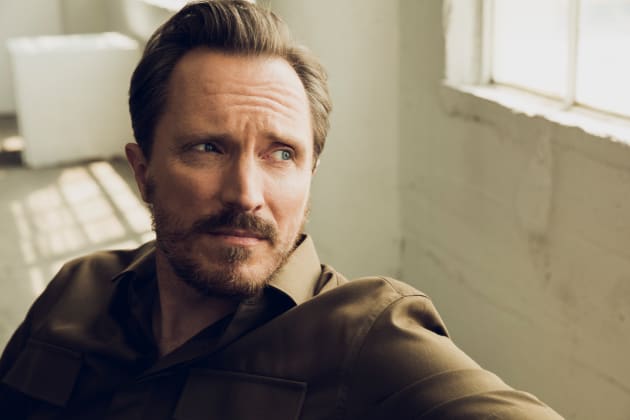
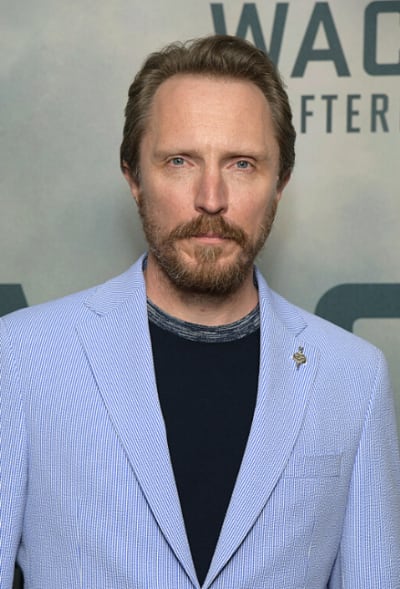
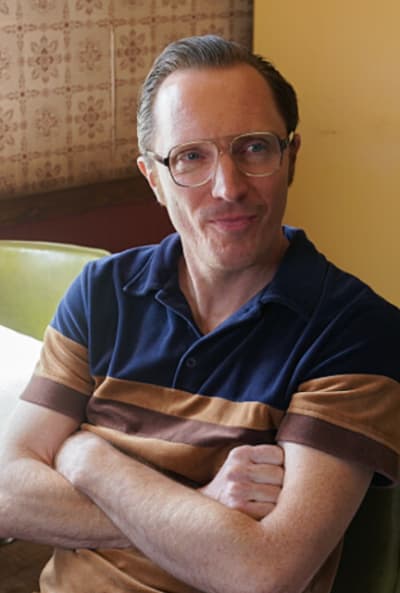
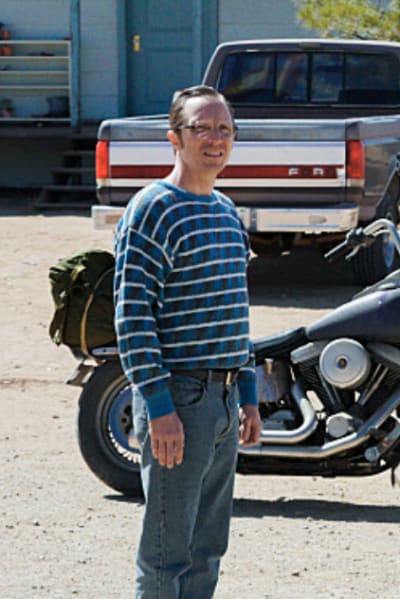
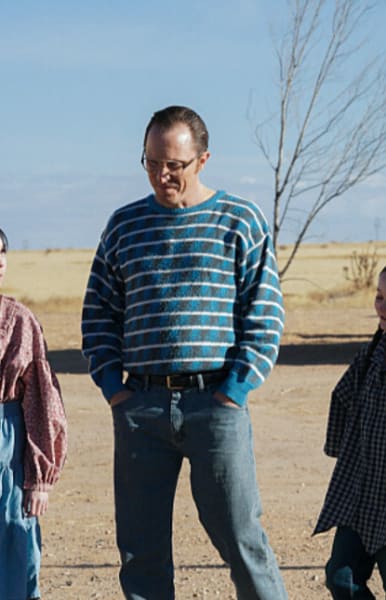
From television (Dopesick) to film and commercials, you’ve seen his face or heard his voice in various eclectic roles. And his career continues to ascend, with his stunning portrayal of real-life Branch Davidian Clive Doyle in the Showtime miniseries Waco: The Aftermath.
The series covers both the immediate aftermath of the Waco standoff and takes a look into the past, bridging multiple storylines into a captivating and moving series that does as much to teach us about the lessons of history as it does to help us understand the present.
We were fortunate enough to speak with the illuminating Hoogenakker, who was sincere and incredibly nuanced in his responses to our questions about the series.
We could have chatted with him all day. Enjoy this thoughtful conversation with the delightful Hoogenakker.
Why did you feel it important to show Clive’s early days with David Koresh in conjunction with the present-day trial?
Well, because I’m fascinated by what grabs a person and pulls them into a situation like Clive found himself in. And even after the standoff until he passed away, which turns out was, I think, the day after we wrapped principal photography, he continued to believe that Koresh was the reincarnation of God and continued to lead Bible study groups.
As a father, he gave both of his young daughter’s hands in marriage to Koresh. I am fascinated by other people’s worldviews, particularly when they’re so far removed from my own. Getting to study that and sitting down at the table with that is fascinating to me.
That’s the buildup, obviously, that this idea of this guy immigrating from Australia with his mom when he is in his early twenties back in the mid-sixties. The Branch Davidian compound outside of Waco at Mount Carmel went back decades, and he had been a Seventh-Day Adventist.
They were at a church meeting in Australia, and they heard that there was going to be a Bible study group with this other group, and they went and studied with that other group. When word got back to their Seventh-Day Adventist church that they had actually sat down with this other group, they were excommunicated from their church.
So, this whole odyssey begins, ending with him and his mother waiting for the call to take that huge trip from Australia to the middle of Texas and live as part of this community. That gets him into the community and then the trial afterward.
But to your question, I think the reason it’s important to go back and kind of look at how he got to where he ended up is that he just represents a microcosm of this tribalization that’s going on in this country.
By looking at one person’s journey in micro, maybe when we zoom back out and look at how these other people ended up, where they ended up.
Then by extension, how white supremacists seized on the standoffs at Waco and Ruby Ridge to kind of try and recruit members and feed their party line that the government is out to get you, we can then maybe start to understand how we got to things like Charlottesville and January 6.
How familiar were you with the events of Waco prior to landing the role?
I’ve got to think. I was 15, turning 16 when it happened. So, it was on TV. Of course, in the early nineties, basically, you had three or four flavors of network television news to watch, and they were all kind of like, which anchorman do you want to listen to? But it’s all kind of the same storyline.
I remembered the way that it was presented to us back then vaguely. During the pandemic, my wife and I, like everybody else, were casting around for something to watch, and we landed on season one and burned through it pretty quickly.
I thought it was fascinating. I like ambiguity and depiction of characters, particularly ones that are historical figures, because I think it’s seldom that everything is completely black and white.
What I learned before doing a deep dive after landing the role was that the ATF, the FBI, and the Hostage Rescue Team were occasionally working at odds with one another.
There wasn’t really a general on the ground in charge of the campaign, and the Branch Davidians, led by David Koresh, set themselves on a collision course with the far greater force that had a lot of skin in the game.
What drew you to the role?
Clive was the one Branch Davidian who stood trial for the murder of four federal agents subsequent to the standoff and was fully acquitted. He served time up until that verdict came down, and then he was released.
He testified before Congress, and he allowed the defense to paint a more human and approachable face onto a group of people who were super ultra-orthodox hardcore and had been portrayed as completely insane in the news. I was interested in that. I was interested in learning more about his perspective.
It’s still a source of deep division and argument as to who started the fires.
Many of the Branch Davidians still claim, the ones still alive, that it was absolutely the federal government. Whereas the federal government claims they had recordings of Branch Davidians inside the compound planning where to start fires if their walls were ever breached.
Clive claims he never held a gun, and his defense attorney was able to get him off because, presumably, the jury couldn’t believe that this mild-mannered guy ever would’ve held a gun. First of all, they don’t really recognize the rules that you and I follow as the most important rules, which puts them at odds with a lot of people.
I wanted to try and understand how a parent could hand their child over in this way to another adult.
I can’t say that I fully understand it beyond saying that to this guy who essentially lived the life of a monk.
It would be like his highest religious leader, who is, he believes, the incarnation of the divine, choosing his children and saying, “We’re going to have children. Your children and I are going to make children who will sit in judgment at the end of days.”
If you can wrap your brain around that idea, you can start to understand Clive Doyle. The harder the person is to understand, the more interested I am in trying to portray them.
What is the most challenging thing about portraying a real-life character and real-life events on screen?
Particularly when there’s someone as divisive as Clive Doyle is by virtue of the fact that he was a Branch Davidian, it’s that you have to make a decision as to how much of other people’s commentary you allow into your work.
I think what a lot of us ended up doing was digging as deeply as we could into how these people saw themselves and going with that. Everyone is the hero of their own story. Everyone justifies their own actions.
Everyone believes that they’re acting with the best of intentions, particularly if you’re a member of an inner circle of a group like this who is certain that they’ve got it right and everybody else has it wrong.
I think it can be very challenging, particularly when the person exists in the public mind and when they are a divisive character.
But I think at the end of the day, you kind of have to try and go to how that person sees themselves because, to me, it’s more interesting than if I play a Branch Davidian the way everybody alive in 1993 watching the news remembers Branch Davidians.
I think it’s more entertaining and it’s more nuanced to have your preconceptions challenged.
Some of the most gripping moments, I think, from the miniseries are in some of those courtroom scenes. What were those like to film?
Well, they were great from the standpoint that a lot of my earlier years were spent doing theater.
It’s a very different art form to film and television in that, generally, when you’re doing a play, you’ll sit down with the rest of your cast for the first few days, if not the first entire week, to do what’s called table work where you go through the play line by line. You make sure everybody’s on the same page.
But it also serves to get to know everyone and make sure you all have a shared understanding of the play and what the words mean and flesh out what your subtext is and that kind of thing. Whereas in film and television, the actor, it’s assumed, has done all that work before they show up.
Sometimes you’ll have a conversation with a director before you go to shoot, but ideally, you have an opportunity to ask a few questions if you have a few questions prior to shooting so that you’re kind of just ready to rock when the cameras roll.
One of the coolest scenes that we got to shoot in the courtroom was one where I was really just a bystander. A lot of it was watching Giovanni and Mike Cassidy work. But there was one day when Mike Shannon was in the witness box, and Giovanni was cross-examining him, and it was a good long scene.
I want to say it was like a six- or seven-minute scene, and they had two cameras on Giovanni, and they gave him three passes at the scene. Then they turned around, got the cameras on Mike, and gave him three passes at the scene.
There was a short reset between each take, but we were all locked in for twenty minutes or so while they got each actor’s coverage.
The cool thing with both of those guys, who are awesome to work with –great guys — is just how they’re at the top of their game. They’re super well prepared, and they had not run the scene prior. They filmed the rehearsals, they were wonderful, and there were slightly nuanced changes every time they ran it.
When you do theater, a lot of people are like, “How do you do the same story every single day, eight times a week?”
Well, it’s like if you’re a skier, each time you go down the mountain, it’s slightly different. If you’re a white-water rafter, each time you hit the rapids, it’s slightly different. It’s the same river, but you get to play each time.
And these guys were doing a wonderful job.
Did your perspective or thoughts about the event change at all as you went through the process of filming the miniseries?
Yeah. I mean, honestly, Whitney, I can give you the arc from when I was 16 and what I remember thinking then to what I think now. At the time, I thought it was a tragedy. And I remember at the time Bill Clinton was the president and the government’s take on it was, and I’m paraphrasing what the president said at the time.
He said that it was a tragedy that those people caused their children to be killed, and I don’t see it that way now. I don’t see it that way at all. I think that the federal government, particularly the ATF, needed a made-for-TV spectacle.
They needed a win in the eyes of the American people because they had suffered a bloody nose at Ruby Ridge and were facing cutbacks in Congress.
You may remember this if you’ve seen documentaries about it or read about it. Local news outlets knew that the ATF was going in there that morning, and they got turned around on the way to Mount Carmel, and they pulled over a postal carrier on a rural route and asked them which way to get to the compound.
The postal worker was like, “Why do you need to go to the compound?” And they were like, “Well, the ATF is going to ring him.” And he was like, “Oh, I see. Well, the compound’s over that way.” And then he turned around and went straight to the compound because it turned out the postal carrier lived at the compound.
And he warned them that it was showtime, and an ATF informant that had been kind of getting in with the Branch Davidians immediately left and told the ATF at their watching station, which was half a mile down the road, “Our cover is blown. They know we’re coming.”
The ATF made the call to go ahead with it. Again, there were cameras there to watch the ATF be victorious in that moment.
Now, this is making no comment about whether or not the Branch Davidians were up to illegal things because, as it turns out, they very likely were, but because of the way things went down, the case wasn’t able to be prosecuted then it would’ve had it gone down a different way.
And then, when the FBI came in after four ATF agents were killed, that introduced a new aspect to the dynamic right there on the ground. Then the Hostage Rescue Team came in, and they had different goals. These government bodies were not acting in concert with one another. They were stepping on each other’s toes.
If you’re in the government or if you’re in law enforcement and someone kills one of your coworkers, they were eager for a reprisal, it seemed.
I feel like the other side of it is that the Branch Davidians had an apocalyptic theology. They believed that it was all going to end in fire, and they were kind of on record of saying this, and the federal government knew this.
Then there was another aspect where they gave a video camera to the Branch Davidians to record themselves thinking, “We’ll give them enough rope, and they’re going to hang themselves.” But then they passed the video camera and the footage back out, which actually humanized them in a way that didn’t really help the government’s story.
They kind of left that out when they went to Janet Reno and said, “We believe these guys are abusing children in there.”
So I feel like David Koresh committed suicide by cop and took eighty souls with him, and the government was over-eager to be used in that regard. They all look pretty bad.
I’ve been thinking a lot about this quote, which goes to Ip Man, who was Bruce Lee’s martial arts teacher, and he says, “Compassion is the soul of martial arts.”
So, the idea is that when you have far superior power and force and training, and you know you can inflict grievous harm on someone who is perhaps not in their right mind or might do themselves harm, it becomes your responsibility. Your foremost goal is to end the situation peacefully.
That was where the government was making headway. It was taking a really long time, but I think Gary Noesner got something like thirty people out, and they were right towards the end, and they pushed too hard.
The government does not approach these situations in the same way anymore because when people have extremist beliefs and you back them into a corner, they will make extreme choices. That’s one of the things that we all learned at Waco. I guess getting to play a part in sort of dramatizing that lesson was important to me too.
Why do you feel this is still an important story to tell in today’s landscape, and what do you hope the audience can take away from the series?
I don’t think that we have to agree on everything. I don’t think it’s realistic, but I think we need to expend a lot more time and energy in listening and trying to understand. Most people, I wouldn’t even say Americans, because a lot of countries throughout the world deal with the same kinds of division that we deal with in this country.
And I think that the closer you get to people you are told are bad, the more commonalities you see with those people and yourself. There’s something there.
That’s why I kind of keep wanting to go back to stories like this and reinvestigate them because it’s very easy for someone who has a passing interest in current events to be like, “Oh, wasn’t that crazy group of people that got themselves killed by the government?” And just write it off like that. There’s a whole lot more to it than that.
And the government, while it has made changes subsequent to this tragedy when a tragedy like this occurs, you don’t get to just put it on a shelf and forget about it. I think it’s part of our responsibility as citizens in this country to continue looking at the things we have not gotten right. It’s very important to mark our successes. Absolutely.
We need to be clear about the things that we have gotten right and the things that we have achieved, but we can’t, in celebrating our successes, lose sight of the things that we still have to work on. And this is a tough one because, really, it’s about compassion and empathy for people.
Branch Davidians are very easy to, for an average American, not have compassion or empathy for. I think a lot of where we are right now is we’re just losing the muscle to have compassion and empathy for people on what we perceive to be the other side of the spectrum from us or a little way down the spectrum even.
Whitney, when I was a kid, I lived in a part of North Carolina now, way up in the mountains, beautiful, beautiful area, very rural here. But it’s right near Asheville, which is a super cultural, awesome town. A lot going on in Asheville.
I drove up here with some dear friends when I was 16 or 17 years old, and one of them was a girl who had dark, dark skin and one of them was a boy whose dad was a retired GI, and his mom was Korean, so he was mixed race. Then there was me, and I had really long hair. And at the time, I wore rainbow suspenders.
Our car broke down on a rural highway here, and it was on a Sunday. At that point in the mid-nineties in western North Carolina, nobody worked on Sundays, and our coolant hose just blew on the side of the road. We pulled over, and the three of us, a poster for diversity, got out of our station wagon.
No sooner have we gotten out of the station wagon than the first car to pass us stops and asks if they could help us. And I was like 16, 17 years old.
I was like, “No, I think we’re good.” I had no idea what was wrong with this car and how messed up it was. So that person goes on. Two more cars stopped before we were finally like, “Yeah, I think we’re pretty much screwed here.”
This woman named Nancy Brown pulled over and stayed with us until she found a tow truck to tow us to a small engine repair of this guy way back up in the woods who fitted my dad’s station wagon with a lawnmower coolant hose and gave us coolant and refused to take any payment and just wanted us to remember.
We drove back down the mountain. We were a couple of hours later than our parents thought we were going to be, but they weren’t freaked out because it was the nineties, and you just assumed everybody was late.
And now we’re at a place where if you drive up the wrong driveway in the dark, there can be deadly consequences because of the stories that we’re telling ourselves about each other without taking the time to let the other person tell us their own story.
To me, that’s a story that exemplifies how far we’ve gotten apart from one another just in my lifetime. If my work can do a little bit to kind of sit us down at the table with one another, then I’m grateful.
You can watch Waco: The Aftermath on Paramount+ With Showtime.
***This interview has been edited for length and clarity.***
Whitney Evans is a staff writer for TV Fanatic. Follow her on Twitter.
Writers Guild of America East and Hearst Magazines have reached a tentative agreement on their first contract over labor rights, side-stepping a potential writers strike.
“The WGAE is pleased to announce a tentative agreement at Hearst Magazines that will guarantee the writers, producers, and editors across all 28 brands their essential labor rights,” said a statement Friday. “This landmark contract was hard fought since Day 1, and is testament to what can be achieved through the power of solidarity.”
The development comes more than two years after the two entities went back and forth over the terms of their contract after the guild filed four unfair labor practice charges against Hearst with the National Labor Relations Board. In February, WGAE and Hearst Union claimed in their third filing that Hearst “unilaterally implemented” uneven wage increases for some employees while the union’s negotiating committee was bargaining for percentage wage increases for all staff members.
Hearst Magazines holds 28 brands, including “Oprah Daily,” “Esquire,” “Cosmopolitan,” Harper’s Bazaar” and “Elle.” The guild is still in negotiation talks with film, TV and streaming companies for guild members.
“In the last few months, the WGAE has secured contracts in the Film/TV/Streaming sector at nonfiction television companies Jigsaw Productions and Sharp Entertainment, and organized podcast workers at Crooked Media. Further, we are negotiating contracts at MSNBC and CBS News Streaming in the Broadcast/Cable/Streaming News sector,” reads the release.
The contract sidesteps an Unfair Labor Practice strike that was set to begin if a fair contract could not be reached on Friday, which comes on the heels of the walkout that took place in March and included among 500 WGAE members.
“Guild members understand the immense value they bring to Companies—whether it’s Hearst or Warner Bros. Discovery—and that they deserve, and will fight for, fair compensation and workplace protections,” the press release continued.
At five minutes past noon on Tuesday, Ticketmaster sent Joe Holmes and many others in Britain an email: “Congratulations, you have been successful in the ballot” for two tickets to King Charles’s coronation concert.
Mr. Holmes, a student in his final year at the University of Essex, saw it immediately while checking his email and rushed to click the link to claim his tickets to the concert, an official coronation event that will take place a day after King Charles III is crowned — only to be met with a message saying that none were available.
He was one of dozens of people who believed they had secured entry to the concert before being quickly let down once they tried to collect tickets. Many Twitter users posted screenshots of the same “congratulations” email Mr. Holmes received this week and expressed frustration about the confusing messaging; one user called the email “disgraceful” and said Ticketmaster had a “total shambles of a system.”
It was “immediate excitement and then immediate disappointment,” Mr. Holmes said on Friday. He had already sent a screenshot of the email to his sister in celebration and believed his next step would be to book a train to the event.
Ticketmaster was tasked with issuing 10,000 free tickets to the concert being held on May 7 through balloting, a process that fans are saying the site has made a mess of. It comes a few months after the company canceled the public sale of tickets to Taylor Swift’s latest tour because of high demand, which spurred public outrage, a lawsuit from fans and a Senate hearing.
Ticketmaster said in an emailed statement on Friday that people who had been selected in earlier rounds of balloting had three weeks to claim their tickets to the coronation concert. On Tuesday, after that time had expired, “unclaimed tickets were released on a first-come, first-served basis to those who had previously applied and were unsuccessful,” the company said. “These inevitably went very quickly.”
A tweet from the company’s U.K. page on Tuesday announced the tickets had “sold out.” Replies to the tweet included stories of experiences similar to that of Mr. Holmes.
The application to be included in the balloting was open from Feb. 10 through Feb. 28. Tickets were to be allocated “based on the geographical spread of the U.K. population,” according to the British royal family’s website.
Katy Perry, Lionel Richie and Take That will headline the concert, which is being organized and broadcast by the BBC. It is the first to be held on the grounds of Windsor Castle, the royal family said. Mr. Holmes, who said his mother traveled to London for the wedding of Prince Charles and Princess Diana in 1981, wanted to attend the concert to be present for “a part of history.”
The email from Ticketmaster said Mr. Holmes was one of a “randomly selected group of ballot winners” offered tickets in a “supplementary round” that would be on “a first-come, first-served basis.” It urged him to “act quickly.” But farther down, it said he would have until noon on April 27 to claim the tickets, after which “they will be re-allocated.”
Even so, Mr. Holmes said he acted within minutes to no avail. It was unclear how many tickets were actually available, or how many people received the same email about them.
He searched Twitter and found many others who said they had a similar experience.
Janine Barclay, 58, who received the same email on Tuesday, declined a lunch invitation for May 7 because she thought she was headed to a once-in-a-lifetime opportunity. “I was telling everybody about this,” she said on Friday, “and then I’ve got egg on my face.”
She received the email while she was out of the house and put off claiming the tickets, thinking she had a couple of days. Ms. Barclay said she was grateful that she lived close enough to Windsor Castle that her instinct was not to book a hotel or travel.
“They misled people,” Mr. Holmes said, but he added that he knew to expect disappointment in these situations. “We know how it goes with concerts these days,” he said. “It’s so hard to get tickets, it’s an event itself.” He plans to watch the concert on television at a family barbecue.
Beyond bad blood with Swifties, Ticketmaster was criticized in March when fans tried to attend the final round of the Eurovision Song Contest and some complained that glitches left them ticketless. The Cure said last month that Ticketmaster agreed to issue refunds to some fans after they complained of high ticket fees.
“It is a fiasco,” said Ms. Barclay, a swim coach and teacher in Pinner, England, who was excited to take her husband to the coronation concert. “For a big company like this,” she said, “you would have thought that they would have handled it better.”
Pitched at the Work-in-Progress industry section of international documentary film festival Visions du Réel, U.S. director David Borenstein’s sophomore feature “Can’t Feel Nothing” explores the connection between internet use and emotional disorders.
Borenstein’s debut feature doc “Dream Empire,” about the building boom in China’s ghost cities, won the top prize at the Thessaloniki Documentary Festival in 2017.
The filmmaker has been making technology films for networks like the BBC, Al Jazeera and Vice for years, and said the time had come to make his own – a project focused on what he calls “the vast apparatus of systems and technologies that are trying to influence our emotions.”
“It’s an interesting job but sometimes it feels like I’m in some sort of Kafka book: I interview technologists and people who make apps, who create the infrastructure of the internet that we use. I can’t help feeling I am interviewing people who are turning our lives into a living hell, as I struggle with my own addiction to the internet and how it changes me.”
Borenstein told Variety that the title of his film came from an interview with a child therapist in Denmark, where he lives, who has written a book about the way over-stimulation from the internet has dulled people’s emotions in real life.
“It’s what’s happening. Kids are having less sex because they’re having too much pornography on the internet: they’re so stimulated on the internet that they don’t seek sex in the real world. What’s happening with sex and pornography is happening to the full gamut of the human emotional spectrum,” he said.
Borenstein structured the film around his narration, dividing it into chapters named after human emotions – joy, love, fear, pride, shock, or anger – that go into the specific technology designed to make humans feel them.
It was shot in China, Denmark, Macedonia, the U.S. and Russia, where he filmed TikTok propagandists trying to raise feelings of pride among young users in the wake of Russia’s invasion of Ukraine.
In Macedonia, he followed a doctor who became an expert in creating fake news posts, earning much more than her doctor’s salary, and in China – where he lived for 10 years – Borenstein explored effective computing that seeks to measure and influence human emotions, such as galvanic skin response or facial recognition.
The main challenge, he said, was to make a technology documentary that was people centered.
“So often, when you watch this type of doc, you don’t feel the consequences [of the technology]. You just look at it rationally, but it’s much harder to make this kind of film with strong characters, with a global reach and based in real characters,” he told Variety.
That’s where his past experience as a fixer came in handy, allowing him to find the right protagonists.
Borenstein hopes his film will help people reflect on the way they use the internet.
“It helped me think about the way I do. There’s so much that needs to happen for change to come. I’m no expert – but it’s important for me to make something that allows people to start thinking about it. What the internet does to us is beyond the technology. It’s about the culture of using that technology and seeing what it does to us,” he said.
“Can’t Feel Nothing” is produced by Jesper Jack at Copenhagen-based outfit House of Real, with the support of Denmark’s New Danish Screen, the Danish Film Institute, Denmark’s ministry of education and FilmFyn, Norway’s VG TV and NFTV, Sweden’s SVT, the New York Times Op-Docs and ZDF/ARTE. Currently in post-production, it is looking to fill a €100,000 ($111,000) funding gap and seeking distribution and international sales.
It was one of seven VdR-Pitching projects presented in the industry section at Visions du Réel, one of the world’s leading non-fiction film festivals, that runs from April 21 through April 30.
Equine art lives in many airports: Seattle and San Francisco have bronze horses shaped like driftwood, Central Illinois has wire horses suspended from the ceiling, Tucson has a winged horse and Barcelona has a burly horse.
None of them have a horse like Blucifer.
Rearing 32 feet tall in a median outside Denver International Airport, the cobalt-colored, demon-eyed, vein-streaked steed has terrified travelers and mobilized conspiracy theorists since it arrived 15 years ago. First, though, it killed its creator.
The artist Luis Jimenez designed the statue, officially known as “Mustang,” to make reference to Mexican murals and the energy of the Southwest, with glowing red eyes meant as a homage to his father’s neon workshop. The horse came to stand for something darker: In 2006, as Mr. Jimenez was finishing the 9,000-pound cast-fiberglass sculpture, a piece came loose and fatally severed an artery in his leg.
A giant, murderous stallion makes sense as a mascot for an airport with notoriety to spare, where a nearby art installation can be misconstrued as a portrayal of the Covid-19 virus and a rumor — that a humanoid reptilian race lives under the facility — can surface on the popular sitcom “Abbott Elementary.” The actor Macaulay Culkin, famous for navigating the horror of Manhattan during holiday season, tweeted that “the Denver Airport is the scariest place I’ve ever been in my life.”
In recent American history, mass delusions about election fraud and baseless rumors about the Covid-19 pandemic and environmental disasters have burrowed into mainstream discourse and the top echelons of government authority. Technology continues to warp reality. Conspiracy theories about nefarious political and racist plots have been cited by rioters at the U.S. Capitol and perpetrators of mass shootings.
The Denver airport is far less terrifying — not so much a society-shaking assault on truth, more an ongoing experiment into whether sometimes, institutional fabulism can just be fun.
One official statement was attributed to a “Sr. Illuminati Spokesman.” An employee appeared in a goofy video to explain a suspicious inscription in the Great Hall: “AU AG,” she said, did not represent the Australia antigen, which is associated with viral hepatitis and linked by conspiracy theorists to genocidal plague. Rather, it nodded to gold and silver, metals central to Colorado’s mining history.
The Denver airport tall tales tend to not be particularly dangerous or politically salient, drawing instead from a persistent fascination with extraterrestrials, the paranormal, “all sorts of nonsense,” said Joseph Uscinski, a professor of political science and a conspiracy theory expert at the University of Miami.
“If I was going to try to relieve people of their conspiracy theories or misinformation, would alien beliefs or Illuminati be at the top of my list? No, I probably would be more concerned about things that are more closely tied to political extremism or poor health decisions,” he said.
Besides, as the airport case study shows, changing people’s minds tends to be difficult.
“Oftentimes, our beliefs are a reflection of our underlying ideologies and dispositions,” he said. “So you’re not battling just a belief about aliens or the Illuminati, you’re battling an entire worldview.”
At the Denver airport, the stickiness of the site’s mythology means that any news — like the airport’s top administrator losing out on a major federal appointment this year, or the temporary closing of 2,000 parking spots — can become fodder for online claims of secret plots and ominous motivations.
Earlier this year, a claim gained traction on TikTok that a “new” art installation in Concourse A legitimized the flat earth conspiracy theory. Videos attempting to assign conspiratorial meaning to the tiled global map, set beneath arching train tracks and titanium poles, have racked up more than 1.5 million views. Airport officials pointed out that the piece is nearly 30 years old and represents the past and future of transportation.
When Stacey Stegman, who leads the airport’s communications efforts, arrived in her role a decade ago, her colleagues were sick of the local lore. To Ms. Stegman, the airport’s reputation as the batty uncle of international aviation was part of its charm, a chance to raise Denver’s profile to travelers who may not have thought much about the city and airlines that were looking to expand to new destinations.
In 2019, she championed a plan to install a temporary animatronic gargoyle named Greg (short for Gregoriden) in one of the halls spouting quips like “welcome to Illuminati headquarters.” There was an arrangement with the airport in Roswell, N.M., a hot spot for supposed alien sightings, to become “supernatural sister airports”. Ms. Stegman even wanted to decorate the airport’s extensive property with crop circles for its 20th birthday (ultimately too expensive).
“We leaned in pretty hard for a few years,” she said. “And we did learn some lessons along the way from it.”
One marketing campaign, tied to a renovation push that started in 2018, included posters of aliens with jokes about the facility’s “secrets” — suggesting that construction crews were building “gargoyle breeding grounds” or hiding Freemason meetings. The publicity generated by the campaign, according to the airport, was worth more than $8 million.
True believers hated it.
“Some got very upset by it because they thought, ‘Oh, now they’re making fun of us, they’re hiding in plain sight, they’re covering up the evil,’” Ms. Stegman said. “Ninety-nine percent of people see this for what it is, but for the others, we try to be like, ‘Look, this isn’t supposed to be hurtful, know that we’re teasing, this isn’t serious.’”
Two gargoyles still remain in the baggage claim area to protect luggage, including a more muted animatronic Greg; the original had “triggered” some people who viewed it as overtly satanic, Ms. Stegman said. Airport administrators have also stopped making light of conspiracy theories that turned out to have racist or otherwise offensive origins, such as the “lizard people” narrative, which is rooted in anti-Semitic tropes.
“You learn and you grow — we’ve slowed down a bit on it,” Ms. Stegman said. “Now we’re going back to a little bit more traditional advertising.”
The airport straddles two traditions of American fibbing, according to Dylan Thuras, a co-founder of Atlas Obscura, a travel media company focused on unusual destinations. Over the past decade, the airport has edged into a space occupied by online conspiracy theories that may focus on physical places and urban planning concepts, like the 15-minute city, without translating into actual tourism.
Then there’s the kind of kitsch folklore that has inspired multiple groups in Washington State to offer Bigfoot hunting expeditions; one has a $245 day tour with lessons in “techniques that have proven to lure in Sasquatch.”
“It’s hard to compete, if you’re a tourism bureau, on your wineries or your beaches because every place has wineries and lots of places have beaches,” Mr. Thuras said. “People are drawn to mythic stories.”
Restaurant servers say the runways are shaped like a swastika (something airport representatives vehemently deny, explaining that the design allows for multiple simultaneous takeoffs and landings). Airline employees report glimpsing ghosts and claim that Native American music is played at night to appease the spirits of the dead buried below (Ms. Stegman said there are no graves and that the music is part of an art installation that, if not for a finicky sound system, would be on all the time). Uber drivers believe that dirt left over from the airport’s construction was used to create artificial mountains to stash food for the apocalypse (Ms. Stegman just laughed and said she had not heard that one).
When the Denver airport opened in 1995, it was 16 months behind schedule and $2 billion over budget. The difficulties attracted legal complaints and government investigations, but also rumors, spread online and locally, that the extra time and cost had gone toward sinister design modifications — including more than a hundred miles of tunnels leading to subterranean meeting facilities, survival bunkers, deep underground military bases and even the North American Aerospace Defense Command near Colorado Springs.
The airport’s isolated location and disorienting size — the land that it owns makes it the second-largest airport in the world, after the King Fahd International Airport in Saudi Arabia, and bigger than actual U.S. cities, such as San Francisco — lends itself to online mumblings that it will someday be used as a prison or concentration camp by a mysterious totalitarian global government known as the New World Order.
But the airport’s enormous layout, according to Ms. Stegman, was actually a visionary effort to factor in future growth and efficiency. If anything, the design should have been more ambitious — it was intended to support 50 million travelers a year, but nearly 70 million people passed through last year, and nearly 100 million a year are expected by 2030.
To address the squeeze, the airport recently began a $1.3 billion project to upgrade and expand its Great Hall. The work has pushed some of its most peculiar points of interest out of sight.
That includes a pair of 28-foot murals by Leo Tanguma, meant to depict humanity existing peacefully with the environment in postwar harmony. But over the decades, a far more alarming interpretation developed: that the artwork’s images of a soldier in a gas mask wielding a rifle and a sword, ruined buildings and weeping mothers cradling lifeless children were a prophetic vision of the end of the world.
Unlike pieces in a museum or gallery, art in airports is often experienced as a surprise, said Sarah Magnatta, an assistant professor of global contemporary art at the University of Denver. Murals or installations in a terminal can increase exposure for local artists and add dimension to an otherwise utilitarian space, she said.
“I actually think that’s the best way to view art — when it kind of happens to you,” Dr. Magnatta said. “It’s art that is made a part of everyday life, and you’re forced to encounter it whether you want to or not, which can be a really powerful thing and a starting point for conversation.”
The removal of the Denver airport murals sparked rumors in Telegram channels and Reddit forums that construction was a cover for burying the truth. Ms. Stegman said the airport will always embrace “the conspiracy part” of its identity but is not trying to hide anything.
As for the mystery disappearance of the murals? They’re in temporary storage to avoid damage, and will return.
Megyn Kelly said that without Tucker Carlson, who was abruptly fired from Fox News on Monday, the conservative network is in a “downward spiral” and that without its biggest star, we really “don’t need Fox anymore.”
Brian Kilmeade stepped in Monday as the slot’s first guest anchor, and ratings since then have continued to plummet, which Kelly pointed out in her Friday SiriusXM show.
“Fox News is in a downward spiral that they’re going to have to claw to get themselves out of. This is an existential crisis for the channel and its primetime, which is how they make money… They live off of their primetime and the food has dried up,” she said.
“You don’t need Fox anymore,” continued Kelly, who left Fox News in 2017. “They’re not the monopoly in conservative media that they used to be – they’re just not. And so you take away the unique voice, the one thing that really is different over there. Tucker is different, he just comes at things from different angles… They’re taking away the one unique — truly unique — draw they had.”
Kilmeade of “Fox & Friends” took over as a last-minute replacement Carlson on Monday. Curious viewers tuned in in decent numbers, averaging 2.59 million total viewers. But that dropped to 1.7 million viewers on Tuesday, and slid further to 1.33 million total viewers on Wednesday, falling just behind MSNBC in that time-slot, according to Nielsen live plus same-day figures.
Carlson’s final show on Friday, April 21, drew in 2.65 million viewers, a below-average number for “Tucker Carlson Tonight.”
He and the rest of his colleagues at the network were blindsided by the news that he and Fox News were parting ways. His exit came amidst allegations of “blatant misogyny” from former news producer Abby Grossberg, who was fired after filing suit against the network.
Universal Content Productions is teaming up with the beloved Dodgers pitcher-turned-broadcaster for a scripted limited series based on his life and career. A network/platform is not yet attached.
The project, which is in development, hails from writers Micah Fitzerman-Blue and Noah Harpster, the writing duo whose credits include the upcoming Netflix limited series Painkiller and who are adapting Disney’s Bambi remake. Major League Baseball’s Nick Trotta (The Captain, 30 for 30) also attached to exec produce via MLB Studios.
Here’s how UCP describes the limited series: “The first time Fernando Valenzuela has ever told his story, this series will follow the legendary Dodgers pitcher from his time playing on dirt fields in rural Mexico to winning the World Series in 1981 — and changing baseball forever.”
Alfonso Gomez-Rejon (Me and Earl and the Dying Girl, The Current War) is attached to exec produce and will direct the pilot should the project move forward. Valenzuela and longtime sports agent Harlan Werner will also be credited as EPs. Werner, who is a longtime sports card and memorabilia collector, founded The Memorabilia Network and recently opened a store in support of the digital auction platform in Sherman Oaks, California, where Valenzuela recently appeared.
“UCP has assembled a great team. I am honored to be able to tell my story, my experiences in my own words,” Valenzuela said.
Valenzuela, who took over as the lead Spanish-language broadcaster for the Dodgers following Jamie Jarrin’s retirement last year, spent 17 seasons in the big leagues. He burst into the league in late 1980 as a relief pitcher before getting the surprise Opening Day start in 1981 and became a pop culture sensation after winning his first eight starts with an impressive 0.50 Earned Run Average. He would go on to become the first player to win both Rookie of the Year and the Cy Young Award (the highest honor given to a pitcher each year) in the same season. Valenzuela retired from baseball in 1997 and returned to the Dodgers in 2003 as a Spanish-language broadcaster. Earlier this year, the Dodgers announced that the organization would retire Valenzuela’s uniform number, 34, this summer during a three-day “Fernandomania” celebration set for mid-August.
The Valenzuela project marks the latest scripted series to be produced in connection with Major League Baseball. The league entered the scripted fray with Fox’s Pitch and is rumored to be involved with Apple’s TV series about Yankees Hall of Famer Lou Gehrig. On the unscripted side, MLB Studios has produced documentary titles including Once Upon a Time in Queens and The Captain for ESPN, Say Hey, Willie Mays for HBO, After Jackie for History and more. Imagine Entertainment recently announced a partnership with MLB Studios to develop and produce projects alongside the league.
Valenzuela is repped by Werner. Harpster and Fitzerman-Blue are with UTA, Kaplan/Perrone Entertainment and Lichter Grossman. Gomez-Rejon is with CAA and Johnson Shapiro.
Fox himself, with typical Canadian self-deprecation, might choose a different word, but when you’re face to face with the man — even via computer screen — you can’t help but feel the weight of his long, celebrated career.
Which brings us to “Still: A Michael J. Fox Movie,” the reason for our chat.
The documentary is an engaging, entertaining sprint through Fox’s life story, from precocious kid in Northern Ontario to high school drama nerd in Burnaby, B.C.; from struggling Hollywood actor in his late teens to 20-something TV and movie star; from his Parkinson’s disease diagnosis at age 29 to being the face of the search for a cure at 61.
Directed by Oscar winner Davis Guggenheim, the doc has won raves since it made its world premiere in January at the Sundance Film Festival. It has its Canadian premiere Monday at the Hot Docs Festival and starts streaming on Apple TV Plus on May 12.
“It’s fun, this movie. It’s a nice adventure,” Fox said, adding, “I didn’t plan on this.”
The title was Guggenheim’s idea, although it’s based on something Fox often said in interviews about his 2020 memoir, “No Time Like the Future”: “I would say, ‘I couldn’t be still till I couldn’t be still,’” said Fox, referring to both his hard-charging pursuit of a career and the tremors that are part of his disease. “And he took that and put in this great double meaning thing, which I like a lot.”
“It’s still another Michael J. Fox movie, like a kind of familiarity.”
That familiarity kicked off in 1982 when Fox won the role of conservative high school student Alex P. Keaton in the sitcom “Family Ties.” He was still playing Alex when he was cast in the 1985 movie “Back to the Future,” which Steven Spielberg was producing.
In “Still,” Fox recounts the punishing routine of shooting “Family Ties” by day and “Back to the Future” by night, usually until just before sunrise; surviving for three and a half months on two to three hours’ sleep a night and whatever he could catch while being driven from his apartment to the Paramount studio, then to the movie location and back to his apartment.
Given his confusion and exhaustion, Fox wondered, as he says in “Still,” “How could any of this s–t be any good?”
But “Back to the Future” became a smash hit and shot Fox into the celebrity stratosphere. Lots more movies followed, including two “Back to the Future” sequels.
Already a three-time Emmy winner for “Family Ties,” Fox had another Emmy-winning success with “Spin City,” made in part while he was keeping his 1991 Parkinson’s diagnosis a secret. (During the interview, some of his five Emmy Awards were visible among other trophies on shelves in his Manhattan apartment.)
Until he announced his retirement from acting in 2020, Fox was still playing Emmy-nominated (and winning) guest roles in shows like “The Good Wife,” “Curb Your Enthusiasm” and “Rescue Me.”
But these days, he is less interested in resting on those Hollywood laurels than leaning into his role as part of a community of people with Parkinson’s disease.
“People often say to me, ‘Do you take pride in what you’ve done?’ And I can’t say that I ever really do that, you know. There’s no time for that,” he said.
What he does find “really gratifying” is that the profile of Parkinson’s disease has been raised to the point that “some lady is (going out) shopping today who wouldn’t have gone out 20 years ago shopping” because of fear her Parkinson’s symptoms would be interpreted as signs of drug or alcohol impairment.
Mind you, when Fox first revealed his own diagnosis — in a 1998 Barbara Walters interview and People magazine article — he had immediate regrets.
“The New York Post and the Daily News land on my doorstep, and they say ‘Michael J. Fox has Parkinson’s and (it’s) the end of his career and his life,’ and I thought ‘What have I done?’” he recalled. “I was under siege.”
But then he learned that there was a community of Parkinson’s patients online and “that particular weekend they were talking about me. And what they were saying, which I really thought was interesting, was, ‘Yay! Good. It’s good that Michael J. Fox has Parkinson’s, now things are gonna get done.’”
“It is essentially finding a way that maybe in five, 10 years that something as simple as a nasal swab will tell you whether you have Parkinson’s,” Fox said, which in turn could lead to new drugs to treat the disease.
“And that’s because people in the Parkinson’s community … they stepped up, they had spinal taps. And those in the community who couldn’t have spinal taps because they’re too far along, their family got spinal taps and, I mean, tremendous sacrifices (were made): that hurts,” he said of the procedure.
“(Parkinson’s) has been a gift for me. And as I say, it’s a gift that keeps on taking,” he added wryly.
So yes, humour is still — there’s that word again — very much a part of Fox’s arsenal. Self-pity not so much.
When Guggenheim first approached Fox about making the documentary, “I really appreciated that he didn’t see it as a chance to kind of do something exploitative based on somebody’s tragedy, but he got that that’s far from where I live, far from how I think. And I knew it was gonna be OK.”
It’s not that Fox passes himself off as some kind of superman. The film is frank about the physical toll that Parkinson’s takes: frequent falls, some resulting in broken bones, and intense pain. And Fox is quick to give a lot of the credit for managing the disease to his wife of almost 35 years, fellow actor Tracy Pollan, whom he met on the set of “Family Ties.”
But Fox also describes himself as “a tough son of a bitch.”
Asked where that toughness comes from, Fox credited his parents, noting they were born into the Great Depression and came of age during the Second World War. His father, William, a Canadian Forces veteran and police dispatcher, died in 1990. His mother Phyllis, a payroll clerk, died just last September at 92.
“They were very family-oriented people, very, very close knit … they were great people and generous people and community-minded people, but they were tough sons of bitches, too. They got it done,” Fox said.
They were also courageous, I suggested, considering they let Fox drop out of high school and move to Hollywood when he was still a teenager.
“I was a strange kid,” said Fox. “I had all these strange interests and my father considered anybody who was in the arts a hippie. And the last thing you wanted to be was a hippie. But I was a hippie, I’m still a hippie. And when I told him what I wanted to do, he really surprised me.”
Fox was convinced his dad would consider his quest “a fool’s errand,” but “he sat back and said, ‘Well, if you’re gonna be a lumberjack you might as well go to the goddamn forest’ and that was it. He drove me down, found an agent, set me up as best he could. But, I mean, it was stupid, it was really dumb. The whole thing was crazy.
“And that’s what I love about the movie is it repeats these themes of ridiculous goals and ridiculous ventures.”
With “Still: A Michael J. Fox Movie,” he said, “I think basically I wanted to tell a story about that human experience and one that everybody could relate to.”
He added: “I’ve been changing things in my life all the way along (from) being a kid who wanted to go to California … I think the reason I said I’m a tough son of a bitch is because that’s what it came down to, like, if you don’t like to get dirty and get hurt on some level, don’t do it. But I followed the dream all the way along, a series of dreams. I dreamed of a career, I dreamed of a family and a life that was in many ways … based on the same foundation and the same principles that my parents brought to raising us,” he said.
“Still: A Michael J. Fox Movie” screens at the TIFF Bell Lightbox May 1 and 5 at 6:30 p.m., and at the Hot Docs Ted Rogers Cinema May 7 at 10 a.m. See hotdocs.ca for information.
Debra Yeo is a deputy editor and a contributor to the Star’s Culture section. She is based in Toronto. Follow her on Twitter: @realityeo
SHARE:
JOIN THE CONVERSATION
Anyone can read Conversations, but to contribute, you should be a registered Torstar account holder. If you do not yet have a Torstar account, you can create one now (it is free)
Sign In
Register
Conversations are opinions of our readers and are subject to the Code of Conduct. The Star
does not endorse these opinions.
On this, his birthday weekend, newly minted nonagenarian Willie Nelson and a slew of his famous friends and admirers will gather at the Hollywood Bowl to celebrate his decades of musical genius.
Among the dozens of artists scheduled to perform in tribute to and alongside Nelson on Saturday and Sunday nights: Neil Young, Beck, George Strait, Kris Kristofferson, Snoop Dogg, Chris Stapleton, Stephen Stills, Emmylou Harris, Miranda Lambert, Bob Weir, Sheryl Crow, Dave Matthews, Dwight Yoakam, Allison Russell, the Chicks, Tyler Childers, Sturgill Simpson, Margo Price, Tom Jones and sons Lukas Nelson and Micah Nelson (under the name Particle Kid).
Ethan Hawke, Helen Mirren, Jennifer Garner and Chelsea Handler are among the celebrity emcees.
Although Nelson has been slowed some by age, and in this decade alone suffered the loss of his longtime drummer, Paul English, and sister, Bobbie, who played piano in his band, his performance at last year’s Palomino Festival in Pasadena prompted The Times’ Mikael Wood to rave, “Nelson’s singing was a marvel of musicianly instinct, with unexpected blue notes and little swerves of tempo that thoroughly blurred the lines among country, jazz and soul music; his guitar playing was even more of a thrill as he rattled up and down Trigger’s neck, using the instrument as much for percussion as for harmony.”
Wood and Erin Osmon will be at the Bowl on both nights, bringing live updates of the Long Story Short: Willie Nelson 90 performances as they happen.
Rumored Actor for Galactus in MCU’s Fantastic Four
But with every well-cast hero, there must be a well-cast villain to match…
Noted Twitter scooper MyTimeToShine shared a rumor noting that Marvel Studios is in talks with Antonio Banderas to play the role of Galactus in the MCU’s upcoming Fantastic Four movie.
Antonio Banderas
Alex Perez of The Cosmic Circus added credence to this rumor by re-sharing a GIF of Banderas that he posted on April 20, thus indicating that Perez has been aware of this casting news for over a week.
Reportedly, Marvel Studios president Kevin Feige is deeply involved with the casting process for this movie specifically, meaning it could be months before an announcement comes considering “how thorough Feige and the studio are.”
Should Banderas be in talks for Galactus, it would also mean that headway is being made on casting for Sue Storm, who was rumored to be the first character Marvel looks to cast in Fantastic Four.
Could Banderas Shine as Fantastic Four Villain?
Antonio Banderas is no stranger to playing major roles during his 30+ year career, even shining recently in 2022’s Puss in Boots: The Last Wish, one of last year’s biggest surprise hits.
After playing the lead villain in Uncharted on top of dozens of other big credits over the years, Banderas certainly has the resume and the cache to play an antagonist like Galactus, who will likely be a huge player in the MCU for years to come.
But should this casting come to fruition, Banderas would only add to his already impressive resume by embodying one of the biggest antagonists in Marvel Comics history narratively, figuratively, and literally considering his stature and status.
For over 50 years, the Star Trek franchise has given us many iterations of the starship Enterprise. With the recent finale of Star Trek: Picard, we’re now up to a whopping 10 Starfleet vessels by that name. However, the sets and schematics for many of the Enterprise starships of the past have been lost to time. Thankfully, the folks at the Roddenberry Archive, who have been cataloging the life and legacy of Trek creator Gene Roddenberry, have put together digital recreations of each Enterprise bridge, with help from YouTube channel OTOY. This includes bridges from that first 1964 pilot episode all the way to the last episode of Picard. You can check out All the Enterprises A-Z, narrated by Q actor John de Lancie, right here:
The video begins with the very first sketches for the Enterprise back in 1964, by designer Pato Guzman. We then see the Enterprise bridge in its various iterations in the ”60s original series. And the video leaves no cosmic stone unturned. We get a more realistic look at the bridge from the first animated series, as well as that for the lost 1970s series, Star Trek: Phase II. Even the designs for the Enterprise from the Star Trek movie that never was, Planet of the Titans, gets a nod. That unrealized ship later became the inspiration for the U.S.S. Discovery decades later. Of course, every TV Enterprise from The Next Generation on gets a highlight.
OTOY/The Roddenberry Archive
In addition, we get the Enterprise from alternate timelines as well, like the Kelvin timeline from the J.J. Abrams films, and the 26th century version seen in an episode of Star Trek: Enterprise. The video is totally up to date for the Star Trek franchise, as it showcases the bridges for the Enterprise-F, briefly glimpsed in the last season of Picard, and the new Enterprise-G, now under the command of Captain Seven of Nine.
I mean. There are at least a dozen of Windows-based handhelds in the market right now and they work. The experience is not as seamless as the Steam Deck, but what most companies do is exactly what Asus is trying to do. A third-party utility tool that makes managing the system easier.
As for the issues specific to the Xbox app. I’m not going to deny that the app is not optimized right now. If wasn’t for the EGS being a thing, I would say it’s the worst launcher available on the PC ecosystem. And I really wish that Microsoft would not only fix it but also expand it in a similar fashion to Steam Big Picture or GOG Galaxy, so we could turn it into a hub for all things gaming.
But I doubt that they will be able to do such a thing in the few months between now and the Ally launch. And another point that is interesting is SteamOS as well, chances are that it will run out of the box with the Ally, with minor issues on things like the RGB lights. So if Windows really bother you, maybe try HoloIOS or ChimeraOS.
‘Are You There God? It’s Me, Margaret.’Credit: Lionsgate Films
On this week’s podcast, NFS’s GG Hawkins sits down with director Kelly Fremon Craig to talk about puberty, filmmaking, and Are You There God? It’s Me, Margaret.
Kelly Fremon Craig is a writer and director who has earned awards and nominations for her first feature, The Edge of Seventeen. Her second feature, Are You There God? It’s Me, Margaret, is based on the very famous Judy Blume novel of the same name. The main theme of this film is what it’s like to undergo the complicated process of puberty, which is ironically similar to Craig’s experience with the screenwriting process.
In this episode, No Film School’s GG Hawkins and director Kelly Fremon Craig, discuss:
How this film brought a sense of relief from embarrassment
Why the worst place to create from is a place of self-consciousness
Accepting the complicated emotions that arise during the writing process
Trying to render the truth of an experience
Letting kid actors give their authentic reactions on camera
Giving actors the freedom to play and create on set
How she decided to shoot a very specific scene in the film
Figuring out how to shoot more intimate moments without crossing the line
Why directors need to get different versions of a shot
Watching all the different takes and pulling out the nuggets
What Kelly hopes this film will inspire viewers to do
There’s been a certain, let’s say, weirdness hanging over the Guardians Of The Galaxy Vol. 3festivities this week. (The movie is getting all of its big premiere events and press screenings done this weekend, ahead of its full release on May 5.) Nobody seems especially unhappy with the movie itself, which is getting warm, if not rapturous reviews. But also: Nobody seems to have forgotten that this is a film that saw its cast go into open revolt against the studio after its primary creative architect—who is now not just working for, but running a rival movie studio—was abruptly fired, and then un-fired, by Disney. So: lots of smiles, but also lots of odd vibes.
Loki’s director on retro-futuristic computers and the significance of Mobius’ soda choices
Many of which are in obvious appearance, not just on the red carpet—where James Gunn has been unabashed about, among other things, his interest in poaching his Guardians cast to come work for him at DC Films—but in a new profile of Gunn that ran in THR this week. Said profile is full of little tidbits, like, of course Chris Pratt continually texted Bible verses to Gunn after his firing from Guardians 3, which came in the wake of pissed-off right-wingers resurfacing some of the director’s old Twitter jokes back in 2018. (Pratt, we should note, wasn’t just praying; he was also the guy reaching out to each of his castmates to make sure they showed a unified front of support for Gunn in the aftermath of the incident.) Zoe Saldaña and her husband came over to cook Gunn and Jennifer Holland dinner, while also teaming up with Pratt for quiet meetings with Disney to let the studio know how unhappy the cast was with the firing. (Dave Bautista, meanwhile, was way less covert, loudly voicing his anger at the move, which was handed down to Marvel Studios head Keven Fiege by his boss at Disney, Alan Horn.)
(Reading between the lines, it’s also easy to see that Fiege—who’s been a vocal fan of Gunn for years, and who is quoted liberally in the profile—was using his own considerable clout to get Horn to reverse his decision: Marvel Studios didn’t meet with a single director about potentially replacing Gunn on Vol. 3, and Fiege was apparently instrumental in the decision to continue using Gunn’s script for the film, which many see as the first step toward bringing him back.)
To our eyes, though, the most interesting parts of the profile come from Gunn himself, and specifically as regards the unusual position of ownership he holds over the Guardians brand. Nobody in the MCU ecosystem—where writers and directors are typically just another resource to be tapped, swapped, and traded out as needed—is more associated with his characters than Gunn. Which hasn’t stopped other writers and directors from using them—or Gunn himself from having opinions over how they were used. He’s been vocal in the past about his discomfort with Thor being shoved amongst the Guardians with the status quo set up at the end of Avengers: Endgame(including his gratitude to Taika Waititi for getting the God Of Thunder right back out of there with Thor: Love And Thunder). But he also has some thoughts about how his babies acted in the hands of Joe and Anthony Russo—most especially Pratt’s Star-Lord, who, to put none too fine a point on it, pretty much gets half the universe murdered in Avengers: Infinity War.
“They did some things that I wouldn’t have wanted,” Gunn admitted, speaking of the climactic two-parter. Quoting a parenthetical from the profile: “Yes, he says, Star-Lord would have killed Gamora if she asked him to; no, he would not have punched Thanos and doomed the universe.” (Both Pratt and Mantis actor Pom Klementieff apparently phoned Gunn up during the filming of the Avengers movies to get him to sign-off on certain lines or actions their characters were taking, which is kind of wild.) None of which, now, is likely to be a problem for Gunn, who’s apparently okay with whatever new direction the Guardians franchise takes—minus most of the stars, many of whom have said this is their last outing with the characters. After all: DC Films is (with co-head Peter Safran) his baby: As long as his next directorial project, Superman: Legacy,works, he’ll have plenty of lee-way to have final say over how his new stable of characters end up getting used.
We’ve come a long way since “Sex and the City,” but what will queer HBO offerings look like when HBO Max becomes Max in May 2023?
(Clockwise from bottom left): “Euphoria,” “Lady and the Dale,” “White Lotus,” “Veneno,” “It’s A Sin,” and “Our Flag Means Death”
Courtesy Everett Collection
The streaming service soon to be known as Max may be losing a lover’s name in HBO, but there’s no forgetting that HBO Max had some of the best queer TV shows of the pandemic age.
In the ever-shifting streamer landscape, it can be exhausting to navigate a different user experience each time you want to watch something. And surprisingly, for the network that brought us “Six Feet Under” and “Sex and the City,” HBO Max never had an LGBTQ tag to filter its offerings. Instead, queer and trans inclusive storylines were embedded in the plots of prestige dramas (see everything from “Game of Thrones” to “The Last of Us”) and half-hour comedies (here’s looking at you, “Our Flag Means Death”) in and outside of the HBO Max Original brand, ripe for the finding and worthy of celebrating.
In the absence of a dedicated category, this list was intended to serve as a guide for the queer TV-phile — quality control included. But the Warner Bros. Discovery merger has meant saying goodbye to the surprisingly effervescent HBO Max catalogue in bits and pieces over a span of months. Countless titles — including voguing competition series “Legendary,” young adult dramedy “Generation,” and miniseries “Mrs. Fletcher” — are no longer streaming on the platform. Sure, “The Other Two” is returning for a third season, but the futures of plenty of other projects hang in the balance ahead of the May 23 Max launch date.
When, how, and if this particularly strong assemblage of titles will reappear remains to be seen. But HBO has never forgotten queer audiences, as its more recent offerings prove, and these TV shows still exist even if they’re not readily available. Between “Euphoria,” “Veneno,” and “It’s a Sin,” all of which we highlight here, HBO has produced some of the best queer TV shows of the last few years.
Here’s a list of some of the hits that appeared on HBO Max, eminently binge-able and delightfully queer. They are listed in no particular order, but titles removed from the platform are at the end.
With editorial contributions by Ryan Lattanzio and Wilson Chapman.
“Los Espookys”
Image Credit: Courtesy HBO
There aren’t enough shows aimed at queer weirdos, which makes the too-soon cancellation of the proudly freaky “Los Espookys” sting all the harder. Over the course of two seasons, the Spanish language comedy series — created by Julio Torres, Ana Fabrega, and Fred Armisen, all of whom starred — marched by the beat of its own drum, telling wild stories about a group of misfit, mostly queer friends who create their own business of bringing horror film hoaxes to life. Episodes swerve into bizarre storylines with haunted mirror demons, water spirits, and rewriting Don Quixote for children, all portrayed with a melodramatic, campy touch and delightfully ramshackle special effects. And although the Espookys’ sexualities usually aren’t the main focus, the show isn’t shy about it either — particularly with Andrés (Torres, a standout in a rock-solid ensemble), a pampered, preening prince who flits around from man to man looking for someone to take care of him. In most shows, a figure like Andrés would be a joke — in the off kilter, sweet, and queer world of “Los Espookys,” he’s a flawed but fabulous hero. —WC
“Somebody Somewhere”
Image Credit: Courtesy HBO
Who would have thought that the powerhouse cabaret performer Bridget Everett would produce one of the most elegant and nuanced TV shows about small town life? Kansas City stands in for anywhere, U.S.A. in this understated and poignant comedy, which mines humor and meaning from the humdrum reality of real people. Guided by the deftly funny touch of writers Hannah Bos and Paul Thureen (“Driveways”), “Somebody Somewhere” finds subtle drama in the everyday: Aging parents, entrenched sibling dynamics, and unrealized dreams. What else is there to life, really? The charming Jeff Hiller, too often relegated to cliched character bits, is given center stage as a sweetly optimistic gay man making the best of dating in the Midwest. New York drag legend Murray Hill sheds his flashier bits to play Sam Rococo, offering a rare depiction of a small-town trans man finding happiness. Everett is every bit the hilarious ringleader, but she also sets the tone with a down to earth pathos. As delightful as it is moving, “Somebody Somewhere” is a rare and gentle gem in the noisy TV landscape. —JD
“The White Lotus”
Image Credit: Courtesy HBO
A show that needs no introdution is a rarity these days, but Mike White’s over-the-top class satire is one of the few shows keeping appointment viewing alive. (The others, “Succession” and “The Last of Us,” are also on HBO.) For those of us who like a lot of camp with our intrigue, there’s nothing more addictive than the high-budget, low-class drama of the self-absorbed elite in “The White Lotus.” From Murray Bartlett’s fugue-state breakdown in Season 1, to Jennifer Coolidge’s iconic “these gays, they’re trying to murder me” awakening, White seems to have crafted the beats of his darkly witty melodrama like a queer fantasy football league. Sardonic Aubrey Plaza, a gay cabal, and an ensemble of newly discovered eye candy that can also act? Leave it to a bisexual to exactly know what everyone wants. —JD
“Our Flag Means Death”
Image Credit: Courtesy HBO Max
“When [Taika Waititi and I] were talking about it early on, the reason to do the show is figuring out how these two people fell in love,” series creator David Jenkins told IndieWire of the “Our Flag Means Death” Season 1 finale in 2022. “It’s essentially a rom-com. It’s a pirate romance between these two characters.” Starring Rhys Darby as Stede “The Gentleman Pirate” Bonnet opposite Waititi as Ed “Blackbeard” Teach, the beloved HBO Max comedy charts one man’s unlikely journey into piracy and the depths of love. —AF
“It’s a Sin”
Image Credit: HBO Max
Since creating “Queer As Folk” (the original pithier British one) in 1999, Russell T Davies has been one of the most reliable creators of quality LGBTQ entertainment. After a hiatus as showrunner of “Doctor Who,” where he left an indelible mark on the landmark series, Davies returned to his LGBTQ roots with two queer miniseries: “A Very English Scandal” and “It’s a Sin.”
In five episodes that are equally heartwrenching and fun, “It’s a Sin” colors its AIDS story with a new layer — joy. Set in London throughout the 1980s, the series follows of a group of queer friends as they navigate the early days of the epidemic through its worst times. But “It’s a Sin” is at its heart a celebration of the community that was lost, making it all the more tragic without flattening the human stories to another number. By sublimating the tragedy in favor of pleasure, Davies offers a much more realistic protrait of queer life at its most critical era. —JD
“Veneno”
Image Credit: HBO Max
The sleeper hit of the season, this brilliant Spanish drama tells the story of Cristina Ortiz Rodríguez, a real life transgender singer also known as La Veneno. After appearing on one of Spain’s popular late-night TV shows, La Veneno became a beloved national celebrity in Spain. Told between flashbacks and present day, the eight-episode series follows the ups and downs of her improbable life, from childhood traumas to the creation of a charismatic persona that afforded her the freedom to be an inspiration to generations of queer and trans people. —JD
“The Lady and the Dale”
Image Credit: HBO Max
Truth is always stranger than fiction, and in the case of “The Lady and the Dale”, wildly so. HBO’s four-part docu-series, executive-produced by the Duplass Brothers and directed by Nick Cammilleri and Zackary Drucker, charts the improbable story of Elizabeth “Liz” Carmichael, a larger-than-life entrepreneur who developed a fuel-efficient three-wheeled car named The Dale at the height of the 1970s oil crisis. While The Dale was her crowning achievement, Carmichael’s life took more twists and turns than the futuristic three-wheeler’s ill-fated test run.
Part investigative mystery, part eccentric character study, “The Lady and the Dale” renders Liz’s adventurous life with inventive zeal, using whimsical paper cutout animation to bring life to the decades-old characters. A subject of media fascination at the time, Liz’s identity as a transgender woman became inextricably linked to her duplicitous business dealings, making her a powerful real-world example of the “trans deception” trope at its most insidious. Her trans-ness is explored with tender nuance; carefully extricated from the more complicated parts of her story and contextualized in trans history. While not the whole story, this is one of the reasons “The Lady and the Dale” is essential viewing. —JD
“The Flight Attendant”
Image Credit: HBO Max
While it seems every show has a gay supporting character these days, “The Flight Attendant” has a few, all inside a quick-witted, totally addictive, woman-fronted thriller. “Big Bang Theory” star Kaley Cuoco made an impressive leap to prestige TV this year in this literary adaptation, which she also exectuive produced. We stan a woman making moves.
With killer comedic instincts and hate-to-love-her charm, Cuoco thrives as Cassie, a flight attendant with a drinking problem who inadvertently stumbles into an international murder investigation after a promising one night stand. As she attempts to make sense of her blacked out memories, she is aided by co-worker Shane (Griffin Matthews) and stymied by her uptight brother Davey (T. R. Knight). With solid support from two gay characters, both with distinct personalities totally unrelated to the other — not to mention delicious turns from seasoned actresses Rosie Perez and Michelle Gomez — “The Flight Attendant” will have you flying high. —JD
“Betty”
Image Credit: HBO Max
Since her impressive debut with 2015’s riveting hybrid documentary “The Wolfpack,” filmmaker Crystal Moselle has continued to push the envelope with her distinctive style. Her narrative feature debut “Skate Kitchen” (2018) was an evocative portrait of an all-girl skate crew, which cast first-time actors dripping with style and charisma and shaped the story around them. The result was one of the best movies in recent memory to portray contemporary young adult women with the style and tenacity they deserve.
Shrewdly building on the solid foundation Moselle laid in “Skate Kitchen,” HBO gave the filmmaker a six episode, half-hour series to further explore her unique cast of characters. Re-titled “Betty,” the show brings back tomboy shredder Camille (Rachelle Vinberg), stoner lothario Kirt (Nina Moran), beguiling weed dealer Indigo (Ajani Russell), shy but totally funky Honeybear (Moonbear), and good-natured Janay (Dede Lovelace). The members of the all girl skate crew spend their days nailing tricks, smoking weed, and alternately fighting and flirting with the asshole dudes who think they own the skate park. —JD
“The Other Two”
Image Credit: HBO Max
One of the funniest actual comedies to come out in recent memory, “The Other Two” humiliates its diabolically self-involved characters with surgical and distinctly millennial precision. Created by former “SNL” co-head writers Chris Kelly and Sarah Schneider, “The Other Two” revolves around two adult siblings, one a struggling actor (Drew Tarver) and the other just struggling (Heléne York), whose younger brother becomes an overnight Justin Bieber-like sensation via YouTube. With ambitions thwarted and egos crushed, they must jump on the bandwagon and attempt to ride his success.
Tarver and York have an endlessly appealing frisson, and Molly Shannon is hilarious as their faux-naive stage mother who secretly loves the spotlight. We can thank HBO Max for rescuing “The Other Two” from Comedy Central cable login purgatory and making it available for countless re-watches. —JD
“Euphoria”
Image Credit: HBO Max
One of the most exciting TV discoveries of the 2019 season, “Euphoria” set the high bar for “teen” shows, if it can even be considered one. The characters in “Euphoria,” though in high school, act more like European twentysomethings than American teenagers. But they certainly have their finger on the pulse when it comes to gender and sexuality. Pulsing with an innocent but open-minded eroticism, “Euphoria” wears its queerness like any Gen Z’er — casually and entirely. In addition to Zendaya’s star turn as sleepy tomboy Rue, the show also gifted the culture with the elusive and compelling Jules (Hunter Schafer), one of the best trans characters to ever grace a screen. —JD
“Search Party”
Image Credit: HBO Max
One of the funniest and sharpest shows on television arrived on HBO Max not a moment too soon, and just in time to premiere its long simmering third and fourth seasons practically back to back. Originally premiering on TBS in 2016, the wryly funny hipster murder mystery was the perfect balm in a stormy sea of apocalyptic news, balancing a fatalistic sense of humor with a compelling storytelling and a healthy sense of self deprecation for an entire generation of disaffected semi-youth.
Created by Charles Rogers and Sarah Violet Bliss with Michael Showalter, “Search Party” revolves around a group of four friends who unwittingly become involved in an acquaintance’s death. The latest seasons continue to push the dark comedy envelope further into probing social satire, revealing a courage and creativity to push the envelople ever further. —JD
“Gentleman Jack”
Image Credit: HBO Max
Created, written, and co-directed by Sally Wainwright (“Happy Valley,” “Last Tango in Halifax”), this lighthearted period dramedy tells the true story of Anne Lister, an early-19th century diarist and landowner who lived fairly openly as a lesbian. Wainwright had a wealth of material to draw from in Lister’s 4 million-word diary, and the relationships and characters are uncannily vibrant in their specificity. Lister was a dynamic figure who dressed in men’s undergarments, collected the rents for her family estate long before women got the vote, and wooed and bedded some of 19th century England’s highest society women. The show is driven by a charismatic turn from British actress Suranne Jones, who imbues Anne with enough swagger to make any butch stand up a little taller. —JD
“And Just Like That”
Image Credit: HBO Max
Has there ever been a title more descriptive of how a TV show landed into the media landscape? And just like that… people are declaring which “Sex and The City” character they are again. And just like that… Brady is having loud sex. And just like that… Che Diaz became a unifying cultural phenomenon, one you don’t know whether to love or hate or simply pat on the back in stunned amazement. Played by Sara Ramirez, the non-binary podcaster and “comedian” arrived like a thief in the night, sweeping Miranda off of her feet and out of her comfortable Brooklyn townhouse life — and marriage. Of the many unhinged choices Michael Patrick King made to usher the ladies into 2021, Che Diaz was the most chaotic. We may not like it, but it’s certainly one way to keep viewers tuning in week after week. —JD
“Nuclear Family”
Image Credit: HBO Max
In this sensitive and gripping three-part docuseries, indie filmmaker Ry Russo-Young (“Nobody Walks,” “Before I Fall”) mines her personal history for a compelling cautionary tale about the early days of queer parenting. Through interviews with her two moms, thoughtful Robin and headstrong Russo, Russo-Young tells the story of her family; how it came to be and how it almost was torn apart. Pioneers of lesbian parenting, Robin and Russo had a fantasy of collective queer parenting, inviting their gay sperm donors into their family lives. But without a roadmap or a legal agreement, their queer utopia is disrupted when Ry’s bio-dad suddenly reneges on his agreement. Darkly personal, surprisingly funny at times, and engaging from start to finish, an important chapter of queer history is artfully preserved. —JD
“Hacks”
Image Credit: HBO Max
“Hacks” Season 2 leans heavily into Ava’s (Hannah Einbinder) queer identity. “You speak lesbian, because you’re half,” Deborah Vance (Jean Smart) tells her the night before she’s set to deliver her standup routine on an all-lesbian cruise in the middle of the ocean. The series created by Lucia Aniello, Paul W. Downs, and Jen Statsky seamlessly integrates Ava’s queerness as less a story device than a thing that’s just humming along in the background. The show is also careful to skewer the lopsidedness of attitudes — both hetero and homo — toward bisexuality as something that, as Carrie Bradshaw would say in another HBO series, is perceived as a “layover on the way to gay town.” “Hacks” is hilarious and touching in equal measure, like a vacation read you won’t want to put down. —RL
“Irma Vep”
Image Credit: HBO Max
French director Olivier Assayas walked a tightrope with his 1996 unclassifiable, meta-moviemaking drama “Irma Vep.” It starred Hong Kong icon Maggie Cheung as herself, starring in a French film whose director was played by cinema legend Jean-Pierre Leaud, as they attempted to remake Louis Feuillade’s classic silent film serial “Les Vampires.” A treatise on Hollywood? A lampoon of the French film industry? A meta exercise in the negotiations between a major actress and a serious director? All of the above.
Now, Assayas has remade his own movie with Alicia Vikander as the movie star, a blockbuster icon now flung out of her element in Paris. She’s on the set of the “Vampires” remake, reeling from a breakup with her former assistant whom she’s begging to get back. Only one episode in, and Assayas’ HBO Max series establishes itself as a slinky, loose-limbed takedown of the movie business, and a queer woman’s shattering psyche. —RL
“Mrs. Fletcher” [REMOVED]
Image Credit: HBO Max
Adapted from the bestselling novel by Tom Perrotta, who also created the series, “Mrs. Fletcher” boldly and hilariously charts the sexual awakening of a middle-aged mother named Eve Fletcher, played with great depth and humor by the always-excellent Kathryn Hahn. Feeling unmoored after her son goes off to college, Eve begins exploring her sexual fantasies through pornography, and further expanding her horizons with a writing class at a local community college. Jen Richards (“Her Story”) plays her writing professor, Margo, a self-assured trans woman thrown for a loop by a budding romance with one of her students. Without revealing too much, Richards isn’t the only queer character in “Mrs. Fletcher,” which navigates a mature woman’s sexual journey with substance and panache. —JD
“Legendary” [REMOVED]
Image Credit: Courtesy HBO Max
“Legendary” ranks among the most tragic losses from the end of the HBO Max era. Spotlighting ballroom culture in a main stage televised spectacle akin to “RuPaul’s Drag Race,” the reality competition series saw a collection of spectacularly talented Houses dress to impress in performance battles featuring dancing and voguing. Dashaun Wesley served as Master of Ceremonies, with Jameela Jamil, Law Roach, and Leiomy Maldonado judging all three seasons. Megan Thee Stallion judged the first two seasons, before Keke Palmer took over in Season 3. The show was praised extensively for providing a national platform for the still largely underground subculture: a point underlined by GLAAD, which slammed the cancelation of the series and said the show “raised the bar for inclusivity on TV programming on so many different levels, especially when it comes to celebrating Black and queer culture.” —AF
“Genera+ion” [REMOVED]
Image Credit: HBO Max
Written by father/daughter duo Daniel and Zelda Barnz (who was 19 at the time), “Genera+ion” follows a group of California teenagers as they explore their sexuality in an ever-shifting world. Though the cast of newcomers is inclusive of many racial identities, this particular lens of identity exploration is left mostly untouched, an oversight of the white creatives behind the project. Stylistically, “Genera+ion” uses a few gimmicky structural elements, like exploring the same day/scene through different characters’ perspectives. The use of technology — via Instagram, Snapchat, porn, and texting — is one of the show’s stronger points, and Martha Plimpton plays a killer conservative religious Mom. —JD
Before Lizzy Caplan and Joshua Jackson put their own spin on Fatal Attraction, the original 1987 thriller is practically required viewing. Glenn Close and Michael Douglas star as Alex Forrest and Dan Gallagher, respectfully. After a heated weekend affair, Dan returns to his life as a married man, but the single Alex is less content to leave their fling in the past. Featuring some iconic line deliveries by Close (who can forget, “I’m not going to be ignored, Dan!”), a twisted and steamy romance and a truly unhinged ending, Fatal Attraction is hard to top, but we’ve still got our fingers crossed for Paramount+’s adaptation.
I have just spent a week at Caesars Palace in Las Vegas. I saw no sunlight from Monday to around noon to Thursday, but I did see some movies — or at least part of them. It was, of course CinemaCon week, or as I like to call it, “the unofficial start to Oscar season.”
Many pundits might rather give the upcoming Cannes Film Festival that kind of distinction, but in recent times this smoke-filled exhibitors extravaganza looks to be the starting gun, if you go by what the studios are dropping footage of between all the popcorn-movie entertainment theater owners really care about.
Last year CinemaCon ended up being the first stop for four of the 10 eventual Best Picture Oscar nominees. Warner Bros in their presentation made a big deal about Elvis, showing footage and trotting out director Baz Luhrmann and star Austin Butler for an extensive onstage interview that ran over 30 minutes. It also was where Paramount decided to debut Top Gun: Maverick to overwhelmingly positive response. Both those films then traveled to French Riviera for out-of-competition premieres at Cannes a month later. Between them they eventually got 14 nominations (but only one win, with Maverick taking Best Sound). At the Disney presentation, of course it gave a sneak peek at the loooooong-awaited Avatar: The Way of Water, which went to a Visual Effects Oscar win. As part of the Universal presentation, there was really nothing of Spielberg’s The Fabelmans (the studio saved that reveal for Toronto), but specialty division Focus Features gave us a tantalizing glimpse of Tár. It went on to six nominations (but no wins).
But the movie that would conquer them all, Everything Everywhere All at Once, already had premiered at SXSW (until then not known as a festival that could launch an Oscar winner) and was in release, but no one was predicting an eventual Oscar near-sweep and running the table at the guilds. Certainly, no one was betting it would take three of the four acting Oscars, tying Network and A Streetcar Named Desire for that distinction in Academy history.
So maybe CinemaCon didn’t give us the first glance at the big Oscar winners, but it was significant in terms of a soft launch for some real contenders. That is why I go every year in the hopes that we can start setting the table for Oscars, no matter how early it may be, or how universally unseen these actual films are at this point. So here, based on what we saw at CinemaCon, are some early predictions.
At itsMonday night presentation, Sony Pictures gave us the first extended look at Ridley Scott’s latest epic, Napoleon, which stars Joaquin Phoenix and is an Apple Original Films production. Because it is Scott, and clearly big in scope, this one has to have some sort of theatrical footprint, and thus Apple has teamed with Sony to give it a “robust” (as Tom Rothman calls it) wide release in theaters before eventually hitting Apple TV+. The extended scene shown was a major battle sequence with hundreds of extras (no CGI here) that looked truly spectacular and very Oscar-friendly. It had a Kubrickian feel to it, which is ironic since the Barry Lyndon director had an elaborate and famously unrealized plan to film a Napoleon epic himself. Scott — who is 85, folks — told me during an interview just before embarking on this project that he had six (count ’em, six!) battle scenes and that he was as excited as a kid to get it going. Rothman pointed out that Sir Ridley never has won an Oscar for directing, teeing up a narrative that could be irresistible come campaign season. Scott has been nominated for directing three times (Gladiator, Black Hawk Down, Thelma and Louise), and Gladiator actually won Best Picture, but alas he was not a producer on it.
On Tuesday, Warner Bros gave the first look anywhere at the new adaptation of Broadway musical The Color Purple, from producers Oprah Winfrey, Scott Sanders, and Steven Spielberg. Of course, this title has a lot of Oscar history as Spielberg’s 1985 film version of the Alice Walker novel received 11 nominations but not a single win. He did get the DGA Award for it, even though his film went on to become one of the biggest shutouts in Oscar history. This version looks pretty delicious, and its ensemble cast starting with Fantasia (in her film debut), Danielle Brooks and Taraji P. Henson, is impressive. Warners might be getting a second chance with the Academy for this one, which got a huge boost from CinemaCon and a lengthy onstage interview with the cast and director Blitz Bazawule by none other than Oprah.
The studio also showed off Dune: Part Two and brought out director Denis Villenueve and stars Timothée Chalamet and Zendaya. The filmmaker described the 2021 first film, which was nominated for 10 Academy Awards and won six, as the “appetizer” and this as the “meal.” You can’t discount it, considering the AMPAS love for the first part.
Barbie, Wonka, and The Flash also dazzled but most likely will be relegated to crafts — though you never know. But that is usually the way Oscar treats commercial projects like those.
Melissa McCarthy as Ursula in ‘The little Mermaid’
Disney
On Wednesday Disney did what Disney does by showing off generous chunks of its animation stockpile for 2023, meaning we saw the first 20 minutes of Pixar’s fire-and-ice comedy Elemental, which is going to close Cannes, and Wish, a musical confection with a holiday Frozen vibe. Those were just two of many films on display by the studios as animation clearly is a priority these days.
Two sure-to-be summer hits, the live-action Rob Marshall-directed The Little Mermaid , and Harrison Ford’s last go-round as Indiana Jones (also going to Cannes), are surefire crowd-pleasers, but Oscars? The original Indy adventure, 1981’s Raiders of the Lost Ark, was a Best Pic nominee, but unlikely that could happen again. Mermaid probably could show in select crafts categories, though Melissa McCarthy clearly socks Ursula, the villain of Mermaid, home in style, at least in the “Poor Unfortunate Souls” number previewed. For me, the major wanna-see is Taika Waititi’s Searchlight pic Next Goal Wins, which looks to be the kind of movie you can fall in love with.
Also on Wednesday, though all the studio presentations were great, Universal turned in the best produced and most dazzling as well as varied show, starting straight off with the studio’s big Oscar hopeful, Christopher Nolan’s Oppenheimer, which based on past teasers and now the footage compiled for CinemaCon looks like it is firing on all cylinders. The director’s pleas for it to be seen in a laundry list of various formats he reeled off can’t hurt in demonstrating this is the kind of big and important, as well as entertaining kind of movie Oscar nominations are made of.
Riding the wave of the success of The Super Mario Bros Movie and Puss in Boots: The Last Wish, an original from Illumination about a family of ducks, Migration, looked very promising to possibly land Chris Meledandri’s hit-making company the Animated Feature Oscar nomination it deserves. Uni also showed off 2024’s Wicked, still only halfway through shooting, and you can bet on that one for the 97th Oscars, from the looks of it.
Writer-director Wes Anderson on the ‘Asteroid City’ (Focus Features)
87 Productions/Focus Features
Specialty division Focus Features also showed off its titles, and one of them — Alexander Payne’s The Holdovers starring Paul Giamatti, Da’Vine Joy Randolph and more — feels like a movie that will make Oscar voters laugh and cry, a warm Christmastime film about those left behind at a school during the holidays. Considering recent Best Picture winners such as Green Book and CODA, this looks on the basis of the footage shown that it could grab the heart slot. Its filmmaking pedigree with two-time Oscar winner Payne, Oscar-winning producer Mark Johnson and others makes it one to watch for a group collectively responsible for Payne’s Sideways and The Descendants, and Rain Man (which Johnson produced). I have a hunch about this November release. Focus also has Wes Anderson’s Asteroid City going to Cannes, and I am told perhaps his best yet. The footage certainly was unmistakably an Anderson film, so we will see where it lands soon enough. Another Grand Budapest Hotel?
Finally, Paramount on Thursday had one surefire Oscar magnet with Apple Original Films’ production of Martin Scorsese’s Killers of the Flower Moon, which even at 3½ hours (a colleague has actually seen it) looks from the footage I saw to be quintissential Scorsese, particularly with a cast including Leonardo Di Caprio in his sixth collaboration with the master and Robert De Niro with his 10th (!). I am hearing Lily Gladstone in the key female lead is a true breakout. As Scorsese’s first western — “there’s a lot of prairie out there on the location,” the New York filmmaker quipped at the great CinemaCon Legends of Cinema luncheon, where he was presented the lifetime award and interviewed by DiCaprio — it looks like a sure bet. We will find out when it premieres at Cannes on the 20th.
From left: Albert Cheng, VP Prime Video, US; Culver City Mayor Albert Vera; and Mike Hopkins, SVP Prime Video, Amazon Studios, Freevee, MGM and MGM+ (Al Seib)
It looks to be another great year for Apple, which remains the only streamer to have won Best Picture, with CODA in 2022. Here again, though, like Napoleon, it has teamed with a major studio in order to give it a major theatrical run in October, well before hitting streaming. This development, along with Amazon’s now-proven willingness to give some of its films, a more-than-token wide release in theaters — witness Air now at $43 million and counting — is a very heartening development that had the theater owners applauding even as a streamer, in this case Apple, was thanked profusely by studio heads. Maybe the times they are a-changin’ a bit.
Just last night Amazon had the official opening of its new commercial movie house, The Culver Theatre in Culver City, which actually opened in December and is showing commercial non-streaming movies from all the studios. Of course, Air is also being showcased there, but ironically it puts a major streamer in the same boat as all those exhibitors gathered in Vegas this week: hoping for commercial hits to keep the doors open and the people coming for the ultimate theatrical experience. Keep it up.
CinemaCon is very helpful in seeing what the studios in particular are willing to spend the campaign cash on. It is no mere accident of programming that Killers of the Flower Moon was introduced by Paramount chief Brian Robbins, that Napoleon was introduced by Sony head Tom Rothman, that The Color Purple was introduced by Warner Bros Discovery’s David Zaslav and that Oppenheimer and Nolan were introduced by Universal’s Chair Donna Langley.
So here is an early stab: At least five of the 10 Best Picture Oscar nominees will be Oppenheimer, Killers of the Flower Moon, Napoleon, The Color Purple and The Holdovers. I wouldn’t be shocked, depending how things develop, to also see Dune: Part Two in that mix, This looks to be shaping up to be a year for BIG motion pictures. Thank you CinemaCon, for letting me get the 96th Annual Academy Award game rolling.
Now all that’s left is to actually see these movies.
Between Gwyneth Paltrow’s courtroom style, Succession season five, and the Sofia Richie wedding that seemingly went viral out of nowhere, fashion appears to be moving away from the colorful Y2K-inspired fever dream of 2022 into a “quiet luxury” aesthetic featuring streamlined capsule wardrobes filled with muted, logo-less pieces befitting of the uber-wealthy with nothing to prove. Well, try telling that to Dakota Johnson.
On April 27, the 33-year-old actor hit the streets of New York City in one of her signature Gucci-heavy ensembles, this time rocking a pair of luxe logo trousers and black loafers emblazoned with the fashion house’s name in bold gold lettering. She paired the business casual look with a cropped white T-Shirt, black sunglasses, a black Gucci tote bag, and a black blazer folded over her arm.
Gotham
This outfit, though obviously expensive, tailored, and made from high-quality materials, is far from quiet. This look says, “Fuck stealth wealth.” Unlike Gigi Hadid’s $1,975 white mini bag from IYKYK designer Loro Piana, this look says, “If I’m going to pay $1,650 on a pair of pants, you’re going to damn well know about it.” The same goes for the shoes, which will run you $1,050 on Net-A-Porter.
Frankly, I love this for her. No matter which way the winds of the fickle fashion industry blow, we should all be wearing what makes us feel our best, whether that’s utilitarian shoulder bags, Barbiecore minidresses, or office-appropriate logomania…If, of course, you can afford that last one.
At first glance, Assassin appears to be a Possessor clone. While the feature-length debut of director/co-writer Jess Atlas does share similarities to Brandon Cronenberg’s film, the two are distinct from each other. Cronenberg’s brilliant title is a heartbreaking tale about stripping a person’s humanity away. Atlas and co-writer Aaron Wolfe are more interested in why someone would even consider controlling another’s body to kill and the jarring nature of those first few trips into a different consciousness.
“…Valmora wants Alexa to inhabit Mali, a painter Adrian is fond of, and trap him…”
Alexa (Nomzamo Mbatha) is mad at Valmora (Bruce Willis) for allowing her drone pilot husband, Sebastian (Mustafa Shakir), to wind up in a coma. But, Valmora needs the woman’s help. He unveils the truth to the frustrated wife: thanks to a technological breakthrough Sebastian, and his allies, would take over other people’s bodies and get close to their targets that way. The flesh puppet’s consciousness is essentially lost in limbo during these unwanted intrusions of the mind.
Why does any of this concern Alexa? Adrian (Dominic Purcell) stole some of these microchips and is using them to murder everyone in Sebastian’s unit, including him. So, Valmora wants Alexa to inhabit Mali (Andy Allo), a painter Adrian is fond of, and trap him when the time is right. Reluctantly, Alexa agrees, but as she spends more and more time as the artist, she begins to lose herself. Is it possible to get revenge when the reason for it seemingly belongs to someone else? Is hatred enough to ground one’s mind and focus on who one truly is, or will it be the undoing of all involved?
It’s a joy many Canadians are get to experience during tax season: after painstakingly plugging in every expense and income statement from last year, it turns out you overpaid the Canada Revenue Agency, and you get a tax refund!
If you’re lucky enough to avoid owing the CRA more money this time of year, your mind might start to race about the possibilities for what you could do with the extra dollars.
But with storm clouds looming in the economy and higher interest rates taking bigger chunks out of Canadians’ budgets, is now the time to treat yourself or to put more money away for a rainy day?
Here are a few things personal finance experts say you might want to consider when deciding how to spend a tax return.
(Oh, and if you haven’t filled those taxes yet, a quick reminder that the deadline for individuals to take care of that is Monday, May 1.)
Story continues below advertisement
Revisit your savings goals
When tax returns start hitting your account, it’s a good time to look back at some of the goals you set for yourself at the start of the year, says Sandy Yong, Toronto-based author of The Money Master.
While many Canadians are encouraged to get their finances in order in January, some of that momentum might have frayed a few months on, she says.
A sudden influx of cash could be just what’s needed to get your priorities back on track, Yong argues.
“It’s a matter of prioritizing what you think is most important and how your tax refund will help you improve your financial situation.”
Many Canadians might end up with a tax refund because of their contributions to a registered retirement savings plan (RRSP), which reduces your taxable income for the previous year.
Story continues below advertisement
Retirement Saving Tips
Rubina Ahmed-Haq, personal finance expert and host of For What It’s Worth on the Corus Entertainment radio network, says the most efficient way to use that extra cash is to put it right back into your RRSP to maximize your long-term savings goals.
Doing so reduces the amount you’ll pay on your taxes next year and allows you to invest or save that money for retirement, at which time you’ll withdraw it and hopefully pay a lower tax rate on that income.
“I know that’s the most boring advice that anyone can get,” says Ahmed-Haq. “But really, that is the most prudent thing that you can do and kick-start your retirement savings for the 2023 year.”
Yong says that for parents, one way to carry forward the momentum of a tax return is through contributions to a registered education savings plan (RESP).
Story continues below advertisement
If you put in at least $2,500 annually to this account, the federal government will contribute an extra $500 through the Canada Education Savings Grant, which becomes a top-up for your children’s education savings, she says.
Paying down debt vs. boosting emergency savings
One new wrinkle that Canadians might want to consider for this year’s tax return compared with last is a rapid rise in interest rates over the past year.
The Bank of Canada ratcheted up the cost of borrowing in one of the fastest tightening cycles in its history to tamp down inflation, and in doing so, has made interest costs on certain kinds of debt much more expensive than a year ago, when the central bank’s policy rate was near record lows.
Credit card debt, which typically carries high interest rates at upwards of 20 per cent, can be particularly damaging to Canadians’ finances and “snowball” out of control, says Yong.
Story continues below advertisement
Given the surging amounts Canadians are now paying on high-interest debt such as credit cards or unsecured lines of credit, Ahmed-Haq says paying down loans can also be a fruitful way to maximize the impact of your tax refund.
“Your money would go a long way if you took that refund and paid that debt down,” she says.
Your Money: Tips on managing debt
If they haven’t been paying more via variable-rate mortgages already, many Canadian homeowners are also now facing higher monthly payments on their fixed-rate loans as their terms come up for renewal.
Yong notes that now could be an opportunity to make a lump-sum payment on your mortgage, assuming the terms of your loan allow you to do so without significant penalties. Doing so can limit the impact of higher interest on your payments as the principal of the loan is paid down.
Story continues below advertisement
After debt and long-term investments are taken care of, experts say it’s worth keeping an eye on the horizon to make sure you’re prepared for a layoff or other hit to your income amid fears of a recession in 2023.
“Just having some cash cushion is always really helpful in the event of a job loss,” Yong says.
An emergency fund of three-to-six months’ worth of expenses should be kept in a high-interest savings account where it’s accessible at a moment’s notice, not tied up in high-risk investments, tangible assets or accounts with any barriers to withdrawals, says Ahmed-Haq.
But seriously, can I treat myself?
After all of the pressing needs are met and the long-term planning demands are satisfied, it’s time to ask the question — can you treat yourself?
The 2023 tax season comes as inflation is finally starting to ease up on Canadian households after reaching 41-year highs the year before, which itself arose after multiple years of hardship in the COVID-19 pandemic.
Story continues below advertisement
If Canadians are tired of having their hard-earned income siphoned off at the gas pumps or the grocery store and suddenly find they have a bit of unexpected spending money, Yong says there’s no reason to feel bad about spending it on something for yourself.
“I think being able to enjoy all of the hard work and the fruits of our labour is also really important,” she says.
Ahmed-Haq says there might be a legitimate psychological element to spending your tax refund on a pick-me-up, especially if it came about because you claimed a capital loss on your taxes this past year from selling an investment that didn’t quite pan out.
If you decide to go the treat-yourself route, Ahmed-Haq recommends spending your money on something limited like a mini-vacation or a nice dinner.
“I would not take that money and buy a whole new wardrobe or buy a brand-new car or buy something that’s going to really put a big dent into your finances,” she says.
Money Matters: Spring cleaning your finances
Is a tax return actually a good thing?
While getting a lump sum in your tax returns can be exciting for Canadians, Ahmed-Haq actually argues that most Canadians should be doing their tax planning to try to avoid getting sizable returns.
Story continues below advertisement
In actuality, tax refunds are a reflection that you’re simply paying too much in income tax to the CRA through the year.
These can be for legitimate reasons, such as an RRSP deduction, but Ahmed-Haq says this can also happen because there are accounting mismatches happening in how your employer records your salary, or if you’re a business owner, you might be paying too much on some of your expenses through the year.
The impact of the Public Workers’ strike on tax deadline
“A lot of Canadians, when they get that refund, they feel it is as if it is free money; as if it’s money that is coming from the government as a present,” she says.
“They’ve had that money since December ’til now, and they’re now paying you back because you paid too much in income tax.”
When the government pays you that money back, it means they’ve held onto your money almost as a loan that pays zero interest, Ahmed-Haq says.
Story continues below advertisement
While it may not be as fun at tax time to owe some money, she argues this is actually a better position to be in because even after you settle up with the CRA, it means you’ve kept more of your income and can make it work for you in whatever way you need through the year.
“That’s a much better situation to be in than getting a big refund back.”
Tony Danza has joined the small but growing list of stars whose attitude towards red carpet interactions with reporters has been found wanting.
The veteran actor, most famous for his role on comedies Taxi and Who’s the Boss?, was being interviewed by reporter Rye Myers at the Broadway premiere of ‘New York, New York’.
In a video posted by Myers to TikTok, Danza is seen telling the reporter to “relax a little.”
He continued: “You’re more excited than we are. Take it easy.”
When Myers described the moment as “exciting,” Danza replied, “I know, I know, I know. OK.”
Unlike other guests questioned by Myers about their favourite New York City staple food, Danza refused to answer, instead touching the reporter’s face and telling him, “You know what you’ve got to do, buddy, you’ve got to come up with better questions.”
Myers captioned his video: “To say I was blown away, shocked, embarrassed is an understatement.” Unsurprisingly, many followers jumped to his defence, describing Danza’s behaviour as “entitled” and “patronising.”
As British star Hugh Grant discovered last month when his testy responses to Ashley Graham’s mild enquiries on the Oscars red carpet went down badly with viewers, the speed and reach of social media means more is required of stars these days than just a good performance on screen.
Spider-Man: Across the Spider-Verse‘s directors are having a good time reading all of your fan theories about the forthcoming movie. Unfortunately for you, though, most of them are “way off base”.
Speaking exclusively to TechRadar during a long lead press day ahead the next Spider-Man film’s launch, Kemp Powers and Joaquim Dos Santos confirmed they were yet to see a fan theory that was close to being right.
Given the secrecy surrounding Spider-Man: Across the Spider-Verse‘s plot, it’s understandable why that would be the case. Even so, some movie and TV show lovers – particularly those who frequent rumor-filled forums like Reddit – have accurately guessed certain plot points about forthcoming films or TV series. A case in point is The Mandalorian season 3, which recently finished airing on Disney Plus – director/executive producer Rick Famuyiwa exclusively telling TechRadar that some Star Wars fans had correctly guessed the direction of this season’s narrative.
Powers and Dos Santos, though, say the same cannot be said of Across the Spider-Verse. In fact, of all the fan speculation that the duo has read online, around “90 percent” of it is completely wrong.
Yeah, this fan theory is wrong. So is this one. As for this one… (Image credit: Sony Pictures Animation)
“I’ve not [been] on social media much,” Powers said. “But the theories I’ve seen, I have to say 90 percent of rumors are way off base, to the point where it’s almost annoying how wrong they are!” *laughs*
“We live in a time where a bad rumor kind of spreads and people start accepting it as the truth. Or, say Phil [Miller] and Chris [Lord, Across the Spider-Verse‘s executive producers] might have said something in an interview four or five years ago, fans then go ‘They said that might happen! Now we know it’s going to happen’. Guys, the movie is almost ready. You will see it. But yeah, the vast majority of rumors are false.”
“There have been some doozies, for sure,” Dos Santos added. “On the other side of it, though, it’s like, we’re happy people are talking and pontificating on it, rather than not at all. Believe me, for a million years, I raged about who would win in a fight between Spider-Man and Wolverine or, you know, if we’d ever see a big Marvel and DC crossover. People are going to talk and that’s just part of being in the fandom.”
Analysis: a web of misdirects, or fanning the flames?
“And don’t even get me started on this ridiculous sounding rumor!” (Image credit: Sony Pictures)
Given the lengthy involvement in Across the Spider-Verse‘s development, Powers and Dos Santos’ comments can be taken at face value. They know what the film’s story is about, which characters will show up, who’ll get the most character development, how it’ll end – and lead into its sequel, Spider-Man: Beyond the Spider-Verse, which is currently slated to launch in theaters in March 2024.
That said, the pair are sure to have thrown a few misdirects our way over the last 12 months. Even if a solitary Spider-Man fan had correctly guessed the movie’s story, including its ending, Powers, Dos Santos, and company aren’t going to let us know that someone has got it right. That would only further fuel the fire, and result in fans of the webslinger searching for the correct theory online.
We aren’t averse to speculating on what’ll go down in Spider-Man: Across the Spider-Verse, either. We’ve discussed our thoughts on the movie’s direction in our hub (linked above), as well as in our Across the Spider-Verse trailer breakdown article. We can’t sit here, then, act all high and mighty, and tell fans of the wallcrawler to stop theorizing and simply wait for the film to arrive in theaters.
Wait, Andy Samberg will voice a character in Across the Spider-Verse!? (Image credit: Instagram)
With certain members of the movie’s cast and crew dropping the occasional tease our way, too, we can’t help but speculate on what we’ll see when one of our most anticipated new movies of 2023 works its way into cinemas, either. Just this week, Powers told CinemaCon attendees (via Total Film) that the film has secret cameos that its main voice cast doesn’t even know about (opens in new tab) – one of which is “gonna blow your eyeballs out the backside of your head”. Meanwhile, The Lonely Island’s Instagram account (opens in new tab) has teased Andy Samberg joining fellow comedian/actor Jorma Taccone in voicing a character in the film, even though Sony and Marvel haven’t confirmed his involvement.
Across the Spider-Verse‘s own creative team, then, is helping to drive discussions and fan theories about the flick pre-release. As Dos Santos and Powers say, that’s part and parcel of the world we live in today. Even so, in partaking of these online discussions, they’re fanning the flames of the very same fan theories they state are “off base”, which we’re sure is amusing them greatly. Curse you both!
Still, we don’t have much longer to wait for Spider-Man: Across the Spider-Verse to swing into theaters worldwide, so we’ll soon know which fan theories were bang on the money. Be sure to check back in with TechRadar next week for a more in-depth, exclusive discussion with Dos Santos and Powers about the movie, too.
Pom Klementieff reprises her role of Mantis in “Guardians of the Galaxy Vol. 3,” with an added layer that she is related to Chris Pratt’s Peter Quill as of last year’s Christmas Special.
During the “Guardians” Christmas Special starring Kevin Bacon that aired in November 2022, Mantis quietly brought up to Drax (Dave Bautista) that Ego was her father, meaning she is Peter’s sister. And that changes things going into this last fillm in the “Guardians” franchise.
“The stakes are bigger for sure,” she told TheWrap. “Whatever happens to Peter Quill, it means a lot more to Mantis. She was craving for a family. So this connection means a lot to Mantis for sure.”
Klementieff said it wasn’t easy holding onto this secret, which she has been silent about for quite a while.
“Also, it’s a secret that I had to hold on to for years because James Gunn told me about them being siblings when he cast me,” she said. “The reveal was supposed to be done in Volume Two, and then they cut it out of the movie. So I had to hold on to the secret for a long time.”
The film — which could be the last adventure of the “Guardians” for a while — brought out all kinds of emotions for the empath-playing star.
“Some of the tears were just real. Some scenes towards the end of the shoot, we all sat in a circle, and we just realized that it was kind of like, maybe, the last time that we play the characters together with James Gunn’s vision, the characters as a group,” Klementieff said. “It was sad, but at the same time, it’s beautiful to have these emotions and to be able to express these emotions because it’s very rare to really care for each other, especially in Hollywood. I’m so grateful to, to work and to have worked with James Gunn, with the whole cast, and we’re going to find ways to work together again.”
When asked if she would play a DC hero or figure at the request of James Gunn, the actress said it is already in discussion.
“We’re talking about it already. So it’s in the plans,” she said.
Klementieff can next be seen in “Mission Impossible: Dead Reckoning Part 1,” where she “gets to kick ass.”
Now he has revealed that he was “afraid” to appear in the 2017 documentary The Trouble With Apu, where Indian comedian Harry Kondabolu called out all the problems with the depiction, including the real life mockery of Indian people it had helped perpetuate.
“I was really freaked out,” Azaria revealed on the NPR podcast Code Switch, which also had Kondabolu as a guest, explaining why he turned down the offer to appear in the doc. “I don’t know if I would have felt safe to have the conversation privately, let alone roll them, you know, we’re going to record it.”
Azaria added that he was grateful for the comedian to have brought him to the topic, saying, “I’m so grateful for having – for Hari, you pushing – dragging me and pushing me…into this conversation.”
Kondabulu answered, “It means a lot for you to say that.”
Azaria told the podcast that, while he still found the documentary personally embarrassing, he understood that it was “a drop in the ocean compared to what [Kondabolu] went through.
“Through my role in Apu and what I created in the Hollywood messaging…I helped to create a pretty marginalizing, dehumanizing stereotype.”
Azaria revealed he hadn’t realized how many people took issue with Apu until after watching the doc.
“It’s symbolic of a much larger dynamic. If nothing else, watching the doc, I was like: ‘Oh, I admire all these performers. A character I did – I, like, hindered them? I caused them pain? I actually actively made their path harder? That sucks.’”
It is 1970 and the almost-12-year-old Margaret Simon returns from summer camp to boxes strewn about her family’s jammed New York City apartment. Why? Because she and her parents are moving to New Jersey, her grandmother blurts out before her folks can ease their only child into the news. And so begins the yearlong adventure at the heart of this pitch-perfect adaptation of the author Judy Blume’s “Are You There God? It’s Me, Margaret.”
The director-writer Kelly Fremon Craig’s rendering of the book about puberty, family and nascent spirituality offers lessons in how a cherished object, when treated with tender and thoughtful regard, needn’t turn precious. It doesn’t hurt that Craig and the producer James L. Brooks assembled a cast that delivers the joys and blunders waiting at the edge of childhood but also touches on the pangs of other kinds of growing up. Rachel McAdams and Benny Safdie portray Margaret’s youthful parents, Barbara and Herb. Kathy Bates is Margaret’s paternal grandmother, Sylvia, of the aforementioned blurt.
But it is Abby Ryder Fortson who carries the day, or rather the school year. In her face, Margaret’s glimmers of dawning self-awareness and hurt ring true. From the moment the soon-to-be sixth grader utters the movie’s first prayer — which ends with the entreaty, “Please don’t let New Jersey be too horrible” — Fortson’s Margaret proves to be a protagonist who is as incidentally funny as she is authentic.
Margaret’s ability to register hope and skepticism gets only more endearing when she opens the door to her Mockingbird Lane neighbor and new classmate, Nancy Wheeler (Elle Graham). In short order, Nancy invites Margaret over to her house and into her secret club. At the Wheeler home, Margaret also meets a friend of Nancy’s brother: the 14-year-old Moose (Aidan Wojtak-Hissong), who stays on the periphery of the action, representing ever so gently the ickiness but also the allure of boys.
Filling out their gang of four are the open-faced and openhearted Janie Loomis (Amari Price) and the wavy-haired, bespectacled Gretchen Potter (Katherine Kupferer). Together they will compare notes on boys they like, chant a famous mammary mantra, peek at a Playboy and peruse an anatomy book’s illustration of male genitals. But most of all, they’ll mildly obsess over (and maybe even fib about) which one of them will be the first to menstruate.
Not horrible at all, the movie’s Farbrook, N.J., has a halcyon glaze. As in the book, published in 1970, the issues challenging the United States at the time lie beyond the story’s frame. (Though it’s fun thinking of Blume’s novel as the little sister of another iconic book from the same year: the women’s health manual “Our Bodies, Ourselves.”) If the era’s edges are softened, it’s to make way for something differently roiling — as the narrator of a sex-education film will intone later in the movie, “our changing bodies.”
With subtlety, Craig breaks from the novel’s sweet-natured, first-person narration and transforms it into an overall aura. “Are You There God” becomes a coming-of-age saga for three generations of Simon women. McAdams makes quietly clear Barbara Simon isn’t entirely comfortable in her role as suburban mom. Bates’s Sylvia will be nudged to expand her own horizons after Margaret, her little best friend, moves.
Craig also broadens the novel’s reach. Margaret’s teacher, Mr. Benedict, is Black. (So is Janie Loomis.) Echo Kellum is understatedly winning as the new but sensitive sixth-grade teacher who picks up on Margaret’s response to a questionnaire — “I hate religious holidays” — and turns it into a yearlong assignment. Puberty provides most of the movie’s outright and tender comedy. But its depths are captured in Margaret’s seeking, in the notion that her No. 1 interlocutor might be a God she’s not even sure exists.
If Barbara handles her daughter’s request for a bra with respectful if amused aplomb, she’s thrown by Margaret’s plan to go to “temple” with Sylvia. (Herb’s even-tempered response: “You know what got me off of temple? Going to temple.”) Barbara and Herb are nonreligious. In the novel, Margaret already knows the reasons for her mom’s estrangement from her own parents: They are Christian. Herb is Jewish. Never the twain shall marry. The writer-director has taken that back story and cast it into a mother-and-daughter revelation and one of the film’s most commanding scenes.
That puberty and a nascent spiritual quest might begin in earnest at approximately the same time turns out to be one of the movie’s (and its source’s) most radical charms.
Are You There God? It’s Me, Margaret. Rated PG-13 for themes involving sexual education and some suggestive material. Running time: 1 hour 45 minutes. In theaters.
If the measure of a good documentary about a superstar athlete is in synthesizing what makes its subject tick, “Stephen Curry: Underrated” gets passing grades. And that’s no small compliment, considering the movie spends most of its time at school, a familiar place for director Peter Nicks, whose previous doc, “Homeroom,” served up a very different look at education. With enough fresh stories to keep basketball fanatics engaged and a coda that every soccer mom will appreciate, this is a film that’s worthy of its subject.
Produced in part by Curry’s Unanimous Media, “Underrated” leans on abundant clips of the hoop star’s career and interviews with family, coaches and college teammates, as well as fly-on-the-wall moments that come with the kind of access filmmakers get when the subject helps to drive the project. Nicks casts Curry as an undersized underdog-turned-college phenom who becomes a four-time NBA champion and the greatest long-range shooter the league has ever seen, and completes the circle with Curry working to get his college degree, a casualty of leaving school a year early to go pro.
In a pre-title sequence that establishes the temporal juxtaposition Nicks uses throughout the doc, a clip shows Curry breaking the three-point-shot record in Madison Square Garden in December 2021 while, in voiceover, we hear a scouting analysis of his shortcomings: He shoots too much; he’s not big enough to score inside; he’s skinny and likely not able to put on weight. The angular Reggie Miller, a former three-point record holder and Hall of Famer, stops reading and puts down the report with a look of irony and recognition on his face. That was what they said about him.
The filmmakers draw constant parallels among each stage of Curry’s development as a player. Most notable is his size. Home movies show a tiny Steph dribbling a huge basketball. In college, at mid-major Davidson (Division I schools considered Curry to be too small), the baggy shorts in style at the time make his uniform look like it’s swallowing him. As a pro, he’s shown working out with weights, and while he’ll never be massive, the transformation is startling.
Curry says he fell in love with the sport playing in a youth league at age 9, and decided he’d somehow make it his career. But Dell Curry, who played for the Charlotte Hornets when Steph was growing up, says his son’s style won’t work if he wants to move to the next level, and teaches him to rely on muscles that will help him get his shot off quicker. Steph continues to refine his hand-eye coordination as a pro: A scene with his personal trainer shows him speed-dribbling a basketball with one hand and, with the other, playing a rapid game of catch with tennis balls.
While others have helped him refine his skills, the doc makes it clear that Davidson coach Bob McKillop (introduced in a contemporary interview as being in this 33rd year leading the team) provided the inspiration. McKillop ignores Curry’s 13-turnover college debut (“I was overwhelmed by everything,” Curry admits) and starts him the next game, a 32-point breakout against Michigan that was the beginning of his legend.
The second half of the doc is basically a fun trip down memory lane for fans of Curry, the Golden State Warriors and, particularly, Davidson, highlighting the college team’s improbable Elite Eight charge through the NCAA Tournament, beating favored teams including Gonzaga (after trailing by 11) Georgetown (behind by 17 in the second half) and Wisconsin (with a beaming LeBron James, who had requested tickets, looking on). Nicks shuffles in a present-day scene of Curry writing his thesis with his three children traipsing through the house (“You’re in school, too!” one says), and counterpoints the whole thing with the Warriors’ playoff run to the championship, intercutting clips of the Finals against the Celtics (ending with a series MVP trophy) with flashes from the Davidson years that formed him.
Yet the doc’s real highlights are the stories behind the clips. A confiscated cellphone almost ends Curry’s college career before it begins; a white handkerchief teaches him toughness; and despite that 17-point deficit against Georgetown, coach McKillop is … smiling?
There are also moments that don’t seem to fit. A sequence with Curry as a pitchman for Subway and then meeting Spike Lee feels like it belongs in a different movie. But an earlier vérité shot, where Curry drops a seemingly offhanded comment after chatting with former teammate Kevin Durant, should titillate the SportsCenter crowd.
Eventually, things wrap up at Davidson. Not only has Curry’s mother, Sonya, pleaded with him to finish school, he’s the only Davidson player McKillop has coached who hasn’t graduated. With a crowd of onlookers that includes family, friends and those who have helped him, Curry, in cap and gown, gets his sheepskin and then watches as his college uniform number 30 is hoisted to the rafters. If this all sounds a little too perfect, well, it might have been even more so — the filmmakers refrain from noting that McKillop announced his retirement the day after his star student won his fourth NBA championship.
The MCU’s Phase 4 largely featured family-friendly content through the streaming service, making most of the content available to watch for any age.
Until now, only two MCU projects on Disney+ had been deemed too mature for children. Now, it seems the first series in Marvel’s Phase 5 will join that club.
Disney+’s Secret Invasion Gets Mature TV Rating
It’s been revealed that the TV rating for Marvel Studios’ Secret Invasion is 16+, according to the series’ landing page on Disney+ UK.
Disney+
This may come as a surprise to some fans as Marvel most successful shows like WandaVision, Loki, and Hawkeye carry a 12+ rating.
In fact, Secret Invasion joins Moon Knight and Werewolf by Night as the only MCU projects on the streaming platform that have received a rating this mature.
The full list of MCU entries and their respective ratings on Disney+ UK can be seen below:
WandaVision: 12+
The Falcon and the Winter Soldier: 12+
Loki: 12+
What If…?: 12+
Hawkeye: 12+
Moon Knight: 16+
Ms. Marvel: 12+
She-Hulk: 12+
Werewolf by Night: 16+
The Guardians of the Galaxy Holiday Special: 12+
Marvel Making More Mature TV for Disney+
Considering Moon Knight and Werewolf by Night are easily the two most violent features in Phase 4, Secret Invasion may match that theme as fans can expect more mature Marvel moments.
In fact, Moon Knight was originally set to be rated 12+ in the UK, but a last-minute change made its rating 16+ instead. With that in mind, Secret Invasion may be the first MCU show intended to be for audiences 16+, adding even more excitement to the potential inclusion of more mature action and dialogue.
The Skrulls may not appear as much of a threat right now thanks to the charming charisma of Ben Mendelsohn’s Talos, but the group he led in the ’90s were shown as violent and ruthless as they fought for their survival in Captain Marvel.
Trailers for the upcoming suspense series have teased the violence of the new rebel Skrull leader Gravik, and the mature rating on Disney+ may allow Secret Invasion to lean further into the ruthless war tactics the alien race will use if they deem it necessary.
Titans star Joshua Orpin, who plays Superboy, talks about his character taking a darker turn in season 4 of the DC TV show. The end is near for one of HBO Max’s longest-running DC dramas. After airing for four seasons, Titans will be ending its run this year, and the series finale is only a few weeks away. Since Titans season 4, part 2 resumed, the heroes have had their hands full with Brother Blood following Sebastian Sanger’s completed transformation.
Throughout the back half of the season, Superboy has embraced his Luthor side more, operating now as Conner Luthor. In the latest episode, “Game Over,” Conner took a major step forward while also continuing to build out his dynamic with Sebastian. However, the Titans season 4 episode quickly sees Conner having a change of heart, hinting that he may not be as much of a Luthor as he thought he was.
Screen Rant recently had the opportunity to chat with Joshua Orpin, who has played Superboy since Titans season 2. Throughout the interview, the Australian actor spoke about getting to jump deeper into Superboy as a character this season throughout this dark storyline after meeting Lex Luthor in the premiere. Orpin also shared what he is excited for fans to see in the final few episodes.
Joshua Orpin on Superboy’s Arc in Titans Season 4
Screen Rant: I was talking to Greg Walker, and I told him that I don’t know who had more fun: you acting out all those scenes or the writers getting to write it. When they told you that this was the direction they were going, what was going through your head?
Joshua Orpin: I was just rubbing my hands together. I was like, ‘Oh, this is so juicy. I can’t wait to get stuck into this.’ From the moment before we started shooting, I was having a conversation with Ryan Potter, who plays Beast Boy, and he was like, ‘Dude, I heard a rumor. We are going to do Lex Luthor this season!’ I was like, ‘Oh my God, I didn’t expect it!’
I was so excited, though, as soon as I heard that, I was like, ‘Yes, this is going to be the one where we’re going to really delve deep into these ideas and these concepts that we’ve teased but never really got to deal with.’ I was so grateful and excited for the opportunity to step into this season. Retrospectively now that we know it’s the final season, I’m happy that we can walk away from the series as a whole and that me personally knowing that we got to do everything that I ever wanted to do with the character. So, I’m very satisfied and happy with that.
Even though it was just for one episode, you guys still got a lot of stuff covered, so how was it working with Titus Welliver and finally getting to engage with Lex?
Joshua Orpin: He’s fantastic. I really loved what he did with the character. He came in, and he brought an immediate gravitas and a weight to this character that has lived in my mind for years now. I’ve spent a lot of time thinking about, as Conner and also as myself, who this guy is and what he represents. Titus just immediately instantly embodied that for me and I hope for the audience too. I really enjoyed playing that scene with him. Because really, it was only one scene that we had together. But it was a great scene; I love how it turned out, and I loved the way it was written. I think it was very true for both characters, particularly for Conner. I think, coming into that interaction, in that meeting, he behaved very authentically and very genuinely, and there was nothing that I really wanted to change at all.
Everything was all there on the page. So for me, it was just about coming in and being receptive to what Titus was doing and really trying to live in the moment during that encounter. Luckily, and this isn’t always the case, we had an opportunity to rehearse that scene. We came in early, and we went to that location, and we had some discussions with Titus Nick Copus (the director) and myself. I think we were able to craft a scene that really serves as a springboard for the rest of the season in terms of Conner’s character arc and his trajectory for the season. I’m very grateful and happy about that.
The one character I would never have imagined that Conner would have gotten so close with was Sebastian. Talk about working with Joseph Morgan in that capacity because I feel it goes from 0-100 between you guys.
Joshua Orpin: Oh, my goodness, Joseph is such a brilliant actor, really skilled, and a great collaborator. He always made me feel like my input was really valued. Creatively, what he was doing, was just super impressive and interesting. He obviously had done his homework, so he came in, and the character was fully formed, fully three-dimensional, and he was exploring different avenues about who Sebastian was, but he had a real depth to him from the get-go.
It was easy to come into a scene with him and play off that if that makes sense. [It was] a real pleasure to work with him, and as you say, we got the opportunity, particularly in episode 10, to share some scenes together and quite a bit of screen time. It’s interesting to see how both of those characters’ individual motivations converge and then diverge at various points in the story and how that affects the power dynamic between them. At any given point, you think one character has the upper hand and then just flips on its head, and then all of a sudden, the other character has the upper hand, and it feels like he’s in the driver’s seat and then losing control. It’s a tumultuous ride, but I think it’s a fun ride. I hope that the audience watching has as much fun with those scenes as we had shooting them because it was a blast.
Because I’m a huge comic book fan and I know you’ve really gotten yourself into the Superboy character over the years: the whole idea of shaving the head and doing an homage to that comic, where did that idea come from?
Joshua Orpin: The stuff where I go on my Instagram and I like to take a photo that tries to mirror-like an iconic illustration from a comic book: that’s definitely something that no one tells me to do. Because I know that people will get excited, and I’ll get excited. They will go, ‘Oh, my God, he’s doing the thing!’ I think immediately, as soon as I was cast, the first thing I wanted to do was that.
I think the first photo that I posted after the casting announcement back in 2019 was I did that Superboy cover from the 1990s with tape on my back, and it was just a lot of fun doing that stuff. That particular photo, where it’s Connor, and he’s just shaved his head, and he’s got the razor: I tried to recreate that from the comic book that was just like in the little bathroom in my trailer on set. So clearly, I have too much time on my hands! [laughs] But the way that the shaving of the head eventuated was that, obviously, it came from the writers.
They had the idea, and then they brought it to me. They actually gave me the choice – which was very kind of them because I’m sure they could have just told me to do it, and I would have had no choice. But they said ‘Would you be willing to shave your head or alternatively, you can wear a bald cap.’ But I think this is where Conner is going to go in the future of the story. I was like, ‘Wow, this is great.’ I was more than willing to shave my head because having witnessed Titus Welliver as Lex have the bold cap applied and then maintained in between takes and whatnot. I like my sleep, and I don’t really want to come to work three hours early to have a bald cap applied every day. And also, I sweat a lot.
This might be too much information, so tune out now if you don’t want to hear something a little bit gross, but when you wear those bald caps, they accumulate sweat. I’m just a sweaty person in general. So if it’s slightly hot, I’ll be sweating a lot anyway. It gets trapped in there so at the end of the day, you will take the thing off and then the sweat will just pour all out of it!
It felt like a rainstorm. [laughs]
Joshua Orpin: Exactly! No, that’s not good. I knew that, and I was like, ‘No, I’ll just shave it.’ I did, and it wasn’t as bad as I thought it could be. I really took that as a win because I didn’t know how it was going to feel or how it was going to look, and everything turned out all right. Yeah, I don’t regret that decision at all.
There’s a new Superman movie in the works. James Gunn is building the whole DC Universe, and a lot of people have been throwing your name around. Are you ready to go from Superboy to Superman? If you got that call, would you do it? Would you be game to go from a T-shirt to a cape and suit?
Joshua Orpin: Oh, boy. Man, I think that I would have to be open to the opportunity; I’d have to be open to playing that role. Because it’s such an iconic and massive opportunity that just doesn’t come around too often, if I were up to that role, I’d probably have no choice but to accept it regardless of my feelings on the matter.
Because I honestly think you would be a great Superman – I do support that idea by the fans.
Joshua Orpin: Thank you, I appreciate that. I’m very flattered that some people think that I’m doing a good job. But to be honest, I know as much as you do in terms of what they’re doing with that new movie, but I don’t have any inside information. But from the sound of it, it feels like they’re starting fresh, and they want to have a clean slate and do their own interpretation of the character and their own thing that’s separate from anything that’s come before. I feel like maybe the fact that I have played Superboy and I’ve been a part of the DC world in my own small way previously; maybe I am less suited now to play a newer version of the character.
But I am very much looking forward to taking a step back and watching this unfold as a fan and being a more passive audience member once again because I’m so passionate, and I’m so in love with these characters, and I have been forever. I’m just excited to see what they’re going to do and I’m excited to go to the movies and just check it out. Obviously, if I was presented with the opportunity of playing that role, I couldn’t say no to it. I just physically couldn’t say no, but I’m excited to see what they do with it regardless. It’s a very nonanswer for you! [laughs]
I’ve seen the series finale, there’s a moment in particular that I want you to tease for the audience. It’s towards the very end. How thrilled were you, as a fan, to get to do what they’re going to get to see about you-know-what?
Joshua Orpin: Oh, yes, I was absolutely ecstatic. I don’t want to give anything away whatsoever, so I’ll be as vague as possible. There is a moment in the series finale where something takes place, in terms of Connor and his storyline, that I think fans are just going to love, and I have seen a little section of the finished episode that pertains to this moment in question. I got a little bit giddy when I was watching. I was like, ‘Oh, this is good.’ Because I want to give it context, but even the context would give it away. So I’m not going to say anything! [laughs]
You are building up hype, and now people will be like, ‘Oh, what is he talking about?’ You have two moments, actually, now that I think about it.
Joshua Orpin: Yeah. All I will say then is that I’m very, very excited for the fans to see the series finale, and I hope that they respond to it in the same way that I did.
What do you have coming up? What’s next for you?
Joshua Orpin: Right now, I’m actually really enjoying some time with my family. I live in Australia, if you can’t tell by the way that I speak. It’s good to be home because I’ve spent a lot of time over the past few years living in Canada as we shot Titans in Toronto. So it’s really nice to be back home and have the opportunity to spend some time with my family and friends in Australia and doing some travel around the country. I’m not going away anytime soon – there’s nothing I can talk about at the moment, but I’m very happy to be doing what I’m doing, and I think I’ll just leave it at that! [laughs]
Joshua, it was so nice to speak to you. Thank you for everything you’ve done with Superboy. Congrats on what has been an amazing season and one of your best seasons as an actor and I can’t wait to see what you do next.
Joshua Orpin: Thank you very much. I appreciate that!
About Titans Season 4
In the mid-season premiere, the Titans – with the exception of Gar – are returned to the place they had vanished, the Temple of Trigon, only to find Sebastian and Mother Mayhem are no longer there. The Titans rush to find them before Sebastian summons Trigon, their pursuit leading them to a mysterious town whose populace is hiding a deep secret. Along the way, the Titans come across a prophecy that may require Kory to make a huge sacrifice to save the world, but Dick’s feelings for Kory surface and he refuses to let her die.
In the final episodes, the Titans enter into an epic battle to save both Kory and the world. Gar goes on a quest of self-discovery, attempting to find his true purpose and to save his friends. Rachel embraces darker powers while Conner, struggling with his Lex Luthor side, goes his own way to defeat Sebastian. Tim and Bernard’s growing feelings for each other become increasingly difficult to resist, and when Bernard’s life is threatened, Tim finally becomes the hero he has always strived to be.
Check out our other Titans season 4, part 2 interviews here:
Titans season 4 drops new episodes Thursdays on HBO Max.
says is once again available in Italy after it addressed . The Garante data protection authority wanted OpenAI to resolve several issues by the end of this month in order to lift a temporary ban on the chatbot.
“ChatGPT is available again to our users in Italy,” OpenAI told the in a statement. “We are excited to welcome them back, and we remain dedicated to protecting their privacy.”
Italian regulators over concerns that the AI’s training methods and chatbot violated the European Union’s General Data Protection Regulation (GDPR). Officials ordered OpenAI to stop processing the personal information of users in the country while they looked into a potential data breach.
Earlier this month, the Garante told OpenAI to make sure there was a privacy disclosure on the website that details how data is collected and used to train ChatGPT’s algorithms. The watchdog also directed the company to offer a form through which EU users could object to having their data used for training purposes and to add an age verification system.
OpenAI added privacy controls to ChatGPT this week. Among other things, the settings allow users to switch off their chat histories, which stops OpenAI from using that data . According to TechCrunch, users in Italy are now seeing a pop-up that asks them to confirm they are aged at least 18 or, if they’re between 13 and 17, that they have a parent’s or guardian’s consent to use ChatGPT.
Italy’s data protection authority that it “welcomes the measures OpenAI implemented,” though it urged the company to follow through on other demands that the Garante has made. “This applies in particular to implementing an age verification system and planning and conducting an information campaign to inform Italians of what happened as well as of their right to opt-out from the processing of their personal data for training algorithms.”
The watchdog added that it hopes OpenAI will keep up efforts to comply with the GDPR and suggested it will be keeping an eye on ChatGPT. “The Italian [supervisory authority] will carry on its fact-finding activities regarding OpenAI also under the umbrella of the ad-hoc task force that was set up by the European Data Protection Board,” the statement concluded.