The Mysterious Benedict Society has been canceled at Disney+ after two seasons.
Co-creator and executive producer Phil Hay shared the news on Twitter, writing: “Dear friends- season 2 will mark the end of The Mysterious Benedict Society’s journey on Disney+. We love everyone who helped make this truly special and indeed life-affirming experience happen. No regrets- so proud of what we made … The beauty of streaming is that the show lives on Disney+ and you can find it whenever you want to visit. Spoiler alert for how the story ends: the kids stay friends forever.”
Based on Trenton Lee Stewart‘s children’s books, The Mysterious Benedict Society follows Mr. Benedict, a gifted and intelligent person, who enlists four children for a risky mission to infiltrate the Learning Institute for Veritas and Enlightenment (L.I.V.E.) on Nomansan Island during a global crisis known as “The Emergency.” Dr. L.D. Curtain, who runs the Institute, employs kids to transmit subconscious messages that allow him to implant ideas and concepts into people’s heads. To put an end to this evil behavior and protect the world from Dr. Curtain’s plots, Mr. Benedict sends the four children he has recruited into the Institute.
“Hard to say goodbye to the #MysteriousBenedictSociety, but so INCREDIBLY thankful to @disneytvstudios and @disneyplus for allowing us two seasons of this beautiful story written by Trenton Lee Stewart,” Tony Hale wrote on Instagram. “Thanks to all the top notch writers, producers, crew and cast…wonderful story, even more wonderful people.”
“Seven Pounds” was produced by Columbia Pictures, Overbrook Entertainment, Escape Artists and Relativity Media with a budget of $55m. With it’s initial release on December 18th 2008 it made approximately $168.17m at the Box Office.
Netflix recently announced the renewal of Somebody Feed Phil, from Emmy, James Beard Award, and Critics Choice Award-winner Phil Rosenthal.
The series, which premiered its sixth season in October 2022, will once again follow Phil on his culinary adventures as he takes in the local cuisine and cultures of cities around the world.
Somebody Feed Phil is produced by Lucky Bastards and Zero Point Zero Production, Inc. For Lucky Bastards, executive producers are Phil Rosenthal, Rich Rosenthal and John Bedolis. For Zero Point Zero, executive producers are Christopher Collins and Lydia Tenaglia.
About Phil Rosenthal
Courtesy of Netflix
Phil Rosenthal is the creator, executive producer, writer, and host of Somebody Feed Phil, which combines his love of food and travel with his unique brand of humor. Rosenthal recently released Somebody Feed Phil The Book via Simon & Schuster’s Simon Element. As the companion cookbook to his hit Netflix show, this is the ultimate collection of must-have recipes, never-before-heard stories, behind-the-scenes photos, and more from the first four seasons of the beloved series. The cookbook quickly hit the New York Times bestseller list.
Previously, Rosenthal created the hit CBS comedy, Everybody Loves Raymond, in 1995, which premiered the following year. He was the Showrunner/Executive Producer for all nine years of the show’s very successful run, which ended in 2005. Rosenthal’s first travel food series, I’ll Have What Phil’s Having, premiered on PBS in fall 2015 and received two Taste Awards as well as the winner of the 2016 James Beard Award for Best Television Program, on Location. For more information on Phil Rosenthal World visit here and watch previous seasons of Somebody Feed Phil on Netflix.
Other Netflix renewal announcements for 2023 can be found here.
Annie Wersching, well known for numerous roles throughout her acting career, has passed away at 45. She is survived by her husband Steve and their three sons. Wersching was diagnosed with cancer in 2020, but continued to shine in episodes of Bosch, Star Trek: Picard and The Rookie.
Born March 28, 1977, in St. Louis, MO, Wersching attended high school at Crossroads College Preparatory School, graduating in 1995 and went on to earn her Bachelor of Fine Arts degree in musical theatre from Millikin University.
Wersching began her acting career with a guest appearance on Star Trek: Enterprise and continued to hone her craft on shows like Charmed (2004), Killer Instinct (2005), Cold Case (2006) and Supernatural (2007). She was well known on the set of ABC’s General Hospital, playing the recurring role of Amelia Joffe in 2007 and went on to play FBI special agent Renee Walker on 24 in 2009 and 2010.
After her two-season stint in 24, Wersching guest starred on various shows, including CSI (2010), NCIS (2010), Rizzoli & Isles (2011), Hawaii Five-0 (2011), Body of Proof (2013), Dallas (2013), Revolution (2013), Castle (2013-2015), Blue Bloods (2014) and The Vampire Diaries (2015-2016) to highlight a few.
In 2013, Wersching became the voice of Tess in Naughty Dog’s game, The Last of Us, where she earned a Best Vocal Ensemble in a Video Game (BTVA) award in 2014.
More recently, she played numerous characters in the sci-fi and fantasy space, including Emma Whitmore in NBC’s Timeless, Leslie Dean in Marvel’s Runaways, and the Borg Queen in the second season of Paramount’s Star Trek Picard.
Wersching’s husband, actor Stephen Full, issued a statement. “There is a cavernous hole in the soul of this family today. But she left us the tools to fill it. She found wonder in the simplest moment. She didn’t require music to dance. She taught us not to wait for adventure to find you. ‘Go find it. It’s everywhere.’ And find it we shall.”
“Annie lived for her family. She loved her work and cherished her friends, but Steve and the boys were her absolute everything,” reads her GoFundMe page.
House Speaker Kevin McCarthy’s appearance on CBS’ “Face The Nation” Sunday in which he addressed lingering controversy over liar and fabricator Rep. George Santos found him doing “gymnastics” to dodge the issue in a bid to fall in line with Republican politics, “Morning Joe” co-host Mika Brzezinski said.
When pressed on “Face the Nation” why he hasn’t initiated an effort to remove Santos – who has fabricated numerous lies about his past en route to being elected in a New York district – McCarthy did appear to deflect.
The California Republican said because voters “voted proxy” for Santos, he had no choice but to agree to treat him like any other congressman.
McCarthy, who appointed Santos to two committees, first quipped in an even tone that he “wholeheartedly” believes “that Congress is broken” and added, “I want to open the House for the public.
“If every single new person brought into Congress was elected, (what) their constituents have done is lend their voice to the American public so those members can all serve on committee,” McCarthy said. He added “What I’m trying to do is change some of these committees, like the intel committee — “ at which point he was interrupted by “Face The Nation” host Margaret Brennan, who demanded he answer the question about Santos.
McCarthy then deflected snidely.
Later, “Morning Joe” pointed out polls shows 73% of Americans say the GOP “haven’t paid enough attention to the country’s most important issues” and just one quarter of those surveyed – 27% – agree that House GOP leaders “have the right priorities.”
“It’s painful, (McCarthy is) just doing gymnastics there,” Mika Brzezinski said. “Santos seems ‘not well,” added Brzezinski “with empathy.” She said she feels Santos’ “voters must feel pretty duped.”
Jonathan Lemire, “Morning Joe” guest and host of “Way Too Early,” then chimed in by saying McCarthy “can’t afford to lose George Santos because he needs his vote and he’s been a reliable partner” of the California Republican.
Watch the “Morning Joe” segment at the top of this page.
While daunting, there are many reasons why screenwriters should consider entering a script competition at some point in their writing career. But not only is it important to understand the reasons why you should enter, but also what to expect once you do. There are many things to watch out for, but if you know what they are you’ll be ready and prepared to take that chance.
Reality
One of the most important things to understand is that a big win is not guaranteed. Even if you keep trying and submitting to different competitions, if you fail to make any improvements, you will see the same results. One has to remember that if you continue to join competitions, but all the while keep developing your work, your chances of winning will be much higher. Although on the other hand, it is essential to remember that when one wins, their whole world does not necessarily flip on its axis. Winning will get you connections, recognition, and a well-deserved ego boost, but it does not guarantee that the rest of your career will be set.
Benefits
Once you understand the reality of these competitions, you can begin to focus on the many benefits of screenwriting competitions.
1) Getting Representation
Winning a script competition is a good way to get your name out in the industry. When people hear your name and can see that you have had positive feedback on your work, your chances of getting an agent or manager are much higher. Having someone out there advocating for you and your work can open doors you didn’t even know were there. Although, while it may seem like a dream come true to have an industry professional want to represent you, it is important to check if your values and goals are on the same track.
2) Optioning
Quite possibly one of the biggest benefits a screenwriter can hope for is the chance for their screenplay to get optioned for development. Not many script competitions come with the prize of development though, so know which ones you are applying to and what accolades you could receive if you win.
3) Mentorship
Just being able to have someone to lean on when working on your screenplay is a very valuable thing. But being able to have a mentor, someone in your industry who knows what it is that you are doing and how it all works, can majorly help you improve your work. It also allows you to get the rare chance of working one-on-one with an industry professional like well-known screenwriters and development executives.
4) Social Connections
Screenwriting is a very independent and solo section of the film industry. Most of the time spent working is normally alone, not speaking to people each day as you would on a set. Script competitions allow you to meet fellow screenwriters and others in the industry whereas you normally might not.
Beyond workshops, events like the Raindance Film Festival allow writers to meet in real life and make connections that could last a lifetime.
5) Feedback
Getting feedback, whether it is normally from friends and family, is always important in the writing process. Although getting feedback from industry professionals, people who know what is deemed as “good” or “bad” in a screenplay, is incredibly beneficial. It can not only help you figure out if your narrative is well liked, but essentially if you are just doing it in the best, even most efficient, way possible. Submitting to script competitions just to get feedback is a tool that many writers will use.
What Competition is Right for Me?
Before you submit to a competition it is important for you to at least partially figure out what it is that you like to create and what style your work fits into. Are you trying to work in Hollywood or for big production companies? Or are you more interested in smaller, independent projects? Knowing what genres and styles of films that the company of the competition usually supports is important when submitting. It might not be explicitly stated on their submission page, but look to see if you can find anyone who has won in the past, or what kinds of projects their company normally works on. Not only could it give you a higher chance of winning, but having a business whose work matches your own could give you more beneficial connections and help you get to where you want to end up.
Bottom line: screenplay competitions are a perfect way to not only get your work and your name out into the world, but also to get you to practice and experience a bit more of the writing, and possibly the development, of the filmmaking process. And winning a competition may not be life changing, but it will open more doors for you and alter the trajectory of your film career. Putting yourself out there is most important because taking that chance can lead you to many more opportunities.
I am a third-year student at the University of Pittsburgh where I study Film and Media and I am currently one of the interns at Raindance. I have always enjoyed writing and film and hope to continue being involved in the industry after I graduate. I hope to specifically work in film production or commentary one day in the future.
SPOILER ALERT: This story discusses major plot points from Episode 3 of HBO’s “The Last of Us,” currently streaming on HBO Max — as well as the 2013 video game of the same title.
For its first two episodes, HBO’s “The Last of Us” remains remarkably true to its source material, the 2013 Playstation 3 video game widely regarded as one of the best ever made. For the show — which was just renewed for Season 2 after debuting to record ratings — co-creators and executive producers Neil Druckmann (who also created the game) and Craig Mazin (“Chernobyl”) did introduce a few strategic deviations from and expansions to the game. But the core storyline of hardbitten smuggler Joel (Pedro Pascal) and his quick-tempered teenage charge Ellie (Bella Ramsey) has remained very much intact.
That is, until Episode 3.
Titled “Long Long Time,” the episode, which premiered on Sunday, is mostly spent in flashback and away from Joel and Ellie, focusing instead on the nearly 20-year relationship between Joel’s smuggling compatriots, Bill (Nick Offerman) and Frank (Murray Bartlett). Written by Mazin and directed by Peter Hoar (“It’s a Sin”), it is easily one of the most extraordinary episodes of television in recent memory, managing to capture in its 75-minute runtime the full arc of Bill and Frank’s profound connection to each other in all of its complexity.
When Variety spoke with Offerman and Bartlett about the episode, they had already heard effusive praise for “Long Long Time” from multiple people, and Offerman was especially giddy about it.
“I just want to say, this has never happened to me in my life!” the actor said with an impish grin. “It’s crazy!”
What is perhaps most remarkable about the episode is that the way Bill and Frank’s relationship unfolds — and especially the deeply moving way it concludes — upends everything fans of the game know about the two characters.
In the game, Joel and Ellie meet up with Bill when they arrive at the small Massachusetts town that Bill — a misanthropic survivalist — has booby trapped to ward off other humans as much as the infected zombies roaming the landscape. The three of them then escape a horde of infected by running inside an empty house, where they discover Bill’s partner, Frank, has hanged himself after he’d been bitten. It turns out that Frank was trying to leave town without Bill, a point Frank makes quite clear in a poison pill suicide note addressed to his erstwhile longtime companion:
“I want you to know I hated your guts. I grew tired of this shitty town and of your set-in-your-ways attitude. I wanted more from life than this and you could never get that. … I guess you were right. Trying to leave this town will kill me. Still better than spending another day with you.”
The show takes pretty much the opposite approach. Not only do we see how Bill and Frank first meet and fall in love, we see them build a life together over two decades. Frank is still exasperated by Bill’s stubborn and controlling nature, but they remain devoted to each other, even as Frank’s body begins to deteriorate — not from a bite by an infected, but from an undiagnosed neurodegenerative disease. When Frank, now in his 70s, announces he wants to end his life humanely, Bill realizes his life isn’t worth living without Frank. So they choose to die together in bed.
When Joel and Ellie arrive at Bill and Frank’s home a month or so later, they also find a note, only it’s from Bill and addressed to Joel, and it strikes a much different tone:
“I never liked you, but still, it’s like we’re friends, almost. And I respect you. So I’m going to tell you something because you’re probably the only person who will understand. I used to hate the world and I was happy when everyone died. But I was wrong, because there was one person worth saving. That’s what I did. I saved him. And then I protected him.”
Mazin, Druckmann, Hoar, Offerman and Bartlett all spoke with Variety about how this episode came together, why it diverged so much from the game, and what it does — or doesn’t — portend for the rest of the series.
HBO
“It was a worthwhile change because of what we were getting in return.”
When Druckmann first created Bill for the game, he says he had a basic understanding of how his relationship with Frank unfolded in the years before Joel and Ellie encounter him.
“I had pictured how they live together, and how they adhere to different philosophies as far as what they want out of life,” Druckmann said. Whereas Bill focused all his energy on being a “survivor,” Frank “needed more out of life.”
“That became friction that eventually split them up,” Druckmann said.
In adapting this storyline for the show, however, Mazin’s ability to break away from Joel and Ellie’s perspective meant he could jump back in time so audiences could actually meet Frank and get to know the two men as a couple.
“It seemed like such a rich and yet unseen story,” Mazin said. “It afforded us a chance to look at how time passed, but also to ask a question about what happens if you’re safe. I was just fascinated by the idea of Bill, as somebody who had created a place of safety, and then here comes Frank crashing in. From there, it just went differently in my head than what was there in the game.”
Druckmann smiled. “Craig had some crazy ideas about what we should do with these two characters,” he says. “As soon as he pitched them, I fell in love. It was just beautiful. It felt it was a worthwhile change because of what we were getting in return.”
Mazin has made other adjustments from the game to the show, including significantly reducing the amount of violent combat the game contains, and shying away from using spores as the primary mechanism for spreading the fungal apocalypse. All of it has been done not just with Druckmann’s endorsement, but his active participation.
“What’s great about Neil is that he’s never like, ‘What the fuck?’” Mazin said. “He’s: ‘OK, let’s talk it through it and think it over.’ I never have to worry that I’ve done something that will break ‘The Last of Us.’”
For their part, neither Offerman nor Bartlett was familiar with the game before they were cast for the series, but they were both relieved when they learned the show had totally changed how Frank and Bill’s relationship ends.
“It was highly preferable,” Offerman said.
“I agree!” Bartlett said.
HBO
“Frank’s an out and proud gay man, but Bill is Bill.”
Mazin said he wanted to “bring as many gay men into the process as possible” for “Long Long Time” given it was about “a story of middle-aged gay romance.”
“In this case, we had an embarrassment of riches,” he said, including editor Timothy A. Good, producer Cecil O’Connor, and especially director Peter Hoar. Mazin said Bartlett brought the producers to tears in his audition to play Frank, “and then a few months later, ‘White Lotus’ comes out, and I’m like, ‘Oh, man, did we win the jackpot here!’”
Initially, Con O’Neill had been cast to play Bill, but scheduling conflicts with a different show O’Neill was shooting for HBO Max kept him from joining the “The Last of Us” shoot outside of Calgary. (“Oh that damn ‘Our Flag Means Death’!” Mazin said, shaking his fist.)
So instead, Mazin and Druckmann turned to Offerman, who had never played a gay role before. Since Bill had also never been with a man before meeting Frank, “Nick’s innate kind of newness to this helped,” Mazin said.
Hoar agreed. “Frank’s an out and proud gay man, but Bill is Bill,” he said. “I think we can debate on what his identified sexuality could be forever, because it isn’t simple.”
Offerman did not seem to have much if any trepidation about playing Bill, including the scene where Bill and Frank have sex for the first time.
“It’s the most intimate, private moment that you’re trying to create with a scene partner — you know, with 16 people standing four feet away, scrutinizing your every move,” he said. “So that discomfort was easy to channel into the unease and vulnerability that Bill felt in that moment.”
For Bartlett, the scene was also an opportunity to create a joyous moment within a series filled with so much unrelenting dread and misery. “In a world that’s monstrous and alienating, the opportunity to show intimacy allows it to be even more poignant,” he said. “I felt kind of reverent — if that’s the right word — about just wanting to do justice to the intimacy in these scenes. I think we both did.”
Mazin, meanwhile, struggled with unearthing the song that first brings Bill and Frank together. “I knew that song needed to hit certain things about longing and aching and endlessly unrequited love,” he said. “I could not find the right song for the life of me. I was trying and trying, and then I texted my friend Seth Rudetsky, who is the host of Sirius XM on Broadway and a savant. I told him, ‘Here’s all the things I need,’ and two seconds later: ‘Linda Ronstadt, “Long, Long Time.”’ I was like, there it is. That’s it!”
HBO
“I remember being blown away at the amount of propane they had.”
Offerman’s last-minute casting, on top of COVID restrictions, meant the two actors, who’d never met before, had no opportunity to build a rapport before filming.
“It’s this incredibly well-outfitted boat, and were the two sailors brought on board,” Offerman said. “And they’re like, ‘OK, you guys know how to sail? All right, here’s some ropes. Go for it.’”
The lack of prep time was more than made up for by the length of the shoot, which ran for a month in September 2021.
“It’s sort of like a feature,” Bartlett said, his eyes wide. “It’s 75 minutes. It seems kind of luxurious.”
Offerman leaned toward the Zoom camera. “They just told us that this episode has been accepted into the Berlin Film Festival,” he said, jokingly.
By necessity, the production had to create Bill’s town from scratch, erecting a backlot for the exteriors that was then augmented further with visual effects.
“There was loads of layers to all of this, which I also love because it’s a huge, huge undertaking,” said Hoar. The town had to fall into disrepair under Bill’s neglect, then rejuvenate after Frank moves in — and then deteriorate again as Bill and Frank become more infirm.
“There were no roofs on any of the buildings, so the VFX department had to add all those in every shot, and then they also had to degrade the edges of the roads because they would have been overgrown with weeds and cracks and in the sidewalks,” Hoar said.
Most of the interiors were shot on a soundstage, but for the biggest action sequence of the episode — in which a gang of bandits try, and fail, to break past Bill’s explosive defenses in the dead of night during a rainstorm — Hoar had an idea that made things even more complicated: “I said, ‘Wouldn’t it be great if the front room of Bill’s house was on the location as well as back in the stage, because then I could actually go in one shot from in to out and back in again?’”
Hoar also wanted to keep the sequence as realistic as possible, so he lit it only with the balls of fire from Bill’s booby traps and occasional flashes of lightning.
“I remember being blown away at the amount of propane they had,” Offerman said. “They kept having to make these fireballs, and I was like, ‘Where are you getting all of this gas?!’”
Peter Hoar (center) on the set of “The Last of Us” with Nick Offerman (left) and Murray Bartlett (right)
Liane Hentscher / HBO
“They have had the best apocalypse out of all the characters.”
Well before he was approached to direct “Long Long Time,” Hoar had played “The Last of Us” and loved it. But for the series, he was especially taken with how Mazin and Druckmann had used Bill and Frank’s story as a respite from the “emotionally draining” aspects of the game that made him feel like “human beings are shit,” rather than leaning into it.
“They have had the best apocalypse out of all the characters,” he said. “They had 20 good years with each other. They had a safe space — relatively safe space. They had strawberries! It’s a beautiful story of hope.”
That included the decision for Frank to become afflicted with a degenerative illness rather than get bitten by an infected, as he is in the game.
“You can’t always present death as this failure,” Mazin said. “Sometimes, it’s just the natural conclusion. That is part of growing old. It was important to me to show the span of a relationship accounting for that. And it not being presented as a tragic loss, but rather the culmination of something beautiful.”
The discovery of Frank’s body in the game helps to establish its overall downbeat outlook on human nature. But even though the show utterly changes Frank’s fate from the game, Druckmann was quick to note that it doesn’t signal the show will also have a sunnier view of humanity.
“There is beauty in the world and there are relationships that work out, but we do have other examples of what you stand to lose in this world,” he said. “So this was a great counterpoint of what you stand to gain in this very beautiful way.”
For Bartlett and Hoar, it was also the chance to depict the full arc of a same-sex relationship in a way rarely if ever depicted in film and television.
“It’s amazing in one episode of television to be able to tell, not only a complete story, but with such detail and over such a long period of time,” Bartlett said. “It was just such a wonderful opportunity. You get all the lows and highs of a relationship.”
Added Hoar, “I also had never seen — let’s call it a middle-age [gay] relationship. That was really important to me now that I’ve hit that age myself.”
Mazin sees both the specificity and the universality in Bill and Frank’s story. “Even though I’m not a middle-aged, married gay man, I’m a middle-aged, married man,” he said. “And I wanted to tell a story about the length of commitment and the kind of love that happens after time, real time. That is a relationship that you don’t see portrayed much. And I think it ought to be.”
An initial bug report (opens in new tab) in January 2023 reported that the 32-bit Windows version of Chrome 109 was hitting a “can’t open this file” error when trying to save files using a universal naming convention (UNC) path, with the error claiming that the issue is that the save destination folder “contains system files”.
However, in testing bug demo code (opens in new tab) from another report, The Register (opens in new tab) also ran into the issue while trying to open a Dropbox file on the Arm64 version of Chrome 109 running on macOS. It also noted that competing browsers, like Mozilla Firefox and the Chromium-based Microsoft Edge, were saving files to network locations fine.
Alternate, privacy-focussed browsers have been available on Apple devices for some time, with the option to set a default other than Safari coming in September 2020 as part of iOS 14.
As a result, Project Fugu’s separate sound like a great way to open up an Apple device in the face of Apple’s tight grip on the applications it wants users to run, even in the face of consternation from the European Union.
The Register is reporting that Google has bumped fixing the issue to a priority as part of the release of the stable version of Chrome 110 on the last day of January 2023, quoting an engineer from the company as stating “blocking UNC paths broke a number of legitimate use cases.”
Adam Sandler and Jennifer Aniston are back for another raucous, deadly adventure in “Murder Mystery 2.”
Netflix dropped the first trailer to the anticipated sequel on Monday, showcasing a new murder mystery after Sandler’s Nick and Aniston’s Audrey are invited to a private island for a wedding – with fatal results.
“We’re not gonna be invited anywhere ever again,” Aniston quips in the trailer.
Per an official synopsis from Netflix, the film takes four years after the action of “Murder Mystery.”
“Nick and Audrey Spitz (Adam Sandler, Jennifer Aniston) are now full-time detectives struggling to get their private eye agency off the ground when they’re invited to celebrate the wedding of their friend the Maharaja (Adeel Akhtar) on his private island,” the release reads. “But trouble follows the Spitzes again when the groom is kidnapped for ransom soon after the festivities begin — making each glamorous guest, family member, and the bride herself a suspect. MURDER MYSTERY 2 sends Nick and Audrey Spitz on a high-stakes case that finally gives them everything they’ve ever dreamed of: a shot at their detective agency finally becoming successful…and their long-awaited trip to Paris.”
Directed by Jeremy Garelick and written by James Vanderbilt, Sandler and Aniston are also producing the feature alongside Vanderbilt, Tripp Vinson, James D. Stern, A.J. Dix. and Allen Covert.
“Murder Mystery 2” is executive produced by Barry Bernardi, Kevin Grady, Julie Goldstein, Lucas Smith, Charlize Theron, Beth Kono, Tim Herlihy and Kyle Newacheck.
It also co-stars Mark Strong, Mélanie Laurent, Jodie Turner-Smith, John Kani, Kuhoo Verma, Enrique Arce, Zurin Villanueva, Tony Goldwyn, Annie Mumolo with Dany Boon and Adeel Akhtar.
Paramount’s newly minted Oscar Best Picture nominee Top Gun: Maverickwon Best Picture at the AARP Movies for Grownups Awards, held Saturday at the Beverly Wilshire Hotel.
The Tom Cruise-starring sequel beat out competition for the group’s marquee award that included fellow Oscar nominees in Warner Bros’ Elvis, A24’s Everything Everywhere All at Once, Universal/Amblin’s The Fabelmans, Focus Features’ Tár and Orion/UAR’s Women Talking as well as Sony’s The Woman King.
Elvis‘ Baz Luhrmann won the Best Director award and the film took the Best Time Capsule award, giving it the most wins on the night of any movie.
Michelle Yeoh (Everything Everywhere All at Once) and Brendan Fraser (The Whale) won the top actress and actor prize, respectively.
In the TV categories, FX’s The Old Man won Best TV Series while the drama’s star Jeff Bridges won Best TV Actor. Emmy winner Sheryl Lee Ralph won Best TV Actress for ABC’s Abbott Elementary.
The AARP, which with its awards aims to spotlight films and shows that speak directly to the 50-plus audience, also bestowed its Career Achievement Award tonight on Jamie Lee Curtis.
The ceremony, hosted tonight by Alan Cumming, will air February 17 at 9 p.m. ET on PBS’ Great Performances, the PBS website and app.
Soon, we’re treated to a gleeful montage. Soundtracked by spangly country tunes, and always with spare ammunition strapped across his chest, Bill drives his pickup truck to the gas station, Home Depot, and the liquor store, loading up on survivalist supplies. He dusts off an old generator, lines his property with booby traps, and starts a garden next to a chicken coop. This is clearly a man who’s been waiting to put his skills of self-sufficiency to the test, who knows how to live off the land and derives great fulfillment from doing so.
It’s pitch-perfect casting. Offerman rose to fame as the gruff libertarian Ron Swanson on Parks and Recreation, which ran from 2009 to 2015. Ron was a macho loner with a fondness for hunting, fishing, red meat, and dark liquor, and a deep mistrust for government overreach. Though Offerman has put some distance between himself and his iconic character in recent years, he initially encouraged the comparison. His first book, 2013’s Paddle Your Own Canoe, included diagrams of acceptable cuts of meat (all pork and beef, no poultry or seafood) and styles of facial hair (yes to bushy, no to funny), in the vein of the famous Swanson Pyramid of Greatness. That same year, Offerman hosted an AMA on Reddit, during which he claimed to never giggle, only “sometimes utter a manly guffaw when I see something like football [or] ultimate fighting.” Though it was all a comedic persona, it cemented his reputation — onscreen and off — as a straight-shooting, middle-American dude.
Beyond Ron Swanson, Offerman has made a name for himself not just as an actor, comic, and writer, but as an all-around outdoorsperson. He regularly contributes to Outside magazine with tales of trapping raccoons and defending Thoreau. He runs a woodshop where he sometimes hosts YouTubetours, and he calls woodworking his “other first love” aside from acting. He’s writtenbooks about his country-life upbringing in Joliet, Illinois, and his road trips across America’s national parks. If Offerman were to end up in a zombie apocalypse, it seems likely he’d survive basically the same way Bill did — at least, far likelier than your average famous actor.
But on The Last of Us, not long after his triumphant montage, Bill finds himself in a much more vulnerable situation. Four years into the apocalypse, handsome stranger Frank (Murray Bartlett) winds up in a hole in Bill’s backyard, hungry and alone. Bill hesitates to take him in, citing fears that every vagabond in a 100-mile radius will come calling if they hear he’s fed the last one. But he relents, and Frank’s sweet, earnest awe at the way Bill lives — the hot shower, the freshly seared rabbit paired with Beaujolais, the grand piano — endears him to Bill. They share a kiss, then they end up in bed together.
It’s easy to see why Offerman ended up playing tough guy Bill, whose rugged individualism allows him to outsmart the federal government. But it’s a thrilling surprise to see Offerman embody anxious, innocent Bill, falling in love with a man for the first time. In Offerman’s guarded body language, we see the limits of Bill’s self-sufficiency. He’s become lonely, and despite being very good at caring for himself, he’s forgotten what it feels like to have someone else care for him. As Frank and Bill’s commitment deepens, it’s moving to see Bill let their love change him. By the end of the episode, tough old Bill is more tender than anything.
Bill’s story arc may seem like a complete subversion of Offerman’s public image, but in truth, his loving heart has been on full display all along. His marriage to fellow comedian Megan Mullally, with whom he frequently collaborates, has been a cornerstone of his image for years. They’ve hosted comedy shows and podcasts together. She played his ex-wife on Parks and Recreation; he wrote a book about their relationship called The Greatest Love Story Ever Told. He is undeniably a Wife Guy. Even if this trait manifests most frequently in filthy jokes about their sex life, he’s always championed his respect for romantic commitment.
To pull together The A.V. Club’s initial Who’s Next list of stars to watch in the year ahead, we canvassed experts across the industry and closely surveyed the landscape of coming films and shows. The result is an already impressive roster of promising young talent, featuring 18 actors who figure to be talked about…
As many reviews for HBO’s survival drama The Last of Us have said, the show’s third episode is a real showstopper –– quite literally, as the show’s cross-country journey of Joel (Pedro Pascal) and Ellie (Bella Ramsey) was largely put on hold while the drama took the best possible kind of detour: A surprising and heartbreaking look at the apocalypse from an different perspective.
The episode (“Long Long Time”) introduced bunker-mentality survivalist Bill (Parks and Recreation‘s Nick Offerman) and affable traveler Frank (The White Lotus‘ Murray Bartlett) who become lovers that successfully fend off the horrors of the outside world across a 20-year partnership. Eventually, Frank becomes disabled and the two commit suicide. Their journey – as showrunners Craig Mazin and Neil Druckmann note in The Hollywood Reporter‘s separate interview about this episode – is arguably the happiest ending that two people could realistically experience after the world has fallen apart.
Below Offerman and Bartlett discussed their roles, their character’s decisions, and the episode gut-punch ending.
Nick, let’s start with you: What was your reaction when you first heard about this part or were sent a script?
Nick Offerman: One of my fellow baseball dads was this guy who did The Hangover [Mazin]. Then he became the Chernobyl guy and we were like, “Holy shit.” So I knew Craig, I knew his work, I admired him powerfully. And my wife Megan [Mullally] and I had just seen White Lotus season one, so Murray was the champion of our household. Craig said, “Here’s the script and, and you get to do this with Murray Bartlett.” I just said [to myself[, “Please don’t fuck this up. Please don’t let me be canceled before I get this episode.”
Murray, I can only imagine how much your phone must have been been blowing up with offers since White Lotus. What made this part right?
Murray Bartlett: This actually came in just before White Lotus came out. I’m not a gamer, so I wasn’t familiar with the game, but I am a huge fan of Chernobyl, which was one of the best pieces of television I had ever seen. Craig wrote this extraordinary script that I absolutely loved. It seemed so unique and surprising. There are these incredibly tender and authentic human scenes in the midst of this monstrous world. I tried to do my best in the audition and responded to it and then I was able to team up with this guy.
Nick, Craig told me that your hilarious “not today, you new world order jack-booted thugs” line wasn’t dialogue in the script but rather part of his description of your character’s mindset. But you insisted on saying that anyway – wisely, I might add.
Nick Offerman: You don’t put a gun on the stage if you don’t intend to see it fired. I love that side of Bill. I could just luxuriate for days and days in the intricacies of him creating his bunker beneath a bunker – all the nooks and crannies and stores of weapons and ammunition and supplies and so forth. It’s all driven by a fiery passion towards the jack-booted thugs upstairs. They even let me pick what books and videos Bill had in his entertainment area. I said, “That’s a great line, we should probably keep that in the show.”
Murray, in your first 10 minutes screen time we’re constantly wondering if Frank is a secretly threat or a psycho. How much of that was intentional in your performance to try and create some uncertainty? Or is it only the situation which makes the viewers so uncertain about him?
Murray Bartlett: I think it’s a little of both. I didn’t sort of set out to be possibly an ax-wielding maniac. But I think the reality of this world is that everybody is struggling for survival. So there definitely is in Frank this feeling of: I’m not going to last much longer, this guy seems to have a good setup, so I need to get my way in here. There’s also this kind glimmering in Frank of a possible connection with Bill. I think one of the ways Frank survives is by charming people and endearing himself, so he’s definitely leaning into that.
It seems like the more that time passes in Hollywood, both actors and audiences have gotten, oddly enough, less comfortable with portraying sex and intimacy on screen. I think for audiences they’ll be most surprised by Nick given how well they know you from characters like Ron Swanson. How comfortable were you shooting those scenes and did you have any requests in terms of how they should go?
Nick Offerman: Those are always the most awkward things to do. It’s portraying something with as much sincerity as possible when you’re in the least intimate setting surrounded by people scrutinizing you. That’s where the generosity of your scene partner like Murray, who’s very experienced, and our director Peter Hoar, who’s also very experienced, really come into play. And I don’t have a lot of vanity. For obvious reasons, I’m not cast as a calendar model. I worry a lot more just about the storytelling. So whether I’m playing a confident swaggering, god-like lover or a vulnerable, scared virgin, I just do my best to portray that truthfully, and I don’t consider it that different from anything else. I know that conventionally and societally when clothes come off it’s a possible shock or obscenity, or a cause for concern for people. But I come from the theater where we’re a bunch of long-haired peaceniks, so I don’t think about it too much.
Once Frank gets sick, the story takes an extremely heartfelt turn. What was the most challenging part of that for each of you?
Murray Bartlett: You want to be authentically believable in whatever you’re doing, so I was hyper aware and obsessive about trying to get those details right. So I’m trying achieve that but to also not let it get in the way. And because the scenes that we’re playing are so beautiful, I love those scenes. So I’m finding that balance where hopefully the physical stuff that that was necessary became a little bit second nature so it can just be in the scene was the thing for me.
Nick Offerman: I found it really frustrating to be someone who’s so confident and can so successfully manipulate the world around him for his comfort and safety and survival and then see this happening to my partner and I can’t do anything about it. I’m helpless in the face of his demise. That was just powerfully frustrating. It was tapping into the human condition of watching your loved ones grow old, watching them grow feeble. It was also just challenging to push Murray around, especially when he would often have a second cheeseburger [laughs]. Let’s just say I got my steps in.
Bill is such a survivalist and such a pragmatist that making the decision to end his life is sort of the ultimate sacrifice for his character – not just as an act of love, but that it goes against everything we knew about his nature until they met. How did you feel about Bill’s decision? Is it the only choice that character could have made?
Nick Offerman: I’m trying to nutshell this, because it’s a great question with a rather epic answer. What it comes down to is, I think, the events in Bill’s life led him to become an isolated survivalist, and, against all odds, he ends up with Frank and they create this life together. Only then, as he lets us know, he’s discovered the reason for all of it. He says, “I was never scared until you came along.” He realizes that what makes life worth living are the other people we care about. So the prospect of facing the loss of Frank, of going back to being alone, in a world where the prospects are very few and far between, it’s not like he could say, “Well, maybe I’ll meet another perfect man.” That transaction seems very simple to me. Bill just thought about it and was like, “Well, my reason for living is is going away, so I might as well go with him.”
My favorite shot of the episode is – no offense – one without either of you actually in it. It’s the final shot out their bedroom window with the billowing curtains as the truck with Joel and Ellie drives away while the audience knows your characters are dead just outside the camera frame. So Bill and Frank are entirely in the viewers’ mind, just not in our sight – which was such as smart and emotionally evocative moment. But I did wonder if any point it was discussed doing that ending another way?
Nick Offerman: The pieces as I recall simply refer to preserving their dignity. Like Bill thinks of everything — including not making anybody have to see them. One of my favorite things in the whole story is that he sets them up with the components to make a battery for the truck. So no matter when Joel finds it, the battery can’t be dead because it hasn’t been made yet. And I agree, I get really emotional seeing the truck drive away. It says to me that these two scrappy humans found each other, found love and cultivated their garden in all these different ways. They they did just enough so that they provided some hope for humanity without evening knowing it. He couldn’t have known about Ellie, but together they achieved a victory that’s going to allow us to get to episode four.
Murray Bartlett: Can I say one thing about that last shot? I agree with you. I think it speaks to what we responded to in the script. It’s incredibly romantic, but it never veers into a sugary over-the-top romance. That final moment allows you to remember all the things you’ve seen of this relationship, rather than confining it to a final image of these people. It’s a testament to the beautiful writing and crafting of this show that it gives space for this which makes it even more powerful. It leaves you with your own rumination of the story that’s been told – which is often better than anything you can ever show.
Pictured: Narvik and Ginny & Georgia – Courtesy of Netflix
Welcome back (for the first time in 2023) to a look at the top 100 movies and series over the past seven days in the Netflix global top 10s.
This list is sourced from FlixPatrol. They’re an SVOD tracking site specializing in assigning points to the 89 countries they track. At the end of every week, they’re able to give us the top 100 titles on Netflix for the past seven days and often serve as a precursor to Netflix’s top 10 site on Tuesdays, providing additional hourly data.
One big caveat of using global data is that global Netflix Originals have more chance of rising to the top of the charts given their broad availability, so bear that in mind.
Top 50 Movies on Netflix Top 10s Globally for Week 3, 2023
Narvik – Picture: Netflix
Narvik is the surprise winner of the movie charts this week. The Norweigen movie is performing well globally, and for good reason. Reviews from audiences have been strong since its debut last, plus a general drought on the Netflix Original movie side since The Pale Blue Eye means the war movie had a superb week.
Sticking with war movies, following its nine nominations at the Oscars earlier in the week, All Quiet on the Western Front returned to the top 10s in multiple regions, eventually taking the 11th position in the top 10s.
Elsewhere, You People, which debuted on Friday had a very strong opening weekend rising to the top position in most regions.
Narvik (4,360 points)
JUNG_E (3,884 points)
Glass Onion: A Knives Out Mystery (2,098 points)
Mission Majnu (1,576 points)
You People (1,462 points)
Puss in Boots (1,136 points)
The Pale Blue Eye (1,086 points)
Sing (987 points)
Inheritance (968 points)
Dog Gone (877 points)
All Quiet on the Western Front (750 points)
Devotion (745 points)
The Price of Family (700 points)
Snake Eyes: G.I. Joe Origins (517 points)
Jumanji: The Next Level (432 points)
Alkhallat+ (428 points)
Dhamaka (352 points)
Air Force The Movie: Selagi Bernyawa (349 points)
Kaapa (340 points)
The Croods: A New Age (334 points)
Shrek 2 (263 points)
Roald Dahl’s Matilda the Musical (255 points)
Elektra (219 points)
Gangs of New York (219 points)
PAW Patrol: The Movie (207 points)
Shrek (204 points)
Perfect Stranger (200 points)
Jolt (194 points)
The Invitation (189 points)
Tenet (185 points)
In-Line (184 points)
The Boss Baby (168 points)
Guillermo del Toro’s Pinocchio (164 points)
Stowaway (155 points)
An Action Hero (148 points)
Bodies Bodies Bodies (148 points)
Black Knight (147 points)
The Post-Truth World (145 points)
The Hustle (143 points)
Bank of Dave (127 points)
The Substitute (123 points)
Chef (112 points)
The Swimmers (110 points)
The Patriot (108 points)
The Forever Purge (107 points)
Human Capital (106 points)
Harry Potter and the Philosopher’s Stone (100 points)
The Red Point of Marriage (100 points)
The Client (100 points)
The Wait (100 points)
Top 50 Series on Netflix Top 10s Globally for Week 3, 2023
Picture: Netflix
For the third week in a row, Ginny & Georgia has topped the Netflix TV charts globally with Wednesday in close second.
The French pick-up Women at War continues growing around the world as does the Turkish drama Şahmaran which take home fourth and third spots respectively.
Looking ahead to next week, the main contender to take the top spot will undoubtedly be the new YA fantasy series, Lockwood & Co.
Ginny & Georgia (4,269 points)
Wednesday (3,124 points)
Şahmaran (2,697 points)
Women at War (2,472 points)
Vikings: Valhalla (2,214 points)
Fauda (1,846 points)
La Reina del Sur (1,583 points)
Record of Ragnarok (1,543 points)
That ’90s Show (1,240 points)
Physical: 100 (1,206 points)
Til Money Do Us Part (976 points)
La chica de nieve (821 points)
The Glory (751 points)
Lockwood & Co. (746 points)
Kaleidoscope (668 points)
Alchemy of Souls (665 points)
Bling Empire: New York (634 points)
Pablo Escobar, The Drug Lord (539 points)
The Unbroken Voice (478 points)
Crash Course In Romance (370 points)
Café con aroma de mujer (341 points)
The Interest of Love (339 points)
Alice in Borderland (304 points)
Shanty Town (209 points)
Poong The Joseon Psychiatrist (195 points)
The Flash (190 points)
Awaken (187 points)
Represent (178 points)
Emily in Paris (176 points)
Alpha Males (167 points)
Sky Rojo (148 points)
Junji Ito Maniac: Japanese Tales of the Macabre (127 points)
Pasión de gavilanes (117 points)
Las Villamizar (113 points)
The Sinner (100 points)
The Endless Night (100 points)
Trial By Fire (93 points)
The Good Doctor (91 points)
The Walking Dead (91 points)
New Amsterdam (89 points)
Friends (82 points)
Bake Squad (82 points)
Against the Ropes (79 points)
Single’s Inferno (77 points)
Maestro (72 points)
Love Never Lies: Poland (67 points)
Chiquititas (64 points)
Kings of Jo’Burg (64 points)
The Makanai: Cooking for the Maiko House (62 points)
Superstore (61 points)
What have you been watching on Netflix this week? Let us know down below.
SUNDANCE FILM FESTIVAL 2023 REVIEW! Reviewing the life of Brooke Shields was a major trip down memory lane for those who grew up in the 80s and 90s. A beautiful girl always in the spotlight, on every magazine cover, and who made the Calvin Klein jeans tag a must-have on everyone’s a*s, she was not without her controversy. However, what makes Pretty Baby: Brooke Shields a worthwhile watch are the decisions that director Lana Wilson makes as Brooke shares her life’s story with us—and it’s more than you think you know.
As Brooke Shields dives into her life and all its beautiful and ugly details, she maintains a strong sense of self, dignity, and identity, especially about the decisions made for her at a very young age. Many interviews, archival footage, photos, images, and film clips have been sewn together to create a story arch in which Brooke is the narrator. Also included are interviews with her long-time friends, including accomplished actor Laura Linney and appearances by Drew Barrymore and Judd Nelson. Established early in the documentary, Brooke’s mom, Teri, was in charge, especially as a single mother who had to provide for and use the system to make a better life for her and Brooke. However, the sexualization of Brooke as a young girl, at age 12, in films such as Louis Malle’s Pretty Baby, which many describe as child pornography, didn’t alter Brooke’s life as one would expect. Instead, it is here where Wilson constructs a story supported by Brooke’s appearances on talk shows and interviews that offer underlying credibility to Brooke’s life as an actress and the ability to separate real life from acting. Brooke even calls out Michael Jackson for lying about a relationship with her.
“…made the Calvin Klein jeans tag a must-have on everyone’s a*s…”
As Brooke comes of age in the public eye, she continues to make films that would not be made today, including Blue Lagoon and Endless Love. Yet, Brooke maintains her position as an actress and her decisions even if her mother is behind them. However, Teri’s alcoholism begins to wear on Brooke’s life. Brooke appeared in controversial and memorable Calvin Klein ads. Still, she also attended Princeton University, which was a quiet time, after which she struggled to get her career back. Finally, she found her groove in television comedy, which included Suddenly, Susan, and consistent appearances in movies and television.
But the most defining moment of this very long two-part documentary, which could be a series, is Brooke sharing a sexual assault by a Hollywood director who is never named. This man had a bucket list that included sex with Brooke. Yet, from years of maintaining a sense of self, Brooke compartmentalized this incident and moved on. Brooke moved forward from a not-so-great marriage to tennis star Andre Agassi to reigniting her acting career. She met her husband, Chris Henchy, and even shared with the world her postpartum depression when their first daughter was born in a book—a decision that made a difference and put Tom Cruise to shame.
Director Lana Wilson allows Brooke to be herself and tell her story—it’s solid and well-told. And in the end, you feel as if you made a friend because, as public as Brooke Shield’s entire life was for everyone to judge or worship, Brooke maintained her sense of self and knowledge about the world that is on the level for what it can be for her, which as successful as it was and still is, was full of misogyny, judgment, and the harsh reality of public opinion and superficiality. Yet, Brooke worked and continues to work hard even with the gift of being beautiful, and now we see how beautiful she is from the inside.
The French actor was best known for starring in the Netflix hit Lupin, which became an international hit when it launched in 2021.
His cause of death has not been confirmed.
Sad news: Adama Niane has died at the age of 56. The French actor was best known for starring in the Netflix hit Lupin, which became an international hit when it launched in 2021
Adama’s Lupin co-star Omar Sy led tributes to the star on Twitter, describing the actor as ‘man of rare benevolence’.
He wrote: ‘I extend my deep condolences to the loved ones of Adama Niane, an immense actor alongside whom I had the chance and the pleasure of playing.
‘A man of rare benevolence… May his soul rest in peace.’
Film director Olivier Abbou also paid tribute to the star, describing him as a ‘hero.’
In an Instagram post, he penned: ‘It is with immense sadness that I learned of the passing of Adam Niane, with whom I had the pleasure of working on the 2 seasons of Maroni and Fury.
Iconic role: Adama was best known for his role as assassin and ex-convict Leonard Kone in Lupin, which is based on the novels by France’s Maurice LeBlanc
‘We haven’t left each other for 4 years, sharing intense human and artistic adventures at the end of the world, Guyana, St Pierre and Miquelon and even Lille.
‘He was engaged, lit, whole, talented, powerful. He was my hero, a friend, and an accomplice. Go in peace.’
Adama’s last project was in the 2022 TV series L’lle aux 30 Cercueils (The Island of 30 Coffins) where he took on the role of Yannick Lantry.
He was best known for his role as assassin and ex-convict Leonard Kone in Lupin, which is based on the novels by France’s Maurice LeBlanc, who created the character in 1905.
One to watch: Adama was best known for his role as assassin and ex-convict Leonard Kone in Lupin, which is based on the novels by France’s Maurice LeBlanc
Lupin became the first French series to land on Netflix’s Top 10 list, ranking No. 1 in the likes of Brazil, Vietnam, Argentina, Germany, Italy, Spain and Poland to name just a few.
The drama stars Omar Sy in the lead role as Assane Diop – someone who lives life inspired by thief Arsène Lupin, of the LeBlanc novels.
The concept has been developed across various other film and TV formats over the years, including an animated series.
Assane was the only son of an immigrant from Senegal, who was framed for stealing a diamond necklace from his employer, Hubert Pellegrini (Herve Pierre), and is sent to prison, where he kills himself out of shame, leaving Lupin an orphan.
Tribute: Adama’s Lupin co-star Omar Sy (pictured on the show) led tributes to the star on Twitter, describing the actor as ‘man of rare benevolence’
EXCLUSIVE: The events of Mark Zuckerberg’s life and creation of Facebook/Meta are to be charted in a Sky documentary, revealed on an eight-strong slate.
Zuckerberg: King of the Metaverse [working title] will piece together the events of the billionaire’s life along with the creation of his world-shaping website across 90 minutes. The feature from My Daughter’s Killer indie Rogan Productions and director Nick Green will combine rare archive footage and exclusive interviews with those close to Zuckerberg.
Facebook, now Meta, is nearing its 20th anniversary and the BBC greenlit a similar series, simply titled Zuckerberg, around six months ago, from Louis Theroux’s Mindhouse Productions.
The doc has been ordered for the Sky Documentaries channel and sits alongside a number of shows revealed on a hefty factual slate by Deadline this morning.
These include Daley [working title] from Oscar-winner Passion Pictures, providing the definite account of one of Britain’s greatest olympians Daley Thompson, a decathlete who had a troubled upbringing and whose career included controversy.
Dublin Narcosis a sequel to BAFTA winner Liverpool Narcos and will show how the criminal underworld in the Irish capital was transformed during the 1980s and 1990s, with criminals beginning to sell hard drugs as the city went from recession-blighted backwater to one of the wealthiest in Europe.
Staying in Ireland, Gone: Ireland’s Vanishing Triangle will tell the story of how six young women went missing in the Wicklow Mountains area without a trace, with no answer to the question of their whereabouts 25 years on.
Meanwhile, Whale with Steve Backshall sees a return for the Shark presenter as he journeys across the Atlantic, Pacific and Indian Oceans to uncover the world’s most popular yet endangered whales and dolphins.
Elsewhere, Forced Out [working title] will tell how homosexual men and women were dishonorably discharged from the UK army up until 2000, The Great Rhino Robbery [working title] poses why the rhino is facing extinction and shows the race to catch the people responsible and Who Killed Lin and Megan Russell? features the tragic story of how the pair were brutally killed in broad daylight and their convicted killer, Michael Stone, continues to profess innocence 25 years on. The latter show has gained exclusive access to Stone’s legal team as they prepare one last appeal, coinciding with a claim by one of Britain’s most notorious serial killers, Levi Bellfield, that he committed the murders.
Poppy Dixon, Sky Director of Documentaries and Factual Commissioning, said the slate showcases “a richly diverse range of stories, characters and tones.”
After a fungal outbreak destroys modern civilization in 2003, recording new music surely isn’t high on the list of priorities, or possibilities.
In present-day, music is revealed as a means of communication between smugglers: ’60s songs mean nothing in; ’70s songs mean new stock; ’80s songs mean trouble. It’s a code devised by survivalists Bill (Nick Offerman) and Frank (Murray Bartlett) to share with Joel (Pedro Pascal) and Tess (Anna Torv).
But Bill and Frank have a special song of their own. Read on to learn more:
How Do Bill and Frank Meet?
After the 2003 outbreak, Bill lived alone, barricading himself in his home and setting traps around the perimeter.
One day, Frank fell into one of Bill’s traps. Bill rescued Frank and after his initial suspicions were quelled, invited him for a hot shower and meal.
How Do Bill and Frank Bond?
After dinner, Frank says he’ll be on his way. But before he does, he spots a piano in Bill’s living room and asks Bill if he can play it.
After rummaging through some sheet music, which includes the opera “Tales of Hoffman” and “The Best of Linda Ronstadt,” Frank flips through the latter and finds his “favorite,” Ronstadt’s hit “Long Long Time.”
Frank performs it, which triggers an emotional reaction in Bill, who tells him “not this song”. Bill then performs a more melancholy version, and the two men connect over love and loss. They embrace and later make love.
Who Is Linda Ronstadt?
Ronstadt is an American folk rock singer from the early ’70s.
“Long Long Time” was one of her hit singles, and yes, that “The Best of Linda Ronstadt” songbook really does exist and can be purchased online. But if the 2005 publish date is accurate, it would’ve actually been published AFTER the outbreak (and would be an anachronism).
The song peaked at No. 25 on the Hot 100, and earned Ronstadt a Grammy nomination in 1971.
The opening lyrics, which Frank and Bill both sing, go:
Love will abide, take things in stride Sounds like good advice but there’s no one at my side And time washes clean love’s wounds unseen That’s what someone told me but I don’t know what it means
‘Cause I’ve done everything I know to try and make you mine And I think I’m gonna love you for a long long time
Bill has been alone for years, so quite literally, there’s been no one at his side.
Frank asks, “Who’s the girl you’re singing about?” To which Bill replies, “There is no girl.”
Frank says, “I know,” understanding that being gay wasn’t something Bill could express, with the inability to show or explore those feelings being the “wounds unseen.” This is confirmed later when Bill says he’s never been with a man intimately.
Ironically, the other piece in the piano, Offenbach’s “Tales of Hoffman,” is also about lost love.
Bill and Frank bond over Linda Ronstadt’s “Long Long Time” (Photo credit: HBO)
What Happens to Bill and Frank in “The Last of Us”?
In 2023, Frank has succumbed to an uncurable illness. He wishes to live one final day, and asks Bill to give him a fatal dose of medication so he can die in his sleep/in Bill’s arms.
Bill sadly agrees but tells Frank he too will take the pills as he has nothing to live for.
A few days later, Joel and Ellie come across their home. Joel finds their bedroom door locked and Ellie finds a note explaining Bill and Frank’s decision — and a set of keys.
As Joel and Ellie drive off, they find a cassette tape of Ronstadt’s “Long Long Time” in the car. This is particularly meaningful: If Bill and Frank ever left the home, they would always have the song without the piano. Or, if they are separated (either scouting or escaping), this memory is always with one of them.
The final shot is from inside Bill and Frank’s bedroom with “Long Long Time” reprising once more, a view they would’ve shared together one last time before dying.
Watch “Long Long Time” Music Video
Here’s Ronstadt performing an abridged version of “Long Long Time.” You can read the full lyrics here.
The Deadline Studio at Sundance Film Festival runs January 20-23 at Hotel Park City, where the cast and creatives behind the best and buzziest titles in this year’s lineup sit down with Deadline’s festival team to discuss their movies and the paths they took to get to Park City.
Willie Nelson & Family
Section: Indie Episodic Program
Directors: Thom Zimney, Oren Moverman
Logline: This five-part documentary series explores Willie Nelson’s rise from Depression-era Texas to a thriving songwriting career in Nashville, to a massively successful career as a recording artist and touring musician. The man who wrote “Family Bible,” “Hello, Walls,” “Always On My Mind,” “Crazy” and numerous other hits needed tremendous perseverance to make it as a solo performer when his first 17 albums failed miserably.
“The Nashville episode is really surprising when you see how he was basically trying to fit in, basically trying to become a performer on Nashville’s terms. And he just couldn’t get there. They all appreciated [his talent] in the industry but they didn’t know what to do with him, he was so odd and unusual for that scene. And for some reason he just kept going at it and it’s hard – we say it in the film – to imagine Willie Nelson being frustrated and being rejected but it went on for 17 albums, basically, where they were trying everything with him and nothing sold. And it’s really only when he left Nashville when he discovered his own way of doing things, which became the Willie Nelson way.”
Click above to watch the panel video, and track all of our Deadline Studio content here.
Diane Warren received an honorary Oscar this year — but holds the record in the original song category for more nominations without a single win. Yet the songwriter doesn’t appear to be bitter about it — and actually maintains a sense of humor about the dubious honor. (“I’ve been f—ed twice by James Bond,” she quips.) Now, she’s at it again with her 14th career nom for the track “Applause,” via the film “Tell It Like a Woman.”
On this episode of the award-winning Variety Awards Circuit Podcast, we sit down with Warren to talk about her stunning career as a songwriter who’s worked with the talents of Cher, Lady Gaga and Aerosmith. She discusses which times she thought she would win and plays the game “Who Beat Diane?” Listen below:
Warren had a pizza party at her house the night before the nominations were announced. “Applause” performer Sofia Carson was among the attendees, as they played games and anxiously awaited Riz Ahmed and Allison Williams to reveal the Academy’s selections on Tuesday morning.
Former AMPAS president David Rubin called Warren in June to tell her she was receiving an honorary Oscar, and she has no qualms about sharing her excitement. After 14 Oscar noms over her career, Warren says there have been two times she thought she was going to win: “Because You Loved Me” from “Up Close & Personal” (1996) and “Til It Happens to You” from ”The Hunting Ground” (2015). She co-wrote that song with Lady Gaga, who’s also nominated this year for “Hold My Hand” from “Top Gun: Maverick.”
“It never gets less exciting,” Warren says. “Every time I get nominated, I think of it as a win.”
Warren says she still dreams of winning a competitive Oscar one day, and hates when any of her peers who have won or been nominated belittle the honor. “Fuck you,” she says. “No fucking way. You were up all night. Your agent didn’t call you. You couldn’t sleep, just like me. I hate it when they say they use it for a doorstop or something like that. That’s so disrespectful. It’s from your peers. It’s a huge honor.”
Also on this episode of the Awards Circuit Podcast, “Elvis” D.P. Mandy Walker, discusses her nomination for best cinematography, making her only the third woman ever nominated in that category. Walker discusses capturing the tender and musical moments of Baz Luhrmann’s biopic, which stars Austin Butler and Tom Hanks.
Finally, the Awards Circuit Roundtable reacts to this year’s Oscar nominations and some of the snubs and surprises, including Paul Mescal in best actor, Andrea Riseborough in best actress and one of the most populist best picture lineups in years.
Variety’s “Awards Circuit” podcast, produced by Michael Schneider, who also co-hosts with Clayton Davis, is your one-stop listen for lively conversations about the best in film and television. Each week “Awards Circuit” features interviews with top film and TV talent and creatives; discussions and debates about awards races and industry headlines; and much more. Subscribe via Apple Podcasts, Stitcher, Spotify or anywhere you download podcasts. New episodes post weekly.
If cinematic rendition of comic books and how citizen vigilantism has been tackled on screen led you to believe that social justice is the prerogative of broody, ripped men, then Churails, a Zindagi original series, will certainly serve you well in getting rid of the thought and how!
Set in Karachi, Pakistan, Churails, as the title hints, brings women to the centre stage by giving them the means to brazenly step outside the male purview and come on their own to rescue fellow, marginalised, cheated on and oppressed community members.
One may mistake it as a male-bashing series, which it does tend to be for all the right reasons, but at heart, Churails is a well-conceived drama with elements of comedy and action sewn in that make for a binge worthy run of ten episodes.
Four oddballs meet by fate and sow the seeds of a detective agency that will help women seek justice from cheating and erring husbands. Steadily, due to mismatch in social dynamics and psyche of those working within the group, they go beyond what ‘Churails’ was initially conceived to represent. In doing so, the lines of idealism, truth and social justice get blurred and often shady, lending more depth and meaning to the series.
Zubaida (Mehar Bano), Sara (Sarwat Gilani), Jugnu (Yasra Rizvi) and Batool (Nimra Bucha), the awesome foursome, have done a fabulous job in lifting a simple storyline to sublime heights. Their performances are nuanced and while they banter with joviality, in tense situations, their silences tear through and strike a chord. They also puff up director Asim Abbasi’s indie treatment of the show with a sheen that is unique in many ways.
Churails is certainly one of a kind series to have premiered in a long time. Although it is set in Pakistan, the incidents and milieu will ring true in neighboring Indian state as well, which puts married men on a pedestal by referring to them as ‘pati parmeshwar’.
When the veil comes off of Churails, only men suffer. The series is streaming on ZEE5 and is a must-watch.
Discover a new world of growing business opportunities for your 3D animation feature films: we can help you find distribution in the Mena Region.
Trust us with a screener and your marketing assets so we can suggest the best plan.
Meet us in Berlin and Cannes.
Introducing BARAJOUN ENTERTAINMENT
Barajoun means Marbles!
Marble Balls were found throughout history…
In the Ashes of Pompei..
In the Tombs of Ancient Egypt..
and by Native American tribes..
Arguably one of the humanities’ earliest forms of entertainment!
Check the Barajoun Showreel below.
Barajoun Entertainment is the first animation & visual effects Studio in the MENA region, based in Dubai United Arab Emirates.
It was founded by Ayman Jamal and the first feature film produced was the international hit BILAL which premiered in Cannes where it received the Animation that Matters Award, rated among the The 100 best animated movies of all time by USA TODAY. It’s team embraces international talents from 23 different nationalities who have spanned the globe working on distinguished projects.
EXCLUSIVE: The third season of Disney+ Hotstar’s International Emmy-nominated crime thriller Aarya is nearing.
We’ve got the first teaser for the season, which was first announced midway through 2022. We can also reveal it is now shooting, again under the Hotstar Specials originals banner.
The short, stylized clip focuses on the titular Aarya Sareen (Sushmita Sen) in powerful boss mode. First, we see her painted nails loading handguns and lighting a cigar, before the camera switches to a full length shot of the crime lord smoking and generally looking ready for action.
Aarya, an Endemol Shine India and Ram Madhvani Films co-production, has been a hit for Indian streamer Disney+ Hotstar’s since its launch in 2020, though it didn’t feature in the top 15 Hindi-language streaming series of 2022, according to a list from Mumbai-based Ormax Media we reported on earlier this month. Season one picked up an International Emmy nom.
The series is based on award-winning Dutch crime drama Penoza. It follows Aarya as she goes from a loving mother to fearless mafia queen after her drug lord husband is murdered. The new seasons asks: “Is she in danger or is she the danger?”
“Walking on the sets of Aarya Season 3 makes me feel at home and gives me a sense of empowerment,” said Sen. “I’m grateful to the entire team at Disney+ Hotstar, Ram Madhvani Films and Endemol Shine India for the vision of creating Aarya and taking it to newer heights with every season.”
“Getting to and commencing Season 3 of Aarya is too special for me and my team,” sais series creator Ram Madhvani.“I’m grateful to our audiences who showered the series with so much love and stayed invested in the journey and evolution of Aarya Sareen. I can promise them they are going to ask for more seasons after this one.”
“Gripping, relevant and hard-hitting, Season 3 will take this story forward with its many characters, multiple fractured relationships, small intimate moments and effective back stories,” added Rishi Negi, CEO, Endemol Shine India.
“Running this family business is a life sentence.” Has the Mayor of Kingstown TV show been cancelled or renewed for a third season on Paramount+? The television vulture is watching all the latest cancellation and renewal news, so this page is the place to track the status of Mayor of Kingstown, season three. Bookmark it, or subscribe for the latest updates. Remember, the television vulture is watching your shows. Are you?
What’s This TV Show About?
A crime thriller series streaming on the Paramount+ subscription service, the Mayor of Kingstown TV show stars Jeremy Renner, Dianne Wiest, Dillon, Taylor Handley, Emma Laird, Tobi Bamtefa, Derek Webster, Nishi Munshi, Hamish Allan-Headley and Aidan Gillen. Tackling themes of systemic racism, corruption, and inequality, the series provides a stark look at their attempt to bring order and justice to a town that has neither. The story follows the McLusky family, power brokers in Kingstown, Michigan, where the business of incarceration is the only thriving industry. There are seven prisons within a 10-mile radius, and Mike McLusky (Renner) is at the center of the action. He’s a conduit between the incarcerated and the outside world. His younger brother, Kyle (Handley), is a police detective who struggles with the choices he must make in assisting his brother. Their mother, Mariam (Wiest), teaches inmates and is not happy with her sons’ business.
O F F I C I A L S T A T U S
As of January 30, 2023, Mayor of Kingstown has not been cancelled or renewed for a third season. Stay tuned for further updates.
Telly’s Take
Unless they decide to publicize viewership, it is difficult to predict whether Paramount+ will cancel or renew Mayor of Kingstown for season three. The show hasn’t been embraced by most viewers or critics, but the streaming service touted that the first season of Kingstown was its second-most-watched original series behind 1883, the Yellowstone prequel. So, that means that Kingstown even outperformed all of the new Star Trek series on Paramount+. As long as subscribers keep tuning in and Renner heals and wants to continue making the show, I think Mayor of Kingstown will get a third season renewal. I’ll keep my ears open and an eye out for news, and will update this page with breaking developments. Subscribe for free alerts on Mayor of Kingstown cancellation or renewal news.
Mayor of Kingstown Cancellation & Renewal Related Links
What do you think? Do you hope the Mayor of Kingstown TV show will be renewed for a third season? How would you feel if Paramount+ cancelled this TV series, instead?
Check out our status sheets to track new TV series pickups, renewals, and cancellations. You can find lists of cancelled shows here.
Harry Styles is the newest performer confirmed to take the stage live at the Grammys 2023. The announcement was made during the AFC Championship Game on CBS where the Kansas City Chiefs faced the Cincinnati Bengals to see who would make it to the Super Bowl.
Styles joins confirmed performers Bad Bunny, Mary J. Blige, Brandi Carlile, Lizzo and Sam Smith at the 65th Annual Grammy Awards. The gala will air live on the eye network from the Crypto.com Arena in Los Angeles on Feb. 5. Luke Combs, Steve Lac and Kim Petras are also scheduled to perform.
The former One Direction member is nominated for six GRAMMY Awards this year: Record of the Year (“As It Was”), Album of the Year (Harry’s House), Song of the Year (“As It Was”), Best Pop Solo Performance (“As It Was”), Best Pop Vocal Album (Harry’s House) and Best Music Video (“As It Was”).
Bad Bunny is up for three nominations: Album of the Year (“Un Verano Sin Ti”), Best Pop Solo Performance (“Moscow Mule”) and Best Música Urbana Album (“Un Verano Sin Ti”). Blige is nominated for six including Record of the Year (“Good Morning Gorgeous”) and Album of the Year. Carlile is nominated in seven categories that include Record of the Year and Album of the Year. Combs is up for three awards, Lacy for four and Lizzo is up for five trophies.
The Grammy Awards will be produced by Fulwell 73 Productions for the Recording Academy. Ben Winston, Jesse Collins and Raj Kapoor are executive producers, with Kapoor also serving as showrunner.
You could start with her piano playing. In “The Ballad of Sad Young Men” from her debut album “First Take” (1969), you could say it’s warm, but wistful, holding on to jazz roots and torch songs played in quiet rooms. You could say it’s funky and bluesy, the way it is on “Compared to What” from that same album. You could start with her voice. Her version of “What’s Going On” from the 50th anniversary release of her 1971 album “Quiet Fire,” is contemplative, soft, but forceful.
Roberta Flack & Donny Hathaway, 1971 Black Expo in Chicago, IL. (Vaughn Patterson/Ebony Collection)
Her extended cry as she elongates the phrase, “Mother, mother everybody thinks we’re wrong.” Or say it’s heavy with love and regret like “I (Who Have Nothing)” from her 1972 album with Donny Hathaway, tinged with gospel, blending into the sound that made her and Hathaway such a powerful duo.
The thing about Roberta Flack is that she is all of those things, all of those voices, all of those sounds. She is an artist that has been defying, crossing and blending genres from her very first album. She is truly and authentically herself in everything she does.
“You have to unzip yourself, say, ‘Here’s what I’m like inside,’” she told Vogue in 1970. “Then all tensions, aches, disguises, holdbacks are gone. This is me, world; you can dig it or not.”
Bill Eaton has a theory. The singer, songwriter and one-time arranger for Roberta Flack believes that one way you can tell a great artist, a really great artist, is that “the audience leans forward.” Maybe that’s in anticipation, waiting on the edge of a song for the next note. But for an artist like Roberta Flack, that lean forward is something more. That lean forward is because a boundary has fallen away, and the audience is shifting, coming closer, her to them, them to her, until the song, the singer, the spectator, the moment is all one.
RELATED POST
Where to start with Roberta Flack
Roberta Flack has a way of erasing spaces.
Roberta Flack performing. Courtesy of Warner Music Group.
It’s not that she is us or we her. It’s that, for a brief second, it’s all everything. It’s soul, jazz, funk, classical. It’s gospel, blues, rock, folk. The audience leans forward to take it all in, to breathe it all in.
Roberta Flack is at once intimate and inviting, a moment you shouldn’t see, but one you have to see. In his essay “The Sound of Velvet Melting: The Power of ‘Vibe’ in the Music of Roberta Flack,” writer Jason King calls it “her ability to use her voice and complementary musical skills to traffic in ‘vibe.’” And that vibe is the thing you can’t see, but you can hear it, feel it. The vibe is the leaning in, closing in the space between you and the music.
It’s been like that since the beginning of her career, a career that, intellectually, we know was the result of hard work, but emotionally feels like she appeared from the ether, landing at just the right musical moment. There was just something special about her. In a 1970 article in Essence Magazine, Les McCann, pianist and the one credited with bringing Flack to the attention of Atlantic Records, said her voice “touched, tapped, trapped, and kicked over every emotion I have ever known.” When it feels like that, when it sounds like that, it’s called soul.
But even something so beautiful and expansive as soul hardly feels big enough to contain her music.
Just three years before her 1969 debut “First Take,” Roberta Flack hit singer was Roberta Flack music teacher. After leaving Howard University, Flack began teaching in her home state of North Carolina. It was an underfunded, under-resourced Black school in Farmville. “There was no piano in my classroom,” Flack recalled in a 1971 interview in Ebony, “I went from room to room with a pitch pipe and autoharp, teaching them music.” Music was always something she shared, whether it was classroom to classroom in rural North Carolina, or in her trips back to Washington, D.C. that she made every weekend. There, she studied to get her teaching certification in the District, and picked up various music gigs. She directed choirs, taught voice lessons, and in the job that could be considered her origin story, filled in as the piano player to accompany opera singers at the Tivoli Opera Restaurant in Georgetown.
RELATED POST
What Roberta Flack’s music means to her LGBTQIA+ audiences
She could do that. She was classically-trained, after all, studying the masters— Bach, Beethoven, Rachmaninoff. “I studied voice with opera singers, and studied classical piano,” Flack said in a 1973 interview with NME. “I’m saying this because I want people to know that I’ve worked hard.” But the space at Tivoli became too small for a talent as expansive as hers. The restaurant was bought by Henry Yaffe, and once he heard her voice, he knew. He invited her to play every Sunday at the newly-renamed Mr. Henry’s, each week her crowd and reputation building. He eventually built Flack her own space in the club, a space where she could mesmerize audiences night after night with her blend of sound and emotion.
Here’s where the words get difficult.
Here’s where they fail, again and again, to describe her music. It’s easy to slot her into “soul” because that’s where you feel it. That space where the music fills all of the empty, warms the cold, eases the painful, that’s soul. But as a musical genre, soul is more complex. In her book “The Sound of Soul: The Story of Black Music,” music critic Phyl Garland puts it this way: the sound of soul is “manifest in the overlapping forms of blues, jazz, gospel and popular music. Its essence is indisputably Black.” And without even much thinking, that’s Roberta Flack.
Roberta Flack – Watch the documentary now
Listen to the “Gone Away” from her 1970 release “Chapter Two.” She comes in with a heavy softness, contradictory, sure, but that’s what it sounds like to cross boundaries. A slinky, jazz inflected bass plays against dramatic strings, then the song eases into an easy funk groove, pushing and pushing to a joyful choral-like ending punctuated with psychedelic guitar. It’s evident in her gorgeous, nearly thirteen-minute rendition of Stevie Wonder’s “I Can See the Sun in Late December” from her 1975 album “Feel Like Makin’ Love.” A musical journey so thoroughly intense that it’s easy to see why Les McCann’s emotions took the ride they did.
You could almost imagine being in that audience, the one perched there on the edges of their seats, in that upstairs room at Mr. Henry’s, feeling her shifting musical boundaries note by note. How do we describe the sound of a person who is undeniably soulful, yet has these curves and edges that were honed, not by just soul, but by classical, by pop, by opera, by folk. Flack herself explained it this way in her Essence interview, “I grew up just loving music. All kinds.” And that’s what you hear in her music, an artist shaped by the sounds around her.
“When I played, that’s when I felt the presence of God,” she told an interviewer once. And maybe that’s what her sound is—ecstasy in its most pure sense. Maybe that’s why the audience leans in; they want to bear witness to an artist seeing the face of something powerful, and for just a minute, maybe even for just one note, they feel that power too.
Barrett Strong, one of Motown‘s founding artists and most gifted songwriters who sang lead on the company’s breakthrough single “Money (That’s What I Want)” and later collaborated with Norman Whitfield on such classics as “I Heard It Through the Grapevine,” “War” and “Papa Was a Rollin’ Stone,” has died. He was 81.
His death was announced Sunday on social media by the Motown Museum, which did not immediately provide further details.
“Barrett was not only a great singer and piano player, but he, along with his writing partner Norman Whitfield, created an incredible body of work,” Motown founder Berry Gordy said in a statement.
Strong had yet to turn 20 when he agreed to let his friend Gordy, in the early days of building a recording empire in Detroit, manage him and release his music. Within a year, he was a part of history as the piano player and vocalist for “Money,” a million-seller released early in 1960 and Motown’s first major hit. Strong never again approached the success of “Money” on his own, and decades later fought for acknowledgement that he helped write it. But, with Whitfield, he formed a productive and eclectic songwriting team.
Story continues below advertisement
While Gordy’s “Sound of Young America” was criticized for being too slick and repetitive, the Whitfield-Strong team turned out hard-hitting and topical works, along with such timeless ballads as “I Wish It Would Rain” and “Just My Imagination (Running Away with Me).” With “I Heard it Through the Grapevine,” they provided an up-tempo, call-and-response hit for Gladys Knight and the Pips and a dark, hypnotic ballad for Marvin Gaye, his 1968 version one of Motown’s all-time sellers.
As Motown became more politically conscious late in the decade, Barrett-Whitfield turned out “Cloud Nine” and “Psychedelic Shack” for the Temptations and for Edwin Starr the protest anthem “War” and its widely quoted refrain, “War! What is it good for? Absolutely … nothing!”
“With `War,’ I had a cousin who was a paratrooper that got hurt pretty bad in Vietnam,” Strong told LA Weekly in 1999. “I also knew a guy who used to sing with (Motown songwriter) Lamont Dozier that got hit by shrapnel and was crippled for life. You talk about these things with your families when you’re sitting at home, and it inspires you to say something about it.”
Whitfield-Strong’s other hits, mostly for the Temptations, included “I Can’t Get Next to You,” “That’s the Way Love Is” and the Grammy-winning chart-topper “Papa Was a Rollin’ Stone” (Sometimes spelled “Papa Was a Rolling Stone”). Artists covering their songs ranged from the Rolling Stones (“Just My Imagination”) and Aretha Franklin (“I Wish It Would Rain”) to Bruce Springsteen (“War”) and Al Green (“I Can’t Get Next to You”).
Story continues below advertisement
Strong spent part of the 1960s recording for other labels, left Motown again in the early 1970s and made a handful of solo albums, including “Stronghold” and “Love is You.” In 2004, he was voted into the Songwriters Hall of Fame, which cited him as “a pivotal figure in Motown’s formative years.”
Whitfield died in 2008.
The music of Strong and other Motown writers was later featured in the Broadway hit “Ain’t Too Proud: The Life and Times of the Temptations.”
Strong was born in West Point, Mississippi and moved to Detroit a few years later. He was a self-taught musician who learned piano without needing lessons and, with his sisters, formed a local gospel group, the Strong Singers. In his teens, he got to know such artists as Franklin, Smokey Robinson and Gordy, who was impressed with his writing and piano playing. “Money,” with its opening shout, “The best things in life are free/But you can give them to the birds and bees,” would, ironically, lead to a fight _ over money.
Strong was initially listed among the writers and he often spoke of coming up with the pounding piano riff while jamming on Ray Charles’ “What’d I Say” in the studio. But only decades later would he learn that Motown had since removed his name from the credits, costing him royalties for a popular standard covered by the Beatles, the Rolling Stones and many others and a keepsake on John Lennon’s home jukebox. Strong’s legal argument was weakened because he had taken so long to ask for his name to be reinstated. (Gordy is one of the song’s credited writers, and his lawyers contended Strong’s name only appeared because of a clerical error).
Story continues below advertisement
“Songs outlive people,” Strong told The New York Times in 2013. “The real reason Motown worked was the publishing. The records were just a vehicle to get the songs out there to the public. The real money is in the publishing, and if you have publishing, then hang on to it. That’s what it’s all about. If you give it away, you’re giving away your life, your legacy. Once you’re gone, those songs will still be playing.”
The Vampire Diaries star Paul Wesley posted a touching tribute to his and Ian Somerhalder‘s on-screen mother and former co-star Annie Werschingat the age of 45. “I am deeply saddened to hear about the passing of Annie Wersching – a wonderful and talented person I was lucky enough to know,” Paul, 40, wrote over a sweet selfie of the two. “Please contribute to the go fund me page set up in her name below. Link below.”
— JARED PADALECKI ♥️ PAUL WESLEY ♥️ TOM ELLIS ♥️ (@ILEAKF) January 29, 2023
The St. Louis native became the primary antagonist as the mother of Damon (Ian Somerhalder) and Stephan (Paul Wesley), Lillian ‘Lily’ Salvatore. The character appeared through the sixth and seventh seasons of the show, reappearing as a vampire after supposedly having died in 1858.
Ian Somerhalder and Paul Wesley both worked with Annie on ‘The Vampire Diaries.’ (John Salangsang/Shutterstock)
Annie sadly passed away at just 45 years old on Sunday, January 29 after private battle with cancer. A GoFundMe page for her husband Stephen Full and their sons Freddie, 12, Ozzie, 9, and Archie, 4, notes she was diagnosed in 2020, however, did not come forward with her illness and continued to work on several film and television projects, including The Rookie.
Paul Wesley is seen on-screen with Annie, who played Stephan’s mother Lily. (The CW)
Julie Plec, the show runner for The Vampire Diaries, also posted a tribute via Twitter. “So sad to her this. I became a fan from ‘24’ and was lucky to be able to have Annie play mama to two of the hottest vamps in town,” she wrote. “This go fund me is for her family. RIP Annie, you wonderful soul. For Annie’s Boys… Freddie, Ozzie and Archie,” she also said.
“Annie was diagnosed with cancer Summer of 2020. She’s a private person by nature, and the diagnosis made her even more so. She wanted to protect her boys,” the message on the GoFundMe page read, aimed at raising money for her husband and sons. “She wanted to get better so she could continue working. And honestly, she just didn’t really want to talk about it. She wanted to live her life, on her terms, and be with her family,” the note also said.
“Annie lived for her family. She loved her work and cherished her friends, but Steve and the boys were her absolute everything. This Go Fund Me is for them. It’s so Steve can have time to grieve without the pressure of needing to work. So he can be daddy to Freddie (12), Ozzie (9) and Archie (4) as they navigate the future without their mom, without sweet Annie,” the message continued.
“It’s so they can continue to go to baseball games (Go Cardinals!) take music lessons and play little league. It’s to help pay for college. It’s so Steve can continue Annie’s tradition of filling the house with every life-sized balloon that’ll fit in the car for birthday mornings. It’s to give them time to navigate life as a family of four without the burden of paying medical bills or funeral expenses. It’s so they can continue to live life in a way that they know would make Annie proud,” it also read.
Annie Wersching, an actor best known for her roles in “24” and “Bosch” and for originating the role of Tess in the 2013 video game “The Last of Us,” has died following a two-year battle with cancer. She was 45.
Wersching’s death was confirmed through a GoFundMe campaign, shared to draw financial support for the actor’s family. The campaign has been shared by Alexi Hawley, showrunner of “The Rookie,” Julie Plec, the showrunner of “The Vampire Diaries,” as well as “The Last of Us” creative director Neil Druckmann.
Plec tweeted, “I became a fan from ‘24’ and was lucky to be able to have Annie play mama to two of the hottest vamps in town… RIP Annie, you wonderful soul.”
“We just lost a beautiful artist and human being. My heart is shattered,” Druckmann wrote.
Just found out my dear friend, Annie Wersching, passed away. We just lost a beautiful artist and human being. My heart is shattered. Thoughts are with her loved ones.
Born in St. Louis, Mo., Wersching’s first screen credit came at 24 years old, appearing in a 2002 episode of “Star Trek: Enterprise.” Wersching would go on to appear in a variety of series — including “Frasier,” “Supernatural” and “Charmed” — before landing recurring roles as Amelia Joffe in “General Hospital” and Renee Walker in “24.” Wersching would later join “Timeless,” “The Vampire Diaries” and “Extant” as recurring characters. Wersching also appear in “Runaways” and “The Rookie.”
After being diagnosed with cancer in 2020, Wersching continued acting throughout the following two years.
Wersching’s GoFundMe notes how much the actor adored her family. “Annie lived for her family. She loved her work and cherished her friends, but Steve and the boys were her absolute everything. It’s so Steve can have time to grieve without the pressure of needing to work. So he can be daddy to Freddie (12), Ozzie (9) and Archie (4) as they navigate the future without their mom, without sweet Annie.”
Wersching is survived by her husband, Stephen, and three sons, Eddie, Ozzie and Archie, aged 12, 9 and 4.
“Shortcomings” stars Justin H. Min, Sherry Cola and Ally Maki joined Randall Park in the the Variety Studio presented by Audible to discuss the similarities between the actors and their fictional counterparts in Park’s feature directorial debut.
Adapted by Adrian Tomine from his 2007 graphic novel of the same time, the dramedy follows an aspiring filmmaker named Ben (Min) who re-evaluates his life goals after his girlfriend (Maki), moves across the country for an internship. The film premiered on Jan. 22 at the 2023 Sundance Film Festival.
Initially, Park revealed, he envisioned himself playing the lead role in his own film. Prior to stepping behind-the-screen, the filmmaker held a recurring role in Marvel’s “Wandavision,” confirmed an appearance in the upcoming “Aquaman” sequel from DC Studios and was a fixture on the ABC sitcom “Fresh Off the Boat,” playing Louis Huang. But Park’s plans changed as soon as Min auditioned.
“I got old and closer to death, and I was like, ‘We need someone who is closer to birth.’ And we found this fresh-faced actor named Justin H. Min — not a wrinkle — who was just so talented,” Park said in admiration of the burgeoning performer.
“I always tell Randall that Ben is like me before therapy,” Min joked. The sentiment is one that both Cola and Maki agreed with, as the two performers similarly found parallels with their own fictional characters.
“The film is so ahead of its time because the graphic novel was ahead of its time,” said Cola, who plays a queer graduate student named Alice in the feature. “I love the fact that Alice is so unapologetic. I feel like this is the most liberated version of myself that I’m playing.”
Maki also shared appreciation for screenwriter Tomine, who spotlighted the representation of Japanese Americans in storytelling. The actor said she and Tomine are bonded by the fact that both their families were forced into internment camps during World War II.
“I feel like my younger self could never have even dreamed that there would be roles like this and directors like this that exist, that can kind of move and shape culture forward for not only us, but the future generations,” Maki concluded.
Producers attached to the film include Park, Margot Hand, Hieu Ho, Jennifer Berman, Howard Cohen, Eric D’Arbeloff and Michael Golamco. “Shortcomings” is produced through Park’s production company, Imminent Collision, following a deal with Universal Television to put out a series of new comedy projects centered around the Asian American and Pacific Islander experience.
North Korea is a place of fearsome fascination. It’s the most brutal regime on earth, led by a dynastic dictator, Kim Jong-un, who has proved to be even more ruthless and obsessed with nuclear weapons than his father, Kim Jong-il. We all have a certain vision of North Korea, a country sealed like a prison, cut off from the rest of the world by technology (or the absence of it). You could say it exists as a kind of ghost state, a totalitarian hellhole in lockdown. But when you watch Madeleine Gavin’s staggering documentary “Beyond Utopia,” which is about what really goes on in North Korea, and about a handful of desperate souls who attempt to defect from it, you see North Korea — the full nightmare of the place — as never before.
The filmmaker got ahold of forbidden footage that was smuggled out of the country, and in that footage we see citizens lined up to watch a public execution; then we see the execution. We see North Koreans who’ve gotten in trouble with the regime — which one man did just for tearing off a piece of newspaper with Kim Jong-un’s image on it so that he could roll a cigarette — locked in interrogation rooms, getting savagely beaten and tortured. We hear about what happens to the ones who receive the worst sentences. They’re “banished,” by being deposited in the wilderness, or incarcerated in one of the gulags, otherwise known as a concentration camp. That last phrase is, of course, a loaded one, and “Beyond Utopia” makes the reference explicit by claiming that North Korea is a cult state of such relentless terror that the only country it’s comparable to is Nazi Germany.
As a profile of the glum dystopia of North Korea (one state newspaper, one state TV channel, apartments without elevators where the tenants burn wood, hole-in-the-ground outhouses, human waste gathered by the government to fertilize farms, citizens encouraged to spy on other citizens), “Beyond Utopia” has a quotidian terror. It peeks behind the Potemkin-village façade that, for too long, is all that we’ve really been able to see of North Korea. But the film also chronicles, with footage shot on a cell phone, the attempt by five members of a family to leave this bad dream of a nation, and their escape story has a scary, suck-in-your-breath suspense.
The documentary’s central figure is Pastor Seungeun Kim, a gentle smiling South Korean Christian who himself defected from North Korea years ago. In the last 10 years, he has helped 1,000 people to escape, risking his own safety. He emerges as a figure of benevolent fearlessness, and a master strategist, as he arranges the escape plan that guides the Roh family.
The DMZ that separates North and South Korea is rigged with two million land mines. Today, if you want to escape, your only choice is to cross the Yula River into China, then make it through Vietnam and Laos. All of them are Communist countries that, if you’re apprehended, will return you to North Korea. The promised land is Thailand, on the other side of Laos. Thailand is not Communist; if you get there, you’re free. But to make it, the defectors must embark on a treacherous journey, traveling on foot through jungles and over mountains, with the aid of brokers who do it for the money and have no interest in whether the desperate people who are paying them make it to their destination.
Usually, when refugees flee an oppressive regime, they know what they’re leaving behind; they can taste the freedom they’re searching for. But part of the story “Beyond Utopia” tells is that the citizens of North Korea don’t fully understand how oppressed they are. They can’t; they’ve never seen any other way of being. In that sense, apart from Nazi Germany, the country that North Korea most resembles is Mao’s China during the insanity of the Cultural Revolution and the Great Leap Forward. Tens of millions of people died in China from famine, due to Mao’s disastrously unhinged economic policies. In the aftermath, partly to cover all that up, China became the first National Propaganda Media State, subjecting its vast populace to a daily brainwashing, with Mao held up as a living deity.
The North Korean regime, in many ways a depraved outgrowth of Maoism, goes even further. As the film shows us, it has taken its made-up theology from the Bible, with Kim Jong-un portrayed as a Christ figure, and we see footage of the great mass stadium exhibitions that the citizens, including thousands of schoolchildren, rehearse for a year at a time — displays that look like the opening ceremony of the Olympics staged on a mile-wide electronic billboard in which every LED light is a choreographed human being. All of this loony-tunes spectacle is meant to celebrate the “utopia” of North Korea, with the outside world, especially America, portrayed as such a demonic place that the only word used to refer to someone in the U.S. is “American-bastard.”
The joyless suppression of life in North Korea prompts at least some citizens to suspect that a better life must lay on the other side. The family of defectors in “Beyond Utopia” are like that; they’re ordinary people who have put themselves on a moving mission. We also follow the saga of Soyeon Lee, who defected from North Korea and is now trying to get her 17-year-old son to do the same. The Roh family members (mother, father, two young daughters, 80-year-old grandma) are guided by Pastor Kim, who arranges to meet up with them in China; they make the journey step by perilous step. Lee’s son isn’t so lucky. He’s detained by the authorities, tortured, and sent to a gulag. We see a photograph of a doleful handsome high schooler, and it’s a surreal horror to imagine what has happened to him. At moments, his mother’s torment is almost too much to bear.
North Korea wasn’t always as horrific as it is now. Before the collapse of the Soviet Union, Russia helped to subsidize the country, and for years it was stronger economically than China, held up in some quarters as a shining example of how Communism could “work.” But the country was gutted by the Soviet downfall. The famine that happened killed 3 million citizens, and Kim Jong-il commenced the strategy of using nuclear weapons as both a threat and a diversionary tactic, a way of getting the West to forget about the country’s human-rights violations. It worked. The weapons, now with the mobster-autocrat Kim Jong-un in charge, get all the attention. Of course, the West is right to treat any nuclear threat with sober caution. But what we’ve forgotten about, for too long, is the North Korean people. For years, their misery has existed under a blackout. “Beyond Utopia” looks behind the wall and shines a light.
Shah Rukh Khan starrer Pathaan was the biggest newsmakers on Sunday. (Photos: Viral Bhayani and Instagram)
While Shah Rukh Khan greeted fans outside Mannat, Deepika Padukone also visited Gaiety Galaxy amid Pathaan success.
Amid Pathaan’s success, Shah Rukh Khan greeted a sea of fans on Sunday who gathered outside his residence Mannat. In the pictures that surfaced online, King Khan was seen waving at fans with a broad smile on his face. He sported a black tee and paired it with jeans of the same colour. The actor also added a band on his forehead and looked dapper as always. He also treated fans with his iconic SRK pose. Released on January 25, Pathaan has already crossed Rs 300 crore mark at the global box office.
Days after Athiya Shetty tied the knot with her cricketer beau KL Rahul, the actress took to Instagram and shared unseen pictures from their Mehendi ceremony. In the first picture, KL Rahul was seen pulling Athiya’s cheeks. In the second click, the actress was seen dancing with her father, actor Suniel Shetty. In one of the photos, Athiya was seen posing with her girl gang which also included Tiger Shroff’s sister Krishna Shroff. Athiya Shetty and KL Rahul tied the knot on January 23 at Suniel Shetty’s Khandala residence.
Kangana Ranaut reacted to a video of audiences dancing and cheering while watching Shah Rukh Khan’s Pathaan in a theatre. The actress took to Twitter and retweeted a post made by another user, who had analysed why Pathaan emerged as a box office success. Reacting to the tweet, Kangana wrote: “Very good analysis… this country has only and only loved all Khans and at times only and only Khans… And obsessed over Muslim actresses, so it’s very unfair to accuse India of hate and fascism … there is no country like Bharat (Indian flag emoticon) in the whole world.”
Television actor Ankit Gupta opened up about the shocking casting couch experience. In a recent interview, the Bigg Boss 16 fame talked about the same and recalled what happened when he was asked to ‘compromise’. Ankit also revealed how he was told that several big celebrities have been launched in the showbiz industry in the same way. “Yaha to compromise karna padta hai. A lot of people, who wanted me to compromise, used to say ‘See Ankit aise toh kaam milta nahi hai industry mein. We have launched several people’. They used to take names of biggies, stating that the celebs were launched by him,” Ankit said.
Farah Khan attended Rakhi Sawant’s mother Jaya Bheda’s funeral on Sunday in Mumbai. The filmmaker and choreographer was snapped by the paparazzi as she arrived at the Municipal Christian Cemetery, Oshiwara, Mumbai. In the video that surfaced online, Farah was seen hugging and consoling Rakhi Sawant. Farah also sat with Rakhi for a few minutes and held her hand before paying her tribute to Jaya Bheda. Besides Farah Khan, Rashami Desai also attended Rakhi Sawant’s mother’s funeral. Rakhi Sawant’s mother passed away on Saturday night after battling cancer.
Entertainment Bureau brings you all updates from the world of entertainment — breaking news, Twitter trends, features, movie reviews, exclusive inter…Read More
As Daphne Bridgerton, Phoebe broke out as one of the show’s stars from the very first season — which is why you might be surprised to hear that she’ll be taking a backseat in the show’s upcoming third season.
During the interview, Phoebe was asked if there’s any “exciting dynamics” for her character in the third season, and her response said it all.
“Sadly not in season 3,” she replied. “Potentially in the future. But season 3, I’m just excited to watch as a viewer.”
Now, there’s a few ways to interpret what Phoebe’s saying here, and one is that she does appear in the upcoming season of Bridgerton, but not in a way where Daphne has any real impact on the plot.
Or! It could be that Daphne doesn’t appear in the upcoming season at all — which, although surprising, isn’t totally without precedent in the Bridgerton world.
You’ll remember Phoebe’s season 1 costar, Regé-Jean Page, departed Bridgerton after its inaugural bow concluded. (He’s still having to answer questions about it, too.)
All will be revealed when Bridgerton returns for its third season later this year, so get ready.
BuzzFeed Daily
Keep up with the latest daily buzz with the BuzzFeed Daily newsletter!
“I’ll always be an Aussie,” supermodel and entrepreneur Miranda Kerr told the crowd Saturday night at Los Angeles’ Skirball Cultural Center as she was honored along with other Australians in the entertainment industry at the 20th anniversary G’Day USA Arts Gala.
Kerr, “Avatar” star Sam Worthington and rising-star rapper The Kid Laroi were feted by the American Australian Association, a trade organization that nurtures ties between the U.S. and the Southern Hemisphere powerhouse. The evening also featured an emotional tribute to Olivia Newton-John, the Australian singer-actor who died in August at age 73 after a battle with breast cancer.
“Every day with Olivia was supernatural,” said Paul Hogan, the veteran Australian comedian and performer who recounted his first meeting with Newton-John at a TV taping at the Sydney Opera House in the 1980s. He also remembered his last time working with when her, when he asked her to shoot a cameo for him as a favor. He couldn’t help but notice how much she struggled to move. But as he helped her around, she made a point of telling him to think about adjusting the scene to allow a group of extras to work inside rather than outside in the Australian winter chill.
“The kid was in pain but she was worried about the extras getting cold,” Hogan said. “She was the nicest person you’d ever want to meet.” Newton-John’s husband, John Easterling, and daughter, Chloe Lattanzi, were on hand for a musical tribute featuring a medley of the “Grease” and “Xanadu” star’s biggest hits, performed by Aussie musician Delta Goodrem.
Worthington, star of “Avatar” and “Avatar: The Way of Water,” had some fun with his acceptance speech for the organization’s Excellence in Film and TV Award, which was presented by his fellow “Avatar” star Stephen Lang. Worthington noted that after living for more than a decade in Los Angeles, his friends Down Under tease him about losing touch with his Aussie roots.
He then unleashed a string of salty Australian slang expressions — most of which were unintelligible to non-natives — to describe his excitement at the award and how he made it in Hollywood. At one point in the rapid-fire monologue he even veered into a tribute to Aussie rockers AC/DC (“She was fast machine/She kept her motor clean/She was the best damn woman that I ever seen,” he said, quoting lyrics from the band’s 1980 smash “You Shook Me All Night Long”).
The night began with Grammy-nominated star the Kid Laroi providing a surprise acoustic performance of his hit song “Stay,” with his mother and father in the crowd. Singer Mi-kaisha, an American Australian Association Indigenous Arts scholar, performed her song “Eternity,” and G Flip delivered a moving performance of their song “Lover.”
Earlier in the night, G Flip hinted at an appearance in the upcoming season of hit Netflix docusoap “Selling Sunset.”
“I might maybe make an appearance,” the singer told Variety. “Maybe, maybe.”
The singer, songwriter, drummer and producer G Flip, aka Georgia Claire Flipo, created songs “Drink Too Much” and “Killing My Time” as well as their most recent single “Waste Of Space.”
G Flip is dating “Selling Sunset” star Chrishell Stause, an agent at the West Hollywood-based luxury real estate Oppenheim Group on the Emmy-nominated show, which has been renewed for its sixth and seventh seasons.
“I would totally let [Chrishell] sell my house if she wanted to do it,” G Flip remarked.
Pop superstar Katy Perry was also on hand as the presenter of Excellence in the Arts kudo to Kerr, in recognition of her Kora Organics skincare products line. Perry is now married to Kerr’s former husband, actor Orlando Bloom. Perry acknowledged her unconventional family ties to Kerr (who is now married to Snap’s Evan Spiegel, who was also present) when delivering her award.
“Many of you may be confused as to why I’m presenting Miranda with this award,” Perry said. “It doesn’t fit the ex-wife, new wife narrative. Many in the media would like to see us mud wrestle…but this is about love, and Miranda is love.”
For her part, Kerr also demonstrated her Australian bona fides by invoking a popular sports cheer: “Aussie! Aussie! Aussie!” she shouted into the mic. “Oi, oi, oi,” came the response.
Funds raised by the gala support the American Australian Association and its art scholarships to emerging Australian and American artists studying in the other country, with an emphasis on supporting Indigenous artists. The gala’s presenting sponsors were Fox, Margot McKinney, News Corp, Screen Australia, Stan, Thomas Foods and Tourism Australia. Gold sponsors included City National Bank, Qantas and Variety.
“Elvis” director Baz Luhrmann, one of the most prominent Australians in Hollywood, was recognized as having been an inaugural G’Day Gala honoree back in 2003. Lurhmann also emphasized the importance of the American Australian Association and the importance of the support it provides Australian artists. “I don’t think you can find a production or a record without an Australian in it” these days, he enthused.
(Pictured: G Flip, Mi-kaisha, Miranda Kerr, Delta Goodrem, Paul Hogan, Sam Worthington, Stephen Lang and John Easterling)
Another fun podcast this week with first time guests, Dylan Wrenn and Patrick Hickey from the BAD TV Podcast. They cover shows like Below Deck, re-watching Rock of Love with Bret Michaels, and also have been covering the Bachelor since Nick Viall’s season. They definitely view the show like I do, not taking it remotely seriously. Patrick even has a couple ideas that he thinks will improve the show that we go over in the podcast. Good times with Dylan and Patrick and we’ll definitely be talking to them in the future. Before that, I go over a few of the timing issues I’ve had recently with the podcasts being posted, and what’s on today’s Daily Roundup and The Sports Daily. We had an engagement in Bachelor Nation last night which brought up all sorts of memories with this girl. Their IG handle is (@badtvpodcast), so give them a follow. Thanks again to Dylan and Patrick for coming on this week. Hope you all enjoy it.
You can listen to today’s podcast on a number of platforms, but you can also tune in by clicking the player below:
(SPOILERS) I begin by going over some timing issues on the podcast, Daily Roundup and The Sports Daily news, and more. Then Dylan and Patrick join me (11:12) to talk about how they got started covering the Bachelor, any ideas they have to improve the show, what they thought of the premiere episode, and much, much more.
(SPOILERS) Today’s Daily Roundup covers podcast timing issues, another Bachelor Nation engagement, more ratings talk, The Challenge, and Special Forces.
You can listen to that podcast on a number of platforms, but you can also tune in here:
In 2004, the Academy was riding a new voting schedule. It had come off implementing new rules for studio marketers that would take some of the negativity and vitriol out of the awards season. However, on Feb. 20, 2004, four days before the final Oscar voting deadline, a print ad in an issue of Daily Variety centered on Shohreh Aghdashloo’s powerful turn in “House of Sand and Fog” (2003).
The ad utilized four excerpts from print and TV news stories praising the supporting actress. Three of them referenced Renee Zellweger as the “will win” and Aghdashloo as the “should win.”
Bruce Davis, the Academy executive director at the time, called it an “attack ad.”
Jeffrey Katzenberg, then head of DreamWorks, and Terry Press, the studio’s marketing chief, both issued apologies following the scrutiny, with the former telling the Los Angeles Times, “we made a very bad and ill-advised mistake.”
Aghdashloo went on to lose the Oscar to Renee Zellweger for “Cold Mountain” (2003).
While no formal complaints have been filed regarding Riseborough’s nom to the Academy, sources and insiders have expressed negativity, accusing her camp of violating the Academy’s rules for campaigning. One Instagram post from the “To Leslie” account was among the possible violations. It quoted Richard Roeper’s top 10 films of 2022 that mention Cate Blanchett’s performance in “Tár,” which violates rule no. 11, which reads in part, “any tactic that singles out ‘the competition’ by name or titles is expressly forbidden.” The post has since been taken down.
If Riseborough’s campaign did violate Academy rules, the organization could rescind the nomination, which has only occurred nine times in Oscar history, but never for an acting performance.
According to sources, the Academy Board of Governors was already set to meet this Tuesday and will include Riseborough’s nomination as part of the agenda.
Shrek, Shrek, and Eddie MurphyPhoto: Frederick M. Brown (Getty Images)
Puss In Boots: The Last Wishis lighting up the box office charts, at least among people who don’t want to see Avatar or Skinamarink, but Eddie Murphy has verbalized a question that we all should’ve been contemplating: Why is Puss In Boots from the Shrek movies getting so many spin-offs when Donkey from the Shrek movies doesn’t get any? Granted, Murphy played Donkey in the Shrek movies, so he’s more invested in this than anyone, but… he’s still right!
Murphy brought this up during an Etalk video (via Deadline), saying that he’d “absolutely be open” if Dreamworks wanted to do “another Shrek,” adding, “I’d do it in two seconds.” He also pointed out that “they did Puss In Boots movies,” but “they should have did a Donkey movie. Donkey is funnier than Puss In Boots.” Presumably not wanting to start a fight with Antonio Banderas, he then quickly backtracked by saying, “I mean, I love Puss In Boots, but he ain’t as funny as the Donkey.”
Eddie Murphy talks ‘Shrek 5′, Donkey spinoff, new movie ‘You People’ | Etalk Interview
Interestingly, Mike Myers said just last year that he’d be “thrilled” if he could just make a new Shrek movie every year, and even Banderas suggested back in December that “Shrek is probably coming back.” So everyone you need to make a Shrek movie is on board (or at least Myers and Murphy… someone should check in with Cameron Diaz), and obviously everyone in the world is dying for more Shrek movies, so why not make some more Shrek movies? It doesn’t have to be Donkey-centric, since he is the comic relief to Myers’ straight man, but The Last Wish has clearly whetted everyone’s appetite for more of the Shrekversre. How hard is it to make more freakin’ Shrek movies?
The winners of the 2023 Sundance Film Festival were announced earlier today. A list of the feature awards follows:
US Documentary Competition Awards:
Grand Jury Prize: GOING TO MARS: THE NIKKI GIOVANNI PROJECT | Courtesy of Sundance InstituteAudience Award: BEYOND UTOPIA | Courtesy of Sundance InstituteDirecting Award: A STILL SMALL VOICE | Courtesy of Sundance InstituteJonathan Oppenheim Editing Award: GOING VARSITY IN MARIACHI | Courtesy of Sundance InstituteSpecial Jury Award: Clarity of Vision: THE STROLL | Courtesy of Sundance InstituteSpecial Jury Award: Freedom of Expression: BAD PRESS | Courtesy of Sundance Institute
World Cinema Documentary Competition Awards:
Grand Jury Prize: THE ETERNAL MEMORY | Courtesy of Sundance InstituteAudience Award: 20 DAYS IN MARIUPOL | Courtesy of Sundance Institute | AP Photo/Mstyslav ChernovDirecting Award: SMOKE SAUNA SISTERHOOD | Courtesy of Sundance InstituteSpecial Jury Award: Creative Vision: FANTASTIC MACHINE | Courtesy of Sundance Institute | Photo by Alexander TikhomirovSpecial Jury Award: Verite Filmmaking: AGAINST THE TIDE | Courtesy of Sundance Institute
US Dramatic Competition Awards:
Grand Jury Prize: A THOUSAND AND ONE | Courtesy of Sundance Institute | photo by Focus FeaturesAudience Award: THE PERSIAN VERSION | Courtesy of Sundance InstituteDirecting Award: THE ACCIDENTAL GETAWAY DRIVER | Courtesy of Sundance InstituteWaldo Salt Screenwriting Award: THE PERSIAN VERSION | Courtesy of Sundance InstituteSpecial Jury Award: Ensemble | THEATER CAMP | Courtesy of Sundance InstituteSpecial Jury Award: Creative Vision: MAGAZINE DREAMS | Courtesy of Sundance Institute | photo by Glen WilsonSpecial Jury Award: Acting: MUTT | Courtesy of Sundance Institute
World Cinema Dramatic Competition Awards:
Grand Jury Prize: SCRAPPER | Courtesy of Sundance Institute | Photo by Chris HarrisAudience Award: SHAYDA | Courtesy of Sundance InstituteDirecting Award: SLOW | Courtesy of Sundance InstituteSpecial Jury Award: Creative Vision: ANIMALIA | Courtesy of Sundance InstituteSpecial Jury Award: Cinematography: MAMI WATA | Courtesy of Sundance Institute.Special Jury Award: Best Performance: WHEN IT MELTS | Courtesy of Sundance Institute
NEXT Awards:
NEXT Innovator Award: KOKOMO CITY | Courtesy of Sundance Institute | Photo by D SmithAudience Award: KOKOMO CITY | Courtesy of Sundance Institute | Photo by D Smith
Festival Favorite:
Festival Favorite: RADICAL | Courtesy of Sundance Institute
Novak Djokovic won a record-extending 10th Australian Open and a record-equalling 22nd Grand Slam men’s title by using all of his talent and nous to see off Stefanos Tsitsipas.
Serbia’s Djokovic started strongly and dug deep in the second set on his way to a 6-3 7-6 (7-4) 7-6 (7-5) victory.
The 35-year-old, who draws level with Rafael Nadal in major wins, will return to the world number one ranking.
Greece’s Tsitsipas, 24, continues his wait for a first Grand Slam triumph.
“It’s been a long journey, but a very special one,” said Djokovic, who only dropped one set during the tournament.
“I played some of my best tennis honestly in Australian Open. The fourth round, quarter-final, semi-finals, just really comfortable on the court, hitting the ball great.”
Tsitsipas lost to Djokovic in his first major final at the 2021 French Open after relinquishing a two-set lead but, this time in Melbourne, he was always chasing the match.
In the few precious opportunities he had to threaten Djokovic – notably a set point to level the match at one set all – the third seed was unable to take them.
Djokovic has not lost at Melbourne Park since 2018 – a streak spanning a record 28 matches in the men’s singles.
He has regained the crown which he was unable to defend last year after being deported from Australia following a row over his Covid-19 vaccination status.
Tsitsipas showed resilience to save two championship points but Djokovic took his third chance – this time on his own serve – when his opponent sliced a forehand long after a short rally.
Djokovic turned to his team and family members – including mother Dijana, although father Srdjan did not appear to be present – standing motionless before pointing to his head and his heart.
Djokovic became very emotional in the immediate aftermath of winning again in Melbourne
After climbing into the box to celebrate with them, he broke into tears as the magnitude of his achievement hit him and continued sobbing under his towel when he returned to his chair.
“I think I emotionally collapsed there and teared up with my mother and my brother when I gave them a hug,” Djokovic said.
“Up to that moment I was not allowing myself to be distracted with things off the court or whatever was happening in dealing with an injury.”
Masterful Djokovic shows why he’s one of the greatest
In the build-up to Sunday’s final, Djokovic said he did not feel any different “in terms of stress” as he aimed to create more history and move closer to cementing his place as the greatest player of all time.
While such a title remains subjective and a topic for debate, the defining factor remains the number of major titles.
Djokovic moved level with 36-year-old Nadal – and now only trails 24-time champion Margaret Court and Serena Williams, who has 23, on the women’s side – and has showed in the past two weeks he has the capacity to win many more.
Mentally and physically, his ability is showing few signs of diminishing.
He had been hampered by a hamstring injury at Melbourne Park and also had to deal with controversy surrounding his father Srdjan, who was pictured at the tournament with supporters of Russian president Vladimir Putin. before Friday’s semi-final against American Tommy Paul.
But time and time again he shows the stoicism to overcome difficult circumstances and produce in the biggest moments. This was the latest example.
The only player to win a set against Djokovic this year in Melbourne was French qualifier Enzo Couacaud in the second round
A confident and collected start against Tsitsipas – targeting the Greek’s one-handed backhand, which can be beautifully effective but also liable to break down – set the platform for Djokovic to comfortably claim the opening set.
However, like in his semi-final win against Paul, his mood turned and a spell of tetchiness almost allowed his opponent back into the contest.
After becoming animated and regularly chuntering to his team, Djokovic dug in to stave off the set point with a stunning inside-out forehand winner.
Locking in again saw him dominate the tie-break for a two-set lead and from that point it looked unlikely he would lose his grip on the match.
While Tsitsipas broke in the first game of the third set, he could not consolidate the advantage and Djokovic again showed his mentality in the tie-break to complete another masterful win.
Raucous atmosphere as Djokovic regains top spot
More than 45,000 fans were in attendance at Melbourne Park for the men’s singles final – with only 15,000 of those being inside Rod Laver Arena
The match was played out in a colourful and raucous atmosphere – inside and outside of Rod Laver Arena – as thousands of Serbian and Greek fans descended on Melbourne Park.
The two European nations have large communities in the Australian city, adding further emotion to an occasion which meant so much to both players.
Not only was a Grand Slam title on the line at Melbourne Park, but so too was the world number one ranking.
Djokovic’s victory ensured he extended his own record of being the top-ranked player and he will be there for a 374th week when the latest rankings are released on Monday.
Tsitsipas was looking to fulfil his childhood dream by lifting the trophy and become the 29th player to be the number one since the ATP rankings were introduced in 1973.
Instead he will rise to number three with Djokovic overtaking Spanish 19-year-old Carlos Alcaraz, who drops to number two after missing the tournament through injury.
In his on-court speech, Tsitsipas said: “I have had the privilege to play a lot of difficult and high-intensity matches but I would like to say one more time Novak brings out the best in me. He’s one of the greatest in our sport and he’s the greatest that has ever held a tennis racquet for sure.”
Tsitsipas has lost two Grand Slam finals to Djokovic
‘Djokovic prevails again in extraordinary era’
BBC tennis correspondent Russell Fuller at Melbourne Park
Unbeaten at Melbourne Park since 2018 and driven by tennis history as well as the unsavoury history of 12 months ago, was Novak Djokovic ever likely to fall short?
The reinstalled world number one can make winning the Australian Open look easy. But it’s a trick of the eye.
Take the first set, in which the 35-year-old artfully moved the ball around the court without seemingly exerting himself. He landed first serves, penetratingly deep returns – and a few psychological blows.
Djokovic has won five of the past seven Grand Slams he has contested. His coach Goran Ivanisevic thinks he can keep playing at this level for another two or three years.
Ken Rosewall was 37 years and 72 days old when he won the last of his Grand Slams titles at Roland Garros in 1972.
The Australian remains the oldest man to win a Grand Slam in the Open era.
But Djokovic will be older come the 2024 US Open, while Rafael Nadal will be older come this year’s US Open. This really is an extraordinary era.
The couple, who got married in 2012, are known for their spot-on social media snark, which is more often than not aimed at their famous significant other.
Reynolds has poked fun at his wife for closing her eyes in photos, committing supernatural infidelity and unfollowing him on Instagram. The Shallows star, for her part, has thrown her husband under the bus for his less than stellar motorcycle skills, flexing his muscles while saving a turtle and wanting pie instead of cake on his birthday.
When Lively and the Deadpool star’s trolling quickly escalated to include jokes about them splitting up or cheating on each other with Anna Kendrick or Gigi Hadid, fans were nervous, but they realized it was just par for the course.
The parents of daughters James, Inez and Betty are “two extremely proud and private people and keeping their relationship low-key and off radar is what’s worked so well for them over the years,” a source exclusively told Us Weekly in December 2020. “Away from the cameras, people may find it surprising to hear they’re just a regular couple who love to hang out and do the normal things together without making a song and dance about it all.”
However, playful ribbing on Instagram and Twitter is fair game for this internet savvy pair, which is why no one is all that surprised if the Free Guy star posts a happy birthday message to his wife featuring a video of Mariah Carey. It’s also totally normal for the Gossip Girl alum to mock Reynolds’ performance in Detective Pikachu.
“I mean, he didn’t even change his voice,” she joked on Twitter in 2019. “It just sounds like him.”
The loving wisecracks might be standard practice for these two, but that doesn’t mean it isn’t hilariously funny for the A Simple Favor actress to make fun of her husband’s celebrity alcohol brand, Aviation Gin, only to have him throw shade her way when she launched her own line of non-alcoholic mixers in September 2021.
After Gerard Butler admitted he didn’t know what Free Guy was because he doesn’t watch Reynolds’ movies in a September 2021 interview, the Definitely, Maybe actor and Lively used the headline-making fake feud to raise money for the American Civil Liberties Union and the NAACP Legal Defense Fund.
Keep scrolling to relive Lively and Reynolds’ most savage trolling moments.
The timeline for a successful video game franchise usually goes like this: The game comes out and soon becomes popular among players. Avid fans start creating content inspired by the game and their favorite characters, helping bring that IP into pop culture. There might be a movie or TV adaptation. And as more people are introduced to the game’s world, more fans are created, leading to more demand for derivative content. Et cetera, et cetera.
But the leaders at Liithos, a multimedia gaming studio led by former PlayStation executives, are about to do things a little differently with their first studio IP, Ashfall, which is set in a post-apocalyptic Pacific Northwest ravaged by climate change, civilian fighting and mutations caused by a dark energy. The series follows Ash Naranjo, a character who was born without arms and is given cyborg-like implants to help him save his family and homeland.
Instead of waiting for the Ashfall comic book series or video game to be released first, the studio is hoping to drum up interest and build an early fan base by using the talents of Michael Le, a TikTok star known as @justmaiko who has more than 52 million followers.
Beginning Jan. 29, Le will star in a five-episode series — released each Sunday on his TikTok account — that will see the creator entering the Ashfall universe cosplaying as its main character for a storyline that involves Le saving his younger brother Jonathan. The series will also feature Slider Jesus, another digital creator known for his elaborate zombie and monster costumes, as the main villain.
“People typically make videos based off of things that [the audience] already know or like. For me, I love making animated videos, so I do stuff with Naruto characters or things that people already understand,” Le told The Hollywood Reporter. “This is kind of using that same concept but creating our own IP, and I think that’s something no one’s ever really done, especially for a game company at the scale of this one. It’s really cool to be able to just be a part of something like this.”
Michael Le in costume filming the TikTok series inspired by ‘Ashfall’
Michael Mumbauer
Le filmed the TikTok series at Willow Studios in downtown L.A. and brought on his VFX team to provide continuity with his other effects-heavy videos. After each episode premieres, Liithos will also release a set of five NFTs inspired by each of the episodes and in the style of a comic book cover from Marvel and DC artists like Coran Stone (Batman: The Dark Knight Returns, Part 1), Fico Ossio (No One Left to Fight, Spider-Man), John Cassaday (Planetary, Astonishing X-Men), Dave Wilkins (Masters of the Universe: Revelation #3, Star Wars – Darth Vader and the Ghost Prison), Karl Kerschl (Adventures of Superman, Majestic) and Tom Raney (Annihilation: Conquest, Ultimate X-Men).
The digital collectibles will be available for free, aside from a processing fee, on CoinZoom for a week after each episode release, and the collectibles offer holders an early preview to the Ashfall comic series, which is set to release in March and is created by Days Gone writer and Liithos vp John Garvin. Viewers who have collected all five will also be given access to a sixth digital collectible.
Michael Mumbauer, the CEO and founder of Liithos who co-developed The Last of Us and Uncharted as a studio executive at PlayStation, said he views the Ashfall rollout as a “fascinating experiment” given the seemingly reversed timeline and the challenges of introducing a new world in a short format for TikTok. Though the video game is still “several years away” from an official release, Mumbauer said he hopes the TikTok series will offer something unusual to help captivate fans and reward them for coming into the Ashfall universe early.
“I don’t think there’s a more charismatic person on TikTok than Michael, to be honest. And not just from his ability to dance and tell stories, but, honestly, it’s just incredible to see his natural acting ability,” Mumbauer said. “The new Hollywood is TikTok, and Michael is in that wave.”
Sundance 2023 yielded more nonfiction Oscar contenders, but a Best Actor nomination is possible if “Magazine Dreams” finds the right buyer.
Most Oscar documentary nominees launch at Sundance. There are exceptions, like winners “Citizenfour,” “Free Solo,” and “My Octopus Teacher,” but it remains the festival of choice for non-fiction films.
A Sundance award doesn’t hurt, either: The 2022 documentary Oscar winner, Questlove’s “Summer of Soul,” began its journey as a 2021 Sundance double winner with an Audience Award and Grand Jury Prize. This year, the Oscar nominees include “Navalny” (U.S. Documentary audience award), “Fire of Love” (editing award), “All that Breathes,” (Grand Jury Prize for World Cinema Documentary), and “House Made of Splinters” (World Cinema Documentary Directing Award).
This year’s Sundance crop, sampled by those in Park City theaters as well as online, is just as impressive. Jury prizes didn’t always go to the buzziest titles, but Sundance award-winners get a lift toward getting seen and often acquired.
Related
Related
“The Eternal Memory”
Courtesy of Sundance Institute
Sheila Nevin’s MTV Documentary Films grabbed Chilean filmmaker Maite Alberdi’s “The Eternal Memory,” a heart-tugging story about a loving wife helping her intellectual husband battle Alzheimer’s, which took home the World Cinema Documentary Jury Prize. The distributor plans a theatrical release and an awards push for the documentary from “The Mole Agent” director.
Winning the U.S. Documentary Grand Jury Prize was Joseph Brewster and Michèle Stephenson’s “Going to Mars: The Nikki Giovanni Project,” which uses the poet’s words to observe decades of U.S. history. Produced by Brewster and Stephenson, Taraji P. Henson serves as an executive producer and provides voiceover.
Earning rave reviews was Madeleine Gavin’s “Beyond Utopia,” which deployed hidden cameras to tell the story of North Korean defectors and won the U.S. Documentary Audience Award. It’s still seeking distribution.
Harrowing Ukraine cinema verite “20 Days in Mariupol” (Frontline/PBS) won the World Cinema Documentary Audience Award, while Luke Lorentzen’s pandemic hospital story “A Still Small Voice,” focused on a spiritual counselor coping with unimaginable grief, took home the directing Award for U.S. Documentary.
Magnolia has been active, picking up Lisa Cortes’ popular musical biodoc “Little Richard: I Am Everything” (CNN/HBO Max) early in the festival, which did not pick up any awards, as well as worldwide rights to black-and-white “Kokomo City,” the directorial debut of Grammy-nominated producer, singer, and trans performer D. Smith (“Love & Hip Hop Atlanta”). The film, which tracks four Black transgender sex workers in Atlanta and New York City, won the NEXT Innovator Award. Lena Waithe is among the film’s executive producers; it next plays the Berlinale.
Also not winning prizes but sure to lure audiences was Apple TV+ release “Still: A Michael J. Fox Story,” Davis Guggenheim’s first documentary feature in seven years, which follows the “Back to the Future” icon from his start in Canada through his Hollywood career and Parkinson’s diagnosis at age 29.
“Past Lives”
Jon Pack
Sundance 2021 delivered more feature Oscar contenders than usual, including eventual Oscar-winners “Minari,” “The Father,” and “Promising Young Woman. ” That feat did not repeat in 2022: Many of the festival’s most popular films, from Searchlight/Hulu pickup “Fresh” to Grand Jury prize-winner “Nanny,” were genre fare. The only Sundance narrative feature in the 2023 Oscar race is South African filmmaker Oliver Hermanus’ tearjerker “Living,” adapted by Oscar-nominated novelist-screenwriter Kazuo Ishiguro from Akira Kurosawa’s 1952 classic “Ikiru,” and starring Oscar-nominated master thespian Bill Nighy.
A big buy does not necessarily lead to Oscar nominations. Writer-director-actor Cooper Raiff’s Audience Award winner “Cha Cha Real Smooth” starring Dakota Johnson was scooped up by AppleTV+ for $15 million — $10 million less than the previous year’s big Sundance buy “CODA,” which went on to win the Best Picture Oscar. Raiff’s scruffy family saga did not follow the hard-to-replicate “CODA” path.
This year’s likeliest Oscar contenders are not breakout director Chloe Domont’s hugely commercial and sexy thriller “Fair Play,” which Netflix landed after a bidding war for $20 million, nor John Carney’s “Flora and Son,” a musical crowdpleaser starring Joseph Gordon-Levitt that AppleTV+ purchased for $20 million. Nick Lieberman and Molly Gordon’s “Theater Camp,” which Searchlight grabbed for $8 million, is quirkily charming, but also not Oscar fare.
Sony Pictures Classics acquired writer-director Angus MacLachlan’s small-scale “A Little Prayer,” a well-reviewed family drama starring David Strathairn, which the distributor could save for a fall re-introduction if SPC thinks it’s awards-ready. While Focus Features produced Dramatic Jury Prize winner “A Thousand and One,” the feature debut of Sundance Lab alumnus A.V. Rockwell, the distributor releases the mother-son drama starring musician Teyana Taylor on March 31. That’s not considered prime time for an awards contender.
“Cassandro”
Courtesy of Prime Video
More on the Oscar mark is playwright-turned-filmmaker Celine Song’s “Past Lives,” an autofiction love triangle about a Korean-American woman with a white partner who re-engages with an old lover from Korea. After a rapturous critical and audience reception at Sundance, A24 is sending the film to build more buzz at the Berlinale. An awards push is inevitable.
And Mexican actor Gael Garcia Bernal earned raves for his surprising, athletic, entertaining, and moving performance as a luchador exotico in documentarian Roger Ross Williams’ feature debut “Cassandro.” Amazon could push this movie forward in the Oscar race.
And finally, Jonathan Majors could prove an acting contender for his transformative, moving role as a struggling body builder in “Magazine Dreams,” which received the U.S. Dramatic Special Jury Award for Creative Vision. (It went to the creative team led by director Elijah Bynum.) Much will depend on who buys the film, which will be an intense, tough sit for many audiences. But as the muscled “Creed III” star heads into the Marvel Extended Universe, there’s no question the world is his oyster.
Television singer and guitarist died following a “brief illness” at age 73
Patti Smith, Michael Stipe, Chris Stein, and many more artists have paid tribute to Tom Verlaine, the influential singer and guitarist for punk legends Television, who died following a “brief illness” at the age of 73.
Smith — Verlaine’s former partner and regular collaborator — posted a photograph of them together on Instagram. “This is a time when all seemed possible,” she captioned the Instagram post. “Farewell Tom, aloft the Omega.”
“I have lost a hero,” Michael Stipe wrote, which was also shared via R.E.M.’s Instagram. “Bless you Tom Verlaine for the songs, the lyrics, the voice! And later, the laughs, the inspiration, the stories, and the rigorous belief that music and art can alter and change matter, lives, experience. You introduced me to a world that flipped my life upside down. I am forever grateful.”
Blondie’s Chris Stein — who shared a poster featuring Blondie opening for Television — also recalled the first time they met around 1972: “He had long hair and came to my apartment with an acoustic guitar and played some songs he’d written. Both Tom and Richard Hell have told me that I auditioned for the Neon Boys but I don’t remember.”
Trending
Sleater-Kinney noted how the guitarist informed their playing and writing. “It was not only his serpentine style — jagged yet shimmering, capable of story-like melodies — but also how he played in conversation with his bandmate and fellow guitarist, Richard Lloyd. The intertwining of notes, completing each other’s sentences, toying with consonance and dissonance, beautifully colliding then breaking away; telling us so much without a single word,” the group wrote. “While Marquee Moon was seminal, Adventure burrowed deeper. I can’t think of a song that informed the entirety of our guitar playing on The Hot Rock than ‘Days.’ Thank you, Tom Verlaine, for guiding us. May you rest in peace. ‘Days, be more than all we have.’”
See more tributes below.
listened to Marquee Moon 1000 times. And I mean LISTENED, sitting still, lights down low taking it all in. awe and wonder every time. Will listen 1000 more. Tom Verlaine is one of the greatest rock musicians ever. He effected the way John and I play immeasurably. Fly on Tom.
Went by the book stalls outside Strand yesterday thinking I’d see you as usual, have a smoke, talk about rare poetry finds for a couple of hours, downtown NYC racing by our slow meditations on music, writing – gonna miss you Tom. TV Rest In Peace.
A true original. No one played guitar like Tom Verlaine before or since. Sat crossed legged on the floor on his side of the stage in Roskilde as he played in Patti Smith’s band and that was as close to perfection as you can get. A sad sad day. Rest in Peace Tom ? pic.twitter.com/445yrvH6m8
Like most things, the title of Mia Hansen-Løve’s “One Fine Morning” sounds better in French.
“Un Beau Matin“ doesn’t have that same rom-commy ring. But it’s kind of nice to imagine a moviegoer, expecting a Hallmark movie, strolling instead into Hansen-Løve’s sublimely melancholic drama about the ineffable impermanence of life.
For anyone, though, there’s a wistful, warm feeling when wandering into a Hansen-Løve film. Hers are delicate dramas keenly tuned to the rhythm of daily life, and “One Fine Morning” is her most radiant film yet.
Directed by: Mia Hansen-Løve
Sandra (Léa Seydoux) is a Parisian single mother with a young daughter, Linn (Camille Leban Martins), and a father, Georg (tenderly played by Pascal Greggory), whose memory is going due to Benson’s syndrome. As Sandra and her mother (Nicole Garcia), long divorced from Georg, make arrangements for him to enter a nursing home, a dormant part of Sandra’s life (Linn’s father died five years earlier) is rekindled by an unexpected romance with an old friend, Clément (Melvil Poupaud).
Though “One Fine Morning“ sways between youth and old age, sensuality and incapacity, it’s not a neat dichotomy. Hansen-Løve’s film, which first moved moviegoers at last year’s Cannes Film Festival and which arrives in theaters Friday, is more gracefully concerned with the constancy of loss. Loved ones come and go, painfully; both the increasingly disoriented Georg and Clément, unhappily married but not separated, are there one moment and gone the next. In the film’s first scene, Georg fumbles with the lock to his front door, while Sandra waits on the other side, trying to guide him.
Hansen-Løve, who also wrote the script, is a committed naturalist whose stories build with the steady accumulation of quotidian detail and shift with the unexpected undulations of relationships. As in the best of her films but more so, “One Fine Morning” gathers a moving poignancy without you ever realizing it. One moment, you might feel as though the narrative focus is drifting or sliding into repetition; the next, you can hardly imagine a more cohesive and affecting encapsulation of bittersweet human truths.
Much of that is owed to the tender performance by a never-better Seydoux. For an actress capable of such glamour, it’s a powerfully unadorned performance, filled with joy and sadness, often at the same time. Scenes of “One Fine Morning” toggle between hospital wards and Sandra’s apartment. Seydoux plays the head-spinning back-and-forth between love affair and elderly care with calm composure and occasional eruptions of emotion.
Words, we sense, are fading. One of the tasks of Sandra and her mother is to sort through the extensive library of her father, a former philosophy professor. The heaps of books are a kind of physical manifestation of what Georg — described before his downturn as obsessed with clarity and rigor — is losing and leaving behind. Sandra, herself a translator, grows increasingly aware that the same fate, inevitably is hers. But if to love is to lose, it’s a bargain worth making — for a “beau matin” and more. In this achingly luminous drama drawn from the familiar stuff of daily life, it’s a nurse who puts it most succinctly: “Make the most of being together.“
“One Fine Morning,” a Sony Pictures Classics release, is rated R by the Motion Picture Association of America for some sexuality, nudity and language. In French with subtitles. Running time: 112 minutes. Three and a half stars out of four.
Anyone can read Conversations, but to contribute, you should be a registered Torstar account holder. If you do not yet have a Torstar account, you can create one now (it is free)
Sign In
Register
Conversations are opinions of our readers and are subject to the Code of Conduct. The Star does not endorse these opinions.
Which of Tom Cruise’s big screen adventures as Maverick is better, 1986’s Top Gun or the 2022 sequel Top Gun: Maverick?
Here at JoBlo we got the need, the need for speed! Yes, It was the Reagan era of high-octane cinema and nothing says let’s go better than an 80s action movie. Some claim It was the golden era of action cinema and one of the biggest all American action movies to come out of that time was Top Gun, starring the immortal death-defying wonder from Syracuse, New York, Tom Cruise. Directed by the late great Tony Scott, Top Gun would go on to be one of the most iconic films of all time, launching Tom Cruise into A-List territory.
Fast forward thirty something years later, we are hit with a global pandemic and so many movies were scrapped, postponed, or even went straight to streaming. Luckily, one of the oldest movie studios on earth, Paramount Pictures, made the right decision to release the sequel, Top Gun: Maverick, into theatres at the right time, breaking records and making audiences love blockbuster cinema again. However, now that the movie has set the box-office alight, it is currently available to stream on Paramount+ and available on 4K plus BluRay. Also, now that most of the world has seen both movies, it begs the question, Which Top Gun movie soars the highest?
So, grab your flight gear, your skin tight jeans, your volleyball, footballs, and your great balls of fire and set the missiles locked-on….For another FACE-OFF! This episode of FACE-OFF was written and edited by Jay Saint. G, narrated by Shawn Knippelberg and produced by Adam Walton and Chris Bumbray, while Berge Garabedian is executive producer.
Dazed and Confused (1993) – Official Trailer – Matthew McConaughey Movie HD
Available February 21
In celebration of its 30th anniversary, Criterion Collection is putting out a 4K UHD and Blu-ray DigiPack of Richard Linklater’s nostalgic teen film Dazed And Confused, starring Jason London, Joey Lauren Adams, Milla Jovovich, Matthew McConaughey, Parker Posey and many more young ’90s actors. The DigiPack includes a new 4K restoration of the director’s cut supervised by Linklater and cinematographer Lee Daniel. Extras include audio commentary by Linklater, a making-of documentary, rare on-set interviews, audition footage, deleted scenes, and footage from the 10-year anniversary celebation.
That Jake from State Farm seems like a nice boy, doesn’t he? Well, not after this he won’t. This week’s Saturday Night Livehost Michael B. Jordan skewers the beloved insurance spokesman in a commercial parody that goes from fun to frightening in pretty short order.
The sketch starts out like an ordinary commercial: Jake from State Farm shows up at the home of a couple played by Mikey Day and Heidi Gardner after some minor household disaster. Day heads off to work and finds, when he returns that evening, that Jake is still there playing with the kids and flirting with his wife.
What follows is your standard boy meets girl, boy loses girl to endearing insurance mascot, insurance mascot replaces boy as husband and father, boy is driven slowly mad and forced to sleep on the couch. You know, that old trope.
RELATED STORIES
In truth, this is some fairly well-trod comedy ground. Take innocuous family-friendly property, make it horror — and is there anything more innocent than TV characters selling insurance? But Jordan’s commitment to the scary, intense stalker Jake juxtaposed with the requisite “Bundle Home & Auto” and “Rate Match” graphics of a legitimate State Farm commercial really help set this parody apart. You’ll never see a State Farm polo shirt the same way again.
The sketch also features cameos from other TV insurance icons; Andrew Dismukes swoops in to save the day as one. Which begs the question: Why is there a reality show about dudes slapping each other, but there’s no show about Flo from Progressive, Mayhem from Allstate, the AFLAC Duck (with the original Gilbert Gottfried voice acting, obviously), and the rest fighting it out in the Octagon to decide who has the best coverage?
The commercial parody wasn’t the only moment first-time host Jordan shined. During his opening monologue, the actor joked about his early start on All My Children and a recent breakup.
Watch the skit embedded above, then weigh in on MBJ’s hosting debut.
A potent dose of kitchen sink realism in the pantheon of gritty New York stories, the movie stars Teyana Taylor as a struggling Harlem woman who kidnaps a child from foster care and raises him over the course of two decades.
An intimate period piece that starts in 1994 and ends in 2005, “A Thousand and One” shows the filmmaker’s trenchant ability to juggle the vast themes of class and race in tandem with gentrification while maintaining a powerful emotional centerpiece built around a poignant mother-son dynamic. Produced by Focus Features, which releases the movie in April, “A Thousand and One” establishes Rockwell as a major filmmaker on the rise. Ahead of this year’s festival, she discussed her journey to this moment.
Related
Related
IndieWire: What brought you to this story?
A.V. Rockwell: The way that gentrification was reshaping New York City and me especially observing that it didn’t feel super natural. It wasn’t like every aspect of the city was changing. It felt like certain neighborhoods were being targeted. I loved the city so deeply that it felt like part of who I am, and I felt like, OK, well, New York must not love me in the same way. I think that awareness of unreciprocated love and that feeling of being erased was a huge motivator for me. In addition to that, I felt like the experiences of Black women in society were overlooked — not only within society, though, but even within our own communities and families. I felt the need to speak on that.
How did the conditions of moment inform your process? Even though it’s a period piece, there’s a timeliness about its themes.
It was interesting because I started making progress on this shortly after Breonna Taylor’s name became really big in the media. Prior to that, I think it kind of fell on deaf ears. That spoke to a bigger theme I was trying to get at: Here we are fighting for everyone, but who’s fighting for us? Who’s seeing us fully? We’re heroes but not superheroes. We still need the support of everyone else that we’re trying to be a great support system for. Those two big ideas between the experiences of the city and the experiences of inner city Black women in particular really drove me forward.
What sort of movies inspired you as you considered the particular setting of the story?
“A Thousand and One”
courtesy of Focus Features
I was more trying to fill a gap. There weren’t other films prior to this. I was just thinking a lot about the people I grew up with and mourning the home we had — feeling pushed out. I wanted to speak to that experience, and also talk to New York’s relationship not only to the community I represent but also to itself. I feel like as a New Yorker I’m honored to be making a film about the city the way other filmmakers I admire did, like Spike Lee, Scorsese, Woody Allen. They’re just really known as New York people making New York films, but I was making a heartbreak letter more than a love letter. I didn’t really feel like I had a lot of examples of that to criticize in my own way. New York broke my heart.
Do you think it’s redeemable?
I won’t ever lose hope on New York. I’m always going to be a New Yorker. But because of that, I have a right to have a relationship with it that’s a little complicated.
What was the turning point that set you on the path to get this movie made?
All of my producers — Hillman Grad, Sight Unseen, and Makeready — got involved in development. That was really cool because I think making a short like “Feathers,” I expected a more traditional route of getting into festivals and seeing what could come out of it. But I actually met this team before the film had reached festivals. They’re the ones that decided on their own to get together and help me make my movie, whatever it’s going to be. I only had a kernel of an idea that we developed together, which is not what I expected but was really amazing for me. I felt like I didn’t have that much of an idea yet. We spent four years going from concept to Sundance. They just kind of shrugged and believed in me. We nurtured it together and believed in my vision as it crystalized.
How did you workshop it from there?
I would speak to Sundance’s Feature Film Labs. I did the writers lab and the directors lab. That program was supportive not only with the advisement I got from Michelle Satter and everyone else there, but also the advisors who were incredibly supportive throughout those experiences. A good number of the filmmakers who went through the program stayed in touch. My friend Aristotle Torres’ movie just got into SXSW. Kobi Libii who made “The American Society of Magical Negroes,” which is also for Focus. I’m excited for him. A good number of us have made our films within the past year.
What sorts of films and filmmakers made an impact on you as you decided this was what you wanted to do?
People like Spike or Scorsese, I recall them a lot. As a filmmaker I’m constantly gaining new favorite films but I think they were the filmmakers who had a huge influence on me. What’s great about them if I can look at careers that are admirable was that not only had they made all types of films, and I respect them for that, these are artists who always had a strong voice. You always felt them in their movies. I felt that being that free, staying true to myself in my movies was important — but also having fun and being able to experiment. Not only as a filmmaker of color but as a woman, I didn’t have a lot of examples of that.
How much does it feel like that has changed?
Around the time I was going to film school and making shorts, I thought, “Wow, this woman filmmaker I admire or that one, there’s a consistent pattern of not being able to make it beyond two or three films at most.” Then Ava came along and I felt like the way she has succeeded in film and television has been really beautiful. A year like the one that just passed — with Kasi Lemmons, Gina Prince-Bythewood — there are so many new examples of people being able to keep going, making great films at the highest level and not just as underdogs.
Teyana Taylor, Director A.V. Rockwell, Aaron Kingsley Adetola, William Catlett and Josiah Cross attend the 2023 Sundance Film Festival “A Thousand And One” Sundance premiere
Getty Images for Focus Features
I think of Black women filmmakers and there are still not many doing it at the highest level, but I think that going from making one or two if they’re lucky theatrical movies to now being able to consistently make movies into our seventies or eighties, that’s what success will really look like to me. If I choose to make films until I can’t wake up anymore, I have that ability, because the industry creates space for our voices in that way.
Where do you go from here?
I want to enjoy the moment to celebrate the release of the film. At the end of the day, I did this for audiences, regardless of what they take away from it. I make movies to reach people in a way that makes life easier even if it’s just for two hours. I think things are still somewhat open for me. I have been approached about adapting a book, and just getting to write again in a different way is exciting. But there are also original concepts I’m developing for an original film and for TV as well. I’m always going to want to want to make movies but it would be foolish to not bend to the benefits of stretching out things into a TV series. So I’m exciting to see where those things go.
The singles are off of the Atlanta-based rapper’s third studio album, It’s Only Me
Lil Baby took to the Saturday Night Live stage to perform “California Breeze” and “Forever,” each off of his 23-song 2022 album It’s Only Me. The album, which came out last October, “rolls as freely as a bowling ball headed for a strike,” as Rolling Stone‘s Jayson Buford wrote in a review.
Saturday marked Lil Baby’s second appearance on SNL and his debut as musical guest. The Atlanta-based rapper, about whom the documentary Untrapped: The Story of Lil Baby premiered last August, was featured in DJ Khaled’s performance of “You Stay” in a May 2019 show.
Trending
Lil Baby performed “California Breeze” along with “In a Minute,” from the same album, at November’s American Music Awards, where he was nominated for Favorite Male Hip-Hop Artist.






 – English Audio Description


 Facebook
 Twitter
 Mastodon
 Login or register to get email updates…








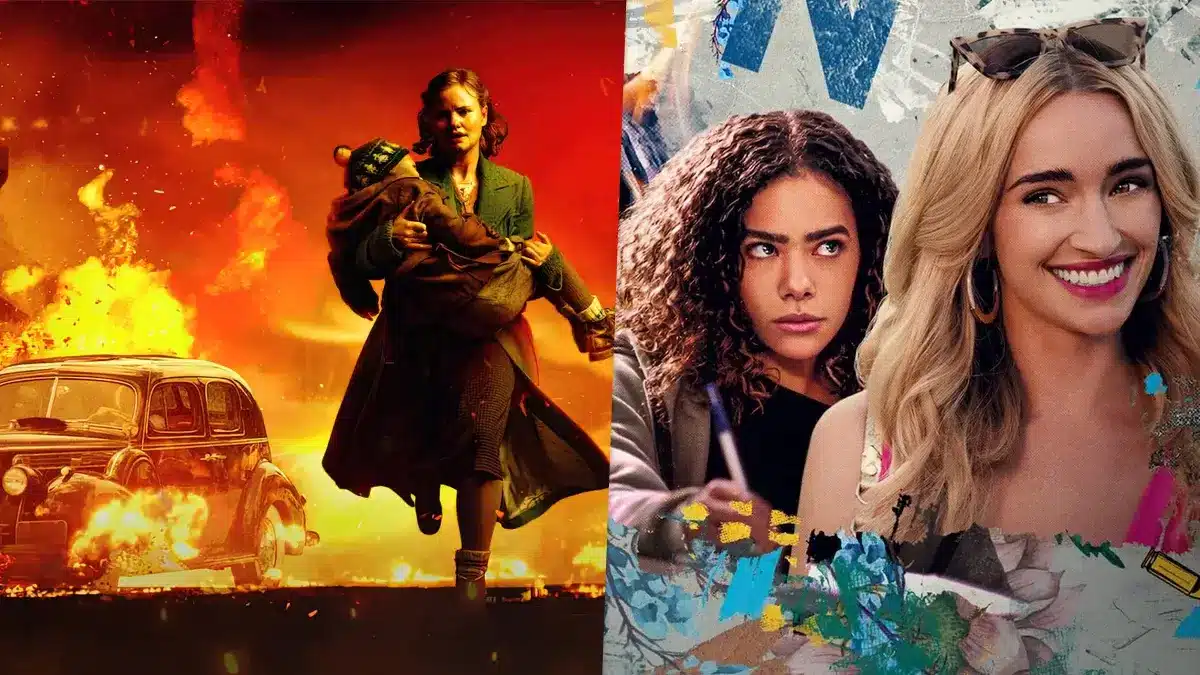









 “Running this family business is a life sentence.” Has the Mayor of Kingstown TV show been cancelled or renewed for a third season on Paramount+? The television vulture is watching all the latest cancellation and renewal news, so this page is the place to track the status of Mayor of Kingstown, season three. Bookmark it, or