Identifying emerging trends to gain a competitive edge
Identifying emerging trends early gives organizations a competitive edge to anticipate shifts in technology, consumer behavior, and market dynamics—before they become mainstream. This foresight allows proactive strategic decisions in product development, innovation, marketing, and investment. By tagging and tracking relevant trends, companies can build a 360° view of their landscape, connecting insights across R&D, strategy, and competitive intelligence. In fast-moving industries, missing an early signal can mean falling behind. With Feedly’s Emerging Trends Dashboard, organizations can stay alert to weak signals that grow into tomorrow’s big changes.
Our proprietary AI scans millions of articles to surface trends in near real-time and filter out noise. Trends are included in our dashboards, once they reach a minimum visibility threshold, meaning, the trend has appeared across a number of publications over a specific timeframe. To ensure we only include actionable trends, we filter out seasonal events like “Black Friday”, specific product launches, events like conferences or sporting event, and one-off stories like elections. Now with Custom Filters, you can quickly navigate to the trends most important to you.
This blog will guide you in setting up and refining your dashboard to surface the trends most relevant trends.
Create a new dashboard
When creating a new dashboard, start by selecting the broadest categorization of your research interest to discover a high volume of trends, like industries, technologies, sustainability topics, generations, consumer trends, or other broad topics. For example, you can start with an industry such as the energy industry.
Refine and dive deeper with a Custom Filter
If you would rather dive deeper into a specific subsection of your dashboard, you can do so with a Custom Filter. For instance, you can create a Custom Filter using your own words to specify the desired trends you wish to see. Pro Tip: This works best for dashboards about broad industries or topics. For example, an energy industry focused dashboard can be further refined to only surface nuclear power related trends by using the Custom Filter.
Additional refinement options
In addition to the refinements with the Custom Filter, you can also use the Growth, Time Range, and Size filters to further narrow down the list of trends.
Time Range: The time range filter refers to the amount of time a specific trend has qualified by our definition and the filters available are last 30 days, 3 months, 6 months, and 12 months.
Growth: The growth filter refers to the percentage increase in the number of times that specific trend has been mentioned and is categorized as “Growing, Surging, and Exploding”
Size: The size filter refers to the number of articles and sources mentioning the trend, categorized as Niche, Known, and Mainstream.
Zero in on the trends most relevant to you
Use Custom Filters in Emerging Trends Dashboard to fully personalize your trend research.
The DCU looks to have an officially announced movie dead in the water, with James Gunn confirming the details. The comic book franchise has been thriving with bold early entries in Creature Commandos and Gunn’s 2025 Superman film. Even the second season of Peacemaker was a shining light for the DCU, with Supergirl slated to hit theaters in June and the Lanterns series premiere coming in August. The first teaser trailer for Clayfacehas also made its way online recently, giving fans their first look at the Batman villain’s solo outing, which comes from the mind of horror master Mike Flanagan.
When Gunn and Peter Safran took over creative control of Warner Bros.’ DC slate, they came out of the gate with a bold vision and an eclectic lineup. Some of those ideas are still in development, like movies based on The Brave and the Bold and Teen Titans. Others have already been scrapped, like the Arkham Asylum TV series, while some characters, like Booster Gold, are still being developed to some degree. One of the projects fans were eager to see in the DCU was The Authority, which was announced as part of the superhero franchise’s plans in 2023. The Authority movie has yet to come to fruition, with Gunn now providing new details suggesting the project isn’t moving forward, at least for now.
The Authority from DC ComicsDC Comics
A post on Threads by idontbeatgames was merely speculating on the state of The Authority movie Gunn had announced for the DCU, when the director himself responded. Gunn confirmed a prior slip of the tongue to user ted.kendrick, who posited that the Superman director was writing the script for The Authority himself, with Gunn clarifying that he would never have had the time. However, there was a script that “wasn’t quite there,” and Gunn confirmed they couldn’t fit it into their current DCU plans, killing The Authority movie. Still, he offers hope for the future of the beloved comic book series, but a movie doesn’t look to be happening anytime soon. Gunn wrote:
“Just a normal slip of the tongue. I would have never had time to do this and although I know this is a popular theory online I never had an intention of writing or directing The Authority. The script wasn’t quite there but more importantly it didn’t work in terms of the larger DCU both in terms of the story and practical concerns. Maybe some day. Not soon.”
The Authority was created by Warren Ellis and Bryan Hitch in 1999, centering on an eclectic superhero team like the Justice League or the Avengers, but with a roster featuring many original characters created for the series. The DCU prominently featured The Engineer in 2025’s Superman, who stems from The Authority, giving fans of the series hope that they would see other characters as well. While the live-action film appears dead for the time being, other characters may pop up in the DCU, as fans would love to see Jenny Sparks, Apollo, or Midnighter, but that remains to be seen.
The DCU still has plenty of exciting projects on the horizon, with Clayface presenting a bold body-horror film that is sure to challenge comic-book movie tropes. Gunn also appears to have a fondness for The Authority, with his inclusion of The Engineer likely the first of many characters from the comic to appear in the fledgling franchise. The Man of Tomorrow movie is bringing Brainiac into the DCU, introducing a massive villain sure to offer unique opportunities for the franchise moving forward. While fans may be disappointed by the news, The Authority could still have a future in the DCU; it may just take some more time.
Valve has confirmed that its new Steam Controller will release on May 4 and explained why the peripheral is arriving before its Steam Machine PC.
On Monday, Valve confirmed that the Steam Controller will be available beginning May 4 at 10 am PT in the US, UK, Europe, Canada, Australia, Japan, South Korea, Hong Kong, and Taiwan, priced at $99 USD / $149 CAD / €99 / £85 / $149 AUD.
The release follows a lengthy wait for Valve’s new hardware range, which also includes the Steam Frame VR headset, after the company confirmed in February that the rapidly increasing price of PC components had delayed its announcement of pricing and release details.
Speaking in a new interview with Polygon, Valve hardware engineer Steve Cardinali explained why Valve has now decided to release the Steam Controller ahead of its other hardware, stating that it saw little sense in holding back the peripheral while the components shortage continued.
“This doesn’t have RAM in it, and it’s not as complicated to start getting out the door for us,” he said. “We’re ready for it. We wanted to build up quantity so that we could try to address everybody who wants one at launch, but it’s possible that the demand for it far exceeds our expectations.”
Steam Controller will go on sale May 4.
Since Valve’s new hardware products were first announced late last year, memory prices have increased significantly worldwide, with DRAM contract prices reportedly increasing by over 170% year-over-year.
However, although the climate has disrupted Valve’s plans, Cardinali claimed that the staggered release wasn’t entirely out of step with how it planned to release its three new products.
“From the beginning, these were all different products,” he said. “We had always thought, obviously we want them to work together well — especially the Steam Machine and the Steam Controller, they’re in a lot of ways a pair made in heaven — but we saw no need to ship the Controller at the same time as the Machine.
“The really only hard deadline is we didn’t want to ship the Steam Machine before the Steam Controller. We want to have that out for the Steam Machine… It wasn’t really ever the plan to ship them together unless it landed nicely that way. So there’s no point in holding it back while we work through the other stuff.”
George Clooney took a moment to get political while he was honored with Film at Lincoln Center’s 51st annual Chaplin award.
Clooney, who has long been one of Hollywood’s most outspoken critics of Donald Trump, struck a somber tone as he addressed these politically charged times.
“I can’t be here on a night like tonight and just ignore everything that’s going on in the world,” an emotional Clooney said from the stage. “I disagree with everything that this administration stands for, but there’s no place for the kind of violence we saw two nights ago in Washington, D.C. Nor is there a room for this kind of violence in Minnesota with Alex Pretti or Renée Good.”
Clooney wasn’t explicitly critical of Trump, but he alluded to the extremism that critics argue has propelled the President’s ascent.
“It seems to me there’s a struggle that has to be won against hatred and corruption and cruelty and violence,” Clooney continued. “It’s a struggle for the very soul of this republic because to foment hate and violence is to inherit the wind.”
Clooney made a push for unity, concluding that “the question is simply, what are we, as citizens of this great country, to do? And it is that answer in all of us, left, right and center, to build a more perfect union, heal our wounds and begin to truly make America great again.”
Sam Rockwell, Stephen Colbert, Julianna Margulies and John Turturro were among the presenters of the honor, held each year at Lincoln Center’s Alice Tully Hall.
Clooney was honored for his contributions to film and television, starting with his breakout role on “ER” and continuing with films such as “Syriana,” “O Brother Where Art Thou,” “Up in the Air” and the “Oceans” trilogy. His latest movie, “Jay Kelly,” played at the New York Film Festival, which is hosted by Film at Lincoln Center. In a lighter moment, Clooney referenced “Jay Kelly,” in which he portrays an aging movie star who is feted at a glitzy event that’s not dissimilar to the Chaplin Gala.
“It’s funny. I did this scene in a movie last year,” Clooney said. “It’s way more touching the way it happens in real life.”
Clooney’s work also recently extended to the stage, where he made his Broadway debut in “Good Night, and Good Luck,” a play based on his film of the same name. Clooney is also known for his humanitarian efforts, advocating for the First Amendment as well as the human-rights campaigns for the crises in Darfur in Sudan.
During his speech, Clooney borrowed a famous quote from Edward R. Murrow, whom he earned a Tony nomination for portraying in “Good Night and Good Luck” on Broadway: “We will not walk in fear, one of another. We will not be driven by fear into an age of unreason, if we dig deep in our history and our doctrine and remember that we are not descended from fearful men.”
Murrow, of course, was a star anchor at CBS News. Clooney has been critical of Bari Weiss, the conservative commentator whom Paramount’s new owner, David Ellison, installed at the top of the news division. Colbert, another staple of the CBS lineup who was recently ousted from the late-night anchor’s chair, used his time at the microphone to take a dig at the network.
“This is an inspiring film,” Colbert said of the 2005 movie, “Good Night and Good Luck,” which Clooney wrote and directed before it was adapted for the stage. “It has now been seen by millions around the world, and hopefully someday by CBS.”
First Ray Films, the Mumbai-based production company founded by actor-filmmaker Anshuman Jha, has set six films covering 2026 to 2028 as the banner heads into its second decade, with the slate set to be presented at the Cannes Film Market this May.
Two titles are scheduled for Indian theatrical release this year. “Om Ka Hari,” directed by Harish Vyas and starring Jha alongside Raghubir Yadav, Soni Razdan and Ayesha Kapur, is set for June. Jha himself directs “Lakadbaggha 2: The Monkey Business,” expanding the vigilante franchise he launched in 2023, with Adil Hussain and Sarah Jane Dias also on board; it is due in November.
The 2027 pipeline comprises “Bajrangi,” directed by Parth Saurabh and now in post-production, and “Bhadyaa,” helmed by Pramod Parashar and currently shooting. Two further titles are slated for 2028: “But First, The Burning,” directed by Devashish Makhija as an international co-production alongside Roh Films and Lamas Productions; and “Dhoori,” directed by Rumana Molla.
First Ray was founded in 2016 with Shashi Sudigala’s “mona_darling,” a social media thriller that sat well outside the mainstream. Over the decade since, it has cultivated a reputation for championing distinct filmmaking voices while simultaneously building distribution muscle; the company says its marketing partnerships have outscaled those of any other Indian independent. Its most recent release, “Lord Curzon Ki Haveli,” presented by marketing firm Max, is set to premiere on streamer JioHotstar next month.
“The first decade was about discovering our voice. The next decade is about amplifying it, backing stories that matter, filmmakers who take risks, and cinema that can travel across borders without losing its soul. We’re not chasing trends, we’re building a space where authenticity leads. At the heart of this is also the aim to create an ecosystem for young filmmakers – one that empowers and educates them on the importance of marketing and distribution so that great stories don’t just get made, but truly reach audiences. Backing actors like Abhinav Jha and Samta Sudiksha, who bring honesty to their craft, is as important as backing the stories themselves,” Jha said.
Makhija, whose “But First, The Burning” represents the banner’s most ambitious international play to date, added, “What First Ray stands for in today’s scene is rare – a producer who doesn’t just pull out all stops to protect the filmmaker’s voice, but constructs wings to push it higher and further. Something increasingly difficult to find. Our collaboration is about telling a story that is stubbornly rooted, yet globally resonant.”
“There’s a certain fearlessness in how First Ray approaches storytelling. It’s not about fitting into a mould, but about building something original. That trust empowers filmmakers to take creative leaps,” said Vyas.
The Cannes showcase marks the company’s most prominent market push to date, as Indian independents increasingly seek co-production partners and theatrical footholds beyond the subcontinent.
One of my favorite storytelling tropes is The Curse Of The Burdensome Friend. Or sometimes it’s the Burdensome Brother—or Sister or Cousin. What I’m talking about are characters that our heroes just can’t shake, no matter how much they need to, because they’ve been close to these highly problematic people for years. The Burdensome types tend to drag the protagonists into trouble. They’re cocky, careless, and very good at applying peer pressure. That’s because, to the incorrigible, the good guys are too good—too prim, too skittish. They need to lighten the hell up.
Baby Reindeerwriter-star Richard Gadd’s new miniseries Half Man first introduces Ruben Pallister—a man about as Burdensome as they come—at the wedding of his old friend Niall Kennedy. In the few minutes we spend with Niall (Jamie Bell) in this first episode, he comes across as meek to a fault. But maybe that’s because when we first meet him, he’s just been pulled away from the festivities against his will by Ruben (Gadd), who promptly gropes at Niall’s crotch and then punches the crap out of him.
We again see this older, animalistic Ruben—grunting and snorting, with a predatory stare—at the end of the episode, still at the wedding. There, he gives Niall a sip of whiskey, wipes the blood from his old friend’s lips, and lies down next to him on the ground. He then ominously says, “It’ll be over soon,” as he places his hand over Niall’s face.
Those are the bookends for Half Man’s first episode, most of which is devoted to a long flashback to Ruben and Niall’s teenage years. Young Niall (Mitchell Robertson) is leading a hellish life before the arrival of Young Ruben (Stuart Campbell). He’s being bullied mercilessly by his classmates, and he doesn’t have much that brings him joy outside of nerd culture favorites like Doctor Who and Indiana Jones. Then Ruben—the juvenile delinquent son of an old family friend—transfers to Niall’s school, where he begins tormenting Niall’s tormentors. He starts by going after Gus (Piers Ewart), the worst of the worst, who in an infuriating scene early in the episode takes Niall’s collection of Indiana Jones stickers, wipes Niall’s favorite one against his genitals, then stuffs it in Niall’s mouth.
The plot of this first episode is largely concerned with the two boys bonding by swapping favors. After Ruben absolutely obliterates Gus—partly to help out Niall and partly because Ruben is violently ornery by nature—Niall makes Ruben’s life easier at school in the only way he really can, by helping Ruben cheat on a test. There’s a big placement exam coming; and if Ruben fails, it could scuttle his future. So, during the practice exam—which can, if needed, count as the real exam—Niall sneakily fills in Ruben’s booklet after Ruben causes a disturbance and gets kicked out.
Gadd’s script—imbued with a quiet intensity by director Alexandra Brodski—doesn’t immediately explain in full why Ruben is suddenly part of Niall’s life. We’re told that they knew each other before Ruben was institutionalized; and we’re told that Niall is terrified of Ruben. But Ruben’s mother, Maura (Marianne McIvor), is living with Niall’s mother, Lori (Neve McIntosh), and so Ruben becomes Niall’s roommate, whether he likes it or not. By the end of the episode, we’ll find out what’s going on with Lori and Maura. It turns out they’re lovers—which is one of the reasons Niall gets picked on at school.
As for Niall’s own sexuality…well, that too remains a tantalizing mystery throughout this episode. When he comes home from school one day to find Ruben redecorating their bedroom with posters of punks and jocks, it’s hard not to notice how Niall’s eyes are drawn to the muscular young boxers in one picture. As the two boys settle into a daily routine, Niall often sneaks peeks at his new roommate whenever Ruben doffs his shirt or dances. And then one night—after Ruben’s drunken father shows up outside the house, screaming—Ruben physically prevents Niall from leaving their bedroom, holding him tight until morning. Niall wakes up to find his own ejaculate staining his shorts.
Here’s the thing about Ruben: From what we’ve seen of him so far, he appears to be legitimately unhinged. Sometimes troubled adolescents in stories like these are merely misunderstood; and it’s certainly likely that the same is true of Ruben. (He does seem to be quite intelligent, in his own way.) But my goodness is he ever angry—scarily so. He won’t do anything he doesn’t want to, no matter how much of a hard-ass any authority figure tries to be. If Niall is painfully sensitive, Ruben is the opposite: aggressively indifferent.
There’s a little bit of an over-familiarity problem with this first Half Man. It plays a little likeMy Bodyguard and a lot like the hundreds of novels/plays/movies/songs about the Darwinian hell that is a U.K. boys’ school (a Scottish one, in this case). What sets the episode apart are its present-day framing device—suggesting that this story will move beyond teen angst—and several scenes of Gadd doing what Gadd does best.
It may seem strange to credit Gadd with having a particular touch, given that his only notable TV work thus far is Baby Reindeer, the Emmy-winning drama/thriller which became a surprise obsession for Netflix subscribers in 2024. But Baby Reindeer’s dark appeal is pretty distinctive. Its story of a casual acquaintance who becomes a dreadful nuisance is incredibly compelling, filled with twists and escalations. And threaded through Baby Reindeer is a frank depiction of unconventional sexual desire, rooted in gender fluidity, masochism, shame, and the erotic appeal of the transgressive.
There are two scenes in particular in the Half Man premiere that push those same kinds of buttons. In the first, after Lori and Maura ask Niall to help with Ruben’s exam, Maura tries to soften Niall up by tickling him. It’s clearly something she used to do when he was younger, but now that he’s a teenager—and as he becomes increasingly aware that his mom’s “friend” is something more—the physical contact feels uncomfortably intimate. He reflexively responds by kicking Maura.
The second scene is this episode’s most bravura. After Niall cheats on the test, Ruben comes home in a celebratory mood with Mona (Charlotte Blackwood), a girl he’s picked up. Niall peeks at the two of them fooling around, and when they catch him, Ruben has Mona mount Niall, who is initially too anxious to respond physically to the buxom nude lady writhing on top of him. Mona tries speaking in different sexy voices and urging Niall to “focus on how things feel,” but he still struggles to maintain an erection. Then Ruben gets right in Niall’s face—so close that they could kiss—and holds on to Niall’s penis. Nature takes its course.
The moment is both sensual and discomfiting—exciting and abusive. It’s tough to say how Half Man is going to connect up what happens in that room that night to what happens at Niall’s wedding decades later. But once again, as with Baby Reindeer, Gadd has delivered something so explosively charged that it’s hard to look away.
Stray observations
• My Half Man song of the week isIan Dury’s “Clever Trever,” from the provocatively titled (and excellent) 1977 album New Boots And Panties!!
• It’s worth noting that the last words of this episode—“it’ll be over soon”—echo what Ruben says to Gus before breaking the bully’s spirit.
• I haven’t watched any of this miniseries beyond this episode, but I couldn’t help but notice that in the closing credits Gus and Mona are listed as “Young Gus” and “Young Mona.” We probably haven’t seen the last of those characters.
• Even though Gadd first came to prominence as a comedian, I wouldn’t call Baby Reindeer or Half Man “comedies.” That said, I did laugh at the moment in this episode when the teacher walks into the classroom—right as Niall is pinned against the wall and being forced to taste a sticker smeared with Gus’s crotch-sweat—and without even looking at what’s happening, says, “Okay degenerates, settle down.”
• The Half Man production-design team does a fine job of externalizing the sexual tension and confusion hanging in the air at Niall’s home, like when he walks into the bathroom after being snuggled by Ruben all night and we see Lori and Maura’s bras and stockings drying in the shower.
• Ruben may be a brute, but he can be pretty astute. While Niall stresses out about his mom’s lesbian lifestyle, Ruben quite rightly shrugs it off, saying, “10 years time, you’ll be at a party somewhere and realize it makes you more interesting.”
Jimmy Kimmel is responding to calls from Donald and Melania Trump for him to be fired by Disney and ABC. The President and the First Lady of the United States posted separate statements on social media condemning Kimmel for a joke he made at Melania’s expense on the Thursday, April 23 episode of “Jimmy Kimmel Live!,” which featured a mock White House Correspondents Dinner hosted by Kimmel. The host quipped during the sketch that Melania had the glow of an “expectant widow,” which ignited outrage among Trump and his MAGA base a few days later when the real White House Correspondents Dinner on April 25 came to an abrupt end due to a shooter.
“You know how sometimes you wake up in the morning and the First Lady puts out a statement demanding you be fired from your job?” Kimmel said at the top of Monday night’s episode of “Jimmy Kimmel Live!” “We’ve all been there. Right?”
The late-night host then explained his “expectant widow” jab was “a joke about their age difference and the look of joy we see on [Melania’s] face” every time the First Lady and the President are together, and was by no means a call for violence.
“It was a very light roast joke about the fact that he’s almost 80 and she’s younger than I am. It was not by any stretch of the definition a call to assassination. And they know that,” Kimmel said. “I’ve been very vocal for many years speaking out against gun violence, in particular. But I understand that the First Lady had a stressful experience over the weekend. And probably every weekend is pretty stressful in that house. And also, I agree that hateful and violent rhetoric is something we should reject. I do. And I think a great place to start to dial that back would be to have a conversation with your husband about it.”
“Jimmy Kimmel, who is in no way funny as attested to by his terrible Television Ratings, made a statement on his Show that is really shocking,” Trump posted on Truth Social. “He showed a fake video of the First Lady, Melania, and our son, Barron, like they were actually sitting in his studio, listening to him speak, which they weren’t, and never would be. He then stated, ‘Our First Lady, Melania, is here. Look at Melania, so beautiful. Mrs. Trump, you have a glow like an expectant widow.’ A day later, a lunatic tried entering the ballroom of the White House Correspondents Dinner, loaded up with a shotgun, handgun, and many knives. He was there for a very obvious and sinister reason. I appreciate that so many people are incensed by Kimmel’s despicable call to violence… Jimmy Kimmel should be immediately fired by Disney and ABC.”
Donald and Melania Trump and many other White House administration officials were quickly evacuated from the White House Correspondent Dinner as the shooter was tackled by law enforcement on a different floor inside the venue. The suspected shooter, Cole Tomas Allen, has charged with attempting to assassinate Donald Trump, per NBC News.
“Kimmel’s hateful and violent rhetoric is intended to divide our country. His monologue about my family isn’t comedy — his words are corrosive and deepens the political sickness within America,” Melania Trump posted on X hours before her husband’s own post.
People like Kimmel shouldn’t have the opportunity to enter our homes each evening to spread hate,” Melania continued. “A coward, Kimmel hides behind ABC because he knows the network will keep running cover to protect him. Enough is enough. It is time for ABC to take a stand. How many times will ABC’s leadership enable Kimmel’s atrocious behavior at the expense of our community.”
The festival opens June 12 and runs through June 21.
Leung has been a fixture of Chinese-language cinema for more than four decades, amassing upward of 100 screen credits and working with some of the most distinguished directors in world cinema, among them Wong Kar-wai, Zhang Yimou, Ang Lee, John Woo, Hou Hsiao-hsien, Tran Anh Hung and Ildikó Enyedi. He got his start in the business in 1982 and appeared on screen for the first time the following year.
“Cinema is the art of dreaming, and Shanghai is the very vessel on which the Chinese film dream set sail,” Leung said in a video message released alongside the announcement.
Among his most celebrated performances are the wisecracking Ouyang Feng in Jeffrey Lau’s comedy “The Eagle Shooting Heroes,” the quietly devastated Chow Mo-wan in Wong Kar-wai’s “In the Mood for Love,” and the conflicted warrior Broken Sword in Zhang Yimou’s “Hero.” Across wildly different registers and genres, Leung has consistently brought a quality of deep, controlled interiority to his characters that has resonated with audiences and sparked critical conversation well beyond the Chinese-speaking world.
Three years ago, at the 80th Venice International Film Festival – marking four decades since his screen debut – he became the first Chinese actor to receive the Golden Lion for lifetime achievement. In a tribute marking the occasion, Ang Lee praised him as the kind of performer every director hopes to work with, one who holds nothing back and raises the level of everyone around him.
The Golden Goblet Awards are among Asia’s most prestigious film prizes. Shanghai, where Chinese cinema first took root, hosts the festival annually as part of its identity as a UNESCO City of Film.
Quebec’s premier met on Monday in Washington D.C. with Jamieson Greer, the top trade negotiator for President Donald Trump, as the U.S. becomes more aggressive in its demands toward Canada ahead of negotiations on the continental free-trade deal.
Greer, a former U.S. air force lawyer who was chief of staff to Trump’s first-term trade representative, Robert Lighthizer, has promised to pursue the president’s hardline trade policies.
Premier Christine Fréchette’s office didn’t release details of her meeting with Greer, but the premier told Radio-Canada their discussions were cordial but did not lead to any major breakthroughs.
Fréchette travelled to Washington for her first official foreign trip since she was sworn in as premier earlier this month. She held a roundtable discussion Monday morning with representatives of business associations including the National Lumber and Building Material Dealers Association and General Motors. And she was also scheduled to meet with congressional representatives.
Story continues below advertisement
The United States is Quebec’s main trading partner, but since March 2025 U.S. tariffs have hit several of the province’s industrial sectors hard. Quebec’s aluminum and steel have been slapped with 50 per cent tariffs.
Get daily National news
Get daily Canada news delivered to your inbox so you’ll never miss the day’s top stories.
Her meeting with Greer comes ahead of negotiations between Canada, the U.S. and Mexico on the continental free-trade pact, scheduled to begin July 1. And it comes as the U.S. is trying to coax Canada’s aluminum and steel sectors to expand in the U.S. in order to enjoy tariff relief, according to an April 23 federal register notice by the U.S. Department of Commerce.
As well, a news report said the Americans are demanding concessions from Canada as a precondition for starting negotiations on the Canada-United States-Mexico Agreement on trade, better known as CUSMA.
At a congressional committee hearing last week, Greer said it was a problem that Canada was looking to diversify its trading partners, notably with Europe.
“They’re doubling down on globalization when we’re trying to correct for the problems of globalization. So, those are two models that don’t fit together very well,” he said.
This report by The Canadian Press was first published April 27, 2026.
Banijay Germany is bringing the immersive experience “Luminiscence” to Hamburg’s St. Michaelis Church, in collaboration with French immersive producer Lotchi, the creator of “Luminiscence” and part of Banijay Live.
Hamburg becomes the third German city, following Münster and Nuremberg, to host the experience, premiering on July 2, transforming the landmark into “a striking landscape of light, sound and history,” Banijay said.
Since its launch in 2023, “Luminiscence” has attracted more than one million visitors internationally, staging immersive productions across some of the world’s most beautiful cathedrals, churches and historic landmarks in eight countries, including France, Spain, U.K., Netherlands, Belgium, Germany, Brazil and the U.S. “Luminiscence” has been brought to 20-plus cities, with nine productions currently live.
While maintaining its core business in TV content, Banijay Group has diversified into live events and sports in recent years with much success. The live experiences & other segment grew 18.2% last year from 336 million euros ($393 million) to 397 million euros ($465 million).
For St. Michaelis, “Luminiscence” will employ state-of-the-art 360° projection technology, innovative lighting effects, original music compositions, live singing and organ music, with an ensemble of conductors, organists and a choir from the region. It will feature the singer Lucia Duchoňová, and organists Magne H. Draagen and Paul Fasang.
Ingrid Langheld, CEO of Banijay Germany Live, said: “’Luminiscence’ has proven its ability to draw audiences across cultures, bringing history to life using technology and music. Its continued expansion in Germany reflects both the strength of the creative concept from Lotchi and our team’s expertise in delivering experiences at scale. Bringing ‘Luminiscence’ to St. Michaelis is a milestone in our German journey and a fantastic example of how collaboration drives growth and business diversification.”
Alexander Röder, senior pastor at St. Michaelis, said: “Through this project, our bright and airy Baroque church is being revealed in a unique way, and St. Michaelis and its eventful history are brought magnificently to life for the audience through light, music and narration.”
François de Brugada, CEO of Banijay Live, added: “When Lotchi joined Banijay Live, ‘Luminiscence’ had already proven its concept in four French cathedrals. One year later, the show is successfully running across Europe, the U.K., the U.S.A. and Brazil – powered by Banijay Entertainment’s leading network of local talent. St. Michaelis in Hamburg is yet another perfect match between ‘Luminiscence’s’ bold creative and technical vision and the exceptional local expertise of Banijay Germany.”
“Luminiscence” at St. Michaelis is produced by Banijay Germany Live and Cape Cross.
The 2026 Tour de Romandie is a relentlessly hilly race which packs in 17 savage classified climbs across five stages (and a prologue) which will pit Tadej Pogačar against a whole host of the world’s super lightweight climbers. Star riders like Lenny Martinez, Primož Roglič and Florian Lipowitz will line up but will they have what it takes to stop the GOAT taking yet another stage race win.
Read on and we’ll show you how to watch a Tour de Romandie 2026 live stream from anywhere, and potentially for FREE.
How to watch 2026 Tour de Romandie for FREE
Cycling fans in Switzerland will get to watch a Tour de Romandie 2026 live stream for FREE. Here’s where:
If you’re a resident of Switzerland and you’re abroad right now, don’t worry about missing the action – all you need to do is download a VPN to re-connect to your home streaming coverage. You’ll find more details below.
Use a VPN to watch any Tour de Romandie 2026 live stream
Tour de Romandie 2026 is streaming on lots of platforms around the world, but what if you’re abroad and don’t want to take out a new subscription just to watch the race, or you want your familiar, favorite commentary?
This is where a VPN can help. It’s a handy piece of software that can make your device appear to be back home, so you can unlock your usual service or subscription from wherever you find yourself.
The best VPN right now? We recommend NordVPN – it does everything you want it to do at great speeds and an even better price.
How to watch 2026 Tour de Romandie live streams in the US
(Image credit: Other)
Cycling fans in the US can watch the 2026 Tour de Romandie on FloBikes.
A subscription to FloBikes will set you back US$155.88 for the year or US$39.99 on a monthly basis.
If you’re out of the US but still want to watch the 2026 Tour de Romandie then don’t forget to explore the VPN route set out above, which will help you access your subscriptions from anywhere.
How to watch 2026 Tour de Romandie live streams in the UK
The Tour de Romandie 2026 is on TNT Sports in the UK.
TNT Sports’ cycling coverage in the UK has now moved from Discovery+ to the HBO Max platform. It costs £30.99 per month, though there is a better value £25.99 “saver plan” available if you sign up for a 12-month term.
If you already had a Discovery+ account for viewing TNT Sports, it will be automatically transferred over to HBO Max.
If you’re currently traveling overseas, don’t worry as you can use NordVPN to watch your usual service from abroad.
How to watch 2026 Tour de Romandie live streams in Canada
(Image credit: Other)
Fans in Canada can watch the Tour de Romandie 2026 on FloBikes.
A subscription to Flobikes, which has pretty much every race you could wish to watch, costs $49.99 a month or $215.88 for the year.
Not at home right now? Use NordVPN or another VPN service to make your device believe you’re still in Canada.
Tour de Romandie 2026 – Preview
The 79th Tour de Romandie kicks off with a 3.2 km prologue in Villars-sur-Glâne before getting stuck into five extremely hilly stages in a race that is built for climbers. With 17 classified climbs spread across the week there is absolutely nothing on offer for the sprinters as the race navigates around Romandie in Switzerland.
Following the prologue, stage 1 is pretty much flat, except that is for the huge 12km ascent at Ovronnaz with its eye watering 9.1% average gradient. Stage 2 is a relentlessly lumpy stage with no giant peaks, so one for the riders who love short punchy climbs.
Stages 3 and 4 return to the high ground with stage 4 taking the title of Queen stage as it covers four huge mountains – including both sides of the Jaunpass and the Saanenmöser. There is only one summit finish though and that is reserved for the final stage, the 178.2-kilometre journey to Leysin which is sure to be a showdown of epic proportions.
Last year’s winner, João Almeida, is absent this year but second placed Lenny Martinez returns to do what he can to prevent Tadej Pogačar strolling to victory. Also looking to put in a strong ride are Florian Lipowitz (third in last year’s Tour de France), multiple grand Tour winner Primož Roglič and home favorite Mauro Schmid.
Tour de Romandie 2026 stages
Prologue | Tuesday, April 28 | Villars-sur-Glâne – Villars-sur-Glâne, 3.2km
We test and review VPN services in the context of legal recreational uses. For example: 1. Accessing a service from another country (subject to the terms and conditions of that service). 2. Protecting your online security and strengthening your online privacy when abroad. We do not support or condone the illegal or malicious use of VPN services. Consuming pirated content that is paid-for is neither endorsed nor approved by Future Publishing.
Lisa Kudrow recently told The Times of London that she had to endure some “mean stuff” from the writing staff of “Friends,” who were “mostly men,” during her 10-season run on the NBC sitcom. Kudrow, who starred as the free-spirited Phoebe Buffay, said the writers reprimanded the cast for forgetting lines and spent their off-hours fantasizing about her female co-stars.
“There was definitely mean stuff going on behind the scenes,” Kudrow said. “Don’t forget we were recording in front of a live audience of 400, and if you messed up one of these writers’ lines or it didn’t get the perfect response they could be like, ‘Can’t the bitch fucking read? She’s not even trying. She fucked up my line.’”
She added that, in the writers’ room, “the guys would be up late discussing their sexual fantasies about Jennifer [Aniston] and Courteney [Cox]. It was intense.”
Kudrow described the writers’ treatment of the cast as “brutal,” but she said she didn’t pay them much mind since most of their illicit behavior happened behind closed doors.
“Oh, it could be brutal, but these guys — and it was mostly men in there — were sitting up until 3 a.m. trying to write the show so my attitude was, ‘Say what you like about me behind my back because then it doesn’t matter,’ ” she said.
The behavior of the “Friends” writing team was famously exposed by Amaani Lyle back in the early 2000s. Lyle, who worked on the show in 1999 on Season 6, brought a lawsuit against Warner Bros. Television for the writers’ room conduct. In the suit, she claimed that the “Friends” scribes frequently made sexual and racist remarks, and as the writers’ assistant, she was forced to take notes on everything that was said in the room. The case eventually made it to the Supreme Court, which ruled against Lyle after deciding the coarse demeanor was a necessary part of the work environment.
Four More Shots Please Season 4 Review: Amazon Prime Video’s Four More Shots Please returns for its fourth and final season, bringing closure to one of Indian OTT’s most talked-about female-led series. Season 4 raises a toast to acceptance and letting go, and this show has been let go by the makers, who have seemingly accepted that they cannot bring more to the table.
The season takes you four years ahead and begins with Siddhi (Maanvi Gagroo) getting married to Mihir (Rajeev Siddhartha). She gets cold feet and is nervous about her choice of partner- this sets the tone of the season. The show has now become entirely about Siddhi, and her friends seem like an afterthought. What began as a story about four women navigating love, ambition and friendship has now been diluted.
The second sentence of my notes reads, “Did they make this season only to end the show?” Four More Shots Please Season 4 is more B-roll than show. It is a disappointing, half-hearted effort to conclude a story that has lost its plot. Themes like identity and independence take a back seat, and so do Kirti Kulhari, Sayani Gupta and Bani J.
Siddhi has found her footing on the stage, but she only gets applause when she talks about the lack of sex in her married life. When her husband objects to their dirty laundry being aired in public, she quickly switches lanes to become a content creator. She enlists Ash’s (Kunal Roy Kapoor) help, who poses as her fake husband on social media, and their chemistry impresses their followers.
You can guess what happens next: a troubled marriage, an insecure husband, an empathetic and funny poser with a crush. Although this is Siddhi’s storyline, Kunal Roy Kapoor is the heart of this plot. For a character introduced in the final season, Ash is well-written and commands the most attention on screen.
Damini and Umang have similar storylines and have been given a similarly confusing treatment. Damini has now ventured into podcasting, and here, too, Ash quickly becomes its highlight. The gravitas that Damini had in the previous seasons is missing, making it apparent that season 4 has been helmed by someone new to the show (Arunima Sharma).
Umang’s new take on love leads her to a business opportunity, which in turn takes her back to love. There is nothing high-stakes here except that she’s a questionable friend. It is sad to see this character treatment after her emotional plots in the previous seasons. There is no harm in a character becoming emotionally lighter in their journey, but it shouldn’t come across as lazy writing.
This brings me to Anjana, the most forgettable main character on the show. Anjana has evolved into a brilliant woman with success, freedom and an open mind. But we have no idea how she got there. Her turmoil has less screen time than her intimate scenes with Dino Morea. It is a wasted opportunity that could have been used to show a powerful and ‘sorted’ female character’s arc.
Four More Shots Please Season 4 is a series of random events held together with background music. Much of the character growth occurs off-screen, depriving the audience of the opportunity to see how mature women think and thrive. Massive talents like Sayani Gupta and Kirti Kulhari have been wasted this season.
What works for the show is that, although the plot is diluted, Maanvi Gagroo is a delight to watch on screen. She brightens every frame, and you cannot help but root for her. Her chemistry with Kunal Roy Kapur works like bread and butter. Kunal is a wonderful addition to the show. I wish he had been brought on board sooner so we could see more of Ash’s story.
Sayani Gupta and Prateik Smita Patil have delectable chemistry. They don’t have to say a word; you can feel the electricity. Had the writing done them any justice, they would have outshone any other plot this season.
Bani J does well in the fun, lighter scenes. But when it comes to soft vulnerability, her expressions don’t change. This, coupled with a lazy sub-plot, makes Umang feel disconnected. Whatever little Kirti Kulhari could do this season, she did it brilliantly. Kirti Kulhari is a powerhouse, and it’s sad to see her talent being ignored.
Somewhere along the four seasons, the show lost sight of itself. This season is an injustice to both the cast and the audience. It is a light, one-time watch if you need closure, but just like the makers seemed to have moved on, so should we.
Handpicked stories, in your inbox
A newsletter with the best of our journalism
First Published:
December 19, 2025, 10:04 IST
Newsmoviesweb-series Four More Shots Please Season 4 Review: A Riveting Masterclass On How Closure Is Not Always A Good Thing
Disclaimer: Comments reflect users’ views, not News18’s. Please keep discussions respectful and constructive. Abusive, defamatory, or illegal comments will be removed. News18 may disable any comment at its discretion. By posting, you agree to our Terms of Use and Privacy Policy.
Dylan Carter, a contestant on Season 24 of “The Voice,” died in a car accident on Saturday.
According to the NBC affiliate serving the Lowcountry region of South Carolina, the musician died in a single-vehicle crash on a rural road in Colleton County. He was 24.
Country music legend Reba McEntire, who was Carter’s coach on “The Voice,” posted a tribute on social media Monday morning, writing, “We will miss Dylan so much. He was a brilliant, kind and talented young man who brought a huge ray of sunshine to The Voice. Rest in peace, my dear friend.”
Moncks Corner Mayor Thomas Hamilton Jr. also memorialized the Lowcountry singer, writing on Facebook that his family was “heartbroken” to hear about the accident.
“As a gifted singer, he frequently entertained our community with his performances at Town events,” read the post. “His kindness and charm earned him immense respect, and his absence will be deeply felt.
“To the loved ones and acquaintances of Dylan, we offer our sincerest condolences during this difficult period. The Town of Moncks Corner, its Council, and entire staff extend their deepest sympathies. He was much more to our family than an entertainer he was our friend and we are deeply saddened.”
Carter was slated to perform Monday night at the town of Moncks Corner’s “Music on Main” event. The organizer posted that the event had been canceled, and the comments section was filled with an outpouring of shock and grief.
Carter competed on Season 24 of “The Voice” in 2023. During his blind audition, he sang Whitney Houston’s “I Look to You,” which he dedicated to his mother, who had died the year before. During his audition, all four judges turned their chairs for the contestant, with Gwen Stefani hitting her red button during the song’s first verse.
“You only get four chairs if you really move the room,” said judge Niall Horan, who called his performance spectacular.
McEntire was choked up and said she could feel and hear Carter’s emotion while he sang. “That’s when you know you’ve got a great song and a great singer,” she said. “When it touches your heart.”
“When I saw y’all turn around, I saw my mom,” Carter told the judges. “She passed back in October and she wanted me to sing it at her funeral, so I did it — I tried, but I couldn’t make it through it. This was the best second chance. I just made her so proud.”
After Carter was eliminated from the competition series, he posted on Instagram, reflecting on his experience: “Well last night did not go as we all were hoping, but I am proud to say that I went out there on that stage and gave it MY ALL.”
Carter admitted that he felt defeated when he was eliminated, adding, “but it did not take me long to realize that I actually didn’t lose anything, instead I gained EVERYTHING!”
“I came to The Voice unsure of myself, unsure of my future, and still grieving the loss of my mom. I left LA with confidence in myself and my future, with a sure purpose as to why I was put on this Earth, and with peace of mind moving on from my mom’s death. I’ve been afraid of moving on from my mom’s death because I thought moving on meant forgetting her. Boy was I wrong!!! I’m moving forward with her, as she shines through me! All she ever wanted was for me to find myself, to find my voice, and for me to be happy…. I left LA with all of that plus more!!! I even gained all of you guys.”
The South Carolina Highway Patrol is investigating the accident.
Marvel Studios’ Avengers: Doomsday finally gave audiences their first real look at its massive ensemble cast when Disney debuted the film’s debut trailer at CinemaCon 2026 nearly two weeks ago. The footage, shown exclusively to exhibitors, journalists, and influencers, has since ignited widespread excitement among the MCU fanbase, with many clamoring for an online release soon. Before then, it’s time to go a bit deeper by ranking all the individual characters’ screen time in the exclusive footage.
Having watched the trailer firsthand at CinemaCon 2026, The Direct’s character screen time rankings are based entirely on our own in-room tracking of the footage.
While a public release of the trailer remains uncertain, with the film still roughly eight months away from its theatrical debut, what was shown to the CinemaCon crowd left little question about which heroes are being positioned front and center in Avengers: Doomsday.
Among the most buzzed-about moments from the presentation was the formal introduction of Robert Downey Jr.’s Doctor Doom and the continuation of Chris Evans’ return as Steve Rogers, with both stars taking the stage in person to introduce the footage.
Downey’s Doom caught many in attendance off guard, as his voice for the character bears virtually no resemblance to the Tony Stark audiences spent over a decade with.
The trailer itself appeared to lean heavily into hero-vs-hero conflict, positioning Doomsday as something of a spiritual successor to Captain America: Civil War while simultaneously serving as the long-awaited fifth Avengers film.
From The Direct’s observations, it was evident that some characters commanded significant chunks of the footage, while others appeared only in brief, blink-and-you’ll-miss-it glimpses.
Avengers: Doomsday Trailer’s Heroes & Villains Screen Time, From Most To Least
Thor
Marvel Studios
Chris Hemsworth’s Thor is undeniably the trailer’s lead, appearing across multiple locations and carrying the emotional weight of the footage from start to finish. His rallying speech runs throughout the trailer, serving as its backbone:
“I fought with many warriors in my time. They were far stronger than all of us put together, they died. They died facing enemies and threats that scared me far less than this one.
Everything they sacrificed for will be for nothing if we do not stand together… If you return, you will return as brothers and sisters.”
Thor gets the final spoken line before Steve Rogers’ reveal, making him undeniably the trailer’s throughline from beginning to end.
Doctor Doom
Marvel Studios
Robert Downey Jr.’s Victor Von Doom makes an immediate impression, opening the trailer with a voice so distinct that audiences at CinemaCon didn’t even know who was speaking at first.
“Something is coming. Something we may not be able to deter. Before this day is done, we shall be faced with an unthinkable decision.”
He also gets a proper superhero landing in the courtyard of the X-Mansion, the first real glimpse of the character in full action. His wordless, composed response to Thor’s charge is also arguably the most striking shot in the entire trailer.
Steve Rogers
Marvel Studios
Steve appears at the very end of the Doomsday trailer, responding to Thor’s desperate plea for a miracle with a simple “Hey pal,” prompting a stunned “It’s not possible” from Thor.
Mjolnir then tears out of Thor’s grip and flies directly into Steve’s hand, cementing his return in Endgame-esque fashion. It’s also important to point out that Steve has long hair and a beard in the trailer, not like how he’s shown in his solo Doomsday trailer from December 2025.
Black Panther (Shuri)
Marvel Studios
Shuri (Letitia Wright) is shown in Talokan’s throne room, confronting Namor, armoring up into the Black Panther suit as the Wakandans surround him in a tense standoff, and later appears in a wide-open sea-floor environment with the ocean parted dramatically around her.
She also gets a saluting shot that feels like a deliberate character moment, which was previously seen in the Wakandan-focused Doomsday teaser.
Namor
Marvel Studios
Namor (Tenoch Huerta) is first seen seated on his throne in Talokan as Shuri and the Wakandans close in on him. He also appears to be the one responsible for one of the trailer’s most visually striking shots: the ocean floor of Talokan is completely parted, with walls of water surrounding the space, like Moses splitting the sea, while Namor flies rapidly through it.
Captain America (Sam Wilson)
Marvel Studios
Anthony Mackie is back as Sam Wilson, who gets several solid appearances throughout the Doomsday trailer, including in the wide assembly shot inside Avengers Tower and a notable moment inside the X-Mansion where he lands and looks up at Gambit.
Reed Richards is also seen stretching his arm out to physically restrain Sam at one point, hinting at some friction within the newly joined heroes.
Yelena Belova
Marvel Studios
Yelena (Florence Pugh) gets one of the more memorable hero-vs-hero sequences in the trailer, arriving at the X-Mansion armed and ready before coming face-to-face with Mystique (Rebecca Romijn).
She throws her baton at the shape-shifter, only for Mystique to catch it and then turn into a perfect copy of Yelena herself, leading to the striking image of two Yelenas locked in a chokehold with each other. Yelena is also seen at Avengers Tower.
Mystique
Marvel Studios
Mystique makes her MCU debut in memorable fashion, appearing in what looks to be a white jacket with short, bright red hair described as notably comic-accurate.
Her scene is built entirely around her power set, adding to her screen time after transforming into Yelena’s body.
Professor X (And Seemingly Magneto In One Shot)
Marvel Studios
Patrick Stewart’s Charles Xavier appears in a couple of key shots rooted at the X-Mansion, as he was first seen in the X-Men Doomsday teaser.
He’s shown looking out from a window as a red globe appears in the sky and fire spreads across the atmosphere, shielding his eyes from the light. Most insiders and comic-book analysts believe he’s watching an incursion begin.
He also appears alongside Magneto in a later interior shot that feels like the two of them coming to terms with what’s ahead.
Shang-Chi
Marvel Studios
Shang-Chi (Simu Liu) appears in a fight sequence against Channing Tatum’s Gambit, with his rings glowing orange as he clashes with Gambit’s glowing staff and playing cards.
He repels the staff using his rings, then sends two of them flying outward to push Gambit back before they return to him.
Cyclops (Scott Summers)
Marvel Studios
James Marsden’s return as Cyclops gets two notable moments: a new shot debuting his comic-accurate suit as he powers up his visor to investigate an explosion on the X-Mansion steps, and a returning shot from an earlier teaser of him firing off a full optic blast.
Gambit
Marvel Studios
Channing Tatum’s Gambit, after debuting in Deadpool & Wolverine, makes his presence known in the same fight sequence as Shang-Chi.
After being pushed back by the rings, he holds up a glowing ace of hearts card and gives a shake of his head. Fans cannot wait to see this moment unfold online and in theaters.
Sue Storm
Marvel Studios
Vanessa Kirby’s Sue appears in a handful of shots across different settings: at Avengers Tower with her family, a close-up of her emitting a force field, a shot in the underwater Talokan environment, and a quieter moment where she embraces Johnny.
She’s also shown in the background when M’Baku and Ben shake hands, which was previously edited in the earlier released trailer to not include any of the characters present.
Johnny Storm
Marvel Studios
Johnny’s (Joseph Quinn) most prominent moment is an intimate one, a close-up of him hugging Sue, a small emotional beat amidst the chaos.
He’s otherwise visible in the Avengers Tower sequence with the rest of the Fantastic Four, but doesn’t have any standout solo action in the footage (yet).
The Thing
Marvel Studios
Ebon Moss-Bachrach’s Ben Grimm appears in a brief shot shaking hands with M’Baku, with Bucky, Sue, and Joaquin Torres visible behind him. It’s a small moment, but it positions the Fantastic Four as active participants, also being shown at the new Avengers Tower.
Reed Richards
Marvel Studios
Reed gets a few appearances, the most notable being a moment where he stretches his arm and jacket outward to physically hold Sam Wilson back.
He’s also seen standing with the Fantastic Four in the Avengers Tower assembly, and is theorized to be on the forefront of understanding multiverse travel and incursions at this point (at least four years after the main events of The Fantastic Four: First Steps).
Ant-Man (Scott Lang)
Marvel Studios
Scott appears in the wide shot inside Avengers Tower and gets one personal moment, a close-up of him kissing his daughter, Cassie Lang (Kathryn Newton), on the forehead.
Bucky shows up in two wide group shots: once in the Avengers Tower assembly among The New Avengerz squad, and once behind Ben Grimm during the M’Baku handshake. No individual moments, but don’t count out Sebastian Stan from having another important role, 15 years into his MCU career.
Falcon (Joaquin Torres)
Marvel Studios
Joaquin Torres similarly appears in two wide shots in the Avengers Tower assembly on the side of Sam’s New Avengers, and is briefly visible behind the Thing. He’s also behind Sam when Reed restricts Cap at the X-Mansion.
Thunderbolts* (John Walker, Red Guardian, Ava Starr)
Marvel Studios
The Thunderbolts / The New Avengerz appear as a collective in the same Avengers Tower wide shot, lined up on the opposite side of the room from Sam’s group.
M’Baku (Winston Duke) is shown in a few shots, one time shaking Ben Grimm’s hand, and then also with Shuri near Namor’s throne. As the King of Wakanda, don’t think these brief moments mean M’Baku won’t be a major part of this film.
Cassie Lang
Marvel Studios
As previously revealed, Cassie’s appearance in the trailer was one of the quieter moments, with her dad Scott kissing her on the forehead.
Cassie previously appeared in Avengers: Endgame (played by Emma Fuhrmann), having aged up five years after Scott was trapped in the Quantum Realm following the events of Infinity War and Ant-Man and The Wasp.
The group includes Sam himself, Joaquin Torres, Scott Lang, and Thor among its visible members, gathered beneath the team’s new logo as the Fantastic Four stand at the center of the room.
DC Studios co-CEO James Gunn provided a slew of updates on the DCU slate. Shortly after being appointed DC Studios co-CEO, James Gunn unveiled the first ten projects in Chapter 1: Gods and Monsters in January 2023, of which two have been released, two more are on the immediate horizon, and the remaining six have faced varying degrees of developmental struggles.
There’s no denying that this has caused frustration for those excited to see Paradise Lost, Swamp Thing, The Authority, Booster Gold, The Brave and the Bold, and Waller, especially as projects like Clayface have simultaneously been added to the slate and moved along much faster. Regardless, there hasn’t been much news beyond their scripts being in various stages of development in recent years.
DC Studios Offers Updates For 4 Major Projects (And 1 Is Bad News)
Paradise Lost
DC Comics
James Gunn took to Threads to offer a surprising update on DC Studios’ answer to Game of Thrones, the Themyscira-set political drama Paradise Lost. The live-action HBO Max original will take place before Wonder Woman’s birth, exploring the origins, political intrigue, and power players of an all-female society.
Gunn confirmed that Paradise Lost is in “extreme development,” suggesting that it may be close to receiving an official green light to move forward with production and shutting down rumors that the Wonder Woman prequel had been canned.
That said, Gunn also stated that projects that “have writers’ rooms up” could be described as in “ultra extreme development” when responding to a fan, perhaps indicating that Paradise Lost hasn’t progressed that far just yet.
Since Paradise Lost was announced in the DCU’s original Chapter 1: Gods and Monsters slate, news on the project has been scarce. However, DC Studios later added a Wonder Woman reboot movie to the slate, with this year’s Supergirl flick writer Ana Nogueira coming on board as its scribe.
Nexus Point News reported in 2024 that Paradise Lost was circling two writers to lead the series: The Handmaid’s Tale writer Kira Snyder (who was also a consulting producer on The Penguin) and Bridgerton and Bones scribe Janet Lin.
Booster Gold
DC Comics
In the same breath that Gunn stated Paradise Lost has gained “extreme” momentum, the DCU boss gave a more moderate update for HBO Max’s live-action Booster Gold series, stating that it is “in development.”
That update may suggest to some that Booster Gold is no further along than when it was announced as part of the DCU’s original Chapter 1 slate three years ago, but it ought to give optimism to those who feared it was heading for cancellation.
Last year, Booster Gold took its biggest step forward yet in hiring Our Flag Means Death creator David Jenkins to pen the pilot. The series is centered on Michael Carter, a former football star and loser from the far future who uses his time’s technology to travel back in time and become the superhero Booster Gold.
Jenkins took to Threads in March to respond to rumors that he had exited the project, stating that “as far as [he knows] it’s still in the pipeline.” The DCU pilot writer (who is intended to serve as showrunner if it moves forward) inherited the project from Righteous Gemstones creator Danny McBride.
The Authority
DC Studios
Sadly, it wasn’t all good news for DCU fans from James Gunn on Threads, as he confirmed that The Authority has been shelved due to difficulties with the script and because “it didn’t work in terms of the larger DCU.” While he left the door open to it happening “some day,” Gunn was clear that day won’t be soon:
“The script wasn’t quite there but more importantly it didn’t work in terms of the larger DCU both in terms of the story and practical concerns. Maybe some day. Not soon.”
Gunn was also eager to clear up theories and rumors that he himself was set to write and possibly direct The Authority, which seems like a perfect match for his usual fondness for morally ambiguous team-ups. He was clear he “would have never had time” to take on The Authority and thus never intended to:
“I would have never had time to do this and although I know this is a popular theory online I never had an intention of writing or directing The Authority.”
Fans already met one member of the DCU’s Authority in Superman with María Gabriela de Faría’s The Engineer, a metahuman infused with Nanites in her bloodstream who worked closely under Nicholas Hoult’s Lex Luthor. It’s unclear if she will return alongside other Superman characters in Man of Tomorrow.
Mister Miracle
DC Comics
DC Studios scribe and Eisner award-winning comic writer Tom King is leading an animated adaptation of his 12-issue Mister Miracle run that will introduce five key New Gods characters to the DCU, including the legendary big bad Darkseid.
King hinted before that Mister Miracle has “huge implications” for the DCU as it delivers the franchise’s fifth female lead so far, Big Barda. She will star alongside escape artist Scott Free, and legendary New Gods like Darkseid and Orion.
Creature Commandos Season 2
DC Studios
James Gunn’s latest update for Creature Commandos Season 2was more minor, as he reinforced that, alongside Booster Gold, he is “not writing either of them.” The update confirms that the animated follow-up is still in development as it trades out an entirely-Gunn-written season for a full DC Studios writers’ room.
Furthermore, alongside Mister Miracle, Gunn stated that he just recently “watched animatics” for Creature Commandos Season 2 this last weekend, making it clear that its production is in full swing, almost a year and a half after its renewal.
The superhero filmmaking veteran just recently confirmed that Creature Commandos Season 2 is targeting a 2027 release on HBO Max. The adult animated show launched the DCU in December 2024, leaving a two-to-three year window between seasons as it moves forward without Gunn at the helm.
Creature Commandos‘ return could be the perfect sequel to Peacemaker Season 2, thanks to the developments for one of its leads, Frank Grillo’s Rick Flag Sr., who has since become a certified metahuman hater. Perhaps Flag will soon have Task Force M rounding up metas for his new pocket universe prison, Salvation.
BONUS.) Mystery DCU Movie
DC Studios
Interestingly, when asked whether he and co-CEO Peter Safran “have a good idea as to what the next DCU movie on the pipeline” will likely be, Gunn simply answered “Yes,” hinting that one blockbuster is making strong progress.
Up until now, it was unclear whether DC Studios had a clear picture of what movies could be released in 2028 alongside Dynamic Duo after Man of Tomorrow and The Batman: Part 2 fill up the 2027 release calendar.
Only time will tell what movie will bring the DCU back to the big screen after Man of Tomorrow (although The Authority has clearly been ruled out). It’s unlikely that The Brave and the Bold and The Batman: Part 2 would be scheduled so close together, so the DCU’s Wonder Woman reboot from Ana Nogueira may be the best guess.
Recently, rumors have been heating up that Andor star Adria Arjona’s casting in Man of Tomorrowis secretly for Wonder Woman, with reports of her playing Maxima merely being a disguise for her larger role in the DCU’s story. If that was the case, Arjona could soon be leading her own DC Studios blockbuster.
After launching on the PlayStation 5 last summer, Hideo Kojima’s Death Stranding 2: On the Beach is receiving a novel adaptation. Like the novelization for the original Death Stranding, the Death Stranding 2: On The Beach story is getting two prose volumes, and you can preorder your copy of the first 336-page paperback book at Amazon and Barnes and Noble for $19 (or for $11 as an eBook) before it releases later this year on October 13.
Like the first novelization, On the Beach is penned by Hitori Nojima and translated by Carley Radford. And also like the previous, this is a retelling of the events of the game, picking up where Sam Porter Bridges left off after restoring America and vanishing from the public eye. Now joined by Fragile and other allies, Sam’s new mission is take rescue humanity from extinction, and will travel from Mexico to Australia to do so.
The Death Stranding 2: On the Beach novelization is being advertised as Volume 1, so it’s safe to say that we’ll get at least another volume to follow the trend of the first game’s novelization, which was divided into two volumes as well. At 332 pages, On the Beach is already significantly longer than the first adaptation’s first volume so it’ll be interesting to see how far into the game’s story this book goes. Luckily, at that page count, it shouldn’t take up much space on your bookshelf, and it’ll fit nicely next to your physical copies of the games if you prefer to display that way. The cover uses the game’s iconic theatrical poster art, which features a collage of Death Stranding 2’s cast, and is reminiscent of work by Drew Struzan vibe, who famously did the poster art for the original Star Wars and Indiana Jones films.
While we don’t know when the next book in the Death Stranding 2: On The Beach novelization is launching, you can fill the wait by catching up on the 600-page, two-volume novelization of the first game, which is currently available in physical and audiobook editions via Amazon. Of course, if you’re looking to play the game itself, you can also grab Death Stranding 2 on PS5 for $59 (was $70) via Amazon.
How many times have you seen a docuseries go viral? Well, everyone on Social Media was doing the dances and choreography from Netflix’s America’s Sweethearts: Dallas Cowboys Cheerleaders.
But behind the scenes, the challenge wasn’t just capturing the technical precision of “Thunderstruck,” it was pulling out the humanity buried beneath the iconic uniform.
Editors Zachary Fuhrer, Noah DeBonis, Stefanie Maridueña, ACE, and M. Brennan, ACE, came together to find a complex exploration of identity, ambition, and the “perfect imperfections” of real life.
We sat down with the team to discuss the nature of their collaboration, the rule of being “less explainy, more lampy,” and how they navigate the responsibility of cutting the lives of the women who give everything to the team.
NFS: Each of you came to editing from very different backgrounds. How have those non-traditional paths shaped the way you approach storytelling today? Zachary Fuhrer: I’ve always pursued a lot of things intensely, whether sports, music, theater, or journalism, and documentaries ended up being the form that combined all of my interests. I got into them almost by accident, making a film about US-Brazilian relations and public health policy because I figured it’d be easier to get my friends to watch an hour-long doc than read another paper. I ran around Brazil and the US with a cheap DSLR and a shotgun mic, taught myself Final Cut 7, and fell completely in love with it, even if the movie I made is hardly watchable.
After that, I landed at Prologue, a title design and motion graphics house in LA run by Kyle Cooper, who was always chasing what you might call “perfect imperfections.” He’d shoot on 16mm, do in-camera double exposures, intentionally jam the camera, then have us scrub through dailies looking for beautiful mistakes that lasted a fraction of a second. That kind of obsessive, frame-specific work shaped me. Later, I assisted editor Jim Helton (Blue Valentine, The Place Beyond the Pines, Roofman), who became my mentor and my film school. He brings the same intensity to a 30-second spot as a feature, and that stuck with me.
So now, whatever the format, I try to hold two things at once: a high-level story approach and the frame-specific instinct I learned cutting titles. America’s Sweethearts is a great example because we get to play with so much in a single episode, whether it’s verité, big musical montages, or biographical packages, and each mode asks for something different. I think about editing in musical terms, phrases, movements, symphonies. You can’t just float. You need contrast and dynamics, point and counterpoint, tension and release.
Noah Debonis: I got into documentary filmmaking by falling in love with a story, and then spending the next seven years turning that idea into an independent feature documentary, Strangers to Peace. I was directing, producing, and eventually editing the project. I’d worked as an editor before, but that process of long-form documentary storytelling, especially working with observational footage, where the narrative isn’t inherently clean or obvious but has to be excavated from a mountain of material, really clicked for me.
That experience made me very comfortable sitting in the messiness of real life and prioritizing the emotional truth of a scene. I’m usually looking for the quieter, authentic moments that make our subjects feel human and relatable. If something resonates with me in the footage, there’s usually something there that an audience will connect with as well.
On a show like Dallas Cowboys Cheerleaders, that becomes especially important because you’re balancing large-scale spectacle and performance with very intimate, personal stakes. I tend to lean into a verité-driven approach and try to find the space where people can feel real, complex, and human on screen.
Stefanie Maridueña, ACE: I have an educational background in science.Science requires a lot of precision, organization, and logical thinking. I’ve come to find that these skills have been quite useful as an editor. They come in handy in the obvious ways, like organizing media, keeping track of footage, and making sure that my edits have clarity. But most importantly, for me, my pursuit in the sciences was driven by passion. I find that as a storyteller, I’m equally passionate about what I’m doing in the edit. It’s interesting because science also requires a great deal of creativity. Designing experiments to test a hypothesis often means thinking creatively about how to approach a question, and you don’t always know where the results will lead. Similarly, in the edit, we are always experimenting and testing ideas to see if they take us where we want to go and are often surprised by where they lead us.
M. Brennan, ACE: I started out as a photographer and poet in college. I began to bring those things together into mixed media projects. Then a few Scorsese, Spielberg, and Maysles films later, I knew I wanted to be a film editor.
As an editor, I work very much on instinct, similar to how I began in photo and poetry. I look for what makes me feel the most emotion – excitement, heartbreak, joy – and follow those threads. Often, I find ways to pull out VO or dialogue in order to focus on the emotion of a scene. People often say the opposite of what they mean or feel, so I watch what’s happening on someone’s face or how their voice sounds or how their body moves in order to figure out what’s really underneath the words.
NFS: You’ve now collaborated multiple times as a team. What makes this group creatively “click”? ZF: We’re very much a “yes and” team. Everyone feels comfortable not just pitching ideas, but cutting and presenting them without fear. Adam Leibowitz, our showrunner, says that when he hires, he cares more about passion, positivity, and character than how many credits you have on IMDb. We’re all driven and want to make great work that gets seen, but the work demands real empathy, both for the people whose stories we’re telling and for each other. I like to think of us as the Mighty Morphin Power Rangers. Everyone’s independently a top-notch martial artist with high-flying kicks, a moral compass, and their own superpower, but when you get us together, and we’re really cooking, we’re the Megazord. It helps that we genuinely like each other and love learning from each other.
ND: I love this team! I feel incredibly fortunate to get to tell stories with such a wildly talented group of filmmakers, led by Greg Whiteley and Adam Leibowitz. We’ve all worked together on multiple shows now, so there’s a real level of trust and fluidity in how we collaborate. We’re constantly sharing scenes between each other, not just for feedback, but actually passing them back and forth to work on. I might start something, someone else will take it further, and sometimes it comes back around again. No one’s precious about their cut, which creates a very iterative process where the focus shifts from individual scenes or episodes to the arc of the series as a whole.
We’re also just a very communicative group. There’s a lot of conversation about the story, about ideas, and honestly just joking around with each other, which makes it easier to take creative risks. That openness creates an environment where you can take big swings without fear. And I think at the core of it, we all just genuinely care about the characters and the stories we’re telling, and there’s a shared trust that everyone is trying to do right by them.
SM: I’ve been so fortunate to have worked with One Potato Productions for 5 seasons across three different TV shows. It’s probably my favorite place to work because of how we’ve all become a work family of sorts. As Noah mentioned, it comes down to the level of trust that’s fostered in our work environment. As editors, we are granted a lot of freedom to explore ideas and are encouraged to experiment and take risks. Everyone is welcome to give creative input, and all of our voices are respected. I think this lends to creating a very healthy work environment, and the quality of our work is a reflection of the care that we have for our show and each other. I would also like to take a moment to acknowledge the other editors whose contributions also carried this series: Kate Hackett, ACE, Sharon Weaver, Susie Maridueña-Barrett, Deijah Lee-Carroll, Helen Yum, and James Atkinson.
MB: We are all great editors who thrive on collaboration. We’ve developed similar sensibilities and can toss work back and forth with ease. And we all care immensely about the subjects we follow.
The One Potato team has a habit of sharing scenes and moments on Slack that have made us laugh, broken our hearts, or been amazing in some way. Everyone brings a deep knowledge of the footage and a smart sense of storytelling to every scene in every episode. It’s pretty fun to work with a team that is always at the top of its game!
NFS: What drew you to America’s Sweethearts beyond the surface of it being a show about famous cheerleaders, and why do you think audiences connect so deeply with America’s Sweethearts? ZF:I didn’t know much about the Dallas Cowboys Cheerleaders before season one, but I was floored as soon as I started watching the dailies Greg and the field team were capturing, especially the look our DP Jonathan Nicholas had dialed in. Where things really clicked for me was a conversation we started having in post: what do you give up of yourself to be part of a team, or a sorority, or even a mission-driven startup, and is it worth it? These dancers are uniquely gifted solo performers with wildly different personalities, but when they’re performing together, it’s all about uniformity and collective precision. I got hooked on exploring that trade-off, what it costs to belong to something storied and traditional.
Beyond that, I just love dance, and I love editing dance. My wife grew up dancing at a high level and started taking me to shows all over New York when we started dating over ten years ago. There’s a certain flow state you enter watching the best companies perform, whether it’s Alvin Ailey or Pina Bausch. I hope our show has helped demonstrate the artistry and athleticism it takes to be a professional dancer, and honestly, I think there should be dozens more films and series about dancers and the dance world.
I think audiences connect with America’s Sweethearts because the show features a high-stakes dance competition alongside real heart and humor, and because the dancers themselves are so open. That openness isn’t automatic; it’s earned. The field team shoots for around 100 days, and you feel that trust in the footage.
ND: I think our filmmaking team has created a deceptively layered show. On the surface, it’s a story following a year in the life of a cheerleading organization, with a built-in competitive arc of who will make the final roster. But underneath that, we’re really exploring questions around identity, ambition, feminism, workplace dynamics, and what it means to navigate the modern world within a traditional institution.
Zach Fuller Credit: Impact24
We try to weave these ideas naturally into the storytelling and let the audience come to their own conclusions. Editorially, we consciously avoid telling the audience how to feel or relying on heavy-handed techniques, and instead focus on presenting these lived experiences as honestly as possible.
That’s ultimately why I think people connect to the show: you’re watching real people chase something meaningful to them while navigating pressure, rejection, and growth, and those are experiences anyone can relate to.
MB: I was interested in the group dynamics of an all-female elite team and the opportunity to explore how hard these women work. They are athletes, which I think gets lost sometimes in the flashier aspects of the football world. I think audiences connect with the team’s work ethic and their dedication.
SM: I strongly believe that what makes America’s Sweethearts so captivating is our distinct approach to storytelling. Our process prioritizes shaping the personal stories and arcs of the cheerleaders in a way that invites the audience to become invested in their journeys. Coming off my experience working with One Potato Productions on Cheer and Last Chance U: Basketball, I knew we would apply this narrative style and was excited to see what we would uncover.
Separately, the Dallas Cowboys Cheerleaders are an iconic institution with a lot of history and tradition. Exploring the ways that this decades-old culture influences the present-day team dynamics is fascinating and something we knew audiences would gravitate to. We’re also highlighting the level of athleticism required to make the team in a way that conveys the physical demands of the sport. I’m not sure that’s something that’s been closely examined before. Combined with the emotional and mental implications of the pressures created by this environment, it makes for a truly compelling narrative. Ultimately, we owe it to the women on the team who are fascinating in their own right and have trusted us to tell their stories in such an intimate way. Their vulnerability, motivations, and honesty drive the series and elevate it beyond a typical sports docuseries.
NFS: How did your understanding of the series evolve by the time you reached Season 2 and now Season 3? ZF: The shows we produce at One Potato are all present tense, so we never want to just run it back. We also have to acknowledge how the show itself impacts the people we feature. One of the big conversations that came out of Season 1 was around the cheerleaders’ pay. Audiences were moved by the talent and the sheer amount of work these women put in, on and off the field, and then shocked to learn that being a DCC was a part-time job. DCCs were expected to hold down full-time careers while giving so much of themselves to the team. The cheerleaders, maybe motivated by that external conversation, started advocating for themselves, and their fight for higher pay became a major storyline of Season 2, alongside stories about body image, social media scrutiny, mental health, and the cost of always chasing perfection.
We don’t work in a vacuum. Because we’re a vérité documentary at our core, we have to react to what’s happening in real time. We never want to go in with preconceived notions of what the show will look like or where a subject’s arc will land. We want to be surprised by the material, and to engage with all the messy, twisty parts of the lives we’re capturing.
While we can’t share details about Season 3, our approach is the same. We never want to manufacture a false reality. We need to respond to exactly what our field team and post team observe over nearly a year of production.
ND: It’s interesting working across multiple seasons because your understanding of the world really evolves over time. In Season 1, both the audience and the editors are still getting to know the world of DCC, figuring out the tone, the structure, and who these people are. But by the time you get into Season 2 and 3, that understanding deepens, and you start to build a much closer relationship with the characters. By now, I feel like I have a strong sense of what fits within the world of the show, what feels true to its tone and style.
With that familiarity, you begin to recognize little patterns and nuances, traits that feel specific to each person, and you can start to build on them in subtle ways. For example, I introduced a small idea in Season 2 that one of the cheerleaders loves a certain type of candy, and now whenever I come across a moment of her eating it, I try to include it as a kind of callback. It’s a small detail, but those kinds of touches help enrich the characters and make them feel more human and relatable, and it’s just fun!
SM: I agree that we come into every season with fresh eyes and no agenda. While we have a deeper understanding of returning characters and the ins and outs of the Cowboys organization, we are following the story in real time over the course of an NFL season, and it’s hard to predict where this leads. The edit begins in September, so there’s a lot that has yet to unfold as we start shaping the earlier episodes. I do think that we’ve developed a muscle to identify potential themes early on that could further develop by the end of the edit. But sometimes we’re also just lucky that things unfold in a way that gives us the missing puzzle piece to an existing storyline. We experienced this in season 2 with the plot point around pay. We had been following the cheerleaders’ fight for fair compensation the entire season, and at one point, the conversations stalled. It wasn’t a satisfying ending, but we edited the season to reflect this. And then, at the last minute, during our final days of shooting and post-production, the women received a better contract for the following year. Suddenly, we had the payoff that we were hoping for and a truly amazing resolution to a storyline that we’d all become deeply invested in. It was so satisfying as editors to be able to conclude the season with this information, and we knew that the audience would feel the same way.
NFS: How do you each personally find a scene? What tells you that a moment is emotionally truthful and worth building around? ZF: The footage is the truth. I try to watch everything and make my own selects, which are really based on instinct, just trying to get at the purest idea of what happened that day and what story is best told. You have to maintain a certain amount of objectivity as an editor, not letting yourself be influenced by whatever happened behind the scenes on a shoot day, whether someone was sick or lunch was late or whatever, but I still love talking to our supervising field producers, story producers, and co-directors Zoe Lyrintzis and Claire Onderdonk about what they experienced out there. I want to understand broadly what they felt on the day, and then see what they and the other producers respond to in the footage through their notes and selects. Zoe, Claire, Greg, and Adam are an amazing brain trust, able to see things from a super high level while focusing on tiny details, and they trust each editor to uncover things they may not have contemplated themselves. The beauty is we’re all pulling on the same rope.
My rule is that a scene has to work as a scene first, before it becomes anything else. Even if I know something will eventually live inside a montage or a biographical build, I cut it as its own piece first. My mentor, Jim Helton, taught me to mute all the audio after cutting a scene. If it works without score and dialogue, and you’re still following the story and the emotion, and really feeling something, then it’ll work once you add in music or words. And if you later need to weave it into a bigger montage, you’re not reverse engineering the emotion or hunting for b-roll to fix a structural problem. You’re building from something that already stands up.
As for what tells me a moment is emotionally truthful, it’s really just instinct. It’s when you see the mask melt away and the subject’s sense of the camera disappear. There’s a meme that Claire, Zoe, and I kind of live by. A meme that may or may not actually exist, like a Mandela Effect Fruit of the Loom cornucopia kind of thing. It’s an image of a moth flying by a light, and it says “LESS EXPLAINY, MORE LAMPY.” I think about that daily. Showing is always more powerful than telling.
SM: I like to find the strongest moments based on what stands out when I watch the raw footage and the selects from our story team. During my watchdowns, it helps me to pretend that I’m the audience, and so I look for instances that bring genuine reactions out of me. Of course, there are obvious emotional moments like a rookie candidate bursting into tears when she’s cut from the team or Jada making everyone laugh around her. But I also gravitate to moments that are subtle but hugely illuminating. It can be anything from a slight smirk from the coaches, to a cheerleader smiling through an injury, or a change in the pitch of someone’s “yes ma’am.” Honing in on these very subtle human reactions is integral to building a connection with our audience. This is something that helps us to maintain the honesty and authenticity that Zach mentioned, and is something I feel we’ve all, from the editors to the story producers, become accustomed to finding.
ND: I think editing a scene, especially for an observational documentary, is a bit like grocery shopping for a meal you don’t fully know how to cook yet. You might have a general sense of what ingredients you need or the beats you want to hit, but you’re not exactly sure what the final dish is. Then you start “shopping,” pulling selects, exploring moments, and suddenly you realize, oh, this is what the scene wants to be.
As I shape and cut down the scene, the heart of the story usually reveals itself. And honestly, the biggest indicator that a scene is working is when I’m watching it back for the 50th time and I forget that I’m editing it, and I get lost in the story as a viewer. Then I’m usually like, “Oh, ok, this feels nice, I forgot I was editing for a second.”
MB: As with the earlier questions, I look for what makes me feel something. I get a physical zing of recognition which tells me I’m on the right track. I also look for things that might not be part of the main purpose of a scene – a comment before a scene has begun or ended, a look off to the side, or an unguarded moment.
NFS: What does the first 4–5 week stretch toward a rough cut actually look like day-to-day? ZF: For Cut 1, you typically get five to eight weeks, which isn’t a lot given how much material we’re working through. The goal is twofold: the cut needs to play well enough to generate valuable notes, and it needs to build a framework we can iterate on.
You’re not working alone. From day one, you’re collaborating with one of our amazing story producers, and you kick things off with an outline and a plan together, informed by what the story and field team have been discussing. Once Cut 1 is in, subsequent cuts are usually only one to two weeks each, so we start each round with a kind of “rules of engagement” conversation, walking through internal and external notes and agreeing on what this pass is actually trying to do. Sometimes it’s a complete overhaul, sometimes it’s targeted scene work. And we’re constantly flipping episodes or tag-teaming one with another editor. You sometimes jump to whatever the hottest potato is, or whatever needs fresh eyes. That kind of handoff only works because everyone’s pretty egoless about it.
We’re often building the plane while flying it, because we love to experiment. You might start out thinking you’re making a sandwich and end up painting a fresco. That openness matters because when we have a little breathing room, and it’s never much, we go back and rewatch dailies to see how our read on the material has shifted with new context or new footage. It’s a constantly evolving story, so you have to really hang on.
ND: On DCC, we’re working very closely with an incredible team of story producers, led by Zoe Lyrintzis and Claire Onderdonk, who help shape the broader arc of each episode and the series as a whole. They’ve usually spent a lot of time with the footage before I even begin cutting, building outlines, pulling selects, and assembling stringouts, so we’re not starting from scratch. They do a great job of helping us cut through the sheer volume of material and focus on the strongest story beats.
From there, I usually start cutting quickly to get something up on its feet as soon as possible. Even if it’s rough, having a version on the board helps everyone see what we have and start reacting to it. That said, our “rough cuts” tend to be more refined than you might expect; the structure, tone, and style are usually already taking shape, even if things are still a bit long or loose.
Ideally, I like to watch all the raw footage myself, but when that’s not feasible, I rely on the story team’s selects as a starting point and then dig back into the raw to find additional moments or expand on ideas. The footage is also really well marked, which makes it easier to search for themes, characters, or beats we might be missing.
It can feel overwhelming at times, but because this team has worked together so much, there’s a strong shared instinct for what’s working and what isn’t. And we’re not precious about anything; we’re constantly iterating, reshaping, and sometimes completely reworking the story. From the first rough cut to final delivery, an episode can evolve dramatically, sometimes to the point where it’s almost unrecognizable.
Noah DeBonisCredit: Impact 24
MB: Watching dailies and selects, roughing out options for scenes (sometimes multiple options), getting feedback and direction from story producers/co-directors Zoe Lyrintzis and Claire Onderdonk, producer Adam Leibowitz, and director Greg Whiteley, and then putting that feedback back into the scene to see how it feels.
SM: This early on in the process, it’s really a matter of assembling the episode to the best of our abilities and understanding that it doesn’t have to be perfect. I think it’s important to note that we deliver staggered cuts to Netflix, and each episode has anywhere from 5-7 cuts that we send out over the span of 6 – 8 months. So Cut 1 is important and gets the ball rolling, but oftentimes the locked cut is very different from that initial assembly. I find this helpful to think about in order to relieve some of the pressure of working under a quick deadline.
As Zach pointed out, the scenes vary in difficulty, and some can get edited faster than others. What’s great about this is that we get a lot of flexibility in the earlier stages to edit scenes in the order that we want, so I like to alternate between easier, more straightforward scenes and ones that are a heavier lift. As the season goes on, the needs and urgency change, so I try to spend as much of my time during these earlier weeks setting myself up for success down the line.
I take some time going on YouTube and search for soundtracks with a similar sound that I can pull as a temp score to use during the season (we have composed tracks from the previous seasons, but it’s always fun to refresh these and see how else our sound can evolve!) I also start familiarizing myself with the footage as much as possible, and I try to have a lot of conversations with our story producers to clarify any questions I may have about our subjects or emerging themes.
NFS: Are there specific scenes that best represent your editorial approach on this series? What made them click? ZF: There are honestly too many to name, because this show lets you flex every editorial muscle, and by the end of an edit, you’re really thinking about the totality rather than any single scene. Cutting a great self-contained scene is a fun challenge, but it doesn’t mean much if it doesn’t play into the larger structure.
That said, the one that sticks with me most from Season 2 is Armani’s final performance. Stef Maridueña and our producers did such a beautiful job setting up Armani’s struggles with alopecia earlier in the season, which made it possible to pay it off when she takes the field in the final episode without her wig. We think about character introductions the way you’d meet someone at a party. You don’t want to be hit over the head with someone’s whole backstory; you want to be curious and come back for more. With seven episodes, you can plant an idea and trust you’ll return to it later. Armani’s story was developed so organically and completely in the earlier episodes that you come to want what she wants, and her payoff in the finale really lands.
When I cut her performance, I tried my best to place you in Armani’s boots. I’d been thinking about Nickel Boys, which my friend Dan Timmons mixed, and how the filmmakers used first-person POV and immersive sound design to create what the director RaMell Ross calls sentient filmmaking, or radically empathetic filmmaking. We didn’t shoot first person, but I cut the scene with just Armani’s lav mic to start, so when she took the field, you were basically hearing and feeling her experience. The washed-out echo of “Thunderstruck” under her breath. The pom poms rustled and hit with each movement. I thought about how she might experience the performance in a series of moments, and jump cut through some of the dance’s most iconic phrases. Cutting it that way helped me avoid being emotionally manipulative or leaning too hard on the score. I’ll never know Armani’s experience, and I’ll never really know what it’s like to walk in her boots, but I think what it means to be empathetic, as a human and as a filmmaker, is to try.
The other one I keep coming back to is toward the end of the season, when the cheerleaders perform with Kacey Musgraves. There’s something really sweet about coach Kelli Finglass and Kacey’s connection, despite Kacey being on the surface a much more alternative, free-spirited Texan. After a trying season, Kelli latches onto the idea of a “Saturn Return” that Kacey talks about in her music, and gets really candid about having this cosmic wake-up call. There’s humor in it, too, Kelli getting a bit philosophical about astrology, but it’s genuinely moving. And getting to close the season on the pay raise paired with a montage set to Kacey’s “Deeper Well,” which was cracked by the brilliant editor Sharon Weaver, felt like landing the plane. Funny enough, the whole team had been spinning that album on repeat during Season 1, and I’d pitched Greg on using “Deeper Well” at the end of that season. It turned out to be the right spot after all, just one season later.
ND: I’m always drawn to pure vérité scenes, especially when they’re active and a little chaotic. I love taking something that may have been scattered in the field and shaping it into something that flows and resonates emotionally. There’s something really satisfying about finding the internal rhythm of a scene and making it cohesive without losing that sense of authenticity.
That said, I’ve also been lucky to work on some of the larger montage sequences in the show, which are a completely different kind of challenge. You’re often pulling footage from across the entire season and trying to make it feel cohesive while still driving a clear story idea. It becomes a balance of structure and rhythm, figuring out how music, pacing, and visuals all work together.
One that stands out from Season 2 is the “Busy Season” montage in Episode 6, where we follow the team through a grueling stretch of performances leading up to the big performance at the Jake Paul vs. Mike Tyson fight. It incorporates a lot of voices, action, and overlapping ideas, but the goal was to keep it feeling fun, rhythmic, and propulsive. Cutting it to a Charli XCX track really helped define that energy. I’m really proud of how it came out, and it felt like all these wild and distinct moments we were playing with were all locked into place.
MB: We all work across the episodes, so there are too many to choose from. In season one, I spent a lot of time following Victoria’s path with the team, but nearly everything I worked on for the series followed my approach in looking for the emotional core underneath what was actually happening in each scene.
SM: Over the years, I have developed a sensibility for scenes where we slow down and learn about our characters. I really gravitate to building moments that highlight the humanity of our subjects and embody the emotions they encounter on a day-to-day basis. I want to understand their experience and what’s driving them as much as possible in order to accurately portray it to an audience. I rely on slower pacing and softer music that’s edited intentionally to subtly highlight or build alongside the interview bites. I love to emphasize moments with silence or a longer beat between bites to give the audience an opportunity to really absorb the information that’s given to them. You can see this approach in the Cold Open for season 2.
I inherited the scene later in the edit, so I had a lot of great material already in the sequence, and my job was to tighten it and focus the emotion that we wanted to highlight to introduce the season. We wanted to reinforce the pressures that the women face as part of the team and how much of that is influenced by the established culture. I relied on imagery that identified this “traditional” presence – the archaic “rule book” from decades past, archival of the DCC– and weaved it with current day footage to reinforce this tension. I was also very intentional about the bites we used to ensure they were in conversation with the visuals, and, with the help of story producer Claire Onderdonk, we were able to find additional bites that further emphasized this aspiration to be perfect. This was a very intentional lead-up to Jada’s bites about disrupting the status quo, which kicks off the super tease for the season to Tom Petty’s “American Girl.” It’s that contrast from the dreamy and slower-paced, pensive section to the energetic supertease that delivers emotional impact. After my pass, Zach did a wonderful job polishing and tightening the Cold Open even more.
NFS: With such a massive volume of footage, what systems or habits help you stay creatively engaged rather than overwhelmed? ZF: The story team has a tried-and-true logging system that’s a huge help when you’re reviewing dailies, and it also does a great job of showing what different people on the team gravitate toward. The hot sheets and field notes are another great resource. But honestly, the secret weapons are Claire Onderdonk and Zoe Lyrintzis, our co-directors and phenomenally creative, hardworking producers. They have wildly different and complementary personalities, and they have complete and total recall of what’s been shot and what might be the perfect solution to whatever problem you’re having in the edit.
Editorially, when you’re dealing with 100 days of footage and no set roadmap, it can be intimidating. There are no shortcuts to learning the material. You just have to make selects instinctively and let the material organize itself in an organic way. I liken the early days of an edit to making a bunch of puzzle pieces when you’re not yet sure if the final puzzle will be a sailboat or a majestic lion posing amongst the stars. Either way, you know you have the right pieces because they made you feel something when you were working through the dailies.
I always try to start simple. What’s the story best told? What’s the one moment in a five-hour practice that expresses what actually happened that day? There’s sometimes a desire to use as much footage as possible, to chop it all up and throw it into a montage soup, but we often find ourselves late in the season untangling overbuilt sequences and getting back to a pure, straightforward story. When things feel overworked, get back to the basics of that original idea. ND: With that volume of footage, it’s easy to get overwhelmed, so a big part of it is finding ways to stay curious and have fun with the process. One thing our team does a lot is share favorite moments on Slack, quick clips like, “hey, look at this thing I found.” Sometimes that alone can spark an idea, or someone else will see it and realize it’s exactly what they need for a scene they’re working on.
On a more personal level, I’ve found that when I hit a creative block, it helps to focus on a single moment that really resonates with me and build outward from there. I’ve also gotten into the habit of taking notes at the end of each day, charting where I’m at, what’s working, and what still needs to be done to finish a scene or episode. It helps me start the next day with clarity and saves a lot of time that would otherwise be spent retracing my steps. And honestly, nothing beats stepping away for a bit, taking a walk, and watching down again with fresh eyes.
MB: The story team is incredibly good at pulling rough scene selects together for the editors. From there, I get the sense of what the focus and purpose of a scene needs to be, and then often I return to the dailies to fill in the subtext.
At this point in my career, I don’t really get overwhelmed by huge amounts of footage. It’s exciting to me to be able to create and develop a story over multiple episodes, like a novel. If I hit a block, I search through b-roll to get a burst of inspiration. I’ll look through footage that might be unrelated to the scene I’m working on because it will help me see things in a different way, and I’ll be able to find new emotional connections.
M Brennan Credit: Impact 24
SM: This is where that scientific background comes in handy. I like to partition my work into episode folders containing Premiere projects for each scene. Each project is then structured in a way that is simple but efficient. Then, I strategize and bring in everything I could possibly need to edit the scene into this project and organize the media into its respective folders: selects, raw media, BROLL/Slo-mo, music, etc.
While reviewing footage, I jot down ideas in my notebook and use a personalized color-coded marker system in Premiere Pro to visually track and identify what I’ve reviewed. Doing this at the start of each scene helps me to feel in control, and having everything in one place makes it less overwhelming. As far as staying creatively engaged, I make an effort to listen to my body and take breaks when I feel stuck. I’ve found that this helps to boost my creativity because it allows my brain to reset. Something as simple as walking across the street to get a chai latte, walking my dog, or going for a run after work can have a big impact.
I avoid working long hours unless it’s truly necessary. And I can’t underestimate the value of a proper night’s sleep, you’d be surprised at the number of times that I’ve woken up with a solution to an edit that came to me in a dream!
NFS: After working on a series like this, how has your approach to documentary storytelling evolved? ZF: I’m incredibly lucky to have worked with Greg, Adam, and the One Potato team on eight seasons of documentary television now. And I always come back to a mantra Greg often says: that our goal as filmmakers is to film with cold eyes and edit with warm hearts. To me, that’s about being honest with the material and with each other, being empathetic, and being as vulnerable with each other in the edit as the subjects are with our field team.
What’s changed for me is the understanding that the work gets better the more open you are to other people’s ideas. This team has a pretty flat hierarchy, where everyone brings their own artistry to the table, and somehow it coalesces into a beautiful whole. Working with these editors and producers feels like playing H-O-R-S-E with your friends. You think you just hit a cool trick shot, and next thing you know, you’re gawking at the genius of whatever the editor on your left just tossed up at the rim. I find myself constantly learning from my peers and being pushed by the material to sharpen every tool. We all have our own editorial superpowers, but to edit on these shows, you have to be the filmic equivalent of a five-tool baseball player.
I’d be remiss not to mention Jason Arnot, who we lost during the edit. Jason was one of the first producers I worked with on this team, on Cheer, and he produced on Season 2 of America’s Sweethearts. He was the epitome of an artist who fought hard for an idea and sought truth in every story, endlessly empathetic, with a wicked sense of humor, and the kind of producer who’d happily go down a narrative wormhole with you, excited by the exploration itself. We all miss him. Whenever I post a cut, I still try to think about how he might note it.
ND: This series has really pushed me to embrace nuance as much as possible. You might think you understand what cheerleading is, or what the Cowboys Cheerleaders represent, but the stories and personalities within that world are much deeper and more complex than they first appear. It reinforced the importance of trusting the footage and trusting the audience, resisting the urge to be too heavy-handed, and allowing people to connect with the material without over-explaining it. It’s also about trusting where the story goes naturally, rather than pushing it toward where you think it should go.
It’s also reinforced the importance of not getting too precious about any one idea. Just because something works doesn’t mean it’s the best version of itself. A big part of the process is staying open, experimenting, and being willing to reshape or even completely rethink something in pursuit of a stronger story.
And more than anything, it’s deepened my sense of responsibility to the people whose stories we’re telling. At the core of everything, the goal is to tell their stories honestly.
MB:America’s Sweethearts deepened my faith in trusting the characters to tell us where the story should go. There was never an insistence on a particular agenda or lens through which the filmmaking team wanted to tell the story of DCC, to Greg and Adam’s great credit. Always follow the emotion.
SM: Over the years, working alongside this team, I’ve come to really appreciate and value what our footage can offer, and finding when it can speak for itself. Sometimes letting a raw moment play out is more impactful and immersive than a heavily edited scene; it’s these moments that are at the heart of our Emmy-contending series. And I’ve always been empathetic towards the subjects in my work, but One Potato Productions has pushed me to further hone in on this skill and prioritize approaching my edits with care and fairness. I also can’t underscore the value of working in an environment that fosters collaboration and respect to the degree that our team at America’s Sweethearts has. I’m really so grateful to work alongside my fellow amazing editors and the rest of our team, led by Greg Whiteley and Adam Leibowitz. What a blessing it is to have so much fun and passion in what we do!
NFS: In one sentence, what did you personally bring to this series as an editor?
ZF: I bring a sharp sense of story and a willingness to experiment, plus a ton of energy, heart, humor, and fun, and I really do treat every frame like it matters.
ND: I brought a lot of overthinking, about 60 layers of audio tracks per scene, endless rambling Slack voice notes, and hopefully a light touch when it came to not destroying the good stuff.
SM: I deeply care about the women that we feature in our show and approach all my edits with a passion and commitment that reflects this.
MB: I’ve always felt a deep responsibility to the people who are willing to give themselves over to a documentary team. It’s a very vulnerable position. I take that very seriously. It was extremely important to me that the women of DCC feel that they were heard and that their lives were being represented truthfully and with compassion.
In 2023, social media platform Letterboxd sold a controlling stake to Tiny, a Canadian holding company that’s careful to tell you on its website that it is not a private equity firm. Regardless, Tiny is ready to pass off its stake to someone else, according to a new report from Semafor. The company has reportedly been shopping around the “Goodreads for movies” website to a few potential buyers, including Versant—the new company recently spun-off from Comcast that includes MS NOW and CNBC—and The Ankler. Semafor reports that Tiny had actually approached The Ankler last year about a potential sale, but they couldn’t reach an agreement, so it just partnered with Letterboxd for a series of FYC ads.
That campaign actually seems to be part of the current sales pitch. As Semafor‘s Max Tani writes, Letterboxd is “undermonetized” relative to other sites of similar size. As of this year, the site had 26 million active users. Of course, the fact that the site does not feel like the algorithmic-driven hell hole that has overtaken much of the rest of the internet probably has a good amount to do with its success. Even since Tiny took control of the site, it hasn’t changed as much as some users feared it would, though Semafor notes that there has been an increase in display advertising and last year it launched a video rental service. But whatever future monetization opportunities exist, it seems like Tiny views passing the company off to someone else as its best chance for profit.
Picture Credits: Netflix / Getty Images for Netflix
Jeremy Robbins wrote a lean, old-school popcorn movie with Apex. Emphasis on lean. It’s a survival story without wasted breath – following Sasha (Charlize Theron) as she battles her hunter, Ben (Taron Edgerton), in the Australian wilderness.
It’s the first film produced by Robbins, whose last produced credit was the The Purge television series. With Apex, he began by simply writing for himself. He wanted pure, action-driven entertainment. Years after he wrote the thriller, it became a rare spec sale to Netflix.
Robbins spoke with What’s On Netflix about writing a dangerous cat-and-mouse game and how it made its way to the streaming service.
Apex plays like a ’90s throwback, like The Edge or Arlington Road, mano e mano thrillers.
Speaking my language.
Any ‘90s movies that really influenced Apex?
A River Wild was a huge one. When I was a kid, I loved that. The Edge obviously is one of my favorites. There were some earlier ones like Deliverance, which isn’t obviously a ’90s one, but a similar crazy survival story. Look, Under Siege, Die Hard, Executive Decision, and Air Force One, those were the movies that were so seminal in my viewing life as an audience member long before I knew that I was interested in writing them. I loved watching them and then recreating them with my brothers in the basement.
Apex was really a chance to write something that I loved and both wanted to see as an audience member first and write as a writer second.
Back in the day, and maybe today, producers would describe those movies as “muscular.” Was there a similarly lean and mean feel you wanted for the film?
I did. I was really excited about telling a story largely through action and behavior. What does the character do? What are they faced with physically, and how can I design a variety of set pieces that are going to push this main character to her breaking point? It was figuring out that emotional and psychological journey, but to think about how to tell it through action.
Something that I was drawn to the story originally for that challenge, and that ended up being such a defining part of the movie. Baltasar, Charlize and Taron, push themselves to such crazy places, doing these stunts themselves, going to places that were so inaccessible to hikers, let alone a movie crew. They were helicoptering gear and would hike miles down the gorge to film.
It gave it that sense of reality and gritty naturalism that you can’t fake. What I loved about those movies was that when things exploded, they were really exploding. When people were jumping off of cars, they were jumping off of cars. I’m so grateful the way in which Apex was produced and directed was to capture that same kind of magic, which is real people doing real stunts.
As a screenwriter you’re always told to show, not tell. More often than not, movies tell instead of show. How does the story and your action lines look on the page?
I probably broke every screenwriting rule that I was ever taught in film school. I tried to write what I would see in my head. I storyboarded it in my mind. I thought about how I was choreographing it, how I was cutting it, how I was editing it. I was trying to think about the scope and scale to go from big wide shots to tiny small shots.
To me, the fun of it was trying to direct the story on the page with whatever tricks I could pull out, whether that’s a single word on a page or big font or small font or italics or bold or dashes. I just tried to think about the reader as the very first audience member, and I tried to pay attention to the pacing and the rhythm and the unfolding of the action.
You write escalation well. The build up in action and tension is there. How’d you chart the intensity level you wanted in the early days of writing Apex?
My own personal logline was always man versus woman versus nature. I wanted to strip it down to the most basic, most essential elements, and I then wanted to think about each sequence as being a different combination of those elements. Sometimes it’s man and nature versus woman, and sometimes it’s woman and nature versus man. Eventually in the back half of the movie, you kind of get man and woman versus nature. To me, that was how I conceived of each movement of the story so that the story wasn’t going to feel static, to continue to build and hopefully surprise people.
I was constantly paying attention to the dynamics. How were things built? It took a lot of mapping out on that whiteboard, figuring out how to put the pieces together. Once I knew where those pieces were going to fall, then it was figuring out, okay, what’s the right action so that we don’t do the biggest moment too early? I was trying to modulate them. I was pretty clear with what those movements would be in outline form before I ended up writing the script or at least writing the first draft of the script.
Picture Credit: Netflix
What did the first draft of Apex look like? Do you believe in the vomit draft or do you go slow and steady in the beginning?
I am not the fastest writer. I’m a fast rewriter. My agents will tell you, I’m a slow first draft because I do like to know some things, but I also love discovering the things that I don’t know and letting the story kind of take me where it wants to go. And so, there was only the roughest outline of sequences. The shape of it in there I was discovering through a draft or two, I wouldn’t quite call it a vomit draft, but I would call it a real exploratory chapter of let’s get the scenes up on their feet, let’s hear the characters talk for the first time. I think that that taught me so much about what the character is and what they wanted.
And then there’s such a refinement process when you have actors like Charlize and Taron come in and then you’re trying to write for the dynamics that they are interested in. It brought a whole other level to the understanding of the story and rapport between them, and the cat and mouse nature of that was something that wasn’t really in the story until those actors came aboard. Charlize was interested in the physical mountain that she has to climb with the cracks and the holds, but what are the cracks and the holds and the fissures in Ben’s armor?
What is the mountain that is Ben? What does that look like in terms of the modulations between them and the games that they’re playing, the mental psychological games? That was something that wasn’t in the story until these two actors were like, “That’s what we’re playing here. Let’s figure out what that exchange is going to be.” There was so much more to the story that they brought once they joined.
You avoid a lot of backstory for Ben. Was that important to you?
I never wanted that moment where the villain does the mustache twirl and gives you their whole monologue. You want enough to feel like you understand where the character is coming from, but not so much that it feels like it takes you out of this real-time, gritty story. I think that what was so amazing to me is that the version of Ben that existed in the script before Taron came aboard had a different energy.
How so?
When Taron came aboard, he wanted a little bit more of that manic childlike, boy-like teenage, high-wire act – a feral, wild animal. And that combination of energy played off of Charlize’s more stoic and reserved and inward energy. So, that was the right alchemy. It just didn’t exist in the story until they were figuring out, what are we going to make this come alive?
Jeremy, you sold Apex as a spec to Netflix. That’s a big deal – a massive accomplishment for a writer. When you and your reps started sending the script out, what was the journey like of getting to Netflix and getting it made at a time when few original specs do?
I started writing that story as year one was going into year two of the pandemic, and a lot of the TV stuff that I was developing and writing and the room that I was in closed down. I was left feeling like, what do I really want to write? Well, I want to write something that I love, that I really want to see as an audience member.
For all the movies that we talked about earlier, it was a survival thriller. I was excited about going back to the thing that I loved as a kid, reading those stories and watching those movies. And at that time, we were watching life and death in this terrifying way, and I found the survival story really hopeful. It was a really hopeful one of resilience and what is possible if you really, really want something really badly.
And so, I wrote this story and had amazing producers that came on board in that first draft. It got on The Black List in 2021. We continued to try to put versions together. Oh, there’s a director over here. Oh, there’s an actor who might be interested. Oh, there’s a company that might want to maybe put a version together. You kind of fall in love with all these different versions, and they continue to be the reason to work on the story and continue to do rewrites and continue to push the characters forward.
And then I just didn’t think anything was going to happen with it. I mean, it didn’t come together in any of the ways that we tried. And then I had a new manager who came in right after, and we started working together right before the writers’ strike. Right after that he was like, “Hey, just let me send Apex. Let me just do a couple submissions.”
Where’d it go from there?
It got into the hands of Chernin Entertainment, who then brought it to Netflix. From there, it went from this project that I really had no expectations of to… I mean, I had made peace with nothing happening and that being okay. I was still so glad I had a new sample, had a new spec, something in my portfolio. I hadn’t written a feature in a bunch of years. I had been working much more in television.
And then suddenly here, Netflix comes aboard and they give all these new notes. The notes are amazing. And suddenly, there’s an influx of momentum, a lot of wind in the proverbial sails. I got to go back to this script that I hadn’t touched in a year. I had all this new perspective about what I was writing and what I cared about and what I was interested in.
I did a rewrite and suddenly they’re like, “We’re sending it to Charlize.” She says yes, she’s sending it to Balt. He says yes, they have a window in January. Suddenly, nothing’s happening with a script, but now we’re making this movie in Australia in January. It’s go time. Now I’m on a rocket ship to the most unbelievable version that could possibly happen.
There’s an element of just luck. I feel so grateful that it happened to me. It just was so wonderful that it went from this story that I loved to suddenly this movie that now I’m just an audience member. I can’t wait to watch it.
If recent adaptations of Colleen Hoover novels have lived or died by their ability to translate melodrama into believable romance, then the bizarre first teaser for “Verity” suggests something less literal and more dangerous. Directed by Michael Showalter and led by the hypnotic Anne Hathaway, the upcoming psychological thriller from Amazon MGM Studios flips the script used for most Hoover movies.
Where projects like “It Ends With Us” and “Reminders of Him” leaned into earnest, often devastating, human heartbreak, “Verity” swaps the benefits of a tearjerker for the creative risks of a fever dream. Hyper-stylized and overtly sinister, the new trailer opens on Dakota Johnson drifting through a shadowy, intimate home wearing a silk robe. The beat is knowingly Hoover-esque, gesturing toward familiar dramatic territory between lovers — before violently swerving in a more genre-forward direction.
A sexy kiss on the couch with Josh Hartnett blossoms into pure terror when Johnson recoils from a bite and sees Hathaway looking back at her. The performance demands an eerie presence from the actress that’s impossible to pin down here, and that slipperiness should prove the main hook in “Verity.” Who’s the villain? Who’s the victim? Or is there something more diabolical at play?
In Hoover’s original novel, Lowen (Johnson) is a struggling writer who gets pulled into the allure of game designer Jeremy Crawford (Hartnett) after she agree to finishing drafting a series for his injured wife. Verity (Hathaway) is a best-selling author, whose unpublished manuscript reveals a profoundly fractured inner life, and the gig positions Lowen as both an audience surrogate and unreliable narrator.
The film’s early marketing leans heavily into that ambiguity, even as Hathaway’s semi-distorted voiceover warns in the teaser, “There is no light where we’re going. Darkness ahead.” Reduced to mere glimpses for the promo, her role is still the gravitational force driving the project — suggesting Hathaway’s performance will be key to bridging the gap between campy erotic thriller and prestige horror.
That alone raises the film’s most pressing question: What makes “Verity” worth telling twice? For Showalter, whose past work has rarely ventured this far into fear, the challenge will be sustaining a coherent tone without losing the emotional highs and lows that define Hoover as a storyteller. Of course, if the trailer is any indication, “Verity” doesn’t care about pleasing her so-called fans at all.
From Amazon MGM Studios, “Verity” is in theaters October 2. Watch the trailer below.
The New York Times Magazine polled more than 250 music insiders and gathered six Times critics to choose the 30 greatest living American songwriters. One artist who made the list was Lucinda Williams, the singer-songwriter whose “Car Wheels on a Gravel Road” many critics consider to be one of the greatest roots albums ever. The writer Carina del Valle Schorske met with Williams in Nashville to talk about being self-taught, her love of Southern literature and reaching down into the deepest, darkest parts of herself to pull out a song.
Interview by Carina de Valle Schorske Directed by Joshua Charow
Video Credits Camera Operator: Preston Nair Sound Mixer: Jeremy Mazza Gaffer: Suzanne Carter Editor: Abraham Howard Colorist: Stephen Derluguian Post Sound Mixer: Bobb Barito
This week I’ve been talking a lot about career momentum.
Not theory. Not inspiration. Momentum.
And being the person I am, I’m not going to just talk about it. I’m building it.
So I’m officially reopening Saturday Film School at Raindance, and this time, I’ve added something I’ve never offered before.
Here’s what you need to know:
Saturday Film School consists of hands-on, step-by-step training designed to help you stop “planning your film career” and actually start building one.
Whether you’re a writer, director, producer, or actor — this is about learning how to:
Develop ideas that are actually producible
Make films at the budget level you’re realistically operating at
Build repeatable story engines (not one-off passion projects)
Circulate your work instead of waiting for permission
You do not need an agent. You do not need £1 million. and: You do not need to “break in.”
You need a system.
Inside Saturday Film School, we focus on exactly that — how to move from idea → execution → audience → income without waiting five years between projects.
My goal is simple.
By the end, you’ll know:
What kind of film you should be making right now
What budget level makes sense for you
How to structure it so it’s finishable
And how to position it to festivals, platforms, or audiences
This isn’t film theory. It’s film practice.
And this time I’m adding something new.
If you join by Sunday at midnight, I’ll personally review your film concept before you move into development.
You send me:
Your logline
Your rough budget level
Your intended format (feature, short, vertical, series)
And I’ll tell you honestly:
If it’s viable
How I’d reposition it
What I’d cut
What I’d lean into
And where it realistically sits in today’s market
Most filmmakers don’t fail because they can’t create. They fail because they build the wrong thing. I’m removing that guesswork.
There are only a handful of these personal review spots available. Once Sunday midnight hits, they’re gone. And this is the lowest price Saturday Film School will ever be offered at. After April 19th, the price increases. If you’re serious about stopping the “one day” cycle and actually making something this year, join us below:
I’d love to see you inside, and more importantly, I’d love to see your film finished.
Stop waiting. Start circulating.
— Elliot
P.S. This is for you if: You’ve been “developing” for too long You’ve made one project and stalled Or, you’re unsure what budget level you should actually operate at You want clarity before you invest months of your life
P.P.S. The personal project review disappears Sunday at midnight. After that, it’s standard enrolment only.
Photo Credit: Bertie Watson I founded Raindance Film Festival in 1993 because the British film industry was closed, polite, and congratulating itself while shutting new filmmakers out. I co-founded the British Independent Film Awards in 1998 because British indie film deserved more than a shrug, a pat on the head, and a Tuesday night screening.
Raindance didn’t start as a brand.It started as a rebellion — film training without gatekeepers, a festival without permission, and a community built by filmmakers who weren’t waiting to be invited in.
Later, we took it global — Toronto, Vancouver, New York, LA, Berlin, Brussels — because independent film doesn’t belong to one city, one class, or one accent.
I’ve produced 700+ short films and seven features, including Deadly Virtues (2014) and ALICE, which won the SXSW Grand Jury Prize (2019) not because someone “discovered” us, but because the work earned its place.
I’ve written three books used by filmmakers worldwide because too many courses taught compliance instead of survival. In 2009, I was awarded a PhD for services to film education, ironic, given that most of my career has been about tearing down the rules that education insisted you follow.
I don’t believe in waiting for permission.I believe in making work, building systems, and forcing the industry to catch up.
Specialties: Independent Film (the real kind) · Producing · Writing · Film Education · Festivals · Breaking Broken Systems Check out my new Substack for in depth Free Articles:
While sharing her son’s story during National Organ and Tissue Donation Awareness Week, Carrie Balkwill said Brayden was a giver and someone who instinctively looked for ways to make life better for others.
“Whether it was saving people, saving parts, saving critters, saving someone that was having a bad day, that was Brayden,” Balkwill said.
“His main purpose in life was finding something that was broken and making it new.”
When the 25-year-old Brayden was in a tragic vehicle crash in 2023, his mom said the question around organ and tissue donation was an easy one.
Although they never spoke about the decision outright, she knew that if it meant helping someone else, he would say yes.
“It was a gift that speaks to who my son was in life,” she said. “Now he can continue to live on in someone’s life and make them whole and new again.”
Story continues below advertisement
Brayden Balkwill saved at least three lives when he donated his organ and tissues after he died and impacted several more.
Supplied
Both of Brayden’s kidneys, his liver, his corneas and his heart valves were donated. He saved three lives and impacted many more.
While it was the most difficult time in Balkwill’s life, she said that while she said goodbye, her family also celebrated.
“We celebrated the fact that everything that we were facing in those critical moments, there was going to be something at the end of this that had more to tell,” she said.
In 2025, 272 people donated organs and/or tissue after they died in Alberta.
More than 500 people are on the waiting list for a life-saving transplant.
Get weekly health news
Receive the latest medical news and health information delivered to you every Sunday.
Each year, dozens of people in Alberta die while waiting for a transplant.
Story continues below advertisement
Alberta sees record-breaking year for organ and tissue donors
Balkwill took Brayden’s story to a group of people who often don’t get to hear stories about donors — laboratory scientists with Alberta Precision Labs, who work behind the scenes to find matches for organs and tissue.
“If it wasn’t for those people in that room making those matches, then the celebration of Brayden’s life wouldn’t be continuing,” Balkwill said.
Their work centers around finding an ideal match and minimizing the risk of rejection of an organ for recipients.
“In an ideal world, you find a perfect match,” Deanna Tosczak, one of the lab scientists, said.
“It’s not very common unless you’re an identical twin.”
Brayden Balkwill saved at least three lives when he donated his organ and tissues after he died and impacted several more.
Courtesy Carrie Balkwill
Because they don’t work at the bedside, Tosczak said lab scientists rarely hear the personal stories behind the samples they analyze. When they do, it’s the recipient or their family, not donors.
Story continues below advertisement
“We receive samples from our recipients and our donors, but we don’t know what their stories are.”
“Being able to hear from those families, for how our work impacted their experience during a really difficult time, is really important for us and it’s very impactful,” she said.
Brayden’s donation of tissue has also impacted several lives. While organ donation often gets the most attention, tissue donation can help up to 75 people, including restoring sight or helping heal severe injuries.
“Everyone thinks of organ donation,” Candice Bohonis, senior tissue specialist with the Comprehensive Tissue Centre, said.
“Tissue donation is something that most people can qualify for and it’s a very high-demand donation.”
The criteria for tissues is different as well.
“We can take donors up to 81 years old, so if you’re a senior or if you have health conditions that may preclude you from organ donation, it’s a possibility for tissue donation,” she added.
Bohonis said hearing stories like Brayden’s can highlight the impact their work has and the impact one donation can make.
“We talk to these families in the worst time of their life — it’s a very sad time but something that comes from it is really amazing,” she said.
Story continues below advertisement
Alberta woman marks more than 50 years with sister’s donated kidney
Give Life Alberta, the province’s organ and tissue donation program, said it’s important for people to understand the importance of not only registering to be an organ and tissue donor at vehicle registries or online at GiveLifeAlberta.ca but also to have a conversation with your loved ones as they will have the final say.
Balkwill said she never had the chance to talk to Brayden explicitly about donation but hopes by sharing her story, other families will be able to have that conversation before tragedy strikes.
She said speaking about Brayden and his gift gives her “grief a place to land” and she’s grateful her son was able to fix something or someone that was broken, one last time.
“In the most painful experience of my life, there was a very beautiful moment,” she said.
Story continues below advertisement
“That beautiful moment was knowing that there was purpose in my tragedy.”
There’s going to be an unexpected casting change for Broadway‘sMoulin Rouge! The Musical this week.
Multi-Grammy winner Megan Thee Stallion said Monday that her final performance as the impresario Zidler in the show at the Al Hirschfield Theatre will be on Friday, May 1. Making her Broadway debut, she was to have played the role through May 17.
“Unfortunately, my last performance on Moulin Rouge! The Musical will be May 1,” she said in a statement. “It’s been such an honor to be part of Moulin Rouge and I’ve met so many amazing people in this theater! Y’all work so hard and I have so much respect for the dedication, the stamina, the work ethic, the time and the effort y’all put into the work! Every single person at the Moulin Rouge has inspired me to go harder as an entertainer. I’m so grateful for the cast and crew that made this experience so meaningful. Y’all are really some of the kindest human beings I’ve ever met! To all the Hotties that showed up or planned to attend, thank you for supporting me during this incredible journey!”
She did not elaborate on a reason for the early departure.
Mayor Karen Bass will have to compete with several deep-pocketed candidates entering Los Angeles’ primary mayoral election this June, and she’s falling behind.
The incumbent trails her competitors in fundraising for this year, raising $494,734 to date since January. Spencer Pratt and Nithya Raman, who each announced their candidacies days before the deadline in February, have raised over $530,000 each for their campaigns, according to data from the Los Angeles Ethics Commission. Tech entrepreneur Adam Miller contributed $2.5 million of his own funds to his campaign, collecting $200,000 in donations.
Bass has raised $2.8 million since she began fundraising in 2024 and has nearly $2.3 million in cash on hand.
While Miller, a first-time candidate, has been lagging behind his competitors in public opinion polls, he has a competitive fiscal advantage. However, money is not always the only factor in the mayoral race — Rick Caruso spent over $100 million of his own money in 2022 to no avail.
Housing advocate Rev. Rae Huang, who raised just over $165,000 since Jan. 1, has been competing with Raman for the left wing of the city’s electorate.
Polling suggests that, despite his lack of political experience, “The Hills” star Pratt has become a legitimate competitor in the mayoral race. An April poll from UCLA’s Luskin School of Public Affairs found that Bass led the field with 25% support, followed by Pratt at 11% and L.A. City Councilmember Raman at 9%.
Around 40% of the electorate was still undecided with just two months before the election, according to UCLA.
“It is unusual for 40% of likely voters to be unsure of their choice just two months before an L.A. mayoralty election,” said Zev Yaroslavsky, director of the Los Angeles Initiative at UCLA Luskin. “Although Mayor Bass faces the most challenging reelection of an incumbent mayor in decades, it is highly likely that this election will be decided in a November runoff. A lot can change between now and then, so it’s a wide-open race.”
The L.A. mayoral race is nonpartisan, but the city historically elects a Democratic candidate.
Because Pratt and Raman joined the race at the buzzer, their total fundraising for their campaigns trails that of the sitting mayor, who has raised funds for two years. Bass saw a dip in her fundraising following the Palisades and Eaton fires in January 2025.
Among Pratt’s donors are producer Charles Pacheco of LBI Entertainment, “The Hills” alum Lauren Conrad’s former partner Doug Reinhardt, “Keeping Up With the Kardashians” and “The Secret Lives of Mormon Wives” producer Jeff Jenkins and Katharine McPhee.
Raman raised funds from Hollywood playmakers, including filmmakers Ed Zwick and Nick Stoller; actors Adam Scott and Colin Jost; and writers Veena Sud, Megan Amram, John Solomon and Tim Disney. Former Netflix executive Tendo Nagenda, Endeavor founder Tom Strickler and current head of TV at Lord Miller, Dan Shear, also contributed to Raman’s campaign.
Huang received donations from progressive civic leaders, including attorney Erin Darling and small-business owner Jillian Burgos, who each lost their L.A. city council races in 2022 and 2024, respectively.
Bass collected donations from Hollywood political action committees, including IATSE and the Motion Picture Assn. Local PAC. The mayor also received contributions from state and federal Democratic politicians, including Reps. Judy Chu and Sydney Kamlager-Dove.
Getting a TV show made in 2026 is harder than ever. Budgets are tighter, platforms are pickier and the old playbook doesn’t work the way it used to. So, what does?
TheWrap will convene a powerhouse group of leading television producers for a virtual panel, “How to Get a Green Light for Your TV Show,” streaming Thursday, May 7 at 12 p.m. PT. The conversation will explore how projects actually get made in today’s increasingly competitive and cost-conscious television landscape.
The discussion serves as a companion to TheWrap’s inaugural “Trade Secrets” feature, which examined the greenlight process from the buyer’s perspective. This panel flips the lens to focus on the sellers – the producers and creatives navigating pitches, packaging, financing and shifting market demands to bring projects to life.
As the television business continues to evolve amid tighter budgets, changing audience behaviors and new platform strategies, panelists will share firsthand insights into what buyers are looking for now, how relationships and packaging impact deals, and how producers are adapting their strategies to meet the moment.
For more on the buyer perspective, read TheWrap’s “Trade Secrets” feature here.
The president sat down with Norah O’Donnell for an interview that aired Sunday night on 60 Minutes, one day after shots were fired at the White House Correspondents’ dinner. During their conversation, he shared his perspective on what went down, but also got defensive when O’Donnell read from the gunman’s — 31-year-old Cole Tomas Allen — alleged manifesto about his motivations.
The interview comes rougly a year and a half after Trump sued CBS in October 2024 over a 60 Minutes interview with then-Vice President Kamala Harris. At the time, he accused the network of deceptive editing to influence the election.
Though the president refused a 60 Minutes interview during his campaign, he criticized CBS for airing two different answers from Harris to a question that ran in separate clips on 60 Minutes and Face the Nation earlier in the day. In response, CBS said different portions of her answer to the same question were aired to be more succinct.
CBS parent company Paramount ultimately reached a $16 million settlement with Trump. Under the settlement, Paramount also agreed to release full transcripts of future interviews with eligible U.S. presidential candidates after they air.
However, Trump may have forgotten that it would apply to him as well. The president’s latest interview on 60 Minutes was his second one on the show since his second term got underway (he previously spoke with O’Donnell in November 2025).
Some of Trump’s unaired remarks were about Democrats disagreeing with his policies, needing his White House State Ballroom finished for security purposes, blaming the internet for radicalizing some people, slamming No Kings protests, criticizing former President Joe Biden, reaction to conspiracy theories that the event was staged or didn’t happen and his plans to “hit people really hard with humor” in his White House Correspondents’ dinner speech, among other topics.
One of the parts that also didn’t make it to air was Trump’s comments on his CBS lawsuit, which came after he got defensive when O’Donnell asked some follow-up questions about the gunman’s motives. “I’ve also won a lot of money from fake news media, where they write falsely about me,” he said. “And not that I wanna sue people, ’cause I don’t. But I bring lawsuits against the fake news. I brought lawsuits against your network and you paid me $38 million (the settlement was reportedly worth $16 million) because you did something that was so horrible with Kamala.”
The president continued, “You put an answer down that wasn’t responsive to the question because her answer, her real answer, was so bad it was election-threatening. And you paid me a lotta money. And you tried to pull one off. It was terrible. It was a terrible thing that you did.”
Though Trump has been critical of CBS, he has also cultivated a close relationship with David Ellison, the current owner of CBS after his company Skydance Media acquired Paramount Global last year. Ellison’s father and Oracle co-founder, Larry Ellison, is also an outspoken supporter of Trump.
Karan Aujla’s alleged bisexual post raises questions online; pregnant Deepika Padukone reportedly has her full work schedule ready.
Karan Aujla’s alleged bisexual post sparks debate over authenticity; pregnant Deepika Padukone reportedly has her work plan ready.
A viral claim that Karan Aujla posted “I’m bisexual” on social media is now being questioned after a closer look at the screenshot raised doubts about its authenticity.
Deepika Padukone is expecting her second child with Ranveer Singh. The actress recently announced this happy news on her social media, and following this, reports started coming in that she will continue work on her upcoming films Raaka and King. Now, an update has it that the actress has her entire work schedule in place.
There’s something quietly special about spotting a Hollywood legend outside a red carpet setting, just another face in the crowd, enjoying a moment. And that’s exactly what happened at this year’s Stagecoach Music Festival, where fans got an unexpected glimpse of a very familiar star, blending right in while soaking up a live performance.
Nikki Tamboli, who recently joined Battleground Season 2 as a mentor leading Team Lootere, has stirred conversation following her heated argument with fellow mentor Abhishek Malhan. It all started with a war of words, which later turned into a heated argument, leading to Abhishek walking out.
South superstar Allu Arjun has reportedly decided to bring in a more structured approach to his film commitments, at a time when the theatrical business is facing growing concerns over declining footfalls. The move is being seen as a possible shift in how big stars may plan their projects going forward, especially as long gaps between major releases continue to affect cinema attendance.
Newsmoviesbollywood Is Karan AKaran Aujla’s Viral Bisexual Tweet Real Or Fake?; Deepika Padukone Has Packed Work Schedule Amid Second Pregnancy
Disclaimer: Comments reflect users’ views, not News18’s. Please keep discussions respectful and constructive. Abusive, defamatory, or illegal comments will be removed. News18 may disable any comment at its discretion. By posting, you agree to our Terms of Use and Privacy Policy.
Over the past year, Camper has quietly been steering the sound of contemporary R&B. The producer, whose real name is Darhyl Camper Jr., has sat behind the boards for tracks from Justin Bieber, Coco Jones, Mary J. Blige, Ty Dolla $ign and Victoria Monét, among many others. So when it came time for him to release his debut album “Campilation” in early January, it came as no surprise that the tracklist read like an R&B fever dream, touting features spanning Stevie Wonder and Jill Scott to Tank and Brandy.
How exactly did Camper become your favorite R&B artist’s favorite producer? “At the end of the day, I’m doing all this work and I know I have the work ethic. I know that I’m equipped to do the job,” he explains. “I just needed just to connect the dots and have a year that I’m having. I didn’t plan on it. I put in the work and it’s starting to all happen for me now. And I’m just very grateful and humbled that I’ve lived long enough to see this type of shift.”
For nearly two decades, Camper has gradually built out his discography on R&B’s main stage. Just this year, he produced Scott’s “The Math” on her comeback album “To Whom This May Concern,” helmed Monét’s latest single “Let Me” and, last week, popped up in the liner notes of Kehlani’s eponymous fifth album for his work on “Still.” But it was with “Campilation” that he took his first real step into the spotlight, pulling together a slate of tracks he recorded along the way and contributing his own vocals to songs like “Love Me” featuring Wonder on the harmonica.
The 35-year-old explains that his solo foray was a matter of timing, where he could have continued producing for other artists or tapped into the resources sitting in front of him. He began asking collaborators to return the favor when they were in the studio, and started to amass what would become a full body of work. “Everybody that I work with wants to see me win,” he says. “I’m just happy that I get to pay it forward and show them that. And the response that I’m getting with the album is surreal. Even with Stevie Wonder, I’m still pinching myself.”
That standout feature came about when Camper was at the Los Angeles radio station 102.3 KJLH, appearing on host Tammi Mac’s show. He credits it to kismet: Mac asked him who was on his dream list of collaborators and right as he mentioned Wonder, the legendary artist happened to walk through the door. “I’m like, is this fucking really happening right now?” he says with a laugh. “I know God works fast, but I ain’t never seen him work that fast before.” Wonder joined the conversation and they exchanged information, leading to a session the next day. “I was probably crying for like a month straight” after they hit the studio, he says.
What distinguishes Camper, at least musically, is his deference to classic R&B signifiers without kowtowing to pastiche. His production feels timeless yet crisp and familiar, a style he’s refined over the years in working with artists. “Music can start anywhere. That’s the special thing about it,” he says. “The keyboard’s up and running, you start playing chords, something might hit you right there and then boom.” Or, he says, it blossoms from a conversation with an artist about their current state of mind. “Just jamming out with my musician friends, I might hear a loop or something or a sample like Stevie before the studio. It doesn’t matter. I draw inspiration from anything because anything and everything inspires me in some way, shape or form.”
If 2026 feels like the year of sudden ubiquity for Camper, it wasn’t without a long road to get there. Camper grew up in New Jersey and fell into music after his grandmother and father forced him to take piano lessons. He gradually warmed to the instrument and began playing in church, where he met Jordan “Infinity” Suecof, who had worked with Rodney “Darkchild” Jerkins. Together, he secured his first placement on Bow Wow and Omarion’s “Hoodstar” and continued to contribute to records from R. Kelly and Backstreet Boys.
Camper split off from Suecof and went solo, producing tracks for Mariah Carey (“Dedicated” featuring Nas), Keyshia Cole (“Trust and Believe”) and Elle Varner (“Refill”), the latter of which earned him a Grammy nomination. Since then, he’s worked across genre lines to collaborate with H.E.R., Mary J. Blige, and Ye and Ty Dolla Sign, contributing to a third of their “Vultures 1” project.
At this point, Camper is aware that he has the luxury of being picky as a producer, a freedom that many musicians fail to achieve. These days, his litmus test for working with an artist is that “I would have to believe you. If I don’t believe you, I’m not doing it.” And while he tends to work with artists for a few songs on a project, he’s exploring full-length collaborations following the release of “Campilation,” noting that he’s producing the entirety of Monét’s upcoming album.
But for now, his main objective is to steer the sound of R&B in a new direction, however he can. “We need to push it forward. I get sampling and all of that, but 2026 needs a fresh sound,” he says. “I just know what R&B means. And the more that I grow, the more that the cure gets to spread if we’re in a world filled with viruses.”
Searching through thousands of articles across the open web is already challenging, and even harder when you need to go back in time to analyze past events, track evolving narratives, or understand how competitor messaging has shifted. That’s why we built in custom time ranges into Feedly’s Search, to help analysts easily surface the most relevant and comprehensive insights from the past.
With Feedly Search, you can:
Search across a custom time range to focus your analysis on specific periods of interest.
Control your sources by narrowing your scope to trusted outlets or expanding to discover new ones.
Uncover the most relevant articles within your selected time range, avoiding noise and information overload.
Search across multiple languages to tap into global perspectives and foreign-language reporting.
Use Ask AI to analyze selected articles, extract time-specific insights, and automate manual research tasks.
Whether you’re building a quarterly report, tracking competitive shifts, or analyzing how media coverage has evolved, Feedly transforms historical research into a fast, focused, and insight-rich process.
Conducting historical searches can be challenging…
When you’re digging into past events, trends, or news coverage, nothing is more frustrating than hitting a wall with your search tools. Most search tools operate as a black box, without user control over the sources or time range they are searching. Whether preparing a quarterly report, tracking a story’s evolution, or gathering competitive intel from last year, limited historical search can leave gaps in your research. That’s where Feedly’s historical search capabilities come in. Designed for researchers and analysts who need to answer ad-hoc questions with precision, Feedly’s Search empowers users to dive deeper into the past and surface the insights they need.
Search across a custom time range
The custom date range selector, allows you to narrow your search to a specific time frame. This is helpful for analyzing past trends, reviewing industry coverage over a specific quarter, or compiling articles for monthly reports. To set a custom range, click the drop-down under the “Published” filter in Power Search, select “Custom Range,” and choose the start and end dates. Whether you’re tracking a news story’s evolution or curating content for a report, this feature ensures you find what you need from the right time.
Control your sources
Controlling where your information comes from is just as important as setting the right time range. Sometimes, you want to narrow your search to a trusted set of sources like your favorites. Other times, you might want to cast a wider net and discover new perspectives using the ‘All Web’ tab. With Feedly, you have the flexibility to do both. When using Feedly’s Search, you can choose exactly which sources to include, whether it’s your go-to outlets or a broader selection. Feedly AI will then surface the most relevant articles from those sources, published within your selected timeframe.
Uncover the most relevant articles
Let’s say you’re looking for the most relevant articles about General Motors’ work on autonomous vehicles excluding scooters, from the first quarter of 2024. Instead of spending hours digging through the open web, Feedly’s proprietary AI Models are trained to understand thousands of market intelligence concepts and surface the articles that matter most to your specific query. Feedly Search supports advanced search operators like AND, OR, and NOT to refine results as well as the option to further tailor your searches by choosing to search all content (meaning the body of the news article) or just in article titles.
Search across multiple languages
Feedly AI supports dozens of languages, allowing you to search for articles published in any supported language within a specific time frame. This helps you uncover not only foreign-language coverage but also diverse global perspectives related to your query. And it’s easy! Just use English keywords and AI Models, and Feedly will surface relevant articles published in any language during your selected time period, automatically translated into English so you can dive right in.
Use Ask AI to analyze selected articles
By now, you’ve fully personalized your research to surface the most relevant articles for your query. But what if you need to go deeper and extract actionable insights more efficiently? That’s where Ask AI comes in. Trained on market intelligence data, Ask AI can analyze up to 25 selected articles at once, performing tasks that would normally take hours manually. For example, you can prompt Ask AI to review 25 historical articles and uncover how General Motors’ messaging around autonomous vehicles has evolved over time.
Conduct historical searches with Feedly
Search across time, sources, and languages to unlock past insights with precision.
Which plans include access to the custom time range filter in Power Search?
All paid customers (Pro+, Feedly Threat Intelligence, Feedly Market Intelligence) can use the Power Search feature and filter their Power Search queries by date.
How far back in time can I go when searching?
Yes, you can select a custom range, but it only goes back as far as January 2022 for search queries that source into our default source bundles (Tech Blogs, Business & Strategy, etc).
How can I save my Power Search queries?
There are different ways to save your search queries:
If you want to save your search query with a specific custom time range filter, then you can bookmark the URL in your browser.
If you want to save your search query without any specific custom time range filter, then you can go to the AI Feed builder and create an AI Feed: https://feedly.com/i/aiFeeds. AI Feeds are search queries that allow you to set up alerts and keep up with future articles that match your query.
I searched for articles on a custom range in a Feed I recently started following, how come there’s little results?
Searching in a past custom range is only possible for default source bundles (Tech Blogs, Business & Strategy, Press Releases, etc), but not for new Feeds you have just started following.
What is the difference between AI Feeds and Search?
While Feedly’s AI feeds are great for monitoring news and getting real-time alerts for relevant intelligence, Feedly’s Search feature is designed to help researchers answer ad-hoc questions with a historical search. Feedly Search is a robust discovery tool that allows users to quickly find relevant articles across their Feeds, Boards, and beyond their Feedly account.
Legendary comics’ writer Gerry Conway, who created iconic characters for Marvel and DC, including The Punisher and Power Girl, has passed away at the age of 73. Marvel Comics confirmed the news on their official website, saying, “On behalf of his family, we are sad to share that writer and former editor-in-chief Gerry Conway has passed away. Gerry was a tremendous icon in comics who shaped pop culture itself. He was a dear friend, partner, and mentor, and our hearts are with his family and the millions he touched through his work. Marvel extends its sincerest condolences to all who knew and loved him.”
Conway reportedly passed away from complications from cancer. Conway was previously diagnosed with pancreatic cancer in October 2022 and underwent surgery to remove the tumor. In September 2023, he confirmed he was cancer-free. Conway is survived by his wife, Laura, and two daughters from previous marriages.
Marvel Comics current editor-in-chief, C.B. Cebulski, said in a statement.
“From Spider-Man to the Avengers, Iron Man to Captain Marvel, Gerry Conway has deftly written almost every character in the Marvel Universe.He thrilled us with new characters like the Punisher and broke our hearts in emotional tales like ‘The Night Gwen Stacy Died,’ a story that affects Spider-Man to this day. Gerry Conway’s legacy has made an undeniable and indelible impact on the superhero stories we know and love. He will be dearly missed.”
Dan Buckley, President of Marvel Comics and Franchise, said:
“Gerry Conway was a gifted writer. He was thoughtful, deeply attuned to the emotional and moral core of storytelling, and a wonderful and articulate advocate for comics and creators. His writing has inspired all of us at Marvel, and will continue to inspire generations of writers, readers and fans to come.
Gerry Conway’s Career and Legacy
Gerry Conway was born on Sept. 10, 1952, in Brooklyn, New York. A fan of comics at a young age, when he was just 13 one of his letters was published in Fantastic Four #50 from 1966, notably the final issue of the iconic “Galactus Trilogy.” Conway later got his first job writing comics at 16, and after two years working for DC Comics, got a job at Marvel Comics, where he would write for comics like Daredevil, The Incredible Hulk, and was one of the co-creators of The Man-Thing and Werewolf by Night. At 19, he would be assigned to work on The Amazing Spider-Man, making some of the most iconic contributions to comics.
Conway is best known for his work at Marvel Comics, penning the iconic storyline “The Night Gwen Stacy Died.” Following that storyline, Conway co-created The Punisher alongside artists John Romita Sr. and Ross Andru in The Amazing Spider-Man #129 in February 1974, ultimately creating one of Marvel’s most iconic characters. Conway also created the Spider-Clone Ben Reilly, aka The Scarlet Spider, and the villain The Jackal, both of which would be foundational in the 1990s Clone Saga comic. He also co-created the Carol Danvers incarnation of the hero Ms. Marvel, debuting in Ms. Marvel #1 in 1977. He briefly was Marvel Comics’ editor-in-chief for a month before handing the job over to Archie Goodwin.
In 1975, Conway returned to DC Comics, notably co-creating the character Power Girl, an alternate version of Supergirl. In the 1980s, he began writing exclusively for DC Comics, co-creating iconic characters like Firestorm, Vixen, Vibe, Killer Croc, and the second Robin, Jason Todd. Conway also did a run on The Justice League of America, DC Comics’ flagship team book. Conway’s experience writing for both DC and Marvel Comics landed him the job of writing the first-ever crossover between the two companies, 1976’s Superman vs. The Amazing Spider-Man, which is celebrating its 50th anniversary with a special reprint.
Outside of comics, Conway also wrote scripts for a number of high-profile television series, including Batman: The Animated Series, Diagnosis Murder, Matlock, Hercules: The Legendary Journey, and Law & Order: Criminal Intent. In January 2026, just three months before his passing, Conway was confirmed to be inducted into the Eisner Awards Hall of Fame. Conway’s last convention appearance was in December 2025 at CCXP in Brazil. He partook in a store signing near his home in Thousand Oaks in February.
Conway leaves behind an incredible legacy, and his death comes weeks before the premiere of The Punisher: One Last Kill, as well as the character’s later appearance in Spider-Man: Brand New Day, uniting the Punisher with Spider-Man in a homage to Conway’s comics. Conway’s work and characters have influenced superhero titles Spider-Man: Brand New Day, The Amazing Spider-Man 2, Werewolf by Night, Blade Trinity, The CW series like The Flash and Legends of Tomorrow, and many more.
Regarding his passing and influential comic run, Marvel Studios’ Kevin Feige said in an official statement viaThe Hollywood Reporter:
“Gerry Conway brought real stakes to his writing, able to weave together sensational super heroics with the human and relatable, and in doing so created some of the most memorable stories and characters of all time. His writing has been hugely impactful across our comics, but it has also inspired so much of what we’ve done onscreen, from Werewolf by Night to Daredevil to Spider-Man and Punisher. Gerry was a wonderful collaborator and friend to so many and will be dearly missed.”
Mark Millar, whose credits include Marvel Comics like Ultimate X-Men, The Ultimates, and Civil War, alongside original titles like Kick-Ass, Kingsman, and Wanted, took to social media to pay respects to Conway. Deadpool co-creator Rob Liefeld and one of the founders of Image Comics also paid his respects to the legendary comic writer.
Our thoughts go out to Conway’s family and friends in this difficult time.
I’ve pre ordered one here in the UK, no games though, as I’ll move it on for a higher price. The white model looks awesome, but as expected, the price is too high. We’ll probably see more of those all in one cartridges from China containing every AES game. In the UK, AES+ game at £70 ($95) is better than eye watering prices for the originals, but these games are so old and I can honestly say SNK didn’t release many classics. The Metal Slug series is the only series I rate, there were just too many Street Fighter clones and not enough scrolling fighting games. Overall, the Neo Geo was poor for all genres apart from one on one fighters. Videos on YouTube asking for games from that console generation to be ported to the AES+, but who’d want to pay £70 for Mortal Kombat and Street Fighter 2? There’s a lot of SNK collections out there, the best being Metal Slug Anthology on the PlayStation 2. The Street Fighter Anniversary Collection on the Switch contains 12 games for around £30, instead of £840 if released on the AES+. For collectors, the AES+ is the best news since sliced bread. Are there enough SNK fans out there? Nowhere near. Those £70 cartridges will soon start creeping up in price and it’ll be a re-run of the original console.
Amazon MGM Studios has unveiled the first teaser forVerity, its adaptation of the bestselling psychological thriller by It Ends with Us author Colleen Hoover.
The film, starring Anne Hathaway and Dakota Johnson, is slated to hit theaters on October 2, and follows Lowen Ashleigh (Johnson), a struggling writer who is hired to complete a successful book series after its author, Verity Crawford (Hathaway), is incapacitated. Once inside the Crawford home, Lowen becomes entangled with Verity’s husband Jeremy (Josh Hartnett) and uncovers an unfinished manuscript that may reveal disturbing truths about the author.
While Amazon MGM recently unveiled a trailer for the film at CinemaCon, as we reported, the teaser unveiled today is different.
It finds Lowen walking into the darkness of Verity’s home, with the author lying ill, in bed. The camera pans over to Jeremy, who promptly begins making out with Lowen with his wife in the room — and eventually, when Lowen pulls away, we see that it’s somehow Verity herself that she’s getting intimate with.
“Even with my generous warning, you’re going to continue to ingest my words,” Verity tells Lowen in the trailer. “But know one thing: there is no light where we’re going. Darkness ahead.”
Directed by Michael Showalter, a frequent hire of Amazon MGM’s who reteamed Hathaway on the heels of their rom-com The Idea of You, Verity also stars Ismael Cruz Córdova and Brady Wagner. The film is one of a number of book-to-film adaptations based on the work of BookTok phenomenon Hoover, on the heels of Sony’s It Ends with Us, which broke out as an outsized commercial success at a worldwide gross exceeding $351 million, even as a legal battle between the film’s key creatives Blake Lively and Justin Baldoni threatened to overshadow that success. Paramount followed that film up quickly with Regretting You, a Hoover adaptation starring Allison Williams, Mckenna Grace, Dave Franco and Mason Thames, which grossed over $90 million. After that came Universal’s Reminders of Him, starring Maika Monroe and Tyriq Withers, which did more than $84M in theaters earlier this year.
Check out the trailer for Verity by clicking above.
My instinct is still to say, “I’m fine. I got this. I don’t need anything.” But I’m slowly letting my village support me the way I always support them.
The single-mastectomy surgery went well, and they put in a spacer to prepare for reconstruction, which will happen later. I left surgery feeling relieved and excited that cancer was behind me and I could get back to my normal life. Little did I know I had another battle to overcome.
HER2 who?!
Less than two weeks after my surgery, the pathology report came into my patient portal. I immediately threw the report into ChatGPT to help me make sense of it because my follow-up appointment wasn’t until the next day. I saw a lot of negatives, which seemed promising. But there were also some positives: The 1.2-centimeter tumor they removed was HER2-positive (HER2+), estrogen-receptor-positive (ER+), and progesterone-receptor-positive (PR+). Those weren’t anywhere on my bingo card.
HER2+ means the cancer cells produce extra amounts of the HER2 protein, which can lead to faster-growing, more aggressive breast cancer. However, the cells also respond well to treatment that targets the HER2 protein. ER+ and PR+ mean my breast cancer cells have receptors for the hormones estrogen and progesterone, so they respond well to hormone therapy.
My oncologist explained that with triple-positive breast cancer, chemotherapy and hormone therapy is recommended. Treatment would last a year, with the first few months being the most intense. I would get two different treatments each week for the first three months, followed by one treatment every three weeks for the rest of the year.
It felt like a gut punch. I knew there was a possibility they could find something else during the surgery, but I didn’t expect to learn that my cancer was more invasive than my medical team initially thought, thanks to it being HER2+. HER2 was that girl we didn’t plan for. We didn’t expect her to be here. Who is she?
Given this new development we decided to spend March freezing some embryos before I started chemo. It was overwhelming and happened so quickly (more doctors’ visits and testing), but Alton and I felt like the best option to grow our family in the future.
The weekend before my first chemo treatment, we went on a road trip to Charleston, South Carolina, and rented a convertible Mustang to take in the scenery. I didn’t think about cancer or chemo at all that weekend; I was just myself. Driving over the Cooper River Bridge that night with the music playing, I felt free and alive.
Living life and shining bright on my own terms
On March 31 I had my first round of chemo. Not even a mild allergic reaction to the first treatment could keep me from being me—goofing around, dancing on the IV pole, and bringing the joy. The next day, April Fools’ Day, I cut off my long hair. Lately, cancer and chemo have been calling the shots, but this felt like one thing I could take control of and do my way. Cutting my hair in the backyard, looking up at the trees and blue sky, hearing the birds singing, made me feel so strong.
Spider-Noir is coming to MGM+ and Prime Video next month, and the streaming service is giving viewers a look at the superhero series. Two new trailers for the series have been released – one in black and white and the other in color.
Nicolas Cage, Lamorne Morris, Li Jun Li, Karen Rodriguez, Abraham Popoola, Jack Huston, and Brendan Gleeson star in the series, which follows the masked superhero in 1930s New York.
Prime Video shared the following about the series:
“Today, Prime Video unveiled the official trailer for “Spider-Noir“, the highly anticipated new series starring Nicolas Cage in his first leading TV role. Produced by Sony Pictures Television for MGM+ and Prime Video, the series will air on MGM+’s linear channel on May 25, 2026, before rolling out globally on Prime Video on May 27, 2026, across more than 240 countries and territories. For the first time ever, viewers can choose their own adventure as the series will be available to stream in two ways, in “Authentic Black & White” and “True-Hue Full Color.”
The official trailer made its world premiere to a packed room filled with 2100 fans at Centro Banamex Convention Center in Mexico City for CCXPMX26, the largest pop culture festival in the world. Actors Lamorne Morris, Li Jun Li, Jack Huston, Karen Rodriguez, alongside creator/co-showrunner/executive producer Oren Uziel, took the stage to introduce the series to audience goers. The panel also debuted an extended scene, offering attendees an immersive first look into the world, tone and stakes of “Spider-Noir” with a special video greeting from Nicolas Cage. Fans at the convention also had the opportunity to collect five different badges inspired by the iconic characters from the new series and designed by Mexican artist Jorge Molina.
“Spider-Noir” is a live-action series based on the Marvel comic Spider-Man Noir. “Spider-Noir” tells the story of Ben Reilly (Nicolas Cage), a seasoned, down on his luck private investigator in 1930s New York, who is forced to grapple with his past life, following a deeply personal tragedy, as the city’s one and only superhero.
Full cast includes Academy Award(R)-winning actor Nicolas Cage (Adaptation, Pig), Emmy Award(R)-winning actor Lamorne Morris (Fargo, New Girl), Li Jun Li (Sinners, Babylon), Abraham Popoola (Atlas, Slow Horses), Karen Rodriguez (The Hunting Wives, Acapulco), with SAG Award(R)-winning actor Jack Huston (Boardwalk Empire, Day of The Fight), and Emmy Award(R)-winning and Academy Award(R)-nominated actor Brendan Gleeson (The Banshees of Inisherin, Harry Potter). Guest star cast includes Lukas Haas, Cameron Britton, Cary Christopher, Michael Kostroff, Scott MacArthur, Joe Massingill, Whitney Rice, Amanda Schull, Andrew Caldwell, Amy Aquino, Andrew Robinson, and Kai Caster.
“Spider-Noir” is produced by Sony Pictures Television exclusively for MGM+ and Prime Video. Emmy Award(R)-winning director Harry Bradbeer (Fleabag, Killing Eve) directed, and executive produced the first two episodes. Oren Uziel (The Lost City, 22 Jump Street) and Steve Lightfoot (Marvel’s The Punisher, Shantaram) serve as co-showrunners and executive producers. Uziel and Lightfoot developed the series with the Academy Award(R)-winning team behind Spider-Man: Into the Spider-Verse: Phil Lord, Christopher Miller, and Amy Pascal. Lord and Miller executive produce for their shingle Lord Miller along with Aditya Sood and Dan Shear. Amy Pascal also serves as an executive producer via Pascal Pictures. Cage and Pavlina Hatoupis also serve as executive producers.”
The trailers for the series are below.
What do you think? Do you plan to watch Spider-Noir when it arrives on Prime Video next month?
Charlamagne Tha God does not want the media heed the Trump administration’s calls to tone down the rhetoric in the wake of the White House Correspondents’ Dinner assassination attempt.
During Monday’s episode of “The Breakfast Club,” the host expressed his frustration over the president’s calls for the left to ease off their violent rhetoric toward his administration. Charlamagne pointed out that while Trump asked for a toning down from one side, he remains highly vitriolic himself online and in appearances.
“The fact that when something like this happens to Donald Trump, whenever there’s an assassination attempt, whenever there’s some type of political violence happens at one of these events, people always say, ‘So, are we going to tone down the violent rhetoric towards Trump?,’” Charlamagne said. “Stop it!”
Charlamagne tha God: “People always say are we going to tone down the violent rhetoric towards Trump. Stop it. I’m sick of that narrative. I need every single media personality to direct that question to one person and that is Donald Trump. At what point do people simply say hey… pic.twitter.com/NRUKKoeCcK
He added: “Like, I’m sick of that narrative. I need every single media personality to direct that energy and that question toward one person, and that is Donald J. Trump! At what point do people simply say, ‘Hey, Trump, it’s clear that you’re the drama?’”
While the president has made multiple calls in the year and a half since his second term began for Democrats to turn down the heat when it comes to hateful comments toward him, he has kept a steady stream of hate flowing through his Truth Social account. Trump earned heat from many for spiteful messages following the death of Robert Mueller and murder of Rob Reiner.
“Robert Mueller just died. Good, I’m glad he’s dead,” Trump wrote. “He can no longer hurt innocent people!”
About Reiner he posted: “Rob Reiner, a tortured and struggling, but once very talented movie director and comedy star, has passed away, together with his wife, Michele, reportedly due to the anger he caused others through his massive, unyielding, and incurable affliction with a mind crippling disease known as TRUMP DERANGEMENT SYNDROME, sometimes referred to as TDS.”
Trump’s latest calls came after Cole Tomas Allen attempted to assassinate the president at the WHCD over the weekend. Allen was charged Monday with attempting to assassinate Trump along with two other firearm charges.
As dress codes have evolved over the years, so too have our footwear choices. And in 2026 it’s time to figure out how to wear sneakers to work, since pumps and ballet flats are no longer the only options. Like jeans, shorts, and tank tops, our favorite off-duty kicks are now officially approved for a business-casual wardrobe and not just for weekends or long commutes—as long as you get the styling right, of course.
If your office has a relaxed atmosphere, or if you have a hybrid setup, you can easily experiment with trendier sneaker styles. But in a dressier setting, you’ll want to stick to sleek, minimalist options, especially paired with professional attire like blazers and dresses. (Be sure to check if your office has any official rules around footwear.) Seeking inspiration on how to wear sneakers to work? Save our tried-and-true outfit ideas ahead.
Even in the most formal environments, you can pair casual shoes with sophisticated attire. Try, for example, a ruffled blouse and tailored trousers styled with unexpected pink kicks for a businesslike yet easygoing feel. If you’re concerned about looking too casual, put sleek accessories to work to give your look a more polished finish.
Casino studios are no longer treating video slots as the only serious product line. Instant games, arcade-style releases, and novelty formats now occupy a growing share of development attention because they suit shorter sessions, mobile-first habits, and players who want a quicker payoff from each visit. These games are built around immediate interaction rather than long reel cycles, which gives studios room to experiment with pacing, scoring, and presentation without committing to a full-scale slot launch.
Why Compact Formats Fit Modern Play
Short-form games answer a simple behavioral shift: many players now prefer a title they can understand in seconds and finish in a minute or two. That structure rewards repeat visits, since the appeal lies in restarting, improving, or chasing a better score rather than settling in for a long session. For studios, the format lowers the barrier to entry and makes it easier to keep the first few moments sharp, readable, and satisfying.
Compact design also changes how a game is marketed. A clean win screen, a fast bonus round, or a visible score chase fits neatly into short video clips and social posts. Those moments are easier to explain than a complex slot feature set, which helps a studio reach players who might otherwise skip past a more elaborate release.
Arcade Mechanics Bring More Active Play
Arcade-inspired titles borrow from casual games more than from traditional reels. Timing, tapping, aiming, and quick reaction windows replace long spin sequences, giving players a stronger sense of direct involvement. The format works especially well when the rules are simple but the outcome still feels expressive, whether through a score multiplier, a moving target, or a brief risk-reward decision.
Studios often use these mechanics to widen their audience without abandoning familiar casino presentation. A player who enjoys slots may still appreciate a game that adds a more tactile layer, while a casual player may find the same title less intimidating than a dense feature-heavy release. That overlap is one reason arcade-style design has become a practical bridge between entertainment categories.
For players comparing how different studios present these ideas, TaDa Gaming games offer a both instant-play and arcade-adjacent titles with compact rounds, bold visuals, and straightforward navigation to make experimental formats easy to browse and try.
Novelty Play Gives Studios Room To Test Ideas
Novelty releases are valuable because they let teams test unusual mechanics without building an entire product around them. A limited-time theme, a mini-game layered into a larger format, or a one-off scoring system can reveal whether players respond to a new idea before the studio commits to a broader rollout. That makes novelty play less about gimmicks than about controlled experimentation.
These titles also produce faster feedback. When a round is short, the data arrives quickly: where players drop off, which reward structures hold attention, and which visual cues create confusion. Studios can compare variations and refine the design while the concept is still fresh, instead of waiting months for a full release cycle to end.
Business Value Beyond the Game Itself
Studio Goal
How Non-Slot Formats Help
Faster iteration
Shorter builds and shorter sessions produce quicker test results.
Broader reach
Simple mechanics appeal to players who avoid traditional slots.
Stronger discovery
Shareable clips, scoreboards, and quick wins travel well on social channels.
Lower launch risk
Smaller concepts are easier to pilot before scaling into larger projects.
These advantages matter because they change how a studio manages its portfolio. A compact title may not carry the same revenue expectations as a flagship slot, but it can support the larger catalog by attracting new players, testing mechanics, and keeping the release calendar active. In practice, that creates more ways to learn from the market without overextending production resources.
Conclusion
Studios build beyond slots because instant games, arcade formats, and novelty play solve real creative and commercial problems at once. They shorten the path from concept to feedback, give players faster and more varied experiences, and open room for mechanics that would feel out of place in a standard reel game. The result is a broader, more flexible catalog that reflects how people actually play now.
BigBoi dropped some major tour news that’s got the hip-hop world buzzing. The OutKast legend announced his upcoming tour is kicking off Tuesday, and Phoenix gets the honor of being stop number one.
The rapper shared the announcement on X, writing: ‘Tour starts Tuesday…. Phoenix you’re up 1st ! Go to https://t.co/uWxT7hhQoG for meet and greet deets.’ He added a UFO emoji to the post, keeping things mysterious and cool as always.
This short-notice announcement hits different than your typical tour rollout. Most artists give fans weeks or months to plan, but BigBoi’s keeping things spontaneous. That approach feels totally on-brand for someone who’s always marched to his own beat.
The meet and greet element is pure gold for longtime fans. Getting face time with one half of one of hip-hop’s most legendary duos? That’s the kind of experience that creates lifelong memories. The fact that he’s offering these intimate moments shows BigBoi still values that personal connection with his audience.
Phoenix makes perfect sense as a tour opener. The city’s music scene has been thriving, and Arizona crowds know how to bring the energy. Plus, starting in the Southwest gives BigBoi a chance to test out his setlist in front of fans who appreciate both classic OutKast hits and his solo material.
BigBoi’s been relatively quiet on the touring front lately, making this announcement feel extra special. When you’re part of a duo as iconic as OutKast, every solo move gets attention. The fact that he’s choosing to hit the road now suggests he’s got something fresh to share.
The timing feels intentional too. Tuesday shows aren’t typical for major artists, but they work perfectly for intimate venues and dedicated fans. This isn’t about filling massive arenas – it’s about creating those smooth, soulful moments that make live music magical.
Fans on social media are already showing love for the announcement. The post racked up 266 likes and 35 retweets, proving there’s definitely appetite for new BigBoi tour dates. Comments are flooding in from people trying to figure out which cities might be next on the list.
What makes this whole thing even cooler is BigBoi’s approach to the announcement. No flashy press releases or elaborate marketing campaigns. Just a simple tweet with the essential info and that signature UFO emoji. Sometimes the most effective communication is the most direct.
For context, BigBoi has always been the more experimental half of OutKast. While Andre 3000 has explored acting and other artistic ventures, BigBoi has kept his focus on pushing hip-hop boundaries. His solo albums showcase a sound that’s distinctly his own while honoring the OutKast legacy.
This tour announcement feels like the perfect blend of spontaneity and professionalism. BigBoi’s giving fans exactly what they need to know – when, where, and how to get involved – without overcomplicating things.
Tuesday can’t come fast enough for Phoenix hip-hop fans. They’re about to witness something special from an artist who helped define Southern hip-hop culture. Whether BigBoi’s planning to road-test new material or celebrate classic hits, Tuesday night is going to be one for the books.
The meet and greet opportunity adds another layer of excitement to what’s already shaping up to be an unforgettable show. For fans who’ve been following BigBoi since the early OutKast days, this could be their chance to finally meet one of their heroes.
SAN FRANCISCO — Hundreds of Google employees sent a letter to the company’s CEO on Monday demanding that he bar the Pentagon from using Google’s artificial intelligence for classified work, two months after rival AI company Anthropic was dropped by the Defense Department for requesting a similar restriction.
THE DARK WIZARD Section: TV Premiere Director/Writer: Peter Mortimer & Nick Rosen Logline: An unflinching portrait of Dean Potter, the world’s most influential and controversial climber, base jumper and highline walker, who achieves jaw-dropping feats while battling his inner demons. Panelists: Peter Mortimer & Nick Rosen Premiered: March 15, 2026 Key Quote: “We knew Dean Potter. We filmed with him. We climbed with him…Over the last 10 years, we’ve really been conceiving this project, and then we finally started working on it about three years ago and brought it all together. He’s kind of our generation, which I think people just had more complex relationships with mental health and you kind of kept that stuff bottled up and it may be expressed in some outrageous manifestations. I think Dean was just this fascinating, larger-than-life character who did some truly amazing things,” co-director Peter Mortimer told Deadline.
Deadline Studio at SXSW presented by Redbreast Irish Whiskey.
White House Press Secretary Karoline Leavitt called out Jimmy Kimmel for making a joke about First Lady Melania Trump being an “expectant widow,” as she tied “hateful” rhetoric to Saturday’s shooting at the White House Correspondents’ Association Dinner.
Speaking to reporters, Leavitt said that “much of the manifesto would be assassin” is “indistinguishable from the words that we hear daily from some many people.”
She pointed to the first lady’s statement about Kimmel earlier on Monday, in which she called on ABC to “take a stand” against their late-night host. The network has yet to comment.
In his monologue on Thursday, Kimmel did a skit in which he gave an “alternative” White House Correspondents’ Association Dinner routine, pretending that he was speaking to a crowd that included Donald Trump and the first lady, among others. “Our First Lady, Melania, is here. Look at Melania, so beautiful. Mrs. Trump, you have a glow like an expectant widow,” Kimmel quipped.
“Having experienced what I did with the first lady on Saturday night, I can tell you that she was anything but that,” Leavitt told reporters. “This kind of rhetoric about the president, the first lady and his supporters, is completely deranged, and it’s unbelievable that the American people are consuming it night after night after night.”
The suspect, Cole Allen is to appear in court on Monday afternoon to face charges. On Saturday, after shots were fired in the lobby of the Washington Hilton, up the stairs from the ballroom, Secret Service rushed Trump and the first lady, as well as other administration officials, from the dais.
They came in their sequined gloves and shiny loafers, their black fedoras and red leather jackets. They danced in the aisles and sang the hits at the top of their lungs. They moonwalked, kicked their legs and leaned like smooth criminals. They let bygones be bygones.
Critics have largely savaged “Michael,” the biopic of Michael Jackson that opened on Friday in theaters across the globe. One dismissed it as a “bland and barely competent daytime TV movie”; another as not a movie at all but a “filmed playlist in search of a story.” Yet to the legions of Jackson’s fans, the glossy film was just cause to celebrate the greatest pop star of all time.
Over the past few days, Jackson fans turned their local theaters into makeshift concert halls. Admirers broke out into dance at a showing in London. Others shimmied and spun in the aisles in Atlanta.
Countless fans dressed up as Jackson, including Grace Acosta, 35, who could not contain her excitement as she rushed into a movie theater in the Union Square neighborhood of Manhattan on Sunday, sporting a red “Thriller” jacket and matching pants.
“No one will ever compare to Michael Jackson,” she said as she dismissed talk of the allegations that have trailed the singer for years. “I believe that Michael Jackson never did something like that.”
Indeed, much of the criticism of the film, which the Jackson estate approved, has come from the fact that its story ends in 1988, to many people a too-convenient sidestepping of the accusations of child sexual abuse that later emerged (including as recently as this year). Yet, as Adam Fogelson, the chairman of Lionsgate, the studio that made the film, said in a recent statement, “If you give audiences what they want, they will come.”
Audiences more than showed up for the film’s opening weekend. The movie was on pace to earn over $217 million worldwide in those initial three days. In the United States and Canada, it raked in an estimated $97 million, beating the record of $60.2 million for a biopic set by “Straight Outta Compton” in 2015, even when adjusted for inflation.
“Michael,” directed by Antoine Fuqua and written by John Logan, recounts roughly the first three decades of Jackson’s life, including his childhood in Gary, Ind., and his time performing with his brothers as part of the Jackson 5. His nephew Jaafar Jackson, the son of Jermaine Jackson, portrays him in the movie, and most of Michael Jackson’s siblings are executive producers.
But a few, including Janet Jackson, who is not even a character in the film, are not. Clearly, some family members disagree that a more acceptable version of the singer’s story (the film also omits Jackson’s struggles with scalp surgery after enduring third-degree burns while filming a Pepsi commercial in 1984 and his subsequent addiction to painkillers) was the right move.
Jackson’s daughter, Paris, said in an Instagram story last year that “Michael” contained not only inaccuracies but “full-blown lies.” The film, she said, “panders to a very specific section of my dad’s fandom that still lives in a fantasy.”
The filmmakers had, in fact, planned to depict accusations of sexual molestation from a 13-year-old boy, claims made in a lawsuit that Jackson settled for more than $20 million in 1994 (while denying any wrongdoing). But then lawyers from Jackson’s estate realized that the settlement’s terms prohibited the publicizing of those events. A substantial portion of the film was scrapped and reworked.
Fans appeared thrilled, or at least unbothered, by the final version. One wrote on social media that “Michael” was “a small love letter” to the singer. Critics are seething, she said, because they “wanted this film to be tragic & sad.”
In the lobby of the Union Square theater, where Jackson’s music was pumping, Necia Blanc, said she, too, was unconcerned that the film avoided the allegations against Jackson.
“I think they should save those type of subjects, that subject matter, for a documentary,” said Blanc, who declined to give her age. “Documentaries are based on fact, and a film is for entertainment.”
The blunder concerning the 1994 settlement may end up giving fans more Jackson entertainment. A spokesman for Lionsgate said the need to revise the movie meant an opportunity to tell more of Jackson’s life in a subsequent film, or films. A closing title card in “Michael” reads, “His Story Continues.”
Either way, the throngs of fans who saw “Michael” this past weekend seemed very much in the here and now.
Jennifer Guillaume, 44, saw the movie in the Flatiron district of Manhattan, where, she said, the audience was eager to sing along to the many songs it features. Those people included her children and her mother, whom she had to tell more than once: “Mom, this is not a concert.”
Guillaume admired the film’s sympathetic portrait of the King of Pop. “He was a superstar, but he was just like us,” she said. “He was a human being. He loved.”
With her voice full of anticipation, she added: “I’m going to see it again on Tuesday!”
Ask AI, now integrated into Feedly Market Intelligence, makes it effortless to analyze multiple articles by summarizing key points, extracting insights, and generating deliverables in multiple languages. And now, it’s even smarter.
With the new prompt suggestions feature, Ask AI automatically reads through your selected articles and recommends relevant questions to kickstart your research. These suggestions come in two forms:
Dynamic Prompts, generated on the go by our LLM based on the content of your articles.
Expert Prompts, carefully crafted and curated by our in-house analysts to align with your research needs.
Whether you’re diving into competitive analysis, trend monitoring, or market mapping, Ask AI helps you turn articles into insights faster than ever.
Crafting the right prompt for your LLM…
Getting actionable results from an LLM comes down to tapping in to a relevant data source and crafting the right prompt. That’s why we’ve introduced prompt suggestions in the Ask AI feature, to help you get started faster. Now, when you select your articles, Ask AI will automatically suggest a prompt tailored to the content you’ve chosen. These are specific queries to the themes and context of the articles you’re analyzing, making them especially relevant to your research goals.
The suggested prompts come in two forms. Dynamic Prompts are generated in real time by Feedly’s large language model based on the content of your selected articles. Expert Prompts, on the other hand, are carefully crafted by our in-house analysts and aligned with common investigative workflows. Both options are designed to guide your thinking, speed up your research process, and help you extract meaningful insights with less effort.
In this article, we’ll explore how these new prompt suggestions work in practice, with real-world examples and use cases that show how Ask AI can streamline your research from the very first question.
Example 1 : Analyze your competitors’ strategic moves
Imagine you’re a Competitive Intelligence Analyst at a fintech company, and PayPal is one of your main competitors. Simply set up an AI Feed tailored to your research focus, in this case, tracking PayPal’s strategic moves. Once you select relevant articles, Ask AI instantly suggests a prompt to help you dig deeper. One example: “How are payment companies expanding their global reach?” A question like this helps you move beyond surface-level research and uncover broader strategic insights that could impact your company’s roadmap.
Example 2 : Monitor emerging trends impacting your industry
In this example, we’re taking a closer look at one of the trends surfaced by my Emerging Trends Dashboard, which tracks AI developments in the professional services industry, specifically trends that could impact SaaS companies. The trend here is AI-powered practice management. After selecting a few relevant articles, Ask AI suggested the prompt: “What are the key benefits of AI integration in professional practice management?”, a strong starting point to explore the strategic opportunities this trend presents.
Example 3: Stay on top of sustainability-related regulatory changes
When a story is gaining traction, you can quickly access its Insights Card by clicking the green metadata tag at the top of the article. In this example, we’re diving into a top story about the EU’s ratification of the High Seas Treaty, a development with wide-reaching implications across countries and industries. Ask AI suggested the prompt: “How many countries have ratified the High Seas Treaty so far?”, a useful starting point to generate a clear, up-to-date overview of global adoption and the treaty’s potential impact.
Example 4 : Explore impactful consumer behaviors and market reactions
Sometimes, research calls for a deeper dive into a single article, and Ask AI makes that easy as well. When reviewing an AI Feed about Apple’s consumer behavior, one article stood out. When selected, Ask AI suggested the prompt: “Why did Morgan Stanley lower Apple’s price target?” This provided a concise summary that addressed the key question behind the article, saving time and helping quickly understand the core insight.
Example 5: Power search your way through your queries
Curious about which markets your competitors are targeting next? Ask AI can help you with this too. In this case, we are using Ask AI in Power Search which is a great way to dive into one-off research queries. In this example, we ran a search on Hyundai’s recent location expansions. Ask AI instantly suggested the prompt: “What investments is Hyundai making in new manufacturing facilities?” Instead of sifting through each article manually, Ask AI gave a concise summary that pulled insights from across multiple sources, providing a clear overview in seconds.
In short…
With the new prompt suggestions in Ask AI, getting started with your research is faster and more focused. Whether you’re tracking competitors, exploring market shifts, or analyzing emerging trends, Ask AI helps you ask the right questions, and get meaningful answers, without the heavy lifting.
Turn questions into insights instantly with Ask AI
Save time, surface insights, and start your research with smarter prompts tailored to your articles.
Artist Barry Windsor-Smith is one of the most legendary names in comics. This is mainly thanks to his detailed line work and striking images on series such as Conan the Barbarian, and the iconic Wolverine story Weapon X. Now, publisher Fantagraphics has teamed up with Marvel to bring some of Barry Windsor-Smith’s earliest work in deluxe hardcover format. Coming this spring is The Marvel Creator Collection: Barry Windsor-Smith at Marvel. This three-volume series collects the artist’s earliest published work, going back to 1969. You can see the first images from the collection, collecting pages originally from Avengers #66, in our gallery down below. These pages show some of the earliest appearances of the Vision, who would go on to become one of Marvel’s most stalwart Avengers.
The Marvel Creator Collection No. 1: “Back to the Savage Land” Barry Windsor-Smith at MarvelVol. 1
Click To View Gallery
Fantagraphics/Marvel Comics
Due out at the end of April, The Marvel Creator Collection No. 1: “Back to the Savage Land”will feature early pre-Conan work on titles such as X-Men, The Avengers, Doctor Strange, and Iron Man. This will also include his amazing run on “Ka-Zar” of the Savage Land in Astonishing Tales. These stories helped close out Marvel’s Silver Age era, and usher in the Bronze Age. In addition to the previously mentioned series, this collection will collect individual stories from horror titles Chamber of Darkness and Tower of Shadows. Future volumes will collect Barry Windsor-Smith’s work from later groundbreaking Marvel series like Machine Man.
Fantagraphics/Marvel Comics
In a statement, here’s what Fantagraphics’ founder Gary Groth had to say about this upcoming celebration of Windsor-Smith’s decades of Marvel work:
I have literally been following Barry Windsor-Smith’s career since 1969 when he debuted at Marvel Comics and immediately became my 2nd favorite artist (after Jack Kirby). So, it is a distinct pleasure to have the privilege of finally presenting all the work he did for Marvel (with the exception of Conan) in a gorgeously produced 3-volume hardcover series
The Marvel Creator Collection No. 1: “Back to the Savage Land” is due out on April 29, 2026, from Fantagraphics. You can pre-order it now from the official Fantagraphics online store for $49.99.







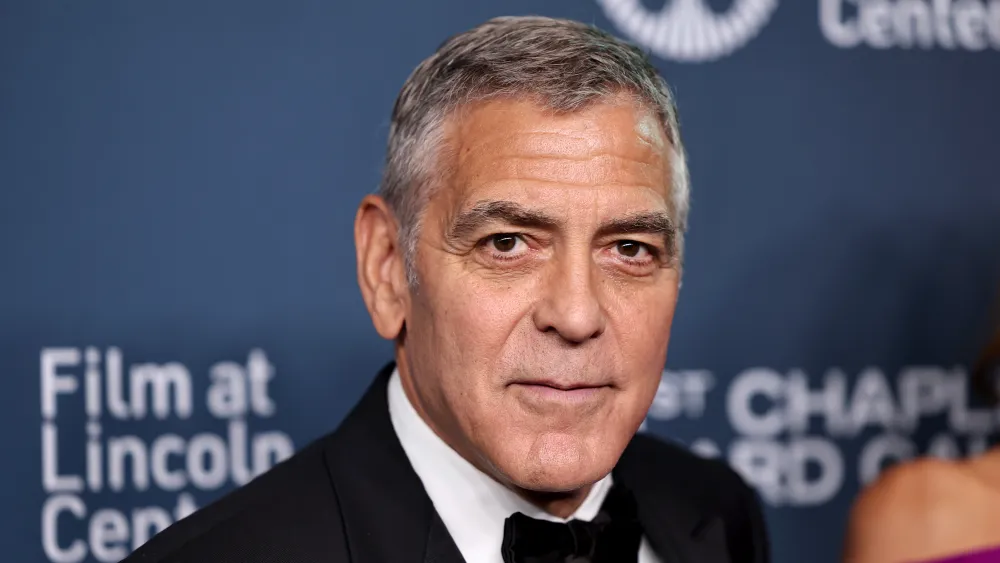
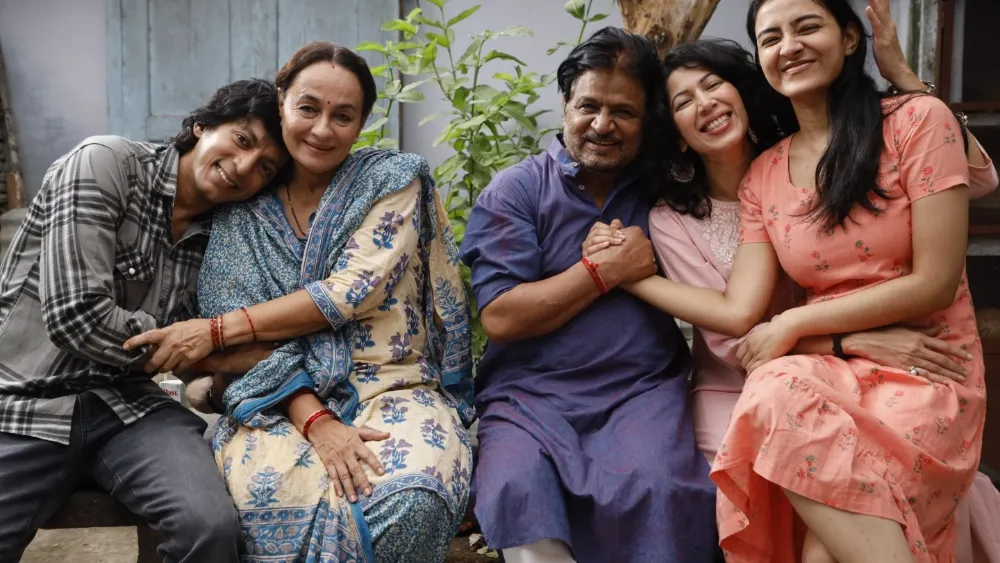
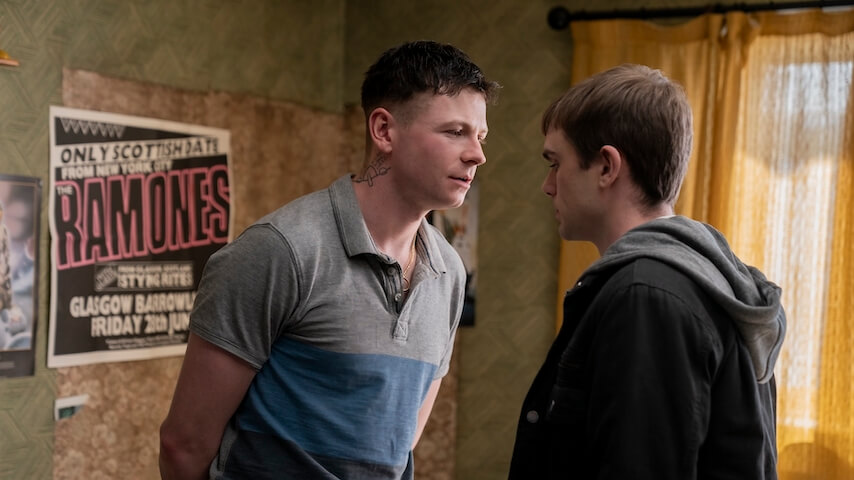


 Mastodon
 BlueSky
 Login or register to get email updates…
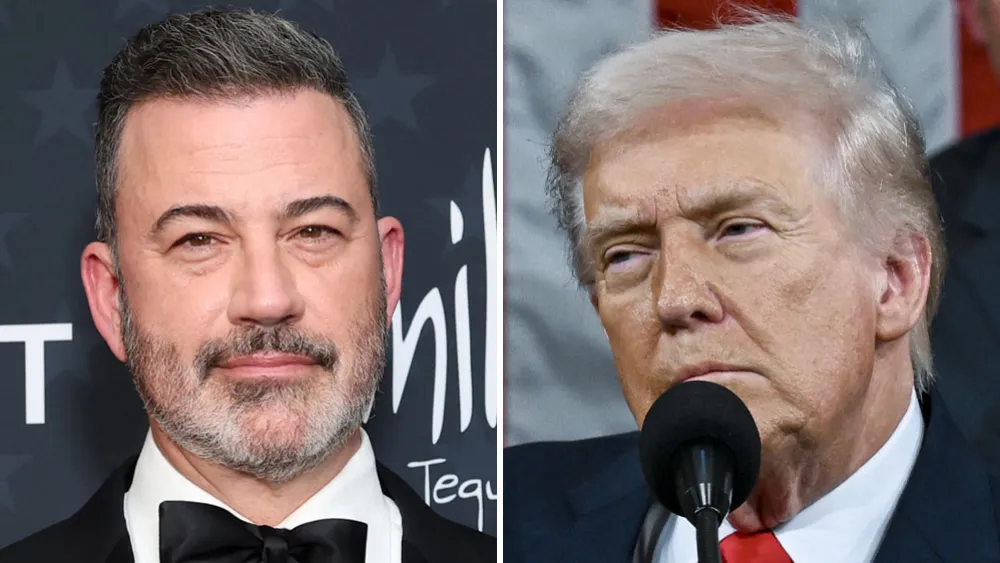
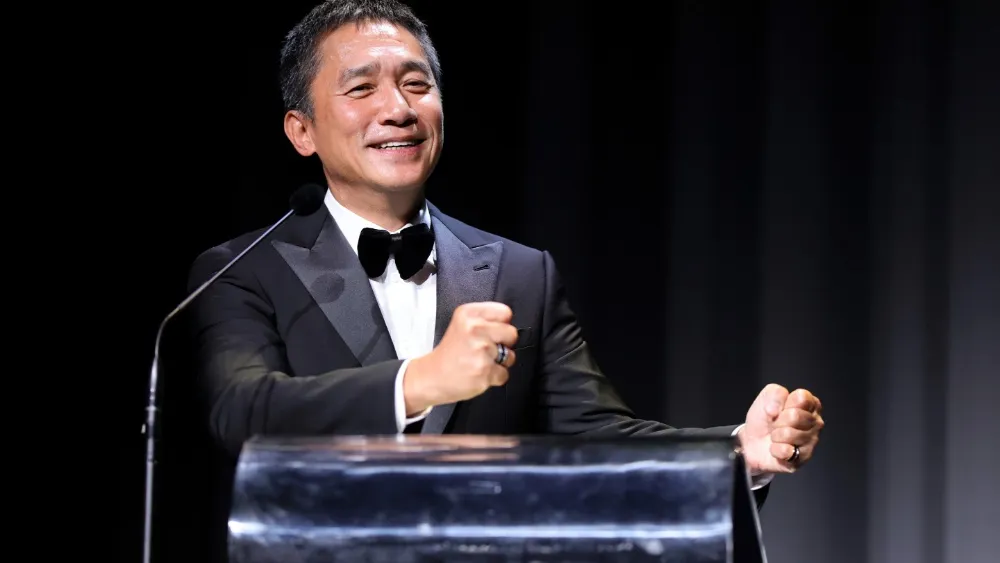
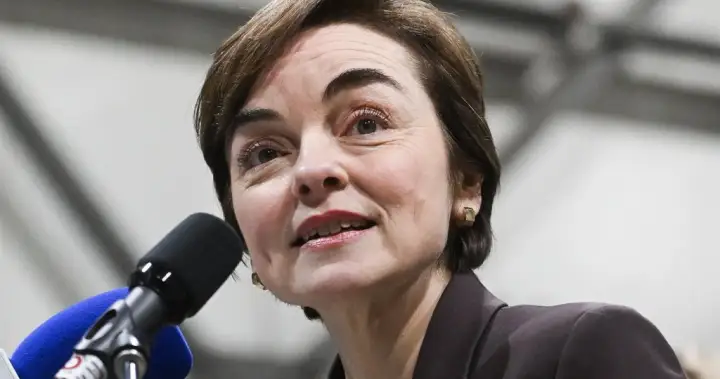


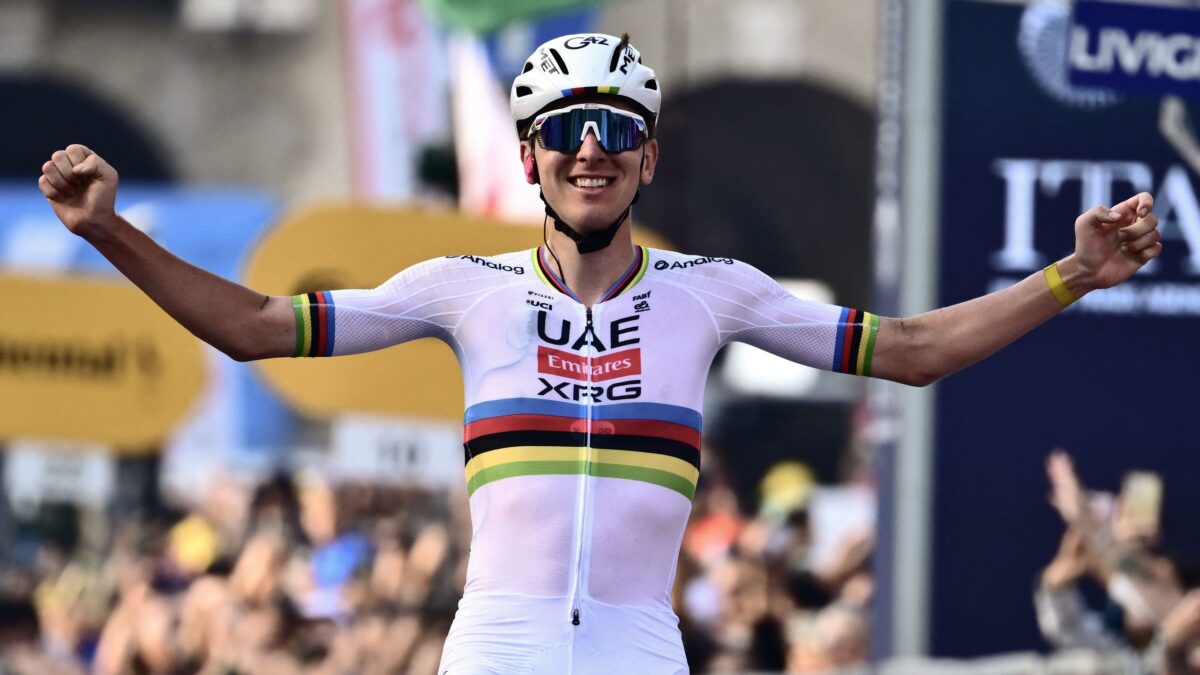


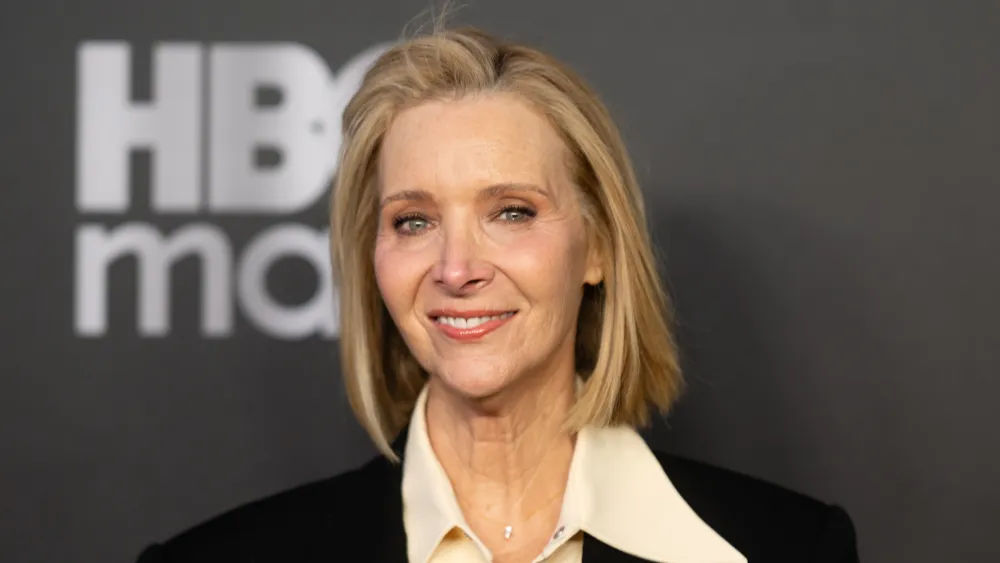





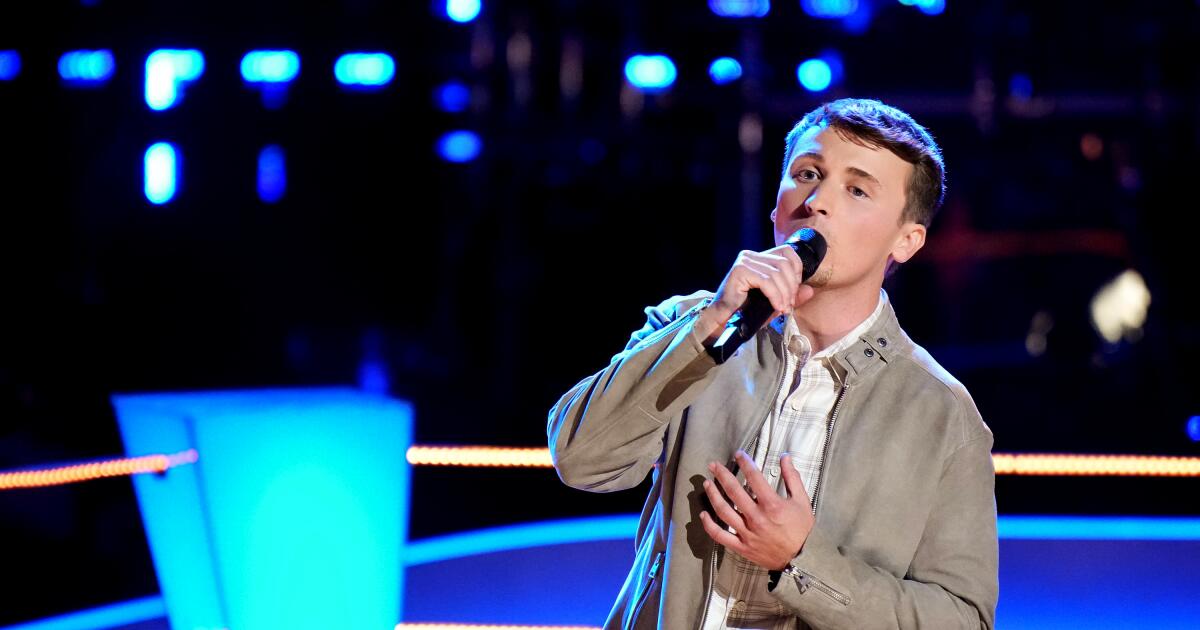
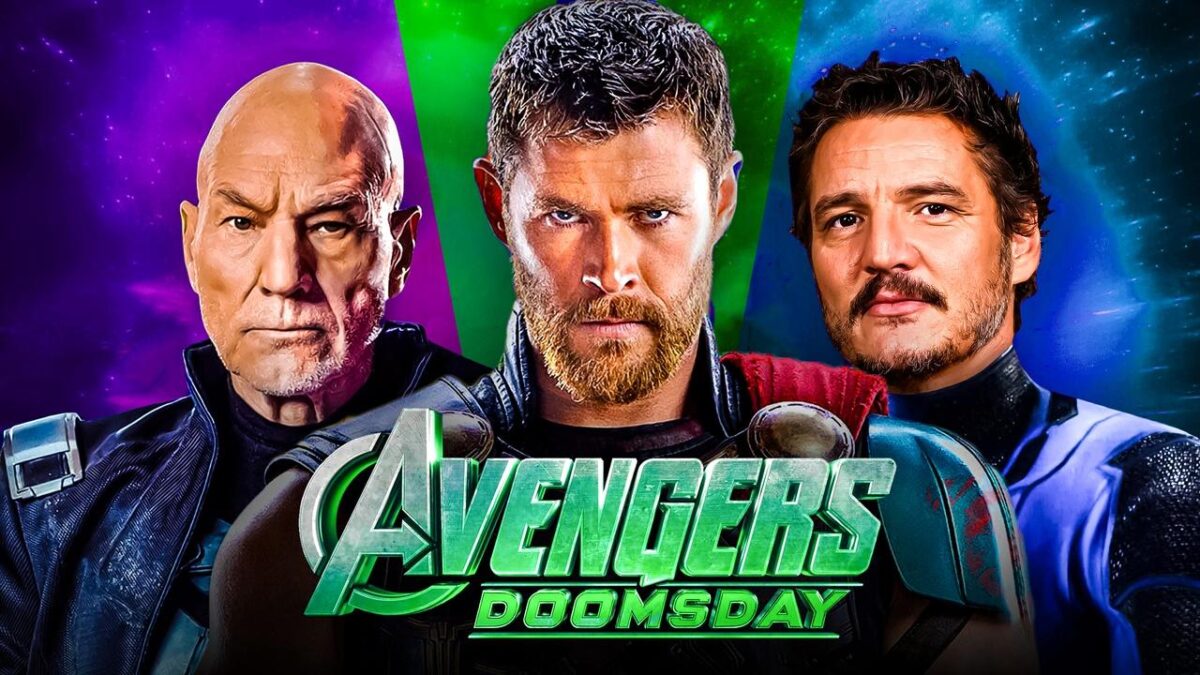
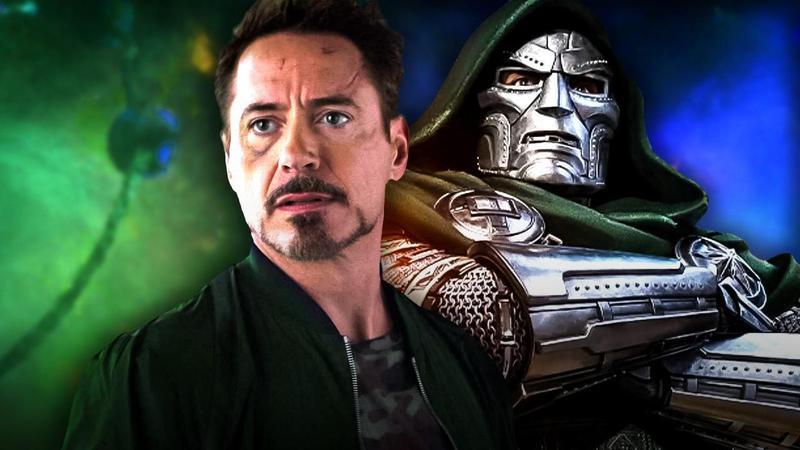
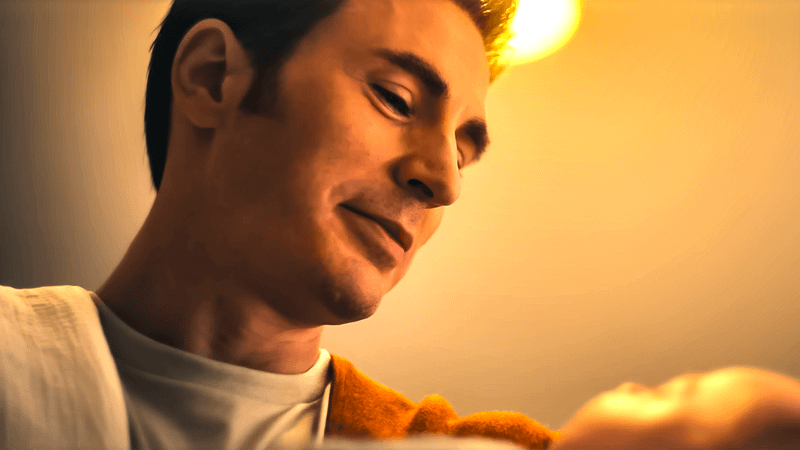
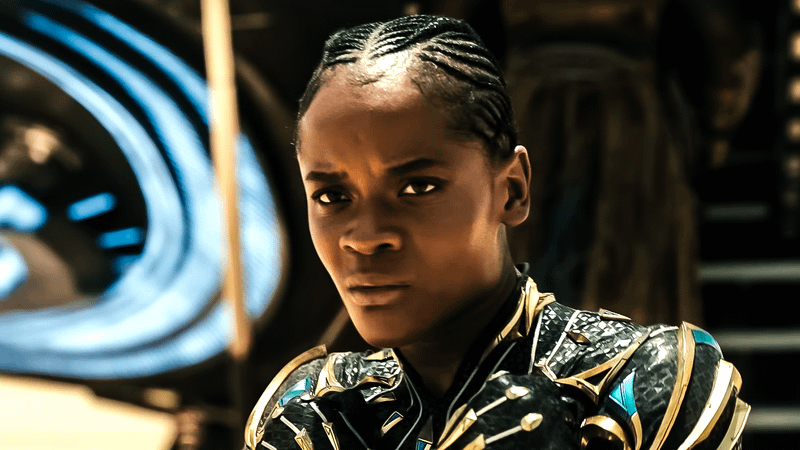
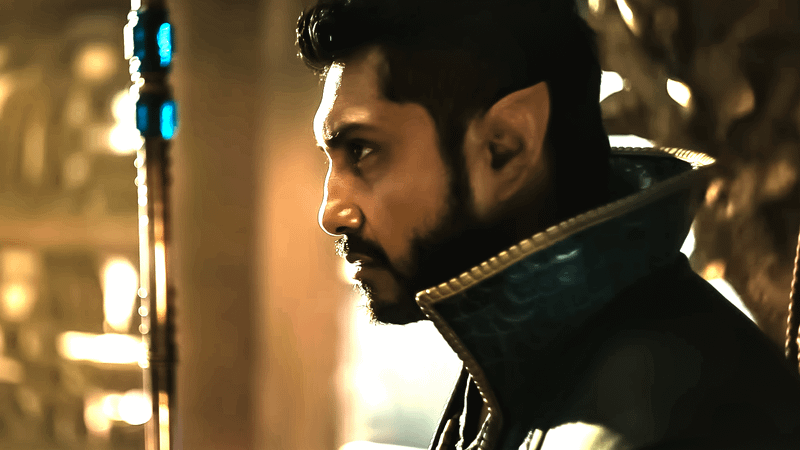
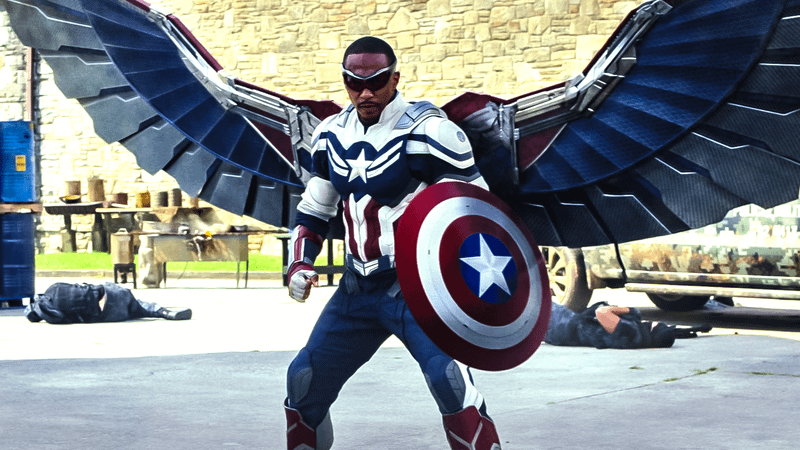
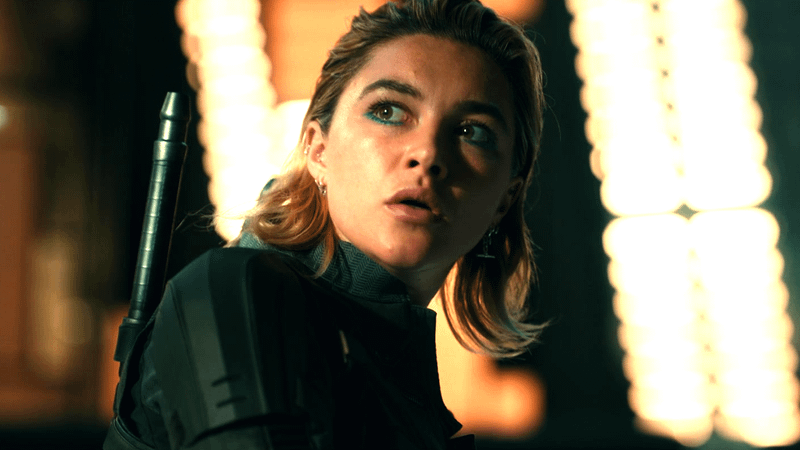
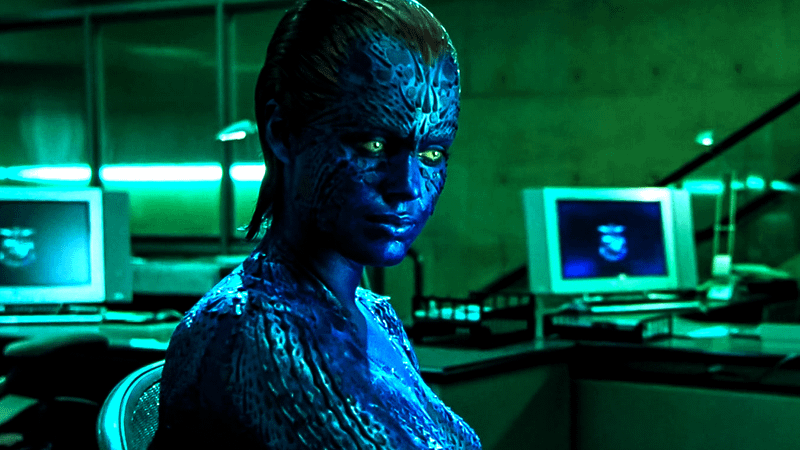
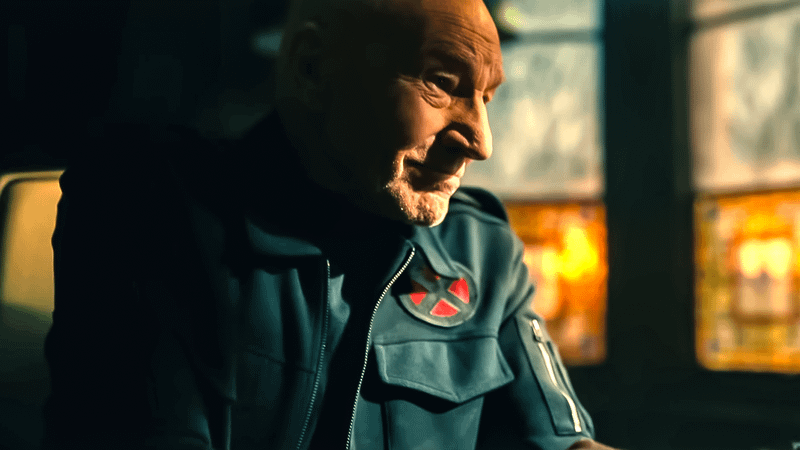
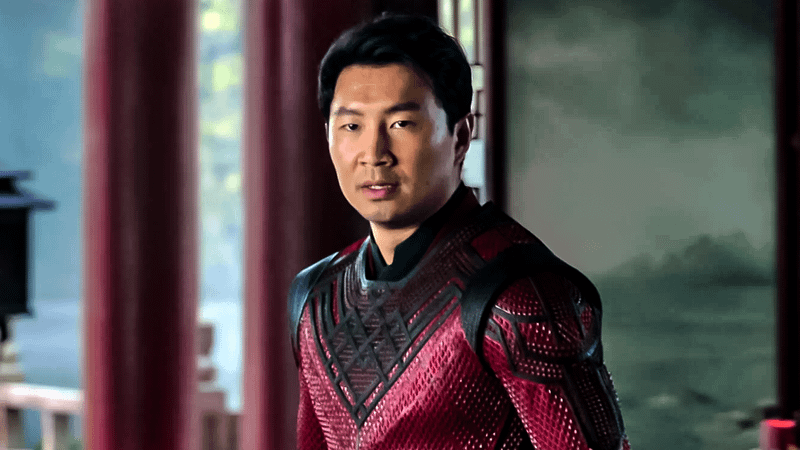
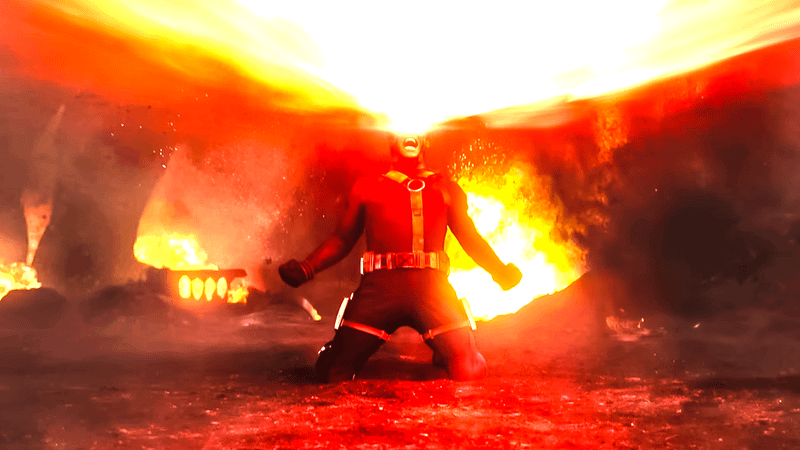

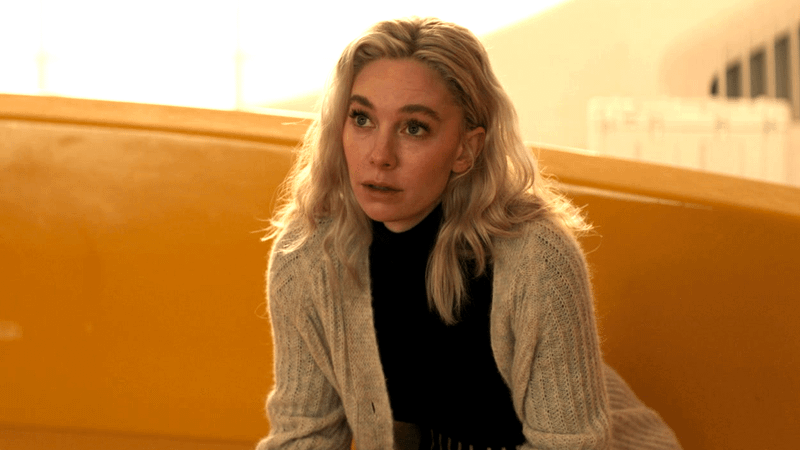


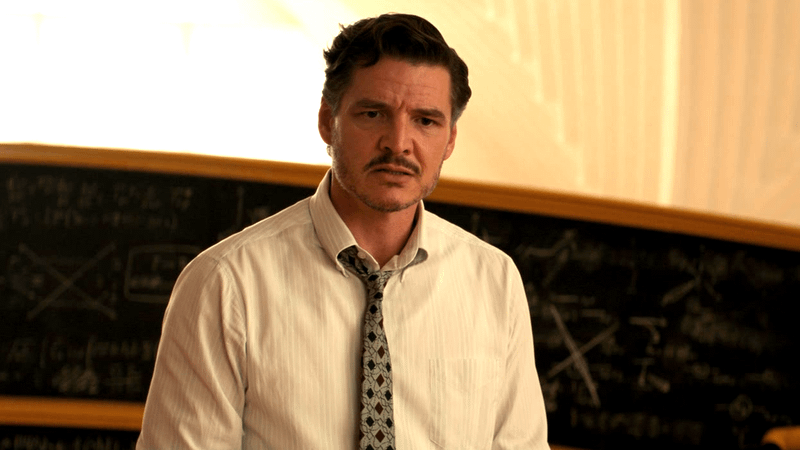
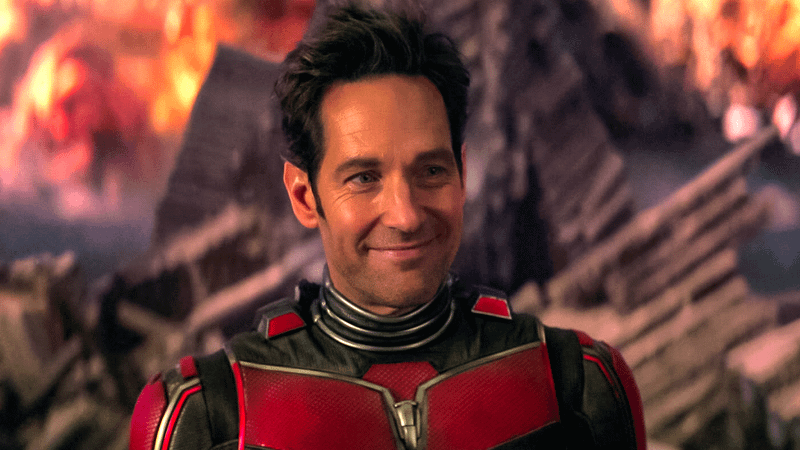
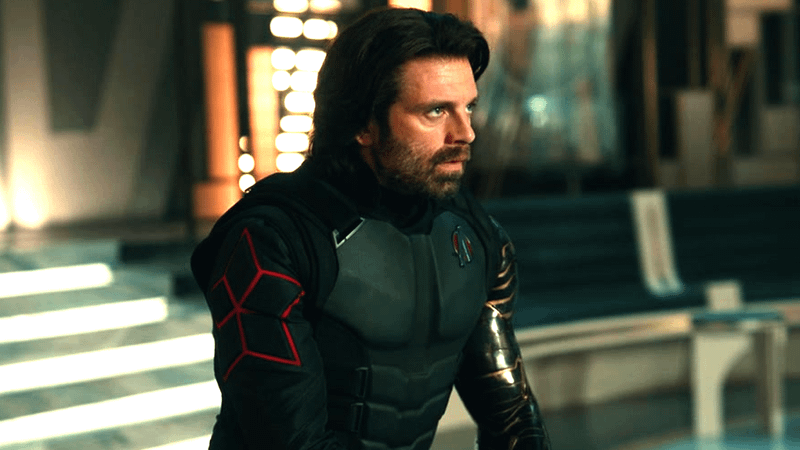
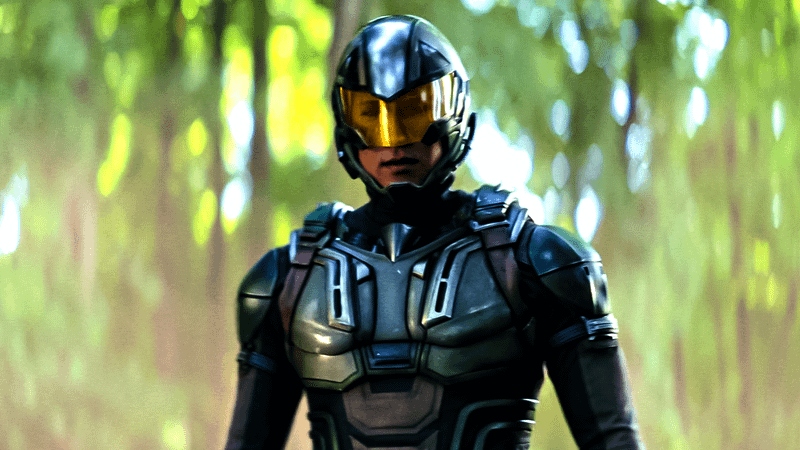
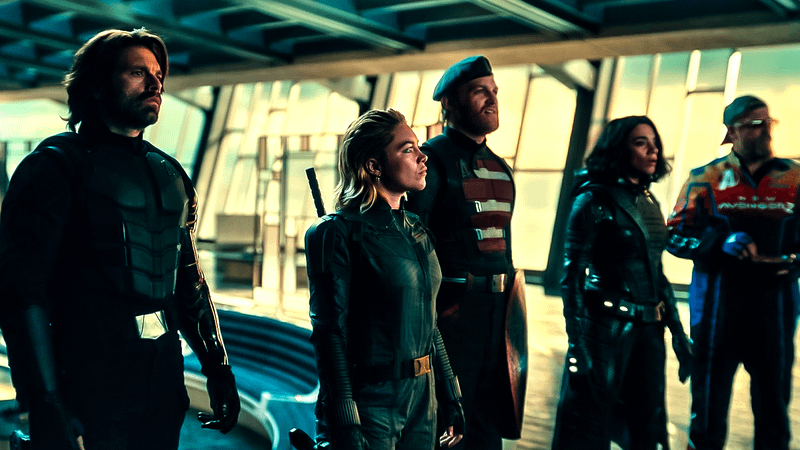
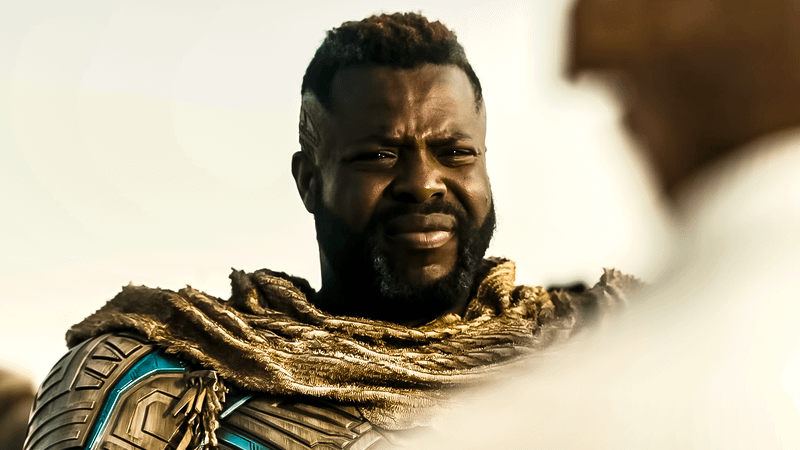
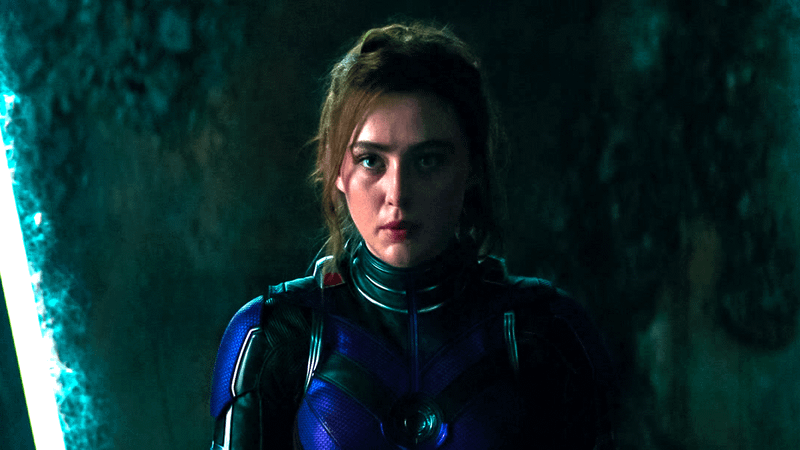
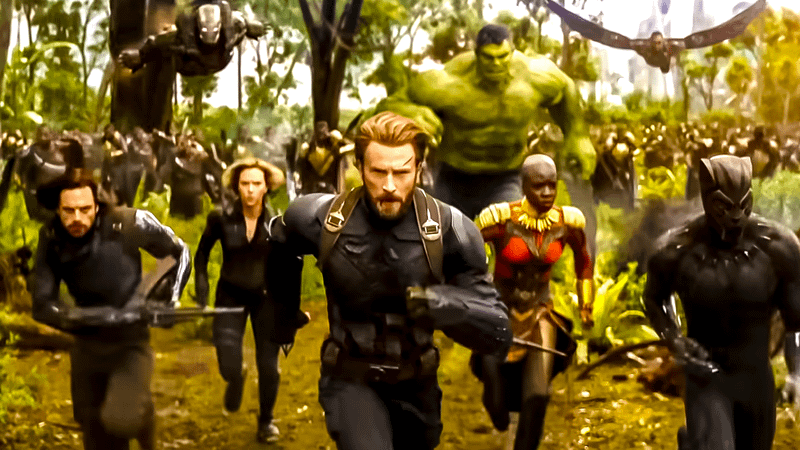
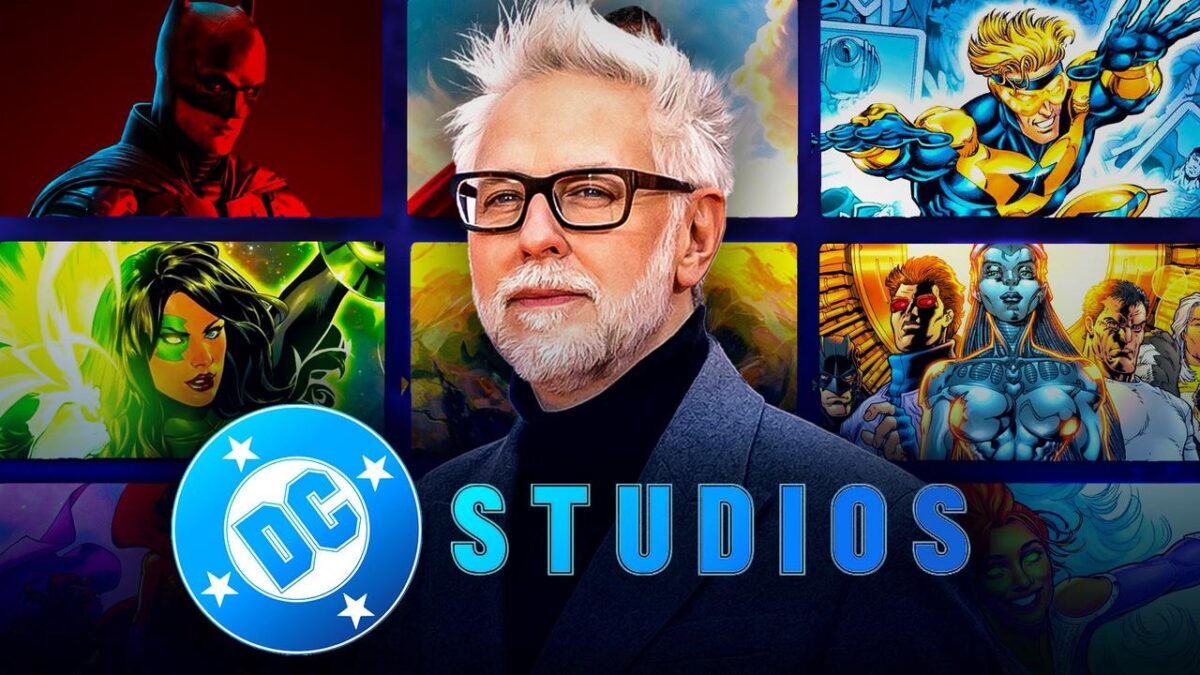
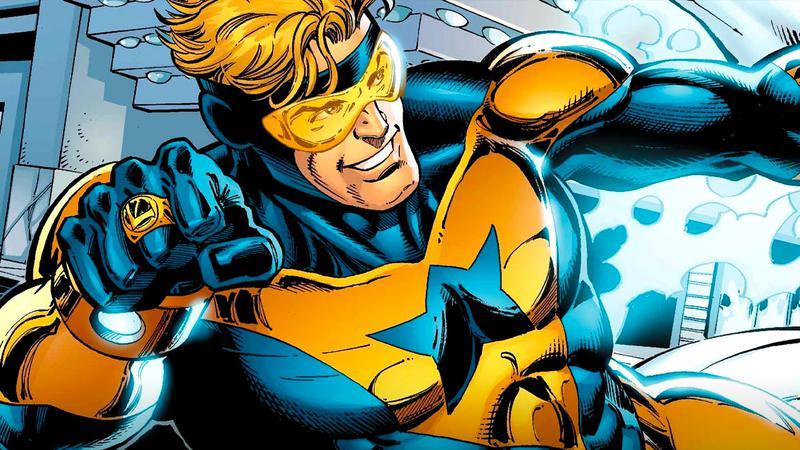
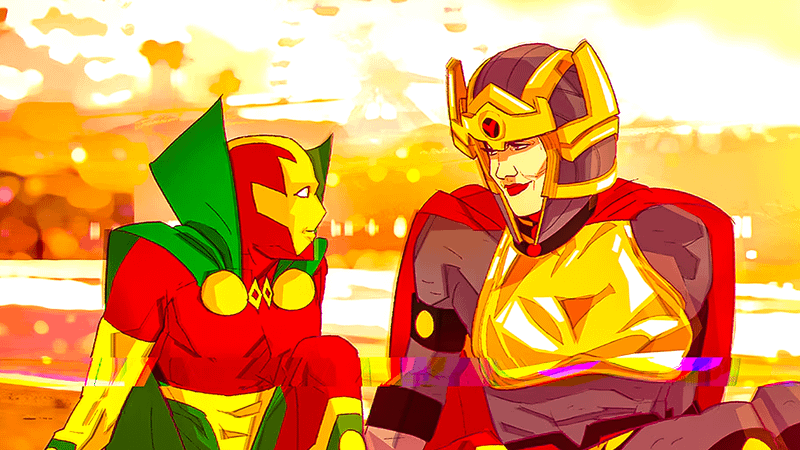
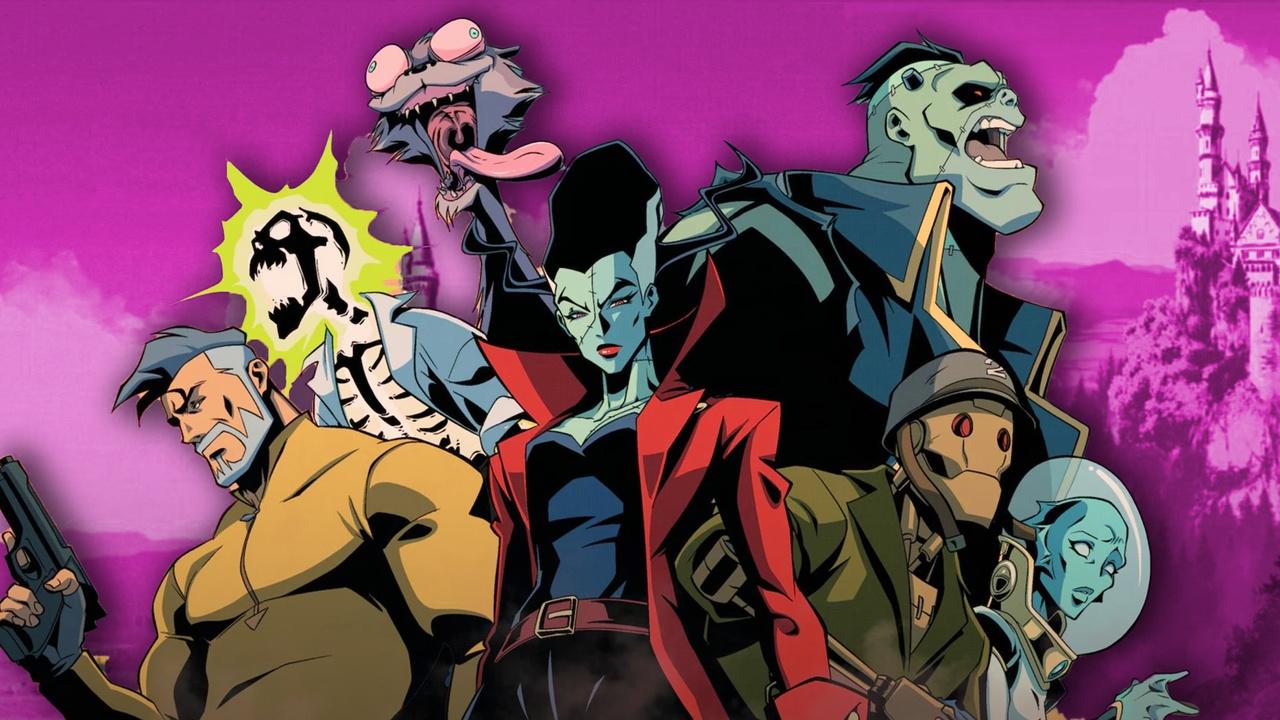
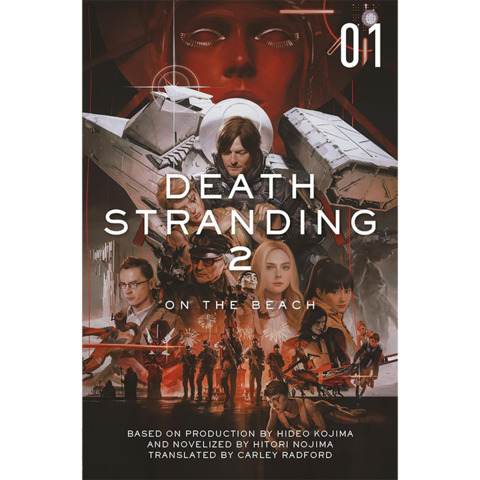

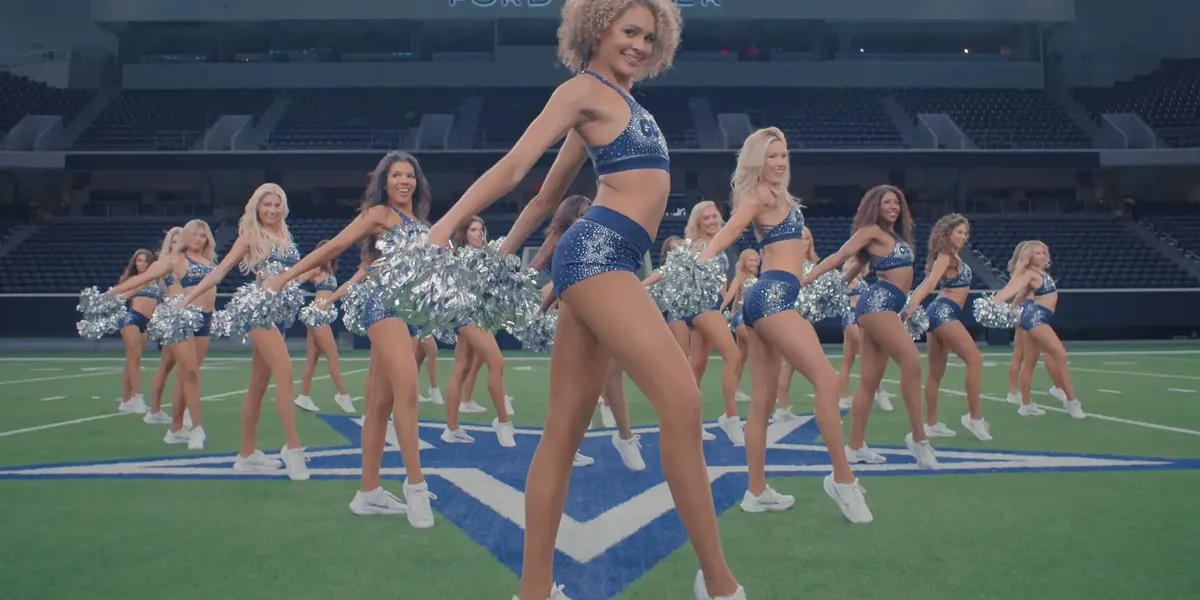
 Zach Fuller Credit: Impact24
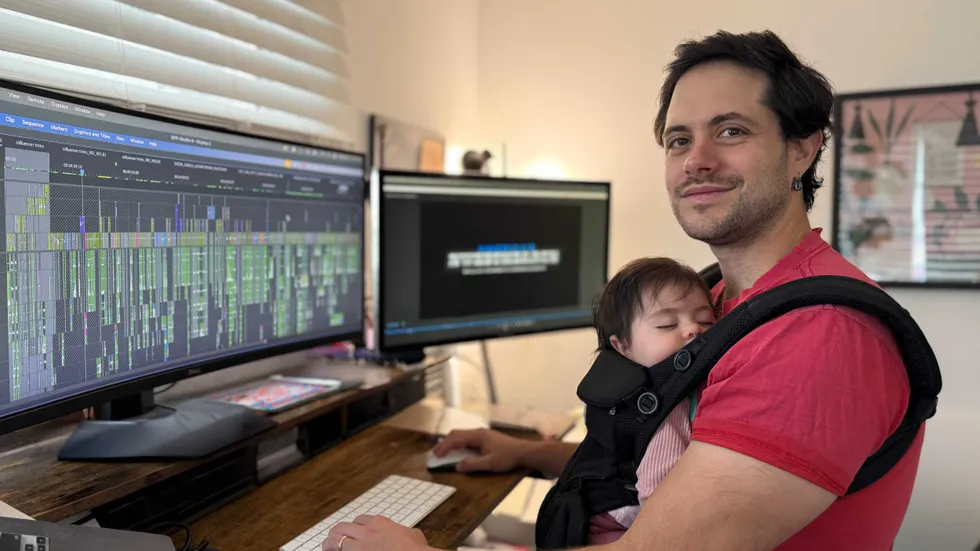 Noah DeBonisCredit: Impact 24
 M Brennan Credit: Impact 24