The Red Power Movement of the 1960s and 70s was a time of profound social change and progress for American Indians in the United States and Canada.
The music of Buffy Sainte-Marie was the score that helped propel the movement forward.
S36 Ep6
Buffy Sainte-Marie: Carry It On – Stream the documentary now
In her outspokenness about the injustices facing Indigenous people, she also sang for peace, the environment, women and children—believing that art can have impact and make a difference.
She was driven by her desire for the masses to be informed about the issues, so that through being enraged they would be engaged, a mantra that animated all aspects of those turbulent times. Of Cree heritage from Saskatchewan, Canada, in her 20s, Sainte-Marie was touring, performing and developing a songbook that would reverberate across audiences.
But it was the songs “Universal Soldier,” “Now That the Buffalo’s Gone,” “Bury My Heart at Wounded Knee” and “My Country Tis of Thee” that expressed the anguish and rage from the colonial oppression North American Indigenous people were surviving. Her songs addressed American Indian causes and issues, thrusting her into the spotlight of advocacy for the rights of Indigenous peoples, while offering inspiration and hope.
But a singer-songwriter is just the tip of the iceberg of who Buffy Sainte-Marie actually is.
Buffy Sainte-Marie c. 1980’s Credit: Ralph Dominguez/MediaPunch
Sainte-Marie graduated with degrees in oriental philosophy, religion and teaching. She also holds a doctorate in fine arts. The human condition was a common theme that defined the folk music scene she was immersed in. But for an Indigenous woman making her way in the 1960s, speaking truth to power was often easier said than done and could be costly—this was case for Sainte-Marie’s career.
Sainte-Marie leveraged her education, voice and visibility to champion political causes, supporting the American Indian Movement (AIM) and often lent her name to performance engagements. She actively funded the occupation of Alcatraz Island in San Francisco (1969-71) through performances and shows [Editor’s Note: You can read more about the history and legacy of the occupation of Alcatraz here].
Her passion and outspoken support for Indigenous causes coupled with her association with AIM worked against her as she became blacklisted in the United States.
Because she was singing about the political realities of ongoing colonial occupation of Indigenous lands and abuses of the federal government, radio stations were “strongly urged” by both Democratic and Republican administrations not to play her music. Unaware for decades of the FBI surveillance and radio blacklisting that severely limited her career and ability to secure public performance engagements, she took these career dips as opportunities to create, educate and influence in other ways and mediums. She founded the Nihewaan Foundation for Native American Education and established the Cradleboard project in the mid-1990s, which enabled educational partnerships and opportunities between Indigenous and non-Indigenous communities and developed culturally-centered school curriculum. Her activism in education and providing scholarship support for Indigenous students has led to investments in notable education activists such as Lionel Bordeaux, founding member of the American Indian Tribal College Consortium (AIHEC).
In her commitment to Indigenous youth during the 1960s, Sainte-Marie worked closely with the National Indian Youth Council who worked to battle racism. These young activists organized conferences, gave speeches and inspired other notable Natives such as Vine Deloria, Jr. and Hank Adams. Collectively, activists and influential advocates demanded accountability from what many saw as the highly paternalistic Bureau of Indian Affairs.
RELATED POST
Where to start with Buffy Sainte-Marie (and why you should)
Because her approach to activism was deeply rooted in her core beliefs about rights and justice for American Indians, she used the spotlight to center Indigenous issues and followed through until solutions were reached.
From 1976 to 1981, Sainte-Marie was a cast member of the television series “Sesame Street.” The political act of being visually sovereign, often defined as re-imagining, creating, reclaiming and supporting cultural spaces as determined by Indigenous people, is a concept Sainte-Marie not only practices, but encourages.
Many of us working for accurate Native media representation today, for example, owe homage to Sainte-Marie, who in 1968 when invited to play a lead role in “The Virginian,” demanded that all the Indigenous roles be played by Indigenous people. Working with Jay Silverheels and Louise Red Elk from the Indian Actors Workshop, casting agents filled the Native roles with Native actors, which was precedent-setting for the times.
S36 Ep6
Buffy Sainte-Marie brought Indigenous representation to TV
Sainte-Marie’s activism was typically vocal, but often subtle in its approach.
For instance, her feminist views on intimate relationships were unheard of during the time with “Until It’s Time for You to Go,” which has been covered by artists such as Neil Diamond, Barbra Streisand and Elvis Presley.
She has stood up to governments, managers, studio executives and even Elvis Presley himself, who otherwise loved her music. She denied Presley’s management requests to own the publishing rights for “Until It’s Time for You to Go.” Despite Sainte-Marie’s refusals, Presley nevertheless recorded the song an astonishing nine times. Encouraging artists to understand the business side of the entertainment industry has been part of her mission as an artist. While she has witnessed some of the worst parts of show business—seeing it as an “extension of entrepreneurial colonialism’’ as articulated in the authorized biography of Buffy Sainte-Marie by Andrea Warner—she has stood firm and persevered against toxic masculinity.
From music and TV to education, Sainte-Marie’s artistry, joy and passionate activism and optimism have been pivotal in bringing hope and change to humanity. Sainte-Marie’s unique form of activism changed perceptions of Indigenous people, and she continues to champion efforts to end violence against Indigenous women and speak up for Indigenous rights.
The Walt Disney Co. has officially acquired 100 percent of BAMTech, the streaming video technology company that it acquired majority ownership of in 2017 from Major League Baseball.
According to a footnote in the company’s annual report, which it filed Tuesday, Disney paid Major League Baseball $900 million for its 15 percent stake in the company, now known as “Disney Streaming,” earlier in November.
Disney and the sports league had the right to force a buyout of the stake based on its fair market value beginning earlier this year. Disney had bought the National Hockey League’s 10 percent stake in BAMTech for $350 million last year.
BAMTech technology powers Disney+, Hulu and Disney’s other offerings, and has become a critical part of the company’s streaming infrastructure. The announcement of the BAMTech acquisition on the company’s August 2017 earnings call — coupled with the announcement of plans for ESPN and Disney-branded streaming services — was “the beginning of the reinvention of The Walt Disney Company,” then-CEO Bob Iger wrote in his memoir The Ride of a Lifetime.
BAMTech can trace its origins to 2000, when the league sought to create a digital hub for the league, and to help develop online ticket sales. The result was MLB Advanced Media, which in the ensuring years developed in-house streaming video technology to bring baseball highlights and full games to the internet. MLB Advanced Media streamed its first baseball game during the 2002 season, a full three years before YouTube was founded.
BAMTech would go on to power a variety of streaming services, including offerings from the NHL (a minority shareholder) and HBO.
The league spun off its streaming video division as BAMTech in 2015, with Disney acquiring a minority stake a year later. Disney would go on to acquire its majority stake in 2017, buying out its remaining partners at the NHL and MLB in 2021 and 2022, respectively.
The end of the year is fast approaching, which means it’s time for the world’s biggest music streaming services to summarize your listening habits in the most shareable ways possible. First out of the gate this year is YouTube Music’s 2022 Recap feature, launching today.
Like last year, the main attraction is the personalized music stats it pulls together, highlighting the artists, songs, music videos, and playlists you’ve most listened to and watched throughout the course of the year. But there are also some new inclusions, including highlights of artists you might have discovered before they blew up and a new “music personality” feature that attempts to analyze your listening habits to deliver a verdict on your “music vibe.”
It’ll also integrate with Google Photos this year
Another change for 2022 is that Google will also show these music recaps via the main YouTube app on both iOS and Android. You can find it by searching for “2022 Recap,” which should bring up your personalized playlist and give the option of viewing the slideshow of stats via the app’s stories banner.
Finally, the recap feature is also integrating with Google Photos this year. If you’d like to share your top tracks from each season, the YouTube Music app will now allow you to illustrate them with images imported from Google’s photo storage service.
Zach Phillips places a premium on preparedness and growth: the rehearsals are plentiful, the recording sessions are brief, and the next opportunity for collaboration is always just over the horizon. Since founding the eclectic label OSR Tapes (now known as “la Loi”) in 2007, the Brooklyn-based songwriter and bandleader has released music under myriad monikers—Horse Boys, Nals Goring, Jordan Piper Philips, GDC, Bruce Hart—and with several side projects—Blanche Blanche Blanche, Perfect Angels, etc. When his new partnership with Belgium-based vocalist Ma Clément produced the homespun God’s Trashmen Sent to Right the Mess, it sold thousands of copies and landed them a spot opening for Stereolab. Flaming Swords, the first studio album from Fievel Is Glauque, makes God’s Trashmen seem humble by comparison. Cramming highly technical and conversational fusion compositions within sub-two-minute songs, the album has the allure of a puzzle box with no right or wrong answers: just barrages of instrumental hooks and Delphic ponderings of the human condition.
Whereas God’s Trashmen compiled mono cassette recordings across five sessions from five permutations of musicians between 2018 and 2020, Flaming Swords was recorded live in a single evening in Brussels during summer 2021 by a septet of old and new collaborators. As their arrangements grow more complex and texturally rich, Fievel Is Glauque benefits from this immediacy. Johannes Eimermacher’s piquant alto sax leads the opener and title track as Gaspard Sicx’s drums engage Phillips’ keys in a coltish tussle. Clément’s sugary soprano and Eric Kinny’s lap steel swiftly diffuse the kineticism, transforming licks of Biblical fire into a smoke-filled speakeasy. When the rhythm fluctuates, Clément matches it with her phrasing.
It’s one of the most apparent evolutions from God’s Trashmen. Now composing alongside Phillips, Clément has more opportunity to flex her paradoxical ability to ground a piece with ethereal musings. Whether tiptoeing sylph-like across Sicx’s skittering cymbal taps on “Days of Pleasure,” sprinting through a recitation of a French apology letter for the belated arrival of a James Last cassette on “Boîte à Serpents,” wringing every drop of aching fragility from the brief runs of “Constantly Rare,” or soaking up the paranoia of Eimermacher’s swarming locust notes on “Wrong Item,” her range is subtle but stunning. While Clément’s approach can be taken as reticent—favoring cloudy poetry delivered with a lilt—its gentle cadence serves as an olive branch on an album that may otherwise seem daunting.
Phillips declines to prompt listeners to think or feel a certain way about Flaming Swords. “If this music is ‘for’ anyone, it’s ‘for’ the people who play it,” he told Post-Trash. You’d be forgiven for taking that as stubbornness. Fievel doesn’t willingly invite comparison to anyone—let alone contemporaries—and Phillips scoffs at the idea of making music to tap into a market. One could stretch and call them philosophically aligned with the recent wave of “viral jazz,” at least as far as refusing to adhere to strict concepts of what jazz, prog, or avant-whatever represent. Incidentally, Fievel has more in common with the Rock in Opposition movement of the ’70s: Flaming Swords, like black midi’s Hellfire, could be regarded as current endpoints of divergent paths from The Henry Cow Legend. But when pressed for influences, Phillips eagerly points fans toward Uruguayan music: specifically, a 100-song compilation titled La Otra Mitad. This affability is woven into Flaming Swords’ tendency to confound: It’s a mysterious friend who’d love it if you understood better, but you’re going to have to work for it.
ZEE5 has brought a taste of the naxal movement to their streaming service with Naxalbari. Experimental, as the platform has been with its content, this revenge-drama too creates space for storytelling for its kind, not mainstream but aspirational in every sense of the word. Even though the bloody, ongoing conflict has been existent in the country for more than five decades and is spread over various states, it has seldom found voice in Bollywood outings. Naxalbari is an attempt in the regard, with no intention of glossing over war crimes or siding with the perpetrators.
An MNC, FICA, lays out plans of a mining plant in the resource-rich areas of the forests, which the residents are naturally opposed to. In lieu of development, all their livelihood sources will be taken control of. Politically under-represented, naxalites resort to violent means to curtail foreign movement inside their territories. The Special Task Force (STF), headed by Raghav Joshi (Rajeev Khandelwal), gets involved and layers of conspiracies and vested interests are uncovered in the process of serving justice to the state and adivasis.
Web series director Partho Mitra has made a decent show with the script at hand and considering the run-time of episodes is limited to under thirty minutes each, it does not slack off either and holds attention with various twists and sincere performances backing the teleplay. However, one thing that is constantly a source of nuisance is the excessive use of explicit language by the characters, especially the ones playing naxals.
Not a single sentence uttered by them is sans abuses. Since Naxalbari is for web and comes with a 18+ disclaimer, most of the swear words have even made way into the final cut. But, since the very start, it is one of the aspects that may bother you and even wane off your interest to a certain extent. To add more to it, leader of a political outfit, which is functioning to wipe out naxalism with force and murder, is also hell bent on using expletives, like he does firepower.
Naxalbari puts together a good ensemble and does not focus too much on the main lead, Raghav. In fact, he has his own shortcomings that make him humane and relatable despite being a cop, which is a plus point too. All in all, the latest ZEE5 show is worth investing time in if you don’t mind verbally offensive give-and-take.
Get ready to travel back in time to the Forman basement, because the official teaser trailer for Netflix’s That ’90s Show is finally here! Set approximately 15 years after the events of That ’70s Show, the sitcom is stacked with both new and familiar faces.
The series revolves around Eric and Donna’s teenage daughter, Leia Forman (played by Callie Haverda), as she spends the summer at her grandparents’ house in Point Place, Wisconsin. While there, she meets their next-door neighbor Gwen (Ashley Aufderheide) and becomes part of a tight-knit friend group. Each season will take place during summer.
The show will focus on the new group of kids, but several OG characters from That ’70s Show will make guest appearances, including Eric (Topher Grace), Donna (Laura Prepon), Fez (Wilmer Valderrama), Kelso (Ashton Kutcher), and Jackie (Mila Kunis).
In addition to Eric and Donna, one other original couple will be together: Kelso and Jackie (whose actors are married in real life!). “My husband and I are together in it, which is weird because we shouldn’t have been,” Mila Kunis said in an interview with Access Hollywood. “I called BS. I was like, ‘My character would be with Fez…’ Now [Kelso and I] are married with a kid, and I was like, ‘I don’t know about this.'”
That ’90s Show is full of connections to the original show behind the scenes as well. The creators of That ’70s Show, Bonnie and Terry Turner, co-created That ’90s Show along with their daughter, Lindsay, and Gregg Mettler (who wrote for That ’70s Show). Additionally, Kurtwood Smith (who plays Red) and Debra Jo Rupp (who plays Kitty) are executive producers. Laura Prepon also directed several episodes.
Originally, That ’90s Show was pitched with a very different premise. Terry Turner revealed in an interview with Variety: “Our first pass what that Eric had at some point gone to a rock festival and hooked up with someone, leading to an unknown grandchild. And at the doorway shows up a 14- or 15-year-old kid who says he’s Red and Kitty’s grandkid.”
Ultimately, Netflix decided that wasn’t quite right, so everyone went back to the drawing board. And thus, the idea of Leia Forman was born.
“I wanted [it] to have the same feeling as That ’70s Show did,” Mettler told Variety. “The show had a very special tone. It was playful, it had a heart, it was sarcastic, it was filled with love within this family, within the friend group. I missed being in the basement with those kids.”
TV and Movies
Get all the best moments in pop culture & entertainment delivered to your inbox.
In a landmark vote, the Senate has decided to pass the Respect for Marriage Act: a bill designed to strengthen federal protections for same-sex and interracial marriage. Per CNN, the bill received bipartisan support from all members of the Democratic caucus and 12 Republicans for a final vote of 61-36. Next, the bill move on to the House, where it will need approval before it can be signed into law by President Joe Biden. But we may not have to wait very long for that to happen. The House is expected to pass the bill by the end of the year or even as early as next week.
The bill would not create a national requirement for all states to legalize same-sex marriage. This means that certain states would be able to ban same-sex marriage in the event that the Supreme Court overturns Obergefell v. Hodges: the 2015 decision that legalized it. The Respect for Marriage Act would, however, obligate every state to recognize same-same marriages from other states.
The move is, in part, an acknowledgement of what can happen when certain rights aren’t codified into law. Such was the case for abortion rights, as we collectively learned from the fall of Roe v. Wade earlier this year. And amid the destruction of Roe, Justice Clarence Thomas foreshadowed his desire to “reconsider” the rights to same-sex marriage and contraception as well.
In the months since, steps have been taken to enshrine abortion access and same-sex marriage as constitutional rights. It’s heartening to see at least one of these bills advance to the final stage: clearing the president’s desk.
Looking for a movie to watch all together this Thanksgiving? A movie musical is always the correct answer. Any relative who disagrees can show themselves out. In 1960s Baltimore, Tracy Turnblad jives her way onto the famed Corny Collins Show. Her newfound celebrity status brings her romance, enemies, and even provokes racial integration. The cast…
“I felt I didn’t have the fluidity to move in the directions that I wanted,” James said of the 2014 YA film franchise.
Theo James is diverging from typecasted heartthrob roles.
The “Divergent” alum reflected on being “beholden” to the young adult film franchise that debuted in 2014. James starred as the main love interest opposite Shailene Woodley in the novel adaptations. The box-office flop of the third film in 2016 eventually led to a scrapped fourth film and spin-off series.
“You do a certain type of film and you sign contracts where you are beholden to those roles for a certain period of time and people see you in a certain light that you have to wrestle your way out of,” James told Vanity Fair. “That is a hundred percent the case with actors — and it was definitely the case with me.”
James added that he was resistant to starring in “those types of films” and promoting them.
“I felt I didn’t have the fluidity to move in the directions that I wanted,” the “Time Traveler’s Wife” alum said. “You’re very much in a certain type of role — and those roles can be pretty fucking boring.”
Related
Related
Similarly, James’ “The White Lotus” Season 2 co-star Aubrey Plaza addressed being typecast coming off of playing deadpan government worker April Ludgate in beloved sitcom “Parks and Recreation.”
“I don’t mind being typecast because I feel like I was so lucky to be on ‘Parks and Recreation,’ and that was one of my first really big jobs, and I am so heavily associated with that character,” Plaza said earlier this year. “I think there were years when I was on that show where I was like only getting offered those kinds of parts, and that’s just what happens. You do something, people respond to it, and they want to see you do it again, again, and again. I think you just have to be really proactive in changing that narrative for yourself.”
Plaza continued, “It gave me motivation to prove myself. I think, for a while, I did feel like, ‘Aw man, I’m being put in a box, and I don’t like it, so I’m going to fight to get out of that and show people what I can do,’ or something. But then I started to look at it as a gift. If I convince people so well that I was that one thing and then I do something that’s totally different, it will be that much more satisfying to surprise them. So I started to try to think of it like that and be a little bit more positive and less bitter about it.”
If there is one artist we all can’t get enough of, it’s Taylor Swift. Swift has managed to reinvent herself and her career constantly.
Most notably, her latest release, Midnights looks to be another change of pace for Swift and for us as her fans. Even amidst her re-recordings, it feels like we’re introduced to an entirely new artist and it’s fascinating.
Of all the current artists out there, Taylor Swift is breaking the mold again and again. Before the release of Midnights though, we have to talk about how excellent the marketing has been for both her and her fans as a whole.
Taylor Swift once again changes the game for fans and other artists with her upcoming release.
Taylor Swift has managed to up the game again for other musical artists.
Let’s start off by talking about Taylor and her Tiktoks. Taylor used TikTok to share the entire tracklist of Midnights. For those who could stay up until midnight, it was a treat but still as sweet the next morning for those of us who couldn’t. That wasn’t the only tactic Taylor used for this album, though.
If that wasn’t enough, Taylor decided to partner with Spotify to share lyrics from songs on their billboards around the world. Currently, two billboards have been discovered. One was in New York City while the other was in London. Considering that those are two important locations to Taylor, those shouldn’t come as a surprise. Aside from those marketing tactics, Swift also shared her upcoming schedule of events and releases for Midnights on Instagram.
As someone who is a Taylor Swift fan, it feels like an embarrassment of riches, especially after the secrecy about her previous releases. While it does raise the bar for other artists, I do feel like this is also exclusively a Taylor thing. Swift prides herself on being close to her fans and this type of marketing works in that regard.
For other artists, a similar tactic might work but none will be as effective as the original. If anything, this album and the marketing around it prove just how much of a genius Taylor Swift is. As someone who has loved almost all of her albums and is excited for Midnights, I’m just curious to see how she’s going to top herself.
While it’s unclear if artists will try to replicate the success Swift has had, it’s obvious the marketing for new albums is changing. Swift is just helping to usher something new for those who are already famous or on the cusp. Personally, I hope she decides to do something similar with her next re-recording project.
Regardless, I know I’ll be listening to Midnights when I get up, and hopefully, it’ll be every bit as glorious as Taylor Swift made it out to be. For me, there’s no way this album is going to be bad so I’m just hoping that this album will clear my skin, make me love myself, and do everything a good Taylor Swift album does.
Are you excited about Midnights? Any hopes for Taylor Swift’s newest project? Let us know in the comments.
IDFA, the largest documentary film festival in the world, sprawls throughout Amsterdam in mid-November. It’s also an industry mecca, where you might not only attend the high-profile Forum (the grandmother of all pitch forums), but also pop into one room and find aspiring Korean filmmakers doing pitches, turn around and find a group of Palestinian filmmakers doing the same, to their interested funders. Or you might revel in IDFA DocLab, the bleeding-edge, experimental zone of XR/immersive.
Since its origins with founder Ally Derks in 1988, IDFA has proudly celebrated the role of documentary in engaging civic and human rights issues, as well as celebrating the art form itself. With the advent of Syrian filmmaker Orwa Nyrabia as artistic director in 2018, the festival has become even more international and diverse, and has engaged big questions around how to structure a festival that prizes equity, inclusion and diversity. This year, for example, Nyrabia went beyond the usual festival reverence for the individual filmmaker, choosing as IDFA’s book this year Collective Wisdom, a celebration of collective and participatory filmmaking.
And expect more to come: This year, Nyrabia announced that IDFA will be moving into a historic building in the heart of Amsterdam, which will house its many projects and coordinate year-round operations that currently are scattered throughout the city.
He also celebrated the eclectic nature of IDFA’s cornucopia of offerings: “Through the subjectivities of these filmmakers, an image of a world in pain emerges—a humanity that is trying hard, that is vulnerable and sincere, that is complex and persistent. The diversity of artistic forms is astonishing, and there are no boundaries when it comes to tackling the biggest powers or inventing new grammar.”
Eclectic Indeed
Nyrabia did not understate the eclectic curating. The opening night film, All You See, by Netherlands-based Iranian immigrant Niki Padidar, is a film that both experiments with form and addresses the urgent issue of immigration. It is a semi-surreal, interior meditation on the experience of being an immigrant, from the perspectives of five people, including the filmmaker. The film only reluctantly releases any information about any of them, thus challenging the viewer to inhabit the experience of working with partial information that the immigrants have. A theme among all the stories becomes the sense of uprootedness, of not being able to go back, and going forward into a world where they are always different. The film, like the situation it describes, can be awkward, and also hypnotically beautiful, particularly with its slow pans across architectural surfaces that repeat. The overarching theme is long-term, inconsolable loneliness.
The crisply constructed, engrossing and alarming While We Watched has an entirely different goal and style. Vinay Shukla follows embattled Indian TV journalist Ravish Kumar, as his national network news service NDTV is harassed into financial crisis. The authoritarian, Hindu-chauvinist Modi government persecutes media that refuse sycophancy, and many journalists have signed up for the fake-news boosterism that buoys support for Modi’s party. Kumar and NDTV keep their ideals at an unsustainably high price, including both bankruptcy and death threats. I could not look away.
Or you might be captured by the unnaturally calm narration of Money, Freedom: A Story of the CFA Franc, an essay film by Senegalese filmmaker Lena Ndiaye. Using expert interviews and hypnotic b-roll of financial imagery, she shows how the Francophone African currency, the CFA Franc, has been a tool of postcolonial control of African economies—sometimes with the cheerful complicity of corrupt politicians.
You might be tempted to sing along to Bella Ciao, Giulia Giapponesi’s fascinating historical dive into the history of the song that has become an anthem for civil and human rights activists around the world.
And then there was Rea Tajiri’s warmly loving but unsentimental Wisdom Gone Wild, a vérité portrait of a mother who, in her dementia, maintains a sense of humor, a stubborn autonomy, and occasionally a glimpse of who she once was. The complex dynamics of an immigrant family are revealed in the efforts to maintain a relationship with her.
Archival Storytelling
IDFA was rich in creative uses of archival material for storytelling. Each repurposing carries its own set of ethical and narrative challenges.
Alain Kassanda’s Colette et Justin, which recalls his grandparents’ experience of Belgian colonialism and the fight for Congolese independence, powerfully re-employs Belgian colonial footage and photographs for anti-colonial purposes. Inspired by the intellectuals of the Negritude movement (such as Aimé Césaire, David Diop and Frantz Fanon) and by Raoul Peck’s magnificent memory documentary Lumumba: Death of a Prophet, Kassanda wanted to recover history from the colonized’s perspective. His story is not the one Peck tells, but rather a necessary complement to it, and a crucial recovery of long-suppressed history.
But Kassanda lacked materials, even his own family’s memories. He wore down his grandfather Justin and his grandmother Colette with love and snacks, but he couldn’t get around the fact that the colonized had no access to film or photographs at the time. One of his solutions was to use colonial imagery, but superimpose his own narration, making the viewer aware of the positionality of film’s makers. This also permitted him to explore the complexities and ambiguities of the colonial reality; for instance, his grandfather was educated to become part of the African colonial civil service elite supporting the Belgian regime, and the visual record the family has from that time exists only because of that fact. Another was to use atrocity images—those unbearably brutal records of King Leopold’s and Belgian cruelties—sparingly and with explanation. “I had to choose between denial of history and exposing,” he told me. “Many of the kids know nothing of our history, and I had to tell them. At the same time, how would I feel if that was my hanged grandfather in the photograph? My voiceover was making amends to those whose images I used, while I also was creating a testimonial to what happened.”
In Aurora’s Sunrise, one of the most popular films with audiences at IDFA (and Armenia’s submission to the Oscars), Inna Sahakyan faced some similar problems. The largely animated film recovers the story of a young woman who became the face of Armenian genocide for US sympathizers. Millions of Armenians lost their families, lives and homes when, at the tail end of the Ottoman Empire, during World War I, they were relentlessly attacked by the regime. After a series of hair-raising escapes from death and sexual slavery, she ended up in the US and became the heroine of a spectacularly successful Hollywood fundraising film. But like modern-day figures such as Nadia Murad or Malala Yousafzai, she also became an unwilling sacrifice to the altar of nonprofit publicity campaigns.
Sahakyan’s challenge was to tell both Aurora’s story and the story of the genocide. She found in animation a way to develop a narrative from Aurora’s perspective, to openly claim the interpretive realities of history, and to provide a safe distance from the hair-raising brutalities of genocide, which can shock viewers into shutting down. (Among her inspirations were Persepolis, Waltz with Bashir and Flee.) For instance, early on we see the children stage a little play, as was common in the era, for their loving parents. Almost Aurora’s entire family was murdered within two months after the attacks began. As each one dies, rather than see documentary examples of the devastation or an animated version of what happened, we experience that as a revisiting of the play, with one more family member missing,
But Sahakyan also thought it was important for viewers to experience some documentary evidence of the horrors of the event. “I didn’t want to use atrocity photos during the part of the story where the genocide is going on,” she told me. She didn’t want viewers to turn away or gawk voyeuristically. She also had three videotaped interviews with Aurora to work with (each reworked intensively to improve the quality from its original VHS). “But when at the point in the story where she is finally safe in the U.S, I wanted to use them.” An interviewer asks Aurora at one point if she thinks more about the loss of her family or of her people. She responds that the death of her family and of her language and culture are all part of the same terrible loss. “That’s the point where I decided to use the real photographs,” Sahakyan said, “to put the audience into icy water, so to speak, at the point when you’ve almost forgotten what happened, and bring home the reality of it.”
Mila Turajlić’s Non-Aligned is one of several films she has made out of the filmic records of a summit of non-aligned/Third World nations in Yugoslavia in 1961. The great bulk of the film is archival footage, first seen without audio and then with. As narrator, Turajlić relentlessly interrogates the images, exploring the big political gamble that the Yugoslavian leader Josip Bros Tito was making. He used his clout as a successful leader of a nation that avoided affiliation with either the USSR or the US to rally leaders of recently decolonized nations worldwide. In a clever sideways allusion to what he was up against, Turajlić shows us how French and US TV channels repurposed some of the same images to grossly misrepresent the event. For Turajlić, who came of age at the collapse of Yugoslavia and the dream of non-aligned solidarity, there is both nostalgia and sorrow at the death of that dream, as well as admiration for the high-risk strategy.
Manifesto, the top award-winner in the Envision category, is filmmaker Angie Vinchito’s portrait of a tween/teen Russian generation that is both brutally abused and abusing. From its beginnings with students narrating their route to school, to its terrifying ending in domestic terrorism, the film exclusively employs social-media video. It’s difficult to watch both because of the subject matter and because of the jerky, on-the-fly video—and it is profoundly troubling.
Ethics in Action
At a moment when “decolonization” is a buzzword in festivals across Europe, filmmakers at IDFA showed an acute awareness of power and positionality. Legendary filmmaker Laura Poitras, there with her new film, All the Beauty and All the Bloodshed, spent an hour talking with Nyrabia about her ethical throughline, “to expose the myth of American exceptionalism, and to show how power works.”
In Shangri-La, Paradise under Construction, Mirka Duijn, a Dutch-Finnish filmmaker and professor in Sweden, looks at the way in which an Orientalist fiction—the Shangri-La of James Hilton’s popular 1950s novel Lost Horizon, which imagined survivors of a plane wreck in the Himalayas discovering an idyllic forgotten world—becomes a tourist reality in today’s Tibet. What could easily have been an arch and superficial take on Chinese megaprojects becomes instead a thoughtful exploration of the construction of culture, from a variety of perspectives.
Her first ethical problem was, she told me, “Who am I to go to Tibet and ask for a story? I didn’t want to shy away from my position as a Western privileged person, so I thought that I must problematize my own position. It’s not that I as a white person should never make that film, but it’s about how I do it.”
Duijn begins with recalling her childhood drenched in fascination with an Oriental other, and then charts a course to look beyond stereotype to the act of mythmaking itself. She looks back at the popular Western culture generated by Lost Horizon, including faddy hairstyles. She talks with Tibetans about their recovery of airplane parts from the mountain tops (where many planes were downed during World War II). She chronicles the creation of new “traditional dances” for Tibetans to perform for tourists to the brand-new “ancient city” of Shangri-La. Employing the evidence from 40 different filmic sources, interviews and documents, she excavates stories that people differently make, from their own social positions, with bits of data. Each forms a piece of a historical puzzle that never quite fits together. A pattern emerges: Orientalism not only runs West to East, but also Chinese to Tibet. The result is a film that richly explores the creation of meaning from different perspectives that infuse the project of “paradise under construction,” and leaves viewers with hard questions to ask themselves about exoticization and power.
One of Duijn’s ethical challenges was in interviewing Tibetans, who live cautiously under Chinese rule. (She had enthusiastic permission from the Chinese authorities, who hoped for a marketing boost.) Duijn did not want them to get into any trouble, and so avoided conversations that could result in negative comments. In the end, though, the Tibetans were eager to sell her on the project, which is also creating opportunities for them. And that didn’t keep Duijn from having her own perspective on Shangri-La.
Julia Jaki, the maker of Dorpie, about one woman’s struggle to create safety for South African women suffering abuse, is a journalist who has lived in South Africa for the last decade. Powerfully moved by the story of the activist’s work, and angry at the sensationalist coverage of sexual abuse of women, she wanted to tell the story. But she proceeded only when the activist encouraged her to do so, and she worked closely with a South African creative team. The activist worked closely with the team near the end of the edits, to ensure that faces of vulnerable women were appropriately blurred, and that some scenes were edited to protect them.
For the makers of Blue ID, the winner of IDFA’s Audience Award, ongoing consent was central to managing the ethical challenges of making a film about a Turkish TV soap opera actress, who had identified as lesbian, going through gender transition to become a man, Rüzgar. The engrossing film follows Rüzgar from the first testosterone shot through years of evolving a different personal and public presence. The filmmakers offer an intimacy and vulnerability that is almost startling.
The filmmakers had known Rüzgar for more than a decade, as part of their LGBTQ+ friendship network. Their friend asked them to follow the transition process, primarily to help others who did not have their privilege. It wasn’t until he was outed that they committed to make a film, since the process was now public in any case. “We felt that now we needed to make the film, so somebody feels shame for the harassment he went through,” said co-director Burcu Melekoglu.
The filmmakers refused co-production opportunities and hired only crew that Rüzgar would be comfortable with. At every step, they sought his consent to proceed, and they showed him the complete fine cut before releasing. “We were ready to not premiere it if he didn’t like it,” co-director Vuslat Karan said. They hesitated to quote the anti-LGBTQ+ media-baiting that he experienced, until he begged them to include it, in order to show what he had suffered. Even so, they limited that use, because of concerns that it could be triggering to others.
The Anti-Meta Metaverse
The immersive and XR showcases at IDFA DocLab, superbly curated by Caspar Sonnen and a crack team, as usual took our imaginations around the next corner. The twin problems of limited access and tech glitches were, as always, baseline to the experience, and remain monumental obstacles to wider use. But artists refuse to let that stop them.
In a widely varied landscape of VR, my personal favorite was Plastisapiens, which won a Special Jury Award for Creative Technology. Supported by the National Film Board of Canada, the work was created by Miri Chekhanovich and Edith Jorisch. The VR piece addresses the prevalence of microplastics in our environments, including our bodies. It takes us on a telescoped journey from the formation of life on earth to the evolution of a plasticized new reality; our moment in evolution is but a stop on this fantastic journey, which, the artists suggest, will happily continue without us. The concept, message and experience were so elegantly melded that I didn’t even want to take the headset off. That never happens to me.
Some of the treasures were delightfully low-tech and accessible. His Name Is My Name, by Eline Jongsma and Kel O’Neill, which also won a Special Jury Award for Creative Technology can be watched on Instagram, or if (like me) you are Zuck-aversive, on Vimeo. It’s an eight-episode story, with simple but elegant animations, about Jongsma’s monster of a grandfather, who was a zealous pro-Nazi official. The piece asks us to consider how to incorporate this knowledge into one’s own story.
Other ethical questions also came up for interactive and immersive artists. Tessa Ratuszynsk, who created the VR work With These Hands, about surviving sexual violence, developed a new process for obtaining survivors’ consent, after consulting academic ethics boards (IRBs). She rejected release forms as merely protecting filmmakers and institutions, not participants. She and participants collaboratively edited the consent forms with people in the projects, and revisited them while making the work, so that consent became an iterative process. Atlantic Studios’ Raul Balai is exploring decolonization by pairing artists from ex-Dutch colonies in the Caribbean with XR experts, to use the National Archives’ digitized records from the West India Company for new critical work.
The DocLab summit included, among many other things, projects that address the lack of showcases for XR work, and the lack of archiving. The company Nu: reality is launching VR in three European cinemas next year. Sandman Studios is experimenting with developing better storage techniques and creating purpose-built spaces for XR.
Patricia Aufderheide is a professor at the American University School of Communication in Washington, D.C.
More photographs from an axed Balenciaga campaign are being questioned today over the prominence of a book which celebrates a Belgian artist whose work includes depictions of castrated toddlers.
Two photos from the brand’s now canceled Spring ’23 ad campaign feature French actress Isabelle Huppert posing in a Manhattan office with a stack of books behind her.
Among the books is one that celebrates the Belgian painter Michael Borremans. Borremans’ work is varied but frequently features children. His 2017/2018 series, Fire from the Sun, shows a group of toddlers, some of them with blood staining their skin, in sinister composition.
In some of the images, the toddlers appear castrated.
Balenciaga insists the brand’s designs have never been inspired by Borremans, and that the two have no connection.
In this image from Balenciaga’s scrapped Spring ’23 campaign, Isabelle Huppert sits in front of a stack of books including one that celebrates Michael Borremans, a Belgian painter whose work is known to include depictions of castrated toddlers
The artist Michael Borremans, showing off his work in Prague in January 2020. Right, one of the books of his works
‘There are no connections whatsoever between Balenciaga and Borremans… none of the suggestions are factual,’ Robin Meason, Balenciaga’s global PR director, told DailyMail.com.
But there are other distinct similarities between Borremans’ work and some of Balenciaga’s past designs – namely Kim’s look at the 2021 Met Gala, where she appeared with black fabric covering her face.
The images which feature the book of his work were swiftly pulled from the fashion brand’s website this week after the BDSM teddy bears controversy.
Those images showed young child models holding the bears – which are in fact fluffy handbags – posing around glassware.
In a statement on Monday, the brand apologized for the bears campaign again, and took full responsibility of it.
‘We would like to address the controversies surrounding our recent ad campaigns. We strongly condemn child abuse; it was never our intent to include it in our narrative.
‘The two separate ad campaigns in questions reflect a series of grievous errors for which Balenciaga takes responsibility.
‘The first campaign, the gift collection campaign, featured children with plush bear bags dressed in what some have labelled BDMS-inspired outfits. Our plush bear bags and the gift collection should not have been featured with children.
Borremans’ other work includes his 2017 series Fire From The Sun, which features castrated toddlers and babies holding what look like severed limbs, while playing together nude in a large group
Borremans’ Fire From The Sun series is his most graphic and features images of toddlers with blood on their skin
This is the book believed to be featured in the office photoshoot. It features a woman on the cover with her face covered in black. Shown right, Kim Kardashian’s Balenciaga Met Gala look in 2021, where she famously covered her face with black cloth
Balenciaga’s latest statement acknowledges the teddy bears scandal, which it takes responsibility for, and the SCOTUS child porn ruling being included in another photo but it makes no mention of the Borremans book
‘This was a wrong choice by Balenciaga, combined with our failure in assessing and validating images. The responsibility for this lies with Balenciaga alone,’ it said.
But the fashion house claims another controversial prop that made its way onto the set – a printout of a SCOTUS ruling on child porn – was the fault of design production company North Six.
‘The second, separate campaign for Spring 2023, which was meant to replicate a business office environment, included a photo with a page in the background from a supreme court ruling which confirms as illegal and not protected by freedom of speech the promotion of child pornography.
‘All the items included in this shooting were provided by third parties that confirmed in writing that these props were fake office documents.
They turned out to be real legal papers most likely coming from the filming of a television drama.
‘The inclusion of these unapproved documents was the result of reckless negligence for which Balenciaga has filed a complaint.
‘We take full accountability for our lack of oversight and control of the documents in the background and we could have done things differently.’
Balenciaga’s attorneys filed a notice of summons against North Six and set designer Nicholas Des Jardins last week, alleging they are responsible.
Balenciaga withdrew this holiday campaign featuring BDSM bears, wine and champagne glasses, after widespread backlash
This is the July ad campaign which featured the printout of the SCOTUS child porn ruling
Des Jardins’ agent said he is being made out to be a scapegoat, and that multiple Balenciaga staffers were on-set at the time of the shoot.
Others in the fashion industry agree.
Balenciaga’s creative director Demna Gvasalia. He has not yet issued a personal comment
1 Granary, which was founded by Central Saint Martins students to represent talent in the fashion industry, condemned Balenciaga’s response.
‘Accountability only when successful – that seems to be the mantra of Balenciaga this week.
They would like us to believe that Demna is the all-seeing god-like genius who personally makes every creative decision in the house… yet, when a campaign gets rightly cancelled, those outside collaborators are suddenly to blame.
‘Real leaders take responsibility. For their team’s mistakes and their own,’ they said.
In the filing, Balenciaga’s lawyers blame the studio – which it has used multiple times in the past – for the controversy, making no mention of the bears controversy from earlier in the week.
‘As a result of Defendants’ misconduct, members of the public, including the news media, have falsely and horrifically associated Balenciaga with the repulsive and deeply disturbing subject of the court decision,’ court documents reveal.
‘Defendants are liable to Balenciaga for all harm resulting from this false association.’
The brand is now being boycotted by a handful of celebrity clients.
Kim Kardashian, its prolific ambassador who is friends with creative director Demna Gvasalia, said she was ‘disgusted’ with the imagery and was ‘re-evaluating’ her relationship with the brand.
Demna has not issued a personal comments since the controversy erupted.
Michelle Williams is honoring “Dawson’s Creek” and her on-screen grandmother.
“The Fabelmans” actress paid tribute to her Capeside past on Monday night at the 32nd annual Gotham Awards in New York City, immediately bringing up Mary Beth Peil, who played Evelyn “Grams” Ryan on the WB series.
“Whenever something good happens for me in my life, I can draw a straight line back to somebody who was meant to be here tonight but, being a New Yorker, means living in a reality that you are definitely not in control of — so she’s not in the room, but she’s in my heart. Mary Beth Peil played my grams on Dawson’s Creek,” Williams began. “I was an emancipated minor when we met. I was 16 years old, and I was totally alone. Mary Beth Peil was the first artist that I had ever met in my life. She didn’t call herself that, but there was something different about her. It was the way she asked questions, the way that she leaned into conversations, and how excited she seemed for every moment of every day on our TV set. And I didn’t know what this ineffable quality was, but I knew I wanted to pull my chair closer to hers.”
Williams explained that she got to know Peil as a performer, a singer and a mother, noting, “she could do anything.”
“She showed me that creativity was more than a mere profession. And all of this vitality was miraculously turned in my direction. Her smiling face was looking at me, and she called me her girl,” Williams continued. “She told me stories about this place — New York fucking City — and she said it was somewhere that I could go and I could build a life. She said that I should try doing theater. I started reading plays and talking to her about them, and she urged me on: ‘Yes, yes. That’s wonderful, my girl. You should do that, you should try that.’”
Williams explained that at the time, she “wasn’t an artist or a mother; I wasn’t even a high-school graduate. Honestly I was barely even a Michelle; I had just gotten people to stop calling me Shelly. But now I was Mary Beth’s girl. And that made me a somebody.”
The pair starred on “Dawson’s Creek” for all six seasons from 1998 to 2003, with Williams playing Jen Lindley, a teenager sent to a small town to live with her grandmother. At the Gotham Awards, she brought along best friend and “Dawson’s Creek” co-star Busy Phillips.
Williams closed out her speech by noting that the honor allows her to look back.
“I am grateful for this honor because it allows me to look backwards in time and realize that I couldn’t have played Wendy Carroll [in ‘Wendy and Lucy’] or Randi Chandler [in ‘Manchester by the Sea’] or Marilyn [in ‘My Week with Marilyn’] or Gwen [in ‘Fosse/Verdon’] or Mitzi Fabelman [in ‘The Fabelmans’] without having first played Jen Lindley,” she said. “I wouldn’t have known how to handle being Steven Spielberg’s mother [in ‘The Fabelmans’] without having been Mary Beth’s granddaughter, so thank you Mary Beth, and thank you Gotham Awards for this.”
Amazon Web Services (AWS) has revealed a new security-focused data lake service aimed at helping users get more out of their security information.
The new Amazon Security Lake service looks to centralize all of an organization’s security data from across a number of different sources, whether from the cloud or on-premise, in one place, in order to drill down precisely into security threats.
Announced at AWS re:Invent 2022, Amazon Security Lake is built on Amazon S3, and can be created, “in just a few clicks”, and will make it easy for security teams to automatically collect, combine, and analyze security data at petabyte scale.
Amazon Security Lake
“Security data is usually scattered across your environment from applications, firewalls and identity providers,” AWS CEO Adam Selipsky said during his opening re:Invent keynote.
“To uncover insights like coordinated malicious activity into your business, you have to collect and aggregate all of this data, make it accessible to all of the analytics tools that you use to support threat detection, investigation and incident response — and then keep the data pipelines updated and continuously do that as events evolve. What this adds up to is that what you really want is a tool that makes it easy to store, to analyze, to understand trends and to generate insights from security data.”
The launch could signify a major step forward for AWS’ security prowess, with the new platform bringing together a number of its existing data analytics and management services.
Once created, users will be able to bring in data from the likes of GuardDuty, CloudTrail and Lambda, giving users the opportunity to run queries using Amazon Athena, OpenSearch and SageMaker.
Security Lake conforms to the AWS-headed Open Cybersecurity Schema Framework, meaning it can bring together data from a number of the world’s largest tech firms, as well as integrate up to 50 third-party partner analytics systems.
“Customers must be able to quickly detect and respond to security risks so they can take swift action to secure data and networks, but the data they need for analysis is often spread across multiple sources and stored in a variety of formats,” said Jon Ramsey, vice president for Security Services at AWS.
“Amazon Security Lake lets customers of all sizes securely set up a security data lake with just a few clicks to aggregate logs and event data from dozens of sources, normalize it to conform with the OCSF standard, and make it more broadly usable so customers can take action quickly using their security tools of choice.”
Amazon Security Lake is available now in preview across US East (N. Virginia), US East (Ohio), US West (Oregon), Asia Pacific (Sydney), Asia Pacific (Tokyo), Europe (Frankfurt), and Europe (Dublin), with availability in additional AWS Regions coming soon.
“WALL•E,” the tale of a little trash-collecting robot that voyages to the cosmos and winds up restarting humanity, is many things. It’s Pixar’s ninth animated feature, released at a time when the studio was on an unprecedented creative hot streak (it was sandwiched snugly in-between “Ratatouille” and “Up”). It’s also one of the most idiosyncratic movies in the studio’s history, featuring live-action components (some aided by visual effects house Industrial Light & Magic), cinematography inspired and advised by Roger Deakins and a largely wordless first act that calls back to the earliest days of cinema.
And while the movie was rapturously received (New York Times critic A.O. Scott put it as his #1 movie of 2008 and said: “the visual sublimity of Andrew Stanton’s latest Pixar masterpiece is matched by a depth and sweetness of feeling not seen since the heyday of Charlie Chaplin”) and continues to be revered (last year it was selected by the National Film Registry for preservation), there was something that eluded it. Until now.
In November, “WALL•E” was inducted into the Criterion Collection, a home video distribution company founded in 1984 that specializes in “important classic and contemporary films,” serving up special features-laden discs that really capture what make the movies so special. Some of the filmmakers they’ve lionized include Terrence Malick, Akira Kurosawa and Francois Truffaut (among others).
“WALL•E” is the first Disney or Pixar movie the company has ever done and, if we’re not counting the Karel Zeman box set, only the fourth animated feature they’ve released. And it is properly festooned with extras, both old (like Leslie Iwerks’ wonderful, feature-length doc “The Pixar Story”) and new (like an early short film), equipped with both Blu-ray and 4K discs for whatever player you have.
“It was pretty simple. I approached Alan Bergman, who is President of Walt Disney Studios, and he and I know each other, so I just said, ‘I know this is breaking precedent, and there’s probably a million Disney lawyers that don’t want do something like this, but I’d really think WALL•E’s got a unique cinematic DNA in it that matches and is inspired somewhat by a lot that’s in the library of Criterion. And I’d love to see if there’s a there there,’” co-writer/director Andrew Stanton told TheWrap in a recent interview. “He was open to it.”
Those initial conversations happened in 2019; Criterion was interested and Stanton was “pumped.” Talks ramped up again last year, but a question loomed in Stanton’s mind: “What else was there to do?” A great question, especially considering how much material was already included in previous home video releases of “WALL•E.”
Stanton said that Pixar felt a “kinship” with Criterion and with that feeling, an innate sense of trust.
“We kind of went along with it. We were startups in the late eighties as they were. We just bought everything that they made and followed it along and felt like they were going to film school at the same time we were going to film school in house, making our movies,” Stanton said. “Fortunately, they really humanized it. They brought it back from a filmmaker-centric place, which is what we consider our films, and just really went to the cinematic inspirations of the piece.”
Of the new special features presented in the Criterion release, Stanton is particularly fond of “Anatomy of a Scene: The Plant,” a little documentary where he breaks down the creation of a single scene (the moment when svelte probe droid EVE follows WALL•E home and he shows her the plant he’s found).
He said the feature was “particularly meaningful.” “To really break down one of the scenes and go through the sort of masterclass of… I mean that’s really how thorough we understand what we’re doing on scenes,” Stanton said. “And to be able to take the time to do that in that sort of forum was really fun.”
Another feature that Stanton pointed to as a favorite is “Where It Began: The Origins of WALL•E,” a documentary where he talks about the movies that he loves and how they inspired “WALL•E” – everything from “Being There” to “Silent Running.”
“To talk about all the cinema influences that came from it, that started during and before, I really felt like it was being able to say a thank you to the cinema that inspired me and inspired directly that film and then to an audience that wanted to hear that stuff,” Stanton said. “Because I think a lot of people would, no matter how much I don’t want this to be true, buy a lot of our stuff as a babysitting tool. And that’s not the audience I was speaking to. The audience I want to talk to was my peers – all the people that go to the movies for movies and don’t really care about box office and popularity, they just want to see good cinema and they want to be inspired. They don’t care if a movie’s old, black and white, foreign or whatever. I wanted to talk to that crowd.”
Everything about the “WALL•E” Criterion release is striking; even before opening it up – the cover doesn’t feature the actual characters but a gorgeous illustration by Jason Raish that features EVE and WALL•E as piles of trash. Noticeably absent are corporate logos (besides, of course, the in-universe mega-mart Buy N’ Large) – the words “Disney” and “Pixar” don’t even appear on the packaging. He said the look of the release was “all Criterion.”
“I mean, I would’ve never thought of that cover on my own,” Stanton admitted. “Most of the perspective and the packaging and even the booklet. I couldn’t be objective to know what is interesting about how my team made this film, how we do it. It was enlightening to have very tasteful and artistic and authoritative people give you their perspective of what was fascinating, including the cover. If anything, I just was geeking out, as a fan of somebody that might buy this.”
Stanton did suggest one tweak to the cover art. There’s a cardboard box that makes up WALL•E’s “body” and Stanton made the note to tip “the box sideways so the flaps look like the chest.” When asked if there was anything that he wanted to include on the set that they couldn’t fit in, Stanton said, “No.” (Curiously, a preexisting feature, Doug Sweetland’s short film “Presto,” which played before “WALL•E” during its initial theatrical exhibition, is missing. The short is available to watch on Disney+.)
The Criterion release is the latest feather in “WALL•E’s” robotic cap, but the movie was far from a sure thing – its production struggled through various iterations where the inhabitants of the cruise ship were perceived as aliens (“They were literally Jell-O blobs with fruit as eyes,” Stanton said), only to be revealed as de-evolved humans. And while most Pixar movies go through a dark night of the soul and come out on the other side, “WALL•E” was pushing the limits of what was possible – not even in a Disney or Pixar movie but in an animated feature. It’s one of the rare movies that bumped out the borders of what an entire artform could accomplish.
“I knew I was pushing the envelope on not only what animation’s been perceived to do with storytelling, but even within the limits of what we thought we could do in the studio at the time,” Stanton said. “It wasn’t hell, but it was hard.”
During production Stanton was “buoyed” by how well “Finding Nemo,” his previous film, was received and continued with that momentum. “I just wanted to do something as pure as I could while I had this sort of protection,” Stanton said. “Nobody could say a hard no to me after ‘Nemo’ for whatever I wanted to do next. I picked what I thought was the most challenging and inspiring thing. And because I was so pure in my inspiration and so was everybody that got on the team, it was the closest what it felt like to make ‘Toy Story.’ I kind of don’t care how it gets received. I so want to see this on the screen.” Stanton summed up his feeling: “This deserves to exist.”
Following the release of “Finding Nemo,” Pixar management, including “Toy Story” director and former Pixar bigwig John Lasseter and owner Steve Jobs, assumed that Stanton was “relaxing and brainstorming.” But what he was actually doing was working on “the first reels,” rough storyboards of the first 20 minutes of the movie, with WALL•E rolling around a desolate, trash-strewn Earth.
“I just then brought it in and showed it to Steve and John and knew that we’ll watch the first 20 minutes and we’ll either not think it’s worth it, or we’ll think it’s worth it and we won’t have wasted five minutes debating whether an audience will sit through something like this,” Stanton recalled. :And it was close to what the finished film is.” The lights came up after the screening and, according to Stanton, they both said, “Oh I get it. Let’s do it.”
One of the more fascinating aspects of “WALL•E” is its use of live-action footage – evil corporate czar-turned-president Shelby Forthright is portrayed by Fred Willard and footage from “Hello Dolly,” including cast members Michael Crawford and Marianne McAndrew belting out “It Only Takes a Moment,” plays throughout.
Stanton said the decision to use live-action footage was born out of a “conundrum.” “It’s easy now, because technology is so advanced. But at the time, doing humans was very hard,” Stanton said. “And I was going for such a level of believability, not photorealism, but that was closest to photorealism that we’d ever gone in our choices artistically. For that film, I didn’t want to break that belief… In my mind, when you were watching WALL•E on that deserted earth, you were associated closer to how we look as humans than how a cartoon human would look.”
He found himself in “a tough bind.”
“We can’t pull off that sort of look that we can now get with humans very well. We couldn’t achieve that then.” The chubbier humans on the intergalactic cruise ship the Axiom could afford to be more pushed, stylistically. “But seeing humanity as we know it at the time that everybody left, I had to play it safer and go, ‘I’m going to film everybody,’” Stanton said. “I wish it was 10 years later, then I would’ve just kept it all CG. But we just didn’t have that confidence then, technically.”
Watching both the vintage special features and the new material prepared by Criterion for this “WALL•E” release, you really do get the feeling that Pixar, whose first feature was 1995’s landmark “Toy Story,” was in a very special groove. Stanton said that the first four movies (“Toy Story,” “A Bug’s Life,” “Toy Story 2” and “Monsters, Inc.”) was when the team was “still going to film school.” He says that the world “saw and accepted what we were doing to the level we now know it” when “Finding Nemo” opened in the summer of 2003. This acceptance energized the team at Pixar and led to boundary-pushing critical darlings like “WALL•E.”
“Everything felt like it was progressing towards that, but something about ‘Nemo,’ not that it’s solely that film, but it was something about the sum of all those movies up to that point. Finally, everybody was like, ‘Oh, I get them and I get what they’re trying to do and I get the quest they’re on to just make good s–t.’ And I think because we finally felt seen, I think we felt emboldened to just keep going,” Stanton said. “You know what I mean? It felt like people on a race and the audience was just going, Oh man, we get it now. Go, go, go. And so there was a lot of backdraft of that, to just keep challenging ourselves. We probably didn’t need help, but it certainly was more fuel for us at the time.”
“He was unlike any other director that I had ever met. He had spiky hair and these crazy sneakers,” Ringwald told Vogue in March 2021 in honor of Pretty in Pink’s 35th anniversary. “We really clicked and got along almost immediately. I was fairly introverted, but he just had so much confidence in me, to the point that I felt like I could do anything.”
In the film, Ringwald played Andie Walsh, a high schooler whose thrift store wardrobe made her an outcast with her more affluent peers including her bully, Steff McKee (James Spader), and her crush, Blane McDonough (Andrew McCarthy).
However, Hughes, who passed away in 2009, was so enamored with the then 17-year-old redhead’s style that he wrote the script with her in mind.
“At that point in my life I also just really liked pink — Andie’s room was basically modeled after my own,” Ringwald revealed to the magazine. “The prop people even took a collage from my personal bedroom and used it in the movie for Andie’s room, if that tells you anything.”
The costumes in the film were also inspired by Ringwald’s real wardrobe — but the former teen star hated Andie’s Pepto-Bismol-colored prom gown. She even “burst into tears” when she first saw it.
“I kept all of the clothes except for that dress because I hated it so much,” the California native told Vogue. “And of course now I wish I could frame it!”
Ringwald didn’t get to wear the dress of her dreams in the film’s big finale — but her character did get the man of hers. That wasn’t always the plan, though. Pretty in Pink originally ended with Andie choosing her bestie Phil “Duckie” Dale (Jon Cryer) over Blane. However, early screenings of the film found that audiences wanted to see their leading lady get the guy she had been pining for all along, not her nerdy friend.
When asked about the initial reactions to the ending, director Howard Deutch told Den of Geek in June 2020, “I had a heart attack because it was my first movie and we were in the screening room. … These kids that they recruited to watch the movie were screaming, loving the movie, screaming. It was like a hit! And then all of a sudden, the minute the ending came and Duckie was gonna be the hero they started booing.”
Deutch was forced to go back and filmed a new ending in which Andie got her happily ever after with Blane, which he still believes was the right choice.
“I think it was [Princess Bride director] Rob Reiner [who] said, ‘You can’t have the princess get the frog,’” he noted. “In other words, you have to give the women what they want and they wanted [Andie] to have what she wanted. She wanted the cute boy and forget the politics.”
Keep scrolling to see what Ringwald and the rest of the cast are up to all these years later:
Credit: Paramount/Kobal/Shutterstock
‘Pretty in Pink’ Cast: Where Are They Now? Molly Ringwald, Jon Cryer and More
The cast of Pretty in Pink is all grown up — but they’ll never forget what it meant to star in the teen classic all those years ago.
“He was unlike any other director that I had ever met. He had spiky hair and these crazy sneakers,” Ringwald told Vogue in March 2021 in honor of Pretty in Pink’s 35th anniversary. “We really clicked and got along almost immediately. I was fairly introverted, but he just had so much confidence in me, to the point that I felt like I could do anything.”
[jwplayer xE48UlGT-zhNYySv2]
In the film, Ringwald played Andie Walsh, a high schooler whose thrift store wardrobe made her an outcast with her more affluent peers including her bully, Steff McKee (James Spader), and her crush, Blane McDonough (Andrew McCarthy).
However, Hughes, who passed away in 2009, was so enamored with the then 17-year-old redhead’s style that he wrote the script with her in mind.
“At that point in my life I also just really liked pink — Andie’s room was basically modeled after my own,” Ringwald revealed to the magazine. “The prop people even took a collage from my personal bedroom and used it in the movie for Andie’s room, if that tells you anything.”
The costumes in the film were also inspired by Ringwald’s real wardrobe — but the former teen star hated Andie’s Pepto-Bismol-colored prom gown. She even “burst into tears” when she first saw it.
“I kept all of the clothes except for that dress because I hated it so much,” the California native told Vogue. “And of course now I wish I could frame it!”
Ringwald didn’t get to wear the dress of her dreams in the film’s big finale — but her character did get the man of hers. That wasn’t always the plan, though. Pretty in Pink originally ended with Andie choosing her bestie Phil “Duckie” Dale (Jon Cryer) over Blane. However, early screenings of the film found that audiences wanted to see their leading lady get the guy she had been pining for all along, not her nerdy friend.
When asked about the initial reactions to the ending, director Howard Deutch told Den of Geek in June 2020, “I had a heart attack because it was my first movie and we were in the screening room. … These kids that they recruited to watch the movie were screaming, loving the movie, screaming. It was like a hit! And then all of a sudden, the minute the ending came and Duckie was gonna be the hero they started booing.”
Deutch was forced to go back and filmed a new ending in which Andie got her happily ever after with Blane, which he still believes was the right choice.
“I think it was [Princess Bride director] Rob Reiner [who] said, ‘You can’t have the princess get the frog,’” he noted. “In other words, you have to give the women what they want and they wanted [Andie] to have what she wanted. She wanted the cute boy and forget the politics.”
Keep scrolling to see what Ringwald and the rest of the cast are up to all these years later:
Credit: Shutterstock (2)
Molly Ringwald
After Pretty in Pink, Ringwald would go on to star in the coming-of-age comedy For Keeps, before playing the adult in teen movies like Teaching Mrs. Tingle, Jem and the Holograms and Netflix’s Kissing Booth trilogy. She was a regular on Freeform’s Secret Life of the American Teenager from 2008 to 2013 before joining the cast of Riverdale in 2017. One year later, she battled her Pretty in Pink costar Jon Cryer on the musical reality competition series Drop the Mic. She released her debut jazz album, Except Sometimes, in 2013.
Ringwalf was married to French writer Valéry Lameignère from 1999 to 2002 before she moved on with Greek author Panio Gianopoulos. The pair welcomed their first child, daughter Mathilda, in 2003 before getting married four years later. In 2009, they became parents to fraternal boy-girl twins, Roman and Adele.
Credit: Shutterstock (2)
Jon Cryer
As Andie’s iconic bestie — and unrequited crush — Duckie, Cryer got to show off his lip-syncing skills to Otis Redding’s “Try a Little Tenderness.” Now he is best known for his 12-season run on Two and Half Men, which ran from 2003 to 2015. The role of Alan Harper won him two Emmy Awards in 2009 and 2012 for Outstanding Supporting Actor and Lead Actor, respectively. He went on to appear as Lex Luthor on Supergirl, Arrow, The Flash and Batwoman after previously playing Lex’s nephew, Lenny, in the 1987 film, Superman IV: The Quest For Peace. He released his memoir, So That Happened, in 2015.
Cryer married entertainment reporter Lisa Joyner in 2007. The two adopted their daughter, Daisy, two years later. He shares a son, Charlie Austin, born in 2000, with his ex-wife, British actress Sarah Trigger, whom he was with from 1999 to 2004.
Credit: Shutterstock (2)
Andrew McCarthy
After playing Andie’s crush Blane, the former Brat Packer went on to star in popular ‘80s films including Mannequin, Less Than Zero and Weekend at Bernie’s. He later directed TV shows such as Orange Is the New Black, Gossip Girl and The Blacklist, starring his Pretty in Pink costar James Spader. He became a well-known travel writer and published the memoir, The Longest Way Home, in 2012. He is also the author of the 2017 YA novel, Just Fly Away, and released his autobiography, Brat: An ’80s Story, in 2021.
McCarthy married his college sweetheart, Carol Schneider, in 1999 — 20 years after they first started dating. The two welcomed a son, Sam, in 2002, but divorced three years later. The New Jersey native got remarried in 2011 to Irish writer and director Dolores Rice, with whom he shares two kids, Willow and Ronan, born in 2006 and 2014, respectively.
Credit: Shutterstock (2)
James Spader
His Pretty in Pink character Steff McKee was an arrogant trust fund kid that moviegoers loved to hate. The Boston native has since made a name for himself in cult films that viewers love to watch such as Secretary, Stargate and Sex, Lies and Videotape. In the 2000s, he landed memorable roles on TV shows including The Practice, Boston Legal, The Blacklist and The Office. He was also the voice of the titular villain in Avengers: The Age of Ultron.
Spader was married to decorator Victoria Kheel from 1987 and 2004. The pair share two sons, Sebastian and Elijah, born in 1989 and 1992, respectively. He began dating actress Leslie Stefanson, in 2002. They welcomed their son, Nathanael, six years later.
Credit: Shutterstock (2)
Annie Potts
Potts’ character, Iona, was a mentor to Andie — and an ‘80s style icon. So, it’s only fitting that she went on to star in the CBS sitcom Designing Women from 1986 to 1993. She played Janine Melnitz in Ghostbusters and its sequel, as well as the 2021’s Ghostbusters: Afterlife. She is also the voice of Little Bo Peep in Toy Story, Toy Story 2 and Toy Story 4. She has played Connie “Meemaw” Tucker in the Big Bang Theory prequel series, Young Sheldon, since 2017.
Potts married her fourth husband, James Hayman, in 1990. The pair welcomed two sons, James “Doc” and Harry, in 1992 and 1996, respectively. She is also mother to Clay, born in 1981, whom she shares with her third husband, Scott Senchal. Potts was married to Senchal from 1981 to 1989.
In order to view the gallery, please allow Manage Cookies
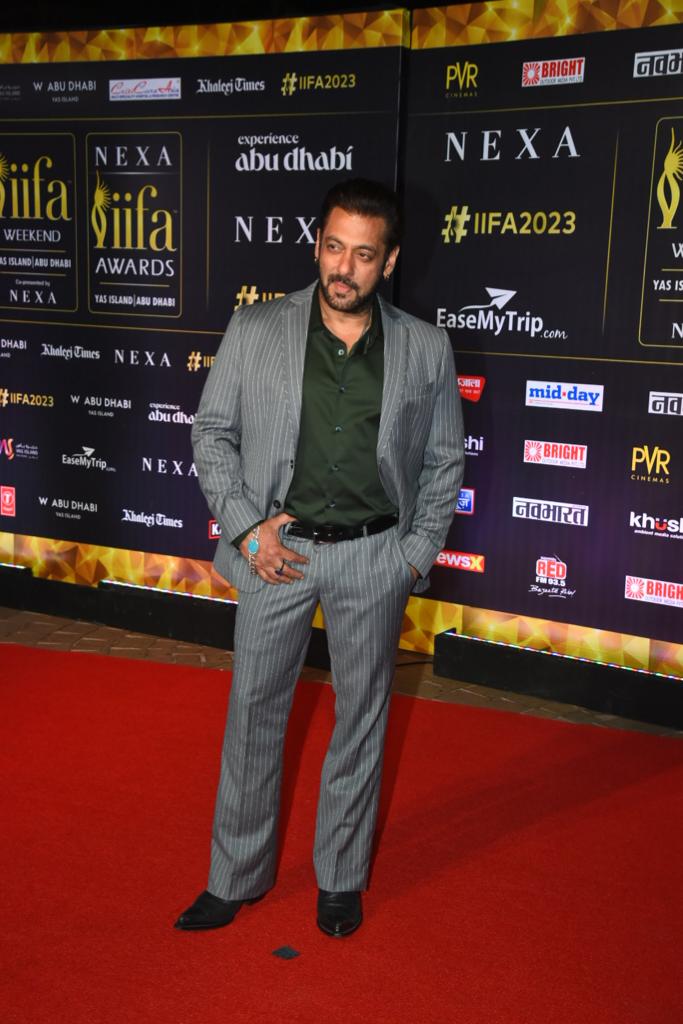
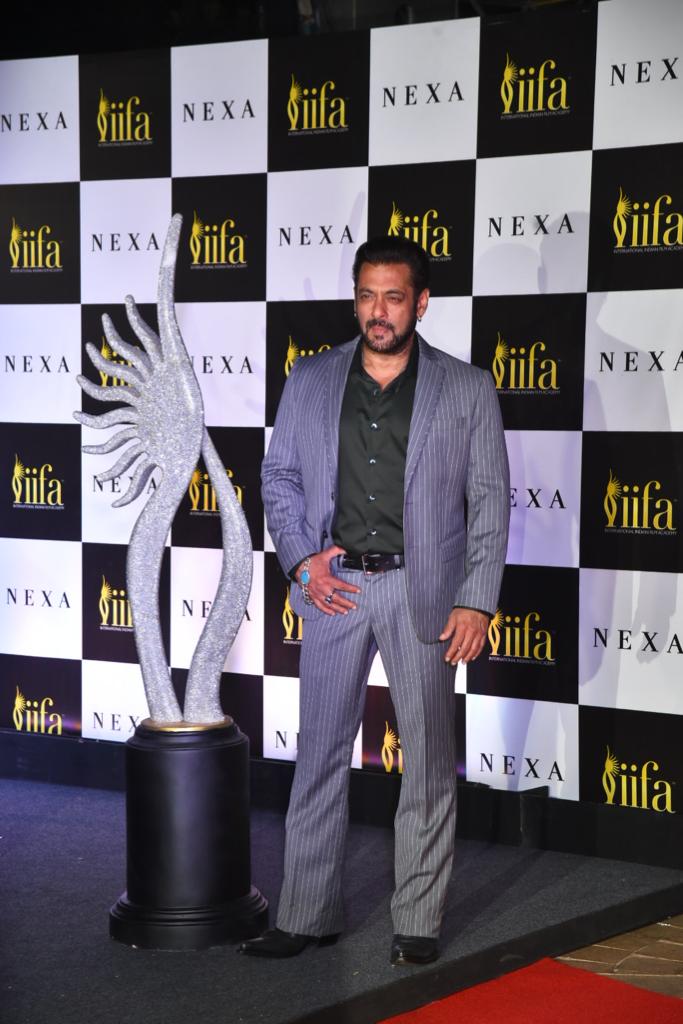
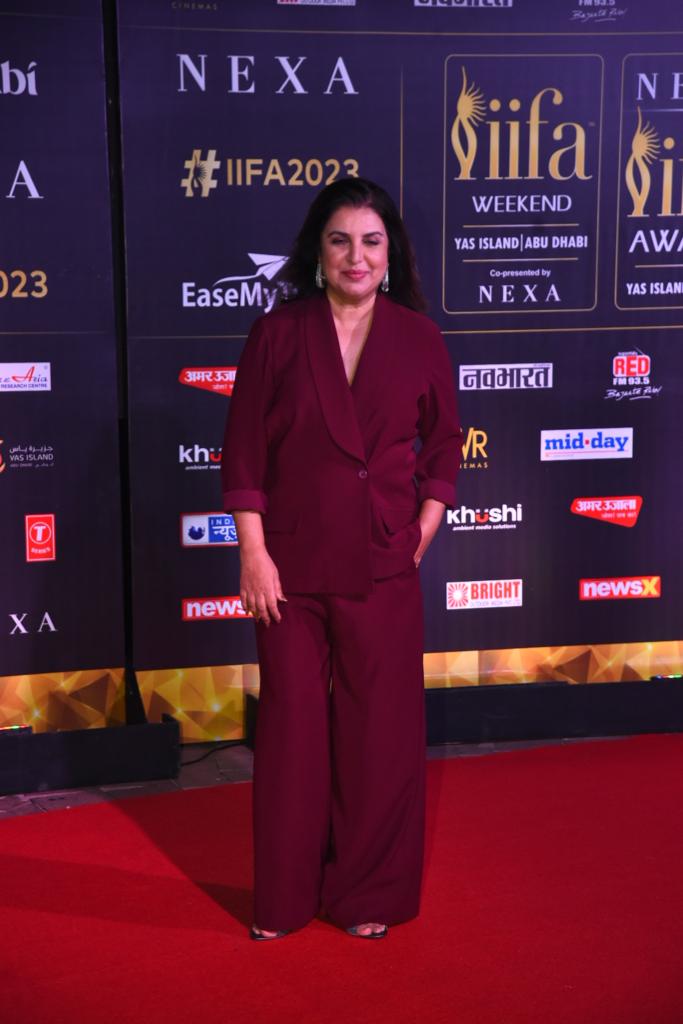
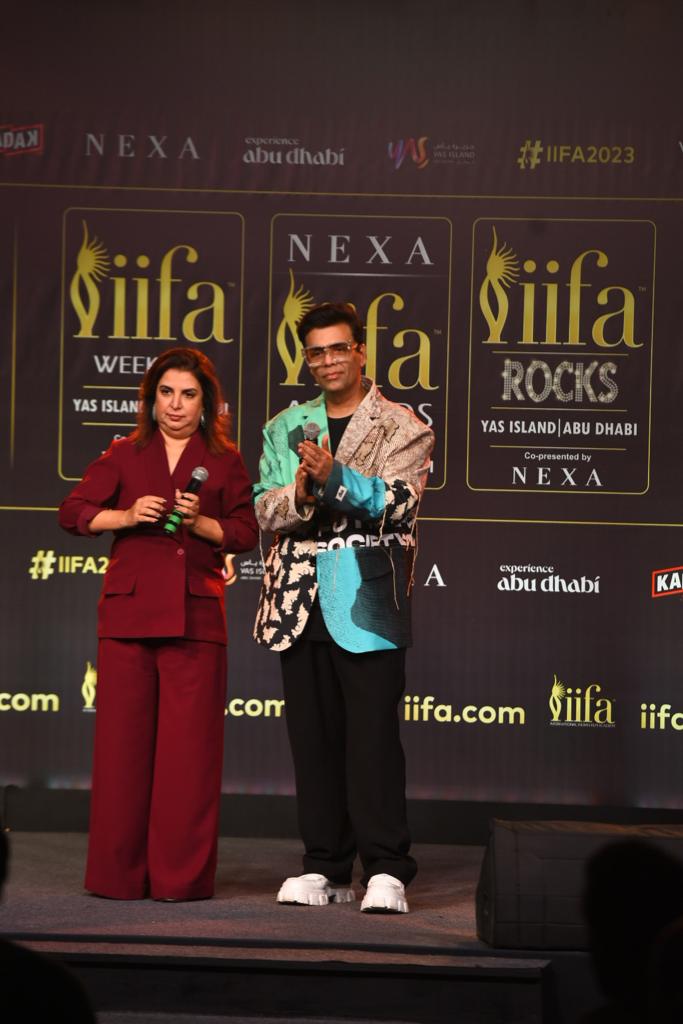
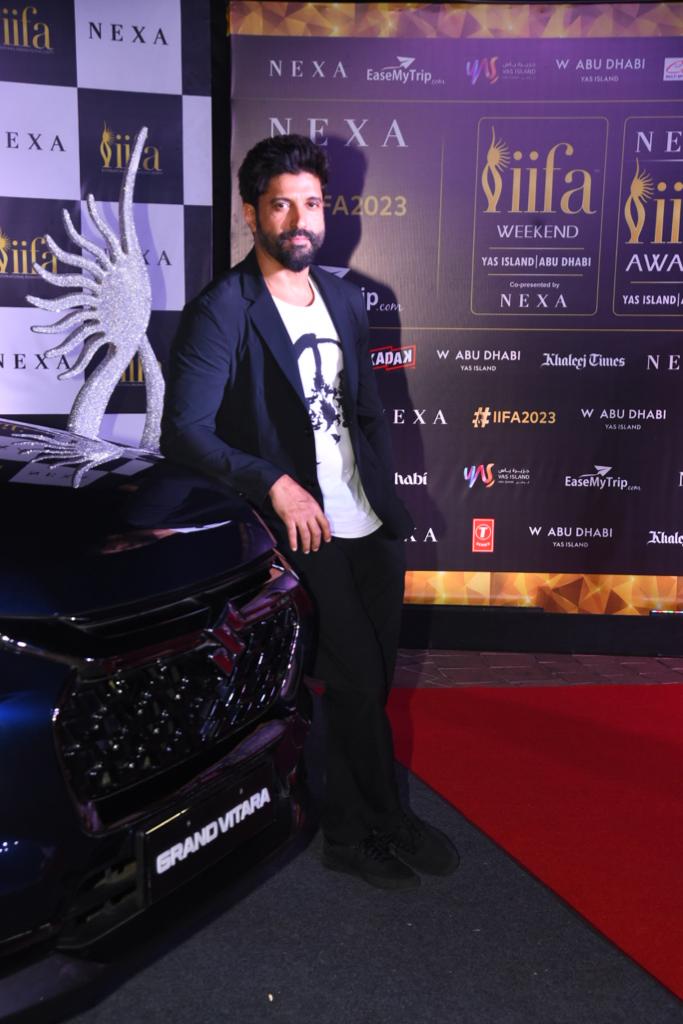
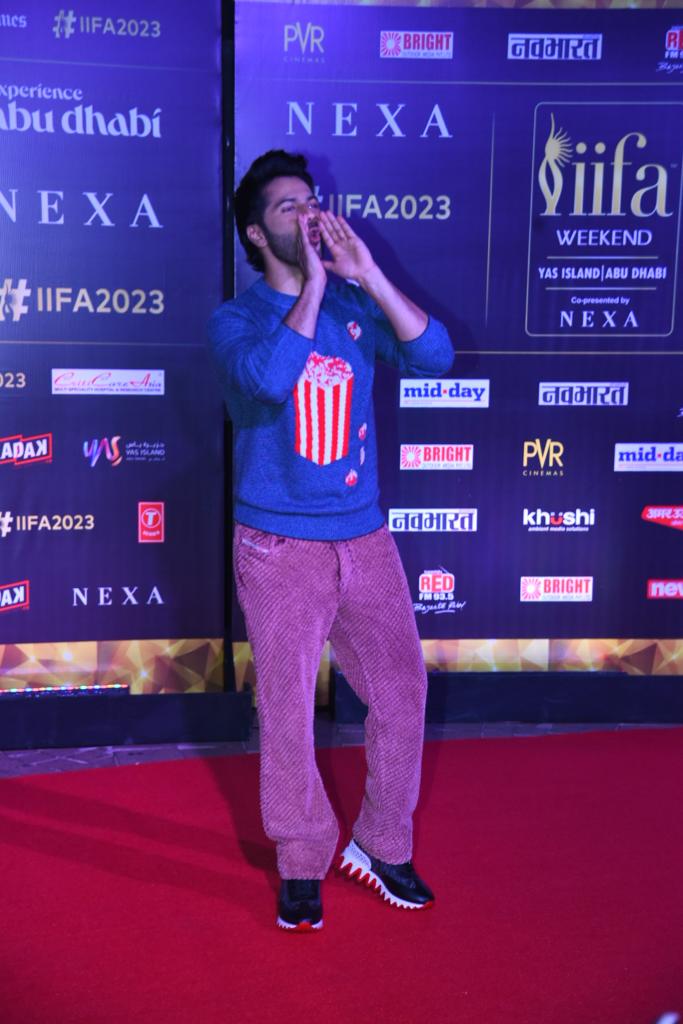
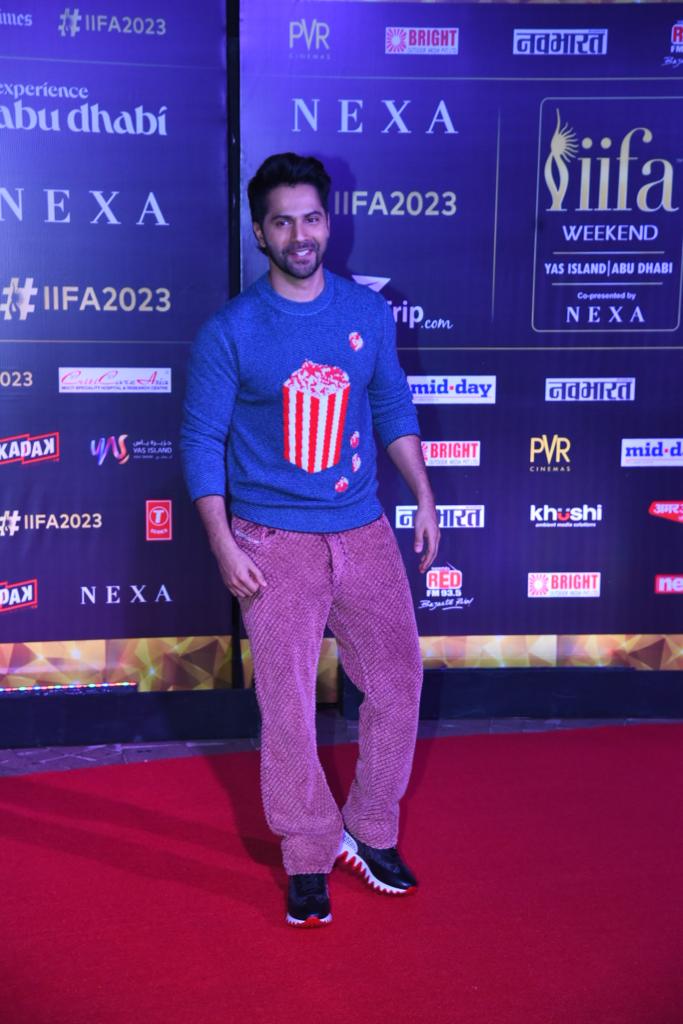
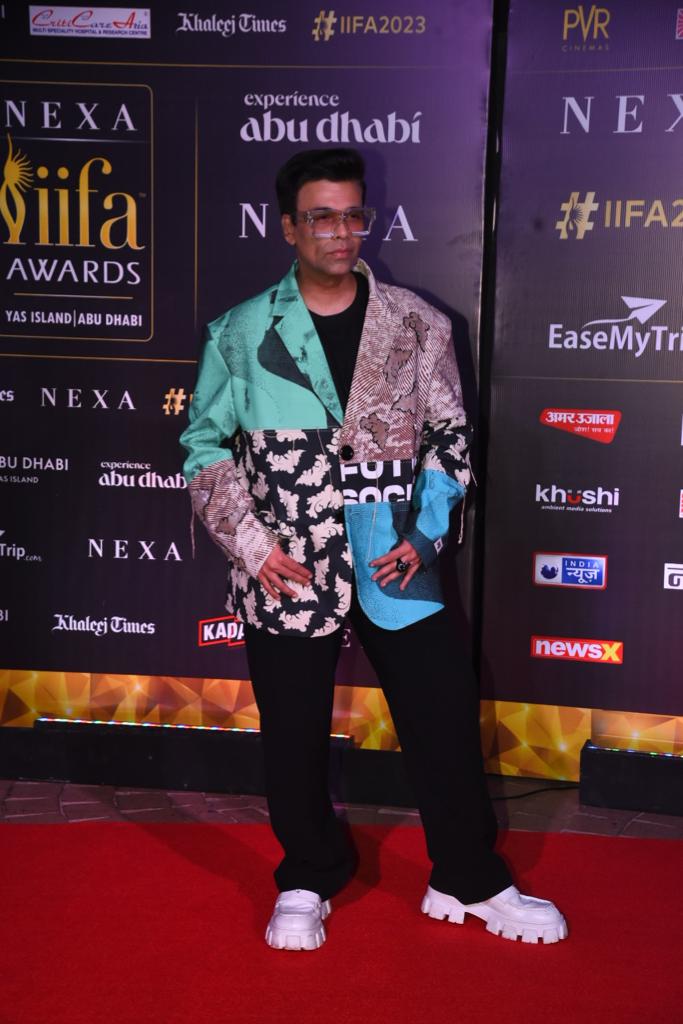
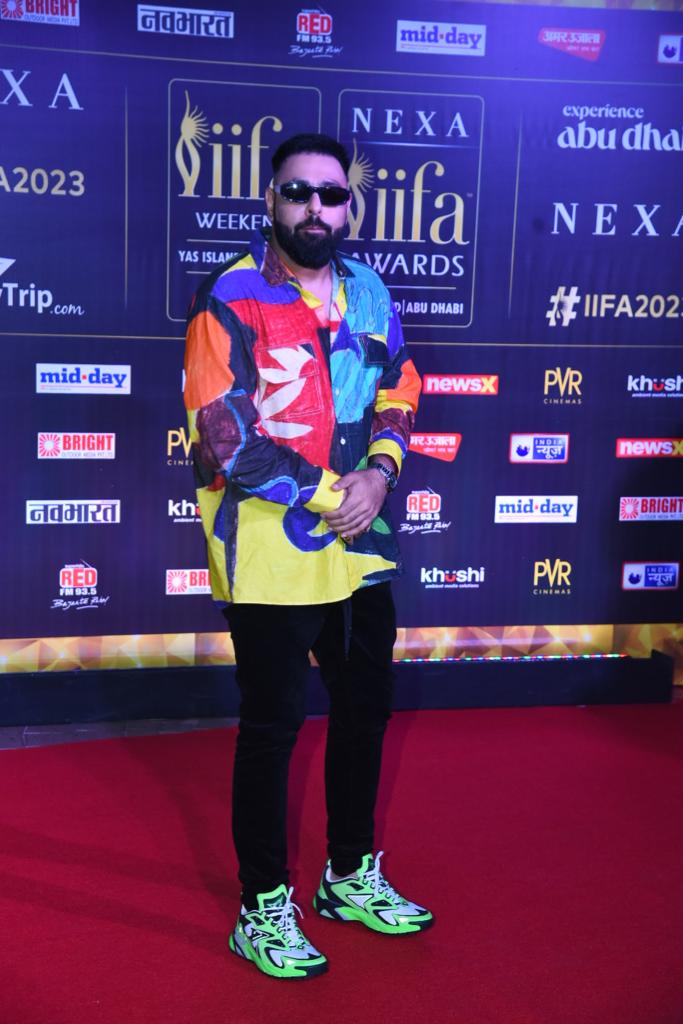
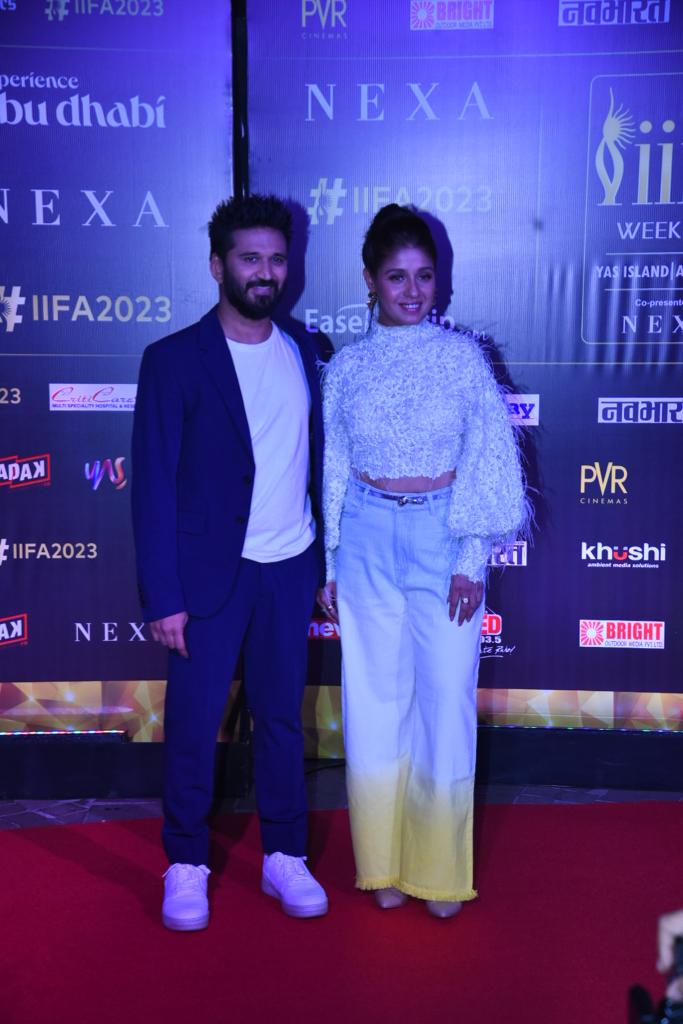
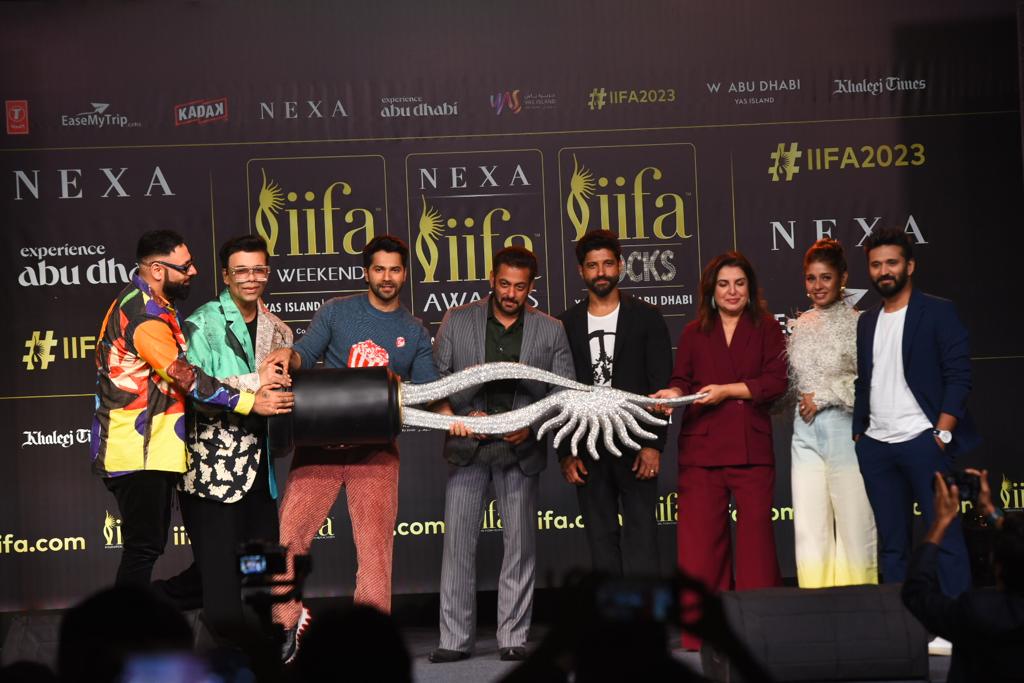
All eyes were on superstar Salman Khan as the Tiger 3 actor was all suited up as he turned up to an award show in Abu Dhabi. Needless to say, the actor looked handsome as he posed for the paparazzi at the event. With Salman, many other celebs like Varun Dhawan, Farah Khan, Farhan Akhtar, and Karan Johar too graced the starry event.
For the event, Salman paired a green shirt with a grey pantsuit. The actor took his fans’ breath away with his latest appearance. Take a look at the actor’s look for the night. The Wanted actor along with others were present in Abu Dhabi for IIFA Awards 2022.
Salman Khan looks dapper in grey pant suit at IIFA Awards. (Image: Viral Bhayani)
Salman Khan stuns everyone with his stylish appearance at the red carpet. (Image: Viral Bhayani)
Salman Khan poses for the paps. (Image: Viral Bhayani)
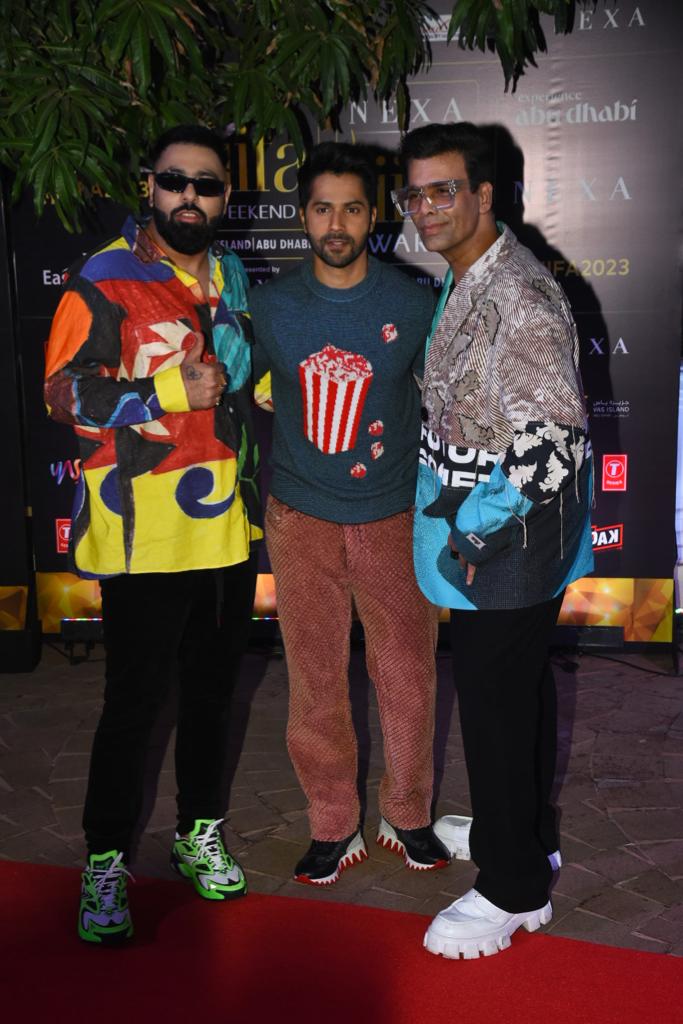
Varun Dhawan posed with Jugg Jugg Jeeyo filmmaker Karan Johar and Badshah at the event:
Varun Dhawan poses with Karan Johar and Badshah. (Image: Viral Bhayani)
Farah Khan and Karan Johar sere as the hosts for the show. (Image: Viral Bhayani)
Farhan Akhtar looks handsome in smart casuals. (Image: Viral Bhayani)
Varun looked uber cool dressed in an interesting T-shirt with pop-corn tub print. The actor even howled for the paparazzi as he promoted his upcoming film titled Bhediya.
Varun Dhawan howls like a fox as he promotes Bhediya at the red carpet. (Image: Viral Bhayani)
Varun Dhawan’s look for the night. (Image: Viral Bhayani)
Karan Johar makes heads turn at IIFA awards. (Image: Viral Bhayani)
Badshah presented himself in a colourful shirt and black pants. (Image: Viral Bhayani)
Also in attendance were singers Sunidhi Chauhan and Amit Trivedi. Sunidhi looked hot in a stylish shimmery white ensemble. On the other hand, Amit looked suave in pantsuit.
Sunidhi poses at the red carpet. (Image: Viral Bhayani)
Sunidhi Chauhan posing with Amit Trivedi. (Image: Viral Bhayani)
Salman Khan, Varun Dhawan, Karan Johar, Farah Khan, Sunidhi Chauhan in one frame as they hold huge trophy. (Image: Viral Bhayani)
The IIFA Awards, which recognise the best Hindi films and actors from the previous year, are usually held in a different city every year but returned to Abu Dhabi for the second year in a row next year. Spread across two days, celebrations began with IIFA Rocks, an evening dedicated to musical performances, followed by the main awards gala the following night.
Dubai has hosted the event, in 2006, and so has Bangkok, New York, Colombo, Amsterdam, Madrid, Florida, Kuala Lumpur and Macau.
Paramount Pictures is heading back into the Danger Zone for another flight aboard Top Gun: Maverick. The wildly-successful sequel starring Tom Cruise and a hot-shot crew of pilots hot-dogging through the sky will be re-released in theaters nationwide. The event starts on December 2nd and runs through December 15th. In addition to returning to standard cinemas, Top Gun: Maverick will do a barrel roll on participating IMAX screens.
During its initial release, Top Gun: Maverick banked $1.48 billion worldwide. Knowing how successful the film performed under Covid restricted viewing, Paramount is looking to cash in after protocols relaxed a little. It hardly matters that the film is available in Digital and Blu-ray formats. People will undoubtedly flock to theaters to experience the movie on the big screen again. I know a couple who saw Top Gun: Maverick 13 times in theaters. People are over-the-moon about this film, and Paramount is ready to give more of their hard-earned dollars a good home.
“Top Gun: Maverick truly epitomizes the magic of the moviegoing experience, and we wanted to provide fans the opportunity to once again enjoy this cinematic spectacle as it was meant to be seen,” says Chris Aronson, President of Domestic Distribution for Paramount Pictures. “This feels like the perfect time to bring Top Gun: Maverick back to theaters so audiences everywhere can once again experience how special this film is.”
Per Paramount’s official press release:
The filmhas been celebrated by critics and audiences alike, receiving an A+ CinemaScore, and earning a 97% critics’ score and 99% audience score from Rotten Tomatoes. In addition to marking Tom Cruise’s biggest opening and highest-grossing film ever, it also opened domestically to the largest Memorial Day Weekend of all time; is Paramount Pictures’ highest-grossing domestic release ever; is the first movie ever to be #1 at the box office for both Memorial Day Weekend and Labor Day Weekend; and is the highest-grossing film for Skydance, one of the film’s producers, followed by Mission Impossible: Fallout.
Will you return to theaters for another round of Top Gun: Maverick? Please feel free to let us know in the comments.
Disney CEO Bob Iger is focusing on making Disney+ more profitable.
In a town hall meeting on Monday in Burbank, California, Iger reportedly shared his plans to boost the streaming platform’s bottom line.
“Instead of chasing (subscribers) with aggressive marketing and aggressive spend on content, we have to start chasing profitability,” Iger said, according to Reuters.
Iger also shared that he will uphold the hiring freeze that former CEO Bob Chapek instituted while he assesses Disney’s cost structure. The CEO also shut down speculation that Disney would seek to merge with Apple.
Iger was reinstated as CEO on Nov. 20, replacing Chapek. The former CEO’s departure came in the wake of a disappointing earnings announcement, where the company’s direct-to-consumer segment lost $1.5 billion. Chapek had a rocky tenure, which included a public dispute with Black Widow star Scarlett Johansson over the decision to release the movie both in theaters and online.
In the company’s final quarter report of 2022, Disney+ reported a total of 164.2 million subscribers, up from 152.1 million in the third quarter. To help reduce its profit loss, Disney+ will launch a ad-supported tier subscription on Dec. 8 for $7.99 and $10.99 for ad-free.
In honor of the new film, Moviefone is counting down the fifteen best George Clooney movies of all time.
Without further ado, let’s begin!
Based on the true story of the greatest treasure hunt in history, The Monuments Men is an action drama focusing on seven over-the-hill, out-of-shape museum directors, artists, architects, curators, and art historians who went to the front lines of WWII to rescue the world’s artistic masterpieces from Nazi thieves and return them to their rightful owners. With the art hidden behind enemy lines, how could these guys hope to succeed? Starring Clooney, Matt Damon, Bill Murray, John Goodman, and Cate Blanchett.
A group of American soldiers (Clooney, Mark Wahlberg, and Ice Cube) stationed in Iraq at the end of the Gulf War find a map they believe will take them to a huge cache of stolen Kuwaiti gold hidden near their base, and they embark on a secret mission that’s destined to change everything.
Less than 24 hours into his parole, charismatic thief Danny Ocean (Clooney) is already rolling out his next plan: In one night, Danny’s hand-picked crew of specialists (including Matt Damon, Brad Pitt and Don Cheadle) will attempt to steal more than $150 million from three Las Vegas casinos. But to score the cash, Danny risks his chances of reconciling with ex-wife, Tess (Julia Roberts).
The Middle Eastern oil industry is the backdrop of this tense drama, which weaves together numerous story lines. Bennett Holiday (Jeffrey Wright) is an American lawyer in charge of facilitating a dubious merger of oil companies, while Bryan Woodman (Matt Damon), a Switzerland-based energy analyst, experiences both personal tragedy and opportunity during a visit with Arabian royalty. Meanwhile, veteran CIA agent Bob Barnes (Clooney) uncovers an assassination plot with unsettling origins.
In the deep south during the 1930s, three escaped convicts (Clooney, John Turturro, and Tim Blake Nelson) search for hidden treasure while a relentless lawman pursues them. On their journey they come across many comical characters and incredible situations. Based upon Homer’s ‘Odyssey’.
Dr. Ryan Stone (Sandra Bullock), a brilliant medical engineer on her first Shuttle mission, with veteran astronaut Matt Kowalsky (Clooney) in command of his last flight before retiring. But on a seemingly routine spacewalk, disaster strikes. The Shuttle is destroyed, leaving Stone and Kowalsky completely alone-tethered to nothing but each other and spiraling out into the blackness of space.
The deafening silence tells them they have lost any link to Earth and any chance for rescue. As fear turns to panic, every gulp of air eats away at what little oxygen is left. But the only way home may be to go further out into the terrifying expanse of space.
With his wife Elizabeth (Patricia Hastie) on life support after a boating accident, Hawaiian land baron Matt King (Clooney) takes his daughters (Shailene Woodley and Amara Miller) on a trip from Oahu to Kauai to confront a young real estate broker (Matthew Lillard), who was having an affair with Elizabeth before her misfortune.
Meet Jack Foley (Clooney), a smooth criminal who bends the law and is determined to make one last heist. Karen Sisco (Jennifer Lopez) is a federal marshal who chooses all the right moves … and all the wrong guys. Now they’re willing to risk it all to find out if there’s more between them than just the law.
Paramount Pictures
Corporate downsizing expert Ryan Bingham (Clooney) spends his life in planes, airports, and hotels, but just as he’s about to reach a milestone of ten million frequent flyer miles, he meets a woman (Vera Farmiga) who causes him to rethink his transient life. Also starring Anna Kendrick.
When a disc containing memoirs of former CIA analyst Osbourne Cox (John Malkovich) falls into the hands of gym employees, Linda (Frances McDormand) and Chad (Brad Pitt), they see a chance to make enough money for Linda to have life-changing cosmetic surgery. Predictably, events whirl out of control for the duo, and those in their orbit. Clooney plays Harry Pfarrer, a U.S. Marshal having an affair with Cox’s wife (Tilda Swinton).
The Fantastic Mr. Fox (Clooney) bored with his current life, plans a heist against the three local farmers. The farmers, tired of sharing their chickens with the sly fox, seek revenge against him and his family. Also featuring the voices of Meryl Streep, Jason Schwartzman, Bill Murray, Willem Dafoe, Michael Gambon, and Owen Wilson.
A law firm brings in its “fixer” (Clooney) to remedy the situation after a lawyer (Tom Wilkinson) has a breakdown while representing a chemical company that he knows is guilty in a multi-billion dollar class action suit. Also starring Tilda Swinton and Sydney Pollack.
This story about “Corsage” and Vicky Krieps first appeared in the International Film issue of TheWrap’s awards magazine.
In “Corsage,” Vicky Krieps does more than give a hauntingly convincing portrayal of the iconic “Empress Sisi,” the 19th-century Austrian monarch Elisabeth, Empress of Austria and Queen of Hungary, as familiar to central Europeans as Queen Elizabeth was in current times. She also brings her own wit, politics and feminist views to what has been hailed as a modern interpretation of a tragic tale of celebrity, in collaboration with writer-director Marie Kreutzer. Krieps’ performance, which won her the Best Performance award in the Un Certain Regard section at this year’s Cannes Film Festival, required her to endure breath-defying corsets and learn to ride sidesaddle, among other tortures of 19th-century womanhood. Still, the forced ennui of life in a gilded cage may have been the most exquisite torture of them all and the one at the heart of the role.
The Luxembourgian actress first leaped into U.S. imaginations as the muse of fashion designer Daniel Day-Lewis in the lyrical, sly “Phantom Thread” by Paul Thomas Anderson. It turns out that experience of the harsh glare of celebrity led directly to “Corsage.” She talked with Wrap editor-in-chief Sharon Waxman at the Toronto Film Festival.
Vicky Krieps (Photo by Catie Laffoon)
You’ve described your performance in “Corsage” as an act of rebellion. And I wanted to start there, to understand what you meant by that.
So, it was my idea.
The movie was your idea?
Yes. Marie was not quite convinced in the beginning, because she thought it was too kitsch and cliché and maybe superficial. Because the figure of Sisi in Austria is really the princess figurine on top of the cake. What got her attention is she could feel some act of rebellion in reading about her. If you read about Empress Elisabeth, you can sense that she was at least trying to rebel against certain things, the rules of her time, especially the rules of being a woman of her time. That was the initial thing that got Marie interested and made her write the script.
And that was mine, too, I think. I read her biography when I was 15. And reading it, I was too young to understand what it is to be a woman. But I think at 15, I could already feel the walls and the demands of society: How do you look as a girl? What do you wear? How do you behave? You have to be nice and kind and sweet and cute. I wasn’t even brought up that way, because my parents raised me freely. But it was enough that there was some sort of society that gave me this feeling and made me feel like I have to behave and fit into the role of being a girl.
And then I became an actress. And when you’re an actress, it’s even worse. Because you want to be a mother and beautiful and sexy and successful and independent, and we demand too much of ourselves and we know it. As an actress, we are also being observed—and I think Elisabeth was suffering a lot under the public eye. Maybe she was the first victim of celebrity culture.
Vicky Krieps (Photo by Catie Laffoon)
Of course, you know about Princess Diana and it’s almost the equivalent of that in the 1870s.
I think it’s the same with Princess Diana: She was adored. When Sisi was 15, they were drawing her. (It was) like Instagram of the time: They made little drawings and they were handing them out to people all over, saying she’s the most beautiful woman in Europe. So even though they adored her, they also wanted to control her image. She was forced to be the most beautiful girl of Europe, she had to be slim. And she had to have beautiful long hair once the image was given to her. She was in this prison and golden cage because of society, and she was then also putting herself in that prison. Because you become this thing, you become more and more alone. And I think that’s why I wanted to talk about this. Because today, we are all also becoming more and more alone and lonely, because of this weird gaze that has been added by the Internet. Now there’s this constant idea of like, “How do I look from the side right now?” And I think now, because of Internet and social media, all of us have our image everywhere, which is a new thing.
It seems very clear that you’re talking about yourself now as an actress — someone who has people staring at her or watching, just to feel a connection to you and somehow feel that they know a public figure. You said you grew up very freely, but I don’t really know what that means.
I don’t really care what people think about me, if they like or if they don’t like it. And it took me time to understand why. Why do I not care? It seemed normal to me. And it’s not that I’m stronger than anyone or I’m cooler. I looked back and I understood that’s the way my parents brought me up. I like to say they were hippies. They were normal.
Our house was at the at the edge of the city. And there was forest around and a field. So I was always in some kind of grass (or) lying somewhere in the dirt. I remember coming from school and saying to my friends, “Let’s play in the mud,” and they were like, “No, we cannot. My mom will be angry.” And I was like “What? No.” And then they said to me, “OK, if you roll yourself in the mud, we will give you a bag of sweets.” And I was like, “Yeah, no problem.” Because I knew if I came home my mother would never be angry. She studied art. She was an artist in my family. I think she still is now. I mean, she just came back from two weeks of nudist camping with her best friend.
Vicky Krieps in “Corsage” (IFC)
When you decided you wanted to be an actress, you didn’t think about what would happen if you were successful?
No, I didn’t. First, I didn’t ever think I would be in movies. I thought I would do theater only. But then something happened. I could feel it myself. It was something between me and the camera, it felt like the camera was alive. I can feel how it is like a dance. I feel what the camera likes and doesn’t like. It’s very intimate and personal. When I work with the camera, to me, it’s all about what’s happening then and there. And I never think about what is coming on top of that.
But that touched something in you as an artist as well.
Ever since that thing happened, I feel I am like a scientist or something. I’m studying something about humans. Every time I feel like they send me to some kind of jungle, and I sit there and I study this plant. Only I see it. Sometimes I find it and I get something out of it. And sometimes I don’t. But I always go with the same curiosity of, “What will happen this time? What am I going to find?” So when I do what I do, I’m really in my own world. And I don’t ever think of showing it later.
Vicky Krieps in “Corsage” (IFC)
Most of us came to know you in “Phantom Thread.” The experience of the movie being successful and bringing attention to you led to this film as well.
Yes. While I was doing “Phantom,” it felt exactly like this jungle. Daniel (Day-Lewis) being the king of the jungle, and me coming to study a little plant in the jungle and gradually making my own space in his world. So I think Paul Thomas Anderson, the director, and Daniel let me know that it’s OK to be this weird scientist. They gave me the absolution, they gave me the feeling it’s OK to be who I am and to do it the way I do it. But what no one could prepare me for was what happens when it’s seen. And suddenly people look at you and go, “Oh, you’re the girl from ‘Phantom Thread.’” “No, I’m me.” It’s very weird, but the first so many months I always wanted to go and have coffee with each person (who saw the film). “Oh, you saw my movie? Really?” Because for me, it’s about my plant. And someone saw my plant. And I had to learn how to deal with this more common look that you get. Suddenly, it’s not personal, because you have then become the movie for people.
And it was suddenly very hurtful for me, because I felt I was disappearing. I felt like I was constantly bumping into invisible walls. As if everything I did was wrong, because I didn’t know how to play the game. Because I didn’t want to play the game of, “What are you wearing? How do you look? What do you say? What do you not say? How do you behave?” And I couldn’t. I was really suffering from it. So I retreated into my forest again.
Vicky Krieps (Photo by Catie Laffoon)
And then, Marie. I came back from L.A., I had just finished the whole press tour, and I opened my mailbox and there’s the script. And I opened the script, and it had a postcard saying, “Vicky, you were right. I did go to the archive. And I think there’s something here, and here’s the script.”
Yeah, I had goosebumps. And then holding the script in my hand, I started crying because I realized that now everything made sense. Because coming from L.A., I had now lived what Sisi had lived in the 19th century, in a different way, and definitely not nearly as famous as she was. But coming from where I came from, that was already a lot — and too much. And then and there I decided why I want to make the movie, because I want to talk about this phenomenon when you are put into a place, and people decide you (are) something to be seen.
Now that I’ve heard you explain the context, I have to ask: How do you feel about pursuing this life? Because that’s not going to change. Yeah. At some point I was like, “I don’t care. I can grow salad.” But then I thought, “Who’s telling me I cannot do it my way?” In a way, it’s my duty to have the guts and to say that I do this in my way. And it just fell off me, I dropped it like a glove. And now I’m doing what I do, which is the same as before. But I’m doing what I feel my heart is telling me.
Will Smith is making his reentry into society. With the press tour for his new film Emancipation kicking into gear, the actor is now making more appearances, and as a result, giving more explanations for the fateful Slap. It would be impossible for him to ignore the Oscars night assault of Chris Rock, but Smith, a notable oversharer, is choosing to lean in to the situation, as he did in his latest conversation with Trevor Noah on The Daily Show.
In the interview, the pair first discuss Emancipation (and Smith mentions filming for his National Geographic show, so yeah, he’s not completely blacklisted). When the conversation finally turns to The Slap, Smith says with a laugh that he has “no independent recollection of” the whirlwind night that included the low low of the physical altercation with Rock and the high high of his first Oscar win.
However, he says, “That was a horrific night, as you can imagine. You know, there’s many nuances and complexities to it. But at the end of the day, I just—I lost it, you know? I guess what I would say… you just never know what somebody is going through.” Addressing the audience, he lists possible afflictions those strangers might be facing: the death of a loved one, a spouse cheating, a sick child, etc. “You just don’t know what’s going on with people. And I was going through something that night, you know? Not that that justifies my behavior at all.”
He continues, “I would just say, you’re asking what did I learn. And it’s that, um… we just gotta be nice to each other, man. You know? It’s like, it’s hard. And I guess the thing that was most painful for me is, I took my hard and made it hard for other people. You know? It’s like, I understood the idea when they say hurt people hurt people.”
When Noah speculates as to what caused Smith’s outburst, the actor admits, “It was a lot of things. It was the little boy that watched his father beat up his mother, you know? All of that just bubbled up in that moment. … That’s not who I want to be.”
Will Smith – “Emancipation” | The Daily Show
Noah generously replies that The Slap is not who he is, bringing up his distaste for theHollywood Reporter article that grouped Smith and Letitia Wright with abusers and sexual assaulters. “And again, what you did was fucked up. I’ll always tell you that. I love Chris. I’m friends with him. I love you, I’m friends with—but this is fucked up! But I was like, ‘This is not the same world,’ and that’s why it was weird,” Noah argues, adding that “Some people were overreacting, which made some people underreact” to the issue.
“I understand how shocking that was for people, man,” Smith says, agreeing that he was “dazed” when it happened. “I was gone, dude. That was a rage that had been bottled for a really long time. … I understand the pain.”
“My nephew, Dom, is nine. He is the sweetest little boy. We came home. And it’s like, he had stayed up late to see his uncle Will, you know?” Smith shares. “And we’re sitting in my kitchen and he is on my lap and he is holding the Oscar and he’s just like, ‘Why did you hit that man, Uncle Will?’ … It was a mess. I don’t want to go too far into it, to give people more to misunderstand.”
He goes on to repeat that he hopes the Emancipation team won’t face the consequences of his actions: “It’s like these top artists in the world have done some of the best work of their career. And the idea that they might be denied because of me is like… ugh. That is killing me dead, you know? And it’s like, the thing that is so critical for me is that these people came and they trusted me and they were down for me. And I just… I hope that their work will be honored, and their work will not be tainted based on, you know, a horrific decision on my part.”
As for where he is with the situation now, Smith reflects, “I think that was one of the big things for me over this last couple of months, you know, that I had to forgive myself for being human. And it’s like… trust me, there’s nobody that hates the fact that I’m human more than me.”
He is still “finding that space for myself, within myself, to be human,” he says. “I’ve always wanted to be Superman, I’ve always wanted to swoop in and save the damsel in distress. And I had to humble down, and realize that I’m a flawed human. And, um, I still have an opportunity to go out in the world and contribute in a way that fills my heart, and hopefully helps other people.”
About: While locked up for six years in federal prison, artist Jesse Krimes secretly creates monumental works of art, smuggling them out in pieces and seeing the final product only when he’s released.
Police said in one instance, two suspects allegedly used a ladder to attempt to enter the second storey of a home through a window in Aurora.
Story continues below advertisement
“When the homeowner received an alert from her security cameras, she called police,” the force said. “Officers on the ground coordinated with a tactical flight officer high above in Air2 to make the arrest.”
Police said a 30-year-old man has been charged with breaking and entering with intent and trespassing at night.
Officers are still seeking to identify the second suspect.
Police said in another instance on Nov. 12, suspects allegedly attempted to enter a window in the second storey of a home in Vaughan by stacking patio furniture on a large heater.
Trending Now
Trending Now
“When police arrived, the three suspects fled,” police said. “They are still outstanding.”
Enterprising thieves are making the most of shorter daylight hours, leading to a rise of break & enters across the region.
Our officers are out in full force to target these crooks.
York Regional Police Supt. Russ Bellman said shorter daylight hours and increased trips away from the house “may be making easier targets for enterprising criminals.”
“Last year, in the midst of the pandemic, residents were spending more time in their homes,” he said.
The five-time-Academy Award-nominated film’s TV adaptation will be shot in French and set in a small town in modern-day France, with Mediawan-owned Atlantique Productions producing with Miramax. The movie was released in 2000 and also starred Juliette Binoche and Judi Dench.
In the TV show, also adapted from the Joanne Harris novel, a woman and a daughter will settle down and disrupt the fragile social balance of the local community. Their biggest challenge will be to convince the town’s folks to embrace the change they are bringing into town, like a breath of fresh air.
“Joanne Harris’ richly textured comic fable is a timeless and uplifting crowd-pleaser,” said Marc Helwig, Miramax Global Head of Televivsion. “This marks yet another fantastic project from our extensive IP and film library, that we are able to utilize in our continued efforts of building television content for a global audience. We found the perfect partner in Mediawan to bring this truly international production to TV screens around the world.”
Helwig and Vice President of Television Development Mirsada Abdool Raman will lead creative for Miramax, with Mediawan COO Elisabeth d’Arvieu and Atlantique General Director Nathalie Perus leading for Mediawan. Studio heads Bill Block and Pierre-Antoine Capton will executive produce as well.
Clarence Gilyard Jr., a prolific actor best known for his pivotal, series-long role on “Walker, Texas Ranger” and for his scene stealing turn as Theo, the heist crew’s hacker in “Die Hard,” died Monday following a long illness. He was 66.
In addition to his acclaimed career, Gilyard was a professor at the University of Nevada, Las Vegas. “Professor Gilyard was a beacon of light and strength for everyone around him. Whenever we asked him how he was, he would cheerfully declare that he was ‘Blessed!’ But we are truly the ones who were blessed to be his colleagues and students for so many years. We love you and will miss you dearly, Professor G!,” UNLV film chair Heather Addison said in a statement Monday.
The Las Vegas Review-Journal first reported the news.
Born in 1955 in Moses Lake, Washington, Gilyard eventually moved to California as a young man, where he stud.ied acting at California State University, Dominguez Hills. He began acting regularly in the late 1970s and early 1980s with roles in TV shows including “Diff’rent Strokes” and a main cast role during the final season of “Chips” in 1983.
In 1988 he played Theo, the hacker working for Hans Gruber’s heist crew — notably the only member of the crew to survive the film — in “Die Hard.” The next year he joined the cast of “Matlock” as private investigator Conrad McMasters, a role he played through 1993. It was in 1993 that he was cast as James “Jimmy” Trivette, Walker’s fellow ranger and best friend. He remained on the show through its entire run until the show ended in 2001, and returned for a “Walker” TV movie in 2005.
Other notable film and television roles include “The Karate Kid Part II,” and a major role in the first two “Left Behind” films.
Gilyard began teaching college after Walker ended, and at the time of his death taught theater at UNLV’s College of Fine Arts. He was married twice and had 6 children.
In a segment of his show Last Week Tonight, John Oliver directed his attention to an often-overlooked segment of the American housing market: mobile home communities.
“The homes of some of the poorest people in America are getting snapped up by some of the richest people in America,” he said, before adding ironically, “Luckily, there have been no problems whatsoever.”
There have been problems, of course – problems explored in the documentary A Decent Home, which screened Tuesday night as part of Deadline’s For the Love of Docs virtual event series. The film directed by Sara Terry explores how private equity firms and wealthy investors have spotted a big money-making opportunity in acquiring mobile home parks around the nation. Once they’ve got control of the parks, these entities drive up rents mobile home owners pay to house their trailers on privately-held land.
“For so many years, this was a mom and pop business, like people who [said], ‘Oh, we have some land, we can rent this space to you.’ And they were happy with a decent living and they were happy charging a decent rent to the people who were leasing that land,” Terry said during a panel discussion after the screening. “But private equity, as private equity is wont to do, realize there was a vacuum in the market back in 2015. That’s when the Carlyle Group kicked everything open with their first purchase of parks… There is now a tsunami of private equity firms buying up parks all across the United States.”
Terry filmed in parks in California, New Hampshire and Iowa. At one park, a resident told her of a dramatic increase in what she was required to pay.
“I found a letter taped to my door that said our rent would be increasing by 63 percent,” the woman said. Another resident, a disabled man, said of the cost increases he faced, “My whole world just kind of came crashing down.”
An estimated 20 million Americans live in mobile home parks, according to statistics from the U.S. Census Bureau. It is the only segment of the low-cost housing market that isn’t government-subsidized.
“This is really the last place where the American dream is alive,” producer Sara Archambault noted. “People can actually afford to buy a mobile home, in many communities where homes have become completely unaffordable. You’re seeing here how we’re bumping up against the end of that vision for what it means to own a home in America.”
In some cases, residents are banding together to buy the land at market prices. But they’re often outmaneuvered by deep-pocketed investors.
“Private equity has so much cash on hand,” Terry said. “Sometimes they just come in and slam down the money and residents just haven’t had enough time [to make their bid].”
The filmmakers consider this situation emblematic of “late stage capitalism,” an epoch characterized by the super-rich becoming even richer while people on the lower end of the economic scale can no longer afford to live in a place they can truly call their own. Terry and Archambault say something precious is being lost in the process.
“These do feel like small towns,” Archambault said of trailer parks, “almost like an echo back to the way we all used to know our neighbors better and take care of them.”
“I’m very intentionally, especially in act 1 of the film, trying to make you as the viewer fall in love with these people and these places,” Terry commented. “I don’t want you to ever use the words ‘trailer trash’ again.”
Watch the conversation in the video above.
Our virtual even series For the Love of Docs is sponsored by National Geographic.
The direct ripple effects of that explosion of incriminating data, passed through so many institutions’ records, aren’t easy to track. But over the following years, Grant Rabenn, who served as custodian of the files the Justice Department had assembled from Operation Bayonet, says he received requests for that information as part of dozens of cases that agencies across the United States were still pursuing.
A series of massive, high-profile dark-web busts would follow. These operations were all carried out by a new group known as JCODE, or Joint Criminal Opioid and Darknet Enforcement, pulling together agents from the FBI, DEA, Department of Homeland Security, US Postal Inspection Service, and half a dozen other federal agencies: in 2018, Operation Disarray; in 2019, Operation SaboTor; in 2020, Operation DisrupTor. In total, according to the FBI, those enforcement campaigns would eventually result in more than 240 arrests, 160 “knock and talks,” and the seizure of more than 1,700 pounds of drugs, along with $13.5 million in cash and cryptocurrency.
But the Hansa side of the operation was not without costs. Aside from the vast manpower and resources Operation Bayonet had required, it had demanded that a group of Dutch police become dark-web kingpins. For nearly a month, they had facilitated the sale of untold quantities of deadly narcotics to unknown buyers across the world. Even as they compromised Hansa, Hansa had compromised them too.
Did the Dutch police feel that sense of taint—taint that perhaps comes with any undercover work? Some, at least, describe feeling surprisingly unconflicted about their role. “To be honest, it was exciting, mostly,” said the team lead, Petra Haandrikman. Dutch prosecutors had, after all, already reviewed the case, weighed its ethics, and given them the green light. After that, the police involved felt they could push the operation as far as possible with a clean conscience.
The Dutch police pointed out that they did ban the especially deadly opiate fentanyl from Hansa while it was under their control, in an effort to minimize the harm they might be responsible for—a move Hansa’s users actually applauded. In truth, however, that ban had come just a few days before the end of their undercover operation. Until then, for more than three weeks, that highly dangerous opioid had continued to be offered on the site, with no guarantee that all of its orders would be intercepted.
And how did the police feel about the decision to oversee those narcotics sales rather than shut Hansa down and prevent the transactions altogether?
“They would have taken place anyway,” Gert Ras said without hesitation, “but on a different market.”
In the years since, the dark web’s observers have tried to determine to what extent Operation Bayonet actually disrupted that endless interchangeability of markets, the constant cycle of raid, rebuild, and repeat. Could the highly coordinated global takedown of AlphaBay—or anything else—end or even slow the eternal shell game law enforcement agencies had by then been playing for years, with a new market constantly ready to absorb the users of the last?
One study, at least, suggested that the AlphaBay and Hansa busts had more lasting effects than previous dark-web takedowns. The Netherlands Organisation for Applied Scientific Research, which goes by the acronym TNO, found that when other markets had been seized, like the Silk Road or Silk Road 2, most of their drug vendors soon showed up on other dark-web drug sites. But the vendors who fled Hansa after Bayonet’s one-two punch didn’t reappear, or if they did, they had been forced to scrub their identities and reputations, re-creating themselves from scratch. “Compared to both the Silk Road takedowns, or even the AlphaBay takedown, the Hansa Market shutdown stands out in a positive way,” the TNO report read. “We see the first signs of game-changing police intervention.”
Is Searcher Clade the most millennial dad in all of animated moviedom? He has that telltale hipster beard. A sensitive voice sorta like Jake Gyllenhaal. And he feeds his kid avocado toast, with an egg on top.
Oh wait, that IS Gyllenhaal in “Strange World,” Disney’s pleasantly entertaining, gorgeously rendered but slightly heavy-handed meditation on climate change and father-son dynamics. The actor charmingly voices a character drawn to look so much like him, you almost expect an animated Swiftie to come around, asking for that infamous scarf back. (Sorry, but it’s been a Taylor Swift kind of month.)
The very name “Searcher” sounds vaguely millennial, too, but actually it’s a reference to both the blessing and the curse of the Clade family, a storied clan of explorers. In a prologue, we see the young Searcher set out on a family expedition led by his dad, burly Jaeger Clade, whose life goal is to find what’s beyond the forbidding mountains that ring their homeland, Avalonia. But before they get there, young Searcher discovers something shocking.
It’s a group of plants that seem to be lit up, glowing from an unseen energy. What is this magical crop? Searcher argues that they need to bring it back to Avalonia, where it could serve many uses. But Jaeger (voiced with appropriate gruffness by Dennis Quaid) refuses to turn back. He tosses his young son his compass and continues by himself. Twenty-five years go by.
Explore the adventures beyond our world in the NEW TRAILER for Disney’s #StrangeWorld, in theaters November 23! ?
Wait, what? Dad stays away for 25 years? This is truly deficient parenting, and it’s no wonder that when grownup Searcher has his own son, Ethan (an adorable character sweetly voiced by Jaboukie Young-White), he’s a helicopter parent, doting on the boy a bit too much. Grandpa is still lionized in town with a large statue attesting to his exploits. But Searcher tells Ethan that despite his fame, Grandpa was a majorly absentee dad.
Let’s pause to consider the themes at play. We have climate change issues in the form of “pando,” the crucial energy source that Searcher now farms and has modernized Avalonia. And we have three generations of men: the very different Jaeger and Searcher, a boomer and a millennial if you will, and then young Ethan, trying to find his way. There’s much dialogue here about breaking from expectations to forge your own path.
There’s also the not-insignificant fact that Ethan has a same-sex crush. This has led some to call the film the first Disney animated gay teen romance. That’s a bit of a stretch, because this budding romance is a side plot, referred to by a number of characters, but by no means a major topic of discussion.
But maybe that’s the point — if it’s not a major plot point, nor is it a sneeze-and-you-miss it moment like, for example, that quick glance in “Beauty and the Beast” in 2017 that was heralded as the first Disney “gay moment.” It’s just a given that when Ethan talks about his crush, he’s talking about Diazo, a boy, and nobody, not his parents nor his crusty old granddad, bats an eyelid. It’s also refreshing that the Clades are a biracial family, and that too, is not discussed.
The movie, it must be said, is definitely about men, despite the welcome but underused presences of Gabrielle Union as Searcher’s wife, Meridian — a fearless pilot — and Lucy Liu as Callisto, president of Avalonia, It is Callisto who gets things moving, plot-wise, when she arrives at Searcher’s front door in her pando-powered airship with a stark warning: the pando crop is failing. Everywhere. Searcher must come help. Now.
Reluctantly, the homebody Searcher hops aboard. Someone on the ship asks him immediately if he can, like, forge an autograph from his more-famous dad. Aargh. In any case, the ship travels down to the roots that power pando. Meanwhile, Searcher soon discovers that Ethan has stowed away on the ship, eager for his own adventure (and more Jaeger-like than Searcher would want to admit). Meridian has followed, and now they’re on a family trip.
And who should turn up but Jaeger himself? He has some explaining to do. Turns out he got stuck in a stunning, scary, strange underworld. And it’s beautiful. Directors Don Hall and Qui Nguyen have created a stunning universe of psychedelic colors and creatures, most memorably in hues of deep pinks and purples. Wondrous creatures emerge, and also one of the cutest little blobs you’ve ever seen, the aptly named Splat, who befriends Ethan.
Will the family discover what’s imperiling pando, and fix it in time to save Avalonia? Will Jaeger and Searcher come to a better understanding of each other? Will Ethan follow his own path?
Well, there’s not a lot of mystery here, nor nuance to the plot. Energies have been focused on the visuals, and they make the experience worthwhile. That, and an appealing collection of human characters that look a lot more like the real world than usually seen in these films. And that’s not strange at all. That’s progress.
“Strange World,” a Walt Disney Studios release, has been rated PG by the Motion Picture Association of America “for action/peril and some thematic elements.” Running time: 102 minutes. Two and a half stars out of four.
MPAA definition of PG: Parental guidance suggested. Some material may not be suitable for children.
SHARE:
JOIN THE CONVERSATION
Anyone can read Conversations, but to contribute, you should be a registered Torstar account holder. If you do not yet have a Torstar account, you can create one now (it is free)
Sign In
Register
Conversations are opinions of our readers and are subject to the Code of Conduct. The Star does not endorse these opinions.
Watching a newly-in-love George Jones (Michael Shannon) and Tammy Wynette (Jessica Chastain) perform together at a bar, country music producer Billy Sherrill (David Wilson Barnes) takes in the crowd’s rapturous reaction.
“Look at how they look at them,” he remarks to songwriter George “Rich” Richey (Steve Zahn) beside him. “George and Tammy are every man who ever loved a woman, and every woman who ever loved a man.” Rich suggests it’s “just poetry,” but Billy sees something else. “Not poetry. Commerce,” he says, adding only after a pause: “And poetry too, I suppose.”
George & Tammy
The Bottom Line
Chastain and Shannon are a match made in country heaven.
Airdate: Sunday, Dec. 4 (Showtime & Paramount Network) Cast: Jessica Chastain, Michael Shannon, Steve Zahn, Kelly McCormack, Walton Goggins, David Wilson Barnes Creator: Abe Sylvia
It’s true the two are inextricably linked in Showtime’s George & Tammy, which charts a relationship in which the tumultuous romance fed the chart-topping music, and vice versa. But it’s the first part of Billy’s statement that truly gets to the heart of the series. This is, above all, a love story, almost as gripping and plaintive as the tunes that skyrocketed the pair into lasting fame.
Created by Abe Sylvia (who wrote last year’s Oscar-winning Chastain vehicle, The Eyes of Tammy Faye) and directed by John Hillcoat (Triple 9), the miniseries does not aim to reinvent the artist-biopic wheel. Its structure is a fairly straightforward chronicle of the pair’s journey — from their first meeting in the late ’60s through their rocky marriage in the ’70s and all the way into their final collaborations in the ’90s. (“Why should we let divorce ruin a perfectly good partnership?” Tammy asks wryly.)
Nor does it completely manage to sidestep the clichés of a music-biz drama, like iffy wigs and hit songs deployed as overly literal descriptors of events we’re already watching unfold. Its very premise can’t help but invoke the likes of Walk the Line or A Star Is Born, particularly in a first episode that introduces Tammy as a rising star on the Nashville scene, and George as a slightly faded one suffering an alcoholic addiction so severe that his bandmate (Walton Goggins) is forced to duct-tape his knees in order to keep him upright enough to perform.
But perhaps because it’s based on a memoir written by someone so entangled in both their lives — their only biological daughter, Georgette Jones — the series’ perspective remains unusually up close and personal, focused above all else on the relationship itself as experienced by the two people inside it. To tell that story, George & Tammy gives itself the luxury of time. Although the series is a fast-paced one, in that it covers roughly a quarter of a century over six hourlong episodes, it takes great care not to rush the moments that make up those decades. It leaves room for uncertain silences, for meaningful glances, for playful moments with the kids or arguments rehashed again and again over time.
Most of all, it lingers on the way Tammy and George simply look each other, and Chastain and Shannon speak volumes through the way their eyes light up or darken or soften around one another. That both turn in exceptional performances should come as little surprise (even if their impressive singing voices do). But in scenes together, the intensity of their chemistry seems to show each of them in a whole new light.
From that firsthand angle, labels and stereotypes that might apply from afar tend to melt away. Tammy isn’t merely some meek little lady standing by a man who did her wrong, but an ambitious talent whose love outweighs her reservations until it doesn’t. George is a terror when drunk, and George & Tammy‘s harrowing depictions of his violent rampages make no excuses for his behavior. But he’s also more than the sum of his worst habits, and the series takes pains to show the gentleness and humor that were also integral to his personality. You can judge their choices — and the series is well aware of how destructive and tragic many of them will turn out to be — but you’ll understand, at the very least, how they got there.
The tradeoff to such intimacy is a sense of scope. The pair’s ballooning successes can be gleaned from snippets of dialogue about charts and records, or from shots of glamorous venues and roaring crowds. Tammy and George’s places in country music history or culture more generally are hinted at here and there, by questions posed by a fan about Tammy’s anti-feminist messaging or one directed to George by a radio host about his opinions on modern country music. But the series does not dwell on such issues long enough to make any particular statement about what George and Tammy’s lives and careers might represent to those outside themselves. For that matter, it does not even dig very deeply into their relationships with those in their inner circle, like their next spouses or their children.
Yet this narrowness reads, in a certain light, less as a limitation than as a show of empathy. Throughout George & Tammy, George expresses ambivalence about the divide between “George Jones,” the charismatic star beloved by millions, and “Glenn,” the troubled human man he actually understands himself to be. That this series exists at all testifies to the enduring appeal of the former: Plain old Glenns don’t get glossy Hollywood projects about their lives, and this one’s A-list cast, sensitive direction and inescapably catchy soundtrack are bound to reinforce or introduce the legend of George Jones and Tammy Wynette to a fresh audience of TV viewers. In the end, however, it’s the latter that proves the key. George & Tammy succeeds where so many other biopics fail: by bringing its subjects to life not as legends — but simply as a man and a woman, profoundly and imperfectly in love.
Times are hard, and if you’ve been stressing about how you’re going to afford a good gift this holiday season, it’s understandable. Thankfully, Cyber Monday offers one of the best (and last) opportunities to save big before the holidays. As we highlighted in our guide to the best Cyber Monday deals, we’re seeing some steep discounts on some of the newest and most popular products, including the new AirPods Pro and LG’s latest C2 OLED. There are also deals still available that won’t absolutely destroy your budget — like those on the new fifth-gen Echo Dot and even a year of Hulu.
Below, we’ve curated a guide to some of the best deals on presents you can still get. Many of these are taken right from our various holiday gift guides as well, so if you need further inspiration, be sure to take a look at those.
Everything Everywhere All at Once was the big winner at the 2022 Gotham Awards.
The film, which went into the night up for three awards, was named best feature during the event Monday at Cipriani Wall Street in New York. Everything Everywhere actor Ke Huy Quan also won best supporting performance for his work in the film.
Accepting best feature, Everything Everywhere co-director Daniel Kwan spoke about his experience of releasing the film over the past year.
“One of the biggest things I learned about this year is the trauma that the people all around our country and all around the world are dealing with right now. Everyone is dealing with some sort of trauma,” Kwan said. “I’ve met so many people after screenings who have revealed that trauma to me because of the nature of our film, and one of the things I’m realizing now is that trauma [is]… the most important thing for us to be dealing with right now because trauma shrinks the imagination and we get trapped in the past. Right now if we’re going to endure the next 20, 30, 40, 50 years together, we’re going to have to heal that trauma collectively. We’re going to have to figure out how to open up the collective imagination and we’re going to have to figure out how to all be whole, emotionally talented, kind, resilient people.”
Till‘s Danielle Deadwyler won the award for best lead performance but wasn’t able to attend the show, so her director Chinonye Chukwu accepted the award on her behalf and read some remarks Deadwyler prepared.
While The Inspection and Women Talking didn’t win any awards, Tár won for best screenplay and Aftersun helmer Charlotte Wells won the breakthrough director award.
On the TV side, Mo and Pachinko won the breakthrough series honors, and Ben Whishaw won the award for outstanding performance in a new series for his work in This Is Going to Hurt. We Need to Talk About Cosby won for breakthrough nonfiction series.
Paul Dano presented his Fabelmans co-star Williams with her honor and indicated that he was filling in for Steven Spielberg because he has COVID. A source close to the director confirmed Spielberg tested positive for COVID-19 and is missing some publicity activities today and tomorrow.
Recalling a recent conversation he had with Williams about being young actors in Hollywood, Dano said he thought, “Imagine if that teenage girl knew that at the midpoint of her career she’d be receiving a tribute award at the Gothams from none other than Steven Spielberg, and what would she have thought?”
He later added: “And then I thought, ‘Well, what if we had to tell that girl that Steven got COVID?’ She’d be like, ‘What’s COVID?’ and that ‘Paul Dano was going to introduce you?’ She’d be like, ‘Who the fuck is Paul Dano?’ ”
During the Poitier honor, presenter Jonathan Majors announced the creation of the Gotham Sidney Poitier Initiative, which he called “an ambitious set of programs” that aim to expand on Poitier’s legacy to support the next generation of filmmakers, through the pillars of mentorship, scholarship, project funding and career advancement.
The Safdie brothers presented Sandler with his tribute, having the unfortunate distinction of following the Poitier tribute.
Recalling how they were fans of Sandler’s from a young age, even saying they listened to Sandler’s first comedy record at the ages of 7 and 9, the Safdie brothers praised the comedian’s “surreal characters [he] made real” and said he could “go to toe-to-toe with Daniel Day-Lewis and Jerry Lewis.”
Taking the stage, Sandler expressed that he thought it was absurd he’d have to follow the “beautiful” Poitier tribute, recalling how he met Poitier a few times and he was “the nicest and funniest guy.”
Then, delivering a speech that he claimed his daughters wrote, Sandler said this honor means a lot because most of his awards look like popcorn containers (the MTV Movie & TV Awards), blimps (the Nickelodeon Kids’ Choice Awards) or fake Oscars that read “father of the year.” The girls, via Sandler, also apologized for his beard and said that while they wanted to be there Sandler said he didn’t want them to spend the whole night looking for Timothée Chalamet. Instead the girls claimed they were doing everything they can’t do when he’s at home, including “laugh[ing] out loud at Ben Stiller movies.”
“The last time daddy caught us chuckling away at the Meet the Parents trilogy,” Sandler said, continuing to read his daughters’ speech, “He immediately stormed into the room he calls ‘The Screaming Room,’ which we just call ‘the shower,’ and bellowed out the phrase, ‘Only the Sandman makes people laugh. Fuck every other comedian.’”
As the speech reflected on the origins of Sandler’s film career, his daughters recalled that the principles behind it included thinking, “People in prison need movies too and TBS needs content.”
Adam Sandler accepting his Gotham Awards tribute
Mike Coppola/Getty Images
Jesse Tyler Ferguson presented the Fire Island team with their honor.
Accepting for the ensemble, writer-actor Joel Kim Booster said in part, “So many of the movies about our community that win awards have been about our trauma and I’m so deeply grateful to be standing here accepting this award for a movie about our joy, the joy that can come from surrounding yourself with a group of people who understand you on a cellular level.”
Focus’ tribute was presented by the directors of two of the company’s most recent releases, Armageddon Time‘s James Gray and Tár‘s Todd Field, who spoke about the origins of the company and films released over its 20-year history, even jokingly pitching a Downton Abbey sequel, Field said, “if only to offset the box office of both of our films.” For his part, Gray, who departed from prepared remarks, passionately called Kujawski and Cassidy “heroes.” In his acceptance speech, Kujawski said he wanted to honor “interdependence,” saying the Focus execs would are “only here because of our interconnected community.” He thanked Universal filmed entertainment chairman Donna Langley, NBCUniversal CEO Jeff Shell and Comcast CEO Brian Roberts; the other “leaders” at Focus, who Field also referenced; and other specialty film companies. Of their fellow indies, Kujawski said he was “grateful we’re in this together” and honored what he called “soldiers of things that need to be done. … Your wins are our wins.”
Kathryn Bigelow presented the director tribute to Prince-Bythewood.
After praising Bigelow for inspiring her in her career, Prince-Bythewood reflected on the “struggle” and “sustained fight” she’s gone through as she’s made films.
“There’s this thing female directors and black directors talk about. We are so often asked about the struggle and the fight to get our films made but we are rarely asked about the craft of making it, the research, the world-building, building performances, lens choices,” she said. “The struggle is absolutely real. I’ve been in a sustained fight for 20 years to center Black women in my work. As a filmmaker, I write and direct what I want to see and yet we also make films for an audience and I fight to stretch that audience. In a climate where critical race theory, Black history and Black women are seen as a threat or invisible, I want us to see ourselves as beautiful, heroic, vulnerable, bad-ass, complicated, worthy of love. But more so I need these truths to be reflected back to the world.”
Recent Gotham Award winners have included Oscar winners Drive My Car, Nomadland, Marriage Story, American Factory, Moonlight and CODA‘s Troy Kotsur.
A complete list of this year’s winners follows.
Best Feature
Aftersun Charlotte Wells, director; Adele Romanski, Amy Jackson, Barry Jenkins, Mark Ceryak, producers (A24)
The Cathedral Ricky D’Ambrose, director; Graham Swon, producer (MUBI)
Dos Estaciones Juan Pablo González, director; Ilana Coleman, Jamie Gonçalves, Bruna Haddad, Makena Buchanan, producers (Cinema Guild)
Everything Everywhere All at Once Daniel Kwan, Daniel Scheinert, directors; Joe Russo, Anthony Russo, Mike Larocca, Daniel Kwan, Daniel Scheinert, Jonathan Wang, producers (A24) (WINNER)
Tár Todd Field, director; Alexandra Milchan, Scott Lambert, Todd Field, producers (Focus Features)
Best Documentary Feature
All That Breathes Shaunak Sen, director; Aman Mann, Shaunak Sen, Teddy Leifer producers (A Sideshow & Submarine Deluxe Release in Association with HBO Documentary Films) (WINNER)
All the Beauty and the Bloodshed Laura Poitras, director; Howard Gertler, John Lyons, Nan Goldin, Yoni Golijov, Laura Poitras, producers (NEON)
I Didn’t See You There Reid Davenport, director; Keith Wilson, producer (RePort Media)
The Territory Alex Pritz, director; Alex Pritz, Darren Aronofsky, Sigrid Dyekjær, Will N. Miller, Gabriel Uchida, Lizzie Gillett, producers (National Geographic Documentary Films)
What We Leave Behind Iliana Sosa, director; Emma D. Miller, Isidore Bethel, producers (ARRAY)
Best International Feature
Athena Romain Gavras, director; Romain Gavras, Charles-Marie Anthonioz, Mourad Belkeddar, Jean Duhamel, Nicolas Lhermitte, Ladj Ly, producers (Netflix)
The Banshees of Inisherin Martin McDonagh, director; Graham Broadbent, Pete Czernin, Martin McDonagh, producers (Searchlight Pictures)
Corsage Marie Kreutzer, director; Alexander Glehr, Johanna Scherz, Bernard Michaux, Jonas Dornbach, Janine Jackowski, Maren Ade, Jean-Christophe Reymond, producers (IFC Films)
Decision to Leave Park Chan-wook, director and producer (MUBI)
As We See It, Jason Katims, creator; Jason Katims, Jeni Mulein, Dana Idisis, Yuval Shafferman, Udi Segal, Amit Gitelzon, Shlomit Arvis, Danna Stern, executive producers (Prime Video)
Mo, Mohammed Amer, Ramy Youssef, creators; Mohammed Amer, Ramy Youssef, Ravi Nandan, Hallie Sekoff, Solvan “Slick” Naim, Harris Danow, Luvh Rakhe, executive producers (Netflix) (WINNER)
Rap Sh!t, Issa Rae, creator; Issa Rae, Syreeta Singleton, Montrel McKay, Deniese Davis, Dave Becky, Jonathan Berry, executive producers (HBO/HBO Max)
Somebody Somewhere, Hannah Bos, Paul Thureen, creators; Bridget Everett, Carolyn Strauss, Mark Duplass, Jay Duplass, Mel Eslyn, Hannah Bos, Paul Thureen, Patricia Breen, Tyler Romary, executive producers (HBO Max)
Breakthrough Series – Long Format (over 40 minutes)
Pachinko, Soo Hugh, creator; Soo Hugh, Michael Ellenberg, Lindsey Springer, Theresa Kang-Lowe, Richard Middleton, Kogonada, Justin Cho, executive producers (Apple TV+) (WINNER)
Severance, Dan Erickson, creator; Ben Stiller, Nicholas Weinstock, Jackie Cohn, Mark Friedman, Dan Erickson, Andrew Colville, Chris Black, John Cameron, executive producers (Apple TV+)
Station Eleven, Patrick Somerville, creator; Patrick Somerville, Jessica Rhoades, Scott Steindorff, Dylan Russell, Scott Delman, Jeremy Podeswa, Hiro Murai, Nate Matteson, executive producers (HBO/HBO Max)
This Is Going to Hurt, Adam Kay, creator; Naomi De Pear, James Farrell, Jane Featherstone, Adam Kay, Ben Whishaw, executive producers (AMC+ in association with BBC)
Ben Whishaw in This Is Going to Hurt (AMC+ in association with BBC) (WINNER)
Breakthrough Nonfiction Series
The Andy Warhol Diaries, Alexis Martin Woodall, Scott Robertson, Andrew Rossi, Stanley Buchthal, Josh Braun, Ryan Murphy, executive producers; Maya E. Rudolph, producer; Andrew Rossi, director (Netflix)
The Last Movie Stars, Martin Scorsese, Amy Entelis, Courtney Sexton, executive producers; Adam Gibbs, Ryan Hawke, Emily Wachtel, Lisa Long Adler, producers; Ethan Hawke, director (HBO Max/CNN Films)
Mind over Murder, Nanfu Wang, creator and director; Marc Smerling, Nanfu Wang, Max Heckman, Chad Mumm, Mark W. Olsen, Nancy Abraham, Lisa Heller, Sara Rodriguez, executive producers (HBO/HBO Max)
The Rehearsal, Nathan Fielder, creator and director; Nathan Fielder, Dave Paige, Dan McManus, Christie Smith, executive producers (HBO Max)
We Need to Talk About Cosby, W. Kamau Bell, creator and director; W. Kamau Bell, Andrew Fried, Katie A. King, Vinnie Malhotra, Dane Lillegard, Sarina Roma, Jordan Wynn, executive producers (SHOWTIME) (WINNER)
This story was first published on Nov. 28 at 4:15 p.m.
J.Lo’s in love — and she’s not gonna hide it! After announcing her upcoming album This Is Me… Now, Jennifer Lopez spoke to Zane Lowe on Apple Music 1 about the record, revealing that the LP was inspired by her rekindling with the “love of my life,” Ben Affleck.
“We captured me at this moment in time when I was reunited with the love of my life and we decided we were going to be together forever. The whole message of the album then is this love exists,” she told Lowe. “This is a real love. Now I think what the message of the album is very much if you were wondering if you have, like me at times, lost hope, almost given up, don’t. Because true love does exist and some things do last forever and that’s real.”
“I want to put that message out into the world and that does take a lot of vulnerability. But I couldn’t stop myself and some parts of it scare me,” she added. “And I think parts of it scare Ben, too. He’s like, ‘Oh, do you really want to say all this stuff?’ And I’m like, ‘I don’t know how else to do it, baby.’”
The new LP is a bookend to her 2002 album This Is Me… Then, which featured several songs inspired by her relationship with Affleck at the time. (There’s even the song “Dear Ben,” which will now have a sequel on the new album. “It’s all right there on the record,” she said.)
During the Apple Music interview, Lopez admitted how much their split two decades ago really affected her — and why she refused to perform the songs that were directly about the actor.
“I wouldn’t even perform these records. It was so painful after we broke up,” she said. “Once we called off that wedding 20 years ago, it was the biggest heartbreak of my life, and I honestly felt like I was going to die.”
“It sent me on a spiral for the next 18 years where I just couldn’t get it right. Couldn’t get it right. But now, 20 years later, it does have a happy ending,” she added. “It has the most would-never-happen-in-Hollywood ending. ‘That would never happen. We’re not going to write that because nobody would believe it’ ending.”
Now, she and Affleck are able to reflect on the beginning of their love story with the record. About This Is Me… Then, Lopez says Affleck “loves that album. He loves that music. He knows all of the words,” she said. “He also was with me while I was creating it… He’s my biggest fan, which is awesome.”
On Black Friday, J.Lo announced the record on the anniversary of her 2002 album This Is Me… Then, recreating its cover and showing the art for her new record.
Trending
According to a press release, the project is set to feature new music from Lopez that “chronicles the emotional, spiritual and psychological journey that she has taken over the past two decades.”
While a release date has not been confirmed, This is Me… Now is expected to arrive next year.
After her No. 1 single “About Damn Time” was touted among the songs of the summer, Lizzo is now staking her claim on the holiday season. The Grammy and Emmy-winning star is set to debut her intimate documentary “Love, Lizzo” on HBO Max for Thanksgiving, with a “Live in Concert” special to follow on New Year’s Eve.
When Variety caught up with the entertainer on Thanksgiving eve — just a few hours before the documentary’s midnight debut — Lizzo’s recently acquired Emmy trophy was positioned just outside of the Zoom frame.
“It’s by my bed normally,” she says, explaining. “I won the Emmy and went straight on tour, so I never got to put it on my shelf. Then this morning I did the ‘Today’ show, and they mentioned my Emmy, so I brought it over for their cameras, so that’s funny that she’s just right there.”
The award, won in September for her Amazon Prime Video reality competition series “Watch Out for the Big Grrrls,” is just one of the many accolades Lizzo’s been racking up lately, including Variety’s Hitmakers Record of the Year honor for the disco-tinged track “About Damn Time,” off her six-time Grammy nominated album “Special.” And now there’s her HBO Max documentary, “Love, Lizzo,” an intimate portrait of the making of the record and all the life and career moments that led up to it.
“There’s never a right time to start documenting and telling your story,” Lizzo says. “And if I had waited to film this, then I wouldn’t have captured Coachella and the VMAs, and ‘Truth Hurts’ going number one, my life during the pandemic and the Grammys, and my arena tour now. I wouldn’t have gotten all of this footage that I think is just so important to my career.”
Cameras began following the singer/songwriter, rapper and flutist in 2019 and chronicled everything that’s happened in the last three years as she’s skyrocketed to superstardom. But there’s also never-before-seen footage of Lizzo’s childhood, including videos even she didn’t know about.
“All of it was new to me. I have no baby footage or kid footage of myself,” she explains. “Then my cousin recently was like, ‘We got all this footage of you,’ so we got a bunch of it for this doc. Just being able to see myself as a kid, outside of photos, like actually moving and hearing my father’s voice, which I haven’t heard since he’s passed [Lizzo’s father Michael Jefferson died in 2009]. There’s just a lot of incredible footage that I didn’t have to share with the world, but I am.”
Directed by Doug Pray, the documentary aims to capture all facets of the entertainer’s identity, delving into her family life (Lizzo was born Melissa Viviane Jefferson); her upbringing in Detroit and then Houston, before she chased her music dream to Minneapolis; how she started playing the flute; her journey to body positivity; the ups and downs in her romantic relationships; and her activism, speaking up for women, Black people and other people of color and the LGBTQ+ communities.
It’s a raw look at Lizzo’s reality, and she admits she had some hesitation, due to the misogynistic, racist, fatphobic and otherwise negative comments she’s faced over the course of her career.
“There’s a lot of polarizing views about me,” Lizzo says knowingly. “When people have any kind of like hard stance on something, they’re opening themselves up to criticism and backlash because everybody’s middle of the road.”
She continues: “I say things that I’ve already gotten backlash for that I reiterate in this film — talking about twerking and my experience as a Black artist. I’m nervous because people have already had negative things to say about that, so I’m really opening myself up for more. But I can’t care anymore, you know? It’s just who I am, and I’m not gonna argue down with somebody about who I am.”
Watching the finished documentary for the first time, Lizzo realized just how little she’s changed over the years.
“I have a friend, Alexia, who you see a lot in the doc. I’ve known her since the third grade, and she’s always like, ‘Only thing that’s changed about you is you stand up for us a little bit more, you’re more confident, but you’re the same,’” Lizzo says. “I’ve always said it’s really nice to have her in my life, a reminder that I am who I am. And now seeing that footage, I think takes it even further.”
In essence, Lizzo’s still the same girl who’s sometimes shy and othertimes a smart aleck, but is always following her love of music. “I really haven’t changed that much, and it’s nice to actually have a visual representation of that,” she concludes. “But I’m cuter now.”
The timing of the documentary’s release, though, is heavy. In the film, Lizzo opens up about one of the toughest periods in her life: 13 years ago, shortly after her father’s sudden death, she lost her job, apartment and drive in music. It was around Thanksgiving and she was crying in the 1998 Subaru that she’d been sleeping in. What would she tell that girl today?
“This was a trauma that I wish we could have avoided because I’m still working out that trauma. Like, that has shown up in a lot of places in my life,” Lizzo begins, admitting that she still gets anxiety around the holiday.
“I was like, ‘Damn,’ that was 2009 [and I’m] still anxious. I still feel like something’s gonna get taken away from me. I’m still scared, and I think it’s unfortunate,” she explains. “But I am grateful that all these years later, I have a house. I have family, friends, people who love me, and now I have control of that situation. Where I didn’t have control, when I had a lot of fear [before], I have a lot of peace now.”
With that peace has also come great success. On Wednesday afternoon, HBO Max announced her “Live in Concert” special. It serves as a coda of sorts to the revealing documentary, filmed during the most recent stops on her “Special” arena tour at the Kia Forum in Inglewood, Calif.
HBO’s cameras rolled during the sold-out Friday and Saturday night sets, as Lizzo, her band the Lizzbians and the Little Bigs, and her dancers the Big Grrrls were joined onstage by her collaborators Cardi B (“Rumors”), SZA (“Special”) and Missy “Misdemeanor” Elliott (who shocked Lizzo by popping onstage while she performed their banger “Tempo”). The cameos lit social media on fire, with Lizzo sharing her thanks to the special guests online.
“I am a fan of Cardi B … but as much as I fan over her as an artist, who she is as a person is unmatched,” Lizzo tweeted after the show, captioning another photoshowing her hugging Elliott with “Being on stage w you is a dream but knowing you is unfathomable! My absolute icon!” Lizzo dubbed the duet with SZA as “Sizzo Supremacy,” teasing that the duo had “something special coming your way soon.”
Beyond the love and mutual adoration, the posts were a preview of what fans can expect when they tune in.
“I’m excited because I don’t play when it comes to being a live performer,” Lizzo says of the concert special. “I think when people realize the mic is on, the choreo was choreographing, the looks is looking, the Big Grrls is on point, the band is on point, Sophia Eris [Lizzo’s longtime friend and DJ] and me are on point, people are really gonna realize, ‘Oh this is serious!’”
It’s not that she feels the needs to prove herself at this point – she did sell out an arena tour, after all — but she takes pride in “showing people the level I’m operating on.”
“Let me stop talking about myself for a minute,” Lizzo chuckles, before pivoting her focus to the fans who couldn’t get tickets or an emergency kept them from attending the show.
“I think people are really going to enjoy seeing the concert,” she adds. “A lot of people don’t have anything to do on New Year’s Eve, so now they can pop a bottle of champagne or apple juice and they can watch the Lizzo show and it’s a great show.”
Billed as a “spectacular show filled with lots of love, positivity and incredible music,” Lizzo opens her concert by asking the audience an important question: “When was the last time you said something kind about yourself?”
It’s a query she hopes sparks something in the audience that lasts longer than her set list.
“There’s part of them that feels joy, that feels confident, that feels love. That part comes out of them at my shows,” Lizzo explains. “And then just like how the excitement of a show is fleeting, so can that feeling be fleeting. This feeling that they have, I want them to take this home with you, and I want them to protect it, because it’s important. You need it out there [in the world].”
By focusing on that simple question, and her own mantra — “I love you. You’re beautiful. And you can do anything” — Lizzo hopes that fans can “offset the amount of negativity we’re ingesting on a daily basis — a lot of negative news, a lot of negative comments, a lot of negative thoughts we already had, a lot of negative programming where we don’t see ourselves valued, or as beautiful, in media.”
It’s unfortunate that we are the ones that have to do that work, but it’s important. “I really want to create a space where people feel safe, and I really want to protect people. I think everyone deserves to be protected at all costs.”
That’s part of why she makes such an effort to ensure that her fans feel seen at her shows, calling for the house lights to come up so she can call them out in the crowd.
“I can see everybody in there, and I think if people knew that, they would feel more connected with me,” she explains. “The people who got pit tickets and are squished up against the fence, they can look at me and be like, ‘Ah, she looked at me.’ I want to give that same feeling to the people who think they’re in the nosebleeds, who are way up at the top of the arena, I can see you too!”
In essence, she wants them to experience what she felt during the Mrs. Carter tour when she knows Beyoncé spotted her in the crowd doing “Single Ladies” choreography. (Lizzo’s seen Beyoncé 10 or 11 times in concert, but this one was memorable).
And with “Live in Concert,” everyone at home can feel that way. Directed by Sam Wrench and produced by Kevin Beisler, the special is executive produced by Lizzo (via her Lizzobangers production company) and Done+Dusted’s Ian Stewart, Leah Lane and Hamish Hamilton. After producing an Emmy-winning reality series, documentary and concert special, what will Lizzobangers do next?
“Damn… I don’t even think about it like that to be honest,” Lizzo replies, mulling the question over for a minute before settling on an answer.
“Lizzobangers Productions is me taking a stance and ownership in my career, so anything I do because of that production company, I’m an owner,” she concludes, teasing, “Who knows where it’s gonna go? Like Lizzobangers production could make diapers one day, you just never know, and I think that’s the beauty of what we do over here.”
If the successes of the last few years (which also includes the launch of Yitty Lizzo’s shapewear collab with Fabletics) have been any kind of proof, the sky’s the limit.
The Ticket to Paradise star Julia Roberts, 55, officially has two young adult kids, as her twins, Phinnaeus and Hazel, turned 18 on Nov. 28. “18 Love you,” the brunette beauty captioned the throwback snapshot of her two babies. In the family photo, Julia was pictured holding one of the kids up and gasping in astonishment. She wore a sleeveless dress and had her brunette locks tied up in an effortless, yet chic, updo.
Many of Julia’s 10.4 million followers, including singer Rita Wilson, took to the comments section to wish the twins a happy birthday. “It can’t be!!!!!!! Happy Birthday!!!!”, Rita commented, while celebrity stylist Elizabeth Stewart added, “Happy birthday kiddos!!!” Some of the Notting Hill star’s fans also chimed in, with one writing, “Finn and Hazel, the most perfect duo.”
Finn and Hazel’s birthday comes exactly one month after Julia took to Instagram to celebrate her own birthday on Oct. 28. “Feeling the love and magic on my 55th Birthday ! My cup runneth over,” the Oscar-winner captioned the sweet selfie. Tom Hanks‘ wife, Rita, also took to the comments section of this post to wish her bestie well on her big day. “Happiest of days Scorpio sistah! Sending you love love love,” she wrote along with a series of pink and red heart emojis.
Julia Roberts’ husband, Daniel Moder, & their daughter, Hazel, on the red carpet in 2021. (Shutterstock)
And just before her 55th birthday, Julia spoke with E! News about her secret to her long marriage. “I always say that same thing and I’m sticking with it,” the romcom actress began. “It’s making out. Lots of making out.” The Pretty Woman star also told the outlet that her idea of paradise is where her family is. “That’s our paradise,” she gushed. “We both feel that way.” Julia has been married to husband, Daniel Moder, 53, for over 20 years. The two tied the knot in 2002, and celebrated their 20th wedding anniversary on July 4. “TWENTY #can’tstopsmiling #can’tstopkissing,” she captioned a throwback photo of her and Daniel kissing.
Aside from their twin kids, Daniel and Julia also share 15-year-old son, Henry Daniel, together. Last month the mom-of-three sat down with her costar George Clooney, 61, to discuss their film, Ticket to Paradise, and their approach to parenting with PEOPLE. “It’s just the expansion, being together while our lives expand in these beautiful ways,” Julia said of her friendship with her Ocean’s Eleven costar. “We are kind of the same goofy nuts that we’ve always been, and now we have these incredible people and these beautiful families.”
She also added that she’s “so happy” for George, who married Amal Clooney in 2014. The Hollywood hunk also revealed that Julia’s daughter, Hazel, even calls Amal for advice from time-to-time. “It’s also fun to see your kids turning into adults,” George added, while Julia chimed in, “Crazy.”
In an interview, the popular game’s general manager and executive producer talk community expectations, controversial plot beats and the future of cross-faction play.
November 28, 2022 at 6:54 p.m. EST
(Washington Post illustration; Blizzard Entertainment)
Comment
Blizzard Entertainment’s “World of Warcraft” marked its 18th anniversary Nov. 23. Since its initial release in 2004, the series has consistently remained the most popular MMORPG in the world, outliving and outpacing numerous competitors.While the game’s population has fluctuated over the years, over a million players still log into the game daily — including, unsurprisingly, its own developers.
“I play the game a lot,” John Hight, general manager of Warcraft, told The Washington Post. “I tend to do that somewhat anonymously. I mean, people in Blizzard know who my toon is, but the rest of the world, most of them don’t, and I walk anonymously through the community and I’ll do dungeons with them or do content in the world with them.
“I’m always struck by how friendly and helpful people are,” Hight said. And “Dragonflight,” the game’s ninth and newest expansion, reflects that, in some ways.
In “Dragonflight,” which features a lighter tone than some of the game’s previous expansions, players will explore the previously unseen Dragon Isles, home of the powerful Dragon Aspects who have safeguarded the world of Azeroth for thousands of years. “Dragonflight” introduces the new magic-based evoker class (exclusively paired with the expansion’s new playable race, the dracthyr) and a dragon riding mechanic using an overhauled flying system.
But “Dragonflight” has a lot riding on it as well. The game’s past two expansions, “Battle for Azeroth” and “Shadowlands,” endured lukewarm reviews from fans. The Washington Post spoke with Hight and Holly Longdale, vice president and executive producer of Warcraft, about the game’s longevity, addressing community feedback, how the series will approach storytelling moving forward, additional cross-faction features and more.
The following interview has been edited for length and clarity.
Launcher: “Dragonflight” is a big tonal shift from the last few expansions, which have been quite dark and gloomy. “Legion” was about a demonic invasion, “Battle for Azeroth” was about a giant world war between the Horde and the Alliance and “Shadowlands” was about a rogue death god who wanted to unmake reality. “Dragonflight” seems to be much more in the vein of high adventure. Was this an intentional decision by the team? And was it based on player feedback at all?
Holly Longdale: Yes, to all of those. As far as the theme, the team is a reflection of the world today and what we need. With covid and everything else that’s been going on in the world, this theme of hope really came from the team, to really bring the joy of “let’s get back to Azeroth and the beauty of the outdoors,” really leaning into our characters and high fantasy. So it came from the community, it came from the team itself.
John Hight: Yeah, that’s absolutely right. We typically have a few different storylines we want to chase so there’s a backlog of “oh, this would be a cool story to tell.” Even in the early stages of “Shadowlands,” we decided we had to follow that up with something more high fantasy and uplifting. And you know, dragons have always been something we have wanted to do as so much of Azeroth has been steeped in what has happened with the Dragon Aspects and how they influenced us mere mortals in Azeroth. We’ve left that shrouded in a lot of mystery and now this is an opportunity to tell more of those stories.
Now, we could not predict at the time that there’d be a preponderance of interest in dragons. I’d love to be able to say that we were so visionary that we knew there’d be all this excitement about dragons. [Laughs] I think it’s cool.
Sylvanas Windrunner, who has been one of the principal villains for the past two expansion packs, has not been well received by fans. Many players took issue with her story arc and saw her as an example of a greater critique: that “World of Warcraft” villains are one dimensional.
The “Warcraft” team has mentioned a desire to make more interesting and nuanced villains who aren’t just about destroying the world. How has the team approached that idea?
Longdale: John and I can both tell you that with the feedback around [Sylvanas], we’ve heard the community. Quite often, when you look at films and TV, you make what can be considered a controversial choice. It can make the community a bit uneasy and in some cases, unhappy.
That said, I can tell you that the team has gone back to the origins of “World of Warcraft” and they’ve mapped the character arcs for every single character and mapped what’s worked as well, and what players have become really attached to. Now we’re in a new space where we’ve used the majority of characters from “Warcraft III” and prior. So there’s been a very careful, deep exploration of where we go from here and how do we support the characters we have now.
How do we create new ones? Who’s the next Arthas? Who’s the next Illidan? Who’s the next Sylvanas? We are looking long term. We are looking three years, five years, 10 years, 20 years in the future. We took real stock and we want to be very careful and deliberate and bring in as many great minds as we can to help us get there.
Hight: Yeah, these characters and the stories we tell about them are so important, and these are memorable to our fans. People have tattoos of Thrall or Jaina. Those stories that those characters tell are also parables that people are learning life lessons from.
We’re going to double down on the story. It’s important to me, it’s important to the team, it’s important to Blizzard. We are stepping up not only the staffing that we have but how we approach the story. We want to tell great stories around characters, as Holly said, with plans to chart out the creation of new heroes and the evolution of those heroes across multiple expansions. But also giving depth to heroes and villains so there’s things we can relate to, things we can see of ourselves, whether it’s our demons or our virtues.
Now, as you can imagine, storytelling in a nonlinear form is more complicated. People don’t consume story in “World of Warcraft” in a one hour sitting. They are experiencing it at different rates over a matter of weeks and months, so we have to make sure that the vehicles we use for conveying story allow people to consume at different rates. There may be gaps. You play one week, you go hang out with friends and family for a couple weeks, and then you come back, and we’ve got to make sure that you can still follow the thread of the story and be immersed in it.
“World of Warcraft” has had a lot of competitors over the years, but has consistently remained the most popular MMORPG in the world. Why do you think the series has endured for so long?
Hight: I’ve been a player of the game for 18 years. My character’s old enough to vote and actually older than some players in the game. [Laughs] It is kind of a phenomenon for us on the team. We recognize that we’re the caretakers of a lifestyle for many people — some of their fondest memories, some of the closest relationships that they’ve had. It goes beyond just the game.
It’s a big responsibility for us and we’re also participants in that community. I think what’s helped us stay fresh and continue to be out there every couple years is the evolution we go through with each expansion. It’s as big as a box release. We always put in some major features and a lot of content for our players. And the change that we’ve recognized over the last year is the desire from our players to continue to have things to do. In the past, we might have been okay with having a number of months in between updates, but that’s no longer the case. That’s why we expanded our team. You probably saw that we acquired [the studio Proletariat Inc] in Boston and they are actually dedicated strictly to “World of Warcraft.” That’s in our efforts to step up their content releases for our players.
Longdale: I can say for the team, what we’re looking at in particular is getting feedback from the community on where we should go and what’s missing. [The team] is all players, including me. I also have an 18-year-old character. I’ve got many. Because we are the player base ourselves, we represent every kind of player that plays “World of Warcraft” and probably some beyond that we should be looking into.
It’s a constant conversation, day-to-day on what can we do, how can we do better and learn from our community. It’s really important for us and we’re not going anywhere.
This may be a tinfoil hat theory, but the “Dragonflight” trailer showed a Zandalari troll and a Wildhammer dwarf, who were sworn enemies of opposing political superpowers in the past two expansions, working together and cheering each other on. Is this a hint that “Dragonflight” will be adding more features to facilitate cross-faction grouping? Perhaps cross-faction guilds?
Longdale: I mean … Wouldn’t that be great? [Laughs]
Hight: You know, it is informed by what we’ve already done. We’ve heard our players say, “Hey, you know what, I picked Alliance and I like Alliance but I have a preponderance of Horde friends and I’d like to be able to do raids and dungeons with them.” We feel like we shouldn’t have created strict boundaries in those circumstances.
I’m glad you picked up on that. But factions are important and I think it’s still very important that PVP be PVP. The conflict between Horde and Alliance is as old and as deep as “Warcraft” itself. I wouldn’t anticipate you’ll see a complete erosion of that, that everyone’s going to be Kumbaya and they’ll all be on the same side. But I think we do want to be careful in our application of factions.
Longdale: Like John said, we’re being very careful about what we’re doing with that, but it’s one of those areas that players have been asking for a while. Our own team acknowledges that it’s something we need to explore.
The dragon riding mechanic in “Dragonflight” has drawn comparisons to a similar feature in “Guild Wars 2.” Would you say that comparison is fair?
Longdale: Interesting point of view. I’ll say first that we’re all gamers and I think we’ve pretty much played everything, but I think the inspiration for dragon riding initially came from us doing the dragon theme. When we’re talking about building a world of dragons and creating that immersion, verticality is obviously going to play a big role. Dragons have to have places to protect themselves and high points.
So it started from doing something different and evolving what we’re doing with flight and traversal. Initially, they were just dragon mounts with some new things. And then, this is so much of what happens in this industry across the board and particularly in “World of Warcraft,” someone tinkers and discovers something magical and has a few people test it. It was an evolution of how to traverse the world, make it more active and have more immersion.
If there’s comparisons to other games, I wouldn’t say we went, “We’re going to do that thing over here.” Remember, the game is 18 years old and we’re constantly updating our technology. So this was a very deliberate evolution. I wouldn’t say it came from one particular game.
Hight: I mean, the genesis of it was literally: “Okay, we’re going to have dragons, what are all the things we would expect to have in an expansion that involves dragons?” We put together a list and a few things started bubbling up, and dragon riding is something that bubbled up. As Holly said, there became an evolution. Okay, we’re going to do that, but how do we meet players’ expectations and then how do we do something that they didn’t expect?
I think that was one of the evolutions that was a little bit later, to step up our flying mechanics and work on the physics of it. I think it’s made the game even more fun to fly than it was before.
Is there anything you’d like to say to the “World of Warcraft” community on the franchise?
Longdale: For me, I’m all about the players and the team. We’re really looking forward to the future. You’re going to see some really good stuff.
Hight: I play a lot of different games and I think [“World of Warcraft”] is a unique experience because of the community. I’m for the future of gaming in general because as more people consider gaming as their chosen form of entertainment, it’s led to much more diverse communities and inclusive content.
“World of Warcraft” is the proverbial Swiss Army knife. We have a little bit of something for everyone and will continue to do that. It’s got a playground that is conducive to that and there’s no one way to “win” the game. It’s about being part of the experience.
With three Grammy Awards and 16 Latin Grammys under his belt, it’s safe to say Cuban-American music producer Emilio Estefan has reached the highest strata of success in his field. However, speaking at this year’s Latin Grammy Awards, the esteemed songwriter revealed his path to fame was riddled with hurdles and hardship.
“I was a kid when I left Cuba looking for freedom,” Estefan said in the Variety Studios presented by DIRECTV at Latin Grammys. “I was 11 years-old when I became almost homeless. I had to play the accordion for tips and I made up my mind to be two things: I can be negative or be positive. You can make life so beautiful if you feel positive.”
Estefan went on to produce music for Latin superstars like Shakira, Ricky Martin, Jennifer Lopez and his wife, Gloria Estefan, with tracks frequenting the Latin top charts. He became the first-ever recipient of the Billboard Latin lifetime achievement award in 1994 and claims he pitched the idea of the Latin Grammy Awards to the Latin Recording Academy before the first ceremony was held in 2000.
But Estefan explained how his culture was not initially embraced in the music industry; he and Gloria, who has also won several Grammys, had conversations about whether or not they should change their last names to conceal their heritage. Ultimately, the two decided against it in an effort to stay true to their roots.
“I wanted people to understand where we came from, that I grew up in the states, and I’m going to have a sound from two different countries that I love,” Estefan said. “And you know, it was hard. The label didn’t want to [invest] any money, and then we became number one.”
Mark Burnett has announced his departure from MGM TV, where he has held the position of chairman of its worldwide television group since 2018.
Prior to that appointment, Burnett — a …
Have you ever seen a movie so bad that it’s amazing? Paul Scheer, June Diane Raphael and Jason Mantzoukas want to hear about it! We’ll watch it with our funniest friends, and report back to you with the results.
Looking for the archives? All episodes older than 6 months can be found exclusively on Stitcher Premium, ad-free. Go to stitcher.com/premium and use promo code EARWOLF for 1 month free (and $5 off the annual plan!)
Traditionally among the first awards shows of the movie-kudos season, the Gothams honor the best of American film and TV, other than the Best International Feature and Best Documentary. The Best Feature nominees are Focus Features’ Tár; Everything Everywhere All at Once and Aftersun, both from A24; Mubi’s The Cathedral; and Cinema Guild’s Dos Estaciones.
Todd Field’s Tár topped all titles with five noms, and A24 films leads distributors with 14.
This year’s ceremony will see honorary awards for Michelle Williams and Adam Sandler (Performer Tributes); Focus Features’ Chairman Peter Kujawski and Vice Chairman Jason Cassidy (Industry Tribute); The Woman King filmmaker Gina Prince-Bythewood (Filmmaker Tribute); Audible founder and executive chairman Don Katz (Innovator Tribute); the Venice Film Festival (Gotham Impact Salute) and the groundbreaking actor, filmmaker and activist Sidney Poitier (Icon Tribute), who died in January at 94.
Gotham Awards given to individual films or performers in films where the vision of an individual director, producer, writer or writer/director is abundantly evident, and where the film cannot be classically defined as a “work for hire.” Last year, Netflix’s The Lost Daughter by Maggie Gyllenhaal won Best Feature.
Here are the 2022 Gotham Award winners announced so far, along with the remaining nominees:
WINNERS
Breakthrough Performer
Gracija Filipovic in Murina (Kino Lorber)
NOMINEES
Best Screenplay
After Yang, Kogonada (A24)
Armageddon Time, James Gray (Focus Features)
Catherine Called Birdy, Lena Dunham (Amazon Studios)
Tár, Todd Field (Focus Features)
Women Talking, Sarah Polley, based upon the book by Miriam Toews (United Artists Releasing / Orion Pictures)
Best International Feature
Athena Romain Gavras, director; Romain Gavras, Charles-Marie Anthonioz, Mourad Belkeddar, Jean Duhamel, Nicolas Lhermitte, Ladj Ly, producers (Netflix)
The Banshees of Inisherin Martin McDonagh, director; Graham Broadbent, Pete Czernin, Martin McDonagh, producers (Searchlight Pictures)
Corsage Marie Kreutzer, director; Alexander Glehr, Johanna Scherz, Bernard Michaux, Jonas Dornbach, Janine Jackowski, Maren Ade, Jean-Christophe Reymond, producers (IFC Films)
Decision to Leave Park Chan-wook, director and producer (MUBI)
Saint Omer Alice Diop, director; Toufik Ayadi, Christophe Barral, producers (Super Ltd)
Best Documentary Feature
All That Breathes Shaunak Sen, director; Aman Mann, Shaunak Sen, Teddy Leifer producers (A Sideshow & Submarine Deluxe Release in Association with HBO Documentary Films)
All the Beauty and the Bloodshed Laura Poitras, director; Howard Gertler, John Lyons, Nan Goldin, Yoni Golijov, Laura Poitras, producers (Neon)
I Didn’t See You There Reid Davenport, director; Keith Wilson, producer (RePort Media)
The Territory Alex Pritz, director; Alex Pritz, Darren Aronofsky, Sigrid Dyekjær, Will N. Miller, Gabriel Uchida, Lizzie Gillett, producers (National Geographic Documentary Films)
What We Leave Behind Iliana Sosa, director; Emma D. Miller, Isidore Bethel, producers (Array)
Outstanding Performance in a New Series
Bilal Baig in Sort Of (HBO Max/HBO)
Ayo Edebiri in The Bear (FX)
Janelle James in Abbott Elementary (ABC)
Minha Kim in Pachinko (Apple TV+)
Matilda Lawler in Station Eleven (HBO/HBO Max)
Britt Lower in Severance (HBO/HBO Max)
Melanie Lynskey in Yellowjackets (Showtime)
Zahn McClarnon in Dark Winds (AMC & AMC+)
Sue Ann Pien in As We See It (Prime Video)
Ben Whishaw in This is Going to Hurt (AMC+ in association with BBC)
Breakthrough Nonfiction Series
The Andy Warhol Diaries Alexis Martin Woodall, Scott Robertson, Andrew Rossi, Stanley Buchthal, Josh Braun, Ryan Murphy, executive producers; Maya E. Rudolph, producer; Andrew Rossi, director (Netflix)
The Last Movie Stars Martin Scorsese, Amy Entelis, Courtney Sexton, executive producers; Adam Gibbs, Ryan Hawke, Emily Wachtel, Lisa Long Adler, producers; Ethan Hawke, director (HBO Max)
Mind over Murder Nanfu Wang, creator and director; Marc Smerling, Nanfu Wang, Max Heckman, Chad Mumm, Mark W. Olsen, Nancy Abraham, Lisa Heller, Sara Rodriguez, executive producers (HBO/HBO Max)
The Rehearsal Nathan Fielder, creator and director; Nathan Fielder, Dave Paige, Dan McManus, Christie Smith, executive producers (HBO Max)
We Need To Talk About Cosby W. Kamau Bell, creator and director; W. Kamau Bell, Andrew Fried, Katie A. King, Vinnie Malhotra, Dane Lillegard, Sarina Roma, Jordan Wynn, executive producers (Showtime)
Breakthrough Series – Short Format (under 40 minutes)
As We See It Jason Katims, creator; Jason Katims, Jeni Mulein, Dana Idisis, Yuval Shafferman, Udi Segal, Amit Gitelzon, Shlomit Arvis, Danna Stern, executive producers (Prime Video)
Mo Mohammed Amer, Ramy Youssef, creators; Mohammed Amer, Ramy Youssef, Ravi Nandan, Hallie Sekoff, Solvan “Slick” Naim, Harris Danow, Luvh Rakhe, executive producers (Netflix)
Rap Sh!t Issa Rae, creator; Issa Rae, Syreeta Singleton, Montrel McKay, Deniese Davis, Dave Becky, Jonathan Berry, executive producers (HBO/HBO Max)
Somebody Somewhere Hannah Bos, Paul Thureen, creators; Bridget Everett, Carolyn Strauss, Mark Duplass, Jay Duplass, Mel Eslyn, Hannah Bos, Paul Thureen, Patricia Breen, Tyler Romary, executive producers (HBO Max)
Breakthrough Series – Long Format (over 40 minutes)
Pachinko Soo Hugh, creator; Soo Hugh, Michael Ellenberg, Lindsey Springer, Theresa Kang-Lowe, Richard Middleton, Kogonada, Justin Cho, executive producers (Apple TV+)
Severance Dan Erickson, creator; Ben Stiller, Nicholas Weinstock, Jackie Cohn, Mark Friedman, Dan Erickson, Andrew Colville, Chris Black, John Cameron, executive producers (Apple TV+)
Station Eleven Patrick Somerville, creator; Patrick Somerville, Jessica Rhoades, Scott Steindorff, Dylan Russell, Scott Delman, Jeremy Podeswa, Hiro Murai, Nate Matteson,executive producers (HBO/HBO Max)
This is Going to Hurt Adam Kay, creator; Naomi De Pear, James Farrell, Jane Featherstone, Adam Kay, Ben Whishaw, executive producers (AMC+ in association with BBC)
Antoneta Alamat Kusijanovic for Murina (Kino Lorber)
Beth de Araújo for Soft & Quiet (Momentum Pictures / eOne)
Jane Schoenbrun for We’re All Going to the World’s Fair (Utopia)
Outstanding Supporting Performance
Jessie Buckley in Women Talking (United Artists Releasing / Orion Pictures)
Raúl Castillo in The Inspection (A24)
Hong Chau in The Whale (A24)
Brian Tyree Henry in Causeway (Apple TV+)
Nina Hoss in Tár (Focus Features)
Noémie Merlant in Tár (Focus Features)
Ke Huy Quan in Everything Everywhere All at Once (A24)
Mark Rylance in Bones and All (United Artists Releasing / Metro Goldwyn Mayer Pictures)
Gabrielle Union in The Inspection (A24)
Ben Whishaw in Women Talking (United Artists Releasing / Orion Pictures)
Outstanding Lead Performance
Cate Blanchett in Tár (Focus Features)
Danielle Deadwyler in Till (United Artists Releasing / Orion Pictures)
Dale Dickey in A Love Song (Bleecker Street)
Colin Farrell in After Yang (A24)
Brendan Fraser in The Whale (A24)
Paul Mescal in Aftersun (A24)
Thandiwe Newton in God’s Country (IFC Films)
Aubrey Plaza in Emily the Criminal (Roadside Attractions and Vertical Entertainment)
Taylor Russell in Bones and All (United Artists Releasing / Metro Goldwyn Mayer Pictures)
Michelle Yeoh in Everything Everywhere All at Once (A24)
Best Feature
Aftersun Charlotte Wells, director; Adele Romanski, Amy Jackson, Barry Jenkins, Mark Ceryak, producers (A24)
The Cathedral Ricky D’Ambrose, director; Graham Swon, producer (MUBI)
Dos Estaciones Juan Pablo González, director; Ilana Coleman, Jamie Gonçalves, Bruna Haddad, Makena Buchanan, producers (Cinema Guild)
Everything Everywhere All at Once Daniel Kwan, Daniel Scheinert, directors; Joe Russo, Anthony Russo, Mike Larocca, Daniel Kwan, Daniel Scheinert, Jonathan Wang, producers (A24)
Tár Todd Field, director; Alexandra Milchan, Scott Lambert, Todd Field, producers (Focus Features)
If you go on a Disney Cruise Lines vacation in the Bahamas you’ll visit Castaway Cay, a private island owned by Disney where the ship’s dock so guests can enjoy the beach and a number of other shore based activities. The island is very much what’d you’d expect to see as far as theming from the company that brought you Disneyland, and includes signage that celebrates some members of the Walt Disney Company in thematically appropriate ways, similar to Main Street U.S.A. windows at Disneyland and Magic Kingdom. A sign on a pump house (seen above) on the path from the boat previously celebrated “Master Shipbuilder” Bob Chapek, but as of one week after his firing, the sign, as shown by the DCLBlog, is now gone.
GONE, GONE, GONE#PumpHouse1Watch is OVER pic.twitter.com/p2nhkykyyvNovember 27, 2022
See more
Prior to being the CEO of the Walt Disney Company, Bob Chapek was the head of the Parks, Experiences, and Products division of the company, which includes the Disney Cruise Line. The cruise line saw significant expansion under Chapek. The first of three new ships, the Disney Wish, hit the water earlier this year, a second ship, the Treasure, is currently under construction, and a third will follow that one in short order. The company also recently purchased a currently under construction ship from another company before Chapek left as CEO.
With Chapek no longer being part of the company, it seems the decision was made to remove references to him. Disney could have decided to leave the sign, as a testament to the contribution that Chapek did make during his time at the company, but it seems that ‘s not going to happen. For comparison, a different sign on the other side of the walkway which celebrated Bob Iger was always on display, even after he left the company two years ago.
(Image credit: Dirk Libbey)
Considering some recent reports that Bob Chapek may have made some questionable decisions during his time as CEO as it regards the P&L of Disney+, it’s possible that the company is looking to distance itself as far as possible from the man. Now in addition, to the Bob Iger sign, the only other major Disney name on display, is Josh D’Amaro, the current head of DPEP, considering hi sign is still around, it seems likely the man isn’t going anywhere either.
As grieving mechanic James Aucoin in Causeway, Lila Neugebauer’s film about a soldier (Jennifer Lawrence) trying to assimilate into life in New Orleans after a brain injury sends her home, Brian Tyree Henry found not just the biggest role of his career but catharsis from his own pain. “Some of us hold onto our grief so tightly that we don’t know who we are without it,” Henry says. Henry talks about the emotional impact of the film, both personally and on screen. “I found a great source of strength in James,” he says. “More than I ever knew that I could.”
DEADLINE: When you received the script for Causeway, what stood out about it?
BRIAN TYREE HENRY: First and foremost, to be able to do a movie with Jennifer Lawrence. I’ve been such a huge admirer of her work and wanted to get a chance to play with her. The other thing that stood out was that it really wasn’t one of those scripts that had a huge climax, or characters that find this conflict and have to overcome something. It was just about two people existing in space and time, forming a connection. I really wanted that.
DEADLINE: From an acting standpoint, people existing doesn’t sound very challenging. What’s appealing about it?
HENRY: What’s really appealing is that we know that existing, sometimes, is incredibly hard to do. Living is incredibly hard to do. What I found remarkable about this piece was that you found these two people who were existing in a very complicated way, when all they really needed was to see that they weren’t alone. Maybe friendship would shed some light on how they could get through and get over how they were living. That that was truly the meat and potatoes of what the script was.
DEADLINE: My understanding is that the inception period for this film was quite long. You were shut down for COVID, and in that time you were able to workshop the script. What was the evolution of the story?
HENRY: We discovered that Lynsey’s journey was evolving based on who she was coming in contact with. She’s coming back from war to a hometown that she was trying to escape, and she has suffered an injury that is making it hard for her to navigate that terrain the way she used to. I don’t think what she thought she would make, coming back, was a friend. We discovered that, with my character, there is hope for re-establishing what home meant for her. And we discovered that was also possible for James, himself. James is a person who endured one of the greatest losses of his life in his hometown, and now has to figure out how to move through that terrain in a different way, while also wanting to hold on to who he was. So, Lila, Justine (Ciarrochi), Jennifer and I really wanted to dissect what that was. Also, there was a connection that was growing between Jennifer and me, and we really wanted to showcase that friendship, because, truly, what they’re both looking for in the movie is friendship.
DEADLINE: Do you think that living through the pandemic affected your performance?
HENRY: For sure. I realized I had to re-teach myself how to be human. I know that sounds crazy, but it’s true, because we all dealt with loss that year in a way that was magnified because we had to be in isolation. It was so stark and bleak. Meeting somebody new in 2021 was like going to a theme park. To actually hug someone, to look someone in their eyes, to even sit in silence and stillness with somebody was something that our bodies had missed. Also, what was happening a lot, is that we were doing this thing called trauma bonding, and I realized that when you trauma bond with somebody, [the relationship] actually just stays in that place. It stunts your growth a bit. So, we wanted to discover if these people, who start with a trauma bond, can somehow find a way through it. That’s the hardest part of grief, I think—to find another way.
Brian Tyree Henry and Jennifer Lawrence in Causeway.
Wilson Webb/Apple TV+
DEADLINE: What is interesting about this film is that you have a relationship, which is set up from the beginning as platonic and still very complex. What was it like portraying that friendship?
HENRY: It’s great because we sometimes get trapped in this story development of “boy meets girl,” and all of a sudden it has to be romantic. We didn’t want that. We really wanted to show that these two people can exist in a way where they are just so human. That was what I needed, and I think that’s what Jen needed as well, with all the turmoil and the upheaval we were seeing in 2020. We wanted to show that it’s possible to just have a connection with somebody that doesn’t have to come with any kind of weight or obligation other than to be human with one another. As it develops, you start to see both of them shed layers. That’s why I love the pool scene so much because it really is about being bare. I call it the baptism scene, because it feels like they both get cleansed and lay everything out. And they’re so exposed. That was something that I needed a lot, at the time, too. I was wondering, who really sees me? Is what people see right now just the pain? Is it just someone who is truly down and really in their head? And if that’s what they see, does that make them want to get to know me and see me for who I am? I think that’s what both of those characters were confronting.
DEADLINE: You, as a person, are quite verbose and your character is not. How challenging is it to perform that kind of internal anguish?
HENRY: There’s something so remarkable in stillness. I swear to God, when I got a chance to explore the stillness of this character, it was a true relief. I realized, when I was going through grief, that you want to be held up and you look to your left and right, and you realize nobody is really there holding you up. Then you start making up these stories, that nobody understands what I’m going through. I brought a lot of that to James because he’s a man that I believe is truly a likable, beautiful person, but because of the circumstances of what happened to him, he lives his life as a person who feels like he got what he deserved. What I really wanted for James when I was playing him, which in turn I also wanted for Brian, was a release of not having to explain why you feel weak some days. Another thing is that he was able to sit there with his thoughts. There are a lot of us who like to busy ourselves so that we don’t have to think about what we’ve lost and the obstacles that lie ahead. When he met Lynsey, she really gave him a place to just sit and think about what it is that he’s missing. True strength is in standing where you are and to really reveal what it is. That was a great challenge for me.
DEADLINE: Because you had so much input in this film, was there ever a consideration of making the accident something else, having lost your own mother in a car accident? Or was there catharsis, in any way?
HENRY: I wanted it to be what it was because I didn’t want to run away from it. I didn’t want to, in essence, do what those two characters have been doing at the beginning of the film. I wanted to confront it in my own way. I wanted to also get over it. I didn’t want it to paralyze me like it had done at the beginning of my career. I didn’t want it to be this looming cloud. When I saw what it was that he had lost, I immediately related. And the part I related mostly to was him losing his leg. No, I didn’t lose a body part, but I did lose one of the most important people in my life. My creator, actually. So, I didn’t want them to change that because that is a huge part of who he is. But I also wanted to make sure that it wasn’t his only story. I found strength in James, honestly, because most people who go and suffer such a horrible car accident would probably never drive again, but James was. Most people who were responsible for losing a life in a car accident would probably not work on cars, but James did. There is a strength to this guy that he just needs to be reminded is there.
Also, this is how petty the universe is: No matter how much you run, where you go, there you are. It’s like one of the oldest proverbs ever. And it’s very, very true. I found a great source of strength in James, more than I ever knew that I could. We went back and really tried to explore that: Him asking to have a roommate to cook breakfast with. Him having somebody in his house. Letting somebody drive his car for him. There’s something to be said about that. I didn’t want them to change any part of the accident or where he worked, because that’s truly where he drew strength from. And I think that I drew my strength from him, as well, in going through that.
Henry and Lawrence.
Wilson Webb/Apple TV+
DEADLINE: As someone who had wanted to work with Jennifer for a long time, how were those expectations met? And how do you think your friendship showed up on screen as these characters?
HENRY: It was above and beyond. I don’t think I could have ever imagined working with someone that’s such a great scene partner. What’s great is it was a true manifestation of our collaboration. During the pandemic Jen and I broke the rules once and met each other, because we realized we were up the street from one another. And we just sat in her garden and talked about everything that was going on. We talked about politics, we talked about COVID. We talked about the social injustice. We just let it out. It was such a purging, in a way, that we stopped at one point and looked at each other and was like, “Oh, well, here’s James and Lynsey.” This is all they wanted. The simplicity of being able to sit across from each other, sit in the loss, sit in the anger. It really does create a sense of healing. That is what I think most of us are yearning for.
After we had that meeting in her garden, there were three earthquakes that night. I remember texting her at 3 in the morning and I was like, “See what a connection does? See what happens when you open your heart and just let the universe make its way?” I really believe that there is a charge when you make yourself bare to somebody who really sees you. And I think that that’s what we discovered, not only working together, but having these characters put in front of us. We knew we wanted to do them right, and we wanted to make sure that they got over to the other side of whatever their grief and their loss was, because that’s what we needed to see.
DEADLINE: Your next project is Sinking Spring for Apple TV+. Is it fun to go back to television after this?
Read the digital edition of Deadline’s Oscar Actor magazine here.
HENRY: Here’s the thing. I’ve had a good run. Tonight is the series finale of Atlanta and I’ve been saying all day, it’s the end of an era. Alfred was kind of a testimony for me. There were parts of him that were, of course, supposed to be funny, but there was so much catharsis in playing him as well. Last week’s episode, he finally got his own place on a farm, but also had to fight for his life, and still came out on the other side. There’s still humor there with him, but there’s also this well of emotion. As long as I continue to lean into stories and characters like that, I’m always going to be fulfilled. So, I’m very excited to go back to television to do Sinking Spring. I really want to peel back the layers of who this character is and what life is. It’s an adventure, right? This whole thing is an adventure. Who knows what the destination’s going to be, but I’m just grateful every time to get characters like this. It’s truly a blessing.
“The Rescue” profiles the cave diving hobbyists who came from around the world to help save a Thai boys soccer team trapped underground. Oscar winning filmmakers Elizabeth Chai Vasarhelyi and Jimmy Chin (“Free Solo”) gain access to extraordinary footage from inside the mission.
Iranian journalists hijacked a World Cup press conference today to ask US players how they felt about ‘representing a racist country’ – before berating them for pronouncing the name of their country wrong.
U.S. coach Gregg Berhalter and his captain Tyler Adams faced a barrage of politically-charged questions from reporters from Iran who seemingly had no interest in discussing the match set to take place in Qatar’s Al Thumama stadium tomorrow night.
Instead, the pair were intensely quizzed on systemic racism in America, strict U.S. visa rules in place against Iranian citizens and Uncle Sam’s naval presence fleet in the Persian Gulf, to name a few subjects.
Adams even faced flak from one journalist for his American pronunciation of ‘aye-ran’ during the half-hour press conference, from which the pair likely emerged feeling as though they had endured an interrogation.
It comes after the U.S. soccer federation displayed Iran’s national flag on social media without the emblem of the Islamic Republic in support of anti-regime protests in the country, causing Iran’s government to call on FIFA to expel Team USA from the tournament.
USMNT head coach Gregg Berhalter of the United States and player Tyler Adams attend a press conference on the eve of the group B World Cup soccer match between Iran and the United States in Doha, Qatar, Monday, Nov. 28, 2022
Tyler Adams (L) and Gregg Berhalter (R) looked exasperated as they fielded a series of politically charged questions from Iranian reporters at their pre-match press conference
Players of Iran celebrate victory after the FIFA World Cup Qatar 2022 Group B match between Wales and Iran at Ahmad Bin Ali Stadium on November 25, 2022 in Doha, Qatar
Iran demands the US is KICKED OUT of the World Cup after US Soccer Federation posted tweet of Iranian flag without Islamic Republic emblem
The US soccer federation displayed Iran’s national flag on social media without the emblem of the Islamic Republic, saying the move supports protesters in Iran ahead of the two nations’ World Cup match Tuesday.
Iran’s government reacted by accusing America of removing the name of God from their national flag and called for FIFA to kick the USA out of the World Cup with a 10-game ban from soccer. Tasmin news agency – associated closely with the Iranian regime – says Iran’s soccer federation will make the request to FIFA, soccer’s governing body.
The symbol was later returned to the flag on the USA’s website but the move by the US Soccer Federation adds yet-another political firestorm to the Middle East’s first World Cup, one which organizers had hoped would be spared of off-the-field controversies.
The US faces Iran in a decisive World Cup match on Tuesday, which was already freighted by the decades of enmity between the two countries and the nationwide protests now challenging Tehran’s theocratic government.
USA needs to win to advance into the last-16 of the tournament in Qatar while for Iran, a tie would get them into the knockout stage for the first time in its history as long as Wales doesn’t surprisingly beat England. If Iran wins, Iran advances whatever happens with Wales and England.
The US Soccer Federation said in a statement Sunday that it decided to forego the official flag on social media accounts to show ‘our support for the women in Iran with our graphic for 24 hours.’
The first question from an Iranian journalist immediately set the tone for what proved to be a highly charged encounter.
The reporter asked Berhalter: ‘What percentage of the world’s population will be happy if Iran wins this match [versus a U.S. national team (USMNT) victory]?’ forcing the coach to try and mediate the tension.
‘For us it’s a soccer game against a good team – it’s not much more than that,’ Berhalter responded in an attempt to avoid the obvious political implications of the question.
Unsurprisingly, the coach’s efforts to refocus the line of questioning on the football were resoundingly ignored.
Minutes later, a journalist from Press TV – an English language Iranian news organisation – said: ‘First of all you say you support the Iranian people but you’re pronouncing our country’s name wrong. Our country is name Iran, not ”aye-ran”…
‘Second of all, are you okay to be representing your country that has so much discrimination against black people in its own borders?’ he asked pointedly.
Adams, whose mother is a White American but whose biological father is African-American, responded cordially: ‘My apologies on the mispronunciation of your country. That being said, there’s discrimination everywhere you go… in the U.S. we’re continuing to make progress every single day… as long as you make progress that’s the most important thing.’
Other journalists for their part tried to pull the conversation back towards the clash on the pitch, with one U.S. reporter specifying he intended to ask a ‘soccer question’ to offer a brief reprieve.
But the next question from Iranian media immediately pulled back to the political issues, asking: ‘Sport is something that should bring nations closer together and you are a sportsperson. Why is it that you should not ask your government to take away its military fleet from the Persian Gulf?’
‘I agree, sport is something that should bring countries together… you get to compete as brothers’ Berhalter said, drawing comparisons between the Olympics and the World Cup, but refused to touch on the fraught bilateral relations between U.S. and Iran.
By the end of the conference it was clear Berhalter had grown tired of the questioning, responding to a query on strict U.S. visa laws for Iranian citizens with: ‘I don’t know enough about politics, I’m a soccer coach.
‘I’m not well versed on international politics so I can’t comment on that.’
Iran’s Portuguese head coach Carlos Quieroz today told reporters he hoped the next World Cup would be more about the football and less about the politics
USA’s forward Christian Pulisic dribbles the ball during the FIFA World Cup Qatar 2022 match between England and USA
For his part, Iran coach Carlos Queiroz today said he hoped the next World Cup would feature less about politics and more about the football, stressing there were better ways to use the sport as a force for good.
Queiroz’s team have been dragged into a political crisis at home, pressured by protesters seeking to challenge the legitimacy of Iran’s clerical rulers to side with them publicly and condemn a deadly state crackdown.
Speaking ahead of his team’s Group B match on Tuesday against the United States, Queiroz was asked about the U.S. Soccer federation temporarily displaying Iran’s national flag on social media without the emblem of the Islamic Republic, in solidarity with the protest movement.
‘I still believe I can win games with those mental games,’ he told a news conference.
‘Those events surrounding this World Cup I hope will be a lesson for all of us in the future and we learn that our mission is here to create entertainment and for 90 minutes make people happy.’
For the USMNT, the task is clear when it plays Iran in its final Group B game: Win or go home.
While many teams including Iran could still advance to the knockout phase of the tournament under several permutations, the Americans have no choice but to get the three points that come with a victory.
‘It sets up our first knockout game of the World Cup,’ U.S. coach Gregg Berhalter said.
‘We win or we’re out of the World Cup. Anytime you’re in a World Cup and you get to go into the last group game in control of your own destiny, that’s a pretty good thing.’
USA’s midfielder Tyler Adams during the FIFA World Cup Qatar 2022 – Group B match between England vs United States at Al Bayt Stadium on November 25, 2022
Roozbeh Cheshmi of IR Iran celebrates with teammates after scoring their team’s first goal during the FIFA World Cup Qatar 2022 Group B match between Wales and IR Iran at Ahmad Bin Ali Stadium on November 25, 2022 in Doha, Qatar
The USMNT sits third in the group with two points after tying Wales 1-1 and then England 0-0 in an impressive defensive effort. The top two teams advance.
England has four points, Iran has three and Wales sits last with one point but is still alive in a long-shot scenario.
Getting a goal, much less a victory, will be a challenge for the United States since Iran only needs a tie to advance as long as Wales does not upset England.
Iran, which has never advanced out of the group stage, opened the World Cup with a 6-2 loss to England but rebounded for a 2-0 win over Wales.
‘I really have to thank the Iranian fans. They helped us play 90 minutes of beautiful football,’ Iran coach Carlos Queiroz said.
‘Now, we have to concentrate on the USA. We haven’t finished yet.’
The USMNT last reached the final 16 of the World Cup in 2014. The Americans did not qualify for the 2018 World Cup and their best finish was a spot in the 2002 quarterfinals.
Iran defeated the U.S. 2-1 in 1998 in only World Cup meeting between the countries.
Mehdi Taremi has two of Iran’s four goals during this World Cup. Timothy Weah is responsible for the Americans’ lone tally.
Camilla arrives at Bernardo’s to attend a special teddy bears picnicSplashNews.com
Breaking with tradition. Queen Consort Camillawill not have ladies-in-waiting but has instead come up with a new position for her longtime pals.
The former Duchess of Cornwall, 75, has named six of her friends as the Queen’s companions, Buckingham Palace confirmed on Sunday, November 27. “The role of Queen’s Companion will be to support The Queen Consort in some of her key official and State duties, in addition to her Private Secretary/Deputy Private Secretary,” the palace statement said.
The Queen’s companions are: Fiona, the Marchioness of Lansdowne, Jane von Westenholz, Lady Katharine Brooke, Sarah Troughton, Lady Sarah Keswick and Baroness Chisholm.
Some of the companions will appear with Camilla for the first time in their new role on Tuesday, November 29, at an event for domestic violence survivors.
Unlike the ladies-in-waiting, the women won’t be expected to regularly be at the queen’s side and they will not be involved in any correspondence or administrative work.
Prior to Elizabeth’s death on September 8 at age 96, she relied on her ladies-in-waiting during difficult times. Though the queen sat alone at Prince Philip’s April 2021 memorial service, Lady Susan, a senior lady-in-waiting, accompanied the monarch on the car ride from Windsor Castle to Philip’s funeral at St George’s Chapel. The 83-year-old noblewoman was fondly called the “No. 1 Head Girl” since she had been at Elizabeth’s side for more than 70 years.
The switch from ladies-in-waiting to Queen’s companions is just the latest change after Charles’ ascension, which took place immediately after his mother’s death. (A formal coronation is being planned for May 6, 2023, in London.)
“Prince Charles will make some changes,” royal expert Jonathan Sacerdotiexclusively told Us Weekly in March. “It’s always been rumored that he wants to slim down the working royals at the core of the family.”
That doesn’t just apply to the royals but also their staffs. The new monarch, 74, reportedly alerted his Clarence House staff that they could potentially be fired as he and Camilla shift their office operations to London.
“The change in role for our principals will also mean change for our household,” read a September letter from the king’s top aide, Sir Clive Alderton, per The Guardian. “The portfolio of work previously undertaken in this household supporting the former Prince of Wales’s personal interests, former activities and household operations will no longer be carried out, and the household … at Clarence House will be closed down. It is therefore expected that the need for the posts principally based at Clarence House, whose work supports these areas will no longer be needed.”
Those who were laid off would be provided with an increased “redundancy payment” as well as assistance in finding a new job.
Penske Media Corp. has acquired ATX TV, the entity that operates the annual television festival in Austin, Tex.
The deal calls for PMC, which is the parent company of Variety, to help expand the scope of the ATX brand with programming and activities beyond the four-day event in June that has become a key stop on the industry’s promotional calendar.
The ATX TV festival is heading into its 12th edition next year, set to run June 1-4. The company was founded by TV enthusiasts Emily Gipson and Caitlin McFarland, who put themselves on the map in a short time by smartly programming a mix of nostalgic reunions, lively table reads plus a mix of buzzy premieres and industry-centric panels. ATX has become a high-visibility event for TV promotional events, but it’s still managed to maintain a low-key atmosphere for creative talent that appeals to Hollywood insiders. In 2017, Gipson and McFarland described the ATX atmosphere to Variety as “TV camp for grownups.”
Gipson and McFarland will remain at the helm of ATX as co-presidents and co-founders. Laura Kincaid will stay on as director of operations while Jennifer Morgan will continue as director of programming.
“We have long admired ATX’s commitment to creating unique content that celebrates every aspect of television,” said Jay Penske, CEO and founder of PMC. “Emily and Caitlin have built an incredible community and world-class programming over the years, and we look forward to helping them expand their footprint for an even bigger audience in the future.”
ATX TV is a natural fit with PMC’s portfolio that includes the Austin-based SXSW event franchise, which is in the process of expanding to Sydney, Australia, next year. PMC also recently acquired the Life Is Beautiful festival and next month will launch LA3C, a multi-day music and culture event celebrating the creativity and communities of Los Angeles.
The ATX TV founders said the deal with PMC comes just as their event is in need of capital and bigger infrastructure to grow.
“Our vision for ATX TV is expansive,” said McFarland. “We have always had our eyes on creating year- round programming and engagement, but the pandemic marked an inflection point for us all. We realized that we needed to expand to digital content and grow beyond a yearly festival to service our business and our audience…ATX TV also needed more resources to achieve our very big goals. We are so proud of all we have done with our team, but we are ready for our next chapter of growth and are thrilled to have Penske Media as partners to help us achieve it together.”
Gipson emphasized that their vision for ATX has remained steadfast, catering to TV creatives and fans who love to talk about the craft and discuss every aspect of this collaborative medium. ATX has always sought to “create an inclusive destination for industry and consumer audiences to come together as one community to celebrate TV,” Gipson said.
“Over the past decade, we have focused on creating curated content and producing high quality experiences that have allowed audiences to discover, discuss, debate, collaborate, interact and enjoy all things television. Now with the support of Jay and Penske Media, we know the possibilities are endless of how we can grow our vision together,” she said.
Financial details of the deal were not disclosed.
(Pictured: Cast members and producers of the Showtime drama “City On a Hill” take part in the 2019 ATX Festival. From left: Kevin Bacon, Aldis Hodge, Jill Hennessy, Tom Fontana, Jennifer Todd and Chuck MacLean)






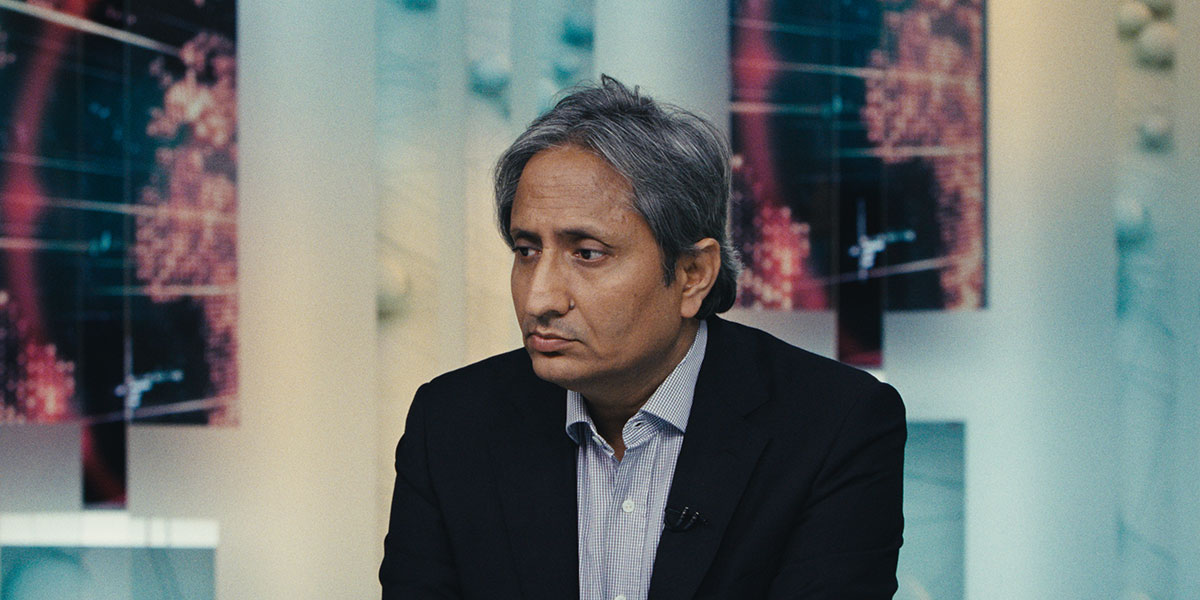 Eclectic Indeed
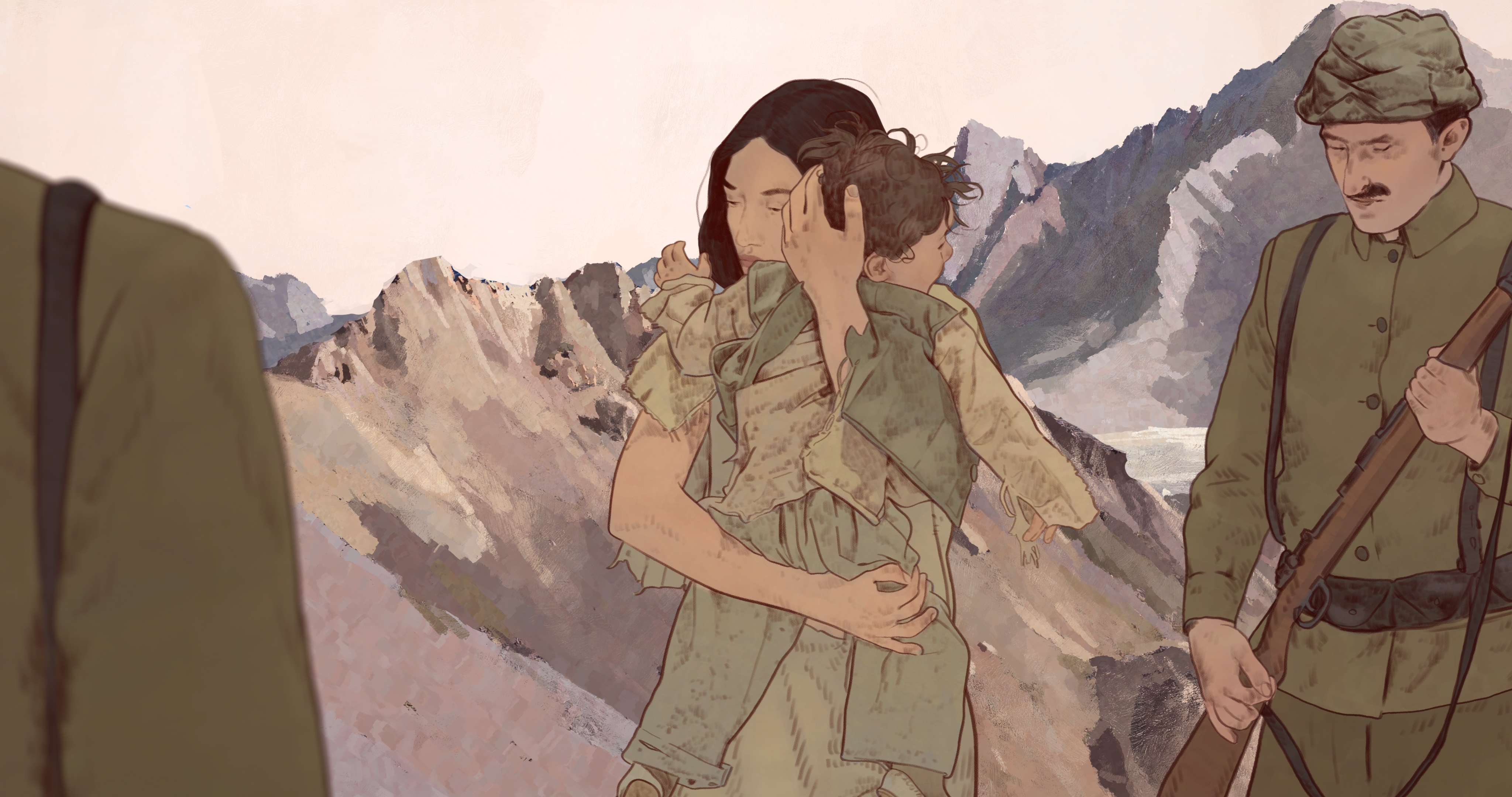 Archival Storytelling
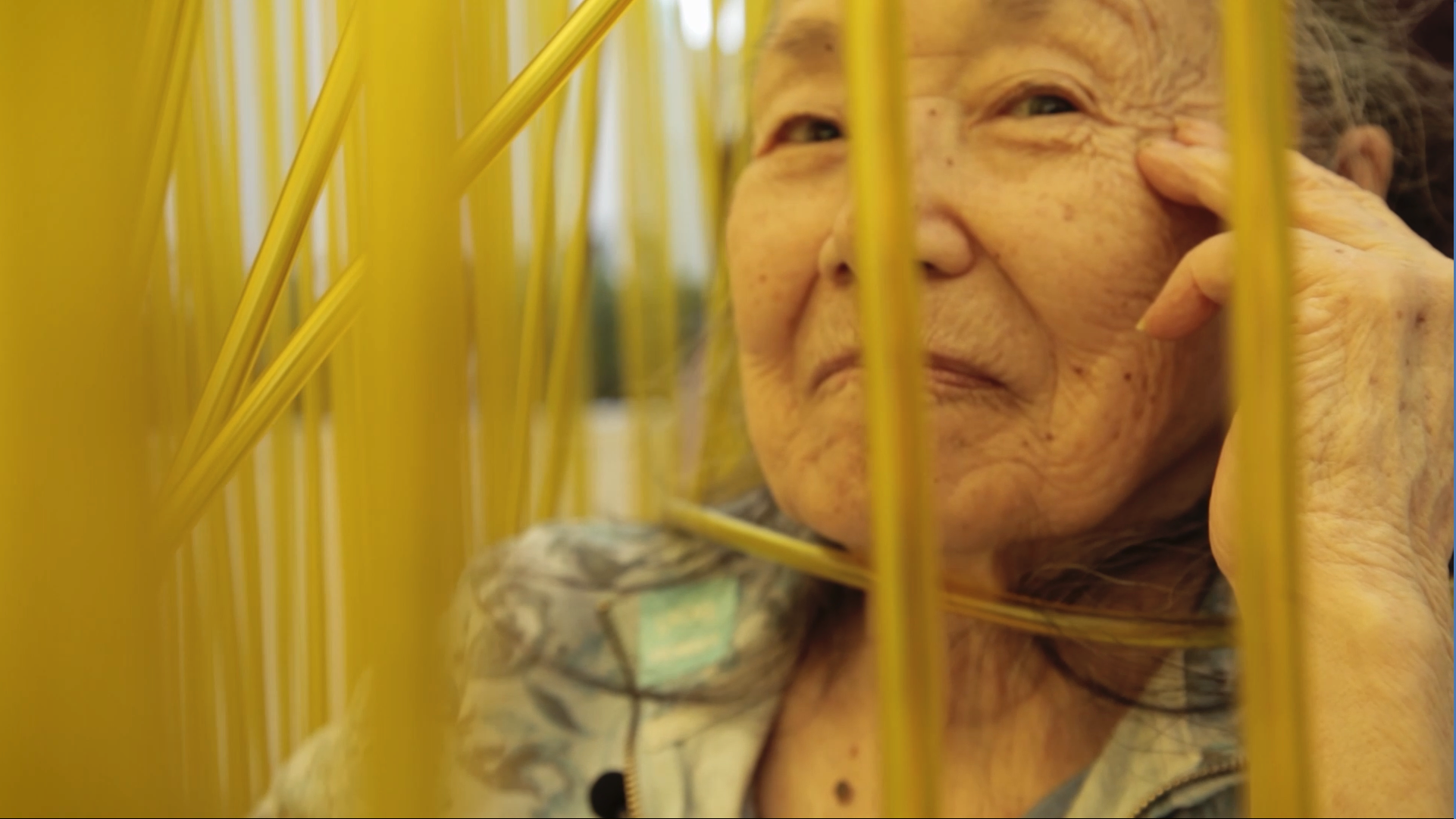 Ethics in Action