Before the 2017 NHL season and the debut of the Golden Knights, Las Vegas had no professional sports franchises — in fact, the idea of allowing teams to play in a city where sports betting was legal seemed dicey at best.
This year, the Knights and the WNBA’s Las Vegas Aces both won championships. The Raiders are playing their fourth NFL season in Vegas after moving from Oakland, and in February, their home field, Allegiant Stadium, will host the Super Bowl. And this fall, the Strip will become a Formula 1 track for the biggest North American Grand Prix race to date.
Once a sports desert, Vegas has rebranded itself as a global sports capital, and the person who may be most responsible is Steve Hill, president and CEO of the Las Vegas Convention and Visitors Authority.
“Vegas is a place that has always been attractive to those who want to take risks,” he says, referring to decisions like closing down the Strip for three nights for the Grand Prix. “Now, what you don’t want to do is take on these risks and have a mediocre track record.”
Opened in 2020, Allegiant Stadium — which cost $1.9 billion to build, the second most expensive arena in the world — was one such risk that paid off, allowing Vegas to prove it can sell out 62,500-person events on a regular basis. “If [Raiders owner] Mark Davis hadn’t agreed to move the team to Las Vegas and invest in the stadium, we wouldn’t have Formula 1,” says Hill. “It brought the spotlight to Las Vegas, and people realized that we had grown up as a city.”
The potential for match-fixing was taken so seriously that it took the city 16 years to woo a pro team, even after the State Gaming Commission lifted the ban on gambling on Nevada college sports in 2001.
Allegiant Stadium, the Raiders’ home field, will host Super Bowl LVIII on Feb. 11.
Courtesy of Las Vegas Raiders
For this season, 50 percent of single game tickets and secondary market purchases for Raiders games have come from outside of the state, including 25 percent from California. “The fact that so many tourists come to Las Vegas for these events or for the venues or for the excitement brings money in from out of state, and it grows the economy,” Hill says.
Raiders president Sandra Douglass Morgan, a Vegas native, former chairwoman of the Nevada Gaming Control Board and a member of the Nevada Athletic Commission, says the fans arrive from feeder markets, driven by resort and travel packages and the spectacle they get from a Vegas game.
“When people come to a game, they want that overall experience that they can’t even really get at any other NFL stadium,” she says. Raiders games have become known for their halftime shows with such artists as Ice Cube, The Killers, Nelly and John Fogerty.
“We are also experimenting with new technology to change the fan experience, like getting people their food and beverage and back in their seats faster,” Douglass Morgan says. “We also have new club suites that are much lower to the field. Our stadium has to stay fresh and innovative.”
According to Applied Analysis, the economic impact of the F1 race is estimated to be nearly $1.3 billion, with organizers expecting about 105,000 attendees each day of the three-day event. The Super Bowl should dwarf both figures during the party-filled week of the NFL title game, and there are more than 1,600 private jet landings projected. Hill says Vegas will forever change the way the Super Bowl is done because of the amenities and the 150,000 hotel rooms within walking distance of Allegiant Stadium.
Jamie Foxx in an ad for BETMGM. Building a sports empire in a city with legal gambling was a fraught proposition.
Courtesy of BetMGM
With its reputation for excess, the city will be under pressure to deliver an extravagant event, particularly when it comes to the half-time show, which will be overseen by Jay-Z’s Roc Nation — as it has been for the past three years. “With the city’s incredible energy and atmosphere, we know Vegas will provide a phenomenal stage for the culmination of the 104th NFL season,” says NFL executive vp club business Peter O’Reilly.
Beyond the Super Bowl, having professional sports teams in Las Vegas has changed the way people watch the game and how they bet on it both in Las Vegas and elsewhere.
Casino owner Derek Stevens took a big gamble when he opened Downtown Las Vegas’ Circa Hotel & Casino in 2020. Not only does it have the world’s largest sportsbook, but it also features a year-round pool “aqua-theater” where guests watch games from their rooms, a cabana or the water. Stevens’ financial advisors told him not to mention plans for Stadium Swim when they were raising funding for Circa because the idea seemed “too crazy.” While Vegas has been known as a place for sports betting, the big dollars associated with the live-viewing component was largely unrecognized until recently.
“We were counseled to not even bring it up because no one would really understand or even want to hear about it,” he says. “A pool as an amenity to a hotel room,” he says. “However, we looked at it differently. Hotel rooms are the amenity to Stadium Swim.”
The independent casino owner banked on selling a live viewing experience that people could only get in Vegas. Games are one of the only things that people still have to — and want to — watch live in a world dominated by on-demand content. “No one ever says, ‘I’m going to record the Super Bowl and watch it on Tuesday,’” he laughs.
Stadium Swim has been consistently sold out since opening and its popularity drives business to his online sports-betting platform Circa Sports, which launched in Nevada in 2018. It allows bettors to wager anywhere in Nevada, Colorado and Iowa — Illinois and Kentucky are next up.
“I felt having a substantial brick-and-mortar book was important, because it lets customers know there’s some physical assets behind a sportsbook brand,” he says.
Now he revels in the fact that the city will swell on Sundays with football fans, whether or not they are going to Allegiant to see the game.
“Whatever team you’re a fan of, whenever they play on the road in Las Vegas it has a bigger economic impact than it would be in other cities — additional flights are even scheduled by airlines,” Stevens says.
In its sixth year of regulated operations outside of Nevada, sports betting has generated more than $20 billion of revenue from almost $250 billion in total wagers.
Vegas’ sports shopping spree is far from over. In June, state lawmakers approved a $380 million financial package that could bring the Oakland A’s to town with a $1.5 billion, 30,000-seat retractable-roof ballpark where the Tropicana now resides. Bally’s Corporation, who owns the land, say they would build a new resort to accompany it. Playing in the smallest MLB stadium would allow management to capitalize on “premium experiences” in line with what Las Vegas audiences want.
Irving Azoff and Tim Leiweke’s Oak View Group is raising the stakes even higher with a proposed $10 billion sustainable sports complex, 20,000-person arena and 2,000-room resort on south Las Vegas Boulevard in a bid to attract an NBA team. It would be the most expensive development ever built in Vegas.
Mesfin Fekadu contributed to this report.
This story first appeared in the Sept. 20 issue of The Hollywood Reporter magazine. Click here to subscribe.
“Squid Game: The Challenge” Is Bringing “Squid Game” To Life, Here’s What You Need To Know
It’s been two years since Squid Game came out and took the world by storm, becoming Netflix’s most popular series ever.
Well, get ready for more, because coming to Netflix on the 22nd November is Squid Game: The Challenge, which will bring the now iconic competition to life.
Oh, and yes, that eye-watering total prize money does makes Squid Game: The Challenge the most lucrative reality game show of all time.
Judging by the teaser trailer, I think we can assume that the challenges will be replications of the ones in the series, and will test the competitors in a variety of different ways.
Unlike the series though, I think we can assume that being eliminated will not come with the grizzly repercussions that we saw in the show (thankfully).
What are your thoughts on the series? Will you be watching? Let us know in the comments!
Sam Jay’s signature spin on comedy is about breaking barriers and saying what we’re all probably thinking deep down inside.
That approach has been present in her writing for shows like “Saturday Night Live” and “That Damn Michael Che,” as well as her own series “Bust Down” and HBO late-night show “Pause With Sam Jay.” It flows effortlessly from Jay’s character Mo in her first feature film, “You People,” co-starring Jonah Hill.
And it’s exactly the vibe for her upcoming stand-up special, “Salute Me or Shoot Me,” which airs on HBO and Max on Sept. 23, where gender roles, race and policing language are a few of the polarizing topics Jay hits on. From sharing stories of being high while watching white people dance off-beat in a park to talking about being able to “let go” of certain racial issues, Jay serves up a freewheeling comedic experience.
And if you don’t like it, you can, as she says, simply suck it.
How did you prepare for this special compared to previous ones? Were there topics you had in mind that you hadn’t tackled before?
It presented itself to me through the process of touring and working the hour. I had all these jokes, and I was trying to just figure out the theme of the conversation that I was trying to have. I wanted this special to have a driving force. My last special, I had good jokes but there wasn’t this overall narrative. I wanted to grow as an artist. The theme just started to be empathy, the more I was running around and doing bits. I started to gather all the bits that fit that narrative of the many different ways that we can show empathy and the many different ways that we don’t.
Was there anything you were anxious to discuss? Or are you past that at this point?
Well, it’s a little bit of both right? I’m a little bit past it because people are always gonna have something to say. That’s a fact. In this special, I made a greater effort to show my work, to really walk you through the thought process and try to leave less holes in the joke. I tried to just make sure all the jokes were whole. … I just hope it opens up conversations, opens up another way to talk about or think about some of this stuff, especially with the race stuff and especially other minorities.
Why do you enjoy covering these topics in your comedy?
Honestly, it’s because it’s what my favorite comedians did — Richard Pryor, Chris Rock, Wanda Sykes, George Carlin. I don’t think all comedy has to have some political comment to it. Some stuff is just fun and fucking silly, and that’s awesome too. I was always attracted to the more heavy stuff.
Would you like to stick to comedy or venture into other genres?
The more I get to be a creative, the more open I am to all types of creativity. I think comedy will always be a part of what I do because I love it. I can’t imagine not doing stand-up.
Guess what? It’s another week and another price increase/ad break increase from a streamer. This time Amazon’s Prime Video is getting into the streaming shenanigans. Amazon plans to bring ads into its previously ad-free Prime Video movies and television series. This follows in the footsteps of many streamers who have recently added ads into their content strategies such as Netflix, Disney+, Max, and more. Prime Video has long remained ad-free, but it seems like the siren song of ad revenue is too strong to resist. For those who continue to desire an ad-less and commercial-free existence, Prime Video will offer an ad-free tier, but it will come at a price increase. Here’s what we know.
When and Where Will Ads Hit Prime Video
Prime Video
There is no specific date yet for when ads will arrive to Prime Video, however, they are expected in early 2024. Variety reports that ads will first arrive in the US, UK, Germany, and Canada and then will come to Prime Video in France, Italy, Spain, Mexico, and Australia at a later date in 2024.
How Much Will the Ad-Free Prime Video Tier Cost?
If commercials in your Prime Video movies and TV shows doesn’t sound like a fun time, you can pay to keep your experience ad-free. In the US, an ad-Free Prime Video will cost $2.99 more a month on top of the annual Prime fee of $139.
More About This Upcoming Change
Prime Video
According to Variety, Amazon “plans to run fewer ads on Amazon Prime Video than traditional broadcasters or broadband rivals.” And, of course, Amazon shares that the addition of ads into the Prime Video ecosystem will allow the company to “continue investing in compelling content and keep increasing that investment over a long period of time.”
More than ever, streaming is moving toward becoming exactly like its cable predecessor. We guess we’ll have to wait and see how consumers continue to react.
Take-Two has refused to be drawn on whether it would be interested in acquiring Gearbox Entertainment, following reports that the Borderlands studio is potentially up for sale.
Reuters and Bloomberg both claimed this month that Embracer Group was considering selling Gearbox, which It acquired in 2021 in a deal worth up to $1.4 billion, as part of major restructuring plans.
The former was told that Embracer had received interest from third parties keen on buying the studio. Potential buyers, who reportedly mainly consist of “international gaming groups”, already have access to Gearbox marketing materials, it’s claimed.
“We’ve had a long-term relationship with Gearbox of which we’re very proud,” CEO Strauss Zelnick said when asked if the company might be a Gearbox suitor. “They’re a wonderful company, they’ve delivered for us—not just Borderlands, but also Tiny Tina’s Wonderlands and other titles—and I’ve no doubt they’ll continue to be successful in the future.
“We’re thrilled that we have a long-term publishing relationship on these titles,” he added. “That publishing relationship exists without regard to the ultimate owner of Gearbox. But with regard to our potential interest, we don’t tend to speculate on potential transactions.”
Take-Two said last month that the Borderlands franchise has sold-in over 81 million units since launching in 2009.
The most recent mainline series entry, 2019’s Borderlands 3, is publishing label 2K’s fastest-selling title and has sold over 18 million copies.
2012’s Borderlands 2 is 2K’s top-selling game since the label’s inception seven years earlier, with over 27 million copies sold.
Billy Ray, the Oscar-nominated screenwriter, director and producer who has used his downtime during the Hollywood labor strife between shifts on the picket lines to turn Strike Talk into a tour de force that has demystified the issues and explained the inflection point that made this standoff unavoidable, this week strikes his most hopeful tone in the 21 podcasts he has done so far.
For the first time, he is openly musing that this podcast might be nearing its final act, this after a week in which the WGA and signatories met twice with encouraging results, and with some of the top moguls seated at the table with AMPTP negotiator Carol Lombardini.
Ray also engages in some fascinating talk about the biggest resurgence in the labor union movement in a half century, as workers seek protection in an increasingly automated world that is threatening the jobs of so many. Joining him is David Frum, senior editor of The Atlantic and MSNBC contributor; Peter Savodnik, senior editor at The Free Press; and Mary McNamara, the culture columnist and critic at the Los Angeles Times.
We at Deadline have relished Billy vast contributions to unwinding this complex labor strife — he has been a North Star to WGA and SAG-AFTRA members and we wanted them to have that. But if it means the end of a strike, which has strained the resources of thousands who rely on the film and TV industries for a living, all around the world … we will tip our hats and watch him and other artists go back to their day jobs. We will miss his opening soliloquies — tying the ancient Egyptian pyramid builders to the Teamsters is an all-time favorite — and we will do our best to get him to turn his talents to another podcast on the writer’s life, and perhaps find a way to help get his grasp of history and its connective tissue to current events between the covers of a book.
We are jumping ahead here: The WGA deal needs to make and be ratified, followed by a SAG-AFTRA deal. So chances are Billy isn’t quite done yet, but what he has graciously given his time to do so far has been nothing short of remarkable.
Luciana Barroso—furniture designer as well as Matt Damon‘s wife of nearly two decades—stepped out in the season’s hottest hue for The World’s Most Fascinating Dinner. Alongside fellow celebrities such as Ludacris, Jeremy Allen White and Zoe Saldaña, Barroso arrived at New York City’s Hall Des Lumieres wrapped in a bright red one-shouldered dress and strappy heels in a matching color.
She finished the look with a swipe of red lipstick, tassel earrings, and a black clutch before pulling her hair into an elegant chignon. Her Oppenheimer star husband went for a monochromatic ensemble too with a classic black suit, collarless black button-down, and black patent leather dress shoes.
MEGA
It’s not the first time we’ve seen Luciana Barroso sport the fiery shade. Red appears to be her go-to for red carpet appearances. She wore a floor-length red halter dress to the Oscars in 2016; a long-sleeve red sequin number to the premiere of Ford v Ferrari in 2019; and a strapless red gown to Venice Film Festival in 2017.
Sophie Turner and Taylor Swift met up in New York City for their second outing of the week. After being spotted having dinner together at Temple Bar only a couple of days prior, the actor and singer reunited for another girls’ night out—this time at the Barrière Fouquet Hotel with the Haim sisters in tow.
Turner—who is currently embroiled in a messy split from estranged husband Joe Jonas—was photographed using her colorful patchwork Lous Vuitton shoulder bag to shield herself from cameras on her way out of the Tribeca hotel on Thursday, September 21. Her ensemble was a masterclass in ’90s minimalism, featuring a white T-shirt, long gray skirt, red ballet flats, and Louis Vuitton lock necklace.
Raymond Hall
Earlier in the day, news broke that Turner is suing Jonas to have the couple’s two daughters, ages three and one, returned to their “forever home” in England. The actor claims that her daughters are currently being wrongfully kept in New York, per new court documents obtained by Today. The report notes the couple made England their permanent residence in April, having “often discussed their desire raise their children in England.” Sophie Turner’s petition also alleges that she found out about Jonas’s divorce filing when the rest of us did: when it was reported in the media.
Each Day, at 4pm GMT, the daily ratings post will automatically go live. Afterwards, and as early as 4pm GMT, the early overnight Total Viewers and 18-49 Demo numbers will be added into the table below. Please see the “About the Daily Ratings” section at the end of this article for more details.
Cable numbers will be posted after 9pm-10pm GMT.
Each day (except Sunday) during the main TV Season we post the TV Ratings for the previous nights primetime shows for the major broadcast networks (ABC, CBS, CW, FOX, NBC).
Select Cable Network ratings will be added to the Ratings Database.
When the final adjusted ratings numbers are released, these are then posted in the Ratings Database as well as the above
tables.
The Final Adjusted numbers are what we use for all our Renew/Cancellation Tables, Full Season Tables, Ratings Scorecards etc . Final Adjusted numbers will be posted each night around 9pm-10pm UK apart from the weekend.
Note: During the UK/USA Clock Changes, the above times will change by 1 hour.
Numbers are often delayed by Nielsen.
Ratings Provided by Nielsen.
Remember: ALL SPOILERS must be put inside the spoiler tags. If you post spoilers without tags your comments will be deleted. Repeat offences will result in you being banned.
Please stay on Topic. If you want to chat about anything at all please use the Open Discussion
Threads.
“Expend4bles” got off to a soft start on Thursday, earning $750,000in preview showings. That compares to the $875,000 earned by “Expendables 3” in August of 2014. That led to a $16 million Fri-Sun debut. Nine years later, with poor reviews (14% on Rotten Tomatoes compared to the series high of 67% for “Expendables 2” in 2012) and little in the way of buzz or excitement, the latest Sylvester Stallone/Jason Statham actioner looks like — at least in America — another example of a franchise continuation that nobody asked for.
This new film again stars Stallone and Statham while bringing Megan Fox, Curtis Jackson, Tony Jaa and Iko Uwais onboard.
Streamers are on the verge of inventing something major enough to change the world as we know it: regular old cable television. Hey, at least someone will probably get to create the new LimeWire in the next few years as a response, and that will be really exciting for them. Congrats in advance to that genius, because the rest of us are getting dragged through the mud.
Netflix plans to make you freeloaders finally cough up the dough
The latest streaming service to make the landscape just a tiny bit worse for consumers is Prime Video, which announced today that it would be bringing commercial breaks to its service sometime in early 2o24 (via The Hollywood Reporter). An exact rollout date has yet to be determined. But while this move is in line with other formerly ad-free platforms like Netflix and Disney+, Prime Video has somehow found an even more obnoxious way to separate users from their hard-earned dollars.
While Netflix and Disney+ introduced their ad-supported tiers as “basic” options that users could downgrade to if they wanted to save some money on the standard, ad-free plan, Prime Video is taking a different route. Commercials will now be added to the regular plan for everyone. To remove the bug, users will have to cough up an additional $2.99 per month. (Side note: this change does not affect Amazon’s cost-free streamer Freevee, so the world will thankfully still have full access to gems like the Emmy-nominated Jury Duty.)
Per a release from the streamer, there will apparently be “meaningfully fewer” ads than regular television (Variety puts the benchmark at approximately four minutes per hour), and this revenue will help them pay for more original programming and live sports like the NFL’s Thursday Night Football, the rights to which reportedly cost the platform $1 billion annually. Imagine a large organization squeezing you for money like that! We certainly can’t.
Tonight, I am making banh chau for a dinner party.
Though my mother taught me the recipe, I know that what I cook, given the same ingredients, will taste completely different from her original flavors. I worry that the fish sauce is too sweet, so I add lime juice and water. As I throw bean sprouts into the sunny batter frying in the pan, I accept that I will never be able to make her version of banh chau.
As a child of Khmer refugees I seem to cook in the same way that I speak slang, which allows me to stay in lineage with my ancestral taste buds while flailing into new creations.
On my travels, I have been lucky to taste Cambodian dishes by many chefs in my generation. Oakland, Stockton, Long Beach, Philly, New York City, Revere, Lowell. I have eaten from their farmers market stands, food trucks, pop-ups, restaurants, takeout windows, and informally, at their backyard barbecues after house blessings. Though I always compare their dishes to my mother’s unparalleled cooking, I also look for textures or techniques that might arouse my palette beyond the familiar. Every Cambodian American chef feeds us their forward vision of Cambodian cuisine influenced by the region where they grew up as kids without blueprints.
When I consider Cambodian culinary futurism, I turn to the relationships that taught us to be resourceful: the one that we have with the land on which our elders resettled as refugees and the ones that we have with our beloved matriarchs who taught us the ultimate love language of cooking.
•• ━━━━━ ••●•• ━━━━━ ••
In my mother’s unruly garden, I find potted lemongrass and garlic, mint and red chilies growing on the side of the house that meets the driveway, fish cheek herbs and scallions next to prickly roses, and a banana plant that doesn’t fruit in Pennsylvania’s temperate climate. In her yard, persimmons and Asian pears are scattered. She is preparing prahok, covering the container with a heavy cinder block so that the neighborhood cats will not paw at the fermenting fish. In the distance, cornstalks rise, and Amish horses and buggies clop along the road near cows chewing on grass. The land surrounding her home and her garden mirror abundance, as the wind chimes sing a song every time the wind cartwheels.
•• ━━━━━ ••●•• ━━━━━ ••
Before my grandfather died, he gave my mother a sweet potato. Her eyes light up while cherishing the memory of his last gift but gradually darken from the timing of his loss. A few months before Vietnamese forces invaded Cambodia, effectively liberating the country from the genocidal Khmer Rouge regime, he died of forced labor and starvation. If only he could have held on longer, he would have seen a new day. My mother has told me this story many times. I always wonder how my grandfather, in a time of scarcity, found food to give his children on his deathbed. In his hand was the miracle of a sweet potato. A root vegetable to propagate in soil that could feed a whole community. A small seed of resistance against an oppressive regime. A future in which my mother could live. Early on, after the Khmer Rouge established its power and evacuated Phnom Penh to the provinces, he had already experienced the death of an infant grandchild due to the lack of food that malnourished his eldest daughter’s ability to produce breast milk. Perhaps, the sweet potato was also a prayer for his future grandchildren.
Because of my grandfather’s memory, I am careful to not overwork myself in this country that dropped 2,756,941 tons of bombs in Cambodia, more than the total figure that the Allies dropped during World War II.1 If I’m hungry, I eat. If I’m tired, I rest. I feel his inexorable hope when I hold a sweet potato in my hand at the grocery store.
•• ━━━━━ ••●•• ━━━━━ ••
In the 1980s, my mother and her family resettled as refugees in Pennsylvania. When I visit Lancaster, where I was born and raised, my father grills a whole fish. I pluck mint and fish cheek herbs with my mother. My aunties bring fresh cucumbers grown in their own gardens. We pick from the same platter and bundle bits of fish and herbs inside lettuce, then dip it in fish sauce, sprinkled with crushed roasted peanuts and slivers of red chilies. The day I leave, my mother bags mint from her garden and tells me to stick the sprigs in water until they grow roots, then plant them in soil.
Praying at the Killing Fields Memorial at The National Cambodian Heritage Museum.
A daughter of farmers, she was born in Takeo, a province that suffered from Nixon’s Operation Menu bombings during the war in Vietnam. With her family, she left her village of Chambak for safety and later returned home to find fish fried in the pond. I cannot begin to comprehend the devastation of the land and all the land mines still burrowed in the ground. For the last forty years she has lived outside of her homeland. She takes pride in her garden and laughs when the rabbits eat all the kale. She feeds those who share the land, and in return the land feeds her.
•• ━━━━━ ••●•• ━━━━━ ••
The last time I ate at a restaurant in Lowell, I heard people outside of my community order dishes in Khmer. Is the amok popular? Would you recommend the samlar ktiss or the samlar korko? We’d like the smoked eggplant, troub trung kor. A menu that makes Americans speak Khmer? That’s a future I didn’t know already existed. Like our Thai and Vietnamese counterparts, I wonder when Cambodian restaurants will increase all over the country so that our cuisine is just as familiar as pad Thai and pho. Will the funk that is familiar to me become familiar to Americans? Will they prefer a watered down version? Will they seek the spots where Cambodians are the main crowd? I admire Thai restaurants that post unapologetic signs, bluntly stating that they will not issue refunds if their customers can’t handle the heat. They do not tone down their spices in the same way that I hope Cambodian American chefs do not feel the pressure to tone down their funk. As far as the audience is concerned, I hope that our cuisine does not so much prioritize non-Cambodian diners to suit their palettes as much as become available to them. Having grown up in a small town without Cambodian restaurants, it is always special to be served by a Cambodian American chef who treats me as the main audience and is just as happy to see me as I am them.
•• ━━━━━ ••●•• ━━━━━ ••
As a writer of diaspora, I envy chefs. Embedded in their craft is the language of food that our elders speak, no translation necessary. Whereas I write in English and not in Khmer, Cambodian American chefs can use the precise ingredients that our early ancestors used, evoking a sense of home in their own style. Though I am not fluent in Khmer, I still hope that my ancestors will understand my feelings in another language. However, if they were to dine at a Cambodian American restaurant, they would surely recognize kreung in any form or other ingredients they remember from their time on earth. Memory and nostalgia play a part in generational culinary slang as does the rule-breaking that gives today’s chefs permission to become bold in their creativity. Gaining the approval of our elders is hard won, and yet I am positive that they, too, rebelled against rules that their own elders imposed on them. Though our funky ingredients are the words I wish I had, I’m inspired to relax into my own creative process when I see Cambodian American chefs fire up new concepts. Their cooking is the medium between the homeland and our ancestors and how each manifests in Cambodian American life.
The centerpiece of every feast is my family. The time I share with them nourishes me as does my mother’s garden. Though I try to cherish the present, I often wonder how the trajectory of Cambodian culture would have blossomed had the country flourished in peace.
If the war had not happened, how would Cambodian cuisine have evolved in our parents’ generation? Before Pol Pot Time, what if there was a rising chef in Battambang who dreamed of new desserts that we will never know? Fast forward to Khmer Rouge regime survivors in the immediate aftermath of genocide. Would this question have had any meaning for them? The war had happened, and I cannot forget that people like my grandfather had died of starvation. To our elders, culinary futurism may mean the abundance of food and the preservation of our traditional cuisine, but the chefs of my generation are privileged with time, and I have faith in them to experiment with wild abandon.
“I feel like as a cast, we’ve seen her spiraling,” Simpson, 47, told Entertainment Tonight on Thursday, September 21. “We’ve had conversations, just as a cast, about her, worrying about her.”
She continued: “I genuinely, from the bottom of my heart, hope that, like, sometimes people actually hit rock bottom [and] take accountability and to have an ‘Aha’ moment, where they say, ‘Yeah, maybe I do need some help,’ and I hope that this is her ‘Aha’ rock-bottom moment.”
Simpson further explained that hopefully Beador, 59, can recognize the “severity” of her actions and use it as a springboard to make a “change for the better.”
Being a Real Housewife isn’t all diamonds and rosé — just ask the many Bravolebrities who’ve legal woes have played out in the spotlight. While some franchises tackle the lawsuits on air — including Real Housewives of New Jersey’s Teresa and Joe Giudice’s fraud case, Real Housewives of New York City’s Sonja Morgan’s bankruptcy filing […]
Us Weekly confirmed on Monday, September 18, that Beador had been arrested for two misdemeanors — a hit-and-run incident and driving under the influence — over the weekend. Per the Newport Beach Police Department, Beador drove her car onto a residential property on Saturday, September 16. She was cited by the police before being released without bond.
Beador’s attorney, Michael Fell, later addressed the incident in a statement to Us. “I spent quite a bit of time with Shannon yesterday. She is extremely apologetic and remorseful,” he noted. “We will be awaiting the official information on this case as it becomes available, and Shannon is prepared to accept full responsibility for her actions.”
“Honestly, I had to look at it multiple times because I thought maybe it was something that someone made up, you know? Lots of people make up memes and things,” Simpson told ET. “When I realized that it was a real thing, I was in shock. I was blown away.”
Simpson then immediately reached out to Beador to check in and tell her that she hopes “[she is] doing OK.”
Reality TV sometimes stretches the definition of “unscripted,” but there was certainly nothing scripted about any of these Real Housewives arrests. In the past three decades, many stars of the Bravo franchise have found themselves in handcuffs for a variety of reasons. In perhaps the biggest legal drama in the franchise’s history, The Real Housewives […]
“At some point, I’m gonna text and call and see how she is,” Simpson added on Thursday. “But I think, for right now, she probably needs, you know, space.”
“Let’s look at other people on the show this season who’ve been drinking a lot,” Beador retorted on September 13, calling the claims “inaccurate.”
Thank You!
You have successfully subscribed.
Beador’s friend Jeff Lewislater revealed on the Monday episode of his eponymous SiriusXM radio show that she was planning to start “counseling” later this week and took accountability for her actions.
EXCLUSIVE: Theatrical audiences around the country (and into Canada) are about to get the chance to see Bad Press, the breakout Sundance documentary that enjoys a 100 percent critical rating on Rotten Tomatoes.
The film directed by Rebecca Landsberry-Baker and Joe Peeler explores a ferocious battle over freedom of the press that erupted in the Muscogee Nation based in Oklahoma. Context Moves is kicking off a platform theatrical release today in Toronto, followed by openings in Tulsa, Okla. (Oct. 6-12), Winston-Salem, N.C. (Oct. 9-10), Washington D.C. (Oct. 11), Los Angeles (Laemmle Glendale Oct. 27-Nov. 2), Chicago (Gene Siskel Film Center Nov. 29-Dec. 3), New York (DCTV Firehouse Cinema Dec. 1-7), among other locations.
“Imagine you lived in a world where your only reliable news source became government propaganda overnight. That’s exactly what happened to the citizens of the Muscogee Nation, the fourth largest Native American tribe, in 2018,” notes a synopsis of the film. “Out of 574 federally-recognized tribes, the Muscogee Nation was one of only five to establish a free and independent press – until the tribe’s legislative branch abruptly repealed the landmark Free Press Act in advance of an election. The tribe’s hard-hitting news outlet, Mvskoke Media, would now be subject to direct editorial oversight by the tribal government.”
The synopsis continues, “One defiant journalist refuses to accept this flagrant act of oppression. As brave as she is blunt, veracious muckraker Angel Ellis charges headfirst into battle against the corrupt faction of the Muscogee National Council. Angel and her allies rally for press freedoms by inciting a voter-supported constitutional amendment, just in time for the start of a new election cycle.”
In its review, Collider wrote, “Bad Press reveals the essential nature of the free press and what happens when it is stifled by politicians and officials who would rather control the narrative than let the truth see the light of day… It reminds us how valuable the news can be and what the landscape of truth can look like when it is gone.”
(L-R) Directors Joe Peeler and Rebecca Landsberry-Baker and film subject Angel Ellis of ‘Bad Press’ at the Sundance Film Festival.
Photo by Emily Assiran/Getty Images for Stacy’s Pita Chips
“Seeing festival audiences react so positively to Bad Press has been an incredible experience – we’ve often sat in theaters full of people laughing, crying, gasping and cheering as they watch Angel and her fellow Mvskoke Media journalists fight for freedom of press in the Muscogee Nation,” Peeler and Landsberry-Baker said in a statement. “We are thrilled to bring this wonderful theatrical experience to audiences worldwide, and hope that the film will illuminate the challenges to press freedoms that Indigenous journalists face every day.”
Bad Press won a Special Jury Prize for Freedom of Expression at the Sundance Film Festival, where the documentary premiered. It earned best documentary awards at the Dallas International Film Festival, RiverRun International Film Festival in Winston-Salem, N.C., and deadCenter Film Festival in Oklahoma City, Okla. Landsberry-Baker and Peeler were named best directors at the Nevada City Film Festival and their film also won the One in a Million Award at the Sun Valley Film Festival in Idaho.
“It’s the Alex Mahon show,” was how one seasoned British TV executive characterized the industry’s biennial gathering in Cambridge, chaired by the Channel 4 CEO.
The Royal Television Society conference’s line-up was such a draw that even Elisabeth Murdoch was in attendance the day before news broke of her father’s surprise retirement. The traditional turns from UK network leaders were elevated by CAA’s Bryan Lourd jetting in from Hollywood, while James Corden gave his first interview since quitting The Late Late Show.
In an auspicious bit of timing, Katherine Ryan was the after-dinner speaker. She declined to address the Russell Brand-shaped elephant in the room, but did manage to roast an audience member called Ian for looking like a golf fanatic. Unbeknownst to Ryan, he turned out to be Channel 4 chairman Ian Cheshire.
But it was Mahon who presided over it all. The Channel 4 CEO regularly danced between the stage and the front row to introduce speakers she helped book. A polished performer, she had the good sense to tackle the “disgusting” sexual assault allegations against Brand within minutes of opening the conference. RTS CEO Theresa Wise praised her power to “convene” the industry.
There has long been talk that the RTS Cambridge Convention could be Mahon’s Channel 4 swansong. It meant the rumor mill was in overdrive during the two-day gathering, as people pondered whether Mahon will extend her tenure into a seventh year.
Having saved Channel 4 from privatization in January, senior industry figures gossiped about potential suitors. Earlier this year, Mahon was linked with a move to Google, though she is not thought to have formally interviewed for a role. More recently, ITV and Chloé, the French fashion house, have been mooted as potential destinations.
Mahon was unequivocal when Deadline asked Channel 4 for comment. “This is nonsense,” she said.
Her colleagues agree that she has not given any concrete indication of her desire to leave Channel 4. A person who has worked closely with her says she has unfinished business, not least unresolved questions over Channel 4 making its own shows. But there is also an acknowledgment that top-ranking executives are always steadfastly staying in their jobs until the moment they are not.
Mahon is a source of speculation because her future matters. Channel 4 occupies a unique place in the UK because of its (soon to change) remit to wholly commission shows from external producers, meaning the industry has a sense of ownership over the broadcaster.
Mahon’s future also matters because industry observers think her departure could trigger musical chairs at the top of British television. History shows that Channel 4 CEOs tend to move in lockstep with their content chiefs. Ian Katz is among a group of UK programming bosses who have been in their roles for the better part of a decade, meaning a changing of the guard feels increasingly inevitable.
Delivering her RTS Cambridge opening keynote, Mahon had a sobering message for her colleagues. She warned of a “generational timebomb” in TV viewing that will keep Channel 4 and others in a state of flux for years to come. “We are fighting for our business lives,” she said. Mahon is still in that fight for now.
Varun Dhawan and Keerthy Suresh has resumed shooting for Atlee’s next VD18.
After successfully dishing out Jawan with Shah Rukh Khan, Atlee is busy shooting VD18 with Varun Dhawan and Keerthy Suresh.
Varun Dhawan has always expressed his love for action movies, and it looks like his dream is coming true. After finishing the Citadel series, Varun Dhawan is ready to join forces with director Atlee Kumar, actress Keerthy Suresh and producer Murad Khetani to create an electrifying action entertainer. This film promises to be a thrilling experience, combining stunning visuals and gripping drama. Reportedly, the project will hit theatres worldwide during the summer of 2024, marking the first collaboration of this talented trio. Now in an exciting development, with Jawan’s frenzy in the backdrop, Atlee is all set to resume shooting for the same with Varun Dhawan.
As per a source close to the entertainment portal PinkVilla, Varun Dhawan will be shooting some intense scenes with Keerthy Suresh. The film is expected to wrap up by December, for May 2024 release, “Varun Dhawan begins the second leg of shooting for Atlee’s mass entertainer today in a Mumbai studio. It’s a long schedule planned in multiple locations and will see Varun and his leading lady, Keerthy Suresh, canning major dramatic and emotional scenes together. The makers will also be filming some action sequences in this schedule that will run till around October 15th,” revealed the source.
Reportedly, Varun Dhawan shared that this much-awaited Atlee movie will release on May 31, 2024. It is also speculated that this upcoming project is a remake of the Tamil film Theri, which was also directed by Atlee.
Meanwhile, Atlee’s first pan-India film with Shah Rukh Khan Jawan has created a history at the box office. The film which is going strong in its third weekend has already collected Rs 500 crore at the box office. In an interaction with Indian Express, Atlee had shared, “Shah Rukh sir inspired me, not just as an actor, but also as a producer. I have learnt the craft from spending four years with him. Now, I have started producing films here (Bollywood). I already produced a couple of films in the south, and now I have started producing all over — producing two in Tamil, two in Telugu, two in Hindi.”
Adding to that, Atlee also teased VD18 with Varun Dhawan, “Regarding Varun’s film, it is going to be a mass film. Can expect the same calibration of mass to the theatre,” he stated.
Yatamanyu is a multi-disciplinary Journalist & Photographer who dabbles in Films, Poetry, Music, Politics, Pop-Culture and everything in between. …Read More
Ben Affleck’s absence from Aquaman and the Lost Kingdom is a positive thing considering his disappointing run as Batman in the DCEU.
His appearance in The Flash served as a good sendoff for his version of the character, with a strong performance and well-written scene.
Aquaman 2 would struggle to fit Affleck’s Batman in and give him a fitting ending, and keeping the film self-contained benefits its overall plot and the franchise’s timeline.
Aquaman and the Lost Kingdom was long rumored to include Ben Affleck’s Batman, yet his absence from the film is more positive than it is negative in light of the DCEU Dark Knight’s disappointing run. While many would agree that Ben Affleck performed admirably as Bruce Wayne/Batman, several outside factors contributed to his overall tenure as the Caped Crusader being regarded as a disappointment. As such, his lack of an appearance in Aquaman and the Lost Kingdom may be beneficial to the character.
Aquaman and the Lost Kingdom is in an interesting position as it is the final film in what was the DCEU before James Gunn’s DCU reboot comes into effect in 2024. As such, the story of Aquaman 2 has been rumored to have changed a lot as a result. From initial rumors that Michael Keaton’s Batman would appear after his appearance in The Flash and supposed appearance in the now-canceled Batgirl to the potential return of Affleck’s Batman, the film has been subject to much speculation. However, the confirmation that Affleck’s Aquaman 2 scenes have been cut may actually be a positive thing when compared to his disappointing run as Gotham’s protector.
The Flash Movie Gave Ben Affleck’s Batman A Good (Enough) Sendoff
The primary reason as to why Affleck not appearing in Aquaman and the Lost Kingdom cast of characters is a good thing is his appearance in 2023’s The Flash. Affleck played a fairly significant role in The Flash‘s first act continuing his role as a mentor to Barry Allen both as a human being and a superpowered metahuman. Despite The Flash having its own problems as a movie, Ben Affleck’s inclusion was not one of them. Affleck has had a tumultuous decade as Batman and faced many issues, most of them that were not any fault of his own.
Despite having moments of greatness since Affleck was cast as Batman in 2013, the overall state of flux the DCEU has been in since 2016 has ultimately failed the actor and his iteration rather than the other way around. This disappointing run notwithstanding, The Flash served as a very good sendoff for Affleck’s version of the character. Not only did he have a great Batman action sequence at the beginning of the film, but his scene with Barry in which he outlines how his trauma makes him a hero is some of the best writing Batman has received in the DCEU.
What further bolstered this was Affleck putting in a great performance which helped to solidify his Flash appearance as a more than fitting sendoff. Affleck even admitted that he finally figured out how to play Batman/Bruce Wayne the best in The Flash in what was a cruel stroke of irony given it was his final appearance in the franchise. All of this means that Ben Affleck’s Batman role in The Flash is arguably better than anything else other DCEU projects could provide of late, making his absence in Aquaman 2 a good thing.
Aquaman 2 Would Struggle To Give Ben Affleck’s Batman A Fitting Ending
Furthermore, Aquaman 2 is a story that would likely struggle to fit Ben Affleck’s Batman in and give him a fitting ending as a result. The underwater, otherworldly, more fantastical elements of the Aquaman universe do not fit Batman as much as the world of The Flash does, meaning Affleck’s appearance may have seemed more like fanservice than integral to the plot. This extends to Bruce’s relationship with both characters in the DCEU. His dynamic with Arthur is certainly entertaining, yet they do not have as close a connection as Bruce and Barry, again meaning that Batman’s appearance would have felt forced rather than earned like it was in The Flash.
Also, keeping Aquaman 2 self-contained will also benefit the film. Having Affleck in the film may have further muddled the already-confusing DC timeline amid the impending DCU reboot. In having Aquaman and the Lost Kingdom be a standalone adventure without other DCEU characters like Batman, the film can satisfyingly end this iteration of the franchise without confusing, lingering plot threads like Affleck’s appearance that would have also made his future more unclear.
Why Ben Affleck’s Batman Didn’t Work Out For The DCEU
Finally, it is worth exploring why Ben Affleck’s iteration did not work out. As alluded to, Affleck was not to blame for the majority of these issues with the actor always providing good performances and commitment regardless of the film he was part of. In reality, it was the mishandling of the franchise by Warner Bros. that failed Affleck’s Batman. The negative reaction to Batman v Superman: Dawn of Justice saw WB drastically change the state of the franchise, moving away from Snyder’s vision and causing a schism that meant the storyline was split between what was established by Snyder and what was desired by studio executives.
This negatively impacted Affleck’s tenure as Batman as he was originally intended to be part of his own solo film and two Justice League sequels amid any other plans he and Snyder had for the character. Not only did Affleck lose out on future appearances, but also a directorial credit with his planned Batman film. This led to his subsequent phasing out of the franchise, with Warner Bros. increasingly unclear with what the plan was as the studio juggled Affleck, Pattinson, and more recently Keaton’s Batmen with a lack of direction. With all this disappointment in mind, Affleck’s absence from Aquaman 2 can only be seen as a positive.
An upgraded Steam Deck may be coming, but don’t expect anything until late 2025 at the earliest. Valve engineer Pierre-Loup Griffais told The Verge that the company wanted to upgrade the Deck’s performance without sacrificing its battery life, which may not yet be possible.
Another concern Griffais raised is around brand messaging. A higher-performance Steam Deck could play games that the current Steam Deck can’t, which could cause problems with both developers and customers. That does leave room for an upgraded, but not more powerful Steam Deck, i.e. a model with longer battery life or a higher quality screen. Here’s the full statement Griffais gave the Verge:
Size:
Want us to remember this setting for all your devices?
Now Playing: Happy Birthday Steam Deck Official Trailer
“It’s important to us that the Deck offers a fixed performance target for developers, and that the message to customers is simple, where every Deck can play the same games. As such, changing the performance level is not something we are taking lightly, and we only want to do so when there is a significant enough increase to be had. We also don’t want more performance to come at a significant cost to power efficiency and battery life. I don’t anticipate such a leap to be possible in the next couple of years, but we’re still closely monitoring innovations in architectures and fabrication processes to see where things are going there.”
Griffais also spoke to CNBC on a similar topic, affirming that Valve is currently happy with the Steam Deck’s power. He said, “We’re looking at this performance target that we have as a stable target for a couple years. We think that it’s a pretty sweet spot in terms of being able to play all the new experiences from this new generation.” Some recent releases have strained the capabilities of the Deck, like Redfall and Starfield. However, the fact that Baldur’s Gate 3 is Steam-Deck-verified speaks to the handheld’s capabilities.
The products discussed here were independently chosen by our editors.
GameSpot may get a share of the revenue if you buy anything featured on our site.
As the platonic ideal of a pop star aging gracefully in her career, Kylie Minogue knows what kind of artist she is and for 35 years has stuck to that identity — and better than that, embraced it. “Tension” is her sixteenth album, and it’s not only as good as the ones she released 10 or 20 or more years ago, it’s just like them: full of shiny, irresistible, easily digestible songs whose sole purpose is to make listeners fall in love and dance, if not always in that order. As consistent as her 2020 release “Disco” (if palpably more exuberant for being recorded and released post-pandemic), “Tension” exudes a return-to-normalcy joy that showcases her well-established strengths as a singer, songwriter and performer of pop music.
The first single “Padam Padam,” released in May, threw down an impressive gauntlet. Though it only floated to No. 34 on the Top 40 chart, it instantly became a contender for the nebulous, informal but always contentious prize of “song of the summer,” especially after her LGBTQ fans appropriated it for their worldwide pride events. At once vintage and ultra-modern Kylie, the content of the song seemed like a warm-up for the love affair that was yet to come with the album: its singer finds a suitable partner on the dancefloor and sparks ensue. Written by Norwegian singer/songwriter Ina Wroldsen and songwriter/producer Peter Rycroft (aka Lostboy), the song captures the exact energy of the moment as music lovers flock back to clubs and festivals, and Minogue’s plastic vocals adapt effortlessly to the futuristic, pulsating throb of producer Rycroft’s musical accompaniment.
Whether the choice exemplifies a slightly more traditional release rollout than the seeming current-day strategy to hammer listeners until another song sticks or reflects a shrewd patience to let “Padam Padam” fully embed itself in the pop firmament, it was nonetheless surprising that Minogue waited until the end of August to issue a second single, “Tension.” Yet the song seems to immediately provide an explanation: offering robotic precision instructions to “Touch me right there / Don’t be shy / Boy I don’t bite / You know where,” she beautifully escalates the heart-pounding romance of “Padam” into bedroom provocation, even over a keyboard riff (courtesy her longtime collaborators Biff Stannard, Duck Blackwell and Jon Green) that feels lifted from a 1990s club classic.
Brazenly sexy in comparison to its flirty predecessor, “Tension” aims for dancefloor ecstasy that leads to a more furtive kind of enjoyment, but together they offer a sort of template for listener expectations: rather than making the best of a challenging cultural situation — as she did with “Disco” — by creating a collection of throwback songs that pay tribute to the musical hedonism, both silly and symphonic, of the 1970s (and the entire pre-pandemic era), Minogue is plunging forward as if our collective opportunities to dance and have fun were never kneecapped. “Hold On to Now,” as much in its musical as lyrical content, explicitly says as much, building from a burbling synthesizer melody to a sweeping four-count beat that feels destined for an unforgettable end-of-night music festival encore, complete with a gospel choir backing Minogue up.
Where the previous record drew inspiration from disco, “Tension” pulls more heavily from ’80s pop, especially on tracks like “Things We Do for Love,” a more stripped-down version of which you could easily imagine Kevin Bacon dancing to back in 1984. “You Still Get Me High” delivers a dancefloor sneak attack by opening at half-tempo, grafting the dreamy love of the Cars’ “Drive” to the propulsive yearning of Springsteen’s “Dancing in the Dark” during choruses where Minogue speculates “maybe it’s the moonlight” before admitting “you still get me high.” Later, “Green Light” features a saxophone solo that could have come from a lost recording session for Sade’s “Smooth Operator.” Conversely, “One More Time” feels like a clearing house for the singer’s many influences, injecting a flute riff stolen from Van McCoy’s “The Hustle” over an uptempo beat that evokes Stardust’s “Music Sounds Better With You” as she sings a chorus that had absolutely better get overlaid with Daft Punk’s song of the same name. The performer of the mashup classic “Can’t Get Blue Monday Out Of My Head” is not sleeping on the job.
Sequencing “Hands” and “Green Light” right next to one another feels like a response to the younger artists who have picked up Minogue’s mantle in recent years — a loving one, but a reminder that she can comfortably keep pace. On the former, she “raps” in the same way that Ariana Grande might; on the latter, she delivers a smooth, string-laden party jam that in an ideal world will soon be mixed on dance floors worldwide with Dua Lipa’s “Dance the Night” from the “Barbie” soundtrack. Of the album’s 11 tracks, only “Vegas High” feels slightly calculated, a geographically specific anthem that cynical minds might suggest was created as an obligatory theme song for her upcoming Sin City residency. Yet if the metaphor (“We’re just a moment that’s written in the sand / I see you shimmering like a fantasy”) feels a bit forced, Kylie sings it with enough conviction to sell it, whether or not it eventually finds a life beyond the doors of the Venetian.
Although there are few recent mainstream tributes to ballroom culture and its surrounding community bigger and more open than Beyoncé’s “Break My Soul” (and really the entirety of “Renaissance”), Minogue’s collaboration with producer Oliver Heldens, “10 Out of 10,” ably stakes a confident claim in this expanding canon. With six credited songwriters (including Minogue herself), it feels like Heldens could have rattled off at least one or two more categories for the object of the song’s affection to achieve the eponymous top score. But after she sings “Wanna kiss me where the sun don’t shine / Wow, wanna devour me boy, I might get wet, bring a towel,” easily the raunchiest lyric on the album, it’s clear that the song is more interested in serving “sex siren” than speaking about it.
“Tension” ends with “Story,” a love song that feels just a bit more pointed than the others on the album — possibly about someone specific — but it shouldn’t be confused with a deeper confession of feeling. As a veteran pop star, Minogue has long since learned how to transform and elevate her personal experiences into shared, even universal sentiments. That said, the track spotlights her vocal range better than any other on the album, as she hits high notes in the chorus that it’s easy to forget she’s capable of, and she captures all of that palpable, loving emotion while also putting the listener through a hardcore workout (expect this track to show up in aerobics class playlists soon) in just over three minutes.
Of course, that’s what she does, and has done for three and a half decades. Far from minimizing her talents, much less the genre in which she’s become an enduring staple, she’s burnished pop music not by trying to turn it into something that it’s not, but showing her fans — and the world — how good it can be when done with passion, sincerity and consistency. Consequently, after delivering a record of such unrestrained joy and fun, my only quibble is with “Tension’s” title, though maybe what she’s referring to is not just that great second single but the challenge she issues for the rest of the industry keep up with what continues to be an impeccable run.
The last time Rupert Murdoch believed that he had created the Next Big Thing, he celebrated at the Temple of Dendur.
The Roman Egyptian temple, completed in 10 BCE, was dedicated to the Egyptian goddess Isis, who was believed to help the dead enter the afterlife.
Now a few Millennia later, the Temple of Dendur resides as a centerpiece in the collection of New York’s Metropolitan Museum of Art, where thousands of visitors gather each year to marvel at its grandeur.
The evening of Oct. 24, 2007, Murdoch gathered New York’s business and media elite at the Temple, where hundreds of candles spelled out the word “FOX” as they entered the venue.
The purpose of the party was a celebration of Murdoch’s new idea, one conceived with his Fox News lieutenant Roger Ailes: a competitor to CNBC called Fox Business Network.
“In this country we have the best-run, the most corruption-free companies in the world,” Murdoch told the assembled guests at the party, which took over nearly the entire Sackler wing of the museum (named after the now-infamous family behind Purdue Pharma, the company that pled guilty in 2020 in a scheme related to fraud and kickbacks).
In his farewell note to his employees Thursday, Murdoch railed against the “elite.”
“Elites have open contempt for those who are not members of their rarefied class,” Murdoch wrote.
Fox Business, at the time, was the toast of the elite.
Ailes was there, of course, as were a who’s who of the New York scene, including Regis Philbin, Mel Brooks and former GE CEO Jack Welch. Elsewhere, Harvey Weinstein, Les Moonves and numerous members of the Trump family all mingled under the golden lights.
Rupert Murdoch leaves the News Corp. building after the News Corp. board approved his bid to acquire Dow Jones & Co. July 31, 2007 in New York City.
It was, perhaps, the very peak of Murdoch’s power. Fox News was far and away the most-watched cable news channel, and in the waning days of the Bush administration, Republicans of all stripes were paying close attention to Fox’s programming as the 2008 primaries heated up.
MySpace, which Murdoch had acquired two years earlier, was valued at $12 billion as Murdoch appeared poised to be a winner in the emerging social network wars, blissfully unaware of the Facebook freight train about to leave the station.
And earlier that year, Murdoch acquired for $5 billion what would become one of his prized possessions: Dow Jones, the owner of The Wall Street Journal, now the flagship newspaper in Murdoch’s empire.
The Australian media mogul had always been a builder and a buyer, often leveraging one asset to buy or build another.
His foray into the U.S. began with newspapers, but quickly expanded with the acquisition of the 20th Century Fox Film Corporation in 1985. Murdoch used that initial acquisition to make an ambitious bet: that the market could sustain a fourth broadcast network, a competitor to NBC, CBS and ABC.
The Fox network launched a year later.
The success of Fox in turn helped Murdoch spark his next big project: A cable news channel that would appeal to the increasing number of Americans who had grown to distrust the American media system, and the “elites” running them.
THR‘s front page coverage of Fox News’ launch on Oct. 7, 1996.
The result was Fox News, which launched in 1996.
It wasn’t until after the 9/11 attacks that Fox News overtook CNN as the cable news leader, but once it did, it never looked back. And it quickly established itself as the most powerful force in conservative media, and as the de facto voice of the Republican party, which at the time had George W. Bush as its standard-bearer.
So 2007 and the launch of Fox Business was, perhaps, the height of Murdoch’s power.
He kept buying, and he kept building, but none of his creations, either acquired or built in-house, could match his rise in the 1990s. News Corp. would sell MySpace in 2011 for a mere $35 million; Fox Business Network has pivoted its programming strategy many times over, and while it frequently beats CNBC in the ratings (thanks, in part, to more politics-focused programming), its influence, reach and value remain far below the brand it launched as a challenger.
Donald Trump’s rise to the top of American politics, followed by the death of Roger Ailes, reoriented Fox News, as the internal emails and text messages in the Dominion Voting Systems case show, with its top hosts now fully embracing Trump, a man whom Murdoch personally disdained.
In a sign of how Murdoch views M&A as a tool of power, the Dominion filings show that Murdoch considered buying the rights to The Apprentice, the NBC show that elevated Trump to national celebrity status.
“Anyone own the format? Trump would want a fortune, but maybe worth it,” Murdoch wrote in a note to his son Lachlan.
And in his biggest deal ever, Murdoch took the entertainment assets he acquired and built up, and sold them off to Disney in a $71 billion deal, a deal that now looks like a great one — for Murdoch at least — in hindsight. The result? a much smaller, more modest Fox, one with political clout but not the media might that it once had.
Murdoch continues to wheel and deal (in 2020 he sold a stake the company had in Roku, and used it to buy the free streaming service Tubi), but his original creations have been more quixotic, and less impactful.
Rupert Murdoch (left) speaks with former New York City Mayor Rudy Giuliani at the White House Correspondence Association Dinner April 21, 2007 in Washington, D.C.
Fox News, having conquered cable, expanded into podcasts and a book imprint. Its streaming service, Fox Nation, remains a niche offering, having tried numerous programming strategies over the years (with Tucker Carlson gone, its latest effort has been built around celebrity-driven content starring the likes of Kevin Costner, Kelsey Grammer, and Roseanne Barr). Fox launched a weather service, Fox Weather, meant to be an advertising safe space in the Fox News business, though there is no sign that it has become a serious challenger to the entrenched weather incumbents.
The Fox and News Corp. of today no longer seem to be the challenger brands, taking on the incumbents. Fox is king of cable news, the biggest boat in a sea that gets ever smaller each year, and the Fox broadcast network continues to kick along, driven largely by its lucrative Sunday NFL rights.
It’s fitting that the height of Murdoch’s power culminated at a party at the Temple of Dendur. Commissioned by the Roman emperor Augustus (a man who had his own succession problems), the temple is still standing, and thousands still flock to it every year.
But the Sackler name is gone from the building, and so are many of the boldface names in attendance that night. Rupert Murdoch is stepping out of the spotlight, but just what role he will play in his family’s media empire remains an unfinished book.
“Some of you are wondering why we are in the Temple of Dendur,” Ailes told the crowd at the Fox Business party that evening. “The temple was built by Emperor Augustus of Rome, sort of the Rupert Murdoch of his day. I said to Rupert, ‘We’re having an opening party at the Temple of Dendur.’ He said, ‘Good I like that place. Is it for sale?’”
Although NCISwas well liked from the get-go, not even an elite investigation could have foreseen the show becoming a hit that would span decades and launch a franchise.
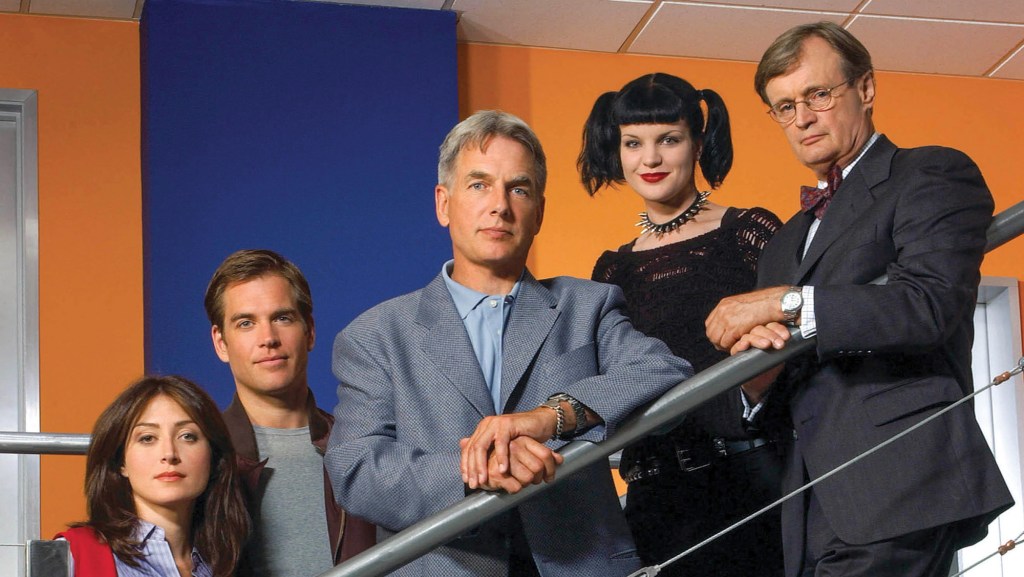
It began in spring 2003 as a backdoor pilot for CBS’ sturdy military-law procedural JAG. Co-created by JAG mastermind Donald P. Bellisario (Magnum, P.I. and Quantum Leap) and Don McGill (Numbers, CSI), NCIS follows special agents from D.C.’s Naval Criminal Investigative Service, led by Mark Harmon as Leroy Jethro Gibbs. The show’s initial core cast included Michael Weatherly (Tony DiNozzo), Sasha Alexander (Caitlin Todd), Pauley Perrette (Abby Sciuto) and David McCallum (Ducky Mallard). Twenty years later, the series continues to thrive, as it stands as CBS’ No. 1 broadcast drama for five straight seasons and has launched four spinoffs, with the first international entry, NCIS: Sydney, debuting this fall on the network.
In celebration of the series premiere that aired Sept. 23, 2003, The Hollywood Reporter sat down for an oral history with the creative forces behind the show’s impressive run. This includes Bellisario and McGill, in addition to fellow executive producers Charles Floyd Johnson and Mark Horowitz, CBS Entertainment president Amy Reisenbach and former presidents Nina Tassler and Glenn Geller, CBS Studios president David Stapf, former CBS head of casting Peter Golden, casting director Susan Bluestein and others.
Among the topics discussed include how Harmon stood out among a high-profile list of potential candidates for Gibbs, the circumstances surrounding Bellisario exiting the show, the much-discussed — and sometimes controversial — departures of its initial stars and more recent additions like Cote de Pablo (Ziva David), the politics of its viewers, why NCIS would be much different had it launched on a streamer and how it gets fans to keep coming back amid all the changes.
David McCallum and Mark Harmon on NCIS
Courtesy of CBS
“CASTING WAS VERY CHALLENGING”
Donald P. Bellisario and Don McGill created the series as a two-episode backdoor pilot to air during their show JAG. There was a lengthy list of names considered to play the show’s leader, Leroy Jethro Gibbs, before Mark Harmon landed the part.
Charles Floyd Johnson, executive producer on JAG and NCIS: Because JAG was so successful and had gone nine seasons, the network and other people were saying, “Don, you should really spin it off into something else.”
Donald P. Bellisario, JAG creator and NCIS co-creator: I took two JAG episodes and worked NCIS into that. JAG was the springboard for it.
Don McGill, JAG producer and NCIS co-creator: Don Bellisario gave me my first job on JAG. I had been working on JAG for a couple years when he said he wanted to create a show with me, which was kind of a shock and surprise, but I was super grateful for the opportunity.
Mark Horowitz, JAG director and NCIS executive producer: The show was originally pitched as Law & Order in the Navy. First, there’d be some crime, and the NCIS agents would investigate it — the cops of the Navy — and then the JAG people would come in and try the case. Don played with that idea for a little while, and then he just said, “We’re not going to do that. It’s going to be two completely separate shows.”
Johnson: When the two-parter was finished, the strength was really the first half-hour with the investigation. And Mark Harmon just made a big impression. They started testing it, and the first half-hour tested so well that [then-CBS head] Les Moonves said, “Why don’t we just make it all investigation?” So that’s how it came about.
Amy Reisenbach, CBS Entertainment president: You’ve got to give so much credit to the writers. They wrote real people.
Johnson: I know Harrison Ford was a name that everybody thought about for Gibbs because he was so perfect. But I don’t think it ever got further than, it was a name thrown out.
Peter Golden, former head of CBS casting: [On] Harrison Ford — when you sit down, and you have an initial conversation about casting, no name is off the table. Back in the early 2000s, the Harrison Fords of the world [rarely did TV]. But that didn’t mean you didn’t put them on the list.
Susan Bluestein, NCIS casting director: I don’t remember Harrison Ford. There were names like Alec Baldwin, Chris Cooper, Clive Owen, Kevin Bacon, Tom Berenger, Val Kilmer, Charlie Sheen, Aidan Quinn, Patrick Swayze. We did not make offers to those people. We just investigated.
Johnson: I remember Scott Glenn was mentioned, and he was considered very strongly.
Bluestein: Scott Glenn, yes. And Scott Glenn was also being considered for the role of Ducky. There was a lot of discussion about Scott Glenn, and ultimately Scott Glenn passed. And other people passed for Gibbs.
McGill: Andrew McCarthy at one point was in the mix for Gibbs. He and Don Bellisario met and talked over the role.
Mark Harmon and Pauley Perrette on NCIS
Courtesy of CBS
Bluestein: Casting was very challenging. I cast Mark Harmon to play John Dillinger in a movie of the week in 1991, and he was terrific. Mark had been on my NCIS list from day one. I always felt like Mark really had the gravitas for this character.
Golden: Susan said, “What about Mark Harmon?” Mark was a big deal, and everybody thought, “We’ll make an offer to Mark Harmon, and when we don’t get him, let’s go through the list of who else we could get.” Mark had a meeting with Don Bellisario, and they hit it off, and Mark agreed to do it. All of a sudden, the show took on much more importance in my mind.
Bluestein: Don wasn’t completely sure [about Mark]. He hadn’t seen a lot of Mark’s work. I felt like I could turn that around.
Bellisario: The kind of character he played in other roles made it fit for this.
Johnson: Sasha Alexander wasn’t in the two-episode pilot. It was an actress by the name of Robyn Lively [who is Blake Lively’s older half-sister]. They liked her, but they didn’t think she quite worked. And so when the series got picked up, CBS said, “We’d rather move on.” And then we went in search of a character, and Sasha came in at the last minute. I loved Robyn Lively, but those things do happen.
Glenn Geller, former CBS Entertainment president: Don Bellisario really understands the particular attributes to put on a character that make them stand out. They are kind of stock characters, but he always infuses it with some attribute that really makes them special.
Johnson: I think Jennifer Aniston was available at the time, and her name was floated.
Bluestein: I don’t remember ever offering it to Jennifer Aniston. Jennifer Aniston could very well have been a name that we discussed.
Michael Weatherly, Brian Dietzen, Pauley Perrette, Mark Harmon, Cote de Pablo, Sean Murray, Rocky Caroll and David McCallum in 2012
Amanda Edwards/WireImage
McGill: Don Bellisario said to me he wanted the show to have a lot of humor, which is where the Abby character came from. I was a huge fan of CSI, and I loved the Greg Sanders character. So I thought creating a quirky lab character, and pushing it a little bit further, would satisfy Don Bellisario’s mandate to bring humor to the show.
Golden: Personally, I loved Pauley Perrette as an actress, but I thought, “Boy, this does not feel like someone who works in a lab.”
Bluestein: I loved Michael Weatherly. But he happened to not be available because he was in Australia [playing Robert Wagner for ABC’s] The Mystery of Natalie Wood. Don was also going to Australia and had a place there, and they went out to dinner. And, of course, later on Robert Wagner would end up playing Michael Weatherly’s father in the show, which was really ironic.
Golden: Pauley Perrette, David McCallum, Michael Weatherly, they all came in and read, and when they read, it was undeniable. And I don’t want to underestimate how great Rocky Carroll (Leon Vance, who joined in season five) was.
James Whitmore Jr., director on JAG, NCIS and three spinoffs: When they cast David McCallum as Ducky, the studio said, “No way, we’re not casting this old character actor in the role.” And Don [Bellisario] said, “If you don’t, we’re not doing the show.” He was that serious about it. The studio went with it, and of course, David McCallum is gold.
Golden: I think it was because David McCallum was British. The feeling was, “Can you do that?” This was such an American show.
David Stapf, CBS Studios president: I felt like the show was probably not going to do as well globally because it was about an American unit of the military. So why would other countries embrace it? But I do think back to the universality of good versus evil, and caring about the people.
McGill: In that first year, understandably so, the CSI folks were not too happy about us bringing out a show called NCIS — a crime show with forensics. So it was decided that, at least in that first year, to differentiate, it was called Navy NCIS, which is a little bit redundant. But it assuaged the concerns of the folks at CSI.
Nina Tassler, former CBS Entertainment president: The show really was so strong out of the gate. You had incredible chemistry between the cast, and there was a tone and a sensibility to NCIS that other procedurals couldn’t quite hit.
McGill: I developed the show with Don, wrote the two-hour backdoor pilot out of JAG, and then I wrote a couple of the first episodes of the season. Without going into stuff I’d rather not talk about, Don and I had a falling out. Our relationship became strained. He saw things differently from me. Since he was the boss and a very successful producer, I thought it was best for me and the show that I leave and move on, which is what I did.
Mark Harmon and Donald Bellisario in 2004
Mathew Imaging/FilmMagic
“HE’S A VESUVIUS OF A MAN”
The series got off to a solid start but didn’t flourish in the ratings until the third season, which followed the shock of Sasha Alexander getting unexpectedly killed off at the end of season two. In the early years, the show had an arduous shooting process, with Bellisario known as a perfectionist. He exited in 2007.
Golden: We were only able to make a deal with Sasha for two seasons. She decided she wanted to move on to other things, and that left a gaping hole because she was an important part of the show.
Johnson: In year two, Sasha went to Don and said, “I love this show, but I just can’t work this hard.” We were doing long hours. I don’t think she wanted to leave the show — she just wanted a lighter workload. Bellisario was always a writer who went for the cataclysmic. He went, “Well, what if we kill her off?” Everybody goes, “What?” And he went to her and told her, “Good news — your workload is going to be lighter. But you’re going to die.” (Laughs.) It was the very last minute or two of the show — the shot through the head. That’s always been one of the more shocking things on the internet of endings that you don’t see coming.
Bellisario: I wanted to do a shocker, so that’s what I did, and people didn’t expect that at all. It came out of nowhere.
Horowitz: We’ve had a number of circumstances over the years where we’ve had to keep a secret from the audience, and that was the very first one. Only one script page of her being shot was ever printed, and they read it in person, and it was returned every time. The film was broken off from the rest of the film shot for that day. Also, we actually shot an alternate ending. Even my wife didn’t know. (Laughs.) We were watching the show, and [Caitlin] got shot, and she just jumped out of her chair.
Geller: I wasn’t surprised when the series ended up on the air, but I don’t think it was really NCIS in its first season. It took a couple of seasons to really become something.
Horowitz: At the end of their third seasons, both JAG and NCIS were sold to USA Network, where they started running them 24 hours a day. That’s when the network ratings went up, and we moved up to this No. 1 position.
Bellisario: I didn’t realize [that it was a hit] for a while, but when I did, it was a great feeling. I shouldn’t say it was surprising because it was a good show, so I knew it would do well, but I was a little bit surprised by it.
Johnson: Bellisario was very creative and wonderful, but he was a tough taskmaster. I got along with him, thank God, or I don’t think I would have lasted that long. But the reality was that if he didn’t like a script on the day that we were getting ready to start to shoot, he would just tear it apart. He would just start all over again. You’re looking at it, and you’re going, “Oh, God, the cost of this, the budget, nobody’s going to know their lines.” But that’s who he was. His feeling was, if it’s not a good script, you can’t shoot it. But ultimately, down the line, that caused problems with the cast and with Harmon.
Whitmore: Don’s a volatile character. Like a lot of creative people, he’s a Vesuvius of a man. We had done a bunch of Quantum Leaps together, and then I had done a pilot with him that had not gone well. I just said, “I don’t want to do this anymore.” So I stopped working with him. But he did JAG, which was very successful, and I did a couple of those. Then I was doing 24, and Don loved that show’s style. He wanted me to come over [to NCIS]; against my better judgment, I said, “OK, I’ll work for Don again.” I started with the eighth episode of season one. I got hooked immediately, and I kept coming back.
Johnson: Mark Harmon is a lovely man, but he has a very strong, male, no-nonsense point of view in terms of who he was. I think that’s what drew Bellisario to Harmon, and he may have seen some of his own personality in Harmon as well. Harmon had a reputation in terms of his work ethic of always being on time, always hitting his marks and always being supportive of his crew.
Horowitz: Mark Harmon is an extraordinary actor, a wonderful human being and a wonderful person to work with. He was the captain of the acting team.
Mark Harmon and Sasha Alexander on NCIS
Courtesy of CBS
Johnson: Eventually, actors felt like they would get two acts or one act, and they didn’t know what their arc was for the show. They couldn’t figure out their lines. It was a very complicated show in the beginning. And so when we got to about year four, Harmon just felt like it was too hard. He never said to anybody, “Get rid of Don.” He just said, “This is too hard to work this way.” Eventually, the network went to Bellisario and said, “Maybe you should work from a distance from it and not be quite as involved in terms of the way you work.” And so Bellisario, by the fifth year, was gone.
Bellisario: It was just time for me to move on and do something else. I had done enough on the show, so I stepped away. It was my decision.
Johnson: I was in the middle a lot. I was able to walk the line, and work with Harmon and work with Don. It was not easy, but I was able to do that. I sometimes felt, when the train went off the track, I was the person who had the responsibility of getting it back on and keeping everybody together. But I have great respect for Don. Without him, there would be no NCIS. The two strongest people who got that show up and running in terms of keeping it what it was, would be Bellisario and Harmon.
Whitmore: Mark Harmon is just a solid pro, committed to the work. He is completely creative, never stops working, never stops supporting the other actors, demands everybody showing up there ready to go, just like he is. He doesn’t mess around.
McGill: I just know what I was reading in the trades. (Laughs.) I know that Mark was not happy, and that he and Don, their relationship became strained. I don’t know much that went on behind the scenes because I wasn’t there. It’s just one of those things that happens, the classic Hollywood creative differences.
Bluestein: I always had a special fondness for Don because he was very, very good to me. I was always very grateful to Don.
Horowitz: He was definitely the leader — the creator of the show — and I think there was always a question mark in people’s minds: How would it proceed?
Johnson: That was hard for all of us to believe because he had always been so intricately involved in every show, and he established so much of the pattern of the characters. I became the showrunner for a while with Shane Brennan, but I wasn’t a writer per se. Eventually, we brought in a couple of writers to run the show from the creative standpoint. But I was very lucky. I had been there for so long and had great relationships with everybody, so I was able to stay on and be a useful producer for them. Obviously, it worked because I’m still there. (Laughs.)
Mark Harmon, Cote de Pablo and Michael Weatherly on NCIS
Sonja Flemming/CBS
“WHEN COTE LEFT, LITERALLY THERE WAS A RIPPLE IN THE UNIVERSE”
After Sasha Alexander’s departure, Cote de Pablo joined the series in the season three premiere as Ziva David. Her exit in season 11 presaged a number of high-profile goodbyes, including those of Michael Weatherly, Pauley Perrette and Mark Harmon.
Golden: Susan delivered Cote de Pablo, who was just a home run. I remember she walked in the room, and we all were like, “Oh, my God, who is this woman?” Which doesn’t happen now that much at network tests.
Bluestein: I had loved Cote for a long time from a series called The Jury. She was just so unique, and then she read with Michael, and the chemistry was instantaneous.
Golden: I’m not sure Don Bellisario was 100 percent on board [with Cote] right away. Not that he didn’t love her, but I think he had another choice that he felt was righter for the role. But everybody was so enthusiastic about Cote that he came around.
Geller: The first time I met Don, we had lunch in 2006, and he actually talked about the character of Ziva the entire time and why she was going to be so popular.
Horowitz: In the beginning, she wasn’t necessarily as popular as she was when she left. I just remember thinking, “Huh.” It took time for the audience to be involved in the relationship between she and Tony and really appreciate her kickass status.
Johnson: With Cote, I think she had gotten to a place where she wanted to move on. She did eight years on the show, and I had a conversation with her about a year or two before she left, and she said to me, “I don’t know if I want to do this forever, and at some point, I think I might leave.” And I said, “Oh, Cote, please, come on. It’s such a successful show. What are you going to do? You should ride this horse all the way to the gate.” And she said, “No, I don’t think so.” So I didn’t believe it.
Tassler: When Cote left, literally there was a ripple in the universe. But again, the show found its way forward.
Johnson: Emily Wickersham (Eleanor Bishop) came in, and hers wasn’t an easy transition from Cote de Pablo because Cote was such a strong character. Audiences liked [Cote], but eventually Emily won out. But I remember it was a little bumpy with her, where you’d get mail, and people would go, “She’s no Cote de Pablo.” Well, we wrote her very differently for that reason.
Jennifer Esposito (Alex Quinn), Emily Wickersham and Mark Harmon on NCIS
Michael Yarish/CBS
Golden: I was really thrilled that Maria Bello (Jack Sloane) went in for a while. Maria was somebody who we were always trying to get to do something. We needed that female lead because Cote was leaving, and it just worked out.
Geller: When Michael Weatherly left, my entire goal was to get him to stay on CBS, and I did. I was thrilled because I knew America loved DiNozzo, and I wanted him to be a part of Bull. When a series loses a major character like that, there’s always a hole. But the writers always managed to really find a way to not plug the hole, but to massage the characters and the relationships so that you were being introduced to new ones, and you still got to love the ones that are there.
Horowitz: When Michael Weatherly left, I thought, “We’re done. How could we go on?” And yet Wilmer Valderrama (Nick Torres) comes in and creates his own persona, and he’s got his own thing.
Johnson: In Pauley Perrette’s case, there was an incident with the show with a dog. The dog was Harmon’s, and apparently the dog bit someone. Pauley was a huge, huge SPCA [Society for the Prevention of Cruelty to Animals] animal person. And then the dog kept coming with Harmon, and she felt it wasn’t safe for the show. By the end of that year, she just felt like it wasn’t working for her anymore, and it was time to move on.
Whitmore: Diona Reasonover (Kasie Hines) is wonderful and brilliant, and the work is great. But you walk onto that set sometimes, and you miss Pauley.
Geller: Pauley Perrette made Abby one of the most beloved characters on television in the 21st century.
Johnson: There’s a joke sometimes where people would say, “You never know who’s going to survive on NCIS.” Because Lauren Holly (Jenny Shepard) was there, and she went that way, and a couple of others. And some fans complained that it was always women who went faster than the guys. But it did keep audiences’ attention. Lauren Holly had signed on, and she didn’t expect to stay there forever, but I don’t think she expected that she was going to leave that way.
Horowitz: Gibbs lost the love of his life — she was killed, and he’s never found anybody he ever loved again. Throughout the course of the series, we would introduce potential female suitors, and those were always met with disdain [from fans]. (Laughs.) That happened consistently. None of them were good enough for him, and we always thought that was very funny.
Johnson: There was a character that Muse Watson played where he was an old NCIS investigator who would come and go. He loved the show, and he’d come in two or three times a season, and he ended up getting killed. I know he was very unhappy. (Laughs.)
Horowitz: In the last scenes of an episode, if people were moved emotionally in some way, that’s the feeling they’d be left with. Sometimes that involved getting rid of somebody that you really liked. Gibbs’ best friend, Mike Franks (Watson) — terrific actor. He did a bunch of shows with us. Well, yeah, he didn’t live real long.
Johnson: We thought [Harmon leaving] was the death knell. Coming in at 6:30 a.m., five days a week, and being the major character that was the linchpin — that’s pretty tough, and he did it for 18 seasons. He had just gotten to the place where he was getting close to turning 70, and he wanted to spend time with [wife] Pam [Dawber] and his kids. So he was leading up to it. It started probably [with him dropping hints] around the 15th or 16th season. But he was so loyal to that crew and so supportive of the show. He was very proud of it, and he stayed on longer than he even intended.
Whitmore: When Harmon was talking about leaving, and there was this chance that he might not come back, I said, “How are they going to replace this dude?” And they brought in the one guy that could do it, which was Gary Cole (Alden Parker).
Johnson: In the end, we hit gold with Gary Cole. There were a lot of names bandied about. When everybody finally decided we’d make an offer to Gary Cole, we didn’t pitch it to him as, “He was going to become the new Gibbs.” We pitched it to him that he was going to come in and wasn’t sure he was going to stay with the team, so that he didn’t have to feel like he was stepping into the shoes of someone who had been there for 18 seasons.
Horowitz: When Gibbs was in charge, he was the leader, and everybody was pretty much under him. When the Gary Cole character came in, it loosened up a little bit and allowed McGee (Sean Murray) to become a senior agent, and they have a little bit more authority. So it gave room for other possibilities.
Johnson: David McCallum doesn’t do that much in the series anymore. David [just turned 90], and he lives in New York. He may come back and do four or five episodes. It’s much too hard on him now, and I think he’s ready to retire. But he was amazing from the day he came on.
Horowitz: Gary [Glasberg, the executive producer who died in 2016,] was just an extraordinary talent — really talented writer and just a wonderful, wonderful human being. I look at him every day, and I think about him every day. He was such a great leader of this show and sorely, sorely missed.
Gary Cole, Sean Murray, Wilmer Valderrama and Katrina Law (Jessica Knight) on NCIS
Courtesy of CBS
“I SOMETIMES FONDLY REFER TO NCIS AS CHOCOLATE CAKE”
With NCIS renewed for a 21st season and CBS set to air its fourth spinoff and first international one, NCIS: Sydney, the franchise keeps going strong.
Horowitz: You could absolutely say that the show is popular amongst people who perhaps are politically conservative or live in more rural areas. But at the same time, we’ll go on a college campus, and everybody there watches the show, even in Southern California. Obviously, I think it’s more popular in the central states than on the coasts.
Johnson: During the Trump years, we just decided most of the time to stay away from the whole political thing, and we didn’t talk much about the president. We would talk about Secretary of Defense, Secretary of the Navy, that kind of thing. We veered away from that as much as we could.
Horowitz: We did an episode where Gibbs went to speak with Michelle Obama, and we shot it in the White House with her about a real-life program that helped military families to find doctors and housing. It was a very positive thing, and it really came out great, and she was fantastic. Some people really reacted very positively to the show, and then other people did not like seeing Michelle Obama on the show. (Laughs.) So we didn’t really dive into politics that much.
Diana Valentine, director on NCIS and two spinoffs:NCIS didn’t start getting these numbers and becoming the big hit until season four or five, and a lot of times 1695393735, studios and networks don’t let a show find its audience before it gets pulled — even more so with streamers. A streaming show would never go 21 years like this show has.
Reisenbach: [On whether starting on broadcast helped its legacy:] A hundred percent yes, in my opinion. It does touch so many viewers coast to coast and worldwide, and that really is because of the platform that it got on CBS, as well as how well it did when it went into syndication around the world. But it all started on linear, and that does have a lot to do with its longevity and success.
Tassler:NCIS was perhaps one of the cornerstones in helping shape the trajectory of the network. Even during its success, it never rested on its laurels.
Horowitz: I sometimes fondly refer to NCIS as chocolate cake. Everybody knows what chocolate cake tastes like, but you still want the chocolate cake.
Bellisario: It’s not so much about the stories. It’s about the characters and their relationship with each other, and that connects with viewers.
McGill: I don’t think it’s necessarily the kind of show that was out to get awards. It was really a show that was out to get eyeballs, and so I’m not surprised that it wasn’t ever really in Emmy consideration.
Johnson: I have been threatening to leave the show for a couple of years myself. A lot of people, including me, got force majeure’d this year, so my contract is ended. Everybody’s concerned about budgets and all this crazy stuff, so I may be just one of the casualties since I’ve been threatening to leave. So I’m just waiting to see. Once they do finally decide to find a solution [to the strikes], I think the landscape is going to change a lot.
Stapf: Speaking as the studio, I think it can go forever.
Reisenbach: Speaking as the network, I concur. I mean, it’s the No. 1 show.
Tassler: When I was at the network, we always used to say, “I’d much rather take ratings over reviews.” I’d much rather have a really devoted fan base, and that’s what that show has.
Johnson: We have not been told by the network, “Wrap it up at the end of the 21st year.” So I think it’s open-ended. We are proceeding as if we’re going to continue.
A version of this story first appeared in the Sept. 20 issue of The Hollywood Reporter magazine. Click here to subscribe.
The Wheel of Time has always been a favorite, and season two has been an improvement, but this episode knocked it out of the park.
The Wheel of Time Season 2 Episode 6 proved to be a tense, jam-packed episode with incredible performances, plot development, and new information.
We can confidently say that Eyes Without Pity is the best episode of the entire series.
At the beginning of the Wheel of Time Season 2, we often complained about the lack of coherency in the storyline and the overall feeling of an incomplete plot.
With this being the third to last episode of the season, we had hoped things would start to pick up, and they certainly did!
So many things happened over the course of this hour-plus episode, but they all made for a brilliant story (albeit a sad one, but more on that toward the end).
We often praise Kate Fleetwood’s portrayal of Liandrin Sedai, and her brief appearances during this hour were wonderful, but all performance credit for this episode goes to Madeleine Madden as Egwene Al’Vere.
Egwene got collared by a Sul’dam at the end of The Wheel of Time Season 2 Episode 5, and this segment showcased her being slowly broken by her Sul’dam as a Damane.
Egwene slowly deteriorated in the cell, and Madden’s performance often made us feel the pain with her. Her screams felt so painful and so real.
Madden managed to portray her disorientedness extremely well, all while still showing Egwene’s strength of will. Her performance (alongside the makeup and hairstyling) really stood out throughout the episode.
She spent the entire episode in her cell, slowly being broken down by the woman in charge of her. Her only ray of hope was a woman in a cell next to her she could hear mumbling and a tree outside.
The woman in the cell next to her was a surprise reveal, as it’s a character we haven’t seen since The Wheel of Time Season 1 Episode 6: Maigan, a member of the Blue Ajah.
A blue Ajah’s capture was hinted at by Ryma Sedai (played wonderfully by Nyokabi Gethaiga), the Aes Sedai that saved Nynaeve and Elayne.
Maigan appeared briefly in the first season as a sitter of the Blue Ajah and tried to convince Moiraine to settle in the tower on The Wheel of Time Season 1.
Seeing her in a cell, broken next to Egwene was a fantastic twist. It’s not someone we would question the whereabouts of, but it’s someone we’ve met on the show before that we recognize.
Sadly, Egwene eventually breaks and performs her first task as a Damane, but Maigan reveals that she lasted longer than herself.
Don’t cry. You lasted longer than I did child, and I was a sitter of the Blue Ajah.
Maigan
Another devastating blow at the end of the episode involved the Aes Sedai helping Nynaeve and Elayne, Ryma.
The three women tried to figure out how to get a collar off of a Damane and determined that it was impossible, but Nynaeve accidentally summoned too much power, alerting the Seanchan to their location.
In a valiant effort, Ryma sacrificed herself for the novices, giving her ring to Nynaeve, and taking a few of the Seanchan women down with her. Sadly, she wanted to die but ended up getting collared and became a Damane (and her warder was killed, which prompted a brief, but powerful mourning scene).
Other than Madden’s performance, Gethaiga managed to steal all of the scenes she was in, and we hope we get to see more of her in the final two episodes to come!
We also finally got an update on Mat and Min’s adventures together, and Min got another visit from Ishamael.
This time, he gave her one final task: to make sure Mat and Rand leave Cairhein together.
Luckily, Min finally did the right thing, but at what cost? Did we just lose the great on-screen pairing of Mat and Min?
Min told Mat the truth, that she saw Mat kill Rand with the knife, which led Mat to figure out that she’d been working against him the entire time. She advised him not to head to Falme with Rand, and he listened.
Even though the two men reunited, Mat ended up not traveling with Rand to Falme, choosing to stay in Cairhein. Hopefully, that means that we’ll see more of Mat and Min together (even with the betrayal).
We don’t even ship them, we just enjoyed their friendship along with Kae Alexander’s (Min) and Donal Finn’s (Mat) chemistry.
We also got an update on Loial and Ingtar’s lives as slaves of the Seanchan (called Da’covale), specifically of Lady Suroth.
Their update revealed that Loial has the ability to Treesing, which stimulated the growth of a tree. We hoped to receive more from the two, but just seeing Loial made us hopeful that everyone would reunite soon.
Moiraine also made strides in her own mental health, but everything got stunted at the end when Alanna forced Lan to tell her the truth about finding the Dragon Reborn.
This caused The Amyrlin Seat Siuan Sance (Sophie Okonedo) to pay Moiraine a visit at her sister’s place, along with 14 Aes Sedai (Liandrin included).
However, the episode cuts off before we know if her visit is related to the Dragon Reborn, or about Moiraine being stilled. Only time will tell!
We also need to know why Lan, Alanna, and her warders stopped Rand from leaving Cairhein. There’s so much to speculate about!
Sadly, we can’t give it a perfect 5 stars because we didn’t get any updates on Perrin and Aviendha.
We want to know what happens with them! With over an hour in the episode, they could have easily fit in one scene where they have a short conversation, maybe even tying it into Rand. But it didn’t happen.
Aviendha was a force to be reckoned with when we got introduced to her, so not including her and Perrin seems like an odd choice.
We also only got small updates on Liandrin, and only in the form of Lanfear killing her son. We still don’t know Liandrin’s endgame or how the death of her only child will affect her.
So when we receive the inevitable cliffhanger at the end of this season (there’s just too much to wrap up), at least we know there will be more to come!
So Fanatics, what did you think of this week’s episode?
With only two episodes left of the season, we wonder how this season is going to end. What are your predictions? Please, limit the book spoilers for our readers who are not up to date on the books!
Let us know your thoughts in the comments below!
The Wheel of Time airs on Fridays on Prime Video.
Michael Stack is a staff writer for TV Fanatic. Follow him on Twitter.
André Bishop will step down as producing artistic director of Lincoln CenterTheater next year, after working at the non-profit theater company for 33 years.
Bishop will depart at the end of the theater’s 2024-2025 season and the board of Lincoln Center Theater will launch a search for his successor “in due course.” The move from Bishop, who has held the position of producing artistic director at the Lincoln Center theater since July 2013, after serving as artistic director since January 1992, marks the latest shake-up in Broadway’s nonprofit realm, which consists of four theater companies.
On Wednesday, Second Stage founder Carole Rothman announced she would leave the company after 45 years. Longtime Roundabout Theatre Company CEO and Artistic Director Todd Haimes passed away in April, and Manhattan Theatre Club Executive Producer Barry Grove announced his departure in January after 48 years with the organization.
Chris Jennings, who had previously been the executive director of the Shakespeare Theatre Company in Washington, D.C, succeeded Grove. Director Scott Ellis has stepped in as interim artistic director at Roundabout.
Bishop said he is leaving the position to allow the next generation of leadership to step in.
“My years at Lincoln Center Theater have been happy ones, and I will miss working with all my friends and colleagues. But the time has come, as it inevitably does, for the next generation to step in and step up. I look forward to that,” Bishop said. “LCT has always been a welcoming home for artists, and I know that tradition will continue. I thank the Board for their continued support, and I look forward to collaborating on a seamless transition.”
This season, Lincoln Center Theater is producing the New York premiere of The Gardens of Anuncia by Michael John LaChiusa, as well as a new translation of Anton Chekhov’s Uncle Vanya by Heidi Schreck. Over the next two seasons, Lincoln Center Theater plans to produce a new play by J.T. Rogers, directed by Bartlett Sher, a new play by Ayad Akhtar and a world premiere musical.
During his tenure, Bishop has won 15 Tony Awards for Lincoln Center Theater productions, with notable productions including The Coast of Utopia, The Invention of Love and Arcadia by Tom Stoppard, Oslo and Blood and Gifts by J. T. Rogers, Disgraced by Akhtar, The Light in the Piazza by Craig Lucas and Adam Guettel, War Horse and Pipeline by Dominique Morisseau and Parade by Alfred Uhry and Jason Robert Brown.
Lincoln Center Theater is also well-known for its revivals, which have included Rodgers & Hammerstein’s The King and I, South Pacific and Carousel, Lerner & Loewe’s Camelot and My Fair Lady, August Wilson’s Joe Turner’s Come and Gone and many more under Bishop’s tenure.
Bishop also led the creation of the Off-Broadway Clarie Tow Theater, which opened in 2012 as the home for the LCT3 program, which has a mission of producing new work by the next generation of artists. Those artists have included Ayad Akhtar, Jackie Sibblies Drury, Branden Jacobs-Jenkins, Young Jean Lee, Martyna Majok, Dave Malloy, Antoinette Chinonye Nwandu and more.
“André has accomplished so much and touched so many. His leadership and artistic vision can be credited for Lincoln Center Theater’s longstanding success and impact, and our high stature among the preeminent not-for-profit performing arts organizations in America,” said Kewsong Lee, chairman of the board of directors of Lincoln Center Theater. “On behalf of the Board, I express our deepest gratitude for his devotion, insight, and care in guiding the institution. As Lincoln Center Theater prepares to celebrate its 40th anniversary, we look forward to continuing in the tradition André helped establish and welcome new leadership to guide the next era of achievement and growth.”
Democrat Bob Menendez allegedly accepted cash in exchange for his influence, including by providing sensitive government information to aid Egypt
Sen. Bob Menendez (D-N.J.) has been indicted alongside his wife Nadine Menendez for accepting hundreds of thousands of dollars in bribes in exchange for the senator’s influence.
The pair are accused of having “engaged in a corrupt relationship with three New Jersey associates and businessmen.” The men, who are co-defendants in the case, are identified as Wael Hana, Jose Uribe, and Fred Daibes. The counts against the senator include conspiracy to commit bribery, conspiracy to commit honest services fraud, and conspiracy to commit extortion.
Prosecutors in the Southern District of New York allege that Menendez and his wife “agreed to and did accept hundreds of thousands of dollars of bribes in exchange for using Menendez’s power and influence as a Senator to seek to protect and enrich Hana, Uribe, and Daibes and to benefit the Arab Republic of Egypt.” The senator is accused of having “provided sensitive U.S. Government information and [taking] other steps that secretly aided the Government of Egypt.”
Sen. Menendez is also alleged to have wielded his influence to interfere in a criminal case against Uribe and his associates, and of attempting to to recommend the appointment of a U.S. Attorney for the District of New Jersey who could be influenced into helping him disrupt a criminal case against Daibes.
A search by federal agents of the Menendez’s home and safe deposit box found “Over $480,000 in cash—much of it stuffed into envelopes and hidden in clothing, closets, and a safe—was discovered in the home, along with over $70,000 in Nadine Menendez’s safe deposit box.” The additionally found luxury vehicles and expensive furniture paid for by Hana, Uribe, and Daibes, as well as “over one hundred thousand dollars’ worth of gold bars in the home.”
Trending
New York prosecutors are expected to give a press conference Friday further detailing the charges.
This is a breaking news story and will be updated with additional details.
They’re both available for purchase at Amazon and Best Buy with prices starting at $399 for the entry-level Series 9 model.
Ahead, you’ll find the tech company’s newest Apple Watch models.
Apple Watch Series 9 (41mm) with GPS
The Apple Watch Series 9 (GPS only) — which starts at $399 — has a few upgrades and features that are not available from last year’s Series 8 model, namely a new “double tap” gesture for additional smartwatch controls. The new model also has a faster S9 processor (compared to the S8 chip), on-device Siri voice assistant, precision “Find My” device, a brighter display and more.
The Series 9 comes in a 45mm model, starting at $429. The models also come in Midnight, silver, pink and Product (Red) aluminum case varieties.
In addition, the Apple Watch Series 9 comes with cellular connectivity, if you don’t want to tether the smartwatch to an iPhone. It has the same features as the GPS only model, but can work independently without an Apple smartphone. It starts at $499 and comes in 41mm and 45mm options. The smartwatch is available in Midnight, silver, pink and Product (Red) aluminum cases too.
For the outdoorsy types, the Apple Watch Ultra 2 — which is made with a titanium case — is the tech company’s rugged model. It’s made for serious athletes and adventurers with a long battery life of up to 36 hours and tough durability for outdoor activity tracking, like deep sea diving, trail running, mountain climbing and more.
For 2023, the Apple Watch Ultra 2 has a brighter display, a fast processor and more on-board storage than last year’s model, while it comes with the new “double tap” gesture for easier and handy controls. It starts at $799.
The father who lived in Poland‘s incest house of horrors where the remains of three babies were found in the basement has also been accused of cruelty to his St Bernard dog.
An animal charity which is now looking after the elderly dog called Bethowen believe he was deliberately starved and spent his entire life chained up.
The underweight dog was hardly able to walk when he was recovered last Friday after police raided the home of Piotr Gierasik, 54, in the village of Czerniki, northern Poland.
He is now recovering, along with two cats from the property, at the ‘Animalsi’ Foundation Animal Shelter in the nearby town Kocierzyna.
Police found the remains of three babies in the basement of the cottage where widowed Piotr lived with his daughter Paulina, 20, and her 24-year-old mentally disabled brother.
One baby is said to have been born from Piotr’s rape of an older daughter while the last two came from an alleged consensual relationship with cake shop worker Paulina.
He has now been charged with three counts of murder, one count of incest with Paulina, and the rape of his older daughter.
An animal charity which is now looking after the elderly dog called Bethowen believe he was deliberately starved and spent his entire life chained up
The underweight dog was hardly able to walk when he was recovered last Friday after police raided the home of Piotr Gierasik, 54, in the village of Czerniki, northern Poland
The spot where Bethowen, the St Bernard dog, was chained next to a hole in a barn wall acting as a makeshift kennel at the home of Piotr Gierasik
The spot where Bethowen, the St Bernard dog, was chained next to a hole in a barn wall
Depraved Piotr Gierasik, 54, is pictured after he was charged with incest and murder
Paulina who had tried to conceal her latest pregnancy from work colleagues is also charged with incest and two counts of murder of her infants.
Staff at the Animalsi shelter which looks after 230 dogs and more than 50 homeless cats posted pictures of Bethowen showing his shocking condition on their Facebook page.
The post said: ‘The whole of Poland is reeling from the drama that took place in one of the towns in the Stara Kiszewa commune.
‘We are receiving more and more blood-curdling information from everywhere.
‘We were there to secure the animals staying there – Bethowen, a nice senior citizen Róa, and two cats are already here in the shelter.
‘But we are shocked that the big St Bernard weighs only 28kg and has spent his entire life on a chain.
‘The dog needs more thorough examination and certainly treatment (you can immediately see his sick eyes).
‘Currently he can barely stand, so we will provide him with good quality meals several times a day. Thankfully he does have a good appetite.’
The post said that Bethowen who is believed to be around ten-years-old had been due to visit a vet this week.
It added: ‘We are convinced that in a few months Bethowen will be a beautiful and strong dog. Pets will no longer return to their previous owners.’
The post concluded with a plea for donations to help the running of the shelter, saying: ‘If you want to help Bethowen, we will be grateful for even the smallest donation.’
Staff at the shelter have since insisted that they had no knowledge of the condition the dog was kept in before they were alerted by police.
The underweight dog was hardly able to walk when he was recovered last Friday after police raided the home of Piotr Gierasik, 54, in the village of Czerniki, northern Poland
The chain used to secure Bethowen, the St Bernard dog, outside
The chain used to secure Bethowen, the St Bernard dog, outside
The Animalsi dog shelter in Poland where Bethowen, the St Bernard dog, is recovering after being neglected by Piotr Gierasik
Paulina (right in handcuffs) who had tried to conceal her latest pregnancy from work colleagues is also charged with incest and two counts of murder of her infants
Polish animal lovers have flooded Animalsi’s Facebook page with messages sending warm wishes to Bethowen and praying for his recovery.
Hanka Bromirska wrote: ‘Good luck dog. You deserve love and a warm home.’
Karolina Stawiarska-Kocent added: ‘Further proof some people don’t deserve to own animals. They treat them like slaves rather than family members. Disgusting!’
The authorities in Poland revealed this week that Piotr had faced five previous investigations into alleged incest and family abuse before the bodies of the babies were found.
Grayna Wawryniuk, a spokeswoman for the District Prosecutor’s Office in Gdansk told MailOnline that Piotr first faced an allegation of incest 12-years-ago, and then another about ‘two or three years later’.
The other three investigations centred on alleged abuse of members of his family in more recent years.
Ms Wawryniuk said all the investigations were ‘discontinued’ with no charges bought due to a lack of evidence.
Jobless Piotr had 12 children with his late wife Hanna who died aged just 38 in 2008, leading villagers to openly voice their suspicions that Piotr had abused her.
The poverty-stricken family first came to the attention of social services many years ago and first put under supervision by a judge in Gdansk to December, 1997.
The family later moved to the Czerniki area, and the supervision order was transferred with them.
Views of basement at the home of Paulina Gierasik and her father Piotr in Czerniki, Poland, where three dead babies were found
The pair are being held in custody while prosecutors probe their relationship and the discovery of the remains of three babies in the basement of their isolated home
Babies were found buried in shallow graves in the basement
Piotr Gierasik, 54, would allegedly force his 24-year-old son to leave the house (pictured) in the village of Czerniki, northern Poland, whenever he and his daughter Paulina Gierasik, 20, wanted to sleep together during their four-year relationship
Local media reported today that the District Court in Kocierzyna limited Piotr’s parental authority over his remaining children in March, 2015. He was also ordered to complete parenting lessons.
The probation officer’s supervision gradually ended when his children became adults, and was finally completed in May last year due to the youngest child coming of age, it was reported.
Villagers have claimed that they alerted authorities over the years after hearing the sounds of ‘moaning and screaming’ from Piotr’s detached home on the outskirts of Czerniki.
Others became suspicious after seeing shaven-headed Piotr walking hand in hand with Paulina, and appearing to treat her more as wife than a daughter.
The father and daughter are also said to have been seen choosing perfumes together on rare outings to a local shop and calling each other, ‘Darling’.
Piotr’s alleged reign of terror was only finally exposed last week after staff at the Cukiernia cake shop in Stara Kiszewa where Paulina worked suspected that she was wearing baggy clothes to conceal her latest pregnancy.
One colleague told social services that Paulina may have secretly given birth after she seemed to have lost weight when she returned from ‘holiday’.
The tip off led to a social worker visiting Paulina and coaxing her into confessing what had happened after persuading her domineering father to leave the room.
In the latest episode of her Coffee Convos podcast with Kailyn Lowry, Lindsie called Viall’s commentary on the tense relationship between the siblings “very judgmental and crass.” She added that the situation is “really not anybody’s business.”
As for the assumption that Savannah is more impacted by their father Todd Chrisley’s recent incarceration, Lindsie said, “While I was not a part of my parents’ life in the same capacity, there’s still a loss. You can’t say, ‘Oh well, my loss is greater than your loss or your loss is greater than my loss.’ That doesn’t really apply here.”
Lindsie, 33, is the daughter of Todd and his ex, Teresa Terry, as is her brother, Kyle Chrisley. Todd is currently serving a prison sentence in Pensacola, Florida, while his wife (and Savannah’s mother), Julie Chrisley, is serving her sentence in Lexington, Kentucky, after being convicted on charges of fraud. They are both appealing the conviction and have spoken out about how they are optimistic their convictions will get overturned.
Jason Kempin/Getty Images
Lindsie said that Savannah couldn’t understand her relationship with Julie due to the fact that she never came from a broken home.
“It shows just a complete lack of empathy, but also just a lack of awareness. You didn’t have parents that were divorced or went through toxic co-parenting and hate each other,” she explained. “It doesn’t mean that I didn’t love [Julie]. And I said on a previous episode, she could have hung the moon, but she still wasn’t my mother.”
Lindsie also referenced her podcast crossover with Savannah, Todd and Julie last fall, saying, “I don’t understand how you feel these things now, but you didn’t feel them last October when it came to business. That to me is just a little confusing.”
As for her relationship with Savannah today, Lindsie said, “She also knows how to get ahold of me if she wants to work this out privately, which it seems she does not.”
The single mom pointed out that Todd and Julie’s legal situation is not the first she has experienced with a parent.
“My mom and my stepdad also had dealings with the federal government many years ago,” she shared. “So I do know what it feels like, long before you knew what it felt like.”
Rick Diamond/Getty Images for Concert For Love And Acceptance
She also explained the incident that led her to block her siblings on social media. She said it all stemmed from posting a Chrisley family bingo card meme circulating on the Internet to her own Instagram Story.
She said after tagging her siblings in it, she received a group text asking her to remove it and saying the post wasn’t funny.
“I understand emotions are high and everybody doesn’t deal with things the same way,” Lindsie acknowledged. “It wasn’t meant to be rude. It wasn’t meant to be mean. It was, I’m going to address this because it’s all over the Internet. I’m going to remove it, but also remove yourself.”
She said she blocked her siblings to keep them from seeing anything else that would upset them.
“Savannah is in a tough spot. Everything’s changed, right? She’s got Chloe [and Grayson],” her attorney told People in a statement, referencing Savannah’s responsibilities as the primary guardian of her brother, 17-year-old Grayson, and 10-year-old Chloe, who is the biological daughter of Savannah’s half-brother, Kyle Chrisley, and who Todd and Julie adopted.
“She’s dealing with a lot and it doesn’t surprise me that she’s lashing out at Lindsie,” Ghanayem continued. “I mean, some of the stuff that she’s saying with regard to her parents, that’s got to be out of anger because it’s not in fact.”
‘The Viall Files’
Ghanayem added, “Lindsie was the only sibling to testify in the defense of her parents. And, you know, all of the other information that has been brought out, kind of goes to show that she really had nothing to do with the investigation.”
Back in 2021, Todd and Julie spoke with ET about their estranged relationship with Lindsie, who left the family’s reality show, Chrisley Knows Best, in 2017.
“I received a text message from Lindsie about two weeks ago,” Todd said following the news of Lindsie’s divorce from now-ex Will Campbell. “I turned that over to our attorneys because we don’t feel that it’s safe to communicate. Every time that I’ve done that it’s been twisted and turned, and in the position we’re in, we can’t run that risk.”
In 2019, Lindsie appeared on Dr. Phil, claiming that Todd grilled her about her alleged relationship with the director of the Georgia Department of Revenue’s Office of Special Investigations Joshua Waites, and ultimately threatened her with “incriminating evidence” which she says included nude photos and a sex tape.
Entertainment Tonight
A rep for Todd and Julie told ET at the time, “Lindsie Chrisley made false statements with regards to not only her involvement with Todd and Julie Chrisley’s tax situation but also with Joshua Waites from the Georgia Department of Revenue and also that she was threatened and coerced to make them. In June of 2019, Lindsie Chrisley gave a deposition to Todd Chrisley’s lawyers on her own volition.”
Earlier this month, it was revealed that Todd and Julie will be released from prison earlier than originally expected. According to prison records, Todd is now scheduled to be released from Federal Correctional Institution (FCI) Pensacola in Florida on Jan. 22, 2033. The new release date has him leaving prison two years earlier than expected.
As for Julie, who was initially sentenced to seven years in prison, she’s now scheduled to be released from Federal Medical Center, Lexington in Kentucky on Oct. 19, 2028, according to prison records. Her initial seven-year prison sentence was reduced by one year and seven months.
Microsoft has lifted the wraps off the Surface Hub 3, its latest all-in-one meeting display designed to handle real-time collaboration and video conferencing.
Headlining the announcement is the ability for the 50-inch model to physically rotate and for the screen to automatically adapt, making the experience much more akin to traditional flipchart collaboration.
A larger, landscape-only 85-inch model will also be available, geared more toward larger conference room meetings while still boasting the same collaborative functionalities.
Microsoft Surface Hub 3
Microsoft says that the ability for the smaller model to rotate to both portrait and landscape modes allows for “natural Whiteboarding session[s]” and “more personable one-on-one call[s].”
The 50-inch model is also compatible with both wall mounts and a set of wheels. Pair the latter with the APC Charge Mobile Battery for around two hours of on-the-go access in any corner of the office.
The 4K screen supports 20-point multitouch and can work simultaneously with two Surface Hub Pens or Surface Slim pens, however most notable is the fact that it works with other Microsoft Teams Rooms certified peripherals including external microphones, speakers, cameras, so it can really be suited to the right setup.
Microsoft has been quiet on the component part, but it does promise a 60% CPU performance increase and a 160% GPU graphics performance increase.
These improvements will be most noticeable by those looking to take full advantage of the AI features across Teams, including the way the app handles videos to pick out individual speakers. Eligible users will also be able to use Copilot in Whiteboard on the new Surface Hub 3.
Pricing has not yet been confirmed, but with outgoing versions costing around $9,000 / £9,000 / AU$14,000 for the 50-inch display and $22,000 / £21,500 / AU$33,000 for the 85-inch display, it certainly won’t be a cheap impulse buy for many companies.
As Rudy Giuliani’s financial and legal woes continue to pile up, the hosts of “Morning Joe” have no sympathy for the man once dubbed (by himself, originally) “America’s mayor.” On Friday morning, the MSNBC crew joked that he’s turned into “America’s deadbeat,” and that he brought it all on himself.
“Every day, really. Every day, it gets worse for the guy who once called himself America’s mayor,” Joe Scarborough mocked on Friday. “You know, I don’t know if he faces prison, if he faces bankruptcy, if he faces additional charges, it’s, again, it’s just from from all directions.”
Host Willie Geist agreed, dubbing Giuliani “America’s deadbeat” these days.
“It was all fun and games until the indictments started coming down,” Geist said. “When he was playing along with Donald Trump, doing whatever he said around the 2020 election, around January 6, he had prominence. He had relevance. He was on TV all the time. And now, like for so many of the people around Donald Trump, the bill is coming due.”
At that, host Mika Brzezinski joked that he doesn’t have the money for that bill, and Scarborough pointed out that that seems to be a trend for Trump allies.
“From America’s mayor to America’s deadbeat; following Donald Trump can get you thrown in jail or ruin you financially,” he added.
Echoing the hosts sentiments, panelist and MSNBC contributor Mike Barnicle really had no sympathy to offer Giuliani.
“You know, it used to be a sad story,” Barnicle said. “You’d think of Rudy Giuliani and you say ‘What has happened to this guy, he used to be America’s mayor.’ But it’s no longer a sad story, because he has talked himself into every legal difficulty that’s hanging over his head today. He’s done it to himself.”
You can watch the full discussion from “Morning Joe” in the video above.
DECO Entertainment, founded by Lascelles Stephens and Deborah Cox, will join the co-producing team of the all-new revival of “The Wiz.” The production will launch a national tour on Sept. 23, 2023 in Baltimore before returning to Broadway for a limited engagement in the 2023 t0 2024 season.
“We’re thrilled to lend support to a show that celebrates Black excellence which means everything to our culture,” said Stephens and Cox. “We feel a deep sense of pride to be able to bring this reimagined version to a whole new generation on Broadway.”
DECO is joining a producing team that includes Kristin Caskey, Mike Isaacson, Brian Anthony Moreland, Ambassador Theatre Group, Kandi Burruss and Todd Tucker. Other producers include Elizabeth Armstrong, James L. Nederlander, Hudson/Mann, Cody Lassen/Matthew D’Arrigo, Independent Presenters Network, Amanda DuBois Productions/Ari Edelson, Dori Berinstein, Spencer Ross/Stephanie Cowan, Terry Schnuck/Gabrielle Palitz, Pippa Lambert/Alissa Norby, Gina Vernaci, Common, MC Lyte, Patty Baker, Marlene & Gary Cohen, Concord Theatricals, The Fabulous Invalid, Fakston Productions, Brian & Nick Ginsberg, Gabrielle Glore, Grove Entertainment, Haffner-Wright Theatricals, House Woods Productions, John Gore Organization, Kawana Entertainment, Willette Klausner, MMC Productions, Lamar Richardson, Runyonland Productions, Erica Lynn Schwartz, The Shubert Organization, Lu-Shawn Thompson, Lana Williams- Woods, The Araca Group, Blakeman-Robinson Entm’t/Ricardo Marques, Robert Tichio/Score 3, Best Yet Entertainment/Branden Grimmett, Dkim Caldwell/Mickalene Thomas, DMQR Productions, Jason Turchin, Epic Theatricals/Jeffrey Grove, Joel Glassman/Westin Hicks, Jamrock Productions/Sonya Houston, Sally Johnston/Ann Scott, Judith Manocherian/Theatre Nerd Productions, and Alan Seales/Gonzalez-Leiba Jr.
The cast will include previously announced Wayne Brady, who is playing the Wiz on Broadway, as well as in the San Francisco and Los Angeles engagements. Alan Mingo Jr. will star in the role of the Wiz in several cities including Baltimore, Cleveland, Chicago and San Diego.
The cast will also feature Nichelle Lewis as Dorothy, Deborah Cox as Glinda and Melody A. Betts as Aunt Em and Evillene, Kyle Ramar Freeman as the Lion, Phillip Johnson Richardson as the Tinman, and Avery Wilson as the Scarecrow.
The show features a book by William F. Brown and a Tony Award-winning score by Charlie Smalls (and others). Schele Williams directs, JaQuel Knight will handle choreography, and the production will feature additional material by Tony-nominated and Emmy-nominated writer and TV host Amber Ruffin.
Think “Clue” by the French seaside, add a splash of sleaze, crank up the queerness, and you get “The Origin of Evil,” a catty family-fortune thriller by the writer and director Sébastien Marnier.
When her landlady gives her the boot, Stéphane (Laure Calamy), a worker at a sardine-tinning factory, contacts her estranged father, Serge (Jacques Weber), an extravagantly wealthy restaurateur in the vein of Logan Roy from “Succession.” Like Logan, Serge is fed up with his parasitic kin, and behind his ailing, burly grandpa look, there’s old-fashioned alpha-dog savagery.
Serge’s relatives, however, are nothing like the inept Roy offspring: There’s his ice-queen daughter George (Doria Tillier), who manages his businesses; his wife, Louise (Dominique Blanc), an impeccably coiffured, Gloria Swanson-type; and the stony maid, Agnès (Véronique Ruggia Saura).
These ladies aren’t fooled when mousy Stéphane arrives at the family’s island mansion claiming to want nothing but bonding time with dad. Stéphane may be angling for a cut of Serge’s fortune, but so is everyone else. Marnier captures these power plays by framing the characters in playful split-screens à la Brian De Palma.
On the mainland, Stéphane pays routine visits to her incarcerated girlfriend, whom she keeps spellbound with sexual favors. Her loyalty, touching at first, grows increasingly questionable.
Marnier shakes up the balance of sympathy as Serge’s misogynistic mean streak becomes apparent. Foul as they are, Stéphane’s evil stepmother and sister may be worth rooting for. A tremendous Calamy (of “Full Time” and the TV series “Call My Agent!”) is central to the film’s gripping uncertainty.
Abounding with nasty women, “The Origin of Evil” could have easily been flattened by the weight of a feminist objective. Untethered from such neat messaging, this decadent murder-movie takes the online credo, “be gay, do crimes,” and runs with it — to delicious results.
The Origin of Evil Not rated. In French, with subtitles. Running time: 2 hours 5 minutes. In theaters.
It was billed as a comedy show, but a recent night of improv at the Upright Citizens Brigade drew inspiration from Hollywood horror stories. One performer recalled interviewing for a job that required hand-delivering scripts every night to an actor in Malibu who did not use email. Another recounted having to track down golf carts that had gone missing after joy rides on the studio backlot. And more than one story involved an unfortunate encounter with fecal matter — of both animal and human origin.
Some of the performers at “Lunch Is Late” had never met before taking the stage together during a performance in August, but they shared at least one thing in common: They’d all worked as assistants and coordinators — otherwise known as support staff — in television. The improv show, which raised money for Entertainment Community Fund, a nonprofit that offers emergency grants to out-of-work support staffers, was intended to shine a comedic light on some of the most grueling, poorly paid jobs in the industry. But it was also a vehicle to showcase the storytelling skills of assistants and coordinators.
“We’re all funny and talented. But when you work these support staff jobs … most of your job is not writing or performing,” says Molly Kiernan, 33, a script coordinator who co-produced “Lunch Is Late.” (The title of the show is a nod to the daily task that often falls on writer’s production assistants: ordering lunch for the writers’ room.) “You become bogged down, and especially times when you’re working a really busy job, you forget about your own talent.”
Assistant and coordinator gigs in writers’ rooms have traditionally been viewed as stepping stones: a training ground for learning the craft of being aTV writer and eventuallygetting staffed as one — that’s the hope, anyway. But many in these roles have found themselves moving laterally for years, working for low wages, temporary contracts and no guarantee of ever landing a coveted TV writing job. Some of the same factors that led TV writers to go on strike in early May — smaller staff sizes, shorter and fewer seasons of television, fewer overall opportunities for employment, let alone promotion — also have made work more tenuous for support staff.
They get paid far less than TV writers and, unless they’re given an episode to write, generally are not eligible to join the Writers Guild of America. Some roles, like writer’s assistant and script coordinator, are organized under the International Alliance of Theatrical Stage Employees; others, such as writer’s P.A. and showrunner’s assistant, typically are not unionized, which has further contributed to inconsistencies in pay from one gig to the next. But nearly all assistants and coordinators aspire to someday become television writers and join the WGA, which means the outcome of the strike could determine their futures in the industry.
“Lunch Is Late” onstage at UCB.
(Vida Robbins)
“I think a lot of us feel in limbo because for a lot of us [support staff], it’s not our union yet,” says Jorge Thomson, 30, a showrunner’s assistant and a co-producer of “Lunch Is Late.” “But a lot of what the WGA is fighting for means more writers in the room, which will hopefully help me [and other assistants] to enter.”
Thomson got his start as a casting assistant in 2016. He worked his way up to office production assistant, then writer’s production assistant, followed by overall deals assistant and, more recently, showrunner’s assistant. He was furloughed from his job on the Peacock show “Twisted Metal” when the strike started. “I’ve had a lot of these milestones that say you’re on the right path, like, you’re close, which I’ve really valued,” says Thomson, who’s done scriptwriting fellowships with the National Hispanic Media Coalition and Starz. “But I think right now it’s a harder time to break in than ever. And the ladder’s a bit broken in terms of support staff moving up.”
The way TV writer-producer Liz Hsiao Lan Alper sees it, the ladder is broken not just for support staff but for people working at all levels of the entertainment industry. “The jobs that people are aspiring to — whether that’s agent, whether that’s manager, whether that’s creative exec or producer — those jobs are seeing their pay decrease drastically because of what’s going on with the studios,” says Alper, who got her start as a writer’s assistant on the Fox TV show “House” more than a decade ago. “So we have an entire generation of support staffers who are working toward a career that is not sustainable, full stop.”
The brokenness in the industry, which Alper attributes to its shift toward Silicon Valley- and Wall Street-driven business models, spurred her to co-found the advocacy organization Pay Up Hollywood in 2019. “We had reached almost a tipping point in Hollywood where pay for assistants was at an all-time low,” says Alper, who has worked as a writer on “Chicago Fire” and as a writer and co-producer on “The Rookie.” “It hadn’t been a sustainable career in a while, but because there was the uptick of mini-rooms and the first real glimpses of cost-cutting measures from the studios, the assistants were the first ones to feel that squeeze.”
Pay Up Hollywood, which began as a hashtag of the same name, conducts research and shares resources in an effort to help Hollywood assistants and shine a light on their working conditions. Its most recent survey, from 2021, found that more than 80% of support staff made $50,000 or less per year, which the federal government classifies as low-income in Los Angeles County. In the survey of more than 500 support staffers, more than 75% identified as white, and more than a quarter of survey respondents said they were between the ages of 30 and 35; nearly 13% were older than 35.
“If you cannot survive on the absolute bare minimum, you will not be able to go after these [support staff] positions,” says Alper. “That sort of system only benefits people who come from historically privileged backgrounds.” Alper looked to tackle this issue in 2021, when she and other writers and producers partnered with the Writers Guild Foundation to create a program aimed at training members of underrepresented groups to become support staff.
“Lunch Is Late” takes a comedic approach to Hollywood horror stories.
(Vida Robbins)
“These are word-of-mouth jobs, so there’s a lot of gatekeeeping,” says Thomson. “They’re entry-level jobs, but they also want you to have experience.” The result, he says, is a lack of diversity, particularly in rooms where many of the writers also started out as assistants and coordinators. He remembers working as a writer’s P.A. on a popular sitcom and being the only Latino in the writers’ room during its final season, despite the fact that the show featured a character from Colombia. It meant that he often felt the burden of representation, on top of his role as support staff.
Writer’s assistants are tasked with taking notes on everything discussed in a writers’ room, from pitches and jokes to story arcs and plot developments. They’re often the first people in the writers’ room every morning — with the exception of writer’s P.A.s, who set up the room but aren’t always staffed on shows — and the last people to close their laptops at night after cleaning up and distributing their notes to the writers. Script coordinators, sometimes considered a step up from writer’s assistants, are tasked with knowing a TV show’s script from front to back, proofreading it, flagging changes and sending it out to the cast and crew. These roles can be demanding and all-consuming. But to a lot of support staff, they’re worth it if it means getting closer to a writing career.
“I would say 99.9% of people working in that job are doing it so that they can eventually become a writer. … I don’t think anyone in their right mind would really do that job [otherwise],” says Kate Zasowski, 28, who has worked as a writer’s assistant since 2017 on shows including “Busy Tonight,” “Atypical” and “I Love That for You.” “It is the ultimate crash course. I don’t think there’s a much better way to learn how to work in a writers’ room.”
Excelling at the job, though, can be a double-edged sword: It can mean getting recommended for future jobs, but not necessarily as a staff writer. “It’s a joke around the assisting community of like, you don’t want to be too good [at being an assistant] because you’ll be stuck there forever,” says Zasowski. “Because obviously if you’re an assistant who’s good at pitching and good at writing, then someone can save a lot of money by keeping you an assistant and also getting jokes and getting stuff written out of you.”
Kate Zasowski, left, performs in “Lunch Is Late” at UCB.
(Vida Robbins)
Zasowski found her calling in comedy at a young age. She’d recently switched from Catholic school to public school and she started memorizing jokes and reciting them to classmates in the hallways and on the school bus. “It’s not a recommended way to make friends, but I did develop an appreciation and a love for comedy,” she says.
She interned at Comedy Central while in college and later moved to Los Angeles and took a job as an office production assistant. Onstage at UCB, she shared a story from one of her first industry gigs, which at one point involved driving around town to find a specific kind of wrapping paper for her boss to wrap a present. It was a far cry from writing, but she figured it was a step toward becoming a writer’s assistant, which was a step toward becoming a TV writer. “I remember just being in the car and driving on that errand being like, ‘Wow, this is really my life right now,’” says Zasowski. “This is the paying-my-dues part that I’ve been told about, so I’m gonna do it.”
It’s the same thing Kiernan told herself when she started taking comedy classes in her mid-20s and decided to pivot from working in nonprofits to working in television. Her first gig involved setting up a writer’s room for a producer, which was less glamorous than it sounded: Mostly, she sat in an apartment and waited for deliveries to arrive. Still, she says, “I busted my ass because this was my chance. And it did really propel a lot for me, because I did a good job and kept getting hired at this company.”
Molly Kiernan performing at a comedy show in April.
(Ryan Coil)
Kiernan eventually landed a job as a writer’s assistant, which led to multiple stints as a script coordinator, including on “Broad City,” “The Conners” and “Lopez vs. Lopez.” She’d been pushing to get staffed as a writer when the strike started. Over the last few months, she’s kept busy attending themed picket lines, including one for UCB performers and another for Taylor Swift fans. (Her beaded bracelet, which spells out “pay writers,” is a souvenir from one such event.) She’s also working with a writer partner on a “Broad City”-style comedy about their respective struggles with epilepsy and an eating disorder.
“The ultimate dream would be making that show, for sure,” she says. “I think what keeps me going is feeling like eventually I’ll be able to hopefully be at the helm of my own creative project.” Kiernan looks over to Thomson, who nods in agreement. He’s hoping to someday develop his comedy pilot, “Sorta Rican,” about growing up half Puerto Rican. “I think we both want to eventually be in the position where we can give other people opportunities and hire big diverse rooms and make what we want,” Kiernan says.
She and Thomson say they’ve been inspired by the WGA strike and the solidarity it’s created throughout the industry. They hope that by the time they go back to work, the studios will have agreed to staff more writers and make longer seasons of television, creating more opportunities not just for the writers but also for their assistants. Until then, their years of experience, at the very least, have provided plenty of material for improv.
The coming-of-age genre has been a steady genre of films since its early inception, and is now known by many film enthusiasts as a feel-good and reminiscing glimpse of puberty and adolescence. Over the years, many of the genre’s more financially profitable and widely-known films featured non-Black characters. However, there have been a plethora of films within the widely diverse genre to feature characters that relate to the Black experience.
Ranging from old cult classics to recently overlooked films, here are 10 underrated coming-of-age films that center on the Black experience.
Dope (2015)
Open Road Films
In 2015, American director Rick Famuyima released a coming-of-age drama film that was executive produced by Pharrell Williams, Forest Whitaker and Nina Yang Bongiovi. The film, titled Dope, was made on a $7 million budget and starred iconic names like Shameik Moore, Kiersey Clemons, Zoë Kravitz, and ASAP Rocky. The film premiered at the Sundance Film Festival in 2015 and starred Moore as Malcolm, a high schooler turned drug dealer who is also struggling with college admissions.
After the film’s premiere, it went on to earn over $18 million at the box office and became a commercial success. The film was adored by fans for its comedic nature and became one of the sleeper hits of the year. Critically, Dope was another success and even scored an 89% at Rotten Tomatoes and an A- on CinemaScore. The film was loved for its comedic charm, entertaining and captiving atmosphere and overall performances by the cast.
Crooklyn (1994)
Universal Pictures
Crooklynis often named one of Spike Lee’s best films. And after viewing the semi-autobiographical film directed by Lee and written along with his sister and brother, it is hard to argue against it.
Crooklyn follows the coming-of-age story of Troy Carmichael (Zelda Harris), a nine-year-old learning major life lessons from her family in the 1970s. The semi-real approach to childhood shines in Lee’s directing, and the film portrays the complexities of Black identity, girlhood and a moving family portrait in film.
Miss Juneteenth (2020)
Vertical Entertainment
American filmmaker Channing Godfrey Peoples rose to prominence in 2020 after the release of her directorial and screenwriting feature debut film, Miss Juneteenth. Released on digital platforms on the 155th anniversary of Juneteenth, the film follows former teenage beauty queen Turquoise Jones (Nicole Beharie) who enrolls her daughter in one of these pageants.
The film, which had its script in development since Peoples began working on it in 2013, launched Peoples’ career. The film was lauded by critics, scoring a 99% on Rotten Tomatoes and a 73 on Metacritic, and was well-received for its directing and plot. Miss Juneteenth was also nominated for and won many accolades, including one win for Peoples at the BlackStar Film Festival and South by Southwest. The film was also named one of the best 21st-century Black films.
Just Another Girl on the I.R.T. (1992)
Miramax
Just Another Girl on the I.R.T.is an often overlooked and underrated piece of Black cinema that is directed, co-produced and written by Leslie Harris. The 1992 American drama film follows Chanel (Ariyan A. Johnson), a young 17-year-old African American girl living in Brooklyn, New York. Throughout the film, Chanel discovers the path to establishing a name for herself outside the confides that have been placed on her as “another teenage Black girl on the subway.”
Just Another Girl on the I.R.T. first premiered at the Toronto International Film Festival in 1992 before it premiered at the Sundance Film Festival in 1993. There, it won the Special Jury Prize for Outstanding First Feature and secured distribution rights from Miramax. Despite mixed reviews from critics, the film has gone on to become an influential film in Back cinema — not only due to its inclusion of themes such as HIV/AIDS and abortion, but also for pioneering the continuation of Black female-led coming-of-age films today.
Selah and the Spades (2019)
Amazon Studios
Tayarisha Poe made her directorial debut with the release of
Amazon Studios’
Selah and the Spades
in 2019. The film, which won the award for Best Narrative Feature Award at the year’s BlackStar Film Festival, stars Lovie Simone as Selah Summers, a faction-leading cheerleader who helps her fellow faction members sell drugs. After the new student, Paloma (Celeste O’Connor), comes into the picture armed with a camera, Selah begins to utilize her new friend’s eye to help take down the opposing faction leader, Maxxie (Jharrel Jerome).
Selah and the Spades
is a massively underrated yet unique coming-of-age story that became lost during the continued boom of the streaming services. The film dives headfirst into its messy and backstabbing characters, enticing many fans of iconic young adult dramas such as
Mean Girls
,
Heathers
and the more recent
Do Revenge
.
On the Come Up (2022)
Paramount Pictures
Often times, in the coming-of-age genre of films, films are adapted from literature in order to be brought to life on the big screen. In 2022, this phenomenon continued with the release of Sanaa Lathan’s feature debut film,On the Come Up, which was adapted by Lathan from Angie Thomas’ 2019 novel of the same name.
On the Come Up follows up-and-coming rapper Bri Jackson (Jamila C. Gray) as she strives to make it big in the rap world as a prolific artist. As she journeys throughout her rap career, Bri is constantly forced to overcome the pressures hanging over her shoulder from her deceased father, who was a prolific face in the rap scene.
Jamila C. Gray’s captivating performance, which she stated drew from personal experiences, was praised by critics. Along with the love for Gray, the film is a moving portrayal of a young artist’s passion for success that is interspersed with relatable storylines dealing with humanity.
To many unfamiliar with the realms of Black cinema, Michael Schultz directed Cooley High (1975) may seem like yet another coming-of-age comedy drama film. The film’s simple premise does follow the lives of two high-school seniors and best friends Cochise (Lawrence Hilton-Jacobs) and Preach (Glynn Turman) after all. However, the $13 million grossing film has had a massive impact on Black filmmaking and creators since its release.
With its central protagonists being inner-city Black young adults, the film’s initial release led Black cinema to reflect its changing of the landscape. The connection between the two high-school friends was also met with fervent adoration, and showcased new nuances to Black cinema than it did before.
Cooley High is one of the many “older” movies that still holds up today, and it is for great reason. The film has inspired numerous filmmakers including Spike Lee and John Singleton, whose admiration for the film led to Cooley High influencing many elements of Singleton’s Boyz n the Hood (1991).
The Inkwell (1994)
Touchstone Pictures
Not all coming-of-age stories have a heavy emphasis on comedy or drama, and Matty Rich’s 1994 coming-of-age film The Inkwell is a perfect example of it.
The Inkwell is a romantic coming-of-age film, and resolves around Drew (Larenz Tate), a 16-year-old New Yorker who visits his relatives at Martha’s Vineyard. Drew, who has an imaginary friend, was sent to the vineyard after he became scarred from an arson accident. While at the vineyard, Drew attends frequent parties where he becomes involved with and must decide between two women: Heather (Adrienne-Joi Johnson) and Lauren (Jada Pinkett).
The Inkwell has not fared well critically, earning a low 22% on Rotten Tomatoes. However, the film has since become a cult classic that has earned a spot with some of the highly-respected feel-good movies in Black cinema.
The Wood (1999)
Paramount Pictures
Before Rick Famuyiwa became involved with The Mandalorian and was once attached to direct The Flash in 2016, he first rose to prominence with his directorial debut film, The Woodin 1999. The comedy drama film follows Mike Taver (Omar Epps/Sean Nelson) as he narrates his life growing up in Inglewood, California. Along with his friends Slim (Richard T. Jones/Duane Finley) and Roland (Taye Diggs/Trent Cameron), Mike navigates the rough transition into adulthood in the 1980s.
The Wood is a coming-of-age film that is full of believable characters and a captivating atmosphere that captures audiences into the lives of its central trio. The film is also known for its emphasis on the lives of middle-class African-Americans, which many critics applauded the film for covering. Along with critical love, the film has won numerous accolades — including four nominations at the Black Reel Awards in 2000 and an Outstanding Motion Picture nomination at the NAACP Image Awards in 2000.
The Wood was slated to have a television adaptation of the film, with its pilot directed by Famuyima, but the project was ultimately canceled in 2023.
Whenever people first think of Dear White People, their minds might primarily think of the Netflix satirical drama series Dear White People, which released in 2017. However, the hit television series is actually the continuation of the 2014 film of the same name. Starring big stars such as Tyler James Williams, Teyonah Parris, Kyle Gallner and Tessa Thompson, Dear White People (2014) follows the racial tensions that arise between Black and white students at Winchester University, a predominantly white and prestigious Ivy League school.
Dear White People premiered at the Sundance Film Festival in 2014, and it instantly became a hit success. For his writing and directing work on the film, Justin Simien was awarded the U.S. Dramatic Special Jury Award for Breakthrough Talent at the Sundance Festival, as well as Best First Screenplay at the Independent Spirit Awards. The film, which was praised for its satirical nature of race relations and topics by critics, was also a commercial success. At the end of its limited theatrical run, Dear White People grossed $5.4 million on a $1.3 million budget. The film was the third-most successful film to come out of the 2014 Sundance Film Festival.
Some new details about the next generation of Xbox consoles have been revealed after a May 2022 meeting was uncovered as part of the FTC’s lawsuit to block the purchase of Activision Blizzard. The details reveal some interesting factoids, such as the fact that it would be released in versions much like the current Xbox Series X|S and that it would be released by 2028.
The 2028 plan refers to a cloud-hybrid console, as spotted by The Verge. The new console would mark the 10th generation of consoles and remain flexible regarding gaming ecosystems.
Microsoft is looking to use a cloud hybrid-style system that leverages the power of console gaming and the cloud. While what this could entail is unclear, we have an image below that showcases Microsoft’s console timeline over the years.
The “Next Gen” console image mentions “Cloud Hybrid Games” and “Immersive Game & App Platform.”
In another slide revealed today during the massive Microsoft vs. FTC file leak, we got an even more in-depth look at what the company is aiming for in the 2028 console.
It looks like Microsoft is aiming for a new ARM architecture alongside some major GPU and CPU changes.
The big ticket item here is whatever the “$99 consumer or handheld devices” could be. It could be a second screen experience or simply something else entirely to focus on the cloud gaming aspect of this new hybrid idea.
With Sony and Microsoft launching their current-gen consoles in November 2020, one can only wonder when the 10th generation will start. While some believe that there may be a mid-gen refresh with what could be a PS5 Pro, perhaps the current hardware that Xbox has can hold onto the next five years until the next generation starts.
About the Author
Ule Lopez
A journalist from Mexico obsessed with Shiny Eevees, he wears his profession with pride as he researches current-day stories and plays JRPGs and horror games.
In the future, we’ll all just shoot all of our films and video projects on iPhones. We’ll also collaboratively edit everything on our iPhones, share them instantly with all of our brands and channels, and then view them all on our Apple Vision Pro VR headsets.
Face it: it’s happening you guys.
Until then, we’re thankfully stuck in our regular old modes of digital video production with the slight addition of new camera-to-cloud and remote collaboration and monitoring variables to help streamline the process.
While IBC 2023 brought us plenty of cool new camera releases and industry innovations, we also saw an exciting new partnership come to fruition with Accsoon and Frame.io’s new interconnected SeeMo and SeeMo Pro devices which can connect any HDMI and SDI-capable cameras directly to Frame.io’s C2C workflow. With iPhones and iPads added to the mix for monitoring, recording and as an integrated means of distributions.
Here’s everything you need to know about this intriguing new venture.
Re-Introducing the SeeMo and SeeMo Pro
So, there’s a lot to unpack here, but everything will basically work like this: if you have a digital video camera with a clean HDMI feed, then using the SeeMo or SeeMo Pro you’ll be able to take your broadcast-quality footage and use your data coverage on your iPhone to deliver said footage directly to Frame.io for all of your collaborative editing and review needs.
Pretty cool, right? And in fact, we actually covered the SeeMo Pro earlier this year. However, this new Frame.io and camera-to-cloud workflow is really going to step things up.
With SeeMo Pro in particular the company is offering SDI connections, including output to their CineView SE multi-spectrum wireless video transmission system to facilitate the sending of files through its 2.4GHz/5GHz dual-band delivery system.
On top of that, SeeMo users can also access the company’s free SEE app which provides plenty of features like focus peaking, pinch-to-magnify, image-flip, waveforms, false color, and audio level meters.
Making Your iPhone Part of Your C2C Workflow
Now, let’s talk about the iPhone (or iPad) part of this equation.
This iPhone connected camera-to-cloud workflow is available for any iPhone 8 or later (or iPad 6th generation or later). Any camera with a clean HDMI feed will be able to connect their iPhone or iPad and use the screen as a monitor through this SeeMo SEE app where clips will be recorded to your iOS device at up to 1080/60p (and encoded in H.264 at speeds up to 30Mbbs).
The SeeMo device will be able to connect to your iPhone or iOS device through a USB-C or lighting cable (depending on your iPhone model) and will use the smartphone’s data connection to send these files.
It’s also worth noting that you don’t even have to use a camera as your source for this as any HDMI input can send footage through this SeeMo app. You can open this workflow to video switchers, video decks, or even your video game console.
To get started, all you’ll need are these basic requirements:
An Accsoon See Mo or SeeMo Pro
A supported iOS device (iPhone 8 or newer or iPad 6th generation or newer)
Accsoon SEE iOS app
HDMI or SDI cable
NP-F battery or power source
Frame.io account with permission to add cloud devices to projects
Frame.io project with C2C Connections enabled
Connection to the Internet (Wi-Fi or cellular)
A look at the SeeMo in action
Credit: Accsoon
Price and Availability
Since we last covered the SeeMo and SeeMo Pro, both products have now been released and can be purchased following the links below.
Why strain your eyes, relying on a tiny camera display to compose your shot, when you can use this black SeeMo iOS/HDMI Smartphone Adapter from Accsoon? The SeeMo enables the use of your iPhone screen as an external camera monitor, and delivers additional functionality to make it the ideal accessory for filmmakers on the go.
There’s no need to purchase a separate monitor when using your camera, if you already own an iPhone or iPad, since the SeeMo Pro SDI/HDMI to USB-C Video Capture Adapter from Accsoon provides that link for you.
EXCLUSIVE: The UK Jewish Film Festival (November 9 – 22) has revealed its lineup of 2023 gala screenings and premieres, including special presentations of the Anthony Hopkins pic One Life and Mario Bellochi’s Cannes competition title Kidnapped.
One Life, directed by James Hawes, will open the festival. The pic tells the true-life story of Nicholas Winton, a British stockbroker and son of German-Jewish parents, who, after being horrified by tales of refugees fleeing Nazi-occupied Sudetenland, sets off for Prague and begins to find ways to bring out as many refugee children as possible. Aided by his formidable mother, Barbara (Helena Bonham Carter), and a coterie of dedicated activists, their seemingly impossible mission faces daunting obstacles in this inspiring true story of hope and determination. James Hawes will be present on the night to introduce his film.
Mario Bellochi’s Kidnapped will screen at the festival’s centerpiece gala. The film tells the true story of a six-year-old Jewish-Italian boy who is secretly baptized by his nurse and kidnapped from his family in Bologna on the orders of the Pope in June 1858. Brought up and indoctrinated into Christianity at the Pope’s side, his distraught Jewish family embarked on an international campaign to have their son returned and find themselves at the epicenter of a wider historical battle between the forces of Catholic authoritarianism and equality and the unification of Italy.
This year’s animation gala is the UK Premiere of the animated pic My Father’s Secrets. The film’s voice cast features Elliott Gould, Miriam Margolyes, and Tracy-Ann Oberman. Based on a graphic novel by Michel Kichka, one of Israel’s most beloved cartoonists, the pic tells the story of Kichka’s youth growing up in the house of his father, Henri Kichka, who had survived Auschwitz but only felt that he was ready to share his story after the Eichmann Trial. Synopsis reads: Henri only told his story to strangers, not his own family – his wife and four children creating a divide that would only be reconciled over time. David Baddiel, who narrates the film, will be present with David Freedman, director of the film’s English-language version, for a Q&A at the screening.
The UK Premiere of My Daughter. My Love, starring Sasson Gabay, will close this year’s fest. The film’s synopsis reads: My Daughter. My Love follows Shimon (Gabay), who is visiting his recently married daughter and her husband in Paris in this stylish and unsettling tale of marital crisis. The young couple is living the dream, but Shimon soon discovers something is wrong and begins to dig deeper.
This year’s fiction competition jury will be headed by Gurinder Chadha (Bend It Like Beckham). Seven features will compete for the Best Documentary Award, and this year’s jury is headed by Robert Rinder, best known for his ITV show Judge Rinder.
EXCLUSIVE:The After, the debut short from photographer Misan Harriman, best known for his portraits of Meghan Markle and Prince Harry, will debut on Netflix before screening at the London Film Festival.
The short stars David Oyelowo and comes from a story by Harriman, with a screenplay by writer John Julius Schwabach. The story follows Dayo (Oyelowo), a Londoner who has to reconnect with himself and society after witnessing a devastating random attack in the capital.
Si Bell BSC (A Very British Scandal, Peaky Blinders) served as DoP while Nicky Bentham (The Duke, Locked In) of Neon Films, and Oyelowo via his Yoruba Saxon Productions (A United Kingdom, The Water Man) produced.
The After is Harriman’s first narrative film project. A self-taught photographer, he is the first black person to shoot the September cover of British Vogue. His photography work has also been featured in Vanity Fair, Harper’s Bazaar, and The Telegraph. He is best known for his portraits of Meghan Markle and Prince Harry. His other subjects include Angelina Jolie, Jay-Z, Tom Cruise, Julia Roberts, Rhianna, Cate Blanchett, and Olivia Colman. In 2021, he was appointed chair of trustees at the Southbank Centre.
The short also stars Jessica Plummer (The Girl Before, How To Talk To Girls at Parties), supported by a cast including Sule Rimi (Andor, Ear for Eye), Ruth Sheen (Another Year, Cyrano), Alan Williams (Chernobyl, The Crown), Izuka Hoyle (Persuasion, The Wheel of Time), Dominique Tipper (The Expanse, One Ranger), Nikesh Patel (The Devil’s Hour, Four Weddings and a Funeral), and Ellen Francis (Chemistry of Death).
The film world premiered at the Oscar-qualifying HollyShorts Film Festival, where it won Best Live Action Short.
Football season is in full swing, baby! As someone who grew up with sports but never truly played one, I can wholeheartedly recommend adding Remember the Titansto your fall watchlist. The Disney film from 2000 tells the true story of a newly-integrated Virginian high school football team in the early 1970s as they learn to put race aside and work with each other as well as their new head coach, played by Denzel Washington, toward the one ultimate goal: a season championship. Remember the Titans — which will have you laughing and singing one minute and crying the next — is a movie that brings together sports fanatics and those like myself, who get excited for game days solely for the food.
Trailer has dropped for Netflix’s Squid Gamereality series, which launches November 22 with record prize money of $4.56M.
There have been bumps along the way but Squid Game: The Challengehas pushed on and today’s teaser shows the 456 contestants competing in a range of games inspired by the hit Korean show – Netflix’s most-watched of all time.
Contestants will compete in challenges that were in the show plus “surprising new additions,” according to the logline, with dozens eliminated as the game progresses. The colossal $4.56M prize fund is by far and away the highest for a competition format.
The show is produced by UK indies Studio Lambert and The Garden. The production process hit several snags.
Various publications detailed issues during filming, when a cold snap in Britain created complications at Cardington Studios, a former Royal Air Force base in Bedford, and Netflix confirmed that three of the 456 players received medical attention during the filming of ‘Red Light, Green Light,’ in which players must evade the attention of a menacing robotic doll. A spokeswoman said at the time that “all the appropriate safety precautions” had been taken by the show, with Deadline revealing that Britain’s Health and Safety Executive reminded producers to plan properly for risk but ultimately decided that no further action was necessary.
Squid Game: The Challenge is exec-produced by Nicola Brown (The Garden), Tim Harcourt (Studio Lambert), John Hay (The Garden), Toni Ireland (Studio Lambert), Anna Kidd, Stephen Lambert (Studio Lambert), Louise Peet, Nia Yemoh (Studio Lambert) and Stephen Yemoh (Studio Lambert).
Mankind is barreling further into an age of climate disaster, but whether it has the speaking vocabulary, much less a cinematic one, to accurately interpret its rapidly changing environment is another matter. With his astonishing new experimental feature, “The Human Surge 3,” Argentine filmmaker Eduardo Williams proposes a new analogue for the sensation of modern living: It’s kind of like seeing panoramas shot with a 360-degree camera, navigated via a VR headset and then translated back to a traditional cinematic frame, completely and utterly distorting the imagery in the process. If that all sounds like a discombobulating experience, it is. It’s also a uniquely rewarding one.
Prospective viewers should at least be familiar with the first “Human Surge” before experiencing Williams’ continuation. As an art-house in-joke, the title of Williams’ new sort-of-documentary, sort-of-funhouse-mirror-maze skips straight to threequel status. There is no “The Human Surge 2.” It’s a comical touch that clues into the film’s playful disorientations, jumping around different areas of the world with little introduction or clarification.
Across the various friend groups featured in “The Human Surge 3,” no individual appears to be older than 30. There’s an impression of an endless summer, with riverside lazing, flirty conversations and an excursion to a pounding rave — a focus on youth that’s key to Williams’ forward-looking contemplations, while also offering some coziness to complement an eerie ambiance.
Williams found his actors by meeting locals and distributing flyers in Sri Lanka, Taiwan and Peru. The settings may be disparate, but the film constantly slips between them, blurring the three into one gloomy jungle. Murmurs of Tamil, Mandarin Chinese and Spanish overlap in the soundscape and an overcast sky hovers above each sequence
It’s worth reiterating: This all looks bananas. Williams’ unorthodox handling of extensive virtual-reality recordings renders his film an unabating abstract. Terrain rises like bread beneath humans, and the sky seems to swallow up the landscape. The effect is especially overwhelming whenever the camera wanders into civilization, with small bedrooms and village architecture bent in sudden, sharp contortions. “Existing is exhausting,” one person is heard muttering at one point — probably the closest that the film comes to an explicit sentiment for itself.
“The Human Surge 3” doesn’t have defined characters or even very coherent conversations, but its swirling of reality conjures an absorbing dreamscape. And patterns do begin to emerge, like a prominence of blossoming queer relationships or a strange, haunting epidemic of humans suddenly becoming unconscious and dropping to the ground.
In reaching for the cerebral, “The Human Surge 3” doesn’t traffic in specifics. That’s a liberating quality for a feature composed of flowing, transforming aesthetic textures, but it also limits the experiment. It’s much more ponderous than the first “Human Surge,” which placed internet-age despair directly in its crosshairs with motifs such as webcam spectacle, dead-end jobs and computer factories. Williams’ follow-up is comparatively open-ended. Though it provides itself the space to wander and arrive at new insights, the detachment can sometimes come across as a restraint that betrays an overall adventurous spirit.
It takes some patience, but “The Human Surge 3” fully delivers on its inventions with a bona fide climax — an unbroken shot featuring characters climbing up a mountain, trudging above the clouds that have blanketed each scene thus far. Uniting an ensemble hand-picked from across the globe, the film grows beyond its eeriness and reaches for the otherworldly. The characters move as if they’re being summoned by a higher authority, like the everyday people helplessly drawn to aliens in “Close Encounters of the Third Kind” or, more pessimistically, the group of newfound companions that form a macabre cha-cha line behind Death in “The Seventh Seal.” As Spielberg and Bergman and hundreds more filmmakers have invented stages to wrestle with existential angst, Williams mounts his own eccentric production. There are no UFOs or chess games with the Grim Reaper, but his audacious formal approach transforms the world into a spectacle all its own.
No injuries were reported after a fire broke out Thursday at a building that formerly housed a Vinnies thrift store on George Street North in Peterborough, Ont.
According to Peterborough Fire Services platoon chief Jeff Guest, around 6:40 p.m., crews responded to an automatic alarm in a multi-use commercial building at 539 George St. N.
Guest said crews found smoke venting under pressure from multiple levels and openings of the building.
He said it was determined the main body of the fire was in the basement and fire suppression operations were deployed at various locations in the building.
He said despite the size and complexity of the building, firefighters were able to confine the fire to the basement area, however, damage throughout the building is “extensive.”
Story continues below advertisement
Guest said an early damage estimate was pegged at $400,000.
The cause of the fire remains under investigation.
The building once housed the former Vinnie’s thrift store building. It was sold in late 2019 to a Toronto-area developer for plans for an apartment complex. The Vinnies store relocated to Hunter Street East.
Former National Geographic executive Geoff Daniels is set to join the natural history and conservation media organization Jackson Wild. Daniels will serve as its new executive director.
Daniels’ 20-year-long stint in the film and TV industry will continue on with Jackson Wild, which was formerly known as the Jackson Hole Wildlife Film Festival. The company creates and elevates storytelling centered on nature, science and climate through partnerships and initiatives.
In his role, Daniel will be responsible for leading Jackson Wild’s yearly programming and will help facilitate the organization’s vision and overall strategy. He’s also set to take charge of the planning process and execution of its annual Jackson Wild Summit.
“It’s such an incredible honor to have this opportunity to build on the inspiration that Lisa’s vision and Jackson Wild have provided to our filmmakers and wider conservation community,” Daniels said in a statement shared with TheWrap. “In the coming years, you can expect us to shine the brightest light possible on the kind of innovative storytelling and strategic partnerships that will elevate Jackson Wild as a true beacon of hope for anyone seeking to make a real impact in creating a healthier, more sustainable future for our planet.”
Daniels will replace current Executive Director Lisa Samford, who will be stepping down from the role at the end of October after a 20-year-long tenure.
“Geoff has been a champion of Jackson Wild from the beginning, quite literally. He attended the first event in 1991 and has been an active member of our community ever since,” Samford said. “Change is essential for Jackson Wild to continue being the dynamic, innovative organization we strive to be, and it gives me great comfort to know that the organization will be in the hands of such a capable and passionate leader.”
Prior to Jackson Wild, Daniels got his start in new product development at Time-Life Video & Television, where he helped build that imprint as a leading home video distributor. His time there included acquiring and marketing Ken Burns’ “The Civil War” and Sir David Attenborough’s “Trials of Life.”
“Geoff is an ideal leader to oversee the continued growth of Jackson Wild and solidify the organization’s position as a leading force in the conservation media space for years to come,” Bill Gardner, chairperson of Jackson Wild’s Board of Directors, said. “The Board feels confident in Geoff’s ability to lead the organization to new heights.”
Daniels’ most recent role was as EVP of unscripted entertainment for the London-based production company Nutopia. During that period, he oversaw programming and marketing. He also executive-produced several series, including “7 Toughest Days with Dwayne Fields,” “Rewind the ’90s” and “Shark Beach.” When he was working as EVP of global unscripted entertainment for National Geographic Channel, Nat Geo Wild and Nat Geo on Disney+, he was in charge of all original content and greenlit popular series including Chris Hemsworth’s “Limitless” and “Secrets of the Whales.”
The ruthless, decades-long sibling rivalry that inspired “Succession” is coming to a quiet close, as Rupert Murdoch hands the keys to Fox and News Corp. to his eldest son Lachlan. But with the less-hands-on son taking over from the business and media legend, experts say this family saga is far from over.
Murdoch for decades was concerned about his successor, and long wanted one of his three children with his second wife — Elisabeth, Lachlan and James — to take over, at one point intentionally plunging them into a lengthy succession battle. Besides being the oldest son, Lachlan also had the advantage of sharing his father’s right-wing political ideology, and his heir-apparent status became clear in recent years as he ascended within Fox Corp.
The games have officially become a reality in Netflix’s upcoming series Squid Game: The Challenge.
The reality show, based on the streamer’s popular global dystopian series Squid Game, follows 456 real players from around the world who enter the competition show in pursuit of a record-setting cash prize of $4.56 million. The players will compete through games inspired by the original show as well as some surprising new additions.
One contestant can be heard saying in the footage, “$4.56 million dollars – people do a whole lot worse for a whole lot less.”
The original Squid Game series, Netflix’s most popular show of all time, told the story of a divorced father and gambler (Lee Jung-jae) who joins a secret competition with 456 total players. But the losers of each round are executed in the survival game until one victor remains and takes home the cash prize. The series has been renewed for a second season.
“Squid Game took the world by storm with [director Hwang Dong-hyuk’s] captivating story and iconic imagery,” Brandon Riegg, Netflix vp unscripted and documentary series, previously said of the reality show. “We’re grateful for his support as we turn the fictional world into reality in this massive competition and social experiment. Fans of the drama series are in for a fascinating and unpredictable journey as our 456 real-world contestants navigate the biggest competition series ever, full of tension and twists, with the biggest-ever cash prize at the end.”
The series is being co-produced by Studio Lambert and The Garden with Stephen Lambert, Tim Harcourt and Toni Ireland from Studio Lambert; and John Hay, Nicola Hill and Nicola Brown from The Garden serving as executive producers.
In an Instagram live, the actress recalled a moment on set where co-star Emma jokily complained about Angelica to producer John J. Gray. According to Angelica, Emma said: “John, Angelica’s being mean.” Angelica went on to say that after John said, “okay ladies, that’s enough; back to work”, Emma turned to Angelica and said, “don’t you mean lady?“
Emma then apparently covered her mouth and walked away. Angelica expressed how she felt after the incident, saying: “my blood is boiling. Boiling. Because if I say something, it’s gonna be me that’s the problem. And I know this because there was someone who spoke up about what she was doing, and they got repercussions from it. Not her, they did.”
Got trauma? A global alien invasion is all it takes for emotionally scarred Brynn (Kaitlyn Dever) to sort through her issues in “No One Will Save You,” an extra-terrestrial creature feature cut from the same cloth as M. Night Shyamalan’s “Signs,” where the jump scares are secondary to an earnest (but far less effective) portrait of coping with guilt and grief.
Building on the novelty value of 2020 debut “Spontaneous” (in which a bunch of teenagers inexplicably start to pop like pimples), director Brian Duffield sets multiple creative challenges for himself and mostly succeeds — well enough to attract eyeballs to this buzz-worthy Hulu release, at least. Amusingly enough, one of the things liable to get people talking is Duffield’s decision to construct the film with hardly any dialogue.
Brynn’s a loner, living in a house that looks like it was decorated by a 12-year-old girl. When her phone rings, she picks up and immediately hangs up without answering. And when she goes to town, Brynn wears a baseball cap and sunglasses, desperately trying to make herself invisible. What’s this young woman’s deal? The film withholds that information until the penultimate scene, although one of its shortcomings is that without speech, whatever Duffield’s trying to say proves confusing to interpret. As a horror movie, however, it’s fun to watch an intelligent character make reasonably smart decisions when her home is broken into.
Audiences who stumble in blind should appreciate when, 15 minutes into the film, the shadowy figure that’s forced its way into Brynn’s quaint, two-story country abode steps into focus, and they realize those feet aren’t human. This pale-skinned home invader has long finger-like digits instead of toes, stalking through Brynn’s bedroom like a praying mantis.
A short time later, Duffield reveals the creature in full. It’s consistent with the “gray alien” phenotype most common in popular culture: big, bobble-headed guys with enormous black eyes, tiny mouths and roughly human proportions. These critters come in different shapes and sizes, with limbs of variable lengths (there’s a short, squatty one that can gnaw through wooden doors and a far taller variation that climbs walls and moves like a daddy longlegs spider). They all possess some form of telekinetic power, which allows them to move furniture and swing doors open at will.
The film is most successful when it finds Brynn in survival mode. The fact she doesn’t talk during these stretches recalls “A Quiet Place” — although it’s worth pointing out that she doesn’t have anyone to talk to, and she makes an awful lot of noise (between heavy breathing and bumping into furniture around her house) when trying to hide from the aliens. Otherwise, she’s pretty clever, turning household objects into makeshift weapons, and even going so far as to jam the belltower from one of her birdhouses into an unwelcome intruder’s noggin. And thus she discovers that they’re not so difficult to kill (still, it’s a huge improvement over the water allergy of “Signs”).
The title refers first to the fact that Brynn is persona non grata in town. Again, for reasons that aren’t immediately clear, the local police chief (Dane Rhodes) and his wife (Geraldine Singer) refuse to help Brynn when she shows up at the station, post break-in. But it’s also an indication that sheer self-reliance is the only thing keeping Brynn alive during this time. Other neighbors aren’t so lucky. Circle-shaped burns in their lawns, viewed from above via drone footage, suggest the aliens have been busy. Would-be allies act possessed — and positively homicidal — when Brynn crosses their path. Still, if these characters talked, it would be a lot easier to make sense of whatever’s going through Brynn’s head.
After playing a hyper-articulate motormouth in “Booksmart,” Dever does a fine job of communicating the moment-to-moment logic of each sequence without dialogue, though it’s far from clear what the aliens want or how any of this relates to the terrible thing that happened to her childhood friend Maude (Evangeline Rose) way back when. The climactic scene, in which Brynn is forced to swallow a wriggling parasite, ought to be the scariest moment in the movie, closely followed by the scene where a tractor beam lifts Brynn aboard a flying saucer. By this point, it feels as if the space invaders have come all this way just to teach Brynn a lesson. Trouble is, they speak in the foghorn blurts of Hans Zimmer’s “Inception” score, which no one will save you from misinterpreting.