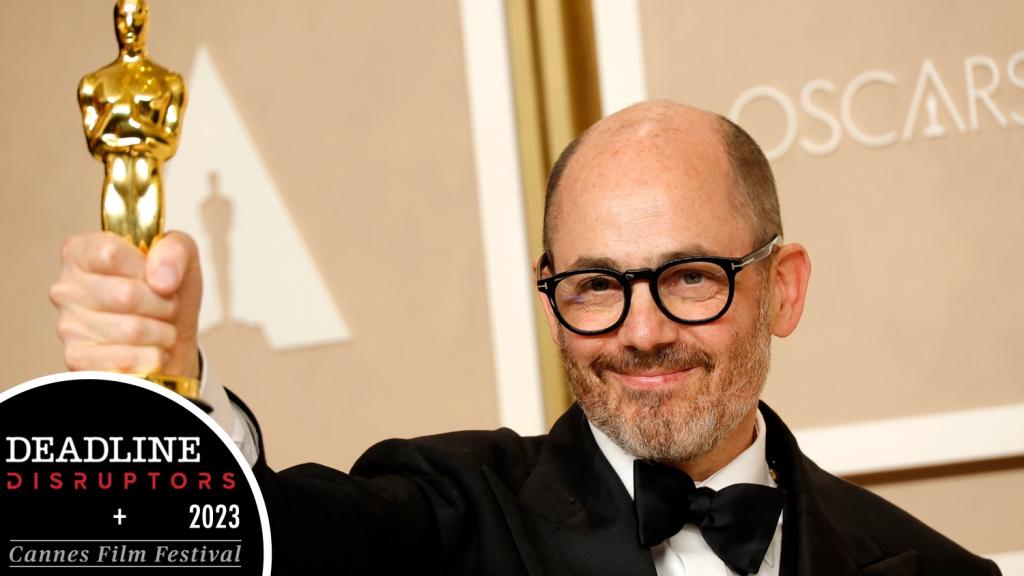
Cannes is the birthplace for any number of future Best International Feature Film Oscar nominees, like last year’s Grand Prize winner “Close,” or winners like 2021 Competition entry “Drive My Car.” This year’s possibilities include the UK’s rapturously received German-language from UK filmmaker Jonathan Glazer, “The Zone of Interest;” Argentina’s Un Certain Regard entry “The Delinquents,” a three-hour existential heist movie picked up by Mubi; or Japan’s “Monster,” the latest film from Hirokazu Kore-eda, whose “Shoplifters” scored both the Palme d’Or and an Oscar nomination. However, before they can be nominated they must be submitted — and that, as Academy members well know, is the rub.
The demand for reform boils down to this: Too often the decision of Oscar submissions belongs to decision-makers instead of filmmakers, and that can lead to some… frustrating choices. Last year India did not submit “RRR” and Italy declined to select well-reviewed Cannes entry “The Eight Mountains,” which was directed on location in Italy by the Belgian team of Felix van Groeningen and Charlotte Vandermeersch. “If I could change [the Oscars], it’d be this idea to have the category be more open, so any movie could apply for it,” van Groeningen told IndieWire. “Then it would be a process of natural selection.”
Countries choose their Oscar picks in different ways. Some appoint small committees; some have a national Academy. In Brazil, Iran, and Russia, the committee are dominated by their governments; even in a democratic country like France, the selection process is dominated by industry powermongers. Cannes director Thierry Fremaux was on the committee for years and was often accused of favoring Cannes titles.
This year, among the myriad Academy rule changes was a new rule for Best International Feature Film that requires each country’s Oscar submission selection committee be comprised of 50 percent “artists and or craftspeople from the field of motion pictures.” This doesn’t exactly qualify as radical reform: Prior to its codification as a rule, a 50 percent “guideline” (one that was unavailable to public view) was in place for years. Still, to the extent that countries around the world care about the Oscars, most are likely to comply.
Even so, the new rule does little to address how AMPAS should deal with exiled and banned filmmakers, or with otherwise orphaned films that have no home. International Feature Film executive committee co-chairs Danish Oscar-winner Susanne Bier (“In a Better World”) and MoMa’s chief curator of film, Rajendra Roy, who have been deeply researching the processes behind making international Oscar selections, have yet to figure out a solution to these issues. So they started with a smaller step.
“The Zone of Interest”A24
“The thing that was clear to both of us was that there was a real need for more transparency for submitting countries,” said Roy on the phone. “There’s obviously a need for transparency… there still seemed to be confusion amongst the countries about how to submit. There just wasn’t a lot of consistency, but the thing we needed to be true was that people who make movies, and all those in whatever form that takes, are part of at least 50 percent of that process.”
Every year, questions to the Academy abound from selection committees about International Feature Film category awards rules, committee guidelines and criteria, and the submission process. When Bhutan tried to submit for the first time, they had no approved official selection committee. The country needed help from the Academy to establish a selection committee and submit a film. Ultimately, Bhutan earned a surprise nomination for Pawo Choyning Dorji’s “Lunana: A Yak in the Classroom.”
Attempts to reform the Academy’s foreign-language selection process have included the 2006 change in which a submitted film no longer had to be in the language of its own home country. That allowed Denmark, for example, to submit the country’s Profile Pictures production “Holy Spider” last year; the film was shot in Persian in Jordan. After Palme d’Or winner “4 Months, 3 Weeks and 2 Days” was passed over for a 2008 nomination, the Academy formed a foreign committee that weighs in on the final selection. That committee was abandoned in 2021, but the Academy expanded the shortlist to 15 and added online viewing to a wider slice of global voters.
To manage international submissions, in April 2022 the Academy hired former Sundance programmer Dilcia Barrera as the Academy’s new senior VP of member relations, global outreach, and administration. She works closely with Meredith Shea, a former AMPAS membership and awards exec who returned to the Academy fold this April as chief membership, impact, and industry officer. “It was an important step for the Academy to find the right staff person to step into the role, someone to focus on international,” said Roy.
While the Academy has long asked countries to submit selection committee memberships to scrutiny, the official rule plus an identifiable enforcer provides more heft.
Dilcia Barrera at the Palm Springs International ShortFestGetty Images
If Roy has his druthers, the next guideline-that-could-become-a-rule will ask the countries to impose term limits on their selection committees, much like the AMPAS board of governors’ three years. (The Academy suggests six-year cycles separated by two-year hiatuses.) Filmmakers have expressed frustration, Roy said, that there’s often no room for their inclusion.
One step at a time. Clearly, the Academy has no plans to throw out the entry model of one film per country anytime soon. For now, Roy said, it’s a matter of finding “ways of making it work better.”
Sometimes all you need is an expertly crafted power-pop chorus to slice through the garbage and ground you in the simple pleasures of this life on Earth. Australian singer-songwriter Alex Lahey has spent the past seven years churning out sharply observed pop-punk confections about badrelationships, self-doubt, and bad relationships leading to self-doubt; it’s all been leading up to “You’ll Never Get Your Money Back,” a tour de force of post-breakup catharsis from her new album The Answer Is Always Yes. The guitars chime and swell into the kind of sweaty, beer-soaked nirvana that Japandroids or Titus Andronicus (or, hell, even the Replacements) could whip up in their heyday, leaving it all on the barroom floor. “Give all you have, get nothing back/Love never leaves you in the black,” Lahey sings with a sneer, coming to terms with the fact that her ex is never actually going to Venmo her for that back rent they owe. And she is just going to have to be OK with that.
“Joining the past, present and future crews of HMS Oardacious for a very important conversation about mental health,” the Prince of Wales, 40, captioned a Sunday, May 21, Instagram video. “For #MentalHealthAwarenessWeek we headed out onto the water, chatting everything from teamwork to food rations and just what it takes to look after your mental health when rowing across the Atlantic.”
The full video — which was shared by William and wife Princess Kate’s YouTube channel — saw the Duke of Cornwall team up with the HMS Oardacious squad for a rowing workout.
“When you see it like this, you realize how, actually, it’s not a very big boat,” William joked during the outing, sitting in the middle of the four-person vessel.
Prince WilliamBabiradpicture/Shutterstock
The Duke of Cornwall looked athletic in his blue pullover and dark shorts, complete with a pair of sunglasses and sneakers. While they rowed, William asked the group about their experience racing and the importance of prioritizing mental health. By the end of the sail, the group turned the questions back to the duke to ask how he felt about joining them on the water.
“Good! [It was] a good warm-up,” William noted with a laugh. “I need the exercise, good!”
“Submarine service, you know, you have to have a certain mentality to do your job,” the Duke of Cambridge — who previously served in the British military as a pilot — said in the Sunday video. “You’re in a metal tube for month son end, lots of your life’s pleasures away. You don’t have sunlight [or] fresh air.”
He continued: “Understanding our support networks is crucial because a lot of people don’t have a support network. So I think in the military, we’re very good at being able to form close bonds and realize that the only way we can get through all this is to help each other and support each other through.”
“The relation between the job and the personal life was what really took me over the edge,” he said during the This Can Happen conference in November 2018. “And I started feeling things that I’ve never felt before. And I got very sad and very down about this particular family.”
The prince — who shares three kids with the Princess of Wales — further explained that working on “traumatic jobs involving children” impacted him. “You start to take away bits of the job and keep them in your body,” William added at the time. “And of course, you don’t want to share with your loved ones because you just don’t want to bring that sort of stuff home.”
Universal’s “Fast X” is not bringing in the box office riches that past “Fast & Furious” films used to in North America with a $67 million domestic opening, but it is still finding great success internationally with a $253 million overseas launch to earn $319 million worldwide.
In the U.S., “Fast X” isn’t showing signs that it will top the $173 million final total of its predecessor “F9,” a film that came out during the early stages of box office rebuilding in summer 2021. Its $67.5 million opening has met pre-release projections but is below the $70 million launch of “F9.”
The film also received a B+ on CinemaScore and 82% positive score on Rotten Tomatoes. With only one weekend of premium format play, that good-but-not-excellent audience reception may not be enough to give the film legs to reach $200 million domestically.
But “Fast & Furious” historically has been a franchise that has earned its tentpole status thanks to strong play throughout the world with over $5 billion in lifetime franchise international grosses. “Fast X” is demonstrating that again as its worldwide opening is topping that of “Guardians of the Galaxy Vol. 3” and stands sixth among all films in the post-shutdown era.
China, of course, leads the way among all global markets with $78.3 million. While that is 42.5% below the the $136 million opening of “F9,” that is still the highest Chinese opening for a Hollywood film this year, a sign that “Fast & Furious” is still a draw in the country even as Chinese audiences have largely lost interest in American films.
Meanwhile, “Fast X” is outperforming “F9” in several major markets, including a $16.7 million opening in Mexico and strong results in Brazil, India, Germany, U.K., Japan and South Korea. Several of those markets are also showing stronger audience reception to the film than in the U.S., with an 8.9/10 rating on China’s Maoyan and 94% positive on Korea’s CGV Egg score.
“Fast X” will need to keep legging out internationally against tough upcoming competition like “The Little Mermaid” and “The Flash” to turn a theatrical profit against its franchise-high $340 million budget.
In second place on the box office charts is Marvel Studios’ “Guardians of the Galaxy Vol. 3,” which keeps holding well with $32 million in its third weekend. That’s nearly identical to the $32.3 million third weekend of “Doctor Strange in the Multiverse of Madness” last year, and unlike that film was able to do it without the help of premium format surcharges.
With a domestic total of $266 million domestic and $659 million worldwide, “Guardians Vol. 3” is on pace for a final box office total of $325-340 million domestic and around $800 million worldwide, a solid rebound for Marvel from the box office failure of “Ant-Man and the Wasp: Quantumania” that will put “Guardians Vol. 3” alongside last year’s solid results from “Thor: Love and Thunder” and “Black Panther: Wakanda Forever.”
In third is Universal/Illumination’s “The Super Mario Bros. Movie” with $9.8 million in its seventh weekend, bringing the smash hit Nintendo movie’s total just shy of $550 million in North America. With $1.24 billion grossed worldwide, the film has now passed Pixar’s “Incredibles 2” to become the fourth-highest grossing animated film in box office history, sitting only behind Disney’s remake of “The Lion King” and its two “Frozen” films.
Section: Market Director: James Marsh Screenwriter: Kevin Barry Panelist: James Marsh Logline: Michael Fassbender and Domhnall Gleeson play two Irish gangsters, both in the hashish-smuggling game, who go to Algeciras in Spain to search for a young woman. Premiere date: 2024 Key quotes: “It’s not quite what you expect it to be in terms of the usual tropes of the gangster film. It has, I guess, some similarity to Sexy Beast: you’ve got these two Irish guys, and you see them in Ireland and you see them in Spain. They’re like fish out of water, to say the least. It becomes a series of love stories, ultimately. It’s a realistic film, not an ironic, cartoonish gangster film. The dialogue between the two is very funny, so it will definitely make you laugh, but I think it’ll break your heart as well. And along the way, there’s lots of action to enjoy. Some violence to savor, if you like that sort of thing!”
The 2023 Cannes Film Festival runs May 16-27. Follow Deadline’s complete coverage of the deals and doings on the Croisette here.
Taylor Swift is clearly in love, revealing to fans this moment is the happiest time of her life.
TS was in Foxborough, MA Saturday night, and right out of the box, she told the packed crowd … “It’s insane. I kind of just feel like telling you, that I don’t know, that just … I’ve never been this happy in my life in all aspects of my life ever before.”
She went on … “And I just want to thank you for being a part of that. It’s not just the tour, like, I don’t know, my life finally feels like it makes sense. So I thought I’d play this song which brings me a lot of happy memories.” Then she began singing “Question…?”
5/6/23
MEGA
As you know by now, Taylor’s in a new relationship with Matt Healy, who’s been a fixture at her Eras concerts.
5/16/23
BACKGRID
They’ve also been seen together coming out of several recording studios. We don’t know if Healy was just an observer or a participant.
Joe Alwyn is clearly in Taylor’s rearview … well, except for the whole breakup song thing.
Recognizing the internality Schrader was asking him to portray, Isaac recruited one of his teachers from Juilliard, Moni Yakim, and did mask work. “I was like, well, my face is going to literally be a mask, so how can I tell the story just through the body and through energy,” Isaac said.
And then there’s the writing. Schrader asked each actor to copy out his character’s journal in his own hand. Isaac believed that William would write in cursive, so he took a penmanship course. For Edgerton the task was in line with his usual approach: “I always want my own handwriting to be my own handwriting” onscreen, he said, even before “Master Gardener.” All described the process as meditative, in a way.
“You know in Acting 101 they tell you to write your character’s biography, try to write a journal in character,” Hawke said. “Those are very challenging exercises to do that help find the voice of the character and help integrate yourself with the person. For me it was literally delivered to me in a box with an assignment of what to do, so I loved it.”
Isaac noted that Schrader, for all of his hard edges and tough themes, has a soft side as well. While “Master Gardener” ends in a different way, a number of Schrader’s films, including “The Card Counter” and “Light Sleeper,” conclude with the hero in prison reaching out to a woman he loves. “He believes in the truth and purity of what love is and what love can do,” Isaac said. “So no matter how dark and grueling things can get, he has that spark in him, too. He’s not a nihilist.”
Edgerton has not yet had the opportunity to discuss his time in Schraderland with Hawke or Isaac, but the latter two have swapped stories. Schrader pulled out his phone to show me a photo he received of them alongside another one of his actors, Dafoe, huddled together with middle fingers raised. He suggested it should accompany this article.
Hawke and Isaac worked together on a Marvel Cinematic Universe television show, “Moon Knight,” but Isaac, in conversation, thought of another potential franchise. “It’s an incredible badge of honor to be part of Paul Schrader’s extended universe, the PCU,” he said, laughing. “It’d be one hell of a convention of all those characters coming together. We could do a team movie. I’m going to pitch him on that.”
The hottest package at this year’s Cannes Film Festival stars a 76-year old action star and is a reboot of a movie that first dazzled moviegoers in 1993. That’s a time, in case you forgot, before TikTok or smartphones, Facebook or Amazon, or any number of technological changes that have reshaped our world and the movie business along with them.
And yet, “Cliffhanger,” with Sylvester Stallone bravely summiting the mountain again, is seen as one of the most commercial scripts out there for buyers hoping to make an adventure film that can traverse borders and bring crowds. With a nod to the younger audiences who will be needed to turn up if the movie is going to replicate the original’s blockbuster status, the producers teased that casting is currently underway for a (presumably younger?) actor to share the screen with Sly. But who will that be?
“Over the last 10 years, we’ve done a really shitty job of creating a new generation of movie stars,” groused one sales agent.
And a look at some of the projects on offer or premiering at Cannes seems to bolster that argument. There’s “Breakout,” an action-thriller featuring 75-year old Arnold Schwarzenegger that will be directed by “Expendables 4” filmmaker Scott Waugh; “Lords of War” with 59-year old Nicolas Cage returning to a role as an amoral arms dealer that he first played nearly two decades ago; “That’s Amore,” a rom-com with a 69-year old John Travolta; and “The Rivals of Amziah King,” a crime story featuring a 53-year old Matthew McConaughey. In most cases, these actors have been famous, globally so, since the 1970s or ’80s (McConaughey, a relatively newbie, had to wait until 1996’s “A Time to Kill” to make his mark).
On Thursday night, the increasingly geriatric nature of the star system was on full display at the Cannes Film Festival as an 80-year old Harrison Ford walked the red carpet for the premiere of “Indiana Jones and the Dial of Destiny,” for which he donned the fedora he first wore in 1981’s “Raiders of the Lost Ark,” and is still well-preserved enough to unabashedly doff his top (“I’ve been blessed with this body,” he said sheepishly when asked about his shirtless scene at a press conference). Ford does get an assist from some of those technological breakthroughs, appearing 35 years younger in key scenes thanks to the magic of de-aging CGI.
So why hasn’t there been a flowering of new A-listers to rival the Fords, Schwarzeneggers and Stallones of yesteryear? Protagonist Pictures COO George Hamilton points to the collapse of the DVD business in 2008 as the moment when Hollywood stopped being able to reliably make movie stars.
“Nearly all of the actors and actresses who are [bankable] now had very successful films when DVD and video was still a huge force,” said Hamilton, who is selling several films at the festival including Polly Findlay’s debut feature “Midwinter Break,” starring Lesley Manville (“Phantom Thread”) and Ciarán Hinds (“Belfast”). “You could see that as a dividing line shift in terms of older or newer generation. With the new generation, there’s more divisions between success because you could have the most-watched show or film on a streamer. But there might be a whole swath of society who might not subscribe, and they’re not part of that.”
In 2008, just as DVD sales began its death spiral, the first “Twilight” movie debuted, and the franchise’s next-gen stars became the centerpiece of market packages for years to come. But nearly all of those packages ultimately fizzled in the marketplace. Today, only Robert Pattinson, 37, could carry a big-budget package to the goal line on his name alone at a market like Cannes, and only because he because of his combination of box office credentials (“The Batman”) and critically acclaimed indie performances (“Good Time”). Kristen Stewart has earned critical raves in films such as “Spencer,” but hasn’t been as focused on tentpole adventures.
“Obviously, the ‘Twilight’ IP was the star there,” said director-producer Aaron Kaufman, who has worked with a number of alums from the vampire-human love story. “The shift to promoting IP over stars may have sounded like a good idea because IP doesn’t overdose or tweet about Nazis. However, this shift has left the cupboard bare when it comes to next-generation stars. This is an issue now that the IP stores have been cleaned out and all that’s left is Tube-Sock Man or whatever Marvel has yet to make.”
The most promising members of the up-and-coming A-list set often need to check multiple boxes like a Sydney Sweeney, 25, who boasts not one, but two talked-about series with “The White Lotus” and “Euphoria” as well as superhero cred via her starring role in the upcoming “Madame Web,” a spinoff in Sony’s “Spider-Man” franchise.
“There’s much, much, much less people in that younger age bracket who are household names by virtue of the way in which their films or TV have reached audiences because of streaming,” Hamilton added. “So, you have to maximize the value of the new generation of stars and really ensure that there is clarity of concept, clarity on genre, really knowing who the audience is so you can really appeal to distributors.”
Meanwhile, the sales agent thinks that some of shrinking movie star phenomenon has to do with the longterm contracts that rising actors like Tom Holland (26), Chris Hemsworth (39) and their ilk have signed to appear in Marvel movies. Others such as Ryan Gosling, 42, have been inconsistent at the global box office despite commanding passionate followings, while Timothée Chalamet, 27, scored with “Dune” but remains something of an untried commodity. Michael B. Jordan, 36, has two franchises under his belt with “Black Panther” and “Creed,” but it remains to be seen whether he can carry a film without well-known IP. Likewise, Jennifer Lawrence, 32, will face a huge test with regards to her bankability with the upcoming R-rated comedy “No Hard Feelings.” Post-“Hunger Games” she was a huge draw, but has not been as active on screen in recent years.
But the agent also believes that streaming services don’t know how to apply the right amount of varnish on promising talents, in part because the movies that debut on Netflix or Prime Video don’t have the kind of massive global marketing campaigns that accompany major theatrical releases.
“We used to treat our movie stars like gods,” the agent said. “But the marketing of these streaming movies is so limited that it doesn’t really create stars. Actors aren’t burned into the minds like they once were, and they don’t have this larger-than-life image any longer.”
Marvel Studios president Kevin Feige celebrated the success in viewership that MCU titles on Disney+ have had against stiff competition from other shows.
Even considering the struggles that the MCU has faced in theaters and on Disney+ in recent months, the franchise still remains one of the top names in the streaming business against other franchises on streamers like Hulu, Amazon Prime, and HBO Max.
Both WandaVision and Loki set new records for viewership on Disney+, and even with other series not living up to that same hype, the MCU continues to hold steady next to some of the biggest streaming shows on the air.
Speaking at the 2023 Disney Upfront event, as shared by Variety, Marvel Studios president Kevin Feige highlighted the success that Marvel Studios has seen through its efforts on Disney+.
Feige made the claim that even the MCU’s smallest series garner “two to three times [more] viewers” across international markets compared to the most popular series from competing streamers, although the studio head didn’t specify specific titles:
“Thanks to Disney+, we’ve expanded the Marvel Cinematic Universe into genre and formats new to us that we haven’t done before. We’ve been able to introduce exciting new heroes and villains, locations and storylines into the MCU. And I’m pleased to share that when you compare our Marvel series to some of the buzziest shows on competitive services, even our smallest series are reaching much more international audience – often two to three times the number of viewers.”
Now, the question is whether Marvel Studios will be able to continue this run on Disney+ as the studio looks to make some tangible changes to its release process, which even includes releasing fewer Disney+ shows per year.
The first of these changes was just confirmed with Echo‘s confirmed November 29 release date, which will actually see all six episodes dropped at once for the first time in MCU history.
This will be the final of three shows released this year after Secret Invasion in June and Loki Season 2 in October, although there’s a chance that Marvel may also look to bring a Special Presentation by the end of the year as well.
And with Marvel continually looking to adjust its process in order to gain the most success financially and critically, fans are looking for the studio’s next round of Disney+ shows to keep seeing improvements with each new release.
Superman is the crown jewel of DC Studios. James Gunn and Peter Safran understand that he is the most important note to hit in their symphony. And as rumors of casting calls and screen tests for the superhero begin to circulate, we can’t help but think of all the things DC has done wrong in the past. Superman is the DCU’s biggest opportunity and biggest risk. If he isn’t cast right, the rest of the DCU falls apart. So the pressure is on to get him right.
Superman is not a difficult concept to get correct. The public could see that Henry Cavill’s performance was perfect for the character. But DC’s latest generation of heroes failed due to poor planning and a rush to achieve what Marvel had done slowly over the previous decade.
MOVIEWEB VIDEO OF THE DAYSCROLL TO CONTINUE WITH CONTENT
Before him, Brandon Routh in Superman Returns made his attempt at what quickly became the defunct aesthetic of superhero movies. Tom Welling in Smallville was a good fit for a creative take on a story that never escaped television. And Christopher Reeve played Superman excellently in the 70s and 80s.
But despite how powerful the Man of Steel might be, he can’t lift an entire franchise on his own. If James Gunn and DC want to get Superman right, they’ll have to do something differently.
The Man of Tomorrow
@bobby_art
James Gunn has made his goals clear for the next Superman. He wants a young actor, someone probably in their twenties, who can be a part of his ten-year plan to remake the DCU. A lot of rumors have been going around about James Gunn getting together a shortlist for the role of Superman. Rumors say there are three actors advancing to a screen test stage, David Corenswet being one of them, and two others who remain a mystery.
It’s easy to say what qualities Superman needs: someone with a strong jaw line, a sense of morality, and the strength of character it will take to lead the DCU. After all, it’s like asking someone to lead a football team with a guaranteed spot in the Super Bowl that year. The old DC had cast an excellent actor but wrote stories for him that cut corners in the narrative and jumped at an executive need for MCU-level profits.
Gunn is making a good decision casting a young actor, not just so they can remain in the role for ten or so years, but so the writers at DC can build a narrative around the character slowly. Avengers: Endgame didn’t happen overnight. And if DC wants that kind of success, Superman, the linchpin of their cinematic universe, will have to have a story that grows slowly. Constructing this type of narrative requires a time commitment spanning years or even decades. And whichever actor they get will also probably end up signing their soul away for at least the next ten years.
Whoever gets signed will also have to be the face of the DCU. Back when the MCU was beginning to become popular, actors played different versions of themselves on and off-screen. In an interview with the cast of The Avengers, Chris Evans would walk on stage with the strength and humility of Captain America, whereas Robert Downey Jr. would come out throwing roses. The next Superman will have to walk this line. Not weak, but not overly prideful. The actor will have to play Superman, Clark Kent, and himself for the media.
The DCU will also have to do something different for the next Superman. Henry Cavill’s Superman was a take on the character that fits into this modern age of superheroes, but because it didn’t work, the narrative was more or less wasted. What will need to happen is the introduction of a new story, not Cavill’s Man of Steel, not Tom Welling’s Smallville, but something that creates a different opportunity for the character.
David Carradine’s famous monologue in Kill Bill: Vol. 2 described a reversed perspective on Superman. One where most heroes dress up to hide their human identities, but Superman must dress up to hide that he’s a superhero. His natural state is one superior to the average person. And James Gunn seems to understand this on a different level. He told The Hollywood Reporter:
“I completely relate to Superman because he’s everything I am. He’s somebody who is an outsider who feels like an alien, but also the ultimate insider, because he’s fucking Superman. And that’s kind of like what I feel like.”
Superman’s story as an immigrant, a hero, and the strongest person in the universe, are all part of his character. But just as every Batman is intrinsically different from the other, so too must this Superman give us something different from what we’ve seen before. James Gunn has to find a story in Superman’s history that hasn’t been told yet. While we can only guess what Gunn’s particular flavor of Superman will be, it’s clear that he has a difficult job ahead of him.
Other critics heaped praise on the game in their write-ups too, with most agreeing it’s a worthy sequel to one of the generation’s best games and one of the long-running franchise’s high points.
Let’s say you have the next big idea, a James–Bond-meets-The–Witcher globetrotting thriller where a modern-day Van Helsing assassinates monsters around the world. Good luck making that on your own.
What you can shoot on your indie budget is a single-location film, a phrase that you’ve probably heard many times before. But without nuking Transylvania to save the President’s daughter, how do you maintain your audience’s interest?
On my latest shortthat I directed and co-wrote, Somewhere In Between, my writing partner John Horan and I managed to give our indie short the feeling of a summer blockbuster. Here are three specific takeaways from writing that film, which premieres at Tribeca in June.
Add Layers to Your Conflict
The location is the first layer of conflict– the external conflict. The house you’re shooting in? It’s haunted. The diner? Prejudiced. The submarine? Sinking. Whatever. The top layer of your story conflict is woven into the setting itself and gives the characters something to do and fight against. This is your movie poster.
Beneath that layer, the characters are the second layer of conflict – the interpersonal conflict. In the haunted house example, this conflict might be two siblings fighting over who inherits the estate.
Finally, the deepest layer of conflict – the internal conflict, or the secret. The two aforementioned siblings encounter ghosts while searching for their father’s will, and in doing so, solve the internal conflict — overcoming their guilt of not being there in his last days.
Our film Somewhere In Between is a rom-com flip of Back to the Future, where a time traveler from the future demands two friends fall in love to save the timeline.
Our conflict maps out like this:
LOCATION/EXTERNAL CONFLICT: At their house, they must fix a time machine to save the universe.
CHARACTER/INTERPERSONAL CONFLICT: Do they love each other? Or are they just friends?
SECRET/INTERNAL CONFLICT: I don’t want to spoil it, but everyone in our film has something to hide here.
What’s important is that all these conflicts line up. By solving the internal, they solve the interpersonal, and ultimately, the external.
Emily (Taylor Misiak) and Jack (Ryan O’Flanagan) Credit: Photo courtesy of Future Boyfriends
Travel Into Your Concept and Characters
Action sequences and exotic locations are an easy but expensive way of making it seem like things are happening in your story. The difficult, but affordable way is by, well… making things happen in your story. Every piece of information you have is valuable and should be treated as a reveal.
Here are the beats of our first act:
Two friends try to have a simple New Year’s Eve.
BUT… one has feelings for the other.
BUT…a time traveler accosts them.
AND… demands they fall in love, or the timeline is destroyed.
BUT… they’re afraid to.
Each of those setups, we treated like its own reveal.
In the first few minutes of our short, the viewer’s understanding of the film changes at least five times. Guess what? Now we get to resolve every one of those plot points. If you’re stuck in one location, you can keep your audience engaged by doling out story beats quickly.
Make Your Single Location Feel Like Many Locations
Even if you write a multi-layered conflict with rapid-fire story developments, we still have to recognize that staring at the same old scenery for an entire film can get boring. The solution: making your single location aesthetically changes throughout the movie.
Justify a change in the time of day, or make your characters rearrange the furniture. Maybe the power goes out! Your audience should be able to look at a scene and visually identify what part of the movie it is from. This scratches the “production value” itch people want out of their entertainment and keeps things fresh.
In our short film, because we had a time machine as a plot device can explore the conflict in the present but also include a past timeline with its own aesthetic, all within the same house.
Emily (Taylor Misiak) and Jack (Ryan O’Flanagan) Credit: Photo courtesy of Future Boyfriends
What You Should Take Away
Watch some single-location films and pay attention to how they pull these off. All of these problems need to be solved in Final Draft, not on set. And once you nail this script, get going on that modern-day Van Helsing script. That one is going places for sure.
For more takeaways on making your indie film feel bigger than it is, check out my video serieson this, where I will be going more in-depth on topics like this, from improving your film in post with AI to saving money with easy previsualization.
John Cena is reflecting on his WWE feud with Dwayne Johnson, admitting to being “short-sighted and selfish” in the situation.
On the May 18 episode of the Happy Sad Confused podcast, Cena said he “really messed up” by feuding with Johnson between 2011 and 2013 when he returned to WWE after leaving nearly a decade earlier to pursue a full-time acting career. Of course, now both Cena and Johnson are major Hollywood stars, with Cena playing the brother of Vin Diesel’s Dom Toretto in the newly-released “Fast X” and Johnson headlining the upcoming action-adventure film “Red One” alongside Chris Evans.
“I got selfish, and me living WWE at the point and not having any concept of growth or someone else’s perspective, I took Dwayne’s comments as not genuine,” Cena said. “My view was, if you love something, be there everyday. What a hypocrite I am, because I still love WWE and I can’t go all the time. And I just didn’t see that, I was so selfish.”
Their feud culminated in two highly-viewed WrestleMania matches in 2012 and 2013, with Johnson winning the first while Cena was victorious in the rematch. Though there’s no denying that the animosity between the two made for great TV, Cena has some regrets about how it all went down.
“I wanted a main event marquee match because it would better what I thought was the business. And that’s so short-sighted and selfish,” he said. “It worked, but it worked at the cost of two people who communicated and almost put it in jeopardy. And there was a moment where there was a lot of bad vibes between us, and rightfully so.”
However, the two have been able to form a strong friendship despite their former beef. “It was almost at the cost of our friendship, which I would like to say now is in a really good place,” Cena said.
When a man visits his ancestral village, where terror reigns after a chain of unexplained deaths, he must unravel mystical secrets before it’s too late.
It has been more than a decade since John Cena and Dwayne “The Rock” Johnson faced off in a pair of WrestleMania matches influenced by Cena’s frustrations with Johnson leaving WWE behind for Hollywood. Now, with Cena taking the same path, he says he was a “hypocrite.”
“I got selfish, and me living WWE at the point and not having any concept of growth or someone else’s perspective, I took Dwayne’s comments as not genuine,” the 15-time WWE champion said on the Happy Sad Confused podcast. “My view was, if you love something, be there everyday. What a hypocrite I am, because I still love WWE and I can’t go all the time. And I just didn’t see that, I was so selfish.”
Back in 2008, during the height of Cena’s run as a perennial WWE Championship contender, he said in an interview with British tabloid The Sun that while he believed Johnson was a “fantastic human being,” he didn’t understand how the “Scorpion King” star could say he was still passionate about wrestling when he hadn’t appeared in a WWE ring for years.
“He, at one point, loved wrestling and wanted to do this all of his life,” Cena said. “Explain to me why he can’t come back for a 15th Anniversary show or why he can’t make an appearance at Wrestlemania. Simply put it’s because he wants to be an actor. There’s nothing wrong with that…Just don’t f–k me around and tell me that you love this when you are just doing this to do something else. That’s the only thing that gets me really pissed off.”
In 2011, Johnson made his long-awaited return to WWE as The Rock and entered a feud with Cena that saw him defeat Cena at WrestleMania in 2012 and win the WWE Championship in 2013 before losing it to Cena in a Mania rematch. During that feud, Cena cut promos in the ring influenced by his real-life comments questioning The Rock’s commitment to wrestling, even calling out people like Johnson’s producing partner and manager Hiram Garcia, whom he called “the guy I have to talk to to talk to the other guy to get even close to Dwayne.”
The promos were a hit with fans, but created backstage animosity between the two men.
“I wanted a main event marquee match because it would better what I thought was the business. And that’s so short-sighted and selfish,” Cena said on Happy Sad Confused. “It worked, but it worked at the cost of two people who communicated and almost put it in jeopardy. And there was a moment where there was a lot of bad vibes between us, and rightfully so.”
Today, Cena is 46 years old, five years older than Johnson was when he returned to WWE. Since 2019, Cena’s appearances in WWE have become sporadic as he has transitioned to a film career in which he’s landed roles in HBO Max’s “Peacemaker” and in the new film “Fast X.”
Cena did have a match at this year’s WrestleMania with up-and-coming wrestler Austin Theory, but the match was a show opener that lasted just over 11 minutes, less than half the time the 23-minute main event matches he put on with The Rock in 2013 and with current WWE Champion Roman Reigns in 2021.
In an interview with Busted Open Radio earlier this week, Cena admitted that his time in the ring may be at an end, despite his desire to keep performing in WWE.
“I wish I was still there every day. My body can’t do it anymore, and I don’t want to give the consumer a bad product,” he said.
But now, there is a possibility that Cena and Johnson may share the screen for the first time, as a post-credits scene in “Fast X” showed Johnson’s return as Luke Hobbs. With both men now part of the “Fast & Furious” series, they may end up racing muscle cars together as the franchise prepares to release its final installments in the coming years…though anyone who has seen “Fast X” knows that the series might have to do some of its signature narrative swerves to make that happen.
You can watch the entire interview with Cena by clicking here. The conversation switches to his relationship with Johnson around the 18:29 mark.
Benedict Cumberbatch has been cast to portray Pete Seeger in the upcoming Bob Dylan biopic A Complete Unknown, director James Mangold told Deadline in a new interview. The movie centers around Dylan’s groundbreaking electric set at the Newport Folk Festival in 1965. As a legendary folk musician and longtime influence to Dylan, in regards to both his music and activism, Seeger plays a crucial part in Dylan’s real-life story. He was an early supporter of the then-rising artist, helped his debut album land at Columbia, and invited him to perform at Newport Folk Festival.
Last month, it was revealed that Timothée Chalamet will play Dylan while Monica Barbaro has been tapped to portray Joan Baez. Also joining the cast is Elle Fanning as Sylvie Russo, a university student and artist billed as Dylan’s love interest in the early ’60s. (Dylan famously dated artist Suze Rotolo, who appears on the cover of The Freewheelin’ Bob Dylan, for several years during that same period, however Deadline and IMDB both spell Fanning’s character as Sylvie Russo.)
A Complete Unknown will begin production in New York this summer. It was co-produced by James Mangold, who co-wrote the film alongside Jay Cocks. Bob Dylan himself is one of the film’s executive producers, and Mangold previously said that Chalamet will do his own singing for the movie.
One week after opening its community pickleball court, the London International Airport has announced another recreational option for Londoners.
The airport’s new beach volleyball court will be open from 7 a.m. to 9 p.m. daily. It’s located north of the airport on Hurricane Road.
“We are very excited to launch our community beach volleyball court this summer,” said Scott McFadzean, the president and CEO of the airport. “Our operations team had a great idea to turn the hockey rink area into a beach facility in order to enjoy year-round recreational activities at the airport.”
Visitors are asked to bring their own equipment.
Free parking is available along the fence in front of the Airside Operations Center, east of the court. The airport asks visitors to not park on Spitfire Road.
Trending Now
Story continues below advertisement
Skydiving Santa breaks leg in Florida delivering toys to charity tournament
This article first appeared as part of Jenelle Riley’s Acting Up newsletter – to subscribe for early content and weekly updates on all things acting, visit the Acting Up signup page.
Yellow Dot Studios wants to save the Earth — and entertain you along the way.
Oscar winner Adam McKay has launched the non-profit studio with the intent of creating videos and other materials that will raise awareness of climate change and other issues, often told with comedy. It’s a high-wire act McKay has become adept at, having previously tackled material like the 2007-08 financial crisis (“The Big Short”), politics (“Vice”) and climate change (“Don’t Look Up”).
Just last week, Yellow Dot debuted “Commercial for Big Money,” a 2-minute “advertisement” that begins with a whimsical, Norman Rockwell-inspired image of a paperboy as an authoritative voiceover begins laying out how corporate greed is destroying the planet. That was followed this week with “IRA Kitchen” in which gal pals Casey Wilson and June Diane Raphael drink wine and discuss the benefits of the Inflation Reduction Act, which offers tax benefits and incentives for utilizing clean energy technologies.
Staci Roberts-Steele, a co-producer on “Don’t Look Up” who previously worked at McKay’s Hyberobject Industries, serves as Yellow Dot’s Managing Director. Last September, Steele produced a spoof “Chevron Ad” for Hyberobject that quickly went viral, racking up over 4.5 million views in just 24 hours. That spoof utilized stock footage and began with an uplifting soundtrack as an announcer intones how Chevron believes “nothing is more precious than life….” before going on to note how the company is destroying the planet.
The Yellow Dot board also includes such members as Dr. Ayana Johnson, co-creator of the Urban Ocean Lab think tank. David Fenton, who wrote “The Activist’s Media Handbook: Lessons from 50 Years as a Progressive Agitator,” serves as Senior Advisor.
Steele spoke about the genesis of the company, what lies ahead and why there’s still hope for the planet.
It feels like Yellow Dot might have begun in many ways with the fake Chevron ad. What was the genesis of that? It was just an initial text from Adam McKay who sent a bunch of dialogue and was like, “I think this is funny.” I said, “I think it’s funny, too, are you okay if I run with it?” And we reached out to some editors and cut together a video we released on Twitter the next week. We had no plan. Then in about an hour, we had a million views. We realized there was an appetite for this, that people want to digest these emotions they have towards big oil companies and the climate in a playful way.
Why is this something you’re passionate about personally? Working on “Don’t Look Up,” which was an allegory for climate change among other things, I definitely became more aware of climate change. I read the 2018 IPCC report, which freaked me out, and then I read David Wallace-Wells’ book “Uninhabitable Earth,” which freaked me out even more. I think the speed of it all was what really got me scared. The latest report said we have about seven years before we can’t turn back. But after that initial feeling of fear, I started to think: Well, how can we fix it?
You’re trying to inform audiences while also entertaining them — what is the secret to that tone? Our mission is to always lead with entertainment. And the message or the information or the education will hopefully follow. Obviously, Adam is the master of that — he did it with “The Big Short” and “Don’t Look Up” — he’s really good at taking complicated information and breaking it down and making it fun.
What kind of content can we expect coming up, and where do you get your ideas? We have a lot of people coming to us and we’ve reached out to climate groups and scientists and asked them what information they’re trying to get across. So hopefully we can take it through our little creative channel and try to come up with something that is funny or entertaining or just a different way of thinking about it. We’ll be rolling things out and not just videos but memes and some live events and climate campaigns. We want to do a wide variety.
Is it exciting to show people that science and scientists can be funny? It is! How do I put this — nerds are cool. And people know that, and what’s really fun about scientists is they know so much and love to talk about it. They’re an amazing resource in that way. Again, for a lot of people, climate change can be depressing. But there’s also a whole world of people who have so much hope and it’s really refreshing to hear that. And the climate tech people are working on carbon removal and things we need to do like phasing out fossil fuels and switching to renewable energy. It’s exciting seeing all this science we already have, we just need to implement it, pay for it and get it going.
I want to talk about that hope because it might be easy for a lot of people is to think they’re nothing we can do at this point. How do you combat that? That can be hard. But remember, two years ago, people were talking about climate change being a hoax. And I feel that’s less of a thing because people are at least acknowledging that the weather is messed up. We can agree on that to start.
I think knowing that we have the solutions, we just need to get people on board. We need to inform people and show our government and our world that people want this change. To me, that’s exciting. And honestly, there are hopeful signs. My daughter, who’s five, was learning about Earth Day and came home and told me what she was learning. She’s asking questions like, “Does this run on solar? Are these busses electric?” She has all these questions that my generation might not have thought to ask. There is a younger generation that has lived with this their whole lives and they’re excited to take action.
You’d expect a movie called “The Breaking Ice” to be cold and Anthony Chen’s gentle drama about three isolated young people finding moments of connection definitely stays away from passionate and heated statements. But it’d be a mistake to think that Chen’s restraint comes at the expense of feeling, because “The Breaking Ice” is one of the most beautifully evocative films to screen during the first few days of this year’s Cannes Film Festival.
A luminous “Jules and Jim” riff with a stunning visual design and a real purpose to its apparent aimlessness, “The Breaking Ice” screened on Sunday in the Un Certain Regard section at Cannes, bringing the Singaporean director back to the festival where he won the Camera d’Or for “Ilo Ilo” in 2013, and also appeared as part of the COVID-era anthology film “The Year of the Everlasting Storm” in 2021.
“The Breaking Ice” begins with a fascinating shot of workers cutting ice blocks from a frozen lake. The first of many striking images, it’s also a bit of misdirection – because then a bus drives across a bridge over the lake, the camera cuts inside the bus and we’re with a tour group traveling to traditional Korean sites in the Chinese city of Yanji, just over the border from North Korea. The tour is led by Nana (Zhou Dongyu, “Better Days”), a young woman who is all perkiness and light when she’s in front of the tourists, but sadder when she turns off her microphone.
The activity on the bus is intercut with a hotel banquet hall, where a young man, Haofeng (Chinese box-office star Liu Haoran), sits in front of a giant mural of a snowbound lake. He’s at a traditional Korean wedding in Yanji, where half the population speaks Korean. He seems to be a wallflower and he’s continually getting calls from a mental health center saying he missed his last appointment. “Wrong number,” he replies.
When Haofeng goes to the roof of the building and looks over the edge, it’s hard to imagine that he won’t jump – if not immediately, then eventually. But he sees the bus from his perch above the hotel parking lot and decides to join the tour since he’s got an extra day before he needs to fly back to Shanghai. Once on board he stands out because of his solitude, until he sits on a bench with Nana as she takes a cigarette break and starts a conversation that is as desultory as their lives seem to be.
“How long have you been a tour guide?” he asks.
“Three years,” she says.
“Do you like it?”
“What?”
“Do you like it?”
“Whether I like it or not, I have to do it.”
At this point, “The Breaking Ice” feels as if it’ll be a movie about two lonely people connecting, but when the bus stops at a restaurant we meet Xiao (Qu Chuxiao, “The Wandering Earth”), a cook who clearly has a romantic interest in Nana. The lost couple becomes an adrift trio (or maybe two isolated people and a goofy sidekick) whose drunken night together results in Haofeng missing his plane and deciding to hang around.
And hanging around is pretty much what happens for the rest of “The Breaking Ice.” They go to the North Korean border, walk on a frozen lake and listen to the ice cracking beneath their feet, make an abortive attempt to shoplift in a bookstore and gradually learn about each other. Nana is a medal-winning figure skater who fled the sport after an ankle injury, Haofeng was driven by his mother to study hard but found no relief in material success.
“The Breaking Ice,” though, can’t be summed up in plot points. As Nana, Haofeng and Xiao meander through the next few days, so does the movie. But Chen’s movie does a lovely job of meandering, and the film is shot through with images that stick: people skating on a frozen lake lit by shafts of light from the distance; a barrage of color in a crowded nightclub; deer and monkeys in a zoo in the early morning hours, illuminated only by cellphone flashlights; light slanting through the windows of a stark modern high-rise hotel; the shadow of a truck against the pavement; an embrace through a shower curtain.
Mostly, there’s ice. Sheets of ice on frozen lakes, in murals and paintings, in an ice maze lit from within, even in Haofeng’s mouth as he compulsively pulls cubes from his drink and chomps down on them.
The action, if you can call it that, is often as not set to Kim Leonn’s bare and evocative music, which mixes gentle chords that hang in the air with more assertive moments that, like the film, somehow manage to be simultaneously meditative and propulsive.
The aimless idylls eventually become a snowbound and potentially dangerous pilgrimage to Changbai Mountain and Heaven Lake, where death wishes and moments of near-miraculous salvation coexist. A lot goes unsaid and undone, even as the film moves through almost as many endings as “The Return of the King.” But that’s the point, and the beauty, of “The Breaking Ice,” which paints a rich picture of full lives using little more than pauses, glances and a frozen landscape that says volumes without speaking.
Martin Scorsese returns to Cannes this evening with a feature in the Official Selection for the first time in almost four decades.
The pic, Killers Of The Flower Moon, stars the Taxi Driver filmmaker’s regular leading men, Leonardo DiCaprio and Robert De Niro. Based on David Grann’s best-selling book and written for the screen by Eric Roth and Martin Scorsese, the pic is set in 1920s Oklahoma and depicts the serial murder of members of the oil-wealthy Osage Nation, a string of brutal crimes that came to be known as the Reign of Terror.
Other guests who attended the event included Lily Gladstone, Tatanka Means, Kirsten Dunst, Jesse Plemons, Cate Blanchette, Tobey Maguire, Salma Hayek, Isabelle Huppert, Lukas Haas, Paul Dano, Anaïs Demoustier, Robbie Williams, Princess Caroline of Monaco, Charlotte Casiraghi, Irina Shayk, Riccardo Tisci, Lorena Rae and Josephine Skriver.
Discussing his interest in Grann’s book in an exclusive interview with Deadline ahead of Cannes, Scorsese said he first responded to the “natural order of things” depicted in the narrative.
“The idea that one could rationalize that if the Osage are not going to be of any use, if they’re going to be phased out anyway, why don’t we just, you know, help them go” he said. “And, ultimately, do we really feel any guilt for that? I don’t mean you and I, but when you’re doing what was being done to the Osage, and if you tend to dehumanize someone.”
The pic is produced by Imperative Entertainment, Sikelia Productions, and Appian Way. Other producers include Dan Friedkin, Bradley Thomas, and Daniel Lupi. Executive producers are DiCaprio, Rick Yorn, Adam Sommer, Marianne Bower, Lisa Frechette, John Atwood, Shea Kammer, and Niels Juul. Jesse Plemons also stars alongside Lily Gladstone and is set to hit the red carpet this eve alongside the wider cast.
Check out some of the best images from the premiere below.
“Killers Of The Flower Moon” Red Carpet – The 76th Annual Cannes Film Festival
Image Credit: Getty
(L to R) Leonardo DiCaprio, Lily Gladstone, Director Martin Scorsese and Robert De Niro attend the Killers Of The Flower Moon” red carpet during the 76th annual Cannes film festival at Palais des Festivals on May 20, 2023 in Cannes, France.
“Killers Of The Flower Moon” Red Carpet – The 76th Annual Cannes Film Festival
Image Credit: Getty Images
(L to R) Tantoo Cardinal, Leonardo DiCaprio, Lily Gladstone, Director Martin Scorsese, Robert De Niro, Cara Jade Myers and Janae Collins attend the Killers Of The Flower Moon red carpet during the 76th annual Cannes film festival at Palais des Festivals on May 20, 2023 in Cannes, France.
“Killers Of The Flower Moon” Red Carpet – The 76th Annual Cannes Film Festival
Director Martin Scorsese attends the “Killers Of The Flower Moon” red carpet during the 76th annual Cannes film festival at Palais des Festivals on May 20, 2023 in Cannes, France.
“Killers Of The Flower Moon” Red Carpet – The 76th Annual Cannes Film Festival
Image Credit: Getty Images
Leonardo DiCaprio
“Killers Of The Flower Moon” Red Carpet – The 76th Annual Cannes Film Festival
Image Credit: Getty Images
Robert De Niro, Kirsten Dunst and Jesse Plemons.
“Killers Of The Flower Moon” Red Carpet – The 76th Annual Cannes Film Festival
Image Credit: Getty Images
Jesse Plemons and Kirsten Dunst
“Killers Of The Flower Moon” Red Carpet – The 76th Annual Cannes Film Festival
Image Credit: Getty Images
Kirsten Dunst and Jesse Plemons
“Killers Of The Flower Moon” Red Carpet – The 76th Annual Cannes Film Festival
Image Credit: Getty Images
Lily Gladstone
“Killers Of The Flower Moon” Red Carpet – The 76th Annual Cannes Film Festival
Image Credit: Getty Images
Lukas Haas and Tobey Maguire
“Killers Of The Flower Moon” Red Carpet – The 76th Annual Cannes Film Festival
Image Credit: Getty Images
Tobey Maguire
“Killers Of The Flower Moon” Red Carpet – The 76th Annual Cannes Film Festival
Image Credit: Daniele Venturelli/WireImage
Lily Gladstone
“Killers Of The Flower Moon” Red Carpet – The 76th Annual Cannes Film Festival
Image Credit: Getty Images
Cate Blanchett
“Killers Of The Flower Moon” Red Carpet – The 76th Annual Cannes Film Festival
Image Credit: Getty Images
Cate Blanchett
“Killers Of The Flower Moon” Red Carpet – The 76th Annual Cannes Film Festival
Image Credit: Getty Images
Cate Blanchett
“Killers Of The Flower Moon” Red Carpet – The 76th Annual Cannes Film Festival
Image Credit: Getty Images
François Henri Pinault and Salma Hayek.
“Killers Of The Flower Moon” Red Carpet – The 76th Annual Cannes Film Festival
Image Credit: Getty Images
Salma Hayek
“Killers Of The Flower Moon” Red Carpet – The 76th Annual Cannes Film Festival
Image Credit: Getty Images
Isabelle Huppert
“Killers Of The Flower Moon” Red Carpet – The 76th Annual Cannes Film Festival
Image Credit: Getty Images
Isabelle Huppert
“Killers Of The Flower Moon” Red Carpet – The 76th Annual Cannes Film Festival
Image Credit: Getty Images
Member of the Jury Paul Dano.
“Killers Of The Flower Moon” Red Carpet – The 76th Annual Cannes Film Festival
Image Credit: Getty Images
Director Michael Gracey and Robbie Williams.
“Killers Of The Flower Moon” Red Carpet – The 76th Annual Cannes Film Festival
Image Credit: Getty Images
Maria Marull and Jury Member Damián Szifron.
“Killers Of The Flower Moon” Red Carpet – The 76th Annual Cannes Film Festival
Image Credit: Getty Images
Princess Caroline of Monaco, Michel Bouquet and Carole Bouquet.
“Killers Of The Flower Moon” Red Carpet – The 76th Annual Cannes Film Festival
Image Credit: Getty Images
Dimitri Rassam and Charlotte Casiraghi.
“Killers Of The Flower Moon” Red Carpet – The 76th Annual Cannes Film Festival
Image Credit: Getty Images
Edward Enninful
“Killers Of The Flower Moon” Red Carpet – The 76th Annual Cannes Film Festival
Image Credit: Getty Images
Naomi Campbell
“Killers Of The Flower Moon” Red Carpet – The 76th Annual Cannes Film Festival
Image Credit: Getty Images
Sunnyi Mells and Leonille Elisabeth Judith Maria Anna Prinzessin zu Sayn-Wittgenstein-Sayn
“Killers Of The Flower Moon” Red Carpet – The 76th Annual Cannes Film Festival
Image Credit: Getty Images
Irina Shayk and Riccardo Tisci.
“Killers Of The Flower Moon” Red Carpet – The 76th Annual Cannes Film Festival
Image Credit: Getty Images
Raline Shah
“Killers Of The Flower Moon” Red Carpet – The 76th Annual Cannes Film Festival
Image Credit: Getty Images
Josephine Skriver
“Killers Of The Flower Moon” Red Carpet – The 76th Annual Cannes Film Festival
Image Credit: Getty Images
Adriana Lima
“Killers Of The Flower Moon” Red Carpet – The 76th Annual Cannes Film Festival
Image Credit: Getty Images
Lorena Rae
“Killers Of The Flower Moon” Red Carpet – The 76th Annual Cannes Film Festival
Image Credit: Getty Images
Alexa Chung
“Killers Of The Flower Moon” Red Carpet – The 76th Annual Cannes Film Festival
Image Credit: Getty Images
French actress Elodie Bouchez arrives for the screening of the film “Killers of the Flower Moon” during the 76th edition of the Cannes Film Festival in Cannes, southern France, on May 20, 2023. (Photo by CHRISTOPHE SIMON / AFP) (Photo by CHRISTOPHE SIMON/AFP via Getty Images)
“Killers Of The Flower Moon” Red Carpet – The 76th Annual Cannes Film Festival
Image Credit: Getty Images
Tatanka Means
“Killers Of The Flower Moon” Red Carpet – The 76th Annual Cannes Film Festival
Image Credit: Getty
Lily Gladstone, Martin Scorsese and Robert De Niro.
“Killers Of The Flower Moon” Red Carpet – The 76th Annual Cannes Film Festival
The team behind VFX Studio Perception talked about why it’s challenging to include hidden MCU Easter eggs.
It has been a common tradition for fans to pinpoint different MCU Easter eggs, especially during trailer premieres and by when taking in the latest Marvel movies and shows.
Perception’s Chief Creative Director Doug Appleton admitted that they try to be “very sensitive” about what Easter eggs they include on the Marvel movies that they’ve worked on due to fans who “look at every single frame of everything and rip it apart:”
“We do put easter eggs and things from time to time. We also try and be very sensitive about what Easter eggs we put in there. Because we know there are people like [New Rockstars] and Ryan Arey [of ScreenCrush], that will look at every single frame of everything and rip it apart.”
Appleton then said that being careful of what Easter eggs to include is important since the team doesn’t want to “start some wild speculation” about the MCU’s future:
“And so, especially with this stuff, we try and be sensitive to not put anything in there that might start some wild speculation about the future of the MCU. And we’re just like, ‘Oh, we just thought it was cool to put this costume in that you know, something like that.’ There’s stuff that we’ve done.”
The Perception executive also provided examples of what they try to include on MCU projects, such as comic book issues, issue numbers, and even themselves:
“Anytime we need numbers for something we might do like comic book issues, release dates, and issue numbers and stuff like that to kind of throw in there. Sometimes the Easter eggs we put in there are just for us where we’ve put ourselves in these movies. [In] ‘Captain America Winter Soldier,’ there’s a whole scene where they’re talking about these hydra scientists that are working for SHIELD now, and like every one of those scientists is someone from our office.”
Eric Daly, Perception’s Director of Production, used the end title sequence for The Falcon and the Winter Soldier as an example, noting that the Sokovia Accords has dates and information “that means something in the MCU:”
“In ‘[The] Falcon and the Winter Soldier,’ we did the opening title sequence for that. And when the names come on in there, they’ve been redacted and when they unredact in that animation, there’s often like additional little pieces of information that when they become unredacted and so one of them is the document. The Sokovia Accords. There are pieces of that. One of them is the date from the security footage of Howard Stark getting killed. There are all those little things that, once they get redacted, there’s like a couple of frames of a flash of a piece of information or a date or something like that, that means something in the MCU.”
Marvel Studios
Daly also talked about a specific sequence in Guardians of the Galaxy Vol. 3where the test subjects of the High Evolutionary were playing a hologram memorization game in the background.
Perception worked on the visuals for said game while also establishing rules on how it will be played, noting the importance of this brief sequence in the movie:
“So there was a little bit of importance [there]. Okay, we can’t just make gibberish here, we have to make some set of rules. So we spent some time working with their VFX supervisor and their team over there, proposing, ‘What if the rules were this? What if the rules were this and then create solutions of like, ‘Okay, maybe the way that you know, the system is set up is, and this thing pops up from here, and then you see something above their heads, and they hit it.'”
Daly explained the extensive process of working with Marvel to perfect the sequence while not “drawing the focus away” from what the High Evolutionary is saying is the “challenge” for the team:
“And over the course of a few different reviews, kind of whittling it down to, ‘Okay, what’s the cleanest, simplest, most clear way to communicate that something’s going on here, without drawing the focus away from what the High Evolutionary say, to some people going what’s happening with that game in the background, because like, we didn’t want to steal the focus, we just wanted to provide additional depth behind it. So I think making rules and logic out of seemingly nothing and chaos was a bit of a challenge there.”
Why MCU Easter Eggs Are Still Important
Marvel Studios
There’s no denying that the MCU’s Easter eggs have been part of Marvel fans’ viewing experience ever since the franchise’s inception.
It’s insightful to hear that VFX Studios like Perception are aware and sensitive about the hidden Easter eggs that they try to include in the movie, considering that one wrong placement could lead to countless theories about the MCU’s future.
While there are some Easter eggs that have deeper meanings in the Marvel realm, the comments from Perception’s team prove that there are such references that don’t contribute to the larger MCU picture.
In fact, instances of wild speculation already happened in the MCU during WandaVision‘s weekly run on Disney+ where many fans theorized about Mephisto’s inclusion. However, the villain didn’t show up, thus disappointing some viewers.
Still, there are fun references that can be seen in the background that cements how much the MCU has come a long way in its world-building. Perception’s work on the hologram memorization game is a good example, mainly because it had a vital and engaging purpose that made viewers think despite being in the background.
Guardians of the Galaxy Vol. 3 is playing in theaters worldwide.
Pokémon HOME is getting an update soon that will please a lot of players ( they initially mistakenly said the HOME update would happen on May 24). The ability to link HOME to Pokémon Scarlet and Pokémon Violet was a source of frustration for those who wanted to move Pokémon freely. Now, that will be a cool reality with some perks to boot.
The Pokémon Company made the exciting announcement via Twitter, revealing that those who do link Pokémon HOME to Pokémon Scarlet and Pokémon Violet will get a Sprigatito, Fuecoco, and Quaxly with Hidden Abilities as Mystery Gifts.
The Pokémon Company
There’s only one catch to this Pokémon HOME linking update, and it is not really a catch honestly. A Pokémon can only be moved to a game that they appear in. Let the fun begin!
Blizzard has recently opened up about the cancellation of Hero Mode and has teased an unannounced co-op mode for its shooter Overwatch 2. This comes just days after it was announced that it would be scrapping its PvE Hero Mode.
Thanks to a Blizzard blog post, we know Blizzard plans to add Story Missions to Overwatch 2. These missions are described as “fast-paced, co-op gameplay, as well as story, cinematics, and cutscenes that expand the world of Overwatch.” The blog post also says that these missions will take place on huge maps and players will have new enemies to fight. Story Missions will become available to players during Season 6.
In addition to Story Mode, Blizzard talked a bit more about Hero Mode, which was a mode that would allow players to upgrade their favorite heroes via skill trees and has replayable PvE elements. From the very beginning of Overwatch, the dev team considered themselves an FPS MMO and had a “crawl, walk, run plan.” According to Blizzard, the crawl phase was the game itself while the walk portion was introducing PvE, and the Run would be the MMO.
When the game launched in 2022, the team began to talk about what phase of the game could be. Work had started on the PvE portions of the game, but they struggled to find their “footing with the Hero Mission experience early on.” The team had even built a hero talent, new enemies, and early versions of missions. Still, as time passed, they struggled “to bring together all of the elements needed to ship a polished, cohesive experience.”
Once the announcement was made, the dev team felt they couldn’t deliver on their promise. So because of that, the decision to cancel Hero Mode was made. Even though Hero Mode is no longer a thing, the team is still working on new content, such as Story Missions and unannounced co-op content.
The products discussed here were independently chosen by our editors.
GameSpot may get a share of the revenue if you buy anything featured on our site.
Todd Haynes has a way with female stars. I would even call him the new-age George Cukor in that regard. Whether in Carol with Cate Blanchett and Rooney Mara, or his HBOlimited series Mildred Pierce with Kate Winslet, or his homage to the director of so many so-called “women’s pictures” of the ’50s Douglas Sirk in Far From Heaven with Julianne Moore, he seems to be in his comfort zone with women. That has never been more apparent than his latest, May December, a deliciously entertaining showcase for Natalie Portman and Moore (her and Haynes’ fourth film together), which just had its world premiere Saturday in competition at the Cannes Film Festival.
The title is fine, but watching the film I kept thinking a really great title for it from Hollywood’s past would have been Imitation of Life from the aforementioned Sirk, not that this movie has anything else in common with that 1959 weepie, but its title does in terms of the basic concept here — about a TV actress who descends upon Savannah, Georgia to spend a few days researching her latest role, playing a real-life 36-year-old wife and mother who was the rage of tabloids 20 years earlier due to her affair and later marriage to a 13-year-old boy.
The premise had me at hello, truly the stuff of classic Hollywood melodrama, but with a smart contemporary spin. Portman, also a producer on it who brought the Samy Burch script to Haynes, plays TV series star Elizabeth Berry, who has been cast in an independent film as Gracie Atherton-Yoo (Moore), who scandalized the world, landed on every tabloid cover, went to jail, gave birth to twins and got married there to a guy 23 years younger named Joe Yoo (Charles Melton). Now they are still married, devoted to each other, and the twins Mary (Elizabeth Yu) and Charlie (Gabriel Chong) are graduating from high school. Berry turns up at this time in Savannah to do some in-person research with the person she is going to play. She slowly ingratiates herself, first at a barbecue and later in other ways as this Hollywood star becomes, however briefly, one of the family as it were. Berry approaches this in the same way a reporter might, trying to learn everything she can from and about Gracie. Of course it is awkward, but Burch’s script reveals a little at a time, painting a much larger and more complex psychological picture with each stroke.
Berry attempts to get info from Joe; she visits the pet shop where the two met and talks to the owner and visits the stock room where they had sex; she has coffee with the ex-husband Tom (D.W. Moffet); helps Gracie pick out a prom dress for Mary; meets the local cop (Lawrence Arancia) and friend who was the first person Mary called after the affair; and she meets Gracie’s first-born Georgie (Cory Michael Smith), who is a little unhinged. All of them hold keys that Elizabeth thinks might inform her portrayal.
More importantly, why did all this happen? Does Gracie, who we see is prone to sudden emotional outbursts, have mental issues, or was she just incredibly needy and looking for eternal happiness? She lives in a small island town that has whispered behind her back for years. That is very apparent, even as she runs her own cake-baking business but not with a big clientele as Elizabeth learns. Joe seems like a good guy, but once the wall is broken down Elizabeth will also learn more about him than she might have imagined. He has his own problems. The kids and the extended family have their issues too and always have, but the really fascinating stuff happens between Elizabeth and the woman she will play — particularly a scene in front of a mirror where Gracie teaches the star how she applies her makeup.
Mirrors in general have a lot to do with this film: whole conversations are shot in front of them, all the better for the imitation of a life that is about to start shooting in three weeks. Upon reflection, Gracie and Elizabeth both may be more than they seem during the first measured meetings, and with Gracie pointing out to Elizabeth that the actress is exactly the same age she was when the affair began, well, it appears the “May December” of it all is really them. Much of the fun though is watching it all slowly play out. You could see Cukor or Sirk latching onto this material, just as Haynes has done in sparking to this screenwriter’s first produced script.
Some of it is very funny, particularly a scene where Portman is going over video auditions for potential co-stars, all awkward 13-year-olds with braces, etc. She winces at the thought she is going to be doing sex scenes with these kids. Also Georgie, an aspiring musician, basically tries to blackmail her into getting a job on the movie as music supervisor (he read a list of film jobs and liked that one), promising in return he won’t go to the press to ruin it when it comes out. “I really know how to pick out good songs for movies, ” the loose cannon of a young man promises. Portman’s reaction is priceless. Gracie’s breakdown over a customer canceling a cake order is also pretty spectacular.
You cannot, cannot do better than having Portman and Moore front and center with juicy roles like these. Watching their cat-and-mouse game again confirms these two Oscar winners are as good as it gets. Melton (Reggie on Riverdale)really is believable and vulnerable here as the 33-ish-year-old version of a kid who succumbed to this in the first place, though just who seduced who seems to be a bone of contention between Gracie and Joe. Smith, who was in Carol, amusingly nails Georgie.
The music is terrific, and it should be, because Haynes fell in love with the late-great Michel Legrand’s 1971 score for The Go Between, a Julie Christie movie, and had composer Marcelo Zavros adapt it. It works on every level for the movie, especially as it gets more mysterious and revealing as it goes along.
The film is looking for distribution. Rocket Science presents, and several production companies are involved including Gloria Sanchez, Killer Films and Mountain A in association with Taylor & Dodge and Project Infinity. Producers are Portman, Sophie Mas, Christine Vachon, Pamela Koffler, Grant S. Johnson, Tyler W. Konney, Jessica Elbaum and Will Ferrell.
Title: May December Festival: Cannes (Competition) Director: Todd Haynes Screenplay: Samy Burch Sales agents: CAA Media Finance, UTA Independent Film Group Cast: Natalie Portman, Julianne Moore, Charles Melton, Cory Michael Smith, Elizabeth Yu, Gabriel Chong, Piper Curda, D.W. Moffet, Lawrence Arancio Running time: 1 hr 53 min
Leonardo DiCaprio, Martin Scorsese, Robert De NiroPhoto: Pascal Le Segretain (Getty Images)
The red carpet at the Cannes Film Festival isn’t like the red carpet at our American awards shows and fancy events. For one thing, it’s very wide to accommodate those regular photo ops where the whole cast and the director of a movie can stand shoulder-to-shoulder. For another, it has a little more of a prestigious shine to it. This isn’t some casual backyard barbecue like the Academy Awards, this is the Cannes Film Festival! You don’t have to impress the slack-jawed American media, you have to show up and look good for France.
The 2023 Cannes Film Festival has just kicked off, and already the red carpet arrivals have run the gamut from stylish to fun to “eww, why are you here.” Here are some of them so you can see for yourself.
In another unexpected piece of licensing news for June 2023, Netflix in the United States will join other Netflix regions in streaming multiple seasons of Suits (expected to be all nine but still to be confirmed) from the middle of the month. Here’s what you need to know.
Running from 2011 through 2019 on USA Network, the critically acclaimed series Suits is perhaps one of the best legal dramas in recent memory. It follows a wunderkind college dropout who has the ability to memorize information. That ability leads him to score a job with a big law firm in New York City despite lacking qualifications.
Suits ran for nine seasons with 134 episodes under its belt. Now, multiple “Seasons” are set to join Netflix on June 17th, 2023. The number of seasons headed to Netflix is unconfirmed, although we expect it to be all nine.
Article Continues Below…
Notification for Suits coming to Netflix
The show’s stars include Gabriel Macht, Patrick J. Adams, Rick Hoffman, Meghan Markle, Sarah Rafferty, Gina Torres, Amanda Schull, Dulé Hill, and Katherine Heigl.
This is the first time Suits has hit Netflix in the United States, but we should mention that the South Korean adaptation of the show did stream on Netflix from December 2019 through August 2021.
Netflix will likely share the show in the United States. According to JustWatch, Suits also streams on Peacock Premium and Prime Video as of the time of publishing.
The news of Suits coming to Netflix comes at a time when the streamer is ramping up its acquisitions in the licensing arena and the reasons why we can speculate. Firstly, the WGA strike is ongoing, meaning original content production has slowed to a crawl on anything in development, pre-production, and even production. Secondly, other distributors are relaxing rules on licensing, given the current market turmoil and their attempts to increase cash flow.
Where else is Suits streaming on Netflix?
As we mentioned above, Suits is already streaming in full on Netflix in almost all Netflix regions. This has been the case for many years for some regions, with some getting the show as early as 2015 with new seasons then dropping annually or, in some instances, weekly following their airing on USA Network.
Netflix in the United Kingdom carries the show licensed after it picked up the rights following Dave (a UK free-to-air channel) choosing not to pick up from season 7 onwards. Netflix Canada also streams the show despite losing it for a few months in 2022.
Are you looking forward to binging Suits on Netflix in the US come June 17th? Let us know in the comments down below.
In a statement, the union said that it will not negotiate an interim agreement or a waiver for the Tony Awards, as previously reported, but that it will not picket this year’s show in whatever form it does move forward.
“Tony Awards Productions (a joint venture of the Broadway League and the American Theatre Wing) has communicated with us that they are altering this year’s show to conform with specific requests from the WGA, and therefore the WGA will not be picketing the show,” the guild said. “As they have stood by us, we stand with our fellow workers on Broadway who are impacted by our strike.”
Along with a message of solidarity for the Broadway community, the statement placed responsibility for the waiver denial on CBS and Paramount.
“Responsibility for having to make changes to the format of the 2023 Tony Awards rests squarely on the shoulders of Paramount/CBS and their allies,” the statement said. “They continue to refuse to negotiate a fair contract for the writers represented by the WGA.”
The news comes the same day as the Tony Awards Management Committee decided it would appeal to the WGA and request that the striking writers not picket the televised awards ceremony to potentially move forward with the broadcast. That followed a decision on Friday by the guild to deny the show’s producers a waiver to proceed with the televised ceremony during the ongoing strike.
In response to the news, Actor’s Equity president Kate Shindle thanked WGA West and East on Twitter before encouraging Equity members “to double down on showing up at their pickets.”
“Oh, and because it can’t be said enough: this is still #AMPTP’s fault, and the writers should never have been put in this position,” she continued. “We can appreciate the grace AND point at the culprits, right?”
The 76th Annual Tony Awards ceremony was scheduled to take place June 11 at the United Palace in New York City, and set to air on CBS, from 8-11 p.m. ET/5- 8 p.m. PT and also stream live and on-demand on Paramount+.
The Hollywood Reporter has reached out to CBS and reps the Tonys for comment.
May 15, 8:03 p.m. Updated with social media statement from Actor’s Equity president Kate Shindle.
Songwriter and poet Pete Brown, who co-wrote “Sunshine of Your Love” and “White Room” for the short-lived rock supergroup Cream in the 1960s, has died. He was 82.
The London-based Brown died of cancer late Friday (May 20), according to a post on his Facebook page.
A poet who worked in the same circles as Allen Ginsberg and Spike Milligan, Brown was asked by drummer Ginger Baker to help write songs for Cream, a band he had formed with guitarist Eric Clapton and bass player Jack Bruce.
He also helped write the group’s song, “I Feel Fine,” and formed a songwriting partnership with Bruce after Cream broke up that lasted more than four decades.
Is there a more familiar sign of corporate dominance than the Amazon delivery van?
As recently as four years ago, the blue-gray vehicle with the smiley arrow was a relative novelty among fleets of brown and blue-and-white delivery trucks clogging the streets. Today, the Amazon vans are almost inescapable. Between 2020 and 2022, their numbers more than doubled, to roughly 100,000.
But this symbol of Amazon’s strength may hint at something else: an underappreciated vulnerability.
The vans are just the most visible piece of the company’s vast delivery network. When you place an order for cat toys or razor blades or vacuum bags, Amazon employees typically pluck them off a shelf in a warehouse, then ship them to a succession of buildings, known as sort centers and delivery stations, where they are grouped by destination and loaded onto vans.
The system, which also includes planes and air hubs, has enabled ever-faster delivery, according to data from NIQ (NielsenIQ). It has also made Amazon susceptible to a potent form of labor organizing — choke point organizing — in which workers threaten to hobble a company’s operations by shutting down key sites, known as choke points.
In September 2019, workers at an Amazon delivery station in Sacramento began campaigning for paid personal time off, which many part-time employees in such buildings lacked. With no progress on their demands, the workers walked off their shifts just before Christmas, and the campaign gained momentum at delivery stations in Chicago and New York. In March 2020, Amazon announced that it was providing a paid-time-off benefit that affected more than 10,000 part-time employees at buildings nationwide.
While it is rare for employees to pry loose costly concessions from Amazon, workers who threaten choke points within its delivery network appear to have won concessions multiple times.
Following walkouts over pay and working conditions at two Chicago delivery stations just before Christmas 2021, hundreds of Chicago-area workers received raises of about $2 an hour. After about half of the roughly 1,500 employees at an air hub in San Bernardino, Calif., submitted a petition seeking higher pay last summer, Amazon raised hourly wages for night workers by nearly a dollar. The workers had discussed striking, and dozens later walked out.
Amazon said it made changes to wages, paid time off and other policies on its own, unrelated to the activities of small groups of workers. “Nothing is more important than the safety and well-being of our teams,” said Lisa Levandowski, an Amazon spokeswoman.
But experts argue that the organizing has gotten results. Choke point organizers “have had some success building worker power, challenging the boss, getting some gains,” said Jake Alimahomed-Wilson, a professor at California State University, Long Beach, and an editor of the book “Choke Points: Logistics Workers Disrupting the Global Supply Chain.”
Amazon’s recent growth helped create the choke points that workers have sought to exploit. During its first two decades, the company stayed out of the delivery business and simply handed off your cat toys and razor blades to the likes of UPS, FedEx and the Postal Service.
Amazon began transporting many of its own packages after the 2013 holiday season, when a surge of orders backed up UPS and other carriers. Later, during the pandemic, Amazon significantly increased its transportation footprint to handle a boom in orders while seeking to drive down delivery times. Hence all those new vans.
The problem is that shipping networks are fragile.
If workers walk off the job at one of Amazon’s traditional warehouses, the fulfillment center, the business impact is likely to be minimal because the sheer number of warehouses means orders can be easily redirected to another one.
But a shipping network has far less redundancy. If one site goes down, typically either the packages don’t arrive on time or the site must be bypassed, often at considerable expense. All the more so if the site handles a huge volume of packages.
“That’s truly a position of vulnerability,” said Marc Wulfraat, president of MWPVL International, a supply-chain consulting firm, referring to Amazon’s largest air hub, in Kentucky.
And as Amazon’s chief executive, Andy Jassy, seeks to drive down shipping times further, the disruptive potential of this kind of organizing may be growing.
“Part of the opportunity here to organize has to do with their airfreight operation being a real choke point,” said Griffin Ritze, a driver at the Kentucky hub, where workers have started a union campaign.
Amazon said that its transportation network, including the Kentucky hub, could withstand short-term disruptions with little effect on customers, but that longer disruptions could create inefficiencies and higher costs.
Ms. Levandowski added that the company had invested billions in raising pay and improving training, safety and benefits since the start of the pandemic, but that it knew “there will always be more to do.”
Heirs to the ‘sit-down’ strike
On the evening of Dec. 30, 1936, a local leader of the fledgling United Automobile Workers flashed a red light outside the union’s office, across from a massive General Motors plant in Flint, Mich., summoning the plant’s shop stewards. As plant conditions had deteriorated — not least, the grueling “speed-up” that required some workers to make thousands of hand motions per hour — the union decided it was time to strike for recognition. When the stewards returned to the plant, employees stopped working and refused to leave.
The so-called sit-down strike at the Flint plant and another in Cleveland nearly paralyzed the company because they were known as mother plants: the sole producers of many parts for G.M. assembly plants. After several tense weeks, G.M., which had been hostile to unions, recognized the U.A.W.
But it would not soon forget its vulnerability to strikes. As the sociologists Joshua Murray and Michael Schwartz observed in their book “Wrecked: How the American Automobile Industry Destroyed Its Capacity to Compete,” General Motors and other U.S. automakers spent the next few decades dispersing production across a much wider number of plants. Thereafter, Mr. Murray and Mr. Schwartz wrote, “even if the union mobilized enough workers to shut an entire plant down, the companies now had the option of ramping up production at one of the parallel plants.”
Amazon has moved in a different direction from the automakers in the last century — in some ways making itself more vulnerable, not less, as its business has ballooned.
According to data from MWPVL International, the consulting firm, a small portion of Amazon fulfillment centers ship an extremely high volume of goods — more than one million items a day during last year’s peak period — including JFK8, the Staten Island warehouse where workers voted to join the Amazon Labor Union last spring.
If a union strikes and shuts down one of those buildings, “there will be penalties to pay” for Amazon even with its redundant capacity, said Mr. Wulfraat, MWPVL International’s president. He cited higher transportation costs and possible shipping delays. Amazon said the operational impact would be minimal.
More precarious is the company’s delivery infrastructure, where such extensive redundancy is impractical.
For example, Amazon also operates dozens of so-called sort centers, where often more than 100,000 packages a day are grouped by geographic area. Many metro areas the size of Albuquerque or St. Louis have only one or two such centers, and a metro area as large as Chicago has only four.
If one went down, Mr. Wulfraat said, Amazon could be forced to reroute packages to sort centers in other cities, raising costs. “You couldn’t just call up UPS and say: ‘Tomorrow, we’re going to dump 200,000 packages into your lap. Is that problem?’ They don’t have the bandwidth.” To get a sense of what this could cost, consider that FedEx spent hundreds of millions of dollars on such rerouting in 2021.
Some workers hope to take advantage. After organizers at a sort center on Staten Island lost a vote on whether to unionize last year, they focused on building enough support to force a shutdown at the building, which sorts packages for 15 delivery stations in the New York area.
“It’s not enough to get someone to go and vote yes,” said Madeline Wesley, a worker involved in the organizing. “What we’re going for here is a fundamental shift in the power dynamics.”
Delivery stations, where sort centers send packages so they can be loaded onto vans, can be similarly vulnerable. In the fall of 2021, the company declined to increase pay for many workers in the Chicago area.
“We were told our pay was reviewed in September of 2021 and there would be no raise,” said Ted Miin, a worker involved in organizing at a delivery station there.
But shortly after workers at two delivery stations in the area walked off the job that December, the company increased pay for workers in those buildings by about $2 per hour. “It was pretty clear to us that our walkouts were what won us the raise,” Mr. Miin said.
Amazon said that the group was merely claiming credit for Chicago-area pay adjustments the company had begun making on its own, and that it had taken similar steps at locations where there was no organizing.
There are several reasons a walkout at a delivery station can be effective.
Unlike Amazon’s large fulfillment centers, which typically employ thousands, delivery stations range from a few dozen employees to a few hundred, and the workers tend to be in closer contact.
“Work in a delivery station is more social,” said Charmaine Chua, an expert on logistics and labor organizing at the University of California, Santa Barbara. “That can overcome significant problems with fulfillment centers, of the work being isolated.”
(One exception: fulfillment centers that draw workers from tightknit communities, like one near Tijuana, Mexico, and another near the Somali community in Minnesota, where workers appear to have won concessions in recent years.)
While mobilizing hundreds of workers at a fulfillment center may be daunting, a walkout of several dozen delivery station workers could delay tens of thousands of packages that are supposed to end up on vans by late morning.
And a longer shutdown at one delivery station could take a toll on other buildings.
“It’s not like the I.T. world, where there are multiple redundant systems — one server goes down, and another pops up,” said Chris Freimann, a former manager at a St. Louis-area delivery station. “When one goes down, the others feel the impact of it. The margin of error gets very, very tight.”
Amazon denied this, saying it had the capacity to reallocate packages to other delivery stations with little disruption.
‘Where is Sara?’
On the last Friday in December, Amazon suspended a San Bernardino air hub employee, Sara Fee, who has helped organized co-workers at the site.
The next week, workers wore “Hello, my name is” stickers on which they wrote, “Where is Sara?” They discussed plans to strike if Ms. Fee was fired. The company asked her to return to work by the end of the week.
There is arguably no bigger target for organizers at Amazon than the company’s air hubs, which it uses to move more than one million packages each day across large distances. The San Bernardino hub is one of a handful that increasingly form the backbone of the company’s air transit system.
This appears to have given workers leverage. In addition to asking Ms. Fee to return this winter, the company announced that it was raising the hourly wage for night shifts by nearly $1 last August — a significant bump in addition to last year’s nationwide pay increase. This was after about half the hub’s roughly 1,500 employees added their names to a petition seeking higher pay.
Amazon said it had brought Ms. Fee back after investigating reports that she yelled at a manager. In response to that allegation, Eli Naduris-Weissman, a lawyer who represents Inland Empire Amazon Workers United, a group organizing workers at the site, said Ms. Fee was an outspoken leader who had suffered retaliation after complaining about being targeted by Amazon.
The company’s facility at the Cincinnati airport in northern Kentucky, which is known as KCVG, is the largest of the hubs. At its 2019 groundbreaking, the company founder, Jeff Bezos, declared, “We’re going to move Prime from two-day to one-day, and this hub is a big part of that.” Then he exhorted, “Let’s move some earth!” and mounted a John Deere front loader.
The number of employees at the Kentucky hub (now well over 2,000) and the number of flights has grown substantially since the facility opened almost two years ago. The Chaddick Institute for Metropolitan Development at DePaul University estimates that the number of Amazon Air flights in or out of KCVG on a typical day more than doubled between early 2022 and early 2023, to over 50.
Amazon said the institute’s reports, which rely on public data, drew inaccurate conclusions but did not dispute the trend in Kentucky. The company said it also continued to ship some packages through UPS and the Postal Service.
Labor organizing has accompanied the increased activity. In September, managers at KCVG told workers that they would receive a small raise — ranging from 50 cents to about $1 an hour, depending on seniority.
Several employees said they had been expecting a “peak” season bonus of at least $2 an hour, which they received the previous year. Some who work on the ramp, where planes are loaded and unloaded, left in frustration after the announcement.
“There are usually around 50 tug drivers,” said Mr. Ritze, a driver involved in the organizing, referring to the trucks that move large containers across the facility. “It went down to 20. Everyone else left, took P.T.O.”
Not long after, a group of organizers submitted a petition with the names of roughly 300 workers asking the company to restore the peak bonus and make it permanent. Members of the group later announced that they were seeking to unionize.
Management didn’t budge on the bonus, but canceled the first week of mandatory extra time, in which employees work up to 60 hours a week between Thanksgiving and Christmas.
The site’s director of operations, Adrian Melendez, said that Amazon had opted for a smaller pay increase that was permanent rather than a larger increase that was temporary, and that most workers understood the rationale. The company said it had canceled a week of mandatory overtime because enough workers had volunteered.
At their spare campaign office near the airport on a morning in February, a handful of union backers said that frustration over the small raise had initially gotten them involved, but that other issues, like safety, also loomed large.
The effort, funded in part by members of the left-wing group Socialist Alternative, appears to have attracted more attention from Amazon recently. After the Amazon Labor Union president, Christian Smalls, appeared in Kentucky in March to offer the union’s support, the company began regularly holding meetings for workers in which it dwelled on the drawbacks of unionizing, according to a recording of one of the meetings.
“Like many other companies, we hold these meetings because it’s important that everyone understands the facts about joining a union and the election process,” said Ms. Levandowski, the Amazon spokeswoman.
Workers may not even need to win a union election in Kentucky in order to extract concessions from the company.
During each shift, dozens of tug drivers move hundreds of package containers, known as cans, between the warehouse and the planes. If the tugs don’t move, neither do the packages.
The company clearly understands the stakes: Workers say managers frequently urge employees who aren’t tug drivers to become “tug-trained” so they can operate tugs in the event of a driver shortage. Amazon said that it was common to cross-train workers and that managers provided support and coaching to employees if the tugs got backed up.
The drivers are aware of their power, too. And many support the union effort.
“Any time there’s a delay, it’s always blamed on the tug drivers — management doesn’t take any responsibility for it,” said Steven Kelley, another worker active in the campaign. “That’s honestly why most of them are in favor.”
If enough tug drivers got fed up and simply refused to move, Mr. Kelley added, “it would shut the whole operation down.”
A mere week after wrapping their feature film Our House Is on Fire in Ukraine, director Alice Biletska and producers Brian Perkins, Daniel Finkelman and Oleg Saitskiy came into Cannes to talk about their very personal project and the experience of shooting a feature film in the war-torn country.
“It was pretty intense,” Biletska told an audience Saturday at the American Pavilion. “But to be honest it was more intense on the outside. The moment you go there and you start interviewing people in the bomb shelters and in the subways, you realize, ‘Oh, this is totally possible.’ Not only is it possible but it needs to be done right now because every crew member, every extra, every actor – everyone understands the importance of this being told right now in Ukraine.”
Our House Is on Fire is a personal story for Biletska, who is the first Ukrainian graduate from the American Film Institute’s directing program. Having spent a few years in the U.S. for the program, the director returned to her native country and subsequently left just before the war started. When she arrived back in the U.S. she was compelled to return to Ukraine to shoot the film.
The project stars Anastasiya Pustovit who plays Sofia, a young Ukrainian singer trying to make it in L.A. who travels to Kyiv for the first time in five years to attend her brother’s wedding. There she faces her family and friends and falls back in love with her ex-boyfriend (played by Lyubomyr Valivots). She is about to fly back to the U.S. when war breaks out, forcing her to make an impossible choice of choosing between career and home and safety and love.
Biletska directs from a script she co-wrote with Perkins and Marysia Nikitiuk. Perkins and Biletska produce via their AB Visions banner along with Finkelman of Sparks Next and Kinolime as well as Kinolime CEO Saitskiy.
When they were developing the idea, Perkins, who has a nonprofit organisation that helps Ukrainians, said to Biletska, “I feel like we both need to go – maybe for different reasons. But I think we need to be there. It was a scary time to go there were blackouts and no electricity, there were constant bombings.”
Throughout the shoot, they had times where they were sheltering in the subway because of the bombings and Perkins confessed many meetings were done by candlelight as there had been massive blackouts in the country.
Finkelman, whose mother is from Kyiv and had been shooting in the region for some time, told delegates, “It’s very personal for me.”
“When the war broke out we were actually doing a reshoot in Slovakia and I told some of the local producers there that we were working with that we actually wanted some Ukrainian refugees to come and join the film.”
He added, “When Brian told me about the film I just said, without question, ‘I’m in.’ I’m in because I see the potential here and I also recognize the talent.”
Saitskiy says he agreed and whilst he thought it would be “crazy” for them to shoot the film in Ukraine in the middle of the war, his belief in the story and the talent behind it convinced him. “At Kinolime we’re all about the story and I just can’t wait to see the finished version of this film.”
When pressed about whether or not they were fearful of being in danger throughout the shoot, Biletska said frankly, “When you go there you think, ‘if it’s going to hit, it’s going to hit.’ You do become a bit of a fatalist but I would rather die doing what I feel is needed to be done and why I need to do this than just being afraid for the rest of my life.”
SPOILER ALERT: This contains spoilers from“Yellowjackets” Season 2, now streaming on Showtime.
Is adult Lottie Matthews OK? That’s the question asked by viewers at the start of Showtime’s “Yellowjackets” Season 2.
Charlotte, as she calls herself, played by Simone Kessell (“Obi-Wan Kenobi,” “The Night Agent”), runs a “wellness center” or mental health retreat. She seems to be on a path to recovery after teen Lottie and her fellow Yellowjackets survived for 19 months in the wilderness. But, a closer look at Kessell’s character, who clads herself in lush silk caftans, visually reflects her descent into madness through the transition from marigolds and yellow to blue and darker shades.
The caftans are a mood for the leader, who sets herself apart from her followers who all wear “heliotrope.” “It’s not purple,” she specifies.
And as it turns out, Charlotte is not OK. The past is still very much alive and a darker side of Lottie Matthews is eventually revealed as she unravels from zen commune leader to completely unhinged and wants to make a human blood sacrifice to the wilderness.
Kessell worked closely with the show’s costume designer, Amy Parris, to bring the character to life through the caftans. The actress would spend late nights Googling everything from duster jackets to caftans and send them to Parris. Lottie’s wardrobe was a collection of designer chic to custom-made to Free People and even local Australian designers. Lottie’s colors and outfits were a subtle nod to her current mental state. Says Kessell, “We played with so many caftans. As Lottie gets darker and falls apart, we start dropping in velvet.”
But the caftans became important to Kessell and her counterpart, Lottie.
Adds Parris, “Lottie has a Rolex. She’s fancy.” While Lottie doesn’t wear heliotrope-colored fabrics, she wears the lavender hue frequently in accessories. “She wears purple bracelets which we made in-house. They’re amethyst beads that she would wear with almost every change.”
Parris also accessorized Kessell’s look with beautiful pieces of jewelry. Says Kessell, “As the season progresses, I got obsessed [with which finger to put a ring on]. As Lottie got obsessive, Simone became obsessive.”
Kessell breaks down some of adult Lottie’s caftan looks.
Here’s Lottie! (Season 2, Episode 1)
That was so important for the first time we ever see Lottie. She’s so different and we see this woman standing there in all her golden glory. She’s so vain. She loves her moment. She’s like an old actress on stage as the theater darling. She’s embracing her power and sexuality. I wanted to create this golden hue around her, and that felt very majestic.
Grounding Lottie (Season 2, Episode 5)
Simone Kessell as Lottie in “Yellowjackets” episode “Two Truths and a Lie.”
Kailey Schwerman/SHOWTIME
That is a Japanese-inspired two-way caftan by a designer in Australia, Kirrily Johnston from Husk. I know her, and I was on Google late at night looking up caftans and velvet duster jackets. I saw that and told her I had seen it. She said, ‘Let me gift it to you. I’ll send it to your costume designer.’
When I entered the fitting, Amy said, “Oh, your friend sent this.” I put it on, and it’s weighted. As soon as you put it on, you feel the grace of it, you feel the weight of the expensive fabric. That was wonderful because I wanted to ground Lottie in that episode because of this conflict between her and Nat. So, when I did that, I wanted something that weighed me down and kept my feet on the ground and that caftan represented that. I felt very strong, stable and present when I put that on.
Lottie’s Changing (Season 2, Episode 6)
Simone Kessell in the “Qui” episode
Colin Bentley/SHOWTIME
That blue was mesmerizing and it’s visually it’s so stunning because we’d moved out of the golds and yellows. This is the genius of Amy. We started with all these beautiful colors, and the blue now represents going into the dark.
That’s what was great. That’s the middle turning point when she turns around. When we shot that scene, I remember turning around and they were all there. It’s the first time the adult women see Lottie in her world, and day one of the women coming to the compound.
Lauren (Ambrose who plays Van) was there, and we had never worked together, and she went “Oh my God! Wow.” It was a great moment.
Off-Kilter and Unhinged (Season 2, Episode 7 and 8)
Simone Kessell in the “It Chooses” episode
Kailey Schwerman/SHOWTIME
I go back and have a little costume change in between the therapy in jeans, fire dancing and saying “Everybody meets me back in the sharing shack.” She changes into this as she presents the tea in it.
It’s off-kilter, as is Lottie. It’s not her go-to color. Even the slip is a charcoal dark grey. It’s symbolic as far as what’s going on for Lottie. It’s blue-grey (by L’Agence) and has pockets, which we had to have so I could have my poison in it. And then, we head into episode nine…
Time for a sacrifice (Season 2, Episode 9)
We haven’t seen this yet, but it’s what Lottie wears in episode nine. It’s a yellow velvet duster with lace. It’s very elegant and regal. But it’s also a bit crazy because it’s just off her color palette.
Navya Naveli Nanda shared pictures from her trip to Ahmedabad.
Navya Naveli Nanda spent her Saturday evening among heritage buildings and street food stalls in old Ahmedabad.
Navya Naveli Nanda is one of the most adored star kids of the lot. Despite not venturing into the field of acting, Navya has managed to carve a successful path for herself by becoming an entrepreneur. Recently, Navya had also made her segue in podcasts with her show What the Hell Navya? The star kid who is not only vocal but also likes to relax once in a while recently took a trip to Ahmedabad, giving her fans a glimpse from her outing.
On Sunday, Navya took to her Instagram handle to drop a series of pictures featuring her at Manek Chowk, an iconic spot in Gujrat’s capital. One of the snaps showed Navya sitting on a swing at a traditional open-air courtyard of a heritage building. Other pictures too gave a sneak peek of some old buildings, eateries and lanes situated in the old city. She penned the caption, “Old town Ahmedabad by night (moon emoji).”
Reacting to her wanderlust post, Zoya Akhtar asked, “When are you back?”. One of the fans pointed out, “Actually it’s a mukhvas shop of
Manek Chowk with a variety of aftermint and sauf!” Another one commented, “You are such a great person with a great heart! God bless you!” Someone else said, “Wow never knew Ahmedabad can look so beautiful!” A fan also stated, “You are so grounded my doll. Bless you!”
For the unversed, Navya Nanda runs a women-centric health tech company named Aara Health focused on building, creating, and providing scientifically backed affordable healthcare products and services to women in India. During an earlier interaction with Indian Express, when the star kid was asked what made her foray into healthcare, she had revealed, “Aara Health is a women’s healthcare platform that I co-founded with three other women. We know how women’s health is often stigmatised — we shy away from talking about our bodies openly. Even though the four of us come from a privileged background, we realised that it is difficult to connect openly and get access to information and products. That is why we created a platform that we would use — a platform where women feel safe to come and talk about their bodies, health, ask questions and also get access to products.”
Yatamanyu is a multi-disciplinary Journalist & Photographer who dabbles in Films, Poetry, Music, Politics, Pop-Culture and everything in between. …Read More
Thanks to a prominent role as a Marvel villain in the MCU’s upcoming 2024 blockbuster Captain America: New World Order, WWE superstar Seth Rollins is set to miss some major events.
While the other aforementioned names have mostly left the WWE in the rear-view mirror, Rollins remains as prominent of a face as any for the wrestling brand while he looks to star alongside Anthony Mackie and Harrison Ford in Marvel’s Phase 5 outing.
Seth Rollins Missing WWE Events for Marvel
As part of wrestling journalist Dave Meltzer’s latest newsletter from the Wrestling Observer, via Wrestlemania’s website, WWE star Seth “Freakin” Rollins will miss the next week of filming for Monday Night Raw after already missing the week of May 15.
“Rollins was off ‘Raw’ this week and next week, so they did a pretape segment, because he was filming the movie ‘Captain America: New World Order.’ The movie is currently filming in Atlanta for a release next May”
While Rollins’ role in Captain America 4 is still unknown, set pictures have shown him donning a slick black leather jacket with his long blonde locks draped over his shoulders. He’s rumored to be playing a member of the Serpent Society, who will be secondary villains in this sequel alongside Tim Blake Nelson’s Leader:
While Rollins’ specific character is still a mystery, he’s said to be part of the Serpent Society, which will be assembled under the efforts of Julia Louis-Dreyfus‘ Valentina Allegra di Fontaine.
The big question now is whether Rollins’ role in Captain America 4 is a one-time thing or if it will lead to more opportunities, especially considering there are no signs pointing to which Marvel character he’s bringing to life.
Captain America: New World Order will debut in theaters on May 3, 2024.
James Gunn is directing Superman: Legacy, but he always needed to direct the DC Universe‘s first movie for a specific reason. Gunn is now the co-CEO of DC Studios with Peter Safran and working to reboot the franchise after several tumultuous years for Warner Bros. and the superhero brand. Superman: Legacy is confirmed to be the first DC Universe movie and the beginning of Gunn and Safran’s 10-year plan. The movie hits theaters in the summer of 2025 and has the pressure of restarting the universe and relaunching Superman with a new actor. This has understandably made it a top priority for the DC Studios co-CEOs
SCREENRANT VIDEO OF THE DAYSCROLL TO CONTINUE WITH CONTENT
After originally only being announced as the film’s writer, it has been confirmed that James Gunn is directing Superman: Legacy too. The decision came even after the filmmaker turned down the opportunity to helm a new Superman movie years ago, as he noted he wanted to focus on smaller characters. Gunn’s choice to direct Superman: Legacy and reversing that decision only came after he discovered the right way he connects to the story, focusing on Clark Kent as an outsider and his relationship with his dads. While it still might come as a surprise that Gunn is doing Superman: Legacy, he always had to direct the first DC Universe movie.
The DC Universe Cannot Afford A Flop With Its First Movie
The reason why James Gunn needed to direct the DC Universe’s first movie no matter what is because the franchise cannot risk having its first movie flop. There is plenty of pressure that comes with rebooting a character as iconic as Superman, but there is a different kind of weight brought by it being the first film in a 10-year DC plan. Gunn and Safran are already developing several other TV shows and movies as they look to expand the franchise so the reboot can hit the ground running. However, all this planning could be for naught if the first DC Universe movie flopped critically or commercially.
Launching a cinematic universe is not easy, and Warner Bros. has already seen how much the plan can change if audience reactions are not up to par. The vision for the DC Extended Universe changed every few years thanks to new creators being put in charge, more movies failing, and so on. This led to the studio forcing changes to various movies in an attempt to react to the audience’s feedback, although it mostly only brought more problems. If the DC Universe’s first movie also failed to some degree, everything Gunn and Safran hope to accomplish with DC Studios would be put in jeopardy.
James Gunn Directing Superman: Legacy Puts The DC Universe In Safe Hands
The possibility of the DC Universe’s first movie failing has drastically decreased with James Gunn at the helm. He has a stellar track record for delivering well-received and financially successful projects, especially in the superhero realm. Each of his three Guardians of the Galaxy movies received strong reviews and had great box office runs. The Suicide Squad brought him near career-best reviews as it arrived during the pandemic, while Peacemaker season 1 was a surprise hit and incredibly revered.
James Gunn directing Superman: Legacy means that the movie is in safe hands. Instead of taking a chance on another director, Gunn will have full control of the first DC Universe movie and bring his expertise to all areas of the film. Considering he has even found a personal way to connect to Superman’s story now that aligns with a classic interpretation of the character, James Gunn can help make sure the DC Universe‘s first movie does not fail.
Hardcore Gamer Writes “Cyber Citizen Shockman is an excellent side-scrolling platformer that has a few signs of its age, but the core gameplay is timeless.”
Amanda Nell Eu’s “Tiger Stripes,” which had its premiere this week in Cannes Film Festival’s Critics’ Week, is being celebrated as a punchy female-driven debut feature and as the first film by a Malaysian woman director in any section Cannes.
The story focuses on a small group of 11 or 12-year-old girls. When one of the friends enters puberty she finds her body changing in unexpected ways. Relations with her friends and family start morphing too. Eu’s finished film straddles the metaphorical drama and body horror genres.
“Tiger Stripes” is also a triumph for the now highly-developed global network of project markets, talent development programs, script and production workshops (often labelled as ‘labs’) and grant schemes. These are intended to encourage diversity and nurture film-making talent in countries where that is a rarity or where commercial films crowd out more experimental art-house titles.
In addition to cash and training, many project markets provide a speed-dating like environment where dozens of one-on-one meetings with potential co-producers, financiers, distributors and festival selectors can be arranged in just two or three days.
Twenty years ago, when the project market scene was led by Rotterdam’s CineMart, Hong Kong’s HAF, Busan’s PPP and a handful of others, and bursaries were scarcer, projects counted themselves lucky to get one or two invitations. Now, with hundreds of festivals having sprouted ‘industry support’ functions, it is more common that a favored film will make three or four such stops.
“Tiger Stripes” has at least seven project development credits and is officially an eight-territory coproduction involving Malaysia, Taiwan, Singapore, France, Germany, The Netherlands, Indonesia and Qatar.
Variety is aware of “Tiger Stripes” having attended: the Locarno festival’s Open Doors program; the Network of Asian Fantastic Films at Korea’s BiFan fantasy festival (where it won an award from another genre festival, Sitges); the Talents Tokyo event (where it won the Talents Tokyo Award in 2018, as well as the NMSP Project Development Fund in 2019; the Hubert Bals Fund Bright Future award at the Rotterdam festival; the Less is More event backed by France’s Le Group Ouest, by Italy’s Ties that Bind and the (now defunct) SEAFIC Lab in Thailand.
“When we started me and my producer were both very new to the industry. It is also big step to move from shorts to a feature film, to produce it and co-produce it. So, when I first pitched it to her, we had a plan to do workshops and try to learn as much as we can,” Eu told Variety.
“We didn’t even know what the end goal was. It was basically just to learn every step of the way, apply to everything so that we could gain more knowledge. I needed to learn how to write a good script. Hence the script labs. And then I wanted to figure out how to do co-productions. Hence the producer labs. And the grants.
“Everything was just step by step. It was like, let’s do the script labs, then after that let’s do the project markets. And eventually we were there with a finished film. And through that experience, of course, you end up building a network and learning about film funding as well.”
Eu had previously attended film school in the U.K. where she had spent many of her teenage years, but she says that academic learning is no substitute for hands-on experience. “What I learned [at school] was the basics of cameras and actors. But all this big wide world stuff comes from actually going out there and experiencing it, going to the festivals and learning more,” says Eu.
Eu says that the film’s Cannes firsts are significant. “Actually, they mean quite a lot to me. Not specifically being the first female director, but it has been a long time since Malaysia has been represented in Cannes. The last may have been 13 years ago. So, it’s very exciting to kind of be there and to represent Malaysia.”
That in itself is a significant step for Eu, who says that she was unsure of her bi-cultural, bi-racial Malaysian-British identity. Only when she returned to Malaysia and started making short films as an independent did she find her voice and determine what she wanted to say.
“A big inspirational point of this film is folktales and fairy tales. We have a lot of these kind of horror-folk tales in Southeast Asia. Another inspiration is the ugly duckling [concept]. The ugly duckling who is growing, everyone’s projecting, and [then] realizes that she’s a beautiful swan. That made it instinctive to set it in this kind of like once-upon-a-time rural village far, far away.”
“Fairy tales talk a lot about patriarchal authority. And so, the way I talk about the adults in the film is very much from the child’s point of view. The adults in the school are almost caricatures. That was how I felt as well, when I was a kid. You don’t see teachers as human beings. You see them as these authoritative figures.”
Eu says that research and script development were painstaking processes, as well as flashbacks to older times. “During research, we would sit and hide incognito, listening to school assemblies. Sometimes, I didn’t even have to write [fresh] dialogue. It was literally word for word.”
This week on The Treatment, we listen to Elvis’ recent conversation with actor Laurence Fishburne from the Freep Film Festival in Detroit last month. Next, a conversation with filmmaker Garrett Bradley, who spoke with Elvis at KCRW in February as part of Frieze Los Angeles. And for The Treat, Emmy-winning actress Alex Borstein talks about a singer who was on repeat while she worked on a screenplay.
TV show dates: August 31, 2018 — July 14, 2023. Series status:Ending.
Performers include: John Krasinski, Wendell Pierce, Abbie Cornish, John Hoogenakker, Ali Suliman, Dina Shihabi, Amir El-Masry, Peter Fonda, Mena Massoud, Timothy Hutton, and Al Sapienza.
TV show description: Based on the Tom Clancy character of page and silver screen, the Tom Clancy’s Jack Ryan TV show comes from creators Carlton Cuse and Graham Roland. The political action thriller follows Jack Ryan (Krasinski), a former US Marine who is now working as a fledgling CIA analyst.
The drama series kicks off with Ryan spending his days behind a desk, analyzing suspicious financial transactions. Jack and his boss, James Greer (Pierce), follow the financial trail of Syrian-based terrorist Mousa Bin Suleiman (Suliman), who is responsible for a ghastly attack in Paris. With help from Dr. Cathy Mueller (Cornish), a government epidemiologist, and Hanin Suleiman (Shihabi), the suspect’s wife, Jack rises to the occasion as he races to stop a planned attack on US soil.
The limited series is an updated reimagining of the fictional hero’s early days as a CIA operative. Krasinski, a veteran of The Office (US), is the fifth actor to play the action hero, following Alec Baldwin, Harrison Ford, Ben Affleck, and Chris Pine.
Series Finale: Episode #30 This episode has not aired yet. First aired: July 14, 2023.
What do you think? Do you like Tom Clancy’s Jack Ryan TV series? Should this Prime Video TV show be ending or renewed for a fifth season?
As well as bagging four Oscars and nine BAFTAs, Edward Berger’s WW1 drama All Quiet on the Western Front cemented its place in pop-culture history by becoming an internet meme. Under ‘how it started’, the meme shows the film’s protagonist, Paul Bäumer (Felix Kammerer), as a laughing, idealistic new recruit. But then, under ‘how it’s going’, we see the same young soldier, now hollowed out, filthy, and traumatized by the carnage he’s seen.
For Berger, however, everything’s going just fine. Hours after celebrating his BAFTA win at London’s Royal Festival Hall, the director was on a flight to Italy to resume work on his follow-up, Conclave. Adapted by screenwriter Peter Straughan and based on the 2016 novel by Robert Harris, it stars Ralph Fiennes in a modern-day thriller about the power struggle that ensues after the death of a fictional pope. Filming inside the 15th-century Vatican is forbidden, but Berger found a place that’s just as holy: the legendary Cinecittà Studios in Rome, where Stage 15 has become a full-scale replica of the interior of the Sistine Chapel.
The ceiling will be added in post, but the attention to detail is extraordinary, especially when the extras arrive. The day we meet, Berger is directing the vote for a new pope, and the set is awash with men in white cassocks and scarlet zucchettos. It’s a simple scene, but Berger has it all storyboarded, and his perfectionism starts to show when one of the featured background artists fails to hit his mark (“Find me someone who can walk normally,” he whispers to his First A.D.). Oscar night is less than three weeks away, but Berger isn’t stressing about that either, as the room is given a top-up spray of “atmos”.
In person, he is a cheerful, unassuming chap in his early 50s, but this easygoing exterior is deceptive: Edward Berger is not afraid to say no. And the first thing he said no to was what life seemed to have in store for him. “I come from Wolfsburg, a fairly small city in Germany,” he says. “They build Volkswagen cars there, and that’s all they do. Everyone works for Volkswagen in Wolfsburg, so, usually, in that city, you become an engineer, a teacher, a doctor, or a lawyer. You get a proper job.” The third of four children — three boys and a girl — Berger thought he’d do that too; his father was an engineer (at Volkswagen), as were his older brothers. Still, they were an arts-leaning family, and they encouraged Berger in his love of theater. “I always loved movies, too, but I didn’t have a clue how they were made. I thought the actors made them.”
Edward Berger on the set of his new film Conclave.
Philippe Antonello
He was 14 when the scales fell from his eyes after a trip to the art school in nearby Braunschweig. “They had a film course,” he recalls, “and people were walking around with cameras. It was the first time I realized how you make a movie.”
His teenage awakening, however, wasn’t like The Fabelmans. “I started slowly, not like Spielberg re-enacting movies. I had a Super-8 camera and a video camera. It was all awfully terrible and not full-time.” He also started writing, and the play he wrote at 15 offers some clues to his later decision to adapt Erich Maria Remarque’s anti-war novel All Quiet. “It was terribly pretentious,” he admits. “It was called Carthage. I had the idea from [playwright] Bertolt Brecht, who said that the great state of Carthage fought three wars: after the first war, it crumbled; after the second war, it was barely existent; and in the third war, it was destroyed. It was obviously a metaphor for Germany.”
At 18, Berger surprised his father by enrolling in an engineering degree in Berlin (“He was like, ‘Really? Engineering?’”). His father’s instincts proved right. “I went for the first day, which was a prep course in math. I sat and listened to it and thought, ‘That’s not for me.’ So, I left and went to that art school in Braunschweig.”
After Braunschweig, Berger moved to New York in the early ’90s to study film at the Tisch School, but after graduating in ’94, he was at a loose end. “I’d watched a lot of independent movies in school, and New York was the independent hub. A lot of the movies I loved came from one company in particular, Good Machine, and so I knocked on their door.” Anthony Bregman, now an acclaimed producer, opened it. It was a tiny company that employed just eight people. “I started as an unpaid intern,” says Berger. “I did photocopies and errands for three months, and that turned into my first job.”
He stayed there for a year and a half, earning $400 a week, and the crunch came when he was offered a job as a production supervisor on Ang Lee’s The Ice Storm. “It was, like, $2,400 a week or some insane amount of money. I started stuttering, and I said, ‘I can’t do it.’” Why not? “If I’d taken it, I wouldn’t be a director today.”
Berger, quite correctly, knew it was time to go. “It was the best time,” he says. “But you also felt you were at the end of it. I had an apartment on the Bowery, and the Angelika Film Center was around the corner. There was a film market there every year or so. I saw all these independent filmmakers, with their flyers, running by my apartment, and I could see their desperation, like wet soap was slipping from their fingers. Most of them ended up with a massive credit card bill and an unsold movie.”
Like Fritz Lang before him, Berger decided to go home. “I went back one summer and thought, ‘Wow, life is happening here, and it’s cheap.’ I also thought, ‘I’m not American; what am I doing in New York? I don’t have a story to tell there.’” A summer in Berlin inspired him to write a film called Gomez: Heads or Tails, that took place there and got it funded very quickly. “It was about a kid growing up in Berlin who ends up in a knife fight in the subway. I forget what happens in the end.” He shrugs. “I think he dies.”
Berger, orange cap, on the set of All Quiet on the Western Front.
Reiner Bajo/Netflix
Immediately, he hit a rock. “I realized I didn’t have anything to say afterward.” And though his next film, a romantic comedy, cost 10 times as much (“I had four million Deutschmarks back then, which was a lot”), he still wasn’t satisfied. “It was shallow,” he sighs. “It did OK, but it was just mediocre. It wasn’t the movie I’d hoped I was making, and I also realized that I didn’t quite know yet how to use storytelling tools.”
Television was a good place for him to learn that, but a dangerously seductive one. “The German system sucks you up,” he says, “because television is so powerful, and there’s hardly any movies made. You get opportunities with actors that you’ve grown up with, which is amazing. But you don’t realize how, bit by bit, you’re drifting away from your ideals, like the ones I had at Good Machine. You get excited, and then when it’s finished, you realize, ‘Oh, it’s just a television movie. Let’s do the next one, and it’ll be better.’ So, you put all your heart and soul into it — and you make another television movie. Now, I learned a lot about directing in that time. But after 10 years, I realized if I continued doing that, I’d just be a television director.”
The biggest lesson he’d learned was that the movie has to come from inside you, and inspiration finally struck when he gave up on the next script he was writing. “I had a crisis,” he says. “I couldn’t finish it, so I played soccer with my son in the garden instead. And one Sunday afternoon, I saw a kid walking by with a backpack. My kid said, ‘Oh, that’s Jack. He’s in my class. On Friday nights, he goes to stay with his mom, and on Sunday nights, he goes back to the children’s home.’ I was so moved by this kid — he was smiling and waving and walking towards the sunset — I thought, ‘Look at him. Stop complaining about your stupid script and write another one.’”
Jonas Nay in Deutschland 83.
Laura Deschner/Sundance Channel/Everett Collection
The new script, Jack, told the story of a 10-year-old boy struggling to hold his single-parent family together and premiered in Competition at the 2014 Berlin Film Festival, giving Berger his first taste of legitimacy. It also set the director on a new course when he read the script for a mini-series called Deutschland ’83, about a young East German sent to the West as a spy by the Stasi. “It was the first script I’d read in Germany that felt international,” he says. “All the other offers felt kind of smaller, but this one was more irreverent toward history, more fun, and that’s what attracted me.”
Read the digital edition of Deadline’s Disruptors/Cannes magazine here.
Ironically, although Berger thought he was trying to leave TV behind, the success of Deutschland ’83 coincided with the rise of a new, upmarket kind of TV and actually led to more. He followed it in 2018 with AMC’s The Terror and, the series closest to his heart, Showtime’s Patrick Melrose, based on Edward St Aubyn’s semi-autobiographical novels about a privileged man from a broken home. “I’d read those books when I was at Good Machine, rollerblading home from work, and I just became such a fan.”
Berger soon learned to trust his instincts, and when producer Malte Grunert came to him in 2020 with All Quiet he jumped at the chance. It was “an urge”, he says. “We wanted to tell that story and share it. We wanted to speak of our youth and the feelings we’d grown up with. The guilt and the shame. The responsibility. It all went into that movie.”
Looking back, does he see a pattern? “Different projects pull me in different directions,” he says. “That’s my compass. I’m not catering to an audience. After All Quiet I thought, you know what? Next time, I want to make something entertaining. At the end of All Quiet it’s just silence. There’s no music. I really had the urge to make a movie where I could put a pop song on and have people get up and say, ‘That was fun. Let’s go have a drink.’” And after Conclave? “I’ll probably want to do something different again.”






 Not yet rated


 Facebook
 Twitter
 Mastodon
 Login or register for updates…



 Facebook
 Twitter
 Mastodon
 Login or register to get email updates…