Categories
Widget Image
Trending
Recent Posts
Tuesday, Oct 20th, 2026
HomeStandard Blog Whole Post (Page 283)

SPOILER ALERT: This story contains spoilers from “The Boroughs,” now streaming on Netflix.

Alfred Molina turns 73 years-old this weekend, but like his character on Netflix’s “The Boroughs,” he’s showing no signs of slowing down. This year alone, the “Spider-Man 2” and “Spider-Man: No Way Home” actor — among his many credits — has already starred in the indie dramedy “When We Get There” and voiced the octopus Marcellus in Netflix’s “Remarkably Bright Creatures.” Now, he leads “The Boroughs,” a Netflix original series, which dropped all eight episodes on May 21. 

Created by Jeffrey Addiss and Will Matthews, and executive produced by Matt and Ross Duffer of “Stranger Things” fame, “The Boroughs” follows Sam Cooper (Molina), a fiercely independent, retired engineer, who reluctantly moves into the titular senior living community shortly after losing his wife. Cooper quickly meets his eclectic elderly neighbors—composed of an all-star senior cast of Geena Davis, Bill Pullman, Alfre Woodard, Clarke Peters and Denis O’Hare—but before he can get comfortable, ghostly apparitions and mysterious disappearances tip Cooper off that something isn’t quite right in his new home.

The sight of a monster eating one of his neighbor’s faces at the end of Episode 1 is more than enough to confirm Cooper’s suspicions, and with the help of his new friends, they investigate the sinister, paranormal practices going on within The Boroughs. By the finale, they uncover the truth: The Boroughs’ longtime owners (Seth Numrich and Alice Kremelberg) have been draining the life from their elderly patrons to achieve immortality through the energy of an unwitting, magical matriarch, known as Mother.

In the finale, Sam and his friends break into The Boroughs’ headquarters, kidnap Mother, and take her back to the desert cave where her powers took root. Along the way, they combat orderlies, managers, monsters and more to destroy the cave, relieve Mother of her suffering and rid the community of its curse. Molina’s Sam is at the center of achieving all of this.

Geena Davis, Alfred Molina, Carlos Miranda

Courtesy of Netflix

Despite Sam’s success, the season ends with the characters still living in The Boroughs, now with the knowledge of its supernatural undercurrents. A final pan over the town to an eerie musical motif suggests that some threats might still be waiting in the wings. 

Variety caught up with Molina ahead of “The Boroughs” premiere to talk about his time playing Sam, the potential future of the show and some of the other roles that he’s graced the screen with recently, from Spider-Man’s Doctor Octopus to a literal octopus.

Tell us how you ended up playing Sam on “The Boroughs.”

It was the usual route. I got a call from my reps and the first conversation was that Netflix would like to gauge your interest in getting involved in a long-form TV project. I said to my agent, “I’d love to, but are they aware that I’ve never done a TV show that’s lasted more than one season?” My agent said, “I wouldn’t open with that if I were you.” So I didn’t. I then had a chat with the showrunners on Zoom, and they kind of gave me the basic outline of the story, where it was going to go and what they were hoping for in the tone and everything. It sounded really, really interesting and then I met Will Matthews in person. I was doing a play in New York at the time and he came to see it with a Netflix executive, so I figured, “Oh, this could be serious. They’re not mucking about.” 

So I started reading the scripts they sent me, and they were really good. I’ve always fancied myself as being able to decide whether a script is good or not, but as I’ve gotten older, I’ve become less trusting of my ins and outs. Luckily, I’m married to a writer [Jennifer Lee] whose instincts I trust impeccably. I gave it to her and said, “Have a read and tell me what you think.” She literally got 12 pages into it and just said, “Oh yeah, you got to do this. ” And she was serious about it. She actually explained it as a writer would, talking about structure and format and thrust and the arcs and acts. Actors don’t often talk like that about scripts. To us, it’s all about feel, whereas she was looking at it as a writer, interpreting how the story could withstand scrutiny. By that time, I had fallen a bit in love with Sam, so I just said yes wholeheartedly.

Were the Duffer Brothers involved by the time you were on board? Were you a fan of “Stranger Things” before joining “The Boroughs”?

I think they were involved early on with Will and Jeff, and it gave the whole project a real sheen of respectability. You look at what the Duffer brothers have done, and you go, “Yeah, these guys know what they’re doing.” This is a genre that they love and really understand. And they’re part of a generation that grew up with all these classic kinds of films like “E.T.” and “The Goonies,” and all that stuff. With both “Stranger Things” and “The Boroughs,” they’ve created a world where it’s multigenerational in terms of appeal. These stories are timeless, so from the start, the whole thing felt very classy, and we were eager to get started on it. 

Alfred Molina, Alfre Woodard

COURTESY OF NETFLIX

Can you talk about working with this incredible ensemble of older actors? It’s not often that you have this many seniors in leading TV roles.

It was fantastic. Apart from the fact that there seems to have been a kind of slight rise in shows that have older casts, I think what was really appealing about it to me was that with this particular group of actors, all of whom I’ve admired and some of whom I’ve worked with before, there were lots of interconnecting relationships. Geena and Alfre did a series on TV back in the ‘80s. I worked with Clarke Peters on a British cop show back in the mid-to-late ‘80s. I’ve worked with Bill Pullman a couple of times. I’ve worked with Alfre on a movie. Clarke and Alfre did a movie together. 

None of us were strangers to each other, so when we all came together, it was a bit like a reunion. There was no awkwardness or shyness. It was like “Oh my God, we’re all here!” So it created a wonderful energy, and that was lovely. Also, because we’re all in our 60s and 70s, we come from a generation where when we were young actors working on films and TV shows, in between shots, we didn’t have mobile phones, so we talked to each other. We’ve got a history of understanding and a kind of connection with each other. I’ve worked on sets more recently with younger actors and, in between takes, everyone just gets on their phones. No one talks and it’s kind of weird, because this job that we do is all about staying connected with each other. Because we were all of a certain generation, we fell into a working pattern that felt very familiar, very supportive, and as a consequence, regardless of the fact that it was great material to work on, it was great to work with these people. We were all looking forward to the next day and to get back to it, even when we were doing tough night shoots. We were all there for each other and it was a lot of fun, a lot of laughs. It was almost the perfect gig. 

Did you have a favorite sequence to film over the course of the season?

I can’t think of one favorite scene or sequence. There were a lot of episodes that were more challenging or demanding than others, but that kind of made it exciting to do. The moments that I remember have less to do with the work and more to do with how we looked after each other while we were working. It was a long shoot, and we’re not youngsters. For most of the last episode, I had bronchitis. My voice went, and then it came back very high-pitched and squeaky. I was acting in scenes where that was the only voice I had, so I knew we would have to do some ADR at some point. We just carried on, but no one laughed at me. We took care of each other, and I remember moments like that very fondly. 

One of the more memorable scenes is when you sing Bruce Springsteen’s “Thunder Road” as a diversion in the penultimate episode. You’re of course an accomplished musical actor. Sam, however, is a pretty reserved guy with a modest voice. What was it like singing as Sam?

You’re flattering the quality of my voice. I regard myself as an actor who can hold a tune rather than a singer. To call yourself a singer, you need a certain quality to the pipes that I don’t have. I can hold a tune, but the actual quality of my voice is severely limited, but there are lots of musicals where they just need actors who can hold a tune. So when I came to singing in “The Boroughs” as Sam Cooper, it was an easy transition, because I discovered that Sam Cooper’s limited vocal range happens to match Alfred Molina’s. So I thought, “That’s a happy accident. He sings just as badly as I do. That’s brilliant!” Under normal circumstances when you’re singing professionally, you would spend more time warming up. You’d get your voice into some sort of shape, but this time, I thought, “Well, Sam’s not a singer, so he wouldn’t do that.” He wouldn’t suddenly go, “I’m going to do some karaoke, I better warm up.” So I didn’t warm up, and I just went there and sang and what came out came out. 

Denis O’Hare, Alfred Molina, Alfre Woodard

Courtesy of Netflix

Let’s talk about the final scene with Mother in the cave. Where did you film it, and how much of the sequence was CGI versus practical?

The production designers did a fantastic job. They built these really intricate tunnels over a couple of sound stages. In that final scene where Seth Numrich and I have the big fight and Mother blows up, it was on a set of this wonderful cave that production built.  It was a gorgeous set to work on, because it was so evocative, and it just felt very real. They did a fantastic job on it. Whenever you’ve got that kind of detailed step, it kind of tells its own story and it’s very easy to play with. 

So when we did the scene, we were kind of in this fantastic environment that just helped us along the way. There was no green screen in that particular sequence. It was all a complete set. We used a lot of blue screen to create the effects of The Boroughs being way out in the desert, just showing the skyline. We had to use blue and green screen for that kind of stuff, to create the landscape, but most of the sets were actually built.

Seth Numrich

Courtesy of Netflix

The series ends with some suggestion of more to come.  Even though Mother is dead, Sam and his friends are still in The Boroughs, now with the knowledge that monsters exist. Do you think there will be a Season 2?

I don’t know yet. We haven’t been told, but if you’re asking me what I would like, I would love to carry this on. I would love for this to be ongoing. I think the writers have said that it was always their intention to do three seasons. That’s their aim, because they felt that’s a perfect arc in terms of telling the whole story. Who knows? TV can be fickle, but it can also give you incredible opportunities. We’ve got a wonderful cast. We’ve got a great premise. The sets are all there. I’d love to do more.

Looking to the future, there is a new Spider-Man movie coming out this summer. Because you reprised your role as Doc Ock from “Spider-Man 2” in “Spider-Man: No Way Home” in 2021, are you looking forward to seeing “Spider-Man: Brand New Day” in theaters?

Yeah. I love those movies. I honestly don’t know too much about the new one. I’m not even sure who the villain is.

Do you think that there is more Doc Ock in your future? Marvel keeps bringing actors and characters back.

Who knows? When I did “Spider-Man 2” for Sam Raimi back in 2004, I remember at the time they had me on a three movie option. The contract said that should they choose to renew that option, they had the right to bring me back. When I shot the scene where Octavius dies and sacrifices himself, I said to the producers, “Well, I guess my option is null and void.” But Avi Arad, who was running Marvel at the time, said, “Well, no one really dies in this universe.” So I thought, “Oh, OK,” but I didn’t think it would be 17 years before I did it again. Then when they asked me to come back, I remember saying to Amy Pascal, “I’ve got crow’s feet. I’ve got a double chin. I’m not a youngster anymore” and the director, Jon Watts, said, “Don’t worry, we can fix all of that with technology.” So I jumped in, and “No Way Home” was great fun. Now if it comes up, I don’t know what the future holds. I think we might have to just leave Doc Ock in a nice prominent place in the rogue’s gallery of villains, but honestly, if they came knocking on my door and said we’d love you to do it again, I would do it again, no doubt. I doubt if it’ll happen, though.

Courtesy of Netflix

Lastly, speaking of octopuses, you recently voiced Marcellus, the octopus-narrator in Netflix’s “Remarkably Bright Creatures.” If Marcellus’ tank were in The Boroughs, how do you think he would help Sam and his friends?

I think he’d have a similar role that he has in “Remarkably Bright Creatures.” I think he would be very observant, he would see all the foibles and fooleries that humans get up to, and he’d have the same kind of sardonic view of it all. It’s an interesting idea. If there was a big aquarium in The Boroughs, would there be a great big octopus in there? I don’t know. 

Maybe I’ll suggest it to the showrunners for a possible addition to the cast next season. I’ll tell them that the show needs an octopus. 

This interview has been edited and condensed.

Source link

SPOILER ALERT: This story contains spoilers from

Cristian Mungiu claimed his second Palme d’Or at the Cannes Film Festival on Saturday night, as “Fjord” brought Neon its seventh consecutive top prize from the Croisette.

The win extends a run for the U.S. distributor that has reshaped the modern Cannes record books. Neon arrived at the 79th edition with pre-festival deals already in place on six competition titles – “All of a Sudden,” “Fjord,” “Hope,” “Paper Tiger,” “Sheep in the Box” and “The Unknown” – giving it six chances at continuing a streak that began with Bong Joon Ho’s “Parasite” in 2019 and also took in Julia Ducournau’s “Titane,” Ruben Östlund’s “Triangle of Sadness,” Justine Triet’s “Anatomy of a Fall,” Sean Baker’s “Anora” and Jafar Panahi’s “It Was Just an Accident.”

“Fjord” represents a notable departure for Mungiu, his first film shot in English and Norwegian rather than his native Romanian. The director’s debut Palme came in 2007 for “4 Months, 3 Weeks and 2 Days,” which announced him as a defining voice of the Romanian New Wave.

“Many a great world cinema auteur has come unstuck when venturing farther afield, but in Mungiu’s case, the journey makes perfect sense: So much of his work has been preoccupied with globalization, migration and cultural divides between eastern and western Europe that ‘Fjord’ feels immediately of a piece with his searching, bristling oeuvre, despite its crisp new setting,” wrote Guy Lodge, reviewing the film for Variety.

This year’s Cannes competition jury was chaired by South Korean director Park Chan-wook, with members including Chloe Zhao, Demi Moore and Stellan Skarsgård. Tilda Swinton presented the Palme d’Or at the Grand Théâtre Lumière ceremony.

Elsewhere in the competition, Lukas Dhont’s WWI drama “Coward” saw leads Emmanuel Macchia and Valentin Campagne share the best actor prize. Best actress honors were likewise split between Virginie Efira and Japan’s Okamoto Tao, both leads in Hamaguchi Ryusuke’s “All of a Sudden.” Emmanuel Marre took best screenplay for “A Man of His Time.”

Andrey Zvyagintsev’s “Minotaur” took the Grand Prix, while Valeska Grisebach’s “The Dreamed Adventure” claimed the jury prize. Best director was shared between Javier Calvo and Javier Ambrossi for “The Black Ball” and Pawel Pawlikowski for “Fatherland.” The Camera d’Or for best first feature went to Marie Clémentine Dusabejambo for “Ben’Imana,” with Federico Luis claiming the short film Palme d’Or for “For the Opponents.”

The ceremony also saw Barbra Streisand receive an honorary Palme d’Or. Unable to attend due to a knee injury, Streisand gave her acceptance via video, with Isabelle Huppert presenting the award.

Source link

Cristian Mungiu claimed his second Palme d’Or

HAMILTON – Sam Hicks scored two touchdowns to lead the Toronto Argonauts past the visiting Hamilton Tiger-Cats 20-10 on Saturday in the first CFL exhibition game for both teams.

Hicks ran for 25 yards on five carries for Toronto. He scored on a nine-yard scamper in the third quarter before adding a four-yard TD run in the fourth as the Argos outscored Hamilton 20-3 in the second half.

Hamilton’s Larry Rountree III opened the scoring with a 46-yard TD run in the first quarter. Rountree, who spent two seasons with the NFL’s Los Angeles Chargers as well as time with the UFL-champion Birmingham Stallions, ran for a game-high 86 yards and the TD on nine carries.

Hamilton was flagged 11 times for 144 yards in penalties. Toronto had seven penalties for 73 yards.

Chad Kelly made his first start for Toronto since suffering a leg injury in the ’24 East Division final that sidelined him the entire 2025 campaign. The CFL’s outstanding player in 2023 completed three-of-seven passes for 29 yards and ran for twice for 24 yards.

Story continues below advertisement

Related Videos

Veteran Bo Levi Mitchell, the East Division’s outstanding player the last two seasons, started for Hamilton. Mitchell completed all three passes he attempted for 50 yards.

Get daily Canada news delivered to your inbox so you'll never miss the day's top stories.

Get daily National news

Get daily Canada news delivered to your inbox so you’ll never miss the day’s top stories.

Jake Dolegala completed five-of-14 passes for 61 yards with an interceptions while Canadian Tre Ford was two-of-10 passing for 14 yard and added 17 yards rushing on two carries.

The two teams square off again Friday night in Guelph, Ont., in their final pre-season contests. Hamilton will open the ’26 regular season on June 4 hosting the Montreal Alouettes.

Toronto opens its season June 12 in Montreal.

Elsewhere in the CFL on Saturday:

ELKS 34 LIONS 16

Quarterbacks Taylor Powell, Zach Zebrowski and Cole Snyder all threw touchdown passes as the Edmonton Elks whipped the B.C. Lions 34-16 in Langford, B.C.

Story continues below advertisement

Powell was 13 of 14 in the passing department for 160 yards.


Rushawn Baker had eight carries for 47 yards, receiver Carter Kettyle had two catches for 65 yards and a touchdown, and kicker Jesus Gomez was two-for-two on field goals. His longest was from 30 yards out.

Lions quarterback Chase Brice was eight-for-10 passing for 77 yards and one touchdown. Emani Bailey rushed for 54 yards on 10 carries, and receiver Jayden Williams had three catches for 53 yards.

Mark McNamee was three-for-three in the field goal department for the Lions, with his longest from 30 yards out.

The Elks led 17-10 at halftime and 24-10 heading into the final quarter.

ROUGHRIDERS 31 BLUE BOMBERS 27

The Winnipeg Blue Bombers jumped out to a 17-7 first quarter lead, but the Saskatchewan Roughriders rallied to post a 31-27 win in Saskatoon, Sask.

Quarterbacks Brayden Schager and Jack Coan each threw touchdown passes for the Roughriders, while Schager also had two interceptions and Coach had one pick.

Mario Anderson rushed for 44 yards on six carries for Saskatchewan, while receiver Abdul Janneh had 107 yards on six catches. Jonathan Klim was 3-for-3 on field goals, including one from 51 yards.

Story continues below advertisement

Bombers quarterback Taylor Elgersma was six-for-13 for 78 yards, but had two interceptions. Receiver Dorian Singer had three catches for 59 yards, while Tim White had three receptions for 57 yards.

Brady Lidster was 2-for-3 on field goals, making one from 50 yards out.

This report by The Canadian Press was first published May 23, 2026.

&copy 2026 The Canadian Press

Source link

HAMILTON – Sam Hicks scored two touchdowns

BTS dropped the news today that the group is heading back on the road. The opening night belongs to Stanford.

Their official Instagram account posted “BTS WORLD TOUR ‘ARIRANG’ IN STANFORD,” and the response was immediate. The post cleared 800,000 likes within hours – a striking number even for a group with one of the largest fanbases in music.

The hashtags carry more detail than the caption. Along with a Stanford-specific tag, the announcement included #BTS_WORLDTOUR_ARIRANG_NA. That confirms a full North America leg is on the way, not just a one-off show.

The tour name deserves a closer look. “Arirang” is one of South Korea’s most beloved traditional folk songs, with roots stretching back centuries. UNESCO placed it on its Intangible Cultural Heritage of Humanity list in 2012. The melody shows up at the Olympics, at diplomatic summits, and at everyday family gatherings across generations. It’s a song that carries both personal and collective memory in Korean culture. Naming a world tour after it is an identity statement – not just a branding choice.

BTS are among the most recognized musicians working today. The seven members – RM, Jin, Suga, J-Hope, Jimin, V, and Jungkook – hold multiple Grammy nominations and have broken streaming records on major platforms. In 2020, their single “Dynamite” topped the Billboard Hot 100. Their reach extends well beyond music into fashion, beauty, and global tech partnerships.

Stanford as the opening city is a genuinely interesting pick. The Bay Area holds one of the largest Korean-American communities in the United States. Silicon Valley also has a long history with K-pop – from large fan events to the technology-powered organizing that ARMY, BTS’s global fandom, has become internationally known for. Choosing Stanford over more conventional launch markets like New York or Los Angeles looks deliberate.

No full schedule has been released. Dates and additional cities are still to come. That hasn’t kept things quiet. Presale speculation is already running hot across social platforms.

The timing adds real weight to this announcement. BTS hasn’t completed a full multi-continent world tour in years. The pandemic disrupted their last planned global run. Several members then completed mandatory South Korean military service on staggered timelines. That kept the full lineup off the road for an extended stretch. A proper world tour under the official BTS banner closes a significant gap – and signals all seven members are moving together again.

Anchoring the tour’s identity in a traditional Korean folk song rather than something more neutral is a confident creative call. HYBE and BTS appear to be leading with the group’s cultural roots. Based on those early numbers, the global audience is clearly here for it.

More details on the ‘ARIRANG’ tour are expected in the days ahead. For now, Stanford has the spotlight – and the Bay Area looks ready.

Source link


  • AMOS relies on users executing malicious terminal commands themselves
  • Sophos MDR identified ClickFix-style social engineering in macOS attacks
  • Half of macOS stealer reports involved AMOS, but Apple is fighting back

Atomic macOS Stealer, also known as AMOS, is a persistent macOS security threat because it does not need sophisticated zero-day vulnerabilities to compromise Apple devices.

Instead, this malware family repeatedly exploits ordinary user behaviour by tricking users into typing a single command into their own Terminal application.

Source link

AMOS relies on users executing malicious terminal

“I don’t think it’s political, I think the issues get politicized,” said Cate Blanchett at the Deadline Studio in Cannes, regarding how stories about displacement can contribute to political discussions at film festivals and beyond.

The actor, producer and global Goodwill Ambassador for UNHCR was at the Cannes Film Festival to announce the second cohort of her Displacement Film Fund (DFF). This year’s selected filmmakers are Palestinian-American comedian-writer-director Mo Amer, Palestinian director Annemarie Jacir, South Sudanese filmmaker Akuol de Mabior, Vietnamese-American filmmaker Bao Nguyen and renowned Cambodian director Rithy Panh.

In partnership with the International Film Festival Rotterdam’s (IFFR) Hubert Bals Fund (HBF), the DFF aims to champion and fund the work of displaced filmmakers, or filmmakers with a proven track record in creating authentic storytelling about the experiences of displaced people. Each of the nominated filmmakers will receive a production grant of €100,000 ($116k) to make the short films. The completed projects will then world premiere at IFFR’s next edition, running from January 28 to February 28, 2027.

“This fund is really about bringing the human face and the incredible stories of resilience, humor and invention that these extraordinary filmmakers bring to life,” Blanchett explained alongside Amer, Jacir, Mabior and Nguyen. “I think these things get politicized and this program is about breaking that narrative down.”

Politics and Palestine have been hot topics at this year’s fest, with discussions about blacklisting actors in Hollywood for expressing pro-Palestine views being most notably addressed by jury member Paul Laverty and The Beloved star Javier Bardem during press conferences.

When asked whether she thinks that there is a correlation between expressing certain political views and being blacklisted in the industry, the Black Bag actress replied, “I think the press has a really important role to play in this. It’s important to create forums where nuance can breathe and I think politics is all about solutions and outcomes and that’s often fear based. Whereas storytelling and filmmaking is about connecting with people and bringing that nuance to life, so as I said, it’s not political.”

Later on in the conversation, Palestine 36 director Jacir chimed in to shed light on the “unnamed blacklist” that affects non-celebrities in the film industry: “There’s a blacklist, sort of an unnamed blacklist, that when you hear voices that are not acceptable but are part of the mainstream, and because we’re not celebrities, that’s very real and that’s been going on for a long time.”

Jacir added: “So, to be at something like this, the Displacement Film Fund, we connect to other artists who are also coming from communities that have not been heard from or have been vilified. For us as Palestinians, just to tell our story, is to insist on the right to our memory, our story and to talk about who we are without control. Without somebody else deciding what that should be.”

To see the full conversation, click on the video above.

The Deadline Studio at Cannes is sponsored by SCAD.

Source link

“I don’t think it’s political, I think

Ted Lucas made a masterpiece. At the start of the ’70s, after jettisoning a string of promising rock bands and sustaining himself as an “exotic instrumentalist” for Motown, the songwriter and guitarist decided to give commercial success another go. He cut a six-song acoustic demo in his Detroit attic at the behest of Warner Bros, submitting it in early 1972. He believed so strongly he’d be signed that he convinced the great psychedelic visualizer Stanley Mouse to give him cover art once intended for the late Jimi Hendrix. But that deal never happened, so Lucas—three years later, in September 1975—self-released his self-titled solo debut, back when putting out your own stuff often meant the music was stillborn.

During the last half-century, though, those nine songs have slowly inspired a second life, prompting OM, as it is typically called, to be reissued multiple times. The definitive edition arrived last year via Third Man, steadfast champions of deserving Detroit obscurities. If you were to ask me for one recommendation in the crowded field of so-called “private-press folk,” where the esoteric and enigmatic is often as good as cash, I would almost always suggest OM, an immediately accessible but deeply uncanny record of stoner hymns, existential lullabies, and white-hot acoustic guitar playing. It feels to me like lighting a fire on a snowy day, balancing strong coffee with sticks-and-stems weed, and letting your mind wander to your most pleasant memories.

No score yet, be the first to add.

But unless you committed to deep Discogs investments or grainy YouTube transfers, OM seemed like the beginning and end for Lucas, a blessed offering devoid of context. He had made this album and vanished, like some bearded angel moving too fast to see. That mystery is over now: Images of Life gathers 32 songs made in the 15-year period around OM, combining those rarities floating around on stray 7”s with a partial excavation of the vast archive Lucas left when he died in 1992. Alongside Mike Dutkewych’s smart and sensitive liner notes, the music portrays Lucas as a preternaturally gifted tunesmith hamstrung by his ability to commit to a single sound or path.

Perhaps too good for his own good, Lucas moves among jangling psychedelia, heartsick pastorals, and radio-ready rock, as if forever searching for a way out of his attic studio or his parents’ spare bedroom. There are songs here that not only rival the best of OM but also rank as lost Nuggets or even missed hits from some Time-Life compilation. If OM captured Lucas as one of the sweetest singers ever trapped in the folk-rock dustbin, Images of Life reveals him as a complicated artist who could make most any hook sound effortless.

Images of Life divides Lucas’ career into three chronological and loose stylistic categories, each nabbing an LP of its own. The first, Strange Mysterious Sounds, finds him pinballing among three bands in a five-year span. Lucas launched his OM label to release the pleasant, fuzzy 1966 single “High Time,” from his psych quintet the Spike-Drivers, before he hijacked a deal with Atlantic in favor of a slot on Reprise. The Spike-Drivers cut tracks at Chess in Chicago and with Tom Dowd in New York—institutions of the era that reinforce how much potential they had. When they split, Lucas launched a duo, the Misty Wizards, with fellow former Driver, Richard Keelan; their troika of acoustic tracks here, all captured during a 1968 soundcheck in Michigan, are a revelation. They sing a little like Simon & Garfunkel or Crosby, Stills, & Nash, their arrangements grounded in blue-collar reality but dosed with acid.

Source link

Ted Lucas made a masterpiece. At the

The 79th Cannes Film Festival came to a close on Saturday when the Palme d’Or was awarded to “Fjord,” the Romanian filmmaker Cristian Mungiu’s multilingual drama starring Sebastian Stan and Renate Reinsve as a devout Christian couple who are accused of physically abusing their children.

Speaking from the stage, and fluidly switching from English to French, Mungiu said he believed it was important for cinema to address “relevant” things, noting that today’s society “is split, it’s divided, it’s radicalized.” In “Fjord,” once child protection services opens an inquiry, an ostensible family matter becomes headline news and, in turn, a proxy war between religious conservatism and social liberalism.

The award is Mungui’s second Palme. He also won it in 2007 for “4 Months, 3 Weeks and 2 Days.”

This year’s festival was comparatively muted, particularly in light of last year’s strong lineup. The absence of the major American studios was a contributing factor, as was the lack of globally recognizable stars on the red carpet.

The absence of a critical favorite, especially in the high-profile main competition where films vie for the Palme, also added to the doldrums. As is always the case at Cannes, there was plenty to like and admire, but “love” was not heard all that often.

Three of the top prizes — those for best director, actress and actor — had more than one winner. Before he announced the Palme winner, the head of the jury, the filmmaker Park Chan-wook, referred to the diversity of the panel, which included the actress Demi Moore and the director Chloé Zhao, among others.

The Polish director Paweł Pawlikowski won best director for “Fatherland,” a prize that he shared with the Spanish filmmakers Javier Calvo and Javier Ambrossi, who made the time-skipping “La Bola Negra.” Set in different historical periods, Calvo and Ambrossi’s movie weaves together the stories of men whose lives are at times entangled. At the heart of the tale is an unfinished play from the writer Federico García Lorca, who was murdered by fascists at the start of the Spanish Civil War.

The more restrained “Fatherland” is a beautifully turned fictionalized drama about a real trip that the author Thomas Mann made to Germany in 1949. For a few awkward minutes, the multiple winners for best director seemed to throw off the event’s organizers, and Pawlikowski stood sidelined on the stage without an award.

“That was a piece of disastrous mise-en-scène,” Pawlikowski joked when he was finally able to address the audience.

Wars both past and present, and from across the globe, filled this year’s festival. The Grand Prize, effectively for second place, went to “Minotaur,” a ferocious exploration of personal and state power. Directed by Andrey Zvyagintsev, the movie transposes a French film — Claude Chabrol’s “The Unfaithful Wife” — to Russia in 2022 at the start of its full-scale invasion of Ukraine. As bombs fall, a wealthy Russian businessman back at home faces a series of marital and professional crises that he navigates with appallingly brutal self-interest.

“My message is clear,” Zvyagintsev — who lives in exile in France — told Le Monde before the festival. “This is a pacifist film that opposes the war waged on Ukraine by Vladimir Putin’s regime.”

The best actress award went to the stars of “All of a Sudden,” from the Japanese director Ryusuke Hamaguchi (“Drive My Car”). A deeply poignant drama, the film centers on the director of a care center for older adults, played by Virginie Efira, who strikes up an intense friendship with a Japanese playwright, portrayed by Tao Okamoto. The teary actresses held hands as they took the stage.

The best actor prize was given to Valentin Campagne and Emmanuel Macchia, who play young soldiers in the World War I drama “Coward,” from the Belgian filmmaker Lukas Dhont.

“The Dreamed Adventure,” a leisurely passed, engrossing drama written and directed by Valeska Grisebach, won the Jury Prize. Set in contemporary Bulgaria, it pivots on an archaeologist who, as she sifts through the dirt, excavates the past, revealing that there is more to her than her Mona Lisa smile.

Emmanuel Marre won the screenwriting award for his powerful French World War II drama “A Man of His Time,” about a bureaucrat in Vichy who, with deference and chilling amorality, eagerly helps keep the Nazi war machine running.

Source link

The 79th Cannes Film Festival came to

Cannes’ jury president, Park Chan-wook — long a Cannes favorite, never a Palme winner — managed to roast himself and plug his latest movie at the closing press conference of the 79th Cannes Film Festival.

Park quipped that he struggled with the decision of which film should take this year’s top award.

“To be completely honest, I didn’t want to award the Palme d’Or to any of the films because it’s an award that I myself have never gotten. But I had no other choice,” Park Chan-wook deadpanned.

Despite his joke, the jury did deliver a verdict. The Palme d’Or went to Cristian Mungiu‘s complex moral drama “Fjord,” starring Sebastian Stan and Renate Reinsve. This makes the Romanian writer-director the tenth filmmaker to win the coveted award twice — 19 years after his first victory for “4 Months, 3 Weeks and 2 Days.”

The high point of the presser was Park’s addressing the jury’s refusal to pick favorites in two categories, handing out shared honors for both acting (for Virginie Efira and Tao Okamoto in Ryusuke Hamaguchi “All of a Sudden”) and directing (for Polish director Pawel Pawlikowski with “Fatherland,” and Spanish duo Javier Calvo and Javier Ambrossi with “The Black Ball”) — and Park wasn’t about to apologize for it.

“If you have seen the two films that were awarded the acting award, I’m certain you’d have to agree with our choices,” he said. On the directing tie, he doubled down: “To emphasize this again, both filmmakers did an amazing job, and we just couldn’t decide if one was better than the other.”

Park presided over a jury that included Demi Moore, Ruth Negga, Laura Wandel, Chloé Zhao, Diego Céspedes, Isaach De Bankolé, Paul Laverty and Stellan Skarsgård.

The two U.S. Competition titles, James Gray’s “Paper Tiger” and Ira Sachs’ “The Man I Love,” both left empty-hand in a year that championed European movies all the way.

Park is the influential helmer behind 2000’s “Job Security Area” and 2003’s “Oldboy” and many other films out of his native Korea. In recent years his profile has climbed in Hollywood with such projects as the HBO limited series “The Sympathizer,” starring Robert Downey Jr., and the 2025 drama “No Other Choice,” which had a strong arthouse run last year in the U.S. via distributor Neon.

Park Chan-wook’s films are no stranger to the festival. He most recently had a film in competition in 2016 with “The Handmaiden.” He also served as a jury member for the 2017 Cannes Film Festival.

(Pictured top: Cannes jury members Ruth Negga, Park Chan-wook, Demi Moore and Isaach de Bankolé)

Source link

Cannes’ jury president, Park Chan-wook — long

Marvel Studios has recast two major characters from its Netflix era for The Punisher: One Last Kill. The Disney+ special brings back Jon Bernthal as Frank Castle, the brutal vigilante he first played in 2016, and pulls familiar faces like Deborah Ann Woll’s Karen Page and Jason R. Moore’s Curtis Hoyle back into the fold. Not every returning role belongs to a returning actor, though. Two characters tied directly to Frank’s past now have different performers behind them, and both recastings reach back to the Netflix run that started it all.

One Last Kill recasts Lisa Castle and Frank Castle Jr., Frank’s late daughter and son. Adeline Bernthal now plays Lisa, taking over from Nicolette Pierini, who appeared as the character in Netflix’s The Punisher. Eduardo Campirano steps into the role of Frank Jr., a part Aidan Pierce Brennan held in the same series. Both children died years before the events of the special, so they show up through flashbacks and the hallucinations that haunt Frank. This casting change is major because these two are the emotional core of every Punisher story Marvel has told, and One Last Kill effectively uses them to tell audiences where Frank’s at emotionally, why he’s so broken and lost.

Adeline Bernthal is Perfect as Lisa Castle 

Addie Bernthal is Jon Bernthal’s real daughter, which means the actor playing Frank Castle shares the screen with his actual child in the role of Frank’s lost daughter. The two have worked together before, with Addie appearing alongside her father in the 2021 thriller Small Engine Repair.

Marvel Television

Nicolette Pierini originated Lisa in four episodes of Netflix’s The Punisher in 2017. Nearly a decade has passed since that run, and Pierini, a child actress at the time, has long since aged out of the part. Rather than reach for archival footage or digital trickery, Marvel handed the role to someone new. Lisa’s death, alongside the rest of Frank’s family, is the wound that drives the entire character, so her presence in One Last Kill is far from a background detail.

Adeline Bernthal as Lisa Castle in the MCU.
Marvel Television

In the special, Frank visits the graves of his wife and children and slips into violent visions of them as he spirals. Lisa turns up in those memories and hallucinations, the same way earlier Punisher projects used her to blur the line between what Frank remembers and what his guilt conjures. Casting Bernthal’s own daughter makes those scenes where Frank screams in pain when he realizes the daughter he thought he saw was a figment of his imagination, even more touching.

Recasting Frank Jr. Was Inevitable  

Frank Jr. is the younger of Frank and Maria Castle’s two children, and like his sister Lisa, he died in the attack that destroyed the family. He returns in One Last Kill through flashback sequences that fill in the life Frank lost.

Eduardo Campirano and Aidan Pierce Brennan play Frank Jr.
Marvel Television

The original Frank Jr. was Aidan Pierce Brennan, who appeared in four episodes of the Netflix series in 2017. Brennan was a young child during that shoot and is now an adult, so the same age problem that forced the Lisa recasting applies here. Marvel chose to replace the actor with Campirano, and it’s a perfectly reasonable decision given the circumstances.

Eduardo Campirano appears in a flash back scene as Frank Jr.
Marvel Television

Frank Jr. hasn’t really enjoyed the same screen time as Lisa, but his memory haunts Frank all the same. Earlier portrayals leaned on a line about the boy wanting to protect his mother and sister while his Marine father was deployed, the kind of detail that intensifies Frank’s grief. One Last Kill keeps the character in that role, a piece of the family Frank cannot stop reliving. 

Marvel Studios Has Made Some Fascinating Recasting Choices Lately

Recasting is not new territory for the MCU, and the Netflix characters have taken more of it than most. Daredevil: Born Again has a few examples. When Marvel Studios first developed that series, it planned to keep only Charlie Cox and Vincent D’Onofrio from the original cast and bring in fresh actors everywhere else. 

Sandrine Holt was hired to replace Ayelet Zurer as Vanessa Fisk, Kingpin’s wife. A creative overhaul scrapped that plan, the original writers and directors left, and Zurer was brought back to reprise the role she had played on Netflix. The studio also quietly recast Kingpin’s parents, Bill and Marlene Fisk, ahead of Born Again, though that change passed with little notice since the roles amount to voices in a brief flashback.

The big-screen side of the franchise has seen its own headline swaps. Harrison Ford took over Thaddeus “Thunderbolt” Ross in Captain America: Brave New World, stepping into a part William Hurt had played across five films from 2008’s The Incredible Hulk onward. Hurt died in 2022, and Marvel was already planning to turn Ross into the Red Hulk, a far bigger role than his previous appearances as Ross. The recast even got a wink in the film itself, with Anthony Mackie’s Sam Wilson telling Ross he looks different and Ross blaming a lost mustache.

This nod to the audience is a move Marvel has pulled before with another major recast. It dates back to Iron Man 2, when Don Cheadle replaced Terrence Howard as James “Rhodey” Rhodes and walked on with a line about how it’s him now, and everyone should deal with it. Cheadle has held the role ever since. He’s appeared in the Avengers films and is set to headline his own Armor Wars project, which has stalled. The Hulk went through a similar early change, with Mark Ruffalo taking over Bruce Banner from Edward Norton ahead of 2012’s The Avengers and becoming one of the most familiar faces in the entire universe.

Source link

When Star Wars: The Force Awakens arrived in 2015, it was with an air of mystery. The project was so shrouded in secrecy that we didn’t even know character names until after the first teaser, let alone the state of the galaxy post-Return of the Jedi. Once released, many of our biggest questions remained unanswered. It’s only now, more than a decade later, that we’re starting to gain a clearer picture of what happened politically between the original trilogy and the sequels. 

Lucasfilm

When The Force Awakens begins, it’s clear the Empire is gone but replaced by a new Imperial threat called the First Order, a fringe militia ruled by Supreme Leader Snoke, with gifted Force user Kylo Ren—son of Han and Leia, nephew of Luke—as his dark-sided lieutenant. The New Republic exists, but mostly offscreen, with Leia leading a scrappy Resistance instead of a unified government.

The sequel trilogy gave us pieces of the story, but never fully explained what happened in the galaxy after the Rebels successfully destroyed the second Death Star and ended the Empire. What led to the instability we found ourselves in at the beginning of the sequels? 

The Mandalorian and Grogu cameos
Lucasfilm

That’s part of what made Disney+’s first live-action Star Wars television show, The Mandalorian, such an exciting prospect. The first season, released in November 2019, was the first big Star Wars project set between the original and sequel trilogies. It begins just a few years after the events of Return of the Jedi and explores what the post-Empire galaxy looks like on the ground. Instead of a clean victory, it revealed a galaxy exhausted by war and still crawling with Imperial loyalists.

Now, The Mandalorian and Grogu—the latest theatrically released Star Wars film and continuation of the TV series—pushes that story forward even more. While the film doesn’t dramatically rewrite what we know about the sequel timeline, nor does it contain any major revelations, it does continue showing the uneasy state of the galaxy after the Empire’s fall. With Din Djarin now working for the New Republic to hunt down Imperial warlords, we’re introduced to goons like Coyne, the leader of a faction of Empire remnants, and others lurking on the edges of society. 

The Mandalorian and Grogu may not answer every lingering sequel-era mystery, but it does remind us how many questions still exist about the galaxy that eventually becomes the setting of the sequel trilogy. Here are some of the biggest ones. 

5 Questions We Still Have About How We Got From the Original Star Wars Movies to the Sequels

How Did the New Republic Become So Ineffective? 

Sigourney Weaver from The Mandalorian and Grogu trailer
Lucasfilm

One of the biggest things The Mandalorian establishes early on is that the New Republic is already struggling before the rise of the First Order. 

Outer Rim planets are frequently left to fend for themselves. The Adelphi Rangers operate more like messy local law enforcement than a military force. Coruscant’s rehabilitation bureaucracy seems detached from the rest of the galaxy. Pirates and Imperial holdouts operate out in the open. By the time of The Force Awakens, the New Republic is so fragile that the First Order’s Starkiller Base wipes it out almost instantly.

But how did it become that fragile so quickly? We know demilitarization was a deliberate political decision after the Empire’s fall, but the sequels still leave major questions about the Republic. Did the galaxy simply lose faith in centralized power after decades of war? Or were they naive to red flags so quickly after victory? 

When Did the Imperial Remnants Become the First Order?

Captain Phasma and Kylo Ren in promo image for Star Wars: The Force Awakens.
Lucasfilm

The Mandalorian Season 3’s Shadow Council is probably the closest glimpse of the First Order we’ve had in live action. Following the Empire’s defeat during the Battle of Jakku, surviving leadership scattered into the Unknown Regions as part of Palpatine’s long-laid contingency plans to help the Empire survive and eventually usher in his return. The surviving factions slowly evolved into the First Order.  

But there’s still a major gap between scattered Empire loyalists and the massive fascistic military power we see in the sequels. At what point did these hidden factions formally unite? How clued in was the New Republic to what was happening?

Why Didn’t More People Listen to Leia?

General Leia Organa stands in front of foliage in The Rise of Skywalker
Lucasfilm

A sad implication of the sequels is that Leia Organa is able to recognize the growing threat of the Empire’s resurgence—probably due to her son’s shifting allegiance and dark-side tendencies—but is more or less ignored by the New Republic. When The Force Awakens opens, Leia is leading a Resistance group that is operating more like a side quest instead of a function of the new government. 

Why is no one taking the threat as seriously as she is? In the 2016 novel Bloodline, which is part of official canon, we learn that part of Leia’s political downfall is a result of the public discovering Darth Vader was her father. But the galaxy’s larger indifference to the conflict still feels unresolved. Was the Republic too consumed by political infighting to notice, or was something else going on that had them distracted? 

What Exactly Was Going On With Imperial Cloning?

grogu alone, does din djarin die in the mandalorian and grogu
Lucasfilm

What started as a mystery about Grogu’s blood has become one of the biggest connective threads between The Mandalorian and The Rise of Skywalker, the final film in the sequel trilogy. 

The Mandalorian introduces us to Dr. Pershing and the cloning facilities on Nevarro, and to Gideon’s Force-sensitive clone bodies that are suspended in tanks, much like Snoke’s in The Rise of Skywalker. In the third season, we learn about the aptly named “Project Necromancer”, the clearest live-action hint yet that Palpatine’s contingency plans are underway. 

But there are still some major missing pieces. Who is overseeing all of these experiments? How directly connected are they to the planet Exgeol? And what is Palpatine’s involvement at this stage of the game? 

Why Is Anyone Still Loyal to the Empire?

This is one of those things that probably won’t be answered in full, because it’s more of an emotional question than a logical one. But it’d still be great to learn more about the human conditions that create Imperial loyalism. In The Mandalorian, we see that the Empire isn’t just revered for its former military status but because of its ideology.

Former Imperialists blend easily into Republic society. Characters like Elia Kane operate from inside the system, while regular Outer Room citizens seem less concerned with who rules them than with their ability to maintain stability and safety. The First Order did not emerge in a vacuum; in many corners of the galaxy, it seems like the conditions for authoritarianism never quite disappeared. But why, exactly? What else was going on in the galaxy that kept this loyalism alive? If Snoke was able to court Ben Solo and turn him to Kylo Ren, surely there were other deceptive recruiters snaking their way through the galaxy, looking for fresh blood. 

The Mandalorian, as well as its cinematic continuation The Mandalorian and Grogu, are packed full of all sorts of ideas—about found family, bravery, sacrifice, love. But it’s also a timeline that’s quite revealing about the status of the galaxy post-Empire. The bad guys might have lost the war, but the galaxy never fully escaped its shadow. Here’s hoping future seasons of the show bring us even closer to the truth about how this cycle was able to repeat so soon. 

The Mandalorian and Grogu is now streaming in theaters.

Source link

When Star Wars: The Force Awakens arrived

Dead by Daylight is adding Jason Voorhees of Friday the 13th fame. The 4v1 asymmetrical horror game has a gallery of villains and monsters that rivals the Funko Pop shelf of any horror-obsessed fan, but it’s featured one glaring omission for years now. The Camp Crystal Lake slasher is finally coming on June 16, Behaviour Interactive has revealed in a new trailer.

When Dead by Daylight was first coming onto the scene, Jason was already in the process of getting his own game, Illfonic and Gun Media’s Friday the 13th: The Game, and DBD wasn’t yet full of licensed killers anyway. But today, DBD is more like spooky Fortnite, with famous monsters such as Michael Myers, Freddy Krueger, a Xenomorph, and Pyramid Head. After the Jason game closed up shop due to a rights disagreement based on Hollywood contracts, the masked killer was left without a home.

But lately, we’ve seen him appear in places like Call of Duty and Fortnite, so it seemed like only a matter of time before he popped up in horror’s one-stop shop. June 16th will be that day. Look for more on the crossover soon.

Source link

Dead by Daylight is adding Jason Voorhees

The Criterion Collection just dropped a 4K release of Body Heat, and with it comes a new interview with writer/director Lawrence Kasdan. And we always love learning from the greats.

This might sound familiar to fellow struggling artists. Kasdan spent seven years writing things that went nowhere before he ever got paid. He wrote The Empire Strikes Back and Raiders of the Lost Ark before he ever directed anything. His path to making Body Heat is full of lessons for filmmakers trying to get their foot in the door.


Check out Criterion’s interview here, then dive into what we can learn.

– YouTube www.youtube.com

Write More Than One Screenplay

Kasdan is pretty blunt about the learning curve.

“It’s easy to write the first screenplay. It’s really hard to write the third one. Usually, people who write the first one think it was pretty damn good, and they don’t understand why it wasn’t received that way in the world. But when you write the third one, you start to understand, what are people reacting to? What works? What are you doing right? What are you doing wrong?”

The first script teaches you that you can finish something. And that’s great. But finishing isn’t the same as understanding. Chances are, you don’t start with a masterpiece.

Understanding comes from repetition, from failure, from watching what lands and what doesn’t. If your first script didn’t open any doors, write another one. That’s the whole thing about being a writer.

Don’t Have a Backup Plan

This might sound reckless, but maybe being backed into a corner is what you need.

Kasdan’s original backup, teaching, evaporated when Vietnam War deferments flooded the job market. He ended up in advertising, then kept writing screenplays anyway.

“And as I used to tell young writers, I had no alternative plan. And that saved me because if you’re not thinking, ‘I’m going to get out of this ’cause I’m failing,’ it makes you much stronger about staying and keeping at it.”

As we all know, there’s some level of good fortune involved in Hollywood success. But it’s also about tenacity.

Kasdan says, “You can’t get lucky—which is really the key to Hollywood—unless you’re on the road, if you continued the journey. If you stop, there’s no luck. You can never get lucky.”

Keeping a safety net can also mean keeping an exit. At some point, you have to decide whether you’re actually doing this, and then actually do it.

Raiders of the Lost Ark Credit: Paramount Pictures

Writing Is How Writers Get to Direct

Kasdan was watching his peers closely and making a calculated bet.

“I had noticed that a lot of writers were beginning to get to direct, and they were my contemporaries. And I thought, this is how I’m going to do this. I’m going to get in there the way that Paul Schrader did, and John Milius and a lot of people who would never have had a chance to direct were able to get their foot in by writing.”

The logic holds today. If nobody is handing you a directing opportunity, write something so specific to your own sensibility that the only logical person to direct it is you.

Your screenplay can be your proof of concept, your pitch, and your job application, all at once.

Directing Isn’t About Technical Knowledge

Before Body Heat, Kasdan told George Lucas he felt “deficient” in technical knowledge. You know, lenses, cameras, the mechanics of production.

Lucas’ response stopped him.

“Directing has nothing to do with the technical aspects of it. It’s all about what kind of person you are.”

Kasdan said it “releases you from a lot of your insecurities.” He added, “If you believe that, well, I can’t change what I am, but obviously what I am has been drawn to this discipline, which is very difficult, hard to get into. And yet I’ve kept trying.”

We’re not advocating for technical ignorance or anything. It’s beneficial to understand how a camera works and why shots are constructed the way they are.

But a lot of first-time directors freeze up, worrying about the wrong things. The technical stuff is learnable on set. What you observe about people, how you think about behavior, and story are what actually shape your film (and make you valuable as a director).

Star Wars: Episode V\u2014The Empire Strikes Back Star Wars: Episode V—The Empire Strikes Back Credit: Lucasfilm

Use Your Leverage

After Raiders and Empire, Kasdan had something he hadn’t had before, and that was credibility as a director.

He told Criterion what actually gives filmmakers power in the room:

“Two things give you the power to be demanding. You’ve done something that everybody says, ‘Oh my god, that guy knows the magic.’ You have credibility. And the second thing is you have something they want to do.”

When Alan Ladd Jr. kept asking why he was turning down writing offers, Kasdan told him he wanted to direct Body Heat. Ladd couldn’t commit to letting him direct it, but paid him to write it.

“So once you were in, there were a lot of possibilities.”

Every project builds toward the next one. The goal isn’t just to finish the work in front of you. It’s to leave yourself somewhere useful when it’s done. Always be thinking about what you can do next and keep your creative brain running like an engine.

The Industry Has Changed, but the Fundamentals Haven’t

Kasdan doesn’t romanticize the old Hollywood, but he mourns something specific about it. Studio heads who ran things on instinct (“singular, difficult, awful, some of them,” he says) had a quality the algorithm era can’t replicate. They hired talented people and fought with them.

“That fight created some of the best movies ever made.”

The rise of “statistics and algorithms and technology” has now replaced that friction with engineering. None of that changes what makes a script worth fighting for in the first place, though. The market shifts. The instinct that draws an audience into a story, and keeps them there, hasn’t.

What’s your favorite Kasdan film?

From Your Site Articles

Related Articles Around the Web

Source link

The Criterion Collection just dropped a 4K

This year’s Cannes Film Festival officially wrapped on Saturday with a star-studded awards ceremony for the best and brightest films and stars of the annual celebration. There were many winners, but the biggest prize of the evening, the Palme d’Or, went to Cristian Mungiu’s Fjord (read our review here), starring Renate Reinsve and Sebastian Stan as Romanian religious parents who relocate to a small Norwegian village and find themselves accused of child abuse. With this win, Mungiu is the proud owner of two Palme d’Or awards, having won in 2007 for 4 Months, 3 Weeks and 2 Days, a film focusing on illegal abortion in Communist-era Romania.

Minotaur and Fatherland make a splash

Elsewhere at the fest, Andreï Zvyagintsev’s Minotaur, a reworking of Chabrol’s The Unfaithful Wife as a domestic thriller set against contemporary Russia, took the runner-up prize, the Grand Prix. Best directing went to Javier Calvo and Javier Ambrossi, the co-directors of La Bola Negra, starring Penelope Cruz and Glenn Close, and Pawel Pawlikowski for Fatherland (read our review here), a chilling film following novelist Thomas Mann (Hanns Zischler) and his daughter Erika (Sandra Hüller), who return to a post-war Germany after years of exile in America.

Full winners list below:

You can see the full list of winners below:

Palme d’Or

Fjord, dir. Cristian Mungiu

Grand Prix

Minotaur, dir. Andreï Zvyagintsev

Jury Prize

The Dreamed Adventure, dir. Valeska Grisebach

Best Director

Javier Calvo, Javier Ambrossi, for La Bola Negra; Paweł Pawlikowski for Fatherland

Best Screenplay

Emmanuel Marre for A Man of His Time

Best Actress

Virginie Efira, Tao Okamoto for All of a Sudden, dir. Ryusuke Hamaguchi

Best Actor

Emmanuel Macchia, Valentin Campagne for Coward, dir. Lukas Dhont

Special Prize

Camera d’Or for Best First Film

Palme d’Or for Best Short Film

Para Los Contincantes (To Opponents), dir. Federico Luis

Un Certain Regard Prize for Best Film

Everytime, Sandra Wollner

Un Certain Regard Jury Prize

Elephants in the Fog, Abinash Bikram Shah (first film)

Un Certain Regard Special Jury Prize

Iron Boy, Louis Clichy

Un Certain Regard Best Actor

Bradley Fiomona Dembeasset, Congo Boy, dir. Rafiki Fariala

Un Certain Regard Best Actress

Marina de Tavira, Daniela Marín Navarro, Mariangel Villegas, Siempre Soy Tu Animal Materno, dir. Valentina Maurel

Source:
The Hollywood Reporter

Source link

The U.K.’s Parliamentary trade committee has urged the Competition and Markets Authority to investigate the live music industry as a matter of urgency, saying that Live Nation operates in a “climate of fear.”

The House of Commons Business and Trade Committee, a cross-party group made of MPs from both sides of the aisle, launched an inquiry into the U.K.’s live music industry market last December.

After initially refusing to attend, Ticketmaster appeared before the committee last February before returning in June with parent company Live Nation.

Live Nation’s executive president Phil Bowdery told the committee, “We are very good at what we do. Therefore, there is interest from the major artists to be with Live Nation,” by way of explaining the company’s large market share in live music venues, including arenas.

However in a new report, the committee says it was left with “serious concerns” about the state of competition in the U.K. live music industry and suggest that Live Nation’s dominant market position may have created a “climate of fear.” It was particularly alarmed by the large proportion of anonymous or confidential responses it received to its call for written evidence “due to fear of reprisal primarily from Live Nation.”

The report notes that of the 23.1 million tickets sold in 2025, Live Nation directly controlled 58% of them. If counting sales controlled by its affiliate companies, that number rose to 66%. Live Nation also dominates the secondary ticket market by restricting sales to Ticketmaster’s resale platform.

Among the concerns raised in the evidence were the scale and integrated nature of Live Nation’s business model, which make it difficult for artists and managers to operate outside of its ecosystem, for example citing the lack of opportunities for independent promoters to access venues and for independent festivals and venues to access bigger artists.

Other issues included Live Nation’s use of long-term agreements and exclusivity terms that require artists to participate in its festivals to access certain venues (or vice versa) and its venues favoring its in-house promotion businesses and integrated ticketing arrangements over independents.

Last month a jury in a New York federal court found that Live Nation Entertainment and Ticketmaster illegally held monopoly power in the ticketing market. Live Nation has indicated it intends to appeal.

“Britain’s live music scene is one of our great national success stories, from grassroots venues nurturing new talent to world-class arena and stadium tours that attract global audiences,” said Liam Byrne, chair of the Commons Business and Trade Committee. “But the evidence we received during this inquiry points to deep concerns about whether competition in the industry is now working fairly for fans, artists, venues and independent promoters.

“What particularly alarmed the committee was not just the scale of Live Nation’s market position across promotion, venues and ticketing, but the climate of fear we encountered during this inquiry. A striking number of submissions requested anonymity because people were worried about the consequences of speaking openly. That alone raises profound questions about the health of competition in the market. The CMA should now launch a full market investigation, before the end of this year, so there can be proper scrutiny of whether consumers, artists and independent businesses are getting a fair deal.”

Source link

The U.K.’s Parliamentary trade committee has urged

(L to R) Mandalorian (Pedro Pascal) and Grogu in Lucasfilm’s ‘The Mandalorian and Grogu’. Photo by Francois Duhamel. © 2025 Lucasfilm Ltd™. All Rights Reserved.

The “Galaxy Far, Far Away” is back on the big screen!

It’s been 7 long years since the last ‘Star Wars‘ movie, ‘Star Wars: The Rise of Skywalker‘ hit theater screens and since then we’ve seen the ‘Star Wars’ universe move to Disney+ with several shows that take place in the time between ‘Return of the Jedi‘ and ‘The Force Awakens‘ including ‘The Book of Boba Fett‘, ‘Ahsoka,’ ‘Star Wars: Skeleton Crew‘, and ‘The Mandalorian‘.

“Bounty hunting is a complicated profession.”

Disney Plus logo

Now, ‘The Mandalorian’ is bringing ‘Star Wars’ back to theaters with ‘Star Wars: The Mandalorian and Grogu‘, which is an adaption of the TV series directed by Jon Favreau (‘Iron Man‘) that opens only in theaters on May 22nd.

In honor of of the new film, Moviefone is counting down every ‘Star Wars’ movie ever made, including the latest.

Let’s begin!

Related Article: Jude Law Talks ‘Skeleton Crew’ and Joining the ‘Star Wars’ Universe


Daisy Ridley as Rey in 'Star Wars: The Rise of Skywalker'. Photo: Lucasfilm.

Daisy Ridley as Rey in ‘Star Wars: The Rise of Skywalker’. Photo: Lucasfilm.

The surviving Resistance faces the First Order once again as the journey of Rey (Daisy Ridley), Finn (John Boyega) and Poe Dameron (Oscar Isaac) continues. With the power and knowledge of generations behind them, the final battle begins.

Release Date: Dec 20, 2019

Run Time: 2 hr 22 min

Budget: $489,900,000


Yoda in 'Star Wars: Episode II – Attack of the Clones'. Photo: Lucasfilm.

Yoda in ‘Star Wars: Episode II – Attack of the Clones’. Photo: Lucasfilm.

Following an assassination attempt on Senator Padmé Amidala (Natalie Portman), Jedi Knights Anakin Skywalker (Hayden Christensen) and Obi-Wan Kenobi (Ewan McGregor) investigate a mysterious plot into the heart of the Separatist movement and the beginning of the Clone Wars.

Star Wars: Episode II - Attack of the Clones

“A Jedi shall not know anger. Nor hatred. Nor love.”

Release Date: May 16, 2002

Run Time: 2 hr 22 min

Budget: $120,000,000


Ray Park as Darth Maul in 'Star Wars: Episode I – The Phantom Menace'. Photo: Lucasfilm.

Ray Park as Darth Maul in ‘Star Wars: Episode I – The Phantom Menace’. Photo: Lucasfilm.

Anakin Skywalker (Jake Lloyd), a young slave strong with the Force, is discovered on Tatooine. Meanwhile, the evil Sith have returned, enacting their plot for revenge against the Jedi.

“Every saga has a beginning.”

Release Date: May 19, 1999

Run Time: 2 hr 16 min

Budget: $115,000,000


Alden Ehrenreich in 2018's 'Solo: A Star Wars Story.' Photo: Lucasfilm.

Alden Ehrenreich in 2018’s ‘Solo: A Star Wars Story.’ Photo: Lucasfilm.

Through a series of daring escapades deep within a dark and dangerous criminal underworld, Han Solo (Alden Ehrenreich) meets his mighty future copilot Chewbacca (Joonas Suotamo) and encounters the notorious gambler Lando Calrissian (Donald Glover).

“Never tell him the odds.”

Release Date: May 25, 2018

Run Time: 2 hr 15 min

Budget: $250,000,000


Oscar Isaac in Lucasfilm's 'Star Wars: The Force Awakens.' Photo: Lucasfilm.

Oscar Isaac in Lucasfilm’s ‘Star Wars: The Force Awakens.’ Photo: Lucasfilm.

Thirty years after defeating the Galactic Empire, Han Solo (Harrison Ford) and his allies face a new threat from the evil Kylo Ren (Adam Driver) and his army of Stormtroopers.

“Every generation has a story.”

Release Date: Dec 18, 2015

Run Time: 2 hr 16 min

Budget: $245,000,000


Hayden Christensen in 'Star Wars: Episode III – Revenge of the Sith'. Photo: Lucasfilm.

Hayden Christensen in ‘Star Wars: Episode III – Revenge of the Sith’. Photo: Lucasfilm.

When the sinister Sith unveil a thousand-year-old plot to rule the galaxy, the Republic crumbles and from its ashes rises the evil Galactic Empire. Jedi hero Anakin Skywalker (Hayden Christensen) must choose a side.

“Every story has a hero. Every hero has a destiny. Every saga has an end.”

Release Date: May 19, 2005

Run Time: 2 hr 20 min

Budget: $113,000,000


(L to R) Mandalorian (Pedro Pascal) and Grogu in Lucasfilm's 'The Mandalorian and Grogu'. Photo by Nicola Goode. © 2025 Lucasfilm Ltd™. All Rights Reserved.

(L to R) Mandalorian (Pedro Pascal) and Grogu in Lucasfilm’s ‘The Mandalorian and Grogu’. Photo by Nicola Goode. © 2025 Lucasfilm Ltd™. All Rights Reserved.

The evil Empire has fallen, and Imperial warlords remain scattered throughout the galaxy. As the fledgling New Republic works to protect everything the Rebellion fought for, they have enlisted the help of legendary Mandalorian bounty hunter Din Djarin (Pedro Pascal) and his young apprentice Grogu.

“If you’re searching for new adventure, “this is the way.””

Release Date: May 22, 2026

Run Time: 2 hr 12 min

Budget: $165,000,000


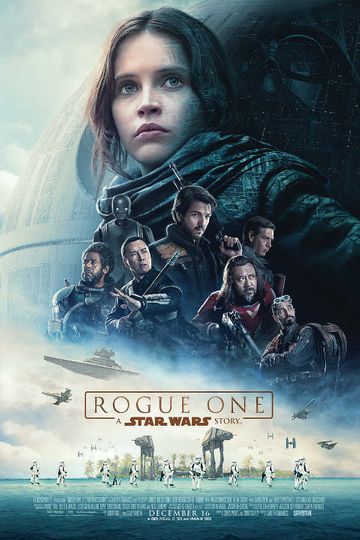
Ben Mendelsohn as Orson Krennic in 'Rogue One: A Star Wars Story'. Photo: Lucasfilm.

Ben Mendelsohn as Orson Krennic in ‘Rogue One: A Star Wars Story’. Photo: Lucasfilm.

A rogue band of resistance fighters unite for a mission to steal the Death Star plans and bring a new hope to the galaxy.

“Empires are built on fear. Rebellions are built on hope.”

Release Date: Dec 16, 2016

Run Time: 2 hr 13 min

Budget: $200,000,000


Mark Hamill in 'Star Wars: Episode VI – Return of the Jedi' Photo: Lucasfilm.

Mark Hamill in ‘Star Wars: Episode VI – Return of the Jedi’ Photo: Lucasfilm.

Luke Skywalker (Mark Hamill) leads a mission to rescue his friend Han Solo (Harrison Ford) from the clutches of Jabba the Hutt, the Emperor prepares to crush the Rebellion with a more powerful Death Star, and the Rebel fleet mounts a massive attack on the space station. Luke Skywalker confronts Darth Vader (Voice of James Earl Jones) in a final climactic duel before the evil Emperor.

Return of the Jedi

“Return to a galaxy far far away.”

Release Date: May 25, 1983

Run Time: 2 hr 12 min

Budget: $32,350,000


Mark Hamill in 'Star Wars: The Last Jedi.' Photo: Lucasfilm.

Mark Hamill in ‘Star Wars: The Last Jedi.’ Photo: Lucasfilm.

Rey (Daisy Ridley) develops her newly discovered abilities with the guidance of Luke Skywalker (Mark Hamill), who is unsettled by the strength of her powers. Meanwhile, the Resistance prepares to do battle with the First Order.

Release Date: Dec 15, 2017

Run Time: 2 hr 32 min

Budget: $300,000,000


(L to R) Mark Hamill, Carrie Fisher, and Harrison Ford in 'Star Wars: Episode IV – A New Hope'. Photo: Lucafilm.

(L to R) Mark Hamill, Carrie Fisher, and Harrison Ford in ‘Star Wars: Episode IV – A New Hope’. Photo: Lucafilm.

Princess Leia (Carrie Fisher) is captured and held hostage by the evil Imperial forces in their effort to take over the galactic Empire. Venturesome Luke Skywalker (Mark Hamill) and dashing captain Han Solo (Harrison Ford) team together with the loveable robot duo R2-D2 (Kenny Baker) and C-3PO (Anthony Daniels) to rescue the beautiful princess and restore peace and justice in the Empire.

“A long time ago in a galaxy far, far away…”

Release Date: Jan 31, 1997

Run Time: 2 hr 1 min

Budget: $11,000,000


James Earl Jones as the voice of Darth Vader in 'Star Wars: Episode V – The Empire Strikes Back'. Photo: Lucasfilm.

James Earl Jones as the voice of Darth Vader in ‘Star Wars: Episode V – The Empire Strikes Back’. Photo: Lucasfilm.

The epic saga continues as Luke Skywalker (Mark Hamill), in hopes of defeating the evil Galactic Empire, learns the ways of the Jedi from aging master Yoda (Voice of Frank Oz). But Darth Vader (Voice of James Earl Jones) is more determined than ever to capture Luke. Meanwhile, rebel leader Princess Leia (Carrie Fisher), cocky Han Solo (Harrison Ford), Chewbacca (Peter Mayhew), and droids C-3PO (Anthony Daniels) and R2-D2 (Kenny Baker) are thrown into various stages of capture, betrayal and despair.

“The Star Wars saga continues.”

Release Date: Jun 20, 1980

Run Time: 2 hr 4 min

Budget: $18,000,000

Source link

(L to R) Mandalorian (Pedro Pascal) and

When Thierry Frémaux faced up to a Cannes without Hollywood movies — he was holding out for Steven Spielberg’s “Disclosure Day,” which Universal opted to withhold — he knew that while the usual festival d’auteurs would yield many quality films, they might not play big across the Atlantic.

When studio movies come to the Croisette, they’re accompanied by stars on the red carpet and parties and marketing junkets. Not so this year. The two American movies in the Competition, James Gray’s well-reviewed “Paper Tiger” (Neon), and Ira Sachs’ “The Man I Love,” delivered Adam Driver and Miles Teller and Rami Malek, respectively, to the red carpet, but came up empty-handed at the closing awards ceremony. All the prizes went to non-English-language films.

Per usual, the Screen International Critics’ Grid had less influence on the prize-winners than the jury, which is always dominated by actors. With the exception of Andrey Zvyagintsev‘s Grand Prix winner “Minotaur,” a reworking of Claude Chabrol’s “The Unfaithful Wife,” all the prizes went to movies that evoke deep emotion. Top-ranked on the Screen grid, Polish filmmaker Pawel Pawlikowski‘s German-language post-World War II road movie “Fatherland” (Mubi) shared Best Director with period gay romance “The Black Ball,” directed by Los Javis (Javier Calvo and Javier Ambrossi).

“We live and breathe politics,” said Pawlikowski, who had won Best Director for “Cold War” (followed by a Best Director Oscar nomination) in 2018 after waiting impatiently to accept his Palme, “and the cinema reflects that.”

While Berlin Best Actress winner Sandra Hüller (“Rose”) won accolades for her role in “Fatherland,” she will have to wait for award season to see how things shake out. With the Academy rule change allowing two slots for the same actor in the actor races, Mubi could chase Best Actress for both “Rose” and “Fatherland,” while Amazon will likely seek Supporting Actress for “Project Hail Mary,” and we have yet to see Alejandro González Iñárritu’s “Digger.”

Sandra Huller at the premiere of 'Fatherland' at the 79th Festival de Cannes held at Palais des Festivals on May 14, 2026 in Cannes, France.
Sandra Huller at the premiere of ‘Fatherland’ at the 79th Festival de Cannes held at Palais des Festivals on May 14, 2026 in Cannes, France.Michael Buckner/Variety

The question is, which country will submit which film for the Oscars? Thanks to the new Academy rules making the top prize winners from six top film festivals, including Cannes, automatically eligible, Christian Mungiu’s second-time Palme d’Or winner, the controversial Norwegian/Romanian “Fjord,” has nothing to worry about. “It’s important for cinema to cover relevant things,” he said in his acceptance speech, which he gave in French and English.

That leaves, in all likelihood, “The Black Ball” (Netflix) as the Spanish entry; “Fatherland” (Mubi) as the German entry (jury prize-winner Valeska Grisebach’s immigration drama “The Dreamed Adventure” is also German but lacks a North American distributor); Russian exile Zvyagintsev’s “Minotaur” as a possible French entry; Lukas Dhont’s shared Best Actor winner “Coward” (Valentin Campagne and Emmanuel Macchia), which was picked up by Mubi, as the Belgian entry; and Neon’s shared Best Actress winner “All of a Sudden” (Virginie Efira and Tao Okamoto) as the Japanese entry. Okamoto thanked Ryûsuke Hamaguchi “for his incredible writing and guidance,” she said. “He’s the reason we’re here today. Thank you for recognizing us as a pair.”

“A Man of His Time” is a French-Belgian co-production without North American distribution so far.

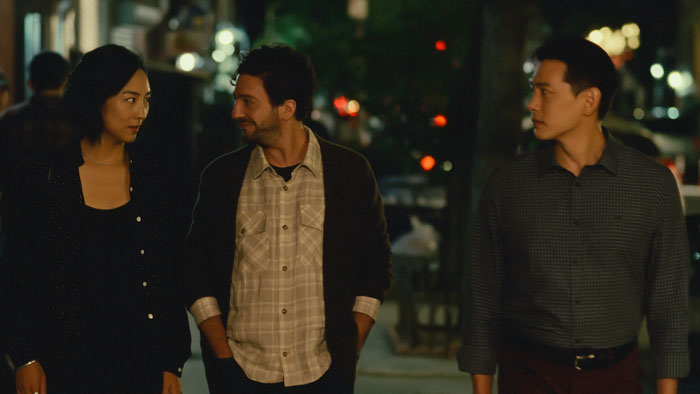
Other films may factor in the Oscar race, including Neon’s critics’ fave “Paper Tiger,” which boasts a trio of strong performances from Adam Driver, Miles Teller, and Scarlett Johansson, and rookie Jordan Firstman’s popular “Club Kid,” which A24 scooped up after a bidding war for $17 million. A screenplay nomination seems the most likely Oscar scenario. When I asked why he did not include the crowd-pleaser in the Competition, Frémaux said he needed it to serve as a strong anchor for Un Certain Regard.

Adam Driver, James Gray and Miles Teller at the premiere for
Adam Driver, James Gray and Miles Teller at the premiere for “Paper Tiger” at the 79th Festival de Cannes held at Palais des Festivals on May 16, 2026 in Cannes, France.Earl Gibson III/Deadline

Even though it runs three and a quarter hours, if Neon handles it well, “Drive My Car” Oscar nominee Ryûsuke Hamaguchi’s “All of a Sudden” could break into other categories including Picture, Original Screenplay, and Director. And while Neon’s “Mrs. Dalloway” adaptation “Clarissa” inexplicably played in Directors’ Fortnight, the impeccably cast (Nina Gold) Nigerian generational drama starring Oscar nominee Sophie Okonedo (“Hotel Rwanda”), David Oyelowo, and Ayo Edebiri will flourish on the fall festival circuit.

At the close of the awards ceremony, during which Isabelle Huppert presented an Honorary Palme to the absent Barbra Streisand (who sent a gracious video), Palme d’Or presenter Tilda Swinton, after many speeches about how films are a crucial form of resistance, cried, “Vive le cinéma!”

Source link

When Thierry Frémaux faced up to a

Rob Base, the rapper known for the certified platinum song “It Takes Two,” died on Friday, according to a statement on his official social media account. He was 59.

Mr. Base had cancer, according to a post on Instagram.

In his 1988 hit song, “It Takes Two,” with DJ E-Z Rock, he begins with, “I wanna rock right now / I’m Rob Base and I came to get down / I’m not internationally known / But I’m known to rock the microphone.”

It was featured as one of Rolling Stone’s 500 best songs of all time.

“The 1988 tune remains the single greatest use of a looped drum break in rap history,” the magazine wrote in 2018. It called it “the hip-hop equivalent” to the guitar solo in “Stairway to Heaven.”

The song was also included in VH1’s list of the 100 greatest hip-hop songs in 2008.

The single was certified platinum by the Recording Industry Association of America for sales of more than one million copies.

The song was often played at Major League Baseball games after a double play.

Other artists sampled the song, including Mac Miller on “Play Ya Cards” and Snoop Dogg’s “I Wanna Rock.”

Mike WiLL Made-It, Lil Yachty and Carly Rae Jepsen remade the song for a Target ad.

In “The Proposal,” Sandra Bullock and Ryan Reynolds jokingly sang the song together.

Tributes to Mr. Base from other rap and hip-hop artists flooded social media.

“I love this guy,” rapper Fat Joe wrote on Instagram. “He was a big inspiration.”

DJ Jazzy Jeff posted on social media “Wow…” with broken heart emojis.

Mr. Base was born Robert Ginyard on May 18, 1967, in Harlem in Manhattan, according to the social media post and his talent agency, Celebrity Talent Agency Inc.

He started his career as a D.J., playing at parties and clubs in the New York City area, according to his agency.

Mr. Base was a headliner of the “I Love the 90s Tour,” alongside Vanilla Ice, All-4-One and others.

A full list of survivors for Mr. Base was not immediately available. A representative for Mr. Base could not be immediately reached on Friday night.

Source link

Rob Base, the rapper known for the

Romance films have always shaped how people think about love. Long before dating apps, social media, and online messaging became part of everyday life, movies were already teaching audiences what attraction should look like, how chemistry should feel, and what meaningful relationships were supposed to become.

From classic Hollywood romances to modern streaming-era dramas, film has consistently influenced the emotional expectations people carry into their own relationships. The problem is that modern dating no longer works the way romance films suggest it should.

Today, relationships often begin through apps, text messages, Instagram replies, or carefully curated online profiles. Attraction develops through screens before real-world interaction even happens. Yet many people still subconsciously expect their dating experiences to unfold with the same emotional intensity, confidence, and certainty they see in films.

That gap between cinematic romance and digital reality has changed how people communicate, interpret attraction, and judge compatibility. Romance movies may still offer escapism, but they also shape unrealistic expectations that many modern relationships struggle to meet.

Romance Films Made Perfect Communication Look Normal

One of the biggest influences romance films had on modern dating is the idea that emotionally perfect communication should come naturally.

In films, characters always seem to know exactly what to say. Conversations flow effortlessly. Emotional tension feels carefully timed. Every line pushes the relationship closer to a meaningful breakthrough or dramatic turning point.

Real online dating is far less polished. Most people spend far more time second-guessing messages, interpreting delayed replies, or wondering how they come across digitally. Online conversations are full of awkward pauses, mismatched expectations, and uncertainty that films rarely show honestly.

This becomes even more noticeable in dating environments where communication carries stronger expectations from the start. In relationships built around lifestyle, status, or financial dynamics, for example, understanding how to talk to a sugar daddy for the first time is usually less about using dramatic charm and more about confidence, clarity, emotional awareness, and understanding social boundaries. Modern romance films rarely prepare audiences for those kinds of realistic interactions because cinematic dialogue is designed to entertain rather than reflect how people actually communicate online.

This disconnect has created a generation of daters who expect instant chemistry and emotionally intelligent conversations from the very beginning. Many people abandon conversations too quickly because they do not “feel right” immediately, forgetting that real emotional connection often develops gradually rather than cinematically.

Film Threat itself explored similar ideas in its feature on romantic films and their impact on real-life dating expectations, highlighting how movies continue influencing modern perceptions of love and attraction.

Streaming Platforms Intensified Romantic Expectations

Streaming platforms changed romance storytelling dramatically over the last decade.

Older romance films often focused on emotional development over time. Modern streaming content tends to prioritize emotional intensity, dramatic tension, and highly stylized relationships that keep audiences emotionally invested episode after episode.

Shows like Normal People, Euphoria, You, and countless Netflix romance dramas portray relationships as emotionally overwhelming experiences filled with obsession, constant tension, emotional ambiguity, and extreme vulnerability. These stories are visually compelling and emotionally addictive, but they also influence how viewers approach their own dating lives.

Many people now expect relationships to feel exciting immediately. Emotional calmness is sometimes interpreted as lack of chemistry. Stability can feel “boring” compared to the intensity audiences consume through streaming content every night.

This has affected dating apps especially. Swiping culture encourages instant judgments, rapid attraction, and endless comparison. The emotional pacing of streaming romances aligns perfectly with this environment because both reward immediacy over patience.

Streaming culture also blurred the line between romance and emotional chaos. Jealousy is often framed as passion. Emotional unavailability becomes mysterious and attractive. Toxic behavior is softened by aesthetics, attractive casting, and emotionally charged storytelling.

As a result, many viewers unconsciously normalize unhealthy relationship dynamics because they associate emotional instability with cinematic excitement. This is especially visible in relationship-driven dramas and thrillers, where attraction is often tied to secrecy, temptation, and emotional dissatisfaction. Shows like The Couple Next Door show how streaming stories can turn complicated relationship dynamics into addictive entertainment, which can subtly shape how audiences think about desire and commitment in real life.

Online Dating Turned Romance Into Performance

Modern romance films increasingly mirror the same performative culture that dominates social media and online dating.

Relationships today are not only experienced privately. They are often presented publicly through Instagram posts, TikTok videos, curated selfies, and relationship-centered online identities. Romance films reinforce this by presenting relationships through highly polished visual storytelling where attraction feels effortless and aesthetically perfect.

This has changed how many people approach dating apps and online communication.

Profiles are now carefully curated like personal brands. Conversations are managed strategically. Attraction is often judged visually before emotional compatibility is even considered. Many people feel pressure to appear emotionally desirable instead of emotionally authentic.

Films contribute to this by presenting romance as something visually cinematic rather than emotionally ordinary. Characters rarely deal with the repetitive, uncertain, and awkward aspects of real communication. Instead, every interaction feels meaningful and emotionally loaded.

That mindset influences how people behave online. Many daters now approach relationships almost like auditions, expecting immediate emotional payoff instead of gradual connection.

Romance Movies Simplified Compatibility

Another major issue is that romance films tend to oversimplify compatibility. In most movies, attraction itself is treated as proof that two people belong together. If characters feel emotionally drawn toward one another, audiences are expected to assume long-term compatibility naturally follows.

Real relationships are far more complicated. Compatibility involves communication styles, emotional maturity, timing, lifestyle alignment, values, and long-term goals. None of those factors develops instantly, yet romance films often compress emotional progression into a few dramatic scenes.

This has influenced modern online dating behavior significantly. Many people now expect certainty too early. They interpret hesitation as failure. If an attraction does not feel cinematic immediately, they assume the connection is wrong. Dating apps amplify this mindset because alternatives are always available with another swipe.

At the same time, some viewers become attached to emotionally unhealthy dynamics because films repeatedly portray emotional struggle as proof of passion.

Independent cinema has started pushing back against these unrealistic expectations. Many modern independent films portray relationships more honestly by focusing on loneliness, awkward communication, emotional uncertainty, and imperfect compatibility rather than idealized romance.

Film Threat often highlights these kinds of grounded relationship stories in its coverage of independent cinema and character-driven films. Articles discussing what makes a successful romance movie increasingly emphasize emotional realism over fantasy.

Social Media Made Cinematic Expectations Worse

Social media amplified everything romance films already encouraged.

For decades, movies shaped romantic ideals through carefully scripted storytelling. Social media transformed those ideals into constant visual comparison. People are now exposed to curated relationship content every day through Instagram couples, TikTok dating advice, relationship podcasts, and viral romantic moments. This creates an endless cycle of unrealistic comparison.

Films encourage idealized expectations. Social media reinforces them visually. Dating apps encourage people to evaluate endless alternatives. Eventually, many people become dissatisfied with ordinary emotional experiences because real relationships cannot compete with highly edited digital fantasy. Modern communication suffers because of this pressure.

People overanalyze messages. They expect conversations to feel emotionally significant immediately. They mistake inconsistency for mystery and emotional instability for depth because entertainment culture repeatedly frames those traits as desirable.

Streaming romances and social media aesthetics together created a version of love that feels highly performative rather than emotionally sustainable.

That is one reason more audiences are now gravitating toward films and shows that portray relationships with greater realism. Viewers increasingly appreciate stories where attraction develops slowly, conversations feel awkward, and emotional connection takes effort rather than instant destiny.

Independent Films Are Responding to Modern Dating Reality

Interestingly, some of the most emotionally honest relationship stories today are coming from independent cinema rather than mainstream Hollywood.

Independent filmmakers have become more willing to portray dating realistically. Instead of presenting love as magical certainty, many modern indie films focus on emotional confusion, digital loneliness, failed expectations, and the emotional fatigue that comes with modern dating culture.

Movies like Past Lives, Her, Cha Cha Real Smooth, and similar projects resonate because they acknowledge how complicated emotional connections have become in the digital age.

These films do not pretend that attraction solves everything. They show how timing, emotional maturity, technology, and personal uncertainty shape relationships just as much as chemistry itself.

Film Threat’s coverage of independent romance and character-driven storytelling often highlights why these grounded narratives resonate more strongly with modern audiences. Stories that feel emotionally believable are becoming increasingly valuable because audiences themselves are growing tired of unrealistic romantic fantasy.

At the same time, audiences still crave escapism. Romance films continue to offer emotional optimism and fantasy that many people genuinely enjoy. The issue is not romance itself. The issue is when viewers begin treating cinematic storytelling as emotional instruction for real life.

Modern Dating Requires Emotional Realism

Modern dating is more complicated than most romance films allow. Technology changed how people meet, communicate, flirt, and form relationships. Dating apps introduced endless comparison. Social media turned relationships into public performances. Streaming culture normalized emotional intensity and instant attraction.

Yet many people still approach dating with expectations built by scripted storytelling. The healthiest relationships rarely look cinematic. They are usually quieter, slower, and less dramatic than what films portray. Real intimacy develops through consistency, emotional maturity, honesty, and patience rather than perfectly timed emotional speeches.

Ironically, audiences may now be searching for more realistic romance stories precisely because digital culture already feels emotionally exhausting enough.

That shift explains why grounded relationship dramas are becoming more appreciated while exaggerated romantic fantasy increasingly feels disconnected from real emotional experience. As entertainment continues evolving alongside technology, romance storytelling may eventually move closer to how people actually experience love rather than how audiences once dreamed it would feel.


Source link

Romance films have always shaped how people

Premier Christine Fréchette defended her spending promises on Saturday, despite a warning from the province’s finance minister that she may surpass the $250 million fund allocated to her.

Radio-Canada has reported that Eric Girard wrote to Fréchette earlier this month to express concern about her high spending, writing that “Quebecers want a responsible premier who doesn’t spend every which way.”

Since taking office in April, Fréchette has already said the government will reimburse part of the welcome tax paid by first-time homebuyers as well as the carbon tax for farmers. She also announced a tax cut for small and medium-sized businesses.

She is also expected to announce the elimination of the Quebec Sales Tax, or QST, on certain grocery and pharmacy items in the coming days.

That measure is expected to cost $100 million, which brings the total amount of her pledges to around $330 million so far.

Story continues below advertisement

The Quebec budget allocated $250 million per year for five years for the new leader of the Coalition Avenir Québec to deliver on her promises.

Get breaking Canada news delivered to your inbox as it happens so you won't miss a trending story.

Get breaking National news

Get breaking Canada news delivered to your inbox as it happens so you won’t miss a trending story.

Fréchette defended her spending as she arrived at a party meeting in Lévis, Que., noting that Quebecers are having a tough time due to pressures such as the conflict in the Middle East.

“We’re thinking about the cost of groceries, the cost of housing…and gas as well,” she told reporters.

“The minister of finance is doing his job. Now, I’m doing mine, which is to find a balance between managing public finances and addressing the needs of Quebecers.”

Girard, meanwhile, downplayed the importance of his message to Fréchette, saying he had written “thousands” of similar messages during his time at the National Bank of Canada.


“That’s my style: concise, direct,” he said. “I’m the guardian of public finances.”

Environment Minister Pascale Déry also felt that the message from Girard wasn’t unusual. “There’s nothing in there that surprises me, that’s concerning, or that’s out of the ordinary,” she said.

Fréchette’s rivals, however, were quick to criticize.

“Ms. Fréchette, like Mr. Legault before her, continues to spend lavishly in an attempt to win over voters,” Liberal Leader Charles Milliard wrote on X. “As if Quebecers didn’t see right through their game.”

Story continues below advertisement

Parti Québécois Leader Paul St-Pierre Plamondon said the news was “undeniable proof,” that nothing has changed in the CAQ party since Fréchette succeeded François Legault as leader. “They’ve learned nothing from their failures,” he wrote.

Fréchette is presiding over her party’s first general council meeting since becoming premier. She is expected to deliver a speech later Saturday.

&copy 2026 The Canadian Press

Source link

Premier Christine Fréchette defended her spending promises

Image Credit: WireImage

The 2026 American Music Awards will be another star-studded night celebrating the biggest names in music! This year’s AMAs are expected to bring together chart-topping artists and, of course, unforgettable performances from some of music’s brightest stars.

Here’s everything to know about the 2026 American Music Awards, from where the ceremony will take place and how to watch the show.

When Are the 2026 American Music Awards?

The 2026 American Music Awards will air live on Monday, May 25, 2026: Memorial Day. The ceremony will kick off at 8 p.m. ET / 5 p.m. PT.

The AMAs are one of the biggest fan-voted award shows in music, honoring artists across pop, country, hip-hop, Latin, rock and more.

The 2026 show is also expected to feature major live performances and celebrity appearances throughout the night. Performers include artists such as Keith Urban, Maluma, Teddy Swims and Twenty One Pilots.

Meanwhile, Queen Latifah is set to host the show, marking her return to the AMAs stage decades after previously co-hosting the ceremony in the 1990s.

Where Are the 2026 AMAs Taking Place?

The 2026 American Music Awards will take place at the MGM Grand Garden Arena in Las Vegas.

The venue has hosted countless iconic concerts and televised specials over the years and is expected to once again transform into music’s biggest party for the annual broadcast.

How Can I Watch the 2026 AMAs?

Fans can watch the 2026 American Music Awards live on CBS. The ceremony will also stream live on Paramount+ for subscribers with the Paramount+ Premium plan.

For viewers who miss the live evening broadcast, the show will also be available to stream on demand on Paramount+ after it airs.

And for anyone who wants to tune into the red carpet, Samsung TV Plus is giving fans front row access with live, subscription-free coverage on BillboardTV.

Source link

Image Credit: WireImage The 2026 American Music Awards

Despite years of rumors insisting the opposite, Idris Elba said in an interview published Saturday that he’s never really been considered for the role of James Bond. “My name’s not getting thrown out, no way,” he told People.

“They’re going younger. And I wish them all the luck of the world. I can’t wait — it’s going to be amazing,” Elba added. “I’m honestly not in the race ever. I wasn’t in the race in the first place.”

Rumors surrounding Elba’s potential casting as the British spy date back to at least 2011. “I’d definitely consider it,” Elba told NPR at the time when asked about playing the character. “I just don’t want to be the Black James Bond. Sean Connery wasn’t the Scottish James Bond, and Daniel Craig wasn’t the blue-eyed James Bond. So if I played him, I don’t want to be called the Black James Bond.”

He appeared to shut down the possibility a few years later.

“Isn’t 007 supposed to handsome? Glad you think I’ve got a shot! Happy New year people,” Elba tweeted in 2014. His message appeared to be inspired in part by a leaked January 2014 email from Amy Pascal to Elizabeth Cantillon, the former executive vice president of production for Columbia Pictures.

“Idris should be the next Bond,” Pascal wrote.

In August 2018, Elba offered simply a pointed, “No,” when asked by the hosts of “Good Morning Britain” if he would take on the role.

The quest to find a new Bond began in May of this year. “The search for the next James Bond is underway,” a spokesperson for Amazon MGM Studios said in a statement. “While we don’t plan to comment on specific details during the casting process, we’re excited to share more news with 007 fans as soon as the time is right.”

Denis Villeneuve is set to direct the upcoming films, and British casting director Nina Gold (“Game of Thrones,” “The Crown”) is spearheading the search.

Source link

Despite years of rumors insisting the opposite,

French actress Noémie Merlant was one of last guests to stop by the Deadline Studio in Cannes this year to discuss her role in Bertrand Mandico’s zany comedy-drama Roma Elastica, opposite Marion Cotillard.

Oscar-winner Cotillard stars as jaded star Eddie who heads to Rome for what may be her final role, with Merlant lending support as her “hairdresser,  friend and bodyguard” Valentina. Fiercely protect of Eddie, Valentina even goes as far as to bite a Vogue Italian journalist who pesters her friend in one scene.

“I never bite anyone. It was the first time… I also had in that scene to eat 10 magnums… I love magnums, but 10,” said Merlant who explained she was drawn to the project for Mandico’s fantastical storylines and aesthetics.

Another plus, was reuniting with Cotillard on set after they previously worked together on biopic Lee, starring Kate Winslet as the photographer Lee Miller.

“We stayed like 15 days together in Croatia, having dinner and talking about life, so we got closer at that time… when we found out that we were shooting this movie together, we were very, very happy,” said Merlant.

“It’s unbelievable to have the chance to work with her, and to see how free she is on set, how she builds a character… my role is in love with the artist, and completely devoted to her, so it was kind of easy to do for me, because I’m the same with Marion, I’m like, wow.”

Merlant, who is best known internationally for her roles in films such as Portrait of a Lady on Fire, Tár and Emmanuelle, will next be seen in Fred Cavayé’s Les Misérables and Arnaud Desplechin’s The Thing That Hurts.

She is also working on her third feature project as director after The Balconettes and Mi iubita, mon amour.

“I finished writing something and I’m starting to try to find some money to do it. It’s an adaptation of Notre Dame de Paris, but I focus on the Esmeralda character and her mother.”

To see the full conversation, click on the video above.

The Deadline Studio at Cannes is sponsored by SCAD.

Source link

French actress Noémie Merlant was one of

Off Campus star Mika Abdalla had an epic dance party with the one-and-only Jennifer Lopez after her viral replica costume.

“It’s a new Jeneration of party people…🎶,” Lopez, 56, wrote via Instagram on Friday, May 22, alongside footage of Abdalla, 26, outside a dance studio.

“I don’t know her personally, but I’m pretty sure that’s J. Lo,” Abdall lip-synched Khobe Clarke’s line from Off Campus.

As the cameras cut to Lopez herself, she mouthed Abdalla’s onscreen excitement that “On the Floor” had started playing. The two women subsequently hugged before dancing together.


Related: Jennifer Lopez Wears a Cutout Crystal Gown to Play Poker

Whether she’s walking down the red carpet, performing live or simply out and about, Jennifer Lopez always serves up a seriously hot style moment. The actress’ sexy style is just as iconic as her eponymous J. Lo glow. From plunging necklines and thigh-high leg slits to slinky dresses and itty-bitty minis, the Wedding Planner star […]

Abdalla plays Allie Hayes in Prime Video’s Off Campus, a collegiate hockey romance adapted from Elle Kennedy’s bestselling novels. In one episode, Allie and then-boyfriend Sean (Riley Davis) attended a theme party as Lopez and Ben Affleck.

For Abdalla, that meant rocking a replica of the Hustlers actress’ navel-baring Versace gown that made a statement at the 2000 Grammy Awards.

“It was unbelievable. I had, like, four fittings. They built that [dress] from scratch,” Abdalla exclusively told Us Weekly ahead of the series’ premiere this month. “I had several fittings where they were just, like, draping these fabrics over me, and different brooches and different whatever. I had so much body makeup on. It was unbelievable.”

She continued, “I was seriously, seriously taped into that dress like all day, and I’m dancing around and moving around at the end of the day, I just had, like, a layer of skin [come] off my body. It was so worth it because it looks so cool. The dress looks so good and so cool, and it was so much fun.”

According to Abdalla, she spent an entire dat on set “dancing around in this unbelievable custom-made” replica of Lopez’s iconic dress.

The scene ultimately earned Lopez’s approval.

“Love this shooooww,” Lopez tweeted on May 18, alongside footage of Allie’s J. Lo dance.

JLo-GettyImages-2276126440

Jennifer Lopez
Dave Kotinsky/Getty Images for Netflix

The “On the Floor” dance also introduced Allie to her eventual love interest, Dean Heyward-Di Laurentis (Stephen Kalyn).

“I’m just really looking forward to digging deeper into who Allie and Dean are,” Abdalla told Us of her hopes for future Off Campus seasons. “They both, kind of, have these fronts, these personas that are hard to kind of crack through. They are kind of stereotypes of themselves. But in the books, as we know, there’s so much beneath the surface of Dean, and there’s so much beneath the surface of Allie.”

She added, “When it is time for our season, I’m excited to dig emotionally into that a little bit more, because, you know, we see Allie and Dean as their exteriors a lot in season 1. While that is fun, and they are super fun characters to play, I think as actors, selfishly, both of us are really excited to, kind of, like, get psychological.”

Off Campus has already been renewed for a second season, though it is known whether Dean or his hockey teammates Logan (Antonio Cipriano) or Tucker (Jalen Thomas Brooks) will take the lead next after Garrett (Belmont Cameli) in season 1.

Off Campus season 1 is now streaming on Prime Video.

Source link

Off Campus star Mika Abdalla had an

South Africa has been selected as the “Country in Focus” for the upcoming edition of the Berlinale European Film Market (EFM).

The news was revealed while the National Film and Video Foundation (NFVF) attended the 79th Cannes Film Festival in France.

In 2025, Gayton McKenzie blocked the NFVF from travelling to the 78th Cannes Film Festival and ordered the organisation to remain within its mandate, which stipulates that 75% of the NFVF’s overall budget must be spent on making and funding films and content.

However, this year, the NFVF seems to have been greenlit to attend.

Key figures participating in the 2026 Cannes programme, for Team SA, along with key individuals from the NFVF, consisted of well-known filmmakers and industry voices Obett Motaung, Rosetta Mabaso, Dian Weys, Mark Engels, Steven Markovitz, Taryn Joffe, Mbali Mashaba, Firdoze Bulbulia, and Milton Reddy.

South African cinema has long been part of the Berlinale’s history. In 2005, “U-Carmen eKhayelitsha” by Mark Dornford-May became the first South African film to win the Berlinale’s Golden Bear, marking a milestone in the festival’s relationship with the country’s cinema.

In a press statement, Minister of Sport, Arts and Culture Gayton McKenzie, shared that South Africa wants the world to see it as both a creative powerhouse and a viable business partner in the global film industry. 

“This is more than recognition; it is an invitation. South Africa brings to the European Film Market an exceptional combination of creative talent, production capability and stories drawn from one of the world’s most compelling cultural landscapes. 

“We are open for collaboration, co-production and investment, and we are confident that those who engage with our industry at the Berlinale will leave with a deeper appreciation of what South Africa offers as a creative and commercial partner. 

“From ‘U-Carmen eKhayelitsha’ to ‘The Heart Is a Muscle’, the world is experiencing authentic South African storytelling in all its layers.

“Our commitment as government is to ensure that the working relations and co-productions foster growth for all involved. Furthermore, addressing the challenges that have affected our filmmakers’ ability to produce at scale is being addressed,” said McKenzie.

McKenzie was not at the signing ceremony, but Department of Sport, Arts and Culture Director General, Dr Cynthia Khumalo, attended in Cannes. 

“Given the socio-economic challenges facing our nation and its global position, this recognition holds great significance not only for our film industry but for the entire country. 

“We are thrilled and grateful for the opportunities this prestigious festival market will provide our filmmakers and the spotlight it will cast on the rich, nuanced, and diverse stories South Africa has to offer,” said Khumalo.

Also in attendance was Berlinale Festival Director Tricia Tuttle, who said that South Africa being the European Film Market’s ‘Country in Focus’ for 2027 reflected both its longstanding relationship with the Berlinale and the extraordinary vitality of its film industry. “South African cinema brings together powerful storytelling, remarkable creative voices, and a strong international outlook. 

“We are excited to shine a spotlight on a film culture that continues to shape global conversations and to create new opportunities for collaboration between South African and international partners at the EFM,” said Festival Director Tricia Tuttle.

Industry stakeholders are happy about the opportunity for a platform that could create funding.

While the initiative presents valuable opportunities for South African filmmakers, offering funding and investment, there is an unresolved question regarding whether the South African government provided the financial backing for this venture.

IOL

Get your news on the go. Download the latest IOL App for Android and IOS now.

Source link

South Africa has been selected as the

Thanos’s snap devastated the universe in Avengers: Infinity War, but some of those lost to the event may have deserved what they got. Thanos’ snap marked one of the biggest moments in MCU history, as Josh Brolin’s villain eliminated half of all life across the universe after gathering the six Infinity Stones.

Three major characters who temporarily lost their lives as a result of Thanos’s snap with the Infinity Gauntlet (according to the Marvel Wiki page) may have had it coming. The MCU has featured more than its fair share of characters deemed irredeemable, who have committed such heinous acts that they may never be seen favorably in fans’ eyes again.

Every Character Thanos Snapped Away That Deserved It

Thaddeus Ross

Marvel Studios

Former United States President Thaddeus “Thunderbolt” Ross is one of the MCU’s longest-running antagonists, first appearing in 2008’s The Incredible Hulk. Originally portrayed by the late William Hurt before his death in 2021, Star Wars legend Harrison Ford took over the role in 2025’s Captain America: Brave New World.

Simply put, Ross was far from a redeemable character, as it took him well over a decade of time in the MCU to even consider working with the Avengers rather than wanting to control them or dismiss them entirely. On top of that, he regularly proved guilty of hypocrisy, as his obsession with Bruce Banner/the Hulk led to Harlem nearly being destroyed in the first Hulk movie, among other things.

Holding multiple positions of real power in the United States Army and government, Ross was willing to do anything he deemed necessary for peace, no matter who he harmed in the process, physically or emotionally. While being wiped from existence for five years is harsh, he certainly earned some kind of punishment for his actions.

Wilfred Nagel

Olli Haaskivi as Wilfred Nagel in 'The Falcon and the Winter Soldier.'
Marvel Television

Olli Haaskivi joined the MCU for a one-episode appearance in 2021’s The Falcon and the Winter Soldier, playing Dr. Wilfred Nagel. In Episode 3, Nagel confirmed to Sam Wilson (Anthony Mackie) and Bucky Barnes (Sebastian Stan) that he turned to dust when Thanos snapped his fingers.

In limited screentime, Dr. Nagel proved to be one of the more evil characters in the Multiverse Saga, revealing that he was recruited by HYDRA to recreate the Super Soldier Serum as part of the Winter Soldier Program. He was recruited by the CIA when HYDRA fell, but he was snapped away before he could finish his work. Upon his return, he was recruited by Sharon Carter (the Power Broker) to finish the serum before he was killed by Helmut Zemo.

In his short MCU tenure, Nagel proved quite heartless, refusing to help Karli Morgenthau when she asked him to assist Donya Madani with her tuberculosis diagnosis. Considering this, and his at least somewhat willing association with HYDRA, he may have earned the punishment of being snapped away, even if he died for good after coming back.

Connor Powell

Hamish Allan-Headley as Officer Connor Powell in 'Daredevil: Born Again.'
Marvel Television

Hamish Allan-Headley joined the MCU in 2025, portraying NYPD Officer Connor Powell in almost every episode of Daredevil: Born Again to date. By the end of Season 1, he was one of the key pieces of Mayor Wilson Fisk’s Anti-Vigilante Task Force (AVTF), which helped enact martial law in New York City.

Across both seasons, Powell showed no mercy as an officer, both with the NYPD and AVTF. He ordered the bombing of the remaining Northern Star ship in Season 1, which resulted in over two dozen deaths, and he and his partner also brutally assaulted Nicky Torres and got into a confrontation with Hector Ayala in Season 1, which led to his partner’s death. To make matters worse, he lied on the stand at Ayala’s trial, blaming him for his partner’s death. Ayala was then put in prison before he was released and eventually killed.

This is not even the end of Powell’s list of horrible deeds, as he executed a subordinate in the ATFV, tortured Frank Castle after he refused to join the AVTF,  and assaulted a reporter by threatening to burn his hand with frying oil.

On countless occasions, Powell was one of the most evil and brutal villains in the MCU, never holding back his aggression or showing mercy to those he was supposed to protect. He became somebody that fans wanted to see punished, and after he was confirmed to have been snapped, many felt he deserved that fate.

Bonus: Star-Lord

Thanos, Chris Pratt as Star-Lord, Robert Downey Jr. as Iron Man in 'Avengers: Infinity War.'
Marvel Studios

Chris Pratt’s Star-Lord was an MCU mainstay for nearly a decade, starring as the leading hero in all three Guardians of the Galaxy movies. Along with the Guardians’ Disney+ holiday special, he also played a major role in Avengers: Infinity War and a smaller role at the end of Avengers: Endgame.

While Peter Quill is one of the most notable heroes in the MCU, one moment sticks out for him more than most heroes that will haunt him for the rest of time. In Infinity War, Peter helped Thanos be trapped with the other Avengers and Guardians, as they almost got the Infinity Gauntlet off of Thanos’ hand. However, upon learning that Thanos killed Gamora, Quill lost his cool and whacked Thanos in the head, allowing him to break free of Mantis’ trance and regain control of the Gauntlet.

Although Doctor Strange saw only one in 14,000,605 scenarios in which the Avengers won, many feel Quill ruined the team’s chances of stopping Thanos’ snap before it came to pass. Eventually being snapped away and turned to dust, more than a few fans feel he earned that fate for his lack of control in the situation.

Source link

Few villains in comic book history have a reputation as terrifying as Darkseid, but several characters introduced in DC’s movie history could challenge, or even defeat, the God of Evil. Darkseid is one of the most powerful beings in the DC universe, known for his repeated attempts to enslave the multiverse. While often requiring the combined efforts of multiple heroes to overcome the Anti-Life God, some characters already adapted to live-action could go toe-to-toe with the mighty villain.

Across decades of DC storytelling, the ruler of Apokolips has been portrayed as a near-unstoppable cosmic tyrant whose Omega Beams, godlike strength, and endless armies make him one of the most dangerous beings in existence. Darkseid was alluded to in the DCEU’s Batman v Superman: Dawn of Justice, and made a full appearance in Zack Snyder’s Justice League – though was removed from the earlier theatrical cut.

In many cases, the comics themselves have directly explored how these confrontations might end, and the results are not always favorable for Darkseid. From world-destroying monsters to beings capable of rewriting reality itself, DC cinema has already introduced multiple characters whose power levels extend beyond conventional superheroes and villains.

Starro The Destroyer

Starro, a giant one-eyed starfish kaiju, in The Suicide Squad

James Gunn’s The Suicide Squad transformed Starro from a famously bizarre comic book villain into one of the DC Universe’s most disturbing threats. At first glance, the giant alien starfish hardly seems capable of matching Darkseid in direct combat. However, Starro’s greatest weapon has never been brute force. Its terrifying advantage is control.


Jared Leto as the Joker in the Knightmare sequence in Snyder's Justice League


10 Abandoned Comic Book Movies We’re Glad Never Happened

With Joker disasters and bizarre superhero comedies, we’re relieved these abandoned comic book movies were probably better left unmade forever.

Through its smaller parasitic spores, Starro can dominate the minds and bodies of other beings, effectively turning entire populations into extensions of itself. The frightening implication is that Darkseid’s immense strength could be used by Starro.

In DC Comics, Starro has demonstrated the ability to control beings of extraordinary power, and once a victim is enslaved, their abilities become part of Starro’s growing empire – including Darkseid. Joshua Williamson and Robson Rocha’s Future State: Justice League #1 depicted this, with Starro’s control stars assimilating the fearsome foe.

The creature is also remarkably durable. Fully matured versions of Starro have survived devastating military assaults and absorbed enormous amounts of energy without slowing down. Darkseid may possess superior raw power, but Starro doesn’t necessarily need to overpower him physically to win.

Doomsday

Doomsday from Batman V Superman emerging from rubble.

The monstrous version of Doomsday introduced in Batman v Superman: Dawn of Justice immediately established itself as one of the deadliest creatures in DC movie history. Born from forbidden Kryptonian experimentation, the creature possessed overwhelming strength, near-limitless durability, and a capacity for destruction so extreme that even Superman struggled to contain it.

In comic lore, Doomsday’s reputation becomes even more terrifying when Darkseid enters the equation. One famous clash between the two characters in ‘Showdown’ from Doomsday Annual #1 depicted Darkseid retreating from battle after realizing how dangerous Doomsday truly was. That moment alone speaks volumes about the monster’s threat level, since Darkseid almost never shows fear.

Further, in Superman/Doomsday: Hunter/Prey, Doomsday is depicted as impervious to Darkseid’s Omega Beams, removing one of the villain’s greatest advantages. What makes Doomsday especially dangerous is its evolutionary nature. The creature continually adapts after surviving attacks, making it progressively harder to kill.

Meanwhile, Darkseid remains vulnerable to the creature’s brutal physical attacks. Doomsday doesn’t rely on strategy, manipulation, or cosmic artifacts. It simply overwhelms opponents through unstoppable aggression and horrifying resilience.

Superman

Man of Steel's Henry Cavill as Clark Kent / Superman
Man of Steel’s Henry Cavill as Clark Kent / Superman
Image via WB

Although Darkseid is frequently portrayed as physically superior to Superman, DC history repeatedly proves that Superman is one of the few heroes truly capable of defeating him outright. The version played by Henry Cavill in movies like Man of Steel and Zack Snyder’s Justice League demonstrated power levels that already bordered on godlike.

The comics push that rivalry even further. In one memorable confrontation, Superman challenged Darkseid directly to secure the freedom of his allies. In Superman Versus Darkseid: Apokolips Now, Superman beats Darkseid so severely that he blinds the villain, shutting down his Omega Beams completely and prompting Darkseid to actually surrender.

The battle became so legendary that the symbol of Superman inspired rebellion across Apokolips itself. Yet Superman isn’t uniquely dangerous to Darkseid simply for his strength. Unlike many cosmic entities, Superman combines immense power with relentless determination and moral conviction.

Darkseid often underestimates those qualities, viewing compassion as weakness, but Superman repeatedly turns that belief against him. When Superman reaches his absolute limits, especially under a yellow sun, he becomes one of the very few beings capable of overpowering the God of Evil in direct combat.

Doctor Manhattan

Doctor Manhattan in Watchmen 2009 looking offscreen

Among all the beings introduced through DC-related films and television, Doctor Manhattan may be the most fundamentally beyond comprehension. Portrayed by Billy Crudup in Watchmen, the former physicist Jon Osterman evolved into a near-omnipotent entity after a catastrophic scientific accident transformed him into living energy.


MODOK with his mask on in Ant-Man and the Wasp Quantumania


10 Worst Decisions Ever Made By Superhero Movies

From a dancing emo Spider-Man to Galactus as a cloud, these superhero movie decisions still frustrate comic book audiences years later.

Doctor Manhattan operates on an entirely different scale from most DC characters. He can manipulate matter at the atomic level, perceive time non-linearly, teleport across galaxies, and reconstruct himself after apparent destruction. Even beings as powerful as Darkseid typically still obey the rules of physical conflict. Manhattan barely acknowledges those rules at all.

The character’s later comic appearances elevated his abilities even further by showing him altering timelines and restructuring the DC multiverse itself. That level of reality manipulation pushes him into territory where traditional concepts like strength and durability become almost irrelevant.

Darkseid’s greatest weapons are intimidation, conquest, and overwhelming force. Against Doctor Manhattan, however, brute power may not matter. Manhattan could theoretically dismantle Darkseid molecule by molecule before the battle even properly begins.

Lucifer Morningstar

Peter Stormare's Lucifer in Constantine.
Peter Stormare’s Lucifer in Constantine

Peter Stormare’s unforgettable appearance as Lucifer Morningstar in Constantine only hinted at the staggering scale of the character’s true comic book power. Within DC mythology, Lucifer is not merely another supernatural villain. He is one of the most powerful beings in all existence.

Originally created as one of Heaven’s highest-ranking angels, Lucifer possesses power that rivals the foundations of creation itself. In DC cosmology, only the Presence stands definitively above him. That places Lucifer far beyond conventional gods, cosmic conquerors, or planetary tyrants like Darkseid.

Unlike Darkseid, who dominates through force and fear, Lucifer’s power is almost abstract in nature. He can manipulate reality, reshape existence, and operate on a multiversal scale with frightening ease. Even immensely powerful beings tend to view him with caution because his intellect is every bit as dangerous as his supernatural abilities.

Darkseid may rule Apokolips, but Lucifer exists on an entirely different cosmic tier. In a direct confrontation, Darkseid would likely find himself facing a being far closer to a force of creation than a traditional opponent.

DCU Temp Poster

Latest Film

Black Adam

Upcoming Films

Shazam! Fury of the Gods, The Flash Movie2, Superman, The Brave and the Bold, Supergirl: Woman of Tomorrow, The Authority, Swamp Thing


Source link

Few villains in comic book history have

The annual BitSummit awards have just taken place in Kyoto, Japan as part of BitSummit Punch, the 14th event in its history.

Each year, during the three-day indie game festival, an awards ceremony takes place to acknowledge some of the more interesting exhibits.

Futuristic turn-based RPG Artis Impact won the Vermillion Gate award, which is given each year to the most impressive title of the show.

As BitSummit’s Western partner, VGC also had its own Media Highlight Award, which we gave to the game that we most enjoyed on the show floor.

VGC’s Chris Scullion awarded the prize to Sloppy Forgeries, a comical competitive painting game. A full write-up explaining our pick will follow later this weekend.

The full list of winners is as follows:

BitSummit Punch 2026 Awards

  • Vermillion Gate Award – Artis Impact (Mas)
  • International Award – Dungeon Clawler (Stray Fawn)
  • Innovative Outlaw Award – YaoyoroZOO (AISH)
  • Excellence in Game Design Award – Nightmare Operator (DDDistortion)
  • Visual Excellence Award – Finding Polka (lidlocks)
  • Excellence in Sound Design Award – Cento (Hoshimadara Lab)
  • Sponsor Award – PlayStation – Vikings on Trampolines (D-Pad Studio)
  • Sponsor Award – ID@Xbox – 60病 The 60-Second Syndrome (Matrix, Hinata)
  • Media Highlight Award – VGC – Sloppy Forgeries (Playful Systems)
  • Media Highlight Award – Famitsu – Mount Lomyst (Hiko Game)
  • Media Highlight Award – Dengeki Online – Weatherium (ぽけそう)
  • Media Highlight Award – Gadget Tsushin – Towel Survivor (Mountain Donuts)
  • Media Highlight Award – Game*Spark – FEAR FA 98 (Jacob Jazz)
  • Media Highlight Award – IGN Japan – Tanuki: Pon’s Summer (Denkiworks)
  • Media Highlight Award – 4Gamer.net – Handlime (Bonjory)
  • Media Highlight Award – GameMakersJP – Mount Lomyst (Hiko Game)