Speaking with The Playlist’sThe Discourse podcast, The Flash director Andy Muschietti addressed Ezra Miller’s DC future and the possibility of them reprising Barry Allen in a potential sequel if it were to happen.
When asked if Miller would continue to play Barry Allen in The Flash 2, Muschietti revealed “If [a sequel] happens, yes,” the actor would return.
Justifying the statement, the filmmaker explained nobody can play the character “as well as they did” as it felt as if Barry Allen “was made for them:”
“I don’t think there’s anyone that can play that character as well as they did. The other depictions of the character are great, but this particular vision of the character, they just excelled in doing it. And, as you said, the two Barrys – it feels like a character that was made for them.”
Producer Barbara Muschietti added how Miller “was brilliant and the most committed” to The Flash during its production:
“In principal photography, Ezra was brilliant and the most committed and the most professional [actor]. Ezra gave everything for this role – physically, creatively, emotionally. They were absolutely supreme.”
Back in October 2022, The Flash 2 was reported to be in development with a script already written by Aquaman screenwriter David Leslie Johnson-McGoldrick, taking over from Christina Hodson who wrote The Flash, Birds of Prey,and Batgirl.
It’s unclear whether the sequel has since continued development following James Gunn and Peter Safran’s DC Studios takeover at the start of November 2022.
Why The Flash Director Probably Can’t Save Ezra Miller’s Job
James Gunn is currently in the midst of rebooting the DCU, with Ben Affleck’s Batman and Henry Cavill’s Superman already confirmed to be in line for a recast. The fate of the rest of the DCEU’s Justice League remains up in the air, but reports point to more recastings and possibly a new role for Aquaman’s Jason Momoa.
Ezra Miller’s Flash is in a unique position compared to the rest, as there was already talk of them facing a recast ahead of the DC Studios restructuring due to the ongoing controversy. And yet this situation only gets tougher as The Flash and particularly Miller’s performance receives universally glowing reactions.
Even though Andy Muschietti clearly had a stellar time working with Miller on The Flash and hopes to see them return given the excellent performance they delivered, the decision regarding his speedster future will ultimately fall on DC Studios’ James Gunn and Peter Safran along with other Warner Bros. executives.
With The Flash said to be one of the greatest superhero movies ever made, replacing the lead actor in favor of a reboot would be a bold move. Even on the financial front, certain projections are pointing to a successful box office opening for The Flash, but how far its speedster legs can take it remains to be seen.
Despite how a script for The Flash 2 was supposedly already being written last year, that could very easily still find itself being abandoned. After all, given Batman, Superman, and most of the Justice League are seemingly being recast, it would be rather confusing for general audiences if only part of the team was replaced.
As of now, there are no further Flash projects or appearances confirmed for the DCU’s Chapter 1. However, Gunn has been clear that his initial 10-project slate announcement only included “less than half” of what’s to come, and it’s undeniable the Fastest Man Alive will be seen again in the near future.
But unfortunately, fans should prepare themselves for the potential Ezra Miller won’t be the one appearing in the suit next time around. Even Muschietti may not necessarily be back to tackle the sequel or reboot as evidence suggests he may end up directing the DCU’s Batman reboot, The Brave and the Bold.
Update 05/30/23: In an email sent to IGN, an EON Gaming spokesperson confirmed that it would be delaying the release of the XBHD.
“The decision to delay was made in the interest of upholding the high performance standards the team at EON prides themselves on,” a spokesperson for EON Gaming told IGN. “The product shipment received, intended for the public, was not in alignment with EON’s approved prototype. As such, EON is currently working with its manufacturers to adjust those small discrepancies.”
No new release date has been announced.
EON Gaming, the company behind HDMI adapters for the Nintendo GameCube and N64, has officially announced the XBHD, its next adapter that is designed for the original Xbox.
The XBHD is a plug-and-play adapter that allows you to easily play your original Xbox on modern TVs. The XBHD includes two HDMI video outputs, a Mini-TOSLINK audio jack, and three LAN ports. The Mini-TOSlink, according to EON, claims to deliver “clean digital audio” through headphones or speakers and even capture cards.
Image Credit: EON Gaming
The three LAN ports are the most interesting feature; as you can see in the image above, it allows for versatility in having LAN parties. With the original Xbox servers shut down, including the LAN ports on the XBHD makes it easy to set up LAN parties and play games like Halo 2 with your friends and relieve the early 2000s.
EON is aiming to release the XBHD on June 20 and it will cost $189.99 — $30 more than the price of one GCHD MK-II or the Super 64 HDMI adapter.
EON Gaming XBHD: Announcement Images
Taylor is a Reporter at IGN. You can follow her on Twitter @TayNixster.
Documentary fans might be forgiven for nurturing a dream – that Cannes would follow the recent example of Venice and Berlin and award its top prize to a nonfiction film. Complete the documentary Triple Crown – the Golden Lion, the Golden Bear and the Palme d’or.
Alas, it wasn’t to be. On Saturday night, Cannes gave the gilded frond to a narrative-fiction film, as it generally does, Anatomy of a Fall. But perhaps the important thing is, the jury could have made the trifecta happen. Two documentaries appeared in main competition – Wang Bing’s Jeunesse (Youth) and Kaouther Ben Hania’s Four Daughters (Les Filles d’Olfa) – ending a nearly 20-year span in which no nonfiction film had been accorded the prestige of a competition slot (the last time it happened, in 2004, Michael Moore’s Fahrenheit 9/11 went on to win the Palme d’or). As they say about the lottery, you can’t win if you don’t play. In terms of nonfiction, no spot in competition, no Palme Doc.
Cannes Film Festival
The top prize notwithstanding, this year’s Cannes will be remembered partly for the major platform it gave to nonfiction film. In addition to the pair of docs in main competition, the festival overseen by Thierry Frémaux programmed half a dozen documentaries in its Special Screenings section, including Steve McQueen’s four-hour-long-plus Occupied City and Wim Wenders’ 3D documentary Anselm, about the monumental German artist Anselm Kiefer. (Wenders also brought a narrative film to competition, Perfect Days, starring Koji Yakusho, who won Best Actor honors).
(L-R) Painter Anselm Kiefer and director Wim Wenders attend the ‘Anselm’ red carpet at Cannes.
Photo by Andreas Rentz/Getty Images
“It’s [fitting] that Cannes finally embraces documentaries because documentaries are an integral part of film history and our film business,” Wenders told us during an interview on the Croisette. “The documentary is one of the most important elements of filmmaking from the beginning. The Lumières [pioneering French filmmakers] made documentaries… It’s great to see the festival introduce documentaries back. I’m happy.”
The different tone was not lost on Kirsten Johnson, the filmmaker who presided over the jury for L’Oeil d’or, the special prize awarded to the top documentary at Cannes.
“For me, to have the documentary film be respected at Cannes,” she told Deadline, “it affirms what I think about documentary — that it is film, it is great cinema. It can be; not all of it is, like not all scripted films are great cinema, but we’re striving for that.”
‘Four Daughters’
Courtesy of Cannes Film Festival
The L’Oeil d’or prize is traditionally the most prominent way the festival pays homage to documentary. But the honor only dates back to 2015, and it was created by an outside entity – LaScam, the French society of multimedia authors – with the approval of the festival. This year’s prize was awarded jointly to Ben Hania’s Four Daughters – the main competition entry – and The Mother of All Lies (La Mère de tous les mensonges), by Moroccan director Asmae El Moudir, which premiered in the Cannes sidebar Un Certain Regard.
Johnson (Cameraperson, Dick Johnson Is Dead) sees significance in the festival making room for Four Daughters, The Mother of All Lies and another urgent documentary out of the Middle East, Bread and Roses, directed by Sahra Mani. The latter film shows the disastrous impact on women of the Taliban takeover of Afghanistan in 2021, drawing on furtively recorded cell phone video.
Filmmaker Kirsten Johnson, president of the L’Oeil d’or jury, in Cannes.
Matthew Carey
“I do believe that cinema’s this essential tool, that humans fight for their liberty with cinema,” Johnson noted, “and having the documentary at Cannes just feels like an affirmation of those struggles.”
Cannes pays heed to documentary in other ways, principally through the festival’s Cannes Classics section. The section, considered an integral part of the sélection officielle, premieres documentaries about notable filmmakers, actors or other aspects of cinema, with this year’s program featuring films on French director Jean-Luc Godard, Belgian-French director Agnès Varda, Brazilian director Nelson Pereira dos Santos, and Norwegian actress and director Liv Ullmann. La Saga Rassam-Berri, le cinéma dans les veines explored two interconnected families deeply linked to French cinema.
“We have more and more documentaries about cinema being produced… coming from many places,” observed Gérald Duchaussoy, who heads up Cannes Classics. “There are some which are really literary, cultural-oriented [and] some other documentaries which are more into the energetic puzzle construction, with very fast editing. You can see all the different schools… trying to play with the form.”
The Marché du Film, running concurrently with the Cannes Film Festival, provides room for nonfiction with its Cannes Docs section (formerly known as the Doc Corner – it’s still located in a corner of the palais, but at least in terms of branding has disassociated itself from what might be considered a marginalizing “corner” or “out of the way” implication). Cannes Docs, headed by Pierre-Alexis Chevit, defines its role as reaffirming “the fundamental place and role of the documentary genre, and works at ever-strengthening its organic integration within the global film industry.” To that end, it offers daily talks, one-on-one consultations, Docs-in-Progress showcases, social events and other activities.
Doc Day, a signature event of Cannes Docs, unfolded on the plush Plage du CNC along the Mediterranean, highlighted by a Q&A with Kirsten Johnson, a conversation with Kaouther Ben Hania, a discussion with director Justine Harbonnier about her film Caiti Blues, and an opulent private lunch further down the beach attended by leading industry figures including former Sundance Film Festival director Tabitha Jackson, TIFF documentary chief programmer Thom Powers, and the likes of filmmaker Dheeraj Akolkar, director of Liv Ullmann – A Road Less Travelled (the Cannes Classics world premiere).
Johnson’s Doc Day Q&A began with the moderator, filmmaker Guetty Felin, declaring “Les documentaries sont des films – documentaries are films!”, which, as one might imagine, went over well with the audience. Doc enthusiasts can be excused for feeling the need to make that assertion, because it hasn’t always been clear from past Cannes film festivals that nonfiction film belonged in the same conversation as works of fiction. Cannes, above all, emphasizes glamour – a word not often associated with documentary. It emphasizes stars and the intrinsic romance of (narrative) moviemaking.
Cannes poster art featuring Catherine Deneuve decorates the Palais.
Matthew Carey
At the same time, no other festival so consciously honors the history of cinema. The official poster art often evokes that glorious past – this year, the palais was draped with a gorgeous black and white image of a young Catherine Deneuve captured more than 55 years ago, as the festival noted, “standing on Pampelonne beach, near Saint-Tropez, for the shooting of La Chamade by Alain Cavalier.” And Cannes Classics screens restored classics – a lineup this year featuring Hitchcock’s Spellbound (1945), Godard’s Contempt (1963), and even silent films by Man Ray dating back almost a century.
That’s the Cannes paradox – it reveres cinema and anoints new works as worthy of joining the ranks of great movies, but its definition of cinema has been cribbed. This year, that changed, at least to some degree. Here’s hoping it won’t be another 20 years before documentaries again get their due on the festival’s main stage.
Self-adhesive nipple covers (or silicone pasties) are especially great to wear year-round because they’re lightweight and practically invisible. Breathable and sweatproof, these options are typically circular in shape, stretching beyond the nipple to cover the entire areola. (Some, like the ones from Fashion Forms, are scalloped to look like flowers.) Most brands offer nipple covers in a range of skin tones, and you can even get them in a waterproof style to wear underneath bikinis, one-piece swimsuits, or sports bras to prevent chafing.
Because of their thickness and matte finish, both reusable and disposable nipple covers tend to do a better job than regular pasties at masking erect nipples. Plus, the majority of adhesive silicone covers are made from medical-grade silicone, so if you have sensitive skin or plan on adding them to your daily rotation, they should be kinder on your skin.
The pasties
What they’re good for: Sheer fabrics, satin, V-necks, and loose-fitting tops and T-shirts.
Pros: Available in different shapes, sizes, and colors.
Cons: Not always reusable; can tug at skin upon removal.
Similar to reusable nipple covers, adhesive pasties offer subtle coverage when wearing sheer clothing, such as white tank tops. They function much like stickers and are usually flatter than reusable silicone nipple covers—but be aware: Even though they look ultra thin, they may pucker if not applied flush to your boobs.
Pasties are skin-friendly and often reusable, if not washable, and like the nipple covers above, most of the time you need only a touch of mild soap, warm water, and some air-dry time to reactivate the adhesive on the back.
Breast petals (pasties shaped like flowers) are a popular option, but ICYMI, pasties come in a bunch of playful designs (hearts, stars, or crosses) and fabrics (lace, satin, and sequins) that are great for everyday wear or special occasions. We know, we know—sequined nipple covers don’t exactly scream comfy (or safe for work), but most have latex-free or hypoallergenic silicone adhesive backings, meaning even the rhinestone ones won’t irritate or chafe after wearing them for hours on end. (PS: Some come with test patches too so you can spot-try the product on a less sensitive part of your skin beforehand.)
The boob tape
What it’s good for: Offers lift and support for larger busts; works great with very low-cut tops.
Pros: Extremely supportive for larger busts; can match your skin tone; easy to cut and customize underneath clothing.
Cons: Not reusable, not always beginner-friendly; can be difficult to remove.
Lingerie is a key wardrobe essential—after all, it’s the first thing you put on and the last thing you take off every day—and the best lingerie brands are designing underwear that anyone can appreciate. Think simple yet sexy lingerie styles that support and come in a wide range of sizes.
A handful of direct-to-consumer brands, like Cuup and Thirdlove, are leading by example in the realm of form-meets-function. Both are using technology—and real women’s measurements—to reengineer lingerie that’s more size-inclusive and representative of women’s bodies. Others, like Dora Larsen, Journelle, and Savage x Fenty, home in on the experience of wearing lingerie with materials and cuts that are slinky but also exceedingly comfortable.
You may be familiar with Journelle for its expert curation of designer lingerie, but the multi-brand boutique also designs gorgeous bras, thongs, and sleepwear under the Journelle Collection label. Most of the styles are for everyday wear (push-up and plunge bras, balconette bras, demi bras, and briefs), but there are a few cheeky surprises if you want something more enticing.
Sold at: Journelle, Shopbop
Sizes available: Varies by brand, DD+ bras available
What it’s known for: Journelle offers high-end lingerie from multiple different designers including its namesake brand, Cosabella, Dita Von Teese, and more.
The perfect bustier top, thanks to For Love & Lemons. The brand makes fun, flirty, and whimsical silhouettes—garter sets, cutout one-pieces, and corsets—in detailed fabrics and prints. (And if you’re looking for cheeky high-waisted bikinis that’ll make waves, For Love & Lemons has you covered in that department too.)
Sold at: For Love & Lemons, Victoria’s Secret, Urban Outfitters, Free People, Revolve, Nordstrom
Sizes available: XXS-XL
What it’s known for: For Love & Lemons designs are intricate and ultra-feminine, often topped off with lace and florals. The brand’s matching sets are a fan-favorite.
Gone are the days of boring, muted lingerie sets. Dora Larsen creates satin and lace options that are equal parts vibrant and minimalist, like this pair, that can spark an instant mood boost.
Sold at: Dora Larsen, Net-a-Porter, Free People, Anthropologie, Shopbop
Sizes available: 32A-36D, 2-12
What it’s known for: It’s all about the color palette for Dora Larsen. Think vibrant bras and undies that you’ll be dying to show off—perfect for the girls who don’t do neutrals.
Bluebella has become a mainstay in the lingerie department, and it’s not hard to see why. With flirty bodysuits, cutout bras, and cute sleepwear coming in at under $100, you won’t regret adding this brand to your rotation.
Sold at: Bluebella, Revolve, Bare Necessities, Shopbop
Sizes available: 30A-42G, XXS-3XL
What it’s known for: Ultra-sexy, provocative pieces for nights that require a little something extra.
Feminine and comfortable, Eberjey is known for its pretty and comfy bras, bralettes, and lace thongs that you can easily wear under a number of outfits—though we recommend layering them under the brand’s ultra-popular loungewear.
Sold at: Eberjey, Net-a-Porter Nordstrom, Revolve, Bloomingdale’s, Saks Fifth Avenue, & more
Sizes available: XS-XL
What it’s known for: Versatile and comfortable pieces ideal for everyday wear, plus luxe sleepwear.
Just because it’s unlined doesn’t mean it lacks support. Cuup’s innovative mesh bras won over a number of Glamour editors when we reviewed the brand. The pieces are made of a single airy layer that supports and shapes you in all the right places. Don’t miss it’s new swimwear collections either; the brand debuted a handful of one-piece swimsuits and beach coverups earlier this spring that are perfect for summer Fridays at the beach.
Sold at: Cuup
Sizes available: 30A-44H, XS-3XL
What it’s known for: Chic, minimalist, and comfortable silhouettes that work for different body types in a stunning array of colors.
It’s no exaggeration to describe La Perla as the pinnacle of luxury lingerie. The Italian brand has been around for more than 60 years and counts celebrities like Kendall Jenner, Lady Gaga, and Charlize Theron as fans.
Sold at: La Perla, Amazon, Net-a-Porter, Neiman Marcus, Saks Fifth Avenue, Bloomingdale’s, FWRD, Shopbop, Farfetch, and more.
Sizes available: 30A-44F, XS-XL
What it’s known for: La Perla is one of the OG luxury lingerie labels, with made-in-Italy lingerie collections for both everyday wear and special occasions.
If you’re looking for soft-cup lace bralettes, cheeky boy shorts, or comfy thongs (yes, those exist) you can wear every day, consider your search over. There’s something so unique about the fabrics Hanky Panky uses that one Glamour writer dubbed the brand her “one true lingerie love.”
Sold at: Hanky Panky, Amazon, Bare Necessities, Nordstrom, Macy’s, Revolve, Bloomingdale’s
Sizes available: One-size-fits-most underwear, XXS-3X for bras
What it’s known for: Hanky Panky is known for its one-size-fits-most lacey thongs and boyshorts, often selling them in bulk packs.
Say hi to the bra that’s going to ruin all other bras for you. The Natori Feathers Bra has a cult following (even Lady Gaga is a fan!), and at $68, the price point is just right for a workhorse piece—not to mention there are a ton of bra sizes (30A to 38DD) and classic or seasonal colors to choose from.
If you love Seinfeld, there’s a good chance that you love/would love Curb Your Enthusiasm, and vice versa. The reason for this is not exactly a mystery: despite the two shows being considerably different, the unique, genius comedic voice of Larry David is a driving force in both, and it comes through loudly. Mostly this is a matter of expressed perspective on the world and comedic timing, but it’s especially clear when the long-running HBO show actually makes use of jokes that the classic sitcom first used back in the 1990s.
As an obsessive Seinfeld fan, I’m tickled whenever bits from the series make comebacks on Curb Your Enthusiasm, and I’ve put together this feature to highlight every single one of them. They can be found going back all the way to Season 1, and I’ve made note of them all here in (mostly) chronological order.
(Image credit: HBO)
“Because It Was There,” From “The Contest”
When Cheryl propositions Larry for sex in Curb Your Enthusiasm Season 1’s “The Group,” he explains that he is unavailable for the activity due to the fact that he recently masturbated. When asked why he would do that, Larry’s excuse is “because it was there” – which is the exact same reasoning that George recalls giving to his mother in “The Contest” (one of the best ever Seinfeld episodes) while recounting the experience of getting “caught” to Jerry, Elaine, and Kramer.
(Image credit: HBO)
Artist Draws Geometric Shapes, From “The Junior Mint”
In the Season 2 Curb episode, “Shaq,” Larry is asked if he can write a letter of recommendation for an artist’s friend of Cheryl’s to the L.A. County Museum, and it’s revealed that he has a very familiar painting style: geometric figures. This is instantly reminiscent of Sherman Howard’s Roy in Seinfeld’s “The Junior Mint,” as he too has an artistic aesthetic that is all about shapes (namely triangles).
(Image credit: HBO)
Blunt Fake Breasts Conversation, From “The Implant”
When Richard Lewis implores Larry to help him convince the daughter of a friend that she shouldn’t get breast implants in Season 4’s “Ben’s Birthday Party,” Larry ends up broaching the subject with her by awkwardly referencing the fact that “Anna Nicole Smith has some pair of knockers on her.” This is seemingly a callback to the Seinfeld episode “The Implant,” which features Jerry trying to determine whether or not Teri Hatcher’s Sidra had plastic surgery by casually saying, “That Jayne Mansfield had some big breasts.”
(Image credit: HBO)
Nothing To Read On The Plane, From “The Butter Shave”
While flying to New York for the opening of The Producers in “Opening Night,” Larry sits next to Jeff and is baffled when he realizes that his friend has brought nothing to kill time on the plane; Jeff is content to just sit and stare in his seat. This is reflective of a similar joke in Seinfeld’s “The Butter Shave,” which sees Elaine become infuriated with Patrick Warburton’s David Puddy when he reveals that he behaves the exact same way during air travel.
(Image credit: HBO)
“We Need To Talk,” From “The Susie”
As recognized by George in the Seinfeld episode “The Susie,” the phrase “We need to talk” is a prelude to the death of a relationship, and Larry David has twice brought that idea back in Curb. The first time is in Season 5’s “The Bowtie,” which has a scene where Larry thinks Cheryl wants to divorce him when she starts a conversation that way (she actually just wants to discuss an upcoming party). The line then returns in Season 9’s “The Accidental Text On Purpose,” which has Richard Lewis predicting the end of a relationship when he gets “We need to talk” in a text from his girlfriend.
(Image credit: HBO)
“Not That There’s Anything Wrong With It,” From “The Outing”
In Season 5’s “The Christ Nail,” Larry finds himself on a mission to purchase a bra for his housekeeper, and when the saleswoman ponders whether or not the garment is actually for him, he denies it – but also throws in a “Not that there’s anything wrong with it.” This is certainly a callback to the famous Seinfeld line from the episode “The Outing,” which sees Jerry and George have minor freak outs when a reporter writes an article suggesting that they are gay.
(Image credit: HBO)
Contaminated Materials In The Bathroom, From “The Muffin Tops”
In “The Smoking Jacket,” Larry is repeatedly put off when he discovers people using certain objects in the bathroom – throwing out a magazine used by Richard Kind’s Cousin Andy, and surreptitiously switching jackets with both Hugh Hefner and Gary Player. This is reminiscent of the drama that George experiences in “The Muffin Tops” when he is forced to purchase an expensive book of impressionist paintings because he took the tome into the bathroom before buying it.
(Image credit: HBO)
Chit-Chat During Sex, From “The Pilot”
It’s revealed in “The TiVo Guy” that one thing Cheryl finds difficult about her marriage to Larry is the fact that he likes to have normal chit-chat conversations while they are in the midst of having sex. According to Jerry in the Seinfeld episode “The Pilot,” this quirk is also possessed by Elaine – which he explains while answering questions about her to the actress playing Elaine on Jerry (the show within a show that gets produced in Seinfeld Season 4).
(Image credit: HBO)
Zipped Lips And Head Shaking, From “The Pie”
One of the lasting mysteries that still lingers from Seinfeld is in the episode “The Pie,” which features Jerry becoming perplexed when the girl he is dating won’t eat a slice of apple pie at Monk’s Diner – instead simply shaking her head and staying mute. This silent refusal happens two more times in the episode (when Jerry doesn’t want to eat a pizza made with unwashed hands, and George refuses a poisoned dessert during a job interview), but it’s also brought back at the end of Curb’s “The N Word,” which sees Larry shake his head and purse his lips rather than repeating a racial slur during a hearing.
(Image credit: HBO)
Switching Sides On The Couch While Making Out, From “The Implant”
While making out with Sherry Stringfield’s Mary Jane Porter in the episode “The Hot Towel,” Larry interrupts the proceedings by asking if they can switch sides – confessing that he is more comfortable sitting to her left. This is extremely similar to a bit in Seinfeld’s “The Implant,” which sees George unable to make a move with Megan Mullally’s Betsy because he needs to be positioned to her right, and she always sits to his left.
(Image credit: HBO)
Wearing A Hat Equals Surprise Baldness, From “The Parking Spot”
In the Seinfeld episode “The Parking Spot,” George reveals that he doesn’t like wearing hats out in public because he fears that he’ll meet a woman and she will later be surprised when she discovers that he doesn’t have hair. In Curb Your Enthusiasm’s “Denise Handicap,” we see this situation play out in full, as Larry meets the titular character while wearing a baseball cap in a coffee shop, and she later confesses to him during a date that she was upset to discover later that he is bald.
(Image credit: HBO)
Wearing Pants That Are Being Returned, From “The Van Buren Boys”
The Season 7 episode of Curb sees Larry get into a strange predicament where he technically steals a pair of pants because the store where he is shopping has a fire drill. He later attempts to return the pants and wears them to the store while doing so – which is extremely similar to a goofy story that Kramer tells in “The Van Buren Boys,” centering on the hipster doofus wearing a pair of pants he wants to return and ruining them by slipping in mud.
(Image credit: HBO)
George Knows The Location Of The Best Toilets, From “The Busboy” & “The Bizarro Jerry”
This is kind of a weird one, as it’s an example of the Seinfeld reunion on Curb Your Enthusiasm bringing back a deep cut joke from the 1990s sitcom. In the reintroduction of George Costanza, it’s revealed that he made millions of dollars from the design of a smart phone app that directs you to the best bathroom in your current area. This is a callback to a special skill of George’s first introduced in Seinfeld Season 2’s “The Busboy,” which has a scene where Jerry tries to quiz his best friend on the subject. The bit later returns in Season 8’s “The Bizarro Jerry.”
(Image credit: HBO)
Sipping And Going “Ahh,” From “The Masseuse”
When operating as a “social assassin” in Curb‘s “Palestinian Chicken,” Larry is blackmailed by Ashly Holloway’s Sammi Greene into trying to get her mother, Susie, to stop an annoying habit: taking a sip of a drink and going, “Ahh.” Seinfeld fans will recognize this pet peeve from the episode “The Masseuse.” While working with her boyfriend Joel Rifkin (Anthony Cistaro) to find him a new name, Elaine vetoes “Alex” as a potential choice because she was annoyed by a guy at college who would sip a drink and go, “Ahh.”
(Image credit: HBO)
Performer Is Upset By Disturbance In Audience, From “The Pez Dispenser”
The Seinfeld episode “The Pez Dispenser” memorably has Jerry cause Elaine to erupt with laughter during a piano recital by putting the eponymous candy machine on her leg, and it ends up causing discord in the relationship between George and his pianist girlfriend, Noel (Elizabeth Morehead). Curb Your Enthusiasm has a similar conflict play out in the Season 8 episode “The Hero,” which sees Larry and Susie disrupt a performance of Ricky Gervais’ play, Mr. Simmington, by constantly bickering, and they end up lying about it so that Jeff can try and land Gervais as a client.
(Image credit: HBO)
The Car Periscope, From “The Invitations”
Kramer espouses a lot of dumb ideas in Seinfeld, but Curb ends up providing a full-throated endorsement of one of them. In Seinfeld‘s episode “The Invitations,” Jerry has a vision of the future where he is an old man fighting with Kramer about the viability of installing a periscope in a car so that the driver can see over traffic. Jerry dismisses it as “stupid,” but it’s brought back as an ingenious idea in the Curb‘s Season 8 episode, “Car Periscope,” which features Larry and Jeff considering an investment in the titular invention.
(Image credit: HBO)
Sheets Tucked Too Tight, From “The Limo” & “The Trip”
Larry isn’t a fan of being tucked in too tight while in bed, and he’s made that very clear via both Seinfeld and Curb Your Enthusiasm. The subject comes up twice in the former show (first in Season 3’s “The Limo” and then in Season 4’s two-parter, “The Trip”), and it makes a comeback in Season 9 of the latter when Larry complains about it to a concierge (Jim Rash) in the episode “The Pickle Gambit.”
(Image credit: HBO)
“Salman” Not “Salmon,” from “The Implant”
Is it “Salman” Rushdie, or is it “Salmon” Rushdie? Kramer is exposed as not knowing the right answer in Seinfeld‘s “The Implant,” but he is not alone. In Curb Your Enthusiasm’s “A Disturbance In The Kitchen,” a recently fatwa’ed Larry inquires about the proper pronunciation of the name while in a sit down with the famous author.
(Image credit: HBO)
The Funeral Nod, From “The Face Painter”
Is it appropriate to give an enthusiastic hello at a funeral? That’s a question that has been raised by both Seinfeld and Curb Your Enthusiasm. In the ‘90s show, Jerry encounters the conundrum in the episode “The Face Painter” when he is trying to determine whether or not Alec Berg (Mark DeCarlo) is mad at him for not delivering a proper thank you after being given some NHL playoff tickets. Larry then brings it back in Curb’s Season 9 episode “Running With The Bulls,” which finds him in a similar unsure bind with his therapist (Bryan Cranston).
That covers every Seinfeld joke in Curb to date – but there may be more to come. While an official release date has not been announced, Curb Your Enthusiasm Season 12 is on the way, having completed production in early 2023.
Jay Leno is sharing an update on his recovery, months following a garage fire and motorcycle crash.
The former Tonight Show host recently toldPeople Magazine that he’s doing “alright.” Adding, “I’ve got a broken collar bone and two broken ribs and a couple cracked knee caps, but I’m OK.”
As he reflects on both incidents, he told the outlet that “they were just accidents.”
He continued, “Real people have accidents every day. When you’re in show business people fawn all over you. And if you start whining and complaining about it you’re a whiny, complaining actor. It’s better if you just make jokes about it and have fun.”
Since the first accident, the Hot Wheels: Ultimate Challenge judge has remained positive, previously saying, “If you joke about it, people laugh along with you.”
But Leno revealed that he’s still hurting some. “There’s a little pain, but it’s not bad,” he added. “Pain is constant, so if it’s constant you’re OK. Pain from a burn, after a while, you get used to it, and eventually, it goes away, but it’s not terrible.”
The comedian said throughout it all, his wife Mavis Leno has been supportive.
Just one summer ago, as the theatrical distribution model teetered on the precipice of doom in the aftermath of the COVID-19 epidemic, a decades-in-the-making legacyquel emerged to shatter expectations and become one of the biggest hits of 2022 (no, we’re not talking about the one with the Na’vi.) With a $719 million domestic box office total—$1.49 billion worldwide—Paramount and Skydance Media’s Top Gun: Maverick became a surprise critical and audience favorite, going on to score six Oscar nominations, including Best Picture.
With its gravity-defying jet fighter maneuvers, director Joseph Kosinski’s wildly entertaining sequel to the 1986 original thrilled audiences by putting them in the pilot’s seat. Rather than shooting with a green screen and in flight simulators, Kosinski, producer Jerry Bruckheimer, and producer/actor Tom Cruise (ace aviator Pete “Maverick” Mitchell) wanted to capture all the action from inside the cockpit of an F/A-18 Super Hornet fighter jet, with the actors strapped on board IRL for the wild ride. But it wasn’t an easy process. Here’s how they figured it out…
After months of working with NAVAIR (United States Naval Air Systems Command) to hammer out logistics and safety procedures, six 6K Sony Venice IMAX-quality cameras were mounted inside the cockpit of an F/A-18 while four more were mounted externally to a second F-18.
To capture the propulsive brunt of a catapult launch or the violent thump of a trap on the deck of an aircraft carrier (e.g. landing a 50,000-lb aircraft with only 500 feet of runway in under two seconds), Kosinski’s team filmed on an operational aircraft carrier in the summer of 2018: the Nimitz-class nuclear-powered USS Theodore Roosevelt. With both F-18s flying parallel courses, the filmmakers captured footage from inside and outside the aircrafts under similar conditions—angles, lighting, weather—giving the audience the visceral feel of every hypersonic swoop and catapult shot.
The film did such a stunning job, in fact, that some fans assumed that Maverick and his “Top Gun” Navy Fighter Weapons School students actually flew their own jets! Understandably, the Navy could not possibly hand over such a dangerous and highly classified military exercise to civilians—especially with an aircraft that costs upwards of $65 million. Instead, dozens of active-duty naval aviators were charged with flying the various aircrafts featured in the film.
To mark the one-year anniversary of the film’s debut, we had the rare opportunity of chatting with two of the naval aviators who helped create some of Maverick‘s unforgettable aerial sequences. [At their request, their names are not disclosed and will be referred to as “Aviator One” and “Aviator Two” respectively.]
Both men are Lieutenant Commanders in the Navy with more than 10 years in service, who were partnered up to fly in some of the aircraft carrier sequences in the film’s climax.
“It was a whirlwind couple of days for us. We flew out to the TR [USS Theodore Roosevelt] on Friday night, flew the maneuvers on Saturday and Sunday, and then went home,” recalls Aviator One, a Landing Signal Officer (“LSO”) and F-18 flight instructor for carrier qualifications. He was especially impressed with the film crew, who had to accomplish a lot in a completely foreign—and very hectic!—environment on the flight deck of an operational aircraft carrier.
“That was very interesting. In the same way that an aircraft carrier can be kind of a chaotic orchestra, that’s how we sometimes describe it. Making a movie seems similar, with so many moving parts,” says Aviator One, adding that “Seeing those two worlds collide and working well together was really cool.” Aviator Two, a flight instructor with 2,000 flight hours, agrees: “Having to do it [make a movie] within the confines and restrictions of an aircraft carrier was pretty impressive.”
Aviator One had the jet with the four cameras mounted externally. “One facing forward and one aft [backwards] mounted to the centerline of the jets’ bellies, one on top facing aft between the tails, and another one on the wing facing toward the fuselage,” he shares. Having all that added equipment onboard did not modify the way he had to handle the aircraft, he says; though to pass NAVAIR’s certification process, the cameras could not interfere with safety protocols in the event of an emergency mid-flight ejection.
“For the cameras mounted internally in the aft cockpit, in the event of an ejection, they had to be sure that the wind blast wouldn’t dislodge the camera and endanger the pilot. And for the externally-mounted cameras, we were careful to stay under a certain speed to avoid damaging the cameras. But we were still able to fly within 300-500 knots [345-575 mph]. For most of the maneuvers, we weren’t necessarily limited by the cameras, they were done at the speeds that we would normally do them,” says Aviator One.
Flying the other F-18 with cameras mounted inside, Aviator Two had Cruise in the backseat. Two of the cameras were pointed forward looking over Aviator Two’s shoulder towards the cockpit and the others were behind him, facing Cruise. Amazingly, all that equipment did not impact his flying, he recalls. “I don’t know how they did it, but it was pretty impressive. It didn’t really affect my flying at all, except to be aware of what the cameras were actually looking at, which at times somewhat influenced my own movements in the cockpit.”
And while the cameras didn’t impact his flying, they did require the addition of a morning visit to the HMU (hair & makeup) trailer. “With the two front-facing cameras, they could definitely see the back of my neck. The makeup took a really long time, I wasn’t expecting that,” Aviator Two laughs. To maintain continuity, aviators who flew with an actor in the back wore the same helmet and patches as that actor. After watching the film, he is pretty impressed with how realistic it all came out.
Why was the two-seater F-18s primarily used in this film? Because even though the United States Navy certainly has fifth-gen aircrafts in its arsenal, including the F-35 Lightning, those are all single-seat aircrafts. Since filming requires a naval aviator flying the aircraft with the actor in the backseat, using F-35s in the film—although more accurate—was a no-go from the start. Even so, “I thought they did a pretty good job of making it look like they [the actors] were in the front seat, or in a single-seat aircraft,” says Aviator Two. “Anyone who’s an F-18 pilot could tell, but it’s pretty subtle. And it ended up looking pretty good.”
Monica Barbaro (“Phoenix”) and Tom Cruise (“Maverick”) on the set of ‘Top Gun: Maverick.’ (Photo: Scott Garfield/Paramount Pictures)
Indeed, the Navy’s DNA was weaved intricately into Maverick‘s cinematic spectacle. Not only did NAVAIR’s engineers and artisans devote 1,000 hours to maintaining the F-18s used during production, principal photography took place on at least five naval air stations (“NAS”) around the country. The script—co-written by Film IndependentSpirit Awards alum Christopher McQuarrie—also incorporated input from a group of F/A-18 pilots early on, which explains how a real-life bombing mission in 1991, “Stroke 3”, came to inspire the climactic dogfighting sequence at the end.
Since all the flying maneuvers had been planned out by Navy technical advisors including Captain Brian Ferguson, it was an efficient process once the aviators got onboard. “As the pilots, we just showed up and flew,” says Aviator One. “My job was to match the aerial maneuvers of the pilot flying with Tom Cruise and mimic the same passes to match the shots.” Amongst the external shots that his single-seater captured include: the catapult shot in the opening montage, Maverick’s catapult shot when he takes off on the final mission, and a few variations of Maverick’s flyby buzzing the radio tower.
There is also a shot of an F-14 Tomcat coming into the barricade when Maverick and Rooster are forced to land on the carrier without landing gear. Since the F-14 was decommissioned in 2006, the Tomcat sequences were done with an F-18 and digitally edited in post. “I think Hangman’s trap has an angle from below the aircraft that would also have been from that day,” Aviator One observes.
All this footage would go hand-in-hand with those captured from Aviator Two’s F-18. “They wanted a list of maneuvers like the catapult shot, some low-level flying over the water, takeoffs and landings, flybys of the ship at different speeds, and some random shots. It was a lot of fun. By that point, the actors had flown in the jets quite a bit, so they were somewhat comfortable,” Aviator Two recalls.
Since filming had to fit around normal operations on the carrier, they only had a limited window in the mornings. “We didn’t really have a lot of time with two one-hour flights per day. We had to be efficient and try to get everything as quickly as we could,” he says.
While they were in the air, there was no contact with the film crew; Cruise was the one turning the camera off and on. “Once we [he and Cruise] were airborne, it was very much all business. I would do the maneuver, he would do his thing in the back and then we would stop. He would turn the camera off and then we’d move on to the next maneuver. He was very quick. We tried to get done as quickly as possible. It was one thing to the next and before we knew it, we were back on deck,” Aviator Two elaborates.
“The next day, I went out without an actor in the back and repeated a lot of the same maneuvers, just to get some more shots. Once I launched, I was the only plane airborne and got to do what we don’t normally get to do around the boat,” Aviator Two recalls of the rare assignment. “There’s no other aircraft in the pattern, so I did unlimited flybys, takeoffs, landings, traps and just cool maneuvers around the boat, one after another. It was basically an hour of doing an airshow by myself.”
A quick glance at the end credits illustrates the massive effort on the Navy’s part in bringing this ode to naval aviation to the screen. Aviator One is especially glad that the Navy extended the opportunity to participate in the film to many of his fellow pilots.
“That was the nice thing about it. [Navy technical advisors] Capt. Ferguson and Capt. Papaioanu, who was the [commanding officer] of TOPGUN at the time, were really good about involving many pilots, especially the lieutenants and younger pilots in the fleet. They shared it around so that everyone got to be part of this experience. I was just one of the many F-18 pilots who happened to be in the right place at the right time and got to participate in a pretty cool experience,” he says. Aviator Two concurs. “Probably will never get to top that one again. It was definitely a once-in-a-lifetime experience.”
Film Independent promotes unique independent voices by helping filmmakers create and advance new work. To become a Member of Film Independent, just click here. To support us with a donation, click here.
A new education agreement will allow the James Smith Cree Nation to more easily organize and access funding. Students attending the Bernard Constant Community School in the James Smith Community will benefit from the increased funding and better-defined education goals.
The agreement was signed on Thursday, May 25th. The Education Services Agreement consists of three separate agreements signed between the East Central First Nations Education Partnership and Indigenous Services Canada, the North East School Division (NESD) and the Saskatchewan Rivers Public School Division (SRPSD).
During the signing, Stacy Lair, director of education for the North East School Division, said, “We are proud to mark a significant milestone for our organization. It represents a partnership where we can find equitable ways to support families and strengthen our ability to decolonize.”
Under the agreement, the First Nation maintains its treaty right to education, but it will enter into a partnership with Indigenous Services Canada and the two adjacent school divisions.
Story continues below advertisement
The agreement will not change things drastically for the students but allows the school organization to improve the quality of education while still staying rooted in Cree culture, customs and traditions. Through the extra funding, the school was able to offer a new land-based learning program.
“During this program, our students come into contact with cultural aspects. They go fishing, hunting, snaring, learn to set up a tipi and its cultural place. All things that are relevant to our situation here at the First Nation,” said Randy Constant, the director of education for the East Central First Nations Education Partnership.
Constant is very happy about the agreement as, according to him, it will improve accountability and education quality for everyone.
“We can now start developing standards. This is very important for us as an emerging First Nations entity. We need to be able to measure our success and adjust if we don’t meet our own standards. We will develop standards for land-based learning, cultural teachings, language acquisition, early years learning and an IT plan,” Constant said.
He hopes the new funding and partnerships will help revitalize the school of 384 students on the First Nation.
“The onus is on us, the organization, to provide results. We need to address attendance rates and transportation plan, credit attainment and graduation rates, and reinvigorate our special education service program.
Story continues below advertisement
“With the new agreement, we intend to find success in all these areas.”
James Smith Cree Nation hoping for community safety officers
Live music festivals show that shared, human experiences IRL still matter in an increasingly AI-driven and virtual world
The BottleRock music festival in Napa, Calif., just wrapped up, kicking off the summer festival season with headliners Lizzo, Post Malone and the return of the Red Hot Chili Peppers. This high-end, three-day music event, now a decade old, featured the products of the finest wineries from the region alongside gonzo gourmet food. You’re never going to get that in virtual reality. As if to punctuate that point, Keanu Reeves also shared the stage with his band Dogstar.
Post Malone performs at the 2023 BottleRock music festival in Napa, Calif. (Photo: Luisa Csathy)
BottleRock is a gem among festivals, offering a unique, vineyard-spirited experience that’s always a standout. More importantly, it underscores the lasting power of live music and shared experiences in an increasingly ephemeral, heads-down, mobile-obsessed digital world. That’s the increasingly isolating environment in which AI thrives, presenting the latest major tech threat to musicians, artists and the entire entertainment community.
Live music and festivals, along with the fandom they nurture, are secret weapons in our tech-accelerated times. We spend more and more of our time with our heads in the clouds, or just the cloud. That goes against the urge in human nature to seek physical interaction. Live experiences reinforce the value of looking up and away from our phones. Magical moments and serendipitous relationships simply happen once we allow them in.
Author Peter Csathy, second from left, with friends he made at the 2023 BottleRock music festival in Napa, Calif. (Photo: Luisa Csathy)
That’s why the live music and festival world continues its rapid growth across the planet. Goldman Sachs expected the global live music market to gross $26.5 billion in 2022, and forecasts that market to grow 7% a year from 2023 to 2030 to reach $38.3 billion, with music festivals the increasingly “dominant segment,” according to analyst firm Allied Market Rearch. There is no sign this trend is abating, precisely because live music and other IRL experiences offer counter-programming to tech-induced isolation and cannot be replicated by AI, no matter how hard it tries.
To be clear, it’s not an either-or proposition: generative AI already infiltrates some aspects of live music. Grimes is one artist who now charts an AI-forward path. She has made her voice and music available for fans to use generative AI to create “new” songs, so long as she shares in their profits. Peter Gabriel also welcomes the advent of AI. He recently wrote in a broadside on his website that AI is not to be feared, and musicians and the entire creative community must adapt to the new AI reality and learn to leverage it. (Isn’t it interesting that he co-wrote a song about AI with One Republic in 2016?)
Seven-time Grammy winner Stewart Copeland, drummer of famed band The Police, agrees. AI “is a tool,” he recently told me. “Artists can use it. An analogy would be the drum box. It was considered to be a great threat to drummers… but [it] became another tool used by drummers.”
But others disagree. Grammy-winning artist and composer Alex Ebert of Edward Sharpe recently bemoaned that AI’s “democratization leads to homogenization” of music. “Where’s the art in that?”, he asked me.
Lizzo performs at the 2023 BottleRock music festival in Napa, Calif. (Photo: Luisa Csathy)
AI certainly can’t compete with human artists and the fervor they create for their fandoms when playing live. Yes, we can stream entire clips of live concerts of our favorite artists on YouTube — and generative AI might study these videos and create synthetic replicas. But there is something uniquely powerful about the real thing, about IRL, that can’t be replicated. Just as it is much more fun, lasting and scary to experience a horror movie in theaters with others who provoke our own screams, live events with others heighten the impact of the music, the tastes, the smells — the overall multisensory experience. If there was any doubt about that, it was dispelled by Reeves and BottleRock.
Virtual digital relationships certainly offer many people a sense of connection, understanding and comfort that may be otherwise unavailable to them at that moment. But ultimately digital relationships, including a new breed of AI companions offered by the likes of Replika, only further separate us from each other.
Interestingly, even Gabriel notoriously noted that point. “My hope and my fear / is human interaction,” he and One Republic sang in “A.I.”
We live in a time of increasing teen depression, a phenomenon which has dramatically increased during the rise of algorithmically toxic social media. Live music events and festivals like BottleRock offer physical escape, pause and refuge from those forces that bombard us. Yes, those escapes can be expensive and they take effort and resources. (We drove over 1,000 miles round-trip.) But critically, they get us looking up and out at the world around us, waking us to the beauty of IRL nature and human interaction.
They also compensate IRL artists, allowing them to continue to create the art that feeds our souls and inspires us to move forward with humanity.
As my wife and I drove home from Napa to San Diego, we reflected on our weekend’s BottleRock escape. The laughter and late-night shenanigans with our classic new friends — not to mention that great mélange of music, spirits and food — are now locked in our memories. Not the GPS map that got us there.
U.S. congresswoman Alexandria Ocasio-Cortez warned people Tuesday about a Twitter account being mistaken for her, saying Elon Musk had interacted with it, thereby boosting the digital doppelgänger’s profile.
Ocasio-Cortez did not clarify which account was impersonating her, nor did she specify what interactions said account had with Musk. A quick review of Musk’s recent Twitter activity and replies didn’t indicate he had any major interactions with an AOC impersonator.
FYI there’s a fake account on here impersonating me and going viral. The Twitter CEO has engaged it, boosting visibility.
It is releasing false policy statements and gaining spread.
I am assessing with my team how to move forward. In the meantime, be careful of what you see.
Ocasio-Cortez’s office did not respond to a request for comment from TheWrap.
Most of the replies to her Twitter thread do reference a popular lookalike AOC account that may be the target of Ocasio-Cortez’s tweet. However, the account is clearly labeled as a parody account (per Twitter’s rules on parody account disclosure) and isn’t attempting to be taken seriously.
Printing money is the only way out of inflation.
— Alexandria Ocasio-Cortez Press Release (parody) (@AOCpress) May 28, 2023
The AOC parody account is named “Alexandria Ocasio-Cortez Press Release (parody)” with the handle @AOCpress. In its account bio, it again reiterates its “parody” status. The account is verified with a Twitter Blue checkmark that is distinct from the real Ocasio-Cortez’s grey Twitter verification checkmark, which denotes a government official. Ergo, the only way to mistake the two profiles is by glancing at the identical profile pictures and mistaking the parody account’s tweets for something the real Ocasio-Cortez would actually say.
But the parody account isn’t exactly making at-a-glance distinctions easy. In response to Ocasio-Cortez’s tweet, the humorous imitator copied and posted her message verbatim.
FYI there’s a fake account on here impersonating me and going viral. The Twitter CEO has engaged it, boosting visibility.
It is releasing false policy statements and gaining spread.
I am assessing with my team how to move forward. In the meantime, be careful of what you see.
— Alexandria Ocasio-Cortez Press Release (parody) (@AOCpress) May 30, 2023
This of course doesn’t confirm that the parody account is, in fact, the impersonator Ocasio-Cortez was referencing.
This isn’t the first time Ocasio-Cortez took issue with Musk and Twitter. In a viral tweet from April 2022, Ocasio-Cortez took a swing at Musk, calling him “some billionaire with an ego problem.” Musk playfully responded with the quip “stop hitting on me” and a blushing emoji.
Per Ocasio-Cortez’s reminder, it’s always a good idea to be careful on the web and double-check sources to make sure what you’re seeing is the real deal and not, say, meme tweets from a parody account.
The sequel to 2018’s Oscar-winning “Spider-Man: Into the Spider-Verse” is getting a lift from good buzz and residual fondness for its predecessor, one of the inaugural cinematic forays into all things multiverse. And while reviews are still embargoed, critics flipped for the first one, so assuming the follow-up sticks the landing, the notices could propel “Across the Spider-Verse” ever higher. But it’s a crowded marketplace and five years has passed since audiences were first introduced to Miles Morales and a wide web of Spider-People. Plus, there’s been an ever expanding array of superhero films and streaming shows to turn to, increasing the competition for moviegoers who like their heroes costumed and masked.
That said, tracking suggests that “Spider-Man: Across the Spider-Verse” should have no trouble swinging to the top of box office charts when it opens in wide release on June 2. Initial projections have “Across the Spider-Verse” bowing to $80 million. That’s a big leap forward from the $35.4 million that “Into the Spider-Verse’ debuted with when it launching in theaters. But rival studios and exhibitors believe the sequel has a chance of opening to $90 million or even higher. To hit or eclipse that mark, “Across the Spider-Verse” will need to broaden its appeal, not only attracting teenagers and adults under the age of 40, but also bringing in families.
It also may depend on how well “The Little Mermaid,” which topped the Memorial Day box office with $117.5 million over the four-day holiday and $95.4 million for the weekend, holds. The Disney remake of the animated classic is looking for a sophomore weekend of roughly $40 million, which would represent a drop of just under 60%. If it over-performs that could make it harder for the Spidey sequel to draw younger crowds.
Sony Pictures produced “Spider-Man: Across the Spider-Verse” for $100 million, which is relatively economical considering that many major studio animated movies cost double that figure. The film is directed by Joaquim Dos Santos, Kemp Powers, and Justin K. Thompson and follows Miles as he teams up with his lady love Gwen Stacy try to save his Spider brethren from a super-villain called the Spot. Shameik Moore returns to voice Miles along with Hailee Steinfeld once again portraying Gwen. The cast also includes Brian Tyree Henry, Issa Rae, Jason Schwartzman and Oscar Isaac.
“Across the Spider-Verse” isn’t the only new major studio release. Disney’s 20th Century Studios will look to frighten horror fans with “The Boogeyman,” an adaptation of Stephen King’s short story of the same name. The movie was originally slated to debut on Hulu, but the studio was impressed enough by the footage to change things up and re-conceive “The Boogeyman” as a theatrical proposition — hey, it worked for “Smile!” The film centers on a father who works as a therapist but finds himself unable to help his daughters deal with the recent death of their mother. But things get dicier when a desperate patient shows up unexpectedly at the family’s house asking for help, bringing with him a terrifying and sinister force. Rob Savage (“Host”) directs the $35 million production with a cast that includes “Yellowjackets” star Sophie Thatcher and Chris Messina. “The Boogeyman” is on track to open to $15 million, a respectable result for the modestly budgeted movie.
This article contains spoilers about the live-action version of “The Little Mermaid.”
Ariel, poor girl, already had no voice — and that was before the sea-witch added selective amnesia to the mix.
It’s one of more than a dozen changes to the classic 1989 Disney animated film made for the new live-action adaptation, which is almost an hour longer. Among them: new songs; updated lyrics to “Kiss the Girl” and “Poor Unfortunate Souls”; and a personality for Prince Eric.
Here are 13 ways the remake, directed by Rob Marshall, differs from the original.
1. Ariel has locs.
Halle Bailey, whose casting as Ariel led to a racist backlash, and the crew knew that death-by-flat-iron to recreate Ariel’s flowing mane of straight red hair was not the way to go. Instead, Bailey sported her natural locs, which were wrapped with strands of red hair.
“As Black women our crowns are so special to us,” Bailey, who has worn locs since she was 5, told The New York Times. “Our hair is important to us in every single way, so I was really grateful that I was allowed to keep that essence of me.”
2. Flounder looks like … a fish.
When audiences got their first look at live-action Flounder in the trailer, there was a consensus: too real. “Before and after ozempic,” The Atlantic’s Sophie Gilbert tweeted with shots of Ariel’s anxious sidekick looking plump and colorful then and flat and scaly now.
3. Prince Eric is a perk, not the prize.
For Bailey’s Ariel, it’s the human world that piques her curiosity, not just the handsome prince (played by Jonah Hauer-King). Instead of giving up everything for him, Bailey told The Face, “it’s more about Ariel finding freedom for herself because of this world that she’s obsessed with.”
4. The prince is more than just a pretty face.
Now he has a back story, too. “In the animated film — I’m sure the original creators would agree with this — it’s a wooden, classic prince character with not a lot going on,” Marshall told Entertainment Weekly. Now Eric’s trajectory is similar to Ariel’s. “He doesn’t feel like it’s where he fits in, his world,” Marshall said.
5. Meet Prince Eric’s mother.
Queen Selina (Noma Dumezweni) isn’t fond of the underwater realm and doesn’t understand her son’s obsession with oceanic exploration. The remake uses the added time to explore the divide between mermaids and humans.
6. You might sympathize with King Triton.
The overprotective ruler of the seas (Javier Bardem) also gets a more nuanced narrative, focused on why he hates humans so much. (His wife, Ariel’s mother, was killed by humans, a back story that fans of the prequel and TV series may know but that isn’t in the original.)
7. Ariel and Eric share actual interests.
Though their courtship still takes place in a blink-and-you-miss-it three days, the extra run time means they can do things other than make goo-goo eyes at each other, like poring over artifacts in his study and visiting a market.
8. At times, you’ll feel like you’re watching “Hamilton.”
Lin-Manuel Miranda — the “Hamilton” creator who’s also a big “Little Mermaid” fan — collaborated with the animated film’s composer, Alan Menken, on three new songs. (The original lyricist, Howard Ashman, died in 1991.)
The new tunes are: “The Scuttlebutt,” a very Miranda-esque rap performed by Scuttle (Awkwafina) and Sebastian (Daveed Diggs) when they are trying to figure out whom Prince Eric will marry; a quintessentially Menken ballad for Prince Eric, “Wild Uncharted Waters”; and a Latin-infused number for Ariel, “For the First Time,” when she gets her legs.
9. Two beloved tunes sport updated lyrics.
While “Kiss the Girl” originally suggested Eric do just that without asking Ariel first (“It don’t take a word, not a single word/Go on and kiss the girl”), Sebastian now advises him to “use your words, boy, and ask her.” Menken told Vanity Fair they wanted to avoid suggesting the prince “would, in any way, force himself” on Ariel.
And in “Poor Unfortunate Souls,” while Ursula originally informs Ariel that “on land it’s much preferred/for ladies not to say a word” and that “it’s she who holds her tongue who gets a man,” the new version, sung by Melissa McCarthy, drops that verse entirely. (Because, Menken told Vanity Fair, some lines “might make young girls somehow feel that they shouldn’t speak out of turn, even though Ursula is clearly manipulating Ariel.”)
As is Chef Louis, the French-accented cook who is out to serve up Sebastian.
11. Ariel has selective amnesia regarding a certain kiss.
Because simply losing her voice would have been too easy. Ursula’s spell now makes Ariel forget she must get Eric to kiss her.
12. Get ready to be Team Grimsby.
You might have forgotten he was even in the original, but Art Malik’s performance as the prince’s confidant will have you waving the Grimsby flag. He does everything he can to help Ariel and Eric get together.
13. Ariel, not Eric, kills the sea-witch.
That’s right: In 2023, women impale their own monsters.
When Disney announced that it would be removing content from streaming services Disney+ and Hulu, fans worried that they would soon no longer have access to their favorite shows.
While these shows had their devoted fan bases, they were largely Disney+ original shows that failed to gain momentum.
The First Marvel Series Removed
In a surprising move, however, Disney has also removed a Marvel property from the streaming series.
Photo: Hulu
Fans will be sorry to hear that Marvel’s Runaways has officially been dropped from Disney+.
While a Marvel property, the show was actually a production of Hulu originally, before moving to Disney+ when that service launched in November 2019. Two more seasons of the young adult drama were added to the platform in January 2020. Runaways was then canceled after its third season.
Photo: Hulu
Originally conceived as a motion picture, Runaways was eventually developed by the now-defunct Marvel Television. The show centered on six former friends who learn that their parents are members of an ancient society. The teens eventually learn that they have superpowers, which they use to fight.
While not technically part of the Marvel Cinematic Universe, Runaways received praise from critics for its tone, characters, and storytelling.
Photo: Vox
The First Domino To Fall?
The removal of Runaways will surely bring into question the future of fellow Marvel Television series Agents of S.H.I.E.L.D., Inhumans, and Cloak & Dagger.
Photo: Wired
For now at least, Runaways is the only Marvel-related property to be dropped by Disney’s streaming service. What that means for the future, remains to be seen.
Thanks for visiting MickeyBlog.com! Want to go to Disney? For a FREE quote on your next Disney vacation, please fill out the form below and one of the agents from MickeyTravels, a Diamond level Authorized Disney Vacation Planner, will be in touch soon! Also, Thanks for reading!
Another story about the kindness of Keanu Reeveshas emerged, this one dating back three decades. Shortly after this year’s Cannes Film Festival concluded, Kate Beckinsale took to Instagram to share a photo of herself at the event in 1993. The image features the actress standing in between Reeves and fellow actor Robert Sean Leonard, and while at first glance it would seem that everything is going just fine at that moment, Beckinsale’s story behind the photo reveals what was really happening at the time the picture was taken.
In the caption of the Instagram post, Beckinsale laments how the Dr. Martens footwear she had at the time can’t be seen in the image. With that said, she details the full story behind the photo, revealing that she was actually very close to having a wardrobe malfunction on the Cannes red carpet. Fortunately, as Beckinsale explains, Reeves and Leonard were there to nonchalantly help keep her outfit together, doing so in such a way that no one would have even known.
MOVIEWEB VIDEO OF THE DAYSCROLL TO CONTINUE WITH CONTENT
As Beckinsale recalls:
“I had bought the bodysuit in the Sock Shop at the airport and when I got in the car to drive to the premiere with Denzel and Pauletta Washington, all the poppers in the crotch popped themselves open and it flipped up like a roller blind. I didn’t feel it was appropriate to go delving around in my undercarriage with all of us in the back of the car so I just quietly panicked. Walked out onto the biggest red carpet of my life and whispered to Keanu and Robert Sean Leonard what had happened. In this picture I am holding the front gusset down and the two of them are holding the back gusset. Absolute legends who may not even have fully understood the physics of what was happening or even heard the word ‘gusset’ before, but both jumped in to save me no questions asked.”
You can view the image in the Instagram post below.
Kate Beckinsale Can Be Seen in Prisoner’s Daughter
Vertical Entertainment
In 1993, Beckinsale had attended the Cannes Film Festival for the premiere of the Kenneth Branagh film Much Ado About Nothing. The film also stars Reeves, Leonard, Michael Keaton, Emma Thompson, and Denzel Washington. It was a hit at the box office and pulled in strong reviews from critics, widely regarded as among the best of the feature films based on William Shakespeare literature.
More recently, Beckinsale starred in the film Prisoner’s Daughter alongside Succession star Brian Cox. The film previously premiered at the Toronto International Film Festival and will have a wider release on June 30. In the movie, directed by Catherine Hardwicke, Beckinsale plays a woman whose imprisoned father attempts to reconnect with her following a terminal cancer diagnosis.
Beckinsale also appears in Charlie Day’s new film, Fool’s Paradise, alongside Day, Ken Jeong, Adrien Brody, Edie Falco, Jason Sudeikis, and Jason Bateman. She is also set to star in the upcoming action movie Canary Black from director Pierre Morel.
One of World of Warcraft: Dragonflight’s best features, dragonriding, will soon break free of the expansion it was introduced in and come to older areas of Azeroth, Blizzard has confirmed, though it might not as soon as some fans would like.
Dragonriding has revolutionized navigating Blizzard’s MMO, turning the act of flying from a passive speed boost into active gameplay. The only downside is that dragonriding is currently only usable in the new Dragon Isles zones and with specific dragonriding mounts. There was a bit of excitement then when data-miners combing through the public test realm build of Dragonflight’s upcoming Fractures in Time content patch discovered several indicators that pointed towards Blizzard adding dragonriding to the whole of Azeroth.
Size:
Want us to remember this setting for all your devices?
Now Playing: World of Warcraft Dragonflight – Embers of Neltharion Launch Trailer
In the files were new options for “flight styles,” one of which allowed for “dynamic flight abilities.” That sounded an awful lot like dragonriding, and pointed towards some non-dragonriding mounts possibly being retrofitted to support the feature. Turns out, those data-miners were 100% correct, with Blizzard acknowledging their discovery in a recent forum post.
“As data-miners have guessed, we are indeed working on dragonriding outside of the Dragon Isles and broadening the set of mounts that can dragonride,” Blizzard writes. “Our initial work on this can be seen in the Fractures in Time game files, but that feature will not be complete or featured in the live game until later in Dragonflight.”
Blizzard goes on to note that in the future, fans can expect to see more work-in-progress files from PTR builds that may not be indicative of what’s coming next patch, and that new features ready for prime time will always be announced in official posts.
Even if dragonriding won’t be coming to all of Azeroth as soon as some players hoped, they will be able to get a taste of what it will be like sooner rather than later. For those wondering what it’s like to dragonride outside of the Dragon Isles, Fractures of Time will introduce a new limited-time event called the Kalimdor Grand Prix. The grand prix will see players completing dragonriding races in zones across Kalimdor, one of WoW’s original two continents, though dragonriding will only be enabled during each race and players will have to use their normal flying mounts to reach each race’s starting point. Completing races will earn players badges that can be exchanged for a cosmetic dragonriding racer armor set and a teal color variant for the Windborne Velocidrake dragonriding mount.
The products discussed here were independently chosen by our editors.
GameSpot may get a share of the revenue if you buy anything featured on our site.
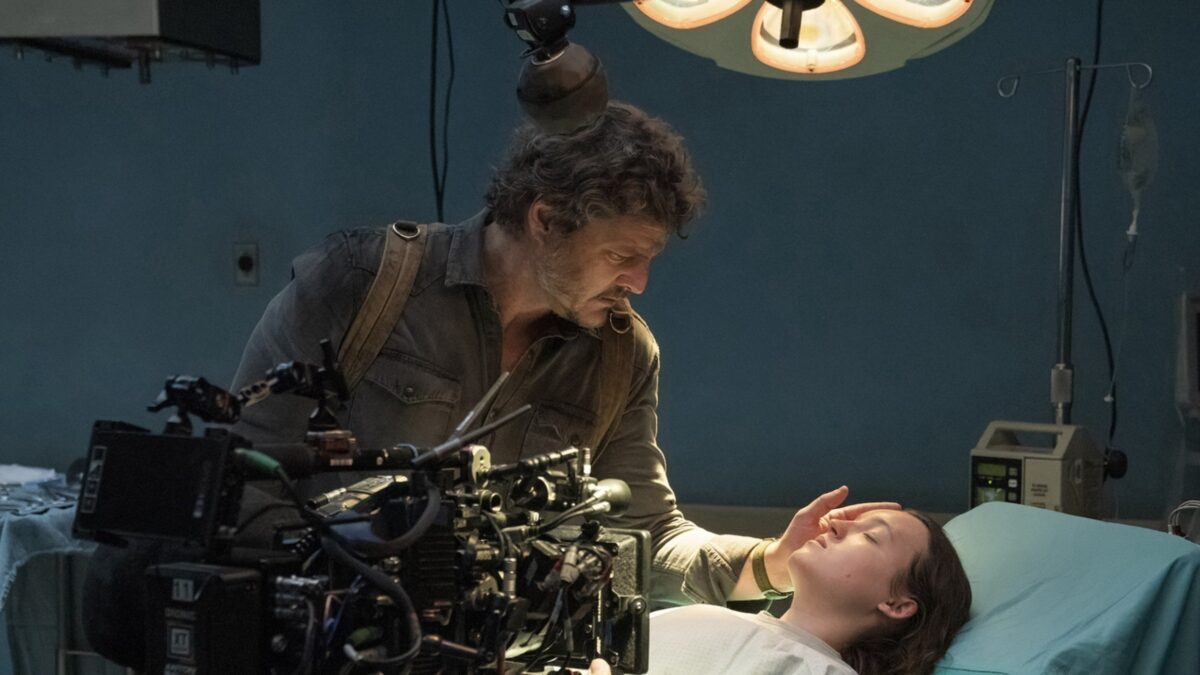
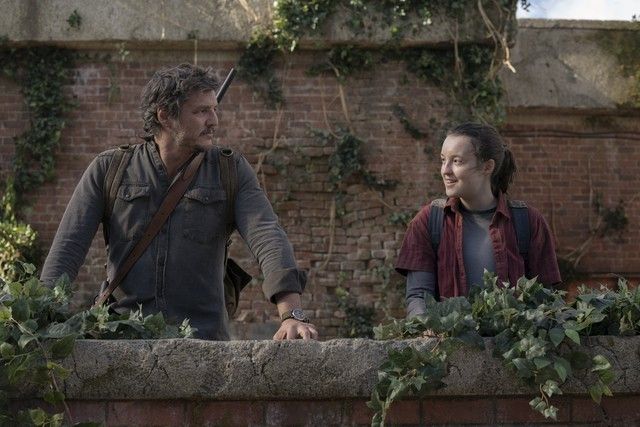
Kevin Roache and Marc Fishman, re-recording mixers, tell us about creating immersive soundscapes for The Last of Us.
Marc Fishman and Kevin Roache are masters of sound design. Fishman has extensive experience in film and TV, working in genres from Bridesmaids to Devil to Sicario: Day of the Soldado. Roache has worked on prestige TV shows like Narcos, Dexter, True Blood, and The Killing.
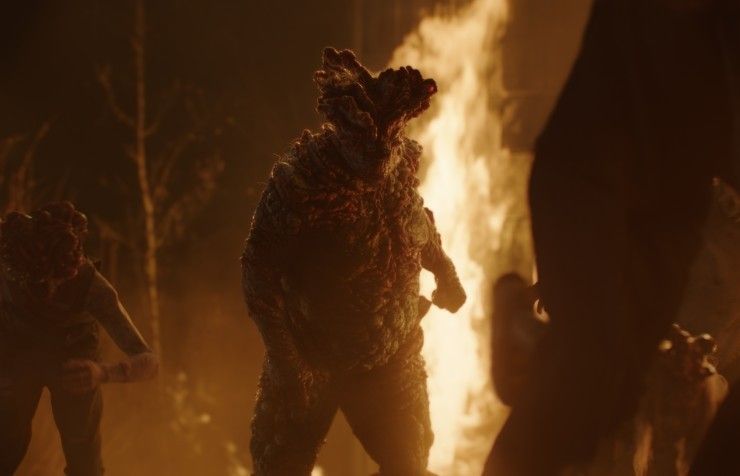
As re-recording mixers on The Last of Us, they helped bring to life a post-apocalyptic world filled with roaming infected and violent factions, but their work is also present in the quieter moments as characters connect in silence. Sound is incredibly important in the universe of The Last of Us, where the iconic croak of clickers means they’re looking for prey, and classic music is used to signal distress.
With their skills and attention to detail, Roache and Fishman played a pivotal role in shaping the sonic landscape of this highly acclaimed television series. In this exclusive interview, we delve into their creative process, gaining insights into their work on The Last of Us, and discovering invaluable advice they have to offer to young filmmakers venturing into the realm of sound design.
The following interview has been edited for length and clarity.
No Film School: First of all, I’d love to know how you all got into the world of sound and what makes you passionate about it.
Kevin Roache: Since I was a kid, [I’ve] just been really enamored with movies and television in general. Just can’t get enough of it. Always loved it. The only thing I was really aware, conscious of sound growing up, you’d see little behind-the-scenes videos of things of people doing foley or you learn about Ben Burtt or Gary Rydstrom working on Star Wars or Jurassic Park, and how did they make those sounds? That’s not the real sounds. And you got that going on in the back of your head. But I came to Los Angeles from Boston, went to film school, didn’t have a real specific area that I wanted to focus in, and one day just ended up down in the sound department looking for a job.
I thought, “These are my people.” They were really fun, crazy, always joking, always laughing. But it was a place where you could be creative. I have a good strong technical math and science background. It was like this confluence of all of the things that I enjoyed and had a talent for. It was fun. It was just fun. What I’ve learned is just what power we have over the audience dramatically to make them feel things emotionally and how we can affect them without them even knowing. It’s like a little magic trick. We can be in the background sneaking around and playing something sweetly or softly or really rip their throat out with something really violent loud and crazy. So it’s great. It’s a privilege and it’s really fun.
Marc Fishman: I think a little bit like Kevin, I came out to USC to study film, and I was there for two years, and I was always one of those people. I was always into technology. I was the first person that had a CD player of all my friends. I was one of those geeky guys. It was just through reading magazine articles and realizing that there was this marriage of technology and filmmaking that wasn’t about writing a script or wasn’t about being a musician or wasn’t about acting. So I can just remember there was a book out about all the articles that Mixed Magazine had written for all this time about film sound and stuff. It was just a thing that clicked just like Kevin said, and then once you start looking into it and realizing what a cool part of the business it is and what a cool part of the filmmaking process it is, it was really, I was hooked. That was it.
‘The Last of Us’Credit: Liane Hentscher/HBO
NFS: Both of you were re-recording mixers on The Last of Us. For the uninitiated, can you tell us what that looks like on your end, in terms of post-production?
Fishman: Well, sure. I think the easiest way to explain it is if you look at the soundtrack of a film as a meal, sound editors create all the ingredients, and Kevin and I cook the meal. So under the direction—on a broadcast show, it’s the showrunner. On a feature film, it would be a director. But we take all the various elements that make up the soundtrack. I do dialogue and music. Kevin does everything else, which would be background sound effects, hard sound effects, which would be car doors and cars and guns, and all that stuff. Then any sound design and any foley sound effects, being feet. Then Kevin handles that. Then we work together and we go through a project, seconds at a time, minutes at a time, and we put it all together and try and make it as cohesive as possible.
We work with a big team of sound editors on this show. It was headed up by Michael Benavente. We had various dialogue and sound effects editors. We had two great sound designers, Chris Terhune and—
Fishman: Chris Battaglia. But they were “the Chrises.” We just take all those elements and put them together. Then we work one-on-one with the picture editors and the directors/showrunners to put together the final soundtrack. So what comes out of our mixing stage is what you hear on a TV screen or in a movie theater.
‘The Last of Us’Credit: Liane Hentscher/HBO
NFS: What’s unique about working on a show like The Last of Us, where the universe is post-apocalyptic, but you have so many different soundscapes, some of which are very, very silent, some of which are noisy and bright, like the mall?
Roache: One thing that’s unique about this show is every episode was a new experience and every environment in the show was different. We’re often in a different city, a different location, and for the most part, locations that we’re dealing with, different levels of natural decay. Things that were inhabited, like you said, the mall with people before the apocalypse happened, or would be in some natural spaces, but regardless, usually devoid of much of modern humanity as we know it. So in each setting, we had to discover what each environment would sound like during each episode.
Normally in a television series, you repeat locations that you go back to. So you might spend the first couple figuring out what something’s going to sound like. Then once you’ve got that dialed in, you repeat the process. In this case, we always had to start over and ask ourselves questions. “What would this sound like?” And we had a great team and we had the great direction of our showrunners and editors helping guide us as to how that would all sound.
Fishman: Yeah, and I think what’s unique about Last of Us too is it’s usually two people. The normal things we have—when I say, hide behind—being a dialogue mixer, I’ll always have various noises from the production or traffic or planes or all that stuff. You can’t do that on a show like this after the first episode. There’s not a lot of interaction with a lot of other humanity in big numbers. If you look at Episode 3, “Long Long Time,” a lot of it is either after the opening, it’s either Joel and Ellie or it’s Bill and Frank and that’s it. There’s nobody else around.
Bill and Frank are in the house, and we had discussions about how to play the room tones in that sound because there was nothing outside. A lot of times you’re in a residential location and Kevin will be asked to put in a lawnmower or a dog barking or X, Y, Z. You can’t do that. So that was really challenging of trying to find out how to not make these three or four-minute scenes boring, but not having any of the other things to rely on. It was putting in just a slight creek of the house when somebody wasn’t talking or making sure the air was supporting the acting and stuff. That was hard. There were a lot more of those scenes in this show than the things that were a little more obvious.
Roache: Something—to further what Marc said—was having really just incredible, detailed, foley in the show, because scenes would be so quiet and we would be focused on small things and small movements. One of the things that we say that our showrunner, Craig Mazin, was very focused on was making the environments as realistic as possible. We wanted this show to sound real, never fake as much as possible. The foley team headed up by Randy Wilson put such intense, incredible detail and such character into their performances. We were able to let these quiet scenes give the ear something to hold onto even when seemingly nothing else is going on.
‘The Last of Us’Credit: Liane Hentscher/HBO
NFS: You said something that is just really interesting to me—”The air supporting the acting.” Can you expound on that?
Fishman: Kevin and I always have a conversation about, if people are talking or if people are being quiet, how much he can support that without it sounding like a set? We don’t usually have to have those conversations about these dialogue scenes, but we had quite a few of them. Just discussing, is this working? Because when you only have the air to play with, you have to use it so it doesn’t sound like they’re on a set or a manufactured film shoot, but that it helps keep it going.
As Kevin said, it doesn’t make it feel boring, and so it was just—Kevin’s a real detail-oriented person. So that’s great to work with somebody like him who knows. Some people will have a tendency just to shove the air up and not think about the drama, but we didn’t have that problem.
‘The Last of Us’Credit: Liane Hentscher/HBO
NFS: You mentioned working with Craig Mazin, who I think is one of the greatest working writers today. He said at NAB recently that he writes sound into his scripts, so he knows the value of sound to storytelling. What was it like working with him, and what did that process look like?
Roache: Yes, he writes sound into his scripts and he knows that this experience isn’t just a visual one. It is how film replicates how we all experience the world, which is through our eyes and with our ears. So he’d have so much detail already, exactly how things would work. One example that was very important to Craig was the mall episode, that you brought up. When they’re playing Mortal Kombat. Craig had a very visceral memory from when he was a kid about when he would put the coins into the video game machine, and the cabinet that held the video game would resonate and shake with this low-end sound. So that was something that was really important to him.
Another thing is just, Craig’s edict was he wants this world to be real at all times. He was focused on the reality of the situation. Yes, this intense fantastical situation is happening with this fungus takeover of the world, but he wanted it to seem like, “What if this really happened?” So it was never about how can we make something seem magical or impressive or huge. It was about, how can we make this as if it were really happening so we can draw the audience into the reality of the situation? That was a huge deal. Maybe our first approach when we were starting out on the show was occasionally as Marc … Marc, what did he say? Is that it sounded too Hollywood? How did he put it?
Fishman: Yes, too action movie-y, too blockbuster. He didn’t want that.
Roache: Yeah.
Fishman: I use the word Bruckheimer-like, he never wanted it to be bombastic. It always had to be about the story and about being realistic. He never wanted to take people outside of it. I think that’s why the show works for a lot of people.
I wanted to do the show. I was a huge fan of the game. I’m a gamer, and that was really intriguing to me. But I wanted to do this because I think Chernobyl is one of the best TV shows ever made, and when I found out Craig was going to be doing this and then also found out that Neil Druckmann was also going to be involved, that’s just what led me to pursue getting to work on the show and working with Craig, there really isn’t anything in any of the shows that he wouldn’t talk about or think about or be involved with. Every little detail, he would have it, and he would talk to you and discuss notes or ideas as if he was in a writing room.
He would say, “Well, why would you do that?” Or if you were talking about why the infected would sound a certain way, it was the discussion of, what would happen to their body physically, and what that would do to their vocal cords, and those things. So it was almost always a deep dive into that conversation. It wasn’t like, “Oh, I just don’t like that sound.” It would be like, “Oh,” you could see how he was always writing about what he wanted to come out of the speakers. That’s super, super, super rare, and amazing. He is a force/freak of nature.
‘The Last of Us’Credit: Courtesy of HBO
NFS: What are you most proud of in terms of sound on this show?
Fishman: I think all of it. I think we’ve gotten more comments on this show. I know I’ve gotten more comments and reach out from people in the business. Every episode is different. Four and five are a little more book-endy episodes, but every episode is shot differently, thought about a little differently, and they’re all unique. I don’t think you look at any of them if you’re really being critical about listening and go, “Oh, this one sounds like that one,” but I think there is a very cohesive hold to that, and I think that obviously ties into the amazing writing, and to have Gustavo [Santaolalla]’s score.
The thing I’m most proud of is that it’s a show that I haven’t had one person that comes up and goes, “Ah, that was an okay show.” You get lucky and get to work on some of these shows, and then they turn out to be something that has a bit of a zeitgeist to it—and to just be a part of that and to have been in the middle of it.
You were asking about being in sound for film or television. It’s one of the unique positions if you think about it—director of photography, production designers, film editors. We’re one-on-one with the creative force behind a show, either a director or a showrunner. And you’re sitting with these people for weeks and weeks on end. A colorist. It’s a real unique position. So I’m just flattered and excited to just … I’m so proud that I got to be—that Craig trusted us to get his vision there because he’s not the type that if he wasn’t happy, he would not find somebody else. So I’m proud I survived and really proud of the work.
Roache: Yeah, I’m proud I’m of us and I’m proud of everybody on the entire team, and I’m mostly proud of how we tried to make every single moment exactly right, exactly perfect. We never let up. I go back and I watch and I see these nine hours of television and I remember us really pouring our focus into every moment and never falling down, and everybody really just doing the best that they possibly could.
That’s all I can really say, is just each moment was important in the show, and thought about, and considered and carefully done, and when you can sit back and watch the entire breadth of it and it’s like, “Oh, this episode fell down,” or “This scene didn’t really work.” It’s just like, “No, we really hammered it all.”
‘The Last of Us’Credit: Liane Hentscher/HBO
NFS: What advice would you give to someone getting into your field?
Fishman: Well, it’s hard now to pinpoint anything to watch or read because everything’s accessible to everybody all the time. My biggest piece of advice would be, is if you find something that’s really inspiring to you, if you said … I can remember the moment. Oh, I saw Jurassic Park and I go, “Oh, my gosh, that was the most amazing thing ever. Who did that?” I thought, “Oh, that’s Gary Rydstrom.” Call up. Find where people work and call them. Most people in the sound business, they love people who love sound, and I’ve never not had somebody who’s called me from outside and said, “Oh, hey, can you give me some advice?” Or, “Can we meet?”
I think it’s hard. We tend to find out about reaching out to people on social media or doing all these things. Now, we’ve gotten a little bit away from interpersonal connection, and I think if something really inspires you and you go, “Oh, I want to learn more about that,” or just talk to somebody or that really was cool.
To me, that’s the biggest thing is don’t ever be afraid to reach out to people that have done something that you like, because I think they’re very accessible, and they want to share their passion, and I think that’s a really great way to start. I think people don’t do that enough.
Roache: Marc is absolutely right. I think you could contact so many people in the sound world and they would just be thrilled. So then people are listening.
The other thing I can think of to build your skill is, I did this at USC. I had a class where we took a scene that we liked and the object of the entire semester was to strip it bare, no sound at all, and completely do all the sound, re-do it all yourself. That will give you a great idea. And you can use—do it with any freeware like on a Mac or something like that. You could use iMovie or something like that with gathered sound effects or sound effects you record on your own, and try doing the ADR. Try doing all the foley, try doing all the side effects and replacing all the music, and see how a scene is really shaped by doing it all on your own.
You’ll learn so much and that’ll give you a great basis to get started and give you ideas about things you hadn’t even thought about before. It’ll give you a greater vocabulary so that when you do call the people that Marc’s talking about, you’ll have more to talk about and more to even show somebody.
‘The Last of Us’Credit: Liane Hentscher/HBO
NFS: What are common mistakes that you see beginners make that they should avoid?
Fishman: Trying to do too much. I think with beginning sound effects, editors and sound designers, they try and they don’t pick one good sound. They throw 20 different sounds because they don’t necessarily have the confidence of that, and I think being simple is usually, I think consistently what I see is people trying to overcomplicate the situation and overthink it.
Roache: That’s great advice. Absolutely. It’s about finding out what the heart of the scene is about and not about maybe what sound effect you thought about was really cool. The other thing is sometimes … I’m guilty of this. You might think when you’re starting out that you should be here [at a high level], but really you have to start at a lower position and work your way up. Even though you might think, I’ve done X, Y, and Z and I should really be at the highest level right out of the gate. It just doesn’t work that way, but that’s okay.
It’s really actually a gift because there’s so much to learn about. Maybe even things that don’t seem obvious about interpersonal working relationships, business, things like that, that you have to get warmed up to and absorb before you really start working in a real capacity.
Fishman: Don’t forget—I’ve been mixing for, I think, over 25 years. I think you can never forget everything is a learning experience. It’s not something that, as Kevin said, you don’t start at a place and there’s no 100 that you’ll ever get to. There were things that I did on The Last of Us that I had to figure out how to do that I had not done. Or I’ve come in situations, and then you do it, and it’s because you’ve maybe done something like that.
But you just have to remember to not forget to keep pushing yourself and that you’re always, always, always learning. I know that sounds so cliche, but again, I feel like I learned a lot on this show, and I think it’s easier for me to try different things because of the experience, but if I close myself off—I think you’re always growing. I think you have to remember that it’s a journey, it’s a career. It’s not a one-and-done career path.
Roache: Yeah, if it’s something that you really want to do, I have no doubt. If you really are interested in it, you can achieve great things because the world needs great sound professionals, and anybody who has an interest in it can do it. If they focus, will do great … Trust me.
This is part of a series of accounts of the strike from Hollywood writers at different levels in their careers. The diarists have been granted anonymity to encourage candor. You can read previous entries by ‘Eastside Warrior’ and others here.
Memorial Day must be the new Labor Day — at least judging by the ocean of unions that flooded downtown to end Week 5. While Disney had Ariel trying to sing the summer box office back to life, we had Lindsey Dougherty chanting “Union Town.” Nothing against mermaids, but when I’m in a knife fight, I’ll take a Teamster with a Hoffa tattoo on her arm any day of the week.
No, it’s not easy. At this point everyone’s starting to think more about practicalities. What places in town give discounts for WGA members. (Bob’s Big Boy in Burbank is Hollywood labor’s new commissary thanks to Drew Carey.) What shoes are the best for clocking 20,000 steps a day? (As every waitress and nurse already knows, Hokas apparently.) Most importantly, how do I stretch out those last paychecks to last however long they gotta last?
Also, with school out, more than a few of us will be juggling childcare with picketing schedules. The WGA’s volunteer captains are busting their asses daily. Folks are calling every actor they knew to help SAG-AFTRA get its strike authorization vote passed. And everyone is holding their breath to see how deep the DGA sticks the knife in our collective bargaining back this time around.
But until that Brutus moment, it’s nose to the grindstone — well, heel to the pavement — and stocking up on sunscreen for summer. Is there anxiety? Yes. Is there penny-pinching? You bet. Is there an overwhelming wish, given the existential dread hanging over this entire industry, that someone could get informed and intelligent people in a room to hammer out a functional deal? A way to keep this an industry where people can earn a living, instead of turning it into a hobby for all the trust fund babies and tech bros who cash-out their useless app start-ups and suddenly want to get in touch with their creative side?
Fuck, yes.
But there’s also support. Not just from the usual Hollywood types but from everyone. You wear your WGA shirt around town and suddenly everyone wants to talk. Teachers, grocers, cops. One traffic cop at Universal asked me, “They really trying to replace you with robots?” “They won’t promise not to,” I told him. “That’s fucked up,” he said, shaking his head as he made a Tesla wait for our picket lines. Then, the butcher at my grocery store chatted me up for 15 minutes, empathizing with how no one can afford a house in LA anymore.
It’s touching and surprising. Every time a potential WGA strike comes up, someone inevitably agonizes that studio flacks will caricature us as “out of touch.” But with the disappearance of the middle class in this country, it feels like we’re all in the same boat for once. You’re either in the .01 percent, or you’re everyone else.
Still, we writers are lucky and we know it. We get to work our dream. Traditionally, writing — TV writing especially — was always the stable job in Hollywood. When I first started as an assistant, a boss told me, if you want to be able to last here, get into TV. So, you always wonder if others will sympathize. What about the freelancer, what about the aspiring actor, what about the overworked crew whose families take the hit for all those 14-hour days?
Honestly, I find myself astounded by their support. And I can’t help wondering what powers it. Maybe it’s the fact that if writers can’t make this work as a profession, what hope is there for anyone else’s dream? Maybe it’s because we make the noise and our fight is so visible that it gets everyone else’s struggle seen.
If we can’t get health care and a decent wage, then the only ones who’ll get to tell their stories are the .01 percent. And those who already have so much just don’t dream as hard or intensely as the rest of us, i.e. we who’ve clawed and crawled our way through years without health insurance, endless “mentoring” program applications, sleepless nights sweating under mountains of debt, trying to make something, anything work, so we can tell a story. (And if there’s one industry whose dreams are as deadened and devoid of humanity as possible, it’s Silicon Valley. If we have nothing to look forward to but a future of TV shows scripted by “founders” who sold their AI start-ups, God help us all.)
See, the most touching support I’ve seen in these five weeks came on the line at Disney. A Mexican restaurant from the Valley was offering the writers free tacos and aguas frescas— far and away the most delicious food on any picket line. Everyone wanted to know what actor, agency or celebrity had paid for it: Verve, Jay Leno, Stephen Colbert? But no one knew.
Finally, we went up and asked the abuela manning the tacos. It was her restaurant. No one had paid for it, she said. “It’s from us.” If there’s anyone who knows how to dream bigger and better than all of Hollywood combined, it’s her. Thank God, she’s got our back.
Longtime communications executive Cathy Nam has joined Universal Filmed Entertainment Group as senior vp, global communications.
The executive is moving from New Line Cinema, the Warner Bros. division at which she spent over two decades honing her PR skills.
Per Tuesday’s announcement, Nam will help steer the integrated communications strategy efforts across UFEG’s global portfolio, collaborating with production partners and divisions including creative development, production, acquisitions, marketing and distribution, home entertainment and franchise management. Nam will also provide support to Universal’s film labels Focus Features and DreamWorks Animation.
She will report to Evan Langweiler, the company’s executive vp, global communications and media relations and be based at the studio’s headquarters in Universal City.
“In rounding out the global communications team, I was looking for a collaborator that would not only bring a wealth of experience, but would support me in fostering an environment where our team could do our best work on behalf of the studio,” said Langweiler in a statement. “Cathy brings all these elements to the table, in addition to her outstanding relationships and strategic approach to corporate communications.”
Nam most recently served as senior vp, publicity and communications at New Line Cinema, where she helped oversee the rollout of two of the top-performing horror franchises of all time: IT and The Conjuring Universe. During her tenure, she also shephereded efforts on the release of Creed, co-produced by MGM, as well as global hits Rampage, Shazam! and Mortal Kombat. Additionally, Nam served in an advisory role for Warner Bros. Theater Ventures, the studio’s live stage play division, which was most recently represented on Broadway with the multi-Tony nominated hit Beetlejuice.
Nam is a longtime member of the Warner Bros. family, having spent over a decade at Warner Bros. Pictures before segueing to New Line in 2015. She starting her career as a global trainee and worked her way up the ranks to oversee international publicity and awards campaigns for select film releases across 120 territories worldwide. Among the titles she worked on were Peter Jackson’s The Hobbit Trilogy, Edge of Tomorrow and the Sex and the City films. During her tenure, the studio achieved six years at the top spot in international box office market share and six consecutive years of $4 billion+ in global box office revenue.
Nam joins Universal as the studio is riding a wave of box office successes and last week became the first studio to cross the $1 billion mark at the domestic box office in 2023, thanks to hits such as The Super Mario Bros. Movie.
Amazon Studios has dropped the first Citadel: Diana teaser trailer for its upcoming Italian spin-off to the Richard Madden and Priyanka Chopra Jonas-led spy thriller, which had just recently debuted its first season finale on Prime Video.
The video provides a glimpse of the action-packed sequences that Matilda De Angelis‘ titular character will have to go through in the spin-off. The next chapter in Amazon’s Spyverse series is slated to premiere in 2024.
Citadel is a global spy thriller that will be told through multiple shows taking place in the United States, Italy, India, and Mexico, with each version told in the countries’ local language. The first spin-off is executive produced by showrunner Gina Gardini, with Arnaldo Catinari as the director and Alessandro Fabbri as the head writer.
Citadel: Diana stars Matilda De Angelis include Lorenzo Cervasio, Maurizio Lombardi, Julia Piaton, Thekla Reuten, Daniele Paoloni, Bernhard Schütz, and Filippo Nigro. Each Citadel show is locally created, produced, and filmed in-region, and stars top talent, forming a distinct global franchise.
Executive producers are Riccardo Tozzi, Marco Chimenz, Giovanni Stabilini, and Emanuele Savoini along with AGBO’s Anthony Russo, Joe Russo, Mike Larocca, Angela Russo-Ostot, Scott Nemes, and David Weil. It hails from Cattleya and Midnight Radio.
EXCLUSIVE: Scott Alexander and Larry Karaszewski, the famed writers, directors and producers who have thus far shard two Emmys, two PGA Awards, two WGA Awards, a USC Scripter Award and a Golden Globe, will add another prize to their mantels, having been tapped to receive the Bill Wittliff Award for Screenwriting at the 30th annual Austin Film Festival.
First introduced in 1995 as a means of honoring leading storytellers in film, television and new media, the award takes its name from the two-time Emmy nominee and WGA Award winner known for his work on films like Legends of the Fall and series like Lonesome Dove. Past recipients include Buck Henry, Lawrence Kasdan, Frank Pierson, Nancy Meyers, Tony Gilroy and Scott Frank.
Best known for their mastery of the left-of-center biopic, Alexander and Karaszewski have together scripted such films as Ed Wood, The People vs. Larry Flynt, Man on the Moon, Big Eyes and Dolemite Is My Name, also developing, scripting and exec producing the much-discussed award winner The People v. O. J. Simpson: American Crime Story.
The pair who met as freshman-year roommates at USC’s School of Cinema, selling their first screenplay a week after graduation, are also known for writing the hit Stephen King adaptation 1408 starring John Cusack, producing the Bob Crane biopic Auto Focus, and writing and directing the crime comedy Screwed. They have additionally written a number of family films — among them, Problem Child and its sequel, Agent Cody Banks and Goosebumps.
The 30th edition of the Austin Film Festival & Writers Conference will take place this fall, from October 26 – November 2. Badges and passes can be purchased at this link.
Baby Keem refers to the Bon Iver-sampling song as a “Sticky Dub,” a reference to Drake’s 2022 single “Sticky”
It’s been just over a year since Kendrick Lamar and his cousin Baby Keem last joined each other on a track. Their Mr. Morale & the Big Steppers deep cut “Savior” was a weighted examination of idol worship, but their latest single, “The Hillbillies,” is the product of both rappers being in a silly, goofy mood, as evidenced in its accompanying Neal Farmer-directed video.
“We gon’ fuck up the world (Here right now)/Excuse me, but is that your girl? (Here right now)/Didn’t mean to possess your girl/Baby, I’m high-profile, don’t ever tell ’em you met me, girl,” Lamar raps on the chorus, which features a sample of Bon Iver’s 2020 single “PDLIF.”
The rest of the record follows a similar thread: Kendrick and Keem are out of reach but revel in their desirability. While everyone clamors for them, they’re buying land and knocking out levels on Playstation games. Still, the video finds them exploring malls and hotels, dragging semi-confused front desk staff members into their shenanigans.
Trending
“The Hillbillies” arrives as a surprise drop from the two rappers. Baby Keem tweeted out a link to the song referring to it as a “Sticky Dub,” in reference to the Drake single that it interpolates on its refrain. The flow from the 2020 Honestly, Nevermind single appears on “The Hillbillies” with a playful flip. On it, Keem offers up “Messy, get them girls off the stage, ’cause somebody’s gonna get taken” in connection to Drake’s “Ayo Eric, bring them girls to the stage, cause somebody’s getting paid.”
The song marks Baby Keem’s first release since sharing the deluxe edition of The Melodic Blue in October 2022. Kendrick, meanwhile, appeared on a remix of Beyoncé’s “America Has a Problem” earlier this month chanting: “Go, Stink, fuck it up, go, Stink, fuck it up.”
In today’s digital age, social media has become an indispensable tool for filmmakers to market, promote, and engage with their audience.
With the rise of platforms of so many effective platforms, filmmakers now have unprecedented opportunities to connect with fans, build a loyal following, and even raise funds for their projects through crowdfunding campaigns.
In this post, we will explore the various ways in which social media can be harnessed to elevate the success of films.
1. Marketing and Promotion
Social media platforms offer filmmakers a dynamic and cost-effective channel to market and promote their films. With the ability to share trailers, posters, behind-the-scenes glimpses, and other engaging content, filmmakers can generate excitement and buzz surrounding their projects. By leveraging the extensive reach of social media, filmmakers can tap into a global audience, allowing their work to transcend geographical boundaries.
2. Building a Fanbase
Building a dedicated fanbase is crucial for a filmmaker’s success, and social media plays a pivotal role in achieving this. By actively engaging with fans through comments, direct messages, and live Q&A sessions, filmmakers can forge meaningful connections and foster a loyal community of supporters. This dedicated fanbase becomes an invaluable asset, as they become brand ambassadors, spreading the word about the filmmaker’s work and generating organic growth.
3. Crowdfunding
Crowdfunding has revolutionized the way filmmakers secure funding for their projects, and social media platforms have proven to be instrumental in this process. Filmmakers can launch crowdfunding campaigns on platforms like Kickstarter and Indiegogo, leveraging the power of social media to reach a wide audience of potential donors. By showcasing their vision, sharing updates, and expressing gratitude to supporters, filmmakers can create a sense of involvement and generate financial backing from enthusiastic individuals passionate about their work.
4. Networking
Social media platforms provide an excellent avenue for filmmakers to network and collaborate with other professionals in the industry. By connecting with fellow filmmakers, producers, and industry insiders on platforms such as LinkedIn, filmmakers can establish valuable relationships, exchange ideas, and discover new opportunities. This networking can lead to partnerships, co-productions, and exposure to a wider range of industry connections, ultimately propelling their careers forward.
5. Audience Feedback
Social media acts as a direct line of communication between filmmakers and their audience, facilitating real-time feedback and engagement. By actively listening to the audience’s reactions, comments, and suggestions, filmmakers can gain valuable insights into the reception of their work. This feedback loop allows filmmakers to make informed decisions, adapt their storytelling approach, and create content that resonates more effectively with their target audience.
In an era where digital connectivity reigns supreme, filmmakers can harness the power of social media to elevate their projects to new heights. By effectively utilizing these platforms for marketing, crowdfunding, networking, audience feedback, and building a fan base filmmakers can establish their presence in the industry and connect with audiences on a deeper level.
As the landscape of film promotion continues to evolve, embracing social media as an integral part of the filmmaking journey is essential for success in today’s dynamic and interconnected world.
Charles Dean is an Development Executive for Raindance. Charlie has a deep-rooted love for the world of film and has experience working both on set and in the office having worked closely with filmmakers, production teams, and industry professionals. In his free time Charlie enjoys watching new and creative films from up and coming filmmakers.
A shooting Monday evening on the Hollywood Beach Boardwalk in Florida left nine people injured, including four children, disrupting the end of Memorial Day weekend for thousands of guests who were left scrambling for cover.
Authorities said the shooting occurred due to an altercation between two groups, as victims as young as 1 years old were shot by the gunman. Police arrested one suspect, but are still looking for another person of interest, according to Hollywood Police Department spokesperson Deanna Bettineschi.
The shooting marks one of 263 mass shootings this year, per the Gun Violence Archive, this time occurring near the popular beach destination in Hollywood, Florida that was previously named the “Best Beach for Families,” according to Florida’s tourism site. The city of Hollywood is also nestled between two of the Sunshine State’s most prominent cities, with Fort Lauderdale to the north and Miami to the south.
“It is completely unacceptable that innocent people spending time with family on a holiday weekend have been affected by a shooting altercation between two groups who came into our city with guns and with no regard for the safety of the law-abiding public around them,” said Hollywood Mayor Josh Levy in a statement. “I assure you that no stone will be left unturned in bringing the perpetrators to justice.”
Police were already in the area, but received a call at around 6:45 p.m. about a shooting near Johnson Street, west of the Hollywood Beach Theater, Bettineschi told press.
Victims were taken to Memorial Regional Hospital and Joe DiMaggio Children’s Hospital. One of the victims underwent surgery at around 10:30 p.m. on Monday night, according to the Miami Herald. The others are in stable condition.
City leaders are asking residents who know more about the incident to come forward, and are also asking people to steer clear of the area. Authorities set up a family assistance center near Johnson Street and North Ocean Drive where families can talk to detectives and inquire about vehicles that may be in the crime scene, Bettineschi said.
Stock indexes are mixed Tuesday after President Joe Biden and House Speaker Kevin McCarthy hashed out debt deal over the long weekend, one that now faces a key committee approval to get to the floor for a vote.
The tech-heavy Nasdaq is a standout, up more than 0.50% as an AI boom buoys the sector, shrugging off debt jitters. Netflix shares are changing hands at about $394, up 4%. Apple, Roku. Meta and Amazon are also higher. But Dow component Disney is off 0.8% at about $87 bucks with the DJIA dipping by over 100 points. Warner Bros. Discovery, Endeavor, Fox, Comcast, Lionsgate, Spotify and all of the exhibitors are trending lower. Paramount Global is up more than 4%.
The S&P 500 is higher. The Russell 2000 started out in positive territory, but has slipped into the red.
But passage could meet with some hurdles. A key indicator of where the deal stands will come later today, when the House Rules Committee meets at 3 pm ET today to vote on sending the deal to the full floor for a vote. One of its members, Rep. Chip Roy (R-TX), has come out against the legislation and has insisted that when McCarthy was seeking votes to become speaker, he made a deal that a bill would need unanimous support from GOP members of the Rules Committee to clear it. But McCarthy’s allies disputed that such a deal had been made.
Given the gravity of the issues at stake, namely an unprecedented U.S. government default, the markets have been reacting to the conventional wisdom that the ceiling ultimately would be raised or suspended.
These are volatile days for the market for a few reasons. The debt deal is crucial of course, with the nation possibly unable to pay its bills as early as June 5 if there is no increase in the ceiling. But inflation and interest rates fears also continue to dog the market ahead of the Federal Reserve’s next meeting in mid-June. Employment numbers due out Friday could sway whether it raises rates yet again or not, continuing to fuel recession fears.
As McCarthy has touted the debt ceiling deal as a victory, Biden has taken a more cautious approach. The White House has emphasized how the agreement avoids the types of draconian cuts that would have threatened the president’s agenda. On Monday, Biden told reporters, “Look, one of the things I hear some of you guys saying is, ‘Why doesn’t Biden say what a good deal it is?’ Why would Biden say what a good deal it is before the vote? You think that is going to help me get it passed? No. That’s why you guys don’t bargain very well.”
MoviePass, after emerging from bankruptcy under new ownership, is launching its movie-theater subscription service nationwide ahead of the Memorial Day weekend.
The service lets MoviePass members choose from more than 4,000 theater locations across the U.S., including those operated by AMC Theatres, Regal Cinemas and Cinemark.
However, the reincarnated MoviePass is a far cry from the too-good-to-be-true $9.95-per-month subscription for one movie per day that the company had offered in its previous life. Plans start at $10/month for 1-3 movies per month, ranging up to $40/month for up to 30. The new MoviePass uses a credit-based system to offer different options for the total amount of films a subscriber can see each month (see plan details below).
MoviePass lists participating theaters at this link. According to a company rep, members can attend movies at any theater that accepts Mastercard. For theaters that partner directly with MoviePass, the service taps into the theater’s ticketing system and consumers can use the MoviePass app to purchase e-tickets and select their seats.
“By opening up MoviePass to film lovers nationwide, we are expanding our support of the movie theater industry by helping drive traffic to all theaters during the critical summer season,” Stacy Spikes, MoviePass co-founder and CEO, said in a statement. “Our newly designed service offers our members greater choice and flexibility for how they use their monthly credits, while continuing to encourage them to watch movies in theaters.”
Spikes was on the original team that founded MoviePass in 2011. He exited the company in 2017 after it was acquired by data-analytics firm Helios & Matheson.
Under Spikes, MoviePass raised seed financing led by Animoca Brands, a Hong Kong-based game software, blockchain and investment company. Additional investors include Claritas Capital, Emerald Plus, Gaingels, Harlem Capital, PKO VC and Sandhill Angels.
Here are the details on MoviePass’ four subscription tiers:
The boys are back, and they’re heading to the world of animation once more. Oscar-winning composers and musicians Trent Reznor and Atticus Ross will compose the score for the upcoming Paramount film “Teenage Mutant Ninja Turtles: Mutant Mayhem,” marking their second animated feature after scoring Pixar’s 2020 film “Soul.”
The animated reboot is produced and co-written by Seth Rogen and Evan Goldberg, and Rogen called Reznor and Ross’ score “incredible” while adding that the process of working with the duo has been “thrilling.”
Directed by Jeff Rowe, an animation veteran who worked on the acclaimed series “Gravity Falls” before co-directing the Netflix feature “The Mitchells vs. the Machines,” this new “TMNT” movie aims to position the titular turtles as real-life teenagers, drawing inspiration from coming-of-age films. The impressive voice cast features relative newcomers (and youngsters) as the turtles as well as Rose Byrne, Jackie Chan, Ice Cube, Maya Rudolph, Hannibal Buress, John Cena, Paul Rudd, Post Malone and more.
Reznor and Ross – best known for the band Nine Inch Nails — made a splash in the film composition world with their score for David Fincher’s 2010 film “The Social Network,” which earned them an Oscar. They won another Oscar for Fincher’s “Girl with the Dragon Tattoo” and composed the scores for other films like “Waves,” “Bird Box” and “Mank.” They also scored HBO’s “Watchmen” series and the Ken Burns documentary “The Vietnam War,” and will reunite with Fincher for the director’s upcoming Netflix thriller “The Killer.” They’re also scoring Luca Guadagnino’s upcoming tennis romance “Challengers,” starring Zendaya.
“Teenage Mutant Ninja Turtles: Mutant Mayhem” opens exclusively in theaters on Aug. 2.
[This story contains major spoilers to the finale of Fatal Attraction.]
The ending to Fatal Attraction has been the topic of much debate in the decades since the classic film first released in 1987. Glenn Close, who starred as villain Alex Forrest, has spoken out about the ways she feels the movie failed her character; and it was revealed in recent years that the studio retooled the film’s ending, despite Close advocating for the original treatment.
All of that when looking back at the film in modern-day was precisely why showrunner Alexandra Cunningham initially had hesitations about reimagining the story for TV. But, when speaking freely about the entire series, Cunningham revealed that she ultimately seized the opportunity because she wanted to not only expand Alex’s perspective as the role is taken on by Lizzy Caplan, but also explore the effects on Ellen (Alyssa Jirrels), the daughter of Dan and Beth Gallagher, who are played by Joshua Jackson and Amanda Peet in the series.
As is revealed in the finale, which was released May 28, the show ends much differently than the movie. After setting up a whodunit as Dan, 15 years after Alex’s murder, gets paroled and tries to clear his name, the series eventually reveals that Arthur (Brian Goodman) is the one who murdered Alex on that fateful night. Arthur, who was a Gallagher family friend, is now Beth’s partner after Dan’s arrest and a father figure to Ellen. The show then reveals in the final moment that Ellen has been secretly harboring an obsession with her professor, whom she confronts in his home.
The cliffhanger ending, says Cunningham, is meant to kick off a potential second season. “The arc I pitched was for a limited series that was going to go out on an ‘Oh, shit!’ moment that was rooted in somebody with a neurological pathway for a personality disorder going through that much emotional and psychological trauma as a child caused by her father, who is a narcissist, that she’s the dissident of Alex. Like a present echo, in a way.”
Below, in a chat with The Hollywood Reporter that took place ahead of the May 2 writers strike, the showrunner explains the series’ major changes from the movie — including letting the bunny live, and instead having Alex murder Beth’s mother — as she braces for the reception to the series, including a response from Close herself: “It’s a razor’s edge to walk and I totally get if people think on my part it wasn’t successful. No one can say on Lizzy’s part it’s not successful. Lizzy’s there living it every moment. You got to give it to her, even if you don’t want to give it to me, which, total respect.”
***
We spoke about your initial hesitations when you were approached about adapting Fatal Attraction for TV, and how you were attracted to the idea of expanding Alex Forrest’s story. Can you elaborate?
One of the things that really got to me is the daughter. I’ve always watched Ellen going through all of this emotional trauma and wondered, “How is she processing all of this?” The movie ends on the cold shot of the family, like it’s all going to be okay. Like they’ve escaped the clutches of this harpy, and now they can move forward. I was thinking to myself, “It’s 1987, there’s a distinct possibility they might have decided to deal with it by just never talking about it again and hoping Ellen forgot.” But, we don’t forget anything so, how is she processing all of this emotional violence that she’s just gone through the last few weeks? And how does she take that forward into adulthood? Especially given that her father, who is supposed to be her protector, is the instigator of all of it? What does it mean for love and trust and relationships?
That was something I could actually explore if I was going to do a series. I could explore the effect of that on Ellen and how the body keeps the score. And also, write about fathers and daughters, which is something that fascinates me. Also, having done a show where Hugh Laurie played a neuropsychiatrist [in Hulu’s Chance] who was based on a real person who was our mental health consultant, who read all the scripts and then talked to the actors whenever they had questions, and learning about personality disorders and the genetic pathways that are necessary for them to take root, and also learning about people who are trauma advocates, and what a difficult job that is as a human being who has bad days to not take your emotions out on someone who is less powerful than you who is going through chaos [Alex works in victim services in the L.A. court system where Dan is a prosecutor].
And also, reading all the interviews with Glenn Close where she would talk about all the psychological preparation and the work she did to give such a holistic portrayal of a real person, who is struggling in pain and isolation — which is what I see when I watch the movie — and to see how that was turned into, “We need to terminate the bitch with extreme prejudice” [quoted by head of Paramount Sherry Lansing in her biography about the retooled ending]. It felt like there were a lot of opportunities for me to say things that I’m interested in, and see whether anyone wanted to ask these questions with me.
The series tackles all of that — privilege, mental illness, the criminal justice system — and a complex legacy of an iconic movie. What trepidations did you have about tackling what people have since taken issue with in Fatal Attraction?
Well, the movie did its job more than effectively. To the point where I don’t remember actually seeing it. I know I must have. But it’s an inundation from culture of reactions to the movie. When I think about, “What do I remember?” — and Josh [Jackson] has said this too — I think I remember my memories of us all having experienced the movie in this very Jungian collective, where we’re all feeling the same feeling way.
It really was more about after watching this iconic thing — and Lizzy [Caplan] says this — that you can’t watch it with the headspace of the people who experienced it when it came out. We’ve all changed too much. Even people who saw it in the theater who were married and terrified of what would happen if they were caught cheating, the movie scared them so much — even they can’t watch the movie and experience those emotions the same way again. So it was more about wanting to take advantage of the opportunity to explore all those things about a movie that is an icon of its time.
The series flips back and forth from the future, where Dan Gallagher (Jackson) is paroled for Alex’s (Caplan) murder, to the past which revisits the events of the film. Why did you want to jump into the future with Danand, why do you think a jury found him guilty in the first place?
Jumping forward with Dan came from jumping forward with Ellen. To watch the child in the movie and think about how she processed all those things and see them coming to light in an adult Ellen was one of my first ways in. And everything Glenn Close has said about how if anyone was going to take on Fatal Attraction again, to make sure that Alex’s point of view is more represented. It was about all of that, in addition to wanting to honor the work that she did that wasn’t in the script and expand on it in our own way. How can we see the effect this had on Ellen and the kind of young adult she’s become, and how she regards relationships? The only way to do that was to have a dual timeline. So that naturally became, what story are we telling that we’re encountering Ellen in this future? Who is the Dan she’s encountering? What has he learned or not learned, as a person who has his own issues going on — he’s clearly a narcissist, maybe not diagnosable — and so that was where all that scaffolding started to go up with the two timelines.
I obsessively listen to Dateline podcasts and there was a true-crime case about an ex-husband killing a wife in a very calculated way who went to prison for second-degree murder for 15 years to life in California, and then was out in 15 years. I asked my fellow EP Kevin J. Hynes,who I’ve worked with on several shows and who comes from a background of criminal prosecution and defense in New York, “What the hell, 15 years?” We talked about that and the power dynamics of the movie and wanting to really play this forward and try to show cause and effect, but also illustrate a few things about the justice system being broken and how it regards people with mental illness and demonizes them even when they’re the victims. At one point, Dan’s talking about his defense in the show and he says, “I mean, what couldn’t happen to a person like that?” His defense, essentially was that crazy means death.
And then there’s the Fatal Attraction of it all: There’s death, is there responsibility? And then, purely from the aspect of entertainment and fun, how can we insert a murder mystery? That’s the selfish part where I say, I’m just going to throw everything I love into this show since it can support it, frankly. The structure they gave us is strong enough in my opinion, people may disagree, to sustain a couple of different narratives like this that we really wanted to talk about.
The series launches into the murder mystery you mentioned, implying that Dan doesn’t know who killed Alex (the movie ended with Dan attempting to drown Alex in the bathtub and when she pops back up, his wife Beth shoots and kills her). Now that we’ve seen the finale, viewers can see that you rewrote the ending. Did you want the audience to go in wondering?
I was actually pleasantly surprised when I was out and about, and people would find out about this project. I didn’t want to talk about it so much. I already feel like I have a spotlight on me, in a good way, because you should do what scares you. But, really scary [to take it on]! And I was surprised at the age of the people who had no recognition of Fatal Attraction, and then I’d have to explain, “You know, the movie with Michael Douglas…” and they would go, “Oh, the one with Sharon Stone?” In terms of people going on that journey, we would like people to think the homage is complete. But, is it?
Alex Forrest (Lizzy Caplan)
Michael Moriatis/Paramount+
You spoke about how you were offered the chance to speak to Glenn Close about the series but that you ultimately opted not to so she could be an unbiased viewer.What was her response to you telling her that in your correspondence?
Basically, “That’s a good idea.”
She has spoken about the character work she did for Alex around mental illness that never made it into the movie. You have said you landed on Alex having a Cluster B illness, but the show doesn’t outright say that. How did your research inform what you did in the show?
Undiagnosed, yes. If you were coming at it from a knowledge of diagnostic criteria, I think you would pick up on most of them. And clearly she seeks out therapy a couple of times. The first time with someone who is not acquainted with anyone who might have no self-image and want to seduce you emotionally, so I don’t think the therapy she goes through early on is effective at all. But then she does luck into someone who does understand her. It unfortunately gives her the strength to make really big moves that then lead to her doom. It gives her the strength to try to pull away from toxic energies that without which, she isn’t going to survive unless she separates, but then the separation is what destroys her. I did become fascinated with all that when I first started working on [Chance]. The DSM of Cluster Bs was sort of our guiding influence here, although if you meet one person who’s struggling, you’ve met one person who’s struggling.
So you can’t diagnose her in the series, because she’s not asking to be diagnosed?
Right. And it’s about when you think you’re maintaining the façade really well, which we also try to touch on [with the scene between Caplan and Michael Cassidy]. That even the person who is willing to go through the fire to help you, the most terrifying aspect of that is that they’ve taken off your mask. The person who wants to offer help has to be driven away, because they’ve seen that you’re not the person you’re trying to present. That was important. We have a conception of when we’re going to help people that the way they should receive that help is always with tearful gratitude. And most of the time, when you offer someone help who is really struggling, it’s going to take a while if it’s even successful, and it’s not going to be greeted with: “What a wonderful person you are for extending this to me, thank you so much!” It’s really hard. And most of us are just like, “This is too much. Helping people is too hard.”
As the series goes on, more is revealed in each episode about who and what failed Alex.
Yes. If Cluster B personality disorders have a genetic component, a neurological pathway that’s present in you, that can be affected by the way you’re treated and what you’re told about yourself and who that makes you think you are. We showed that’s present in Alex’s life, that her parents, for better or worse, are also struggling. One of them [her father] would never even acknowledge anything is going on, because he is extremely grandiose and preoccupied with his own vision of himself as a King, and no one’s worthy. His daughter was his golden child enabler, and then became something that needs to be destroyed. And then Alex was abandoned by her mother by actions he was complicit in, and is telling Alex, “Well, you don’t want to hurt your mother by telling her what you know, you’ll destroy her. And she left you. What kind of child gets left by a mother? You’ve managed to destroy the most elemental relationship in human nature, the mother and child, there must be something wrong with you.” All of these things are there, and then Alex is going forward trying to become an adult woman who knows how to function in a relationship with a stacked deck. We wanted to show a version of someone struggling with that kind of psychological warfare from someone who is supposed to protect you.
Arthur Tomlinson (Brian Goodman) with Dan Gallagher (Joshua Jackson).
Michael Moriatis/Paramount+
The ending of the series comes in two parts. For the first part, the whodunit that answers the question of who killed Alex — was everyone an option for the killer and why did you land on Beth’s current partner Arthur (Brian Goodman)?
I always tend to pitch an entire season up front so that the studio and then the network are reacting to everything we’re thinking, so there are no unpleasant surprises to anyone in the process. When Kevin and I did that, we were structuring everything towards Beth. Beth is the “original killer,” right? Alex is drowned and then she pops up and is shot. And stemming from Anne Archer on the phone in her iconic performance: “This is Beth Gallagher. If you don’t stay away from my family I’m going to fucking kill you.”
But we wanted to tell a story where we’re also coming at things from Beth’s point of view, because when I watch the scene in the movie of Dan coming home to find Alex in his apartment pretending she wants to buy it and he reacts, and then Alex toying with him in front of Beth, the whole atmosphere is so charged. This is not about Anne Archer, it’s what’s written, but she is like, “Great, I’d love to sell the apartment to you! Here’s our new unlisted phone number!” Watching that scene, I was thinking I would notice something was going on. Especially the premise of: Good man, perfect marriage, one mistake. How’s he going to handle himself in this moment? You would be like, “Why are you sweating?” I wanted to be able to write another version of that scene where Beth is actually picking up on the vibe; and Amanda is not an actor who is not going to notice something is going on.
So, why wasn’t Beth the killer in your version?
Knowing that people knew the ending of the original movie, we said, “OK, we’re going to do that, but we’re going to take a totally different path to get there.” And we’re going to make it hopefully emotionally satisfying in that “I’m Beth Gallagher, I’m going to fucking kill you” kind of way, as opposed to Beth just reacting to a jump scare in the moment. It’s great, but it’s not psychologically motivated beyond that.
So, I pitched it that way and I don’t remember how many days we were into the writers room and I came in and said, “Guys, I don’t think it’s going to be satisfying enough.” From a murder mystery perspective. We definitely could have done a great version of that, and Amanda would have crushed. And I did try to have my cake and eat it too by the way we end episode seven [with Beth leaving a sleeping Dan the night of Alex’s murder]. And then go into the finale, and we do try to make you think that [it could be Beth] as long as possible. Dan’s asleep on the bed, Beth is going down the stairs — where’d she go?
I was thinking it’s not going to be Beth and then after that scene, I went, “Oh, it’s gonna be Beth!“
Yes! That’s all it takes. But then I was just really thinking about it and about how dissatisfied I am when it’s the person I thought it was. And there are people who haven’t seen the movie and they’re not going to know that Beth killed Alex in the original. So I wanted it to be satisfying on that level, but I also wanted it to be satisfying for people who have seen the original movie and give them something new that feels psychologically motivated by what everyone is going through. And I wanted to have the killer be someone from Dan’s world, ultimately, as an extension of the consequences and how you can’t control the narrative.
Dan has no idea what Arthur is thinking through any of the show, other than obviously they all know he is going through something very difficult with his wife [dying] who everyone loves. They do have the perfect marriage in the show. And Arthur is losing her and he’s a very capable person who is a problem-solver and he can’t do anything, so he’s already in the most helpless of places and has been for years in our story. Then when this starts to happen to his best friend [Beth] and her family and Dan, who he has always thought of as particularly capable and he’s not doing anything — and just the level of stress on caregivers who aren’t in a heightened narrative is terrifying to contemplate — he does something. How many millions of people are taking care of people on the thinnest of threads? He’s going to strike a blow against the universe. It’s the only thing he feels like he can do in our story to help anyone.
Emotionally, he’s not a killer. He probably has to have a little bit of sociopath in there to problem solve this way, And yet again, Dan made this happen in an indirect way, and that makes it a double tragedy. Because Arthur has destroyed himself as a person by doing this. He’s compartmentalized. Dan’s a narcissist, Beth is the adult child of alcoholics who has always been very capable, and now is helpless. And Arthur is dealing with everything I was just describing. Dan’s destroyed everyone. Mike (Toby Huss). Everybody. Because of not being able to feel feelings and being upset that he was told no.
Ellen (Alyssa Jirrels) in the finale.
Michael Moriatis/Paramount+
And then the series gets to the second part of the ending, the final twist that Ellen has turned into a stalker herself with her professor.
Exactly. And 15 years later, Dan is still more concerned with Ellen believing in his innocence than asking if she’s ok. He’s learned some things, but clearly not a lot of things.
But Beth misses it, too. In her final look when she is watching Dan and Ellen reconcile, what is she thinking?
I feel like that’s a season two question.
Are you going to do a second season?
(Laughing.) I have no season two. I mean, I may not get a season two! But I do feel like, “what does that look mean?” is a season two question. Because there’s a lot there, right? What do we know for sure that Beth knows? I didn’t have time to tell you. (Laughs.)
Between Beth’s final look, this Ellen ending and the question around if Dan finds redemption, you left a lot on the table in the last few minutes. Did you go into this planning for a limited series, but then found more story to tell?
One-hundred percent. Starting with Steven Spielberg, who said to Paramount Studios, “You guys should do a limited series anthology of Fatal Attraction,” which is where this all started. And then I think in having my background with Desperate Housewives, Dirty John, I was ready to do a limited anthology again. So the arc I pitched was for a limited series that was going to go out on an “Oh, shit!” moment that was rooted in somebody with a neurological pathway for a personality disorder going through that much emotional and psychological trauma as a child caused by her father, who is a narcissist, that she’s the dissident of Alex. Like a present echo, in a way.And also the fact that Alex took her [when she was younger]. I was always fascinated by the fact that when Alex kidnaps her that day, they don’t speak at all in the movie except at the end when she goes, “Ellen” and Ellen has to kiss her goodbye. No conversation. So I was watching the movie again and thinking, if I was going to do that and have them talk, what would I have them say?
How much of an impact do you feel that day where she was abducted by Alex had on Ellen?
A bit. And that was by a kind and beautiful woman who seemed to know her parents, could answer all the questions and is clearly not a stranger, and gave her life advice that seemed very well-intentioned. It speaks to a lot of the things that Ellen worried about, but she’s a child and can’t articulate, and here is Alex giving Ellen answers. They’re terrifying answers, but they seem true. And to the person who is telling them to you, they are true.
Alex doesn’t think this is the last conversation she’s going to have with Ellen, because she doesn’t know that she won’t survive the night. Alex tells Ellen: Your father loves you, but he’s a liar. And then Alex is murdered and her father is saying he didn’t do it. Her lying father who loves her is saying he’s innocent, and then he goes to prison and doesn’t speak to Ellen for many formative years because he’s trying to unselfishly let her live her life. And she was already a very quiet person with an interior monologue building fairytales and exotic narratives, so this is who Ellen becomes. She’s a person who plays her cards so close to the vest, that she’s the only one who will ever read them, and that’s the legacy of all this.
So really, season one is an origin story to Ellen, whose story would continue in season two with maybe her parents as the supporting characters?
Maybe! That’s definitely an option, yes.
Do you think Ellen has done this sort of stalking before, or was this professor her first?
Yes, I think she’s done this before. I think she’s had trouble having relationships before, and I think that could take different forms. A season two conversation — the cloud talk that we’re having here — she’s never had a lot of friends. And when she did have friends, things were complicated and difficult and needed to be burned down each time and started afresh. I’ve thought about that a lot. It’s not in the episodes, but it is in my head, and it’s in Alyssa’s head also.
Ellen (Alyssa Jirrels) and Dan Gallagher (Joshua Jackson) in the finale.
Michael Moriatis/Paramount+
The “bunny boiler” of it all was such a huge moment with the movie. Why did you decide to keep the bunny alive and instead have Beth’s mother (Jessica Harper) be the life Alex takes instead?
You can’t not have the bunny, let’s just start there. You know going in when you agree to do this, you’re not getting out of that. [The bunny appears in the series alive.] But if our mission statement was to try our best to create a portrayal and a characterization of a person struggling in pain and isolation with mental health, we cannot have Alex kill a child’s pet with intent. Because we’re going to check out of any opportunity to give that person sympathy; it’s a bridge too far.
I know that makes it sound like I’m saying killing people is alright relatively, but — and again, this is not a criticism of the original — it’s opposed to having Alex break into their house and set up this operatic animal murder designed to have the greatest shock and horror impact possible. The way it goes down between Alex and Beth’s mother is almost accidental. Alex isn’t expecting anyone to be in the house, let alone to be confronted by Beth’s mom Sophie [Harper], who doesn’t live there. She knows where Dan is, she saw Beth leave. She knows Ellen goes to school. This isn’t the first time she’s been outside the house, as far as I’m concerned. So when she goes to the back of the house and she knows the gate is open because she’s been watching, she thinks, “Let’s just go see. What can I make happen?”
Sophie is a day drinker. Her family is tired of hearing her anecdotes, and she assumes that Alex is a neighbor. This lovely young woman in the backyard who did her the service of catching the dog so she doesn’t get “murdered” by Beth, she invites in and Alex goes with it. What can Alex learn? Maybe she can take a couple tchotchkes. Maybe she’s going to go through the medicine cabinet. It’s a great opportunity for information-gathering. And ultimately, Sophie just manages to trigger so many things in Alex that she didn’t cause, unwittingly with the friendly commiseration of trying to just have a talk with this young woman. She manages to touch on so many things that gives Alex severe intrusive thoughts.
Lizzy and I talked about that scene a lot. “You’re not going there to do this, but to then hear this woman prattling on about how much she loves her daughter, how she would pretend to leave but if she actually left, that would just make everyone’s lives easier, you can’t do that, right? Ha ha ha.” About Beth and her father being best friends and even though this woman is drinking in the middle of the afternoon, the love is there, right? Her saying, “I wasn’t even going to have kids and then I had this kid and she’s the most important thing in the world to me. I probably love her more than my granddaughter, frankly. And I’m just talking to you like you agree with everything I’m saying.” Meanwhile, it’s just sending Alex into an internal spiral of mothers who leave and fathers who pretend to be your friend.
At that point, she still thinks she might be pregnant, which is a trick she’s playing on herself, but, she’s thinking, “Would I be a terrible mother? Do I even deserve anyone to love me at all let alone a kid?” It’s the perfect storm from Sophie, so unwittingly. And then when Sophie topples into the pool, it’s just a terrible muscle spasm of horror and destruction that comes out of Alex, who has power over someone. She never has that. And, I don’t want to let Alex off the hook; she’s not in a fugue state. She’s just in a heightened story, she’s taking power for a moment and it’s death and destruction. It is psychologically motivated.
So, that’s where we went. If people think that’s yet another demonization, I totally respect that opinion but again, there is a certain degree of storytelling expected from this property. And we want to deliver on that. It’s a razor’s edge to walk and I totally get if people think on my part it wasn’t successful. No one can say on Lizzy’s part it’s not successful. Lizzy’s there living it every moment. You got to give it to her, even if you don’t want to give it to me, which, total respect.
Was that the biggest conversation you had in the room about changes from the film?
Yes. It has to be. You don’t want to go into it being like, “Oh, so we won’t kill an animal, we’ll just kill a person!” I hope that comes across. If it doesn’t, I gotta live with it. I had watched a movie years ago that I’ve watched many times since then with Charlotte Rampling called Swimming Pool. It’s a psychological thriller and there is a swimming pool cover. When I saw it originally I was like, “I’m tucking that away.” Because it’s so horrific on so many levels. And clearly, this was the day. With the heightened aspect of Fatal Attraction and this property, if anyone is going to die under a swimming pool cover, it’s gonna be this. But it’s also about the responsibility to the character and what she’s going through, which again, I totally get if people are going to be like: Just made it worse. Respect for that opinion, completely.
What about the question around if Dan earns his redemption by the end — or is that also a season two conversation?
I would say no, because he still doesn’t understand what he did. He understands part of it. He doesn’t understand what he’s done to his family and everyone he made complicit and he doesn’t understand how he tried to use his position. He’s the voice of the victim. It was important to us as part of what we’re trying to say about the justice system that he knows how to talk to juries. It’s very important for him to be liked by juries and everyone.
I’ve always wondered in the original movie when Alex goes to him after the weekend is over and she says, “I have tickets for Madama Butterfly could we be friends.” And he says, “Yeah that’s not going to work.” And she goes, “OK.” And goes to shake his head. He could have walked way, just shook her hand. But instead, he hugged her. She’s being as appropriate as anyone could wish for her to be in this moment, basically saying, “See you around.” Who hugs that woman?! What are you doing? You are so in your own head about the wonder of you and the magic of you, that you can’t let this woman, after what you went through with her, walk out of your office without liking you. Everything that happens after that happens because of that moment. The look on her face over his shoulder is the rest of everything. How can someone be redeemed when they still don’t understand how they contributed to all of it? We put it in Mike’s mouth: You’re writing a story, how can you not understand that?
This interview was conducted before the May 2 writers strike and has been edited for length and clarity.
The Little Mermaid remake isn’t a mirrored version of the original. It’s an actual remake, so the same feminist critiques from the cartoon don’t 100% apply to this one.
The plot is the same, while some undertones & messages have changed. And you won’t know until you watch it.
TV is alive with the sound of music. Flip on nearly any streaming service lately and somebody, somewhere, in some scripted series is probably singing their little hearts out. Such series as Apple TV+’s “Schmigadoon,” Prime Video’s “Daisy Jones and the Six,” Paramount+’s “Grease: Rise of the Pink Ladies” and “George & Tammy,” Hulu’s “Up Here” and Peacock’s “Pitch Perfect: Bumper in Berlin” star multi-talented performers singing, acting and sometimes even dancing in episodic musicals.
“Everyone said this would be a big swing for us,” says Cinco Paul, co-creator (with Ken Daurio) and showrunner of “Schmigadoon,” a series that both parodies and embraces the classic musical. “But when this kind of show works, it really works. People watch these episodes again and again. They’re not going to watch ‘Succession’ six times, but an episode of a musical show — you can fast-forward to the numbers again and again.”
On the one hand, music is everywhere on the small screen — reality competition series, award shows and concert specials, among others. But narrative, scripted TV has had a rockier road. Veteran watchers can remember the cringe of 1990s “Cop Rock,” which flamed out after 11 episodes. But then “Glee” and “Crazy Ex-Girlfriend,” and one-off special episodes of shows like “Buffy the Vampire Slayer” and “Scrubs” suggested that audiences were developing a taste for mixing music and series television.
Streaming has, naturally, had a major effect. Bigger budgets and shorter seasons are critical to creating mini-musical television, where every episode can be an endurance test for crew and cast alike. Performers are put through their paces with singing and dancing lessons, pre-recording songs (whether they’re sung live during filming or not), while choreographers are using stand-in dance crews to pre-visualize the numbers, and set designers often build temporary sets for blocking.
With this new direction, actors must learn to stretch in new ways. In “George & Tammy,” title stars Michael Shannon and Jessica Chastain (who recorded the songs separately from singing them live during filming) worked with vocal coach Ron Browning so they could at least echo the original George Jones and Tammy Wynette. “It’s kind of like breaking a horse, I guess,” says Shannon. “He’s like, ‘I know you can sing, but you got to figure out how to sing like this.’”
“We didn’t want to mimic them, because we don’t want to pretend, but we wanted to be present in a moment, so we took on certain characteristics,” Chastain adds. “I smoked a lot of cigarettes.”
And there are other, unexpected challenges for actors.
“In order to have a slow-motion walk of me, I have to sing in double time,” says Tricia Fukuhara, who plays Nancy in “Pink Ladies.” “Try singing double-time and make sure your mouth is reading perfectly. In the second episode, we go backward and forward in time, and I had to sing backwards.”
Tricia Fukuhara stars with Marisa Davila, Cheyenne Wells and Ari Notartomaso in the Paramount+ musical series “Grease: Rise of the Pink Ladies.”
(Eduardo Araquel / Paramount+)
Even if an actor has some confidence in their performing ability, it’s stressful to have to learn to play instruments on camera for the first time too.
“There were moments I’d go home from rehearsal and sit in my car and cry because I didn’t think I could do it,” says Riley Keough, who plays Daisy in the limited series “Daisy Jones & the Six,” about a ’70s-era band making it big. “It wasn’t just about singing, but learning these instruments in a way that felt like we’d been doing it for years. A big part of the show is not faking it.”
One boon for storytellers in musical series is the ability to stretch and dive a little deeper. Most film or stage musicals wrap up in two hours or so, but streaming series can take eight or 10 hours to delve into plot points and character development.
Prime Video’s “Daisy Jones & The Six” stars Riley Keough and Sam Claflin as band members with a complicated relationship.
(Lacey Terrell/AP)
“In the past, film musicals have skimmed over things; each problem gets a song,” says “Pink Ladies” executive producer and producing director Alethea Jones. “We can give a song so many nuanced moments. We’re exploring themes from the 1950s, which are unfortunately relevant to today — and subtext is a key thing when it comes to that.”
“Up Here” star Mae Whitman, who plays Lindsay, a writer who moves to New York and finds love, agrees that it’s a pleasure to be subtle in a musical number. “Having singing being the most intimate part of the show meant we could take a vulnerable look into the character,” she says. “It’s always exciting to learn a new way to tell the truth and be vulnerable.”
“Having singing being the most intimate part of the show meant we could take a vulnerable look into the character,” says Mae Whitman, who stars in Hulu’s “Up Here” with Carlos Valdes.
(Patrick Harbron/HULU)
Having a musical series-friendly platform is critical, but the pendulum has been swinging in the musical’s favor for some time: Broadway shows have shifted into modern music, and such filmmakers as Baz Luhrmann (cited by several here as an inspiration) have blended music and story in exuberant, wild ways. But perhaps the retro nature of the musical is just the medicine audiences are craving amid pandemic and general societal malaise.
“News comes and goes so fast these days that you’re inundated,” says Adam Devine, who plays the title character in “Bumper in Berlin.” “That’s why you’re seeing a breath of fresh air on television — with shows that are lighthearted, where you sing and dance and can tune out and think that the world is an OK place.” He pauses. “Then you turn on CNN or Fox News and go, ‘What happened?’”
To celebrate Iron Man’s 15th anniversary, president of Marvel Studios Kevin Feige andIron Man’s director Jon Favreau recently sat down for a wide-ranging conversation about the start of the Marvel Cinematic Universe (before that was even a thing and an acronym) and maybe one of the greatest decisions in the history of Hollywood: Casting Robert Downey Jr. as Tony Stark.
“I think that’s probably one of the greatest decisions in the history of Hollywood,” Feige commented. “I remember on later movies…I would say, Robert, we wouldn’t be in this mess if it wasn’t for you. Meaning we wouldn’t have a studio if it wasn’t for you.”
Casting Downey Jr. as Tony Stark — who, after being trapped in a cave with a bunch of scraps manages to construct a meatal Iron Man suit — put the 2008 film on the map and on course for greatness. Downey Jr. was first considered for a completely different Marvel project and came into the Iron Man auditions simply for a general audition.
“I remember sitting down with [Robert] and I was like, he just got it and he’s got that spark in him and his eye and he’s ready,” Favreau recalls. “Once it was him, that’s when my life got a lot easier.”
Favreau remembers staying up with Downey Jr. after filming would wrap for the day so they could rewrite and rework scenes together, because Downey Jr. “had a very [high] standard that he wanted to hit with, not wanting this to feel basic. He wanted it to be special.”
But that’s not all the duo touch on. Listen to their full discussion in the video above.
He’s one of the X-Men’s deadliest enemies, portrayed on screen by pro wrestlers (Tyler Mane) and prestige actors (Liev Schreiber) alike. But to most people, when they think of Sabretooth, they think of the one from the classic ’90s X-Men: The Animated Series. Now, the folks at Mondo are releasing a deluxe X-Men: The Animated Series Sabretooth 1/6 scale action figure, so you can have the best version of Victor Creed on your shelf. This figure is based on a concept design and sculpt by Alex Brewer, with paint by Mark Bristow. You can check out images of the feral mutant villain in action figure form, including fighting his least favorite mutant Wolverine, in our gallery down below.
Click To View Gallery
Mondo
X-Men: The Animated Series Sabretooth 1/6 Scale Figure Timed Edition
The Timed Edition includes the Sabretooth figure, a smiling portrait, an angry portrait, a maskless portrait, a blaster, a muzzle, a detonator, an explosive, a Talos head, 4 Pairs of hands/fists, a C-Grip, a trigger, and a dramatic figure stand.
Mondo
X-Men: The Animated Series Sabretooth 1/6 Scale Figure Regular Edition
The Regular Edition includes the Sabretooth figure, a smiling portrait, an angry portrait, a detonator, an explosive, a Talos head, 3 pairs of hands/fists, a C-Grip, and a dramatic figure stand.
Mondo
Sabretooth joins other recent X-Men: The Animated Series 1/6 scale figures from Mondo like Wolverine, Jubilee, and their enemy Magneto. Hopefully, we’ll see other mutants from Xavier’s School for Gifted Youngsters and the Brotherhood of Mutants join them in the near future. The Timed Edition is priced at$240, with the Regular Edition priced at $225. They’re limited to two per customer, and estimated to ship in September, 2023. The pre-order for both the deluxe Timed Edition and Regular Editionwill be up onThe Drop at MondoShop.com on Tuesday, May 30. The Sabretooth Timed Edition will be available until Tuesday, June 6 at 11:59 AM CT.
The time has come when the Blue Planet and all its inhabitants will have their eyes on every country’s fight for glory in the FIFA World Cup 2022. While the wait for the opening match of the next FIFA World Cup continues for a little bit longer, gamers were more interested in what releases FIFA Friday had installed for them.
The FUT public was far from disappointed when EA released Team 2 Players for Path to Glory and FIFA World Cup Heroes. With the timing of it all, this should be and could be the final team release for Path to Glory, as we are only hours away from the official start of the world’s biggest sport to take center stage.
FUT23 Path to Glory’s Team 2 Players Listed:
CF: Sofiane Boufal, Morocco, Angers (OVR 77-86)
CF: Christopher Nkunku – France, RB Leipzig (OVR 86-89)
CDM: Marcelo Brozovic – Croatia, Inter Milan (OVR 86-88)
CDM: Ellyes Skhiri – Tunisia (OVR 79-85)
CB: Romero – Argentina, Tottenham (OVR 83-86)
RB: Kyle Walker – England, Manchester City (OVR 85-87)
Parth to Glory Team 2 Players (Screenshot: EA Sports)
With FIFA predicting Argentina to go all the way, there are some Argentine players up for grabs in this pack. It would be wise to pick players from nations considered favorites to win the tournament. Research and learn who they are and keep them in mind when selecting your items for FIFA 23 UT. This strategy will be best to approach your selection before the tournament starts.
Only after Matchday 2 will FUT players have a clearer view of what nation should be advancing past the group stages and know who they should pick, swap, or keep when the first upgrades are introduced, which is the Round of 16. Remember that upgrades are not based on individual players but on the entire country and their progress through each round.
Parth to Glory Team 2 Players (Screenshot: EA Sports)
In case you missed the Initial launch of the FUT23 Path to Glory Team 1 Players, here you go:
FUT23 Path to Glory Team 1 Players Listed:
ST: Eric Maxim Choupo-Moting, Cameroon, Bayern Munich (OVR 75-86) (Obj)
ST: Romelu Lukaku – Belgium, Inter Milan (OVR 86-88)
ST: Antoine Griezman – Atletico Madrid, France (OVR 83-87)
ST: Arkadiusz Milik – Poland, Juventus (OVR 79-87)
LW: Vinicuis Jr. – Brazil, Real Madrid (OVR 86-88)
LW: Steven Berghuis – Ajax, Netherlands (OVR 82-87) (SBC)
LW: Jack Grealish – England, Manchester City (OVR 84-87)
LW: Gonzalo Plata – Ecuador, Real Valladolid (OVR 77-85)
Uday Shetty is an angry man, consumed by his desire to kill the man who killed his son. Actually, Shetty has an appetite for killing in general that shocks even his fellow police officers, whose own methods are unnervingly direct. They all appreciate the efficiency of simply tipping criminals, or those who fail to pay protection money, into the river – it saves time – but only Uday Shetty rhapsodizes about the wonderful moment when you see a victim die and the light in his eyes turns off, as if you had flicked a switch. Only Uday Shetty goes to shake down an uncooperatively honest politician and ends up massacring his entire family. “No witnesses!” Shetty says abruptly, when the chief accuses him of being a monster. No witnesses indeed.
The curious twist in Anurag Kashyap’s Cannes Film Festival Midnight selection Kennedy is that Uday Shetty is not supposed to exist. Once a legitimate police officer (albeit in a spectacularly corrupt force), Shetty overstepped the mark once too often: he killed the brother of a famous actress, thus guaranteeing that the force’s rogue operations would come under scrutiny. Faced with getting fired from the job that gave his life meaning, he took a deal where he would be pronounced dead in action, then go undercover as part of an anonymous special unit that does the really dirty jobs. The offer made sense to him. His wife had just told him she wanted him out of her life. His chances of springing his son’s killer, a nasty customer called Saleem, would be considerably enhanced – because if you want to kill someone, as Shetty tells another of his marks in an unusually expansive speech, you shouldn’t lose the element of surprise. That was six years ago. Now he calls himself Kennedy. Even his wife thinks he is dead.
Rahul Bhat, a former model and pageant pin-up who segued into acting via Hindi television soap operas, rumbles Shetty’s minimal lines from behind a bad beard and never cracks a smile, but manages to take us along with him – not cheering him on, exactly, but sympathizing with him as a tragic anti-hero whose bloodthirstiness is a kind of curse. Kennedy is the second film Bhat has made with Kashyap, whose 70s thriller aesthetic gives this long journey through the Mumbai night a fine, glossy finish. Despite its violence, this is Kashyap’s fantasy world. Some of the plot points have undoubtedly been ripped from newspaper reports, but not for the purposes of social commentary; Kennedy is a more of a wallow in a half-imaginary world of wickedness.
Kashyap has done his noir homework. Inevitably, there is a hard-boiled dame (the dazzling Sunny Leone) who drinks a lot of whisky and is entangled somehow with Rasheed, the self-serving police chief who borrowed heavily to buy his post and is now dangerously in debt to a loan shark (Mohit Takalkar). There is a betting shop on the sleazy side of town with a snivelling proprietor (Kurush Deboo) who does Shetty’s bidding. Chandan (Abhilash Thapliyal), the actress’ brother, now lives in Kennedy’s drab apartment as a ghost, goading and giggling at his glowering host while still wearing the silk scarf Shetty used to strangle him.
On the action front, there is an excellent car chase where Shetty bamboozles his pursuers by getting out of his car, running in a circle and getting back into it. You can’t take anything too seriously. Even his formidable body count is easily shrugged off – not that he is counting, because, as he says in the confession he types in his office during the small hours when he doesn’t have anyone to kill, there are just too many. All those corpses are just part of the genre territory.
The greatest challenge of Kennedy, in fact, is the plot. Who did what to whom, when they did it and why; it’s so tangled you could spend the full running time – well over two hours – undoing the knots. It is hard to get lost with Kennedy in the mean streets of Mumbai while plagued with questions: who Saleem’s nephew actually was; why a bomb went off unexpectedly, triggering a whole series of other unfortunate events; why it takes Shetty six years to find a local kingpin like Saleem when he can find and kill so many others? It is a story weighed down by detail, while also playing out largely on one note; there is not much light here, only a lot of shade teeming, of course, with shady business. Kennedy is enjoyably grim but, like Uday Shetty himself, it could do with a shave.
EXCLUSIVE: Taost Entertainment, a London-based media production startup, has picked up Chinese distribution rights to the star-studded animated feature 10 Lives.
Taost acquired the rights to the pic, which features an expansive voice cast, including Zayn Malik, Simone Ashley, Mo Gilligan, Sophie Okonedo, Bill Nighy, and Jeremy Swift (Ted Lasso) from the Chinese-based outfit Original Force. The pic is yet to receive approval from censors, at which point Taost will seek a distribution partner in China.
The deal is part of Taost’s plan to expand East. In addition to picking up 10 Lives, the startup is building a Web 3 platform that allows members to post, browse, vote, and engage with animation projects. The company will launch a closed beta at this year’s Annecy Animation Festival.
Directed by Chris Jenkins (Duck Duck Goose), producers on 10 Lives are Guy Collins and Sean Feeney for 10 Lives Productions, alongside Martin Metz and Adrian Politowski for film production and financing company Align, Yann Zenou for Quad, Valérie d’Auteuil and André Rouleau for Caramel Films, and Louis-Philippe Vermette for The Happy Producers. Casting is by Robyn Klein and Jeremy Ross. The animation studio is L’Atelier Animation in Montreal.
The pic tells the story of Beckett, a pampered and selfish cat who has taken the lives he’s been dealt for granted. After carelessly losing his ninth life, he begs to be given a second chance and an opportunity to show he can learn from his mistakes. Eventually, his wish is granted, but with certain stipulations.
Best known for pics such as Paws of Fury and Duck Duck Goose, GFM Animation is a UK-based animation producer, financier, and sales agent.
Rocky Shi, President and CEO of Taost, said: “We are thrilled to have secured the Chinese distribution rights to our film ’10 Lives.’ China is a massive market for animation, and securing distribution rights here will allow us to reach a wider audience and build strong partnerships in the region.”
Welcome to Global Breakouts, Deadline’s fortnightly strand in which we shine a spotlight on the TV shows and films killing it in their local territories. The industry is as globalized as it’s ever been, but breakout hits are appearing in pockets of the world all the time and it can be hard to keep track… So we’re going to do the hard work for you.
This week we’re heading to Denmark, where a youth-skewing Coen Brothers-inspired crime drama has been dominating local broadcaster DR’s streaming charts. Nordland ’99 follows the dark twists and turns of a teen friend group living in a small, provincial Danish town, and is the show that its creator wishes was on screen when he was growing up. With the once-thriving Danish TV sector mired in creative clashes and regulatory difficulty, we’ve shone a light on a very local success.
Name: Nordland ’99 Country: Denmark Network: DR Producer: Nevis Productions For fans of: The Coen Brothers, Twin Peaks, Dark Distributor: DR Sales
“I wanted to make a young person’s crime show for my 15-year-old self,” says Kasper Møller Rask, when reflecting on the origins of Danish public broadcaster DR’s Nordland ’99.
Rask grew up in a small Danish town obsessively watching quirky U.S. capers such as Twin Peaks and Coen Brothers movies, but the young creative wasn’t seeing anything similar coming from his homeland.
“I hated Danish movies and TV shows at the time,” he tells Deadline. “The stories were always social realism and always took place in Copenhagen. I grew up in an opposite place and had never been to Copenhagen, so I wanted to make a show about the place I knew.”
Fast-forward a couple of decades and Rask completed on Nordland ’99, a dark crime show targeted unashamedly and squarely at young people that recently completed its run on DR’s streaming platform, DR TV. The seven-parter has over-performed with audiences and was in competition at March’s Series Mania confab, where judges hailed the “American-style, slow-burning thriller” as a “pure and brilliant stylistic exercise.” The young Rask would approve.
Taking the lead from its title, Nordland ‘99 is set in the late 1990s, when Rask was dreaming of disrupting things. In a small provincial town, Lukas, Kris and Alex hang out, party and try to keep boredom at bay. But beneath the surface, a darkness lurks in the town. When Alex disappears after a party, Lukas and Kris ally themselves with Alex’s sister Emma, and together they start searching for their missing friend.
The synopsis naturally invites comparisons to Netflix smash Stranger Thingsbut Rask and producer Anni Faurbye Fernandez are quick to distance the show from such comparisons due to their contrasting tones.
“People watch the trailer and say it’s similar to Stranger Things but the main difference is our monster isn’t inter-dimensional, it’s human,” says Rask. He also flags themes such as sexual abuse, which the show explores unashamedly — areas to which the U.S show has never gone.
Fernandez, who co-founded Nevis Productions three years ago, celebrates Rask’s distinct style and tone. She notes Nordland ’99 avoided the lighter approach taken by Stranger Things’ Duffer Brothers.
With that in mind, however, Rask acknowledges the decision to set the show in the late ’90s, which helps to give a dark, slow-burn offering a slightly lighter edge at times. In this sense he says it should be compared instead to a different Netflix smash, German supernatural drama Dark.
“In terms of aesthetics, it is a period piece,” he adds. “Rather than social realism I felt I could give this a genre feel but still make it about real things and real problems. I thought that would be an interesting way to do it, although making a ‘quiet show’ was hard.”
Featuring parred-back dialogue, the arthouse approach (Rask has recently been inspired by Netflix’s A24 hit Beef) could have turned viewers off, but Rask and Fernandez were pleasantly surprised when DR told them it had over-indexed for young viewers on streaming, beating off competition from rival dramas aimed at young people.
“I always felt because we had made an arthouse TV series we would get good reviews and not a lot of people would watch,” says Rask. “In the end we had maybe mixed reviews but when we looked at the numbers, people were watching to the end.”
Making shows for young viewers is tricky and Rask’s approach was to imbue youth behind the camera as well as infront of it. “I didn’t want anyone working on this who had worked on a traditional crime show before,” he explains.
Coupled with a small budget, this brought with it its own challenges, and to save money actors were given just two takes per scene, which Rask says ultimately gave them “discipline.”
Fernandez, who produced the Swedish adaptation of Stieg Larsson’s The Girl with the Dragon Tattoo its Millennium trilogy sequels,heaps praise on DR for throwing its weight behind Nordland ’99‘s approach, allowing the team the freedom to play with form and eschewing linear TV to focus on streaming for youth shows.
“We were never bothered by a linear slot and the timing was good, as when this got commissioned DR was focusing more on VoD,” she adds.
Difficult Couple Of Years
The nation that played such a role in bringing Nordic Noir hits including Borgen and The Bridge to delighted audiences worldwide has seen its once-thriving TV sector experience a difficult couple of years.
A writers strike-esque union dispute rumbled throughout last year and while it has been resolved, its ripple effects are still being felt and production pipelines clog and development cycles struggle to realign, while controversy over a proposed streaming levy hangs over the industry. This all followed on from the ravages of the Covid-19 production shutdown and is now compounded by rising economic costs in Europe.
Producers estimate that the lengthy failure for unions and streamers to strike a collective fees agreement has slowed down TV production by around 40%, while Rask says it has had a huge impact on risk-taking.
“I’m 100% sure that Nordland wouldn’t have been made in [today’s] climate,” he adds. “Before the crisis it felt like directors could make TV shows and movies straight out of film school but recently we have gone back to the old, safe ways.”
Fernandez, meanwhile, raises fears that the big U.S. players are simply shifting productions to Sweden or Norway, viewing Scandinavia as an overly homogenous block when each nation in fact brings different qualities and sensitivities to projects.
These fears feel more than legitimate. For the world to keep being treated to breakouts like Nordland ’99, local commissioners need to remember the risk-taking that made the Danish industry such a hub in the first instance, and how this can be transposed to satisfy the modern TV fan.
While movie sequels are nothing new in Hollywood, nobody could have predicted these 13 sequels that are currently in development. Major franchises often get subsequent entries, as it is a near-guaranteed way for studios to cash in on already existing IP that has a proven following. However, sometimes the reasoning for making a sequel isn’t so clear, as these 13 upcoming movie continuations show.
Hollywood has turned into a seemingly endless deluge of reboots, revivals, and sequels, with many franchises being dug up in order to bring a recognizable IP back to theaters. When bringing a franchise back, the route most often taken is a reboot, as it allows fans new and old to hop into the story without missing a beat. However, much rarer is a direct sequel, and these 13 movies are some of the strangest upcoming examples.
Beetlejuice 2 is finally happening, with Tim Burton’s classic 1988 franchise returning to the big screen for the second time. Tim Burton will helm the legacy sequel, with Michael Keaton and Winona Ryder returning alongside newcomers Jenna Ortega and Willem Dafoe. After years of rumors and speculation about a Beetlejuice sequel set in Hawaii, Beetlejuice 2 is finally happening.
12 Lord of War 2
2005’s Lord of War is getting a sequel, with Bill Skarsgård joining Nicolas Cage for Lord of War 2. This is one of the most bizarre sequels currently in development, as Lord of War is not a well-known movie, making it an odd choice to follow up on the film all these years later. However, the original film’s critical success may be enough to carry Lord of War 2.
11 Shrek 5
The mainline Shrek series is getting another installment, with Shrek 5 currently in development. The film will follow 2010’s Shrek Forever After, with Shrek 5 being a sequel that nobody thought would actually happen. The Shrek franchise’s identity is wholly early-2000s, meaning that a sequel in the mid-2020s doesn’t seem right. However, Puss in Boots: The Last Wish proved that the series still has legs, meaning that Shrek 5 could end up working.
A follow-up to 2005’s live-action Constantine film has been in development hell for ages, but the project is finally starting to get some momentum. Constantine 2 got the greenlight in late 2022, undoubtedly thanks to the increased popularity and influence of John Wick star Keanu Reeves. In a world where comic book movies are dominating the box office, Constantine 2 will give the franchise a second chance.
9 Gladiator 2
2000’s Gladiator is finally getting a sequel, despite everything about the movie seeming unlikely. Russel Crowe’s Maximus is dead, meaning that Gladiator 2 will center around an adult version of Lucius, the nephew of Commodus who was barely in the first film. Ridley Scott is returning to direct Gladiator 2, and if it weren’t for him the sequel probably wouldn’t be happening.
8 The Exorcist: Believer
Sequels to The Exorcist have been notoriously disliked, but the franchise is taking another swing with The Exorcist: Believer. Horror icon Jason Blum will be producing the film, with David Gordon Green directing it. Much like his Halloween reboot trilogy, David Gordon Green intends The Exorcist: Believer to start a new trilogy, with him set to direct all three installments. Interestingly, The Exorcist: Believer will be a direct sequel to the original film, rather than a reboot.
7 Saw X
The state of the Saw franchise was on shaky ground after Spiral‘s failure, but it seems to be continuing with Saw X. Saw X will undoubtedly provide the same clever traps and convoluted storylines as the previous installments in the series, with it set to release in October 2023. Not much is known about Saw X, but to the delight of many Saw fans, Topher Bell will be returning as Jigsaw once again.
Aardman isn’t known for making sequels, meaning that they’ll be delving into new territory when Chicken Run: Dawn of the Nugget releases on Netflix in 2023. The film will be a sequel to 2000’s Chicken Run, making it an odd choice due to the massive time gap between films. On top of that, almost the entirety of the original Chicken Run‘s cast has been replaced for the sequel, making the film even stranger.
5 Pet Sematary 2
Stephen King’s Pet Sematary got a 2019 reboot, and although it wasn’t critically well-received, it was a box office success. The 2019 reboot has left the cultural conversation by now, but that will change when the upcoming Pet Sematary prequel releases. The film will explore the origins of Pet Sematary‘s town, meaning that the film will greatly expand on the lore of its predecessor.
4 Good Burger 2
After years of teasing, Good Burger 2 was officially announced in March 2023, with Kenan Thompson and Kel Mitchell both reprising their roles. 1997’s Good Burger was a success with Nickelodeon fans at the time, but not much Good Burger related content has released in the years since then. However, a 2015 Good Burger reunion sketch on The Tonight Show Starring Jimmy Fallon piqued interest in a sequel, and those plans are finally coming to fruition.
3 The Karate Kid
A new movie in The Karate Kid universe is currently in development, with the film returning to the original Karate Kid franchise. 1984’s The Karate Kid got two sequels before it earned a soft reboot with The Next Karate Kid in 1994. The series was again rebooted in 2010, but nothing else came of that version of The Karate Kid. However, a follow-up show titled Cobra Kai was a huge success, leading to a new The Karate Kid film being announced. Oddly enough, the sequel won’t continue the story of Cobra Kai, making The Karate Kid‘s timeline even more confusing.
2 Twisters
Twisters is set for release in 2024, with it being the sequel to 1996’s Twister. Twisters will be a legacy sequel following the child of Helen Hunt and Bill Paxton’s characters from the original film, with some cast members reprising their roles. As it turns out, Steven Spielberg is one of the key figures in getting this odd sequel made, as he was a fan of the film’s script after reading it. So, although it may be a strange choice for a sequel, Twisters could actually turn out to be a quality film.
1 This Is Spinal Tap 2
This Is Spinal Tap is a 1984 cult classic mockumentary that follows the titular rock band. Although the film had some spiritual successors closer to release, nobody expected This Is Spinal Tap to get a direct sequel nearly four decades later. However, This Is Spinal Tap 2 is officially happening, with Rob Reiner returning to direct and the main cast all reprising their roles from the original film. While all the films on this list are surprising, This Is Spinal Tap 2 is one of the weirdest movie sequels in development.
Nicholas Britell knew very early on that Brian Cox’s Logan Roy was going to be killed off in the final season of HBO’s “Succession.” It was up to him to figure out what the passing of a titan of industry would sound like musically.
Britell, who won an Emmy for the show’s theme music in 2019, has been tasked with finding new ways to push the sound of obscene wealth each season. “I thought about Logan’s death and what that might feel like,” he says. “This is the death of a very complicated person. It’s going to leave a huge hole in everyone’s life, for better or worse. I was thinking about how that would impact the family.”
Showrunner Jesse Armstrong confided to him that the shocking death would occur surprisingly early in the run, in Episode 3, setting aside all the dealmaking and double-crossing for the emotional episode. Logan dies while on a flight to Stockholm, separated from his children.
“I’m usually writing pieces that are fully defined in their way, and almost, at times, can speak for themselves as much as for the characters,” says Britell.
When Kendall (Jeremy Strong) and Roman (Kieran Culkin) are on the phone with Tom (Matthew Macfadyen) as Logan is dying, the music cue in those scenes “was very psychological,” he adds. “I was trying to go with a point of view with the characters.”
The composer, who wrote the cue to picture, says it had to feel like audiences were inside Roman and Kendall’s emotional state. “It’s rough-hewn, almost an abrasive strings texture that I’m using there, but inside of that are the main chords of the show that are very slow and very drawn out, and I’ve added these strange dissonances to them. It was this idea of the raw feeling,” he explains.
During the crucial scene — Logan lies unresponsive — Britell and Armstrong worked together on the music. “We tried out a lot of different things. At one point, it got down to asking if the music [should]even go away so it feels like an altered state of reality,” he says.
Armstrong praises Britell as an “intuitive, thoughtful, and endlessly creative” collaborator: “He treats every season as a new challenge, every episode, every cue in every scene. Nothing is off-the-peg. He manages to hear my notes and thoughts and process them through his mega brain into musical solutions which answer questions I don’t even know how to accurately frame.”
Throughout the season, the musical landscape had to be even more complex. For Tom and Shiv’s ever-evolving and ever-painful relationship, Britell “wanted their music to be about how much pain [they] inflict on one another.”
Britell is particular about how he uses hip-hop, Kendall’s music genre of choice. “It’s driven by Kendall and his love of it,” he explains of the Episode 6 cue. “The beats I used with him are very meta. I’m not just scoring Kendall. I’m underscoring. It is very self-consciously knowing how Kendall thinks about hip-hop.
“There’s a certain sound of hip-hop that works for Kendall,” he notes. Britell stresses that “Succession” has its own musical signature. “There’s a subtle, classical nature to the music in it. But there’s also a sense of perhaps overconfidence and the beat has this sense of ‘Maybe you don’t know what you’re walking into, Kendall.’”
His largest orchestral symphonic sweep came at the end of that, after Kendall has nailed the Living+ presentation and immerses himself in the Atlantic Ocean.
“Kendall thinks maybe he can do this. As he’s walking onto that stage and he has that encounter with Karl, we are convinced this is going to be a total debacle,” says Britell. “The music on the beach says, ‘We are in one of those rare opposite moments, that perhaps this is a way forward.’ Given everything that’s happened in his life, perhaps he’s finally finding himself. He doesn’t know his future, and we don’t either —and for this moment, let’s embrace that.”
Overall, Britell says, “I think the music itself took one step even further, in its self-confidence or musical sense of itself. I wanted it to feel like this ever-evolving tapestry.”
As for the show’s final send-off in Episode 10, Britell wrote the cue before he had seen the actual ending. “I wrote this one piece mentally thinking that it might very well be the conclusion of the show. Jesse sat [on the couch]. He looked at me and said, ‘That’s the end of the show,’ ”Britell recalls.
“I think ‘Succession’ has provided this venue for us to feel things about the world today, perhaps collectively, about what’s going on in the world socioeconomically and with concentrations of power, but then also within families and how all families are complicated,” he says. “‘Succession’ is just a very complicated version of complicated.”
Britell could also be nominated for his work on Disney +’s “Andor,” the backstory of “Rogue One” hero Cassian Andor (Diego Luna).
Showrunner Tony Gilroy and Lucasfilm president Kathleen Kennedy wanted “a unique musical landscape” for the series, and he ended up using a traditional 80-piece orchestra, synthesizers, sampled sounds and advanced production techniques to explore the possibilities.
One of the first pieces he wrote was for the show’s epic funeral finale. “It was wonderful because it was about figuring out the sound of this culture, figuring out the sound of Ferrix and the traditions of these people,” says Britell. “‘Andor’ is defined by where it goes to.”
SF DOCFEST 2023 REVIEW! Directed by Emily Sheskin, JessZilla follows the young Jesselyn Silva, who, at the age of seven, decided she would become a professional boxer. Her single-parent father, Pedro Silva, sees she’s serious and supports her dream 100%. The hopeful ringmaster has younger siblings, so the patriarch must divide his time between boxing training, his job, and the interests and needs of the others in the household. By all accounts, Pedro Silva seems to be handling it all in stride, as this is one close-knit and happy family.
As Jesselyn Silva, who dubs herself “JessZilla” as a rambunctious upstart boxer, trains harder and gets better, she starts winning tournaments. Eventually, Silva would become a national champion. Throughout all this, the press and fans ask about her mom and ask her father about how and why he supports her in such a dangerous sport. In short: Silva sees her mom some weekends, and Pedro Silva believes he should support his child’s dream no matter what it is. “If she wanted to be a ballerina, she’d be a ballerina,” he states at one point.
Once Silva turns 10 and competes at around 101 lbs., she’ll be eligible for the Junior Olympic Team. Unfortunately, the unthinkable occurs, forcing Jesselyn and Pedro Silva to face their greatest challenge yet: In July of 2021, the three-time national champion and the fiercely dedicated athlete is diagnosed with a cancerous brain tumor. This news has her father breaking down crying while Silva takes it in stride. Well, until she’s told she must give up boxing, the sport she loves as much as life, for the rest of her life. Silva unleashes a floodgate of tears. Is there no way she can compete again? Will Silva beat the diagnosis and become even stronger in spirit than she already is?
“…at the age of 7 decided she would become a professional boxer.”
Everything written above is the narrative told by JessZilla, but that is not what the documentary is about. Instead, Sheskin focuses on how Jesselyn Silva navigates a male-dominated arena, even before she hits double digits. This adds a compelling throughline to the pseudo-underdog story before the medical emergency breaks everything apart. More importantly, the film is about a father and daughter’s close bond. Jesselyn and Pedro Silva’s unconditional love for each other shines through from the start and never wavers. As a dad, he wants to not only help all his children achieve their dreams. He helps train and guide his oldest through the sport that is her calling. There’s a moment where they both feel let down by the coach, as he’s been distant or unavailable recently. So who wraps Silva’s hands for the impending fight? Her dad.
Sheskin draws a lot of drama and sweetness out of the sports angle and family dynamic. However, what pushes the movie into masterpiece territory is Jesselyn Silva herself. She’s very smart and determined, and her love for boxing is felt in every scene. There’s a moment early on when she’s training, and Silva has a look of sheer joy and happiness as she punches the bag. It sells beyond any reasonable doubt that this is what she was meant to do. More importantly, there is a small detail that happens in each bout, win or lose. No matter the outcome, Silva gets to the corner ropes first and holds them open for her opponent. It is a small detail, one most viewers might, in fact, overlook. But it happens in every fight Silva is seen competing in here (minus sparing/training at the gym). While a simple thing, it highlights her good nature and proper sportsman attitude and proves why Silva was a brilliant choice for a subject.
JessZilla is a fascinating look at what it takes to achieve one’s dreams. It is also a heartbreaking reveal of what happens when those dreams need to be given up. Jesselyn Silva is a champion in the ring and out of it.
For more information, visit the official JessZilla site.JessZilla screened at the 2023 SF DocFest.
A British tourist who died after being struck by lightning while his girlfriend filmed him paddleboarding in Greece has been pictured.
Greek officials named the tourist as Scott Aaron Seddon, 26, who died on Monday afternoon after he was struck by lightning in the Agia Agathi area of Rhodes, Greece.
Mr Seddon died at the scene despite attempts by his girlfriend, a Brazilian resident and emergency services to save him.
Brazilian Wander Machado, 47, told news outlet Rodiaki: ‘I swam to get him out. But once I reached the board, I saw his body crouched over and face down on the board. His face had turned purple.
‘I immediately knew that every second was crucial and started pulling him to the shore.’
Scott Aaron Seddon (pictured) died after being struck by lightning while his girlfriend filmed him paddleboarding in Greece
Mr Seddon (pictured) was said to have been pulled out of the water by those on the beach and was ‘still alive’, according to witnesses
It is understood that other tourists had urged the man to leave the water when he encountered difficulties at around 1.30pm local time (11.30am BST).
His girlfriend and other beachgoers reportedly started calling for help after he was struck by lightning.
He was then pulled out of the water by those on the beach and was ‘still alive’, according to witnesses.
But he passed away after an ambulance and medics arrived and was later taken to Archangelos Health Centre.
Mr Machado added: ‘I was worried that the same thing would happen to me as it was still raining but I didn’t stop.
Beachgoers and emergency services desperately tried to save Mr Seddon’s (pictured) life but they were unable to revive him
It is understood that other tourists had urged the man to leave the water when he encountered difficulties at around 1.30pm local time (11.30am BST). Pictured: Agia Agathi
‘The rescuers arrived shortly afterwards and performed all the resuscitation procedures to keep him alive. Unfortunately, I found out a little later that he didn’t make it.’
An investigation by the Central Port Authority of Rhodes has been launched, according to Rodiaki.
An FCDO spokesperson said: ‘We are supporting the family of a British man who has died in Rhodes and are in contact with local authorities.’
“I’ve been to jail 40 times in my life,” Jelly Roll said in one of the opening lines of his documentary, Jelly Roll: Save Me, which was released on Hulu on May 30. “If I wasn’t a musician, I’d be dead for sure. Or in prison doing life. I was in and out of juvenile my whole childhood, almost.” However, music wasn’t the only thing that saved the country singer from a much more detrimental fate. The 38-year-old was doing time after violating his probation by selling crack when his daughter, Bailee, now 15, was born. That was the last time he went to jail. “My daughter saved my life and she doesn’t even know it,” Jelly Roll admitted.
“On more than one occasion, my daughter was a divine intervention in my life,” Jelly Roll, whose real name is Jason Bradley DeFord, added. He revealed that he met Bailee’s mother, Felicia, at a mutual friend’s house. She got pregnant while he was selling drugs, which eventually put him back behind bars. Bailee was born on May 22, 2008, and Jelly Roll found out via a prison guard. “I think I lived an extremely selfish life until that moment,” he shared. “I think it was the first time in my whole life that I thought about putting somebody in front of me. In that moment, I made a promise with her that I had to be there for her. It’s almost like something clicked right then.”
Jelly Roll performing. (Paul A Hebert/Shutterstock)
Jelly Roll was 23 years old when Bailee was born. When he got out of jail, he began putting his energy into music. However, since he didn’t have a stable career and had a rocky past, he did not have custody of Bailee when she was a toddler. “Bailee’s mother made it hard on me at first,” he shared. “She made me go to court to even see her. I barely got to see her in the early years because I was traveling so much. I was a very less-than-present father. Not to mention, I was drinking myself to sleep every night.”
When Bailee was seven, Felicia, who has Fibromyalgia and was “always in pain,” began to “really go downhill,” according to Jelly Roll. “I could see the writing on the wall that her pill addiction was spiraling out of control,” he explained. “Then I see Felicia end up in a full-blown heroin addiction.” When Jelly Roll and his wife, Bunnie XO, saw how Bailee was living, they knew they needed to give her a better life. They eventually got full custody of Bailee.
Now, Felicia is sober after six years battling a heroin addiction. “We’re proud of her, but it was really rough on Bailee,” Jelly Roll admitted. “And it really helped me straighten my s*** out because It made me realize how important it was for me to be there for her.” Seeing Felicia’s condition also helped Bunnie XO give up her pill-popping habit. She said she has “never touched a pill” since getting full custody of Bailee.
Jelly Roll and Bunnie XO at the ACM Awards. (Evan Agostini/Invision/AP/Shutterstock)
Bailee also spoke in the documentary and assured viewers that she is in a good place today. “I had an extra, interesting, traumatic childhood,” she said. “Bunnie did, my dad did. They’re important reasons for why my mom is in my life now and is sober. As a teenager, I’ve moved on. I’ve worked through my childhood. But that doesn’t make it go away. It made me who I am today.”
In addition to Bailee, Jelly Roll also has a son, Noah, who was born in 2016. However, he mostly keeps the child out of the public eye to respect his mother’s privacy. Jelly Roll has not revealed the identity of his son’s mother.
The rebranded and refreshed streaming service, which was first unveiled in April at an event on the company’s Burbank lot, features a slate of new original programming (known as Max Originals) and an updated user interface that includes content hubs for HBO and HGTV.
The transition began rolling out late in the evening on Monday and early Tuesday, which did result in a small spike of user issues reported on Down Detector in the early hours around 4 a.m. to 7 a.m. The rollout is expected to continue into Tuesday across the U.S.
HBO Max subscribers don’t need to do anything to transition
To ease the transition, most existing HBO Max subscribers will see their HBO Max apps automatically update to the Max app, though a few users will be prompted to download the app. Existing HBO Max subscribers will also see their accounts move to the new Max system without needing to do anything. Discovery+ will remain as a stand-alone service, though users will have the option to upgrade their subscriptions to Max.
For new subscribers, Max’s subscription costs are as follows:
Max With Ads| $9.99/month or $99.99/year 2 concurrent streams, full HD video resolution, no offline downloads, 5.1 surround sound quality
Max Ad Free| $15.99/month or $149.99/year 2 concurrent streams, full HD video resolution, 30 offline downloads, 5.1 surround sound quality
Max Ultimate Ad Free | $19.99/month or $199.99/year 4 concurrent streams, 4K Ultra HD resolution, 100 offline downloads, Dolby Atmos (with some restrictions)
The HGTV brand hub in Max
Courtesy of Warner Media
Max is blue, not purple
Visually, the app will open to a refreshed home page that includes a separate tab for HBO programming and content bundling based on genres, like crime, but still maintain some similarities to HBO Max. “We needed to signal change, and in doing that, change was an evolutionary change, not a revolutionary change. We didn’t want to make a sharp left turn and lose all the equity that we had built in HBO Max,” Patrizio Spagnoletto, global chief marketing officer for direct-to-consumer, told The Hollywood Reporter in an interview last month.
The app is also abandoning the purple used in HBO Max in exchange for a blue, which is supposed to be more “broadly appealing” but remain “distinctly different” from other services like Disney+, Paramount+ or Prime Video, according to Spagnoletto.
The logo also maintains a nod to HBO Max with a bull’s-eye in the “A,” though Spagnoletto noted that the fonts are different.
Courtesy of Warner Media
Get ready for more personalization
During WBD’s preview event for Max, JB Perrette, WBD’s president and CEO of streaming and games, said that the updated service would focus on personalized recommendations for users in more places than just the homepage.
The service will also have a dedicated homepage for kids’ profiles that, naturally, does not have an HBO tab.
And for the profiles, Max subscribers will have a bevy of avatars to choose from, including characters from the Harry Potter film franchise, The White Lotus, The Last of Us, Fixer Upper and Property Brothers.
Content genres in Max
Courtesy of Warner Media
New programming
At launch, new Max Originals available on the streamer include SmartLess: On the Road, How to Create a Sex Scandal, What Am I Eating? With Zooey Deschanel, Gremlins: Secrets of the Mogwai, Clone High and Bama Rush. Shazam! Fury of the Gods will also be available to stream.
“Grease is the thing that really made me want to dance,” says choreographer Jamal Sims, “seeing John Travolta dance was like magic for me.”
Grease: Rise of the Pink Ladies is a spinoff prequel to the 1978 musical Grease. Four years before the original film’s events, the series follows the pink-jacket-wearing girl gang as they rouse Rydell High in the fight against conformity. Sims took inspiration from the choreographer of the original film, Patricia Birch, who he says was “in my bones” during the production.
“I knew every step from the original,” says Sims, “so I felt like when I was coming up with material, there were ‘isms’ that Patricia would put into her choreography that I would put into my choreography. I wanted to pay homage to her, but I also wanted to feel like it was fresh and new.”
While he was choreographing each number, Sims had to make sure none of the characters would get lost in the mix. “It was really important that we always keep our characters in mind and always fill the frame, says Sims. “So, no matter where they are or what they’re doing, I want to make sure their characters are always involved.”
The most challenging number of the season was “World Without Boys”, which Sims says he “blocked out” because it was so difficult. “Our visionary director Alethea Jones, she came up with this idea that we were going to shoot the whole thing in reverse, so the dance is in reverse,” says Sims. While he initially though this wouldn’t be much of an issue, since they could just reverse the footage to capture the dance backwards, he discovered a wrinkle in this plan. “I didn’t really think about how they’re lip-syncing, so the lip-syncing has to go forward while they’re going backwards,” he says. “We decided that we were actually going to choreograph backwards moves, so that they could lip sync while they were going… Literally until the day we shot, we were trying to crack the code and it was pretty difficult.”
Sims also directed the sixth episode of this season, “Sloppy Seconds Ain’t My Style”, which he found to be a natural progression of his work. “Directing and choreography are kind of hand in hand,” says Sims. “When I’m choreographing a piece, I’m thinking about wardrobe, I’m thinking about lighting, I’m thinking about story.” Sims says he had all of these in mind when he choreographs, even when someone else is directing. “When I started directing, it all kind of fell in place and it felt like this was the most natural place that I’ve ever been in my career, doing choreography and directing at the same time.”
Click the video above to watch the full interview.
EXCLUSIVE: Warner Bros. Discovery (WBD) and Britain’s Got Talent maker Fremantle have weighed in on the debate about the controversial creation of Channel 4 in-house.
In responses to the UK’s draft Media Bill, which, when passed, will see Channel 4 given the rights to own its shows for the first time in its 40-year history, the powerhouses urged protections for the dozens of UK producers that use Channel 4 commissions as the bedrock for the growth of their businesses.
Channel 4 in-house was unveiled when privatization plans were reversed earlier this year and is arguably the most controversial element of the new Media Bill, which will also see the streamers regulated for the first time and the introduction of broadcaster prominence rules, amongst other changes.
If Channel 4 in-house is given the go-ahead WBD, which owns several UK indies, called on the government and regulator Ofcom to forge a “creative window of competition that can be retained to ensure the benefits of the current regime.”
“We need to ensure the benefits are not put at risk to the detriment of Channel 4, its viewers and the wider UK audiovisual ecosystem,” added the WBD response.
WBD flagged the success of its own UK indies such as Who Do You Think You Are? producer Wall to Wall and First Dates indie Twenty Twenty, which grew “as a direct result of the unique publisher-broadcaster model operated by Channel 4.”
The U.S. media conglomerate said Channel 4 should be given time to be measured against a new “duty of sustainability” before in-house changes are considered.
Fremantle, which produces the likes of Britain’s Got Talent, The X Factor and The Apprentice via its wealth of UK indies, said “any changes to Channel 4’s remit and quotas should be carefully assessed with broad industry consultation to ensure appropriate safeguards for the independent production sector.”
“This should include a detailed impact assessment, following which substantive policy measures should be put in place to mitigate any negative impacts,” added Fremantle’s response.
Safeguards
A separate probe was several weeks ago and has seen the government seek responses from dozens of UK producers on Channel 4 in-house in order to help the production sector be safeguarded. Potential mitigations include Channel 4’s “indie quota” — the proportion of its £700M ($860M) content budget spent with truly independent production companies — be increased from its current level of 25%, along with the introduction of specific quotas for smaller producers.
These mitigations should be set by regulator Ofcom, not the government, according to Channel 4’s Media Bill response, which would “ensure flexibility for the rules to be amended as necessary over time, reflecting changing circumstances.”
Channel 4 used its Media Bill response to stress the government’s previously-made point that Channel 4 in-house will be introduced “gradually with appropriate checks and balances.”
“We want to ensure that the publisher-broadcaster change is implemented in a way that – as far as possible – does not have unintended consequences on the UK production sector, particularly on smaller production companies or those based outside of London,” it added.
Indie trade body Pact, which represents hundreds of UK indies, said regulation should “seek to avoid adverse impacts on competition,” while Ofcom should have the ability to “secure fair and effective competition in the commissioning of [Channel 4] programmes.”
Rajeev Sen and Charu Asopa tied the knot in June 2019 and welcomed their first child, a baby girl in 2021. (Photo: Instagram)
Rajeev Sen’s visit to Charu Asopa’s new house comes days after he said, “If Charu invites me I would certainly go. I feel I can be her best friend apart from being a father to my daughter Ziana.”
Even though Rajeev Sen and Charu Asopa have parted ways, they continue to share a cordial relationship for their daughter Zaina. Recently, Sushmita Sen’s brother visited Charu Asopa’s new house in Mumbai to spend time with his little princess. He later dropped a video on his Instagram handle sharing a glimpse of the adorable moments he spent with Zaina. The video also featured Charu Asopa. “My little princess ?❤️ #daddydaughter #mastitime,” Rajeev wrote in the caption of his post.
Soon after the video was shared online, several users reacted to it and showered love on Zaina. “She is a cute copy of your mum….God bless your family,” one of the fans wrote. “Ziana tum dono ka lucky charm bachha hai,” another comment read.
Rajeev’s visit to Charu Asopa’s new house comes days after the former also expressed his desire and told E-Times, “If Charu invites me I would certainly go. I feel I can be her best friend apart from being a father to my daughter Ziana.”
Rajeev Sen and Charu Asopa tied the knot in June 2019 and welcomed their first child, a baby girl in 2021. However, in June 2022, Charu sent a notice to Rajeev seeking to part ways mutually. Following this, Rajeev also replied to her notice with another notice that accused her of hiding her first marriage. The two leveled several allegations against each other before they decided to reunite in September 2022 for their daughter. However, in just a few months, the two parted ways again and headed for divorce.
Later in an interview, Charu mentioned that she and Rejeev want to maintain a cordial relationship so that things do not get difficult for their daughter Ziana when she grows up. “When Ziana grows up, she shouldn’t feel like she’s in a tight spot because her parents don’t talk to each other. I don’t want to make things difficult for her. Sometimes, things get difficult for me, but main apni beti ke liye itna toh kar hi sakti hun,” the former Mere Angne Mein actress told Hindustan Times.
Chirag Sehgal, Sub Editor at News18, covers Bollywood, television and K-pop group BTS. Apart from digging deep into the world of television and Bollyw…Read More
“Perfect Days,” which world premiered in Competition at the Cannes Film Festival, is reminiscent – in some ways – of “Groundhog Day,” but whereas in the latter film Bill Murray’s character, Phil, is trying to escape the repetitive nature of his existence, in Wim Wenders’ film the protagonist, Hirayama, is “embracing it,” the German director tells Variety.
Both films show the lead characters waking at the same time each morning, but whereas, in “Groundhog Day,” Phil is awoken by an alarm clock, in Wenders’ film, as he points out, Hirayama, played by Cannes best actor winnerKoji Yakusho, “wakes up on his own, or he wakes up because there’s an old lady brushing the street outside, always on time. He doesn’t need an alarm clock. He doesn’t even own one.” There is a sense that this is a man in harmony with nature, and at peace with his existence, rather than wrestling with it.
“When he opens his eyes, he’s happy that this new day starts. And that’s where the similarity with ‘Groundhog Day’ abruptly stops,” Wenders says, seemingly happy to escape the comparison. “He’s not suffering from having to go through his routine.”
“Perfect Days”
Courtesy of MasterMIND Ltd.
Part of the reason for the contrast between the two characters may lie in differences between certain aspects of traditional Eastern philosophy, where the idea of repetition doesn’t necessarily have a negative connotation, and the restlessness of contemporary Western culture, with the aspiration to move onto something new, rather than appreciate what already exists.
In Japanese crafts, pottery for example, there is an emphasis on the nobility of the process, with the repetitive nature of making a pot again and again leading to perfection. Hirayama is, admittedly, no craftsman, he cleans and maintains toilets in Tokyo – which are works of art in themselves – but he nevertheless approaches the task with the same eye for detail, pride and dedication with which a master potter approaches ceramics.
Wenders says: “You know, the potter’s secret is doing it for the first time each time, and for our man, Hirayama, it’s the same. Each day, he’s doing it for the first time. And he’s not thinking how he did it yesterday, and not thinking how he will do it tomorrow. He’s always doing it in the moment. And that’s the potter’s secret as well. And that’s what gives a whole different dignity to any repetition.
“Perfect Days”
Courtesy of MasterMIND Ltd.
“Repetition as such, if you live it as repetition, you become the victim of it. If you manage to live it in the moment, as if you’ve never done it before, it becomes a whole different thing. You’re totally right. Crafts in Japan have a whole different tradition and are still lived in a different way than crafts in our Western culture, in which crafts are disappearing rapidly, dramatically. It’s really a shame. I’ve seen some of the last of their craft, trying to find somebody who was going to take it over, but they couldn’t.”
Just as a craftsman pays attention to every detail, whether people notice or not, it matters to Hirayama that everything is perfect. Wenders says: “Hirayama has made some of his tools himself, for instance a little mirror on a long stick to look underneath the bowl. Nobody else would see if there’s a drying drop there, but he does. Well, it’s not a ‘craft’, he’s not a craftsman, he’s a serviceman, but crafts and service are equally unbearable if it’s always the same. And it becomes a beautiful, dignified job if you reinvent every day what you do and who you do this for. But most of all, you have to like the act of being of service.”
Hirayama notices things that other people don’t, like the homeless guy who’s always standing underneath the same tree. Hirayama has got the kind of vision that maybe some of us have lost, of seeing everybody, or at least not ignoring them.
Wenders says: “The skill is very simple: for him, all people are equal. For him, there are no nobodies. In his own opinion, he is not a nobody either. So, he recognizes the ‘nobodies’ around him very acutely. That homeless character, too, is an important human-being in his eyes. Because Hirayama notices him, we see him, and we see how amazing he is. We wonder what life he had. In Los Angeles, I made a film, ‘Land of Plenty,’ and we shot among the homeless community. And the amount of heartbreaking stories you’d hear… people who were professors, teachers, with academic degrees who were now out on the street. There are no nobodies!”
“Perfect Days”
Courtesy of MasterMIND Ltd.
At the start of the film, we know very little about Hirayama, and it is only with the introduction of, first, his niece, and, then, his sister – who is clearly far wealthier than he is – that we get to know a bit more about him.
Wenders says: “We guess a little bit, but even with [the introduction of his sister], we don’t know all that much. We only guess that he must have had a very different past. He probably had a Lexus himself. Maybe he was a successful businessman. And then something happened, so he chose a different life, a more fulfilling, and simpler one. Maybe he needed healing, and now the way he lives is a lesson for us in healing.”
It’s almost like we’re meeting him for the first time, and then by observing him we learn a little more about him, rather than it being fed to us in the script.
“Yes. Exactly,” Wenders responds. “Through entering into Hirayama’s life, we slowly enter into his way of seeing. But very seriously: every film teaches us its own perception. Some films teach us to see carelessly, others show us how to see with a loving look.”
Like many of Wenders’ films, “Perfect Days” has a memorable soundtrack, and takes its name from one of its songs – the Lou Reed classic “Perfect Day.” Hirayama’s favorite tracks are heard as he plays his cassettes in his van or in his apartment, and they give us another way to get to know him. Did the songs come first, with the scenes composed around them?
“Perfect Days”
Courtesy of MasterMIND Ltd.
“Some of the songs were written into the script already, like Nina Simone’s ‘Feeling Good’ at the end. Some of the songs imposed themselves. The choices were important as they defined Hirayama’s taste and who he is. Plus, there’s the fact that he is listening to audio cassettes. He still has his old cassettes from when he was young. He listened to British and American rock music when he was young, but also to Japanese folk and country music of the 70s. So, he still listens to the same cassettes, and he still connects to these emotions.
“And in our story, all of a sudden, he realizes that his cassettes, as outdated as they are, are now suddenly the hottest shit in Japan. I mean, now you find whole shops with nothing but vintage cassettes. Walkmans and cassette players are coming back. And the coolest thing for young people is to make compilations again, analog stuff. Unlike digital “playlists”, you cannot switch the order, but you follow the order of the compilation. Like you read a letter.
“I finally got all my compilation tapes out of the basement where they’ve been for 40 years, and started enjoying them, and even my old Nakamichi cassette recorder still works well. It has Dolby A, B and C. Not that it matters. It sounds different. That old cassette sound might not be hi-fi, but it has power.”
While attending ICCCon in Nashville, Tennessee, Daredevil star Deborah Ann Woll gave fans a disappointing update about her possible return to the MCU in Marvel Studios’ upcoming Born Again series.
First, the actress was asked about her possible involvement with any upcoming DC Studios project, something Woll wasn’t sure if she could even do:
“I don’t know—do they let us do that? Am I allowed to cross the streams. I feel like that would be very dangerous… Yea, there’s a few people who can do it, but I don’t know if I’m one of those lucky few. I don’t know about DC.”
At the end of the day, she made it clear that as it currently stands, there are “no plans for [her] so far on either side of the comic book universe,” pointing to her lack of involvement in Born Again:
“You know, this was so cool to be a part of [Daredevil], and I think it was such a unique little corner of the MCU that felt really special… I’m really happy with what I’ve had, and there is no plans for me so far on either side of the comic book universe, but I’m so grateful for the experience that I had.”
Perhaps she will be killed offscreen, leaving Matt Murdock to exist in a world without the woman he loved. Though, it is hard to see why Marvel Studios would waste the opportunity to utilize Woll more effectively.
While Karen Page and Foggy Nelson might not be returning, there will be some familiar faces for fans.
As for when fans might get to see the show, it was originally set to debut at some point next Spring. However, with the Hollywood writers’ strike ongoing, production of the project has been slowed down, which could easily cause its debut to slip from its currently slated Spring 2024 date.