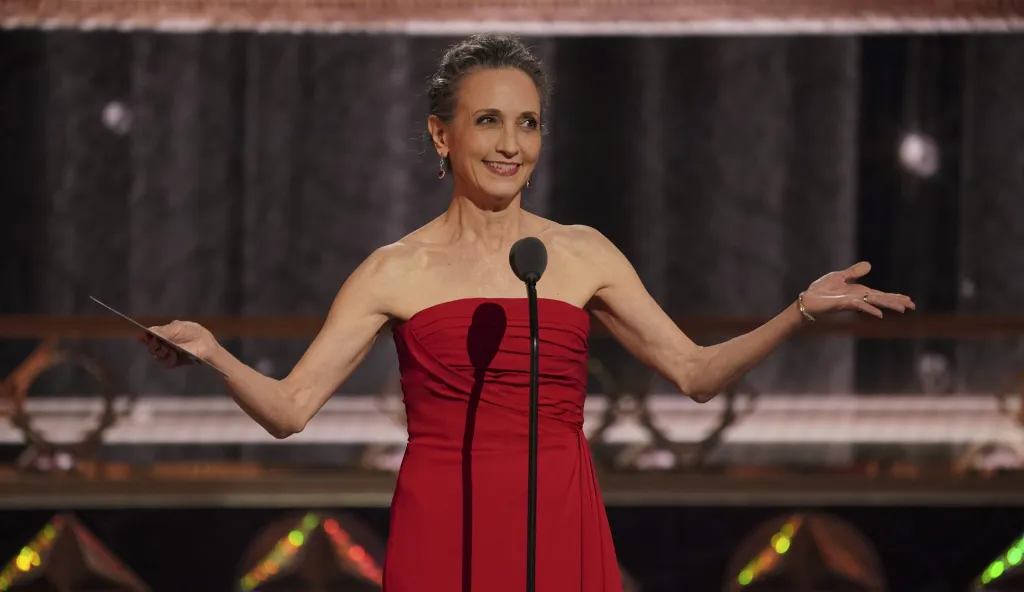
EXCLUSIVE: Two private industry readings of a new production of Cole Porter‘s The New Yorkersfeaturing much of the cast of an acclaimed 2017 Encores! presentation along with new addition Bebe Neuwirth are set for New York City later this month.
The cast for the presentations also includes Robyn Hurder, Mylinda Hull, Scarlett Strallen, Tam Mutu and Kevin Chamberlin, all returnees from the City Center Encores! production.
John Rando, a Tony winner for Urinetown who most recently directed the Back to the Future musical on Broadway, will direct. The 1930 musical with music and lyrics by Porter and a book by Herbert Fields, was adapted for Encores! by then-artistic director Jack Viertel, and it’s that version getting the readings on April 23 and 24.
Joe Abrams and Sally Wood are producing.
Set in Prohibition-era New York, The New Yorkers follows socialite Alice Wentworth as she pursues bootlegger Al Spanish from Park Avenue to prison.
The New Yorkers originally opened on Broadway in 1930, and featured such future Porter standards as “Love for Sale,” “Take Me Back to Manhattan,” “Let’s Fly Away,” and “I Happen to Like New York.” The Encores! production was painstakingly restored by Viertel from original materials once thought lost, and also incorporated additional Porter songs including “Night and Day” and “You’ve Got That Thing,” among others.
The full cast for the presentations will feature Scarlett Strallen as Alice Wentworth, Tam Mutu as Al Spanish, Kevin Chamberlin as Jimmy Deegan, Mylinda Hull as Mona Low, Robyn Hurder as Lola McGee, Arnie Burton as Feet McGeegan, Byron Jennings as Dr. Windham Wentworth, Bebe Neuwirth as Gloria Wentworth, Anaïs Reno as Lady of the Evening, David Baida as Phillip Booster, Kyle Scatliffe as Capt. Hillary Trask, Matt Saldivar as Doctor/Major Domo, Clyde Alves as Monahan and Jeffrey Schecter as Gregory, with Colin Anderson, John Harmon Cooper, Christine DiGiallonardo, Katie McCreary, Timothy McDevitt, Kent Overshown, Lindsay Roberts, and Daniel Schwait.
The original musical was based on a story by E. Ray Goetz and Peter Arno. The readings’ music direction and arrangements are by Rob Berman.
In its review of the 2017 Encores! production, The New York Times called the musical “divine” and “delirious, blithe and boozy,” evoking “those hedonistic early talking pictures, before the censors got their hands on Hollywood, when nobody appeared to have been told that the Jazz Age was over.”
Porter seems to be enjoying a mini-resurgence these days, with a revival of the great playwright’s Fallen Angels currently in previews on Broadway in a Scott Ellis-directed production starring Rose Byrne, Kelli O’Hara, Christopher Fitzgerald and Mark Consuelos, among others.
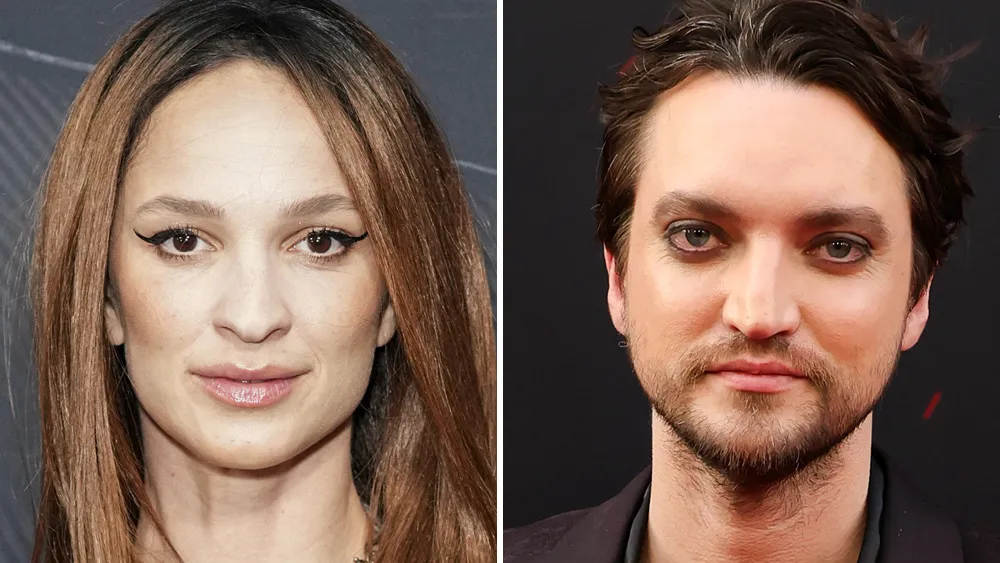
Ruby Modine, known for “Shameless” and the horror franchise “Happy Death Day,” and Richard Harmon, who recently starred in the worldwide hit “Final Destination: Bloodlines” and in Fox’s just-renewed series “Memory of a Killer,” have been cast in upcoming horror-thriller “A Most Delightful Game,” now shooting in British Columbia, Canada.
Karin Konoval (“The Planet of the Apes” trilogy, “The X-Files”) has also joined the feature, which comes from Lazy Sunday and 10/09 Films.
“A Most Delightful Game” marks the theatrical directorial debut of Boman Modine, the Emmy-nominated director, writer, and producer whose work has been recognized with the Breath of Life Award and nominations at the Oldenburg Film Festival and Tribeca Film Festival. His previous directing credits include the short “Merry Xmas” (starring Dick Van Dyke) and the Daytime Emmy-nominated series “Dark/Web,” which streamed on Amazon Prime.
Set in the 1980s, “A Most Delightful Game” follows a young woman’s quest for answers about her sister’s tragic passing, leading her to a death-plagued highway where she must confront an unknown evil.
The screenplay was written by Cynthia Mersten, with Boman Modine serving as co-writer. Known for her work in the horror genre, Mersten’s screenplays have been recognized at festivals including the Austin Film Festival, Atlanta Film Festival, and Flickers’ Rhode Island. In 2023, her half-hour pilot “Always A Bridesmaid” won the Raindance Film Festival in London.
Cinematography on the feature comes from Alfonso Chin, while special effects are being created by Amazing Ape, whose credits include “Longlegs,” “Deadpool 2,” “Peacemaker” and “Lost in Space.” The project is being produced by Artem Vasilyev and Vladislav Severtsev.
Vasilyev, who recently launched the Dublin-based production company Lazy Sunday, is known for films including “Dovlatov,” “Convenience Store,” “No Looking Back,” and “Paper Soldier,” which premiered and received awards at major international festivals including Cannes, Berlin, Venice, SXSW, and Tokyo. Meanwhile, Severtsev brings experience producing internationally recognized genre films, with notable titles including “The Bride” and “The Queen of Spades” franchise.
The production is being carried out in association with Canadian production company Hadron Films, with producers Chris Wilkinson, Ryan Marchant and Associate Producer Eloise Cameron-Smith.
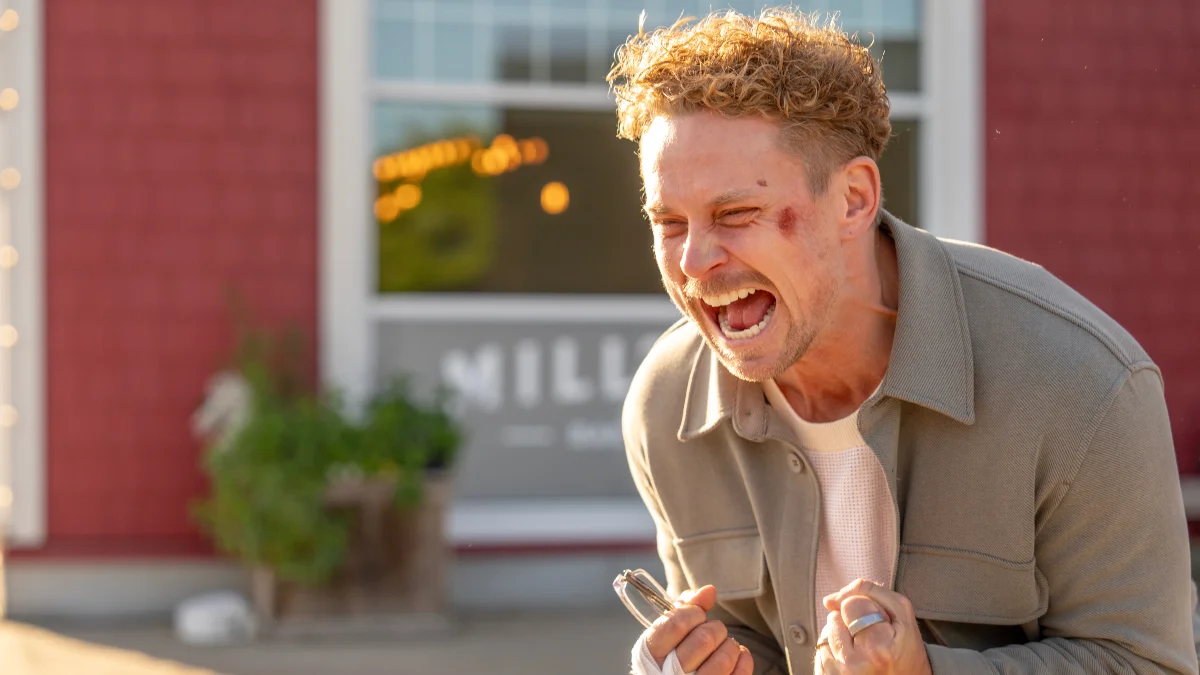
In “The Audacity,” Billy Magnussen plays Duncan Park, a man with too much power who thinks he doesn’t have enough.
“I think he still sees himself as weak, and I think that’s the scary part of what Duncan is,” Magnussen told TheWrap. “He doesn’t recognize how much of a bull in a china shop he is, and it’s because the society, the culture there has taught people ‘Move fast, break things.’ I still think he doesn’t think he’s an elite yet, and he’s trying to fight his way up, and that’s scary.”
Duncan is a tech mogul, a kind of figure relatively new in the history of the world that has become immensely powerful in the present day. Magnussen’s character, a self-proclaimed “inventor of the future,” lies at the center of “The Audacity,” a new series from “Better Call Saul” and “Succession” writer/producer Jonathan Glatzer on AMC taking aim at a group of fictional figureheads in Silicon Valley.
“I think he’s one of the most talented writers of our generation, to tell you the truth,” Magnussen said. “After reading the pilot and a few of the scripts, you see the elocution he has with his words and how to put these ideas together and share the complexity and depth of these characters there on the page. When I read that, I was like ‘Holy s—t, this Duncan Park character, the ferocity needed for it, the life that’s embodied in these words, I want to put him to breath and bring him to life.’ I feel blessed and lucky.”
Magnussen is perhaps best known by audiences for his immense comic chops, popping up in films such as “Game Night,” “Into the Woods” and the live-action Disney remakes for “Lilo & Stitch” and “Aladdin.” For a time, Magnussen’s “Aladdin” character Prince Anders was set to get his own spin-off on Disney+, though Magnussen sadly confirmed to TheWrap that that project is dead (“I had 30 seconds of screen time with Prince Anders, and I was like, ‘I could build a whole world for this guy’”).
Magnussen isn’t the only funny guy taking center stage in “The Audacity.” Sarah Goldberg, Rob Corddry, Simon Helberg, Zach Galifianakis, Randall Park and more actors with serious comedy chops round out the cast as various other players in this story of tech world machinations.
“What’s great about this show is people are coming into it going, ‘It’s a comedy, right?’ It’s weirdly a drama, a tragedy with these people, the humanity of these people there, that they’re so lost and delusional,” Magnussen said.
“You have Simon’s character — and this is a great realization of what I think these titans are — he’s trying to probably repair something from his childhood, of feeling isolated and alone with this bot,” he continued. “He’s trying to make this AI tool, and his goal is to repair the thing that was at his youth that f—ked him up. And then to get to the top and they’re still f—ked up and not fixed, even though they built this tech to do it. Let’s be honest: the people in Silicon Valley, I don’t think they were the football captains, you know?”
Magnussen wouldn’t point to a specific tech mogul he modeled Duncan after, though he did say he formed the character in part as an amalgamation of several such figures. The actor said one of the most important parts of this performance was steering clear of “evil CEO” tropes and finding a more nuanced take on a deeply damaged individual.
“I believe Duncan Park came to Silicon Valley with hope. He came with the idea of building a community, really doing something positive in this world, and he’s at the point in this show where we realize the tech world has kinda become a little poisonous. There’s toxicity, and it’s seeped into him. I don’t think he’s a bad man. I think he drank the Kool-Aid and is delusional now. I think he’s constantly fighting his morals internally while also trying to strive to be a tech titan out there because that’s the culture that’s around him. I think he’s lost, more than anything.”
It’s an intense performance, one Magnussen auditioned for like all the rest. His character lies at the center of a large ensemble series Glatzer created, one that’s already been renewed for a second season. Magnussen expressed some exhaustion in having to live with such a character every day.
Still, when asked if he’s ready for Season 2, the actor simply responded, “F–k yeah!”
“It’s an honor, to tell you the truth,” he said. “The people around me, I look at them, and I’m such a fan of all the people I’m working with. I hope I could do this justice for them. I think people forget, like, it’s a communal artform, and it’s not made by one person. It’s a whole village, and I’ve been on projects where people forget that. I promised myself I would never do that, as I take this on. I’m proud every day.”
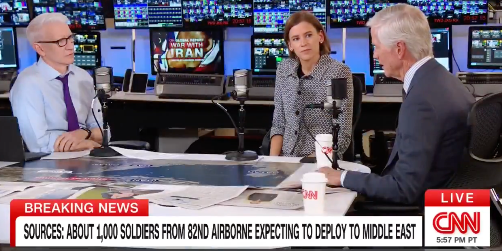
This past month, CNN made noticeable on-air design changes to two of its marquee programs, Anderson Cooper 360 and The Lead with Jake Tapper, giving them a dressed-down, podcast-like aesthetic.
Both shows were temporarily moved out of their glossy, flashy studios, with Cooper relocated to the network’s New York newsroom, shedding his jacket, loosening his tie, and leading his show from behind a table topped with a large image of the Middle East. Completing the new look, exposed mics, reminiscent of the Larry King era at the network, were placed in front of Cooper and his guests.
It may have been a night to remember for Rachel Zegler at London’s prestigious Olivier Awards on Sunday, but a certain marmalade-loving bear owned the evening.
The U.K. equivalent of the Tony Awards, celebrating the best and brightest talent leading the country’s vibrant theater scene, crowned its winners at a ceremony broadcast by the BBC and hosted by The Traitors and Ted Lasso star Nick Mohammed.
The new smash-hit production of Paddington the Musical stole the show with seven prizes in total, including best actor for performers James Hameed and Arti Shah, who operate the beloved bear’s voice (Hameed) and suit (Shah). The musical, currently running at the Savoy Theatre on London’s West End, also nabbed Oliviers for best new musical, best supporting actor and actress, best director, best set design, and best costume design.
McFly singer Tom Fletcher, who composed songs for Paddington the Musical, said while accepting the best new musical award: “We tried to make a show that is all about celebrating kindness… and to be part of this group of people that is putting that out into the world at this time feels so special, thank you so much.”
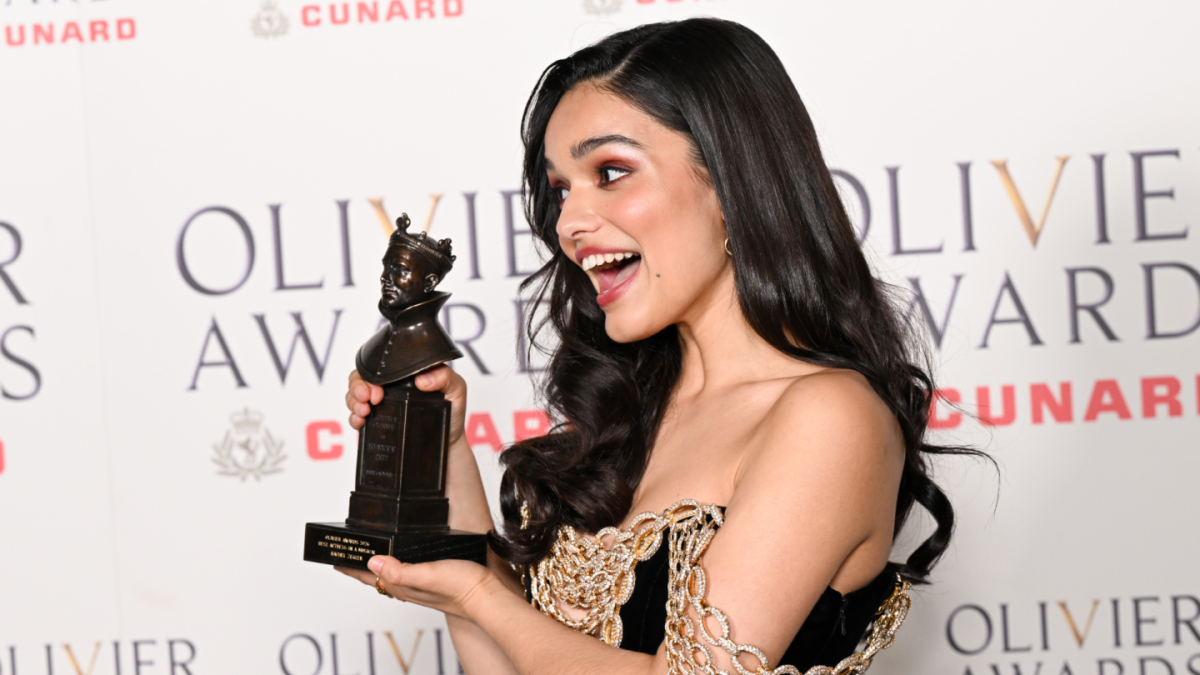
Elsewhere, Snow White star Zegler won best actress in a musical for her viral turn in Jamie Lloyd’s Evita, playing Argentinian first lady Eva Perón. She stirred the city by performing live to passersby on the London Palladium balcony every night last year. “Thank you so much to the city of London for making me feel so welcome here, I never could’ve imagined it,” Zegler said as she took to the stage. “It was the honour of a lifetime singing to the people on Argyll Street eight times a week, I can’t believe I got so lucky to sing in front of thousands of you.”
Rosamund Pike also won for her performance in legal drama Inter Alia, and while Harry Potter‘s Paapa Essiedu took home best supporting actor for All My Sons — a show which also won best revival — U.S. star Bryan Cranston lost best actor to Jack Holden’s Kenrex outing.
Take a look at the full winners list from the 2026 Olivier Awards below.
Best revival
All My Sons (WINNER) Arcadia Much Ado About Nothing The Seagull
Best musical revival
American Psycho Evita Into The Woods (WINNER) The Producers
Best new play
1536 Inter Alia Kenrex Punch (WINNER)
Best new musical
Here We Are Paddington The Musical (WINNER) Shucked The Unlikely Pilgrimage Of Harold Fry
Best actress
Cate Blanchett, The Seagull Marianne Jean-Baptiste, All My Sons Julia McDermott, Weather Girl Rosamund Pike, Inter Alia (WINNER) Rosie Sheehy, Guess How Much I Love You?
Best actor
Bryan Cranston, All My Sons Tom Hiddleston, Much Ado About Nothing Sean Hayes, Good Night, Oscar Jack Holden, Kenrex (WINNER) David Shields, Punch
Best actress in a musical
Katie Brayben, Into The Woods Danielle Fiamanya & Georgina Onuorah, Brigadoon Jane Krakowski, Here We Are Jenna Russell, The Unlikely Pilgrimage Of Harold Fry Rachel Zegler, Evita (WINNER)
Best actor in a musical
Marc Antolin, The Producers James Hameed & Arti Shah, Paddington The Musical (WINNER) Andy Nyman, The Producers Jamie Parker, Into The Woods Diego Andres Rodriguez, Evita
Best supporting actor
Hammed Animashaun, Dealer’s Choice Paapa Essiedu, All My Sons (WINNER) Zachary Hart, The Seagull Zachary Hart, Stereophonic Giles Terera, Oh, Mary!
Best supporting actress
Isis Hainsworth, Arcadia Julie Hesmondhalgh, Punch (WINNER) Lucy Karczewski, Stereophonic Hayley Squires, All My Sons Sophie Thompson, When We Are Married
Best supporting actor in a musical
Trevor Ashley, The Producers Corbin Bleu, The Great Gatsby Tom Edden, Paddington The Musical (WINNER) Jo Foster, Into The Woods Oliver Savile, Into The Woods
Best supporting actress in a musical
Tracie Bennett, Here We Are Amy Booth-Steel, Paddington The Musical (WINNER) Kate Fleetwood, Into The Woods Victoria Hamilton-Barritt, Paddington The Musical Georgina Onuorah, Shucked
Best director
Jordan Fein, Into The Woods Luke Sheppard, Paddington The Musical (WINNER) Ed Stambollouian, Kenrex Lyndsey Turner, 1536 Ivo van Hove, All My Sons
Best new entertainment or comedy play
The Comedy About Spies Every Brilliant Thing Oh, Mary! (WINNER) Paranormal Activity
Best new dance production
Into The Hairy (WINNER) Mimi’s Shebeen Random Taranto She’s Auspicious
Best new production in affiliate theatre
Ben And Imo The Glass Menagerie (WINNER) The Ministry Of Lesbian Affairs Miss Myrtle’s Garden The Shitheads
Best family show
The Boy At The Back Of The Class (WINNER) The Boy With Wings The Firework Maker’s Daughter The Three Little Pigs
Best new opera production
Dead Man Walking (WINNER) The Makropulos Case Tosca Die Walküre
Best sound design
Adam Fisher, Into The Woods Gareth Owen, Paddington The Musical Ryan Rumery, Stereophonic Giles Thomas, Kenrex (WINNER)
Outstanding musical contribution
Matt Brind, Paddington The Musical Will Butler & Justin Craig, Stereophonic John Patrick Elliott, Kenrex Chris Fenwick & Sean Hayes, Good Night, Oscar (WINNER)
Best lighting design
Robbie Butler, Punch Jon Clark, Evita Aideen Malone & Roland Horvath, Into The Woods (WINNER) Joshua Pharo, Kenrex
Best set design
Paul Tate dePoo III, The Great Gatsby Tom Pye & Ash J Woodward, Paddington The Musical (WINNER) Tom Scutt, Into The Woods David Zinn, Stereophonic
Best costume design
Enver Chakartash, Stereophonic Linda Cho, The Great Gatsby Tom Scutt, Into The Woods Gabriella Slade & Tahra Zafar, Paddington The Musical (WINNER)
Best theatre choreographer
Fabian Aloise, Evita (WINNER) Ellen Kane, Paddington The Musical Drew McOnie, Brigadoon Lynne Page, American Psycho
EXCLUSIVE: The beloved Andean, marmalade-munching bear, better known by all, including our late Queen Elizabeth II, as Paddington, may have a new habitat next year — on Broadway.
Sonia Friedman, lead producer with StudioCanal and Eliza Lumley of Paddington the Musical, winner of seven Olivier Awards on Sunday night, including Best Musical, reveals to Deadline that she’s hoping to have the show up and running in New York in 2027.
“I’d like it to be next year to keep the momentum going,” Friedman tells us.
Sonia Friedman at the Royal Albert Hall. Photo: Baz Bamigboye/Deadline
Friedman’s referring to the terrific standing-room-only run it’s having at the Savoy Theatre, where tickets are on sale through May 2027.
Come on, who are we kidding? The average lifespan of this diminutive Peruvian mammal, in captivity, is 25 years. A quarter of a century might be pushing it a tad, but this adorable creature has staying power, and it will be playing well beyond the spring of 2027.
Friedman, however, struck a note of caution about transferring to Broadway. “Look, it’s going to happen, I can’t kid you, but we have to look at the costs. Broadway is expensive, prohibitively so in some instances,” the producer behind Harry Potter and the Cursed Child and Stranger Things: The First Shadow, and others, laments.
However, for now, Friedman’s obviously enjoying her time with the bear and his marmalade. Her tresses, she says, stroking her hair, “have got a bit of orange color in it. I’ve started to go a bit orangey.”
A move to New York will give director Luke Sheppard, who clinched the Sir Peter Hall Best Director prize (named for the theatrical visionary who founded the Royal Shakespeare Company and who took over the National Theatre after Laurence Olivier’s reign), an opportunity to further tighten the show and throw overboard some bits and pieces that aren’t likely to travel well.
Paddington’s signature number, “Marmalade” (my favourite, and not just because I dollop Karly’s Kitchen Three Fruit Marmalade over my sourdough toast!), created by book writer Jessica Swales, composer and lyricist Tom Fletcher, with a leg up from choreographer Ellen Kane, was performed at the Royal Albert Hall.
The “Marmalade” scene in ‘Paddington The Musical.’ Photo: Baz Bamigboye/Deadline
The song was done by Tom Eddens, who was on Broadway 14 years ago in One Man, Two Guvnors, and the special bear.
Inside the award-winning Paddington costume was Arti Shah giving the bear’s physical performance, while out of sight backstage, Paddington was being voiced to perfection by James Hameed.
(L/R) Rutvig Shah, son Zavian and Arnie Shah at the Natural History Museum. Photo: Baz Bamigboye/Deadline
Eddens, Hameed and Shah all collected Olivier statuettes.
Lenny Henry and Tom Eddens at Royal Albert Hall. Photo: Baz Bamigbiye/Deadline
Shah and Hameed, especially, embodied Paddington’s ethos of inclusivity and kindness to all, particularly outsiders. In her acceptance speech, Shah, all of four feet tall, pointed to her nine-year-old son Zavian, seated in the Royal Albert Hall’s orchestra seats with his dad, her artist husband Rutvig Shah, telling him: “I’m going to keep showing you that being different is a good thing.”
When Hameed took his turn at the mic, he thanked his father, Sharif Hameed, for being “my very own Paddington, who came to this country to make his own dream of building a life in this beautiful city of London.”
James Hameed and Artie Shah at the Savoy Theatre. Baz Bamigboye/Deadline
Later, at the afterparty held at the magnificent Natural History Museum, Sharif spoke of arriving from Pakistan 50 years ago with the equivalent of a dollar in his pocket. He was there with James’s three siblings, including Melissa Hameed, head of production on unscripted shows such as 24 Hours in Police Custody. “All my children flourished here,” Sharif boasts with pride in his eyes.
Time and time again, presenters and winners spoke movingly of how they got their start with local theater groups and youth stage initiatives: all so vital for future theater makers.
On Saturday night, I caught up again with director Jordan Fein’s sublime revival of Stephen Sondheim and James Lapine’s Into the Woods at the Bridge Theatre, well aware that at the following night’s awards it would be in the Best Musical Revival category up against Tim Rice and Andrew Lloyd Webber’s Evita -directed by Jamie Lloyd, the Almeida Theatre’s American Psycho, and The Producers playing at the Garrick.
‘Into the Woods’ company curtain call. Baz Bamigboye/Deadline
Into the Woods scooped that prize, but Rachel Zegler was the well-deserved recipient of the Best Actress in a Musical accolade for her stupendously dazzling Eva Perón in Evita at the London Palladium.
Will it ever get to Broadway? Everyone tells me: “Yes.” But only if Zegler can be protected. Judging from the hateful messages of abuse posted to me about her, she will require 24-hour protection in New York City.
Rachel Zegler at The Olivier Awards 2026 (Photo by Jeff Spicer/Getty Images)
How do people get filled with so much hate? I’m sorry, but folk aren’t set a good example by people in power who spout wounding invective.
Might I suggest that such people, and nice people too, rush to the Theatre Royal Haymarket to catch The Unlikely Pilgrimage of Harold Fry, based on Rachel Joyce’s best-selling novel about a regular bloke, here played by an utterly heartbreaking Mark Addy, who was egregiously denied a nomination, who travels on foot to visit an old friend while his wife, beautifully realized by Jenna Russell, whose performance was recognized, remains at home. I say “rush” because its run ends this Saturday, April 18.
I just wish there was an intimate space available for it to move into.
James Graham’s play Punch took the Best Play prize and the great artist Julie Hesmondhalgh won the Best Actress in a Supporting Role. It’s a powerful drama about forgiveness that Graham is adapting into a television mini-series.
Team ‘Punch’, including producers Nica Burns (left) and Kate Pakenham. Baz Bamigboye/Deadline
The night’s big shining star was the venue itself. The Royal Albert Hall has never looked in better nick. BBC and BBC iPlayer viewers who caught the recorded broadcast saw it open with a splendid performance of the Masquerade number from Lloyd Webber’s The Phantom of the Opera staged on the RAH’s grand Diamond Jubilee Steps and its sweeping forecourt, using Gillian Lynne’s original choreography, followed by a rendition of the title song that moved from the steps, into the building’s winding corridors and then onto its mammoth stage. I gulped when show host Nick Mohammed remarked that The Phantom of the Opera was celebrating its 40th anniversary because I covered both its first preview and opening night.
The Royal Albert Hall. Baz Bamigboye/Deadline
No wonder the good Lord was in such a good mood when he came on to present Elaine Paige with an honorary Olivier. The Olivier show was all about Andrew Lloyd Webber’s shows.
Half a century ago, Paige created Eva Perón in Evita, originated Grizabella in Cats and played Norma Desmond in Sunset Boulevard at the Adelphi and on Broadway, taking over from Betty Buckley. All three musicals composed by Lloyd Webber, all seen by me.
I was stirred by a comment Paige made that keeps swirling in my head. “Thank you for letting me spend a lifetime doing what I love,” she told the audience.
That struck a deep chord.
Oh, yes, the thing about the Oliviers at Royal Albert Hall is that it gave the show distinction, a sense of awe. It looked so right and proper there in a way that the BAFTAs, held at the much younger Royal Festival Hall across the Thames, does not.
Now, the Oliviers were not perfect. There were gaffes, but in the room they didn’t seem to bother the audience, which at times sent waves of warmth Nick Mohammed’s way. Strangely, that same warmth didn’t always come across when I watched the BBC’s two-hour edited version in the early hours with a cup of tea, and marmalade on toast.
A tiny little moment niggled at me. When Rosamund Pike won Best Actress in a Play for Suzie Miller’s National Theatre production, Inter Alia, now playing at Wyndham’s Theatre, she paid tribute to her fellow nominees, including Marianne Jean Baptiste, but the camera panned on the wrong thespian. Mmm.
Marianne Jean Baptiste. Baz Bamigboye/Deadline
Same happened with Sophie Thompson when nominations were read out for her Best Supporting Actress category. The cameras trained their lens on the woman seated next to her.
I also felt that an Olivier Awards host should do a bit of singing and hoofing as Mohammed’s Ted Lasso colleague Hannah Waddingham did when she hosted.
The lady oozed star quality.
Both at the RAH and on the telly, the In Memorium segment seemed flat, perhaps a singer could’ve accompanied the remembrance?
And, I gotta ask this: Why was Elizabeth Hurley allowed to sashay on to present the night’s top Best Musical trophy? What has she ever done for musical theatre? Can she carry a tune? Where was Hannah Waddingham or Michael Crawford, for heaven’s sake! Tim Rice could’ve done it.
Billy Ray Cyrus and Elizabeth Hurley attend The Olivier Awards (Photo by Neil Mockford/FilmMagic)
But, really, these are minor quibbles. I enjoyed it. I laughed; a sign which might suggest that my sense of humor hasn’t gone on hiatus, which is what seems to happen whenever I tune into Sky’s Saturday Night Live UK.
Ah, I see the sun’s shining. I’ll have a ten-minute break for another cuppa orange pekoe with a slice of toast slathered with “mar-ma-lade.”
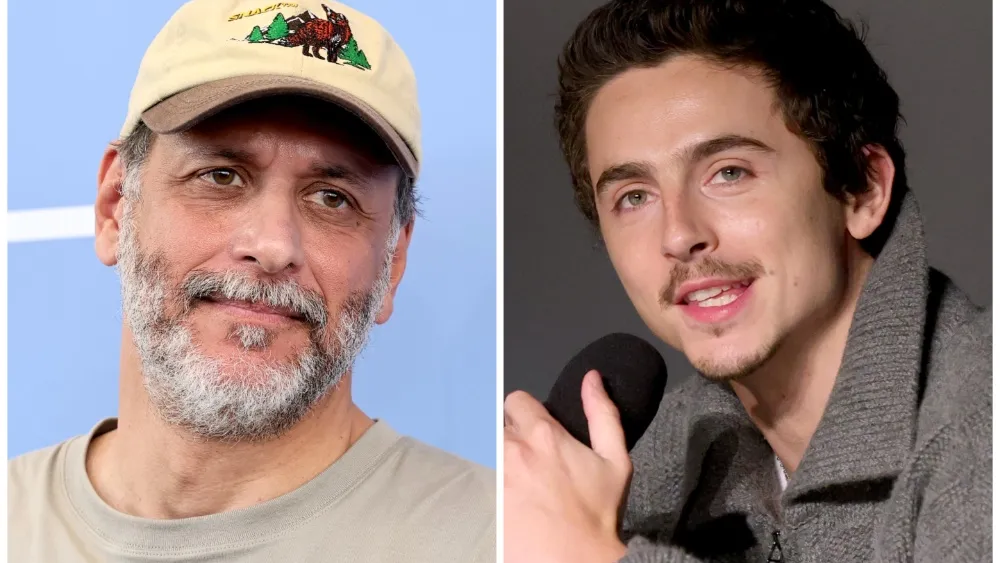
Luca Guadagnino has – at least partly – come to Timothée Chalamet’s defense regarding the “Marty Supreme” star’s viral comments that he didn’t want theatrical moviegoing to end up like the “ballet or opera.”
The Italian director did so just as he prepares to open his rendition of U.S. composer John Adams’ 1991 opera “The Death of Klinghoffer” in Italy.
In an interview over the weekend with Italian daily La Stampa — ahead of the April 19 premiere of “The Death of Klinghoffer” at the prestigious Maggio Musicale Fiorentino opera festival in Florence — Guadagnino, who is credited with launching Chalamet’s career with “Call Me by Your Name,” was asked about Chalamet’s caustic quip.
“I am not on social media and don’t understand how one [single] comment can become a planetary polemic,” Guadagnino said.
“Maybe Timothée could have spared himself,” he added. “But he’s young, smart, sensitive and he fears that cinema could become marginal. And that’s exactly why every form of imagination should be nurtured. We must unite the arts, not separate them.”
Chalamet infuriated the global ballet and opera communities when during “A CNN & Variety Town Hall Event” last month he said that he didn’t want theatrical moviegoing to end up like the “ballet or opera,” where artists want to “keep this thing alive” even though “no one cares” about it anymore.
The Florence event that is hosting the Guadagnino-directed opera was among the institutions that took offense. “Hey Timothée Chalamet, why don’t you drop by the Maggio Musicale Fiorentino to see John Adams’s ‘The Death of Klinghoffer’? It’s directed by your old pal Luca Guadagnino, so you know it’s going to be a masterpiece,” The Maggio Musicale said in a social media post.
“Come and see for yourself that Opera is alive, kicking, and actually matters to people!” the Maggio post added.
In the La Stampa interview, Guadagnino — who is also set to direct Giuseppe Verdi’s opera “Un Ballo in Maschera” at Milan’s venerable La Scala theatre next year — said that he directs operas “not as a film director who does opera to get attention from the press, but as a director who does opera full stop.”
“The Death of Klinghoffer,” which revolves around the 1985 hijacking of the Achille Lauro cruise ship and the killing of American Leon Klinghoffer, is “part passion play, part docudrama, part modern ballet,” as theVariety review from 1992 puts it, calling the opera “a somber exploration of suffering and loss that attempts to deal with current events in terms of their deep-seeded roots.”
In the interview, Guadagnino said that composer Adams and libretto writer Alice Goodman have “explored in depth the atavic, mythical and mythological dimension of two peoples [Jews and Palestinians] who are condemned to a rapport that is both symbiotic and conflictual, and therefore deeply upsetting.”
Asked about his upcoming feature “Artificial,” which is reportedly about OpenAI and has a stellar cast comprising Andrew Garfield, Monica Barbaro, Jason Schwartzman and Yura Borisov, Guadagnino said the film is “almost finished.”
Guadagnino revealed that “Artificial” is “the story of a group of kids who gamble on the utopia of an artificial intelligence that can self-generate, with all the ethical consequences this carries.” The Amazon MGM Studios production is expected to premiere at the Venice Film Festival this fall.
Last month, a Jury in Los Angeles found Meta and YouTube liable for intentionally making its platforms addictive. Scrolling delivers dopamine hits, “which is why social media often feels good while we’re doing it,” Stanford psychiatrist Anna Lembke has written, “but horrible as soon as we stop.”
That’s the message of a new campaign from Pinterest: Stop, put your phone down, and get out into the world.
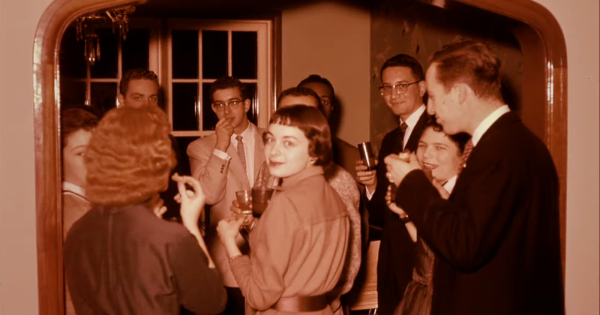
Kicking off the effort is a 60-second spot that stitches together home movies shot in the 1950s through the 1980s, where young people happily frolic in the pre-internet age. The unseen narrator, voiced by a young girl, has a lot of questions.
SXSW London is making a major addition to its 2026 program: a partnership with AGBO, the independent studio founded by the Russo brothers.
As part of the partnership, AGBO will bring “its cross-medium approach to storytelling across film, television, gaming, and immersive experiences,” the fest has said. The announcement comes as Anthony and Joe Russo are in post-production on Marvel’s Avengers: Doomsday, one of the year’s most anticipated films.
Taking place June 1-6, SXSW London — in its second year — will transform Shoreditch into a hub for premieres, emerging voices, and creators redefining how stories are told, with AGBO integrated across the Conference and Screen Festival. This will include appearances from the Russos and Donald Mustard, former chief creative officer at Epic Games and now partner at AGBO.
AGBO’s credits include Everything Everywhere All at Once, Extraction, The Gray Man, and the global Citadel franchise, with season two premiering in May. Most recently, The Bluff debuted as the number-one film worldwide on Prime Video. The Russo Brothers and AGBO have generated more than $7 billion at the global box office, including Avengers: Endgame.
Upcoming projects include Avengers: Doomsday and Avengers: Secret Wars, now in pre-production. The studio is also in post-production on TYGO, starring Don Lee and Lalisa Manobal (Blackpink); Mercenary, starring Omar Sy and set within the Extraction universe; The Whisper Man, starring Robert De Niro, Michelle Monaghan, and Adam Scott; and John Rambo, with Sylvester Stallone serving as an executive producer. Production is set to begin this summer on Extraction 3, starring Chris Hemsworth alongside Idris Elba and Golshifteh Farahani.
The company’s chief creative officer, Angela Russo-Otstot, said: “AGBO was founded on the belief that storytelling today is no longer confined to a single medium — it’s expansive, interconnected, and constantly evolving. SXSW London represents exactly the kind of global platform where those ideas can come to life. The U.K. has long been a driving force in the arts, technology, and gaming, we’re excited to explore how storytelling is evolving across disciplines and to engage with a new generation of creators shaping what comes next.”
Decydując się na grę, warto zwrócić uwagę na kwestie gameplay’u oraz mechaniki. Użytkownicy cenią sobie interaktywność oraz różnorodność doświadczeń, jakie oferują poszczególne tytuły. W kontekście popularności „Chicken Road 2”, gracze zwracają uwagę na unikalny styl wizualny oraz dynamiczny system rozgrywki. Warto porównać go z innymi ogólnodostępnymi tytułami na rynku.
Analizując wyniki w popularnych platformach, można zauważyć, że współczynnik retencji graczy w „Chicken Road 2” kształtuje się na poziomie 75%, co znacząco przewyższa średnią innych gier tego typu, wynoszącą około 50%. Tak wysokie wyniki mogą świadczyć o silnej społeczności oraz dobrej jakości działań marketingowych.
Kluczowe cechy „Chicken Road 2” w porównaniu z innymi grami są następujące:
Intuicyjny system sterowania;
Szeroka gama poziomów i wyzwań;
Możliwość rywalizacji z innymi graczami w czasie rzeczywistym;
W poniższej tabeli przedstawiono porównanie wybranych tytułów pod względem popularności oraz wskaźnika retencji:
Tytuł
Wskaźnik retencji (%)
Liczba graczy
Chicken Road 2
75
1,5 miliona
Gra A
50
800 tysięcy
Gra B
48
1 milion
Wybierając odpowiednią grę, warto również przyjrzeć się analizie konkurencji, której doświadczenia mogą dostarczyć praktycznych wskazówek. Więcej na temat „Chicken Road 2” można znaleźć pod tym odnośnikiem: Chicken Road 2.
Jak Zawodnik Wypada w Porównaniu do Tradycyjnych Tytułów Z Gatunku?
Analizując grę, można zauważyć jej wyróżniające cechy, które ją różnią od klasycznych przedstawicieli gatunku. Przyjrzyjmy się kilku istotnym aspektom, które mogą świadczyć o wartości tego tytułu.
Jednym z kluczowych elementów jest mechanika rozgrywki. W porównaniu z tradycyjnymi tytułami tego typu, gra wdraża ciekawe innowacje. Na przykład, zmieniające się poziomy trudności w czasie rzeczywistym są zauważalne, co przyciąga uwagę graczy poszukujących wyzwań. Statystyki mówią, że 75% graczy ocenia ten aspekt jako kluczowy.
Przedstawienie wizualne jest także istotnym atutem. Zastosowana grafika jest nie tylko kolorowa, ale również dynamiczna. Wskazówki mówią, że ponad 80% graczy zwraca uwagę na estetykę, co ma znaczenie w postrzeganiu gier. Utrzymanie wysokiej jakości graficznej oraz płynności działania wpływa na ogólne wrażenia z rozgrywki.
Porównując monetizację, nowoczesny tytuł oferuje różne modele płatności. Znajdziemy tu opcje zarówno darmowe, jak i premium, co zazwyczaj nie występuje w klasycznych tytułach. Badania wykazują, że 60% graczy preferuje gry z możliwością wyboru modelu płatności.
Dostosowanie postaci jako kluczowy element interakcji.
Różnorodność więzi w rozgrywce społecznościowej.
Wysoki poziom kontaktu z innymi graczami.
Warto również zwrócić uwagę na aspekty interakcji społecznej. Nowatorskie funkcje pozwalają na współpracę w czasie rzeczywistym, co pozwala graczom na integrowanie się z innymi w zabawie. W porównaniu do starszych gier, ten element jest niezmiennie słaby w tradycyjnych propozycjach.
Element
Tradycyjne tytuły
Analizowany tytuł
Mechanika rozgrywki
Statyczna
Dynamiczna
Model płatności
Jednorazowy
Darmowy i premium
Interakcja społeczna
Ograniczona
Rozwinięta
Podsumowując, nowoczesny tytuł oferuje innowacyjność, atrakcyjną wizualizację i różnorodność modelu płatności, co sprawia, że jest bardziej dostosowany do współczesnych oczekiwań użytkowników niż tradycyjne tytuły. Różnice te mogą zdecydowanie wpłynąć na preferencje graczy i ich zaangażowanie w rozgrywkę.
The company will be led by Alla May. Before launching the company, she worked across the European film and television landscape, including Evil Doghouse, a co-producer of Hatching and Alma.
The inaugural CrossBorder Films slate include the Australian relationship comedy Zombucha! and the Kyrgyz thriller Mergen.
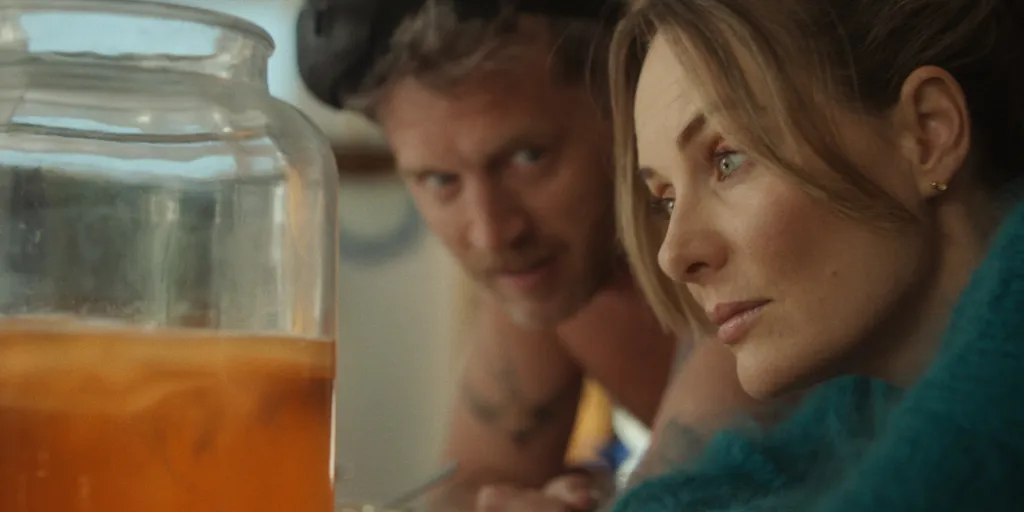
Zombucha! is directed by Claudia Dzienny and stars Jackie van Beek. The synopsis reads: Built around the kombucha trend, the film uses its offbeat premise to explore relationship anxieties, including commitment and readiness for starting a family. The film is set for release in September in Australia.
Mergen won the Grand Prix and FIPRESCI Prize at the Bishkek International Film Festival and had its international premiere at the 2026 International Film Festival Rotterdam. The film follows a police officer investigating a death in the snowy Kyrgyz mountains, who uncovers a web of violent corruption in a remote former gold-mining town.
“We see a strong global ecosystem around auteur and festival cinema,” Alla May, CEO of CrossBorder Films, said in a statement. “At the same time, there is a gap when it comes to audience-driven films — especially from cross-border contexts that don’t come with major budgets or star-driven packaging. These projects often struggle to travel internationally, and that is where we focus.”
Alongside sales, CrossBorder also said it will expand into development and packaging. The company is bringing Polish My Life, a romcom about a London-based editor who rebuilds her life after a breakup and begins an unexpected relationship with a Polish immigrant, to Cannes.
Asia Media Alliance Group and Nation Pictures have formally launched a joint venture to develop and produce genre films from Indonesia and Southeast Asia for global audiences, with a slate that includes Iko Uwais‘ action vehicle “Pendekar: Warrior,” an Indonesian remake of Korean hit “The Man From Nowhere” starring Joe Taslim, and “The Good Samaritan,” a Jakarta-set feature directed by Pierre Morel and starring Daisy Ridley.
The venture unites John Radel, the producer and cinematographer behind Asia Media Alliance Group, with Delon Tio, the Jakarta-based producer who heads Nation Pictures. Hong Kong-based producer Mike Leeder of Red Packet Media is also collaborating with the partnership.
The companies’ most recent collaboration, “Extraction: Tygo” – a spin-off from the Netflix action franchise starring Don Lee and Lisa of Blackpink – wrapped principal photography in Jakarta following a shoot that encompassed major city road closures for large-scale action sequences. That production serves as the springboard for a broader slate the partners say is already taking shape.
First among the new projects is “Pendekar: Warrior,” currently in pre-production, which is designed as a silat-driven action feature for Uwais. Also confirmed is the Indonesian remake of “The Man From Nowhere,” the widely seen Korean action film, for which the companies have secured the local remake rights. Taslim is set to star, with action filmmaker Kenji Tanigaki – whose credits include “The Furious” – in talks to direct. “The Good Samaritan,” meanwhile, brings together Morel, the director of “Taken,” with Ridley, produced by Renee Tab and Marina Grasic.
Radel, whose past credits as producer and cinematographer include Dev Patel’s “Monkey Man,” Michael Mann’s “Blackhat” and “The Night Comes for Us,” said: “I have always believed that Southeast Asia, and Indonesia in particular, would become not only a destination for production, but a true creative home for filmmakers and artists to make the kinds of movies the world wants to see. That moment is now.”
Tio, whose producing credits include cult horror title “Macabre,” added: “Cinema has moved beyond language barriers. What matters now is creating films with heart, ambition, identity, and scale that truly bring audiences into the theatre.”
Leeder, whose action credits span “The Raid 2,” “Man of Tai Chi” and “Triple Threat” and who is currently producing Korean action comedy “Belladonna,” rounds out the venture’s core producing team.
Note: This story contains spoilers from “Euphoria” Season 3, Episode 1.
HBO’s “Euphoria” went through several tragedies in between its second and third seasons, one of which was the untimely death of series star Angus Cloud in July 2023.
Cloud, who died of an accidental overdose, did not film any of “Euphoria” Season 3 prior to his passing, with the show facing delays following the conclusion of its second installment in February 2022. His absence from the show, however, is addressed in the “Euphoria” Season 3 premiere, which dropped Sunday on HBO.
Rather than making Cloud’s character, Fezco, also deceased in the show, the Season 3 premiere reveals that he is serving a 30-year prison sentence after his house was raided in the Season 2 finale.
“I tried really hard to keep him clean while he was here — I loved him very much, and … losing [him] was really hard,” creator Sam Levinson told TheWrap. “I just thought … if I couldn’t keep him alive in real life, then maybe I could at least keep them alive in ‘Euphoria.’ I wanted to honor him this season … he’s a big part of the thread of this season and … I hope he’d be proud.”
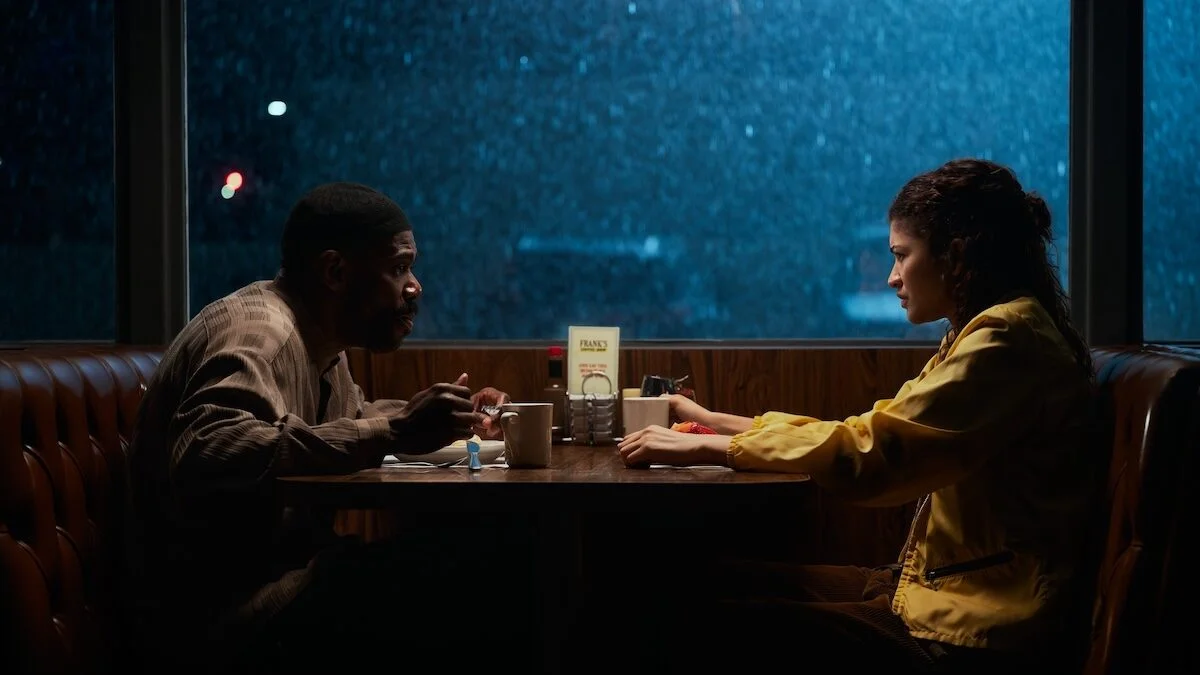
Fezco, is brought up in a conversation between Zendaya’s Rue and Maude Apatow’s Lexi in the Season 3 premiere, when Rue, out of the blue, encourages Lexi to call Fez.
“Yeah, I know. I feel guilty, but I just I haven’t had any time. I’ve been really busy,” Lexi responds, to which Rue pushes back by saying “Well, you’re free today.”
“He misses you,” Rue responds. When Lexi asks if Fez said that to her, Rue responds, “multiple times.”
“I don’t know. My hours and his hours don’t really line up, so its hard,” Lexi says. “Just like pick up the phone and call him, its not like he’s going anywhere — he’s in prison for 30 years,” Rue says.
Their conversation also addresses the sparks between Fez and Lexi that kicked off last season, and were notably interrupted when Fez couldn’t make it to Lexi’s play due to the drug raid.
Fezco and the drug raid is also mentioned earlier in the episode as the reason that Martha Kelly’s Laurie left East Highland and headed to California to team up on a drug business with her family.
Sadly, Cloud isn’t the only “Euphoria” team member to pass in between seasons, with both producer Kevin Turen and star Eric Dane also passing.
Freely, the free streaming service backed by U.K. broadcasters BBC, ITV, Channel 4 and Paramount’s 5 that launched in 2024, will introduce Freely Spotlight Channels to enable “increased monetization opportunities” for connected TV operating system (CTV OS) partners via the Freely TV Guide.
Everyone TV, formerly known as Digital U.K., the joint venture behind Freely, shared the news on Monday. Its focus is on enabling universal access to free TV in the streaming age.
The new Freely Spotlight Channels will be available on channel 31 and channels 90–99 on Freely-enabled devices, meaning a total of 11 potential channels. V, formerly known as VIDAA, the company behind the VIDAA OS smart TV operating system powering Hisense TVs, is Freely’s launch partner, bringing what the partners called “a curated selection of channels from their lineup to the Freely TV Guide.” V is expected to unveil and launch its channels within the Freely TV Guide later this year.
“The additional channels present an exciting new opportunity to drive discovery, viewing and advertising revenues from free-to-air streaming channels, whilst providing viewers with greater choice,” Freely said. “For CTV OS partners, the initiative creates a new, integrated way to monetize viewing through advertising and channel promotion, while remaining closely aligned with Freely’s core value to ensure the content British audiences know and trust is easy to find.”
Said Deep Halder, chief commercial officer at Everyone TV: “As Freely continues to scale, we are focused on building a platform that delivers long-term value across the whole ecosystem. Enabling CTV OS partner participation in defined parts of the TV guide allows us to deliver unprecedented value to our CTV OS partners in new ways, while staying true to our commitment to U.K. audiences to ensure free, trusted TV remains easy to discover in the streaming age.”
Guy Edri, co-founder and CEO of V, said: “The U.K. is a strategically important market for V, and Freely represents exactly the kind of forward-thinking platform we want to partner with. Spotlight Channels allow us to bring more free, high-quality streaming content directly to viewers through the Freely TV Guide – reinforcing our belief that great television should be accessible to everyone.”
Everyone TV previously said that Freely surpassed 1 million weekly users across Christmas week, with “growth continuing into the first quarter,” it added on Monday. “Freely is independently forecast to be the largest TV device platform in the U.K. by 2030.”
Freely on Monday also unveiled the introduction of a Showcase Channel on channel 100, designed to providing viewers with a series of short how-to, feature and informational videos.
Freely is integrated into new smart TVs and “plug-in and stream” devices, bringing together live and on-demand shows from the biggest U.K. broadcasters in one place, without the need for a dish, aerial or monthly subscription.
Euphoria has never been a subtle series. The Season 3 premiere is no different, plunging viewers back into Sam Levinson‘s provocative story about young people searching for meaning and connection in a chaotic, often cynical, world. Now, those characters are five years older, but none the wiser.
In fact, they seem to have defaulted back to the worst versions of themselves, if they ever grew beyond them to begin with — only this time, the safety net of high school is gone. Levinson has repeatedly said he sought to explore “the Wild West of adulthood” with Season 3, visually drawing inspiration from the American West. Naturally, the first episode sets off on that circuitous journey through the lens of Zendaya‘s Rue Bennett, whose debt to drug dealer Laurie (Martha Kelly) has come due since we last saw her.
In the Season 3 premiere, Rue is cut off from most of her friends and family since relapsing and is now working as Laurie’s drug mule, body-packing fentanyl to smuggle it over the U.S.-Mexico border, which it turns out she’s got a knack for. Albeit seemingly an effective method for drug smuggling, its limitations mean she’s also recruited Faye (Chloe Cherry) to help her out.
It doesn’t take long for Levinson, who wrote the entire season and directed nearly all of it as well, to remind audiences why Euphoria gained much of its cultural cache in the first place with an incendiary scene that’s sure to spread like wildfire across the internet featuring Rue and Faye choking down fentanyl-filled balloons covered in petroleum jelly (and the graphic consequences).
When asked about the scene, Cherry was quite matter of fact, telling Deadline: “Honestly, Sam said, ‘This is what we’re doing in this scene’…And once we were done, everyone clapped for me. I’m not joking. Everyone on set clapped.”
But the same scene, which like many in the premiere rides Levinson’s signature line between absurdity and anxiety, also highlights another sort of familiar tension in this show: That between the provocation and the depth of the material. If the goal is to make audiences squirm, Levinson certainly succeeds. Beyond that, it’s hard to tell what purpose the stomach-turning scene serves toward Levinson’s examination of entering the great expanse that is adulthood.
Naturally, Cherry teases “bad things” will come to pass to both Faye and Rue, as expected given the way the episode progresses.
Rue eventually sours on her gig with Laurie and opts to jump ship for a new kingpin. That’s where things descend further downhill for her as she aligns herself with strip club magnate and crime boss Alamo Brown (Adewale Akinnuoye-Agbaje), after showing up to his estate on a drug run and overindulging on controlled substances and women. While he’s wary of her at first, her audacity — fueled, as it often is, by a combination of naïveté and adrenaline-seeking — piques his interest.
“Initially, he sees in her some of himself, because she walks into his domain unannounced, uninvited, and then dances with my girls and then gets one killed,” Akinnuoye-Agbaje tells Deadline. “So, I think he sees a lot of himself in her, in that, this girl has balls. I think that’s why he gives her a little grace, initially, and I also think he sees that she’s smart. She’s ambitious, and maybe there’s a way that he can utilize her in his world. He’s not sold on it, which is why he tests her and says, ‘Do you believe in God? Well, let’s see if He believes in you.’”
In the final moments of the episode, Alamo subjects Rue to said test: Pistol target practice using an apple perched atop her head. Once the bullet pierces the fruit, Rue collapses, nearly worshipping the ground she stood on as she comes down from the high of nearly losing her life. The reaction tells Alamo everything he needs to know about Rue, and so he brings her under his wing to teach her an even more sinister trade: illicit arms dealing.
“It’s a wonderful entrance and gateway to their journey,” continues Akinnuoye-Agbaje. “It really sets the tone as to who he is and to what we can expect…she passes the test, because I think if she had flinched, he would have shot her.”
Euphoria has long faced criticisms that it deals in vibes, mood lighting and fodder to be clipped for social media reactions. Such has already proven to be the case for Season 3, as images of star Sydney Sweeney as an infantilized Cassie — dressed as a baby, complete with a pacifier and ringlet hair in pigtails, which could be Levinson adding his thoughts to the tradwife conversation but is once again not decisive enough to be clear — went viral before the first episode saw the light of day.
As the credits roll on the premiere, viewers are left to marvel at the intensity of the final scene and to ponder what might come from Rue’s transition to trafficking AR-15s…and what they’re supposed to take away from it.
Though Levinson is setting the stage for a grander tale in this third season of Euphoria, he is once again dealing in a series of images, or individual vignettes that suggest a cohesive narrative and creative prowess but ultimately do little beyond poke and prod the audience, like cattle, into a reaction. If only those scenes didn’t begin to buckle under their own weight from a lack of substance underneath.
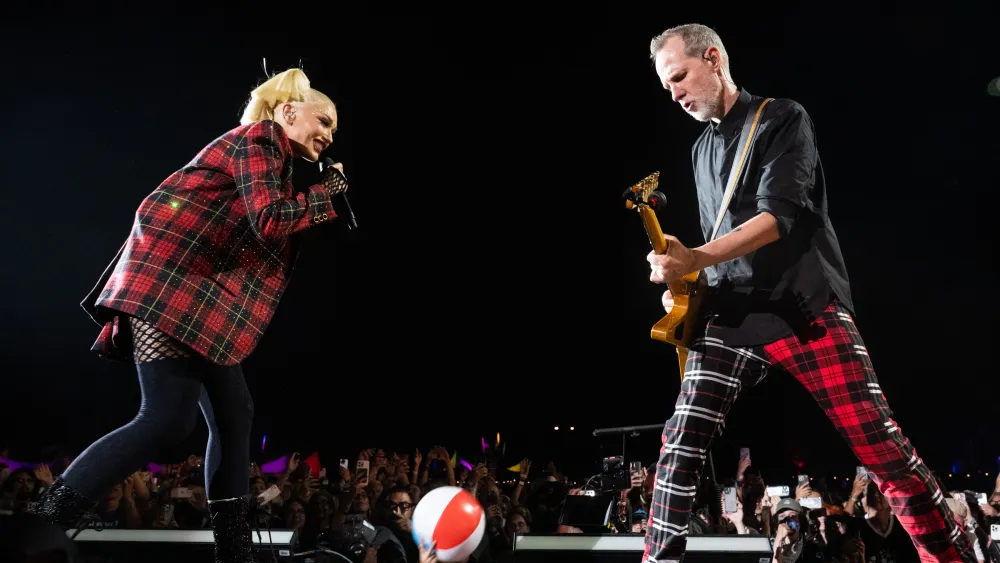
Headed into an upcoming residency at Las Vegas’ Sphere, No Doubt guitarist Tom Dumont revealed in a video statement over the weekend that he was diagnosed with Parkinson’s disease years ago, but noted that he can still play guitar and will be performing in the group’s imminent live shows.
“A number of years ago. I was experiencing a number of symptoms,” Dumont relates in the video, posted to his Instagram account. “I went to my doctor, I went to a neurologist and I did a whole bunch of tests, and I was diagnosed with early-onset Parkinson’s disease.”
The guitarist, 58, then notes that he has experienced constant difficulties — while maintaining that he is still able to stay active as a musician.
“It’s been a struggle. It’s a struggle every day.,” he says. “And I’ll make another video with details about what Parkinson’s entails. The good news is, I can still play music. I can still play guitar. I’ve been doing really well.”
Dumont adds, “I’ve just been very inspired by so many people who have come out to talk about their health issues on social media and that sort of thing. I think it helps erase some of the stigma and it raises awareness, obviously, and awareness is really important for prevention and for research.”
Before getting to that health information, Dumont stuck to the lighter side, referencing the Vegas residency, which runs for 18 shows May 6 through June 13.
“The last couple of months, getting ready for the No Doubt Sphere shows, it’s been very fun. Looking through old footage and looking at old photographs and relearning old songs and rehearsing and creating all the video stuff for the screens at the Sphere, it’s kind of made me think about how grateful I am for the life I’ve gotten to lead as a musician all these years. You know? And it’s thanks to our families and our friends and listeners, and you and everyone who’s come to our shows over the years. Thank you. … I’m really excited about the shows. I can’t wait to see everybody. And thank you for listening.”
Among the celebrities who have made their Parkinson’s diagnoses public over the years are Michael J. Fox, who has been one of the primary faces of the condition since he went public in the early ’90s, plus Ed Begley Jr., Alan Alda, Judas Priest guitarist Glenn Tipton, Linda Ronstadt, the late Ozzy Osbourne, Neil Diamond, the late Maurice White of Earth Wind & Fire, Leonard Maltin and Jeff Cook of the group Alabama. Some, like Diamond and Ronstadt, have revealed the condition when it is effectively forcing them to retire, while others disclose it while they are still able to continue working for many years or even decades.
The Parkinson’s Foundation says that more than 10 million people globally live with the disease. In the U.S., nearly 90,000 people are diagnosed with Parkinson’s disease each year, the foundation says.
No Doubt has been mostly inactive since the group released its last studio album in 2012 and toured in 2014-15. But a reunion for the Coachella festival in 2024 made big news, and was followed by a performance at the FireAid concerts at the beginning of 2025.
With another season of “Euphoria” comes a soundtrack full of throwbacks and contemporary tracks.
The Season 3 premiere kicks off with Christopher Cross’ “Ride Like the Wind” as Zendaya’s Rue drives “somewhere in Mexico” heading to the border, before shifting to some California-centric tracks like Waylon Jennings’ “Sunset and Vine” to reflect the season’s new West Coast setting. And it goes beyond Rue, as the premiere catches up with other beloved characters from the HBO drama series — now in their twenties and managing the challenges that come with young adulthood.
Check out all the songs in “Euphoria” Season 3 below. This story will be updated as new episodes debut weekly on Sundays.
Episode 1:
“Ride Like the Wind” by Christopher Cross
“Love Is Like Oxygen” by Sweet
“Sunset and Vine” by Waylon Jennings
“How Much Is That Doggie in the Window” but Patti Page
SPOILER ALERT: This post contains spoilers for RoosterEpisode 6, titled “Cop Hawk.”
As with many a Bill Lawrence and Matt Tarses show, there are always new connections to be found, and HBO Max’s Rooster is no different.
Co-creator Lawrence spoke to the parallels between Dylan (Danielle Deadwyler) and Katie (Charly Clive), who each face their own surprises in life, and how loneliness affects them as well as many of the comedy ensemble’s characters in their own ways.
“[Dylan] talks about it in the pilot of, ‘You ever feel surrounded by people but still really alone,?’ because she didn’t really find her community. And Charly’s character, Katie talks about how, [when] she got to this school, she didn’t build relationships because she just met a significant other, a partner, and right away became — which I think happens to lots of young men and young women — became his partner, rather than her own self,” Lawrence said. “And so those two things are mirroring each other. I mean, Dylan is much more successful in this show, you’ll see, in finding out that she wants to have a voice, and figuring out who she wants to be in the bigger scheme of things.”
As of the end of episode six, two cliffhanger situations have made things interesting for Dylan and for Steve Carell’s Greg Russo as well as Maximo Salas’ Tommy and Annie Mumolo’s Cristle.
L-R: Connie Britton & Danielle Deadwyler in ‘Rooster’
HBO Max
Dylan, who has settled enough into her role of Interim Dean of Faculty to make the office her own, might be booted from the position with Alan Ruck’s Dean Vincent Riggs’ healthy recovery from a heart attack putting a spring in his step as he enters her office and immediately reclaims it as his own.
Deadwyler and her costar Phil Dunster weighed in on this curve ball moment — because Riggs was last seen intubated and unconscious in the hospital in episode three following the cardiac arrest — in a separate interview with Deadline.
Throughout the season, Dylan has shown support for Katie as well as Greg’s daughter and colleague of Walt, Dylan and Archie navigates the unraveling of her marriage to Archie, whom she repeatedly calls narcissistic. Archie cheated on Katie with graduate student Sunny (Lauren Tsai), who is now pregnant with his child.
“In the pilot, particularly Katie’s world, is completely turned upside down. In a very interesting way, she’s observing it quite intellectually. She’s almost studying it. She watches Archie and Sunny. She comments on it. She feels like she’s sort of becoming an expert in their relationship, maybe because she doesn’t quite want to deal with the breakdown of her own,” Clive told Deadline. “I think that that is a fascinating thing for a character, because then at the end of the episode, that all falls apart, and she ends up burning a house down. In an effort to manage everything, she compartmentalizes things, and then that comes to a head in a really funny and interesting, quite like relatable way. I think a lot of people are going to be like, ‘Go on. Katie,’ which is great.”
In episode six, Dylan tells Katie that she “doesn’t have to watch this movie” between Archie and Sunny anymore as Dylan guides the female Professor Russo along after she sees her husband console his paramor. Add to the already complex situation that Katie and Archie are also sleeping together on the side.
L-R: Phil Dunster and Lauren Tsai in ‘Rooster
HBO Max
[Katie]’s road is a little more convoluted, because it involves marriage and betrayal, but I think that they’re both kind of — and by the way, a lot of the characters are intentionally — Greg’s lonely. Walt says, ‘I’m painfully lonely,’ [because] his wife’s gone for half the year,” Lawrence told Deadline. “The main similarity we were kind of going for is to be in this claustrophobic fishbowl, which is a college environment, and to still feel very lonely.”
And claustrophobic, it is, as Greg finds out by the end of the episode when he gets caught in Cristle’s kitchen naked from the waste down by his favored student, Tommy. Turns out Tommy is Cristle’s son, and he was living with Greg up until Greg encouraged Tommy to move home after his parents stopped paying his rent when his GPA took a hit.
New episodes of Rooster arrive on HBO and HBO Max at 7 p.m. ET/PT every Sunday.
The local horror-thriller “Salmokji : Whispering Water” claimed the top position at the South Korean box office during the weekend of Apr. 10–12.
According to data from KOBIS, the tracking service operated by the Korean Film Council, the film earned $3.7 million from 536,451 admissions over the weekend, capturing 47.17% of the total revenue share.
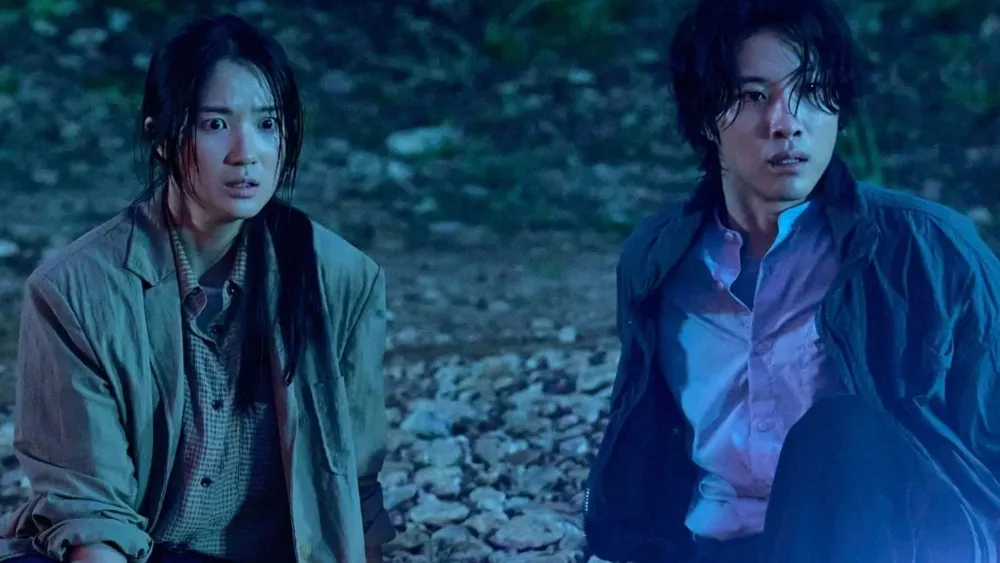
Directed by Lee Sang-min, the film stars Kim Hye-yoon and Lee Jong-won as a road-view camera crew that encounters terrifying supernatural events at a remote reservoir. Since its official launch, the Showbox-distributed title has reached a cumulative gross of $5 million from 724,036 admissions. This marks the strongest opening weekend for a domestic horror film since the 2024 blockbuster “Exhuma,” outperforming other recent genre entries like “Dark Nuns” and “Noise.”
The Hollywood science-fiction epic “Project Hail Mary” moved to second place, earning $2 million over the weekend. The Ryan Gosling-starrer has now officially crossed the 2 million admissions mark, reaching a cumulative gross of $15.4 million since its Mar. 18 opening.
In third place, the historical drama “The King’s Warden” added $1.1 million to its record-breaking total. With 175,342 admissions over the three-day period, the film’s cumulative attendance reached 16,397,364. This milestone officially moves the film past the 2019 comedy “Extreme Job” (16.26 million) to become the second most-watched film in South Korean history, trailing only “The Admiral: Roaring Currents” (17.61 million). Its cumulative revenue stands at an unprecedented $106.3 million.
The animated feature “Running Man: Light & Shadow” debuted in fourth place, earning $70,833. Written and directed by Yoon Jun-sang, the film features the voices of Kim Seo-young, Kwon Chang-uk, and Um Sang-hyun. The plot centers on the world-famous Running Men, who suddenly transform into dangerous villains attacking Tree City. As a secret organization called Metronome declares war to eliminate them, an agent named Lema suspects a hidden truth and launches an investigation to find the real enemy. Including its Apr. 11 opening day, it has earned $73,199.
Pixar’s “Hoppers” took fifth place, adding $83,572 to bring its total to $4.9 million. It was followed by “Demon Slayer: Kimetsu No Yaiba Infinity Castle Arc,” which earned $108,625 from 77 screens, reaching a lifetime South Korean total of $42.1 million.
The romantic drama “We Live in Time” was in seventh place with $63,017. Directed by John Crowley and starring Florence Pugh and Andrew Garfield, it has earned $108,386 in total.
The Japanese romantic drama “The Last Song You Left Behind” took eighth place, earning $63,055 for a cumulative total of $517,425. Directed by Miki Takahiro and based on the novel by Ichijo Misaki, the film stars Michieda Shunsuke and Nukumi Meru as two musicians whose bond is forged through music and poetry over many years.
The American crime thriller “Crime 101” debuted in ninth place with $40,824 and has a cumulative total of $71,825.
Rounding out the top 10 was the local crime-action comedy “The Ultimate Duo,” which added $47,034 to bring its cumulative total to $516,178. Directed by Park Cheol-hwan and starring Bae Sung-woo and Jung Ga-ram, the film follows an unlikely partnership between a veteran detective demoted to a rural station and a wealthy influencer-turned-rookie cop. The pair embarks on an unauthorized investigation that leads them from a petty church theft to a high-stakes murder case in Gangnam.
The overall market collective gross for the weekend was $8.01 million, an improvement over last week’s $5.8 million.
Note: This story contains spoilers from “Euphoria” Season 3, Episode 1.
HBO’s “Euphoria” returned for Season 3 with a bang, dropping viewers into a new California-centric reality for its main cast, all of whom have had some big changes since we last saw them in East Highland in Season 2.
The Season 3 premiere wastes no time in addressing the time jump, with Zendaya’s first line as Rue saying, “A lot of people ask what I’ve been up to since high school, and honestly nothing good.”
Check out the biggest updates for Rue, Sydney Sweeney’s Cassie, Jacob Elordi’s Nate, Alexa Demie’s Maddy, Maude Apatow’s Lexi and Hunter Schafer’s Jules from the “Euphoria” Season 3 finale below.
Rue
The Season 3 premiere opens with Rue “somewhere in Mexico” getting some help for her car to start before heading to the border, where she faces some more car trouble as she literally gets stuck on the border into the Texas. She eventually ditches her car and heads out on foot into Agua Dulce, where she stays with a religious family under the guise of being a student journalist named Ruby, hoping to “expose the pure evil that’s pouring across our border.”
One of the family’s many daughters later drops Rue off at the bus station, bringing her to California, where she greets Laurie (Martha Kelly) who asks for her car and says she’ll “add it to [her] tab.”
Zendaya for “Euphoria” Season 3 (Eddy Chen/HBO)
Flashing back to a few years after high school, Rue explains that Laurie and her henchmen found her while working at a smoke shop and told her that, with interest, she owes her over $43 million, but she’ll settle for $100K. “And that is how I became a drug mule,” Rue explained, before seeing her learn to swallow sealed bags of fentanyl in Mexico and driving across the border, eventually taking Faye (Chloe Cherry) with her. Once back, the duo would excrete the drugs.
Rue explains that after Fezco’s house got raided, Laurie left East Highland and went into business with her cousin and nephew, which seem to serve as surrogate family for Rue, who’s become their No. 1 mule. In the off time, Rue drives Ubers over Los Angeles, where she reunites with Lexi.
She also keeps seeing her sponsor Ali (Colman Domingo), with whom she confides about her new spiritual journey.
Lexi
Maude Apatow as Lexi in “Euphoria” Season 3 (Photo Credit: Eddy Chen/HBO)
When Rue greets Lexi at her LA apartment, Lexi is as put together as always, and, of course, out of the loop about Rue’s real work. Rue also tells Lexi she should call Fez (Angus), who is in prison for 30 years after the raid, explaining his absence from Season 3 after his untimely death.
Rue explains that Lexi has been working in Hollywood on a nighttime soap for industry legend Patty Lance (Sharon Stone). While she’s been relegated to assistant tasks, her suggestions are taken seriously by her boss
Cassie and Nate
Sydney Sweeney as Cassie in “Euphoria” Season 3 (Photo Credit: HBO)
Since high school, Cassie has moved to, as Rue puts it, a “right-wing suburban bubble” we can only guess is the equivalent of Orange County. Cassie is producing racy content for TikTok that Nate, who has since taken over his dad’s construction business, has an issue with.
Cassie’s motive to make money immediately becomes clear: she’s not getting everything she wants for the house and their upcoming wedding as Nate builds in Southern California. His big project is a retirement community by the ocean.
Jacob Elordi as Nate in “Euphoria” Season 3 (Photo Credit: Partick Wymore/HBO)
After looking enviously at Maddy’s Instagram, Cassie gives Nate an ultimatum over a candle-lit dinner: he condones her OnlyFans account so she can pay for the florals of her dreams, or they postpone the wedding. He agrees, but makes her promise she won’t show her face and her bust at the same time.
Maddy
Alexa Demie as Maddy in “Euphoria” Season 3 (Photo Credit: Marcel Rev/HBO)
Lexi and Maddy cross paths frequently in Hollywood, with Maddy working in management, representing influencers and a few actors, including Dylan Reed, who stars on the soap that Lexi works on. At this point, she’s only an assistant, though, meaning her wage is much smaller than the 10% made by her boss.
Jules
Hunter Schafer as Jules in “Euphoria” Season 3 (Photo Credit: Eddy Chen/HBO)
While we don’t see Jules in the Season 3 premiere, Lexi tells Rue that Maddy told her Jules has been working as a sugar baby.
Rue’s adventure
Things shift for Rue when she goes to deliver drugs to Alamo (Adewale Akinnuoye-Agbaje), and stumbles into a house party she can’t resist but joining. She quickly connects with Alamo and even asks for a job at his strip club. Everything is going swimmingly until a girl overdoses on the drugs brought by Rue, but Rue promises she didn’t have anything to do with it.
Alamo tests Rue’s luck by shooting an apple on top of her head, though, luckily, he shoots accurately, giving Rue the laugh of her life.
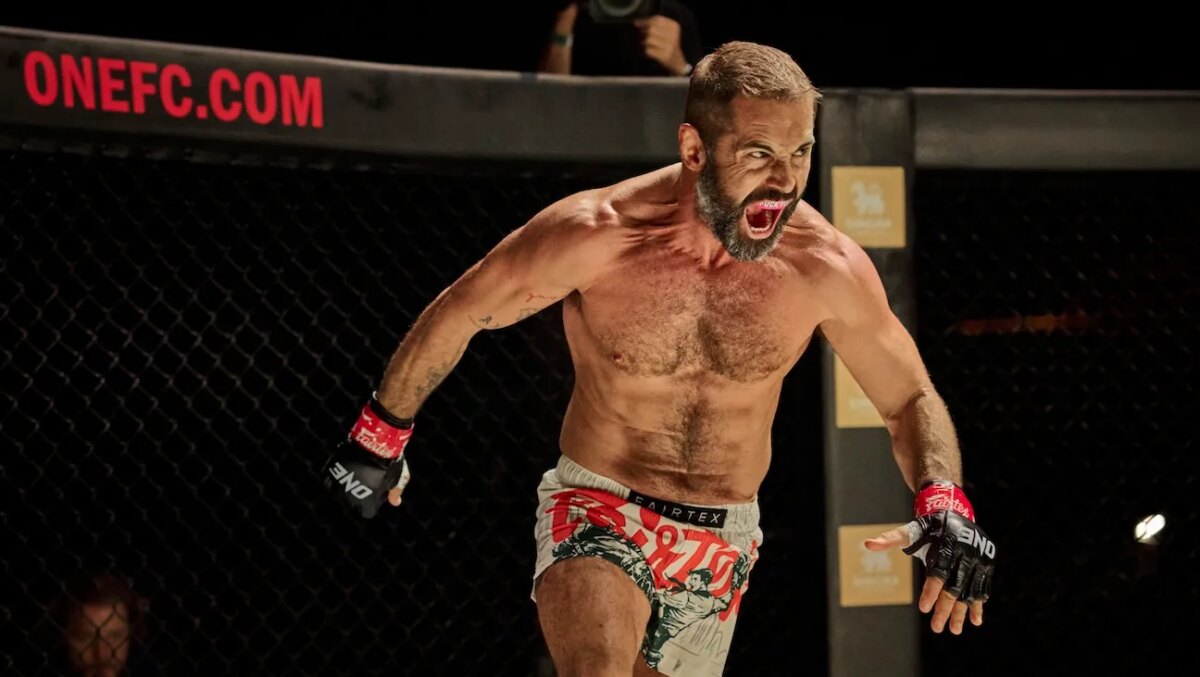
In Beast, Australian director Tyler Atkins (Boasch & Rockit, aka Ocean Boy) sets out to do something more ambitious than simply stage bone-crunching fight sequences. His debut feature in the MMA arena is as much about family, identity and masculinity as it is about survival inside the cage.
Shot across between Australia and Thailand, Beast pairs visceral action with an emotional core anchored by a working-class fighter torn between who he is and who he’s expected to be. With Russell Crowe lending gravitas as a battle-hardened trainer (Sammy) and Daniel MacPherson embodying the conflicted fighter (Patton James) at its centre, Atkins leans into the human cost of violence — and the strength required to endure it.
Speaking with The Hollywood Reporter Australia, Atkins reflects on the film’s unconventional production and his personal philosophy that shaped its themes. Beast opens in U.S. theaters on April 10, and at home in Australia on April 23.
First of all, congratulations. This was a complex shoot — how long did it actually take?
Thank you. It’s a hard one to answer because it was pretty unconventional. We shot in three different blocks. The first was about 10 days — all the gym material and the Russell Crowe scenes. Then we went to Thailand for a week, and after that we shot the drama over four weeks. So about seven weeks of shooting, but spread across four or five months. It was pretty wild — different units, different locations.
What drew you to a fight film? It’s not an obvious lane for you.
I actually turned the script down a couple of times. It was originally set in America and I just couldn’t see the film — and if I can’t see a vision, I won’t do it. But the producer encouraged me to reread it, and Luke Hemsworth said something that stuck with me — you don’t always get a 10-out-of-10 script, but if you see elements you connect with, you can elevate it.
I love MMA. I love stories about men who protect their families and communities. I’m big on partnership, forgiveness — those themes really spoke to me. So I reshaped the film around what I’m passionate about.
It plays like a fight film, but the family story is really the engine.
Completely. The wife and daughter — that’s what drives everything. I leaned heavily into that. It’s about a man who’s trying to provide for his family but isn’t allowed to be who he truly is.
There’s a powerful moment where his wife realises she has to let him be that person — even though it terrifies her. Fighters can die. They can suffer brain damage. But she understands that suppressing who he is isn’t the answer either. That moment was really important to me.
The opening sequence is striking — you show both the brutality and the glory of the sport almost instantly.
That was very intentional. In MMA, one guy wins, one guy loses — and the difference can be one punch. I wanted to show that contrast straight away.
Then you have Russell Crowe’s character taking a fighter who’s terrified and getting him ready to walk into a cage. There’s something almost spiritual about it — like a preacher sending someone into battle. We added war drums into the score to give it that primal, ritualistic feel.
What conversations did you and Daniel MacPherson have about the character?
We worked on that character for years. Dan trained in MMA — Muay Thai, jiu-jitsu, boxing — and we really built this guy from the ground up.
He’s one of those forgotten men. A working-class guy from Port Kembla (NSW) who can build a house, fix an engine — that kind of man. I wanted to explore what I call “divine masculinity.” Not aggression or toxicity, but a man who’s in control, who protects, who gives. That was really important to me.
You touch on masculinity in a way that feels very deliberate.
Yeah, I think we’ve lost the conversation around what a good man actually is. It’s not about money or status. It’s about integrity, responsibility, protecting others. That’s what I wanted to put on screen.
Russell Crowe in ‘Beast’
Deepwater Films
What’s it like directing Russell Crowe?
He’s a master. You don’t really direct him — you collaborate. We workshopped the script at his farm, and on set he just knows exactly what he’s doing. You might give a small note here or there, but he brings it to life in a way that’s incredible to watch.
Were you looking at other films for inspiration?
Definitely. Requiem for a Heavyweight was a big one — it’s got so much heart. And of course Rocky — that’s the blueprint for the underdog story.
I also love emotional films like Paper Moon and On the Waterfront. That’s what I was chasing — heart and soul. But at the same time, I wanted Beast to feel authentic and real.
You had a major curveball with your cinematographer just before shooting.
Yeah — seven days before we started, our DP had a serious health issue and had to step away. We couldn’t delay — the film had already collapsed twice before — so we had to push forward.
I’d spent two and a half years working as a grip, basically doing film school on set. That gave me confidence. We brought in Thomaz Labanca, who hadn’t shot a feature before, but had a great eye. I just said, “Let’s go for it.” And he delivered.
The world of the film feels very specific — especially Port Kembla.
That was crucial. Port Kembla is part of the character — it’s an old steel town, very raw, very real. Shooting it somewhere like Sydney wouldn’t have worked. We fought hard to keep that authenticity, because the environment shapes who this guy is.
Looking back, what are you most proud of?
That we stuck to the vision. It was a tough shoot, a lot of pressure, but we committed to making something real — something with heart. And I think that comes through.
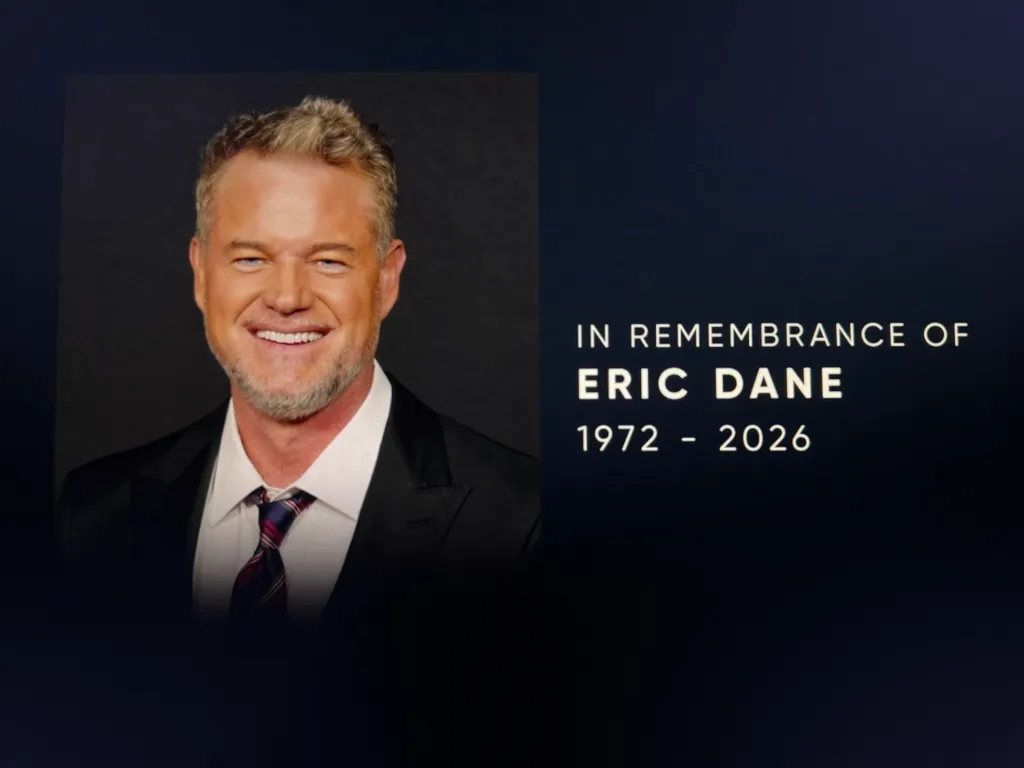
The long-awaited third season of Sam Levinson‘s Euphoria opened on a solemn note as an in memoriam card flashed on screen dedicated to late star Eric Dane. The remembrance, which featured the Grey’s Anatomy alum’s picture and his birth dates, is similar to the one HBO Max previously posted for late actor Angus Cloud.
At the end of the premiere episode, just after the credits, were dedicated tributes to Dane, Cloud and producer Kevin Turen. (See images below.)
“Some people ask why it took so long between seasons two and three,” he said. “There were obvious factors — the strikes, trying to make a schedule work with our very in-demand cast, but the real time was in trying to figure out how to find a way to pay respect to those who we lost.”
Cloud, who portrayed Fezco in the first two seasons of Euphoria, died in 2023 from “acute intoxication” at the age of 25 in Oakland, Calif. Turen unexpectedly died a month afterward, at the age of 44. Dane was able to reprise his role in the third season of the HBO drama before his death in February; the actor died of of respiratory failure with ALS as a contributing cause.
While Cal (Dane), Nate’s (Jacob Elordi) father, doesn’t appear in the season premiere, he will be featured later on. Though it’s unclear how the show will address the character’s departure, Levinson told Extra that he adjusted his writing in real time to factor in Dane’s health. “He showed up and I could tell he had a slight slur in his voice and he told me that. I said, ‘Don’t worry. We’ll just put, like, five beer bottles in front of you and you’ve been drinking all night.’ He was like, ‘Perfect, perfect.’ And his character, it was such a gift.”
Contrastingly, Season 3 includes a scene in which Rue (Zendaya) visits her erstwhile high school friend Lexi (Maude Apatow) in Los Angeles, where she now works as an assistant to a famed TV executive (Sharon Stone); while there, she urges Lexi to call Fez, with whom it seemed she would embark on a romance last season. In the show’s canon, Fez is serving 30 years in prison but still misses Lexi, despite not having been in contact for years.
Of the decision to conclude Fez’s journey that way, Levinson told Entertainment Weekly:“I fought very hard to keep him clean when he was alive, and losing him was really tough,” adding, “I felt like if I couldn’t keep him alive in life, then, I could in the show.”
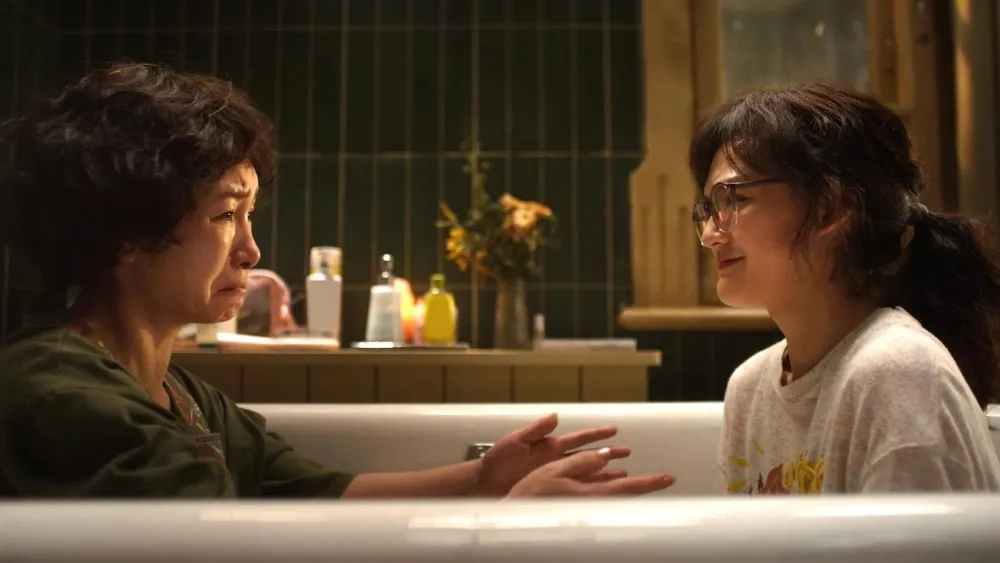
The local drama “It’s OK” ascended to the number one position at the China box office during the April 10–12 weekend, earning RMB31.0 million ($4.6 million) in its second full weekend, according to data from Artisan Gateway.
Produced by China Film and directed by Yang Lina, the film has now reached a cumulative total of $18.7 million. The story follows Xu Ke, a young woman whose life is upended by her mother’s sudden arrival as she faces a medical emergency, forcing the pair to confront long-standing family tensions.
Universal’s “The Super Mario Galaxy Movie” moved to second place, adding $3.3 million for a total of $14.7 million.
Columbia Pictures’ “Project Hail Mary” maintained a steady presence in third place, taking in $3 million to push its cumulative total to $33.7 million.
Debuting in fourth place, the horror-thriller “The Caged Butterfly” earned $2.4 million in its first full weekend. Produced by Ultra Comedy and directed by Hao Han, the film stars Li Meng, Liu Siwei, and Jiang Zhuojun. The story is set within the notorious Butterfly Mansion villa. The plot follows a physiotherapy therapist and a greedy schemer who move into the haunted estate, only to be plagued by bizarre events and a life-or-death game involving a woman in a red dress and a distorted, eyeless boy.
Rounding out the top five, romantic drama “Now I Met Her” earned $1.8 million for a total of $8 million. Produced by Dirty Monkeys and directed by Xiao Luxi, the film stars Sandra Ma and Ke Bai in a story about an 18-year-old who discovers his late mother’s vibrant past through her personal diaries.
The frame represented a notably quiet period for the market, with the total weekend gross of $21 million marking the second-lowest collective take of the year so far.
Mainland China’s 2026 year-to-date revenue stands at $1.84 billion, down 50.1% from the same period in 2025.
The two men danced in their underwear together and Clark tried, desperately, to give Floyd the arousal, the validation, that he had been searching for. It all ends messily, though, with Clark collapsing to the floor and realizing that he’s just a middle-aged, lonely guy who does not and never has known what he is doing. Floyd comforts him and stays behind only to see his stepson Richard (Arlan Ruf) watching him through one of the building’s windows. Richard, it turns out, signed onto Floyd’s computer earlier that night to check off his daily goals and saw his stepfather’s DTF St. Louis account still open.
He saw Floyd’s profile. He saw the set meeting time at the Kevin Kline pools, and he went there to tell Floyd that he was disgusting and did not deserve to be married to his mom, Carol Love-Smernitch (Linda Cardellini). Heartbroken and shattered, Floyd signed to a confused Richard that he loved him before knowingly chugging the entire, fatal dose of Amphezyne that he’d poured into his can of alcohol. Floyd took his own life. His suicide means that Carol will not get the life insurance policy that Clark had set up for him, and when Clark returns home at last from prison, he finds that his wife and daughters are gone.
Linda Cardellini and Arlan Ruf in “DTF St. Louis” Episode 7 (Tina Rowden/HBO)
“DTF St. Louis” ends on this tragic note, and it is one that series creator Steven Conrad hopes will resonate with viewers.
“Seven hours is a lot of somebody’s time, and you just hope that it that feels like it left you with something,” the writer and director told TheWrap. “The challenge of the entire thing is to go, ‘Okay, this has to end in a way where Homer did his job, Jodie did her job, but the audience also feels like this wasn’t just a crime being solved. That there was some other transmission, you know, in the midst of all of it.”
The finale does not offer much hope for its survivors’ futures moving forward.
Regarding Carol’s life after “DTF St. Louis” Episode 7, Conrad said, “She’s not going to get an insurance settlement. They don’t pay those out for suicides. But her impulse to let Richard know that Floyd wanted to give this message of love to him overwhelmed that consequence. So she’s just gonna keep scrapping. She’ll come to terms with the fact that what Floyd needed was some tenderness, and Clark could give it to him. Carol could not anymore. She’d really tried and it was gone. It was just gone.”
“She’ll have to make peace with the idea that she no longer had a way to save Floyd, and she’ll struggle to make sense of that. But she does have that fighter’s instinct,” Conrad added. “Floyd never knows that he’s in a fight, that being alive as an adult means being in a fight for your life. She knows it. She’ll keep fighting.”
As for Clark?
“He’s gonna have to grow up,” the “DTF” creator acknowledged. “One of the cool things about the show is that he comes across initially as kind of a serial philanderer. But then we reveal in Episode 6 that he’d never had an affair before. Carol was the first time he ever strayed, and I think it makes more sense that he’s terrible at it. [Laughs] I don’t think he’s gonna do it again if he gets another chance.”
Below, Conrad dives further into the tragedy at the heart of “DTF St. Louis,” his partnership with HBO, how the series explores the crushing reality of financial insecurity and the “responsibility” that made it impossible for Harbour’s Floyd to ultimately make it out of the series alive.
Arlan Ruf and David Harbour in “DTF St. Louis” Episode 6 (Tina Rowden/HBO)
This interview has been edited for length and clarity.
TheWrap: What did you have first: The clues or solution to Floyd’s death?
Steven Conrad: I knew conditionally what the consequence was going to be. The tagline for the app is, ‘All the Excitement. None of the Consequences.’ That’s the gamble that these guys make. Obviously there’s no such thing as no consequences, and I recognized in Floyd… he just felt like a stepfather to me. Some guys are, you know? And there can be good ones and there can be indifferent ones. The struggle for a good stepdad is it’s a rock up the hill. It’s a tough job. There’s no benefit to the doubt.
So I knew that was going to be what he was carrying around, and I knew that someone as sweet as him could find a way to get there. To get the rock up the hill. And then I knew Floyd was going to drop it and break it. I also knew that there wasn’t a version where the child was capable of doing anything that could amount to someone’s death. It had to be emotional and unfixable, and then fixable by another terrible decision that isn’t going to fix anything, either.
The show is so tonally distinct. It is not afraid to be absurd at times and also deeply tragic at others. What was your partnership like with HBO? What kind of notes did they have?
Conrad: I have to say, and this is a compliment to the partnership, that they’re an engaged group of filmmaking partners. By engagement, I don’t even just mean that they are checking in. They’re engaged in the sense that they’re in it before you make it — expecting it to look and feel and weigh and be measured in a specific way. It needs to be sound, right? No extra parts. Let’s just make sure that the components of this are all very, very good. They are in it like that.
When you’re trying to find your bandwidth of tone, you can break a spell very easily by just not being able to read where the audience is in each moment. At the same time, if you don’t continue to try to delight, then you’re going to lose them another way. It’s the difference between them shaking their head if you swing and miss and them leaning back and looking at their phones. So HBO and I tried to identify together, “Where are we? Are we trying too hard? Is this not going to feel organic?” People who have done it less than them will say, “I just don’t believe this,” but HBO is smart enough to know that characterization doesn’t have anything to do with making a show. It’s not supposed to be believed. It’s supposed to be experienced. So they think of it in terms of the experience. “Can we make the experience of this tighter?”
Take something as simple as the detectives going to arrest Clark in the pilot. The sheriffs, they’re all running up the stairs and they’re chanting, “Here we go. Here we go. Here we go.” That makes no sense! [Laughs] Except that now there’s a charge to the scene, a pre-charge to the arrest that I wanted the audience to feel. When I wrote it and shot it, though, it began with them all congregated at the bottom of the stairs practicing the chant and some guys just weren’t getting it. Homer had to help out and then they finally did it and I filmed them doing it up three flights of stairs. I showed that to HBO and they said, “One set of stairs.” Who’s to say which one is better? But they never told me to take it out, and that is one of the wildest things anybody dreamt up for “DTF.” It was always about measuring what we were going to ask the audience sit in in every moment.
Linda Cardellini in “DTF St. Louis” Episode 7 (Tina Rowden/HBO)
It is very rare to see characters in a show or movie who are financially struggling the way Carol and Floyd are. Their heads and mouths are basically just floating right at the water line the whole show. Why was it important for you to explore that kind of crushing financial situation in “DTF”?
Conrad: That’s a great description of it, because they’re very near suffocating. If that water line goes up another inch, there’s going to be real consequences. The way Carol explains it is that Richard’s life is vulnerable. They have a home, and someone could take their home. You’ve got to start chipping away at this debt, because it’s going the other direction every year. There are penalties, consequences to Floyd’s spirit, his really naive and very beautiful spirit… You know, people can be lighter when someone in their life is doing the heavy lifting. I saw a documentary once about Ennio Morricone, and he was being interviewed with his partner on a couch, and she described herself as the “protector of his talent.” I thought, “God, that’d be a nice thing to have.”
But imagine if you were an artist and someone was right next to you thinking, “He’s not paying the household bills. He’s not going shopping or putting gas in the car.” Floyd is one of those spirits that, because of his gifts, he’s been allowed to float around a little bit. Until now. Until this summer. This summer, the rent’s come due, and they can’t pay it. So Clark is a kind of impulsive salve to Carol. Like she knew, instinctively, that they could give each other something they both needed. I don’t think in reflection it was as transactional as we make it seem while plotting out the whodunnit. In my estimation, people are drawn to each other because that other person has something that we need. It could be that they’re just very funny. It could be that they’re very honest, and you need that gift in that specific period of your life.
Floyd and Carol weren’t going to make it through the year no matter what happened to him. At one point, Floyd mentions that Carol’s first husband was a “bad guy,” and I sort of left it to the audience to fill in the blanks. But that’s Richard’s father, and you can imagine very easily Carol having to contend during those years with someone who was cruel. And then here comes Floyd 10 years ago and he’s giant and he’s kind and he’s the antidote. He makes her feel safe and she is, therefore, attracted to him. 10 years later, he doesn’t make her feel safe anymore. He makes her feel vulnerable, and there goes the intimacy. Clark comes around and Clark makes her feel safe. So the clearest way for me to explore this trade, this trade of what someone might be able to give somebody else when they really need it, was when I could say that it’s money. Money is the quiet plight of so many people’s lives that robs their sleep, because you can’t find a way out.
Obviously, the show also has middle age on its mind and middle age is a terrifying time because you have to confront the idea that you’re not going to get the promotion. The invention you’ve been working on is still in the garage. It’s still years and years away. The solution has eluded you and now you’re facing more years of the same, and the same isn’t the same anymore because suddenly the same is a sinking hole. So money, it just felt like an identifiable pressure and something that could ultimately be tied to sexuality. The show obviously has sex on the mind and those two things — money and sex — are two things that come swimming around in middle age, for sure.
David Harbour and Jason Bateman in “DTF St. Louis” Episode 6 (Tina Rowden/HBO)
DTF, the app, lurks around in the background for much of the show, and then the finale reveals it to be this emotional grenade, basically. Why did a hookup app feel like the right thing to push everything over the edge in this story?
Conrad: That’s a great pickup. There’s a moment that doesn’t really make any sense in the show, but it happened so I could put a point on all of it. It’s when the detectives are finally studying the last set of security footage, noticing there’s two bikes, and then Homer has the deduction that Richard was riding the other. He says, “It’s the boy,” and then the last thing he says, for no reason, is “DTF St. Louis.” But it’s to make a point about this recklessness. Clark and Forrest were playing. They were being reckless, and they’re parents. This broke everything, and it’s not even like somebody met someone on DTF who destroyed their lives. It was just the flirting with this little fire.
When we started talking about the show and about Jason and David’s performances, we talked about two kids in a fort playing with matches. It’s fun for a minute, but something terrible could happen. DTF St. Louis is this book of matches, and the something terrible happening is allowing this recklessness into your life. It’s taking your eyes off your home for a minute, not realizing that there’s a monster in there now and something that could hurt your kid because you looked away. It’s there. It’s in your house, and the sum of that, the responsibility for that mistake, that recklessness, is what puts Floyd past being able to survive another minute.
All episodes of “DTF St. Louis” are streaming now on HBO Max.
The Comeback dropped episode four of its final season Sunday night, and the new installment finds Lisa Kudrow’s Valerie Cherish settling in on the soundstage of How’s That?!, and attempting to smooth things over as the AI-written sitcom encounters hiccups in the early days of production.
At the table read for the show’s second episode, Cherish is perplexed by a jail scene and annoyed that some of her co-stars don’t have more lines. As she investigates the situation, Cherish, who is an executive producer of her new show, seeks out the AI assistant, Marco, who introduces her to a new character, a “troubleshoot tech guy” named Evan. He explains that the unusual scene is actually a “hallucination” that AI spit out because it got stuck between the prompt and AI’s knowledge base.
Cherish seems relieved as she takes in the information while being surprised by how spooked Evan acts as two burly crew members walk past him. Evan explains that he was body-checked by some crew members while working on his last AI project. “This is a safe set now,” Cherish reassures him, “We practice safe set.”
In real life, it was also a family set. Evan is played by Julian Stern, a first time actor who also happens to be the only child of Kudrow and husband Michele Stern. Making the collaboration even more sweet (and familial) is the fact that The Comeback filmed on Warner Bros.’ Stage 24, home to Friends and where Kudrow worked when she had Stern, who visited his mother on set as a baby and young toddler.
“When we were writing episodes for this season, we had a role of an AI guy come up and I was just like, ‘Well, it’s him,” she said, referencing casting her son while sitting down with The Hollywood Reporter during a recent cover story interview. Her co-creator and close collaborator Michael Patrick King agreed. “He also said, ‘Yeah, of course, it’s him.’”
Said King: “A lot of The Comeback is like couture, it’s cut for specific beings. We knew we wanted a character that was kind of part tech nerd. When we were looking around to cast somebody, it was like, well, Julian’s a tech nerd who is also uncorrupted by many, many experiences of people knowing him.”
Julian Stern, far left, Mike Mitchell and Tony Macht in The Comeback from HBO Max.
Erin Simkin/HBO
Asked how it was to work with her 27-year-old son on his first television acting gig, Kudrow was complimentary but also very matter-of-fact. “He was great. He was Evan. I was Valerie. I mean, he was great,” she said. “I wasn’t shocked or surprised but you never know what’s going to happen or how it’s going to go because a million things can get in your way if you’ve not done it before and you’re nervous or any of that. But he coped.”
Kudrow, however, wouldn’t take credit for how well he managed. And despite the fact that he visited his mother and her famous cast mates during the height of Friends, Stern did not grow up on sets. “A kid can’t really be a kid,” she said. “He was like three, and would come to a Friends taping but maybe laugh a little too long and we’d have to redo it. So it wasn’t always fun and then he’d go upstairs. He also wasn’t that interested. But then when he was like nine and up, he might come visit me if I was doing something, like he did for Web Therapy. But even then, he would watch a little bit and say, ‘I get it.’ And then he was done.”
He might not have logged a ton of hours, but Stern did pick up some of his mother’s skills. In fact, Kudrow praised him as having “talents I don’t have.” She detailed how, at nine, he was doing stop-motion projects and writing “mind-blowing” short stories. He once pulled off a Lego car crash that built up so much tension it left her wide-eyed. She and her husband were equally awed seeing Stern perform in a high school production of The Laramie Project, during which he sat in an orange jumpsuit for most of the play before delivering a monologue. “My husband and I were boo-hoo-hooing, and I went, ‘OK, he’s got something.’”
Lisa Kudrow, Julian Stern and Michele Stern at The Comeback premiere in L.A. on March 19, 2026.
Photo credit: David Jon Photography
Despite a natural talent for acting, Stern went off to college at USC where he studied filmmaking. But during his studies, he wound up performing a monologue from The Normal Heart, which left her wowed again. “My husband can be a really tough critic and even he went, ‘Oh, he’s good.’ So we just said, ‘Listen, pursue all of it and we’ll see what door opens first,’” said Kudrow, who also praised his talents as an animator as he makes “adorable and funny” micro-animated shorts with his girlfriend.
Viewers will catch more of Stern as The Comeback season rolls on. He’s also not the only child of a famous actor to appear on this season. Ella Stiller, daughter of Ben Stiller and Christine Taylor, plays Patience, Cherish’s social media assistant. King brought her on to the show after working with her on his last series, And Just Like That.
“The great gift of both Ella and Julian is that nobody knows who they are yet, so you’re seeing them for the first time in these parts and you’re like, ‘Who is that? Oh, that’s Evan.’ Or, ‘Oh, that’s Patience.’ Then the industry starts to respond and say, ‘Well, that’s Julian Stern and that’s Ella Stiller.’ They’re both incredibly gifted and special.”
The Comeback airs every Sunday on HBO Max.
Kudrow as Valerie Cherish in a scene from the third season of The Comeback.
SPOILERS: This post contains details about The Comeback, Season 3 episode ‘Valerie Does It All’
Longtime fans of The Comeback might be surprised to learn that one guest star on this week’s episode is the real-life son of star Lisa Kudrow.
Julian Stern, who appears in the episode ‘Valerie Does It All’ as AI trainer Evan, told Deadline it was a “genuine dream come true” working with his mother on the HBO mockumentary series, which is currently in its third and final season.
“I was really nervous going in, cause I’ve never worked with my mom professionally like that before,” admitted Stern. “And to be on camera with her, it’s like, ‘Oh God, am I gonna mess this up because I’m only gonna be able to see my mom?’ But my mom, she’s a great actress. And when I’m talking with my mom, I’m talking with my mom. When I’m talking with Valerie Cherish, different person, and it was really easy to slip into just, ‘Oh yeah, this is a different person, this is a complete stranger.’”
As Valerie Cherish navigates making a sitcom written by AI, this week’s episode sees all hell break loose amid a technical malfunction. But the actress finds an unexpected form of help in Evan, a former striving TV writer who quit and went into AI, as it provided a more promising career path.
“I don’t wanna be too altruistic, but I think he’s kind of the hope that it’s not fully done,” he explained of his character. “In the first season of The Comeback, writers thought TV was over and no one’s gonna go to the movies anymore because reality TV was the most popular thing that was happening in the early 2000s. And then in 2014, everyone saw younger audiences going to the internet and thought, ‘Well, that’s it for TV, that’s it for movies, we’re done.’”
Lisa Kudrow and Julian Stern attend ‘The Comeback’ Season 3 premiere on March 19, 2026 in Los Angeles, California.
Jesse Grant/PMC
Stern added, “I think it’s the same thing with AI. Yes, Hollywood is gonna lose some of their audience, but they’re not gonna lose everyone, and I think Evan is showcasing that people are still gonna work in the industry and people are still going to come back to watch TV shows. It’s just gonna be integrated in a weirder way than we’ve never seen before.”
Read on about Julian Stern’s experience working on The Comeback with his mother Lisa Kudrow, and what’s in store for his character Evan.
DEADLINE: I really love how pivotal and hopeful your role is, just the idea that human ingenuity still exists in the age of AI. What did you make of it, given the growing presence of AI in Hollywood right now?
JULIAN STERN: Well first, I thought of the role as just a perfect opportunity for me to play an introverted, nerdy, geeky guy, who’s working with a bunch of extroverts, ’cause that’s kind of what my life is usually. But when it came to AI, it was kind of like, yeah, AI is more of a tool than a replacement. That’s kind of how I saw it, that it can do these amazing things, it’s very quick, it can be efficient, but you need someone to actually manage it. And I think that’s the core essential to AI, is that it’s not able to replace a worker fully and it still has to be managed by a human being.
DEADLINE: Can you tell me about how Evan plays into the rest of the season?
STERN: I think, for Evan, how he plays into the series and what happens later on and everything—I don’t wanna be too altruistic, but I think he’s kind of the hope that it’s not fully done. In the first season of The Comeback, writers thought TV was over and no one’s gonna go to the movies anymore because reality TV was the most popular thing that was happening in the early 2000s. And then in 2014, everyone saw younger audiences going to the internet and thought, “Well, that’s it for TV, that’s it for movies, we’re done.” I think it’s the same thing with AI. Yes, Hollywood is gonna lose some of their audience, but they’re not gonna lose everyone, and I think Evan is showcasing that people are still gonna work in the industry and people are still going to come back to watch TV shows. It’s just gonna be integrated in a weirder way than we’ve never seen before.
Ella Stiller, Julian Stern, Tony Macht and Mike Mitchell in ‘The Comeback’
DEADLINE: I also appreciated some of your physical comedy, how he’s expecting everyone to beat him up. Was it fun getting to play that kind of awkward, nerdy role, like you were saying?
STERN: It unfortunately comes very natural. Cause I’m not that much of a confrontational guy to begin with. So, Michael Patrick King, who was the director for all the episodes, he would always tell me, “Hey, you can play it up more when you’re scared.” I’m like, “Really? It’s not coming off goofy on camera?” He’s like, “No, no, more goofy.” And I was like, “OK, cool. As long as I’m not looking too stupid or it looks fake.” But it was very natural, unfortunately, to just play very awkward, timid and frightened.
DEADLINE: What was it like working with your mom? I know she’s playing a character, but it was really fun to watch you two together.
STERN: I was really nervous going in, cause I’ve never worked with my mom professionally like that before. And to be on camera with her, it’s like, “Oh God, am I gonna mess this up because I’m only gonna be able to see my mom?” But my mom, she’s a great actress. And when I’m talking with my mom, I’m talking with my mom. When I’m talking with Valerie Cherish, different person, and it was really easy to slip into just, “Oh yeah, this is a different person, this is a complete stranger.” And I just wanted to make sure that I was doing my job and making sure I’m not playing her son, I’m playing this guy, this nerdy guy.
DEADLINE: What was it like kind of growing up with Valerie Cherish?
STERN: Oh, that’s a good question. Well, I would say I didn’t grow up with Valerie Cherish, I grew up with my mom, and my mom is a completely separate character from Valerie. That is a character that she created. But I mean, look, I didn’t know the full extent of who my mom was until I was maybe in my late teens, and exactly what it meant to be her son. But beyond that, my only frame of reference is that it was a normal childhood.
DEADLINE: Did you ever visit the set of The Comeback in the first two seasons?
STERN: I think for the first season, I did. I did visit for the first time. I don’t truly recall much. I think I got to hold slate at one point. That’s my biggest memory that I have from the first season of The Comeback.
DEADLINE: I also see that you’ve made some shorts over the past few years. Can you tell me about some of the stuff you’ve been working on and what’s next?
STERN: Well, I made a short animated film called The Voiceless Man. It’s an animated horror short, and it was really fun. I actually met my girlfriend working on that, and now we’re living together, so It was a lot of fun. We’re actually now working on an internet series called Goblin Girlfriend. We just have internet shorts online, and we’re setting up a Twitch, basically to just do livestreams as our characters. For other projects, I’m mostly working on a book option with my writing partner, and we’re working to get that into a feature-length movie script that we can sell off or work on. That’d be pretty cool. I’m trying to do kind of everything ’cause at this point in the industry, you kind of have to. You gotta be a writer, gotta be an editor, gotta be a director, just gotta do it all and know the industry inside and out.
SPOILER ALERT: This story includes details about Episode 4 of “The Comeback” Season 3, now available on HBO Max.
Billy Stanton, Valerie Cherish’s longtime publicist-turned-manager-turned-producing partner on “The Comeback,” is more than ready for his closeup.
In Episode 4, Billy, played by Dan Bucatinsky, is being photographed for a fictional Variety 50 Over 50 issue. When Valerie [Lisa Kudrow] interrupts the shoot, Billy begs her to step away. “I am suicidal for some solo press,” Billy says.
“I had that line etched on glasses that I gave as wrap gifts to everybody, and they were signed, ‘Billy Stanton,’” says Bucantinsky, who also serves as a co-creator and executive producer of the three-season HBO series. “It’s unbelievable how that line tells you everything you need to know, and it just encapsulates so much of Hollywood. It says it all.”
When “The Comeback” premiered in 2005, Billy was a publicist at legendary PR firm PMK. By the time Season 3 rolled around, 21 years later, he’s been asked to be a producer on “How’s That?!,” Valerie’s new sitcom that’s being secretly written by AI.
“I’m an EP. I can get a parking spot and wear fucking cool clothes,” Bucatinsky says of Billy, who spends most of his time in Season 3 wearing Thom Browne skirts. “I can finally get my perks and all the fringes that come with being an EP. We’re meeting Billy at a time where he’s going to take advantage of anything that comes his way, whether it be a gift bag or to be one of the 50 Over 50 in Variety.”
But is Billy finally happy? “I would have to say no,” Bucantinsky says. “I don’t think there’s love in his life. I think that the dedication and preoccupation with attention that Billy has now developed over the last 20 years is a false journey towards what he believes will bring him happiness, like any drug addict, a fast hit of some publicity. But then what do you do when you wake up in the morning with nobody in your bed? I don’t think Billy is feeling happy — not yet. I think when you see the end of this season, I think Billy will find a sense of purpose.”
While “The Comeback” is clearly a comedy, its emotional and dramatic arcs give audiences a real glimpse into the realities of how Hollywood is struggling right now. With budgets being slashed across the studio system and the omnipresent fear that AI is taking away jobs, it can feel at times that Hollywood is on the brink of an implosion.
In one scene in Episode 4, Valerie asks “How’s That?!” writer Mary Abrams (Abbi Jacobson) to polish up a script because she’s not happy with the AI-generated version. Mary lashes out at Valerie, using the harshest of language to let her know that she doesn’t care about the show and that her only goal is to make enough money to move her and her kids as far away from Los Angeles as possible.
“I don’t care that Rome is burning,” Mary snaps.
Even so, Bucatinsky insists that “The Comeback” isn’t taking any side in the AI debates.
“We are representing Valerie’s point of view, which is, ‘I just want to work no matter what it takes,’ and the point of view of the writer who’s like, ‘I’m not going to play this game this way,’” he explains. “You’re showing humans, you’re showing human experiences and not coming down on whatever the issues are. In other words, you’re not preaching.”
“The Comeback” has certainly felt real-life studio number-crunching. While Season 1 had about 10 writers in the writers’ room, the eight-episode Season 3 only has three. “It was out of necessity and budget,” Bucatinsky says. “If we were doing 10, 12 or 13 episodes, we would have needed more writers, but the budget for our eight episodes was not huge. We’re not ‘Euphoria.’ We don’t get the audience that ‘Euphoria’ gets. So we had to do everything on a budget, including the writing of those episodes that Lisa and Michael [Michael Patrick King] cranked out every single draft of. It was an economics thing.”
With that knowledge in mind, the already very meta show gets even more meta as audiences watch Valerie so dedicated to making “How’s That?!” work.
“I’ve always thought of Valerie as a heroic figure,” Bucatinsky says. “She can flip the switch. She can flip the narrative in a positive way, no matter what’s thrown her way. Yeah, there’s less work now, and yeah, it’s written by AI, but look at the 200, 300 people we get to employ. She’s able to find a path towards adapting, pivoting and being happy regardless of what comes her way.”
[This article contains spoilers from the Euphoria season three premiere.]
Originally, Rue was going to cross the border by river. Following the four-year gap from his season two finale, writer-director Sam Levinson knew Euphoria would return with his oft-addled protagonist (portrayed by Zendaya) in Mexico, having made the jump from teenager to adult, still working off the debts incurred during the recklessness of high school. The story had her going back and forth on dangerous drug runs for the unlikely kingpin Laurie (Martha Kelly). But when Levinson started doing research for how he’d introduce this new world, he changed course.
“We went to the DEA headquarters in Los Angeles and they’ve got a bunch of photos of drug busts that they’ve done — kilos of cocaine, money, all this — and suddenly I see this one photo of a Jeep stuck on top of a border wall,” Levinson says. “I said to the head, ‘Well, what happened here?’ And he said, ‘Some idiot tried to drive a car over the border loaded with drugs, and it got stuck.’ I thought: That sounds like something Rue would do.”
So Euphoria season three begins, with Rue behind the wheel, stuck in midair between two countries. The setpiece introduces the HBO drama’s new ambitions in several ways. In its wider aspect ratio and expansive vista caught on 65mm, Levinson and his longtime D.P. Marcell Rév reset Euphoria’s visual palette. And in the combined comedy and tension of the scene, the show establishes its tricky tonal balance going forward.
“That scene is like Jurassic Park meets Buster Keaton,” Rév says. Levinson adds that Keaton inspired the season as much as classic western filmmakers like Howard Hawks and Sergio Leone.
Marcell Rév and Sam Levinson behind the scenes of Euphoria.
Eddy Chen / HBO
“We have a motto of: Evolve or die,” Levinson says of how he and his crew approach each season of Euphoria. With the massive time-jump this go-round, Levinson and Rév knew that the cinematography would need to reflect that kind of dangerous maturity. “We wanted to make sure we were changing things up. We wanted to give it a feeling of a memory that was fading away — a bit rougher,” Levinson says. “We’re seeing them out in the world, in the wider world, and allowing the actors to communicate emotionally through the performance, as opposed to in the past, when we did it moreso through camera. We wanted to see them fending for themselves.”
Zendaya in Season 3 of HBO’s Euphoria.
HBO
***
Before the Hollywood strikes of 2023, Levinson had the bulk of a third season of Euphoria scripted — which was ultimately, largely scrapped. There were several reasons for the change, but he says the most profound one was the death of castmember Angus Cloud, who played Fezco, from an accidental overdose. Levinson was close to Cloud and wanted to honor his memory as best he could in the show, since he was meant to play a large role in season three. This meant keeping his character alive, if of course offscreen, and confronting larger questions of life and death.
The end of the first episode, for instance, finds Rue making a dropoff at a party hosted by rival kingpin Alamo (Adewale Akinnuoye-Agbaje), only for things to go terrifyingly awry when it’s clear the drugs have been laced. “She send you to sabotage my shit?” Alamo asks Rue of Laurie. She shakes her head nervously, the stakes of the episode raising exponentially, but the moment isn’t placed there just for the mood shift. “I was really angry about fentanyl, the fact that in 2023, the year Angus died, 73,000 Americans died of fentanyl overdoses,” Levinson says. “I couldn’t understand what it was about our country that we were allowing so many people to be poisoned.”
Another key development: Levinson and Rév made an entirely different show between seasons of Euphoria in The Idol, which was ultimately canceled by HBO following poor ratings and reviews for the embattled first season. The pair say their time on that music-driven series informed Euphoria season three.
“The way that I saw [The Idol] was almost like I was filming a reality TV show at times — so it would be three cameras, minimal lighting. It was almost documentary style,” Levinson says. “Anytime you do something, whatever you’re doing next, you kind of want to do the opposite…and there’s a certain objectivity that this season [of Euphoria] has that we discovered, that is really exciting and creative and gives it a new kind of life.”
Levinson and Rév.
Rév reveals that The Idol indicated how to expand Euphoria’s actual world too. “Thinking of The Idol, on a very practical level, it encouraged us to go out and shoot more real locations,” he says. “The second season of Euphoria was very much on a stage — 80% of if we didn’t have to go on location, we would build it on stage. Here we were pretty eager to find certain things in the real world.” Take that opening sequence: “We were able to build this 200-foot border wall out in the middle of the desert, four hours outside of Los Angeles, to achieve this sequence,” Levinson says. “She’s really up there — she’s 20, 25 feet in the air.”
This also informed the updates in the lives of Cassie (Sydney Sweeney) and Nate (Jacob Elordi), who we meet in the season premiere engaged and anxiously preparing for an expensive wedding. Scouting their gaudy, sunny California home proved crucial.
“An obvious choice would’ve been something modern and very plain and fancy, but we ended up choosing this mid-century home, which is a little tacky, but also stuck in the ‘70s,” Rév says. “It’s probably a strange choice, but also it gives us possibilities.” This goes especially for when Cassie pivots to making OnlyFans content to bolster their income. “OnlyFans has its own aesthetic and how you elevate that aesthetic to the show’s aesthetic is a challenge, I’m not going to lie,” Rév says.
“[Cassie] has got her dog house and her little dog ears and the nose, and that has its own humor, but what makes the scene is the fact that her housekeeper is the one filming it,” Levinson adds of how they approached her OnlyFans scenes in the premiere. “What we wanted to always find is the other layer of absurdity that we’re able to tie into it so that we’re not too inside of her fantasy or illusion — the gag is to jump out, to break the wall.”
This meant juxtaposing the iPhone visuals with how Euphoria makes its images: “Some of these scenes we only lit with these ring lights that she would use…. When you’re inside, it’s a beautiful, glowing front light, but then you jump out of it and it’s just a pool of light and everything surrounding it is dark. It’s just gnarly and jarring,” Levinson says. “We wanted to capture what she’s trying to show the audience and be inside of it, but then also pull back wider and see how depressing it is.”
“Shooting it on a 65mm camera with our lenses on our film stock — it gives it a certain look, and I think that’s an interesting pairing there,” Rév adds. “Doing an OnlyFans aesthetic with these tools is something that excites me.”
The first episode ends with Rue being put in a life-or-death roll of the dice with Alamo, as he tests her fate after Laurie’s seeming betrayal. Rue survives narrowly, letting out an ecstatic gasp in celebration of her survival — no matter the uncertainty of what comes next. As the season unfurls from here, that moment — sitting on that edge between the living and the dead — speaks to what Levinson hopes to explore this season. The episode is dedicated to Cloud, as well as fellow costar Eric Dane and former executive producer Kevin Turen, both of whom also died between the release of seasons two and three.
“I wanted to tell a story about the step of surrendering our will and our lives to the care of God as we understand him,” Levinson says. “These characters who are now adults are free to choose what kind of life they want to live, but there are consequences that come with those actions. I look at that long period of time [between seasons], with all of its tragedies and everything, as a blessing.”
Euphoria airs Sundays at 9 p.m. on HBO and HBO Max.
SPOILER ALERT: This piece contains spoilers for RoosterEpisode 6, titled “Cop Hawk.”
Things get complicated for a couple characters at the end of Rooster’s sixth episode.
While Steve Carrell’s Greg Russo tries to take things to the next level with Annie Mumolo’s Cristle and connects the dots of who her son is, Danielle Deadwyler’s Dylan Shepherd faces the return of Alan Ruck’s Dean Riggs, just as she is getting comfortable in her position as Interim Dean of Faculty.
“When we talk about a villain, why they want to put it on you?” Deadwyler said to her costar Phil Dunster in an interview ahead of the show’s launch.
Dunster, in turn, replied “I know, poor, misunderstood Archie.”
“That’s not it, man,” Deadwyler said in a British accent, demonstrating that Riggs should be the one on viewers’ radar. “And unrelenting, but this is a part of the whole old guard being on campus, and these being spaces of systems that have long lived. They are being broken the hell down by poetic, inquisitive, curious, open, expansive minds.”
Professor Shepherd has just hung some frames on her walls and set a red lily plant on her desk when John C. McGinley’s Walter Mann sidles up to the open door to her office followed by Riggs, who smokes a cigarette and puts it out in the soil of the plant.
Alan Ruck as Dean Riggs in ‘Rooster’
HBO Max
“I do also feel like that’s a real strength of Bill and Matt’s, going to a place where I think that it’s quite unflinching, and Alan Ruck’s character is such a great example,” Dunster added. “There’s quite a few forays into the naughty in this. They go where others might not, but I think that you feel very safe with it, because they just are incredibly accomplished at what they do, and it’s not out of nowhere. It’s not totally in a vacuum. Hopefully, that’s what people are going to enjoy about the show, is that you can lean on the show a little more without — it doesn’t feel too fragile in some of the comedy.”
Riggs has a heart attack at the end of the third episode, and Dylan didn’t immediately move to help him because she thought it was just a coughing fit. Episode 5 saw Connie Britton’s Elizabeth Stoddard nod to Dylan’s position as Interim Dean of Faculty, expressing excitement at seeing a woman in such a role.
Greg also encouraged Dylan to make her space her own in the sixth episode in a moment that eagle-eyed viewers and listeners might take as hope yet, for their romance, because she gets excited about his electric bike, and Katie (Charly Clive) jokes that if Greg should find a woman who gets as excited about his new vehicle as he is, to never let her go. Dylan expresses interest in Greg from the first episode.
“She’s revealed herself in a way initially, with Greg. And she’s like, ‘Oh shit, I pulled my card. Let me put it back,’ and you can’t. He’s already memorized that you got an nine of diamond spades. But she’s shown her hand already, and so, you’re trying to temper how to be with somebody,” Deadwyler said. “And she works with his daughter. This is all too much, and she knows how her boss is, and she’s got judgment about Archie. It’s a space where she’s deeply, deeply lonely, and yet it is the place where she thrives, and she is probably most celebrated, but that personal part is … that’s everybody’s little kicker when you’re trying to figure yourself out now that you’ve been challenged.”
Only time will tell whether Greg — who has yet to define his relationship with Cristle, whom he learns is Tommy’s (Maximo Salas) mother at the end of episode six — will give Dylan another shot. And another showdown, like those in the second and third episode, between Dylan and Riggs does seem imminent.
Alan Ruck and Danielle Deadwyler in ‘Rooster’
New episodes of Rooster arrive on HBO and HBO Max at 7 p.m. ET/PT every Sunday.
You might think playful outrageousness is now the norm with this month’s wave of musical openings that take audiences into the extreme realms of parody, play and interactivity.
The opening of the cult hit “Titaníque”— the musical spoof of the 1997 Oscar-winning smash “Titanic” — is the latest theatrical evidence that one can be stupid and smart at the same time.
Originating in L.A. in 2017, before docking in NYC in 2022 in the basement of an abandoned Gristedes, the show which was developed by a bunch of inspired and nutty pals, quickly found its word-of-mouth following and soon found its way to larger downtown venues, then to popular runs in other cities here and abroad.
But the question remains: Will its plucky, no-frills specialness be lost with its move from theatrical steerage to Broadway first-class?
The creative team of the show has carefully navigated this crossing, upgrading the show’s production values just enough, adding a bit of star appeal (Deborah Cox, Frankie Grande, and especially Jim Parsons, a deadpan delight in semi-drag) and dialing up the music a few notches without going overboard.
The conceit of the anything goes show — recalling another nautical trifle — remains deliciously daft with Marla Mindelle as the French-Canadian diva Céline Dion narrating her own loopy, self-centered version of the James Cameron’s Romeo-and-Juliet-at-sea romantic tragedy.
Audiences needn’t know the specifics of the film’s story — or the onslaught of cultural throwaway jokes — to get the narrative gist within the madness.
Essentially it’s a non-bio jukebox musical like “Mamma Mia!” but one that’s veered way off the spindle. It primarily taps into songs from Dion’s music catalogue, with additional nonsequitor songs like “Beauty and the Beast” and “Who Let the Dogs Out” that simply pop out of nowhere just because that can. There’s also faux guest appearances by Peabo Bryson, Lenny Kravitz and most magnificently by a Tina Turner (an astonishing Layton Williams) as the fateful bitch iceberg that dooms the vessel and raises the “Titaníque.”
Mindelle — who co-authored the show — is sensational, nailing Dion’s quirky, sly-eyed, “kooky-crazy” persona with assured ease. With a bumpy Quebecois accent, the slightly demented chanteuse slips in and out of the story, tapping into her Vegas-styled, power ballads and narrating the story of what really happened to the film’s characters on the ocean liner on that fateful 1912 voyage. (Hint: She was there on board, making her around 150 years old — but who’s counting?)
This manifest includes Jack Dawson, played by Constantine Rousouli as an aging twunk who knows how to fill and show off his slim-fit khakis. Yet another of the co-scripters, Rousouli amps up the Leonardo DiCaprio, perfect-hair, aw-shucks boyishness to hysterical funny heights. His deranged drowning scene is brilliant and totally bonkers.
Many of the film’s iconic poses, props and dialogue are present and ready for mockery: there’s the Heart of the Ocean necklace (more like an anchor here); the king of the world railing scene, the steamy backseat sex and the floating door raft.
As society gal Rose DeWitt Bukater, Melissa Barrera has freewheeling fun with Kate Winslett’s unhappy bride-to-be character. As Rose’s aristocratic, Grindr-loving fiancé Cal, John Riddle is one long running metrosexual joke, but he can also deliver the musical goods with an impressive “I Surrender” solo.
But everyone in the show has stunning vocal chops, including Cox as the Molly Brown who makes waves with “All By Myself”; Grande as “Victor Garber,” the ship’s oblivious and idiotic captain who belts out “I Drive All Night” before finally crashing; and, of course, Williams who out-divas Dion with “River Deep, Mountain High.” As Rose’s impoverished yet imperious mother Ruth, Parson’s dry deliveries offer great comic ballast to this ship of fools.
The mixed bag of humor here isn’t so much biting as nibbling, less socio-satire and more “Forbidden Broadway.” The jokes — good, bad and cheap — come non-stop in then show’s 90 minutes, and are filled and sometimes pummeled with pop culture and brand-name references, puns, anachronistic humor, and naughty bits. (One can only laugh at so many “seaman” gags.) Every entendre is doubled down and the show has the most corn on Broadway since “Shucked.”
But as delivered with confidence and staged with whiplash intensity by Tye Blue (yet another co-scripter), one can almost be duped into believing the jokes are clever as hell. With charisma, uniqueness, nerve and talent — to borrow RuPaul’s mantra (the lipsynch-for-your-lifeboats number is a highlight) — the comic ensemble makes the gags work by sheer will.
Advertised as a strictly limited run, the show’s established and Millennial-friendly fan base should be coming back for seconds and the Broadway gig will give cachet to future cruises. Overall, while the musical is not quite a night to remember, let’s just say the show is, well, fantastíque.
Britney Spears has checked into a treatment facility following a DUI arrest last month.
TMZ reported that Spears voluntarily entered rehab on Sunday for drugs and alcohol issues.
Spears, 44, was arrested on March 4 for driving under the influence, and then released from jail a day later in Southern California, according to the Ventura County Sheriff’s Department. The singer is due to make a court appearance on May 4 at the Ventura County Superior Court.
“This was an unfortunate incident that is completely inexcusable,” a rep for Spears told THR at the time of her DUI arrest. “Britney is going to take the right steps and comply with the law and hopefully this can be the first step in long overdue change that needs to occur in Britney’s life. Hopefully, she can get the help and support she needs during this difficult time. Her boys are going to be spending time with her. Her loved ones are going to come up with an overdue needed plan to set her up for success for well being.”
Spears has previously admitted issues with substances and briefly entered rehab at Eric Clapton’s Crossroads facility in Antigua in 2007 following a series of public incidents, including shaving her head. In January 2008, in the midst of a bitter and very public custody battle with ex-husband Kevin Federline, the singer faced several mental health challenges was twice admitted to hospital under a temporary psychiatric assessment ruling, including after an incident in which she allegedly refused to surrender her sons in a stand-off involving police.
The January 2008 hospitalizations led to a temporary conservatorship that were made permanent later that year. The conservatorship left the singer’s father, Jamie Spears, in charge of making decisions about her career, as well as her estate and financial affairs.
Ben McKenzie suspected there was something suspicious about crypto king Sam Bankman-Fried long before anyone else did.
The actor known for Gotham and The O.C., who earned a degree in economics from the University of Virginia, turned his attention to the study of cryptocurrency during the pandemic. Unlike millions of others who have evangelized for crypto, he came to view digital currency as fundamentally unsound and rife with fraud – case in point Bankman-Fried, who founded the FTX cryptocurrency exchange that at one time was valued in the billions of dollars.
McKenzie wrote a book about it – Easy Money: Cryptocurrency, Casino Capitalism, and the Golden Age of Fraud, co-authored with Jacob Silverman – and as part of his research he reached out to Bankman-Fried for an interview. Perhaps surprisingly, Bankman-Fried agreed, and without conditions. Their on-camera interview is a key part of McKenzie’s new documentary, Everyone Is Lying to You for Money, which opens in theaters in New York and Los Angeles this Friday, before expanding wider.
FTX founder and former CEO Sam Bankman-Fried arrives at Manhattan Federal Court.
Getty Images
In the film, we see McKenzie sit down with SBF, at first using his acting skills to appear credulous or suggestible, like “Tell me about this cryptocurrency thing. What’s it all about?” But the crypto bro should have been aware of the tougher questions he would eventually face from McKenzie, given that McKenzie and Silverman’s Twitter feeds both indicated they were writing a book on crypto fraud. And then there was the coffee cup McKenzie brought to the interview.
It bore the words, “Being a fraud investigator is easy. It’s like riding a bike except the bike is on fire, you’re on fire, everything’s on fire.” He set the mug down in clear view of Bankman-Fried.
The coffee cup Ben McKenzie brought to his interview with Sam Bankman-Fried.
The Forge
On Saturday, McKenzie screened Everyone Is Lying to You for Money at the Miami Film Festival (an appropriate place because for the last several years, Miami has hosted Consensus, a major cryptocurrency conference). At a Q&A after the screening, McKenzie was asked about bringing that coffee cup to the interview, in what might be called a psy ops move.
Watch the video of McKenzie’s answer below.
The actor-turned-director pinned down his prey on critical questions about crypto and asked Bankman-Fried about his political contributions (which had turned many members of Congress into enthusiastic advocates for crypto). Like Capt. Louis Renault in Casablanca, who memorably says in Rick’s Café, “I’m shocked, shocked to hear that gambling is going on here!” before collecting his winnings, those politicians must have been “shocked” and red-faced when Bankman-Fried was arrested on fraud and other charges. The FTX founder is now serving a 25 year prison sentence at FCI Terminal Island in San Pedro, CA.
Watch the moment from the Q&A in Miami when McKenzie responded to the query about his interview with SBF and the coffee cup.
SPOILER ALERT: The following story contains plot details from “No One’s Normal. It Just Looks That Way from Across the Street,” the series finale of “DTF St. Louis,” now streaming on HBO Max.
“DTF St. Louis” is not a conventional murder mystery, and its April 12 finale did not deliver a conventional conclusion. The HBO limited series spent seven episodes investigating the death of Missouri ASL interpreter Floyd Smernitch (David Harbour), who was found dead after drinking a poisoned Bloody Mary in the Kevin Kline Community Pool Center. (Fun fact: Kline is a St. Louis native!) Over seven episodes, detectives Donoghue Homer (Richard Jenkins) and Jodie Plumb (Joy Sunday) circled a few likely suspects: Floyd’s best friend, local weatherman Clark Forrest (Jason Bateman), who was having an affair with Floyd’s wife Carol (Linda Cardellini); Carol, who’d just taken out a seven-figure life insurance policy for Floyd — and even Floyd’s stepson Richard (Arlan Ruf), a socially awkward pre-teen with a history of violent outbursts.
Well before the finale itself, viewers of “DTF St. Louis” already knew its central love triangle defied easy categorization. In more ways than one, Clark and Carol weren’t alone in their infidelity. Clark and Floyd had initially bonded over the show’s namesake app, a means for married people to meet discreet new partners; Floyd, too, had met up with potential paramours like Modern Love (Peter Sarsgaard), the online pseudonym of a local roller rink owner. But Floyd was also aware of Clark and Carol’s connection. In fact, he encouraged it, recognizing the toll the couple’s chronic lack of intimacy had taken on them both. Sometimes, Floyd even watched.
To creator Steven Conrad, “DTF St. Louis” was about something more profound and less tawdry than romantic jealousy: the loneliness and disappointment of reaching midlife and not liking what you find. “You can’t tell anybody what is really hurting,” Conrad tells Variety. “You can only pretend like some trivial things might help.” There’s no one person to blame for this condition, except maybe oneself. And so it is with Floyd’s death, Joy and Donoghue come to realize: he dosed the Bloody Mary and drank it knowing what would happen, using his final moments to sign “I love you” to a horrified Richard, who’s come to the poolhouse, unknowingly, just as his stepfather has made his fateful choice.
Despite — or perhaps because of — this undercurrent of depression, “DTF St. Louis” also revels in off-kilter humor, from the slapstick of Cardellini in an umpire outfit (it’s Carol’s side hustle) to made-up slang like “voo,” a shorthand for “rendezvous.” The resolution of the show’s other primary mystery epitomized this blend of hilarious and sad. One contributing factor to Floyd and Carol’s dry spell was a penis deformity Floyd explained to Clark with a long, drawn-out story of a job interview in Chicago. But after several feints, including multiple traffic accidents, the injury’s origins were far more mundane: Richard, whose biological father was abusive, snapped after seeing Carol and Floyd argue. “DTF St. Louis” invokes the absurd, yet its characters’ actions are rooted in ordinary, universal emotions.
Conrad broke down the fitting end, singular tone and haunting final shot of “DTF St. Louis” in a wide-ranging interview. Read on for the rest of our conversation.
Courtesy of HBO
After building up the murder mystery over seven episodes, we ultimately learn there is no murder at all. How did you want the reveal of what happened to Floyd to add to the audience’s understanding of this character?
If you’ll recall, the first time we meet Floyd, it’s not the tornado where he meets Clark. It’s at the therapy session with Richard, where he’s struggling to make this connection. And he mentions to his stepson that he’s concerned that he’s going to grow up and have a life that amounts to the way he characterizes as getting “grown-up Cs.” What he means by that is that he’s afraid that Richard is going to suffer from profound loneliness. Over the course of trying to solve what seems to be a murder mystery, we watch them connect. Their relationship has become stabilized, and then becomes destabilized — catastrophically destabilized — by impulsive decisions that were made to try to soothe some pain on his part.
I guess I would hope that the audience has come to know him over the seven hours, and that this event feels sad, obviously, but foreseeable due to the conditions of this one summer where the only bright spot was this singular friendship that didn’t amount to ultimately be enough for him. To have a condition of an adult life where you can’t tell anybody what is really hurting; you can only pretend like some trivial things might help. And if he had only been able to maybe say more to Clark, who knows how they might have chosen to spend that last week. It would have been different, I’m sure.
In the finale, the relationship between Clark and Floyd comes right up to the edge of becoming physical, but ultimately, they don’t cross that line with each other. Was there a version of the show where that might have been consummated, or was that important to your understanding of this connection they’ve forged?
The extent of it in 7 was the extent of it in my imagination, and I wanted to be careful. I thought we could say more about loneliness if that was our destination. This isn’t news to anybody, but there are moments in your life where you have isolation and loneliness, where even just bumping into somebody or getting your hair shampooed before you get a haircut feels like a connection. It can feel like more than it is, because there’s so much less of it. I wanted the secret-keeping and the fun and the silliness to really just be fraternal, but to make sure that each of these men has a longing that might allow that to become confused.
I’ve never seen a step-parent and step-child relationship be depicted as tenderly as that between Floyd and Richard. How did you see that connection figuring into this project?
Well, Floyd has, if you assess him comprehensively, he’s got these wonderful attributes, but he has some deficiencies in terms of being a caretaker of a family. And I don’t think that he’s childlike. I think that he just happens to have a spirit that is more attuned to the sweetness of life, and is less inclined to get in the ring with anybody. This eventuality of his, where he could have gone to Chicago and worked in the Board of Trade — he couldn’t slug it out with other people that way. It’s not in his constitution. I knew that there would be this sweetness that could help Richard immensely, help his stepson immensely.
But I also knew that Floyd is challenged by not having another set of attributes that will allow him to work himself out of debt. He brought debt into Carol’s life. Carol didn’t have a household that had to suffer it. Floyd brought it to their marriage, and he hasn’t tended to it, and it’s become a weight that can’t be ignored any longer. That plight is decisive, and the bill’s coming due, and all the sweetness in the world can’t save Floyd. But you know, most of it could have saved Richard, except for the simple mistake of leaving his laptop out with the DTF invitation on it.
Courtesy of HBO
The other primary mystery in the season is what happened with Floyd’s injury, and after all these wonderful teases, we find out Richard had a role in it. Could you talk about having Floyd tell us that, instead of showing the actual injury?
I thought about it both ways. If you remember, the way he conveys it, it’s very offhand. He might as well have said “Richard cut the buttons off of my dress shirt.” He understands the blow that he delivered to his family that day, and what Richard was reacting to was watching Carol essentially break down after Floyd came home from deciding to divebomb that interview and to pursue his vocation. Richard didn’t know any of the details. He just saw his mom suffering. We allude to the fact that she was married to a bad person before, and I have a sense of what I think that meant. I think there was a lot of spontaneous violence in her household before, and that Richard was a very young person. His attack on Floyd was an effort to protect his mom, and Floyd sees it exactly like that. Probably would prefer that it hadn’t happened, but understands it.
Floyd’s capacity to understand it, it’s a blessing and a terrible curse for him, because when he has to make that assessment in the Kevin Kline poolhouse: Is there anything worth it tomorrow for him? And his answer being no, he lost. He dropped the thing you can’t drop, and it broke on the floor, and it can’t be fixed. Floyd understands Richard’s attack on him that morning, and he understands the degree to which he probably shattered Richard that early morning. So I hoped that they would connect in a way that would make the ending something that could be perceived, understood and then felt by the audience.
How did you decide on the final shot of the show — leaving us with Clark, who’s already confessed his loneliness and is left even more lonely and isolated and bereft of connection than he was before?
Well, there’s a set of themes that are obvious in the show. They’re not buried. We just come right out and say it: grown-up C’s, grown-up A’s, the idea that recess has been a thing for you and then is no longer a thing for you. The idea of adult life having a pressure on you that doesn’t really have completely dependable ways to relieve it that we can count on. All of our attempts to relieve the pressure we feel in adult life, they’re all shots in the dark for us now. It’s not recess. You don’t get to just go run around and blow off steam.
I think Clark failed disastrously to try and find a pressure valve, and the swing set was the very first. He just wanted to peek over the neighbor’s fence to see what he was missing. I felt like he obviously is no longer swinging to see what’s on the other side of the fence. He’s barely able to even move that thing anymore. But I wanted the audience to remember the aggregate of all of the decisions — some good, some bad. It was really the swing set where they plotted the idea of DTF to begin with.
On a practical level, do you personally believe that Carol got the insurance money?
She would not have, because she helps the detectives draw the conclusion that Floyd killed himself, in which case his life insurance would be worthless. She understands at the moment, the detectives understand that Floyd decided to take his own life. I think the most important thing for her then is just the truth, and imparting to Richard that someday he’s going to understand what Floyd did, and that he remembers the last communication Floyd ever made to him was to say, “I love you.” Carol wanted to make sure that that got imprinted on Richard, that that expression was all Floyd had to leave him and then left him with it. I think she would rather Richard know this than to have the reward of the insurance.
Courtesy of HBO
Something I love about this show is the language that the characters use. It’s this very simplistic, almost childlike way of speaking, even though the main subject of the show is something as adult as sexuality. How deliberately were you thinking about the word choice and the dialog as you were writing the show?
That is concurrent with that set of themes about how childhood had essentially consequenceless activity. Adult life has none of that, but you still have an appetite for consequenceless activity. I wanted to keep it on the table the whole time that there’s this need — and it might be childlike — this need to build things and break things and build things and break things. I didn’t want it to feel intellectually arrived at. I wanted it to feel like it was coming from an impulse, like something that hadn’t been evaluated enough for a grown-up to decide how to talk about it, or just to say the feeling, which is generally the way kids speak.
It’s really exclusive to this for me. I’ve written other things, and they don’t have that characteristic. It just felt like I could understand these people better if this was the way that they were choosing to talk to each other. If you think about it, there’s a lot that they’re trying to get away with that’s really pretty naughty. And if they were told by someone that what they were doing was naughty, I think they’d feel just fine. But if they were told by some authority, some voice, that what they’re doing is bad or cruel, poorly thought-out, consequential, they wouldn’t do it. So a lot of the choices for talking like they’re in a fort is, they’re trying to hold between them this idea that this is just naughty. Everything’s going to be OK. We’re having just a little fun in the fort this summer.
There’s a throwaway moment when Floyd and Clark are dancing in the poolhouse, where Floyd just yells out, “We’re having fun in the fort!” That’s as childish an expression as the show ever shares. But it came in a moment I felt like we needed to be reminded that for them, this is a need to simply have fun, right? As strangely as it might show up, this is fun for these men in this moment.
Similarly, I really admired how the show is funny and is about sex, but it never feels like it’s making a mockery of sex itself, or these characters’ sexual desires. How did you think about navigating the division between those two elements of the tone?
Well, I tried to always apprehend that this is a middle-aged version of that part of our lives. To me, that meant that the clock’s ticking in terms of, you have these passions and these, for lack of a better way to characterize it, these kinks that Clark has been living with. I remember talking to Jason about Clark’s set of kinks and arriving together at this idea that he is married to a person, but you’re sort of married to your kinks too, in the sense that they live with you. And what’s your obligation? They’re not going away. What’s your obligation to them, and making a decision to explore them with someone other than the person you’ve made your promises to.
I didn’t want that to feel erotic, exactly. I wanted it to feel kind of brave — not to be admired, but to be appreciated. That you sit across from another grown-up in a Jamba Juice and they say to you, “I want to know the things that you won’t tell anybody else that you would like to say and do behind a closed door, and you’re safe with me.” That felt very middle-aged to me: the clumsiness of it, trying to find each other with bodies that have changed their shapes on you, and also trying to maintain, with Carol and Floyd, a physical attraction to each other.
She mentions in 106 that she fell in love with Floyd because he was the sweetest man she’d ever met. He has a kindness that was extraordinary to her. And then immediately after that, Floyd shares with Clark that her husband, her first husband, was a real asshole. Twelve years ago, this gentle giant was sexually attractive to her and could make safety in her life. And 12 years later, there’s been an evolution that will not allow that to be true any longer, and Clark is attractive to Carol, and Carol is attractive to Clark. And 10 years from now, they’ll wonder what they ever saw in each other. But they weren’t wrong. It just was fleeting — real, but fleeting, and the fleeting thing feels like a thing a middle-aged person might make peace with. To recognize this is only a temporary solution. There is impermanence in this relationship, necessarily. It won’t fix anything. It’ll distract me, and possibly it could make everything much, much worse. So making sure that intimacy always had those complications just seemed like the right order of business and the right way to try to break down that really complex part of grown-up life.
The way the two investigators function, they don’t really act like conventional cops. They’re almost like emotional detectives, blowing up a text message the way other shows would a blood splatter. What role did you see these two outside observers playing in this narrative?
Well, you might start with their age gap. I think the audience recognizes that that’s their divide they have to traverse — they have to close whatever separation is in that age gap. In Homer’s case, his experience is not an asset. His experience has taught him that people will kill for revenge or money or sex, but he can’t picture the confusion of the shared intimacies as easily as this younger person can, just because polyamory is a feature of the young detective’s life. We didn’t explore it as much as could have been the case. But the way I talked to Richard about it is, and these are generalizations, but a man of Richard’s generation had intimacy with his wife, and they shared a life, and she died. That’s the end of it. And in Clark’s case, with his generation, you promise yourself to someone monogamously, and then you cheat on each other, but you’re not honest about it. That’s the difference between Homer and Clark.
Now the difference between Homer and Clark and Jody is that she’s ethically non-monogamous. She and her husband have other intimate relationships, and they’re honest about them. So they have a floor plan. Each of these generational partnerships have a different floor plan for how they regard intimacy, and it’s been the case that the youngest person can maybe illuminate some of the appetite of Clark to Homer. So you’re right to identify that as being purely emotional, and really not a feature of finding and discovering clues. But you know, the clues end up making sense because of the emotionality of their condition.
Israeli artist Noga Erez took a moment during her weekend one Coachella performance to express her gratitude for her fans amid Israel‘s ongoing conflicts in the Middle East.
At one point, she stopped to address what’s happening back home. “I just want to say one thing: you don’t get to play a stage like this every day,” she said in an emotional speech. “I come from a very, very, very complex part of this planet, and to get us all here doing this was kind of like forces that I didn’t know that I had.”
“I’m so, so grateful to be here,” she continued as her fans cheered. “And at the same time, I’m just heartbroken and sad because of things that are happening at home and around it. I just love this music thing so much, and right now, doing this thing is exactly what I’m doing it for, [which] is to put a bunch of strangers together and make them feel like a family united around something. Thank you so much for giving me this.”
Erez’s emotions were likely heightened during her performance at the major California music festival because one of the major attacks during the Oct. 7, 2023, assault on Israel happened during the Nova music festival, where hundreds were killed by Hamas militants.
Since that day, Israel has been involved in an ongoing, multi-front war that has expanded to a broader crisis in the Middle East. In addition to Gaza, Israel’s military confrontations with Lebanon, Yemen, Syria, the West Bank and Iran have also intensified, the latter of which has also been engaged in a military conflict with the U.S. in recent months.
Erez’s Coachella performance also came a month before the Eurovision Song Contest, which has been met with controversy over Israel’s participation in the global music competition. Some countries and participants have objected to Israel’s taking part in the contest due to the devastating war in Gaza.
Dolly Martinez, who appeared in the tenth season of TLC‘s My 600-Lb. Life, has died at the age of 30.
Her sister, Lindsey Cooper, released a statement about her death on Facebook yesterday.
“It is with a heavy heart that I share the passing of my beautiful sister, Dolly,” she wrote. “Dolly had the brightest personality she could light up any room with her laughter, her kindness, and her loving spirit. She had a way of making everyone feel special, and her warmth will stay with us forever. While our hearts are broken here, I find comfort in knowing she is now reunited with our dad in heaven. I can only imagine the joy of that reunion.”
Cooper concluded: “Rest peacefully, Dolly. You will always be loved, always be missed, and never forgotten.”
In a social media post made shortly prior, Cooper had acknowledged that Martinez was in the hospital “fighting for her life.”
Hailing from Fort Worth, Texas, Martinez appeared as a 25-year-old in a 2022 episode of the hit reality series, which follows people with severe obesity as they pursue methods to lose weight and often undergo bariatric surgery. At the beginning of her episode, she weighed 593 pounds and relied on supplemental oxygen. She lost 40 pounds on the series, but was ultimately not approved for a weight-loss procedure after meeting with Dr. Nowzaradan.
Martinez is among the over two dozen people featured in the show who have since died. In the past several years, Pauline Potter, Destinee Lashaee and Gina Krasley have died.
Spears was handcuffed by the California Highway Patrol around 9:30 p.m. on March 5, and she was booked the following day at about 3 a.m. According to an arrest record, Spears was released shortly after. She is scheduled to appear in court on May 4.
“This was an unfortunate incident that is completely inexcusable. Britney is going to take the right steps and comply with the law and hopefully this can be the first step in long overdue change that needs to occur in Britney’s life,” a representative for Spears said in a statement at the time of her arrest. “Hopefully, she can get the help and support she needs during this difficult time.”
The statement continued, “Her boys are going to be spending time with her. Her loved ones are going to come up with an overdue needed plan to set her up for success for well being.”
Spears recently made headlines after selling her song catalog and an unknown number of other rights to Primary Wave. In Janurary she claimed in a since-deleted Instagram post that she “will never perform in the U.S. again because of extremely sensitive reasons.”
Spears was released from her 13-year conservatorship in 2021 and has largely kept a low profile since then, outside of some sporadic social media activity. Her last album was 2016’s “Glory,” and she last performed in the U.S. in 2018 at the end of her “Piece of Me” tour at the Formula Grand Prix in Austin, Texas. She had a second Las Vegas residency lined up for 2019, but she ultimately postponed the show and indefinitely hit pause on performing.
Here’s the breakdown on a world dominated by two plumbers and a deep space Ryan Gosling:
Super Mario Galaxy Movie(Uni) 82 territories $152.1M WW ($69M domestic, $83.5M int’l) Global cume $628.7M ($308.1M domestic/$320.6M)/Wk 2
As we told you, the sequel is far and away the biggest MPA title of 2026 so, but the second highest grossing YTD behind China’s Pegasus 3 ($645.1M). The sequel global cume is pacing ahead in like-for-likes of A Minecraft Movie and Despicable Me 4. The pic is the eighth highest grossing Illumination title of all-time around the world and the third highest for a pic based on a videogame behind The Super Mario Bros. Movie and A Minecraft Movie. No doubt, a running $700M WW is in sight next weekend. Japan opens timed to holidays on April 24 while Korea goes on April 29. Remember the first one finaled at $1.36 billion back in 2023. A Minecraft Movie stopped building its reported global gross at $960.3M.
Poland opened this weekend with $2.6M (including Sunday-Tuesday previews) in No. 1 at 400 screens delivering the best debut in the country for an MPA movie. Super Mario Galaxy Movie‘s debut was above Super Mario Bros and also outgrossing Despicable Me 4, Inside Out 2, Kung Fu Panda 4, Incredibles 2 and Toy Story 4. The first pic ended its run at $6.5M in reported.
Mexico‘s second weekend was $11.3M at 894 screens in No. 1 with a running cume of $47.9M, just off SMB and Toy Story 4 and above The Lion King (+20%) at the same point. Pic surpassed the lifetimes of Zootopia 2, Incredibles 2, Minions and A Minecraft Movie this week.
France remained No. 1 in weekend 2 with $7.7M at 786 theaters and near $24M cume, just off SMB, Inside Out 2 and Frozen 2 at the same point. It has now surpassed the lifetimes of Aladdin, Sonic the Hedgehog 3, Minecraft and Kung Fu Panda 4.
Germany, held No. 1 with $7.6M at 639 theaters and a $29.2M cume, performing in line with SMB and above Frozen 2 and Minions at the same point.
UK & Ireland, No. 1 in weekend 2 with $7.3M at 715 sites and a $37.5M cume, performing just below SMB, in line with Minecraft and above Frozen 2, Inside Out 2, Moana 2 and DM4 at the same point. It has now surpassed the lifetimes of Zootopia, Sonic the Hedgehog 2 & 3.
Australia No. 1 with $5M in weekend 2 at 233 locations and a running total of $16M, just behind SMB and above Moana 2, Finding Dory, Inside Out 2 and Frozen 2 at the same point.
Spain grossed $3.5M at No. 1 at 352 sites with a near $17M cume through today, ahead of SMB, Minions, Moana 2 and DM4. It surpassed the lifetime of Zootopia this weekend.
China took in a second weekend of $3.4M at 8,793 locations, with a running total of $14.8M, just off SMB at the same point and well above Moana 2. Reported end cume on the first film was $24.9M.
Brazil grossed $3.2M at 606 theaters in a weekend 2 No. 1 hold taking its total to $9.4M, just behind SMB at the same point and well above Minions 2 and Frozen. The sequel has now surpassed the lifetimes of Kung Fu Panda 4, Zootopia and The Jungle Book.
Central America, delivered $2.4M at 151 locations for a total of $10.7M. Performance is just behind SMB at the same point, in line with Inside Out 2 and above all other key comps. The cume surpassed the lifetimes of Zootopia 2 and Minion this weekend.
Italy delivered a No. 1 second frame of $2.4M at 557 screens with a cume of $11.8M, just off SMB and Frozen 2, in line with DM4 and above Zootopia 2 and Minecraft.
2.Project Hail Mary(Amz) 89 territories, $55.1M WW ($24.5M dom, $30.6M), Global $510.6M ($256.6M dom, int’l $254M)/Wk 4 It became the highest grossing Amazon MGM Studios movie a while ago, beating Creed III, but now Rocky the alien and Gosling are looking to take out the global cumes of Daniel Craig 007 movies, i.e. Sony/MGM’s Quantum of Solace ($589.5M in reported). It will be a while before Project Hail Mary surpasses the previous Andy Weir big screen adaptation, The Martian (reported global final was $630.6M). New openings were in Indonesia with $875K at 600 sites, the top MPA title there for the weekend. And Israel had a No 1 opening with $580K at 59 screens.
Holdovers include: United Kingdom with $3.4M, -27%, $36.0M cume. China at $3.0M, down -47% and a $33.2M total. Australia grossed $2.6M, -25% with $19.2M. South Korea made $2.3M, -15%, $15.3M. Germany grossed $2.1M, -28%, $16.1M cume. Mexico grossed $1.4M, -40% with a $12.6M. India grossed $1.3M, -23% and a total near $7M. Spain was at $1.1M, -30% and a cume of $7.6M. Brazil is at $1.1M, -33% with a running total of $6.6M. France posted $970K, -26% and a cume of $8.7M.
3. Detective Conan: Fallen Angel of the Highway(Toho) $26M Int’l/Wk 1 This anime from filmmaker Takahiro Hasui lorded over Japan, with minting $1.9M of that number there, which reps the biggest opening weekend ever for the franchise in the large format venues.
The Pixar movie with a running cume of $13.5M remains the top non-local movie in Japan. In Korea and Taiwan ($7.7M), it’s currently the No. 1 non-local movie. Overall foreign drop is -43% with best holds in Israel (+180%), Poland (+47%), New Zealand (+47%), Australia (+20%), France (-11%), Germany (-15%), Spain (-21%) and UK (-28%).
6. You, Me & Tuscany(Uni) 22 territories $9.1M WW ($8M dom, $1.1M int’l) , Global cume $9.1M Small grosses with UK/Ireland opening to $400K at 510 screens, above Book Club 2. Australia with $200K at 189 sites. Netherlands did $118K, close to double My Big Fat Greek Wedding 3, across 94 screens. South Africa / Others Africaopened to $64k, playing across 75 screens. This is in line with Anyone But You and above MyBig Fat Greek Wedding 3, Book Club and No Hard Feelings. Middle East at 252 screens had the movie at $122K lead by U.A.E. with $50K. Kazakhstan did $49k across 85 screens, in line with No Hard Feelings, well above Long Shot and almost 3x Regretting You. Central America made $48k, a No. 3 rank more than double Fly Me to the Moon, Book Club 2 and Girls Trip.
Grace (Barbie Ferreira), the heroine of “Mile End Kicks,” is a 22-year-old music critic in Toronto who writes for an indie rock magazine called Merge Weekly, where the staff members are bro dweebs who stand around their cubicles engaging in fiery debates about whether Hüsker Dü’s masterpiece is “Zen Arcade” or “Flip Your Wig.” The year is 2011, and Grace has posted 400 articles for Merge in the last year. As working gigs for 22-year-old music critics go, that isn’t bad.
And Grace is an incisive writer. Early on, we see her pitch an idea for the 33 1/3 book series of single-album essay-meditations — she wants to write one on Alanis Morissette’s “Jagged Little Pill,” which she has a perfect bead on (“I do feel that’s the first time in the culture a young woman has expressed how fucking angry she was, and it actually translated to millions of dollars”). She lands the contract, and decides to spend the summer writing her book in Montreal, a city the movie presents as the French-Canadian answer to Seattle in the ’90s, full of clubs and loft parties and indie-rock hipsters living on “bagels and cigarettes.”
If Grace simply went to Montreal and wrote her book, there wouldn’t be much of a movie. Instead, she dithers and ambles around. So does “Mile End Kicks.” Let it be said: There are worse things a movie about a writer could do. “Mile End Kicks” wants to mirror the haphazard freedom of a young woman out on her own, away from her home turf for the first time. To that end, the writer-director, Chandler Levack, establishes an agreeably slapdash attitude of hedonistic adventure, one that’s often intentionally borderline cringe.
Grace rents a room on Craigslist, and her roommates turn out to be a sexy French-Canadian couple — Madeleine (Juliette Gariépy), a DJ, and Hugo (Robert Naylor), a drummer — who introduce her to the local music scene. Her first night there, she sees a performance by Hugo’s band, Bone Patrol, who sound like Pavement crossed with a cement mixer. Dressed in her nerdy-Catholic-school-girl-on-a-bender version of hot, she flirts with two of the band members: the guitarist, Archie (Devon Bostick), a cute pothead brainiac who is so polite he’s celibate (all because he has oral herpes), and Chevy (Stanley Simons), the lead singer, who’s described to her as “the worst guy in Montreal.” Nothing we see dispels that description. He’s a megalomaniacal space case who sings a song called “Korean Supermarket” and lolls around as if he thought he was the post-grunge answer to Jim Morrison.
I like youth comedies that dither in a lifelike way (one of the greatest: “The Perks of Being a Wallflower”). The trouble with “Mile End Kicks” is that the movie tends to be lackadaisical and overstated at the same time. Chevy is such a selfish freak that he seems like an alien, and Archie is too pointedly the nice-grunge-sweetheart-waiting-in-the-wings. As for Grace, Barbie Ferreira, who plays a similar sensitive outsider in the current “Faces of Death,” isn’t given enough dialogue to really allow the character to show her smarts, apart from the snippets we hear of her rock-crit writing.
Grace’s dilemma, as the film presents is, is that she’s caught in the “cool girl” trap, working overtime to please the men around her, like Jeff (Jay Baruchel), her editor at Merge, who it’s revealed she’s been having a cold fling with. (He calls her in for “meetings” where they have sex in his office.) But even a young woman struggling with the patriarchal conundrum of cool-girl syndrome (to be independent and accepted) might reveal more of a snappish turn of mind than Grace does.
Grace’s life starts to crack up and fall apart, and that is, of course, part of the adventure of being young and irresponsible. But I’m not sure if I bought how it happens. The film establishes Grace as a scrupulous and ambitious writer, but when her book editor gives her an important note on the “Jagged Little Pill” chapters she’s turned in, saying that the writing needs to be more personal, Grace reacts as if the editor is an idiot (a bad editor would have wanted it less personal). She winds up blowing off the book in a reckless way, not even returning the editor’s messages. Given how cautious and people-pleasing Grace is, that feels out of character.
Her financial stability collapses, which I did believe (that’s part of youth too), leading her to land work as the PR handler for Bone Patrol. But what’s it like for a critic to suddenly be working as a publicist? That issue never even crosses the movie’s mind. (It seems almost an afterthought that Grace looks happier as a publicist than she ever did as a writer.) The story is too loosely told to fully confront the nuts and bolts of the situations it shows us, which is why the closest thing “Mile End Kicks” has to a structure is its undercooked echoing of “Reality Bites”: Will Grace go for the sweet geek or the dreamboat dick? One of the reasons people still talk about “Reality Bites” is that it was brazen enough to give you an unexpected answer. “Mile End Kicks” doesn’t come within a mile of that.
While Justin Bieber could pull off a low-key headlining Coachella performance, could a female artist? That’s the latest debate making waves on social media.
On one side, people are slamming Bieber’s performance, describing it as lazy and underwhelming, despite his reportedly high paycheck for the gig. They’re citing the singer’s minimal stage design and lack of backup dancers, as well as him sitting down for around 30 minutes in the middle of his set to play snippets of his older classics, such as “Baby” and “Never Say Never,” straight from YouTube on his laptop.
Critics are also comparing it to Carpenter’s Friday night headlining show, which featured multiple over-the-top set designs, outfit changes, acting cameos from Sam Elliott, Susan Sarandon and Will Ferrell, backup dancers galore and even the singer ascending from a car with a water fountain at the end.
One user shared on X, “Female artists give full effort : flying, high notes, fireworks, outfits. meanwhile justin bieber, the most expensive coachella performer, just sits in a plain tee, plays youtube, no makeup, and still gets a pass? switch the roles and a woman would get dragged immediately.”
Another person wrote, “Fans defending justin bieber’s mediocre coachella performance, saying he’s 32 and it’s normal not to have the same energy anymore. meanwhile lady gaga at 36,” sharing a clip of the “Abracadabra” singer’s electric 2025 Coachella headlining performance.
However, while some would have preferred Bieber deliver a high-budget production, many OG Bieber fans seemed more than delighted about his intimate performance. Many have taken to social media to commend the singer for his “healing” concert, packed with nostalgia.
One person wrote on X, “A lot of people are calling it low energy or underwhelming. But for me it felt like the healthiest kind of comeback for Justino. He did not force a high-production machine that could burn him out again. Instead he sat with his past, scrolling through old YouTube videos, dueting with his younger self, and mixing nostalgia with new chapters.”
“That takes real courage when fame once broke so many pieces of you,” they continued. “It is a quiet reminder that healing is not always loud or flashy. Sometimes it is choosing peace, family, and honest storytelling over what the crowd expects. I am happy for Justin.”
Another X user, among plenty of others, shared a similar sentiment, writing, “Justin’s performance at Coachella was so much more than just music it was a full circle moment of healing. Watching him embrace his past and acknowledge that he finally has everything he ever wished for moved me to tears. I am so incredibly proud of his journey and the person.”
People are always going to defend their argument, but until a top-charting female artist who’s booked as a Coachella headliner delivers a performance that’s widely deemed lackluster, there’s no way to truly speculate what the reception will be. And either way, there’s always going to be critics of a major festival’s headliners.
It’s been nearly a decade since Girls wrapped its six-season run on HBO, and creator-star Lena Dunham is reflecting on the show’s development and legacy.
In a sprawling conversation with the New York Times‘ David Marchese, the Too Much creator discussed her forthcoming memoir Famesick, in which she reckons with chronic illness, sexual violence and her tumultuous relationship with celebrity. During the interview, she also touched on how Girls has been interpreted by audiences and reflected her life at the time.
While answering a question about how negative public perceptions may have led to perpetuating cycles of self-destruction, Dunham brought up how those narratives echoed themselves on television.
“What was also interesting was those dynamics, which were in life scary at times, lonely — those would be recreated on television and people thought they were funny and fun and at times sexy! I didn’t write Adam [Driver’s] character to be a romantic hero, and by the end, everyone was like, ‘I want a boyfriend like that. I want a boyfriend who throws two-by-fours and spanks me,’ and that is not what I was going for, but it was certainly a lesson in: What we desire cannot be untangled from what we have been through and what we fear,” she said.
In the dramedy — about the trials and tribulations of a squad of 20-something privileged, often self-involved friends in New York City — Driver portrayed main character Hannah Horvath’s (Dunham) on-again, off-again first love.
“That was all of our first job,” Dunham continued elsewhere in the interview about the process of creating the show and what it was like to work with Driver, who broke out in the role. “So I wouldn’t presume to know how anyone — I wouldn’t say that Girls would be a roadmap for how anyone behaved anywhere else. It was very, like, ‘Seven strangers sent to live in a house in Seattle. What’s gonna happen?’”
She added, “One thing that’s miraculous is, no one dated and no one punched each other. In a way, we did the best you possibly could, and always, and I hope I portray this in the book, Adam is a meticulous artist and where he has to go to get there is secondary, to me, to where he gets. I love watching him; I learned more from him than anyone I’ve ever stood across from on camera.”
While Girls often pulled in less than a million viewers each episode, it nonetheless was the talk of the town upon its premiere in 2012, becoming the subject of much critique and praise as it cemented itself as a seminal series. The slice of life show was nominated for a total of 19 Emmys, winning two.
BTS‘ “Arirang” is at No. 1 on the Billboard 200 album chart for the third frame in a row, with little competition coming along to usurp it in a slow week for new releases. Prior to this album, BTS had never spent more than one week at No. 1 the U.S. album rankings, so a high-water mark was already set for the K-pop group last week, with this third time at the top just extends the ARMY-pleasing streak.
“Arirang” scored 124,000 equivalent album units for the week ending April 9, as reported by Luminate and Billboard. That’s down just 34% from the previous week, when the album racked up 187,000 units. Two weeks ago, in its debut, BTS’ album earned 641,000. That was the highest debut this year, and the best opening figure since Taylor Swift released a new album last October.
Billboard notes that the last time a group scored three weeks at No. 1 was in 2012-13, when Mumford & Sons did it with “Babel,” which ultimately spent five weeks on top.
The figures for “Arirang” this week break down mainly to 71,000 physical or digital albums sold, and another 50,000 equivalent album units coming from streaming (based on 52.44 million on-demand streams of the songs from the album).
Last week’s No. 2 album, Ye’s “Bully,” slipped to No. 3, with 69,000 units, down by 54%. Although “Bully” debuted more modestly than virtually all albums by Ye (formerly Kanye West), the drop-off wasn’t terrible, suggesting that the controversy over Ye being dropped from a festival in the U.K. over his former antisemitic statements may not be affecting the trajectory of the album one way or another.
Morgan Wallen’s perennial blockbuster “I’m the Problem” moved back up two spots to claim the No. 2 spot this week, with 80,000 units added to its tally, representing a slight 5% increase as the country star’s new stadium tour got underway.
At No. 4 is Don Toliver’s “Octane,” with 57,000 units, a four-spot jump and a 7% increase based on new physical editions of the album being released.
The remaining spots in the top 10 belong to Olivia Dean’s “The Art of Loving” at No. 5 (50,000 units), Luke Combs’ “The Way I Am” at No. 6 (46,000), and Bad Bunny, an older Wallen album, and the latest releases from Harry Styles and Bruno Mars at Nos. 7-10.
Lila Raicek has been busy. Her play My Master Builder debuted last year at Wyndham’s Theater in London’s West End. It starred Kate Fleetwood, Elizabeth Debicki, and Ewan McGregor in his first play in over a decade. Meanwhile, Raicek has been adapting another play of hers (Vertebrae) into a TV series (Night Float) starring Nina Dobrev, while also developing a new play (Fire Season) for Broadway that Billy Crudup and Amanda Seyfried have been reading. But on a recent morning, the writer spoke to me from her home in New York about yet another project: her debut novel, The Plunge.
“When you’re writing a play, or a screenplay, you have the ability to dip into other characters’ perspectives, and you’re constantly flipping those perspectives, which keeps a story alive in a certain way,” Raicek said of why she chose to write The Plunge as a novel. With this story, “I really wanted to get under the skin of this character and into the psychological and emotional layers of her.” Writing a novel requires staying with a singular perspective, continued Raicek, and “even if she’s an unreliable narrator, it was a challenge I wanted to give myself.”
It’s also a personal story. Raicek began writing The Plunge in 2021, just a few years after calling off her wedding to Amazon exec Roy Price following revelations of sexual harassment claims by a TV producer against him. Raicek then decamped to New York and started down the path of rebuilding. “This book came out of a dark period in my own life when I was grappling with loss and really thinking about the process of starting over,” she explained. “I wanted to explore a character who has to almost go to an even darker place to find herself again.”
The novel’s protagonist, Liv, a Hollywood writer of about Raicek’s age, flees L.A. after her problematic fiancé is fired from his job then dies in a car accident mere weeks before their wedding. Back in Manhattan, Liv is drawn into a sordid love triangle against a backdrop of hedonism and glamour spanning Manhattan, the Hamptons, and Lake Como. Liv’s path to reinvention is messy, unruly, and nonlinear in a way that “I think hasn’t been explored very often,” continued Raicek, but one that has consumed her recent work. “To have an authentic, raw voice, you have to go to the thing that obsesses you.”
For anyone who has seen My Master Builder, the themes of desire, betrayal, and the mistakes of the past may seem familiar. In the play — which Raicek based on Ibsen’s The Master Builder — an old affair between a famous architect (McGregor) and his student (Debicki) is reignited when the architect’s wife (Fleetwood) arranges a dinner party the former student is invited to.
“I’ve been interested in exploring a world through an outsider perspective — somebody who’s lured into a world that they are not familiar with, and how do those very combustible elements end up playing out?” says Raicek. “As a female writer, it’s a really exciting time to mine the depth and messiness of female desire. I think it appears in my work whether I want it to or not.”
She wrote My Master Builder in a sudden creative burst after receiving the commission, and within six months it was going to the West End. “It was a wild dream,” recalled Raicek. “A rollercoaster of a process that I was lucky to have.” The play sold out for 13 weeks and was well reviewed.
“It is so exciting to have that dialog and conversation with an audience, and sit in the theater while they were gasping and crying and yelling at the stage,” continued Raicek. With a novel, the experience is almost entirely interior and quiet, she admits, “but I’m hoping that it will touch people and move people, and the characters will mirror the reader’s own experiences of pain and loss and incongruent desires and all the things that the novel is about.”
So will Raicek adapt The Plunge to screen or stage? “I’ve already been developing it for film with a very exciting star,” said Raicek, though she was tight-lipped on who. “It’ll be announced in due time,” but in the meantime she’s focused on translating her work to screen. In other words, Raicek isn’t slowing down anytime soon.
This story appeared in the April 8 issue of The Hollywood Reporter magazine. Click here to subscribe.
Ever since Breaking Bad introduced fans to prototypical anti-hero (and let’s be honest, eventual villain) Walter White, two-time Emmy-winning actress Anna Gunn, who plays his wife Skyler, has had to contend with a legion of sexist fans villainizing her.
“I love Breaking Bad,” the latter said, before gritting his teeth and continuing, “I wanted to kill Skyler.” Cranston’s jaw dropped as Muniz added: “To make your life easier; your life would have been so much easier. You were such a bad guy, you could have just gotten rid of her. All she did was complain.”
Cranston — whose portrayal of Walt, a high school chemistry teacher who turns to drug manufacturing to pay for expensive cancer treatment, led to four Emmy wins — defended the character, and subsequently, Gunn.
“She got a lot of blowback from that,” he said. “Well, first of all, Anna Gunn is a superb actor, but she got, like, ‘Oh, why don’t you get off his back?’”
“Well, that’s how I felt,” Muniz responded.
“Wait a minute, let me understand this. Her husband leaves without any explanation, she’s pregnant, he’s making crystal methamphetamine and people have died, and she’s the bitch. Like, we couldn’t understand why,” Cranston said, alluding to show creator Vince Gilligan.
A juggernaut of the prestige television era, Breaking Bad would go on to be nominated for 58 Emmys throughout its five-season run from 2008 through 2013, winning 16 statuettes. The crime drama series also spawned the equally beloved Bob Odenkirk vehicle Better Call Saul, which clinched 53 Emmy nods but did not receive any awards during its run from 2015 to 2022.
“Back when the show first aired, Skyler was roundly disliked,” Gilligan told The New Yorker in 2022. “I think that always troubled Anna Gunn. And I can tell you it always troubled me, because Skyler, the character, did nothing to deserve that. And Anna certainly did nothing to deserve that. She played the part beautifully.”
The Pluribus creator conceded that, “in hindsight,” he recognized the show was “rigged,” as the story follows Walt’s perspective. “Even Gus [played by Giancarlo Esposito], his archenemy, didn’t suffer the animosity Skyler received. It’s a weird thing. I’m still thinking about it all these years later.
Gunn wrote about being “unprepared for the vitriolic response” her character, and as a result, she, prompted among viewers, with some even commenting that they hoped to “find her so I can kill her.”
“I finally realized that most people’s hatred of Skyler had little to do with me and a lot to do with their own perception of women and wives,” she said in a New York Times op-ed the year the series ended. “Because Skyler didn’t conform to a comfortable ideal of the archetypical female, she had become a kind of Rorschach test for society, a measure of our attitudes toward gender.”
Unfolding in an isolated fishing village, Kai Stänicke’s German drama “Trial of Hein” has a nebulous, nondescript period setting, but its concerns are entirely contemporary. We’re introduced to its uncanny backdrop through the eyes of protagonist Heinrich, or Hein (Paul Boche), a gaunt young man who returns by boat after 14 years away. However, no one in the village seems to recognize him — least of all his mother Mechthild (Irene Kleinschmidt), who suffers worsening dementia. To verify his identity, Hein is put on trial by the village elders, resulting in a revealing drama that, although it states its themes rather clunkily, investigates the nature of experience and recollection with intimacy and aplomb.
Premiering internationally at the New Directors/New Films showcase following a Berlinale debut in February, the film has been picked up for North American distribution by Strand Releasing.
The first thing that stands out about the film’s quaint locale is that its scant dwellings are made up only of exterior flats. As Hein treads lightly along its single dirt road, he draws suspicious stares from fishermen working outdoors, as well as their wives and daughters, popping their heads out of their sparsely furnished, stage-like houses. Each consists of no more than two visible walls — showing bare, wooden interiors — with the rest left to our imagination. When Hein finally steps inside his childhood home, even its comforts leave him exposed.
Hein’s younger sister Heide (Stephanie Amarell) is too young to remember him, leaving his childhood friends Greta (Emilia Schüle) and Friedemann (Philip Froissant) as the only people who can be reasonably sure of who he is. Greta is certain he’s telling the truth. Friedemann, however, shiftily averts his gaze; there’s something unspoken between them, which he doesn’t wish to acknowledge. Part of the film’s pleasure is in discovering why Friedemann behaves this way, through childhood flashbacks that Hein visualizes in the spaces around them — though it wouldn’t be a major spoiler to call “Trial of Hein” a film of closeted youth.
This central theme is drawn from Stänicke’s own experiences as a queer filmmaker, but dramatized through a tale of interrogation. Though captured with a handheld wandering camera, each frame is composed with immense formal control. The villagers call upon Hein and various other witnesses to recall past events, but each one seems to have a drastically different perspective. Most remember Hein’s childhood being a happy one, but his recollections are far from rosy. While it would be all too easy to draw didactic lines explaining this discrepancy — for instance, framing the townspeople are purely ignorant, and Hein as an enlightened escapee — Stänicke takes a more nuanced approach. Hein’s memories turn out to be underscored not only by longing and melancholy, but an instinct of self-preservation.
In the vein of each family dwelling, the village courtroom becomes an amphitheater of sorts, foisting upon its participants a sense of outward performance, while simultaneously exposing them to the elements. Although born of budgetary limitations, this Brechtian approach ensures a closer reading of each physical and emotional façade, forcing us to look past Boche’s calculated, crumbling stoicism in the lead. His conception of Hein is that of a man hardened by years of urban wandering, in search of some true version of himself.
Between its production design and its invigorating lead performance, “Trial of Hein” doesn’t need to do much else to explain itself, which leaves much of its exposition feeling excessive. This is in addition to a recurring secondary metaphor: a card game with semi-comprehensible rules about guessing and bluffing, representing deception and a shifting point of view.
That said, the film is alluring in spite of these imperfections. The longer it goes on, the more piercing it becomes, while its flimsy diegesis (from the artificial sets to a couple of fake beards) interrogates the personal and political truths with which the village wrestles. The setting may be out of time, but speaks to the present, as the villagers’ conservatism manifests as rejection, suspicion and persecution — treating outsiders or non-conformists as an invading pathogen. The antidote to this noxious instinct is a gentleness that only seems to exist behind closed doors, in subdued whispers, or in the recesses of memory. In “Trial of Hein,” Stänicke seeks to find and nurture that gentleness, and the film is a worthwhile dramatic quest to understand how memory and experiences change people deep within.
The famous couple attended an event in Montecito, California, on Friday, hosted by Netflix co-CEO Ted Sarandos and ambassador Nicole Avant, celebrating Beef season two, which premieres on the streamer April 16.
Season two cast members Oscar Isaac, Carey Mulligan, Charles Melton and Cailee Spaeny, as well as Emmy-winning creator Lee Sung Jin, were also in attendance.
Prince Harry and Markle’s appearance came nearly a month after Variety reported that Netflix had been distancing itself from the pair. The publication also claimed that Sarandos, who is the couple’s neighbor in Montecito, had grown tired of the pair.
However, both the couple and Netflix’s leadership have shut down those claims, with a spokesperson for the streamer previously calling them “absolutely inaccurate.”
Netflix chief content officer, Bela Bajaria, also said at the Next on Netflix presentation, “I would say don’t believe whatever you read. Maybe we should all do a little fact-checking. But here’s the thing: We still have a relationship with them, we have movies in development with them, we have an amazing doc with them, they have things in development on the TV and film side.”
She added, “Deals come and go all the time and… we don’t renew so many deals and those don’t get as much press for obvious reasons, I guess. So there’s no juicy story there.”
But over the last year, Netflix has taken a step back from some business deals with the couple, including exiting Markle’s lifestyle brand As Ever as a business partner in March. The streamer also downgraded the couple’s overall deal to a first-look deal in August 2025.
Though it was announced last month that Netflix is teaming up with the couple’s Archewell Productions again to develop a scripted drama about polo after working with them on the 2024 docuseries Polo.
Centre-right, pro-European Union opposition leader Péter Magyar beat populist, right-wing Prime Minister Viktor Orbán in Hungary’s high stakes general election on Sunday.
Final results have yet to be posted but Magyar’s victory was confirmed when Orbán conceded defeat in an address to members of his populist Fidesz party just under three hours after polling closed on Sunday evening.
With roughly 60% of the votes counted, local media reported that Magyar’s centre-right Tisza party was on course to win 136 seats in Hungary’s 199-member parliament compared with 56 seats for Fidesz.
The victory ends the 16-year rule of Orbán, whose time in office has been marked by accusations of authoritarianism, corruption and suppression of press freedom, while his pro-Russia and anti-Ukraine stance has put him and his right-wing Fidesz party at odds with the European Union (EU).
The change in leadership will mark a major political turning point for Hungary, which is a popular international shooting destination having welcomed productions such as The Entertainment System Is Down, Alpha Gang, Ponies and Dune: Part Three over the past 12 months.
It is seen as a victory for the EU and Ukraine and a blow for Russia and President Vladimir Putin as well President Donald Trump who had voiced his support to Orbán.
Vice President J.D. Vance and Hungarian PMViktor Orban at an election rally on April 7, 2026 in Budapest.
Getty Images
Magyar’s victory comes just five days after U.S. Vice-President JD Vance touched down in Hungary to endorse Orbán for another term in office.
Vance used his speech at an Orbán rally to heavily criticize the E.U., accusing the bloc of interfering in the polls, and suggest that incumbent’s authoritarian approach around higher education should be applied in the U.S.
Running under the banner of the Tisza party, Magyar is a former government insider and long-time Fidesz loyalist.
He quit the party in 2024 in protest at a government move to cover up a sexual abuse scandal in state-run children’s homes and then went public with his disquiet over rampant corruption he had witnessed during his time close to power.
Magyar has run his campaign on a promise to stamp out corruption and restore press freedom as well repair the country’s flagging economy and its relations with the EU.
His success in unseating Orbán comes amid flagging support for the longtime prime minister as the country’s 9.5 million-strong population grapples with 40% inflation and a morose economy, with the country’s reputation for corruption discouraging outside investment and homegrown entrepreneurship.
Across Orbán’s 16 years in power, he and his populist Fidesz party have systematically taken control of media outlets, tightened their grip on the country’s higher education institutions and weakened the judiciary.
Between 2010 and 2025, Hungary fell from 23 to 68 in the Reporters Without Borders’ World Press Freedom Index fell, to become one of the lowest ranked countries in the EU.
Orbán’s attack on media freedom began within months of his first election in April 2010, with an overhaul of the media law and the appointment of Fidesz loyalists to the Media Authority.
In 2011, the authority fired more than 1,600 journalists and media workers at the public broadcaster MTVA, replacing them with people sympathetic to Fidesz. At the same time, pro-government businesspeople took shares in many of the non-state media entities, giving the party control of close to 80% of the sector.
One of Magyar’s first actions on stepping down from Fidesz in 2024, to take up the leadership of the then fledgeling Tisza party, was to lead a demonstration in front of the MTVA HQ in which he called for the dismantlement of Orbán’s “propaganda factory”.
In the film world, while the country’s international shooting sector has flourished, local filmmakers not in tune with Fidesz’s populist stance say they have found themselves shut out of the state funding system.
It remains to be seen if and how Magyar will overhaul the country’s media sector.
Poland was faced with a similar challenge in December 2023 when the right-wing Law and Justice PiS party was ousted from after eight years in power.
Donald Tusk‘s incoming centre-right Civic Coalition moved swiftly to fire the heads of state broadcaster TVP, with news channel TVP Info going off air for 24-hours, amid accusations that it been transformed into a mouthpiece for the PiS during its rule.
Another pressing dossier on Magyar’s desk will the EU’s drive to step up sanctions on Russia, with Orbán blocking a recent package targeting the country’s energy revenues and shadow fleet.
Presenting itself as a champion of traditional family and Christian values, Fidesz also attacked the LGBTQ+ community.
Under its watch, same sex civil unions, the teaching of gender studies in universities and Pride events were banned, with authorities allowed to use facial recognition software to identify attendees of the latter.
Orbán and Fidesz also adopted a tough anti-immigration stance, recently refusing to sign-up for the European Union’s new migration solidarity mechanism.
While Magyar’s pro-Europe stance and promise to restore press freedom will be welcomed by the EU, political pundits say that his attitude LGBTQ+ rights is unclear and his approach to immigration may be tougher than that of Orbán.
If you purchase an independently reviewed product or service through a link on our website, Variety may receive an affiliate commission.
The third annual AEW: Dynasty takes place “Up North” in Canada. For 2026, the pay-per-view pro wrestling event features nine matches, including five title bouts for the world championship, women’s world championship, tag team championship and others.
AEW: Dynasty happens at Rogers Arena in Vancouver, Canada. “The Zero Hour” preshow coverage begins at 7 p.m. ET/4 p.m. PT, while AEW: Dynasty is set to start at 8 p.m. ET/5 p.m. PT.
For the main event, MJF defends his AEW World Championship title belt against Kenny Omega, while Thekla tries to hold on to her AEW World Championship belt against Jamie Hayter at the halfway point of AEW: Dynasty.
How To Watch AEW: Dynasty 2026 Online
AEW: Dynasty is available as a pay-per-view live pro wrestling event goes for $49.99 on DAZN for subscribers. You can sign up for a 7-day free trial to get access to the streaming service too. During the trial period, you can cancel DAZN (or continue to get access for $30.99/month), but you just pay for the PPV event.
However, if you’re not a subscriber, you can sign up for DAZN’s “Ultimate Tier” plan for just $44.99/month to get access to this PPV event, as well as 11 other PPV events throughout the year at no extra cost. It’s just a flat monthly subscription price. The plan also have access to more than 100 live fights and sporting events all year long, as well as fight replays, highlights and documentaries.
AEW: Dynasty 2026 Card
Maxwell Jacob Friedman (champion) vs. Kenny Omega — AEW World Championship
Chris Jericho vs. Ricochet
The Young Bucks vs. The Don Callis Family
Tommaso Ciampa vs. Rush vs. TBA — AEW TNT Championship (vacant)
Thekla (champion) vs. Jamie Hayter — AEW Women’s World Championship
Andrade El Ídolo vs. Darby Allin
Jon Moxley (champion) vs. Will Ospreay — AEW Continental Championship
FTR (champion) vs. Cope and Cage — AEW World Tag Team Championship
Alex Windsor vs. Marina Shafir
AEW: Dynasty 2026 is on Sunday, Apr. 12 starting at 8 p.m. ET/5 p.m. PT. The AEW event is streamable via pay-per-view for $49.99 on DAZN.
Katie Holmes love a pair of statement jeans, but she’s getting particularly attached to a specific style for summer 2026. Unfortunately, they’re also one of the trickiest silhouettes to style.
While the wide-leg denim trend is making way for slimmer styles in 2026, most fashion-forward celebs and trendsetters have doubled-down on baggy denim by letting their hems puddle to the ground, as if to viscerally reject any semblance of structure. Holmes, however, is making a very strong case for cropped ankle jeans this summer—and not the ‘90s straight-leg style that are currently recirculating.
For the second time this spring, Holmes was photographed wearing a pair of cropped ankle jeans of the wide-leg variety. During a recent outing in New York, the Dawson’s Creek alum paired a particularly cool pair of these light-wash ankle jeans with an open cardigan and cozy scarf, seemingly leaning into the season’s granny trends. However, she toughened up the oversized look with an unexpected pair of black Mary-Jane ballet flats with silver grommets.
That brings us to Holmes’ fail-safe technique for styling cropped jeans in spring and summer 2026: When it comes to styling wide-leg ankle jeans, all you need is the right pair of Mary-Jane flats. Holmes proved as much while serving completely different vibes on the West Coast.
Katie Holmes in San Diego on March 22, 2026.
Michael Simon
Late last month, Holmes was photographed in San Diego wearing a pair of two-toned cropped denim with a frayed hem, leaning into the breezy silhouette with an airy white blouse and effortless side-braid. However, instead of pairing the beachy look with thong sandals or basic white sneakers, Holmes opted for a pair of brown suede Franco Sarto Mary-Jane flats and black accessories for a touch of New York sensibility. The Franco Oakes Mary-Janes retail for $130, but are currently on sale for $95.
Ankle jeans are hard enough to style as they tend to shorten the leg, but adding a wide leg silhouette only serves to emphasize those awkward proportions. No matter what city she’s in, Katie Holmes manages to make them work by avoiding structure altogether and keeping everything slightly loose or oversized. Then, she polishes off the look with an elegant ballet flat to pull everything together. Suddenly, it all feels like a no-brainer.
Sophia Culpo, Madelyn Cline, Sara Sampaio and Winnie Harlow joined Rachel Zoe on Thursday as she and The Zoe Report hosted a Welcome to the Desert Zoeasis Dinner at The Grand Patio in Indian Wells.
Last year at the start of CinemaCon, we were questioning the existence of theatrical after a dead first quarter, that had the domestic box office dragging -11% behind 2024 (this is all before AMinecraft Movie turned the entire marketplace around, literally spiking its advance tickets as the industry walked the slot machines of Caesars Palace, ultimately a near $1 billion global grossing film).
This year, the domestic box office stands at $2.26B, the first time that it’s ever been since 2019, +23% over the same Jan. 1-April 12 period a year per Comscore. Wide releases (movies opening in more than 1,000 theaters) hit 162 last year, ahead of pre-Covid numbers like 2019 when there were only 138. More people are going to the movies this year with admissions at 154M, +16% over last year according to EntTelligence.
But there’s agita in the air, that these great booms times of box office and 45-day window extensions are barreling toward an apocalypse, and that’s all because of the looming Paramount-Warner Bros merger which is expected to final before Q4 this year.
Why worry? Paramount CEO David Ellison has continually promised 30 films a year and that he’ll keep Warner Bros and Paramount separate.
Despite Ellison’s reputation for being pro-theatrical and pro-filmmaker, the problem is that few can math out his math when it comes to the P&A sustainability and dating of movies (especially with Hollywood talent and filmmaker egos being part of release date equations). Exhibit A in exhibitor paranoia is the aftermath of the Disney-Fox merger which yielded $1 billion less in box office between 2016 and 2025, a -70% drop.
Any exhibitor looking to receive any immediate closure on the anxiety at hand this week, won’t. Paramount distribution executives can’t talk with theater owners and bookers about a future with Warners as that’s gun-jumping. It’s also TBD whether Ellison shows up on stage physically or digitally at Caesars Palace Colosseum during Paramount’s presentation on Thursday. A live turnout by the Flyboys actor-turned-studio boss would indeed go a long way with theater owners.
“We’ve had positive and constructive conversations,” Michael O’Leary, CEO and President of exhibitor global trade org Cinema United tells Deadline about conversing with Ellison about the future.
“I think he’s sincere in what he’s saying, given the significant impact it will have, but we need more than verbal assurances,” O’Leary tells Deadline, “We’ve heard these things before. No one buys a movie studio to make fewer movies. David Zaslav came to CinemaCon three years ago and said Warner Bros would make 20 movies a year. They never did.”
What’s interesting is that not everyone in exhibition land is united when it comes to an attitude toward the Paramount-Warner Bros merger. AMC circuit boss Adam Aron reportedly isn’t worried about a combined Warner Bros-Paramount future. Recently at a Morgan Stanley Technology, Media & Telecom Conference, Cinemark CEO Sean Gamble, was a fan the major studio merger exclaiming “Paramount and Warner Brothers have been longstanding supporters of theatrical exhibition, great partners of Cinemark for decades. I think, based on their actions over many, many years, I think that’s a real positive.”
If 30 Films, Here’s The Way
As we’ve reported before, a combined Warner Bros and Paramount post Q4 2026 will organically see 42 theatrical releases by end of 2027 according to Comscore. Already, there are a few instances where the studios are doubling up on the same weekend, quite often in a counterprogramming situation, which you can see in the chart below. The whole situation of 30 films a year is a 2029 and 2030 problem.
“They’ll have $79 billion in debt, and the only way they’ll be able to get out of that is not by putting movies simply on Paramount+, but by releasing them theatrically,” says one rival studio business affairs executive.
That makes sense given how Paramount+ and HBO Max are scaling up to around 172 million subs, still fourth place behind Netflix (325M), Amazon (200M) and Disney (195M).
One source familiar with a combined Paramount-Warner Bros explains, “Anyone who is saying that 30 films isn’t possible, that’s only because they’re thinking of that execution under a standard studio structure. However, both studios are capable of that level of output, and to achieve that means of doing business, they’ll have to be structured differently from the way that others in town are conceiving. If Paramount+ and HBO Max want to get to first, they’re going to have to invest more, and so they’ll need to make 30 films a year.”
Once upon a time, in the late 1990s into early 2000s, it was quite common for two studios to co-exist under a major studio umbrella with two different production, marketing, distribution and international distribution arms, producing around 30 films a year. We’re talking specifically about Disney/Touchstone/Miramax and Warner Bros/New Line. So it’s been done before, and it’s expensive in regards to overhead. It’s that we haven’t seen an operation like this in the streaming era. New Line got by on big swings like Lord of the Rings by selling foreign (though Warner Bros International also distributed these pics abroad. Ditto for Buena Vista International which would also release a bulk of Miramax fare overseas). In August 2008, following the bombing of the $180M 2007 fantasy film, The Golden Compass, New Line became further absorbed into Warner Bros with the staff dropping from 500 to 50, and the feature output reduced to six-to-eight films a year. In 2005, the Weinsteins contracts weren’t renewed and Disney fully absorbed Miramax turning into a label for smaller budget films (as opposed to the pricey movies such as Gangs of New York and Master and Commander which Miramax was involved in). Following Disney’s purchase of Marvel Studios, by 2010, producing smaller movies was no longer a priority for Disney, so they sold the brand.
However, any pre-plans on Paramount and Warner Bros marketing and distribution consolidation and whether or not Warner Bros Motion Picture chiefs Michael De Luca and Pam Abdy are staying or not — again, that’s all gun-jumping with no answers apparent at this CinemaCon.
Another big question is whether Paramount and Warner Bros will be able to compete against each other on projects once merged. Many rival studio executives doubt it’s even possible. Once upon a time, Miramax and Buena Vista International competed against each other for acquisitions at the film festival markets. We’re told they got in a fight over some territories for the Geoffrey Rush movie Shine. Given the hostility, from that point onward, “it became a gentleman’s agreement” says a vet source as to how the two studios allocated feature product between the brands.
A recent NRG report focusing on Paramount-Warner Bros says that the goal of 30 films annually would be far above what the two studios combined have been doing post Covid (which is 14-20 movies).
“The combined box office from entities averaged $2.4 billion from 2015-2019, and $2.2 billion from 2023-2025. If this expanded slate comes to fruition, it’s fair to continue to expect $2 billion-plus annually given the number of tentpole franchises at these two historic studios,” says the report.
NRG outlined three scenarios for a Paramount-Warner Bros future and what their outcomes might be:
A ramp up to 25 movies annually would restore the volume missing in the marketplace, “likely driving a meaningful increase in moviegoing, assuming that the quality and the scale of the releases mirrors what’s to be expected from Paramount and Warner Bros.”
At 20 movies annually, “this scenario maintains current performance levels. It does not solve the underlying issue: the market needs more consistent volume and demand to grow.”
However, at 15 movies a year, the merger would mean fewer chances of breakout hits. The overall motion picture ecosystem would rely on fewer tentpoles. “Even if top titles perform well, the lost volume would likely drag the total box office down meaningfully. This is the highest-risk scenario for theatrical sustainability,” says NRG.
The tracking entertainment stat org also said that in regards to the Paramount-Warner Bros merger, “The main sentiment in focus groups expressed concern that reduced competition would lead to less creativity and fewer risks.”
As far as Paramount-Warner Bros’ future plans for 30 movies annually beyond 2027, it’s not about pulling that feat off, rather will the market absorb it?