
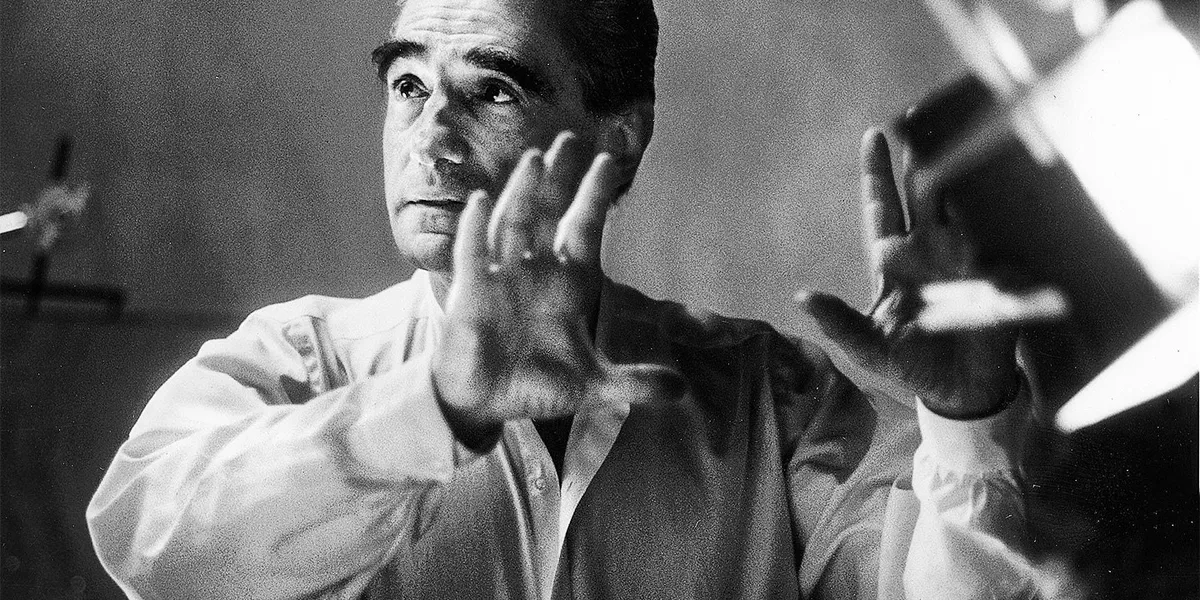
Martin Scorsese finally won his first Best Director Oscar in 2007, which was his eighth nomination, for The Departed, presented by Coppola, Lucas, and Spielberg.
His speech is famously chaotic and includes a torrent of thank-yous, a joke about double-checking the envelope, and a lot of names. But read it carefully, and it’s actually a map of everything it takes to make a great film.
Three lessons in particular jump out.
– YouTube www.youtube.com
The Power of Collaboration
Run through the speech and you’ve got a department-by-department roll call: producers Brad Grey, Graham King, and Mac Brown; screenwriter Bill Monahan; director of photography Michael Ballhaus; composer Howard Shore; editor Thelma Schoonmaker; casting director Ellen Lewis; and a cast that includes Jack Nicholson, Leonardo DiCaprio, Matt Damon, Mark Wahlberg, Alec Baldwin, Ray Winstone, Vera Farmiga, and Martin Sheen.
“So much of this belongs to the cast, I can’t tell you,” Scorsese says at one point.
I’ve got to thank Warner Bros.’ Alan Horn and Dan and Jeff, and I’ve got to thank our producers Brad Grey and Graham King and Mac Brown and my old friend Joe Reidy, we’re working for twenty years. And Rick Yorn and John Lesher and Chris Donnelly and Ari Emanuel. And that crazy script by Bill Monahan that got me in all this trouble in the first place. And Andrew Lau’s original film from Hong Kong, the wonderful Asian cinema. And Michael Ballhaus on camera and Howard Shore’s wonderful score and my old, good friend Thelma Schoonmaker. Ellen Lewis for her casting. And so much of this belongs to the cast, I can’t tell you. Jack Nicholson for his courage and his inspiration. Leo DiCaprio, six-and-a-half year’s work we’ve done together; I hope another twelve, another fifteen. Mark Wahlberg, Matt Damon, Alec Baldwin, Ray Winstone and Vera Farmiga and Marty Sheen.
For emerging filmmakers used to wearing every hat on a short film, let this list of collaborators inspire you. The list here is evidence that filmmaking is a collective art form, and that the director’s job is as much about assembling the right people as it is about calling action.
Every name Scorsese rattled off represents a craft that shaped the film you actually saw. The sooner you start thinking about building that system around you, the better. We’ve covered the value of creative partnerships. This piece on co-directing and this one on Sundance collaborators are good places to start.
Invest in Long-Term Creative Relationships
Scorsese thanks people, but he also clocks how long they’ve been in his corner. Joe Reidy, 20 years. Leonardo DiCaprio, six and a half at the time of the speech, with Scorsese already hoping for “another 12, another 15.”
And Thelma Schoonmaker (who also won Best Film Editing for The Departed that same night) had been his editor since Raging Bull in 1980. By 2007, they’d spent more than two decades building a shared creative language.
That kind of relationship doesn’t happen overnight, and it doesn’t happen by accident. When The Dissolve asked Schoonmaker why editors tend to stick with a single director for so long, she reflected on trust, humility, and shared passion.
It’s about a sense of trust. From the very first moment I worked with Marty, I think he realized I was someone who would do what was right for his films, and major egos would not be a problem. Egos are a challenge in all other parts of filmmaking. [Laughs.] He gradually over the years began to appreciate that and rely on that much more, and as I became more experienced, he was able to rely on my judgment much more. We share many of the same feelings, for example a passion for the films of my late husband [Michael Powell]. When we work together, it’s just the most amazing time.
That trust compounds over time. A collaborator who knows how you think, what you’re reaching for, and when to push back is worth more than starting fresh on every project.
Consider Rian Johnson and editor Bob Ducsay. What does a decade-long director/editor partnership actually look like in practice? If you’re interested in learning more about working with editors, we’ve covered how to build that relationship from the ground up.
– YouTube www.youtube.com
Great Films Stand on Great Scripts (and Source Material)
Scorsese thanks the screenwriter, too, mentioning “that crazy script by Bill Monahan that got me in all this trouble in the first place.”
Then, in the same breath, he credits “Andrew Lau’s original film from Hong Kong, the wonderful Asian cinema.”
He’s talking about Infernal Affairs, the Hong Kong crime thriller co-directed by Andrew Lau and Alan Mak that The Departed was adapted from. Monahan also won Best Adapted Screenplay that night for The Departed, too.
Per Guinness World Records, The Departed is the first (and still only) film remake to win Best Picture.
The takeaway for filmmakers isn’t just “watch more movies,” though that’s part of it, and something very likely that Marty would tell us to do.
Infernal Affairs was a massive hit across Asia and had revitalized Hong Kong cinema before Scorsese ever touched it. He knew what he was working with and why it worked.
Knowing world cinema is cultural literacy, sure, but it can also be source material if you’re at a level to adapt it. Good filmmakers are voracious watchers, and sometimes the best story you can tell is one someone else already cracked in a different language for a different audience.
If you’re thinking about adaptation, we’ve got solid resources for you, including a list of the 18 best adapted screenplays, how to write an adapted screenplay, and an adaptation checklist you should bookmark.
Scorsese waited through eight nominations before that envelope finally had his name in it. For filmmakers at the beginning of their careers, the big lesson is less about winning awards (which is great) and more about the work that precedes them. Find your people, watch everything, and find a great script. Start now.