
In the United States, Motion Picture Association (MPA) ratings have provided major milestones for many a burgeoning film lover. Graduating from G/PG to PG-13 is a marker that one is truly and properly a teenager, while finally being allowed to see R-rated movies at age 17 (in most states) is like the gates of adulthood have finally opened up. However, the PG-13 rating is much newer than the other core ratings, and it came into being thanks in large part to the existence of 1984’s Gremlins.
First Came Gremlins
At first glance, Gremlins seems like a pretty innocuous Amblin movie. It’s set during Christmas and it follows the Looney Tunes-esque antics of funny green gremlins who are spawned from a cute little fluffy mogwai named Gizmo, all while the hapless Billy (Zach Galligan) tries to stop them from wreaking havoc around his small town. The movie is very Looney Tunes-esque, even. The gremlins behave like the Tasmanian Devil mixed with the Gremlin that bedevils Bugs Bunny in the famous 1943 short “Falling Hare.”
Plus, the crew behind the movie was largely known for family-friendly fare, or would soon become known for it. This includes executive producer Steven Spielberg (E.T. the Extra-Terrestrial, Back to the Future, Who Framed Roger Rabbit) and screenwriter Chris Columbus (The Goonies, Home Alone, Harry Potter and the Sorcerer’s Stone).
Enter director Joe Dante. While Chris Columbus’ original script for Gremlins was much darker than most people who know him only for Home Alone would imagine (and was in fact darker than the final product that made it to theaters, with more deaths and more intensity), Dante is perhaps the person who most fueled the movie’s signature blend of horror and comedy. This is thanks to his background in the horror genre, helming cult classics like the 1978 creature feature Piranha and the 1981 werewolf classic The Howling.
Under his direction, the gremlins’ antics got edgier and more dangerous even as the more outré scenes in the script (including Billy’s mom being decapitated) were cut. This includes them chittering and smiling with wicked glee as they tamper with an elderly woman’s stair lift, straight-up murder the local school’s science teacher in cold blood, and torment Billy’s bartender girlfriend Kate (Phoebe Cates), which involves one of them flashing her while the others demand drink after drink as their carousing grows more and more raucous.
‘Gremlins’ (1984)Credit: Warner Bros.
The human characters treat the gremlins just as nastily, with Billy’s mom (having successfully avoided her planned decapitation) using a food processor to grind up one of the little pests and Billy himself exploiting the creatures’ weakness against bright lights to melt their leader, Stripe, into a grotesque puddle of gore and goo.
Then Came the Gremlins Outcry
While the violence that the gremlins perpetrate (and which is perpetrated upon them) is cartoonish and over-the-top enough that the movie got nowhere near earning an R rating from the MPA, then known as the Motion Picture Association of America (MPAA), parents found it considerably more violent than what they expected to see in a PG movie.
At that point, the PG rating had already existed for more than a decade and a half, having been instated by the MPA in 1968 following Hollywood’s abandonment of the Hays Code. The PG-rated movies that viewers were used to seeing between 1968 and 1984 were largely titles like Star Wars, 1976’s Freaky Friday, Xanadu, Moonraker, A Christmas Story, Footloose, and The NeverEnding Story (though there are some notable exceptions that modern viewers might be shocked are rated PG, including Poltergeist, Jaws, and Barbarella).
Many moviegoers were quick to complain about the violent content in Gremlins, with Midwest film buyer Carl Hoffman telling Time that at one point, 50 different patrons walked out of a single screening.
The PG-13 Tides Were Already Turning
While it’s the work of Dante and Columbus that specifically got Gremlins in hot water, Steven Spielberg is ultimately the person who is most directly responsible for the introduction of the PG-13 rating. This is because, in addition to executive producing Gremlins, he directed 1984’s Indiana Jones and the Temple of Doom. Complaints about that movie’s notorious heart-ripping sequence had already attracted the attention of the MPAA, and when Gremlins stoked further outcry when it debuted a mere two weeks later, they decided it was time to take action.
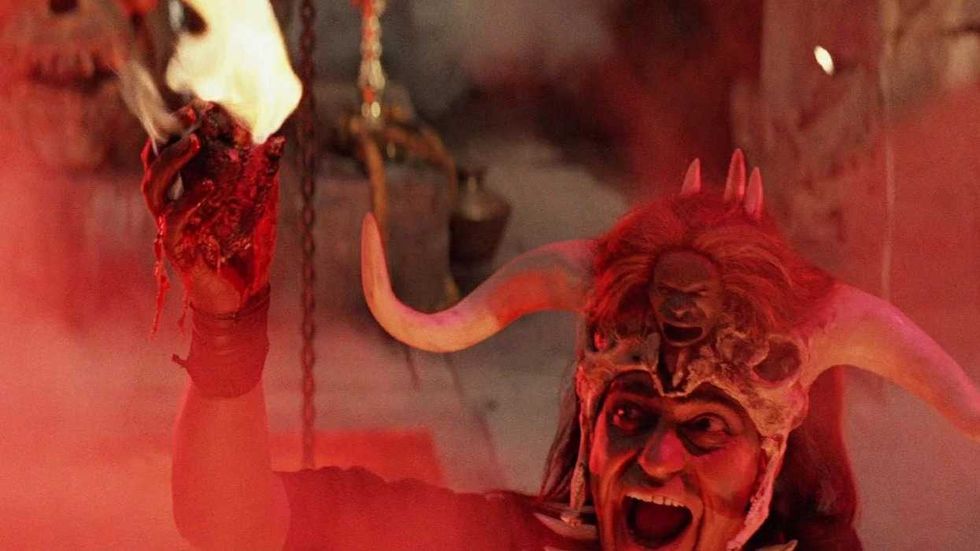 ‘Indiana Jones and the Temple of Doom’ (1984Credit: Paramount Pictures
In fact, it was Spielberg himself who suggested that the PG-13 rating be implemented. He later told Vanity Fair that he personally called then MPAA president Jack Valenti to find a middle ground, saying that “so many films were falling into a netherworld… [It was] unfair that certain kids were exposed to Jaws, but also unfair that certain films were restricted, that kids who were 13, 14, 15 should be allowed to see.”
It makes perfect sense that Spielberg would spearhead the movement to allow for a middle ground as audience members’ sensibilities matured. His career is made up of four-quadrant blockbusters that succeeded because they blended the wonder of family-friendly adventure with more realistic life-and-death stakes that might scare younger viewers. Imagine Raiders of the Lost Ark without Toht’s face melting off at the end or Jurassic Park without the T-Rex devouring Donald Gennaro.
The Legacy of Gremlins
Even with Spielberg getting directly involved, it is possible that the PG-13 rating might not have been implemented if Gremlins had been so controversial that it flopped in theaters. The MPAA might have seen that as a sign that America wasn’t interested in such a middle ground, instead opting to crack down on what they allowed PG-rated movies to show.
However, Gremlins grossed a whopping $212.9 million against its $11 million budget. In addition to spawning a sequel – 1990’s Gremlins 2: The New Batch, which was rated PG-13 – its success ushered in a wave of movies that were allowed to show an increased level of violence and sexuality without quite tipping into R-rated territory.
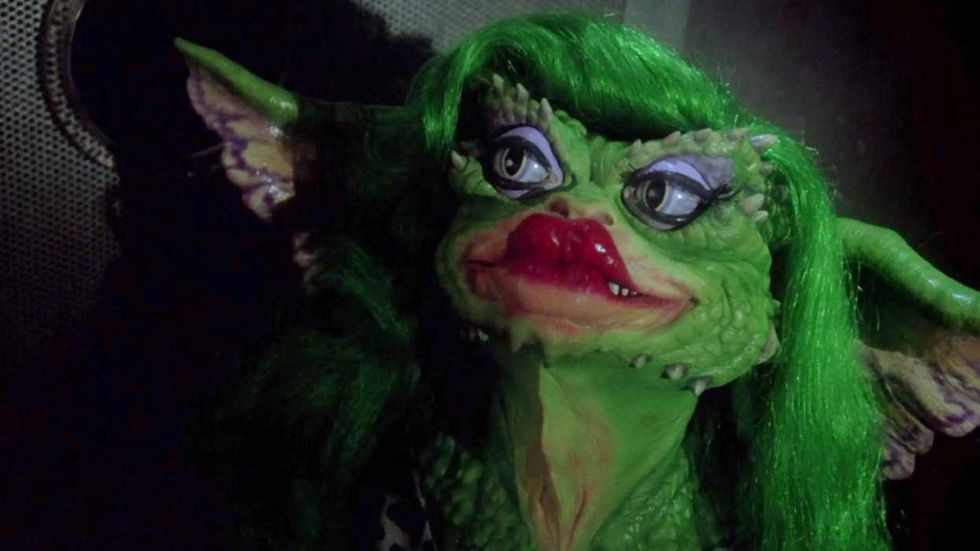 ‘Gremlins 2: The New Batch’ (1990)Credit: Warner Bros.
The first PG-13 feature to be released in the United States was the action movie Red Dawn, which debuted just two months after Gremlins. In the years between Red Dawn and the end of the 1980s, a number of modern classics were allowed to run in theaters more or less unmolested by the MPAA thanks to the PG-13 rating, including Ferris Bueller’s Day Off, Little Shop of Horrors, La Bamba, License to Drive, The Naked Gun, and Steven Spielberg’s own The Color Purple and Indiana Jones and the Last Crusade.
Sound off in the comments below about your favorite PG-13 movies, many of which would have never been possible without the chaotic, adorable, ferocious antics of Gremlins.


![Owen Wilson & Jason Keller On Making Of 'Stick' [Podcast]](https://timewarnerent.com/wp-content/uploads/2026/05/Owen-Wilson-Jason-Keller-On-Making-Of-Stick-Podcast-550x550.jpg)