
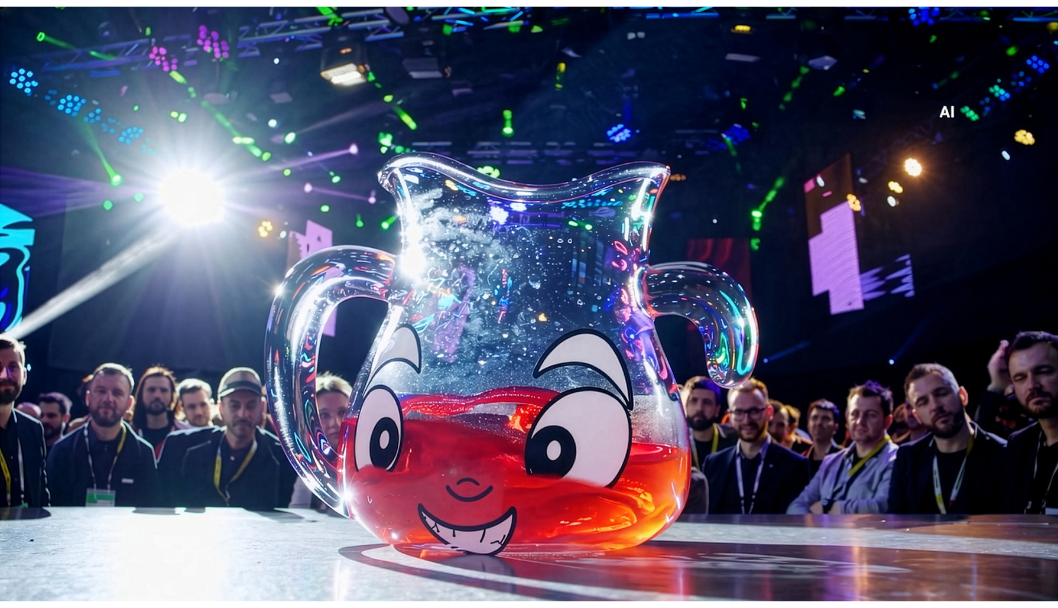
If there is one documentary at the 34th Raindance Film Festival that feels less like entertainment and more like an alarm bell, it is Ghost in the Machine. Following its world premiere in the NEXT section at Sundance Film Festival, Valerie Veatch’s documentary arrives at Raindance carrying exactly the kind of conversation independent cinema was built for: urgent, uncomfortable, political, technological, and deeply human.
This is not simply a documentary about artificial intelligence. It is a documentary about power. About ideology. About authorship. About who controls the stories that shape our reality. And perhaps most importantly, it asks a question many filmmakers are quietly avoiding:
What happens when machines begin competing with human imagination itself?
Book tickets here:
Sat, Jun 20th, 4:45 PM @ Vue Piccadilly – Screen 2
1. It Treats AI as a Cultural Force, Not a Gadget
Most conversations around AI remain trapped inside product launches, business jargon, and shiny demonstrations. Ghost in the Machine refuses to stay there. Director Valerie Veatch digs beneath the marketing language and asks who built these systems, what ideological assumptions shaped them, and who ultimately benefits from them.
The film traces disturbing links between Silicon Valley culture, automation, surveillance, data extraction, eugenics, and the mythology surrounding artificial intelligence. Instead of treating technology as neutral, the documentary reminds audiences that every tool inherits the values of its creators.
That alone makes it essential viewing for filmmakers.
2. It Feels Like a Horror Film Disguised as a Documentary
What makes Ghost in the Machine especially effective is its tone. This is not a conventional explainer documentary filled with cheerful graphics and easy conclusions. It feels closer to a technological horror story. A cinematic essay. A political provocation.
The fear inside the film does not come from killer robots or science fiction clichés. It comes from the slow realization that many of the systems shaping our culture are already operating invisibly around us.
That atmosphere explains why critics at Sundance described the film as “urgent,” “necessary,” and “the film for our age.”
3. It Asks the Questions Filmmakers Are Already Facing
For independent filmmakers, the issues raised in Ghost in the Machine are no longer theoretical. AI is already reshaping the creative industries. Writers, editors, musicians, designers, journalists, actors, and filmmakers are all wrestling with the same contradiction:
These tools can help us create faster, cheaper, and more efficiently.
But what happens when efficiency begins replacing authorship itself?
Many emerging filmmakers attending Raindance this year are already using AI for moodboards, scheduling, subtitles, translations, budgeting, script notes, and marketing materials. At the same time, many are wondering whether those same systems may eventually erode the value of human creativity altogether.
This documentary refuses to let audiences sit comfortably inside that contradiction.
4. It Understands That Storytelling Is About Power
Beneath all the discussion about algorithms and machine learning lies a much older issue: narrative control.
Who controls information?
Who controls visibility?
Who controls memory?
Who decides what becomes truth?
Independent cinema has always existed as a counter-force to industrial storytelling systems. Early indie filmmakers challenged studio gatekeepers. Digital filmmakers challenged distribution monopolies. Now creators are entering another transition entirely: algorithmic culture.
Ghost in the Machine understands that AI is not merely a technological issue. It is a storytelling issue.
And that makes it deeply relevant to every filmmaker attending Raindance.
5. It Represents the Best of Modern Documentary Cinema
Audiences today are exhausted by passive “content.” They do not simply want information delivered to them. They want films that take a position. Films willing to challenge systems instead of merely describing them.
That is precisely what this documentary does.
Rather than pretending to stand neutrally above the conversation, Ghost in the Machine enters the debate directly. It provokes. It unsettles. It demands engagement from its audience.
This may explain why the film generated such strong reactions following its Sundance premiere.
The best documentaries do not just inform audiences.
They destabilize certainty.
6. It Belongs Perfectly at Raindance
There is another reason this film feels so important at Raindance.
Raindance Film Festival has always championed cinema that asks difficult questions before the mainstream catches up. Whether supporting disruptive digital filmmaking, microbudget experimentation, politically risky international cinema, or horror films ignored elsewhere, the festival has consistently backed filmmakers willing to challenge dominant narratives rather than flatter them.
In many ways, Ghost in the Machine feels like the next chapter in that tradition.
This is exactly the kind of film independent festivals exist to protect.
7. It Forces Us to Defend Human Creativity
Perhaps the most powerful thing about Ghost in the Machine is that it never offers audiences an easy answer. It is not simplistically anti-technology. It is anti-amnesia.
The film asks us to remember something modern culture is increasingly forgetting:
Human creativity is not merely content production.
It is memory.
Emotion.
Imperfection.
Contradiction.
Experience.
Mortality.
Soul.
And perhaps that is the real reason to see this documentary at Raindance 2026.
Not because it will tell you whether AI is good or bad.
But because it may force you to defend what human storytelling actually is.
The 34th Raindance Film Festival runs June 19–28, 2026 in London.
Discover. Be Discovered.
Photo Credit: Bertie Watson
I founded Raindance Film Festival in 1993 because the British film industry was closed, polite, and congratulating itself while shutting new filmmakers out.
I co-founded the British Independent Film Awards in 1998 because British indie film deserved more than a shrug, a pat on the head, and a Tuesday night screening.
Raindance didn’t start as a brand. It started as a rebellion: film training without gatekeepers, a festival without permission, and a community built by filmmakers who weren’t waiting to be invited in.
Later, we took it global: Toronto, Vancouver, New York, LA, Berlin, and Brussels, because independent film doesn’t belong to one city, one class, or one accent.
I’ve produced 700+ short films and seven features, including Deadly Virtues (2014) and ALICE, which won the SXSW Grand Jury Prize (2019) not because someone “discovered” us, but because the work earned its place.
I’ve written three books used by filmmakers worldwide because too many courses taught compliance instead of survival.
In 2009, I was awarded a PhD for services to film education, ironic, given that most of my career has been about tearing down the rules that education insisted you follow.
I don’t believe in waiting for permission.I believe in making work, building systems, and forcing the industry to catch up.
Specialties: Independent Film (the real kind) · Producing · Writing · Film Education · Festivals · Breaking Broken Systems
Check out my new Substack for in depth Free Articles:
Related