I’ve met plenty of filmmakers with a first feature script they can’t afford to shoot. Too many locations. Too many characters. Extreme waiting for someone else to say yes. Why would you do that to your career/
Contained horror is nothing new. I compare it to the Blair Witch guy back in the ’90’s.We had the euro premiere of the BWP. It offers a practical way forward. Take one location, a small cast and a situation that gets worse every time somebody tries to fix it. Suddenly, your limited resources become part of the storytelling.
The audience doesn’t care how many trucks you hired. They care what’s behind that locked door and whether your character is foolish enough to open it.
Your first feature needs to get made.
That sounds obvious. Yet so many first-time filmmakers write scripts requiring six countries, a collapsing motorway and an actor whose agent won’t return their calls.
Try a house. A handful of characters. Something terribly wrong.
Contained horror gives you a manageable production and a powerful storytelling challenge: make the audience afraid of what might happen next.
Here are seven reasons contained horror could be the smartest strategy for your first feature.
1. You can build around a location you already have
A flat, workshop or isolated cottage can become your entire story world. Fewer locations mean fewer moves, fewer negotiations and more time to shoot on a minimal budget.
But write for the actual space. That strange cupboard or window overlooking nothing might be your best production asset.
Ask: What could make this familiar place frightening?
2. A small cast gives relationships room to explode
You don’t need twenty characters. You need a few people with incompatible wants and something to hide.
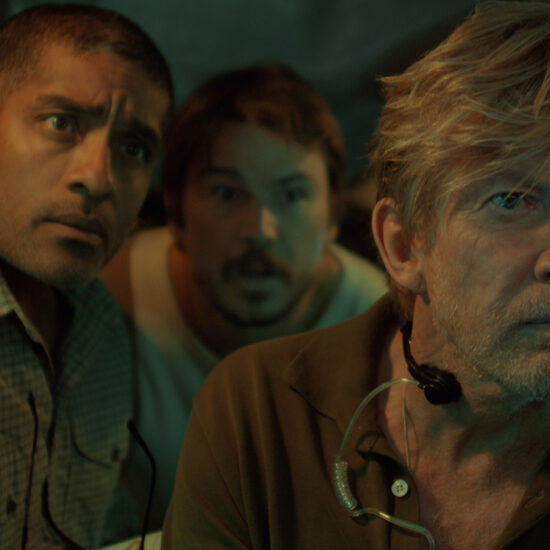
In 10 Cloverfield Lane (2026), confinement intensifies the uncertainty between three central characters. Who should you trust when leaving might kill you?
Ask: Who would your protagonist least want to be trapped with?
3. Restrictions create suspense
A locked door immediately raises questions. Why is it locked? Who has the key? What happens if it opens?
Saw (2004) builds its central predicament around two men trapped in a bathroom. The physical restriction forces decisions.
Ask: What prevents escape—and how does each attempt make matters worse?
4. Sound can do work your budget cannot
A scrape upstairs. Breathing behind a wall. A familiar voice saying something impossible.
You can suggest a much larger threat through sound and the actor’s reaction. Showing everything too early can make the danger feel smaller.
Ask: What could the audience hear before your character understands it?
5. Horror gives your audience a clear promise
“An unsettling drama about unresolved tensions” is difficult to communicate.
“A grieving woman discovers something living inside her walls” gives us a character, a threat and a reason to watch.
A clear premise helps you write the film, pitch it and shape its trailer.
Ask: Can you describe the frightening predicament in one sentence?
6. Containment makes you practise the essentials
With fewer distractions, weak scenes become obvious. You must control performance, framing, rhythm and the release of information.
The Babadook (2014) shows how domestic space and a strained relationship can sustain horror. The emotional problem gives the frightening events their weight.
Ask: What emotional wound does the threat keep pressing?
7. Finishing creates your next opportunity
A contained film still needs proper planning, safe working conditions and excellent sound. Small does not automatically mean easy—or profitable.
But a scope you can manage gives you a better chance of completing a film you can show audiences, collaborators and prospective backers.
Ask: Can you deliver this story with resources you can realistically secure?
From Elliot’s Notebook
I keep meeting filmmakers waiting for enough money to make their first feature. Sometimes the more useful question is: what story could you make with what you already have?
A room is available. Two actors are keen. There’s a noise nobody can explain.
Start there.
Give us characters worth caring about, then make us dread what happens when they open the door.
Join the Raindance Ecosystem
Develop your screenplay, learn how to produce it and meet your future collaborators through Raindance courses and membership.
Discover. Be discovered.
Check out Raindance Halloween Short Film Competition
Photo Credit: Bertie Watson
I founded Raindance Film Festival in 1993 because the British film industry was closed, polite, and congratulating itself while shutting new filmmakers out.
I co-founded the British Independent Film Awards in 1998 because British indie film deserved more than a shrug, a pat on the head, and a Tuesday night screening.
Raindance didn’t start as a brand. It started as a rebellion: film training without gatekeepers, a festival without permission, and a community built by filmmakers who weren’t waiting to be invited in.
Later, we took it global: Toronto, Vancouver, New York, LA, Berlin, and Brussels, because independent film doesn’t belong to one city, one class, or one accent.
I’ve produced 700+ short films and seven features, including Deadly Virtues (2014) and ALICE, which won the SXSW Grand Jury Prize (2019) not because someone “discovered” us, but because the work earned its place.
I’ve written three books used by filmmakers worldwide because too many courses taught compliance instead of survival.
In 2009, I was awarded a PhD for services to film education, ironic, given that most of my career has been about tearing down the rules that education insisted you follow.
I don’t believe in waiting for permission.I believe in making work, building systems, and forcing the industry to catch up.
Specialties: Independent Film (the real kind) · Producing · Writing · Film Education · Festivals · Breaking Broken Systems
Check out my new Substack for in depth Free Articles:
Related