
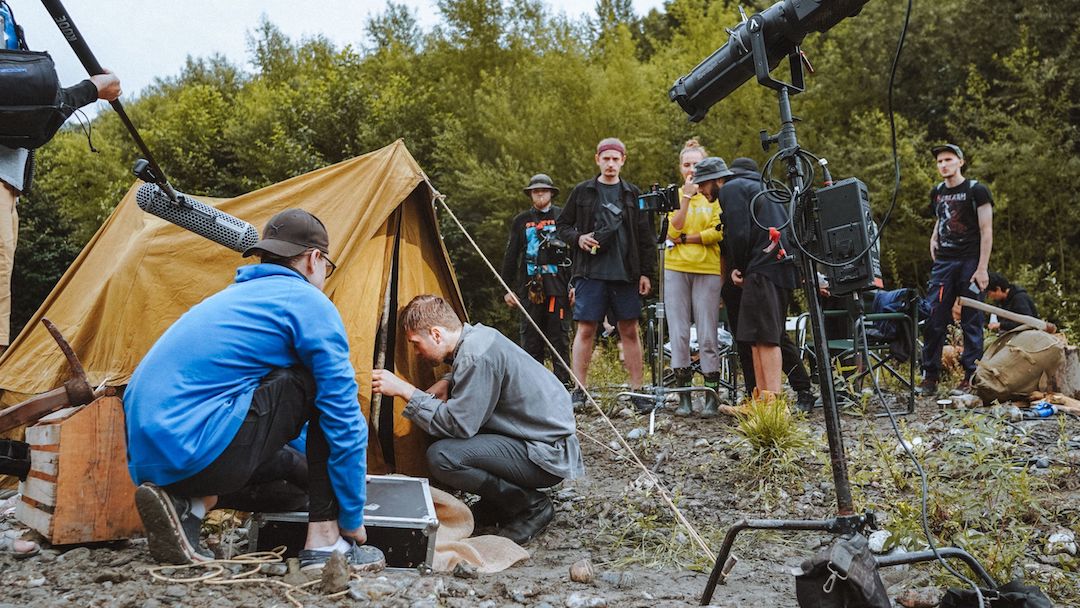
International shoots can give an independent film something that is hard to fake such as texture, scale and truth. A street, a landscape, a local accent, or the way people naturally move through a place can add detail that a recreated location may never fully capture.
But for smaller film crews, shooting abroad is extra stressful. Travel costs are high. Extra shooting days are harder to afford. Communication can be more complex. locations, permits, crew, transport and equipment may be the opposite of what the team is used to. Small mistakes can quickly affect the budget.
Good preparation does not remove every risk, but it helps the production make better decisions before the team arrives. For independent filmmakers, the goal is not to build a huge production system. The goal is to protect the story, the schedule and the people involved.
Know Why the Film Needs That Place
Before booking flights or contacting locations, the team must be clear about why the film needs that country. Sometimes the reason is obvious: the story is about a real neighborhood, person, issue or community. In other cases, the area is specially adapted for environmental or production value. That’s the difference. If the area is critical to filming, the group may also want more time to obtain access rights, gain trust, permission and local assistance. If it is mainly visual, there may be more room to adjust neighborhoods, interiors or substitute locations without hurting the story.
These questions matter because they help set priorities. If the location is central to the story, then the production may need more time for access, community trust, permits and local support. If the location is mainly visual, the team may have more flexibility with neighborhoods, interiors or substitute spaces.
A clear reason also protects the budget. Small teams cannot spend equally on everything. Some projects need a strong local producer. Some need a sound recordist more than extra camera gear. Some need translation support. Some need a fixer who understands local permissions. Knowing the real reason for shooting abroad helps the team decide where support is most important.
Do Not Treat Local Support as Extra
Independent filmmakers often try to keep the crew as small as possible. That can be smart, but local support should not automatically be seen as an extra cost. In many cases, the right local person saves money by helping the production avoid mistakes.
A local producer, fixer, camera crew member, production manager or location contact may know which areas are realistic, which locations need permission, where equipment can be rented, how long travel really takes, and what local working habits should be respected. This information can prevent delays before they happen.
Before confirming overseas support, producers usually check more than one source. Personal referrals, festival contacts, past collaborators, and media production network such as World Production Service can all help the team compare local crew, fixers, production managers and service providers before making decisions.
For a small film team, local knowledge can be more valuable than a larger kit or an extra travel day. It helps the production spend money where it matters.
Build a Schedule That Can Survive Reality
A schedule created from far away can look clean and efficient. The problem is that real locations rarely behave like a spreadsheet.
The group may expect that the two locations will be close enough to film in an afternoon. They may also assume that foot traffic may be low, equipment may enter through the front entrance, the public area may be quiet, or that the site owner will be ready on time. If those assumptions are wrong, the production can simply end up losing time.
Small teams should build schedules with local reality in mind. Check travel time at the actual time of day. Ask about loading access. Confirm whether sound will be a problem. Learn when a location becomes crowded. Understand whether a permit, security approval or building rule may slow the crew down.
A good schedule is not the one that packs in the most scenes. It is the one that gives the team enough time to make the important scenes work.
Keep the Crew Size Honest
A small crew can be flexible, intimate and cost-effective. It can also become overloaded.
One person may be able to handle camera operation, but not camera, lighting, sound, data backup, location issues and producer communication all at once. A director may want to stay small for creative reasons, but the shoot still needs enough people to protect the work.
The team should decide what kind of support each day needs. A simple exterior scene may not require much equipment. A controlled interview may need a sound recordist and lighting support. A sensitive documentary day may need a local producer or translator. A moving scene in a public space may need someone to manage access and keep the crew focused.
The right crew size is not always the biggest crew. It is the crew that matches the scene, location and risk level.
Protect Sound From the Beginning
Sound can make or break a small film. It is also one of the easiest areas to underestimate during international shoots.
A beautiful location may be unusable if it is surrounded by traffic, construction, air conditioning or crowds. A room may look perfect but sound hollow. A public space may change completely at a different time of day. If the team does not check these issues early, the editor may receive footage that is difficult to use.
For dialogue, interviews and documentary scenes, sound should be planned before the shoot. The team should consider whether a local sound recordist is needed, whether wireless equipment is suitable, whether the location is quiet enough, and whether there is time to record room tone or atmosphere.
If another language is involved, sound and translation also connect. The team may need clear notes, transcripts, pronunciation guidance and context for the editor. A scene may carry meaning that is not obvious from a simple translation. Planning this early makes post-production easier.
Think About Post Before Filming
Independent teams often focus on getting through the shoot first, then worry about post later. That can create problems.
The editor needs organized files, clear notes, consistent camera settings and enough coverage to build the scene. The colorist needs images that can be matched. The sound team needs clean audio. If the film includes subtitles or translation, the post team needs accurate language information.
Before filming, the team should confirm simple workflow details. How will footage be backed up? Who is responsible for the drives? Will proxy files be made? How will files be sent to the editor? How will scene notes, release forms, names and translation notes be stored? What happens if internet access is weak?
These questions may not feel creative, but they protect the creative process. The film is safer when the team knows how the footage will travel from set to edit.
Respect the Community and the Location
International shoots should not treat a place only as a backdrop. Small film teams often depend on local trust, especially when filming in neighborhoods, homes, workplaces or real communities.
Respect begins with preparation. Crews need to know neighborhood expectations around permits, privacy, public behavior, religious or cultural sensitivities, and approach. A scene that feels innocuous to an outside group may make the inhabitants of that place feel uncomfortable, disrespected or embarrassed.
Local collaborators can help the team avoid mistakes. They can explain how to approach people, when to slow down, what should not be filmed, and how to keep the production respectful. This can improve both the process and the film itself.
A respectful production is also a more practical production. People are more likely to help when they feel the crew is careful, honest and prepared.
Prepare for Changes
No international shoot goes exactly as planned. Weather changes. Permits take longer. A location becomes unavailable. A subject cancels. A road closes. A scene takes more time than expected.
Small teams should decide in advance what can change and what cannot. Which scenes are essential? Which shots are flexible? Which location has a backup? Which day needs the most protection? What can be simplified if time is lost?
This kind of planning helps the director make decisions under pressure. Instead of reacting emotionally, the team can protect the parts of the film that matter most.
Good Preparation Protects the Film
International shooting can be worthwhile for independent filmmakers, however, they need clear thinking. The group must understand why the location truly matters, whether local assistance is required, how the schedule will work, how sound and media can be protected, and how the production will acknowledge humans and associated places.
A small team does not need a huge system. It needs honest priorities and good local information.
When the production combines its creative desires with the real situation on the floor, the shooting becomes stronger. It allows the film to capture the place honestly, while using the budget wisely and bringing the story home as per the manifesto.
Dillon Xiang is Head of Global Productions at World Production Service, a global media production platform supporting photo, video, TV, film, documentary, and event productions across international markets. He works across overseas production planning, local crew coordination, location support, permits, logistics, and production workflows for cross-border shoots. Dillon also edits and develops many of the production-related resources on WorldProductionService.com, with a focus on practical guidance for filmmakers, producers, brands, and media teams preparing shoots in different countries.
Related