
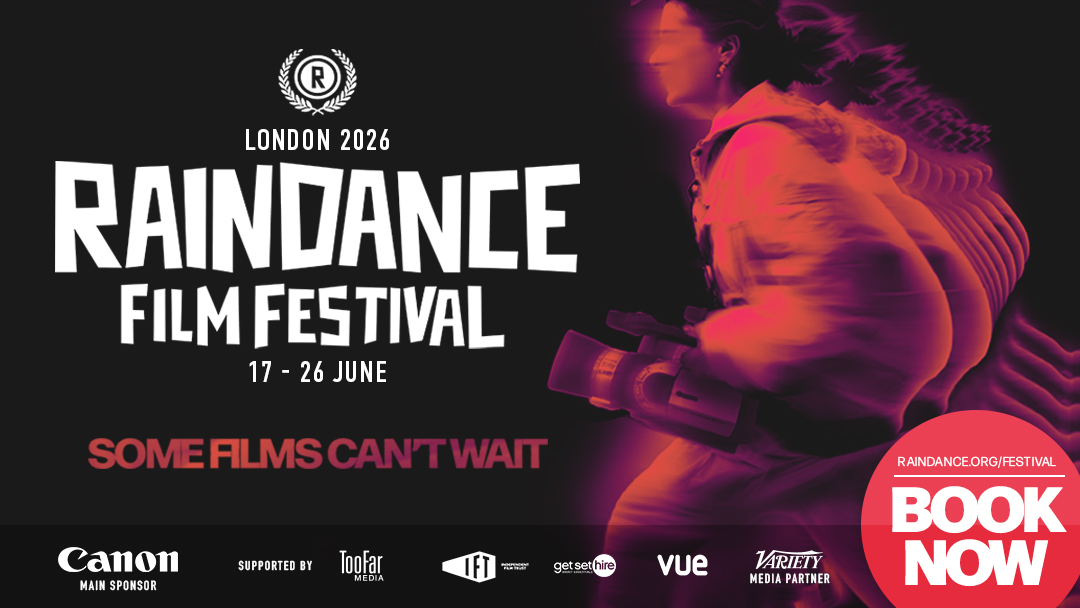
Today the 34th edition of the Raindance Film Festival begins.
Explore the programme here
And every year when the lights go down and the first frame hits the screen, I’m reminded why festivals like this still matter.
Because independent cinema was never meant to be safe.
It was never designed to fit neatly into algorithms, market research, audience tracking software, or corporate strategy decks. Independent film exists because human beings still need stories that feel alive. Messy. Dangerous. Personal. Strange. Honest.
We built Raindance for filmmakers who were waiting for permission and eventually realised permission was never coming.
We built it for audiences tired of being treated like consumers instead of curious human beings.
And as this festival opens today, here is what I believe a Raindance film truly is.
1. A Raindance Film Is Made Because It Has To Exist
Not because a trend report said it should.
Not because a streamer needed “content.”
Not because someone reverse-engineered a screenplay from last year’s box office charts.
A Raindance film exists because somebody could not sleep until they made it.
There is urgency in independent cinema. You feel it immediately. Sometimes the films are rough around the edges. Sometimes they are gloriously imperfect. But underneath them is necessity.
That matters more than polish.
The great independent films never ask:
“What does the market want?”
Great filmmakers ask:
“What truth can no longer be ignored?”
2. A Raindance Film Chooses Risk Over Respectability
Most creative careers do not die from failure.
They die from caution.
From becoming careful. Predictable. Professionalised. Harmless.
Independent cinema survives because some filmmakers are still willing to risk embarrassment, criticism, confusion, and rejection in order to make something original.
At Raindance we celebrate the films that swing too hard.
- The films that break form.
- The films that divide audiences.
- The films that make distributors nervous.
- The films people argue about in the pub afterwards.
Because cinema should provoke conversation, not merely fill silence.
3. A Raindance Film Understands That Constraint Is Power
Independent filmmakers have always transformed limitation into style.
No money?
Invent a new visual language.
No stars?
Discover unknown talent.
No access?
Shoot somewhere no one else noticed.
Some of the greatest films in history were made not because filmmakers had everything, but because they had almost nothing.
Constraint forces invention.
And invention is where cinema evolves.
Technology changes every year. Cameras shrink. Software accelerates. AI expands. But creativity still comes from the same place it always has:
Human imagination colliding with limitation.
Explore the programme here
4. A Raindance Film Believes Audiences Are Smarter Than The Industry Thinks
Audiences are starving for discovery.
They want films that surprise them. Challenge them. Disturb them. Move them.
Yet much of modern entertainment is built around familiarity and repetition. Safe bets. Existing IP. Endless recycling.
Festivals like Raindance Film Festival exist because audiences still crave discovery.
Not passive consumption.
Discovery.
And discovery requires risk from audiences too.
- To walk into a cinema not knowing exactly what you’ll get.
- To trust curiosity.
- To encounter a filmmaker before the rest of the world catches up.
That relationship between adventurous audiences and fearless filmmakers is sacred.
Without it, cinema becomes background noise.
5. A Raindance Film Rejects The Myth Of Permission
Too many filmmakers spend years waiting to be chosen.
- Waiting for funding.
- Waiting for gatekeepers.
- Waiting for validation.
- Waiting for someone important to finally say yes.
Independent filmmaking begins the moment you stop waiting.
The tools are already here.
The audiences are already here.
The stories are already here.
The question is whether you are brave enough to begin before you feel ready.
Raindance has always stood for self-determination.
Make the film.
Build the audience.
Create the movement.
Start before the industry catches up.
6. A Raindance Film Understands That Cinema Is Community
Cinema was never meant to be experienced entirely alone on phones while half-scrolling social media.
Cinema is collective emotion. A room full of strangers laughing together. Holding their breath together. Falling silent together.
That is why festivals still matter.
Not simply because films are screened here, but because relationships are formed here.
- Collaborators meet here.
- Ideas collide here.
- Movements begin here.
Entire careers have started in the queue for coffee between screenings.
And in an increasingly fragmented world, gathering together around stories may become one of the most radical things we still do.
7. A Raindance Film Leaves A Scar
You may forget the plot. You may forget the budget. You may forget who financed it.
But the great independent films leave something behind.
- An image.
- A feeling.
- A question.
- A disturbance.
A line of dialogue that follows you home at 2am.
That is the power of cinema.
- Not content.
- Not product.
Not assets.
Cinema. The cinema we celebrate at Raindance.
And so as the 34th Raindance Film Festival begins today, this is our call to filmmakers and audiences alike:
- Be harder to categorise.
- Be less predictable.
- Be more curious.
- Support films that frighten the marketplace.
- Champion voices before they become fashionable.
And never forget that independent cinema survives because people continue to believe stories made by human beings still matter.
Welcome to Raindance.
Let the discoveries begin.
Discover.
Be discovered.
Explore the programme here
Photo Credit: Bertie Watson
I founded Raindance Film Festival in 1993 because the British film industry was closed, polite, and congratulating itself while shutting new filmmakers out.
I co-founded the British Independent Film Awards in 1998 because British indie film deserved more than a shrug, a pat on the head, and a Tuesday night screening.
Raindance didn’t start as a brand. It started as a rebellion: film training without gatekeepers, a festival without permission, and a community built by filmmakers who weren’t waiting to be invited in.
Later, we took it global: Toronto, Vancouver, New York, LA, Berlin, and Brussels, because independent film doesn’t belong to one city, one class, or one accent.
I’ve produced 700+ short films and seven features, including Deadly Virtues (2014) and ALICE, which won the SXSW Grand Jury Prize (2019) not because someone “discovered” us, but because the work earned its place.
I’ve written three books used by filmmakers worldwide because too many courses taught compliance instead of survival.
In 2009, I was awarded a PhD for services to film education, ironic, given that most of my career has been about tearing down the rules that education insisted you follow.
I don’t believe in waiting for permission.I believe in making work, building systems, and forcing the industry to catch up.
Specialties: Independent Film (the real kind) · Producing · Writing · Film Education · Festivals · Breaking Broken Systems
Check out my new Substack for in depth Free Articles:
Related