
I was working on this new screenplay and trying to get this beautiful monologue together, but after a few different drafts and passes….I would cut the whole thing down to a single word.
Sometimes, in life and in writing, less is more.
You don’t have to believe me here. There’s a long cinematic history of characters saying one word that carries the soul and weight of an entire movie.
Today, I want to go over ten of those instances and talk about what makes each of them special.
And I’ll add a screenwriting lesson for each of them.
Let’s dive in.
1. “Rosebud.” | Citizen Kane (1941)
– YouTube www.youtube.com
You can’t talk about one-worders without the most famous one of all time. This is what the kids say has “aura.” Orson Welles starts his masterpiece with a dying gasp that fuels an entire investigation in the movie.
- Why it works: It’s the ultimate MacGuffin. The word itself is meaningless until the very last frame, where it transforms into a tragic symbol of lost innocence. And then the whole movie makes sense to you. It proves that a single word can be the structural foundation of an entire film.
- The Lesson: Like you see in Citizen Kane, a single word can serve as the “MacGuffin” that drives an entire narrative. So, what kind of power do the words you’re writing hold? Can they carry a whole story? There’s an exercise you can do with the Le Menu to try to find these buzzwords inside your story.
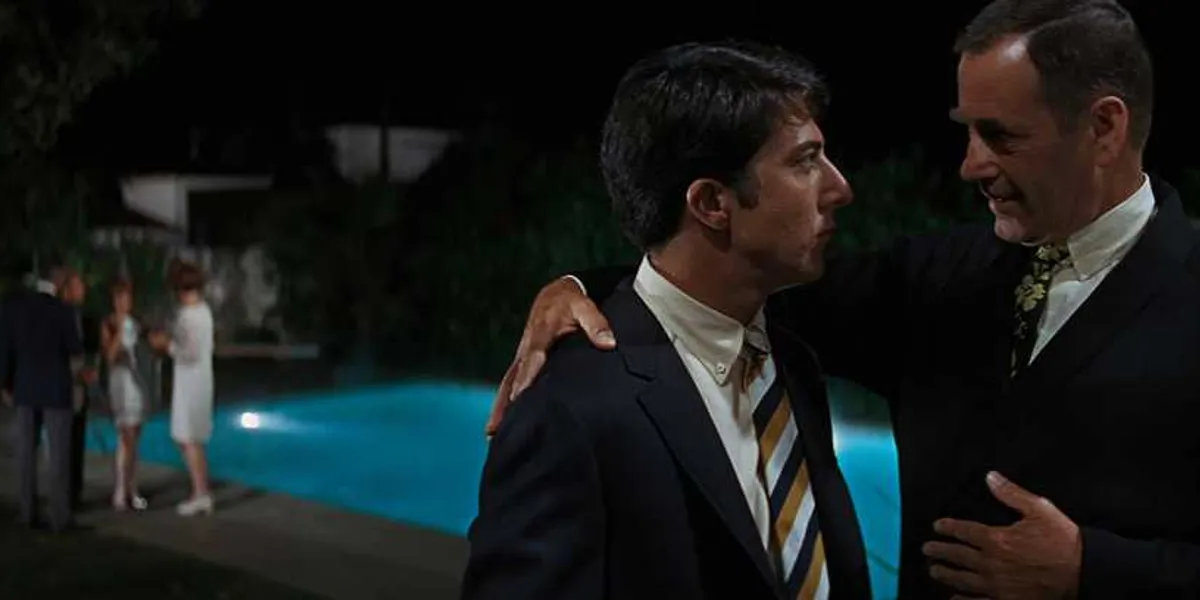
2. “Plastics.” | The Graduate (1967)
– YouTube www.youtube.com
This is such an upbeat start to this movie, where you sort of understand what it’s like to be lost in your 20s again. When Mr. McGuire pulls Benjamin aside to offer career advice, he delivers this single word with a weight that just feels like adulthood.
- Why it works: It’s all about subtext. In one word, the script captures the entire generational divide of the 1960s, and one that still exists today.
- The Lesson: One word can define an entire generational divide between epoole, and one word can show how boring it is to be an adult. When Mr. McGuire says “Plastics,” he isn’t just talking about a career path; he’s representing the artificiality and hollowness that the protagonist fears about adulthood. Does your word hold that weight?
3. “Wilson!” | Cast Away (2000)
– YouTube www.youtube.com
I still feel bad when I see volleyballs in the store. Tom Hanks screaming at Wilson shouldn’t be the most heartbreaking scene of the decade, yet here we are.
- Why it works: This is about internal conflict. After years of isolation, Wilson isn’t just sports equipment; he’s Chuck’s sanity. And it’s washed out to sea.
- The Lesson: Show, Don’t Just Tell. To the world, it’s a volleyball. To Chuck, it’s his sanity. This is his internal conflict, but externalized to make us understand just how far he’s fallen.
4. “REDRUM.” | The Shining (1980)
– YouTube www.youtube.com
In a film defined by isolation and slow-burn dread. And this is one of the many central mysteries of the story. It’s a word that exists in the liminal space between a child’s imagination and a psychic warning for the audience.
- Why it works: This is all foreshadowing. Kubrick and screenwriter Diane Johnson use the word as a puzzle. When the subtext is literally “mirrored” in the third act, where murder becomes the throughline.
- The Lesson: You need to be planting and paying off things for your whole story. This is so fun, it’s a word mystery that comes back to use somewhere between a child’s imagination and a psychic warning. The film creates a puzzle for the audience to solve and keeps us interested in solving it.
5. “Stella!” | A Streetcar Named Desire (1951)
– YouTube www.youtube.com
I feel like everyone knows this line, but so few have seen the play or movie. Marlon Brando’s raw howl announced that method acting was here to stay.
- Why it works: In the script, it’s just a name. In the performance, it’s a breakdown of an entire person.
- The Lesson: Sometimes your actors can make your work even better than it reads. I don’t think anyone could ever make this and not channel Brando from now on. I think this speaks to collaboration between artists.
6. “Inconceivable!” | The Princess Bride (1987)
– YouTube www.youtube.com
Once you see this movie, the line never leaves you. Vizzini uses this word to describe things that are clearly happening right in front of him.
- Why it works: It’s the perfect example of character POV. By the third time he says it, the audience is waiting for the payoff.
- The Lesson: Repetition can be a powerful tool for characterization, and this movie has a great lesson in it. Vizzini’s refusal to accept reality, despite it happening right in front of him, tells us everything we need to know about his ego and how he can be defeated in the end.
7. “Adrian!” | Rocky (1976)
– YouTube www.youtube.com
After 15 rounds of brutal punishment, Rocky Balboa doesn’t care about the judges’ scorecards. He only cares about one person. And that’s the center of this movie.
- Why it works: It’s the ultimate character goal. Rocky tells the audience exactly what his internal stakes were all along and what mattered to him most.
- The Lesson: Clarify the Internal Stakes as much as possible, so people know what they’re up against. Rocky didn’t win the fight, but he won his “A-story” by calling for the person he loved, who mattered more than a shot at the title. It reminds the audience what the protagonist was actually fighting for all along.
8. “Always.” | Harry Potter and the Deathly Hallows: Part II (2011)
– YouTube www.youtube.com
When Dumbledore asks Snape if he has grown to care for Harry after all this time, Snape reveals his Patronus and utters this single word. It rocked the world.
- Why it works: This is more subtext. In one word, eight movies’ worth of “villainy” are recontextualized as a tragic, lifelong sacrifice. And we understand all the books and movies that came before it a little better.
- The Lesson: If you can recontextualize the past, your audience will lean in. It rewards paying attention. So always write to entertain and if you can shift perspectives, that’s all the better.
9. “Freedom!” | Braveheart (1995)
– YouTube www.youtube.com
This is tragedy and sacrifice in one word. William Wallace is being tortured to death and is offered a “quick” mercy if he only says “mercy.” He chooses a different path.
- Why it works: It’s a thesis statement. Usually, you want to avoid having characters state the theme of the movie out loud, but here, the physical stakes are so high that the word feels earned.
- The Lesson: Generally, you shouldn’t have a character shout the theme of your movie. But this is a great example of why this can work. But when the physical stakes are life and death, stating the theme becomes a powerful act of defiance and a wonderful moment.
10. “Attica!” | Dog Day Afternoon (1975)
– YouTube www.youtube.com
Sonny (Al Pacino) steps out of a bank he’s robbing and starts chanting the name of a prison where a famous riot had recently occurred.
- Why it works: It’s about cultural resonance. By using one word, Sonny turns a crime into a political statement that instantly wins over the crowd and the audience.
- The Lesson: Leverage Cultural Resonance. Tap into a real-world event (like the Attica prison riot) to show the mentality of the character. If the character connects his personal struggle to a larger societal anger.
Summing It All Up
If you take one screenwriting lesson away from all this, it’s that if you can say it in a sentence, try a word. If you can say it in a word, try a look. If the look says it all, cut the dialogue entirely.
All of these lines are movie quotes that will last forever. They carry their films with a single word and have become part of our cultural lexicons. I loved revisiting them. But I bet I forgot a few you think should be on this list.
Let me know what you think in the comments.