We are drawn to stories of secrecy, deception and truth-seeking because they speak to universal experiences that exist everywhere: who can we trust, what is real, and how much does authenticity determine value?
Audiences are increasingly drawn to investigative documentaries because it is no longer satisfying to just be given an answer; we want to follow the process of discovery.
But while the genre has long been associated with crime, politics and corruption, there is a growing opportunity to explore these same ideas through other worlds.
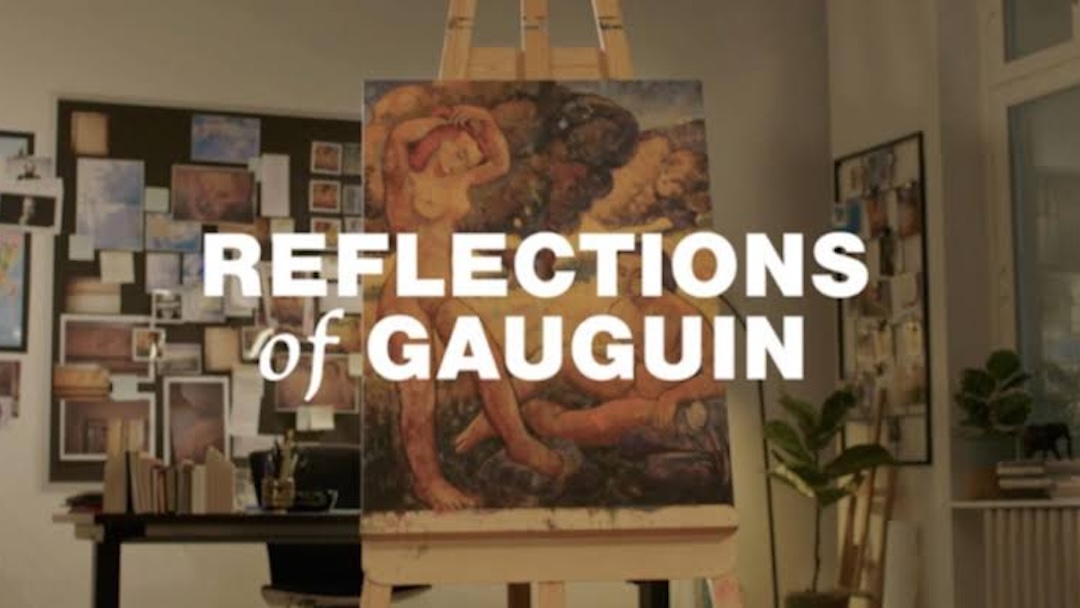
Reflections of Gauguin explores this through the art world, raising questions around provenance, authorship, value and authority.
When the mystery is a painting
As the film’s onscreen investigator and executive producer, I travelled across Europe alongside Italian philanthropist Stefano Canepa in an attempt to establish the authenticity of a long-disputed painting, signed “P. Gauguin”, pondering the question of whether it’s an undiscovered masterpiece, or one of the art world’s great controversies?
On the surface, this might sound quite different from a conventional investigation, as there is no obvious crime scene and perhaps no single perpetrator to identify. Instead, the central question is a broader one of authenticity, which carries enormous financial, professional and personal consequences. In a world that is so subjective and embedded in a rich history, there is an endless complexity to the conversations around art.
The art world is fertile ground for investigative filmmaking because questions of the work’s origin can become incredibly complex. A signature, a pigment, a documented journey through many collections or an expert opinion can arguably change the meaning of an artwork entirely. Discussions around both cultural and monetary value are especially fascinating especially within the context of an industry that has become more associated with elitism, status and luxury.
Turning art into a thriller
The creative challenge was to make a story about art history and forensic research feel immediate and emotionally engaging. When the mystery is whether a painting is genuine, we had to make sure that this tension came across in a tangible way. We aimed to bottle this feeling through peeling back layers of evidence, and crucially, hearing from the people who interpret it.
This is where investigative art documentaries can borrow from the language of the cinematic thriller. The suspense does not necessarily come from danger, but from uncertainty: what will we discover next, whose version of events will prove credible, and will the evidence change our understanding of what we are looking at?
In Reflections of Gauguin, commentary from art crime specialist Noah Charney and Dr Pauliina Laitinen forms part of this process, bringing different areas of expertise into a conversation around the evidence and competing interpretations.
But the wider opportunity for the genre lies in recognising that the investigation itself can be as compelling as the conclusion.
Following the story across borders
Shooting across Europe brought another layer of complexity. The story exists across different countries, archives and institutions, and we needed to reflect that fragmented reality without losing the human journey at its centre.
We were combining several facets at once: historical research, forensic examination, expert testimony and personal narratives. Each has its own language and rhythm of delivery. Bringing them together required an approach that could make specialist material accessible, without simplifying the questions at stake.
Once could argue that a key evolution in investigative art documentaries is that they are never solely about the case in point, and now often consider the wider context. They bleed into examining systems of power, money and influence, while using one specific topic as a doorway into much larger questions.
The power of an unanswered question
What initially drew me to the story was precisely its uncertainty. The painting had created a remarkable dispute, and I became fascinated by the possibility that the truth might not be as straightforward as anyone suggested.
Making the film also meant stepping into the investigation myself, which brought its own challenges. Following a story where the evidence is dispersed across countries and experts can disagree, this required patience and a willingness to question my own assumptions.
At a time when true crime is still booming, Reflections of Gauguin offers a different route into that appetite for mystery. It combines conspiracy and art history to examine the murky world of the multi-billion-dollar art market.
For me, however, the most interesting part of this journey remains the question at its centre. When we look at a painting, how much are we really seeing, and how much are we being asked to believe?
Salla Kozma is the founder of Pig & Horse Productions and Naru Force Studios, and an executive producer developing internationally scalable film, television, and social-first entertainment. She has built her career creating bold, character-driven projects that connect strong storytelling with commercial strategy.
She has also worked as a professional actor for over 20 years, giving her first-hand understanding of the changing business environment of the creative industries and how audiences, platforms, and talent relationships continue to evolve.
Salla leads the companies’ IP vision and platform development, overseeing the creation of social-first concepts engineered to scale into premium productions, global formats, and long-term entertainment properties. Through her work with Pig & Horse Productions, she has developed and produced feature documentaries, international formats, and branded entertainment projects with partners across Europe and beyond.
Related