
Mark: Your mission is to keep the world’s information accurate and free, and however people find that, it’s a win for you. So the north star is a little different from a standard website. Is that fair to say?
Zach: It is. I think the advantage we have, which is unique, is that we’re a nonprofit. We’re sustaining a mission: knowledge for the world across 300 languages and counting. What we used to worry about was losing volunteers, the community of fact-checkers and writers. It’s not about converting you to a paid subscriber, and we have no ads. The knowledge itself should go everywhere. But we need the cycle to be virtuous, so people come back and edit.
Mark: I want to talk a bit about how you think about balancing Wikipedia’s dual identity. It’s an institution, a brand, and yet it also gets the benefit of being seen as made up of thousands of individual contributors, so you get both institutional trust and creator-style trust. Do you think of Wikipedia as a brand, or as an assembly of creators?
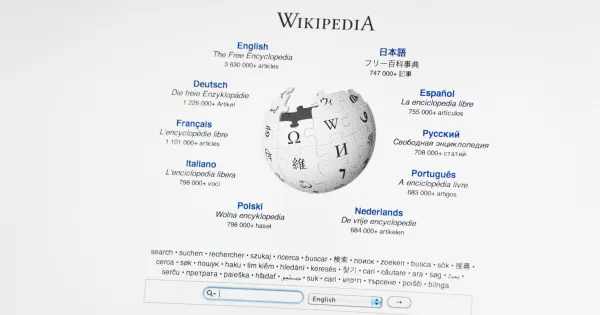
Zach: That’s a hard question to answer. Wikipedia often gets referred to as “according to Wikipedia,” which makes it sound like “according to the New York Times,” like a single publisher’s voice, and that’s not accurate. It’s really “according to the 480 people who edited this article and reached this consensus view in the past 24 hours.” So we’re actually trying to emphasize the people more—get them from behind the page to the front of the page. The 25th anniversary campaign is entirely composed of screenshots from like 700 Wikipedia pages. That’s the platform—we’re trying to break it back into its atomic units. These are the edits. These are the statements. These are the images. And these are the people who make it happen.
Talking Heds
Politico Decoded (EXCLUSIVE): After 15 years of Politico Pro, the global politics publisher is finally launching a second subscription product. Called Decoded (not to be confused with The Verge’s Decoder), the product bills itself as “Playbook meets Dealbook” for the technology policy sector, according to Politico CEO Goli Sheikholeslami. Whereas Pro, an enterprise subscription, costs north of five figures, Decoded will stay below $1,000 annually. The demand is certainly there—the same strategists advising politicians in D.C. are now counseling AI executives in Silicon Valley—but it will be interesting to see whether Decoded acts as a conversion funnel to Pro or attracts and retains an entirely separate audience.
Heatmap Heat (EXCLUSIVE): The climate news publisher Heatmap, launched three years ago, has stayed largely beneath the radar despite setting an admirable precedent for sustainable growth among media startups. The 20-person organization is on track to bring in $5 million in revenue this year, profitably, thanks in part to the growth of its Heatmap Pro enterprise product, whose 40 or so clients are now responsible for roughly 50% of its overall revenue. In particular, the publisher has seen outsized demand for its coverage of data centers, and it has used original polling and permitting tracking to cover the patchwork of nationwide regulation governing the controversial industry.
Realtor Repast: Next month, I’ll be hosting a private lunch during Advertising Week for telecommunications leaders on Oct. 7. The event will be hosted in partnership with Realtor.com, and the conversation will center around the unique opportunity that phases of disruption—moving, specifically—present to brands. I have partnered with the folks at Realtor a few times now, and in each instance have found the subject matter—the housing market, generational wealth, the psychological heft of relocation—immensely fascinating. If you’re interested in joining me, please reach out to liz@adweek.com.