
Mark: That was a bit of a canary in the coal mine, because brand awareness in the U.S. is usually not a problem for an institution like Wikipedia.
Zach: I’ve been with the Foundation leading brand for almost 11 years, and in that time I mostly worked on projects in Nigeria, India, Iraq, South Africa—places where we wanted to grow awareness. For us, brand awareness isn’t a metric by itself. Brand awareness becomes usage, and usage becomes editing. So the more people who know our platform and use it, the more complete our knowledge record is. It’s a public library where sooner or later we say, “We’d like you to write a book—could you do that on something you love?” We’ve been doing regional marketing for a decade. But as we moved into an underperforming market here, that’s exactly where we said: We need to do something bigger in the U.S. and Europe.
Mark: This is something I cover a lot at Adweek: websites disappearing as search engines change. Normally the concern for publishers is commercial: People aren’t coming to the website, they’re losing ad revenue. Wikipedia doesn’t have that same acute commercial exposure. But you were describing the real conversion problem as visitors to contributors, which I hadn’t thought about before. Is that the real “disappearing” issue for you, losing the people who contribute to the site?
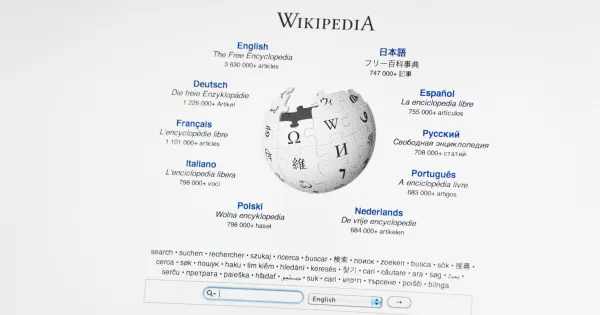
Zach: That’s right. Year over year we see about an 8% decline in human traffic. We separate that from bot traffic, which is way up, crushing our servers. But when fewer humans make it to the site, that’s where the knowledge itself is composed. If you see a typo, if you realize something’s missing or wrong in an article, that’s where it gets fixed. All the composition happens on our site. So we’re thrilled about the distribution of knowledge through AI platforms, but we also need to constantly refresh and fact-check that content, and that means people have to come back to the homepage.
Mark: I’d love to return to the core thesis here. The aim of this campaign was to raise awareness of Wikipedia because it’s not as visible in search engines anymore, and that’s increasingly where people get their information. That’s a problem publishers across the internet are facing. One solution a lot of sites are taking is what one CEO called the “woo and sue” approach: You either strike a content licensing deal or you take AI companies to court. I know Wikipedia has some licensing arrangements. Can you talk about how Wikipedia is responding to AI as an organization, and how it plans to show up on the internet going forward?
Zach: We have an amazing group of people working on an enterprise offering, a real-time API for LLM companies that need tons of data very quickly, delivered in the way they’re used to programming against. That’s designed to do two things: get our content out on these platforms, and create a commercial relationship where the platforms themselves pay us for that usage. It’s a way to expand beyond the 8 million donors giving an average of $11 to sustain the Foundation, because we want to make sure these companies are paying their fair share too. We’re working with every major AI/LLM company you can think of, trying to establish a virtuous relationship. I hear the word “sustainable” a lot, but that feels too low-stakes. We have to anticipate 2028, 2029, and beyond. How do we keep a human content community in a position to keep all of this fact-checked for these platforms? That’s what we’re building right now. We’ve got deals underway, some public, and I hope more to come.