
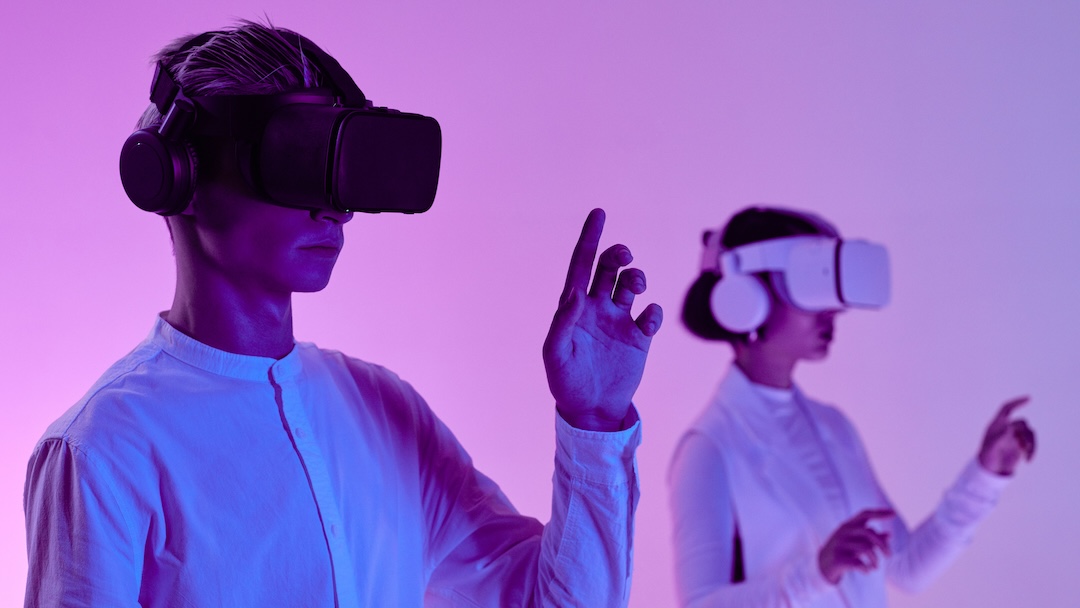
VR and AR have been “the future” for a long time. Long enough that the phrase no longer helps much.
The first wave was easy to recognize. A headset at the booth. An AR filter tied to a launch. A monitor showing everyone else what the person inside the experience could see. Often, the footage of people reacting became the campaign asset with the longest life.
The actual experience was harder to justify.
That is starting to sort itself out. Not through some dramatic breakthrough, but through narrower uses. Showing scale. Testing fit. Rehearsing a process. Letting a buyer see a space that would otherwise require a flight and half a day of meetings. Less exciting on paper. More useful in practice.
The Hype Cycle Is Finally Becoming Useful
For years, the question was, “What can we do with VR?” That usually sent the project in the wrong direction.
The better question is where the existing explanation keeps failing. Maybe customers cannot picture the actual size of the product. Maybe the sales team spends every call correcting the same misconception. Maybe a training video explains the procedure, but nobody knows how a new employee will react when several things happen at once.
VR or AR may help. It may also add a download, a loading screen, hardware problems, and someone standing nearby explaining which button to press. The extra work has to buy something.
From Experiments to Repeatable Use Cases
The useful examples are often almost boring. A customer checks whether a sofa blocks the doorway. A manufacturer places a machine inside an existing production line before sending an engineer to the site. An event planner walks through a ballroom and notices the column hidden just outside the photographer’s frame.
Small details. Expensive consequences.
A launch campaign comes and goes. A good AR model can remain in sales meetings, training sessions, dealer presentations, and support calls for years. That is not really campaign content anymore.
AR Is Changing the Role of Product Video
Product video gives us control. We choose the room, lens, lighting, pace, and the exact second each feature appears. The product looks the way it is supposed to look.
Then the buyer asks whether it fits beneath a cabinet.
Or whether the finish looks different next to dark flooring. Or how far the unit sticks out from the wall once the cables are connected. Those questions live outside the frame we built.
AR helps because it lets the product enter the customer’s environment, including the awkward parts. The point is not seeing a digital object floating through a phone. The point is testing a purchase before making it.
The Product Demonstration Is Becoming Interactive
Interactive content can separate components, switch materials, compare models, or expose details that would take several shoot days to capture properly.
It can also become a junk drawer.
One more hotspot seems harmless. So does another menu. Then a configuration tool. Soon the customer is learning how to operate the demonstration instead of learning why the product matters.
Someone still has to edit the experience. Not on a timeline, necessarily. Through exclusion.
VR Works Best When Presence Matters
VR is strongest when physical context changes what the viewer understands.
A video can show a factory. VR can reveal that the operator stands much closer to the machine than the floor plan suggests. It can show the distance between workstations, the blocked sightline, the way materials move through the room.
That matters in industrial training. It may matter in healthcare, hospitality, automotive, property, and complex B2B sales. Sometimes it does not.
Immersion Is Not the Same as Engagement
A buyer comparing six systems may not want a virtual tour. They may want the output rate and an honest installation schedule.
The team building the experience tends to forget this. After weeks of development, everyone knows where to look and which control opens what. They know the slow section eventually pays off.
The customer opens it once, probably between other tasks. Immersion can focus attention. It can also consume attention before delivering anything useful.
The Creative Process Has to Change Before the Technology Matters
Immersive projects are unforgiving about decisions made too late. A camera move that feels smooth in an edit bay may feel awful in a headset. A detailed model that runs perfectly on a developer’s setup may stall on the customer’s phone. An AR label can land directly over the component it is supposed to clarify.
Those are concept problems by then, not polish notes. Creative, production, development, and testing have to overlap. The tidy handoff between departments starts falling apart. Probably a good thing.
Storyboards Need to Account for User Behavior
A standard storyboard assumes the viewer sees the frame. In VR, they may be looking behind them when the important moment happens.
Sound, movement, contrast, and spatial placement do more of the directing. Not perfectly. The team is arranging probabilities rather than controlling every glance. That takes some getting used to.
Production Decisions Become Technical Decisions
Camera height changes perceived scale. Lighting determines whether a digital object feels planted in the room. Model detail affects load time. Text size depends on hardware.
By the time testing begins, many of those choices are already locked. A concept that only works in the pitch deck does not work.
Brands Will Need Content Systems, Not Isolated Experiences
VR and AR make more sense when they have a defined job. The brand film creates interest. Product video explains. AR helps someone evaluate. VR handles a training, sales, or location problem.
Without that role, the immersive piece often launches with applause and becomes difficult to find six months later.
One Production Can Feed Multiple Formats
Shared assets can create real savings. A product model may support AR, animation, stills, and sales materials. A spatial scan might serve a VR experience and a conventional walkthrough.
But a vertical ad, an AR model, and a VR environment are not one asset exported three ways.
The efficiency happens before production, while people are still deciding what needs to be built.
Measurement Will Become More Behavioral
Immersive platforms can report where users looked, what they opened, and how long they stayed.
The numbers are exact. Their meaning is not. A long session may show interest. It may show that the exit was badly designed.
More useful signals may come from somewhere else. Fewer repeated questions on sales calls. Faster training. Fewer returns caused by size or fit. The dashboard will not always know.
The Next Wave Will Be Quieter Than the Industry Predicts
VR and AR will not replace video. They will move into the gaps video leaves behind.
A customer checks fit before ordering. An employee practices a dangerous sequence before touching the real controls. A buyer walks through a facility without traveling.
That is likely the transformation. Gradual. Specific. Easy to miss once it becomes normal.
The advantage will not belong to whoever uses the most immersive technology.
It will belong to whoever knows when the audience needs to participate, and when they simply need a clear answer.
Torrey Tayenaka is the co-founder and CEO at Sparkhouse, an Orange County based commercial video production company. He is often asked to contribute expertise in publications like Entrepreneur, Single Grain and Forbes. Sparkhouse is known for transforming video marketing and advertising into real conversations. Rather than hitting the consumer over the head with blatant ads, Sparkhouse creates interesting, entertaining and useful videos that enrich the lives of his clients’ customers. In addition to Sparkhouse, Torrey has also founded the companies Eva Smart Shower, Litehouse & Forge54.
Related