
For indie filmmakers, the path to directing big-budget studio IP usually requires years of development hell, millions of dollars, and a massive stroke of luck. But what if you could bypass the cameras, the lighting rigs, and the prohibitive costs entirely, while still delivering a blockbuster cinematic experience?
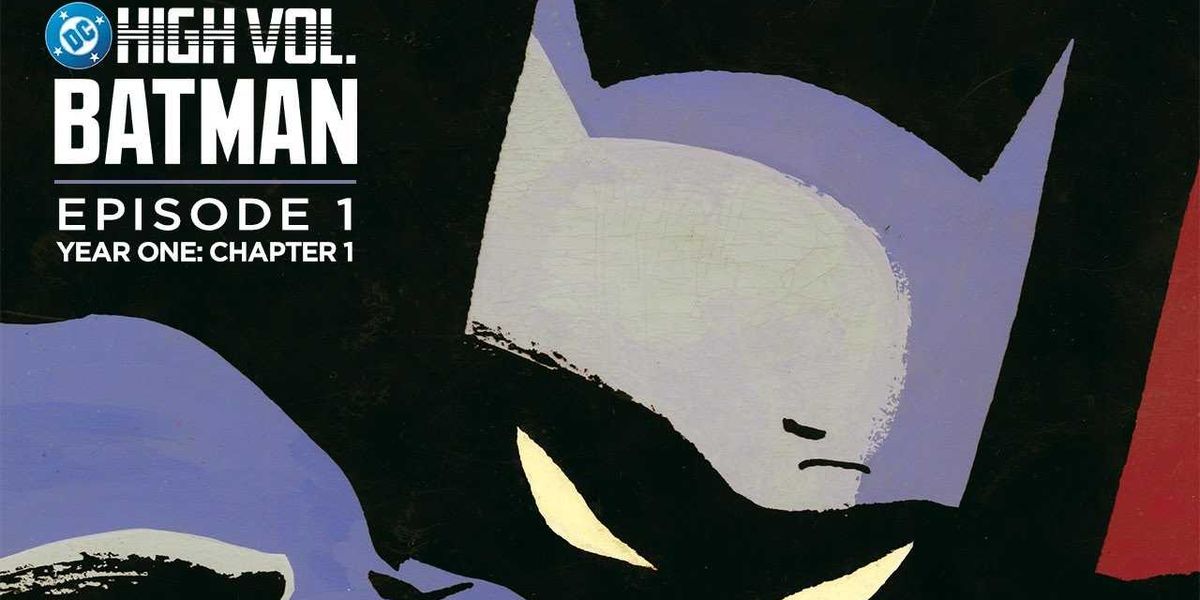
Enter Roshan Singh Sambhi. In just four years, the Singaporean creator went from self-funding his own independent projects to serving as co-showrunner on DC High Volume: Batman—DC Comics’ flagship audio drama that rocketed to #1 on Apple Podcasts and swept the Signal Awards. Through his company, Andas Productions, Sambhi has mastered the art of “cinema without a camera,” proving that the line between indie passion project and elite, studio-level storytelling is thinner in audio than in almost any other medium.
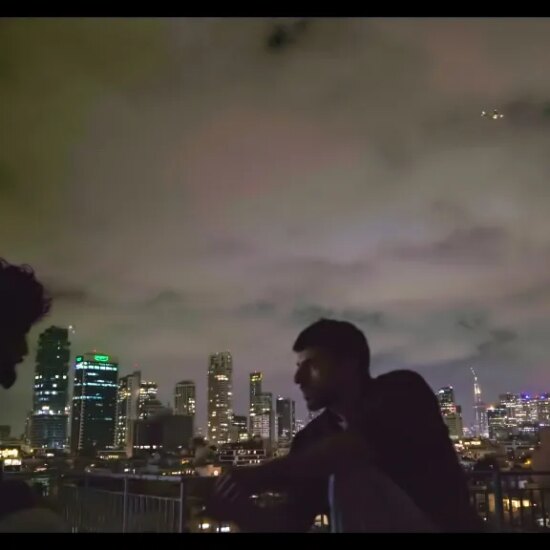
Whether he is capturing the intimate, vulnerable interiority of Bruce Wayne perched on a Gotham rooftop, orchestrating a 360-degree historical epic set in Mongolia (Temujin), or launching a gritty, deeply local Singaporean neo-noir thriller (catskull), Sambhi’s work redefines what it means to “show, don’t tell.”
We sat down with Sambhi to dissect his unique workflow, the creative rules filmmakers must unlearn when ditching the screen, and why audio should never be treated as a mere stepping stone to Hollywood—but as a powerful, final destination.
Let’s dive in.
– YouTube www.youtube.com
No Film School is obsessed with process. When did audio fiction start feeling like cinema without a camera, and what creative rules did you have to unlearn to get there?
RS: I’d love to unpack “cinema without a camera” a little! On the one hand, it’s useful shorthand. It gets across the idea that we’re doing more than just an audiobook with sound effects. It’s the promise of something bespoke, with directed performances, setpieces, and score.
At the same time, I think it’s a disservice to define a medium by what it isn’t. You could call movies “games without interactivity”, but in that instance we understand that there is actually something gained by focusing on a linear narrative.
Audio benefits from its seeming limitations similarly. Without a screen, you gain hushed exchanges across both ears — something like the voyeuristic intimacy of front-row theater seats. And evocative narration taps into the feeling of having a novel create a world in your head that is completely unique to you.
If there was anything I had to unlearn — and this happened gradually over my first couple of projects — it was actually thinking of audio in terms of other mediums. Trying to make it feel “just like a film”, or “just like a play” — instead of asking “what can this medium do that nothing else can?”
NFS: You could describe your work as “films without visuals.” What cinematic instincts, blocking, pacing, editorial rhythm, etc. translate cleanly into audio, and which ones had to be reinvented from scratch?
RS: Pacing and rhythm feel the most universal: the instinct for when a scene is dragging, or when a moment needs room to breathe. With blocking, it matters in audio more than you might first think! We often work with binaural setups or deliberate panning where you can literally hear where people are in a scene. If you close your eyes while listening, you should be able to point to where each character is — even if they’re prowling around you.
The thing we’re constantly re-examining is “show, don’t tell.” In film, ideally, you can trust in your image. In audio, forcing listeners to rely exclusively on plot-critical sound cues for too long can place them under real strain. The trick is knowing when to lean into description, and knowing when to let a breath catch or door slam do the work instead. I don’t think there’s a one-size-fits-all solution — the line has been different in every project I’ve worked on.
But the most unique element of audio to me is interiority — the fact that these shows often envelop you completely in a character’s perspective and mood. And few people approach this with more thoughtfulness than our Batman, Jason Spisak. During an early recording session, in between takes, he stopped and said: “We don’t ever really get to hear Bruce like this anywhere else, do we?”
He was referring to a scene in The Long Halloween where Batman, perched on a rooftop, was in the middle of an emotionally vulnerable soliloquy. These moments exist comfortably as narration boxes on the comic page, but in most other adaptations — you don’t really get to hear him sit with his own thoughts in such an honest and extended way. That performance goes beyond just “a Batman voice” or “a Bruce Wayne voice” — it’s who he really is as a person, in that moment, performing for no one.
We had to develop a whole framework to approach the character’s voice over this series: less of a binary between costumed hero and civilian identity, and more a multi-axis conversation around who’s around him, how experienced he is as a crime-fighter, and then layering in a Batman-to-Bruce vocal spectrum based on which persona he feels he’s channeling in his head at that time. That kind of creative challenge is native to audio in a really unique way.
NFS: Andas went from self-funded indie projects to producing DC High Volume: Batman in just four years. What did you have to prove creatively, not just professionally, to be trusted with one of the most guarded IPs in the world?
RS: We hope we have many more indie projects left in us! Our goal has always been to keep doing both in tandem. That said: by the time we got to DC High Volume: Batman, we’d spent years building our expertise in adaptation. Almost everything we’ve made has been an adaptation of some form — Temujin, Sayang, catskull, even our video games. Our creative process always starts from the same place: being passionate fans of a story, and then creating a bridge for people to fall in love with it the same way we did.
Four years ago, with our first project Temujin, we wanted to prove that the line between “indie passion project” and “polished production” is thinner in audio than almost any other medium. The show was meticulously researched, including a field research trip to Mongolia and several expert consultations, but we also wanted it to be such a compelling dramatic narrative that it could lead listeners to want to learn as much as we did about this frankly unbelievable story.
How that led to Batman was more straightforward than you’d expect. One of the first big fans of Temujin and supporters was my DC High Volume co-showrunner Fred Greenhalgh, who I became friends with on Twitter — back in 2020 when that was where the audio drama community really lived — after he posted about how much he enjoyed Temujin. While he was working with Realm and building out the Batman team, he drew the link between the kind of adaptation work we had demonstrated and what sort of skills one might need to lovingly adapt a classic comic, and reached out to ask if I could do a writing sample. It all moved pretty quickly from there.
– YouTube www.youtube.com
NFS: Sound design in your projects isn’t background, it’s narrative. How early does sound enter your writing process, and do you ever write scenes because you want to explore a specific sonic idea?
RS: In audio drama, sound design is essentially our frame. It’s the shot, the lighting, the set, the costumes, all compressed into what comes through your ears at any given moment. So when asked how early sound enters my writing process, it’s admittedly a tough thing to ignore!
That said, I have a specific workflow. My first pass is what I call the “audiobook pass” — dialogue only, focused on whether the story works on a basic dramatic level. Once that’s working, I do a second pass entirely focused on sound: sitting in a dark room, eyes closed, trying to hear the story. I then build out the sound design descriptions and cues around the dialogue, based on what feels most compelling during that “listening” process. Some of it is functional — other choices feel more like big swings. I try to find a balance between the two, while leaving enough room for a sound designer to have their own fun!
My guiding principle came from a conversation I had early on with Andy Nelson, a legendary Hollywood sound artist. His idea was that you’re not designing to literal reality — you’re using the barest elements to point sharply at the dramatic needs of the scene. So on a busy street, faithful and literal recreation of reality is just chaos. But paint it with a few elements — the rush of a car whizzing by, the pitter-patter of footsteps — and you create a mood that serves your dramatic intention. Those key details are the ones I try to call out in our scripts.
As for writing scenes with a specific sonic idea — one of my favorites is maybe still Temujin’s opening, inspired by Peter Shaffer’s Amadeus: a chorus of whisperers surrounding the audience with increasing intensity. We created a true 360-degree binaural experience. If you’re listening in a car, you want to check your back seat. If you’re listening with earphones, you feel like someone is hissing at you from near the back of your skull. It’s not an experience you get in any other medium.
NFS: You essentially functioned as showrunner on Catskull: proposing the project, securing funding, adapting the novel, directing, and shepherding it through release. What part of that process surprised you by working better than expected?
RS: Proposing the project was easy — Myle Yan Tay (Yan) is a good friend, we’d collaborated before, and some of us were even early readers on the novel. As for funding, we were incredibly fortunate to have received a grant from the National Arts Council Singapore.
The real gamble was our adaptation approach: audiobook-scale content — 25 weekly half-hour episodes — with bespoke attention to detail, on an indie budget, alongside our ongoing weekly DC High Volume production schedule. Until we heard the first mix, we weren’t sure if it would come together as this punk rock subversive thing we heard in our heads, or (to put it crudely) an accidental audiobook.
In a way, the most pleasant surprise was how well the bespoke approach worked. We’d committed to a brutal, lyrical restraint — letting Yan’s prose breathe, trusting the strong performances of himself, Lim Shi-An, and the incredible cast. And I have to mention the rhythm and musicality that our editor and sound designer Nathaniel Mah brings to every moment, and our composers Marcus Bagala and Jamie Leidwinger who have created an amazing Nine Inch Nails-inspired experimental score, complete with character leitmotifs. Even with a higher budget, I doubt we’d have approached this story any differently.
Roshan Singh SambhiCredit: Impact24
NFS: You’ve now worked at the extremes of scale, from Batman to deeply local, original stories. What lessons from working with DC are you actively bringing back into projects like Catskull?
RS: One of the best things about working on DC High Volume is being surrounded by highly-driven, incredibly kind collaborators at the top of their fields. In a medium where the process is so lean, it’s natural to be curious about the relatively few levers that comprise a finished show — and I’ve had the gift of learning from incredible collaborators daily.
Some of that is craft: how our composers Sam Ewing and Perrine Virgile blend bespoke score while building a versatile music library, how our lead sound designers Jonathan Roberts and Jeff Schmidt balance the monumental task of sonic worldbuilding with incredible adaptability to notes over successive drafts. But I would say the process lessons have been just as important — how to protect and empower creatives in a large team, and to strike a nice middle-ground between proactive communication and quiet trust and restraint.
The insight I keep returning to: just because a project is indie doesn’t mean you automatically unlock the benefits of smallness. You could just as easily drive each other up the wall. What unlocks the best parts of a close-knit team is good scaffolding — and building that scaffolding is just as much a creative skill as any more recognizable craft role.
The shape of that scaffolding changes with scale. On an indie project like catskull, roles blend — our sound designer Nathaniel Mah discovered mid-production that bringing in field recording with Singaporean sound artist Syafiq Halid would elevate the show’s authenticity, and we had the flexibility to pivot. On Batman, hats are more specific and the timeline is less forgiving — but the scaffolding still has to leave room for people to grow. Dialogue editor Chia Yaim Chong started as an assistant, and the structure gave him space to develop into the full role. Different scales, same principle: good scaffolding serves the people, not just the project.
NFS: Do you see audio as a final medium, or as a proving ground where stories earn the right to become films and series later?
RS: Audio is a final medium. Categorically. Every artistic medium has the capacity to be the best way to experience certain stories. Audio is immersive, evocative, and genuinely awe-inspiring when done well. If someone doesn’t feel that way, I’d suggest they haven’t heard the right stuff yet.
But there’s real harm in treating audio exclusively as a proving ground. When you approach it as an on-ramp to something else, you stop thinking in terms of the medium’s strengths — and that mindset causes problems, creatively and logistically. Most people in this industry have horror stories about folks who’ve come in trying to impose familiar film and TV structure onto projects where it doesn’t make sense.
That said: I personally came to love audio because I had a script I didn’t know what to do with. And when people were moved by the audio version, some did want to see it take another life. When we have these conversations now, we have audience engagement and listenership stats to share. The audio-to-screen pipeline is real, and genuinely exciting — but it has to be approached with care.
So my answer to your initial question is: yes to both, but in a specific order. Audio deserves to be made as if it were the best possible way your story could be told. If it moves people, other conversations may follow — but the best way to move people is to make the most of your medium.
NFS: For filmmakers struggling to get projects off the ground, what does audio offer that the traditional indie film ecosystem currently doesn’t?
RS: Audio lets you make something at industry-leading quality — and connect directly with a mass audience — without requiring a prohibitively expensive setup.
With our first project Temujin, there was no way to tell that story in the film ecosystem without it feeling so cheap that the cheapness would define the experience. Audio let me make the final form and put it directly in front of listeners. Within a year, we had a vocal audience. That’s what led to me having a career.
I want to be careful, though — people often say audio storytelling is “accessible” — that all you need is a microphone, and you’re good to go — but focusing on that seeming ease can lead to a certain carelessness in approach. The real point I’m trying to make isn’t that the barrier to entry is low, but that the barrier to making something that competes with the best in the medium is genuinely within reach.
In 2026, there are still sonic-first experiences that listeners and creators haven’t imagined yet. They’re within reach of any emerging creator with time and patience to learn the craft — and I’d add, within reach of creators from anywhere in the world. If someone who enjoyed our work on Batman is compelled to check out our considerably more niche Singaporean neo-noir thriller Catskull, or if other underrepresented creators feel inspired by the precedent — that’s the power of audio in action.