
Hacked: A Double Entendre of Rage Fueled Karma, written and directed by Shane Brady, is a revenge comedy built from something very real. Inspired by a phishing scam that cost Brady and his family $20,000, the film turns a deeply frustrating experience into something chaotic, funny, and unexpectedly cathartic. After losing their down payment on a home, Mark (Brady) and his wife Amy (Augie Duke) discover that getting their money back is easier said than done. When the family tracks down the hacker responsible, their attempt to take matters into their own hands quickly spirals out of control.
That decision sends the film gleefully off the rails. Every time the story reaches a point where a reasonable person would back away, Mark doubles down. What follows is a chain reaction of increasingly bad ideas that somehow grows funnier the further it goes, as frustration mutates into action and refuses to slow down.
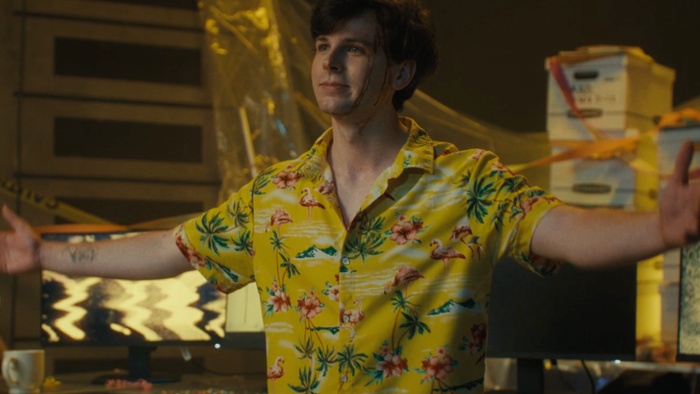
Chandler Riggs, best known as Carl from The Walking Dead, plays The Chameleon, the hacker caught inside Mark’s collapsing logic. Rather than playing him as a straight villain, Riggs becomes the person forced to react to a situation that stopped making sense long ago. Much of the comedy comes from watching him realize he’s not in control anymore.
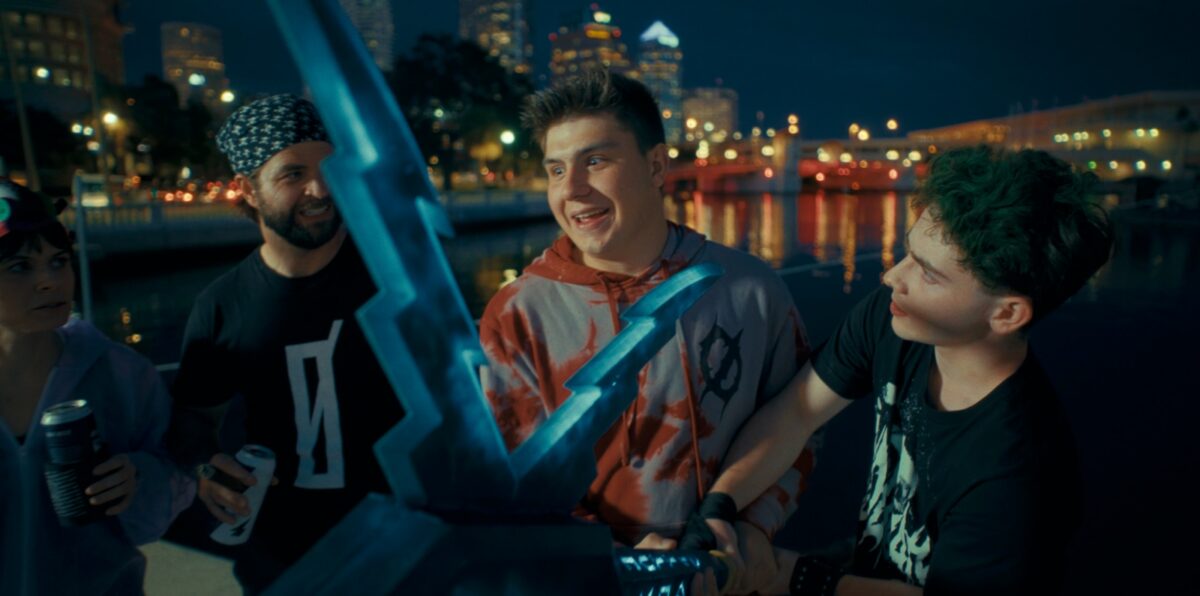
Owen Atlas and Collin Thompson steal the movie as Ralph and Freddy, Mark’s sons and aspiring video creators. They treat everything as material for their channel, where likes, views, and documentation become part of the decision-making process. That instinct pushes the chaos even further.
Visually, the film embraces a chaotic, observational style that often plays with the clipped, unpolished rhythm of YouTube Shorts. That approach reflects Ralph and Freddy’s constant instinct to turn everything into content for their channel. It gives the entire film a half-lived, half-documented quality, even when they’re not behind the camera.
“… a phishing scam cost Brady and his family $20,000 …”
What keeps Hacked from tipping into pure nihilism is the way it treats that real-life frustration as fuel rather than punishment. The film never forgets it started with something that actually happened, and that sense of origin gives the absurdity its shape. Instead of wallowing in the scam, it turns the experience into momentum, asking what happens when people stop accepting that there is nothing they can do.
Brady keeps the tone light even as the premise escalates into kidnapping, threats, and increasingly questionable logic. It plays less like a plan and more like people improvising their way through consequences they are completely unprepared for, convinced they are still in control as everything unravels.
Brady’s smartest choice comes near the end, when the film briefly reconnects to the real events that inspired it. That moment doesn’t slow things down or shift tone, but it reframes what came before, reinforcing the idea that something genuinely frustrating was turned into something deliberately absurd.
Hacked: A Double Entendre of Rage Fueled Karma is messy, weird, and frequently funny. More importantly, it suggests that sometimes the healthiest response to a bad experience is to turn it into something creative before it turns you into something worse.