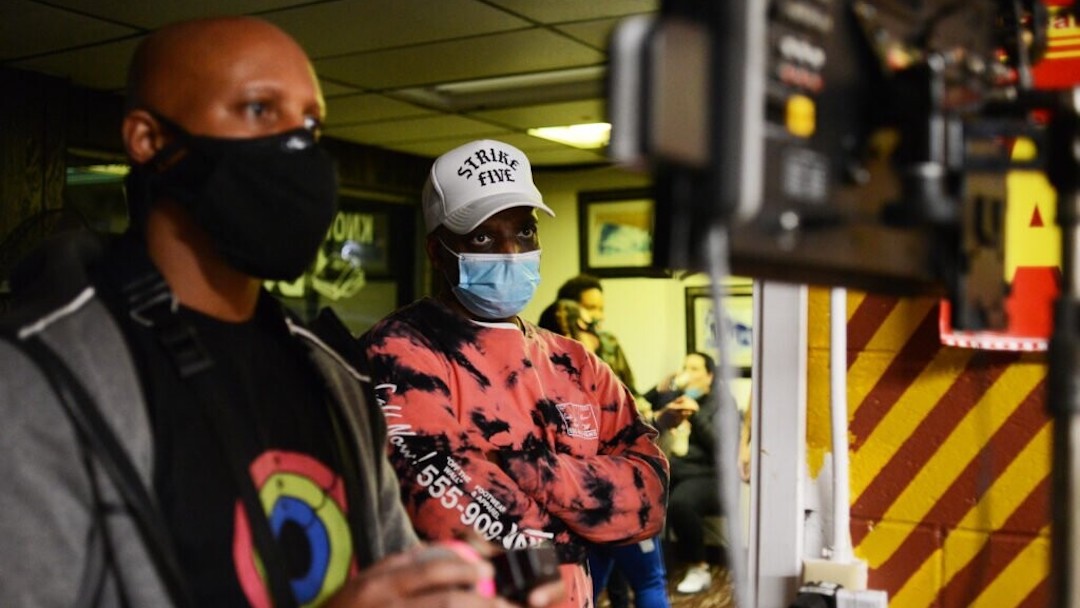
A few years ago, I met a filmmaker carrying roughly $250,000 in student loans from USC. I couldn’t stop thinking about it. How do you launch a creative career with that kind of weight on your back?
I’m not anti-education. I have a master’s degree in communication studies. But I’ve learned that having a degree and knowing how to make a movie are two very different things. Most of what I know came from getting out there and doing it: making mistakes, asking questions, and figuring it out when nobody was around to hand me the answer.
I eventually founded Strike Five Films, and our shorts have played at more than 90 festivals. Here are seven lessons I wish someone had told me on day one.
1. Embrace the suck.
My first filmmaking purchase was a $30 MiniDV camera from eBay. I spent countless nights watching YouTube tutorials and shooting awkward footage. Some of the feedback made my toes curl, and a few people suggested I find another career.
I kept going. You have to be willing to suck at something before you can get good at it. Too many people wait for the perfect camera, the perfect script, or the perfect budget, while somebody with less is out there making films and learning. That $30 camera still sits on my shelf. James Cameron said it best: pick up a camera, shoot something, and put your name on it as director.
2. Learn the jobs you don’t want.
I wanted to direct, but I started as a production assistant. Then came grip, location scout, production manager, producer, editor, and yes, even wardrobe assistant and driver. None of it felt like a straight line to the director’s chair. All of it paid off.
Scouting locations taught me how to find a space, negotiate access, and manage crew time. Production management taught me budgets and how fast money disappears. When you direct your own films, that knowledge saves you time and money. You don’t need to master every department, but understanding what everyone does makes you a better collaborator. Want to direct? Take the camera PA or lighting crew job and watch directors work up close.
3. Reverse engineer your film.
Before you write your next short, list everything you already have access to. Maybe your friend owns a restaurant. Maybe your apartment has a great layout. Maybe you know three talented actors, someone with a camera, and somebody who can handle sound.
Now write the film around that list. I call it reverse engineering, and it’s been the cornerstone of all my films. Most filmmakers do the opposite. They write something they can’t afford, fall in love with it, and spend months trying to pay for it. Constraints are a gift. They keep your costs down, your stress low, and your creativity sharp. The goal isn’t a cheap-looking film. It’s the strongest film you can make with what you’ve got.
4. Fake it till you make it (the smart way).
Early in my career, I worked for the Bay Area’s reputed “King of Locations.” We needed one very specific property for a Facebook commercial, and even he couldn’t crack it. It was my first day on the job, and I said I’d find it.
I talked with the producers until I understood exactly what they wanted, picked neighborhoods that matched, and started knocking on doors. Eventually, I found it, and that one win led to a cascade of other jobs. Confidence usually shows up after you solve the hard thing, not before. Don’t lie about your qualifications or take on anything unsafe, but don’t disqualify yourself just because you’ve never done it. Research, ask questions, and put in the work.
5. Get to know your local film community.
Everybody talks about Hollywood, but there’s a whole filmmaking ecosystem everywhere else. Get to know your local film commission or film office. They’re often the first to hear about upcoming productions and who’s hiring crew. Join filmmaker meetups. Go to film festivals even when you don’t have a film playing. Raindance is on my must-attend list.
And don’t just grab business cards and disappear. Have real conversations, watch other people’s work, and follow up when you say you will. Then pay it forward: offer your skills to somebody else’s project without expecting anything back. In independent film, everybody talks to everybody. Network or die!
6. Don’t wait to tell people what you’re doing.
Making a film and getting people to watch it are two different jobs. Start local: newspapers, community radio, podcasts. Send a short, structured press release to make the reporter’s job easy, and send a thank-you note after the story runs.
Here’s my favorite trick: Google your peers. Find filmmakers at your stage, see where they’ve been interviewed or featured, and pitch those same outlets. Then use each small story as a stepping stone to a bigger one. Share the process, too, not just the polished finish. Post the rough cuts and the mistakes. The people who follow your journey become the people who show up to your screenings.
7. Have faith, have patience, keep moving.
Filmmaking involves a lot of waiting: for someone to read your script, for funding, for an email back. I’ve dealt with unemployment, repeated rejection, and even homelessness, and I’ve come close to quitting more than once.
Two things carry me. The first is faith. I’m a Christian, so when I hit a problem I can’t solve, I pray first, then I Google and YouTube my way through it. God and Google, in that order. Whatever you believe, find something bigger than yourself to lean on. The second is motion. Patience isn’t sitting still. When one door stalls, make extra calls, send more emails, write another scene, or volunteer on a friend’s shoot. Keep moving, like a plane taking off against the wind.
I’m still learning. Developing my first feature, R.O.G.E.R. & Me, has thrown financing and packaging at me, skills no short film prepared me for. Film school can be a great experience, and plenty of people thrive there. But whether you go or not, eventually you have to pick up a camera and make something. Start with what you have, make it, learn from it, and make the next one better. That’s how you build a body of work.
See you on the film set!
Want more? These seven lessons come from my book, Forget Film School, which has 23 ways to launch a filmmaking career without the debt. The e-book is just $4.99 on Amazon.
Jayson Johnson is an indie filmmaker and the founder of Strike Five Films, based in Richmond, California. He writes, directs, and produces character-driven short films that have screened at over 90 film festivals worldwide, earning six awards.
Through Strike Five Films, he merges storytelling with streetwear and community impact—mentoring emerging creators and elevating underrepresented voices in the Bay Area. He is now developing his debut feature, R.O.G.E.R & Me—a quirky, heartfelt film about a young Black coding savant from Richmond who, after crashing into a tropical fish store, is sentenced to carry a live goldfish named R.O.G.E.R. for 30 days. Under the offbeat surface is a touching story of healing, growth, and unexpected human connection.
Jayson started with a $35 camera from eBay and has worked toward this milestone, proving that vision, grit, and authenticity can turn independent dreams into reality. He’s passionate about collaborating with producers, distributors, and partners who share a commitment to meaningful, community-rooted stories. Open to discussions on co-production, distribution, or investment—reach out directly via the contact form at strikefivefilms.com, or connect on LinkedIn (linkedin.com/in/jaysonjohnson1). Let’s create something that moves people.
Related