

As I apply for jobs, uncertainty doesn’t just hover in thought; it settles into my body. My chest tightens, sleep slips away and my mind runs like a train that won’t stop. This isn’t abstract theory; it’s the lived rhythm of anxiety.
Research suggests that stress responses can remain active beyond the original trigger, influencing mood, attention and physical state. That is one reason anxiety can feel so persistent: the body may keep registering a threat even after the immediate moment has passed.
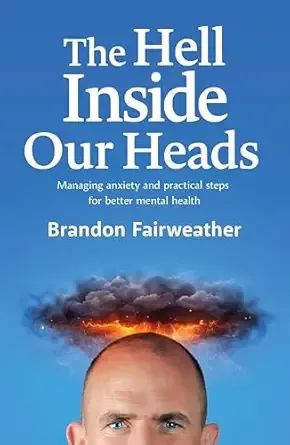
Reading Brandon Fairweather’s The Hell Inside Our Heads felt like recognition. It captures distress not as a fleeting mood but as a cycle that grips both mind and body — something I know too well. Fairweather’s honesty matters because it gives language to what many people feel but struggle to name. His battles with congenital heart defects, open‑heart surgery, strokes and cancer force him to confront fragility head‑on. When he writes about inner turmoil, it resonates because it’s a lived experience, not a theory.
The Everyday Weight of Anxiety
Anxiety doesn’t only arrive in dramatic crises; it threads itself through ordinary life. It seeps into routines, leaving the body tense long after the moment has passed. These effects show that anxiety is not just emotional; it has real physiological consequences. The quality of interactions can also influence how intense anxiety feels, with supportive contexts often easing the strain.
Anxiety Disorders in Everyday Life
Unlike ordinary stress or nervousness, these conditions are long‑lasting, often overwhelming and frequently accompanied by physical symptoms such as a racing heart, restlessness or difficulty concentrating. They are common, treatable and can include generalised anxiety disorder, panic disorder, phobias and social anxiety disorder.
Each person experiences them differently — some signs may be present, others not — and the lists we use are never exhaustive.
Physical signs may include sweating, trembling, muscle tension, rapid heartbeat, shortness of breath, dizziness, nausea or fatigue. For instance, during a panic attack, someone might feel their chest tighten, their vision blur and believe they are about to collapse in a public space.
Cognitive signs often involve excessive worry, rumination, racing thoughts or a sense of impending danger. A person with generalised anxiety might spend hours replaying conversations, convinced they said something wrong or worry constantly about their children’s safety even when they are at home.
Behavioural signs include avoidance, rituals, restlessness, or withdrawal. Someone with social anxiety might avoid speaking in meetings or decline invitations to gatherings, while a person with a phobia could refuse to travel by plane or avoid driving over bridges.
The consequences ripple outward. These disorders can sap joy from hobbies, make work or school overwhelming and intrude even on leisure time. A once‑avid reader may find it impossible to focus on a book, or a student may freeze during exams despite knowing the material. They may strain relationships, limit new opportunities or lead to depression when the constant stress wears people down.
Naming these experiences through both research and lived accounts helps make the invisible visible.
Tools to Lean On
-
Breathing as Anchor: calming the body when panic rises.
-
Mindfulness as Lens: noticing thoughts without judgment.
-
Reframing as Strength: Stoicism reminds me I cannot control events, only my response. When facing an interview or financial meeting, I remind myself of past resilience and the challenges I’ve already faced. That shift turns dread into capability.
-
Routine as Rhythm: journaling, walking or small rituals create stability when days feel chaotic. Routine doesn’t erase anxiety, but it gives life a structure that resists collapse.
-
Connection as Relief: Sometimes, the most healing act is being heard. Reaching out to friends or family lightens the burden and reminds me that anxiety is not carried alone. Support doesn’t need to fix; it only needs to listen.
Anxiety can also narrow the future. It makes ordinary choices feel heavier, turns small setbacks into verdicts and can make hope feel risky.
Resilience
Anxiety can shrink the world, but life pushes back in small, steady ways. A genuine conversation, a workplace that values honesty and a community that welcomes openness are the threads that keep humanity intact. They don’t erase strain, but they bring movement, reminding us that life continues even when pressure builds.
Resilience is not about pretending the weight is gone. It is about learning how to carry it without being crushed by it.
Questions for Reflection
What specific experiences have shaped your understanding of anxiety? How do you think societal perceptions of anxiety influence individual experiences? What additional tools or strategies have you found helpful in managing anxiety?
The Hell Inside Our Heads is published by Tracey McDonald Publishers.