

Steve
As a child of the ’80s, I often find myself pining for what I’ve convinced myself were “simpler times.” Back in my day, you could disappear from home for hours, unsupervised, exploring your neighborhood and making mischief that fueled your imagination. I grew up with parents who, to my delight, put virtually no restrictions on what I could watch. Thus, I fed my heart and soul with countless horror movies, fantasy films, and stunning achievements of practical effects. My father used to sneak my sister and me into the local drive-in theater, as we giggled beneath a sand-speckled blanket in the “back-back” of our powder-blue station wagon. Despite being only five years old at the time, I remember the Summer of ’86 like it was yesterday, thanks mostly to the onslaught of incredible films released during those sun-drenched, school-free months of Cedar Beach adventures and abandon.
While I’m feeling nostalgic, I’m inviting you all to join me for that milestone season, which happened 40 years ago, when five timeless films ruled the silver screen. From the peak of practical effects to bold directorial swings and storytelling that stands the test of time, the following films helped make the Summer of ’86 an unforgettable epoch for cinephiles who miss the good ol’ days of films with CGI-free effects and a hands-on approach to making genuine movie magic.
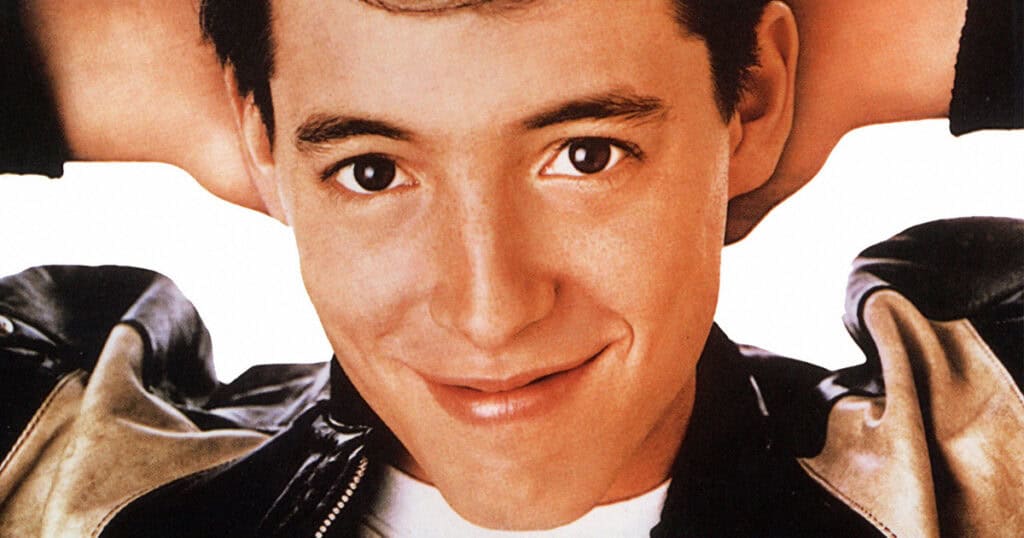
Ferris Bueller’s Day Off (June 11, 1986)
I might have been only five years old when John Hughes’ coming-of-age comedy Ferris Bueller’s Day Off hit theaters, but I also had a sister who was four years older than me, and she couldn’t wait to grow up. She longed to attend high school and saw Ferris Bueller as a window into that world. By extension, because I wanted to be a part of her world, I watched Hughes’ movie about three misfit teens more times than I could count. Plus, I lived on a big block, and many of my neighbors idolized Ferris and his elaborate school-skipping antics. You couldn’t go to a neighborhood water balloon fight or ride your BMX without someone talking about how they were planning their own “day off” when school started back up again.
Deservedly so, Ferris Bueller’s Day Off was a massive success at the box office. Hughes produced the film on a $5.8 million budget, with the film’s domestic gross totaling $70.1 million. While that might seem like small potatoes in this day and age, remember that it was 1986, and a $65 million gain was considered a big deal. Beyond making an impressive amount of money, Ferris Bueller became a cultural touchstone, giving teens a movie they could see themselves in, or at least aspire to. Back then, no kid broke the rules like Ferris Bueller, and every kid dreamed of becoming their own version of Hughes’ babyfaced badass in a multi-leather jacket.

Labyrinth (June 27, 1986)
If you were to ask me, in 1986, what I wanted to be when I grew up, my mother would tell you I wanted to be a musician. She’s not wrong. But more than that, I still wanted to work for The Jim Henson Company as a puppeteer. I grew up on a steady diet of Sesame Street and The Muppets, so when Henson’s Labyrinth opened in the Summer of ’86, I fell in love. I wanted to be Sarah, or my own version of her, exploring a twisted maze filled with strange creatures, goblins, and a codpiece that defied all manner of proportion and logic. I wanted to help bring worlds like Labyrinth to life with the flick of my wrist and manipulation of my voice. Until Labyrinth, the realm of fantasy never looked so tangible and within my grasp.
While Labyrinth‘s box office returns were a nightmare (the film grossed $12.9 million after costing $25 million to produce), Henson’s gift to cinephiles with a fantasy kink cemented itself as a cult classic, becoming timeless for generations to come, with nothing else coming close to its use of practical effects, inspired set design, and mesmerizing feats of human ingenuity. Although we already had movies like The Dark Crystal (1982) and The NeverEnding Story (1984), Labyrinth offered audiences a whole other level of movie magic, with most of its world made up of strings, various foams, and mechanical disguises. Labyrinth was a glittering gem in the Infinity Gauntlet of the Summer of ’86.
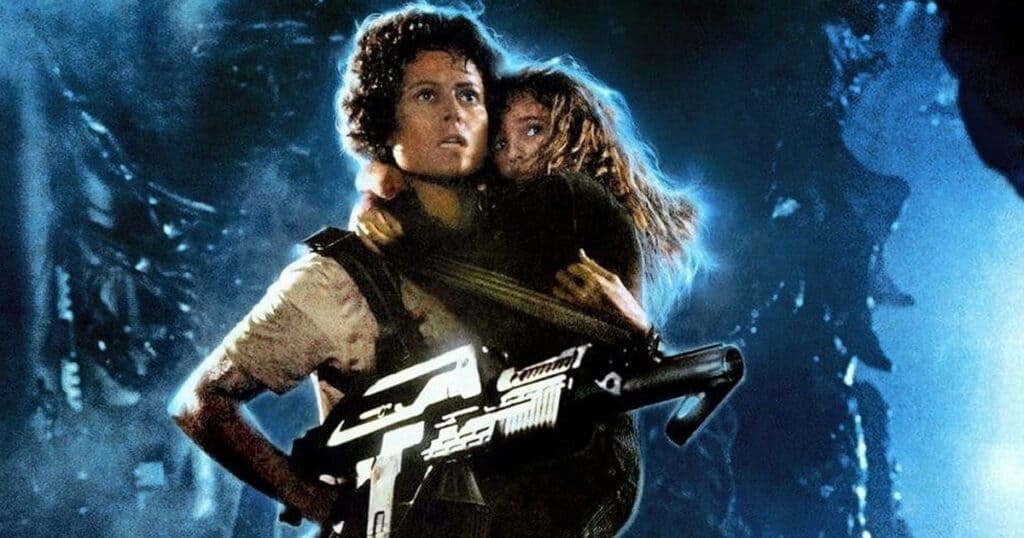
Aliens (July 18, 1986)
After terrorizing crowds with Alien in 1979, James Cameron took the helm of Aliens. This sequel cemented the franchise as a pillar of pop culture, with science-fiction enthusiasts losing their minds alongside action-thriller fans for Cameron’s high-octane approach to Xenomorph horror. As iconic as Alien is, Aliens takes the seed of Ridley Scott’s masterpiece and grows it into something bold, new, and terrifying. Aliens also doubled down on Sigourney Weaver’s Ripley being one of the most iconic characters in sci-fi film history. She’s clever, intense, and inspiring. Few have delivered a performance as legendary since.
Cameron’s Aliens was a beast at the box office, grossing $183 million worldwide against an $18.5 million budget. Aliens, singlehandedly, earned back almost 10 times its production budget. Good gods! Everyone was talking about Aliens in the Summer of ’86, urging friends to experience the thrills for themselves while counting the days until they could watch it again at home on VHS. I remember my parents raving about the movie when they came to pick me up from the babysitter’s house. That’s how well the reaction to this film sticks in my mind. When it came to VHS, we watched it as a family. I was blown away.

The Fly (August 15, 1986)
Whenever I think about the Rocky Point Drive-In in Long Island, New York, the first movie that comes to mind is David Cronenberg’s The Fly. Remember when I mentioned sneaking into the theater under a blanket? This was one of those nights. As a loose remake of the 1958 classic, Cronenberg’s film is a revelation, and as a creature feature, it’s everything nightmares are made of. Starring Jeff Goldblum and Geena Davis, The Fly took body horror to a level I’d never seen before. I was grossed out, but also mesmerized by the film’s artistry and gore. When Seth Brundle sheds his human skin to reveal his mutated form, what used to be him sloughs away, leaving a mistake of nature in his place. I couldn’t look away.
So many films have done the body-horror genre justice since the Summer of ’86, like Luca Guadagnino’s Suspiria remake and Coralie Fargeat’s The Substance. Still, when Cronenberg’s The Fly hit that colossal season, even the adults were crawling out of their skin with terror. After The Fly, I wanted to see every gross thing the horror genre had to offer. I was on a mission. And thankfully, my parents were more than cool about my unrestricted viewing. It was a different time. We supervised ourselves. Bring on the mad scientists and Freddy Kruegers of the world. We can handle anything.
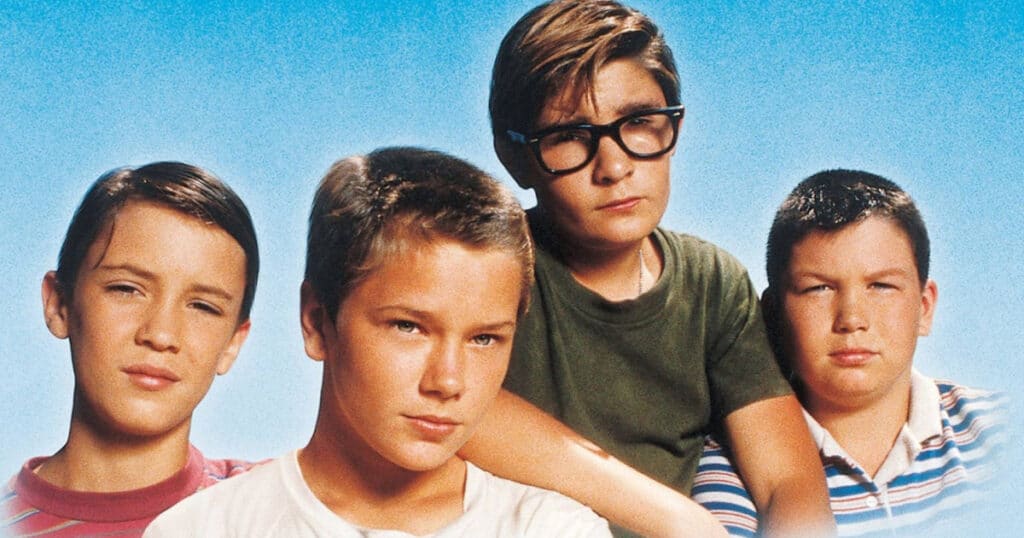
Stand by Me (August 22, 1986)
If Ferris Bueller’s Day Off made every kid wish they could throw caution to the wind, Rob Reiner‘s Stand by Me was the movie that made you pump the brakes and stay home. Most kids growing up in the ’80s did so with little supervision, exploring every bike trail, swimming hole, and forgotten corner of their hometowns. Now and again, you’d find yourself somewhere foreign, unnerving, and hostile. Stand by Me was the reminder that wandering into such places could land you in a world of regret. Not too many people will admit it, but Stand by Me scared them. Reiner’s coming-of-age film cut to the core of what it was like to lose your innocence, and in the Summer of ’86, innocence was something you held onto.
Stand by Me grossed $52.2 million against a $7.5 million budget that season, bringing in seven times its production cost. As a way to end the year’s hottest months, Stand by Me went down like a cool, sobering drink, bringing you back to reality just as another school year loomed with outstretched fingers grasping to wring your self-confidence dry.
Happy 40th birthday to the films mentioned here. I even baked a cake. Thanks for the formative memories, and may those who only hear about the Summer of ’86 through stories like mine be forever jealous of how awesome it was.

Subscribe to our weekly newsletter