
“The Vampire Lestat” has been a wild ride from the start, and with its sixth episode, the series slowed down, let you catch your breath, and then immediately took it away again … several times.
“It’s like you get a sense of home from it,” Jacob Anderson told TheWrap of the episode’s hangout vibe.
“It was fun, and I think to some extent as well, probably just a bit of a relief,” Anderson said. “Sam had been like, thrown around for four months or whatever when we got to shoot in that episode, so I think probably it was quite nice for him to just do some like walking and talking, and sitting down. And for me, so much of Louis’ season is just stewing in grief and sadness and like this really complex, creepy situation.”
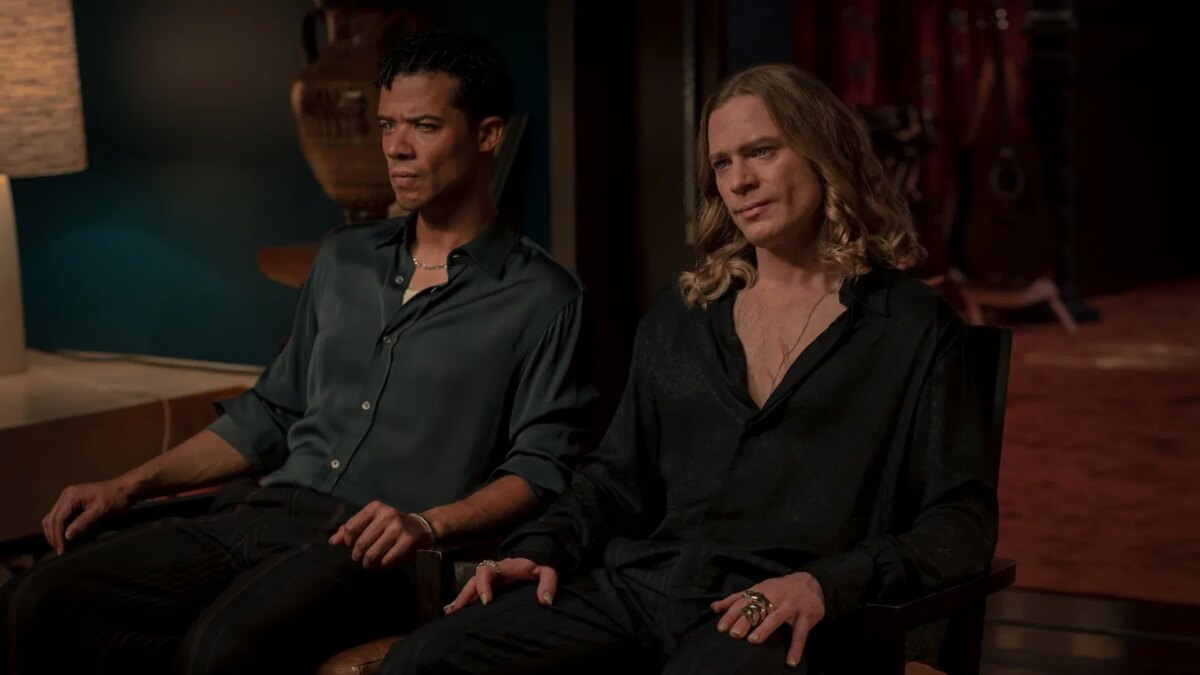
The penultimate episode of the season, “Montreal,” took a break from that creepy situation with Regina and saw less of Lestat’s fractured and frayed perspective (perhaps as a result of his weeks of domesticity with Louis in the gap between Episode 5 and 6, which audiences didn’t get to see), and followed its two leads through a soul-searching Halloween night that takes them from one explosive emotional revelation after the next, and all the queit tender moments in between.
Or as series creator Rolin Jones described the episode, “Vampire ‘Before Sunrise.’”
“We just said, let’s do the vampire version of that, and stay in that strict point of view and see where that gets us,” Jones said. “Because we had all this plot, and how are we going to get all those things through? It became a wonderful discipline. We got to put our two guys in the same frame all the time and carry all those two-shots.”
“Aesthetically, it’s what sort of ends up making this year easier to talk about in terms of an album, and that these episodes are tracks, and that this one might look wildly different than this one, but when you put them all together, we hope there is an album,” Jones continued. “You’re sitting there in Episode 6, and I have another 53 minutes that you haven’t seen, which will change a lot of things that you’ve seen in the first six.”
The Seance
Indeed, “The Vampire Lestat” and “Interview With the Vampire” before it are always redefining what you thought you knew about these characters, their relationships and motivations. In that regard, “Montreal” packs a big wallop with Claudia’s own “one night only” – a brief, brutal return via séance.
Lestat’s fledgling, Louis’ surrogate sibling, and their one-time daughter figure is ripped out of her afterlife for a poignant and oh-so-piercing conversation with the help of powerful witch Merrick Mayfair (Sarah Afful). And she’s got plenty of sharp words for both of them – well, a few more for Louis, which, as Delainey Hayles pointed out, could be a result of the story being told through Lestat’s point of view.
“If you look at like ‘Stained Glass Eyes,’ that whole thing was romanticized by him. He like made it so beautiful, like, ‘I’m grieving my daughter,’” Hayles said. “When it’s like, would Claudia really be like in love with you right now, singing this song? No.” How does she think Claudia would actually react? “She’d probably turn it off.”

“Here’s some truth for you, sad boy, you weren’t even my favorite,” Claudia rips into Louis, and she’s just getting started. “I hate you to the pit of all things,” she screams as her rage builds.
For Hayles, stepping into Claudia’s unfettered anger and afterlife torment made for a “very heavy day” on set. “I was kind of, not stressed out, but like really wanting to deliver for Claudia,” the actress explained.
“I went through a lot when I got the scripts. I went through stages of it where, when I first got it, I was like, “This is amazing! Like, yes, rip into them.“ And then there was stuff where I kind of combated with some of the things she says in this scene. Whether they’re right or wrong is another question. I just combated with them, me as a fan of Claudia and a viewer as well.”
“But I think that’s the beauty of the show and our amazing writers,” Hayles continued. “They don’t create black-and-white characters; they create gray characters. And whether you agree with what they say or not, it’s not for you. It’s that character’s decision.”
Even if her words are tough to swallow, Anderson thinks there’s something “healing” about the experience for Louis and Lestat. “Hopefully, even for Claudia,” the actor said, adding, “That’s maybe romanticizing it too much. I’m sure she was glad to be able to say some of this stuff to them.”
“It’s a shocking scene, and she says some pretty wild s–t,” Anderson continued, “but there’s something really honest about it, and there’s something really healing about it.”
Claudia’s Truth

Claudia’s sentiments, as shocking as they might be, are pulled pretty directly from “Merrick,” the seventh book in Rice’s Vampire Chronicles. In the 26 years since that novel was released, there has been plenty of debate about how much of what Claudia said was true, or if you can even ever be sure that it was her spirit that was yanked out of the beyond.
“There’s a totally easy way for somebody to look, then go, ‘Well, she’s that aggressive because they just pulled her out of this thing, and she was done with these people, so maybe she overdid it,’” Jones said. “Or maybe that’s the first time you got to see it all.”
For Anderson, seeing all of Claudia’s truth, without the bias of their memory clouding the picture, is a powerful moment for the duo.
“I do think that there’s something really beautiful, at least that I felt about it, what the séance does to them, is that it becomes about her again,” Anderson said.

“I think, largely, they give her the space to say what she needs to say, and they feel the presence of her again,” he explained. “Not the romanticized vision of her that they would tell other people, aspects of her that they would remember; the frustration and the anger and the passion that she has, her way with words, all these things that can get sort of fogged over by all of the flowery language and the memory of a person, and how that can like sort of morph somebody.
The way you remember somebody, you can change them, you can turn them into something different. And I kind of I love that have this final experience with her, and they accept her, and they decide they learn something about themselves.”
“It’s brutal and tough, tough medicine,” Jones added, “but also that they get a glimmer of pure, unadulterated rage. It was complex. She was really fierce. You can look at a lot of things that are buried in Seasons 1 and 2 and say, ‘Aha, absolutely, that goes really, really well.’”
Mourning Madeleine

If there’s one thing everyone agrees on, it’s that the purest truth in the scene is Claudia’s grief over her lost love, Madeleine, who was also killed by the Paris coven in the Season 2 trial that took Claudia’s life. While Louis is seeking closure with Claudia, it turns out she has spent her afterlife seeking Madeleine, and she’s never found her.
“I don’t see her here, and I can’t find her there,” Claudia cries out as her brief return to the world of the living comes to a close. “The one good thing in my bleak, Black life, and I don’t know where she is, and I spend every second of nowhere looking for her!”
It’s one of the show’s most devastating moments yet.
“I think for me the saddest part of the scene is when she calls out for Madeleine, and I think that’s kind of what it boils down to,” Hayles said. “When I read that, I got really upset, because in vampirism you get your companion, through thick and thin, and through death and whatever eternity, that is your companion, whether you like them or not, and I think she hadn’t been given the grace to experience that.”
According to Jones, that’s the universal truth everyone can walk out of that scene with, regardless of how much you believe the other things Claudia said.
“The thing that seemed most heartbreaking to me, and to our writing staff, that would be hard for anybody to have a different opinion on is that she’s out there in purgatory looking for Madeleine and hasn’t found her yet,” he explained. “It gets me choked up thinking about it. That seems, if there’s any objective truth in that scene, that’s probably it.”
Meet Merrick Mayfair

The séance didn’t just bring back a fan-favorite; it introduced a new one: Merrick Mayfair. The title character of Rice’s 2000 novel, Merrick is a powerful witch of the Mayfair lineage (the long line of witches that takes center stage in AMC’s “The Mayfair Witches). But if you watched Episode 6, you already know that.
Sarah Afful brings the character to life in “The Vampire Lestat,” and while the actress had read the book years ago and thought there was much of Merrick’s description that didn’t match up with her, she found her “spine” of the character specifically in the character’s bravery in the face of terrifying circumstances.
“The integrity of her, her artistry as a witch and her strength, her tenacity, and that bravery, and going into situations that potentially could kill her,” Afful said. “I wanted to add that or glean that from the book and match it up with what was written in the script.”
On set, Afful got a piece of direction from Jones that helped further unlock that understanding of the character. During the scene, Claudia possesses Merrick’s body and smashes the witch’s face into her table. When they tell her to keep going, she insists they’re going to have to pay her dental fees, and Afful recalled Jones suggesting that maybe she’s just saying that because she’s afraid and needed to say something.
“What it unlocked for me was to not get too comfortable with the fact that I’m doing this, that she is terrified,” Afful said. “I remember parts of that in the book, where she’s shaking because this is life and death, encountering death, her own mortality, right there, and she’s terrified. So that unlocked something for me in that the vulnerability is just as big as the bravery, and just as big as the fear. They’re all sitting up there together.”
The Cliffhanger

In the aftermath of Claudia’s revelations, Louis and Lestat continue their walk-and-talk journey through Montreal, taking in the weight of what they just witnessed. “She spared us the ambiguity,” Lestat says as they stroll with stricken faces.
“You’re going to be shocked, to say the least, coming out of that experience,” Anderson said, adding that it’s so on-character for them to walk out of that experience and focus on how it affected them.
“It’s very them,” Anderson said with a laugh. “Claudia is in hell, ostensibly, or purgatory, or somewhere awful, and still, they walk away from it, and they’re kind of like, ‘This was a learning moment. This was like a learning moment for us.’”
But that’s not to say that they didn’t take a hard lesson from the experience. “Part of their journey going forward is that they’re going to have to hold some of this stuff, like on her behalf, for the rest of their for the rest of their existence,” Anderson continued. “They’re gonna have to hold all these parts of her that were challenging for her and for them.”
But before they do any of that, they’re going to have to get their heads back on their bodies.
The pair sits on a park bench and ponders the fantasy of a quiet future, the two of them, out in the desert. Then two masked figures sneak up behind them and cut their heads off – Armand and Daniel Molloy, no less.
The audience may have never seen it coming, but Anderson says the episode’s gasp-inducing cliffhanger was one of the first things he ever learned about the third season. “I’m pretty sure Sam and I were told towards the end of shooting Season 2.”
“It’s a wild one,” Anderson said of the ending with a laugh, but also an appropriately twisted episode for the series’ Halloween episode.
“I think we should make it a tradition,” Anderson said of the holiday episode. Just don’t expect Louis to get suited up in costume like Lestat. “Louis is not going to wear a Halloween costume. No way,” Anderson said. “He doesn’t go for all of that.”
In fact, Anderson says there’s another cut of the scene where Louis is actively hating on the Halloween vibe. “It’s not really in the final cut, but I was doing all sorts of judgy looks at different people,” Anderson recalled. “As they were walking, in my mind, like Louis was also like scoring the Halloween costumes. He hated all of them, but like it’s just all too cute for him, and it’s not really his thing.”
“The Vampire Lestat” airs its finale on Sunday, July 19.