
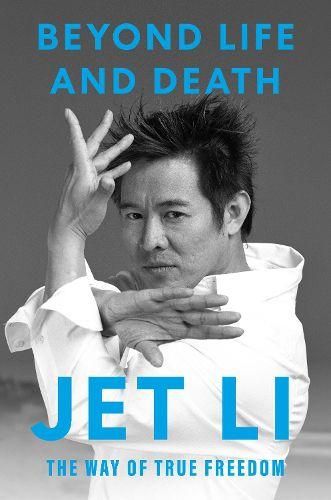
There are books you read, and there are books that read you back. This is how Jet Li’s memoir Beyond Life and Death: The Way of True Freedom landed for me.
I don’t need a celebrity to tell me what to do. I’m Buddhist. I live with spirituality. I already know about pain, about letting go about finding something deeper than the chase. But Li’s words resonated anyway.
What strikes me most is his grandmother. Before he was born, she told his mother this child would bring fortune to the family. And he did. Born into extreme poverty in Beijing with four siblings raised by a single mother after his father died when he was two, he fought his way to become the youngest national martial arts champion in Chinese history at twelve years old. He dominated opponents twice his size. Poverty drove him forward.
That hunger carried him from Beijing to the global stage.
At nineteen, Shaolin Temple was released and made him famous across Asia. Hong Kong followed with Once Upon a Time in China, Hero, Fearless. Hollywood came later with Romeo Must Die, The One, Unleashed and Lethal Weapon 4.
Li became one of the first internationally renowned movie stars from China. A monthly salary of just 100 dollars once brought him pure joy. Eventually, he came to see that material possessions and the need for external validation were only temporary.
The Tsunami
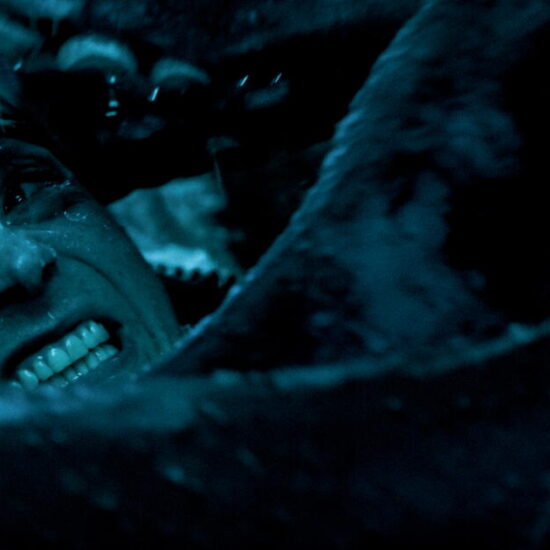
At the height of his Hollywood career, everything changed. In 2004, he was 41, vacationing in the Maldives with his wife Nina and their two young daughters when the tsunami hit without warning. He thought the unusually large waves were rough surf until seawater rapidly engulfed the beach resort. He scooped up his older daughter and asked the babysitter to carry the younger one as the surge climbed past his knees, then his hips, then his neck. He hoisted his daughter onto his shoulders just as another wave crashed over them, sweeping the babysitter and his one-year-old more than twenty feet away.
He was choking on seawater, screaming for help, realising the distance between life and death was only inches. The water came up to just below his nose. They were inches from death. When the waters receded, he discovered his forearms shredded by debris. He found himself stranded for hours in a flooded hotel lobby alongside roughly 200 guests, frantic over his still-missing wife. The family was eventually reunited.
Have you ever lost something and found yourself instead?
After that near-death encounter, he turned inward, deepening his study of Tibetan Buddhism and dedicating his life to philanthropy, though he was at the height of his Hollywood career. Great masters showed him a path toward being free beyond the free, a state he continues to learn and practice daily.
Pain and Philosophy
He writes about pain that doesn’t go away, decades of it. His spine deteriorated. His muscles atrophied. He battled hyperthyroidism for a decade, making every movement difficult. He couldn’t move without discomfort for years. But here’s what he learned: separate bitterness from pain. Pain happens and it’s real. Bitterness is when you add anger, when you resist, when you say this shouldn’t be happening. That’s where suffering lives, it’s a distinction that matters.
I had a morning last month when my body felt tired. Sitting with my tea, I knew it wasn’t the exhaustion that bothered me. Frustration weighed heavy. I set it down — suddenly the day was clear. That’s what he means. Have you noticed this too?
The Fighter’s True Strength
His definition of true self-defense surprised me. Not hardness, not the fastest strike—but awareness, interconnection, softness. I watched his films with their lightning speed and fierce fighting, but the greatest fighter he became wasn’t the one who struck hardest. It was the one who stayed calm under pressure and understood that we’re all connected.
Be a grandson to the world, he says. Not an owner, not someone who demands. He walked through airports where people treated him like someone important, feeling overwhelmed, until he saw he’d been acting as if the world owed him. He learned to receive life like a child does, with open hands, humility, gratitude.
His daughters have helped him write this beautiful book. They are his foundation. Learning from everyone comes up again and again, not just teachers or experts. Dissolve ego and see yourself in others.
Lessons from Near-Death Experiences
Who taught you something unexpected this week, not in a class or a book but in a conversation or a moment? Pay attention.
Three near-death experiences shaped him: the tsunami in the Maldives, a heart episode, plus another medical crisis. Each changed how he sees life. His body failed, he faced pain, faith carried him back. He’s not perfect, but he’s real. And that honesty anchors the book.
Life is movement. The secret to self-defense. Separate bitterness from pain. Be a grandson to the world. Learn from everyone. Anyone can find wisdom, guidance, power in these insights.
What are you chasing right now, and what would happen if you stopped?
If you’re wondering whether more will ever feel like enough, whether there’s something deeper than the doing, this book speaks to you.
It helped me see what I already know.
Available now at Exclusive Books.