
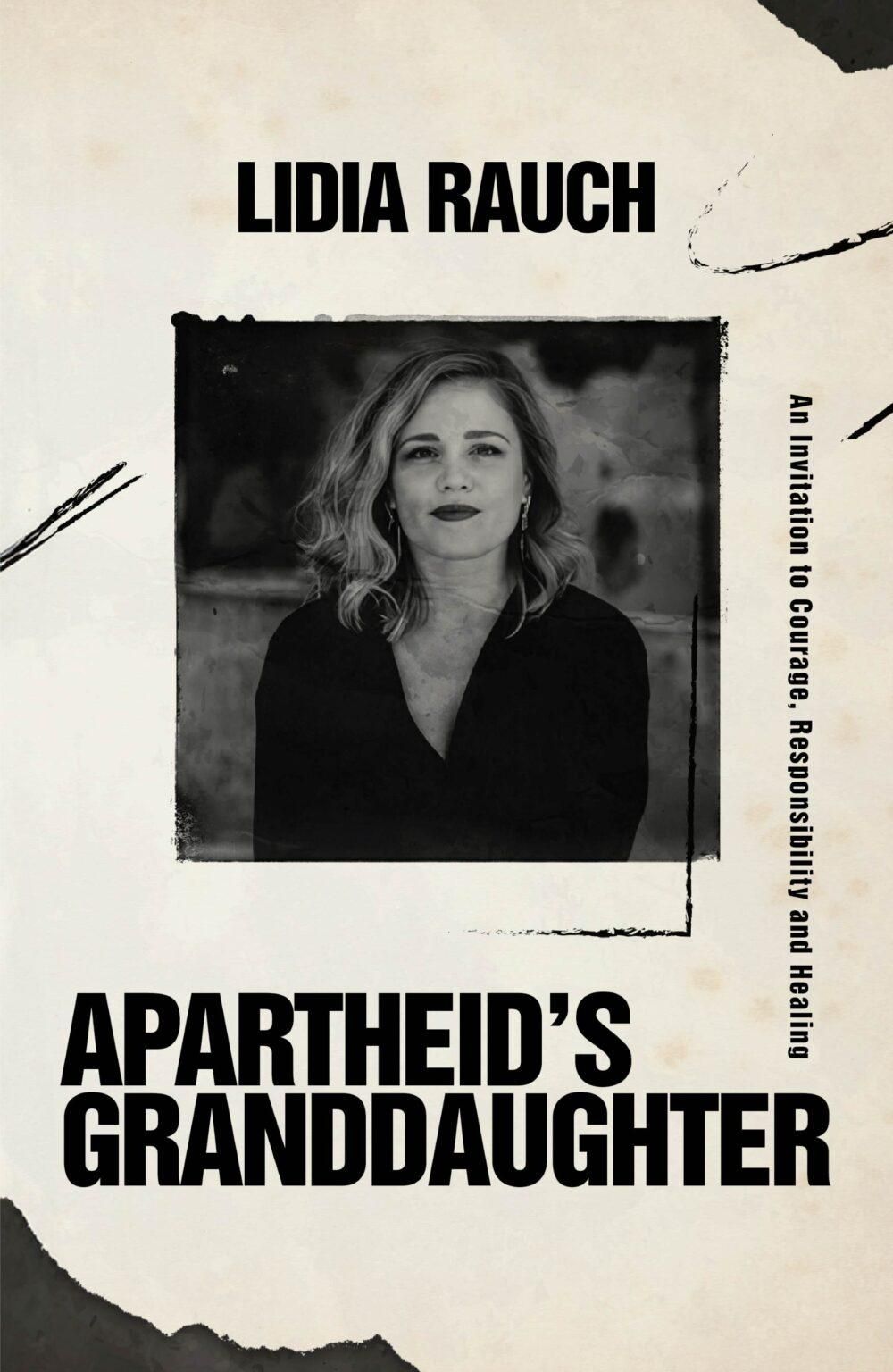
Reading Lidia Rauch’s Apartheid’s Granddaughter reminded me that history doesn’t stop when laws are rewritten.
It lingers in families, in systems, and in the way we see one another. That is why the title feels so charged: it points to what we inherit not only from relatives, but from the country itself — the stories we are told, and the silences we are taught to keep.
I think of how surnames, accents, or even the schools we attend carry traces of the past. They are not neutral; they are shaped by what came before.
Shadows in Everyday Life
What struck me most is how apartheid is not treated as a closed chapter. It is still present in the unequal spaces we move through every day. We see it in education, in housing, in access to opportunity and in the assumptions people make before they have even heard someone speak.
Racism today is often quieter than the old laws, but it still shapes how people are treated, who is believed, who is watched, and who is expected to prove they belong. A child from a township school may have to work twice as hard to be taken seriously, while a family’s address still determines whether doors open or close.
Divided Perspectives
I kept thinking about how differently people experience this reality. Some want apartheid to remain something we only discuss in history class. Others live with its effects every day. That difference in perception is important. It shapes how people talk about fairness, race, privilege and responsibility. It also reveals how easy it can be for some to look away when injustice no longer touches them directly.
I think of workplace debates where one person insists “we’ve moved on,” while another quietly carries the weight of being overlooked or doubted.
Generational Weight
The image of a granddaughter carries emotional force. She is close to the story, but not the origin of it. Younger generations inherit privilege, pain, or both — and that tension gives the idea its depth. A student born after 1994 may still inherit the benefits of generational wealth, or the scars of generational exclusion.
That layered inheritance is what makes the metaphor so resonant.
Global Mirrors
I also found myself thinking about the world beyond South Africa. Across the globe, people are still wrestling with inherited injustice. In the United States, debates about race, policing, voting rights and what children are allowed to learn continue to expose deep divisions. In Europe, arguments about migration and belonging often reveal who is welcomed and who is treated as an outsider. Even in countries that pride themselves on equality, the contradiction between professed values and resisted change is striking.
Subtle Patterns of Bias
What gives this reflection its strength is the way it helps us notice the everyday forms of bias that people often excuse. Racism is not always loud. Sometimes it appears in who is trusted, who is followed, who gets called articulate, who is assumed to be competent and whose pain is taken seriously.
It shows up in language, in habits and in the stories, people tell themselves about fairness. These are small signals, but together they form a pattern that continues to shape lives.
Carrying the Past Forward
For me, the book is important because it asks us to think about what we inherit and what we choose to do with it. It reminds us that history is not only something behind us. It is something we continue to carry forward in memory, in behaviour and in structure.
That is why the title stays with me. It is not only about looking back. It is about asking what kind of future we are building from the past we have received.
Published by Tracey McDonald Publishers.