

“Little Bear” opened in October to mostly positive reviews, but it struggled to sell tickets and closed early at a loss in December. (It had been capitalized for $4.1 million, according to a Securities and Exchange Commission filing.) But if that was the first test of his return, he passed — there were no protests, no boycotts. And in May, months after it had closed, the show picked up a nomination for the best play Tony Award.
Then early this year, Rudin, again with Diller, produced a new Wallace Shawn play, “What We Did Before Our Moth Days,” Off Broadway at the Greenwich House Theater. That show was also small — just four actors, sitting on chairs and telling a story — and received strong reviews as well. By the time it closed, it had made a 30 percent profit. (It had been capitalized for $1.6 million.)
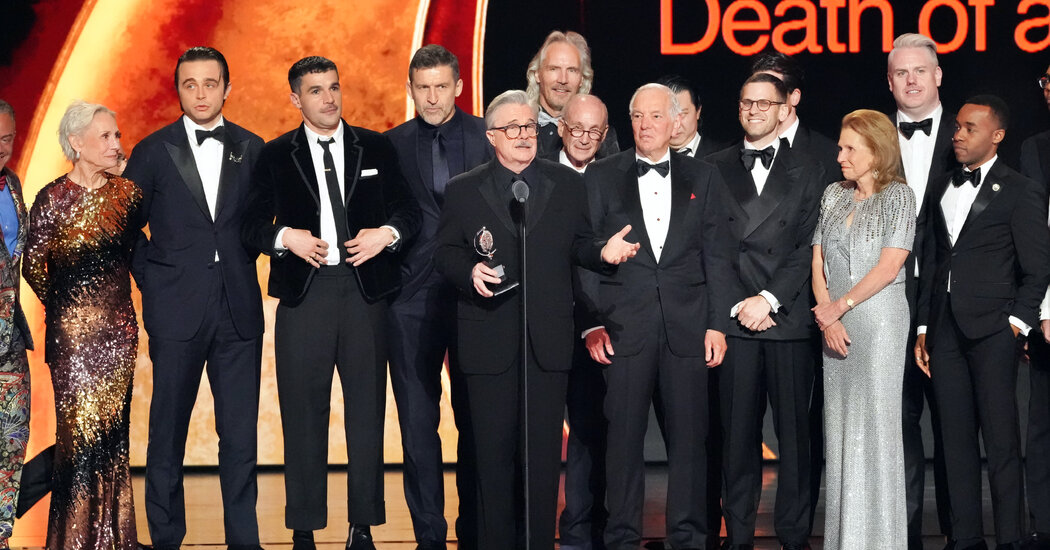
“Death of a Salesman,” which opened in April starring Lane opposite Metcalf, was a bigger swing. This time co-producers, investors and a full-size cast were involved, meaning more relationships to manage — more opportunities to feel frustrated, more tests of Rudin’s self-control. Again, the reviews were strong, and this time, sales are strong too; it has been outgrossing all of the season’s new musicals. The production reaffirmed Rudin’s reputation for assembling high-quality casts and creative teams, setting high standards for craft and backing strong artistic visions.
Tony nominators clearly loved “Salesman,” which they showered with nine nominations — more than any other play. But within the industry, some thought that Tony voters, many of whom have witnessed Rudin’s behavior, would refuse to vote for the play, and they had a plausible alternative, a well-received new adaptation of “Oedipus.”
The doubters were wrong. “Salesman” not only picked up a Tony for best revival, but also for Mantello’s direction, Metcalf’s performance, and for scenic, lighting and sound design.