
Disney grabbed headlines last evening when the company announced a fairly significant change to its corporate structure.
Beginning in October 2026, Disney Consumer Products will move the majority of its operations from Disney Experiences to Disney Entertainment.

Walt Disney Company
As explained by Disney Experiences Chairman Thomas Mazloum and Disney Entertainment Chairman Alan Bergman, the move is designed to create stronger alignment between Disney’s consumer products business and its film and television studios.
The goal is to develop stories with merchandise and licensing opportunities in mind from the earliest stages of production.

Walt Disney Company
“Disney Consumer Products plays a pivotal role in translating Disney stories into everyday consumer experiences, helping fans connect with the characters, worlds and memories they love,” Mazloum and Bergman said. “At its best, this work happens when storytelling, commerce and experiences come together from the very beginning, creating cohesion across the entire Disney ecosystem.”
Franchises Are King
If you have been following Disney over the last several years, it is clear that the company has made a concerted effort to prioritize franchise-building.

Photo: Disney Store
Disney’s biggest recent box office successes have included Lilo & Stitch, Moana 2, Toy Story 5, Zootopia 2, Inside Out 2, and, most recently, Spider-Man: Brand New Day.
Even original films, such as Hoppers, have been developed with long-term franchise potential in mind.

Photo: Pixar
Viewed through that lens, the transfer of Disney Consumer Products from Disney Experiences to Disney Entertainment makes perfect sense.
Disney’s Renewed Focus on Theatrical Releases
It should be noted, however, that Disney’s emphasis on franchises is nothing new.
The Disney “flywheel,” first articulated in 1957, has always placed theatrical films at its center, using them as the foundation for consumer products, television, theme park attractions, publishing, and other businesses.

Image: Disney
Under Bob Chapek’s leadership, however, that focus temporarily shifted.
With the launch of Disney+, the company invested heavily in streaming, using its biggest franchises, including Marvel, Pixar, Star Wars, and Disney Animation, to drive subscriber growth.
(Photo Illustration by Mateusz Slodkowski/SOPA Images/LightRocket via Getty Images)
That strategy made sense at the time, but it also meant Disney’s creative engine became increasingly centered on streaming.
Beginning with Bob Iger’s return and continuing under Josh D’Amaro’s leadership, Disney has repositioned theatrical storytelling at the heart of its business.

Photo: Deadline
With films once again serving as the primary engine for the rest of the company, it only makes sense for Disney Consumer Products to be more closely aligned with Disney Entertainment.
In fact, the latest earnings report already illustrates why.
‘Toy Story 5’ Delivers
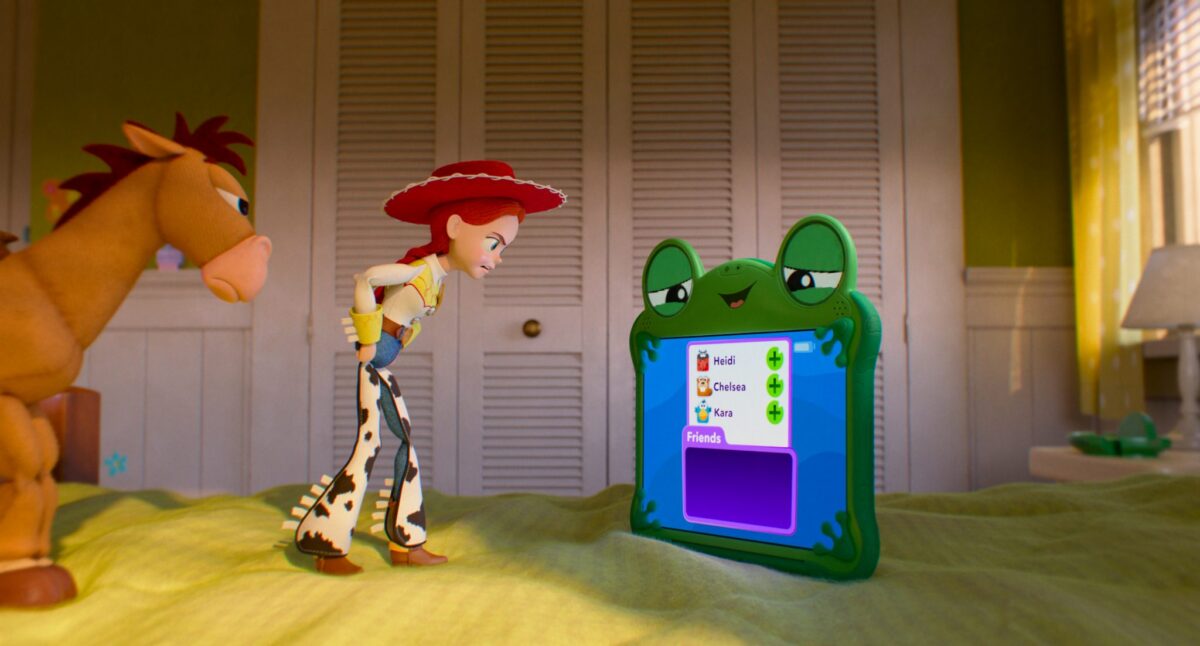
According to Disney, Toy Story 5 merchandise helped deliver Disney Consumer Products’ strongest year-over-year quarterly revenue growth in five years.

Photo: Disney
Once again, Disney’s unmatched library of characters and franchises has proven to be one of the company’s greatest competitive advantages.
Looking ahead, Disney Consumer Products should have even more opportunities with films such as Incredibles 3, Coco 2, and especially Frozen 3 on the horizon.

Photo: Pixar
It will be interesting to see how the relationship between Disney Entertainment and Disney Consumer Products evolves from here.

Photo: MickeyBlog