
For 34 years, Raindance Film Festival has existed slightly outside the official map of the film industry. That was never an accident. Independent cinema has always belonged to outsiders. The people without permission. The filmmakers building work in bedrooms, borrowed flats, abandoned warehouses, cheap edit suites, and impossible emotional conditions. The people making films because they had to, not because a studio committee approved a spreadsheet.
For decades, the mainstream industry treated independent film like a farm system. Festivals discovered talent. Hollywood absorbed it. Directors graduated upward into larger budgets, larger stars, and larger machines. That system is breaking apart. And maybe that is the most exciting thing that has happened to cinema in years.
At Raindance Film Festival, we have spent more than three decades discovering filmmakers before the mainstream catches up to them. We championed digital filmmaking before the industry took it seriously. We supported ultra-low-budget directors before “microbudget” became fashionable language in development meetings. We watched creators build careers from the edges while the center remained obsessed with control.
Now another shift is happening. But this time it feels bigger than format. It feels cultural.
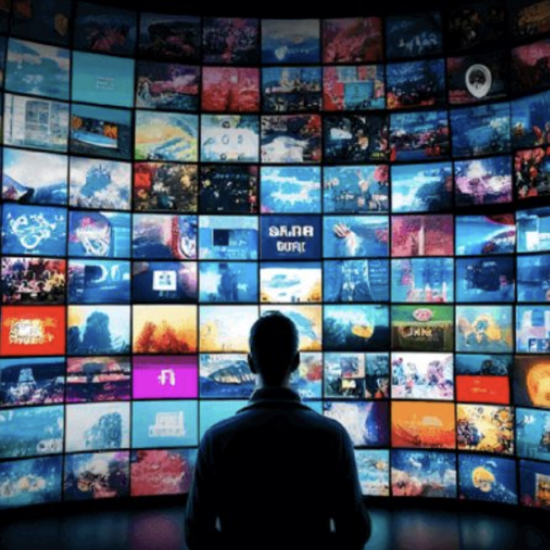
The old model of filmmaking was built around gatekeepers. Studios controlled production. Distributors controlled access. Television networks controlled visibility. Film festivals controlled discovery. Audiences arrived at the end of the pipeline. That structure shaped the kind of stories that could exist.
Today, that pipeline is collapsing in real time. A filmmaker with a phone, editing software, AI tools, and a direct audience relationship can now build attention faster than institutions that once controlled the entire ecosystem. That changes everything.
We are watching the rise of AI-native creators. Not filmmakers who occasionally use AI tools, but creators whose entire creative logic has been shaped by algorithmic thinking, rapid iteration, prompt-based ideation, audience feedback loops, and accelerated production cycles. They do not think like traditional filmmakers. They do not wait five years to make one feature. They think in systems. In repeatable story engines. In audience retention. In emotional hooks. In ecosystems instead of isolated projects.
Traditional film culture often dismisses this shift because it does not resemble the romantic mythology of cinema many of us grew up with. But ignoring cultural change has always been fatal.
At the same time, vertical storytelling is rewriting visual language itself. For decades, cinema composition was built around horizontal framing: wide images, controlled perspective, carefully designed visual geography. Now millions of viewers experience narrative vertically. Thumb-driven. Fast-moving. Emotionally compressed. The grammar changes. Pacing changes. Performance changes. Even the psychology of attention changes.
Many traditional filmmakers laugh at this. That is usually what industries do before disruption becomes irreversible.
What interests me is not whether vertical storytelling replaces cinema. It will not. The more interesting question is this: what happens when entirely new generations grow up emotionally trained by different narrative rhythms? Because storytelling shapes perception. And perception shapes culture.
At the same time, we are seeing the emergence of anti-Hollywood production models. Smaller crews. Decentralised production. Creator-owned intellectual property. Audience-funded development. Distribution-first thinking. Films designed around sustainable economics instead of fantasy economics.
For years the industry sold filmmakers a dangerous illusion: make the film first, figure out the audience later. That model is collapsing under oversupply. Today there are simply too many films competing for finite attention. Which means creators who understand audience architecture now possess enormous advantages.
The future filmmaker may look less like a traditional director and more like a hybrid strategist. Part storyteller. Part community builder. Part media architect. Part entrepreneur.
That shift makes many people uncomfortable. Good. Creative revolutions are supposed to feel uncomfortable.
At Raindance Film Festival, we are increasingly interested in the filmmakers and creators emerging from this fracture point. The people building new forms instead of protecting dying systems. The creators experimenting with AI-assisted workflows without losing human perspective. The storytellers designing narrative for fragmented attention spans. The filmmakers creating sustainable careers outside institutional approval structures. The artists building direct relationships with audiences instead of waiting for permission from collapsing gatekeepers.
This is why conversations around the future of storytelling culture matter now more than ever. Because we are no longer simply discussing cinema. We are discussing identity. Attention. Technology. Power. Culture. And who gets to shape meaning in the next era of storytelling.
That is why I believe there could be an important conversation between benefactors, sponsors and Raindance Film Festival. Not simply about film, but about what creative culture becomes after the collapse of old creative systems.
The future rarely arrives politely. Usually it appears at the edges first. And for 34 years, that is where Raindance Film Festival has always looked.
Join us at our 12th Annual Raindance Villa Party in Cannes this May. And get your pass for the 34th Edition of the Raindance Film Festival now.
Photo Credit: Bertie Watson
I founded Raindance Film Festival in 1993 because the British film industry was closed, polite, and congratulating itself while shutting new filmmakers out.
I co-founded the British Independent Film Awards in 1998 because British indie film deserved more than a shrug, a pat on the head, and a Tuesday night screening.
Raindance didn’t start as a brand.It started as a rebellion — film training without gatekeepers, a festival without permission, and a community built by filmmakers who weren’t waiting to be invited in.
Later, we took it global — Toronto, Vancouver, New York, LA, Berlin, Brussels — because independent film doesn’t belong to one city, one class, or one accent.
I’ve produced 700+ short films and seven features, including Deadly Virtues (2014) and ALICE, which won the SXSW Grand Jury Prize (2019) not because someone “discovered” us, but because the work earned its place.
I’ve written three books used by filmmakers worldwide because too many courses taught compliance instead of survival.
In 2009, I was awarded a PhD for services to film education, ironic, given that most of my career has been about tearing down the rules that education insisted you follow.
I don’t believe in waiting for permission.I believe in making work, building systems, and forcing the industry to catch up.
Specialties: Independent Film (the real kind) · Producing · Writing · Film Education · Festivals · Breaking Broken Systems
Check out my new Substack for in depth Free Articles:
Related