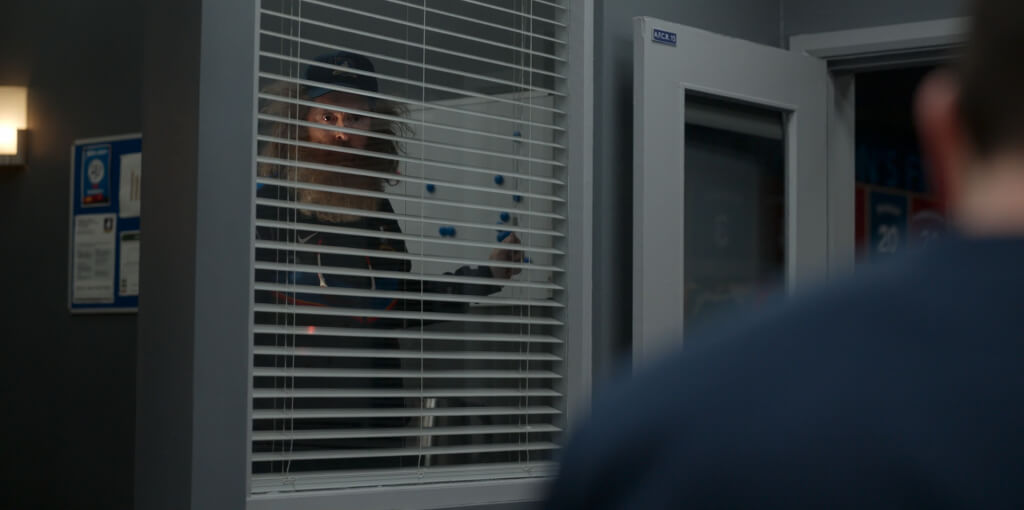
It might not seem like it, but I’d prefer not to spend the next two months of my working life picking nits out of Ted Lasso’s mustache. I’d also like, at some point, to quit using the Apple TV sports comedy as the vessel for working out all my pet theories and grand unifying notions about the sitcom genre. But then a set of Venetian blinds opens, revealing Brendan Hunt in a fright wig and an old prospector’s bushel of facial hair, and the gears in my head start spinning. “Great,” the mental machinery reflexively spits out. “They Flanderized Coach Beard.”
I need to back up here: If you’re not a regular visitor to tvtropes.com or a TV editor who’s regularly asking writers to cut pieces of TV Tropes invented, inscrutable-to-outsiders vocabulary out of their reviews, then you might not be familiar with Flanderization. In a nutshell, it’s the gradual flattening of a television character over the course of a series’ run, as writers play into and exaggerate certain, readily recognizable traits of that character, at the expense of a more three-dimensional portrayal. The phenomenon’s namesake being The Simpsons’ Ned Flanders, who started out as a model-citizen contrast to Homer Simpson’s sloth, gluttony, and wrath—before episode after episode emphasized his devout Christianity and chummy, idiosyncratic speech patterns to such a degree that stupid, sexy Flanders became the type of person who might shoehorn sloth, gluttony, wrath, or any of the four other deadiddly sinerinos into everyday conversation.
I do not deny the existence of Flanderization; during The Simpsons’ 37-year-run, many residents of Springfield besides Ned have devolved into caricatured shadows of their former selves. A couple of examples from a couple of other shows: The way Dwight Schrute went from dweeby workplace nuisance to psychopathic beet farmer (I gotta stop using The Office as my other standard specimen for these analyses), or how Steve Urkel rose from neighborhood geek to once-in-a-generation genius. I mostly object because this discussion is proving the usefulness of a shorthand like Flanderization, even as the past two paragraphs epitomize the type of flow-disrupting definition and explanation that’s almost always required of any lexicographical crime from the pages of TV Tropes.
There’s also the matter—as no less than Christopher Nolan pointed out in a recent interview—of the ways several waves of professional and amateur critics have conflated “the ability to identify a trope” with “poor creative craftsmanship.” Which leaves me eating crow again: What Ted Lasso does to Coach Beard—who, in small doses, can be one of the show’s most valuable supporting players—is bad and unfunny.
When the series begins, Hunt’s character is the ice to the main character’s fire; a man of few words backing up Coach Lasso’s folksy rambling with a straight face and the occasional out-of-left-field punchline. But Beard, as we learn, is an iceberg, bringing with him to London a criminal record, a love of chess (more on that in a moment), and a hidden hedonistic streak. He’s also prone to blowing his stack, whether that means Hunt letting out an unexpected, high-pitched yelp, or the crucial season-one scene below where he snaps at his best friend and co-worker, explaining to Ted that there are consequences to losing in Premiere League football that cannot be overcome with a sunny attitude and a folksy aphorism.