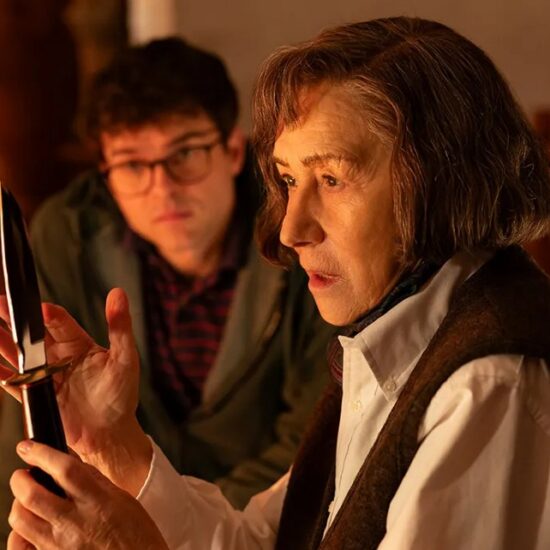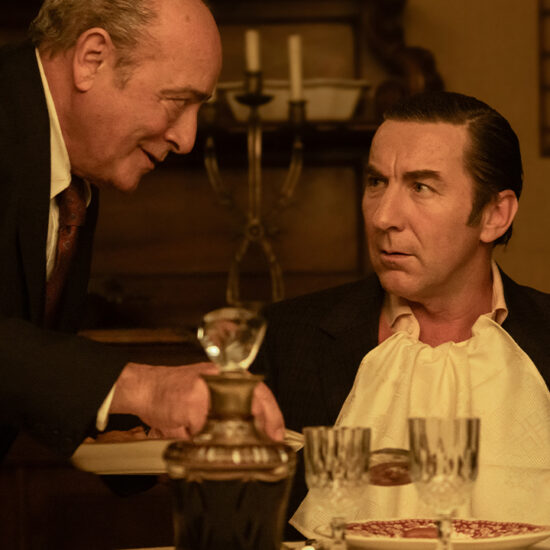


Plot: Expanding the world of For All Mankind, Star City is a propulsive paranoid thriller that takes us back to the key moment in the alt-history retelling of the space race – when the Soviet Union became the first nation to put a man on the moon. But this time, we explore the story from behind the Iron Curtain, showing the lives of the cosmonauts, the engineers, and the intelligence officers embedded among them in the Soviet space program, and the risks they all took to propel humankind forward.
Review: With For All Mankind in the midst of its penultimate season, Apple TV is taking the story back to the beginning and providing a unique glimpse behind the Iron Curtain with their new show Star City. More of a companion to For All Mankind rather than a spin-off, Star City proves how different it is from the very beginning of the first episode. Taking audiences through the Soviet Union’s side of the Space Race, the series introduces new characters and familiar ones as it unpacks the vastly different approach the U.S.S.R. took to beat the United States to the Moon. Led by Rhys Ifans and Anna Maxwell Martin, Star City is another fascinating revision of one of the pivotal moments in the twentieth century, while also showing us what could have been. It does so through a new tone and storytelling approach that will make fans of For All Mankind very happy, as this is not just a rehash of what we have already seen on that series.
As with For All Mankind, Star City opens with the historic landing on the Moon by the Soviet Union. Immediately, the significance of this event is palpable to the Chief Designer (Rhys Ifans), the anonymous head of the Soviet space program. Given a medal for his achievement before being told he cannot leave the government building with him, the iron grasp of the communist regime shows a completely different focus on power and control rather than scientific advancement for the betterment of humanity. As soon as the first Moon landing took place, the Chief Designer was tasked with landing the first woman on the Moon, which then led to increasingly significant milestones in the competitive race between the Cold War adversaries. In the first episode, we meet Anastasia Belikova (Alice Englert), who must step into that iconic role and the risks it entails. Star City gives us a pulse-pounding space journey in the premiere and sets the tone for the intense season to follow.
Named after the incredibly secret home base of the Soviet space program, Star City is about more than the science of spaceflight. Across the first six episodes made available for this review, we follow the cosmonauts who train and participate in the initial voyages, including Valya Markelova (Adam Nagaitis) and the reckless Sasha Polivanov (Solly McLeod). There are also the scientists who work with the Chief Designer, including Sergei Nikulov (Josef Davies), a character who appeared in For All Mankind. The series also chronicles others involved in the larger Soviet government, like the head of the KBG surveillance, Lyudmilla Raskova (Anna Maxwell Martin), a terrifying and badass soldier who is one of the main antagonists of Star City. Raskova has a fraught relationship with new worker Irina Morozova (Agnes O’Casey), a young, idealistic woman who butts heads with Raskova’s dedication to the government. The series also looks at the spouses of the cosmonauts, notably Ruby Ashbourne Serkis as Tanya Markelova, who find the constant monitoring and control in Star City to be suffocating.
This first season centers on the years immediately following the first Moon landing, but feels unlike anything in For All Mankind. The secrecy and militant control within the Soviet space program fill Star City with an ever-present feeling of paranoia, as saying the tiniest thing that does not embrace Communist ideals could land you in prison or dead. As relationships evolve through the season, some characters must decide whether they truly want what the government tells them they want, leading some to become rebels and others to shift in ways I did not expect. The massive ensemble of actors, which also includes Priya Kansara as scientist and cosmonaut Lakshmi, all dig into this faithfully recreated world of the former Soviet Union in a way that is more dangerous and mysterious than the American aspirations in For All Mankind. By the midway point of the season, where For All Mankind was focused on America trying to get to the Moon and eventually Mars, we find the Soviets aiming for another target in the Solar System.
Directed by Nick Murphy, Stefan Schwartz, Kasia Adamik, and Jamie Payne, Star City hails from For All Mankind showrunners Ben Nedivi and Matt Wolpert, who scripted the premiere episode from a story they developed with Battlestar Galactica producer Ronald D. Moore. The perception I had going into Star City was that it would be an unnecessary return to where For All Mankind began, telling a story that didn’t need to be told again, even from a different point of view. I am glad to find that I was wrong. Like The Americans and the recent Peacock series PONIES, Star City delves into the side of a well-known story that many of us in the Western world may not know. There are obvious changes and fictionalizations in Star City, but the root of how much further ahead the Soviet Union was compared to the United States is completely accurate. Some of these figures are in the historical record, and the potential ripples through history are fascinating to watch. Star City is also full of intrigue, deception, romance, and tension that few shows have captured so well.
I was pleasantly surprised to find that I was invested in Star City from the outset. The first episode is expertly crafted in getting you invested in the Soviet perspective and this group of characters. All of the actors are excellent, with Rhys Ifans the most recognizable face in the cast, while Anna Maxwell Martin steals the show as the ruthless Roskova. You will be surprised by how unprepared you are for where the narrative takes this first season, as the major moments that For All Mankind addresses are just a small portion of what Star City covers in this debut season. Having only seen the first six episodes, I am anxious to find out how this season wraps up and whether season two will feature a time jump similar to the decade-long advancement we saw in For All Mankind. As ambitious as its predecessor but a wholly distinct series that feels like a companion and expansion rather than a spin-off, Star City is another reason to go back and check out For All Mankind if you haven’t yet, while still working as a series of its own. If you are a fan of hard sci-fi, espionage thrillers, or period dramas, Star City is worth checking out.
Star City premieres with two episodes on May 29th on Apple TV.


Subscribe to our weekly newsletter
Source:
JoBlo.com