
The 79th edition of the Cannes Film Festival concluded on Saturday, May 23, at the Grand Theatre Lumiere, with Cristian Mungiu’s Fjord winning the Palme d’Or and Andreï Zvyagintsev’s Minotaur receiving the Grand Prix.
Mungiu claimed his second Palme d’Or nineteen years after his first.
This year’s Cannes jury president, South Korean filmmaker Park Chan-wook, addressed the relationship between politics and cinema during the festival’s opening press conference.
Park, internationally recognised for Oldboy, argued that films cannot be separated from political realities, noting that art has always reflected the social conditions of its time.
“Art and politics are not concepts that are in conflict with each other,” he said.
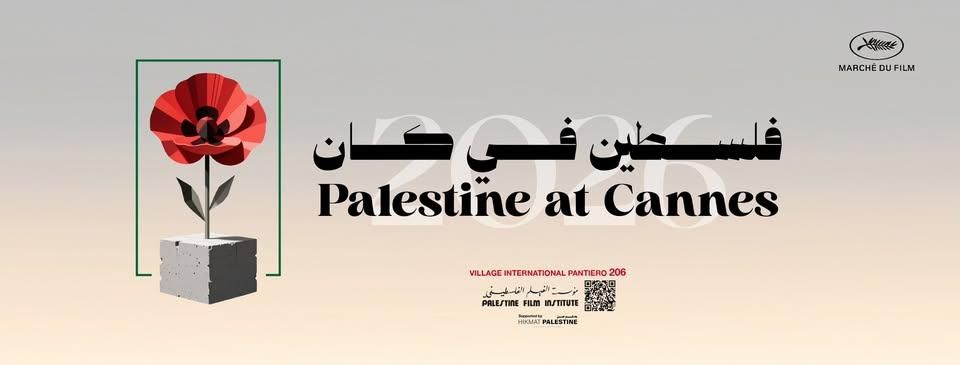
A framing shown across the festival as Palestinian and Arab cinema took on a more visible institutional presence at Cannes this year, stamping its presence that will extend far beyond its 79th edition.
Palestinian filmmaker Rakan Mayasi’s debut feature, Yesterday the Eye Didn’t Sleep, screened in the Un Certain Regard section on May 20. The film’s production came together through financial support from the Doha Film Institute and co-production partnerships across Palestine, Belgium, Lebanon, Saudi Arabia, and Qatar.
The film is set in Lebanon’s Bekaa Valley and follows the disappearance of a young girl and its effect on a Bedouin community.
On May 19, the Palestine Film Institute hosted a session titled Palestinian Cinema: Building the Future Together at the Palestine Pavilion.
Moderated by Sawsan Asfari of the Asfari Foundation, the discussion featured representatives from the Palestinian Film Fund. Rakan Mayasi’s feature was presented alongside filmmaker Tareq Khalaf, a participant in Cannes Docs.
During the Cannes Docs Palestine showcase, four documentary works in progress were pitched to industry delegates. Representatives from the Palestine Film Institute used the event to call for broader representation within international film spaces.
Mohamed Jabaly, an IDFA-winning Palestinian filmmaker and head of the Palestine Documentary Hub, described Cannes Docs as a platform where “Palestinian stories can present our true complex realities beyond headlines and transcend imposed boundaries.”
Jabaly is not appealing for charity or sympathy; he is asserting that Palestinian cinema constitutes legitimate creative work calling for more professional platforms and commercial infrastructure.
Producer Mohanad Yaqubi, a consultant for the Palestinian Film Fund’s public programme, said the return of the Palestine Pavilion reflected “the resilience of artistic perseverance and the potential of creative voices that refuse to be silenced.”
He added that festivals such as Cannes remain important spaces for Palestinian filmmakers during what he described as ongoing attempts at erasure amid the war in Gaza.
The broader MENA presence at Cannes this year reinforced that Palestinian filmmaking’s presence is a legitimate part of the international cinema sector.
Yemeni director Sara Ishaq showed The Station during Critics’ Week, a film that follows sisters navigating war, refuge, and family tensions in Yemen.
Moroccan director Laïla Marrakchi returned to Cannes with La Más Dulce, which screened in Un Certain Regard and depicted two young Moroccan women working as seasonal strawberry pickers in southern Spain, facing exploitation and abuse.
Tilda Swinton presented the Palme d’Or to Cristian Mungiu for Fjord, which follows the Gheorghiu family as they settle in a remote Norwegian community seeking a new beginning.
The parallel emergence of Palestinian cinema at the same festival revealed contrasting patterns. Where Fjord represented cinema of established masters at peak career achievement, Palestinian selections represented debut features and emerging filmmakers navigating international production and financing systems.
For Palestinian filmmakers, the practical consequence matters most. Cannes access this year translates to financing discussions now, which determines whether projects in development receive production financing.
Those decisions will shape which projects move into production next.
The 80th Cannes Film Festival is scheduled for May 2027.
IOL