
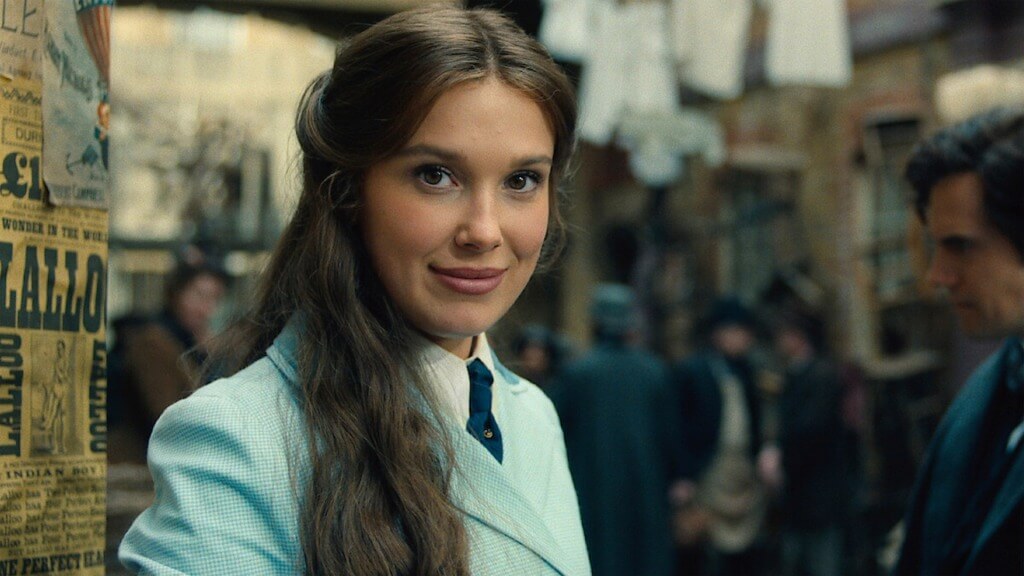
In Enola Holmes 3, the plucky youngest sibling of the Holmes family is ready to marry. She’s preparing for her wedding to Lord Tewkesbury (Louis Partridge) on the gorgeous island of Malta when her brother Sherlock (Henry Cavill in a glorified cameo) is kidnapped. Cue a mystery, some action scenes, and a chance for Enola to once again prove herself. Millie Bobby Brown’s third outing as the character has given her one of her most fun roles, but this time around, things are a little different. She is now an adult, and this is her first major step into the world of post-child-actor work. As Netflix’s leading lady and the streaming service’s biggest homegrown performer, Brown finds herself in a curious—yet not historically unprecedented—position.
For all its claims of disrupting the stuffy old film industry, Netflix has found its surest footing when it’s replicating the old ways of Hollywood. Its TV shows may have briefly shaken up the way series were released with the streamer’s binge-watch formula, but with its films, sticking to the tried-and-true has made its most impactful hits: cinematic releases (albeit brief ones), high-concept fare with workhorse directors, and the elevating of familiar faces. Netflix offered bank-breaking salaries to established big-screen performers and blockbuster filmmakers, then sent them on worldwide press tours to advertise the next era of movies. But that fell flat when the results were forgettable dreck like Red Notice and The Gray Man. Why stay at home for them when a new MCU entry is playing in cinemas? Netflix needed something that the studios did not have. They needed their own stars, the kind you could only see on their platform for a monthly fee. Preferably, they needed one who could appeal to a younger demographic. Enter Eleven.
Nobody expected Stranger Things to become what it did. The first season of the Duffer brothers’ Stephen King-inspired sci-fi thriller was meant to be a throwaway summer release. It, of course, evolved into Netflix’s foundational series, a multibillion-dollar worldwide phenomenon that won awards, spawned a Broadway play, and inspired merchandising that Disney would blush at. While it elevated the profiles of its entire core cast, turning David Harbour from a jobbing character actor into a leading man, it was Millie Bobby Brown who was flung into the spotlight as something new.
Barely 12 years old when the show premiered, the British actress had only previously been seen in bit parts in shows like Grey’s Anatomy and Modern Family. With her shaved head and near-total absence of dialogue, she was a magnetic presence in Stranger Things, an embodiment of the show’s grand mysteries and ’80s pop culture nostalgia. Her presence was a real “Who’s that girl?” moment for viewers, and soon she was a very big deal. In her first season, Brown landed Emmy and SAG Award nominations, and Netflix went to work making its star into a leading lady.
Brown and Netflix’s relationship is another old-school move by the streamer. In the first wave of Hollywood, for over 50 years, the studios owned their stars. They signed up the talent, crafted their image (often drastically reinventing their appearances), and developed projects around their types. Judy Garland was the appealing ingénue with a voice for the ages. Greta Garbo was the tragic ice queen. Marlene Dietrich was the seductive woman of the world who no man could tame. It was a stifling system to work under, one that many actors pushed against in favor of deciding their own fortunes, and it died out once the studio system gave way to New Hollywood.