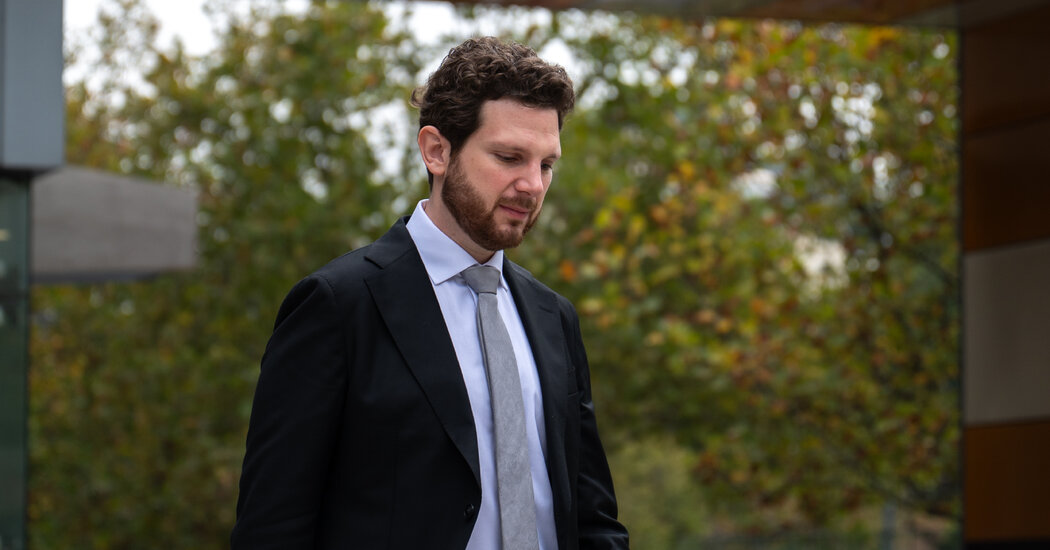
A concert pianist who sued the Melbourne Symphony Orchestra for abruptly canceling one of his performances in 2024 after he had spoken out against Israeli forces’ killing journalists in Gaza was not discriminated against, a judge in Australia ruled.
The pianist, Jayson Gillham, claimed in a lawsuit that the orchestra had violated the country’s Fair Work Act and his right not to be treated unfavorably in the workplace because of his political beliefs.
But the judge, Graeme Hill of the Federal Court of Australia, ruled on Friday that because Mr. Gillham was an independent contractor he was not protected under the workplace rights law. The orchestra, Justice Hill determined, had acted to protect its business and reputation when it canceled the performance by Mr. Gillham and issued statements to its patrons about the matter.
“The court finds that the M.S.O. would have taken the same actions if Mr. Gillham had expressed a political belief in support of Israel, or if Mr. Gillham had made statements on any other topic that had the same impact or anticipated impact on the M.S.O.’s business and reputation that Mr. Gillham’s actual remarks had,” a summary of the judgment said.
In a statement on Instagram on Friday, Mr. Gillham, who is British and Australian, said he was “very disappointed” by the court’s decision. “I believe artists should be free to speak with integrity,” he said. “This case was never just about me. My principles remain unchanged.”
A spokeswoman for the orchestra said in a statement that it welcomed the judgment and that Mr. Gillham “should have sought the authorization of the M.S.O. before making the statements he made” from the stage.
The decision concludes an episode that began in August 2024, when Mr. Gillham announced during a solo recital in Melbourne that he would perform an unscheduled piece called “Witness.”
The piece, he said, was dedicated to journalists killed in Gaza, and had been composed by his friend Connor D’Netto.
Mr. Gillham told the audience that Israel was responsible for the deaths of more than 100 Palestinian journalists in the previous 10 months. “The killing of journalists is a war crime in international law, and it is done in an effort to prevent the documentation and broadcasting of war crimes to the world,” he said.
The war in Gaza began after Hamas-led terror attacks on Oct. 7, 2023, killed roughly 1,200 people in Israel. According to the Committee to Project Journalists, at least 207 Palestinian journalists have been killed in Gaza since the start of the war. Tens of thousands of other Palestinian civilians have also been killed.
The day after Mr. Gillham made his comments, the orchestra informed him that it was removing him from the lineup of a concert that was scheduled for a few days later.
In a letter to people who had attended Mr. Gillham’s recital, the organization said the pianist had made “unauthorized statements” that represented an “intrusion of personal political views.”
At the time, Mr. Gillham told The New York Times that the orchestra’s response had caught him by surprise, adding, “It felt like an overreaction.”
In the aftermath, artists, journalists and music fans in Australia denounced the orchestra for canceling Mr. Gillham’s performance and defended his right to free speech.
The orchestra later said it had erred in judgment.
“The M.S.O. acknowledges that an error was made in asking Jayson to step back from his performance,” it said in a statement, adding that it was working to reschedule his appearance. “While the Melbourne Symphony Orchestra maintains that a concert platform is not an appropriate stage for political comment, we acknowledge Jayson’s concerns for those in the Middle East and elsewhere.”
It is unclear if another performance was ever rescheduled.
After the cancellation, the orchestra’s musicians passed a vote of no confidence in the administration, and the organization announced that its managing director was departing.