I’m a child of the 80s. I grew up watching Tom and Jerry reruns, and later became massively inspired by Aardman, particularly Wallace and Gromit’s A Grand Day Out.
At home, we had the mighty Acorn Electron computer with all 16kb of power, complete with a cassette tape player for saving code. I was a fully-fledged geek age 9, sitting on the carpet and typing code copied from a text book to make a black and white paint program.
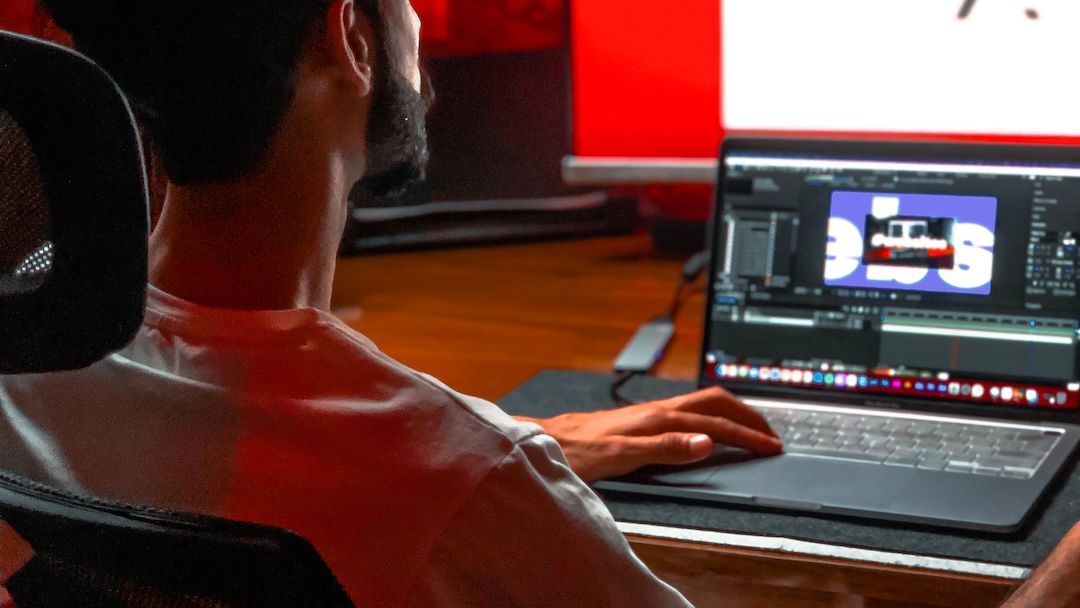
I went on to study illustration and animation at university, then got my first break at a children’s cartoon company in Soho. After that came eight years working across editing, motion graphics, filming and 3D animation.
Eventually, I upped sticks and moved to the South West to set up my own studio, raise a family and live by the sea. The studio ran for 12 years, producing animation and video for all sorts of clients. I also found time for the odd tangent, including making iPhone games.
Then a certain global pandemic changed how the studio operated. Around the same time, I stumbled across the early days of generative AI. My AIAnimation.com blog eventually became an online community and then a bespoke AI video platform.
When a passion becomes a job
One of the reasons I loved animation was the ability to tell stories. The other was the constant reward of learning something new. Drawing, photography, motion graphics, filming, editing, 3D. There was always another skill to pick up or problem to solve.
Twenty years in the industry taught me tonnes. Not just about the craft, but how to collaborate, interpret a brief, work with clients and find creative solutions when time or budget wouldn’t stretch.
Running my studio was rewarding, but it also meant making sensible commercial decisions.
An ambitious idea or interesting art style might be brilliant, but not realistic for the budget.
Finding ways around those restrictions was part of the job.
Somewhere along the line, though, I’d stopped making things just because I wanted to.
Animation had become my day job. A cool one, apparently, but still a job.
Finding the fun again
The arrival of accessible AI diffusion models sowed a seed. They were clunky, messy and hard to control. Characters looked odd, and consistency was a nightmare.But I was fascinated. I’d spend hours experimenting, making images and little bits of animation just to see what was possible. Quite simply, it was exciting.
For the first time in ages, I wasn’t creating something because a client had asked for it. I was doing it because I had an idea and fancied giving it a go.
It reminded me of what I’d loved about animation in the first place.
And it made me question how much of the production process was essential, and how much
was simply what we’d always done because of the tools available.
Making a film is more than generating a shot
It’s strange watching technology perform tasks that took you years to learn. I completely understand why artists and animators feel uneasy about it.
But I’ve also found that I still use those 20 years of experience every day.
An impressive-looking shot isn’t necessarily a good film. You still need to understand composition, timing, pacing, editing and storytelling. You need to know when something isn’t working, and why.
AI can generate all sorts of beautiful images. It can’t automatically give you good creative judgement.
It’s not all plain sailing either. Continuity, precise movement and consistent characters can still take a ridiculous amount of trial and error. And there are serious questions around training data, ownership and the impact on creative jobs. Being excited by the technology doesn’t mean ignoring those concerns.
What interests me most is what it might make possible for independent filmmakers. I’ve had countless ideas that never got beyond a sketch because the budget wasn’t there.
If a small team, or even one person, can now take some of those ideas further, that’s genuinely exciting. Not because the world needs more content. It probably doesn’t. But because some stories might finally get told.
Back where I started
In a nice twist, the company I worked for earlier in my career became a partner in AIAnimation.com. I’m now Head of AI at Synima, while building tools for creatives and studios.
These days I’m often writing code or thinking about production workflows rather than actually making films. So I still haven’t quite escaped the day job.
But I want to get back to making short films, just for the enjoyment of it. For art’s sake, without a client brief attached.I’m not convinced AI should replace traditional animation. I still love the craft, and the satisfaction of making something by hand. But I do think it can open doors for people with stories to tell.
I started out as a kid fascinated by cartoons and computers. More than 40 years later, I’m still fascinated by both.
It’s just that the computers have got considerably better since my Acorn Electron.
Jon Draper is an animator, producer and developer with more than 20 years’ experience in animation and film production. He began his career at a children’s animation company in Soho, then worked across editing, motion graphics, filming and 3D before founding the award-winning Stormy Studio in 2014. Over the next decade he led hundreds of animated and filmed productions for clients ranging from small businesses to FTSE 100 companies. He is now Head of AI at Synima and the founder of AIAnimation.com, a multi-model AI video production workspace for professional teams.
Related