
Kier
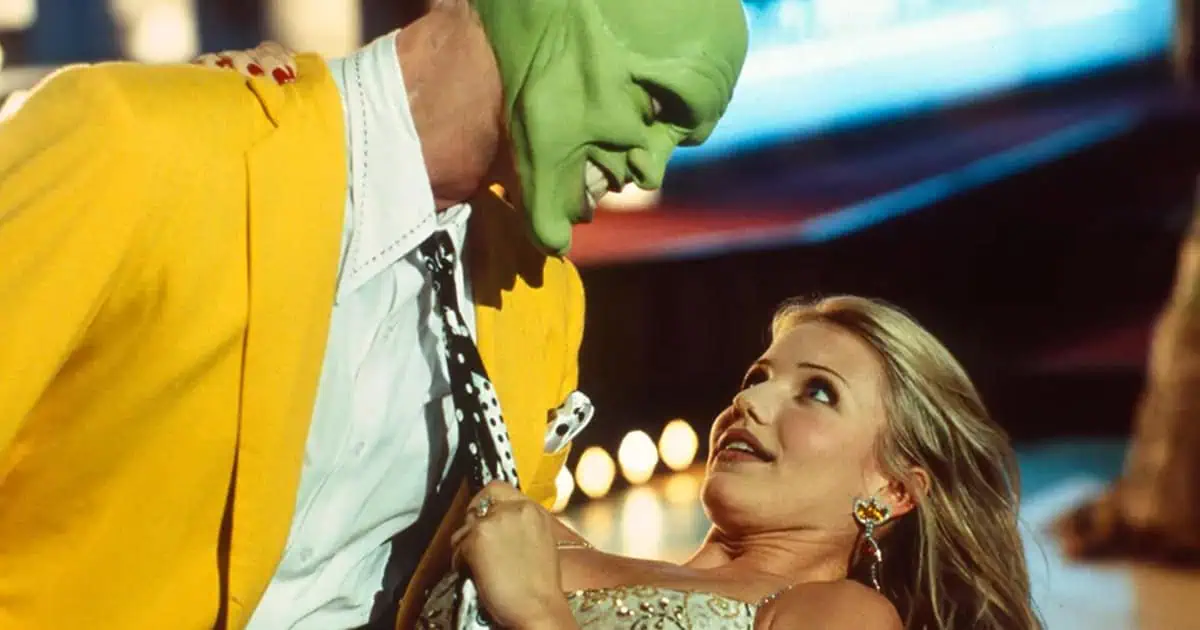
When it comes to comic book adaptations, none feature as massive a contrast from page to screen as Chuck Russell’s 1994 comedy action blockbuster, The Mask. The film follows a lonely and socially desperate banker who finds a magical face mask that grants him cartoonish and God-like abilities. While these powers upgrade his lifestyle, they also set him on a path of danger and adventure. What you may NOT know is that this iconic and hilarious Jim Carrey comedy, which seemingly fits right in with his other ’90s outings like Ace Ventura: Pet Detective or Dumb and Dumber, is actually rooted in one of the darkest pieces of source material indie comics have to offer.
Before the 1994 film, The Mask could be seen in the pages of Dark Horse Comics as early as 1991, starting with an initial five-issue run of the same name. However, the original three series of comics that inspired the film were really NOTHING like what we saw on the big screen. We’re talking about dark, violent, mean-spirited chaos on every single panel that had readers laughing just as much as they were looking away. This is the story of The Mask, and how an indie comic about a homicidal ancient artifact became a family-friendly popcorn flick that is STILL worthy of a nostalgic rewatch.
The Dark Origins of “Big Head”
The Mask was originally created and conceived by Dark Horse Comics founder and publisher Mike Richardson, who envisioned the character as a horror villain with comedic chops for adult readers wanting something edgier than anything DC or Marvel was producing.
The original run began in the summer of 1991, written by John Arcudi with art by Doug Mahnke. This first five-issue run is truly something else. When Stanley Ipkiss purchases an ugly, old-looking mask at an antique shop as a gift for his girlfriend, Kathy, his world is completely rocked. He puts it on as a prank and transforms into an invincible, big-headed psychopath. He then uses his newfound identity as “Big Head” to commit a series of gruesome murders against anyone he feels has ever wronged him.
That’s right—the somewhat likable Stanley from the film was significantly different in the original run. He was abusive to his girlfriend, incredibly petty, and kept a literal hit list of people he wanted to execute as Big Head. This included an innocent teacher who embarrassed him in grade school, roughly one hundred police officers who were simply in the wrong place at the wrong time, and two mechanics whom he brutally murdered because they didn’t fix his car properly the week before. A lot of these concepts eventually found their way into the movie, but in much less grotesque ways.
The interesting thing is that the mask didn’t even belong to Stanley for very long. After Kathy discovers that he’s been going out at night as a serial killer, she waits for him to come home, removes the mask from his face, and shoots him dead right there in her apartment. From that point on, the comic book unravels into a story about the many different faces who wear the mask. This includes Kathy, who uses it sparingly and is the only wearer who doesn’t actively abuse it, and Detective Kellaway, who wears the mask for the majority of the initial run. Kellaway tries to use its powers for good until it corrupts him to the point of almost killing his own partner.
Despite—or perhaps because of—the brutality, these books were a massive hit. People were completely drawn to this mean-spirited comic book about an evil, mean-spirited mask.
Shifting Focus: Who Wears the Mask?
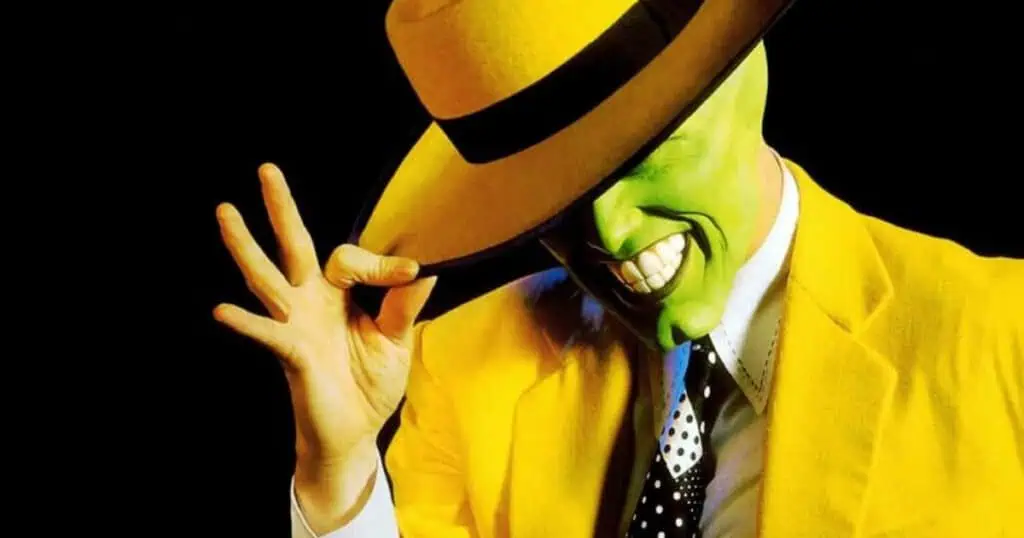
The concept that really stood out was that the Mask’s behavior depended entirely on the person wearing it. Stanley, the first person to use it, was a petty, insecure, bitter, and weak-minded guy who used the Mask to make himself feel powerful and dominant. Kathy only really used it to get herself out of the trouble the mask put her in to begin with (albeit, she does kill some people). Meanwhile, Detective Kellaway used it to enact vigilante justice on pimps and drug dealers who slipped through the cracks of the legal system.
The Mask goes from being a terrifying serial killer to a vigilante hero, and later a mafia boss. It completely depends on who is wearing it and what their inner desires are. One thing remained true across all of the books, though: the mask itself IS evil. It actively corrupts the minds of those who wear it, eventually turning even the best-intentioned people into absolute monsters.
New Line Cinema caught onto the hype of this alternative horror comic early on. They originally wanted to option the property to be a horror/slasher film that could replace their tentpole franchise, A Nightmare on Elm Street, which was losing steam and box office popularity at the time.
By the time the next comic series released—a four-issue run called The Mask Returns—readers already knew what to expect and were looking forward to the absolute mayhem. Sure enough, Dark Horse delivered.
The second series sees Detective Kellaway dig up the mask, which he had buried under cement in his basement at the end of series one, only for the mob to steal it from him after shooting him into a coma. Unaware of its true power, the mobsters jokingly put the mask on their driver—a meek and unattractive man who was constantly bullied by his employers. The moment he puts it on, he decides to slaughter his bosses and take over the Edge City mafia as its new, indestructible crime lord. That is, until Kathy and Detective Kellaway catch on and come together in a final showdown to battle Walter, an invincible mob enforcer who never speaks. The mask ends up at the bottom of the ocean, leaving fans waiting for it to be discovered once again. It was right around this time that New Line began actively developing the idea for their movie.
Softening the Source Material for Hollywood
Ironically, when New Line hired director Chuck Russell, who had previously worked on the Nightmare on Elm Street franchise, he recommended making the movie a comedy instead of a horror film. Frankly, the comic book was far too violent to be adapted directly to the big screen. He wanted to tell a story with a fun, adventurous vibe that showcased mischief over pure mayhem.
He brought on screenwriter Mike Werb, who handed in a script that sanded down the rougher edges of the story and condensed major plot elements from the original three comic series into a single 90-minute comedy.
To further soften the source material, Jim Carrey was offered the starring role. Carrey, who was on the verge of breakout superstardom in the early ’90s, added a likable, every-man quality to Stanley Ipkiss that was completely absent from the pages of the comic. It’s an interesting creative decision because, in the comics, Stanley gets killed off almost immediately, and the main user of the mask is actually Detective Mitch Kellaway—who doesn’t even touch the mask in the film. If anyone else had written this adaptation, they likely would have ignored Stanley altogether and focused on a burnt-out Detective Kellaway discovering the mask for a gritty vigilante justice story.
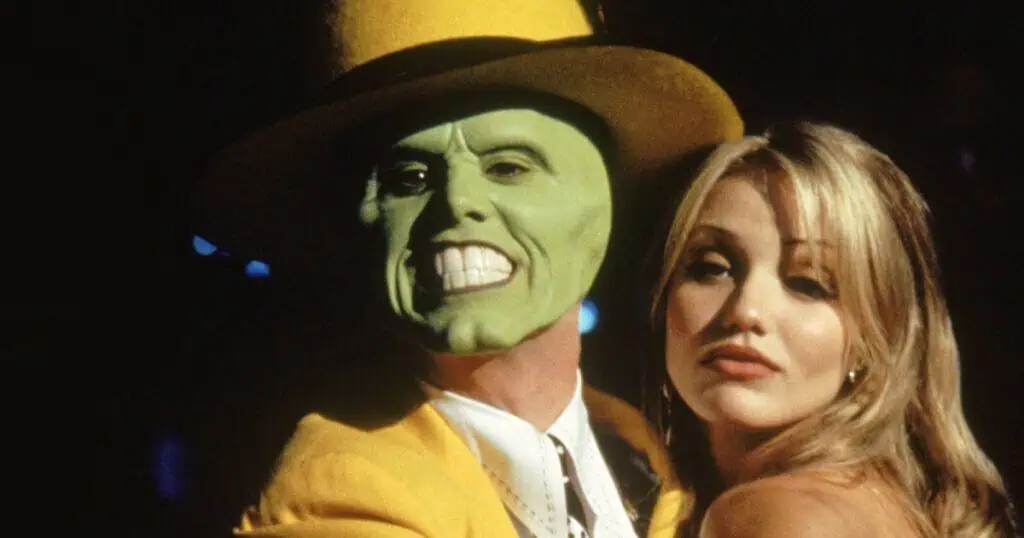
Instead, Carrey made Ipkiss a perfectly suitable protagonist, while Kellaway was reduced to a dopey detective who lacked the grit of his comic counterpart. Additionally, Stanley’s girlfriend Kathy from the comics was swapped out for a seemingly unattainable love interest named Tina, played by Cameron Diaz in her feature film debut. However, the writing for her character could easily have led to a Kathy-like arc in later sequels, if the movie had gotten a proper one.
The character of Dorian was invented specifically for the movie, acting as a composite adaptation of the generic mobsters met throughout the books. Meanwhile, the character of Walter—who is, for all intents and purposes, the Mask’s archenemy—was scrubbed out of the movie entirely because he was simply too scary and violent for a PG-13 adaptation.
Multiple early drafts of the script existed, ranging from a comedy-horror where the mask would possess an army of dead bodies to create a zombie squad, to a version much closer to the comics about a revenge-obsessed loser going on a bloody killing spree. Eventually, it became clear that the project was always meant to be a rowdy romantic comedy anchored by cartoonish and supernatural elements.
Translating the Comic Panel to the Screen
Many iconic elements from the comic did successfully carry over into the movie, including memorable visual gags like the “Awooga” wolf-face scene, the shady mechanics, several jokes, and a much softer version of the balloon-animal Tommy gun scene.
In the comics, that Tommy gun scene plays out while Detective Kellaway is wearing the mask. He chases down two car thieves, corners them in an alley, does the balloon routine, and then shoots them point-blank in the face before disappearing into the shadows.
There are also a lot of subtle details, like the formatting of the pajamas and specific disguises, that were pulled directly from Doug Mahnke’s artwork. Mahnke is easily one of the great cartoonists of the ’90s, and his aesthetic translated incredibly well to the screen through the film’s set design, lighting choices, and heavily animated visual style.
Once New Line received the finished screenplay and saw the comedic changes and watered-down violence, the movie was greenlit on the spot and given a production budget of around $20 million after sitting in development hell for years.
Originally, actors like Martin Short and Robin Williams were considered for the role of Stanley Ipkiss, but New Line kept their eyes on Jim Carrey, who was definitively the right pick for this specific version of the character. Nicolas Cage was also apparently interested in playing Big Head, which obviously would have resulted in a completely different movie.
To play his love interest, newcomer Cameron Diaz burst onto the scene. Anna Nicole Smith was actually the original choice back when the role was still intended to be the Kathy character, but one of the film’s casting directors recalled working with Diaz as a model and thought she would be a great candidate. She auditioned, her performance was stellar, and her entire Hollywood career was set from there.
The Magic of Industrial Light & Magic

Adapting the pages of these comics obviously required going beyond colorful lighting and comic-accurate costumes; it was absolutely vital that the filmmakers successfully adapt the reality-bending, cartoony powers of the Mask. In the books, Big Head can pull absurd weapons out of thin air, wear other people’s faces, and bend, bounce, and contort himself far beyond the laws of natural physics.
Naturally, New Line called in Industrial Light & Magic to pull off the heavy visual effects lifting. And honestly, it works beautifully. Sure, some of the CGI looks a bit dated today, but looking at the original comics reveals multiple instances where what is on screen is just as good as what was drawn on the page.
Director Chuck Russell noted the importance of balancing digital effects with live performance:
“I insisted on working off Jim’s face, on making the action organic to Jim’s performance. No matter how good the effect is, if it’s not coming out of character and story, it’s not going to be effective… The guys at ILM said they figured I saved about a million bucks once I got Jim, just on what he was able to do, versus what we intended to do originally.”
Jim Carrey earned the nickname “Rubber Face” in Hollywood for a reason, and it paid off massively for this film—which was a lifesaver, considering he had to endure about four hours a day in the makeup chair just to get the green mask applied.
In the film, Stanley is still a bit of a pushover who gets walked on by more assertive people, but when he finds the mask, he becomes a vigilante hell-bent on taking down Dorian and his goons to save his crush and make Edge City a better place. His methods are significantly less bloody than the source material, but the hijinks and antics remain intact. Additionally, his dog Milo doesn’t appear anywhere in the first three mini-series of the comics, but he serves as a welcome addition to the film to help make the protagonist genuinely likable.
The Legacy of The Mask
Some purists might call this an unfaithful adaptation due to the massive shift in genre and attitude. In many ways, however, it feels like a perfect adaptation because it adjusts what works on the page to work for a wider theatrical audience. This, in turn, draws people toward the character and drives comic book sales.
A film adaptation should make people aware of the original source material and the talented creators behind it. Looking at the original trilogy of comic runs versus the movie, the film arguably offers a more streamlined experience. Having a solid protagonist beats a revolving door of unlikable main characters, and the simpler cast and timeline feel a bit more fluid than the print version.
Furthermore, Jim Carrey in 1994 was an absolute force of nature. Ace Ventura: Pet Detective, The Mask, and Dumb and Dumber all came out within the span of that single calendar year. The fact that he delivered all three iconic performances while caked in heavy makeup, suffering from the flu for a massive portion of the shoot, and carrying the pressure of adapting a hit indie comic character is incredible.
If there is one critique of the movie, it is the total absence of Walter. In the comics, Walter is the Mask’s definitive adversary—a mysterious, giant, Solomon Grundy-looking enforcer-for-hire who never speaks, seemingly can’t die, and possesses the unique physical strength to actually wound or incapacitate the Mask. He would have been a perfect muscle henchman for the live-action movie.
Audiences absolutely loved the film. It released in July of 1994 and pulled in an incredible box office run of over $350 million worldwide. With that kind of massive financial success, it seems shocking that a direct cinematic sequel with the original cast never materialized. There were immediate plans for one, but Jim Carrey became an overnight A-list star and was flooded with projects that kept him busy for the next few decades. Both Carrey and Cameron Diaz have mentioned over the years that they would potentially be down to do a proper sequel, so perhaps that door isn’t completely closed.
We did get an excellent animated series based on the movie version which aired from 1995 to 1997. The cartoon maintained the comedic, TV-appropriate style of the film, though it did not feature the voice of Jim Carrey. The show followed Stanley (who kept the mask in this continuity) acting as a daytime vigilante against the mob and various weird villains, serving as great supplemental material.
Then, in 2005, the franchise received Son of the Mask starring Jamie Kennedy and Alan Cumming. While you can’t blame the actors, the movie was a total disaster that effectively killed the franchise and kept it on ice ever since. It remains a big disappointment; a properly made anthology entry that leaned back into the darker, horror-tinged comic book elements could have been an incredible addition to the series. Instead, it put a definitive end to the live-action run of the invincible Big Head.

Subscribe to our weekly newsletter